Search Results: "tar"

3 October 2016

Markus Koschany: My Free Software Activities in September 2016

Welcome to gambaru.de. Here is my monthly report that covers what I have been doing for Debian. If you re interested in Android, Java, Games and LTS topics, this might be interesting for you. Debian Android Debian Games Debian Java Debian LTS This was my eight month as a paid contributor and I have been paid to work 12,25 hours on Debian LTS, a project started by Rapha l Hertzog. In that time I did the following: Non-maintainer uploads Misc

Shirish Agarwal: Using JOSM and gpx tracks

This would be a longish post. I had bought a Samsung Galaxy J-5/500 just a few days before Debconf16 which I had written about a bit earlier as well. As can be seen in the specs there isn t much to explore other than A-GPS. There were a couple of temperature apps. which I wanted to explore before buying the smartphone but as there were budget constraints and there weren t any good budget smartphones with environmental sensors built-in had to let go of those features. I was looking for a free app. which would have OSM support and came across osmand . I was looking for an app. which would have support for OSM and support for the gpx format. I was planning to use osmand in South Africa but due to the over-whelming nature of meeting people, seeing places and just being didn t actually get the time and place to try it. Came back home and a month and a half passed. In-between I had done some simple small tracks but nothing major. This week-end I got the opportunity as I got some free data balance from my service provider (a princely 50 MB) as well an opportunity to go about 40 odd kms. from the city. I had read about osmand and was looking if the off-line method worked or not from the webpage Works online (fast) or offline (no roaming charges when you are abroad) So armed with a full battery I started the journey which took about an hour and half even though technically it was a holiday. On the way back, got a different route and recorded that as well. The app. worked flawlessly. I was able to get the speed of the vehicle and everything. The only thing I haven t understood till date is how to select waypoints but other than that I got the whole route on my mobile. What was cool to see that on most roads, at least through the app. there were speed limits. Now I don t know from where the data was getting there. Most city roads had 65 and some roads had 55 at the maximum. I am assuming that it was at km/hr as also shared later. Just for fun I also looked at the gpx file after copying it from mobile to hdd (an extract) https://paste.debian.net/853231/ While it s not a complete extract, What was interesting for me to note here is the time was in UTC . What was also interesting is that in the gpx tracks I also saw some entries about speed as can be seen in the paste above. Although it doesn t say whether it was in km/hr or mph, I believe it probably is km/hr. as that is the unit I defined in the app. Anyways, the next step was trying to see which tool was good enough to show me the tracks with tiles underneath and labels of places, paths etc. I tried three tools 1. jmapviewer this didn t work at all.
2. gnome-maps this worked remarkably well but has numerous gtk3.0 warnings [shirish@debian] - [~/osmand] - [10149]
[$] gnome-maps 2016-10-01_08-11_Sat.gpx
(gnome-maps:21017): Gtk-WARNING **: Theme parsing error: gtk.css:63:28: The :prelight pseudo-class is deprecated. Use :hover instead. (gnome-maps:21017): Gtk-WARNING **: Theme parsing error: gtk.css:73:35: The :prelight pseudo-class is deprecated. Use :hover instead. (gnome-maps:21017): Gtk-WARNING **: Theme parsing error: application.css:14:30: The style property GtkButton:image-spacing is deprecated and shouldn't be used anymore. It will be removed in a future version (gnome-maps:21017): Gtk-WARNING **: Theme parsing error: application.css:15:31: The style property GtkWidget:interior-focus is deprecated and shouldn't be used anymore. It will be removed in a future version (gnome-maps:21017): Gdk-WARNING **: /build/gtk+3.0-Tod2iD/gtk+3.0-3.22.0/./gdk/x11/gdkwindow-x11.c:5554 drawable is not a native X11 window (gnome-maps:21017): Gdk-WARNING **: /build/gtk+3.0-Tod2iD/gtk+3.0-3.22.0/./gdk/x11/gdkwindow-x11.c:5554 drawable is not a native X11 window (gnome-maps:21017): Gdk-WARNING **: /build/gtk+3.0-Tod2iD/gtk+3.0-3.22.0/./gdk/x11/gdkwindow-x11.c:5554 drawable is not a native X11 window (gnome-maps:21017): Gdk-WARNING **: /build/gtk+3.0-Tod2iD/gtk+3.0-3.22.0/./gdk/x11/gdkwindow-x11.c:5554 drawable is not a native X11 window (gnome-maps:21017): Gdk-WARNING **: /build/gtk+3.0-Tod2iD/gtk+3.0-3.22.0/./gdk/x11/gdkwindow-x11.c:5554 drawable is not a native X11 window (gnome-maps:21017): Gdk-WARNING **: /build/gtk+3.0-Tod2iD/gtk+3.0-3.22.0/./gdk/x11/gdkwindow-x11.c:5554 drawable is not a native X11 window (gnome-maps:21017): Gtk-WARNING **: GtkClutterOffscreen 0x4c4f3f0 is drawn without a current allocation. This should not happen. (gnome-maps:21017): Gtk-WARNING **: GtkImage 0x4ed4140 is drawn without a current allocation. This should not happen. Now I m not sure whether all of those are gtk3+ issues or me running them under Debian MATE. I know that there are issues with mate and gtk3+ as had been told/shared a few times in p.d.o. Anyways, one of the issues I encountered is that gnome-maps doesn t work in offline-mode, saw https://bugzilla.gnome.org/show_bug.cgi?id=708799 . Also saw ~/.cache/champlain/osm-mapquest and the listing underneath is gibberish in the sense you don t know what it meant to do
[shirish@debian] - [~/.cache/champlain/osm-mapquest] - [10163]
[$] ll -h
drwx------ 6 shirish shirish 4.0K Jun 11 2015 10
drwx------ 26 shirish shirish 4.0K Oct 24 2014 11
drwx------ 10 shirish shirish 4.0K Jun 11 2015 12
drwx------ 11 shirish shirish 4.0K Jun 11 2015 13
drwx------ 12 shirish shirish 4.0K Jun 11 2015 14
drwx------ 12 shirish shirish 4.0K Jun 11 2015 15
drwx------ 27 shirish shirish 4.0K Oct 24 2014 16
drwx------ 25 shirish shirish 4.0K Oct 24 2014 17
drwx------ 4 shirish shirish 4.0K Mar 4 2014 3
drwx------ 5 shirish shirish 4.0K Mar 4 2014 8
drwx------ 9 shirish shirish 4.0K Mar 29 2014 9
What was/is interesting to see things like this maybe imagery offset As I was in a moving vehicle, it isn t easy to know if the imagery is at fault or was it app. , sensor of my mobile ? Did see http://learnosm.org/en/josm/correcting-imagery-offset/ but as can be seen that requires more effort from my side. The last tool proved to be the most problematic 3. JOSM Getting the tracks into josm which was easily done. While firing up josm came across https://josm.openstreetmap.de/ticket/13735 which I subsequently filed. One of the other first things which has been a major irritant for a long time is JOSM is, for a lack of better term, ugly. See the interface, especially the one having preferences, all cluttered look and specifically see the plugins corner/tab josm-preferences-plugin tab The part about it being ugly, I dunno but have seen most java apps are a bit ugly. It is a bit generalist I know but that has been my experience with whatever little java apps. I have used. I don t know what the reasons for that are, maybe because java is known/rumoured to use lot of memory which seems true in my case as well OR it doesn t have toolkits like gtk3+ or qt quick, although have to say that the looks have improved from before when I used it last some years ago
[shirish@debian] - [~] - [10340]
[$] ps -eo size,pid,user,command awk ' hr=$1/1024 ; printf("%13.6f Mb ",hr) for ( x=4 ; x<=NF ; x++ ) printf("%s ",$x) print "" ' grep josm
0.324219 Mb /bin/sh /usr/bin/josm
419.468750 Mb /usr/lib/jvm/java-8-openjdk-amd64/bin/java -Djosm.restart=true -Djava.net.useSystemProxies=true -jar /usr/share/josm/josm.jar
This is when I m just opening josm and have not added any tracks or done any work. Now I wanted to explore the routing in good amount of detail on josm. This was easily said than done. When trying to get imagery I got the Download area too large issue/defect . Multiple tries didn t get me anywhere. Then hunting on the web came across the continous-download plugin which is part of the plugin infrastructure . This I found to be a very good tool. It downloads the tiles and puts them in ~/.josm/cache/tiles
[shirish@debian] - [~/.josm/cache/tiles] - [10147]
[$] ll -h
total 28M
-rw-r--r-- 1 shirish shirish 28M Oct 2 02:13 TMS_BLOCK_v2.data
-rw-r--r-- 1 shirish shirish 290K Oct 3 12:59 TMS_BLOCK_v2.key
-rw-r--r-- 1 shirish shirish 4 Oct 3 12:59 WMS_BLOCK_v2.key
-rw-r--r-- 1 shirish shirish 4 Oct 3 12:59 WMTS_BLOCK_v2.key
While unfortunately I cannot see this/make sense of it I m guessing it is some sort of database with key and data files. What did become apparent is that the OSM needs lots more love if it is to become something which can be used everyday. At the end I had to change the open-source gpx track file to a Google map kml file to be able to make sense as there are whole areas which need to be named, numbered etc. One of the newbie mistakes that I did was trying to use the slippy map in josm (using Openstreetmap/Mapnik at the back-end) to move/pan using the left-hand mouse button. It took me quite sometime to figure out that it is with right-hand mouse button that you can make the slippy map pan. This is different from almost all maps, gnome-maps uses the traditional left-hand button, Google maps also uses the same. I have filed it in upstream as https://josm.openstreetmap.de/ticket/13751 . So at least, in these rounds it is gnome-maps which has kind of won even though it doesn t do any of the things that josm claims to do. I am sure there might be some interesting tricks and tips that people might have to share about mapping
Filed under: Miscellenous Tagged: #Debconf16, #GNOME-MAPS, #JOSM, OSM

Kees Cook: security things in Linux v4.7

Previously: v4.6. Onward to security things I found interesting in Linux v4.7: KASLR text base offset for MIPS Matt Redfearn added text base address KASLR to MIPS, similar to what s available on x86 and arm64. As done with x86, MIPS attempts to gather entropy from various build-time, run-time, and CPU locations in an effort to find reasonable sources during early-boot. MIPS doesn t yet have anything as strong as x86 s RDRAND (though most have an instruction counter like x86 s RDTSC), but it does have the benefit of being able to use Device Tree (i.e. the /chosen/kaslr-seed property) like arm64 does. By my understanding, even without Device Tree, MIPS KASLR entropy should be as strong as pre-RDRAND x86 entropy, which is more than sufficient for what is, similar to x86, not a huge KASLR range anyway: default 8 bits (a span of 16MB with 64KB alignment), though CONFIG_RANDOMIZE_BASE_MAX_OFFSET can be tuned to the device s memory, giving a maximum of 11 bits on 32-bit, and 15 bits on EVA or 64-bit. SLAB freelist ASLR Thomas Garnier added CONFIG_SLAB_FREELIST_RANDOM to make slab allocation layouts less deterministic with a per-boot randomized freelist order. This raises the bar for successful kernel slab attacks. Attackers will need to either find additional bugs to help leak slab layout information or will need to perform more complex grooming during an attack. Thomas wrote a post describing the feature in more detail here: Randomizing the Linux kernel heap freelists. (SLAB is done in v4.7, and SLUB in v4.8.) eBPF JIT constant blinding Daniel Borkmann implemented constant blinding in the eBPF JIT subsystem. With strong kernel memory protections (CONFIG_DEBUG_RODATA) in place, and with the segregation of user-space memory execution from kernel (i.e SMEP, PXN, CONFIG_CPU_SW_DOMAIN_PAN), having a place where user-space can inject content into an executable area of kernel memory becomes very high-value to an attacker. The eBPF JIT was exactly such a thing: the use of BPF constants could result in the JIT producing instruction flows that could include attacker-controlled instructions (e.g. by directing execution into the middle of an instruction with a constant that would be interpreted as a native instruction). The eBPF JIT already uses a number of other defensive tricks (e.g. random starting position), but this added randomized blinding to any BPF constants, which makes building a malicious execution path in the eBPF JIT memory much more difficult (and helps block attempts at JIT spraying to bypass other protections). Elena Reshetova updated a 2012 proof-of-concept attack to succeed against modern kernels to help provide a working example of what needed fixing in the JIT. This serves as a thorough regression test for the protection. The cBPF JITs that exist in ARM, MIPS, PowerPC, and Sparc still need to be updated to eBPF, but when they do, they ll gain all these protections immediatley. Bottom line is that if you enable the (disabled-by-default) bpf_jit_enable sysctl, be sure to set the bpf_jit_harden sysctl to 2 (to perform blinding even for root). fix brk ASLR weakness on arm64 compat There have been a few ASLR fixes recently (e.g. ET_DYN, x86 32-bit unlimited stack), and while reviewing some suggested fixes to arm64 brk ASLR code from Jon Medhurst, I noticed that arm64 s brk ASLR entropy was slightly too low (less than 1 bit) for 64-bit and noticeably lower (by 2 bits) for 32-bit compat processes when compared to native 32-bit arm. I simplified the code by using literals for the entropy. Maybe we can add a sysctl some day to control brk ASLR entropy like was done for mmap ASLR entropy. LoadPin LSM LSM stacking is well-defined since v4.2, so I finally upstreamed a small LSM that implements a protection I wrote for Chrome OS several years back. On systems with a static root of trust that extends to the filesystem level (e.g. Chrome OS s coreboot+depthcharge boot firmware chaining to dm-verity, or a system booting from read-only media), it s redundant to sign kernel modules (you ve already got the modules on read-only media: they can t change). The kernel just needs to know they re all coming from the correct location. (And this solves loading known-good firmware too, since there is no convention for signed firmware in the kernel yet.) LoadPin requires that all modules, firmware, etc come from the same mount (and assumes that the first loaded file defines which mount is correct , hence load pinning ). That s it for v4.7. Prepare yourself for v4.8 next!

2016, Kees Cook. This work is licensed under a Creative Commons Attribution-ShareAlike 3.0 License.
Creative Commons License

Russ Allbery: Review: Winds of Fury

Review: Winds of Fury, by Mercedes Lackey
Series: Mage Winds #3
Publisher: DAW
Copyright: August 1994
ISBN: 0-88677-612-0
Format: Mass market
Pages: 427
This is the concluding book of the Mage Winds trilogy and a direct sequel to Winds of Change. This series doesn't make sense to read out of order. In traditional fantasy trilogies of this type, the third book is often the best. The author can stop developing characters, building the world, and setting the scene and can get to the meat of the story. All the guns on the mantles go off, all the twists the author has been saving can be used, and there's usually a lot more action than in the second book of a trilogy. That is indeed the case here. I'm not sure Winds of Fury rises to the level of a good book, but if you're invested in the Valdemar story, it works better than the previous books of this series. As one might expect, the protagonists do return to Valdemar, finally. The method of that return makes sense of some things that happened in Winds of Change and is an entertaining surprise, although I wish more had been done with it through the rest of the book and we'd gotten more world-building details. I also like how Lackey handles the Valdemar reactions to the returning protagonists, and their own reactions to Valdemar. Lackey's characters might fit some heavy-handed stereotypes a bit too neatly, but they do grow and change over the course of a series, and the return home is a good technique for showing that. Lackey also throws in her final twist for the villains of this series at the start of this book, and it's a good one (if typical Lackey; she does love her abused youth characters). The villains are still far too one-dimensional and far too stereotyped evil, but the twist (which I'll avoid spoiling) does make that dynamic a bit more interesting. And she manages to get the reader to root for one evil over another, since one of them is at least competent. You'd think from the direction the series was taking that Winds of Fury would culminate in another epic war of magic, but not this book. Lackey takes a more personal and targeted approach, heavier on characterization and individual challenge. This gives Firesong a chance to grow into an almost-likable character and earn some of that empathy and insight that he'd gotten for free. Unfortunately, it sidelines Nyara a lot, and pushes her back into a stereotyped role, which made me sad. The series otherwise emphasizes the importance of magic users who know their own limitations and can thoughtfully use the power they have, but rarely extends that to Nyara herself. I would have much rather seen her play a role like that in the final climax instead of the one she played. This is partly made up for by centering Need in the story and having her play the key connecting role between two different threads of effort. Those are probably the best parts of this book. I wish the entire series had been told from Need's perspective, with a heavy helping of exasperated grumbling, although I don't think Lackey could have written that series. But what we get of her is a delight. The gryphons, sadly, are relegated to fairly minor roles, but we get a few more tantalizing hints about the Companions to make up for it. (Although not enough to figure out their great mystery, which isn't revealed until future books.) This series is nowhere near as good as I remembered, sadly, but I did enjoy bits of it. If you like Valdemar in general, the world building is fairly important and reveals quite a lot about the underpinnings and power dynamics of Lackey's universe. I'm not sure that makes up for some tedious characters, poor communication, and some uncomfortable and dragging sections, but if you're trying to get the whole Valdemar story, the events here are rather important. And this ending was at least entertaining, if not great fiction. Rating: 6 out of 10

2 October 2016

Thorsten Alteholz: My Debian Activities in September 2016

FTP assistant This month I was rather busy with other stuff and only marked 191 packages for accept and rejected 21 packages. I also sent 6 emails to maintainers asking questions. Debian LTS This was my twenty-seventh month that I did some work for the Debian LTS initiative, started by Raphael Hertzog at Freexian. This month my all in all workload has been 12.25h. During that time I did an upload of php5 fixing 17 CVEs and two additional bugs, I uploaded mactelnet and fixed one CVE. I also prepared a package for testing of zendframework, which will fix one CVE. Unfortunately my bind9 upload needed to be postponed as Florian Weimer found an incomplete patch of a previous CVE. I am trying to fix that as well. I also had some progress with the asterisk CVEs and of course the next round of php5 patches is waiting This month I also had a few days of frontdesk work at the beginning of the month and a few days at the end. Other stuff For the Alljoyn framework I uploaded alljoyn-services-1604 and as I forgot a Conflict:, I had to take care of RC-bugs: #836717, #836718 and #836719. Thanks a lot to Ralf Treinen for his automatic installation tests. As mentioned earlier, openzwave is on its way to the Debian archive. While it is still in non-free, the author of a used library gave his permission to relicense this code, so the way to main is paved now.

Russell Coker: Hostile Web Sites

I was asked whether it would be safe to open a link in a spam message with wget. So here are some thoughts about wget security and web browser security in general. Wget Overview Some spam messages are designed to attack the recipient s computer. They can exploit bugs in the MUA, applications that may be launched to process attachments (EG MS Office), or a web browser. Wget is a very simple command-line program to download web pages, it doesn t attempt to interpret or display them. As with any network facing software there is a possibility of exploitable bugs in wget. It is theoretically possible for an attacker to have a web server that detects the client and has attacks for multiple HTTP clients including wget. In practice wget is a very simple program and simplicity makes security easier. A large portion of security flaws in web browsers are related to plugins such as flash, rendering the page for display on a GUI system, and javascript features that wget lacks. The Profit Motive An attacker that aims to compromise online banking accounts probably isn t going to bother developing or buying an exploit against wget. The number of potential victims is extremely low and the potential revenue benefit from improving attacks against other web browsers is going to be a lot larger than developing an attack on the small number of people who use wget. In fact the potential revenue increase of targeting the most common Linux web browsers (Iceweasel and Chromium) might still be lower than that of targeting Mac users. However if the attacker doesn t have a profit motive then this may not apply. There are people and organisations who have deliberately attacked sysadmins to gain access to servers (here is an article by Bruce Schneier about the attack on Hacking Team [1]). It is plausible that someone who is targeting a sysadmin could discover that they use wget and then launch a targeted attack against them. But such an attack won t look like regular spam. For more information about targeted attacks Brian Krebs article about CEO scams is worth reading [2]. Privilege Separation If you run wget in a regular Xterm in the same session you use for reading email etc then if there is an exploitable bug in wget then it can be used to access all of your secret data. But it is very easy to run wget from another account. You can run ssh otheraccount@localhost and then run the wget command so that it can t attack you. Don t run su otheraccount as it is possible for a compromised program to escape from that. I think that most Linux distributions have supported a switch user functionality in the X login system for a number of years. So you should be able to lock your session and then change to a session for another user to run potentially dangerous programs. It is also possible to use a separate PC for online banking and other high value operations. A 10yo PC is more than adequate for such tasks so you could just use an old PC that has been replaced for regular use for online banking etc. You could boot it from a CD or DVD if you are particularly paranoid about attack. Browser Features Google Chrome has a feature to not run plugins unless specifically permitted. This requires a couple of extra mouse actions when watching a TV program on the Internet but prevents random web sites from using Flash and Java which are two of the most common vectors of attack. Chrome also has a feature to check a web site against a Google black list before connecting. When I was running a medium size mail server I often had to determine whether URLs being sent out by customers were legitimate or spam, if a user sent out a URL that s on Google s blacklist I would lock their account without doing any further checks. Conclusion I think that even among Linux users (who tend to be more careful about security than users of other OSs) using a separate PC and booting from a CD/DVD will generally be regarded as too much effort. Running a full featured web browser like Google Chrome and updating it whenever a new version is released will avoid most problems. Using wget when you have to reason to be concerned is a possibility, but not only is it slightly inconvenient but it also often won t download the content that you want (EG in the case of HTML frames).

1 October 2016

David Moreno: Thanks Debian

I sent this email to debian-private a few days ago, on the 10th anniversary of my Debian account creation:
Date: Fri, 14 Aug 2015 19:37:20 +0200
From: David Moreno 
To: debian-private@lists.debian.org
Subject: Retiring from Debian
User-Agent: Mutt/1.5.23 (2014-03-12)
[-- PGP output follows (current time: Sun 23 Aug 2015 06:18:36 PM CEST) --]
gpg: Signature made Fri 14 Aug 2015 07:37:20 PM CEST using RSA key ID 4DADEC2F
gpg: Good signature from "David Moreno "
gpg:                 aka "David Moreno "
gpg:                 aka "David Moreno (1984-08-08) "
[-- End of PGP output --]
[-- The following data is signed --]
Hi,
Ten years ago today (2005-08-14) my account was created:
https://nm.debian.org/public/person/damog
Today, I don't feel like Debian represents me and neither do I represent the
project anymore.
I had tried over the last couple of years to retake my involvement but lack of
motivation and time always got on the way, so the right thing to do for me is
to officially retire and gtfo.
I certainly learned a bunch from dozens of Debian people over these many years,
and I'm nothing but grateful with all of them; I will for sure carry the project
close to my heart   as I carry it with the Debian swirl I still have tattooed
on my back ;)
http://damog.net/blog/2005/06/29/debian-tattoo/
I have three packages left that have not been updated in forever and you can
consider orphaned now: gcolor2, libperl6-say-perl and libxml-treepp-perl.
With all best wishes,
David Moreno.
http://damog.net/
[-- End of signed data --]
I received a couple of questions about my decision here. I basically don t feel like Debian represents my interests and neither do I represent the project this doesn t mean I don t believe in free software, to the contrary. I think some of the best software advancements we ve made as society are thanks to it. I don t necessarily believe on how the project has evolved itself, whether that has been the right way, to regain relevancy and dominance, and if it s remained primarily a way to feed dogmatism versus pragmatism. This is the perfect example of a tragic consequence. I was very happy to learn that the current Debian Conference being held in Germany got the highest attendance ever, hopefully that can be utilized in a significant and useful way. Regardless, my contributions to Debian were never noteworthy so it s also not that big of a deal. I just need to close cycles myself and move forward, and the ten year anniversary looked like a significant mark for that. Poke me in case you wanna discuss some more. I ll always be happy to. Specially over beer :) Peace.

Vincent Sanders: Paul Hollywood and the pistoris stone

There has been a great deal of comment among my friends recently about a particularly British cookery program called "The Great British Bake Off". There has been some controversy as the program is moving from the BBC to a commercial broadcaster.

Part of this discussion comes from all the presenters, excepting Paul Hollywood, declining to sign with the new broadcaster and partly because of speculation the BBC might continue with a similar format show with a new name.

Rob Kendrick provided the start to this conversation by passing on a satirical link suggesting Samuel L Jackson might host "cakes on a plane"

This caused a large number of suggestions for alternate names which I will be reporting but Rob Kendrick, Vivek Das Mohapatra, Colin Watson, Jonathan McDowell, Oki Kuma, Dan Alderman, Dagfinn Ilmari Manns ke, Lesley Mitchell and Daniel Silverstone are the ones to blame.


So that is our list, anyone else got better ideas?

Kees Cook: security things in Linux v4.6

Previously: v4.5. The v4.6 Linux kernel release included a bunch of stuff, with much more of it under the KSPP umbrella. seccomp support for parisc Helge Deller added seccomp support for parisc, which including plumbing support for PTRACE_GETREGSET to get the self-tests working. x86 32-bit mmap ASLR vs unlimited stack fixed Hector Marco-Gisbert removed a long-standing limitation to mmap ASLR on 32-bit x86, where setting an unlimited stack (e.g. ulimit -s unlimited ) would turn off mmap ASLR (which provided a way to bypass ASLR when executing setuid processes). Given that ASLR entropy can now be controlled directly (see the v4.5 post), and that the cases where this created an actual problem are very rare, means that if a system sees collisions between unlimited stack and mmap ASLR, they can just adjust the 32-bit ASLR entropy instead. x86 execute-only memory Dave Hansen added Protection Key support for future x86 CPUs and, as part of this, implemented support for execute only memory in user-space. On pkeys-supporting CPUs, using mmap(..., PROT_EXEC) (i.e. without PROT_READ) will mean that the memory can be executed but cannot be read (or written). This provides some mitigation against automated ROP gadget finding where an executable is read out of memory to find places that can be used to build a malicious execution path. Using this will require changing some linker behavior (to avoid putting data in executable areas), but seems to otherwise Just Work. I m looking forward to either emulated QEmu support or access to one of these fancy CPUs. CONFIG_DEBUG_RODATA enabled by default on arm and arm64, and mandatory on x86 Ard Biesheuvel (arm64) and I (arm) made the poorly-named CONFIG_DEBUG_RODATA enabled by default. This feature controls whether the kernel enforces proper memory protections on its own memory regions (code memory is executable and read-only, read-only data is actually read-only and non-executable, and writable data is non-executable). This protection is a fundamental security primitive for kernel self-protection, so making it on-by-default is required to start any kind of attack surface reduction within the kernel. On x86 CONFIG_DEBUG_RODATA was already enabled by default, but, at Ingo Molnar s suggestion, I made it mandatory: CONFIG_DEBUG_RODATA cannot be turned off on x86. I expect we ll get there with arm and arm64 too, but the protection is still somewhat new on these architectures, so it s reasonable to continue to leave an out for developers that find themselves tripping over it. arm64 KASLR text base offset Ard Biesheuvel reworked a ton of arm64 infrastructure to support kernel relocation and, building on that, Kernel Address Space Layout Randomization of the kernel text base offset (and module base offset). As with x86 text base KASLR, this is a probabilistic defense that raises the bar for kernel attacks where finding the KASLR offset must be added to the chain of exploits used for a successful attack. One big difference from x86 is that the entropy for the KASLR must come either from Device Tree (in the /chosen/kaslr-seed property) or from UEFI (via EFI_RNG_PROTOCOL), so if you re building arm64 devices, make sure you have a strong source of early-boot entropy that you can expose through your boot-firmware or boot-loader. zero-poison after free Laura Abbott reworked a bunch of the kernel memory management debugging code to add zeroing of freed memory, similar to PaX/Grsecurity s PAX_MEMORY_SANITIZE feature. This feature means that memory is cleared at free, wiping any sensitive data so it doesn t have an opportunity to leak in various ways (e.g. accidentally uninitialized structures or padding), and that certain types of use-after-free flaws cannot be exploited since the memory has been wiped. To take things even a step further, the poisoning can be verified at allocation time to make sure that nothing wrote to it between free and allocation (called sanity checking ), which can catch another small subset of flaws. To understand the pieces of this, it s worth describing that the kernel s higher level allocator, the page allocator (e.g. __get_free_pages()) is used by the finer-grained slab allocator (e.g. kmem_cache_alloc(), kmalloc()). Poisoning is handled separately in both allocators. The zero-poisoning happens at the page allocator level. Since the slab allocators tend to do their own allocation/freeing, their poisoning happens separately (since on slab free nothing has been freed up to the page allocator). Only limited performance tuning has been done, so the penalty is rather high at the moment, at about 9% when doing a kernel build workload. Future work will include some exclusion of frequently-freed caches (similar to PAX_MEMORY_SANITIZE), and making the options entirely CONFIG controlled (right now both CONFIGs are needed to build in the code, and a kernel command line is needed to activate it). Performing the sanity checking (mentioned above) adds another roughly 3% penalty. In the general case (and once the performance of the poisoning is improved), the security value of the sanity checking isn t worth the performance trade-off. Tests for the features can be found in lkdtm as READ_AFTER_FREE and READ_BUDDY_AFTER_FREE. If you re feeling especially paranoid and have enabled sanity-checking, WRITE_AFTER_FREE and WRITE_BUDDY_AFTER_FREE can test these as well. To perform zero-poisoning of page allocations and (currently non-zero) poisoning of slab allocations, build with:
CONFIG_DEBUG_PAGEALLOC=n
CONFIG_PAGE_POISONING=y
CONFIG_PAGE_POISONING_NO_SANITY=y
CONFIG_PAGE_POISONING_ZERO=y
CONFIG_SLUB_DEBUG=y
and enable the page allocator poisoning and slab allocator poisoning at boot with this on the kernel command line:
page_poison=on slub_debug=P
To add sanity-checking, change PAGE_POISONING_NO_SANITY=n, and add F to slub_debug as slub_debug=PF . read-only after init I added the infrastructure to support making certain kernel memory read-only after kernel initialization (inspired by a small part of PaX/Grsecurity s KERNEXEC functionality). The goal is to continue to reduce the attack surface within the kernel by making even more of the memory, especially function pointer tables, read-only (which depends on CONFIG_DEBUG_RODATA above). Function pointer tables (and similar structures) are frequently targeted by attackers when redirecting execution. While many are already declared const in the kernel source code, making them read-only (and therefore unavailable to attackers) for their entire lifetime, there is a class of variables that get initialized during kernel (and module) start-up (i.e. written to during functions that are marked __init ) and then never (intentionally) written to again. Some examples are things like the VDSO, vector tables, arch-specific callbacks, etc. As it turns out, most architectures with kernel memory protection already delay making their data read-only until after __init (see mark_rodata_ro()), so it s trivial to declare a new data section ( .data..ro_after_init ) and add it to the existing read-only data section ( .rodata ). Kernel structures can be annotated with the new section (via the __ro_after_init macro), and they ll become read-only once boot has finished. The next step for attack surface reduction infrastructure will be to create a kernel memory region that is passively read-only, but can be made temporarily writable (by a single un-preemptable CPU), for storing sensitive structures that are written to only very rarely. Once this is done, much more of the kernel s attack surface can be made read-only for the majority of its lifetime. As people identify places where __ro_after_init can be used, we can grow the protection. A good place to start is to look through the PaX/Grsecurity patch to find uses of __read_only on variables that are only written to during __init functions. The rest are places that will need the temporarily-writable infrastructure (PaX/Grsecurity uses pax_open_kernel()/pax_close_kernel() for these). That s it for v4.6, next up will be v4.7!

2016, Kees Cook. This work is licensed under a Creative Commons Attribution-ShareAlike 3.0 License.
Creative Commons License

Russ Allbery: Review: Sailing to Sarantium

Review: Sailing to Sarantium, by Guy Gavriel Kay
Series: Sarantine Mosaic #1
Publisher: HarperPrism
Copyright: 1998
Printing: January 2000
ISBN: 0-06-105990-0
Format: Mass market
Pages: 533
Crispin is a well-respected mosaicist, a Rhodian, heir to a long tradition of artistic accomplishment. Rhodias is largely in ruins, and the kings that fight over its land are far removed from the emperors of Rhodias at its height, but there's still demand for skilled craftsmanship. Crispin has a partner, assistants, and the opportunity to do at least adequate work. It's not a bad life, or at least wasn't before plague took his wife and daughters while he watched, helpless. Now, he's closed off, angry, and consumed by fatalism and futility. His partner, Martinian, could never say why, when the imperious and obnoxious courier came from the far-off and half-legendary of Sarantium to summon him to assist with the rebuilding of the Sanctuary of Jad, he pretended not to be himself and pointed the courier at Crispin instead. Nor was Crispin entirely sure why he played along, although the courier was so arrogant and officious that he invited such treatment. He had no intention of going in Martinian's place and name until his friends intervened, united in their conviction that he needed something to focus on and a reason to live. But nothing about Sarantium is simple. Even before Crispin leaves, the local queen, precariously balancing between warring factions, reveals her own reason to send Crispin to the capital of the far-off empire: using him as a desperate messenger to propose an alliance through marriage. And when he finally arrives, after unexpected perils on the road, he tumbles immediately into the deep complexities of the Sarantine court and its remarkable rulers. Most of Guy Gavriel Kay's work is historical fiction with the serial numbers partly filed off and some magic added. The degree to which the serial numbers are removed varies by work; here, the history is obvious. Sarantium is Byzantium, fallen Rhodias is Rome, and the emperor Valerius and his former dancer empress Alixana are clearly Justinian and Theodora. Knowing that will provide a lot of context, but can also be distracting, since the temptation to scramble for Wikipedia and line things up with real history is strong. I read this book the first time without knowing the history and this second time knowing it. I think I enjoyed it a bit more on its own terms, instead of as a reflection and reinterpretation. Either way, though, it's one of Kay's best novels, which is saying quite a bit. Sailing to Sarantium has two very different parts: Crispin's journey to Sarantium, and then what happens when he arrives. The first is a fairly linear travel narrative mixed with old religion, magic, and an experience in the woods that's a little disconnected from the rest of the story. The second is the fast-entangling politics and factionalism of the city itself, which wastes no time pulling Crispin into meetings with the most influential people at court. In my memory, I liked the Sarantium narrative the best, and found the travel story less significant. Re-reading, I'm not sure I agree with my earlier self. Kay does write some of the best conversations in fiction; if you want to see careful verbal maneuvering or gut reactions with wide-ranging consequences, I can't think of any author who shows both the words and the nuances as well as Kay. He makes the court maneuvering feel truly epic. Watching Crispin's blunt competence cut through the Sarantine court, and seeing him stay focused on his life work despite all those distractions, is a truly rewarding experience. But that second part of the book also has some structural problems, and a few characterization problems. The structural problem is that Kay wants to tell the same story from multiple angles, viewpoints, and timelines to show the reader every implication of the hornet's nest that Crispin kicks over, since quite a lot happens in the course of one day and night. This mostly works, but it is so laden with flashbacks, foreshadowing, and rewinds that I started losing track of the time relationship between the scenes. Kay is a very skilled author, so he avoids confusing the reader entirely, but I think he still tried too complex of a temporal structure here. The characterization problem is that I previously wasn't paying as close of attention to Kay's portrayal of women and of male sexual reactions to women. It didn't bother me before; this time, it started getting on my nerves. Yes, this is historical fiction (although limitations on roles for women in history is rather overstated in fiction), and to give Kay credit it does feature a very strong female character in Alixana. But the male protector and female seducer dynamic is very strong, and all the women in this book seem to get shoehorned into it. And perhaps I'm missing some weakness that other men have, but I have never had the sort of overwhelming, thought-destroying reaction to the presence of a seductive woman as Kay's men seem to routinely have in this book. To give Crispin credit, he maneuvers his way through those conversations without doing anything stupid. (Kay's characters very rarely do stupid things, which is refreshing.) But the effort required started undermining my suspension of disbelief. Even making allowances for a culture that might consider a woman with her hair down the equivalent of an entirely nude woman, I simply don't believe that a man who had been married with two daughters, had a long career, and had the life experience Crispin had would have that much difficulty with an aggressively seductive woman that he already doesn't trust. As a result, as much as I love Kay's political conversational fencing, I enjoyed the travel portion of the book more on this re-read. Crispin is a type of character Kay writes extremely well: an honest, honorable man trying to navigate unfamiliar waters without a lot of context, but with a firm sense of internal morality, a lot of natural intelligence, and a true passion for something. At one point in this book, another character decides to walk away from his current job and follow Crispin wherever he goes. Kay makes you believe that and want to do it yourself. It's a very rewarding experience as a reader to watch a character you can trust find careful, courageous, and tricky solutions to complicated problems. But I think the best part of this book is Kay's ability to put Crispin's art, the creation of mosaics, on the page in a way that lets the reader viscerally appreciate it. Crispin is passionate about mosaics, about how to make them and how to think about them, and the passion is contagious and forms the heart and soul of this novel. Kay manages to make mosaics overshadow some of the most dramatic politics in history, which says quite a lot. There is almost nothing I love more than reading about talented, passionate people doing things they are extremely good at. I know nothing about mosaic that I haven't read in this book and its sequel, so I have no basis from which to judge the accuracy of Kay's portrayal, but he made me feel like I could appreciate some of the nuance, skill, and design constraints of the art form. It's a wonderful reading experience. Sailing to Sarantium is best thought of half of a long book that was divided for publication reasons, so don't expect much of an ending here. It can only be read in combination with Lord of Emperors, which you'll want to have on hand when you finish this book so that you can continue the story. Followed by Lord of Emperors. Rating: 9 out of 10

30 September 2016

Chris Lamb: Free software activities in September 2016

Here is my monthly update covering what I have been doing in the free software world (previous month):
Reproducible builds

Whilst anyone can inspect the source code of free software for malicious flaws, most Linux distributions provide binary (or "compiled") packages to end users. The motivation behind the Reproducible Builds effort is to allow verification that no flaws have been introduced either maliciously and accidentally during this compilation process by promising identical binary packages are always generated from a given source. My work in the Reproducible Builds project was also covered in our weekly reports #71, #72, #71 & #74. I made the following improvements to our tools:

diffoscope

diffoscope is our "diff on steroids" that will not only recursively unpack archives but will transform binary formats into human-readable forms in order to compare them.

  • Added a global Progress object to track the status of the comparison process allowing for graphical and machine-readable status indicators. I also blogged about this feature in more detail.
  • Moved the global Config object to a more Pythonic "singleton" pattern and ensured that constraints are checked on every change.

disorderfs

disorderfs is our FUSE filesystem that deliberately introduces nondeterminism into the results of system calls such as readdir(3).

  • Display the "disordered" behaviour we intend to show on startup. (#837689)
  • Support relative paths in command-line parameters (previously only absolute paths were permitted).

strip-nondeterminism

strip-nondeterminism is our tool to remove specific information from a completed build.

  • Fix an issue where temporary files were being left on the filesystem and add a test to avoid similar issues in future. (#836670)
  • Print an error if the file to normalise does not exist. (#800159)
  • Testsuite improvements:
    • Set the timezone in tests to avoid a FTBFS and add a File::StripNondeterminism::init method to the API to to set tzset everywhere. (#837382)
    • "Smoke test" the strip-nondeterminism(1) and dh_strip_nondeterminism(1) scripts to prevent syntax regressions.
    • Add a testcase for .jar file ordering and normalisation.
    • Check the stripping process before comparing file attributes to make it less confusing on failure.
    • Move to a lookup table for descriptions of stat(1) indices and use that for nicer failure messages.
    • Don't uselessly test whether the inode number has changed.
  • Run perlcritic across the codebase and adopt some of its prescriptions including explicitly using oct(..) for integers with leading zeroes, avoiding mixing high and low-precedence booleans, ensuring subroutines end with a return statement, etc.

I also submitted 4 patches to fix specific reproducibility issues in golang-google-grpc, nostalgy, python-xlib & torque.


Debian https://lamby-www.s3.amazonaws.com/yadt/blog.Image/image/original/28.jpeg

Patches contributed

Debian LTS

This month I have been paid to work 12.75 hours on Debian Long Term Support (LTS). In that time I did the following:
  • "Frontdesk" duties, triaging CVEs, etc.
  • Issued DLA 608-1 for mailman fixing a CSRF vulnerability.
  • Issued DLA 611-1 for jsch correcting a path traversal vulnerability.
  • Issued DLA 620-1 for libphp-adodb patching a SQL injection vulnerability.
  • Issued DLA 631-1 for unadf correcting a buffer underflow issue.
  • Issued DLA 634-1 for dropbear fixing a buffer overflow when parsing ASN.1 keys.
  • Issued DLA 635-1 for dwarfutils working around an out-of-bounds read issue.
  • Issued DLA 638-1 for the SELinux policycoreutils, patching a sandbox escape issue.
  • Enhanced Brian May's find-work --unassigned switch to take an optional "except this user" argument.
  • Marked matrixssl and inspircd as being unsupported in the current LTS version.

Uploads
  • python-django 1:1.10.1-1 New upstream release and ensure that django-admin startproject foo creates files with the correct shebang under Python 3.
  • gunicorn:
    • 19.6.0-5 Don't call chown(2) if it would be a no-op to avoid failure under snap.
    • 19.6.0-6 Remove now-obsolete conffiles and logrotate scripts; they should have been removed in 19.6.0-3.
  • redis:
    • 3.2.3-2 Call ulimit -n 65536 by default from SysVinit scripts to normalise the behaviour with systemd. I also bumped the Debian package epoch as the "2:" prefix made it look like we are shipping version 2.x. I additionaly backported this upload to Debian Jessie.
    • 3.2.4-1 New upstream release, add missing -ldl for dladdr(3) & add missing dependency on lsb-base.
  • python-redis (2.10.5-2) Bump python-hiredis to Suggests to sync with Ubuntu and move to a machine-readable debian/copyright. I also backported this upload to Debian Jessie.
  • adminer (4.2.5-3) Move mysql-server dependencies to default-mysql-server. I also backported this upload to Debian Jessie.
  • gpsmanshp (1.2.3-5) on behalf of the QA team:
    • Move to "minimal" debhelper style, making the build reproducible. (#777446 & #792991)
    • Reorder linker command options to build with --as-needed (#729726) and add hardening flags.
    • Move to machine-readable copyright file, add missing #DEBHELPER# tokens to postinst and prerm scripts, tidy descriptions & other debian/control fields and other smaller changes.

I sponsored the upload of 5 packages from other developers:

I also NMU'd:


FTP Team

As a Debian FTP assistant I ACCEPTed 147 packages: alljoyn-services-1604, android-platform-external-doclava, android-platform-system-tools-aidl, aufs, bcolz, binwalk, bmusb, bruteforce-salted-openssl, cappuccino, captagent, chrome-gnome-shell, ciphersaber, cmark, colorfultabs, cppformat, dnsrecon, dogtag-pki, dxtool, e2guardian, flask-compress, fonts-mononoki, fwknop-gui, gajim-httpupload, glbinding, glewmx, gnome-2048, golang-github-googleapis-proto-client-go, google-android-installers, gsl, haskell-hmatrix-gsl, haskell-relational-query, haskell-relational-schemas, haskell-secret-sharing, hindsight, i8c, ip4r, java-string-similarity, khal, khronos-opencl-headers, liblivemedia, libshell-config-generate-perl, libshell-guess-perl, libstaroffice, libxml2, libzonemaster-perl, linux, linux-grsec-base, linux-signed, lua-sandbox, lua-torch-trepl, mbrola-br2, mbrola-br4, mbrola-de1, mbrola-de2, mbrola-de3, mbrola-ir1, mbrola-lt1, mbrola-lt2, mbrola-mx1, mimeo, mimerender, mongo-tools, mozilla-gnome-keyring, munin, node-grunt-cli, node-js-yaml, nova, open-build-service, openzwave, orafce, osmalchemy, pgespresso, pgextwlist, pgfincore, pgmemcache, pgpool2, pgsql-asn1oid, postbooks-schema, postgis, postgresql-debversion, postgresql-multicorn, postgresql-mysql-fdw, postgresql-unit, powerline-taskwarrior, prefix, pycares, pydl, pynliner, pytango, pytest-cookies, python-adal, python-applicationinsights, python-async-timeout, python-azure, python-azure-storage, python-blosc, python-can, python-canmatrix, python-chartkick, python-confluent-kafka, python-jellyfish, python-k8sclient, python-msrestazure, python-nss, python-pytest-benchmark, python-tenacity, python-tmdbsimple, python-typing, python-unidiff, python-xstatic-angular-schema-form, python-xstatic-tv4, quilt, r-bioc-phyloseq, r-cran-filehash, r-cran-png, r-cran-testit, r-cran-tikzdevice, rainbow-mode, repmgr, restart-emacs, restbed, ruby-azure-sdk, ruby-babel-source, ruby-babel-transpiler, ruby-diaspora-prosody-config, ruby-haikunator, ruby-license-finder, ruby-ms-rest, ruby-ms-rest-azure, ruby-rails-assets-autosize, ruby-rails-assets-blueimp-gallery, ruby-rails-assets-bootstrap, ruby-rails-assets-bootstrap-markdown, ruby-rails-assets-emojione, ruby-sprockets-es6, ruby-timeliness, rustc, skytools3, slony1-2, snmp-mibs-downloader, syslog-ng, test-kitchen, uctodata, usbguard, vagrant-azure, vagrant-mutate & vim.

29 September 2016

Dirk Eddelbuettel: RcppCNPy 0.2.6

A new version of the RcppCNPy package arrived on CRAN a few days ago. RcppCNPy provides R with read and write access to NumPy files thanks to the cnpy library by Carl Rogers. This new release reflects all the suggestions and comments I received during the review process for the Journal of Open Source Software submission. I am happy to say that about twenty-nine days after I submitted, the paper was accepted and is now published.
Changes in version 0.2.6 (2016-09-25)
  • Expanded documentation in README.md
  • Added examples to help page
  • Added CITATION file for JOSS paper
CRANberries also provides a diffstat report for the latest release. As always, feedback is welcome and the best place to start a discussion may be the GitHub issue tickets page.

This post by Dirk Eddelbuettel originated on his Thinking inside the box blog. Please report excessive re-aggregation in third-party for-profit settings.

28 September 2016

Kees Cook: security things in Linux v4.5

Previously: v4.4. Some things I found interesting in the Linux kernel v4.5: CONFIG_IO_STRICT_DEVMEM The CONFIG_STRICT_DEVMEM setting that has existed for a long time already protects system RAM from being accessible through the /dev/mem device node to root in user-space. Dan Williams added CONFIG_IO_STRICT_DEVMEM to extend this so that if a kernel driver has reserved a device memory region for use, it will become unavailable to /dev/mem also. The reservation in the kernel was to keep other kernel things from using the memory, so this is just common sense to make sure user-space can t stomp on it either. Everyone should have this enabled. (And if you have a system where you discover you need IO memory access from userspace, you can boot with iomem=relaxed to disable this at runtime.) If you re looking to create a very bright line between user-space having access to device memory, it s worth noting that if a device driver is a module, a malicious root user can just unload the module (freeing the kernel memory reservation), fiddle with the device memory, and then reload the driver module. So either just leave out /dev/mem entirely (not currently possible with upstream), build a monolithic kernel (no modules), or otherwise block (un)loading of modules (/proc/sys/kernel/modules_disabled). ptrace fsuid checking Jann Horn fixed some corner-cases in how ptrace access checks were handled on special files in /proc. For example, prior to this fix, if a setuid process temporarily dropped privileges to perform actions as a regular user, the ptrace checks would not notice the reduced privilege, possibly allowing a regular user to trick a privileged process into disclosing things out of /proc (ASLR offsets, restricted directories, etc) that they normally would be restricted from seeing. ASLR entropy sysctl Daniel Cashman standardized the way architectures declare their maximum user-space ASLR entropy (CONFIG_ARCH_MMAP_RND_BITS_MAX) and then created a sysctl (/proc/sys/vm/mmap_rnd_bits) so that system owners could crank up entropy. For example, the default entropy on 32-bit ARM was 8 bits, but the maximum could be as much as 16. If your 64-bit kernel is built with CONFIG_COMPAT, there s a compat version of the sysctl as well, for controlling the ASLR entropy of 32-bit processes: /proc/sys/vm/mmap_rnd_compat_bits. Here s how to crank your entropy to the max, without regard to what architecture you re on:
for i in "" "compat_"; do f=/proc/sys/vm/mmap_rnd_$ i bits; n=$(cat $f); while echo $n > $f ; do n=$(( n + 1 )); done; done
strict sysctl writes Two years ago I added a sysctl for treating sysctl writes more like regular files (i.e. what s written first is what appears at the start), rather than like a ring-buffer (what s written last is what appears first). At the time it wasn t clear what might break if this was enabled, so a WARN was added to the kernel. Since only one such string showed up in searches over the last two years, the strict writing mode was made the default. The setting remains available as /proc/sys/kernel/sysctl_writes_strict. seccomp UM support Micka l Sala n added seccomp support (and selftests) for user-mode Linux. Moar architectures! seccomp NNP vs TSYNC fix Jann Horn noticed and fixed a problem where if a seccomp filter was already in place on a process (after being installed by a privileged process like systemd, a container launcher, etc) then the setting of the no new privs flag could be bypassed when adding filters with the SECCOMP_FILTER_FLAG_TSYNC flag set. Bypassing NNP meant it might be possible to trick a buggy setuid program into doing things as root after a seccomp filter forced a privilege drop to fail (generally referred to as the sendmail setuid flaw ). With NNP set, a setuid program can t be run in the first place. That s it! Next I ll cover v4.6 Edit: Added notes about iomem=

2016, Kees Cook. This work is licensed under a Creative Commons Attribution-ShareAlike 3.0 License.
Creative Commons License

Alessio Treglia: Emptiness and Form

Being_ParmenidesIn the perennial search of the meaning of life and the fundamental laws that govern nature, man was always faced for millennia with the mysterious concept of emptiness. What is emptiness? Does it really exist in nature? Is emptiness the non-being, as theorized by Parmenides?

Until the early years of the last century, technology had not yet been able to equip scientists with the necessary tools to investigate the innermost structure of matter, so the concept of emptiness was always faced with insights and metaphors that led, over the centuries, to a broad philosophical debate.

For the ancient atomist Greek philosophers, the existence of emptiness was not only possible but had become a necessity, becoming the ontological principle for the existence of being: for them, actually, the emptiness that permeates the atoms is what allows movement.

<Read More [by Fabio Marzocca]>

Sean Whitton: 'Do you really need to do that?'

A new postdoc student arrived at our department this semester, and after learning that he uses GNU/Linux for all his computing, I invited him along to TFUG. During some of our meetings people asked how could I do X on my GNU/Linux desktop? and, jokingly, the postdoc would respond the answer to your question is do you really need to do that? Sometimes the more experienced GNU/Linux users at the table would respond to questions by suggesting that the user should simply give up on doing X, and the postdoc would slap his thigh and laugh and say see? I told you that s the answer! The phenomenon here is that people who have at some point made a commitment to at least try to use GNU/Linux for all their computing quickly find that they have come to value using GNU/Linux more than they value engaging in certain activities that only work well/at all under a proprietary operating system. I think that this is because they get used to being treated with respect by their computer. And indeed, one of the reasons I ve almost entirely given up on computer gaming is that computer games are non-free software. Are you sure you need to do that? starts sounding like a genuine question rather than simply a polite way of saying that what someone wants to do can t be achieved. I suggest that this is a blessing in disguise. The majority of the things that you can only do under a proprietary operating system are things that it would be good for you if you were to switch them out for other activities. I m not suggesting that switching to a GNU/Linux is a good way to give up on the entertainment industry. It s a good way of moderating your engagement with the entertainment industry. Rather than logging onto Netflix, you might instead pop in a DVD of a movie. You can still engage with contemporary popular culture, but the technical barriers give you an opportunity to moderate your consumption: once you ve finished watching the movie, the software won t try to get you to watch something else by making a calculation as to what you re most likely to assent to watching next based on what you ve watched before. For this behaviour of the Netflix software is just another example of non-free software working against its user s interests: watching a movie is good for you, but binge-watching a TV series probably isn t. In cases like this, living in the world of Free Software makes it easier to engage with media healthily.

27 September 2016

Kees Cook: security things in Linux v4.4

Previously: v4.3. Continuing with interesting security things in the Linux kernel, here s v4.4. As before, if you think there s stuff I missed that should get some attention, please let me know. seccomp Checkpoint/Restore-In-Userspace Tycho Andersen added a way to extract and restore seccomp filters from running processes via PTRACE_SECCOMP_GET_FILTER under CONFIG_CHECKPOINT_RESTORE. This is a continuation of his work (that I failed to mention in my prior post) from v4.3, which introduced a way to suspend and resume seccomp filters. As I mentioned at the time (and for which he continues to quote me) this feature gives me the creeps. :) x86 W^X detection Stephen Smalley noticed that there was still a range of kernel memory (just past the end of the kernel code itself) that was incorrectly marked writable and executable, defeating the point of CONFIG_DEBUG_RODATA which seeks to eliminate these kinds of memory ranges. He corrected this in v4.3 and added CONFIG_DEBUG_WX in v4.4 which performs a scan of memory at boot time and yells loudly if unexpected memory protection are found. To nobody s delight, it was shortly discovered the UEFI leaves chunks of memory in this state too, which posed an ugly-to-solve problem (which Matt Fleming addressed in v4.6). x86_64 vsyscall CONFIG I introduced a way to control the mode of the x86_64 vsyscall with a build-time CONFIG selection, though the choice I really care about is CONFIG_LEGACY_VSYSCALL_NONE, to force the vsyscall memory region off by default. The vsyscall memory region was always mapped into process memory at a fixed location, and it originally posed a security risk as a ROP gadget execution target. The vsyscall emulation mode was added to mitigate the problem, but it still left fixed-position static memory content in all processes, which could still pose a security risk. The good news is that glibc since version 2.15 doesn t need vsyscall at all, so it can just be removed entirely. Any kernel built this way that discovered they needed to support a pre-2.15 glibc could still re-enable it at the kernel command line with vsyscall=emulate . That s it for v4.4. Tune in tomorrow for v4.5!

2016, Kees Cook. This work is licensed under a Creative Commons Attribution-ShareAlike 3.0 License.
Creative Commons License

C.J. Adams-Collier: OpenDaylight Symposium 2016

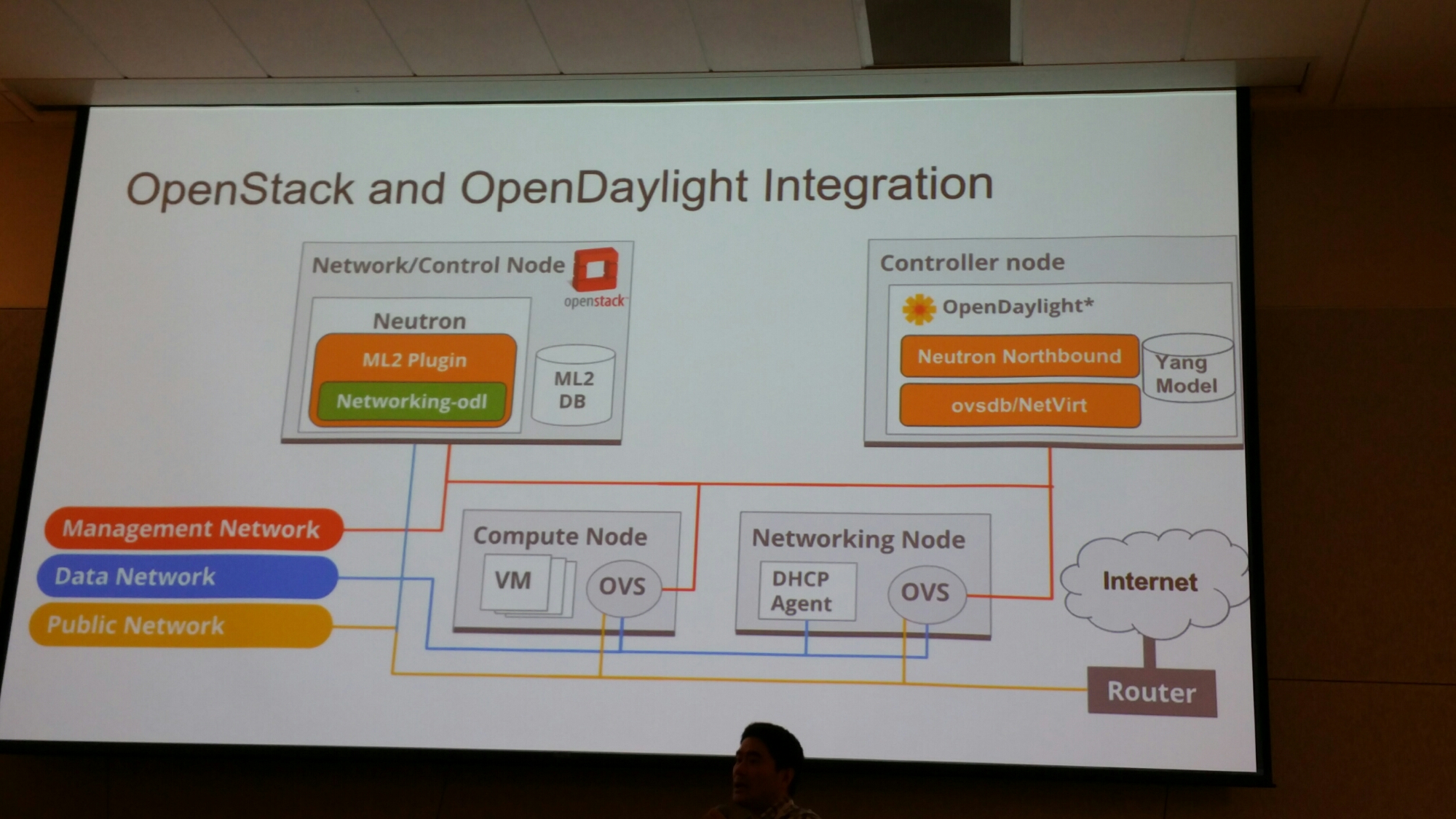
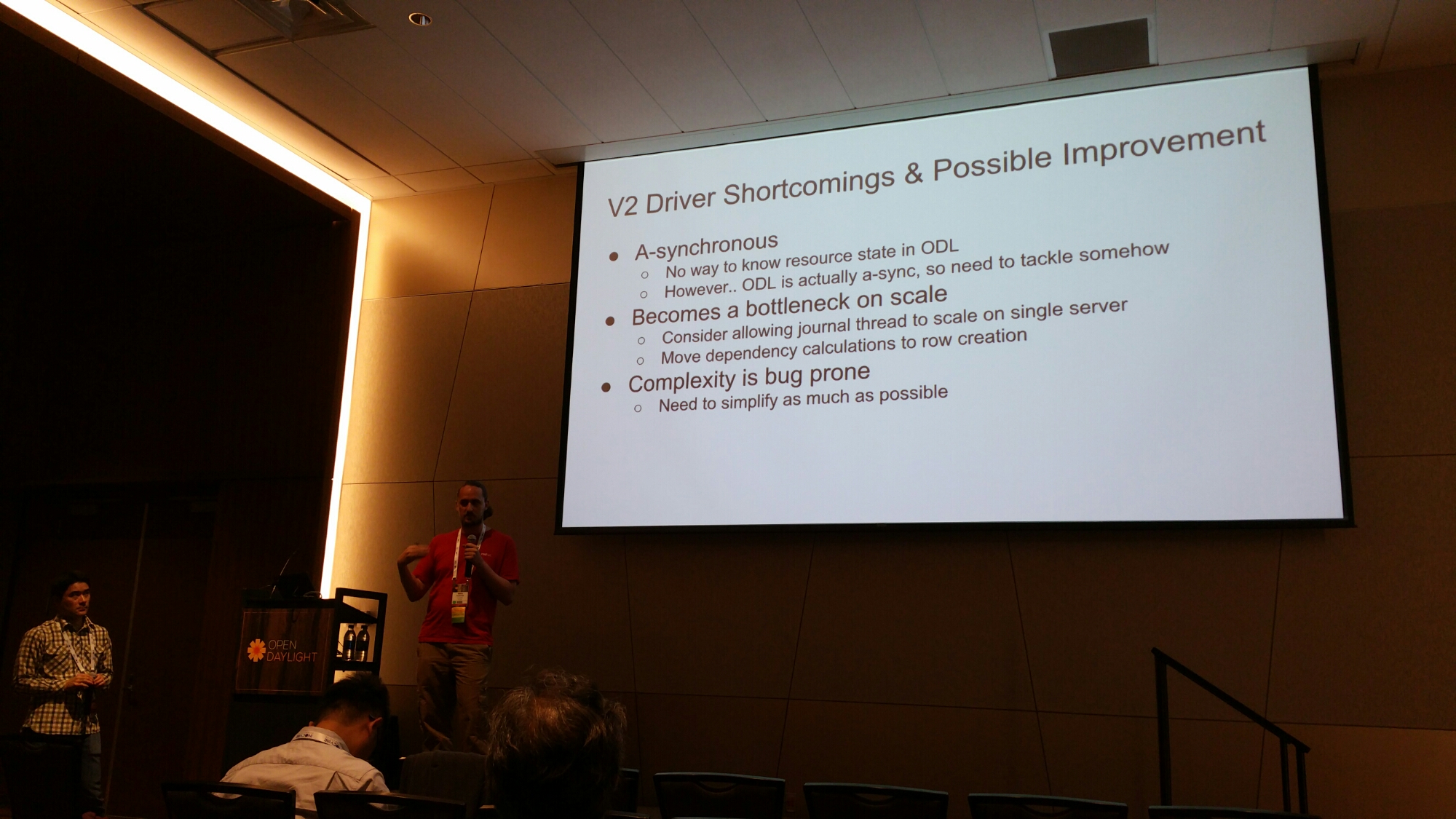
I ll write this later. Keywords and notes inline Cloud 5G AT&T Ericsson SDN FD.io Cisco Intel Linux Debian Ubuntu Open Source Hydrogen Helium Lithium OSI stack Usability Developers and users working together. Fast Dev/Test cycles Sessions start at 10:30 Message bus Minimal install needs to be smaller Most functionalities must be implemented in modules Upgrade path complexity Out of band control channel.
OPNFV customers don t run stock releases, make customisations and plugins easier. Message bus Distribution vendors should not be expected to perform package maintenance. Get the distribution ready for fast pathing in to backports, security, testing and unstable.

26 September 2016

Kees Cook: security things in Linux v4.3

When I gave my State of the Kernel Self-Protection Project presentation at the 2016 Linux Security Summit, I included some slides covering some quick bullet points on things I found of interest in recent Linux kernel releases. Since there wasn t a lot of time to talk about them all, I figured I d make some short blog posts here about the stuff I was paying attention to, along with links to more information. This certainly isn t everything security-related or generally of interest, but they re the things I thought needed to be pointed out. If there s something security-related you think I should cover from v4.3, please mention it in the comments. I m sure I haven t caught everything. :) A note on timing and context: the momentum for starting the Kernel Self Protection Project got rolling well before it was officially announced on November 5th last year. To that end, I included stuff from v4.3 (which was developed in the months leading up to November) under the umbrella of the project, since the goals of KSPP aren t unique to the project nor must the goals be met by people that are explicitly participating in it. Additionally, not everything I think worth mentioning here technically falls under the kernel self-protection ideal anyway some things are just really interesting userspace-facing features. So, to that end, here are things I found interesting in v4.3: CONFIG_CPU_SW_DOMAIN_PAN Russell King implemented this feature for ARM which provides emulated segregation of user-space memory when running in kernel mode, by using the ARM Domain access control feature. This is similar to a combination of Privileged eXecute Never (PXN, in later ARMv7 CPUs) and Privileged Access Never (PAN, coming in future ARMv8.1 CPUs): the kernel cannot execute user-space memory, and cannot read/write user-space memory unless it was explicitly prepared to do so. This stops a huge set of common kernel exploitation methods, where either a malicious executable payload has been built in user-space memory and the kernel was redirected to run it, or where malicious data structures have been built in user-space memory and the kernel was tricked into dereferencing the memory, ultimately leading to a redirection of execution flow. This raises the bar for attackers since they can no longer trivially build code or structures in user-space where they control the memory layout, locations, etc. Instead, an attacker must find areas in kernel memory that are writable (and in the case of code, executable), where they can discover the location as well. For an attacker, there are vastly fewer places where this is possible in kernel memory as opposed to user-space memory. And as we continue to reduce the attack surface of the kernel, these opportunities will continue to shrink. While hardware support for this kind of segregation exists in s390 (natively separate memory spaces), ARM (PXN and PAN as mentioned above), and very recent x86 (SMEP since Ivy-Bridge, SMAP since Skylake), ARM is the first upstream architecture to provide this emulation for existing hardware. Everyone running ARMv7 CPUs with this kernel feature enabled suddenly gains the protection. Similar emulation protections (PAX_MEMORY_UDEREF) have been available in PaX/Grsecurity for a while, and I m delighted to see a form of this land in upstream finally. To test this kernel protection, the ACCESS_USERSPACE and EXEC_USERSPACE triggers for lkdtm have existed since Linux v3.13, when they were introduced in anticipation of the x86 SMEP and SMAP features. Ambient Capabilities Andy Lutomirski (with Christoph Lameter and Serge Hallyn) implemented a way for processes to pass capabilities across exec() in a sensible manner. Until Ambient Capabilities, any capabilities available to a process would only be passed to a child process if the new executable was correctly marked with filesystem capability bits. This turns out to be a real headache for anyone trying to build an even marginally complex least privilege execution environment. The case that Chrome OS ran into was having a network service daemon responsible for calling out to helper tools that would perform various networking operations. Keeping the daemon not running as root and retaining the needed capabilities in children required conflicting or crazy filesystem capabilities organized across all the binaries in the expected tree of privileged processes. (For example you may need to set filesystem capabilities on bash!) By being able to explicitly pass capabilities at runtime (instead of based on filesystem markings), this becomes much easier. For more details, the commit message is well-written, almost twice as long as than the code changes, and contains a test case. If that isn t enough, there is a self-test available in tools/testing/selftests/capabilities/ too. PowerPC and Tile support for seccomp filter Michael Ellerman added support for seccomp to PowerPC, and Chris Metcalf added support to Tile. As the seccomp maintainer, I get excited when an architecture adds support, so here we are with two. Also included were updates to the seccomp self-tests (in tools/testing/selftests/seccomp), to help make sure everything continues working correctly. That s it for v4.3. If I missed stuff you found interesting, please let me know! I m going to try to get more per-version posts out in time to catch up to v4.8, which appears to be tentatively scheduled for release this coming weekend.

2016, Kees Cook. This work is licensed under a Creative Commons Attribution-ShareAlike 3.0 License.
Creative Commons License

Rhonda D'Vine: LP

I guess you know by now that I simply love music. It is powerful, it can move you, change your mood in a lot of direction, make you wanna move your body to it, even unknowingly have this happen, and remind you of situations you want to keep in mind. The singer I present to you was introduce to me by a dear friend with the following words: So this hasn't happened to me in a looooong time: I hear a voice and can't stop crying. I can't decide which song I should send to you thus I send three of which the last one let me think of you. And I have to agree, that voice is really great. Thanks a lot for sharing LP with me, dear! And given that I got sent three songs and I am not good at holding excitement back, I want to share it with you, so here are the songs: Like always, enjoy!

/music permanent link Comments: 0 Flattr this

25 September 2016

Sven Hoexter: in causa wosign

Since I kind of recommended the free WoSign CA in the past, I would like to point out the issues that have piled up. Mozilla has a writeup due to a removal discussion for NSS: https://wiki.mozilla.org/CA:WoSign_Issues (Yes I'm late with this post, about a month or two by now ...) Since WoSign, or the person behind it, silently also bought StartCom we've now with StartSSL and WoSign two of the three free CAs in one hand with a questionable track record. That leaves everyone looking for a low budget option with Let's Encrypt.

Next.

Previous.