Search Results: "sf"

10 December 2008

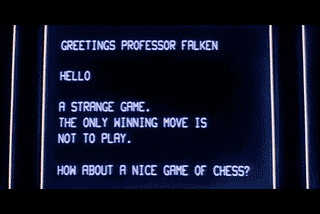
Biella Coleman: The Only Winning Move is Not To Play


nice-game-chess, originally uploaded by the biella.
Today I wrapped up both of my classes. Usually the end of class/semester represents and is experienced as nothing short of pure, unadulterated joy and at both ends of the stick (student and professors alike experience similar emotions :-). Like my students, I am pretty beat and more than ready for a break. But I have to admit, I experienced the end of my hacker class with a tinge of sadness. This is the third time I have taught this class and each time, it seems like it becomes harder and harder to contain the class conversation and I enjoy them through and through. The last few classes were brimming with talk, which is what should exactly happen because by the last month students are walking/talking on a foundation built over the course of many weeks. There is not much I would have changed about the syllabus (most of the readings were great-to-stellar) nor the class. But if there is one thing I am sorry about it is that we never watched War Games. The last time I taught the class, I was able to arrange various movie sessions and we watched War Games, Tron, and Sneakers (among a few others) and the students not only learned something about hacker media representations but did a little out-of-class bonding with the movies and lots of food. Since space is such an issue at NYU, I decided not to forage or hunt for a suitable room (I have since found a connection who I think can hook me up with a room). But by missing War Games, we missed an important event in the history of hackerdom. The movie undoubtedly led to many a kids asking for a modem for xmas and I am sure led to a spike in hacking and phreaking 9 months later (or however long it takes for a kid to plead for a modem, get it, learn some new tricks etc). It is also the case that while it helped usher in the image of the hacker as nefarious computer trickster, David Lightman was also a pretty cool, cute, and likable kid. Not a nerd but a geek. It perhaps represents the glimmerings of the transformation of the negative nerd into the positive geek (oh and the list keeps the list of girl geeks growing ), signaling the spread of the computer into mainstream society. So next time I teach the class, there will certainly be more movies, War Games on the top of the list so that we can learn that “the only winning move is not to play.”

8 December 2008

Andrew Pollock: [tech] RHEL doesn't have sysfsutils?

I'm reading the Red Hat I/O Performance Tuning Guide, because hey, it's all Linux, and I might just learn something. So far, I've learned that RHEL doesn't have sysfsutils. How very weird.
Unlike the /proc/sys/ file system, the /sys/ file system does not have a utility similar to sysctl that can make such changes persistent thoughout (sic) system reboots.
and
However, as mentioned in Section 4, Selecting a Scheduler , any tuning made though echo commands to the /sys/ file system is not persistent throughout system reboots. As such, to make any scheduler selection/request queue settings persistent throughout system reboots, use /etc/rc.d/rc.local.
Of course, for all I know, this information may be out of date with respect to the current release, but Debian's had sysfsutils since November 2003.

7 December 2008

Joey Hess: haskell and xmonad

I came back from Thanksgiving in California to find my copy of Real World Haskell had arrived. I've spent the last several days making my way through it up through chapter 10. I'd read a few of the first chapters last year when I was struggling to learn Haskell, and posted enough comments that I'm amoung the (many many) people credited in the Preface. Amusing, since I still don't consider myself proficient in the language. Reading back through those and on through Chapter Nine has swapped back in the basics I learned last year, and built on them. I was able to get all the way to Chapter Ten before hitting real brain-melting stumbling blocks. That's progess! I can't help but feel that Chapter Ten should come later, perhaps after monads are covered. Only other quibbles so far are some typographical problems introduced in typesetting the book, and a few bugs and problems that were pointed out in comments on the web site, but not fixed in time for the first edition.
Anyway, I know more than enough Haskell now to configure xmonad. While I'm still perfectly happy with awesome, xmonad has some cool things going for it. Playing with it this evening, I especially like: My current set of gripes with xmonad is small:

Biella Coleman: Nerds, Geeks, and Nerd/Geek Grrrls

I have not sat behind the helm of teaching for very long but I already have a few tricks up my sleeve. One of them is that I assign some of my favorite readings at the end of the semester so as to counter the downtrodden and tepid spirit and mood (not to mention attention) of my students, which drops precipitously with each passing day. Let’s face it post Thanksgiving, we are all a little tired and I try to find the readings, which uplift, intrigue, and challenge cherished assumptions about marriage and sex. So far it seems to pay off and I often can tell because the conversational pitch and excitement in class is high and the student writings are good, great, even exceptional, which, again, is hard to produce/induce this late in the semester. Readers of this blog would probably be most interested in one of these lively readings, Ben Nugent’s American Nerd (and it might be interesting to hear how the European Nerd story would diverge or converge with this one). One of my students, an audio geek and Free Culture President/Free Software junkie, by the name of John Randall produced a very nice little response (not research) paper on the Nugent reading as well as a short piece by Sarah Seltzer from Bitch Magazine
The(Girl) Geek Stands Alone (and thanks to Joe> for cluing me into this piece). Seltzer piece basically argues, in her own words, the following:
Imagine this scene from a comedy: a group of female friends sit around smoking a bowl and working on the Wikipedia page for Lord of the Rings. Their fashion sense is decidedly iconoclastic and several sport thick-rimmed glasses. Without a trace of self-consciousness, they have a hilariously ribald discussion on the relative traits of elves and orcs.
Awesome as it is, you’ll never see this scene onscreen. No mainstream movie or TV series would dare group so many female nerds together, or celebrate them so unabashedly
So John’s whole response paper is here and here is the pdf. In the paper, he makes a number of excellent points but what I loved most about it was his very geeky move at the end of the paper to prove Sarah (somewhat wrong) by listing all the girl geeks that do and have appeared in mainstream (and not-so mainstream) entertainment venues/shows, etc. They are as follows and in his own words:
I will now showcase my own geekiness through my knowledge of geeky female characters. Why? Because I can. But also because I want to demonstrate that if you look hard enough for representations of female geekyiness in pop culture, you will find plenty. Moreover, if you pick the right ones, you can make them support your argument about gender relations, whatever that argument might be. Some of these charters and personalities are hardly gendered, some are hyper-sexual. Some are incredibly attractive but completely asexual. Some undergo a transformation into/out of geekiness, while others to not. Some are powerful, while some are powerless. Some (most?) celebrate their geekiness, others are tortured by it. They are all geeks take your pick: Aeon Flux, a sexy geek who’s technological gadgets give her super powers (Comic drawings then Charlize TheronAeon Flux) Wonder Woman, attractive pilot of an invisible plane Lara Croft, a female Indiana Jones in short shorts, wielding guns and cracking computer codes (CGI and then Angelina Jolie in Tomb Raider) She-Ra, who was way smarter than He-Man (Masters of the Universe cartoons) Gadget Hackwrench, beautiful chipmonk technician for Chip and Dale (Rescue Rangers cartoon) Velma, featuring eyeglasses, awkwardness and brains (Scooby Doo), Hermonie Granger, a geek who is temporarily rejected because she is a geek, remains a geek, and finds love and happiness (Harry Potter) Barbarella, who, through comic strips and a 1968 film, helped introduce science fiction and sex to young women (Barbarella) La Femme Nikita, a skillful, savvy, and very feminine girl who doubles as a covert spy Kate Libby, aka ‘Acid Burn’, uber-sexualized hacker (played by Angelina Jolie in Hackers) Kathryn Janeway, smart and powerful captain of the USS Voyager (Star Trek Voyager) Starbuck (Battlestar Galactica), Dana Scully, FBI agent with encyclopedic media knowledge. The bizzare subtex of non-realized sexual tension was part of the magic The X-Files. Willow Rosenberg, geeky sidekick turned geeky supervillian (Alyson Hannigan in buffy the Vampire Slayer) Michelle Flaherty, hyper-sexual band geek (Alyson Hannigan in American Pie series) Dr Ellie Sattler, heroniene scientist (Jurrasic Park) Ellie, scientis hero (played by both Jenna Malone and Jodi Foster in Carl Sagan’s Contact) Dawn Wiener (Heather Matarazzo in Welcome to the Dollhouse Enid and Rebecca (Thora Birch and Scarlett Johanson in Ghost World) just about every charater ever played by Jenna Malone (Donie Darko, The Dangerous Lives of Altar Boys, The United States of Leland, Saved!, etc) half of the charaters played within the last decade by Jodi Foster (Panic Room, The Dangerous Lives of Altar Boys, Flightplan, The Addams Family half of the charaters played by Christina Ricci (Mermaids, The Addams Family, Little Red Riding Hood, The Ice Storm, Buffalo ‘66, Prozac Nation, Pumpkin, Speed Racer) half of the characters played by Natalie Portman (The Professional, Mars Attacks!, Star Wars, V for Vendette, The Darjeeling Limited, Mr. Magorium’s Wonder Emporium, Garden State) Molly Ringwald. characters played by Molly Ringwald. Rock musician Ani DiFranco and geeky Riot Grrls everywhere. Sarah Vowell, NPR commentator celebrating her geeky life. Voiceover for geeky cartoon characters. Rachel Maddow, for being Rachel Maddow.
First, awesome list, though he forgot a few (like one of my favorites, Bionic Woman and a more recent one, Juno) and it is nice to have it in one compact place. But, I have to say, I still agree to some degree with Sarah Setlzer, though I also agree with John. On the one hand there are representations and it is as important just to strut this stuff publicly as it is to claim that there is not enough female geeky representations in mainstream media. This is what John has done quite nicely. One the other hand, as he himself says ” if you look hard enough for representations of female geekyiness in pop culture, you will find plenty.” I think those words, “if you look hard enough” also speaks volumes of the continued disparity that does exist. One should not have to look “hard,” and the only blockbusters, so to speak, which feature a female geek, is Tomb Raider, which for being so hyper-sexualized is not so geeky to me, no matter how good she is with the gadgets. That said, what I find so important, and have emphasized in different contexts, is the need for what I think of simultaneous positive and negative form of critique, the former being about pointing to already exisitng examples to get people jazzed and excited and to put things in perspective. The later form of critique, negative critique, identifies a lack, a void to fill, just the type of excellent commentary in the Seltzer piece… But now for the most important question, who has John overlooked?

Neil Williams: langupdate for Emdebian Grip - borne from edos-debcheck

Whilst building more and more packages into Emdebian Grip, I came across gettext
which depends on libglib2.0-0
which surprised me somewhat. However, this is extremely useful because langupdate - the Emdebian-only utility that I wrote to correlate Emdebian TDebs with installed packages and supported locales - also uses libglib2.0-0 as it is one of my favourite libraries for all my C code. So now there is no need to rewrite langupdate to not use libglib2.0-0 (I wasn't looking forward to that particular task so it's even better).
Secondly, I thought about using reportbug --kudos edos-debcheck but AFAICT that merely sends an email to Stefano Zacchiroli so I thought I'd put the "kudos" into a blog post for more people to read:
If you haven't used edos-debcheck before you probably haven't done any work at all with repositories - edos-debcheck is becoming fundamental to everything I do. Emdebian simply could not function without these checks - it would take hours to identify the missing dependencies. (I know because before edos-debcheck was released, I did spend (s/spend/waste/) hours upon hours on a fruitless chase through the dependency trees in Debian.)
Consider my current task - adding packages to Emdebian Grip in such a way as to retain the smallest possible package set in which all dependencies are met (excluding Recommends that do not apply in Emdebian). edos-debcheck makes it almost trivial:

codehelp@ant:/org/emdebian$ ./scripts/grip-binary.sh libxml2
....
codehelp@ant:/org/emdebian$ edos-debcheck -explain -failures < grip/dists/unstable/main/binary-amd64/Packages
Parsing package file... 0.0 seconds 135 packages
Generating constraints... 0.0 seconds
gettext (= 0.17-6em1): FAILED
The following constraints cannot be satisfied:
gettext (= 0.17-6em1) depends on gettext-base NOT AVAILABLE
Checking packages... 0.0 seconds
codehelp@ant:/org/emdebian$ ./scripts/grip-binary.sh gettext-base

Simple. A second script then goes around behind and ensures that each binary added to the repo has the corresponding source package also added. The key is that Emdebian Grip does not have to have all binaries from that source - we only use the binaries that are needed, either directly or as direct dependencies of others.
Zack - and all the people who worked on edos-debcheck - your code is just indispensable to me.

2 December 2008

Dirk Eddelbuettel: Rcpp relaunched with versions 0.6.0 and 0.6.1

I just announced Rcpp 0.6.0 and 0.6.1 on the low-volume R-packages list. Rcpp provides C++ classes that greatly facilitate interfacing C or C++ code in R packages using the .Call() interface provided by R. Rcpp provides matching C++ classes for a large number of basic R data types. Hence, a package author can keep his data in normal R data structure without having to worry about translation or transfer to C++. At the same time, the data structures can be accessed as easily at the C++ level, and used in the normal manner. The mapping of data types works in both directions. It is as straightforward to pass data from R to C++, as it is it return data from C++ to R. Rcpp was initially written by Dominick Samperi to in the context of the RQuantLib package and later released on its own, but had not seen any releases in twenty-four months. I have substantially expanded the documentation, simplified the build structure yet made it easier to use Rcpp from other packages, and started to add some new classes (notably microsecond time types). Rcpp is supported on Windows, Linux and Mac OS X (with special thanks to Simon for some extended help). More information for Rcpp can be found at the package homepage, the R-forge repository or the package CRAN page.

1 December 2008

Jordi Mallach: Iru a

This weekend I had the pleasure of visiting my friend Kike in Iru a, a city I really like but had not been able to visit in five years. I spent three days with him, after a really awful Bilman trip during Friday night. The first thing that happened on Friday morning was quite unexpected. I went out, crossed a pair of streets to get to Carlos III, and going past the corner I found myself surrounded by all kinds of policemen: red, blue, green and yellow. There were press reporters all over the place, with TV and photo cameras ready to record something big. What the hell? I looked around, and there it was: a huge blue sign read Populares de Navarra, and Mariano Rajoy was seconds away from getting out of the new PP headquarters in Nafarroa. With a few dozen policemen looking at me in suspicion, and realising my current hair dress wasn't the most appropriate for that scenario, I decided to disappear as quickly as possible. Populares aside, the weekend was really productive. I had a great time trying to find the places I visited 9 and 5 years ago. It was sad to see the fantastic Iru ako Gaztetxea turned into an iron building surrounded by old, traditional houses in the centre of the city. With Kike, I had enough time to learn more about the origins of Iru a and the three cities from which it originated, and visit the Ciudadela. On Saturday, Kike, Ana and I went to have some fun on a snowy day around Orreaga and had dinner in a small town around the area, maybe Lintzoain? I'm afraid I forgot due to the mix of basque names in my head. We had dinner in lo viejo, where I spotted a poster of Solidari@s con Itoiz for the Itoitz hustu arte campaign, a copy of which I unsuccessfully tried to get in several places in the city. On Sunday, Kike and I took a bus to Donosti, and I travelled across the most beautiful highway I've seen. But of course, that was from my perspective seated in a bus. I can imagine the Leitzaran highway project must have been greatly contested by the people of the tiny towns nearby. The spoiled valleys and views must have been really impressive in the past and seem now irreversibly ruined by a scar and holes through the mountains. This was my first visit to Donosti, which held its annual Marathon, and were lucky to meet our friend Rub n when he was around kilometre 25 of his race. He managed to finish under 2:50, which was a bit better than what he aimed for in his first Marathon. Well done! The weather was horrible, and our visit to La Concha, the old harbour and the Casco Viejo was short, we were freezing and getting our feet wet. While I visited Donosti for the first time, Mikel Laboa, one of the most respected singers in the basque culture, was ebbing away. Laboa's songs always give me goosebumps, even if I need to read a translation for the basque lyrics. Many will remember his music from Julio Medem's documentary, La pelota vasca, featuring Txoria txori, which has become a symbol of basque culture over the years. Youtube has quite a few videos, and I'd recommend watching Txoria txori, Gure bazterrak, Lili bat or Baga biga higa performed by the Orfe n Donostiarra to name a few. Mikel Laboa, goian bego.

30 November 2008

Theodore Ts'o: Followups to the ebooks ethical question

When I have a moment, I’ll try to tally up the responses that I got to “An ethical question involving ebooks”and see if there are any interesting patterns based on self-identified generational markers. Obviously, this is not a properly controlled survey, so the results aren’t going to mean much, but it is interesting that some fairly passionately written comments came from folks who self-identified as coming from generations that broke with the common stereotypes of their respective demographic groups. If I were going to commission a study, one thing that I would almost certainly do is to ask pose a similar question about music and mp3’s, and do have the surveys asking the question about ebooks first, and half the surveys asking the questions about music first. It would be interesting to see if (a) there is a difference in attitudes between music and books, and (b) whether the order of the questions might influence the answers or not. A number of poeple have asked me about the author’s name and the title of the books/series involved. I deliberately didn’t include that information, for a number of reasons. First of all, I don’t believe idenifying the author/books/character involved is relevant to the question at hand, and in fact, might be distracting. Secondly, given the many comments, some of them quite passionate, I don’t think it would be fair to drag her name into the discussion without her permission first. I will say that the author does have a fairly extensive internet presence, and has apparently gotten a lot of questions about said character, and in fact whether those books would be made into ebooks. It’s been made quite clear that while those books were successful, they weren’t that successful, and so from an economic point of view, she chooses to write books that she (and her publishers) feel will be more economically viable. Because there will likely be no further books published containing this character, it is very unlikely that the publisher will reprint the original series of books — and when asked about whether they would be made available in ebook form, her response was effectively “it’s up to the publisher”, Apparently she has worked with a number of publishers, and while publisher X hasn’t been willing to publish her books in ebook form, publisher Y has. Furthermore, it seems that her contracts apparently delegate all decisions about how her books will be published, and whether a large Major Big City Law Firm with Fangs (aka MBCLFF) will go after copyright infringers to her publishers and her agent (who is a lawyer at said MBCLFF, and who could presumably inflict major Hurt on copyright infringers that curry the lawyer’s disfavor). I don’t know if this is true, or just her way of managing her relationship with her fans by disclaiming all responsibility about publication forms and enforcement decisions to others — but some authors do make such choices, if they are much more interested in the writing and storytelling end of things than the business side of things. Which brings up an interesting question with respect to copyright enforcement. It’s pretty obvious that many people will give different answers to the question relating to how much deference should be given to copyrights depending on whether they are owned by The Struggling Author versus whether they are owned by The Big Media Corporate Monolith, with many more allowances given if the question is framed as being primarily about the former rather than the latter. Another way in which how you frame the question radically changes the outcome depends on whether the focus is on making sure the author (and/or his surviving widow/widower/children) get paid or whether the focus is on control of one’s works. If you believe the primary justification is an economic one, then that leads to a series of ethical conclusions — the most obvious of which is that if it doesn’t result in a direct (or perhaps indirect) monetary loss to the author, there should not be a moral or ethical problem. There might be some question as to whether devaluing the secondary market might discourage the sale of new books, and hence indirectly harm the author sufficiently that this should be a concern, but those issues can be worked out. If however, you believe the primary issue at hand is one of control, a very different set of issues have to get factored into the conversation. For example, what if the author was ashamed of a book or series, and wants it to go quietly out of print, and hopefully disappear. How should that be weighed against fans who disagree with the author and who love the series? What is the right balance? For those who argue that the author’s wishes should be sacrosanct — should we move things more in that direction? What if all texts lived in DRM’ed, encrypted containers, and electronic readers had to ask permission of a central authorization server for the text could be displayed. This would allow the author to, after the fact, disable anyone from reading his or her works, if for some reason the author so desired it. Would that be a good thing? If not — and I hope most authors would agree this would be horrific power to give copyright holders — then it’s clear that author’s moral rights as creators should not be entirely sacrosanct, and that the society also has some claims on preserving its culture, and that once a book has been published and becomes part of the culture, society should have some claim on that book as part of culture. Whether that means that copyright terms should be 14 years or 20 years as opposed to whenever the Disney corporation feels like paying off more legislators to extend copyright terms is one way that question could be asked. Another is whether society should have the right to say that if after some number of years where a work has been abandoned for commercial exploitation, whether it should automatically enter the public domain. There are no obvious answers here. The final point that I want to make, which may be fairly controversial amongst the Open Source programmers in the room, is that if you believe that copyright should be fundamentally be about economic arguments of “no harm, no foul”, that this is in direct contradiction with the belief that lawsuits should be used in order to enforce the GPL. After all, the conditions imposed by the GPL are fundamentally about control, not about economic issues. Consider — if someone uses the Busybox project in an embedded device — especially if no changes has been made to the code — who has been harmed, economically? No harm, no foul, right? Or if someone uses GPLv3 code in a firmware which is protected by a digital signature — sure, it means that end users who want to modify the firmware and then use it to enhace/extend the device won’t be able to do so. But how does that economically harm the author of the GPLv3 code? Fundamentally, Copyleft schemes are all about extending control over how the code can be used. Hence, if you are an Free Software programmer who cheers on the activities of the SFLC, or who firmly believes that no one should be allowed to mix firmware which is not shipped with source with your GPL’ed software, it is completely and profoundly hypocritical to say, “F*ck the author’s wishes; if it’s not available in the from I want, I should be able to make a derived work to transfer the work into a form that I want.” What if the author is a luddite who hates eBooks and firmly believes and wants to enforce that their works should never be made available in eBook form. How is that fundamentally different from a Free Software Acolyte saying that because they abhor non-free firmware, and don’t want allow their code to be shipped alongside binary-only firmware?

28 November 2008

Theodore Ts'o: An ethical question involving ebooks

I recently purchased a short story from Fictionwise, which was not DRM’ed, so I could easily get it into a form where I could read it on my Sony eReader. Thanks to that short story, I was introduced to an author, and a character, which I found very engaging. When I decided to find out more about the character, I found that the author had written two additional short stories, and three additional novels many years ago, but has since stopped writing any more books involving that character. Furthermore, the novels have gone out of print, and are only available from amazon.com as used books. Unfortunately, I travel a lot. So much so, that one of the few times that I have time to read is when I’m traveling. And I really dislike having to haul dead-tree versions of my favorite novels around; they take up far too much weight and space in my carry-on luggage. Unfortunately, these out-of-print novels were published by a Neanderthal Publishing company who hasn’t made any of the books available in ebook format, DRM’ed or no. Grumpy, I searched on Internet, and found all three novels were easily available for free download — in a pirated form, of course. Should I download them and convert them into a form which would allow me to read them on my Sony eReader? Well, according to Russell Davis, former chair (and now president of the Science Fiction Writer’s Association) of the SFWA’s Copyright Committee, “electronic infringement is theft”. From a legal perspective, I suppose that is true. And given that as an Open Source programmer, I depend on Copyright Law to assure that my wishes as an author are upheld, it would be hypocritical for me assume that I should be able to ignore Copyright Law just because it is inconvenient. And yet… from a moral perspective, who has really lost anything? The argument made by Russell Davis is that infringement is bad because it is “harming authors and author estates”. Jerry Pournelle has indignantly proclaimed that e-piracy goes against a “specific (and very stern) Biblical injunction against stealing from widows and orphans”. Of course, in this case, the author is still alive (and is female, although I suppose stealing from widowers would be just as bad). Also, given that the author has publically stated she doesn’t plan to write any more books involving this character (since some of her more psychotic readers sent her death threats as a result of reading said books), the publisher is highly unlikely to re-release said novels — and if I buy used dead-tree versions of said novels, the author doesn’t receive any additional royalties. So, then, where is the moral bright line? Somewhere along this continuum, we’ve crossed over from the light-side to the dark-side. Setting aside the observation that the Neanderthal attitudes and business practices of the publisher involved has made it impossible for me to legitimiately follow the law, enjoy the novels, and direct money to the author via royalty payments — what do you think is the morally correct course of action? And why? And if you don’t mind saying so publically, roughly what generation are you from (i.e., Baby Boomer, Gen X, Gen Y, etc.)? I’m curious how attitudes are changing based on age, and whether folks who are currently in college might differ from those who can remember a time when the Internet didn’t exist… Update: I’ve posted a follow-up to this post here.

Russell Coker: Physical vs Virtual Servers

In a comment on my post about Slicehost, Linode, and scaling up servers [1] it was suggested that there is no real difference between a physical server and a set of slices of a virtual server that takes up all the resources of the machine. The commentator notes that it’s easier to manage a virtual machine. When you have a physical machine running at an ISP server room there are many things that need to be monitored, this includes the temperature at various points inside the case and the operation of various parts (fans and hard disks being two obvious ones). When you run the physical server you have to keep such software running (you maintain the base OS). If the ISP owns the server (which is what you need if the server is in another country) then the ISP staff are the main people to review the output. Having to maintain software that provides data for other people is a standard part of a sys-admin’s job, but when that data determines whether the server will die it is easier if one person manages it all. If you have a Xen DomU that uses all the resources of the machine (well all but the small portion used by the Dom0 and the hypervisor) then a failing hard disk could simply be replaced by the ISP staff who would notify you of the expected duration of the RAID rebuild (which would degrade performance). For more serious failures the data could be migrated to another machine, in the case of predicted failures (such as unexpected temperature increases or the failure of a cooling fan) it is possible to migrate a running Xen DomU to another server. If the server migration is handled well then this can be a significant benefit of virtualisation for an ISP customer. Also Xen apparently supports having RAM for a DomU balloon out to a larger size than was used on boot, I haven’t tested this feature and don’t know how well it works. If it supports ballooning to something larger than the physical size in the original server then it would be possible to migrate a running instance to a machine with more RAM to upgrade it. The question is whether it’s worth the cost. Applications which need exactly the resources of one physical server seem pretty rare to me. Applications which need resources that are considerably smaller than a single modern server are very common, and applications which have to be distributed among multiple servers are not that common (although many of us hope that our projects will become so successful ;). So the question of whether it’s worth the cost is often really whether the overhead of virtualisation will make a single large machine image take more resources than a single server can provide (moving from a single server to multiple servers costs a lot of developer time, and moving to a larger single server exponentially increases the price). There is also an issue of latency, all IO operations can be expected to take slightly longer so even if the CPU is at 10% load and there is a lot of free RAM some client operations will still take longer, but I hope that it wouldn’t be enough to compete with the latency of the Internet - even a hard drive seek is faster than the round trip times I expect for IP packets from most customer machines. VMware has published an interesting benchmark of VMware vs Xen vs native hardware [2]. It appears to have been written in February 2007 and while it’s intent is to show VMware as being better than Xen, in most cases it seems to show them both as being good enough. The tests involved virtualising 32bit Windows systems, this doesn’t seem an unreasonable test as many ISPs are offering 32bit virtual machines as 32bit code tends to use less RAM. One unfortunate thing is that they make no explanation of why “Intger Math” might run at just over 80% native performance on VMware and just under 60% native performance on Xen. The other test results seem to show that for a virtualised Windows OS either VMware or Xen will deliver enough performance (apart from the ones where VMware claims that Xen provides only a tiny fraction of native performance - that’s a misconfiguration that is best ignored). Here is an analysis of the VMware benchmark and the XenSource response (which has disappeared from the net) [3]. The Cambridge Xen people have results showing a single Xen DomU delivering more than 90% native performance on a variety of well known benchmarks [4]. As it seems that in every case we can expect more than 90% native performance from a single DomU and as the case of needing more than 90% native performance is rare it seems that there is no real difference that we should care about when running servers and that the ease of management outweighs the small performance benefit from using native hardware. Now it appears that Slicehost [5] caters to people who desire this type of management. Their virtual server plans have RAM going in all powers of two from 256M to 8G, and then they have 15.5G - which seems to imply that they are using physical servers with 16G of RAM and that 15.5G is all that is left after the Xen hypervisor and the Dom0 have taken some. One possible disadvantage of this is that if you want all the CPU power of a server but not so much RAM (or the other way around) then the Slicehost 15.5G plan might involve more hardware being assigned to you than you really need. But given the economies of scale involved in purchasing and managing the large number of servers that Slicehost is running it might cost them more to run a machine with 8G of RAM as a special order than to buy their standard 16G machine. Other virtual hosting companies such as Gandi and Linode clearly describe that they don’t support a single instance taking all the resources of the machine (1/4 and 1/5 of a machine respectively are the maximums). I wonder if they are limiting the size of virtual machines to avoid the possibility of needing to shuffle virtual machines when migrating a running virtual machine. One significant benefit of having a physical machine over renting a collection of DomUs is the ability to run virtual machines as you desire. I prefer to have a set of DomUs on the same physical server so that if one DomU is running slowly then I have the option to optimise other DomUs to free up some capacity. I can change the amounts of RAM and the number of virtual CPUs allocated to each DomU as needed. I am not aware of anyone giving me the option to rent all the capacity of a single server in the form of managed DomUs and then assign the amounts of RAM, disk, and CPU capacity to them as I wish. If Slicehost offered such a deal then one of my clients would probably rent a Slicehost server for this purpose as soon as their current contract runs out. It seems that there is a lot of potential to provide significant new features for virtual hosting. I expect that someone will start offering these things in the near future. I will advise my clients to try and avoid signing any long-term contracts (where long means one year in the context of hosting) so that they keep their options open for future offers.

Biella Coleman: Delivering a message

Russell I know this is odd but I have an email message for you (from someone else who can’t seem to successfully get it to you). If you would like it, drop me a line and I will pass it along. (I have no idea why they wrote me but..)

Russell Coker: Leaving Optus

Today I phoned Optus to disconnect my Internet service. Some time ago I got an Internode [1] SOHO connection. This gave me a much faster upload speed (typically 100KB/s) compared with Optus having a maximum of 25KB/s. Also Internode has better value for large data transfer (where “large” in Australia means 25GB per month) and I get a static IP address. I also get unfiltered Internet access, Optus blocks outbound connections to port 25 which forced me to ssh to another server to test my clients’ mail servers. But the real reason for leaving Optus is based on events two years ago. When I first signed up with Optus four years ago my contract said “unlimited uploads“. What they really meant was “upload as much as you want but if you transfer more than 8KB/s for any period of time you get disconnected“. They claimed that running a default configuration of BitTorrent was a DOS (Denial of Service) attack (the only part of their terms of service that even remotely permitted them to disconnect me). So I was quite unhappy when they cut me off for this. What really offended me was the second time they cut my connection. I had been running BitTorrent on Friday and Saturday, and they cut my connection off on Wednesday. Once it was determined that the issue was uploads we had a bit of a debate about when my BitTorrent session was terminated, it was my clear memory of using killall to end BitTorrent during a commercial break of a TV show on the Saturday night vs the Optus idiot claiming they had a record of me doing big uploads on the Sunday. But I let the help desk person think that they had won that debate in order to focus on the big issue, why large uploads on a Saturday (or a Sunday) should result in a loss of service on Wednesday (three or four days later). They said “it was to teach you a lesson“! The lesson I learned is that it is best to avoid doing business with Optus. I didn’t immediately cancel my contract, if you have both phone and Internet service through Optus they do offer a reasonable deal (there are a variety of discounts that are offered if you have multiple services through them). When discussing this matter in the past it had been suggested to me that I try appealing to the Telecommunications Industry Ombudsman etc. However I didn’t do this because I was in fact breaking the Optus acceptable usage policy for most of the time that I was a customer. When I signed up their AUP prohibited me from running a server and from memory I think it had a specific example of a shell server as something that should not be done, it now prohibits running any automated application that uses the Internet when a human is not present (which presumably includes servers). I’m pretty sure that my SE Linux Play Machine [2] met the criteria. While I’m reviewing Optus service I need to mention their mail server, here is the summary of the Optus anti-spam measures in protecting my email address etbe@optushome.com.au in September (other months were much the same):
131 emails have been sent to your Inbox.
52 of these emails were identified as spam and moved to the Spam Folder.
39% of your email has been identified as spam. The email address in question only received legitimate mail from Optus. This meant that I received between two and four valid messages a month, the rest were all spam. So of the 79 messages delivered to me, at least 75 were spam, and Optus blocked less than half the spam. But to be fair, given that the Optus mail servers are listed on some of the DNSBLs it seems reasonable for them to be lax in anti-spam measures. I wonder whether it would be reasonable for an ISP of Optus scale to run the SpamAssassin milter on mail received by their outbound relays to reject the most gross spam from customer machines. But Optus are good at some things. The download speed was always very good (I could receive data at 1MB/s if the remote server could send that fast). Also their procedures for account cancellation are quite good. The guy who took my call offered to transfer me to the complaints department when I mentioned how I was “taught a lesson”, he also offered me a significant discount if I was to continue using the service. In retrospect I should have had that conversation six months ago and had some cheap service from Optus before getting rid of them. Getting the account terminated happened in a couple of hours. It was so quick that I hadn’t got around to transferring my Play Machine to my Internode account before it happened, so I had a few hours of down-time.

27 November 2008

Christian Perrier: How to get work done without doing anything

It's interesting to be here in Casar de Caceres for the joined i18n+QA+FTPmasters Extremadura meeting. Today, I've been sitting all day long in the biblioteca, which is used as hacklab, and just watched all great people around playing around with the concept of "tdebs". That weird beast can be described in two words as a concept of deb packages that would be able to distribute translation data in a more independent way then "regular" deb packages. Don't smash me as the concept is currently being twisted around in all directions by the nice folks here, to bring it to a great concept well suited for "side" material of our packages. To get an idea, you can read the original concept that popped up during the 2006 i18n Extremadura meeting, but got transformed drastically by ideas exchanged at Debconf 8 All this is made possible because the concept is now a very important issue for Emdebian and is strongly pushed by Neil Williams, whose nickname shall now be "MisterT", by general agreement of the folks here. What's really interesting right now is to see live discussions happening all the way round and see the concept slowly emerging from this. Something we could probably never do in regular mailing lists discussions or on IRC. We should really grant tons of rewards to the Extremadura region, and particularly out tireless C sar who again organised that meeting. It's still hard to say what will emerge from this and we willprobably need some more such live meetings to have real implementations of these tdeb beasts, but this is really how I like to see free software development going on. And now people begin to think about coding stuff and prepare patches, which is a good sign, in general.

Erich Schubert: Java visualization libraries?

Can anyone recommend me (erich AT debian DOT org) a good Java visualization library? Open source only, please.I've looked at a few such as prefuse, but usually they all are too high-level for me, providing a whole UI and data model and parsing and ...What I'm interested in is: Any recommendations?[Update: I was pointed out processing.org which looks interesting but way too much about writing complex animations instead of just allowing me to visualize the data I computed. I also discovered Apache Batik which probably covers 90% of what I need, given that SVG allows for many transformations.][Update #2: VTK looks good, except that I don't want to introduce a non-Java dependency just for the visualizations. Otherwise I would also be considering Gnuplot. Which is also why some of the other suggestions I received aren't too convincing: I want to visualize data points, lines, vectors primarily; a full 3D engine isn't too useful for that (especially since these are typically triangle-oriented)]

Russell Coker: Slicehost vs Linode

Six months ago I investigated the options for Xen virtual servers [1]. I ended up receiving an offer of free hosting and not needing that, but the research was useful. There is a good range of options for Xen servers with different amounts of CPU power, RAM, bandwidth, and disk space. There are a couple of things that seem to be missing, options to upgrade from virtual servers to physical servers, and information on dedicated disk and database performance - but I’ll explain that later after some history. About a week ago a client needed a Xen virtual server in a hurry, their main server (a Xen system that I run on hardware that they rent) was getting a bit overloaded and needed to have one of the largest DomUs moved off. I ended up recommending Linode [2] based on my research and comments I received. The Linode server is working quite well and the client is happy, one nice feature of Linode is the choice of server rooms that they offer. I was able to choose a room in the same region as the other servers that the client owns and thus get ping times that are sometimes less than 2ms! Due to a missing feature in a program that I’m maintaining for the client a large number of MySQL queries are being made. Due to a problem I’m having with MySQL it won’t let me create a slave database server so all the queries go over the VPN and use a large amount of data. This combined with the other traffic that should be going over that link means that about 600G per month is being used, fortunately that is rather cheap. Linode staff handled this very well, after the server had exceeded it’s quota by 120G they asked my client to confirm that the traffic was legitimate and then suggested an upgrade to a plan that could handle the traffic (which went smoothly). Now I have another week to add the feature in question before I meet the quota again. Shortly after getting the new virtual server running at full capacity David Welton wrote a detailed review of Linode and Slicehost for the issues that matter to his use [3]. His conclusion seems strongly in favor of Linode. But now I am looking at getting a Slicehost [4] virtual server for the same client (for a different project) because Slicehost is owned by Rackspace [5], and the new project if successful will need a set of powerful servers and Rackspace seems like a reasonable company to host that. The problem with Rackspace is that they (and every other ISP I’ve researched so far) seems to offer little in regard to customers who need serious disk IO. I am planning some servers that will have a write bottleneck on a MySQL database (or maybe multiple shards), so serious disk capacity is needed. At least I would like to be able to get disk storage by the tray (12-14 disks) with the controllers having RAID-6 support. Rackspace only offers RAID-5 (according to the “livechat” person), and we didn’t get as far as discussing how to add more trays. What would be ideal is if there was an ISP that had both virtual servers and physical servers (so I could start with a virtual server and move to a physical server when things are working well), and also serious storage options. They would offer internal disks, external RAID arrays, and NetApp Filers [6] (or some equivalent device). It would be really nice if I could just instruct the ISP to add another NetApp Filer to my back-end network and have it done for me (I’m certainly not going to visit the US to install new hardware). It’s been over a day since I submitted a sales request to NetApp asking whether they partner with any ISPs and I haven’t received a response. OpenSolaris with ZFS also sounds good for disk IO performance (they have similar features to NetApp). Unfortunately the support for OpenSolaris among ISPs is not that great (while everyone offers Linux and Windows), and I haven’t used any recent version of Solaris. So using OpenSolaris would require finding someone with the skills to manage it who can work for my client - as opposed to a NetApp device that would be just like any other NFS server, SAN, or iSCSI server. But I’m not ruling OpenSolaris out, if someone knows of a good ISP that hosts OpenSolaris machines and supports adding dozens of disks and decent amounts of NVRAM for ZFS then I would be interested to investigate it. Joyent has some interesting OpenSolaris virtual server plans [7], they are a little pricey but offer large amounts of data transfer. They don’t provide any information on disk IO capacity (other than saying that they use ZFS for good performance). I’ve just downloaded Nexenta (Debian with the OpenSolaris kernel) [8] and will test it out over the next few days. One of the reasons I’m tending towards Rackspace at the moment (with Slicehost as the entry point) is that they seem cooperative to customer requests. My discussions with them (on a web based “livechat” and on the phone) have indicated that they may be able to do something special for me.

25 November 2008

Ian Wienand: Position Independent Code and x86-64 libraries

If you've ever tried to link non-position independent code into a shared library on x86-64, you should have seen a fairly cryptic error about invalid relocations and missing symbols. Hopefully this will clear it up a little! Let's start with a small program to illustrate.
$ cat function.c
int global = 100;
int function(int i)  
	return i + global;
 
$ gcc -c function.c
Firstly, inspect the disassembley of this function:
0000000000000000 <function>:
   0:	55                   	push   %rbp
   1:	48 89 e5             	mov    %rsp,%rbp
   4:	89 7d fc             	mov    %edi,-0x4(%rbp)
   7:	8b 05 00 00 00 00    	mov    0x0(%rip),%eax        # d <function+0xd>
   d:	03 45 fc             	add    -0x4(%rbp),%eax
  10:	c9                   	leaveq
  11:	c3                   	retq
Lets just go through that for clarity: The IP relative move is really the trick here. We know from the code that it has to move the value of the global variable here. The zero value is simply a place holder - the compiler currently does not determine the address (i.e. how far away from the instruction pointer the memory holding the global variable is. It leaves behind a relocation -- a note that says to the linker "you should determine the correct address of foo, and then patch this address of the code to point to that addresss (i.e. foo)." Relocations with addend The image above gives some idea of how it works. We can examine relocations with the readelf tool.
$ readelf --relocs ./function.o
Relocation section '.rela.text' at offset 0x518 contains 1 entries:
  Offset          Info           Type           Sym. Value    Sym. Name + Addend
000000000009  000800000002 R_X86_64_PC32     0000000000000000 global + fffffffffffffffc
If you try and build a shared object (dynamic library) with this function, you should get something like
$ gcc -shared function.c
/usr/bin/ld: /tmp/ccQ2ttcT.o: relocation R_X86_64_32 against  a local symbol' can not be used when making a shared object; recompile with -fPIC
/tmp/ccQ2ttcT.o: could not read symbols: Bad value
collect2: ld returned 1 exit status
Position Independent Code (PIC, enabled with -fPIC) just means that the output binary does not expect to be loaded at a particular base address, but is happy being put anywhere in memory (compare the output of readelf --segments on a binary such as /bin/ls to that of any shared library). This is obviously critical for implementing shared-libraries, where you may have many, many libraries loaded in essentially any order, and trying to pre-allocate where in memory they would all live just does not work. However, PIC has slightly wider implications than simply movable base addresses. So, back to relocations. The exact rules for different relocation types are described in the ABI for the architecture. The R_X86_64_PC32 relocation is defined as "the base of the section the symbol is within, plus the symbol value, plus the addend". The addend makes it look more tricky than it is; remember that when an instruction is executing the instruction pointer points to the next instruction to be executed. Therefore, to correctly find the data relative to the instruction pointer, we need to subtract the extra. This can be seen more clearly when layed out in a linear fashion (as in the bottom of the above diagram). What's the problem with this in a shared library? In a shared library situation, we can not depend on the local value of global actually being the one we want. Consider the following example, where we override the value of global with a LD_PRELOAD library.
$ cat function.c
int global = 100;
int function(int i)  
	return i + global;
 
$ gcc -fPIC -shared -o libfunction.so function.c
$ cat preload.c
int global = 200;
$ gcc -shared preload.c -o libpreload.so
$ cat program.c
#include <stdio.h>
int function(int i);
int main(void)  
   printf("%d\n", function(10));
 
$ gcc -L. -lfunction program.c -o program
$ LD_LIBRARY_PATH=. ./program
110
$ LD_PRELOAD=libpreload.so LD_LIBRARY_PATH=. ./program
210
If the code in libfunction.so has a fixed offset into its own data section, it will not be able to see the overridden value provided by libpreload.so. This is not the case when building a stand-alone executable, where references are satisfied internally. Of course, any problem in computer science can be solved with a layer of abstraction, and that is what is done when compiling with -fPIC. To examine this case, let's see what happens with PIC turned on.
$ gcc -fPIC -shared -c  function.c
$ objdump --disassemble ./function.o
./function.o:     file format elf64-x86-64
Disassembly of section .text:
0000000000000000 <function>:
   0:	55                   	push   %rbp
   1:	48 89 e5             	mov    %rsp,%rbp
   4:	89 7d fc             	mov    %edi,-0x4(%rbp)
   7:	48 8b 05 00 00 00 00 	mov    0x0(%rip),%rax        # e <function+0xe>
   e:	8b 00                	mov    (%rax),%eax
  10:	03 45 fc             	add    -0x4(%rbp),%eax
  13:	c9                   	leaveq
  14:	c3                   	retq
It's almost the same! We setup the frame pointer with the first two instructions as before. We push the first argument into memory in the pre-allocated "red-zone" as before. Then, however, we do an IP relative load of an address into rax. Next we de-reference this into eax (e.g. eax = *rax in C) before adding the incoming argument to it and returning.
$ readelf --relocs ./function.o
Relocation section '.rela.text' at offset 0x550 contains 1 entries:
  Offset          Info           Type           Sym. Value    Sym. Name + Addend
00000000000a  000800000009 R_X86_64_GOTPCREL 0000000000000000 global + fffffffffffffffc
The magic here is again in the relocations. Notice this time we have a P_X86_64_GOTPCREL relocation. This says "replace the data at offset 0xa with the global offset table (GOT) entry of global. Global Offset Table operation with data variables As shown above, the GOT ensures the abstraction required so symbols can be diverted as expected. Each entry is essentially a pointer to the real data (hence the extra dereference in the code above). Since the GOT is at a fixed offset from the program code, it can use an IP relative address to gain access to the table entries. This extra reference is obviously slower; however for the most part I imagine the overhead would be essentially immeasurable and is required for "generic" operation. If you have figured the cost of indirection through the GOT is the major bottleneck of your program, I imagine you wouldn't be reading this and would already be considering strategies to remove it! The next question is why this works on plain old x86-32. Inspecting the code reveals why:
$ objdump --disassemble ./function.o
00000000 <function>:
   0:	55                   	push   %ebp
   1:	89 e5                	mov    %esp,%ebp
   3:	a1 00 00 00 00       	mov    0x0,%eax
   8:	03 45 08             	add    0x8(%ebp),%eax
   b:	5d                   	pop    %ebp
   c:	c3                   	ret
$ readelf --relocs ./function.o
Relocation section '.rel.text' at offset 0x2ec contains 1 entries:
 Offset     Info    Type            Sym.Value  Sym. Name
00000004  00000701 R_386_32          00000000   global
We start out the same, with the first two instructions setting up the frame pointer. However, next we load a memory value into eax -- as we can see from the relocation information, the address of global. Next we add the incoming argument from the stack (0x8(%ebp)) to the value in this memory location; implicitly dereferencing it. This provides the abstraction we need -- if the relocation makes the patched address at 0x4 the address of the GOT entry, it will be correctly dereferenced. It is the inability of the x86-32 architecture to try and optimise by doing instruction-pointer relative offseting which means it always needs to do slower memory references, which turns out to be just what you want when you're making a shared library! So, the executive summary: the ability of x86-64 to use instruction-pointer relative offsetting to data addresses is a nice optimisation, but in a shared-library situation assumptions about the relative location of data are invalid and can not be used. In this case, access to global data (i.e. anything that might be changed around on you) must go through a layer of abstraction, namely the global offset table.

Bastian Venthur: Lenovo T500 (shiny new laptop)

Yesterday I exchanged my “old” Thinkpad T60 with a shiny new T500. This time I ordered a Thinkpad with integrated Intel graphics since it’s supposed to be way better supported than the graphic chips from ATI or NVIDIA under Linux. And of course it is supposed to be much more silent. I don’t regret this decision so far, the new T500 is barely hearable even under heavy load. Debian I installed Debian unstable (aka. frozen for waaayy to long) without a problem. Sound worked out of the box, graphics worked somewhat. The kernel automatically loaded the correct modules but I had to tell Xorg that I want the “intel” driver instead of Vesa. Unfortunately Xorg’s intel driver in unstable is already too old to allow me to use an external monitor via the docking station’s DVI port, so I had to to upgrade to Xorg from experimental, which is not very cool since this is the machine I depend on at work. Wifi also doesn’t work, since the the driver and firmware available in unstable are outdated. Suspend to RAM works sometimes, but most of the time the laptop refuses to wake up properly so I have to shut it down. I’ve not yet tested if bluetooth and Wimax works. So currently the T500 is usable under unstable but without external monitor and without Wifi. If you are brave enough to use packages from experimental, you get your external monitor to work but still don’t have Wifi. Suspend to RAM does not work reliably. The T500 should probably work fine with Lenny but of course without external Monitor and Wifi support. Vista After I’ve installed Debian and moved my /home from the old laptop to my new baby, I noticed that silly “Windows Vista” sticker on my laptop. Of course I tried to remove that thing, which I regretted painfully. After I’ve successfully removed the sticker — which was surprisingly hard — some glue remained on the surface of the laptop. No problem I thought, nothing some nail polish remover can’t handle. Unfortunately it only smeared the glue but did not resolve it as I had expected. So I’ve tried perfume, water, soap, rubber, tape and solvent for several hours, but was not able to remove the glue at all. All I achieved was to smear the compact but thick chunk of glue to a very thin but much more distributed layer of this nasty glue on my laptop. Now it looks like a 5×5cm square of dirt on top of my laptop — not sure if removing the Vista sticker was worth it.

24 November 2008

Matt Brubeck: 24 Nov 2008

The Timeless Way of Building: Diagnosis and Repair Architect Christopher Alexander's A Pattern Language is well known among programmers as the inspiration for the Design Patterns school of thought, but for some reason his other books are less widely read. My mother and father are both architects—"real" ones, not "software architects." :) My own amateur interest in the subject led me to read several of Alexander's books over the past couple of years. The Timeless Way of Building is the first volume of an open-ended series. (A Pattern Language is the second.) It is in this book that Alexander first lays out the idea of a pattern language. More importantly, he explains an entire theory and practice of design and construction, of which the pattern language is only one piece. Another piece of the Timeless Way is the practice of diagnosis and repair. Rather than a detailed plan of future projects, Alexander prefers to maintain a diagnosis of current problems. Each new project must be targeted at fixing these existing problem in the system: "At every moment we use the defects of the present state as the starting point for the definition of the new state" (p. 485). Alexander's goal is to create a type of spontaneous growth and order that is possible when change is incremental and decision-making authority is decentralized. Alexander was hired to produce a new type of master plan for the University of Oregon campus. The result was published as the third volume in the "Timeless Way" series: The Oregon Experiment. In it, he writes again about diagnosis and repair:

It is still not clear where global order will come from, without a master plan.… How is the problem solved in an organism? Essentially, the problem is solved by a process of diagnosis and local repair.… The master plan tells us what is right for the future. The diagnosis tells us what is wrong for the present. (p. 146–148)
In software, the same problems and conclusions have led to "agile" processes, which emphasize incremental change and flexible planning. But I haven't seen any software companies adopt a consistent practice of "diagnosis"—keeping track of what's wrong or unsatisfactory with the current system. This extends beyond defect tracking; it should include a constantly updated list of code that, although it works, is hard to understand, difficult to change, or otherwise likely to cause problems. (This should be easy to generate—every programmer knows certain parts of their code base that they dread working on for one reason or another.) This knowledge can then guide new development to include "repair" and address such problems before they become defects. I've applied this on a small scale to my own work, and now I wish I had used it at Amazon, where my team spent much more time maintaining and improving old code than writing new code.

23 November 2008

Daniel Baumann: dosfstools 3.0.1

I have uploaded dosfstools version 3.0.1 that contains another few fixes. Source tarballs can be downloaded as usual from its homepage.

Wouter Verhelst: Music is Math

Gintautas Miliauskas blogs about a computer program that can generate something which reportedly really sounds like composer-written music; apparently it has passed a 'turing test' where people listened to music generated by this thing, and music written by a human composer. I'm afraid, however, I'll have to disappoint him a bit, really. If we ignore the effect that music can have on the emotional state of a living being for a moment, then it's a plain and simple fact that music is pure math: There are many other things in music that can be expressed as mathematical rules; learning to how to compose music involves learning those rules, which is a long and tedious process. Now I'm not saying that following those rules will necessarily lead you to an interesting piece of music; the fact that it's possible to create something ugly while still using chords etc. But since so much of it already is math, I can imagine it not being extremely hard to figure out what the other rules are (the ones a composer figures out by imself as opposed to being taught them), transferring them into a computer program, and using that to generate music. That's not to say that such a thing is easy to do, and I'm sure it's still an impressive feat to create a computer program which can create "nice" sounding music; but I don't think this would qualify as 'artificial intelligence'. At least not any more than Deep Blue

Next.

Previous.