Search Results: "agi"

29 August 2010

Bernd Zeimetz: the guruplug server plus - major design and qa fail

As a lot of people are coming to my blog to read the installing instructions for Debian on the GuruPlug Server Plus, I shall not hide my opinion about it: It is a major design and QA fail. Don't waste your money on it.

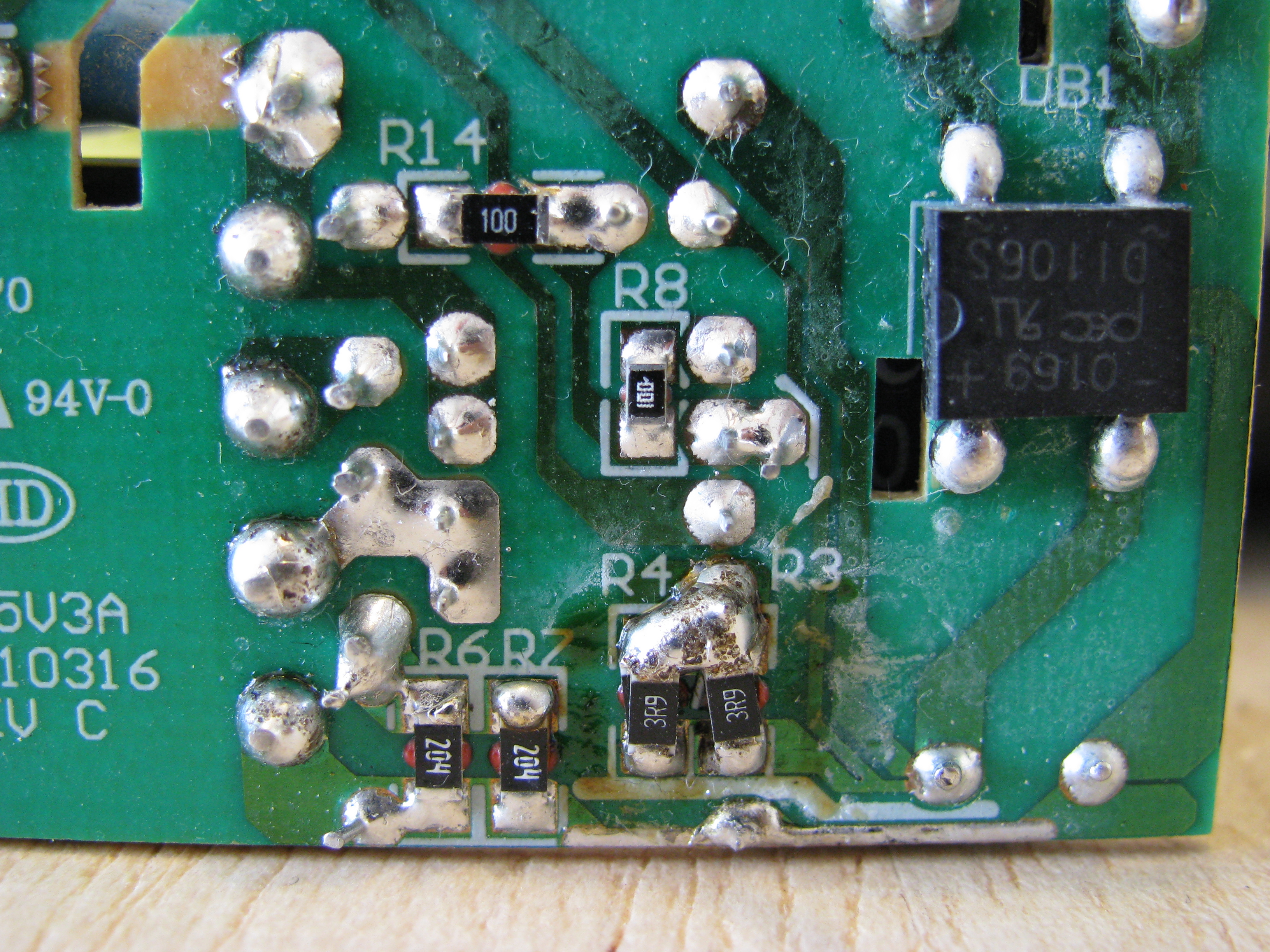
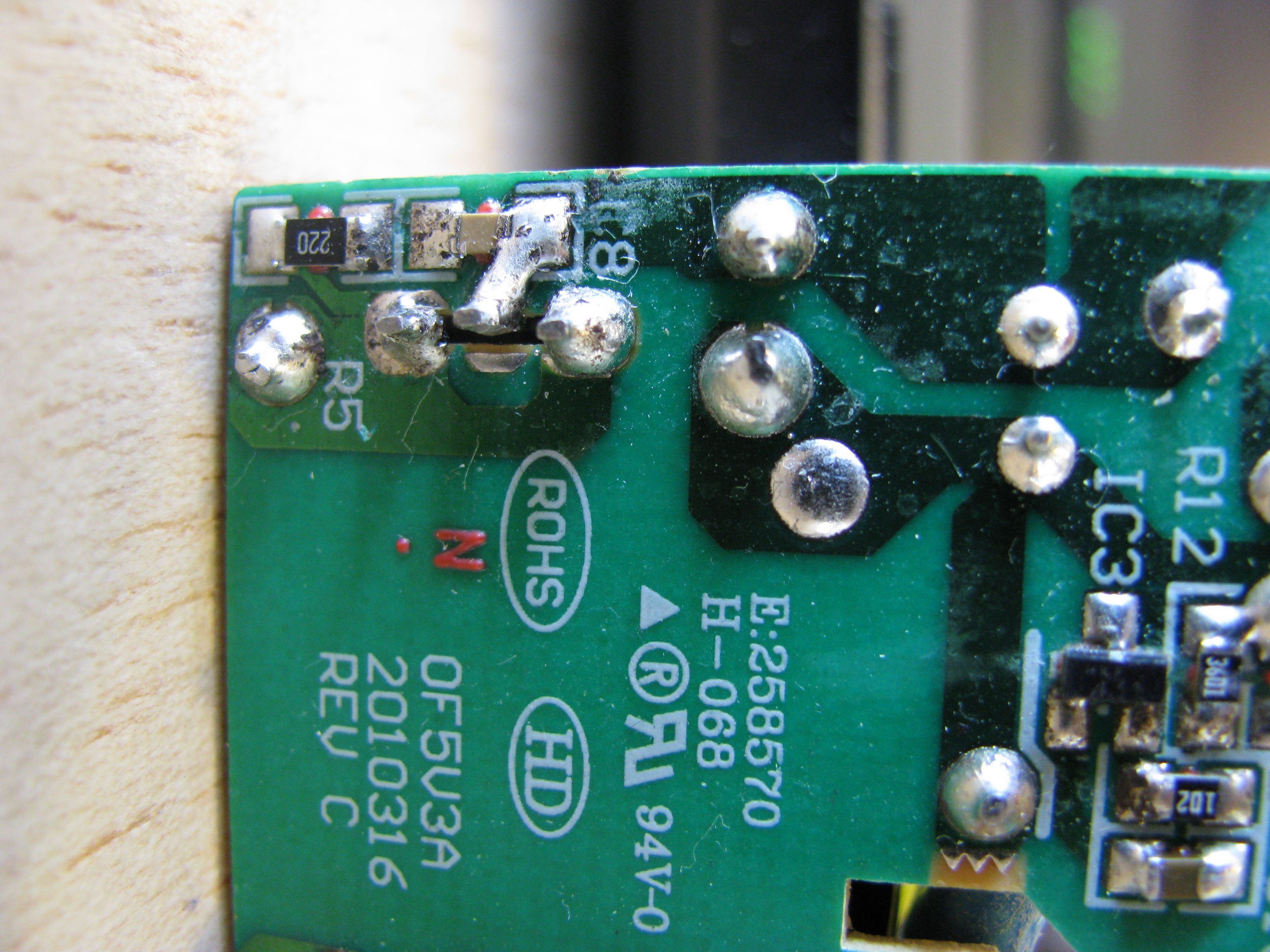
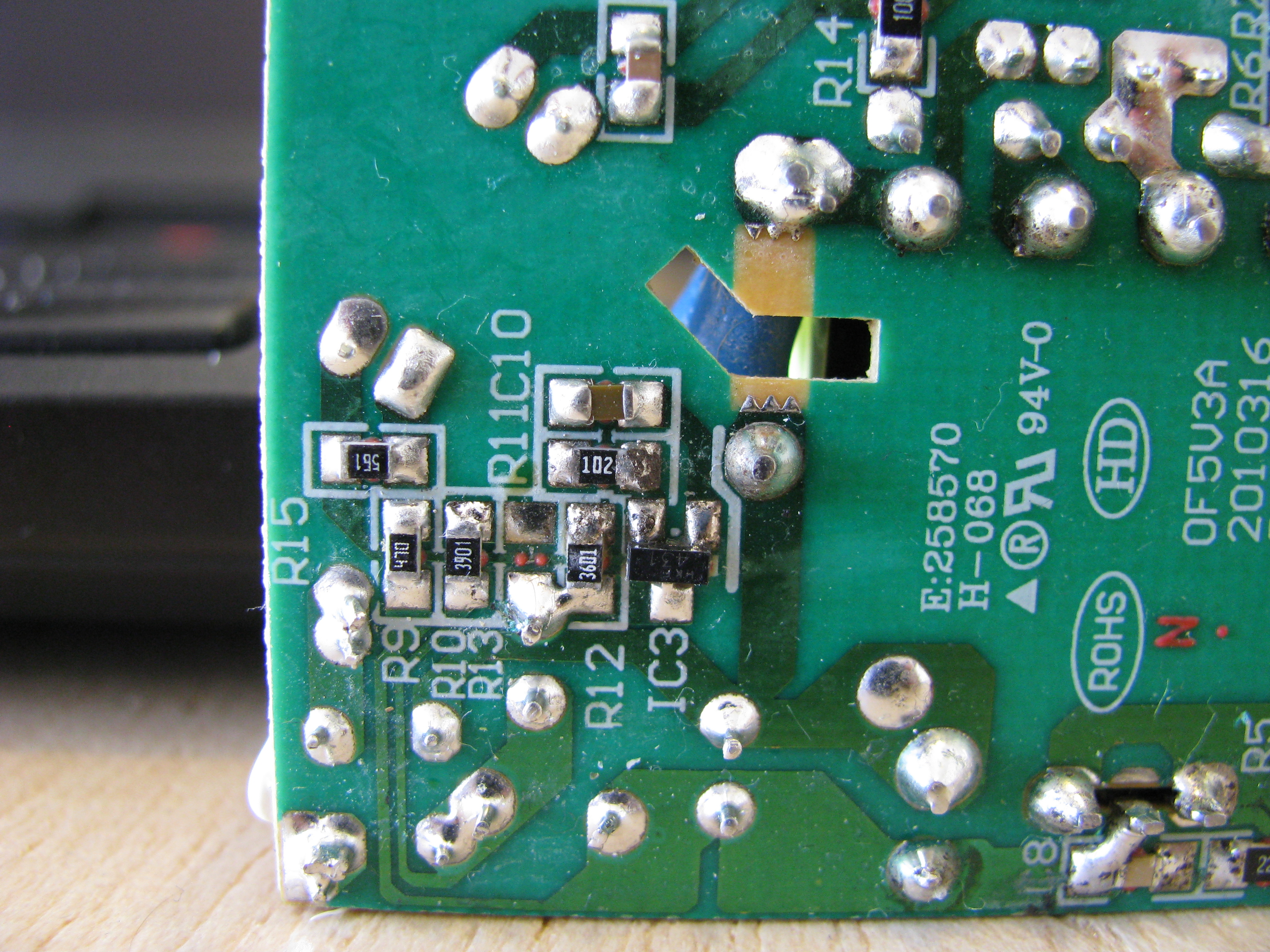
The power supply Although I've ordered the Guruplug pretty early with the promise, that I'd have it in April, it arrived at the end of May due to QA issues with the power supply. While I appreciate that they didn't deliver broken power supplies, I would have preferred not to receive one which was "fixed" by somebody who uses the soldering iron like an axe. Here are some macro photos to show the gory details: GuruPlug Server Plus PSU 1 GuruPlug Server Plus PSU 2 GuruPlug Server Plus PSU 3

Software issues The version of UBoot which shipped with the device was only able to boot from NAND and network. Booting from USB failed and ext2 support was missing, too. Didn't have a look if the community came up with a fixed UBoot version yet, but in my opinion a piece of hardware for >100 EUR should not have such flaws.

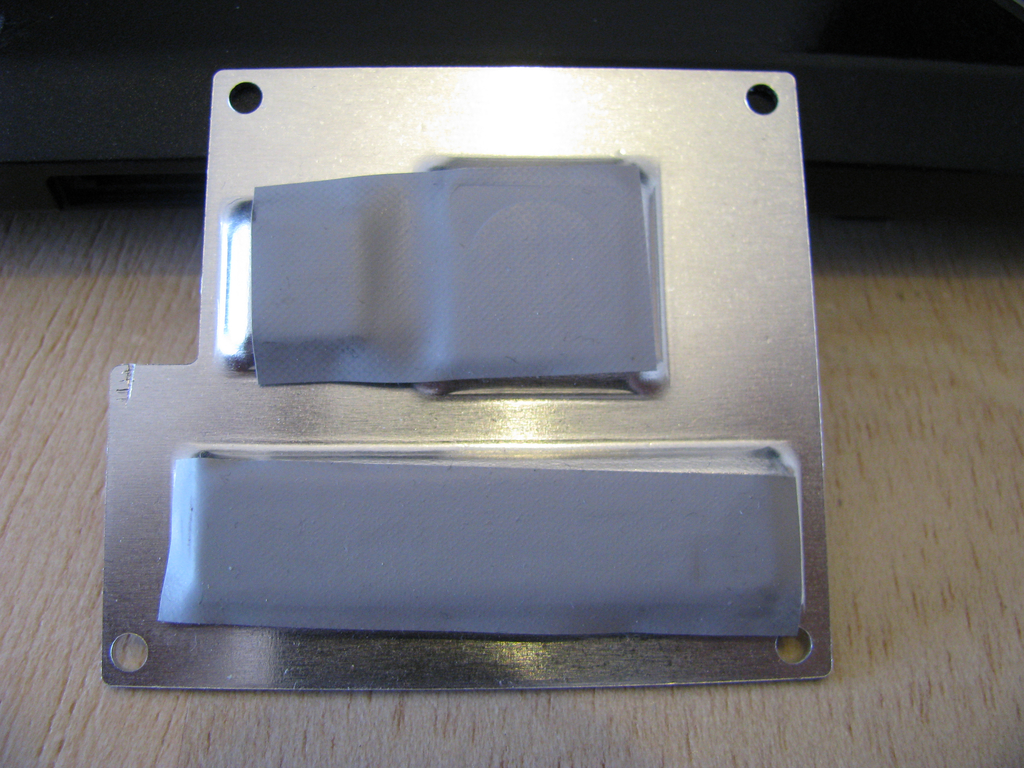
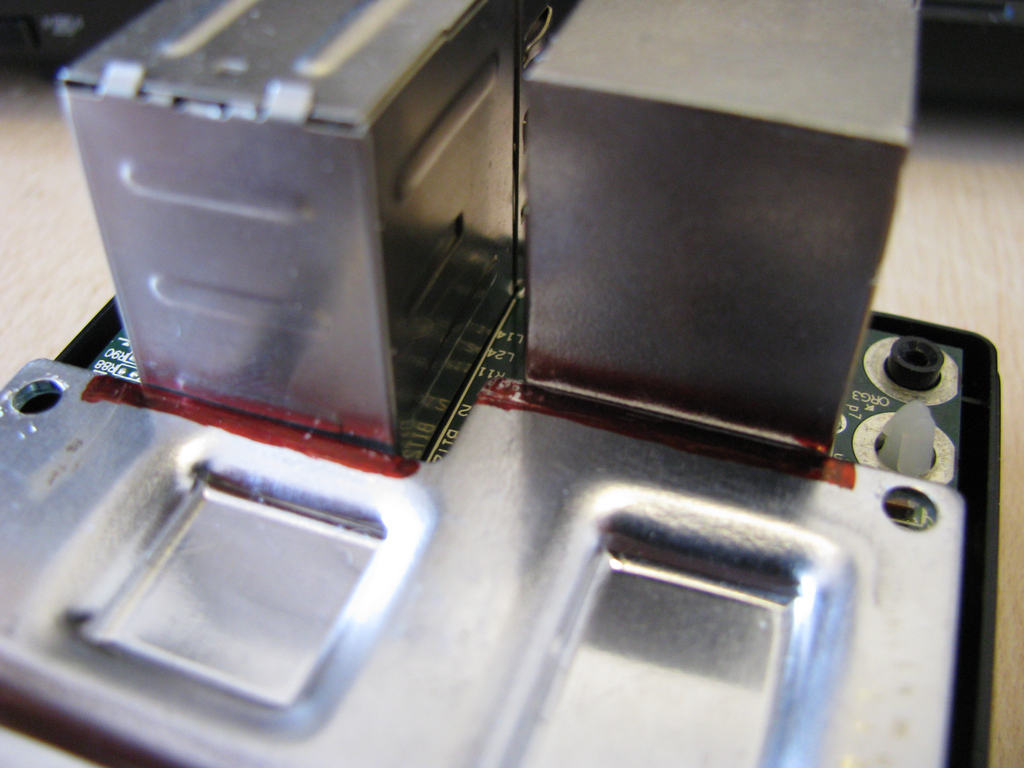
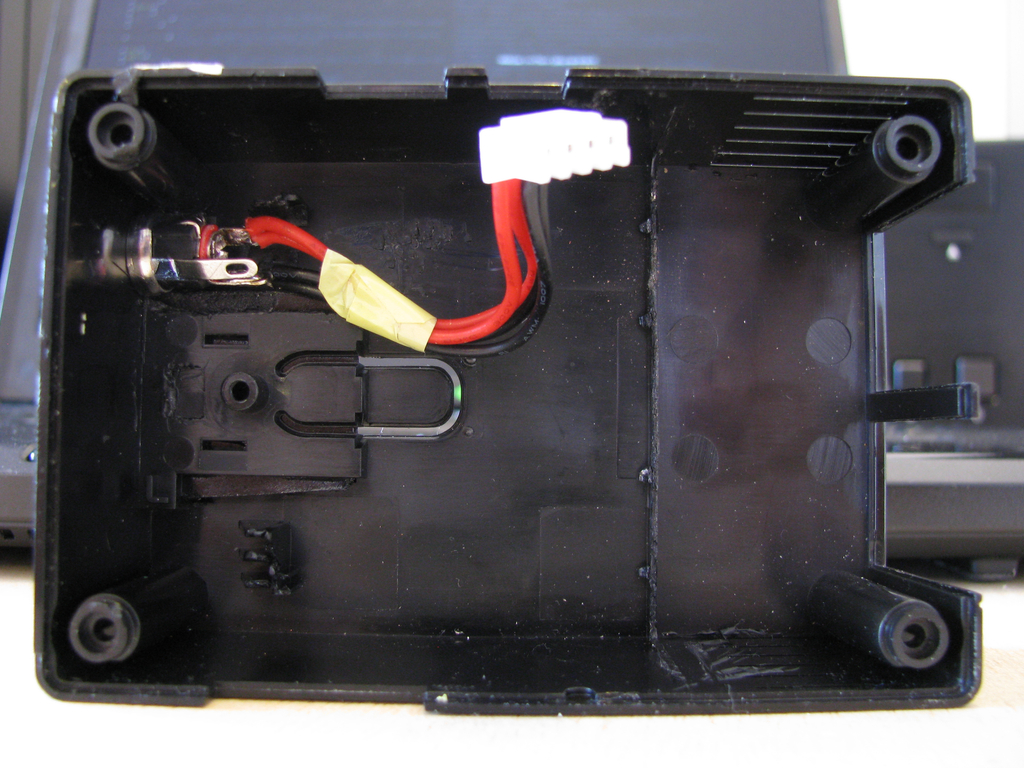
Thermal issues Using the Guruplug with more than one 100 MBit/s connection is just not possible, as it would toast itself to death. For the details have a look at this discussion in the NewIT forum, it links to a lot of interesting photos and postings. This issue is a major design and QA failure. Even without knowing what the datasheets say, it is easy to imagine that a thin piece of alloy is not the proper way to cool a CPU and network chip. Especially not when it is mounted with cheapish pads instead of a proper paste. GuruPlug Server Plus Cooling 1 As it seems the plan was to send the heat to the shielding of the network/USB/eSata ports (the area is marked red as my first plan was to remove that part of the alloy and reuse the heat-spreader), a strong indication for that is that this is the only area with holes for air circulation. I could imagine that it was not possible to have these holes next to the PSU, which was mounted above the heat-spreader, to avoid electrical shocks. GuruPlug Server Plus Cooling 2 As there was no other opening for the heat to leave the case, even the microSD card became pretty hot - I've measured temperatures around 60 deg. C next to the card - while CPU and 100MB/s network were idling. The official information from GlobalScale Technologies is that only 10/100MBit/s should be used as workaround to avoid overheating until a "Professional Upgrade Kit" is released. As mentioned here the upgrade kit announcement was removed silently from GST's website. To be honest, this doesn't make me wonder. There is no way to fix the Guruplug with an external fan or any other external magic as the only way to fix it is to cool the CPU and networking chip properly. There are various workarounds for the cooling issues posted to the forums. I've decided to rip out the power supply and heat spreader out of the case and get a nice external PSU. The new connector is mounted, ready to supply the GuruPlug's board with power. GuruPlug Server Plus power connector Currently I'm waiting for the new heat sinks and glue to arrive. Then I'll give it a try to mount eveything in the small case again, probably with some additional air holes. As soon as I have a workign solution, I'll blog about it again.

Bernd Zeimetz: the guruplug server plug - major design and qa fail

As a lot of people are coming to my blog to read the installing instructions for Debian on the GuruPlug Server Plus, I shall not hide my opinion about the Guruplug Server Plus: It is a major design and QA fail. Don't waste your money on it.

The power supply Although I've ordered the Guruplug pretty early with the promise, that I'd have it in April, it arrived at the end of March due to QA issues with the power supply. While I appreciate that they didn't deliver broken power supplies, I would have preferred not to receive one which was "fixed" by somebody who uses the soldering iron like an axe. Here are some macro photos to show the gory details: GuruPlug Server Plus PSU 1 GuruPlug Server Plus PSU 2 GuruPlug Server Plus PSU 3

Software issues The version of UBoot which shipped with the device was only able to boot from NAND and network. Booting from USB failed and ext2 support was missing, too. Didn't have a look if the community came up with a fixed UBoot version yet, but in my opinion a piece of hardware for >100 EUR should not have such flaws.

Thermal issues Using the Guruplug with more than one 100 MBit/s connection is just not possible, as it would toast itself to death. For the details have a look at this discussion in the NewIT forum, it links to a lot of interesting photos and postings. This issue is a major design and QA failure. Even without knowing what the datasheets say, it is easy to imagine that a thin piece of alloy is not the proper way to cool a CPU and network chip. Especially not when it is mounted with cheapish pads instead of a proper paste. GuruPlug Server Plus Cooling 1 As it seems the plan was to send the heat to the shielding of the network/USB/eSata ports (the area is marked red as my first plan was to remove that part of the alloy and reuse the heat-spreader), a strong indication for that is that this is the only area with holes for air circulation. I could imagine that it was not possible to have these holes next to the PSU, which was mounted above the heat-spreader, to avoid electrical shocks. GuruPlug Server Plus Cooling 2 As there was no other opening for the heat to leave the case, even the microSD card became pretty hot - I've measured temperatures around 60 deg. C next to the card - while CPU and 100MB/s network were idling. The official information from GlobalScale Technologies is that only 10/100MBit/s should be used as workaround to avoid overheating until a "Professional Upgrade Kit" is released. As mentioned here the upgrade kit announcement was removed silently from GST's website. To be honest, this doesn't make me wonder. There is no way to fix the Guruplug with an external fan or any other external magic as the only way to fix it is to cool the CPU and networking chip properly. There are various workarounds for the cooling issues posted to the forums. I've decided to rip out the power supply and heat spreader out of the case and get a nice external PSU. The new connector is mounted, ready to supply the GuruPlug's board with power. GuruPlug Server Plus power connector Currently I'm waiting for the new heat sinks and glue to arrive. Then I'll give it a try to mount eveything in the small case again, probably with some additional air holes. As soon as I have a workign solution, I'll blog about it again.

27 August 2010

Russell Coker: Links August 2010

Urban Honking has an insightful article about the Arduino and suggests that it is one of the most important factors for the development of the computer industry in the near future [1]. It compares the Arduino to the Altair. Wired has an interesting article about a company that provides a satellite kit and a launch into low Earth orbit for $8000 [2]. Arduino in space? Linux Journal has an interesting article by David Rowe about the Mesh Potato which is a Wifi mesh router that also runs VOIP [3]. One particularly interesting aspect of this article is the explanation of the way they designed and tested it. Susan Shaw gave an informative TED talk about the toxic effects of the attempts to clean up the oil spill in the Gulf of Mexico [4]. It seems that trying to disperse the oil just makes it worse, and the chemical companies are refusing to disclose the chemicals that are being used. The New York Times has an interesting article by David Leonhardt about the value of pre-school teachers [5]. Some research on the difference that good teachers can make in economic terms suggests that the make an economic difference to the children to the value of $320,000 per annum (IE a class of 16 children who were taught for a year would on average each receive a benefit of $20,000 over their lifetime). Also there are social benefits which aren t counted by that study. While I can t imagine pre-school teachers getting paid $320,000 any time soon, it does seem obvious that good teachers deserve significantly better pay. Of course one problem is how to determine which teachers are good, better test results are not a reliable indication. Paul Krugman describes America as being on the unlit, unpaved road to nowhere due to the policies of saving money by cutting funding for schools, street-lights, and roads [6]. The Chive has an amusing post about how to quit a bad job [7]. It would be good if someone really did this, I m sure that there are enough creative people who don t like their job. Hell Pizza in New Zealand published a zombie themed choose your own adventure on Youtube [8]. Unfortunately the options to choose the next segment don t work on HTML5 with Chromium so if you don t have flash you miss out. AskThePilot.com has an informative essay about airline security written by a commercial pilot [9]. The anecdote about the pilot not being allowed to take the type of knife that is issued to first and business class passengers is rather amusing. FredOnEverything.net has an interesting analysis of Wikileaks and why the Pentagon and Fox News hate it [10]. Fred is a very skillful writer, while he s not the first person to say some of these things he may have said it best. The Wikipedia page on Borosilicate glass (which is best known under the trademark Pyrex) is really interesting [11]. Borsilicate glass was formerly known as Duran and it s main characteristic that makes it suitable for lab use is resistance to Thermal Shock, but it s also harder and has a higher melting point. Apparently you can get Pyrex drinking glasses, I want some! Eben Moglen gave an interesting talk Freedom in the Cloud about the development of free servers to manage personal data and replace Facebook etc (among many other things) [12]. The Debian Wiki has an articla about designing such a system [13]. The APNIC published an interesting paper on IPv4 background radiation [14]. Apparently some /24 s receive so much random traffic (from broken applications and viruses) that they can t be delegated. IPv6 will solve this problem by making it infeasible to scan all IP addresses. Also it s interesting to note the excessive amounts of traffic to 1.0.168.192 which is from applications too broken to correctly send data to 192.168.0.1 which have been installed by sysadmins who are too incompetent to watch what is being sent out of their network.

26 August 2010

Maximilian Attems: Coffee is better without sugar

Apparently this statements also holds true for frozen yogurt. An Austrian A1 spokes person has confirmed that the HTC Magic will not receive a 2.1 or 2.2 Android update. One can only wonder about the sugar HTC puts on top of regular Android that hinders themself to update their products. The Austrian A1 carrier sells you the device for a 18 month contract, but actively only supported it for 6 month. I must revise my previous positive review of the HTC Magic. Some HTC speaker had promised earlier this year an upgrade to at least 2.1: HTC Magic 2.1 upgrade. A SFR speaker had promised an update to current Android: HTC Magic and Nexus One 2.2 upgrade. The Webkit Android Browser can be easily tricked into leaking your user and passwords: Android Luecke. Beside the obvious that as a user one shouldn't give out to much data to untrusted third party this opens lots of Google accounts for criminal activity. The inability of the carrier to provide a secure and uptodate device is massively deceiving and certainly not appropriate handling of their defects liability.

Vincent Sanders: Sunny Brittany

Alas I did not go to Debconf 10 which looked like everyone had a blast, congratulations to the organisers. Nor will I be able to attend the traditional Steve McIntyre BBQ at the weekend, hope everyone has fun.

On the other hand I have managed to take a family holiday in sunny Brittany...

OK perhaps sunny is pushing it, we did have several nice days last week which we spent on the Le Pouldu plages but this week has been more challenging.

Fortunately the camp site where we are staying has reasonable bandwidth so I can continue to waste time online.

This has given me time to look at some Debian packaging. Specifically the mingw32-runtime packages. Their maintainer seems to be unwilling to allow an updated version to be uploaded despite there being numerous upstream releases since the last packaged release in 2007.

The packaging manual makes it clear that hijacking is not permitted and I discover my desire for having a huge, unhelpful argument about maintaining a package is non existent.

I guess when I have my updated packages available I will maybe announce them but its not the same. I guess this is one of those problems with being a Debian maintainer, we all have to rub along even with decisions we disagree with. Hmm thought I had more to say on the subject ...perhaps next time.

Anyway must go and entertain the kids for an hour or two, maybe go to the beach in the rain, hell they cannot get any soggier ;-)


25 August 2010

Matt Zimmerman: DebConf 10: Last day and retrospective

DebConf continued until Saturday, but Friday the 6th was my last day as I left New York that evening. I m a bit late in getting this summary written up. Making Debian Rule, Again (Margarita Manterola) Marga took a bold look at the challenges facing Debian today. She says that Debian is perceived to be less innovative, out of date, difficult to use, and shrinking as a community. She called out Ubuntu as the elephant in the room , which is taking away from Debian. She insists that she is not opposed to Ubuntu, but that nonetheless Ubuntu is to some extent displacing Debian as a focal point for newcomers (both users and contributors). Marga points out that Debian s work is still meaningful, because many users still prefer Debian, and it is perceived to be of higher quality, as well as being the essential basis for derivatives like Ubuntu. She conducted a survey (about 40 respondents) to ask what Debian s problems are, and grouped them into categories like motivation and communication (tied for the #1 spot), visibility (#3, meaning public awareness and perception of Debian) and so on. She went on to make some suggestions about how to address these problems. On the topic of communication, she proposed changing Debian culture by: This stimulated a lot of discussion, and most of the remaining time was taken up by comments from the audience. The video has been published, and offers a lot of insight into how Debian developers perceive each other and the project. She also made suggestions for the problems of visibility and motivation. These are crucial issues for Debian devotees to be considering, and I applaud Marga for her fortitude in drawing attention to them. This session was one of the highlights of this DebConf, and catalyzed a lot of discussion of vital issues in Debian. Following her talk, there was a further discussion in the hallway which included many of the people who commented during the session, mostly about how to deal with problematic behavior in Debian. Although I agreed with much of what was said, I found it a bit painful to watch, because (ironically) this discussion displayed several of the characteristic people problems that Debian seems to have: These same patterns are easily observed on Debian mailing lists for the past 10+ years. I exhibited them myself when I was active on these lists. This kind of cultural norm, once established, is difficult to intentionally change. It requires a fairly radical approach, which will inevitably mean coping with loss. In the case of a community, this can mean losing volunteer contributors cannot let go of this norm, and that is an emotionally difficult experience. However, it is nonetheless necessary to move forward, and I think that Debian as a community is capable of moving beyond it. Juxtaposition Given my history with both Debian and Ubuntu, I couldn t help but take a comparative view of some of this. These problems are not new to Debian, and indeed they inspired many of the key decisions we made when founding the Ubuntu project in 2004. We particularly wanted to foster a culture which was supportive, encouraging and welcoming to potential contributors, something Debian has struggled with. Ubuntu has been, quite deliberately, an experiment in finding solutions to problems such as these. We ve learned a lot from this experiment, and I ve always hoped that this would help to find solutions for Debian as well. Unfortunately, I don t think Debian has benefited from these Ubuntu experiments as much as we might have hoped. A common example of this is the Ubuntu Code of Conduct. The idea of a project code of conduct predates Ubuntu, of course, but we did help to popularize it within the free software community, and this is now a common (and successful) practice used by many free software projects. The idea of behavioral standards for Debian has been raised in various forms for years now, but never seems to get traction. Hearing people talk about it at DebConf, it sometimes seemed almost as if the idea was dismissed out of hand because it was too closely associated with Ubuntu. I learned from Marga s talk that Enrico Zini drafted a set of Debian Community Guidelines over four years ago in 2006. It is perhaps a bit longand structured, but is basically excellent. Enrico has done a great job of compiling best practices for participating in an open community project. However, his document seems to be purely informational, without any official standing in the Debian project, and Debian community leaders have hesitated to make it something more. Perhaps Ubuntu leaders (myself included) could have done more to nurture these ideas in Debian. At least in my experience, though, I found that my affiliation with Ubuntu almost immediately labeled me an outsider in Debian, even when I was still active as a developer, and this made it very difficult to make such proposals. Perhaps this is because Debian is proud of its independence, and does not want to be unduly influenced by external forces. Perhaps the initial growing pains of the Debian/Ubuntu relationship got in the way. Nonetheless, I think that Debian could be stronger by learning from Ubuntu, just as Ubuntu has learned so much from Debian. Closing thoughts I enjoyed this DebConf very much. This was the first DebConf to be hosted in the US, and there were many familiar faces that I hadn t seen in some time. Columbia University offered an excellent location, and the presentation content was thought-provoking. There seemed to be a positive attitude toward Ubuntu, which was very good to see. Although there is always more work to do, it feels like we re making progress in improving cooperation between Debian and Ubuntu. I was a bit sad to leave, but was fortunate enough to meet up with Debian folk during my subsequent stay in the Boston area as well. It felt good to reconnect with this circle of friends again, and I hope to see you again soon. Looking forward to next year s DebConf in Bosnia

Eddy Petrișor: [content:lang:ro] I wrote to my representative

This post concerns Romanian politics, internal affairs and improper direction of public funding for new hideous churches in spite of education, culture, health, technic development and old monuments. Thus I will write this in Romanian. Curious foreigners can try to read the text via Google's translation.


Din cauz c suntem n secolul XXI i consider c e o prostie imens s b g m bani n biserici n detrimentul educa iei, culturii, s n t ii, dezvolt rii tehnice i a vechilor monumente, iar politicul din Rom nia pare dornic s dea bani cultelor, am ajuns la concluzia c este cazul s -i scriu reprezntantului meu (teoretic) n Parlament, Deputatul Florin Iordache. Am aflat de ce colegiu apar in uit ndu-m aici i apoi n lista oficial cu deputa ii.


I-am trimis textul de mai jos:

M numesc Petri or Eddy i sunt unul dintre cei pe care i reprezenta i n Parlamentul Rom niei. Este pentru prima dat c nd scriu unui parlamentar care m reprezint n conducerea statului rom n i o fac pentru a-mi exprima n mod clar i r spicat ideile i opinia n ceea ce prive te subiectul pe care l voi discuta mai jos. Am 30 de ani, sunt programator, am muncit i mi-am pl tit taxele de c nd am fost angajat, din anul 4 de facultate p n n prezent, adic de vreo 6-7 ani. Nu, acest mesaj nu este un strig t de ajutor, nu a tept pomeni, nu am milogit niciodat , mereu am muncit de i v d c pentru unii parazitismul fiscal a devenit un mod de via . Din acest motiv sunt revoltat.

Sunt revoltat pentru c :
- de i pl tesc taxe i impozite care ajung la peste 60% din venitul brut, nu primesc n schimb nici un fel de servicii, nici un fel de infrastructur , nici un fel de respect, nici un fel de eficien
- de i lucrez de ceva timp, am observat c pe unde am lucrat competen a i performa a erau o necesitate; n aparatul de stat nu este cazul
- de i sunt destui ca mine care pl tesc taxe i impozite, vocile noastre sunt ignorate i banii no tri sunt arunca i pe fereastr de cei ce administreaz fondurile colectate.

Domnule deputat sunt revoltat c de 15 ani de zile dispar n medie aproximativ 4 coli zilnic i apare, tot n medie, o biseric la fiecare 2 zile, iar asta se nt mpl cu accep iunea aparatului politic. Spitalul din Caracal, ca orice alt spital din Rom nia, e prost dotat, nu exist personal suficient, nu are fonduri pentru medica ie pentru pacien i, pe scurt, este un dezastru care e pe cale s se nt mple. i cu toate astea, banii se duc spre biserici. Se fac dona ii de coli i terenuri c tre biseric , n mod ilegal i abuziv chiar n jude ul Olt.

Ultima perioad n care religia a condus lumea s-a numit Evul Mediu i cred c orice om care a tr it m car 5 ani n secolul XXI poate s observe c nu religia ne-a adus mari beneficii, ci tiin a i tehnologia. n Evul Mediu tratamentul se f cea prin s nger ri , t ieri sub limb , scoaterea argintului viu i tot felul de alte supersti ii f r nici un efect pozitiv sau chair cu efecte negative.

ntre timp umanitatea a progresat i am descoperit medicina, curentul electric, am explorat universul, am aterizat pe Lun , am pus zeci de sateli i artificiali pe orbit , am aflat foarte multe despre univers i lumea care ne nconjoar , am inventat noi materiale (plasticul, p nzele impermeabile, kevlarul), am investigat lumea f r idei preconcepute dup metoda tiin ific , iar lucrul acesta ne-a mbun t it via a n toate aspectele ei. Sperant de via a crescut de la aproximativ 30-40 de ani n Evul Mediu, la 70-80 de ani n prezent, totul datorit tiin ei aplicate. Datorit tehnologiei i tiin ei pot s v scriu aceste cuvinte i tiu c vor ajunge la dumneavoastr , nu datorit unor incanta ii sau ritualuri, nu datorit telepatiei, de i mediul sta de transmisie se apropie foarte mult de ceea ce define te ca fiind telepatie :-) . Cu toate astea, unii consider c religia trebuie finan at pentru c e religie, nici m car pentru c ar avea programe sociale, contribu ii cuantificabile reale, nu, doar pentru c este religie.


Am citit foarte multe articole din pres , articole bine documentate, i am senza ia c tr iesc ntr-o lume incon tient c nd v d cum banii care ar trebui s ajung n drumuri, coli, spitale, cercetare, medicamente, programe sociale cu real impact, ajung n noi i noi biserici de beton n timp ce monumentele istorice, bisericile din lemn, m n stirile cu adev rat valoroase sunt l sate n paragin . Asist cu o senza ie de dezgust continuu la felul n care ne batem joc de cei ce ne salveaz vie ile, medicii, de cei ce ar trebui s ne fac educa ia, profesorii, de cei ce ne sting casele dac iau foc, pompierii, i, de felul n care ridic m misticismul religios la rang de virtute. Este de-a dreptul jignitor i aberant ca alfabetizarea tiin ific n secolul XXI s fie at t de joas nc t s avem 42% din popula ie care cred c Terra este centrul universului, s avem oameni care cred c astrologia este tiin ific , s NU avem nici m car o universitate n top 500 n lume, este jignitor s fim n permanen n coada tuturor clasamentelor pozitive i n fruntea tuturor celor negative.

Recent money.ro a publicat un articol n care esitma foarte conservator c averea Bisericii Ortodoxe Rom ne se nv rte la peste 3 miliarde de euro, are scutiri de impozite, are zeci de afaceri i cu toate acestea, statul continu s scuteasc cultele de impozite, ba chiar le ofer bani ntr-una. La o asemenea avere nu cred c mai poate fi vorba de necesitatea finan rii de c tre stat. Oamenii pot decide s doneze direct c tre bisericile lor bani i nici nu mai implic pierderile inerente ce apar datorit administr rii fondurilor de c tre stat.


Statul nu este un organ aparte, statul trebuie s munceasc pentru mine, cet eanul, iar eu sunt mpotriva acestui tip de batjocorire i napoiere voluntar a noastr ndreptat mpotriva noastr . Alexandru Ioan Cuza a secularizat averile m n stirilor nchinate celor de la muntele Athos, deci unor ter i extreni rii, a a cum afl m din scrierile istoricului A.D. Xenopol, deci nu exist nici o obliga ie a statului s finan eze o institu ie anacronistic :

A.D. Xenopol Domnia lui Cuza Vod Vol.I , CAP. VIII. AI doile minister Cogalniceanu Secularizarea , pagina 291:
Nu vom atinge de c t mprejur rile care au condus la redob ndirea averilor, ajunse n st p nirea c lug rilor str ini, ating nd chestiunea nchin rei m n stirilor p n ntene c tre acele din R s rit, numai ntru c t va fi de nevoie, spre a n alege m sura seculariz rei nsu i.


Din aceste motive i multe altele, deoarece sunte i i reprezentantul meu n Parlamentul Rom niei, v cer ca s vota i pentru proiectul de lege ini iat de domnul Prigoan n ceea ce prive te t ierea finan rii personalui clerical de c tre stat i c t i a altor legi care ar putea duce la eliminarea privilegiilor pe care le au cultele, n condi iile n care singurul motiv real i corect pentru care o entitate ar putea beneficia de scutiri de taxe sau privilegii fiscale sunt doar cele ce nu urm resc interesul financiar i, totodat , au un impact social cuantificabil n mod clar.


Dac dori i, a fi bucuros s v r spund la eventualele ntreb ri sau neclarit i n ceea ce am scris, dac este nevoie.

V mul umesc anticipat!


L-am trimis joi, nc n-am primit r spuns de nici un fel. Pasul doi e s sun. M car s nnebuneasc dac tot sunt nesim i i. A a c , pute i afla de ce colegiu apar ine i i apoi pute i identifica pe cel/cea ce v reprezint n Parlament. Scrie i-le, suna i-i, a venit momentul m car s se enerveze, dac nu s - i fac m car o poleial de datorie.

Iustin Pop: My first NMU

Late last night my first NMU (not counting patches sent to BTS, but only actual NMUs done) entered the archive (after the appropriate DELAYED/xx wait). It even fixes one RC bug If you wonder why is my first NMU, and why it took me so long the answer is that finding RC bugs that I can actually fix is not trivial. Yep, I know about http://bts.turmzimmer.net/details.php and about rc-alert, but: So my usual attempt at trying to fix RC bugs is to spend 30 minutes scanning the RC bug list, trying to find some bugs I can tackle, then give up in despair. Assuming I can dedicate only a few hours per week towards fixing RC bugs, how should I proceed? Is it possible with such a small time budget? Comments welcome, even if telling me I'm just lazy and should try harder :)

Christian Perrier: [life nolife] Debconf 10 was...

...awesome. OK, I'm writing this while I'm still in USA, but there are so many things to say about these weeks that I can't write them in only one blog post. And, still, this one will be quite long as it will talk about hacking, running and sightseeing...:) Let's start about hacking: after all, this is the first reason for being there in US, isn't it? I cam to DebConf with a very long TODO list and, for the first time in seven DebConfs, I'm pretty happy with what I achieved from it: As one can see, a lot of planned work happened while I still could maintain the usual flow of recurrent work with localization (Smith reviews, l10n NMUs). Some asked me why I didn't propose l10n sessions this year. Indeed, I wasn't feeling I could sustain animating them and I had no clear idea about which topic I could bring to be discussed. Last year, these sessions slightly killed my free time and I wanted to keep some this year for "impromptu" things. I didn't attend many talks, sorry for the speakers. The most I attended were during Debian Day, which I found highlyinteresting and motivating, just like Eben Moglen's talk. Marga's talk was also one I wanted to attend, though I regreted that things went mostly out of control during the talk (too many comments from the audience to allow Marga pushing her important points). As usual, I invested a big part of my time in "social" activities, the most proeminent being of course the Cheese and Wine party, which turned ut to be a great success. The help of my son Jean-Baptiste and the tremendous support of Michelle Lynn Hall helped a lot, though I still regret that we screwed about accessibility. I also ran a lot..:-)..that may be counted as social activities as I organized several group runs. The one I'm proud of has been participating to a local race, namely the Van Cortland Track Club Summer Series of cross-country running, in Bronx. We went there with no less than 10 DebConf participants and 1 kilt (hey, Luca!). All of us completed the race (that had 170 runners for 5 kilometers) and No l K the even finished 17th scratch and 2nd in his age/gender category. Besides that, we had a great run/sightseeing to Georges Washington Bridge (that links New Jersey and Harlem and offers an unusual view of Manhattan "from behind"). All this with a 17km run. We also ran several times in Central Park, and No l and me happened to go to Coney Island for the Day Trip by doing half of the trip by running (all around Manhattan and over the Broolyn Bridge), for about 20km. Then we "showered" in the Atlantic Ocean....:). At the end of DebConf, I think that I had my record broken with 112km run in 10 days and only one day *without* running. What about sightseeing? Well, this blog post is too long and we reach the end of Interstate-90, close to Albany, so that will be for an upcoming blog post. Aug 25th update: back home, so now I can publish this blog post...

24 August 2010

Lucas Nussbaum: RVM: seriously?

There s some hype in the Ruby community about RVM (Ruby Version Manager). It s a tool that allows to switch between Ruby versions on the same system (much like what the alternatives system provides for Java on Debian, except that RVM does it either system-wide or per-user). However, when you look at it, RVM looks quite scary. The recommended installation instruction is:
bash < <( curl http://rvm.beginrescueend.com/releases/rvm-install-head ).
That script doesn t use set -e, and actually does a git clone behind the scenes. Without first checking that git is installed. But if you don t have git installed, it s not a problem: there s another script later on the page that downloads and compiles it for you. After installing RVM itself, you need to install rubies (different ruby implementations). Use rvm install ree,1.9.2-head,jruby. That will automatically download and build the various versions in your homedir. It s interesting to note the the compilation messages were probably too scary, and are not displayed. But how does it handle the switch between different versions ? First, you need to add some magic to your .bashrc:
[[ -s "$HOME/.rvm/scripts/rvm" ]] && . "$HOME/.rvm/scripts/rvm"
or, for a system-wide install of rvm:
[[ -s "/usr/local/rvm/scripts/rvm" ]] && . "/usr/local/rvm/scripts/rvm"
And then, you can select your ruby implementation using rvm --default 1.9.2, for example. That works by redefining $PATH:
# echo $PATH
/usr/local/rvm/gems/ruby-1.9.2-p0/bin:/usr/local/rvm/gems/ruby-1.9.2-p0@global/bin:/usr/local/rvm/rubies/ruby-1.9.2-p0/bin:/usr/local/bin:/usr/local/bin:/usr/local/sbin:/usr/sbin:/usr/bin:/sbin:/bin:/usr/bin/X11
Of course, that s quite fragile: if you are in one of the cases where bash doesn t read .bashrc, or if you happen to be using dash, you lose. Looking at the code of RVM itself, it is also very fragile: it s pure bash, without any error handling. During my test (in a chroot), I often got error messages about missing commands that were apparently ignored. The installer insists on using colors, and spews lots of error messages if executed without a controlling tty. There are also some interesting code snippets like perl -e 'sleep 0.5'. So, where do we go from here? Well, obviously, with my Debian hat, I m not going to advocate a solution that makes everything possible to avoid the distribution s packaging system, and I don t see RVM being packaged in Debian anytime soon.
In Debian, we already provide co-installability of Ruby 1.8 and 1.9.2, and users are free to choose which one to use on a per-script basis, by running them with version-suffixed ruby executables. The ruby executable itself still points to 1.8, as it s clearly too early to make 1.9.2 the default. Many Ruby libraries are provided for both 1.8 and 1.9.2, and we plan to discuss changes in the packaging system to be able to make it easier to provide packages for both versions. There s also recent work on packaging JRuby, but it s quite hard as it requires removing all the non-free or undistributable parts, and packaging them separately.

Debian News: Bits from the Debian Women project

The Debian Women project aims to get more women to participate in Debian, as packagers, bug reporters, technical documentation writers, bug fixers, translators, artists and in any other area that helps the development of Debian. These goals are achieved through IRC tutorials, a mentoring program, a mailing list and an IRC channel.

The Mentoring Program, allows men and women that want to contribute to Debian but aren t sure where or how to start, to get some help with their first steps.

There have been at least 38 women that have contributed in packaging software for Debian, and there are currently 11 female Debian Developers and 1 Debian Maintainer. We d like to raise those numbers to 50 packagers by the end of 2011, and 20 Debian Developers by the end of 2012.

There are some other interesting statistics about the current female participation in Debian.

We are also interested in getting more women to file and fix bugs, translate debconf templates or package descriptions, contribute to the release notes, as well as participate in any other areas of the Debian project. In order to do this, we will be holding some IRC training sessions in the near future, to help people get started. We are currently making the list of subjects and trainers, we ll publish more news about this once the first sessions are scheduled.

For more information you can join the IRC channel #debian-women on irc.oftc.net, or subscribe to the debian-women mailing list. If you are a Spanish speaker, you can also join the IRC channel #debian-mujeres on irc.oftc.net.

Margarita Manterola

Guido G nther: Using git svn and git-buildpackage to build packages maintained in Subversion

Many team maintained packages in Debian are maintained in Subversion which makes a lot of sense if people agreed on a common workflow. If you want to use git to work on these packages you can still do so with a bit of configuration without changing anything for the other team members. Let's take system-config-printer as example. git-svn can be used to checkout the svn repository:
git svn clone svn+ssh://svn.debian.org/svn/pkg-gnome/ -T packages/unstable/system-config-printer -t tags/system-config-printer system-config-printer
Since the pkg-gnome team keeps all the packages in one huge SVN repository and splits the directories by release first and then by package the above command uses -T to point git-svn to system-config-printer's trunk and -t to point it to the tags directory. In simpler repositories where trunk, branches and tags are subdirectories of the same base directory using --stdlayout instead is enough. Since in SVN based packaging the upstream sources usually aren't kept in the repository git-buildpackage needs to know where to find them and how to combine things in the build-directory:
cd system-config-printer
cat <<EOF >.git/gbp.conf
[git-buildpackage]
# Build in a separate build-area
export-dir = ../build-area/
# Look for tarballs in ../tarballs
tarball-dir = ../tarballs/
# Overlay the upstream sources on top of it
overlay = True
# Don't use pristine-tar
pristine-tar = False
# Compression type of the tarball
compression = bzip2
Like with svn-buildpackage the orig-tarball is expected to be found in ../tarballs where you should put it now e.g. using the get-orig-source target of debian/rules (yes, git-buildpackage should support this implicitly). You can then work on the package as usual using all the nifty git commands like git-rebase, etc. and build the package (in this case using git-pbuilder):
git-buildpackage --git-pbuilder
or if you don't want to export the current branch's HEAD of your git repository but your working copy (which might contain uncommitted changes) to the build-area instead use:
git-buildpackage --git-pbuilder --git-export=WC
The built packages can then be found in ../build-area. Once the package is ready pushing the changes into the SVN remote repository is as simple as:
git svn dcommit
git svn tag -m"Tagging system-config-printer (1.2.3-0.2)" 1.2.3-0.2
The last command appropriately tags the new version. This saves a bit of typing. In order to fetch changes others have made use:
git svn rebase
Flattr this

21 August 2010

Andrew Pollock: [debian] Belated happy 17th birthday to Debian

Between work and parenthood, I'm struggling to keep on top of things a bit at the moment, but so I'm a bit late to the party. Debian turned 17 during the week. I think the first thing that brought the fact to my attention was someone sent me a thank you note for maintaining dstat (of all things) via thanks.debian.net, which Marga set up. I've been a Debian Developer for 7 of those 17 years now, and it's been great. I've learned heaps about Linux and Linux software packaging, and been able to give something back to the distro that I love. My time commitment waxes and wanes as real life permits, and my involvement in the community has dropped to almost nothing, again for time reasons, but I hope to be able to get more involved again in the future.

19 August 2010

Patrick Schoenfeld: Getting the mp3 mess into control

I have some mp3 files in my collection. Some years ago, back in the times, when I was a Windows-User, I used "The Godfather", to keep the chaos under control. This software, although not Open Source, is really good at what it does. And it does almost everything to organize mp3s. From (mass-)tagging to auto-renaming to auto-sorting your mp3s. But this wouldn't be a blog entry by me if this became... a praise to a windows software so..

When I became a daily Linux User I searched for alternatives. With GUI or without a GUI, but I did not really find an application that suited my needs. As far as tagging and renaming was concerned it wasn't that hard. There are really excellent command line tools (lltag, id3, etc.) and rumours have been heard that there are also GUI tools.
But what I still did not find is a simple, yet flexible, tool to sort a huge collection of mp3s into a flexible structure on the filesystem like "The Godfather" was able to do since.. ehh.. a lot of years.

So the day before yesterday I finally decided to write one on my own and came up with an ~ 280 lines perl script (POD-documentation included) which does exactly what I want and is simple.
It does no tagging.
It does no renaming.
All it does is sorting mp3s into a given template-based directory hierarchy based on their ID3 tag.

At this point a warning is due. I'm sharing that script with you under the terms of the GPL. BUT it still needs testing and therefore you probably do not want to use it without its safety measures (e.g. dry-run or copy instead of move) to avoid data loss. And notice that although it has been written with portability in mind, it has only been tested on a Debian GNU/Linux system.

The script is hosted at github. Here (or raw to download it directly).

After I've talked to a co-worker about the script, he told me that arename would do what I want. So you probably don't want to use my script, because arename is probably more tested and much more sophisticated. But on the other hand I had a quick look at the arename manpage and its so utterly feature-loaded, that it cannot avoid a certain complexicity. My tool is simple.
And there is another advantage. If you want arename to handle a certain amount of mp3s you have to use your shell magic to find the files and pipe it to arename. My script finds all mp3s recursively from where you let it start (default is $PWD so be careful) and will happily move it into a hierarchy under a directory you ask it to. For the simple job of sorting mp3s its probably easier to use.

(Oh and if its worth nothing, it might still be of use as a simple programming example, how one could solve this problem in Perl)

18 August 2010

Jonathan Wiltshire: Home, James

Since I didn t actually come home from Debconf, but instead took a further week s holiday and lazed around by the beach, I haven t sat down to write anything about it yet. Most importantly, I should say thank you to Joey Hess, Steve McIntyre and Stefano Zacchiroli for arranging the Debconf Newbies programme, without which I would have been stuck at work watching the videos again (though this does have the advantage of seeing three talks at once). Every year I am astounded at the generosity of certain companies who sponsor the conference, since I ve experienced for myself the difficulty of trying to put a corporate price on free software even more so to specifically sponsor newbies, who by definition probably aren t as active in ways that interest sponsors than more established developers. Right up to the day I flew I was nervous (as in any social situation) at meeting so many new people in one go, on my own, and long way from home after all, it s not really easy to back out and go home after that But in fact, everybody I met was warm and friendly, and very supportive in all sorts of ways. I got to see and hear many talks; in the first two days alone: And of course social events, like Cheese and Wine, Keysigning (handy for putting faces to names), many nights in the third hacklab, a day trip to Coney Island, a privileged viewing of the most nerdy organ in the world, and a trip up the Empire State building: The campus was ideally suited to such a conference, and apart from the mugginess we had excellent weather. I discovered that I rather enjoy watching baseball and that one should repeat the application of sunblock after paddling. But what I enjoyed most of all was being in the same area as so many eminent Debian people, and being so inspired by them to be even more involved technically and socially. I hope to see you all again soon!
Comments<script type="text/javascript"> var flattr_wp_ver = '0.9.11'; var flattr_uid = '32970'; var flattr_url = 'http://www.jwiltshire.org.uk/content'; var flattr_lng = 'en_GB'; var flattr_cat = 'text'; var flattr_tag = 'blog,wordpress,rss,feed'; var flattr_btn = 'large'; var flattr_tle = 'jwiltshire.org.uk'; var flattr_dsc = 'The public face of jwiltshire'; </script> <script src="http://api.flattr.com/button/load.js?v=0.2" type="text/javascript"></script> flattr this!

Gunnar Wolf: Planet Plagiarism

Online translators are not hot news anymore. Not by a long, long shot. Still, today I wanted to get a couple of words in Latin. And was amazed that Google's translation service does not (yet?) offer Latin as an option, so I turned to Translation Guide's free online translators. And, as it always happens, I thought, hmmm... and what about the random ramblings on my site? So on I went to Gunnar Lupus alio domus. Of course, several funny things popped up, many of which I don't think are proper Latin, but still, among lotsa' nonsense, I found that Planet Debian gets translated to Plagiarius Debian Which possibly explains why many people have complained about other unauthorized planetoids plagarizing their posts!

13 August 2010

Biella Coleman: Rare Sharing of Data Leads to Progress on Alzheimer s

Finally. Let s hope other scientists follow in their footsteps and make rare a marker of the past:
No one would own the data. No one could submit patent applications, though private companies would ultimately profit from any drugs or imaging tests developed as a result of the effort. It was unbelievable, said Dr. John Q. Trojanowski, an Alzheimer s researcher at the University of Pennsylvania. It s not science the way most of us have practiced it in our careers. But we all realized that we would never get biomarkers unless all of us parked our egos and intellectual-property noses outside the door and agreed that all of our data would be public immediately.

Julian Andres Klode: APT2 is now UPS

APT2 is now called UPS (Universal Package System). The name is inspired by the company that delivers packages in those brown trucks and from the Image Packaging System (IPS) of OpenSolaris; and mvo writing ups after I proposed upt ( ber package tool) in IRC. It s definitely better than my first thought which was moo (and libmoo). Update: OK, let s cancel this rename insanity.
Filed under: APT2

Joey Hess: DebConf10 report: Eben Moglen

Long before I took the train up to New York for DebConf10, I was sure that Eben Moglen's talk, the followup to his earlier, excellent "Freedom in the Cloud", would be a highlight of the conference. Even though it was scheduled for an ugly 9 am slot the morning after that other certain highlight, the wine and cheese party. I was not disappointed. The amazing DebConf video team has already put up the video of "How We Can Be the Silver Lining of the Cloud". Embedded below for those with html5. If you watch one video from DebConf, this should be it. <video controls="controls" src="http://meetings-archive.debian.net/pub/debian-meetings/2010/debconf10/high/1252_How_We_Can_Be_the_Silver_Lining_of_the_Cloud.ogv"></video> (Note that the audio stops cutting in and out after he switches mics a few minutes in.) In this talk, Eben goes far past the earlier "Freedom in the Cloud" talk, changing the focus from scraping Facebook, to laying down a concrete, detailed vision of the "FreedomBox", and how it could be a game changer. After the first standing ovation I can remember at a DebConf, given to the first speaker in a suit I can remember at a DebConf, many of us ended up in this huddle in the hall. Which turned into an impromptu BoF in a nearby room, which led to this wiki page, which was followed by seemingly everyone buzzing about it for the rest of the conference, and a second BoF that probably exceeded its room's occupancy limit. Which led to ... ??
I will spend the next several months trying to find other things we can do to help make this suddenly happen. And believe me, to the rest of the world, this will happen very suddenly. We will disrupt a lot of games we would like to have disrupted.
-- Eben Moglen


My thoughts:

Next.

Previous.