Search Results: "edd"

10 October 2006

Evan Prodromou: 18 Vend miaire CCXV

I've been a fan of the Open Directory Project for a long time. I finally volunteered to become an editor about a month ago, and I just started editing my first category, wiki farms , today. I hope to get the category up to good shape in the next few days. I've now got an ODP profile, too. tags:

Hudson Maj, Amita June and I went down to wt:Hudson (New York) over the weekend for the wedding reception of our friends Morgan and Kate. The trip down was fantastic -- the colors in the wt:Adirondacks were really amazing, just hitting their peak. Amita June had a good drive, too: she got to look around a lot, listened to some music, and had a nap of about an hour and a half. Hudson was a cute town, but not cutesy like other parts of the wt:Hudson Valley can be. The town is small -- 4-5 streets wide -- with big brick buildings lining the main street down to a promenade overlooking the Hudson River. There are a few gourmet restaurants and a disproportionate number of art galleries and antique stores, but it doesn't feel like the locals have been pushed out of their town... yet. We stayed at the St. Charles Hotel, as arranged by Kate's stepmom for most of the guests. It was functional and clean but otherwise unexceptional. There was a bar and a restaurant downstairs, and the hotel itself is just opposite a nice little park. Sunday morning we had breakfast at the Earth Kitchen organic market; I had a bowl of granola and fruit, Maj had a huge plate of huevos rancheros, and AJ ate whatever she could get off our plates. We walked around town and down to the waterfront, where we got a panoramic view for miles up and down the Hudson Valley. With the leaves nearing their height of color, it was an awe-inspiring view. We took a late lunch at Mexican Radio, a branch of a restaurant by the same name in Manhattan. It had good quality California-style Mexican food, with a few fusion dishes (like "Mexican spring rolls") that were probably overdoing it a bit. The margaritas were top-notch, and they have a tequila sampler option with three excellent tequilas for... $125! You won't normally lose that much money on three shots of tequila unless you pass out in the gutter in wt:Nuevo Laredo. The reception itself was at the Ca' Mea restaurant, right next to the historic Hudson Opera House. Kate and Morgan were in good form, playing goth-y music from their early days, and family and friends had a good time too. We all probably ate too much, and Maj and I both had hangovers the next morning. Amita June, however, had an excellent time running around the party and dancing with the bride. She was made for weddings. The drive home the next day was less than optimal. We did brunch in the St. Charles's restaurant, Bridges, and then stopped by the house of Kate's dad and stepmom for an afternoon get-together. They have a really nice Victorian house on a hill above town that overlooks the valley. We had to leave after only a few minutes, though, since we'd been lucky enough to get guest-listed for the Massive Attack show in Montreal that night. Trouble hit us as we were coming up the 87, though. First, the baby refused to sleep, getting more and more hysterical the longer she went awake. By 4:30PM, we'd had to stop so many times to soothe her that we were starting to get worried about the time. Then, we hit a detour on the interstate -- a huge accident had happened going through the mountains. We got into a sluggish line of cars wending its way along highway 9, and by the time we were back on the interstate we knew we were going to be late. We decided that luck was against our going to see MA, so we called and canceled our baby-sitter and sent email to our friend DJ Ghostbeard who'd asked us to come to the show (although we didn't get a call through... his voicemail box was full). We stopped at Geoffrey's Pub in wt:Plattsburgh for a late dinner of blackened salmon, broiled seafood and mashed potatoes, and then got back on the road. ...and straight into a 2-1/2-hour line at the Canadian border. This weekend was Canadian Thanksgiving, and apparently a lot of people took the opportunity to dip down into the states for a last bit of outdoorsmanship before the winter frosts settled in. Amita June, already a little frantic from not sleeping, went completely ballistic, and although we managed to keep her mellow most of the time, 2 hours in a line of cars with a crying baby is a little bit much for anyone. We didn't get back to Montreal until nearly midnight. It was great to get home, finally, and as usual travel's made me appreciate staying in one place. The Gazette this morning says the Massive Attack show was excellent, but I'm glad we didn't try to make it -- coming in 4 hours late is just too much. We're off to wt:Halifax next weekend for our wedding anniversary, and hopefully we'll be back into travel mode by then. tags:

Destinyland Dave Cassel has an excellent list of the 100 Greatest Internet Moments. A great compendium of Stuff What Happened over the last 10 years in cyberland. I think Dave's one of the best Internet culture observers out there. I'm glad to see he's got a new podcast, Destinyland, in which he tears apart the weird media culture we live in. Example: the crazy spiral of Dana Plato. Example: Schoolhouse Rock: Behind the music. Example: Dark side of the Hampster Dance. Good stuff. tags:

Adam Rosi-Kessel: Farm Animals

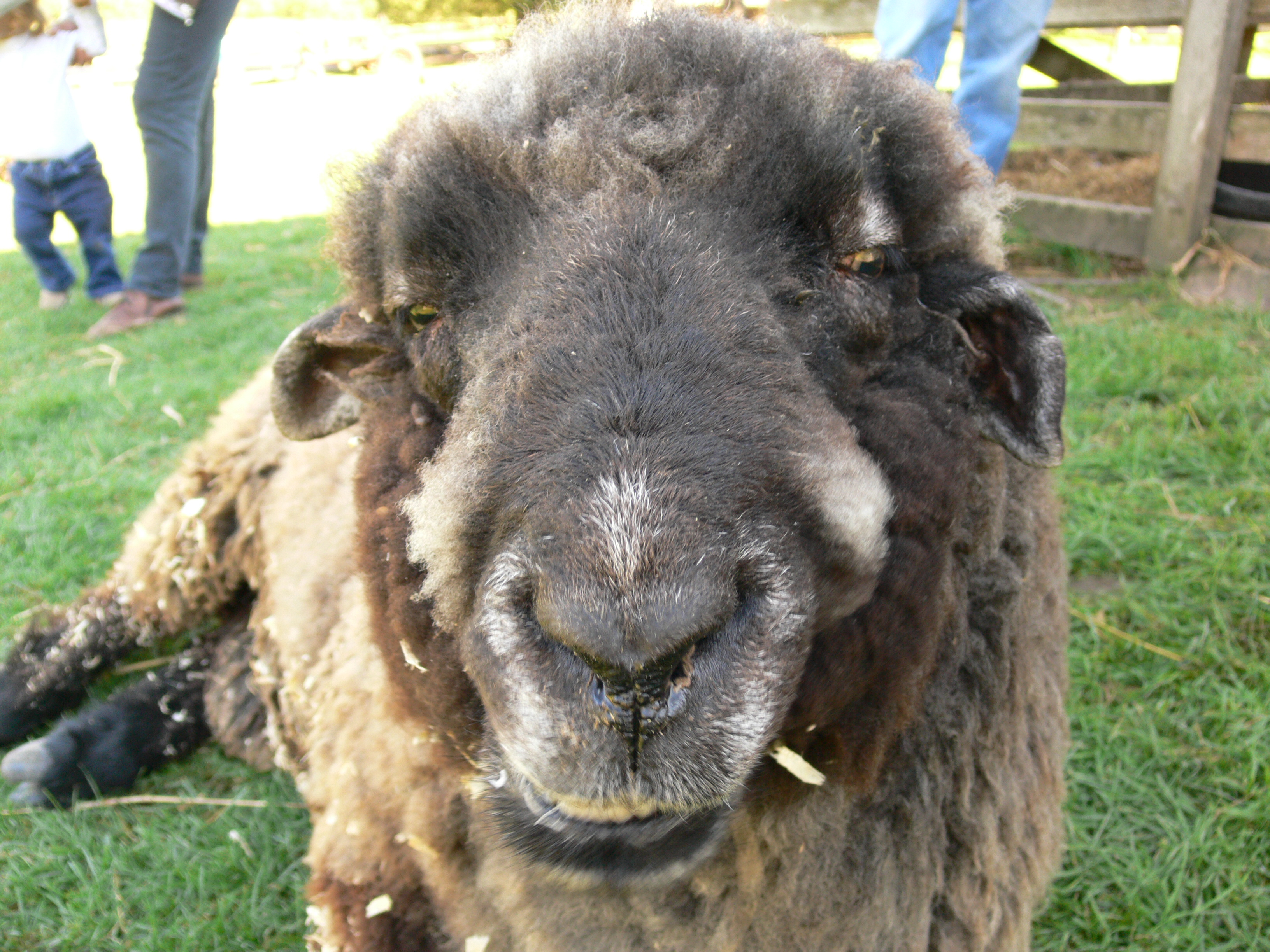
My domestic animal images are among the most popular hits on my blog, especially among the Myspace crowd. Apparently, everyone under 19 thinks it’s funny to post an embedded image link to a llama or an alpaca, pretending it’s a photo of themselves. A recent visit to Shelburne farms yielded the following additional specimens — click on any image to see a very large version. If you want to use one of these as your xanga avatar, ask me first. And please don’t borrow my bandwidth to serve it.
The Proverbial Black Sheep
A Surprisingly Accommodating Donkey and His Friend
Sleepy Sheep

9 October 2006

Martin-Éric Racine: ALSA pitfalls ... and a bounty ... or two

Daniel Jacobowitz writes about problems he's having getting proper ALSA support for his desktop computer. Boy, does that sound familiar! I myself have three computers that are partially or totally unsupported on ALSA:
  • Apple iMac rev.D a.k.a. 333MHz G3 tray-loading iMac. Partially supported by snd-powermac, except that some controls are inverted and other controls just plain don't work. Probably something as simple as the wrong offset in the bitmap used to select the control on which to act. Bug filed in the ALSA BTS. No reaction. Anyhow, sound support for Apple products is being migrated to snd-aop, which was written from scratch using a modular architecture that enables easily adding support for new sound chips. Nice idea, except that no effort is being put towards supporting pre-G4 products... Back when Ubuntu appeared on the Linux scene, Mark Shuttleworth agreed to pay a 500$ bounty to whoever made ALSA work on all PowerMac variants. Nobody took it, as far as I know. Those who are interested in taking on this challenge might wanna check my wiki page for our summary of the ALSA PowerMac situation.
  • HP 9000 series model 712. Recently supported, thanks to someone on the PA-RISC Linux mailing list having a go at coding it. Never merged by upstream ALSA, though. It's been a while since I gave it a try but, last time, only output worked.
  • AMD Geode SCx200. There is no snd-scx200 driver at all. Bug filed in the ALSA BTS. The issue of sound support on early Geode products was also mentioned on the Linux kernel mailing list, during the big OSS cleanup discussion so, at least, some people are aware of the issue. It so happens that the Geode SC is used in a number of popular embedded boards, such as the Soekris and yet, nobody tried porting the old OSS drivers available on AMD's Geode driver source page. Odd.
As we can see, there's plenty of ALSA support remaining to be coded, ported or cleaned up, and some people are willing to pay for the results. Who's gonna grab it?

Dirk Eddelbuettel: Frank Lloyd Wright Race 2006

The 30th annual Frank Lloyd Wright Race was today in neighbouring Oak Park. Really nice weather, once more. The race went quite well: I finished with a hand-stopped time of 41:02 (or a 6:37 min/mile pace) which is quite a bit faster than my times here in 2004 and 2003.

Dirk Eddelbuettel: littler 0.0.7

A few days ago, Jeff and I rolled up 0.0.6, but we forgot one file in 'make dist' (doh!) so version 0.0.7 of our newish toy r (aka 'littler') followed suit. In the meantime, littler was also added to Debian so you can get 0.0.7 via apt-get too.

8 October 2006

Andree Leidenfrost: Debian Voting Galore

I've crawled out from underneath my Mondo Rescue stone and looked in bewilderment at the various vote messages in my inbox. (It's not quite as bad, I've followed things to some detail passively on private and planet.)

The main questions seem to be:
  • Is it good or bad to collect money to pay people for getting specific tasks done in Debian? Does involvement of the DPL in such an initiative constitute a conflict of interest?
Here is how I've voted and why:

a65763d3-b1e2-4530-8ff8-aa5915274eb4
[ 1 ] Choice 1: Re-affirm DPL, wish success to unofficial Dunc Tank
[ 2 ] Choice 2: Re-affirm DPL, do not endorse nor support his other projects
[ ] Choice 3: Further discussion

49a98df6-2bd4-40c8-a559-7e15212dbd26
[ ] Choice 1: Recall the project leader
[ 1 ] Choice 2: Further discussion

I think AJ is trying to improve things in Debian and that Dunc Tank is one attempt to do so. I believe it is a worthwhile attempt and can understand that he wants to be involved. While I also understand the concerns raised by other people, I believe that only time will tell whether Dunc Tank is in fact good or bad for Debian (I hope it's good). As far as the conflict of interest issue goes, I think it's less than ideal but the smaller evil to keep AJ as DPL whilst he's involved with Dunc Tank. I don't think AJ should run again if he stays involved in Dunc Tank as he is at the moment. I think that we need to consider integrating Dunc Tank into Debian if it is still alive and kicking in 12 months time. (Or to set up something similar as part of the project.)

c2d43675-9efa-4809-a4aa-af042b62786e
[ 1 ] Choice 1: Release Etch even with kernel firmware issues
[ 2 ] Choice 2: Special exception to DFSG2 for firmware as long as required [3:1]
[ ] Choice 3: Further discussion

22fc4edd-1f6c-454f-b204-6aa0bad0ce1d
[ ] Choice 1: DFSG #2 applies to all programmatic works
[ 1 ] Choice 2: Further discussion

I believe that we should indeed release Etch as planned even if that means shipping a number of firmware blobs. I do not think that an ongoing exception is appropriate here. If this is still not resolved by the time we want to release Etch+1, let's have an other GR.

I am not sure what "program" really means in DFSG #2 - I've always taken it to mean the software, documentation, fonts and artwork that we ship as part of Debian. It likely has to comprise more than that, but I am convinced there have to be some exceptions:
  • It defeats the purpose and very nature to modify licence texts. If people can change a licence at will, there is not much point having one in the first place.
  • It equally defeats the purpose to modify logos (and thus their representations as files of whatever format). Logos allow users to recognise more easily what content is available. It does not make sense to allow modification or use in a different context of such a logo as it would then be more confusing than helpful.*
I believe that these are just two examples of potentially many where 'free' versus 'non-free' are inadequate categories to think in.

Finally, the DFSG are part of the Social Contract and not the other way round. I like this because I value doing the best for our users higher than some rules. The DFSG exist to empower our users - I don't believe that removing firmware blobs from the kernel serves this purpose. That said, we should by all means strive towards free firmware, but I view this as more of an incremental, ongoing task of convincing vendors over time.

* I believe for example that the dispute over Firefox would be best resolved by Debian using the Firefox logo (and name) and the Mozilla folks dropping there requirement for patch review.

5 October 2006

Zak B. Elep: Unexpected

There was no power again at the office today (thanks to my boss for sounding me while I was laying in bed ;) so I had a pretty free day today. This is the first of my Unexpected Series of Events (although, in retrospect, this is somewhat expected since we did lose power at the office yesterday, giving credence to Clair’s story…) So I spent a little more time in bed, trying to get sleep; but my Mom got me ony my feet, calling via landline all the way from Daet, which just got its power restored a few days prior. She told me that my Tita Mendy will be arriving tomorrow, and she’ll be carrying some of my things too. That’s the second Unexpected. After that I left the house to deposit my second paycheck from work and payment for my second semester at school. A quick trek back home for lunch, and a few pages of Even Grues Get Full after, I went to Robinsons Place to check mail for free (well, not really free since I usually pay for my cup of Java to have a reason for taking a table.) As I’ve come to expect of freebies, free WiFi in Robinsons is rather limiting, as it appears to only allow HTTP ,S connections (yeah, no Yahoo! even for the unenlightened masses!) The bandwidth, in fairness, is fairly decent, allowing for a good audio or video stream to pass through without much lag (as long as its from HTTP ,S .) However, today’s service was extra crappy, as it appears that the WiFi DHCP server went down, and I couldn’t acquire an IP address. It wasn’t much of a problem for me, though: last weekend allowed me to spend a lot of my time hanging out in the place as it was the only place nearby to have seemingly continuous DC power (the storm that passed over pretty much knocked down normal AC power everywhere,) and also gave me an excuse to explore the WiFi network, letting me know such minutiae as the right IP address block and gateway Robinsons Free WiFi used. Hence, even without DHCP, I was able to configure Perlis to connect via a statically-randomly-chosen-by-magic-255-ball IP address. This wasn’t Unexpected. What was Unexpected was what happened next: as I was surfing the Web, I noticed that the other folks nearby were having difficulties accessing the free WiFi; of course, they didn’t have the information (that I had known by simply being observant) that they needed. Nearest to my table were a couple of Korean-looking foreigners and a doctor-looking guy inquiring each other if they were able to connect. I went near them and asked them about it too. Yeah, my deductions were correct; the foreigners (hello, Emma and Jay) were Korean students learning English, the guy (hello, Charlie Atienza) was a dentist, and all of them couldn’t connect to the Net. Windows was choking up on them, since it could not acquire an IP address. So, needless to say, I came to the rescue, and within a few minutes (which included trying to change the Korean’s locale settings to Engrish, which we eventually gave up, and forcing me to hibernate Kubuntu and booting to Windows just to find the right Network Settings menu, duh) I got them to have a working, albeit laggy, internet. I couldn’t get Charlie’s laptop working though, since it seemed to suffer another problem althogether :/ At any rate, meeting new people over this problem was by itself quite Unexpected, but that wasn’t the only thing: Charlie noticed my Kubuntu desktop earlier and recognized it immediately as open source. It turns out that Charlie have seen FOSS operating systems in action via Knoppix, and he knows Dr. Alvin Marcelo (of CHITS fame) and Eric Pareja, and is also quite involved in bioinformatics too. Small world indeed! =) I guess having no power at the office makes for a good adventure, after all. Well, yesterday was quite an adventure in itself (Clair can tell you all that, and more :P ) Today, however, was pretty much very Unexpected, and indeed I’m thankful that so many surprises come my way. The last Unexpected: I forgot to update my phone number on the calling cards I gave away today. :P Oh well…

4 October 2006

Edd Dumbill: The best of XTech 2006

As I'm finalising the call for participation for XTech 2007 (15-18 May 2007, Paris, France), I've taken a look back at the some of the best received presentations from the 2006 conference. I thought them well worth sharing again here. To be sure of hearing about the call for participation and other XTech 2007 news, sign up for the newsletter or keep an eye on this blog. Native to a Web of Data: Designing a part of the Aggregate Web
Tom Coates (Yahoo!)
What are the architectural elements of the emerging web of data; how do you build services to thrive in this environment? What needs to change and what needs to return to fundamental principles? How do we bring it all together to make something awesome?
An open (data) can of worms
Paul Hammond (Yahoo!, ex-BBC)
Open data is not a panacea, and presents as many questions as answers. Technology can only solve some of these issues, this presentation outlines some of the other, more fundamental, problems.
Etna, a WYSIWYG XML RELAX NG and Gecko-based editor
Daniel Glazman (Disruptive Innovations)
A presentation of the new WYSIWYG XML editor based on Gecko, and its underlying implementation of RELAX NG. How American are startups?
Paul Graham (Y Combinator)
Startups are largely an American phenomenon. Why? What is it about America that makes startups work there? Could Silicon Valley be replicated in another country?
Written up as two essays: The power of declarative thinking
Steven Pemberton (W3C/CWI)
This talk discussed the requirements for Web Applications, and the underpinnings necessary to make Web Applications follow in the same spirit that engendered the Web in the first place.
RDF/A: The Easy Way to Publish Your Metadata
Mark Birbeck (x-port.net Ltd.)
RDF/A is a new, and simpler, way of adding metadata to documents, in such a way that the document contains its own metadata--making it easy to turn a home page into a FoaF file or RSS feed.

3 October 2006

Ross Burton: Packing

Tomorrow I fly to Boston for the Summit and the embedded GNOME hackfest. Packing clothes took about five minutes: pants, socks, tees, jumpers. Packing the electronic toys was a bit more complicated... Please can people start using the same chargers? I'm impressed that the Zaurus charger is actually a PSP charger, but I'm not happing having to take two Nokia chargers and two Canon chargers.

Evan Prodromou: 11 Vend miaire CCXV

October is a busy month for us. October 14th is my birthday, and October 16th is our wedding anniversary. On our honeymoon in 2004, we took a trip to wt:Charlevoix at the mouth of the Saguenay fjord in Quebec. Then, in October 2005, Amita June had just been born, so we took a short trip to Ottawa for the weekend. At this point, I think we've established an anniversary tradition of short weekend trips to cities in Eastern Canada. This year, Maj started arranging a trip to St. John's in Newfoundland. I'm pretty fascinated by wt:Newfoundland -- it's one of the oldest settlements in North America, yet very isolated. Its culture is a unique blend of Celtic, English, and a smattering of French Canadian with an idiosyncratic accent and great music. But St. John's is just too remote for a relaxing, romantic anniversary weekend. We kept trying to find easier ways to get there, and nothing was working out. So we decided to save Newfoundland for a spring trip. My crazy-cuckoo dream is to drive from Montreal to Labrador City and then out to Goose Bay in Labrador on the mainland, take the ferry to Newfoundland, drive around a bit there, then back to Montreal on a car ferry. Good trip, eh? So, we decided to take things a little easier and go to another part of Canada. We've wanted to visit wt:Halifax for a long time, and now it looks like it's going to work out. It's only 1-1/2 hours by plane from Montreal, and it's supposed to be a very charming, fun city. I got good deals on Air Canada for the two of us, plus baby, and we're staying at the posh Lord Nelson hotel in the middle of town. Even though it's the "Splurge" hotel on the Wikitravel Sleep section, I was able to get a discount with my CAA card that makes the price just about acceptable for a special occasion weekend. Now we have to plan what to do when we get there. We've only been to Nova Scotia once, and that was just a jaunt across the border from New Brunswick for kcks. I'm going to pore over the Wikitravel and World66 articles to see what I can come up with, and hopefully do some research while we're on the road. Really, that's the best part for me. I probably shouldn't look so far ahead -- we've got Hudson (New York) still to do this weekend. Like I said, a busy month! tags:

Free Books I've been planning to go to the local Wiki Wednesday here in [wt:Montreal], so I was reviewing the Montreal Wiki Wednesday page for previous events. Although we've made it to a few of the previous ones, we definitely haven't made it to all the ones we said we would... so be it. One of the previous speakers was Hugh McGuire, a Montrealer who started an excellent project called Librivox. Librivox is a project to create free audiobooks, with chapters contributed over the Internet by readers around the world. They take books from Project Gutenberg (which is apparently a MediaWiki wiki site now... who knew?) and volunteers read them and then the whole thing gets munged into a nice little package. Everything stays in the public domain (bless their generous souls) and they even have a Librivox podcast just in case you swing that way. I'm super-hot for audio books. I love listening to them while driving, especially for long road trips. Maj is lukewarm on the idea, but she occasionally gets into them when we've got a good book going. The big downside is that they're ridiculously expensive -- $50+ for some books. The only thing that bothers me a bit about Librivox is that there arent CD Audio ISOs available. We have an MP3 CD player in our car, and I think it should work fine, but for sharing it's awful nice to have real CDs. UPDATE (from Hugh): There are mp3 ISOs available here: LibriVarc, but no aiff files. mega storage space, bandwidth and transfer problems to do that, but if anyone is interested in providing such CDs, or helping manage such a project, we'd love to know about it. tags:

BarCampMontreal And while drifting through Hugh McGuire's blog, what do I see but a link to the newly-announced BarCampMontreal -- the first BarCamp to happen here in The City Without a Nickname. I had thought that the loose plan was to do a BarCamp to coincide with RecentChangesCamp in May 2007, but this plan seems more impetuous and uninhibited -- just like a BarCamp. There are just too many people to invite here in Montreal, though... we have something like 20 Debian developers, a whole passel of bloggers and wikitistas, lots of games developers and folks like that. Lots of work before the big weekend. Did I mention that October is a busy month? tags:

Day against DRM And look at that... October 3 is the Day against DRM per Defective by Design. A new DRM info clearinghouse, cleverly named drm.info, launched today, too. I've been in the weird situation lately of fighting against over-protectiveness w/r/t DRM in the Creative Commons licenses, when in fact I think DRM is twisted and dumb. It's a bill of goods being sold to entertainment companies by shady technology groups, it's rarely effective, and its only value is to punish law-abiding citizens. It's gotta go. A passionate and profanity-laced article I wrote about DRM coders for Pigdog Journal was linked from ars technica and BoingBoing last year. Although my writing style is a bit different (cough cough) than it once was, I still feel the same about DRM: a shameful and hostile way for technologists to treat each other. tags:

Are you experienced? So, I like the TV show Lost a lot, but I had no idea about this immersive alternate reality game The Lost Experience. Seems like just the kind of intense investigation game to keep losties busy for the entire summer. (You know, while they weren't trying to figure out the truth about lonelygirl15.) I'm not really that into figuring this stuff out, but I do enjoy reading the details once people have worked them through. tags:

Edd Dumbill: Living and coding on a Mac

For most of this year I've been working mainly on a Macbook Pro, having deserted my Ubuntu desktop.  Somebody wrote to me recently, kindly enquiring how this life was going, and asking some questions in particular.

Although of limited interest to some, I decided to answer the mail here, if for nothing else to record my views for future reference.

Q: How is developing on a Mac? Is TextMate really that good?

Developing Rails applications on a Mac is sweet, and yes, TextMate really is that good. My jilted .emacs languishes in lonely misery.

Developing other (non-Mac) stuff on a Mac is a real pain however, because nothing's where you'd expect it after years of Linux use.  Like several other developers I've seen, I run Ubuntu Linux in a virtual machine under Parallels for such work.

It's not just that Macs lack apt-get (as you can get it with fink), it's that they lack the reliability of Debian or Ubuntu's package repositories to underpin it. Running Linux in a virtual machine is far easier.

On the subject of TextMate,  perhaps the best compliment I can pay it is that using it reminds me of the last text editors I really felt at home in, CygnusEd and then FrexxEd on the Amiga. TextMate's most serious flaw is the inability to create split views, however. It seems to me that's a key programmers' feature, to be able to read from one source file at the same time as editing another.

Q: Is the hype about Ruby on Rails true?

I still think so. I resisted it for 6 months because I tend to be averse to anything that gets such a large amount of publicity, but then stepped aboard the train around the time of Rails 0.13.

I've not really looked back after my initial experiments seemed to bear out the claim of developing "ten times faster than PHP". I'll admit I find it hard to keep up with all the extra developments that get added at the Rails cutting edge, but then again I don't really need them.  Most of those additions are refinements, rather than core changes. Constraints on my time mean I tend to write in a common Rails subset, as opposed to flexing my muscles with the obscure but clever bits.Even if your taste isn't for Rails, then the trend that Rails, Django and friends have started is improving the web development playing field for all.

Q: What makes you happy and sad about the Mac?

The things that the Mac still scores on are:
The interesting thing to me is that none of these are very difficult to surmount, for want of a little resource.  The day of the Linux desktop, so perennially around the corner, will yet come.

As a balancing postscript, I will mention that there are some things that are Mac irritants to a sensible Linux person, which include filesystem case sensitivity, lack of decent SSH agent (yes, I've tried them all), not knowing what to kill -9 when things go pear-shaped, Apple's arrogance, crippled nature of some default apps (iChat won't put multiple accounts in the same window, Safari doesn't support keyboard navigation at all well, Quicktime player won't play movies fullscreen).

Evan Prodromou: 10 Vend miaire CCXV

Two of our good friends here in Montreal are Kate and Morgan. She's a Ph.D. student in philosophy at Rutgers, working on her dissertation here, and he's a game designer. They're from Australia originally, and they just got married Down Under about 4 weeks ago. Her dad and stepmom live in North America, though, so they're thoughtfully holding a wedding party next weekend for Kate and Morgan's American friends and family at their home in wt:Hudson (New York). We've driven through the area a few times in the past, but we haven't really stopped for long. From what Kate says, Hudson's a pretty town and early October means lots of leaf-peeping opportunities. Not that Montreal's any slouch in that respect right now, but it will be nice to see other people's leaves, I guess. There's also a Firefighter Museum and a Shaker Museum. I also just finished The Island at the Center of the World, a historical book about the 17th-century Dutch colony of New Netherlands (now New York). The main settlements were in the Hudson Valley between Manhattan and Albany (New York), so I'd like to find a nice one to stop at and look around. The drive down is about 4-1/2 hours, and I think we'll be OK doing it in one hop, even with the baby strapped down in the back seat. We're heading out on Friday evening, spending Saturday checking out the sights, then parties on Sunday and Monday (a holiday, Columbus Day, in the US). Monday night Maj got us tickets to see Massive Attack here in Montreal, so we'll be zooming back up highway 87 Monday afternoon and if we can avoid problems at the border in wt:Plattsburgh we'll be rockin' out (a bit) that evening. tags:

Parallel distrihoozit The discussions on the cc-licenses list over the last week have gotten increasingly heated. At heart is the very emotional issue of DRM (AKA TPM) technology, and to what extent its use is compatible with Open Source and Open Content. It's been a real shame -- several pages-long posts that really try to hammer a point into the head of someone who's just not listening since they're busy writing their own 10-page-long email. It's become impossible to read and some wiser heads have asked for a cooling-off period. Thankfully so. There is very little time left to continue this discussion. I really sincerely hope that people who are interested in seeing Commons licenses that are compatible with Debian and other Free Software pop in and say something to that effect. Cool heads who can state things in simple English are particularly welcome. The list allows posting to subscribers only -- kind of a damper on one-time posts -- but subscription only takes a second, and you can disable your subscription immediately after you're done. tags:

Busy Wednesday Ahead 2007 is going to be the year of wiki in Montreal. We're having two of the main wiki conferences -- RecentChangesCamp and Wikisym -- here in Montreal next year. And I guess it's time for the local wiki, open source, open content and "open other" community to start getting ready. At least in the wiki world we're taking the first steps. Wednesday 4 October (uhh... I mean, Duodi 12 Vend miaire) we're having Montreal Wiki Wednesday at 8655 rue St-Denis (metro Cremazie). Alain Desilets and Sunir Shah, who are both working on Wikisym, will be coming, as well as Anne Goldberg (principal organizer of RCC) and the inimitable Seb Paquet, who runs everything in this town. 15h-18h, fun times ahead. tags:

CC Salon Montreal But wait there's more! On top of WW, we're going to have a big Creative Commons Salon Montreal on Wednesday night, too. This will be the second time we've had a get-together in Montreal for CC so far, and I think it's going to be a good one. Maj and I are going to give an informal talk about Wikitravel and its CC license which has worked so well for us. I'm really gung-ho on the CC Salon idea. It's a great way to engage the interesting, fun part of CC -- and it's all about the fun, right? CC Salon Montreal is happening 4 Oct at 18:30h at L'am re boire, 2049 rue St. Denis (a mere 66-block walk from Wiki Wednesday!). Should be a good time. (On top of all this, I'll probably stop at YULblog on the way home, just to make the Web maven's trifecta for the night. tags:

2 October 2006

Lars Wirzenius: Debian: Piuparts et al orphaned

Whee, that was fun. I orphaned three packages (liwc, piuparts, and publib), and asked for the removal of two more (python-licosmamo and lodju). The removed ones have no users (mostly not even myself), and the orphaned ones don't either, except piuparts. I'm hoping someone will adopt piuparts. See #390754 before you do, though. The reason for this evening's activities: I have more responsibilities than I have time for, so I'm trying to fix that by shedding everything I can. I'm not leaving Debian (I will even maintain a package), but I'm not expecting to put in a lot of effort into Debian development in the near future. Next year we'll see if I can't arrange for more time for this again.

Dirk Eddelbuettel: Chicago Half Marathon 2006

Ran what may be my favourite race this morning: the Chicago Half Marathon in its tenth anniversary (having run the three previous ones too). Once again gorgeous weather, sunny, no wind, low 50s at the start. The race itself went rather well. I wasn't sure how I had weathered a bout of the flu with some light fever last weekend, but resting most of this week seems to have helped as I was able to push my PR by about 1 min 45 secs to 92:33, or a 7:039 min/mile pace.

Gunnar Wolf: Race condition found!

Less than one year ago, I had had enough. At over 135 Kg, not having done any kind of excercise or diet for too many years, I was on a very sorry shape - and although thankfully I have never had any important illness, I don't want to bet my life on luck alone. So, by November (to be exact, on the same week Nadezhda and I had our wedding), I joined my University's obesity, overweight and sedentarism program - Of course, ready to admit defeat.
Over the last year, however, my life has changed completely - Many of you have congratulated me in person or electronically. Thank you very much. It has surely been a tough job - And I intend to follow on it!
As of my last measurement, I was weighing 100.2 Kg, finally under the obesity treshold for -probably- the first time since high school. I am having my excercise hour every morning - and, unbelievably, I enjoy it. And yes, many among you have witnessed me and Nadezhda jogging, talking about our training, or whatnot.
I remember probably in May or June 2005, chatting with Jordi, I was trying to talk him into travelling for Debconf5 to Finland. He was unsure, as he wanted to train for a triathlon - And, half-joking but half-serious, I questioned whether he would rank sports even close to Debian work. Surprise, surprise: He did. Of course, he later decided to go to Debconf, but anyway :)
...Ok, this post is all in the past. What now about me? Why am I writing what you all already know? Simple: I found myself in a race condition. Yesterday, September 30, Nadezhda and I took part of the annual UNAM nocturnal race. How was it? Delicious. 8Km, starting next to UNAM's 1968 Olympics Stadium, going up towards the San Jer nimo exit, then back down across Insurgentes, past the swimming pool, the Architecture faculty and IIMAS, then up by Engineering, Accounting and Social Work. Under Insurgentes again, up past the Biomedical, Ecology and Biology institutes, next to the Botanical garden, then by the sports fields where we work out every day, and down to the stadium - To finish with a very emotive, really inspiring, really great last run inside the 1968 Olympics Stadium. I made a 53 minutes time, averaging 156 heartbeats per minute (quite high but not completely off for me). Of course, we got our souvenir T-shirts, and... Man, sign me up for the next one! :D

30 September 2006

Edd Dumbill: Rails deployment tip for Debian systems and Apache

I deploy my Rails applications with Capistrano to an Ubuntu machine, which uses the excellent Debian style layout of Apache 2 configuration files. To keep things tidy, I like to place the Apache configuration file inside the config directory of the Rails project, along with the rest of the configuration for the Rails application and Mongrel. With the help of a couple of Capistrano rules I can then ensure that, on deployment, the latest Apache configuration file is also sent to the server:
# after setup, do a one-time link in
task :after_setup do
  sudo "ln -nfs # current_path /config/# application         
     /etc/apache2/sites-available/"
end
# cause apache2 to re-read. you probably have this rule anyway
task :restart do
  # if you're running mongrel_cluster, uncomment the following line
  # restart_mongrel_cluster
  sudo "/usr/sbin/apache2ctl graceful"
end
The first time round you'll probably want to do a2ensite yourapp manually, but this could easily be added into the after_setup rule. Not rocket science, but a pleasing bit of configuration that keeps things tidy.

29 September 2006

Edd Dumbill: A deployment pattern for Rails and bzr

I can't get enough of the bzr revision control system, and I'm quite fond of Rails too. So, I thought I'd share my deployment setup for Rails applications using Capistrano and bzr. Capistrano works on the assumption that you're deploying from a revision control system. Secondly, it requires that your deployment server is aware of how to access this system. This leaves you with various options, the most obvious of which are:
  1. Host your source repository on your deployment server
  2. Have your deployment server equipped with remote access to your source repository
  3. Mirror your repository to your deployment server
Of these, option 1 is out for all but somewhat casual projects, option 2 either opens up your source repository more than I like, or needs fiddly tunnelling of SSH which I don't think Capistrano is up to yet (I only like to use key-based access with SSH, rather than password based access, which seems at the moment complicate life where Capistrano is concerned.) I've opted for option 3. The pattern I use is this. On setting up the deployment server, I push a copy of the bzr repository to a private directory. Then, on deployment I first update that repository securely from the master repository inside my network, then export the new release locally on the server. Here are the relevant bits of my Capistrano configuration:
set :repository, "/opt/repo_mirror/# application "

…

set :scm, :bzr
set :checkout, "branch"

…

task :before_update_code do
bzr push sftp://deploy.example.org/opt/repo_mirror/# application
end
One big advantage of this over option 2, a remote source repository, is that only the changes are sent up to the server, and the bandwidth-intensive application checkout happens locally on the deployment machine. The final bit of improvement this could stand is to have the bzr checkout use export and not branch, but I think I'll have to alter the Capistrano's bzr plugin in order to do this.

Edd Dumbill: Locking down portmap on Debian

Most sensible people are very wary of NFS and its potential for security holes. If you can at all help it, it's a good idea not to run NFS and portmap on a network interface with direct internet connectivity. However, this isn't always convenient. As I needed to have NFS sharing on a host exposed to the internet, I set about finding the various places I needed to firewall. The tools I typically use to verify I've done the right things are netstat -nap on the machine concerned, to check for listening processes, and nmap from remote hosts to sniff for open ports. Portmap and its associated programs mostly use 'tcpwrappers' for controlling access. The first step you ought to take in securing portmap is to ensure that your hosts.allow and hosts.deny files are set up to control access properly. In /etc/hosts.deny, deny access to allcomers:
mountd: ALL
statd: ALL
portmap: ALL
rquotad: ALL
Then in /etc/hosts.allow, let the good guys through (adjust for your network):
mountd: 192.168.0.
statd: 192.168.0.
portmap: 192.168.0.
rquotad: 192.168.0.
On top of this, however, you should firewall off the ports that these programs use. As I found out, this is not as easy as it sounds. Portmap assigns random ports for some of the services it starts. You can run rpcinfo -p to see the ports in use. An example run on one of my machines looks like this:
program vers proto   port
 100000    2   tcp    111  portmapper
 100000    2   udp    111  portmapper
 100003    2   udp   2049  nfs
 100003    3   udp   2049  nfs
 100003    4   udp   2049  nfs
 100003    2   tcp   2049  nfs
 100003    3   tcp   2049  nfs
 100003    4   tcp   2049  nfs
 100021    1   udp  32770  nlockmgr
 100021    3   udp  32770  nlockmgr
 100021    4   udp  32770  nlockmgr
 100021    1   tcp  32788  nlockmgr
 100021    3   tcp  32788  nlockmgr
 100021    4   tcp  32788  nlockmgr
 100005    1   udp   1005  mountd
 100005    1   tcp   1008  mountd
 100005    2   udp   1005  mountd
 100005    2   tcp   1008  mountd
 100005    3   udp   1005  mountd
 100005    3   tcp   1008  mountd
 100024    1   udp    863  status
 100024    1   tcp    866  status
Of these, nfs and portmapper always use the same ports, 2049 and 111, so ensure you block off these. What about the rest? Happily, there's a way to configure them to use constant ports so we can reliably firewall them. Life would be too easy if all this configuration was in the one place, so here's how to find the different places you need to change. Finally, if you're running quotas, be sure to do something similar with RPCRQUOTADOPTS in /etc/default/quota. See also: Finally, I ought to note that I've written this up in case it helps anybody else. As with everything I write here, I make no warranty about its accuracy. Security is hard and obscure (but that's no reason not make our best efforts!)

28 September 2006

Simon Richter: Wacky ideas #9: alternate system roots

When building images for embedded systems or bootstrapping, it is sometimes necessary to configure a package on the host system. This is somewhat doable when host and target system are the same architecture, but becomes difficult when they are not, and downright impossible for packages that configure themselves for the particular machine they've been installed on, like xorg for example. The idea to solve this is actually three ideas:
  1. split the package dependencies into installation time and runtime dependencies, and a third category for "needed for both"
  2. if a package install-depends on itself, then it can only be configured on the target system, such packages should not be pre-depended on for obvious reasons
  3. to actually allow installation when host and target are different architectures, the maintainer scripts need to be able to handle alternate system roots.

27 September 2006

Dirk Eddelbuettel: Announcing 'littler'

Earlier today, Jeff announced our new toy r (aka 'littler') with this post on the r-help list. What is 'littler'? We summarized it briefly in the post and on our respective or pages:
GNU R, a language and environment for statistical computing and graphics, provides a wonderful system for 'programming with data' as well as interactive exploratory analysis, often involving graphs. Sometimes, however, simple scripts are desired. While R can be used in batch mode, and while so-called 'here' documents can be crafted, a long-standing need for a scripting front-end has often been expressed by the R Community. littler (pronounced 'little R' and written 'r') aims to fill this need. It can be used directly on the command-line just like, say, bc(1):
	$ echo 'cat(pi^2,"\n")'   r
	9.869604
http://ftp-master.debian.org/new.html Equivalently, commands that are to be evaluated can be given on the command-line
	$ r -e 'cat(pi^2, "\n")'
	9.869604
But unlike bc(1), GNU R has a vast number of statistical functions. For example, we can quickly compute a summary() and show a stem-and-leaf plot for file sizes in a given directory via
	$ ls -l /boot   awk '!/^total/  print $5 '   \
		 r -e 'fsizes - as.integer(readLines());
			print(summary(fsizes)); stem(fsizes)'
	   Min. 1st Qu.  Median    Mean 3rd Qu.    Max.
	     13     512  110100  486900  768400 4735000
	Loading required package: grDevices
	  The decimal point is 6 digit(s) to the right of the  
	  0   00000000000000000011112223
	  0   5557778899
	  1   112233
	  1   5
	  2  
	  2  
	  3  
	  3  
	  4  
	  4   7		
And, last but not least, this (somewhat unwieldy) expression can be stored in a helper script:
	$ cat examples/fsizes.r
	#!/usr/bin/env r
	fsizes - as.integer(readLines())
	print(summary(fsizes))
	stem(fsizes)
(where calling /usr/bin/env is a trick from Python which allows one to forget whether r is installed in /usr/bin/r, /usr/local/bin/r, ~/bin/r, ...) A few examples are provided in the source directories examples/ and tests/.
At least one shortcoming already became apparent: by calling it r to not trample on the real R binary, we obviously overlooked that there are certain operating systems on which case is ignored -- ouch. So Mac users may have to install it as a littler binary. Other comments, as seen in the mailing list thread, are mostly supportive. littler can either be downloaded from either the Vanderbilt BioStat Wiki or my local archive. Also available is SVN access via
	svn  http://littler.googlecode.com/svn/trunk/ littler
Debian users shall get it via apt-get install littler as soon as it leaves Debian's NEW queue. In the meantime, the configure && make && make install three-step works for us under any of Debian testing, Ubuntu Dapper, OS X, and with both R 2.3.1 and the pre-releases of R 2.4.0.

Next.

Previous.