Review:
The Past is Red, by Catherynne M. Valente
| Publisher: |
Tordotcom |
| Copyright: |
2021 |
| ISBN: |
1-250-30112-2 |
| Format: |
Kindle |
| Pages: |
151 |
Tetley is nineteen and is the most hated person in Garbagetown. That's
kind of horrible, but life is otherwise great. As she puts it:
I'm awfully lucky when you think about it. Garbagetown is the most
wonderful place anybody has ever lived in the history of the world,
even if you count the Pyramids and New York City and Camelot. I have
Grape Crush and Big Bargains and my hibiscus flower, and I can fish
like I've got bait for a heart so I hardly ever go hungry, and once I
found a ruby ring and a New Mexico license plate inside a
bluefin tuna. Everyone says they only hate me because I annihilated
hope and butchered our future, but I know better, and anyway, it's a
lie. Some people are just born to be despised. The Loathing of
Tetley began small and grew bigger and bigger, like the Thames, until
it swallowed me whole.
Garbagetown is a giant floating pile of garbage in the middle of the
ocean, and it is, so far as anyone knows, the only "land" left in the
world. Global warming has flooded everything until the remaining Fuckwits
(as their future descendants call everyone who was alive at the time) took
to the Misery Boats and searched hopelessly for land. Eventually they
realized they could live on top of the now-massive Pacific Garbage Patch
and began the Great Sorting, which is fifty years into Tetley's past. All
of the types of garbage were moved into their own areas, allowing small
micronations of scavengers to form and giving each area its own character.
Candle Hole is the most beautiful place in Garbagetown, which is the
most beautiful place in the world. All of the stubs of candles the
Fuckwits threw out piled up into hills and mountains and caverns and
dells, votive candles and taper candles and tea lights and birthday
candles and big fat colorful pillar candles, stacked and somewhat
melted into a great crumbling gorgeous warren of wicks and wax. All
the houses are cozy little honeycombs melted into hillside, with
smooth round windows and low golden ceilings. At night, from far
away, Candle Hole looks like a firefly palace. When the wind blows,
it smells like cinnamon, and freesia, and cranberries, and lavender,
and Fresh Linen Scent, and New Car Smell.
Two things should be obvious from this introduction. First, do not read
this book looking for an accurate, technical projection of our
environmental future. Or, for that matter, physical realism of any kind.
That's not the book that Valente is writing and you'll just frustrate
yourself. This is science fiction as concretized metaphor rather than
prediction or scientific exploration. We Fuckwits have drowned the world
with our greed and left our descendants living in piles of our garbage;
you have to suspend disbelief and go with the premise.
The second thing is that either you will like Tetley's storytelling style
or you will not like this book. I find Valente very hit-and-miss, but
this time it worked for me. The language is a bit less over-the-top than
Space Opera, and it fits Tetley's
insistent, aggressive optimism so well that it carries much of the weight
of characterization. Mileage will definitely vary; this is probably a
love-it-or-hate-it book.
The Past is Red is divided into two parts. The first part is the
short story "The Future is Blue," previously published in
Clarkesworld
and in Valente's short story collection of the same name. It tells the
story of Tetley's early life, how she got her name, and how she became the
most hated person in Garbagetown. The second part is much longer and
features an older, quieter, more thoughtful, and somewhat more cynical
Tetley, more life philosophy, and a bit of more-traditional puzzle science
fiction. It lacks some of the bubbly energy of "The Future is Blue" but
also features less violence and abuse. The overall work is a long novella
or very short novel.
This book has a lot of feelings about the environment, capitalism, greed,
and the desire to let other people solve your problems for you, and it is
not subtle about any of them. It's satisfying in the way that a good rant
is satisfying, not in the way that a coherent political strategy is
satisfying. What saves it from being too didactic or self-righteous is
Tetley, who is happy to record her own emotions and her moments of wonder
and is mostly uninterested in telling other people what to do. The
setting sounds darkly depressing, and there are moments where it feels
that way in the book, but the core of the story and of Tetley's life
philosophy is a type of personal resilience: find the things that make you
happy, put one foot in front of the other, and enjoy the world for what it
is rather than what it could be or what other people want to convince you
it might be. It's also surprisingly funny, particularly if you see the
humor in bizarrely-specific piles of the detritus of civilization.
The one place where I will argue with Valente a bit is that
The Past
is Red thoroughly embraces an environmental philosophy of personal
responsibility. The devastating critique aimed at the Fuckwits is
universal and undistinguished except slightly by class. Tetley and the
other inhabitants of Garbagetown make no distinction between types of
Fuckits or attempt to apportion blame in any way more granular than entire
generations and eras.
This is probably realistic. I understand why, by Tetley's time, no one is
interested in the fine points of history. But the story was written
today, for readers in our time, and this type of responsibility collapse
is intentionally and carefully constructed by the largest polluters and
the people with the most power. Collective and undifferentiated
responsibility means that we're using up our energy fretting about whether
we took two showers, which partly deflects attention from the companies,
industries, and individuals that are directly responsible for the vast
majority of environmental damage. We don't live in a world full of
fuckwits; we live in a world
run by fuckwits and full of the
demoralized, harried, conned, manipulated, overwhelmed, and apathetic,
which is a small but important difference. This book is not the right
venue to explore that difference, but I wish the vitriol had not been
applied quite so indiscriminately.
The rest, though, worked for me. Valente tends to describe things by
piling clauses on top of adjectives, which objectively isn't the best
writing but it fits everything about Tetley's personality so well that I
think this is the book where it works. I found her strange mix of
optimism, practicality, and unbreakable inner ethics oddly endearing.
"The Future is Blue" is available for free on-line, so if in doubt, read
some or all of it, and that should tell you whether you're interested in
the expansion. I'm glad I picked it up.
Content warning for physical and sexual abuse of the first-person
protagonist, mostly in the first section.
Rating: 7 out of 10
 We are very pleased to announce that Lenovo,
Infomaniak,
Roche,
Amazon Web Services (AWS)
and Google,
have committed to supporting DebConf21 as Platinum sponsors.
 As a global technology leader manufacturing a wide portfolio of connected products,
including smartphones, tablets, PCs and workstations as well as AR/VR devices,
smart home/office and data center solutions, Lenovo
understands how critical open systems and platforms are to a connected world.
 Infomaniak is Switzerland's largest web-hosting company,
also offering backup and storage services, solutions for event organizers,
live-streaming and video on demand services.
It wholly owns its datacenters and all elements critical
to the functioning of the services and products provided by the company
(both software and hardware).
 Roche
Roche is a major international pharmaceutical provider and research company
dedicated to personalized healthcare. More than 100.000 employees worldwide
work towards solving some of the greatest challenges for humanity using
science and technology. Roche is strongly involved in publicly funded
collaborative research projects with other industrial and academic partners
and have supported DebConf since 2017.
 Amazon Web Services (AWS) is one of the world's
most comprehensive and broadly adopted cloud platform,
offering over 175 fully featured services from data centers globally
(in 77 Availability Zones within 24 geographic regions).
AWS customers include the fastest-growing startups, largest enterprises
and leading government agencies.
 Google is one of the largest technology companies in the
world, providing a wide range of Internet-related services and products such
as online advertising technologies, search, cloud computing, software, and hardware.
Google has been supporting Debian by sponsoring DebConf for more than
ten years, and is also a Debian partner sponsoring parts
of Salsa's continuous integration infrastructure
within Google Cloud Platform.
With these commitments as Platinum Sponsors,
Lenovo, Infomaniak, Roche, Amazon Web Services and Google are contributing
to make possible our annual conference,
and directly supporting the progress of Debian and Free Software,
helping to strengthen the community that continues to collaborate on
Debian projects throughout the rest of the year.
Thank you very much for your support of DebConf21!
Participating in DebConf21 online
The 22nd Debian Conference is being held Online, due to COVID-19,
from August 22nd to 28th, 2021. There are 8 days of activities, running from 10:00 to 01:00 UTC.
Visit the DebConf21 website at https://debconf21.debconf.org
to learn about the complete schedule, watch the live streaming and join the different
communication channels for participating in the conference.
 Two months ago was my last day of working as an employee for DFINITY, and as I mentioned in
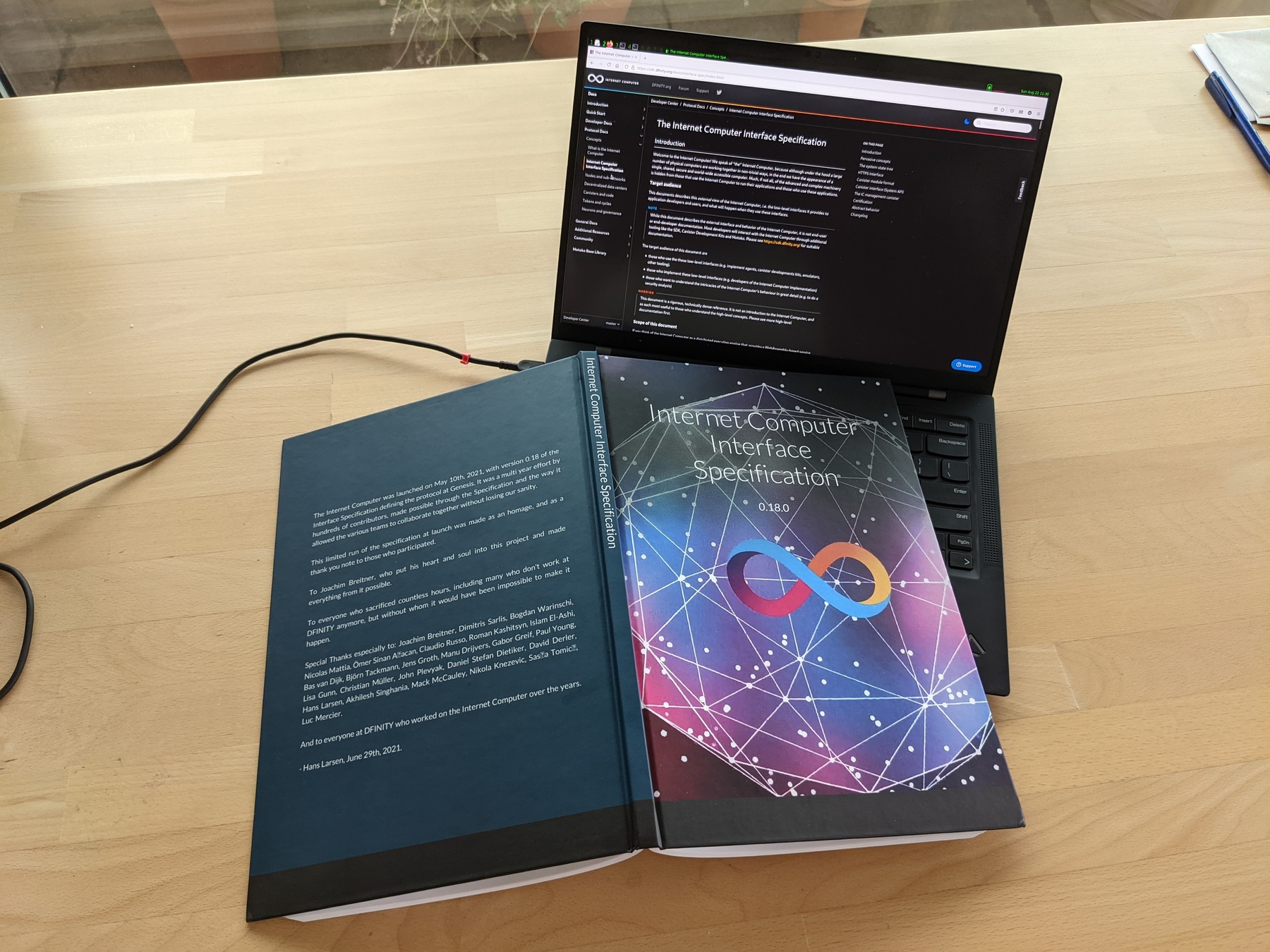 The Interface Specification as a book
 The third release of
 Continuing with details of the task I left on
 I've now completed my 4th year on my part-time PhD (a.k.a.
Stage 2). I'm 2/3 of the way through.
Here's my stage 2 / year 4 report.
 I have been using the GIMP since about 20 years or so, but recently started to also work with Krita since I found it quite nice to work with (besides the text module, which is a pain).
 As there came out the first beta of Krita 5, I decided to throw it into my
 Debian Bullseye
As mentioned previously, the now released Debian/Bullseye contains KDE Frameworks 5.78, including several backports of fixes from 5.79 to get smooth operation. Plasma 5.20.5, again with several cherry picks for bugs will be in Bullseye, too. The KDE/Apps are mostly at 20.12 level, and the KDE PIM group packages (akonadi, kmail, etc) are at 20.08.
Debian unstable (and in time also testing)
Frameworks 5.83 and Plasma 5.21.5 have been uploaded to unstable. This is a temporary measure until several necessary packages have cleared the NEW queue. After that we will upload frameworks 5.85 and Plasma 5.22.N.
KDE Gears is still at 20.08, but we have 21.04 in experimental, and I am currently preparing to upload 21.08.0, should be done soon.
OBS packages
The OBS packages as usual follow the latest release, and currently ship KDE Frameworks 5.85, KDE Gears 21.08.0, and Plasma 5.22.4. The package sources are as usual (note the different path for the Plasma packages and the apps packages, containing the release version!), for Debian/unstable:
 Today is Debian's 28th anniversary. We send all of our gratitude and love to the many Contributors, Developers, and Users who have helped this vision and project.
There are many celebrations of
