Search Results: "ean"

23 June 2014

Steve Kemp: So I accidentally ... a service.

This post is partly introspection, and partly advertising. Skip if it either annoys you. Back in February I was thinking about what to do with myself. I had two main options "Get a job", and "Start a service". Because I didn't have any ideas that seemed terribly interesting I asked people what they would pay for. There were several replies, largely based "infrastructure hosting" (which was pretty much 50/50 split between "DNS hosting", and project hosting with something like trac, redmine, or similar). At the time DNS seemed hard, and later I discovered there were already at least two well-regarded people doing DNS things, with revision control. So I shelved the idea, after reaching out to both companies to no avail. (This later lead to drama, but we'll pretend it didn't.) Ultimately I sought and acquired gainful employment. Then, during the course of my gainful employment I was exposed to Amazons Route53 service. It looked like I was going to be doing many things with this, so I wanted to understand it more thoroughly than I did. That lead to the creation of a Dynamic-DNS service - which seemed to be about the simplest thing you could do with the ability to programatically add/edit/delete DNS records via an API. As this was a random hack put together over the course of a couple of nights I didn't really expect it to be any more popular than anything else I'd deployed, and with the sudden influx of users I wanted to see if I could charge people. Ultimately many people pretended they'd pay, but nobody actually committed. So on that basis I released the source code and decided to ignore the two main missing features - lack of MX records, and lack of sub-sub-domains. (Isn't it amazing how people who claim they want "open source" so frequently mean they want something with zero cost, they can run, and never modify and contribute toward?) The experience of doing that though, and the reminder of the popularity of the original idea made me think that I could do a useful job with Git + DNS combined. That lead to DNS-API - GitHub based DNS hosting. It is early days, but it looks like I have a few users, and if I can get more then I'll be happy. So if you want to to store your DNS records in a (public) GitHub repository, and get them hosted on geographically diverse anycasted servers .. well you know where to go: Github-based DNS hosting.

Simon Josefsson: Offline GnuPG Master Key and Subkeys on YubiKey NEO Smartcard

I have moved to a new OpenPGP key. There are many tutorials and blog posts on GnuPG key generation around, but none of them matched exactly the setup I wanted to have. So I wrote down the steps I took, to remember them if I need to in the future. Briefly my requirements were as follows: After writing down the notes below, I posted about how to create a small JPEG image to embed in my OpenPGP key. I was planning to go live with the first key I generated, however as was gently pointed out to me, the JPEG image I generated was not optimal (too low quality and not sufficiently compressed). I have decided to retake the photo so I have a color image as a basis for size optimization. I don t want to postpone using the new key though, so I stepped through all of these steps again (except adding the photo) to get a new key. This is why the notes below are for a key 1C5C4717 that is now revoked. My new real key is 54265E8C. I will add the photo to my 54265E8C key once I have a JPEG file that I m happy with. Offline machine The offline machine setup I use is a Live CD on a machine that is physically well protected. I m using the Debian Live CD version 7.5.0 GNOME Desktop. The password for the auto-logged in user is live which you need if the screen-saver kicks in. Configure the keyboard layout if you need to. Insert an USB memory stick. I m using a VFAT filesystem to keep things simple; and for this writeup it happened to be mounted as /media/FA21-BEC7 so you will have to replace that path with something that points to your USB stick. Open a terminal since the rest of this writeup will be done from a terminal window. GnuPG configuration Set your GnuPG home directory to point at the USB memory device. You will need to do this in every terminal windows you open that you want to use GnuPG in.
user@debian:~$ export GNUPGHOME=/media/FA21-BEC7/gnupghome
user@debian:~$ mkdir $GNUPGHOME
user@debian:~$ 
The GnuPG defaults (as of version 1.4.16) to rank SHA1 higher than SHA384, SHA512, and SHA224 in the default hash preference list. To be precise, the default hash preference order is SHA256, SHA1, SHA384, SHA512, SHA224. I consider SHA1 broken so I don t advertise it all, although I believe that will not prevent some implementations of using SHA1 anyway since it is the mandatory to implement hash algorithm. Regarding symmetric ciphers, the default order is AES256, AES192, AES128, CAST5, 3DES. I don t like ciphers with 64-bit block lengths, so I don t advertise them but similarily, I believe this will not prevent some implementations of using CAST5 or 3DES anyway. I also advertise support for Twofish and Camellia in case someone wants to use them, they are 128-bit block length and relatively modern ciphers after all. The default-preference-list keyword is used to override the default settings, which will be recorded into any newly generated keys. GnuPG self-sign keys with SHA1 by default, and I prefer to use a member of the SHA2 family, hence the cert-digest-algo keyword. Further down below we will use the GnuPG Agent to talk to the smartcard, so configure GnuPG to use it with the use-agent keyword. GnuPG prints ugly warning messages about locking (gpg: DBG: locking for /media/FA21-BEC7/gnupghome/secring.gpg.lock' done via O_EXCL), presumably because of the VFAT filesystem, so I use lock-never to silence that.
user@debian:~$ cat > $GNUPGHOME/gpg.conf
default-preference-list SHA512 SHA384 SHA256 SHA224 AES256 AES192 AES CAMELLIA256 CAMELLIA192 CAMELLIA128 TWOFISH
cert-digest-algo SHA512
use-agent
lock-never
user@debian:~$ 
Generate master key Below I will use a 3744 bit RSA key, where the key size is selected based on the assumption that people will focus efforts to crack RSA keys on the usual power-of-two key sizes. I have chosen to not generate an encryption key, since I will use subkeys on a smartcard. With my old B565716F key I noticed that sometimes people will encrypt to my main encryption key even though I have encryption subkeys. Presumably this happens due to implementation flaws or user configuration mistakes. It could happen intentionally if someone had a public key from me with an expired subkeys but not expired main keys. This could be a reason to use the same expiration day for all your keys. Still, I chose to not generate an encryption key at all at this point. For additional protection, I m using a passphrase on the key.
user@debian:~$ gpg --gen-key
gpg (GnuPG) 1.4.12; Copyright (C) 2012 Free Software Foundation, Inc.
This is free software: you are free to change and redistribute it.
There is NO WARRANTY, to the extent permitted by law.
gpg: keyring  /media/FA21-BEC7/gnupghome/secring.gpg' created
gpg: keyring  /media/FA21-BEC7/gnupghome/pubring.gpg' created
Please select what kind of key you want:
   (1) RSA and RSA (default)
   (2) DSA and Elgamal
   (3) DSA (sign only)
   (4) RSA (sign only)
Your selection? 4
RSA keys may be between 1024 and 4096 bits long.
What keysize do you want? (2048) 3744
Requested keysize is 3744 bits
Please specify how long the key should be valid.
         0 = key does not expire
        = key expires in n days
      w = key expires in n weeks
      m = key expires in n months
      y = key expires in n years
Key is valid for? (0) 100
Key expires at Fri 26 Sep 2014 10:50:22 PM UTC
Is this correct? (y/N) y
You need a user ID to identify your key; the software constructs the user ID
from the Real Name, Comment and Email Address in this form:
    "Heinrich Heine (Der Dichter) "
Real name: Simon Josefsson
Email address: simon@josefsson.org
Comment: 
You selected this USER-ID:
    "Simon Josefsson "
Change (N)ame, (C)omment, (E)mail or (O)kay/(Q)uit? o
You need a Passphrase to protect your secret key.
We need to generate a lot of random bytes. It is a good idea to perform
some other action (type on the keyboard, move the mouse, utilize the
disks) during the prime generation; this gives the random number
generator a better chance to gain enough entropy.
...
gpg: /media/FA21-BEC7/gnupghome/trustdb.gpg: trustdb created
gpg: key 1C5C4717 marked as ultimately trusted
public and secret key created and signed.
gpg: checking the trustdb
gpg: 3 marginal(s) needed, 1 complete(s) needed, PGP trust model
gpg: depth: 0  valid:   1  signed:   0  trust: 0-, 0q, 0n, 0m, 0f, 1u
gpg: next trustdb check due at 2014-09-26
pub   3744R/1C5C4717 2014-06-18 [expires: 2014-09-26]
      Key fingerprint = EF0A 1996 7B3B 4BAD 9D5C  A97F 1A44 08DD 1C5C 4717
uid                  Simon Josefsson 
Note that this key cannot be used for encryption.  You may want to use
the command "--edit-key" to generate a subkey for this purpose.
user@debian:~$ 
Add photo I m in the process of creating a better JPEG photo, so I skipped this step for my new key. However the notes here are correct anyway.
user@debian:~$ gpg --edit-key 1C5C4717
gpg (GnuPG) 1.4.12; Copyright (C) 2012 Free Software Foundation, Inc.
This is free software: you are free to change and redistribute it.
There is NO WARRANTY, to the extent permitted by law.
Secret key is available.
pub  3744R/1C5C4717  created: 2014-06-18  expires: 2014-09-26  usage: SC  
                     trust: ultimate      validity: ultimate
[ultimate] (1). Simon Josefsson 
gpg> addphoto
Pick an image to use for your photo ID.  The image must be a JPEG file.
Remember that the image is stored within your public key.  If you use a
very large picture, your key will become very large as well!
Keeping the image close to 240x288 is a good size to use.
Enter JPEG filename for photo ID: /media/FA21-BEC7/simon-gpg.jpg
Is this photo correct (y/N/q)? y
You need a passphrase to unlock the secret key for
user: "Simon Josefsson "
3744-bit RSA key, ID 1C5C4717, created 2014-06-18
pub  3744R/1C5C4717  created: 2014-06-18  expires: 2014-09-26  usage: SC  
                     trust: ultimate      validity: ultimate
[ultimate] (1). Simon Josefsson 
[ unknown] (2)  [jpeg image of size 6048]
gpg> save
user@debian:~$ 
Add another identity Most people have multiple email addresses, and this needs to be reflected in the GnuPG key. Use the primary command to specify your main User ID.
user@debian:~$ gpg --edit-key 1C5C4717
gpg (GnuPG) 1.4.12; Copyright (C) 2012 Free Software Foundation, Inc.
This is free software: you are free to change and redistribute it.
There is NO WARRANTY, to the extent permitted by law.
Secret key is available.
pub  3744R/1C5C4717  created: 2014-06-18  expires: 2014-09-26  usage: SC  
                     trust: ultimate      validity: ultimate
[ultimate] (1). Simon Josefsson 
[ultimate] (2)  [jpeg image of size 6048]
gpg> adduid
Real name: Simon Josefsson
Email address: simon@yubico.com
Comment: 
You selected this USER-ID:
    "Simon Josefsson "
Change (N)ame, (C)omment, (E)mail or (O)kay/(Q)uit? o
You need a passphrase to unlock the secret key for
user: "Simon Josefsson "
3744-bit RSA key, ID 1C5C4717, created 2014-06-18
pub  3744R/1C5C4717  created: 2014-06-18  expires: 2014-09-26  usage: SC  
                     trust: ultimate      validity: ultimate
[ultimate] (1)  Simon Josefsson 
[ultimate] (2)  [jpeg image of size 6048]
[ unknown] (3). Simon Josefsson 
gpg> uid 1
pub  3744R/1C5C4717  created: 2014-06-18  expires: 2014-09-26  usage: SC  
                     trust: ultimate      validity: ultimate
[ultimate] (1)* Simon Josefsson 
[ultimate] (2)  [jpeg image of size 6048]
[ unknown] (3). Simon Josefsson 
gpg> primary
You need a passphrase to unlock the secret key for
user: "Simon Josefsson "
3744-bit RSA key, ID 1C5C4717, created 2014-06-18
pub  3744R/1C5C4717  created: 2014-06-18  expires: 2014-09-26  usage: SC  
                     trust: ultimate      validity: ultimate
[ultimate] (1)* Simon Josefsson 
[ultimate] (2)  [jpeg image of size 6048]
[ unknown] (3)  Simon Josefsson 
gpg> save
user@debian:~$ 
Create a revocation certificate It is good practice to generate a revocation certificate in case you lose your key. Store this in a safe place, possibly printed out on paper.
user@debian:~$ gpg --output $GNUPGHOME/../revocation-certificate.txt --gen-revoke 1C5C4717
sec  3744R/1C5C4717 2014-06-18 Simon Josefsson 
Create a revocation certificate for this key? (y/N) y
Please select the reason for the revocation:
  0 = No reason specified
  1 = Key has been compromised
  2 = Key is superseded
  3 = Key is no longer used
  Q = Cancel
(Probably you want to select 1 here)
Your decision? 1
Enter an optional description; end it with an empty line:
> Created during key creation, emergency use only.
> 
Reason for revocation: Key has been compromised
Created during key creation, emergency use only.
Is this okay? (y/N) y
You need a passphrase to unlock the secret key for
user: "Simon Josefsson "
3744-bit RSA key, ID 1C5C4717, created 2014-06-18
ASCII armored output forced.
Revocation certificate created.
Please move it to a medium which you can hide away; if Mallory gets
access to this certificate he can use it to make your key unusable.
It is smart to print this certificate and store it away, just in case
your media become unreadable.  But have some caution:  The print system of
your machine might store the data and make it available to others!
user@debian:~$ 
Make a backup of the master key To have an easy way to move back and forward in time in GnuPG, I both export the key to a stable data format and keep a backup of the actual GnuPG home directory.
user@debian:~$ gpg -a --export-secret-keys 1C5C4717 > $GNUPGHOME/../masterkey.txt
user@debian:~$ cp -a $GNUPGHOME $GNUPGHOME-backup-masterkey
user@debian:~$ 
Create subkeys Now I will generate three keys that will go onto the smartcard. I have chosen to generate these using GnuPG and then move the keys onto the smartcards, instead of generating the keys directly on the card. The difference is that with this approach, I get a backup of the keys and can import them to another key in the future if I need to. Each key has its own purpose: Signature, Encryption, and Authentication. Smartcards typically have limitation on key sizes, so I select 2048 as a widely supported size. Expert mode is required to generate authentication subkeys.
user@debian:~$ gpg --expert --edit-key 1C5C4717
gpg (GnuPG) 1.4.12; Copyright (C) 2012 Free Software Foundation, Inc.
This is free software: you are free to change and redistribute it.
There is NO WARRANTY, to the extent permitted by law.
Secret key is available.
pub  3744R/1C5C4717  created: 2014-06-18  expires: 2014-09-26  usage: SC  
                     trust: ultimate      validity: ultimate
[ultimate] (1). Simon Josefsson 
[ultimate] (2)  [jpeg image of size 6048]
[ultimate] (3)  Simon Josefsson 
gpg> addkey
Key is protected.
You need a passphrase to unlock the secret key for
user: "Simon Josefsson "
3744-bit RSA key, ID 1C5C4717, created 2014-06-18
Please select what kind of key you want:
   (3) DSA (sign only)
   (4) RSA (sign only)
   (5) Elgamal (encrypt only)
   (6) RSA (encrypt only)
   (7) DSA (set your own capabilities)
   (8) RSA (set your own capabilities)
Your selection? 4
RSA keys may be between 1024 and 4096 bits long.
What keysize do you want? (2048) 
Requested keysize is 2048 bits
Please specify how long the key should be valid.
         0 = key does not expire
        = key expires in n days
      w = key expires in n weeks
      m = key expires in n months
      y = key expires in n years
Key is valid for? (0) 100
Key expires at Fri 26 Sep 2014 11:03:16 PM UTC
Is this correct? (y/N) y
Really create? (y/N) y
We need to generate a lot of random bytes. It is a good idea to perform
some other action (type on the keyboard, move the mouse, utilize the
disks) during the prime generation; this gives the random number
generator a better chance to gain enough entropy.
..+++++
....+++++
pub  3744R/1C5C4717  created: 2014-06-18  expires: 2014-09-26  usage: SC  
                     trust: ultimate      validity: ultimate
sub  2048R/72D5245B  created: 2014-06-18  expires: 2014-09-26  usage: S   
[ultimate] (1). Simon Josefsson 
[ultimate] (2)  [jpeg image of size 6048]
[ultimate] (3)  Simon Josefsson 
gpg> addkey
Key is protected.
You need a passphrase to unlock the secret key for
user: "Simon Josefsson "
3744-bit RSA key, ID 1C5C4717, created 2014-06-18
Please select what kind of key you want:
   (3) DSA (sign only)
   (4) RSA (sign only)
   (5) Elgamal (encrypt only)
   (6) RSA (encrypt only)
   (7) DSA (set your own capabilities)
   (8) RSA (set your own capabilities)
Your selection? 6
RSA keys may be between 1024 and 4096 bits long.
What keysize do you want? (2048) 
Requested keysize is 2048 bits
Please specify how long the key should be valid.
         0 = key does not expire
        = key expires in n days
      w = key expires in n weeks
      m = key expires in n months
      y = key expires in n years
Key is valid for? (0) 100
Key expires at Fri 26 Sep 2014 11:03:31 PM UTC
Is this correct? (y/N) y
Really create? (y/N) y
We need to generate a lot of random bytes. It is a good idea to perform
some other action (type on the keyboard, move the mouse, utilize the
disks) during the prime generation; this gives the random number
generator a better chance to gain enough entropy.
......+++++
Not enough random bytes available.  Please do some other work to give
the OS a chance to collect more entropy! (Need 7 more bytes)
.+++++
pub  3744R/1C5C4717  created: 2014-06-18  expires: 2014-09-26  usage: SC  
                     trust: ultimate      validity: ultimate
sub  2048R/72D5245B  created: 2014-06-18  expires: 2014-09-26  usage: S   
sub  2048R/A11F46D2  created: 2014-06-18  expires: 2014-09-26  usage: E   
[ultimate] (1). Simon Josefsson 
[ultimate] (2)  [jpeg image of size 6048]
[ultimate] (3)  Simon Josefsson 
gpg> addkey
Key is protected.
You need a passphrase to unlock the secret key for
user: "Simon Josefsson "
3744-bit RSA key, ID 1C5C4717, created 2014-06-18
Please select what kind of key you want:
   (3) DSA (sign only)
   (4) RSA (sign only)
   (5) Elgamal (encrypt only)
   (6) RSA (encrypt only)
   (7) DSA (set your own capabilities)
   (8) RSA (set your own capabilities)
Your selection? 8
Possible actions for a RSA key: Sign Encrypt Authenticate 
Current allowed actions: Sign Encrypt 
   (S) Toggle the sign capability
   (E) Toggle the encrypt capability
   (A) Toggle the authenticate capability
   (Q) Finished
Your selection? s
Possible actions for a RSA key: Sign Encrypt Authenticate 
Current allowed actions: Encrypt 
   (S) Toggle the sign capability
   (E) Toggle the encrypt capability
   (A) Toggle the authenticate capability
   (Q) Finished
Your selection? e
Possible actions for a RSA key: Sign Encrypt Authenticate 
Current allowed actions: 
   (S) Toggle the sign capability
   (E) Toggle the encrypt capability
   (A) Toggle the authenticate capability
   (Q) Finished
Your selection? a
Possible actions for a RSA key: Sign Encrypt Authenticate 
Current allowed actions: Authenticate 
   (S) Toggle the sign capability
   (E) Toggle the encrypt capability
   (A) Toggle the authenticate capability
   (Q) Finished
Your selection? q
RSA keys may be between 1024 and 4096 bits long.
What keysize do you want? (2048) 
Requested keysize is 2048 bits
Please specify how long the key should be valid.
         0 = key does not expire
        = key expires in n days
      w = key expires in n weeks
      m = key expires in n months
      y = key expires in n years
Key is valid for? (0) 100
Key expires at Fri 26 Sep 2014 11:03:59 PM UTC
Is this correct? (y/N) y
Really create? (y/N) y
We need to generate a lot of random bytes. It is a good idea to perform
some other action (type on the keyboard, move the mouse, utilize the
disks) during the prime generation; this gives the random number
generator a better chance to gain enough entropy.
+++++
Not enough random bytes available.  Please do some other work to give
the OS a chance to collect more entropy! (Need 56 more bytes)
+++++
pub  3744R/1C5C4717  created: 2014-06-18  expires: 2014-09-26  usage: SC  
                     trust: ultimate      validity: ultimate
sub  2048R/72D5245B  created: 2014-06-18  expires: 2014-09-26  usage: S   
sub  2048R/A11F46D2  created: 2014-06-18  expires: 2014-09-26  usage: E   
sub  2048R/D6987A02  created: 2014-06-18  expires: 2014-09-26  usage: A   
[ultimate] (1). Simon Josefsson 
[ultimate] (2)  [jpeg image of size 6048]
[ultimate] (3)  Simon Josefsson 
gpg> save
user@debian:~$ 
Export subkeys for backup This is a good time to save a restore point for your key. Note in the output of --list-secret-keys the keywords sec and ssb which means the main key and the subkeys are available. If the secret keyring contained only stubs, it would be sec> and sec#.
user@debian:~$ gpg --list-keys
/media/FA21-BEC7/gnupghome/pubring.gpg
--------------------------------------
pub   3744R/1C5C4717 2014-06-18 [expires: 2014-09-26]
uid                  Simon Josefsson 
uid                  [jpeg image of size 6048]
uid                  Simon Josefsson 
sub   2048R/72D5245B 2014-06-18 [expires: 2014-09-26]
sub   2048R/A11F46D2 2014-06-18 [expires: 2014-09-26]
sub   2048R/D6987A02 2014-06-18 [expires: 2014-09-26]
user@debian:~$ gpg --list-secret-keys
/media/FA21-BEC7/gnupghome/secring.gpg
--------------------------------------
sec   3744R/1C5C4717 2014-06-18 [expires: 2014-09-26]
uid                  Simon Josefsson 
uid                  [jpeg image of size 6048]
uid                  Simon Josefsson 
ssb   2048R/72D5245B 2014-06-18
ssb   2048R/A11F46D2 2014-06-18
ssb   2048R/D6987A02 2014-06-18
user@debian:~$ gpg -a --export-secret-keys 1C5C4717 > $GNUPGHOME/../mastersubkeys.txt
user@debian:~$ gpg -a --export-secret-subkeys 1C5C4717 > $GNUPGHOME/../subkeys.txt
user@debian:~$ cp -a $GNUPGHOME $GNUPGHOME-backup-mastersubkeys
user@debian:~$ 
Configure machine for smartcards The YubiKey NEO requires that RSA keys are imported with some additional parameters, used for CRT speedups. This was fixed in GnuPG 2.0.22. Unfortunately, it is not fixed in GnuPG 1.x. However, GnuPG 1.x can use gpg-agent and scdaemon from GnuPG to communicate with the smartcard. So let s work around the limitation in GnuPG 1.x by installing parts from GnuPG 2.x and use those. You will need to install the following packages: gnupg-agent, libpth20, pinentry-curses, libccid, pcscd, scdaemon, libksba8. Make sure that scdaemon is version 2.0.22 or later (get it from backports). I downloaded these packages and put them on the USB stick. Unfortunately, libccid in Debian is a bit outdated, and does not contain the USB device vendor/product ID in /etc/libccid_Info.plist. You will need to manually add this, and restart pcscd. user@debian:~$ sudo gedit /etc/libccid_Info.plist
user@debian:~$ sudo service pcscd restart Start gnupg-agent and setup the environment variable for this session:
user@debian:~$ gpg-agent --daemon
gpg-agent[22556]: directory  /media/FA21-BEC7/gnupghome/private-keys-v1.d' created
GPG_AGENT_INFO=/tmp/gpg-wGji5C/S.gpg-agent:22557:1; export GPG_AGENT_INFO;
gpg-agent[22557]: gpg-agent (GnuPG) 2.0.22 started
user@debian:~$ GPG_AGENT_INFO=/tmp/gpg-wGji5C/S.gpg-agent:22557:1; export GPG_AGENT_INFO;
user@debian:~$ 
Prepare YubiKey NEO Make sure you have a recent firmware version, 3.1.8 or later; use lsusb -v to find out. Make sure the device is in OTP/CCID or CCID mode, use ykpersonalize -m from the YubiKey Personalization project to switch. Make sure you have the OpenPGP applet loaded properly, otherwise see the YubiKey NEO OpenPGP applet project on installing it. You may want to set a proper Application ID, see herlo s ssh-gpg-smartcard-config github repository for some hints. Configure OpenPGP applet This also changes the PIN and Admin codes.
user@debian:~$ gpg --card-edit
Application ID ...: D2760001240102000060000000420000
Version ..........: 2.0
Manufacturer .....: unknown
Serial number ....: 00000042
Name of cardholder: [not set]
Language prefs ...: [not set]
Sex ..............: unspecified
URL of public key : [not set]
Login data .......: [not set]
Signature PIN ....: forced
Key attributes ...: 2048R 2048R 2048R
Max. PIN lengths .: 127 127 127
PIN retry counter : 3 3 3
Signature counter : 0
Signature key ....: [none]
Encryption key....: [none]
Authentication key: [none]
General key info..: [none]
gpg/card> admin
Admin commands are allowed
gpg/card> passwd
gpg: OpenPGP card no. D2760001240102000060000000420000 detected
1 - change PIN
2 - unblock PIN
3 - change Admin PIN
4 - set the Reset Code
Q - quit
Your selection? 3
PIN changed.
1 - change PIN
2 - unblock PIN
3 - change Admin PIN
4 - set the Reset Code
Q - quit
Your selection? 1
PIN changed.
1 - change PIN
2 - unblock PIN
3 - change Admin PIN
4 - set the Reset Code
Q - quit
Your selection? q
gpg/card> name
Cardholder's surname: Josefsson
Cardholder's given name: Simon
gpg/card> lang
Language preferences: sv
gpg/card> url
URL to retrieve public key: https://josefsson.org/1c5c4717.txt
gpg/card> sex
Sex ((M)ale, (F)emale or space): m
gpg/card> login
Login data (account name): jas
gpg/card> 
Application ID ...: D2760001240102000060000000420000
Version ..........: 2.0
Manufacturer .....: unknown
Serial number ....: 00000042
Name of cardholder: Simon Josefsson
Language prefs ...: sv
Sex ..............: male
URL of public key : https://josefsson.org/1c5c4717.txt
Login data .......: jas
Signature PIN ....: forced
Key attributes ...: 2048R 2048R 2048R
Max. PIN lengths .: 127 127 127
PIN retry counter : 3 3 3
Signature counter : 0
Signature key ....: [none]
Encryption key....: [none]
Authentication key: [none]
General key info..: [none]
gpg/card> quit
user@debian:~$ 
Move subkeys to YubiKey NEO Moving subkeys to a NEO is a destructive operation, so make sure you took backups of the subkeys as above. After this step, your GnuPG keyring will contain stubs for the subkeys.
user@debian:~$ gpg --edit-key 1C5C4717
gpg (GnuPG) 1.4.12; Copyright (C) 2012 Free Software Foundation, Inc.
This is free software: you are free to change and redistribute it.
There is NO WARRANTY, to the extent permitted by law.
Secret key is available.
pub  3744R/1C5C4717  created: 2014-06-18  expires: 2014-09-26  usage: SC  
                     trust: ultimate      validity: ultimate
sub  2048R/72D5245B  created: 2014-06-18  expires: 2014-09-26  usage: S   
sub  2048R/A11F46D2  created: 2014-06-18  expires: 2014-09-26  usage: E   
sub  2048R/D6987A02  created: 2014-06-18  expires: 2014-09-26  usage: A   
[ultimate] (1). Simon Josefsson 
[ultimate] (2)  [jpeg image of size 6048]
[ultimate] (3)  Simon Josefsson 
gpg> toggle
sec  3744R/1C5C4717  created: 2014-06-18  expires: 2014-09-26
ssb  2048R/72D5245B  created: 2014-06-18  expires: never     
ssb  2048R/A11F46D2  created: 2014-06-18  expires: never     
ssb  2048R/D6987A02  created: 2014-06-18  expires: never     
(1)  Simon Josefsson 
(2)  [jpeg image of size 6048]
(3)  Simon Josefsson 
gpg> key 1
sec  3744R/1C5C4717  created: 2014-06-18  expires: 2014-09-26
ssb* 2048R/72D5245B  created: 2014-06-18  expires: never     
ssb  2048R/A11F46D2  created: 2014-06-18  expires: never     
ssb  2048R/D6987A02  created: 2014-06-18  expires: never     
(1)  Simon Josefsson 
(2)  [jpeg image of size 6048]
(3)  Simon Josefsson 
gpg> keytocard
Signature key ....: [none]
Encryption key....: [none]
Authentication key: [none]
Please select where to store the key:
   (1) Signature key
   (3) Authentication key
Your selection? 1
You need a passphrase to unlock the secret key for
user: "Simon Josefsson "
2048-bit RSA key, ID 72D5245B, created 2014-06-18
sec  3744R/1C5C4717  created: 2014-06-18  expires: 2014-09-26
ssb* 2048R/72D5245B  created: 2014-06-18  expires: never     
                     card-no: 0060 00000042
ssb  2048R/A11F46D2  created: 2014-06-18  expires: never     
ssb  2048R/D6987A02  created: 2014-06-18  expires: never     
(1)  Simon Josefsson 
(2)  [jpeg image of size 6048]
(3)  Simon Josefsson 
gpg> key 1
sec  3744R/1C5C4717  created: 2014-06-18  expires: 2014-09-26
ssb  2048R/72D5245B  created: 2014-06-18  expires: never     
                     card-no: 0060 00000042
ssb  2048R/A11F46D2  created: 2014-06-18  expires: never     
ssb  2048R/D6987A02  created: 2014-06-18  expires: never     
(1)  Simon Josefsson 
(2)  [jpeg image of size 6048]
(3)  Simon Josefsson 
gpg> key 2
sec  3744R/1C5C4717  created: 2014-06-18  expires: 2014-09-26
ssb  2048R/72D5245B  created: 2014-06-18  expires: never     
                     card-no: 0060 00000042
ssb* 2048R/A11F46D2  created: 2014-06-18  expires: never     
ssb  2048R/D6987A02  created: 2014-06-18  expires: never     
(1)  Simon Josefsson 
(2)  [jpeg image of size 6048]
(3)  Simon Josefsson 
gpg> keytocard
Signature key ....: EF34 D1F7 95C0 3392 E52A  54FE DFF1 6372 72D5 245B
Encryption key....: [none]
Authentication key: [none]
Please select where to store the key:
   (2) Encryption key
Your selection? 2
You need a passphrase to unlock the secret key for
user: "Simon Josefsson "
2048-bit RSA key, ID A11F46D2, created 2014-06-18
sec  3744R/1C5C4717  created: 2014-06-18  expires: 2014-09-26
ssb  2048R/72D5245B  created: 2014-06-18  expires: never     
                     card-no: 0060 00000042
ssb* 2048R/A11F46D2  created: 2014-06-18  expires: never     
                     card-no: 0060 00000042
ssb  2048R/D6987A02  created: 2014-06-18  expires: never     
(1)  Simon Josefsson 
(2)  [jpeg image of size 6048]
(3)  Simon Josefsson 
gpg> key 2
sec  3744R/1C5C4717  created: 2014-06-18  expires: 2014-09-26
ssb  2048R/72D5245B  created: 2014-06-18  expires: never     
                     card-no: 0060 00000042
ssb  2048R/A11F46D2  created: 2014-06-18  expires: never     
                     card-no: 0060 00000042
ssb  2048R/D6987A02  created: 2014-06-18  expires: never     
(1)  Simon Josefsson 
(2)  [jpeg image of size 6048]
(3)  Simon Josefsson 
gpg> key 3
sec  3744R/1C5C4717  created: 2014-06-18  expires: 2014-09-26
ssb  2048R/72D5245B  created: 2014-06-18  expires: never     
                     card-no: 0060 00000042
ssb  2048R/A11F46D2  created: 2014-06-18  expires: never     
                     card-no: 0060 00000042
ssb* 2048R/D6987A02  created: 2014-06-18  expires: never     
(1)  Simon Josefsson 
(2)  [jpeg image of size 6048]
(3)  Simon Josefsson 
gpg> keytocard
Signature key ....: EF34 D1F7 95C0 3392 E52A  54FE DFF1 6372 72D5 245B
Encryption key....: E24D 5135 C2FC 905C 8995  ACD8 EC96 9E77 A11F 46D2
Authentication key: [none]
Please select where to store the key:
   (3) Authentication key
Your selection? 3
You need a passphrase to unlock the secret key for
user: "Simon Josefsson "
2048-bit RSA key, ID D6987A02, created 2014-06-18
sec  3744R/1C5C4717  created: 2014-06-18  expires: 2014-09-26
ssb  2048R/72D5245B  created: 2014-06-18  expires: never     
                     card-no: 0060 00000042
ssb  2048R/A11F46D2  created: 2014-06-18  expires: never     
                     card-no: 0060 00000042
ssb* 2048R/D6987A02  created: 2014-06-18  expires: never     
                     card-no: 0060 00000042
(1)  Simon Josefsson 
(2)  [jpeg image of size 6048]
(3)  Simon Josefsson 
gpg> save
user@debian:~$ 
Take another backup Can you tell yet that I like having backup options? Note that the subkeys are now marked ssb> indicating they are stubs for a smartcard key.
user@debian:~$ gpg --list-secret-keys
/media/FA21-BEC7/gnupghome/secring.gpg
--------------------------------------
sec   3744R/1C5C4717 2014-06-18 [expires: 2014-09-26]
uid                  Simon Josefsson 
uid                  [jpeg image of size 6048]
uid                  Simon Josefsson 
ssb>  2048R/72D5245B 2014-06-18
ssb>  2048R/A11F46D2 2014-06-18
ssb>  2048R/D6987A02 2014-06-18
user@debian:~$ gpg -a --export-secret-keys 1C5C4717 > $GNUPGHOME/../masterstubs.txt
user@debian:~$ gpg -a --export-secret-subkeys 1C5C4717 > $GNUPGHOME/../subkeysstubs.txt
user@debian:~$ gpg -a --export 1C5C4717 > $GNUPGHOME/../publickey.txt
user@debian:~$ cp -a $GNUPGHOME $GNUPGHOME-backup-masterstubs
Transfer to daily machine Copy publickey.txt to your day-to-day laptop and import it.
jas@latte:~$ gpg --import < publickey.txt 
gpg: key 1C5C4717: public key "Simon Josefsson " imported
gpg: Total number processed: 1
gpg:               imported: 1  (RSA: 1)
jas@latte:~$ 
Insert the YubiKey NEO and generate secret key stubs:
jas@latte:~$ gpg --card-status
Application ID ...: D2760001240102000060000000420000
Version ..........: 2.0
Manufacturer .....: unknown
Serial number ....: 00000042
Name of cardholder: Simon Josefsson
Language prefs ...: sv
Sex ..............: male
URL of public key : https://josefsson.org/1c5c4717.txt
Login data .......: jas
Signature PIN ....: forced
Key attributes ...: 2048R 2048R 2048R
Max. PIN lengths .: 0 0 0
PIN retry counter : 0 0 0
Signature counter : 0
Signature key ....: EF34 D1F7 95C0 3392 E52A  54FE DFF1 6372 72D5 245B
      created ....: 2014-06-18 23:03:16
Encryption key....: E24D 5135 C2FC 905C 8995  ACD8 EC96 9E77 A11F 46D2
      created ....: 2014-06-18 23:03:31
Authentication key: 2768 2EF9 415C 19FC F0CC  9CA5 DA81 BA39 D698 7A02
      created ....: 2014-06-18 23:03:59
General key info..: pub  2048R/72D5245B 2014-06-18 Simon Josefsson 
sec#  3744R/1C5C4717  created: 2014-06-18  expires: 2014-09-26
ssb>  2048R/72D5245B  created: 2014-06-18  expires: 2014-09-26
                      card-no: 0060 00000042
ssb>  2048R/A11F46D2  created: 2014-06-18  expires: 2014-09-26
                      card-no: 0060 00000042
ssb>  2048R/D6987A02  created: 2014-06-18  expires: 2014-09-26
                      card-no: 0060 00000042
jas@latte:~$ 
Now you should have a offline master key with subkey stubs. Note that the master key is not available (sec#) and the subkeys are stubs for smartcard keys (ssb>).
jas@latte:~$ gpg --list-secret-keys 1c5c4717
sec#  3744R/1C5C4717 2014-06-18 [expires: 2014-09-26]
uid                  Simon Josefsson 
uid                  [jpeg image of size 6048]
uid                  Simon Josefsson 
ssb>  2048R/72D5245B 2014-06-18 [expires: 2014-09-26]
ssb>  2048R/A11F46D2 2014-06-18 [expires: 2014-09-26]
ssb>  2048R/D6987A02 2014-06-18 [expires: 2014-09-26]
jas@latte:~$ 
Mark the key as ultimately trusted.
jas@latte:~$ gpg --edit-key 1c5c4717
gpg (GnuPG) 1.4.12; Copyright (C) 2012 Free Software Foundation, Inc.
This is free software: you are free to change and redistribute it.
There is NO WARRANTY, to the extent permitted by law.
Secret key is available.
pub  3744R/1C5C4717  created: 2014-06-18  expires: 2014-09-26  usage: SC  
                     trust: unknown       validity: unknown
sub  2048R/72D5245B  created: 2014-06-18  expires: 2014-09-26  usage: S   
sub  2048R/A11F46D2  created: 2014-06-18  expires: 2014-09-26  usage: E   
sub  2048R/D6987A02  created: 2014-06-18  expires: 2014-09-26  usage: A   
[ unknown] (1). Simon Josefsson 
[ unknown] (2)  [jpeg image of size 6048]
[ unknown] (3)  Simon Josefsson 
gpg> trust
pub  3744R/1C5C4717  created: 2014-06-18  expires: 2014-09-26  usage: SC  
                     trust: unknown       validity: unknown
sub  2048R/72D5245B  created: 2014-06-18  expires: 2014-09-26  usage: S   
sub  2048R/A11F46D2  created: 2014-06-18  expires: 2014-09-26  usage: E   
sub  2048R/D6987A02  created: 2014-06-18  expires: 2014-09-26  usage: A   
[ unknown] (1). Simon Josefsson 
[ unknown] (2)  [jpeg image of size 6048]
[ unknown] (3)  Simon Josefsson 
Please decide how far you trust this user to correctly verify other users' keys
(by looking at passports, checking fingerprints from different sources, etc.)
  1 = I don't know or won't say
  2 = I do NOT trust
  3 = I trust marginally
  4 = I trust fully
  5 = I trust ultimately
  m = back to the main menu
Your decision? 5
Do you really want to set this key to ultimate trust? (y/N) y
pub  3744R/1C5C4717  created: 2014-06-18  expires: 2014-09-26  usage: SC  
                     trust: ultimate      validity: unknown
sub  2048R/72D5245B  created: 2014-06-18  expires: 2014-09-26  usage: S   
sub  2048R/A11F46D2  created: 2014-06-18  expires: 2014-09-26  usage: E   
sub  2048R/D6987A02  created: 2014-06-18  expires: 2014-09-26  usage: A   
[ unknown] (1). Simon Josefsson 
[ unknown] (2)  [jpeg image of size 6048]
[ unknown] (3)  Simon Josefsson 
Please note that the shown key validity is not necessarily correct
unless you restart the program.
gpg> quit
jas@latte:~$ 
Signing keys This needs to be done using your master key, since it is your certification key that will be used. So boot the Live CD and make the usual GnuPG configurations. Below I m signing my own old key (0xB565716F) so the output may look a bit confusing with me signing my own key, but there is really two different keys involved here. The same process apply if you want to sign someone else s key too. Before signing the key, you need to put the public key on a USB stick and move it to the secure machine. On your laptop:
jas@latte:~$ gpg -a --export b565716f > /media/KINGSTON/b565716f.txt
jas@latte:~$ 
On the disconnected machine:
user@debian:~$ gpg --import < /media/KINGSTON/b565716f.txt 
gpg: key B565716F: public key "Simon Josefsson " imported
gpg: Total number processed: 1
gpg:               imported: 1  (RSA: 1)
gpg: 3 marginal(s) needed, 1 complete(s) needed, PGP trust model
gpg: depth: 0  valid:   1  signed:   0  trust: 0-, 0q, 0n, 0m, 0f, 1u
gpg: next trustdb check due at 2014-09-26
user@debian:~$ gpg --sign-key b565716f
pub  1280R/B565716F  created: 2002-05-05  expires: 2014-11-10  usage: SC  
                     trust: unknown       validity: unknown
sub  2048R/105E722E  created: 2012-03-13  expires: 2014-11-10  usage: S   
sub  2048R/728AB82C  created: 2012-03-13  expires: 2014-11-10  usage: E   
sub  2048R/9394F626  created: 2012-03-13  expires: 2014-11-10  usage: A   
sub  1280R/4D5D40AE  created: 2002-05-05  expires: 2014-11-10  usage: E   
sub  1024R/09CC4670  created: 2006-03-18  expired: 2011-05-23  usage: A   
sub  1024R/AABB1F7B  created: 2006-03-18  expired: 2011-05-23  usage: S   
sub  1024R/A14C401A  created: 2006-03-18  expired: 2011-05-23  usage: E   
[ unknown] (1). Simon Josefsson 
[ unknown] (2)  Simon Josefsson 
[ revoked] (3)  Simon Josefsson 
Really sign all user IDs? (y/N) y
User ID "Simon Josefsson " is revoked.  Unable to sign.
pub  1280R/B565716F  created: 2002-05-05  expires: 2014-11-10  usage: SC  
                     trust: unknown       validity: unknown
 Primary key fingerprint: 0424 D4EE 81A0 E3D1 19C6  F835 EDA2 1E94 B565 716F
     Simon Josefsson 
     Simon Josefsson 
This key is due to expire on 2014-11-10.
Are you sure that you want to sign this key with your
key "Simon Josefsson " (1C5C4717)
Really sign? (y/N) y
You need a passphrase to unlock the secret key for
user: "Simon Josefsson "
3744-bit RSA key, ID 1C5C4717, created 2014-06-18
user@debian:~$ 
Then export the newly signed key back to your laptop for further distribution.
user@debian:~$ gpg -a --export b565716f > /media/KINGSTON/signed-b565716f.txt
user@debian:~$ 
On your laptop, either email it encrypted to the other person, or upload it to keyservers directly depending on your preference. By emailing it encrypted to the other person, they need to prove posession of the key before receiving your signature. In my case, I m the other person, so I just import the signed key and then send the key:
jas@latte:~$ gpg --import < /media/KINGSTON/signed-b565716f.txt
jas@latte:~$ gpg --send-keys b565716f
Key transition Since I'm migrating from an key to a new, I sign my new key using my old key, and publish that signature on keyservers. This allows people to trust my new key more easily. To let the world know about your key transition, I created a key transition statement. The transition statement should be signed by both keys. I created a new temporary GnuPG home directory and imported both master keys, and clearsigned the file. Note that I used "54265e8c!" to make GnuPG use the master key for signing rather than a subkey, which it would normally do.
user@debian:~$ export GNUPGHOME=/tmp/kts
user@debian:~$ mkdir $GNUPGHOME
user@debian:~$ gpg --import b565716f.txt 
gpg: WARNING: unsafe permissions on homedir  /tmp/kts'
gpg: keyring  /tmp/kts/secring.gpg' created
gpg: keyring  /tmp/kts/pubring.gpg' created
gpg: key B565716F: secret key imported
gpg: /tmp/kts/trustdb.gpg: trustdb created
gpg: key B565716F: public key "Simon Josefsson " imported
gpg: Total number processed: 1
gpg:               imported: 1  (RSA: 1)
gpg:       secret keys read: 1
gpg:   secret keys imported: 1
user@debian:~$ gpg --import /media/FA21-AE97/secret-master-subkeys.txt 
gpg: WARNING: unsafe permissions on homedir  /tmp/kts'
gpg: key 54265E8C: secret key imported
gpg: key 54265E8C: public key "Simon Josefsson " imported
gpg: Total number processed: 1
gpg:               imported: 1  (RSA: 1)
gpg:       secret keys read: 1
gpg:   secret keys imported: 1
user@debian:~$ cat key-transition-2014-06-22-unsigned.txt   gpg --clearsign --personal-digest-preferences "SHA512" --local-user b565716f --local-user 54265e8c! > key-transition-2014-06-22.txt 
gpg: WARNING: unsafe permissions on homedir  /tmp/kts'
You need a passphrase to unlock the secret key for
user: "Simon Josefsson "
3744-bit RSA key, ID 54265E8C, created 2014-06-22
                  
You need a passphrase to unlock the secret key for
user: "Simon Josefsson "
1280-bit RSA key, ID B565716F, created 2002-05-05
user@debian:~$    
My statement is available as https://josefsson.org/key-transition-2014-06-22.txt if you want to download the signed text file directly. Feel free to base your own document on it, as I based mine on earlier examples. flattr this!

22 June 2014

Asheesh Laroia: Interactive semi-automated package review (by abusing Travis-CI)

I just did some Debian package review in a somewhat unusual way, and I wanted to share that. I'm hoping other Debian developers (and other free software contributors) that need to review others' contributions can learn something from this, and that I can use this blog post as a way to find out if other people are doing something similar. It was pretty exciting! At the end of it, I joined #debian-mentors to talk about how my cool process. Someone summarized it very accurately:
<sney> it almost sounds like you're working to replace yourself with automation

Context about alpine in Debian (Skip to "Package review, with automation" if you're familiar with Debian.) I'm the maintainer of alpine in Debian. There are quite a few problems with the alpine package in Debian right now, the biggest of which are:
  • We're one version behind -- 2.11 is the latest available, but 2.10 is the newest that we have in Debian.
  • The packaging uses a decreasingly-popular packaging helper, cdbs, about which I happen to know less than the dh-style helper (aka dh7).
  • There are lots of bugs filed, and I don't respond in a timely fashion.
This doesn't change my deep love for alpine -- I've had that for about half my life now, and so far, I don't see it going away. A month or so ago, I got a friendly private message from Unit193, saying he had converted the package to the dh style, and also packaged the newer version. They wanted to know if they should clean this up into something high-enough quality to land in Debian. (In Debian, we have a common situation where enthusiastic users update or create a new package, and aren't yet Debian Developers, so they don't have permission to upload that directly to the "Debian archive", which is the Debian equivalent of git master. Package "sponsorship" is how we handle that -- a Debian Developer reviews the package, makes sure it is of high quality, and uploads it to the Debian archive along with the Debian Developer's OpenPGP signature, so the archive processing tools know to trust it.) On Friday evening, I had a spare moment, so I sent a private message to Unit193 apologizing for not getting back to them in a reasonable amount of time. Having another person help maintain is a pretty exciting prospect, and I wanted to treat that enthusiasm with the respect it deserves, or at least apologize when I haven't. I was surprised to see a reply within a few minutes. At that point, I thought: I wasn't planning on doing any package review this weekend, but if they're online and I'm online... might as well!

Package review, with automation Unit193 and I popped into ##alpine on irc.freenode.net, and I started reading through their packaging changes, asking questions. As I asked questions, I wondered -- how will I know if they are going to fix the issues I'm raising? Luckily, Unit193 wanted to use git to track the packaging, and we settled on using git-buildpackage, a tool that was fairly new to both of us. I thought, I might as well have some executable documentation so I don't forget how to use it. ("Executable documentation" is Asheesh-speak for a shell script.) One thing I knew was that I'd have to test the package in a pbuilder, or other pristine build environment. But all I had on me at the moment was my work laptop, which didn't have one set up. Then I had a bright idea: I could use Travis-CI, a public continuous integration service, to check Unit193's packaging. If I had any concerns, I could add them to the shell script and then point at the build log and say, "This needs to be fixed." Then there would be great clarity about the problems. Some wonderful things about Travis-CI:
  • They give you root access on an Ubuntu Precise (10.04) virtual machine.
  • Their build hosts are well-connected to the Internet, which means fast downloads in e.g. pbuilder.
  • They will let you run a build for up to 50 minutes, for free.
  • Build just means "command" or "set of commands," so you can just write a shell script and they will run it.
  • Travis-CI will watch a github.com repository, if you like. This means you can 'git commit --allow-empty' then 'git push' and ask it to re-run your script.
Since Unit193's packaging was in git (but not on github), I created a git repo containing the same contents, where I would experiment with fixes for packaging problems I found. It'd be up to Unit193 to fix the problems in the Alioth packaging. This way, I would be providing advice, and Unit193 would have an opportunity to ask questions, so it would be more like mentorship and less like me fixing things. We did a few rounds of feedback this way, and got the packaging to higher and higher quality. Every time Unit193 made a fix and pushed it, I would re-run the auto-build, and see if the problems I spotted had gone away. While the auto-build runs, I can focus on conversing with my mentee about problems or just generally chatting. Chatting is valuable community-building! It's extremely nice that I can do that while waiting on the build, knowing that I don't have to read it carefully -- I can just wait a few minutes, then see if it's done, and see if it's red or green. Having the mentee around while I'm reviewing it means that I can use the time I'm waiting on builds as fun free software social time. (Contrast this with asynchronous review, where, all alone, I would wait for a build to finish, then write up an email at the end of it all.) This kind of mentorship + chatting was spread out over Friday night, Saturday night, and Sunday morning. By the end of it, we had a superb package that I'm excited to sign and push into Debian when I'm next near my OpenPGP key.

Implementation details You can see the final shell script here: And you can see the various builds here: The shell script:
  • Alternates between the Alioth packaging vs. my fork of it. (This way, I can test packaging changes/suggestions.)
  • Disables ccache in pbuilder, due to a permissions problem with ccache/pbuilder/travis-ci, and I didn't need ccache anyway.
  • Handles 'git dch' slightly wrong. I need to figure that out.
  • Optionally passes --git-ignore-new to git-buildpackage, which was required initially, but should not be required by the time the package is ready. (This is an example of a thing I might forget to remark upon to my mentee.)
  • Plays games with git branches so that git-buildpackage on Travis-CI can find the pristine-tar branch.
  • Tries to use cdn.debian.net as its mirror, but on Saturday ran into problems with whicever mirror that is, so it falls back to mirror.mit.edu in case that fails.
  • Contains a GPG homedir, and imports the Debian archive key, so that it can get past Ubuntu-Debian pbuilder trust issues.
I also had a local shell script that would run, effectively:
  • git commit --allow-empty -m 'Trigger build'
  • git push
This was needed since I was basically using Travis-CI as remote shell service -- moreover, the scripts Travis-CI runs are in a different repo (travis-debcheck) than the software I'm actually testing (collab-maint/alpine.git). Unit193 and I had a technical disagreement at one point, and I realized that rather than discuss it, I could just ask Travis-CI to test which one of us was right. At one point in the revisions, the binary package build failed to build on Precise Pangolin (the Ubuntu release that the Travis-CI worker is running), and Unit193 said that it was probably due to a problem with building on Ubuntu. So I added a configuration option to build just the source package in Ubuntu, keeping the binary package test-build within the Debian sid pbuilder, although I believed that there was actually a problem with the packaging. This way, I could modify the script so that I could demonstrate the problem could be reproduced in a sid pbuilder. Of course, by the time I got that far, Unit193 had figured out that it was indeed a packaging bug. I also created an option to SKIP_PBUILDER; initially, I wanted to get quick automated feedback on the quality of the source package without waiting for pbuilder to create the chroot and for the test build to happen. You might notice that the script is not very secure -- Niels Thykier already did! That's fine by me; it's only Travis-CI's machines that could be worsened by that insecurity, and really, they already gave me a root shell with no password. (This might sound dismissive of Travis-CI -- I don't mean it to be! I just mean that their security model already presumably involves throwing away the environment in which my code is executing, and I enjoy taking advantage of that.) Since the Travis virtual machine is Ubuntu, and we want to run the latest version of lintian (a Debian packaging "lint" checker), we run lintian within the Debian sid pbuilder. To do that, I use the glorious "B90lintian" sample pbuilder hook script, which comes bundled with pbuilder in /usr/share/doc/pbuilder/. The full build, which includes creating a sid pbuilder from scratch, takes merely 7-10 minutes. I personally find this kind of shockingly speedy -- in 2005, when I first got involved, doing a pbuilder build seemed like it would take forever. Now, a random free shell service on the Internet will create a pbuilder, and do a test build within it, in about 5 minutes.

Package review, without automation I've done package review for other mentees in the past. I tend to do it in a very bursty fashion -- one weekend day or one weeknight I decide sure, it's a good day to read Debian packages and provide feedback. Usually we do it asynchronously on the following protocol:
  1. I dig up an email from someone who needed review.
  2. I read through the packaging files, doing a variety of checks as they occur to me.
  3. If I find problems, I write an email about them to the mentee. If not, success! I sign and upload the package.
There are some problems with the above:
  • The burstiness means that if someone fixes the issues, I might not have time to re-review for another month or longer.
  • The absence of an exhaustive list of things to look for means that I could fail to provide that feedback in the first round of review, leading to a longer wait time.
  • The person receiving the email might not understand my comments, which could interact really badly with the burstiness.
I did this for Simon Fondrie-Teitler's python-pypump package recently. We followed the above protocol. I wrote a long email to Simon, where I remarked on various good and bad points of the packaging. It was part commentary, part terminal transcript -- I use the terminal transcripts to explain what I mean. This is part of the email I sent:
I got an error in the man page generation phase -- because at 
build-time, I don't have requests-oauthlib:
make[2]: Leaving directory  /tmp/python-pypump-0.5-1+dfsg/docs'
help2man --no-info \
	-n 'sets up an environment and oauth tokens and allows for interactive testing' \
        --version-string=0.5.1 /tmp/python-pypump-0.5-1+dfsg/pypump-shell > /tmp/python-pypump-0.5-1+dfsg/debian/pypump-shell.1
help2man: can't get  --help' info from /tmp/python-pypump-0.5-1+dfsg/pypump-shell
Try  --no-discard-stderr' if option outputs to stderr
make[1]: *** [override_dh_auto_build] Error 1
This seems to be because:
   python-pypump-0.5-1+dfsg  ./pypump-shell 
Traceback (most recent call last):
  File "./pypump-shell", line 26, in <module>
    from pypump import PyPump, Client
  File "/tmp/python-pypump-0.5-1+dfsg/pypump/__init__.py", line 19, in <module>
    from pypump.pypump import PyPump, WebPump
  File "/tmp/python-pypump-0.5-1+dfsg/pypump/pypump.py", line 28, in <module>
    from six.moves.urllib import parse
ImportError: No module named urllib
$ ./pypump-shell 
Traceback (most recent call last):
  File "./pypump-shell", line 26, in <module>
    from pypump import PyPump, Client
  File "/tmp/python-pypump-0.5-1+dfsg/pypump/__init__.py", line 19, in <module>
    from pypump.pypump import PyPump, WebPump
  File "/tmp/python-pypump-0.5-1+dfsg/pypump/pypump.py", line 29, in <module>
    from requests_oauthlib import OAuth1
ImportError: No module named requests_oauthlib
The deeper problem was a missing build-dependency, and I explained that in my email. But the meta problem is that Simon didn't try building this in a pbuilder, or otherwise clean build environment. Simon fixed these problems, and submitted a fresh package to Paul Tagliamonte and myself. It happened to have some typos in the names of the new build dependencies. Paul reviewed the fixed package, noticed the typos, fixed them, and uploaded it. Simon had forgotten to do a test build the second time, too, which is an understandable human failure. There was a two-day delay between Simon's fixed resubmission, and Paul signing+uploading the fixed result. In a pedagogical sense, there's something disappointing about that exchange for me: Paul fixed an error Simon introduced, so we're not teaching Simon to take total responsibility for his packages in Debian, nor to understand the Debian system as well as he could. (Luckily, I think Simon already understands the importance of taking responsibility! In this case, it's just a hypothetical in this case.)

For the future The next time I review a package, I'm going to try to do something similar to my Travis-CI hack. It would be nice to have the do.sh script be a little more abstract; I imagine that as I try to use it for a different package, I'll discover the right abstractions. I'd love it if Travis-CI did not require the git repositories to be on GitHub. I'd also like if the .travis.yml file could be in a different path. If so, we could create debian/travis-configuration (or something) and keep the packaging files nice and separate from the upstream source. I'd also love to hear about other people's feedback. Are you doing something similar? Do you want to be? Would you have done some of this differently? Leave a comment here, or ping me (paulproteus) on #debian-mentors on irc.debian.org (aka irc.oftc.net). I'll leave you with some conversation from #debian-mentors:
<paulproteus> The automation here, I think, is really interesting.
<paulproteus> What I really want is for mentees to show up to me and say "Here is my package + build log with pbuilder, can you sponsor it please?"
<Unit193> Oooooh!
-*- Unit193 gets ideas.
<paulproteus> Although the irony is that I actually like the community-building and relationship-building nature of having these things be conversations.
<bremner> how will this brave new world cope with licensing issues?
<paulproteus> bremner: It's not a replacement for actual review, just a tool-assist.
<paulproteus> bremner: You might be relieved to know that much of Unit193's and my back and forth related to get-orig-source and licensing. (-:
<bremner> I didn't doubt you ;).
<paulproteus> If necessary I can just be a highly productive reviewer, but I would prefer to figure out some way that I can get other non-paulproteus people to get a similar assist.
<paulproteus> I think the current blocker is "omg travis why are you bound to githubbbbbbbb" which is a reasonable concern.

DebConf team: First set of talks accepted; we are still waiting for yours! (Posted by Ana Guerrero Lopez)

We re now in the middle of the talk submission period. Our new web interface doesn t allow to show all the proposals and we decided to start accepting some talks in order to inspire you to propose your own talks. If your talk is not on the list doesn t mean is not accepted, don t panic! And now, we re calling you all to bring up your best Debian-related ideas, proposals, stories. To think about what you want to organize a discussion on. Which tracks would you like to coordinate or see populated with interesting talks. Talks are the main ingredient for a successful, interesting, discussion-sparking DebConf. Don t be shy, and read how to submit your talk

20 June 2014

Ian Donnelly: Week 4: New Release Work

Hi All, Team Elektra recently released version 0.8.6 to download, more information on that here: http://sourceforge.net/p/registry/mailman/message/32418614/ However, since I am working with Debian, and the Debian package isn t ready yet I have spent a large chunk of the week working on that. Namely I fixed a few minor lintian errors and worked on packaging the lua and python bindings for Elektra. These two packages, libelektra-python4 and libelektra-lua4 uses a tool called SWIG. SWIG allows C and C++ programs to connect to programs written in higher-level languages such as Python. So these two packages use the power of SWIG to bring the features of the Elektra API (which is written in C) to Python and Lua developers. I personally think it is a really neat feature and allows Elektra to be used more widely than ever before. As our project develops Elektra will support more languages and we are even moving to allowing Developers to write Elektra plugins using other languages. Additionally, I worked on improving the MergeTools library for Elektra. This library just contains the necessary functions to allow developers to complete a three-way merge of KeySets. This library also serves as the backbone of the kdb merge command. First, the KeySetMerge command now returns an empty KeySet if its unsuccessful. I added operator overloads for == and != to the KeySet.hpp class so developers can tell if the returned keyset is empty. I created a new function that takes in 3 KeySets, their parent keys (for the purposes of merging), and a merge_root key which will be where the merged keys are stored under. The prototype for this function is KeySet(KeySet base, Key base_root, KeySet ours, Key our_root, KeySet theirs, Key their_root, Key merge_root). A function still exists that just takes in 3 KeySets and a key, merge_root. That function attempts to find each root key and then calls the previously mentioned function. Why? This week I finalized the kdb merge command (not including options). This command takes in 4 root keys, one for base, one for ours, one for theirs, and one for where the merged keys should be stored. The merge command now uses the new function to be able to handle more complex KeySets and so far it works great! In this case we don t need to make any assumptions about the KeySet since the user needs to pass in the root keys (this is how the kdb commands typically work) so we make good use of this information. Now the kdb merge command only appends the merge KeySet to the database upon successful merge, otherwise it tells you what went wrong. Also, looking into the main feature of my GSoC project, automatic conffile merging, it seems that it will require patching dpkg. Originally I though package maintainers would have to edit their packages to not define their conffiles as such in order to use the automatic merge. However this is obviously a messy workaround. Patching dpkg however would allow very clean integration of this feature. If this project is successful and the patch makes its way upstream, all Debian packages that utilize conffiles (most of them) will basically allow automatic merging practically overnight. dpkg would attempt a merge on the conffiles during an upgrade and if unsuccessful would just prompt the user like it does now. In most situations however, because of the features of Elektra, conffiles should merge fine. This would make Debian much more user-friendly and could save users a lot of time manually merging conffiles. Oh, and look for a little tutorial and explanation of the kdb mount command in the next few days. I will post it here. Until Then,
Ian S. Donnelly

19 June 2014

Alexander Wirt: About DMARC on lists.debian.org

DMARC (https://wordtothewise.com/2014/04/brief-dmarc-primer/) is a great thing. To protect our subscribers we (Debian listmasters) will probably have to reject mails from every domain that enforces rejects via DMARC (p=reject) in the future. If you want to follow the discussion subscribe to Bug #752084. That means that users of such providers will not be able anymore to post to our lists without using a third party service. I can only encourage users of such providers ( aol , yahoo I mean you!) to tell their providers how shitty DMARC is. By the way, rumors say that this will include all gmail users in the future. If you want to laugh, there are some solutions for handling DMARC:

Joey Hess: what does docker.io run -it debian sh run?

When you type docker.io run -it debian sh, it goes off and gets "debian" and runs it. But what is in this "debian" image? How was it built? The docker hub does not really say. All it tells us is this is a "(Semi) Official Debian base image" and that its sources.list uses http.debian.net for geolocation. There's a link to https://github.com/dotcloud/stackbrew/blob/master/library/debian which in turn uses a very strange git repository, owned by Debian maintainer Tianon Gravi, that contains compressed tarballs of Debian: http://github.com/tianon/docker-brew-debian "Git is not a fan of what we're doing here." The "source", such as it is, that is used to build this image consists of:
FROM scratch
ADD rootfs.tar.xz /
CMD ["/bin/bash"]
and
mkimage.sh -t tianon/debian:wheezy -d . debootstrap --variant=minbase --components=main --include=inetutils-ping,iproute wheezy http://http.debian.net/debian
I don't know where mkimage.sh is. [Update: Probably /usr/share/docker.io/contrib/mkimage-debootstrap.sh or a modified version] And anyway, I have no reason to trust that this image is built the way it claims to be built. So, the question remains: What is in this image? To find out, I did a debootstap --variant=minbase stable and diffed the entire docker debian image against it. The diff was 6738 lines, from which I found the following interesting differences. added packages The image has iputils-ping and netbase and iproute added. These are not in a minbase debootstrap, but are in a regular debootstrap. It's rather weird that the docker image is based on a minbase debootstrap, since this means they have to add back important stuff like this on an ad-hoc basis.
If the expectation is that an experienced Unix person who found it missing would say "What on earth is going on, where is 'foo'?", it must be an 'important' package. -- Debian Policy
apt hooks
DPkg::Post-Invoke   "rm -f /var/cache/apt/archives/*.deb /var/cache/apt/archives/partial/*.deb /var/cache/apt/*.bin   true";  ;
APT::Update::Post-Invoke   "rm -f /var/cache/apt/archives/*.deb /var/cache/apt/archives/partial/*.deb /var/cache/apt/*.bin   true";  ;
Dir::Cache::pkgcache "";
Dir::Cache::srcpkgcache "";
Acquire::Languages "none";
These are some strange modifications to apt's config. The intent is clearly to avoid wasting disk space, even at the expense of making apt slower (by disabling caches) and losing translations. I am curious if apt might ever invoke the DPkg::Post-Invoke twice in an upgrade in which it runs dpkg twice. I'm also curious whether deleting /var/cache/apt/archives/lock could cause a problem. unsafe-io dpkg is configured to use unsafe-io. motd
Linux viper 3.12.20-gentoo #1 SMP Sun May 18 12:36:24 MDT 2014 x86_64
Yes, that's "gentoo". Presumably this tells us something about the build host. policy-rc.d /usr/sbin/policy-rc.d contains "exit 101", which prevents daemons from being automatically started after they are installed. This may or may not be desirable, depending on what you're doing with docker. It notably also prevents restarting running daemons in this container if they're upgraded for eg, a security fix. It would almost certianly be better if this script allowed restarting running daemons. diversions /sbin/initctl is diverted and replaced with /bin/true. This is a workaround for a bug in sysvinit; when upgraded inside a docker container it hangs while trying to run initctl. missing devices Some versions of the debian image are missing things in /dev. See this bug. (I had listed some device files that I thought were missing, but I was wrong.) some gpg thing is different
Binary files pure-debootstrap/etc/apt/trustdb.gpg and from-docker/etc/apt/trustdb.gpg differ
Oh well, that can't be important.. Or can it? I did not check. conclusions I would hardly consider this to be an "(Semi) Official Debian image". Some of the changes are quite dubious. The build environment is not Debian. There is no guarantee you'll get the same image I examined. Diffing thousands of lines of filesystem changes is not particularly fun or reliable way to spot accidental or malicious changes. I'd recommend only trusting docker images you build yourself. I have some docker images published somewhere that are built with 100% straight debootstrap with no modifications (and even an armel image that can be used on an x86 system thanks to qemu). But I'm not going to link to them, because again, you should only trust docker images you built yourself. To help increase your mistrust of me, I present this IRC snippet:
<joeyh> I'll bet I could publish an image that just did a killall5 as root on startup and get plenty of people to nuke their container hosts
Here are some ideas for things Debian could do to improve this: PS, if this wasn't enough fun, just consider the tweaks made to the "Debian" images on all the VPS hosts out there.

Russell Coker: Phone Car Accessories

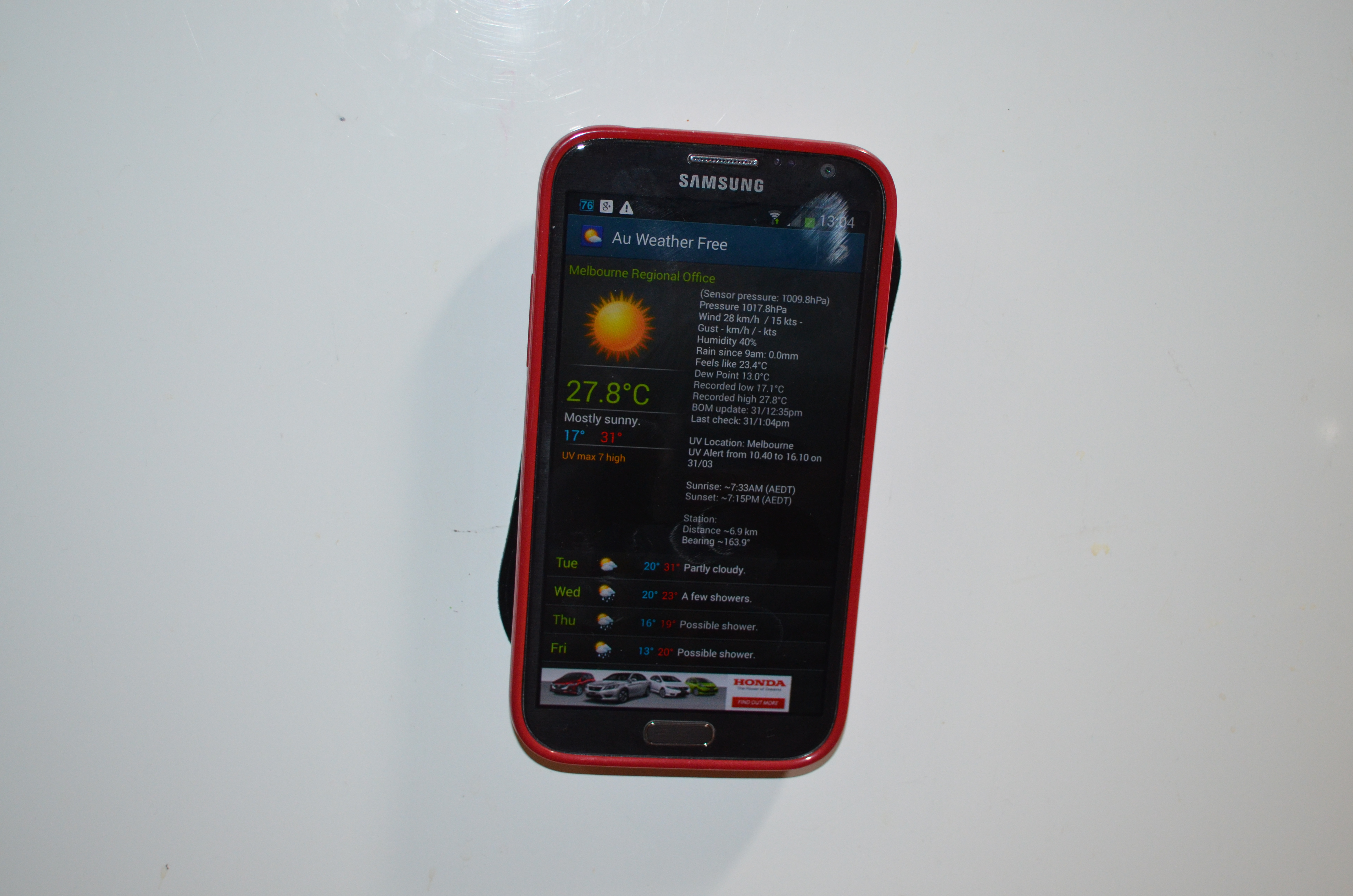
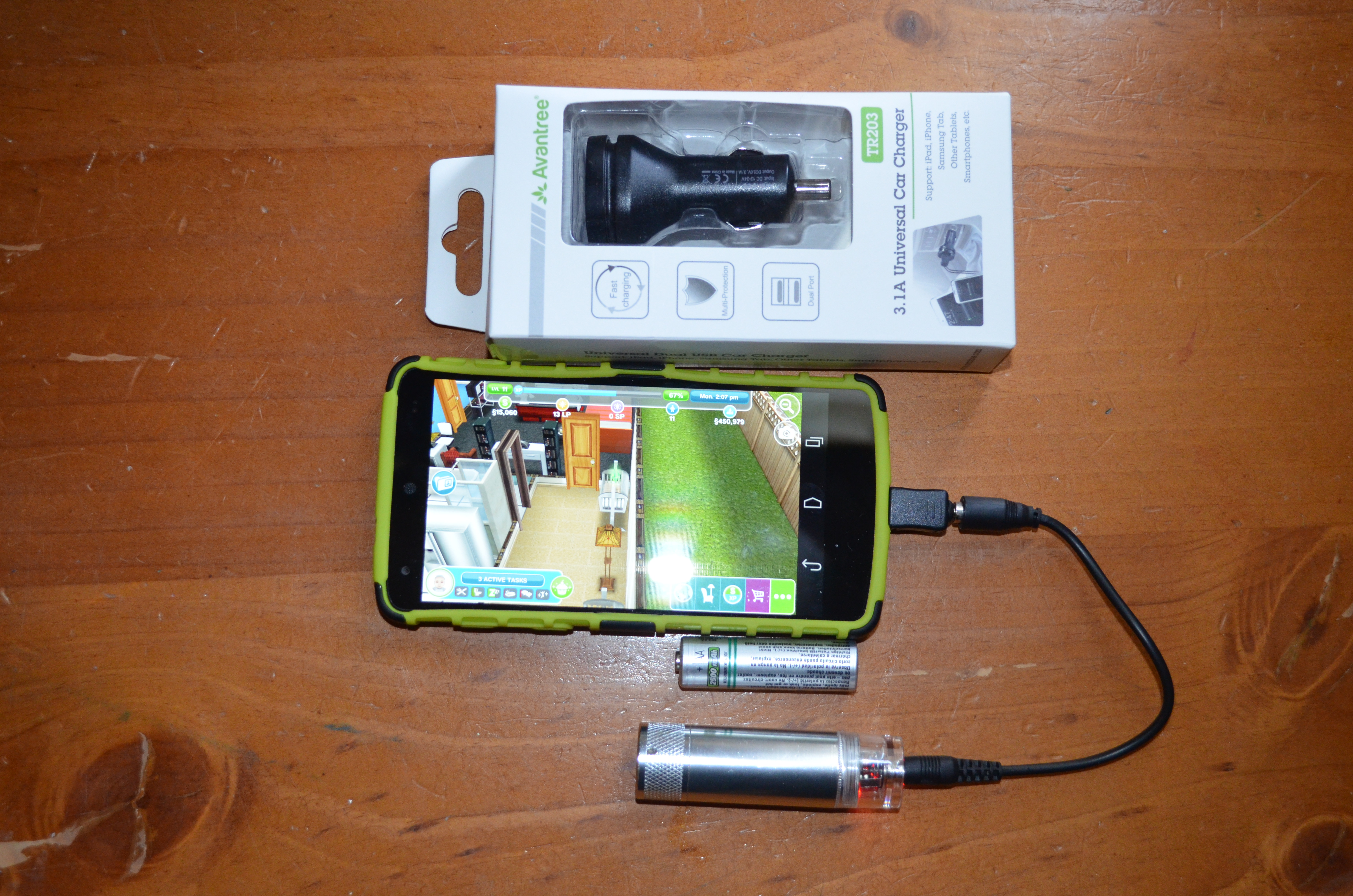
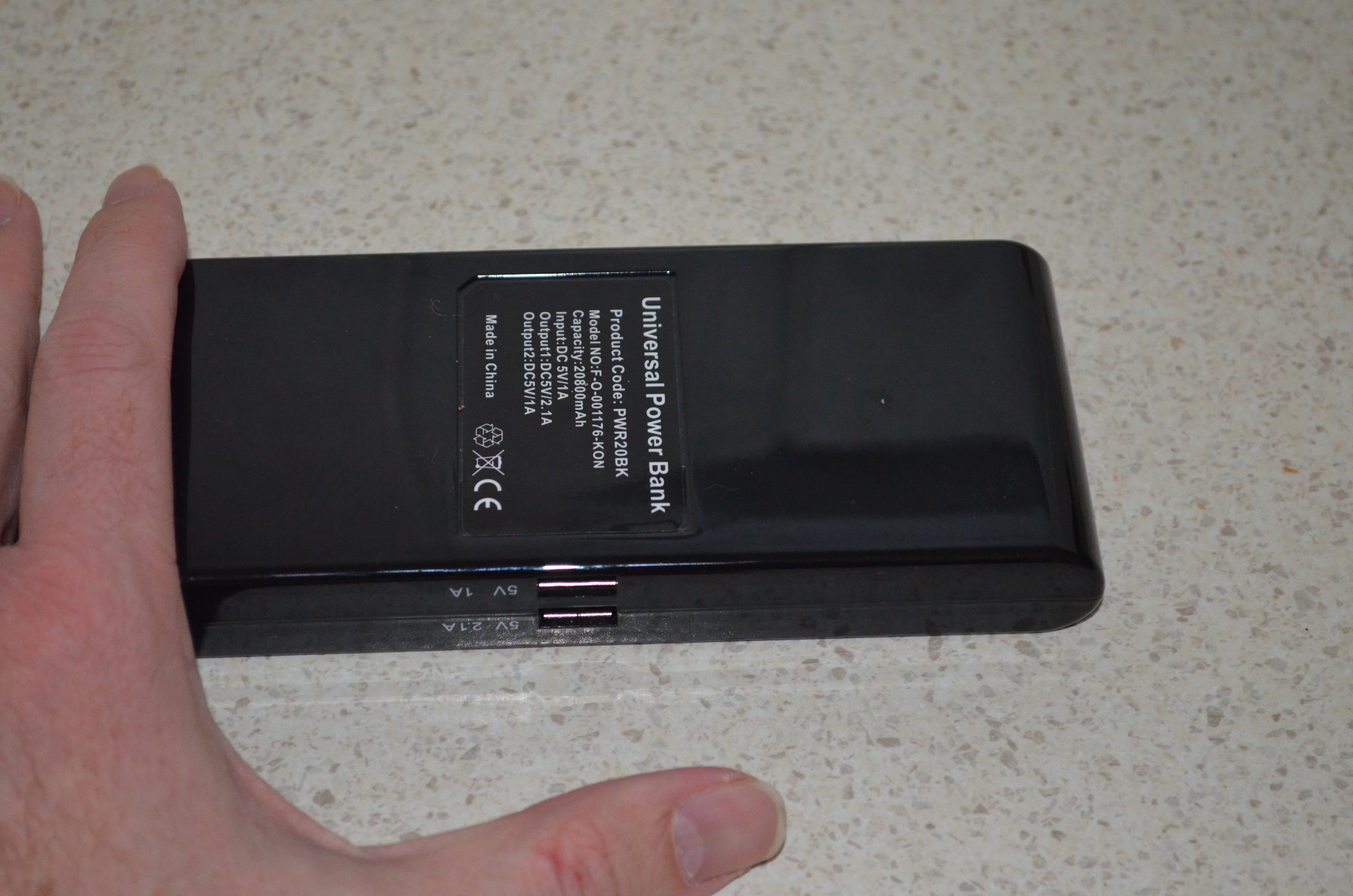
Tree Frog Dashboard Mat phone stuck to fridge I ve been given some more MobileZap products to review. The first is the Tree Frog anti-slip dashboard mat [1]. This is designed to allow a phone to stick to an angled surface of the inside of the car without slipping. The pictures on the web site show a phone stuck to a curved angular surface of a car dash. To test this I stuck my phone to my fridge, the flat metal surface of the fridge and the almost flat plastic surface of the gel case of my phone are pretty much ideal surfaces for the sticky mat to adhere to. But even so keeping my phone stuck to a vertical surface is impressive. This mat is cheap enough that it could be used for many other tasks than securing a phone in a car, for example it could be used to stick a phone to the wall of your office. It s apparently washable and can be expected to keep gripping things if washed regularly. One thing that could be improved in the mat would be to have some holes in it. When I detached my phone from the fridge some large air bubbles developed between the mat and the fridge, this would be a problem if I wanted to regularly stick my phone to a flat surface such as an office wall. When in my car it didn t work nearly as well. The pattern on the surface of the car dash which is designed to avoid glare when driving is difficult to stick to, it s a bit like trying to attach sticky-tape to unpainted wood for similar reasons. A phone will still remain in place on a 30 degree angle from the horizontal (which is significant) but the mat grips much more tightly to the phone than the dash, which is a little inconvenient as the mat stays attached to the phone when you remove it from the dash. Sorry for the boring picture, it s black and flat so there s not much scope for making it interesting. 3.1A USB Car Charger AA battery charger and 3.1A car charger Above is a picture of a 3.1A USB car charger and a AA battery charger. The car charger isn t particularly exciting, but providing 3.1A through two USB sockets is noteworthy it can charge one device at 2.1A (the maximum any device draws) or two devices for a total of up to 3.1A [2] (with protection against over-current). Previously in my car I used the 2.1A charger that shipped with my Galaxy Note 2 and an inverter to provide 240VAC as the devices I had to charge a phone from a car socket didn t provide enough current. This new device uses less space and also allows charging two phones at once. One problem with this device was finding USB cables that could handle the current, for benchmarking I used a phone that was running Ingress and acting as a Wifi access point. I discovered that the cables that Samsung ships with their recent devices (Galaxy Note 2 and Galaxy Note 10.1 tablet) seem to work best and support charging my Galaxy Note 2 or my wife s Nexus 5 while playing Ingress and running as a Wifi AP. Most of the other cables that I have in my collection won t even allow a phone to remain at the same charge level while playing Ingress. AA Emergency Phone Charger The AA phone charger is best suited for emergency use only, it takes one AA battery and has limited current capacity [3]. A NiMh rechargeable battery has a nominal Voltage of 1.2V, to provide 5V to charge a phone the Voltage has to be boosted by a factor of 4.16 which would reduce the current by a factor of 4.16 if the charger was 100% efficient. As 100% efficiency is impossible the current would be reduced even more. It seems unlikely that a AA battery would be able to sustain a current of 2A so the supply from that charger would be less than 500mA IE less than the least capable PC USB port or mains powered phone charger. A test with a Nexus 5 showed the phone charge level decreasing while being very lightly used (mostly just checking whether the charge level was increasing) when a NiMH battery was connected. A test with an alkaline battery and the same Nexus 5 showed the phone charge level increasing when lightly used but it probably wouldn t do so while playing Ingress. It seems that a single NiMH AA battery can only be used for charging a phone in a real emergency situation (IE an act of god type disaster not a need to level up in Ingress). If mains power was out then you could charge a phone while it s turned off (AFAIK all Android phones support this) and then use it once it s charged. This charger supports a wide range of phones (including LG phones from 5+ years ago and Nokia from ~10 years ago) so it could be good for charging an old phone in an emergency. Older phones need less power to charge and generally last longer between charges. With an alkaline battery the charger works a lot better, but it s still for emergency use as I generally only use rechargeable batteries. This is a device I might put in the bottom of my case when travelling, not a device that I ll use regularly. I don t think that this is a deficiency in the product, it s just a limit of what can be done with the power requirements of modern phones and the capabilities of AA batteries. If you want a battery to use while playing Ingress you definitely need something a lot larger. This charger is good for emergencies but not suitable for my main use (charging phones while playing Ingress) so I ll give it to my parents, they do a lot of hiking and camping and my father often goes fishing. Taking a few AA batteries to charge a phone would be much more convenient for such use than taking one of the larger batteries I use for Ingress. Also as the charger is relatively cheap there s less potential financial loss if you drop it in sea-water. 20800mAh Battery picture of 20800mAh USB battery Above is a picture of a 20800mAh battery pack that MobileZap sent me [4]. I haven t yet discovered what it s capacity is, during the recent Interitus anomaly it kept my Galaxy Note 2 and my wife s Nexus 5 adequately charged for 5 hours of intensive Ingress playing (we alternated between phones). Without an external battery it would be unusual for either of those phones to last for 2 hours. The battery has two ports labeled 1A and 2.1A which implies that it can supply a total of 3.1A. I am a little dubious of that implication. After the Interitus anomaly my wife and I had dinner with some friends and I let a friend charge her Samsung Galaxy S5 on the battery at the same time as my Note 2 (which claimed to be 2% charged). When I connected my friend s phone my phone instantly shut itself down due to lack of charge, so I presume that the supply on the 2.1A port is reduced when a demanding device is connected to the 1A port. The next day my wife and I went to the city again to play Ingress and attend a protest against some of the awful things that the Abbott government is doing. As an experiment I didn t charge this battery to see how it would go for two days of use charging two phones. Again there was no problem and it still claimed to be half charged when we got home. So far the only problem I ve found with this battery is that it never reports being fully charged, not even if I leave it on charge for days. That doesn t seem to be a great problem to me, if I disconnect it before it s fully charged then that won t hurt the battery life (unlike NiCd batteries that have to be fully charged every time) and even if it s not fully charged it will still charge phones for a long time. The battery is about 19cm long. I have jeans with unusually large pockets to fit large phones [5] so I can fit this battery in my pocket while a USB cable is connected to charge my phone. I also have a new winter jacket from Scottwear which has pockets that can fit the battery (and lots of other things). Anyone who doesn t have such clothing should plan to use a backpack, handbag, or some other bag this type of battery won t fit in the pockets in most clothing. MobileZap also has some other interesting Nexus 5 accessories [6].

Ian Wienand: ip link up versus status UP

ip link show has an up filter which the man page describes as display running interfaces. The output also shows the state, e.g.
$ ip link
1: lo: <LOOPBACK,UP,LOWER_UP> mtu 65536 qdisc noqueue state UNKNOWN mode DEFAULT group default
  link/loopback 00:00:00:00:00:00 brd 00:00:00:00:00:00
2: eth0: <BROADCAST,MULTICAST> mtu 1500 qdisc noop state DOWN mode DEFAULT group default qlen 1000
  link/ether e8:03:9a:b6:46:b3 brd ff:ff:ff:ff:ff:ff
3: wlan0: <BROADCAST,MULTICAST,UP,LOWER_UP> mtu 1500 qdisc mq state UP mode DORMANT group default qlen 1000
  link/ether c4:85:08:2a:6e:3a brd ff:ff:ff:ff:ff:ff
It is not described what the difference is between these two. The state output is derived from IFLA_OPERSTATE as per this little bit in ip/ipaddress.c in iproute2
if (tb[IFLA_OPERSTATE])
  print_operstate(fp, rta_getattr_u8(tb[IFLA_OPERSTATE]));
as per operstates.txt a status of UP means that the interface is up and can be used to send packets. In contrast, ip link show up runs a different filter
if (filter.up && !(ifi->ifi_flags&IFF_UP))
  return 0;
Thus only interfaces that are in state IFF_UP are shown. This means it is administratively up, but this does not mean it is available and ready to send packets. This may make a difference if you're trying to use the output of ip link in any sort of automation where you have to probe the available network-interfaces and know where packets are going to get out or not.

18 June 2014

Ritesh Raj Sarraf: Laptop Mode Tools 1.65

I am very pleased to announce the release of Laptop Mode Tools, at version 1.65 This release took a toll given things have been changing for me, both personally and professionally. 1.64 was released on September 1st, 2013. So it was a full 9 month period, of which a good 2-3 months were procrastination. That said, this release has some pretty good bug fixes and I urge all distribution packagers to push it to their repositories soon. While I'd thank all contributors who have helped make this release, a special thank you to Stefan Huber. Stefan found/fixed many issues, did the messy code clean up etc.. Thank you. Worthy changes are mentioned below. For full details, please refer to the git commit logs. 1.65 - Wed Jun 18 19:22:35 IST 2014
* fix grep error on missing $device/uevent
* ethernet: replace sysfs/enabled by 'ip link down'
* wireless-iwl-power: sysfs attr enbable -> enabled
* wireless-iwl-power: Add iwlwifi support
* Use Runtime Power Managemet Framework is more robust now. Deprecates module
usb-autosuspend

* Fix multiple hibernate issue
* When resuming, run LMT in force initialization mode
* Add module for Intel PState driver
* GUI: Implement suspend/hibernate interface


AddThis:

Categories:

Keywords:

15 June 2014

Iustin Pop: Edge of Tomorrow, book vs. movie

Warning: some spoilers ahead. A few months ago I saw the trailer for Edge of Tomorrow (film). Normally I don't look for trailers, probably this was shared on G+ by someone; but the basic idea behind the trailer was interesting enough I tried to look for more information about the (then upcoming) movie. To my surprise, I learned that this Hollywood movie is based on a Japanese novel - All You Need Is Kill. Since (broadly speaking) Japanese style is quite different from Hollywood style, I became even more interested. So I bought the book, and went through it quite quickly - I liked it a lot, and for the most part is has kept me reading and reading. I would say the book is quite straightforward, with a bitter-sweet ending that is what I (dreaded and) expected from it. Fast forward a few months, and yesterday I saw the movie. I had somewhat lower expectations for it compared to the book, but I was surprised at how they managed to morph the Japanese setting in the book into an European one and give a good introduction into the plot. The downside is that they had to make it somewhat melodramatic here and there, and that they added quite a bit of extra plot to fill in the time; on the other hand, it skipped a lot of background detail that the book brought and which explains the setting of the war. The biggest change however was to the overall plot line: the book is only about a single battle, and makes it clear at the end that the war is far from over. The movie, in grand Hollywood style, solves the entire war in one neat swipe, and has a quite happy ending. Which is not bad per se, but doesn't have the same emotional impact as the book. Oh, and they made the aliens scarier but in a strange way prettier (or better said less alien). Interesting that they felt the need to do it: the aliens in the book were (definitely) scary by their behaviour/abilities, yet they had to make them "look scary" in a way that connects to our visceral feelings, rather to the logical fear that a non-earth-like life form would bring. Speaking about the cast: I would still have preferred the Japanese setting of the book compared to the more western one in the movie, but at least one of the two main characters in the movie had a well-chosen person playing it. Overall, I'd give the book a 4/5 rating, and the movie (still) a 3/5. I enjoyed both, and the main plot idea is, if not new in SF, still appealing.

14 June 2014

Ian Donnelly: Week 3: Learning Debian Packaging

This was another good week. This week I focused on cleaning up the merge implementation as well as learning about Debian packaging. As far as cleaning up the implementation, I got a few tests written to test the merge function. Additionally I rewrote the merge command code (the code responsible for the kdb merge command, it depends on the implementation of merge I wrote last week). Now the kdb merge command takes in a parent key for each keyset and creates a keyset containing all the keys under the parent key. It then invokes the KeysetMerge function I wrote on those keysets and saves the returned keyset to the key database. Most of the week I spent learning about Debian packaging. I was able to get some hand-on experience by creating a package for the augeas plugin for Elektra. I modified the control file to include the libaugeas0 dependency and adding in a description of the plugin. Also I created a new libelektra-augeas4.install file to install the share library to the correct location on the system. Then, I tried building the source using git-buildpackage but unfortunately it failed on packaging the plugin because the libelektra-augeas.so file was never built. It turned out that the augeas plugin had to be added to ElektraCache.cmake under plugins_dep (plugins with dependencies) so that the plugin would be built on make. So I fixed that and ran buildpackage again and voila! It worked! I successfully make my first Debian package! The other thing I looked into was how configuration files get updated during a package upgrade under Debian. It turns out, most package define their configurations as conffiles . These conffiles do not get overwritten during package upgrade if the user has edited them. Basically, during an upgrade, dpkg calculates a checksum on each conffile and if it has changed, prompts the user what to do. Instead, the goal of our project is to attempt an automatic merge of the conffile and if successful, used the merge version. If the merge is unsuccessful dpkg will prompt the user as usual. I need to figure out how to change dpkg s behavior during an upgrade with a conffile so I can build a prototype of a package upgrade merging a file. Lastly, this week I looked into adding tab completion to the kdb tool. Currently kdb does not try to complete commands using tab completion in bash. It turns out adding tab completion isn t that difficult. You basically just need to write rules for how tab completion should work for your program and add it to /etc/bash_completion.d/ I wrote a basic tab completion script for kdb that will complete the commands for kdb. It follows here: #Proof of concept bash completion for kdb. You must copy this file to /etc/bash_completion.d/kdb and load it with ". /etc/bash_completion.d/kdb"
_kdb()

local cur prev opts
COMPREPLY=()
cur="$ COMP_WORDS[COMP_CWORD] "
prev="$ COMP_WORDS[COMP_CWORD-1] "
opts="check convert cp export file fstab get getmeta import info ls lsmeta merge mount mv rm set setmeta sget shell test umount vset"
if [[ $ cur == * ]] ; then
COMPREPLY=( $(compgen -W "$ opts " -- $ cur ) )
return 0
fi

complete -F _kdb kdb
Its just a proof on concept but its a really neat feature and surprisingly easy to implement. One of the other students working on Elektra, Felix, is also working on tab completion. I think we will collaborate and have this feature implemented for kdb very soon. For next week I have a few goals I would like to accomplish. First of all I will have a working prototype of a package being upgraded with automatic conffile merging using kdb merge. Second, I want to continue working on the merge implementation to make it cleaner and work on more sophisticated keysets. I also need to add better error handling to tell if a merge was successful or not, and if not why. Third, I want to work on some of the lintan errors for the deb package of Elektra 0.8.6 and try to get some of those fixed to move closer toward release. Lastly I want to updated the kdb man page for Debian to make it more informative for the shell tool. I was able to get all my goals done for this week except the man page and getting some of the lintian errors fixed up. Overall though it was a very productive week. Until next week,
Ian S. Donnelly

13 June 2014

Kees Cook: glibc select weakness fixed

In 2009, I reported this bug to glibc, describing the problem that exists when a program is using select, and has its open file descriptor resource limit raised above 1024 (FD_SETSIZE). If a network daemon starts using the FD_SET/FD_CLR glibc macros on fdset variables for descriptors larger than 1024, glibc will happily write beyond the end of the fdset variable, producing a buffer overflow condition. (This problem had existed since the introduction of the macros, so, for decades? I figured it was long over-due to have a report opened about it.) At the time, I was told this wasn t going to be fixed and every program using [select] must be considered buggy. 2 years later still more people kept asking for this feature and continued to be told no . But, as it turns out, a few months later after the most recent no , it got silently fixed anyway, with the bug left open as Won t Fix ! I m glad Florian did some house-cleaning on the glibc bug tracker, since I d otherwise never have noticed that this protection had been added to the ever-growing list of -D_FORTIFY_SOURCE=2 protections. I ll still recommend everyone use poll instead of select, but now I won t be so worried when I see requests to raise the open descriptor limit above 1024.

2014, Kees Cook. This work is licensed under a Creative Commons Attribution-ShareAlike 3.0 License.
Creative Commons License

Steve Kemp: Amazon's Route53 API is nice.

It is unfortunate that some of the client libraries are inefficient, but I'm enjoying my exposure to Amazon's Route53 API. (This is unrelated to the previous post(s) about operating a DNS service..) For an idea of scale I host just over 170 zones at the moment. For the first 25 zones Amazon would charge $0.50 a month, then $0.10 after that. Which would mean:
25  * $0.50  +
150 * $0.10
             = $12.50
That seems reasonably .. reasonable.

11 June 2014

Yves-Alexis Perez: Debian, Xfce, policykit and permissions

So, it seems that for a lot of people using unstable, hardware-related permissions (shutdown/reboot, suspend/hibernate, devices mount/umount etc.) have been broken since some times. That's usually the case for people using GNOME with lightdm display manager, Xfce with either gdm or lightdm. It seems that recently, policykit (which is used by GNOME and Xfce) switched from consolekit backend to logind backend (yeah, systemd-logind). So applications using policykit needs to handle that correctly, and that means beeing sure a logind session is correctly setup, which is done by installing the package libpam-systemd. For now, it's still possible to not switch to systemd as init system, by installing the systemd-shim package before libpam-systemd. Be aware that (at least with the current state of affairs), this is only true with logind before 204. When systemd maintainers start transitionning to a later version, only systemd-sysv (so, systemd as init system) will work. For people reluctant to switch to systemd, they can use systemd-shim for now. Then when systemd 205+ enters the archive, either lose those hardware permissions, or try to improve systemd-shim to handle that situation. There's not much we (Xfce/LightDM maintainers) can do about that.

Daniel Pocock: Protest or Uber marketing stunt?

London's taxi "strike" today has been so successful that Uber claims to have had an 850% increase in new customer registrations this week. Well, that is a big success if you believe the strike may have been a guerrilla marketing tactic organised by Uber itself. No sympathy Personally, I have no sympathy for the taxi drivers. There is no city I have ever visited where I haven't encountered at least one taxi driver who tried to overcharge me. Honest drivers who give their customers value for money have less to fear from new technology than those who are unscrupulous. When I broke a leg a few years ago and was getting about on crutches for 6 weeks we decided to go out for dinner one night. This was the first time I went anywhere after having a long stint in hospital followed by a period of time I was confined to the house. The taxi driver deliberately skipped two turns leading directly to the restaurant, went another 1km past it and then followed a small street that winds back and forth and eventually demanded I pay him double what the fare should have been. This is exactly the type of abusive and despicable practice that is being eradicated by Uber's live GPS mapping technology. Although not every driver behaves so shamefully, this type of abuse of the weak or vulnerable is replicated in one way or another the world over. For example, in Melbourne, Australia, wheelchair taxis that have worked out they can make more money collecting families with suitcases at the airport leave genuine wheelchair users without a ride. Will Google be targeted next week? Google has just announced a step-change in plans to build their own self driving cars. Will Google offices around the world, including London be targetted by these crude blockades too? Political protest or anti-competitive mischief? Why were taxi drivers not arrested for their protest today? Given that the roads are the place where taxis and their competitors do business, can this blockade really be considered a political protest or is it an anti-competitive practice in blatant disregard of the law? Weapons of mass destruction Before even having breakfast you could probably find 10,000 cyclists in central London willing to sign a petition declaring taxis are a weapon of mass destruction. Once again, while there are honest drivers, there is a more than trivial number of taxi drivers who are a genuine danger to the lives of cyclists, scooters, motorcycles and occasionally pedestrians. I have personally experienced one of these thugs ramming my bicycle from behind (his hard-nosed insurer eventually paid up but without admitting liability). The police who attended the incident even told me they had seen so many accidents like this they wouldn't dare cycle themselves. The web is full of examples that appear to show malicious and criminal behavior by taxi drivers, thanks to Youtube and helmet cams: Will hotels protest about AirBNB? Now the taxi drivers have had their chance to cause mayhem, will hotel operators be next? What could they do though? Will they seek out AirBNB apartments and try to obstruct them somehow? Making mischief outside somebody's home is not a good way to make a point. Chances are, they would be prosecuted or served with restraining orders. So why do the taxi drivers get to jam up whole cities and get away with it? The Uber taxi meter loophole Will the courts decide that the Uber app is a taxi meter? This is actually a tough question. Even if courts rule against apps that perform live metering, Uber could simply remove all metering functions from the app itself and perform the metering calculations in the cloud. The app would just send start and finish locations to the cloud and the cloud would send a message back to the phone confirming the charge. The phone is then nothing more than a communication and positioning device. Remember the elevator man? When the automobile was first invented, laws were made requiring every car to be accompanied through public streets by a man carrying a flag. That job, like many others, no longer exists. elevator attendant In the good old days, every elevator had a man or woman who would sit on a stool and press buttons to operate the doors and motors. Some up-market department stores and hotels still have an elevator man to add a touch of nostalgia. The vast majority, however, have eliminated these jobs thanks to automatic elevators. Now, even aircraft can land automatically on a ship at sea. Look at all those people manning the deck in the video and contemplate how many of them might potentially be out of a job too in 50 years time as Terminator-style automated battleships patrol the seas. Technology, like the Terminator, is not going to stop.

10 June 2014

Steve Kemp: I'm still not a developer, but ..

Some coding updates: My templer static site generator has now been uploaded to CPAN, and is available as App::Templer. I've converted most of my Dockerfiles to work with docker 1.0.0, which is nice. I also hacked up a fun DNS-server for sharing JSON-encoded data, within a LAN or other environment: Finally I updated the blogspam-detecting site a little, on the back-end. The code is now running inside Docker containers which means I can redeploy more easily in the future. My blog post about looking for a job received some attention via a Reddit advert I posted to /r/edinburgh + /r/sysadmin, but thus far has mostly resulted in people wanting me to write code for them .. which is frustrating. For the moment I'm working on a fun challenge involving (email) spam-detection. That takes me back.

Dimitri John Ledkov: cross-compile go code, including cgo

By all means cross-compiling a new language/stack is not going to be pretty, but it didn't turn out that bad.

A few weeks back, I was told that go code which uses cgo (that is utilising C api calls to shared libraries exporting C interface) cannot be cross-compiled. Well, if it's just calling out a C compiler it should totally be easy to cross compile, since so much of our platform is.

So there we go, first I've picked a moderately small project which only does a couple cgo calls, and check that it compiles correctly:

$ sudo apt-get build-dep ubuntu-push-client
$ go get launchpad.net/ubuntu-push/...
$ cd $GOPATH/src/launchpad.net/ubuntu-push/
$ go build ubuntu-push-client.go
Well, when your gcc is all is easy.

I didn't want to polute my system, so I quickly created a chroot with go, build-dependencies in armhf architectures and cross-compiler:

# Get a chroot with build-dependencies installed, I am basing on top of a click-chroot
# one should be able to use any chroot which is armhf multiarch enabled.
$ sudo click chroot -aarmhf -fubuntu-sdk-14.04 -s utopic create
$ sudo click chroot -aarmhf -fubuntu-sdk-14.04 -s utopic maint apt-get install golang-go golang-go-linux-arm golang-go-dbus-dev golang-go-xdg-dev golang-gocheck-dev golang-gosqlite-dev golang-uuid-dev libgcrypt11-dev:armhf libglib2.0-dev:armhf libwhoopsie-dev:armhf libubuntuoneauth-2.0-dev:armhf libdbus-1-dev:armhf libnih-dbus-dev:armhf libsqlite3-dev:armhf crossbuild-essential-armhf
After that the tricky bit was advising go to cross-compile:

$ click chroot -aarmhf -fubuntu-sdk-14.04 -s utopic run CGO_ENABLED=1 GOARCH=arm GOARM=7 PKG_CONFIG_LIBDIR=/usr/lib/arm-linux-gnueabihf/pkgconfig:/usr/lib/pkgconfig:/usr/share/pkgconfig GOPATH=/usr/share/gocode/:~/go CC=arm-linux-gnueabihf-gcc go build -ldflags '-extld=arm-linux-gnueabihf-gcc' ubuntu-push-client.go
Ignoring the click chroot wrapper:
  • CGO_ENABLED=1 - by default cgo is disabled when cross-compiling, but really shouldn't be as compiler names are standard $(GNU_TRIPPLET) prefixed tools
  • GOARCH=arm - set the target arch
  • GOARM=7 - set ABI level
  • PKG_CONFIG_LIBDIR - the ugly beast to pass where pkg-config should search for .pc files. With autoconf one simply sets PKG_CONFIG environment variable pointing at a cross-pkg-config, $(GNU_TRIPPLET)-pkg-config but go tool doesn't support it. I've raised merge proposal to get that added https://codereview.appspot.com/104960043/
  • Next I just set GOPATH to where my packages are and CC as to which compiler to use
  • The last portion to the puzzle was to pash "-ldflags '-extld=$CC'" because the linker tool (5l) didn't use environmental variable CC and simply defaults to gcc. I'll raise a merge proposal for this.
Overall that's it. Given that all of above can be re-factored into standard variables (e.g. use $GNU_TRIPPLET prefix, and offer to override it), I see no reason why cross-compilation in go with cgo cannot eventually become a simple
GOARCH=arm go build

Russell Coker: Google Hardware Support

Ironically just 5 days after writing about how I choose Android devices for a long service life [1] my wife s Nexus 5 (with 32G of RAM (sorry Flash storage) to give it a long useful life) totally died. It reported itself as being fully charged and then 15 minutes later it was off and could not be revived. No combination of pushing the power button and connecting the power cable caused the screen to light up or any sound to be emitted. Google has a nice interactive support site for nexus devices that describes more ways of turning a phone on than any reasonable person could imagine. After trying to turn the phone on in various ways (plugged and unplugged etc) it gave me a link to get phone support. Clicking on that put me in the queue to RECEIVE a phone call and a minute later a lady who spoke English really well (which is unusual for telephone support) called me to talk me through the various options. Receiving a phone call is a much better experience than making a call. It meant that if the queue for phone support was long then I could do other things until the phone rings. It s impossible to be productive at other tasks while listening for hold music to stop and a person to start talking. The cost of doing this would be very tiny, while there would be some cost in hardware and software to have a web site that tells me how long I can expect to wait for a call a more basic implementation where I just submit my number and wait for a call would be very cheap to implement. The costs of calls from the US to Australia (and most places where people can afford a high end Android phone) are quite cheap for home users and are probably cheaper if you run a call center. If the average support call cost Google $1 and 3% of phones have support calls then that would be an extra cost of $0.03 per phone. I expect that almost everyone who buys a $450 phone would be happy to pay a lot more than $0.03 to avoid the possibility of listening to hold music! I received the phone call about a minute after requesting it, this was nice but I wonder how long I would have waited if I hadn t requested a call at 1AM Australian time (presumably during the day in a US call center). In any case getting a 1 minute response is great for any time of the day or night, lots of call centers can t do that. While the phone support is much better than most phone support, it would be nice if they added some extra options. I think it would be good to have webchat and SMS as options for support for the benefit of people who don t want to speak to strangers. This would be useful to a lot of people on the Autism Spectrum and probably others too. The phone call wasn t particularly productive, it merely confirmed that I had followed all the steps on the support website. Then I received an email telling me about the web site which was a waste of time as I d covered that in the phone call. I have just replied to their second email which asked for the IMEI of the phone to start the warranty return process. We could have saved more than 24 hours delay if this had been requested in the first email or the phone call. Google could have even requested the IMEI through the web site before starting the phone call. It would have been even easier if Google had included the device IMEI in the email they sent me to confirm the purchase as searching for old email is a lot easier than searching through my house for an old box. Another option for Google would be to just ask me for the Gmail account used for the purchase, as I only bought one Nexus 5 on that account they then have all the purchase details needed for a warranty claim. While the first call was a great experience the email support following that has been a waste of time. I m now wondering if they aim to delay the warranty process for a few days in the hope that the phone will just start working again.

9 June 2014

Floris Stoica-Marcu: GSoC 2014 Muon package and initial apt-listbugs integration [Week3]

Hello, The past week I ve finished the muon package, available @ git.debian.org/?p=pkg-kde/kde-extras/muon.git on the gsoc-floris-2014 branch (use at your own risk!) Also, I ve finished up the KAuth support when adding/removing repos (already pushed to the master of Muon). Most importantly, I ve started integrating apt-listbugs a most important component of Debian. What does this mean and how it will affect the end-user? Well, having apt-listbugs integrated means that the user will be warned when installing packages if the packages have some serious/grave/critical bugs! I am still working on making it async and I hope to be done by tonight. Also, some formatting work on the dialog is still needed. Check it out bellow: Apt-listbugs in action After I finish the apt-listbugs integration, I will get started on writing up some apt unit tests as suggested by Aleix. Also, I will work with Sune on updating the qapt package as well. In a nutshell: This week:
*muon package
*KAuth support implemented
*initial apt-listbugs integration Plans for next week:
*finish apt-listbugs integration (async, with pretty formatting!)
*apt unit tests
*update qapt package Thanks for reading, see you next week!
Floris.

Next.

Previous.