Search Results: "sto"

29 February 2016

Dirk Eddelbuettel: New CRAN package gunsales

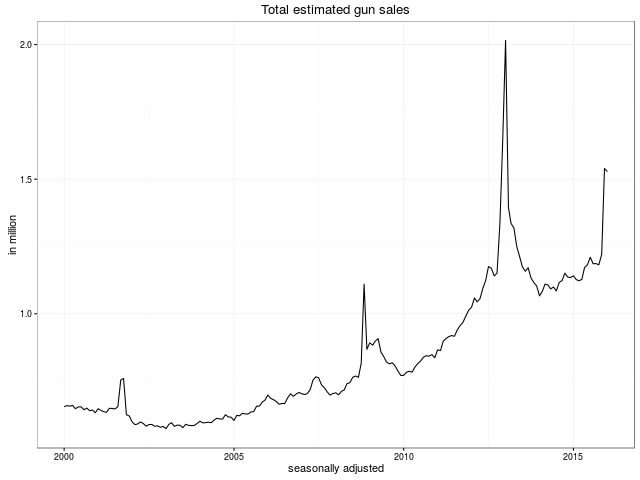
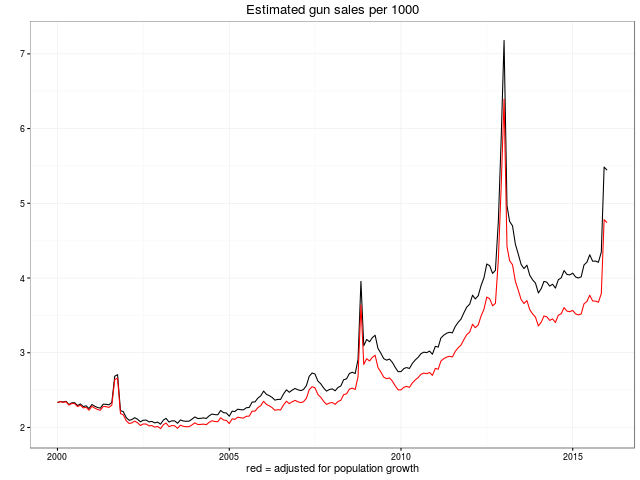
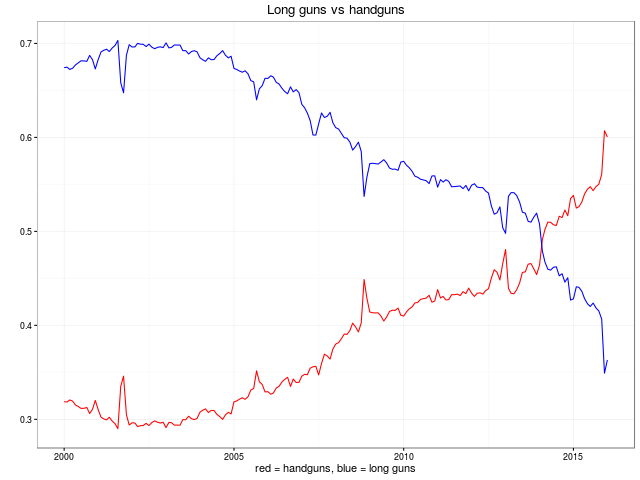
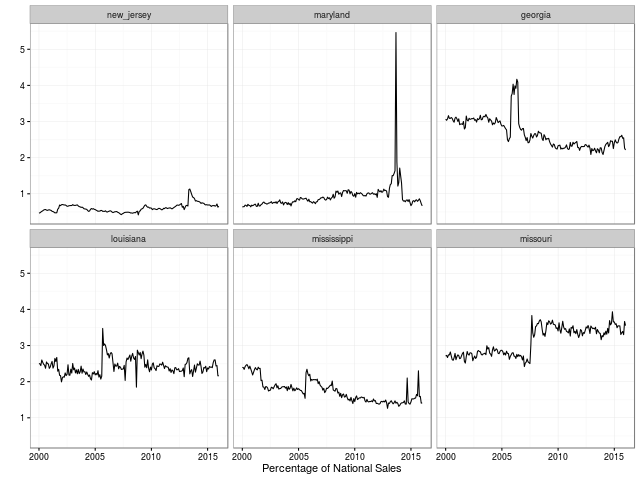
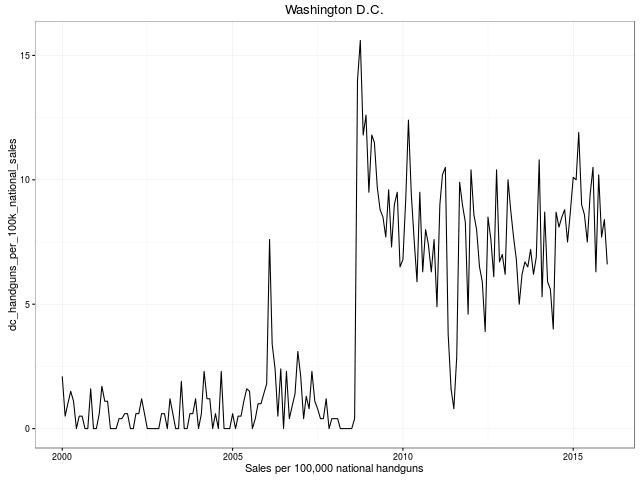
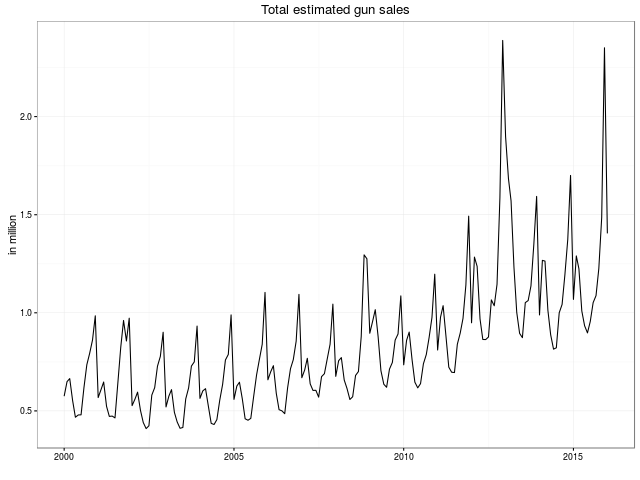
This is based on joint work with Gregor Aisch and Josh Keller of the New York Times. A new package gunsales is now on the CRAN network for R. It is based the NYTimes/gunsales repository underlying the excellent New York Times visualizations, first published first in December 2015 and updated with more recent data since. The analysis takes public government data on gun sales from the National Instant Criminal Background Check System (NICS). The original data is scraped from the pdf, included in the package, and analysed in a cross-section and time-series manner. The standard US Census tool X-13ARIMA-SEATS is used to deseasonalize the timeseries at the national or state level. (Note that Buzzfeed also published data and (Python) code in another GitHub repo.) As an aside, it was the use of X-13ARIMA-SEATS here -- and its somewhat awkward and manual installation also seen in the initial versions of the code in the NYTimes/gunsales repo -- which lead to the recent work by Christoph Sax and myself. We now provide a new package x13binary on CRAN so that Christoph's excellent seasonal package can simply depend upon it and have a working binary provided and installed ready to use; see the recent blog post for more. The net result is that a package like this new gunsales project can simply depend upon seasonal and also be assurred that x13binary "just works". As Martha would say, "A Good Thing". Back to the gunsales project. Following the initial publication of the repository with the data and R code in a simple script, I felt compelled to reorganize it as a package. Packages for R, as we teach our students, colleagues, or anybody else who wants to listen are really the best way to bundle code, data, documentation (i.e. vignettes) and tests. All that exists now in the gunsales package. The package now has one main function, analysis(), which returns a single dataframe object. This dataframe object can then be fed to two plotting functions. The first, plot_gunsales(), will then recreate all the (base R) plots from the original code base. The second, ggplot_gunsales(), does the same but via ggplot2. This should give anybody the ability to look at the data, study the transformations done, form and maybe test new hypotheses and visualize in manner comparable to the original publication. As an amuse gueule, here are the key plots also shown in the main README.md at GitHub: Total Estimated Gun Sales Total Estimated Gun Sales, Seasonally Adjusted Total Estimated Gun Sales, Population-Growth Adjusted Handguns vs Longguns Six States DC We look forward to more remixes and analysis of this data. The plan of the GitHub repository is to keep the data set updated as new data points are published.

This post by Dirk Eddelbuettel originated on his Thinking inside the box blog. Please report excessive re-aggregation in third-party for-profit settings.

28 February 2016

Ian Campbell: Hotswapping a failed RAID device

Recently I started getting SMART warnings from on of the disks in my home NAS (a QNAP TS-419P II armel/kirkwood device running Debian Jessie):
Device: /dev/disk/by-id/ata-ST3000DM001-1CH166_W1F2QSV6 [SAT], Self-Test Log error count increased from 0 to 1
Meaning it was now time to switch out that disk from the RAID5 array. Since everytime this happens I have to go and lookup again what to do I've decided to write it down this time. I configure SMART to talk about devices by-id (giving me their name and model number) so first I needed to figure out what the kernel was calling this device (although mdadm is happy with the by-id path, various other bits are not):
# readlink /dev/disk/by-id/ata-ST3000DM001-1CH166_W1F2QSV6 
../../sdd
Next I needed to mark the device as failed in the array:
# mdadm --detail /dev/md0 
/dev/md0:
[...]
          State : clean 
 Active Devices : 4
Working Devices : 4
 Failed Devices : 0
  Spare Devices : 0
[...]
    Number   Major   Minor   RaidDevice State
       5       8       48        0      active sync   /dev/sdd
       1       8       32        1      active sync   /dev/sdc
       6       8       16        2      active sync   /dev/sdb
       4       8        0        3      active sync   /dev/sda
# mdadm --fail /dev/md0 /dev/disk/by-id/ata-ST3000DM001-1CH166_W1F2QSV6 
mdadm: set /dev/disk/by-id/ata-ST3000DM001-1CH166_W1F2QSV6 faulty in /dev/md0
# mdadm --detail /dev/md0 
/dev/md0:
[...]
 Active Devices : 3
Working Devices : 3
 Failed Devices : 1
  Spare Devices : 0
[...]
Number   Major   Minor   RaidDevice State
   0       0        0        0      removed
   1       8       32        1      active sync   /dev/sdc
   6       8       16        2      active sync   /dev/sdb
   4       8        0        3      active sync   /dev/sda
   5       8       48        -      faulty   /dev/sdd
If it had been the RAID subsystem rather than SMART monitoring which had first spotted the issue then this would have happened already (and I would had received a different mail from the RAID checks instead of SMART). Once the disk is marked as failed then actually remove it from the array:
# mdadm --remove /dev/md0 /dev/disk/by-id/ata-ST3000DM001-1CH166_W1F2QSV6 
mdadm: hot removed /dev/disk/by-id/ata-ST3000DM001-1CH166_W1F2QSV6 from /dev/md0
And finally tell the kernel to delete the device:
# echo 1 > /sys/block/sdd/device/delete 
At this point I can physically swap the disks. At this point I noticed there were some interesting messages in dmesg, either from the echo to the delete node in sysfs or from the physical switch of the disks:
[1779238.656459] md: unbind<sdd>
[1779238.659455] md: export_rdev(sdd)
[1779258.686720] sd 3:0:0:0: [sdd] Synchronizing SCSI cache
[1779258.700507] sd 3:0:0:0: [sdd] Stopping disk
[1779259.377589] ata4.00: disabled
[1779371.126202] ata4: exception Emask 0x10 SAct 0x0 SErr 0x180000 action 0x6 frozen
[1779371.133740] ata4: edma_err_cause=00000020 pp_flags=00000000, SError=00180000
[1779371.141003] ata4: SError:   10B8B Dispar  
[1779371.145309] ata4: hard resetting link
[1779371.468708] ata4: SATA link down (SStatus 0 SControl 300)
[1779371.474340] ata4: EH complete
[1779557.416735] ata4: exception Emask 0x10 SAct 0x0 SErr 0x4010000 action 0xe frozen
[1779557.424356] ata4: edma_err_cause=00000010 pp_flags=00000000, dev connect
[1779557.431264] ata4: SError:   PHYRdyChg DevExch  
[1779557.436008] ata4: hard resetting link
[1779563.357089] ata4: link is slow to respond, please be patient (ready=0)
[1779567.449096] ata4: SRST failed (errno=-16)
[1779567.453316] ata4: hard resetting link
I wonder if I should have used another method to detach the disk, perhaps poking the controller rather than the disk (which rang a vague bell in my memory from last time this happened) but in the end the disk is broken and the kernel seems to have coped so I'm not too worried about it. It looked like the new disk had already been recognised:
[1779572.593471] scsi 3:0:0:0: Direct-Access     ATA      HGST HDN724040AL A5E0 PQ: 0 ANSI: 5
[1779572.604187] sd 3:0:0:0: [sdd] 7814037168 512-byte logical blocks: (4.00 TB/3.63 TiB)
[1779572.612171] sd 3:0:0:0: [sdd] 4096-byte physical blocks
[1779572.618252] sd 3:0:0:0: Attached scsi generic sg3 type 0
[1779572.626754] sd 3:0:0:0: [sdd] Write Protect is off
[1779572.631771] sd 3:0:0:0: [sdd] Mode Sense: 00 3a 00 00
[1779572.632588] sd 3:0:0:0: [sdd] Write cache: enabled, read cache: enabled, doesn't support DPO or FUA
[1779572.665609]  sdd: unknown partition table
[1779572.671522] sd 3:0:0:0: [sdd] Attached SCSI disk
[1779855.362331]  sdd: unknown partition table
So I skipped trying to figure out how to perform a SCSI rescan and went straight to identifying that the new disk was called:
/dev/disk/by-id/ata-HGST_HDN724040ALE640_PK1338P4GY8ENB
and then tried to do a SMART conveyancing self-test with:
# smartctl -t conveyance /dev/disk/by-id/ata-HGST_HDN724040ALE640_PK1338P4GY8ENB
But this particular drive seems to not support that, so I went straight to editing /etc/smartd.conf to replace the old disk with the new one and:
# service smartmontools reload
With all that I was ready to add the new disk to the array:
# mdadm --add /dev/md0 /dev/disk/by-id/ata-HGST_HDN724040ALE640_PK1338P4GY8ENB
mdadm: added /dev/disk/by-id/ata-HGST_HDN724040ALE640_PK1338P4GY8ENB
# mdadm --detail /dev/md0 
/dev/md0:
[...] 
      State : clean, degraded, recovering 
 Active Devices : 3
Working Devices : 4
 Failed Devices : 0
  Spare Devices : 1
[...]
 Rebuild Status : 0% complete
[...]
Number   Major   Minor   RaidDevice State
   5       8       48        0      spare rebuilding   /dev/sdd
   1       8       32        1      active sync   /dev/sdc
   6       8       16        2      active sync   /dev/sdb
   4       8        0        3      active sync   /dev/sda
# cat /proc/mdstat 
Personalities : [raid6] [raid5] [raid4] 
md0 : active raid5 sdd[5] sda[4] sdb[6] sdc[1]
      5860538880 blocks super 1.2 level 5, 512k chunk, algorithm 2 [4/3] [_UUU]
      [>....................]  recovery =  0.0% (364032/1953512960) finish=1162.4min speed=28002K/sec
So now all that was left was to wait about 20 hours (with fingers crossed a second disk didn't die! spoiler: it didn't)

26 February 2016

Ritesh Raj Sarraf: Linux IO + Memory + CPU Contention

I very recently met someone, and we had a good productive discussion on the features and (long standing) bugs of the Linux kernel. No doubt, Linux is the most featureful kernel in the market. Is also a lot appealing given its breadth of platform support. Of that discussion we had, it led about Linux's behavior in tighter stressed scenarios where there is a lot of contention among the core subsystems. From the conversation, I got the feedback that perhaps the issue is no more valid. My conclusion was I must have missed out on the fix because I haven't really spent any Engineering Lab time in recent past. But a picture says a thousand words. And no, the issue is NOT fixed. And it is still simple to reproduce the bug. And it is just that we have faster advancements in underlying hardware, that we may eventually find it much harder to reproduce these bugs. The kernel spitting the screen is Linux 4.4 Stock Debian.

Categories:

Keywords:

Like:

24 February 2016

Christoph Egger: doveadm deduplicate

Without further words:
% for i in $(seq 1 90) ; do doveadm mailbox status messages debian.buildd.archive.2011.05   column -t ;  doveadm deduplicate mailbox debian.buildd.archive.2011.05 ; done
debian.buildd.archive.2011.05  messages=8094
debian.buildd.archive.2011.05  messages=7939
debian.buildd.archive.2011.05  messages=7816
debian.buildd.archive.2011.05  messages=7698
debian.buildd.archive.2011.05  messages=7610
debian.buildd.archive.2011.05  messages=7529
debian.buildd.archive.2011.05  messages=7455
debian.buildd.archive.2011.05  messages=7375
debian.buildd.archive.2011.05  messages=7294
debian.buildd.archive.2011.05  messages=7215
debian.buildd.archive.2011.05  messages=7136
debian.buildd.archive.2011.05  messages=7032
debian.buildd.archive.2011.05  messages=6941
debian.buildd.archive.2011.05  messages=6839
debian.buildd.archive.2011.05  messages=6721
debian.buildd.archive.2011.05  messages=6631
debian.buildd.archive.2011.05  messages=6553
debian.buildd.archive.2011.05  messages=6476
debian.buildd.archive.2011.05  messages=6388
debian.buildd.archive.2011.05  messages=6301
debian.buildd.archive.2011.05  messages=6211
debian.buildd.archive.2011.05  messages=6140
debian.buildd.archive.2011.05  messages=6056
debian.buildd.archive.2011.05  messages=6007
debian.buildd.archive.2011.05  messages=5955
debian.buildd.archive.2011.05  messages=5887
debian.buildd.archive.2011.05  messages=5826
debian.buildd.archive.2011.05  messages=5752
debian.buildd.archive.2011.05  messages=5706
debian.buildd.archive.2011.05  messages=5657
debian.buildd.archive.2011.05  messages=5612
debian.buildd.archive.2011.05  messages=5570
debian.buildd.archive.2011.05  messages=5523
debian.buildd.archive.2011.05  messages=5474
debian.buildd.archive.2011.05  messages=5422
debian.buildd.archive.2011.05  messages=5382
debian.buildd.archive.2011.05  messages=5343
debian.buildd.archive.2011.05  messages=5308
debian.buildd.archive.2011.05  messages=5256
debian.buildd.archive.2011.05  messages=5221
debian.buildd.archive.2011.05  messages=5168
debian.buildd.archive.2011.05  messages=5133
debian.buildd.archive.2011.05  messages=5092
debian.buildd.archive.2011.05  messages=5058
debian.buildd.archive.2011.05  messages=5030
debian.buildd.archive.2011.05  messages=4994
debian.buildd.archive.2011.05  messages=4964
debian.buildd.archive.2011.05  messages=4935
debian.buildd.archive.2011.05  messages=4900
debian.buildd.archive.2011.05  messages=4868
debian.buildd.archive.2011.05  messages=4838
debian.buildd.archive.2011.05  messages=4811
debian.buildd.archive.2011.05  messages=4778
debian.buildd.archive.2011.05  messages=4748
debian.buildd.archive.2011.05  messages=4722
debian.buildd.archive.2011.05  messages=4686
debian.buildd.archive.2011.05  messages=4661
debian.buildd.archive.2011.05  messages=4637
debian.buildd.archive.2011.05  messages=4613
debian.buildd.archive.2011.05  messages=4593
debian.buildd.archive.2011.05  messages=4570
debian.buildd.archive.2011.05  messages=4554
debian.buildd.archive.2011.05  messages=4536
debian.buildd.archive.2011.05  messages=4520
debian.buildd.archive.2011.05  messages=4500
debian.buildd.archive.2011.05  messages=4481
debian.buildd.archive.2011.05  messages=4466
debian.buildd.archive.2011.05  messages=4445
debian.buildd.archive.2011.05  messages=4430
debian.buildd.archive.2011.05  messages=4417
debian.buildd.archive.2011.05  messages=4405
debian.buildd.archive.2011.05  messages=4390
debian.buildd.archive.2011.05  messages=4376
debian.buildd.archive.2011.05  messages=4366
debian.buildd.archive.2011.05  messages=4360
debian.buildd.archive.2011.05  messages=4350
debian.buildd.archive.2011.05  messages=4336
debian.buildd.archive.2011.05  messages=4329
debian.buildd.archive.2011.05  messages=4320
debian.buildd.archive.2011.05  messages=4315
debian.buildd.archive.2011.05  messages=4312
debian.buildd.archive.2011.05  messages=4311
debian.buildd.archive.2011.05  messages=4309
debian.buildd.archive.2011.05  messages=4308

Norbert Preining: Switching from iOS to Android

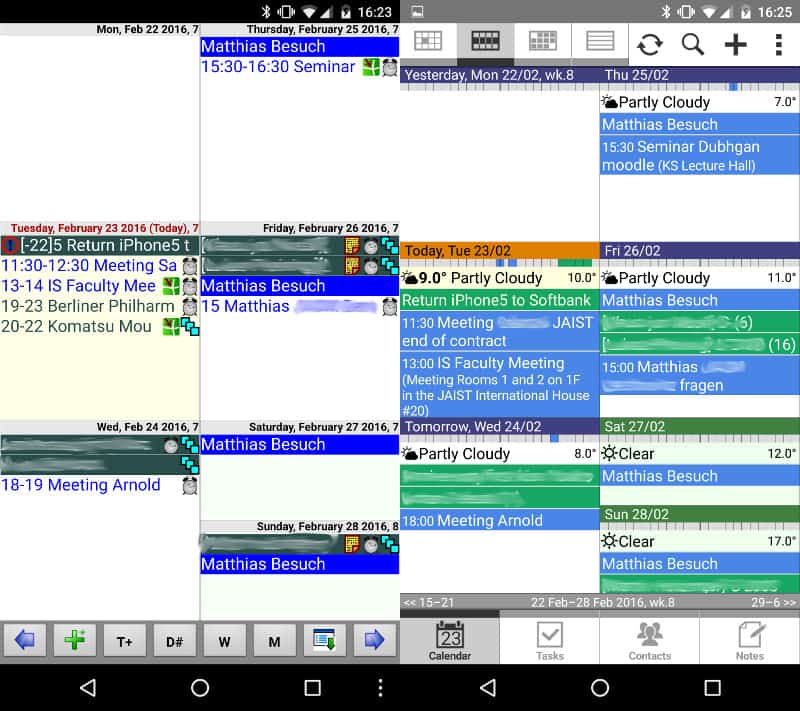
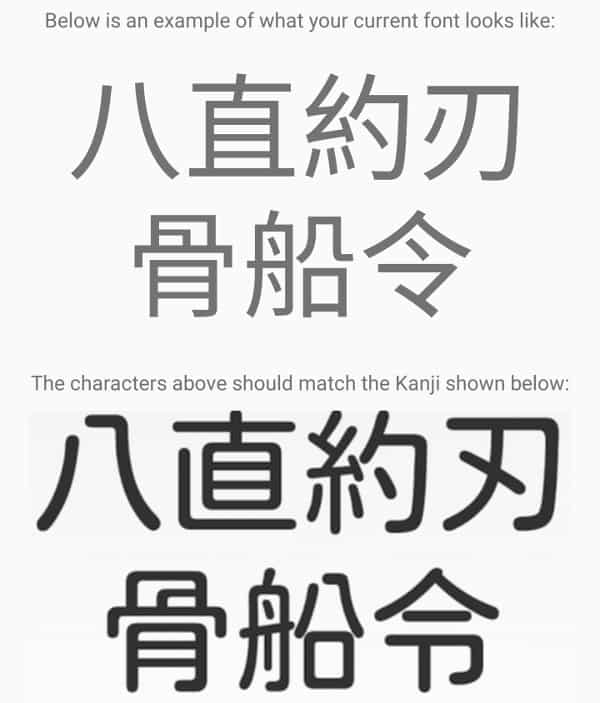
This article starts a series of blogs on my ventures into Android land after having used iOS devices for 6 years. I have never been a strong believer in the Apple ecosystem, and my trials to convince myself to MacBooks and MacPros always ended with installing Linux on them, so I guess I wasn t really the ideal target for iOS. Thus, my iOS devices were also permanently in jailbroken state, otherwise I would feel amputated. But as much as I disliked the lock-in and closed environment of the iOS world, it was from the user perspective surprisingly well done and smooth. So it was with a certain level of tension when I finally switched to Linux^WAndroid. android-ios If you don t want to read on, here the preliminary conclusion: Why didn t I do it earlier! But before we go into details, let me start with my background: History of my devices Originally I was a big opponent of smart phones and preferred the Unix-way, one device for one thing. So I had a normal phone and (various) Palm devices (Tungsten X, Tungsten C, and above all my beloved Handera TRGpro). I loved the Palm world and considered it superior to the then smart phone world, until I came to Japan, where the challenge of a proper input method for Japanese and proper Japanese support posed a big hurdle. The Palm devices had a stick and written input fields, but Japanese input was practically impossible and a huge pain. Searching for a word in Japanese was more hurdle then looking it up in a printed dictionary. In addition, I needed a phone in Japan, so I plunged into the smart phone world and got myself a iPhone (3g). What a world did open for me: easy typing of Japanese, dictionaries, on-the-fly translation, woooow! And above all, I discovered my most beloved and till now one of my most important programs: Flashcards Deluxe. Thanks, and I have to say to 80% thanks to this program my Japanese learning speed has accelerated considerably. There is nothing more important for me than getting drilled in a systematic way. But I derail, anyway, having Flashcard Deluxe on the iPhone within rather short time I had about 10000 or more flashcards created, and moving on to a different architecture (Android) was for quite some time practically impossible without loosing years of statistics and learning, so I renewed my contract after 2 years together with a iPhone 4s. Another two years passed, and these years brought an Android version of Flashcards Deluxe, as well as Dropbox syncing, so I had no excuse anymore to remain in iOS land, wouldn t it be for an iPhone 5s that was passed to me near the end of my forth year, so I again extended the contract for two years. Finally, after 6 years of iPhone devices, this January I finally decided it is time to switch to Android. After lots of thinking, comparing, and requesting advice from good friends with more experience in the smart phone market I went for a Google Nexus 6p. Google Nexus 6p I will not repeat the specs of this phone as they are widely available on the net. My original plan was a Samsung S6, but after consultation with an expert I decided for an original Google phone for better security support. That left me with the option between a Nexus 5x and 6p, and due to prize differences (prizes of mobiles are ridiculously strange in Japan) I went for the 6p instead of the 5x. One point that made the decision for this slight too big device easy was the fact that it uses a great AMOLED display. Moving the data Since I was using Google Calendar and Google Contacts already on the iPhone, moving to the Android phone was far less a hassle than I thought. My contacts and events showed up without a hiccup. Most of the usual apps are nowadays available on both iOS and Android, so the most difficult thing was remembering all the passwords to log into the applications again (SNS like G+, FB, Twitter etc). The same is more or less true for messengers of all kinds (Line, WhatsApp, Threema, etc), but here one is advised to check with the respective web site first to make sure one does not loose all of the important data. Line for example is a stupid ***** that deletes all previous chats on the old phone and does not make them available on the new one. WhatsApp can be converted with a special conversion program. Threema, too allows for transfer of ids. Move of applications After that came the hunt for replacement applications for those that are not available as is on Android: Mail At first like probably everyone I used the shipped GMail program. It might be good for Google Mail accounts, but for anything else it is just a real pain. Thus, I have searched a bit and finally settled (for now) for K-9 Mail: it is open source, open development, feature rich, and more a hackers type email program, perfectly suited to me. There is a commercial variant called K@-Mail that says that it improves the user interface and some usability items as well as features, but I didn t see much of an advantage over the original version (which is completely free) and in fact some of my accounts didn t work at all. So I remain with K9 Mail and I think this is a good decision. Calendar Managing Calendars is one of the most important task for me. I have been a fervent supporter of DateBk4, DateBk 5, and DateBk 6 on the original Palm series, and when I left the Palm World it was with great pain that I had to loose DateBk. Not only because it was a simply fantastic calendar program that allowed me to keep track of all my climbing routes, festivities, in a much more advanced way than any other Calendering application, but also because the programmer of the DateBk series is running the Dewar Wildlife Trust, a Gorilla rescue group and a lot of the money he makes from the app sales is going to rescue Gorillas. With the switch to iOS this option was gone, and I first used the built-in calendar application (which is so weak) and later and for long time Pocket Informant Pro. This is a very good program and probably the only one that can compete with DateBk with respect to functionality and usefulness. During the time of me being locked in in iOS I realized that the world has moved on and a new version of DateBk series for Java was developed, called Pimlical. First only available on Windows, it became later available also on Android and Linux, too. The following screen shot puts Pimlical on the left, and Pocket Informant on the right. I will write a more detailed comparison in future, in short: PInformant is more streamlined and polished, Pimlical has more configuration option. Practically everything can be adjusted to one s need, and in addition there is also a Desktop application that sync either with Google and the phone, or only with the phone if you want to live off the grid. pimlical-pinformant So nowadays on Android I have both Pocket Informant Pro as well as Pimlical, but after a short time I have now switched practically exclusively to Pimlical. Notes Here there is pain HUGE PAIN!!! iOS has an excellent applications for notes, called simply Notebooks. This little pearl was my work horse for everything (more or less) memorable. From poems and song texts to bus time tables, from PDF to GIFs, from MarkDown to HTML, everything could be saved into Notebooks, displayed, edited, ordered. And above all it had automatic background sync with Dropbox. So I could drop new files into the respective sub-folder of my Dropbox folder and could be sure I have the files available on my phone when I leave for a trip. And there is a huge bag of features that I haven t even tapped into! Android is unfortunately not on the list of supported architectures of Notebooks. So I searched far and wide, and without any success. There are all kind of notes, flash colors, overly simple, fast and slow, stylish and plain, but none of them did even provide half of the features of Notebooks. None, not even half. I still hope I might find the ultimate notes application, or even better would be an Android version of the original Notebooks application (but this is not high on the developers todo list), but for now I am in despair The Rest As I said, most apps are nowadays available on both platforms, so there is not much more to do than download the respective Android app and log in again. That worked very nice across practically all apps. Things I don t like (i.e., which are broken!) on Android Although a very convenient system and perfectly made to fit my taste, there are some things that are a huge pain (and a big shame on Google to not being able to fix that for long time!): Japanese fonts when the device is in English interface language In case you are a foreigner living in Japan and want your Android phone in English, but still read emails, news, etc in Japanese, then Android provides you with the worst, namely Chinese fonts: chinese-japanese-mix This is a well known problem and I have blogged about fixing the very same problem on Linux (Debian), and the solution is a simple reshuffling in the fontconfig configuration files. There is even an application for it in the Google store, Kanji Fix, but it needs a rooted device (which I haven t done till now my failure!). I can only hope that Google fixes this completely stupid problem in a future version. The Me problem Another of these beasty problems: The Android Contacts application has an entry for Me , which unfortunately, no idea why, cannot be linked with my normal me in the list of contacts. There are reports all over the Internet, strange suggestions, and no real solution. Again, a simple thing that should work but doesn t. Invisible Images folder in MTP mode A more annoying problem is that the camera folder under Photos does not show up when connecting the device in MTP mode to my computer, and as consequence me being unable to copy photos from the device to my computer. The solution I am using at the moment is moving the photos with a file manager to a new folder which is visible during MTP communcation, and copy the photos from there. But this, too, should be something trivial, but alas, despite a lot of posts on the internet I couldn t find a proper solution. Google Music As written somewhere else, Google Music has switched from 5 star system to up/down system, which is a huge pain and PITA. Things I do like (or I discovered) on Android There are some things I haven t been used/tried on iOS they might be possible which I really like: Yubikey Neo support I will write about this in a different blog, but nowadays I have my GPG keys on an hardware token (Yubikey Neo) and the application OpenKeychain on Android works nicely with both K9 Mail and via NFC with my Yubikey. That is a great tool! Bluetooth streaming Bluetooth on iOS devices was always a bit broken for me, so connecting my phone to my old car radio I needed radio transmitter that was connected to the cable port of the iPhone. With Android I use a Bluetooth Radio device (receives data via bluetooth, and sends music out via radio waves for a car stereo to receive them). Now if my monthly data limit wouldn t be that low  Debian on Android Yes, you can have a full Debian system running in your terminal on Android. There are several applications providing this feature, and I am rather surprised how smooth it works. Conclusion My preliminary conclusion is that the switch to Android at this time was perfectly timed, and from the technological side I should have done much earlier. In future blogs I will discuss particular instances of this transition in more details. If you have any suggestion for me, in particular for a good notes taking application, please let me know!
23 February 2016

Ritesh Raj Sarraf: Unbricking my Linksys

In trying to improve the WiFi service in my house, I recently dug out my old Linksys WRT54G Router. It is a 802.11 bg router, which can do 54 MBPS. Currently, I use a TPLink based router, with a DD-WRT community firmware, which claims is 802.11 bgn and can do 300 MBPS. The overall wifi signal isn't adequate, so I thought of using the old router as a repeater. The default Linksys VXWorks firmware does not have the bridging capabilities, so it was time to flashback, again, the dd-wrt image onto it (The last time I did, I eventually had to revert back to the stock firmware because my ISP claimed that the router was giving too many packet drops). Being an old device, and me being lazy, I did not pay much attention to the exact steps; and ended up bricking my router, wherein it wouldn't give me the Management Console to flash a new firmware; nor would it give me the old VXWorks firmware interface. All it gave was a White Screen of Death and an active IP connection. Turns out I'm not the only one bricking routers, so some good soul documented the process on unbricking the router. I was in a slightly more better position than the author, cause I did have the network available. My initial hope was to just push the firmware image over tftp, and that it would work. But that didn't happen. So, I was forced to follow the steps in the article, i.e. to use the Windows Tool mentioned in it (Infact that is what triggered me to write the article). Not having Windows available, my choice was to try it out over Crossover/Wine. It got the job done; so Thank You. BTW, does anyone know what goodie does the Windows Tool do that plain tftp did not ? The Windows Tool too pushed the image over tftp, so it must be doing something within the tftp spec to trigger the firmware upload and flash. That done, getting the Repeater Bridge wasn't that painful. If you build a Repeater Bridge setup, just follow dd-wrt instructions. The only extra I'd add is that You should keep your Virtual AP's credentials the same as that of your Primary Router's AP's. I'm not sure why that is needed but that ate my good 2-3 hrs.

Categories:

Keywords:

Like:

Uwe Kleine-K nig: Christoph Hellwig vs VMware

On Thursday the lawsuit about GPL compliance of VMware's ESXi products starts. I support Christoph's position and share his view that VMware's product is in conflict with the GPL. Read more on the software freedom conservancy's FAQ about the case. I keep my fingers crossed!

Michal &#268;iha&#345;: Weekly phpMyAdmin contributions 2016-W07

As the flow of incoming bugs for upcoming 4.6.0 has slowed down a bit it was more time for code cleanups and related tasks. But it's also time where potential Google Summer of Code students come to our organization and want to get involved. On the cleanup side the biggest was change to remove embedded PHP libraries which are available on Packagist from our Git and use Composer to manage the dependencies. This change will happen in 4.7.0, so it's still some time ahead, but it's already in our master branch. There still some third party libraries which we use and can not be installed using Composer, so we keep these for now. Besides the usual bug fixing stuff, I've noticed that we lack issues which can be easily understood and fixed by potential Google Summer of Code. We require them to get involved before the program starts, so that we can see they are capable of useful contributions and also to see how they behave if asked for patch improvements. To fix this deficit we're prepared few small cleanup or refactoring tasks, where the students can show their skills. All handled issues:

Filed under: English phpMyAdmin 2 comments

22 February 2016

Matthew Garrett: Freedom, the US Government, and why Apple are still bad

The US Government is attempting to force Apple to build a signed image that can be flashed onto an iPhone used by one of the San Bernardino shooters. To their credit, Apple have pushed back against this - there's an explanation of why doing so would be dangerous here. But what's noteworthy is that Apple are arguing that they shouldn't do this, not that they can't do this - Apple (and many other phone manufacturers) have designed their phones such that they can replace the firmware with anything they want.

In order to prevent unauthorised firmware being installed on a device, Apple (and most other vendors) verify that any firmware updates are signed with a trusted key. The FBI don't have access to Apple's firmware signing keys, and as a result they're unable to simply replace the software themselves. That's why they're asking Apple to build a new firmware image, sign it with their private key and provide it to the FBI.

But what do we mean by "unauthorised firmware"? In this case, it's "not authorised by Apple" - Apple can sign whatever they want, and your iPhone will happily accept that update. As owner of the device, there's no way for you to reconfigure it such that it will accept your updates. And, perhaps worse, there's no way to reconfigure it such that it will reject Apple's.

I've previously written about how it's possible to reconfigure a subset of Android devices so that they trust your images and nobody else's. Any attempt to update the phone using the Google-provided image will fail - instead, they must be re-signed using the keys that were installed in the device. No matter what legal mechanisms were used against them, Google would be unable to produce a signed firmware image that could be installed on the device without your consent. The mechanism I proposed is complicated and annoying, but this could be integrated into the standard vendor update process such that you simply type a password to unlock a key for re-signing.

Why's this important? Sure, in this case the government is attempting to obtain the contents of a phone that belonged to an actual terrorist. But not all cases governments bring will be as legitimate, and not all manufacturers are Apple. Governments will request that manufacturers build new firmware that allows them to monitor the behaviour of activists. They'll attempt to obtain signing keys and use them directly to build backdoors that let them obtain messages sent to journalists. They'll be able to reflash phones to plant evidence to discredit opposition politicians.

We can't rely on Apple to fight every case - if it becomes politically or financially expedient for them to do so, they may well change their policy. And we can't rely on the US government only seeking to obtain this kind of backdoor in clear-cut cases - there's a risk that these techniques will be used against innocent people. The only way for Apple (and all other phone manufacturers) to protect users is to allow users to remove Apple's validation keys and substitute their own. If Apple genuinely value user privacy over Apple's control of a device, it shouldn't be a difficult decision to make.

comment count unavailable comments

Norbert Preining: The Good, the Bad, and the Ugly refugees acceptance

Coming from a country that has taken lots of refugees, especially in the years after the second world war (although not any more), and while living in Japan still feeling connected to Europe and what is going on there, the current situation of refugees from the near east gives lots of material to think about. One of these things recently was passed around on various SNS sites. It is about the number of refugees a country can accept . refugees The situation is difficult, and after an initial wave of empathy it seems that especially governments are retracting and trying to stop the influx of refugees:

We cannot accommodate any more refugees in Europe, that s not possible.
Manuel Valls, Prime Minister of France
I am well aware about the difficult situation in Europe, and consider the dealing with the refugee crisis the biggest challenge of these decade. In this blog, without many words, I only want to focus on how Japan deals with refugees. Europe might be bad, but Japan I am bare of words.
Lebanon European Community Japan
Population 4.467.000 (2013) 503.000.000 127.300.000 (2013)
Refugees 2015 ~1.000.000 850.000 27
Ratio 4.4 : 1 590 : 1 4714814 : 1
Sources of the data: No words are necessary.

21 February 2016

Lunar: Reproducible builds: week 43 in Stretch cycle

What happened in the reproducible builds effort between February 14th and February 20th 2016:

Toolchain fixes Yaroslav Halchenko uploaded cython/0.23.4+git4-g7eed8d8-1 which makes its output deterministic. Original patch by Chris Lamb. Didier Raboud uploaded pyppd/1.0.2-3 to experimental which now serialize PPD deterministically. Lunar submitted two patches for lcms to add a way for clients to set the creation date/time in profile headers and initialize all bytes when writing named colors.

Packages fixed The following packages have become reproducible due to changes in their build dependencies: dbconfig-common, dctrl-tools, dvdwizard, ekg2, expeyes, galternatives, gpodder, icewm, latex-mk, libiio, lives, navit, po4a, tasksel, tilda, vdr-plugin-infosatepg, xaos. The following packages became reproducible after getting fixed: Some uploads fixed some reproducibility issues, but not all of them: Unknown status:
  • tomcat7/7.0.68-1 by Emmanuel Bourg (test suite fails in test environment).
Patches submitted which have not made their way to the archive yet:
  • #814840 on tor by Petter Reinholdtsen: use the UTC timezone when calling asciidoc.
  • #815082 on arachne-pnr by Dhole: use the C locale to format the changelog date.
  • #815192 on manpages-de by Reiner Herrmann: tell grep to always treat the input as text so that it works with non-UTF-8 locales.
  • #815193 on razorqt by Reiner Herrmann: tell grep to always treat the input as text so that it works with non-UTF-8 locales.
  • #815250 on jacal by Reiner Herrmann: use the C locale to format the build date.
  • #815252 on colord by Lunar: remove extra timestamps when generating CMF and spectra and implement support for SOURCE_DATE_EPOCH.

reproducible.debian.net Two new package sets have been added: freedombox and freedombox_build-depends. (h01ger)

diffoscope development diffoscope version 49 was released on February 17th. It continues to improve handling of debug symbols for ELF files. Their content will now be compared separately to make them more readable. The search for matching debug packages is more efficient by looking only for .deb files in the same parent directory. Alongside more bug fixes, support for ICC profiles has been added, and libarchive is now also used to read metadata for ar archives.

strip-nondeterminism development Reiner Herrmann added support to normalize Gettext .mo files.

Package reviews 170 reviews have been removed, 172 added and 54 updated in the previous week. 34 new FTBFS bugs have been opened by Chris Lamb, h01ger and Reiner Herrmann. New issues added this week: lxqt_translate_desktop_binary_file_matched_under_certain_locales, timestamps_in_manpages_generated_by_autogen. Improvements to the prebuilder script: avoid ccache, skip disorderfs hook if device nodes cannot be created, compatibility with grsec trusted path execution (Reiner Herrmann), code cleanup (Esa Peuha).

Misc. Steven Chamberlain highlighted reproducibility problems due to differences in how Linux and FreeBSD handle permissions for symlinks. Some possible ways forward have been discussed on the reproducible-builds mailing list. Bernhard M. Wiedemann reported on some reproducibility tests made on OpenSuse mentioning the growing support for SOURCE_DATE_EPOCH. If you are eligible for Outreachy or Google Summer of Code, consider spending the summer working on reproducible builds!

Mario Lang: Generating C++ from a DTD with Jinja2 and lxml

I recently stumbled across an XML format specified in a DTD that I wanted to work with from within C++. The XML format is document centric, which is a bit of a pain with existing data binding compilers according to my limited experience. So to learn something new, and to keep control over generated code, I started to investigate what it would take to write my own little custom data binding compiler.
Writing a program that writes a program It turns out that there are two very helpful libraries in Python which can really make your life a lot easier:
To keep my life simple, I am focusing on generating accessors for XML attributes only for now. I leave it up to the library client to figure out how to deal with child elements.
A highly simplified DOM Inspired by the hybrid example from libstudxml, we define a simple base class that can store raw XML elements.
class element  
public:
  using attributes_type = std::map<xml::qname, std::string>;
  using elements_type = std::vector<std::shared_ptr<element>>;
  element(const xml::qname& name) : tag_name_(name)  
  virtual ~element() = default;
  xml::qname const& tag_name() const   return tag_name_;  
  attributes_type const& attributes() const   return attributes_;  
  attributes_type&       attributes()         return attributes_;  
  std::string const& text() const   return text_;  
  void text(std::string const& text)   text_ = text;  
  elements_type const& elements() const  return elements_; 
  elements_type&       elements()         return elements_;  
  element(xml::parser&, bool start_end = true);
  void serialize (xml::serializer&, bool start_end = true) const;
  template<typename T> static std::shared_ptr<element> create(xml::parser& p)  
    return std::make_shared<T>(p, false);
   
private:
  xml::qname tag_name_;
  attributes_type attributes_;
  std::string text_;           // Simple content only.
  elements_type elements_;     // Complex content only.
 ;
For each element name in the DTD, we're going to define a class that inherits from the element class, implementing special methods to make attribute access easier. The element(xml::parser&) constructor is going to create the corresponding class whenever it sees a certain element name. This calls for some sort of factory:
class factory  
public:
  static std::shared_ptr<element> make(xml::parser& p);
protected:
  struct element_info  
    xml::content content_type;
    std::shared_ptr<element> (*construct)(xml::parser&);
   ;
  using map_type = std::map<xml::qname, element_info>;
  static map_type *get_map()  
    if (!map) map = new map_type;
    return map;
   
private:
  static map_type *map;
 ;
template<typename T>
struct register_element : factory  
  register_element(xml::qname const& name, xml::content const& content)  
    get_map()->insert( name, element_info content, &element::create<T> );
   
 ;
shared_ptr<element> factory::make(xml::parser& p)  
  auto name = p.qname();
  auto iter = get_map()->find(name);
  if (iter == get_map()->end())  
    // No subclass found, so store plain data so we do not loose on roundtrip.
    return std::make_shared<element>(p, false);
   
  auto const& element = iter->second;
  p.content(element.content_type);
  return element.create(p);
 
The header template Now that we have our required infrastructure, we can finally start writing Jinja2 templates to generate classes for all elements in our DTD:
 %- for elem in dtd.iterelements() % 
   %- if elem.name in forwards_for % 
     %- for forward in forwards_for[elem.name] % 
class  forward ;
     %- endfor % 
   %- endif % 
class  elem.name  : public dom::element  
  static register_element< elem.name > factory_registration;
public:
   elem.name (xml::parser& p, bool start_end = true) : dom::element(p, start_end)  
   
   %- for attr in elem.iterattributes() % 
     %- if attr is required_string_attribute % 
  std::string  attr.name () const;
  void  attr.name (std::string const&);
     %- elif attr is implied_string_attribute % 
  optional<std::string>  attr.name () const;
  void  attr.name (optional<std::string>);
     # more branches to go here # 
     %- endif % 
   %- endfor % 
 ;
 %- endfor % 
required_string_attribute and implied_string_attribute are so-called Jinja2 tests. They are a nice way to isolate predicates such that the Jinja2 templates can stay relatively free of complicated expressions:
templates.tests['required_string_attribute'] = lambda a: \
  a.type in ['id', 'cdata', 'idref'] and a.default == 'required'
templates.tests['implied_string_attribute'] = lambda a: \
  a.type in ['id', 'cdata', 'idref'] and a.default == 'implied'
That is nice, but we have only seen C++ header declarations so far. Lets have a look into the implementation of some of our attribute accessors.
Enum conversion One interesting aspect of DTD based code generation is the fact that attributes can have enumerations specified. Assume that we have some extra data-structure in Python which helps us to define a nice name for each individual enumeration attribute. Then, a part of the Jinja2 template to generate the implementation for an enumeration attribute looks like:
     %- elif attr is known_enumeration_attribute % 
       %- set enum = enumerations[tuple(attr.values())]['name'] % 
       %- if attr.default == 'required' % 
 enum   elem.name :: attr.name () const  
  auto iter = attributes().find(qname " attr.name " );
  if (iter != attributes().end())  
         %- for value in attr.values() % 
     % if not loop.first % else  % else %       % endif -% 
    if (iter->second == " value ") return  enum :: value   mangle ;
         %- endfor % 
    throw illegal_enumeration ;
   
  throw missing_attribute ;
 
void  elem.name :: attr.name ( enum  value)  
  static qname const attr " attr.name " ;
  switch (value)  
         %- for value in attr.values() % 
  case  enum :: value   mangle :
    attributes()[attr] = " value ";
    break;
         %- endfor % 
  default:
    throw illegal_enumeration ;
   
 
       %- elif attr.default == 'implied' % 
 # similar implementation using boost::optional # 
       %- endif % 
     %- endif % 
Putting it all together The header for the library is generated like this:
from jinja2 import DictLoader, Environment
from lxml.etree import DTD
LIBRARY_HEADER = """
 # Our template code # 
"""
bmml = DTD('bmml.dtd')
templates = Environment(loader=DictLoader(globals()))
templates.filters['mangle'] = lambda ident: \
   '8th_or_128th': 'eighth_or_128th',
   '256th': 'twohundredfiftysixth',
   'continue': 'continue_'
   .get(ident, ident)
def template(name):
  return templates.get_template(name)
def hpp():
  print(template('LIBRARY_HEADER').render(
     'dtd': bmml,
     'enumerations': enumerations,
     'forwards_for':  'ornament': ['ornament_type'],
                      'score': ['score_data', 'score_header'] 
     ))
With all of this in place, we can have a look at a small use case for our library.
Printing document content I haven't really explained anything about the document format we're working with until now. Braille Music Markup Language is an XML based plain text markup language. Its purpose is to be able to enhance plain braille music scores with usually hard-to-calcuate meta information. Almost all element text content is supposed to be printed as-is to reconstruct the original plain text. So we could at least define one very basic operation in our library: printing the plain text content of an element. I found an XML stylesheet that is supposed to convert BMML documents to HTML. This stylesheet apparently has a bug, insofar as it forgets to treat the rest_data element in the same way as it already treats the note_data element. note to self, I wish I would've done a code review before the EU-project that developed BMML was finished. It looks like resurrecting maintainance is one of the things I might be able to look into in a meeting in Pisa in the first three days of March this year. If we keep this in mind, we can easily reimplement what the stylesheet does in idiomatic C++:
template<typename T>
typename std::enable_if<std::is_base_of<element, T>::value, std::ostream&>::type
operator<<(std::ostream &out, std::shared_ptr<T> elem)  
  if (!std::dynamic_pointer_cast<note_data>(elem) &&
      !std::dynamic_pointer_cast<rest_data>(elem) &&
      !std::dynamic_pointer_cast<score_header>(elem))
   
    auto const& text = elem->text();
    if (text.empty()) for (auto child : *elem) out << child; else out << text;
   
  return out;
 
The use of std::enable_if is necessary here so that operator<< is defined on the element class and all of its subclasses. Without the std::enable_if magic, client code would be forced to manually make sure it is passing std::shared_ptr<element> each time it wants to use the operatr<< on any of our specially defined subclasses. Now we can easily print BMML documents and get their actual plain text representation.
#include <fstream>
#include <iostream>
#include <xml/parser>
#include <xml/serializer>
#include "bmml.hxx"
using namespace std;
using namespace xml;
int main (int argc, char *argv[])  
  if (argc < 2)  
    cerr << "usage: " << argv[0] << " [<filename.bmml>...]" << endl;
    return EXIT_FAILURE;
   
  try  
    for (int i = 1; i < argc; ++i)  
      ifstream ifs argv[i] ;
      if (ifs.good())  
        parser p ifs, argv[i] ;
        p.next_expect(parser::start_element, "score", content::complex);
        cout << make_shared<bmml::score>(p, false) << endl;
        p.next_expect(parser::end_element, "score");
        else  
        cerr << "Unable to open '" << argv[i] << "'." << endl;
        return EXIT_FAILURE;
       
     
    catch (xml::exception const& e)  
    cerr << e.what() << endl;
    return EXIT_FAILURE;
   
 
That's it for now. The full source for the actual library which inspired this posting can be found on github in my bmmlcxx project. If you have an comments or questions, send me mail. If you like bmmlcxx, don't forget to star it :-).

Vincent Sanders: Stack 'em, pack 'em and rack 'em.

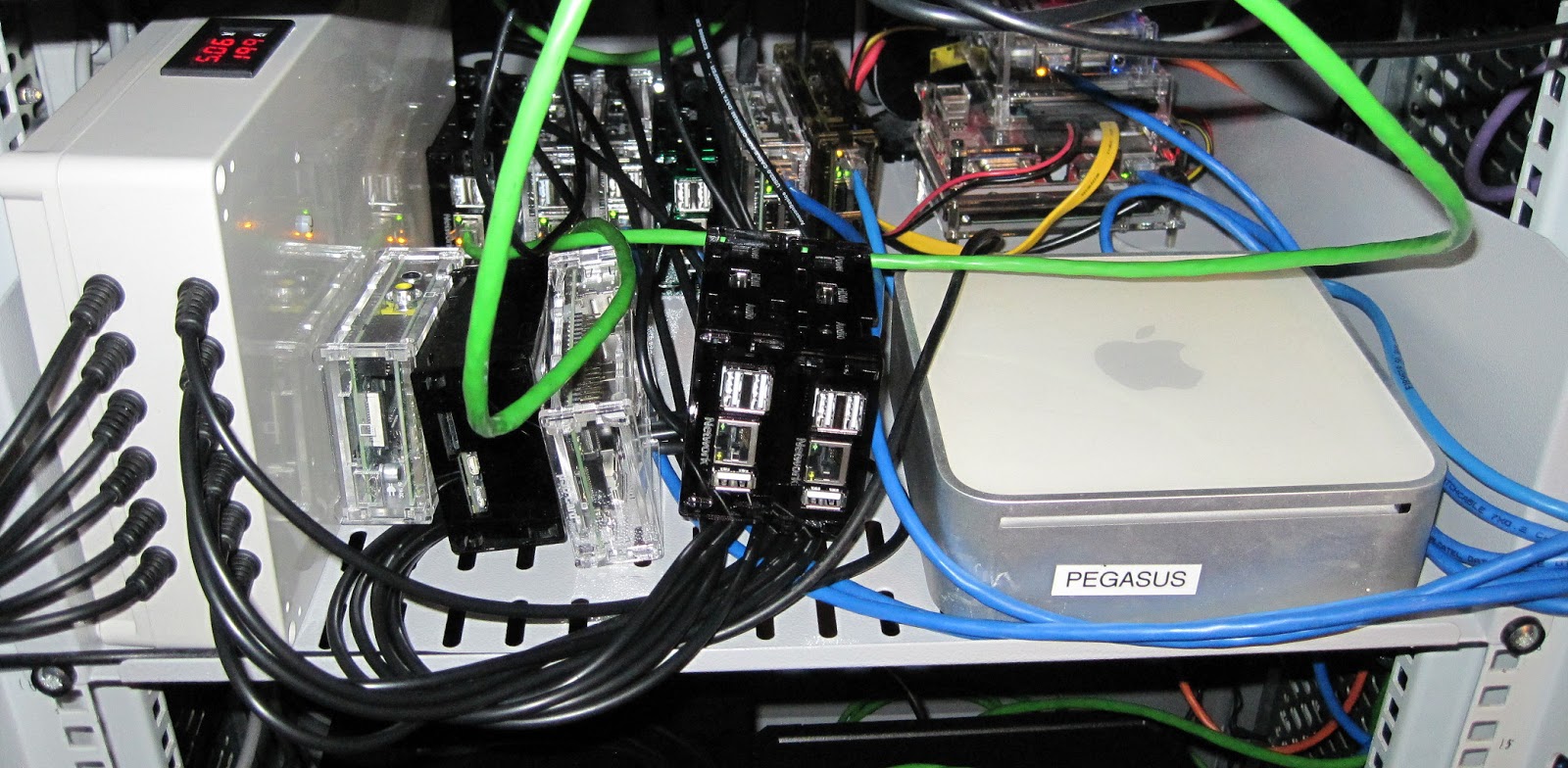
As you may be aware I have a bit of a problem with Single Board Computers in that I have a lot of them. Keeping them organised has turned into a bit of a problem.

cluttered shelf of SBC
I designed clip cases for many of these systems giving me a higher storage density on my rack shelves and built a power supply to reduce the cabling complexity. These helped but I still ended up with a cluttered shelf full of SBC.

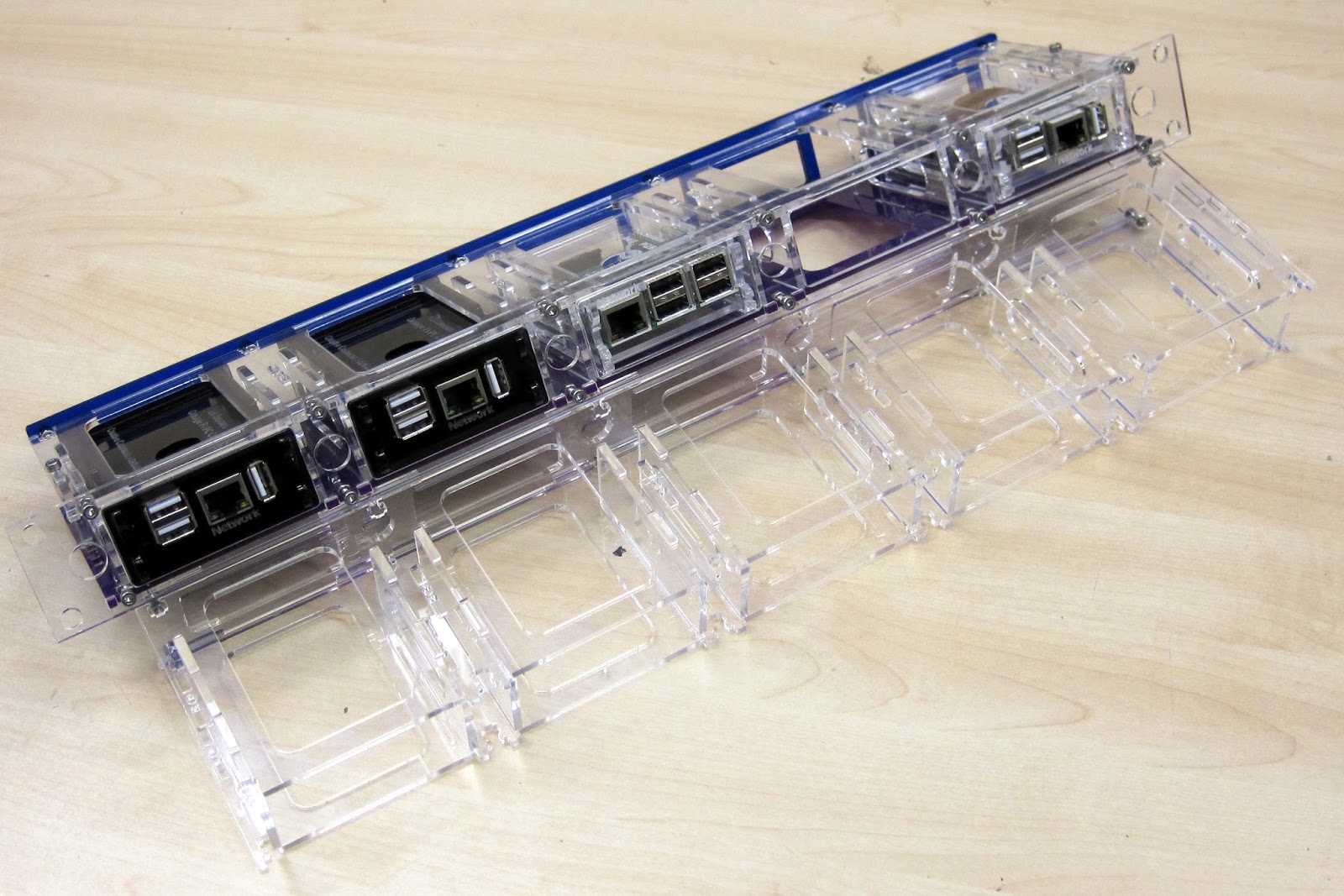
I decided I would make a rack enclosure to hold the SBC, I was limited to material I could easily CNC machine which limited me to acrylic plastics or wood.

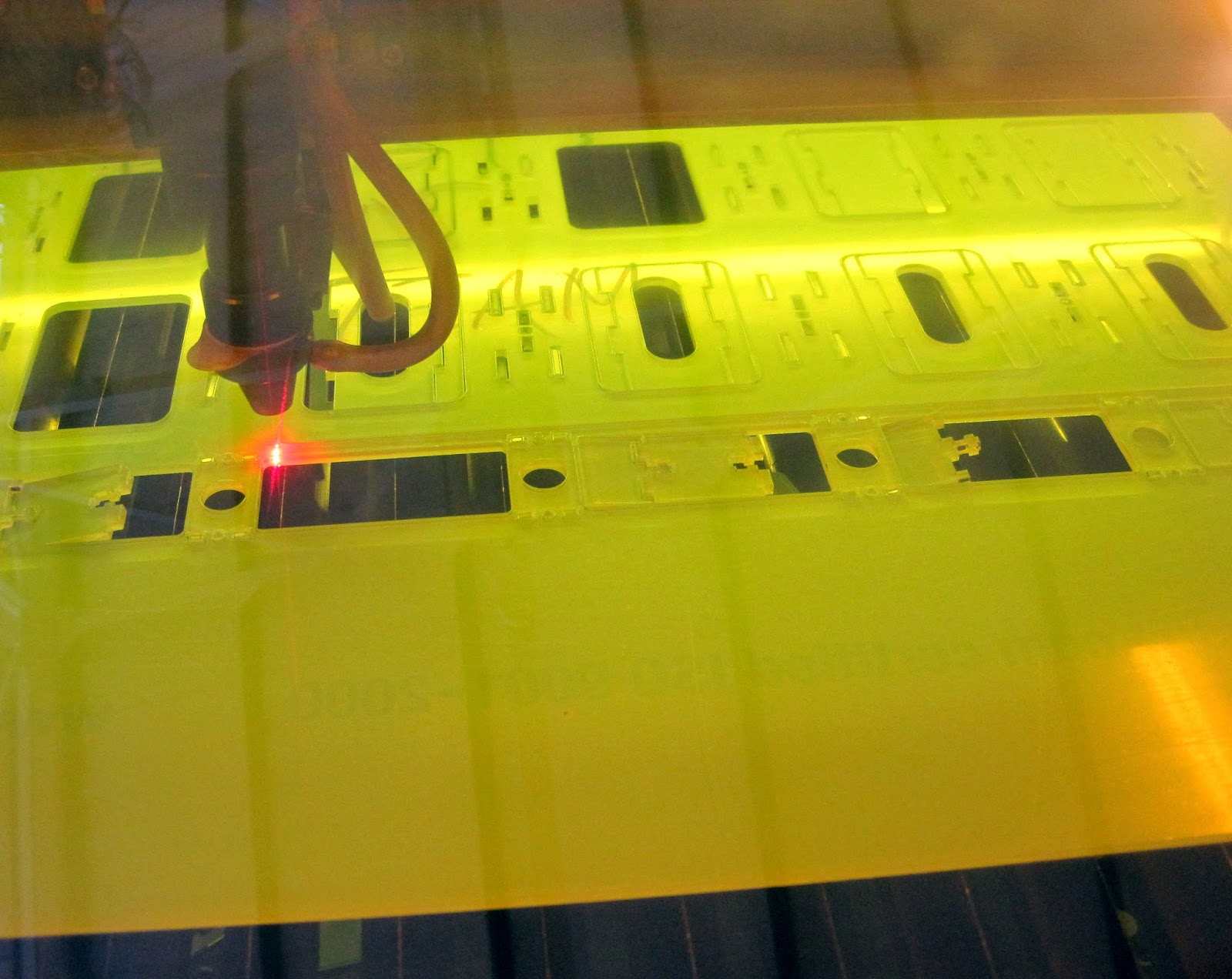
laser cutting the design, viewed through heavily tinted filterInitially I started with the idea of housing the individual boards in a toast rack arrangement. This would mean that the enclosure would have to be at least 2U high to fit the boards all the existing cases would have to be discarded. This approach was dropped when the drawbacks of having no flexibility and only being able to fit the units that were selected at design time became apparent (connector cutouts and mounting hole placement.

Instead I changed course to try and incorporate the existing cases which already solved the differing connector and mounting placement problem and gave me a uniform size to consider. Once I had this approach the design came pretty quickly. I used a tube girder construction 1U in height to get as much strength as possible from the 3mm acrylic plastic I would use.

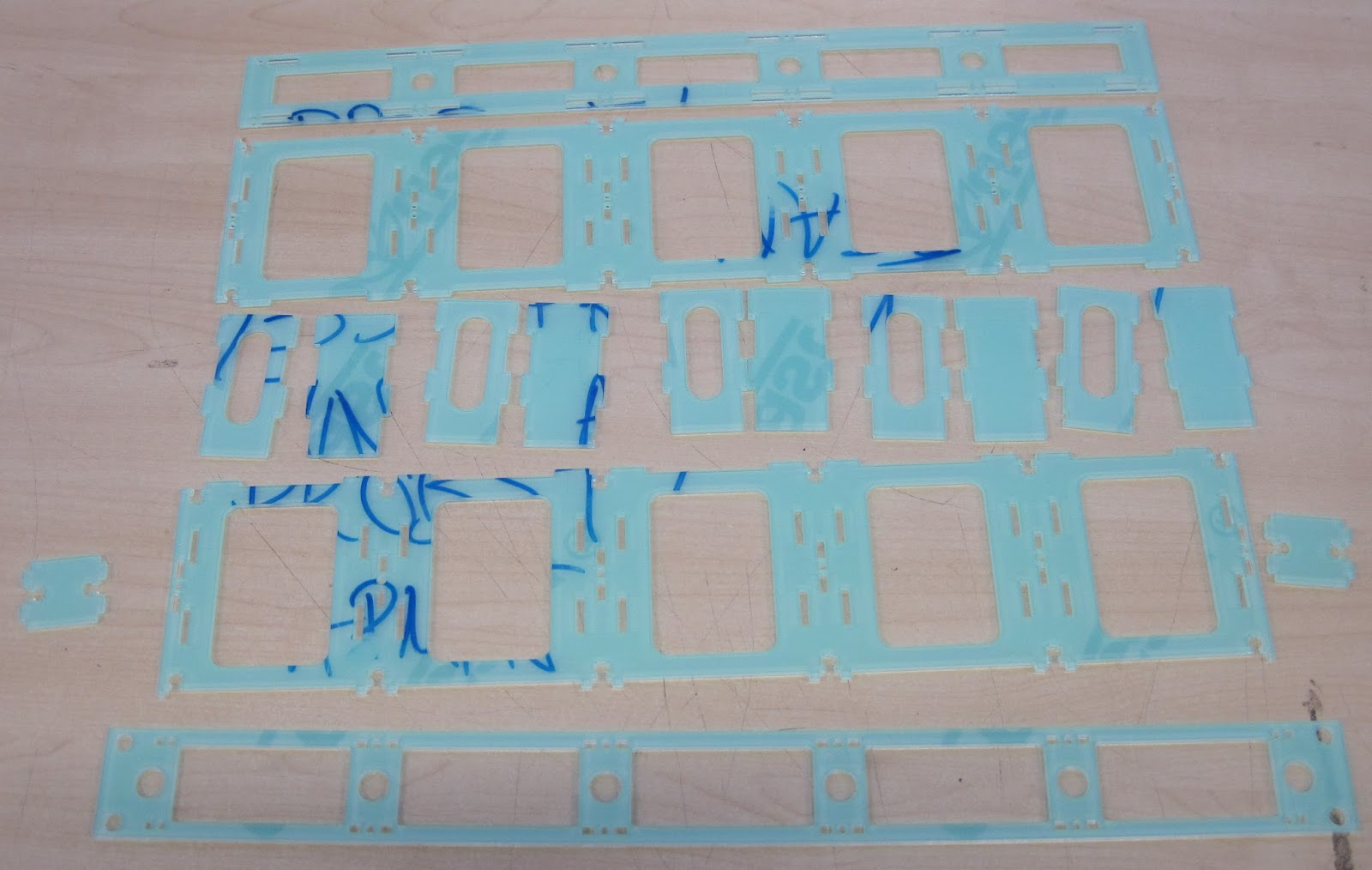
laser cut pieces arranged for assembly still with protective film on
The design was simply laser cut from sheet stock and fastened together with M3 nut and bolts. Once I corrected the initial design errors (I managed to get almost every important dimension wrong on the first attempt) the result was a success.

working prototype resting on initial version
The prototype is a variety of colours because makespace ran out of suitably sized clear acrylic stock but the colouring has no effect on the result other than aesthetical. The structure gives a great deal of rigidity and there is no sagging or warping, indeed testing on the prototype got to almost 50Kg loading without a failure (one end clamped and the other end loaded at 350mm distance)

I added some simple rotating latches at the front which keep the modules held in place and allow units to be removed quickly if necessary.

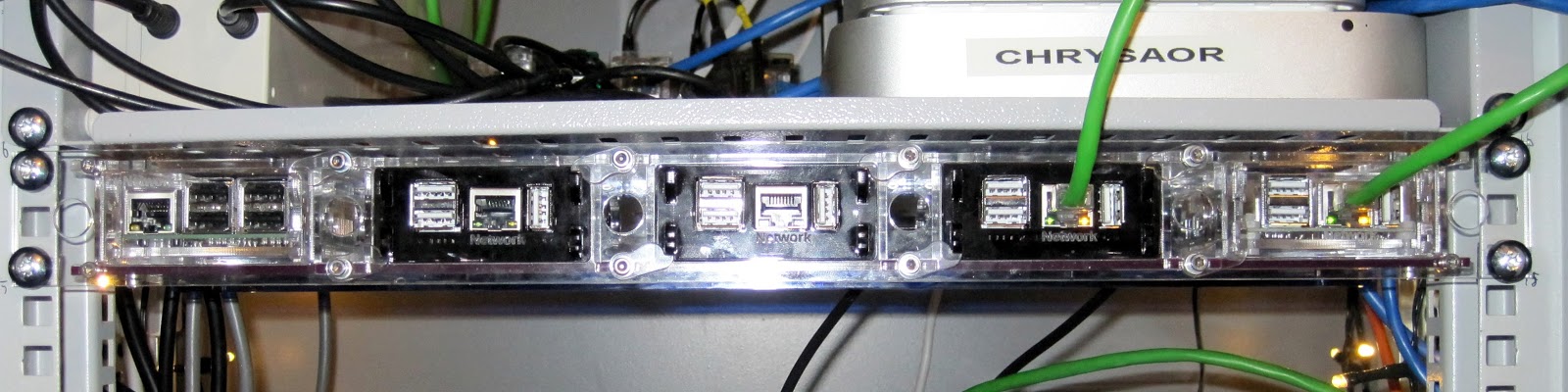
rack slots installed and in use
Overall this project was successful and I can now pack five SBC per U neatly. It does limit me to using systems cased in my "slimline" designs (68x30x97mm) which currently means the Raspberry Pi B+ style and the Orange Pi PC.

Once small drawback is access to I/O and power connectors. These need to be right angled and must be unplugged before unit removal which can be a little fiddly. Perhaps a toast rack design of cases would have given easier connector access but I am happy with this trade off of space for density.

As usual the design files are freely available, perhaps they could be useful as a basis for other laser cut rack enclosure designs.

19 February 2016

Julien Danjou: Gnocchi 2.0 release

A little more than 3 months after our latest minor release, here is the new major version of Gnocchi, stamped 2.0.0. It contains a lot of new and exciting features, and I'd like to talk about some of them to celebrate! You may notice that this release happens in the middle of the OpenStack release cycle. Indeed, Gnocchi does not follow that 6-months cycle, and we release whenever our code is ready. That forces us to have a more iterative approach, less disruptive for other projects and allow us to achieve a higher velocity. Applying the good old mantra release early, release often. Documentation
This version features a large documentation update. Gnocchi is still the only OpenStack server project that implements a "no doc, no merge" policy, meaning any code must come with the documentation addition or change included in the patch. The full documentation is included in the source code and available online at gnocchi.xyz. Data split & compression
I've already covered this change extensively in my last blog about timeseries compression. Long story short, Gnocchi now splits timeseries archives in small chunks that are compressed, increasing speed and decreasing data size. Measures batching support
Gnocchi now supports batching, which allow submitting several measures for different metric in a single request. This is especially useful in the context where your application tends to cache metrics for a while and is able to send them in a batch. Usage is fully documented for the REST API. Group by support in aggregation
One of the most demanded features was the ability to do measure aggregation no resource, using a group by type query. This is now possible using the new groupby parameter to aggregation queries. Ceph backend optimization
We improved the Ceph back-end a lot. Mehdi Abaakouk wrote a new Python binding for Ceph, called Cradox, that is going to replace the current Python rados module in the subsequent Ceph releases. Gnocchi makes usage of this new module to speed things up, making the Ceph based driver really, really faster than before. We also implemented asynchronous data deletion, which improves performance a bit. The next step will be to run some new benchmarks like I did a few months ago and compare with the Gnocchi 1.3 series. Stay tuned!

18 February 2016

Matthew Garrett: Canonical, Ubuntu and why I seem so upset about them all the time

I had no access to the internet for most of my childhood. Nobody in my area knew anything about programming. I learned a great deal from a number of CDs that included free software source code and archives of project mailing lists. When I got to university, I learned even more by being able to develop a Debian-based OS for use in our computer facilities. That gave me the experience and knowledge that I needed to become involved in Debian development, which in turn gave me the background required to be able to help Ubuntu become the first free software operating system to work out of the box on modern laptops. From there, I've been able to build my career around developing free software.

Ubuntu can be translated as "I am who I am because of who we all are". I am who I am because people made the choice to release their software under licenses that permitted examination, modification and redistribution. I am who I am because I was able to participate in communities that took advantages of those freedoms to produce new and better software. I am who I am because when my priorities differed from those of existing communities, it was still possible for me to benefit from their work and for them to benefit from mine.

Free software doesn't mean that the software is entirely free of restrictions. While a core aspect is the right to distribute modified versions of code, it has never been fundamental to free software that you be able to do so while still claiming that the code is the original version. Various approaches have been taken to make it possible for users to distinguish modified versions, ranging from simply including license terms that require modified versions be marked as such, to licenses that require that you change the name of the package if you modify it. However, what's probably the most effective approach has been to apply trademark law to the problem. Mozilla's trademark policy is an example of this - if you modify the code in ways that aren't approved by Mozilla, you aren't entitled to use the trademarks.

A requirement that you avoid use of trademarks in an infringing way is reasonable. Mozilla products include support for building with branding disabled, which makes it very straightforward for a user to build a modified version of Firefox that can be redistributed without any trademark issues. Red Hat have a similar policy for Fedora and RHEL[1] - you simply replace the packages that contain the branding and you're done.

Canonical's IP policy around Ubuntu is fundamentally different. While Mozilla make it clear that you simply no longer have a right to use the trademarks under trademark law, Canonical appear to require that you remove all trademarks entirely even if using them wouldn't be a violation of trademark law. While Mozilla restrict the redistribution of modified binaries that include their trademarks, Canonical insist that you rebuild everything even if the package doesn't contain any trademarks. And while Mozilla give you a single build option that creates binaries that conform with their trademark requirements, Canonical will refuse to tell you what you have to do.

When asked about this at SCALE earlier this year, Mark Shuttleworth claimed that Ubuntu's policy was consistent with that of other projects. This is inaccurate. Nobody else requires that you rebuild every package before you can redistribute it in a modified distribution - such a restriction is a violation of freedom 2 of the Free Software Definition, and as a result the binary distributions of Ubuntu are not free software. Nobody else refuses to discuss whether you're required to remove non-infringing trademarks in order to be able to redistribute. Nobody else responds to offers to make it easier for users to produce non-infringing derivatives with a flat refusal.

Mark claims that I'm only raising this issue because I work for a competitor and wish to harm Canonical. Nothing could be further from the truth. I began discussing this before working for my current employers - my previous employers had no meaningful market overlap with Canonical at all. The reason I care is because I care about free software. I care about people being able to derive new and interesting things from existing code. I care about a small team of people being able to take Ubuntu and make something better in the same way that Ubuntu did with Debian. I care about ensuring that users receive the freedom to do this without having to jump through a significant number of hoops in the process. Ubuntu has been a spectacularly successful vehicle for getting free software into the hands of users. Mark's generosity in funding this experiment has undoubtedly made the world a better place. Canonical employs a large number of talented developers writing high quality software, many of whom I'm fortunate enough to be able to call friends. And Canonical are squandering that by restricting the rights of their users and alienating the free software community.

I want others to be who they are because of my work and the work of all the others like me. Anything that makes that more difficult saddens me, and so I do what I can to fix it. I criticise Canonical's policies in the hope that we, as a community, can convince Canonical to agree that this kind of artificial barrier to modification hurts us more than it helps them. In many ways, Canonical remain one of our best hopes for broadening the reach of free software, and this is why it's unfortunate that they do so in a way that makes it more difficult for people to have the same experiences that I did.

[1] While it's easy to turn a trademark infringing version of RHEL into a non-infringing one, Red Hat don't provide publicly available binary packages for RHEL. If you get hold of them somehow you're entitled to redistribute them freely, but Red Hat's subscriber agreement indicates that if you do this as a Red Hat customer you will lose access to further binary updates - a provision that I find utterly repugnant. Its inclusion reduces my respect for Red Hat and my enthusiasm for working with them, and given the official Red Hat support for CentOS it appears to make no sense whatsoever. Red Hat should drop it.

comment count unavailable comments

Vincent Fourmond: Release of ctioga2 version 0.14

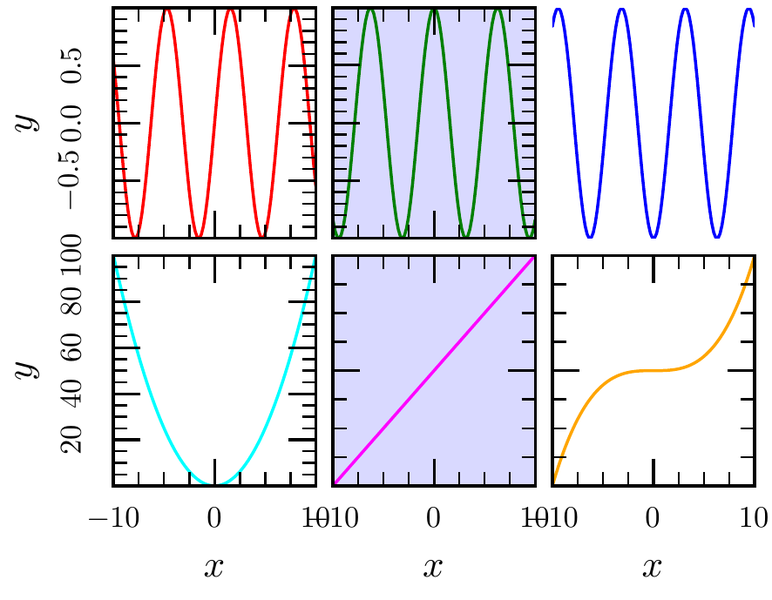
The day has finally come again to release a new version of my plotting program, ctioga2. Version 0.14 features, among others:
As usual, the best way to update the package is running:
~ gem update ctioga2
An updated Debian package should find its way to the archive later on today. Have fun !

Stein Magnus Jodal: A guide to poor API management

This is the story of libspotify, as experienced by a Spotify customer and libspotify developer for six years.

Step 1: Support your API for years Since April 2009, libspotify has been a mostly nice although proprietary C library for integrating with the Spotify music streaming service, providing both music metadata and full playback capabilities. Language wrappers have been written for a plenitude of programming languages (including my own pyspotify). libspotify is integrated into numerous open source projects (including my own Mopidy), networked AV receivers, and rumour has it: even cars. In addition to being closed source, there was another catch: in order to use it, you need the Spotify premium subscription. Speaking from my own experience supporting a project integrating with Spotify for the last six years: lots of end users upgraded to premium in order to use the projects built on top of libspotify.

Step 2: Stop accepting bug reports and stop releasing updates In May 2012, Spotify released libspotify 12.1.51 for all supported architectures, which now even included Android. After months of endless requests from the quickly growing hoards of Raspberry Pi users, Spotify released libspotify 12.1.103 for hardfloat armv6 on January 22 2013. The release included minor API additions, like the addition of explicit lyrics and means for accepting Spotify s Terms of Service. The additions in 12.1.103 never reached the other supported architectures and 12.1.51 remains the last release for those. There was no clear communication about this being the end of libspotify, releases have just ceased. libspotify has not been mentioned in a single developer blog post or developer email newsletter since. That s now more than three years ago.

Step 3: Create new APIs Over the next couple of years Spotify released a new Web API and iOS and Android SDKs. Through their developer blog, they communicated quite a bit both about these and about the deprecation of the apps inside the Spotify desktop client. Here are some pieces from their developer blog to illustrate: The Web API grew steadily, as documented by the Web APIs changelog. Over time, its feature list improved, supporting anonymous endpoints for generic music metadata as well as OAuth protected endpoints for managing your own music collection and playlists. The only major part missing that prevented developers replacing libspotify was music playback, as the Web API only provides 30 second previews. From what I recall of 2014 IRC discussions with Spotify employees, they had built a new much smaller library for streaming music. The iOS and Android SDKs were simply platform specific wrappers around this new playback library and the new Web API. My impression is that, after a number of beta releases, the iOS and Android SDKs seamlessly replaced libspotify on those platforms. The plan was apparently to release the new playback library for desktop too, so that it, in combination with the Web API, could replace libspotify there as well. That was all back in 2014.

Step 4: Deprecate old APIs At some point, Spotify deprecated their old web API, the Metadata API. There was no blog post about it and it was not mentioned in any Spotify Developer News email I ve received in recent years. I guess they only published this fact as a note on the Metadata API web page; it is therefore hard to track down exactly when it was deprecated and how the deprecation was communicated. Anyway, it was deprecated, and the natural upgrade path was to the new Web API. Spotify even has a migration guide mapping the concepts of the Metadata API to the new Web API. All good. In May 2015, after 28 months without a single release or any news, libspotify is officially deprecated. The communication channel of choice? A note on the libspotify web page. No post on the developer blog. No Spotify Developer News email. To be able to use libspotify, all developers have registered and requested a personal application key. To my knowledge, none of these registered library users were notified directly.

Step 5: Shut down an old API On January 20 2016 Spotify end-of-lifed their Metadata API. I don t know if this date was communicated on the Metadata API web page well in advance of this shutdown. There s no blog post on the topic. There s no news email. There s no tweet from @SpotifyPlatform or @SpotifyStatus. I can t find anything except users commenting on various Spotify documentation pages that the text is outdated because the API is no longer merely deprecated, but entirely shut down. Hopefully they did publish the shutdown date ahead of time. It had a full replacement API and a migration guide. Fair and square. Nothing much to complain about here. It s time to get porting your code to the Web API! But frankly, I don t really care about this Metadata API because I don t use the Metadata API, do I?

Step 6: Break your API without warning February 3 2016, Mopidy users start reporting General transient error when searching Spotify. This is a libspotify error message known as SP_ERROR_OTHER_TRANSIENT with error code 16. This error usually means that there is some unspecified issue with the Spotify service. We ve actually seen it before and like its name suggests, it is indeed transient and soon goes away. According to a series of tweets between my fellow Mopidy developer Nick Steel and @SpotifyCares it appears that the libspotify search functionality was backed by the Metadata API s search functionality. Who knew? I m not aware of any relation between these APIs ever being mentioned publicly. No libspotify user could possibly have known that the Metadata API shutdown would affect them. Let s summarize: libspotify hasn t had any releases for three years and it was officially deprecated in May last year. But, there have been no warnings about any shutdown. The libspotify project is likely no longer staffed at all. Did someone just forget that libspotify depended on the Metadata API they were shutting down? Many newer networked AV receivers use the Spotify Connect libraries that are exclusive to Spotify s commercial partners. But some receivers probably still use libspotify. If so, did Spotify just break hardware sold with Spotify support as a major feature? Something that people are paying a monthly fee to use? It seems they did! In the Spotify Community forums there are numerous reports of broken devices and software that all have two things in common: the date the problem started occurring, and that search is the only feature that is broken. Surely, Spotify will quickly explain themselves and fix this?

Step 7: Stay quiet Since the API shutdown, Spotify has been very quiet. No posts on the developer blog. No email newsletter. No tweets from @SpotifyPlatform since December 1 last year. Some users at The Spotify Community forum are quoting responses from Spotify. Most responses seem to link to the Metadata API migration docs and state that application developers must migrate. In other cases the responses point the finger at the commercial partner which only adds to the confusion. Some of these devices may use the Metadata API directly, and in those cases the application maintainers are probably to blame. However, I m quite certain that the libspotify search issue is responsible for a fair share of these complaints. libspotify, in contrast to the Metadata API, has never been officially shut down. The responsibility for any breakage caused by libspotify is Spotify s alone.

What I want from Spotify
  1. Apologize to your paying customers and supporters.
  2. Get substantially better at communicating deprecations and shutdowns. We want all news, not just good news.
  3. Give us a new supported C library for audio playback. Now! Not later this year. I ve heard that promise for three consecutive years now. We can live with pre-release software quality initially. Getting the library out sooner rather than later shows us that there is a road ahead for all the projects that stream music from Spotify. Let us get started making new language wrappers.
  4. Release Spotify Connect specifications and libraries. We want to make music players that can be controlled by the Spotify mobile app. We want to make music controllers that can play music on all the Spotify Connect software and hardware players we ve invested in. You ve created this technology, now let us use it.
Thanks to Nick Steel for reviewing this blog post.

17 February 2016

Arturo Borrero Gonz lez: An update about the HA stack on Debian


Great news! The HA stack has been finally updated and you can find now both pacemaker & corosync in Debian stretch.

This is thanks to the hard work of some people, specially Christoph Berg, Ferenc W gner, Martin Loschwitz and others.

By the time of this blogpost, in testing (stretch) you have:

Additionally, unstable contains:
which is great news. However, pcs just joined Debian and there seem to be some rough edges to be worked out.
what to do now
Now that the people mentioned above did the hard work developing the packages, please do test them and report bugs.
Having a great stretch stable release (including the HA stack) is in your hands as well.

best regards!

Antoine Beaupr : My free software activities, february 2016

Debian Long Term Support (LTS) This is my third month working on Debian LTS, started by Raphael Hertzog at Freexian. This month was my first month working on the frontdesk duty and did a good bunch of triage. I also performed one upload and reviewed a few security issues.

Frontdesk duties I spent some time trying to get familiar with the frontdesk duty. I still need to document a bit of what I learned, which did involve asking around for parts of the process. The following issues were triaged:
  • roundcube in squeeze was happily not vulnerable to CVE-2015-8794 and CVE-2015-8793, as the code affected was not present. roundcube is also not shipped with jessie but the backport is vulnerable
  • the php-openid vulnerability was actually just a code sample, a bug report comment clarified all of CVE-2016-2049
  • ffmpeg issues were closed, as it is not supported in squeeze
  • libxml2 was marked as needing work (CVE-2016-2073)
  • asterisk was triaged for all distros before i found out it is also unsupported in squeeze (CVEs coming up, AST-2016-001, AST-2016-001, AST-2016-001)
  • libebml and libmatroska were marked as unsupported, although an upload of debian-security-support will be necessary to complete that work (bug #814557 filed)

Uploads and reviews I only ended up doing one upload, of the chrony package (CVE-2016-1567), thanks to the maintainer which provided the patch. I tried my best trying to sort through the issues with tiff (CVE-2015-8668 and CVE-2015-7554), which didn't have obvious fixes available. OpenSUSE seem to have patches, but it is really hard to find them through their issue trackers, which were timing out on me. Hopefully someone else can pick that one up. I also tried and failed to reproduce the cpio issue (CVE-2016-2037), which, at the time, didn't have a patch for a fix. This ended up being solved and Santiago took up the upload. I finally spent some time trying to untangle the mess that is libraw, or more precisely, all the packages that embed dcraw code instead of linking against libraw. Now I really feel even more strongly for the Debian policy section 4.13 which states that Debian packages should not ship with copies of other packages code. It made it really hard to figure out which packages were vulnerable, especially because it was hard to figure out which versions of libraw/dcraw were actually vulnerable to the bug, but also just plain figure out which packages were copying code from libraw. I wish I had found out about secure-testing/data/embedded-code-copies earlier... Still, it was interesting to get familiar with codesearch.debian.net to try to find copies of the vulnerable code, which was not working so well. Kudos to darktable 2.0 for getting rid of their embedded copy of libraw, by the way - it made it completely not vulnerable to the issue, the versions in stretch and sid not having the code at all and older versions having non-vulnerable copies of the code.

Issues with VMs again I still had problems running a squeeze VM - not wanting to use virtualbox because of the overhead, I got lost for a bit trying to use libvirt and KVM. A bunch of issues crept up: using virt-manager would just fail on startup with an error saying interface mtu value is improper, which is a very unhelpful error message (what is a proper value??) - and, for the record, the MTU on eth0 and wlan0 is the fairly standard 1500, while lo is at 65536 bytes, nothing unusual there as far as I know. Then the next problem was actually running a VM - I still somewhat expected to be able to boot off a chroot, something I should definitely forget about it seems like (boot loader missing? not sure). I ended up calling virt-install with the live ISO image I was previously using:
virt-install --virt-type kvm --name squeeze-amd64 --memory 512 --cdrom ~/iso/Debian/cdimage.debian.org_mirror_cdimage_archive_6.0.10_live_amd64_iso_hybrid_debian_live_6.0.10_amd64_gnome_desktop.iso --disk size=4 --os-variant debiansqueeze
At least now I have an installed squeeze VM, something I didn't get to do in Virtualbox (mostly because I didn't want to wait through the install, because it was so slow). Finally, I still have trouble getting a commandline console on the VM: somehow, running virtsh console squeeze-amd64 doesn't give me a login terminal, and worse, it actually freezes the terminal that I can actually get on virt-viewer squeeze-amd64, which definitely sounds like a bug. I documented a bit more of that setup in the Debian wiki KVM page so hopefully this will be useful for others.

Other free software work I continued my work on improving timetracking with ledger in my ledger-timetracking git repository, which now got a place on the new plaintextaccounting.org website, which acts as a portal for ledger-like software projects and documentation.

Darktable 2.0 I had the pleasure of trying the new Darktable 2.0 release, which only recently entered Debian. I built a backport for jessie, which works beautifully: much faster thumbnail rendering, no dropping of history when switching views... The new features are great, but I also appreciate how they are being very conservative in their approach. Darktable is great software: I may have trouble approaching the results other are having with lightroom and snapseed, but those are proprietary software that I can't use anyways. I also suspect that I just don't have enough of a clue of what I'm doing to get the results I need in Darktable. Maybe with hand-holding, one day, I will surpass the results I get with the JPEGs from my Canon camera. Until then, I turned off RAW exports in my camera to try and control the explosion of disk use I saw since I got that camera:
41M     2004
363M    2005
937M    2006
2,2G    2007
894M    2008
800M    2009
1,8G    2010
1,4G    2011
9,8G    2012
31G     2013
26G     2014
9,8G    2015
The drop in 2015 is mostly due to me taking less pictures in the last year, for some reason...

Markdown mode hacks I ended up writing some elisp for the markdown mode. It seems I am always writing links like [text](link) which seems more natural at first, but then the formatting looks messier, as paragraph wrapping is all off because of the long URLs. So I always ended up converting those links, which was a painful series of keystrokes. So I made a macro, and while I'm a it, why not rewrite it as a lisp function. Twice. Then I was told by the markdown-mode.el developers that they had already fixed that (in the 2.1 version, not in Debian jessie) and that the C-c C-a r key binding actually recognized existing links and conveniently converted them. I documented my adventures in bug #94, but it seems I wrote this code for nothing else than re-learning Emacs lisp, which was actually quite fun.

More emacs hacking Another thing I always wasted time doing by and is "rename file and buffer". Often, you visit a file but it's named wrong. My most common case is a .txt file that i rename to .mdwn. I would then have to do:
M-x rename-file <ret> newfile
M-x rename-buffer <ret> newfile
C-x C-s <ret> newfile
Really annoying. Turns out that set-visited-file-name actually does most of the job, but doesn't actually rename the file, which is really silly. So I wrote this small function instead:
(defun rename-file-and-buffer (newfname)
  "combine rename-file and rename-buffer
set-visited-file-name does most of the job, but unfortunately
doesn't actually rename the file. rename-file does that, but
doesn't rename the buffer. rename-buffer only renames the buffer,
which is pretty pointless.
only operates on current buffer because set-visited-file-name
also does so and we don't bother doing excursions around.
"
  (interactive "GRename file and bufer: ")
  (let ((oldfname (buffer-file-name)))
    (set-visited-file-name newfname nil t)
    (rename-file oldfname newfname)
    )
  )
Not bound to any key, really trivial, but doing this without that function is really non-trivial, especially since set-visited-file-name needs special arguments to not mark the file as modified.

IRC packages updates I updated the Sopel IRC bot package to the latest release, 6.3.0. They have finally switched to Requests, but apart from that, no change was necessary. I am glad to finally see SNI support working everywhere in the bot! I also update the Charydbis IRC server package to the latest 3.5.0 stable release. This release is great news, as I was able to remove 5 of the 7 patches I was dragging along the Debian package. The previous Charybdis stable release was over 3 years old, as 3.4.2 was released in (December) 2012! I spend a good chunk of time making the package reproducible. I filed a bug upstream and eventually made a patch to make it possible to hardcode a build timestamp, which seems to have been the only detectable change in the reproducible build infrastructure. Charybdis had been FTBS for a while in sid now, and the upload should fix that as well. Unfortunately, Charybdis still doesn't build with hardening flags - but hopefully a future update of the package should fix that. It is probably because CFLAGS are not passed around properly. There's really interesting stuff going on in the IRC world. Even though IRC is one of the oldest protocols still in operation (1988, even before the Web, but after SMTP and the even more venerable FTP), it is still being actively developed, with a working group drafting multiple extensions to the IRCv3 protocol defined in RFC 1459. For example, IRCv3.3 includes a Strict Transport Security extension, which tries to ensure users use encrypted channels as much as possible, through warnings and STARTTLS support. Charybdis goes even further by proposing a reversal of the +S ("secure channel" flag) where all channels are secure by default, and you need to deliberately mark a channel as insecure with the +U flag if you actually want to allow users on an clear-text connection to join the channel. A transition mechanism is also proposed.

Miscellaneous bug reports En vrac... I fell face-first in this amazing game that is endless-sky. I made a small pull request on the documentation, a bug report and a feature request. I forwarded a bug report, originally filed against monkeysign, to the pyqrencode maintainers. I filed a usability bug against tails-installer, which just entered Debian, mostly usability issues. I discovered the fim image viewer, which re-entered Debian recently. It seemed perfect to adjust my photos-import workflow, so I added it to my script, to be able to review photos prior to importing them into Darktable and git-annex.

Next.

Previous.