Search Results: "sf"

28 January 2009

MJ Ray: World Economic Forum 2009 in Davos

The World Economic Forum opens today (28 Jan) and runs until the weekend. This year most of the high-power planning sessions and feel-good corporate social responsibility whitewash has been replaced by sessions such as What Happened to the Global Economy? (Er, it broke because you bet more money than existed in the world?) There s a report from France24 and a programme of sessions. Like WEF in previous years, selected sessions are broadcast on SFinfo in German and Original Languages (often English) on Hotbird at 13east. Additionally, this year, there are webcasts (maybe the podcast version will play on free software) but it seems that none of the computing sessions are up for broadcast. Economics rules the airwaves for 2009. My main reason for posting here is to boggle at the WEF myspace competition. Isn t Myspace about the least appropriate of the big social networks for an economics forum? I suspect some payment or benefits from the network that Rupert Murdoch s company bought. There s also @davos which seems to be talking much more than listening seems appropriate for WEF, no?

Wouter Verhelst: FOSDEM and Novell

Sigh. I'm not part of the FOSDEM organisation team, and this is by choice. I know that I wouldn't find the time to help organize a conference of the scale of FOSDEM, since I'm rather liable to forget to do important things at times. Having said that, I happen to run a company together with Philip Paeps, who is now one of the main FOSDEM organizers; apart from that, I've also managed the Debian presence there for the past few years (lost count how many exactly), and arranged the key signing party for a few years with Joost Van Baal taking over for me starting this year. As such, I'd like to believe that although I'm not exactly in to all their secrets, I do have a front-row seat when it comes to how things are going there. FOSDEM is the "Free and Open Source Developers' European Meeting". It has been that since 2001, and will always remain so. Yes, originally it was called "OSDEM", because frankly, the organisation of the original OSDEM was done by a group of people who like Open Source, without necessarily subscribing to the Free Software ideals. The core group of the organisation is a rather diverse group; for instance, Philip has been known to be rather... negative... about Ubuntu, while Mark (one of the press contacts) has done some activism and translation work for Ubuntu. The change of name from OSDEM to FOSDEM was done not because the organisation's ideas about software were changed overnight by a mail from Richard Stallman or anyone else from the FSF; but rather, because they were open-minded enough to understand that having a name which only says 'Open Source' would be excluding a considerable part of the community that encompasses both Free and Open Source people. This is why the name wasn't changed in FSDEM; it is FOSDEM. I'm quite sure that the fact that FOSDEM is so open-minded about many of the controversial issues that have separated our community over the years not just Open Source vs Free Software, but so many other things as well is one of the main reasons why FOSDEM is so popular today: because everyone, and I truly mean everyone, will find something that he or she likes. That is why I'm so saddened that some people seem to find it necessary to not only whine, but also boycott a conference, because they believe that FOSDEM should not take money from a big Free Software/Open Source contributor, just because they also happen to be a company, and as such make business deals with Microsoft. Note that I'm not either defending or condemning Novell's attitude here; but it is a fact that not everyone in the larger Free and Open Source community feels the same way about the whole Novell/Microsoft deal (else there wouldn't be an openSUSE anymore), and as such they still deserve a place on FOSDEM. Over the history of the organisation of FOSDEM, it's always been a place where everyone could get their opinion out; whether it be the opinion that "Free Software Must Rule The World", or that "It's All About The Way You Do Things"; as long as your opinion is shared by a large enough number of people in the larger FLOSS community, it is welcome. I feel that blocking one organization from sponsoring the event, just because they have made some deals which a significant group of people, one which nevertheless does not encompass the whole of the FLOSS community, disapprove of, would set a dangerous precendent that might jeopardize the very core of what makes FOSDEM so great: its impartiality. Thank god that didn't happen.

26 January 2009

Amaya Rodrigo: Sadly, I will not join you for FOSDEM

I will not be able to make it this year, I have more pressing issues to deal with, and CCC was already too stressful to handle for me.
In any case, do enjoy and don't forget to wave at the camera in the Debian Room!
I'll be watching you people!

Y Giridhar Appaji Nag: Wagah-Attari and Hussainiwala

Pakistan flag and Emblem of India Fellow countrymen, happy Republic day to you all.

Any trip to Punjab is incomplete without atleast one visit to the daily tamasha at the Wagah-Attari border. This is probably one of the few places on earth where you would see the Pakistan flag right next to the Emblem of India.

I arrived at the place a couple of hours before the vening flag down ceremony but was too late to be able to get a comfortable seat in the crowd of a few thousands; the place was already packed. Luckily, a BSF ranger (who incidentally was not allowing the crowds in any more) looked at my tripod and camera, thought I was a journalist and led me to the VIP section which is as close to the gates as one can get.

For a very long time preceding the ceremony, there is nationalist music blaring on the tannoys, crowds screaming in unison: LA ilAha ill-Allah on the Pakistani side and vandE mAtaram, bhArat mAtA ki jai on the Indian side. On either side of the border gates, kids run up and down the road with their respective national flags while young men climb onto the top-most walls and wave flags high in the air. One gentleman was commenting that while women on 'our' side are allowed to dance and sit anywhere, 'they' don't allow that, "see how the men and the women there are grouped separately".

Thousands of spectators Waving the Pakistan flag Waving the Indian flag Women dancing

The half hour of the retreat ceremony is full of action with the Indian BSF rangers in their red turbans and khakhis, and the Pakistani rangers in black salwaar-kameez marching heavily down the road, glaring into each others eyes, competing on who can kick higher into the air and possibly also on who has the best kept moustache. The rangers on either side of the gates know that they are entertaining their home crowd and spare no effort to do their best.

Indian BSF rangers marching Indian BSF rangers at-ease
Indian ranger marching towards the gate Indian BSF ranger Indian BSF ranger
Border gate, Pakistan crowd and rangers India and Pakistan flags Crowds going back home

The retreat ceremony is so popular that it is difficult to allow in all the people that come in to watch. So a clone of the ceremony has been setup at the Hussainiwala border. However, Hussainiwala is popular not because of the flag retreat, much less because the 1971 war memorial still has a lot of marks of artillery firing, but because of Bhagat Singh's memorial. The memorial moves one to tears.

Hussainiwala: Sukhdev, Bhagat Singh and Raj Guru Hussainiwala bridge: Sympathetically detonated in the 1971 war

Few more pictures from the Hussainiwala memorials:

Hussainiwala: Sukhdev, Bhagat Singh and Raj Guru Hussainiwala: Bhagat Singh memorial Hussainiwala bridge piers and war memorial Artillery fire on Hussainiwala bridge piers Artillery fire on Hussainiwala bridge piers

25 January 2009

Roland Mas: GForge is now FusionForge

Executive summary To avoid confusion with the proprietary versions of GForge (known as GForge Advanced Server, GForge Express Edition and GForge Community Edition), the free/libre/opensource codebase will from now on be separately maintained under the name FusionForge by the main developers of the free GForge 4.x codebase. Since this is mostly a renaming, the migration path for existing users will be smooth. Longer version, with details After the initial forking from the Sourceforge codebase, the development of GForge has long been hosted, and many enhancements directly developed, by the GForge Group (GForge, LLC), with regular contributions from outsiders. The results of these evolutions were public and free, subject to the GNU GPL. In parallel, the GForge Group wrote a proprietary re-implementation of GForge, which it sold under the name "GForge Advanced Server", or "GForge AS" for short. This re-implementation added some features for "the enterprise", but was not contributed wholesale to the GForge codebase under a free license. Although some of the features were contributed to the public, the GForge Group concentrated its efforts on its (proprietary software) business model, with more versions appearing, such as "GForge Express Edition" and more recently "GForge Community Edition". As a result, it became increasingly harder for the public to know which version was which without doing extensive research (indeed, some users mistakenly installed one version instead of the other). A consequence was that the free software codebase suffered from a loss in visibility, which lowered its momentum to the point that there haven't been any moderately important releases since the (currently stable) 4.5.x series was announced in late 2005. So, in order to clarify things, avoid further confusion, and regain some of the lost momentum, it was decided by a group of leading contributors that the free software version of the GForge codebase would from now on be developed under the FusionForge name, and its development would be hosted on FusionForge.org. So is this a fork? Well, we don't know yet. It could arguably be called one, since we're taking the code and running away with it under a new name. However, we believe it's not a fork unless both roads continue their own way (more of a oddly-shaped bend). What happens to the GForge codebase developed by the GForge Group at gforge.org remains to be seen, although for the sake of our users we will backport security fixes to the gforge.org Subversion repository (at least for the 4.5.x series and the unreleased 4.6 and 4.7 pre-series) for some time. The bulk of the development will move on to FusionForge and the repositories at FusionForge.org, though, and users are encouraged to migrate at their own pace. Since we're basically continuing the evolution rather than starting from scratch, the migration path should be rather smooth. So why the FusionForge name? Because there were actually lots of locally-patched versions of GForge (and Sourceforge), and we felt it was a waste of resources that should be fixed. It seems many people and organisations took these codebases at some point in time and evolved them for their own needs. Sadly, many of the changes were not contributed back or even published, so lots of efforts were duplicated. Fortunately, many of the people managing these locally-patched forges are now realising that "out-of-tree" patches and features require quite some manpower to maintain. Some formal inter-project discussion is already taking place, and we hope to achieve actual merging of most of the interesting features that have been developed here and there into a common base that can be reused locally with minimal changes. We'd like to "un-fork" as much as possible. We also expect that, by using standard components and tools, we'll facilitate the work of potential contributors, thereby reducing the risk of a new era of fragmentation. And who are we anyway? We're Christian Bayle, Roland Mas and Alain Peyrat, long-time contributors to GForge and responsible for over 95% of the commits over the past two years, as well as a few relative newcomers. Christian and Roland have been maintaining the Debian packaging since the "Debian-SF" era, and Alain has been focusing on code quality. The three of us have, for various reasons, a vested interest in maintaining a lively codebase in a healthy ecosystem. What are our plans? Our short-term goals, as currently planned, include: Longer term goals are less well defined, but we're thinking about the following: Some of these items should be facilitated by our switch to a distributed version control system and a new coordinated workflow. Also, the Debian i18n team has been kind enough to offer to host our translation effort on their Pootle server, which means translators will have a much easier time doing their job. We hope to hear from users and contributors alike in the near future. For more information, we can be reached via our fusionforge-general mailing-list (see our lists), which is also suitable for general discussions. We can also be found on IRC (#fusionforge on the Freenode network).

24 January 2009

Brice Goglin: Debian/X.org notes - Xserver 1.6, Intel 2.6.1, ... what's up in XSF?

It has been a while since my last post here. Not because nothing happened, but mostly because I did not have time to do much for X. Fortunately, Julien is taking good care of X in Debian so we are still close to latest upstream bits. Obviously, due to Lenny's freeze, everything is happening in experimental these days. Xserver 1.6 The release Xserver 1.6 is expected in the near future. 1.6-rc1 (1.5.99.901) entered experimental recently. Both video and input driver ABIs changed and very few drivers have been rebuilt so far. So if you're not running Intel or Radeon, you might not be able to upgrade yet. Please be patient :) You might have heard that many things are happening in X.org these days: DRI2, kernel-modesetting (KMS), RandR 1.3, ... Everything is not ready yet, but it's getting close for real. Radeon 6.10.0 and Intel 2.6.1 Radeon driver 6.10.0 was released in early 2009. As usual, it brings many fixes, and improvements for modern boards (see Alex Deucher's blog for details). However, Radeon is not ready for above DRI2 and KMS yet. Most of the development for these new features is first done in the Intel driver, which got recently bumped to 2.6.1 as well. DRI2 DRI2 is the new Direct Rendering Infrastructure. The most noticeable change from the user point of view is support for Redirect Direct Rendering, which basically means that your 3D application can be wobbly/transparent in Compiz. See Kristian H gsberg's blog for details. If you want to try DRI2 on Intel, you have to enable UXA as the acceleration architecture in xorg.conf (Option "AccelMethod" "UXA" in the Device section). DRI2 will then be enabled automatically. Then, it may or may not work, depending for instance on the hardware. I get a black screen at startup on i865 while i945 works fine until I start Compiz (the server suddenly exits for some reason then). Note that you probably want to upgrade your Mesa packages to experimental as well here (7.3 has been released recently). Of course, running git snapshot of various components (Mesa, libdrm, kernel drm, Intel driver, ...) may help since the released versions seem to not be entirely ready yet. But, things should may be ready to use for everybody in the near future. Kernel Modesetting The other nice feature that makes a lot of noise in X.org these days is Kernel modesetting (KMS). It moves the management of mode (aka resolution+rate) into the kernel. It helps support for switching between different users' sessions, enables reporting of kernel messages (oops, panics, ...) while X is running, and reduces the need to blank the screen during boot (since the kernel can setup the display early and X doesn't have to change it later independently). KMS testing requires a bleeding-edge kernel (2.6.29). Using a git snapshot of the drm stack is probably a good idea as well since I couldn't get KMS to work on 2.6.29-rc2 here. Again only Intel will support KMS soon, but other drivers will follow. Panning is back (aka RandR 1.3) Xserver 1.6 brings support for the 1.3 version of the RandR X extension. Among other improvements, it reintroduces one feature that many users miss since it was removed back in Xserver 1.3 or so. "Panning" (often referred to as "Virtual Desktop") gives the ability to move the display within a larger screen when the mouse approaches from the border. Instead of being configured with the Virtual option in xorg.conf (this option means something else nowadays), it may now be enabled/tuned with xrandr --panning. You'll need the latest libxrandr2 and xrandr utilities to do so (the latter is not uploaded yet).
(Permanent link)

Uwe Hermann: Recovering from a dead disk in a Linux software-RAID5 system using mdadm

RAID5 failure As I wrote quite a while ago, I set up a RAID5 with three
IDE disks at home, which I'm using as backup (yes, I know that
RAID != backup) and storage space. A few days ago, the RAID was put to a real-life test for the first time, as one of the disks died. Here's what that looks like in dmesg:
raid5: raid level 5 set md1 active with 3 out of 3 devices, algorithm 2
RAID5 conf printout:
 --- rd:3 wd:3
 disk 0, o:1, dev:hda2
 disk 1, o:1, dev:hdg2
 disk 2, o:1, dev:hde2
[...]
hdg: dma_timer_expiry: dma status == 0x21
hdg: DMA timeout error
hdg: 4 bytes in FIFO
hdg: dma timeout error: status=0x50   DriveReady SeekComplete  
ide: failed opcode was: unknown
hdg: dma_timer_expiry: dma status == 0x21
hdg: DMA timeout error
hdg: 252 bytes in FIFO
hdg: dma timeout error: status=0x50   DriveReady SeekComplete  
ide: failed opcode was: unknown
hdg: dma_timer_expiry: dma status == 0x21
hdg: DMA timeout error
hdg: 252 bytes in FIFO
hdg: dma timeout error: status=0x58   DriveReady SeekComplete DataRequest  
ide: failed opcode was: unknown
hdg: DMA disabled
ide3: reset: success
hdg: dma_timer_expiry: dma status == 0x21
hdg: DMA timeout error
hdg: 252 bytes in FIFO
hdg: dma timeout error: status=0x58   DriveReady SeekComplete DataRequest  
ide: failed opcode was: unknown
hdg: DMA disabled
ide3: reset: success
hdg: status timeout: status=0x80   Busy  
ide: failed opcode was: 0xea
hdg: drive not ready for command
hdg: lost interrupt
hdg: task_out_intr: status=0x50   DriveReady SeekComplete  
ide: failed opcode was: unknown
hdg: lost interrupt
hdg: task_out_intr: status=0x50   DriveReady SeekComplete  
ide: failed opcode was: unknown
That's when I realized that something was horribly wrong. Not long after that, these messages appeared in dmesg. As you can see the software-RAID automatically realized that a drive died and removed the faulty disk from the array. I did not lose any data, and the system did not freeze up; I could continue working as if nothing happened (as it should be).
 md: super_written gets error=-5, uptodate=0
 raid5: Disk failure on hdg2, disabling device.
 raid5: Operation continuing on 2 devices.
 RAID5 conf printout:
  --- rd:3 wd:2
  disk 0, o:1, dev:hda2
  disk 1, o:0, dev:hdg2
  disk 2, o:1, dev:hde2
 RAID5 conf printout:
  --- rd:3 wd:2
  disk 0, o:1, dev:hda2
  disk 2, o:1, dev:hde2
This is how you can check the current RAID status:
 $ cat /proc/mdstat
 Personalities : [raid6] [raid5] [raid4] 
 md1 : active raid5 hda2[0] hde2[2] hdg2[3](F)
       584107136 blocks level 5, 64k chunk, algorithm 2 [3/2] [U_U]
The "U_U" means two of the disks are OK, and one is faulty/removed. The desired state is "UUU", which means all three disks are OK. The next steps are to replace the dead drive with a new one, but first you should know exactly which disk you need to remove (in my case: hda, hde, or hdg). If you remove the wrong one, you're screwed. The RAID will be dead and all your data will be lost (RAID5 can survive only one dead disk at a time). The safest way (IMHO) to know which disk to remove is to write down the serial number of the disk, e.g. using smartctl, and then check the back side of each disk for the matching serial number.
 $ smartctl -i /dev/hda   grep Serial
 $ smartctl -i /dev/hde   grep Serial
 $ smartctl -i /dev/hdg   grep Serial
(ideally you should get the serial numbers before one of the disks dies) Now power down the PC and remove the correct drive. Get a new drive which is at least as big as the one you removed. As this is software-RAID you have quite a lot of flexibility; the new drive doesn't have to be from the same vendor / series, it doesn't even have to be of the same type (e.g. I got a SATA disk instead of another IDE one). Insert the drive into some other PC in order to partition it correctly (e.g. using fdisk or cfdisk). In my case I needed a 1 GB /boot partition for GRUB, and the rest of the drive is another partition of the type "Linux RAID auto", which the software-RAID will then recognize. Then, put the drive into the RAID PC and power it up. After a successful boot (remember, 2 out of 3 disks in RAID5 are sufficient for a working system) you'll have to hook-up the new drive into the RAID:
 $ mdadm --manage /dev/md1 --add /dev/sda2
 mdadm: added /dev/sda2
My new SATA drive ended up being /dev/sda2, which I added using mdadm. The RAID immediately starts restoring/resyncing all data on that drive, which may take a while (2-3 hours, depends on the RAID size and some other factors). You can check the current progress with:
 $ cat /proc/mdstat 
 Personalities : [raid6] [raid5] [raid4] 
 md1 : active raid5 sda2[3] hda2[0] hde2[2]
       584107136 blocks level 5, 64k chunk, algorithm 2 [3/2] [U_U]
       [>....................]  recovery =  0.1% (473692/292053568) finish=92.3min speed=52632K/sec
As soon as this process is finished you'll see this in dmesg:
 md: md1: recovery done.
 RAID5 conf printout:
  --- rd:3 wd:3
  disk 0, o:1, dev:hda2
  disk 1, o:1, dev:sda2
  disk 2, o:1, dev:hde2
In /proc/mdstat you'll see "UUU" again, which means your RAID is fully functional and redundant (with three disks) again. Yay.
 $ cat /proc/mdstat
 Personalities : [raid6] [raid5] [raid4] 
 md1 : active raid5 sda2[1] hda2[0] hde2[2]
       584107136 blocks level 5, 64k chunk, algorithm 2 [3/3] [UUU]
Btw, another nice utility you might find useful is hddtemp, which can check the temperature of the drives. You should take care that they don't get too hot, especially so if the RAID runs 24/7.
 $ hddtemp /dev/hda
 dev/hda: SAMSUNG HD300LD: 38  C
 $ hddtemp /dev/hde
 dev/hde: SAMSUNG HD300LD: 44  C
 $ hddtemp /dev/sda
 dev/sda: SAMSUNG HD322HJ: 32  C

23 January 2009

Daniel Kahn Gillmor: target disk mode (sbp-2 mass storage host mode?)

One very convenient feature of Apple's hardware is the ability for their workstations to enter target disk mode. This effectively transforms the machine into a glorified ieee1394 (firewire) block device, which can then be manipulated from outside the machine using the standard SBP-2 protocol. Is there a way to provide this same functionality from a running GNU/Linux machine? For example, i have a GNU/Linux system with a block device attached to it. I would prefer if the block device was available to a neighboring machine, but (for whatever reason) i'm unable to physically move it. However, i'm able to link the two machines via a simple ieee1394 connection. A "virtual target disk mode" server (or would it be better to say "an SBP-2 mass storage target service over an ieee1394 link"?) would be really useful. One thing that occurs to me is that i could do some sort of networking abstraction over the link (using eth1394?), and then use something like vblade (an ATA-over-Ethernet target service) to provide a virtual block device to the remote host. However, this requires the remote host to run an operating system capable of dealing with these (more obscure) protocols, and i'd like this to work for any remote machine that knows how to deal with generic SBP-2 ieee1394 mass storage. I know that in general GNU/Linux is at least as powerful and capable as the firmware that Apple ships ;) But it's possible that our community just hasn't gotten around to implementing something like this. Is this the case? My attempts to search for it haven't turned up anything, but it's entirely possible that i'm reading the wrong docs (or reading the docs wrong). Any pointers?Tags: firewire, ieee1394, sbp2, vblade

Robert McQueen: Auctions, Beards, Conferences and Devils

Tuz, coming soon to a Linux kernel near you
It s the last day of the most awesome linux.conf.au 2009 conference in Hobart, Tasmania. I ve just witnessed the a room full of 500 people sit with baited breath as Linus wielded a set of clippers to shave Bdale Garbee s beard, followed by Bdale (with a razor with 3 more blades than last time he shaved, a tiny bowl of water and a hand-mirror) trying to make it look neater. The LCA twitter feed was up on the projector, and someone rightly observed this whole event was actually pretty weird. There are already pictures on flickr too. However, well done to Bdale for being such a good sport, but it looks like his wife Karen will accompany him next year to make sure he doesn t agree to anything else like this, and supervise the waxing of Rusty s chest :) What s this all in aid of? After the incredible auction for this beautiful picture from Karen, and generous donations at the Penguin Dinner on Wednesday night, the conference has now raised between AU$ 35k and 40k towards the Save the Tasmanian Devil appeal. Around AU$ 1.3k of the nonsensical winning consortium s AU $10.6k bid came from the Collabora folks who were at the dinner, and AU$ 1.2k from Collabora and Collabora Multimedia directly. We were all set to place a winning AU$ 3k bid but then Matthew and Daniel came up with the Bdale shaving scheme, and then things really picked up. I m glad we took part - the lead scientist from the project was really grateful, and I hope the money can make a real difference to their great work.
Telepathy
On more mundane matters, I also gave my talk this morning, and my slides (Telepathy slides v2.0 thanks to Marco) are online. I also made a few demos of new awesome stuff you can do with Telepathy (most of the patches are already merged upstream or well on the way): On that note, these were just the five that I picked to try and fit into my talk. There are a load more demos in the pipeline from the other guys in Collabora of doing stuff with Telepathy, so keep a close look on Planet Collabora for the next cool thing.

22 January 2009

Benjamin Mako Hill: Annual Free Software Foundation Fundraiser

When I explain the importance of free software, I often use some variation of the following example:
Suppose I see a beautiful sunset and I want to describe it to a loved one on the other side of the world. Today's communication technology makes this possible. In the process, however, the technology in question puts constraints on message communicated. For example, if I pick up my cellphone, my description of the sunset will be limited to words and sounds that can be transmitted by phone. If I happen to have a camera phone and the ability to send a picture message, I will be able to communicate a very different type of description. If I'm limited to 150 characters in an SMS message, my message will be constrained differently again.
The point of the example is this: the technology I use to communicate puts limits and constraints on my communication. Technology defines what I can say, how I can say it, when I can say it, and even who I can say it to. This is neither good nor bad. It is simply the nature of technology. But it means that those who control our technology control us, to some degree. As information technology becomes increasingly central to our lives, the way we experience, understand, and act in the world is increasingly controlled by technology and, by extension, by those who control technology. I believe that the single most important struggle for freedom in the twenty first century is over the question of who will set these terms. Who will control the technology that controls our lives? Free software can be understood as an answer to this question: An answer in the form of an unambiguous statement that technology must be under the control of its users. When free software triumphs, we will live in a world where users control their technological destiny. We simply cannot afford to fail. The Free Software Foundation is the most important organization fighting for the rights of users in this struggle. Here are some of the ways that I plan to direct the FSF to support software freedom in the coming year:
Network Services Last year, the FSF organized a meeting on software freedom and network services that lead to the creation of the Autonomo.us group and the release of the Franklin Street Statement on Freedom and Network Services. As network services --- like those built by Facebook, Google, and others --- continue rise in popularity, progress in this conversation is of increasing importance. This year, I will direct the FSF to build on the work of Autonomo.us to launch the first of what I hope will be several FSF position statements on software freedom and network services. More importantly, the FSF will begin to provide support and planning for solutions --- technologies, social campaigns, and legal steps --- that will protect computer users whose freedom is currently threatened by network services. Enforcing free software licenses Early on, people who decided to work on free software did so because they agreed with --- or, at the very least, were willing to abide by --- the principles and rules laid out in our licenses. In our push for software freedom, we have created software of immense value and attracted companies and individuals to our community who are less willing, or simply less interested, in protecting users' freedom. In December 2008, the FSF went to court for the first time in the organization's history to force Cisco to uphold the freedom of the users of FSF copyrighted software. This lawsuit asks Cisco to live up to its obligations under the GPL and to ensure that it does so in the future. The FSF needs the support of its community in this and in future enforcement actions. The FSF has operated a compliance lab for several years and has ensured software freedom for countless users. As free software becomes more successful in the next year, the FSF will be playing an increased role in protecting software freedom from those who do not share its principles. Continuing the fight against software patents As I said last year, one cannot write non-trivial software today without running a serious risk of infringing patents. The software patent minefield we've found ourselves in is a very fundamental threat to the success of free software and we've already begun to see the first casualties and costs. We must eliminate software patents. Now. The FSF will continue its work toward this end. The FSF's End Software Patents project's major contribution this year was a brief submitted in the In Re Bilski case at the U.S. Court of Appeals for the Federal Circuit. Recently, an opinion was issued which seems to mark an important shift away from broad protection for software patents. With this victory, now is the time to keep up this momentum. The FSF is drawing up a strategy to do just this and will be announcing the relaunch of its campaign on February 9,2009 led by Ciaran O'Riordan.
Every recent fundraising appeal seems to mention the difficult economic climate and it seems to cliche to do so here. That said, the effect of a bad economy is, in fact, felt most strongly in non-profits dependent on donations. The FSF is not immune. The FSF's work is essential for success on the issues I've described here and on all of its other campaigns and projects. Although the cost of a membership or donation may be less easy to afford this year for many of you, the free software movement cannot afford a weakened FSF at this important moment. If you are not an FSF associate member, now is the time to become one. If you are already a member, please join me in giving generously through a tax-deductible donation. The FSF is a very lean, very humble organization of passionate and dedicated individuals working tirelessly for software freedom. Every single gift makes a difference.

Daniel Kahn Gillmor: Trancendental Nonsense and the Functional Approach

Poking around the web site for Law in Contemporary Society, a class taught this semester by Eben Moglen, (who is counsel for the Free Software Foundation and founder of the Software Freedom Law Center), i found Felix Cohen's Trancendental Nonsense and the Functional Approach, which (according to wikipedia) is one of "the most-cited law review articles ever written". I haven't read the whole thing yet (and i'm neither a lawyer nor a philosopher) but it's fascinating reading. And from what i've read so far, it's a strong push toward directly addressing the values that lie hidden beneath our technical or mechanical decisions, and to avoid mistaking technical success or skill with a worthwhile outcome and clear goals at a societal level. This is something we software developers and system administrators struggle with as well (or at least i think we should). It's neat to get my head around these concepts from a different intellectual sphere, and a different era (74 years ago!) when the technical and mechanical tools i work with didn't exist in anything like their present form. This kind of reading makes me wonder what works from Computer Science or Systems Engineering or Information Technology will have this kind of exhortative power and social relevance so far into the future. Do you have a favorite (or abhorred?) text from your field that offers the kind of moral and technical challenges that Cohen's work does?Tags: law, moglen, philosophy

21 January 2009

Kyle McMartin: fudcon f11

I was in Boston last week for FUDcon F11. As usual, despite bringing several tonnes of camera gear, I couldn t be bothered to pull it out aside from a few (terrible) casual shots. But hey, I m not big on being spontaneous. Anyway, the two hackfest days were really productive (as were the days I managed to make it out to the Red Hat office.) Although sadly we didn t make it into MIT for the Sunday hackfest day, due to the weather and the Sunday bus schedule in Arlington. paul's intro session Instead of DaveJ doing his usual what s going on in the kernel for F$next I pitched that session and Dave held a session on dracut, he and Jeremy s new framework for building initramfs. My session was well attended and got a lot of questions about various things like the new drivers/staging policy (though, that s a post for another time.) dcbw and notting The rest of the time was productively spent poking at updates for the kernel for F9 and F10, rebasing them to 2.6.28, and poking at 2.6.29-rc1 for rawhide. This meant btrfs, while not ready for your critical data, was in mainline! After pushing out the new build, I spent most of the weekend doing some btrfs testing, and pushing out a new btrfsprogs build. Once they were composed into rawhide, I believe Fedora became the first to ship the mainline working btrfs in a distro. paul's closing session All said, it was a fairly productive weekend, and FUDPub on Saturday night was a great chance to catch up with a bunch of my coworkers who I rarely get to see. I kind of wish I had bothered to set up an umbrella and get some decent shots of my friends, colleagues and coworkers having a raucous good time, but oh well, there s always next release. off-topic
I absolutely hate being politic, and desperately hate posting about life or whatever, since I don t care about yours and don t see why you should care about mine, but the callous arrogance of these striking transit workers here in Ottawa is beginning to irritate me. These are people who ve threatened to picket students attempting to get to school if the universities accepted funding from the municipal government to continue to run replacement shuttles, and (though they ve reached a side agreement now) had threatened to picket for attempting to hire more drivers to increase their ParaTranspo service which provides shuttle services for the elderly and less-able-bodied residents of Ottawa. My point is, one of the shops I walked past on the high street yesterday said it best: Caution, possibly NSFW depending on your point of view. Given that I live in a (fairly) suburban part of Ottawa, this means I get to enjoy a forty minute walk to the nearest (competent) grocery store or coffee shop, and haven t bothered much. But hey, wonderful North American urban planning strikes again. Huzzah.

20 January 2009

Jon Dowland: obama

Portrait of myself today, on the day the United States of America inaugurate their first black president. This post will probably be more valuable to me in years to come than anyone else right now, but never mind... I'm tired tonight. I mean physically tired, not mentally. Reading this back to myself if I just wrote "I'm tired" I'd assume mentally fatigued, as that seems to be my ground state. I'm suffering a mild cold but it's nothing serious. I'm unseasonably upbeat about work; for anyone looking forward, predictably but conciously disorganised, but improving. Tomorrow I have my annual review. I ate Quorn Korma tonight, one of my (very few) signature meals. I'm about to make the mistake of leaving the dishes until the morning. I'm in my third year occupying the NM queue and currently making a concious effort to get through it. On sunday I spent several hours on the effort; first, beating some of my packages into shape; then, looking at my outstanding questions. Tellingly I found the latter much more rewarding than the former. I'm also going through one of my seasonal "why do I do this" moments with Debian, perhaps not coincidentally whilst we are mired in a freeze for an overdue release. More on that in another post. I had a flat viewing this morning, one last night and another scheduled for thursday night. I'm living in "cosy" a one-bedroom flat with a nice view and terrible heating. I'm about to go to bed and pick up my current novel, "the Family Trade" by Charles Stross. As it's a fantasy novel, I can kid myself that I've broken out of the habit of reading Science Fiction novels (this after finishing Crichton's "State of Fear", an undeniably SF novel that sits in the mainstream literature shelves of just about every book shop). I shall probably write and publish book reviews for "State of Fear", "The Family Trade" and "Accelerando" (another Stross, thank you AJ) at some point.

Russell Coker: Security Lessons from a Ferry

On Saturday I traveled from Victoria to Tasmania via the ferry (to attend LCA), they grossly failed in their security measures and provide three lessons for others:

  1. Make it possible for people to read security relevant documents .

  2. Make obeying the rules not be a cost and make the fact known.

  3. Don t be lazy.

Here is the detail:

  1. When driving towards the ferry in a queue that lasted about 30 minutes just around the last corner there was a sign notifying me of the security rules. As soon as it was visible I started reading it but the security guard started frantically waving at me, the time taken to read it was holding up the queue. Therefore I never discovered the full list of things that I m not supposed to do.

  2. One rule was that cylinders of gas (such as propane) were apparently banned and should be surrendered - presumably to prevent a gas leak in the confined space of the ship s hold from risking an explosion. Anyone who did have such a gas cylinder would probably not want to have it stolen by the security people and would be inclined to lie and hope that the security people wouldn t find it. If they had made it well known that such gas cylinders would be stored in safe keeping for the duration of the voyage and then returned then they would have been more successful.

  3. They wanted to check the luggage compartments of all vehicles. To check the tail-gate of the Kia Carnival van I was driving first required that all the bags which had been put over the back seat be removed (they were resting against the tail-gate and would fall out if it was opened). When the guard realised that they would have to wait for me to empty a lot of luggage out they decided to just trust me that I didn t have any bad things on board (even though due to point #1 I didn t know what bad things were). This problem happened a second time when I reached Tasmania and the guards wanted to search for fruit.

19 January 2009

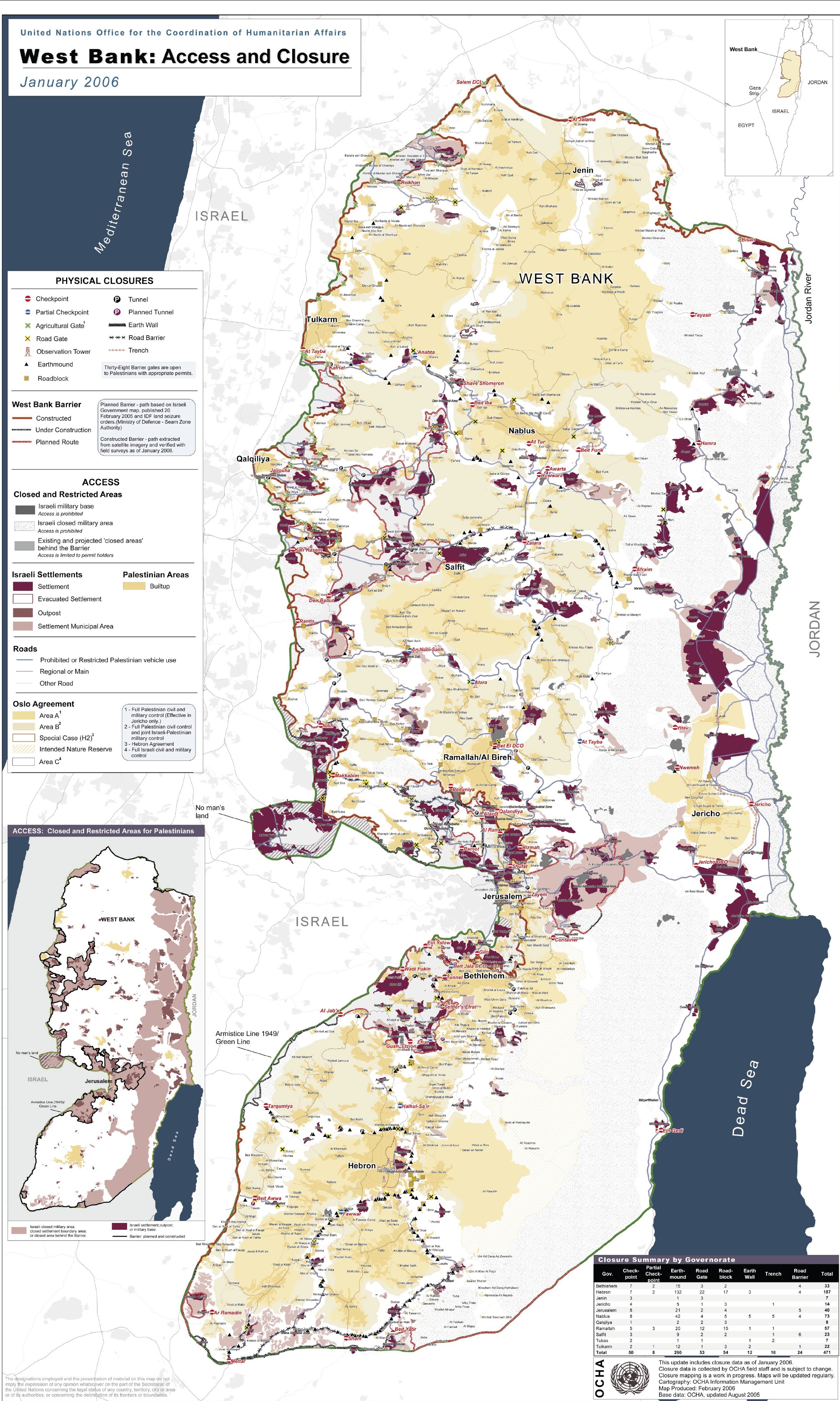
Gunnar Wolf: About the recent events and possible outcomes in Israel and Palestine

Several friends, from different groups and backgrounds and with different points of view regarding the current war in Israel (and regarding the Arab-Israeli conflict in general) have asked me for an explanation on what is happening there, what is (my view of) the real conflict, its causes... and any possible answers. And yet I am quite far from being an authority, I do want to write something about it. Be prepared, as this post is quite long.
And yet, after writing frankly a lot more than what I expected... It is by far not enough. I have still much more to add, but I have to say "stop" at some point. So, here you have it: My points of view, as well as some explanation on why are we standing where we currently are.
I am writing this based just on my personal experiencie and, of course, my personal point of view. Furthermore, I wrote a good part of this text while riding a bus, with no network access, so I am offering very few references - In any case, it will allow me to make much more progress. References always take as much time as the text itself! About me Why am I writing this? Why do people ask for my opinion? I must start by explaining who I am, so the rest of this makes sense. I am a Mexican Jew. That means, I was born in a Jewish (albeit secular) family, and grew up in an environment with general Jewish culture. My direct family (say, my parents and brother, and to a lesser degree my closest cousins) are not at all religious, I'd even venture to say most of us are complete atheists. Yet, besides the cultural belonging (which is a mixture of a Eastern European culture with lots of Idish words and dishes and general humor), my family has a strong national identification - In other words, I grew up in a fully Zionist environment, which traces back to Poland.
My grandmother was member of Hashomer Hatzair in Poland, since the early years of its existence, late 1910s and early 1920s. What is it? To make it short, a Zionist Socialist, Kibbutzian youth movement. It has many similarities (and somewhat stems indirectly from) the Scouts many of you will be familiar with, but -obviously- has a way lengthier agenda. And, yes, nowadays I feel it is somewhat out of reach with the current state of the world - It was founded in 1913, and only slightly adjusted its principles since then.
I will talk more about Hashomer later on.
My grandmother arrived in the late 1920s to Mexico, for familiar and economic reasons, but still dreamt about living in Israel for a long time. As they grew up, first my uncle joined Hashomer in Mexico in the late 1940s, when it still pursued a very much Soviet-style ideals for Israel (one of the core points that changed during the 1950s); both my father and my mother joined in the late 1950s (in fact, that's where they met). My cousins and myself were very active in the 1980s and 1990s.
The Iszaevich family has something very unusual, I'd say, engraved in our genes. We live very deeply our ideologies. That's the only explanation I can find to the way we all have led our lives. I won't go into the other family members' details, but just into mine: I was fully convinced of all we taught to our younger members and what we discussed among ourselves. I am among the very few people who really learnt Hebrew at my school, and that was only because I really cared - I know some people that just after 12 years of pseudo-learning could maybe utter a few phrases.
After finishing high school I went with my Hashomer group, together with people my age from other similar-minded Mexican Zionist youth groups, to live and learn for a year in Israel, on what is usually known as shnat hajshar - A year to get ready. To get ready to what? But of course, to come and give back go the younger groups of the movement, and finally go back to Israel and settle there definitively. I came back to Mexico, and after one year I did the only thing that was logical: I became an Israeli and went to live to a kibutz - Zikim, a beautiful place just between Ashkelon and Gaza, very near the sea shore. It was a beautiful period in my life, and I really enjoyed it - But it didn't last for very long - I quickly grew to hate the Israeli society at large. A society full of rage, of hatred. Not just between Arabs and Israelis, as many would think from the outside, but between religious and seculars. And between immigrants and locals. And between leftists and rightists (in several dimensions, as it is one of the countries where you can most easily be a economic leftist while being a political rightist - a complex society it is). A society full of disrespect and intolerance. A very hypocritical society. And one of the things that most shocked me: I wanted to live in a society of proud of its existence, that's what I had learnt Israel was - But Israelis aspire and dream of being anything else (and mostly US-Americans) in a way that made me sick, more than anything I had previously seen in Mexico.
I loved the life at the Kibutz, and I loved being an agricultor, doing hard work every day and literally getting the fruit of it. However, I cannot live isolated to a 300-people universe - At least once a week you have to go to the city if you don't want to become insane. And I could not stand the sick Israeli society.
Anyway, to make things short: After six months as an Israeli, I came back to Mexico. I went through a long period of finding myself, as I could not uphold anymore my Hashomer ideology (if I am not going to live by it, how can I continue teaching it?). Many people do anyway, but for the first months, where my Hashomer work was basically all of my life, I felt really uncomfortable. So, in short, I severed all of my relations to the Jewish community, and even denied for a long time my Jewishness until I found a (I think) better balance.
Today I am at peace. But anyway, I wanted to talk about myself in the critical period that marked me in this regard: The 1990s. Enough, lets get down to business. Zionism 1870-1920 Many people argue that the Jews invaded the Palestinians homeland - And yes, nowadays I cannot counter this. But we cannot judge what happened then based on what we see now.
Modern Zionism started around the 1870s. The Jewish history is full of pogroms and persecution, in different countries all over Europe - And a group of young people decided the only solution was to build a place to call their own. And yes, this was full of idealism and in no small part the foolishness of youth. For several centuries and up to 1920, all of current Middle East were provinces of the Ottoman Empire. Before Zionism began, the population of today-Israel was very sparse, not more than 400,000 people - up to 5% of them Jewish, around 10% Christian Arabs, and the remainder, Muslim Arabs. Of course, the low population was mostly because the country was mostly hostile - A desert in the South, mostly swamps in the North, and some minor towns mostly in the hills. It was a mostly forgotten province, away from the central Turkish rule, and there had been no frictions with the local population. It was a nice place to go, thinking -again- as a fool youngster, or as an idealist. They said, lets take a folk without a land to a land without a folk.
The number of accomplishing Zionists (this is, people who actually went to Israel instead of just talking about doing so) was not high during the first decades. But towards the 1890s, it gained critical mass. The political Zionist movement was born, with Theodor Herzl as a leader, and they started pushing -politically- for different governments to concede a territory to Jews. They went to the Turks, and didn't really get much echo. Went to other colonial powers of the time, and got unfeasible promises with no real backing (i.e. Birobidjan in Eastern Russia, Uganda in Africa)... And, as it happens in strongly ideologized movements, the movement started splitting into different groups with slightly different positions.
And no, I am not talking about the People Front for the Liberation of Judea and the People Judean Liberation Front, but I very well could. Sometimes the differences are as ridiculous as that. But hey, I take that most of my readers are acquinted with the Free Software issues, right? Think BSD vs. GPL vs. OpenSource. To give a broad idea - Only in Mexico City, with a very small Jewish community (~30,000 people), in the mid-1990s we had over 10 such movements, with 50-150 youngsters attending each. And even though some were local, and even though some very important ideologies are not represented in this country, they are all different enough to exist as separate entities. British Mandate The Ottoman empire was divided after the first World War. Its possesions in Europe became independent states, while in Asia (and Africa, if you take the semi-independent Egypt and part of Sudan into account) they were taken over as colonies or protectorates by France and the UK - Evidently, attempting to secure a long-term dominion over the area. In some aspects, they failed. In some aspects, they were (and still are) tremendously successful. The division of people by setting arbitrary boundaries has led to countries sustainable only by force and a harsh rule (such as Iraq, Lebanon and Syria), or doomed to poverty (and thus submission) due to lack of natural resources (as Jordan). Focusing on Israel/Palestine, the UK entered the area by making mutually incompatible promises to arabs and Jews - i.e. the Hussein-McMahon letters and the Balfour declaration, both ambiguous enough to lead to... Well, today. The UK rule was disastrous to the region, both in giving (and taking away) power from all sorts of puppet regimes, and swiftly going away as soon as things started looking too complicated. Yes, typical colonialism.
So, while up to the 1920s there was no real animosity between Arabs and Jews (as i.e. the Faisal-Weizmann agreement shows), during the next decades the seeds of hatred started growing, from both sides.
Many people still quote the 1947 partition plan as the direct antecedent towards Israel's real existence - That was not the first partition plan that existed. Ten years earlier, the Peel commision suggested a similar partition involving forceful population transfer. And many people see the separation of Transjordan (now Jordan) from Palestine in 1922 as a first partition. It is understandable that both partition plans (much more the 1947 than the 1937 one) were accepted by Zionists: Going from having nothing to having something (and against all odds in the environment they lived) is acceptable.
From the Zionist side, two main groups rejected the partitions: The right-wing and religious groups, insisting that the whole of the Mandate should become Israel, and the left-wing groups, which advocated for a single, bi-national state, with equal rights for all of its population. Go over and read this last link, as it was quite interesting (to me at least) to see how this solution has kept existing and regarded by (relatively) many people, and has many interesting links. 1948 onwards: Where did the refugees come from? The November 1947 partition didn't exactly translate to a planned, smooth Israeli independence - It led to six months of revolts (basically, a civil war). By mid May, the UK government and troops abandoned the territory, and one day later, Israel declared its independence. And, of course, all neighbouring countries (and Iraq) sent their troops to invade Israel. The war lasted for over six months (cease-fire was signed in January 1949). There was an intense Arab campaign indicating the armies would enter Israel and devastate it, leaving no stone in place, indicating Arab population to temporarily leave the Jewish-destined areas. The war, they said, would not take more than a couple of months, and they would be able to go back home.
Only that... When the war ended, the results were far from what the Arab governments expected. Not only Israel continued to exist, but it conquered important territories.
Of course, the Israelis were not innocent from said exodus: During the 1947-1948 civil war, and the independence war, some of the existing so-called self-defense forces (some of them were really defensive, while some were quite aggressive, even terrorist) attacked Arab villages in strategic or predominantly Jewish areas to prompt them to leave - yes, what we today call ethnic cleansing.
I had (in my head) the number of 650,000 Arabs (from a total of slightly over a million) fleeing to neighbouring countries. Wikipedia states that it is somewhere between 367,000 and 950,000. A similar number of Jews were expelled from Arab countries, many of which arrived to settle at Israel (and many others went elsewhere - For instance, a good part of the Mexican Jewish community is from Syrian origins - Many of them fleed in those years). Israel didn't accept back the (relatively few) Arabs that requested to resettle, as they were seen as hostile population - but neither did the countries that "temporarily" accepted the Palestinians accepted them as citizens. The Palestinian refugee camps today, mainly in in Lebanon, Syria, and the occupied territories held by Israel have terrible living conditions, and its population -despite living there for over 60 years- have no civil rights at all. Note that I'm omitting Jordan here, although it has several camps as well, as their situation is way better.
The Arab population that didn't leave did receive full Israeli citizenship. No, their living standards are not up to level with the average Israeli. The country and the society do have a sensible degree of racism and segregation. But the situation is nowhere as terrible as it is in the camps.
The areas which were originally to become Palestinian and were not conquered by Israel -this is, current-day West Bank and Gaza- bacame respectively Jordan and Egyptian territory. While Jordan did fully extend its soverignty covering the West Bank, Egypt didn't - Gaza is, since 1949, occupied military territory. Gaza, among the most densely populated areas in the world, has had their inhabitants under military rule ever since. When Israel returned the Sinai after signing the peace treaty with President Sadat, Egypt didn't accept Gaza back - And that's where today's greatest problem is born.
Now, Israel conquered those territories in 1967, along with the very sparsely populated Sinai and Golan. For the first ten years, the territories were basically only administered (yes, under a military rule). In 1977, with the first right-wing Israeli government, an extensive settlement policy began (and led partly to today's seemingly unsolvable situation). In 1980-1982, Israel withdrew from the Sinai. In 1981, Israel claimed full soverignty over the whole of Jerusalem and the Golan. In 1993, the "Oslo Agreement" was signed between Israel and the PLO, and it seemed we were heading towards a bright future. I lived in Israel between 1994 and 1996 - Yes, the most hope-filled period in the country's life.
Since 1996, I have tried to keep up to date with the country's evolution. All in all, even if I won't live there again, it is a country I learnt to love, a society I have long studied (even if in the end I did include many references, I wrote most of this text just off the top of my head, with the data I remember - so it might have several big errata). And yes, I keep the political stand I had 12 years ago: The only solution is to dialogue, to treat the current enemies -and not only their governments- with respect, recognizing their dignity and right to life, to self-determination. Only then we will change the status quo. How not to fight hatred Since 1993, the dream of peaceful coexistence seems to have faded. What we saw during the past three weeks, along to what we saw in Lebanon in 2006, is plainly a gross mistake if the goal is to achieve good, lasting peace.
Try to imagine how could life in Gaza be, even in the total absence of Israeli attacks. Just to set some numbers first: The Gaza strip hosts almost 1.5 million people on 360 km . When I lived in Israel, I was constantly surprised at how small a country it is - Israel tops at 550Km North to South, 150Km east to West (it is amazing, almost wherever you stand, except in the middle of the Negev, you can see the country's borders. Yes, I recognize as the border the so-called Green Line); over half of the territory is a desert, and it hosts seven million inhabitants. And it is hard to imagine how that country can be economically viable.
I do not find it feasible to imagine Gaza and the West Bank integrating a single country, and not only because they are separated by ~40Km, but because they are so sociologically different. People in the West Bank, yes, live opressed under military rule and subject to a much more constant, more visible apartheid-like state (as the territory is truly sprinkled with Jewish outposts which many Israelis refuse to recognize as their own, but still, which have incredibly higher living standards). The best land has been taken away from them, yes, but they have some space between cities to have some farming, to communicate, to... Breathe. Besides, West Bank inhabitants -even those in refugee camps- have much better living standards than anybody in Gaza. It is still an overpopulated area, but not nearly as much as Gaza.
Gazan population have been driven towards extremism. And yes, there was a civil war between Palestinian factions, as the world views between both populations are completely different - However hostile a Jenin inhabitant can be towards Israel, he does not lead the life -if it can so be called- you see at Khan Yunis.
But back to Gaza... What Israel is doing (and not only during this military operation terror campaign is wrong, from any rational point of view. Israel wants Hamas to become weaker? Then don't drive the population into supporting them!
Palestinians started giving over 50% of their support to Fatah (ex-PLO), and under 20% to Hamas. That was less than 15 years ago. However, Fatah has shown to be corrupt and inefficient at building infrastructure and improving life conditions, ineffective at negotiating a permanent agreement which secures dignity and sustainability to their people. Hamas stands as a religious, righteous organization. There are no serious corruption charges against any Hamas leaders. Hamas is clearly still at war - They didn't subscribe any peace agreement so far, and their stated #1 goal is to build a Muslim State in the whole of Israel. And the Hamas movement -like Hizbollah in Lebanon- has built quite a bit of infrastructure in the areas they control - Mainly housing. Yes, housing where they mix their own offices, many will accuse, getting human shields for free. But still, they are benefactors to a dehumanized, pauperized population.
I find it obvious that, if living conditions were at a basic level in the region, support of Hamas would decrease. Even more, of course, if they improved due to Israeli support. Israel controls this territory, so it is responsible for the well-being of its population, like it or not. And Gaza is simply too small and low on resources to survive by itself.
I was a bit surprised to find mention -although very brief- of a three state solution - And yes, this is close to what I would expect as a viable outcome. It is clear that Israel will not ever grant full citizenship to the Palestinians, as they would -euphemistically speaking- challenge the Jewish character of the State. Dropping the euphemism, Israel relies on apartheid in order not to become an Arab majority country. I might have some numbers wrong, but AFAIK, there are ~7 million Israelis, 20% of which are Arab citizens (which means, 1.4 million Arabs and probably 5 million Jews, with many other minor denominations for the difference), and ~4 million Palestinians live in the territories. Today, the country is already predominantly Arab, or at least is close to being so. So, Israel should permanently, formally disengage from all of the occupied territories. And in order to ensure violence stops, start a comprehensive, unconditional, long-term aid program. Start with giving them autonomy to regain their sea, as the Gaza port has long been closed. Allow the airport to operate again. Instead of bombing tunnels in the Egypt-Gaza borders, allow Gaza to trade with Egypt - Perhaps even to integrate territorialy, if the conditions are met. Treat their people with respect, and help them ease the terrible situation they have lived for so many decades - and then, undoubtely, terror will stop.
The West Bank? Possibly it could become a Palestinian state by itself. Possibly, it could integrate back to Jordan. That would be up to Jordans and Palestinians to decide. Of course, Jordan has already a large segment of its population defining itself as Palestinians, which counts both for and against. So, I won't venture into this supposition.
But anyway - Back to what prompted me to write this text -yes, a very or maybe even too long text - I hope somebody even takes the time to read it!- is to explain what is my point of view on the current situation, and why.
Today, a cease-fire was announced, after 23 days of murder and destruction. I sadly do not hold very high hopes for it to be lasting, much the less to be enough, to lead to what they call a de-escalation of the conflict. The most I can currently do is to voice my opinion, and hope that mine is just one more voice pointing to a sane solution, to a permanent, dignifying way out, for all people involved. Every people has the right for survival and for safety. We cannot deny this to any others. And certainly, we cannot expect anybody not to fight for their right to live.

Axel Beckert: Traveling plans for the first half of 2009

Since the time between the years is traditionally family time for me, I never were at the Chaos Communication Congress. So I wasn t at 25C3 either. All the more I look forward to HAR2009 this summer (13th to 16th of August near Vierhouten in the Netherlands), but also because, for the last three years I always have been in the Netherlands for one week in summer, sailing with friends on the sselmeer. But before HAR2009, there will be a bunch of other events to visit and people to meet in real life: Then there will be the big summer holidays driving around in the middle of Europe with the 2CV and taking part in most likely: This also means that I ll probably miss: at least unless one of the other events I plan to visit doesn t take place as expected or my plans change heavily. P.S.: Anyone thinks this amount of events justifies a Dopplr account? ;-) Or is there somewhere a free online service similar to Dopplr, but runs software under the GNU Affero General Public License like e.g. identi.ca and many other Laconica instances do for microblogging?

Axel Beckert: How I use my virtual desktops

Many months ago I stumbled upon this German written meme about how users use their virtual desktops. I use virtual desktops since my very early Unix times (tvtwm on Sun Sparc SLC/ELC/IPX with greyscale screens running SunOS 4.x), so in the meanwhile I use them nearly everywhere the same way. Short Summary 3x5, no overlapping windows, either tiling or fullscreen, keyboard navigation, xterms, yeahconsole, FVWM, panel for systray. Window Manager of Choice My window manager of choice is FVWM since more than a decade. I tried others like Sawfish, Metacity and Compiz, but I couldn t get them behave like the FVWM I got used to, so I always came back. Since I hate overlapping windows, I use FVWM a lot like a tiling window manager. FVWM has this nice function to maximize windows so that they occupy as much space as available, but do not overlap other windows. This function was also often missing when I tried other window managers. I though do not want to use real tiling window managers since I have a few sticky windows around (e.g. the panner with the virtual desktops and xosview) and they shouldn t be overlapped either. Virtual Desktops Switching between virtual desktops is done with the keyboard only with Ctrl-Shift as modifier and the cursor keys. The cursor keys are usually pressed with thumb, ring and small finger of the right hand. Which hand presses Ctrl and Shift depend on the situation and keyboard layout, but it s usually either ring and small finger of the left hand, or pointer and middle finger of the right hand. So I m able to switch the virtual desktop with only one hand. I have always three rows of virtual desktops and usually four or five columns. The top row is usually occupied with xterms. It s my work space. The top left workspace usually contains at least one xterms with a shell and one with mutt, my favourite e-mail client since nearly a decade. At home the second left virtual desktop in the top row usually contains a full-screen Liferea (my preferred feed reader) while at work it contains the GNU Emacs main window besides two xterms. Emacs and the emacs server are automatically started at login. This also means that I switch the virtual desktops when I switch between mutt and Emacs for typing the content of an e-mail. Did this already during my studies. (At home mutt runs inside a screen, so there I just switch the virtual terminal with Ctrl-A Ctrl-A instead of the virtual desktop. Not that big difference ;-) The other virtual desktops of the the top row get filled with xterms as needed. Usually one virtual desktop per task. The middle row is for web browsers. One full screen browser (usually Conkeror or Opera) per virtual desktop, often opened with many tabs (tabs in Opera, buffers in Conkeror) related to the task I m accomplishing in the xterms in the virtual deskop directly above. The third row usually contains root shells for maintenance tasks, either permanently open ones on machines I need an administrate often (e.g. daily updates of Debian testing or Debian unstable machines), or for temporary mass administration (Linux workstations on the job, all Xen DomUs of one Xen server, etc.) using pconsole. yeahconsole Additionally I have a sticky yeahconsole running, an xterm which slides down from the top like the console in Quake. (It s the only overlapping thing I use. :-) My yeahconsole can be activated on every virtual desktop by pressing Ctrl-Alt-Z (with QWERTY layout, Ctrl-Alt-Y with QWERTZ layout). It s the terminal for those one-line jobs then and when, e.g. calling ccal, translate, wget or clive. Changes over time Of course the desktop usage changes from time to time: At work I have more than one monitor, so in the meanwhile the second row with the web browsers moved to the second screen with independent virtual desktops (multiple X servers, no Xinerama). The second row on the main screen at work is now used the same way as the third row with a slight preference for the permanently open shells while the third row is more used for mass administration with pconsole. At home I used XMMS respective Audacious for a long time (my FVWM panner and xosview are exactly as wide as WinAmp2/XMMS/Audacious, guess why:-) which usually was sticky the same way as the panner and xosview are. But when I started using last.fm recently, I moved to Rhythmbox (after testing some other music players like e.g. Amarok) which I use in fullscreen as I do with web browsers and the feed reader. So it occupies a complete virtual desktop, usually the second one in the middle row below the feed reader because I don t need a corresponding web browser for the feed reader. (Just found out that there is a last.fm player for text-mode, so maybe that will change again. :-) Another thing which changed my virtual desktop usage was the switch from a classical tabbed web browser (Galeon, Kazehakase, Opera) to the buffer oriented Conkeror. With a tabbed web browser I have either no overview over all open tabs (one row tab bar or truncated tab menu) or they occupy too much space of the browser window. That was another reason for more than one browser window and therefore more than one virtual desktop with fullscreen web browser windows. With Conkeror tabs are optional (and not even enabled by default), Conkeror uses buffer like Emacs and if you want to switch to another buffer, you press C-x b and then start typing parts of the buffer s name (e.g. parts of the URL or the web page title) to narrow down the list of buffers until only one is left or until you have spotted the wanted buffer in the list and choose it with the cursor keys. So the need for more than one browser window is gone. For a long time I didn t need any task/menu/start/whatever bar on my desktop. But since neither NetworkManager nor wicd have a comand-line interface (yet) and bluetooth seems also easier handled from the system tray my laptops also use either gnome-panel (big screen, long sessions with FVWM) or lxpanel (formerly used trayer; use it on small screen, short sessions with ratpoison or matchbox) on my laptops. It s sticky and always visible. (No overlapping, remember? ;-) The panel is usually at the bottom on the screen as by default with Windows or KDE, not at top as with GNOME and MacOS. Only on the OpenMoko, I have the panel at the top to be close to what I m used from Nokia mobile phones. Things I tried but didn t survive in my setup: Systems without Virtual Desktops Anyway, there are systems where I don t use virtual desktops at all. On systems with a screen resolution so small that there s not enough space for two non-overlapping, fixed font 80x25 xterms on the screen (e.g. on my MicroClient with 8 touch screen, the 7 EeePC or the OpenMoko) I do not use virtual desktops at all. On such systems I use all applications in fullscreen, so switching between applications is like switching virtual desktops anyway. My window managers of choice for such systems are ratpoison for systems with keyboard and matchbox for system without keyboard. With ratpoison you treat windows like terminals in GNU screen, so there are no new keybindings to learn if you re already used to screen (which I use nearly daily since more than a decade).

Axel Beckert: Mini-ITX based Home Server: Hardware Review

Mostly for my backups needs, I planned a Mini-ITX based home server around the Chenbro ES34069 Mini-ITX case which features four hot-swap S-ATA bays. I wanted a low-consumption motherboard and CPU in there (not only because of the default 120W power supply) and since low-consumption mainboards with 4 S-ATA connectors are quite seldom I ve chosen the not so cheap VIA EPIA SN18000G mainboard with actively cooled 1.8 GHz VIA C7 processor and a maximum power consumption of less than 30W (including CPU). Waiting for delivery While the Chenbro ES34069 case I ordered at digitec only needed a few weeks to deliver, the VIA EPIA SN18000G mainboard from Brack took over eleven weeks to deliver, it finally has been delivered on Wednesday, 5th of November 2008. I initially ordered the VIA board for CHF 324, now it s at CHF 397 (without rebate even at CHF 439) because Brack seems to have had a lot of hassles to get some of them at all. Although they usually sell for the prices at the time they ship the hardware (market price), they sold it to me at their purchase price, so it became only about CHF 15 more expensive than when I ordered. And since the RAM price dropped by one third during those eleven weeks, the whole order became about CHF 25 cheaper, the order was CHF 10 cheaper overall than when ordered. :-) (Still waiting for the according voucher, though.) So I ve joined the two main components together, installed Debian Lenny on it, crammed four 400 GB Samsung S-ATA disks (formerly in a TheCus N4100) and the 160 GB 2.5 harddisk from my MicroClient JrSX (I never really used it in there, it always runs from CF card) into it, created a software RAID-5 and now fill it with music, games and backups. But not everything was as easy as it sounds above. Although Chenbro lists the VIA EPIA SN18000G as officially compatible mainboard for the ES34069, not everything really fitted as expected. So here s my review of this hardware combination. Chenbro ES34069 It s really awesome how much features you can stuff in such a small case. Of course it s not as small as a thin client case or the mCubed HFX micro case, but it s smaller than most book-size cases like the ASUS Pundits, just a little bit thicker. Inside the case (laying on its left side) there are two decks. The lower deck contains the 3.5 hot-swappable S-ATA harddisk bays, the internal part of the power supply and the two fans for cooling the interal power supply components and the disks. The upper deck has space for the mainboard, a 2.5 harddisk, a slim-line optical drive slot and all the front-panel stuff (card reader, LEDs, USB sockets). Both decks are divided in two section. The front section belongs to the case itself and the back section containing the mainboard mount points and the two fans can be easily unplugged after removing four screws and keeping an eye on the cables from the lower to the upper deck. That way the mainboard can be mounted very easily. So far a very convincing design. To mount the 2.5 harddisk in between the mainboard and the front panel, it s not really necessary, but convenient to remove the slim-line optical drive slot, since you then have better access to the harddisk s IDE socket. To remove the slot, you need to remove the front cover. That sounded easier than it actually was and I nearly broke of one its catches. :-/ Although all parts of the case seems to fitting very well together, the bays for the hot-swappable drives weren t perfect: The drive slots not always connected even if the latch iss already closed. This was definitely better with the TheCus N4100. Additionally the bays seem to be made for slightly larger disks, so mine had play and the screws pressed the it together and you need to take care that the screws don t cant. A big positive point of the case was that there were all necessary screws included and they were fitting. This was a bigger problem with the TheCus N4100, since many harddisks ship with their own screws, but those are seldom the needed flat-head ones. Even a P-ATA to slim-line optical drive adapter was included, so I don t need to buy one. (Would have costed CHF 42 at digitec.) VIA EPIA SN18000G While it s surely not the most performant board out there, I m quite satisfied with its performance. I installed BackupPC 3.1.0 as backup system on it and it works like a charm. It daily backs up up to 14 machines over ssh tunnels more to come) and is way more performant than expected. But I probably had very low expectations due to everyone arguing about the bad performance of the VIA C7. ;-) Not nice, but known is the problem that most (but not all) USB connectors on the SN mainboard have 2.00mm pitch while all the case s plugs have 2.54mm pitch. Apropriate adaptors are available from Mini-ITX.com. Thanks to Akim for this tip! Power consumption I hoped to get more details into this posting, e.g. measured power consumption, etc. But then I recently read in the c t magazine how inexact my watt meter (from Brennenstuhl) is, so its values would probably bring more confusion than help. Additionally I don t feel like powering down the server just for measurement. Feedback I got quite a few mails with hints to further Mini-ITX boards and TDP but also with questions about the case. I hope that this blog post asnwers some of the questions also for other readers. Thanks to all who replied to my initial blog post about my Chenbro/VIA based home server, either by mail, or comment, or both. :-) Further plans For deploying music to my other computers I tried both, mediatomb and gmediaserver but none really convinced me. Currently I just mount the media directory using the FUSE and ssh based sshfs. Not sure if I ll add NFS due to it s user base syncing hell. Further plans are an HTTP proxy with ad filtering and caching capabilities, it ll be Privoxy combined with either Squid or Polipo. Maybe even a Tor SOCKS proxy.

18 January 2009

Biella Coleman: Blue Cross No Shield

After two years of phone calls, nasty emails, filing claims and reports, Blue Cross Blue Shield of NJ finally ponied up every last cent of cash they originally did not want to pay. Since the ordeal began, many BCBS customers left comments here where I chronicled my plight and many have also sent me emails as well. In the end, I think I was successful mostly because I had the email of the director of public relations (he made the mistake of emailing me) because well, I would send him these emails and I think he just did not want to receive anymore. Recently I received an email from Reynold Weidenaar with a pointer to his webpage where he is also chronicling what is happening with BCBS since they want to deny coverage for physical therapy. This is great and more folks need to do this exact thing, which is chronicle every last detail in a public place. In the end, they have a lot of paperwork and we need to turn it back to them and in very large numbers.

17 January 2009

Rodrigo Gallardo: Liferea 1.4.23 in experimental

It appears that, unless someone could manage to find a non-invasive fix to #503907 and other bugs, we won t have a working webkit for lenny. Thus I agreed to having the webkit plugin for liferea removed from sid, in preparation for its likely removal from testing. Now, liferea 1.4.18 has a couple important bugs, including the elusive #487927. Some of them might be solved by the newer releases, but I cannot simply upload 1.4.23, as the changes from 1.4.18 are much too big. However, if some of those changes are relevant to those important bugs, I could try to cherry pick them back into 1.4.18. Thus, to try to get some feedback about those changes, and to satisfy those of you that want to keep using webkit, I have uploaded 1.4.23 to experimental. It is currently waiting in the new queue, meanwhile I prepared binary packages for amd64 and i386. (Thanks for the tip, Julien!). If these packages help with some bug you have been hit with, please send your feedback to the BTS.

Next.

Previous.