Search Results: "nate"

30 January 2012

Christoph Berg: How not to edit files

When packaging new backport versions, I diff the old Debian package with the old backport package to extract the changes I did there, and then apply this patch to the new version. There is always a reject in debian/changelog because the topmost bpo entry won't apply cleanly to the new changelog. To fix this, I invoke "vi debian/changelog*" and manually copy the rejected hunk. Unfortunately, I regularly end up copying it from debian/changelog.rej (buffer 3) into debian/changelog.orig (buffer 2) instead of debian/changelog (buffer 1). Here's the fix in my .vimrc:
" Prevent accidental editing of patch .orig files
autocmd BufRead *.orig set readonly

28 January 2012

Bartosz Feński: dibbler 0.8.1

Can t believe its almost 7 years since my first sponsored upload of Dibbler to Debian archive. I did it cause upstream promised to maintain it and fix any bugs submitted by Debian users. Unfortunately after 3-4 years he stopped to do it. Well since I was the sponsor of it, then I should feel responsible for these packages after him. It s quite hard to do it, cause I m not using these packages at all ;) Anyway, I finally found some time and reviewed them. It wasn t easy cause in the meantime whole build process totally changed. To whom it may concern: Dibbler is an IPv6 DHCP client, relay and server. I ve just uploaded the newest upstream version. Changelog follows: dibbler (0.8.1-1) unstable; urgency=low * ACK previous NMUes thanks!
* New upstream version (Closes: #629685)
uses correct example adsress pool in examples (Closes: #544323)
corrects scope of stateless in manpage (Closes: #615165)
* Fix pending l10n issues. Debconf translations:
Danish courtesy of Joe Hansen (Closes: #597767)
Dutch courtesy of Jeroen Schot (Closes: #632628)
* Fixes handling of children processes using resolvconf (Closes: #627317)
* Doesn t conflict with other resolver configuration daemons (Closes: #627786)
* Correctly handles multiselect values from debconf (Closes: #629681)
* Debianized almost from scratch, uses new source format.
* New Standards-Version (no changes needed). Bartosz Fenski <fenio> Fri, 27 Jan 2012 14:37:13 +0100 Yep, it fixes 8 bugs, and brings the newest upstream version with huge number of new features to Debian. Enjoy!

Russ Allbery: Summary of C++ symbols experience

This is a follow-up to my previous post about the way that Debian's library symbols analysis support interacts with C++ libraries, based on further debian-devel discussion. The primary outcome of that discussion was to point me at the pkg-kde-tools utilities for handling maintenance of these files, which solved a bunch of my problems. As before, this was also posted on debian-devel, which is where I expect most of the discussion to be. First of all, for those who haven't explored the pkg-kde-tools infrastructure for this, it looks like the effective process goes something like this:
  1. Do a local build of the package and then generate an initial symbols template for that architecture. So, for example, I did:
        fakeroot debian/rules build install
        pkgkde-gensymbols -plibxml-security-c16 -v1.6.1 -Osymbols.i386 \
            -edebian/libxml-security-c16/usr/lib/*/libxml-security-c.so.*.*
        pkgkde-symbolshelper create -o debian/libxml-security-c16.symbols \
            -v 1.6.1 symbols.i386
    
    This generates an initial symbols file that will work for i386.
  2. Build and upload this version of the package. Now wait for all the buildds to fail (because they will, on probably nearly every other architecture than your local one).
  3. Download all of the build logs and feed them back into pkgkde-symbolshelper so that it can adjust your symbols template for all of the architecture variations. So, for example, I did:
        pkgkde-getbuildlogs
        pkgkde-symbolshelper batchpatch -v 1.6.1 *_unstable_logs/*.build
    
    This will generate rather nice annotated symbols files with appropriate arch lists and using subst tags where appropriately (such as when an argument to a function is a size_t).
  4. Modify your package to use pkg-kde-tools during the build, because subst tags are a really nice way to handle a lot of C++ symbol patterns but #533916 against dpkg-dev is wontfix, so you need the pkg-kde-tools replacement for dpkg-gensymbols. I added a dependency on pkg-kde-tools and then added the (undocumented) pkgkde_symbolshelper add-on to my dh --with flag.
  5. Build and upload the package again. Now it will hopefully build on all architectures.
This is, as you might expect, a fair bit of work, but it does work, and what comes out the other end is a symbols file that works across the current buildd architectures and detects any mistakes by upstream that change the symbols exported. However, it does have some problems, some obvious, and some more subtle. Here's a list of the issues that I see:
  1. It feels like this symbols file is still likely to be fragile. While pkg-kde-tools detects a lot of template instances and marks them optional, I was still seeing a lot of "leaked" symbols from other C++ libraries that my package build-depends on, and which I suspect may also disappear. There's also the problem of optimizers eliminating some things that are inlined; for example, that appears to be the variation that my package sees on arm. And for a substantial C++ library, the symbols file is HUGE. Over 12,000 lines for one of my libraries. It's kind of scary to think of how many fragility landmines are buried under there.
  2. By the nature of this process, it's very sensitive to the current supported architectures. I expect any package with a symbols template built this way stands a good chance of FTBFS on a new architecture. For example, my symbols file has a lot of !armel !armhf patterns, which don't appear to be anything unique to arm except that the C++ compiler behaves slightly differently there due to inlining, and those are the only two architectures in the current set with that pattern.
  3. The lack of dpkg-gensymbols support for subst is very unfortunate, since it's used by the pkg-kde-tools utilities and it's the Right Thing To Do for symbols that take, for example, size_t as an argument. I would strongly encourage the dpkg maintainers to accept the work in #533916 except maybe for the vt work, since the alternative is to generate regexes that are significantly worse at capturing mistakes (since they're going to accept either int or long, rather than only whatever one corresponds to size_t, for example), or to embed a lot of specific architecture restrictions listing, for instance, all 64-bit architectures and guarantee FTBFS for every new architecture.
  4. It's a little hard on the infrastructure, since adding a symbols file requires uploading a package that's guaranteed to fail to build almost everywhere just so that you can get all the build logs to feed into the machinery. I always feel guilty about doing that.
  5. It's still not clear that the benefit is worth the amount of effort, since I expect most C++ libraries to require frequent SONAME changes anyway, which means that the long-term binary compatibility angle of symbols is probably futile. Mostly, all of this is to give you a tool to do ABI checking, which will catch some mistakes but not all of them. And I'm guessing it's going to be substantially more work than maintaining symbols for a C library if one actually does it properly and checks every missing symbol and change in new builds.
I'm going to try this for the Shibboleth packages for a while since I want to see what it's like across a new upstream release, but I'm still very much not convinced that this is a useful use of a packager's time.

Don Armstrong: Using wicd on UCR's WPA network

UC Riverside's wireless network uses WPA-EAP for the encrypted network. [The unencrypted network does a https based browser capture.] Unfortunately, none of the default wicd encryption templates support the precise brand of WPA that the network does, so you have to make your own template. Luckily, wicd makes this fairly simple: Create a new template, say, /etc/wicd/encryption/templates/eap-only, with appropriate contents.
 name = EAP
 author = Don Armstrong
 version = 1
 require identity *Identity passwd *Password 
 -----
 ctrl_interface=/var/run/wpa_supplicant
 network= 
    ssid="$_ESSID"
    key_mgmt=WPA-EAP
    identity="$_IDENTITY"
    password="$_PASSWD"
  
Then tell wicd about this new template by editing /etc/wicd/encryption/templates/active and adding eap-only to the existing list of templates, and restart wicd /etc/init.d/wicd restart. [I'm not sure if restarting wicd is necessary, but it shouldn't hurt.] Finally, configure the network using the appropriate wicd interface as usual.

27 January 2012

Michal &#268;iha&#345;: Future of Gammu

All of Gammu and Wammu related projects are slowly dying under my hands in past months (maybe I could even say years). The reason for this is lack of motivation and time to work on that properly. Last year I've managed to collect some bugfixes and to fix some bugs myself what lead to releasing Gammu 1.31.0, which seems to be quite good release. But since then, I've again hardly done any work there and my biggest motivation for working on Gammu is that without my involvement the project would be probably completely dead. This is definitely not the best motivation and the outcome can be clearly seen. The project definitely has it's problems (I could name them, but let's avoid making this blog post too long), but there are quite a lot of users using it. Currently most interesting feature seems to be SMS daemon, which is probably superior to what others provide, because this is where Gammu gets most of it's new users. Unfortunately not much of them are active in development, the biggest contribution I can expect there is to fix issues they face. On the other side bug tracker and mailing list are full of reported bugs. Not speaking of feature requests to support new phone models. Some of them should be easy to support like new S40 based Nokia's, but things like Android, iPhone or Windows Mobile would require much more work. Of course the big question is whether somebody needs anything else than SMSD. In modern phones, you anyway have most of the data on "cloud" as well, being it Google, Apple or Microsoft and possibility of doing backups to the computer are not that important as in past. I'm definitely not using Gammu to backup my phone (anyway MeeGo is not supported) and I don't think I will in near future. Simply there are better and easier ways to get my data out of phone than implementing support for Gammu. Anyway if anybody is willing to help Gammu now or in future, I'm definitely willing to help him.

Filed under: English Gammu 6 comments Flattr this!

26 January 2012

Ben Hutchings: Testing backport of the isci driver for Intel C600 SAS/SATA controllers

Phil Kern made a general call for testing of Debian 6.0.4. I would like to more specifically point out that I backported the isci driver for Intel C600 SAS/SATA controllers. Unfortunately I have not yet had any testing results for this. If you have any machines with this hardware not yet in production, please do consider testing the new Linux kernel package, version 2.6.32-41. Updated: I now have a positive test result from the user who requested this driver in the installer.

Ian Wienand: pylint and hiding of attributes

I recently came across the pylint error:
E:  3,4:Foo.foo: An attribute affected in foo line 12 hide this method
in code that boiled down to essentially:
class Foo:
    def foo(self):
        return True
    def foo_override(self):
        return False
    def __init__(self, override=False):
        if override:
            self.foo = self.foo_override
Unfortunately that message isn't particularly helpful in figuring out what's going on. I still can't claim to be 100% sure what the message is intended to convey, but I can construct something that maybe it's talking about. Consider the following using the above class
foo = Foo()
moo = Foo(override=True)
print "expect True  : %s" % foo.foo()
print "expect False : %s" % moo.foo()
print "expect True  : %s" % Foo.foo(foo)
print "expect False : %s" % Foo.foo(moo)
which gives output of:
$ python ./foo.py 
expect True  : True
expect False : False
expect True  : True
expect False : True
Now, if you read just about any Python tutorial, it will say something along the lines of:
... the special thing about methods is that the object is passed as the first argument of the function. In our example, the call x.f() is exactly equivalent to MyClass.f(x). In general, calling a method with a list of n arguments is equivalent to calling the corresponding function with an argument list that is created by inserting the method s object before the first argument. [Official Python Tutorial]
The official tutorial above is careful to say in general; others often don't. The important point to remember is how python internally resolves attribute references as described by the data model. The moo.foo() call is really moo.__dict__["foo"](moo); examining the __dict__ for the moo object we can see that foo has been re-assigned:
>>> print moo.__dict__
 'foo': <bound method Foo.foo_override of <__main__.Foo instance at 0xb72838ac>> 
Our Foo.foo(moo) call is really Foo.__dict__["foo"](moo) -- the fact that we reassigned foo in moo is never noticed. If we were to do something like Foo.foo = Foo.foo_override we would modify the class __dict__, but that doesn't give us the original semantics. So I postulate that the main point of this warning is to suggest to you that you're creating an instance that now behaves differently to its class. Because the symmetry of calling an instance and calling a class is well understood you might end up getting some strange behaviour, especially if you start with heavy-duty introspection of classes. Thinking about various hacks and ways to re-write this construct is kind of interesting. I think I might have found a hook for a decent interview question :)

24 January 2012

Stefano Zacchiroli: hardware sponsorship for Debian Developers

A few days ago Yves-Alexis Perez asked me how many hardware sponsorship request I usually get from Debian Developers, that is how many people ask me to use Debian money to buy material that can improve their work on Debian and indirectly Debian itself. The answer is "too few".
Making it easier for our developers to improve Debian is a worthwhile investment of money donated to Debian. Of course such a use of money should be motivated (i.e. you should be able to justify how the material you're asking for would improve Debian and why it should be Debian paying for it) and transparent (i.e. you should periodically report about what you're doing with material that Debian has bought for you to use). The above two principles are what I've tried to convey in a new section of the sponsoring guidelines wiki page I've been maintaining for a while. Comments and improvements highly welcome! Equally welcome are advocacy messages for hardware sponsoring to other fellow Developers, as suggested by Corsac.

Gunnar Wolf: BugCon friends, are you trying to scare away 50%+ of the target audience?

You are scaring away much more than that. I just came across an invitation for BugCon 2012. BugCon is a Mexican conference devoted to computer security I cannot comment on its level or value because, although it's a topic that has long interested me, I must recognize each day I feel less of an expert, nowadays finding myself at the level of a "sysadmin who tries not to be too dumb for his own job security". Oh, and also because it would be completely off-topic for this post. If you look at Vendetta's (the main organizer) blog post, it will probably give you the impression that the conference is just an excuse for the afterparty: Lets go see some b00bs! Do you think your fellow female hackers will have any interest in joining a bunch of sex-starved, hormone-infested teenagers who only want to pwn a website and grab more pr0n? Do you think females will feel welcome (or even mildly safe) between you? I would not think so. And I also think you are alienating any professional who might have any interest in joining your community, be it as a member, as a mentor, or whatnot. I cannot right now do a coherent post on this topic, but I can reference you to what I have seen (and read) over the last almost 10 years, when the issue was first brought up to our attention. I am very glad to see that, at least in the Free Software area, there has been a real change of mindset. I hope you are in time to think about it and rectify. Oh, and not the description of an incident, but a very interesting and thoughtful take on this: [pdf] Interesting analysis by Hannah Wallach on the numbers and motivations of women in Free Software groups. I don't know if Hannah has published this in article form, but many interesting points can be understood by looking at the presentation. My good friend Vendetta: I don't mean this post (longer than what I originally intended) as a way to say you and the conference you are organizing for the third year (IIRC) already is unprofessional or targetted to pimply teenagers. I know the work you have put in it. I hope you see the points I'm trying to drive You are of course free to have whatever afterparty you have. But, if as the main organizer, you are giving the images of nice chicks at Hooters more weight and relevance than to the conference itself... you are doing yourself a disservice. I hope you can rectify it, and make BugCon attractive to hacker women as well.

Julian Andres Klode: Managing system package selections using custom meta packages

Over the last years, I have developed a variety of metapackages for managing the package selections of the systems I administrate. The meta packages are organized like this:
jak-standard
Standard packages for all systems
jak-desktop
Standard packages for all desktop systems (GNOME 3 if possible, otherwise GNOME 2)
jak-printing
Print support
jak-devel
Development packages
jak-machine-<X>
The meta package defining the computer X
Each computer has a jak-machine-X package installed. This package is marked as manually installed, all other packages are marked as automatically installed. The machine packages have the attribute XB-Important: yes set in debian/control. This creates an Important: yes field. This field is not official, but APT recognizes it and does not remove those packages (the same field is set for the APT package by APT when building the cache, as APT should not be removed either by APT). It seems to work a bit like Essential, with the exception that non-installed packages are not installed automatically on dist-upgrade. The meta packages are created using seed files similar to Ubuntu. In contrast to Ubuntu, I m not using germinate to create the packages from the seeds, but a custom dh_germinate_lite that simply takes a seed file and creates the correct substvars. It s faster than germinate and really simplistic. It also does not handle Recommends currently. The whole result can be seen on http://anonscm.debian.org/gitweb/?p=users/jak/jak-meta.git. Maybe that s useful for some people. And if you happen to find some packages in the seeds that are deprecated, please let me know. Oh, and yes, some packages (such as the letterman one) are internal software not publically available yet [letterman is a simple GUI for creating letters using LaTeX]. While I m at it, I also built Ubuntu s version of wine1.2 for i386 squeeze. It can be found in
deb http://people.debian.org/~jak/debian/ squeeze main (it still needs a few changes to be correct though, I ll upload a jak2 build soon). I also built updated sun-java6 packages for my parents (mostly needed due to the plugin, some websites do not work with the IcedTea one), but can t share the binaries due to licensing requirements. I may push out a source repository, though, so others can build those packages themselves. I ll let you know once that s done.
Filed under: Debian, General

23 January 2012

Neil Williams: Emdebian Grip automated dependency resolution

The script isn't fully automated yet, I'm running it manually and watching for errors, but I do now have a simple script (~100 lines of perl) which runs edos-debcheck against each of the supported Emdebian architectures for unstable-grip and picks out those packages which are missing from the subset of packages which Emdebian monitors for Grip.

I was hoping to make these scripts into a normal Debian package but there are some limitations in that the scripts need to assume various pieces of Debian infrastructure. e.g. I started off using rsync to pull in the Packages files (along with Release and Sources) because apt has annoying behaviours with multiple architectures. (Emdebian Grip processes 7 architectures simultaneously on blavet.debian.org). Peter Palfrader kindly arranged for a local mirror to be available and now the entire Packages processing can be done using symlinks. Much, much better.

Actual package movement data comes directly from dak via projectb - something else which makes packaging these scripts for use on non debian.org boxes a bit hard.

Once again, I am indebted to the EDOS team (please, please keep working on edos-debcheck - it hasn't had uploads recently) because I tried to get this working with germinate but failed. (Colin - I'll be looking to borrow some of your time to work out what was going wrong.)

The dependency resolution script now means that I can meet release team requirements that when foo is updated in sid to depend on libbar2 but Emdebian Grip only has libbar1, the scripts will automatically pick up libbar2 and add it to Emdebian Grip. The current sid version gets pulled in and (the theory goes) will migrate into testing-grip as an almost automatically valid candidate. Processing of the dependency can happen within hours of the updated version of foo arriving in Emdebian Grip but as long as it happens within a few days I think everyone will be fine with it.

I've got a sync script too which can periodically run across the entire suite and check for packages which have slipped the net. I'll have to see how often that needs to run but once a week doesn't sound too painful.

Processing for Emdebian Grip is very fast. Most of the time is taken uploading:

2012-01-23 22:24:42 add sid-grip deb main armhf libfltk-images1.3 1.3.0-5em1
2012-01-23 22:24:52 add sid-grip deb main i386 libfltk-images1.3 1.3.0-5em1
2012-01-23 22:25:07 add sid-grip deb main mips libfltk-images1.3 1.3.0-5em1
2012-01-23 22:25:25 add sid-grip deb main powerpc libfltk-images1.3 1.3.0-5em1
2012-01-23 22:26:00 add sid-grip deb main amd64 libstdc++6-4.5-dev 4.5.3-12em1
2012-01-23 22:26:34 add sid-grip deb main armel libstdc++6-4.5-dev 4.5.3-12em1


(It was a lot longer, comparatively, when I was having to rsync and then dget instead of just read from the local filesystem.)

I've also been working on an init script which will gradually work through the subset of packages by order of Priority - approximately what a new architecture (like armhf) would do. Note that Emdebian Grip supports armhf already. The only slight concern is whether the init script needs to be throttled back to not flood the queues with hundreds of uploads an hour (which it could end up doing, at least for the first 24 hours).

Logs of package movements are available: http://www.emdebian.org/grip/logs.php

Packages can be searched too: http://www.emdebian.org/grip/search.php

More on Emdebian Integration on the Debian wiki: http://wiki.debian.org/EmdebianIntegration

Now all I need is a fix for #655919 :-) FTP team?

22 January 2012

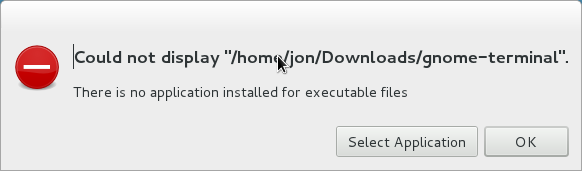
Jon Dowland: bugs

[pic]
Bugs I've hit in GNOME 3, in the last 5 minutes: I didn't set out to bug-hunt this morning, I'm actually trying to get some work done. Whilst this is a particularly bad case of stacked-bugs, it's unfortunately, pretty representative of what it's like to try and use a Linux desktop at the moment. Every day I go through a similar experience. I've just had to give up and log out and back in again. The shell path bug above has re-surfaced in a new session. Great. I'm waiting on a delayed laptop at work. I'm very tempted to cancel the order and just use a Mac Air instead (we have one spare). It seems I'm walking the inevitable path of F/OSS desktop frustration and the end for many people seems to be the Mac perhaps I should spare myself the pain of the journey. In the mean time, It's bye-bye to GNOME and off to Xfce for me.

21 January 2012

Andrew Pollock: [debian] Bits from the ISC DHCP Maintainer

I really should write these a bit more often. Wow, I can't believe it was over 4 years ago that I started having occasional face to face meetings with the ISC DHCP folks. The entire ISC DHCP team (of 5) was in town for an all-hands meeting, and Larissa Shapiro, the Product Manager for DHCP (and BIND) suggested it would be a good opportunity for another catch up. Given the current (bad) state of DHCP 4.2 in unstable, I thought this was an excellent idea, and so we all had lunch on Tuesday. I pretty much set the agenda, and it was The general state of 4.2.2 in Debian In a nutshell, it's a bit of a mess. We've got release critical bugs, build failures, the whole cat and kaboodle. It makes me very sad, because 4.2.2 was the first 4.2 series that I had a chance to upload, and I was very excited to do so, because it contains the hotly desired LDAP patches merged upstream. Unfortunately, it's also got the beginnings of the BIND/DHCP merger that's going to be BIND 10, and that is all a bit of a mess. It's directly responsible for the kFreeBSD FTBFS and the introduction of the RFCs, which are both keeping 4.2.2 out of testing. I gave the ISC folks a high-level overview of how Debian development works, and the normal progression of packages from unstable to testing to stable, and the release process and whatnot, and impressed upon them the implications of the current release critical bugs. I also showed them how Ubuntu development fitted into the picture. Finally, I showed them the popcon statistics for DHCP. I think they found it useful. FTBFS issues on kFreeBSD This was a good segue to #643569. The issue is actually with the embedded BIND sources. I'd already forwarded this bug upstream when it first happened, but I don't know what had happened to it. They seemed to act as if this was the first they'd heard of it. I'm hoping that they can get this fixed in 4.2.3, which is due around the end of the quarter. Embedded BIND sources Since we were already talking about an issue caused by the embedded BIND sources, we moved on to talking about #645760 and the existence of the embedded BIND sources in general. It should be pretty straightforward for them to strip the RFCs out of the source. They've already done it in the past for the DHCP sources, so I'm also hopeful that this will get resolved in 4.2.3. The issue of the embedded BIND sources is apparently a bit more complicated, although the day before our meeting, Michael Gilbert filed #643569 and #645760, so I hope that the ISC folks can take a look at these patches and see if it's feasible to adopt them. Patches for GNU/Hurd Finally we talked about #616290, which I know is near and dear to the GNU/Hurd porters' hearts. We probably spent the most time talking about this. The DHCP developers have concerns about accepting a patch for an OS that they do absolutely no testing on, and also questioned the viability of the OS in general. They stressed that they're fairly thin in numbers relative to what they have on their plate to achieve this year, and so pushed back pretty firmly on accepting the current patch. I relayed the frustration that the Hurd folks were having about a lack of dialogue around the patch (most of the interaction has been via an ISC support person). There was actually a bit of a split between the developers, with one of them appreciating that the Hurd was unlikely to go anywhere as a platform without a working DHCP client, so in some regards, they were condemning the platform by taking the position they were taking. They're going to go away and take another look at the patch and try to come back with some actionable feedback on what needs to change to make it more acceptable to them, so we'll see what comes of this. I'm not particularly optimistic that anything acceptable to the GNU/Hurd folks is likely to happen any time soon, but maybe if the patch gets cleaned up a bit more, I'll just bite the bullet and start applying it to the Debian package. BIND 10 One of the guys is more involved in BIND 10 than DHCP, and asked if I could help out with the packaging of a build dependency for BIND 10. It seemed like #578387 was languishing so I offered to pick it up. I've not packaged a library before, mainly because the library packaging guide has scared me off it (I feel I lack the deep C fu that seems necessary), but I figured that this would be a good learning opportunity, so I'm going to dive in.

Steve Kemp: So mega-upload is gone

So the site http://megaupload.com/ has been taken offline, amidst allegations of knowingly conducting in piracy. There are probably a lot of legitimate users who have lost access to their uploaded files, even if they were offsite backups you can imagine a user owning a website which now has a million dead-links. This reminds me of a conversation I overheard on Jon Dowlands blog - the summary is that he'd written a (useful) tool to extract attachments from Maildir folders and was wondering how to store and access those attachments. The upshot seemed to be magical URLs of the form:
  • https://file.example.com/sha1/509c2fe2eba509e93987c3024a74d74583c274bd
The comments covered an alternative which was hash:///sha1/xxxxxxxxxxxxxxxx, which then becomes close to the magnet:// schema. I've not yet thought things through, but I can't help thinking that with the redundency already present in the internet we should be looking at non-server-specific links. Yes there are times right now when you might want to address a specific file on a specific server - but otherwise? Wouldn't it be nice if you could just access a file from "anywhere" which happened to have the right contents? Already my nonporn-but-definitely-adult-site makes its images available as /img/$md5sum.jpg - and similarly the storage at the back-end of my random image upload site uses SHA1 hashes to store the actual files. To make this more complete what we need is something that crawls the internet to find files by hash; then add support in browsers. Obviously this must be async and could introduce timing issues, but fundamentally it seems like a reasonable approach to the problem of a single host going offline. (Consider what happens if imgur.com disappears. All those links would die, yet 99% of the images would still be available somewhere.) I'm tempted to suggest microformat format but I need to consider the matter. Right now I'm going to immediately update my current image hosts to use, at the very least:
 <a href="/foo" rel="sha1:xxxxx md5sum:xxxx">
  <img src="foo.jpg" alt="img name">
 </a>
The unfortunate thing is you cannot have a 'rel="xx"' attribute for an image. So you either have to encode it in the parent link, or add it to the alt attribute which is suboptimal. ObQuote: "Now, they tell me I paid my debt to society." - Oceans Eleven (2001)

19 January 2012

Obey Arthur Liu: State of the Aptitude (week 12)

Hi folks!

We're almost done for the official Summer of Code program and I thought that I couldn't let it end without another update, so here we are (you may thank Daniel Burrows for additional poking).

The Gtk+ interface for Aptitude is making great progress. The product is not final yet but already implements many of the planned ideas, with others to come.
Here are the screenies:


So, let's see the tasks presented in my previous update:

In some more details: we are now much closer to the final interface. Some things are not done yet, for example, notification bars la Iceweasel (or is it Firefox ?) are in the works for unobtrusive notifications about important things and a little guidance.

We are much more reliable now. We eliminated lots of memory management problems that resulted from, mmh, imperfect coding discipline. We also lock the interface when important backend stuff reload to prevent the user from shooting himself in the foot when triggering an install when the APT cache is reloading for example.. The backend refactoring took a sizable part of this second term but it was worth it. The code is now much cleaner and uses no more (at least much fewer) ugly unscalable hacks.

One very important feature of Aptitude is the ability to easily display all kinds of dependencies and navigate through them by hyperlinking. It's now working in the Gtk+ interface as well. Feel free to click on whatever looks like a package or a package version.

We now support the powerful Aptitude package searching syntax. Daniel Burrows is talking with Enrico Zini to bring the power of apt-xapian-index to Aptitude: autocompletion! lightning fast full-text searches! tag clouds! ponies!

There is still a lot to be done. I'm not going away after the GSoC program. I'm here to stay, for Aptitude and Debian. Daniel Burrows has been very helpful and supportive. The Debian community is as awesome as I knew it before participating in the program.

Daniel Burrows is planning to merge the Gtk+ interface into the main branch in September and packages may appear into Experimental. With the very interesting evolutions of the upcoming Adept-3, Lenny+1 will show very interesting changes in the area of packages managers.

Now for you. I need you to test my interface. All necessary instructions are on the development trac : http://dev.graffit.net/aptitude/trac.

Rapha&#235;l Hertzog: Debian related goals for 2012

Like last year, here s a list of Debian related goals that I d like to achieve this year. I might not have the time to implement all the projects, but I like to write them down to keep me motivated. And maybe it can inspire other people to implement some of them (or to help me).
  1. Finish the translation of the Debian Administrator s Handbook The target is to have the book available in April. It would be nice to complete the liberation fund until then so that the book is immediately made available under a DFSG-free license.
  2. Update the Debian Administrator s Handbook for Wheezy
  3. Translating the book in English is only the start of the journey. The real challenge is to keep the book up-to-date with each subsequent release of Debian. And Wheezy should hopefully be released in 2012 since the freeze is in June.
  4. Design and implement the Debian Package Maintenance Hub It s an ambitious project that aims to merge and replace the PTS, the DDPO and their respective mail variants. It should also standardize the flow of information directed towards package maintainers. I m going to use the DEP process to drive this project. This could easily take most of the year, but hopefully I ll motivate other people to chime in and help.
  5. Implement dpkg --check-db and dpkg --repair-db While dpkg is fairly reliable, it s not exempt of bugs and more annoyingly, harddrives/filesystems are not 100% reliable either, thus it happens that some internal database files get corrupted. Given that most files are text based, advanced users can manually fix them but many less skilled users are just left with a broken system that they tend to reinstall. To avoid this, we could provide a command that would try to automatically bring back the internal database to a sane state by looking for a working backup to restore (while at the same time marking some packages as requiring re-installation since we have some indications that they were present).
  6. Implement storage of dpkg s internal files in Git This would be an extension of the former idea. Installing a package dpkg-db-history (any idea for a better name?) would setup dpkg hooks that would record every database change in a git repository. This repository could then be used to restore the last working version of the database.
Besides those concrete projects, I want to do better than last year on the topic of funding my Debian work. I will thus reiterate some objectives:
  1. Write useful articles for Debian users and Debian contributors. They should complete the pages Mastering Debian, Contributing to Debian 101, Debian Packaging Tutorials, and help me increase the audience of this blog.
  2. Write at least one Debian-related ebook (different from the Debian Admin Handbook) and sell it. It could be an ebook targetting testing users since I believe that many more users could benefit from it if they had some better knowledge of the limitations and of the way to mitigate the problems that arise from time to time. Or maybe it could be an ebook for people who want to start contributing to Debian, it could even be bundled with a few hours of mentoring.
  3. By the end of the year, have at least 1/3 of my time funded by donations and/or earnings of my information products. This means doing 3,5 times better than in 2011. It should be doable given that the sales of the Debian Administrator s Handbook will contribute to this goal (once the translation is over).
That makes up lots of challenges for this year. Feel free subscribe to my newsletter to stay up-to-date with my progress and to get my monthly summary of the Debian/Ubuntu news. It s also a good way to help me reach those goals since you will be informed of all my new projects.

11 comments Liked this article? Click here. My blog is Flattr-enabled.

Riku Voipio: CuBox


Just recently arrived from DHL, a solid-run CuBox. I guess nobody who knows me will be surprised when I tell it features an ARM cpu. Specifically an Marvell Armada 510. It features ARMv7 compatibility, with a slight twist of replacing NEON extensions with iWMMX extensions. On the boasting side Armada 510 promises 1080p video decoding and OpenGL ES graphics acceleration (closed source, unfortunately).
The tiny form factor of CuBox is pretty much more than the impressive amount of connectors included;

* Gigabit ethernet
* 2*USB
* eSATA
* HDMI out
* s/pdif optical audio out
* microSD slot
* microUSB serial/jtag port

The last item being important as it makes CuBox unbrickable.. Some will probably lament the lack of WiFi/Bluetooth, but get everything in one device ;). Besides, the USB slots are there to be filled..
Getting started was an slightly rough ride, as in the included Ubuntu (10.04 LTS), X refused to start. After wrongly suspecting that my Display was at fault, turned out the microSD included was slightly corrupted, and some critical contents of xkb-data package were garbage. After reinstall of that package, everything worked, including playing Big Buck Bunny in FullHD with totem.
Biggest disappointment so far is the non-mainline kernel, based on old 2.6.32.9. Some mainline support of Armada 510 exist, but will it work with the proprietary graphics code?

18 January 2012

John Sullivan: Sent to the ACLU today

I was on the brink of mindlessly clicking through the ACLU action center as usual to send an email opposing SOPA. But then I read their boilerplate text, and ended up cancelling the letter to my rep and instead sending this quick note to the ACLU:
Your SOPA suggested letter text supports current copyright law, and also backhandedly supports PIPA (the Senate version of the bill). This is far too weak of a position. As a donor, I ask you to take a stronger position that current copyright law unjustly restricts free speech, and that no further enforcement measures should be instituted until that fundamental problem is addressed. At least take on BOTH of these bills strongly. Most of the significant Internet is blacked out today to oppose both bills -- why would you cede so much ground to copyright maximalists? We have the support to oppose and defeat both bills.
For reference, here was their text:
While I believe it's important to protect copyrighted material online, the language of the Stop Online Piracy Act (SOPA) is flawed and will lead to the blocking of lawful content. Unlike the Senate version of the bill, SOPA eliminates the concept of sites 'dedicated to infringing activity' and enables law enforcement to target all sites that contain some infringing content -- no matter how trivial. The potential for impact on non-infringing content is much greater under SOPA than under other versions of this bill. Sites with user-generated content, like YouTube, Twitter, and Facebook, would be especially vulnerable, as one small piece of infringing content could lead to blocking the entire site. Even though proposed changes would narrow the amount of lawful content impacted, the changes don't go far enough. It is still likely that search engines will end up blocking access to perfectly legal online content. Congress should focus not just on the goal of protecting copyright owners, but also protecting the speech rights of consumers and providers who are reading and producing wholly non-infringing content. Congress must eliminate the collateral damage to protected non-infringing content. Only in that way will Congress truly achieve its goal of protecting authors while respecting the constitutional right to free speech.
Maybe I'm overreacting, but I dislike it when good organizations take weak positions unnecessarily. Usually this is not a problem with the ACLU, for me. It doesn't help that I keep seeing this meme everywhere in the anti-SOPA/PIPA conversation: "I agree we need to do something about piracy, but not this..." I don't think we need to do anything to fix violations of an extraordinarily unjust law until the law itself is fixed. I don't find that to be a very radical position.

Michal &#268;iha&#345;: ColorHug in openSUSE 12.1

Finally I've also find time to test ColorHug on openSUSE 12.1. For my experiences on Debian check previous blog post. Unfortunately on openSUSE calibration is also not that easy. First of all, you have to install patched argyll CMS from multimedia:color_management repository. You can also install gnome-color-management (and colord), but for some reasons they did not offer me any screen for calibration, so I gave up on this and tried manual calibration using Argyll. After looking into documentation, it seems to be pretty straightforward:
$ dispcal -y l -o /tmp/L220x
Place instrument on test window.
Hit Esc or Q to give up, any other key to continue:
Display adjustment menu:
Press 1 .. 7
1) Black level (CRT: Offset/Brightness)
2) White point (Color temperature, R,G,B, Gain/Contrast)
3) White level (CRT: Gain/Contrast, LCD: Brightness/Backlight)
4) Black point (R,G,B, Offset/Brightness)
5) Check all
6) Measure and set ambient for viewing condition adjustment
7) Continue on to calibration
8) Exit
Doing check measurements
  Current Brightness = 190.74
  Target 50% Level  = 36.14, Current = 47.98, error =  6.2%
  Target Near Black =  1.91, Current =  4.11, error =  1.2%
  Current white = x 0.3424, y 0.3179, VDT 5910K DE 2K 18.3
  Target black = x 0.3424, y 0.3179, Current = x 0.3123, y 0.2711, error = 18.06 DE
Press 1 .. 7
1) Black level (CRT: Offset/Brightness)
2) White point (Color temperature, R,G,B, Gain/Contrast)
3) White level (CRT: Gain/Contrast, LCD: Brightness/Backlight)
4) Black point (R,G,B, Offset/Brightness)
5) Check all
6) Measure and set ambient for viewing condition adjustment
7) Continue on to calibration
8) Exit
Commencing device calibration
The instrument can be removed from the screen.
$ dispwin -I /tmp/L220x.icc 
$ dispwin -L
It turned out, that the change after calibration are quite minor here. This is sort of thing I've expected from past experiences with editing photos here, but anyway, now I trust results here even more :-).

Filed under: English Photography Suse 0 comments Flattr this!

17 January 2012

Michal &#268;iha&#345;: ColorHug has arrived

Yesterday, I've unpacked new toy - ColorHug. It came in small packet with CD (which is unfortunately not that useful as it should be), mini USB cable and a letter from Richard Hughes. First attempt to use was of course just connect and make it work :-). The basic access works out of the box:
$ /usr/lib/colorhug-client/colorhug get-firmware-version
1.0.3
$ /usr/lib/colorhug-client/colorhug get-hardware-version
Hardware Version 1
$ /usr/lib/colorhug-client/colorhug get-serial-number
000019
Unfortunately calibration with colord does not yet work out of the box on Debian due to bug 655888. Hopefully it will be fixed soon and it will work nicer. For now you have to rebuild Argyll with Colorhug support (with extra pain caused by Debian package using different build system than upstream). I won't provided binary packages as I pretty much gave up after effort to build clean packages from same sources on i386 and amd64, which always failed on patched autoconf based build system. Side note: I somehow hoped that I won't hit new (in meaning that I don't know them) open source projects which do not use some version control. Unfortunately Argyll CMS is one of such projects... After this update (and restarting GNOME), when connecting ColorHug, the Gnome Color Manager pops up and man can calibrate the screen. The biggest problem is to make ColorHug hold on desired place on screen, if it is not close enough to screen, you will get really bad results. The first result is of course far from being perfect, but colors are definitely better than without calibration or with ICC profile shipped with notebook.

Filed under: Debian English Photography 0 comments Flattr this!

Next.

Previous.