Search Results: "ana"

23 April 2014

Andrew Pollock: [life] Day 85: Mostly a day off for me

Zoe slept solidly all night. She woke up a little before 6am, wanting a cuddle, but it was still dark, so she went back to sleep for another half an hour or so. It was actually nice to get that extra 30 minutes to have a leisurely wake up myself. Sarah wanted to pick up Zoe at 7:45am to get away and get a camp site, so when Zoe finally woke up for the day, we didn't muck around too much. She announced she wanted banana and oat pancakes, but we were out of bananas. I offered her the opportunity to scooter down to the Hawthorne Garage to get some if she went and got dressed. She decided that'd be good. I had a 10am appointment in the city with an intellectual property lawyer to talk about patents, so I had this grand plan of trying to squeeze in a run after Zoe was picked up and before I'd have to head into the city, so I got into my running gear, and we headed down to acquire some bananas. We whipped up the pancakes, and then after a couple of mouthfuls of hers, Zoe declared she didn't like it and wanted Cheerios instead. Oh well. It was nice to get out of the house early in the morning, and it helped get Zoe moving. Sarah ended up getting here closer to 8:30am, which made it a little too tight to go for a run, have a shower and get into the city, so I scrapped the run and pottered around at home instead for a bit, before driving into the city. My goodness casual parking in the city is exorbitant. It cost me $35 for under an hour. I got some good advice from the lawyer, so I know where to proceed from here. Next I headed down to the Valley to get my orientation at River City Labs, but had I read my email before leaving the city, I'd have discovered that the lady giving me the orientation had to leave early because her daughter was ill. It cost me $6 drive into the car park in the Valley, take the elevator down, read my email on my phone and pay my ticket and leave again. Lesson learned. I decided to do the grocery shopping that I hadn't done yesterday while I waited for Anshu to come over.

22 April 2014

Erich Schubert: Kernel-density based outlier detection and the need for customization

Outlier detection (also: anomaly detection, change detection) is an unsupervised data mining task that tries to identify the unexpected.
Most outlier detection methods are based on some notion of density: in an appropriate data representation, "normal" data is expected to cluster, and outliers are expected to be further away from the normal data.
This intuition can be quantified in different ways. Common heuristics include kNN outlier detection and the Local Outlier Factor (which uses a density quotient). One of the directions in my dissertation was to understand (also from a statistical point of view) how the output and the formal structure of these methods can be best understood.
I will present two smaller results of this analysis at the SIAM Data Mining 2014 conference: instead of the very heuristic density estimation found in above methods, we design a method (using the same generalized pattern) that uses a best-practise from statistics: Kernel Density Estimation. We aren't the first to attempt this (c.f. LDF), but we actuall retain the properties of the kernel, whereas the authors of LDF tried to mimic the LOF method too closely, and this way damaged the kernel.
The other result presented in this work is the need to customize. When working with real data, using "library algorithms" will more often than not fail. The reason is that real data isn't as nicely behaved - it's dirty, it seldom is normal distributed. And the problem that we're trying to solve is often much narrower. For best results, we need to integrate our preexisting knowledge of the data into the algorithm. Sometimes we can do so by preprocessing and feature transformation. But sometimes, we can also customize the algorithm easily.
Outlier detection algorithms aren't black magic, or carefully adjusted. They follow a rather simple logic, and this means that we can easily take only parts of these methods, and adjust them as necessary for our problem at hand!
The article persented at SDM will demonstrate such a use case: analyzing 1.2 million traffic accidents in the UK (from data.gov.uk) we are not interested in "classic" density based outliers - this would be a rare traffic accident on a small road somewhere in Scotland. Instead, we're interested in unusual concentrations of traffic accidents, i.e. blackspots.
The generalized pattern can be easily customized for this task. While this data does not allow automatic evaluation, many outliers could be easily verified using Google Earth and search: often, historic imagery on Google Earth showed that the road layout was changed, or that there are many news reports about the dangerous road. The data can also be nicely visualized, and I'd like to share these examples with you. First, here is a screenshot from Google Earth for one of the hotspots (Cherry Lane Roundabout, North of Heathrow airport, which used to be a double cut-through roundabout - one of the cut-throughs was removed since):
Screenshot of Cherry Lane Roundabout hotspot
Google Earth is best for exploring this result, because you can hide and show the density overlay to see the crossroad below; and you can go back in time to access historic imagery. Unfortunately, KML does not allow easy interactions (at least it didn't last time I checked).
I have also put the KML file on Google Drive. It will automatically display it on Google Maps (nice feature of Drive, kudos to Google!), but it should also allow you to download it. I've also explored the data on an Android tablet (but I don't think you can hide elements there, or access historic imagery as in the desktop application).
With a classic outlier detection method, this analysis would not have been possible. However, it was easy to customize the method; and the results are actually more meaningful: instead of relying on some heuristic to choose kernel bandwidth, I opted for choosing the bandwidth by physical arguments: 50 meters is a reasonable bandwidth for a crossroad / roundabout, and for comparison a radius of 2 kilometers is used to model the typical accident density in this region (there should other crossroads within 2 km in Europe).
Since I advocate reproducible science, the source code of the basic method will be in the next ELKI release. For the customization case studies, I plan to share them as a how-to or tutorial type of document in the ELKI wiki; probably also detailing data preprocessing and visualization aspects. The code for the customizations is not really suited for direct inclusion in the ELKI framework, but can serve as an example for advanced usage.
Reference:
E. Schubert, A. Zimek, H.-P. Kriegel
Generalized Outlier Detection with Flexible Kernel Density Estimates
In Proceedings of the 14th SIAM International Conference on Data Mining (SDM), Philadelphia, PA, 2014.
So TLDR of the story: A) try to use more established statistics (such as KDE), and B) don't expect an off-the-shelf solution to do magic, but customize the method for your problem.
P.S. if you happen to know nice post-doc positions in academia:
I'm actively looking for a position to continue my research. I'm working on scaling these methods to larger data and to make them work with various real data that I can find. Open-source, modular and efficient implementations are very important to me, and one of the directions I'd like to investigate is porting these methods to a distributed setting, for example using Spark. In order to get closer to "real" data, I've started to make these approaches work e.g. on textual data, mixed type data, multimedia etc. And of course, I like teaching; which is why I would prefer a position in academia.

Steve McIntyre: Linaro welcomes GSOC 2014 students

After several weeks of review and discussion, the application and selection period for the 2014 Google Summer of Code is over. 4,420 students proposed a total of 6,313 projects for this summer. From those, 1,307 students have been accepted (more details), and Linaro is one of the 190 Open Source projects that will be working with students this year. In our first year as a GSOC mentoring organisation, we received 17 applications and Google allocated us 3 slots for student projects. It was quite a challenge to pick just 3 projects from the excellent field, and it's a shame that the limited number of slots meant we had no choice but to disappoint some people. Thanks to all those who applied! I'm delighted to announce our 3 chosen interns for 2014: Please join me in welcoming these three new engineers to the Linaro team! We have a GSOC wiki ready for our students to use at https://gsoc.linaro.org/ and hopefully they will start adding content there soon about themselves and their projects (hint!). In the meantime, we have more information about our original proposals and the GSOC program in the main Linaro wiki. Starting today, the next phase of the program is the so-called "bonding period". Students are encouraged to get to know people within Linaro (especially their mentors!) and prepare to start work on their projects, whatever is needed. The official start of the work period for GSOC is May 19th, and it runs through to August 18th. We will give updates on progress through the summer, and we're hoping to talk about our results at the next Linaro Connect in September. Good luck, folks!

Bits from Debian: Debian welcomes its 2014 GSoC students!

We're excited to announce that 19 students have been selected to work with Debian during the Google Summer of Code this year! Here is the list of accepted students and projects: As always, you will be able to follow their progress on the SoC coordination mailing-list Congratulations to all the students and let's make sure we all have an amazing summer!

Bits from Debian: Debian welcomes its 2014 GSoC students!

We're excited to announce that 19 students have been selected to work with Debian during the Google Summer of Code this year! Here is the list of accepted students and projects: As always, you will be able to follow their progress on the SoC coordination mailing-list Congratulations to all the students and let's make sure we all have an amazing summer!

Andrew Pollock: [life] Day 84: Kindergarten Term 2 starts, I collapse on the couch for the day

Zoe had her first day back at Kindy this morning for Term 2. I couldn't believe how fast Term 1 flew by, and how little I felt I accomplished on a personal front. The two weeks of school holidays certainly put the brakes on trying to get anything much more done for myself, but Zoe and I had a great time. I was really happy with the variety of activities we were able to do, and it was nice that Zoe and Megan got to spend a reasonable amount of time together too. The weather cooperated for the majority of the time, which was the cherry on top. Zoe only had Kindergarten today this week, but Sarah has the week off, so she's going to be taking Zoe for the next couple of days, which is really convenient timing, as it'll give me time to recover from some minor surgery tomorrow without having to run around after her. I might also manage to finalise my US tax return. I'm hoping to catch a few movies with Anshu too, who also has the week off work. Zoe slept reasonably well last night. Two wake ups, but they were both quickly resolved, so we both got back to sleep quickly. I was absolutely exhausted last night, but felt positively chipper this morning. We biked to Kindergarten, and I decided to leave the trailer there to make things a bit easier for myself in the afternoon. I got home, and just felt like vegging on the couch. Then I remembered Anshu had the day off, so she came over and we hung out and had lunch. It was really nice to have a few hours during the day off. I biked back to Kindergarten, wondering if I'd have to deal with waking up Zoe from a nap, but she hadn't had a nap. We'd had a bit of a talk at breakfast about napping at Kindergarten, and I have no idea if it helped or not, but it meant we could make an orderly departure. Zoe wanted to participate in Megan's tennis class after Kindergarten, and they were down a kid, which made the warm up stuff not work so well, so the teacher was happy for Zoe to take part. I managed to extract her once the real nitty gritty of the class started. I did get a good opportunity to suss out place availability for term 3. We biked home, and I wanted to take my bike in for a service while I'm on lifting restrictions, so we drove over to Cannon Hill to drop it off. The Gold Cross bike shop has now merged into the Super Amart store, so Zoe wanted to look at everything on the way back out. We eventually emerged without buying anything. Next, we went over to Bunnings, because Zoe's been asking if we can grow some veggies and flowers from seed. That ended up being about an hour of trekking around the nursery section trying to find stuff. It was a good way to use up the afternoon. We made it out with a bag of potting mix and a few packets of seeds and a kit for growing stuff that requires a trellis. Unfortunately most of the climbing stuff (like tomatoes) are out of season now, so I'm not sure what we're going to be able to grow with the kit. We got back home, and I put dinner on and we watched a bit of TV together while it cooked. Bath time and bed time went really smoothly, as I think she was pretty tired. Here's hoping she sleeps well tonight.

Martín Ferrari: DNSSEC, DANE, SSHFP, etc

While researching some security-related stuff for a post I am currently writing, I found some interesting bits here and there that I though I should share, as they were new to me, and probably for many others.

DNSSEC The first thing is DNSSEC. I knew about it, of course, but never bothered to dig much into it. While reading about many interesting applications of DNS for key distribution, and thinking of ways to use them, it is clear that DNSSEC is a precondition for any of that to work. In case you don't know about it, it is an extension for the DNS service to make it safer, for example, to avoid the bad guys having you think that google.com points to sniffer.nsa.gov. Apart from these ber-cool applications I was thinking about, avoiding DNS-based attacks becomes more and more relevant these days. And I think Debian and the rest of the Free Software world should work on making this available to all end-users as easily as possible. While adoption still looks pretty low, there are some good news. First, Google claims its public DNS supports DNSSEC. Of course, you need to trust Google servers, and the path between your machine and them. But if your resolver supports DNSSEC, you can use their servers and validate the answers. On the other side, I am not too sure about their implementation, as half of the time, it would return a valid answer to a query for an invalid record: dig +dnssec sigfail.verteiltesysteme.net @8.8.8.8). Also, they have not published DNSSEC records for google.com, which seems crazy. Some packages included in Debian already take advantage of DNSSEC, if available (more on that later), but more importantly, there are a couple of DNSSEC-enabled recursive servers, including bind, unbound, and the more commonly-used dnsmasq (there is a wiki page summarising Debian's status). Sadly, the default configuration for dnsmasq does not enable DNSSEC, and most people will not use it, even if it installed, because DHCP-provided servers are usually preferred. It seems to me that it would be wise to have a package that would install dnsmasq with DNSSEC enabled, and make it the only valid resolver for the system. If you want to check if your resolver is correctly validating DNSSEC, you can use this test web page. Another good news is that many top-level domains already support DNSSEC, and in my case, Gandi.net has support in place to set it up. So I am going to look into enabling it for my own domain.

SSHFP One useful and simple advantage of using DNSSEC, is that you can store information there, and then trust it to be correct. One new DNS RR (resource record) that is useful in this context is the SSHFP RR, which allows the sysadmin of a host to publish the host SSH key fingerprint in the DNS zone. The ssh client, when enabling the VerifyHostKeyDNS option, will use that information to trust unknown hosts. One downside to this, is that either if you set the option to ask, or if your resolver does not support DNSSEC, you get the same message, which does not warn you about the extra risk. To help you create your DNS records, you can just run this command:
$ ssh-keygen -r brie.tincho.org
brie.tincho.org IN SSHFP 1 1 6ac93c63379828b5b75847bc37d8ab2b48983343
brie.tincho.org IN SSHFP 2 1 cf0d11515367e3aa7eeb37056688f11b53c8ef23

DANE, S/MIME and GPG Recently, while at FOSDEM, I attended talks that mentioned DANE. This proposed IETF standard introduces a mechanism to use DNS as a secure key distribution system, which could completely override the CA oligopoly, a very attractive proposition for many people. In short, it is very similar to the SSHFP mechanism, but it is not restricted to SSH host keys: it can be used to distribute public key information for any TLS-enabled service. So, instead (or in addition to) of having a CA sign your certificate, and relying on the chain of trust by means of having a local copy of all root CA certificates, you use the chain of trust embedded in DNSSEC to make sure that the DNS RRs you publish are valid. Then, the client application can trust the fingerprint published for the relevant service to verify that it is talking to the right server. This is a very exciting development, and I hope it gets widespread adoption. It is already supported in Postfix, there seem to be some work going on in Mozilla, as well as in Prosody which is a great start. Another exciting development of this, is the generalisation of DANE for other entities, like email addresses. There are two draft RFCs being worked on right now to deploy S/MIME and OpenPGP key material using DNSSEC. This could also change completely the way we manage the Web of Trust.

21 April 2014

John Goerzen: A Dry Spring

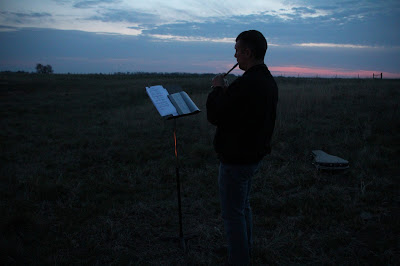
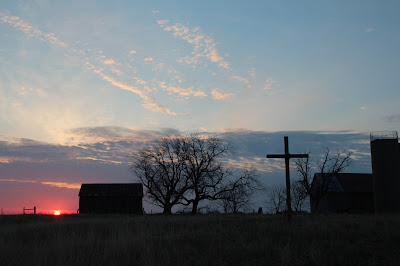
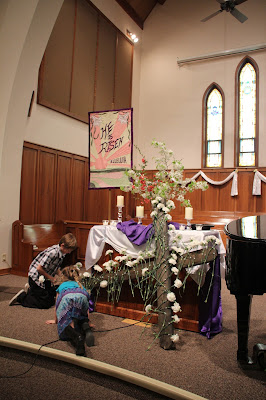
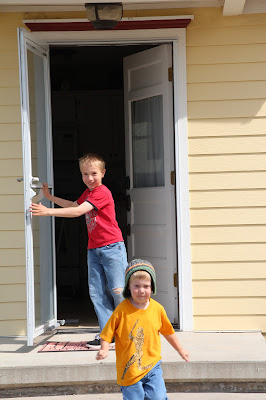
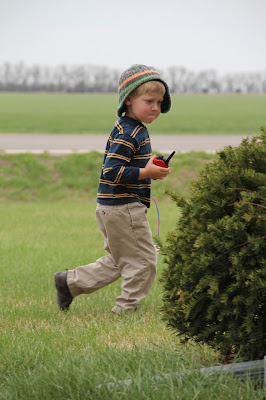
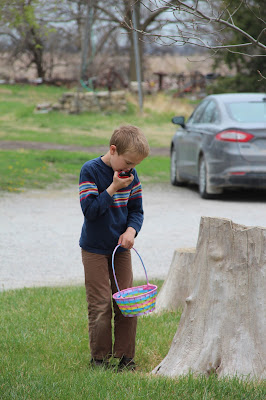
Spring in the prairie is a bit of an odd thing this year. Here and there, near ditches and creeks, a short, soft blanket of lush green grass covers the ground. A few feet away, patches of green are visible between the brown shoots of last year s grass. Some trees are already turning green, purple, red, and white, while others stand still and brown, stubbornly insisting that spring is not here yet. To look at the thermometer may not be much guide either; two days after the temperature was nearly 90, we woke to see a dusting of snow on the ground. It s been dry, terribly try in Kansas. Grass next to a gravel driveway or road often has a chalkish layer of dust on it, kicked up by passing cars or even a stiff wind. The earth thirsts. It is somehow fitting to celebrate Easter, that spring holiday, in the midst of the dry ground, to remember that water is not the only thing that can quench thirst. Easter morning began sleepily, as we got up early to head to a sunrise service. It was in a pasture just outside a small Kansas town, and we gathered there at about 6:15, wearing only light jackets against the breeze. A fire was burning, and there was water on hand to quickly douse any grass that caught first that wasn t supposed to and it was occasionally used. I was doing the prelude for the service, playing on my penny whistle. I enjoyed being able to do that, and was glad that the wind was calm enough that it didn t interfere too much with the music. We sang some hymns, listened to some Bible readings, and just stood in silence, listening to the crackle of the fire, some country dogs playing, and watching the sky to the east transform as the sun came up. Then it was on to church for breakfast, and a break before the Easter service the pipe organ ringing, piano playing with it, and deep trombone and full sanctuary of people singing our 4-part Easter hymns celebrating the day. Laura had the idea of pinning carnations onto the cross, and we got to watch everyone come up and add theirs. Jacob and Oliver enjoyed the sunrise service. They decided they would keep a watchful eye on the first and the dogs, they enjoyed muffins at breakfast and playing in the church after that. But if you are 4 or 7, what is Easter without an Easter egg hunt? And they got in several. Laura and I hid some eggs around the yard. Jacob asked me to use a radio to tell them when the eggs were ready. Here they are, bounding out the door to begin the hunt! And, of course, if you are 4 or 7 and have a geek for a dad, you will naturally think to bring radios with you to the next hunt. To tell your brother what you re finding, of course. It was a good weekend, and in fact, Jacob even volunteered to put up a wet floor sign after he spilled some water: On the last car ride of the day, Jacob decided he would write a story about his Easter. He decided he would publish a big book, and be a famous author and make other children happy. Oliver, of course, decided he needed an Easter story also. We couldn t very well publish a book in the car, but I did manage to use my phone to capture their stories. It s been a long and busy week, but there is much to be joyful about, even when tired.

Matthew Garrett: Home entertainment implementations are pretty appalling

I picked up a Panasonic BDT-230 a couple of months ago. Then I discovered that even though it appeared fairly straightforward to make it DVD region free (I have a large pile of PAL region 2 DVDs), the US models refuse to play back PAL content. We live in an era of software-defined functionality. While Panasonic could have designed a separate hardware SKU with a hard block on PAL output, that would seem like unnecessary expense. So, playing with the firmware seemed like a reasonable start.

Panasonic provide a nice download site for firmware updates, so I grabbed the most recent and set to work. Binwalk found a squashfs filesystem, which was a good sign. Less good was the block at the end of the firmware with "RSA" written around it in large letters. The simple approach of hacking the firmware, building a new image and flashing it to the device didn't appear likely to work.

Which left dealing with the installed software. The BDT-230 is based on a Mediatek chipset, and like most (all?) Mediatek systems runs a large binary called "bdpprog" that spawns about eleventy billion threads and does pretty much everything. Runnings strings over that showed, well, rather a lot, but most promisingly included a reference to "/mnt/sda1/vudu/vudu.sh". Other references to /mnt/sda1 made it pretty clear that it was the mount point for USB mass storage. There were a couple of other constraints that had to be satisfied, but soon attempting to run Vudu was actually setting a blank root password and launching telnetd.

/acfg/config_file_global.txt was the next stop. This is a set of tokens and values with useful looking names like "IDX_GB_PTT_COUNTRYCODE". I tried changing the values, but unfortunately made a poor guess - on next reboot, the player had reset itself to DVD region 5, Blu Ray region C and was talking to me in Russian. More inconveniently, the Vudu icon had vanished and I couldn't launch a shell any more.

But where there's one obvious mechanism for running arbitrary code, there's probably another. /usr/local/bin/browser.sh contained the wonderful line:
export LD_PRELOAD=/mnt/sda1/bbb/libSegFault.so
, so then it was just a matter of building a library that hooked open() and launched inetd and dropping that into the right place, and then opening the browser.

This time I set the country code correctly, rebooted and now I can actually watch Monkey Dust again. Hurrah! But, at the same time, concerning. This software has been written without any concern for security, and it listens on the network by default. If it took me this little time to find two entirely independent ways to run arbitrary code on the device, it doesn't seem like a stretch to believe that there are probably other vulnerabilities that can be exploited with less need for physical access.

The depressing part of this is that there's no reason to believe that Panasonic are especially bad here - especially since a large number of vendors are shipping much the same Mediatek code, and so probably have similar (if not identical) issues. The future is made up of network-connected appliances that are using your electricity to mine somebody else's Dogecoin. Our nightmarish dystopia may be stranger than expected.

comment count unavailable comments

20 April 2014

Russell Coker: Sociological Images 2012

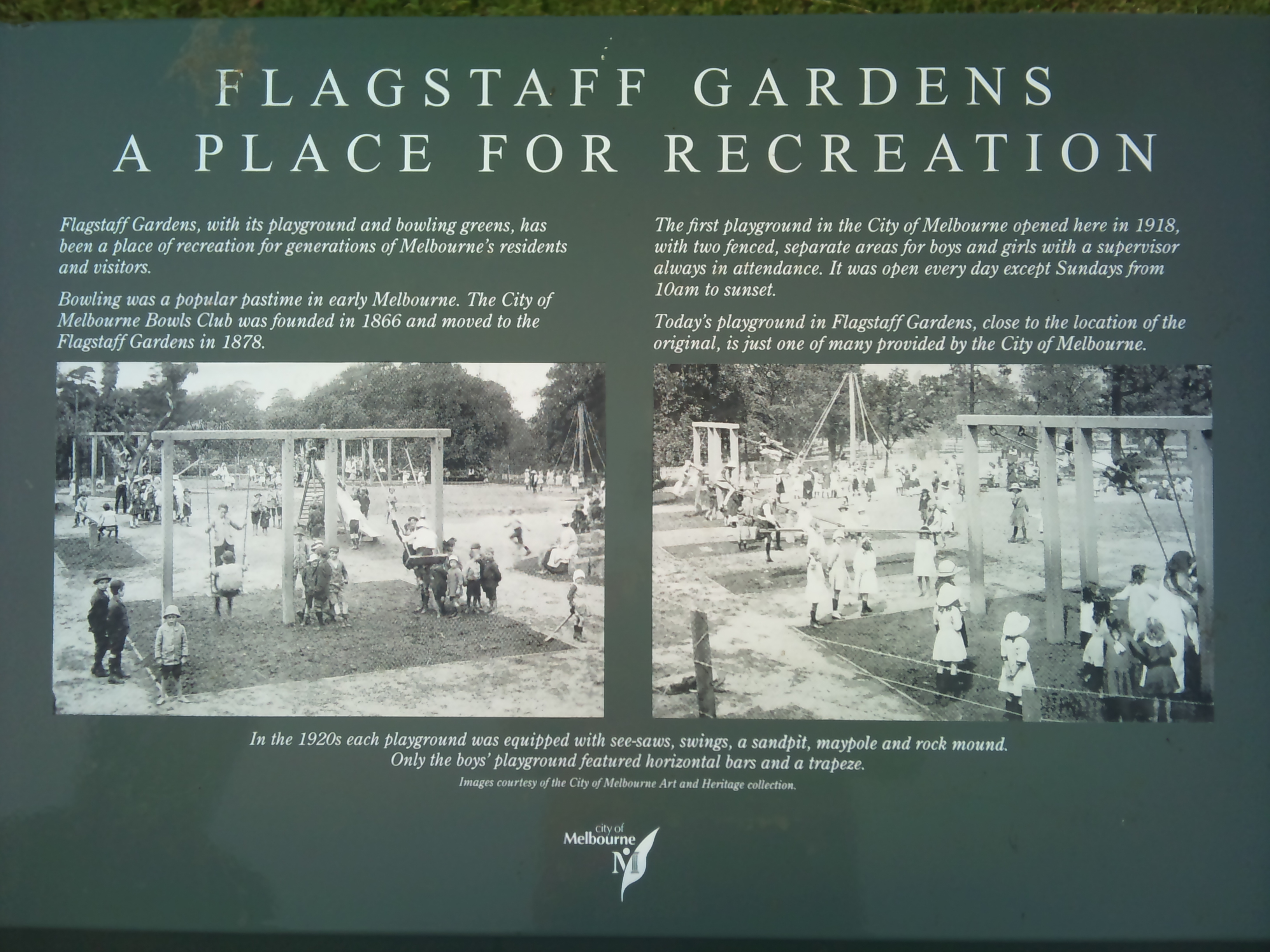
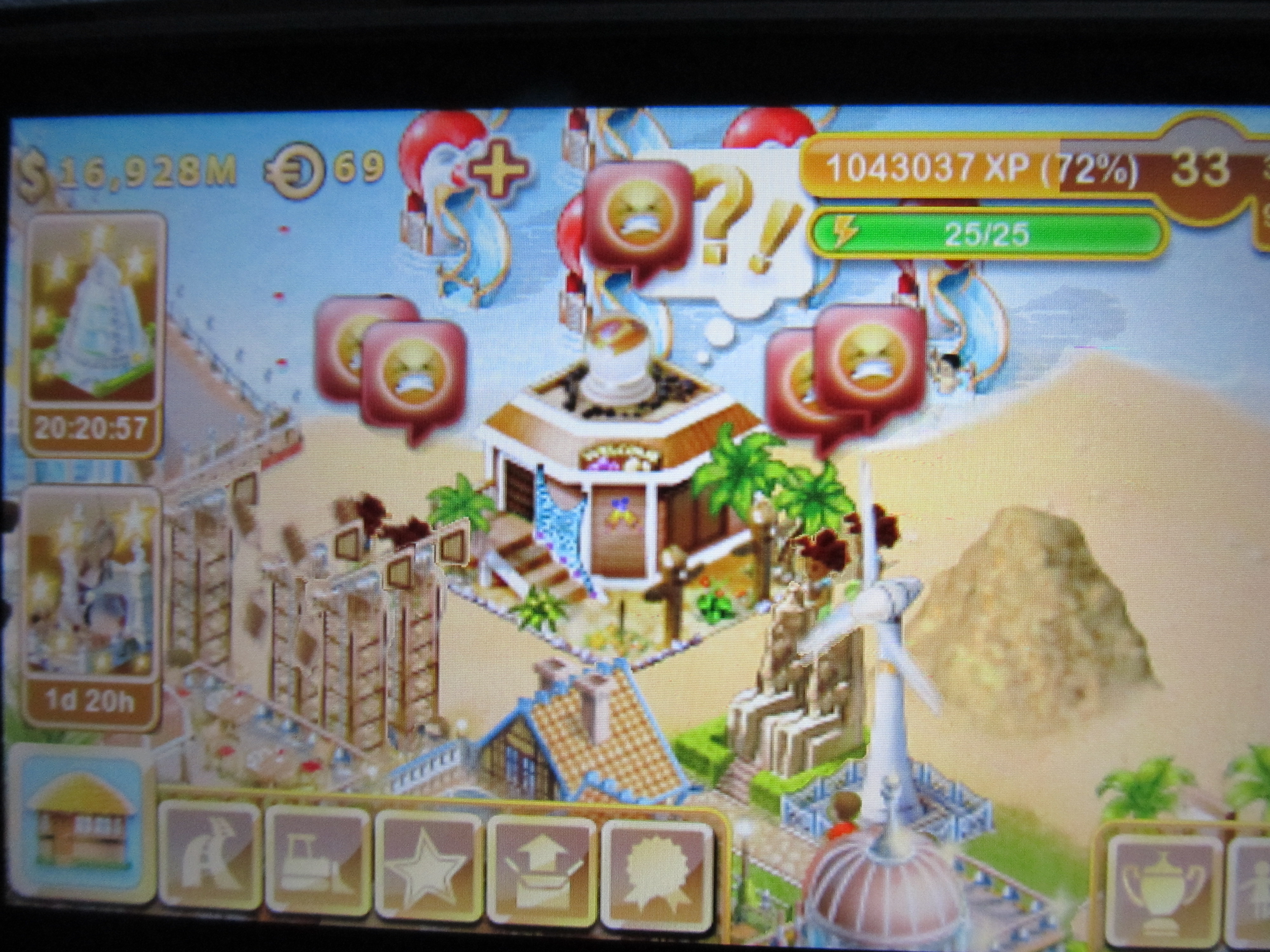
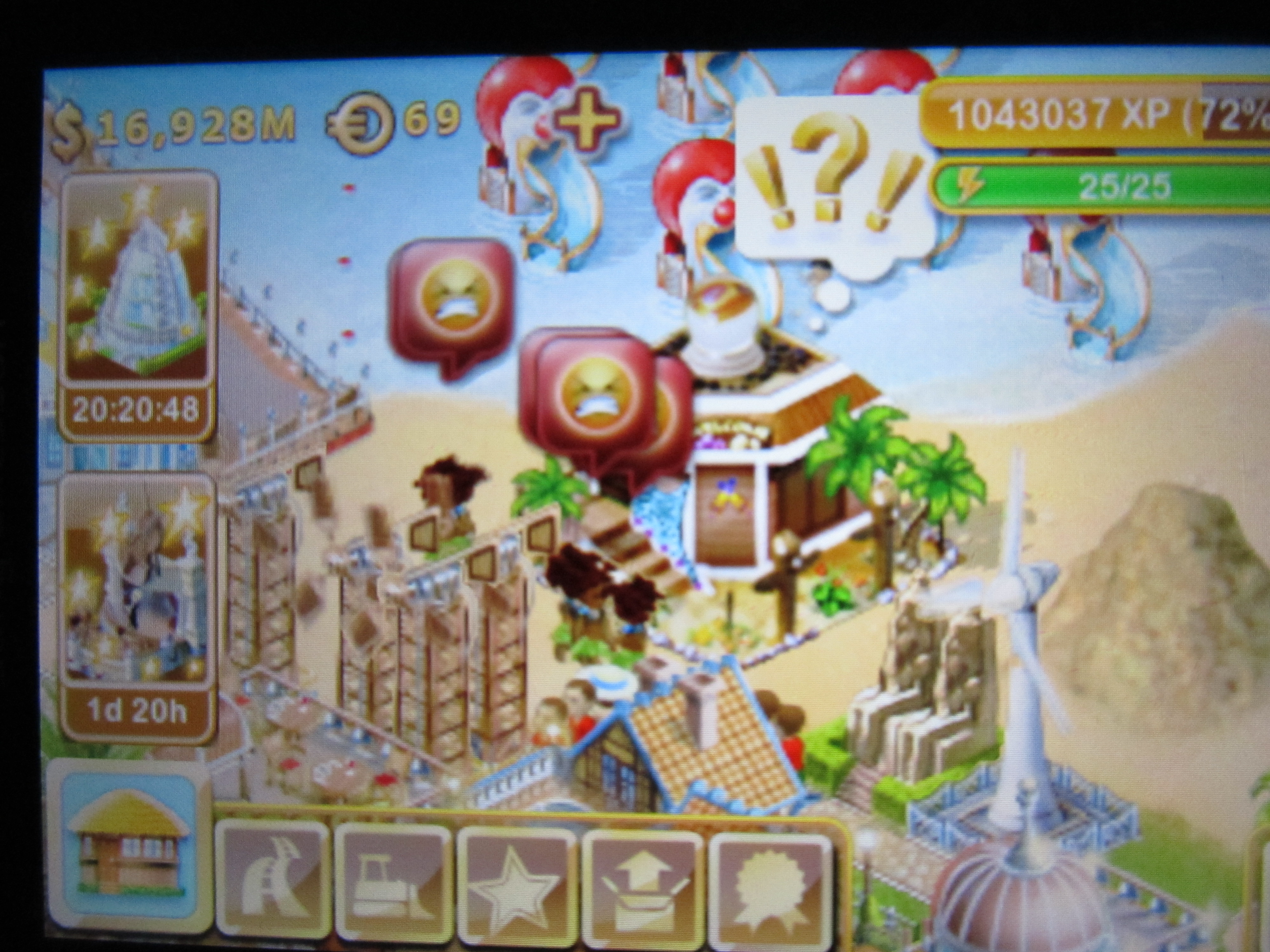
In 2011 I wrote a post that was inspired by the Sociological Images blog [1]. After some delay here I ve written another one. I plan to continue documenting such things. Playground gender segregated playground in 1918 In 2011 I photographed a plaque at Flagstaff Gardens in Melbourne. It shows a picture of the playground in 1918 with segregated boys and girls sections. It s interesting that the only difference between the two sections is that the boys have horizontal bars and a trapeze. Do they still have gender segregated playgrounds anywhere in Australia? If so what is the difference in the sections? Aborigines The Android game Paradise Island [2] has a feature where you are supposed to stop Aborigines from stealing, it plays on the old racist stereotypes about Aborigines which are used to hide the historical record that it s always been white people stealing from the people that they colonise. Angry face icons over AboriginesAborigines described as thieves There is also another picture showing the grass skirts. Nowadays the vast majority of Aborigines don t wear such clothing, the only time they do is when doing some sort of historical presentation for tourists. I took those pictures in 2012, but apparently the game hasn t changed much since then. Lemonade lemonade flavored fizzy drink Is lemonade a drink or a flavour? Most people at the party where I took the above photo regard lemonade as a drink and found the phrase Lemonade Flavoured Soft Drink strange when it was pointed out to them. Incidentally the drink on the right tastes a bit like the US version of lemonade (which is quite different from the Australian version). For US readers, the convention in Australia is that lemonade has no flavor of lemons. Not Sweet maybe gender queer people on bikes In 2012 an apple cider company made a huge advertising campaign featuring people who might be gender queer, above is a picture of a bus stop poster and there were also TV ads. The adverts gave no information at all about what the drink might taste like apart from not being as sweet as you think . So it s basically an advertising campaign with no substance other than a joke about people who don t conform to gender norms. Also it should be noted that some women naturally grow beards and have religious reasons for not shaving [3]. Episode 2 of the TV documentary series Am I Normal has an interesting interview of a woman with a beard. Revolution communist revolution Schweppes drinks A violent political revolution is usually a bad thing, using such revolutions to advertise sugar drinks seems like a bad idea. But it seems particularly interesting to note the different attitudes to such things in various countries. In 2012 Schweppes in Australia ran a marketing campaign based on imagery related to a Communist revolution (the above photo was taken at Southern Cross station in Melbourne), I presume that Schweppes in the US didn t run that campaign. I wonder whether global media will stop such things, presumably that campaign has the potential to do more harm in the US than good in Australia. Racist Penis Size Joke at Southbank racist advert in Southbank paper The above advert was in a free newspaper at Southbank in 2012. Mini Movers thought that this advert was a good idea and so did the management of Southbank who approved the advert for their paper. Australia is so racist that people don t even realise they are being racist.

19 April 2014

Russell Coker: Swap Space and SSD

In 2007 I wrote a blog post about swap space [1]. The main point of that article was to debunk the claim that Linux needs a swap space twice as large as main memory (in summary such advice is based on BSD Unix systems and has never applied to Linux and that most storage devices aren t fast enough for large swap). That post was picked up by Barrapunto (Spanish Slashdot) and became one of the most popular posts I ve written [2]. In the past 7 years things have changed. Back then 2G of RAM was still a reasonable amount and 4G was a lot for a desktop system or laptop. Now there are even phones with 3G of RAM, 4G is about the minimum for any new desktop or laptop, and desktop/laptop systems with 16G aren t that uncommon. Another significant development is the use of SSDs which dramatically improve speed for some operations (mainly seeks). As SATA SSDs for desktop use start at about $110 I think it s safe to assume that everyone who wants a fast desktop system has one. As a major limiting factor in swap use is the seek performance of the storage the use of SSDs should allow greater swap use. My main desktop system has 4G of RAM (it s an older Intel 64bit system and doesn t support more) and has 4G of swap space on an Intel SSD. My work flow involves having dozens of Chromium tabs open at the same time, usually performance starts to drop when I get to about 3.5G of swap in use. While SSD generally has excellent random IO performance the contiguous IO performance often isn t much better than hard drives. My Intel SSDSC2CT12 300i 128G can do over 5000 random seeks per second but for sustained contiguous filesystem IO can only do 225M/s for writes and 274M/s for reads. The contiguous IO performance is less than twice as good as a cheap 3TB SATA disk. It also seems that the performance of SSDs aren t as consistent as that of hard drives, when a hard drive delivers a certain level of performance then it can generally do so 24*7 but a SSD will sometimes reduce performance to move blocks around (the erase block size is usually a lot larger than the filesystem block size). It s obvious that SSDs allow significantly better swap performance and therefore make it viable to run a system with more swap in use but that doesn t allow unlimited swap. Even when using programs like Chromium (which seems to allocate huge amounts of RAM that aren t used much) it doesn t seem viable to have swap be much bigger than 4G on a system with 4G of RAM. Now I could buy another SSD and use two swap spaces for double the overall throughput (which would still be cheaper than buying a PC that supports 8G of RAM), but that still wouldn t solve all problems. One issue I have been having on occasion is BTRFS failing to allocate kernel memory when managing snapshots. I m not sure if this would be solved by adding more RAM as it could be an issue of RAM fragmentation I won t file a bug report about this until some of the other BTRFS bugs are fixed. Another problem I have had is when running Minecraft the driver for my ATI video card fails to allocate contiguous kernel memory, this is one that almost certainly wouldn t be solved by just adding more swap but might be solved if I tweaked the kernel to be more aggressive about swapping out data. In 2007 when using hard drives for swap I found that the maximum space that could be used with reasonable performance for typical desktop operations was something less than 2G. Now with a SSD the limit for usable swap seems to be something like 4G on a system with 4G of RAM. On a system with only 2G of RAM that might allow the system to be usable with swap being twice as large as RAM, but with the amounts of RAM in modern PCs it seems that even SSD doesn t allow using a swap space larger than RAM for typical use unless it s being used for hibernation. Conclusion It seems that nothing has significantly changed in the last 7 years. We have more RAM, faster storage, and applications that are more memory hungry. The end result is that swap still isn t very usable for anything other than hibernation if it s larger than RAM. It would be nice if application developers could stop increasing the use of RAM. Currently it seems that the RAM requirements for Linux desktop use are about 3 years behind the RAM requirements for Windows. This is convenient as a PC is fully depreciated according to the tax office after 3 years. This makes it easy to get 3 year old PCs cheaply (or sometimes for free as rubbish) which work really well for Linux. But it would be nice if we could be 4 or 5 years behind Windows in terms of hardware requirements to reduce the hardware requirements for Linux users even further.

Thomas Goirand: OpenStack 2014.1, aka Icehouse, is out

The new version of OpenStack is out, and I have just finished uploading it all into Debian Sid. With a total of 38 packages that I uploaded yesterday (which was exhausting!), most, if not all, were only moving from Experimental to Sid with only tiny updates, and this represents the achievement of 6 months of packaging work. The new feature list is impressive, and I would like to highlight some part of it: For the moment, I haven t packaged Sahara (eg: Hadoop as a service), but it might come later as a customer of us might require it. There s a lot less unit tests issues in the packages I uploaded to Sid: all SQLAlchemy issues have been dealt with. I wasn t confident with the Havana release that Sid / Testing would be a good environment for OpenStack, but this time with Icehouse, I think it should be much better. Please test this brand new release and report issues on the BTS. As always, the packages are available also as Wheezy backports through the usual channels (see the official install guide).

18 April 2014

Thorsten Glaser: Stay off my computer, puppet!

I was out, seeing something that wasn t there yet when I was at school (the web was not ubiquitous, back then), and decided to have a look:
pageok

Ugh. Oh well, PocketIE doesn t provide a View Source thingy, so I asked Natureshadow (who got the same result on his Android, and had no View Source either apparently, so he used cURL to see it). We saw (here, re-enacted using ftp(1)):

	tg@blau:~ $ ftp -Vo - http://www.draitschbrunnen.de/
	<!-- pageok -->
	<!-- managed by puppet -->
	<html>
	<pre>pageok</pre>
	</html>
 

This is the final straw after puppet managed to trash a sudoers(5) at work (I warned people to not introduce it) now it breaks websites.

(Of course, tools are useful, but at best to the skill of their users. Merely dumbly copying recipes from the net without any understanding just makes debugging harder for those of us with skills.) ObQuestion: Does anyone have a transcript (into UTF-8) and a translation for the other half of the OpenBSD 2.8 poster? (I get asked this regularily.)
Update: One person sent me the Kanji and Kana for it in UTF-8 , and they and one more person told me it s Hands off my machine! or Don t lay a hand on my machine! . Now I m not studying Japanese, but it LGTM in FixedMisc [MirOS], and JMdict from MirPorts says: ore no mashin ni te (w)o dasu na (roughly: my machine; particle; hands; particle; put out; prohibition) Thanks all, now I know what to tell visitors who wonder about that poster on my wall. ObTip: I can install a few hundred Debian VMs at work manually before the effort needed to automate d-i would amortise. So I decided not to. Coworkers are shocked. I keep flexibility (can decide to have machines differ), and the boss accepts my explanations. Think before doing automation just for the sake of automation!

16 April 2014

Andrew Pollock: [life] Day 78: Alginate, dragon boats and relatives

I ordered some alginate the other day, and it arrived yesterday, but we were out, so I had to pick it up from the post office this morning. Anshu and I picked it up before Zoe was dropped off. We had a couple of attempts at making some, but didn't quite get the ratios or the quantity right, and we were too slow, so we'll have to try again. The plan is to try and make a cast of Zoe's hand, since we were messing around with plaster of Paris recently. I've found a good Instructable to try and follow. Nana and her dragon boating team were competing in the Australian Dragon Boat Championships over Easter, and her first race was today. It also ended up that today was the best day to try and go and watch, so when she called to say her first race would be around noon, I quickly decided we should jump in the car and head up to Kawana Waters. We abandoned the alginate, and I slapped together a picnic lunch for Zoe and I, and we bid Anshu farewell and drove up. Zoe's fever seemed to break yesterday afternoon after Sarah picked her up, and she slept well, but despite all that, she napped in the car on the way up, which was highly unusual, but helped pass the time. She woke up when we arrived. I managed to get a car park not too far from the finish line, and we managed to find Nana, whose team was about the enter the marshaling area. Her boat was closest to the shore we were watching from, and her boat came second in their qualifying round for the 200 metre race, meaning they went straight through to the semi-finals. The semi-finals were going to be much later, and I wanted to capitalise on the fact that we were going to have to drive right past my Mum and Dad's place on the way home to try and see my sister and her family, since we missed them on Monday. We headed back after lunch and a little bit of splashing around in the lake, and ended up staying for dinner at Mum and Dad's. Zoe had a great time catching up with her cousin Emma, and fooling around with Grandpa and Uncle Michael. She got to bed a little bit late by the time we got home, but I'm hopeful she'll sleep well tonight.

15 April 2014

B lint R czey: Proposing amd64-hardened architecture for Debian

Facing last week s Heartbleed bug the need for improving the security of our systems became more apparent than usually. In Debian there are widely used methods for Hardening packages at build time and guidelines for improving the default installations security. Employing such methods usually come at an expense, for example slower code execution of binaries due to additional checks or additional configuration steps when setting up a system. Balancing between usability and security Debian chose an approach which would satisfy the most users by using C/C++ features which only slightly decrease execution speed of built binaries and by using reasonable defaults in package installations. All the architectures supported by Debian aims using the same methods for enhancing security but it does not have to stay the same way. Amd64 is the most widely used architecture of Debian according to popcon and amd64 hardware comes with powerful CPU-s. I think there would be a significant amount of people (being one of them :-)) who would happily use a version of Debian with more security features enabled by default sacrificing some CPU power and installing and setting up additional packages. My proposal for serving those security-focused users is introducing a new architecture targeting amd64 hardware, but with more security related C/C++ features turned on for every package (currently hardening has to be enabled by the maintainers in some way) through compiler flags as a start. Introducing the new architecture would also let package maintainers enabling additional dependencies and build rules selectively for the new architecture improving the security further. On the users side the advantage of having a separate security enhanced architecture instead of a Debian derivative is the potential of installing a set of security enhanced packages using multiarch. You could have a fast amd64 installation as a base and run Apache or any other sensitive server from the amd64-hardened packages! I have sent the proposal for discussion to debian-dev, too. Please join the discussion there or leave a comment here. Update: Many of you wondered if amd64-hardened could have prevented the exploitation of the Heartbleed vulnerability. I have posted a proof of concept to show that using -fsanitize=address and disabling custom freelist would have protected systems against stealing data using the exploits. Disabling the custom freelist-like solutions and enabling-fsanitize=address would be part of amd64-hardened to make memory protection techniques work effectively thus I think if we had this architecture ready at the beginning of April, it would have been immune to Heartbleed.

Colin Watson: Porting GHC: A Tale of Two Architectures

We had some requests to get GHC (the Glasgow Haskell Compiler) up and running on two new Ubuntu architectures: arm64, added in 13.10, and ppc64el, added in 14.04. This has been something of a saga, and has involved rather more late-night hacking than is probably good for me. Book the First: Recalled to a life of strange build systems You might not know it from the sheer bulk of uploads I do sometimes, but I actually don't speak a word of Haskell and it's not very high up my list of things to learn. But I am a pretty experienced build engineer, and I enjoy porting things to new architectures: I'm firmly of the belief that breadth of architecture support is a good way to shake out certain categories of issues in code, that it's worth doing aggressively across an entire distribution, and that, even if you don't think you need something now, new requirements have a habit of coming along when you least expect them and you might as well be prepared in advance. Furthermore, it annoys me when we have excessive noise in our build failure and proposed-migration output and I often put bits and pieces of spare time into gardening miscellaneous problems there, and at one point there was a lot of Haskell stuff on the list and it got a bit annoying to have to keep sending patches rather than just fixing things myself, and ... well, I ended up as probably the only non-Haskell-programmer on the Debian Haskell team and found myself fixing problems there in my free time. Life is a bit weird sometimes. Bootstrapping packages on a new architecture is a bit of a black art that only a fairly small number of relatively bitter and twisted people know very much about. Doing it in Ubuntu is specifically painful because we've always forbidden direct binary uploads: all binaries have to come from a build daemon. Compilers in particular often tend to be written in the language they compile, and it's not uncommon for them to build-depend on themselves: that is, you need a previous version of the compiler to build the compiler, stretching back to the dawn of time where somebody put things together with a big magnet or something. So how do you get started on a new architecture? Well, what we do in this case is we construct a binary somehow (usually involving cross-compilation) and insert it as a build-dependency for a proper build in Launchpad. The ability to do this is restricted to a small group of Canonical employees, partly because it's very easy to make mistakes and partly because things like the classic "Reflections on Trusting Trust" are in the backs of our minds somewhere. We have an iron rule for our own sanity that the injected build-dependencies must themselves have been built from the unmodified source package in Ubuntu, although there can be source modifications further back in the chain. Fortunately, we don't need to do this very often, but it does mean that as somebody who can do it I feel an obligation to try and unblock other people where I can. As far as constructing those build-dependencies goes, sometimes we look for binaries built by other distributions (particularly Debian), and that's pretty straightforward. In this case, though, these two architectures are pretty new and the Debian ports are only just getting going, and as far as I can tell none of the other distributions with active arm64 or ppc64el ports (or trivial name variants) has got as far as porting GHC yet. Well, OK. This was somewhere around the Christmas holidays and I had some time. Muggins here cracks his knuckles and decides to have a go at bootstrapping it from scratch. It can't be that hard, right? Not to mention that it was a blocker for over 600 entries on that build failure list I mentioned, which is definitely enough to make me sit up and take notice; we'd even had the odd customer request for it. Several attempts later and I was starting to doubt my sanity, not least for trying in the first place. We ship GHC 7.6, and upgrading to 7.8 is not a project I'd like to tackle until the much more experienced Haskell folks in Debian have switched to it in unstable. The porting documentation for 7.6 has bitrotted more or less beyond usability, and the corresponding documentation for 7.8 really isn't backportable to 7.6. I tried building 7.8 for ppc64el anyway, picking that on the basis that we had quicker hardware for it and didn't seem likely to be particularly more arduous than arm64 (ho ho), and I even got to the point of having a cross-built stage2 compiler (stage1, in the cross-building case, is a GHC binary that runs on your starting architecture and generates code for your target architecture) that I could copy over to a ppc64el box and try to use as the base for a fully-native build, but it segfaulted incomprehensibly just after spawning any child process. Compilers tend to do rather a lot, especially when they're built to use GCC to generate object code, so this was a pretty serious problem, and it resisted analysis. I poked at it for a while but didn't get anywhere, and I had other things to do so declared it a write-off and gave up. Book the Second: The golden thread of progress In March, another mailing list conversation prodded me into finding a blog entry by Karel Gardas on building GHC for arm64. This was enough to be worth another look, and indeed it turned out that (with some help from Karel in private mail) I was able to cross-build a compiler that actually worked and could be used to run a fully-native build that also worked. Of course this was 7.8, since as I mentioned cross-building 7.6 is unrealistically difficult unless you're considerably more of an expert on GHC's labyrinthine build system than I am. OK, no problem, right? Getting a GHC at all is the hard bit, and 7.8 must be at least as capable as 7.6, so it should be able to build 7.6 easily enough ... Not so much. What I'd missed here was that compiler engineers generally only care very much about building the compiler with older versions of itself, and if the language in question has any kind of deprecation cycle then the compiler itself is likely to be behind on various things compared to more typical code since it has to be buildable with older versions. This means that the removal of some deprecated interfaces from 7.8 posed a problem, as did some changes in certain primops that had gained an associated compatibility layer in 7.8 but nobody had gone back to put the corresponding compatibility layer into 7.6. GHC supports running Haskell code through the C preprocessor, and there's a __GLASGOW_HASKELL__ definition with the compiler's version number, so this was just a slog tracking down changes in git and adding #ifdef-guarded code that coped with the newer compiler (remembering that stage1 will be built with 7.8 and stage2 with stage1, i.e. 7.6, from the same source tree). More inscrutably, GHC has its own packaging system called Cabal which is also used by the compiler build process to determine which subpackages to build and how to link them against each other, and some crucial subpackages weren't being built: it looked like it was stuck on picking versions from "stage0" (i.e. the initial compiler used as an input to the whole process) when it should have been building its own. Eventually I figured out that this was because GHC's use of its packaging system hadn't anticipated this case, and was selecting the higher version of the ghc package itself from stage0 rather than the version it was about to build for itself, and thus never actually tried to build most of the compiler. Editing ghc_stage1_DEPS in ghc/stage1/package-data.mk after its initial generation sorted this out. One late night building round and round in circles for a while until I had something stable, and a Debian source upload to add basic support for the architecture name (and other changes which were a bit over the top in retrospect: I didn't need to touch the embedded copy of libffi, as we build with the system one), and I was able to feed this all into Launchpad and watch the builders munch away very satisfyingly at the Haskell library stack for a while. This was all interesting, and finally all that work was actually paying off in terms of getting to watch a slew of several hundred build failures vanish from arm64 (the final count was something like 640, I think). The fly in the ointment was that ppc64el was still blocked, as the problem there wasn't building 7.6, it was getting a working 7.8. But now I really did have other much more urgent things to do, so I figured I just wouldn't get to this by release time and stuck it on the figurative shelf. Book the Third: The track of a bug Then, last Friday, I cleared out my urgent pile and thought I'd have another quick look. (I get a bit obsessive about things like this that smell of "interesting intellectual puzzle".) slyfox on the #ghc IRC channel gave me some general debugging advice and, particularly usefully, a reduced example program that I could use to debug just the process-spawning problem without having to wade through noise from running the rest of the compiler. I reproduced the same problem there, and then found that the program crashed earlier (in stg_ap_0_fast, part of the run-time system) if I compiled it with +RTS -Da -RTS. I nailed it down to a small enough region of assembly that I could see all of the assembly, the source code, and an intermediate representation or two from the compiler, and then started meditating on what makes ppc64el special. You see, the vast majority of porting bugs come down to what I might call gross properties of the architecture. You have things like whether it's 32-bit or 64-bit, big-endian or little-endian, whether char is signed or unsigned, that sort of thing. There's a big table on the Debian wiki that handily summarises most of the important ones. Sometimes you have to deal with distribution-specific things like whether GL or GLES is used; often, especially for new variants of existing architectures, you have to cope with foolish configure scripts that think they can guess certain things from the architecture name and get it wrong (assuming that powerpc* means big-endian, for instance). We often have to update config.guess and config.sub, and on ppc64el we have the additional hassle of updating libtool macros too. But I've done a lot of this stuff and I'd accounted for everything I could think of. ppc64el is actually a lot like amd64 in terms of many of these porting-relevant properties, and not even that far off arm64 which I'd just successfully ported GHC to, so I couldn't be dealing with anything particularly obvious. There was some hand-written assembly which certainly could have been problematic, but I'd carefully checked that this wasn't being used by the "unregisterised" (no specialised machine dependencies, so relatively easy to port but not well-optimised) build I was using. A problem around spawning processes suggested a problem with SIGCHLD handling, but I ruled that out by slowing down the first child process that it spawned and using strace to confirm that SIGSEGV was the first signal received. What on earth was the problem? From some painstaking gdb work, one thing I eventually noticed was that stg_ap_0_fast's local stack appeared to be being corrupted by a function call, specifically a call to the colourfully-named debugBelch. Now, when IBM's toolchain engineers were putting together ppc64el based on ppc64, they took the opportunity to fix a number of problems with their ABI: there's an OpenJDK bug with a handy list of references. One of the things I noticed there was that there were some stack allocation optimisations in the new ABI, which affected functions that don't call any vararg functions and don't call any functions that take enough parameters that some of them have to be passed on the stack rather than in registers. debugBelch takes varargs: hmm. Now, the calling code isn't quite in C as such, but in a related dialect called "Cmm", a variant of C-- (yes, minus), that GHC uses to help bridge the gap between the functional world and its code generation, and which is compiled down to C by GHC. When importing C functions into Cmm, GHC generates prototypes for them, but it doesn't do enough parsing to work out the true prototype; instead, they all just get something like extern StgFunPtr f(void);. In most architectures you can get away with this, because the arguments get passed in the usual calling convention anyway and it all works out, but on ppc64el this means that the caller doesn't generate enough stack space and then the callee tries to save its varargs onto the stack in an area that in fact belongs to the caller, and suddenly everything goes south. Things were starting to make sense. Now, debugBelch is only used in optional debugging code; but runInteractiveProcess (the function associated with the initial round of failures) takes no fewer than twelve arguments, plenty to force some of them onto the stack. I poked around the GCC patch for this ABI change a bit and determined that it only optimised away the stack allocation if it had a full prototype for all the callees, so I guessed that changing those prototypes to extern StgFunPtr f(); might work: it's still technically wrong, not least because omitting the parameter list is an obsolescent feature in C11, but it's at least just omitting information about the parameter list rather than actively lying about it. I tweaked that and ran the cross-build from scratch again. Lo and behold, suddenly I had a working compiler, and I could go through the same build-7.6-using-7.8 procedure as with arm64, much more quickly this time now that I knew what I was doing. One upstream bug, one Debian upload, and several bootstrapping builds later, and GHC was up and running on another architecture in Launchpad. Success! Epilogue There's still more to do. I gather there may be a Google Summer of Code project in Linaro to write proper native code generation for GHC on arm64: this would make things a good deal faster, but also enable GHCi (the interpreter) and Template Haskell, and thus clear quite a few more build failures. Since there's already native code generation for ppc64 in GHC, getting it going for ppc64el would probably only be a couple of days' work at this point. But these are niceties by comparison, and I'm more than happy with what I got working for 14.04. The upshot of all of this is that I may be the first non-Haskell-programmer to ever port GHC to two entirely new architectures. I'm not sure if I gain much from that personally aside from a lot of lost sleep and being considered extremely strange. It has, however, been by far the most challenging set of packages I've ported, and a fascinating trip through some odd corners of build systems and undefined behaviour that I don't normally need to touch.

14 April 2014

Richard Hartmann: git-annex corner case: Changing commit messages retroactively and after syncing

This is half a blog post and half a reminder for my future self. So let's say you used the following commands:
git add foo
git annex add bar
git annex sync
# move to different location with different remotes available
git add quux
git annex add quuux
git annex sync

what I wanted to happen was to simply sync the already committed stuff to the other remotes. What happened instead was git annex sync's automagic commit feature (which you can not disable, it seems) doing its job: Commit what was added earlier and use "git-annex automatic sync" as commit message. This is not a problem in and as of itself, but as this is my my master annex and as I managed to maintain clean commit messages for the last few years, I felt the need to clean this mess up. Changing old commit messages is easy:
git rebase --interactive HEAD~3

pick the r option for "reword" and amend the two commit messages. I did the same on my remote and all the branches I could find with git branch -a. Problem is, git-annex pulls in changes from refs which are not shown as branches; run git annex sync and back are the old commits along with a merge commit like an ugly cherry on top. Blegh. I decided to leave my comfort zone and ended up with the following:
# always back up before poking refs
git clone --mirror repo backup
git reset --hard 1234
git show-ref   grep master
# for every ref returned, do:
  git update-ref $ref 1234

rinse repeat for every remote, git annex sync, et voil . And yes, I avoided using an actual loop on purpose; sometimes, doing things slowly and by hand just feels safer. For good measure, I am running
git fsck && git annex fsck

on all my remotes now, but everything looks good up to now.

Chris Lamb: Race report: Cambridge Duathlon 2014

(This is my first race of the 2014 season.)


I had entered this race in 2013 and found it was effective for focusing winter training. As triathlons do not typically start until May in the UK, scheduling earlier races can be motivating in the colder winter months. I didn't have any clear goals for the race except to blow out the cobwebs and improve on my 2013 time. I couldn't set reasonable or reliable target times after considerable "long & slow" training in the off-season but I did want to test some new equipment and stategies, especially race pacing with a power meter, but also a new wheelset, crankset and helmet. Preparation was both accidentally and deliberately compromised: I did very little race-specific training as my season is based around an entirely different intensity of race, but compounding this I was confined to bed the weekend before. Sleep was acceptable in the preceding days and I felt moderately fresh on race morning. Nutrition-wise, I had porridge and bread with jam for breakfast, a PowerGel before the race, 750ml of PowerBar Perform on the bike along with a "Hydro" PowerGel with caffeine at approximately 30km.
Run 1 (7.5km) A few minutes before the start my race number belt the only truly untested equipment that day refused to tighten. However, I decided that once the race began I would either ignore it or even discard it, risking disqualification. Despite letting everyone go up the road, my first km was still too fast so I dialed down the effort, settling into a "10k" pace and began overtaking other runners. The Fen winds and drag-strip uphill from 3km provided a bit of pacing challenge for someone used to shelter and shorter hills but I kept a metered effort through into transition.
Time
33:01 (4:24/km, T1: 00:47) Last year: 37:47 (5:02/km)
Bike (40km) Although my 2014 bike setup features a power meter, I had not yet had the chance to perform an FTP test outdoors. I was thus was not able to calculate a definitive target power for the bike leg. However, data from my road bike suggested I set a power ceiling of 250W on the longer hills. This was extremely effective in avoiding going "into the red" and compromising the second run. This lends yet more weight to the idea that a power meter in multisport events is "almost like cheating". I was not entirely comfortable with my bike position: not only were my thin sunglasses making me raise my head more than I needed to, I found myself creeping forward onto the nose of my saddle. This is sub-optimal, even if only considering that I am not training in that position. Overall, the bike was uneventful with the only memorable moment provided by a wasp that got stuck between my head and a helmet vent. Coming into transition I didn't feel like I had really pushed myself that hard probably a good sign but the time difference from last year's bike leg (1:16:11) was a little underwhelming.
Time
1:10:45 (T2: 00:58)
Run 2 (7.5km) After leaving transition, my legs were extremely uncooperative and I had great difficulty in pacing myself in the first kilometer. Concentrating hard on reducing my cadence as well as using my rehearsed mental cue, I managed to settle down. The following 4 kilometers were a mental struggle rather than a physical one, modulo having to force a few burps to ease some discomfort, possibly from drinking too much or too fast on the bike. I had planned to "unload" as soon as I reached 6km but I didn't really have it in me. Whilst I am physiologically faster compared to last year, I suspect the lack of threshold-level running over the winter meant the mental component required for digging deep will require some coaxing to return. However, it is said that you have successfully paced a duathlon if the second run faster than the first. On this criterion, this was a success, but it would have been a bonus to have really felt completely completely drained at the end of the day, if only from a neo-Calvinist perspective.
Time
32:46 (4:22/km) / Last year: 38:10 (5:05/km)

Overall
Total time
2:18:19
A race that goes almost entirely to plan is a bit of a paradox there's certainly satisfaction in setting goals and hitting them without issue, but this is a gratification of slow-burning fire rather than the jubilation of a fireworks display. However, it was nice to learn that I managed to finish 5th in my age group despite this race attracting an extremely strong field: as an indicator, the age-group athlete finishing immediately before me was seven minutes faster and the overall winner finished in 1:54:53 (!). The race identified the following areas to work on:
  • Perform an outdoors FTP on my time-trial bike outdoors to develop an optimum power plan.
  • Do a few more brick runs, at least to re-acclimatise the feeling.
  • Schedule another bike fit.
Although not strictly race-related, I also need to find techniques to ensure transporting a bike on public transport is less stressful. (Full results & full 2014 race schedule)

Andrew Pollock: [life] Day 76: Dora + Fever

We had a bit of a rough night last night. I noticed Zoe was pretty hot when she had a nap yesterday after not really eating much lunch. She still had a mild fever after her nap, so I gave her some paracetamol (aka acetaminophen, that one weirded me out when I moved to the US) and called for a home doctor to check her ears out. Her ears were fine, but her throat was a little red. The doctor said it was probably a virus. Her temperature wasn't so high at bed time, so I skipped the paracetamol, and she went to bed fine. She did wake up at about 1:30am and it took me until 3am to get her back to bed. I think it was a combination of the fever and trying to phase out her white noise, but she just didn't want to sleep in her bed or her room. At 3am I admitted defeat and let her sleep with me. She had only a slightly elevated temperature this morning, and otherwise seemed in good spirits. We were supposed to go to a family lunch today, because my sister and brother are in town with their respective families, but I figured we'd skip that on account that Zoe may have still had something, and coupled with the poor night's sleep, I wasn't sure how much socialising she was going to be up for. My ear has still been giving me grief, and I had a home doctor check it yesterday as well, and he said the ear canal was 90% blocked. First thing this morning I called up to make an appointment with my regular doctor to try and get it flushed out. The earliest appointment I could get was 10:15am. So we trundled around the corner to my doctor after a very slow start to the day. I got my ear cleaned out and felt like a million bucks afterwards. We went to Woolworths to order an undecorated mud slab cake, so I can try doing a trial birthday cake. I've given up on trying to do the sitting minion, and significantly scaled back to just a flat minion slab cake. The should be ready tomorrow. The family thing was originally supposed to be tomorrow, and was only moved to today yesterday. My original plan had been to take Zoe to a free Dora the Explorer live show that was on in the Queen Street Mall. I decided to revert back to the original plan, but by this stage, it was too late to catch the 11am show, so the 1pm show was the only other option. We had a "quick" lunch at home, which involved Zoe refusing the eat the sandwich I made for her and me convincing her otherwise. Then I got a time-sensitive phone call from a friend, and once I'd finished dealing with that, there wasn't enough time to take any form of public transport and get there in time, so I decided to just drive in. We parked in the Myer Centre car park, and quickly made our way up to the mall, and made it there comfortably with 5 minutes to spare. The show wasn't anything much to phone home about. It was basically just 20 minutes of someone in a giant Dora suit acting out was was essentially a typical episode of Dora the Explorer, on stage, with a helper. Zoe started out wanting to sit on my lap, but made a few brief forays down to the "mosh pit" down the front with the other kids, dancing around. After the show finished, we had about 40 minutes to kill before we could get a photo with Dora, so we wandered around the Myer Centre. I let Zoe choose our destinations initially, and we browsed a cheap accessories store that was having a sale, and then we wandered downstairs to one of the underground bus station platforms. After that, we made our way up to Lincraft, and browsed. We bought a $5 magnifying glass, and I let Zoe do the whole transaction by herself. After that it was time to make our way back down for the photo. Zoe made it first in line, so we were in and out nice and quick. We got our photos, and they gave her a little activity book as well, which she thought was cool, and then we headed back down the car park. In my haste to park and get top side, I hadn't really paid attention to where we'd parked, and we came down via different elevators than we went up, so by the time I'd finally located the car, the exit gate was trying to extract an extra $5 parking out of me. Fortunately I was able to use the intercom at the gate and tell my sob story of being a nincompoop, and they let us out without further payment. We swung by the Valley to clear my PO box, and then headed home. Zoe spontaneously announced she'd had a fun day, so that was lovely. We only had about an hour and half to kill before Sarah was going to pick up Zoe, so we just mucked around. Zoe looked at stuff around the house with her magnifying glass. She helped me open my mail. We looked at some of the photos on my phone. Dayframe and a Chromecast is a great combination for that. We had a really lovely spell on the couch where we took turns to draw on her Magna Doodle. That was some really sweet time together. Zoe seemed really eager for her mother to arrive, and kept asking how much longer it was going to be, and going outside our unit's front door to look for her. Sarah finally arrived, and remarked that Zoe felt hot, and so I checked her temperature, and her fever had returned, so whatever she has she's still fighting off. I decided to do my Easter egg shopping in preparation for Sunday. A friend suggested this cool idea of leaving rabbit paw tracks all over the house in baby powder, and I found a template online and got that all ready to go. I had a really great yoga class tonight. Probably one of the best I've had in a while in terms of being able to completely clear my head. I'm looking forward to an uninterrupted night's sleep tonight.

Matthew Garrett: Real-world Secure Boot attacks

MITRE gave a presentation on UEFI Secure Boot at SyScan earlier this month. You should read the the presentation and paper, because it's really very good.

It describes a couple of attacks. The first is that some platforms store their Secure Boot policy in a run time UEFI variable. UEFI variables are split into two broad categories - boot time and run time. Boot time variables can only be accessed while in boot services - the moment the bootloader or kernel calls ExitBootServices(), they're inaccessible. Some vendors chose to leave the variable containing firmware settings available during run time, presumably because it makes it easier to implement tools for modifying firmware settings at the OS level. Unfortunately, some vendors left bits of Secure Boot policy in this space. The naive approach would be to simply disable Secure Boot entirely, but that means that the OS would be able to detect that the system wasn't in a secure state[1]. A more subtle approach is to modify the policy, such that the firmware chooses not to verify the signatures on files stored on fixed media. Drop in a new bootloader and victory is ensured.

But that's not a beautiful approach. It depends on the firmware vendor having made that mistake. What if you could just rewrite arbitrary variables, even if they're only supposed to be accessible in boot services? Variables are all stored in flash, connected to the chipset's SPI controller. Allowing arbitrary access to that from the OS would make it straightforward to modify the variables, even if they're boot time-only. So, thankfully, the SPI controller has some control mechanisms. The first is that any attempt to enable the write-access bit will cause a System Management Interrupt, at which point the CPU should trap into System Management Mode and (if the write attempt isn't authorised) flip it back. The second is to disable access from the OS entirely - all writes have to take place in System Management Mode.

The MITRE results show that around 0.03% of modern machines enable the second option. That's unfortunate, but the first option should still be sufficient[2]. Except the first option requires on the SMI actually firing. And, conveniently, Intel's chipsets have a bit that allows you to disable all SMI sources[3], and then have another bit to disable further writes to the first bit. Except 40% of the machines MITRE tested didn't bother setting that lock bit. So you can just disable SMI generation, remove the write-protect bit on the SPI controller and then write to arbitrary variables, including the SecureBoot enable one.

This is, uh, obviously a problem. The good news is that this has been communicated to firmware and system vendors and it should be fixed in the future. The bad news is that a significant proportion of existing systems can probably have their Secure Boot implementation circumvented. This is pretty unsurprisingly - I suggested that the first few generations would be broken back in 2012. Security tends to be an iterative process, and changing a branch of the industry that's historically not had to care into one that forms the root of platform trust is a difficult process. As the MITRE paper says, UEFI Secure Boot will be a genuine improvement in security. It's just going to take us a little while to get to the point where the more obvious flaws have been worked out.

[1] Unless the malware was intelligent enough to hook GetVariable, detect a request for SecureBoot and then give a fake answer, but who would do that?
[2] Impressively, basically everyone enables that.
[3] Great for dealing with bugs caused by YOUR ENTIRE COMPUTER BEING INTERRUPTED BY ARBITRARY VENDOR CODE, except unfortunately it also probably disables chunks of thermal management and stops various other things from working as well.

comment count unavailable comments

Next.

Previous.