Russ Allbery: Review: The Stone Canal
| Series: | Fall Revolution #2 |
| Publisher: | Tor |
| Copyright: | 1996 |
| Printing: | January 2001 |
| ISBN: | 0-8125-6864-8 |
| Format: | Mass market |
| Pages: | 339 |
| Series: | Fall Revolution #2 |
| Publisher: | Tor |
| Copyright: | 1996 |
| Printing: | January 2001 |
| ISBN: | 0-8125-6864-8 |
| Format: | Mass market |
| Pages: | 339 |
Error updating ForwardingRule: googleapi: Error 400: Invalid value for field 'target.target':
'<https://www.googleapis.com/compute/v1/projects/mydumbproject/regions/europe-west1/serviceAttachments/
k8s1-sa-xyz-abc>'. Unexpected resource collection 'serviceAttachments'., invalid
Worked around that with the help of terrraform_data and lifecycle:
resource "terraform_data" "replacement"
input = var.gcp_psc_data["target"]
resource "google_compute_forwarding_rule" "this"
count = length(var.gcp_psc_data["target"]) > 0 ? 1 : 0
name = "$ var.gcp_psc_name -psc"
region = var.gcp_region
project = var.gcp_project
target = var.gcp_psc_data["target"]
load_balancing_scheme = "" # need to override EXTERNAL default when target is a service attachment
network = var.gcp_network
ip_address = google_compute_address.this.id
lifecycle
replace_triggered_by = [
terraform_data.replacement
]
See also terraform data for replace_triggered_by.
AMD Issues
It s just been couple of hard weeks apparently for AMD. The first has been the TPM (Trusted Platform Module) issue that was shown by couple of security researchers. From what is known, apparently with $200 worth of tools and with sometime you can hack into somebody machine if you have physical access. Ironically, MS made a huge show about TPM and also made it sort of a requirement if a person wanted to have Windows 11. I remember Matthew Garett sharing about TPM and issues with Lenovo laptops. While AMD has acknowledged the issue, its response has been somewhat wishy-washy. But this is not the only issue that has been plaguing AMD. There have been reports of AMD chips literally exploding and again AMD issuing a somewhat wishy-washy response.
Asus though made some changes but is it for Zen4 or only 5 parts, not known. Most people are expecting a recession in I.T. hardware this year as well as next year due to high prices. No idea if things will change, if ever
Welcome to the April 2023 report from the Reproducible Builds project!
In these reports we outline the most important things that we have been up to over the past month. And, as always, if you are interested in contributing to the project, please visit our Contribute page on our website.
Trisquel is a fully-free operating system building on the work of Ubuntu Linux. This month, Simon Josefsson published an article on his blog titled Trisquel is 42% Reproducible!. Simon wrote:
The absolute number may not be impressive, but what I hope is at least a useful contribution is that there actually is a number on how much of Trisquel is reproducible. Hopefully this will inspire others to help improve the actual metric.Simon wrote another blog post this month on a new tool to ensure that updates to Linux distribution archive metadata (eg. via
apt-get update) will only use files that have been recorded in a globally immutable and tamper-resistant ledger. A similar solution exists for Arch Linux (called pacman-bintrans) which was announced in August 2021 where an archive of all issued signatures is publically accessible.
[ ] the third reduction of the Guix bootstrap binaries has now been merged in the main branch of Guix! If you run guix pull today, you get a package graph of more than 22,000 nodes rooted in a 357-byte program something that had never been achieved, to our knowledge, since the birth of Unix.
More info about this change is available on the post itself, including:
The full-source bootstrap was once deemed impossible. Yet, here we are, building the foundations of a GNU/Linux distro entirely from source, a long way towards the ideal that the Guix project has been aiming for from the start.
There are still some daunting tasks ahead. For example, what about the Linux kernel? The good news is that the bootstrappable community has grown a lot, from two people six years ago there are now around 100 people in the #bootstrappable IRC channel.
Eleuther AI, a non-profit AI research group, recently unveiled Pythia, a collection of 16 Large Language Model (LLMs) trained on public data in the same order designed specifically to facilitate scientific research. According to a post on MarkTechPost:
Pythia is the only publicly available model suite that includes models that were trained on the same data in the same order [and] all the corresponding data and tools to download and replicate the exact training process are publicly released to facilitate further research.These properties are intended to allow researchers to understand how gender bias (etc.) can affected by training data and model scale.
alembic Debian package to build reproducibly. Although Chris Lamb was able to identify the source problem and provided a potential patch that might fix it, James Addison has taken the issue in hand, leading to a large amount of activity resulting in a proposed pull request that is waiting to be merged.
WireGuard is a popular Virtual Private Network (VPN) service that aims to be faster, simpler and leaner than other solutions to create secure connections between computing devices. According to a post on the WireGuard developer mailing list, the WireGuard Android app can now be built reproducibly so that its contents can be publicly verified. According to the post by Jason A. Donenfeld, the F-Droid project now does this verification by comparing their build of WireGuard to the build that the WireGuard project publishes. When they match, the new version becomes available. This is very positive news.
A software bill of materials (SBOM) is defined as a nested inventory for software, a list of ingredients that make up software components. When you receive a physical delivery of some sort, the bill of materials tells you what s inside the box. Similarly, when you use software created outside of your organisation, the SBOM tells you what s inside that software. The SBOM is a file that declares the software supply chain (SSC) for that specific piece of software. [ ]
#reproducible-builds IRC channel, but no solution appears to be in sight for now.
.zip file were different between two builds.
Holger Levsen gave a talk at foss-north 2023 in Gothenburg, Sweden on the topic of Reproducible Builds, the first ten years.
Lastly, there were a number of updates to our website, including:
: .lead appearing in the page [ ][ ][ ], made all the Back to who is involved links italics [ ], and corrected the syntax of the _data/sponsors.yml file [ ].
build-essential package set, which was inspired by how close we are to making the Debian build-essential set reproducible and how important that set of packages are in general . Vagrant mentioned that: I have some progress, some hope, and I daresay, some fears . [ ]
dinstalls that is to say, the snapshot service is not capturing 100% of all of historical states of the Debian archive. This is relevant to reproducibility because without the availability historical versions, it is becomes impossible to repeat a build at a future date in order to correlate checksums. .
build_path_in_line_annotations_added_by_ruby_ragel toolchain issue. [ ]
ghc (workaround a parallelism-related issue)ghc (report a parallelism-related issue)ruby-regexp-parser.pike8.0.binutils.lomiri-action-api.lomiri.nmodl.php8.2.qemu.twisted.boost1.74.php8.2.shaderc.jackd2.
diffoscope version 241 was uploaded to Debian unstable by Chris Lamb. It included contributions already covered in previous months as well a change by Chris Lamb to add a missing raise statement that was accidentally dropped in a previous commit. [ ]
The Reproducible Builds project operates a comprehensive testing framework (available at tests.reproducible-builds.org) in order to check packages and other artifacts for reproducibility. In April, a number of changes were made, including:
/tmp/archlinux-ci/ after three days. [ ][ ][ ]schroot sessions. [ ]stretch Debian distribution. [ ][ ][ ][ ]pyyaml 6.0 as present in Debian bookworm. [ ]#reproducible-builds on irc.oftc.net.
rb-general@lists.reproducible-builds.org
/dev/sdf. Then:
# Create an msdos partition table $ sudo parted --script /dev/sdf mklabel msdos # Create, format, and label a 10M fat32 partition $ sudo parted --script /dev/sdf mkpart primary fat32 0% 10M $ sudo mkfs.vfat /dev/sdf1 $ sudo fatlabel /dev/sdf1 RPI-FW # Get the UEFI firmware onto the SD card $ sudo mount /dev/sdf1 /mnt/data/ $ sudo unzip Downloads/RPi3_UEFI_Firmware_v1.38.zip -d /mnt/data/ $ sudo umount /mnt/data
ESC and choose the USB stick from Boot Manager.
esp flag on makes the RPi unbootable. Either configuring the partition as ESP
in debian-installer, or manually with sudo parted --script /dev/sda set 1 esp
on, breaks boot. In case you accidentally do that, set it back to off and
the edk2 firmware will boot again.
efibootmgr or otherwise, but crucially the modifications do not survive
reboot. However, changes made from the firmware interface itself are
persistent. So enter the firmware with ESC right after booting the RPi,
select Boot Maintenance Manager Boot Options Add Boot Option
Your SD card Your ESP partition EFI debian shimaa64.efi.
Choose a creative name for your boot entry (eg: "debian"), save and exit the
firmware interface. Bookworm should be booting fine at this point!
PK-0001.der.pem
Subject: O = Debian, CN = Debian UEFI Secure Boot (PK/KEK key), emailAddress = debian-devel@lists.debian.org
DB-0001.der.pem
Subject: C = US, ST = Washington, L = Redmond, O = Microsoft Corporation, CN = Microsoft Windows Production PCA 2011
DB-0002.der.pem
Subject: C = US, ST = Washington, L = Redmond, O = Microsoft Corporation, CN = Microsoft Corporation UEFI CA 2011
KEK-0001.der.pem
Subject: O = Debian, CN = Debian UEFI Secure Boot (PK/KEK key), emailAddress = debian-devel@lists.debian.org
KEK-0002.der.pem
Subject: C = US, ST = Washington, L = Redmond, O = Microsoft Corporation, CN = Microsoft Corporation KEK CA 2011
ESC.
Select Device Manager Secure Boot Configuration Secure Boot Mode
choose Custom Mode Custom Secure Boot Options PK Options Enroll
PK choose PK-0001.der. Do the same for DB Options, this time choose
DB-0001.der and DB-0002.der. As you may have guessed by now, the same must
be done for KEK Options, but adding KEK-0001.der and KEK-0002.der. Save,
exit, reboot. If everything went well, your RPi now has booted with Secure Boot
enabled.
| Series: | Discworld #28 |
| Publisher: | HarperCollins |
| Copyright: | 2001 |
| Printing: | 2008 |
| ISBN: | 0-06-001235-8 |
| Format: | Mass market |
| Pages: | 351 |
I acquired some unusual input devices to experiment with, like a CNC control
panel and a bluetooth pedal page turner.
These identify and behave like a keyboard, sending nice and simple keystrokes,
and can be accessed with no drivers or other special software. However, their
keystrokes appear together with keystrokes from normal keyboards, which is the
expected default when plugging in a keyboard, but not what I want in this case.
I'd also like them to be readable via evdev and accessible by my own user.
Here's the udev rule I cooked up to handle this use case:
# Handle the CNC control panel
SUBSYSTEM=="input", ENV ID_VENDOR =="04d9", ENV ID_MODEL =="1203", \
OWNER="enrico", ENV ID_INPUT =""
# Handle the Bluetooth page turner
SUBSYSTEM=="input", ENV ID_BUS =="bluetooth", ENV LIBINPUT_DEVICE_GROUP =="*/ mac ", ENV ID_INPUT_KEYBOARD ="1" \
OWNER="enrico", ENV ID_INPUT ="", SYMLINK+="input/by-id/bluetooth- mac -kbd"
SUBSYSTEM=="input", ENV ID_BUS =="bluetooth", ENV LIBINPUT_DEVICE_GROUP =="*/ mac ", ENV ID_INPUT_TABLET ="1" \
OWNER="enrico", ENV ID_INPUT ="", SYMLINK+="input/by-id/bluetooth- mac -tablet"
/dev/input/by-id/
symlinks so I added them. In my own code, I watch /dev/input/by-id with
inotify to handle when devices appear or disappear.
I used udevadm info /dev/input/event to see what I could use to identify the
device.
The Static device configuration via udev
page of libinput's documentation has documentation on the various elements
specific to the input subsystem
Grepping rule files in /usr/lib/udev/rules.d was useful to see syntax
examples.
udevadm test /dev/input/event was invaluable for syntax checking and testing
my rule file while working on it.
Finally, this is an extract of a quick prototype Python code to read keys from
the CNC control panel:
import libevdev
KEY_MAP =
libevdev.EV_KEY.KEY_GRAVE: "EMERGENCY",
# InputEvent(EV_KEY, KEY_LEFTALT, 1)
libevdev.EV_KEY.KEY_R: "CYCLE START",
libevdev.EV_KEY.KEY_F5: "SPINDLE ON/OFF",
# InputEvent(EV_KEY, KEY_RIGHTCTRL, 1)
libevdev.EV_KEY.KEY_W: "REDO",
# InputEvent(EV_KEY, KEY_LEFTALT, 1)
libevdev.EV_KEY.KEY_N: "SINGLE STEP",
# InputEvent(EV_KEY, KEY_LEFTCTRL, 1)
libevdev.EV_KEY.KEY_O: "ORIGIN POINT",
libevdev.EV_KEY.KEY_ESC: "STOP",
libevdev.EV_KEY.KEY_KPPLUS: "SPEED UP",
libevdev.EV_KEY.KEY_KPMINUS: "SLOW DOWN",
libevdev.EV_KEY.KEY_F11: "F+",
libevdev.EV_KEY.KEY_F10: "F-",
libevdev.EV_KEY.KEY_RIGHTBRACE: "J+",
libevdev.EV_KEY.KEY_LEFTBRACE: "J-",
libevdev.EV_KEY.KEY_UP: "+Y",
libevdev.EV_KEY.KEY_DOWN: "-Y",
libevdev.EV_KEY.KEY_LEFT: "-X",
libevdev.EV_KEY.KEY_RIGHT: "+X",
libevdev.EV_KEY.KEY_KP7: "+A",
libevdev.EV_KEY.KEY_Q: "-A",
libevdev.EV_KEY.KEY_PAGEDOWN: "-Z",
libevdev.EV_KEY.KEY_PAGEUP: "+Z",
class KeyReader:
def __init__(self, path: str):
self.path = path
self.fd: IO[bytes] None = None
self.device: libevdev.Device None = None
def __enter__(self):
self.fd = open(self.path, "rb")
self.device = libevdev.Device(self.fd)
return self
def __exit__(self, exc_type, exc, tb):
self.device = None
self.fd.close()
self.fd = None
def events(self) -> Iterator[dict[str, Any]]:
for e in self.device.events():
if e.type == libevdev.EV_KEY:
if (val := KEY_MAP.get(e.code)):
yield
"name": val,
"value": e.value,
"sec": e.sec,
"usec": e.usec,
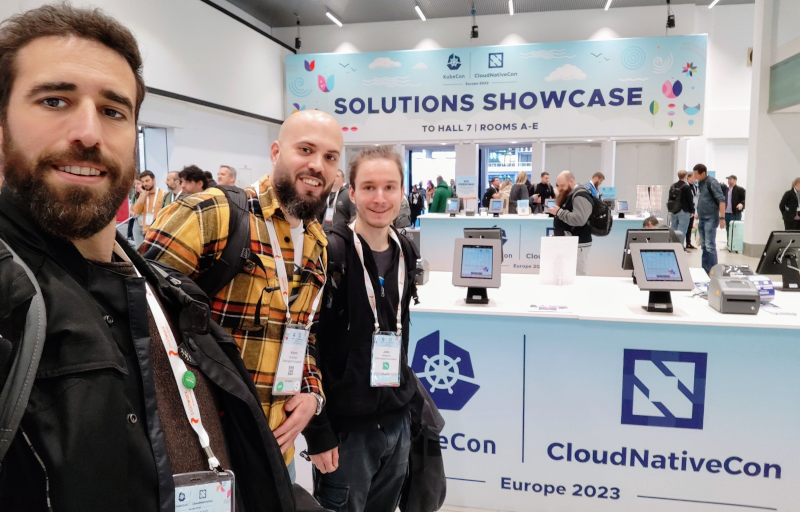
This post serves as a report from my attendance to Kubecon and CloudNativeCon 2023 Europe that took place in
Amsterdam in April 2023. It was my second time physically attending this conference, the first one was in
Austin, Texas (USA) in 2017. I also attended once in a virtual fashion.
The content here is mostly generated for the sake of my own recollection and learnings, and is written from
the notes I took during the event.
The very first session was the opening keynote, which reunited the whole crowd to bootstrap the event and
share the excitement about the days ahead. Some astonishing numbers were announced: there were more than
10.000 people attending, and apparently it could confidently be said that it was the largest open source
technology conference taking place in Europe in recent times.
It was also communicated that the next couple iteration of the event will be run in China in September 2023
and Paris in March 2024.
More numbers, the CNCF was hosting about 159 projects, involving 1300 maintainers and about 200.000
contributors. The cloud-native community is ever-increasing, and there seems to be a strong trend in the
industry for cloud-native technology adoption and all-things related to PaaS and IaaS.
The event program had different tracks, and in each one there was an interesting mix of low-level and higher
level talks for a variety of audience. On many occasions I found that reading the talk title alone was not
enough to know in advance if a talk was a 101 kind of thing or for experienced engineers. But unlike in
previous editions, I didn t have the feeling that the purpose of the conference was to try selling me
anything. Obviously, speakers would make sure to mention, or highlight in a subtle way, the involvement of a
given company in a given solution or piece of the ecosystem. But it was non-invasive and fair enough for me.
On a different note, I found the breakout rooms to be often small. I think there were only a couple of rooms
that could accommodate more than 500 people, which is a fairly small allowance for 10k attendees. I realized
with frustration that the more interesting talks were immediately fully booked, with people waiting in line
some 45 minutes before the session time. Because of this, I missed a few important sessions that I ll
hopefully watch online later.
Finally, on a more technical side, I ve learned many things, that instead of grouping by session I ll group
by topic, given how some subjects were mentioned in several talks.
On gitops and CI/CD pipelines
Most of the mentions went to FluxCD and ArgoCD. At
that point there were no doubts that gitops was a mature approach and both flux and argoCD could do an
excellent job. ArgoCD seemed a bit more over-engineered to be a more general purpose CD pipeline, and flux
felt a bit more tailored for simpler gitops setups. I discovered that both have nice web user interfaces that
I wasn t previously familiar with.
However, in two different talks I got the impression that the initial setup of them was simple, but migrating
your current workflow to gitops could result in a bumpy ride. This is, the challenge is not deploying
flux/argo itself, but moving everything into a state that both humans and flux/argo can understand. I also
saw some curious mentions to the config drifts that can happen in some cases, even if the goal of gitops is
precisely for that to never happen. Such mentions were usually accompanied by some hints on how to operate
the situation by hand.
Worth mentioning, I missed any practical information about one of the key pieces to this whole gitops story:
building container images. Most of the showcased scenarios were using pre-built container images, so in that
sense they were simple. Building and pushing to an image registry is one of the two key points we would need
to solve in Toolforge Kubernetes if adopting gitops.
In general, even if gitops were already in our radar for
Toolforge Kubernetes,
I think it climbed a few steps in my priority list after the conference.
Another learning was this site: https://opengitops.dev/.
On etcd, performance and resource management
I attended a talk focused on etcd performance tuning that was very encouraging. They were basically talking
about the exact
same problems we
have had in Toolforge Kubernetes, like api-server and etcd failure modes, and how sensitive etcd is to disk
latency, IO pressure and network throughput. Even though
Toolforge Kubernetes scale is small compared to other Kubernetes deployments out there, I found it very
interesting to see other s approaches to the same set of challenges.
I learned how most Kubernetes components and apps can overload the api-server. Because even the api-server
talks to itself. Simple things like kubectl may have a completely different impact on the API depending on
usage, for example when listing the whole list of objects (very expensive) vs a single object.
The conclusion was to try avoiding hitting the api-server with LIST calls, and use ResourceVersion which
avoids full-dumps from etcd (which, by the way, is the default when using bare kubectl get calls). I
already knew some of this, and for example the jobs-framework-emailer was already making use of this
ResourceVersion functionality.
There have been a lot of improvements in the performance side of Kubernetes in recent times, or more
specifically, in how resources are managed and used by the system. I saw a review of resource management from
the perspective of the container runtime and kubelet, and plans to support fancy things like topology-aware
scheduling decisions and dynamic resource claims (changing the pod resource claims without
re-defining/re-starting the pods).
On cluster management, bootstrapping and multi-tenancy
I attended a couple of talks that mentioned kubeadm, and one in particular was from the maintainers
themselves. This was of interest to me because as of today we use it for
Toolforge. They shared all
the latest developments and improvements, and the plans and roadmap for the future, with a special mention to
something they called kubeadm operator , apparently capable of auto-upgrading the cluster, auto-renewing
certificates and such.
I also saw a comparison between the different cluster bootstrappers, which to me confirmed that kubeadm was
the best, from the point of view of being a well established and well-known workflow, plus having a very
active contributor base. The kubeadm developers invited the audience to submit feature requests,
so I did.
The different talks confirmed that the basic unit for multi-tenancy in kubernetes is the namespace. Any
serious multi-tenant usage should leverage this. There were some ongoing conversations, in official sessions
and in the hallway, about the right tool to implement K8s-whitin-K8s, and vcluster
was mentioned enough times for me to be convinced it was the right candidate. This was despite of my impression
that multiclusters / multicloud are regarded as hard topics in the general community. I definitely would like to play
with it sometime down the road.
On networking
I attended a couple of basic sessions that served really well to understand how Kubernetes instrumented the
network to achieve its goal. The conference program had sessions to cover topics ranging from network
debugging recommendations, CNI implementations, to IPv6 support. Also, one of the keynote sessions had a
reference to how kube-proxy is not able to perform NAT for SIP connections, which is interesting because I
believe Netfilter Conntrack could do it if properly configured. One of the conclusions on the CNI front was
that Calico has a massive community adoption (in Netfilter mode), which is reassuring, especially considering
it is the one we use for Toolforge Kubernetes.
On jobs
I attended a couple of talks that were related to HPC/grid-like usages of Kubernetes. I was truly impressed
by some folks out there who were using Kubernetes Jobs on massive scales, such as to train machine learning
models and other fancy AI projects.
It is acknowledged in the community that the early implementation of things like Jobs and CronJobs had some
limitations that are now gone, or at least greatly improved. Some new functionalities have been added as
well. Indexed Jobs, for example, enables each Job to have a number (index) and process a chunk of a larger
batch of data based on that index. It would allow for full grid-like features like sequential (or again,
indexed) processing, coordination between Job and more graceful Job restarts. My first reaction was: Is that
something we would like to enable in Toolforge Jobs Framework?
On policy and security
A surprisingly good amount of sessions covered interesting topics related to policy and security. It was nice
to learn two realities:
In a previous blog post I described the use of virtual
postings to track accidental personal/family expenses. I've always been
uncomfortable with that, and in hledger 1yr I outlined a potential scheme
for finally addressing the virtual posting problem.
separate journals
My outline built on top of continuing to maintain both personal and family
financial data in the same place, but I've decided that this can't work,
because the different "directions" (or signs) of accidental transactions
originating from either the family or personal side can't be addressed with any
kind of alternate view on the same data.
To illustrate with an example.
A negative balance in family:liabilities:jon means "family owes jon". A
coffee bought by mistake on the family credit card will have a negative
posting on the credit card, and thus a positive one on the liabilities
account. ("jon owes family"). That's fine.
But what about when I buy family stuff on a personal card? The other side of
of the transaction is also going to have a positive sign, so it can't be
posted to family:liabilities:jon: it would have to go to somewhere else,
like jon:liabilities:family. Now I have two accounts which track versions
of the same thing, and they cannot be combined with a simple transaction
since they're looking at the same value from opposite directions (and signs).
Back when I first described the problem I was using
a single journal file for all my transactions. After moving to lots of separate
journal files (in hledger 1yr), it's become clearer to me that I don't
need to maintain the Family and Personal data together, at all: they can be
entirely separate journals.
getting data between journals
When I moved to a new set of ledger files for 2023, I needed to carry forward
the balances from 2022 in the form of "opening balance" transactions. This was
achieved by a report on the 2022 data, exported as CSV, and imported into the
2023 data (all following the scheme outlined by fully-fledged hledger.))
Separate Personal and Family journals need some information from each other, and I
can achieve that in the same way as for opening balances: with an export of
the relevant transactions as CSV, then imported on the other side. HLedger's
CSV import system is flexible enough that we can effectively invert the sign
of liabilities, addressing the problem above.
Worked example
We start with an accidental coffee purchased on the family card (and so this
belongs to the Family ledger)
2022-08-20 coffee
liabilities:creditcard -3
liabilities:jon:expenses:coffee 3
I've encoded the expense category that the Personal ledger will be interested
in (the last bit, expenses:coffee) as a sub-account of the liabilities
category that the Family ledger is interested in1 (the first bit,
liabilities:jon). When viewed on the Family side, the expense category is not
interesting, and we can hide it with HLedger's alias feature2:
alias /^liabilities:jon(.*)$/ = liabilities:jon
It then looks like this from the Family side:
2022-08-20 coffee
liabilities:creditcard -3
liabilities:jon 3
This transaction (and others like it) are exported via
hledger reg -f family/2023-back.journal liabilities:jon: -O csv \
jon/import/family/liabilities.csv
(The trailing colon on liabilities:jon: is important here!)
In the resulting CSV file, the running example transaction looks like
"55","2022-08-20","","coffee","liabilities:jon:expenses:coffee"," 3.00"," 3.00"
This is then converted into a journal file by hledger import. The rules file
for the import is very simple: the fields date, description, account1
and amount are taken as-is; account2 is hard-coded to liabilities:family.
The resulting transaction looks like
2022-08-20 coffee
liabilities:jon:expenses:coffee 3
liabilities:family -3
Before this journal is included by the main one, we have to adjust the expense
account, to remove the liabilities:jon: prefix. The import rules can't do
this3 , so we use another journal file as a go-between with another alias
rule:
alias /^liabilities.jon:/ =
This results, finally, in the following transaction in the Personal ledger:
2022-08-20 coffee
expenses:coffee 3
liabilities:family -3
avoiding double-counting
There's one set of transactions that we don't want to export across this divide,
and that's because they're already there: any time I transfer money from myself
to the family accounts (or vice versa) to address the accrued debt, the transaction
is visible from both my family and personal statements. To avoid exporting these
and double-counting them, I make sure those transactions don't post to an account
matching the pattern used in the hledger reg report. That's what the trailing
colon is for: It ensures I only export transactions which are to a sub-account
of liabilities:jon, and not to the root account liabilities:jon itself:
which is where I put the repayment transactions. I could instead use a more
explicit sub-account like liabilities:jon:repayments or similar, since the
trailing colon is quite subtle, but this works for me.
Wrap up
I've been really on the fence as to whether the complexity of this scheme is
worth it to avoid the virtual postings. The previous scheme was much simpler.
I have definitely made some mistakes with it, which didn't get caught by the
double-entry rules that virtual postings ignore, but they're for small sums
of money anyway.
On the other hand, a lot of the "machinery" of this already existed for getting
opening balances between calendar years, and the gory details are written down
and hidden inside the Makefile. I also expect that I will continue to see
advantages in having Family and Personal entirely separate, as they can each
develop and adapt to their own needs without having to consider the other side
of things every time.
It's a running experiment, and time will tell if it's a good idea.
family/2023.journal
file, which imports the data from another family/2023-back.journal,
and the CSV export is performed on the backing journal with the data
and not the alias. curl https://geekbay.nuug.no/~pere/openai-whisper/D78F5C4796F353D211B119E28200D9B589641240.asc \ -o /etc/apt/trusted.gpg.d/pere-whisper.asc mkdir -p /etc/apt/sources.list.d cat > /etc/apt/sources.list.d/pere-whisper.list <<EOF deb https://geekbay.nuug.no/~pere/openai-whisper/ bookworm main deb-src https://geekbay.nuug.no/~pere/openai-whisper/ bookworm main EOF apt update apt install openai-whisperThe package work for me, but have not yet been tested on any other computer than my own. With it, I have been able to (badly) transcribe a 2 minute 40 second Norwegian audio clip to test using the small model. This took 11 minutes and around 2.2 GiB of RAM. Transcribing the same file with the medium model gave a accurate text in 77 minutes using around 5.2 GiB of RAM. My test machine had too little memory to test the large model, which I believe require 11 GiB of RAM. In short, this now work for me using Debian packages, and I hope it will for you and everyone else once the packages enter Debian. Now I can start on the audio recording part of this project. As usual, if you use Bitcoin and want to show your support of my activities, please send Bitcoin donations to my address 15oWEoG9dUPovwmUL9KWAnYRtNJEkP1u1b.
tcpmss_mangle_packet, first there is this comment:
/* Never increase MSS, even when setting it, as
* doing so results in problems for hosts that rely
* on MSS being set correctly.
*/
So at least the intent is that this always does the right thing (only
decrease).
Second, the code does correctly look at both directions of the packet
when using auto-clamping (set rt mtu rather than set 1452), in the
if
branch
for XT_TCPMSS_CLAMP_PMTU. This means, it s safer to use
auto-clamping, rather than manually set the value.
And finally, there is handling of some corner cases as well (syn
packet with data, syn packet without the MSS option - unlikely for
modern stacks - in which case it defaults to minimal values).
All in all, it seems to me that it should always be correct to simply
do what the wiki recommends, setting this for all packets traversing
the host:
nft add rule ip filter forward tcp flags syn tcp option maxseg size set rt mtu
Of course, if you d rather not do it always, but only for external
interfaces, make sure you set it in both directions:
nft add rule ip filter forward iifname ppp0 tcp flags syn tcp option maxseg size set rt mtu
nft add rule ip filter forward oifname ppp0 tcp flags syn tcp option maxseg size set rt mtu
And that should be it. Well, use iifgroup/oifgroup for better rules .
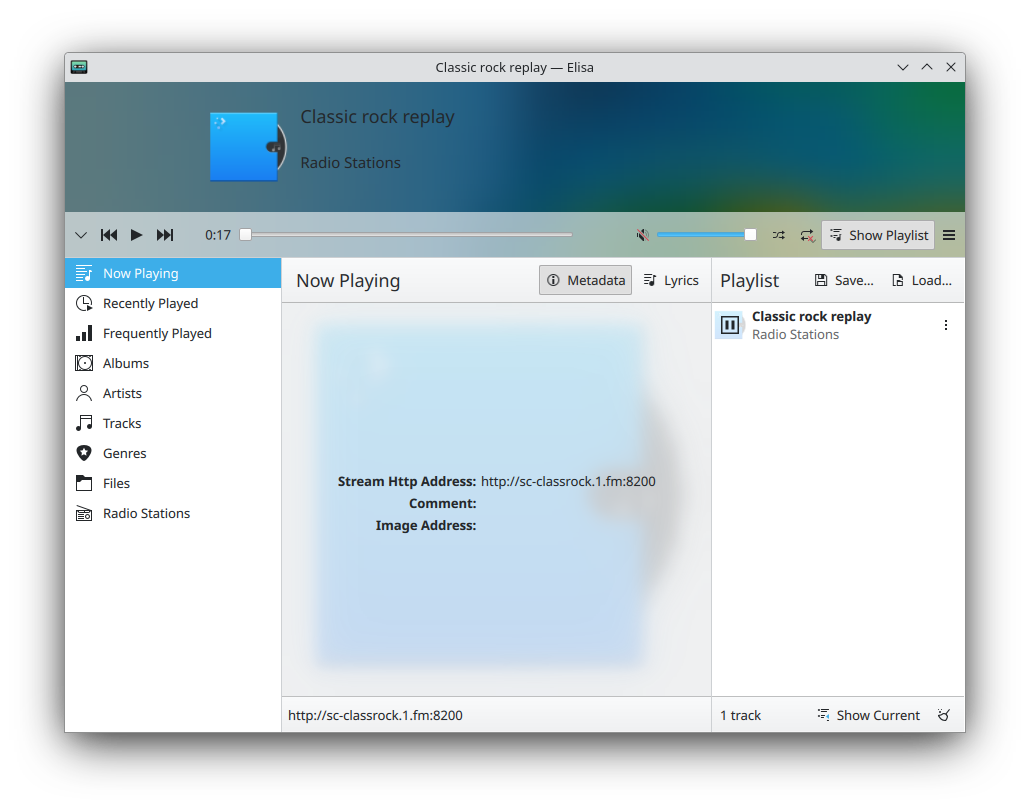
KDE Elisia snapssh hostname, where hostname is one of your machines (server, laptop, whatever), and as long as hostname is up, you can reach it, wherever it is, wherever you are.
MulticastInterfaces section in the config), and avoid telling any of your nodes to connect to a public peer. You can set a list of authorized public keys that can connect to your nodes listening interfaces, which you ll probably want to do. You will probably want to either open up some inbound ports (if you can) or set up a node with a known clearnet IP on a place like a $5/mo VPS to help with NAT traversal (again, setting AllowedPublicKeys as appropriate). Yggdrasil doesn t allow filtering multicast clients by public key, only by network interface, so that s why we disable broadcast discovery. You can easily enough teach Yggdrasil about static internal LAN IPs of your nodes and have things work that way. (Or, set up an internal gateway node or two, that the clients just connect to when they re local). But fundamentally, you need to put a bit more thought into this with Yggdrasil than with the other tools here, which are closed-only.
Compared to some of the other tools here, Yggdrasil is better about information leakage; nodes only know details, such as clearnet IPs, of directly-connected peers. You can obtain the list of directly-connected peers of any known node in the mesh but that list is the public keys of the directly-connected peers, not the clearnet IPs.
Some of the other tools contain a limited integrated firewall of sorts (with limited ACLs and such). Yggdrasil does not, but is fully compatible with on-host firewalls. I recommend these anyway even with many other tools.
yggdrasilctl debug_remotegetpeers key=ABC...). I have never experienced a problem with this. Also, since latency is a factor in routing for Yggdrasil, it is highly unlikely that random connections we use are going to be competitive with datacenter peers.
/etc/hosts and leave it at that, but it s up to you.
/etc/resolv.conf on Linux and provides resolution of mesh hostnames and some other features. This is a concept that is pretty slick.
It also is a bit flaky on Linux; dueling programs want to write to /etc/resolv.conf. I can t really say this is entirely Tailscale s fault; they document the problem and some workarounds.
I would love to be able to add custom records to this service; for instance, to override the public IP for a service to use the in-mesh IP. Unfortunately, that s not yet possible. However, MagicDNS can query existing nameservers for certain domains in a split DNS setup.
./nebula-cert sign -name "lighthouse1" -ip "192.168.100.1/24"
./nebula-cert sign -name "laptop" -ip "192.168.100.2/24" -groups "laptop,home,ssh"
./nebula-cert sign -name "server1" -ip "192.168.100.9/24" -groups "servers"
./nebula-cert sign -name "host3" -ip "192.168.100.10/24"
| Tool | iperf3 (default) | iperf3 -P 10 | iperf3 -R |
|---|---|---|---|
| Direct (no VPN) | 2406 | 2406 | 2764 |
| Wireguard (kernel) | 1515 | 1566 | 2027 |
| Yggdrasil | 892 | 1126 | 1105 |
| Tailscale | 950 | 1034 | 1085 |
| Tinc | 296 | 300 | 277 |
genkeys tool that uses more CPU cycles to generate keys that are maximally difficult to collide with.
Tailscale doesn t document their IP assignment algorithm, but I think it is safe to say that the larger subnet you use, the better. If you try to use a /24 for your mesh, it is certainly conceivable that an attacker could remove your trusted node, then just manually add the 240 or so machines it would take to get that IP reassigned. It might be a good idea to use a purely IPv6 mesh with Tailscale to minimize this problem as well.
So, I think the risk is low in the default configurations of both Yggdrasil and Tailscale (certainly lower than with tinc or Zerotier). You can drive the risk even lower with both.
| Publisher: | Little, Brown and Company |
| Copyright: | April 2018 |
| Printing: | 2020 |
| ISBN: | 0-316-55633-5 |
| Format: | Kindle |
| Pages: | 421 |
My house was crowded with some four dozen men, and for the first time in my life, I found myself steeped in mortal flesh. Those frail bodies of theirs took relentless attention, food and drink, sleep and rest, the cleaning of limbs and fluxes. Such patience mortals must have, I thought, to drag themselves through it hour after hour.I did not enjoy reading about Telegonus's childhood (it was too stressful; I don't like reading about characters fighting in that way), but apart from that, the last half of this book is simply beautiful. By the time Odysseus arrives, we're thoroughly in Circe's head and agree with all of the reasons why he might receive a chilly reception. Odysseus talks the readers around at the same time that he talks Circe around. It's one of the better examples of writing intelligent, observant, and thoughtful characters that I have read recently. I also liked that Odysseus has real flaws, and those flaws do not go away even when the reader warms to him. I'll avoid saying too much about the very end of the book to avoid spoilers (insofar as one can spoil Greek myth, but the last quarter of the book is where I think Miller adds the most to the story). I'll just say that both Telemachus and Penelope are exceptional characters while being nothing like Circe or Odysseus, and watching the characters tensely circle each other is a wholly engrossing reading experience. It's a much more satisfying ending than the Telegony traditionally gets (although I have mixed feelings about the final page). I've mostly talked about the Greek mythology part of Circe, since that's what grabbed me the most, but it's quite rightly called a feminist retelling and it lives up to that label with the same subtlety and skill that Miller brings to the prose and characterization. The abusive gender dynamics of Greek myth are woven into the narrative so elegantly you'd think they were always noted in the stories. It is wholly satisfying to see Circe come into her own power in a defiantly different way than that chosen by her mother and her sister. She spends the entire book building an inner strength and sense of herself that allows her to defend her own space and her own identity, and the payoff is pure delight. But even better are the quiet moments between her and Penelope.
"I am embarrassed to ask this of you, but I did not bring a black cloak with me when we left. Do you have one I might wear? I would mourn for him." I looked at her, as vivid in my doorway as the moon in the autumn sky. Her eyes held mine, gray and steady. It is a common saying that women are delicate creatures, flowers, eggs, anything that may be crushed in a moment s carelessness. If I had ever believed it, I no longer did. "No," I said. "But I have yarn, and a loom. Come."This is as good as everyone says it is. Highly recommended for the next time you're in the mood for a myth retelling. Rating: 8 out of 10
For this summer, I ve just made a nice sleeveless dress, but that doesn t mean that I m planning to go around with bare arms like, I don t know, a peasant or even somebody with no health issues, perish the thought!
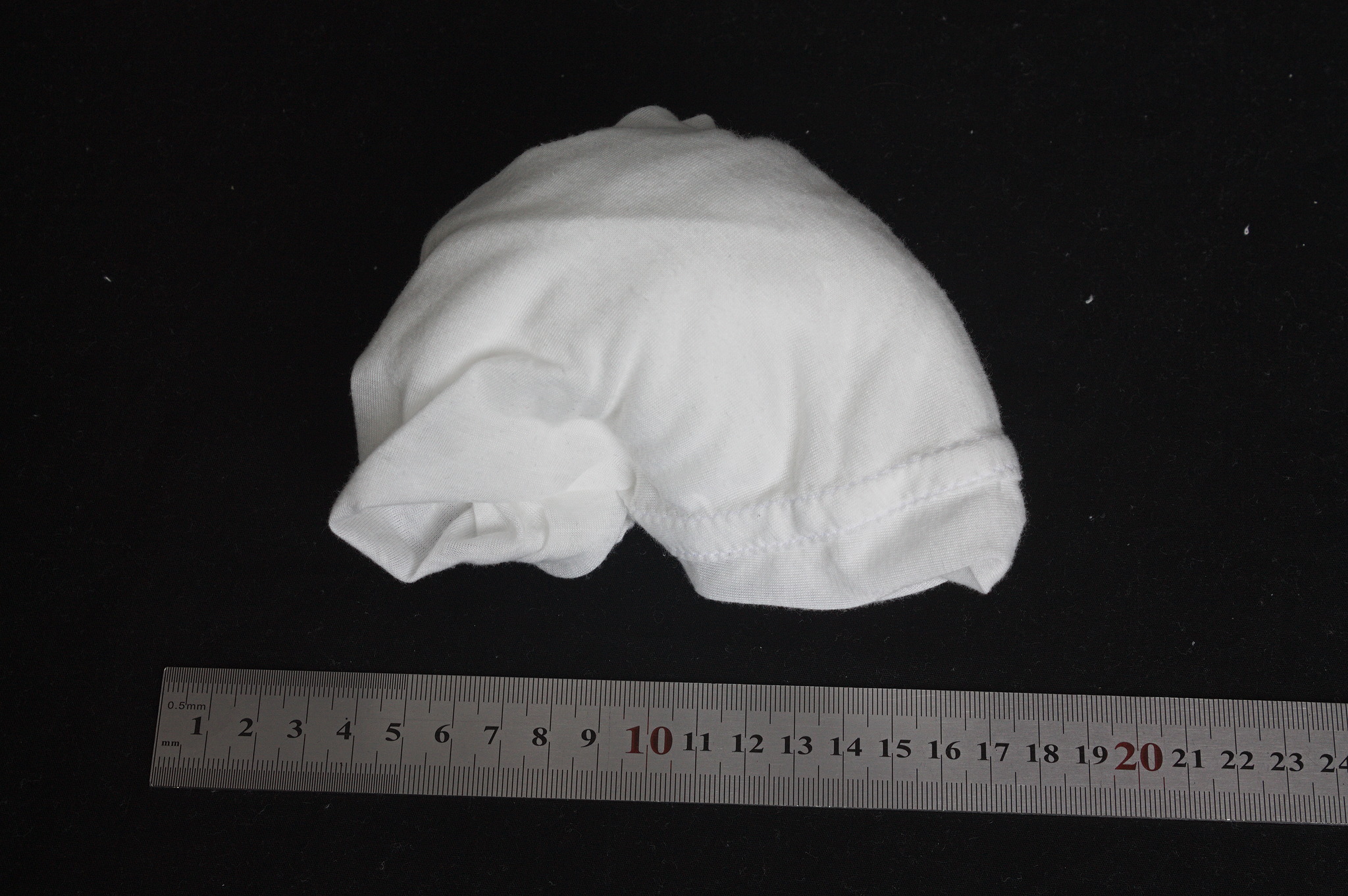
Instead, at the end of last season I ve bought a remnant of white ramie / viscose jersey that is a bit too transparent to be decent when worn on its own, but should still give some protection from the sun without being unconfortable in the heat, with the intent to make myself a new top.
Because of the transparency I wasn t sure whether to actually use it for a top, or just to make camisoles, but with the decency preserved by the dress the choice was made: I had enough fabric for a top, a camisole and maybe something small.
I already have a trusted pattern for the top and camisole, but they still had to be published, so I took care to write down instructions and take step-by-step pictures; maybe the white fabric isn t the best, but it s better than nothing, and I can still take better pictures the next time I ll do another make. They are of course on my pattern webiste: top and camisole.
Since the fabric was bought online as a remnant, I didn t exactly know what to expect, and was pleasantly surprised by how soft it is: it feels like touching a cloud.
This however means that it felt like working with a cloud, and, well, let s just say I m happy that both patterns were quite simple and I didn t have to deal with fiddly bits.
I was also not so pleasantly surprised by the fact that part of the fabric had a few small holes as if the end of the roll had been caught on something; I was able to cut everything around the holes, other than a small bit that I hadn t noticed and had to be mended. It s not a big deal, but I suspect it s a sign that this fabric may not be as sturdy as it could have been, and that there will be more mending in the future as I wear it.
And then, when I had finished the set I was faced with another problem: taking pictures. For one thing, worn on their own they aren t exactly decent, and then there was the fact that after a week of late spring weather in March, as I was working on summer clothing the temperature dropped and there was even a hint of rain.

I solved this by wearing the new set on top of another set of fitting top and camisole, with matching leggings. Not exactly something I would wear on the regular streets, but good enough for a picture of underwear.

Still, the pictures were taken in quite a hurry, because I wasn t completely freezing, but still pretty cold.
Anyway, I m off to find some other piece of summer wear to make, hoping that it will bring proper rain. :)
Anti-EV poster by Toyota
| Series: | Discworld #26 |
| Publisher: | Harper |
| Copyright: | May 2001 |
| Printing: | August 2014 |
| ISBN: | 0-06-230739-8 |
| Format: | Mass market |
| Pages: | 420 |
Update on 2023-03-23: thanks to Daniel Roschka for mentioning the Mandos and TPM approaches, which might be better alternatives, depending on your options and needs. Peter Palfrader furthermore pointed me towards clevis-initramfs and tang.
A customer of mine runs dedicated servers inside a foreign data-center, remote hands only. In such an environment you might need a disk replacement because you need bigger or faster disks, though also a disk might (start to) fail and you need a replacement. One has to be prepared for such a scenario, but fully wiping your used disk then might not always be an option, especially once disks (start to) fail. On the other hand you don t want to end up with (partial) data on your disk handed over to someone unexpected.
By encrypting the data on your disks upfront you can prevent against this scenario. But if you have a fleet of servers you might not want to manually jump on servers during boot and unlock crypto volumes manually. It s especially annoying if it s about the root filesystem where a solution like dropbear-initramfs needs to be used for remote access during initramfs boot stage. So my task for the customer was to adjust encrypted LUKS devices such that no one needs to manually unlock the encrypted device during server boot (with some specific assumptions about possible attack vectors one has to live with, see the disclaimer at the end).
The documentation about this use-case was rather inconsistent, especially because special rules apply for the root filesystem (no key file usage), we see different behavior between what s supported by systemd (hello key file again), initramfs-tools and dracut, not to mention the changes between different distributions. Since tests with this tend to be rather annoying (better make sure to have a Grml live system available :)), I m hereby documenting what worked for us (Debian/bullseye with initramfs-tools and cryptsetup-initramfs).
The system was installed with LVM on-top of an encrypted Software-RAID device, only the /boot partition is unencrypted. But even if you don t use Software-RAID nor LVM the same instructions apply. The system looks like this:
% mount -t ext4 -l
/dev/mapper/foobar-root_1 on / type ext4 (rw,relatime,errors=remount-ro)
% sudo pvs
PV VG Fmt Attr PSize PFree
/dev/mapper/md1_crypt foobar lvm2 a-- 445.95g 430.12g
% sudo vgs
VG #PV #LV #SN Attr VSize VFree
foobar 1 2 0 wz--n- 445.95g 430.12g
% sudo lvs
LV VG Attr LSize Pool Origin Data% Meta% Move Log Cpy%Sync Convert
root_1 foobar -wi-ao---- <14.90g
% lsblk
NAME MAJ:MIN RM SIZE RO TYPE MOUNTPOINT
[...]
sdd 8:48 0 447.1G 0 disk
sdd1 8:49 0 571M 0 part /boot/efi
sdd2 8:50 0 488M 0 part
md0 9:0 0 487M 0 raid1 /boot
sdd3 8:51 0 446.1G 0 part
md1 9:1 0 446G 0 raid1
md1_crypt 253:0 0 446G 0 crypt
foobar-root_1 253:1 0 14.9G 0 lvm /
[...]
sdf 8:80 0 447.1G 0 disk
sdf1 8:81 0 571M 0 part
sdf2 8:82 0 488M 0 part
md0 9:0 0 487M 0 raid1 /boot
sdf3 8:83 0 446.1G 0 part
md1 9:1 0 446G 0 raid1
md1_crypt 253:0 0 446G 0 crypt
foobar-root_1 253:1 0 14.9G 0 lvm /
The actual crypsetup configuration is:
% cat /etc/crypttab md1_crypt UUID=77246138-b666-4151-b01c-5a12db54b28b none luks,discardNow, to automatically open the crypto device during boot we can instead use:
% cat /etc/crypttab md1_crypt UUID=77246138-b666-4151-b01c-5a12db54b28b none luks,discard,keyscript=/etc/initramfs-tools/unlock.sh # touch /etc/initramfs-tools/unlock.sh # chmod 0700 /etc/initramfs-tools/unlock.sh # $EDITOR etc/initramfs-tools/unlock.sh # cat /etc/initramfs-tools/unlock.sh #!/bin/sh echo -n "provide_the_actual_password_here" # update-initramfs -k all -u [...]The server will then boot without prompting for a crypto password. Note that initramfs-tools by default uses an insecure umask of 0022, resulting in the initrd being accessible to everyone. But if you have the dropbear-initramfs package installed, its /usr/share/initramfs-tools/conf-hooks.d/dropbear sets UMASK=0077 , so the resulting /boot/initrd* file should automatically have proper permissions (0600). The cryptsetup hook warns about a permissive umask configuration during update-initramfs runs, but if you want to be sure, explicitly set it via e.g.:
# cat > /etc/initramfs-tools/conf.d/umask << EOF # restrictive umask to avoid non-root access to initrd: UMASK=0077 EOF # update-initramfs -k all -uDisclaimer: Of course you need to trust users with access to /etc/initramfs-tools/unlock.sh as well as the initramfs/initrd on your system. Furthermore you should wipe the boot partition (to destroy the keyfile information) before handing over such a disk. But that is a risk my customer can live with, YMMV.
| Publisher: | Tor |
| Copyright: | 2022 |
| ISBN: | 0-7653-8913-4 |
| Format: | Kindle |
| Pages: | 264 |
Next.