Search Results: "pere"

1 June 2013

Petter Reinholdtsen: Educational applications included in Debian Edu / Skolelinux (the screenshot collection :-)

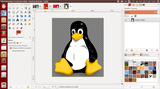
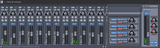
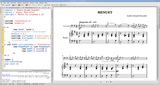
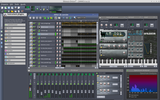
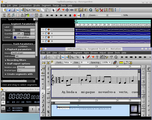
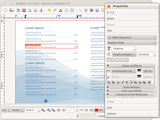
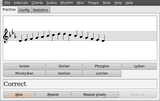
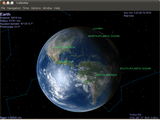
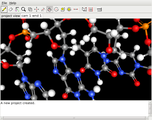
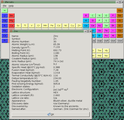
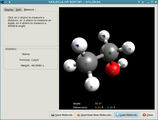
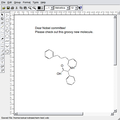
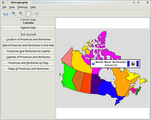
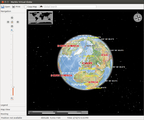
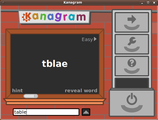
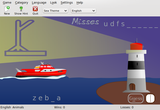
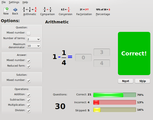
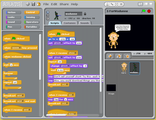
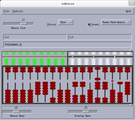
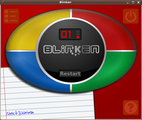
Included in Debian Edu / Skolelinux, there are quite a lot of educational software. Created to help teachers teach, and pupils learn. We have tried to tag them all using debtags use::learning and role::program, and using the debtags I was happy to be able to create a collage of the educational software packages installed by default, sorted by the debtag field. Here it is. Click on a image to learn more about the program. field::arts audacity childsplay denemo freebirth gcompris gimp hydrogen lilypond lmms rosegarden scribus solfege stopmotion tuxpaint field::astronomy celestia-gnome gpredict kstars planets stellarium xplanet field::biology:structural pymol field::chemistry atomix chemtool easychem gchempaint gdis ghemical gperiodic kalzium pymol [viewmol] xdrawchem field::electronics gcompris [gpsim] field::geography kgeography marble xplanet field::linguistics gcompris kanagram khangman klettres parley field::mathematics childsplay drgeo gcompris geogebra [geomview] grace graphmonkey graphthing kalgebra kbruch kig kmplot mathwar rocs scratch tuxmath xabacus field::physics gcompris step field::TODO blinken cgoban childsplay gcompris gnuchess gnugo gtans ktouch librecad scratch In total, 61 applications. 3 of them lacked screen shots on screenshot.debian.net. If you know of some packages we should install by default, please let us know on IRC, #debian-edu on irc.debian.org, or our mailing list debian-edu@.

29 May 2013

Lisandro Damián Nicanor Pérez Meyer: Presenting qtchooser

A few days ago we the Qt/KDE team uploaded a new tool in the Qt ecosystem: qtchooser.

This tool is a wrapper tool used to select between different Qt versions. Of course, the first and easiest example is choosing between Qt4 and Qt5. But it doesn't end there: it can also be used to select a user's build of Qt.

To experienced Debian users, at first sight, it might resemble Debian's alternatives system. But it goes much further than that, allowing users (not sysadmins) to decide their defaults, and even adding new ones, user-wide. All this can be done using different methods like command line arguments, environment variables and configuration files.

Apart from all that, this is the recommended upstream way of managing Qt, being picked up by several (if not all) distributions, so it can easily be supported by upstream in their documentation.

My Qt4 package in Debian does not uses qtchooser, do I need to change anything?No, we have tried to make things as smooth as possible. Your Qt4 packages should be safe. There will be more info on this later.

Russ Allbery: Review: The Making of the Indebted Man

Review: The Making of the Indebted Man, by Maurizio Lazzarato
Translator: Joshua David Jordan
Publisher: Semiotext(e)
Copyright: 2011, 2012
Printing: 2012
ISBN: 1-58435-115-2
Format: Trade paperback
Pages: 199
This is a continuation of my effort to catch up on Marxist thought while pondering workplace governance, this time following the recommendations of a friend after a related conversation (about pension systems and basic income guarantee in a Usenet group Usenet isn't dead yet). As opposed to Democracy at Work, which is a popularization, The Making of the Indebted Man has more of the density of a scholarly text. The version I'm reading is also in translation, which I suspect makes it even harder going in places. The basic thesis, though, is clear: debt is far more central to the way that we construct not only economic systems but social systems and even internal models of our own nature than is often realized. We prefer to think of societies as structured around mutual exchange, but in practice they're more often constructed around concepts of debt and credit that have been fully internalized and used to construct a moral code for a responsible debtor. And this is not a neutral construction; rather, it is a key support mechanism of capitalism and of the financial and economic status quo, used (both intentionally and accidentally) to reduce uncertainty and to support exploitation and economic domination. This is one of those perspectives that didn't occur to me prior to reading this book but which is startlingly obvious in retrospect. Once Lazzarato starts pointing it out, the prevelance and universality of debt as a basic structure of social and economic life is striking. The creditor and debtor concept extends not just to obvious examples, such as consumer credit or mortgages, but also to education (via student loans), law enforcement ("pay one's debt to society"), employment (most employers, particularly during economic downturns, have successfully inverted the natural direction of the creditor relationship and have made employees feel in debt to the employer for having a job), and social services (unemployment and welfare benefits come with significant, if often unstated, debt-like requirements). Debt is also the great leveller. It now cuts across race, gender, and social class. Apart from a small handful of extremely rich individuals and corporations, Lazzarato claims, convincingly, that nearly everyone is enmeshed to some extent in a network of debt, or at least in in attitudes and moral pressures of a debtor. Nor is this a static situation. The role of debt in our social lives seems to be constantly increasing. The past fifteen years in particular have seen drastic increases in debt during a debt-funded economic boom combined with debt-funded asset bubbles. Even after the financial collapse, much of that growth of debt persists. Lazzarato, probably in part because he's Italian, focuses on national debt (more on that in a moment); as an American, I'd identify student loan debt as a more compelling example in the United States. Other countries probably have their own examples. For a system to be this widespread, it must serve some social purpose. Lazzarato sees it as an instrument of control. Debt has been very effectively built up as a moral obligation, and (unlike a society of mutual support) it's a very one-sided moral obligation that strongly favors existing power. The debtor is held to a tight moral standard of repayment of debts, and is morally condemned by all of society, including their peers, for a failure to repay. But there is little or no corresponding moral pressure on the creditor: perhaps a half-hearted dislike of high interest rates or occasional pressure to not change previously agreed terms, but nothing like the moral pressure applied to the debtor. To be a creditor is to have an agreed-upon, one-sided right to dictate to the debtor the terms on which they must conduct a portion of their life, and the larger the debt, the larger the portion. The debtor is expected to realign their life, at least in part, around paying off the debt, including choice of profession, decisions about when to quit a job, about how to prioritize personal spending, and so forth. This is all so automatic and so deeply ingrained that, even while writing this, I'm nodding along and thinking "well, of course." Lazzarato offers an opportunity to take a step back and think about the implications, particularly of the deeply one-sided web of obligations this creates. A Marxist analysis adds another level of consideration. One of the basic questions of Marxist thought is why workers put up with exploitation by capitalists. In a Marxist analysis, workers provide the productive output of society, which is then redirected and controlled by a relatively small capitalists. The workers massively outnumber the capitalists. Why would they be content for this situation to continue? Marx, of course, thought they wouldn't be, that the periodic crises of capitalism would eventually result in a socialist revolution by the workers. But by and large this hasn't happened. Why? Lazzarato offers debt as a partial explanation. The profits redirected by capitalists are returned to workers to some extent, but as debt rather than payment. This allows workers to participate to some extent in the growth of societal wealth from constantly increasing productivity, while simultaneously entangling workers in a system of moral control. Company stores, starvation wages, and other confiscatory practices are clear mechanisms of external control that provoke directed outrage. Debt is something that the debtor has nominally agreed to (however much the situation is manipulated to make that agreement almost inevitable), and to which attaches a deep tradition of moral responsibility. The worker has respected grounds on which to object to inequitable treatment; the debtor is wholly responsible for repayment, and is rarely considered to have grounds to complain about the debt. Most of the historical attempts to balance those scales, such as laws and religious rules against usury or the historical Jewish rule of Jubilee, have fallen by the wayside. This is a rather extended summary of what I got out of the book. I'm doing that in part because the book itself is somewhat heavy going. Lazzarato makes extensive use of specialized terms (often not defined) and fills the book with references to other works without much in the way of useful summary. It's the sort of book where, if you're not already well-versed in the field, you may need to just keep reading through some passages to find a point of reference that makes the argument retroactively make sense. I had a particular difficulty with "subjectivation," a term that Wikipedia tells me is from the writings of Michel Foucault (a major source for this book), which Lazzarato uses extensively but never adequately defines. Some external research indicates that this is a very difficult term to define, which explains why I was never quite comfortable with my understanding. I think Lazzarato is using it to get at the process of internalization of the morality of debt and the way that a debt society forces individuals into a mode of economic individualism in which many of their personal choices are bent towards making themselves better (more reliable, more trustworthy) debtors. But I'm not completely sure. There are also places in which I think Lazzarato takes his argument too far, although one of those, I think, reflects a difference in national economic status. He makes quite a lot of national debt in this book, placing it in the universal position of the overarching debt that turns every citizen into a debtor even if they've avoided other debts. This is possibly true in countries whose national debts are held in other currencies, or in countries like Italy that are part of the Euro (which, if one is not Germany or France, amounts to much the same thing). It's a dubious assertion for countries like the UK, Japan, or the United States, where the national debt is held in their own free-floating currency and is largely owed domestically, and partly plays into some frustratingly incorrect political rhetoric. One of the key dynamics of debt, namely the extreme power imbalance between debtor and creditor, is missing in countries with sovereign debt in their own currency, since those countries can always (if they're willing to pay the inflation price) simply print money to pay off national debt. Creditors know this, and therefore interest rates are much lower, the amount of leverage the creditor has is quite limited, and the sorts of debt crises seen in Italy and elsewhere in the Euro periphery are not seen. Lazzarato is understandably writing from the Italian perspective, but I think he weakens his argument by lumping national debt so completely into the same category as the other types of exploitative debt he discusses. The principle does feel universal to me, but the best examples of debt vary by country, so one has to be careful about generalizing specific examples. Another place where I simply disagree with his conclusions is around some of the more dramatic presentations of subjectivation. Lazzarato talks, at one point, about how debt reduces debtors to mechanical components, and uses as an example an ATM machine, which he portrays as uniquely dehumanizing through the mechanical process that someone has to follow to withdraw money. There may be some point here about the dehumanization of debt and its subsumption into the foundation of day-to-day social interaction, but he lost me entirely with the unwarranted technophobia of the specific example. The idea that machines and automation make us less human is an old argument that's orthogonal to the thrust of his argument. It reminded me of old contentions that human relationships made on-line aren't real, which is nonsense. Overall, this is a fascinating and insightful discussion hampered by a difficult and sometimes overly elliptical presentation, a bit too much drama and grand theorizing, and a few poor choices of examples. I found the basic idea extremely valuable, but the amount of work required to extract it occasionally irritating. (This could be partly due to the limits of translation, but I suspect most of the difficulty was present in the original.) I'm not sure that I would recommend the book, but I definitely recommend considering the underlying ideas. Debt now works alongside the employment relationship as a primary means of reinforcing economic and social control and hierarchy. This is likely via accidental development rather than any grand plan, but it's now being actively exploited by the creditors of society, large corporations most notably. Viewed in that light, the explosive growth of student loan debt in the United States is particularly frightening. After Lazzarato's extensive examination of the distortive effects of permanent debt, not just on economics and society but on our own conceptions of our selves and our duties and roles in life, the idea of trapping a generation in debt from the moment of their financial independence is deeply troubling, even nauseating. Rating: 6 out of 10
27 May 2013

Petter Reinholdtsen: How to install Linux on a Packard Bell Easynote LV preinstalled with Windows 8

Two days ago, I asked how I could install Linux on a Packard Bell EasyNote LV computer preinstalled with Windows 8. I found a solution, but am horrified with the obstacles put in the way of Linux users on a laptop with UEFI and Windows 8. I never found out if the cause of my problems were the use of UEFI secure booting or fast boot. I suspect fast boot was the problem, causing the firmware to boot directly from HD without considering any key presses and alternative devices, but do not know UEFI settings enough to tell. There is no way to install Linux on the machine in question without opening the box and disconnecting the hard drive! This is as far as I can tell, the only way to get access to the firmware setup menu without accepting the Windows 8 license agreement. I am told (and found description on how to) that it is possible to configure the firmware setup once booted into Windows 8. But as I believe the terms of that agreement are completely unacceptable, accepting the license was never an alternative. I do not enter agreements I do not intend to follow. I feared I had to return the laptops and ask for a refund, and waste many hours on this, but luckily there was a way to get it to work. But I would not recommend it to anyone planning to run Linux on it, and I have become sceptical to Windows 8 certified laptops. Is this the way Linux will be forced out of the market place, by making it close to impossible for "normal" users to install Linux without accepting the Microsoft Windows license terms? Or at least not without risking to loose the warranty? I've updated the Linux Laptop wiki page for Packard Bell EasyNote LV, to ensure the next person do not have to struggle as much as I did to get Linux into the machine. Thanks to Bob Rosbag, Florian Weimer, Philipp Kern, Ben Hutching, Michael Tokarev and others for feedback and ideas.

25 May 2013

Petter Reinholdtsen: How can I install Linux on a Packard Bell Easynote LV preinstalled with Windows 8?

I've run into quite a problem the last few days. I bought three new laptops for my parents and a few others. I bought Packard Bell Easynote LV to run Kubuntu on and use as their home computer. But I am completely unable to figure out how to install Linux on it. The computer is preinstalled with Windows 8, and I suspect it uses UEFI instead of a BIOS to boot. The problem is that I am unable to get it to PXE boot, and unable to get it to boot the Linux installer from my USB stick. I have yet to try the DVD install, and still hope it will work. when I turn on the computer, there is no information on what buttons to press to get the normal boot menu. I expect to get some boot menu to select PXE or USB stick booting. When booting, it first ask for the language to use, then for some regional settings, and finally if I will accept the Windows 8 terms of use. As these terms are completely unacceptable to me, I have no other choice but to turn off the computer and try again to get it to boot the Linux installer. I have gathered my findings so far on a Linlap page about the Packard Bell EasyNote LV model. If you have any idea how to get Linux installed on this machine, please get in touch or update that wiki page. If I can't find a way to install Linux, I will have to return the laptop to the seller and find another machine for my parents. I wonder, is this the way Linux will be forced out of the market using UEFI and "secure boot" by making it impossible to install Linux on new Laptops?

24 May 2013

Yves-Alexis Perez: Xfce 4.10, part 2

This is an update on the Xfce 4.10 transition to unstable. Most desktop components have been uploaded, built and installed to the archive. We're now currently building and uploading the various goodies, and especially panel plugins. There's a lot of them so it takes some time. Once we'll have finished to build and upload all the goodies, we'll ask for binNMUs on the packages which don't need a sourceful upload but need to be rebuilt against libxfce4util or xfce4-panel 4.10. You can follow the transition status using the release team page. In any case, please be patient while we upload all the packages. Again, no need to report installability issues in unstable for now, we are aware of it and don't need more warnings. We'll fix the fallouts in due time.

22 May 2013

Lisandro Damián Nicanor Pérez Meyer: Debian/Ubuntu packages caching and mobile workstations

Not so long ago I read Dmitrijs' blog post on how to configure apt-cacher-ng to advertise it's service using avahi. As I normally use my laptop in my home and at work, and both networks have apt-cacher-ng running, I decided to give it a try.

I have been administering apt-cacher-ng for three networks so far, and I really find it a useful tool. Then, thanks to the aforementioned blog post, I discovered squid-deb-proxy. I don't use squid, so it's not for my normal use case, but some people will surely find it interesting.

But I found it's client package to be really interesting. It will discover any service providing _apt_proxy._tcp through avahi and let apt use it. But then the package wasn't available in Debian. So, I contacted Michael Vogt to see if he was interested in putting at least the client in Debian's archive. He took the opportunity to upload the full squid-deb-proxy, so thanks a lot Michael :-)

I then filled a wishlist bug against apt-cacher-ng to provide the avahi configuration for publishing the service, which Eduard included in the last version of it. So thanks a lot Eduard too!

tl;dr
You know only need apt-cacher-ng >= 0.7.13-1 and avahi-daemon installed on your server and your mobile users just need squid-deb-proxy-client. Then the proxy autoconfiguration for apt will just work.

One again, thanks a lot to the respective maintainers for allowing this into Jessie :-)

Gotchas
Yes, there are still some rough edges. On one of the networks I'm behind a proxy. While configuring my machine to use apt-cacher-ng's service as a proxy trough apt.conf, apt-listbugs would just work. But now, using the service as discovered by squid-deb-proxy-client, apt-listbugs just times out. Maybe I need to fill some other bug yet...

Yves-Alexis Perez: Xfce 4.10, part 1

Thanks to the release team ACK, I've started uploading Xfce 4.10 to unstable yesterday. For now, I've only pushed Xfce 4.10.1 desktop components, which means people using xfce4 + xfce4-goodies in unstable won't be able to upload at once. That's because panel plugins have a quite hard dependency on the running xfce4-panel, and the communication protocol has changed between Xfce 4.8 and 4.10. So all panel plugins need to be rebuild against the new xfce4-panel. I'll start uploading new releases or packages revisions this evening, and binNMUs will be scheduled for the rest, but it'll take some days. In the meantime, you can safely wait before upgrading xfce4. If you don't use external panel plugins, then you can accept to remove xfce4-goodies and the various xfce4-*-plugins and upgrade to xfce4 4.10. There's no need to report a bug about that situation, we're already aware of it and it's somehow intended, things will settle in a few days.

17 May 2013

Petter Reinholdtsen: How to transform a Debian based system to a Debian Edu installation

Debian Edu / Skolelinux is an operating system based on Debian intended for use in schools. It contain a turn-key solution for the computer network provided to pupils in the primary schools. It provide both the central server, network boot servers and desktop environments with heaps of educational software. The project was founded almost 12 years ago, 2001-07-02. If you want to support the project, which is in need for cash to fund developer gatherings and other project related activity, please donate some money. A topic that come up again and again on the Debian Edu mailing lists and elsewhere, is the question on how to transform a Debian or Ubuntu installation into a Debian Edu installation. It isn't very hard, and last week I wrote a script to replicate the steps done by the Debian Edu installer. The script, debian-edu-bless in the debian-edu-config package, will go through these six steps and transform an existing Debian Wheezy or Ubuntu (untested) installation into a Debian Edu Workstation:
  1. Add skolelinux related APT sources.
  2. Create /etc/debian-edu/config with the wanted configuration.
  3. Install debian-edu-install to load preseeding values and pull in our configuration.
  4. Preseed debconf database with profile setup in /etc/debian-edu/config, and run tasksel to install packages according to the profile specified in the config above, overriding some of the Debian automation machinery.
  5. Run debian-edu-cfengine-D installation to configure everything that could not be done using preseeding.
  6. Ask for a reboot to enable all the configuration changes.
There are some steps in the Debian Edu installation that can not be replicated like this. Disk partitioning and LVM setup, for example. So this script just assume there is enough disk space to install all the needed packages. The script was created to help a Debian Edu student working on setting up Raspberry Pi as a Debian Edu client, and using it he can take the existing Raspbian installation and transform it into a fully functioning Debian Edu Workstation (or Roaming Workstation, or whatever :). The default setting in the script is to create a KDE Workstation. If a LXDE based Roaming workstation is wanted instead, modify the PROFILE and DESKTOP values at the top to look like this instead:
PROFILE="Roaming-Workstation"
DESKTOP="lxde"
The script could even become useful to set up Debian Edu servers in the cloud, by starting with a virtual Debian installation at some virtual hosting service and setting up all the services on first boot.

15 May 2013

Lisandro Damián Nicanor Pérez Meyer: Qt 4.8.4 in experimental.

Since a few days we have Qt 4.8.4 (4:4.8.4+dfsg-3) in some archs of the experimental Debian archive. This release allows Qt4 to coexist with Qt5 while avoiding FTBFSs of current Qt4 packages in the archive.

So if you maintain a Qt4 app and want to check how it works with 4.8.4, you should be ready to go.

14 May 2013

Petter Reinholdtsen: Second alpha release of Debian Edu / Skolelinux based on Debian Wheezy

The Debian Edu / Skolelinux project is making great progress and made its second Wheezy based release today. This is the release announcement: New features for Debian Edu 7.0.0 alpha1 released 2013-05-14 This is the release notes for for Debian Edu / Skolelinux 7.0.0 edu alpha1, based on <ahref>Debian with codename "Wheezy". About Debian Edu and Skolelinux Debian Edu, also known as Skolelinux, is a Linux distribution based on Debian providing an out-of-the box environment of a completely configured school network. Immediatly after installation a school server running all services needed for a school network is set up just waiting for users and machines being added via GOsa , a comfortable Web-UI. A netbooting environment is prepared using PXE, so after initial installation of the main server from CD, DVD or USB stick all other machines can be installed via the network. This is the first test release based on Wheezy (which currently is not released yet). Basically this is an updated and slightly improved version compared to the Squeeze release. Software updates Other changes Known issues Where to get it To download the multiarch netinstall CD release you can use The MD5SUM of this image is: 685ed76c1aa8e44b12d3fde21faf450b The SHA1SUM of this image is: 6c874de157024da13e115bab29c068080a11ec4c How to report bugs http://wiki.debian.org/DebianEdu/HowTo/ReportBugs

11 May 2013

Petter Reinholdtsen: Debian, the Linux distribution of choice for LEGO designers?

In January, I announced a new IRC channel #debian-lego, for those of us in the Debian and Linux community interested in LEGO, the marvellous construction system from Denmark. We also created a wiki page to have a place to take notes and write down our plans and hopes. And several people showed up to help. I was very happy to see the effect of my call. Since the small start, we have a debtags tag hardware::hobby:lego tag for LEGO related packages, and now count 10 packages related to LEGO and Mindstorms:
brickosalternative OS for LEGO Mindstorms RCX. Supports development in C/C++
leocadvirtual brick CAD software
libnxtutility library for talking to the LEGO Mindstorms NX
lnpddaemon for LNP communication with BrickOS
nbccompiler for LEGO Mindstorms NXT bricks
nqcNot Quite C compiler for LEGO Mindstorms RCX
python-nxtpython driver/interface/wrapper for the Lego Mindstorms NXT robot
python-nxt-filersimple GUI to manage files on a LEGO Mindstorms NXT
scratcheasy to use programming environment for ages 8 and up
t2nsimple command-line tool for Lego NXT
Some of these are available in Wheezy, and all but one are currently available in Jessie/testing. leocad is so far only available in experimental. If you care about LEGO in Debian, please join us on IRC and help adding the rest of the great free software tools available on Linux for LEGO designers.

5 May 2013

Petter Reinholdtsen: Debian Wheezy is out - and Debian Edu / Skolelinux should soon follow! #newinwheezy

When I woke up this morning, I was very happy to see that the release announcement for Debian Wheezy was waiting in my mail box. This is a great Debian release, and I expect to move my machines at home over to it fairly soon. The new debian release contain heaps of new stuff, and one program in particular make me very happy to see included. The Scratch program, made famous by the Teach kids code movement, is included for the first time. Alongside similar programs like kturtle and turtleart, it allow for visual programming where syntax errors can not happen, and a friendly programming environment for learning to control the computer. Scratch will also be included in the next release of Debian Edu. And now that Wheezy is wrapped up, we can wrap up the next Debian Edu/Skolelinux release too. The first alpha release went out last week, and the next should soon follow.

29 April 2013

Lisandro Dami&aacute;n Nicanor P&eacute;rez Meyer: On the road to Qt5: declarative, graphicaleffects and svg in experimental.

Some more Qt 5 packages have entered Debian experimental:
Enjoy :-)

26 April 2013

Petter Reinholdtsen: First alpha release of Debian Edu / Skolelinux based on Debian Wheezy

The Debian Edu / Skolelinux project is still going strong and made its first Wheezy based release today. This is the release announcement: New features for Debian Edu ~7.0.0 alpha0 released 2013-04-26 This is the release notes for for Debian Edu / Skolelinux ~7.0.0 edu alpha0, based on Debian with codename "Wheezy". About Debian Edu and Skolelinux Debian Edu, also known as Skolelinux, is a Linux distribution based on Debian providing an out-of-the box environment of a completely configured school network. Immediatly after installation a school server running all services needed for a school network is set up just waiting for users and machines being added via GOsa , a comfortable Web-UI. A netbooting environment is prepared using PXE, so after initial installation of the main server from CD, DVD or USB stick all other machines can be installed via the network. This is the first test release based on Wheezy (which currently is not released yet). Basically this is an updated and slightly improved version compared to the Squeeze release. Software updates Documentation LDAP related changes Other changes Regressions No updated artwork Where to get it To download the multiarch netinstall CD release you can use The MD5SUM of this image is: c5e773ddafdaa4f48c409c682f598b6c The SHA1SUM of this image is: 25934fabb9b7d20235499a0a51f08ce6c54215f2 How to report bugs http://wiki.debian.org/DebianEdu/HowTo/ReportBugs

21 April 2013

Lisandro Dami&aacute;n Nicanor P&eacute;rez Meyer: On the road to Qt 5: Qt 5 base, tools, jsbackend and xmlpatterns in experimental

The first Qt 5 packages have been accepted in Debian experimental.

What's there
To start building Qt 5 apps you will need to export QT_SELECT=qt5, install the package qt5-defaults or read qtchooser's man page. Note that exporting QT_SELECT has precedence over installing qt5-defaults.

What's not there
ArchitecturesAMD64 is already there because it's the arch used by maintainers to build the packages. i386 should be following as soon as buildds catch up. Most surely ARM-based archs will be there at some point too.

Other archs will need some love. Not strange, the Qt project supports amd64, i386 and ARM, but we Debian have normally prepared patches to make it build in other archs. And yes, we try to push them upstream for everyone's benefit. So, if you are missing it in your arch, take a look. You may be the one who enables Qt 5 in it :-)

GLES2 and WaylandWe don't have GLES2 or Wayland support yet. Building it will most probably break the desktop for people using proprietary video drivers (or at least I was told so). I'll surely provide non-official packages with GLES2/Wayland enabled to allow people testing it, but not soon.

This also means that we are not currently able to split X11 and framebuffer support. But we have time to work on it :-)

Non DFSGs compliant files
If you get the original source code tarball from Debian you will notice that it has dfsg in it's name. That means that we had to remove some non DFSG compliant stuff from the original tarball, namely:

  • Every RFC.
  • Three files used for testing the build, which are made of RFCs.
  • Some fonts.

What's following
Other parts of Qt 5 are on the way. And remember, this packages would not have been possible if it weren't for the great Debian's pkg-kde team. My kudos to them.

16 April 2013

Petter Reinholdtsen: First Debian Edu / Skolelinux developer gathering in 2013 take place in Trondheim

This years first Skolelinux / Debian Edu developer gathering take place the coming weekend in Trondheim. Details about the gathering can be found on the FRiSK wiki. The dates are 19-21th of April 2013, and online participation for those unable to make it in person is very welcome, and I plan to participate online myself as I could not leave Oslo this weekend. The focus of the gathering is to work on the web pages and project infrastructure, and to continue the work on the Wheezy based Debian Edu release. See you on IRC, #debian-edu on irc.debian.org, then?

9 April 2013

Russ Allbery: Review: Judge Sn Goes Golfing

Review: Judge Sn Goes Golfing, by John Scalzi
Artist: Gahan Wilson
Publisher: Subterranean
Copyright: 2009
Printing: 2012
ISBN: 1-59606-479-X
Format: Kindle
Pages: 32
As you may have guessed, this is yet another short story by Scalzi that was rolled into the Subterranean Scalzi Super Bundle. This one is a bit longer than the ones I've previously reviewed, and is also illustrationed. Unlike some of the others, it's not available on-line for free... as a written work at least. There's an abridged audio version available for free from Subterranean Press's web site, though. Like the other stories I've reviewed so far, it's humor, but I think it's a bit more successful and substantial than the previous short stories. Judge Bufan Nigun Sn is an extremely foul-tempered alien judge who loves to golf, despite being terrible at it. He's a sort of circuit court judge for a larger galactic civilization, of which Earth is now part. (There's a smattering of background world-building, but it's not the core of the story.) Golf is his passion, in several senses of the word: his habit of getting into nasty fights with his fellow players and otherwise making public and occasionally injurious scenes has gotten him banned from every course in the Washington DC area, both public and private. Except, that is, for Dulles Woods, a dire, badly-maintained course designed via nepotism and theft whose business model is primarily based on letting the people banned from every other course golf there. And charging them extra to let caddies accompany them. The plot of this story is about a particular game of golf, dramatically foreshadowed by the opening sentence. But the story is really about Judge Sn's relationship to golfing and to the notorious Dulles Woods. It's one of the better jobs I've seen of writing a thoroughly unlikable person into a gloriously foul-tempered charm. It's also a story about a golf course and golfer who thoroughly deserve each other, and about how it feels to suddenly have something go right after grinding out hours and hours of work on a hobby that is supposed to be fun but manages to fall into some horribly compelling middle ground between enjoyment and rage-inducing frustration. Speaking as someone who is known to grind out video game completions while swearing at the television, I can sympathize. I got thoroughly hooked by Scalzi's descriptions of Judge Sn's mental state and enjoyed this story far more than I expected to. Sadly, when the plot does finally arrive, I thought it was a letdown. Scalzi throws in a highly improbable coincidence to create action, and while that's a legitimate plot technique (particularly in humor), it works best when the author goes back afterwards and fills in the back story of the coincidence. Pratchett does this extremely well. Scalzi, alas, doesn't really bother, and while suspension of disbelief isn't as relevant for this sort of story, I thought it was a missed opportunity. The ending seemed to be missing some sort of punch or background twist. That said, I really liked the character study and I think the story is well worth the 99 cents it's still selling for on the Kindle (and quite possibly other platforms; I haven't checked). If buying short stories on the Kindle is something you want to do, I recommend this one to your attention. Rating: 7 out of 10

7 April 2013

Andrew Pollock: [life/repatexpat] Getting online

I'd decided ahead of time that I wanted to use Internode as my ISP, and had ordered a Naked DSL service from them and also decided to bundle my mobile phone with them as well. For reasons that only made sense to me 7 years ago, I've been paying Telstra to keep my mobile number going, but I've long since lost the SIM. My current phone has a micro-SIM anyway, so I needed a replacement SIM. My grand plan had been to order the SIM, order the number port from Telstra to Internode, and then, well, profit from the moment I stuck the SIM in my phone. Unfortunately the port didn't go through as planned, and I was left incommunicado for the better part of two and a half days. I felt like I had my hands tied behind my back not having a mobile data service. It was also mildly annoying not being able to call people or be contactable, given the amount of running around I was doing. But it got resolved and is fast becoming a distant memory. The DSL service required a Telstra technician to come out (I'm not actually sure why) and that was scheduled for Thursday. I happened to catch him while he was at my building's MDF, and had a bit of a chat with him. He was a Scotsman, and I didn't get all the details, but he was going on about how he was only there to operate on the exchange side of the MDF, and I'd have to get someone else to jumper it up to my apartment. This wasn't what I expected from an installation service, but sure enough when I finally got around to plugging the ADSL modem in on Saturday morning, there was no line sync to be had. A call to Internode confirmed that he'd only jumpered it up to exchange side of the MDF. What was even more annoying was I'm pretty sure I saw him yanking out jumper wires from the MDF when he was working on it. Jumper wires that connected the exchange side of the MDF to my apartment. I was not thrilled with the idea of waiting (and paying) for a cabling contractor to come out and hook up a couple of bits of jumper wire, so I put out a call on Facebook for a Krone tool and a tone generator, and Brent was able to come through for me. He dropped the gear around while I was out shopping with Kristy, and when we got back, I located the pair for my unit, and rejumpered the existing jumper wire that I'm pretty sure the Telstra technician had disconnected. Lo and behold, my ADSL started working. I felt pretty proud of myself. It's fun operating at Layer 1 every now and then. The FRITZ!Box Fon WLAN 7270 is quite the beast of a box. Not only is it an ADSL modem, it's a wireless router, DECT base station, VoIP thingy and an answering machine! I've managed to connect my Engin account up to it, so once I get a DECT handset, I'll be able to make VoIP calls through it. I don't need to run Asterisk any more.

5 April 2013

Clint Adams: And the men who hold high places

Antonia came into the room. Where's Alieta? she asked. We don't know, replied Luda. It was true; we hadn't seen Alieta in quite some time, and we had no idea where she was. Antonia left. Varvara eyed me mischievously and said, You could call her. How? I asked. Touch the grandmother clock and you will figure it out. I touched the clock trepidly. Nothing happened. I opened my mouth to speak, but the word I had been about to say resonated in my mind as if spoken through a comb filter. I concentrated. Alieta, dozens of human-like voices sang over and over in different harmonies. I let go. What was that? I demanded. Clock, Varvara said dismissively. Come on, let's do laundry, Luda grunted. We carried our laundry out to the garage, which is where the washer and dryer lived. Alieta slipped in through one of the open garage doors, and surreptitiously pulled Varvara over for a whispered conversation. Antonia wandered in and squinted in Alieta's general direction. Luda quickly pulled Varvara in front of her. It's just Varvara, she announced. Antonia's eyes glazed over and she went back into the house. Alieta pursed her lips and studied the wall as if there might be some reflective object that had alerted her mother to her presence. Then she grabbed Varvara by the hand, pulled her over to push the buttons that closed the garage doors, and dragged her into the house. I watched the garage doors close. Then I watched the one on the left reverse direction. I opened my mouth to notify someone of this, but the doors reversed direction again, and proceeded to partially open and close as if possessed. I tried to hide behind Luda, without success. Now she was watching as well, as reality seemed to to shimmer and bend. The roof became arched, and there were loud mechanical noises as our environs transformed. When it finished, the place where the garage doors had been was now a wall of screens displaying video as you might encounter in a television store. More disconcertingly, we were in front of a railing which overlooked what appeared to be a car dealership showroom. Luda sucked in her breath. Benjamin Snow, you were into some serious shit, she muttered.

Next.

Previous.