Search Results: "angel"

29 July 2017

Chris Lamb: More Lintian hacking

Lintian is static analysis tool for Debian packages, reporting on various errors, omissions and quality-assurance issues to the maintainer. I seem to have found myself hacking on it a bit more recently (see my previous installment). In particular, here's the code of mine which made for a total of 20 bugs closed that made it into the recent 2.5.52 release:
New tags
  • Check for the presence of an .asc signature in a .changes file if an upstream signing key is present. (#833585, tag)
  • Warn when dpkg-statoverride --add is called without a corresponding --list. (#652963, tag)
  • Check for years in debian/copyright that are later than the top entry in debian/changelog. (#807461, tag)
  • Trigger a warning when DEB_BUILD_OPTIONS is used instead of DEB_BUILD_MAINT_OPTIONS. (#833691, tag)
  • Look for "FIXME" and similar placeholders in various files in the debian directory. (#846009, tag)
  • Check for useless build-dependencies on dh-autoreconf or autotools-dev under Debhelper compatibility levels 10 or higher. (#844191, tag)
  • Emit a warning if GObject Introspection packages are missing dependencies on $ gir:Depends . (#860801, tag)
  • Check packages do not contain upstart configuration under /etc/init. (#825348, tag)
  • Emit a classification tag if maintainer scripts such as debian/postinst is an ELF binary. (tag)
  • Check for overly-generic manual pages such as README.3pm.gz. (#792846, tag)
  • Ensure that (non-ELF) maintainer scripts begin with #!. (#843428, tag)

Regression fixes
  • Ensure r-data-without-readme-source checks the source package, not the binary; README.source files are not installed in the latter. (#866322, tag)
  • Don't emit source-contains-prebuilt-ms-help-file for files generated by Halibut. (#867673, tag)
  • Add .yml to the list of file extensions to avoid false positives when emitting extra-license-file. (#856137, tag)
  • Append a regression test for enumerated lists in the "a) b) c) " style, which would previously trigger a "duplicate word" warning if the following paragraph began with an "a." (#844166, tag)

Documentation updates
  • Rename copyright-contains-dh-make-perl-boilerplate to copyright-contains-automatically-extracted-boilerplate as it can be generated by other tools such as dh-make-elpa. (#841832, tag)
  • Changes to new-package-should-not-package-python2-module (tag):
    • Upgrade from I: to W:. (#829744)
    • Clarify wording in description to make the justification clearer.
  • Clarify justification in debian-rules-parses-dpkg-parsechangelog. (#865882, tag)
  • Expand the rationale for the latest-debian-changelog-entry-without-new-date tag to mention possible implications for reproducible builds. (tag)
  • Update the source-contains-prebuilt-ms-help-file description; there exists free software to generate .chm files. (tag)
  • Append an example shell snippet to explain how to prevent init.d-script-sourcing-without-test. (tag)
  • Add a missing "contains" verb to the description of the debhelper-autoscript-in-maintainer-scripts tag. (tag)
  • Consistently use the same "Debian style" RFC822 date format for both "Mirror timestamp" and "Last updated" on the Lintian index page. (#828720)

Misc
  • Allow the use of suppress-tags=<tag>[,<tag>[,<tag>]] in ~/.lintianrc. (#764486)
  • Improve the support for "3.0 (git)" packages. However, they remain marked as unsupported-source-format as they are not accepted by the Debian archive. (#605999)
  • Apply patch from Dylan A ssi to also check for .RData files (not just .Rdata) when checking for the copyright status of R Project data files. (#868178, tag)
  • Match more Lena S derberg images. (#827941, tag)
  • Refactor a hard-coded list of possible upstream key locations to the common/signing-key-filenames Lintian::Data resource.

15 July 2017

Dirk Eddelbuettel: Rcpp 0.12.12: Rounding some corners

The twelveth update in the 0.12.* series of Rcpp landed on CRAN this morning, following two days of testing at CRAN preceded by five full reverse-depends checks we did (and which are always logged in this GitHub repo). The Debian package has been built and uploaded; Windows and macOS binaries should follow at CRAN as usual. This 0.12.12 release follows the 0.12.0 release from late July, the 0.12.1 release in September, the 0.12.2 release in November, the 0.12.3 release in January, the 0.12.4 release in March, the 0.12.5 release in May, the 0.12.6 release in July, the 0.12.7 release in September, the 0.12.8 release in November, the 0.12.9 release in January, the 0.12.10.release in March, and the 0.12.11.release in May making it the sixteenth release at the steady and predictable bi-montly release frequency. Rcpp has become the most popular way of enhancing GNU R with C or C++ code. As of today, 1097 packages (and hence 71 more since the last release in May) on CRAN depend on Rcpp for making analytical code go faster and further, along with another 91 in BioConductor. This releases contain a fairly large number of fairly small and focused pull requests most of which either correct some corner cases or improve other aspects. JJ tirelessly improved the package registration added in the previous release and following R 3.4.0. Kirill tidied up a number of small issues allowing us to run compilation in even more verbose modes---usually a good thing. Jeroen, Elias Pipping and Yo Gong all contributed as well, and we thank everybody for their contributions. All changes are listed below in some detail.

Changes in Rcpp version 0.12.12 (2017-07-13)
  • Changes in Rcpp API:
    • The tinyformat.h header now ends in a newline (#701).
    • Fixed rare protection error that occurred when fetching stack traces during the construction of an Rcpp exception (Kirill M ller in #706).
    • Compilation is now also possibly on Haiku-OS (Yo Gong in #708 addressing #707).
    • Dimension attributes are explicitly cast to int (Kirill M ller in #715).
    • Unused arguments are no longer declared (Kirill M ller in #716).
    • Visibility of exported functions is now supported via the R macro atttribute_visible (Jeroen Ooms in #720).
    • The no_init() constructor accepts R_xlen_t (Kirill M ller in #730).
    • Loop unrolling used R_xlen_t (Kirill M ller in #731).
    • Two unused-variables warnings are now avoided (Jeff Pollock in #732).
  • Changes in Rcpp Attributes:
    • Execute tools::package_native_routine_registration_skeleton within package rather than current working directory (JJ in #697).
    • The R portion no longer uses dir.exists to no require R 3.2.0 or newer (Elias Pipping in #698).
    • Fix native registration for exports with name attribute (JJ in #703 addressing #702).
    • Automatically register init functions for Rcpp Modules (JJ in #705 addressing #704).
    • Add Shield around parameters in Rcpp::interfaces (JJ in #713 addressing #712).
    • Replace dot (".") with underscore ("_") in package names when generating native routine registrations (JJ in #722 addressing #721).
    • Generate C++ native routines with underscore ("_") prefix to avoid exporting when standard exportPattern is used in NAMESPACE (JJ in #725 addressing #723).

Thanks to CRANberries, you can also look at a diff to the previous release. As always, even fuller details are on the Rcpp Changelog page and the Rcpp page which also leads to the downloads page, the browseable doxygen docs and zip files of doxygen output for the standard formats. A local directory has source and documentation too. Questions, comments etc should go to the rcpp-devel mailing list off the R-Forge page.

This post by Dirk Eddelbuettel originated on his Thinking inside the box blog. Please report excessive re-aggregation in third-party for-profit settings.

4 July 2017

John Goerzen: Time, Frozen

We re expecting a baby any time now. The last few days have had an odd quality of expectation: any time, our family will grow. It makes time seem to freeze, to stand still. We have Jacob, about to start fifth grade and middle school. But here he is, still a sweet and affectionate kid as ever. He loves to care for cats and seeks them out often. He still keeps an eye out for the stuffed butterfly he s had since he was an infant, and will sometimes carry it and a favorite blanket around the house. He will also many days prepare the Yellow House News on his computer, with headlines about his day and some comics pasted in before disappearing to play with Legos for awhile. And Oliver, who will walk up to Laura and give baby a hug many times throughout the day and sneak up to me, try to touch my arm, and say doink before running off before I can doink him back. It was Oliver that had asked for a baby sister for Christmas before he knew he d be getting one! In the past week, we ve had out the garden hose a couple of times. Both boys will enjoy sending mud down our slide, or getting out the water slide to play with, or just playing in mud. The rings of dirt in the bathtub testify to the fun that they had. One evening, I built a fire, we made brats and hot dogs, and then Laura and I sat visiting and watching their water antics for an hour after, laughter and cackles of delight filling the air, and cats resting on our laps. These moments, or countless others like Oliver s baseball games, flying the boys to a festival in Winfield, or their cuddles at bedtime, warm the heart. I remember their younger days too, with fond memories of taking them camping or building a computer with them. Sometimes a part of me wants to just keep soaking in things just as they are; being a parent means both taking pride in children s accomplishments as they grow up, and sometimes also missing the quiet little voice that can be immensely excited by a caterpillar. And yet, all four of us are so excited and eager to welcome a new life into our home. We are ready. I can t wait to hold the baby, or to lay her to sleep, to see her loving and excited older brothers. We hope for a smooth birth, for mom and baby. Here is the crib, ready, complete with a mobile with a cute bear (and even a plane). I can t wait until there is a little person here to enjoy it.

27 June 2017

Reproducible builds folks: Reproducible Builds: week 113 in Stretch cycle

Here's what happened in the Reproducible Builds effort between Sunday June 18 and Saturday June 24 2017: Upcoming and Past events Our next IRC meeting is scheduled for the 6th of July at 17:00 UTC with this agenda currently:
  1. Introductions
  2. Reproducible Builds Summit update
  3. NMU campaign for buster
  4. Press release: Debian is doing Reproducible Builds for Buster
  5. Reproducible Builds Branding & Logo
  6. should we become an SPI member
  7. Next meeting
  8. Any other business
On June 19th, Chris Lamb presented at LinuxCon China 2017 on Reproducible Builds. On June 23rd, Vagrant Cascadian held a Reproducible Builds question and answer session at Open Source Bridge. Reproducible work in other projects LEDE: firmware-utils and mtd-utils/mkfs.jffs2 now honor SOURCE_DATE_EPOCH. Toolchain development and fixes There was discussion on #782654 about packaging bazel for Debian. Dan Kegel wrote a patch to use ar determinitiscally for Homebrew, a package manager for MacOS. Dan Kegel worked on using SOURCE_DATE_EPOCH and other reproduciblity fixes in fpm, a multi plattform package builder. The Fedora Haskell team disabled parallel builds to achieve reproducible builds. Bernhard M. Wiedemann submitted many patches upstream: Packages fixed and bugs filed Patches submitted upstream: Other patches filed in Debian: Reviews of unreproducible packages 573 package reviews have been added, 154 have been updated and 9 have been removed in this week, adding to our knowledge about identified issues. 1 issue type has been updated: Weekly QA work During our reproducibility testing, FTBFS bugs have been detected and reported by: diffoscope development Version 83 was uploaded to unstable by Chris Lamb. It also moved the previous changes from experimental (to where they were uploaded) to unstable. It included contributions from previous weeks. You can read about these changes in our previous weeks' posts, or view the changelog directly (raw form). We plan to maintain a backport of this and future versions in stretch-backports. Ximin Luo also worked on better html-dir output for very very large diffs such as those for GCC. So far, this includes unreleased work on a PartialString data structure which will form a core part of a new and more intelligent recursive display algorithm. strip-nondeterminism development Versions 0.035-1 was uploaded to unstable from experimental by Chris Lamb. It included contributions from: Later in the week Mattia Rizzolo uploaded 0.035-2 with some improvements to the autopkgtest and to the general packaging. We currently don't plan to maintain a backport in stretch-backports like we did for jessie-backports. Please speak up if you think otherwise. reproducible-website development tests.reproducible-builds.org Misc. This week's edition was written by Ximin Luo, Holger Levsen, Bernhard M. Wiedemann, Mattia Rizzolo, Chris Lamb & reviewed by a bunch of Reproducible Builds folks on IRC & the mailing lists.

22 June 2017

John Goerzen: First Experiences with Stretch

I ve done my first upgrades to Debian stretch at this point. The results have been overall good. On the laptop my kids use, I helped my 10-year-old do it, and it worked flawlessly. On my workstation, I got a kernel panic on boot. Hmm. Unfortunately, my system has to use the nv drivers, which leaves me with an 80 25 text console. It took some finagling (break=init in grub, then manually insmoding the appropriate stuff based on modules.dep for nouveau), but finally I got a console so I could see what was breaking. It appeared that init was crashing because it couldn t find liblz4. A little digging shows that liblz4 is in /usr, and /usr wasn t mounted. I ve filed the bug on systemd-sysv for this. I run root on ZFS, and further digging revealed that I had datasets named like this: This used to be fine. The mountpoint property of the usr dataset put it at /usr without incident. But it turns out that this won t work now, unless I set ZFS_INITRD_ADDITIONAL_DATASETS in /etc/default/zfs for some reason. So I renamed them so usr was under ROOT, and then the system booted. Then I ran samba not liking something in my bind interfaces line (to be fair, it did still say eth0 instead of br0). rpcbind was failing in postinst, though a reboot seems to have helped that. More annoying was that I had trouble logging into my system because resolv.conf was left empty (despite dns-* entries in /etc/network/interfaces and the presence of resolvconf). I eventually repaired that, and found that it kept removing my search line. Eventually I removed resolvconf. Then mariadb s postinst was silently failing. I eventually discovered it was sending info to syslog (odd), and /etc/init.d/apparmor teardown let it complete properly. It seems like there may have been an outdated /etc/apparmor.d/cache/usr.sbin.mysql out there for some reason. Then there was XFCE. I use it with xmonad, and the session startup was really wonky. I had to zap my sessions, my panel config, etc. and start anew. I am still not entirely sure I have it right, but I at do have a usable system now.

14 June 2017

Michael Prokop: Grml 2017.05 Codename Freedatensuppe

The Debian stretch release is going to happen soon (on 2017-06-17) and since our latest Grml release is based on a very recent version of Debian stretch I m taking this as opportunity to announce it also here. So by the end of May we released a new stable release of Grml (the Debian based live system focusing on system administrator s needs), known as version 2017.05 with codename Freedatensuppe. Details about the changes of the new release are available in the official release notes and as usual the ISOs are available via grml.org/download. With this new Grml release we finally made the switch from file-rc to systemd. From a user s point of view this doesn t change that much, though to prevent having to answer even more mails regarding the switch I wrote down some thoughts in Grml s FAQ. There are some things that we still need to improve and sort out, but overall the switch to systemd so far went better than anticipated (thanks a lot to the pkg-systemd folks, especially Felipe Sateler and Michael Biebl!). And last but not least, Darshaka Pathirana helped me a lot with the systemd integration and polishing the release, many thanks! Happy Grml-ing!
12 June 2017

Craig Small: psmisc 23.0

I had to go check but it has been over 3 years since the last psmisc release back in February 2014. I really didn t think it had been that long ago. Anyhow, with no further delay, psmisc version 23.0 has been released today! Update: 23.1 is out now, removed some debug line out of killall and shipped two missing documents. This release is just a few feature update and minor bug fixes. The changelog lists them all, but these are the highlights. killall namespace filtering killall was not aware of namespaces, which meant if you wanted to kill all specified processes in the root namespace, it did that, but also all the child namespaces. So now it will only by default kill processes in its current PID namespace, and there is a new -n flag to specify 0 for all or a PID to use the namespace of. killall command name parsing This is similar to the bug sudo had where it didn t parse process names properly. A crafted process name meant killall missed it, even if you specified the username or tty. While I checked for procps having this problem (it didn t) I didn t check psmisc. Now killall and sudo use a similar parsing method as procps. New program: pslog Wanted to know what logs a process is writing to? pslog can help you here. It will report on what files in /var/log are opened by the specified process ID.
pslog 26475
Pid no 26475:
Log path: /opt/observium/logs/error_log
Log path: /var/log/apache2/other_vhosts_access.log
Log path: /opt/observium/logs/access_log
Finding psmisc psmisc will be available in your usual distributions shortly. The Debian packages are about to be uploaded and will be in the sid distribution soon. Other distributions I imagine will follow. For the source code, look in the GitLab repository or the Sourceforge file location.

9 June 2017

John Goerzen: Fixing the Problems with Docker Images

I recently wrote about the challenges in securing Docker container contents, and in particular with keeping up-to-date with security patches from all over the Internet. Today I want to fix that. Besides security, there is a second problem: the common way of running things in Docker pretends to provide a traditional POSIX API and environment, but really doesn t. This is a big deal. Before diving into that, I want to explain something: I have often heard it said the Docker provides single-process containers. This is unambiguously false in almost every case. Any time you have a shell script inside Docker that calls cp or even ls, you are running a second process. Web servers from Apache to whatever else use processes or threads of various types to service multiple connections at once. Many Docker containers are single-application, but a process is a core part of the POSIX API, and very little software would work if it was limited to a single process. So this is my little plea for more precise language. OK, soapbox mode off. Now then, in a traditional Linux environment, besides your application, there are other key components of the system. These are usually missing in Docker containers. So today, I will fix this also. In my docker-debian-base images, I have prepared a system that still has only 11MB RAM overhead, makes minimal changes on top of Debian, and yet provides a very complete environment and API. Here s what you get: The above goes into my minimal image. Additional images add layers on top of it, and here are some of the features they add: All of the above, including the optional features, has an 11MB overhead on start. Not bad for so much, right? From here, you can layer on top all your usual Dockery things. You can still run one application per container. But you can now make sure your disk doesn t fill up from logs, run your database vacuuming commands at will, have your blog download its RSS feeds every few minutes, etc all from within the container, as it should be. Furthermore, you don t have to reinvent the wheel, because Debian already ships with things to take care of a lot of this out of the box and now those tools will just work. There is some popular work done in this area already by phusion s baseimage-docker. However, I made my own for these reasons: Finally a word on the choice to use sysvinit. It would have been simpler to use systemd here, since it is the default in Debian these days. Unfortunately, systemd requires you to poke some holes in the Docker security model, as well as mount a cgroups filesystem from the host. I didn t consider this acceptable, and sysvinit ran without these workarounds, so I went with it. With all this, Docker becomes a viable replacement for KVM for various services on my internal networks. I ll be writing about that later.

6 June 2017

John Goerzen: Family Spring: A Story in Photos

This has been a spring with times to relax, times to be busy, times of anticipation of a new baby, and times of enjoying our family. Rather than write a lot of words about it, I m telling the story in photos. To view, click here, then click Show Info in the upper right to see captions. You can pause it with the button in the lower left, and use arrow keys to advance. Alternatively, there s a captionless slideshow available here. Here s one photo to get you started: Happy about the little sister on the way

5 June 2017

John Goerzen: Flying with my brothers

Picture one Sunday morning. Three guys are seemingly-randomly walking into a Mennonite church in rural Nebraska. One with long hair and well-maintained clothes from the 70s. Another dressed well enough to be preaching. And the third simply dressed to be comfortable, with short hair showing evidence of having worn a headset for a couple of hours that morning. This was the scene as we made a spur-of-the-moment visit to that church which resulted in quite some surprise all around, since my brother knew a number of people there. For instance:
Pastor: Peter! What are you doing here? Peter: [jokingly] Is that how you greet visitors here?
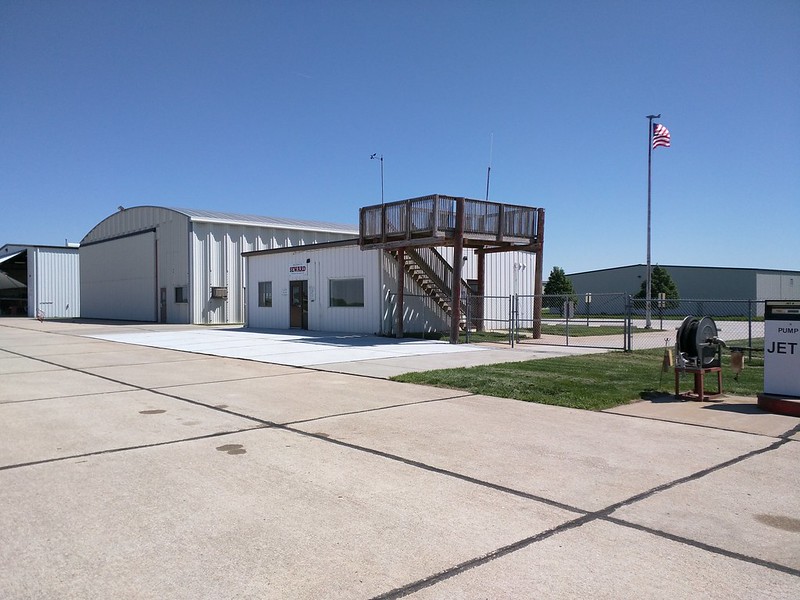
And then, of course, Peter would say, Well, we were flying home from South Dakota and figured we d stop in at Beatrice for fuel. And drop in on you. Followed by some surprise that we would stop at their little airport (which is quite a nice one). This all happened because it was windy. This is the fun adventure of aviation. Sometimes you plan to go to Texas, but the weather there is terrible, so you discover a 100-year-old landmark in Indiana instead. Or sometimes, like a couple of weeks ago, we planned to fly straight home but spent a few hours exploring rural Nebraska. The three of us flew to Sioux Falls, SD, in a little Cessna to visit my uncle and aunt up there. On our flight up, we stopped at the little airport in Seward, NE. It was complete with this unique elevated deck. In my imagination, this is used for people to drink beer while watching the planes land. IMG_20170512_113323 In South Dakota, we had a weekend full of card and board games, horseshoes, and Crokinole with my uncle and aunt, who are always fun to visit. We had many memories of visits up there as children and the pleasant enjoyment of the fact that we didn t need an 8-hour drive to get there. We flew back with a huge bag of large rhubarb from their garden (that too is something of a tradition!) It was a fun weekend to spend with my brothers first time we d been able to do this in a long while. And it marked the 11th state I ve flown into, and over 17,000 miles of flying.

3 June 2017

Norbert Preining: TeX Live 2017 released

TeX Live 2017 has been released! CTAN mirrors are busy updating. Get out bottles of good wine, and enjoy a good long download
Besides the huge amount of package updates due to the 2 month testing hiatus, I want to pick a few changes before copying the complete changelog entry: Additional TEXMF trees tlmgr got a new functionality to easily add and remove additional TEXMF trees to the search path. MikTeX had this features since long, and it was often requested. As it turned out, it is a rather trivial thing to achieve by some texmf.cnf lines. The rest is just front end in tlmgr. Here a few invocations (not very intelligent usage, though):
$ tlmgr conf auxtrees show
tlmgr: no auxiliary texmf trees defined.
$ tlmgr conf auxtrees add /projects/book-abc
$ tlmgr conf auxtrees
List of auxiliary texmf trees:
  /projects/book-abc
$ tlmgr conf auxtrees remove /projects/book-abc
$ tlmgr conf auxtrees show
tlmgr: no auxiliary texmf trees defined.
TeX Live Manager interactive shell tlmgr also got an interactive shell now, that can also be used for scripting. Available commands are all the usual command line actions, plus a few more (see documentation). Again, here a simple session:
$ tlmgr shell
protocol 1
tlmgr> load local
OK
tlmgr> load remote
tlmgr: package repositories
	main = /home/norbert/public_html/tlnet (verified)
	koma = http://www.komascript.de/repository/texlive/2017 (verified)
OK
tlmgr> update --list
tlmgr: package repositories
	main = /home/norbert/public_html/tlnet (verified)
	koma = http://www.komascript.de/repository/texlive/2017 (verified)
tlmgr: saving backups to /home/norbert/tl/2017/tlpkg/backups
tlmgr: no updates available
OK
tlmgr> byebye
$
User versus System mode for updmap and fmtutil I have reported on this during BachoTeX/TUG 2017, here are the slides, that the two central configuration programs updmap and fmtutil will change their operation mode slightly by disallowing invocations without mde specification. That is, one either needs to call updmap -sys (or updmap-sys, nothing changed here from previous years) or updmap -user (or updmap-user, new in TeX Live 2017). We hope by this and the accompanying web page of recommendations to help users not to shoot themselves to often by calling updmap without knowing the consequences. The upcoming proceedings of the BachoTeX will also comtain an article fully documenting both updmap and fmtutil including the most recent changes.
These were only a few changes where I had my fingers in the development. For the full list, read on below. Now get ready for partying, and also for the end of the peace, because daily package updates will restart in the next days. Enjoy Changes since TeX Live 2016 The following list of changes is directly from the TeX Live documentation.

1 June 2017

Markus Koschany: My Free Software Activities in May 2017

Welcome to gambaru.de. Here is my monthly report that covers what I have been doing for Debian. If you re interested in Java, Games and LTS topics, this might be interesting for you. Debian Games Bug fixes New upstream release Debian Java Debian LTS This was my fifteenth month as a paid contributor and I have been paid to work 27,25 hours on Debian LTS, a project started by Rapha l Hertzog. In that time I did the following: Misc Thanks for reading and see you next time.

23 May 2017

Dirk Eddelbuettel: Rcpp 0.12.11: Loads of goodies

The elevent update in the 0.12.* series of Rcpp landed on CRAN yesterday following the initial upload on the weekend, and the Debian package and Windows binaries should follow as usual. The 0.12.11 release follows the 0.12.0 release from late July, the 0.12.1 release in September, the 0.12.2 release in November, the 0.12.3 release in January, the 0.12.4 release in March, the 0.12.5 release in May, the 0.12.6 release in July, the 0.12.7 release in September, the 0.12.8 release in November, the 0.12.9 release in January, and the 0.12.10.release in March --- making it the fifteenth release at the steady and predictable bi-montly release frequency. Rcpp has become the most popular way of enhancing GNU R with C or C++ code. As of today, 1026 packages on CRAN depend on Rcpp for making analytical code go faster and further, along with another 91 in BioConductor. This releases follows on the heels of R's 3.4.0 release and addresses on or two issues from the transition, along with a literal boatload of other fixes and enhancements. James "coatless" Balamuta was once restless in making the documentation better, Kirill Mueller addressed a number of more obscure compiler warnings (triggered under under -Wextra and the like), Jim Hester improved excecption handling, and much more mostly by the Rcpp Core team. All changes are listed below in some detail. One big change that JJ made is that Rcpp Attributes also generate the now-almost-required package registration. (For background, I blogged about this one, two, three times.) We tested this, and do not expect it to throw curveballs. If you have an existing src/init.c, or if you do not have registration set in your NAMESPACE. It should cover most cases. But one never knows, and one first post-release buglet related to how devtools tests things has already been fixed in this PR by JJ.

Changes in Rcpp version 0.12.11 (2017-05-20)
  • Changes in Rcpp API:
    • Rcpp::exceptions can now be constructed without a call stack (Jim Hester in #663 addressing #664).
    • Somewhat spurious compiler messages under very verbose settings are now suppressed (Kirill Mueller in #670, #671, #672, #687, #688, #691).
    • Refreshed the included tinyformat template library (James Balamuta in #674 addressing #673).
    • Added printf-like syntax support for exception classes and variadic templating for Rcpp::stop and Rcpp::warning (James Balamuta in #676).
    • Exception messages have been rewritten to provide additional information. (James Balamuta in #676 and #677 addressing #184).
    • One more instance of Rf_mkString is protected from garbage collection (Dirk in #686 addressing #685).
    • Two exception specification that are no longer tolerated by g++-7.1 or later were removed (Dirk in #690 addressing #689)
  • Changes in Rcpp Documentation:
  • Changes in Rcpp Sugar:
    • Added sugar function trimws (Nathan Russell in #680 addressing #679).
  • Changes in Rcpp Attributes:
    • Automatically generate native routine registrations (JJ in #694)
    • The plugins for C++11, C++14, C++17 now set the values R 3.4.0 or later expects; a plugin for C++98 was added (Dirk in #684 addressing #683).
  • Changes in Rcpp support functions:
    • The Rcpp.package.skeleton() function now creates a package registration file provided R 3.4.0 or later is used (Dirk in #692)

Thanks to CRANberries, you can also look at a diff to the previous release. As always, even fuller details are on the Rcpp Changelog page and the Rcpp page which also leads to the downloads page, the browseable doxygen docs and zip files of doxygen output for the standard formats. A local directory has source and documentation too. Questions, comments etc should go to the rcpp-devel mailing list off the R-Forge page.

This post by Dirk Eddelbuettel originated on his Thinking inside the box blog. Please report excessive re-aggregation in third-party for-profit settings.

17 May 2017

Reproducible builds folks: Reproducible Builds: week 107 in Stretch cycle

Here's what happened in the Reproducible Builds effort between Sunday May 7 and Saturday May 13 2017: Report from Reproducible Builds Hamburg Hackathon We were 16 participants from 12 projects: 7 Debian, 2 repeatr.io, 1 ArchLinux, 1 coreboot + LEDE, 1 F-Droid, 1 ElectroBSD + privoxy, 1 GNU R, 1 in-toto.io, 1 Meson and 1 openSUSE. Three people came from the USA, 3 from the UK, 2 Finland, 1 Austria, 1 Denmark and 6 from Germany, plus we several guests from our gracious hosts at the CCCHH hackerspace as well as a guest from Australia We had four presentations: Some of the things we worked on: We had a Debian focussed meeting where we discussed a number of topics: And then we also had a lot of fun in the hackerspace, enjoying some of their gimmicks, such as being able to open physical doors with ssh or controlling light and music with an webbrowser without authentication (besides being in the right network). Not quite the hackathon (This wasn't the hackathon per-se, but some of us appreciated these sights and so we thought you would too.) Many thanks to: News and media coverage openSUSE has had a security breach in their infrastructure, including their build services. As of this writing, the scope and impact are still unclear, however the incident illustrates that no one should rely on being able to secure their infrastructure at all times. Reproducible Builds help mitigate this by allowing independent verification of build results, by parties that are unaffected by the compromise. (Whilst this can happen to anyone. Kudos to openSUSE for being open about it. Now let's continue working on Reproducible Builds everywhere!) On May 13th Chris Lamb gave a talk on Reproducible Builds at OSCAL 2017 in Tirana, Albania. OSCAL 2017 Toolchain bug reports and fixes Packages' bug reports Reviews of unreproducible packages 11 package reviews have been added, 2562 have been updated and 278 have been removed in this week, adding to our knowledge about identified issues. Most of the updates were to move ~1800 packages affected by the generic catch-all captures_build_path (out of ~2600 total) to the more specific gcc_captures_build_path, fixed by our proposed patches to GCC. 5 issue types have been updated: Weekly QA work During our reproducibility testing, FTBFS bugs have been detected and reported by: diffoscope development diffoscope development continued on the experimental branch: strip-nondeterminism development reprotest development trydiffoscope development Misc. This week's edition was written by Ximin Luo, Holger Levsen and Chris Lamb & reviewed by a bunch of Reproducible Builds folks on IRC & the mailing lists.

8 May 2017

Russ Allbery: Review: Chimes at Midnight

Review: Chimes at Midnight, by Seanan McGuire
Series: October Daye #7
Publisher: DAW
Copyright: 2013
ISBN: 1-101-63566-5
Format: Kindle
Pages: 346
Chimes at Midnight is the seventh book of the October Daye series and builds heavily on the previous books. Toby has gathered quite the group of allies by this point, and events here would casually spoil some of the previous books in the series (particularly One Salt Sea, which you absolutely do not want spoiled). I strongly recommend starting at the beginning, even if the series is getting stronger as it goes along. This time, rather than being asked for help, the book opens with Toby on a mission. Goblin fruit is becoming increasingly common on the streets of San Francisco, and while she's doing all she can to find and stop the dealers, she's finding dead changelings. Goblin fruit is a pleasant narcotic to purebloods, but to changelings it's instantly and fatally addictive. The growth of the drug trade means disaster for the local changelings, particularly since previous events in the series have broken a prominent local changeling gang. That was for the best, but they were keeping goblin fruit out, and now it's flooding into the power vacuum. In the sort of idealistic but hopelessly politically naive move that Toby is prone to, she takes her evidence to the highest local authority in faerie: the Queen of the Mists. The queen loathes Toby and the feeling is mutual, but Toby's opinion is that this shouldn't matter: these are her subjects and goblin fruit is widely recognized as a menace. Even if she cares nothing for their lives, a faerie drug being widely sold on the street runs the substantial risk that someone will give it to humans, potentially leading to the discovery of faerie. Sadly, but predictably, Toby has underestimated the Queen's malevolence. She leaves the court burdened not only with the knowledge that the Queen herself is helping with the distribution of goblin fruit, but also an impending banishment thanks to her reaction. She has three days to get out of the Queen's territory, permanently. Three days that the Luidaeg suggests she spend talking to people who knew King Gilad, the former and well-respected king of the local territory who died in the 1906 earthquake, apparently leaving the kingdom to the current Queen. Or perhaps not. As usual, crossing Toby is a very bad idea, and getting Toby involved in politics means that one should start betting heavily against the status quo. Also, as usual, things initially go far too well, and then Toby ends up in serious trouble. (I realize the usefulness of raising the stakes of the story, but I do prefer the books of this series that don't involve Toby spending much of the book ill.) However, there is a vast improvement over previous books in the story: one key relationship (which I'll still avoid spoiling) is finally out of the precarious will-they, won't-they stage and firmly on the page, and it's a relationship that I absolutely love. Watching Toby stomp people who deserve to be stomped makes me happy, but watching Toby let herself be happy and show it makes me even happier. McGuire also gives us some more long-pending revelations. I probably should have guessed the one about one of Toby's long-time friends and companions much earlier, although at least I did so a few pages before Toby found out. I have some strong suspicions about Toby's own background that were reinforced by this book, and will be curious to see if I'm right. And I'm starting to have guesses about the overall arc of the series, although not firm ones. One of my favorite things in long-running series is the slow revelation of more and more world background, and McGuire does it in just the way I like: lots of underlying complexity, reveals timed for emotional impact but without dragging on things that the characters should obviously be able to figure out, and a whole bunch of layered secrets that continue to provide more mystery even after one layer is removed. The plot here is typical of the plot of the last couple of novels in the series, which is fine by me since my favorite part of this series is the political intrigue (and Toby realizing that she has far more influence than she thinks). It helps that I thought Arden was great, given how central she is to this story. I liked her realistic reactions to her situation, and I liked her arguments with Toby. I'm dubious how correct Toby actually was, but we've learned by now that arguments from duty are always going to hold sway with her. And I loved Mags and the Library, and hope we'll be seeing more of them in future novels. The one quibble I'll close with, since the book closed with it, is that I found the ending rather abrupt. There were several things I wanted to see in the aftermath, and the book ended before they could happen. Hopefully that means they'll be the start of the next book (although a bit of poking around makes me think they may be in a novella). If you've liked the series so far, particularly the couple of books before this one, this is more of what you liked. Recommended. Followed by The Winter Long. Rating: 8 out of 10

30 April 2017

Paul Wise: FLOSS Activities April 2017

Changes

Issues

Review

Administration
  • Debian systems: quiet a logrotate warning, investigate issue with DNSSEC and alioth, deploy fix on our first stretch buildd, restore alioth git repo after history rewrite, investigate iptables segfaults on buildd and investigate time issues on a NAS
  • Debian derivatives census: delete patches over 5 MiB, re-enable the service
  • Debian wiki: investigate some 403 errors, fix alioth KGB config, deploy theme changes, close a bogus bug report, ping 1 user with bouncing email, whitelist 9 email addresses and whitelist 2 domains
  • Debian QA: deploy my changes
  • Debian mentors: security upgrades and service restarts
  • Openmoko: debug mailing list issue, security upgrades and reboots

Communication
  • Invite Wazo to the Debian derivatives census
  • Welcome ubilinux, Wazo and Roopa Prabhu (of Cumulus Linux) to the Debian derivatives census
  • Discuss HP/ProLiant wiki page with HPE folks
  • Inform git history rewriter about the git mailmap feature

Sponsors The libconfig-crontab-perl backports and pyvmomi issue were sponsored by my employer. All other work was done on a volunteer basis.

29 April 2017

John Goerzen: Is there any way to truly secure Docker container contents?

There is much to like about Docker. Much has been written about it, and about how secure the containerization is. This post isn t about that. This is about keeping what s inside each container secure. I believe we have a fundamental problem here. Earlier this month, a study on security vulnerabilities on Docker Hub came out, and the picture isn t pretty. One key finding:
Over 80% of the :latest versions of official images contained at least on high severity vulnerability!
And it s not the only one raising questions. Let s dive in and see how we got here. It s hard to be secure, but Debian makes it easier Let s say you want to run a PHP application like WordPress under Apache. Here are the things you need to keep secure: On Debian (and most of its best-known derivatives), we are extremely lucky to have a wonderful security support system. If you run a Debian system, the combination of unattended-updates, needrestart, debsecan, and debian-security-support will help one keep a Debian system secure and verify it is. When the latest OpenSSL bug comes out, generally speaking by the time I wake up, unattended-updates has already patched it, needrestart has already restarted any server that uses it, and I m protected. Debian s security team generally backports fixes rather than just say here s the new version , making it very safe to automatically apply patches. As long as I use what s in Debian stable, all layers mentioned above will be protected using this scheme. This picture is much nicer than what we see in Docker. Problems We have a lot of problems in the Docker ecosystem:
  1. No built-in way to know when a base needs to be updated, or to automatically update it
  2. Diverse and complicated vendor security picture
  3. No way to detect when intermediate libraries need to be updated
  4. Complicated final application security picture
Let s look at them individually. Problem #1: No built-in way to know when a base needs to be updated, or to automatically update it First of all, there is nothing in Docker like unattended-updates. Although a few people have suggested ways to run unattended-updates inside containers, there are many reasons that approach doesn t work well. The standard advice is to update/rebuild containers. So how do you know when to do that? It is not all that obvious. Theoretically, official OS base images will be updated when needed, and then other Docker hub images will detect the base update and be rebuilt. So, if a bug in a base image is found, and if the vendors work properly, and if you are somehow watching, then you could be protected. There is work in this area; tools such as watchtower help here. But this can lead to a false sense of security, because: Problem #2: Diverse and complicated vendor security picture Different images can use different operating system bases. Consider just these official images, and the bases they use: (tracking latest tag on each) And how about a few unofficial images? The good news is that Debian jessie seems to be pretty popular here. The bad news is that you see everything from Oracle Linux, to Ubuntu, to Debian testing, to Debian oldstable in just this list. Go a little further, and you ll see Alpine Linux, CentOS, and many more represented. Here s the question: what do you know about the security practices of each of these organizations? How well updated are their base images? Even if it s Debian, how well updated is, for instance, the oldstable or the testing image? The attack surface here is a lot larger than if you were just using a single OS. But wait, it gets worse: Problem #3: No way to detect when intermediate libraries need to be updated Let s say your Docker image is using a base that is updated immediately when a security problem is found. Let s further assume that your software package (WordPress, MySQL, whatever) is also being updated. What about the intermediate dependencies? Let s look at the build process for nginx. The Dockerfile for it begins with Debian:stretch-slim. But then it does a natural thing: it runs an apt-get install, pulling in packages from both Debian and an nginx repo. I ran the docker build across this. Of course, the apt-get command brings in not just the specified packages, but also their dependencies. Here are the ones nginx brought in: fontconfig-config fonts-dejavu-core gettext-base libbsd0 libexpat1 libfontconfig1 libfreetype6 libgd3 libgeoip1 libicu57 libjbig0 libjpeg62-turbo libpng16-16 libssl1.1 libtiff5 libwebp6 libx11-6 libx11-data libxau6 libxcb1 libxdmcp6 libxml2 libxpm4 libxslt1.1 nginx nginx-module-geoip nginx-module-image-filter nginx-module-njs nginx-module-xslt ucf Now, what is going to trigger a rebuild if there s a security fix to libssl1.1 or libicu57? (Both of these have a history of security holes.) The answer, for the vast majority of Docker images, seems to be: nothing automatic. Problem #4: Complicated final application security picture And that brings us to the last problem: Let s say you want to run an application in Docker. exim, PostgreSQL, Drupal, or maybe something more obscure. Who is watching for security holes in it? If you re using Debian packages, the Debian security team is. If you re using a Docker image, well, maybe it s the random person that contributed it, maybe it s the vendor, maybe it s Docker, maybe it s nobody. You have to take this burden on yourself, to validate the security support picture for each image you use. Conclusion All this adds up to a lot of work, which is not taken care of for you by default in Docker. It is no surprise that many Docker images are insecure, given this picture. The unfortunate reality is that many Docker containers are running with known vulnerabilities that have known fixes, but just aren t, and that s sad. I wonder if there are any practices people are using that can mitigate this better than what the current best-practice recommendations seem to be?

24 April 2017

Mike Gabriel: [Arctica Project] Release of nx-libs (version 3.5.99.6)

Introduction NX is a software suite which implements very efficient compression of the X11 protocol. This increases performance when using X applications over a network, especially a slow one. NX (v3) has been originally developed by NoMachine and has been Free Software ever since. Since NoMachine obsoleted NX (v3) some time back in 2013/2014, the maintenance has been continued by a versatile group of developers. The work on NX (v3) is being continued under the project name "nx-libs". Release Announcement On Friday, Apr 21st 2017, version 3.5.99.6 of nx-libs has been released [1]. As some of you might have noticed, the release announcements for 3.5.99.4 and 3.5.99.5 have never been posted / written, so this announcement lists changes introduced since 3.5.99.3. Credits There are alway many people to thank, so I won't mention all here. The person I need to mention here is Mihai Moldovan, though. He virtually is our QA manager, although not officially entitled. The feedback he gives on code reviews is sooo awesome!!! May you be available to our project for a long time. Thanks a lot, Mihai!!! Changes between 3.5.99.4 and 3.5.99.3 Changes between 3.5.99.5 and 3.5.99.4 Changes between 3.5.99.6 and 3.5.99.5 Change Log Lists of changes (since 3.5.99.3) can be obtained from here (3.5.99.3 -> .4), here (3.5.99.4 -> .5) and here (3.5.99.5 -> .6) Known Issues A list of known issues can be obtained from the nx-libs issue tracker [issues]. Binary Builds You can obtain binary builds of nx-libs for Debian (jessie, stretch, unstable) and Ubuntu (trusty, xenial) via these apt-URLs: Our package server's archive key is: 0x98DE3101 (fingerprint: 7A49 CD37 EBAE 2501 B9B4 F7EA A868 0F55 98DE 3101). Use this command to make APT trust our package server:
 wget -qO - http://packages.arctica-project.org/archive.key   sudo apt-key add -
The nx-libs software project brings to you the binary packages nxproxy (client-side component) and nxagent (nx-X11 server, server-side component). The nxagent Xserver can be used from remote sessions (via nxcomp compression library) or as a next Xserver. Ubuntu developers, please note: we have added nightly builds for Ubuntu latest to our build server. At the moment, you can obtain nx-libs builds for Ubuntu 16.10 (yakkety) and 17.04 (zenial) as nightly builds. References

1 April 2017

Paul Wise: FLOSS Activities March 2017

Changes

Issues

Review

Administration
  • Debian systems: apply a patch to userdir-ldap, ask a local admin to reset a dead powerpc buildd, remove dead SH4 porterboxen from LDAP, fix perms on www.d.o OC static mirror, report false positives in an an automated abuse report, redirect 1 student to FAQs/support/DebianEdu, redirect 1 event organiser to partners/trademark/merchandise/DPL, redirect 1 guest account seeker to NM, redirect 1 @debian.org desirer to NM, redirect 1 email bounce to a changes@db.d.o user, redirect 2 people to the listmasters, redirect 1 person to Debian Pure Blends, redirect 1 user to a service admin and redirect 2 users to support
  • Debian packages site: deploy my ports/cruft changes
  • Debian wiki: poke at HP page history and advise a contributor, whitelist 13 email address, whitelist 1 domain, check out history of a banned IP, direct 1 hoster to DebConf17 sponsors team, direct 1 user to OpenStack packaging, direct 1 user to InstallingDebianOn and h-node.org, direct 2 users to different ways to help Debian and direct 1 emeritus DD on repository wiki page reorganisation
  • Debian QA: fix an issue with the PTS news, remove some debugging cruft I left behind, fix the usertags on a QA bug and deploy some code fixes
  • Debian mentors: security upgrades and service restarts
  • Openmoko: security upgrades and reboots

Communication

Sponsors The valgrind backport, samba and libthrift-perl bug reports were sponsored by my employer. All other work was done on a volunteer basis.

31 March 2017

Chris Lamb: Free software activities in March 2017

Here is my monthly update covering what I have been doing in the free software world (previous month):
Reproducible builds

Whilst anyone can inspect the source code of free software for malicious flaws, most software is distributed pre-compiled to end users. The motivation behind the Reproducible Builds effort is to permit verification that no flaws have been introduced either maliciously or accidentally during this compilation process by promising identical results are always generated from a given source, thus allowing multiple third-parties to come to a consensus on whether a build was compromised. I have generously been awarded a grant from the Core Infrastructure Initiative to fund my work in this area. This month I:
I also made the following changes to our tooling:
diffoscope

diffoscope is our in-depth and content-aware diff utility that can locate and diagnose reproducibility issues.

  • New features/optimisations:
    • Extract squashfs archive in one go rather than per-file, speeding up ISO comparison by ~10x.
    • Add support for .docx and .odt files via docx2txt & odt2txt. (#859056).
    • Add support for PGP files via pgpdump. (#859034).
    • Add support for comparing Pcap files. (#858867).
    • Compare GIF images using gifbuild. (#857610).
  • Bug fixes:
    • Ensure that we really are using ImageMagick and not the GraphicsMagick compatibility layer. (#857940).
    • Fix and add test for meaningless 1234-content metadata when introspecting archives. (#858223).
    • Fix detection of ISO9660 images processed with isohybrid.
    • Skip icc tests if the Debian-specific patch is not present. (#856447).
    • Support newer versions of cbfstool to avoid test failures. (#856446).
    • Update the progress bar prior to working to ensure filename is in sync.
  • Cleanups:
    • Use /usr/share/dpkg/pkg-info.mk over manual calls to dpkg-parsechangelog in debian/rules.
    • Ensure tests and the runtime environment can locate binaries in /usr/sbin (eg. tcpdump).

strip-nondeterminism

strip-nondeterminism is our tool to remove specific non-deterministic results from a completed build.

  • Fix a possible endless loop while stripping .ar files due to trusting the file's own file size data. (#857975).
  • Add support for testing files we should reject and include the filename when evaluating fixtures.

buildinfo.debian.net

buildinfo.debian.net is my experiment into how to process, store and distribute .buildinfo files after the Debian archive software has processed them.

  • Add support for Format: 1.0. (#20).
  • Don't parse Format: header as the source package version. (#21).
  • Show the reproducible status of packages.


Debian


I submitted my platform for the 2017 Debian Project Leader Elections. This was subsequently covered on LWN and I have been participating in the discussions on the debian-vote mailing list since then.


Debian LTS

This month I have been paid to work 14.75 hours on Debian Long Term Support (LTS). In that time I did the following:
  • "Frontdesk" duties, triaging CVEs, etc.
  • Issued DLA 848-1 for the freetype font library fixing a denial of service vulnerability.
  • Issued DLA 851-1 for wget preventing a header injection attack.
  • Issued DLA 863-1 for the deluge BitTorrent client correcting a cross-site request forgery vulnerability.
  • Issued DLA 864-1 for jhead (an EXIF metadata tool) patching an arbitrary code execution vulnerability.
  • Issued DLA 865-1 for the suricata intrusion detection system, fixing an IP protocol matching error.
  • Issued DLA 871-1 for python3.2 fixing a TLS stripping vulnerability in the smptlib library.
  • Issued DLA 873-1 for apt-cacher preventing a HTTP response splitting vulnerability.
  • Issued DLA 876-1 for eject to prevent an issue regarding the checking of setuid(2) and setgid(2) return values.

Uploads
  • python-django:
    • 1:1.10.6-1 New upstream bugfix release.
    • 1:1.11~rc1-1 New upstream release candidate.
  • redis:
    • 3:3.2.8-2 Avoid conflict between RuntimeDirectory and tmpfiles.d(5) both attempting to create /run/redis with differing permissions. (#856116)
    • 3:3.2.8-3 Revert the creation of a /usr/bin/redis-check-rdb to /usr/bin/redis-server symlink to avoid a dangling symlink if only the redis-tools package is installed. (#858519)
  • gunicorn 19.7.0-1 & 19.7.1-1 New upstream releases.
  • adminer 4.3.0-1 New upstream release.

Finally, I also made the following non-maintainer uploads (NMUs):


FTP Team

As a Debian FTP assistant I ACCEPTed 121 packages: 4pane, adql, android-platform-system-core, android-sdk-helper, braillegraph, deepnano, dh-runit, django-auth-ldap, django-dirtyfields, drf-extensions, gammaray, gcc-7, gnome-keysign, golang-code.gitea-sdk, golang-github-bluebreezecf-opentsdb-goclient, golang-github-bsm-redeo, golang-github-cupcake-rdb, golang-github-denisenkom-go-mssqldb, golang-github-exponent-io-jsonpath, golang-github-facebookgo-ensure, golang-github-facebookgo-freeport, golang-github-facebookgo-grace, golang-github-facebookgo-httpdown, golang-github-facebookgo-stack, golang-github-facebookgo-subset, golang-github-go-openapi-loads, golang-github-go-openapi-runtime, golang-github-go-openapi-strfmt, golang-github-go-openapi-validate, golang-github-golang-geo, golang-github-gorilla-pat, golang-github-gorilla-securecookie, golang-github-issue9-assert, golang-github-issue9-identicon, golang-github-jaytaylor-html2text, golang-github-joho-godotenv, golang-github-juju-errors, golang-github-kisielk-gotool, golang-github-kubernetes-gengo, golang-github-lpabon-godbc, golang-github-lunny-log, golang-github-makenowjust-heredoc, golang-github-mrjones-oauth, golang-github-nbutton23-zxcvbn-go, golang-github-neelance-sourcemap, golang-github-ngaut-deadline, golang-github-ngaut-go-zookeeper, golang-github-ngaut-log, golang-github-ngaut-pools, golang-github-ngaut-sync2, golang-github-optiopay-kafka, golang-github-quobyte-api, golang-github-renstrom-dedent, golang-github-sergi-go-diff, golang-github-siddontang-go, golang-github-smartystreets-go-aws-auth, golang-github-xanzy-go-cloudstack, golang-github-xtaci-kcp, golang-github-yohcop-openid-go, graywolf, haskell-raaz, hfst-ospell, hikaricp, iptraf-ng, kanboard-cli, kcptun, kreport, libbluray, libcatmandu-store-elasticsearch-perl, libcsfml, libnet-prometheus-perl, libosmocore, libpandoc-wrapper-perl, libseqlib, matrix-synapse, mockldap, nfs-ganesha, node-buffer, node-pako, nose-el, nvptx-tools, nx-libs, open-ath9k-htc-firmware, pagein, paleomix, pgsql-ogr-fdw, profanity, pyosmium, python-biotools, python-django-extra-views, python-django-otp, python-django-push-notifications, python-dnslib, python-gmpy, python-gmpy2, python-holidays, python-kanboard, python-line-profiler, python-pgpy, python-pweave, python-raven, python-xapian-haystack, python-xopen, r-cran-v8, repetier-host, ruby-jar-dependencies, ruby-maven-libs, ruby-psych, ruby-retriable, seafile-client, spyder-unittest, stressant, systray-mdstat, telegram-desktop, thawab, tigris, tnseq-transit, typesafe-config, vibe.d, x2goserver & xmlrpc-c. I additionally filed 14 RC bugs against packages that had incomplete debian/copyright files against: golang-github-cupcake-rdb, golang-github-sergi-go-diff, graywolf, hfst-ospell, libbluray, pgsql-ogr-fdw, python-gmpy, python-gmpy2, python-pgpy, python-xapian-haystack, repetier-host, telegram-desktop, tigris & xmlrpc-c.

Next.

Previous.