Three years ago, I was elected to the board of directors of
Software in
the Public Interest, Inc. About halfway through my three year term, I
was elected by the board to the (largely ceremonial?) role of Vice
President of the organization. This month, my term is up and after a
good deal of soul searching over the last weeks, I've decided to not run
again.
With time, I've become busy with other projects including work and
graduate school at the
MIT Media Lab,
Debian,
Ubuntu,
One
Laptop per Child, several
book projects and more. Recently, I've
found that I've simply had less time to put toward SPI than I have had
in the past.
Of course, I continue to care very much about SPI and its mission and
feel that I done a good job of fulfilling my responsibilities
throughout my term. The real reason I'd like to step aside to let some
new blood and energy take a more active role and to let SPI take off in
new directions.
Since I've served a full term, I thought I would take the opportunity to
look back at my work with SPI over the last three years and to the
future.
SPI's Recent Past
Three years ago, I ran for the SPI board on
a platform that I would
like to see SPI work more like a real pro-active non-profit organization
and less like Debian's legal shell. SPI was at at transition point then
and the board spent a lot of time thinking about it was that SPI should
do and what role it should fill in the free software community. Many of
these questions are still open but the following is my round up.
There are two types of non-profit organizations in the free/open source
community. The first is the large-project foundation. Example are the
GNOME Foundation, KDE Foundation, and Plone Foundation. These support
and work closely with one large and otherwise institutionally
independent project. The second type is concerned with advocacy or
issues of concern to many or all free software projects. The FSG/LSB,
Open Source Initiative, Software Freedom International, Linux
International, and the Free Software Foundation are all examples of this
type (although the FSF also supports the GNU Project so can be put into
both camps).
Three years ago, SPI was basically the Debian Foundation under a
different name. However, SPI also supported a handful of other
medium-sized projects (at the time, this included Berlin and OFTC). In
this way, SPI provided some of the benefits of a 501(c)(3) non-profit
organization to groups that were large and important enough to care
about issues like the tax-deductability of donations, but small enough
that starting their own foundation didn't quite make sense. This, I am
convinced, is SPI's niche and its where the organization can make the
greatest difference. While Debian continues to be the driving force
behind SPI, this mirrors Debian close relationship with other free
software projects as a downstream and a distribution. Debian may
ultimately decide its has outgrown SPI and wants its own foundation but
it's role in providing an umbrella for other free software project also
makes a lot of sense.
Over the last years, SPI has added several new member projects including
GNUStep, Drupal and PostgreSQL and members of these projects have played
an increasingly important role in SPI. OFTC members including SPI
secretary David Graham have continued to drive the organization. I am
thrilled to see that PostgreSQL's Josh Berkus is running for a seat on
the board and wish him the best of luck. He has put a huge amount of
effort into SPI in the past several months and I believe he would make a
great board member.
Of course, not everything has been rosy. While our organization is in
slightly better shape than it has been in the past, SPI still suffers
from a lack of interest and activity by participants in its member
projects. SPI handles Debian's money and every Debian developer should
be interested and involved in SPI; yet only a relatively small
percentage are. I've run SPI sessions, talks, and BOFs at three of the
last four Debian conferences but haven't been able to make a
satisfactory dent in either the Debian community or SPI. The next board
of directors will need to work actively and creatively to help do what
the last board did not accomplish.
While things are currently much better than they have been in the past,
SPI has continued to be mired in a number of bureaucratic issues. Simple
issues like accurate, timely and transparent bookkeeping have proved
more difficult than the board or those brave (or foolhardy) enough to
take on the treasurer position seem to have thought. I worked with the
treasurer and our lawyer to meet with a bookkeeping service in New York
City.
The Future
In the future, I'd like see to more members projects and more active
participants from
all members projects. I'd like to see a more active
organization in general but am beginning to conclude that a fully
volunteer "staff" is only going to be able to do so much.
In terms of bureaucratic issues, several board members have lobbied hard
to spend money to hire full or part time help either in an
administrative capacity or as some sort of combination
administrator/executive director. For a number of reasons, the board has
been reticent to do this but I think it's become increasingly clear that
our growth and relevance as an organization is going to require this. I
think hiring the bookkeeping service was a good first step. I think at
the very least, SPI should "outsource" most of the non-fun
administrative work to others so that the board can focus on the
important work of advocating free software and helping our member
projects. I'm
famously concerned with introducing paid labor into
voluntary free software projects but I think that, if done right, this
could be a very good step.
In terms of my own involvement, I'm planning to stay involved as a
contributing member or perhaps even as an adviser if the board will have
me. I'd like to continue work on the SPI-Trademark committee and look
forward to the day that we can create a general policy for helping folks
use and license the Debian mark (and other trademark SPI may hold in the
future) as permissively as possible.
I'd also like to see a better documented process for becoming an SPI
member project. This should explain to projects what SPI expects from
them (e.g., democratic decision making, an active representative to SPI,
etc), what they will get from SPI, and what is necessary to make it all
happen. I'd like to work with some of the recent member projects to help
document their experience and make easier for the next batch.
I'm looking forward to taking some time off and look forward to the
possibility of running for a seat on the SPI board again at some point
in the future.

 Binary Fission: Porn or Not?
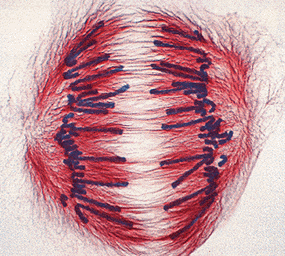 Mitosis: Porn or Not?