Dear Debian community,
This is bits from the DPL for April.
End of 10
I am sure I was speaking in the interest of the whole project when
joining the "End of 10" campaign. Here is what I wrote to the
initiators:
Hi Joseph and all drivers of the "End of 10" campaign,
On behalf of the entire Debian project, I would like to say that we
proudly join your great campaign. We stand with you in promoting Free
Software, defending users' freedoms, and protecting our planet by
avoiding unnecessary hardware waste.
Thank you for leading this important initiative.
Andreas Tille
Debian Project Leader
I have some goals I would like to share with you for my second term.
Ftpmaster delegation
This splits up into tasks that can be done before and after Trixie release.
Before Trixie:
1. Reducing Barriers to DFSG Compliance Checks
Back in 2002, Debian established a way to distribute cryptographic
software in the main archive, whereas such software had previously been
restricted to the non-US archive. One result of this arrangement which
influences our workflow is that all packages uploaded to the NEW queue
must remain on the server that hosts it. This requirement means that
members of the ftpmaster team must log in to that specific machine,
where they are limited to a restricted set of tools for reviewing
uploaded code.
This setup may act as a barrier to participation--particularly for
contributors who might otherwise assist with reviewing packages for DFSG
compliance. I believe it is time to reassess this limitation and work
toward removing such hurdles.
In October last year, we had some initial contact with SPI's legal
counsel, who noted that US regulations around cryptography have been
relaxed somewhat in recent years (as of 2021). This suggests it may now
be possible to revisit and potentially revise the conditions under which
we manage cryptographic software in the NEW queue.
I plan to investigate this further. If you have expertise in software or
export control law and are interested in helping with this topic, please
get in touch with me.
The ultimate goal is to make it easier for more people to contribute to
ensuring that code in the NEW queue complies with the DFSG.
2. Discussing Alternatives
My chances to reach out to other distributions remained limited.
However, regarding the processing of new software, I learned that
OpenSUSE uses a Git-based workflow that requires five "LGTM" approvals
from a group of trusted developers. As far as I know, Fedora follows a
similar approach.
Inspired by this, a recent community initiative--the Gateway to NEW
project--enables peer review of new packages for DFSG compliance before
they enter the NEW queue. This effort allows anyone to contribute by
reviewing packages and flagging potential issues in advance viaGit.
I particularly appreciate that the DFSG review is coupled with CI,
allowing for both license and technical evaluation.
While this process currently results in some duplication of work--since
final reviews are still performed by the ftpmaster team--it offers a
valuable opportunity to catch issues early and improve the overall
quality of uploads. If the community sees long-term value in this
approach, it could serve as a basis for evolving our workflows.
Integrating it more closely into DAK could streamline the process, and
we've recently seen that merge requests reflecting community suggestions
can be accepted promptly.
For now, I would like to gather opinions about how such initiatives
could best complement the current NEW processing, and whether greater
consensus on trusted peer review could help reduce the burden on the
team doing DFSG compliance checks. Submitting packages for review and
automated testing before uploading can improve quality and encourage
broader participation in safeguarding Debian's Free Software principles.
My explicit thanks go out to the Gateway to NEW team for their valuable
and forward-looking contribution to Debian.
3. Documenting Critical Workflows
Past ftpmaster trainees have told me that understanding the full set of
ftpmaster workflows can be quite difficult. While there is some useful
documentation thanks in particular to Sean Whitton for his work on
documenting NEW processing rules many other important tasks carried
out by the ftpmaster team remain undocumented or only partially so.
Comprehensive and accessible documentation would greatly benefit current
and future team members, especially those onboarding or assisting in
specific workflows. It would also help ensure continuity and
transparency in how critical parts of the archive are managed.
If such documentation already exists and I have simply overlooked it, I
would be happy to be corrected. Otherwise, I believe this is an area
where we need to improve significantly. Volunteers with a talent for
writing technical documentation are warmly invited to contact me--I'd be
happy to help establish connections with ftpmaster team members who are
willing to share their knowledge so that it can be written down and
preserved.
Once Trixie is released (hopefully before DebConf):
4. Split of the Ftpmaster Team into DFSG and Archive Teams
As discussed during the "Meet the ftpteam" BoF at DebConf24, I would
like to propose a structural refinement of the current Ftpmaster team
by introducing two different delegated teams:
DFSG Team
Archive Team (responsible for DAK maintenance and process tooling,
including releases)
(Alternative name suggestions are, of course, welcome.) The primary task
of the DFSG team would be the processing of the NEW queue and ensuring
that packages comply with the DFSG. The Archive team would focus on
maintaining DAK and handling the technical aspects of archive
management.
I am aware that, in the recent past, the ftpmaster team has decided not
to actively seek new members. While I respect the autonomy of each team,
the resulting lack of a recruitment pipeline has led to some friction
and concern within the wider community, including myself. As Debian
Project Leader, it is my responsibility to ensure the long-term
sustainability and resilience of our project, which includes fostering
an environment where new contributors can join and existing teams remain
effective and well-supported. Therefore, even if the current team does
not prioritize recruitment, I will actively seek and encourage new
contributors for both teams, with the aim of supporting openness and
collaboration.
This proposal is not intended as criticism of the current team's
dedication or achievements--on the contrary, I am grateful for the hard
work and commitment shown, often under challenging circumstances. My
intention is to help address the structural issues that have made
onboarding and specialization difficult and to ensure that both teams
are well-supported for the future.
I also believe that both teams should regularly inform the Debian
community about the policies and procedures they apply. I welcome any
suggestions for a more detailed description of the tasks involved, as
well as feedback on how best to implement this change in a way that
supports collaboration and transparency.
My intention with this proposal is to foster a more open and effective
working environment, and I am committed to working with all involved to
ensure that any changes are made collaboratively and with respect for
the important work already being done.
I'm aware that the ideas outlined above touch on core parts of how
Debian operates and involve responsibilities across multiple teams.
These are not small changes, and implementing them will require
thoughtful discussion and collaboration.
To move this forward, I've registered a dedicated BoF for DebConf. To
make the most of that opportunity, I'm looking for volunteers who feel
committed to improving our workflows and processes. With your help, we
can prepare concrete and sensible proposals in advance--so the limited
time of the BoF can be used effectively for decision-making and
consensus-building.
In short: I need your help to bring these changes to life. From my
experience in my last term, I know that when it truly matters, the
Debian community comes together--and I trust that spirit will guide us
again.
Please also note: we had a "Call for volunteers" five years ago, and
much of what was written there still holds true today. I've been told
that the response back then was overwhelming--but that training such a
large number of volunteers didn't scale well. This time, I hope we can
find a more sustainable approach: training a few dedicated people first,
and then enabling them to pass on their knowledge. This will also be a
topic at the DebCamp sprint.
Dealing with Dormant Packages
Debian was founded on the principle that each piece of software should
be maintained by someone with expertise in it--typically a single,
responsible maintainer. This model formed the historical foundation of
Debian's packaging system and helped establish high standards of quality
and accountability. However, as the project has grown and the number of
packages has expanded, this model no longer scales well in all areas.
Team maintenance has since emerged as a practical complement, allowing
multiple contributors to share responsibility and reduce
bottlenecks--depending on each team's internal policy.
While working on the Bug of the Day initiative, I observed a
significant number of packages that have not been updated in a long
time. In the case of team-maintained packages, addressing this is often
straightforward: team uploads can be made, or the team can be asked
whether the package should be removed. We've also identified many
packages that would fit well under the umbrella of active teams, such as
language teams like Debian Perl and Debian Python, or blends like Debian
Games and Debian Multimedia. Often, no one has taken action--not because
of disagreement, but simply due to inattention or a lack of initiative.
In addition, we've found several packages that probably should be
removed entirely. In those cases, we've filed bugs with pre-removal
warnings, which can later be escalated to removal requests.
When a package is still formally maintained by an individual, but shows
signs of neglect (e.g., no uploads for years, unfixed RC bugs, failing
autopkgtests), we currently have three main tools:
The MIA process, which handles inactive or unreachable
maintainers.
Package Salvaging, which allows contributors to take over
maintenance if conditions are met.
Non-Maintainer Uploads (NMUs), which are limited to specific,
well-defined fixes (which do not include things like migration
to Salsa).
These mechanisms are important and valuable, but they don't always allow
us to react swiftly or comprehensively enough. Our tools for identifying
packages that are effectively unmaintained are relatively weak, and the
thresholds for taking action are often high.
The Package Salvage team is currently trialing a process we've
provisionally called "Intend to NMU" (ITN). The name is admittedly
questionable--some have suggested alternatives like "Intent to
Orphan"--and discussion about this is ongoing on debian-devel. The
mechanism is intended for situations where packages appear inactive but
aren't yet formally orphaned, introducing a clear 21-day notice period
before NMUs, similar in spirit to the existing ITS process. The
discussion has sparked suggestions for expanding NMU rules.
While it is crucial not to undermine the autonomy of maintainers who
remain actively involved, we also must not allow a strict interpretation
of this autonomy to block needed improvements to obviously neglected
packages.
To be clear: I do not propose to change the rights of maintainers who
are clearly active and invested in their packages. That model has served
us well. However, we must also be honest that, in some cases,
maintainers stop contributing--quietly and without transition plans. In
those situations, we need more agile and scalable procedures to uphold
Debian's high standards.
To that end, I've registered a BoF session for DebConf25 to discuss
potential improvements in how we handle dormant packages. These
discussions will be prepared during a sprint at DebCamp, where I hope to
work with others on concrete ideas.
Among the topics I want to revisit is my proposal from last November on
debian-devel, titled "Barriers between packages and other people".
While the thread prompted substantial discussion, it understandably
didn't lead to consensus. I intend to ensure the various viewpoints are
fairly summarised--ideally by someone with a more neutral stance than
myself--and, if possible, work toward a formal proposal during the
DebCamp sprint to present at the DebConf BoF.
My hope is that we can agree on mechanisms that allow us to act more
effectively in situations where formerly very active volunteers have,
for whatever reason, moved on. That way, we can protect both Debian's
quality and its collaborative spirit.
Building Sustainable Funding for Debian
Debian incurs ongoing expenses to support its
infrastructure--particularly hardware maintenance and upgrades--as well as
to fund in-person meetings like sprints and mini-DebConfs. These
investments are essential to our continued success: they enable
productive collaboration and ensure the robustness of the operating
system we provide to users and derivative distributions around the
world.
While DebConf benefits from generous sponsorship, and we regularly
receive donated hardware, there is still considerable room to grow our
financial base--especially to support less visible but equally critical
activities. One key goal is to establish a more constant and predictable
stream of income, helping Debian plan ahead and respond more flexibly to
emerging needs.
This presents an excellent opportunity for contributors who may not be
involved in packaging or technical development. Many of us in Debian are
engineers first--and fundraising is not something we've been trained to
do. But just like technical work, building sustainable funding requires
expertise and long-term engagement.
If you're someone who's passionate about Free Software and has
experience with fundraising, donor outreach, sponsorship acquisition, or
nonprofit development strategy, we would deeply value your help.
Supporting Debian doesn't have to mean writing code. Helping us build a
steady and reliable financial foundation is just as important--and could
make a lasting impact.
Kind regards
Andreas.
PS: In April I also planted my 5000th tree and while this is off-topic here
I'm proud to share this information with my fellow Debian friends.
After thinking about multi-stage Debian rebuilds I wanted to implement the idea. Recall my illustration:
Earlier I rebuilt all packages that make up the difference between Ubuntu and Trisquel. It turned out to be a 42% bit-by-bit identical similarity. To check the generality of my approach, I rebuilt the difference between Debian and Devuan too. That was the debdistreproduce project. It only had to orchestrate building up to around 500 packages for each distribution and per architecture.
Differential reproducible rebuilds doesn t give you the full picture: it ignore the shared package between the distribution, which make up over 90% of the packages. So I felt a desire to do full archive rebuilds. The motivation is that in order to trust Trisquel binary packages, I need to trust Ubuntu binary packages (because that make up 90% of the Trisquel packages), and many of those Ubuntu binaries are derived from Debian source packages. How to approach all of this? Last year I created the debdistrebuild project, and did top-50 popcon package rebuilds of Debian bullseye, bookworm, trixie, and Ubuntu noble and jammy, on a mix of amd64 and arm64. The amount of reproducibility was lower. Primarily the differences were caused by using different build inputs.
Last year I spent (too much) time creating a mirror of snapshot.debian.org, to be able to have older packages available for use as build inputs. I have two copies hosted at different datacentres for reliability and archival safety. At the time, snapshot.d.o had serious rate-limiting making it pretty unusable for massive rebuild usage or even basic downloads. Watching the multi-month download complete last year had a meditating effect. The completion of my snapshot download co-incided with me realizing something about the nature of rebuilding packages. Let me below give a recap of the idempotent rebuilds idea, because it motivate my work to build all of Debian from a GitLab pipeline.
One purpose for my effort is to be able to trust the binaries that I use on my laptop. I believe that without building binaries from source code, there is no practically feasible way to trust binaries. To trust any binary you receive, you can de-assemble the bits and audit the assembler instructions for the CPU you will execute it on. Doing that on a OS-wide level this is unpractical. A more practical approach is to audit the source code, and then confirm that the binary is 100% bit-by-bit identical to one that you can build yourself (from the same source) on your own trusted toolchain. This is similar to a reproducible build.
My initial goal with debdistrebuild was to get to 100% bit-by-bit identical rebuilds, and then I would have trustworthy binaries. Or so I thought. This also appears to be the goal of reproduce.debian.net. They want to reproduce the official Debian binaries. That is a worthy and important goal. They achieve this by building packages using the build inputs that were used to build the binaries. The build inputs are earlier versions of Debian packages (not necessarily from any public Debian release), archived at snapshot.debian.org.
I realized that these rebuilds would be not be sufficient for me: it doesn t solve the problem of how to trust the toolchain. Let s assume the reproduce.debian.net effort succeeds and is able to 100% bit-by-bit identically reproduce the official Debian binaries. Which appears to be within reach. To have trusted binaries we would only have to audit the source code for the latest version of the packages AND audit the tool chain used. There is no escaping from auditing all the source code that s what I think we all would prefer to focus on, to be able to improve upstream source code.
The trouble is about auditing the tool chain. With the Reproduce.debian.net approach, that is a recursive problem back to really ancient Debian packages, some of them which may no longer build or work, or even be legally distributable. Auditing all those old packages is a LARGER effort than auditing all current packages! Doing auditing of old packages is of less use to making contributions: those releases are old, and chances are any improvements have already been implemented and released. Or that improvements are no longer applicable because the projects evolved since the earlier version.
See where this is going now? I reached the conclusion that reproducing official binaries using the same build inputs is not what I m interested in. I want to be able to build the binaries that I use from source using a toolchain that I can also build from source. And preferably that all of this is using latest version of all packages, so that I can contribute and send patches for them, to improve matters.
The toolchain that Reproduce.Debian.Net is using is not trustworthy unless all those ancient packages are audited or rebuilt bit-by-bit identically, and I don t see any practical way forward to achieve that goal. Nor have I seen anyone working on that problem. It is possible to do, though, but I think there are simpler ways to achieve the same goal.
My approach to reach trusted binaries on my laptop appears to be a three-step effort:
Encourage an idempotently rebuildable Debian archive, i.e., a Debian archive that can be 100% bit-by-bit identically rebuilt using Debian itself.
Construct a smaller number of binary *.deb packages based on Guix binaries that when used as build inputs (potentially iteratively) leads to 100% bit-by-bit identical packages as in step 1.
How to go about achieving this? Today s Debian build architecture is something that lack transparency and end-user control. The build environment and signing keys are managed by, or influenced by, unidentified people following undocumented (or at least not public) security procedures, under unknown legal jurisdictions. I always wondered why none of the Debian-derivates have adopted a modern GitDevOps-style approach as a method to improve binary build transparency, maybe I missed some project?
If you want to contribute to some GitHub or GitLab project, you click the Fork button and get a CI/CD pipeline running which rebuild artifacts for the project. This makes it easy for people to contribute, and you get good QA control because the entire chain up until its artifact release are produced and tested. At least in theory. Many projects are behind on this, but it seems like this is a useful goal for all projects. This is also liberating: all users are able to reproduce artifacts. There is no longer any magic involved in preparing release artifacts. As we ve seen with many software supply-chain security incidents for the past years, where the magic is involved is a good place to introduce malicious code.
To allow me to continue with my experiment, I thought the simplest way forward was to setup a GitDevOps-centric and user-controllable way to build the entire Debian archive. Let me introduce the debdistbuild project.
Debdistbuild is a re-usable GitLab CI/CD pipeline, similar to the Salsa CI pipeline. It provide one build job definition and one deploy job definition. The pipeline can run on GitLab.org Shared Runners or you can set up your own runners, like my GitLab riscv64 runner setup. I have concerns about relying on GitLab (both as software and as a service), but my ideas are easy to transfer to some other GitDevSecOps setup such as Codeberg.org. Self-hosting GitLab, including self-hosted runners, is common today, and Debian rely increasingly on Salsa for this. All of the build infrastructure could be hosted on Salsa eventually.
The build job is simple. From within an official Debian container image build packages using dpkg-buildpackage essentially by invoking the following commands.
sed -i 's/ deb$/ deb deb-src/' /etc/apt/sources.list.d/*.sources
apt-get -o Acquire::Check-Valid-Until=false update
apt-get dist-upgrade -q -y
apt-get install -q -y --no-install-recommends build-essential fakeroot
env DEBIAN_FRONTEND=noninteractive \
    apt-get build-dep -y --only-source $PACKAGE=$VERSION
useradd -m build
DDB_BUILDDIR=/build/reproducible-path
chgrp build $DDB_BUILDDIR
chmod g+w $DDB_BUILDDIR
su build -c "apt-get source --only-source $PACKAGE=$VERSION" > ../$PACKAGE_$VERSION.build
cd $DDB_BUILDDIR
su build -c "dpkg-buildpackage"
cd ..
mkdir out
mv -v $(find $DDB_BUILDDIR -maxdepth 1 -type f) out/
The deploy job is also simple. It commit artifacts to a Git project using Git-LFS to handle large objects, essentially something like this:
if ! grep -q '^pool/**' .gitattributes; then
    git lfs track 'pool/**'
    git add .gitattributes
    git commit -m"Track pool/* with Git-LFS." .gitattributes
fi
POOLDIR=$(if test "$(echo "$PACKAGE"   cut -c1-3)" = "lib"; then C=4; else C=1; fi; echo "$DDB_PACKAGE"   cut -c1-$C)
mkdir -pv pool/main/$POOLDIR/
rm -rfv pool/main/$POOLDIR/$PACKAGE
mv -v out pool/main/$POOLDIR/$PACKAGE
git add pool
git commit -m"Add $PACKAGE." -m "$CI_JOB_URL" -m "$VERSION" -a
if test "$ DDB_GIT_TOKEN:- " = ""; then
    echo "SKIP: Skipping git push due to missing DDB_GIT_TOKEN (see README)."
else
    git push -o ci.skip
fi
That s it! The actual implementation is a bit longer, but the major difference is for log and error handling.
You may review the source code of the base Debdistbuild pipeline definition, the base Debdistbuild script and the rc.d/-style scripts implementing the build.d/ process and the deploy.d/ commands.
There was one complication related to artifact size. GitLab.org job artifacts are limited to 1GB. Several packages in Debian produce artifacts larger than this. What to do? GitLab supports up to 5GB for files stored in its package registry, but this limit is too close for my comfort, having seen some multi-GB artifacts already. I made the build job optionally upload artifacts to a S3 bucket using SHA256 hashed file hierarchy. I m using Hetzner Object Storage but there are many S3 providers around, including self-hosting options. This hierarchy is compatible with the Git-LFS .git/lfs/object/ hierarchy, and it is easy to setup a separate Git-LFS object URL to allow Git-LFS object downloads from the S3 bucket. In this mode, only Git-LFS stubs are pushed to the git repository. It should have no trouble handling the large number of files, since I have earlier experience with Apt mirrors in Git-LFS.
To speed up job execution, and to guarantee a stable build environment, instead of installing build-essential packages on every build job execution, I prepare some build container images. The project responsible for this is tentatively called stage-N-containers. Right now it create containers suitable for rolling builds of trixie on amd64, arm64, and riscv64, and a container intended for as use the stage-0 based on the 20250407 docker images of bookworm on amd64 and arm64 using the snapshot.d.o 20250407 archive. Or actually, I m using snapshot-cloudflare.d.o because of download speed and reliability. I would have prefered to use my own snapshot mirror with Hetzner bandwidth, alas the Debian snapshot team have concerns about me publishing the list of (SHA1 hash) filenames publicly and I haven t been bothered to set up non-public access.
Debdistbuild has built around 2.500 packages for bookworm on amd64 and bookworm on arm64. To confirm the generality of my approach, it also build trixie on amd64, trixie on arm64 and trixie on riscv64. The riscv64 builds are all on my own hosted runners. For amd64 and arm64 my own runners are only used for large packages where the GitLab.com shared runners run into the 3 hour time limit.
What s next in this venture? Some ideas include:
Optimize the stage-N build process by identifying the transitive closure of build dependencies from some initial set of packages.
Create a build orchestrator that launches pipelines based on the previous list of packages, as necessary to fill the archive with necessary packages. Currently I m using a basic /bin/sh for loop around curl to trigger GitLab CI/CD pipelines with names derived from https://popcon.debian.org/.
Create and publish a dists/ sub-directory, so that it is possible to use the newly built packages in the stage-1 build phase.
Produce diffoscope-style differences of built packages, both stage0 against official binaries and between stage0 and stage1.
Create the stage-1 build containers and stage-1 archive.
Review build failures. On amd64 and arm64 the list is small (below 10 out of ~5000 builds), but on riscv64 there is some icache-related problem that affects Java JVM that triggers build failures.
Provide GitLab pipeline based builds of the Debian docker container images, cloud-images, debian-live CD and debian-installer ISO s.
Provide integration with Sigstore and Sigsum for signing of Debian binaries with transparency-safe properties.
Implement a simple replacement for dpkg and apt using /bin/sh for use during bootstrapping when neither packaging tools are available.
Dear Debian community,
this is bits from DPL for March (sorry for the delay, I was waiting
for some additional input).
Conferences
In March, I attended two conferences, each with a distinct motivation.
I joined FOSSASIA to address the imbalance in geographical developer
representation. Encouraging more developers from Asia to contribute to
Free Software is an important goal for me, and FOSSASIA provided a
valuable opportunity to work towards this.
I also attended Chemnitzer Linux-Tage, a conference I have been part of
for over 20 years. To me, it remains a key gathering for the German Free
Software community a place where contributors meet, collaborate, and
exchange ideas.
I have a remark about submitting an event proposal to both FOSDEM and
FOSSASIA:
Cross distribution experience exchange
As Debian Project Leader, I have often reflected on how other Free
Software distributions address challenges we all face. I am interested
in discussing how we can learn from each other to improve our work and
better serve our users. Recognizing my limited understanding of other
distributions, I aim to bridge this gap through open knowledge exchange.
My hope is to foster a constructive dialogue that benefits the
broader Free Software ecosystem. Representatives of other distributions
are encouraged to participate in this BoF whether as contributors or
official co-speakers. My intention is not to drive the discussion from a
Debian-centric perspective but to ensure that all distributions have an
equal voice in the conversation.
This event proposal was part of my commitment from my 2024 DPL platform,
specifically under the section "Reaching Out to Learn". Had it been
accepted, I would have also attended FOSDEM. However, both FOSDEM and
FOSSASIA rejected the proposal.
In hindsight, reaching out to other distribution contributors beforehand
might have improved its chances. I may take this approach in the future
if a similar opportunity arises. That said, rejecting an
interdistribution discussion without any feedback is, in my view, a
missed opportunity for collaboration.
FOSSASIA Summit
The 14th FOSSASIA Summit took place in Bangkok. As a leading
open-source technology conference in Asia, it brings together
developers, startups, and tech enthusiasts to collaborate on projects in
AI, cloud computing, IoT, and more.
With a strong focus on open innovation, the event features hands-on
workshops, keynote speeches, and community-driven discussions,
emphasizing open-source software, hardware, and digital freedom. It
fosters a diverse, inclusive environment and highlights Asia's growing
role in the global FOSS ecosystem.
I presented a talk on Debian as a Global Project and led a
packaging workshop. Additionally, to further support attendees
interested in packaging, I hosted an extra self-organized workshop at a
hacker caf , initiated by participants eager to deepen their skills.
There was another Debian related talk given by Ananthu titled
"The Herculean Task of OS Maintenance - The Debian Way!"
To further my goal of increasing diversity within Debian particularly
by encouraging more non-male contributors I actively engaged with
attendees, seeking opportunities to involve new people in the project.
Whether through discussions, mentoring, or hands-on sessions, I aimed to
make Debian more approachable for those who might not yet see themselves
as contributors. I was fortunate to have the support of Debian
enthusiasts from India and China, who ran the Debian booth and helped
create a welcoming environment for these conversations. Strengthening
diversity in Free Software is a collective effort, and I hope these
interactions will inspire more people to get involved.
Chemnitzer Linuxtage
The Chemnitzer Linux-Tage (CLT) is one of Germany's largest and
longest-running community-driven Linux and open-source conferences, held
annually in Chemnitz since 2000. It has been my favorite conference in
Germany, and I have tried to attend every year.
Focusing on Free Software, Linux, and digital sovereignty, CLT offers a
mix of expert talks, workshops, and exhibitions, attracting hobbyists,
professionals, and businesses alike. With a strong grassroots ethos, it
emphasizes hands-on learning, privacy, and open-source advocacy while
fostering a welcoming environment for both newcomers and experienced
Linux users.
Despite my appreciation for the diverse and high-quality talks at CLT,
my main focus was on connecting with people who share the goal of
attracting more newcomers to Debian. Engaging with both longtime
contributors and potential new participants remains one of the most
valuable aspects of the event for me.
I was fortunate to be joined by Debian enthusiasts staffing the Debian
booth, where I found myself among both experienced booth volunteers who
have attended many previous CLT events and young newcomers. This was
particularly reassuring, as I certainly can't answer every detailed
question at the booth. I greatly appreciate the knowledgeable people who
represent Debian at this event and help make it more accessible to
visitors.
As a small point of comparison while FOSSASIA and CLT are fundamentally
different events the gender ratio stood out. FOSSASIA had a noticeably
higher proportion of women compared to Chemnitz. This contrast
highlighted the ongoing need to foster more diversity within Free
Software communities in Europe.
At CLT, I gave a talk titled "Tausend Freiwillige, ein Ziel" (Thousand
Volunteers, One Goal), which was video recorded. It took
place in the grand auditorium and attracted a mix of long-term
contributors and newcomers, making for an engaging and rewarding
experience.
Kind regards
Andreas.
Please note: This review is not meant to be part of my
usual contributions to ACM's Computing Reviews . I do want, though, to
share it with people that follow my general interests and such stuff.
This article was published almost a year ago, and I read it just after
relocating from Argentina back to Mexico. I came from a country starting to
realize the shock it meant to be ruled by an autocratic, extreme right-wing
president willing to overrun its Legislative and bent on destroying the
State itself not too different from what we are now witnessing on a
global level.
I have been a strong proponent and defender of Free Software and of Free
Culture throughout my adult life. And I have been a Socialist since my
early teenage years. I cannot say there is a strict correlation between
them, but there is a big intersection of people and organizations who
aligns to both sides And rtica (and Mariana Fossatti) are clearly among
them.
Freedom is a word that has brought us many misunderstanding throughout
the past many decades. We will say that Freedom can only be brought
hand-by-hand with Equality, Fairness and Tolerance. But the extreme-right
wing (is it still bordering Fascism, or has it finally embraced it as its
true self?) that has grown so much in many countries over the last years
also seems to have appropriated the term, even taking it as their
definition. In English (particularly, in USA English), liberty is a more
patriotic term, and freedom is more personal (although the term used for
the market is free market); in Spanish, we conflate them both under
libre.
Mariana refers to a third blog, by Rolando Astarita, where the author
introduces the concepts positive and negative
freedom/liberties. Astarita
characterizes negative freedom as an individual s possibility to act
without interferences or coertion, and is limited by other people s
freedom, while positive freedom is the real capacity to exercise one s
autonomy and achieve self-realization; this does not depend on a person on
its own, but on different social conditions; Astarita understands the
Marxist tradition to emphasize on the positive freedom.
Mariana brings this definition to our usual discussion on licensing: If we
follow negative freedom, we will understand free licenses as the idea of
access without interference to cultural or information goods, as long as
it s legal (in order not to infringe other s property rights). Licensing is
seen as a private content, and each individual can grant access and use to
their works at will.
The previous definition might be enough for many, but she says, is missing
something important. The practical effect of many individuals renouncing
a bit of control over their property rights produce, collectively, the
common goods. They constitute a pool of knowledge or culture that are no
longer an individual, contractual issue, but grow and become social,
collective. Negative freedom does not go further, but positive liberty
allows broadening the horizon, and takes us to a notion of free culture
that, by strengthening the commons, widens social rights.
She closes the article by stating (and I ll happily sign as if they were my
own words) that we are Free Culture militants not only because it affirms
the individual sovereignty to deliver and receive cultural resources, in an
intellectual property framework guaranteed by the state. Our militancy is
of widening the cultural enjoying and participation to the collective
through the defense of common cultural goods ( ) We want to build
Free Culture for a Free Society. But a Free Society is not a society of
free owners, but a society emancipated from the structures of economic
power and social privilege that block this potential collective .
Warning: this is a long ramble I wrote after an outage of my home
internet. You'll get your regular scheduled programming shortly.
I didn't realize this until relatively recently, but we're at war.
Fascists and capitalists are trying to take over the world, and it's
bringing utter chaos.
We're more numerous than them, of course: this is only a handful of
people screwing everyone else over, but they've accumulated so much
wealth and media control that it's getting really, really hard to move
around.
Everything is surveilled: people are carrying tracking and recording
devices in their pockets at all time, or they drive around in
surveillance machines. Payments are all turning digital. There's
cameras everywhere, including in cars. Personal data leaks are so
common people kind of assume their personal address, email address,
and other personal information has already been leaked.
The internet itself is collapsing: most people are using the network
only as a channel to reach a "small" set of "hyperscalers":
mind-boggingly large datacenters that don't really operate like the
old internet. Once you reach the local endpoint, you're not on the
internet anymore. Netflix, Google, Facebook (Instagram, Whatsapp,
Messenger), Apple, Amazon, Microsoft (Outlook, Hotmail, etc), all
those things are not really the internet anymore.
Those companies operate over the "internet" (as in the
TCP/IP network), but they are not an "interconnected network" as
much as their own, gigantic silos so much bigger than everything else
that they essentially dictate how the network operates, regardless of
standards. You access it over "the web" (as in "HTTP") but
the fabric is not made of interconnected links that cross sites: all
those sites are trying really hard to keep you captive on their
platforms.
Besides, you think you're writing an email to the state department,
for example, but you're really writing to Microsoft Outlook. That app
your university or border agency tells you to install, the backend is
not hosted by those institutions, it's on Amazon. Heck, even Netflix
is on Amazon.
Meanwhile I've been operating my own mail server first under my bed
(yes, really) and then in a cupboard or the basement for almost three
decades now. And what for?
So I can tell people I can? Maybe!
I guess the reason I'm doing this is the same reason people are
suddenly asking me about the (dead) mesh again. People are
worried and scared that the world has been taken over, and they're
right: we have gotten seriously screwed.
It's the same reason I keep doing radio, minimally know how to grow
food, ride a bike, build a shed, paddle a canoe, archive and document
things, talk with people, host an assembly. Because, when push comes
to shove, there's no one else who's going to do it for you, at least
not the way that benefits the people.
The Internet is one of humanity's greatest accomplishments. Obviously,
oligarchs and fascists are trying to destroy it. I just didn't expect
the tech bros to be flipping to that side so easily. I thought we were
friends, but I guess we are, after all, enemies.
That said, that old internet is still around. It's getting harder to
host your own stuff at home, but it's not impossible. Mail is tricky
because of reputation, but it's also tricky in the cloud (don't get
fooled!), so it's not that much easier (or cheaper) there.
So there's things you can do, if you're into tech.
Share your wifi with your neighbours.
Build a LAN. Throw a wire over to your neighbour too, it works better
than wireless.
Use Tor. Run a relay, a snowflake, a webtunnel.
Host a web server. Build a site with a static site generator and throw
it in the wind.
Download and share torrents, and why not a tracker.
Run an IRC server (or Matrix, if
you want to federate and lose high availability).
At least use Signal, not Whatsapp or Messenger.
And yes, why not, run a mail server, join a mesh.
Don't write new software, there's plenty of that around already.
(Just kidding, you can write code, cypherpunk.)
You can do many of those things just by setting up a FreedomBox.
That is, after all, the internet: people doing their own thing for
their own people.
Otherwise, it's just like sitting in front of the television and
watching the ads. Opium of the people, like the good old time.
Let a billion droplets build the biggest multitude of clouds that will
storm over this world and rip apart this fascist conspiracy.
Disobey. Revolt. Build.
We are more than them.
FreedomBox is a Debian blend that makes it easier to run your own server. Approximately every two years, there is a new stable release of Debian. This year s release will be called Debian 13 "trixie".
This post will provide an overview of changes between FreedomBox 23.6 (the version that shipped in Debian 12 "bookworm") and 25.5 (the latest release). Note: Debian 13 "trixie" is not yet released, so things may still change, be added or removed, before the official release.
General
A number of translations were updated, including Albanian, Arabic, Belarusian, Bulgarian, Chinese (Simplified Han script), Chinese (Traditional Han script), Czech, Dutch, French, German, Hindi, Japanese, Norwegian Bokm l, Polish, Portuguese, Russian, Spanish, Swedish, Telugu, Turkish, and Ukrainian.
Fix cases where a package or service is used by multiple apps, so that disabling or uninstalling one app does not affect the other app.
When uninstalling an app, purge the packages, to remove all data and configuration.
For configuration files that need to be placed into folders owned by other packages, we now install these files under /usr/share/freedombox/etc/, and create a symbolic link to the other package s configuration folder. This prevents the files being lost when other packages are purged.
Add an action to re-run the setup process for an app. This can fix many of the possible issues that occur.
Various improvements related to the "force upgrade" feature, which handles upgrading packages with conffile prompts.
Fix install/uninstall issues for apps that use MySQL database (WordPress, Zoph).
Improve handling of file uploads (Backups, Feather Wiki, Kiwix).
Switch to Bootstrap 5 front-end framework.
Removed I2P app, since the i2p package was removed from Debian.
Various user interface changes, including:
Add tags for apps, replacing short descriptions. When a tag is clicked, search and filter for one or multiple tags.
Organize the System page into sections.
Add breadcrumbs for page hierarchy navigation.
Add next steps page after initial FreedomBox setup.
Diagnostics
Add diagnostic checks to detect common errors.
Add diagnostics daily run, with notifications about failures.
Add Repair action for failed diagnostics, and option for automatic repairs.
Name Services
Move hostname and domain name configuration to Names page.
Support multiple static and/or dynamic domains.
Use systemd-resolved for DNS resolution.
Add options for setting global DNS-over-TLS and DNSSEC preferences.
Networks
Add more options for IPv6 configuration method.
Overhaul Wi-Fi networks scan page.
Privacy
Add option to disable fallback DNS servers.
Add option to set the lookup URL to get the public IP address of the FreedomBox.
Users and Groups
Delete or move home folder when user is deleted or renamed.
When a user is inactivated, also inactivate the user in LDAP.
Deluge
This BitTorrent client app should be available once again in Debian 13 "trixie".
Ejabberd
Turn on Message Archive Management setting by default, to help various XMPP clients use it.
Feather Wiki
Add new app for note taking.
This app lives in a single HTML file, which is downloaded from the FreedomBox website.
GitWeb
Disable snapshot feature, due to high resource use.
Various fixes for repository operations.
GNOME
Add new app to provide a graphical desktop environment.
Requires a monitor, keyboard, and mouse to be physically connected to the FreedomBox.
Not suitable for low-end hardware.
ikiwiki
Disable discussion pages by default for new wiki/blog, to avoid spam.
Kiwix
Add new app for offline reader of Wikipedia and other sites.
Matrix Synapse
Add an option for token-based registration verification, so that users signing up for new accounts will need to provide a token during account registration.
MediaWiki
Allow setting the site language code.
Increase PHP maximum execution time to 100 seconds.
MiniDLNA
Add media directory selection form.
Miniflux
Add new app for reading news from RSS/ATOM feeds.
Nextcloud
Add new app for file sync and collaboration.
Uses a Docker container maintained by the Nextcloud community. The container is downloaded from FreedomBox container registry.
OpenVPN
Renew server/client certificates, and set expiry to 10 years.
Postfix/Dovecot
Fix DKIM signing.
Show DNS entries for all domains.
Shadowsocks Server
Add new app for censorship resistance, separate from Shadowsocks Client app.
SOGo
Add new app for groupware (webmail, calendar, tasks, and contacts).
Works with Postfix/Dovecot email server app.
TiddlyWiki
Add new app for note taking.
This app lives in a single HTML file, which is downloaded from the FreedomBox website.
Tor Proxy
Add new app for Tor SOCKS proxy, separate from Tor app.
Transmission
Allow remote user interfaces to connect.
Conclusion
Over the past two years, FreedomBox has been increasing the number of features and applications available to its users. We have also focused on improving the reliability of the system, detecting unexpected situations, and providing means to return to a known good state. With these improvements, FreedomBox has become a good solution for people with limited time or energy to set up and start running a personal server, at home or in the cloud.
Looking forward, we would like to focus on making more powerful hardware available with FreedomBox pre-installed and ready to be used. This hardware would also support larger storage devices, making it suitable as a NAS or media server. We are also very interested in exploring new features such as atomic updates, which will further enhance the reliability of the system.
Last year, I attended the annual LibreOffice Conference in Luxembourg with the help of a generous travel grant by The Document Foundation (TDF). It was a three-day event from the 10th to the 12th of October 2024, with an additional day for community meetup on the 9th.
Luxembourg is a small (twice as big as Delhi) country in Western Europe. After going through an arduous visa process, I reached Luxembourg on the 8th of October. Upon arriving in Luxembourg, I took a bus to the city center, where my hotel Park Inn was located. All the public transport in Luxembourg was free of cost. It was as if I stepped in another world. There were separate tracks for cycling and a separate lane for buses, along with good pedestrian infrastructure. In addition, the streets were pretty neat and clean.
Luxembourg's Findel Airport
Separate cycling tracks in Luxembourg
My hotel was 20 km from the conference venue in Belval. However, the commute was convenient due to a free of cost train connection, which were comfortable, smooth, and scenic, covering the distance in half an hour. The hotel included a breakfast buffet, recharging us before the conference.
This is what trains look like in Luxembourg
Pre-conference, a day was reserved for the community meetup on the 9th of October. On that day, the community members introduced themselves and their contributions to the LibreOffice project. It acted as a brainstorming session. I got a lovely conference bag, which contained a T-Shirt, a pen and a few stickers. I also met my long time collaborators Mike, Sophie and Italo from the TDF, whom I had interacted only remotely till then. Likewise, I also met TDF s sysadmin Guilhem, who I interacted before regarding setting up my LibreOffice mirror.
Conference bag
The conference started on the 10th. There were 5 attendees from India, including me, while most of the attendees were from Europe. The talks were in English. One of the talks that stood out for me was about Luxchat a chat service run by the Luxembourg government based on the Matrix protocol for the citizens of Luxembourg. I also liked Italo s talk on why document formats must be freedom-respecting. On the first night, the conference took us to a nice dinner in a restaurant. It offered one more way to socialize with other attendees and explore food at the same time.
One of the slides of Italo's talk
Picture of the hall in which talks were held
On the 11th of October, I went for a walk in the morning with Biswadeep for some sightseeing around our hotel area. As a consequence, I missed the group photo of the conference, which I wanted to be in. Anyway, we enjoyed roaming around the picturesque Luxembourg city. We also sampled a tram ride to return to our hotel.
We encountered such scenic views during our walk
Another view of Luxembourg city area
The conference ended on the 12th with a couple of talks. This conference gave me an opportunity to meet the global LibreOffice community, connect and share ideas. It also gave me a peek into the country of Luxembourg and its people, where I had good experience. English was widely known, and I had no issues getting by.
Thanks to all the organizers and sponsors of the conference!
In today s digital landscape, social media is more than just a communication tool it is the primary medium for global discourse. Heads of state, corporate leaders and cultural influencers now broadcast their statements directly to the world, shaping public opinion in real time. However, the dominance of a few centralized platforms X/Twitter, Facebook and YouTube raises critical concerns about control, censorship and the monopolization of information. Those who control these networks effectively wield significant power over public discourse.
In response, a new wave of distributed social media platforms has emerged, each built on different decentralized protocols designed to provide greater autonomy, censorship resistance and user control. While Wikipedia maintains a comprehensive list of distributed social networking software and protocols, it does not cover recent blockchain-based systems, nor does it highlight which have the most potential for mainstream adoption.
This post explores the leading decentralized social media platforms and the protocols they are based on: Mastodon (ActivityPub), Bluesky (AT Protocol), Warpcast (Farcaster), Hey (Lens) and Primal (Nostr).
Comparison of architecture and mainstream adoption potential
1. Mastodon (ActivityPub)
Mastodon was created in 2016 by Eugen Rochko, a German software developer who sought to provide a decentralized and user-controlled alternative to Twitter. It was built on the ActivityPub protocol, now standardized by W3C Social Web Working Group, to allow users to join independent servers while still communicating across the broader Mastodon network.
Mastodon operates on a federated model, where multiple independently run servers communicate via ActivityPub. Each server sets its own moderation policies, leading to a decentralized but fragmented experience. The servers can alternatively be called instances, relays or nodes, depending on what vocabulary a protocol has standardized on.
Identity: User identity is tied to the instance where they registered, represented as @username@instance.tld.
Storage: Data is stored on individual instances, which federate messages to other instances based on their configurations.
Cost: Free to use, but relies on instance operators willing to run the servers.
Servers communicate across different platforms by publishing activities to their followers or forwarding activities between servers. Standard HTTPS is used between servers for communication, and the messages use JSON-LD for data representation. The WebFinger protocol is used for user discovery. There is however no neat way for home server discovery yet. This means that if you are browsing e.g. Fosstodon and want to follow a user and press Follow, a dialog will pop up asking you to enter your own home server (e.g. mastodon.social) to redirect you there for actually executing the Follow action on with your account.
Mastodon is open source under the AGPL at github.com/mastodon/mastodon. Anyone can operate their own instance. It just requires to run your own server and some skills to maintain a Ruby on Rails app with a PostgreSQL database backend, and basic understanding of the protocol to configure federation with other ActivityPub instances.
Popularity: Already established, but will it grow more?
Mastodon has seen steady growth, especially after Twitter s acquisition in 2022, with some estimates stating it peaked at 10 million users across thousands of instances. However, its fragmented user experience and the complexity of choosing instances have hindered mainstream adoption. Still, it remains the most established decentralized alternative to Twitter.
Note that Donald Trump s Truth Social is based on the Mastodon software but does not federate with the ActivityPub network.
The ActivityPub protocol is the most widely used of its kind. One of the other most popular services is the Lemmy link sharing service, similar to Reddit. The larger ecosystem of ActivityPub is called Fediverse, and estimates put the total active user count around 6 million.
2. Bluesky (AT Protocol)
Interestingly, Bluesky was conceived within Twitter in 2019 by Twitter founder Jack Dorsey. After being incubated as a Twitter-funded project, it spun off as an independent Public Benefit LLC in February 2022 and launched its public beta in February 2023.
Bluesky runs on top of the Authenticated Transfer (AT) Protocol published at https://github.com/bluesky-social/atproto. The protocol enables portable identities and data ownership, meaning users can migrate between platforms while keeping their identity and content intact. In practice, however, there is only one popular server at the moment, which is Bluesky itself.
Identity: Usernames are domain-based (e.g., @user.bsky.social).
Storage: Content is theoretically federated among various servers.
Cost: Free to use, but relies on instance operators willing to run the servers.
Popularity: Hybrid approach may have business benefits?
Bluesky reported over 3 million users by 2024, probably getting traction due to its Twitter-like interface and Jack Dorsey s involvement. Its hybrid approach decentralized identity with centralized components could make it a strong candidate for mainstream adoption, assuming it can scale effectively.
3. Warpcast (Farcaster Network)
Farcaster was launched in 2021 by Dan Romero and Varun Srinivasan, both former crypto exchange Coinbase executives, to create a decentralized but user-friendly social network. Built on the Ethereum blockchain, it could potentially offer a very attack-resistant communication medium.
However, in my own testing, Farcaster does not seem to fully leverage what Ethereum could offer. First of all, there is no diversity in programs implementing the protocol as at the moment there is only Warpcast. In Warpcast the signup requires an initial 5 USD fee that is not payable in ETH, and users need to create a new wallet address on the Ethereum layer 2 network Base instead of simply reusing their existing Ethereum wallet address or ENS name.
Despite this, I can understand why Farcaster may have decided to start out like this. Having a single client program may be the best strategy initially. One of the decentralized chat protocol Matrix founders, Matthew Hodgson, shared in his FOSDEM 2025 talk that he slightly regrets focusing too much on developing the protocol instead of making sure the app to use it is attractive to end users. So it may be sensible to ensure Warpcast gets popular first, before attempting to make the Farcaster protocol widely used.
As a protocol Farcaster s hybrid approach makes it more scalable than fully on-chain networks, giving it a higher chance of mainstream adoption if it integrates seamlessly with broader Web3 ecosystems.
Identity: ENS (Ethereum Name Service) domains are used as usernames.
Storage: Messages are stored in off-chain hubs, while identity is on-chain.
Cost: Users must pay gas fees for some operations but reading and posting messages is mostly free.
Popularity: Decentralized social media + decentralized payments a winning combo?
Ethereum founder Vitalik Buterin (warpcast.com/vbuterin) and many core developers are active on the platform. Warpcast, the main client for Farcaster, has seen increasing adoption, especially among Ethereum developers and Web3 enthusiasts. I too have an profile at warpcast.com/ottok. However, the numbers are still very low and far from reaching network effects to really take off.
Blockchain-based social media networks, particularly those built on Ethereum, are compelling because they leverage existing user wallets and persistent identities while enabling native payment functionality. When combined with decentralized content funding through micropayments, these blockchain-backed social networks could offer unique advantages that centralized platforms may find difficult to replicate, being decentralized both as a technical network and in a funding mechanism.
4. Hey.xyz (Lens Network)
The Lens Protocol was developed by decentralized finance (DeFi) team Aave and launched in May 2022 to provide a user-owned social media network. While initially built on Polygon, it has since launched its own Layer 2 network called the Lens Network in February 2024. Lens is currently the main competitor to Farcaster.
Lens stores profile ownership and references on-chain, while content is stored on IPFS/Arweave, enabling composability with DeFi and NFTs.
Identity: Profile ownership is tied to NFTs on the Polygon blockchain.
Storage: Content is on-chain and integrates with IPFS/Arweave (like NFTs).
Cost: Users must pay gas fees for some operations but reading and posting messages is mostly free.
Popularity: Probably not as social media site, but maybe as protocol?
The social media side of Lens is mainly the Hey.xyz website, which seems to have fewer users than Warpcast, and is even further away from reaching critical mass for network effects. The Lens protocol however has a lot of advanced features and it may gain adoption as the building block for many Web3 apps.
5. Primal.net (Nostr Network)
Nostr (Notes and Other Stuff Transmitted by Relays) was conceptualized in 2020 by an anonymous developer known as fiatjaf. One of the primary design tenets was to be a censorship-resistant protocol and it is popular among Bitcoin enthusiasts, with Jack Dorsey being one of the public supporters. Unlike the Farcaster and Lens protocols, Nostr is not blockchain-based but just a network of relay servers for message distribution. If does however use public key cryptography for identities, similar to how wallets work in crypto.
Popularity: If Jack Dorsey and Bitcoiners promote it enough?
Primal.net as a web app is pretty solid, but it does not stand out much. While Jack Dorsey has shown support by donating $1.5 million to the protocol development in December 2021, its success likely depends on broader adoption by the Bitcoin community.
Will any of these replace X/Twitter?
As usage patterns vary, the statistics are not fully comparable, but this overview of the situation in March 2025 gives a decent overview.
Mastodon and Bluesky have already reached millions of users, while Lens and Farcaster are growing within crypto communities. It is however clear that none of these are anywhere close to how popular X/Twitter is. In particular, Mastodon had a huge influx of users in the fall of 2022 when Twitter was acquired, but to challenge the incumbents the growth would need to significantly accelerate. We can all accelerate this development by embracing decentralized social media now alongside existing dominant platforms.
Who knows, given the right circumstances maybe X.com leadership decides to change the operating model and start federating contents to break out from a walled garden model. The likelyhood of such development would increase if decentralized networks get popular, and the encumbents feel they need to participate to not lose out.
Past and future
The idea of decentralized social media is not new. One early pioneer identi.ca launched in 2008, only two years after Twitter, using the OStatus protocol to promote decentralization. A few years later it evolved into pump.io with the ActivityPump protocol, and also forked into GNU Social that continued with OStatus. I remember when these happened, and that in 2010 also Diaspora launched with fairly large publicity. Surprisingly both of these still operate (I can still post both on identi.ca and diasp.org), but the activity fizzled out years ago. The protocol however survived partially and evolved into ActivityPub, which is now the backbone of the Fediverse.
The evolution of decentralized social media over the next decade will likely parallel developments in democracy, freedom of speech and public discourse. While the early 2010s emphasized maximum independence and freedom, the late 2010s saw growing support for content moderation to combat misinformation. The AI era introduces new challenges, potentially requiring proof-of-humanity verification for content authenticity.
Key factors that will determine success:
User experience and ease of onboarding
Network effects and critical mass of users
Integration with existing web3 infrastructure
Balance between decentralization and usability
Sustainable economic models for infrastructure
This is clearly an area of development worth monitoring closely, as the next few years may determine which protocol becomes the de facto standard for decentralized social communication.
In light of this week s announcement by Meta (Facebook, Instagram, Threads, etc), I have been pondering this question: Why am I, a person that has long been a staunch advocate of free speech and encryption, leery of sites that talk about being free speech-oriented? And, more to the point, why an I a person that has been censored by Facebook for mentioning the Open Source social network Mastodon not cheering a lighter touch ?
The answers are complicated, and take me back to the early days of social networking. Yes, I mean the 1980s and 1990s.
Before digital communications, there were barriers to reaching a lot of people. Especially money. This led to a sort of self-censorship: it may be legal to write certain things, but would a newspaper publish a letter to the editor containing expletives? Probably not.
As digital communications started to happen, suddenly people could have their own communities. Not just free from the same kinds of monetary pressures, but free from outside oversight (parents, teachers, peers, community, etc.) When you have a community that the majority of people lack the equipment to access and wouldn t understand how to access even if they had the equipment you have a place where self-expression can be unleashed.
And, as J. C. Herz covers in what is now an unintentional history (her book Surfing on the Internet was published in 1995), self-expression WAS unleashed. She enjoyed the wit and expression of everything from odd corners of Usenet to the text-based open world of MOOs and MUDs. She even talks about groups dedicated to insults (flaming) in positive terms.
But as I ve seen time and again, if there are absolutely no rules, then whenever a group gets big enough more than a few dozen people, say there are troublemakers that ruin it for everyone. Maybe it s trolling, maybe it s vicious attacks, you name it it will arrive and it will be poisonous.
I remember the debates within the Debian community about this. Debian is one of the pillars of the Internet today, a nonprofit project with free speech in its DNA. And yet there were inevitably the poisonous people. Debian took too long to learn that allowing those people to run rampant was causing more harm than good, because having a well-worn Delete key and a tolerance for insults became a requirement for being a Debian developer, and that drove away people that had no desire to deal with such things. (I should note that Debian strikes a much better balance today.)
But in reality, there were never absolutely no rules. If you joined a BBS, you used it at the whim of the owner (the sysop or system operator). The sysop may be a 16-yr-old running it from their bedroom, or a retired programmer, but in any case they were letting you use their resources for free and they could kick you off for any or no reason at all. So if you caused trouble, or perhaps insulted their cat, you re banned. But, in all but the smallest towns, there were other options you could try.
On the other hand, sysops enjoyed having people call their BBSs and didn t want to drive everyone off, so there was a natural balance at play. As networks like Fidonet developed, a sort of uneasy approach kicked in: don t be excessively annoying, and don t be easily annoyed. Like it or not, it seemed to generally work. A BBS that repeatedly failed to deal with troublemakers could risk removal from Fidonet.
On the more institutional Usenet, you generally got access through your university (or, in a few cases, employer). Most universities didn t really even know they were running a Usenet server, and you were generally left alone. Until you did something that annoyed somebody enough that they tracked down the phone number for your dean, in which case real-world consequences would kick in. A site may face the Usenet Death Penalty delinking from the network if they repeatedly failed to prevent malicious content from flowing through their site.
Some BBSs let people from minority communities such as LGBTQ+ thrive in a place of peace from tormentors. A lot of them let people be themselves in a way they couldn t be in real life . And yes, some harbored trolls and flamers.
The point I am trying to make here is that each BBS, or Usenet site, set their own policies about what their own users could do. These had to be harmonized to a certain extent with the global community, but in a certain sense, with BBSs especially, you could just use a different one if you didn t like what the vibe was at a certain place.
That this free speech ethos survived was never inevitable. There were many attempts to regulate the Internet, and it was thanks to the advocacy of groups like the EFF that we have things like strong encryption and a degree of freedom online.
With the rise of the very large platforms and here I mean CompuServe and AOL at first, and then Facebook, Twitter, and the like later the low-friction option of just choosing a different place started to decline. You could participate on a Fidonet forum from any of thousands of BBSs, but you could only participate in an AOL forum from AOL. The same goes for Facebook, Twitter, and so forth. Not only that, but as social media became conceived of as very large sites, it became impossible for a person with enough skill, funds, and time to just start a site themselves. Instead of neading a few thousand dollars of equipment, you d need tens or hundreds of millions of dollars of equipment and employees.
All that means you can t really run Facebook as a nonprofit. It is a business. It should be absolutely clear to everyone that Facebook s mission is not the one they say it is [to] give people the power to build community and bring the world closer together. If that was their goal, they wouldn t be creating AI users and AI spam and all the rest. Zuck isn t showing courage; he s sucking up to Trump and those that will pay the price are those that always do: women and minorities.
Really, the point of any large social network isn t to build community. It s to make the owners their next billion. They do that by convincing people to look at ads on their site. Zuck is as much a windsock as anyone else; he will adjust policies in whichever direction he thinks the wind is blowing so as to let him keep putting ads in front of eyeballs, and stomp all over principles even free speech doing it. Don t expect anything different from any large commercial social network either. Bluesky is going to follow the same trajectory as all the others.
The problem with a one-size-fits-all content policy is that the world isn t that kind of place. For instance, I am a pacifist. There is a place for a group where pacifists can hang out with each other, free from the noise of the debate about pacifism. And there is a place for the debate. Forcing everyone that signs up for the conversation to sign up for the debate is harmful. Preventing the debate is often also harmful. One company can t square this circle.
Beyond that, the fact that we care so much about one company is a problem on two levels. First, it indicates how succeptible people are to misinformation and such. I don t have much to offer on that point. Secondly, it indicates that we are too centralized.
We have a solution there: Mastodon. Mastodon is a modern, open source, decentralized social network. You can join any instance, easily migrate your account from one server to another, and so forth. You pick an instance that suits you. There are thousands of others you can choose from. Some aggressively defederate with instances known to harbor poisonous people; some don t.
And, to harken back to the BBS era, if you have some time, some skill, and a few bucks, you can run your own Mastodon instance.
Personally, I still visit Facebook on occasion because some people I care about are mainly there. But it is such a terrible experience that I rarely do. Meta is becoming irrelevant to me. They are on a path to becoming irrelevant to many more as well. Maybe this is the moment to go shrug, this sucks and try something better.
(And when you do, feel free to say hi to me at @jgoerzen@floss.social on Mastodon.)
As part of their "Defective by Design" anti-DRM campaign, the FSF recently made the following claim: Today, most of the major streaming media platforms utilize the TPM to decrypt media streams, forcefully placing the decryption out of the user's control (from here). This is part of an overall argument that Microsoft's insistence that only hardware with a TPM can run Windows 11 is with the goal of aiding streaming companies in their attempt to ensure media can only be played in tightly constrained environments.
I'm going to be honest here and say that I don't know what Microsoft's actual motivation for requiring a TPM in Windows 11 is. I've been talking about TPM stuff for a long time. My job involves writing a lot of TPM code. I think having a TPM enables a number of worthwhile security features. Given the choice, I'd certainly pick a computer with a TPM. But in terms of whether it's of sufficient value to lock out Windows 11 on hardware with no TPM that would otherwise be able to run it? I'm not sure that's a worthwhile tradeoff.
What I can say is that the FSF's claim is just 100% wrong, and since this seems to be the sole basis of their overall claim about Microsoft's strategy here, the argument is pretty significantly undermined. I'm not aware of any streaming media platforms making use of TPMs in any way whatsoever. There is hardware DRM that the media companies use to restrict users, but it's not in the TPM - it's in the GPU.
Let's back up for a moment. There's multiple different DRM implementations, but the big three are Widevine (owned by Google, used on Android, Chromebooks, and some other embedded devices), Fairplay (Apple implementation, used for Mac and iOS), and Playready (Microsoft's implementation, used in Windows and some other hardware streaming devices and TVs). These generally implement several levels of functionality, depending on the capabilities of the device they're running on - this will range from all the DRM functionality being implemented in software up to the hardware path that will be discussed shortly. Streaming providers can choose what level of functionality and quality to provide based on the level implemented on the client device, and it's common for 4K and HDR content to be tied to hardware DRM. In any scenario, they stream encrypted content to the client and the DRM stack decrypts it before the compressed data can be decoded and played.
The "problem" with software DRM implementations is that the decrypted material is going to exist somewhere the OS can get at it at some point, making it possible for users to simply grab the decrypted stream, somewhat defeating the entire point. Vendors try to make this difficult by obfuscating their code as much as possible (and in some cases putting some of it in-kernel), but pretty much all software DRM is at least somewhat broken and copies of any new streaming media end up being available via Bittorrent pretty quickly after release. This is why higher quality media tends to be restricted to clients that implement hardware-based DRM.
The implementation of hardware-based DRM varies. On devices in the ARM world this is usually handled by performing the cryptography in a Trusted Execution Environment, or TEE. A TEE is an area where code can be executed without the OS having any insight into it at all, with ARM's TrustZone being an example of this. By putting the DRM code in TrustZone, the cryptography can be performed in RAM that the OS has no access to, making the scraping described earlier impossible. x86 has no well-specified TEE (Intel's SGX is an example, but is no longer implemented in consumer parts), so instead this tends to be handed off to the GPU. The exact details of this implementation are somewhat opaque - of the previously mentioned DRM implementations, only Playready does hardware DRM on x86, and I haven't found any public documentation of what drivers need to expose for this to work.
In any case, as part of the DRM handshake between the client and the streaming platform, encryption keys are negotiated with the key material being stored in the GPU or the TEE, inaccessible from the OS. Once decrypted, the material is decoded (again either on the GPU or in the TEE - even in implementations that use the TEE for the cryptography, the actual media decoding may happen on the GPU) and displayed. One key point is that the decoded video material is still stored in RAM that the OS has no access to, and the GPU composites it onto the outbound video stream (which is why if you take a screenshot of a browser playing a stream using hardware-based DRM you'll just see a black window - as far as the OS can see, there is only a black window there).
Now, TPMs are sometimes referred to as a TEE, and in a way they are. However, they're fixed function - you can't run arbitrary code on the TPM, you only have whatever functionality it provides. But TPMs do have the ability to decrypt data using keys that are tied to the TPM, so isn't this sufficient? Well, no. First, the TPM can't communicate with the GPU. The OS could push encrypted material to it, and it would get plaintext material back. But the entire point of this exercise was to avoid the decrypted version of the stream from ever being visible to the OS, so this would be pointless. And rather more fundamentally, TPMs are slow. I don't think there's a TPM on the market that could decrypt a 1080p stream in realtime, let alone a 4K one.
The FSF's focus on TPMs here is not only technically wrong, it's indicative of a failure to understand what's actually happening in the industry. While the FSF has been focusing on TPMs, GPU vendors have quietly deployed all of this technology without the FSF complaining at all. Microsoft has enthusiastically participated in making hardware DRM on Windows possible, and user freedoms have suffered as a result, but Playready hardware-based DRM works just fine on hardware that doesn't have a TPM and will continue to do so.
The distinction between hardware and software has historically been relatively easy to understand - hardware is the physical object that software runs on. This is made more complicated by the existence of programmable logic like FPGAs, but by and large things tend to fall into fairly neat categories if we're drawing that distinction.
Conversations usually become more complicated when we introduce firmware, but should they? According to Wikipedia, Firmware is software that provides low-level control of computing device hardware, and basically anything that's generally described as firmware certainly fits into the "software" side of the above hardware/software binary. From a software freedom perspective, this seems like something where the obvious answer to "Should this be free" is "yes", but it's worth thinking about why the answer is yes - the goal of free software isn't freedom for freedom's sake, but because the freedoms embodied in the Free Software Definition (and by proxy the DFSG) are grounded in real world practicalities.
How do these line up for firmware? Firmware can fit into two main classes - it can be something that's responsible for initialisation of the hardware (such as, historically, BIOS, which is involved in initialisation and boot and then largely irrelevant for runtime[1]) or it can be something that makes the hardware work at runtime (wifi card firmware being an obvious example). The role of free software in the latter case feels fairly intuitive, since the interface and functionality the hardware offers to the operating system is frequently largely defined by the firmware running on it. Your wifi chipset is, these days, largely a software defined radio, and what you can do with it is determined by what the firmware it's running allows you to do. Sometimes those restrictions may be required by law, but other times they're simply because the people writing the firmware aren't interested in supporting a feature - they may see no reason to allow raw radio packets to be provided to the OS, for instance. We also shouldn't ignore the fact that sufficiently complicated firmware exposed to untrusted input (as is the case in most wifi scenarios) may contain exploitable vulnerabilities allowing attackers to gain arbitrary code execution on the wifi chipset - and potentially use that as a way to gain control of the host OS (see this writeup for an example). Vendors being in a unique position to update that firmware means users may never receive security updates, leaving them with a choice between discarding hardware that otherwise works perfectly or leaving themselves vulnerable to known security issues.
But even the cases where firmware does nothing other than initialise the hardware cause problems. A lot of hardware has functionality controlled by registers that can be locked during the boot process. Vendor firmware may choose to disable (or, rather, never to enable) functionality that may be beneficial to a user, and then lock out the ability to reconfigure the hardware later. Without any ability to modify that firmware, the user lacks the freedom to choose what functionality their hardware makes available to them. Again, the ability to inspect this firmware and modify it has a distinct benefit to the user.
So, from a practical perspective, I think there's a strong argument that users would benefit from most (if not all) firmware being free software, and I don't think that's an especially controversial argument. So I think this is less of a philosophical discussion, and more of a strategic one - is spending time focused on ensuring firmware is free worthwhile, and if so what's an appropriate way of achieving this?
I think there's two consistent ways to view this. One is to view free firmware as desirable but not necessary. This approach basically argues that code that's running on hardware that isn't the main CPU would benefit from being free, in the same way that code running on a remote network service would benefit from being free, but that this is much less important than ensuring that all the code running in the context of the OS on the primary CPU is free. The maximalist position is not to compromise at all - all software on a system, whether it's running at boot or during runtime, and whether it's running on the primary CPU or any other component on the board, should be free.
Personally, I lean towards the former and think there's a reasonably coherent argument here. I think users would benefit from the ability to modify the code running on hardware that their OS talks to, in the same way that I think users would benefit from the ability to modify the code running on hardware the other side of a network link that their browser talks to. I also think that there's enough that remains to be done in terms of what's running on the host CPU that it's not worth having that fight yet. But I think the latter is absolutely intellectually consistent, and while I don't agree with it from a pragmatic perspective I think things would undeniably be better if we lived in that world.
This feels like a thing you'd expect the Free Software Foundation to have opinions on, and it does! There are two primarily relevant things - the Respects your Freedoms campaign focused on ensuring that certified hardware meets certain requirements (including around firmware), and the Free System Distribution Guidelines, which define a baseline for an OS to be considered free by the FSF (including requirements around firmware).
RYF requires that all software on a piece of hardware be free other than under one specific set of circumstances. If software runs on (a) a secondary processor and (b) within which software installation is not intended after the user obtains the product, then the software does not need to be free. (b) effectively means that the firmware has to be in ROM, since any runtime interface that allows the firmware to be loaded or updated is intended to allow software installation after the user obtains the product.
The Free System Distribution Guidelines require that all non-free firmware be removed from the OS before it can be considered free. The recommended mechanism to achieve this is via linux-libre, a project that produces tooling to remove anything that looks plausibly like a non-free firmware blob from the Linux source code, along with any incitement to the user to load firmware - including even removing suggestions to update CPU microcode in order to mitigate CPU vulnerabilities.
For hardware that requires non-free firmware to be loaded at runtime in order to work, linux-libre doesn't do anything to work around this - the hardware will simply not work. In this respect, linux-libre reduces the amount of non-free firmware running on a system in the same way that removing the hardware would. This presumably encourages users to purchase RYF compliant hardware.
But does that actually improve things? RYF doesn't require that a piece of hardware have no non-free firmware, it simply requires that any non-free firmware be hidden from the user. CPU microcode is an instructive example here. At the time of writing, every laptop listed here has an Intel CPU. Every Intel CPU has microcode in ROM, typically an early revision that is known to have many bugs. The expectation is that this microcode is updated in the field by either the firmware or the OS at boot time - the updated version is loaded into RAM on the CPU, and vanishes if power is cut. The combination of RYF and linux-libre doesn't reduce the amount of non-free code running inside the CPU, it just means that the user (a) is more likely to hit since-fixed bugs (including security ones!), and (b) has less guidance on how to avoid them.
As long as RYF permits hardware that makes use of non-free firmware I think it hurts more than it helps. In many cases users aren't guided away from non-free firmware - instead it's hidden away from them, leaving them less aware that their freedom is constrained. Linux-libre goes further, refusing to even inform the user that the non-free firmware that their hardware depends on can be upgraded to improve their security.
Out of sight shouldn't mean out of mind. If non-free firmware is a threat to user freedom then allowing it to exist in ROM doesn't do anything to solve that problem. And if it isn't a threat to user freedom, then what's the point of requiring linux-libre for a Linux distribution to be considered free by the FSF? We seem to have ended up in the worst case scenario, where nothing is being done to actually replace any of the non-free firmware running on people's systems and where users may even end up with a reduced awareness that the non-free firmware even exists.
Debian continues participating in Outreachy, and we're excited to announce that
Debian has selected two interns for the Outreachy December 2024 - March 2025 round.
Patrick Noblet Appiah will work on Automatic Indi-3rd-party driver update,
mentored by Thorsten Alteholz.
Divine Attah-Ohiemi will work on Making the Debian main website more attractive by switching to HuGo as site generator,
mentored by Carsten Schoenert, Subin Siby and Thomas Lange.
Congratulations and welcome Patrick Noblet Appiah and Divine Attah-Ohiemi!
From the official website: Outreachy provides
three-month internships for people from groups traditionally underrepresented
in tech. Interns work remotely with mentors from Free and Open Source Software
(FOSS) communities on projects ranging from programming, user experience,
documentation, illustration and graphical design, to data science.
The Outreachy programme is possible in Debian thanks to the efforts of Debian
developers and contributors who dedicate their free time to mentor students and
outreach tasks, and the
Software Freedom Conservancy's administrative
support, as well as the continued support of Debian's donors, who provide
funding for the internships.
Join us and help extend Debian! You can follow the work of the Outreachy
interns reading their blogs (they are syndicated in Planet Debian),
and chat with us in the #debian-outreach IRC channel and
mailing list.
tl;dr: The Rust Foundation s new trademark policy still forbids unapproved modifications: this would forbid both the Rust Community s own development work(!) and normal Free Software distribution practices.
Background
In April 2023 I wrote about the Rust Foundation s ham-fisted and misguided attempts to update the Rust trademark policy. This turned into drama.
The new draft
Recently, the Foundation published a new draft. It s considerably less bad, but the most serious problem, which I identified last year, remains.
It prevents redistribution of modified versions of Rust, without pre-approval from the Rust Foundation. (Subject to some limited exceptions.) The people who wrote this evidently haven t realised that distributing modified versions is how free software development works. Ie, the draft Rust trademark policy even forbids making a github branch for an MR to contribute to Rust!
It s also very likely unacceptable to Debian. Rust is still on track to repeat the Firefox/Iceweasel debacle.
Below is a copy of my formal response to the consultation. The consultation closes at 07:59:00 UTC tomorrow (21st November), ie, at the end of today (Wednesday) US Pacific time, so if you want to reply, do so quickly.
My consultation response
Hi. My name is Ian Jackson. I write as a Rust contributor and as a Debian Developer with first-hand experience of Debian s approach to trademarks. (But I am not a member of the Debian Rust Packaging Team.)
Your form invites me to state any blocking concerns. I m afraid I have one:
PROBLEM
The policy on distributing modified versions of Rust (page 4, 8th bullet) is far too restrictive.
PROBLEM - ASPECT 1
On its face the policy forbids making a clone of the Rust repositories on a git forge, and pushing a modified branch there. That is publicly distributing a modified version of Rust.
I.e., the current policy forbids the Rust s community s own development workflow!
PROBLEM - ASPECT 2
The policy also does not meet the needs of Software-Freedom-respecting downstreams, including community Linux distributions such as Debian.
There are two scenarios (fuzzy, and overlapping) which provide a convenient framing to discuss this:
Firstly, in practical terms, Debian may need to backport bugfixes, or sometimes other changes. Sometimes Debian will want to pre-apply bugfixes or changes that have been contributed by users, and are intended eventually to go upstream, but are not included upstream in official Rust yet. This is a routine activity for a distribution. The policy, however, forbids it.
Secondly, Debian, as a point of principle, requires the ability to diverge from upstream if and when Debian decides that this is the right choice for Debian s users. The freedom to modify is a key principle of Free Software. This includes making changes that the upstream project disapproves of. Some examples of this, where Debian has made changes, that upstream do not approve of, have included things like: removing user-tracking code, or disabling obsolescence timebombs that stop a particular version working after a certain date.
Overall, while alignment in values between Debian and Rust seems to be very good right now, modifiability it is a matter of non-negotiable principle for Debian. The 8th bullet point on page 4 of the PDF does not give Debian (and Debian s users) these freedoms.
POSSIBLE SOLUTIONS
Other formulations, or an additional permission, seem like they would be able to meet the needs of both Debian and Rust.
The first thing to recognise is that forbidding modified versions is probably not necessary to prevent language ecosystem fragmentation. Many other programming languages are distributed under fully Free Software licences without such restrictive trademark policies. (For example, Python; I m sure a thorough survey would find many others.)
The scenario that would be most worrying for Rust would be embrace - extend - extinguish . In projects with a copyleft licence, this is not a concern, but Rust is permissively licenced. However, one way to address this would be to add an additional permission for modification that permits distribution of modified versions without permission, but if the modified source code is also provided, under the original Rust licence.
I suggest therefore adding the following 2nd sub-bullet point to the 8th bullet on page 4:
changes which are shared, in source code form, with all recipients of the modified software, and publicly licenced under the same licence as the official materials.
This means that downstreams who fear copyleft have the option of taking Rust s permissive copyright licence at face value, but are limited in the modifications they may make, unless they rename. Conversely downstreams such as Debian who wish to operate as part of the Free Software ecosystem can freely make modifications.
It also, obviously, covers the Rust Community s own development work.
NON-SOLUTIONS
Some upstreams, faced with this problem, have offered Debian a special permission: ie, said that it would be OK for Debian to make modifications that Debian wants to. But Debian will not accept any Debian-specific permissions.
Debian could of course rename their Rust compiler. Debian has chosen to rename in the past: infamously, a similar policy by Mozilla resulted in Debian distributing Firefox under the name Iceweasel for many years. This is a PR problem for everyone involved, and results in a good deal of technical inconvenience and makework.
Debian could seek approval for changes, and the Rust Foundation would grant that approval quickly . This is unworkable on a practical level - requests for permission do not fit into Debian s workflow, and the resulting delays would be unacceptable. But, more fundamentally, Debian rightly insists that it must have the freedom to make changes that the Foundation do not approve of. (For example, if a future Rust shipped with telemetry features Debian objected to.)
Debian and Rust could compromise . However, Debian is an ideological as well as technological project. The principles I have set out are part of Debian s Foundation Documents - they are core values for Debian. When Debian makes compromises, it does so very slowly and with great deliberation, using its slowest and most heavyweight constitutional governance processes. Debian is not likely to want to engage in such a process for the benefit of one programming language.
Users will get Rust from upstream . This is currently often the case. Right now, Rust is moving very quickly, and by Debian standards is very new. As Rust becomes more widely used, more stable, and more part of the infrastructure of the software world, it will need to become part of standard, stable, reliable, software distributions. That means Debian.
(The consultation was a Google Forms page with a single text field, so the formatting isn t great. I have edited the formatting very lightly to avoid rendering bugs here on my blog.)
Recently, Ola started rolling out Ola Maps in their main mobile app, replacing Google Maps, while also offering maps as a service to other organizations. The interesting part for me was the usage of OpenStreetMap data as base map with Ola s proprietary data sources. I ll mostly about talk about map data part here.
Screenshot of Ola App. OpenStreetMap attribution is shown after clicking the Ola Map icon.
OpenStreetMap (OSM) for starters, is a community owned and edited map data resource which gives freedom to use map data for any purpose. This includes the condition that attribution is given back to OSM which in turn ideally would encourage other users to contribute, correct and edit, helping everyone in turn. Due to this, OSM is also regarded as Wikipedia of maps. OSM data is not just used by Ola. Many others use it for various purposes like Wikipedia Maps, Strava Maps, Snapchat Map, bus tracking in GoIbibo/Redbus.
OSM India community has been following Ola map endeavor to use and contribute to OSM since they went public. As required by OSM for organized mapping efforts, Ola created wiki entry with information regarding their editors, usage, policy and mentions following as their data usage case:
OSM data is used for the road network, traffic signs and signals, buildings, natural features, landuse polygons and some POIs.
Creating a map product is a task in itself, an engineering hurdle creating the tech stack for collection, validation, import and serving the map and the map data part. Ola has done a good job describing the development of tech stack in their blog post. Ola holds an enormous corpus of live and constantly updated GPS trace data. Their drivers, users, and delivery partners generate those, which they harness to validate, correct and add missing map data. Ola employees now regularly contribute new or missing roads (including adding dual carriageway to existing ones), fix road geometry, classification, road access type and restrictions pan India. They have been active and engaging in OSM India community channels, though community members have raised some concerns on their OSM edit practices.
Ola s venture into the map industry isn t something out of the ordinary. Grab, a South East Asian company which has business interests in food deliveries, ride hailing and a bunch of other services too switched to their in-house map based on OpenStreetMap, followed by launching of their map product. Grab too contributed back data like Ola. Both Ola and Grab heavily rely on map for their business operations and seem to chose to go independent for it, bootstrapping the products on OSM.
In India too, a bunch of organizations contribute to OSM like Swiggy, Stackbox, Amazon, Apple. Microsoft, Meta/Facebook and many others. Everyone wants a better map (data), so everyone works together.
Ola could have gone their own route, bootstrapping map data from scratch, which would have been a gargantuan task when you re competing against the likes of Google Maps and Bing Maps, which have been into this since many years. Deciding to use OSM and actively giving back to make data better for everyone deserves accolades. Now I m waiting to for their second blog post, which they mention would be on map data.
If you re an Ola map user through Ola Electric or Ola app, and find some road unmapped, you can always edit them in OSM. What I have heard from their employee, they import new OSM data weekly, which means your changes should start reflecting for you (and everyone else) by next week. If you re new, follow Beginners guide and join OSM India community community.osm.be/resources/asia/india/ for any doubts and participating in various mapping events.
PS You can see live OSM edits in India subcontinent here.
Twenty years ago, it was easy to dislike Microsoft. It was the quintessential evil MegaCorp that was quick to squash competition, often ruthlessly, but in some cases slowly through a more insidious process of embracing, extending, and exterminating anything that got in the way. This was the signature personality of Ballmer-era Microsoft that also inspired and united the software freedom fighting forces that came together to safeguard things that mattered to them and were at risk.I remember the era when the Novell, SCO, and Microsoft saga cast fear, uncertainty, and doubt on the future of open Unix and Linux and on what would happen to the operating systems that we loved if the suits of Redmond prevailed. Looking back, I&aposm glad that the arc of this story has bent towards justice, and I shudder at the possibilities had it worked out differently.Looking at today&aposs Microsoft, I&aposm amazed at how much change a leader with the right vision can make to the trajectory of a company that even makes an old-school software freedom advocate as me admire and even applaud the strides it has taken in the last 10 or so years that has dramatically shifted the perception of Microsoft. The personality of the Satya-era Microsoft is one to behold. While it will take more time to win back the trust, we see the tides changing and the positivity is important for the entire industry.For Microsoft, it was TypeScript and VS Code that helped change the narrative internally which led to its internal resurgence and acceptance of open source. Its acquisition of GitHub propelled it forward within the community overnight. Its contributions to the Linux kernel and other major software projects have also been consequential in changing its public perceptions.It takes a while to claw back trust and is very easy to breach. This time, however, Microsoft seems to understand this dynamic more than it did 20 years ago. All it took was the right leadership.
Welcome to Boy.Net is a science fiction novel with cyberpunk vibes,
the first of a possible series.
Earth is a largely abandoned wasteland. Humanity has survived in the rest
of the solar system and spread from Earth's moon to the outer planets.
Mars is the power in the inner system, obsessed with all things Earth and
effectively run by the Earth Nations' Peacekeeping Force, the ENForcers.
An ENForcer soldier is raised in a creche from an early age, implanted
with cybernetic wetware and nanite enhancements, and extensively trained
to be an elite fighting unit. As befits a proper military, every ENForcer
is, of course, male.
The ENForcers thought Lucia Del Toro was a good, obedient soldier. They
also thought she was a man. They were wrong about those and many other
things. After her role in an atrocity that named her the Scourge of New
Shanghai, she went AWOL and stole her command ship. Now she and her
partner/girlfriend Hawk, a computer hacker from Luna, make a living with
bounty hunting jobs in the outer system. The ENForcers rarely cross the
asteroid belt; the United Miners see to that.
The appearance of an F-class ENForcer battle cruiser in Jupiter orbit is a
very unpleasant surprise. Lucia and Hawk hope it has nothing to do with
them. That hope is dashed when ENForcers turn up in the middle of their
next job: a bounty to retrieve an AI eye.
I first found Lyda Morehouse via her AngeLINK
cyberpunk series, the last of which was published in 2011. Since then,
she's been writing paranormal romance and urban fantasy as Tate Hallaway.
This return to science fiction is an adventure with trickster hackers,
throwback anime-based cowboy bars, tense confrontations with fascist
thugs, and unexpected mutual aid, but its core is a cyberpunk look at the
people who are unwilling or unable to follow the rules of social
conformity. Gender conformity, specifically.
Once you understand what this book is about, Welcome to Boy.Net is
a great title, but I'm not sure it serves its purpose as a marketing tool.
This is not the book that I would have expected from that title in
isolation, and I'm a bit worried that people who would like it might pass
it by.
Inside the story, Boy.Net is the slang term for the cybernetic network
that links all ENForcers. If this were the derogatory term used by people
outside the ENForcers, I could see it, but it's what the ENForcers
themselves call it. That left me with a few suspension of disbelief
problems, since the sort of macho assholes who are this obsessed with male
gender conformance usually consider "boys" to be derogatory and wouldn't
call their military cybernetic network something that sounds that
belittling, even as a joke. It would be named after some sort of
Orwellian reference to freedom, or something related to violence,
dominance, brutality, or some other "traditional male" virtue.
But although this term didn't work for me as world-building, it's a
beautiful touch thematically.
What Morehouse is doing here is the sort of concretized metaphor that
science fiction is so good at: an element of world-building that is both
an analogy for something the reader is familiar with and is also a
concrete piece of world background that follows believable rules and can
be manipulated by the characters. Boy.Net is trying to reconnect to Lucia
against her will. If it succeeds, it will treat the body modifications
she's made as damage and try to reverse all of them, attempting to convert
her back to the model of an ENForcer. But it is also a sharp metaphor for
how gender roles are enforced in our world: a child assigned male is
connected to a pervasive network of gender expectations and is programmed,
shaped, and monitored to match the social role of a boy. Even if they
reject those expectations, the gender role keeps trying to reconnect and
convert them back.
I really enjoyed Morehouse's handling of the gender dynamics. It's an
important part of the plot, but it's not the only thing going on or the
only thing the characters think about. Lucia is occasionally caught by
surprise by well-described gender euphoria, but mostly gender is something
other people keep trying to impose on her because they're obsessed with
forcing social conformity.
The rest of the book is a fun romp with a few memorable characters and a
couple of great moments with unexpected allies. Hawk and Lucia have an
imperfect but low drama relationship that features a great combination of
insight and the occasional misunderstanding. It's the kind of believable
human relationship that I don't see very much in science fiction, written
with the comfortable assurance of an author with over a dozen books under
her belt. Some of the supporting characters are also excellent, including
a non-binary deaf hacker that I wish had been a bit more central to the
story.
This is not the greatest science fiction novel I've read, but it was
entertaining throughout and kept me turning the pages. Recommended if you
want some solar-system cyberpunk in your life.
Welcome to Boy.Net reaches a conclusion of sorts, but there's an
obvious hook for a sequel and a lot of room left for more stories. I hope
enough people buy this book so that I can read it.
Rating: 7 out of 10
I became interested in Network Time Protocol (NTP) last year after learning how fundamental this protocol is to the functioning of the global Internet. NTP helps synchronize clocks on devices over the Internet, which is essential for secure browsing, timestamping, keeping everyone in sync or just checking what time it is. Computers usually have a hardware real-time clock (RTC) but that deviates over time, so an occasional sync over NTP is required to keep the time accurate. Many network and IoT devices don t have hardware RTC so have even more reliance on NTP.
Accurate time keeping starts with reference clocks like atomic clocks, GPS etc. Multiple government standard agencies host these reference clocks, which are regarded as Stratum 0. Stratum 1 servers are known as primary servers, and directly connect to Stratum 0 clocks for time. Stratum 1 servers then distribute time to Stratum 2 and further down the hierarchy. Computers typically connects to one or more Stratum 1/2/3 servers to get their time.
Someone has to host these public Stratum 1,2,3 NTP servers. That s what NTP pool, a global effort by volunteers does. They provide NTP servers for the public to use. As of today, there are 4700+ servers in the pool which are free to use for anyone.
Now let s come to the reason for writing this post. Indian Computer Emergency Response Team (CERT-In) in April 2022 released a set of cybersecurity directions which set the alarm bells ringing. Internet Society (and almost everyone else) wrote about it.
And then there was this specific section about NTP:
All service providers, intermediaries, data centres, body corporate and Government organisations shall connect to the Network Time Protocol (NTP) Server of National Informatics Centre (NIC) or National Physical Laboratory (NPL) or with NTP servers traceable to these NTP servers, for synchronisation of all their ICT systems clocks. Entities having ICT infrastructure spanning multiple geographies may also use accurate and standard time source other than NPL and NIC, however it is to be ensured that their time source shall not deviate from NPL and NIC.
CSIR-National Physical Laboratory (NPL) is the official timekeeper for India and hosts the only public Stratum 1 clock in India, according to NTP pool website. So I was naturally curious to know what kind of infrastructure they re running for NTP. India has a Right to Information (RTI) Act which, like the Freedom of Information Act (FOIA) in the United States, gives citizens rights to request information from governmental entities, to which they have to respond in under 30 days. So last year, I filed two sets of RTI (one after the first reply came) inquiring about NPL s public NTP server setup.
The first RTI had some generic questions:
Feel free to make your conclusions from it now. Bear in mind these were filled last year so things might have changed. Do let me know if you have more information about it.
Update (07/07/2024): Found an article from Medianama about Indian government time servers with information sourced through RTI.
The Debian Project Developers will shortly vote for a new Debian Project Leader
known as the DPL.
The Project Leader is the official representative of The Debian Project tasked with
managing the overall project, its vision, direction, and finances.
The DPL is also responsible for the selection of Delegates, defining areas of
responsibility within the project, the coordination of Developers, and making
decisions required for the project.
Our outgoing and present DPL Jonathan Carter served 4 terms, from 2020
through 2024. Jonathan shared his last Bits from the DPL
post to Debian recently and his hopes for the future of Debian.
Recently, we sat with the two present candidates for the DPL position asking
questions to find out who they really are in a series of interviews about
their platforms, visions for Debian, lives, and even their favorite text
editors. The interviews were conducted by disaster2life (Yashraj Moghe) and
made available from video and audio transcriptions:
Voting for the position starts on April 6, 2024.
Editors' note:
This is our official return to Debian interviews, readers should stay tuned
for more upcoming interviews with Developers and other important figures in
Debian as part of our "Meet your Debian Developer" series. We used the
following tools and services: Turboscribe.ai for the
transcription from the audio and video files, IRC: Oftc.net for
communication, Jitsi meet for interviews, and
Open Broadcaster Software (OBS) for editing and
video. While we encountered many technical difficulties in the return to this
process, we are still able and proud to present the transcripts of the
interviews edited only in a few areas for readability.
2024 Debian Project Leader Candidate: Andrea Tille
Andreas' Interview
Who are you? Tell us a little about yourself.
[Andreas]:
How am I? Well, I'm, as I wrote in my platform, I'm a proud grandfather doing a
lot of free software stuff, doing a lot of sports, have some goals in mind which
I like to do and hopefully for the best of Debian.
And How are you today?
[Andreas]:
How I'm doing today? Well, actually I have some headaches but it's fine for the
interview.
So, usually I feel very good. Spring was coming here and today it's raining and
I plan to do a bicycle tour tomorrow and hope that I do not get really sick but
yeah, for the interview it's fine.
What do you do in Debian? Could you mention your story here?
[Andreas]:
Yeah, well, I started with Debian kind of an accident because I wanted to have
some package salvaged which is called WordNet. It's a monolingual dictionary and
I did not really plan to do more than maybe 10 packages or so. I had some kind
of training with xTeddy which is totally unimportant, a cute teddy you can put
on your desktop.
So, and then well, more or less I thought how can I make Debian attractive for
my employer which is a medical institute and so on. It could make sense to
package bioinformatics and medicine software and it somehow evolved in a
direction I did neither expect it nor wanted to do, that I'm currently the most
busy uploader in Debian, created several teams around it.
DebianMate is very well known from me. I created the Blends team to create teams
and techniques around what we are doing which was Debian TIS, Debian Edu, Debian
Science and so on and I also created the packaging team for R, for the
statistics package R which is technically based and not topic based. All these
blends are covering a certain topic and R is just needed by lots of these
blends.
So, yeah, and to cope with all this I have written a script which is routing an
update to manage all these uploads more or less automatically. So, I think I had
one day where I uploaded 21 new packages but it's just automatically generated,
right? So, it's on one day more than I ever planned to do.
What is the first thing you think of when you think of Debian?
Editors' note: The question was misunderstood as the worst thing you think of when you
think of Debian
[Andreas]:
The worst thing I think about Debian, it's complicated. I think today on Debian
board I was asked about the technical progress I want to make and in my opinion
we need to standardize things inside Debian. For instance, bringing all the
packages to salsa, follow some common standards, some common workflow which is
extremely helpful.
As I said, if I'm that productive with my own packages we can adopt this in
general, at least in most cases I think. I made a lot of good experience by the
support of well-formed teams. Well-formed teams are those teams where people
support each other, help each other.
For instance, how to say, I'm a physicist by profession so I'm not an IT expert.
I can tell apart what works and what not but I'm not an expert in those
packages. I do and the amount of packages is so high that I do not even
understand all the techniques they are covering like Go, Rust and something like
this.
And I also don't speak Java and I had a problem once in the middle of the night
and I've sent the email to the list and was a Java problem and I woke up in the
morning and it was solved. This is what I call a team. I don't call a team some
common repository that is used by random people for different packages also but
it's working together, don't hesitate to solve other people's problems and
permit people to get active.
This is what I call a team and this is also something I observed in, it's hard
to give a percentage, in a lot of other teams but we have other people who do
not even understand the concept of the team. Why is working together make some
advantage and this is also a tough thing. I [would] like to tackle in my term if
I get elected to form solid teams using the common workflow. This is one thing.
The other thing is that we have a lot of good people in our infrastructure like
FTP masters, DSA and so on. I have the feeling they have a lot of work and are
working more or less on their limits, and I like to talk to them [to ask] what
kind of change we could do to move that limits or move their personal health to
the better side.
The DPL term lasts for a year, What would you do during that you couldn't do now?
[Andreas]:
Yeah, well this is basically what I said are my main issues. I need to admit I
have no really clear imagination what kind of tasks will come to me as a DPL
because all these financial issues and law issues possible and issues [that]
people who are not really friendly to Debian might create. I'm afraid these
things might occupy a lot of time and I can't say much about this because I
simply don't know.
What are three key terms about you and your candidacy?
[Andreas]:
As I said, I like to work on standards, I d like to make Debian try [to get
it right so] that people don't get overworked, this third key point is be
inviting to newcomers, to everybody who wants to come. Yeah, I also mentioned in
my term this diversity issue, geographical and from gender point of view. This
may be the three points I consider most important.
Preferred text editor?
[Andreas]:
Yeah, my preferred one? Ah, well, I have no preferred text editor. I'm using the
Midnight Commander very frequently which has an internal editor which is
convenient for small text. For other things, I usually use VI but I also use
Emacs from time to time. So, no, I have not preferred text editor. Whatever
works nicely for me.
What is the importance of the community in the Debian Project? How would
like to see it evolving over the next few years?
[Andreas]:
Yeah, I think the community is extremely important. So, I was on a lot of
DebConfs. I think it's not really 20 but 17 or 18 DebCons and I really enjoyed
these events every year because I met so many friends and met so many
interesting people that it's really enriching my life and those who I never met
in person but have read interesting things and yeah, Debian community makes
really a part of my life.
And how do you think it should evolve specifically?
[Andreas]:
Yeah, for instance, last year in Kochi, it became even clearer to me that the
geographical diversity is a really strong point. Just discussing with some women
from India who is afraid about not coming next year to Busan because there's a
problem with Shanghai and so on. I'm not really sure how we can solve this but I
think this is a problem at least I wish to tackle and yeah, this is an
interesting point, the geographical diversity and I'm running the so-called
mentoring of the month.
This is a small project to attract newcomers for the Debian Med team which has
the focus on medical packages and I learned that we had always men applying for
this and so I said, okay, I dropped the constraint of medical packages.
Any topic is fine, I teach you packaging but it must be someone who does not
consider himself a man. I got only two applicants, no, actually, I got one
applicant and one response which was kind of strange if I'm hunting for women or
so.
I did not understand but I got one response and interestingly, it was for me one
of the least expected counters. It was from Iran and I met a very nice woman,
very open, very skilled and gifted and did a good job or have even lose contact
today and maybe we need more actively approach groups that are underrepresented.
I don't know if what's a good means which I did but at least I tried and so I
try to think about these kind of things.
What part of Debian has made you smile? What part of the project has kept
you going all through the years?
[Andreas]:
Well, the card game which is called Mao on the DebConf made me smile all the
time. I admit I joined only two or three times even if I really love this kind
of games but I was occupied by other stuff so this made me really smile. I also
think the first online DebConf in 2020 made me smile because we had this kind of
short video sequences and I tried to make a funny video sequence about every
DebConf I attended before. This is really funny moments but yeah, it's not only
smile but yeah.
One thing maybe it's totally unconnected to Debian but I learned personally
something in Debian that we have a do-ocracy and you can do things which you
think that are right if not going in between someone else, right? So respect
everybody else but otherwise you can do so.
And in 2020 I also started to take trees which are growing widely in my garden
and plant them into the woods because in our woods a lot of trees are dying and
so I just do something because I can. I have the resource to do something, take
the small tree and bring it into the woods because it does not harm anybody. I
asked the forester if it is okay, yes, yes, okay. So everybody can do so but I
think the idea to do something like this came also because of the free software
idea. You have the resources, you have the computer, you can do something and
you do something productive, right? And when thinking about this I think it was
also my Debian work.
Meanwhile I have planted more than 3,000 trees so it's not a small number but
yeah, I enjoy this.
What part of Debian would you have some criticisms for?
[Andreas]:
Yeah, it's basically the same as I said before. We need more standards to work
together. I do not want to repeat this but this is what I think, yeah.
What field in Free Software generally do you think requires the most work
to be put into it? What do you think is Debian's part in the field?
[Andreas]:
It's also in general, the thing is the fact that I'm maintaining packages which
are usually as modern software is maintained in Git, which is fine but we have
some software which is at Sourceport, we have software laying around somewhere,
we have software where Debian somehow became Upstream because nobody is caring
anymore and free software is very different in several things, ways and well, I
in principle like freedom of choice which is the basic of all our work.
Sometimes this freedom goes in the way of productivity because everybody is free
to re-implement. You asked me for the most favorite editor. In principle one
really good working editor would be great to have and would work and we have
maybe 500 in Debian or so, I don't know.
I could imagine if people would concentrate and say five instead of 500 editors,
we could get more productive, right? But I know this will not happen, right? But
I think this is one thing which goes in the way of making things smooth and
productive and we could have more manpower to replace one person who's [having]
children, doing some other stuff and can't continue working on something and
maybe this is a problem I will not solve, definitely not, but which I see.
What do you think is Debian's part in the field?
[Andreas]:
Yeah, well, okay, we can bring together different Upstreams, so we are building
some packages and have some general overview about similar things and can say,
oh, you are doing this and some other person is doing more or less the same, do
you want to join each other or so, but this is kind of a channel we have to our
Upstreams which is probably not very successful.
It starts with code copies of some libraries which are changed a little bit,
which is fine license-wise, but not so helpful for different things and so I've
tried to convince those Upstreams to forward their patches to the original one,
but for this and I think we could do some kind of, yeah, [find] someone who
brings Upstream together or to make them stop their forking stuff, but it costs
a lot of energy and we probably don't have this and it's also not realistic that
we can really help with this problem.
Do you have any questions for me?
[Andreas]:
I enjoyed the interview, I enjoyed seeing you again after half a year or so.
Yeah, actually I've seen you in the eating room or cheese and wine party or so,
I do not remember we had to really talk together, but yeah, people around, yeah,
for sure. Yeah.
Many of us grew up used to having some news sources we could implicitly trust, such as well-positioned newspapers and radio or TV news programs. We knew they would only hire responsible journalists rather than risk diluting public trust and losing their brand s value. However, with the advent of the Internet and social media, we are witnessing what has been termed the post-truth phenomenon. The undeniable freedom that horizontal communication has given us automatically brings with it the emergence of filter bubbles and echo chambers, and truth seems to become a group belief.
Contrary to my original expectations, the core topic of the book is not about how current-day media brings about post-truth mindsets. Instead it goes into a much deeper philosophical debate: What is truth? Does truth exist by itself, objectively, or is it a social construct? If activists with different political leanings debate a given subject, is it even possible for them to understand the same points for debate, or do they truly experience parallel realities?
The author wrote this book clearly prompted by the unprecedented events that took place in 2020, as the COVID-19 crisis forced humanity into isolation and online communication. Donald Trump is explicitly and repeatedly presented throughout the book as an example of an actor that took advantage of the distortions caused by post-truth.
The first chapter frames the narrative from the perspective of information flow over the last several decades, on how the emergence of horizontal, uncensored communication free of editorial oversight started empowering the netizens and created a temporary information flow utopia. But soon afterwards, algorithmic gatekeepers started appearing, creating a set of personalized distortions on reality; users started getting news aligned to what they already showed interest in. This led to an increase in polarization and the growth of narrative-framing-specific communities that served as echo chambers for disjoint views on reality. This led to the growth of conspiracy theories and, necessarily, to the science denial and pseudoscience that reached unimaginable peaks during the COVID-19 crisis. Finally, when readers decide based on completely subjective criteria whether a scientific theory such as global warming is true or propaganda, or question what most traditional news outlets present as facts, we face the phenomenon known as fake news. Fake news leads to post-truth, a state where it is impossible to distinguish between truth and falsehood, and serves only a rhetorical function, making rational discourse impossible.
Toward the end of the first chapter, the tone of writing quickly turns away from describing developments in the spread of news and facts over the last decades and quickly goes deep into philosophy, into the very thorny subject pursued by said discipline for millennia: How can truth be defined? Can different perspectives bring about different truth values for any given idea? Does truth depend on the observer, on their knowledge of facts, on their moral compass or in their honest opinions?
Zoglauer dives into epistemology, following various thinkers ideas on what can be understood as truth: constructivism (whether knowledge and truth values can be learnt by an individual building from their personal experience), objectivity (whether experiences, and thus truth, are universal, or whether they are naturally individual), and whether we can proclaim something to be true when it corresponds to reality. For the final chapter, he dives into the role information and knowledge play in assigning and understanding truth value, as well as the value of second-hand knowledge: Do we really own knowledge because we can look up facts online (even if we carefully check the sources)? Can I, without any medical training, diagnose a sickness and treatment by honestly and carefully looking up its symptoms in medical databases?
Wrapping up, while I very much enjoyed reading this book, I must confess it is completely different from what I expected. This book digs much more into the abstract than into information flow in modern society, or the impact on early 2020s politics as its editorial description suggests. At 160 pages, the book is not a heavy read, and Zoglauer s writing style is easy to follow, even across the potentially very deep topics it presents. Its main readership is not necessarily computing practitioners or academics. However, for people trying to better understand epistemology through its expressions in the modern world, it will be a very worthy read.
 Dear Debian community,
This is bits from the DPL for April.
End of 10
I am sure I was speaking in the interest of the whole project when
joining the "End of 10" campaign. Here is what I wrote to the
initiators:
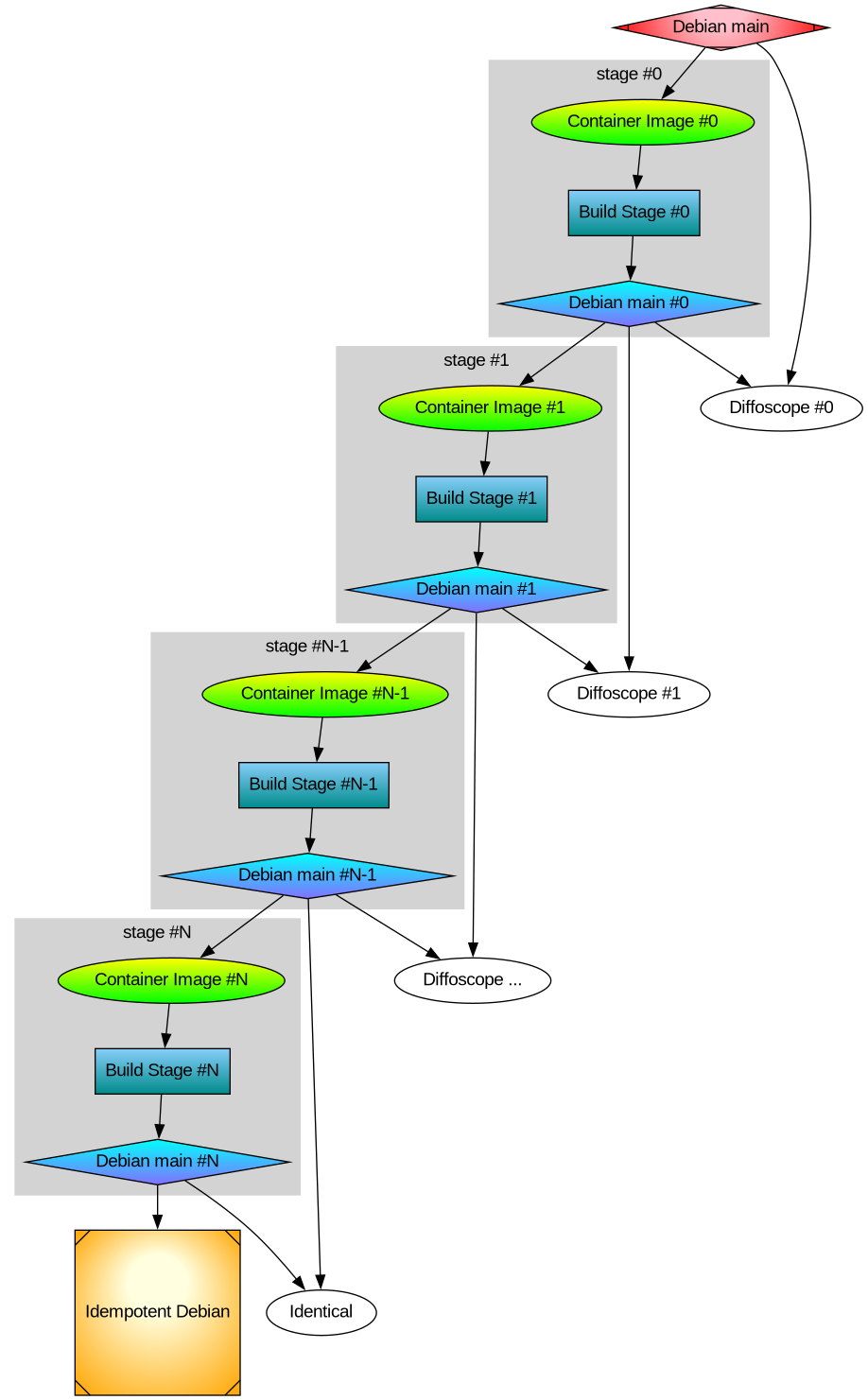

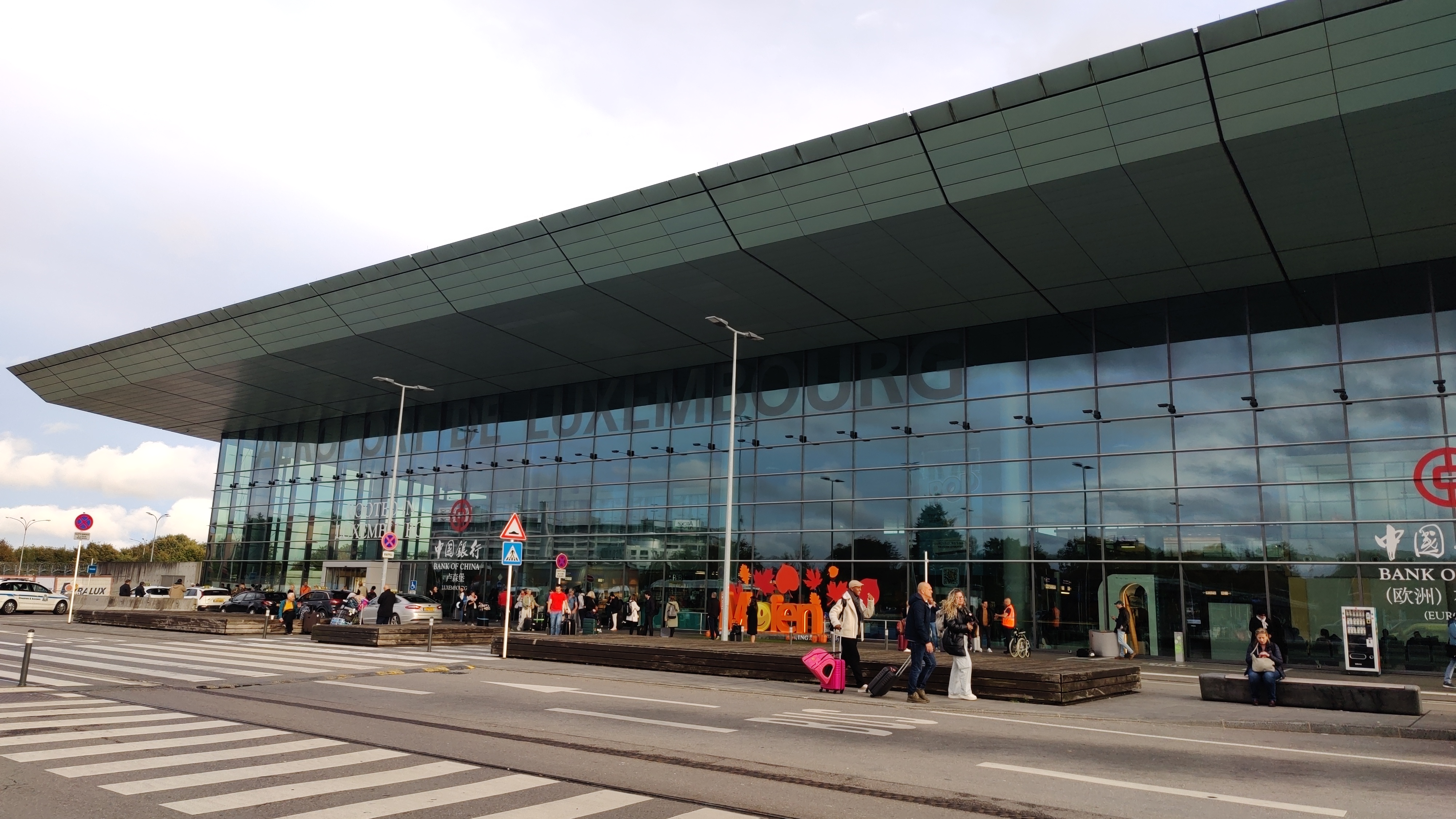 Luxembourg's Findel Airport
 Separate cycling tracks in Luxembourg
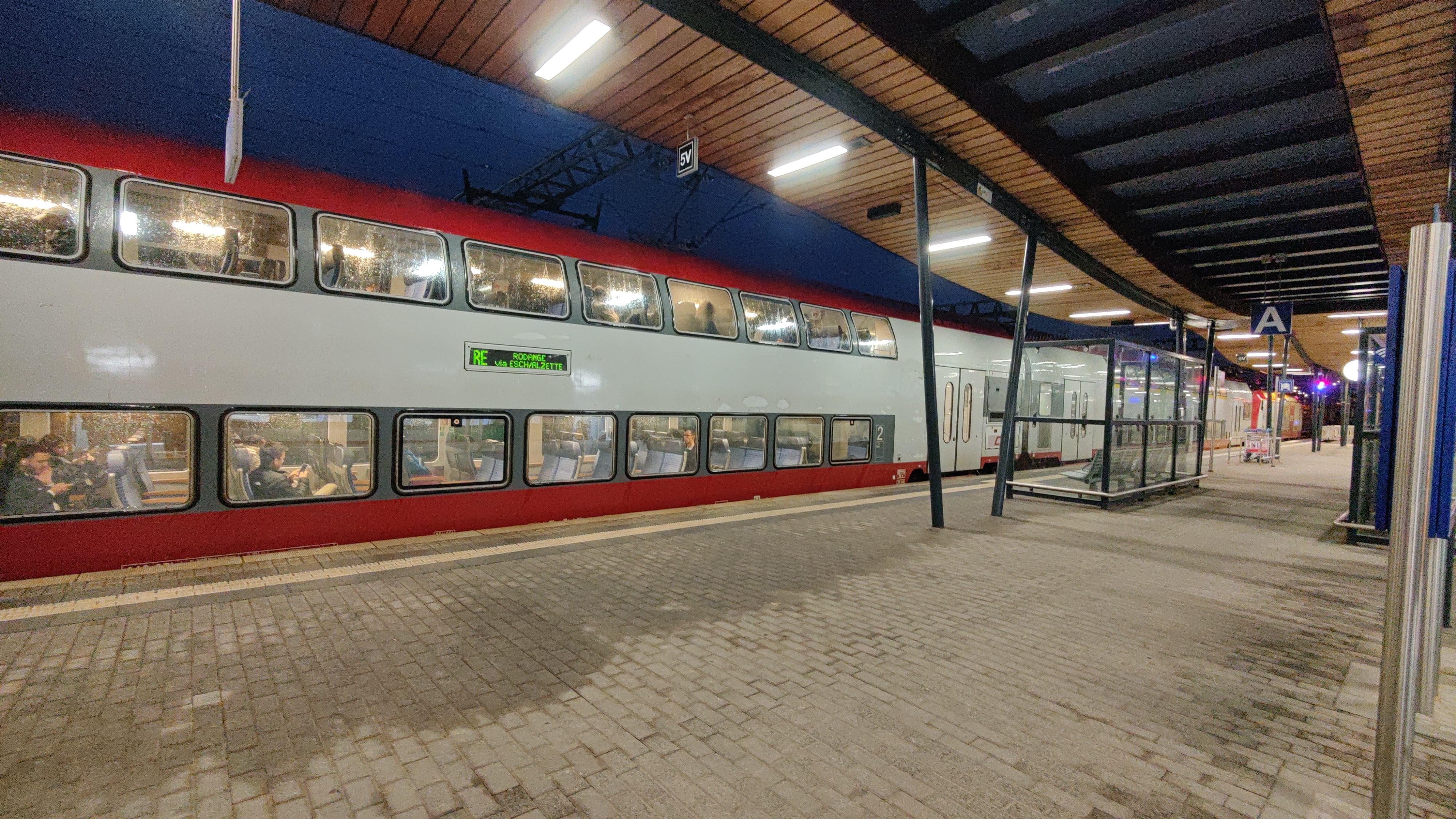 This is what trains look like in Luxembourg
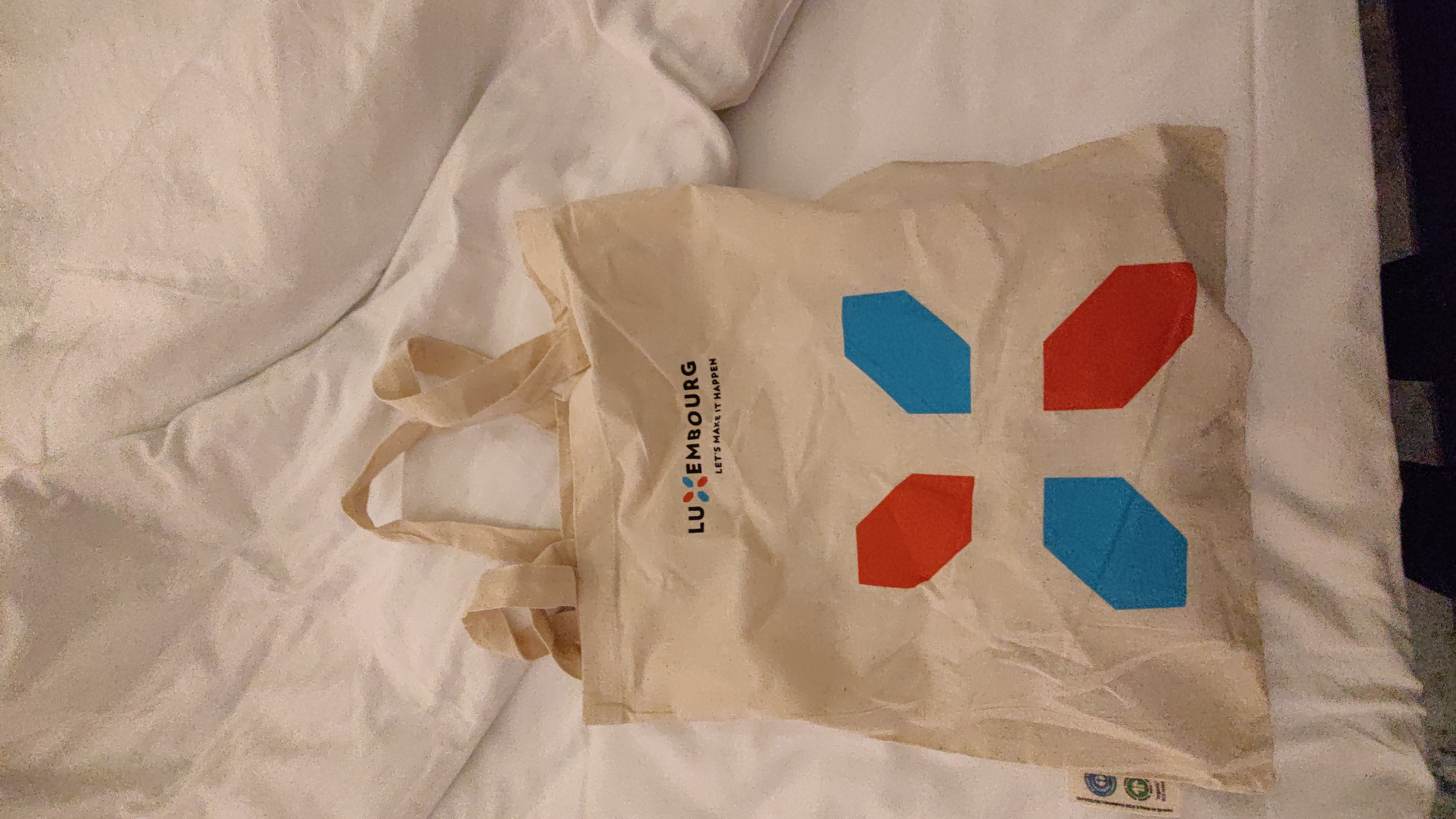 Conference bag
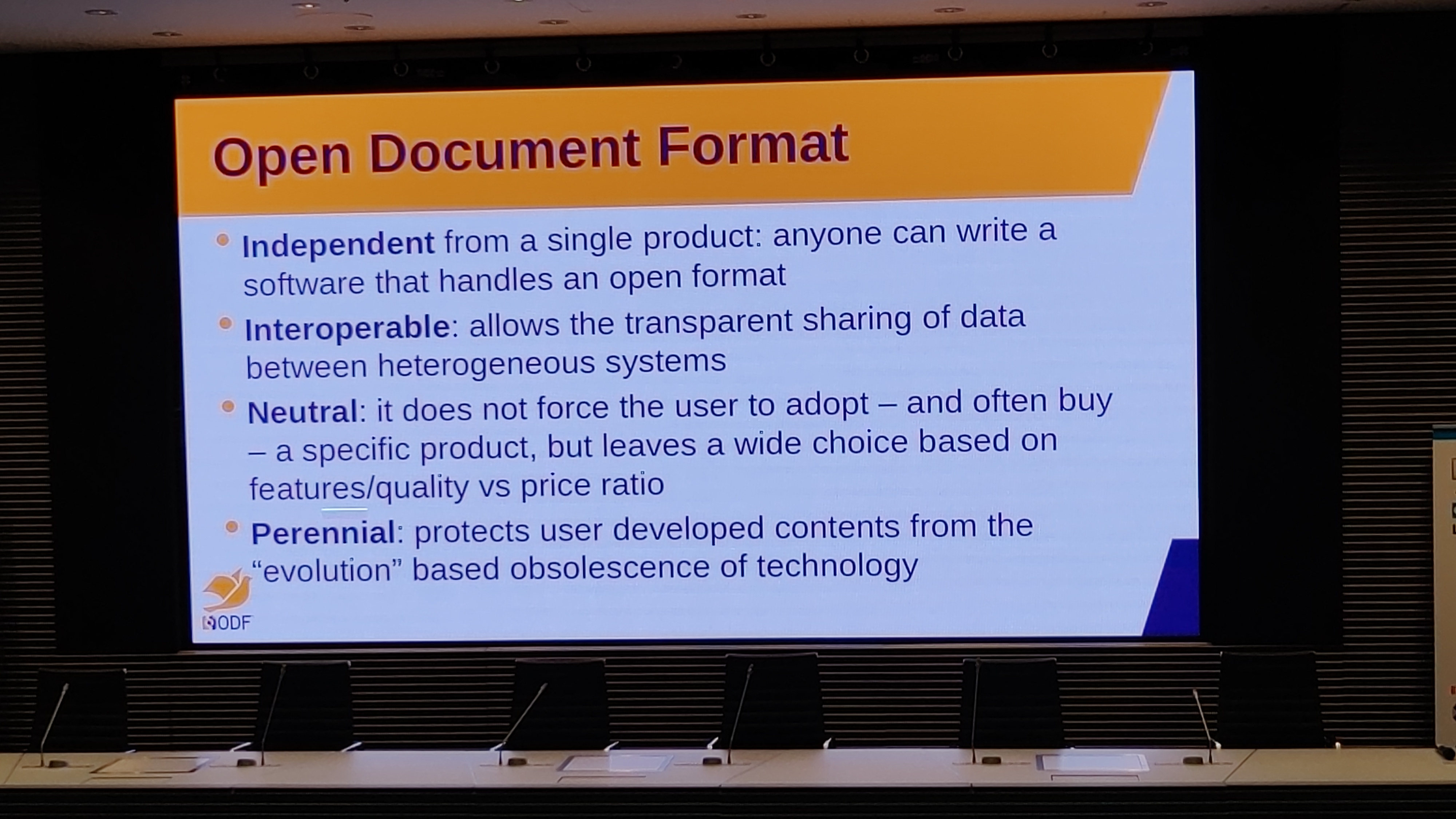 One of the slides of Italo's talk
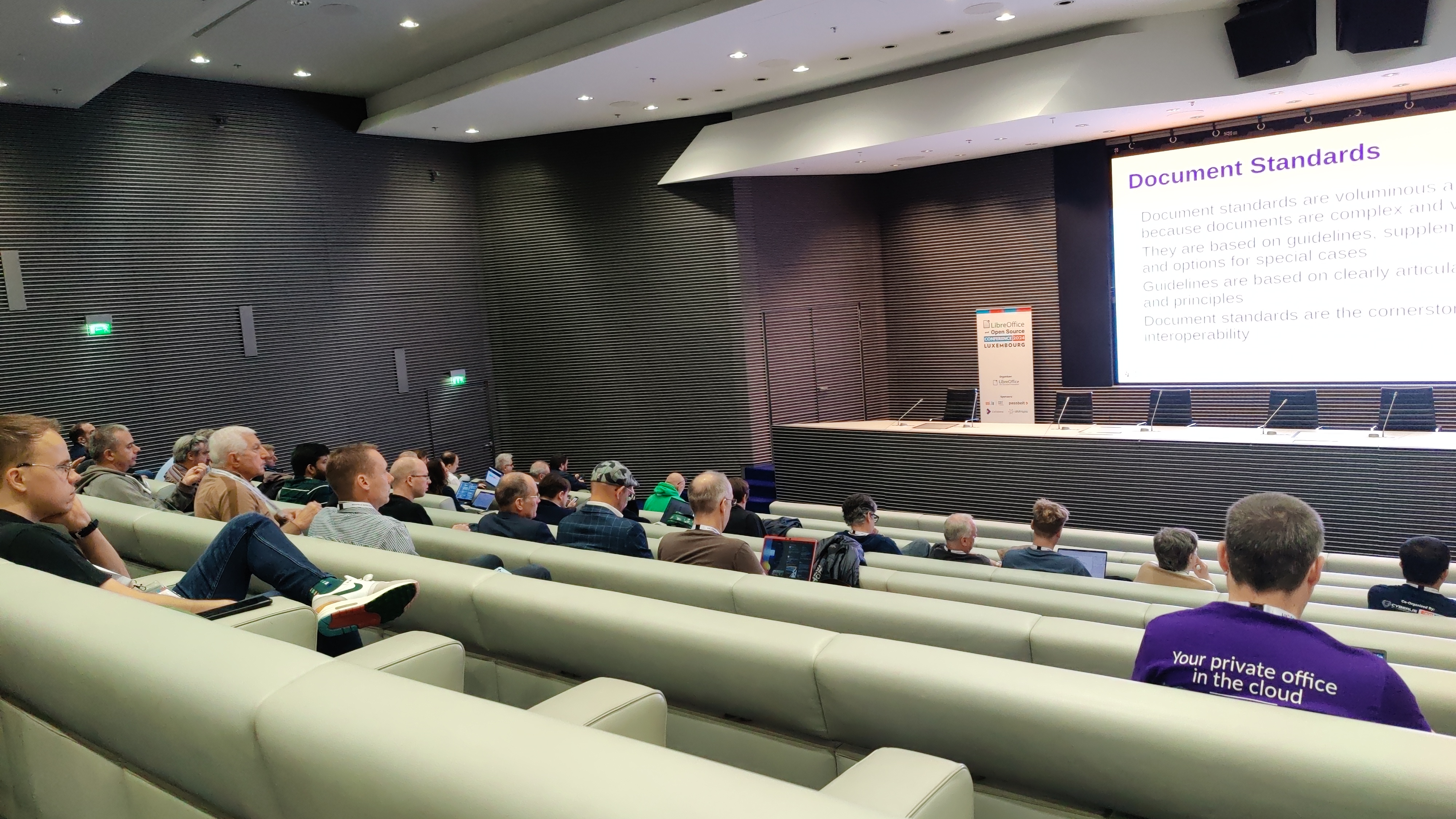 Picture of the hall in which talks were held
 We encountered such scenic views during our walk
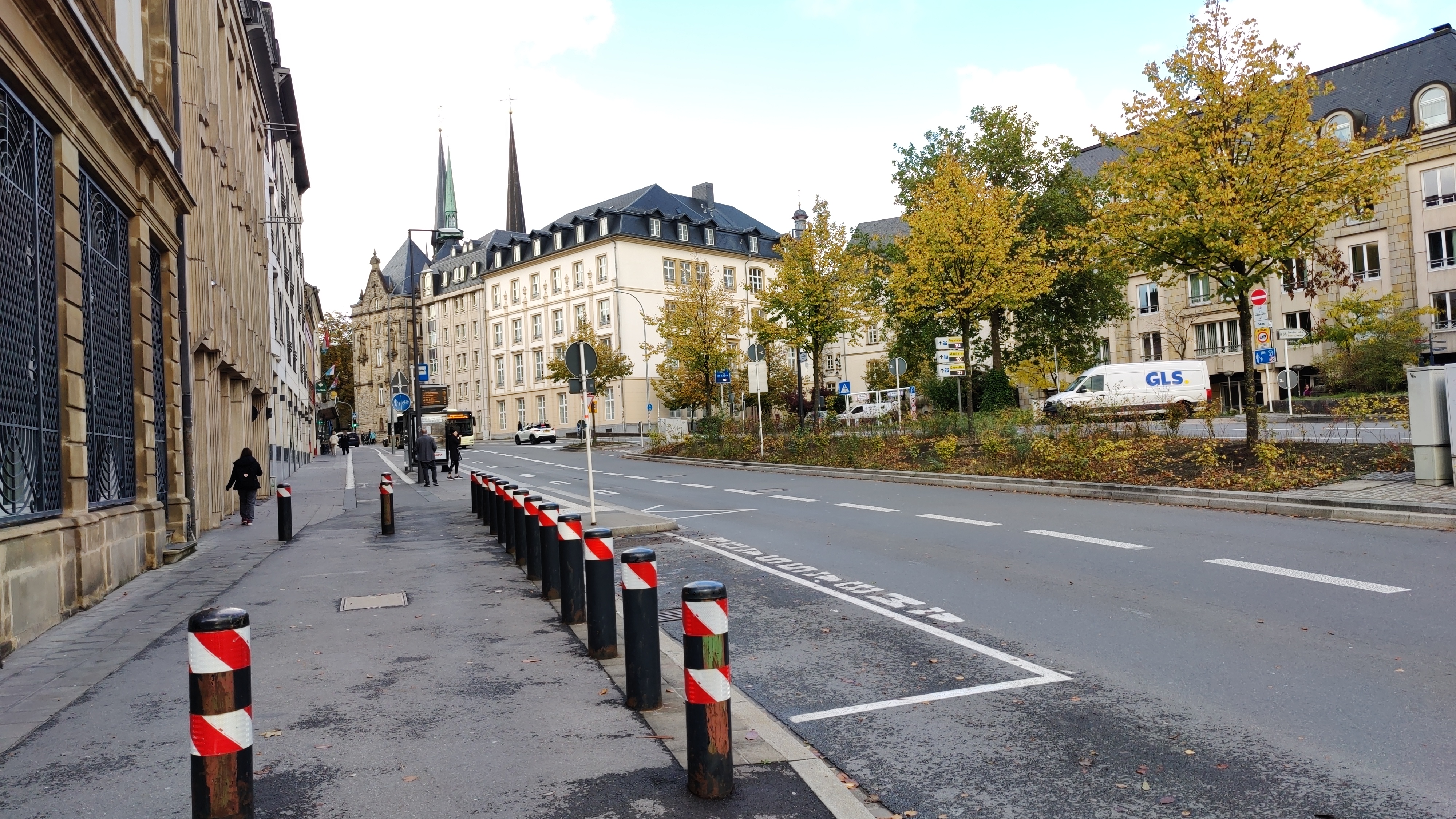 Another view of Luxembourg city area

 In today s digital landscape, social media is more than just a communication tool it is the primary medium for global discourse. Heads of state, corporate leaders and cultural influencers now broadcast their statements directly to the world, shaping public opinion in real time. However, the dominance of a few centralized platforms X/Twitter, Facebook and YouTube raises critical concerns about control, censorship and the monopolization of information. Those who control these networks effectively wield significant power over public discourse.
In response, a new wave of distributed social media platforms has emerged, each built on different decentralized protocols designed to provide greater autonomy, censorship resistance and user control. While
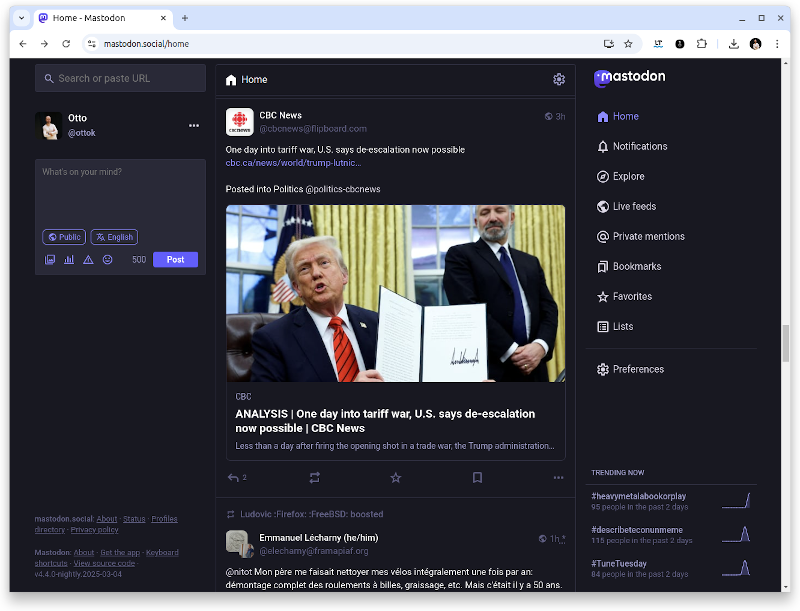 Mastodon was created in 2016 by
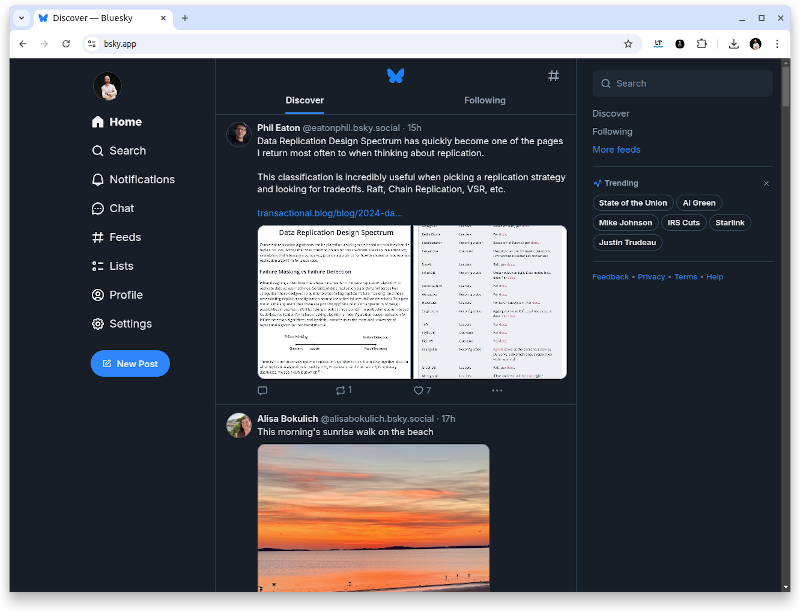 Interestingly,
 As part of their "Defective by Design" anti-DRM campaign, the FSF recently made the following claim:
 Debian continues participating in Outreachy, and we're excited to announce that
Debian has selected two interns for the Outreachy December 2024 - March 2025 round.
 Twenty years ago, it was easy to dislike Microsoft. It was the quintessential evil MegaCorp that was quick to squash competition, often ruthlessly, but in some cases slowly through a more insidious process of embracing, extending, and exterminating anything that got in the way. This was the signature personality of Ballmer-era Microsoft that also inspired and united the software freedom fighting forces that came together to safeguard things that mattered to them and were at risk.I remember the era when the Novell, SCO, and Microsoft saga cast fear, uncertainty, and doubt on the future of open Unix and Linux and on what would happen to the operating systems that we loved if the suits of Redmond prevailed. Looking back, I&aposm glad that the arc of this story has bent towards justice, and I shudder at the possibilities had it worked out differently.Looking at today&aposs Microsoft, I&aposm amazed at how much change a leader with the right vision can make to the trajectory of a company that even makes an old-school software freedom advocate as me admire and even applaud the strides it has taken in the last 10 or so years that has dramatically shifted the perception of Microsoft. The personality of the Satya-era Microsoft is one to behold. While it will take more time to win back the trust, we see the tides changing and the positivity is important for the entire industry.For Microsoft, it was TypeScript and VS Code that helped change the narrative internally which led to its internal resurgence and acceptance of open source. Its acquisition of GitHub propelled it forward within the community overnight. Its contributions to the Linux kernel and other major software projects have also been consequential in changing its public perceptions.It takes a while to claw back trust and is very easy to breach. This time, however, Microsoft seems to understand this dynamic more than it did 20 years ago. All it took was the right leadership.