Search Results: "tille"

9 August 2016

Reproducible builds folks: Reproducible builds: week 67 in Stretch cycle

What happened in the Reproducible Builds effort between Sunday July 31 and Saturday August 6 2016: Toolchain development and fixes Packages fixed and bugs filed The following 24 packages have become reproducible - in our current test setup - due to changes in their build-dependencies: alglib aspcud boomaga fcl flute haskell-hopenpgp indigo italc kst ktexteditor libgroove libjson-rpc-cpp libqes luminance-hdr openscenegraph palabos petri-foo pgagent sisl srm-ifce vera++ visp x42-plugins zbackup The following packages have become reproducible after being fixed: The following newly-uploaded packages appear to be reproducible now, for reasons we were not able to figure out. (Relevant changelogs did not mention reproducible builds.) Some uploads have addressed some reproducibility issues, but not all of them: Patches submitted that have not made their way to the archive yet: Package reviews and QA These are reviews of reproduciblity issues of Debian packages. 276 package reviews have been added, 172 have been updated and 44 have been removed in this week. 7 FTBFS bugs have been reported by Chris Lamb. Reproducibility tools Test infrastructure For testing the impact of allowing variations of the buildpath (which up until now we required to be identical for reproducible rebuilds), Reiner Herrmann contribed a patch which enabled build path variations on testing/i386. This is possible now since dpkg 1.18.10 enables the --fixdebugpath build flag feature by default, which should result in reproducible builds (for C code) even with varying paths. So far we haven't had many results due to disturbances in our build network in the last days, but it seems this would mean roughly between 5-15% additional unreproducible packages - compared to what we see now. We'll keep you updated on the numbers (and problems with compilers and common frameworks) as we find them. lynxis continued work to test LEDE and OpenWrt on two different hosts, to include date variation in the tests. Mattia and Holger worked on the (mass) deployment scripts, so that the - for space reasons - only jenkins.debian.net GIT clone resides in ~jenkins-adm/ and not anymore in Holger's homedir, so that soon Mattia (and possibly others!) will be able to fully maintain this setup, while Holger is doing siesta. Miscellaneous Chris, dkg, h01ger and Ximin attended a Core Infrastricture Initiative summit meeting in New York City, to discuss and promote this Reproducible Builds project. The CII was set up in the wake of the Heartbleed SSL vulnerability to support software projects that are critical to the functioning of the internet. This week's edition was written by Ximin Luo and Holger Levsen and reviewed by a bunch of Reproducible Builds folks on IRC.

8 June 2016

Reproducible builds folks: Reproducible builds: week 58 in Stretch cycle

What happened in the Reproducible Builds effort between May 29th and June 4th 2016: Media coverage Ed Maste will present Reproducible Builds in FreeBSD at BDSCan 2016 in Ottawa, Canada on June 11th. GSoC and Outreachy updates Toolchain fixes Other upstream fixes Packages fixed The following 53 packages have become reproducible due to changes in their build-dependencies: angband blktrace code-saturne coinor-symphony device-tree-compiler mpich rtslib ruby-bcrypt ruby-bson-ext ruby-byebug ruby-cairo ruby-charlock-holmes ruby-curb ruby-dataobjects-sqlite3 ruby-escape-utils ruby-ferret ruby-ffi ruby-fusefs ruby-github-markdown ruby-god ruby-gsl ruby-hdfeos5 ruby-hiredis ruby-hitimes ruby-hpricot ruby-kgio ruby-lapack ruby-ldap ruby-libvirt ruby-libxml ruby-msgpack ruby-ncurses ruby-nfc ruby-nio4r ruby-nokogiri ruby-odbc ruby-oj ruby-ox ruby-raindrops ruby-rdiscount ruby-redcarpet ruby-redcloth ruby-rinku ruby-rjb ruby-rmagick ruby-rugged ruby-sdl ruby-serialport ruby-sqlite3 ruby-unicode ruby-yajl ruby-zoom thin The following packages have become reproducible after being fixed: Some uploads have addressed some reproducibility issues, but not all of them: Uploads with an unknown result because they fail to build: Patches submitted that have not made their way to the archive yet: Package reviews 45 reviews have been added, 25 have been updated and 25 have been removed in this week. 12 FTBFS bugs have been reported by Chris Lamb and Niko Tyni. diffoscope development strip-nondeterminism development Mattia uploaded strip-nondeterminism 0.018-1 which improved support for *.epub files. tests.reproducible-builds.org Misc. Last week we also learned about progress of reproducible builds in FreeBSD. Ed Maste announced a change to record the build timestamp during ports building, which is required for later reproduction. This week's edition was written by Reiner Herrman, Holger Levsen and Chris Lamb and reviewed by a bunch of Reproducible builds folks on IRC.

22 May 2016

Reproducible builds folks: Reproducible builds: week 56 in Stretch cycle

What happened in the Reproducible Builds effort between May 15th and May 21st 2016: Media coverage Blog posts from our GSoC and Outreachy contributors: Documentation update Ximin Luo clarified instructions on how to set SOURCE_DATE_EPOCH. Toolchain fixes Other upstream fixes Packages fixed The following 18 packages have become reproducible due to changes in their build dependencies: abiword angband apt-listbugs asn1c bacula-doc bittornado cdbackup fenix gap-autpgrp gerbv jboss-logging-tools invokebinder modplugtools objenesis pmw r-cran-rniftilib x-loader zsnes The following packages have become reproducible after being fixed: Some uploads have fixed some reproducibility issues, but not all of them: Patches submitted that have not made their way to the archive yet: Reproducibility-related bugs filed: Package reviews 51 reviews have been added, 19 have been updated and 15 have been removed in this week. 22 FTBFS bugs have been reported by Chris Lamb, Santiago Vila, Niko Tyni and Daniel Schepler. tests.reproducible-builds.org Misc. This week's edition was written by Reiner Herrmann and Holger Levsen and reviewed by a bunch of Reproducible builds folks on IRC.

20 April 2016

Reproducible builds folks: Reproducible builds: week 51 in Stretch cycle

What happened in the reproducible builds effort between April 10th and April 16th 2016: Toolchain fixes Antoine Beaupr suggested that gitpkg stops recording timestamps when creating upstream archives. Antoine Beaupr also pointed out that git-buildpackage diverges from the default gzip settings which is a problem for reproducibly recreating released tarballs which were made using the defaults. Alexis Bienven e submitted a patch extending sphinx SOURCE_DATE_EPOCH support to copyright year. Packages fixed The following packages have become reproducible due to changes in their build dependencies: atinject-jsr330, avis, brailleutils, charactermanaj, classycle, commons-io, commons-javaflow, commons-jci, gap-radiroot, jebl2, jetty, libcommons-el-java, libcommons-jxpath-java, libjackson-json-java, libjogl2-java, libmicroba-java, libproxool-java, libregexp-java, mobile-atlas-creator, octave-econometrics, octave-linear-algebra, octave-odepkg, octave-optiminterp, rapidsvn, remotetea, ruby-rinku, tachyon, xhtmlrenderer. The following packages became reproducible after getting fixed: Some uploads fixed some reproducibility issues, but not all of them: Patches submitted which have not made their way to the archive yet: diffoscope development Zbigniew J drzejewski-Szmek noted in #820631 that diffoscope doesn't work properly when a file contains several cpio archives. Package reviews 21 reviews have been added, 14 updated and 22 removed in this week. New issue found: timestamps_in_htm_by_gap. Chris Lamb reported 10 new FTBFS issues. Misc. The video and the slides from the talk "Reproducible builds ecosystem" at LibrePlanet 2016 have been published now. This week's edition was written by Lunar and Holger Levsen. h01ger automated the maintenance and publishing of this weekly newsletter via git.

18 April 2016

Reproducible builds folks: Reproducible builds: week 50 in Stretch cycle

What happened in the reproducible builds effort between April 3rd and April 9th 2016: Media coverage Emily Ratliff wrote an article for SecurityWeek called Establishing Correspondence Between an Application and its Source Code - How Combining Two Completely Separate Open Source Projects Can Make Us All More Secure. Tails have started work on a design for freezable APT repositories to make it easier and practical to perform reproductions of an entire distribution at a given point in time, which will be needed to create reproducible installation- or live-media. Toolchain fixes Alexis Bienven e submitted patches adding support for SOURCE_DATE_EPOCH in several tools: transfig, imagemagick, rdtool, and asciidoctor. boyska submitted one for python-reportlab. Packages fixed The following packages have become reproducible due to changes in their build dependencies: atinject-jsr330 brailleutils cglib3 gnugo libcobra-java libgnumail-java libjchart2d-java libjcommon-java libjfreechart-java libjide-oss-java liblaf-widget-java liblastfm-java liboptions-java octave-control octave-mpi octave-nan octave-parallel octave-stk octave-struct octave-tsa oar The following packages became reproducible after getting fixed: Several uploads fixed some reproducibility issues, but not all of them: Patches submitted which have not made their way to the archive yet: Other upstream fixes Alexander Batischev made a commit to make newsbeuter reproducible. tests.reproducible-builds.org Package reviews 93 reviews have been removed, 66 added and 21 updated in the previous week. 12 new FTBFS bugs have been reported by Chris Lamb and Niko Tyni. Misc. This week's edition was written by Lunar, Holger Levsen, Reiner Herrmann, Mattia Rizzolo and Ximin Luo. With the departure of Lunar as a full-time contributor, Reproducible Builds Weekly News (this thing you're reading) has moved from his personal Debian blog on Debian People to the Reproducible Builds team web site on Debian Alioth. You may want to update your RSS or Atom feeds. Very many thanks to Lunar for writing and publishing this weekly news for so long, well & continously!

21 March 2016

Lunar: Reproducible builds: week 47 in Stretch cycle

What happened in the reproducible builds effort between March 13th and March 19th 2016:

Toolchain fixes
  • Petter Reinholdtsen uploaded naturaldocs/1.51-1.1 which makes the output reproducible. Original patch by Chris Lamb.
  • Damyan Ivanov uploaded libpdf-api2-perl/2.025-2 which will make internal font ID reproducible.
  • Christian Hofstaedtler uploaded ruby2.3/2.3.0-5 which sets gzip embedded mtime field to fixed value for rdoc-generated compressed javascript data.

Packages fixed The following packages have become reproducible due to changes in their build dependencies: diction, doublecmd, ruby-hiredis, vdr-plugin-epgsearch. The following packages became reproducible after getting fixed: Some uploads fixed some reproducibility issues, but not all of them: Patches submitted which have not made their way to the archive yet:
  • #818128 on nethack by Reiner Herrmann: implement support for SOURCE_DATE_EPOCH, set LC_ALL to C, and ensure deterministic build order when running parallel builds.
  • #818111 on debian-keyring by Satyam Zode: fix the order of files in md5sums.
  • #818067 on ncurses by Niels Thykier: strip trailing whitespaces introduced when using dash as system shell.
  • #818230 on aircrack-ng by Reiner Herrmann: build assembly code as a separate .o file.
  • #818419 on mutt by Daniel Shahaf: use C locale when listing files to be put in README.Patches.
  • #818430 on ruby-coveralls by Dhole: ensure UTC is used as the timezone when generating the documentation.
  • #818686 on littlewizard by Reiner Herrmann: use the C locale in the script for iterating over the files.
  • #818704 on strigi by Reiner Herrmann: sort keys when traversing hashes in makecode.pl.

Package reviews 44 reviews have been removed, 40 added and 5 updated in the previous week. Chris Lamb has reported 16 FTBFS.

8 March 2016

Tassia Camoes Araujo: Some impressions of a flourishing community bits from the MiniDebConf Curitiba @ Montreal

Last month I more-or-less accepted an invitation that got me scared at first, panicking after a while. Why do I put myself in such an uncomfortable position? Well, I think that s how we grow up ;-) I was first contacted to talk about women participation in Debian, which I kindly refused, but I said I would maybe talk about motivating new contributors, possibly with some more friends that would maybe join me at the stage. I need to confess that at that moment I had no idea (ok, a vague idea ) about what I was going to talk. So I promptly emailed some Debian friends, shared the invitation, shared some thoughts, got feedbacks, got encouragement, and we finally made it! talk_transmission For the video conference we used mconf.org which worked super well (the downside is that it requires flash, maybe you could help them get rid of it?). I had also recorded a backup video with vokoscreen, just in case Murphy would decide to go to Curitiba but everything worked well. We a single moment with connection issues, but the torrent user kindly released the bandwidth The main point I made in the talk is that Debian as a Universal Operating System is still an utopia, especially when we extend our understanding of universality to our contributors. And as an utopia, it serves to make us walk! The more we advance, the more it gets further away, so we need to keep walking. Another important point was that diversity is not an issue that touches only woman. My audience was full of Portuguese native speakers, from a third world country, a few women, many more man, a couple of DDs, some longtime contributors, some newbies, and most of them are also part of minorities in our community. I bet many of them has already felt like a weed growing surrounded by concrete at least once in their lifetimes Solidarity towards our utopia was my final message. Just for fun, and to make a recap of our conversation at the end, I made a list of 10 steps that we could all give to contribute to a more universal Debian: 1. Read our Social Contract and make sure we are all at the same page
2. Improve Debian documentation
3. Remember that diversity does not concern only women
4. Keep an eye on minority groups and show solidarity
5. Be open and alert to the needs of newbies
6. Help Debian teams to be prepared to welcome new contributors
7. Reserve part of our time to integrate new members to the community
8. Promote hands-on meetings (local and remote)
9. Promote peer-mentoring among newbie contributors
10. Do not see Debian members as special beings, we are all humans! You can check my slides or the video of the live transmission if you want to see more. In case you can not follow the audio, I d be happy to provide subtitles (but I probably won t work on that if I don t receive have any request). And if you invite me to another conference, we can have a similar chat at with your community. Note: in person is more fun ;-) Finally, I d like to thank the participants of the mini-DebConf, those that followed this session and those who were practicing how to package on the other room, Paulo Santana and all the local organization team for the invitation, Ana Guerrero and Laura Arjona for the remote support and feedback, Andreas Tille for the efforts in integrating new contributors, Christian Perrier for the developer statistics, Val ssio for being in the audience and the Debian Project for the inspiration. What we had we Brazil this weekend was a taste of a flourishing and welcoming community, I am proud and honored to be part of it!

4 January 2016

Lunar: Reproducible builds: week 36 in Stretch cycle

What happened in the reproducible builds effort between December 27th and January 2nd: Infrastructure dak now silently accepts and discards .buildinfo files (commit 1, 2), thanks to Niels Thykier and Ansgar Burchardt. This was later confirmed as working by Mattia Rizzolo. Packages fixed The following packages have become reproducible due to changes in their build dependencies: banshee-community-extensions, javamail, mono-debugger-libs, python-avro. The following packages became reproducible after getting fixed: Some uploads fixed some reproducibility issues, but not all of them: Untested changes: reproducible.debian.net The testing distribution (the upcoming stretch) is now tested on armhf. (h01ger) Four new armhf build nodes provided by Vagrant Cascandian were integrated in the infrastructer. This allowed for 9 new armhf builder jobs. (h01ger) The RPM-based build system, koji, is now in unstable and testing. (Marek Marczykowski-G recki, Ximin Luo). Package reviews 131 reviews have been removed, 71 added and 53 updated in the previous week. 58 new FTBFS reports were made by Chris Lamb and Chris West. New issues identified this week: nondeterminstic_ordering_in_gsettings_glib_enums_xml, nondeterminstic_output_in_warnings_generated_by_breathe, qt_translate_noop_nondeterminstic_ordering. Misc. Steven Chamberlain explained in length why reproducible cross-building across architectures mattered, and posted results of his tests comparing a stage1 debootstrapped chroot of linux-i386 once done from official Debian packages, the others cross-built from kfreebsd-amd64.

20 December 2015

Lunar: Reproducible builds: week 34 in Stretch cycle

What happened in the reproducible builds effort between December 13th to December 19th: Infrastructure Niels Thykier started implementing support for .buildinfo files in dak. A very preliminary commit was made by Ansgar Burchardt to prevent .buildinfo files from being removed from the upload queue. Toolchain fixes Mattia Rizzolo rebased our experimental debhelper with the changes from the latest upload. New fixes have been merged by OCaml upstream. Packages fixed The following 39 packages have become reproducible due to changes in their build dependencies: apache-mime4j, avahi-sharp, blam, bless, cecil-flowanalysis, cecil, coco-cs, cowbell, cppformat, dbus-sharp-glib, dbus-sharp, gdcm, gnome-keyring-sharp, gudev-sharp-1.0, jackson-annotations, jackson-core, jboss-classfilewriter, jboss-jdeparser2, jetty8, json-spirit, lat, leveldb-sharp, libdecentxml-java, libjavaewah-java, libkarma, mono.reflection, monobristol, nuget, pinta, snakeyaml, taglib-sharp, tangerine, themonospot, tomboy-latex, widemargin, wordpress, xsddiagram, xsp, zeitgeist-sharp. The following packages became reproducible after getting fixed: Some uploads fixed some reproducibility issues, but not all of them: Patches submitted which have not made their way to the archive yet: reproducible.debian.net Packages in experimental are now tested on armhf. (h01ger) Arch Linux packages in the multilib and community repositories (4,000 more source packages) are also being tested. All of these test results are better analyzed and nicely displayed together with each package. (h01ger) For Fedora, build jobs can now run in parallel. Two are currently running, now testing reproducibility of 785 source packages from Fedora 23. mock/1.2.3-1.1 has been uploaded to experimental to better build RPMs. (h01ger) Work has started on having automatic build node pools to maximize use of armhf build nodes. (Vagrant Cascadian) diffoscope development Version 43 has been released on December 15th. It has been dubbed as epic! as it contains many contributions that were written around the summit in Athens. Baptiste Daroussin found that running diffoscope on some Tar archives could overwrite arbitrary files. This has been fixed by using libarchive instead of Python internal Tar library and adding a sanity check for destination paths. In any cases, until proper sandboxing is implemented, don't run diffosope on unstrusted inputs outside an isolated, throw-away system. Mike Hommey identified that the CBFS comparator would needlessly waste time scanning big files. It will now not consider any files bigger than 24 MiB 8 MiB more than the largest ROM created by coreboot at this time. An encoding issue related to Zip files has also been fixed. (Lunar) New comparators have been added: Android dex files (Reiner Herrmann), filesystem images using libguestfs (Reiner Herrmann), icons and JPEG images using libcaca (Chris Lamb), and OS X binaries (Clemens Lang). The comparator for Free Pascal Compilation Unit will now only be used when the unit version matches the compiler one. (Levente Polyak) A new multi-file HTML output with on-demand loading of long diffs is available through the --html-dir option. On-demand loading requires jQuery which path can be specified through the --jquery option. The diffs can also be simply browsed for non-JavaScript users or when jQuery is not available. (Joachim Breitner) Example of on-demand loading in diffosope Portability toward other systems has been improved: old versions of GNU diff are now supported (Mike McQuaid), suggestion of the appropriate locale is now the more generic en_US.UTF-8 (Ed Maste), the --list-tools option can now support multiple systems (Mattia Rizzolo, Levente Polyak, Lunar). Many internal changes and code clean-ups have been made, paving the way for parallel processing. (Lunar) Version 44 was released on December 18th fixing an issue affecting .deb lacking a md5sums file introduced in a previous refactoring (Lunar). Support has been added for Mozilla optimized Zip files. (Mike Hommey). The HTML output has been optimized in size (Mike Hommey, Esa Peuha, Lunar), speed (Lunar), and will now properly number lines (Mike Hommey). A message will always be displayed when lines are ignored at the end of a diff (Lunar). For portability and consistency, Python os.walk() function is now used instead of find to perform directory listing. (Lunar) Documentation update Package reviews 143 reviews have been removed, 69 added and 22 updated in the previous week. Chris Lamb reported 12 new FTBFS issues. News issues identified this week: random_order_in_init_py_generated_by_python-genpy, timestamps_in_copyright_added_by_perl_dist_zilla, random_contents_in_dat_files_generated_by_chasen-dictutils_makemat, timestamps_in_documentation_generated_by_pandoc. Chris West did some improvements on the scripts used to manage notes in the misc repository. Misc. Accounts of the reproducible builds summit in Athens were written by Thomas Klausner from NetBSD and Hans-Christoph Steiner from The Guardian Project. Some openSUSE developers are working on a hackweek on reproducible builds which was discussed on the opensuse-packaging mailing-list.

11 December 2015

Lunar: Reproducible builds: week 32 in Stretch cycle

The first reproducible world summit was held in Athens, Greece, from December 1st-3rd with the support of the Linux Foundation, the Open Tech Fund, and Google. Faidon Liambotis has been an amazing help to sort out all local details. People at ImpactHub Athens have been perfect hosts. North of Athens from the Acropolis with ImpactHub in the center Nearly 40 participants from 14 different free software project had very busy days sharing knowledge, building understanding, and producing actual patches. Anyone interested in cross project discussions should join the rb-general mailing-list. What follows focuses mostly on what happened for Debian this previous week. A more detailed report about the summit will follow soon. You can also read the ones from Joachim Breitner from Debian, Clemens Lang from MacPorts, Georg Koppen from Tor, Dhiru Kholia from Fedora, and Ludovic Court s wrote one for Guix and for the GNU project. The Acropolis from  Infrastructure Several discussions at the meeting helped refine a shared understanding of what kind of information should be recorded on a build, and how they could be used. Daniel Kahn Gillmor sent a detailed update on how .buildinfo files should become part of the Debian archive. Some key changes compared to what we had in mind at DebConf15: Hopefully, ftpmasters will be able to comment on the updated proposal soon. Packages fixed The following packages have become reproducible due to changes in their build dependencies: fades, triplane, caml-crush, globus-authz. The following packages became reproducible after getting fixed: Some uploads fixed some reproducibility issues, but not all of them: Patches submitted which have not made their way to the archive yet: akira sent proposals on how to make bash reproducible. Alexander Couzens submitted a patch upstream to add support for SOURCE_DATE_EPOCH in grub image generator (#787795). reproducible.debian.net An issue with some armhf build nodes was tracked down to a bad interaction between uname26 personality and new glibc (Vagrant Cascadian). A Debian package was created for koji, the RPM building and tracking system used by Fedora amongst others. It is currently waiting for review in the NEW queue. (Ximin Luo, Marek Marczykowski-G recki) diffoscope development diffoscope now has a dedicated mailing list to better accommodate its growing user and developer base. Going through diffoscope's guts together enabled several new contributors. Baptiste Daroussin, Ed Maste, Clemens Lang, Mike McQuaid, Joachim Breitner all contributed their first patches to improve portability or add new features. Regular contributors Chris Lamb, Reiner Herrmann, and Levente Polyak also submitted improvements. diffoscope hacking session in Athens The next release should support more operating systems, filesystem image comparison via libguestfs, HTML reports with on-demand loading, and parallel processing for the most noticeable improvements. Package reviews 27 reviews have been removed, 17 added and 14 updated in the previous week. Chris Lamb and Val Lorentz filed 4 new FTBFS reports. Misc. Baptiste Daroussin has started to implement support for SOURCE_DATE_EPOCH in FreeBSD in libpkg and the ports tree. Thanks Joachim Breitner and h01ger for the pictures.

20 November 2015

Sylvain Beucler: No to ACTA - Paris

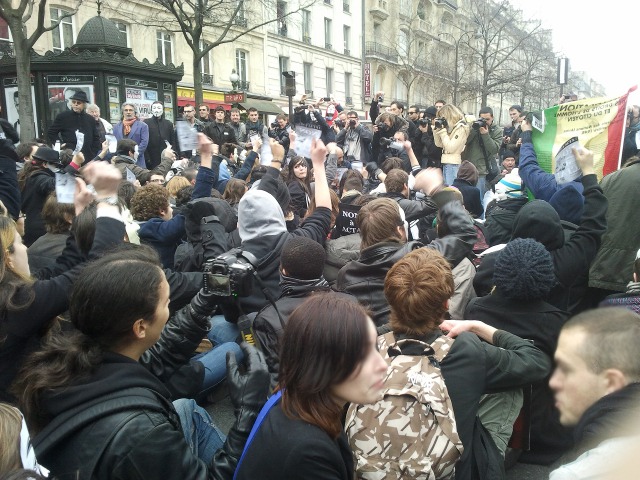
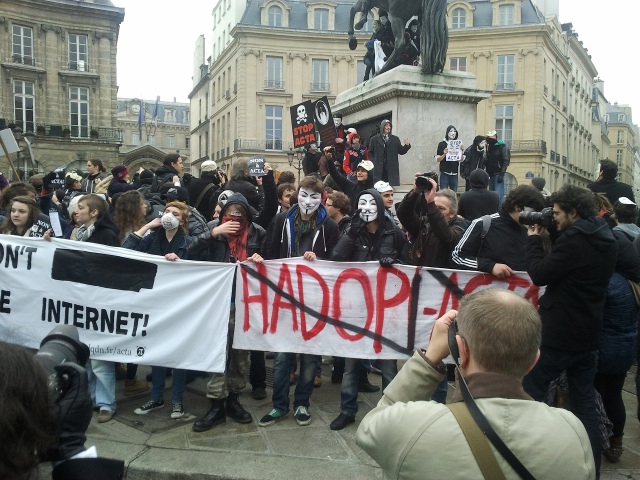
Today, there were events all around Europe to block ACTA. In Paris, the protest started at Place de la Bastille : APRIL was present, with in particular its president Lionel Allorge, and two members who wore the traditional anti-DRM suit : J r mie Zimmermann from La Quadrature du Net gave a speech and urged people to contact their legal representatives, in addition to protesting in the street : The protest was cheerful and free of violence : It got decent media coverage : Notable places it crossed include Place des Victoires : and Palais Royal, where it ended : Next protest is in 2 weeks, on March 10th. Update your agenda!

15 October 2015

Laura Arjona: Long summer story, Welcome team, and I am a Debian Developer now

Note: 2015/10/16: I need to add some links but I won t delay this more, posting now, will edit later. Summer ended long time ago, but believe me, I m still catching up with all the things that I began in June/July, all the things I left in August when I went holidays, and more things that appeared in August and September. This is a long overdue post, I hope you bear with me for waiting so long, and writing (now) so long too! June In June, I was 100% sure that I would not attend DebConf15 (well, I was 98% sure until then), and when the new Outreach Sponsorship grants were announced, I decided to write some mails to several Debian contributors, so they consider applying for the grant and attend DebConf (and maybe trigger some i18n/l10n meeting ). They kindly declined, and I understood their reasons, but also wondered what would have happened if the proposal would have come from somebody more official instead of a random contributor that they don t know. I also hoped that lots of other Debianites also write to newbies or not-yet-DD-contributors or non-packaging contributors to invite them to DebConf, and I hoped that they had better luck than me in convincing them :) July In July I usually work hard preparing the computer labs for next academic year at my workplace in the University, but I also have more free time in the long afternoons and evenings, since I don t sleep much, and there is not much to do outside with the summer hot. So I used that month to go on contributing to DebConf publicity and think a bit more about Debian and the other free software communities. I didn t put much time in advancing my selfhosting (no SSL yet in *.larjona.net! booooo!) but I decided to deep my toe in Sandstorm.io, and try to selfhost an instance ( http://lacaja.larjona.net ) and try Etherpad inside Sandstorm (since I failed in deploying Etherpad by myself in my jessie+nginx+postgres box). Sandstorm worked, and Etherpad was packaged in Sandstorm so it worked too; and I have my free-software-base pads now for writing and share. So I joined #sandstorm IRC channel since then, and there I learnt that Asheesh Laroia (who works in Sandstorm.io and is also a Debian Developer and was going to give a talk about Sandstorm.io in DebConf15) was offering mentorship for people wanting to learn Sandstorm packaging, and his proposal was to begin packaging Framadate. I also failed in selfhosting Dudle (prepared for Apache + FastCGI, couldn t make it work in my Nginx), so Asheesh s proposal looked suitable for me. We talked and decided to invest the rest of July and first days of August in learning to package Framadate. I learned a lot, but couldn t finish the task. I encountered many issues (setting my dev environment, and later trying to package), and we solved some of them but my time ran out. I posted my work in the list, and I hope that my feedback on the documentation and the issues I encountered helped Asheesh and the Sandstorm community. Framadate is packaged in Sandstorm.io now, Drew Fisher packaged it, not sure if my stuff was useful or not (it s been useful for me, for learning, at least). I ll talk more about Sandstorm.io in a future blog post updating on my selfhosting adventures. What I liked most was the kind of proposal of mentoring that Asheesh made. It was very detailed in every aspect: the task, the things you need to accomplish it, details about his availability for mentorship I try to be welcoming in the teams in which I participate, but the fact is that I fail in actually mentor, maybe because of not making specific proposals to people (until now, I was like Hi, newcomer! Go read this, this and this, and try for yourself any task you feel you like it, and come back if you have issues , la Debian ). This, plus the thoughts about my mails in June for diversity outreach in DebConf, made me feel the need of having a team where people willing to welcome newcomers share tricks and procedures, write together more specific proposals, and follow up the newcomers experiences in a regular way. I talked with Enrico Zini and we wrote down some notes for a Welcome Team in Debian; he said he would spread the word during DebCamp/DebConf and we would see what people thinks about it. August August came, and the day before going on holidays I was really tired: too much luggage to prepare, too many hours in front of the computer, and the usual stress of traveling; and I took the bad decision of signing some GPG keys of several Debianites that I met in July. I say bad decision because the lack of sleep showed its black magic and I accidentally deleted my secring.gpg file. I knew I had a backup but I didn t have too much time to invest and I didn t want to mess it with the backup too, and my laptop was going to stay at home, powered off, during the whole month, so I just went on holidays and left the GPG issue for later. The day after, meanwhile I was waiting in the airport for my boarding time, I received a mail accepting me as Debian Developer. Wow!! Really, I was not expecting that the process was already finished, I had interchanged several mails with my Application Manager (who happens to be the current DPL!) and I thought that his summer could be quite packed of Debian/DebConf work and my process could wait a bit. So it was a very happy news and very motivating after one month (July) full of free software work. On the other side, I was a bit scared: what type of Debian Developer are you, larjona, not capable to sign some GPG keys without breaking your setup?! but I answered myself well, I m the type of Debian Developer that has backups :) and then, with that mixed feelings of excitement and impostor syndrome, I took my plane and went on holidays, not expecting to touch any computer until the end of the month. August is probably the month in the year when I have more free time (holidays), but less time to dedicate to free software. I devote most of the month to visit family and stay with them, with no internet connection available or no free time to look at the mailbox or social networks or IRC But DebCamp and DebConf15 were happening during my holidays. And this DebConf15 was the first one in which I participated in the organization, and the first one in which I felt more than being a consumer of Debian videos . I could not follow the streamings, my only internet-capable device was my Android 2.x phone, but when I had wifi I fetched the mail, and during the nights, while everybody else was sleeping and I was laying on the terrace, below the sky full of stars, I could read batches of hundred of mails from debconf-discuss mailing list. And I could get some feeling from DebConf life, because I learned about the ad-hoc BoFs and discussions, the morning bike rides and swimming proposals, and the dancing classes, the i18m/l10n meeting, and many other things. I could answer some mail from time to time, and I also knew that a fellow Debianite from Madrid was going to bring me some stickers, maybe a t-shirt, and shake hands in my name to some persons. September and October September was about finishing reading all the mails and try to answer the pending ones, and preparing my computer to use my new Debian identity (and stop using larjona-guest). I still have some things to do, pending technical work, and some mails that I should have answered and I ve forgotten, for sure (if you sent me a mail that needs answer or would be fine that I answer (even if it was months ago!), please resend or ping me). I recovered my secring.gpg but and just now I added larjona@debian.org to the ID in my GPG key, but didn t signed the pending keys again (sorry dkg and holger! will catch up there soon). My subkeys expired and I m trying to find out how to proceed (they are in my FSFE SmartCard) :/ About the Debian teams, I ve resumed my work in publicity team (this year I ll try to be more involved, in Debian Project News in particular), partially in the website team, and recently I ve finished catching up with the Spanish translation of the website. I ve also joined the DebConf team again (for DebConf16, no matter I probably won t attend) and documented the Publicity task for DebConf, and I try to engage the mailing list and the IRC meetings. I finally could have time to watch some DebConf15 videos and Andreas Tille s talk ( Creating a more inviting environment for newcomers New experiences from MoM, SoB, Teammetrics ) helped me to step ahead in welcoming people with more useful stuff than Hi, newcomer! Go read this (general URLs), try for yourself whatever you like . I have made specific proposals for two people. In mid September I accepted an interview about Debian for a podcast with quite a lot audience (in Spanish), in which I explained the idea of the Welcome Team and offered myself as first-contact. Since then, two more people have contacted me and I have offered specific tasks I think are suitable for them. I also try to be more available in the IRC and offer some time spans for new contributors to DebConf to explain the git setup, the wiki, and all this stuff that looks more complicated than what it is. And I think that s all. My Debianite friend kindly brought me some stickers and a DebConf t-shirt, plus the organization t-shirt that the team gave me as present for my contributions in DebConf15. Neil McGovern kindly sent me a certificate of my new Debian Developer status (thanks!!), and it s posted in my wall at work. Here you are a photo! larjona_dd.JPG (Note: my wall is full of stickers and pieces of papers with things I need, things I like and things I use to explain my work (sometimes sarcastically/ironically ). Maybe some day I ll make a blog post about that!) I feel very proud and happy. Still, a lot of things to learn and work to do, but my intentions are: to keep on progressing (sometimes fast, sometimes slowly), never give up, and enjoy the multiple flowers I find in my way :) Thanks everybody! October and future Some other ideas/plans for the future (the ones I didn t say yet): Comments? If you want to comment you can use this pump.io thread.
Filed under: My experiences and opinion, News Tagged: Communities, Contributing to libre software, Debian, Developer motivations, encryption, English, Free Software, gpg, libre software

21 September 2015

Lunar: Reproducible builds: week 21 in Stretch cycle

If you see someone on the Debian ReproducibleBuilds project, buy him/her a beer. This work is awesome. What happened in the reproducible builds effort this week: Media coverage Nathan Willis covered our DebConf15 status update in Linux Weekly News. Access to non-LWN subscribers will be given on Thursday 24th. Linux Journal published a more general piece last Tuesday. Unexpected praise for reproducible builds appeared this week in the form of several iOS applications identified as including spyware. The malware was undetected by Apple screening. This actually happened because application developers had simply downloaded a trojaned version of XCode through an unofficial source. While reproducible builds can't really help users of non-free software, this is exactly the kind of attacks that we are trying to prevent in our systems. Toolchain fixes Niko Tyni wrote and uploaded a better patch for the source order problem in libmodule-build-perl. Tristan Seligmann identified how the code generated by python-cffi could be emitted in random order in some cases. Upstream has already fixed the problem. Packages fixed The following 24 packages became reproducible due to changes in their build dependencies: apache-curator, checkbox-ng, gant, gnome-clocks, hawtjni, jackrabbit, jersey1, libjsr305-java, mathjax-docs, mlpy, moap, octave-geometry, paste, pdf.js, pyinotify, pytango, python-asyncssh, python-mock, python-openid, python-repoze.who, shadow, swift, tcpwatch-httpproxy, transfig. The following packages became reproducible after getting fixed: Some uploads fixed some reproducibility issues but not all of them: Patches submitted which have not made their way to the archive yet: reproducible.debian.net Tests for Coreboot, OpenWrt, NetBSD, and FreeBSD now runs weekly (instead of monthly). diffoscope development Python 3 offers new features (namely yield from and concurrent.futures) that could help implement parallel processing. The clear separation of bytes and unicode strings is also likely to reduce encoding related issues. Mattia Rizolo thus kicked the effort of porting diffoscope to Python 3. tlsh was the only dependency missing a Python 3 module. This got quickly fixed by a new upload. The rest of the code has been moved to the point where only incompatibilities between Python 2.7 and Pyhon 3.4 had to be changed. The commit stream still require some cleanups but all tests are now passing under Python 3. Documentation update The documentation on how to assemble the weekly reports has been updated. (Lunar) The example on how to use SOURCE_DATE_EPOCH with CMake has been improved. (Ben Beockel, Daniel Kahn Gillmor) The solution for timestamps in man pages generated by Sphinx now uses SOURCE_DATE_EPOCH. (Mattia Rizzolo) Package reviews 45 reviews have been removed, 141 added and 62 updated this week. 67 new FTBFS reports have been filled by Chris Lamb, Niko Tyni, and Lisandro Dami n Nicanor P rez Meyer. New issues added this week: randomness_in_r_rdb_rds_databases, python-ply_compiled_parse_tables. Misc. The prebuilder script is now properly testing umask variations again. Santiago Villa started a discussion on debian-devel on how binNMUs would work for reproducible builds.

25 August 2015

Lunar: Reproducible builds: week 17 in Stretch cycle

A good amount of the Debian reproducible builds team had the chance to enjoy face-to-face interactions during DebConf15.
Names in red and blue were all present at DebConf15
Picture of the  reproducible builds  talk during DebConf15
Hugging people with whom one has been working tirelessly for months gives a lot of warm-fuzzy feelings. Several recorded and hallway discussions paved the way to solve the remaining issues to get reproducible builds part of Debian proper. Both talks from the Debian Project Leader and the release team mentioned the effort as important for the future of Debian. A forty-five minutes talk presented the state of the reproducible builds effort. It was then followed by an hour long roundtable to discuss current blockers regarding dpkg, .buildinfo and their integration in the archive. Picture of the  reproducible builds  roundtable during DebConf15 Toolchain fixes Reiner Herrmann submitted a patch to make rdfind sort the processed files before doing any operation. Chris Lamb proposed a new patch for wheel implementing support for SOURCE_DATE_EPOCH instead of the custom WHEEL_FORCE_TIMESTAMP. akira sent one making man2html SOURCE_DATE_EPOCH aware. St phane Glondu reported that dpkg-source would not respect tarball permissions when unpacking under a umask of 002. After hours of iterative testing during the DebConf workshop, Sandro Knau created a test case showing how pdflatex output can be non-deterministic with some PNG files. Packages fixed The following 65 packages became reproducible due to changes in their build dependencies: alacarte, arbtt, bullet, ccfits, commons-daemon, crack-attack, d-conf, ejabberd-contrib, erlang-bear, erlang-cherly, erlang-cowlib, erlang-folsom, erlang-goldrush, erlang-ibrowse, erlang-jiffy, erlang-lager, erlang-lhttpc, erlang-meck, erlang-p1-cache-tab, erlang-p1-iconv, erlang-p1-logger, erlang-p1-mysql, erlang-p1-pam, erlang-p1-pgsql, erlang-p1-sip, erlang-p1-stringprep, erlang-p1-stun, erlang-p1-tls, erlang-p1-utils, erlang-p1-xml, erlang-p1-yaml, erlang-p1-zlib, erlang-ranch, erlang-redis-client, erlang-uuid, freecontact, givaro, glade, gnome-shell, gupnp, gvfs, htseq, jags, jana, knot, libconfig, libkolab, libmatio, libvsqlitepp, mpmath, octave-zenity, openigtlink, paman, pisa, pynifti, qof, ruby-blankslate, ruby-xml-simple, timingframework, trace-cmd, tsung, wings3d, xdg-user-dirs, xz-utils, zpspell. The following packages became reproducible after getting fixed: Uploads that might have fixed reproducibility issues: Some uploads fixed some reproducibility issues but not all of them: Patches submitted which have not made their way to the archive yet: St phane Glondu reported two issues regarding embedded build date in omake and cduce. Aur lien Jarno submitted a fix for the breakage of make-dfsg test suite. As binutils now creates deterministic libraries by default, Aur lien's patch makes use of a wrapper to give the U flag to ar. Reiner Herrmann reported an issue with pound which embeds random dhparams in its code during the build. Better solutions are yet to be found. reproducible.debian.net Package pages on reproducible.debian.net now have a new layout improving readability designed by Mattia Rizzolo, h01ger, and Ulrike. The navigation is now on the left as vertical space is more valuable nowadays. armhf is now enabled on all pages except the dashboard. Actual tests on armhf are expected to start shortly. (Mattia Rizzolo, h01ger) The limit on how many packages people can schedule using the reschedule script on Alioth has been bumped to 200. (h01ger) mod_rewrite is now used instead of JavaScript for the form in the dashboard. (h01ger) Following the rename of the software, debbindiff has mostly been replaced by either diffoscope or differences in generated HTML and IRC notification output. Connections to UDD have been made more robust. (Mattia Rizzolo) diffoscope development diffoscope version 31 was released on August 21st. This version improves fuzzy-matching by using the tlsh algorithm instead of ssdeep. New command line options are available: --max-diff-input-lines and --max-diff-block-lines to override limits on diff input and output (Reiner Herrmann), --debugger to dump the user into pdb in case of crashes (Mattia Rizzolo). jar archives should now be detected properly (Reiner Herrman). Several general code cleanups were also done by Chris Lamb. strip-nondeterminism development Andrew Ayer released strip-nondeterminism version 0.010-1. Java properties file in jar should now be detected more accurately. A missing dependency spotted by St phane Glondu has been added. Testing directory ordering issues: disorderfs During the reproducible builds workshop at DebConf, participants identified that we were still short of a good way to test variations on filesystem behaviors (e.g. file ordering or disk usage). Andrew Ayer took a couple of hours to create disorderfs. Based on FUSE, disorderfs in an overlay filesystem that will mount the content of a directory at another location. For this first version, it will make the order in which files appear in a directory random. Documentation update Dhole documented how to implement support for SOURCE_DATE_EPOCH in Python, bash, Makefiles, CMake, and C. Chris Lamb started to convert the wiki page describing SOURCE_DATE_EPOCH into a Freedesktop-like specification in the hope that it will convince more upstream to adopt it. Package reviews 44 reviews have been removed, 192 added and 77 updated this week. New issues identified this week: locale_dependent_order_in_devlibs_depends, randomness_in_ocaml_startup_files, randomness_in_ocaml_packed_libraries, randomness_in_ocaml_custom_executables, undeterministic_symlinking_by_rdfind, random_build_path_by_golang_compiler, and images_in_pdf_generated_by_latex. 117 new FTBFS bugs have been reported by Chris Lamb, Chris West (Faux), and Niko Tyni. Misc. Some reproducibility issues might face us very late. Chris Lamb noticed that the test suite for python-pykmip was now failing because its test certificates have expired. Let's hope no packages are hiding a certificate valid for 10 years somewhere in their source! Pictures courtesy and copyright of Debian's own paparazzi: Aigars Mahinovs.

16 August 2015

Lunar: Reproducible builds: week 16 in Stretch cycle

What happened in the reproducible builds effort this week: Toolchain fixes Valentin Lorentz sent a patch for ispell to initialize memory structures before dumping their content. In our experimental repository, qt4-x11 has been rebased on the latest version (Dhole), as was doxygen (akira). Packages fixed The following packages became reproducible due to changes in their build dependencies: backup-manager, cheese, coinor-csdp, coinor-dylp, ebook-speaker, freefem, indent, libjbcrypt-java, qtquick1-opensource-src, ruby-coffee-script, ruby-distribution, schroot, twittering-mode. The following packages became reproducible after getting fixed: Some uploads fixed some reproducibility issues but not all of them: Patches submitted which have not made their way to the archive yet: akira found another embedded code copy of texi2html in maxima. reproducible.debian.net Work on testing several architectures has continued. (Mattia/h01ger) Package reviews 29 reviews have been removed, 187 added and 34 updated this week. 172 new FTBFS reports were filled, 137 solely by Chris West (Faux). josch spent time investigating the issue with fonts in PDF files. Chris Lamb documented the issue affecting documentation generated by ocamldoc. Misc. Lunar presented a general Reproducible builds HOWTO talk at the Chaos Communication Camp 2015 in Germany on August 13th. Recordings are already available, as well as slides and script. h01ger and Lunar also used CCCamp15 as an opportunity to have discussions with members of several different projects about reproducible builds. Good news should be coming soon.

20 June 2015

Lunar: Reproducible builds: week 4 in Stretch cycle

What happened about the reproducible builds effort for this week: Toolchain fixes Lunar rebased our custom dpkg on the new release, removing a now unneeded patch identified by Guillem Jover. An extra sort in the buildinfo generator prevented a stable order and was quickly fixed once identified. Mattia Rizzolo also rebased our custom debhelper on the latest release. Packages fixed The following 30 packages became reproducible due to changes in their build dependencies: animal-sniffer, asciidoctor, autodock-vina, camping, cookie-monster, downthemall, flashblock, gamera, httpcomponents-core, https-finder, icedove-l10n, istack-commons, jdeb, libmodule-build-perl, libur-perl, livehttpheaders, maven-dependency-plugin, maven-ejb-plugin, mozilla-noscript, nosquint, requestpolicy, ruby-benchmark-ips, ruby-benchmark-suite, ruby-expression-parser, ruby-github-markup, ruby-http-connection, ruby-settingslogic, ruby-uuidtools, webkit2gtk, wot. The following packages became reproducible after getting fixed: Some uploads fixed some reproducibility issues but not all of them: Patches submitted which did not make their way to the archive yet: Also, the following bugs have been reported: reproducible.debian.net Holger Levsen made several small bug fixes and a few more visible changes: strip-nondeterminism Version 0.007-1 of strip-nondeterminism the tool to post-process various file formats to normalize them has been uploaded by Holger Levsen. Version 0.006-1 was already in the reproducible repository, the new version mainly improve the detection of Maven's pom.properties files. debbindiff development At the request of Emmanuel Bourg, Reiner Herrmann added a comparator for Java .class files. Documentation update Christoph Berg created a new page for the timestamps in manpages created by Doxygen. Package reviews 93 obsolete reviews have been removed, 76 added and 43 updated this week. New identified issues: timestamps in manpages generated by Doxygen, modification time differences in files extracted by unzip, tstamp task used in Ant build.xml, timestamps in documentation generated by ASDocGen. The description for build id related issues has been clarified. Meetings Holger Levsen announced a first meeting on Wednesday, June 3rd, 2015, 19:00 UTC. The agenda is amendable on the wiki. Misc. Lunar worked on a proof-of-concept script to import the build environment found in .buildinfo files to UDD. Lucas Nussbaum has positively reviewed the proposed schema. Holger Levsen cleaned up various experimental toolchain repositories, marking merged brances as such.

14 November 2014

Debian Med: Bits from Debian Med team (by Andreas Tille)

New set of metapackagesThe version number of debian-med metapackages was bumped to 1.99 as a signal that we plan to release version 2.0 with Jessie. As usual the metapackages will be recreated shortly before the final release to include potential changes in the package pool. Feel free to install the metapackages med-* with the package installer of your choice. As always you can have a look at the packages in our focus by visiting our tasks pages. Please note that there may be new packages that aren t ready for release and that won t be installed by using the current metapackages. This is because we don t stop packaging software when the current testing is in freeze. Some support for Hospital Information SystemsThis release contains, for the first time some support for Hospital Information Systems (HIS) with the dependency fis-gtm of the med-his metapackage. This was made possible due to the work of Luis Ibanez (at kitware at the time when working on the packaging) and Amul Shah (fisglobal). Thanks to a fruitful cooperation between upstream FIS and Debian the build system of fis-gtm was adapted to enable an easier packaging. The availability of fis-gtm will simplify running Vista-foia on Debian systems and we are finally working on packaging Vista as well to make Debian fit for running inside hospitals. There was some interesting work done by Emilien Klein who was working hard to get GNUHealthpackaged. Emilien has given a detailed explanation on the Debian Med mailing list giving reasons why he removed the existing packages from the Debian package pool again. While this is a shame for GNUHealth users there might be an opportunity to revive this effort if there was better coordination between upstream and Tryton (which is the framework GNUHealth is based upon). In any case the packaging code in SVN as a useful resource to base private packages on. Feel free to contact us via the Debian Med mailing list if you consider creating GNUHealth Debian packages. Packages moved from non-free to mainThe Debian Med team worked hard to finally enable DFSG free licenses for PHYLIPand other package based on this tool. PHYLIP is well known in bioinformatics and actually one of the first packages in this field inside Debian (oldest changelog entry 28 Aug 1998). Since then it was considered non-free because its use was restricted to scientific / non-commercial use and also has the condition that you need to pay a fee to the University of Washington if you intend to use it commercially. Since Debian Med was started we were in continuous discussion with the author Joe Felsenstein. We even started an online petition to show how large the interest in a DFSG free PHYLIP might be. As a side note: This petition was *not* presented to the authors since they happily decided to move to a free license because of previous discussion and since they realised that the money they "gained" over they years was only minimal. The petition is mentioned here to demonstrate that it is possible to gather support to see positive changes implemented that benefit all users and that this approach can be used for similar cases. So finally PHYLIP was released in September under a BSD-2-clause license and in turn SeaView (a similarly famous program and also long term non-free citizen) depending on PHYLIP code was freed as well. There are several other tools like python-biopython and python-cogent which are calling PHYLIP if it exists. So not only is PHYLIP freed we can now stop removing those parts of the test suites of these other tools that are using PHYLIP. Thanks to all who participated in freeing PHYLIP specifically its author Joe Felsenstein. Autopkgtest in Debian Med packagesWe tried hard to add autopkgtests to all packages where some upstream test suite exists and we also tried to create some tests on our own. Since we consider testing of scientific software a very important feature this work was highly focused on for the Jessie release. When doing so we were able to drastically enhance the reliability of packages and found new formerly hidden dependency relations. Perhaps the hardest work was to run the full test suite of python-biopython which also has uncovered some hidden bugs in the upstream code on architectures that are not so frequently used in the field of bioinformatics. This was made possible by the very good support of upstream who were very helpful in solving the issues we reported. However, we are not at 100% coverage of autopkgtest and we will keep on working on our packages in the next release cycle for Jessie+1. General quality assuranceA general inspection of all Debian Med packages was done to check all packages which were uploaded before the Wheezy release and never touched since then. Those packages where checked for changed upstream locations which might have been hidden from uscan and in some cases new upstream releases were spotted by doing this investigation. Other old packages were re-uploaded conforming to current policy and packaging tools also polishing lintian issues. Publication with Debian Med involvementThe Debian Med team is involved in a paper which is in BioMed Central (in press). The title will be "Community-driven development for computational biology at Sprints, Hackathons and Codefests" Updated team metricsThe team metrics graphs on the Debian Med Blend entry page were updated. At the bottom you will find a 3D Bar chart of dependencies of selected metapackages over different versions. It shows our continuous work in several fields. Thanks to all Debian Med team members for their rigorous work on our common goal to make Debian the best operating system for medicine and biology. Please note that VCS stat calculation is currently broken and does not reflect the latest commits this year. Blends installable via d-i?In bug #758116 it is requested to list all Blends and thus also Debian Med in the initial tasksel selection. This would solve a long term open issue which was addessed more than eleven years ago (in #186085) in a more general and better way. This would add a frequently requested feature by our users who always wonder how to install Debian Med. While there is no final decision on bug #758116 and we are quite late with the request to get this implemented in Jessie feel free to contribute ideas so that this selection of Blends can be done in the best possible manner. Debian Med Bug Squashing Advent Calendar 2014The Debian Med team will again do the Bug Squashing Advent Calendar. Feel free to join us in our bug squashing effort where we close bugs while other people are opening doors. :-)

1 September 2014

Christian Perrier: Bug #760000

Ren Mayorga reported Debian bug #760000 on Saturday August 30th, against the pyfribidi package. Bug #750000 was reported as of May 31th: nearly exactly 3 months for 10,000 bugs. The bug rate increased a little bit during the last weeks, probably because of the freeze approaching. We're therefore getting more clues about the time when bug #800000 for which we have bets. will be reported. At current rate, this should happen in one year. So, the current favorites are Knuth Posern or Kartik Mistry. Still, David Pr vot, Andreas Tille, Elmar Heeb and Rafael Laboissiere have their chances, too, if the bug rate increases (I'll watch you guys: any MBF by one of you will be suspect...:-)).

9 February 2014

Jan Dittberner: Going to Chemnitzer Linux-Tage 2014

This year I take care of organizing of the Debian booth at Chemnitzer Linux-Tage 2014 which has been approved a few days ago. The CLT is a yearly (mostly) german speaking Free Software community event which takes place on the weekend of 15th/16th march in Chemnitz (Germany). On the Linux-Live pages you find a lot of projects that will have a booth there and the talk schedule contains many interesting topics. There will also be a key signing event for which you can register until 11th of march. The Wiki page for the Event is already in a good shape. Many things are already organized, but we still have some items left. A lot of people from the Debian community have already told me that they will be there. We will have a Debian Wheezy BabelBox demonstration running on a VirtualBox host that Jan Wagner will provide as well as merchandising (Thanks to Alexander Wirt). Two talks from people on our Wiki page have been accepted by the CLT organizers too: I am happy to meet many nice people from the Free Software community in Chemnitz soon.

29 January 2014

Enrico Zini: correctness

On political correctness I am reading "Four ways to forgiveness" by Ursula Le Guin. This is how the book begins:
On the planet 0 there has not been a war for five thousand years, she read, and on Gethen there has never been a war. She stopped reading, to rest her eyes and because she was trying to train herself to read slowly, not gobble words down in chunks the way Tikuli gulped his food. There has never been a war : in her mind the words stood clear and bright, surrounded by and sinking into an infinite, dark, soft incredulity. What would that world be, a world without war? It would be the real world Peace was the true life, the life of working and learning and bringing up children to work and learn. War, which devoured work, learning, and children, was the denial of reality. But my people, she thought, know only how to deny. Born in the dark shadow of power misused, we set peace outside our world, a guiding and unattainable light. All we know to do is fight. Any peace one of us can make in our life is only a denial that the war is going on, a shadow of the shadow, a doubled unbelief.
That made me realise that several times I perceived political correctness as "only a denial that the war is going on". Last night I watched this video, which I felt was very relevant to this. Indeed, I have more respect for someone who listens to me and makes a good effort to understand what I said, then rudely disagrees, than for someone who is very politely ignoring everything I am trying to say. This is how I feel like this experience can be distilled into an actionable item:
Replying to an email is probably going to be useless, unless I am willing to make an effort to understand what the other person is trying to say, from their own point of view.

Next.

Previous.