Search Results: "rra"

20 June 2026

Russell Coker: Font Sizes

The Problem In 2019 I blogged about getting a 4K monitor because of my vision being inadequate for a 2560*1440 monitor [1]. Now I m using a 40 5120*2160 monitor [2] and still trying to find the correct balance between how much I want to see on the screen and what I am physically capable of seeing on screen. Currently Kitty is my terminal emulator of choice [3]. What I most like about it is the feature of having multiple terminal windows in a single OS window, so instead of having 9 or 16 different xterm instances running all with possible alignment issues I have a single window for all terminals which can be brought to the foreground. The impending 6.7 release of KDE (my favourite Linux desktop environment) [4] includes the feature of per-screen virtual desktops which might be the feature I need to make multiple monitors usable for me. One of the factors stopping me from using multiple monitors in the past was the issue of not getting the alignment of dozens of xterms right if a monitor goes to sleep mode and is regarded as disconnected, moving a few Kitty windows is much easier than moving dozens of xterms (also a tiling window manager isn t my style). I ve just decided that the Terminus font (my favourite out of the monospaced fonts in Debian) is too small for me at 9.0 point. But then I tried 10.0 which looked really ugly and an experiment showed that 10.5 looked good. What I ve Learned This is the best explanation I ve seen of how ridiculous the whole font point thing is [5]. It doesn t and won t ever correlate to pixels. So what we ideally want to do is set the size on screen to match the actual pixel size of the font. I can t find any software to interrogate a font file and find out what sizes it supports. The web page for the Terminus font says that it supports 6 12, 8 14, 8 16, 10 18, 10 20, 11 22, 12 24, 14 28 and 16 32 [6]. So the question is how to get a terminal program that uses one of those. Kitty doesn t and won t support specifying font size by pixel. I tried some other terminal programs, I started with the Debian Wiki page TerminalEmulator [7] which wasn t very helpful, I added some new entries to that page. There doesn t seem to be another option for a terminal emulator with multiple terminals in one OS window that can arrange them automatically. I didn t even get to the stage of checking whether other terminal emulators supported font size in pixels. The lcdf-typetools package contains the program otfinfo which gives some interesting information on fonts but nothing about the font sizes in pixels. Sites like Coding Font to compare fonts [8] can never work properly as the fonts will always be slightly different sizes as the same point size doesn t mean the same display size. The Current Situation On my 5120*2160 monitor with 9 Kitty terminal sessions with 9.0 point font they each have 277*50 characters. With 10 point it s 237*46 but fuzzy and unpleasant to read. With 10.5 point it s 208*43 which isn t as good as I m used to but is still almost 4.5* as many characters as the original 80*25 standard for terminals. Some time before 2019 I had a 4*4 array of terminal windows that were 100*25 or 120*25. That left some space at the right and bottom so I could open another 8 or 9 terminals that were partially obscured if I needed to. By 2019 before getting a 4K monitor I had a 3*3 array of terminal windows as my standard desktop and a larger monitor that did 4K resolution allowed me to have 16+ terminals again. Now with Kitty I routinely have 9 terminals in a 3*3 array and I can easily open more if I need them and have them resize appropriately. This situation works reasonably well, but the element of just trying different sizes in 0.5 point increments until I find something that looks good is unpleasant. I should be able to specify the next largest increment of the bitmaps in the font and just have it look good. Conclusion It would be good if more people tested the terminal emulators in Debian and added information to the wiki page about them. The current page is useful but needs more information to support the variety of features that people find important. We need some tools to provide information on fonts in Debian, such as the sizes of bitmapped fonts. The whole point size thing is just wrong and would ideally go away. The vast majority of font use nowadays is for things that will probably never end up on a printed page so trying to map it to a physical size in fractions of an inch makes no sense. But that s just one of many horrible things used for backwards compatibility that aren t going to go away any time soon. Really everything involving inches should go away.

19 June 2026

Freexian Collaborators: Monthly report about Debian Long Term Support, May 2026 (by Santiago Ruano Rinc n)

The Debian LTS Team, funded by Freexian s Debian LTS offering, is pleased to report its activities for May.

Activity summary During the month of May, 21 contributors have been paid to work on Debian LTS (links to individual contributor reports are located below). The team released 56 DLAs fixing 877 CVEs. May was a much busier month than usual, especially due to the disclosed vulnerabilities on linux regarding Local Privilege Escalation (LPE), that included public proof-of-concept (PoC) exploits. These reports of course impacted Debian as a whole, and the situation warrants a special mention to the Kernel Team, especially Ben Hutching and Salvatore Bonaccorso, who faced the pace and released linux packages on a weekly basis. On the LTS side, the Front Desk team also triaged a significant flow of high severity CVEs. It is also important to note that Debian 12 ( bookworm ) will be handed over to the LTS Team on June 11th. If you benefit from Debian, especially during the full 5-year lifecycle, please consider subscribing as a sponsor of Debian LTS: https://www.freexian.com/lts/debian/. Moreover, Debian 11 ( bullseye ) will reach the end of the Debian LTS period on August 31st. After that, Freexian will continue the security support under the Extended LTS offer. The team published several notable updates:
  • As mentioned above, several exploitable LPE vulnerabilities in linux were published during May. Ben released the following DLAs for the Debian LTS versions:
  • exim update (DLA-4580-1), prepared by Thorsten, to address a vulnerability that may result in remote code execution.
  • gnutls28 update (DLA-4595-1) by Guilhem Moulin, fixes several vulnerabilities that may result in execution of arbitrary code, information leak, authentication bypass, among other impacts.
  • krb5 updates released as DLA-4603-1, fixing two vulnerabilities that may yield to a denial of service. Updated prepared by Emmanuel Arias
  • lemonldap-ng (DLA-4602-1), released by Abhijith PA, fixing multiple vulnerabilities
  • Two imagemagick updates (DLA-4559-1 and DLA-4609-1), prepared by Bastien Roucari s, fixing several vulnerabilities
  • openjdk-11 and openjdk-17 updates (DLA-4566-1 and DLA-4565-1), both prepared by Emilio, to fix seven vulnerabilities.
  • php7.4 update (DLA-4586-1) to fix six vulnerabilities that could result in remote code execution, information disclosure or denial of service. Update prepared by Guilhem Moulin.
  • python3.9 update (DLA-4583-1), prepared by Arnaud Rebillout, addressing multiple vulnerabilities.
Contributions from outside the LTS Team: We are greatly thankful for the contributions from people outside the LTS Team:
  • Colin Watson prepared an OpenSSH update, that was released by Santiago as DLA-4584-1.
  • Thomas Goirand handled a keystone update, whose advisory was done by Santiago and released as DLA-4611-1.
  • Christopher Obbard kindly prepared a sentry-python update, released as DLA-4612-1.
  • Christoph Goehre made two thunderbird updates (DLA-4562-1 and DLA-4582-1). As is customary, Emilio released the advisories.
The LTS Team has also contributed with updates to the latest Debian releases: Moreover, thanks to our partnership with Catalyst, it has been possible to extend the support for Samba 4.17, the version shipped with Debian 12. In May, several vulnerabilities were disclosed, and their patches were prepared by Catalyst. For Debian 12, the update was prepared by the Samba maintainer and released as DSA-6297-1.

Individual Debian LTS contributor reports

Thanks to our sponsors Sponsors that joined recently are in bold.

10 June 2026

Colin Watson: Free software activity in May 2026

My Debian contributions this month were all sponsored by Freexian. You can also support my work directly via Liberapay or GitHub Sponsors. OpenSSH I backported various security fixes from 10.3 to trixie, bookworm, bullseye, buster, and stretch. For trixie, I also backported several IPQoS fixes to line up with upstream s traffic management settings and drop a rather hacky Debian-specific patch; this needed a quick follow-up fix. I upgraded trixie-backports to 10.3. I fixed openssh uses pidof but does not depend on procps. PuTTY I upgraded from 0.83 to 0.84. Python packaging New upstream versions: Other build/test failures: Other bugs: I updated python-treq upstream to stop vendoring multipart, now that the packaging issues with that have been sorted out. Code reviews Other bits and pieces I contributed a debian-policy patch to fix several links related to build profiles.

4 June 2026

Jonathan Dowland: mount namespace for backup jobs (by hand)

It's been ten years since I configured mount on demand backups to reduce the risk of my backups being zapped by mistake. Way back then I wanted to go one step further and use dedicated mount namespaces for backup jobs, but systemd didn't provide the necessary support (and still doesn't, despite the promisingly-named JoinsNameSpaceOf= configuration option.) I recently updated my setup to achieve this by hand. All backup jobs now have an extra pre-start instruction ExecStartPre=mkbackupns which runs a shell script to either set up a persistent mount namespace, or exit quietly if it already exists.

#!/bin/bash
set -euo pipefail
nsdir=/var/namespaces
nsfile=$nsdir/backup
nsfilex="$(echo $nsfile   sed 's#/#\\/#'g)"
private_propagation()  
    findmnt -o+PROPAGATION "$nsdir"   grep -q private
 
nsfs_is_mounted()  
    test "nsfs" = "$(awk "/$nsfilex/   print \$3  " /proc/mounts)"
 
if ! nsfs_is_mounted; then
    if ! private_propagation; then
        mkdir -p "$nsdir"
        mount --bind --make-private "$nsdir" "$nsdir"
    fi
    touch "$nsfile"
    unshare --mount="$nsfile" true
    nsenter --mount=/var/namespaces/backup mount /dev/phobos_backup/backup /backup
fi
I should note that I don't have the backup filesystem described in /etc/fstab to reduce the risk of it being mounted errantly in the main namespace. The other change is to prefix an invocation of nsenter for every backup job command. E.g.:
ExecStart=/usr/bin/nsenter \
        --mount=/var/namespaces/backup \
        borgmatic -v 1 prune create
next steps My backup scheme has lasted a decade with few tweaks (I moved it to Borg in 2020) which I am very grateful for. I want reliable, boring and robust. Persistent mount namespaces are a lot less convoluted if you have a persistent process to associate them with. I didn't, but a subsequent improvement I am making is introducing one, so I will likely simplify the above accordingly.

2 June 2026

Ben Hutchings: FOSS activity in 2025

This was a particularly busy month for me in terms of Debian contributions. It started with a week in Hamburg for the MiniDebConf. I talked to many colleagues face-to-face and worked on various bugs and maintenance tasks. I m pleased to have finally found the time to reproduce and fix the boot-time crashes in the parallel port subsystem that have been reported many times recently. A series of easily exploited kernel LPE (local privilege execution) issues were published this month, mostly with very little coordination with distributions. Salvatore and I had to upload fixes for these at roughly weekly intervals. All of these fixes needed to be applied to 4 different upstream branches (currently 5.10, 6.1, 6.12, and 7.0) and 7 Debian branches (including backports).

Ben Hutchings: FOSS activity in May 2026

This was a particularly busy month for me in terms of Debian contributions. It started with a week in Hamburg for the MiniDebConf. I talked to many colleagues face-to-face and worked on various bugs and maintenance tasks. I m pleased to have finally found the time to reproduce and fix the boot-time crashes in the parallel port subsystem that have been reported many times recently. A series of easily exploited kernel LPE (local privilege execution) issues were published this month, mostly with very little coordination with distributions. Salvatore and I had to upload fixes for these at roughly weekly intervals. All of these fixes needed to be applied to 4 different upstream branches (currently 5.10, 6.1, 6.12, and 7.0) and 7 Debian branches (including backports).

29 May 2026

Ravi Dwivedi: Budapest Travel

In September 2025, I attended the annual LibreOffice conference in Budapest, Hungary. This gave me an opportunity to explore the city, which I will cover in this post. Let s start with the currency. Although Hungary is a part of the European Union (EU), it doesn t use the euro as its currency. Instead, it uses Hungarian forints (denoted by Ft ). During my time in Hungary, 1 Indian rupee was equal to 4 Hungarian forints. After reaching the Budapest airport, I bought a 15-day public transport pass. The public transport counter is after you pass customs and immigration. The pass allows unlimited use of public transport in the city. I had to show my passport and pay 5950 Ft to get the pass. The pass had my passport number mentioned on it. The public transport passes can also be bought at any of the tram stations as well.
This is the counter from where I bought my public transport pass. This is the counter from where I bought my public transport pass.

Budapest pass. My unlimited public transport pass for Budapest. I have redacted my passport number from it.

An automatic ticket machine An automatic ticket machine at a tram station in Budapest.

Budapest is a union of two cities Buda and Pest lying on opposite sides of the Danube River. My hotel Corvin Hotel was on the Pest side. Budapest had good public transport. The buses, metros, and trams complemented each other. For example, the airport didn t have metro or tram connectivity, but it was served by the bus. Most of the metro was on the Pest side, with only a couple of stations falling in Buda. However, both sides had an extensive network of trams. Furthermore, the information about the public transport was easily accessible. For instance, the map of tram stops inside the trams also included the bus routes one could get after alighting at those stops. From the airport, I took a bus followed by taking a metro on the M3 line to reach within walking distance of my hotel.
An M3 line metro in Budapest. An M3 line metro in Budapest.

During the conference I would take the tram to the conference venue. The trams were modern and fast. They also had a smiley face at the front, which gave them a friendly look. It seemed like the trams were happily doing their job. The city also had a good pedestrian infrastructure along with separate cycling tracks.
A tram in Budapest. A tram in Budapest having a smiley face at the front.

Budapest s tap water is officially safe to drink, which was mentioned on a sticker posted on the wall of the bathroom of my hotel room. So, I did not need to buy any water bottles while I was there. On the 6th of September, I went on a sightseeing tour of Budapest with my Dione. Our friend Attila, who was a local (from Hungary), joined us. We went to the central market from our hotel by metro. If you read my post on Vienna, I mentioned that the metro stations don t have AFC gates but ticket validators instead. Budapest s metro also has the same system. If you buy individual tickets, you need to validate them using the validators on the station before boarding the metro. If you are using a public transport pass like I was, then you do not need to validate, and you can board the metro directly.
A ticket validator at a metro station in Budapest. A ticket validator at a metro station in Budapest.

In 10-15 minutes, we reached the central market. Attila showed us around. I bought a fridge magnet and paprika powder as souvenirs. Paprika powder is a signature spice of Hungary. It is mainly available in two forms one is sweet and the other being spicy. I wanted the spicy one, but I didn t get that in that market. Therefore, I had to contend with buying the sweet version. The sweet version isn t sweet though, it is just not spicy. After bringing that paprika powder home, it is mainly used for food coloring. I like it though and use it frequently in my omelets and other dishes.
Central Market. Central market.
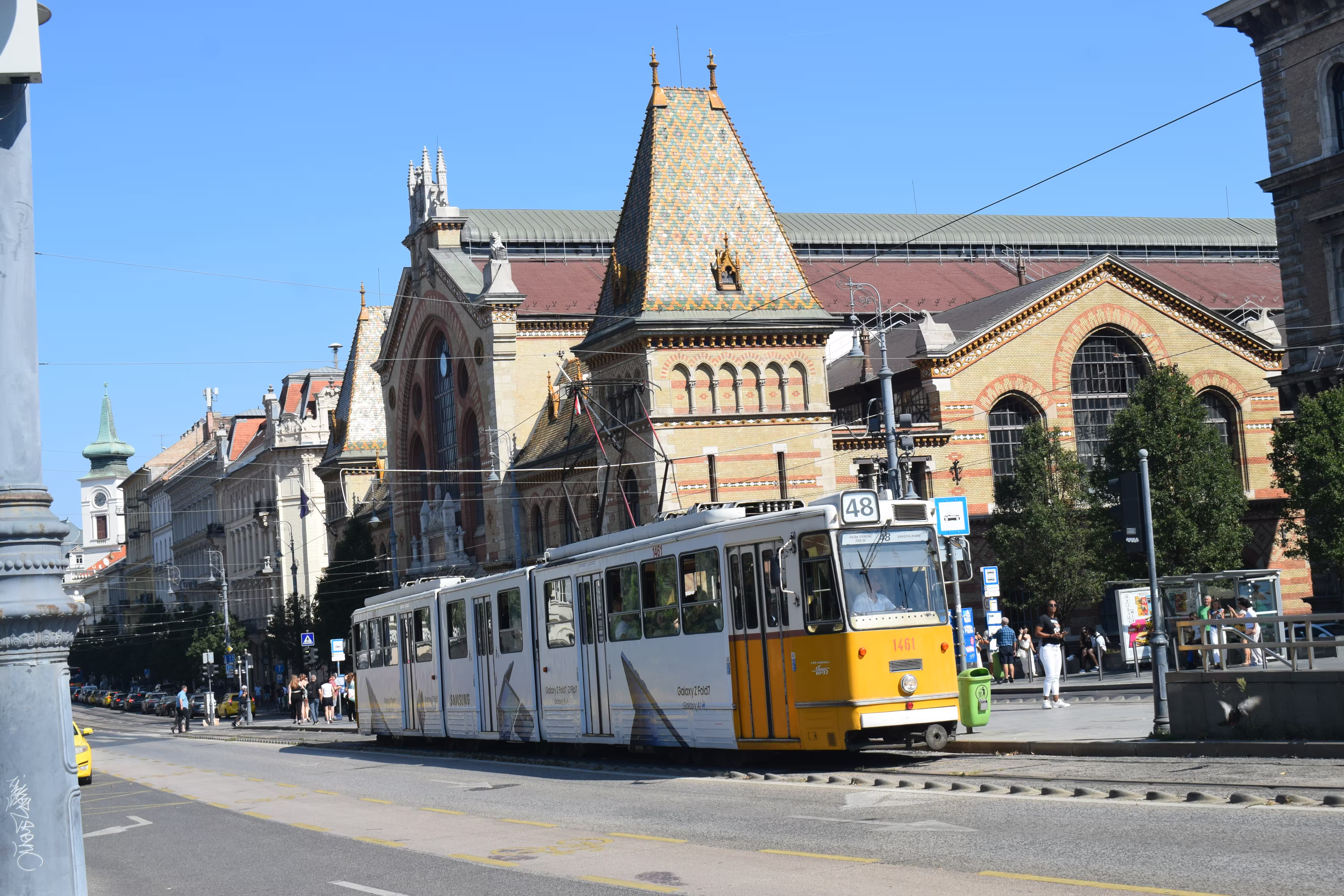
A building with a tram in front of it. The building right behind the tram is the central market building.
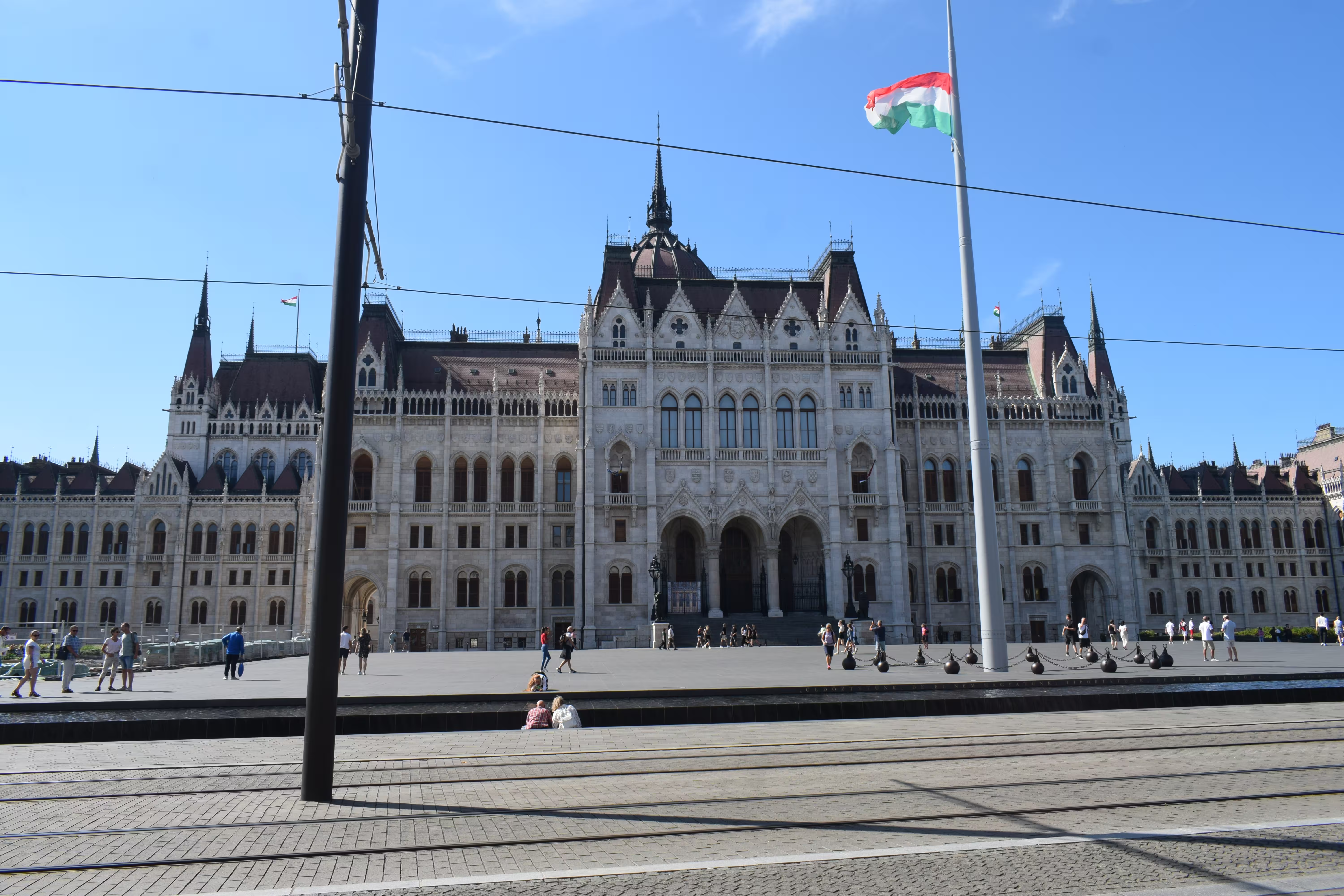
At some point, Atilla had to join the The Document Foundation (TDF) sightseeing group, so we parted ways at the central market. Dione and I continued our sightseeing and decided to start with visiting the Hungarian parliament, which is a tourist attraction. It was because we were on the Pest side and the parliament was also on the same side, while other tourist attractions were on the Buda side. So, Dione and I hopped on a tram and went to the parliament. We got off at a tram station just outside the parliament. The parliament is the icon of Budapest. The building has a gothic architecture and colored brown and white. One can buy tickets and take an inside tour. However, we didn t have a lot of time, so we stayed outside the building.
Hungarian Parliament building. Hungarian Parliament building.

After spending some time outside the parliament building, we took a tram to the Chain Bridge. As I mentioned earlier, Budapest has two parts Buda and Pest separated by the Danube River. To go from one of the sides to the other requires crossing a bridge. Although Budapest has many bridges linking the two sides, the main one is the Chain Bridge. We walked on the chain bridge to get to the other side. The bridge gave a good view of the Danube River. It also had a statue of a lion. The Buda Castle (another major landmark of Budapest) was visible from the bridge.
Chain Bridge. A shot of Chain Bridge.
A lion statue The lion statue on the Chain Bridge.
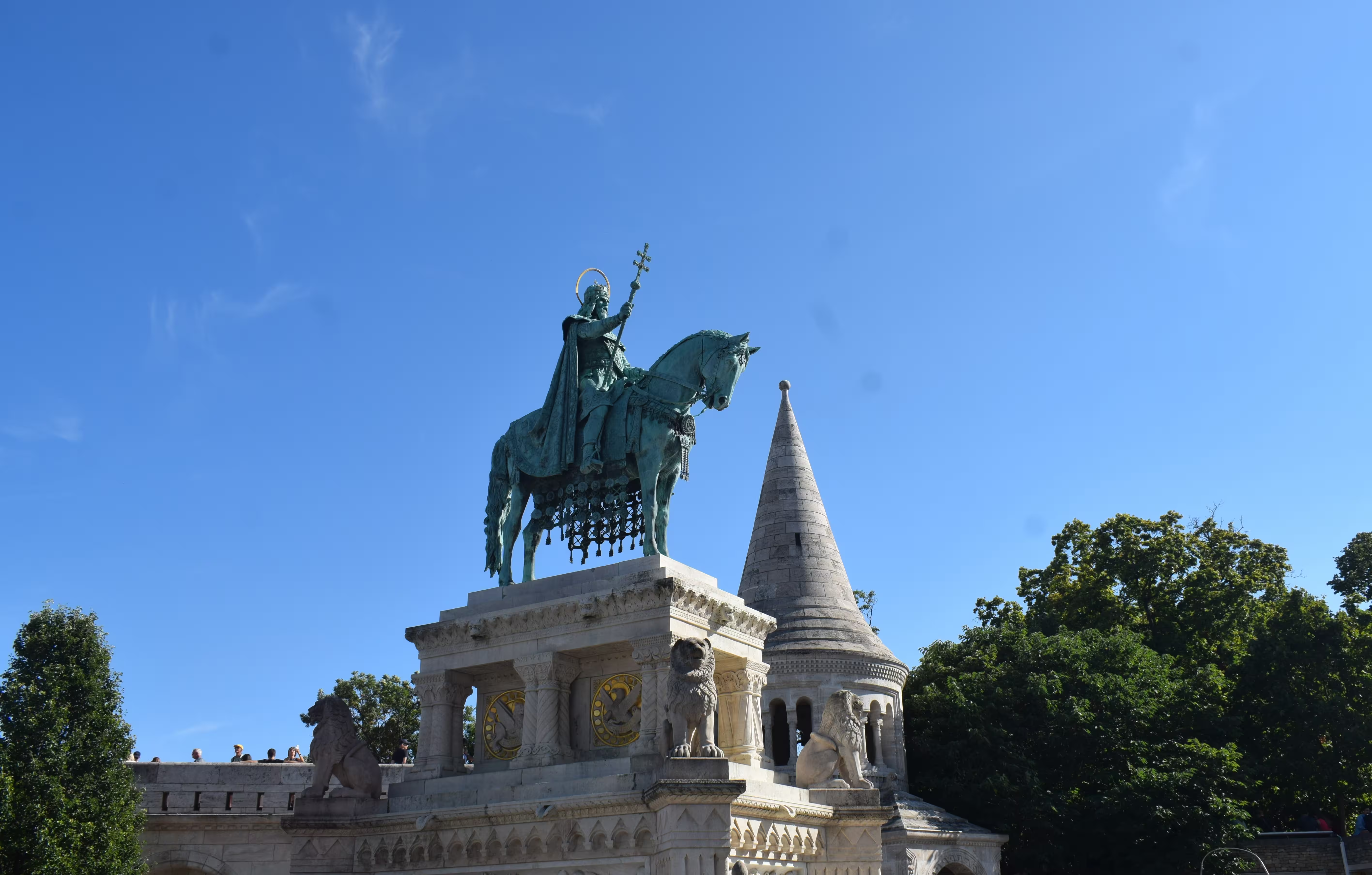
After reaching the other side of the bridge (the Buda side), we sat on a bench for some time and then planned on where to go next. We decided to go to Fisherman s Bastion, which is another tourist attraction. We used the OSMAnd~ app to figure out which bus to take and hopped on one. Soon we reached Fisherman s Bastion, where we found a flight of stairs that led upwards. Upon climbing the stairs, we got a panoramic view of the city. It also gave us a good view of the Hungarian parliament across the river. Going further upstairs, we found a statue of Stephen I of Hungary. He was the first king of Hungary, getting the crown in the year 1900.
A view of Hungarian parliament from Fisherman's bastion A view of Hungarian parliament from Fisherman s bastion.
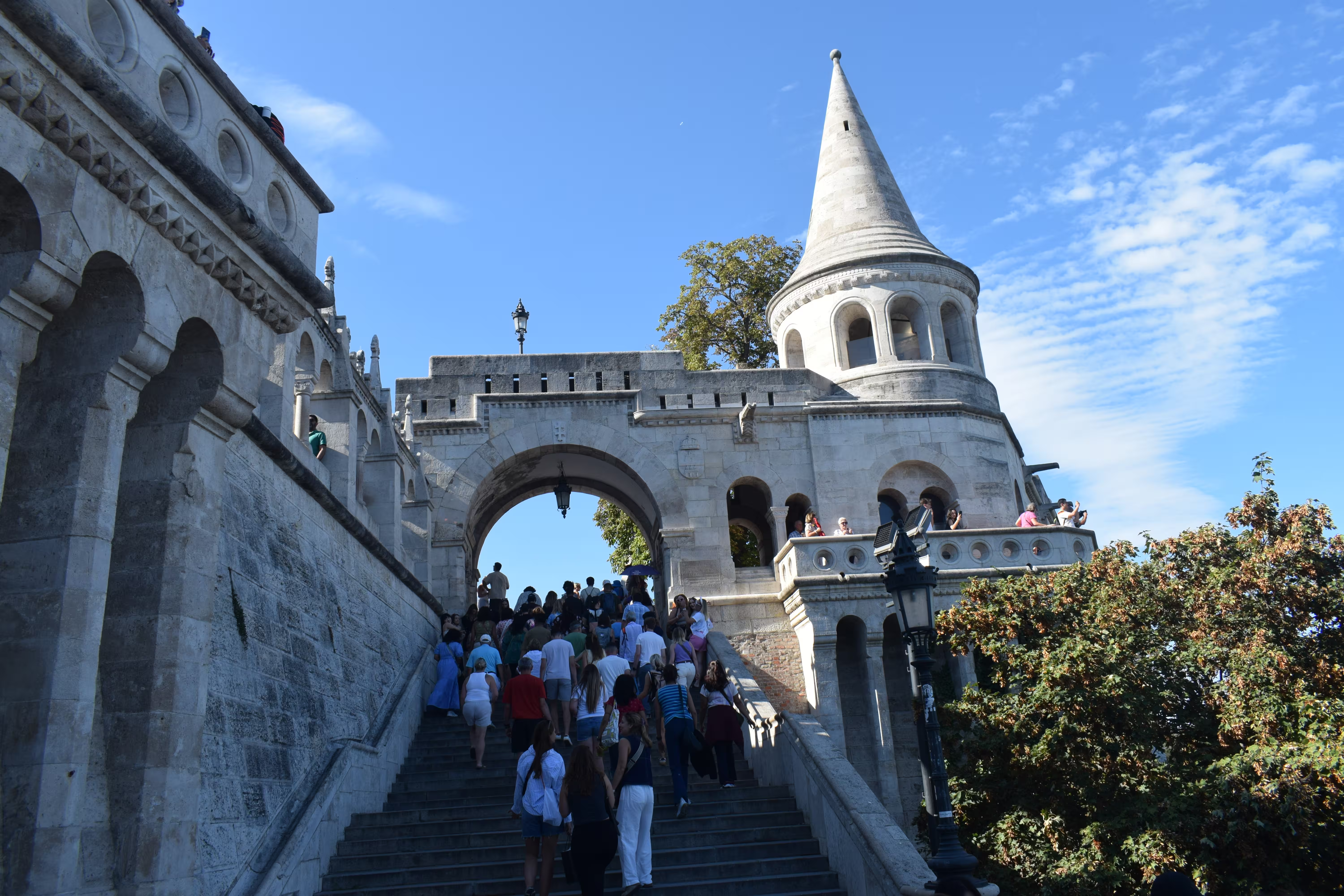
I found Fisherman s Bastion to be the best tourist attraction in the city. As mentioned earlier, it offers a panoramic view of the city, which I liked. I liked the arhitecture and open space there. If you find yourself in Budapest, I would highly recommend that you visit Fisherman s Bastion.
Fisherman's Bastion. Fisherman s Bastion.
A green colored statue of King Stephen Statue of Stephen I of Hungary at Fisherman s Bastion.

Next, we went downstairs and returned to where the bus dropped us. From here on, we walked in random streets to see the residential and non-touristy side of Budapest. It was not so random as we walked towards Batthy ny t r metro station. Upon reaching the metro station, we found a caf where we stopped for a while for some coffee. After injecting some caffeine into our blood, we proceeded to find a place to have lunch.
A metro station Batthy ny t r metro station.
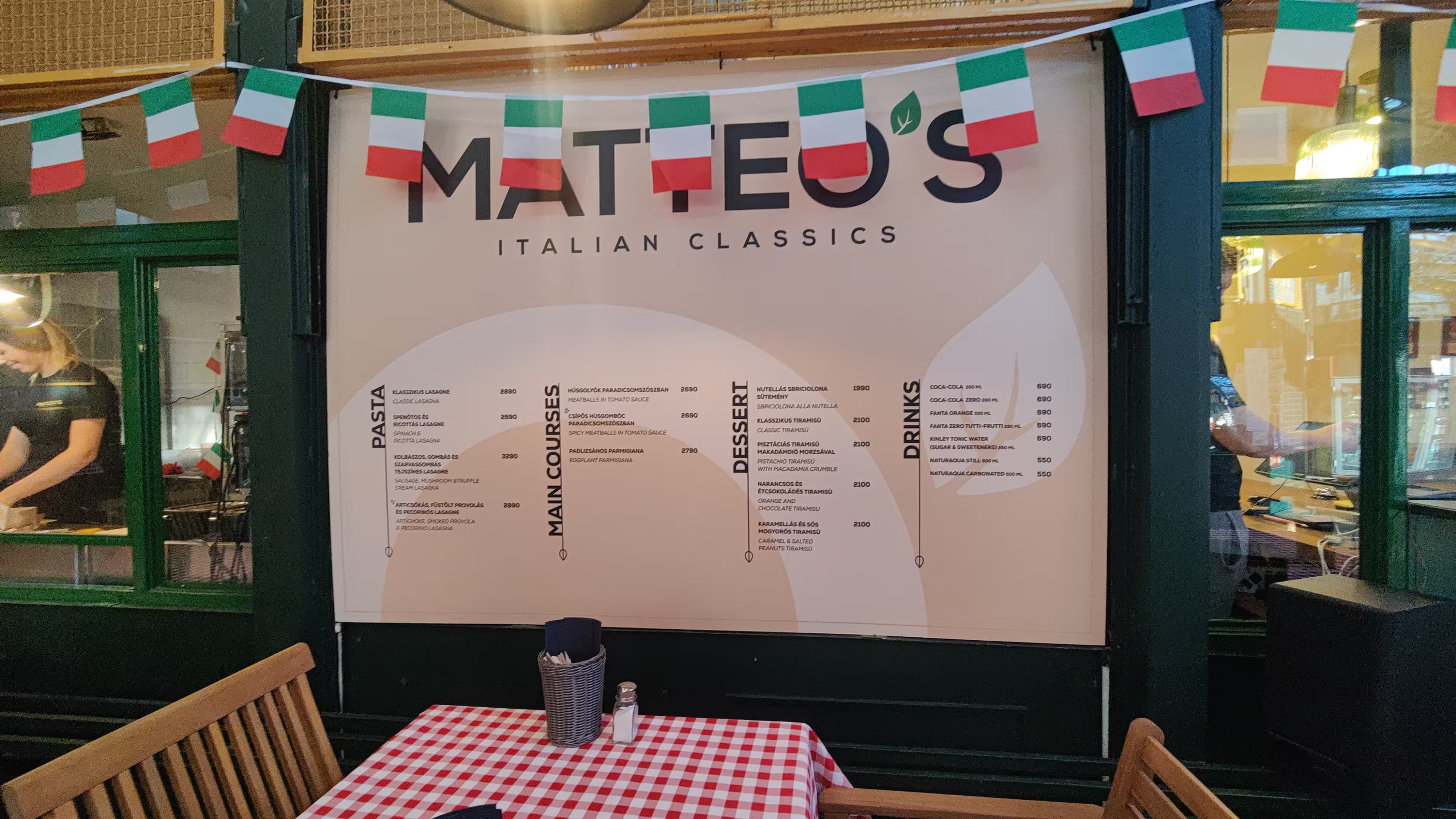
For lunch, we decided to go to R k czi t r metro station after reading on the internet about the food options there. Upon exiting the metro station, we found a market inside a building that had a lot of shops, but most of them were closed. After roaming around inside a bit, we found an Italian place open and decided to eat there. The name of this place was Matteos. We ordered an eggplant parmigiana, a lasagna artichoke, and a classic tiramisu. It wasn t very tasty but filled us up for the day.
The Italian place we had our lunch at. A picture of Matteos, where we had our lunch.

Budapest has four metro lines, and we had been to three of them, so we decided to try the remaining line, which was the M1 line. It is the oldest line in the city and has a different vibe than the modern lines. This line was opened in 1896, one of the oldest subway systems in the world. The coaches were much smaller than the other metro lines, and the seating arrangement was something you would expect from a bus than a typical metro train. We rode all the way to the last stop, Mexik i t. Upon going outside, we found out there wasn t much to do here. At this point, I checked the map and realized that Heroes Square is just a couple of metro stations away. Heroes Square is a tourist attraction in Budapest. It is located in Zugl a and is a historically significant place in Budapest. It has a monument which features the Seven chieftains of the Magyars.
M1 line station and tracks. M1 line station and tracks. It is the oldest metro transit of Budapest and one of the oldest in the world. It started operations in 1896.

Here, our unlimited public transport pass was handy because if it was paid per trip, we would think of the stop as a wasted one because we would have to buy a ticket again, but in this case we could just hop on again without any regrets.
A metro train entering a station. An M1 line metro train entering the station.

So we took the M1 line again and deboarded at H s k tere station, followed by walking to the square. After roaming around for a while, we saw a trolleybus and decided to ride on that.
Heroes' Square Heroes Square.
A trolleybus This is the trolleybus we took in Budapest.

A trolleybus is an electric bus that is powered by overhead electric cables. It is like a tram but runs on roads instead of tracks. We got down at D zsa Gy rgy t metro station. Then we took a metro to our hotel. Before going to the hotel, we went to a place to eat something. We had coffee and l ngos. L ngos is a deep-fried Hungarian dish, which looks exactly like the Indian flatbread bhatura. I found it tasty, but since it was deep-fried, that was almost a given.
A deep friend dish called L ngos. L ngos a dish which looks like the Indian flatbread bhatura.
The next day we went to Vienna the capital of Austria which I have already posted about. Check it out here. I had a good time in Budapest, and it is a beautiful city with good public transport and some amazing sites to visit. That s it for now, and see you next time! Credits: Thanks Dione and Badri for proofreading.

24 May 2026

Vincent Bernat: Sharding a routing table for lock-free reads in Go

To associate routing information like AS paths or BGP communities to flows, Akvorado can import routes through the BGP Monitoring Protocol (BMP). As the Internet routing table contains more than 1 million routes, Akvorado needs to scale to tens of millions of routes.1 This has been a long-standing challenge,2 but I expect this issue is now fixed by using RIB sharding, a method that splits the routing database into several parts to enable concurrent updates.

Previous implementation Akvorado connects 2 elements to build its RIB:
  1. a prefix tree, and
  2. a list of routes attached to each prefix.
Akvorado BMP RIB implementation before sharding with the memory layout of each structure and a single lock.
Akvorado BMP RIB implementation without sharding. One single read/write lock.
In the diagram above, the RIB stores five IPv4 prefixes and two IPv6 prefixes. One of them, 2001:db8:1::/48, contains three routes:
  • from peer 3, next hop 2001:db8::3:1, AS 65402, AS path 65402, community 65402:31,
  • from peer 4, next hop 2001:db8::4:1, same ASN, AS path, and community,
  • from peer 5, next hop 2001:db8::5:1, AS 65402, AS path 65401 65402, community 65402:31.
The rib structure is defined in Go as follows:
type rib struct  
    tree          *bart.Table[prefixIndex]
    routes        map[routeKey]route
    nlris         *intern.Pool[nlri]
    nextHops      *intern.Pool[nextHop]
    rtas          *intern.Pool[routeAttributes]
    nextPrefixID  prefixIndex
    freePrefixIDs []prefixIndex
 
The prefix tree uses the bart package, an adaptation of Donald Knuth s ART algorithm. The benchmarks demonstrate it outperforms other packages for lookups, insertions, and memory usage.3 Plus, the author is quite helpful.

Storing routes in a map The list of routes for each prefix is not stored directly in the prefix tree: it would put too much pressure on the garbage collector by allocating per-prefix arrays. Instead, the RIB assigns a unique 32-bit prefix identifier for each prefix, either by picking the last available prefix identifier from the freePrefixIDs array if any, or using the nextPrefixID value before incrementing it. Then, the routes are stored in the routes map, leveraging the optimized Swiss table in Go. To retrieve routes attached to a prefix, we look them up one by one in the routes map with a 64-bit key combining the 32-bit prefix index with a 32-bit route index matching the position of the route in the list. Akvorado scans routes from the first to the last to find the best one.4 It knows there is no more route if the route key returns no result.
type prefixIndex uint32
type routeIndex uint32
type routeKey uint64

Interning routes A route contains a BGP peer identifier, a partial NLRI5, the next hop, and the attributes.
type route struct  
    peer       uint32
    nlri       intern.Reference[nlri]
    nextHop    intern.Reference[nextHop]
    attributes intern.Reference[routeAttributes]
    prefixLen  uint8
 
type nlri struct  
    family bgp.Family
    path   uint32
    rd     RD
 
type nextHop netip.Addr
type routeAttributes struct  
    asn              uint32
    asPath           []uint32
    communities      []uint32
    largeCommunities []bgp.LargeCommunity
 
To save memory and allocations, NLRI, next hops, and route attributes are interned : a 32-bit integer replaces the real value. The mechanism predates the unique package introduced in Go 1.23. We keep it because it has different trade-offs:
  • It uses explicit reference counting instead of relying on weak pointers.
  • It works with non-comparable values implementing Hash() and Equal() methods.6
  • It uses explicit pool instances. This will be useful for sharding.
  • It has better performance. See for example this benchmark.
  • It consumes half the memory thanks to unsigned 32-bit references instead of pointers.
  • But it is not safe for concurrent use.

Why does it not scale?

Note At AS 12322, we don t use BMP yet.7 But Gerhard Bogner had the patience, availability, and technical skills to help me debug this issue.

The global read/write lock is a bottleneck in this implementation. But how? There are several users of the RIB, each with its own set of constraints:
  • The Kafka workers look up the RIB to enrich flows with routing information. They are bound by the number of Kafka partitions.8 Akvorado also adjusts their number to ensure efficient batching to ClickHouse. On our setup, the number of workers oscillates between 8 and 16. As we want to observe the latest data, we cannot afford for the Kafka workers to lag too much.
  • The monitored routers send route updates through the BMP protocol. When connecting, they can send millions of routes.9 After the initial synchronization, updates are sent continuously and may spike from time to time. The router detects a stuck BMP station when its TCP window is full and resets the session in this case. While Akvorado implements a large incoming buffer, it still needs to update the received routes with the write lock held fast enough to avoid being detected as stuck.
  • When a remote BGP peer goes down, Akvorado flushes the associated routes by walking the RIB with the write lock held. When a monitored router goes down, Akvorado waits a bit but eventually flushes all the associated routes.
In short: on a busy setup, lock contention is high for both readers and writers, and neither can lag too much behind.

RIB sharding

First step: basic sharding To remove the global lock, the RIB is split into several shards, each one handling a subset of the prefixes:
Akvorado BMP RIB implementation after sharding with the memory layout of each structure and one lock per shard.
Akvorado BMP RIB implementation with sharding.
The prefix tree stays global and is protected by a single lock. Each shard gets its read/write lock, its route map, and its intern pools to store NLRIs, next hops, and route attributes, which would not have been possible with Go s unique package. The prefix indexes are also sharded: the 8 most significant bits are the shard index and the 24 remaining bits are the local prefix index. Gerhard confirmed that after this blind change, the BMP receiver chugged steadily. Later, I wrote a concurrent benchmark over half a million synthetic but plausible routes10 partitioned over 0 to 8 writers, churning routes as fast as possible, while 1 to 16 readers continuously look up a set of 10,000 routes. I don t know if this benchmark is realistic, but it confirms the improvements for both read and write latencies:
Two heatmaps. One for read latency ratio, the other for write latency ratio. Both of them comparing the speedup with colored tiles between the code before sharding and after sharding. Most tiles are green.
Read and write latency performance improvement after sharding.
It also shows that a high number of writers degrades read latency.

Second step: lock-free reads The single read/write lock protecting the prefix tree is the next target. The bart package provides alternative mutation methods returning an updated tree using copy-on-write. Readers don t need the global lock any more, leaving it only to synchronize writers. The prefix tree is boxed in an atomic pointer.
Akvorado BMP RIB implementation for sharding with lock-free reads. It shows the memory layout of each structure.
Akvorado BMP RIB implementation with sharding and lock-free reads.
Without a lock, readers can now fetch a stale prefix index when walking their copy of the tree if a concurrent writer removes the last route attached to this prefix index and recycles it for another prefix. To avoid this issue, we combine the prefix index with a generation number and store them in the tree:
type generation uint32
type prefixRef struct  
    idx prefixIndex
    gen generation
 
type rib struct  
    mu     sync.Mutex
    tree   atomic.Pointer[bart.Table[prefixRef]]
    shards []*ribShard
 
Each shard stores the generation number for each local prefix index. The generation number increases by one if the associated prefix index is freed. When looking up the routes attached to a prefix index, the reader checks if the generation number matches. Otherwise, it assumes the index was recycled and the list of routes is empty.11 You can see this case in the diagram above for prefix index 5, stored with a generation index of 3, while the current value in the []generations array is 4. The generation number could overflow, but it is not a problem as lookups are quick. Running the concurrent benchmark against this new implementation shows the improvements for the read latency as soon as the cost of the copy-on-write prefix tree is amortized.
Six heatmaps. Three for read latency ratio, three others for write latency ratio. They compare the numbers without sharding, with sharding, and with lock-free reads, pair by pair. For read latency, most tiles are green, showing an improvement of the second step. For write latency, the speedup is negative for a low number of readers.
Read and write latency performance improvement after lock-free reads. The middle column shows the cumulative improvements of both steps.

Among the multiple attempts to optimize the BMP component, RIB sharding is one of the more satisfying. Akvorado 2.2 implements the first step. PR #2433, drafted while writing this blog post, implements the second step and was released with Akvorado 2.4.

  1. Each router exporting flows doesn t need to send its routes. When Akvorado does not find a route from a specific device, it falls back to a route sent by another device. It is up to the operator to decide if this is a good enough approximation.
  2. I made many attempts to scale the BMP component. See for example PR #254, PR #255, PR #278, PR #2244, and PR #2245. Despite these efforts, this component remained problematic for some users. See discussion #2287 as the latest example.
  3. It keeps improving: bart 0.28.0 features a new implementation that trades a bit of memory for greater lookup performance. I did not test it yet, as I have been preparing this blog post for a couple of months already.
  4. Akvorado prefers the route matching the exact next hop. Otherwise, it falls back to any other route. This is an approximation. An alternative would be to have one prefix tree for each BGP peer but it would require configuring all routers to export their routes. pmacct s BMP daemon implements this approach.
  5. If we consider the BGP RIB as a database, the Network Layer Reachability Information (NLRI) is the primary key. Its content depends on the BGP family. With IPv4 or IPv6 unicast, this is the prefix. For VPNv4 and VPNv6 families, it includes the route distinguisher. If you enable the ADD-PATH extension, the NLRI also contains a path identifier. In our implementation, we don t store the prefix as we get it from the looked-up IP address using the prefix length stored separately.
  6. The Hash() methods rely on the hash/maphash package and on the unsafe package to avoid memory copies. See for example the Hash() function for the nlri structure.
  7. Despite being an author or co-author of the first BMP-related RFCs since 2016 (RFC 7854, RFC 8671, RFC 9069), Cisco did not implement it in a usable way in IOS XR until version 24.2.1. We still need to upgrade a few routers to enable this feature.
  8. KIP-932 introduces, in Kafka 4.2, the concept of share groups to enable cooperative consumption on the same partition. This is not supported in Akvorado yet.
  9. You can configure BMP to send routes for each BGP peer before or after applying the incoming policies. In this case, you can get more than one million routes for each transit peer. You can also tell BMP to send the local RIB, which only contains the best path for each prefix.
  10. The prefixes are random, but the prefix size distribution and the AS path length distribution follow the data provided by Geoff Huston.
  11. Alternatively, we could retry the lookup, but it would be pointless: the RIB is an eventually consistent database, and an empty list was a correct answer at some point in the recent past.

9 May 2026

Russell Coker: Bad Criticism of LLMs (not AI)

Discussion of AI systems seems to be dominated by fears of uncommon and unlikely threats. I think that we should be focusing more on real issues with LLMs and with society in general and put the most effort towards the biggest problems. It s Not AI True Artificial Intelligence [1] (IE a computer that has the mental capacity of a household pet) is something that I think can be developed, but it hasn t been developed and we don t have good plans for developing it. We seem to be a lot further away from achieving that goal than we were from landing on the moon in 1962 when JFK gave his historic speech. What we have is a variety of pattern recognition systems that can predict what fits into a pattern. The most well known type of Machine Learning (ML) is the Large Language Model (LLM) which means ChatGPT and similar systems which predict which text would be likely to come next and can make an essay from it. They can give interesting and useful output, but there is no thought behind it, it s just a better form of Eliza (the famous program from 1964 that simulates conversation by pattern matching) [2]. By analysing billions of documents, storing the data in a condensed mathematical way, and then using computation to extract from that record LLMs can produce output that is unfortunately considered by some people to be good enough to include in legal documents submitted to courts, university assignments, and many other documents. But they do so without even having the thinking ability of a mouse. To call current systems AIs without any significant qualifiers when criticising them is to concede the debate about the worth of such things. If we develop AIs that can actually think we will have to deal with the issues in the SciFi horror short story Lena by qntm [3]. The Bad Arguments Here is a list of some of the most unreasonable arguments I ve seen against AI which distract attention from real problems both related to AI and other problems in society. Suicide and Homicide Wikipedia has a page listing Deaths Linked to Chatbots [4] which right now has 16 entries from 2023 to Feb 2026. They are all tragedies and as a society we should try to prevent such things. But what I would like to see from the media is some analysis of overall trends, yes it gets people s attention when someone dies in an unusual way but we need to have attention paid to the more numerous deaths which are preventable. It has become a standard practice to give information on Lifeline in media referencing suicide, it would be good if they also developed a practice of mentioning the relative incidence of a problem when publishing an article about it. One of the many factors that cause more suicides than chatbots is school, Scientific American has an informative article from 2022 about the correlation between child suicide and school [5]. It is based on US statistics and shows that the lowest suicide rate is in July (a no-school month in the US) which has a rate of 2.3 per 100,000 person years. So if kids had a quality of life equivalent to July all year around then there would be 2.3 suicides per 100,000 kids every year while if they had a quality of life equivalent to a Monday in January or November it would be 3.9 suicides per 100,000 kids every year. The article states Any time I present these data to teachers, parents, principals or school administrators, they are shocked. This should be common knowledge. It is common knowledge to anyone who takes any notice of what happens in schools, but paying attention to serious problems is unpleasant, it s more fun to pretend that school is good for everyone. No parent wants to think that they sent their child to a place that was horrible, no teacher wants to think that they are part of a system that harms kids. The US CDC has an informative article about youth suicide [6] which documents it as the 3rd largest cause of death in the 14-18 age range fro 2021. This article was published in 2024 and based on statistics from 2023 and earlier. It notes significant differences in suicides, attempts, and persistent feelings of sadness or hopelessness which had girls at more than twice the rate of boys and LGBQ+ kids at more than twice the rate of heterosexual students. It seems obvious that misogyny and homophobia is correlated with suicide and that s something that could and should be addressed in schools. My state has a Safer Schools program [7] to try and alleviate the problems related to homophobia, but I expect that things are getting worse in the US in that regard. 39.7% of kids in US high schools had persistent feelings of sadness or hopelessness before LLMs became popular, school could and should be a happy time for the vast majority of kids but instead almost half of the kids don t enjoy it and a majority of girls and LGBQ+ kids don t. Having no mention of trans kids is a significant omission from that article, based on everything I ve heard from trans people I expect that their statistics would be even worse. One could argue that the small number of deaths inspired by use or misuse of LLMs is an indication of a larger number of people suffering in ways that don t result in death and don t get noticed. But I don t think that can compare to the fact that the majority of girls and LGBQ+ kids have persistent feelings of sadness or hopelessness in the current school system. Regarding homicide, the Australian Institute of Criminology has an article showing that in the 2003-2004 time period 49% of women who were killed were listed as a domestic argument [8], that s something that could and should be addressed. That article claimed 308 homicide victims in that time period which is larger than the world-wide death toll from LLMs but also less than 1/3 the death toll from car accidents in Australia. Australia has less than 0.4% of the world population, a fairly low homicide rate, and a number of homicides that vastly outnumbers all world homicides related to LLMs. I think it s great to address any cause of suicide or homicide, but devoting government resources and legislation towards very uncommon causes instead of things that happen every day is not a good strategy. It would be fine to address all factors leading to suicide, but problems with the school system have been a major factor for decades with little effort applied to fix it. Fraud and Other Crime There is evidence of criminals using LLMs to help prepare for crimes, the ability to generate large amounts of text quickly can be used for fraud and extortion. This is going to be a serious problem and we need structural changes to society to deal with it. There is an ongoing issue of scammers convincing older people that their child or other young relative is in trouble and a large amount of cash is required to address it. This sort of scam as well as the more well known Nigerian scams will probably become more common as the cost of running them decreases. This may be more of a problem for people in developing countries as currently a common scam business model is to have people in regions where wages are low (such as Pakistan for one who I spoke to) scamming people in relatively wealthy countries like Australia so an attack with a low probability of success is financially viable. Cheaper attacks will make less affluent victims financially viable to the scammers. While writing this post I received a financial scam phone call trying to get me to invest in SpaceX that was run by an AI chat system, I expect to receive more of them and this is something that needs to be dealt with via both technical measures and legislation. Do we have to accept less freedom and less anonymity in finances as a cost of reducing financial crime? Greater restrictions on the use of cash would make some crimes more difficult or less profitable for criminals. As a society I think we need to have a discussion about a balance between financial freedom and freedom from criminal exploitation, failing to have such a discussion is likely to lead to policies which don t work well. Also one thing that ML systems are good at is recognising patterns in data. Banks could scan all their transactions and look for patterns that correlate with fraud. They currently do this badly and do things like locking credit cards when someone goes to another country and spends money. They could do a better job of that and involve the police in cases of obvious fraud even when the customer doesn t realise that they are a victim. This isn t a reason to criticise AIs , it s a reason to plan defensive technology that matches the capabilities of attackers. As an aside I used to work for a company that was developing AI software to scan bank phone calls and allow banks to recognise employees who acted illegally. Unfortunately the Royal Commission into banking misconduct [9] didn t impose any penalties that gave the banks a financial reason to avoid criminal activity. Unemployment and Inequality There are many claims about AI systems making large numbers of jobs obsolete, some of them are outlandish such as the claims that all white-collar jobs will be obsolete in the near future. There are some reasonable claims like the ability to replace some mundane jobs. Replacing jobs that suck with computers, robots, and other machinery is a good thing! Very few people wish that they were working on a farm without a tractor. In 1900 it s estimated that between 60% and 70% of the world labour force worked in agriculture and 40% of the US labour force did so. Now it s something like 27% globally and between 1% and 3% in developed countries. Automated factories are also a good thing, it s best to avoid boring and dangerous work. The most plausible claims about job replacement from AI is jobs that involve analysing and summarising documents. One example that comes to mind is the worst kind of journalism where press releases from companies are massaged into the format of a feature article. I don t think anyone wants that sort of job and doing it with AI hopefully means no human has to sign their name to it. For work like programming few people will be directly replaced by AI but if people can do their work more efficiently while using it then less people are required. I don t think that any programmer likes the part of their job where they have to skim read long documents looking for a clue about how to solve a problem with a library or protocol. A LLM processing the document and finding the potentially useful things will take away the drudgery from the work and allow greater productivity. The trend in replacing people has been making people work longer. If you force all employees to work 60 hour weeks then that can theoretically allow hiring fewer people than having 40 hour weeks. For some work that applies but for skilled work it mostly doesn t as productivity and work quality on average drops when people work more than 40 hours in a week. Another trend for exploiting people is having a low minimum wage and making accommodation expensive so that many people need to work two jobs. What we need is legislation to restore the situation in the 70s where a single full time job was sufficient to provide for a family. The low minimum wage and high expenses for many things is a problem that s been slowly developing over the course of decades while being mostly ignored by journalists. If they could concentrate on the real issues that are hurting workers today they could incite political action to fix these problems. Academic Cheating There is no shortage of ways of cheating in school and university. There are people who are paid to write essays, mobile phones are used for cheating in exams, etc. Getting an AI to write essays makes it easier to cheat for the essay writing part but does so with lower quality and in a less stealthy way. What s the worst case scenario? That we have to change to oral exams for all university subjects? In the US the average annual price for tuition at a university is apparently $25,000, if each student had individually supervised assessment for their exams at a cost of $100 per hour it would make the degree cost 4% more. The cost of university in the US is unreasonably high and that s a problem that needs to be fixed, but a hypothetical case of increasing the price by 4% isn t going to be a major part of it. Weak Arguments Against AI Computer Security Attacks There have been many claims made that AI will break the security of all systems and cause the type of disruption that was previously predicted for year 2000. Bruce Schneier has written a good analysis of the issues including how AI can be used by both attackers and defenders [10], he doesn t have a strong conclusion on whether the net result will be good or bad but his article does make it clear that the result is not going to be a total disaster. While I was working on this post I read another post by Bruce Schneier that was significantly more negative about this issue [11]. While I still don t think this will destroy civilisation I found his other post convincing enough to move computer security from the bad argument section to the weak argument section. Spidering the Web to Death There are issues of bots from AI companies doing a bad job of trying to download all the Internet s content and using a lot of resources. When it was just the major search engines and the Wayback Machine doing it the load was small due to having a small number of organisations that were very good at the way they did it having evolved practices over many years. Now we have a lot of idiots doing it badly and repeatedly hitting generated content. This is really annoying but is something that we can deal with. Currently my blog and many other sites are hosted on a Hetzner server with a E3-1271 v3 CPU with 32G of RAM and there are occasions where more than half the CPU power is being used to service web requests from such systems. Even on the server bidding (renting servers previously used by other customers) Hetzner isn t offering systems so slow nowadays, the slowest they offer is about 20% faster than that. This is something that can be dealt with by spending a little more on hosting until the companies doing that go bankrupt. I m sure this is a serious problem for some people, but for most people it s not a big deal. Also hostile traffic on the Internet is something we have all had to deal with as a part of life since the mid to late 90s. RAM Prices The unreasonably high prices for RAM are annoying and hurt the development of useful computer projects. Big companies can afford it, even with current high prices and large quantities of RAM used for some servers it s still not significant. But it is a major issue for hobbyists and small projects. Things like setting up a dozen test VMs for FOSS development are now too expensive for many people who develop software in their spare time. But this is a temporary thing, if AI companies were to keep buying RAM at high rates for a few years companies would just manufacture more of it to meet demand. In some situations capitalism can work. Environmental Damage There are many people claiming that power used by data centers for AI will lead to environmental damage, using power and water when there isn t enough. The trend of computer hardware is to get smaller and faster. It hasn t been going as fast as it used to in many areas but it hasn t stopped either and it s an exponential trend. There has been an increase in data centers (DCs) for AI use as the use has been increasing faster than the hardware gets smaller. Eventually they will stop increasing faster than advances in hardware and software can match and the size of DCs will decrease. As the production of renewable energy is increases the environmental cost of energy hungry industries decreases. In a few years this won t be an issue anyone is bothered about. False Claims About Danger as PR Jamie McClelland makes an interesting claim that the AI companies are pushing dangers of AI as a method of PR [12]. That seems plausible and combined with the tendency of many journalists to just massage press releases from companies into articles could be the reason for a lot of the bad arguments against AI. Good Arguments Against AI Spam Everywhere I ve previously written about Communication and Hostile AIs [13]. I think that filling all communication channels with rubbish is a denial of service attack against society. In the past communication took some effort, even the simplest email that was directly targeted at the recipient took some human effort and that reduced it s frequency. I get a lot of spam saying something like I see your web site doesn t rank in the top for Google searches while my web site in fact rates well and the actor named Russell Coker is ranking below me, so I know that such spam hasn t had the minimum of human involvement. Now a spammer who wanted to do a better job could get an LLM written spam for every target so the message was specifically aimed at them and would take much longer to be recognised by a human as spam and would also avoid most anti-spam software. Searching for businesses used to be easy, the phone book had listings for them and there was a real cost to being in the book as well as humans actively trying to stop fraud. Creating fake web sites to get business isn t too difficult but it s also not trivial at the moment and such fake sites won t look complete. Now with LLMs it s possible to create hundreds of sites that have content and look reasonable without human involvement. Instead of the small number of suicides and homicides inspired by AI chat systems we should probably be concerned about people who need psychological or medical advice being misled by bogus web sites created as part of fraud campaigns. Imagine people searching for mental health assistance finding web sites run by cults who oppose psychology as a profession. Imagine people searching for basic medical advice such as how to cook a healthy meal getting sucked in to web sites that start sane and then lead people to Ivermectin as a universal medicine. LLMs have the potential to take spam from quick and simple attacks to large scale targeted fraud aimed at people and organisations that don t have the resources to defend against it. There have been many reports of CEO impersonation fraud against major corporations aiming to steal hundreds of thousands of dollars and fraud against individuals who are persuaded to get amounts like $50,000 to help a relative who is allegedly in a difficult situation. But if every corner store experienced the same type of attack that CEOs experience and if every child had someone trying to steal the pocket money in the same way that relatively wealthy people are being targeted now it would really change things. David Brin wrote an insightful and informative blog post about this focusing on how AI generated content is being allowed to destroy YouTube [14]. Deep Fakes There is some overlap between filling all communications channels with rubbish (fake news etc) and deep fake. Making a fake photo of a politician or celebrity to lobby for legislative changes is a real issue but it s not what most people think of when the term deep fake is used. Using photo and video faking targeting non-consenting people is a serious issue. It s not just fake porn (which is a major issue and will cause some suicides) as there are many other possibilities. Fake videos showing behaviour that justifies sacking people from their jobs is going to become an issue, for people in public facing positions even proof that the videos are fake won t necessarily help them. Will we find ourselves in a situation where every politician gets deep-fake porn made of them and the only people who run for public office are ones who are cool with that? Will positions of leadership in the technology industry be restricted to people who aren t bothered by having the most depraved fake porn made of them? The Justice System We have seen a lot of evidence of law enforcement and the court system based on bias leading to bad results. The Innocence Project attempts to correct that and it s web site documents some of the things that have gone wrong [15]. Using AI systems to do some of the work of law enforcement by training computers on the flawed results of current systems can entrench bias and also make it harder to spot. When determining whether someone should be considered a suspect or whether a prisoner should be eligible for parole the number of factors that a human can use is limited. But a computer can take many more factors into account so the issues of whether inappropriate factors are being used can be masked. Computers are also unable to explain decisions that they made and are also able to come up with better fake reasons. In the past there have been racist policies in the US about banks not lending to people living in suburbs where most houses were owned by non-white people, these policies were documented and the documents have become part of the historical record showing racist policies. If a LLM decides not to lend money to people based on mathematical correlations it determined based on historical banking practices it could assign negative weights to factors such as non-English names and implement the racism in a large array of numbers with no proof. The current cases of lawyers getting LLM systems to do some of their work and having their incompetence revealed when the computer generated work is shown to be ridiculously bad are amusing. But that is not the real problem. The real problems will start when the computers in police cars start flagging every car owned by a non-write person as having a probable cause for a drug stop. Technically Not Financial Fraud The majority of the ecosystem around AI is a financial scam [16]. There are companies and individuals doing good things with machine learning some of which is based on hardware and software developed as part of this ecosystem. But the majority of it has no plausible path to profits and a the future of it inevitably ends with some bankruptcies. There are circular flows of money that have the major cloud providers and NVidia looped in, when the values of these companies correct it will become apparent that they have all burned a lot of money keeping this running and all the senior people have got a share of it (the entire purpose of stock options is to allow senior people to suck money out of the company). Then every cloud provider will increase costs while under chapter 11 and all the companies that depend on them will pay whatever it takes. That includes all major companies and most governments. Unlike the dot-com boom and crash and the housing crash the coming financial crash will impact every company that we deal with and most governments. So the people in first-world countries will effectively be taxed to pay for this scam while the executives go party in Monaco. This may seem like an extreme claim but it all happened before with the dot com crash and the housing market crash. The CEO class has an ongoing practice of doing things that aren t crimes because they lobby (bribe) politicians to make them legal. So the current stock market shenanigans around AI don t seem to involve things that governments consider to be crimes. But any normal person might be surprised to learn that such things are legal and most people would vote for such things to be crimes if they had the opportunity. A global financial crisis is the least of the problems that seem likely to afflict society from AI systems. But it will be more immediately obvious when it happens which could be this year! Propaganda Creating art requires skills that the type of people who want to create propaganda tend to lack. AI technologies allow creating art that is based on mathematical models of actual art to the requirements of the person running the program. I have seen the term AI Fascism used to describe the use of AI to help authoritarian governments. I am dubious about whether it deserves that term and while every article I ve read about the topic has had some good points I thought that they were all weak points. But there are lots of ways that governments can abuse their populations without going full fascist. In the last century there were lots of truly terrible governments that didn t even make the top 10 of fascism. AI Sycophants Bruce Schneier wrote an informative blog post about AI Chatbots and Trust which focused on sycophantic chatbots [17]. We have seen a lot of evidence of terrible behaviour and stupid decisions from rich people due to having no negative consequences for bad choices. The vast majority of the history of kings concerns bad decisions made by such people. A future where middle class and poor people can make the same bad decisions as rich people wouldn t be good. Good Things About ML Machine Learning (abbreviated as ML) can do useful things. It s not just Large Language Models (LLMs) such as ChatGPT etc. There are also ML systems that can analyse images and other data sets. I have found ChatGPT to be very useful for making suggestions for improving blog posts. I don t get it to write anything just ask for suggestions. It has pointed out things that I missed such as when I didn t include the price when reviewing a car because the car in question was much more expensive than I will ever pay, the price wasn t relevant to me but would be to some readers. It has also made useful suggestions about structure of blog posts, repeating points, and having a good conclusion. It has some downsides which include trying to erase my voice from my writing, suggesting that the rhetorical question does email suck? is unprofessional. I have worked for a company that used ML systems to analyse driver performance and alert people if a driver is falling asleep, using a phone, or otherwise seems unable to drive safely. Their business model involved a human reviewing the images from the drivers the computer flagged and then determining who is actually doing the wrong thing. This seems a good use of the technology. I have also worked for a company that used ML systems to analyse the performance of bank employees and detect potentially fraudulent behaviour. Preventing crime seems to be clearly a good thing and in this case the manager of the employee in question would review the evidence to make sure that they weren t being falsely accused. Conclusion I don t think that the problems with managing the changes that so called AI is introducing are particularly new. An example of how society handles change that s worth considering is car safety. The seat belt first became mandatory for aeroplanes in some jurisdictions in 1928. The Model T Ford is widely regarded as the first vehicle to start a mass market for cars and it was released in 1925. So if society acted in a reasonable way then for the majority of mass market cars seat belts would have been a standard feature. However seat belts were first made compulsory in 1970 in Victoria Australia and there are still people who think that they are safer without seat belts! The delay in adoption of car seat belts is only one example of needless deaths caused by not taking reasonable measures for car safety but it s one that s easy to demonstrate and measure. The difference between past problems like car safety and the current problems of AI is that the AI problems will be more pervasive. Most of my history as a car driver and car passenger was in cars that are much less safe than cars made in the last 10 years. But partly through luck I ve never been in a serious crash so being in cars that wouldn t have given me a low probability of surviving a freeway speed crash didn t affect me. There is no possibility that through any combination of luck and skill someone could avoid the downsides of AI . If nothing else the results of elections will be affected and no-one can avoid that. As a society we really need to address the real issues related to AI which in some cases requires legislation.

4 May 2026

Russ Allbery: Review: Full Speed to a Crash Landing

Review: Full Speed to a Crash Landing, by Beth Revis
Series: Chaotic Orbits #1
Publisher: DAW
Copyright: August 2024
ISBN: 0-7564-1947-6
Format: Kindle
Pages: 153
Full Speed to a Crash Landing is a science fiction novella and the first of a series. Beth Revis made the New York Times bestseller list for an earlier series of young adult science fiction novels, but somehow I had not heard of her before this series. Ada Lamarr is a salvager. She picks up material from crashed or dead ships for resale. As the story opens, she has a large hole in the side of her ship, she's running out of oxygen, and the other ship nearby is refusing to answer her distress call. By the time they finally respond, there is barely enough time to get aboard before she is entirely out of air. Ada's first-person narration drops hints that she may not be entirely what she seems. But then, neither is the Halifax, so it's only fair. The captain of the Halifax treats Ada with a great deal of suspicion and wants her out of the way of their ongoing salvage operation. However, the captain does not appear to be entirely in charge. Ada is immediately struck by the mysterious Rian White, who seems to have some authority over their mission and is more thoughtful and calculating than the rest of the crew. He's also handsome, which doesn't hurt. I was tempted to keep writing about the plot, but given the short length of this book, I should stop there and let you enjoy the twists and turns for yourself. This is a fun science fiction action romp: lots of banter, lots of tense moments, and a cagey first-person protagonist with an irrepressible sense of humor and a knack for brazening her way through conversations. It's not long on world-building (there isn't enough room), but Revis works in enough details to be intriguing and to set up some interesting motivations. This is the sort of book that lives and dies by how much you like the protagonist, something that you will easily figure out by the end of an ebook sample if you're the sort of reader who uses those. Ada is irreverent, talkative, and very adroit at diverting attention (entertainingly) onto anything other than the critical piece of information other people are missing. If you want to, I suspect you could easily figure out most of what Ada is up to before the book reveals it explicitly. It's not that complicated, and the book isn't really trying to hide, although it doesn't give you all the necessary information in advance. Personally, I was happy to sit back and enjoy the ride. There is no romance in this book beyond frequent comments from Ada that she would have liked there to be a romance in this book under different circumstances, but I will be surprised if that romance doesn't show up later in the series. Ada and Rian are clearly being set up as a pair. I didn't like Rian as much, mostly because he's less memorable as a character, but he comes into his own in the appendices after the plot proper. I thought those concluding appendices were the best part of the novella and question the Kindle formatting decision to treat them like supplemental material. They purport to be a series of government memos, fill in a lot more of the backstory and world building, and have the best footnotes. Don't skip them! This isn't the sort of book that I am inspired to immediately push into everyone's hands, but it's a fast, well-paced story that delivered a few reading sessions of entertainment. I'm not sure the political philosophy in the background makes a lot of sense, but at least not a standard stereotype of current politics seen in so much science fiction. It's going to set up some interesting character conflict in later books. I'm certainly intrigued enough to keep reading. Recommended when you're in the mood for some fast-paced fun that's short and undemanding. Followed by How to Steal a Galaxy. Rating: 7 out of 10

25 April 2026

Russ Allbery: Review: The Genocidal Healer

Review: The Genocidal Healer, by James White
Series: Sector General #8
Publisher: Orb
Copyright: 1991
Printing: May 2003
ISBN: 0-7653-0663-8
Format: Trade paperback
Pages: 255
The Genocidal Healer is the eighth book in James White's medical science fiction series about the Sector General hospital. As with the rest of the series, detailed memory of the previous books is not required and the books could be read out of order if you didn't mind spoilers. I read this as part of the Orb General Practice omnibus. Surgeon-Captain Lioren is a Tarlan doctor who was in charge of the medical response to a newly-discovered civilization. The aliens were suffering from an apparently universal plague and an ongoing vicious war waged entirely through hand-to-hand combat, putting them on the edge of extinction. Lioren rushed the distribution of a possible cure against the advice of the doctors working on developing it, with catastrophic results. As The Genocidal Healer opens, Lioren is insisting on a court-martial in the hope of receiving the sentence it believes it deserves and was denied: death. (It pronouns are the convention in the Sector General series for all alien races and formal discussions, because even someone prone to bouts of gender essentialism such as White understood the need for avoiding gender assumptions in a science fiction medical context.) Predictably, both Sector General and the Monitor Corps that technically runs the hospital are flatly unwilling to execute Lioren. Instead, he is assigned as a new apprentice in the psychology department under the legendary O'Mara, where he is ordered to investigate the psychological fitness of a senior doctor named Seldal. This leads him to talk to Seldal's patients, which in turn leads to a challenging set of ethical dilemmas. The first five chapters (and more than sixty pages) are the story of Lioren's trial and a recounting of the events on Cromsag. The series is full of medical and cultural puzzles like this, and usually I like them, but I thought this one was less successful. We know the vague (and horrible) outline of the ending in advance, and the massive simplification and artificial universality that is required to make this puzzle work is particularly blatant. A universally infectious disease is more of a fiction plot than a believable biological concept, and the number of failures of communication, analysis, and misunderstanding that have to line up to create White's predetermined outcome were a bit much for me. Once the story gets past that and into Lioren's psychological work, the novel improves. Lioren is guilt-ridden and irrational, but also rather arrogant about his guilt and his concepts of professional responsibility in a way that I think mostly worked. Most of the novel consists of Lioren slowly discovering that people like him and enjoy talking to him, much to his bafflement. In that, it has the gentle kindness and sense of universal basic decency that is characteristic of this series. There are, of course, medical puzzles to solve, although this time they are primarily psychological in nature. Various characters from previous books make an appearance, but White re-explains their background in sufficient detail that you don't need to remember (or have read) those previous books. There are a lot of similarities between this book and the previous one, Code Blue Emergency. Both feature nonhuman viewpoint protagonists and amusing descriptions of human facial expressions from an alien perspective. Both feature protagonists with overly rigid ethical structures that partly clash with the generally human policies of Sector General. The Genocidal Healer is a bit more subtle and nuanced, although a lot of Lioren's psychological evaluation rests on an ethical difference that I found somewhat unbelievable. This book, though, tackles a subject the previous book did not: religion. The treatment isn't horrible, but I have some complaints. My primary issue is that Lioren, who starts as an atheist, does extensive research into religion to help a patient and then starts making statements summarizing the religions beliefs of the majority of known species that are just... Christianity. As someone raised Christian, I recognized it immediately as the sort of abstracted Christianity that Christians claim is universal while completely ignoring the opinions of the adherents of any other religion. Key components of this majority galactic religious pattern, according to Lioren, include an omnipotent and omnibenevolent creator god, a religious figure who preaches forgiveness and mercy and is persecuted, and emphasis on redemption. This simply is not some abstract universal religion. This is just Christianity in disguise. Even in religions that have some of those elements in their traditions, they do not get the same emphasis and are not handled the way that Lioren describes them. I therefore found Lioren's extended discussions of religion rather annoying, since he kept claiming as relatively universal principles beliefs that are not even held by the majority of religious adherents on Earth, let alone a wildly varying collection of alien races with entirely different biology and societal constructions. It caused a lot of problems for my suspension of disbelief, on top of the annoyance at this repetition of, frankly, Christian propaganda. Lioren goes, from that research, into theodicy (the problem of evil). The interesting part of this is White's earnest portrayal of a doctor's approach to societal problems: a desire to find workarounds and patches and fixes for anything that makes people unhappy, whether medical or social. It makes sense, given the horrible biologic hands that some of the aliens in this series have been dealt, that they would question the idea of a benevolent god, so this philosophical digression is justified in that sense. But you might guess that a mid-list science fiction author is not going to say something new about one of the oldest problems in Christianity, and indeed he does not. Lioren arrives at the standard handwaving about the unknowability of divine intent, which I found tedious to read but at least not fatal to the plot. White, thankfully, doesn't take the religious material too far. The characters recognize how sensitive of an issue religion is in a hospital, Lioren never adopts religion fully, and the resolution of the plot is as much biological as philosophical. White is going somewhere with the introduction of religion, and although some of the path there annoyed me, I think the destination worked. White was from Northern Ireland, and therefore well aware of the drawbacks of religion, and he abhorred violence (hence Sector General as a setting), so the reader is in better hands with him than with most authors who might attempt this plot. I think I know a bit too much about religion to be the best audience for this entry in the series, and I'm not sure the introductory five chapters quite worked. But as with all of the other books in the series, this kept me turning the pages and I'm glad I read it. The Genocidal Healer probably isn't worth seeking out unless you're reading the whole series, but if you're enjoying the rest of the series, you'll probably like this too. Followed by The Galactic Gourmet. Rating: 6 out of 10

21 April 2026

Ravi Dwivedi: LibreOffice Conference Budapest 2025

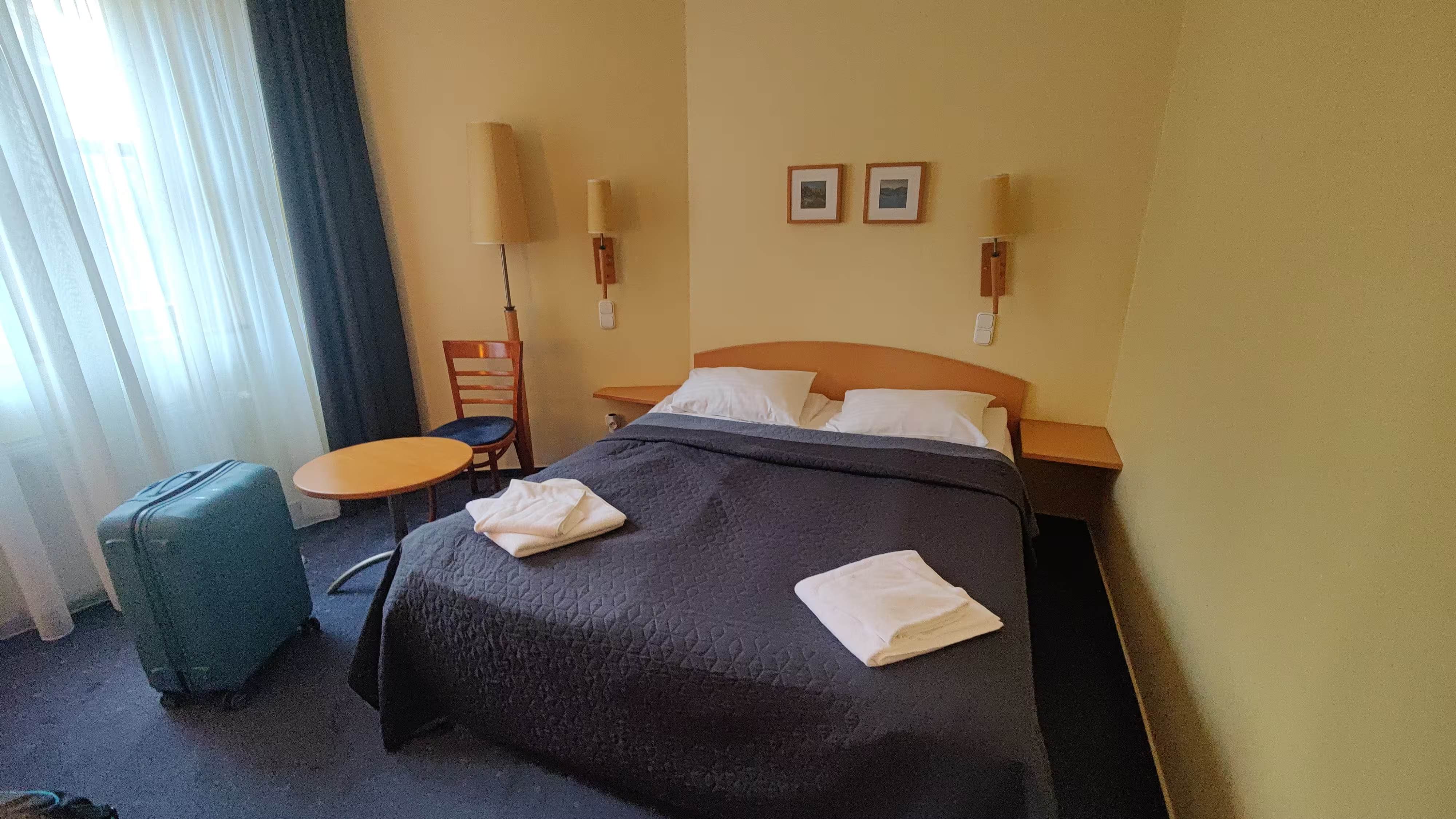
In September 2025, I attended the LibreOffice Conference in Budapest, Hungary, on the 4th and the 5th, and a community meeting on the 3rd. Thanks to The Document Foundation (TDF) for sponsoring my travel and accommodation costs. The conference venue was Faculty of Informatics, E tv s Lor nd University (ELTE). The conference was planned to be held from the 4th to the 6th, but the program for the 6th of September had to be canceled due to the venue being unavailable because of a marathon in Budapest. So, all the talks got squeezed into just two days, making the schedule a bit hectic. The TDF had booked my room at the Corvin Hotel. It was a double bedroom with a window. The breakfast was included in the hotel booking. The hotel was walking distance from the conference venue. One could also take a tram from the hotel to reach the venue.
A double bed A shot of my room. Photo by Ravi Dwivedi, released under CC-BY-SA 4.0.
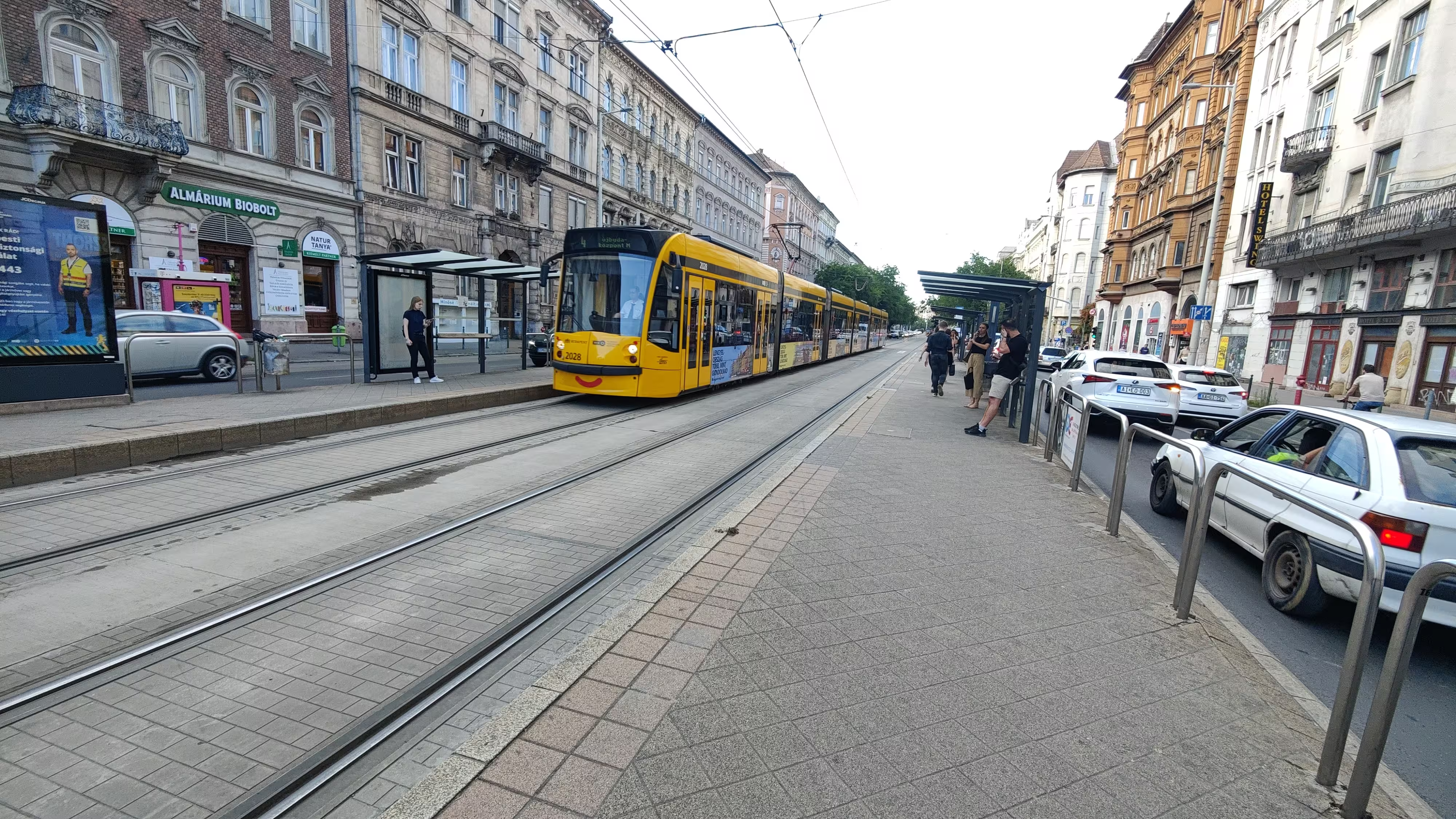
Tram A tram in Budapest. Photo by Ravi Dwivedi, released under CC-BY-SA 4.0.

3rd of September On the 3rd of September, we had a community meeting at the above-mentioned venue. I walked with my friend Dione to the venue. Upon reaching there, I noticed that the university had no boundaries and gates. This reminded me of the previous year s conference venue in Luxembourg, which also had no boundaries or gates. In contrast, Indian universities and institutes typically have walls and gates serving as boundaries to separate them from the rest of the city. Many of these institutes also have security guards at the entrance, who may ask attendees to present proof of admission before allowing them inside. I was surprised to find that institutes in Europe, like the one where the conference was held, did not have such boundaries. The building where the conference was held was red, which happened to be the same color as the building for the previous year s conference venue. I remember joking with Dione that the criteria for the conference venue might have been the color of the building.
A red building The red building in the picture served as the conference venue. Photo by Ravi Dwivedi, released under CC-BY-SA 4.0.
During the community meeting, we shared ideas on how to spread the word about LibreOffice. The meeting lasted for a couple of hours. After the community meeting, we went to the hotel for dinner sponsored by the TDF.
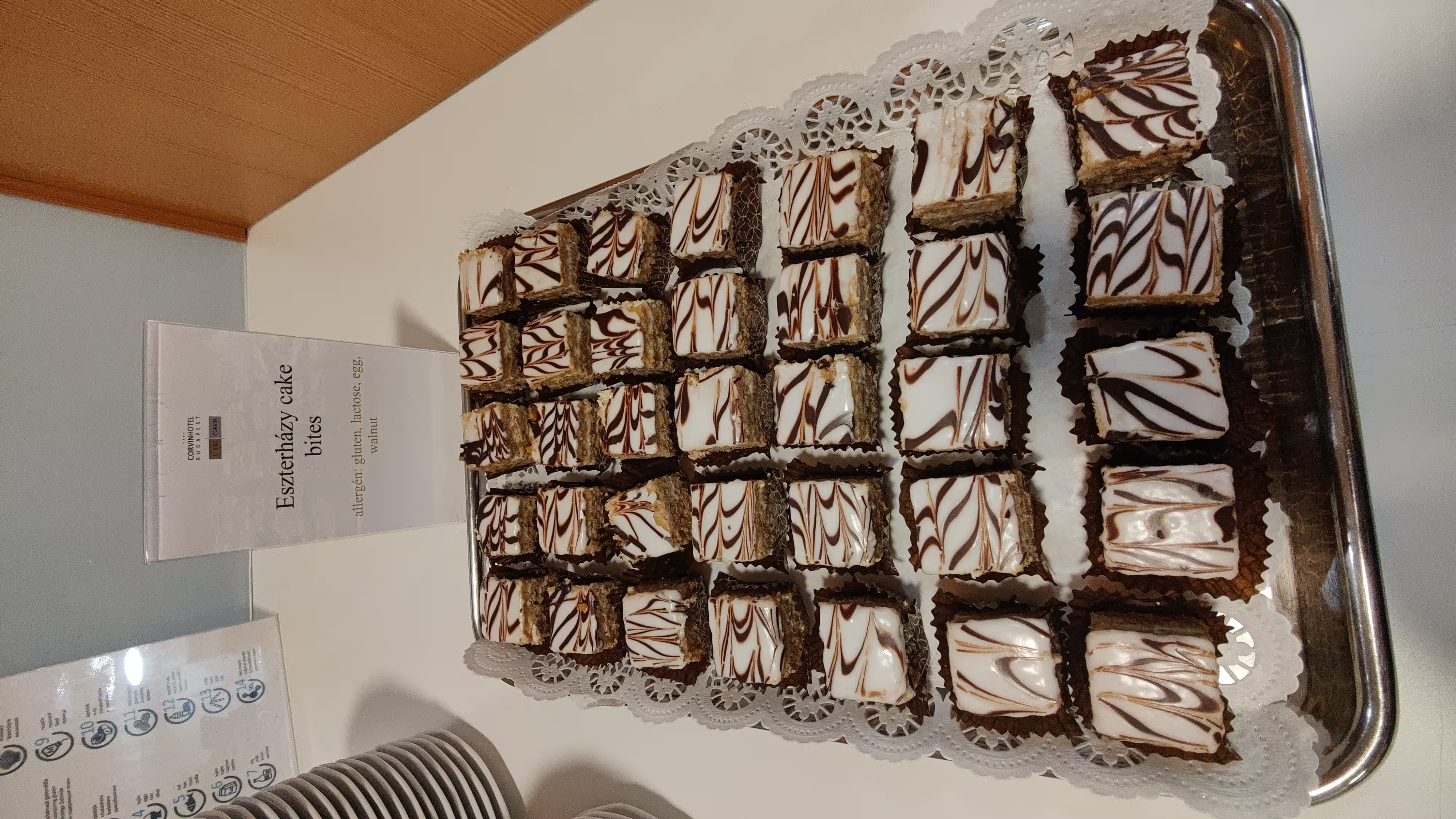
Cake slices These Esterh zy cake bites were really yummy. Photo by Ravi Dwivedi, released under CC-BY-SA 4.0.
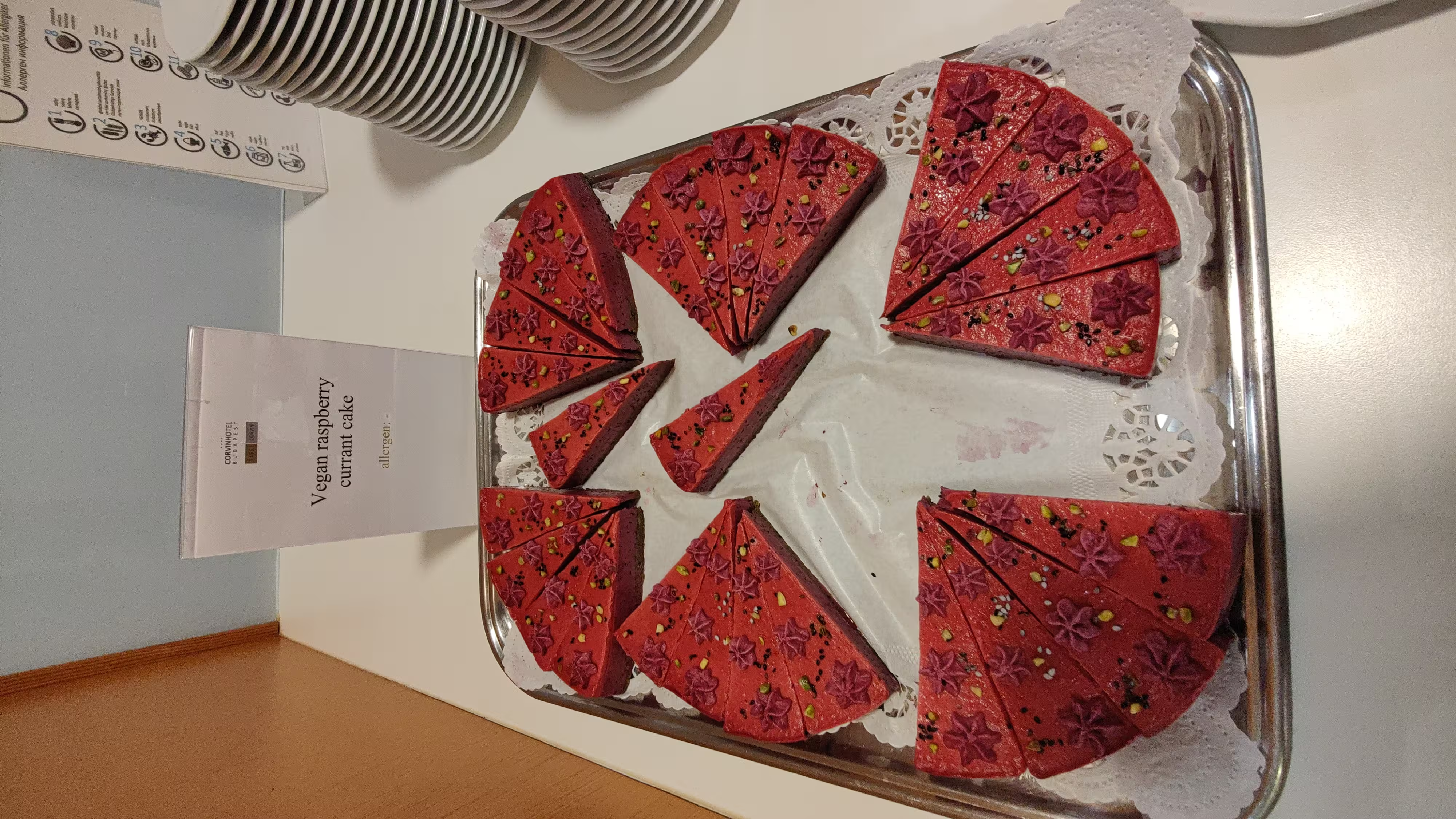
Raspberry Currant cake slices Raspberry Currant cake slices. Photo by Ravi Dwivedi, released under CC-BY-SA 4.0.

4th of September On the first day of the conference, attendees were given swag bags containing a pad, sticky notes, a pen, a conference T-shirt, and a bottle.
A blue colored T-shirt on a bed along with a pen, a bottle, a diary and a sticky note Conference swag. Photo by Ravi Dwivedi, released under CC-BY-SA 4.0.
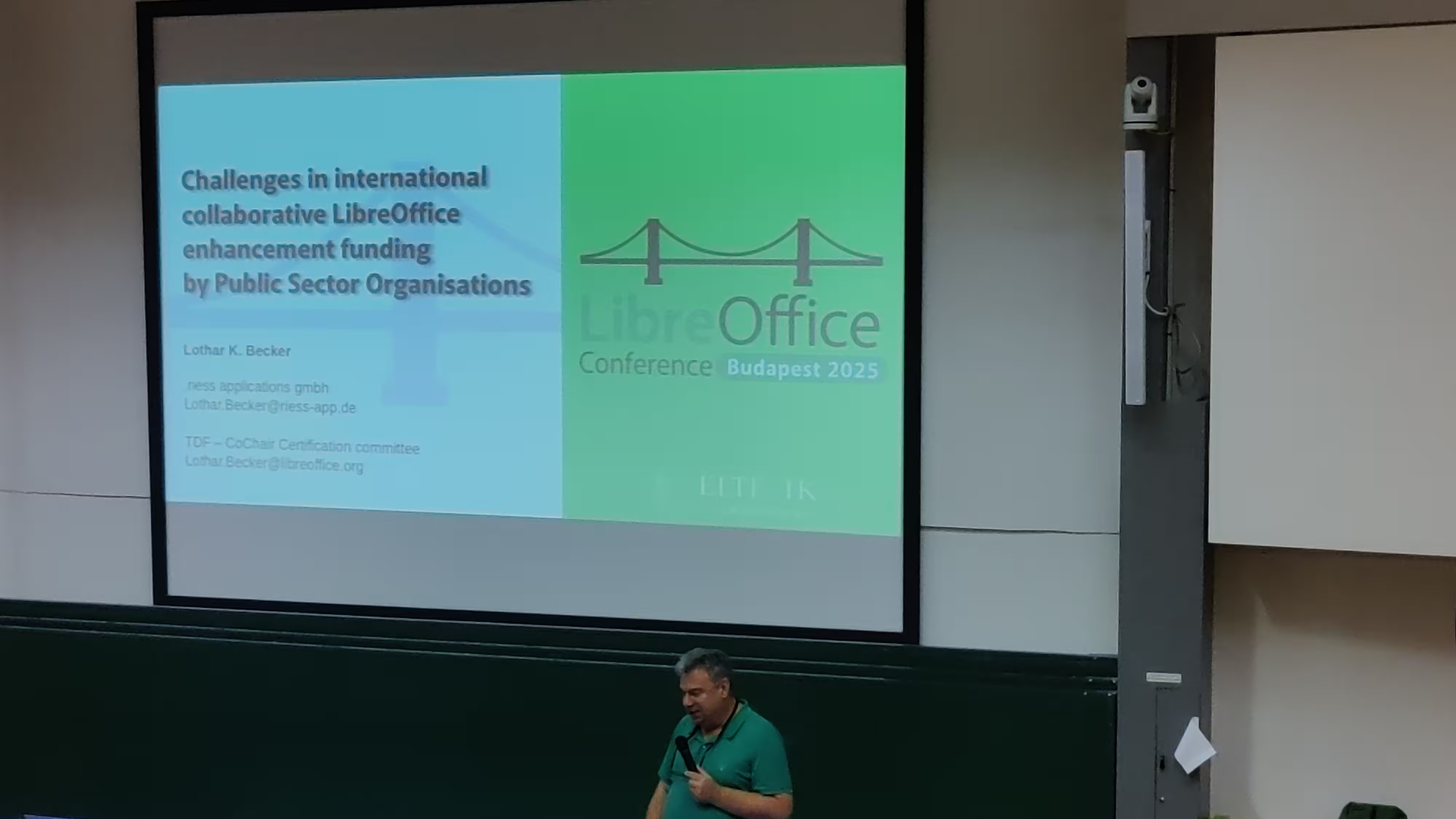
The talks started early in the morning with Eliane Domingos, Chairperson of TDF s Board of Directors, giving the inauguration talk. As always, I found Italo Vignoli s talk on the importance of document freedom interesting. During the snack break, I noticed that there were three types of milk available for coffee: cow s milk, lactose-free milk, and almond milk. Almond milk is rare in India, but I have managed to get it, but I have never seen lactose-free milk in India. Since I run fundraisers in my projects, such as Prav, I could relate to Lothar K. Becker s talk. He discussed the issue that certain implementations in LibreOffice require a budget that is too large for any single interested entity to fund independently. Furthermore, The Document Foundation (TDF) cannot legally receive funds from government entities. Therefore, there is no organization or entity to pool resources from all the interested entities to finance the implementation.
Lothar giving his presentation Lothar giving his presentation. Photo by Ravi Dwivedi, released under CC-BY-SA 4.0.
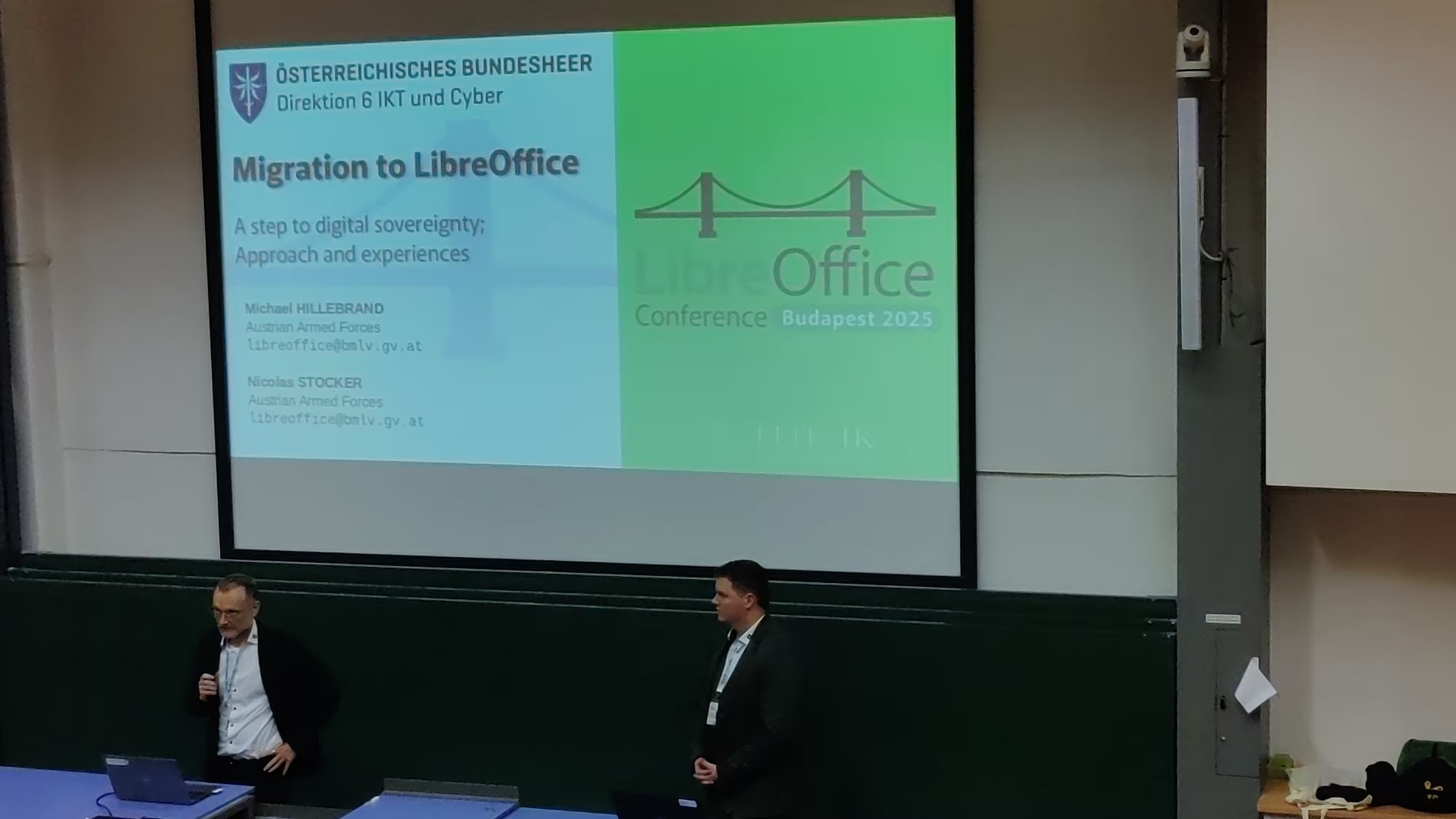
Another talk was by the Austrian Armed Forces on their migration to LibreOffice. I wanted to know why they migrated, and I found out that they did it for their digital sovereignty, and not for saving on the license costs. Another point presented in the talk was that LibreOffice is available on all the operating systems, while the Microsoft Office suite is not that widely available. The migration was systematic and was performed over a few years. They started working on it in 2021, and the migration was finished recently. In addition, it also required training their staff in using LibreOffice.
Presentation on migration to LibreOffice by Austrian Armed Forces Presentation on migration to LibreOffice by Austrian Armed Forces. Photo by Ravi Dwivedi, released under CC-BY-SA 4.0.

The lunch was inside the university canteen. We were provided lunch coupons by the TDF. I got a vegan coupon with 4000 Ft written on it, which meant I could take lunch for up to 4000 Hungarian forints.
My lunch ticket My lunch ticket for the conference. Photo by Ravi Dwivedi, released under CC-BY-SA 4.0.
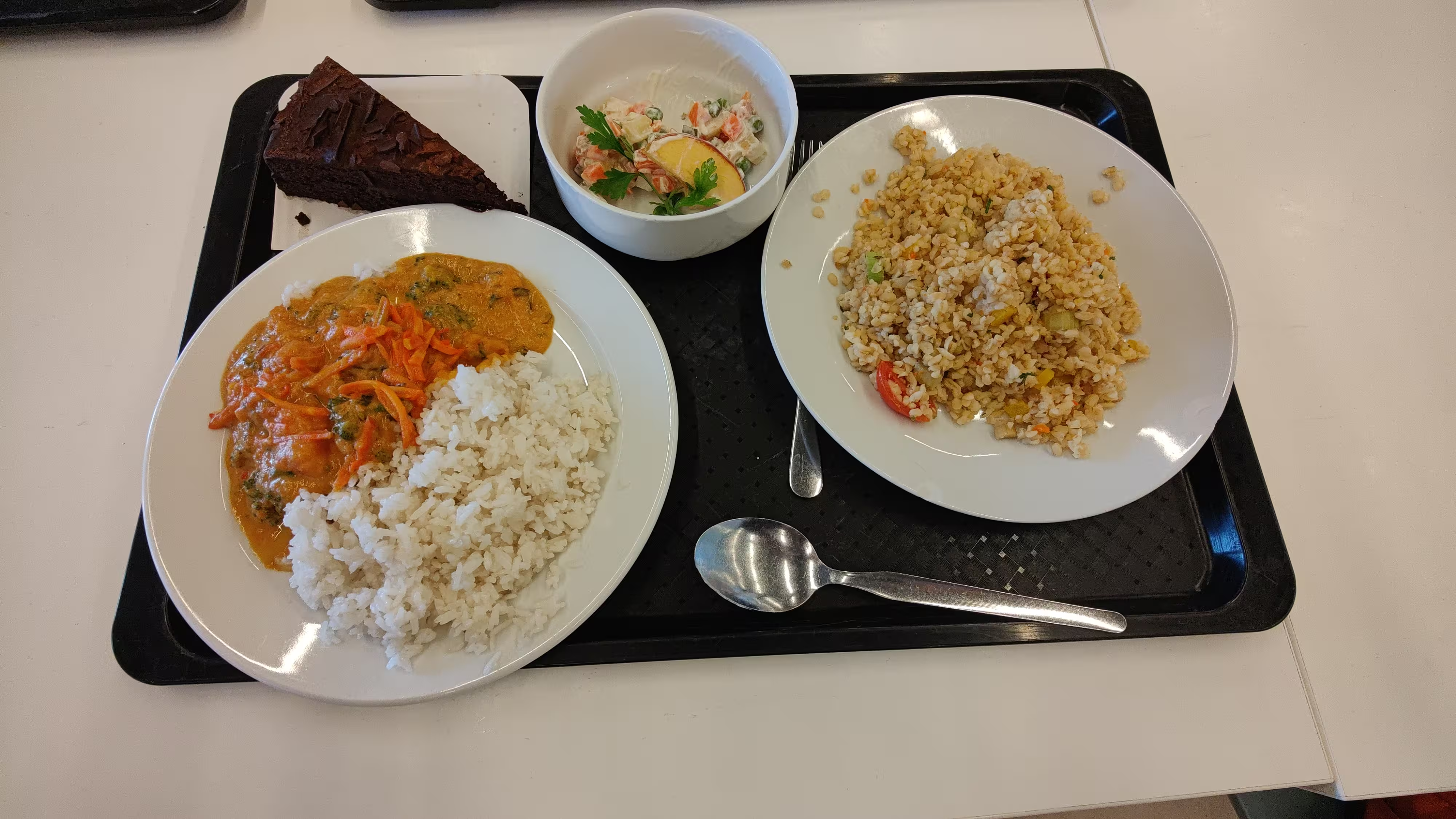
The lunch I had on the first day The lunch I had on the first day. Photo by Ravi Dwivedi, released under CC-BY-SA 4.0.
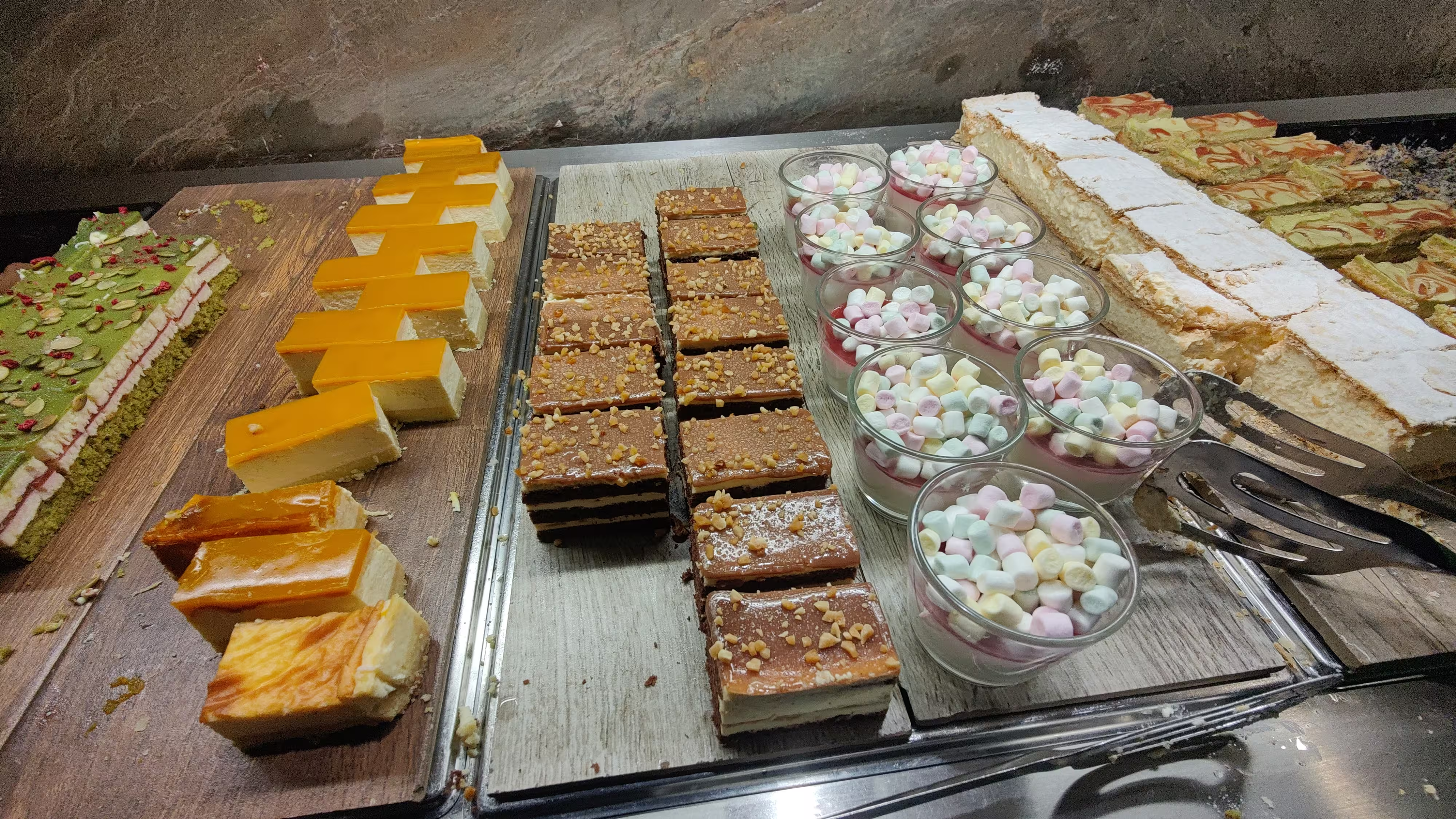
During the evening, it was my turn for the presentation. I was done with preparing my slides ten days before my talk. I also got my slides reviewed by friends. My talk was finished in 20 minutes, while I was given a 30-minute slot. This helped us catch up on the schedule. Furthermore, I made my talk interactive by asking questions and making sure that the audience was not asleep. During my talk, my friend Dione took my pictures with my camera. My talk was on how free software projects could give users a say in freedom to modify the software. I illustrated this using the Prav project that I am a part of. After the talks were over, we were treated to a conference dinner at Trofea Grill. It had a great selection of desserts, which helped me sample some Hungarian desserts. The sponge cake was especially good.
Desserts at Tofea Grill Desserts at Tofea Grill. Photo by Ravi Dwivedi, released under CC-BY-SA 4.0.
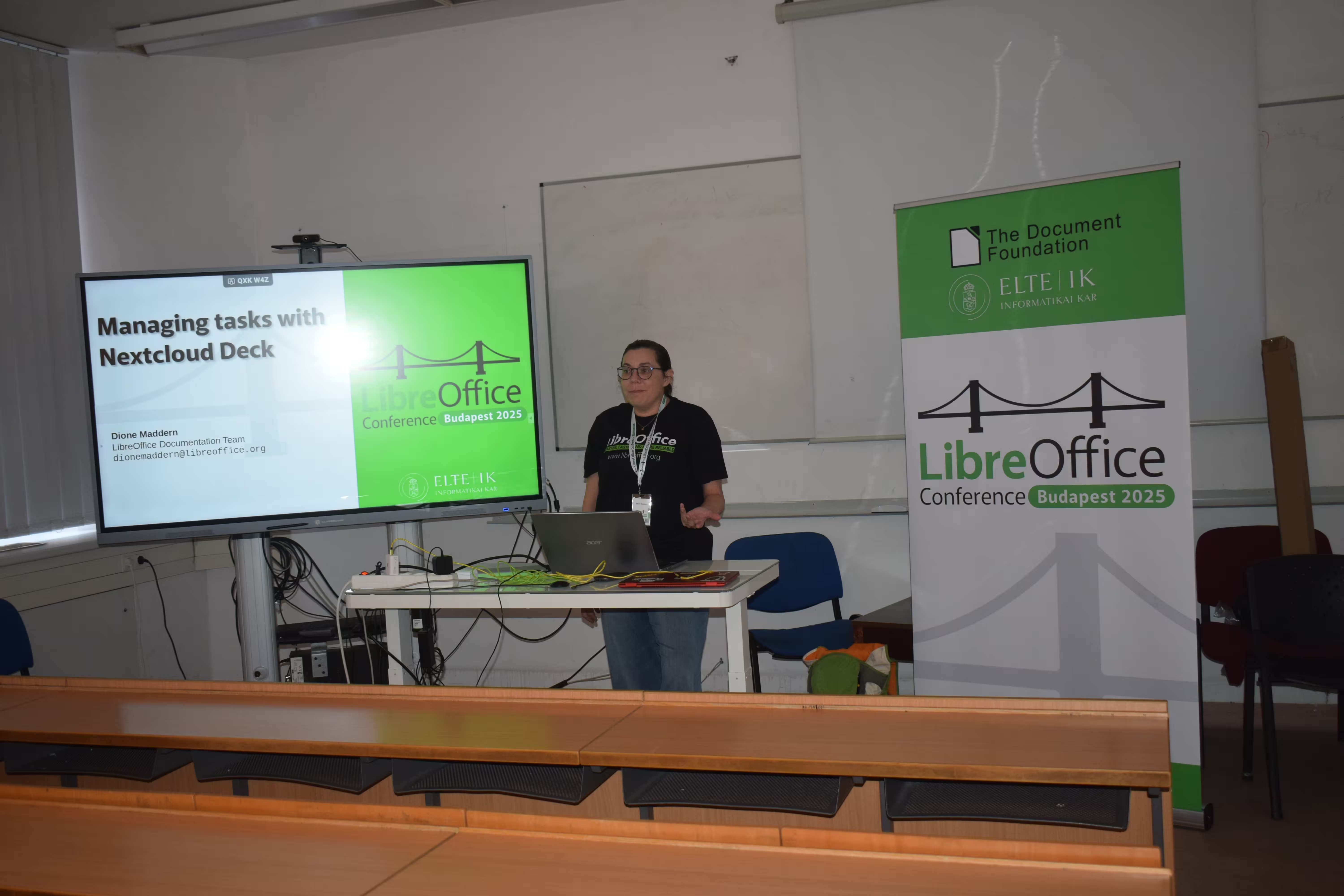
5th of September The next day the 5th of September I went with Dione to the venue early in the morning, as her talk was the first one of the day. Her talk was titled Managing Tasks with Nextcloud Deck. Later that day, I also attended a talk on Collabora. At lunch, I found the egg white salad quite tasty.
Dione giving her presentation Dione giving her presentation. Photo by Ravi Dwivedi, released under CC-BY-SA 4.0.
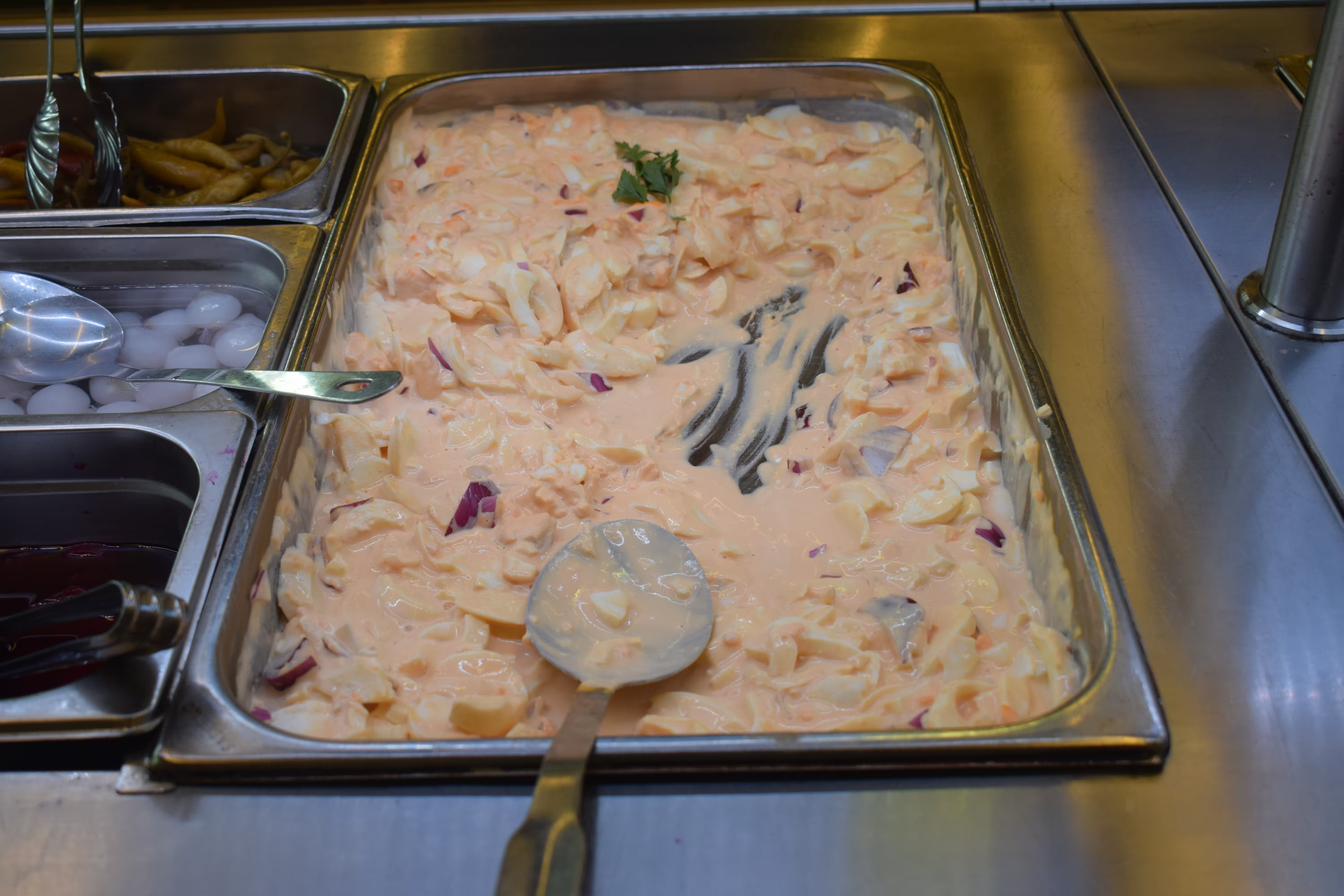
Egg white salad Egg white salad. Photo by Ravi Dwivedi, released under CC-BY-SA 4.0.
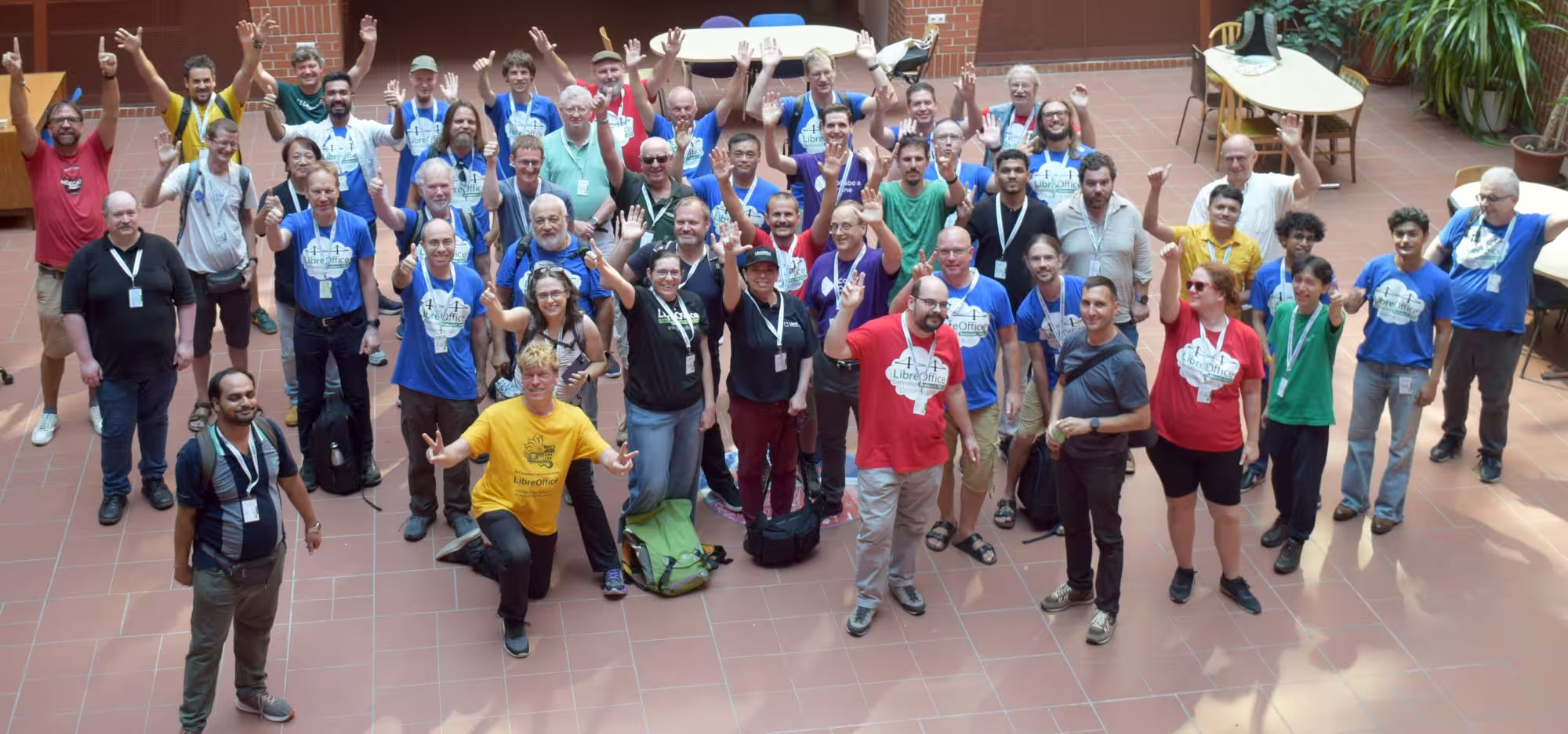
After the lunch break, we had the conference group photo. I had a Nikon camera, which we used to take the group photo. I requested a university student to take our group photo and also taught her how to operate the camera.
People looking at the camera and smiling Group photo
By the evening, the conference ended, after which we went to a pub, which was again sponsored by TDF. I had beer, but that one really tasted bad, so I couldn t finish it. The only vegetarian option was goat cheeseburger, which my friend Manish and I opted for. The burger tasted awful. Apparently, I don t like goat cheese. The next day I went sightseeing with Dione in Budapest. Stay tuned for our adventures! Credits: Thanks to Dione and Richard for proofreading.

15 April 2026

Paul Tagliamonte: designing arf, an sdr iq encoding format

Interested in future updates? Follow me on mastodon at @paul@soylent.green. Posts about hz.tools will be tagged #hztools.

Want to jump right to the draft? I'll be maintaining ARF going forward at /draft-tagliamonte-arf-00.txt.
It s true processing data from software defined radios can be a bit complex which tends to keep all but the most grizzled experts and bravest souls from playing with it. While I wouldn t describe myself as either, I will say that I ve stuck with it for longer than most would have expected of me. One of the biggest takeaways I have from my adventures with software defined radio is that there s a lot of cool crossover opportunity between RF and nearly every other field of engineering. Fairly early on, I decided on a very light metadata scheme to track SDR captures, called rfcap. rfcap has withstood my test of time, and I can go back to even my earliest captures and still make sense of what they are IQ format, capture frequencies, sample rates, etc. A huge part of this was the simplicity of the scheme (fixed-lengh header, byte-aligned to supported capture formats), which made it roughly as easy to work with as a raw file of IQ samples. However, rfcap has a number of downsides. It s only a single, fixed-length header. If the frequency of operation changed during the capture, that change is not represented in the capture information. It s not possible to easily represent mulit-channel coherent IQ streams, and additional metadata is condemned to adjacent text files.

ARF (Archive of RF) A few years ago, I needed to finally solve some of these shortcomings and tried to see if a new format would stick. I sat down and wrote out my design goals before I started figuring out what it looked like. First, whatever I come up with must be capable of being streamed and processed while being streamed. This includes streaming across the network or merely written to disk as it s being created. No post-processing required. This is mostly an artifact of how I ve built all my tools and how I intereact with my SDRs. I use them extensively over the network (both locally, as well as remotely by friends across my wider lan). This decision sometimes even prompts me to do some crazy things from time to time. I need actual, real support for multiple IQ channels from my multi-channel SDRs (Ettus, Kerberos/Kracken SDR, etc) for playing with things like beamforming. My new format must be capable of storing multiple streams in a single capture file, rather than a pile of files in a directory (and hope they re aligned). Finally, metadata must be capable of being stored in-band. The initial set of metadata I needed to formalize in-stream were Frequency Changes and Discontinuities. Since then, ARF has grown a few more. After getting all that down, I opted to start at what I thought the simplest container would look like, TLV (tag-length-value) encoded packets. This is a fairly well trodden path, and used by a bunch of existing protocols we all know and love. Each ARF file (or stream) was a set of encoded packets (sometimes called data units in other specs). This means that unknown packet types may be skipped (since the length is included) and additional data can be added after the existing fields without breaking existing decoders.
tag
length
value
Heads up! Once this is posted, I'm not super likely to update this page. Once this goes out, the latest stable copy of the ARF spec is maintained at draft-tagliamonte-arf-00.txt. This page may quickly become out of date, so if you're actually interested in implementing this, I've put a lot of effort into making the draft comprehensive, and I plan to maintain it as I edit the format.
Unlike a traditional TLV structure, I opted to add flags to the top-level packet. This gives me a bit of wiggle room down the line, and gives me a feature that I like from ASN.1 a critical bit. The critical bit indicates that the packet must be understood fully by implementers, which allows future backward incompatible changes by marking a new packet type as critical. This would only really be done if something meaningfully changed the interpretation of the backwards compatible data to follow.
Flag Description
0x01Critical (tag must be understood)
Within each Packet is a tag field. This tag indicates how the contents of the value field should be interpreted.
Tag ID Description
0x01Header
0x02Stream Header
0x03Samples
0x04Frequency Change
0x05Timing
0x06Discontinuity
0x07Location
0xFEVendor Extension
In order to help with checking the basic parsing and encoding of this format, the following is an example packet which should parse without error.
 00, // tag (0; no subpacket is 0 yet)
 00, // flags (0; no flags)
 00, 00 // length (0; no data)
 // data would go here, but there is none
Additionally, throughout the rest of the subpackets, there are a few unique and shared datatypes. I document them all more clearly in the draft, but to quickly run through them here too:

UUID This field represents a globally unique idenfifer, as defined by RFC 9562, as 16 raw bytes.

Frequency Data encoded in a Frequency field is stored as microhz (1 Hz is stored as 1000000, 2 Hz is stored as 2000000) as an unsigned 64 bit integer. This has a minimum value of 0 Hz, and a maximum value of 18446744073709551615 uHz, or just above 18.4 THz. This is a bit of a tradeoff, but it s a set of issues that I would gladly contend with rather than deal with the related issues with storing frequency data as a floating point value downstream. Not a huge factor, but as an aside, this is also how my current generation SDR processing code (sparky) stores Frequency data internally, which makes conversion between the two natural.

IQ samples ARF supports IQ samples in a number of different formats. Part of the idea here is I want it to be easy for capturing programs to encode ARF for a specific radio without mandating a single iq format representation. For IQ types with a scalar value which takes more than a single byte, this is always paired with a Byte Order field, to indicate if the IQ scalar values are little or big endian.
ID Name Description
0x01f32interleaved 32 bit floating point scalar values
0x02i8 interleaved 8 bit signed integer scalar values
0x03i16interleaved 16 bit signed integer scalar values
0x04u8 interleaved 8 bit unsigned integer scalar values
0x05f64interleaved 64 bit floating point scalar values
0x06f16interleaved 16 bit floating point scalar values

Stream Header Immediately after the arf Header, some number of Stream Headers follow. There must be exactly the same number of Stream Header packets as are indicated by the num streams field of the Header. This has the nice effect of enabling clients to read all the stream headers without requiring buffering of unread packets from the stream.
id
flags
fmt
bo
rate
freq
guid
site
In order to help with checking the basic parsing and encoding of this format, the following is an example stream header subpacket (when encoded or decoded this will be found inside an ARF packet as described above) which should parse without error, with known values.
00, 01, // id (1)
00, 00, 00, 00, 00, 00, 00, 00, // flags
01, // format (float32)
01, // byte order (Little Endian)
00, 00, 01, d1, a9, 4a, 20, 00, // rate (2 MHz)
00, 00, 5a, f3, 10, 7a, 40, 00, // frequency (100 MHz)

// guid (7b98019d-694e-417a-8f18-167e2052be4d)
7b, 98, 01, 9d, 69, 4e, 41, 7a,
8f, 18, 16, 7e, 20, 52, be, 4d,

// site_id (98c98dc7-c3c6-47fe-bc05-05fb37b2e0db)
98, c9, 8d, c7, c3, c6, 47, fe,
bc, 05, 05, fb, 37, b2, e0, db,

Samples Block of IQ samples in the format indicated by this stream s format and byte_order field sent in the related Stream Header.
id
iq samples
In order to help with checking the basic parsing and encoding of this format, the following is an samples subpacket (when encoded or decoded this will be found inside an ARF packet as described above). The IQ values here are notional (and are either 2 8 bit samples, or 1 16 bit sample, depending on what the related Stream Header was).
01, // id
ab, cd, ab, cd, // iq samples

Frequency Change The center frequency of the IQ stream has changed since the Stream Header or last Frequency Change has been sent. This is useful to capture IQ streams that are jumping around in frequency during the duration of the capture, rather than starting and stopping them.
id
frequency
In order to help with checking the basic parsing and encoding of this format, the following is a frequency change subpacket (when encoded or decoded this will be found inside an ARF packet as described above).
01, // id
00, 00, b5, e6, 20, f4, 80, 00 // frequency (200 MHz)

Discontinuity Since the last Samples packet for this stream, samples have been dropped or not encoded to this stream. This can be used for a stream that has dropped samples for some reason, a large gap (radio was needed for something else), or communicating iq snippits .
id
In order to help with checking the basic parsing and encoding of this format, the following is a discontinuity subpacket (when encoded or decoded this will be found inside an ARF packet as described above).
01, // id

Location Up-to-date location as of this moment of the IQ stream, usually from a GPS. This allows for in-band geospatial information to be marked in the IQ stream. This can be used for all sorts of things (detected IQ packet snippits aligned with a time and location or a survey of rf noise in an area)
flags
sys
lat
long
el
accuracy
The sys field indicates the Geodetic system to be used for the provided latitude, longitude and elevation fields. The full list of supported geodetic systems is currently just WGS84, but in case something meaningfully changes in the future, it d be nice to migrate forward. Unfortunately, being a bit of a coward here, the accuracy field is a bit of a cop-out. I d really rather it be what we see out of kinematic state estimation tools like a kalman filter, or at minimum, some sort of ellipsoid. This is neither of those - it s a perfect sphere of error where we pick the largest error in any direction and use that. Truthfully, I can t be bothered to model this accurately, and I don t want to contort myself into half-assing something I know I will half-ass just because I know better.
System Description
0x01 WGS84 - World Geodetic System 1984
In order to help with checking the basic parsing and encoding of this format, the following is a location subpacket (when encoded or decoded this will be found inside an ARF packet as described above).
00, 00, 00, 00, 00, 00, 00, 00, // flags
01, // system (wgs84)
3f, f3, be, 76, c8, b4, 39, 58, // latitude (1.234)
40, 02, c2, 8f, 5c, 28, f5, c3, // longitude (2.345)
40, 59, 00, 00, 00, 00, 00, 00, // elevation (100)
40, 24, 00, 00, 00, 00, 00, 00 // accuracy (10)

Vendor Extension In addition to the fields I put in the spec, I expect that I may need custom packet types I can t think of now. There s all sorts of useful data that could be encoded into the stream, so I d rather there be an officially sanctioned mechanism that allows future work on the spec without constraining myself. Just an example, I ve used a custom subpacket to create test vectors, the data is encoded into a Vendor Extension, followed by the IQ for the modulated packet. If the demodulated data and in-band original data don t match, we ve regressed. You could imagine in-band speech-to-text, antenna rotator azimuth information, or demodulated digital sideband data (like FM HDR data) too. Or even things I can t even think of!
id
data
In order to help with checking the basic parsing and encoding of this format, the following is a vendor extension subpacket (when encoded or decoded this will be found inside an ARF packet as described above).
// extension id (b24305f6-ff73-4b7a-ae99-7a6b37a5d5cd)
b2, 43, 05, f6, ff, 73, 4b, 7a,
ae, 99, 7a, 6b, 37, a5, d5, cd,

// data (0x01, 0x02, 0x03, 0x04, 0x05)
01, 02, 03, 04, 05

Tradeoffs The biggest tradeoff that I m not entirely happy with is limiting the length of a packet to u16 65535 bytes. Given the u8 sample header, this limits us to 8191 32 bit sample pairs at a time. I wound up believing that the overhead in terms of additional packet framing is worth it because always encoding 4 byte lengths felt like overkill, and a dynamic length scheme ballooned codepaths in the decoder that I was trying to keep as easy to change as possible as I worked with the format.

Freexian Collaborators: Debian Contributions: Debusine projects in GSoC, Debian CI updates, Salsa CI maintenance and more! (by Anupa Ann Joseph)

Debian Contributions: 2026-03 Contributing to Debian is part of Freexian s mission. This article covers the latest achievements of Freexian and their collaborators. All of this is made possible by organizations subscribing to our Long Term Support contracts and consulting services.

Debusine projects in Google s Summer of Code While Freexian initiated Debusine, and is investing a lot of resources in the project, we manage it as a true free software project that can and should have a broader community. We always had documentation for new contributors and we aim to be reactive with them when they interact via the issue tracker or via merge requests. We decided to put those intentions under stress tests by proposing five projects for Google s Summer of Code as part of Debian s participation in that program. Given that at least 11 candidates managed to get their merge request accepted in the last 30 days (interacting with the development team is part of the pre-requisites to apply to Google Summer of Code projects these days), the contributing experience must not be too bad. If you want to try it out, we maintain a list of quick fixes that are accessible to newcomers. And as always, we welcome your feedback!

Debian CI: incus backend and upgrade to Bootstrap 5, by Antonio Terceiro debci 3.14 was released on March 4th, with a followup 3.14.1 release with regression fixes a few days afterwards. Those releases were followed by new development and maintenance work that will provide extra capabilities and stability to the platform. This month saw the initial version of an incus backend land in Debian CI. The transition into the new backend will be done carefully so as to not disrupt testing migration. Each package will be running jobs with both the current lxc backend and with incus. Packages that have the same result on both backends will be migrated over, and packages that exhibit different results will be investigated further, resulting in bug reports and/or other communication with the maintainers. On the frontend side, the code has been ported to Bootstrap 5 over from the now ancient Bootstrap 3. This need has been originally reported back in 2024 based on the lack of security support for Bootstrap 3. Beyond improving maintainability, this upgrade also enables support for dark mode in debci, which is still work in progress. Both updates mentioned in this section will be available in a following debci release.

Salsa CI maintenance by Santiago Ruano Rinc n et al. Santiago reviewed some Salsa CI issues and reviewed associated merge requests. For example, he investigated a regression (#545), introduced by the move to sbuild, on the use of extra repositories configured as .source files; and reviewed the MR (!712) that fixes it. Also, there were conflicts with changes made in debci 3.14 and debci 3.14.1 (those updates are mentioned above), and different people have contributed to fix the subsequent issues, in a long-term way. This includes Rapha l who proposed MR !707 and who also suggested Antonio to merge the Salsa CI patches to avoid similar errors in the future. This happened shortly after. Those fixes finally required the unrelated MR !709, which will prevent similar problems when building images. To identify bugs related to the autopkgtest support in the backport suites as early as possible, Santiago proposed MR !708. Finally, Santiago, in collaboration with Emmanuel Arias also had exchanges with GSoC candidates for the Salsa CI project, including the contributions they have made as merge requests. It is important to note that there are several very good candidates interested in participating. Thanks a lot to them for their work so far!

Miscellaneous contributions
  • Rapha l reported a zim bug affecting Debian Unstable users, which was already fixed in git apparently. He could thus cherry-pick the fix and update the package in Debian Unstable.
  • Carles created a new page on the InstallingDebianOn in Debian Wiki.
  • Carles submitted translation errors in the debian-installer Weblate.
  • Carles, using po-debconf-manager, improved Catalan translations: reviewed and submitted 3 packages. Also improved error handling when forking or submitting an MR if the fork already existed.
  • Carles kept improving check-relations: code base related general improvements (added strict typing, enabled pre-commit). Also added DebPorts support, virtual packages support and added commands for reporting missing relations and importing bugs from bugs.debian.org.
  • Antonio handled miscellaneous Salsa support requests.
  • Antonio improved the management of MiniDebConf websites by keeping all non-secret settings in git and fixed exporting these sites as static HTML.
  • Stefano uploaded routine updates to hatchling, python-mitogen, python-virtualenv, python-discovery, dh-python, pypy3, python-pipx, and git-filter-repo.
  • Faidon uploaded routine updates to crun, libmaxminddb, librdkafka, lowdown, platformdirs, python-discovery, sphinx-argparse-cli, tox, tox-uv.
  • Stefano and Santiago continued to help with DebConf 26 preparations.
  • Stefano reviewed some contributions to debian-reimbursements and handled admin for reimbursements.debian.net.
  • Stefano attended the Debian Technical Committee meeting.
  • Helmut sent 8 patches for cross build failures.
  • Building on the work of postmarketOS, Helmut managed to cross build systemd for musl in rebootstrap and sent several patches in the process.
  • Helmut reviewed several MRs of Johannes Schauer Marin Rodrigues expanding support for DPKG_ROOT to support installing hurd.
  • Helmut incorporated a final round of feedback for the Multi-Arch documentation in Debian policy, which finally made it into unstable together with documentation of Build-Profiles.
  • In order to fix python-memray, Helmut NMUed libunwind generally disabling C++ exception support as being an incompatible duplication of the gcc implementation. Unfortunately, that ended up breaking suricata on riscv64. After another NMU, python-memray finally migrated.
  • Thorsten uploaded new upstream versions of epson-inkjet-printer-escpr and sane-airscan. He also fixed a packaging bug in printer-driver-oki. As of systemd 260.1-1 the configuration of lpadmin has been added to the sysusers.d configuration. All printing packages can now simply depend on the systemd-sysusers package and don t have to take care of its creation in maintainer scripts anymore.
  • In collaboration with Emmanuel Arias, Santiago had exchanges with GSoC candidates and reviewed the proposals of the Linux livepatching GSoC 2026 project.
  • Colin helped to fix CVE-2026-3497 in openssh and CVE-2026-28356 in multipart.
  • Colin upgraded tango and pytango to new upstream releases and packaged pybind11-stubgen (needed for pytango), thanks to a Freexian customer. Tests of reproducible builds revealed that pybind11-stubgen didn t generate imports in a stable order; this is now fixed upstream.
  • Lucas fixed CVE-2025-67733 and CVE-2026-21863 affecting src:valkey in unstable and testing. Also reviewed the same fixes targeting stable proposed by Peter Wienemann.
  • Faidon worked with upstream and build-dep Debian maintainers on resolving blockers in order to bring pyHanko into Debian, starting with the adoption of python-pyhanko-certvalidator. pyHanko is a suite for signing and stamping PDF files, and one of the few libraries that can be leveraged to sign PDFs with eIDAS Qualified Electronic Signatures.
  • Anupa co-organized MiniDebConf Kanpur and attended the event with many others from all across India. She handled the accommodation arrangements along with the registration team members, worked on the budget and expenses. She was also a speaker at the event.
  • Lucas helped with content review/schedule for the MiniDebConf Campinas. Thanks Freexian for being a Gold sponsor!
  • Lucas organized and took part in a one-day in-person sprint to work on Ruby 3.4 transition. It was held in a coworking space in Brasilia - Brazil on April 6th. There were 5 DDs and they fixed multiple packages FTBFSing against Ruby 3.4 (coming to unstable soon hopefully). Lucas has been postponing a blog post about this sprint since then :-)

12 April 2026

Russ Allbery: Review: The Teller of Small Fortunes

Review: The Teller of Small Fortunes, by Julie Leong
Publisher: Ace
Copyright: November 2024
ISBN: 0-593-81590-4
Format: Kindle
Pages: 324
The Teller of Small Fortunes is a cozy found-family fantasy with a roughly medieval setting. It was Julie Leong's first novel. Tao is a traveling teller of small fortunes. In her wagon, pulled by her friendly mule Laohu, she wanders the small villages of Eshtera and reads the trivial fortunes of villagers in the tea leaves. An upcoming injury, a lost ring, a future kiss, a small business deal... she looks around the large lines of fate and finds the small threads. After a few days, she moves on, making her solitary way to another village. Tao is not originally from Eshtera. She is Shinn, which means she encounters a bit of suspicion and hostility mixed with the fascination of the exotic. (Language and culture clues lead me to think Shinara is intended to be this world's not-China, but it's not a direct mapping.) Tao uses the fascination to help her business; fortune telling is more believable from someone who seems exotic. The hostility she's learned to deflect and ignore. In the worst case, there's always another village. If you've read any cozy found-family novels, you know roughly what happens next. Tao encounters people on the road and, for various reasons, they decide to travel together. The first two are a massive mercenary (Mash) and a semi-reformed thief (Silt), who join Tao somewhat awkwardly after Tao gives Mash a fortune that is far more significant than she intended. One town later, they pick up an apprentice baker best known for her misshapen pastries. They also collect a stray cat, because of course they do. It's that sort of book. For me, this sort of novel lives or dies by the characters, so it's good news that I liked Tao and enjoyed spending time with her. She's quiet, resilient, competent, and self-contained, with a difficult past and some mysteries and emotions the others can draw over time. She's also thoughtful and introspective, which means the tight third-person narration that almost always stays on Tao offers emotional growth to mull over. I also liked Kina (the baker) and Mash; they're a bit more obvious and straightforward, but Kina adds irrepressible energy and Mash is a good example of the sometimes-gruff soldier with a soft heart. Silt was a bit more annoying and I never entirely warmed to him, but he's tolerable and does get a bit of much-needed (if superficial) character development. It takes some time for the reader to learn about the primary conflict of the story (Tao does not give up her secrets quickly), so I won't spoil it, but I thought it worked well. I was momentarily afraid the story would develop a clear villain, but Leong has some satisfying alternate surprises in store. The ending was well-done, although it is very happily-ever-after in a way that may strike some readers as too neat. The Teller of Small Fortunes aims for a quiet and relaxed mood rather than forcing character development through difficult choices; it's a fine aim for a novel, but it won't match everyone's mood. I liked the world-building, although expect small and somewhat disconnected details rather than an overarching theory of magic. Tao's ability gets the most elaboration, for obvious reasons, and I liked how Leong describes it and explores its consequences. Most of the attention in the setting is on the friction, wistfulness, and small reminders of coming from a different culture than everyone around you, but so long ago that you are not fully a part of either world. This, I thought, was very well-done and is one of the places where the story is comfortable with complex feelings and doesn't try to reach a simplifying conclusion. There is one bit of the story that felt like it was taken directly out of a Dungeons & Dragons campaign to a degree that felt jarring, but that was the only odd world-building note. This book felt like a warm cup of tea intended to comfort and relax, without large or complex thoughts about the world. It's not intended to be challenging; there are a few plot twists I didn't anticipate, but nothing that dramatic, and I doubt anyone will be surprised by the conclusions it reaches. It's a pleasant time with some nice people and just enough tension and mystery to add some motivation to find out what happens next. If that's what you're in the mood for, recommended. If you want a book that has Things To Say or will put you on the edge of your seat, maybe save this one for another mood. All the on-line sources I found for this book call it a standalone, but The Keeper of Magical Things is set in the same world, so I would call it a loose series with different protagonists. The Teller of Small Fortunes is a complete story in one book, though. Rating: 7 out of 10

2 April 2026

Joerg Jaspert: Building a house - 1 year in

Haven t written here about it, but last March we finally started on our journey to get our own house build, so we can move out of the rented flat here. That will be a big step, both the actual building, but also the moving - I am living at this one single place for 36 years now. If you can read german there is a dedicated webpage where I sometimes write about the process. Will have much more details (and way more ramblings) than the following part. If you can t read german, a somewhat short summary follows. Yes, still a lot of text, but shortened, still.

What? Why now? Current flat has 83m - which simply isn t enough space. And the number of rooms also doesn t fit anymore. But it is hard to find a place that fits our requirements (which do include location). Moving to a different rented place would also mean changed amount of rent. And nowadays that would be huge increase (my current rent is still the price from about 30 years ago!). So if we go and pay more - we could adjust and pay for something we own instead. And both, my wife and I had changes in our jobs that made it possible for us now, so we started looking.

Market Brrrr, looking is good, actually finding something that fits - not so. We never found an offer that fit. Space wise, sure. But then location was off, or price was idiotically high. Location fit, but then size was a joke, and guess about the price Who needs 200 square meters with 3 rooms? Entirely stupid design choices there. Or how about 40 square meters of hallway - with 50m of tiny rooms around. What are they smoking? Oh, there, useful size, good rooms - but now you want more money than a kidney is worth, or something. Thanks, no.

New place In February 2025 we finally got lucky and found a (newly opened) area with a large number of places to build a house on. Had multiple talks with someone from on of the companies developing that area (there are two you can select from), then talked with banks and signed a contract in March 2025. We got promised that actual house construction would be first quarter of 2026, finished in second quarter.

House type There are basically 2 ways of building a new house (that matter here). First is called Massivhaus , second is called Fertighaus in german, roughly translating to solid and prefabricated. The latter commonly a wood based construction, though it doesn t need to be. The important part of it is the prefabrication, walls and stuff get assembled in a factory somewhere and then transported to your place, where they play big kid lego for a day and suddenly a house is there. A common thought is prefabricated is faster, but that is only a half true. Sure, the actual work on side is way shorter - usually one or two days and the house is done - while a massive construction usually takes weeks to build up. But that is only a tiny part of the time needed, the major part goes of into planning and waiting and in there it doesn t matter what material you end up with.

Money fun Last year already wasn t the best time to start a huge loan - but isn t it always a few years ago would have been better ? So we had multiple talks with different banks and specialised consultants until we found something that we thought is good for us. Thinking about it now - we should have put even more money on top as reserve , but who could have thought that 2026 turns into such a shitshow? Does not help at all, quite the contrary. And that damn lotto game always ends up with the wrong numbers, meh.

Plans and plans and more plans - and rules For whichever reason you can not just go and put something on your ground and be happy. At least not if you are part of the normal people and not enormously rich. There is a large set of rules to follow. Usually that is a good thing, even though some rules are sometimes hard to understand. In Germany, besides the usual laws, we have something that is called Bebauungsplan , which translates to development plan (don t know if that carries the right meaning, it s a plan on what and how may be build, which can have really detailed specifications in). It basically tells you every aspect on top of the normal law that you have to keep in mind. In our case we have the requirement of 2 full floors and CAN have a third smaller on top, it limits how high the house can be and also how high our ground floor may be compared to the street. It regulates where on the property we may build and how much ground we may cover with the house, it gives a set of colors we are allowed to use, it demands a flat roof that we must have as a green roof and has a number of things more that aren t important enough to list here. If you do want to see the full list, my german post on it has all the details that matter to us. With all that stuff in mind - off to plans. Wouldn t have believed how many details there are to take in. Room sizes are simple, but how to arrange them for ideal usage of the sun, useful ways inside the house, but also keeping in mind that water needs to flow through and out. Putting a bath room right atop a living room means a water pipe needs to go down there. Switch the bath room side in the house, and it suddenly is above the kitchen - means you can connect the pipes from it to the ones from kitchen, which is much preferred than going through the living room. And lots more such things. It took us until nearly end of October to finalize the plans! And we learned a whole load from it. We started with a lot of wishes. The planner tried to make them work. Then we changed our minds. Plans changed. Minds changed again. Comparing the end result with the first draft we changed most of the ground floor around, with only the stairs and the entrance door at the same position. Less changes for the upper floor, but still enough.

Side quests The whole year was riddled with something my son named side quests. We visited a construction exhibition near us, we went to the house builders factory and took a look on how they work. We went to many different other companies that do SOME type of work which we need soon, say inside floors, painters, kitchen and more stuff. Of course the most important side quest was a visit to the notary to finalize the contracts, especially for the plot of land (in Germany you must have a notary for that to get entered into the governments books). Creates lots of fees, of course, for the notary and also the government (both fees and taxes here).

Building permit We had been lucky and only needed a small change to the plans to get the building permit - and the second part, the wastewater permit (yes, you need a separate one for this) also got through without trouble.

Choices, so many of them So in January we finally had an appointment for something that s called Bemusterung which badly translates to Sampling . Basically two days at the house builders factory to select all of what s needed for the house that you don t do in the plans. Doors, inside and out and their type and color and handles. Same things for the windows and the blinds and the protection level you want the windows to have. Decide about stairs, design for the sanitary installations - and also the height of the toilet! - and the tiles to put into the bathrooms. Decisions on all the tech needed (heating system, ventilation and whatnot. Two days, busy ones - and you can easily spend a lot of extra money here if you aren t careful. We managed to get out of it with only about 4000 extra, so pretty good.

Electro and automation Now, here I am special. Back when I was young the job I learned is electrician. So here I have very detailed wishes. I am also running lots of automatism in my current flat - obviously the new house should be better than that. So I have a lot of ideas and thoughts on it, so this is entirely extra and certainly out of the ordinary the house builder usually see. Which means I do all of that on my own. Well, the planning and some of the work, I must have a company at hand for certain tasks, it is required by some rules. But they will do what I planned, as long as I don t violate regulations. Which means the whole electrical installation is different. Entirely planned for automatisms and using KNX for it. I am so happy to ditch Homeassistant and the load of Homematic, Zigbee and ZWave based wireless things. Ok, Homeassistant is a nice thing - it can do a lot. And it can bridge between about any system you can find. But it is a central single point of failure. And it is a system that needs constant maintenance. Not touched for a while? Plan for a few hours playing update whack-a-mole. And often enough a component here or there breaks with an update. Can be fixed, but takes another hour or two. So I change. Away from wireless based stuff. To wires. To a system thats a standard for decades already. And works entirely without a SPOF. (Yes, you can add one here too). And, most important, should I ever die - can easily be maintained by anyone out there dealing with KNX, which is a large number of people and companies. Without digging through dozens of specialised integrations and whatnot. I may even end up with Homeassistant again - but that will entirely be as a client. It won t drive automations. It won t be the central point to do anything for the house. It will be a logging and data collecting thing that enables me to put up easy visualizations. It may be an easy interface for smartphones or tablets to control parts of the house, for those parts where one wants this to happen. Not the usual day-to-day stuff, extras on top.

Actual work happening Since march there finally is action visible. The base of the house is getting build. Wednesday the 1st April we finally got the base slab poured on the construction site and in another 10 days the house is getting delivered and build up. A 40ton mobile crane will be there.

31 March 2026

Russ Allbery: Review: Code Blue Emergency

Review: Code Blue Emergency, by James White
Series: Sector General #7
Publisher: Orb
Copyright: 1987
Printing: May 2003
ISBN: 0-7653-0663-8
Format: Trade paperback
Pages: 252
Code Blue Emergency (annoying em-dash in original title) is the seventh book of James White's Sector General science fiction series about a vast multi-species hospital station. While there are some references to (and spoilers for) earlier books in the series, you don't have to remember the previous books to read this one. I had no trouble despite a nine-year gap. I read this as part of the Orb General Practice omnibus, which collects this novel and The Genocidal Healer. Cha Thrat is a Sommaradvan warrior-surgeon, member of a newly-discovered species that is beginning the process of contact with the Federation. She saved a Monitor corps human after an accident on her world, performing some some highly competent surgery on a species she had never seen before. That plus her somewhat outcast status on her own world due to her very traditional attitude towards medical ethics led Sector General to extend an offer of medical internship, and led her to leap into the unknown by accepting. This may have been a mistake; there is a great deal that Sector General does not understand about Sommaradvan medical ethics. This series entry is another proper (if somewhat episodic) novel and the first book of the series that doesn't primarily focus on Conway. He makes an appearance in his new role as Diagnostician, but only as a supporting character. Code Blue Emergency is told in the tight third-person perspective of Cha Thrat, an alien who finds many things about Sector General baffling, confusing, and ethically troubling (and who therefore provides a good reader surrogate for reintroducing the basics of how the hospital works). Using an alien viewpoint is a more sophisticated narrative technique than White has used previously. I'm glad he tried it, and it mostly works, although I have some complaints. Cha Thrat comes from the middle caste of a strictly hierarchical society of three castes, but is also immensely stubborn and used to a medical system in which doctors take sole responsibility for their patients. This creates a lot of cultural conflicts, and I do enjoy science fiction where the human attitudes are portrayed as the strange ones, but the cultural analysis offered by this novel is not very deep. The pattern of this book is for Cha Thrat to stumble into a successful approach to a problem while being either oblivious to or hostile to the normal hierarchical structure expected of medical trainees. This is believable as far as it goes. She is a skilled and intelligent doctor with some good instincts and a strong commitment to patient care, but is also culturally inclined to not ask for help. It makes sense for that to be a serious problem in a hospital. Unfortunately, no one says this directly. Sector General staff get quite upset in ways that seem more territorial than oriented towards patient safety, no one directly explains to Cha Thrat why following a process is important or shows examples of what could go wrong, and plot armor means that her mistakes usually have positive outcomes. One can extrapolate the reasons why she is not a good medical student, but the reader is forced to do the extrapolation. This is the sort of book where the narration makes clear there are unresolved cultural clashes that are going to cause problems but hides the details. To Cha Thrat, her perspective is so obvious she never bothers to explain it to the reader, so the specifics come as a surprise. As with the alien perspective, I've seen this technique used with more subtlety and sophistication in other books, but White's version mostly works. Cha Thrat is a sympathetic protagonist because she is truly trying to take the most ethical and empathetic action in every situation and is clearly competent. Most of my frustration as a reader, ironically, lands on the other Sector General doctors who seem to make little to no effort to understand her perspective when she fails to conform to their expectations. This is believable in the abstract, but the whole point of Sector General is that they're supposed to be wiser about interspecies difference than this. Also, sometimes their reactions just seem petty. Cha Thrat has a very hierarchical concept of medicine that matches the social classes of her culture. For her, the highest tier of doctor are wizards who treat rulers, because the work of rulers is mostly mental and intellectual and therefore the diseases of rulers are treated with magic spells performed with words to reshape their thinking rather than surgery on their bodies. O'Mara and the other Sector General psychologists take great offense at this, muttering about being called witch doctors, which I found completely absurd. This is a comprehensible, if odd, description of psychology from a wholly alien species. Surely one's first reaction should be that words like "wizard" or "magic" are translation errors. Don't get offended; look to see if the underlying substance matches, which it clearly does. Apart from cultural and psychological clashes, Code Blue Emergency has the standard episodic Sector General structure of interesting medical mysteries that require lateral thinking. I find this sort of puzzle story satisfying, particularly given the firm belief of every character in an essentially pacifist and empathetic approach to even the most alien of creatures. This determined non-violence is one of the more interesting things about this series, and it continues here. White does tend towards both biological and gender essentialism for everyone other than the protagonist and main supporting characters, but he seemed to be walking back some of the more outrageous limitations on women that appeared in previous books. There is still some nonsense in here about how females of any species can't be Diagnosticians, but then Cha Thrat, who is female, seems to violate the justification for that rule over the course of this novel (sadly without comment). Perhaps he's setting up for proving Sector General wrong about this prejudice. I picked this up after reading Elizabeth Bear's Machine, which is essentially a (better written) Sector General novel that got me in the mood for reading more. I wouldn't give Code Blue Emergency any awards, but it delivered exactly what I was looking for. This series is not as deep or well-written as some more recent SF, but it is reliably itself and reliably entertaining. There are worse things in a series. Recommended if you're in the mood for alien ER in space. The omnibus edition that I read has an introduction to both novels by John Clute. It does add some interesting insights, but (as is somewhat typical for Clute) it also spoils parts of both books. You may want to read it after you read the novels. Followed by The Genocidal Healer. Rating: 7 out of 10

27 March 2026

Paul Tagliamonte: librtlsdr.so for fun and profit

Interested in future updates? Follow me on mastodon at @paul@soylent.green. Posts about hz.tools will be tagged #hztools.
It s well known and universally agreed that radios are cool. Among the contested field of coolest radios, Software Defined Radios (SDRs) are definitely the most interesting to me. Out of all of my (entirely too many) SDRs I own, the rtlsdr is still my #1. It s just good. It s a great price, extremely capable, reliable, well-supported, and compact. Why bother with anything else? Sure, it can t transmit, uses a (fairly weird) 8 bit unsigned integer IQ representation, limited sampling rate, limited frequency range but even with all that, it s still the radio I will pack first. Don t get me wrong, I love my Ettus radios, PlutoSDRs, HackRFs, my AirspyHF+ - they re great! I just always find myself falling back to an rtl-sdr, every time. Perhaps the best reason to use an rtlsdr is the absolutely mind-boggling amount of cool stuff people have written for it. The rtlsdr API is super easy to use, widely supported if you re building on top of existing radio processing frameworks it s still a shock to me when something omits rtlsdr support.

sparky Over the last 7 years, I ve been learning about radios I got my ham radio license (de K3XEC), hacked on some cool stuff where I ve learned how radios work by doing , and even was lucky enough to give my first rf-centric talk at districtcon. Embarrassingly, I still haven t gotten around to learning how the fancy stuff like GNU Radio works. I m sure I m going to love it when I do. As part of this, I ve also cooked up some very unprofessional formats and protocols I use for convenience. Locally, all my on-disk captures are stored in rfcap or more recently arf, while direct SDR access at my house is almost entirely a mix of the widely used rtl-tcp protocol, and my riq protocol (post on this coming soon). Both rtl-tcp and riq operate over the network, so I don t have to bother with plugging things into USB ports, and I can share my radios with my friends. All of that work sits in my current generation of radio processing code, sparky (a reference to spark-gap transmitters), which is a heap of Rust, supporting everything from no_std for embedded experiments, conditional support for interfacing with all the radios I own, and tokio-based async support in addition to blocking i/o for highly concurrent daemons. This quickly advanced beyond my old Go-based code (hz.tools/go-sdr), which I archived so I can focus on learning. I still think Go is a great language to write RF code in but I can t focus on that tech tree anymore. Of course, this now poses a new problem no one supports my format(s) or radio protocol(s), since, well, I m the only one using them. I ve committed a fair amount of my hardware to this setup, and yanking it from the rack to try something out does pose a bit of a pickle. This isn t a huge deal for learning, but it does make it tedious to try out something from the internets.

librtlsdr.so Thankfully, Rust has robust support for wrap[ping itself] in a grotesque simulacra of C s skin and mak[ing its] flesh undulate, which is an attractive nuisance if i ve ever seen one. Naturally, my ability to restrain myself from engaging in ill-advised rf adventures is basically zero, so it s time to do the thing any similarly situated person would do reimplement the API and ABI of librtlsdr.so, backed with sparky instead. Since enumeration of devices is going to be annoying (specifically, they re over the network), I decided early-on to rely on an explicit list of devices via a configuration file. I d rather only load that once so programs don t get confused, so I opted to use a CTOR to run a stub when the ELF is linked at runtime.
// lightly edited for clarity

#[used]
#[expect(unused)]
#[unsafe(link_section = ".init_array")]
pub static INITIALIZE: extern "C" fn() = sparky_rtlsdr_ctor;

#[unsafe(no_mangle)]
pub extern "C" fn sparky_rtlsdr_ctor()  
 let config: Config =  
 if let Ok(config_bytes) = std::fs::read("/etc/sparky-rtlsdr.toml")  
 toml::from_slice(&config_bytes).unwrap()
   else  
 Config   device: vec![]  
  
  ;
 CONFIG.set(config);
 
Next, it s time to start with the basics. Opening and closing a handle using rtlsdr_open and rtlsdr_close. Given we don t control the runtime, and the rtl-sdr device handle is opaque (for good reason!), I opted to smuggle a rust Box<Device> non-FFI safe heap-allocated struct through the device handle pointer, and let C take ownership of the Box. No one should be looking in there anyway.
// lightly edited for clarity

#[unsafe(no_mangle)]
pub unsafe extern "C" fn rtlsdr_open(dev: *mut *mut Handle, index: u32) -> int  
 let config = &CONFIG.device[index as usize];
 let sdr = match config.load()  
 Ok(v) => v,
 Err(err) =>  
 return -1;
  
  ;
 let handle = Box::new(Handle   config, sdr  );
 unsafe   *dev = Box::into_raw(handle)  ;
 0
 

#[unsafe(no_mangle)]
pub unsafe extern "C" fn rtlsdr_close(dev: *mut Handle) -> int  
 let dev = unsafe   Box::from_raw(dev)  ;
 drop(dev);
 0
 
With that in place, we can chip away at the API surface, translating calls as best as we can. I won t bother listing it all, since it s not very interesting but here s an example implementation of rtlsdr_set_sample_rate and rtlsdr_get_sample_rate. These calls are translating from an rtl-sdr frequency (which is a u32 containing the value as Hz) into a sparky Frequency type, and invoking get_sample_rate or set_sample_rate on the device s rust handle. Since each device implements the sparky Sdr trait, the actual underlying device doesn t matter much here.
#[unsafe(no_mangle)]
pub unsafe extern "C" fn rtlsdr_set_sample_rate(dev: *mut Handle, rate: u32) -> int  
 let dev = unsafe   &mut *dev  ;
 let rate = Frequency::from_hz(rate as i64);
 if let Err(err) = dev.sdr.set_sample_rate(dev.channel, rate)  
 return -1;
  
 0
 

#[unsafe(no_mangle)]
pub unsafe extern "C" fn rtlsdr_get_sample_rate(dev: *mut Handle) -> u32  
 let dev = unsafe   &mut *dev  ;
 let freq = match dev.sdr.get_sample_rate(dev.channel)  
 Ok(freq) => freq,
 Err(err) =>  
 return 0;
  
  ;
 freq.as_hz() as u32
 
After repeating this process for the rest of the stubs I could (and otherwise setting error conditions if the functionality is not supported), I was ready to try it out. Within sparky, I patched my MockSDR (basically a Sdr traited Mock type) to implement the same testmode IQ protocol that the RTL-SDR has, and decided to see if rtl_test from apt without any changes could be fooled.
$ rtl_test
No supported devices found.
Great, cool. No devices plugged in. Looks great. Let s try it with my librtlsdr.so LD_PRELOAD-ed into the binary first:
$ LD_PRELOAD=target/release/librtlsdr.so rtl_test
Found 1 device(s):
 0: hz.tools, mock sdr, SN: totally legit no tricks

Using device 0: sparky mock sdr
Supported gain values (0):
Sampling at 2048000 S/s.

Info: This tool will continuously read from the device, and report if
samples get lost. If you observe no further output, everything is fine.

Reading samples in async mode...
^CSignal caught, exiting!

User cancel, exiting...
Samples per million lost (minimum): 0
$
Outstanding. Even more outstandingly, if I change my testmode implementation to skip samples, rtl_test correctly reports the errors I think it s showing promise! On to try the real endgame here let s have our new librtlsdr.so connect to an rtl-tcp endpoint and see if rtl_fm works:
LD_PRELOAD=target/release/librtlsdr.so \
 rtl_fm -d 1 -s 120k -E deemp -M fm -f 90.9M   \
 ffplay -f s16le -ar 120k -i -
Found 2 device(s):
 0: hz.tools, mock sdr, SN: totally legit no tricks
 1: hz.tools, rtl-tcp, SN: node2.rf.lan:1202

Using device 1: sparky rtltcp node2
Tuner gain set to automatic.
Tuned to 91170000 Hz.
Oversampling input by: 9x.
Oversampling output by: 1x.
Buffer size: 7.59ms
Sampling at 1080000 S/s.
Output at 120000 Hz.
And there it was! Not the best audio quality (mostly due to my inability to correctly read the rtl_fm manpage to tune the filter and downsample/oversampling rates to audio), but it s definitely passable. I figured I d try something that was a bit more interesting next gqrx, since it s super handy, I use it a ton, and will definitely amuse me to no end. To my surprise and delight, LD_PRELOAD=target/release/librtlsdr.so gqrx wound up running, and I saw my devices pop right up in the setting menu: Huge. Huge. Amazing. It did crash as soon as I tried to actually use the radio, but after fixing a few dangling bugs in the API surface (and some assumptions I think some underlying gnuradio driver may be making that I need to double check in the code), I was able to get a super solid stream of broadcast fm radio, with gqrx being none the wiser. It thought it was just talking to the device it knows as rtl=1. Nice. I can t wait to try this with the rest of the rtl-sdr based tools I like having around using my riq protocol next. I don t think that ll be worth a post, but hopefully I ll get around to publishing details on that stack next.

epilogue Well. That s it. End of story. A bit anti-climatic, sure. While this new shim will provide me endless minutes of mild amusement, I could see using this to expose my sparky testing utilities via librtlsdr.so my mock sdr driver allows for replaying captures off disk, which could be interesting to make sure that signals are still properly decoded after changes, or instrument performance changes (via SNR, BER, packets observed, etc) on reference samples I have on my NAS. Maybe that ll come in handy one day! Truth be told, I m not sure I actually want to encourage anyone to do this for real (although I think I ll definitely be using it on my LAN to see what happens). I also don t have a repo to share I don t particularly feel with dealing with the secondary effects of publishing sparky (and sparky-rtlsdr) yet, since i m still getting my feet under me on the radio aspect of all this. I ll be sure to post updates if anything changes with this here (tagged sparky) and at @paul@soylent.green. I can t wait to post more about some of the odd sidequests (like this one!) i ve completed over the last few years I ve been waiting to feel confident that my work has matured and was withstood the new problems i ve thrown at it, and it largely has. It s my hope that these projects (and this project in particular) has provided a glimpse into the world of software defined radio for my systems friends, and a bit about systems for my radio friends. It s not all magic, and I hope someone out there feels inclined to have some fun with radios themselves!

22 March 2026

Vincent Bernat: Calculate 1/(40rods/hogshead) to L/100km from your Zsh prompt

I often need a quick calculation or a unit conversion. Rather than reaching for a separate tool, a few lines of Zsh configuration turn = into a calculator. Typing = 660km / (2/3)c * 2 -> ms gives me 6.60457 ms1 without leaving my terminal, thanks to the Zsh line editor.

The equal alias The main idea looks simple: define = as an alias to a calculator command. I prefer Numbat, a scientific calculator that supports unit conversions. Qalculate is a close second.2 If neither is available, we fall back to Zsh s built-in zcalc module. As the alias built-in uses = as a separator for name and value, we need to alter the aliases associative array:
if (( $+commands[numbat] )); then
  aliases[=]='numbat -e'
elif (( $+commands[qalc] )); then
  aliases[=]='qalc'
else
  autoload -Uz zcalc
  aliases[=]='zcalc -f -e'
fi
With this in place, = 847/11 becomes numbat -e 847/11.

The quoting problem The first problem surfaces quickly. Typing = 5 * 3 fails: Zsh expands the * character as a glob pattern before passing it to the calculator. The same issue applies to other characters that Zsh treats specially, such as > or . You must quote the expression:
$ = '5 * 3'
15
We fix this by hooking into the Zsh line editor to quote the expression before executing it.

Automatic quoting with ZLE Zsh calls the line-finish widget before submitting a command. We hook a function that detects the = prefix and quotes the expression:
_vbe_calc_quote()  
  case $BUFFER in
    "="*)
      typeset -g _vbe_calc_expr=$BUFFER # not used yet
      BUFFER="= $ (q-)$ $ BUFFER#= #  "
      ;;
  esac
 
add-zle-hook-widget line-finish _vbe_calc_quote
When you type = 5 * 3 and press , _vbe_calc_quote strips the = prefix, quotes the remainder with the (q-) parameter expansion flag, and rewrites the buffer to = '5 * 3' before Zsh submits the command. As a bonus, you can save a few keystrokes with =5*3! You can now compute math expressions and convert units directly from your shell. Zsh automatically quotes your expressions:
$ = '1 + 2'
3
$ = 'pi/3 + pi  > cos'
-0.5
$ = '17 USD -> EUR'
14.7122  
$ = '180*500mg -> g'
90 g
$ = '5 gigabytes / (2 minutes + 17 seconds) -> megabits/s'
291.971 Mbit/s
$ = 'now() -> tz("Asia/Tokyo")'
2026-03-22 22:00:03 JST (UTC +09), Asia/Tokyo
$ = '1 / (40 rods / hogshead) -> L / 100km'
118548   0.01 l/km
 That's the way I like it!  says Grampa Simpson
The metric system is the tool of the devil! My car gets forty rods to the hogshead, and that's the way I like it! Grampa Simpson, A Star Is Burns

Storing unquoted history As is, Zsh records the quoted expression in history. You must unquote it before submitting it again. Otherwise, the ZLE widget quotes it a second time. Bart Schaefer provided a solution to store the original version:
_vbe_calc_history()  
  return $ +_vbe_calc_expr 
 
add-zsh-hook zshaddhistory _vbe_calc_history
_vbe_calc_preexec()  
  (( $ +_vbe_calc_expr  )) && print -s $_vbe_calc_expr
  unset _vbe_calc_expr
  return 0
 
add-zsh-hook preexec _vbe_calc_preexec
The zshaddhistory hook returns 1 if we are evaluating an expression, telling Zsh not to record the command. The preexec hook then adds the original, unquoted command with print -s.
The complete code is available in my zshrc. A common alternative is the noglob precommand modifier. If you stick with to instead of -> for unit conversion, it covers 90% of use cases. For a related Zsh line editor trick, see how I use auto-expanding aliases to fix common typos.

  1. This is the fastest a packet can travel back and forth between Paris and Marseille over optical fiber.
  2. Qalculate is less understanding with units. For example, it parses Mbps as megabarn per picosecond:
    $ numbat -e '5 MB/s -> Mbps'
    40 Mbps
    $ qalc 5 MB/s to Mbps
    5 megabytes/second = 0.000005 B/ps
    

21 March 2026

C.J. Collier: The WWW::Mechanize::Chrome Saga: A Comprehensive Narrative of PR #104

The
WWW::Mechanize::Chrome Saga: A Comprehensive Narrative of PR #104 This document synthesizes the extensive work performed from March
13th to March 20th, 2026, to harden, stabilize, and refactor the
WWW::Mechanize::Chrome library and its test suite. This
effort involved deep dives into asynchronous programming,
platform-specific bug hunting, and strategic architectural
decisions.

Part I:
The Quest for Cross-Platform Stability (March 13 16) The initial phase of work focused on achieving a green test suite
across a variety of Linux distributions and preparing for a new release.
This involved significant hardening of the library to account for
different browser versions, OS-level security restrictions, and
filesystem differences.

Key Milestones &
Engineering Decisions:
  • Fedora & RHEL-family Success: A major effort
    was undertaken to achieve a 100% pass rate on modern Fedora 43 and
    CentOS Stream 10. This required several key engineering decisions to
    handle modern browser behavior:
    • Decision: Implement Asynchronous DOM Serialization
      Fallback. Synchronous fallbacks in an async context are
      dangerous. To prevent Resource was not cached errors during
      saveResources, we implemented a fully asynchronous fallback
      in _saveResourceTree. By chaining
      _cached_document with DOM.getOuterHTML
      messages, we can reconstruct document content without blocking the event
      loop, even if Chromium has evicted the resource from its cache. This
      also proved resilient against Fedora s security policies, which often
      block file:// access.
    • Decision: Truncate Filenames for Cross-Platform
      Safety. To avoid File name too long errors,
      especially on Windows where the MAX_PATH limit is 260
      characters, filenameFromUrl was hardened. The filename
      truncation was reduced to a more conservative 150
      characters, leaving ample headroom for deeply nested CI
      temporary directories. Logic was also added to preserve file extensions
      during truncation and to sanitize backslashes from URI paths.
    • Decision: Expand Browser Discovery Paths. To
      support RHEL-based systems out-of-the-box, the
      default_executable_names was expanded to include
      headless_shell and search paths were updated to include
      /usr/lib64/chromium-browser/.
    • Decision: Mitigate Race Conditions with Stabilization Waits
      and Resilient Fetching. On fast systems,
      DOM.documentUpdated events could invalidate
      nodeIds immediately after navigation, causing XPath queries
      to fail with Could not find node with given id . A small stabilization
      sleep(0.25s) was added after page loads to ensure the DOM
      is settled. Furthermore, the asynchronous DOM fetching loop was hardened
      to gracefully handle these errors by catching protocol errors and
      returning an empty string for any node that was invalidated during
      serialization, ensuring the overall process could complete.
  • Windows Hardening:
    • Decision: Adopt Platform-Aware Watchdogs. The test
      suite s reliance on ualarm was a blocker for Windows, where
      it is not implemented. The t::helper::set_watchdog function
      was refactored to use standard alarm() (seconds) on Windows
      and ualarm (microseconds) on Unix-like systems, enabling
      consistent test-level timeout enforcement.
  • Version 0.77 Release:
    • Decision: Adopt SOP for Version Synchronization.
      The project maintains duplicate version strings across 24+ files. A
      Standard Operating Procedure was adopted to use a batch-replacement tool
      to update all sub-modules in lib/ and to always run
      make clean and perl Makefile.PL to ensure
      META.json and META.yml reflect the new
      version. After achieving stability on Linux, the project version was
      bumped to 0.77.
  • Infrastructure & Strategic Work:
    • The ad2 Windows Server 2025 instance was restored and
      optimized, with Active Directory demoted and disk I/O performance
      improved.
    • A strategic proposal for the Heterogeneous Directory
      Replication Protocol (HDRP) was drafted and published.

Part II: The
Great Async Refactor (March 17 18) Despite success on Linux, tests on the slow ad2 Windows
host were still plagued by intermittent, indefinite hangs. This
triggered a fundamental architectural shift to move the library s core
from a mix of synchronous and asynchronous code to a fully non-blocking
internal API.

Key Milestones &
Engineering Decisions:
  • Decision: Expose a _future API.
    Instead of hardcoding timeouts in the library, the core strategy was to
    refactor all blocking methods (xpath, field,
    get, etc.) into thin wrappers around new non-blocking
    ..._future counterparts. This moved timeout management to
    the test harness, allowing for flexible and explicit handling of
    stalls.
    # Example library implementation
    sub xpath($self, $query, %options)  
        return $self->xpath_future($query, %options)->get;
     
    
    sub xpath_future($self, $query, %options)  
        # Async implementation using $self->target->send_message(...)
     
  • Decision: Centralize Test Hardening in a Helper.
    A dedicated test library, t/lib/t/helper.pm, was created to
    contain all stabilization logic. Safe wrappers (safe_get,
    safe_xpath) were implemented there, using
    Future->wait_any to race asynchronous operations against
    a timeout, preventing tests from hanging.
    # Example test helper implementation
    sub safe_xpath  
        my ($mech, $query, %options) = @_;
        my $timeout = delete $options timeout    5;
        my $call_f = $mech->xpath_future($query, %options);
        my $timeout_f = $mech->sleep_future($timeout)->then(sub   Future->fail("Timeout")  );
        return Future->wait_any($call_f, $timeout_f)->get;
     
  • Decision: Refactor Node Attribute Cache.
    Investigations into flaky checkbox tests (t/50-tick.t)
    revealed that WWW::Mechanize::Chrome::Node was storing
    attributes as a flat list ([key, val, key, val]), which was
    inefficient for lookups and individual updates. The cache was refactored
    to definitively use a HashRef, providing O(1) lookups
    and enabling atomic dual-updates where both the browser property (via
    JS) and the internal library attribute are synchronized
    simultaneously.
  • Decision: Implement Self-Cancelling Socket
    Watchdog. On Windows, traditional watchdog processes often
    failed to detect parent termination, leading to 60-second hangs after
    successful tests. We implemented a new socket-based watchdog in
    t::helper that listens on an ephemeral port; the background
    process terminates immediately when the parent socket closes,
    eliminating these cumulative delays.
  • Decision: Deep Recursive Refactoring & Form
    Selection. To make the API truly non-blocking, the entire
    internal call stack had to be refactored. For example, making
    get_set_value_future non-blocking required first making its
    dependency, _field_by_name, asynchronous. This culminated
    in refactoring the entire form selection API (form_name,
    form_id, etc.) to use the new asynchronous
    _future lookups, which was a key step in mitigating the
    Windows deadlocks.
  • Decision: Fix Critical Regressions & Memory
    Cycles.
    • Evaluation Normalization: Implemented a
      _process_eval_result helper to centralize the parsing of
      results from Runtime.evaluate. This ensures consistent
      handling of return values and exceptions between synchronous
      (eval_in_page) and asynchronous (eval_future)
      calls.
    • Memory Cycle Mitigation: A significant memory
      leak was discovered where closures attached to CDP event futures (like
      for asynchronous body retrieval) would capture strong references to
      $self and the $response object, creating a
      circular reference. The established rule is to now always use
      Scalar::Util::weaken on both $self and any
      other relevant objects before they are used inside a
      ->then block that is stored on an object.
    • Context Propagation (wantarray): A
      major regression was discovered where Perl s wantarray
      context, which distinguishes between scalar and list context, was lost
      inside asynchronous Future->then blocks. This caused
      methods like xpath to return incorrect results (e.g., a
      count instead of a list of nodes). The solution was to adopt the Async
      Context Pattern : capture wantarray in the synchronous
      wrapper, pass it as an option to the _future method, and
      then use that captured value inside the future s final resolution
      block.
      # Synchronous Wrapper
      sub xpath($self, $query, %options)  
          $options  wantarray   = wantarray; # 1. Capture
          return $self->xpath_future($query, %options)->get; # 2. Pass
       
      
      # Asynchronous Implementation
      sub xpath_future($self, $query, %options)  
          my $wantarray = delete $options  wantarray  ; # 3. Retrieve
          # ... async logic ...
          return $doc->then(sub  
              if ($wantarray)   # 4. Respect
                  return Future->done(@results);
                else  
                  return Future->done($results[0]);
               
           );
       
    • Asynchronous Body Retrieval & Robust Content
      Fallbacks: Fixed a bug where decoded_content()
      would return empty strings by ensuring it awaited a
      __body_future. This was implemented by storing the
      retrieval future directly on the response object
      ($response-> __body_future ). To make this more robust,
      a tiered strategy was implemented: first try to get the content from the
      network response, but if that fails (e.g., for about:blank
      or due to cache eviction), fall back to a JavaScript
      XMLSerializer to get the live DOM content.
    • Signature Hardening: Fixed Too few arguments
      errors when using modern Perl signatures with
      Future->then. Callbacks were updated to use optional
      parameters (sub($result = undef) ... ) to gracefully
      handle futures that resolve with no value.
    • XHTML Split-Brain Bug: Resolved a
      long-standing Chromium bug (40130141) where content provided via
      setDocumentContent is parsed differently than content
      loaded from a URL. A workaround was implemented: for XHTML documents,
      WMC now uses a JavaScript-based XPath evaluation
      (document.evaluate) against the live DOM, bypassing the
      broken CDP search mechanism.

Derived Architectural Rules
& SOPs:
  • Rule: Always provide _future variants.
    Every library method that interacts with the browser via CDP must have a
    non-blocking asynchronous counterpart.
  • Rule: Centralize stabilization in the test layer.
    All timeout and retry logic should reside in the test harness
    (t/lib/t/helper.pm), not in the core library.
  • Rule: Explicitly propagate wantarray
    context. Synchronous wrappers must capture the caller s context
    and pass it down the Future chain to ensure correct
    scalar/list behavior.
  • Rule: The entire call chain must be asynchronous.
    To enable non-blocking timeouts, even a single hidden blocking call in
    an otherwise asynchronous method will cause a stall.
  • SOP: Reduce Library Noise. Diagnostic messages
    (warn, note, diag) should be
    removed from library code before commits. All such messages should be
    converted to use the internal $self->log('debug', ...)
    mechanism, ensuring a clean TAP output for CI systems.

Part III: The
MutationObserver Saga (March 19) With most of the library refactored to be asynchronous, one stubborn
test, t/65-is_visible.t, continued to fail with timeouts.
This led to an ambitious, but ultimately unsuccessful, attempt to
replace the wait_until_visible polling logic with a more
modern MutationObserver.

Key Milestones & Challenges:
  • The Theory: The goal was to replace an inefficient
    repeat sleep loop with an event-driven
    MutationObserver in JavaScript that would notify Perl
    immediately when an element s visibility changed.
  • Implementation & Cascade Failure: The
    implementation proved incredibly difficult and introduced a series of
    new, hard-to-diagnose bugs:
    1. An incorrect function signature for
      callFunctionOn_future.
    2. A critical unit mismatch, passing seconds from Perl to JavaScript s
      setTimeout, which expected milliseconds.
    3. A fundamental hang where the MutationObserver s
      JavaScript Promise would never resolve, even after the
      underlying DOM element changed.
  • Debugging Maze: Multiple attempts to fix the
    checkVisibility JavaScript logic inside the observer
    callback, including making it more robust by adding DOM tree traversal
    and extensive console.log tracing, failed to resolve the
    hang. This highlighted the opacity and difficulty of debugging complex,
    cross-language asynchronous interactions, especially when dealing with
    low-level browser APIs.

Procedural Learning:
Granular Edits The effort was plagued by procedural missteps in using automated
file-editing tools. Initial attempts to replace large code blocks in a
single operation led to accidental code loss and match failures.
  • Decision: Adopt Delete, then Add Workflow.
    Following forceful user correction, a new SOP was established for all
    future modifications:
    1. Isolate: Break the file into small, manageable
      chunks (e.g., 250 lines).
    2. Delete: Perform a delete operation by replacing
      the old code block with an empty string.
    3. Add: Perform an add operation by inserting the
      new code into the empty space.
    4. Verify: Verifying each atomic step before
      proceeding. This granular process, while slower, ensured surgical
      precision and regained technical control over the large
      Chrome.pm module.
The consistent failure of the MutationObserver approach
eventually led to the decision to abandon it in favor of stabilizing the
original, more transparent implementation.

Part IV:
Reversion and Final Stabilization (March 20) After exhausting all reasonable attempts to fix the
MutationObserver, a strategic decision was made to revert
to the simpler, more transparent polling implementation and fix it
correctly. This proved to be the correct path to a stable solution.

Key Milestones &
Engineering Decisions:
  • Decision: Perform Strategic Reversion. The
    MutationObserver implementation, when integrated via
    callFunctionOn_future with awaitPromise,
    proved fundamentally unstable. Its JavaScript promise would consistently
    fail to resolve, causing indefinite hangs. A decision was made to
    revert all MutationObserver code from
    WWW::Mechanize::Chrome.pm and restore the original
    repeat sleep polling mechanism. A stable,
    understandable solution was prioritized over an elegant but broken
    one.
  • Decision: Correct Timeout Delegation in the
    Harness. The root cause of the original timeout failure was
    identified as a race condition in the t/lib/t/helper.pm
    test harness. The safe_wait_until_* wrappers were
    implementing their own timeout (via wait_any and
    sleep_future) that raced against the underlying polling
    function s internal timeout. This led to intermittent failures on slow
    machines. The helpers were refactored to delegate all timeout
    management to the library s polling functions, ensuring a
    single, authoritative timer controlled the operation.
  • Decision: Optimize Polling Performance. At the
    user s request, the polling interval was reduced from 300ms to
    150ms. This modest performance improvement reduced the
    test suite s wallclock execution time by over a second while maintaining
    stability.
  • Decision: Tune Test Watchdogs. The global watchdog
    timeout was adjusted to 12 seconds, specifically calculated as 1.5x the
    observed real execution time of the optimized test. This provides a
    data-driven safety margin for CI.

Part
V: The Last Bug A Platform-Specific Memory Leak (March 20) With all other tests passing, a single memory leak failure in
t/78-memleak.t persisted, but only on the Windows
ad2 environment. This required a different approach than
the timeout fixes.

Key Milestones:
  • The Bug: A strong reference cycle involving the
    on_dialog event listener was not being broken on Windows,
    despite multiple attempts to fix it. Fixes that worked on Linux (such as
    calling on_dialog(undef) in DESTROY) were not
    sufficient on the Windows host.
  • The Diagnosis: The issue was determined to be a
    deep, platform-specific interaction between Perl s garbage collector,
    the IO::Async event loop implementation on Windows, and the
    Test::Memory::Cycle module. The cycle report was identical
    on both platforms, but the cleanup behavior was different.
  • Failed Attempts: A series of increasingly
    aggressive fixes were attempted to break the cycle, including:
    1. Moving the on_dialog(undef) call from
      close() to DESTROY().
    2. Explicitly deleteing the listener and callback
      properties from the object hash in DESTROY.
    3. Swapping between $self->remove_listener and
      $self->target->unlisten in a mistaken attempt to find
      the correct un-registration method.
  • Pragmatic Solution: After exhausting all reasonable
    code-level fixes without a resolution on Windows, the user opted to mark
    the failing test as a known issue for that specific platform.
  • Final Fix: The single failing test in
    t/78-memleak.t was wrapped in a conditional
    TODO block that only executes on Windows
    (if ($^O =~ /MSWin32/i)), formally acknowledging the bug
    without blocking the build. This allows the test suite to pass in CI
    environments while flagging the issue for future, deeper
    investigation.

Part VI: CI Hardening (March
20) A final failure in the GitHub Actions CI environment revealed one
last configuration flaw.

Key Milestones:
  • The Bug: The CI was running
    prove --nocount --jobs 3 -I local/ -bl xt t directly. This
    command was missing the crucial -It/lib include path, which
    is necessary for test files to locate the t::helper module.
    This resulted in nearly all tests failing with
    Can't locate t/helper.pm in @INC.
  • The Investigation: An analysis of
    Makefile.PL revealed a custom MY::test block
    specifically designed to inject the -It/lib flag into the
    make test command. This confirmed that
    make test is the correct, canonical way to run the test
    suite for this project.
  • The Fix: The
    .github/workflows/linux.yml file was modified to replace
    the direct prove call with make test in the
    Run Tests step. This ensures the CI environment runs the
    tests in the exact same way as a local developer, with all necessary
    include paths correctly configured by the project s build system.

Final Outcome After this long and arduous journey, the
WWW::Mechanize::Chrome test suite is now stable and
passing on all targeted platforms, with known
platform-specific issues clearly documented in the code. The project is
in a vastly more robust and reliable state.

Next.

Previous.