RISC -V Motherboard, SBC
While I didn t want to, a part of me is hyped about this motherboard. This would probably be launched somewhere in November. There are obvious issues in this, the first being unlike regular motherboards you wouldn t be upgrade as you would do.You can t upgrade your memory, can t upgrade the CPU (although new versions of instructions could be uploaded, similar to BIOS updates) but as the hardware is integrated (the quad-core SiFive Performance P550 core complex) it would really depend. If the final pricing is around INR 4-5k then it may be able to sell handsomely provided there are people to push and provide support around it. A 500 GB or 1 TB SSD coupled with it and a cheap display unit and you could use it anywhere although as the name says it s more for tinkering as the name suggests.
Another board that could perhaps be of more immediate use would be the beagleboard. They launched the same couple of days back and called it Beagle V-Ahead. Again, costs are going to be a concern. Just a year before the pandemic the Beagleboard Black (BB) used to cost in the sub 4k range, today it costs 8k+ for the end user, more than twice the price. How much Brexit is to be blamed for this and how much the Indian customs we would never know. The RS Group that is behind that shop is head-quartered in the UK.
As said before, we do not know the price of either board as it probably will take few months for v-ahead to worm its way in the Indian market, maybe another 6 months or so. Even so, with the limited info. on both the boards, I am tilting more towards the other HiFive one. We should come to know about the boards say in 3-5 months of time.
CHIPS Act
I had shared about the Chips Act a few times here as well as on SM. Twoarticles do tell how the CHIPS Act 2023 is more of a political tool, an industrial defence policy rather than just business as most people tend to think.
Cancelation of Books, Books Burning etc.
Almost 2400 years ago, Plato released his work called Plato s Republic and one of the seminal works within it is perhaps one of the most famous works was the Allegory of the Cave. That is used again and again in a myriad ways, mostly in science-fiction though and mostly to do with utopian, dystopian movies, webseries etc. I did share how books are being canceled in the States, also a bit here. But the most damning thing has happened throughout history, huge quantities of books burned almost all for politics But part of it has been neglect as well as this time article shares. What we have lost and continue to lose is just priceless. Every book has a grain of truth in it, some more, some less but equally enjoyable.
Most harmful is the neglect towards books and is more true today than any other time in history. Kids today have a wide variety of tools to keep themselves happy or occupied, from anime, VR, gaming the list goes on and on. In that scenario, how the humble books can compete. People think of Kindle but most e-readers like Kindle are nothing but obsolescence by design. I have tried out Kindle a few times but find it a bit on the flimsy side. Books are much better IMHO or call me old-school. While there are many advantages, one of the things that I like about books is that you can easily put yourself in either the protagonist or the antagonist or somewhere in the middle and think of the possible scenarios wherever you are in a particular book. I could go on but it will be a blog post or two in itself.
Till later. Happy Reading.
Update:Manipur
Extremely horrifying visuals, articles and statements continue to emanate from Manipur. Today, 19th July 2023, just couple of hours back, a video surfaced showing two Kuki women were shown as stripped, naked and Meitei men touching their private parts. Later on, we came to know that this was in response of a disinformation news spread by the Meitis of few women being raped although no documentary evidence of the same surfaced, no names nothing. While I don t want to share the video I will however share the statement shared by the Kuki-Zo tribal community on that. The print gives a bit more context to what has been going on.
Update, Few hours later : The Print also shared more of a context about six days ago. The reason we saw the video now was that for the last 2.5 months Manipur was in Internet shutdown so those videos got uploaded now. There was huge backlash from the Twitter community and GOI ordered the Manipur Police to issue this Press Release yesterday night or just few hours before with yesterday s time-stamp.
IndianExpress shared an article that does state that while an FIR had been registered immediately no arrests so far and this is when you can see the faces of all the accused. Not one of them tried to hide their face behind a mask or something. So, if the police wanted, they could have easily identified who they are. They know which community the accused belong to, they even know from where they came. If they wanted to, they could have easily used mobile data and triangulation to find the accused and their helpers. So, it does seem to be attempt to whitewash and protect a certain community while letting it prey on the other.
Another news that did come in, is because of the furious reaction on Twitter, Youtube has constantly been taking down the video as some people are getting a sort of high more so from the majoritarian community and making lewd remarks. Twitter has been somewhat quick when people are making lewd remarks against the two girl/women. Quite a bit of the above seems like a cover-up.
Lastly, apparently GOI has agreed to having a conversation about it in Lok Sabha but without any voting or passing any resolutions as of right now. Would update as an when things change.
Update: Smriti Irani, the Child and Development Minister gave the weakest statement possible
As can be noticed, she said sexual assault rather than rape. The women were under police custody for safety when they were whisked away by the mob. No mention of that. She spoke to the Chief Minister who has been publicly known as one of the provocateurs or instigators for the whole thing. The CM had publicly called the Kukus and Nagas as foreigners although both of them claim to be residing for thousands of years and they apparently have documentary evidence of the same . Also not clear who is doing the condemning here. No word of support for the women, no offer of intervention, why is she the Minister of Child and Women Development (CDW) if she can t use harsh words or give support to the women who have gone and going through horrific things
Update : CM Biren Singh s Statement after the video surfaced
This tweet is contradictory to the statements made by Mr. Singh couple of months ago. At that point in time, Mr. Singh had said that NIA, State Intelligence Departments etc. were giving him minute to minute report on the ground station. The Police itself has suo-moto (on its own) powers to investigate and apprehend criminals for any crime. In fact, the Police can call for questioning of anybody in any relation to any crime and question them for upto 48 hours before charging them. In fact, many cases have been lodged where innocent persons have been framed or they have served much more in the jail than the crime they are alleged to have been committed. For e.g. just a few days before there was a media report of a boy who has been in jail for 3 years. His alleged crime, stealing mere INR 200/- to feed himself. Court doesn t have time to listen to him yet. And there are millions like him.
The quint eloquently shares the tale where it tells how both the State and the Centre have been explicitly complicit in the incidents ravaging Manipur. In fact, what has been shared in the article has been very true as far as greed for land is concerned. Just couple of weeks back there have been a ton of floods emanating from Uttarakhand and others. Just before the flooding began, what was the CM doing can be seen here.
Apart from the newspapers I have shared and the online resources, most of the mainstream media has been silent on the above. In fact, they have been silent on the Manipur issue until the said video didn t come into limelight. Just now, in Lok Sabha everybody is present except the Prime Minister and the Home Minister. The PM did say that the law will take its own course, but that s about it. Again no support for the women concerned.
Update: CJI (Chief Justice of India) has taken suo-moto cognizance and has warned both the State and Centre to move quickly otherwise they will take the matter in their own hand.
Update: Within 2 hours of the CJI taking suo-moto cognizance, they have arrested one of the main accused Heera Das
The above tells you why the ban on Internet was put in the first place. They wanted to cover it all up. Of all the celebs, only one could find a bit of spine, a bit of backbone to speak about it, all the rest mum
Just imagine, one of the women is around my age while the young one could have been a daughter if I had married on time or a younger sister for sure. If ever I came face to face with them, I just wouldn t be able to look them in the eye. Even their whole whataboutery is built on sham. From their view Kukis are from Burma or Burmese descent. All of which could be easily proved by DNA of all. But let s leave that for a sec. Let s take their own argument that they are Burmese. Their idea of Akhand Bharat stretches all the way to Burma (now called Myanmar). They want all the land but no idea with what to do with the citizens living on it.
Even after the video, the whataboutery isn t stopping, that shows how much hatred is there. And not knowing that they too will be victim of the same venom one or the other day Update: Opposition was told there would be a debate on Manipur. The whole day went by, no debate. That s the shamelessness of this Govt. Update 20th July 19:25 Center may act or not act against the perpetrators but they will act against Twitter who showed the crime. Talk about shooting the messenger
We are now in the last stage. In 2014, we were at 6
Welcome to the June 2023 report from the Reproducible Builds project
In our reports, we outline the most important things that we have been up to over the past month. As always, if you are interested in contributing to the project, please visit our Contribute page on our website.
We are very happy to announce the upcoming Reproducible Builds Summit which set to take place from October 31st November 2nd 2023, in the vibrant city of Hamburg, Germany.
Our summits are a unique gathering that brings together attendees from diverse projects, united by a shared vision of advancing the Reproducible Builds effort. During this enriching event, participants will have the opportunity to engage in discussions, establish connections and exchange ideas to drive progress in this vital field. Our aim is to create an inclusive space that fosters collaboration, innovation and problem-solving. We are thrilled to host the seventh edition of this exciting event, following the success of previous summits in various iconic locations around the world, including Venice, Marrakesh, Paris, Berlin and Athens.
If you re interesting in joining us this year, please make sure to read the event page] which has more details about the event and location. (You may also be interested in attending PackagingCon 2023 held a few days before in Berlin.)
This month, Vagrant Cascadian will present at FOSSY 2023 on the topic of Breaking the Chains of Trusting Trust:
Corrupted build environments can deliver compromised cryptographically signed binaries. Several exploits in critical supply chains have been demonstrated in recent years, proving that this is not just theoretical. The most well secured build environments are still single points of failure when they fail. [ ] This talk will focus on the state of the art from several angles in related Free and Open Source Software projects, what works, current challenges and future plans for building trustworthy toolchains you do not need to trust.
Hosted by the Software Freedom Conservancy and taking place in Portland, Oregon, FOSSY aims to be a community-focused event: Whether you are a long time contributing member of a free software project, a recent graduate of a coding bootcamp or university, or just have an interest in the possibilities that free and open source software bring, FOSSY will have something for you . More information on the event is available on the FOSSY 2023 website, including the full programme schedule.
Marcel Fourn , Dominik Wermke, William Enck, Sascha Fahl and Yasemin Acar recently published an academic paper in the 44th IEEE Symposium on Security and Privacy titled It s like flossing your teeth: On the Importance and Challenges of Reproducible Builds for Software Supply Chain Security . The abstract reads as follows:
The 2020 Solarwinds attack was a tipping point that caused a heightened awareness about the security of the software supply chain and in particular the large amount of trust placed in build systems. Reproducible Builds (R-Bs) provide a strong foundation to build defenses for arbitrary attacks against build systems by ensuring that given the same source code, build environment, and build instructions, bitwise-identical artifacts are created.
However, in contrast to other papers that touch on some theoretical aspect of reproducible builds, the authors paper takes a different approach. Starting with the observation that much of the software industry believes R-Bs are too far out of reach for most projects and conjoining that with a goal of to help identify a path for R-Bs to become a commonplace property , the paper has a different methodology:
We conducted a series of 24 semi-structured expert interviews with participants from the Reproducible-Builds.org project, and iterated on our questions with the reproducible builds community. We identified a range of motivations that can encourage open source developers to strive for R-Bs, including indicators of quality, security benefits, and more efficient caching of artifacts. We identify experiences that help and hinder adoption, which heavily include communication with upstream projects. We conclude with recommendations on how to better integrate R-Bs with the efforts of the open source and free software community.
Vagrant Cascadian mentioned that Packaging Con 2023 is being held in Berlin, the weekend before the Reproducible Builds summit later this year. In particular, Vagrant noticed that the Call for Proposals (CFP) closes at the end of July.
Larry Doolittle was searching Usenet archives and discovered a thread from December 1999 titled Time independent checksum(cksum) on comp.unix.programming. Larry notes that it starts with Jayan asking about comparing binaries that might have difference in their embedded timestamps (that is, perhaps, Foreshadowing diffoscope, amiright? ) and goes on to observe that:
The antagonist is David Schwartz, who correctly says There are dozens of complex reasons why what seems to be the same sequence of operations might produce different end results, but goes on to say I totally disagree with your general viewpoint that compilers must provide for reproducability [sic].
Dwight Tovey and I (Larry Doolittle) argue for reproducible builds. I assert Any program especially a mission-critical program like a compiler that cannot reproduce a result at will is broken. Also it s commonplace to take a binary from the net, and check to see if it was trojaned by attempting to recreate it from source.
Distribution work
27 reviews of Debian packages were added, 40 were updated and 8 were removed this month adding to our knowledge about identified issues. A new randomness_in_documentation_generated_by_mkdocs toolchain issue was added by Chris Lamb [], and the deterministic flag on the paths_vary_due_to_usrmerge issue as we are not currently testing usrmerge issues [] issues.
Roland Clobus posted his 18th update of the status of reproducible Debian ISO images on our mailing list. Roland reported that all major desktops build reproducibly with bullseye, bookworm, trixie and sid , but he also mentioned amongst many changes that not only are the non-free images being built (and are reproducible) but that the live images are generated officially by Debian itself. []
Jan-Benedict Glaw noticed a problem when building NetBSD for the VAX architecture. Noting that Reproducible builds [are] probably not as reproducible as we thought , Jan-Benedict goes on to describe that when two builds from different source directories won t produce the same result and adds various notes about sub-optimal handling of the CFLAGS environment variable. []
F-Droid added 21 new reproducible apps in June, resulting in a new record of 145 reproducible apps in total. []. (This page now sports missing data for March May 2023.) F-Droid contributors also reported an issue with broken resources in APKs making some builds unreproducible. []
Bernhard M. Wiedemann published another monthly report about reproducibility within openSUSE
Testing framework
The Reproducible Builds project operates a comprehensive testing framework (available at tests.reproducible-builds.org) in order to check packages and other artifacts for reproducibility. In June, a number of changes were made by Holger Levsen, including:
Additions to a (relatively) new Documented Jenkins Maintenance (djm) script to automatically shrink a cache & save a backup of old data [], automatically split out previous months data from logfiles into specially-named files [], prevent concurrent remote logfile fetches by using a lock file [] and to add/remove various debugging statements [].
Updates to the automated system health checks to, for example, to correctly detect new kernel warnings due to a wording change [] and to explicitly observe which old/unused kernels should be removed []. This was related to an improvement so that various kernel issues on Ubuntu-based nodes are automatically fixed. []
Holger and Vagrant Cascadian updated all thirty-five hosts running Debian on the amd64, armhf, and i386 architectures to Debian bookworm, with the exception of the Jenkins host itself which will be upgraded after the release of Debian 12.1. In addition, Mattia Rizzolo updated the email configuration for the @reproducible-builds.org domain to correctly accept incoming mails from jenkins.debian.net [] as well as to set up DomainKeys Identified Mail (DKIM) signing []. And working together with Holger, Mattia also updated the Jenkins configuration to start testing Debian trixie which resulted in stopped testing Debian buster. And, finally, Jan-Benedict Glaw contributed patches for improved NetBSD testing.
If you are interested in contributing to the Reproducible Builds project, please visit our Contribute page on our website. However, you can get in touch with us via:
We are glad to announce the upcoming Reproducible Builds Summit, set to take place from October 31st to November 2nd, 2023, in the vibrant city of Hamburg, Germany.
This year, we are thrilled to host the seventh edition of this exciting event following the success of previous summits in various iconic locations around the world, including Venice (2022), Marrakesh (2019), Paris (2018), Berlin (2017), Berlin (2016) Athens (2015).
If you re excited about joining us this year, please make sure to read the event page which has more details about the event and location. As in previous years, we will be sending invitations to all those who attended our previous summit events or expressed interest to do so. However also without receiving such a personal invitation please do email the organizers and we will find a way to accommodate you.
About the event
The Reproducible Builds Summit is a unique gathering that brings together attendees from diverse projects, united by a shared vision of advancing the Reproducible Builds effort. During this enriching event, participants will have the opportunity to engage in discussions, establish connections and exchange ideas to drive progress in this vital field. Our aim is to create an inclusive space that fosters collaboration, innovation and problem-solving.
With your help, we will bring this space (and several other inside areas) into life:
The outside area at dock-europe (source: dock-europe.net)
Schedule
Although the exact content of the meeting will be shaped by the participants, the main goals will include:
Update & exchange about the status of reproducible builds in various projects.
Improve collaboration both between and inside projects.
Expand the scope and reach of reproducible builds to more projects.
Work together and hack on solutions.
Establish space for more strategic and long-term thinking than is possible in virtual channels.
Brainstorm designs on tools enabling users to get the most benefits from reproducible builds.
Discuss how reproducible builds will be usable and meaningful to users and developers alike.
Logs and minutes will be published after the meeting.
Registration instructions
Please reach out if you d like to participate in hopefully interesting, inspiring and intense technical sessions about reproducible builds and beyond!
We look forward to what we anticipate to be an extraordinary event!
Ayisha
After a long time I saw a movie that I enjoyed wholeheartedly. And it unexpectedly touched my heart. The name of the movie is Ayisha. The first frame of the movie itself sets the pace where we see Ayisha (Manju Warrier) who decides to help out a gang as lot of women were being hassled. So she agrees to hoodwink cops and help launder some money. Then she is shown to work as a maid for an elite Arab family. To portray a Muslim character in these polarized times really shows guts especially when the othering of the Muslim has been happening 24 7. In fact, just few days back I was shocked to learn that Muslim homes were being marked as Jews homes had been marked in the 1930 s. Not just homes but also businesses too. And after few days in a total hypocritical fashion one of the judges says that you cannot push people to buy or not buy from a shop. This is after systemically doing the whole hate campaign for almost 2 weeks. What value the judge s statements are after 2 weeks ??? The poison has already seeped in But I m drifting from the topic/movie.
The real fun of the movie is the beautiful relationship that happens between Ayisha and Mama, she is the biggest maternal figure in the house and in fact, her command is what goes in the house. The house or palace which is the perfect description is shown as being opulent but not as rich as both Mama and Ayisha are, spiritually and emotionally both giving and sharing of each other. Almost a mother daughter relationship, although with others she is shown as having a bit of an iron hand. Halfway through the movie we come to know that Ayisha was also a dramatist and an actress having worked in early Malayalam movies. I do not want to go through all the ups and downs as that is the beauty of the movie and it needs to be seen for that aspect. I am always sort of in two worlds where should I promote a book or series or movie or not because most of the time it is the unexpected that works. When we have expectation it doesn t. Avatar, the Way of the Water is an exception, not many movies I can recall like that where I had expectations and still the movie surpassed it. So maybe go with no expectations at all
Manju Warrier
Manju Warrier should actually be called Manju Warrior as she chose to be with the survivor rather than the sexism that is prevalent in the Malayalam film industry which actually is more or less a mirror of Bollywood and society as whole. Thesethreelinks should give enough background knowledge as to what has been happening although I m sure my Malayalam friends would more than add to that knowledge whatever may be missing. In quite a few movies, the women are making inroads without significant male strength. Especially Manju s movies have no male lead for the last few movies. Whether that is deliberate part on Manju or an obstacle being put in front of her. Anyone knows that having a male lead and a female lead enriches the value of a movie quite a bit. This doesn t mean one is better than the other but having both enriches the end product, as simple as that. This is sadly not happening. Having POSH training and having an ICC is something that each organization should look forward for. It s kind of mandatory need of hour, especially when we have young people all around us. I am hopeful that people who are from Kerala would shed some more background light on what has been happening.
Books
I haven t yet submitted an application for Debconf. But my idea is irrespective of whether or not I m there, I do hope we can have a library where people can donate books and people can take away books as well. A kind of circular marketplace/library where just somebody notes what books are available. Even if 100 odd people are coming to Debconf that easily means 100 books of various languages. That in itself would be interesting and to see what people are reading, wanting to discuss etc. We could even have readings. IIRC, in 2016 we had a children s area, maybe we could do some readings from some books to children which fuels their imagination. Even people like me who are deaf would be willing to look at excerpts and be charmed by them. For instance, in all my forays of fantasy literature except for Babylon Steel I haven t read one book that has a female lead character and I have read probably around 100 odd fantasy books till date. Not a lot but still to my mind, is a big gap as far as literature is concerned. How would more women write fantasy if they don t have heroes to look forward to :(. Or maybe I may be missing some authors and characters that others know and I do not. Do others feel the same or this question hasn t even been asked ??? Dunno. Please let me know.
Debutsav
So apparently Debutsav is happening 2 days from now. While I did come to know about it few days back I had to think whether I want to apply for this or apply for Debconf as I physically, emotionally can t do justice to both even though they are a few months apart. I wish all the best for the attendees as well as presenters sharing all the projects and hopefully somebody shares at least some of the projects that are presented there so we may know what new projects or softwares to follow or whatever. Till later.
US-11604662-B2I m happy to announce, that after a long wait, patent US-11604662-B2 has been issued.I want to thank and recognize my co-inventors, Div Prakash and Subin George, who I m privileged to be on paper with.The effort that led to this work involved a group of engineers, many phone calls, some nerve-wracking presentations, culminating in a fantastic hackathon-winning outcome for a young and talented team, which I was proud to be a part of and privileged to lead.
The Truth is the 25th Discworld novel. Some reading order guides
group it loosely into an "industrial revolution" sequence following
Moving Pictures, but while there are
thematic similarities I'll talk about in a moment, there's no real plot
continuity. You could arguably start reading Discworld here, although
you'd be spoiled for some character developments in the early Watch
novels.
William de Worde is paid to write a newsletter. That's not precisely what
he calls it, and it's not clear whether his patrons know that he publishes
it that way. He's paid to report on news of Ankh-Morpork that may be of
interest of various rich or influential people who are not in
Ankh-Morpork, and he discovered the best way to optimize this was to write
a template of the newsletter, bring it to an engraver to make a plate of
it, and run off copies for each of his customers, with some minor
hand-written customization. It's a comfortable living for the estranged
younger son of a wealthy noble. As the story opens, William is dutifully
recording the rumor that dwarfs have discovered how to turn lead into
gold.
The rumor is true, although not in the way that one might initially
assume.
The world is made up of four elements: Earth, Air, Fire, and Water.
This is a fact well known even to Corporal Nobbs. It's also wrong.
There's a fifth element, and generally it's called Surprise.
For example, the dwarfs found out how to turn lead into gold by doing
it the hard way. The difference between that and the easy way is that
the hard way works.
The dwarfs used the lead to make a movable type printing press, which is
about to turn William de Worde's small-scale, hand-crafted newsletter into
a newspaper.
The movable type printing press is not unknown technology. It's banned
technology, because the powers that be in Ankh-Morpork know enough to be
deeply suspicious of it. The religious establishment doesn't like it
because words are too important and powerful to automate. The nobles and
the Watch don't like it because cheap words cause problems. And the
engraver's guild doesn't like it for obvious reasons. However, Lord
Vetinari knows that one cannot apply brakes to a volcano, and commerce
with the dwarfs is very important to the city. The dwarfs can continue.
At least for now.
As in Moving Pictures, most of The Truth is an idiosyncratic
speedrun of the social effects of a new technology, this time newspapers.
William has no grand plan; he's just an observant man who likes to write,
cares a lot about the truth, and accidentally stumbles into editing a
newspaper. (This, plus being an estranged son of a rich family, feels
very on-point for journalism.) His naive belief is that people want to
read true things, since that's what his original patrons wanted. Truth,
however, may not be in the top five things people want from a newspaper.
This setup requires some narrative force to push it along, which is
provided by a plot to depose Vetinari by framing him for murder. The most
interesting part of that story is Mr. Pin and Mr. Tulip, the people hired
to do the framing and then dispose of the evidence. They're a classic
villain type: the brains and the brawn, dangerous, terrifying, and willing
to do horrible things to people. But one thing Pratchett excels at is
taking a standard character type, turning it a bit sideways, and stuffing
in things that one wouldn't think would belong. In this case, that's
Mr. Tulip's deep appreciation for, and genius grasp of, fine art. It
should not work to have the looming, awful person with anger issues be
able to identify the exact heritage of every sculpture and fine piece of
goldsmithing, and yet somehow it does.
Also as in Moving Pictures (and, in a different way,
Soul Music), Pratchett tends to
anthropomorphize technology, giving it a life and motivations of its own.
In this case, that's William's growing perception of the press as an
insatiable maw into which one has to feed words. I'm usually dubious of
shifting agency from humans to things when doing social analysis (and
there's a lot of social analysis here), but I have to concede that
Pratchett captures something deeply true about the experience of feedback
loops with an audience. A lot of what Pratchett puts into this book about
the problematic relationship between a popular press and the truth is
obvious and familiar, but he also makes some subtle points about the way
the medium shapes what people expect from it and how people produce
content for it that are worthy of
Marshall McLuhan.
The interactions between William and the Watch were less satisfying. In
our world, the US press is, with only rare exceptions, a thoughtless PR
organ for police propaganda and the
exonerative tense. Pratchett tackles that here... sort of. William
vaguely grasps that his job as a reporter may be contrary to the job of
the Watch to maintain order, and Vimes's ambivalent feelings towards
"solving crimes" push the story in that direction. But this is also
Vimes, who is clearly established as one of the good sort and therefore is
a bad vehicle for talking about how the police corrupt the press.
Pratchett has Vimes and Vetinari tacitly encourage William, which works
within the story but takes the pressure off the conflict and leaves
William well short of understanding the underlying politics. There's a
lot more that could be said about the tension between the press and the
authorities, but I think the Discworld setup isn't suitable for it.
This is the sort of book that benefits from twenty-four volumes of
backstory and practice. Pratchett's Ankh-Morpork cast ticks along like a
well-oiled machine, which frees up space that would otherwise have to be
spent on establishing secondary characters. The result is a lot of plot
and social analysis shoved into a standard-length Discworld novel, and a
story that's hard to put down. The balance between humor and plot is just
about perfect, the references and allusions aren't overwhelming, and the
supporting characters, both new and old, are excellent. We even get a
good Death sequence. This is solid, consistent stuff: Discworld as a
mature, well-developed setting with plenty of stories left to tell.
Followed by Thief of Time in publication order, and later by
Monstrous Regiment in the vaguely-connected industrial revolution
sequence.
Rating: 8 out of 10
Two weeks ago, I had the chance to go see Cory Doctorow at my local independent
bookstore, in Montr al. He was there to present his latest essay, co-written
with Rebecca Giblin1. Titled Chokepoint Capitalism: How Big Tech and
Big Content Captured Creative Labor Markets and How We'll Win Them Back, it
focuses on the impact of monopolies and monopsonies (more on this later) on
creative workers.
The book is divided in two main parts:
Part one, Culture has been captured (chapters 1 to 11), is a series of
case studies that focus on different examples of market failure. The specific
sectors analysed are the book market, the news media, the music industry,
Hollywood, the mobile apps industry and the online video platforms.
Part two, Braking anticompetitive flywheels (chapters 12 to 19), looks at
different solutions to try to fix these failures.
Although Doctorow is known for his strong political stances, I have to say I'm
quite surprised by the quality of the research Giblin and he did for this book.
They both show a pretty advanced understanding of the market dynamics they look
at, and even though most of the solutions they propose aren't new or
groundbreaking, they manage to be convincing and clear.
That is to say, you certainly don't need to be an economist to understand or
enjoy this book :)
As I have mentioned before, the book heavily criticises monopolies, but also
monopsonies a market structure that has only one buyer (instead of one
seller). I find this quite interesting, as whereas people are often familiar
with the concept of monopolies, monopsonies are frequently overlooked.
The classic example of a monopsony is a labor market with a single employer:
there is a multitude of workers trying to sell their labor power, but in the
end, working conditions are dictated by the sole employer, who gets to decide
who has a job and who hasn't. Mining towns are good real-world examples of
monopsonies.
In the book, the authors argue most of the contemporary work produced by
creative workers (especially musicians and writers) is sold to monopsonies and
oligopsonies, like Amazon2 or major music labels. This creates a
situation where the consumers are less directly affected by the lack of
competition in the market (they often get better prices), but where creators
have an increasingly hard time making ends meet. Not only this, but natural
monopsonies3 are relatively rare, making the case for breaking the
existing ones even stronger.
Apart from the evident need to actually start applying (the quite good)
antitrust laws in the USA, some of the other solutions put forward are:
Transparency Rights giving creative workers a way to audit the companies
that sell their work and make sure they are paid what they are due.
Collective Action
Time Limits on Copyright Contracts making sure creators that sell their
copyrights to publishers or labels can get them back after a reasonable
period of time.
Radical Interoperability forcing tech giants to make their walled-gardens
interoperable.
Minimum Wages for Creative Work enforcing minimum legal rates for workers
in certain domains, like what is already done for screenplays in the US by
members of the Writers Guild of America.
Collective Ownership
Overall, I found this book quite enjoying and well written. Since I am not a
creative worker myself and don't experience first-hand the hardships presented
in the book, it was the occasion for me to delve more deeply in this topic.
Chances are I'll reuse some of the expos s in my classes too.
Professor at the Melbourne Law School and Director of the
Intellectual Property Research Institute of Australia, amongst other things.
More on her here.
Amazon owns more than 50% of the US physical book retail market and
has an even higher market share for ebooks and audiobooks (via Audible). Not
only this, but with the decline of the physical book market, audiobooks are
an increasingly important source of revenue for authors.
Natural monopolies happen when it does not make economic sense for
multiple enterprises to compete in a market. Critical infrastructures, like
water supply or electricity, make for good examples of natural monopolies. It
simply wouldn't be efficient to have 10 separate electrical cables connecting
your house to 10 separate electric grids. In my opinion, such monopolies are
acceptable (and even desirable), as long as they are collectively owned,
either by the State or by local entities (municipalities, non-profits, etc.).
Pune Rains
Lemme start with a slightly funny picture that tells as much about Pune, my city as anything else does.
Pune- Leave your attitude behind, we have our own
This and similar tags, puns and whatnot you will find if you are entering Pune from the road highway. You can also find similar similar symbols and Puns all over the city and they are partly sarcasm and ironic and partly the truth. Puneities work from the attitude that they know everything rather than nothing, including yours truly . What is the basis of that or why is there such kind of confidence I have no clue or idea, it is what it is. Approximately 24 hrs. ago, apparently we had a cloudburst. What I came to know later is that we got 100 mm of rain. Sharing from local news site. Much more interesting was a thread made on Reddit where many people half-seriously asked where they can buy a boat. One of the reasons being even if it s October, in fact, we passed middle of October and it s still raining. Even today in the evening, it rained for quite a while. As I had shared in a few blog posts before, June where rains should have started, it didn t, it actually started late July or even August, so something has shifted. The current leadership does not believe in Anthropogenic Climate Change or human activity induced climate change even though that is a reality. I could share many links and even using the term above should give links to various studies. Most of the people who are opposed to it are either misinformed or influenced from the fossil fuel industry. Again, could share many links, but will share just one atm. I have talked to quite a few people about it but nobody has ever been able to give a convincing answer as to why GM had to crush the cars. Let s even take the argument that it was the worst manufactured car in history and there have been quite a few, have the others been crushed? If not, then the reason shared or given by most people sounds hollow. And if you look into it, they had an opportunity that they let go, and now most of them are scrambling and yet most of the legacy auto manufacturers will be out of existence if they don t get back into the game in the next 2-3 years. There have been a bunch of announcements but we are yet to see. The Chinese though have moved far ahead, although one has to remark that they have been doing that for the last decade, so they have a 10-year head start, hardly surprising then.
But I need to get back to the subject, another gentleman on Reddit remarked that if you start to use boat, and others start to use boat, then the Govt. will tax it. In fact, somebody had shared the below the other day
Different types of taxes collected by GOI
Many of the taxes that I have shared above are by the Modi Govt. who came on the platform, manifesto that once they come to power they will reduce taxes for the common man, they have reduced taxes but only for the Corporates. For the common man, the taxes have only gone up, both direct tax and indirect tax. Any reference to the Tory party who have also done similar things and have also shared that it is labor who had done large expenditures even though they have been 8 years in power, I am sure for most is purely coincidental. Incidentally, that is the same tack that was taken even by the Republican party. They all like to give tax benefits to the 1% while for the rest is austerity claiming some reason, even if it has been proven to be false.
Corporate Tax Rate, Revenue Loss to Govt.
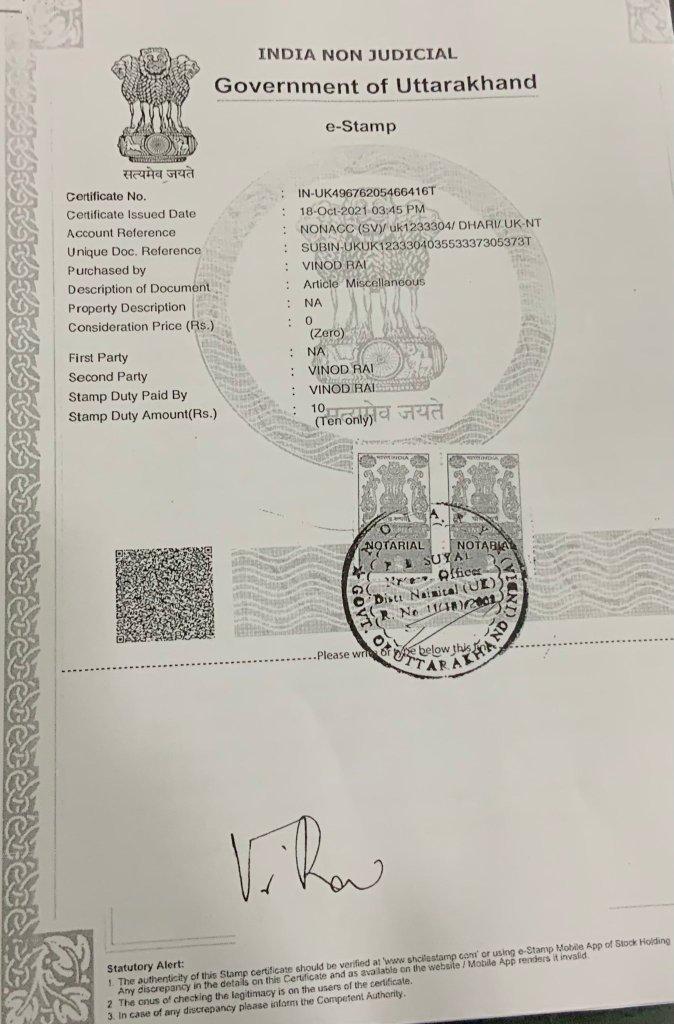
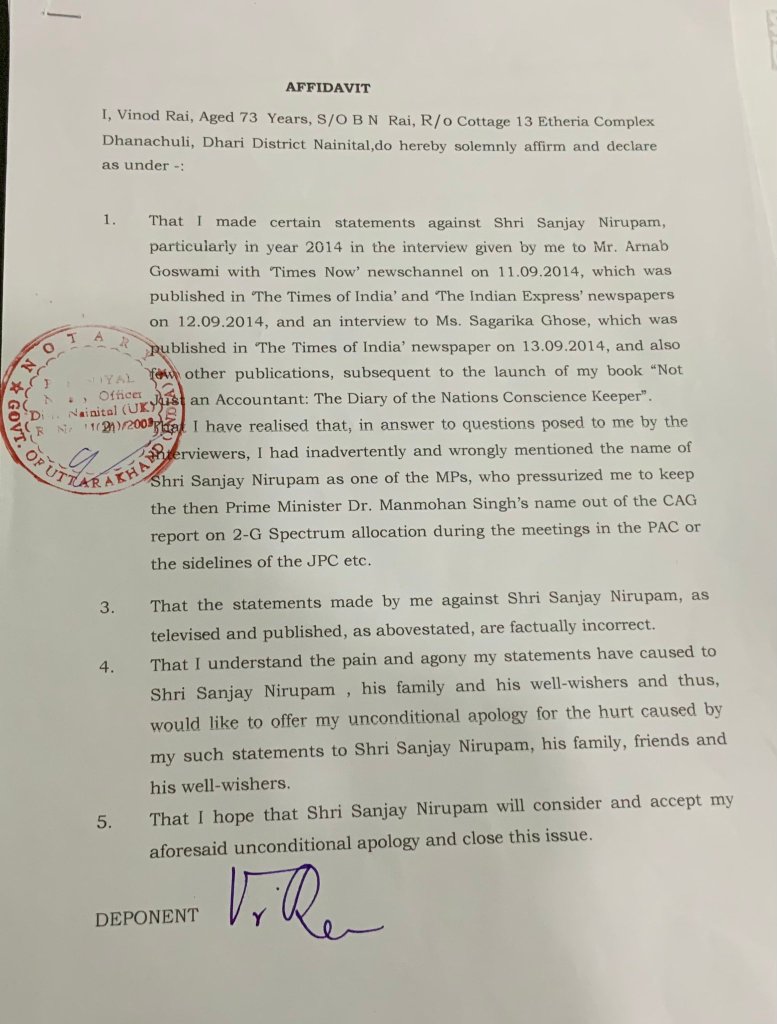
The figures mentioned above are findings of parliamentary panel so nobody can accuse of anybody having a bias. Also, I probably had shared this but still feel the need to re-share it as people still believe that 2G scam happened even though there are plenty of arguments I can share to prove how it was all a fabricated lie.
Vinod Rai Mafinama in Uttarakhand High Court.Part 2 of the same Mafinama.
How pathetic Mr. Rai s understanding of economics is can be gauged from the fact that he was made Chairman of IDFC and subsequently had to be thrown out. That whole lie was engineered to throw UPA out and it worked. There are and have been many such coincidences happening over the last 8 years, parallel stories happening in India and UK.
This was just yesterday, about a year back Air India was given back to the Tatas, There was controversy about the supposed auctions as only Indigo was the only other party allowed to be at auction but not allowed to buy but more as a spectator as they already have 60% of the Indian civil aviation market. And there was lot of cheering from the Govt. side that finally Air India has been bought home to its true owners, the Tatas. The Tatas too started cheering and sharing how they will take down all the workers, worker unions and everything will be happy glory within a year. In fact, just couple of days back they shared new plans. Btw for the takeover of Air India, they had bought loans from the Banks and they are in the category of too big to fail. As I have shared couple of times before, RBI has not shared any inspection reports of nationalized or private banks after 2013/14. While by law, RBI is supposed to do inspection reports every 3 months and share them in the Public domain. And if you ask any of their supporter, for everything they will say UPA did x or y, which only goes to show morally bankrupt the present Govt. is. Coming back to the topic, before I forget, the idea of sharing their plans is so that they can again borrow money from the banks.
But that is not the only story. Just one day back, Smita Prakash, one of the biggest cheerleaders of the present Govt. (she is the boss at Asia News International (ANI)) posted how Air India had treated her sister and other 21 passengers. Basically, they had bought business tickets but the whole cabin was dirty, they complained and they were forced to sit in economy class, not just her cousin sister but the other 21 odd passengers too. Of course Ms Smita became calm as her sister was given free air tickets on Vistara and other goodies. Of course, after that she didn t post anything about the other 21 odd passengers after that. And yes, I understand she is supposed to be a reporter but as can be seen from the twitter thread, there is or was no follow up. Incidentally, she is one of many who has calling others about Revdi culture (freebies to the masses.) but guess that only applies to other people not her or her sister. Again, if there are any coincidences of similar nature in the UK or when Trump was P.M. of the U.S. they are just coincidental .
The Uncosted budget
India and the UK have many parallels, it s mind boggling. Before we get into the nitty-gritties, saw something that would be of some interest to the people here.
For those who might not be able to see above, apparently there is place in UK called Tufton Street where there are quite a few organizations that are shadowy and whose finances are not known as to how they are financed. Ms. Truss and quite a few of the people in the cabinet are from the same shadowy organizations. Mr. Kwasi Kwarteng, the just-departed chancellor is and was part of the same group.
Now even for me it was a new term to learn and understand what is an uncosted budget is. To make it much more easier I share the example using a common person who goes to the bank for a loan
Now M/S X wants a loan of say Rs. 1000/- for whatever reason. He/she/they go to the bank and asks give me a loan of say INR 1000/- The banks asks them to produce a statement of accounts to show what their financial position is. They produce a somewhat half-filled statement of accounts In which all liabilities are shown, but incomes are not. The bank says you already have so much liabilities, how are you gonna pay those, accounts have to be matched otherwise you are not solvent. M/s X adamantly refuses to do any changes citing that they don t need to.
At this point, M/s X credit rating goes down and nobody in the market will give them a loan. At the same time, the assets they had held, their value also depreciates because it became known that they can t act responsibly. So whose to say whether or not M/s X has those number of assets and priced them accurately. But the drama doesn t end there, M/s X says this is the responsibility of actually Mr. Z ( cue The Bank of England) as they are my accountant/lawyer etc. M/s Z says as any lawyer/accountant should. This is not under my remit. If the clients either gives incomplete information or false information or whatever then it is their responsibility not mine. And in fact, the Chancellor is supposed to be the one who is given the responsibility of making the budget.
The Chancellor is very similar to our Finance Minister. Because the UK has constitutional monarchy, I am guessing the terms are slightly different, otherwise the functionality seems to be the same. For two weeks, there was lot of chaos, lot of pension funds lost quite a bit in the market and in the end Mr. Kwasi Kwarteng was ousted out of the job. Incredibly, the same media and newspapers who had praised Mr. Kwarteng just few weeks back as the best Tory budget, they couldn t wait to bury him. And while I have attempted to simplify what happened, the best explanation of what has happened can be found in an article from the guardian. Speculation is rife in the UK as to who s ruling atm as the new Chancellor has reversed almost all the policies that Ms. Truss had bought and she is now more or less a figurehead. Mr. Hunt, the new chancellor doesn t have anybody behind him. Apparently, the gentleman wanted to throw his hat the ring in the Tory leadership contest that was held about a month back and he couldn t get 20 MP s to support him. Another thing that is different between UK and India is that in UK by law the PM has to answer questions put up to him or her by the opposition leaders. That is the way accountability is measured there. This is known as PMQ s or Prime Minister Questions and Answers. One can just go to YouTube or any streaming service and give Liz Truss and PMQ s and if they are interested of a certain date, give a date and they can see how she answered the questions thrown at her. Unfortunately, all she could do in both times were non-answers. In fact, the Tories seem to be using some of Labor s policies after they had bad-mouthed the same policies. Politics of right-wing both in the UK and the US seems so out of touch with the people whom they are supposed to protect and administer. An article about cyclists which is sort of half-truth, half irony shows how screwed up the policies are of the RW (right-wing). Now they are questions about the pensions triple-lock. Sadly, it is the working class who would suffer the most, most of the rich have already moved their money abroad several years ago. The Financial Times, did share a video about how things have been unfolding
Seems Ms. Truss forgot to add Financial Times in the list of anti-growth coalition she is so fond of. Also, the Tory party seems to want to create more tax havens in the UK and calling them investment zones. Of course, most of the top tax havens are situated around the UK itself. I wouldn t go more into as that would probably require its own article, although most of that information is all in public domain.
Fracking
I don t really want to take much time as the blog post has become long. There have been many articles written why Fracking is bad and that is why even the Tories had put in their Manifesto that they won t allow Fracking but apparently, today they are trying to reopen Fracking. And again how bad it is and can be found out by the article in Guardian.
I first installed Ubuntu when Ubuntu 6.06 LTS Dapper Drake was released. I was brand new to Linux. This was Ubuntu s first LTS release; the very first release of Ubuntu was only a year and a half before. I was impressed by how usable and useful the system was. It soon became my primary home operating system and I wanted to help make it better.
On October 15, 2009, I was helping test the release candidates ISOs for the Ubuntu 9.10 release. Specifically, I tested Edubuntu. Edubuntu has since been discontinued but at the time it was an official Ubuntu flavor preloaded with lots of education apps. One of those education apps was Moodle, an e-learning platform.
When testing Moodle, I found that a default installation would make Moodle impossible to use locally. I figured out how to fix this issue. This was really exciting: I finally found an Ubuntu bug I knew how to fix. I filed the bug report.
This was very late in the Ubuntu 9.10 release process and Ubuntu was in the Final Freeze state. In Final Freeze, every upload to packages included in the default install need to be individually approved by a member of the Ubuntu Release Team. Also, I didn t have upload rights to Ubuntu. Jordan Mantha (LaserJock), an Edubuntu maintainer, sponsored my bug fix upload.
I also forwarded my patch to Debian.
While trying to figure out what wasn t working with Moodle, I stumbled across a packaging bug. Edubuntu provided a choice of MySQL or PostgreSQL for the system default database. MySQL was the default, but if PostgreSQL were chosen instead, Moodle wouldn t work. I figured out how to fix this bug too a week later. Jordan sponsored this upload and Steve Langasek from the Release Team approved it so it also was able to be fixed before 9.10 was released.
Although the first bug was new to 9.10 because of a behavior change in a low-level dependency, this PostgreSQL bug existed in stable Ubuntu releases. Therefore, I prepared Stable Release Updates for Ubuntu 9.04 and Ubuntu 8.04 LTS.
Afterwards
Six months later, I was able to attend my first Ubuntu Developer Summit. I was living in Bahrain (in the Middle East) at the time and a trip to Belgium seemed easier to me than if I were living in the United States where I usually live. This was the Ubuntu Developer Summit where planning for Ubuntu 10.10 took place. I like to believe that I helped with the naming since I addedMaverick to the wiki page where people contribute suggestions.
I did not apply for financial sponsorship to attend and I stayed in a budget hotel on the other side of Brussels. The event venue was on the outskirts of Brussels so there wasn t a direct bus or metro line to get there. I rented a car. I didn t yet have a smartphone and I had a LOT of trouble navigating to and from the site every day. I learned then that it s best to stay close to the conference site since a lot of the event is actually in the unstructured time in the evenings. Fortunately, I managed to arrive in time for Mark Shuttleworth s keynote where the Unity desktop was first announced. This was released in Ubuntu 10.10 in the Ubuntu Netbook Remix and became the default for Ubuntu Desktop in Ubuntu 11.04.
Ubuntu s switch to Unity provided me with a huge opportunity. In April 2011, GNOME 3.0 was released. I wanted to try it but it wasn t yet packaged in Ubuntu or Debian. It was suggested that I could help work on packaging the major new version in a PPA. The PPA was convenient because I was able to get permission to upload there easier than being able to upload directly to Ubuntu. My contributions there then enabled me to get upload rights to the Ubuntu Desktop packages later that year.
At a later Ubuntu Developer Summit, it was suggested that I start an official Ubuntu flavor for GNOME. So along with Tim Lunn (darkxst), I co-founded Ubuntu GNOME. Years later, Canonical stopped actively developing Unity; instead, Ubuntu GNOME was merged into Ubuntu Desktop.
Along the way, I became an Ubuntu Core Developer and a Debian Developer. And in January 2022, I joined Canonical on the Desktop Team. This all still feels amazing to me. It took me a long time to be comfortable calling myself a developer!
Conclusion
My first Ubuntu bugfix was 13 years ago this week. Because Ubuntu historically uses alphabetical adjective animal release names, 13 years means that we have rolled around to the letter K again! Later today, we begin release candidate ISO testing for Ubuntu 22.10 Kinetic Kudu .
I encourage you to help us test the release candidates and report bugs that you find. If you figure out how to fix a bug, we still sponsor bug fixes. If you are an Ubuntu contributor, I highly encourage you to attend an Ubuntu Summit if you can. The first Ubuntu Summit in years will be in 3 weeks in Prague, but the intent is for the Ubuntu Summits to be recurring events again.
Dowry
Few days back, had posted about the movie Raksha Bandhan and whatever I felt about it. Sadly, just couple of days back, somebody shared this link. Part of me was shocked and part of me was not. Couple of acquaintances of mine in the past had said the same thing for their daughters. And in such situations you are generally left speechless because you don t know what the right thing to do is. If he has shared it with you being an outsider, how many times he must have told the same to their wife and daughters? And from what little I have gathered in life, many people have justified it on similar lines. And while the protests were there, sadly the book was not removed. Now if nurses are reading such literature, how their thought process might be forming, you can tell :(. And these are the ones whom we call for when we are sick and tired :(. And I have not taken into account how the girls/women themselves might be feeling. There are similar things in another country but probably not the same, nor the same motivations though although feeling helplessness in both would be a common thing.
But such statements are not alone. Another gentleman in slightly different context shared this as well
The above is a statement shared in a book recommended for CTET (Central Teacher s Eligibility Test that became mandatory to be taken as the RTE (Right To Education) Act came in.). The statement says People from cold places are white, beautiful, well-built, healthy and wise. And people from hot places are black, irritable and of violent nature.
Now while I can agree with one part of the statement that people residing in colder regions are more fair than others but there are loads of other factors that determine fairness or skin color/skin pigmentation. After a bit of search came to know that this and similar articulation have been made in an idea/work called Environmental Determinism . Now if you look at that page, you would realize this was what colonialism is and was all about. The idea that the white man had god-given right to rule over others. Similarly, if you are fair, you can lord over others. Seems simplistic, but yet it has a powerful hold on many people in India. Forget the common man, this thinking is and was applicable to some of our better-known Freedom fighters. Pune s own Bal Gangadhar Tilak The Artic Home to the Vedas. It sort of talks about Aryans and how they invaded India and became settled here. I haven t read or have access to the book so have to rely on third-party sources. The reason I m sharing all this is that the right-wing has been doing this myth-making for sometime now and unless and until you put a light on it, it will continue to perpetuate . For those who have read this blog, do know that India is and has been in casteism from ever. They even took the fair comment and applied it to all Brahmins. According to them, all Brahmins are fair and hence have god-given right to lord over others. What is called the Eton boy s network serves the same in this casteism. The only solution is those idea under limelight and investigate. To take the above, how does one prove that all fair people are wise and peaceful while all people black and brown are violent. If that is so, how does one count for Mahatma Gandhi, Martin Luther King Junior, Nelson Mandela, Michael Jackson the list is probably endless. And not to forget that when Mahatma Gandhiji did his nonviolent movements either in India or in South Africa, both black and brown people in millions took part. Similar examples of Martin Luther King Jr. I know and read of so many non-violent civl movements that took place in the U.S. For e.g. Rosa Parks and the Montgomery Bus Boycott. So just based on these examples, one can conclude that at least the part about the fair having exclusive rights to being fair and noble is not correct.
Now as far as violence goes, while every race, every community has had done violence in the past or been a victim of the same. So no one is and can be blameless, although in light of the above statement, the question can argumentated as to who were the Vikings? Both popular imagination and serious history shares stories about Vikings. The Vikings were somewhat nomadic in nature even though they had permanent settlements but even then they went on raids, raped women, captured both men and women and sold them at slaves. So they are what pirates came to be, but not the kind Hollywood romanticizes about. Europe in itself has been a tale in conflict since time immemorial. It is only after the formation of EU that most of these countries stopped fighting each other From a historical point perspective, it is too new. So even the part of fair being non-violent dies in face of this evidence. I could go on but this is enough on that topic.
Railways and Industrial Action around the World.
While I have shared about Railways so many times on this blog, it continues to fascinate me that how people don t understand the first things about Railways. For e.g. Railways is a natural monopoly. What that means is and you can look at all and any type of privatization around the world, you will see it is a monopoly. Unlike the road or Skies, Railways is and would always be limited by infrastructure and the ability to have new infrastructure. Unlike in road or Skies (even they have their limits) you cannot run train services on a whim. At any particular point in time, only a single train could and should occupy a stretch of Railway network. You could have more trains on one line, but then the likelihood of front or rear-end collisions becomes a real possibility. You also need all sorts of good and reliable communications, redundant infrastructure so if one thing fails then you have something in place. The reason being a single train can carry anywhere from 2000 to 5000 passengers or more. While this is true of Indian Railways, Railways around the world would probably have some sort of similar numbers.It is in this light that I share the below videos.
To be more precise, see the fuller video
Now to give context to the recording above, Mike Lynch is the general secretary at RMT. For those who came in late, both UK and the U.S. have been threatened by railway strikes. And the reason for the strikes or threat of strikes is similar. Now from the company perspective, all they care is to invest less and make the most profits that can be given to equity shareholders. At the same time, they have freezed the salaries of railway workers for the last 3 years. While the politicians who were asking the questions, apparently gave themselves raise twice this year. They are asking them to negotiate at 8% while inflation in the UK has been 12.3% and projected to go higher. And it is not only the money. Since the 1980s when UK privatized the Railways, they stopped investing in the infrastructure. And that meant that the UK Railway infrastructure over period of time started getting behind and is even behind say Indian Railways which used to provide most bang for the buck. And Indian Railways is far from ideal. Ironically, most of the operators on UK are nationalized Railways of France, Germany etc. but after the hard Brexit, they too are mulling to cut their operations short, they have too There is also the EU Entry/Exit system that would come next year.
Why am I sharing about what is happening in UK Rail, because the Indian Government wants to follow the same thing, and fooling the public into saying we would do it better. What inevitably will happen is that ticket prices go up, people no longer use the service, the number of services go down and eventually they are cancelled. This has happened both in Indian Railways as well as Airlines. In fact, GOI just recently announced a credit scheme just a few days back to help Airlines stay afloat. I was chatting with a friend who had come down to Pune from Chennai and the round-trip cost him INR 15k/- on that single trip alone. We reminisced how a few years ago, 8 years to be precise, we could buy an Air ticket for 2.5k/- just a few days before the trip and did it. I remember doing/experiencing at least a dozen odd trips via air in the years before 2014. My friend used to come to Pune, almost every weekend because he could afford it, now he can t do that. And these are people who are in the above 5-10% of the population. And this is not just in UK, but also in the United States. There is one big difference though, the U.S. is mainly a freight carrier while the UK Railway Operations are mostly passenger based. What was and is interesting that Scotland had to nationalize their services as they realized the Operators cannot or will not function when they were most needed. Most of the public even in the UK seem to want a nationalized rail service, at least their polls say so. So, it would definitely be interesting to see what happens in the UK next year.
In the end, I know I promised to share about books, but the above incidents have just been too fascinating to not just share the news but also share what I think about them. Free markets function good where there is competition, for example what is and has been happening in China for EV s but not where you have natural monopolies. In all Railway privatization, you have to handover the area to one person, then they have no motivation. If you have multiple operators, then there would always be haggling as to who will run the train and at what time. In either scenario, it doesn t work and raises prices while not delivering anything better
I do take examples from UK because lot of things are India are still the legacy of the British. The whole civil department that was created in 1953 is/was a copy of the British civil department at that time and it is to this day.
P.S. Just came to know that the UK Chancellor Kwasi Kwarteng was just sacked as UK Chancellor. I do commend Truss for facing the press even though she might be dumped a week later unlike our PM who hasn t faced a single press conference in the last 8 odd years.
https://www.youtube.com/watch?v=oTP6ogBqU7of
The difference in Indian and UK politics seems to be that the English are now asking questions while here in India, most people are still sleeping without a care in the world.
Another thing to note Minidebconf Palakkad is gonna happen 12-13th November 2022. I am probably not gonna go but would request everyone who wants to do something in free software to attend it. I am not sure whether I would be of any use like this and also when I get back, it would be an empty house. But for people young and old, who want to do anything with free/open source software it is a chance not to be missed. Registration of the same closes on 1st of November 2022. All the best, break a leg
Just read this, beautifully done.
Welcome to the September 2022 report from the Reproducible Builds project! In our reports we try to outline the most important things that we have been up to over the past month. As a quick recap, whilst anyone may inspect the source code of free software for malicious flaws, almost all software is distributed to end users as pre-compiled binaries. If you are interested in contributing to the project, please visit our Contribute page on our website.
David A. Wheeler reported to us that the US National Security Agency (NSA), Cybersecurity and Infrastructure Security Agency (CISA) and the Office of the Director of National Intelligence (ODNI) have released a document called Securing the Software Supply Chain: Recommended Practices Guide for Developers (PDF).
As David remarked in his post to our mailing list, it expressly recommends having reproducible builds as part of advanced recommended mitigations . The publication of this document has been accompanied by a press release.
Holger Levsen was made aware of a small Microsoft project called oss-reproducible. Part of, OSSGadget, a larger collection of tools for analyzing open source packages , the purpose of oss-reproducible is to:
analyze open source packages for reproducibility. We start with an existing package (for example, the NPM left-pad package, version 1.3.0), and we try to answer the question, Do the package contents authentically reflect the purported source code?
More details can be found in the README.md file within the code repository.
David A. Wheeler also pointed out that there are some potential upcoming changes to the OpenSSF Best Practices badge for open source software in relation to reproducibility. Whilst the badge programme has three certification levels ( passing , silver and gold ), the gold level includes the criterion that The project MUST have a reproducible build .
David reported that some projects have argued that this reproducibility criterion should be slightly relaxed as outlined in an issue on the best-practices-badge GitHub project. Essentially, though, the claim is that the reproducibility requirement doesn t make sense for projects that do not release built software, and that timestamp differences by themselves don t necessarily indicate malicious changes. Numerous pragmatic problems around excluding timestamps were raised in the discussion of the issue.
Sonatype, a pioneer of software supply chain management , issued a press release month to report that they had found:
[ ] a massive year-over-year increase in cyberattacks aimed at open source project ecosystems. According to early data from Sonatype s 8th annual State of the Software Supply Chain Report, which will be released in full this October, Sonatype has recorded an average 700% jump in repository attacks over the last three years.
More information is available in the press release.
A number of changes were made to the Reproducible Builds website and documentation this month, including Chris Lamb adding a redirect from /projects/ to /who/ in order to keep old or archived links working [], Jelle van der Waa added a Rust programming language example for SOURCE_DATE_EPOCH [][] and Mattia Rizzolo included Protocol Labs amongst our project-level sponsors [].
Debian
There was a large amount of reproducibility work taking place within Debian this month:
The nfft source package was removed from the archive, and now all packages in Debian bookworm now have a corresponding .buildinfo file. This can be confirmed and tracked on the associated page on thetests.reproducible-builds.org site.
Vagrant Cascadian announced on our mailing list an informal online sprint to help clear the huge backlog of reproducible builds patches submitted by performing NMU (Non-Maintainer Uploads). The first such sprint took place on September 22nd with the following results:
Holger Levsen:
Mailed #1010957 in man-db asking for an update and whether to remove the patch tag for now. This was subsequently removed and the maintainer started to address the issue.
Emailed #1017372 in plymouth and asked for the maintainer s opinion on the patch. This resulted in the maintainer improving Vagrant s original patch (and uploading it) as well as filing an issue upstream.
The plan is to repeat these sprints every two weeks, with the next taking place on Thursday October 6th at 16:00 UTC on the #debian-reproducible IRC channel.
Roland Clobus posted his 13th update of the status of reproducible Debian ISO images on our mailing list. During the last month, Roland ensured that the live images are now automatically fed to openQA for automated testing after they have been shown to be reproducible. Additionally Roland asked on the debian-devel mailing list about a way to determine the canonical timestamp of the Debian archive. []
Lastly, 44 reviews of Debian packages were added, 91 were updated and 17 were removed this month adding to our knowledge about identified issues. A number of issue types have been updated too, including the descriptions of cmake_rpath_contains_build_path [], nondeterministic_version_generated_by_python_param [] and timestamps_in_documentation_generated_by_org_mode []. Furthermore, two new issue types were created: build_path_used_to_determine_version_or_package_name [] and captures_build_path_via_cmake_variables [].
Other distributions
In openSUSE, Bernhard M. Wiedemann published his usual openSUSE monthly report.
diffoscopediffoscope is our in-depth and content-aware diff utility. Not only can it locate and diagnose reproducibility issues, it can provide human-readable diffs from many kinds of binary formats. This month, Chris Lamb prepared and uploaded versions 222 and 223 to Debian, as well as made the following changes:
The cbfstools utility is now provided in Debian via the coreboot-utils package so we can enable that functionality within Debian. []
Fixed the try.diffoscope.org service by addressing a compatibility issue between glibc/seccomp that was preventing the Docker-contained diffoscope instance from spawning any external processes whatsoever []. I also updated the requirements.txt file, as some of the specified packages were no longer available [][].
In addition Jelle van der Waa added support for file version 5.43 [] and Mattia Rizzolo updated the packaging:
Also include coreboot-utils in the Build-Depends and Test-Depends fields so that it is available for tests. []
Use pep517 and pip to load the requirements. []
Remove packages in Breaks/Replaces that have been obsoleted since the release of Debian bullseye. []
Reprotestreprotest is our end-user tool to build the same source code twice in widely and deliberate different environments, and checking whether the binaries produced by the builds have any differences. This month, reprotest version 0.7.22 was uploaded to Debian unstable by Holger Levsen, which included the following changes by Philip Hands:
Actually ensure that the setarch(8) utility can actually execute before including an architecture to test. []
Include all files matching *.*deb in the default artifact_pattern in order to archive all results of the build. []
Emit an error when building the Debian package if the Debian packaging version does not patch the Python version of reprotest. []
Remove an unneeded invocation of the head(1) utility. []
Upstream patches
The Reproducible Builds project detects, dissects and attempts to fix as many currently-unreproducible packages as possible. We endeavour to send all of our patches upstream where appropriate. This month, we wrote a large number of such patches, including:
Testing framework
The Reproducible Builds project runs a significant testing framework at tests.reproducible-builds.org in order to check packages and other artifacts for reproducibility. This month, however, the following changes were made:
Holger Levsen:
Add a job to build reprotest from Git [] and use the correct Git branch when building it [].
Mattia Rizzolo:
Enable syncing of results from building live Debian ISO images. []
Use scp -p in order to preserve modification times when syncing live ISO images. []
Apply the shellcheck shell script analysis tool. []
In a build node wrapper script, remove some debugging code which was messing up calling scp(1) correctly [] and consquently add support to use both scp -p and regular scp [].
Roland Clobus:
Track and handle the case where the Debian archive gets updated between two live image builds. []
Remove a call to sudo(1) as it is not (or no longer) required to delete old live-build results. []
Contact
As ever, if you are interested in contributing to the Reproducible Builds project, please visit our Contribute page on our website. However, you can get in touch with us via:
Well this is a mouthful.
I recently worked on a neat hack called puppet-package-check. It
is designed to warn about manually installed packages, to make sure
"everything is in Puppet". But it turns out it can (probably?)
dramatically decrease the bootstrap time of Puppet bootstrap when it
needs to install a large number of packages.
Detecting manual packages
On a cleanly filed workstation, it looks like this:
Yuck! That's a lot of shit to go through.
Notice how the packages get sorted between "old" and "new"
packages. This is because popcon is used as a tool to mark which
packages are "old". If you have unmanaged packages, the "old" ones are
likely things that you can uninstall, for example.
If you don't have popcon installed, you'll also get this warning:
popcon stats not available: [Errno 2] No such file or directory: '/var/log/popularity-contest'
The error can otherwise be safely ignored, but you won't get "help"
prioritizing the packages to add to your manifests.
Note that the tool ignores packages that were "marked" (see
apt-mark(8)) as automatically installed. This implies that you
might have to do a little bit of cleanup the first time you run this,
as Debian doesn't necessarily mark all of those packages correctly on
first install. For example, here's how it looks like on a clean
install, after Puppet ran:
Normally, there should be unmanaged packages here. But because of the
way Debian is installed, a lot of libraries and some core packages are
marked as manually installed, and are of course not managed through
Puppet. There are two solutions to this problem:
really manage everything in Puppet (argh)
mark packages as automatically installed
I typically chose the second path and mark a ton of stuff as
automatic. Then either they will be auto-removed, or will stop being
listed. In the above scenario, one could mark all libraries as
automatically installed with:
apt-mark auto $(./bin/puppet-package-check grep -o 'lib[^ ]*')
... but if you trust that most of that stuff is actually garbage that
you don't really want installed anyways, you could just mark it all
as automatically installed:
apt-mark auto $(./bin/puppet-package-check)
In my case, that ended up keeping basically all libraries (because of
course they're installed for some reason) and auto-removing this:
You'll notice xorg in there: yep, that's bad. Not what I wanted. But
for some reason, on other workstations, I did not actually have
xorg installed. Turns out having xserver-xorg is enough, and that
one has dependencies. So now I guess I just learned to stop worrying
and live without X(org).
Optimizing large package installs
But that, of course, is not all. Why make things simple when you can
have an unreadable title that is trying to be both syntactically
correct and click-baity enough to flatter my vain ego? Right.
One of the challenges in bootstrapping Puppet with large package lists
is that it's slow. Puppet lists packages as individual resources and
will basically run apt install $PKG on every package in the
manifest, one at a time. While the overhead of apt is generally
small, when you add things like apt-listbugs, apt-listchanges,
needrestart, triggers and so on, it can take forever setting up a
new host.
So for initial installs, it can actually makes sense to skip the queue
and just install everything in one big batch.
And because the above tool inspects the packages installed by Puppet,
you can run it against a catalog and have a full lists of all the
packages Puppet would install, even before I even had Puppet
running.
So when reinstalling my laptop, I basically did this:
That massive grep was because there are currently a lot of
packages missing from bookworm. Those are all packages that I have
in my catalog but that still haven't made it to bookworm. Sad, I
know. I eventually worked around that by adding bullseye sources so
that the Puppet manifest actually ran.
The point here is that this improves the Puppet run time a lot. All
packages get installed at once, and you get a nice progress bar. Then
you actually run Puppet to deploy configurations and all the other
goodies:
puppet agent --test
I wish I could tell you how much faster that ran. I don't know, and I
will not go through a full reinstall just to please your
curiosity. The only hard number I have is that it installed 444
packages (which exploded in 10,191 packages with dependencies) in a
mere 10 minutes. That might also be with the packages already
downloaded.
In any case, I have that gut feeling it's faster, so you'll have to
just trust my gut. It is, after all, much more important than you
might think.
It figures out what you ve done manually, stores it locally in a Git
repository, generates code that s able to recreate your efforts, and
helps you deploy those changes to production
That tool has unfortunately been abandoned for a decade at this point.
Also note that the AutoRemove::RecommendsImportant and
AutoRemove::SuggestsImportant are relevant here. If it is set to
true (the default), a package will not be removed if it is
(respectively) a Recommends or Suggests of another package (as
opposed to the normal Depends). In other words, if you want to also
auto-remove packages that are only Suggests, you would, for example,
add this to apt.conf:
AutoRemove::SuggestsImportant false;
Paul Wise has tried to make the Debian installer and debootstrap
properly mark packages as automatically installed in the past, but his
bug reports were rejected. The other suggestions in this section are
also from Paul, thanks!
Back in 2018, I made a two part series about terminal emulators
that was actually pretty painful to write. So I'm not going to retry
this here, not at all. Especially since I'm not submitting this to the
excellent LWN editors so I can get away with not being very good
at writing. Phew.
Still, it seems my future self will thank me for collecting my
thoughts on the terminal emulators I have found out about since I
wrote that article. Back then, Wayland was not quite at the level
where it is now, being the default in Fedora (2016), Debian (2019),
RedHat (2019), and Ubuntu (2021). Also, a bunch of folks thought they
would solve everything by using OpenGL for rendering. Let's see how
things stack up.
Recap
In the previous article, I touched on those projects:
After writing those articles, bizarrely, I was still using rxvt even
though it did not come up as shiny as I would have liked. The colors
problems were especially irritating.
I briefly played around with Konsole and xterm, and eventually
switched to XTerm as my default x-terminal-emulator "alternative" in
my Debian system, while writing this.
I quickly noticed why I had stopped using it: clickable links are a
huge limitation. I ended up adding keybindings to open URLs in a
command. There's another keybinding to dump the history into a
command. Neither are as satisfactory as just clicking a damn link.
Requirements
Figuring out my requirements is actually a pretty hard thing to do. In
my last reviews, I just tried a bunch of stuff and collected
everything, but a lot of things (like tab support) I don't actually
care about. So here's a set of things I actually do care about:
latency
resource usage
proper clipboard support, that is:
mouse selection and middle button uses PRIMARY
control-shift-c and control-shift-v for
CLIPBOARD
true color support
no known security issues
active project
paste protection
clickable URLs
scrollback
font resize
non-destructive text-wrapping (ie. resizing a window doesn't drop
scrollback history)
proper unicode support (at least latin-1, ideally "everything")
good emoji support (at least showing them, ideally "nicely"), which
involves font fallback
Kitty
Kitty is a "fast, feature-rich, GPU based", with ligatures,
emojis, hyperlinks, pluggable, scriptable, tabs, layouts, history,
file transfer over SSH, its own graphics system, and probably much
more I'm forgetting. It's packaged in Debian.
So I immediately got two people commenting (on IRC) that they use
Kitty and are pretty happy with it. I've been hesitant in directly
talking about Kitty publicly, but since it's likely there will be a
pile-up of similar comments, I'll just say why it's not the first in
my list, even if it might, considering it's packaged in Debian and
otherwise checks all the boxes.
I don't trust the Kitty code. Kitty was written by the same author as
Calibre, which has a horrible security history and generally really
messy source code. I have tried to do LTS work on Calibre, and have
mostly given up on the idea of making that program secure in any
way. See calibre for the details on that.
Now it's possible Kitty is different: it's quite likely the author has
gotten some experience writing (and maintaining for so long!) Calibre
over the years. But I would be more optimistic if the author's
reaction to the security issues were more open and proactive.
I've also seen the same reaction play out on Kitty's side of
things. As anyone who worked on writing or playing with non-XTerm
terminal emulators, it's quite a struggle to make something
(bug-for-bug) compatible with everything out there. And Kitty is in
that uncomfortable place right now where it diverges from the canon
and needs its own entry in the ncurses database. I don't remember the
specifics, but the author also managed to get into fights with those
people as well, which I don't feel is reassuring for the project going
forward.
If security and compatibility wasn't such big of a deal for me, I
wouldn't mind so much, but I'll need a lot of convincing before I
consider Kitty more seriously at this point.
Next steps
It seems like Arch Linux defaults to foot in Sway, and I keep seeing
it everywhere, so it is probably my next thing to try, if/when I
switch to Wayland.
One major problem with foot is that it's yet another terminfo
entry. They did make it into ncurses (patch 2021-07-31) but only
after Debian bullseye stable was released. So expect some weird
compatibility issues when connecting to any other system that is older
or the same as stable (!).
One question mark with all Wayland terminals, and Foot in particular,
is how much latency they introduce in the rendering pipeline. The
foot performance and benchmarks look excellent, but do not
include latency benchmarks.
No conclusion
So I guess that's all I've got so far, I may try alacritty if it hits
Debian, or foot if I switch to Wayland, but for now I'm hacking in
xterm still. Happy to hear ideas in the comments.
Stay tuned for more happy days.
Fiction
A few days ago somebody asked me and I think it is an often requested to perhaps all fiction readers as to why we like fiction? First of all, reading in itself is told as food for the soul. Because, whenever you write or read anything you don t just read it, you also visualize it. And that visualization is and would be far greater than any attempt in cinema as there are no budget constraints and it takes no more than a minute to visualize a scenario if the writer is any good. You just close your eyes and in a moment you are transported to a different world. This is also what is known as world building . Something fantasy writers are especially gifted in. Also, with the whole parallel Universes being a reality, it is just so much fertile land for imagination that I just cannot believe that it hasn t been worked to death to date. And you do need a lot of patience to make a world, to make characters, to make characters a bit eccentric one way or the other. And you have to know to put into a three, five, or whatever number of acts you want to put in. And then, of course, they have readers like us who dream and add more color to the story than the author did. As we take his, her, or their story and weave countless stories depending on where we are, where we are and who we are.
What people need to understand is that not just readers want escapism but writers too want to escape from the human condition. And they find solace in whatever they write. The well-known example of J.R.R. Tolkien is always there. How he must have felt each day coming after war, to somehow find the strength and just dream away, transport himself to a world of hobbits, elves, and other mysterious beings. It surely must have taken a lot of pain from him that otherwise, he would have felt. There are many others. What also does happen now and then, is authors believe in their own intelligence so much, that they commit crimes, but that s par for the course.
Dean Koontz, Odd Apocalypse
Currently, I am reading the above title. It is perhaps one of the first horror title books that I have read which has so much fun. The hero has a great sense of wit, humor, and sarcasm that you can cut butter with it. Now if you got that, this is par for the wordplay happening every second paragraph and I m just 100 pages in of the 500-page Novel.
Now, while I haven t read the whole book and I m just speculating, what if at the end we realize that the hero all along was or is the villain. Sadly, we don t have many such twisted stories and that too is perhaps because most people used to have black and white rather than grey characters. From all my reading, and even watching web series and whatnot, it is only the Europeans who seem to have a taste for exploring grey characters and giving twists at the end that people cannot anticipate. Even their heroes or heroines are grey characters. and they can really take you for a ride. It is also perhaps how we humans are, neither black nor white but more greyish. Having grey characters also frees the author quite a bit as she doesn t have to use so-called tropes and just led the characters to lead themselves.
Indian Book publishing Industry
I do know Bengali stories do have a lot of grey characters, but sadly most of the good works are still in Bengali and not widely published compared to say European or American authors. While there is huge potential in the Indian publishing market for English books and there is also hunger, getting good and cheap publishers is the issue. Just recently SAGE publishing division shut down and this does not augur well for the Indian market. In the past few years, I and other readers have seen some very good publishing houses quit India for one reason or the other. GST has also made the sector more expensive. The only thing that works now and has been for some time is the seconds and thirds market. For e.g. I just bought today about 15-20 books @INR 125/- a kind of belated present for the self. That would be what, at the most 2 USD or 2 Euros per book. I bet even a burger costs more than that, but again India being a price-sensitive market, at these prices the seconds book sells. And these are all my favorite authors, Lee Child, Tom Clancy, Dean Koontz, and so on and so forth. I also saw a lot of fantasy books but they would have to wait for another day.
Tourism in India for Debconf 23
I had shared a while back that I would write a bit about tourism as Debconf or Annual Debian Conference will happen in India next year around this time. I was supposed to write it in the FAQ but couldn t find a place or a corner where I could write it. There are actually two things that people need to be aware of. The one thing that people need to be very aware of is food poisoning or Delhi Belly. This is a far too common sight that I have witnessed especially with westerners when they come to visit India. I am somewhat shocked that it hasn t been shared in the FAQ but then perhaps we cannot cover all the bases therein. I did find this interesting article and would recommend the suggestions given in it wholeheartedly. I would suggest people coming to India to buy and have purifying water tablets with them if they decide to stay back and explore India.
Now the problem with tourism is, that one can have as much tourism as one wants. One of the unique ways I found some westerners having the time of their life is buying an Indian Rickshaw or Tuk-Tuk and traveling with it. A few years ago, when I was more adventourous-spirited I was able to meet a few of them. There is also the Race with Rickshaws that happens in Rajasthan and you get to see about 10 odd cities in and around Rajasthan state and get to see the vibrancy in the North. If somebody really wants to explore India, then I would suggest getting down to Goa, specifically, South Goa, meeting with the hippie crowd, and getting one of the hippie guidebooks to India. Most people forget that the Hippies came to India in the 1960s and many of them just never left. Tap water in Pune is ok, have seen and experienced the same in Himachal, Garwhal, and Uttarakhand, although it has been a few years since I have been to those places. North-East is a place I have yet to venture into.
India does have a lot of beauty but most people are not clean-conscious so if you go to common tourist destinations, you will find a lot of garbage. Most cities in India do give you an option of homestays and some even offer food, so if you are on a budget as well as wanna experience life with an Indian family, that could be something you could look into. So you can see and share about India with different eyes.
There is casteism, racism, and all that. Generally speaking, you would see it wielded a lot more in your face in North India than in South India where it is there but far more subtle. About food, what has been shared in the India BOF. Have to say, it doesn t even scratch the surface. If you stay with an Indian family, there is probably a much better chance of exploring the variety of food that India has to offer. From the western perspective, we tend to overcook stuff and make food with Masalas but that s the way most people like it. People who have had hot sauces or whatnot would probably find India much easier to adjust to as tastes might be similar to some extent.
If you want to socialize with young people, while discos are an option, meetup.com also is a good place. You can share your passions and many people have taken to it with gusto. We also have been hosting Comiccons in India, but I haven t had the opportunity to attend them so far. India has a rich oral culture reach going back a few thousand years, but many of those who are practicing those reside more in villages rather than in cities. And while there have been attempts in the past to record them, most of those have come to naught as money runs out as there is no commercial viability to such projects, but that probably is for another day.
In the end, what I have shared is barely a drop in the ocean that is India. Come, have fun, explore, enjoy and invigorate yourself and others
I ve been using OpenIKED for some time now to configure my VPN.
One of its features is that it can dynamically assign addresses on the internal network to clients, and clients can assign these addresses and routes to interfaces.
However, these interfaces must exist before iked can start.
Some months ago I switched my Debian laptop s configuration from the traditional ifupdown to systemd-networkd.
It took me some time to figure out how to have systemd-networkd create dummy interfaces on which iked can install addresses, but also not interfere with iked by trying to manage these interfaces.
Here is my working configuration.
First, I have systemd create the interface dummy1 by creating a systemd.netdev(5) configuration file at /etc/systemd/network/20-dummy1.netdev:
[NetDev]
Name=dummy1
Kind=dummy
Then I tell systemd not to manage this interface by creating a systemd.network(5) configuration file at /etc/systemd/network/20-dummy1.network:
[Match]
Name=dummy1
Unmanaged=yes
Restarting systemd-networkd causes these interfaces to get created, and we can then check their status using networkctl(8):
$ systemctl restart systemd-networkd.service
$ networkctl
IDX LINK     TYPE     OPERATIONAL SETUP
  1 lo       loopback carrier     unmanaged
  2 enp2s0f0 ether    off         unmanaged
  3 enp5s0   ether    off         unmanaged
  4 dummy1   ether    degraded    configuring
  5 dummy3   ether    degraded    configuring
  6 sit0     sit      off         unmanaged
  8 wlp3s0   wlan     routable    configured
  9 he-ipv6  sit      routable    configured

8 links listed.
Finally, I configure my flows in /etc/iked.conf, making sure to assign the received address to the interface dummy1.
ikev2 'hades' active esp \
        from dynamic to 10.0.1.0/24 \
        peer hades.rak.ac \
        srcid '/CN=asteria.rak.ac' \
        dstid '/CN=hades.rak.ac' \
        request address 10.0.1.103 \
        iface dummy1
Restarting openiked and checking the status of the interface reveals that it has been assigned an address on the internal network and that it is routable:
Hi, Welcome back.
In this blog, I will be discussing my career interests and what I plan to pursue after my internship.
What comes next after the internship
After working a while with Debci project, I was able to learn better software development practices and love the open source community. I will love to build my career path around open-source.
What I am looking for
Prior to starting my internship, I have worked as a front-end developer with react and javascript. During my internship with Debci I learn Ruby and also how to write tests . I am also passionate about community which is one of my core-values, I build and organize communities.
I am looking for opportunities in areas of front-end development, Ruby, React.
i am also open to opportunities in developer relations/community management where i can be part of building or managing a community, Interacting with developers, meeting new people.
I am based in lagos, Nigeria and can work remotely, but also open to relocation.
You can connect with me on linkedin
Since March/April 2000 I was deeply involved in Debian m68k and operated multiple m68k autobuilder for over a decade. In fact my Amiga 3000 named arrakis was the second buildd for m68k in addition to the Debian owned Amiga 3000UX named kullervo .
Back in that time there was some small website running on Kullervo to display some information about the Debian autobuilder. After some time we (as m68k porters) moved that webpage away from Kullervo to my root server. Step by step this site evolved to Buildd.Net and extended to other archs and suites beside unstable like backports or non-volatile. The project got more and more complex and beyond my ability to do a complete necessary rewrite.
So, in 2016 I asked for adoption of the project and in 2018 I shut it down, because (apparently) there was nobody taking over. From November 2005 until January 2018 I do have entries in my PostgreSQL database for Buildd.Net.
I think the data in the database might be interesting for those that want to examine that data. You can use the data to see how build times have increased over time, which e.g. led to the expulsion of m68k as release arch, because the arch couldn t keep up anymore. I could imagine that you could do other interesting analysis with that data. For example how new versions of the toolchain increased the build times, maybe even if a specific version of e.g. binutils or gcc had a positive effect on certain archs, but a negative effect on other archs.
If there is interest in this data I could open the database to the public or even upload the dump of the database so that you can download and install it on your own.
Welcome to the January 2022 report from the Reproducible Builds project. In our reports, we try outline the most important things that have been happening in the past month. As ever, if you are interested in contributing to the project, please visit our Contribute page on our website.
An interesting blog post was published by Paragon Initiative Enterprises about Gossamer, a proposal for securing the PHP software supply-chain. Utilising code-signing and third-party attestations, Gossamer aims to mitigate the risks within the notorious PHP world via publishing attestations to a transparency log. Their post, titled Solving Open Source Supply Chain Security for the PHP Ecosystem goes into some detail regarding the design, scope and implementation of the system.
This month, the Linux Foundation announced SupplyChainSecurityCon, a conference focused on exploring the security threats affecting the software supply chain, sharing best practices and mitigation tactics. The conference is part of the Linux Foundation s Open Source Summit North America and will take place June 21st 24th 2022, both virtually and in Austin, Texas.
Debian
There was a significant progress made in the Debian Linux distribution this month, including:
Related to this, it is now possible to create a bit-by-bit reproducible chroots using mmdebstrap when SOURCE_DATE_EPOCH is set. As of Debian 11 Bullseye, this works for all variants, except for the variant that includes all so-called Priority: standard packages where fontconfig caches, *.pyc files and man-db index.db are unreproducible. (These issues have been addressed in Tails and live-build by removing*.pyc files, in addition to removingindex.db files as well. (Whilst index.db files can be regenerated, there is no straightforward method to re-creating *.pyc files, and the resulting installation will suffer from reduced performance of Python scripts. Ideally, no removal would be necessary as all files would be created reproducibly in the first place.)
A longstanding issue around fontconfig s cache files being unreproducible saw some progress this month. Debian bug number #864082 (originally filed in June 2017) was NMU d by josch, although this resulted in a small number of minor side-effects which have already been addressed with a follow-up patch.
120 reviews of Debian packages were added, 272 were updated and 31 were removed this month, all adding to our index of identified issues. A number of issue types were updated too [][][][].
diffoscopediffoscope is our in-depth and content-aware diff utility. Not only can it locate and diagnose reproducibility issues, it can provide human-readable diffs from many kinds of binary formats. This month, Chris Lamb prepared and uploaded versions 199, 200, 201 and 202 to Debian unstable (that were later backported to Debian bullseye-backports by Mattia Rizzolo), as well as made the following changes to the code itself:
New features:
First attempt at incremental output support with a timeout. Now passing, for example, --timeout=60 will mean that diffoscope will not recurse into any sub-archives after 60 seconds total execution time has elapsed. Note that this is not a fixed/strict timeout due to implementation issues. [][]
Support both variants of odt2txt, including the one provided by the unoconv package. []
Bug fixes:
Do not return with a UNIX exit code of 0 if we encounter with a file whose human-readable metadata matches literal file contents. []
Don t fail if comparing a nonexistent file with a .pyc file (and add test). [][]
If the debian.deb822 module raises any exception on import, re-raise it as an ImportError. This should fix diffoscope on some Fedora systems. []
Even if a Sphinx .inv inventory file is labelled The remainder of this file is compressed using zlib, it might not actually be. In this case, don t traceback and simply return the original content. []
Documentation:
Improve documentation for the new --timeout option due to a few misconceptions. []
Drop reference in the manual page claiming the ability to compare non-existent files on the command-line. (This has not been possible since version 32 which was released in September 2015). []
Update X has been modified after NT_GNU_BUILD_ID has been applied messages to, for example, not duplicating the full filename in the diffoscope output. []
Codebase improvements:
Tidy some control flow. []
Correct a recompile typo. []
In addition, Alyssa Ross fixed the comparison of CBFS names that contain spaces [],
Sergei Trofimovich fixed whitespace for compatibility with version 21.12 of the Black source code reformatter [] and Zbigniew J drzejewski-Szmek fixed JSON detection with a new version of file [].
Testing framework
The Reproducible Builds project runs a significant testing framework at tests.reproducible-builds.org, to check packages and other artifacts for reproducibility. This month, the following changes were made:
Fr d ric Pierret (fepitre):
Add Debian bookworm to package set creation. []
Holger Levsen:
Install the po4a package where appropriate, as it is needed for the Reproducible Builds website job []. In addition, also run the i18n.sh and contributors.sh scripts [].
Correct some grammar in Debian live image build output. []
Shell monitor improvements:
Only show the offline node section if there are offline nodes. []
Colorise offline nodes. []
Shrink screen usage. [][][]
Node health check improvements:
Detect if live package builds encounter incomplete snapshots. [][][]
Detect if a host is running with today s date (when it should be set artificially in the future). []
Use the devscripts package from bullseye-backports on Debian nodes. []
Use the Munin monitoring package bullseye-backports on Debian nodes too. []
Update New Year handling, needed to be able to detect real and fake dates. [][]
Improve the error message of the script that powercycles the arm64 architecture nodes hosted by Codethink. []
Mattia Rizzolo:
Use the new --timeout option added in diffoscope version 202. []
Roland Clobus:
Update the build scripts now that the hooks for live builds are now maintained upstream in the live-build repository. []
Show info lines in Jenkins when reproducible hooks have been active. []
Use unique folders for the artifacts from each live Debian version. []
Vagrant Cascadian:
Switch the Debian armhf architecture nodes to use new proxy. []
Misc. node maintenance. [].
Upstream patches
The Reproducible Builds project attempts to fix as many currently-unreproducible packages as possible. In January, we wrote a large number of such patches, including:
And finally
If you are interested in contributing to the Reproducible Builds project, please visit our Contribute page on our website. However, you can get in touch with us via:

 But part of it has been neglect as well as this time article shares. What we have lost and continue to lose is just priceless. Every book has a grain of truth in it, some more, some less but equally enjoyable.
Most harmful is the neglect towards books and is more true today than any other time in history. Kids today have a wide variety of tools to keep themselves happy or occupied, from anime, VR, gaming the list goes on and on. In that scenario, how the humble books can compete. People think of Kindle but most e-readers like Kindle are nothing but obsolescence by design. I have tried out Kindle a few times but find it a bit on the flimsy side. Books are much better IMHO or call me old-school. While there are many advantages, one of the things that I like about books is that you can easily put yourself in either the protagonist or the antagonist or somewhere in the middle and think of the possible scenarios wherever you are in a particular book. I could go on but it will be a blog post or two in itself.
Till later. Happy Reading.
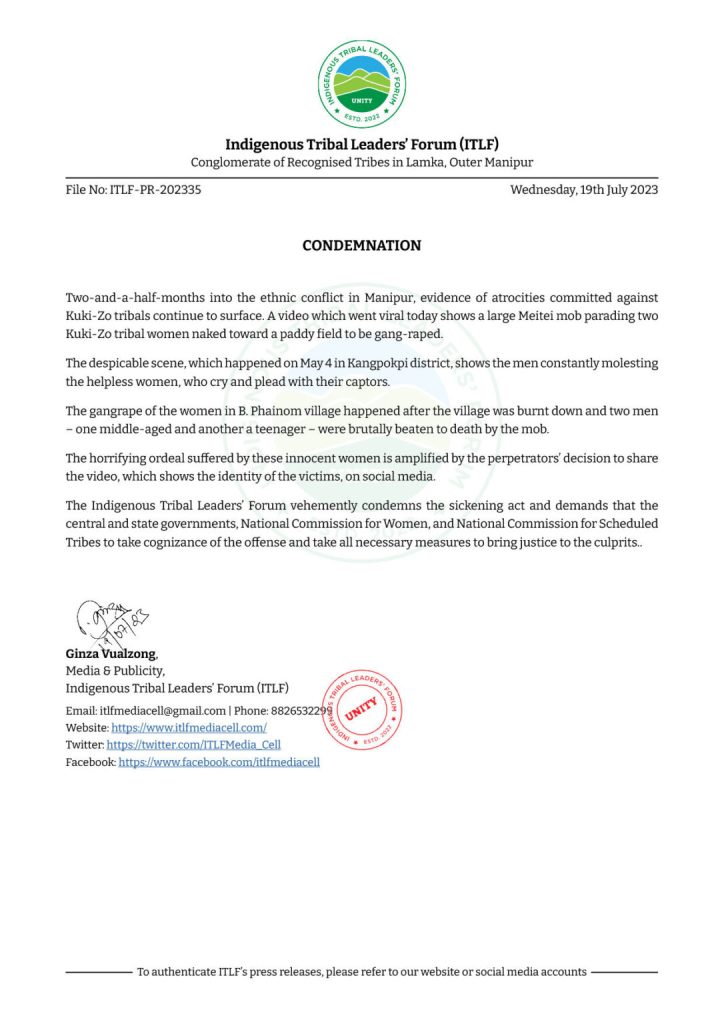
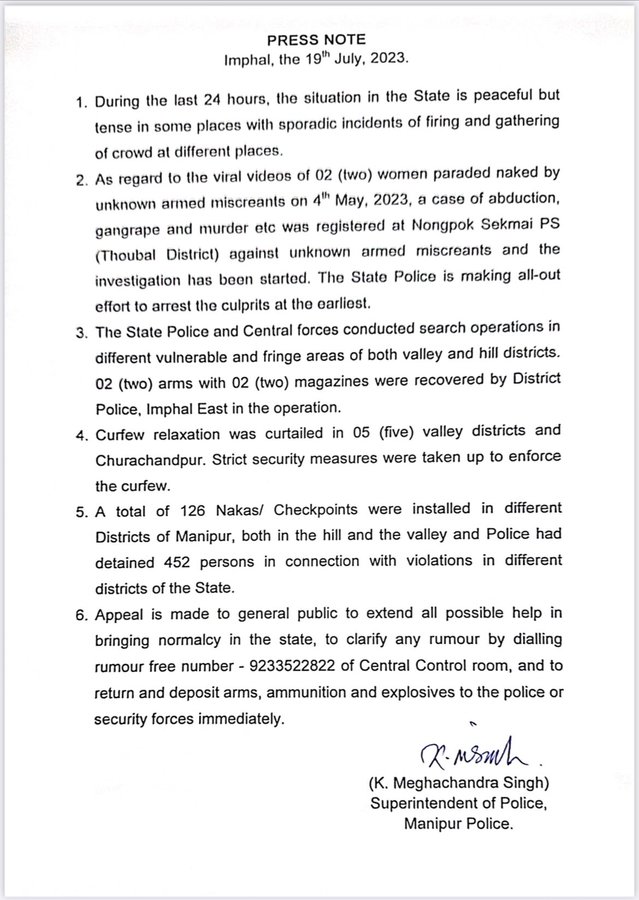
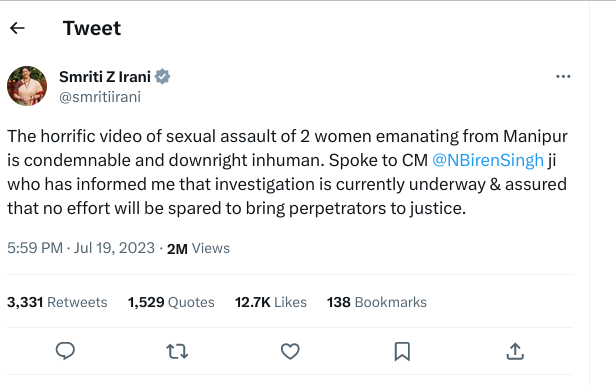

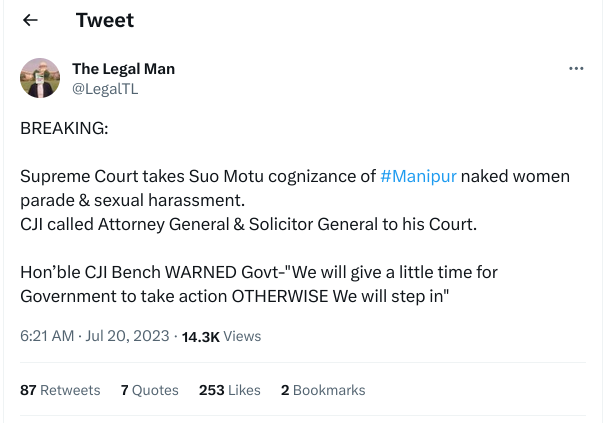










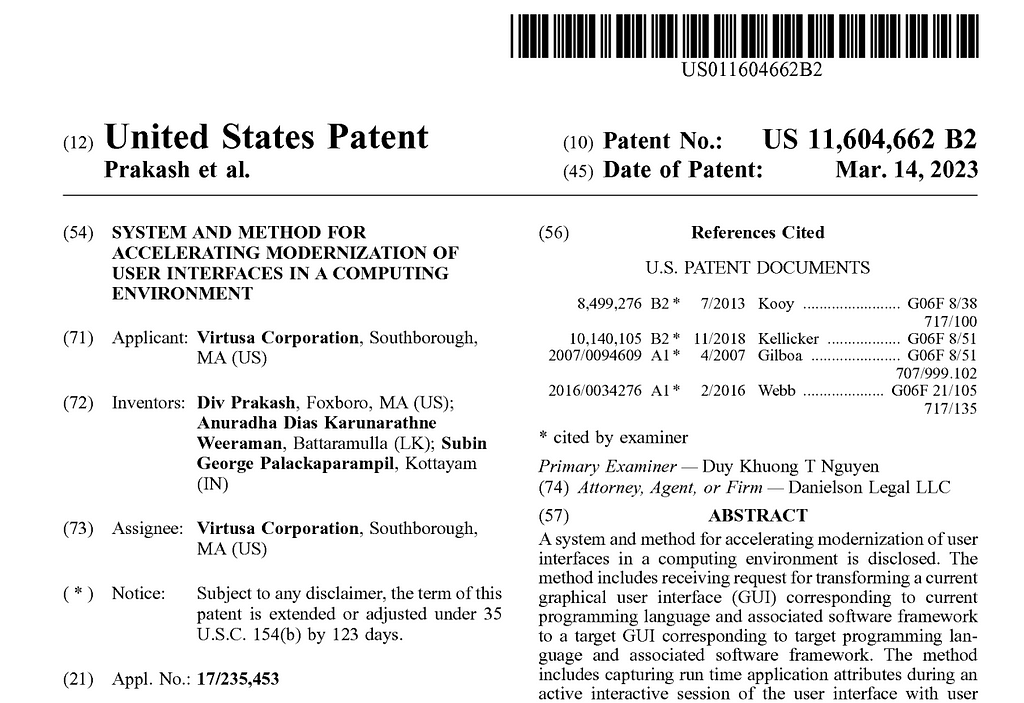 US-11604662-B2
 Two weeks ago, I had the chance to go see Cory Doctorow at my local independent
bookstore, in Montr al. He was there to present his latest essay, co-written
with Rebecca Giblin
 Although Doctorow is known for his strong political stances, I have to say I'm
quite surprised by the quality of the research Giblin and he did for this book.
They both show a pretty advanced understanding of the market dynamics they look
at, and even though most of the solutions they propose aren't new or
groundbreaking, they manage to be convincing and clear.
That is to say, you certainly don't need to be an economist to understand or
enjoy this book :)
As I have mentioned before, the book heavily criticises monopolies, but also
monopsonies a market structure that has only one buyer (instead of one
seller). I find this quite interesting, as whereas people are often familiar
with the concept of monopolies, monopsonies are frequently overlooked.
The classic example of a monopsony is a labor market with a single employer:
there is a multitude of workers trying to sell their labor power, but in the
end, working conditions are dictated by the sole employer, who gets to decide
who has a job and who hasn't. Mining towns are good real-world examples of
monopsonies.
In the book, the authors argue most of the contemporary work produced by
creative workers (especially musicians and writers) is sold to monopsonies and