The LinuxCNC project is
trotting along. And I believe this great software system for
numerical control of machines such as milling machines, lathes, plasma
cutters, routers, cutting machines, robots and hexapods, would do even
better with more in-person developer gatherings, so we plan to
organise such gathering this summer too.
This year we would like to invite to a small LinuxCNC and free
software fabrication workshop/gathering in Norway this summer for the
weekend starting July 4th 2025. New this year is the slightly larger
scope, and we invite people also outside the LinuxCNC community to
join. As earlier, we suggest to organize it as an
unconference,
where the participants create the program upon arrival.
The location is a metal workshop 15 minutes drive away from to the
Gardermoen airport (OSL), where there is a lot of space and a hotel only
5 minutes away by car. We plan to fire up the barbeque in the evenings.
Please let us know if you would like to join. We track the list of
participants on a
simple pad, please add yourself there if you are interested in joining.
The NUUG Foundation has on
our request offered to handle any money involved with this gathering,
in other words holding any sponsor funds and paying any bills.
NUUG Foundation is a spinnoff from the NUUG member organisation here
in Norway with long ties to the free software and open standards
communities.
As usual we hope to find sponsors to pay for food, lodging and travel.
As usual, if you use Bitcoin and want to show your support of my
activities, please send Bitcoin donations to my address
15oWEoG9dUPovwmUL9KWAnYRtNJEkP1u1b.
These days it s straightforward to have reasonably secure, automatic decryption of your root filesystem at boot time on Debian 12. Here s how I did it on an existing system which already had a stock kernel, secure boot enabled, grub2 and an encrypted root filesystem with the passphrase in key slot 0.
There s no need to switch to systemd-boot for this setup but you will use systemd-cryptenroll to manage the TPM-sealed key. If that offends you, there are other ways of doing this.
Caveat
The parameters I ll seal a key against in the TPM include a hash of the initial ramdisk. This is essential to prevent an attacker from swapping the image for one which discloses the key. However, it also means the key has to be re-sealed every time the image is rebuilt. This can be frequent, for example when installing/upgrading/removing packages which include a kernel module. You won t get locked out (as long as you still have a passphrase in another slot), but will need to re-seal the key to restore the automation.
You can also choose not to include this parameter for the seal, but that opens the door to such an attack.
Caution: these are the steps I took on my own system. You may need to adjust them to avoid ending up with a non-booting system.
Check for a usable TPM device
We ll bind the secure boot state, kernel parameters, and other boot measurements to a decryption key. Then, we ll seal it using the TPM. This prevents the disk being moved to another system, the boot chain being tampered with and various other attacks.
Clean up older kernels including leftover configurations
I found that previously-removed (but not purged) kernel packages sometimes cause dracut to try installing files to the wrong paths. Identify them with:
# apt install aptitude
# aptitude search '~c'
Change search to purge or be more selective, this part is an exercise for the reader.
Switch to dracut for initramfs images
Unless you have a particular requirement for the default initramfs-tools, replace it with dracut and customise:
Remove root device from crypttab, configure grub
Remove (or comment) the root device from /etc/crypttab and rebuild the initial ramdisk with dracut -f.
Edit /etc/default/grub and add rd.auto rd.luks=1 to GRUB_CMDLINE_LINUX. Re-generate the config with update-grub.
At this point it s a good idea to sanity-check the initrd contents with lsinitrd. Then, reboot using the new image to ensure there are no issues. This will also have up-to-date TPM measurements ready for the next step.
Identify device and seal a decryption key
# lsblk -ip -o NAME,TYPE,MOUNTPOINTS
NAME                                                    TYPE  MOUNTPOINTS
/dev/nvme0n1p4                                          part  /boot
/dev/nvme0n1p5                                          part
 -/dev/mapper/luks-deff56a9-8f00-4337-b34a-0dcda772e326 crypt
   -/dev/mapper/lv-var                                  lvm   /var
   -/dev/mapper/lv-root                                 lvm   /
   -/dev/mapper/lv-home                                 lvm   /home
In this example my root filesystem is in a container on /dev/nvme0n1p5. The existing passphrase key is in slot 0.
# systemd-cryptenroll --tpm2-device=auto --tpm2-pcrs=7+8+9+14 /dev/nvme0n1p5
Please enter current passphrase for disk /dev/nvme0n1p5: ********
New TPM2 token enrolled as key slot 1.
The PCRs I chose (7, 8, 9 and 14) correspond to the secure boot policy, kernel command line (to prevent init=/bin/bash-style attacks), files read by grub including that crucial initrd measurement, and secure boot MOK certificates and hashes. You could also include PCR 5 for the partition table state, and any others appropriate for your setup.
Reboot
You should now be able to reboot and the root device will be unlocked automatically, provided the secure boot measurements remain consistent.
The key slot protected by a passphrase (mine is slot 0) is now your recovery key. Do not remove it!
Please consider supporting my work in Debian and elsewhere through Liberapay.
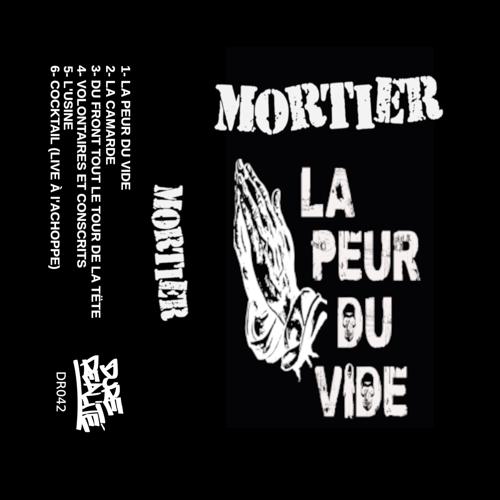
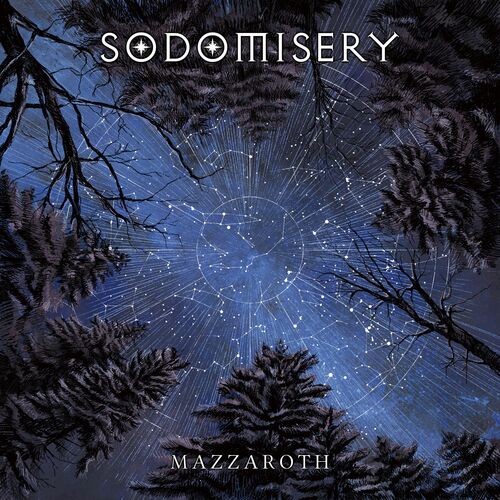
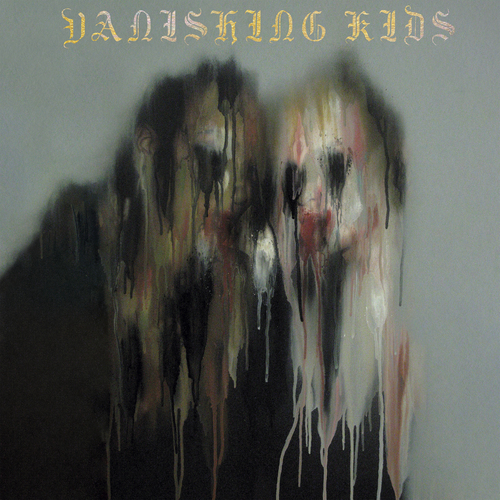
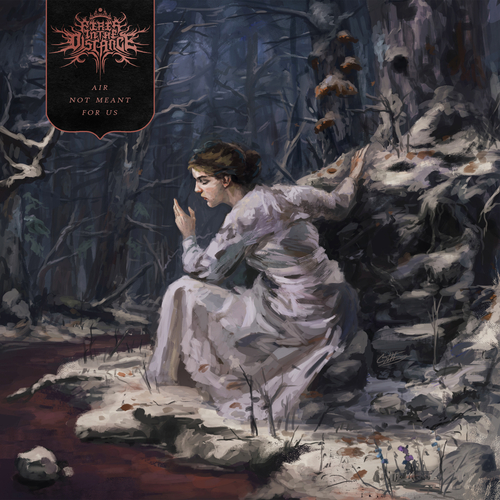
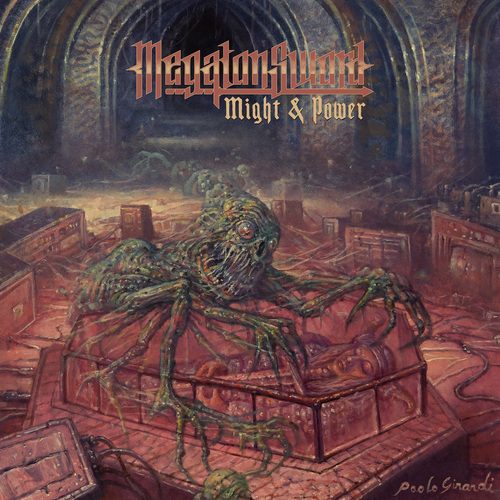
Another musical retrospective. If you enjoy this, I also did a 2022 and a
2023 one.
Albums
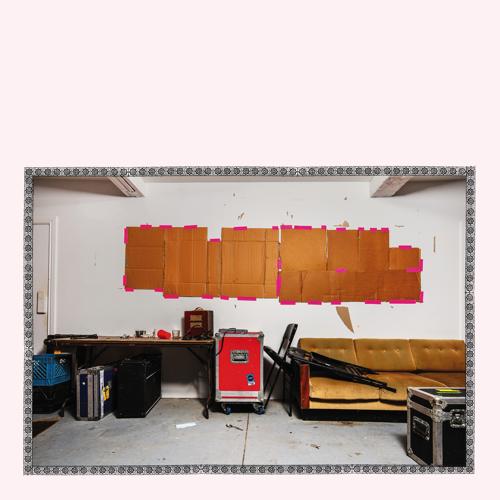
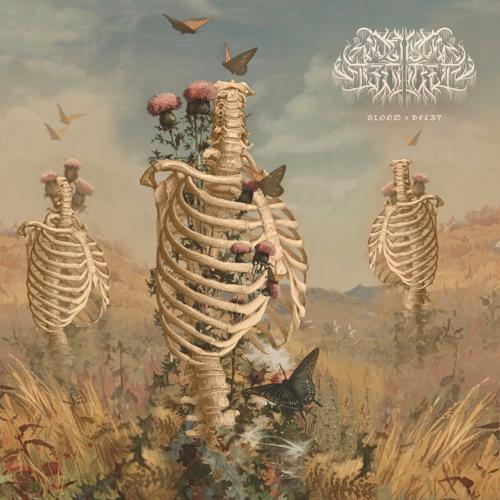
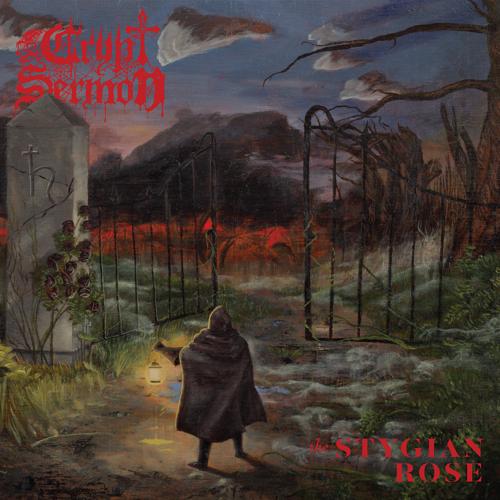
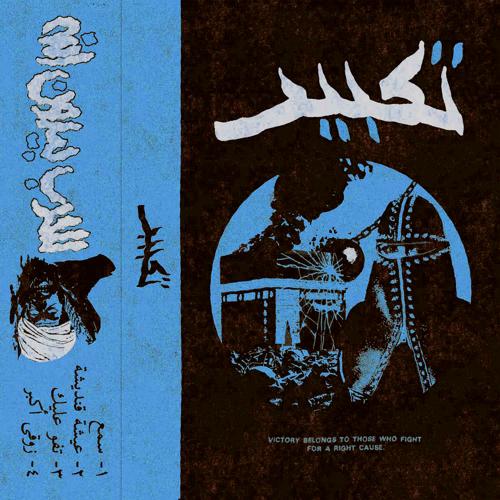
In 2024, I added 88 new albums to my collection that's a lot!
This year again, I bought the vast majority of my music on Bandcamp. To be
honest, I'm quite distraught by what's become of that website. Although it
stays a wonderful place to buy underground music, Songtradr, the new owner of
the platform, has been shown to be viciously anti-union.
Money continues to ruin the world, I guess.
Concerts
I continued to go to a lot of concerts in 2024 (25!). Over the past 3 years, I
have been going to more and more concerts, and I think I've reached my "peak".
A mean of a concert every two weeks is quite a lot :)
If you also like music and concerts, but find yourself not going to as many as
you would like, the real secret is not to be afraid to go to concerts alone.
Going with friends is always fun, but if I restricted myself to only going to
concerts in a group, I'd barely see a few each year.
Another good advice is to bring a book or something else1 to pass the
time between sets. It can often take 30-45 minutes between sets for the artists
to get their instruments ready, which can get quite boring if you just stand
there and wait.
Anyway, here are the concerts I went to in 2024:
February 22nd-23rd-24th (Montreal Madhouse
2024): Scorching Tomb, Bruiserweight, Scaramanga, Cloned Apparition, Chain
Block, Freezerburn, B ton Arm , Mil-Spec, NUKE, Friction, Reality Denied,
SOV, Deathnap, Glint, Mulch, Stigmatism, Plus Minus, Puffer, Deadbolt, Apes,
Pale Ache, Total Nada, Verify, Cross Check
March 16th: Kavinsky
April 11th: Agriculture
April 26th-27th (Oi! Fest 2024): Bishops Green, The
Partisans, Mess, Fuerza Bruta, Empire Down, Unwanted Noise, Lion's Law, The
Oppressed, Ultra Sect, Reckless Upstarts, 21 Gun Salute, Jail
May 4th: MASTER BOOT RECORD
May 16th: Wayfarer, Valdrin, Sonja
May 25th: Union Thugs
June 15th: Ultra Razzia, Over the Hill, Street Code, Mortier
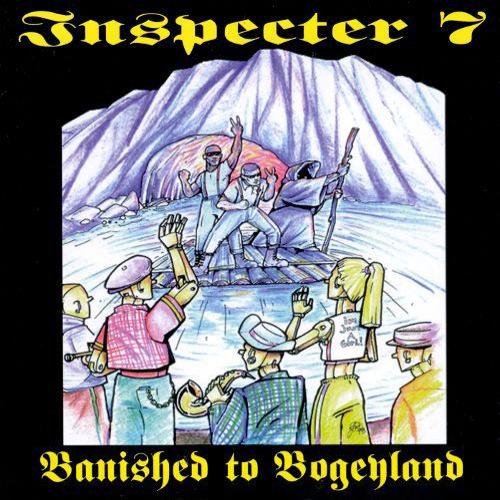
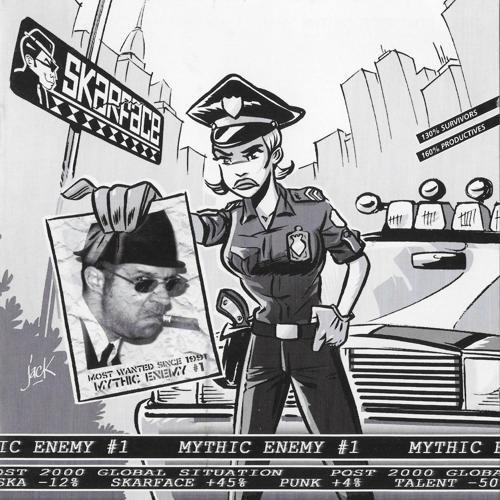
September 5th-6th (Droogs Fest 2024): Skarface,
Inspecter 7, 2 Stone 2 Skank, Francb tards, Les Happycuriens, Perkele, Blanks
77, Violent Way, La Gachette, Jenny Woo
September 16th: Too Many Zoos
September 27th: The Slads, Young Blades, New Release, Mortier
October 2nd: Amorphis, Dark Tranquility, Fires in the Distance
October 7th: Jordi Savall & Hesp rion XXI, accompanied by La
Capella Reial de Catalunya
October 11th-12th (Revolution Fest 2024): Ren
Binam , Dirty Old Mat, Union Thugs, Gunh Twei, Vermine Kaos, Inner
Terrestrials, Ultra Razzia, Battery March, Uzu, One Last Thread, Years of
Lead
October 19th (Varning from Montreal XVI): Coupe Gorge, Flash,
Imploders, Young Blades, Tenaz, M torw lf
November 2nd: Kon-Fusion, Union Thugs
November 12th: Chat Pile, Agriculture, Traindodge
November 25th: Godspeed You! Black Emperor
November 27th: Zeal & Ardour, Gaerea, Zetra
December 7th: Perestro ka, Priors, White Knuckles, Tenaz
Shout out to the Gancio project and to the folks running the Montreal
instance. It continues to be a smash hit and most of the
interesting concerts end up being advertised there.
See you all in 2025!
I bought a Miyoo Mini Plus, a handheld Linux console running
OnionOS, for that express reason. So far it's been great and I've been
very happy to revisit some childhood classics.
Whilst researching what synth to buy, I learned of the Behringer1
Model-D2: a 2018 clone of the 1970 Moog Minimoog, in a desktop form
factor.
Behringer Model-D
In common with the original Minimoog, it's a monophonic analogue synth,
featuring three audible oscillators3 , Moog's famous 12-ladder filter and
a basic envelope generator. The model-d has lost the keyboard from the
original and added some patch points for the different stages, enabling
some slight re-routing of the audio components.
1970 Moog Minimoog
Since I was focussing on more fundamental, back-to-basics
instruments,
this was very appealing to me. I'm very curious to find out what's so compelling
about the famous Moog sound. The relative lack of features feels like an
advantage: less to master. The additional patch points makes it a little
more flexible and offer a potential gateway into the world of modular synthesis.
The Model-D is also very affordable: about 200 GBP. I'll never
own a real Moog.
For this to work, I would need to supplement it with some other equipment.
I'd need a keyboard (or press the Micron into service as a controller); I
would want some way of recording and overdubbing (same as with any synth).
There are no post-mix effects on the Model-D, such as delay, reverb or
chorus, so I may also want something to add those.
What stopped me was partly the realisation that there was little chance that a
perennial beginner, such as I, could eek anything novel out of a synthesiser
design that's 54 years old. Perhaps that shouldn't matter, but it gave me
pause. Whilst the Model-D has patch points, I don't have anything to connect
to them, and I'm firmly wanting to avoid the Modular Synthesis money pit.
The lack of effects, and polyphony could make it hard to live-sculpt a tone.
I started characterizing the Model-D as the "heart" choice, but it seemed
wise to instead go for a "head" choice.
Maybe another day!
There's a whole other blog post of material I could write about
Behringer and their clones of classic synths, some long out of production,
and others, not so much. But, I decided to skip on that for now.
taken from the fact that the Minimoog was a productised version
of Moog's fourth internal prototype, the model D.
It's been a while since I've posted about arm64 hardware. The last
machine I spent my own money on was
a SolidRun
Macchiatobin, about 7 years ago. It's a small (mini-ITX) board
with a 4-core arm64 SoC (4 * Cortex-A72) on it, along with things like
a DIMM socket for memory, lots of networking, 3 SATA disk interfaces.
The Macchiatobin was a nice machine compared to many earlier
systems, but it took quite a bit of effort to get it working to my
liking. I replaced the on-board U-Boot firmware binary with an EDK2
build, and that helped. After a few iterations we got a new build
including graphical output on a PCIe graphics card. Now it worked much
more like a "normal" x86 computer.
I still have that machine running at home, and it's been a
reasonably reliable little build machine for arm development and
testing. It's starting to show its age, though - the onboard USB ports
no longer work, and so it's no longer useful for doing things like
installation testing. :-/
So...
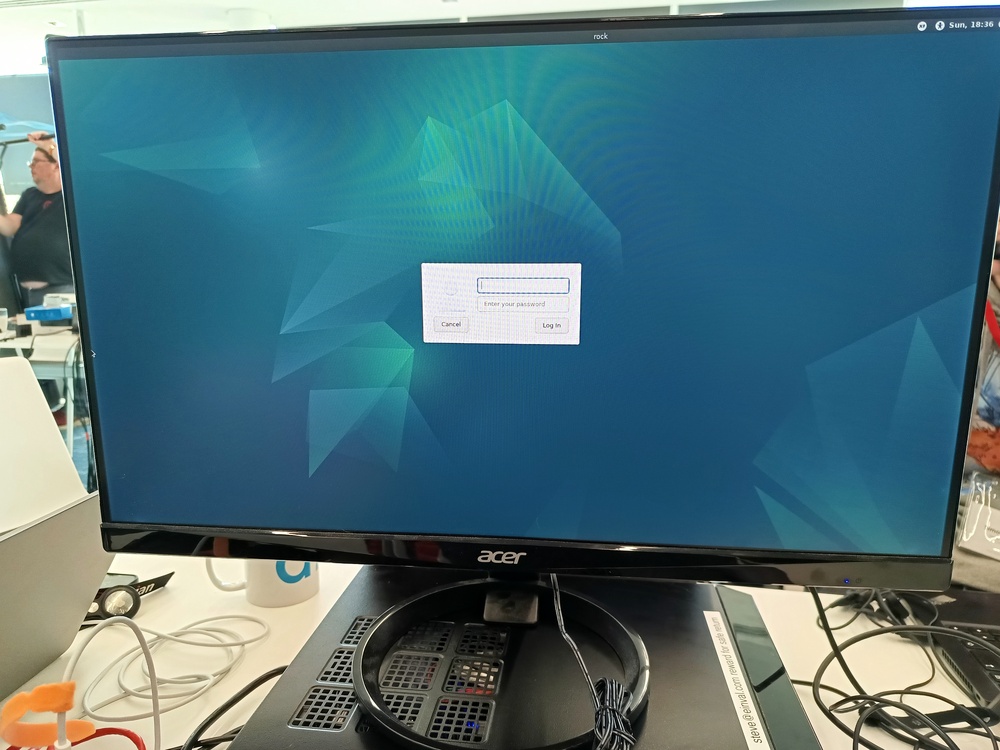
I was involved in a conversation in the #debian-arm IRC channel a
few weeks ago, and diederik suggested
the Radxa Rock 5
ITX. It's another mini-ITX board, this time using a Rockchip
RK3588 CPU. Things have moved on - the CPU is now an 8-core big.LITTLE
config: 4*Cortex A76 and 4*Cortex A55. The board has NVMe on-board,
4*SATA, built-in Mali graphics from the CPU, soldered-on memory. Just
about everything you need on an SBC for a small low-power desktop, a
NAS or whatever. And for about half the price I paid for the
Macchiatobin. I hit "buy" on one of the listed websites. :-)
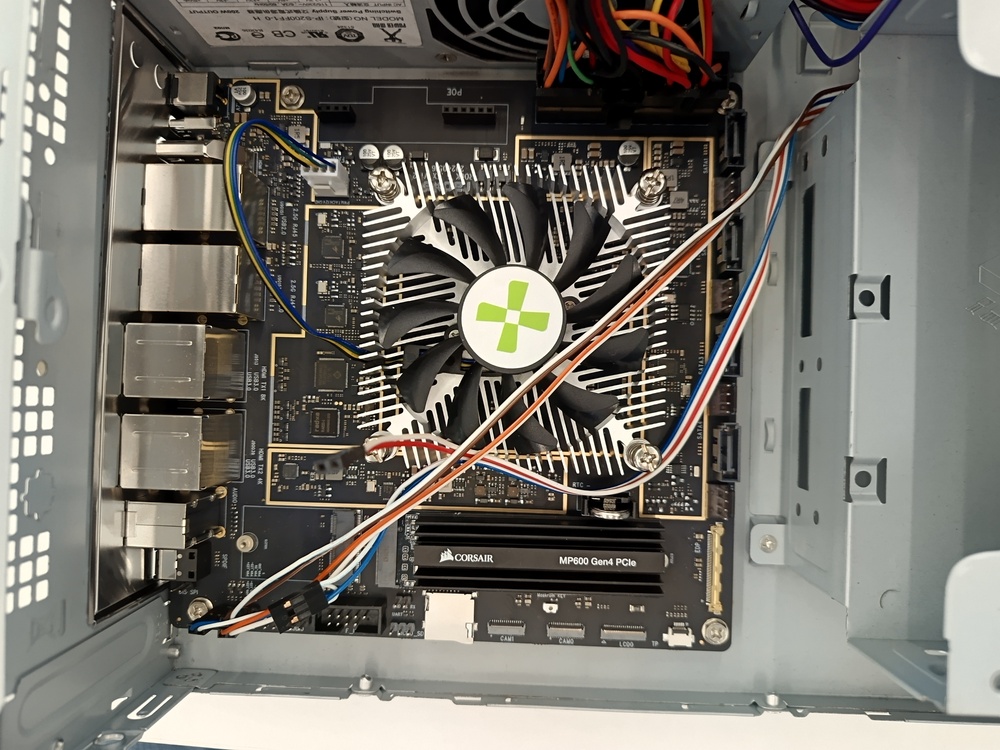
A few days ago, the new board landed. I picked the version with
24GB of RAM and bought the matching heatsink and fan. I set it up in
an existing case borrowed from another old machine and tried the Radxa
"Debian" build. All looked OK, but I clearly wasn't going to stay with
that. Onwards to running a native Debian setup!
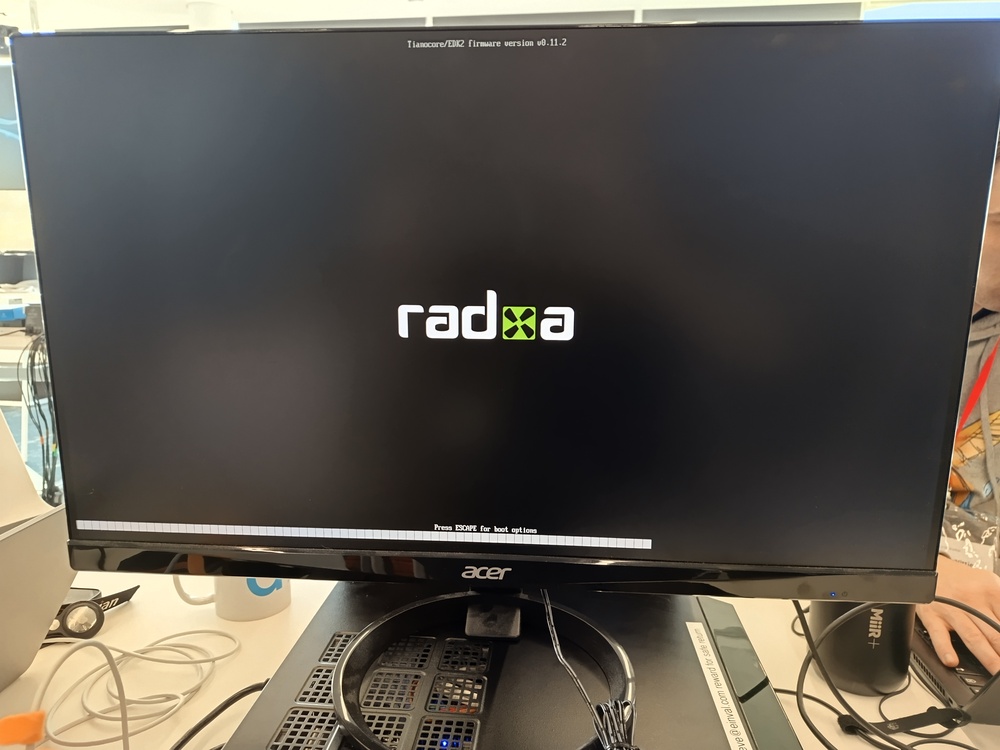
I installed an EDK2 build
from https://github.com/edk2-porting/edk2-rk3588
onto the onboard SPI flash, then rebooted with a Debian 12.7
(Bookworm) arm64 installer image on a USB stick. How much trouble
could this be?
I was shocked! It Just Worked (TM)
I'm running a standard Debian arm64 system. The graphical installer
ran just fine. I installed onto the NVMe, adding an Xfce desktop for
some simple tests. Everything Just Worked. After many
years of fighting with a range of different arm machines (from simple
SBCs to desktops and servers), this was without doubt the most
straightforward setup I've ever done. Wow!
It's possible to go and spend a lot of money on
an Ampere machine, and
I've seen them work well too. But for a hobbyist user (or even a
smaller business), the Rock 5 ITX is a lovely option. Total cost to me
for the board with shipping fees, import duty, etc. was just over
240. That's great value, and I can wholeheartedly recommend this
board!
The two things that are missing compared to the Macchiatobin? This
is soldered-on memory (but hey, 24G is plenty for me!) It also doesn't
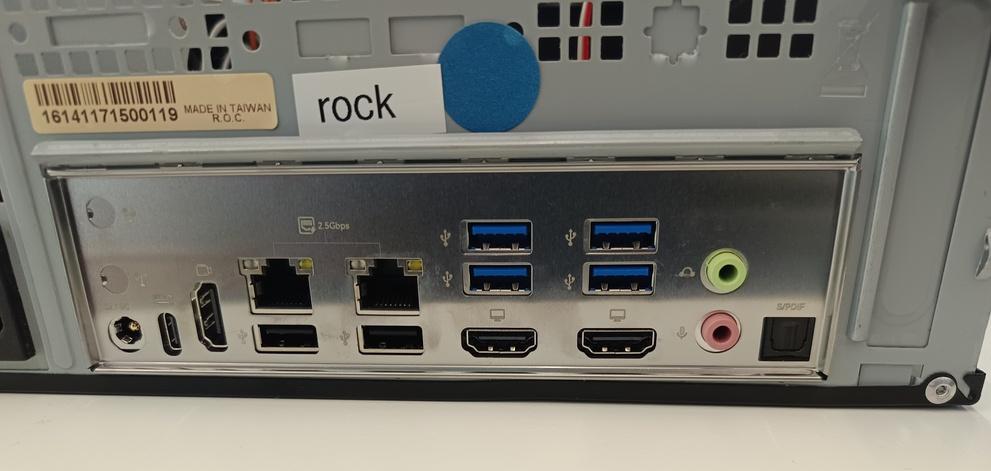
have a PCIe slot, but it has sufficient onboard network, video and
storage interfaces that I think it will cover most people's needs.
Where's the catch? It seems these are very popular
right now, so it can be difficult to find these machines in stock
online.
FTAOD, I should also point out: I bought this machine entirely with
my own money, for my own use for development and testing. I've had no
contact with the Radxa or Rockchip folks at all here, I'm
just so happy with this machine that I've felt the
need to shout about it! :-)
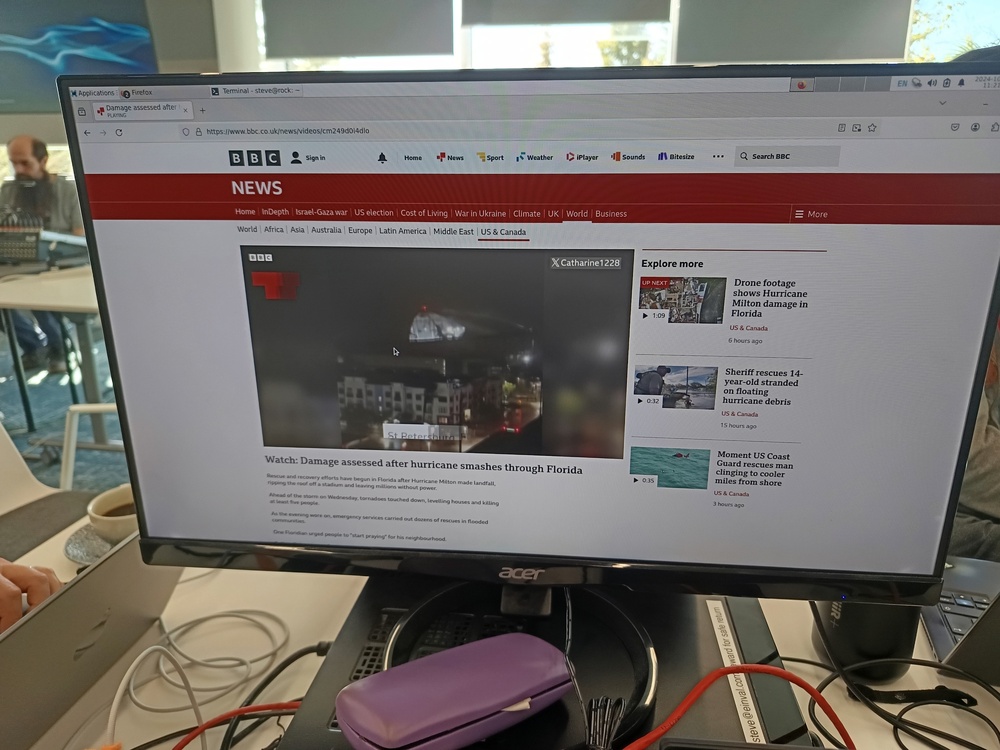
Here's some pictures...
DebConf24 is now over! I'm very happy I was able to attend this year. If
you haven't had time to look at the schedule yet, here is a
selection of talks I liked.
What happens if I delete setup.py?: a live demo of upgrading to PEP-518 Python packaging
A great talk by Weezel showcasing how easy it is to migrate to PEP-518 for
existing Python projects.
This is the kind of thing I've been doing a lot when packaging upstream
projects that still use setup.py. I encourage you to send this kind of patch
upstream, as it makes everyone's life much easier.
Debian on Chromebooks: What's New and What's Next?
A talk by Alper Nebi Yasak, who has done great work on running Debian and the
Debian Installer on Chromebooks.
With Chromebooks being very popular machines in schools, it's nice to see people
working on a path to liberate them.
Sequoia PGP, sq, gpg-from-sq, v6 OpenPGP, and Debian
I had the chance to see Justus' talk on Sequoia an OpenPGP implementation in
Rust at DebConf22 in Kosovo. Back then, the conclusion was that
sq wasn't ready for production yet.
Well it seems it now is! This in-depth talk goes through the history of the
project and its goals. There is also a very good section on the current
OpenPGP/LibrePGP schism.
Chameleon - the easy way to try out Sequoia - OpenPGP written in Rust
A very short talk by Holger on Chameleon, a tool to make migration to Sequoia
easier.
TL;DW: apt install gpg-from-sq
Protecting OpenPGP keyservers from certificate flooding
Although I used to enjoy signing people's OpenPGP keys, I completely gave up on
this practice around 2019 when dkg's key was flooded with bogus
certifications and have been refusing to do so since.
In this talk, Gunnar talks about his PhD work on fixing this issue and making
sure we can eventually restore this important function on keyservers.
Bits from the DPL
Bits from the DPL! A DebConf classic.
Linux live patching in Debian
Having to reboot servers after kernel upgrades is a hassle, especially with
machines that have encrypted disk drives.
Although kernel live patching in Debian is still a work in progress, it is
encouraging to see people trying to fix this issue.
"I use Debian BTW": fzf, tmux, zoxide and friends
A fun talk by Samuel Henrique on little changes and tricks one can make to
their setup to make life easier.
Ideas to Move Debian Installer Forward
Another in-depth talk by Alper, this time on the Debian Installer and his ideas
to try to make it better. I learned a lot about the d-i internals!
Lightning Talks
Lighting talks are always fun to watch! This year, the following talks happened:
Customizing your Linux icons
A Free Speech tracker by SFLC.IN
Desktop computing is irrelevant
An introduction to wcurl
Aliasing in dpkg
A DebConf art space
Tiny Tapeout, Fomu, PiCI
Data processing and visualisation in the shell
Is there a role for Debian in the post-open source era?
As an economist, I've been interested in Copyright and business models in the
Free Software ecosystem for a while. In this talk, Hatta-san and Bruce Perens
discuss the idea of alternative licences that are not DFSG-free, like
Post-Open.
Welcome to the June 2024 report from the Reproducible Builds project!
In our reports, we outline what we ve been up to over the past month and highlight news items in software supply-chain security more broadly. As always, if you are interested in contributing to the project, please visit our Contribute page on our website.
Table of contents:
Next Reproducible Builds Summit dates announced
We are very pleased to announce the upcoming Reproducible Builds Summit, set to take place from September 17th 19th 2024 in Hamburg, Germany.
We are thrilled to host the seventh edition of this exciting event, following the success of previous summits in various iconic locations around the world, including Venice, Marrakesh, Paris, Berlin and Athens. Our summits are a unique gathering that brings together attendees from diverse projects, united by a shared vision of advancing the Reproducible Builds effort. During this enriching event, participants will have the opportunity to engage in discussions, establish connections and exchange ideas to drive progress in this vital field. Our aim is to create an inclusive space that fosters collaboration, innovation and problem-solving.
If you re interesting in joining us this year, please make sure to read the event page which has more details about the event and location. We are very much looking forward to seeing many readers of these reports there.
GNU Guix patch review session for reproducibility
Vagrant Cascadian will be holding a Reproducible Builds session as part of the monthly Guix patch review series on July 11th at 17:00 UTC.
These online events are intended to encourage everyone everyone becoming a patch reviewer and the goal of reviewing patches is to help Guix project accept contributions while maintaining our quality standards and learning how to do patch reviews together in a friendly hacking session.
New reproducibility-related academic papers
Multiple scholarly papers related to Reproducible Builds were published this month:
An Industry Interview Study of Software Signing for Supply Chain Security was published by Kelechi G. Kalu, Tanmay Singla, Chinenye Okafor, Santiago Torres-Arias and James C. Davis of Electrical and Computer Engineering department of Purdue University, Indiana, USA, and is concerned with:
To understand software signing in practice, we interviewed 18 high-ranking industry practitioners across 13 organizations. We provide possible impacts of experienced software supply chain failures, security standards, and regulations on software signing adoption. We also study the challenges that affect an effective software signing implementation.
Code signing enables software developers to digitally sign their code using cryptographic keys, thereby associating the code to their identity. This allows users to verify the authenticity and integrity of the software, ensuring it has not been tampered with. Next-generation software signing such as Sigstore and OpenPubKey simplify code signing by providing streamlined mechanisms to verify and link signer identities to the public key. However, their designs have vulnerabilities: reliance on an identity provider introduces a single point of failure, and the failure to follow the principle of least privilege on the client side increases security risks. We introduce Diverse Identity Verification (DiVerify) scheme, which strengthens the security guarantees of next-generation software signing by leveraging threshold identity validations and scope mechanisms.
[ ] resulted in an extension of GNU make which is called rmake, where diffoscope a tool for detecting differences between a large number of file types was integrated into the workflow of make. rmake was later used to answer the posed research questions for this thesis. We found that different build paths and offsets are a big problem as three out of three tested Free and Open Source Software projects all contained these variations. The results also showed that gcc s optimisation levels did not affect reproducibility, but link-time optimisation embeds a lot of unreproducible information in build artefacts. Lastly, the results showed that build paths, build ID s and randomness are the three most common groups of variations encountered in the wild and potential solutions for some variations were proposed.
The thesis serves as an introduction to the concept of reproducibility in software engineering, offering a comprehensive overview of formalizations using mathematical notations for key concepts and an empirical evaluation of several key tools. By exploring various case studies, methodologies and tools, the research aims to provide actionable insights for practitioners and researchers alike.
Development news
In Debian this month, 4 reviews of Debian packages were added, 11 were updated and 14 were removed this month adding to our knowledge about identified issues. Only one issue types was updated, though, explaining that we don t vary the build path anymore.
On our mailing list this month, Bernhard M. Wiedemann wrote that whilst he had previously collected issues that introduce non-determinism he has now moved on to discuss about mitigations , in the sense of how can we avoid whole categories of problem without patching an infinite number of individual packages . In addition, Janneke Nieuwenhuizen announced the release of two versions of GNU Mes. [][]
In openSUSE news, Bernhard M. Wiedemann published another report for that distribution.
In NixOS, with the 24.05 release out, it was again validated that our minimal ISO is reproducible by building it on a virtual machine with no access to the binary cache.
What s more, we continued to write patches in order to fix specific reproducibility issues, including Bernhard M. Wiedemann writing three patches (for qutebrowser, samba and systemd), Chris Lamb filing Debian bug #1074214 against the fastfetch package and Arnout Engelen proposing fixes to refind and for the Scala compiler [.
Lastly, diffoscope is our in-depth and content-aware diff utility that can locate and diagnose reproducibility issues. This month, Chris Lamb uploaded two versions (270 and 271) to Debian, and made the following changes as well:
Drop Build-Depends on liblz4-tool in order to fix Debian bug #1072575. []
Update tests to support zipdetails version 4.004 that is shipped with Perl 5.40. []
Website updates
There were a number of improvements made to our website this month, including Akihiro Suda very helpfully making the <h4> elements more distinguishable from the <h3> level [][] as well as adding a guide for Dockerfile reproducibility []. In addition Fay Stegerman added two tools, apksigcopier and reproducible-apk-tools, to our Tools page.
Reproducibility testing framework
The Reproducible Builds project operates a comprehensive testing framework running primarily at tests.reproducible-builds.org in order to check packages and other artifacts for reproducibility. In June, a number of changes were made by Holger Levsen, including:
Marking the virt(32 64)c-armhf nodes as down. []
Granting a developer access to the osuosl4 node in order to debug a regression on the ppc64el architecture. []
Granting a developer access to the osuosl4 node. [][]
In addition, Mattia Rizzolo re-aligned the /etc/default/jenkins file with changes performed upstream [] and changed how configuration files are handled on the rb-mail1 host. [], whilst Vagrant Cascadian documented the failure of the virt32c and virt64c nodes after initial investigation [].
If you are interested in contributing to the Reproducible Builds project, please visit our Contribute page on our website. However, you can get in touch with us via:
In
April, I started migrating orphaned Debian packages without any
version control system listed in debian/control to git. This morning,
my Debian QA page finally reached 200 QA packages migrated. In
reality there are a few more, as the packages uploaded by someone else
after my initial upload have disappeared from my QA uploads list. As
I am running out of steam and will most likely focus on other parts of
Debian moving forward, I hope someone else will find time to continue
the migration to bring the number of orphaned packages without any
version control system down to zero. Here is the updated recipe if
someone want to help out.
To locate packages to work on, the following one-liner can be used:
PGPASSWORD="udd-mirror" psql --port=5432 --host=udd-mirror.debian.net \
  --username=udd-mirror udd -c "select source from sources \
   where release = 'sid' and (vcs_url ilike '%anonscm.debian.org%' \
   OR vcs_browser ilike '%anonscm.debian.org%' or vcs_url IS NULL \
   OR vcs_browser IS NULL) AND maintainer ilike '%packages@qa.debian.org%' \
   order by random() limit 10;"
Pick a random package from the list and run the latest edition of
the script
debian-snap-to-salsa
with the package name as the argument to prepare a git repository with
the existing packaging. This will download old Debian packages from
snapshot.debian.org. Note that very recent uploads will not
be included, so check out the package on tracker.debian.org.
Next, run gbp buildpackage --git-ignore-new to verify that
the package build as it should, and then visit
https://salsa.debian.org/debian/
and make sure there is not already a git repository for the package
there. I also did git log -p debian/control and look for vcs
entries to check if the package used to have a git repository on
Alioth, and see if it can be a useful starting point moving forward.
If all this check out, I created a new gitlab project below the Debian
group on salsa, push the package source there and upload a new version.
I tend to also ensure build hardening is enabled, if it prove to be
easy, and check if I can easily fix any lintian issues or bug reports.
If the process took more than 20 minutes, I dropped it and moved on to
another package.
If I found patches in debian/patches/ that were not yet passed
upstream, I would send an email to make sure upstream know about them.
This has proved to be a valuable step, and caused several new releases
for software that initially appeared abandoned. :)
As usual, if you use Bitcoin and want to show your support of my
activities, please send Bitcoin donations to my address
15oWEoG9dUPovwmUL9KWAnYRtNJEkP1u1b.
The Norwegian The LinuxCNC
developer gathering 2024 is over. It was a great and productive
weekend, and I am sad that it is over.
Regular readers probably still remember what LinuxCNC is, but her
is a quick summary for those that forgot? LinuxCNC is a free software
system for numerical control of machines such as milling machines,
lathes, plasma cutters, routers, cutting machines, robots and
hexapods. It eats G-code and produce motor movement and other changes
to the physical world, while reading sensor input.
I am not quite sure about the total head count, as not all people
were present at the gathering the entire weekend, but I believe it was
close to 10 people showing their faces at the gathering. The "hard
core" of the group, who stayed the entire weekend, were two from
Norway, two from Germany and one from England. I am happy with the
outcome from the gathering. We managed to wrap up a new stable
LinuxCNC release 2.9.3 and even tested it on real hardware within
minutes of the release. The release notes for 2.9.3 are still being
written, but should show up on on the project site in the next few
days. We managed to go through around twenty pull requests and merge
then into either the stable release (2.9) or the development branch
(master). There are still around thirty pull requests left to
process, so we are not out of work yet. We even managed to
fix/improve a slightly worn lathe, and experiment with running a
mechanical clock using G-code.
The evening barbeque worked well both on Saturday and Sunday. It
is quite fun to light up a charcoal grill using compressed air. Sadly
the weather was not the best, so we stayed indoors most of the
time.
This gathering was made possible partly with sponsoring from both
Redpill Linpro,
Debian and
NUUG Foundation, and we are
most grateful for the support. I would also like to thank the local
school for lending us some furniture, and of course the rest of the
members of the organizers team, Asle and Bosse, for their countless
contributions. The gathering was such success that we want to do it
again next year.
We plan to organize the next Norwegian LinuxCNC developer gathering
at the end of June next year, the weekend Friday 27th to Sunday 29th
of June 2025. I recommend you reserve the dates on your calendar
today. Other related communities are also welcome to join in, for
example those working on systems like FreeCAD and opencamlib, as I am
sure we have much in common and sharing experiences would be very
useful to all involved. We are of course looking for sponsors for
this gathering already. The total budget for this gathering was
around NOK 25.000 (around EUR 2.300), so our needs are quite modest.
Perhaps a machine or tools company would like to help out the free
software manufacturing community by sponsoring food, lodging and
transport for such gathering?
The LinuxCNC project is still
going strong. And I believe this great software system for numerical control of
machines such as milling machines, lathes, plasma cutters, routers,
cutting machines, robots and hexapods, would do even better with more
in-person developer gatherings, so we plan to organise such gathering
this summer too.
The Norwegian LinuxCNC developer gathering take place the weekend
Friday July 5th to 7th this year, and is open for everyone interested
in contributing to LinuxCNC and free software manufacturing. Up to
date information about the gathering can be found in
the
developer mailing list thread where the gathering was announced.
Thanks to the good people at
Debian as well as leftover money
from last years gathering from
Redpill-Linpro and
NUUG Foundation, we
have enough sponsor funds to pay for food, and probably also shelter
for the people traveling from afar to join us. If you would like to
join the gathering, get in touch and add your details on
the pad.
As usual, if you use Bitcoin and want to show your support of my
activities, please send Bitcoin donations to my address
15oWEoG9dUPovwmUL9KWAnYRtNJEkP1u1b.
Nine days ago, I started migrating orphaned Debian packages with no
version control system listed in debian/control of the source to git.
At the time there were 438 such packages. Now there are 391,
according to the UDD. In reality it is slightly less, as there is a
delay between uploads and UDD updates. In the nine days since, I have
thus been able to work my way through ten percent of the packages. I
am starting to run out of steam, and hope someone else will also help
brushing some dust of these packages. Here is a recipe how to do it.
I start by picking a random package by querying the UDD for a list of
10 random packages from the set of remaining packages:
PGPASSWORD="udd-mirror" psql --port=5432 --host=udd-mirror.debian.net \
  --username=udd-mirror udd -c "select source from sources \
   where release = 'sid' and (vcs_url ilike '%anonscm.debian.org%' \
   OR vcs_browser ilike '%anonscm.debian.org%' or vcs_url IS NULL \
   OR vcs_browser IS NULL) AND maintainer ilike '%packages@qa.debian.org%' \
   order by random() limit 10;"
Next, I visit http://salsa.debian.org/debian and search for the
package name, to ensure no git repository already exist. If it does,
I clone it and try to get it to an uploadable state, and add the Vcs-*
entries in d/control to make the repository more widely known. These
packages are a minority, so I will not cover that use case here.
For packages without an existing git repository, I run the
following script debian-snap-to-salsa to prepare a git
repository with the existing packaging.
#!/bin/sh
#
# See also https://bugs.debian.org/804722#31
set -e
# Move to this Standards-Version.
SV_LATEST=4.7.0
PKG="$1"
if [ -z "$PKG" ]; then
    echo "usage: $0 "
    exit 1
fi
if [ -e "$ PKG -salsa" ]; then
    echo "error: $ PKG -salsa already exist, aborting."
    exit 1
fi
if [ -z "ALLOWFAILURE" ] ; then
    ALLOWFAILURE=false
fi
# Fetch every snapshotted source package.  Manually loop until all
# transfers succeed, as 'gbp import-dscs --debsnap' do not fail on
# download failures.
until debsnap --force -v $PKG   $ALLOWFAILURE ; do sleep 1; done
mkdir $ PKG -salsa; cd $ PKG -salsa
git init
# Specify branches to override any debian/gbp.conf file present in the
# source package.
gbp import-dscs  --debian-branch=master --upstream-branch=upstream \
    --pristine-tar ../source-$PKG/*.dsc
# Add Vcs pointing to Salsa Debian project (must be manually created
# and pushed to).
if ! grep -q ^Vcs- debian/control ; then
    awk "BEGIN   s=1   /^\$/   if (s==1)   print \"Vcs-Browser: https://salsa.debian.org/debian/$PKG\"; print \"Vcs-Git: https://salsa.debian.org/debian/$PKG.git\"  ; s=0     print  " < debian/control > debian/control.new && mv debian/control.new debian/control
    git commit -m "Updated vcs in d/control to Salsa." debian/control
fi
# Tell gbp to enforce the use of pristine-tar.
inifile +inifile debian/gbp.conf +create +section DEFAULT +key pristine-tar +value True
git add debian/gbp.conf
git commit -m "Added d/gbp.conf to enforce the use of pristine-tar." debian/gbp.conf
# Update to latest Standards-Version.
SV="$(grep ^Standards-Version: debian/control awk ' print $2 ')"
if [ $SV_LATEST != $SV ]; then
    sed -i "s/\(Standards-Version: \)\(.*\)/\1$SV_LATEST/" debian/control
    git commit -m "Updated Standards-Version from $SV to $SV_LATEST." debian/control
fi
if grep -q pkg-config debian/control; then
    sed -i s/pkg-config/pkgconf/ debian/control
    git commit -m "Replaced obsolete pkg-config build dependency with pkgconf." debian/control
fi
if grep -q libncurses5-dev debian/control; then
    sed -i s/libncurses5-dev/libncurses-dev/ debian/control
    git commit -m "Replaced obsolete libncurses5-dev build dependency with libncurses-dev." debian/control
fi
Some times the debsnap script fail to download some of the versions.
In those cases I investigate, and if I decide the failing versions
will not be missed, I call it using ALLOWFAILURE=true to ignore the
problem and create the git repository anyway.
With the git repository in place, I do a test build (gbp
buildpackage) to ensure the build is actually working. If it does not
I pick a different package, or if the build failure is trivial to fix,
I fix it before continuing. At this stage I revisit
http://salsa.debian.org/debian and create the project under this group
for the package. I then follow the instructions to publish the local
git repository. Here is from a recent example:
With a working build, I have a look at the build rules if I want to
remove some more dust. I normally try to move to debhelper compat
level 13, which involves removing debian/compat and modifying
debian/control to build depend on debhelper-compat (=13). I also test
with 'Rules-Requires-Root: no' in debian/control and verify in
debian/rules that hardening is enabled, and include all of these if
the package still build. If it fail to build with level 13, I try
with 12, 11, 10 and so on until I find a level where it build, as I do
not want to spend a lot of time fixing build issues.
Some times, when I feel inspired, I make sure debian/copyright is
converted to the machine readable format, often by starting with
'debhelper -cc' and then cleaning up the autogenerated content until
it matches realities. If I feel like it, I might also clean up
non-dh-based debian/rules files to use the short style dh build
rules.
Once I have removed all the dust I care to process for the package,
I run 'gbp dch' to generate a debian/changelog entry based on the
commits done so far, run 'dch -r' to switch from 'UNRELEASED' to
'unstable' and get an editor to make sure the 'QA upload' marker is in
place and that all long commit descriptions are wrapped into sensible
lengths, run 'debcommit --release -a' to commit and tag the new
debian/changelog entry, run 'debuild -S' to build a source only
package, and 'dput ../perl-byacc_2.0-10_source.changes' to do the
upload. During the entire process, and many times per step, I run
'debuild' to verify the changes done still work. I also some times
verify the set of built files using 'find debian' to see if I can spot
any problems (like no file in usr/bin any more or empty package). I
also try to fix all lintian issues reported at the end of each
'debuild' run.
If I find Debian specific patches, I try to ensure their metadata
is fairly up to date and some times I even try to reach out to
upstream, to make the upstream project aware of the patches. Most of
my emails bounce, so the success rate is low. For projects with no
Homepage entry in debian/control I try to track down one, and for
packages with no debian/watch file I try to create one. But at least
for some of the packages I have been unable to find a functioning
upstream, and must skip both of these.
If I could handle ten percent in nine days, twenty people could
complete the rest in less then five days. I use approximately twenty
minutes per package, when I have twenty minutes spare time to spend.
Perhaps you got twenty minutes to spare too?
As usual, if you use Bitcoin and want to show your support of my
activities, please send Bitcoin donations to my address
15oWEoG9dUPovwmUL9KWAnYRtNJEkP1u1b.
Update 2024-05-04: There is
an
updated edition of my migration script, last updated
2024-05-04.
I am happy to report that
the megactl package,
useful to fetch RAID status when using the LSI Megaraid controller,
now is available in Debian. It passed NEW a few days ago, and is now
available in
unstable, and probably showing up in testing in a weeks time. The
new version should provide Appstream hardware mapping and should
integrate nicely with isenkram.
As usual, if you use Bitcoin and want to show your support of my
activities, please send Bitcoin donations to my address
15oWEoG9dUPovwmUL9KWAnYRtNJEkP1u1b.
There are several packages in Debian without a associated git
repository with the packaging history. This is unfortunate and it
would be nice if more of these would do so. Quote a lot of these are
without a maintainer, ie listed as maintained by the
'Debian
QA Group' place holder. In fact, 438 packages have this property
according to UDD (SELECT source FROM sources WHERE release = 'sid'
AND (vcs_url ilike '%anonscm.debian.org%' OR vcs_browser ilike
'%anonscm.debian.org%' or vcs_url IS NULL OR vcs_browser IS NULL) AND
maintainer ilike '%packages@qa.debian.org%';). Such packages can
be updated without much coordination by any Debian developer, as they
are considered orphaned.
To try to improve the situation and reduce the number of packages
without associated git repository, I started a few days ago to search
out candiates and provide them with a git repository under the
'debian' collaborative Salsa project. I started with the packages
pointing to obsolete Alioth git repositories, and am now working my
way across the ones completely without git references. In addition to
updating the Vcs-* debian/control fields, I try to update
Standards-Version, debhelper compat level, simplify d/rules, switch to
Rules-Requires-Root: no and fix lintian issues reported. I only
implement those that are trivial to fix, to avoid spending too much
time on each orphaned package. So far my experience is that it take
aproximately 20 minutes to convert a package without any git
references, and a lot more for packages with existing git repositories
incompatible with git-buildpackages.
So far I have converted 10 packages, and I will keep going until I
run out of steam. As should be clear from the numbers, there is
enough packages remaining for more people to do the same without
stepping on each others toes. I find it useful to start by searching
for a git repo already on salsa, as I find that some times a git repo
has already been created, but no new version is uploaded to Debian
yet. In those cases I start with the existing git repository. I
convert to the git-buildpackage+pristine-tar workflow, and ensure a
debian/gbp.conf file with "pristine-tar=True" is added early, to avoid
uploading a orig.tar.gz with the wrong checksum by mistake. Did that
three times in the begin before I remembered my mistake.
So, if you are a Debian Developer and got some spare time, perhaps
considering migrating some orphaned packages to git?
As usual, if you use Bitcoin and want to show your support of my
activities, please send Bitcoin donations to my address
15oWEoG9dUPovwmUL9KWAnYRtNJEkP1u1b.
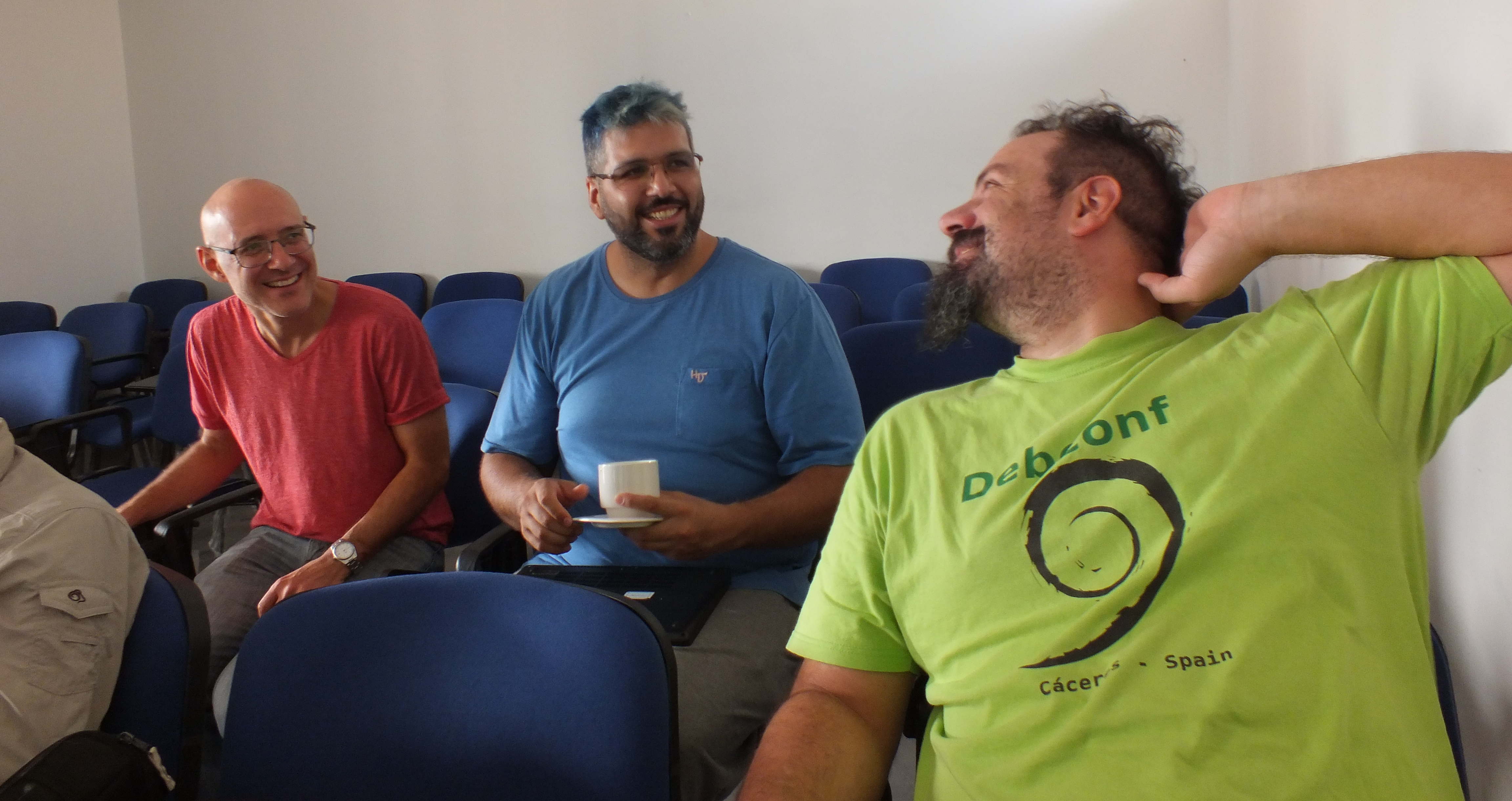
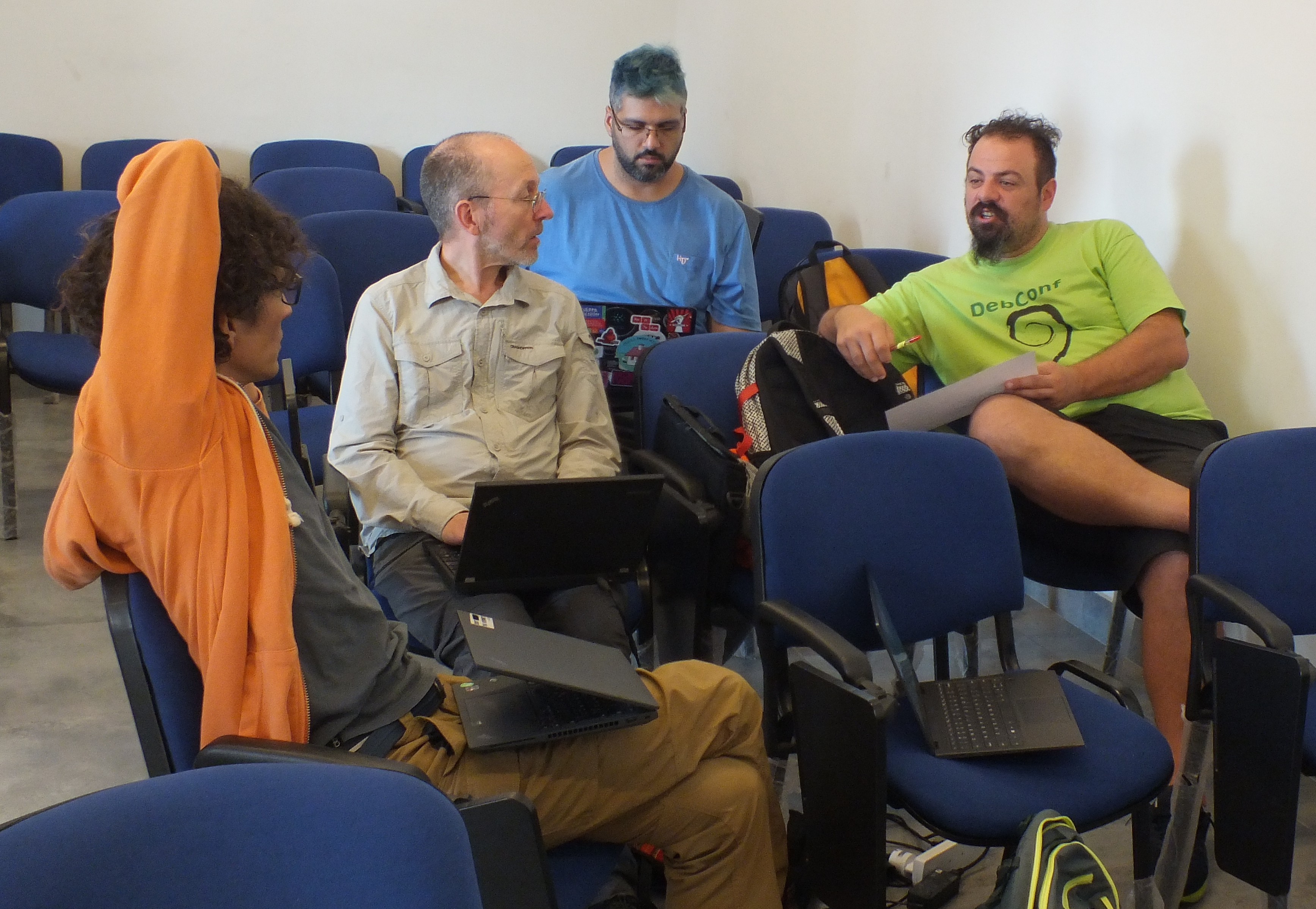
Last week we held our promised miniDebConf in Santa Fe City, Santa Fe province,
Argentina just across the river from Paran , where I have spent almost six
beautiful months I will never forget.
Around 500 Kilometers North from Buenos Aires, Santa Fe and Paran are separated
by the beautiful and majestic Paran river, which flows from Brazil, marks the
Eastern border of Paraguay, and continues within Argentina as the heart of the
litoral region of the country, until it merges with the Uruguay river (you
guessed right the river marking the Eastern border of Argentina, first with
Brazil and then with Uruguay), and they become the R o de la Plata.
This was a short miniDebConf: we were lent the APUL union s building for the
weekend (thank you very much!); during Saturday, we had a cycle of talks, and on
sunday we had more of a hacklab logic, having some unstructured time to work
each on their own projects, and to talk and have a good time together.
We were five Debian people attending:
santiago debacle eamanu dererk gwolf @debian.org. My main contact to
kickstart organization was Mart n Bayo. Mart n was for many years the leader of
the Technical Degree on Free Software at Universidad Nacional del
Litoral,
where I was also a teacher for several years. Together with Leo Mart nez, also a
teacher at the tecnicatura, they contacted us with Guillermo and Gabriela,
from the APUL non-teaching-staff union of said university.
We had the following set of talks (for which there is a promise to get
electronic record, as APUL was kind enough to record them! of course, I will
push them to our usual conference video archiving service as soon as I get them)
Hour
Title (Spanish)
Title (English)
Presented by
10:00-10:25
Introducci n al Software Libre
Introduction to Free Software
Mart n Bayo
10:30-10:55
Debian y su comunidad
Debian and its community
Emanuel Arias
11:00-11:25
Por qu sigo contribuyendo a Debian despu s de 20 a os?
Why am I still contributing to Debian after 20 years?
Santiago Ruano
11:30-11:55
Mi identidad y el proyecto Debian: Qu es el llavero OpenPGP y por qu ?
My identity and the Debian project: What is the OpenPGP keyring and why?
Gunnar Wolf
12:00-13:00
Explorando las masculinidades en el contexto del Software Libre
Exploring masculinities in the context of Free Software
Gora Ortiz Fuentes - Jos Francisco Ferro
13:00-14:30
Lunch
14:30-14:55
Debian para el d a a d a
Debian for our every day
Leonardo Mart nez
15:00-15:25
Debian en las Raspberry Pi
Debian in the Raspberry Pi
Gunnar Wolf
15:30-15:55
Device Trees
Device Trees
Lisandro Dami n Nicanor Perez Meyer (videoconferencia)
16:00-16:25
Python en Debian
Python in Debian
Emmanuel Arias
16:30-16:55
Debian y XMPP en la medici n de viento para la energ a e lica
Debian and XMPP for wind measuring for eolic energy
Martin Borgert
As it always happens DebConf, miniDebConf and other Debian-related activities
are always fun, always productive, always a great opportunity to meet again our
decades-long friends. Lets see what comes next!
A while back I wrote a small script to extract the Bitcoin
transactions in a wallet in the
ledger plain text accounting
format. The last few days I spent some time to get it working
better with more special cases. In case it can be useful for others,
here is a copy:
#!/usr/bin/python3
#  -*- coding: utf-8 -*-
#  Copyright (c) 2023-2024 Petter Reinholdtsen
from decimal import Decimal
import json
import subprocess
import time
import numpy
def format_float(num):
    return numpy.format_float_positional(num, trim='-')
accounts =
    u'amount' : 'Assets:BTC:main',

addresses =
    '' : 'Assets:bankkonto',
    '' : 'Assets:bankkonto',

def exec_json(cmd):
    proc = subprocess.Popen(cmd,stdout=subprocess.PIPE)
    j = json.loads(proc.communicate()[0], parse_float=Decimal)
    return j
def list_txs():
    # get all transactions for all accounts / addresses
    c = 0
    txs = []
    txidfee =
    limit=100000
    cmd = ['bitcoin-cli', 'listtransactions', '*', str(limit)]
    if True:
        txs.extend(exec_json(cmd))
    else:
        # Useful for debugging
        with open('transactions.json') as f:
            txs.extend(json.load(f, parse_float=Decimal))
    #print txs
    for tx in sorted(txs, key=lambda a: a['time']):
#        print tx['category']
        if 'abandoned' in tx and tx['abandoned']:
            continue
        if 'confirmations' in tx and 0 >= tx['confirmations']:
            continue
        when = time.strftime('%Y-%m-%d %H:%M', time.localtime(tx['time']))
        if 'message' in tx:
            desc = tx['message']
        elif 'comment' in tx:
            desc = tx['comment']
        elif 'label' in tx:
            desc = tx['label']
        else:
            desc = 'n/a'
        print("%s %s" % (when, desc))
        if 'address' in tx:
            print("  ; to bitcoin address %s" % tx['address'])
        else:
            print("  ; missing address in transaction, txid=%s" % tx['txid'])
        print(f"  ; amount= tx['amount'] ")
        if 'fee'in tx:
            print(f"  ; fee= tx['fee'] ")
        for f in accounts.keys():
            if f in tx and Decimal(0) != tx[f]:
                amount = tx[f]
                print("  %-20s   %s BTC" % (accounts[f], format_float(amount)))
        if 'fee' in tx and Decimal(0) != tx['fee']:
            # Make sure to list fee used in several transactions only once.
            if 'fee' in tx and tx['txid'] in txidfee \
               and tx['fee'] == txidfee[tx['txid']]:
                True
            else:
                fee = tx['fee']
                print("  %-20s   %s BTC" % (accounts['amount'], format_float(fee)))
                print("  %-20s   %s BTC" % ('Expences:BTC-fee', format_float(-fee)))
                txidfee[tx['txid']] = tx['fee']
        if 'address' in tx and tx['address'] in addresses:
            print("  %s" % addresses[tx['address']])
        else:
            if 'generate' == tx['category']:
                print("  Income:BTC-mining")
            else:
                if amount < Decimal(0):
                    print(f"  Assets:unknown:sent:update-script-addr- tx['address'] ")
                else:
                    print(f"  Assets:unknown:received:update-script-addr- tx['address'] ")
        print()
        c = c + 1
    print("# Found %d transactions" % c)
    if limit == c:
        print(f"# Warning: Limit  limit  reached, consider increasing limit.")
def main():
    list_txs()
main()
It is more of a proof of concept, and I do not expect it to handle
all edge cases, but it worked for me, and perhaps you can find it
useful too.
To get a more interesting result, it is useful to map accounts sent
to or received from to accounting accounts, using the
addresses hash. As these will be very context dependent, I
leave out my list to allow each user to fill out their own list of
accounts. Out of the box, 'ledger reg BTC:main' should be able to
show the amount of BTCs present in the wallet at any given time in the
past. For other and more valuable analysis, a account plan need to be
set up in the addresses hash. Here is an example
transaction:
2024-03-07 17:00 Donated to good cause
    Assets:BTC:main                           -0.1 BTC
    Assets:BTC:main                       -0.00001 BTC
    Expences:BTC-fee                       0.00001 BTC
    Expences:donations                         0.1 BTC
It need a running Bitcoin Core daemon running, as it connect to it
using bitcoin-cli listtransactions * 100000 to extract the
transactions listed in the Wallet.
As usual, if you use Bitcoin and want to show your support of my
activities, please send Bitcoin donations to my address
15oWEoG9dUPovwmUL9KWAnYRtNJEkP1u1b.
The last few days I have revisited RAID setup using the LSI
Megaraid controller. These are a family of controllers called PERC by
Dell, and is present in several old PowerEdge servers, and I recently
got my hands on one of these. I had forgotten how to handle this RAID
controller in Debian, so I had to take a peek in the
Debian wiki page
"Linux and Hardware RAID: an administrator's summary" to remember
what kind of software is available to configure and monitor the disks
and controller. I prefer Free Software alternatives to proprietary
tools, as the later tend to fall into disarray once the manufacturer
loose interest, and often do not work with newer Linux Distributions.
Sadly there is no free software tool to configure the RAID setup, only
to monitor it. RAID can provide improved reliability and resilience in
a storage solution, but only if it is being regularly checked and any
broken disks are being replaced in time. I thus want to ensure some
automatic monitoring is available.
In the discovery process, I came across a old free software tool to
monitor PERC2, PERC3, PERC4 and PERC5 controllers, which to my
surprise is not present in debian. To help change that I created a
request for packaging of the
megactl package, and tried to track down a usable version.
The original project
site is on Sourceforge, but as far as I can tell that project has
been dead for more than 15 years. I managed to find a
more recent fork on
github from user hmage, but it is unclear to me if this is still
being maintained. It has not seen much improvements since 2016. A
more up to date
edition is a git fork from the original github fork by user
namiltd, and this newer fork seem a lot more promising. The owner of
this github repository has replied to change proposals within hours,
and had already added some improvements and support for more hardware.
Sadly he is reluctant to commit to maintaining the tool and stated in
my first pull
request that he think a new release should be made based on the
git repository owned by hmage. I perfectly understand this
reluctance, as I feel the same about maintaining yet another package
in Debian when I barely have time to take care of the ones I already
maintain, but do not really have high hopes that hmage will have time
to spend on it and hope namiltd will change his mind.
In any case, I created
a draft package
based on the namiltd edition and put it under the debian group on
salsa.debian.org. If you own a Dell PowerEdge server with one of the
PERC controllers, or any other RAID controller using the megaraid or
megaraid_sas Linux kernel modules, you might want to check it out. If
enough people are interested, perhaps the package will make it into
the Debian archive.
There are two tools provided, megactl for the megaraid Linux kernel
module, and megasasctl for the megaraid_sas Linux kernel module. The
simple output from the command on one of my machines look like this
(yes, I know some of the disks have problems. :).
In addition to displaying a simple status report, it can also test
individual drives and print the various event logs. Perhaps you too
find it useful?
In the packaging process I provided some patches upstream to
improve installation and ensure
a Appstream
metainfo file is provided to list all supported HW, to allow
isenkram to propose
the package on all servers with a relevant PCI card.
As usual, if you use Bitcoin and want to show your support of my
activities, please send Bitcoin donations to my address
15oWEoG9dUPovwmUL9KWAnYRtNJEkP1u1b.
Welcome to the December 2023 report from the Reproducible Builds project! In these reports we outline the most important things that we have been up to over the past month. As a rather rapid recap, whilst anyone may inspect the source code of free software for malicious flaws, almost all software is distributed to end users as pre-compiled binaries (more).
Reproducibility to affect package migration policy in Debian
In a post summarising the activities of the Debian Release Team at a recent in-person Debian event in Cambridge, UK, Paul Gevers announced a change to the way packages are migrated into the staging area for the next stable Debian release based on its reproducibility status:
The folks from the Reproducibility Project have come a long way since they started working on it 10 years ago, and we believe it s time for the next step in Debian. Several weeks ago, we enabled a migration policy in our migration software that checks for regression in reproducibility. At this moment, that is presented as just for info, but we intend to change that to delays in the not so distant future. We eventually want all packages to be reproducible. To stimulate maintainers to make their packages reproducible now, we ll soon start to apply a bounty [speedup] for reproducible builds, like we ve done with passing autopkgtests for years. We ll reduce the bounty for successful autopkgtests at that moment in time.
Speranza: Usable, privacy-friendly software signing
Kelsey Merrill, Karen Sollins, Santiago Torres-Arias and Zachary Newman have developed a new system called Speranza, which is aimed at reassuring software consumers that the product they are getting has not been tampered with and is coming directly from a source they trust. A write-up on TechXplore.com goes into some more details:
What we have done, explains Sollins, is to develop, prove correct, and demonstrate the viability of an approach that allows the [software] maintainers to remain anonymous. Preserving anonymity is obviously important, given that almost everyone software developers included value their confidentiality. This new approach, Sollins adds, simultaneously allows [software] users to have confidence that the maintainers are, in fact, legitimate maintainers and, furthermore, that the code being downloaded is, in fact, the correct code of that maintainer. []
Nondeterministic Git bundles
Paul Baecher published an interesting blog post on Reproducible git bundles. For those who are not familiar with them, Git bundles are used for the offline transfer of Git objects without an active server sitting on the other side of a network connection. Anyway, Paul wrote about writing a backup system for his entire system, but:
I noticed that a small but fixed subset of [Git] repositories are getting backed up despite having no changes made. That is odd because I would think that repeated bundling of the same repository state should create the exact same bundle. However [it] turns out that for some, repositories bundling is nondeterministic.
Paul goes on to to describe his solution, which involves forcing git to be single threaded makes the output deterministic . The article was also discussed on Hacker News.
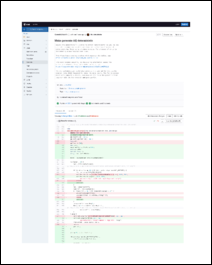
Rework the generate-id() function to return deterministic values. We use
a simple incrementing counter and store ids in the 'psvi' member of
nodes which was freed up by previous commits. The presence of an id is
indicated by a new "source node" flag.
This fixes long-standing problems with reproducible builds, see
https://bugzilla.gnome.org/show_bug.cgi?id=751621
This also hardens security, as the old implementation leaked the
difference between a heap and a global pointer, see
https://bugs.chromium.org/p/chromium/issues/detail?id=1356211
The old implementation could also generate the same id for dynamically
created nodes which happened to reuse the same memory. Ids for namespace
nodes were completely broken. They now use the id of the parent element
together with the hex-encoded namespace prefix.
Community updates
There were made a number of improvements to our website, including Chris Lamb fixing the generate-draft script to not blow up if the input files have been corrupted today or even in the past [], Holger Levsen updated the Hamburg 2023 summit to add a link to farewell post [] & to add a picture of a Post-It note. [], and Pol Dellaiera updated the paragraph about tar and the --clamp-mtime flag [].
On our mailing list this month, Bernhard M. Wiedemann posted an interesting summary on some of the reasons why packages are still not reproducible in 2023.
diffoscope is our in-depth and content-aware diff utility that can locate and diagnose reproducibility issues. This month, Chris Lamb made a number of changes, including processing objdump symbol comment filter inputs as Python byte (and not str) instances [] and Vagrant Cascadian extended diffoscope support for GNU Guix [] and updated the version in that distribution to version 253 [].
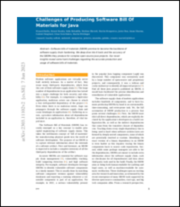
Challenges of Producing Software Bill Of Materials for Java
Musard Balliu, Benoit Baudry, Sofia Bobadilla, Mathias Ekstedt, Martin Monperrus, Javier Ron, Aman Sharma, Gabriel Skoglund, C sar Soto-Valero and Martin Wittlinger (!) of the KTH Royal Institute of Technology in Sweden, have published an article in which they:
deep-dive into 6 tools and the accuracy of the SBOMs they produce for complex open-source Java projects. Our novel insights reveal some hard challenges regarding the accurate production and usage of software bills of materials.
Debian Non-Maintainer campaign
As mentioned in previousreports, the Reproducible Builds team within Debian has been organising a series of online and offline sprints in order to clear the huge backlog of reproducible builds patches submitted by performing so-called NMUs (Non-Maintainer Uploads).
During December, Vagrant Cascadian performed a number of such uploads, including:
In addition, Holger Levsen performed three no-source-change NMUs in order to address the last packages without .buildinfo files in Debian trixie, specifically lorene (0.0.0~cvs20161116+dfsg-1.1), maria (1.3.5-4.2) and ruby-rinku (1.7.3-2.1).
Reproducibility testing framework
The Reproducible Builds project operates a comprehensive testing framework (available at tests.reproducible-builds.org) in order to check packages and other artifacts for reproducibility. In December, a number of changes were made by Holger Levsen:
Detect failures due to rename of the vmlinuz file. []
Improve the grammar of an error message. []
Document that freebsd-jenkins.debian.net has been updated to FreeBSD 14.0. []
In addition, node maintenance was performed by Holger Levsen [] and Vagrant Cascadian [].
Upstream patches
The Reproducible Builds project detects, dissects and attempts to fix as many currently-unreproducible packages as possible. We endeavour to send all of our patches upstream where appropriate. This month, we wrote a large number of such patches, including:
If you are interested in contributing to the Reproducible Builds project, please visit our Contribute page on our website. However, you can get in touch with us via:
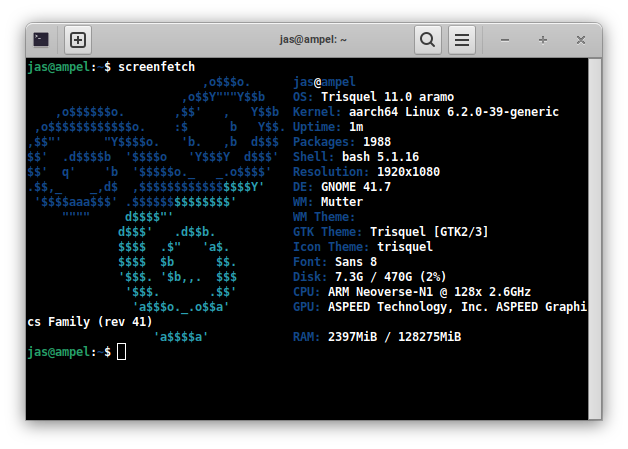
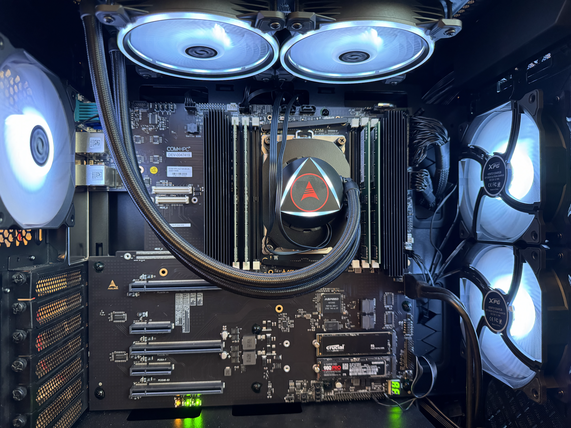
Having had success running Trisquel on the ppc64 Talos II, I felt ready to get an arm64 machine running Trisquel. I have a Ampere Altra Developer Platform from ADLINK, which is a fairly powerful desktop machine. While there were some issues during installation, I m happy to say the machine is stable and everything appears to work fine.
ISO images for non-amd64 platforms are unfortunately still hidden from the main Trisquel download area, so you will have to use the following procedure to download and extract a netinst ISO image (using debian-installer) and write it to a USB memory device. Another unfortunate problem is that there are no OpenPGP signatures or hash checksums, but below I publish one checksum.
Insert the USB stick in a USB slot in the machine, and power up. Press ESCAPE at the BIOS prompt and select the USB device as the boot device. The first problem that hit me was that translations didn t work, I selected Swedish but the strings were garbled. Rebooting and selecting the default English worked fine. For installation, you need Internet connectivity and I use the RJ45 port closest to VGA/serial which is available as enP5p1s0 in the installer. I wouldn t connect the BMC RJ45 port to anything unless you understand the security implications.
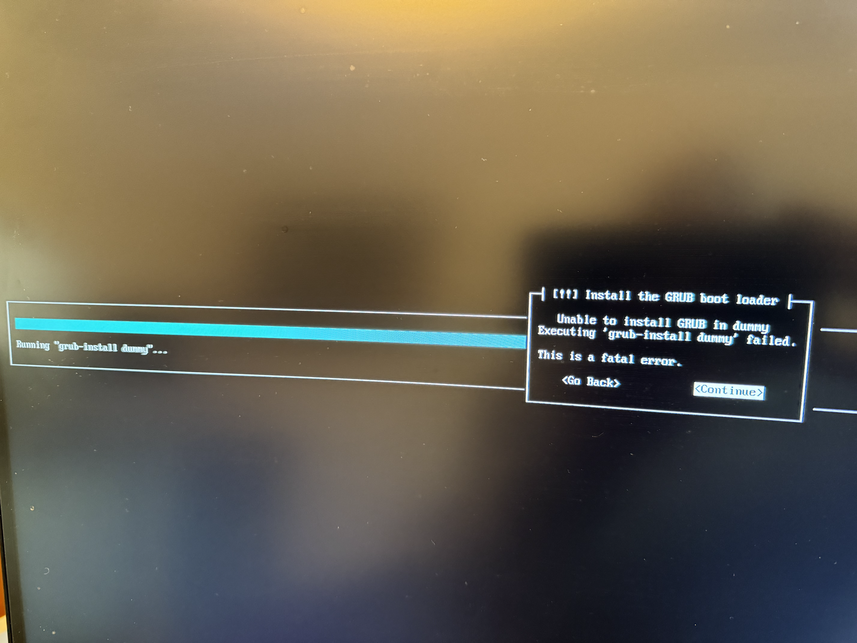
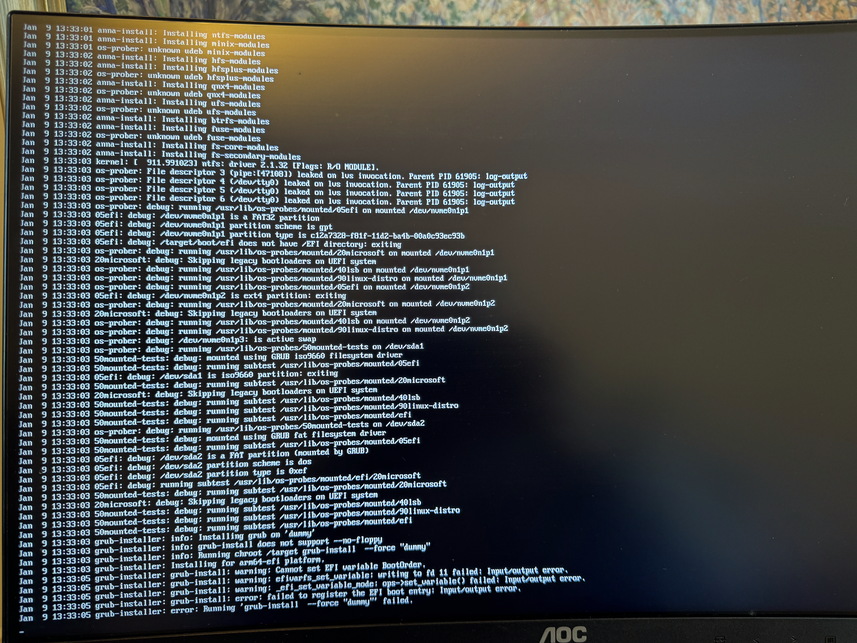
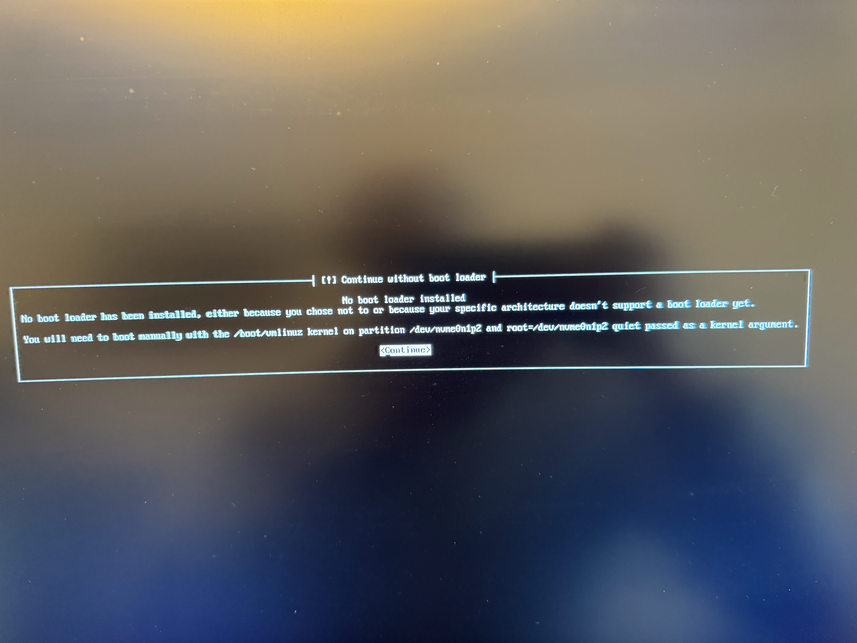
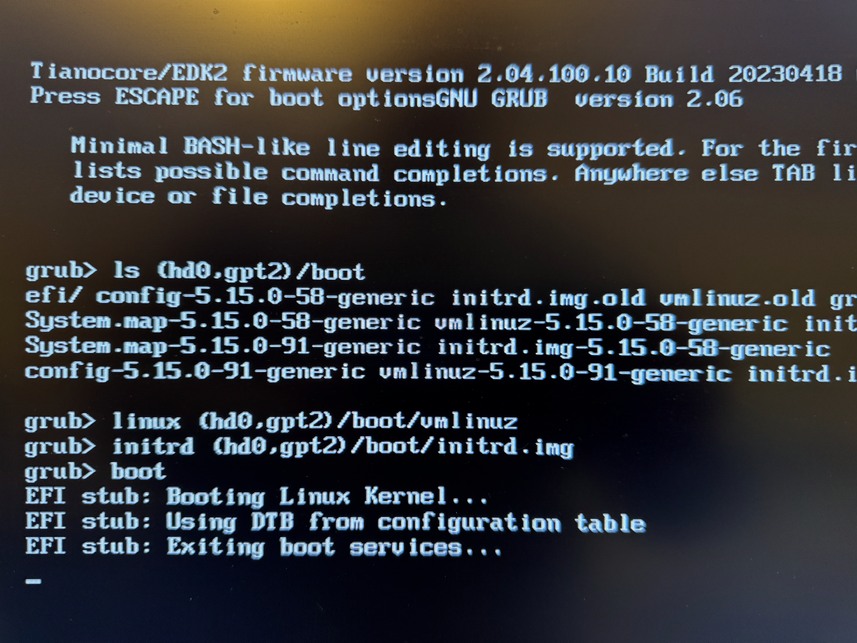
During installation you have to create a EFI partition for booting, and I ended up with one 1GB EFI partition, one 512GB ext4 partition for / with discard/noatime options, and a 32GB swap partition. The installer did not know about any Trisquel mirrors, but only had the default archive.trisquel.org, so if you need to use a mirror, take a note of the necessary details. The installation asks me about which kernel to install, and I went with the default linux-generic which results in a 5.15 linux-libre kernel. At the end of installation, unfortunately grub failed with a mysterious error message: Unable to install GRUB in dummy. Executing 'grub-install dummy' failed. On another console there is a better error message: failed to register the EFI boot entry. There are some references to file descriptor issues. Perhaps I partitioned the disk in a bad way, or this is a real bug in the installer for this platform. I continued installation, and it appears the installer was able to write GRUB to the device, but not add the right boot menu. So I was able to finish the installation properly, and then reboot and manually type the following GRUB commands: linux (hd0,gpt2)/boot/vmlinuz initrd (hd0,gpt2)/boot/initrd.img boot. Use the GRUB ls command to find the right device. See images below for more information.
Booting and installing GRUB again manually works fine:
root@ampel:~# update-grub
Sourcing file  /etc/default/grub'
Sourcing file  /etc/default/grub.d/background.cfg'
Sourcing file  /etc/default/grub.d/init-select.cfg'
Generating grub configuration file ...
Found linux image: /boot/vmlinuz-5.15.0-91-generic
Found initrd image: /boot/initrd.img-5.15.0-91-generic
Found linux image: /boot/vmlinuz-5.15.0-58-generic
Found initrd image: /boot/initrd.img-5.15.0-58-generic
Warning: os-prober will not be executed to detect other bootable partitions.
Systems on them will not be added to the GRUB boot configuration.
Check GRUB_DISABLE_OS_PROBER documentation entry.
Adding boot menu entry for UEFI Firmware Settings ...
done
root@ampel:~#
During installation I tend to avoid selecting any tasksel components, in part because it didn t use a local mirror to gain network speed, and in part because I don t want to generate OpenSSH keys in a possibly outdated environment that is harder to audit and reproducible rebuild than the finally installed system. When I selected the OpenSSH and GNOME tasksel, I get an error, but fortunately using apt get directly is simple.
Graphics in GNOME was slow using the built-in ASPEED AST2500 VGA controller with linux-libre 5.15. There are kernels labeled 64k but I haven t tested them, and I m not sure they would bring any significant advantage. I simply upgraded to a more recent linux-libre 6.2 kernel via the linux-image-generic-hwe-11.0 virtual package. After a reboot, graphics in GNOME is usable.
There seems to be some issue with power-saving inside GNOME, since the machine becomes unresponsive after 20 minutes, and I m unable to make it resume via keyboard or power button. Disabling the inactivity power setting in GNOME works fine to resolve this.
I will now put this machine to some more heavy use and see how it handles it. I hope to find more suitable arm64-based servers to complement my ppc64el-based servers in the future, as this ADLINK Ampere Altra Developer Platform with liquid-cooling is more of a toy than a serious server for use in a datacentre.
Happy Trisquel-on-arm64 Hacking!
I ended 2022 with a musical retrospective and very much enjoyed writing
that blog post. As such, I have decided to do the same for 2023! From now on,
this will probably be an annual thing :)
Albums
In 2023, I added 73 new albums to my collection nearly 2 albums every three
weeks! I listed them below in the order in which I acquired them.
I purchased most of these albums when I could and borrowed the rest at
libraries. If you want to browse though, I added links to the album covers
pointing either to websites where you can buy them or to Discogs when digital
copies weren't available.
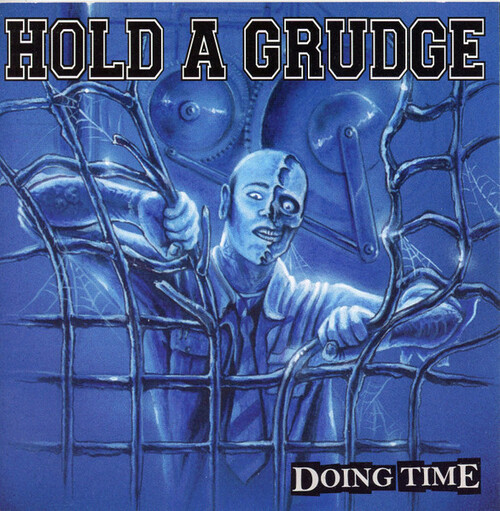
Once again this year, it seems that Punk (mostly O !) and Metal dominate my
list, mostly fueled by Angry Metal Guy and the amazing Montr al
Skinhead/Punk concert scene.
Concerts
A trend I started in 2022 was to go to as many concerts of artists I like as
possible. I'm happy to report I went to around 80% more concerts in 2023 than
in 2022! Looking back at my list, April was quite a busy month...
Here are the concerts I went to in 2023:
March 8th: Godspeed You! Black Emperor
April 11th: Alexandra Str liski
April 12th: Bikini Kill
April 21th: Brigada Flores Magon, Union Thugs
April 28th: Komintern Sect, The Outcasts, Violent Way, Ultra Razzia, Over the
Hill
May 3rd: First Fragment
May 12th: Rhapsody of Fire, Wind Rose
May 13th: Aeternam
June 2nd: Mortier, La Gachette
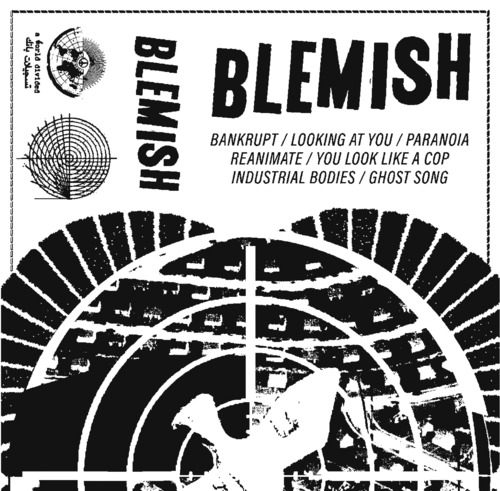
June 17th: Ultra Razzia, Total Nada, BLEMISH
June 30th: Avishai Cohen Trio
July 9th: Richard Galliano
August 18th: Gojira, Mastodon, Lorna Shore
September 14th: Jinjer
September 22nd: CUIR, Salvaje Punk, Hysteric Polemix, Perestroika, Ultra Razzia, Ilusion, Over the Hill, Asbestos
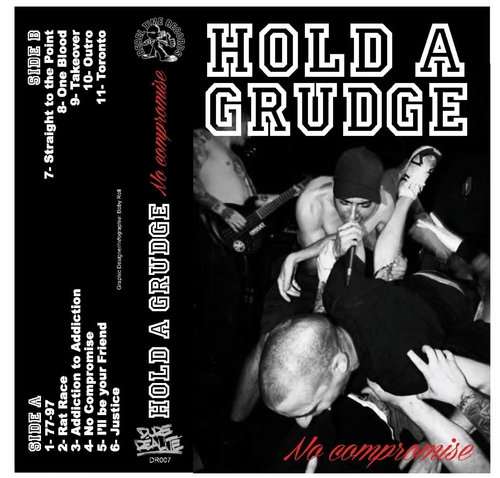
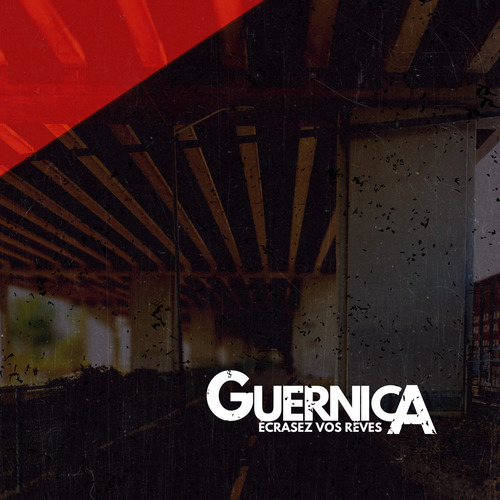
October 6th: Rancoeur, Street Code, Tenaz, Mortimer, Guernica, High Anxiety
Although metalfinder continues to work as intended, I'm very glad to have
discovered the Montr al underground scene has departed from Facebook/Instagram
and adopted en masseGancio, a FOSS community agenda that supports
ActivityPub. Our local instance, askapunk.net
is pretty much all I could ask for :)
That's it for 2023!
Today, the animation figure Mickey Mouse finally was released from
the corporate copyright prison, as the 1928 movie
Steamboat
Willie entered the public domain in USA. This movie was the first
public appearance of Mickey Mouse. Sadly the figure is still on
probation, thanks to trademark laws and a the Disney corporations
powerful pack of lawyers, as described in the 2017 article
in "How
Mickey Mouse Evades the Public Domain" from Priceonomics. On the
positive side, the primary driver for repeated extentions of the
duration of copyright has been Disney thanks to Mickey Mouse and the
2028 movie, and as it now in the public domain I hope it will cause
less urge to extend the already unreasonable long copyright
duration.
The first book I published, the 2004 book "Free Culture" by Lawrence Lessig,
published 2015 in
English,
French and Norwegian Bokm l, touch on the story of Disney pushed
for extending the copyright duration in USA. It is a great book
explaining problems with the current copyright regime and why we need
Creative Commons movement, and I strongly recommend everyone to read
it.
This movie (with
IMDB ID tt0019422)
is now available from the Internet Archive. Two copies have been
uploaded so far, one uploaded
2015-11-04
(torrent)
and the other
2023-01-01
(torrent) - see
VLC
bittorrent plugin for streaming the video using the torrent link.
I am very happy to see
the
number of public domain movies increasing. I look forward to
when those are the majority. Perhaps it will reduce the urge of the
copyright industry to control its customers.
A more
comprehensive
list of works entering the public domain in 2024 is available from
the Public Domain Review.
As usual, if you use Bitcoin and want to show your support of my
activities, please send Bitcoin donations to my address
15oWEoG9dUPovwmUL9KWAnYRtNJEkP1u1b.
 Another musical retrospective. If you enjoy this, I also did a
























































 Whilst researching what synth to buy, I learned of the Behringer


 It's been a while since I've posted about arm64 hardware. The last
machine I spent my own money on was
a









 Last week we held our promised miniDebConf in Santa Fe City, Santa Fe province,
Argentina just across the river from Paran , where I have spent almost six
beautiful months I will never forget.






















































 Today, the animation figure Mickey Mouse finally was released from
the corporate copyright prison, as the 1928 movie