Search Results: "oku"

17 March 2025

James Valleroy: What s New for FreedomBox in Debian 13 trixie

FreedomBox is a Debian blend that makes it easier to run your own server. Approximately every two years, there is a new stable release of Debian. This year s release will be called Debian 13 "trixie". This post will provide an overview of changes between FreedomBox 23.6 (the version that shipped in Debian 12 "bookworm") and 25.5 (the latest release). Note: Debian 13 "trixie" is not yet released, so things may still change, be added or removed, before the official release. General Diagnostics Name Services Networks Privacy Users and Groups Deluge Ejabberd Feather Wiki GitWeb GNOME ikiwiki Kiwix Matrix Synapse MediaWiki MiniDLNA Miniflux Nextcloud OpenVPN Postfix/Dovecot Shadowsocks Server SOGo TiddlyWiki Tor Proxy Transmission Conclusion Over the past two years, FreedomBox has been increasing the number of features and applications available to its users. We have also focused on improving the reliability of the system, detecting unexpected situations, and providing means to return to a known good state. With these improvements, FreedomBox has become a good solution for people with limited time or energy to set up and start running a personal server, at home or in the cloud. Looking forward, we would like to focus on making more powerful hardware available with FreedomBox pre-installed and ready to be used. This hardware would also support larger storage devices, making it suitable as a NAS or media server. We are also very interested in exploring new features such as atomic updates, which will further enhance the reliability of the system.

14 March 2025

Junichi Uekawa: Filing tax this year was really painful.

Filing tax this year was really painful. But mostly because my home network. It was ipv4 over ipv6 was not working correctly. First I swapped the Router which was trying to reinitialize the MAP-E table every time there was a dhcp client reconfiguration and overwhelming the server. Then I changed the DNS configuration not use ipv4 UDP lookup which was overwhelming the ipv4 ports. Tax return itself is a painful process. Debugging network issues is making things was just making everything more painful.

9 March 2025

Niels Thykier: Improving Debian packaging in Kate

The other day, I noted that the emacs integration with debputy stopped working. After debugging for a while, I realized that emacs no longer sent the didOpen notification that is expected of it, which confused debputy. At this point, I was already several hours into the debugging and I noted there was some discussions on debian-devel about emacs and byte compilation not working. So I figured I would shelve the emacs problem for now. But I needed an LSP capable editor and with my vi skills leaving much to be desired, I skipped out on vim-youcompleteme. Instead, I pulled out kate, which I had not been using for years. It had LSP support, so it would fine, right? Well, no. Turns out that debputy LSP support had some assumptions that worked for emacs but not kate. Plus once you start down the rabbit hole, you stumble on things you missed previously.
Getting started First order of business was to tell kate about debputy. Conveniently, kate has a configuration tab for adding language servers in a JSON format right next to the tab where you can see its configuration for built-in LSP (also in JSON format9. So a quick bit of copy-paste magic and that was done. Yesterday, I opened an MR against upstream to have the configuration added (https://invent.kde.org/utilities/kate/-/merge_requests/1748) and they already merged it. Today, I then filed a wishlist against kate in Debian to have the Debian maintainers cherry-pick it, so it works out of the box for Trixie (https://bugs.debian.org/1099876). So far so good.
Inlay hint woes Since July (2024), debputy has support for Inlay hints. They are basically small bits of text that the LSP server can ask the editor to inject into the text to provide hints to the reader. Typically, you see them used to provide typing hints, where the editor or the underlying LSP server has figured out the type of a variable or expression that you did not explicitly type. Another common use case is to inject the parameter name for positional arguments when calling a function, so the user do not have to count the position to figure out which value is passed as which parameter. In debputy, I have been using the Inlay hints to show inherited fields in debian/control. As an example, if you have a definition like:
Source: foo-src
Section: devel
Priority: optional
Package: foo-bin
Architecture: any
Then foo-bin inherits the Section and Priority field since it does not supply its own. Previously, debputy would that by injecting the fields themselves and their value just below the Package field as if you had typed them out directly. The editor always renders Inlay hints distinctly from regular text, so there was no risk of confusion and it made the text look like a valid debian/control file end to end. The result looked something like:
Source: foo-src
Section: devel
Priority: optional
Package: foo-bin
Section: devel
Priority: optional
Architecture: any
With the second instances of Section and Priority being rendered differently than its surrendering (usually faded or colorlessly). Unfortunately, kate did not like injecting Inlay hints with a newline in them, which was needed for this trick. Reading into the LSP specs, it says nothing about multi-line Inlay hints being a thing and I figured I would see this problem again with other editors if I left it be. I ended up changing the Inlay hints to be placed at the end of the Package field and then included surrounding () for better visuals. So now, it looks like:
Source: foo-src
Section: devel
Priority: optional
Package: foo-bin  (Section: devel)  (Priority: optional)
Architecture: any
Unfortunately, it is no longer 1:1 with the underlying syntax which I liked about the previous one. But it works in more editors and is still explicit. I also removed the Inlay hint for the Homepage field. It takes too much space and I have yet to meet someone missing it in the binary stanza. If you have any better ideas for how to render it, feel free to reach out to me.
Spurious completion and hover As I was debugging the Inlay hints, I wanted to do a quick restart of debputy after each fix. Then I would trigger a small change to the document to ensure kate would request an update from debputy to render the Inlay hints with the new code. The full outgoing payloads are sent via the logs to the client, so it was really about minimizing which LSP requests are sent to debputy. Notably, two cases would flood the log:
  • Completion requests. These are triggered by typing anything at all and since I wanted to a change, I could not avoid this. So here it was about making sure there would be nothing to complete, so the result was a small as possible.
  • Hover doc requests. These are triggered by mouse hovering over field, so this was mostly about ensuring my mouse movement did not linger over any field on the way between restarting the LSP server and scrolling the log in kate.
In my infinite wisdom, I chose to make a comment line where I would do the change. I figured it would neuter the completion requests completely and it should not matter if my cursor landed on the comment as there would be no hover docs for comments either. Unfortunately for me, debputy would ignore the fact that it was on a comment line. Instead, it would find the next field after the comment line and try to complete based on that. Normally you do not see this, because the editor correctly identifies that none of the completion suggestions start with a \#, so they are all discarded. But it was pretty annoying for the debugging, so now debputy has been told to explicitly stop these requests early on comment lines.
Hover docs for packages I added a feature in debputy where you can hover over package names in your relationship fields (such as Depends) and debputy will render a small snippet about it based on data from your local APT cache. This doc is then handed to the editor and tagged as markdown provided the editor supports markdown rendering. Both emacs and kate support markdown. However, not all markdown renderings are equal. Notably, emacs's rendering does not reformat the text into paragraphs. In a sense, emacs rendering works a bit like <pre>...</pre> except it does a bit of fancy rendering inside the <pre>...</pre>. On the other hand, kate seems to convert the markdown to HTML and then throw the result into an HTML render engine. Here it is important to remember that not all newlines are equal in markdown. A Foo<newline>Bar is treated as one "paragraph" (<p>...</p>) and the HTML render happily renders this as single line Foo Bar provided there is sufficient width to do so. A couple of extra newlines made wonders for the kate rendering, but I have a feeling this is not going to be the last time the hover docs will need some tweaking for prettification. Feel free to reach out if you spot a weirdly rendered hover doc somewhere.
Making quickfixes available in kate Quickfixes are treated as generic code actions in the LSP specs. Each code action has a "type" (kind in the LSP lingo), which enables the editor to group the actions accordingly or filter by certain types of code actions. The design in the specs leads to the following flow:
  1. The LSP server provides the editor with diagnostics (there are multiple ways to trigger this, so we will keep this part simple).
  2. The editor renders them to the user and the user chooses to interact with one of them.
  3. The interaction makes the editor asks the LSP server, which code actions are available at that location (optionally with filter to only see quickfixes).
  4. The LSP server looks at the provided range and is expected to return the relevant quickfixes here.
This flow is really annoying from a LSP server writer point of view. When you do the diagnostics (in step 1), you tend to already know what the possible quickfixes would be. The LSP spec authors realized this at some point, so there are two features the editor provides to simplify this.
  1. In the editor request for code actions, the editor is expected to provide the diagnostics that they received from the server. Side note: I cannot quite tell if this is optional or required from the spec.
  2. The editor can provide support for remembering a data member in each diagnostic. The server can then store arbitrary information in that member, which they will see again in the code actions request. Again, provided that the editor supports this optional feature.
All the quickfix logic in debputy so far has hinged on both of these two features. As life would have it, kate provides neither of them. Which meant I had to teach debputy to keep track of its diagnostics on its own. The plus side is that makes it easier to support "pull diagnostics" down the line, since it requires a similar feature. Additionally, it also means that quickfixes are now available in more editors. For consistency, debputy logic is now always used rather than relying on the editor support when present. The downside is that I had to spend hours coming up with and debugging a way to find the diagnostics that overlap with the range provided by the editor. The most difficult part was keeping the logic straight and getting the runes correct for it.
Making the quickfixes actually work With all of that, kate would show the quickfixes for diagnostics from debputy and you could use them too. However, they would always apply twice with suboptimal outcome as a result. The LSP spec has multiple ways of defining what need to be changed in response to activating a code action. In debputy, all edits are currently done via the WorkspaceEdit type. It has two ways of defining the changes. Either via changes or documentChanges with documentChanges being the preferred one if both parties support this. I originally read that as I was allowed to provide both and the editor would pick the one it preferred. However, after seeing kate blindly use both when they are present, I reviewed the spec and it does say "The edit should either provide changes or documentChanges", so I think that one is on me. None of the changes in debputy currently require documentChanges, so I went with just using changes for now despite it not being preferred. I cannot figure out the logic of whether an editor supports documentChanges. As I read the notes for this part of the spec, my understanding is that kate does not announce its support for documentChanges but it clearly uses them when present. Therefore, I decided to keep it simple for now until I have time to dig deeper.
Remaining limitations with kate There is one remaining limitation with kate that I have not yet solved. The kate program uses KSyntaxHighlighting for its language detection, which in turn is the basis for which LSP server is assigned to a given document. This engine does not seem to support as complex detection logic as I hoped from it. Concretely, it either works on matching on an extension / a basename (same field for both cases) or mime type. This combined with our habit in Debian to use extension less files like debian/control vs. debian/tests/control or debian/rules or debian/upstream/metadata makes things awkward a best. Concretely, the syntax engine cannot tell debian/control from debian/tests/control as they use the same basename. Fortunately, the syntax is close enough to work for both and debputy is set to use filename based lookups, so this case works well enough. However, for debian/rules and debian/upstream/metadata, my understanding is that if I assign these in the syntax engine as Debian files, these rules will also trigger for any file named foo.rules or bar.metadata. That seems a bit too broad for me, so I have opted out of that for now. The down side is that these files will not work out of the box with kate for now. The current LSP configuration in kate does not recognize makefiles or YAML either. Ideally, we would assign custom languages for the affected Debian files, so we do not steal the ID from other language servers. Notably, kate has a built-in language server for YAML and debputy does nothing for a generic YAML document. However, adding YAML as a supported language for debputy would cause conflict and regressions for users that are already happy with their generic YAML language server from kate. So there are certainly still work to be done. If you are good with KSyntaxHighlighting and know how to solve some of this, I hope you will help me out.
Changes unrelated to kate While I was working on debputy, I also added some other features that I want to mention.
  1. The debputy lint command will now show related context to diagnostic in its terminal report when such information is available and is from the same file as the diagnostic itself (cross file cases are rendered without related information). The related information is typically used to highlight a source of a conflict. As an example, if you use the same field twice in a stanza of debian/control, then debputy will add a diagnostic to the second occurrence. The related information for that diagnostic would provide the position of the first occurrence. This should make it easier to find the source of the conflict in the cases where debputy provides it. Let me know if you are missing it for certain diagnostics.

  2. The diagnostics analysis of debian/control will now identify and flag simple duplicated relations (complex ones like OR relations are ignored for now). Thanks to Matthias Geiger for suggesting the feature and Otto Kek l inen for reporting a false positive that is now fixed.

Closing I am glad I tested with kate to weed out most of these issues in time before the freeze. The Debian freeze will start within a week from now. Since debputy is a part of the toolchain packages it will be frozen from there except for important bug fixes.

1 March 2025

Guido G nther: Free Software Activities February 2025

Another short status update of what happened on my side last month. One larger blocks are the Phosh 0.45 release, also reviews took a considerable amount of time. From the fun side debugging bananui and coming up with a fix in phoc as well as setting up a small GSM network using osmocom to test more Cell Broadcast thingies were likely the most fun parts. phosh phoc phosh-osk-stub phosh-tour phosh-mobile-settings pfs libphosh-rs meta-phosh libcmatrix Debian gmobile feedbackd grim Wayland protocols g4music wlroots qbootctl bananui-shell libssc ModemManager Waycheck Bug reports Reviews This is not code by me but reviews on other peoples code. The list is a slightly incomplete. Thanks for the contributions! Help Development If you want to support my work see donations. Comments? Join the Fediverse thread
10 February 2025

Petter Reinholdtsen: Some of my 2024 free software activities

It is a while since I posted a summary of the free software and open culture activities and projects I have worked on. Here is a quick summary of the major ones from last year. I guess the biggest project of the year has been migrating orphaned packages in Debian without a version control system to have a git repository on salsa.debian.org. When I started in April around 450 the orphaned packages needed git. I've since migrated around 250 of the packages to a salsa git repository, and around 40 packages were left when I took a break. Not sure who did the around 160 conversions I was not involved in, but I am very glad I got some help on the project. I stopped partly because some of the remaining packages needed more disk space to build than I have available on my development machine, and partly because some had a strange build setup I could not figure out. I had a time budget of 20 minutes per package, if the package proved problematic and likely to take longer, I moved to another package. Might continue later, if I manage to free up some disk space. Another rather big project was the translation to Norwegian Bokm l and publishing of the first book ever published by a S mi woman, the M ter vi liv eller d d? book by Elsa Laula, with a PD0 and CC-BY license. I released it during the summer, and to my surprise it has already sold several copies. As I suck at marketing, I did not expect to sell any. A smaller, but more long term project (for more than 10 years now), and related to orphaned packages in Debian, is my project to ensure a simple way to install hardware related packages in Debian when the relevant hardware is present in a machine. It made a fairly big advance forward last year, partly because I have been poking and begging package maintainers and upstream developers to include AppStream metadata XML in their packages. I've also released a few new versions of the isenkram system with some robustness improvements. Today 127 packages in Debian provide such information, allowing isenkram-lookup to propose them. Will keep pushing until the around 35 package names currently hard coded in the isenkram package are down to zero, so only information provided by individual packages are used for this feature. As part of the work on AppStream, I have sponsored several packages into Debian where the maintainer wanted to fix the issue but lacked direct upload rights. I've also sponsored a few other packages, when approached by the maintainer. I would also like to mention two hardware related packages in particular where I have been involved, the megactl and mfi-util packages. Both work with the hardware RAID systems in several Dell PowerEdge servers, and the first one is already available in Debian (and of course, proposed by isenkram when used on the appropriate Dell server), the other is waiting for NEW processing since this autumn. I manage several such Dell servers and would like the tools needed to monitor and configure these RAID controllers to be available from within Debian out of the box. Vaguely related to hardware support in Debian, I have also been trying to find ways to help out the Debian ROCm team, to improve the support in Debian for my artificial idiocy (AI) compute node. So far only uploaded one package, helped test the initial packaging of llama.cpp and tried to figure out how to get good speech recognition like Whisper into Debian. I am still involved in the LinuxCNC project, and organised a developer gathering in Norway last summer. A new one is planned the summer of 2025. I've also helped evaluate patches and uploaded new versions of LinuxCNC into Debian. After a 10 years long break, we managed to get a new and improved upstream version of lsdvd released just before Christmas. As I use it regularly to maintain my DVD archive, I was very happy to finally get out a version supporting DVDDiscID useful for uniquely identifying DVDs. I am dreaming of a Internet service mapping DVD IDs to IMDB movie IDs, to make life as a DVD collector easier. My involvement in Norwegian archive standardisation and the free software implementation of the vendor neutral Noark 5 API continued for the entire year. I've been pushing patches into both the API and the test code for the API, participated in several editorial meetings regarding the Noark 5 Tjenestegrensesnitt specification, submitted several proposals for improvements for the same. We also organised a small seminar for Noark 5 interested people, and is organising a new seminar in a month. Part of the year was spent working on and coordinating a Norwegian Bokm l translation of the marvellous children's book Ada and Zangemann , which focus on the right to repair and control your own property, and the value of controlling the software on the devices you own. The translation is mostly complete, and is now waiting for a transformation of the project and manuscript to use Docbook XML instead of a home made semi-text based format. Great progress is being made and the new book build process is almost complete. I have also been looking at how to companies in Norway can use free software to report their accounting summaries to the Norwegian government. Several new regulations make it very hard for companies to do use free software for accounting, and I would like to change this. Found a few drafts for opening up the reporting process, and have read up on some of the specifications, but nothing much is working yet. These were just the top of the iceberg, but I guess this blog post is long enough now. If you would like to help with any of these projects, please get in touch, either directly on the project mailing lists and forums, or with me via email, IRC or Signal. :) As usual, if you use Bitcoin and want to show your support of my activities, please send Bitcoin donations to my address 15oWEoG9dUPovwmUL9KWAnYRtNJEkP1u1b.

24 January 2025

Scarlett Gately Moore: KDE: Snaps bug fixes and Kubuntu: Noble updates

Fixed a major crash bug in our apps that use webengine, I also went ahead and updated these to core24 https://bugs.launchpad.net/snapd/+bug/2095418 andhttps://bugs.kde.org/show_bug.cgi?id=498663 Fixed okular
Can t import certificates to digitally sign in Okular https://bugs.kde.org/show_bug.cgi?id=498558 Can t open files https://bugs.kde.org/show_bug.cgi?id=421987 and https://bugs.kde.org/show_bug.cgi?id=415711 Skanpage won t launch https://bugs.kde.org/show_bug.cgi?id=493847 in edge please help test. Ghostwriter https://bugs.kde.org/show_bug.cgi?id=481258
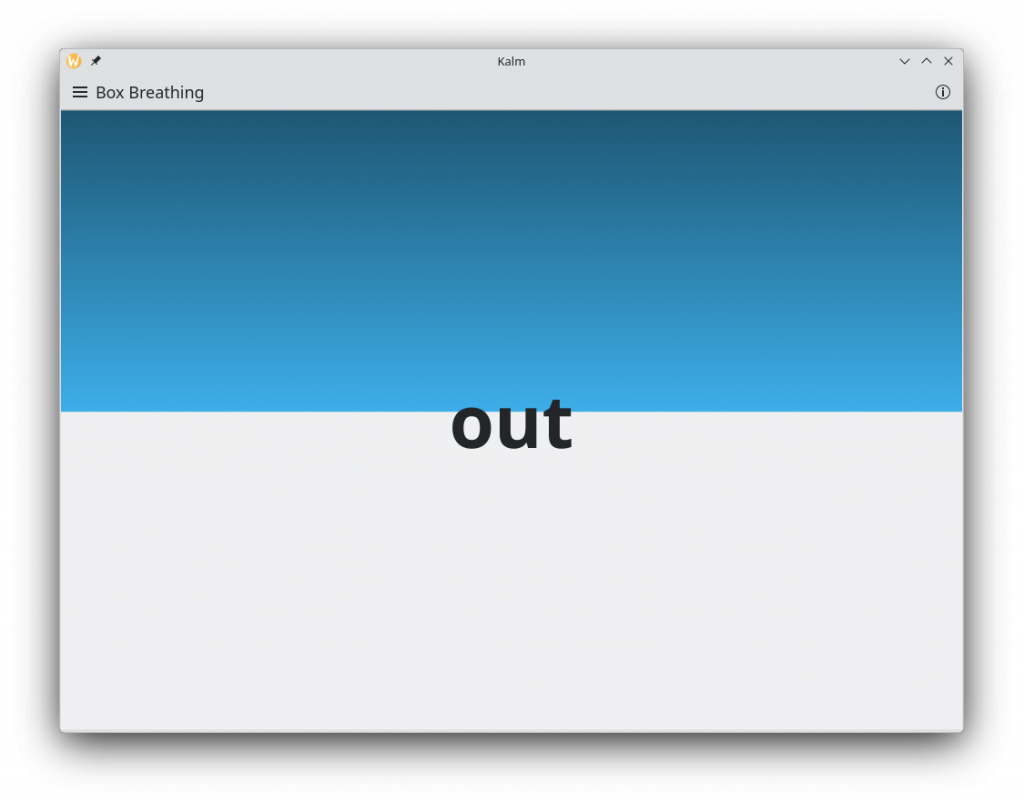
Kalm - Breathing techniques
New KDE Snaps! Kalm Breathing techniques
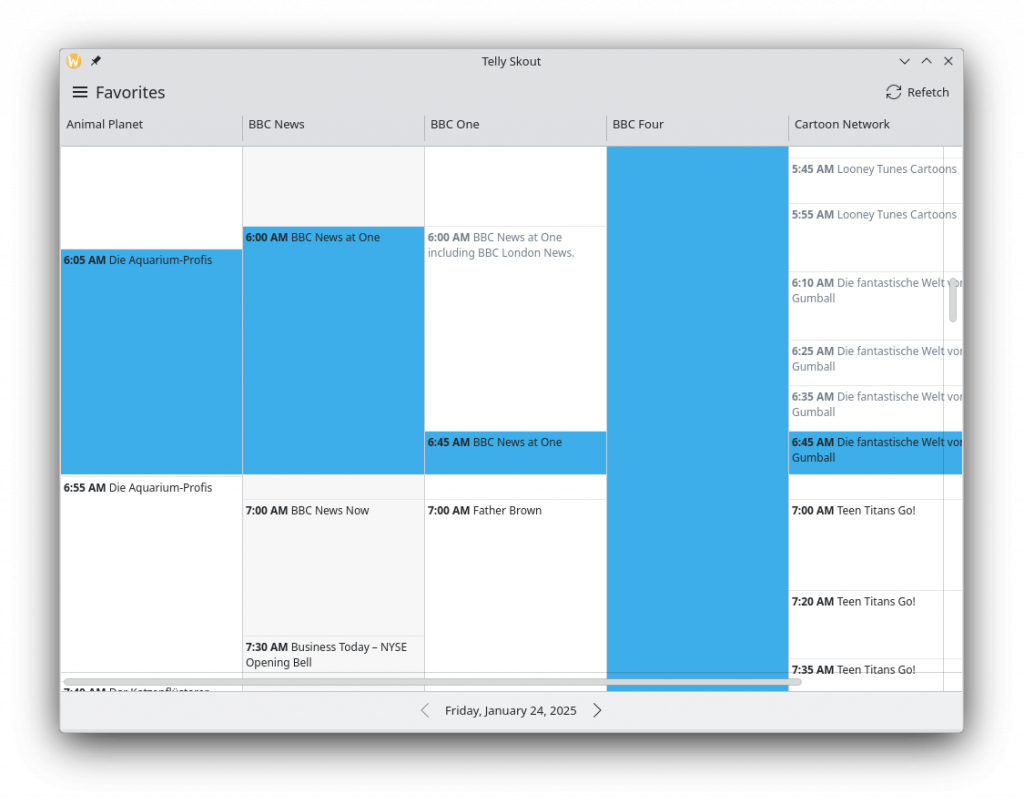
Telly-skout Display TV guides Kubuntu: Plasma 5.27.12 has been uploaded to archive proposed and should make the .2 release! I hate asking but I am unemployable with this broken arm fiasco. If you could spare anything it would be appreciated! https://gofund.me/573cc38e

19 January 2025

Petter Reinholdtsen: 121 packages in Debian mapped to hardware for automatic recommendation

For some years now, I have been working on a automatic hardware based package recommendation system for Debian and other Linux distributions. The isenkram system I started on back in 2013 now consist of two subsystems, one locating firmware files using the information provided by apt-file, and one matching hardware to packages using information provided by AppStream. The former is very similar to the mechanism implemented in debian-installer to pick the right firmware packages to install. This post is about the latter system. Thanks to steady progress and good help from both other Debian and upstream developers, I am happy to report that the Isenkram system now are able to recommend 121 packages using information provided via AppStream. The mapping is done using modalias information provided by the kernel, the same information used by udev when creating device files, and the kernel when deciding which kernel modules to load. To get all the modalias identifiers relevant for your machine, you can run the following command on the command line:
find /sys/devices -name modalias -print0   xargs -0 sort -u
The modalias identifiers can look something like this:
acpi:PNP0000
cpu:type:x86,ven0000fam0006mod003F:feature:,0000,0001,0002,0003,0004,0005,0006,0007,0008,0009,000B,000C,000D,000E,000F,0010,0011,0013,0015,0016,0017,0018,0019,001A,001B,001C,001D,001F,002B,0034,003A,003B,003D,0068,006B,006C,006D,006F,0070,0072,0074,0075,0076,0078,0079,007C,0080,0081,0082,0083,0084,0085,0086,0087,0088,0089,008B,008C,008D,008E,008F,0091,0092,0093,0094,0095,0096,0097,0098,0099,009A,009B,009C,009D,009E,00C0,00C5,00E1,00E3,00EB,00ED,00F0,00F1,00F3,00F5,00F6,00F9,00FA,00FB,00FD,00FF,0100,0101,0102,0103,0111,0120,0121,0123,0125,0127,0128,0129,012A,012C,012D,0140,0160,0161,0165,016C,017B,01C0,01C1,01C2,01C4,01C5,01C6,01F9,024A,025A,025B,025C,025F,0282
dmi:bvnDellInc.:bvr2.18.1:bd08/14/2023:br2.18:svnDellInc.:pnPowerEdgeR730:pvr:rvnDellInc.:rn0H21J3:rvrA09:cvnDellInc.:ct23:cvr:skuSKU=NotProvided
pci:v00008086d00008D3Bsv00001028sd00000600bc07sc80i00
platform:serial8250
scsi:t-0x05
usb:v413CpA001d0000dc09dsc00dp00ic09isc00ip00in00
The entries above are a selection of the complete set available on a Dell PowerEdge R730 machine I have access to, to give an idea about the various styles of hardware identifiers presented in the modalias format. When looking up relevant packages in a Debian Testing installation on the same R730, I get this list of packages proposed:
% sudo isenkram-lookup
firmware-bnx2x
firmware-nvidia-graphics
firmware-qlogic
megactl
wsl
%
The list consist of firmware packages requested by kernel modules, as well packages with program to get the status from the RAID controller and to maintain the LAN console. When the edac-utils package providing tools to check the ECC RAM status will enter testing in a few days, it will also show up as a proposal from isenkram. In addition, once the mfiutil package we uploaded in October get past the NEW processing, it will also propose a tool to configure the RAID controller. Another example is the trusty old Lenovo Thinkpad X230, which have hardware handled by several packages in the archive. This is running on Debian Stable:
% isenkram-lookup 
beignet-opencl-icd
bluez
cheese
ethtool
firmware-iwlwifi
firmware-misc-nonfree
fprintd
fprintd-demo
gkrellm-thinkbat
hdapsd
libpam-fprintd
pidgin-blinklight
thinkfan
tlp
tp-smapi-dkms
tpb
%
Here there proposal consist of software to handle the camera, bluetooth, network card, wifi card, GPU, fan, fingerprint reader and acceleration sensor on the machine. Here is the complete set of packages currently providing hardware mapping via AppStream in Debian Unstable: air-quality-sensor, alsa-firmware-loaders, antpm, array-info, avarice, avrdude, bmusb-v4l2proxy, brltty, calibre, colorhug-client, concordance-common, consolekit, dahdi-firmware-nonfree, dahdi-linux, edac-utils, eegdev-plugins-free, ekeyd, elogind, firmware-amd-graphics, firmware-ath9k-htc, firmware-atheros, firmware-b43-installer, firmware-b43legacy-installer, firmware-bnx2, firmware-bnx2x, firmware-brcm80211, firmware-carl9170, firmware-cavium, firmware-intel-graphics, firmware-intel-misc, firmware-ipw2x00, firmware-ivtv, firmware-iwlwifi, firmware-libertas, firmware-linux-free, firmware-mediatek, firmware-misc-nonfree, firmware-myricom, firmware-netronome, firmware-netxen, firmware-nvidia-graphics, firmware-qcom-soc, firmware-qlogic, firmware-realtek, firmware-ti-connectivity, fpga-icestorm, g810-led, galileo, garmin-forerunner-tools, gkrellm-thinkbat, goldencheetah, gpsman, gpstrans, gqrx-sdr, i8kutils, imsprog, ledger-wallets-udev, libairspy0, libam7xxx0.1, libbladerf2, libgphoto2-6t64, libhamlib-utils, libm2k0.9.0, libmirisdr4, libnxt, libopenxr1-monado, libosmosdr0, librem5-flash-image, librtlsdr0, libticables2-8, libx52pro0, libykpers-1-1, libyubikey-udev, limesuite, linuxcnc-uspace, lomoco, madwimax, media-player-info, megactl, mixxx, mkgmap, msi-keyboard, mu-editor, mustang-plug, nbc, nitrokey-app, nqc, ola, openfpgaloader, openocd, openrazer-driver-dkms, pcmciautils, pcscd, pidgin-blinklight, ponyprog, printer-driver-splix, python-yubico-tools, python3-btchip, qlcplus, rosegarden, scdaemon, sispmctl, solaar, spectools, sunxi-tools, t2n, thinkfan, tlp, tp-smapi-dkms, trezor, tucnak, ubertooth, usbrelay, uuu, viking, w1retap, wsl, xawtv, xinput-calibrator, xserver-xorg-input-wacom and xtrx-dkms. In addition to these, there are several with patches pending in the Debian bug tracking system, and even more where no-one wrote patches yet. Good candiates for the latter are packages with udev rules but no AppStream hardware information. The isenkram system consist of two packages, isenkram-cli with the command line tools, and isenkram with a GUI background process. The latter will listen for dbus events from udev emitted when new hardware become available (like when inserting a USB dongle or discovering a new bluetooth device), look up the modalias entry for this piece of hardware in AppStream (and a hard coded list of mappings from isenkram - currently working hard to move this list to AppStream), and pop up a dialog proposing to install any not already installed packages supporting this hardware. It work very well today when inserting the LEGO Mindstorms RCX, NXT and EV3 controllers. :) If you want to make sure more hardware related packages get recommended, please help out fixing the remaining packages in Debian to provide AppStream metadata with hardware mappings. As usual, if you use Bitcoin and want to show your support of my activities, please send Bitcoin donations to my address 15oWEoG9dUPovwmUL9KWAnYRtNJEkP1u1b.

4 January 2025

Scarlett Gately Moore: KDE: Snap hotfixes and updates

Fixed okular pdf printing https://bugs.kde.org/show_bug.cgi?id=498065 Fixed kwave recording https://bugs.kde.org/show_bug.cgi?id=442085 please run sudo snap connect kwave:audio-record :audio-record until auto-connect gets approved here: https://forum.snapcraft.io/t/kde-auto-connect-our-two-recording-apps/44419 New qt6 snaps in edge until 24.12.1 release
I have begun the process of moving to core24 currently in edge until 24.12.1 release. Some major improvements come with core24!
Tokodon is our wonderful Mastadon client I hate asking but I am unemployable with this broken arm fiasco and 6 hours a day hospital runs for treatment. If you could spare anything it would be appreciated! https://gofund.me/573cc38e

31 December 2024

Scarlett Gately Moore: KDE: Application snaps 24.12.0 release and more

https://kde.org/announcements/gear/24.12.0 I hope everyone had a wonderful holiday! Your present from me is shiny new application snaps! There are several new qt6 ports in this release. Please visit https://snapcraft.io/store?q=kde I have also fixed the Krita snap unable to open/save bug. Please test edge! I am continuing work on core24 support and hope to be done before next release. I do look forward to 2025! Begone 2024! If you can help with gas, I still have 3 weeks of treatments to go. Thank you for your continued support. https://gofund.me/573cc38e

6 December 2024

Dirk Eddelbuettel: RcppArmadillo 14.2.2-1 on CRAN: Small Upstream Fixes

armadillo image Armadillo is a powerful and expressive C++ template library for linear algebra and scientific computing. It aims towards a good balance between speed and ease of use, has a syntax deliberately close to Matlab, and is useful for algorithm development directly in C++, or quick conversion of research code into production environments. RcppArmadillo integrates this library with the R environment and language and is widely used by (currently) 1197 other packages on CRAN, downloaded 37.5 million times (per the partial logs from the cloud mirrors of CRAN), and the CSDA paper (preprint / vignette) by Conrad and myself has been cited 605 times according to Google Scholar. Conrad released a minor version 14.2.2 yesterday. This followed a bit of recent work a few of us did in the ensmallen and mlpack repositories following the [14.2.0 release]. Use of (member functions) .min(index) and .max(index) was deprecated in Armadillo in favor of .index_mix() and .index_max(). By now ensmallen and mlpack have been updated at CRAN. To add some spice, CRAN emailed that the (very much unreleased as of now, but coming likely next spring) gcc-15 was unhappy with RcppArmadillo due to some Armadillo code. This likely related to the listed gcc-15 C++ change about Qualified name lookup failure into the current instantiation . Anyway, Conrad fixed it within days and that change too is part of this new version (as is a small behaviour normalization between the two indexing methods that matters in case of ties, this was in 14.2.1). The changes since the last CRAN release are summarised below.

Changes in RcppArmadillo version 14.2.2-1 (2024-12-05)
  • Upgraded to Armadillo release 14.2.2 (Smooth Caffeine)
    • Workarounds for regressions in pre-release versions of GCC 15
    • More selective detection of symmetric/hermitian matrices by various functions

Changes in RcppArmadillo version 14.2.1-1 (2024-11-24) (GitHub Only)
  • Upgraded to Armadillo release 14.2.1 (Smooth Caffeine)
    • Fix for index_min() and index_max() to ensure that the first index of equal extremum values is found

Courtesy of my CRANberries, there is a diffstat report relative to previous release. More detailed information is on the RcppArmadillo page. Questions, comments etc should go to the rcpp-devel mailing list off the Rcpp R-Forge page. If you like this or other open-source work I do, you can sponsor me at GitHub.

This post by Dirk Eddelbuettel originated on his Thinking inside the box blog. Please report excessive re-aggregation in third-party for-profit settings.

2 December 2024

Junichi Uekawa: Graph for my furusato tax.

Graph for my furusato tax. Exceeding 150-man will inevitably exceed 50-man limit for Ichiji-shotoku. So added some rough calculation there. graph.

26 November 2024

Sandro Knau : Akademy 2024 in W rzburg

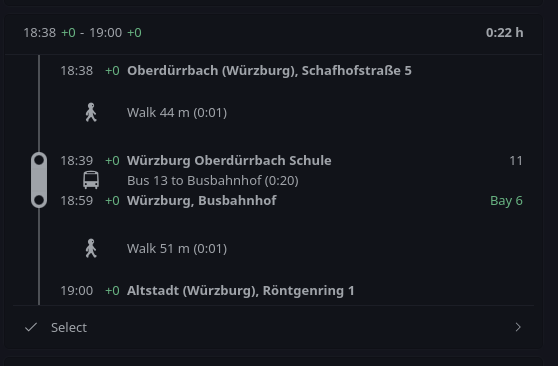
In order to prepare for the Akademy I started some days before to give my Librem 5 ( an Open Hardware Phone) another try and ended up with a non starting Plasma 6. Actually this issue was known already, but hasn't been addressed. In the end I reached the Akademy with my Librem 5 having phosh installed (which is Gnome based), in order to have something working. I met Bushan and Bart who took care and the issue was fixed two days later I could finally install Plasma 6 on it. The last time I tested my Librem 5 with Plasma 5 it felt sluggish and not well working. But this time I was impressed how well the system reacts. Sure there are some things here and there, but in the bigger picture it is quite useable. One annoying issue is that the camera is only working with one app and the other issue is the battery capacity, you have to charge it once a day. Because of missing a QR reader that can use the camera, getting data to the phone was quite challenging. Unfortunately the conference Wifi separated the devices and I couldn't use KDE Connect to transfer data. In the end the only way to import data was taking five photos from the QR Code to import my D-Ticket to Itinerary. With a device with Plasma Mobile, it directly was used for a experiment: How well does Dolphin works on a Plasma Mobile device. Together with Felix Ernst we tried it out and were quite impressed, that Dolphin does work very well on Plasma Mobile, after some simple modifications on the UI. That resulted in a patch to add a mobile UI for Dolphin !826. With more time to play with my Librem 5 I also found an bug in KWeather, that is missing a Refresh option, when used in a Plasma Mobile environment #493656. Akademy is a good place to identify and solve some issues. It is always like that, you chat with someone and they can tell you who to ask to answer the concrete question and in the end you can solve things, that seems unsolvable in the beginning. There was also time to look into the travelling app Itinerary. A lot people are faced with a lot of real world issues, when not in their home town. Itinerary is the best traveling apps I know about. It can import nearly every ticket you have and can get location information from restaurant websites and allow routing to that place. It does add many useful information, while traveling like current delays, platform changes, live updates for elevator, weather information at the destination, a station map and all those features with strong focus on privacy. In detail I found some small things to improve: I additionally learned that it has a lot of details that helps people who have special needs. That is the reason why Daniel Kraut wants to get Itinerary available for iOS. As spoken out, that Daniel wants to reach this goal, others already started to implement the first steps to build apps for iOS. This year I was volunteering in helping out at Akademy. For me it was a lot of fun to meet everyone at the infodesk or help the speakers setup the beamer and microphone. It is also a good opportunity to meet many new faces and get in contact with them. I see also room for improvement. As we were quite busy at the Welcome Event to get out the badges to everyone, I couldn't answer the questions from newcomers, as the queue was too long. I propose that some people volunteer to be available for questions from newcomers. Often it is hard for newcomers to get their first contact(s) in a new community. There is a lot of space for improvement to make it easier for newcomers to join. Some ideas in my head are: Make an event for the newcomers to get them some links into the community and show that everyone is friendly. The tables at the BoFs should make a circle, so everyone can see each other. It was also hard for me to understand everyone as they mostly spoken towards the front. And then BoFs are sometimes full of very specific words and if you are not already deep in the topic you are lost. I can see the problem, on the one side BoFs are also the place where the person that knows the topic already wants to get things done. On the other side new comers join BoFs, are overwhelmed by to many new words get frustrated and think, that they are not welcome. Maybe at least everyone should present itself with name and ask new faces, why they joined the BoF to help them joining. I'm happy, that the food provided for the attendees was very delicious and that I'm not the only one mostly vegetarian with a big amount to be vegan. At the conference the KDE Eco initiation really caught me, as I see a lot of new possibilities in giving more reasons to switch to an Open Source system. The talk from Natalie was great to see how pupils get excited about Open Source and also help their grandparents to move to a Linux system. As I also will start to work as a teacher, I really got ideas what I can do at school. Together with Joseph and Nicole, we finally started to think about how to drive an exploration on what kind of old hardware is still KDE software running. The ones with the oldest hardware will get an old KDE shirt. For more information see #40. The conference was very motivating for me, I also had still energy at the evening to do some Debian packaging and finally pushed kweathercore to Debian and started to work on KWeather. Now I'm even more interested in the KDE apps focusing the mobile world, as I now have some hardware that can actually use those apps. I really enjoyed the workshop how to contribute to Qt by Volker Hilsheimer, especially the way how Volker explained things in a very friendly way, answered every question, sometime postponed some questions but came back to them later. All in all I now have a good overview how Qt is doing development and how I can fix bugs. The daytrip to Rothenburg ob der Tauber was very interesting for me. It was the first time I visited the village. But in my memory it feels like I know the village already. I grew up with reading a lot of comic albums including the good SiFi comic album series "Yoku Tsuno" created by the Belgian writer Roger Leloup. Yoku Tsuno is an electronics engineer, raised in Japan but now living in Belgium. In "On the edge of life" she helps her friend Ingard, who actually lives in Rothenburg. Leloup invested a lot of time to travel to make the make his drawings as accurate as possible. a comic page with Yoko Tsuno in Rothenburg ob der Tauber In order to not have a hard cut from Akademy to normal life, I had a lunch with Carlos, to discuss KDE Neon and how we can improve the interaction with Debian. In the future this should have less friction and make both communities work together more smoothly. Additionally as I used to develop on KDEPIM with the help of Docker images based on Neon I ask for a meta kf6 dev meta package. That should help to get rid of most hand written lists of dev packages in the Docker file in order to make it more simple for new contributors to start hacking on KDEPIM. The rest of the day I finally found time to do the normal tourist stuff: Going to the Wine bridge and having a walk to the castle of W rzburg. Unfortunately you hear a lot of car noises up there, but I could finally relaxe in a Japanese designed garden. Finally at Saturday I started my trip back. The trains towards Eberswalde are broken and I needed to find alternative routing. I got a little bit nervous, as it was the first time I travelled with my Librem 5 and Itinerary only and needed to reach the next train in less than two mins. With the indoor maps provided, I could prepare my run through the train station so I reached successfully my next train. By the way, also if you only only use KDE software, I would recommend everyone to join Akademy ;)
20 November 2024

Arnaud Rebillout: Installing an older Ansible version via pipx

Latest Ansible requires Python 3.8 on the remote hosts ... and therefore, hosts running Debian Buster are now unsupported. Monday, I updated the system on my laptop (Debian Sid), and I got the latest version of ansible-core, 2.18:
$ ansible --version   head -1
ansible [core 2.18.0]
To my surprise, Ansible started to fail with some remote hosts:
ansible-core requires a minimum of Python version 3.8. Current version: 3.7.3 (default, Mar 23 2024, 16:12:05) [GCC 8.3.0]
Yep, I do have to work with hosts running Debian Buster (aka. oldoldstable). While Buster is old, it's still out there, and it's still supported via Freexian s Extended LTS. How are we going to keep managing those machines? Obviously, we'll need an older version of Ansible. Pipx to the rescue TL;DR
pipx install --include-deps ansible==10.6.0
pipx inject ansible dnspython    # for community.general.dig
Installing Ansible via pipx Lately I discovered pipx and it's incredibly simple, so I thought I'd give it a try for this use-case. Reminder: pipx allows users to install Python applications in isolated environments. In other words, it doesn't make a mess with your system like pip does, and it doesn't require you to learn how to setup Python virtual environments by yourself. It doesn't ask for root privileges either, as it installs everything under ~/.local/. First thing to know: pipx install ansible won't cut it, it doesn't install the whole Ansible suite. Instead we need to use the --include-deps flag in order to install all the Ansible commands. The output should look something like that:
$ pipx install --include-deps ansible==10.6.0
  installed package ansible 10.6.0, installed using Python 3.12.7
  These apps are now globally available
    - ansible
    - ansible-community
    - ansible-config
    - ansible-connection
    - ansible-console
    - ansible-doc
    - ansible-galaxy
    - ansible-inventory
    - ansible-playbook
    - ansible-pull
    - ansible-test
    - ansible-vault
done!      
Note: at the moment 10.6.0 is the latest release of the 10.x branch, but make sure to check https://pypi.org/project/ansible/#history and install whatever is the latest on this branch. The 11.x branch doesn't work for us, as it's the branch that comes with ansible-core 2.18, and we don't want that. Next: do NOT run pipx ensurepath, even though pipx might suggest that. This is not needed. Instead, check your ~/.profile, it should contain these lines:
# set PATH so it includes user's private bin if it exists
if [ -d "$HOME/.local/bin" ] ; then
    PATH="$HOME/.local/bin:$PATH"
fi
Meaning: ~/.local/bin/ should already be in your path, unless it's the first time you installed a program via pipx and the directory ~/.local/bin/ was just created. If that's the case, you have to log out and log back in. Now, let's open a new terminal and check if we're good:
$ which ansible
/home/me/.local/bin/ansible
$ ansible --version   head -1
ansible [core 2.17.6]
Yep! And that's working already, I can use Ansible with Buster hosts again. What's cool is that we can run ansible to use this specific Ansible version, but we can also run /usr/bin/ansible to run the latest version that is installed via APT. Injecting Python dependencies needed by collections Quickly enough, I realized something odd, apparently the plugin community.general.dig didn't work anymore. After some research, I found a one-liner to test that:
# Works with APT-installed Ansible? Yes!
$ /usr/bin/ansible all -i localhost, -m debug -a msg="  lookup('dig', 'debian.org./A')  "
localhost   SUCCESS =>  
    "msg": "151.101.66.132,151.101.2.132,151.101.194.132,151.101.130.132"
 
# Works with pipx-installed Ansible? No!
$ ansible all -i localhost, -m debug -a msg="  lookup('dig', 'debian.org./A')  "
localhost   FAILED! =>  
  "msg": "An unhandled exception occurred while running the lookup plugin 'dig'.
  Error was a <class 'ansible.errors.AnsibleError'>, original message: The dig
  lookup requires the python 'dnspython' library and it is not installed."
 
The issue here is that we need python3-dnspython, which is installed on my system, but is not installed within the pipx virtual environment. It seems that the way to go is to inject the required dependencies in the venv, which is (again) super easy:
$ pipx inject ansible dnspython
  injected package dnspython into venv ansible
done!      
Problem fixed! Of course you'll have to iterate to install other missing dependencies, depending on which Ansible external plugins are used in your playbooks. Closing thoughts Hopefully there's nothing left to discover and I can get back to work! If there's more quirks and rough edges, drop me an email so that I can update this blog post. Let me also credit another useful blog post on the matter: https://unfriendlygrinch.info/posts/effortless-ansible-installation/

18 November 2024

C.J. Collier: Managing HPE SAS Controllers

Notes to self. And anyone else who might find them useful. Following are some ssacli commands which I use infrequently enough that they fall out of cache. This may repeat information in other blogs, but since I search my posts first when commands slip my mind, I thought I d include them here, too. hpacucli is the wrong command. Use ssacli instead.

$ KR='/usr/share/keyrings/hpe.gpg'
$ for fingerprint in \
  882F7199B20F94BD7E3E690EFADD8D64B1275EA3 \
  57446EFDE098E5C934B69C7DC208ADDE26C2B797 \
  476DADAC9E647EE27453F2A3B070680A5CE2D476 ; do \
    curl "https://keyserver.ubuntu.com/pks/lookup?op=get&search=0x$ fingerprint " \
        gpg --no-default-keyring --keyring "$ KR " --import ; \
  done
$ gpg --list-keys --no-default-keyring --keyring "$ KR " 
/usr/share/keyrings/hpe.gpg
---------------------------
pub   rsa2048 2012-12-04 [SC] [expired: 2022-12-02]
      476DADAC9E647EE27453F2A3B070680A5CE2D476
uid           [ expired] Hewlett-Packard Company RSA (HP Codesigning Service)
pub   rsa2048 2014-11-19 [SC] [expired: 2024-11-16]
      882F7199B20F94BD7E3E690EFADD8D64B1275EA3
uid           [ expired] Hewlett-Packard Company RSA (HP Codesigning Service) - 1
pub   rsa2048 2015-12-10 [SCEA] [expires: 2025-12-07]
      57446EFDE098E5C934B69C7DC208ADDE26C2B797
uid           [ unknown] Hewlett Packard Enterprise Company RSA-2048-25 
$ echo "deb [signed-by=$ KR ] http://downloads.linux.hpe.com/SDR/repo/mcp bookworm/current non-free" \
    sudo dd of=/etc/apt/sources.list.d status=none
$ sudo apt-get update
$ sudo apt-get install -y -qq ssacli > /dev/null 2>&1
$ sudo ssacli ctrl all show status
HPE Smart Array P408i-p SR Gen10 in Slot 3
   Controller Status: OK
   Cache Status: OK
   Battery/Capacitor Status: OK
$ sudo ssacli ctrl all show detail
HPE Smart Array P408i-p SR Gen10 in Slot 3
   Bus Interface: PCI
   Slot: 3
   Serial Number: PFJHD0ARCCR1QM
   RAID 6 Status: Enabled
   Controller Status: OK
   Hardware Revision: B
   Firmware Version: 2.65
   Firmware Supports Online Firmware Activation: True
   Driver Supports Online Firmware Activation: True
   Rebuild Priority: High
   Expand Priority: Medium
   Surface Scan Delay: 3 secs
   Surface Scan Mode: Idle
   Parallel Surface Scan Supported: Yes
   Current Parallel Surface Scan Count: 1
   Max Parallel Surface Scan Count: 16
   Queue Depth: Automatic
   Monitor and Performance Delay: 60  min
   Elevator Sort: Enabled
   Degraded Performance Optimization: Disabled
   Inconsistency Repair Policy: Disabled
   Write Cache Bypass Threshold Size: 1040 KiB
   Wait for Cache Room: Disabled
   Surface Analysis Inconsistency Notification: Disabled
   Post Prompt Timeout: 15 secs
   Cache Board Present: True
   Cache Status: OK
   Cache Ratio: 10% Read / 90% Write
   Configured Drive Write Cache Policy: Disable
   Unconfigured Drive Write Cache Policy: Default
   Total Cache Size: 2.0
   Total Cache Memory Available: 1.8
   Battery Backed Cache Size: 1.8
   No-Battery Write Cache: Disabled
   SSD Caching RAID5 WriteBack Enabled: True
   SSD Caching Version: 2
   Cache Backup Power Source: Batteries
   Battery/Capacitor Count: 1
   Battery/Capacitor Status: OK
   SATA NCQ Supported: True
   Spare Activation Mode: Activate on physical drive failure (default)
   Controller Temperature (C): 53
   Cache Module Temperature (C): 43
   Capacitor Temperature  (C): 40
   Number of Ports: 2 Internal only
   Encryption: Not Set
   Express Local Encryption: False
   Driver Name: smartpqi
   Driver Version: Linux 2.1.18-045
   PCI Address (Domain:Bus:Device.Function): 0000:11:00.0
   Negotiated PCIe Data Rate: PCIe 3.0 x8 (7880 MB/s)
   Controller Mode: Mixed
   Port Max Phy Rate Limiting Supported: False
   Latency Scheduler Setting: Disabled
   Current Power Mode: MaxPerformance
   Survival Mode: Enabled
   Host Serial Number: 2M20040D1Q
   Sanitize Erase Supported: True
   Sanitize Lock: None
   Sensor ID: 0
      Location: Capacitor
      Current Value (C): 40
      Max Value Since Power On: 42
   Sensor ID: 1
      Location: ASIC
      Current Value (C): 53
      Max Value Since Power On: 55
   Sensor ID: 2
      Location: Unknown
      Current Value (C): 43
      Max Value Since Power On: 45
   Sensor ID: 3
      Location: Cache
      Current Value (C): 43
      Max Value Since Power On: 44
   Primary Boot Volume: None
   Secondary Boot Volume: None
$ sudo ssacli ctrl all show config
HPE Smart Array P408i-p SR Gen10 in Slot 3  (sn: PFJHD0ARCCR1QM)
   Internal Drive Cage at Port 1I, Box 2, OK
   Internal Drive Cage at Port 2I, Box 2, OK
   Port Name: 1I (Mixed)
   Port Name: 2I (Mixed)
   Array A (SAS, Unused Space: 0  MB)
      logicaldrive 1 (1.64 TB, RAID 6, OK)
      physicaldrive 1I:2:1 (port 1I:box 2:bay 1, SAS HDD, 300 GB, OK)
      physicaldrive 1I:2:2 (port 1I:box 2:bay 2, SAS HDD, 1.2 TB, OK)
      physicaldrive 1I:2:3 (port 1I:box 2:bay 3, SAS HDD, 300 GB, OK)
      physicaldrive 1I:2:4 (port 1I:box 2:bay 4, SAS HDD, 1.2 TB, OK)
      physicaldrive 2I:2:5 (port 2I:box 2:bay 5, SAS HDD, 300 GB, OK)
      physicaldrive 2I:2:6 (port 2I:box 2:bay 6, SAS HDD, 300 GB, OK)
      physicaldrive 2I:2:7 (port 2I:box 2:bay 7, SAS HDD, 1.2 TB, OK)
      physicaldrive 2I:2:8 (port 2I:box 2:bay 8, SAS HDD, 1.2 TB, OK)
   SEP (Vendor ID HPE, Model Smart Adapter) 379  (WWID: 51402EC013705E88, Port: Unknown)
$ sudo ssacli ctrl slot=3 pd 2I:2:7 show detail
HPE Smart Array P408i-p SR Gen10 in Slot 3
   Array A
      physicaldrive 2I:2:7
         Port: 2I
         Box: 2
         Bay: 7
         Status: OK
         Drive Type: Data Drive
         Interface Type: SAS
         Size: 1.2 TB
         Drive exposed to OS: False
         Logical/Physical Block Size: 512/512
         Rotational Speed: 10000
         Firmware Revision: U850
         Serial Number: KZGN1BDE
         WWID: 5000CCA01D247239
         Model: HGST    HUC101212CSS600
         Current Temperature (C): 46
         Maximum Temperature (C): 51
         PHY Count: 2
         PHY Transfer Rate: 6.0Gbps, Unknown
         PHY Physical Link Rate: 6.0Gbps, Unknown
         PHY Maximum Link Rate: 6.0Gbps, 6.0Gbps
         Drive Authentication Status: OK
         Carrier Application Version: 11
         Carrier Bootloader Version: 6
         Sanitize Erase Supported: False
         Shingled Magnetic Recording Support: None
         Drive Unique ID: 5000CCA01D247238
2024-12-09 update I was experiencing a disk failure or predictive failure when I walked into my office this afternoon. I checked this blog post and found the command I used to check the status of the sas array.
cjac@server0:~$ sudo ssacli ctrl all show config
HPE Smart Array P408i-p SR Gen10 in Slot 3  (sn: PFJHD0ARCCR1QM)
   Internal Drive Cage at Port 1I, Box 2, OK
   Internal Drive Cage at Port 2I, Box 2, OK
   Port Name: 1I (Mixed)
   Port Name: 2I (Mixed)
   Array A (SAS, Unused Space: 0  MB)
      logicaldrive 1 (1.64 TB, RAID 6, OK)
      physicaldrive 1I:2:1 (port 1I:box 2:bay 1, SAS HDD, 300 GB, OK)
      physicaldrive 1I:2:2 (port 1I:box 2:bay 2, SAS HDD, 1.2 TB, Predictive Failure)
      physicaldrive 1I:2:3 (port 1I:box 2:bay 3, SAS HDD, 300 GB, OK)
      physicaldrive 1I:2:4 (port 1I:box 2:bay 4, SAS HDD, 1.2 TB, OK)
      physicaldrive 2I:2:5 (port 2I:box 2:bay 5, SAS HDD, 300 GB, OK)
      physicaldrive 2I:2:6 (port 2I:box 2:bay 6, SAS HDD, 300 GB, OK)
      physicaldrive 2I:2:7 (port 2I:box 2:bay 7, SAS HDD, 1.2 TB, OK)
      physicaldrive 2I:2:8 (port 2I:box 2:bay 8, SAS HDD, 300 GB, OK)
   SEP (Vendor ID HPE, Model Smart Adapter) 379  (WWID: 51402EC013705E88, Port: Unknown)
At this point I engaged the under-study to have the flashing disk replaced
cjac@server0:~$ sudo ssacli ctrl all show config
[sudo] password for cjac: 
HPE Smart Array P408i-p SR Gen10 in Slot 3  (sn: PFJHD0ARCCR1QM)
   Internal Drive Cage at Port 1I, Box 2, OK
   Internal Drive Cage at Port 2I, Box 2, OK
   Port Name: 1I (Mixed)
   Port Name: 2I (Mixed)
   Array A (SAS, Unused Space: 0  MB)
      logicaldrive 1 (1.64 TB, RAID 6, Recovering, 56.43% complete)
      physicaldrive 1I:2:1 (port 1I:box 2:bay 1, SAS HDD, 300 GB, OK)
      physicaldrive 1I:2:2 (port 1I:box 2:bay 2, SAS HDD, 300 GB, Rebuilding)
      physicaldrive 1I:2:3 (port 1I:box 2:bay 3, SAS HDD, 300 GB, OK)
      physicaldrive 1I:2:4 (port 1I:box 2:bay 4, SAS HDD, 1.2 TB, OK)
      physicaldrive 2I:2:5 (port 2I:box 2:bay 5, SAS HDD, 300 GB, OK)
      physicaldrive 2I:2:6 (port 2I:box 2:bay 6, SAS HDD, 300 GB, OK)
      physicaldrive 2I:2:7 (port 2I:box 2:bay 7, SAS HDD, 1.2 TB, OK)
      physicaldrive 2I:2:8 (port 2I:box 2:bay 8, SAS HDD, 300 GB, OK)
   SEP (Vendor ID HPE, Model Smart Adapter) 379  (WWID: 51402EC013705E88, Port: Unknown)
In the next and future output, I will elide duplicate lines
cjac@server0:~$ date ; sudo ssacli ctrl all show config
Mon Dec  9 07:36:44 PM PST 2024 ... logicaldrive 1 (1.64 TB, RAID 6, Recovering, 66.85% complete)...
Mon Dec  9 07:39:25 PM PST 2024 ... logicaldrive 1 (1.64 TB, RAID 6, Recovering, 68.97% complete) ...
cjac@server0:~$ date ; sudo ssacli ctrl all show config   grep Recovering
Mon Dec  9 07:43:05 PM PST 2024 ... logicaldrive 1 (1.64 TB, RAID 6, Recovering, 71.85% complete)
Mon Dec  9 07:43:57 PM PST 2024 ... logicaldrive 1 (1.64 TB, RAID 6, Recovering, 72.55% complete)
cjac@server0:~$ sleep 5m ; date ; sudo ssacli ctrl all show config   grep Recovering
Mon Dec  9 07:49:43 PM PST 2024 ... logicaldrive 1 (1.64 TB, RAID 6, Recovering, 77.00% complete)
cjac@server0:~$ date ; sudo ssacli ctrl all show config   grep -e 1I:2:2 -e logicaldrive
Mon Dec  9 11:36:14 PM PST 2024 ... logicaldrive 1 (1.64 TB, RAID 6, OK)
physicaldrive 1I:2:2 (port 1I:box 2:bay 2, SAS HDD, 300 GB, OK)

11 November 2024

Vincent Bernat: Customize Caddy's plugins with Nix

Caddy is an open-source web server written in Go. It handles TLS certificates automatically and comes with a simple configuration syntax. Users can extend its functionality through plugins1 to add features like rate limiting, caching, and Docker integration. While Caddy is available in Nixpkgs, adding extra plugins is not simple.2 The compilation process needs Internet access, which Nix denies during build to ensure reproducibility. When trying to build the following derivation using xcaddy, a tool for building Caddy with plugins, it fails with this error: dial tcp: lookup proxy.golang.org on [::1]:53: connection refused.
  pkgs  :
pkgs.stdenv.mkDerivation  
  name = "caddy-with-xcaddy";
  nativeBuildInputs = with pkgs; [ go xcaddy cacert ];
  unpackPhase = "true";
  buildPhase =
    ''
      xcaddy build --with github.com/caddy-dns/powerdns@v1.0.1
    '';
  installPhase = ''
    mkdir -p $out/bin
    cp caddy $out/bin
  '';
 
Fixed-output derivations are an exception to this rule and get network access during build. They need to specify their output hash. For example, the fetchurl function produces a fixed-output derivation:
  stdenv, fetchurl  :
stdenv.mkDerivation rec  
  pname = "hello";
  version = "2.12.1";
  src = fetchurl  
    url = "mirror://gnu/hello/hello-$ version .tar.gz";
    hash = "sha256-jZkUKv2SV28wsM18tCqNxoCZmLxdYH2Idh9RLibH2yA=";
   ;
 
To create a fixed-output derivation, you need to set the outputHash attribute. The example below shows how to output Caddy s source code, with some plugin enabled, as a fixed-output derivation using xcaddy and go mod vendor.
pkgs.stdenvNoCC.mkDerivation rec  
  pname = "caddy-src-with-xcaddy";
  version = "2.8.4";
  nativeBuildInputs = with pkgs; [ go xcaddy cacert ];
  unpackPhase = "true";
  buildPhase =
    ''
      export GOCACHE=$TMPDIR/go-cache
      export GOPATH="$TMPDIR/go"
      XCADDY_SKIP_BUILD=1 TMPDIR="$PWD" \
        xcaddy build v$ version  --with github.com/caddy-dns/powerdns@v1.0.1
      (cd buildenv* && go mod vendor)
    '';
  installPhase = ''
    mv buildenv* $out
  '';
  outputHash = "sha256-F/jqR4iEsklJFycTjSaW8B/V3iTGqqGOzwYBUXxRKrc=";
  outputHashAlgo = "sha256";
  outputHashMode = "recursive";
 
With a fixed-output derivation, it is up to us to ensure the output is always the same: You can use this derivation to override the src attribute in pkgs.caddy:
pkgs.caddy.overrideAttrs (prev:  
  src = pkgs.stdenvNoCC.mkDerivation   /* ... */  ;
  vendorHash = null;
  subPackages = [ "." ];
 );
Check out the complete example in the GitHub repository. To integrate into a Flake, add github:vincentbernat/caddy-nix as an overlay:
 
  inputs =  
    nixpkgs.url = "nixpkgs";
    flake-utils.url = "github:numtide/flake-utils";
    caddy.url = "github:vincentbernat/caddy-nix";
   ;
  outputs =   self, nixpkgs, flake-utils, caddy  :
    flake-utils.lib.eachDefaultSystem (system:
      let
        pkgs = import nixpkgs  
          inherit system;
          overlays = [ caddy.overlays.default ];
         ;
      in
       
        packages =  
          default = pkgs.caddy.withPlugins  
            plugins = [ "github.com/caddy-dns/powerdns@v1.0.1" ];
            hash = "sha256-F/jqR4iEsklJFycTjSaW8B/V3iTGqqGOzwYBUXxRKrc=";
           ;
         ;
       );
 

Update (2024-11) This flake won t work with Nixpkgs 24.05 or older because it relies on this commit to properly override the vendorHash attribute.


  1. This article uses the term plugins, though Caddy documentation also refers to them as modules since they are implemented as Go modules.
  2. This is a feature request since quite some time. A proposed solution has been rejected. The one described in this article is a bit different and I have proposed it in another pull request.
  3. This is not perfect: if the source code produced by xcaddy changes, the hash would change and the build would fail.

21 October 2024

Sven Hoexter: Terraform: Making Use of Precondition Checks

I'm in the unlucky position to have to deal with GitHub. Thus I've a terraform module in a project which deals with populating organization secrets in our GitHub organization, and assigning repositories access to those secrets. Since the GitHub terraform provider internally works mostly with repository IDs, not slugs (this human readable organization/repo format), we've to do some mapping in between. In my case it looks like this:
#tfvars Input for Module
org_secrets =  
    "SECRET_A" =  
        repos = [
            "infra-foo",
            "infra-baz",
            "deployment-foobar",
        ]
    "SECRET_B" =  
        repos = [
            "job-abc",
            "job-xyz",
        ]
     
 
# Module Code
/*
Limitation: The GH search API which is queried returns at most 1000
results. Thus whenever we reach that limit this approach will no longer work.
The query is also intentionally limited to internal repositories right now.
*/
data "github_repositories" "repos"  
    query           = "org:myorg archived:false -is:public -is:private"
    include_repo_id = true
 
/*
The properties of the github_repositories.repos data source queried
above contains only lists. Thus we've to manually establish a mapping
between the repository names we need as a lookup key later on, and the
repository id we got in another list from the search query above.
*/
locals  
    # Assemble the set of repository names we need repo_ids for
    repos = toset(flatten([for v in var.org_secrets : v.repos]))
    # Walk through all names in the query result list and check
    # if they're also in our repo set. If yes add the repo name -> id
    # mapping to our resulting map
    repos_and_ids =  
        for i, v in data.github_repositories.repos.names : v => data.github_repositories.repos.repo_ids[i]
        if contains(local.repos, v)
     
 
resource "github_actions_organization_secret" "org_secrets"  
    for_each        = var.org_secrets
    secret_name     = each.key
    visibility      = "selected"
    # the logic how the secret value is sourced is omitted here
    plaintext_value = data.xxx
    selected_repository_ids = [
        for r in each.value.repos : local.repos_and_ids[r]
        if can(local.repos_and_ids[r])
    ]
 
Now if we do something bad, delete a repository and forget to remove it from the configuration for the module, we receive some error message that a (numeric) repository ID could not be found. Pretty much useless for the average user because you've to figure out which repository is still in the configuration list, but got deleted recently. Luckily terraform supports since version 1.2 precondition checks, which we can use in an output-block to provide the information which repository is missing. What we need is the set of missing repositories and the validation condition:
locals  
    # Debug facility in combination with an output and precondition check
    # There we can report which repository we still have in our configuration
    # but no longer get as a result from the data provider query
    missing_repos = setsubtract(local.repos, data.github_repositories.repos.names)
 
# Debug facility - If we can not find every repository in our
# search query result, report those repos as an error
output "missing_repos"  
    value = local.missing_repos
    precondition  
        condition     = length(local.missing_repos) == 0
        error_message = format("Repos in config missing from resultset: %v", local.missing_repos)
     
 
Now you only have to be aware that GitHub is GitHub and the TF provider has open bugs, but is not supported by GitHub and you will encounter inconsistent results. But it works, even if your terraform apply failed that way.

10 October 2024

Freexian Collaborators: Debian Contributions: Packaging Pydantic v2, Reworking of glib2.0 for cross bootstrap, Python archive rebuilds and more! (by Anupa Ann Joseph)

Debian Contributions: 2024-09 Contributing to Debian is part of Freexian s mission. This article covers the latest achievements of Freexian and their collaborators. All of this is made possible by organizations subscribing to our Long Term Support contracts and consulting services.

Pydantic v2, by Colin Watson Pydantic is a useful library for validating data in Python using type hints: Freexian uses it in a number of projects, including Debusine. Its Debian packaging had been stalled at 1.10.17 in testing for some time, partly due to needing to make sure everything else could cope with the breaking changes introduced in 2.x, but mostly due to needing to sort out packaging of its new Rust dependencies. Several other people (notably Alexandre Detiste, Andreas Tille, Drew Parsons, and Timo R hling) had made some good progress on this, but nobody had quite got it over the line and it seemed a bit stuck. Colin upgraded a few Rust libraries to new upstream versions, packaged rust-jiter, and chased various failures in other packages. This eventually allowed getting current versions of both pydantic-core and pydantic into testing. It should now be much easier for us to stay up to date routinely.

Reworking of glib2.0 for cross bootstrap, by Helmut Grohne Simon McVittie (not affiliated with Freexian) earlier restructured the libglib2.0-dev such that it would absorb more functionality and in particular provide tools for working with .gir files. Those tools practically require being run for their host architecture (practically this means running under qemu-user) which is at odds with the requirements of architecture cross bootstrap. The qemu requirement was expressed in package dependencies and also made people unhappy attempting to use libglib2.0-dev for i386 on amd64 without resorting to qemu. The use of qemu in architecture bootstrap is particularly problematic as it tends to not be ready at the time bootstrapping is needed. As a result, Simon proposed and implemented the introduction of a libgio-2.0-dev package providing a subset of libglib2.0-dev that does not require qemu. Packages should continue to use libglib2.0-dev in their Build-Depends unless involved in architecture bootstrap. Helmut reviewed and tested the implementation and integrated the necessary changes into rebootstrap. He also prepared a patch for libverto to use the new package and proposed adding forward compatibility to glib2.0. Helmut continued working on adding cross-exe-wrapper to architecture-properties and implemented autopkgtests later improved by Simon. The cross-exe-wrapper package now provides a generic mechanism to a program on a different architecture by using qemu when needed only. For instance, a dependency on cross-exe-wrapper:i386 provides a i686-linux-gnu-cross-exe-wrapper program that can be used to wrap an ELF executable for the i386 architecture. When installed on amd64 or i386 it will skip installing or running qemu, but for other architectures qemu will be used automatically. This facility can be used to support cross building with targeted use of qemu in cases where running host code is unavoidable as is the case for GObject introspection. This concludes the joint work with Simon and Niels Thykier on glib2.0 and architecture-properties resolving known architecture bootstrap regressions arising from the glib2.0 refactoring earlier this year.

Analyzing binary package metadata, by Helmut Grohne As Guillem Jover (not affiliated with Freexian) continues to work on adding metadata tracking to dpkg, the question arises how this affects existing packages. The dedup.debian.net infrastructure provides an easy playground to answer such questions, so Helmut gathered file metadata from all binary packages in unstable and performed an explorative analysis. Some results include: Guillem also performed a cursory analysis and reported other problem categories such as mismatching directory permissions for directories installed by multiple packages and thus gained a better understanding of what consistency checks dpkg can enforce.

Python archive rebuilds, by Stefano Rivera Last month Stefano started to write some tooling to do large-scale rebuilds in debusine, starting with finding packages that had already started to fail to build from source (FTBFS) due to the removal of setup.py test. This month, Stefano did some more rebuilds, starting with experimental versions of dh-python. During the Python 3.12 transition, we had added a dependency on python3-setuptools to dh-python, to ease the transition. Python 3.12 removed distutils from the stdlib, but many packages were expecting it to still be available. Setuptools contains a version of distutils, and dh-python was a convenient place to depend on setuptools for most package builds. This dependency was never meant to be permanent. A rebuild without it resulted in mass-filing about 340 bugs (and around 80 more by mistake). A new feature in Python 3.12, was to have unittest s test runner exit with a non-zero return code, if no tests were run. We added this feature, to be able to detect tests that are not being discovered, by mistake. We are ignoring this failure, as we wouldn t want to suddenly cause hundreds of packages to fail to build, if they have no tests. Stefano did a rebuild to see how many packages were affected, and found that around 1000 were. The Debian Python community has not come to a conclusion on how to move forward with this. As soon as Python 3.13 release candidate 2 was available, Stefano did a rebuild of the Python packages in the archive against it. This was a more complex rebuild than the others, as it had to be done in stages. Many packages need other Python packages at build time, typically to run tests. So transitions like this involve some manual bootstrapping, followed by several rounds of builds. Not all packages could be tested, as not all their dependencies support 3.13 yet. The result was around 100 bugs in packages that need work to support Python 3.13. Many other packages will need additional work to properly support Python 3.13, but being able to build (and run tests) is an important first step.

Miscellaneous contributions
  • Carles prepared the update of python-pyaarlo package to a new upstream release.
  • Carles worked on updating python-ring-doorbell to a new upstream release. Unfinished, pending to package a new dependency python3-firebase-messaging RFP #1082958 and its dependency python3-http-ece RFP #1083020.
  • Carles improved po-debconf-manager. Main new feature is that it can open Salsa merge requests. Aiming for a lightning talk in MiniDebConf Toulouse (November) to be functional end to end and get feedback from the wider public for this proof of concept.
  • Carles helped one translator to use po-debconf-manager (added compatibility for bullseye, fixed other issues) and reviewed 17 package templates.
  • Colin upgraded the OpenSSH packaging to 9.9p1.
  • Colin upgraded the various YubiHSM packages to new upstream versions, enabled more tests, fixed yubihsm-shell build failures on some 32-bit architectures, made yubihsm-shell build reproducibly, and fixed yubihsm-connector to apply udev rules to existing devices when the package is installed. As usual, bookworm-backports is up to date with all these changes.
  • Colin fixed quite a bit of fallout from setuptools 72.0.0 removing setup.py test, backported a large upstream patch set to make buildbot work with SQLAlchemy 2.0, and upgraded 25 other Python packages to new upstream versions.
  • Enrico worked with Jakob Haufe to get him up to speed for managing sso.debian.org
  • Rapha l did remove spam entries in the list of teams on tracker.debian.org (see #1080446), and he applied a few external contributions, fixing a rendering issue and replacing the DDPO link with a more useful alternative. He also gave feedback on a couple of merge requests that required more work. As part of the analysis of the underlying problem, he suggested to the ftpmasters (via #1083068) to auto-reject packages having the too-many-contacts lintian error, and he raised the severity of #1076048 to serious to actually have that 4 year old bug fixed.
  • Rapha l uploaded zim and hamster-time-tracker to fix issues with Python 3.12 getting rid of setuptools. He also uploaded a new gnome-shell-extension-hamster to cope with the upcoming transition to GNOME 47.
  • Helmut sent seven patches and sponsored one upload for cross build failures.
  • Helmut uploaded a Nagios/Icinga plugin check-smart-attributes for monitoring the health of physical disks.
  • Helmut collaborated on sbuild reviewing and improving a MR for refactoring the unshare backend.
  • Helmut sent a patch fixing coinstallability of gcc-defaults.
  • Helmut continued to monitor the evolution of the /usr-move. With more and more key packages such as libvirt or fuse3 fixed. We re moving into the boring long-tail of the transition.
  • Helmut proposed updating the meson buildsystem in debhelper to use env2mfile.
  • Helmut continued to update patches maintained in rebootstrap. Due to the work on glib2.0 above, rebootstrap moves a lot further, but still fails for any architecture.
  • Santiago reviewed some Merge Request in Salsa CI, such as: !478, proposed by Otto to extend the information about how to use additional runners in the pipeline and !518, proposed by Ahmed to add support for Ubuntu images, that will help to test how some debian packages, including the complex MariaDB are built on Ubuntu. Santiago also prepared !545, which will make the reprotest job more consistent with the result seen on reproducible-builds.
  • Santiago worked on different tasks related to DebConf 25. Especially he drafted the fundraising brochure (which is almost ready).
  • Thorsten Alteholz uploaded package libcupsfilter to fix the autopkgtest and a dependency problem of this package. After package splix was abandoned by upstream and OpenPrinting.org adopted its maintenance, Thorsten uploaded their first release.
  • Anupa published posts on the Debian Administrators group in LinkedIn and moderated the group, one of the tasks of the Debian Publicity Team.
  • Anupa helped organize DebUtsav 2024. It had over 100 attendees with hand-on sessions on making initial contributions to Linux Kernel, Debian packaging, submitting documentation to Debian wiki and assisting Debian Installations.

9 September 2024

Ben Hutchings: FOSS activity in July 2024

12 August 2024

Scarlett Gately Moore: KDE, Kubuntu, Debian Qt6 updates plus Kubuntu Noble .1 updates.

Another loss last week of a friend. I am staying strong and working through it. A big thank you to all of you that have donated to my car fund, I still have a long way to go. I am not above getting a cheap old car, but we live in sand dunes so it must be a cheap old car with 4 4 to get to my property. A vehicle is necessary as we are 50 miles away from staples such as food and water. We also have 2 funerals to attend. Please consider a donation if my work is useful to you. https://gofund.me/1e784e74 All of my work is currently unpaid work, as I am between contracts. Thank you for your consideration. Now onto the good stuff, last weeks work. It was another very busy week with Qt6 packaging in Debian/Kubuntu and KDE snaps. I also have many SRUs for Kubuntu Noble .1 release that needs their verification done. Kubuntu: Debian: Starting the salvage process for kdsoap which is blocking a long line of packages, notably kio-extras. KDE Snaps: Please note: Please help test the edge snaps so I can promote them to stable. WIP Snaps or MR s made Thanks for stopping by.

4 August 2024

Scarlett Gately Moore: KDE, Kubuntu, Debian: Weekly progress report Qt6 updates.

Thankfully no tragedies to report this week! I thank each and everyone of you that has donated to my car fund. I still have a ways to go and could use some more help so that we can go to the funeral. https://gofund.me/033eb25d I am between contracts and work packages, so all of my work is currently for free. Thanks for your consideration. Another very busy week getting qt6 updates in Debian, Kubuntu, and KDE snaps. Kubuntu: Debian: KDE Snaps: Updated QT to 6.7.2 which required a rebuild of all our snaps. Also found an issue with mismatched ffmpeg libraries, we have to bundle them for now until versioning issues are resolved. Made new theme snaps for KDE breeze: gtk-theme-breeze, icon-theme-breeze so if you use the plasma theme breeze please install these and run
for PLUG in $(snap connections   grep gtk-common-themes:icon-themes   awk ' print $2 '); do sudo snap connect $ PLUG  icon-theme-breeze:icon-themes; done
for PLUG in $(snap connections   grep gtk-common-themes:gtk-3-themes   awk ' print $2 '); do sudo snap connect $ PLUG  gtk-theme-breeze:gtk-3-themes; done
for PLUG in $(snap connections   grep gtk-common-themes:gtk-2-themes   awk ' print $2 '); do sudo snap connect $ PLUG  gtk-theme-breeze:gtk-2-themes; done
This should resolve most theming issues. We are still waiting for kdeglobals to be merged in snapd to fix colorscheme issues, it is set for next release. I am still working on qt6 themes and working out how to implement them in snaps as they are more complex than gtk themes with shared libraries and file structures. Please note: Please help test the edge snaps so I can promote them to stable. WIP Snaps or MR s made

Next.

Previous.