Many people labour under the assumption that pop culture is trivial and useless while only 'high' art can grant us genuine and eternal knowledge about the world. Given that we have a finite time on this planet, we are all permitted to enjoy pop culture up to a certain point, but we should always minimise our interaction with it, and consume more moral and intellectual instruction wherever possible.
Or so the theory goes. What these people do not realise is that pop and mass culture can often provide more information about the world, humanity in general and what is even more important ourselves.
This is not quite the debate around whether high art is artistically better, simply that pop culture can be equally informative. Jeremy Bentham argued in the 1820s that "prejudice apart, the game of push-pin is of equal value with the arts and sciences of music and poetry", that it didn't matter where our pleasures come from. (John Stuart Mill, Bentham's intellectual rival, disagreed.) This fundamental question of philosophical utilitarianism will not be resolved here.
However, what might begin to be resolved is our instinctive push-back against pop culture. We all share an automatic impulse to disregard things we do not like and to pretend they do not exist, but this wishful thinking does not mean that these cultural products do not continue to exist when we aren't thinking about them and, more to our point, continue to influence others and even ourselves.
Take, for example, the recent trend for 'millennial pink'. With its empty consumerism, faux nostalgia, reductive generational stereotyping, objectively ugly sthetics and tedious misogyny (photographed with Rose Gold iPhones), the very combination appears to have been deliberately designed to annoy me, curiously providing circumstantial evidence in favour of intelligent design. But if I were to immediately dismiss millennial pink andanyoftheothercountlessculturaltrendsIdislikesimplybecauseIfindthemdisagreeable, I would be willingly keeping myself blind to their underlying ideology, their significance and their effect on society at large.
If I had any ethicalorpoliticalreservations I might choose not to engage with them economically or to avoid advertising them to others, but that is a different question altogether.
Even if we can't notice this pattern within ourselves we can first observe it in others. We can all recall moments where someone has brushed off a casual reference to pop culture, be it Tiger King, TikTok, team sports or Taylor Swift; if you can't, simply look for the abrupt change of tone and the slightly-too-quick dismissal. I am not suggesting you attempt to dissuade others or even to point out this mental tic, but merely seeing it in action can be highly illustrative in its own way.
In summary, we can simultaneously say that pop culture is not worthy of our time relative to other pursuits while consuming however much of it we want, but deliberately dismissing pop culture doesn't mean that a lot of other people are not interacting with it and is therefore undeserving of any inquiry. And if that doesn't convince you, just like the once-unavoidable millennial pink, simply sticking our collective heads in the sand will not mean that wider societal-level ugliness is going to disappear anytime soon.
Anyway, that's a very long way of justifying why I plan to re-watch TNG.
By now everyone must have seen the versions of comedy shows with the laugh track edited out. The removal of the laughter doesn't just reveal the artificial nature of television and how it conscripts the viewer into laughing along; by subverting key conversational conventions, it reveals some of the myriad and subtle ways humans communicate with one another:
Although the show's conversation is ostensibly between two people, the viewer serves as a silent third actor through which they and therefore we are meant to laugh along with. Then, when this third character is forcibly muted, viewers not only have to endure the stilted gaps, they also sense an uncanny loss of familiarity by losing their 'own' part in the script.
A similar phenomenon can be seen in other art forms. In Garfield Minus Garfield, the forced negative spaces that these pauses introduce are discomfiting, almost to the level of performance art:
But when the technique is applied to other TV shows such as The Big Bang Theory, it is unsettling in entirely different ways, exposing the dysfunctional relationships and the adorkable mysogny at the heart of the show:
Once you start to look for it, the ur-elements of the audience, response and timing in the way we communicate are everywhere, from the gaps we leave so that others instinctively know when you have finished speaking, to the myriad of ways you can edit a film. These components are always present, it is only when one of them is taken away that they become more apparent. Today, the small delays added by videoconferencing adds an uncanny awkwardness to many of our everyday interactions too. It is said that "comedy is tragedy plus timing", so it is unsurprising that Zoom's undermining of timing leads, by this simple calculus of human interactions, to feelings of... tragedy.
Leaving aside the usual comments about Pavlovian conditioning and the shows that are the exceptions, complaints against canned laughter are the domain of the pub bore. I will therefore only add two brief remarks. First, rather than being cynically added to artificially inflate the lack of 'real' comedy, laugh tracks were initially added to replicate the live audience of existing shows. In other words, without a laugh track, these new shows might have ironically appeared almost as eerie as the fan edits cited above are today.
Secondly, although laugh tracks are described as "false", this is not entirely correct. After all, someone did actually laugh, even if it was for an entirey different joke. In his Simulacra and Simulation, cultural theorist Jean Baudrillard might have poetically identified canned laughter as a "reflection of a profound reality", rather than an outright falsehood. One day, when this laughter becomes entirely algorithmically generated, Baudrillard would describe it as "an order of sorcery", placing it metaphysically on the same level as the entirely pumpkin-free Pumpkin Spiced Latte.
For a variety of reasons I recently decided to try interacting with various social media platforms in new ways. One way of loosening my addiction to this pornography of the amygdala was to hide the number of replies, 'likes' and related numbers:
The effect of installing this extension was immediate. I caught my eyes darting to where the numbers had been and realised I had been subconsciously looking for the input and perhaps even the outright validation of the masses. To be sure, these numbers can be relevant and sometimes useful, but they do implicitly involve delegating part of your responsibility of thinking for yourself to the vox populi, or the Greek chorus of the 21st century.
Like many of you reading this, I am sure I told myself that the number of 'likes' has no bearing on whether I should agree with something, but hiding the numbers reveals much of this might have been a convenient fiction; as an entire century of discoveries in behavioural economics has demonstrated, all the pleasingly-satisfying arguments for rational free-market economics stand no chance against our inherent buggy mammalian brains.
Tying a few things together, when attempting to doomscroll through social media without these numbers, I realised that social media without the scorecard of engagement is almost exactly like watching these shows without the laugh track.
Without the number of 'retweets', the lazy prompts to remind you exactly when, how and for how much to respond are removed, and replaced with the same stilted silences of those edited scenes from Friends. At times, the existential loneliness of Garfield Minus Garfield creeps in too, and there is more than enough of the dysfunctional, validation-seeking and parasocial 'conversations' of The Big Bang Theory. Most of all, the whole exercise permits a certain level of detached, critical analysis, allowing one to observe that the platforms often feel like a pre-written script with your 'friends' cast as actors, all perpetuated on the heady fumes of rows INSERT-ed into a database on the other side of the world.
I'm not quite sure how this will affect my usage of the platforms, and any time spent away from these sites may mean fewer online connections at a time when we all need them the most. But as the Karal Marling, professor at the University of Minnesota wrote about artificial audiences: "Let me be the laugh track."
Here is my monthly update covering what I have been doing in the free software world during June 2020 (previous month):
Opened two pull requests against the Ghostwriter distraction-free Markdown editor to:
Persist whether "focus mode" is enabled across between sessions. (#522)
Correct the ordering of the MarkdownAST::toString() debugging output. (#520)
Will McGugan's "Rich" is a Python library to output formatted text, tables, syntax etc. to the terminal. I filed a pull request in order to allow for easy enabling and disabling of displaying the file path in Rich's logging handler. (#115)
As part of my duties of being on the board of directors of the Open Source Initiative and Software in the Public Interest I attended their respective monthly meetings and participated in various licensing and other discussions occurring on the internet, as well as the usual internal discussions regarding logistics and policy etc.
Filed a pull request against the PyQtGraph Scientific Graphics and graphical user interface library to make the documentation build reproducibly. (#1265)
Reviewed and merged a large number of changes by Pavel Dolecek to my Strava Enhancement Suite, a Chrome extension to improve the user experience on the Strava athletic tracker.
For Lintian, the static analysis tool for Debian packages:
Don't emit breakout-link for architecture-independent .jar files under /usr/lib. (#963939)
Correct a reference to override_dh_ in the long description of the excessive-debhelper-overrides tag. [...]
Update data/fields/perl-provides for Perl 5.030003. [...]
Check for execute_after and execute_before spelling mistakes just like override_*. [...]
Reproducible Builds
One of the original promises of open source software is that distributed peer review and transparency of process results in enhanced end-user security. However, whilst anyone may inspect the source code of free and open source software for malicious flaws, almost all software today is distributed as pre-compiled binaries. This allows nefarious third-parties to compromise systems by injecting malicious code into ostensibly secure software during the various compilation and distribution processes.
The motivation behind the Reproducible Builds effort is to ensure no flaws have been introduced during this compilation process by promising identical results are always generated from a given source, thus allowing multiple third-parties to come to a consensus on whether a build was compromised.
The project is proud to be a member project of the Software Freedom Conservancy. Conservancy acts as a corporate umbrella allowing projects to operate as non-profit initiatives without managing their own corporate structure. If you like the work of the Conservancy or the Reproducible Builds project, please consider becoming an official supporter.
This month, I:
Filed a pull request against the PyQtGraph to make the documentation build reproducibly. (#1265)
Addressed a regression in the octave-queueing package in the handling of absolute paths in Texinfo files. (#962187)
Submitted the following patches to fix reproducibility-related toolchain issues within Debian:
critcl: Please make the teapot.txt files reproducible. (#963600)
sasmodels: Regression in debian/patches/reproducible-c-models.patch. (#962050)
Contributed to a discussion regarding improving the reproducibility of packages that use the CMake build system. [...]
Added to a conversation regarding the nondeterministic execution of order of Debian maintainer scripts that results in the arbitrary allocation of UNIX group IDs referencing the Tails operating system. [...]
Replace obscure references to "WF" with "Wagner-Fischer" for clarity. [...]
Use a semantic AbstractMissingType type instead of remembering to check for both types of "missing" files. [...]
Add a comment regarding potential security issue in the .changes, .dsc and .buildinfo comparators. [...]
Drop a large number of unused imports. [...][...][...][...][...]
Make many code sections more Pythonic. [...][...][...][...]
Prevent some variable aliasing issues. [...][...][...]
Use some tactical f-strings to tidy up code [...][...] and remove explicit u"unicode" strings [...].
Refactor a large number of routines for clarity. [...][...][...][...]
trydiffoscope is the web-based version of diffoscope. This month, I specified a location for the celerybeat scheduler to ensure that the clean/tidy tasks are actually called which had caused an accidental resource exhaustion. (#12)
Frontdesk duties, including responding to user/developer questions, reviewing others' packages, participating in mailing list discussions as well as attending our contributor meeting.
Issued DLA 2233-1 to fix two issues in the Django web development framework in order to fix a potential data leakage via malformed memcached keys (CVE-2020-13254) and to prevent a cross-site scripting attack in the Django administration system (CVE-2020-13596). This was followed by DLA 2233-2 to address a regression as well as uploads to Debian stretch (1.10.7-2+deb9u9) and buster (1.11.29-1~deb10u1). (More info)
Issued DLA 2239-1 for a security module for using the TACACS+ authentication service to prevent an issue where shared secrets such as private server keys were being added in plaintext to various logs.
Issued DLA 2244-1 to address an escaping issue in PHPMailer, an email generation utility class for the PHP programming language.
Issued DLA 2252-1 for the ngircd IRC server as it was discovered that there was an out-of-bounds access vulnerability in the server-to-server protocol.
Issued DLA 2253-1 to resolve a vulnerability in the Lynis a security auditing tool because a shared secret could be obtained by simple observation of the process list when a data upload is being performed.
You can find out more about the project via the following video:
Uploads
People love to tell you that they "don't watch sports" but the story of Lance Armstrong provides a fascinating lens through which to observe our culture at large.
For example, even granting all that he did and all the context in which he did it, why do sports cheats act like a lightning rod for such an instinctive hatred? After all, the sheer level of distaste directed at people such as Lance eludes countless other criminals in our society, many of whom have taken a lot more with far fewer scruples. The question is not one of logic or rationality, but of proportionality.
In some ways it should be unsurprising. In all areas of life, we instinctively prefer binary judgements to moral ambiguities and the sports cheat is a clich of moral bankruptcy cheating at something so seemingly trivial as a sport actually makes it more, not less, offensive to us. But we then find ourselves strangely enthralled by them, drawn together in admiration of their outlaw-like tenacity, placing them strangely close to criminal folk heroes. Clearly, sport is not as unimportant as we like to claim it is. In Lance's case in particular though, there is undeniably a Shakespearean quality to the story and we are forced to let go of our strict ideas of right and wrong and appreciate all the nuance.
There is a lot of this nuance in Marina Zenovich's new documentary. In fact, there's a lot of everything. At just under four hours, ESPN's Lance combines the duration of a Tour de France stage with the depth of the peloton an endurance event compared to the bite-sized hagiography of Michael Jordan's The Last Dance.
Even for those who follow Armstrong's story like a mini-sport in itself, Lance reveals new sides to this man for all seasons. For me, not only was this captured in his clumsy approximations at being a father figure but also in him being asked something I had not read in countless tell-all books: did his earlier experiments in drug-taking contribute to his cancer?
But even in 2020 there are questions that remain unanswered. By needlessly returning to the sport in 2009, did Lance subconsciously want to get caught? Why does he not admit he confessed to Betsy Andreu back in 1999 but will happily apologise to her today for slurring her publicly on this very point? And why does he remain so vindictive towards former-teammate Floyd Landis? In all of Armstrong's evasions and masterful control of the narrative, there is the gnawing feeling that we don't even know what questions we should be even asking. As ever, the questions are more interesting than the answers.
Lance also reminded me of how professional cycling's obsession with national identity. Although I was intuitively aware of it to some degree, I had not fully grasped how much this kind of stereotyping runs through the veins of the sport itself, just like the drugs themselves. Journalist Daniel Friebe first offers us the portrait of:
Spaniards tend to be modest, very humble. Very unpretentious. And the Italians are loud, vain and outrageous showmen.
Former directeur sportif Johan Bruyneel then asserts that "Belgians are hard workers... they are ambitious to a certain point, but not overly ambitious", and cyclist J rg Jaksche concludes with:
The Germans are very organised and very structured. And then the French, now I have to be very careful because I am German, but the French are slightly superior.
This kind of lazy caricature is nothing new, especially for those brought up on a solid diet of Tintin and Asterix, but although all these examples are seemingly harmless, why does the underlying idea of ascribing moral, social or political significance to genetic lineage remain so durable in today's age of anti-racism? To be sure, culture is not quite the same thing as race, but being judged by the character of one's ancestors rather than the actions of an individual is, at its core, one of the many conflations at the heart of racism. There is certainly a large amount of cognitive dissonance at work, especially when Friebe elaborates:
East German athletes were like incredible robotic figures, fallen off a production line somewhere behind the Iron Curtain...
... but then bermensch Jan Ullrich is immediately described as "emotional" and "struggled to live the life of a professional cyclist 365 days a year". We see the habit to stereotype is so ingrained that even in the face of this obvious contradiction, Friebe unironically excuses Ullrich's failure to live up his German roots due to him actually being "Mediterranean".
I mention all this as I am known within my circles for remarking on these national characters, even collecting stereotypical examples of Italians 'being Italian' and the French 'being French' at times. Contrary to evidence, I don't believe in this kind of innate quality but what I do suspect is that people generally behave how they think they ought to behave, perhaps out of sheer imitation or the simple pleasure of conformity. As the novelist Will Self put it:
It's quite a complicated collective imposture, people pretending to be British and people pretending to be French, and then they get really angry with each other over what they're pretending to be.
The really remarkable thing about this tendency is that even if we consciously notice it there is no seemingly no escape even I could not smirk when I considered that a brash Texan winning the Tour de France actually combines two of America's cherished obsessions: winning... and annoying the French.
Here is my monthly update covering what I have been doing in the free software world during May 2020 (previous month):
Opened a pull request against the kitty shell to set a default socket timeout when retrieving remote items via the icat command-line tool. (#659)
Opened a pull request to make the documentation for the Wand Python/ImageMagick graphics library to build in reproducible manner. [...]
Fixed an issue in my tickle-me-email library that implements Gettings Things Done (GTD)-like behaviours in IMAP inboxes to prevent a traceback when adding text attachments that were not valid UTF-8. ...]
The Open Source Initiative held their twice-annual multi-day 'face-to-face' board meeting this time held virtually and participated in the accompanying conversations on strategy, tactical and governance issues, as well as the usual discussions regarding licensing and policy (minutes pending). I also attended the regular monthly meeting for Software in the Public Interest (minutes).
For my django-slack library (which provides a convenient library between projects using the Django and the Slack chat platform) I reviewed and merged a pull request from Cleiton de Lima to fix an issue due to the force_text method was deprecated favour of force_str. [...]
Replace Copyright (C) with the Unicode copyright symbol for consistency [...] and update my copyright years [...].
Factor out matching Homepage fields to data/fields/bad-homepages. [...]
Various alterations for the continuous integration pipeline. [...][...]
Reproducible builds
One of the original promises of open source software is that distributed peer review and transparency of process results in enhanced end-user security. However, whilst anyone may inspect the source code of free and open source software for malicious flaws, almost all software today is distributed as pre-compiled binaries. This allows nefarious third-parties to compromise systems by injecting malicious code into ostensibly secure software during the various compilation and distribution processes.
The motivation behind the Reproducible Builds effort is to ensure no flaws have been introduced during this compilation process by promising identical results are always generated from a given source, thus allowing multiple third-parties to come to a consensus on whether a build was compromised.
The initiative is proud to be a member project of the Software Freedom Conservancy, a not-for-profit 501(c)(3) charity focused on ethical technology and user freedom.
Conservancy acts as a corporate umbrella allowing projects to operate as non-profit initiatives without managing their own corporate structure. If you like the work of the Conservancy or the Reproducible Builds project, please consider becoming an official supporter.
Opened a pull request to make the documentation for the Wand Python/ImageMagick graphics library to build in reproducible manner. [...]
Categorised a large number of packages and issues in the Reproducible Builds "notes" repository.
In disorderfs, our FUSE-based filesystem that deliberately introduces non-determinism into directory system calls in order to flush out reproducibility issues, I replaced the term "dirents" in place of "directory entries" in human-readable output/log messages [...] and used the astyle source code formatter with the default settings to the main disorderfs.cpp file [...].
Elsewhere in our tooling, I made the following changes to diffoscope, our in-depth and content-aware diff utility that can locate and diagnose reproducibility issues, including preparing and uploading versions 142, 143, 144, 145 and 146 to Debian:
Comparison improvements:
Improve fuzzy matching of JSON files as file now supports recognising JSON data. (#106)
Refactor .changes and .buildinfo handling to show all details (including the GnuPG header and footer components) even when referenced files are not present. (#122)
Use our BuildinfoFile comparator (etc.) regardless of whether the associated files (such as the orig.tar.gz and the .deb) are present. [...]
Include GnuPG signature data when comparing .buildinfo, .changes, etc. [...]
Add support for printing Android APK signatures via apksigner(1). (#121)
Identify "iOS App Zip archive data" as .zip files. (#116)
Don't print a traceback if we pass a single, missing argument to diffoscope (eg. a JSON diff to re-load). [...]
Correct differences typo in the ApkFile handler. (#127)
Output improvements:
Never emit the same id="foo" anchor reference twice in the HTML output, otherwise identically-named parts will not be able to linked to via a #foo anchor. (#120)
Never emit an empty "id" anchor either; it is not possible to link to #. [...]
Don't pretty-print the output when using the --json presenter; it will usually be too complicated to be readable by the human anyway. [...]
Use the SHA256 over MD5 hash when generating page names for the HTML directory-style presenter. (#124)
Reporting improvements:
Clarify the message when we truncate the number of lines to standard error [...] and reduce the number of maximum lines printed to 25 as usually the error is obvious by then [...].
Print the amount of free space that we have available in our temporary directory as a debugging message. [...]
Clarify Command [ ] failed with exit code messages to remove duplicate exited with exit but also to note that diffoscope is interpreting this as an error. [...]
Don't leak the full path of the temporary directory in Command [ ] exited with 1 messages. (#126)
Clarify the warning message when we cannot import the debian Python module. [...]
Don't repeat stderr from if both commands emit the same output. [...]
Clarify that an external command emits for both files, otherwise it can look like we are repeating itself when, in reality, it is being run twice. [...]
Testsuite improvements:
Prevent apksigner test failures due to lack of binfmt_misc, eg. on Salsa CI and elsewhere. [...]
Install/remove the build-essential during build so we can install the recommended packages from Git. [...]
Codebase improvements:
Bump the officially required version of Python from 3.5 to 3.6. (#117)
Drop the (default) shell=False keyword argument to subprocess.Popen so that the potentially-unsafe shell=True is more obvious. [...]
Perform string normalisation in Black [...] and include the Black output in the assertion failure too [...].
Inline MissingFile's special handling of deb822 to prevent leaking through abstract layers. [...][...]
Allow a bare try/except block when cleaning up temporary files with respect to the flake8 quality assurance tool. [...]
Rename in_dsc_path to dsc_in_same_dir to clarify the use of this variable. [...]
Abstract out the duplicated parts of the debian_fallback class [...] and add descriptions for the file types. [...]
Various commenting and internal documentation improvements. [...][...]
Rename the Openssl command class to OpenSSLPKCS7 to accommodate other command names with this prefix. [...]
Misc:
Rename the --debugger command-line argument to --pdb. [...]
Normalise filesystem stat(2) "birth times" (ie. st_birthtime) in the same way we do with the stat(1) command's Access: and Change: times to fix a nondeterministic build failure in GNU Guix. (#74)
Ignore case when ordering our file format descriptions. [...]
Drop, add and tidy various module imports. [...][...][...][...]
Investigated and triaged freerdp, keystone, nginx, tcpreplay & thunderbird, as well as tended to the general upkeep of the dla-needed.txt and ela-needed.txt files, adding various notes, references, attributions and citations.
Frontdesk duties including responding to user/developer questions, reviewing others' packages, participating in mailing list discussions as well as attending our second regular IRC contributor meeting.
Issued DLA 2201-1 to prevent a Denial of Service (DoS) vulnerability the ntp network time protocol server/client. ntp allowed an "off-path" attacker to block unauthenticated synchronisation via a server mode packet with a spoofed source IP address because transmissions were rescheduled even if a packet lacked a valid "origin timestamp".
Issued DLA 2203-1 for the SQLite database to prevent a denial of service attack. In the event of a semantic error in an aggregate query, SQLite did not return early from the resetAccumulator() function which would lead to a crash via a segmentation fault.
Issued DLA 2204-1 for the Mailman mailing list manager to prevent an arbitrary content injection attack.
Here is my monthly update covering what I have been doing in the free software world during April 2020 (previous month's report). Looking it over prior to publishing, I am surprised how much I got done this month I felt that I was not only failing to do all the extra things I had planned, but I was doing far less than normal. But let us go easy on ourselves; nobody is nailing this.
Made some small changes to my tickle-me-email library which implements Gettings Things Done (GTD)-like behaviours in IMAP inboxes in order to decode various headers correctly [...] and correct the counting logic in the send-later command's message limit. [...]
Worked with @dormando with a architecture-specific problem in the Memcached caching system to fix grossly incorrect behaviour on big-endian architectures. [...]
As part of my duties of being on the board of directors of the Open Source Initiative and Software in the Public Interest I attended their respective monthly meetings and participated in various licensing and other discussions occurring on the internet, as well as the usual internal discussions regarding logistics, licensing, policy, liaising with the ClearlyDefined project and so on. In particular, I on-boarded the Ganeti project to SPI.
In addition, I did more hacking on the Lintian static analysis tool for Debian packages:
New features and improvements:
Check for debian/rules files that specify -Wl,--as-needed as this is now the default from bullseye onwards. (#956146)
Warn about automatically-generated debug packages that ship files other than .debug. (#958945)
Warn about packages that specify --with=systemd with a Debhelper compatibility level of 10 or higher. (#949844)
Detect $* as using the Debhelper sequencer. (#930679)
Check for override dh_install (ie. with a space) in debian/rules; in 99% of cases this will be an omission of the underscore. [...]
Bug fixes:
Allow python3-all-dev and python3-all-dbg to satisfy the check for packages that use py3versions with the -s argument. (#955799, #956134)
Build-Depends-Arch and Build-Depends-Indep do not imply each other, so don't warn about "duplicate" dependencies in this case. (#956368)
Ignore build profiles when checking packages for py3versions -s without the corresponding Build-Depends. (#958794)
Remove the pre-depends-directly-on-multiarch-support tag; any package pre-depending on the multiarch-support will not be installable in the bullseye distribution. (#798762)
Mark mailing-list-obsolete-in-debian-infrastructure as being experimental. (#958182, #958666)
Do not warn about empty dh_dwz-generated "multi-files". (#955752)
Drop the .travis.yml file as we are using Salsa now. [...]
Reproducible builds
One of the original promises of open source software is that distributed peer review and transparency of process results in enhanced end-user security. However, whilst anyone may inspect the source code of free and open source software for malicious flaws, almost all software today is distributed as pre-compiled binaries. This allows nefarious third-parties to compromise systems by injecting malicious code into ostensibly secure software during the various compilation and distribution processes.
The motivation behind the Reproducible Builds effort is to ensure no flaws have been introduced during this compilation process by promising identical results are always generated from a given source, thus allowing multiple third-parties to come to a consensus on whether a build was compromised.
The initiative is proud to be a member project of the Software Freedom Conservancy, a not-for-profit 501(c)(3) charity focused on ethical technology and user freedom.
Conservancy acts as a corporate umbrella allowing projects to operate as non-profit initiatives without managing their own corporate structure. If you like the work of the Conservancy or the Reproducible Builds project, please consider becoming an official supporter.
Submitted the following patches to fix reproducibility-related toolchain issues within Debian:
dh-cargo: Please make the output reproducible. (#958301)
rspamd: Please make paths.lua files reproducible. (#956120)
Wrote a 20-page funding report to the Open Technology Fund -- whilst the Reproducible Builds project has submitted monthly reports to the otf-active mailing list this final report described in detail the status of each objective, our overall lessons and our future plans.
The Reproducible Builds project also operates a Jenkins-based testing framework that powers tests.reproducible-builds.org. I made the following changes:
Print the build environment prior to executing a build. [...]
Drop a misleading disorderfs-debug prefix in log output when we change non-disorderfs things in the file and, as it happens, do not run disorderfs at all. [...]
The CSS for the package report pages added a margin to all a HTML elements under li ones, which was causing a comma/bullet spacing issue. [...]
Add support for custom .zip filename filtering and exclude two patterns of files generated by Maven projects in "fork" mode. (#13)
disorderfs is our FUSE-based filesystem that deliberately introduces non-determinism into directory system calls in order to flush out reproducibility issues. This month I fixed a long-standing issue by not drop UNIX groups in FUSE multi-user mode when we are not root. (#1)
Categorised a large number of packages and issues in the Reproducible Builds "notes" repository.
Elsewhere in our tooling, I made the following changes to diffoscope, our in-depth and content-aware diff utility that can locate and diagnose reproducibility issues, including preparing and uploading versions 139, 140, 141 and 142 to Debian:
Comparison improvements:
Dalvik.dex files can also serve as APK containers so restrict the narrower identification of .dex files to files ending with this extension and widen the identification of APK files to when file(1) discovers a Dalvik file. (#28)
Add support for Hierarchical Data Format (HD5) files. (#95)
Strip paths from the output of zipinfo(1) warnings. (#97)
Don't uselessly include the JSON "similarity" percentage if it is "0.0%". [...]
Render multi-line difference comments in a way to show indentation. (#101)
Testsuite improvements:
Add pdftotext as a requirement to run the PDF test_metadata text. (#99)
apktool 2.5.0 changed the handling of output of XML schemas so update and restrict the corresponding test to match. (#96)
Explicitly list python3-h5py in debian/tests/control.in to ensure that we have this module installed during a test run to generate the fixtures in these tests. [...]
Correct parsing of ./setup.py test --pytest-args arguments. [...]
Misc:
Capitalise "Ordering differences only" in text comparison comments. [...]
Improve documentation of FILE_TYPE_HEADER_PREFIX and FALLBACK_FILE_TYPE_HEADER_PREFIX to highlight that only the first 16 bytes are used. [...]
Frontdesk duties, responding to user/developer questions, reviewing others' packages, participating in mailing list discussions, etc.
Issued DLA 2171-1 for the Ceph distributed storage and file system to prevent a header-splitting vulnerability (CVE-2020-1760).
It was discovered that there was a path-traversal issue in the Apache Shiro Java security framework (CVE-2020-1957) where a specially-crafted request could cause an authentication bypass. I therefore issued DLA 2181-1 to address this.
Issued ELA-225-1 for dom4j, a library for working with various XML formats on the Java platform to address an XML external external entity vulnerability (CVE-2020-10683). This type of attack occurs when XML input containing a reference to an internet-faced entity is processed by a weakly configured XML parser. This attack may lead to the disclosure of confidential data, denial of service, server side request forgery as well as other system impacts.
Issued ELA-224-2 to update the fix to ntp in ELA-224-2 to add further protection that was not present in the previous update.
1.6.5-2 Fix a failing autopkgtest that assumes a particular string is in the first kilobyte of the response which was no longer the case due to the addition of new configuration options.
1.2.2-2 Ensure that the server is started before running autopkgtests.
1.2.2-3 Sleep to ensure the server has really started before running the autopkgtests.
OnionShare (2.2-2) Replace python-nautilus in the build-dependencies with python3-nautilus. (#943137)
installation-birthday (15) Correct the (confusing) internal logic of --force from being visible to users. (#895686)
txtorcon (20.0.0-1) New upstream release and refresh packaging.
python-hiredis (1.0.1-1) New upstream release and refresh packaging.
onioncircuits (0.6-3) Mark a non-deterministic autopkgtest as "flaky" for now to ease migration (#930448) and use DEB_VERSION_UPSTREAM_REVISION over manually parsing dpkg-parsechangelog in debian/rules.
Welcome to the March 2020 report from the Reproducible Builds project. In our reports we outline the most important things that we have been up to over the past month and some plans for the future.
What are reproducible builds?
One of the original promises of open source software is that distributed peer review and transparency of process results in enhanced end-user security.
However, whilst anyone may inspect the source code of free and open source software for malicious flaws, almost all software today is distributed as pre-compiled binaries. This allows nefarious third-parties to compromise systems by injecting malicious code into ostensibly secure software during the various compilation and distribution processes.
News
The report from our recent summit in Marrakesh was published and is now available in both PDF and HTML formats. A sincere thank you to all of the Reproducible Builds community for the input to the event a sincere thank you to Aspiration for preparing and collating this report.
Harmut Schorrig published a detailed document on how to compile Java applications in such as way that the .jar build artefact is reproducible across builds. A practical and hands-on guide, it details how to avoid unnecessary differences between builds by explicitly declaring an encoding as the default value differs across Linux and MS Windows systems and ensuring that the generated .jar a variant of a .zip archive does not embed any nondeterministic filesystem metadata, and so on.
Janneke gave a quick presentation on GNU Mes and reproducible builds during the lighting talk session at LibrePlanet 2020. []
Vagrant Cascadian presented There and Back Again, Reproducibly!video at SCaLE 18x in Pasadena in California which generated some attention on Twitter.
Herv Boutemy mentioned on our mailing list in a thread titled Rebuilding and checking Reproducible Builds from Maven Central repository that since the update of a central build script (the parent POM ) every Apache project using the Maven build system should build reproducibly. A follow-up discussion regarding how to perform such rebuilds was also started on the Apache mailing list.
The Telegram instant-messaging platform announced that they had updated their iOS and Android OS applications and claim that they are reproducible according to their full instructions, verifying that its original source code is exactly the same code that is used to build the versions available on the Apple App Store and Google Play distribution platforms respectfully.
Herv Boutemy also reported about a new project called reproducible-central which aims to allow anyone to rebuild a component from the Maven Central Repository that is expected to be reproducible and check that the result is as expected.
In last month s report we detailed Omar Navarro Leija s work in and around an academic paper titled Reproducible Containers which describes in detail the workings of a user-space container tool called dettrace (PDF). Since then, the PhD student from the University Of Pennsylvania presented on this tool at the ASPLOS 2020 conference in Lausanne, Switzerland. Furthermore, there were contributions to dettrace from the Reproducible Builds community itself. [][]
Debian
Chris Lamb further refined his merge request for the debian-installer component to allow all arguments from sources.list files (such as [check-valid-until=no] ) in order that we can test the reproducibility of the installer images on the Reproducible Builds own testing infrastructure. (#13)
Holger Levsen filed a number of bug reports against the debrebuild tool that attempts to rebuild a Debian package given a .buildinfo file as input, including:
Requests to improve the documentation in various ways. (#955049 & #955308)
48 reviews of Debian packages were added, 17 were updated and 34 were removed this month adding to our knowledge about identified issues. Many issue types were noticed, categorised and updated by Chris Lamb, including:
Finally, Holger opened a bug report against the software running tracker.debian.org, a service for Debian Developers to follow the evolution of packages via web and email interfaces to request that they integrate information from buildinfos.debian.net (#955434) and Chris Lamb kept isdebianreproducibleyet.com up to date. []
Software development
diffoscope
Chris Lamb made the following changes to diffoscope, the Reproducible Builds project s in-depth and content-aware diff utility that can locate and diagnose reproducibility issues, including preparing and uploading version 138 to Debian:
Improvements:
Don t allow errors with R script deserialisation cause the entire operation to fail, for example if an external library cannot be loaded. (#91)
Experiment with memoising output from expensive external commands, eg. readelf. (#93)
Use dumppdf from the python3-pdfminer if we do not see any other differences from pdftext, etc. (#92)
Prevent a traceback when comparing two R .rdx files directly as the get_member method will return a file even if the file is missing. []
Reporting:
Display the supported file formats into the package long description. (#90)
Print a potentially-helpful message if the PyPDF2 module is not installed. []
Remove any duplicate comparator descriptions when formatting in the --help output or in the package long description. []
Weaken Install the X package to get a better output message to may produce a better output as the former is not actually guaranteed. []
Misc:
Ensure we only parse the recommended packages from --list-debian-substvars when we want them for debian/tests/control generation. []
Inline the RequiredToolNotFound.get_package method s functionality as it is only used once. []
Drop the deprecated py36 = [..] argument in the pyproject.toml file. []
In addition, Vagrant Cascadian updated diffoscope in GNU Guix to version 138 [], as well as updating reprotest our end-user tool to build same source code twice in widely differing environments and then checks the binaries produced by each build for any differences to version 0.7.14 [].
Upstream patches
The Reproducible Builds project detects, dissects and attempts to fix as many currently-unreproducible packages as possible. We endeavour to send all of our patches upstream where appropriate. This month we wrote a large number of such patches, including:
isbg (report a non-determinstic documentation issue)
Project documentation
There was further work performed on our documentation and website this month including Alex Wilson adding a section regarding using Gradle for reproducible builds in JVM projects [] and Holger Levsen added the report from our recent summit in Marrakesh [][].
In addition, Chris Lamb made a number of changes, including correcting the syntax of some CSS class formatting [], improved some filed against copy a little better [] and corrected a reference to calendar.monthrange Python method in a utility function. []
Testing framework
We operate a large and many-featured Jenkins-based testing framework that powers tests.reproducible-builds.org that, amongst many other tasks, tracks the status of our reproducibility efforts as well as identifies any regressions that have been introduced.
This month, Chris Lamb reworked the web-based package rescheduling tool to:
Require a HTTP POST method in the web-based scheduler as not only should HTTP GET requests be idempotent but this will allow many future improvements in the user interface. [][][]
Improve the authentication error message in said rescheduler to suggest that the developer s SSL certificate may have expired. []
In addition, Holger Levsen made the following changes:
Revisit ordering of Debian suites; sort the experimental distribution last and reverse the ordering of suites to prioritise the suites in development. [][][]
Schedule Debian buster and bullseye a little less in order to allow unstable to catch up on the i386 architecture. [][]
Various cosmetic changes to the web-based scheduler. [][][][]
Improve wordings in the node health maintenance output. []
Lastly, Vagrant Cascadian updated a link to the (formerly) weekly news to our reports page [] and kpcyrd fixed the escaping in an Alpine Linux inline patch []. The usual build nodes maintenance was performed by Holger Levsen [][], Mattia Rizzolo [] and Vagrant Cascadian [][].
If you are interested in contributing to the Reproducible Builds project, please visit our Contribute page on our website. However, you can get in touch with us via:
This month s report was written by Bernhard M. Wiedemann, Chris Lamb, Holger Levsen and Vagrant Cascadian. It was subsequently reviewed by a bunch of Reproducible Builds folks on IRC and the mailing list.
Here is my monthly update covering what I have been doing in the free software world during March 2020 (previous month):
Patched the browserify-lite Javascript compiler to ensure that module dependency maps are rendered in a deterministic order. (#14)
Pushed a change to the "pmemkv" key-value data store to make their documentation build reproducibly. (#615)
As part of my duties of being on the board of directors of the Open Source Initiative and Software in the Public Interest I attended their respective monthly meetings and participated in various licensing and other discussions occurring on the internet as well as the usual internal discussions regarding logistics, licensing, policy and liaising with the ClearlyDefined and so
Congratulations to Megan Sanicki and Josh Simmons who were elected and re-elected respectively to the OSI Board's two individual member seats and to Italo Vignoli who was elected to the affiliate member seat. These newly-elected Directors will took their seats on March 20, 2020.
As part of being on being on the judging panel of the OpenUK Awards I am pleased to announce that after some discussion nominations are now open until 15th June in five different categories.
Merged a number of contributions to my django-cache-toolbox "non-magical" caching library for Django web applications, including caching negative relation lookups locally (#14) and to include the README file in the package long description (#17).
Made some small changes to my tickle-me-email library which implements Gettings Things Done (GTD)-like behaviours in IMAP inboxes to support to optionally limiting the number of messages in the send-later functionality. [...]
In addition, I did even more hacking on the Lintian static analysis tool for Debian packages, including:
New features:
Check for py3versions -i in autopkgtests and debian/rules files. (#954763)
Warn when py3versions -s is used without a python3-all dependency. (#954763)
Correct reference to a bug in a previous debian/changelog entry. [...]
Avoid indenting approximately 150 lines by returning early from a subroutine and other code improvements. [...]
Reproducible builds
One of the original promises of open source software is that distributed peer review and transparency of process results in enhanced end-user security. However, whilst anyone may inspect the source code of free and open source software for malicious flaws, almost all software today is distributed as
pre-compiled binaries. This allows nefarious third-parties to compromise systems by injecting malicious code into ostensibly secure software during the various compilation and distribution processes.
The motivation behind the Reproducible Builds effort is to ensure no flaws have been introduced during this compilation process by promising identical results are always generated from a given source, thus allowing multiple third-parties to come to a consensus on whether a build was compromised.
The initiative is proud to be a member project of the Software Freedom Conservancy, a not-for-profit 501(c)(3) charity focused on ethical technology and user freedom.
Conservancy acts as a corporate umbrella allowing projects to operate as non-profit initiatives without managing their own corporate structure. If you like the work of the Conservancy or the Reproducible Builds project, please consider becoming an official supporter.
This month, I:
Filed an issue against IMAP Spam Begone a script by Louis-Philippe V ronneau (pollo) that makes it easy to process an email inbox using SpamAssassin to report that a (duplicate) documentation entry includes nondeterministic value taken from the value of the XDG cache directory (#151) and filed an upstream pull requests against the pmemkv key-value data store to make their documentation build reproducibly (#615).
Further refined my merge request against the debian-installer component to allow all arguments from sources.list files (such as [check-valid-until=no]) in order that we can test the reproducibility of the installer images on the Reproducible Builds own testing infrastructure. (#13)
Submitted two following patches to fix reproducibility-related toolchain issues within Debian:
node-browserify-lite: Please make the output reproducible. (#954409)
pdb2pqr: Please make the aconf.py file reproducible. (#955287)
Submitted eight patches to fix specific reproducibility issues in beep (caused by a variation between /bin/dash and /bin/bash), cloudkitty (due to a default value being taken from the number of CPUs on the build machine), font-manager (embedding the value of @abs_top_srcdir@ into the resulting binary), gucharmap (due to embedding the absolute build path when generating a comment in a header file), infernal (timestamps are injected into a Python example, which should not be shipped anyway), ndisc6 (embeds the value of CFLAGS into the binary without sanitising any absolute build paths), node-nodedbi (embedded timestamp in binary) & pmemkv (does not respect SOURCE_DATE_EPOCH when populating a YEAR variable).
Improved our website, including correcting the syntax of some CSS class formatting [...], improved some "filed against" copy a little better [...] and corrected a reference to calendar.monthrange Python method. [...]
In our tooling, I also made the following changes to diffoscope, our in-depth and content-aware diff utility that can locate and diagnose reproducibility issues, including preparing and uploading version 138 to Debian:
Improvements:
Don't allow errors with R script deserialisation cause the entire operation to fail, for example if an external library cannot be loaded. (#91)
Experiment with memoising output from expensive external commands, eg. readelf. (#93)
Use dumppdf from the python3-pdfminer if we do not see any other differences from pdftext, etc. (#92)
Prevent a traceback when comparing two R .rdx files directly as the get_member method will return a file even if the file is missing. [...]
Reporting:
Display the supported file formats into the package long description. (#90)
Print a potentially-helpful message if the PyPDF2 module is not installed. [...]
Remove any duplicate comparator descriptions when formatting in the --help output or in the package long description. [...]
Weaken "Install the X package to get a better output." message to "... may produce a better output." as the former is not guaranteed. [...]
Misc:
Ensure we only parse the recommended packages from --list-debian-substvars when we want them for debian/tests/control generation. [...]
Inline the RequiredToolNotFound.get_package method's functionality as it is only used once. [...]
Drop the deprecated "py36 = [..]" argument in the pyproject.toml file. [...]
The Reproducible Builds project also operates a fully-featured and comprehensive Jenkins-based testing framework that powers tests.reproducible-builds.org. This month, I reworked the web-based package rescheduling tool to:
Require a HTTP POST method in the web-based scheduler as not only should HTTP GET requests be idempotent but this will allow many future improvements in the user interface. [...][...][...]
Improve the authentication error message in the rescheduler to suggest that the developer's SSL certificate may have expired. [...]
Investigated and triaged glibc (CVE-2020-1751), jackson-databind, libbsd (CVE-2019-20367), libvirt (CVE-2019-20485), netkit-telnet & netkit-telnet-ssl (CVE-2020-10188), pdfresurrect (CVE-2020-9549) & shiro (CVE-2020-1957), etc.
In the script that reserves a unique advisory number don't warn about potential duplicate work when issuing a regression in order to avoid this message being missed when it does apply. [...]
Frontdesk duties, responding to user/developer questions, reviewing others' packages, participating in mailing list discussions, etc.
xtrlock versions 2.8+deb9u1 (#949112) and 2.8+deb10u1 (#949113) was accepted to the Debian jessie and buster distributions.
Issued DLA 2115-2 to correct a regression in a previous fix (a use-after-free vulnerability) in the ProFTPD FTP server.
Issued DLA 2132-1 to fix an issue where incorrect default permissions on a HTTP cookie store could have allowed local attackers to read private credentials in libzypp, the library underpinning package management tools such as YaST, zypper and the openSUSE/SLE implementation of PackageKit.
Issued DLA 2134-1 to patch an out-of-bounds write vulnerability in pdfresurrect, a tool for extracting or scrubbing versioning data from PDF documents.
Issued DLA 2136-1, addressing an out-of-bounds buffer read vulnerability in libvpx, a library implementing the VP8 & VP9 video codecs.
Issued DLA 2142-1. It was discovered that there was a buffer overflow vulnerability in slirp, a SLIP/PPP emulator for using a dial up shell account. This was caused by the incorrect usage of return values from snprintf(3).
Issued DLA 2145-1 and DLA 2145-2 for twisted to prevent a large number of HTTP request splitting vulnerabilities in Twisted, a Python event-based framework for building various types of internet applications.
Issued ELA-219-1 to address an out-of-bounds read vulnerability during string comparisons in libbsd, a library of functions commonly available on BSD systems but not on others such as GNU.
You can find out more about the Debian LTS project via the following video:
Debian Uploads
xtrlock (2.13) Add a warning that X11 does not support grabbing events under the Wayland display server protocol. (#953319)
gunicorn (20.0.4-4) Ensure that the Python 3.x gunicorn binary package replaces the now-legacy gunicorn3 that was removed in 19.9.0-2 upon installation. I also backported this version to buster-backports. (#953883)
xcb (2.4-6) Remove a vague "pigeon holes" metaphor from package description.
For the Debian Privacy Maintainers team I requested that the pyptlib package be removed from the archive (#953429) as well as uploading onionbalance (0.1.8-6) to fix test failures under Pytest 3.x (#953535) and a new upstream release of nautilus-wipe.
Finally, I sponsored an upload of bilibop (0.6.1) on behalf of Yann Amar.
Here is my monthly update covering what I have been doing in the free software world during February 2020 (previous month):
Attended FOSDEM and CopyleftConf in Brussels, Belgium. Thanks to all the organisers and attendees for making this happen.
Further conversations for the next iteration of the OpenUK awards to be presented in June.
As part of my duties of being on the board of directors of the Open Source Initiative and Software in the Public Interest (SPI) I attended and prepared for their respective monthly meetings, participated in various licensing and other free software related topics occurring on the internet, had a number of discussions at FOSDEM and CopyleftConf, as well as participated the usual internal discussions regarding logistics, policy, etc.
python-debianbts is a Python Interface to Debian's Bug Tracking System by Bastian Venthur. This month I submitted two small pull requests including moving to using the warnings.warn method over logging.warning [...] and to document missing archive keyword argument to the get_bugs call [...].
Reviewed and merged two patches for django-enumfield, a library of mine for the Django web application framework to fix tests against some Django versions [...] and to correct an import for migration deconstruction [...].
Opened a number of pull requests to make the build reproducible in upstream projects, including:
In python_example, an example pybind11 module built with a Python-based build system, I suggested sorting the extension sources to ensure a reproducible build in any projects based on this template. [...]
snapd-glib is a GLib library for communicating with the snapd component of the Snappy package manager. Here, I opened a pull request to make the build reproducible. [...]
Even more hacking on the Lintian static analysis tool for Debian packages:
New features:
Check for NO_START and FOO_NO_START in /etc/default scripts. (#950238)
Check for debian/upstream/metadata files without bug tracking information and upstream repository locations. (#950115, #950117)
Debhelper compat level 9 as been deprecated. (#950453)
Bug fixes:
Emit rules-requires-root-explicitly for values other than binary-targets. (#951650)
Permit millisecond-resolution timestamps in tar archives. (#951594)
Reporting:
Clarify the error messages when tags are not covered in the testsuite. [...]
For the Tails privacy-oriented operating system, I uploaded the following packages to Debian:
Add sphinxdoc:Depends to binary package dependencies. (#832588)
Update Tox dependency for Python 3.x.
Use tool:pytest section in setup.cfg over plain "pytest".
Update build-dependency on dh-systemd with debhelper version 9.20160709, specify Rules-Requires-Root: no, use secure URL in debian/copyright, update Vcs-Git & Vcs-Browser and bump the package's Standards-Version to 4.5.0.
Update Vcs-Git and Vcs-Browser, specify Rules-Requires-Root: no, drop unused "lack of hardening" Lintian overrides, drop some boilerplate in debian/rules & bump Standards-Version to 4.5.0.
Reproducible builds
One of the original promises of open source software is that distributed peer review and transparency of process results in enhanced end-user security. However, whilst anyone may inspect the source code of free and open source software for malicious flaws, almost all software today is distributed as pre-compiled binaries. This allows nefarious third-parties to compromise systems by injecting malicious code into ostensibly secure software during the various compilation and distribution processes.
The motivation behind the Reproducible Builds effort is to provide the ability to demonstrate these binaries originated from a particular trusted source release: if identical results are generated from a given source in all circumstances, reproducible builds provides the means for multiple third-parties to reach a consensus on whether a build was compromised via distributed checksum validation or some other scheme.
The initiative is proud to be a member project of the Software Freedom Conservancy, a not-for-profit 501(c)(3) charity focused on ethical technology and user freedom.
Conservancy acts as a corporate umbrella allowing projects to operate as non-profit initiatives without managing their own corporate structure. If you like the work of the Conservancy or the Reproducible Builds project, please consider becoming an official supporter.
This month, I:
Filed upstream pull requests for:
In the libmate-desktop library component of the MATE Desktop Environment I submitted a pull request to make the build reproducible in/around various dialog boxes, etc. [...]
snapd-glib is a GLib library for communicating with the snapd component of the Snappy package manager. Here, I opened a pull request to make the build reproducible. [...]
In python_example, an example pybind11 module built with a Python-based build system, I suggested sorting the extension sources to ensure a reproducible build in any projects based on this template. [...]
Attended FOSDEM and CopyleftConf in Brussels, Belgium and had a number of ad hoc meetings regarding the organisation itself, potential future collaborations with other projects as well as to generally represent the project in a wider ense.
Begun collaborative work on an academic paper to be published within the next few months.
In Debian:
Filed a pull request for the core debian-installer package to allow all arguments from sources.list files (such as [check-valid-until=no]) in order that we can test the reproducibility of the installer images on the Reproducible Builds own testing infrastructure. (#13)
Submitted a patch to openstack-pkg-tools to fix a curious issue where packages built differently if they built "too fast" for example, if we built for both Python 3.7 and Python 3.8 but the installation of the latter occurs within the same wall clock second of the former, the Python 3.8 version will not overwrite the Python 3.7 version and lead to a shebang of #!/usr/bin/python3.7, whilst if it does not occur within the same second, the shebang will be overwritten
to #!/usr/bin/python3.8. (#952762)
I also submitted 9 patches to fix specific reproducibility issues in azure-uamqp-python (nondeterministic #include directives), designate (embedded build path), javatools (nondeterminstic parsing of command-line variables), mate-desktop (build timestamps), msgpack-c (embeds build path), pynwb (embedded timestamps in test files), python-oslo.reports (nondeterminstic/random numbers), snapd-glib (embedded build path) & xavs2 (embedded timestamps).
Categorised a huge number of packages and issues in the Reproducible Builds "notes" repository, including identifying a number of new generalised issues.
Authored a report as part of the Open Technology Fund's previous investment in our project.
I spent a few moments on our website this month including improving the documentation for CMake [...], adding a Meson.build example to the SOURCE_DATE_EPOCH documentation [...], replacing instances of "anyone can" with "anyone may" [...], correcting/improving the logic to skip commits when generating drafts [...][...][...], etc.
In our tooling, I also made the following changes to diffoscope, our in-depth and content-aware diff utility that can locate and diagnose reproducibility issues, including uploading version 137 to Debian:
The sng image utility will return 1 if there are even minor errors in the file. (#950806)
Also extract classes2.dex, classes3.dex from .apk files. (#88)
No need to use str.format if we are just returning the string. [...]
Add generalised support for "ignoring" returncodes [...] and move special-casing of returncodes in zip to use Command.VALID_RETURNCODES. [...]
Frontdesk duties, responding to user/developer questions, reviewing others' packages, participating in mailing list discussions, etc.
Uploaded version 1.10.7-2+deb9u8 to Debian stretch and 1.11.28-1~deb10u1 for Debian buster to address CVE-2020-7471, a potential SQL injection vulnerability.
6.0~rc1-2 Add support for Transport Layer Security added in Redis 6.x (#951255) and add a comment regarding why we export a MAKEFLAGS variable in debian/rules.
5.0.7-2:
Apply patches from Christian G ttsche to update the systemd service to reflect new names & create directories in postinst with the correct SELinux context.
Bump the package Standards-Version to 4.5.0.
Apply a patch from David Pr vot to update the long description to remove duplicate information.
cpio (2.13+dfsg-2) Fix a regression in handling of CVE-2015-1197 with respect to the --no-absolute-filenames argument by reverting part of an upstream commit. (#946267#946469)
hiredis (0.14.0-6) Set the Bug-Database, Bug-Submit, Repository and Repository-Browse upstream metadata fields and rely on pre-initialised dpkg-architecture variables in debian/rules.
However, whilst we wait for a fix we can abuse the window.history object from the HTML History API to fake this locally:
varm=window.location.href.match(/https:\/\/bugs.debian.org\/cgi-bin\/bugreport.cgi\?bug=(\d+)(#.*)?$/);if(!m)return;for(varxofdocument.getElementsByTagName("a"))varhref=x.getAttribute("href");if(href&&href.match(/^[^:]+\.cgi/))// Mangle relative URIs; <base> tag does not DTRTx.setAttribute('href',"/cgi-bin/"+href);history.replaceState( ,"","/"+m[1]+window.location.hash);
This should work with most "user script" managers I happen to use TamperMonkey in Chrome.
Drop README.source from files to check against file-contains-trailing-whitespace as it can include literal quotes from upstreams that would be ideally left intact.
Add example on how to remove trailing whitespace with sed.
Tests:
Split out checks for debconf-config-not-executable into a separate test protected by a Test-Requires now that dpkg1.19.0 will bail out on that condition.
Correct Depends of python2.7python3 in a Python 3 test package.
Add test for ignoring python-foo-doc packages for the Python 3 migration and correct short descriptions of test packages.
Whilst anyone can inspect the source code of free software for malicious flaws, most software is distributed pre-compiled to end users.
The motivation behind the Reproducible Builds effort is to allow verification that no flaws have been introduced either maliciously or accidentally during this compilation process by promising identical results are always generated from a given source, thus allowing multiple third-parties to come to a consensus on whether a build was compromised.
I have generously been awarded a grant from the Core Infrastructure Initiative to fund my work in this area.
This month I:
Categorised a large number of packages and issues in the Reproducible Builds "notes" repository.
Worked on publishing our weekly reports. (#128, #129, #130 & #131)
I also made the following changes to our tooling:
diffoscope
diffoscope is our in-depth and content-aware diff utility that can locate and diagnose reproducibility issues.
Improve names in output of "internal" binwalk members. (#877525).
Don't crash on malformed md5sums files. (#877473).
Omit misleading "any of" prefix when only complaining about a single module on import. [...]
Adjust tests as ps2ascii now varies its output on timezone. [...]
strip-nondeterminism
strip-nondeterminism is our tool to remove specific non-deterministic results from a completed build.
Clojure considers .class file to be stale if it shares the same timestamp of the .clj. We thus adjust the timestamps of the .clj to always be younger. (#877418).
Print a message in --verbose mode if no canonical time was specified. [...]
buildinfo.debian.net
buildinfo.debian.net is my experiment into how to process, store and distribute .buildinfo files after the Debian archive software has processed them.
Always show SHA-256 checksums, regardless of the browser viewport size. [...]
Add an API endpoint to fetch specific .buildinfo files for a certain package/version/architecture. [...]
Debian
My activities as the current Debian Project Leader are covered in my "Bits from the DPL" email to the debian-devel-announce mailing list.
Patches contributed
devscripts: Please print the actual arguments debuild makes to Lintian. (#880124)
hw-detect: Drop reference to floppy disks; it's almost 2018. (#880122)
debci:
Use deb.debian.org over http.debian.net. (#879654)
Document how to use an alternative mirror. (#879655)
Followed up on a large number of upstream "pings" that have been left dormant.
Issued DLA 1121-1 to fix an out-of-bounds read vulnerability in curl where a malicious FTP server could abuse this to prevent clients from interacting with it.
Issued DLA 1123-1 for the "Go" programming language where an attacker could generate a MIME request such that the server ran out of file descriptors.
Issued DLA 1126-1 for the libxfont font selection and rasterisation library, correcting two vulnerabilities, both involving the library being tricked into reading invalid/random memory.
Issued DLA 1134-1 for sdl-image1.2, an image loading library. A maliciously-crafted .xcf file could cause a stack-based buffer overflow resulting in potential code execution.
I've just released python-gfshare, a Python library that implements Shamir s method for secret sharing, a technique to split a "secret" into multiple parts.
An arbitrary number of those parts are then needed to recover the original file but any smaller combination of parts are useless to an attacker.
For instance, you might split a GPG key into a 3-of-5 share, putting one share on each of three computers and two shares on a USB memory stick. You can then use the GPG key on any of those three computers using the memory stick.
If the memory stick is lost you can ultimately recover the key by bringing the three computers back together again.
For example:
Debian
devscripts
Before deciding to take an indefinite hiatus from devscripts, I prepared one more upload merging various contributed patches and a bit of last minute cleanup.
build-rdeps
Updated build-rdeps to work with compressed apt indices. (Debian bug #698240)
Added support for Build-Arch-Conflicts,Depends to build-rdeps. (adc87981)
Merged Andreas Henriksson's patch for setting remote.<name>.push-url when using debcheckout to clone a git repository. (Debian bug #753838)
debsign
Updated bash completion for gpg keys to use gpg --with-colons, instead of manually parsing gpg -K output.
Aside from being the Right Way to get machine parseable information out of gpg, it fixed completion when gpg is a 2.x version. (Debian bug #837380)
I also setup integration with Travis CI to hopefully catch issues sooner than "while preparing an upload", as was typically the case before.
Anyone with push access to the Debian/devscripts GitHub repo can take advantage of this to test out changes, or keep the development branches up to date.
In the process, I was able to make some improvements to travis.debian.net, namely support for DEB_BUILD_PROFILES and using a separate, minimal docker image for running autopkgtests.
unibilium
Oddly, the mips64el builds were in BD-Uninstallable state, even though luajit's buildd status showed it was built.
Looking further, I noticed the libluajit-5.1 ,-dev binary packages didn't have the mips64el architecture enabled, so I asked for it to be enabled.
msgpack-c
There were a few packages left which would FTBFS if I uploaded msgpack-c 2.x to unstable.
All of the bug reports had either trivial work arounds (i.e., forcing use of the v1 C++ API) or trivial patches.
However, I didn't want to continue waiting for the packages to get fixed since I knew other people had expressed interest in the new msgpack-c.
Trying to avoid making other packages insta-buggy, I NMUed autobahn-cpp with the v1 work around.
That didn't go over well, partly because I didn't send a finalized "Hey, I'd like to get this done and here's my plan to NMU" email.
Based on that feedback, I decided to bump the remaining bugs to "serious" instead of NMUing and upload msgpack-c.
Thanks to Jonas Smedegaard for quickly integrating my proposed fix for libdata-messagepack-perl.
Hopefully, upstream has some time to review the PR soon.
vim
Used the powerpc porterbox to debug and fix a 32-bit integer overflow that was causing test failures.
Asked the vim-perl folks about getting updated runtime files to Bram, after Jakub Wilk filed Debian bug #873755.
This had been fixed 4+ years earlier, but not yet merged back into Vim.
Thanks to Rob Hoelz for pulling things together and sending the updates to Bram.
I've continued to receive feedback from Debian users about their frustration with Vim's new "defaults.vim", both in regards to the actual default settings and its interaction with the system-wide vimrc file.
While I still don't intend to deviate from upstream's behavior, I did push back some more on the existing behavior.
I appreciate Christian Brabandt's effort, as always, to understand the issue at hand and have constructive discussions.
His final suggestion seems like it will resolve the system vimrc interaction, so hopefully Bram is receptive to it.
Thanks to a nudge from Salvatore Bonaccorso and Moritz M hlenhoff, I uploaded 2:8.0.0197-4+deb9u1 which fixes CVE-2017-11109.
I had intended to do this much sooner, but it fell through the cracks.
Due to Adam Barratt's quick responses, this should make it into the upcoming Stretch 9.2 release.
subversion
Started work on updating the packaging
Converted to 3.0 (quilt) source format
Updated to debhelper 10 compat
Initial attempts at converting to a dh rules file
Running into various problems here and still trying to figure out whether they're in the upstream build system, Debian's patches, or both.
neovim
Worked with Niko Dittmann to fix build failures Niko was experiencing on OpenBSD 6.1 #7298
Merged upstream Vim patches into neovim from various contributors
Discussed focus detection behavior after a recent change in the implementation (#7221)
While testing focus detection in various terminal emulators, I noticed pangoterm didn't support this.
I submitted a merge request on libvterm to provide an API for reporting focus changes.
If that's merged, it will be trivial for pangoterm to notify applications when the terminal has focus.
Fixed a bug in our tooling around merging Vim patches, which was causing it to incorrectly drop certain files from the patches. #7328
Here is my monthly update covering what I have been doing in the free software world in September 2017 (previous month):
Submitted a pull request to Quadrapassel (the Gnome version of Tetris) to start a new game when the pause button is pressed outside of a game. This means you would no longer have to use the mouse to start a new game. [...]
Made a large number of improvements to AptFS my FUSE-based filesystem that provides a view on unpacked Debian source packages as regular folders including moving away from manual parsing of package lists [...] and numerous code tidying/refactoring changes.
Sent a small patch to django-sitetree, a Django library for menu and breadcrumb navigation elements to not mask test exit codes from the surrounding shell. [...]
Updated travis.debian.net, my hosted service for projects that host their Debian packaging on GitHub to use the Travis CI continuous integration platform to test builds:
Merged a pull request from James McCoy to pass DEB_BUILD_PROFILES through to the build. [...]
Workaround Travis CI's HTTP proxy which does not appear to support SRV records. [...]
Run debc from devscripts if the build was successful [...] and output the .buildinfo file if it exists [...].
Fixed a few issues in local-debian-mirror, my package to easily maintain and customise a local Debian mirror via the DebConf configuration tool:
Fix an issue where file permissions from the remote could result in a local archive that was impossible to access. [...]
Clear out empty directories on the local repository. [...]
Updated django-staticfiles-dotd, my Django staticfiles adaptor to concatentate static media in .d-style directories to support Python 3.x by using bytes objects (commit) and move away from monkeypatch as it does not have a Python 3.x port yet (commit).
Whilst anyone can inspect the source code of free software for malicious flaws, most software is distributed pre-compiled to end users.
The motivation behind the Reproducible Builds effort is to allow verification that no flaws have been introduced either maliciously or accidentally during this compilation process by promising identical results are always generated from a given source, thus allowing multiple third-parties to come to a consensus on whether a build was compromised.
I have generously been awarded a grant from the Core Infrastructure Initiative to fund my work in this area.
This month I:
Published a short blog post about how to determine which packages on your system are reproducible. [...]
Submitted a pull request for Numpy to make the generated config.py files reproducible. [...]
Provided a patch to GTK upstream to ensure the immodules.cache files are reproducible. [...]
Within Debian:
Updated isdebianreproducibleyet.com, moving it to HTTPS, adding cachebusting as well as keeping the number up-to-date.
Submitted the following patches to fix reproducibility-related toolchain issues:
gdk-pixbuf: Make the output of gdk-pixbuf-query-loaders reproducible. (#875704)
diffoscope is our in-depth and content-aware diff utility that can locate and diagnose reproducibility issues.
Filed an issue attempting to identify the causes behind an increased number of timeouts visible in our CI infrastructure, including running a number of benchmarks of recent versions. (#875324)
New features:
Add "binwalking" support to analyse concatenated CPIO archives such as initramfs images. (#820631).
Print a message if we are reading data from standard input. [...]
Bug fixes:
Loosen matching of file(1)'s output to ensure we correctly also match TTF files under file version 5.32. [...]
Correct references to path_apparent_size in comparators.utils.file and self.buf in diffoscope.diff. [...] [...]
Testing:
Make failing some critical flake8 tests result in a failed build. [...]
Numerous PEP8, flake8, whitespace, other cosmetic tidy-ups.
strip-nondeterminism
strip-nondeterminism is our tool to remove specific non-deterministic results from a completed build.
Log which handler processed a file. (#876140). [...]
disorderfs
disorderfs is our FUSE-based filesystem that deliberately introduces non-determinism into directory system calls in order to flush out reproducibility issues.
Lintian
I made a large number of changes to Lintian, the static analysis tool for Debian packages. It reports on various errors, omissions and general quality-assurance issues to maintainers:
Add 4.1.1 as a supported Standards-Version. (#875509)
Warn about Django libraries that do not depend on Django itself. (#877292)
Add a --list-tags option to print all tags Lintian knows about. (#779675)
Prevent false positives in copyright-year-in-future when matching URLs, the Tcl license (#876360) and "meta" statements such as "Original Author" (#873323).
Update the description of unknown-testsuite to reflect that autopkgtest is not the only valid value. (#876003)
Apply patch from Guillem Jover to add more package section mappings. (#874121)
Update the data/fields/perl-provides and data/fields/virtual-packages files from the archive; the latter fixes a false positive in bacula-director. (#835120)
Apply a patch from Jakub Wilk to prevent test failures on armhf/arm64, etc. (#877147)
Apply patch from Gianfranco Costamagnato fix a failing LFS test on 32-bit architectures. (#876343)
Correct Depends of python2.7python3 in Python 3 test package.
Update private/generate-tag-summary to ensure that git-describe(1) will always emit 7 hexadecimal digits as the abbreviated object name, use deb.debian.org as the default mirror, and update the remote locations of Contents-<arch> files.
Issued DLA 1084-1 and DLA 1085-1 for libidn and libidn2-0 to fix an integer overflow vulnerabilities in Punycode handling.
Issued DLA 1091-1 for unrar-free to prevent a directory traversal vulnerability from a specially-crafted .rar archive. This update introduces an regression test.
Issued DLA 1092-1 for libarchive to prevent malicious .xar archives causing a denial of service via a heap-based buffer over-read.
4.0.2-2 Update 0004-redis-check-rdb autopkgtest test to ensure that the redis.rdb file exists before testing against it.
4.0.2-2~bpo9+1 Upload to stretch-backports.
aptfs (0.11.0-1) New upstream release, moving away from using /var/lib/apt/lists internals. Thanks to Julian Andres Klode for a helpful bug report. (#874765)
lintian (2.5.53, 2.5.54) New upstream releases. (Documented in more detail above.)
Lintian is a static analysis tool for Debian packages, reporting on various errors, omissions and general quality-assurance issues to maintainers.
I've previously written about my exploits with Lintian as well as authoring a short tutorial on how to write your own Lintian check.
Anyway, I recently uploaded version 2.5.53 about two months since previous release. The biggest changes you may notice are supporting the latest version of the Debian Policy as well the addition of checks to encourage the migration to Python 3.
Thanks to all who contributed patches, code review and bug reports to this release. The full changelog is as follows:
lintian (2.5.53) unstable; urgency=medium
  The "we are all Perl developers now" release.
  * Summary of tag changes:
    + Added:
      - alternatively-build-depends-on-python-sphinx-and-python3-sphinx
      - build-depends-on-python-sphinx-only
      - dependency-on-python-version-marked-for-end-of-life
      - maintainer-script-interpreter
      - missing-call-to-dpkg-maintscript-helper
      - node-package-install-in-nodejs-rootdir
      - override-file-in-wrong-package
      - package-installs-java-bytecode
      - python-foo-but-no-python3-foo
      - script-needs-depends-on-sensible-utils
      - script-uses-deprecated-nodejs-location
      - transitional-package-should-be-oldlibs-optional
      - unnecessary-testsuite-autopkgtest-header
      - vcs-browser-links-to-empty-view
    + Removed:
      - debug-package-should-be-priority-extra
      - missing-classpath
      - transitional-package-should-be-oldlibs-extra
  * checks/apache2.pm:
    + [CL] Fix an apache2-unparsable-dependency false positive by allowing
      periods (".") in dependency names.  (Closes: #873701)
  * checks/binaries.pm:
    + [CL] Apply patches from Guillem Jover & Boud Roukema to improve the
      description of the binary-file-built-without-LFS-support tag.
      (Closes: #874078)
  * checks/changes. pm,desc :
    + [CL] Ignore DFSG-repacked packages when checking for upstream
      source tarball signatures as they will never match by definition.
      (Closes: #871957)
    + [CL] Downgrade severity of orig-tarball-missing-upstream-signature
      from "E:" to "W:" as many common tools do not make including the
      signatures easy enough right now.  (Closes: #870722, #870069)
    + [CL] Expand the explanation of the
      orig-tarball-missing-upstream-signature tag to include the location
      of where dpkg-source will look. Thanks to Theodore Ts'o for the
      suggestion.
  * checks/copyright-file.pm:
    + [CL] Address a number of issues in copyright-year-in-future:
      - Prevent false positives in port numbers, email addresses, ISO
        standard numbers and matching specific and general street
        addresses.  (Closes: #869788)
      - Match all violating years in a line, not just the first (eg.
        "2000-2107").
      - Ignore meta copyright statements such as "Original Author". Thanks
        to Thorsten Alteholz for the bug report.  (Closes: #873323)
      - Expand testsuite.
  * checks/cruft. pm,desc :
    + [CL] Downgrade severity of file-contains-fixme-placeholder
      tag from "important" (ie. "E:") to "wishlist" (ie. "I:").
      Thanks to Gregor Herrmann for the suggestion.
    + [CL] Apply patch from Alex Muntada (alexm) to use "substr" instead
      of "substring" in mentions-deprecated-usr-lib-perl5-directory's
      description.  (Closes: #871767)
    + [CL] Don't check copyright_hints file for FIXME placeholders.
      (Closes: #872843)
    + [CL] Don't match quoted "FIXME" variants as they are almost always
      deliberate. Thanks to Adrian Bunk for the report.  (Closes: #870199)
    + [CL] Avoid false positives in missing source checks for "CSS Browser
      Selector".  (Closes: #874381)
  * checks/debhelper.pm:
    + [CL] Prevent a false positive of
      missing-build-dependency-for-dh_-command that can be exposed by
      following the advice for the recently added
      useless-autoreconf-build-depends tag.  (Closes: #869541)
  * checks/debian-readme. pm,desc :
    + [CL] Ensure readme-debian-contains-debmake-template also checks
      for templates "Automatically generated by debmake".
  * checks/description. desc,pm :
    + [CL] Clarify explanation of description-starts-with-leading-spaces
      tag. Thanks to Taylor Kline  for the report
      and patch.  (Closes: #849622)
    + [NT] Skip capitalization-error-in-description-synopsis for
      auto-generated packages (such as dbgsym packages).
  * checks/fields. desc,pm :
    + [CL] Ensure that python3-foo packages have "Section: python", not
      just python2-foo.  (Closes: #870272)
    + [RG] Do no longer require debug packages to be priority extra.
    + [BR] Use Lintian::Data for name/section mapping
    + [CL] Check for packages including "?rev=0&sc=0" in Vcs-Browser.
      (Closes: #681713)
    + [NT] Transitional packages should now be "oldlibs/optional" rather
      than "oldlibs/extra".  The related tag has been renamed accordingly.
  * checks/filename-length.pm:
    + [NT] Skip the check on auto-generated binary packages (such as
      dbgsym packages).
  * checks/files. pm,desc :
    + [BR] Avoid privacy-breach-generic false positives for legal.xml.
    + [BR] Detect install of node package under /usr/lib/nodejs/[^/]*$
    + [CL] Check for packages shipping compiled Java class files. Thanks
      Carn  Draug .  (Closes: #873211)
    + [BR] Privacy breach is no longer experimental.
  * checks/init.d.desc:
    + [RG] Do not recommend a versioned dependency on lsb-base in
      init.d-script-needs-depends-on-lsb-base.  (Closes: #847144)
  * checks/java.pm:
    + [CL] Additionally consider .cljc files as code to avoid false-
      positive codeless-jar warnings.  (Closes: #870649)
    + [CL] Drop problematic missing-classpath check.  (Closes: #857123)
  * checks/menu-format.desc:
    + [CL] Prevent false positives in desktop-entry-lacks-keywords-entry
      for "Link" and "Directory" .desktop files.  (Closes: #873702)
  * checks/python. pm,desc :
    + [CL] Split out Python checks from "scripts" check to a new, source
      check of type "source".
    + [CL] Check for python-foo without corresponding python3-foo packages
      to assist in Python 2.x deprecation.  (Closes: #870681)
    + [CL] Check for packages that Build-Depend on python-sphinx only.
      (Closes: #870730)
    + [CL] Check for packages that alternatively Build-Depend on the
      Python 2 and Python 3 versions of Sphinx.  (Closes: #870758)
    + [CL] Check for binary packages that depend on Python 2.x.
      (Closes: #870822)
  * checks/scripts.pm:
    + [CL] Correct false positives in
      unconditional-use-of-dpkg-statoverride by detecting "if !" as a
      valid shell prefix.  (Closes: #869587)
    + [CL] Check for missing calls to dpkg-maintscript-helper(1) in
      maintainer scripts.  (Closes: #872042)
    + [CL] Check for packages using sensible-utils without declaring a
      dependency after its split from debianutils.  (Closes: #872611)
    + [CL] Warn about scripts using "nodejs" as an interpreter now that
      nodejs provides /usr/bin/node.  (Closes: #873096)
    + [BR] Add a statistic tag giving interpreter.
  * checks/testsuite. desc,pm :
    + [CL] Remove recommendations to add a "Testsuite: autopkgtest" field
      to debian/control as it is added when needed by dpkg-source(1)
      since dpkg 1.17.1.  (Closes: #865531)
    + [CL] Warn if we see an unnecessary "Testsuite: autopkgtest" header
      in debian/control.
    + [NT] Recognise "autopkgtest-pkg-go" as a valid test suite.
    + [CL] Recognise "autopkgtest-pkg-elpa" as a valid test suite.
      (Closes: #873458)
    + [CL] Recognise "autopkgtest-pkg-octave" as a valid test suite.
      (Closes: #875985)
    + [CL] Update the description of unknown-testsuite to reflect that
      "autopkgtest" is not the only valid value; the referenced URL
      is out-of-date (filed as #876008).  (Closes: #876003)
  * data/binaries/embedded-libs:
    + [RG] Detect embedded copies of heimdal, libgxps, libquicktime,
      libsass, libytnef, and taglib.
    + [RG] Use an additional string to detect embedded copies of
      openjpeg2.  (Closes: #762956)
  * data/fields/name_section_mappings:
    + [BR] node- package section is javascript.
    + [CL] Apply patch from Guillem Jover to add more section mappings.
      (Closes: #874121)
  * data/fields/obsolete-packages:
    + [MR] Add dh-systemd.  (Closes: #872076)
  * data/fields/perl-provides:
    + [CL] Refresh perl provides.
  * data/fields/virtual-packages:
    + [CL] Update data file from archive. This fixes a false positive for
      "bacula-director".  (Closes: #835120)
  * data/files/obsolete-paths:
    + [CL] Add note to /etc/bash_completion.d entry regarding stricter
      filename requirements.  (Closes: #814599)
  * data/files/privacy-breaker-websites:
    + [BR] Detect custom donation logos like apache.
    + [BR] Detect generic counter website.
  * data/standards-version/release-dates:
    + [CL] Add 4.0.1 and 4.1.0 as known standards versions.
      (Closes: #875509)
  * debian/control:
    + [CL] Mention Debian Policy v4.1.0 in the description.
    + [CL] Add myself to Uploaders.
    + [CL] Drop unnecessary "Testsuite: autopkgtest"; this is implied from
      debian/tests/control existing.
  * commands/info.pm:
    + [CL] Add a --list-tags option to print all tags Lintian knows about.
      Thanks to Rajendra Gokhale for the suggestion.  (Closes: #779675)
  * commands/lintian.pm:
    + [CL] Apply patch from Maia Everett to avoid British spelling when
      using en_US locale.  (Closes: #868897)
  * lib/Lintian/Check.pm:
    + [CL] Stop emitting  maintainer,uploader -address-causes-mail-loops
      for @packages.debian.org addresses.  (Closes: #871575)
  * lib/Lintian/Collect/Binary.pm:
    + [NT] Introduce an "auto-generated" argument for "is_pkg_class".
  * lib/Lintian/Data.pm:
    + [CL] Modify Lintian::Data's "all" to always return keys in insertion
      order, dropping dependency on libtie-ixhash-perl.
  * helpers/coll/objdump-info-helper:
    + [CL] Apply patch from Steve Langasek to accommodate binutils 2.29
      outputting symbols in a different format on ppc64el.
      (Closes: #869750)
  * t/tests/fields-perl-provides/tags:
    + [CL] Update expected output to match new Perl provides.
  * t/tests/files-privacybreach/*:
    + [CL] Add explicit test for packages including external fonts via
      the Google Font API. Thanks to Ian Jackson for the report.
      (Closes: #873434)
    + [CL] Add explicit test for packages including external fonts via
      the Typekit API via <script/> HTML tags.
  * t/tests/*/desc:
    + [CL] Add missing entries in "Test-For" fields to make
      development/testing workflow less error-prone.
  * private/generate-tag-summary:
    + [CL] git-describe(1) will usually emit 7 hexadecimal digits as the
      abbreviated object name,  However, as this can be user-dependent,
      pass --abbrev=0 to ensure it does not vary between systems.  This
      also means we do not need to strip it ourselves.
  * private/refresh-*:
    + [CL] Use deb.debian.org as the default mirror.
    + [CL] Update locations of Contents-<arch> files; they are now
      namespaced by distribution (eg. "main").
 -- Chris Lamb <lamby@debian.org>  Wed, 20 Sep 2017 09:25:06 +0100
Whilst anyone can inspect the source code of free software for malicious flaws, most software is distributed pre-compiled to end users. The motivation behind the Reproducible Builds effort is to allow verification that no flaws have been introduced either maliciously or accidentally during this compilation process.
As part of this project I wrote a script to determine which packages installed on your system are "reproducible" or not:
$ apt install devscripts
[]
$ reproducible-check
[]
W: subversion (1.9.7-2) is unreproducible (libsvn-perl, libsvn1, subversion) <https://tests.reproducible-builds.org/debian/subversion>
W: taglib (1.11.1+dfsg.1-0.1) is unreproducible (libtag1v5, libtag1v5-vanilla) <https://tests.reproducible-builds.org/debian/taglib>
W: tcltk-defaults (8.6.0+9) is unreproducible (tcl, tk) <https://tests.reproducible-builds.org/debian/tcltk-defaults>
W: tk8.6 (8.6.7-1) is unreproducible (libtk8.6, tk8.6) <https://tests.reproducible-builds.org/debian/tk8.6>
W: valgrind (1:3.13.0-1) is unreproducible <https://tests.reproducible-builds.org/debian/valgrind>
W: wavpack (5.1.0-2) is unreproducible (libwavpack1) <https://tests.reproducible-builds.org/debian/wavpack>
W: x265 (2.5-2) is unreproducible (libx265-130) <https://tests.reproducible-builds.org/debian/x265>
W: xen (4.8.1-1+deb9u1) is unreproducible (libxen-4.8, libxenstore3.0) <https://tests.reproducible-builds.org/debian/xen>
W: xmlstarlet (1.6.1-2) is unreproducible <https://tests.reproducible-builds.org/debian/xmlstarlet>
W: xorg-server (2:1.19.3-2) is unreproducible (xserver-xephyr, xserver-xorg-core) <https://tests.reproducible-builds.org/debian/xorg-server>
282/4494 (6.28%) of installed binary packages are unreproducible.
Whether a package is "reproducible" or not is determined by querying the Debian Reproducible Builds testing framework.
The --raw command-line argument lets you play with the data in more detail. For example, you can see who maintains your unreproducible packages:
GSoC and Outreachy updates
Debian will participate in this year's Outreachy initiative and the Reproducible Builds is soliciting mentors and students to join this round.
For more background please see the following mailing list posts: 1, 2 & 3.
Reproduciblity work in Debian
Reviews of unreproducible packages
3 package reviews have been added, 2 have been updated and 2 have been removed in this week,
adding to our knowledge about identified issues.
Weekly QA work
During our reproducibility testing, FTBFS bugs have been detected and reported by:
Adrian Bunk (15)
diffoscope development
Development continued in git,
including the following contributions:
Disabled the OpenWrt at the request of lynxis as they were broken; if no-one shows up to fix them, we'll probably remove them in the future, as all current development happens within LEDE.
Misc.
This week's edition was written by Bernhard M. Wiedemann, Chris Lamb, Holger Levsen, Mattia Rizzolo & reviewed by a bunch of Reproducible Builds folks on IRC & the mailing lists.
In the same way it vital to ask the "smart questions", it is equally important to ask the dumb ones.
Whilst your milieu might be say comparing and contrasting the finer details of commission structures between bond brokers, if you aren't quite sure of the topic learn to be bold and confident enough to boldly ask: I'm sorry, but what actually is a bond?
Don't consider this to be an all-or-nothing affair. After all, you might have at least some idea about what a bond is. Rather, adjust your tolerance to also ask for clarification when you are merely slightly unsure or merely slightly uncertain about a concept, term or reference.
So why do this? Most obviously, you are learning something and expanding your knowledge about the world, but a clarification can avoid problems later if you were mistaken in your assumptions.
Not only that, asking "can you explain that?" or admitting "I don't follow " is not only being honest with yourself, the vulnerability you show when admitting one's ignorance opens yourself to others leading to closer friendships and working relationships.
We clearly have a tendency to want to come across as knowledgable or perhaps more honestly we don't want to appear dumb or uninformed as it will bruise our ego. But the precise opposite is true: nodding and muddling your way through conversations you only partly understand is unlikely to cultivate true feelings of self-respect and a healthy self-esteem.
Since adopting this approach I have found I've rarely derailed the conversation. In fact, speaking up not only encourages and flatters others that you care about their subject, it has invariably lead to related matters which are not only more inclusive but actually novel and interesting to all present.
So push through the voice in your head and be that elephant in the room. After all, you might not the only person thinking it. If it helps, try reframing it to yourself as helping others
You'll be finding it effortless soon enough. Indeed, asking the dumb question is actually a positive feedback loop where each question you pose helps you make others in the future. Excellence is not an act, but a habit.
Sent a patch for pristine-tar to allow storage of detached upstream signatures. (#871809)
Worked more on Lintian, a static analysis tool for Debian packages, reporting on various errors, omissions and quality-assurance issues to the maintainer (previous changes):
Address a number of issues in the copyright-year-in-future tag including preventing false positives in port numbers, email addresses, ISO standard numbers and street addresses (#869788), as well as "meta" or testing statements (#873323). In addition, report all violating years in a line and expand the testsuite.
Updated travis.debian.net (my hosted service for projects that host their Debian packaging on GitHub to use the Travis CI continuous integration platform for testing):
Move away from deb.debian.org; Travis appears to be using a HTTP proxy that strips SRV records. (commit)
Highlight double quotes are required for TRAVIS_DEBIAN_EXTRA_REPOSITORY. (commit)
Merged a pull request in django-slack, my library to easily post messages to the Slack group-messaging utility, where instantiation of a SlackException was failing. (#71)
Whilst anyone can inspect the source code of free software for malicious flaws, most software is distributed pre-compiled to end users.
The motivation behind the Reproducible Builds effort is to allow verification that no flaws have been introduced either maliciously or accidentally during this compilation process by promising identical results are always generated from a given source, thus allowing multiple third-parties to come to a consensus on whether a build was compromised.
I have generously been awarded a grant from the Core Infrastructure Initiative to fund my work in this area.
This month I:
Presented a status update at Debconf17 in Montr al, Canada alongside Holger Levsen, Maria Glukhova, Steven Chamberlain, Vagrant Cascadian, Valerie Young and Ximin Luo.
I worked on the following issues upstream:
glib2.0: Please make the output of gio-querymodules reproducible. (...)
Tidy diffoscope.progress and the XML comparator (commit, commit)
disorderfs
disorderfs is our FUSE-based filesystem that deliberately introduces non-determinism into directory system calls in order to flush out reproducibility issues.
4:4.0.1-5 Drop even more tests with timing issues.
4:4.0.1-6 Don't install completions to /usr/share/bash-completion/completions/debian/bash_completion/.
4:4.0.1-7 Don't let sentinel integration tests fail the build as they use too many timers to be meaningful. (#872075)
python-gflags1.5.1-3 If SOURCE_DATE_EPOCH is set, either use that as a source of current dates or the UTC-version of the file's modification time (#836004), don't call update-alternatives--remove in postrm. update debian/watch/Homepage & refresh/tidy the packaging.
bfs1.1.1-1 New upstream release, tidy autopkgtest & patches, organising the latter with Pq-Topic.
Here's what happened in the Reproducible Builds effort between Sunday August 20 and Saturday August 26 2017:
Debian development
"Packages should build reproducibly" was released in Debian Policy 4.1.0.0.
For more background please see last week's post.
A patch by Chris Lamb to make Dpkg::Substvars warnings output deterministic was merged by Guillem Jover. This helps the Reproducible Builds effort as it removes unnecessary differences in logs of two package builds. (#870221)
Packages reviewed and fixed, and bugs filed
Forwarded upstream:
Reviews of unreproducible packages
16 package reviews have been added, 38 have been updated and 48 have been removed in this week,
adding to our knowledge about identified issues.
2 issue types have been updated:
Misc.
This week's edition was written in alphabetical order by Bernhard M. Wiedemann, Chris Lamb, Mattia Rizzolo & reviewed by a bunch of Reproducible Builds folks on IRC & the mailing lists.
 Many people labour under the assumption that pop culture is trivial and useless while only 'high' art can grant us genuine and eternal knowledge about the world. Given that we have a finite time on this planet, we are all permitted to enjoy pop culture up to a certain point, but we should always minimise our interaction with it, and consume more moral and intellectual instruction wherever possible.
Or so the theory goes. What these people do not realise is that pop and mass culture can often provide more information about the world, humanity in general and what is even more important ourselves.
This is not quite the debate around whether high art is artistically better, simply that pop culture can be equally informative. Jeremy Bentham argued in the 1820s that "prejudice apart, the game of push-pin is of equal value with the arts and sciences of music and poetry", that it didn't matter where our pleasures come from. (John Stuart Mill, Bentham's intellectual rival, disagreed.) This fundamental question of philosophical utilitarianism will not be resolved here.
However, what might begin to be resolved is our instinctive push-back against pop culture. We all share an automatic impulse to disregard things we do not like and to pretend they do not exist, but this wishful thinking does not mean that these cultural products do not continue to exist when we aren't thinking about them and, more to our point, continue to influence others and even ourselves.
Take, for example, the recent trend for 'millennial pink'. With its empty consumerism, faux nostalgia, reductive generational stereotyping, objectively ugly sthetics and tedious misogyny (photographed with Rose Gold iPhones), the very combination appears to have been deliberately designed to annoy me, curiously providing circumstantial evidence in favour of intelligent design. But if I were to immediately dismiss millennial pink and any of the other countless cultural trends I dislike simply because I find them disagreeable, I would be willingly keeping myself blind to their underlying ideology, their significance and their effect on society at large.
If I had any ethical or political reservations I might choose not to engage with them economically or to avoid advertising them to others, but that is a different question altogether.
Even if we can't notice this pattern within ourselves we can first observe it in others. We can all recall moments where someone has brushed off a casual reference to pop culture, be it Tiger King, TikTok, team sports or Taylor Swift; if you can't, simply look for the abrupt change of tone and the slightly-too-quick dismissal. I am not suggesting you attempt to dissuade others or even to point out this mental tic, but merely seeing it in action can be highly illustrative in its own way.
In summary, we can simultaneously say that pop culture is not worthy of our time relative to other pursuits while consuming however much of it we want, but deliberately dismissing pop culture doesn't mean that a lot of other people are not interacting with it and is therefore undeserving of any inquiry. And if that doesn't convince you, just like the once-unavoidable millennial pink, simply sticking our collective heads in the sand will not mean that wider societal-level ugliness is going to disappear anytime soon.
Anyway, that's a very long way of justifying why I plan to re-watch TNG.




 Here is my monthly update covering what I have been doing in the free software world during May 2020 (









 Here is my monthly update covering what I have been doing in the free software world during April 2020 (

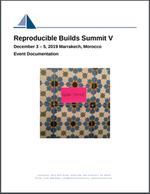
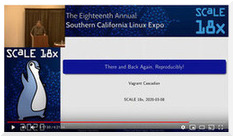

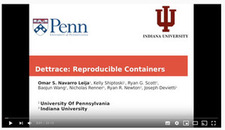



 Here is my monthly update covering what I have been doing in the free software world during March 2020 (
 Here is my monthly update covering what I have been doing in the free software world during February 2020 (


 Debian
devscripts
Before deciding to take an