Search Results: "jr"

3 October 2022

Shirish Agarwal: Death Certificate, Legal Heir, Succession Certificate, and Indian Bureaucracy.

Death Certificate After waiting for almost two, two, and a half months, I finally got mum s death certificate last week. A part of me was saddened as it felt like I was nailing her or putting nails to the coffin or whatever it is, (even though I m an Agarwal) I just felt sad and awful. I was told just get a death certificate and your problems will be over. Some people wanted me to give some amount under the table or something which I didn t want to party of and because of that perhaps it took a month, month and a half more as I came to know later that it had been issued almost a month and a half back. The inflation over the last 8 years of the present Govt. has made the corrupt even more corrupt, all the while projecting and telling others that the others are corrupt. There had been also a few politicians who were caught red-handed but then pieces of evidence & witnesses vanish overnight. I don t really wanna go in that direction as it would make for an unpleasant reading with no solutions at all unless the present Central Govt. goes out.

Intestate and Will I came to know the word Intestate. This was a new word/term for me. A lookup told me that intestate means a person dying without putting a will. That legal term comes from U.K. law. I had read a long long time back that almost all our laws have and were made or taken from U.K. law. IIRC, massive sections of the CRPC Act even today have that colonial legacy. While in its (BJP) manifesto that had been shared with the public at the time of the election, they had shared that they will remove a whole swathe of laws that don t make sense in today s environment. But when hard and good questions were asked, they trimmed a few, modified a few, and left most of them as it is. Sadly, most of the laws that they did modify increased Government control over people instead of decreasing, It s been 8 years and yet we still don t have a Privacy law. They had made something but it was too vague and would have invited suits from day 1 so pretty much on backburner :(. A good insight into what I mean is an article in the Hindu I read a few days back. Once you read that article, I am sure you will have as many questions as I have but sadly no answers. Law is not supposed to be partisan but today it is. I could cite examples from both the U.S. and UK courts about progressive judgments or the way they go about it, but then again when our people think they know better  But this again does not help me apart from setting some kind of background of where we are.) I have on this blog also shared how Africans have been setting new records in transparency and they did it almost 5 years back. For those new to the blog, African countries have been now broadcasting proceedings of their SC for almost 5 years now. I noticed it when privacy law was being debated and a few handles that I follow on Twitter and elsewhere had gone and given their submission in their SC. It was fascinating to not only hear but also read about the case from multiple viewpoints. And just to remind people, I am sharing all of this from Pune, Maharashtra which is the second-biggest city in Maharashtra that has something like six million people and probably a million or more transitory students, and casual laborers but then again that doesn t help me other than providing a kind of context to what I m sharing.. Now a couple of years back or more I had asked mum to make a will. If she wanted to bequeath something to somebody else she could do that, had shared about that. There was some article in Indian Express or elsewhere that told people what they should be doing, especially if they had cost the barrier of age 60. Now for reasons best known to her, she refused and now I have to figure out what is the right way to go about doing things.

Twitter Experiences Now before Twitter, a few people had been asking me about having a legal heir certificate, while others are asking about a succession certificate and some claim a Death Certificate is enough. Now I asked the same question on Twitter hoping at the max of 5-10 responses but was overwhelmed by the response. I got something like 50-60 odd replies. Probably, one of the better responses was given by Dr. Paras Jain who shared the following

Answer is qualified Movable assets nothing required Bank LIC flat with society nomination done nothing required except death certificate. However, each will insist on a notarized indemnity bond If the nomination is not done. Depends on whims & fancy of each mind legal heir certificate,+ all Dr. Paras Jain. (cleared up the grammar a little, otherwise, views are of Dr. Paras.) What was interesting for me is that most people just didn t give me advice, many of them also shared their own experiences or what they did or went through. I was surprised to learn e.g. that a succession certificate can take up to 6 months or more. Part of me isn t surprised to learn that as do know we have a huge pendency of cases in High Courts, District Courts leading all the way to the Supreme Court. India Today shared a brief article sharing the same and similar issues. Such delays have become far too common now

Supertech Demolition and Others Over the last couple of months, a number of high-profile demolitions have taken place and in most cases, the loss has been of homebuyers. See for e.g. the case of Supertech. A much more detailed article was penned by Moneylife. There were a few Muslims whose homes were demolished just a couple of months back that were being celebrated, but now just 2-3 days back a politician by the name of Shrikant Tyagi, a BJP leader, his flat was partly demolished and there was a lot of hue and cry. Although we shouldn t be discussing on the basis of religion but legality, somehow the idea has been put that there are two kinds of laws, one for the majority, the other for the minority. And this has been going on for the last 8 odd years, hence you see different reactions to the same incidents instead of similar reactions. In all the cases, no strictures are passed either against the Municipality or against lenders. The most obvious question, let s say for argument s sake, I was a homeowner in Supertech. I bought a flat for say 10 lakhs in 2012. According to the courts, today I am supposed to get 22 lakhs at 12% simple interest for 10 years. Let s say even if the builder was in a position and does honor the order, the homeowner will not get a house in the same area as the circle rate would probably have quadrupled by then at the very least. The circle rate alone might be the above amount. The reason is very simple, a builder buys land on the cheap when there is no development around. His/her/their whole idea is once development happens due to other builders also building flats, the whole area gets developed and they are able to sell the flats at a premium. Even Circle rates get affected as the builder pays below the table and asks the officers of the municipal authority to hike the circle rate every few months. Again, wouldn t go into much depth as the whole thing is rotten to the core. There are many such projects. I have shared Krishnaraj Rao s videos on this blog a few times. I am sure there are a few good men like him. At the end, sadly this is where we are  P.S. I haven t shared any book reviews this week as this post itself has become too long. I probably may blog about a couple of books in the next couple of days, till later.

Paul Wise: FLOSS Activities September 2022

Focus This month I didn't have any particular focus. I just worked on issues in my info bubble.

Changes

Issues

Review

Administration
  • Debian QA services: deploy changes
  • Debian wiki: approve accounts

Communication
  • Respond to queries from Debian users and contributors on the mailing lists and IRC

Sponsors All work was done on a volunteer basis.

29 September 2022

Russell Coker: Links September 2022

Tony Kern wrote an insightful document about the crash of a B-52 at Fairchild air base in 1994 as a case study of failed leadership [1]. Cory Doctorow wrote an insightful medium article We Should Not Endure a King describing the case for anti-trust laws [2]. We need them badly. Insightful Guardian article about the way reasonable responses to the bad situations people are in are diagnosed as mental health problems [3]. Providing better mental healthcare is good, but the government should also work on poverty etc. Cory Doctorow wrote an insightful Locus article about some of the issues that have to be dealt with in applying anti-trust legislation to tech companies [4]. We really need this to be done. Ars Technica has an interesting article about Stable Diffusion, an open source ML system for generating images [5], the results that it can produce are very impressive. One interesting thing is that the license has a set of conditions for usage which precludes exploiting or harming minors or generating false information [6]. This means it will need to go in the non-free section of Debian at best. Dan Wang wrote an interesting article on optimism as human capital [7] which covers the reasons that people feel inspired to create things.

30 August 2022

John Goerzen: The PC & Internet Revolution in Rural America

Inspired by several others (such as Alex Schroeder s post and Szcze uja s prompt), as well as a desire to get this down for my kids, I figure it s time to write a bit about living through the PC and Internet revolution where I did: outside a tiny town in rural Kansas. And, as I ve been back in that same area for the past 15 years, I reflect some on the challenges that continue to play out. Although the stories from the others were primarily about getting online, I want to start by setting some background. Those of you that didn t grow up in the same era as I did probably never realized that a typical business PC setup might cost $10,000 in today s dollars, for instance. So let me start with the background.

Nothing was easy This story begins in the 1980s. Somewhere around my Kindergarten year of school, around 1985, my parents bought a TRS-80 Color Computer 2 (aka CoCo II). It had 64K of RAM and used a TV for display and sound. This got you the computer. It didn t get you any disk drive or anything, no joysticks (required by a number of games). So whenever the system powered down, or it hung and you had to power cycle it a frequent event you d lose whatever you were doing and would have to re-enter the program, literally by typing it in. The floppy drive for the CoCo II cost more than the computer, and it was quite common for people to buy the computer first and then the floppy drive later when they d saved up the money for that. I particularly want to mention that computers then didn t come with a modem. What would be like buying a laptop or a tablet without wifi today. A modem, which I ll talk about in a bit, was another expensive accessory. To cobble together a system in the 80s that was capable of talking to others with persistent storage (floppy, or hard drive), screen, keyboard, and modem would be quite expensive. Adjusted for inflation, if you re talking a PC-style device (a clone of the IBM PC that ran DOS), this would easily be more expensive than the Macbook Pros of today. Few people back in the 80s had a computer at home. And the portion of those that had even the capability to get online in a meaningful way was even smaller. Eventually my parents bought a PC clone with 640K RAM and dual floppy drives. This was primarily used for my mom s work, but I did my best to take it over whenever possible. It ran DOS and, despite its monochrome screen, was generally a more capable machine than the CoCo II. For instance, it supported lowercase. (I m not even kidding; the CoCo II pretty much didn t.) A while later, they purchased a 32MB hard drive for it what luxury! Just getting a machine to work wasn t easy. Say you d bought a PC, and then bought a hard drive, and a modem. You didn t just plug in the hard drive and it would work. You would have to fight it every step of the way. The BIOS and DOS partition tables of the day used a cylinder/head/sector method of addressing the drive, and various parts of that those addresses had too few bits to work with the big drives of the day above 20MB. So you would have to lie to the BIOS and fdisk in various ways, and sort of work out how to do it for each drive. For each peripheral serial port, sound card (in later years), etc., you d have to set jumpers for DMA and IRQs, hoping not to conflict with anything already in the system. Perhaps you can now start to see why USB and PCI were so welcomed.

Sharing and finding resources Despite the two computers in our home, it wasn t as if software written on one machine just ran on another. A lot of software for PC clones assumed a CGA color display. The monochrome HGC in our PC wasn t particularly compatible. You could find a TSR program to emulate the CGA on the HGC, but it wasn t particularly stable, and there s only so much you can do when a program that assumes color displays on a monitor that can only show black, dark amber, or light amber. So I d periodically get to use other computers most commonly at an office in the evening when it wasn t being used. There were some local computer clubs that my dad took me to periodically. Software was swapped back then; disks copied, shareware exchanged, and so forth. For me, at least, there was no online to download software from, and selling software over the Internet wasn t a thing at all.

Three Different Worlds There were sort of three different worlds of computing experience in the 80s:
  1. Home users. Initially using a wide variety of software from Apple, Commodore, Tandy/RadioShack, etc., but eventually coming to be mostly dominated by IBM PC clones
  2. Small and mid-sized business users. Some of them had larger minicomputers or small mainframes, but most that I had contact with by the early 90s were standardized on DOS-based PCs. More advanced ones had a network running Netware, most commonly. Networking hardware and software was generally too expensive for home users to use in the early days.
  3. Universities and large institutions. These are the places that had the mainframes, the earliest implementations of TCP/IP, the earliest users of UUCP, and so forth.
The difference between the home computing experience and the large institution experience were vast. Not only in terms of dollars the large institution hardware could easily cost anywhere from tens of thousands to millions of dollars but also in terms of sheer resources required (large rooms, enormous power circuits, support staff, etc). Nothing was in common between them; not operating systems, not software, not experience. I was never much aware of the third category until the differences started to collapse in the mid-90s, and even then I only was exposed to it once the collapse was well underway. You might say to me, Well, Google certainly isn t running what I m running at home! And, yes of course, it s different. But fundamentally, most large datacenters are running on x86_64 hardware, with Linux as the operating system, and a TCP/IP network. It s a different scale, obviously, but at a fundamental level, the hardware and operating system stack are pretty similar to what you can readily run at home. Back in the 80s and 90s, this wasn t the case. TCP/IP wasn t even available for DOS or Windows until much later, and when it was, it was a clunky beast that was difficult. One of the things Kevin Driscoll highlights in his book called Modem World see my short post about it is that the history of the Internet we usually receive is focused on case 3: the large institutions. In reality, the Internet was and is literally a network of networks. Gateways to and from Internet existed from all three kinds of users for years, and while TCP/IP ultimately won the battle of the internetworking protocol, the other two streams of users also shaped the Internet as we now know it. Like many, I had no access to the large institution networks, but as I ve been reflecting on my experiences, I ve found a new appreciation for the way that those of us that grew up with primarily home PCs shaped the evolution of today s online world also.

An Era of Scarcity I should take a moment to comment about the cost of software back then. A newspaper article from 1985 comments that WordPerfect, then the most powerful word processing program, sold for $495 (or $219 if you could score a mail order discount). That s $1360/$600 in 2022 money. Other popular software, such as Lotus 1-2-3, was up there as well. If you were to buy a new PC clone in the mid to late 80s, it would often cost $2000 in 1980s dollars. Now add a printer a low-end dot matrix for $300 or a laser for $1500 or even more. A modem: another $300. So the basic system would be $3600, or $9900 in 2022 dollars. If you wanted a nice printer, you re now pushing well over $10,000 in 2022 dollars. You start to see one barrier here, and also why things like shareware and piracy if it was indeed even recognized as such were common in those days. So you can see, from a home computer setup (TRS-80, Commodore C64, Apple ][, etc) to a business-class PC setup was an order of magnitude increase in cost. From there to the high-end minis/mainframes was another order of magnitude (at least!) increase. Eventually there was price pressure on the higher end and things all got better, which is probably why the non-DOS PCs lasted until the early 90s.

Increasing Capabilities My first exposure to computers in school was in the 4th grade, when I would have been about 9. There was a single Apple ][ machine in that room. I primarily remember playing Oregon Trail on it. The next year, the school added a computer lab. Remember, this is a small rural area, so each graduating class might have about 25 people in it; this lab was shared by everyone in the K-8 building. It was full of some flavor of IBM PS/2 machines running DOS and Netware. There was a dedicated computer teacher too, though I think she was a regular teacher that was given somewhat minimal training on computers. We were going to learn typing that year, but I did so well on the very first typing program that we soon worked out that I could do programming instead. I started going to school early these machines were far more powerful than the XT at home and worked on programming projects there. Eventually my parents bought me a Gateway 486SX/25 with a VGA monitor and hard drive. Wow! This was a whole different world. It may have come with Windows 3.0 or 3.1 on it, but I mainly remember running OS/2 on that machine. More on that below.

Programming That CoCo II came with a BASIC interpreter in ROM. It came with a large manual, which served as a BASIC tutorial as well. The BASIC interpreter was also the shell, so literally you could not use the computer without at least a bit of BASIC. Once I had access to a DOS machine, it also had a basic interpreter: GW-BASIC. There was a fair bit of software written in BASIC at the time, but most of the more advanced software wasn t. I wondered how these .EXE and .COM programs were written. I could find vague references to DEBUG.EXE, assemblers, and such. But it wasn t until I got a copy of Turbo Pascal that I was able to do that sort of thing myself. Eventually I got Borland C++ and taught myself C as well. A few years later, I wanted to try writing GUI programs for Windows, and bought Watcom C++ much cheaper than the competition, and it could target Windows, DOS (and I think even OS/2). Notice that, aside from BASIC, none of this was free, and none of it was bundled. You couldn t just download a C compiler, or Python interpreter, or whatnot back then. You had to pay for the ability to write any kind of serious code on the computer you already owned.

The Microsoft Domination Microsoft came to dominate the PC landscape, and then even the computing landscape as a whole. IBM very quickly lost control over the hardware side of PCs as Compaq and others made clones, but Microsoft has managed in varying degrees even to this day to keep a stranglehold on the software, and especially the operating system, side. Yes, there was occasional talk of things like DR-DOS, but by and large the dominant platform came to be the PC, and if you had a PC, you ran DOS (and later Windows) from Microsoft. For awhile, it looked like IBM was going to challenge Microsoft on the operating system front; they had OS/2, and when I switched to it sometime around the version 2.1 era in 1993, it was unquestionably more advanced technically than the consumer-grade Windows from Microsoft at the time. It had Internet support baked in, could run most DOS and Windows programs, and had introduced a replacement for the by-then terrible FAT filesystem: HPFS, in 1988. Microsoft wouldn t introduce a better filesystem for its consumer operating systems until Windows XP in 2001, 13 years later. But more on that story later.

Free Software, Shareware, and Commercial Software I ve covered the high cost of software already. Obviously $500 software wasn t going to sell in the home market. So what did we have? Mainly, these things:
  1. Public domain software. It was free to use, and if implemented in BASIC, probably had source code with it too.
  2. Shareware
  3. Commercial software (some of it from small publishers was a lot cheaper than $500)
Let s talk about shareware. The idea with shareware was that a company would release a useful program, sometimes limited. You were encouraged to register , or pay for, it if you liked it and used it. And, regardless of whether you registered it or not, were told please copy! Sometimes shareware was fully functional, and registering it got you nothing more than printed manuals and an easy conscience (guilt trips for not registering weren t necessarily very subtle). Sometimes unregistered shareware would have a nag screen a delay of a few seconds while they told you to register. Sometimes they d be limited in some way; you d get more features if you registered. With games, it was popular to have a trilogy, and release the first episode inevitably ending with a cliffhanger as shareware, and the subsequent episodes would require registration. In any event, a lot of software people used in the 80s and 90s was shareware. Also pirated commercial software, though in the earlier days of computing, I think some people didn t even know the difference. Notice what s missing: Free Software / FLOSS in the Richard Stallman sense of the word. Stallman lived in the big institution world after all, he worked at MIT and what he was doing with the Free Software Foundation and GNU project beginning in 1983 never really filtered into the DOS/Windows world at the time. I had no awareness of it even existing until into the 90s, when I first started getting some hints of it as a port of gcc became available for OS/2. The Internet was what really brought this home, but I m getting ahead of myself. I want to say again: FLOSS never really entered the DOS and Windows 3.x ecosystems. You d see it make a few inroads here and there in later versions of Windows, and moreso now that Microsoft has been sort of forced to accept it, but still, reflect on its legacy. What is the software market like in Windows compared to Linux, even today? Now it is, finally, time to talk about connectivity!

Getting On-Line What does it even mean to get on line? Certainly not connecting to a wifi access point. The answer is, unsurprisingly, complex. But for everyone except the large institutional users, it begins with a telephone.

The telephone system By the 80s, there was one communication network that already reached into nearly every home in America: the phone system. Virtually every household (note I don t say every person) was uniquely identified by a 10-digit phone number. You could, at least in theory, call up virtually any other phone in the country and be connected in less than a minute. But I ve got to talk about cost. The way things worked in the USA, you paid a monthly fee for a phone line. Included in that monthly fee was unlimited local calling. What is a local call? That was an extremely complex question. Generally it meant, roughly, calling within your city. But of course, as you deal with things like suburbs and cities growing into each other (eg, the Dallas-Ft. Worth metroplex), things got complicated fast. But let s just say for simplicity you could call others in your city. What about calling people not in your city? That was long distance , and you paid often hugely by the minute for it. Long distance rates were difficult to figure out, but were generally most expensive during business hours and cheapest at night or on weekends. Prices eventually started to come down when competition was introduced for long distance carriers, but even then you often were stuck with a single carrier for long distance calls outside your city but within your state. Anyhow, let s just leave it at this: local calls were virtually free, and long distance calls were extremely expensive.

Getting a modem I remember getting a modem that ran at either 1200bps or 2400bps. Either way, quite slow; you could often read even plain text faster than the modem could display it. But what was a modem? A modem hooked up to a computer with a serial cable, and to the phone system. By the time I got one, modems could automatically dial and answer. You would send a command like ATDT5551212 and it would dial 555-1212. Modems had speakers, because often things wouldn t work right, and the telephone system was oriented around speech, so you could hear what was happening. You d hear it wait for dial tone, then dial, then hopefully the remote end would ring, a modem there would answer, you d hear the screeching of a handshake, and eventually your terminal would say CONNECT 2400. Now your computer was bridged to the other; anything going out your serial port was encoded as sound by your modem and decoded at the other end, and vice-versa. But what, exactly, was the other end? It might have been another person at their computer. Turn on local echo, and you can see what they did. Maybe you d send files to each other. But in my case, the answer was different: PC Magazine.

PC Magazine and CompuServe Starting around 1986 (so I would have been about 6 years old), I got to read PC Magazine. My dad would bring copies that were being discarded at his office home for me to read, and I think eventually bought me a subscription directly. This was not just a standard magazine; it ran something like 350-400 pages an issue, and came out every other week. This thing was a monster. It had reviews of hardware and software, descriptions of upcoming technologies, pages and pages of ads (that often had some degree of being informative to them). And they had sections on programming. Many issues would talk about BASIC or Pascal programming, and there d be a utility in most issues. What do I mean by a utility in most issues ? Did they include a floppy disk with software? No, of course not. There was a literal program listing printed in the magazine. If you wanted the utility, you had to type it in. And a lot of them were written in assembler, so you had to have an assembler. An assembler, of course, was not free and I didn t have one. Or maybe they wrote it in Microsoft C, and I had Borland C, and (of course) they weren t compatible. Sometimes they would list the program sort of in binary: line after line of a BASIC program, with lines like 64, 193, 253, 0, 53, 0, 87 that you would type in for hours, hopefully correctly. Running the BASIC program would, if you got it correct, emit a .COM file that you could then run. They did have a rudimentary checksum system built in, but it wasn t even a CRC, so something like swapping two numbers you d never notice except when the program would mysteriously hang. Eventually they teamed up with CompuServe to offer a limited slice of CompuServe for the purpose of downloading PC Magazine utilities. This was called PC MagNet. I am foggy on the details, but I believe that for a time you could connect to the limited PC MagNet part of CompuServe for free (after the cost of the long-distance call, that is) rather than paying for CompuServe itself (because, OF COURSE, that also charged you per the minute.) So in the early days, I would get special permission from my parents to place a long distance call, and after some nerve-wracking minutes in which we were aware every minute was racking up charges, I could navigate the menus, download what I wanted, and log off immediately. I still, incidentally, mourn what PC Magazine became. As with computing generally, it followed the mass market. It lost its deep technical chops, cut its programming columns, stopped talking about things like how SCSI worked, and so forth. By the time it stopped printing in 2009, it was no longer a square-bound 400-page beheamoth, but rather looked more like a copy of Newsweek, but with less depth.

Continuing with CompuServe CompuServe was a much larger service than just PC MagNet. Eventually, our family got a subscription. It was still an expensive and scarce resource; I d call it only after hours when the long-distance rates were cheapest. Everyone had a numerical username separated by commas; mine was 71510,1421. CompuServe had forums, and files. Eventually I would use TapCIS to queue up things I wanted to do offline, to minimize phone usage online. CompuServe eventually added a gateway to the Internet. For the sum of somewhere around $1 a message, you could send or receive an email from someone with an Internet email address! I remember the thrill of one time, as a kid of probably 11 years, sending a message to one of the editors of PC Magazine and getting a kind, if brief, reply back! But inevitably I had

The Godzilla Phone Bill Yes, one month I became lax in tracking my time online. I ran up my parents phone bill. I don t remember how high, but I remember it was hundreds of dollars, a hefty sum at the time. As I watched Jason Scott s BBS Documentary, I realized how common an experience this was. I think this was the end of CompuServe for me for awhile.

Toll-Free Numbers I lived near a town with a population of 500. Not even IN town, but near town. The calling area included another town with a population of maybe 1500, so all told, there were maybe 2000 people total I could talk to with a local call though far fewer numbers, because remember, telephones were allocated by the household. There was, as far as I know, zero modems that were a local call (aside from one that belonged to a friend I met in around 1992). So basically everything was long-distance. But there was a special feature of the telephone network: toll-free numbers. Normally when calling long-distance, you, the caller, paid the bill. But with a toll-free number, beginning with 1-800, the recipient paid the bill. These numbers almost inevitably belonged to corporations that wanted to make it easy for people to call. Sales and ordering lines, for instance. Some of these companies started to set up modems on toll-free numbers. There were few of these, but they existed, so of course I had to try them! One of them was a company called PennyWise that sold office supplies. They had a toll-free line you could call with a modem to order stuff. Yes, online ordering before the web! I loved office supplies. And, because I lived far from a big city, if the local K-Mart didn t have it, I probably couldn t get it. Of course, the interface was entirely text, but you could search for products and place orders with the modem. I had loads of fun exploring the system, and actually ordered things from them and probably actually saved money doing so. With the first order they shipped a monster full-color catalog. That thing must have been 500 pages, like the Sears catalogs of the day. Every item had a part number, which streamlined ordering through the modem.

Inbound FAXes By the 90s, a number of modems became able to send and receive FAXes as well. For those that don t know, a FAX machine was essentially a special modem. It would scan a page and digitally transmit it over the phone system, where it would at least in the early days be printed out in real time (because the machines didn t have the memory to store an entire page as an image). Eventually, PC modems integrated FAX capabilities. There still wasn t anything useful I could do locally, but there were ways I could get other companies to FAX something to me. I remember two of them. One was for US Robotics. They had an on demand FAX system. You d call up a toll-free number, which was an automated IVR system. You could navigate through it and select various documents of interest to you: spec sheets and the like. You d key in your FAX number, hang up, and US Robotics would call YOU and FAX you the documents you wanted. Yes! I was talking to a computer (of a sorts) at no cost to me! The New York Times also ran a service for awhile called TimesFax. Every day, they would FAX out a page or two of summaries of the day s top stories. This was pretty cool in an era in which I had no other way to access anything from the New York Times. I managed to sign up for TimesFax I have no idea how, anymore and for awhile I would get a daily FAX of their top stories. When my family got its first laser printer, I could them even print these FAXes complete with the gothic New York Times masthead. Wow! (OK, so technically I could print it on a dot-matrix printer also, but graphics on a 9-pin dot matrix is a kind of pain that is a whole other article.)

My own phone line Remember how I discussed that phone lines were allocated per household? This was a problem for a lot of reasons:
  1. Anybody that tried to call my family while I was using my modem would get a busy signal (unable to complete the call)
  2. If anybody in the house picked up the phone while I was using it, that would degrade the quality of the ongoing call and either mess up or disconnect the call in progress. In many cases, that could cancel a file transfer (which wasn t necessarily easy or possible to resume), prompting howls of annoyance from me.
  3. Generally we all had to work around each other
So eventually I found various small jobs and used the money I made to pay for my own phone line and my own long distance costs. Eventually I upgraded to a 28.8Kbps US Robotics Courier modem even! Yes, you heard it right: I got a job and a bank account so I could have a phone line and a faster modem. Uh, isn t that why every teenager gets a job? Now my local friend and I could call each other freely at least on my end (I can t remember if he had his own phone line too). We could exchange files using HS/Link, which had the added benefit of allowing split-screen chat even while a file transfer is in progress. I m sure we spent hours chatting to each other keyboard-to-keyboard while sharing files with each other.

Technology in Schools By this point in the story, we re in the late 80s and early 90s. I m still using PC-style OSs at home; OS/2 in the later years of this period, DOS or maybe a bit of Windows in the earlier years. I mentioned that they let me work on programming at school starting in 5th grade. It was soon apparent that I knew more about computers than anybody on staff, and I started getting pulled out of class to help teachers or administrators with vexing school problems. This continued until I graduated from high school, incidentally often to my enjoyment, and the annoyance of one particular teacher who, I must say, I was fine with annoying in this way. That s not to say that there was institutional support for what I was doing. It was, after all, a small school. Larger schools might have introduced BASIC or maybe Logo in high school. But I had already taught myself BASIC, Pascal, and C by the time I was somewhere around 12 years old. So I wouldn t have had any use for that anyhow. There were programming contests occasionally held in the area. Schools would send teams. My school didn t really send anybody, but I went as an individual. One of them was run by a local college (but for jr. high or high school students. Years later, I met one of the professors that ran it. He remembered me, and that day, better than I did. The programming contest had problems one could solve in BASIC or Logo. I knew nothing about what to expect going into it, but I had lugged my computer and screen along, and asked him, Can I write my solutions in C? He was, apparently, stunned, but said sure, go for it. I took first place that day, leading to some rather confused teams from much larger schools. The Netware network that the school had was, as these generally were, itself isolated. There was no link to the Internet or anything like it. Several schools across three local counties eventually invested in a fiber-optic network linking them together. This built a larger, but still closed, network. Its primary purpose was to allow students to be exposed to a wider variety of classes at high schools. Participating schools had an ITV room , outfitted with cameras and mics. So students at any school could take classes offered over ITV at other schools. For instance, only my school taught German classes, so people at any of those participating schools could take German. It was an early Zoom room. But alongside the TV signal, there was enough bandwidth to run some Netware frames. By about 1995 or so, this let one of the schools purchase some CD-ROM software that was made available on a file server and could be accessed by any participating school. Nice! But Netware was mainly about file and printer sharing; there wasn t even a facility like email, at least not on our deployment.

BBSs My last hop before the Internet was the BBS. A BBS was a computer program, usually ran by a hobbyist like me, on a computer with a modem connected. Callers would call it up, and they d interact with the BBS. Most BBSs had discussion groups like forums and file areas. Some also had games. I, of course, continued to have that most vexing of problems: they were all long-distance. There were some ways to help with that, chiefly QWK and BlueWave. These, somewhat like TapCIS in the CompuServe days, let me download new message posts for reading offline, and queue up my own messages to send later. QWK and BlueWave didn t help with file downloading, though.

BBSs get networked BBSs were an interesting thing. You d call up one, and inevitably somewhere in the file area would be a BBS list. Download the BBS list and you ve suddenly got a list of phone numbers to try calling. All of them were long distance, of course. You d try calling them at random and have a success rate of maybe 20%. The other 80% would be defunct; you might get the dreaded this number is no longer in service or the even more dreaded angry human answering the phone (and of course a modem can t talk to a human, so they d just get silence for probably the nth time that week). The phone company cared nothing about BBSs and recycled their numbers just as fast as any others. To talk to various people, or participate in certain discussion groups, you d have to call specific BBSs. That s annoying enough in the general case, but even more so for someone paying long distance for it all, because it takes a few minutes to establish a connection to a BBS: handshaking, logging in, menu navigation, etc. But BBSs started talking to each other. The earliest successful such effort was FidoNet, and for the duration of the BBS era, it remained by far the largest. FidoNet was analogous to the UUCP that the institutional users had, but ran on the much cheaper PC hardware. Basically, BBSs that participated in FidoNet would relay email, forum posts, and files between themselves overnight. Eventually, as with UUCP, by hopping through this network, messages could reach around the globe, and forums could have worldwide participation asynchronously, long before they could link to each other directly via the Internet. It was almost entirely volunteer-run.

Running my own BBS At age 13, I eventually chose to set up my own BBS. It ran on my single phone line, so of course when I was dialing up something else, nobody could dial up me. Not that this was a huge problem; in my town of 500, I probably had a good 1 or 2 regular callers in the beginning. In the PC era, there was a big difference between a server and a client. Server-class software was expensive and rare. Maybe in later years you had an email client, but an email server would be completely unavailable to you as a home user. But with a BBS, I could effectively run a server. I even ran serial lines in our house so that the BBS could be connected from other rooms! Since I was running OS/2, the BBS didn t tie up the computer; I could continue using it for other things. FidoNet had an Internet email gateway. This one, unlike CompuServe s, was free. Once I had a BBS on FidoNet, you could reach me from the Internet using the FidoNet address. This didn t support attachments, but then email of the day didn t really, either. Various others outside Kansas ran FidoNet distribution points. I believe one of them was mgmtsys; my memory is quite vague, but I think they offered a direct gateway and I would call them to pick up Internet mail via FidoNet protocols, but I m not at all certain of this.

Pros and Cons of the Non-Microsoft World As mentioned, Microsoft was and is the dominant operating system vendor for PCs. But I left that world in 1993, and here, nearly 30 years later, have never really returned. I got an operating system with more technical capabilities than the DOS and Windows of the day, but the tradeoff was a much smaller software ecosystem. OS/2 could run DOS programs, but it ran OS/2 programs a lot better. So if I were to run a BBS, I wanted one that had a native OS/2 version limiting me to a small fraction of available BBS server software. On the other hand, as a fully 32-bit operating system, there started to be OS/2 ports of certain software with a Unix heritage; most notably for me at the time, gcc. At some point, I eventually came across the RMS essays and started to be hooked.

Internet: The Hunt Begins I certainly was aware that the Internet was out there and interesting. But the first problem was: how the heck do I get connected to the Internet?

Computer labs There was one place that tended to have Internet access: colleges and universities. In 7th grade, I participated in a program that resulted in me being invited to visit Duke University, and in 8th grade, I participated in National History Day, resulting in a trip to visit the University of Maryland. I probably sought out computer labs at both of those. My most distinct memory was finding my way into a computer lab at one of those universities, and it was full of NeXT workstations. I had never seen or used NeXT before, and had no idea how to operate it. I had brought a box of floppy disks, unaware that the DOS disks probably weren t compatible with NeXT. Closer to home, a small college had a computer lab that I could also visit. I would go there in summer or when it wasn t used with my stack of floppies. I remember downloading disk images of FLOSS operating systems: FreeBSD, Slackware, or Debian, at the time. The hash marks from the DOS-based FTP client would creep across the screen as the 1.44MB disk images would slowly download. telnet was also available on those machines, so I could telnet to things like public-access Archie servers and libraries though not Gopher. Still, FTP and telnet access opened up a lot, and I learned quite a bit in those years.

Continuing the Journey At some point, I got a copy of the Whole Internet User s Guide and Catalog, published in 1994. I still have it. If it hadn t already figured it out by then, I certainly became aware from it that Unix was the dominant operating system on the Internet. The examples in Whole Internet covered FTP, telnet, gopher all assuming the user somehow got to a Unix prompt. The web was introduced about 300 pages in; clearly viewed as something that wasn t page 1 material. And it covered the command-line www client before introducing the graphical Mosaic. Even then, though, the book highlighted Mosaic s utility as a front-end for Gopher and FTP, and even the ability to launch telnet sessions by clicking on links. But having a copy of the book didn t equate to having any way to run Mosaic. The machines in the computer lab I mentioned above all ran DOS and were incapable of running a graphical browser. I had no SLIP or PPP (both ways to run Internet traffic over a modem) connectivity at home. In short, the Web was something for the large institutional users at the time.

CD-ROMs As CD-ROMs came out, with their huge (for the day) 650MB capacity, various companies started collecting software that could be downloaded on the Internet and selling it on CD-ROM. The two most popular ones were Walnut Creek CD-ROM and Infomagic. One could buy extensive Shareware and gaming collections, and then even entire Linux and BSD distributions. Although not exactly an Internet service per se, it was a way of bringing what may ordinarily only be accessible to institutional users into the home computer realm.

Free Software Jumps In As I mentioned, by the mid 90s, I had come across RMS s writings about free software most probably his 1992 essay Why Software Should Be Free. (Please note, this is not a commentary on the more recently-revealed issues surrounding RMS, but rather his writings and work as I encountered them in the 90s.) The notion of a Free operating system not just in cost but in openness was incredibly appealing. Not only could I tinker with it to a much greater extent due to having source for everything, but it included so much software that I d otherwise have to pay for. Compilers! Interpreters! Editors! Terminal emulators! And, especially, server software of all sorts. There d be no way I could afford or run Netware, but with a Free Unixy operating system, I could do all that. My interest was obviously piqued. Add to that the fact that I could actually participate and contribute I was about to become hooked on something that I ve stayed hooked on for decades. But then the question was: which Free operating system? Eventually I chose FreeBSD to begin with; that would have been sometime in 1995. I don t recall the exact reasons for that. I remember downloading Slackware install floppies, and probably the fact that Debian wasn t yet at 1.0 scared me off for a time. FreeBSD s fantastic Handbook far better than anything I could find for Linux at the time was no doubt also a factor.

The de Raadt Factor Why not NetBSD or OpenBSD? The short answer is Theo de Raadt. Somewhere in this time, when I was somewhere between 14 and 16 years old, I asked some questions comparing NetBSD to the other two free BSDs. This was on a NetBSD mailing list, but for some reason Theo saw it and got a flame war going, which CC d me. Now keep in mind that even if NetBSD had a web presence at the time, it would have been minimal, and I would have not all that unusually for the time had no way to access it. I was certainly not aware of the, shall we say, acrimony between Theo and NetBSD. While I had certainly seen an online flamewar before, this took on a different and more disturbing tone; months later, Theo randomly emailed me under the subject SLIME saying that I was, well, SLIME . I seem to recall periodic emails from him thereafter reminding me that he hates me and that he had blocked me. (Disclaimer: I have poor email archives from this period, so the full details are lost to me, but I believe I am accurately conveying these events from over 25 years ago) This was a surprise, and an unpleasant one. I was trying to learn, and while it is possible I didn t understand some aspect or other of netiquette (or Theo s personal hatred of NetBSD) at the time, still that is not a reason to flame a 16-year-old (though he would have had no way to know my age). This didn t leave any kind of scar, but did leave a lasting impression; to this day, I am particularly concerned with how FLOSS projects handle poisonous people. Debian, for instance, has come a long way in this over the years, and even Linus Torvalds has turned over a new leaf. I don t know if Theo has. In any case, I didn t use NetBSD then. I did try it periodically in the years since, but never found it compelling enough to justify a large switch from Debian. I never tried OpenBSD for various reasons, but one of them was that I didn t want to join a community that tolerates behavior such as Theo s from its leader.

Moving to FreeBSD Moving from OS/2 to FreeBSD was final. That is, I didn t have enough hard drive space to keep both. I also didn t have the backup capacity to back up OS/2 completely. My BBS, which ran Virtual BBS (and at some point also AdeptXBBS) was deleted and reincarnated in a different form. My BBS was a member of both FidoNet and VirtualNet; the latter was specific to VBBS, and had to be dropped. I believe I may have also had to drop the FidoNet link for a time. This was the biggest change of computing in my life to that point. The earlier experiences hadn t literally destroyed what came before. OS/2 could still run my DOS programs. Its command shell was quite DOS-like. It ran Windows programs. I was going to throw all that away and leap into the unknown. I wish I had saved a copy of my BBS; I would love to see the messages I exchanged back then, or see its menu screens again. I have little memory of what it looked like. But other than that, I have no regrets. Pursuing Free, Unixy operating systems brought me a lot of enjoyment and a good career. That s not to say it was easy. All the problems of not being in the Microsoft ecosystem were magnified under FreeBSD and Linux. In a day before EDID, monitor timings had to be calculated manually and you risked destroying your monitor if you got them wrong. Word processing and spreadsheet software was pretty much not there for FreeBSD or Linux at the time; I was therefore forced to learn LaTeX and actually appreciated that. Software like PageMaker or CorelDraw was certainly nowhere to be found for those free operating systems either. But I got a ton of new capabilities. I mentioned the BBS didn t shut down, and indeed it didn t. I ran what was surely a supremely unique oddity: a free, dialin Unix shell server in the middle of a small town in Kansas. I m sure I provided things such as pine for email and some help text and maybe even printouts for how to use it. The set of callers slowly grew over the time period, in fact. And then I got UUCP.

Enter UUCP Even throughout all this, there was no local Internet provider and things were still long distance. I had Internet Email access via assorted strange routes, but they were all strange. And, I wanted access to Usenet. In 1995, it happened. The local ISP I mentioned offered UUCP access. Though I couldn t afford the dialup shell (or later, SLIP/PPP) that they offered due to long-distance costs, UUCP s very efficient batched processes looked doable. I believe I established that link when I was 15, so in 1995. I worked to register my domain, complete.org, as well. At the time, the process was a bit lengthy and involved downloading a text file form, filling it out in a precise way, sending it to InterNIC, and probably mailing them a check. Well I did that, and in September of 1995, complete.org became mine. I set up sendmail on my local system, as well as INN to handle the limited Usenet newsfeed I requested from the ISP. I even ran Majordomo to host some mailing lists, including some that were surprisingly high-traffic for a few-times-a-day long-distance modem UUCP link! The modem client programs for FreeBSD were somewhat less advanced than for OS/2, but I believe I wound up using Minicom or Seyon to continue to dial out to BBSs and, I believe, continue to use Learning Link. So all the while I was setting up my local BBS, I continued to have access to the text Internet, consisting of chiefly Gopher for me.

Switching to Debian I switched to Debian sometime in 1995 or 1996, and have been using Debian as my primary OS ever since. I continued to offer shell access, but added the WorldVU Atlantis menuing BBS system. This provided a return of a more BBS-like interface (by default; shell was still an uption) as well as some BBS door games such as LoRD and TradeWars 2002, running under DOS emulation. I also continued to run INN, and ran ifgate to allow FidoNet echomail to be presented into INN Usenet-like newsgroups, and netmail to be gated to Unix email. This worked pretty well. The BBS continued to grow in these days, peaking at about two dozen total user accounts, and maybe a dozen regular users.

Dial-up access availability I believe it was in 1996 that dial up PPP access finally became available in my small town. What a thrill! FINALLY! I could now FTP, use Gopher, telnet, and the web all from home. Of course, it was at modem speeds, but still. (Strangely, I have a memory of accessing the Web using WebExplorer from OS/2. I don t know exactly why; it s possible that by this time, I had upgraded to a 486 DX2/66 and was able to reinstall OS/2 on the old 25MHz 486, or maybe something was wrong with the timeline from my memories from 25 years ago above. Or perhaps I made the occasional long-distance call somewhere before I ditched OS/2.) Gopher sites still existed at this point, and I could access them using Netscape Navigator which likely became my standard Gopher client at that point. I don t recall using UMN text-mode gopher client locally at that time, though it s certainly possible I did.

The city Starting when I was 15, I took computer science classes at Wichita State University. The first one was a class in the summer of 1995 on C++. I remember being worried about being good enough for it I was, after all, just after my HS freshman year and had never taken the prerequisite C class. I loved it and got an A! By 1996, I was taking more classes. In 1996 or 1997 I stayed in Wichita during the day due to having more than one class. So, what would I do then but enjoy the computer lab? The CS dept. had two of them: one that had NCD X terminals connected to a pair of SunOS servers, and another one running Windows. I spent most of the time in the Unix lab with the NCDs; I d use Netscape or pine, write code, enjoy the University s fast Internet connection, and so forth. In 1997 I had graduated high school and that summer I moved to Wichita to attend college. As was so often the case, I shut down the BBS at that time. It would be 5 years until I again dealt with Internet at home in a rural community. By the time I moved to my apartment in Wichita, I had stopped using OS/2 entirely. I have no memory of ever having OS/2 there. Along the way, I had bought a Pentium 166, and then the most expensive piece of computing equipment I have ever owned: a DEC Alpha, which, of course, ran Linux.

ISDN I must have used dialup PPP for a time, but I eventually got a job working for the ISP I had used for UUCP, and then PPP. While there, I got a 128Kbps ISDN line installed in my apartment, and they gave me a discount on the service for it. That was around 3x the speed of a modem, and crucially was always on and gave me a public IP. No longer did I have to use UUCP; now I got to host my own things! By at least 1998, I was running a web server on www.complete.org, and I had an FTP server going as well.

Even Bigger Cities In 1999 I moved to Dallas, and there got my first broadband connection: an ADSL link at, I think, 1.5Mbps! Now that was something! But it had some reliability problems. I eventually put together a server and had it hosted at an acquantaince s place who had SDSL in his apartment. Within a couple of years, I had switched to various kinds of proper hosting for it, but that is a whole other article. In Indianapolis, I got a cable modem for the first time, with even tighter speeds but prohibitions on running servers on it. Yuck.

Challenges Being non-Microsoft continued to have challenges. Until the advent of Firefox, a web browser was one of the biggest. While Netscape supported Linux on i386, it didn t support Linux on Alpha. I hobbled along with various attempts at emulators, old versions of Mosaic, and so forth. And, until StarOffice was open-sourced as Open Office, reading Microsoft file formats was also a challenge, though WordPerfect was briefly available for Linux. Over the years, I have become used to the Linux ecosystem. Perhaps I use Gimp instead of Photoshop and digikam instead of well, whatever somebody would use on Windows. But I get ZFS, and containers, and so much that isn t available there. Yes, I know Apple never went away and is a thing, but for most of the time period I discuss in this article, at least after the rise of DOS, it was niche compared to the PC market.

Back to Kansas In 2002, I moved back to Kansas, to a rural home near a different small town in the county next to where I grew up. Over there, it was back to dialup at home, but I had faster access at work. I didn t much care for this, and thus began a 20+-year effort to get broadband in the country. At first, I got a wireless link, which worked well enough in the winter, but had serious problems in the summer when the trees leafed out. Eventually DSL became available locally highly unreliable, but still, it was something. Then I moved back to the community I grew up in, a few miles from where I grew up. Again I got DSL a bit better. But after some years, being at the end of the run of DSL meant I had poor speeds and reliability problems. I eventually switched to various wireless ISPs, which continues to the present day; while people in cities can get Gbps service, I can get, at best, about 50Mbps. Long-distance fees are gone, but the speed disparity remains.

Concluding Reflections I am glad I grew up where I did; the strong community has a lot of advantages I don t have room to discuss here. In a number of very real senses, having no local services made things a lot more difficult than they otherwise would have been. However, perhaps I could say that I also learned a lot through the need to come up with inventive solutions to those challenges. To this day, I think a lot about computing in remote environments: partially because I live in one, and partially because I enjoy visiting places that are remote enough that they have no Internet, phone, or cell service whatsoever. I have written articles like Tools for Communicating Offline and in Difficult Circumstances based on my own personal experience. I instinctively think about making protocols robust in the face of various kinds of connectivity failures because I experience various kinds of connectivity failures myself.

(Almost) Everything Lives On In 2002, Gopher turned 10 years old. It had probably been about 9 or 10 years since I had first used Gopher, which was the first way I got on live Internet from my house. It was hard to believe. By that point, I had an always-on Internet link at home and at work. I had my Alpha, and probably also at least PCMCIA Ethernet for a laptop (many laptops had modems by the 90s also). Despite its popularity in the early 90s, less than 10 years after it came on the scene and started to unify the Internet, it was mostly forgotten. And it was at that moment that I decided to try to resurrect it. The University of Minnesota finally released it under an Open Source license. I wrote the first new gopher server in years, pygopherd, and introduced gopher to Debian. Gopher lives on; there are now quite a few Gopher clients and servers out there, newly started post-2002. The Gemini protocol can be thought of as something akin to Gopher 2.0, and it too has a small but blossoming ecosystem. Archie, the old FTP search tool, is dead though. Same for WAIS and a number of the other pre-web search tools. But still, even FTP lives on today. And BBSs? Well, they didn t go away either. Jason Scott s fabulous BBS documentary looks back at the history of the BBS, while Back to the BBS from last year talks about the modern BBS scene. FidoNet somehow is still alive and kicking. UUCP still has its place and has inspired a whole string of successors. Some, like NNCP, are clearly direct descendents of UUCP. Filespooler lives in that ecosystem, and you can even see UUCP concepts in projects as far afield as Syncthing and Meshtastic. Usenet still exists, and you can now run Usenet over NNCP just as I ran Usenet over UUCP back in the day (which you can still do as well). Telnet, of course, has been largely supplanted by ssh, but the concept is more popular now than ever, as Linux has made ssh be available on everything from Raspberry Pi to Android. And I still run a Gopher server, looking pretty much like it did in 2002. This post also has a permanent home on my website, where it may be periodically updated.

20 July 2022

Enrico Zini: Deconstruction of the DAM hat

Further reading Talk notes Intro Debian Account Managers Responsibility for official membership What DAM is not Unexpected responsibilities DAM warnings DAM warnings? House rules Interpreting house rules Governance by bullying How about the Community Team? How about DAM? How about the DPL? Concentrating responsibility Empowering developers What needs to happen

1 July 2022

Paul Wise: FLOSS Activities June 2022

Focus This month I didn't have any particular focus. I just worked on issues in my info bubble.

Changes

Issues

Review
  • Spam: reported 5 Debian bug reports and 45 Debian mailing list posts
  • Debian wiki: RecentChanges for the month
  • Debian BTS usertags: changes for the month
  • Debian screenshots:

Administration
  • Debian wiki: unblock IP addresses, assist with account recovery, approve accounts

Communication

Sponsors The sptag work was sponsored. All other work was done on a volunteer basis.

13 May 2022

Antoine Beaupr : BTRFS notes

I'm not a fan of BTRFS. This page serves as a reminder of why, but also a cheat sheet to figure out basic tasks in a BTRFS environment because those are not obvious to me, even after repeatedly having to deal with them. Content warning: there might be mentions of ZFS.

Stability concerns I'm worried about BTRFS stability, which has been historically ... changing. RAID-5 and RAID-6 are still marked unstable, for example. It's kind of a lucky guess whether your current kernel will behave properly with your planned workload. For example, in Linux 4.9, RAID-1 and RAID-10 were marked as "mostly OK" with a note that says:
Needs to be able to create two copies always. Can get stuck in irreversible read-only mode if only one copy can be made.
Even as of now, RAID-1 and RAID-10 has this note:
The simple redundancy RAID levels utilize different mirrors in a way that does not achieve the maximum performance. The logic can be improved so the reads will spread over the mirrors evenly or based on device congestion.
Granted, that's not a stability concern anymore, just performance. A reviewer of a draft of this article actually claimed that BTRFS only reads from one of the drives, which hopefully is inaccurate, but goes to show how confusing all this is. There are other warnings in the Debian wiki that are quite scary. Even the legendary Arch wiki has a warning on top of their BTRFS page, still. Even if those issues are now fixed, it can be hard to tell when they were fixed. There is a changelog by feature but it explicitly warns that it doesn't know "which kernel version it is considered mature enough for production use", so it's also useless for this. It would have been much better if BTRFS was released into the world only when those bugs were being completely fixed. Or that, at least, features were announced when they were stable, not just "we merged to mainline, good luck". Even now, we get mixed messages even in the official BTRFS documentation which says "The Btrfs code base is stable" (main page) while at the same time clearly stating unstable parts in the status page (currently RAID56). There are much harsher BTRFS critics than me out there so I will stop here, but let's just say that I feel a little uncomfortable trusting server data with full RAID arrays to BTRFS. But surely, for a workstation, things should just work smoothly... Right? Well, let's see the snags I hit.

My BTRFS test setup Before I go any further, I should probably clarify how I am testing BTRFS in the first place. The reason I tried BTRFS is that I was ... let's just say "strongly encouraged" by the LWN editors to install Fedora for the terminal emulators series. That, in turn, meant the setup was done with BTRFS, because that was somewhat the default in Fedora 27 (or did I want to experiment? I don't remember, it's been too long already). So Fedora was setup on my 1TB HDD and, with encryption, the partition table looks like this:
NAME                   MAJ:MIN RM   SIZE RO TYPE  MOUNTPOINT
sda                      8:0    0 931,5G  0 disk  
 sda1                   8:1    0   200M  0 part  /boot/efi
 sda2                   8:2    0     1G  0 part  /boot
 sda3                   8:3    0   7,8G  0 part  
   fedora_swap        253:5    0   7.8G  0 crypt [SWAP]
 sda4                   8:4    0 922,5G  0 part  
   fedora_crypt       253:4    0 922,5G  0 crypt /
(This might not entirely be accurate: I rebuilt this from the Debian side of things.) This is pretty straightforward, except for the swap partition: normally, I just treat swap like any other logical volume and create it in a logical volume. This is now just speculation, but I bet it was setup this way because "swap" support was only added in BTRFS 5.0. I fully expect BTRFS experts to yell at me now because this is an old setup and BTRFS is so much better now, but that's exactly the point here. That setup is not that old (2018? old? really?), and migrating to a new partition scheme isn't exactly practical right now. But let's move on to more practical considerations.

No builtin encryption BTRFS aims at replacing the entire mdadm, LVM, and ext4 stack with a single entity, and adding new features like deduplication, checksums and so on. Yet there is one feature it is critically missing: encryption. See, my typical stack is actually mdadm, LUKS, and then LVM and ext4. This is convenient because I have only a single volume to decrypt. If I were to use BTRFS on servers, I'd need to have one LUKS volume per-disk. For a simple RAID-1 array, that's not too bad: one extra key. But for large RAID-10 arrays, this gets really unwieldy. The obvious BTRFS alternative, ZFS, supports encryption out of the box and mixes it above the disks so you only have one passphrase to enter. The main downside of ZFS encryption is that it happens above the "pool" level so you can typically see filesystem names (and possibly snapshots, depending on how it is built), which is not the case with a more traditional stack.

Subvolumes, filesystems, and devices I find BTRFS's architecture to be utterly confusing. In the traditional LVM stack (which is itself kind of confusing if you're new to that stuff), you have those layers:
  • disks: let's say /dev/nvme0n1 and nvme1n1
  • RAID arrays with mdadm: let's say the above disks are joined in a RAID-1 array in /dev/md1
  • volume groups or VG with LVM: the above RAID device (technically a "physical volume" or PV) is assigned into a VG, let's call it vg_tbbuild05 (multiple PVs can be added to a single VG which is why there is that abstraction)
  • LVM logical volumes: out of that volume group actually "virtual partitions" or "logical volumes" are created, that is where your filesystem lives
  • filesystem, typically with ext4: that's your normal filesystem, which treats the logical volume as just another block device
A typical server setup would look like this:
NAME                      MAJ:MIN RM   SIZE RO TYPE  MOUNTPOINT
nvme0n1                   259:0    0   1.7T  0 disk  
 nvme0n1p1               259:1    0     8M  0 part  
 nvme0n1p2               259:2    0   512M  0 part  
   md0                     9:0    0   511M  0 raid1 /boot
 nvme0n1p3               259:3    0   1.7T  0 part  
   md1                     9:1    0   1.7T  0 raid1 
     crypt_dev_md1       253:0    0   1.7T  0 crypt 
       vg_tbbuild05-root 253:1    0    30G  0 lvm   /
       vg_tbbuild05-swap 253:2    0 125.7G  0 lvm   [SWAP]
       vg_tbbuild05-srv  253:3    0   1.5T  0 lvm   /srv
 nvme0n1p4               259:4    0     1M  0 part
I stripped the other nvme1n1 disk because it's basically the same. Now, if we look at my BTRFS-enabled workstation, which doesn't even have RAID, we have the following:
  • disk: /dev/sda with, again, /dev/sda4 being where BTRFS lives
  • filesystem: fedora_crypt, which is, confusingly, kind of like a volume group. it's where everything lives. i think.
  • subvolumes: home, root, /, etc. those are actually the things that get mounted. you'd think you'd mount a filesystem, but no, you mount a subvolume. that is backwards.
It looks something like this to lsblk:
NAME                   MAJ:MIN RM   SIZE RO TYPE  MOUNTPOINT
sda                      8:0    0 931,5G  0 disk  
 sda1                   8:1    0   200M  0 part  /boot/efi
 sda2                   8:2    0     1G  0 part  /boot
 sda3                   8:3    0   7,8G  0 part  [SWAP]
 sda4                   8:4    0 922,5G  0 part  
   fedora_crypt       253:4    0 922,5G  0 crypt /srv
Notice how we don't see all the BTRFS volumes here? Maybe it's because I'm mounting this from the Debian side, but lsblk definitely gets confused here. I frankly don't quite understand what's going on, even after repeatedly looking around the rather dismal documentation. But that's what I gather from the following commands:
root@curie:/home/anarcat# btrfs filesystem show
Label: 'fedora'  uuid: 5abb9def-c725-44ef-a45e-d72657803f37
    Total devices 1 FS bytes used 883.29GiB
    devid    1 size 922.47GiB used 916.47GiB path /dev/mapper/fedora_crypt
root@curie:/home/anarcat# btrfs subvolume list /srv
ID 257 gen 108092 top level 5 path home
ID 258 gen 108094 top level 5 path root
ID 263 gen 108020 top level 258 path root/var/lib/machines
I only got to that point through trial and error. Notice how I use an existing mountpoint to list the related subvolumes. If I try to use the filesystem path, the one that's listed in filesystem show, I fail:
root@curie:/home/anarcat# btrfs subvolume list /dev/mapper/fedora_crypt 
ERROR: not a btrfs filesystem: /dev/mapper/fedora_crypt
ERROR: can't access '/dev/mapper/fedora_crypt'
Maybe I just need to use the label? Nope:
root@curie:/home/anarcat# btrfs subvolume list fedora
ERROR: cannot access 'fedora': No such file or directory
ERROR: can't access 'fedora'
This is really confusing. I don't even know if I understand this right, and I've been staring at this all afternoon. Hopefully, the lazyweb will correct me eventually. (As an aside, why are they called "subvolumes"? If something is a "sub" of "something else", that "something else" must exist right? But no, BTRFS doesn't have "volumes", it only has "subvolumes". Go figure. Presumably the filesystem still holds "files" though, at least empirically it doesn't seem like it lost anything so far. In any case, at least I can refer to this section in the future, the next time I fumble around the btrfs commandline, as I surely will. I will possibly even update this section as I get better at it, or based on my reader's judicious feedback.

Mounting BTRFS subvolumes So how did I even get to that point? I have this in my /etc/fstab, on the Debian side of things:
UUID=5abb9def-c725-44ef-a45e-d72657803f37   /srv    btrfs  defaults 0   2
This thankfully ignores all the subvolume nonsense because it relies on the UUID. mount tells me that's actually the "root" (? /?) subvolume:
root@curie:/home/anarcat# mount   grep /srv
/dev/mapper/fedora_crypt on /srv type btrfs (rw,relatime,space_cache,subvolid=5,subvol=/)
Let's see if I can mount the other volumes I have on there. Remember that subvolume list showed I had home, root, and var/lib/machines. Let's try root:
mount -o subvol=root /dev/mapper/fedora_crypt /mnt
Interestingly, root is not the same as /, it's a different subvolume! It seems to be the Fedora root (/, really) filesystem. No idea what is happening here. I also have a home subvolume, let's mount it too, for good measure:
mount -o subvol=home /dev/mapper/fedora_crypt /mnt/home
Note that lsblk doesn't notice those two new mountpoints, and that's normal: it only lists block devices and subvolumes (rather inconveniently, I'd say) do not show up as devices:
root@curie:/home/anarcat# lsblk 
NAME                   MAJ:MIN RM   SIZE RO TYPE  MOUNTPOINT
sda                      8:0    0 931,5G  0 disk  
 sda1                   8:1    0   200M  0 part  
 sda2                   8:2    0     1G  0 part  
 sda3                   8:3    0   7,8G  0 part  
 sda4                   8:4    0 922,5G  0 part  
   fedora_crypt       253:4    0 922,5G  0 crypt /srv
This is really, really confusing. Maybe I did something wrong in the setup. Maybe it's because I'm mounting it from outside Fedora. Either way, it just doesn't feel right.

No disk usage per volume If you want to see what's taking up space in one of those subvolumes, tough luck:
root@curie:/home/anarcat# df -h  /srv /mnt /mnt/home
Filesystem                Size  Used Avail Use% Mounted on
/dev/mapper/fedora_crypt  923G  886G   31G  97% /srv
/dev/mapper/fedora_crypt  923G  886G   31G  97% /mnt
/dev/mapper/fedora_crypt  923G  886G   31G  97% /mnt/home
(Notice, in passing, that it looks like the same filesystem is mounted in different places. In that sense, you'd expect /srv and /mnt (and /mnt/home?!) to be exactly the same, but no: they are entirely different directory structures, which I will not call "filesystems" here because everyone's head will explode in sparks of confusion.) Yes, disk space is shared (that's the Size and Avail columns, makes sense). But nope, no cookie for you: they all have the same Used columns, so you need to actually walk the entire filesystem to figure out what each disk takes. (For future reference, that's basically:
root@curie:/home/anarcat# time du -schx /mnt/home /mnt /srv
124M    /mnt/home
7.5G    /mnt
875G    /srv
883G    total
real    2m49.080s
user    0m3.664s
sys 0m19.013s
And yes, that was painfully slow.) ZFS actually has some oddities in that regard, but at least it tells me how much disk each volume (and snapshot) takes:
root@tubman:~# time df -t zfs -h
Filesystem         Size  Used Avail Use% Mounted on
rpool/ROOT/debian  3.5T  1.4G  3.5T   1% /
rpool/var/tmp      3.5T  384K  3.5T   1% /var/tmp
rpool/var/spool    3.5T  256K  3.5T   1% /var/spool
rpool/var/log      3.5T  2.0G  3.5T   1% /var/log
rpool/home/root    3.5T  2.2G  3.5T   1% /root
rpool/home         3.5T  256K  3.5T   1% /home
rpool/srv          3.5T   80G  3.5T   3% /srv
rpool/var/cache    3.5T  114M  3.5T   1% /var/cache
bpool/BOOT/debian  571M   90M  481M  16% /boot
real    0m0.003s
user    0m0.002s
sys 0m0.000s
That's 56360 times faster, by the way. But yes, that's not fair: those in the know will know there's a different command to do what df does with BTRFS filesystems, the btrfs filesystem usage command:
root@curie:/home/anarcat# time btrfs filesystem usage /srv
Overall:
    Device size:         922.47GiB
    Device allocated:        916.47GiB
    Device unallocated:        6.00GiB
    Device missing:          0.00B
    Used:            884.97GiB
    Free (estimated):         30.84GiB  (min: 27.84GiB)
    Free (statfs, df):        30.84GiB
    Data ratio:               1.00
    Metadata ratio:           2.00
    Global reserve:      512.00MiB  (used: 0.00B)
    Multiple profiles:              no
Data,single: Size:906.45GiB, Used:881.61GiB (97.26%)
   /dev/mapper/fedora_crypt  906.45GiB
Metadata,DUP: Size:5.00GiB, Used:1.68GiB (33.58%)
   /dev/mapper/fedora_crypt   10.00GiB
System,DUP: Size:8.00MiB, Used:128.00KiB (1.56%)
   /dev/mapper/fedora_crypt   16.00MiB
Unallocated:
   /dev/mapper/fedora_crypt    6.00GiB
real    0m0,004s
user    0m0,000s
sys 0m0,004s
Almost as fast as ZFS's df! Good job. But wait. That doesn't actually tell me usage per subvolume. Notice it's filesystem usage, not subvolume usage, which unhelpfully refuses to exist. That command only shows that one "filesystem" internal statistics that are pretty opaque.. You can also appreciate that it's wasting 6GB of "unallocated" disk space there: I probably did something Very Wrong and should be punished by Hacker News. I also wonder why it has 1.68GB of "metadata" used... At this point, I just really want to throw that thing out of the window and restart from scratch. I don't really feel like learning the BTRFS internals, as they seem oblique and completely bizarre to me. It feels a little like the state of PHP now: it's actually pretty solid, but built upon so many layers of cruft that I still feel it corrupts my brain every time I have to deal with it (needle or haystack first? anyone?)...

Conclusion I find BTRFS utterly confusing and I'm worried about its reliability. I think a lot of work is needed on usability and coherence before I even consider running this anywhere else than a lab, and that's really too bad, because there are really nice features in BTRFS that would greatly help my workflow. (I want to use filesystem snapshots as high-performance, high frequency backups.) So now I'm experimenting with OpenZFS. It's so much simpler, just works, and it's rock solid. After this 8 minute read, I had a good understanding of how ZFS worked. Here's the 30 seconds overview:
  • vdev: a RAID array
  • vpool: a volume group of vdevs
  • datasets: normal filesystems (or block device, if you want to use another filesystem on top of ZFS)
There's also other special volumes like caches and logs that you can (really easily, compared to LVM caching) use to tweak your setup. You might also want to look at recordsize or ashift to tweak the filesystem to fit better your workload (or deal with drives lying about their sector size, I'm looking at you Samsung), but that's it. Running ZFS on Linux currently involves building kernel modules from scratch on every host, which I think is pretty bad. But I was able to setup a ZFS-only server using this excellent documentation without too much problem. I'm hoping some day the copyright issues are resolved and we can at least ship binary packages, but the politics (e.g. convincing Debian that is the right thing to do) and the logistics (e.g. DKMS auto-builders? is that even a thing? how about signed DKMS packages? fun-fun-fun!) seem really impractical. Who knows, maybe hell will freeze over (again) and Oracle will fix the CDDL. I personally think that we should just completely ignore this problem (which wasn't even supposed to be a problem) and ship binary packages directly, but I'm a pragmatic and do not always fit well with the free software fundamentalists. All of this to say that, short term, we don't have a reliable, advanced filesystem/logical disk manager in Linux. And that's really too bad.

26 April 2022

Steve Kemp: Porting a game from CP/M to the ZX Spectrum 48k

Back in April 2021 I introduced a simple text-based adventure game, The Lighthouse of Doom, which I'd written in Z80 assembly language for CP/M systems. As it was recently the 40th Anniversary of the ZX Spectrum 48k, the first computer I had, and the reason I got into programming in the first place, it crossed my mind that it might be possible to port my game from CP/M to the ZX Spectrum. To recap my game is a simple text-based adventure game, which you can complete in fifteen minutes, or less, with a bunch of Paw Patrol easter-eggs. My code is largely table-based, having structures that cover objects, locations, and similar state-things. Most of the code involves working with those objects, with only a few small platform-specific routines being necessary: My feeling was that I could replace the use of those CP/M functions with something custom, and I'd have done the 99% of the work. Of course the devil is always in the details. Let's start. To begin with I'm lucky in that I'm using the pasmo assembler which is capable of outputting .TAP files, which can be loaded into ZX Spectrum emulators. I'm not going to walk through all the code here, because that is available within the project repository, but here's a very brief getting-started guide which demonstrates writing some code on a Linux host, and generating a TAP file which can be loaded into your favourite emulator. As I needed similar routines I started working out how to read keyboard input, clear the screen, and output messages which is what the following sample will demonstrate.. First of all you'll need to install the dependencies, specifically the assembler and an emulator to run the thing:
# apt install pasmo spectemu-x11
Now we'll create a simple assembly-language file, to test things out - save the following as hello.z80:
    ; Code starts here
    org 32768
    ; clear the screen
    call cls
    ; output some text
    ld   de, instructions                  ; DE points to the text string
    ld   bc, instructions_end-instructions ; BC contains the length
    call 8252
    ; wait for a key
    ld hl,0x5c08        ; LASTK
    ld a,255
    ld (hl),a
wkey:
    cp (hl)             ; wait for the value to change
    jr z, wkey
    ; get the key and save it
    ld a,(HL)
    push af
    ; clear the screen
    call cls
    ; show a second message
    ld de, you_pressed
    ld bc, you_pressed_end-you_pressed
    call 8252
    ;; Output the ASCII character in A
    ld a,2
    call 0x1601
    pop af
    call 0x0010
    ; loop forever.  simple demo is simple
endless:
    jr endless
cls:
    ld a,2
    call 0x1601  ; ROM_OPEN_CHANNEL
    call 0x0DAF  ; ROM_CLS
    ret
instructions:
    defb 'Please press a key to continue!'
instructions_end:
you_pressed:
    defb 'You pressed:'
you_pressed_end:
end 32768
Now you can assemble that into a TAP file like so:
$ pasmo --tapbas hello.z80 hello.tap
The final step is to load it in the emulator:
$ xspect -quick-load -load-immed -tap hello.tap
The reason I specifically chose that emulator was because it allows easily loading of a TAP file, without waiting for the tape to play, and without the use of any menus. (If you can tell me how to make FUSE auto-start like that, I'd love to hear!) I wrote a small number of "CP/M emulation functions" allowing me to clear the screen, pause, prompt for input, and output text, which will work via the primitives available within the standard ZX Spectrum ROM. Then I reworked the game a little to cope with the different screen resolution (though only minimally, some of the text still breaks lines in unfortunate spots): The end result is reasonably playable, even if it isn't quite as nice as the CP/M version (largely because of the unfortunate word-wrapping, and smaller console-area). So now my repository contains a .TAP file which can be loaded into your emulator of choice, available from the releases list. Here's a brief teaser of what you can expect:
Outstanding bugs? Well the line-input is a bit horrid, and unfortunately this was written for CP/M accessed over a terminal - so I'd assumed a "standard" 80x25 resolution, which means that line/word-wrapping is broken in places. That said it didn't take me too long to make the port, and it was kinda fun.

1 February 2022

Paul Wise: FLOSS Activities January 2022

Focus This month I didn't have any particular focus. I just worked on issues in my info bubble.

Changes

Issues

Review

Administration
  • Debian BTS: unarchive/reopen/triage bugs for reintroduced packages
  • Debian servers: ping folks about mail forwarding issues
  • Debian wiki: unblock IP addresses, approve accounts

Communication
  • Respond to queries from Debian users and contributors on the mailing lists and IRC

Sponsors The oci-cli, oci-python-sdk, circuitbreaker, autoconf-archive, libpst, purple-discord, sptag work was sponsored. All other work was done on a volunteer basis.

26 January 2022

Timo Jyrinki: Unboxing Dell XPS 13 - openSUSE Tumbleweed alongside preinstalled Ubuntu

A look at the 2021 model of Dell XPS 13 - available with Linux pre-installed
I received a new laptop for work - a Dell XPS 13. Dell has been long famous for offering certain models with pre-installed Linux as a supported option, and opting for those is nice for moving some euros/dollars from certain PC desktop OS monopoly towards Linux desktop engineering costs. Notably Lenovo also offers Ubuntu and Fedora options on many models these days (like Carbon X1 and P15 Gen 2).
black box

opened box

accessories and a leaflet about Linux support

laptop lifted from the box, closed

laptop with lid open

Ubuntu running

openSUSE runnin
Obviously a smooth, ready-to-rock Ubuntu installation is nice for most people already, but I need openSUSE, so after checking everything is fine with Ubuntu, I continued to install openSUSE Tumbleweed as a dual boot option. As I m a funny little tinkerer, I obviously went with some special things. I wanted:
  • Ubuntu to remain as the reference supported OS on a small(ish) partition, useful to compare to if trying out new development versions of software on openSUSE and finding oddities.
  • openSUSE as the OS consuming most of the space.
  • LUKS encryption for openSUSE without LVM.
  • ext4 s new fancy fast_commit feature in use during filesystem creation.
  • As a result of all that, I ended up juggling back and forth installation screens a couple of times (even more than shown below, and also because I forgot I wanted to use encryption the first time around).
First boots to pre-installed Ubuntu and installation of openSUSE Tumbleweed as the dual-boot option:
(if the embedded video is not shown, use a direct link)
Some notes from the openSUSE installation:
  • openSUSE installer s partition editor apparently does not support resizing or automatically installing side-by-side another Linux distribution, so I did part of the setup completely on my own.
  • Installation package download hanged a couple of times, only passed when I entered a mirror manually. On my TW I ve also noticed download problems recently, there might be a problem with some mirror I need to escalate.
  • The installer doesn t very clearly show encryption status of the target installation - it took me a couple of attempts before I even noticed the small encrypted column and icon (well, very small, see below), which also did not spell out the device mapper name but only the main partition name. In the end it was going to do the right thing right away and use my pre-created encrypted target partition as I wanted, but it could be a better UX. Then again I was doing my very own tweaks anyway.
  • Let s not go to the details why I m so old-fashioned and use ext4 :)
  • openSUSE s installer does not work fine with HiDPI screen. Funnily the tty consoles seem to be fine and with a big font.
  • At the end of the video I install the two GNOME extensions I can t live without, Dash to Dock and Sound Input & Output Device Chooser.

16 January 2022

Chris Lamb: Favourite films of 2021

In my four most recent posts, I went over the memoirs and biographies, the non-fiction, the fiction and the 'classic' novels that I enjoyed reading the most in 2021. But in the very last of my 2021 roundup posts, I'll be going over some of my favourite movies. (Saying that, these are perhaps less of my 'favourite films' than the ones worth remarking on after all, nobody needs to hear that The Godfather is a good movie.) It's probably helpful to remark you that I took a self-directed course in film history in 2021, based around the first volume of Roger Ebert's The Great Movies. This collection of 100-odd movie essays aims to make a tour of the landmarks of the first century of cinema, and I watched all but a handul before the year was out. I am slowly making my way through volume two in 2022. This tome was tremendously useful, and not simply due to the background context that Ebert added to each film: it also brought me into contact with films I would have hardly come through some other means. Would I have ever discovered the sly comedy of Trouble in Paradise (1932) or the touching proto-realism of L'Atalante (1934) any other way? It also helped me to 'get around' to watching films I may have put off watching forever the influential Battleship Potemkin (1925), for instance, and the ur-epic Lawrence of Arabia (1962) spring to mind here. Choosing a 'worst' film is perhaps more difficult than choosing the best. There are first those that left me completely dry (Ready or Not, Written on the Wind, etc.), and those that were simply poorly executed. And there are those that failed to meet their own high opinions of themselves, such as the 'made for Reddit' Tenet (2020) or the inscrutable Vanilla Sky (2001) the latter being an almost perfect example of late-20th century cultural exhaustion. But I must save my most severe judgement for those films where I took a visceral dislike how their subjects were portrayed. The sexually problematic Sixteen Candles (1984) and the pseudo-Catholic vigilantism of The Boondock Saints (1999) both spring to mind here, the latter of which combines so many things I dislike into such a short running time I'd need an entire essay to adequately express how much I disliked it.

Dogtooth (2009) A father, a mother, a brother and two sisters live in a large and affluent house behind a very high wall and an always-locked gate. Only the father ever leaves the property, driving to the factory that he happens to own. Dogtooth goes far beyond any allusion to Josef Fritzl's cellar, though, as the children's education is a grotesque parody of home-schooling. Here, the parents deliberately teach their children the wrong meaning of words (e.g. a yellow flower is called a 'zombie'), all of which renders the outside world utterly meaningless and unreadable, and completely mystifying its very existence. It is this creepy strangeness within a 'regular' family unit in Dogtooth that is both socially and epistemically horrific, and I'll say nothing here of its sexual elements as well. Despite its cold, inscrutable and deadpan surreality, Dogtooth invites all manner of potential interpretations. Is this film about the artificiality of the nuclear family that the West insists is the benchmark of normality? Or is it, as I prefer to believe, something more visceral altogether: an allegory for the various forms of ontological violence wrought by fascism, as well a sobering nod towards some of fascism's inherent appeals? (Perhaps it is both. In 1972, French poststructuralists Gilles and F lix Guattari wrote Anti-Oedipus, which plays with the idea of the family unit as a metaphor for the authoritarian state.) The Greek-language Dogtooth, elegantly shot, thankfully provides no easy answers.

Holy Motors (2012) There is an infamous scene in Un Chien Andalou, the 1929 film collaboration between Luis Bu uel and famed artist Salvador Dal . A young woman is cornered in her own apartment by a threatening man, and she reaches for a tennis racquet in self-defence. But the man suddenly picks up two nearby ropes and drags into the frame two large grand pianos... each leaden with a dead donkey, a stone tablet, a pumpkin and a bewildered priest. This bizarre sketch serves as a better introduction to Leos Carax's Holy Motors than any elementary outline of its plot, which ostensibly follows 24 hours in the life of a man who must play a number of extremely diverse roles around Paris... all for no apparent reason. (And is he even a man?) Surrealism as an art movement gets a pretty bad wrap these days, and perhaps justifiably so. But Holy Motors and Un Chien Andalou serve as a good reminder that surrealism can be, well, 'good, actually'. And if not quite high art, Holy Motors at least demonstrates that surrealism can still unnerving and hilariously funny. Indeed, recalling the whimsy of the plot to a close friend, the tears of laughter came unbidden to my eyes once again. ("And then the limousines...!") Still, it is unclear how Holy Motors truly refreshes surrealism for the twenty-first century. Surrealism was, in part, a reaction to the mechanical and unfeeling brutality of World War I and ultimately sought to release the creative potential of the unconscious mind. Holy Motors cannot be responding to another continental conflagration, and so it appears to me to be some kind of commentary on the roles we exhibit in an era of 'post-postmodernity': a sketch on our age of performative authenticity, perhaps, or an idle doodle on the function and psychosocial function of work. Or perhaps not. After all, this film was produced in a time that offers the near-universal availability of mind-altering substances, and this certainly changes the context in which this film was both created. And, how can I put it, was intended to be watched.

Manchester by the Sea (2016) An absolutely devastating portrayal of a character who is unable to forgive himself and is hesitant to engage with anyone ever again. It features a near-ideal balance between portraying unrecoverable anguish and tender warmth, and is paradoxically grandiose in its subtle intimacy. The mechanics of life led me to watch this lying on a bed in a chain hotel by Heathrow Airport, and if this colourless circumstance blunted the film's emotional impact on me, I am probably thankful for it. Indeed, I find myself reduced in this review to fatuously recalling my favourite interactions instead of providing any real commentary. You could write a whole essay about one particular incident: its surfaces, subtexts and angles... all despite nothing of any substance ever being communicated. Truly stunning.

McCabe & Mrs. Miller (1971) Roger Ebert called this movie one of the saddest films I have ever seen, filled with a yearning for love and home that will not ever come. But whilst it is difficult to disagree with his sentiment, Ebert's choice of sad is somehow not quite the right word. Indeed, I've long regretted that our dictionaries don't have more nuanced blends of tragedy and sadness; perhaps the Ancient Greeks can loan us some. Nevertheless, the plot of this film is of a gambler and a prostitute who become business partners in a new and remote mining town called Presbyterian Church. However, as their town and enterprise booms, it comes to the attention of a large mining corporation who want to bully or buy their way into the action. What makes this film stand out is not the plot itself, however, but its mood and tone the town and its inhabitants seem to be thrown together out of raw lumber, covered alternatively in mud or frozen ice, and their days (and their personalities) are both short and dark in equal measure. As a brief aside, if you haven't seen a Roger Altman film before, this has all the trappings of being a good introduction. As Ebert went on to observe: This is not the kind of movie where the characters are introduced. They are all already here. Furthermore, we can see some of Altman's trademark conversations that overlap, a superb handling of ensemble casts, and a quietly subversive view of the tyranny of 'genre'... and the latter in a time when the appetite for revisionist portrays of the West was not very strong. All of these 'Altmanian' trademarks can be ordered in much stronger measures in his later films: in particular, his comedy-drama Nashville (1975) has 24 main characters, and my jejune interpretation of Gosford Park (2001) is that it is purposefully designed to poke fun those who take a reductionist view of 'genre', or at least on the audience's expectations. (In this case, an Edwardian-era English murder mystery in the style of Agatha Christie, but where no real murder or detection really takes place.) On the other hand, McCabe & Mrs. Miller is actually a poor introduction to Altman. The story is told in a suitable deliberate and slow tempo, and the two stars of the film are shown thoroughly defrocked of any 'star status', in both the visual and moral dimensions. All of these traits are, however, this film's strength, adding up to a credible, fascinating and riveting portrayal of the old West.

Detour (1945) Detour was filmed in less than a week, and it's difficult to decide out of the actors and the screenplay which is its weakest point.... Yet it still somehow seemed to drag me in. The plot revolves around luckless Al who is hitchhiking to California. Al gets a lift from a man called Haskell who quickly falls down dead from a heart attack. Al quickly buries the body and takes Haskell's money, car and identification, believing that the police will believe Al murdered him. An unstable element is soon introduced in the guise of Vera, who, through a set of coincidences that stretches credulity, knows that this 'new' Haskell (ie. Al pretending to be him) is not who he seems. Vera then attaches herself to Al in order to blackmail him, and the world starts to spin out of his control. It must be understood that none of this is executed very well. Rather, what makes Detour so interesting to watch is that its 'errors' lend a distinctively creepy and unnatural hue to the film. Indeed, in the early twentieth century, Sigmund Freud used the word unheimlich to describe the experience of something that is not simply mysterious, but something creepy in a strangely familiar way. This is almost the perfect description of watching Detour its eerie nature means that we are not only frequently second-guessed about where the film is going, but are often uncertain whether we are watching the usual objective perspective offered by cinema. In particular, are all the ham-fisted segues, stilted dialogue and inscrutable character motivations actually a product of Al inventing a story for the viewer? Did he murder Haskell after all, despite the film 'showing' us that Haskell died of natural causes? In other words, are we watching what Al wants us to believe? Regardless of the answers to these questions, the film succeeds precisely because of its accidental or inadvertent choices, so it is an implicit reminder that seeking the director's original intention in any piece of art is a complete mirage. Detour is certainly not a good film, but it just might be a great one. (It is a short film too, and, out of copyright, it is available online for free.)

Safe (1995) Safe is a subtly disturbing film about an upper-middle-class housewife who begins to complain about vague symptoms of illness. Initially claiming that she doesn't feel right, Carol starts to have unexplained headaches, a dry cough and nosebleeds, and eventually begins to have trouble breathing. Carol's family doctor treats her concerns with little care, and suggests to her husband that she sees a psychiatrist. Yet Carol's episodes soon escalate. For example, as a 'homemaker' and with nothing else to occupy her, Carol's orders a new couch for a party. But when the store delivers the wrong one (although it is not altogether clear that they did), Carol has a near breakdown. Unsure where to turn, an 'allergist' tells Carol she has "Environmental Illness," and so Carol eventually checks herself into a new-age commune filled with alternative therapies. On the surface, Safe is thus a film about the increasing about of pesticides and chemicals in our lives, something that was clearly felt far more viscerally in the 1990s. But it is also a film about how lack of genuine healthcare for women must be seen as a critical factor in the rise of crank medicine. (Indeed, it made for something of an uncomfortable watch during the coronavirus lockdown.) More interestingly, however, Safe gently-yet-critically examines the psychosocial causes that may be aggravating Carol's illnesses, including her vacant marriage, her hollow friends and the 'empty calorie' stimulus of suburbia. None of this should be especially new to anyone: the gendered Victorian term 'hysterical' is often all but spoken throughout this film, and perhaps from the very invention of modern medicine, women's symptoms have often regularly minimised or outright dismissed. (Hilary Mantel's 2003 memoir, Giving Up the Ghost is especially harrowing on this.) As I opened this review, the film is subtle in its messaging. Just to take one example from many, the sound of the cars is always just a fraction too loud: there's a scene where a group is eating dinner with a road in the background, and the total effect can be seen as representing the toxic fumes of modernity invading our social lives and health. I won't spoiler the conclusion of this quietly devasting film, but don't expect a happy ending.

The Driver (1978) Critics grossly misunderstood The Driver when it was first released. They interpreted the cold and unemotional affect of the characters with the lack of developmental depth, instead of representing their dissociation from the society around them. This reading was encouraged by the fact that the principal actors aren't given real names and are instead known simply by their archetypes instead: 'The Driver', 'The Detective', 'The Player' and so on. This sort of quasi-Jungian erudition is common in many crime films today (Reservoir Dogs, Kill Bill, Layer Cake, Fight Club), so the critics' misconceptions were entirely reasonable in 1978. The plot of The Driver involves the eponymous Driver, a noted getaway driver for robberies in Los Angeles. His exceptional talent has far prevented him from being captured thus far, so the Detective attempts to catch the Driver by pardoning another gang if they help convict the Driver via a set-up robbery. To give himself an edge, however, The Driver seeks help from the femme fatale 'Player' in order to mislead the Detective. If this all sounds eerily familiar, you would not be far wrong. The film was essentially remade by Nicolas Winding Refn as Drive (2011) and in Edgar Wright's 2017 Baby Driver. Yet The Driver offers something that these neon-noir variants do not. In particular, the car chases around Los Angeles are some of the most captivating I've seen: they aren't thrilling in the sense of tyre squeals, explosions and flying boxes, but rather the vehicles come across like wild animals hunting one another. This feels especially so when the police are hunting The Driver, which feels less like a low-stakes game of cat and mouse than a pack of feral animals working together a gang who will tear apart their prey if they find him. In contrast to the undercar neon glow of the Fast & Furious franchise, the urban realism backdrop of the The Driver's LA metropolis contributes to a sincere feeling of artistic fidelity as well. To be sure, most of this is present in the truly-excellent Drive, where the chase scenes do really communicate a credible sense of stakes. But the substitution of The Driver's grit with Drive's soft neon tilts it slightly towards that common affliction of crime movies: style over substance. Nevertheless, I can highly recommend watching The Driver and Drive together, as it can tell you a lot about the disconnected socioeconomic practices of the 1980s compared to the 2010s. More than that, however, the pseudo-1980s synthwave soundtrack of Drive captures something crucial to analysing the world of today. In particular, these 'sounds from the past filtered through the present' bring to mind the increasing role of nostalgia for lost futures in the culture of today, where temporality and pop culture references are almost-exclusively citational and commemorational.

The Souvenir (2019) The ostensible outline of this quietly understated film follows a shy but ambitious film student who falls into an emotionally fraught relationship with a charismatic but untrustworthy older man. But that doesn't quite cover the plot at all, for not only is The Souvenir a film about a young artist who is inspired, derailed and ultimately strengthened by a toxic relationship, it is also partly a coming-of-age drama, a subtle portrait of class and, finally, a film about the making of a film. Still, one of the geniuses of this truly heartbreaking movie is that none of these many elements crowds out the other. It never, ever feels rushed. Indeed, there are many scenes where the camera simply 'sits there' and quietly observes what is going on. Other films might smother themselves through references to 18th-century oil paintings, but The Souvenir somehow evades this too. And there's a certain ring of credibility to the story as well, no doubt in part due to the fact it is based on director Joanna Hogg's own experiences at film school. A beautifully observed and multi-layered film; I'll be happy if the sequel is one-half as good.

The Wrestler (2008) Randy 'The Ram' Robinson is long past his prime, but he is still rarin' to go in the local pro-wrestling circuit. Yet after a brutal beating that seriously threatens his health, Randy hangs up his tights and pursues a serious relationship... and even tries to reconnect with his estranged daughter. But Randy can't resist the lure of the ring, and readies himself for a comeback. The stage is thus set for Darren Aronofsky's The Wrestler, which is essentially about what drives Randy back to the ring. To be sure, Randy derives much of his money from wrestling as well as his 'fitness', self-image, self-esteem and self-worth. Oh, it's no use insisting that wrestling is fake, for the sport is, needless to say, Randy's identity; it's not for nothing that this film is called The Wrestler. In a number of ways, The Sound of Metal (2019) is both a reaction to (and a quiet remake of) The Wrestler, if only because both movies utilise 'cool' professions to explore such questions of identity. But perhaps simply when The Wrestler was produced makes it the superior film. Indeed, the role of time feels very important for the Wrestler. In the first instance, time is clearly taking its toll on Randy's body, but I felt it more strongly in the sense this was very much a pre-2008 film, released on the cliff-edge of the global financial crisis, and the concomitant precarity of the 2010s. Indeed, it is curious to consider that you couldn't make The Wrestler today, although not because the relationship to work has changed in any fundamentalway. (Indeed, isn't it somewhat depressing the realise that, since the start of the pandemic and the 'work from home' trend to one side, we now require even more people to wreck their bodies and mental health to cover their bills?) No, what I mean to say here is that, post-2016, you cannot portray wrestling on-screen without, how can I put it, unwelcome connotations. All of which then reminds me of Minari's notorious red hat... But I digress. The Wrestler is a grittily stark darkly humorous look into the life of a desperate man and a sorrowful world, all through one tragic profession.

Thief (1981) Frank is an expert professional safecracker and specialises in high-profile diamond heists. He plans to use his ill-gotten gains to retire from crime and build a life for himself with a wife and kids, so he signs on with a top gangster for one last big score. This, of course, could be the plot to any number of heist movies, but Thief does something different. Similar to The Wrestler and The Driver (see above) and a number of other films that I watched this year, Thief seems to be saying about our relationship to work and family in modernity and postmodernity. Indeed, the 'heist film', we are told, is an understudied genre, but part of the pleasure of watching these films is said to arise from how they portray our desired relationship to work. In particular, Frank's desire to pull off that last big job feels less about the money it would bring him, but a displacement from (or proxy for) fulfilling some deep-down desire to have a family or indeed any relationship at all. Because in theory, of course, Frank could enter into a fulfilling long-term relationship right away, without stealing millions of dollars in diamonds... but that's kinda the entire point: Frank needing just one more theft is an excuse to not pursue a relationship and put it off indefinitely in favour of 'work'. (And being Federal crimes, it also means Frank cannot put down meaningful roots in a community.) All this is communicated extremely subtly in the justly-lauded lowkey diner scene, by far the best scene in the movie. The visual aesthetic of Thief is as if you set The Warriors (1979) in a similarly-filthy Chicago, with the Xenophon-inspired plot of The Warriors replaced with an almost deliberate lack of plot development... and the allure of The Warriors' fantastical criminal gangs (with their alluringly well-defined social identities) substituted by a bunch of amoral individuals with no solidarity beyond the immediate moment. A tale of our time, perhaps. I should warn you that the ending of Thief is famously weak, but this is a gritty, intelligent and strangely credible heist movie before you get there.

Uncut Gems (2019) The most exhausting film I've seen in years; the cinematic equivalent of four cups of double espresso, I didn't even bother even trying to sleep after downing Uncut Gems late one night. Directed by the two Safdie Brothers, it often felt like I was watching two films that had been made at the same time. (Or do I mean two films at 2X speed?) No, whatever clumsy metaphor you choose to adopt, the unavoidable effect of this film's finely-tuned chaos is an uncompromising and anxiety-inducing piece of cinema. The plot follows Howard as a man lost to his countless vices mostly gambling with a significant side hustle in adultery, but you get the distinct impression he would be happy with anything that will give him another high. A true junkie's junkie, you might say. You know right from the beginning it's going to end in some kind of disaster, the only question remaining is precisely how and what. Portrayed by an (almost unrecognisable) Adam Sandler, there's an uncanny sense of distance in the emotional chasm between 'Sandler-as-junkie' and 'Sandler-as-regular-star-of-goofy-comedies'. Yet instead of being distracting and reducing the film's affect, this possibly-deliberate intertextuality somehow adds to the masterfully-controlled mayhem. My heart races just at the memory. Oof.

Woman in the Dunes (1964) I ended up watching three films that feature sand this year: Denis Villeneuve's Dune (2021), Lawrence of Arabia (1962) and Woman in the Dunes. But it is this last 1964 film by Hiroshi Teshigahara that will stick in my mind in the years to come. Sure, there is none of the Medician intrigue of Dune or the Super Panavision-70 of Lawrence of Arabia (or its quasi-orientalist score, itself likely stolen from Anton Bruckner's 6th Symphony), but Woman in the Dunes doesn't have to assert its confidence so boldly, and it reveals the enormity of its plot slowly and deliberately instead. Woman in the Dunes never rushes to get to the film's central dilemma, and it uncovers its terror in little hints and insights, all whilst establishing the daily rhythm of life. Woman in the Dunes has something of the uncanny horror as Dogtooth (see above), as well as its broad range of potential interpretations. Both films permit a wide array of readings, without resorting to being deliberately obscurantist or being just plain random it is perhaps this reason why I enjoyed them so much. It is true that asking 'So what does the sand mean?' sounds tediously sophomoric shorn of any context, but it somehow applies to this thoughtfully self-contained piece of cinema.

A Quiet Place (2018) Although A Quiet Place was not actually one of the best films I saw this year, I'm including it here as it is certainly one of the better 'mainstream' Hollywood franchises I came across. Not only is the film very ably constructed and engages on a visceral level, I should point out that it is rare that I can empathise with the peril of conventional horror movies (and perhaps prefer to focus on its cultural and political aesthetics), but I did here. The conceit of this particular post-apocalyptic world is that a family is forced to live in almost complete silence while hiding from creatures that hunt by sound alone. Still, A Quiet Place engages on an intellectual level too, and this probably works in tandem with the pure 'horrorific' elements and make it stick into your mind. In particular, and to my mind at least, A Quiet Place a deeply American conservative film below the surface: it exalts the family structure and a certain kind of sacrifice for your family. (The music often had a passacaglia-like strain too, forming a tombeau for America.) Moreover, you survive in this dystopia by staying quiet that is to say, by staying stoic suggesting that in the wake of any conflict that might beset the world, the best thing to do is to keep quiet. Even communicating with your loved ones can be deadly to both of you, so not emote, acquiesce quietly to your fate, and don't, whatever you do, speak up. (Or join a union.) I could go on, but The Quiet Place is more than this. It's taut and brief, and despite cinema being an increasingly visual medium, it encourages its audience to develop a new relationship with sound.

4 November 2021

Russell Coker: USB Microphones

The Situation I bought myself some USB microphones over ebay, I couldn t see any with USB type A connectors (the original USB connectors) and bought ones with USB-C connectors. I thought it would be good to have microphones that could work with recent mobile phones and with PCs, because surely it wouldn t be difficult to get an adaptor. I tested one of the microphones, it worked well on a phone. I bought a pair of adaptors for USB A ports on a PC or laptop to USB-C (here s the link to where I bought them). I used one of the adaptors with a USB-C HDMI device which gave the following line from lsusb, I didn t try using a HDMI monitor on my laptop, having the device recognised was enough.
Bus 003 Device 002: ID 2109:0100 VIA Labs, Inc. USB 2.0 BILLBOARD
I tried connecting a USB-C microphone and Linux didn t recognise the existence of a USB device, I tried that on a PC and a laptop on multiple ports. I wondered whether the description of the VIA BILLBOARD device as USB 2.0 was relevant to my problem. According to Big Mess O Wires USB-C has separate wires for USB 3.1 and USB 2 [1]. So someone could make a device that converts USB-A to USB-C with only USB-2 wires in place. I tested the USB-A to USB-C adaptor with the HDMI device in a USB SuperSpeed (IE 3.x) port and it still identified as USB 2.0. I suspect that the USB-C HDMI device is using all the high speed wires for DisplayPort data (with a conversion to HDMI) and therefore looks like a USB 2.0 device. The Problem I want to install a microphone in my workstation for long Zoom training sessions (7 hours in a day) that otherwise require me to use multiple Android devices as I don t have a device that will do 7 hours of Zoom without running out of battery. A new workstation with USB-C is unreasonably expensive. A PCIe USB-C card would give me the port at the back of the machine, I can t have the back of the machine near the microphone because it s too noisy. If I could have a USB-C hub with reasonable length cables (the 1M cables typical for USB 2.0 hubs would be fine) connected to a USB-C port at the back of my workstation that would work. But there seems to be a great lack of USB-C hubs. NewBeDev has an informative post about the lack of USB-C hubs that have multiple USB-C ports [2]. There also seems to be a lack of USB-C hubs with cables longer than 20cm. The Solution I ended up ordering a Sades Wand gaming headset [3], that has over-ear headphones and an attached microphone which connects to the computer via USB 2.0. I gave the URL for the sades.com.au web site for reference but you will get a significantly better price by buying on ebay ($39+postage vs about $30 including postage). I guess I won t be using my new USB-C microphones for a while.

4 October 2021

Paul Wise: FLOSS Activities September 2021

Focus This month I didn't have any particular focus. I just worked on issues in my info bubble.

Changes

Issues

Review

Administration
  • Debian BTS: reopened bugs closed by a spammer
  • Debian wiki: unblock IP addresses, approve accounts

Communication
  • Respond to queries from Debian users and contributors on the mailing lists and IRC

Sponsors The purple-discord/harmony/pyemd/librecaptcha/esprima-python work was sponsored by my employer. All other work was done on a volunteer basis.

31 July 2021

Russ Allbery: Summer haul

July ended up being a very busy month for me catching up on all sorts of things that I'd been putting off for too long, so posts have been a bit scarce recently. So have book reviews; I'm hoping to sneak one in before the end of the month tomorrow, and have a small backlog. But for tonight, here's another list of random books, mostly new releases, that caught my eye. Katherine Addison The Witness for the Dead (sff)
Olivia Atwater Half a Soul (sff)
Lloyd Biggle, Jr. The Still, Small Voice of Trumpets (sff)
Judson Brewer Unwinding Anxiety (nonfiction)
Eliot Brown & Maureen Farrell The Cult of We (nonfiction)
Becky Chambers A Psalm for the Wild-Built (sff)
Susanna Clarke Piranesi (sff)
Eve L. Ewing Ghosts in the Schoolyard (nonfiction)
Michael Lewis The Premonition (nonfiction)
Courtney Milan The Duke Who Didn't (romance)
Kit Rocha Deal with the Devil (sff)
Tasha Suri The Jasmine Throne (sff)
Catherynne M. Valente The Past is Red (sff) Quite a variety of things recently. Of course, I'm currently stalled on a book I'm not enjoying very much (but want to finish anyway since I like reviewing all award nominees).

18 July 2021

Shirish Agarwal: BBI Kenyan Supreme Court, U.P. Population Bill, South Africa, Suli Deals , IT rules 2021, Sedition Law and Danish Siddiqui s death.

BBI Kenya and live Supreme Court streaming on YT The last few weeks have been unrelenting as all sorts of news have been coming in, mostly about the downturn in the Economy, Islamophobia in India on the rise, Covid, and electioneering. However, in the last few days, Kenya surpassed India in live-streaming proceeds in a Court of Appeals about BBI or Building Bridges Initiative. A background filler article on the topic can be found in BBC. The live-streaming was done via YT and if wants to they can start from

https://www.youtube.com/watch?v=JIQzpmVKvro One can also subscribe to K24TV which took the initiative of sharing the proceedings with people worldwide. If K24TV continues to share SC proceedings of Kenya, that would add to the soft power of Kenya. I will not go into the details of the case as Gautam Bhatia who has been following the goings-on in Kenya is a far better authority on the subject. In fact, just recently he shared about another Kenyan judgment from a trial which can be seen here. He has shared the proceedings and some hot takes on the Twitter thread started by him. Probably after a couple of weeks or more when he has processed what all has happened there, he may also share some nuances although many of his thoughts would probably go to his book on Comparative Constitutional Law which he hopes to publish maybe in 2021/2022 or whenever he can. Such televised proceedings are sure to alleviate the standing of Kenya internationally. There has been a proposal to do similar broadcasts by India but with surveillance built-in, so they know who is watching. The problems with the architecture and the surveillance built-in have been shared by Srinivas Kodali or DigitalDutta quite a few times, but that probably is a story for another day.

Uttar Pradesh Population Control Bill
Hindus comprise 83% of Indian couples with more than two child children
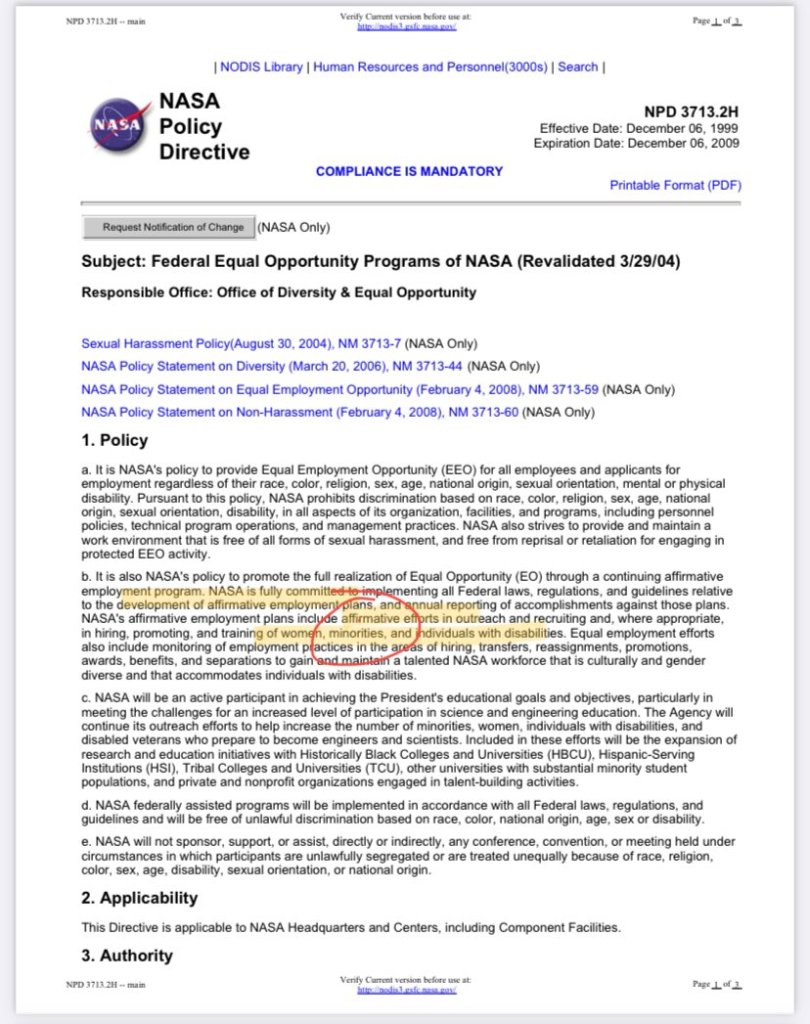
The U.P. Population Bill came and it came with lot of prejudices. One of the prejudices is the idea that Muslims create or procreate to have the most children. Even with data is presented as shared above from NFHS National Family Health Survey which is supposed to carry our surveys every few years did the last one around 4 years back. The analysis from it has been instrumental not only in preparing graphs as above but also sharing about what sort of death toll must have been in rural India. And as somebody who have had the opportunity in the past, can vouch that you need to be extremely lucky if something happens to you when you are in a rural area. Even in places like Bodh Gaya (have been there) where millions of tourists come as it is one of the places not to be missed on the Buddhism tourist circuit, the medical facilities are pretty underwhelming. I am not citing it simply because there are too many such newspaper reports from even before the pandemic, and both the State and the Central Govt. response has been dismal. Just a few months back, they were recalled. There were reports of votes being bought at INR 1000/- (around $14) and a bottle or two of liquor. There used to be a time when election monitoring whether national or state used to be a thing, and you had LTO s (Long-time Observers) and STO s (Short-Term Observers) to make sure that the election has been neutral. This has been on the decline in this regime, but that probably is for another time altogether. Although, have to point out the article which I had shared a few months ago on the private healthcare model is flawed especially for rural areas. Instead of going for cheap, telemedicine centers that run some version of a Linux distro. And can provide a variety of services, I know Kerala and Tamil Nadu from South India have experimented in past but such engagements need to be scaled up. This probably will come to know when the next time I visit those places (sadly due to the virus, not anytime soonish.:( ) . Going back to the original topic, though, I had shared Hans Rosling s famous Ted talk on population growth which shows that even countries which we would not normally associate with family planning for e.g. the middle-east and Africa have also been falling quite rapidly. Of course, when people have deeply held prejudices, then it is difficult. Even when sharing China as to how they had to let go of their old policy in 2016 as they had the thing for leftover men . I also shared the powerful movie So Long my Son. I even shared how in Haryana women were and are trafficked and have been an issue for centuries but as neither suits the RW propaganda, they simply refuse to engage. They are more repulsed by people who publish this news rather than those who are actually practicing it, as that is culture . There is also teenage pregnancy, female infanticide, sex-selective abortion, etc., etc. It is just all too horrible to contemplate. Personal anecdote I know a couple, or they used to be a couple, where the gentleman wanted to have a male child. It was only after they got an autistic child, they got their DNA tested and came to know that the gentleman had a genetic problem. He again forced and had another child, and that too turned out to be autistic. Finally, he left the wife and the children, divorced them and lived with another woman. Almost a decade of the wife s life was ruined. The wife before marriage was a gifted programmer employed at IBM. This was an arranged marriage. After this, if you are thinking of marrying, apart from doing astrology charts, also look up DNA compatibility charts. Far better than ruining yours or the women s life. Both the children whom I loved are now in heaven, god bless them  If one wants to, one can read a bit more about the Uttar Pradesh Population bill here. The sad part is that the systems which need fixing, nobody wants to fix. The reason being simple. If you get good health service by public sector, who will go to the private sector. In Europe, AFAIK they have the best medical bang for the money. Even the U.S. looks at Europe and hopes it had the systems that Europe has but that again is probably for another day.

South Africa and India long-lost brothers. As had shared before, after the 2016 South African Debconf convention, I had been following South Africa. I was happy when FeesMustFall worked and in 2017 the then ANC president Zuma declared it in late 2017. I am sure that people who have been regular visitors to this blog know how my position is on student loans. They also must be knowing that even in U.S. till the 1970s it had free education all the way to be a lawyer and getting a lawyer license. It is only when people like Thurgood Marshall, Martin Luther King Jr., and others from the civil rights movement came out as a major force that the capitalists started imposing fees. They wanted people who could be sold to corporate slavery, and they won. Just last week, Biden took some steps and canceled student loans and is working on steps towards broad debt forgiveness. Interestingly, NASA has an affirmative diversity program for people from diverse backgrounds, where a couple of UC (Upper Caste) women got the job. While they got the job, the RW (Right-Wing) was overjoyed as they got jobs on merit . Later, it was found that both the women were the third or fourth generation of immigrants in U.S.
NASA Federal Equal Opportunity Policy Directive NPD 3713 2H
Going back to the original question and topic, while there has been a concerning spate of violence, some calling it the worst sort of violence not witnessed since 1994. The problem, as ascertained in that article, is the same as here in India or elsewhere. Those, again, who have been on my blog know that merit 90% of the time is a function of privilege and there is a vast amount of academic literature which supports that. If, for a moment, you look at the data that is shared in the graph above which shows that 83% of Hindus and 13% of Muslims have more than 2 children, what does it show, it shows that 83+13 = 96% of the population is living in insecurity. The 5% are the ones who have actually consolidated more power during this regime rule in India. Similarly, from what I understood living in Cape Town for about a month, it is the Dutch Afrikaans as they like to call themselves and the immigrants who come from abroad who have enjoyed the fruits of tourism and money and power while the rest of the country is dying due to poverty. It is the same there, it is the same here. Corruption is also rampant in both countries, and the judiciary is virtually absent from both communities in India and SA. Interestingly, South Africa and India have been at loggerheads, but I suspect that is more due to the money and lobbying power by the Dutch. Usually, those who have money power, do get laws and even press on their side, and it is usually the ruling party in power. I cannot help but share about the Gupta brothers and their corruption as I came to know about it in 2016. And as have shared that I m related to Gupta s on my mother s side, not those specific ones but Gupta as a clan. The history of the Gupta dynasty does go back to the 3rd-4th century. Equally interesting have been Sonali Ranade s series of articles which she wrote in National Herald, the latest on exports which is actually the key to taking India out of poverty rather than anything else. While in other countries Exporters are given all sort of subsidies, here it is being worked as how to give them less. This was in Economic times hardly a week back
Export incentive schemes being reduced
I can t imagine the incredible stupidity done by the Finance Minister. And then in an attempt to prove that, they will attempt to present a rosy picture with numbers that have nothing to do with reality. Interestingly enough, India at one time was a major exporter of apples, especially from Kashmir. Now instead of exporting, we are importing them from Afghanistan as well as Belgium and now even from the UK. Those who might not want to use the Twitter link could use this article. Of course, what India got out of this trade deal is not known. One can see that the UK got the better deal from this. Instead of investing in our own capacity expansion, we are investing in increasing the capacity of others. This is at the time when due to fuel price hike (Central taxes 66%) demand is completely flat. And this is when our own CEA (Chief Economic Adviser) tells us that growth will be at the most 6-7% and that too in 2023-2024 while currently, the inflation rate is around 12%. Is it then any wonder that almost 70% are living on Govt. ration and people in the streets of Kolkata, Assam, and other places have to sell kidneys to make sure they have some money for their kids for tomorrow. Now I have nothing against the UK but trade negotiation is an art. Sadly, this has been going on for the last few years. The politicians in India fool the public by always telling of future trade deals. Sadly, as any businessman knows, once you have compromised, you always have to compromise. And the more you compromise, the more you weaken the hand for any future trade deals.
IIT pupil tries to sell kidney to repay loan, but no takers for Dalit organ.
The above was from yesterday s Times of India. Just goes to show how much people are suffering. There have been reports in vernacular papers of quite a few people from across regions and communities are doing this so they can live without pain a bit. Almost all the time, the politicians are saved as only few understand international trade, the diplomacy and the surrounding geopolitics around it. And this sadly, is as much to do with basic education as much as it is to any other factor

Suli Deals About a month back on the holy day of Ramzan or Ramadan as it is known in the west, which is beloved by Muslims, a couple of Muslim women were targeted and virtually auctioned. Soon, there was a flood and a GitHub repository was created where hundreds of Muslim women, especially those who have a voice and fearlessly talk about their understanding about issues and things, were being virtually auctioned. One week after the FIR was put up, to date none of the people mentioned in the FIR have been arrested. In fact, just yesterday, there was an open letter which was published by livelaw. I have saved a copy on WordPress just in case something does go wrong. Other than the disgust we feel, can t say much as no action being taken by GOI and police.

IT Rules 2021 and Big Media After almost a year of sleeping when most activists were screaming hoarsely about how the new IT rules are dangerous for one and all, big media finally woke up a few weeks back and listed a writ petition in Madras High Court of the same. Although to be frank, the real writ petition was filed In February 2021, classical singer, performer T.M. Krishna in Madras High Court. Again, a copy of the writ petition, I have hosted on WordPress. On 23rd June 2021, a group of 13 media outlets and a journalist have challenged the IT Rules, 2021. The Contention came from Digital News Publishers Association which is made up of the following news companies: ABP Network Private Limited, Amar Ujala Limited, DB Corp Limited, Express Network Pvt Ltd, HT Digital Streams Limited, IE Online Media Services Pvt Ltd, Jagran Prakashan Limited, Lokmat Media Private Limited, NDTV Convergence Limited, TV Today Network Limited, The Malayala Manorama Co (P) Ltd, Times Internet Limited, and Ushodaya Enterprises Private Limited. All the above are heavyweights in the markets where they operate. The reason being simple, when these media organizations came into being, the idea was to have self-regulation, which by and large has worked. Now, the present Govt. wants each news item to be okayed by them before publication. This is nothing but blatant misuse of power and an attempt at censorship. In fact, the Tamil Nadu BJP president himself made a promise of the same. And of course, what is true and what is a lie, only GOI knows and will decide for the rest of the country. If somebody remembers Joseph Goebbels at this stage, it is merely a coincidence. Anyways, 3 days ago Supreme Court on 14th July the Honorable Supreme Court asked the Madras High Court to transfer all the petitions to SC. This, the Madras High Court denied as cited/shared by Meera Emmanuel, a reporter who works with barandbench. The Court says nothing doing, let this happen and then the SC can entertain the motion of doing it that level. At the same time, they would have the benefit of Madras High Court opinion as well. It gave the center two weeks to file a reply. So, either of end-week of July or latest by August first week, we might be able to read the Center s reply on the same. The SC could do a forceful intervention, but it would lead to similar outrage as has been witnessed in the past when a judge commented that if the SC has to do it all, then why do we need the High Courts, district courts etc. let all the solutions come from SC itself. This was, admittedly, frustration on the part of the judge, but due in part to the needless intervention of SC time and time again. But the concerns had been felt around all the different courts in the country.

Sedition Law A couple of days ago, the Supreme Court under the guidance of Honorable CJI NV Ramanna, entertained the PIL filed by Maj Gen S G Vombatkere (Retd.) which asked simply that the sedition law which was used in the colonial times by the British to quell dissent by Mahatma Gandhi and Bal Gangadhar Tilak during the Indian freedom struggle. A good background filler article can be found on MSN which tells about some recent cases but more importantly how historically the sedition law was used to quell dissent during India s Independence. Another article on MSN actually elaborates on the PIL filed by Maj Gen S. G. Vombatkere. Another article on MSN tells how sedition law has been challenged and changed in 10 odd countries. I find it equally sad and equally hilarious that the Indian media whose job is to share news and opinion on this topic is being instead of being shared more by MSN. Although, I would be bereft of my duty if I did not share the editorial on the same topic by the Hindu and Deccan Chronicle. Also, an interesting question to ask is, are there only 10 countries in the world that have sedition laws? AFAIK, there are roughly 200 odd countries as recognized by WTO. If 190 odd countries do not have sedition laws, it also tells a lot about them and a lot about the remaining 10. Also, it came to light that police are still filing laws under sec66A which was declared null and void a few years ago. It was replaced with section 124A if memory serves right and it has more checks and balances.

Danish Siddiqui, Pulitzer award-winning and death in Afghanistan Before I start with Danish Siddiqui, let me share an anecdote that I think I have shared on the blog years ago about how photojournalists are. Again, those who know me and those who follow me know how much I am mad both about trains and planes (civil aviation). A few months back, I had shared a blog post about some of the biggest railway systems in the world which shows that privatization of Railways doesn t necessarily lead to up-gradation of services but definitely leads to an increase in tariff/fares. Just had a conversation couple of days ago on Twitter and realized that need to also put a blog post about civil aviation in India and the problems it faces, but I digress. This was about a gentleman who wanted to take a photo of a particular train coming out of a valley at a certain tunnel at two different heights, one from below and one from above the train. This was several years ago, and while I did share that award-winning photograph then, it probably would take me quite a bit of time and effort to again look it up on my blog and share. The logistics though were far more interesting and intricate than I had first even thought of. We came around a couple of days before the train was supposed to pass that tunnel and the valley. More than half a dozen or maybe more shots were taken throughout the day by the cameras. The idea was to see how much light was being captured by the cameras and how much exposure was to be given so that the picture isn t whitened out or is too black. Weather is the strangest of foes for a photojournalist or even photographers, and the more you are in nature, the more unpredictable it is and can be. We were also at a certain height, so care had to be taken in case light rainfall happens or dew falls, both not good for digital cameras. And dew is something which will happen regardless of what you want. So while the two days our gentleman cameraman fiddled with the settings to figure out correct exposure settings, we had one other gentleman who was supposed to take the train from an earlier station and apprise us if the train was late or not. The most ideal time would be at 0600 hrs. When the train would enter the tunnel and come out and the mixture of early morning sun rays, dew, the flowers in the valley, and the train would give a beautiful effect. We could stretch it to maybe 0700 hrs. Anything after that would just be useless, as it wouldn t have the same effect. And of all this depended on nature. If the skies were to remain too dark, nothing we could do about it, if the dewdrops didn t fall it would all be over. On the day of the shoot, we were told by our compatriot that the train was late by half an hour. We sank a little on hearing that news. Although Photoshop and others can do touch-ups, most professionals like to take as authentic a snap as possible. Everything had been set up to perfection. The wide-angle lenses on both the cameras with protections were set up. The tension you could cut with a knife. While we had a light breakfast, I took a bit more and went in the woods to shit and basically not be there. This was too tensed up for me. Returned an hour to find everybody in a good mood. Apparently, the shoot went well. One of the two captured it for good enough. Now, this is and was in a benign environment where the only foe was the environment. A bad shot would have meant another week in the valley, something which I was not looking forward to. Those who have lived with photographers and photojournalists know how self-involved they can be in their craft, while how grumpy they can be if they had a bad shoot. For those, who don t know, it is challenging to be friends with such people for a long time. I wish they would scream more at nature and let out the frustrations they have after a bad shoot. But again, this is in a very safe environment. Now let s cut to Danish Siddiqui and the kind of photojournalism he followed. He followed a much more riskier sort of photojournalism than the one described above. Krittivas Mukherjee in his Twitter thread shared how reporters in most advanced countries are trained in multiple areas, from risk assessment to how to behave in case you are kidnapped, are in riots, hostage situations, etc. They are also trained in all sorts of medical training from treating gunshot wounds, CPR, and other survival methods. They are supposed to carry medical equipment along with their photography equipment. Sadly, these concepts are unknown in India. And even then they get killed. Sadly, he attributes his death to the thrill of taking an exclusive photograph. And the gentleman s bio reads that he is a diplomat. Talk about tone-deafness  On another completely different level was Karen Hao who was full of empathy as she shared the humility, grace, warmth and kinship she describes in her interaction with the photojournalist. His body of work can be seen via his ted talk in 2020 where he shared a brief collage of his works. Latest, though in a turnaround, the Taliban have claimed no involvement in the death of photojournalist Danish Siddiqui. This could be in part to show the Taliban in a more favorable light as they do and would want to be showcased as progressive, even though they are forcing that all women within a certain age become concubines or marry the fighters and killing the minority Hazaras or doing vile deeds with them. Meanwhile, statements made by Hillary Clinton almost a decade, 12 years ago have come back into circulation which stated how the U.S. itself created the Taliban to thwart the Soviet Union and once that job was finished, forgot all about it. And then in 2001, it landed back in Afghanistan while the real terrorists were Saudi. To date, not all documents of 9/11 are in the public domain. One can find more information of the same here. This is gonna take probably another few years before Saudi Arabia s whole role in the September 11 attacks will be known. Last but not the least, came to know about the Pegasus spyware and how many prominent people in some nations were targeted, including in mine India. Will not talk more as it s already a big blog post and Pegasus revelations need an article on its own.

16 June 2021

Julien Danjou: Python Tools to Try in 2021

Python Tools to Try in 2021The Python programming language is one of the most popular and in huge demand. It is free, has a large community, is intended for the development of projects of varying complexity, is easy to learn, and opens up great opportunities for programmers. To work comfortably with it, you need special Python tools, which are able to simplify your work. We have selected the best Python tools that will be relevant in 2021.


MailtrapAs you may probably know, in order to send an email, you need SMTP (Simple Mail Transfer Protocol). This is because you can't just send a letter to the recipient. It needs to be sent to the server from which the recipient will download this letter using IMAP and POP3.Mailtrap provides an opportunity to send emails in python. Moreover, Mailtrap provides #rest #api to access current emails. It can be used to automate email testing, which will improve your email marketing campaigns. For example, you can check the password recovery form in the Selenium Test and immediately see if an email was sent to the correct address. Then take a new password from the email and try to enter the site with it. Cool, isn't it?

Pros
  • All emails are in one place.
  • Mailtrap provides multiple inboxes.
  • Shared access is present.
  • It is easy to set up.
  • RESTful API

ConsNo visible disadvantages were found.

Django
Python Tools to Try in 2021
Django is a free and open-source full-stack framework. It is one of the most important and popular among Python developers. It helps you move from a prototype to a ready-made working solution in a short time since its main task is to automate processes and speed up work through associations and libraries. It s a great choice for a product launch.You can use Django if at least a few of the following points interest you:
  • There is a need to develop the server-side of the API.
  • You need to develop a web application.
  • In the course of work, many changes are made, you have to constantly deploy the application and make edits.
  • There are many complex tasks that are difficult to solve on your own, and you will need the help of the community.
  • ORM support is needed to avoid accessing the database directly.
  • There is a need to integrate new technologies such as machine learning.
Django is a great Python Web Framework that does its job. It is not for nothing that it is one of the most popular, and is actively used by millions of developers.

ProsDjango has quite a few advantages. It contains a large number of ready-made solutions, which greatly simplifies development. Admin panel, database migration, various forms, user authentication tools are extremely helpful. The structure is very clear and simple.A large community helps to solve almost any problem. Thanks to ORM, there is a high level of security and it is comfortable to work with databases.

ConsDespite its powerful capabilities, Django's Python Web Framework has drawbacks. It is very massive, monolithic, therefore it develops slowly. Despite the many generic modules, the development speed of Django itself is reduced.

CherryPy
Python Tools to Try in 2021
CherryPy is a micro-framework. It is designed to solve specific problems, capable of running the program on any operating system. CherryPy is used in the following cases:
  • To create an application with small code size.
  • There is a need to manage several servers at the same time.
  • You need to monitor the performance of applications.
CherryPy refers to Python Frameworks, which are designed for specific tasks. It's clear, user-friendly, and ideal for Android development.

ProsCherryPy Python tool has a friendly and understandable development environment. This is a functional and complete framework, which can be used to build good applications. The source code is open, so the platform is completely free for developers, and the community, although not too large, is very responsive, and always helps to solve problems.

ConsThere are not so many cons to this Python tool. It is not capable of performing complex tasks and functions, it is intended more for specific solutions, for example, for the development of certain plugins or modules.

Pyramid
Python Tools to Try in 2021
Python Pyramid tool is designed for programming complex objects and solving multifunctional problems. It is used by professional programmers and is traditionally used for identification and routing. It is aimed at a wide audience and is capable of developing API prototypes.It is used in the following cases:
  • You need problem indicator tools to make timely adjustments and edits.
  • You use several programming languages at once;
  • You work with reporting and financial calculations, forecasting;
  • You need to quickly create a simple application.
At the same time, the Python Web Framework Pyramid allows you to create complex applications with great functionality like a translation software.

ProsPyramid does an excellent job of developing basic applications quickly. It is quite flexible and easy to learn. In fact, the key to the success of this framework is that it is completely based on fundamental principles, using simple and basic programming techniques. It is minimalistic, but at the same time offers users a lot of freedom of action. It is able to work with both small applications and powerful multifunctional programs.

ConsIt is difficult to deviate from the basic principles. This Python tool makes the decision for you. Simple programs are very easy to implement. But to do something complex and large-scale, you have to completely immerse yourself in the study of the environment and obey it.

Grok
Python Tools to Try in 2021
Grok is a Python tool that works with templates. Its main task is to eliminate repetitions in the code. If the element is repeated, then the template that was already created earlier is simply applied. This greatly simplifies and speeds up the work.Grok suits developers in the following cases:
  • If a programmer has little experience and is not yet ready to develop his modules.
  • There is a need to quickly develop a simple application.
  • The functionality of the application is simple, straightforward, and the interface does not play a key role.

ProsThe Grok framework is a child of Zope3, which was released earlier. It has a simplified structure of work, easy installation of modules, more capabilities, and better flexibility. It is designed to develop small applications. Yes, it is not intended for complex work, but due to its functionality, it allows you to quickly implement a project.

ConsThe Grok community is not very large, as this Python tool has not gained widespread popularity. Nevertheless, it is used by Python adepts for comfortable development. It is impossible to implement complex tasks on it since the possibilities are quite limited.Grok is one of the best Python Web Frameworks. It is understandable and has enough features for comfortable development.

Web2Py
Python Tools to Try in 2021
Web2Py is a Python tool that has its own IDEwhich, which includes a code editor, debugger, and deployment. It works great without the need for configuration or installation, provides a high level of data security, and is suitable for work on various platforms.Web2Py is great in the following cases:
  • When there is a need to develop something on different operating systems.
  • If there is no way to install and configure the framework.
  • When a high level of data security is required, for example, when developing financial applications or sales performance management tools.
  • If you need to carefully track bugs right during development, and not during the testing phase.

ProsWeb2Py is capable of working with different protocols, has a built-in error tracker, and has a backward compatibility feature that helps to work on the basis of previous versions of the framework. This means that code maintenance becomes much easier and cheaper. It's free, open-source, and very flexible.

ConsAmong the many Python tools, there are not many that require the latest version of the language. Web2Py is one of those and won't work on Python 3 and below. Therefore, you need to constantly monitor the updates.Web2Py does an excellent job of its tasks. It is quite simple and accessible to everyone.

BlueBream
Python Tools to Try in 2021
BlueBream used to be called Zope3 before. It copes well with tasks of the medium and high level of complexity and is suitable for working on serious projects.

ProsThe BlueBream build system is quite powerful and suitable for complex tasks. You can create functional applications on it, and the principle of reuse of components makes the code easier. At the same time, the speed of development increases. The software can be scaled, and a transactional object database provides an easy path to store it. This means that queries are processed quickly and database management is simple.

ConsThis is not a very flexible framework, it is better to know clearly in advance what is required of it. In addition, it cannot withstand heavy loads. When working with 1000 users at the same time, it can crash and give errors. Therefore, it should be used to solve narrow problems.Python frameworks are often designed for specific tasks. BlueBream is one of these and is suitable for applications where database management plays a key role.

ConclusionPython tools come in different forms and have vastly different capabilities. There are quite a few of them, but in 2021 these will be the most popular and in demand. Experienced programmers always choose several development tools for their comfortable work.

10 June 2021

Louis-Philippe V ronneau: New Desktop Computer

I built my last desktop computer what seems like ages ago. In 2011, I was in a very different place, both financially and as a person. At the time, I was earning minimum wage at my school's caf to pay rent. Since the caf was owned by the school cooperative, I had an employee discount on computer parts. This gave me a chance to build my first computer from spare parts at a reasonable price. After 10 years of service1, the time has come to upgrade. Although this machine was still more than capable for day to day tasks like browsing the web or playing casual video games, it started to show its limits when time came to do more serious work. Old computer specs:
CPU: AMD FX-8530
Memory: 8GB DDR3 1600Mhz
Motherboard: ASUS TUF SABERTOOTH 990FX R2.0
Storage: Samsung 850 EVO 500GB SATA
I first started considering an upgrade in September 2020: David Bremner was kindly fixing a bug in ledger that kept me from balancing my books and since it seemed like a class of bug that would've been easily caught by an autopkgtest, I decided to add one. After adding the necessary snippets to run the upstream testsuite (an easy task I've done multiple times now), I ran sbuild and ... my computer froze and crashed. Somehow, what I thought was a simple Python package was maxing all the cores on my CPU and using all of the 8GB of memory I had available.2 A few month later, I worked on jruby and the builds took 20 to 30 minutes long enough to completely disrupt my flow. The same thing happened when I wanted to work on lintian: the testsuite would take more than 15 minutes to run, making quick iterations impossible. Sadly, the pandemic completely wrecked the computer hardware market and prices here in Canada have only recently started to go down again. As a result, I had to wait more time than I would've liked not to pay scalper prices. New computer specs:
CPU: AMD Ryzen 5900X
Memory: 64GB DDR4 3200MHz
Motherboard: MSI MPG B550 Gaming Plus
Storage: Corsair MP600 500 GB Gen4 NVME
The difference between the two machines is pretty staggering: I've gone from a CPU with 2 cores and 8 threads, to one with 12 cores and 24 threads. Not only that, but single-threaded performance has also vastly increased in those 10 years. A good example would be building grammalecte, a package I've recently sponsored. I feel it's a good benchmark, since the build relies on single-threaded performance for the normal Python operations, while being threaded when it compiles the dictionaries. On the old computer:
Build needed 00:10:07, 273040k disk space
And as you can see, on the new computer the build time has been significantly reduced:
Build needed 00:03:18, 273040k disk space
Same goes for things like the lintian testsuite. Since it's a very multi-threaded workload, it now takes less than 2 minutes to run; a 750% improvement. All this to say I'm happy with my purchase. And lo and behold I can now build ledger without a hitch, even though it maxes my 24 threads and uses 28GB of RAM. Who would've thought... Screen capture of htop showing how much resources ledger takes to build

  1. I managed to fry that PC's motherboard in 2016 and later replaced it with a brand new one. I also upgraded the storage along the way, from a very cheap cacheless 120GB SSD to a larger Samsung 850 EVO SATA drive.
  2. As it turns out, ledger is mostly written in C++ :)

19 May 2021

Dirk Eddelbuettel: inline 0.3.18: Routine Update

A new release of the inline package got to CRAN today. inline facilitates writing code in-line in simple string expressions or short files. The package was used quite extensively by Rcpp in the days before Rcpp Attributes arrived on the scene proving an even better alternative for its use cases. inline is still used by rstan and a number of other packages. Johannes Ranke, who uses and stresses inline via his package mkin, updated the loading/unloading of DLLs which, following updates in R-devel, was failing some tests. As luck will have it, this new version appears to still fail on two of the platforms we do not actually have easy access to so another version may be coming shortly . See below for a detailed list of changes extracted from the NEWS file.

Changes in inline version 0.3.18 (2021-05-17)
  • The moveDLL code and tests were updated for changed in R-devel (Johannes in #22 fixing #21).

Courtesy of my CRANberries, there is a comparison to the previous release. If you like this or other open-source work I do, you can now sponsor me at GitHub.

This post by Dirk Eddelbuettel originated on his Thinking inside the box blog. Please report excessive re-aggregation in third-party for-profit settings.

16 May 2021

Vincent Fourmond: Tutorial: analyze redox inactivations/reactivations

Redox-dependent inactivations are actually rather common in the field of metalloenzymes, and electrochemistry can be an extremely powerful tool to study them, providing one can analyze the data quantitatively. The point of this point is to teach the reader how to do so using QSoas. For more general information about redox inactivations and how to study them using electrochemical techniques, the reader is invited to read the review del Barrio and Fourmond, ChemElectroChem 2019. This post is a tutorial to learn the analysis of data coming from the study of the redox-dependent substrate inhibition of periplasmic nitrate reductase NapAB, which has the advantage of being relatively simple. The whole processed is discussed in Jacques et al, BBA, 2014. What you need to know in order to follow this tutorial is the following: You can download the data files from the GitHub repository. Before fitting the data to determine the values of the rate constants at the potentials of the experiment, we will first subtract the background current, assuming that the respective contributions of faradaic and non-faradaic currents is additive. Start QSoas, go to the directory where you saved the files, and load both the data file and the blank file thus:
QSoas> cd
QSoas> load 27.oxw
QSoas> load 27-blanc.oxw
QSoas> S 1 0
(after the first command, you have to manually select the directory in which you downloaded the data files). The S 1 0 command just subtracts the dataset 1 (the first loaded) from the dataset 0 (the last loaded), see more there. blanc is the French for blank... Then, we remove a bit of the beginning and the end of the data, corresponding to one half of the steps at \(E_0\), which we don't exploit much here (they are essentially only used to make sure that the irreversible loss is taken care of properly). This is done using strip-if:
QSoas> strip-if x<30 x>300
Then, we can fit ! The fit used is called fit-linear-kinetic-system, which is used to fit kinetic models with only linear reactions (like here) and steps which change the values of the rate constants but do not instantly change the concentrations. The specific command to fit the data is:
QSoas> fit-linear-kinetic-system /species=2 /steps=0,1,2,1,0
The /species=2 indicates that there are two species (A and I). The /steps=0,1,2,1,0 indicates that there are 5 steps, with three different conditions (0 to 2) in order 0,1,2,1,0. This fits needs a bit of setup before getting started. The species are numbered, 1 and 2, and the conditions (potentials) are indicated by #0, #1 and #2 suffixes. For the sake of simplicity, you can also simply load the starting-parameters.params parameters to have all setup the correct way. Then, just hit Fit, enjoy this moment when QSoas works and you don't have to... The screen should now look like this:
Now, it's done ! The fit is actually pretty good, and you can read the values of the inactivation and reactivation rate constants from the fit parameters. You can train also on the 21.oxw and 21-blanc.oxw files. Usually, re-loading the best fit parameters from other potentials as starting parameters work really well. Gathering the results of several fits into a real curve of rate constants as a function of potentials is left as an exercise for the reader (or maybe a later post), although you may find these series of posts useful in this context !
About QSoas QSoas is a powerful open source data analysis program that focuses on flexibility and powerful fitting capacities. It is released under the GNU General Public License. It is described in Fourmond, Anal. Chem., 2016, 88 (10), pp 5050 5052. Current version is 3.0. You can download its source code there (or clone from the GitHub repository) and compile it yourself, or buy precompiled versions for MacOS and Windows there.

18 April 2021

Russell Coker: IMA/EVM Certificates

I ve been experimenting with IMA/EVM. Here is the Sourceforge page for the upstream project [1]. The aim of that project is to check hashes and maybe public key signatures on files before performing read/exec type operations on them. It can be used as the next logical step from booting a signed kernel with TPM. I am a long way from getting that sort of thing going, just getting the kernel to boot and load keys is my current challenge and isn t helped due to the lack of documentation on error messages. This blog post started as a way of documenting the error messages so future people who google errors can get a useful result. I am not trying to document everything, just help people get through some of the first problems. I am using Debian for my work, but some of this will apply to other distributions (particularly the kernel error messages). The Debian distribution has the ima-evm-utils but no other support for IMA/EVM. To get this going in Debian you need to compile your own kernel with IMA support and then boot it with kernel command-line options to enable IMA, in recent kernels that includes lsm=integrity as a mandatory requirement to prevent a kernel Oops after mounting the initrd (there is already a patch to fix this). If you want to just use IMA (not get involved in development) then a good option would be to use RHEL (here is their documentation) [2] or SUSE (here is their documentation) [3]. Note that both RHEL and SUSE use older kernels so their documentation WILL lead you astray if you try and use the latest kernel.org kernel. The Debian initrd I created a script named /etc/initramfs-tools/hooks/keys with the following contents to copy the key(s) from /etc/keys to the initrd where the kernel will load it/them. The kernel configuration determines whether x509_evm.der or x509_ima.der (or maybe both) is loaded. I haven t yet worked out which key is needed when.
#!/bin/bash
mkdir -p $ DESTDIR /etc/keys
cp /etc/keys/* $ DESTDIR /etc/keys
Making the Keys
#!/bin/sh
GENKEY=ima.genkey
cat << __EOF__ >$GENKEY
[ req ]
default_bits = 1024
distinguished_name = req_distinguished_name
prompt = no
string_mask = utf8only
x509_extensions = v3_usr
[ req_distinguished_name ]
O =  hostname 
CN =  whoami  signing key
emailAddress =  whoami @ hostname 
[ v3_usr ]
basicConstraints=critical,CA:FALSE
#basicConstraints=CA:FALSE
keyUsage=digitalSignature
#keyUsage = nonRepudiation, digitalSignature, keyEncipherment
subjectKeyIdentifier=hash
authorityKeyIdentifier=keyid
#authorityKeyIdentifier=keyid,issuer
__EOF__
openssl req -new -nodes -utf8 -sha1 -days 365 -batch -config $GENKEY \
                -out csr_ima.pem -keyout privkey_ima.pem
openssl x509 -req -in csr_ima.pem -days 365 -extfile $GENKEY -extensions v3_usr \
                -CA ~/kern/linux-5.11.14/certs/signing_key.pem -CAkey ~/kern/linux-5.11.14/certs/signing_key.pem -CAcreateserial \
                -outform DER -out x509_evm.der
To get the below result I used the above script to generate a key, it is the /usr/share/doc/ima-evm-utils/examples/ima-genkey.sh script from the ima-evm-utils package but changed to use the key generated from kernel compilation to sign it. You can copy the files in the certs directory from one kernel build tree to another to have the same certificate and use the same initrd configuration. After generating the key I copied x509_evm.der to /etc/keys on the target host and built the initrd before rebooting.
[    1.050321] integrity: Loading X.509 certificate: /etc/keys/x509_evm.der
[    1.092560] integrity: Loaded X.509 cert 'xev: etbe signing key: 99d4fa9051e2c178017180df5fcc6e5dbd8bb606'
Errors Here are some of the kernel error messages I received along with my best interpretation of what they mean. [ 1.062031] integrity: Loading X.509 certificate: /etc/keys/x509_ima.der
[ 1.063689] integrity: Problem loading X.509 certificate -74 Error -74 means -EBADMSG, which means there s something wrong with the certificate file. I have got that from /etc/keys/x509_ima.der not being in der format and I have got it from a der file that contained a key pair that wasn t signed.
[    1.049170] integrity: Loading X.509 certificate: /etc/keys/x509_ima.der
[    1.093092] integrity: Problem loading X.509 certificate -126
Error -126 means -ENOKEY, so the key wasn t in the file or the key wasn t signed by the kernel signing key.
[    1.074759] integrity: Unable to open file: /etc/keys/x509_evm.der (-2)
Error -2 means -ENOENT, so the file wasn t found on the initrd. Note that it does NOT look at the root filesystem. References

Next.

Previous.