Search Results: "jordi"

14 January 2011

Jordi Mallach: New project to discuss

Reading Scott's recent announcement on his move to Google was both surprising and a pleasure. Surprising, because it'll take time to stop associating his name to Ubuntu, Canonical, and the nice experiences I had while I worked with them. A pleasure, because his blog post was full of reminiscences of the very early days of a project that ended up being way more successful in just a few years than probably anyone in the Oxford conference could imagine. Scott, best of luck for this new adventure! Scott's write-up includes a sentence that made me remember I had been wanting to write a blog post related to all of this, but was pending Mark Shuttleworth's permission for posting:
Ok, Mark wasn t really a Nigerian 419 scammer, but some people did discard his e-mail as spam! Scott James Remnant
Many know the story of how I ended not being part of the Super-Secret-Debian-Startup Scott mentions. I even wrote about it in a blog post, 3 years ago:
[...] nothing beats the next email which sat for some dramatic 6 months in my messy inbox until I found out in the worst of the possible scenarios. Let's go back to late February, 2004, when I had no job, and I didn't have a clue on what to do with my life.
From: Mark Shuttleworth <mark@hbd.com>
Subject: New project to discuss
To: Jordi Mallach <jordi@debian.org>
Date: Sun, 29 Feb 2004 18:33:51 +0000
[...]
I'm hiring a team of debian developers to work full time on a new
distribution based on Debian. We're making internationalisation a prime
focus, together with Python and regular release management. I've discussed
it with a number of Debian leaders and they're all very positive about it.
[...]
I'm not sure if I totally missed it as it came in, or I skimmed through it and thought WTF?! Dude on crack or I just forgot I need to reply to this email , but I'd swear it was the former. Not long after, no-name-yet.com popped up, the rumours started spreading around Debian channels. Luckily, I got a job at LliureX two months later, where I worked during the following 2 years, but that's another story. I guess it was July or so when Ubuntu was made public, and Mark and his secret team organised a conference (blog entries [1] [2] [3] [4] [5]), just before the Warty release, and I was invited to it, for the same reasons I got that email. During that conference, probably because Mark sent me some email and I applied a filter to get to it, I found the lost email, and felt like digging a hole to hide for a LONG while. I couldn't believe the incredible opportunity I had missed. I went to Mark and said "hey, you're not going to believe this", and he did look quite surprised about someone being such an idiot. I wonder if I should reply to his email today...
When the usual suspects in the secret Spanish Debian Cabal channel read this blog post, they decided Mark deserved a reply, even if it would hit his inbox more than three and a half years late. :) With great care, we crafted an email that would look genuinely stupid in late 2007, but just arrogant and idiotic in 2004, when Ubuntu was just an African word, and the GNU/Linux distribution landscape was quickly evolving at the time, Gentoo Linux had the posh distribution crown, that Debian had held for quite a few years. I even took enough care to forge the X-Operating-System and User-Agent headers so they matched whatever was current in Debian in February 2004, and of course, top-posting seemed most appropriate. So Mark woke up that Monday, fired up his email client, and got... this:
Date: Mon, 1 Mar 2004 09:47:55 +0100
From: Jordi Mallach <jordi@sindominio.net>
To: Mark Shuttleworth <mark@hbd.com>
Subject: Re: New project to discuss
Organization: SinDominio
X-Operating-System: Debian GNU/Linux sid (Linux 2.6.3 i686)
User-Agent: Mutt/1.5.5.1+cvs20040105i
Hi Mark,
Thanks for your email. I nearly deleted this e-mail because for some
reason I thought it was targetted spam.
Your project looks very interesting, almost like a dream come true.
However, I feel a bit uneasy about your proposal. Something just doesn't
fit.
Why would someone start a company to work on /yet another/ Debian
derivative? Have you heard about Progeny's sad story? I think it's a
great example to show that Debian users don't want Debian-based distros,
they want people to work on the "real thing". Besides, I don't think
there's much more place for successful commercial distros, with Red Hat
and SuSE having well-established niches in the US and Europe.
Also, why focus on Debian specifically, Why not, for example, Gentoo,
which has a lot of buzz these days, and looks poised to be the next big
distribution?
To be honest, I think only a few people have the stamina or financial
stability to undertake a project like this, so I'd like to know
a bit more about you, and details on how you plan to sustain the
expenses.
Those are the main issues that worry me about your project. Other than
that, I would be interested in taking part in it, as I'm currently
unemployed and working on something Debian-based would be just too good
to miss.
You can reach me at +34 123 45 67 89, or if you feel like flying people
around Europe, I probably can be in the UK whenever it fits you.
Thanks, and hoping to hear from you again,
Jordi
On Sun, Feb 29, 2004 at 06:33:51PM +0000, Mark Shuttleworth wrote:
> Hi Jordi
>
> We haven't met, but both Jeff Waugh and Martin Michelmayr recommended that
> I get in touch with you in connection with a new project that I'm starting.
>
> I'm hiring a team of debian developers to work full time on a new
> distribution based on Debian. We're making internationalisation a prime
> focus, together with Python and regular release management. I've discussed
> it with a number of Debian leaders and they're all very positive about it.
>
> Would you be available to discuss it by telephone? I'm in the UK, so we
> could probably find a good timezoine easily enough ;-) Let me knof if
> you're keen to discuss it, when and what number to call.
>
> Cheers,
> Mark
>
> --
> Try Debian GNU/Linux. Software freedom for the bold, at www.debian.org
> http://www.markshuttleworth.com/
As you can imagine, his reaction was immediate:
Date: Mon, 22 Oct 2007 11:13:54 +0100
From: Mark Shuttleworth <mark@hbd.com>
To: Jordi Mallach <jordi@sindominio.net>
Subject: Re: New project to discuss
Jordi! I just got this now! Did you recently flush an old mail queue?
With thanks to all the Spanish Cabal members who were involved!

31 December 2010

Jordi Mallach: Smoke

Last night was the last time I came back from a pub with my clothes stinking due to tobacco smoke. The Spanish congress has finally approved a real anti-smoking law which will ban smoking on public areas, with no exceptions or ways to workaround the ban. Starting on January 2nd, the Spanish state will be a smoke-free region (or mostly, it seems it'll be permitted in open-air events like football stadiums or bullrings, and I don't think that will be a great problem for me, specially the latter). For years, my intolerance to smoke has been increasing and I'm really expectant to see the benefits of this law in my habits. After more than 30 years dealing with smoke around us, it's our turn now. I've been speaking to a few barmans. In general they seem worried this will affect their business, but I can't see how it will. Spain has a big culture for having mid-morning almuerzos in bars, and people are not going to give that up due to not being able to smoke. They will just do it after they get out, not during the coffee, and that's it. The barmans of the two bars I visit most are non-smokers, but have to breath the smoke of hundreds of cigarretes every day, and can't do anything about it. Until tomorrow, when this will end and everyone will have a right to breath better air. I hope this kind of legislation continues to be adopted throughout Europe, because the FOSDEM welcome party is probably the next smoke horror I'll have to face soonish. :)

30 November 2010

Jordi Mallach: The unforeseen consequences of our GR 11 Summer walk

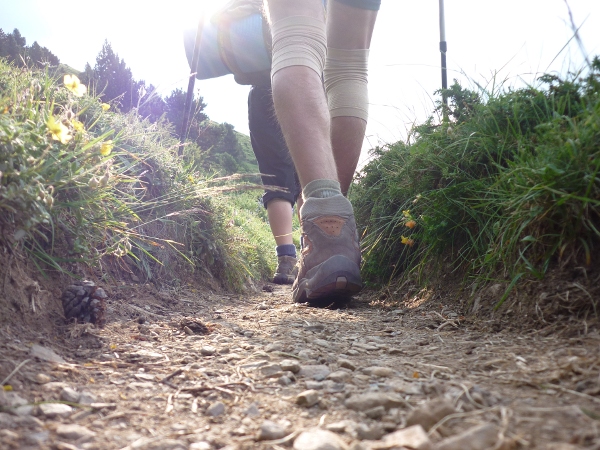
I knew walking all over the Pyrenees during a whole month would come with some side effects. I could imagine having a few muscular issues in my legs and some back pain for a while after getting back; after all we did over 7 hours of exercise every single day during a month. What I got after our hike was totally unexpected... I should have run a half marathon in Gandia on the 21st, and instead I stayed at home doing some assignments. When we came back, I was in a really good condition, and wanted to keep the good shape we had built the month before. Given I haven't been able to swim for nearly a year now, due to the Misterious Shoulder Injury and I don't have enough time to go out cycling regularly, I centered my efforts in running, with the idea of starting to get prepared for cross/mountain races this season. Training had to wait a little because some days after getting back, I got a sudden pain on both knees, which even made climbing stairs difficult. It stuck for a while, and when it finally went away, more or less, I went ahead and tried going out for a run. I haven't been training for over two years, so I indended to increase the distances proggressively. The first day I went out, I ran really nicely for the first 25 minutes, and suddenly I started getting an intense pain in the outer side of my right knee, to the point I could barely walk back home. I've tried letting them rest for weeks, and every time I try them, the pain comes back. My physiotherapist says my body has developed quite a few asymmetries, probably caused by the many days I had to walk crippled by a big blister in my right foot. As time passes, I feel I'm losing all the physical improvements I had developed during the summer, and I can't do anything about it. The new approach to tackle this is yoga. I know my body isn't too elastic, and the lack of stretching during the walk made it even worse, so I'll try to forget about real traning during some time and focus on healing my muscles. Hopefully, this will help me resolve the nastiest physical problem I've ever come across.

22 November 2010

Sergio Talens-Oliag: The Freaky Wall (Part 1: Why?)

This post and the next to come are about a project I'm doing at work that I've called The Freaky Wall. The project has its origins on the idea that using multiples technologies is better for security; almost all the servers I use are running Debian GNU/Linux and use iptables locally, so when I decided that we had to build new firewalls at work I thought it was a good idea to look at different technologies, that is, a different kernel and firewalling tools. As I wanted to avoid iptables and the Linux kernel my first idea was to go after the free BSD systems (FreeBSD, OpenBSD or NetBSD), and soon realized that pf (the OpenBSD Packet Filter) was the way to go; it has a clean syntax and includes advanced features like CARP and pfsync that allow me to build redundant firewalls. Before going after the standard systems I looked at pfSense a firewall appliance built on top of FreeBSD that uses a PHP interface to do everything. At first it seemed that it was going to be a good option, but soon I felt that I wasn't in control of what the system was doing and I had to change the PHP code to do trivial things (I wanted to configure IP aliases on a CARP interface and it was not possible with the web interface, while it is trivial to do using the standard system configuration files), so I left the idea of using it. The second option was to use OpenBSD directly, as it is the system were pf has been developed. Soon I saw that I was going to be able to do what I wanted with the system, but I missed the Debian's way of installing and upgrading the system and the list of packages available. For different reasons the firewall project was left in a limbo for a little while and when I went back to it I already had to upgrade my test systems to a new OpenBSD release; after reading a little bit about how to upgrade and not liking the idea of doing it I remembered that jordi suggested that if we only want the kernel and the firewall tools the Debian GNU/kFreeBSD port could be an option instead of OpenBSD or FreeBSD. Before trying to install the Debian GNU/kFreeBSD system I saw Robert's post about a Debian installer with ZFS support and I decided to start with it, as the use of ZFS will allow us to use software RAID-1 and snapshots, something we have on almost all our Linux servers (we use software RAID for redundancy and LVM snapshots to be able to do our backups at any time of the day with consistent data, but that is for another post). On my next post I'll explain how I did the initial installation with ZFS, and after that I'll explain the changes I did to the kernel and some of the packages to be able to build a firewall as described on the Firewalling with PF document (that is, I needed pfctl, pflogd, a tcpdump with pflog support, the pf's ftp-proxy, etc.) and on the last document I'll explain how I've configured the firewalls The Debian Way .

24 October 2010

Jordi Mallach: Recipe Manager meets arr s a banda

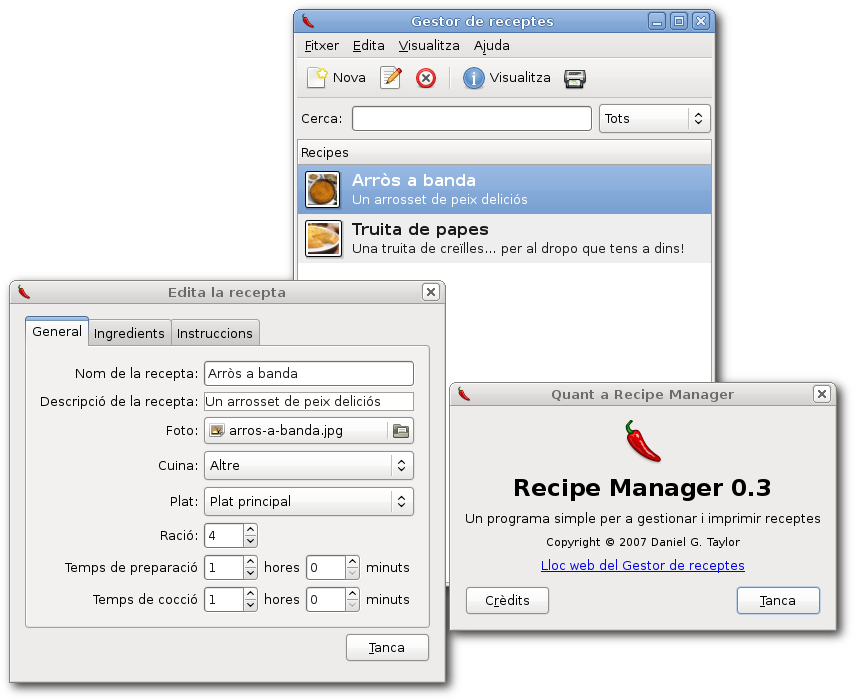
Two weeks ago, nekohayo posted a blog entry on Recipe Manager, a (you guessed it) cooking recipe manager for GNOME. Looking good, I fetched the bzr tree from Launchpad and played a bit with it, and soon discovered it had no internationalisation support. I've tried to add i18n properly, but I've not had enough time to do it. Before tackling that, the authors need to give it some bootstrapping love so the app can actually install, look for its files in /usr/share, etc. My fugly, unpostable current patch does allow for a preview of how Recipe Manager will teach the world about the best rice dish ever, arr s a banda. Yum!


Recipe Manager, showing off the zenith of Valencian culture

30 September 2010

Jordi Mallach: GNOME 2.32

Once again, the GNOME project has released a major release on time, to the day. Congrats! While it doesn't feel like a major release, due to the pushing back of GNOME 3.0 another 6 months in the middle of the cycle and the limited changes included, I believe it'll be a good one because it just adds on top of the really solid GNOME 2.30. GNOME 2.32 is out a bit too late for Debian squeeze, but the Debian GNOME team has a plan to incorporate new 2.32 versions for modules which don't include big, intrussive changes like migrations to dconf, or any other dependency on the new versions of GTK or GLib. The result is that Debian 6.0 will ship with most of GNOME 2.30, plus some cherrypicked new versions of 2.32 modules.

31 August 2010

Jordi Mallach: De mar a mar, hiking across the Pyrenees

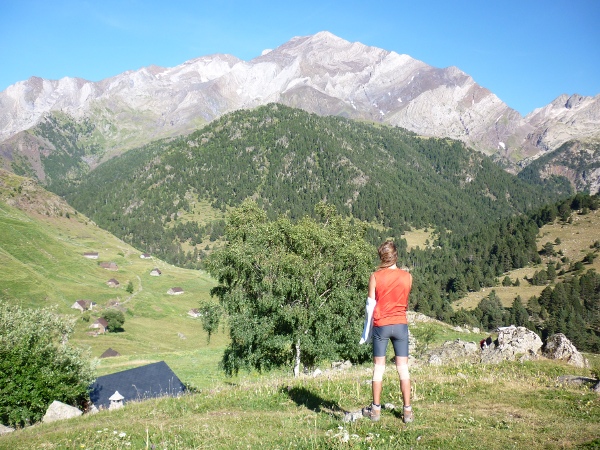
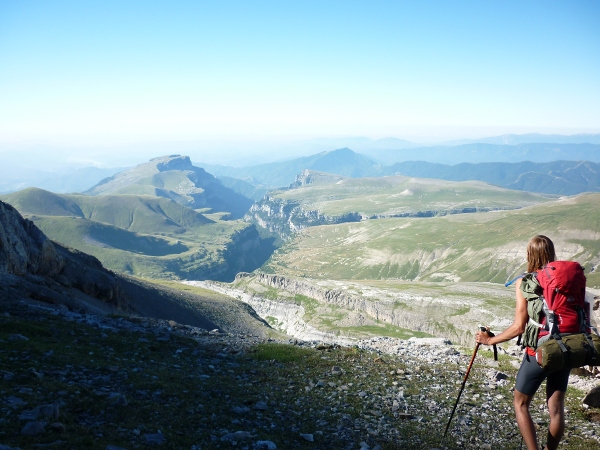
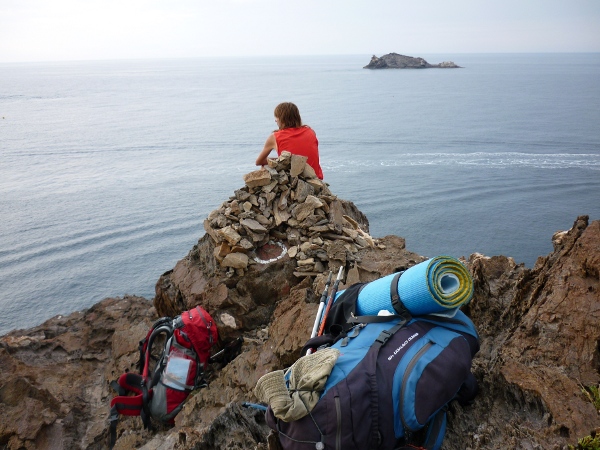
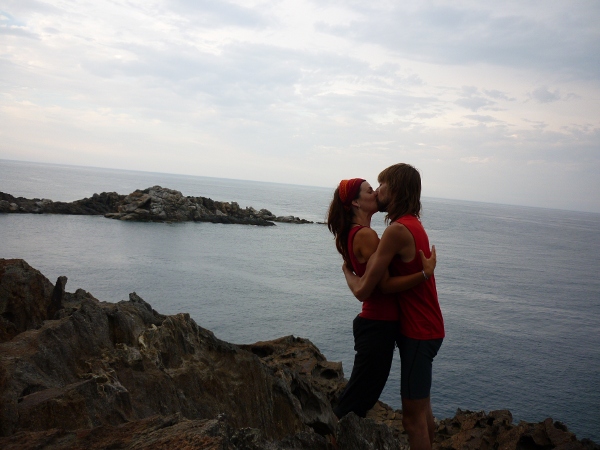
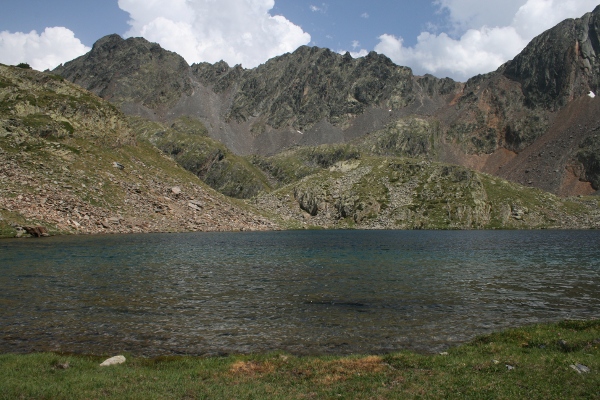
Two weeks ago, Maria and I completed one of our dreams when we arrived in Cap de Creus, where the Pyrenean range sinks in the Mediterranean. To get there, we walked hundreds of kilometres during a month, crossed dozens of steep valleys and enjoyed one of the richest experiences of our lives.

We managed to complete this challenge without facing major problems or pains, and after the first five our six days, our legs seemed to have gotten used to the daily effort and it started to be easier and easier. Our morale kept growing as days passed and we advanced east. When I started walking on a cold and rainy morning in Hondarribia, after barely no rest in the night bus to Ir n, I thought for myself that it was improbable that we'd manage to get anywhere near Catalunya, that one of us would get injuried way before, or we'd just give up and go for the easy beach vacation in the Basque Country.


Biad s refuge, under Posets But we didn't, and after a somewhat painful start, with our boots soaking wet during the stages that crossed the enchanting Selva de Irati which ended up with me getting the biggest blister I've ever seen, we started to walk farther every day, extending the stages when we felt strong after reaching their official end. When we crossed from Nafarroa to Aragonese territory, the mental wall that I had built over the toughest stages in our quest started to fall apart. Days later, we found ourselves climbing down to Pineta, leaving Ordesa behind and enjoying a feeling that our adventure could not go better. The weather had been perfect for over a week and our legs and back were strong to go all over the way to the sea.


Ca n de A isclo, on our way to Pineta When we finally saw that huge blue stain on the horizon, the day before getting to the last mark, we got really excited. We had made it, but as we walked towards the cape, happiness slowly got mixed with melancholy. An unforgettable adventure was about to end, and we didn't want to face our return to the city and our routines. It had been many days surrounded only by awesome landscapes, and living without watches, with only sunlight and weariness marking the time to get in our sleeping bags.


At the very last red and white mark of our journey We've had plenty of time to meet great people. Starting with the Navarrian brothers we met in the early stage, which provided us with a good pace to follow while our leg muscles were still building up; or Kike and Ana, who drove from Pamplona to visit us during the first Aragonese stages (thanks for the supplies!). Tom s and Roger, young hikers from Matar , surprised us with their maturity and experience as mountaineers; we had the pleasure to join forces during four days, walking a really cool variant through the Infiernos and Collado del Letrero which avoided going through the ghost city of Panticosa. Roger and Tom s, we really hope to meet you soon! Andreu, Manel, Ghandi and Ga la visited us at the Vall de N ria and were unlucky to suffer a frightening hail and thunder storm when they left our shelter on their way back to their car. Thanks! All of you have been a very special part of our experience!

This adventure through GR 11 has been incredibly positive for us for several reasons. We've learned a lot about ourselves and strengthened our relation, and now I know how powerful drive can be; to get somewhere, no matter how far, it's really easy if you just believe you can do it and desire to get there. Maria and I are proud of what we've done, and no wonder we're looking for new challenges. An obvious one would be repeating this experience, going through the French side of the Pyrenees, but for now, the Corsican GR 20 seems the most appealing. We'll see, next summer!

15 July 2010

Jordi Mallach: Hiking through the Pyrenean GR 11

Tomorrow, at this time, I'll probably be unsuccessfully trying to find a comfortable position on a seat of the Bilmanbus to Irun. Very early on Saturday, as soon as we get off the bus, Maria and I will quickly head to Hondarribia's beach in Cape Higer to symbolically wet our feet in the waters of the Cantabrian Sea. We won't have much time to enjoy the cold waters of the ocean, though. Soon after that, we'll have to take a deep breath, look East, and start walking if we want to achieve our utmost objective: take a bath in the beautiful beaches of the Cap de Creus, in the Mediterranean sea. In between, 30 days and 840 kilometres of thick woods, deep valleys, high peaks and cold waters, all of which shape incredible landscapes.


The Portella de Baiau, during our 2008 trip For a whole month, we'll be mostly disconnected from everything else that isn't our knee ache, our blisters, the Sun over our heads or where to get food. It's the first time I leave on a hiking trip as long and tough as this one, and I feel both uncertainty and eagerness. We've been so busy during the last few months that we've been unable to train at all for this, and I'm probably in the worst physical condition in a decade. It's too late to take care of that now, so we'll try to take good care of our legs and spine. In order to get back home in the Mediterranean, we'll have to be fast, some days joining two stages and skipping a few that we know are not that interesting (sections over asphalt, etc.). It's hard to make it in just one month, but we'll try our best. The plan is going to sleep not long after sunset, getting up at dawn, to be able to walk for a decent time before the heat starts being a handicap and just resting at midday, when the Sun is <strongest.> Of course, this means that I'm missing, yet again, this year's edition of DebConf in New York City, which is really sad because I was looking forward hanging around with Mako, Mika, Biella, micah, Clint and the rest of the NYC/ Boston gang, but when the idea of doing a long trip this summer popped up around January, it was clear DebConf seemed unlikely this year. I hope all of you have a lot of fun, and see you in a few weeks!

3 July 2010

Jordi Mallach: Cinema d'Estiu in Benimaclet 2010

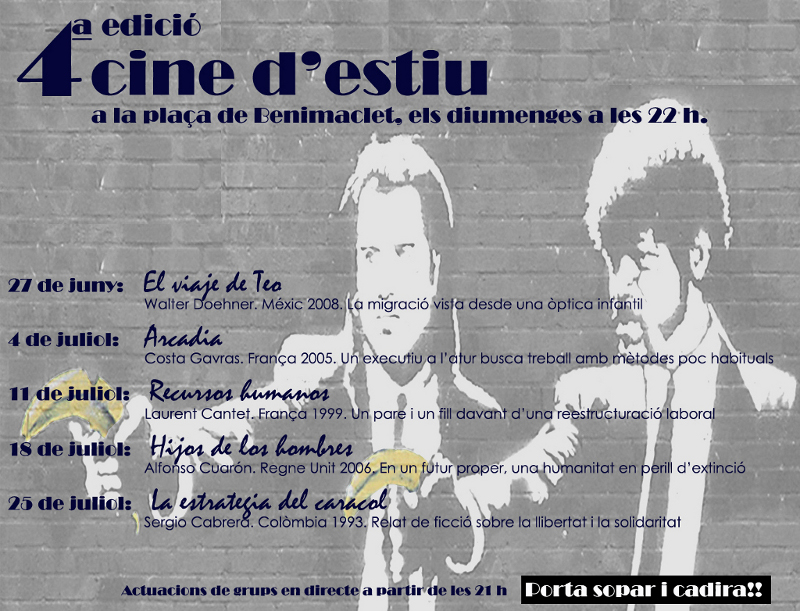
Like other years, Benimaclet's Neighbour Association has organized a new cycle of film projections for the neighbours, by the neighbours, with the intention to get people out of their homes and share a good time with many others. Like in the other two editions, the selected films try to deliver a message to the viewers, and this year the topics are centered about labour and migration social issues. A change in this year's edition is that there will be one more projection, for a total of 5 films, every Sunday of July, at 22:00 in the Pla a de Benimaclet. Last week, we saw El viaje de Teo, a Mexican film describing the migration dramas going on in the Sonora Desert. This Sunday, we'll see Arcadia, which will be followed by Recursos humanos, Hijos de los hombres and La estrategia del caracol. Before each film, some local artists will perform live for us. Make yourself a sandwich, bring a chair to Benimaclet and enjoy some good cinema with your neighbours every Sunday in July!

4 June 2010

Colin Watson: Hacking on grub2

Various people observed in a long thread on debian-devel that the grub2 package was in a bit of a mess in terms of its release-critical bug count, and Jordi and Stefano both got in touch with me directly to gently point out that I probably ought to be doing something about it as one of the co-maintainers. Actually, I don't think grub2 was in quite as bad a state as its 18 RC bugs suggested. Of course every boot loader failure is critical to the person affected by it, not to mention that GRUB 2 offers more complex functionality than any other boot loader (e.g. LVM and RAID), and so it tends to accumulate RC bugs at rather a high rate. That said, we'd been neglecting its bug list for some time; Robert and Felix have both been taking some time off, Jordi mostly only cared about PowerPC and can't do that any more due to hardware failure, and I hadn't been able to pick up the slack. Most of my projects at work for the next while involve GRUB in one way or another, so I decided it was a perfectly reasonable use of work time to do something about this; I was going to need fully up-to-date snapshots anyway, and practically all the Debian grub2 bugs affect Ubuntu too. Thus, with the exception of some other little things like releasing the first Maverick alpha, I've spent pretty much the last week and a half solidly trying to get the grub2 package back into shape, with four uploads so far. The RC issues that remain are: If we can fix that lot, or even just the ones that are reasonably well-understood, I think we'll be in reasonable shape. I'd also like to make grub-mkconfig a bit more robust in the event that the root filesystem isn't one that GRUB understands (#561855, #562672), and I'd quite like to write some more documentation. On the upside, progress has been good. We have multiple terminal support thanks to a new upstream snapshot (#506707), update-grub runs much faster (#508834, #574088), we have DM-RAID support with a following wind (#579919), the new scheme with symlinks under /dev/mapper/ works (#550704), we have basic support for btrfs / as long as you have something GRUB understands properly on /boot (#540786), we have full info documentation covering all the user-adjustable settings in /etc/default/grub, and a host of other smaller fixes. I'm hoping we can keep this up. If you'd like to help, contact me, especially if there's something particular that isn't being handled that you think you could work on. GRUB 2 is actually quite a pleasant codebase to work on once you get used to its layout; it's certainly much easier to fix bugs in than GRUB Legacy ever was, as far as I'm concerned. Thanks to tools like grub-probe and grub-fstest, it's very often possible to fix problems without needing to reboot for anything other than a final sanity check (although KVM certainly helps), and you can often debug very substantial bits of the boot loader - the bits that actually go wrong - using standard tools such as strace and gdb. Upstream is helpful and I've been able to get many of the problems above fixed directly there. If you have a sound knowledge of C and a decent level of understanding of the environment a boot loader needs to operate in - or for that matter specialist knowledge of interesting device types - then you should be able to find something to do.

31 March 2010

Jordi Mallach: GNOME 2.30

Congratulations to everyone involved in what looks like a very good GNOME release! Interesting times are now ahead for the GNOME project, as on the plate is now a big release like 3.0. That will mean a lot of changes to the desktop we've got used to in the last decade, and I hope it ends up being successful, innovative and useful. Debian has packages for GNOME Shell, and a special gnome3-session which starts Mutter + Shell. I experimented with it last week at my work place, and had mixed feelings with the current status. I'm not a big fan of hard dependencies on Direct Rendering. My main computer is an Athlon 800MHz. Compiz crawls on it, and sadly Mutter is basically unusable on it. At the office, I have P4-based system with 1GB of RAM, which runs GNOME 2.28 OK. When I switched to the GNOME 3 session, it showed that it's getting old. I also experienced X crashes and kernel oopses, apparently a classic for ATI users using a composited window manager. This being said, I consider myself lucky because both systems have ATI cards and can do DRI using free software. If I was forced to use nVidia non-free drivers, it'd probably mean I'd stick with the Panel until that wasn't an option at all. I am aware we'll see improvements both in Xorg/kernel and GNOME before GNOME 3.0 is released next Autumn, and have high hopes for a release that is accepted by our users really fast (avoiding a KDE 4.0 situation). GNOME hackers have done good stuff for ages, and 3.0 will be a new example!

28 February 2010

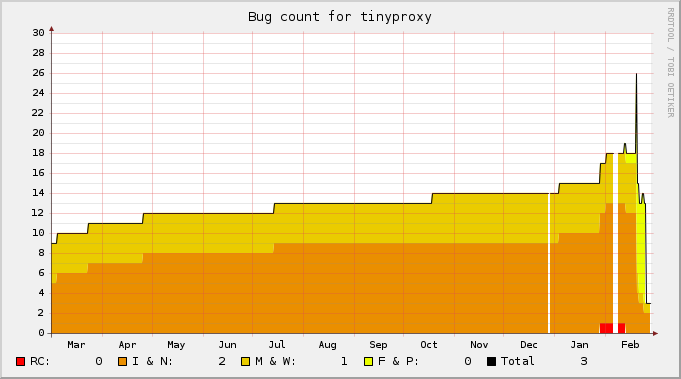
Jordi Mallach: Tinyproxy 1.8

A while ago, I was asked to recompile Tinyproxy to enable transparent proxying support, which was not being compiled in etch's Debian package. As it tends to happen, once I got the source and looked into doing a quick rebuild with --enable-transparent-proxy, I noticed the package was in such a bad shape, that I couldn't just leave it like that, so I found myself doing a few more changes, which mostly involved updating the packaging so it didn't suck a lot, and splitting the Debian patches so things could be sent upstream or dropped when new versions appeared. However, even if Ed had asked me to go ahead and take over the package, this was meant to be a one-day effort, and soon I had forgotten about Tinyproxy, except for the ocassional bug mail getting through the PTS. It also didn't help that Tinyproxy had been pretty much dead upstream for years. So lately, a few bug reports were reporting a gasp new major Tinyproxy release, after 7 years of basically nothing. OMG, what do I see, there's a Git repo! And an upstream Bugzilla! Somehow, feeling I owed Ed a reply to his unanswered request, I went ahead and tagged tinyproxy 1.6.3-3.2 in collab-maint, and started working on the new version. Adding myself to Uploaders, and getting rid of the make no unnecessary changes vetto, I rewrote most of the packaging. And for a change, I looked for and found a #tinyproxy channel on IRC and told muks and obnox that the days of Tinyproxy's stay in the Debian/Ubuntu limbo were over.

They were happy to get a few bugs and patches forwareded upstream, and asked me why all of this hadn't happened before. Pitty is that a few longstanding issues were well known in Debian but not so obvious for the new upstream maintainers, and are present in 1.8.0. Hopefully all will be dealt with in 1.8.1 or the next major version. The lesson is: if you work on an apparently abandoned package, after cleaning the mess in your NMU, try to spend 15 more minutes trying to contact upstream (if available), pointing them at the patch tracker and our list of bugs: chances are many are still useful. Also, contact the Debian maintainer, and if they ask you to take over, at least post a RFA so someone else can. If you're a Tinyproxy user, I'd be happy to hear if the current package in Debian unstable works for you. If you were having weird issues with 1.6.x, chances are 1.8 will fix them. The package can be installed on stable with no extra dependencies, so if you're feeling adventurous, go ahead and upgrade.

31 January 2010

Jordi Mallach: Cabanyal

Today, I was glad to attend the biggest demonstration ever in favour of the Cabanyal neighbourhood of Val ncia, a traditional district populated by the sea people of the city. After decades of oblivion, the Valencian right-wing government is trying to execute an old plan to open Valencia to the sea , which means demolishing around 450 traditional houses, many of them under protection for their cultural and architectural value, to extend a big avenue until the beach. Patrimonial loss aside, neighbours would be forced to other areas in the city (sadly, this has been happening for a decade already), making Cabanyal-Canyamelar the new posh neighbourhood for the richer class, destroying its identity and replacing it with a new set of skyscrapers.

The local government of PP, led by the infamous Rita Barber , knows that getting the anti-riot police in the neighbourhood and forcing very old men and women out of the houses where they were born isn't what many people like to see in the evening news. They also know time is their ally; this plan is many decades old, and there's no need to hurry now, so it's better to apply silent mafia tactics on the problem. It's very easy. First, stop investing a single euro in the area and monitor the slow but effective results of the degradation. Have a bit of patience, and after quite a few years, start promoting the illegal occupation of the increasing number of empty houses by marginal collectives which will bring the associated introduction of drug dealing in the area. This will surely make even more people leave or accelerate their decease. Keep repeating this process, until the Cabanyal is really fucked up. Now, start promoting the rehabilitation plan , which unavoidably includes splitting the neighbourhood in two pieces, and destroying a substantial part of it. Hopefully, many of the neighbours not directly affected by the demolitions will back the plan, they can't be blamed for being really fed up after all. Do all you can to confront those in favour to those against. In the meanwhile, start harrassing owners, make them end up selling their property at ridiculous prices and as soon as this happens, demolish it very quickly. Don't even bother with cleaning up the rubble: an increasing number of sites like this all over the place may be what makes a few more families give up and leave. In the end, you either have an empty neighbourhood, or you've managed to demolish all the annoying houses that block your shiny avenue. However, if a Supreme Court argues that the remaining houses still have some cultural value, you might want to consider changing your local law to unprotect those architectural elements. Today, many thousands of Valencians marched around Cabanyal to say enough! . From the street, I saw several old women out on the balconies of their beautiful houses, their eyes wet with tears, while they observed in silence all that many people who were fighting for them. There's still a long way to go in the courts until this is all over, but at least these people have a little more hope today than those in el Carme or La Punta, who ended up losing similar battles, years ago.

24 November 2009

Jordi Mallach: Ten years as a Debian Maintainer

On the 24th of November of 1999, the Debian ftpmasters processed the NEW package wmbiff, which got installed in the potato distribution. This sponsored upload by Fernando S nchez was the first of my packages to hit the official Debian archive, thus officially making me a Debian maintainer. So, in short, today is my tenth anniversary as a Debian contributor! I actually started a few days before, and soon after that upload, many other ITPs and uploads followed. I will always be thankful to fer for his patience with my upload sponsoring until I became a Debian developer with full rights and was able to upload myself. During these years, I've been involved in many teams and different tasks, with my activity and dedication probably peaking around 2001 or 2002, when I apparently was doing a crazy amount of different stuff. I started doing plain packaging work of software packages, some of which also have come a long way (thanks for that, Chris!), but soon started to contribute in other Debian tasks. I think it's safe to say that the task that has ended up having more impact in the people that surround me was bootstrapping the Debian Catalan community and starting the Catalan translation of Debian's website, which soon after triggered the creation of a formal Debian Catalan translation project. I've also spent a lot of time giving back to the NM team which helped me get a Debian account through the still experimental new New Maintainer process, and the QA team helping as I could with the never ending release cycles of potato and woody. At some point I got engaged in the GNOME packaging tasks and the creation of the Debian GNOME team, and picked up the Catalan translation of GNOME 1.5.x releases, which eventually opened me the doors of Softcatal , a Catalan non-profit devoted to the promotion of the Catalan language in technology. I've believed in Debian's values since my classmate Ulisses Alonso prodded me to install Debian on my desktop back in 1997. Even if getting X up and running on bo was a real pain in the ass, knowing that the system I was running had all been written by people driven by altruism was enlightening; months later it was time to give back. Of course, I've not been able to keep my motivation or output as high as I'd like. Debian as a collective has sometimes taken some decisions which were not so easy to understand from my point of view. The outcome of the non-free votes was a bit appalling, and having debian-devel becoming more and more a battleground instead of a civilised mailing list certainly did not help at some point (unsubscribing from it made my life a lot simpler!). Joining a triathlon club, having a girlfriend and suddenly rediscovering my neglected social life didn't help either. The result is that my dedication has been wanning noticeably since 2005 or so, but I still do my best to keep up with most of duties, even if I'm aware I'm clearly neglecting a few of them. I am very proud of having been a part of an incredible project like Debian, and hope to be around for at least ten more years. Not only because I love and believe in Free Software; thanks to my involvement, I've been able to work on Debian-related jobs for all of my professional career, but above all I've been very lucky to make lots of real friends. Today's has been a nice day full of remembering and mailbox digging. Thank you, Debian!

30 October 2009

Jordi Mallach: Dead PowerBook G4

A few weeks ago I was trying to get GRUB2 for PowerPC back to work on my PowerBook G4 15", and had some problems getting OF doing the right thing. Not being an OF expert at all, I found myself making things a bit worse, ending up with an unbootable laptop and, what a classic, unable to boot my old rescue CD to get yaboot back in its place. So I googled a bit and ended up deciding that, given the boot parametres and some other stuff like the system's clock were doing strange stuff, reset-nvram would help getting things in a better shape that would at least permit CD booting. So there, reset-nvram, followed by reset-all, as found in all the OpenFirmware cheatsheets I found all over the web, and damn it, nothing changed and I was back into the OpenFirmware prompt. I used the power button to reset the laptop once again, and that was the last time I saw something functional on the PowerBook. Now, when I start the computer, all I hear is the Apple startup sound, followed by the sound of the CD drive (which has eaten an Ubuntu 5.10 CD) trying to spin up for a pair of seconds, and then nothing. There's nothing displayed on the LCD, or any other sign of life . My searches in Google indicate this is a logic board failure and you can imagine that is not cheap to get fixed by Apple support. I've tried numerous keyboard combo tricks I didn't even know about, and none seem to work. The computer doesn't seem to be responding to the builtin keyboard, an Apple USB keyboard I borrowed, or an external display. I'm annoyed because I've looked after this laptop really well and it was in a really good condition, so I'm going to see if it can be fixed for a reasonable amount. Apple care in Val ncia is not an option. They say a logic board (if this is really what is causing trouble) costs around 500 , so I'll have to explore other ways. The first one is trying to find out if these symptoms (nothing on the display, key combos don't appear to work, etc.) really point to a fried logic board or could be something else. I've tried removing the RAM and replacing it with my old one, but that didn't work either. So, if anyone reading this has some Apple PowerPC hardware experience and can share some of their knowledge and suggestions, I'd be really, really grateful. Plan B involves hiring a coworker, who I believe is the son of McGyver, to try to get it repaired for me. This would involve buying spare parts in eBay or some other place to try to get the replaced. Again, suggestions, donations and ideas are welcome in this front too. :) Jose Vicente loves fixing stuff, and right before the Summer he already showed what he can do with a screwdriver and some patience. Some weeks before, I had managed to shatter the LCD screen of my Nokia 6500s when I lost my grip while climbing down a mountain in El Cad , and the phone in my pocket hit a big rock. The phone worked, but I all I could see in the screen were some cracks in random colours. People suggested I should get a new phone, but I really don't want to generate even more polluting waste when all that was needed was replacing a cheap component.


My phone during its stay in McGyver's hideout

7 September 2009

Jordi Mallach: Flags and outrages

A bit more than two years ago, two young Spaniards on vacation in Latvia maybe went a bit too far during one of their night parties and decided to remove some Latvian flags that hanged from a post in the streets of Riga. They spent 1 month in prison, with charges for outraging the Latvian flag. The Spanish media talked about the disproportionate charges, the ridiculous and medieval laws in Latvia and so on. Today, we learn that Jaume d'Urgell will go to prison due to the outraging crime of substituting the current Spanish flag with the Republican flag of 1931 on the facade of a public building. So much for medieval laws and institutions like the Spanish monarchy.

29 May 2009

Jordi Mallach: Barcelona

Last weekend I finally managed to travel to Barcelona to visit my family and some friends. As my agenda was quite packed with stuff to do, I was unable to find out if any of the Ubunteros had arrived early for UDS, and I left just after lunch on Sunday. Unfortunately, I had totally missed that before UDS, Canonical held their allhands meeting, and it would have been easy to meet them on Friday night after I got in the city. What a pitty, and sorry about this, mdz, I would have loved to meet... :( In other Barcelona news, I'm sure that UDS attendees will be astonished (or fed up!) by the football crazyness going on right now. Last night I went to a culer bar near Woody and enjoyed watching how Bar a claimed brilliantly their 3rd Champions Cup. For someone who normally doesn't care that much about football, the last few weeks have been incredible. Today I visited my 96 year old grandfather, and even if he has lost much of his expressiveness and energy since the last few months, today he was visibly happy and proud of what his Bar a has managed to accomplish this season. Three titles, plus literally going over Real Madrid in Santiago Bernabeu. Bar a is definitely m s que un club, and I'm happy that my grandfather was able to enjoy it.

15 May 2009

Jordi Mallach: 31

So, today I turn 31. Fortunately I've had a year to learn that the thirties change nothing, and looking back, I can easily say I've enjoyed one of the best years I remember. Today, a bit of protesting in the Pla a de l'Ajuntament against the old menaces of the Valencian Botanical Garden, and just after that, beer time around the Cedre area. The amount of email, Facebook stuff and calls I've been getting today since I woke up is impressive. Thanks everyone! ;)

13 May 2009

Jordi Mallach: Spanish Cup final in Val ncia

Val ncia is again taken over by football fans, who have come from all over the Basque Country and Catalunya to watch the Copa de Espa a final in Mestalla stadium. The city is literally tinted in red, white, blue and maroon and thousands of supporters (more than 60.000) have flooded the streets. If you can't beat them, join them, so for a change, I'm going to join the crazyness and will go to the Athletic Hiria to watch the game in the middle of the leonera. I can't wait to see how the Basque and Catalan supporters who have tickets for the game will react when the King of Spain enters the VIP area in Mestalla. Apparently, more powerful loudspeakers have been installed in the stadium in an attempt to mitigate what I expect to be the biggest catcall in a Spanish football stadium since we have a King... Gora Bar a, Visca l'Athletic!

31 March 2009

Jordi Mallach: Words

Some days I wish I could selectively get rid of some memories. I would probably cut out a small chunk of today's evening, to avoid remembering some tough words that I've been told. On the other hand, I feel I have lots of things to learn from these moments, given enough time, after the dust has settled. El tiempo todo lo cura...

Next.

Previous.