The Population Issue and its many facets
Another couple of weeks passed. A Lot of things happening, lots of anger and depression in folks due to handling in pandemic, but instead of blaming they are willing to blame everybody else including the population. Many of them want forced sterilization like what Sanjay Gandhi did during the Emergency (1975). I had to share So Long, My son . A very moving tale of two families of what happened to them during the one-child policy in China. I was so moved by it and couldn t believe that the Chinese censors allowed it to be produced, shot, edited, and then shared worldwide. It also won a couple of awards at the 69th Berlin Film Festival, silver bear for the best actor and the actress in that category. But more than the award, the theme, and the concept as well as the length of the movie which was astonishing. Over a 3 hr. something it paints a moving picture of love, loss, shame, relief, anger, and asking for forgiveness. All of which can be identified by any rational person with feelings worldwide.
Girl child
What was also interesting though was what it couldn t or wasn t able to talk about and that is the Chinese leftover men. In fact, a similar situation exists here in India, only it has been suppressed. This has been more pronounced more in Asia than in other places. One big thing in this is human trafficking and mostly women trafficking. For the Chinese male, that was happening on a large scale from all neighboring countries including India. This has been shared in media and everybody knows about it and yet people are silent. But this is not limited to just the Chinese, even Indians have been doing it. Even yesteryear actress Rupa Ganguly was caught red-handed but then later let off after formal questioning as she is from the ruling party. So much for justice.
What is and has been surprising at least for me is Rwanda which is in the top 10 of some of the best places in equal gender. It, along with other African countries have also been in news for putting quite a significant amount of percentage of GDP into public healthcare (between 20-10%), but that is a story for a bit later. People forget or want to forget that it was in Satara, a city in my own state where 220 girls changed their name from nakusha or unwanted to something else and that had become a piece of global news. One would think that after so many years, things would have changed, the only change that has happened is that now we have two ministries, The Ministry of Women and Child Development (MoWCD) and The Ministry of Health and Welfare (MoHFW). Sadly, in both cases, the ministries have been found wanting, Whether it was the high-profile Hathras case or even the routine cries of help which given by women on the twitter helpline. Sadly, neither of these ministries talks about POSH guidelines which came up after the 2012 gangrape case. For both these ministries, it should have been a pinned tweet. There is also the 1994 PCPNDT Act which although made in 1994, actually functioned in 2006, although what happens underground even today nobody knows .
On the global stage, about a decade ago, Stephen J. Dubner and Steven Levitt argued in their book Freakonomics how legalized abortion both made the coming population explosion as well as expected crime rates to be reduced. There was a huge pushback on the same from the conservatives and has become a matter of debate, perhaps something that the Conservatives wanted. Interestingly, it hasn t made them go back but go forward as can be seen from the Freakonomics site.
Climate Change
Another topic that came up for discussion was repeatedly climate change, but when I share Shell s own 1998 Confidential report titled Greenhouse effect all become strangely silent. The silence here is of two parts, there probably is a large swathe of Indians who haven t read the report and there may be a minority who have read it and know what already has been shared with U.S. Congress. The Conservative s argument has been for it is jobs and a weak we need to research more . There was a partial debunk of it on the TBD podcast by Matt Farell and his brother Sean Farell as to how quickly the energy companies are taking to the coming change.
Health Budget
Before going to Covid stories. I first wanted to talk about Health Budgets. From the last 7 years the Center s allocation for health has been between 0.34 to 0.8% per year. That amount barely covers the salaries to the staff, let alone any money for equipment or anything else. And here by allocation I mean, what is actually spent, not the one that is shared by GOI as part of budget proposal. In fact, an article on Wire gives a good breakdown of the numbers. Even those who are on the path of free markets describe India s health business model as a flawed one. See the Bloomberg Quint story on that. Now let me come to Rwanda. Why did I chose Rwanda, I could have chosen South Africa where I went for Debconf 2016, I chose because Rwanda s story is that much more inspiring. In many ways much more inspiring than that South Africa in many ways. Here is a country which for decades had one war or the other, culminating into the Rwanda Civil War which ended in 1994. And coincidentally, they gained independence on a similar timeline as South Africa ending Apartheid in 1994. What does the country do, when it gains its independence, it first puts most of its resources in the healthcare sector. The first few years at 20% of GDP, later than at 10% of GDP till everybody has universal medical coverage.
Coming back to the Bloomberg article I shared, the story does not go into the depth of beyond-expiry date medicines, spurious medicines and whatnot. Sadly, most media in India does not cover the deaths happening in rural areas and this I am talking about normal times. Today what is happening in rural areas is just pure madness. For last couple of days have been talking with people who are and have been covering rural areas. In many of those communities, there is vaccine hesitancy and why, because there have been whatsapp forwards sharing that if you go to a hospital you will die and your kidney or some other part of the body will be taken by the doctor. This does two things, it scares people into not going and getting vaccinated, at the same time they are prejudiced against science. This is politics of the lowest kind. And they do it so that they will be forced to go to temples or babas and what not and ask for solutions. And whether they work or not is immaterial, they get fixed and property and money is seized. Sadly, there are not many Indian movies of North which have tried to show it except for oh my god but even here it doesn t go the distance. A much more honest approach was done in Trance . I have never understood how the South Indian movies are able to do a more honest job of story-telling than what is done in Bollywood even though they do in 1/10th the budget that is needed in Bollywood. Although, have to say with OTT, some baggage has been shed but with the whole film certification rearing its ugly head through MEITY orders, it seems two steps backward instead of forward. The idea being simply to infantilize the citizens even more. That is a whole different ball-game which probably will require its own space.
Vaccine issues
One good news though is that Vaccination has started. But it has been a long story full of greed by none other than GOI (Government of India) or the ruling party BJP. Where should I start with. I probably should start with this excellent article done by Priyanka Pulla. It is interesting and fascinating to know how vaccines are made, at least one way which she shared. She also shared about the Cutter Incident which happened in the late 50 s. The response was on expected lines, character assassination of her and the newspaper they published but could not critique any of the points made by her. Not a single point that she didn t think about x or y. Interestingly enough, in January 2021 Bharati Biotech was supposed to be share phase 3 trial data but hasn t been put up in public domain till May 2021. In fact, there have been a few threads raised by both well-meaning Indians as well as others globally especially on twitter to which GOI/ICMR (Indian Council of Medical Research) is silent. Another interesting point to note is that Russia did say in its press release that it is possible that their vaccine may not be standard (read inactivation on their vaccines and another way is possible but would take time, again Brazil has objected, but India hasn t till date.)
What also has been interesting is the homegrown B.1.617 lineage or known as double mutant . This was first discovered from my own state, Maharashtra and then transported around the world. There is also B.1.618 which was found in West Bengal and is same or supposed to be similar to the one found in South Africa. This one is known as Triple mutant . About B.1.618 we don t know much other than knowing that it is much more easily transferable, much more infectious. Most countries have banned flights from India and I cannot fault them anyway. Hell, when even our diplomats do not care for procedures to be followed during the pandemic then how a common man is supposed to do. Of course, now for next month, Mr. Modi was supposed to go and now will not attend the G7 meeting. Whether, it is because he would have to face the press (the only Prime Minister and the only Indian Prime Minister who never has faced free press.) or because the Indian delegation has been disinvited, we would never know.
A good article which shares lots of lows with how things have been done in India has been an article by Arundhati Roy. And while the article in itself is excellent and shares a bit of the bitter truth but is still incomplete as so much has been happening. The problem is that the issue manifests in so many ways, it is difficult to hold on. As Arundhati shared, should we just look at figures and numbers and hold on, or should we look at individual ones, for e.g. the one shared in Outlook India. Or the one shared by Dr. Dipshika Ghosh who works in Covid ICU in some hospital
Dr. Dipika Ghosh sharing an incident in Covid Ward
Interestingly as well, while in the vaccine issue, Brazil Anvisa doesn t know what they are doing or the regulator just isn t knowledgeable etc. (statements by various people in GOI, when it comes to testing kits, the same is an approver.)
ICMR/DGCI approving internationally validated kits, Press release.
Twitter
In the midst of all this, one thing that many people have forgotten and seem to have forgotten that Twitter and other tools are used by only the elite. The reason why the whole thing has become serious now than in the first phase is because the elite of India have also fallen sick and dying which was not the case so much in the first phase. The population on Twitter is estimated to be around 30-34 million and people who are everyday around 20 odd million or so, which is what 2% of the Indian population which is estimated to be around 1.34 billion. The other 98% don t even know that there is something like twitter on which you can ask help. Twitter itself is exclusionary in many ways, with both the emoticons, the language and all sorts of things. There is a small subset who does use Twitter in regional languages, but they are too small to write anything about. The main language is English which does become a hindrance to lot of people.
Censorship
Censorship of Indians critical of Govt. mishandling has been non-stop. Even U.S. which usually doesn t interfere into India s internal politics was forced to make an exception. But of course, this has been on deaf ears. There is and was a good thread on Twitter by Gaurav Sabnis, a friend, fellow Puneite now settled in U.S. as a professor.
Gaurav on Trump-Biden on vaccination of their own citizens
Now just to surmise what has been happened in India and what has been happening in most of the countries around the world. Most of the countries have done centralization purchasing of the vaccine and then is distributed by the States, this is what we understand as co-operative federalism. While last year, GOI took a lot of money under the shady PM Cares fund for vaccine purchase, donations from well-meaning Indians as well as Industries and trade bodies. Then later, GOI said it would leave the states hanging and it is they who would have to buy vaccines from the manufacturers. This is again cheap politics. The idea behind it is simple, GOI knows that almost all the states are strapped for cash. This is not new news, this I have shared a couple of months back. The problem has been that for the last 6-8 months no GST meeting has taken place as shared by Punjab s Finance Minister Amarinder Singh. What will happen is that all the states will fight in-between themselves for the vaccine and most of them are now non-BJP Governments. The idea is let the states fight and somehow be on top. So, the pandemic, instead of being a public health issue has become something of on which politics has to played. The news on whatsapp by RW media is it s ok even if a million or two also die, as it is India is heavily populated. Although that argument vanishes for those who lose their dear and near ones. But that just isn t the issue, the issue goes much more deeper than that
Oxygen:12% Remedisivir:12% Sanitiser:12% Ventilator:12% PPE:18% Ambulances 28%
Now all the products above are essential medical equipment and should be declared as essential medical equipment and should have price controls on which GST is levied. In times of pandemic, should the center be profiting on those. States want to let go and even want the center to let go so that some relief is there to the public, while at the same time make them as essential medical equipment with price controls. But GOI doesn t want to. Leaders of opposition parties wrote open letters but no effect. What is sad to me is how Ambulances are being taxed at 28%. Are they luxury items or sin goods ? This also reminds of the recent discovery shared by Mr. Pappu Yadav in Bihar. You can see the color of ambulances as shared by Mr. Yadav, and the same news being shared by India TV news showing other ambulances. Also, the weak argument being made of not having enough drivers. Ideally, you should have 2-3 people, both 9-1-1 and Chicago Fire show 2 people in ambulance but a few times they have also shown to be flipped over. European seems to have three people in ambulance, also they are also much more disciplined as drivers, at least an opinion shared by an American expat.
Pappu Yadav, President Jan Adhikar Party, Bihar May 11, 2021
What is also interesting to note is GOI plays this game of Health is State subject and health is Central subject depending on its convenience. Last year, when it invoked the Epidemic and DMA Act it was a Central subject, now when bodies are flowing down the Ganges and pyres being lit everywhere, it becomes a State subject. But when and where money is involved, it again becomes a Central subject. The States are also understanding it, but they are fighting on too many fronts.
Snippets from Karnataka High Court hearing today, 13th March 2021
One of the good things is most of the High Courts have woken up. Many of the people on the RW think that the Courts are doing Judicial activism . And while there may be an iota of truth in it, the bitter truth is that many judges or relatives or their helpers have diagnosed and some have even died due to Covid. In face of the inevitable, what can they do. They are hauling up local Governments to make sure they are accountable while at the same time making sure that they get access to medical facilities. And I as a citizen don t see any wrong in that even if they are doing it for selfish reasons. Because, even if justice is being done for selfish reasons, if it does improve medical delivery systems for the masses, it is cool. If it means that the poor and everybody else are able to get vaccinations, oxygen and whatever they need, it is cool. Of course, we are still seeing reports of patients spending in the region of INR 50k and more for each day spent in hospital. But as there are no price controls, judges cannot do anything unless they want to make an enemy of the medical lobby in the country. A good story on medicines and what happens in rural areas, see no further than Laakhon mein ek.
Allahabad High Court hauling Uttar Pradesh Govt. for lack of Oxygen is equal to genocide, May 11, 2021
The censorship is not just related to takedown requests on twitter but nowadays also any articles which are critical of the GOI s handling. I have been seeing many articles which have shared facts and have been critical of GOI being taken down. Previously, we used to see 404 errors happen 7-10 years down the line and that was reasonable. Now we see that happen, days weeks or months. India seems to be turning more into China and North Korea and become more anti-science day-by-day
Fake websites
Before going into fake websites, let me start with a fake newspaper which was started by none other than the Gujarat CM Mr. Modi in 2005 .
Gujarat Satya Samachar 2005 launched by Mr. Modi.
And if this wasn t enough than on Feb 8, 2005, he had invoked Official Secrets Act
Mr. Modi invoking Official Secrets Act, Feb 8 2005 Gujarat Samachar
The headlines were In Modi s regime press freedom is in peril-Down with Modi s dictatorship. So this was a tried and tested technique. The above information was shared by Mr. Urvish Kothari, who incidentally also has his own youtube channel.
Now cut to 2021, and we have a slew of fake websites being done by the same party. In fact, it seems they started this right from 2011. A good article on BBC itself tells the story. Hell, Disinfo.eu which basically combats disinformation in EU has a whole pdf chronicling how BJP has been doing it. Some of the sites it shared are
Times of New York Manchester Times Times of Los Angeles Manhattan Post Washington Herald and many more.
The idea being take any site name which sounds similar to a brand name recognized by Indians and make fool of them. Of course, those of who use whois and other such tools can easily know what is happening. Two more were added to the list yesterday, Daily Guardian and Australia Today. There are of course, many features which tell them apart from genuine websites. Most of these are on shared hosting rather than dedicated hosting, most of these are bought either from Godaddy and Bluehost. While Bluehost used to be a class act once upon a time, both the above will do anything as long as they get money. Don t care whether it s a fake website or true. Capitalism at its finest or worst depending upon how you look at it. But most of these details are lost on people who do not know web servers, at all and instead think see it is from an exotic site, a foreign site and it chooses to have same ideas as me. Those who are corrupt or see politics as a tool to win at any cost will not see it as evil. And as a gentleman Raghav shared with me, it is so easy to fool us. An example he shared which I had forgotten. Peter England which used to be an Irish brand was bought by Aditya Birla group way back in 2000. But even today, when you go for Peter England, the way the packaging is done, the way the prices are, more often than not, people believe they are buying the Irish brand. While sharing this, there is so much of Naom Chomsky which comes to my mind again and again
Caste Issues
I had written about caste issues a few times on this blog. This again came to the fore as news came that a Hindu sect used forced labor from Dalit community to make a temple. This was also shared by the hill. In both, Mr. Joshi doesn t tell that if they were volunteers then why their passports have been taken forcibly, also I looked at both minimum wage prevailing in New Jersey as a state as well as wage given to those who are in the construction Industry. Even in minimum wage, they were giving $1 when the prevailing minimum wage for unskilled work is $12.00 and as Mr. Joshi shared that they are specialized artisans, then they should be paid between $23 $30 per hour. If this isn t exploitation, then I don t know what is.
And this is not the first instance, the first instance was perhaps the case against Cisco which was done by John Doe. While I had been busy with other things, it seems Cisco had put up both a demurrer petition and a petition to strike which the Court stayed. This seemed to all over again a type of apartheid practice, only this time applied to caste. The good thing is that the court stayed the petition.
Dr. Ambedkar s statement if Hindus migrate to other regions on earth, Indian caste would become a world problem given at Columbia University in 1916, seems to be proven right in today s time and sadly has aged well. But this is not just something which is there only in U.S. this is there in India even today, just couple of days back, a popular actress Munmun Dutta used a casteist slur and then later apologized giving the excuse that she didn t know Hindi. And this is patently false as she has been in the Bollywood industry for almost now 16-17 years. This again, was not an isolated incident. Seema Singh, a lecturer in IIT-Kharagpur abused students from SC, ST backgrounds and was later suspended. There is an SC/ST Atrocities Act but that has been diluted by this Govt. A bit on the background of Dr. Ambedkar can be found at a blog on Columbia website. As I have shared and asked before, how do we think, for what reason the Age of Englightenment or the Age of Reason happened. If I were a fat monk or a priest who was privileges, would I have let Age of Enlightenment happen. It broke religion or rather Church which was most powerful to not so powerful and that power was more distributed among all sort of thinkers, philosophers, tinkers, inventors and so on and so forth.
Situation going forward
I believe things are going to be far more complex and deadly before they get better. I had to share another term called Comorbidities which fortunately or unfortunately has also become part of twitter lexicon. While I have shared what it means, it simply means when you have an existing ailment or condition and then Coronavirus attacks you. The Virus will weaken you. The Vaccine in the best case just stops the damage, but the damage already done can t be reversed. There are people who advise and people who are taking steroids but that again has its own side-effects. And this is now, when we are in summer. I am afraid for those who have recovered, what will happen to them during the Monsoons. We know that the Virus attacks most the lungs and their quality of life will be affected. Even the immune system may have issues. We also know about the inflammation. And the grant that has been given to University of Dundee also has signs of worry, both for people like me (obese) as well as those who have heart issues already. In other news, my city which has been under partial lockdown since a month, has been extended for another couple of weeks. There are rumors that the same may continue till the year-end even if it means economics goes out of the window.There is possibility that in the next few months something like 2 million odd Indians could die
The above is a conversation between Karan Thapar and an Oxford Mathematician Dr. Murad Banaji who has shared that the under-counting of cases in India is huge. Even BBC shared an article on the scope of under-counting. Of course, those on the RW call of the evidence including the deaths and obituaries in newspapers as a narrative . And when asked that when deaths used to be in the 20 s or 30 s which has jumped to 200-300 deaths and this is just the middle class and above. The poor don t have the money to get wood and that is the reason you are seeing the bodies in Ganges whether in Buxar Bihar or Gajipur, Uttar Pradesh. The sights and visuals makes for sorry reading Pandit Ranjan Mishra son on his father s death due to unavailability of oxygen, Varanasi, Uttar Pradesh, 11th May 2021.
For those who don t know Pandit Ranjan Mishra was a renowned classical singer. More importantly, he was the first person to suggest Mr. Modi s name as a Prime Ministerial Candidate. If they couldn t fulfil his oxygen needs, then what can be expected for the normal public.
Conclusion
Sadly, this time I have no humorous piece to share, I can however share a documentary which was shared on Feluda . I have shared about Feluda or Prodosh Chandra Mitter a few times on this blog. He has been the answer of James Bond from India. I have shared previously about The Golden Fortress . An amazing piece of art by Satyajit Ray. I watched that documentary two-three times. I thought, mistakenly that I am the only fool or fan of Feluda in Pune to find out that there are people who are even more than me. There were so many facets both about Feluda and master craftsman Satyajit Ray that I was unaware about. I was just simply amazed. I even shared few of the tidbits with mum as well, although now she has been truly hooked to Korean dramas. The only solace from all the surrounding madness. So, if you have nothing to do, you can look up his books, read them and then see the movies. And my first recommendation would be the Golden Fortress. The only thing I would say, do not have high hopes. The movie is beautiful. It starts slow and then picks up speed, just like a train. So, till later.
Update The Mass surveillance part I could not do justice do hence removed it at the last moment. It actually needs its whole space, article. There is so much that the Govt. is doing under the guise of the pandemic that it is difficult to share it all in one article. As it is, the article is big
Today ist May, 1st. In about two weeks on May, 15th WhatsApp will put their changed Terms of Service into action and when you don t accept their rules you won t be able to use WhatsApp any longer.
Early this year there was already a strong movement away from WhatsApp towards other solutions. Mainly to Signal, but also some other services like the Fediverse gained some new users. And also XMPP got their fair share of new users.
So, what to do about the WhatsApp ToS change then? Shall we go all to Signal? Surely not. Signal is another vendor lock-in silo. It s centralistic and recent development plans want to implement some crypto payment system. Even Bruce Schneier thinks that this is a bad idea.
Other alternatives often named include Matrix/Element or XMPP. Today, Don di Dislessia in the (german) Fediverse asked about power consumption of the Fediverse incl. Matrix and XMPP and how much renewable energy is being used. Of course this is no easy answer to this question, but I tried my best at least for my own server.
Here are my findings and conclusions
Power
screenshot showing power consumption of server
Currently my server in the colocation is using about 93W in average with 6c Xeon E5-2630L, 128 GB RAM, 4x 2 TB WD Red + 1 Samsung 960pro NVMe. The server is 7 years old. When I started with that server the power consumption was about 75W, but back then there were far less users on the server. So, 20W more over the past year
Users
I m running my Friendica node on Nerdica.net since 2013. Over the years it became one of the largest Friendica servers in the Fediverse, for some time it was the largest one. It has currently like 700 total users and 180 monthly active users. My Mastodon instance on Nerdculture.de has about 1000 total users and about 300 monthly active users.
Since last year I also run a Matrix-Synapse server. Although I invited my family I m in fact the only active user on that server and have joined some channels.
My XMPP server is even older than my Friendica node. For long time I had like maybe 20 users. Now I setup a new website and added some domains like hookipa.net and xmpp.social the user count increased and currently I have like 130 users on those two domains and maybe like 50 monthly active users. Also note that all my Friendica and Mastodon users can use XMPP with their accounts, but won t be counted the same way as on native users on ejabberd, because the auth backend is different.
So, let s assume I do have like 2000 total users and 500 monthly active users.
CPU, Database Sizes and Disk I/O
Let s have a look about how many resources are being used by those users.
Database Sizes:
Friendica (MariaDB): 31 GB for 700 users
Mastodon (PostgreSQL): 15 GB for 1000 users
Matrix-Synapse (PostgreSQL): 5 GB for 1 user
XMPP (PostgreSQL): 0.4 GB for 200 users
CPU times according to xentop:
Webserver VM (Matrix, Friendica & Mastodon): 13410130 s / 130%
XMPP VM: 944275 s / 5.4%
Friendica does use the largest database and causes most disk I/O on NVMe, but it s difficult to differentiate between the load between the web apps on the webserver. So, let s have a quick look on an simple metric:
Number of lines in webserver logfile:
Friendica: 11575 lines
Matrix: 8174 lines
Mastodon: 3212 lines
These metrics correlate to some degree with the database I/O load, at least for Friendica. If you take into account the number of users, things look quite different.
Conclusion
Overall, and my personal impression, is that Matrix is really bad in regards of resource usage. Given that I m the only active user it uses exceptionally many resources. When you also consider that Matrix is using a distributed database for its chat rooms, you can assume that the resource usage is multiplied across the network, making things even worse.
Friendica is using a large database and many disk accesses, but has a fairly large user base, so it seems ok, but of course should be improved.
Mastodon seems to be quite good, considering the database size, the number of log lines and the user count.
XMPP turns out to be the most efficient contestant in this comparison: it uses much less CPU cycles and database disk I/O.
Of course, Mastdon/Friendica are different services than XMPP or Matrix. So, coming back to the initial question about alternatives to WhatsApp, the answer for me is: you should prefer XMPP over Matrix alone for reasons of saving resources and thus reducing power consumption. Less power consumption also means a smaller ecological footprint and fewer CO2 emissions for your communication with your family and friends.
XMPP is surely not the perfect replacement for WhatsApp, but I think it is the best thing to recommend. As said above, I don t think that Signal is an viable option. It s just another proprierary silo with all the problems that come with it. Matrix is a resource hog and not a messenger but a MS Teams replacement. Element as the main Matrix client is laggy and not multi-account/multi-server capable. Other Matrix clients do support multiple accounts but are not as feature-complete as Element. In the end the Matrix ecosystem will suffer from the same issues as XMPP did already a decade ago. But XMPP has learned to deal with it.
Also XMPP is proceeding fast in the last years and it has solved many problems many people are still complaining about. Sure, there still some open issues. The situation on IOS is still not as good as on Android with Conversations, but it is fairly close to it.
There are many efforts to improve XMPP. There is Quicksy IM, which is a service that will use your phone number as Jabber ID/JID and is thus comparable to Signal which uses phone numbers as well as unique identifier. But Quicksy is compatible with XMPP standards. Snikket is another new XMPP ecosystem aiming at smaller groups hosting their own server by simply installing a Docker container and setup some basic SRV records in the DNS. Or there is Mailcow, a Docker based mailserver setup that added XMPP server in their setup as well, so you can have the same mail and XMPP address. Snikket even got EU based funding for implementing XMPP Account Portability which also will improve the decentralization even further. Additionally XMPP helps vaccination in Canada and USA with vaxbot by Monal.
Be smart and use ecofriendly infrastructure.
Mainly to recall what happened last year and to give thoughts and plan for the upcoming year(s) I m once again revisiting my previous year (previous editions: 2019, 2018, 2017, 2016, 2015, 2014, 2013 + 2012).
Due to the Coronavirus disease (COVID-19) pandemic, 2020 was special for several reasons, but overall I consider myself and my family privileged and am very grateful for that.
In terms of IT events, I planned to attend Grazer Linuxdays and DebConf in Haifa/Israel. Sadly Grazer Linuxdays didn t take place at all, and DebConf took place online instead (which I didn t really participate in for several reasons). I took part in the well organized DENOG12 + ATNOG 2020/1 online meetings. I still organize our monthly Security Treff Graz (STG) meetups, and for half of the year, those meetings took place online (which worked OK-ish overall IMO).
Only at the beginning of 2020, I managed to play Badminton (still playing in the highest available training class (in german: Kader ) at the University of Graz / Universit ts-Sportinstitut, USI). For the rest of the year except for ~2 weeks in October or so the sessions couldn t occur.
Plenty of concerts I planned to attend were cancelled for obvious reasons, including the ones I would have played myself. But I managed to attend Jazz Redoute 2020 Dom im Berg, Martin Grubinger in Musikverein Graz and Emiliano Sampaio s Mega Mereneu Project at WIST Moserhofgasse (all before the corona situation kicked in). The concert from Ton Feinig & RTV Slovenia Big Band occurred under strict regulations in Summer, as well as Elektra Opera by Richard Strau in a very special setting (only one piano player instead of the orchestra because of a Corona case in the orchestra) in Autumn. At the beginning of 2020, I also visited Literaturshow Roboter mit Senf at Literaturhaus Graz.
The lack of concerts and rehearsals also severely impacted my playing the drums (including at HTU BigBand Graz), which pretty much didn t take place. :(
Grml-wise we managed to publish release 2020.06, codename Ausgehfuahangl. Regarding jenkins-debian-glue I tried to clarify its state and received some really lovely feedback.
I consider 2020 as the year where I dropped regular usage of Jabber (so far my accounts still exist, but I m no longer regularly online and am not sure for how much longer I ll keep my accounts alive as such).
Business-wise it was our seventh year of business with SynPro Solutions GmbH. No big news but steady and ongoing work with my other business duties Grml Solutions and Grml-Forensic.
As usual, I shared childcare with my wife. Due to the corona situation, my wife got a new working schedule, which shuffled around our schedule a bit on Mondays + Tuesdays. Still, we managed to handle the homeschooling/distance learning quite well. Currently we re sitting in the third lockdown, and yet another round of homeschooling/distance learning is going on those days (let s see how long ). I counted 112 actual school days in all of 2020 for our older daughter with only 68 school days since our first lockdown on 16th of March, whereas we had 213(!) press conferences by our Austrian government in 2020. (Further rants about the situation in Austria snipped.)
Book reading-wise I managed to complete 60 books (see Mein Lesejahr 2020 ). Once again, I noticed that what felt like good days for me always included reading books, so I ll try to keep my reading pace for 2021. I ll also continue with my hobbies Buying Books and Reading Books , to get worse at Tsundoku.
Hoping for vaccination and a more normal 2021, Schwuppdiwupp!
Linux Australia have decided to cease running the Planet installation on planet.linux.org.au. I believe that blogging is still useful and a web page with a feed of Australian Linux blogs is a useful service. So I have started running a new Planet Linux Australia on https://planet.luv.asn.au/. There has been discussion about getting some sort of redirection from the old Linux Australia page, but they don t seem able to do that.
If you have a blog that has a reasonable portion of Linux and FOSS content and is based in or connected to Australia then email me on russell at coker.com.au to get it added.
When I started running this I took the old list of feeds from planet.linux.org.au, deleted all blogs that didn t have posts for 5 years and all blogs that were broken and had no recent posts. I emailed people who had recently broken blogs so they could fix them. It seems that many people who run personal blogs aren t bothered by a bit of downtime.
As an aside I would be happy to setup the monitoring system I use to monitor any personal web site of a Linux person and notify them by Jabber or email of an outage. I could set it to not alert for a specified period (10 mins, 1 hour, whatever you like) so it doesn t alert needlessly on routine sysadmin work and I could have it check SSL certificate validity as well as the basic page header.
Related posts:
Planet Flooding One annoying thing that happens regularly is Planet Flooding . This...
Other Planet LCA 2008 The Planet installation for the Linux.Conf.Au (the main Linux conference...
Farmer on-going protests
Before I start with the education system in India which I have talked about many times in the past, first let me share couple of pieces about the farmer movement which is still at Sanghu Delhi border.
<Manjeet Kaur,62 at farmer protest with her friends.
The above picture became somewhat viral as it showed Manjeet Kaur, who drove down from Patiala, Punjab to Sanghu border along with her friends to take part in the on-going protests. The picture not only shares how the women are part and parcel of this protest but also they are independently taking part in the protest.
The other were two articles I read today, first was an article in tribune which questions that if the policy worked, why it didn t work in the state of Bihar. The other by a young law student who had to go from Chandigarh to Delhi with family for some work and her experience with the ongoing protest. In fact, an interesting observation was made by the CJI in the many suits against farmer protests in the SC. This makes for much more interesting read when you see an RTI query filed by Saket Gokhale to NHAI , a Central Govt. agency which is supposed to be independent and asks if they had filed an FIR and asked compensation from Haryana State and Haryana State Police which had dug up National Highway 44 and if any permission was asked for the same from NHAI. And NHAI unable to take any action for the same. If this isn t shameful, I dunno what is
Saket Gokhale s RTI query on digging up NH44
NHAI response to Saket Gokhale s query.
Sadly, the way the response has been worded makes it impossible for NHAI to discharge its own responsibilities and this becomes a precedent for other states now that know that NHAI is vulnerable. A pretty sad turn on events.
Indian Education can t go online
There was a recent article on scroll which shared how Indian education can t go online as only a few have computers with decent netlink speeds as well as other factors which are needed for online education. But there are also many things that the article doesn t take into account which actually make the task more difficult and raise the boundary more.
Now in most schools and colleges, the number of students to teacher ratio could be anywhere between 70-150 or even more. In the last few years, a lot of schools have been closed down by various Governments, including and not limited to the ruling Govt. They have in fact intensified closures of public schools wherever their Govt. has been in power. Closing to 5000+ schools in one state in a year is a dramatic shift and such has been happening time and again. In fact, the rising costs of Indian education has made many to leave Indian shores and do studies abroad. And once they do their masters or whatever, the chances of them coming back to India become more and more remote. In India the costs have been becoming so bad that NBFC s have started products targeting the same. How NBFC and Banks have (both public and private) have fared with respect to Indian consumers needs its own blog post but one word to describe it is bad . But as shared above, needs its own blog post.
Coming to the Indian context though, what has not been captured in that article is that the responsibility of making new content also raises huge barriers for teachers. My own experience in teacher s trainings for ICT usage has shown that most teachers do not know and use internet effectively both to sustain their own curiosity as well as their students. Part of which is whether you are private employee or a public school teacher, the teacher is not paid enough. I have had multiple conversations with friends over the years who are teachers who shared that they get 50% salary in-hand while they sign for 100%. This is more in the case or private schools though. In Govt. schools, the teachers apart from their regular administrative duties apart from teaching duties are also unpaid labor for Govt. policy. Take the recent covid crisis, it was the teachers who for months together went from door-to-door asking if they had a covid patient. This was all over India. Even for voter registration, census, polio and various other immunization efforts, the teachers are roped in. So apart from that, they somehow have to figure out how to make ends meet and also boost student morale. Hence the attention is only limited to the first couple of benches rather than the whole as a 45-minute to an hr. session is just not enough to go through a class of 70-150 school students giving individual attention. And this is when for most teachers, teaching is a means to an end and not the end itself.
I am going to take one example of science and sort of break-it-down in multiple steps and how I would have approached that topic for say the 5th-6th standard students in say a public school in Pune and especially if Covid would not have been an issue so you have face-to-face meetup.
There was recent news about a mysterious radio signal which came from one of our closest galactic neighbors Proxima Centauri. Now let s say there was a class I was teaching/sharing which I had shared before and there already is trust formed.
So before coming to the news, I would tell the students about frequency and more generally the notation of why we like to measure things and how we measure things. There is so much beautiful history which could be acted and enacted which can show and remains in mind why measurement is needed. Once that is understood, discussed and an underpinning is established, we could move to human perception or the lack of it. We know that humans have lots of limits in almost everything, whether it is talking, touching, hearing, all of our five senses are pretty limited with what we know of spectrum available in the immediate family kingdom as well as in the Universe. I would start with how far can a person throw his voice and be heard without using any other means. There does come a point where they need to use anything from a megaphone to a loudspeaker and what it actually does.
The other thing I would then talk is about the radio and ask the students to find more about the internals of a radio. If possible to bring an old radio to school where it could be disassembled. After they are familiar with some names of the electronic components and what they do, take them to the electronics market where they try to source all the things needed to make a radio and whatever they encounter. This would allow the students to try and do bargain shopping as well as learn from where to source things. Some might even get a copy or two of electronic projects where the shop themselves sell blueprints to hobbyists so that they can tinker.
If there is a place in the school where soldering can be done, then all can try and sooner or later we come to know if something works or not. There is also possibility of talking about noise cancellation and then the topic of ITU can also be bought up and how they do frequency allocation. Last but not the least then the topic can be approached about an alien civilization and an unknown radio signal and what it means and what it can mean.
Now if just one topic can give such a wide range of things to do and develop an understanding about not the subject itself but surrounding subjects as well I see no reason why teachers can t do this except they are handcuffed to lot of policy as well as real-life constraints.
For e.g. I remember in my school days, we used to go out once or twice a year and that used to be either a school picnic or something similar. The only other I know is going to Mumbai for Nehru planetarium and Nehru science Centre. Unfortunately, I didn t go at that time because the school was taking students via air and the tickets were super costly at the time and that too for a 10 minute journey between the two cities. Those were different days, today you can t have a direct flight between the two cities as it doesn t make an economic sense. It makes more sense to go to Mumbai via train or bus as you will reach Mumbai in about couple of hrs. Of course, Pune does have its own planetarium at New English school and there are a few amateur astronomy clubs in Pune but nothing on the scale that what Mumbai has, but then this is getting off-topic.
Now, again in an online world could this be done? Not without both the teacher and the student both spending lot of resources online and even then will be a lower understanding as both the hands-on experience as well as interacting with other students and learning from other students (aping) would be hugely limited. Even the social skills that students develop in a school setting will be rusted. My own social skills probably have weakened and rusted as I have very limited interaction with people over the past few months due to Covid fears and would be at least for the next few years till a large enough population is not vaccinated.
Farmer Protests
While I was hoping to write about RCEP exclusively, just today farmer protests have happened against three farm laws which had been passed by our Govt. about a month ago without consulting anybody. The bills benefit only big business houses at the cost of farmers. This has been amply shared by an open letter to one of the biggest business house which will benefit the most.
Now while that is a national experience and what it tells, let me share, some experience from the State I come from, Maharashtra. About 4-5 years back Maharashtra delisted fruit and vegetables from the APMC market. But till date, the APMC market is working, why, the reasons are many. However, what it did was it forced the change to sugarcane, a water guzzling crop much more than previously. This has resulted in lowering the water table in Maharashtra and put them more into debt trap and later they had to commit suicide.
Now let us see why the Punjab farmers have been so agitated that they are walking all the way to Delhi. They are right now, somewhere between Haryana-Delhi border. The reason is that because even their experiments with contract farming have not been good. This is why they are struggling to go to Delhi to make their collective voices heard and get the farm bills rolled back. Even the farmers from Gujarat were sued, but because of elections were put back, the intentions though are clear. This has also happened in Uttar Pradesh and for sugarcane and that too by Bajaj Company. At the end of the day, the laws made by the Govt. leaves our farmer at the mercy of big corporations. It is preposterous to believe that the farmer, with their small land holdings will be able to stand up to the Corporation. Add to that, they cannot go to Court. It is the SDM (Sub-Divisonal Magistrate) who will decide on the matters and has the last word. If this is allowed, in a couple of years there will be only few farmers or corporations who would have large hand-holdings, and they would be easily co-opted by the Government in power.
Just in A gentleman who turned off water cannon being shot at farmers has been charged for murder
Currently, the Government procures rice in vast quantities and the farmers are assured at least some basic income, in the states of Punjab and Haryana
Procurement of Rice by Various States
Recently there was also an article in Indian Express which shares the farmer s apprehensions and does share that it s a complex problem with no easy solutions. The solution can only be dialogue between the two parties. This was also shared by Vivek Kaul, who is far more knowledgable than me on the subject and made a long read on the subject.
The Canada Way
Recently, while sparring on the Internet, came to know of the Canada way. Here, the Government makes the farmer a corporation and the Government helps them. But the Canada way seems to largely work as the Canadian Government owns the majority of the lands in question. And yes, Indians have benefited from it but that is also due to a. the currency differential between Canadian dollar and Indian Rupee and the 99-year land lease. There may be other advantages that the Canadian Government bestows and that is the reason possibly that most Punjabi farmers go to Canada and UK to farm.
While looking at it, I also came across the situation in the United States and it seems the situation there seems to be becoming even more grim.
RCEP
RCEP stands for Regional Comprehensive Economic Partnership. We were supposed to be part of this partnership. Now why didn t we join, for two reasons, our judicial infrastructure is the worst. It took 8 years to decide on a tax retrospective case (Vodafone) and that too finally outside India. And that decision, by no means an end. The other thing is all those who have joined RCEP have lesser duties, tariffs then India. What this means is that they are much more competitive than India. While there is fear that perhaps that China may take over its assets as it has done with few countries around the world, the opportunity for those countries was too good to pass up even with the dangers. But, then even India has taken loans from the Asian Infrastructure Investment (AIIB) Bank where China is the biggest shareholder. So it doesn t make sense to be insecure on that front. And again, it is up to India or any other sovereign country to decide to take loans from some country, some multilateral organization or any other way and on what terms.
What China has done and doing is similar to what IMF (being used primarily by the United States) had done in its past. The only difference is that time it was the United States, now it is China. America co-opted Governments, and got assets, China doing the same, no difference in tactics, more or less the same.
There has also been a somewhat interesting paper which discusses how the RCEP may unfold in different circumstances. In short, it tells that the partners will benefit, some more than others. It also does compare the RCEP to CPTPP (The Comprehensive and Progressive Agreement for Trans-Pacific Partnership). While the study is a bit academic in nature as the United States has walked out and the new president-elect Joe Biden hasn t made any moves and is unlikely to make any moves as there is deep divide and resentment about multilateral trade partnerships domestically within the United States. This news and understanding was quite shocking to me as it shows that unlike the United States of the past, which was supposed to be a beacon of capitalism and seemed to enjoy capitalism, it seems to be an opportunist only. There is also this truth that under Biden, there is only so many things on which he would need and can spend his political capital on.
Statistica Chart of differences between Republicans and Democrats
As can be seen, economy at least for the democrats, this time around is pretty far round the corner. He has a host of battles and would have to choose which to fight and which to ignore.
In the end, we are left to our own devices. At the moment, India does not know when it s economy will recover
PTI News, Nov 27, 2020
There has been another worrying bit of news, now all newspapers will need to get some sort of permission, certification from Govt. of India about any news of the world. This is harking back on the 1970 s, 1980 s era
I ve just setup an instance of the Jitsi video-conference software for my local LUG. Here is an overview of how to set it up on Debian.
Firstly create a new virtual machine to run it. Jitsi is complex and has lots of inter-dependencies. It s packages want to help you by dragging in other packages and configuring them. This is great if you have a blank slate to start with, but if you already have one component installed and running then it can break things. It wants to configure the Prosody Jabber server and a web server and my first attempt at an install failed when it tried to reconfigure the running instances of Prosody and Apache.
Here s the upstream install docs [1]. They cover everything fairly well, but I ll document the configuration I wanted (basic public server with password required to create a meeting).
Basic Installation
The first thing to do is to get a short DNS name like j.example.com. People will type that every time they connect and will thank you for making it short.
Using Certbot for certificates is best. It seems that you need them for j.example.com and auth.j.example.com.
When apt installs jitsi-meet and it s dependencies you get asked many questions for configuring things. Most of it works well.
If you get the nginx certificate wrong or don t have the full chain then phone clients will abort connections for no apparent reason, it seems that you need to edit /etc/nginx/sites-enabled/j.example.com.conf to use the following ssl configuration:
It seems that you need to have an /etc/hosts entry with the public IP address of your server and the names j.example.com j auth.j.example.com . Jitsi also appears to use the names speakerstats.j.example.com conferenceduration.j.example.com lobby.j.example.com conference.j.example.com conference.j.example.com internal.auth.j.example.com but they aren t required for a basic setup, I guess you could add them to /etc/hosts to avoid the possibility of strange errors due to it not finding an internal host name. There are optional features of Jitsi which require some of these names, but so far I ve only used the basic functionality.
Access Control
This section describes how to restrict conference creation to authenticated users.
The secure-domain document [2] shows how to restrict access, but I ll summarise the basics.
Edit /etc/prosody/conf.avail/j.example.com.cfg.lua and use the following line in the main VirtualHost section:
Edit /etc/jitsi/meet/j.example.com-config.js and add the following line:
anonymousdomain: 'guest.j.example.com',
Edit /etc/jitsi/jicofo/sip-communicator.properties and add the following line:
org.jitsi.jicofo.auth.URL=XMPP:j.example.com
Then run commands like the following to create new users who can create rooms:
prosodyctl register admin j.example.com
Then restart most things (Prosody at least, maybe parts of Jitsi too), I rebooted the VM.
Now only the accounts you created on the Prosody server will be able to create new meetings. You should be able to add, delete, and change passwords for users via prosodyctl while it s running once you have set this up.
Conclusion
Once I gave up on the idea of running Jitsi on the same server as anything else it wasn t particularly difficult to set up. Some bits were a little fiddly and hopefully this post will be a useful resource for people who have trouble understanding the documentation. Generally it s not difficult to install if it is the only thing running on a VM.
Since the more or less global lockdown caused by Covid-19 there was a lot talk about video conferencing solutions that can be used for e.g. those people that try to coordinate with coworkers while in home office. One of the solutions is Jitsi Meet, which is NOT packaged in Debian. But there are Debian packages provided by Jitsi itself.
Jitsi relies on an XMPP server. You can see the network overview in the docs. While Jitsi itself uses Prosody as XMPP and their docs only covers that one. But it's basically irrelevant which XMPP you want to use. Only thing is that you can't follow the official Jitsi documentation when you are not using Prosody but instead e.g. ejabberd. As always, it's sometimes difficult to find the correct/best non-official documentation or how-to, so I try to describe what helped me in configuring Jitsi Meet with ejabberd as XMPP server and my own coturn STUN/TURN server...
This is not a step-by-step description, but anyway... here we go with some links:
One of the first issues I stumpled across was that my Java was too old, but this can be quickly solved by update-alternatives:
There are 3 choices for the alternative java (providing /usr/bin/java).
Selection Path Priority Status
------------------------------------------------------------
* 0 /usr/lib/jvm/java-11-openjdk-amd64/bin/java 1111 auto mode
1 /usr/lib/jvm/java-11-openjdk-amd64/bin/java 1111 manual mode
2 /usr/lib/jvm/java-8-openjdk-amd64/jre/bin/java 1081 manual mode
3 /usr/lib/jvm/jre-7-oracle-x64/bin/java 316 manual mode
It was set to jre-7, but I guess this was from years ago when I ran OpenFire as XMPP server.
If something is not working with Jitsi Meet, it helps to not watch the log files only, but also to open the Debug Console in your web browser. That way I catched some XMPP Failures and saw that it tries to connect to some components where the DNS records were missing:
meet IN A yourIP
chat.meet IN A yourIP
focus.meet IN A yourIP
pubsub.meet IN A yourIP
Of course you also need to add some config to your ejabberd.yml:
host_config:
domain.net:
auth_password_format: scram
meet.domain.net:
## Disable s2s to prevent spam
s2s_access: none
auth_method: anonymous
allow_multiple_connections: true
anonymous_protocol: both
modules:
mod_bosh:
mod_caps:
mod_carboncopy:
#mod_disco:
mod_stun_disco:
secret: "YOURSECRETTURNCREDENTIALS"
services:
-
host: yourIP # Your coturn's public address.
type: stun
transport: udp
-
host: yourIP # Your coturn's public address.
type: stun
transport: tcp
-
host: yourIP # Your coturn's public address.
type: turn
transport: udp
mod_muc:
access: all
access_create: local
access_persistent: local
access_admin: admin
host: "chat.@HOST@"
mod_muc_admin:
mod_ping:
mod_pubsub:
access_createnode: local
db_type: sql
host: "pubsub.@HOST@"
ignore_pep_from_offline: false
last_item_cache: true
max_items_node: 5000 # For Jappix this must be set to 1000000
plugins:
- "flat"
- "pep" # requires mod_caps
force_node_config:
"eu.siacs.conversations.axolotl.*":
access_model: open
## Avoid buggy clients to make their bookmarks public
"storage:bookmarks":
access_model: whitelist
There is more config that needs to be done, but one of the XMPP Failures I spotted from debug console in Firefox was that it tried to connect to conference.domain.net while I prefer to use chat.domain.net for its brevity. If you prefer conference instead of chat, then you shouldn't be affected by this. Just make just that your config is consistent with what Jitsi Meet wants to connect to. Maybe not all of the above lines are necessary, but this works for me.
Jitsi config is like this for me with short domains (/etc/jitsi/meet/meet.domain.net-config.js):
var config =
hosts:
domain: 'domain.net',
anonymousdomain: 'meet.domain.net',
authdomain: 'meet.domain.net',
focus: 'focus.meet.domain.net',
muc: 'chat.hookipa.net'
,
bosh: '//meet.domain.net:5280/http-bind',
//websocket: 'wss://meet.domain.net/ws',
clientNode: 'http://jitsi.org/jitsimeet',
focusUserJid: 'focus@domain.net',
useStunTurn: true,
p2p:
// Enables peer to peer mode. When enabled the system will try to
// establish a direct connection when there are exactly 2 participants
// in the room. If that succeeds the conference will stop sending data
// through the JVB and use the peer to peer connection instead. When a
// 3rd participant joins the conference will be moved back to the JVB
// connection.
enabled: true,
// Use XEP-0215 to fetch STUN and TURN servers.
useStunTurn: true,
// The STUN servers that will be used in the peer to peer connections
stunServers: [
// urls: 'stun:meet-jit-si-turnrelay.jitsi.net:443' ,
// urls: 'stun:stun.l.google.com:19302' ,
// urls: 'stun:stun1.l.google.com:19302' ,
// urls: 'stun:stun2.l.google.com:19302' ,
urls: 'stun:turn.domain.net:5349' ,
urls: 'stun:turn.domain.net:3478'
],
....
In the above config snippet one of the issues solved was to add the port to the bosh setting. Of course you can also take care that your bosh requests get forwarded by your webserver as reverse proxy. Using the port in the config might be a quick way to test whether or not your config is working. It's easier to solve one issue after the other and make one config change at a time instead of needing to make changes in several places.
/etc/jitsi/jicofo/sip-communicator.properties:
Sometimes there might be stupid errors like (in my case) wrong hostnames like "chat.meet..domain.net" (a double dot in the domain), but you can spot those easily in the debug console of your browser.
There tons of config options where you can easily make mistakes, but watching your logs and your debug console should really help you in sorting out these kind of errors. The other URLs above are helpful as well and more elaborate then my few lines here. Especially Mike Kuketz has some advanced configuration tips like disabling third party requests with "disableThirdPartyRequests: true" or limiting the number of video streams and such.
Hope this helps...
XMPP is widely - and mabye better - known as Jabber. This was more or less the same until Cisco bought Jabber Inc and the trademark. You can read more about the story on the XMPP.org website. But is there still a Jabber around? Yes, it is!
But Cisco Jabber is a whole infrastructure environment: you can't use Cisco Jabber client on its own without the other required Cisco infrastructure as Cisco CUCM and CIsco IM&P servers. So you can't just setup Prosody or ejabberd on your Debian server and connect Cisco Jabber to it. But what are the differences of Cisco Jabber to "standard" XMPP clients?
Cisco Jabber
The above screenshot from the official Cisco Jabber product webpage shows the new, single view layout of the Cisco Webex Teams client, but you can configure the client to have the old, classic split view layout of Contact List and Chat Window. But as you can already see from above screenshot audio & video calls is one of the core functions of Cisco Jabber whereas this feature has been added only lately to the well-known Conversations XMPP client on Android. Conversations is using Jingle extension to XMPP whereas Jabber uses SIP for voice/video calls. You can even use Cisco Jabber to control your deskphone via CTI, which is a quite common setup for Jabber. In fact you can configure Jabber to be just a CTI client to you phone or a fully featured UC client.
When you don't want to have Ciscos full set of on-premise servers, you can also use Cisco Jabber in conjunction with Cisco Webex as Cisco Webex Messenger. Or in conjunction with Webex Teams in Teams Messaging Mode. Last month Cisco announced general availability of XMPP federation for Webex Teams/Jabber in Teams Messaging Mode. With that you have basic functionality in Webex Teams. And when I say "basic" I really mean basic: you can have 1:1 chat only, no group chats (MUC) and no Presence status will be possible. Hopefully this is just the beginning and not the end of XMPP support in Webex Teams.
XMPP Clients
Well, I'm sure many of you know "normal" XMPP clients such as Gajim or Dino on Linux, Conversations on Android or Siskin/Monal/ChatSecure on Apple IOS. There are plenty of other clients of course and maybe you used an XMPP client in the past without knowing it. For example Jitsi Meet is based on XMPP and you can still download the Jitsi Desktop client and use it as a full-featured multi-protocol client, e.g. for XMPP and SIP. In fact Jitsi Desktop is maybe the client that comes closest to Cisco Jabber as a chat/voice/video client. In fact I already connected Jitsi Desktop to Cisco CUCM/IM&P infrastructure, but of course you won't be able to use all those Cisco proprietary extensions, but you can see the benefit of open, standardized protocols such as XMPP and SIP: you are free to use any standard compliant client that you want.
So, while Jitsi supported voice/video calls for a long time, even before they focussed on Jitsi Meet as a WebRTC based conference service, Conversations added this feature last month, as already stated. This had a huge effect to the whole XMPP federation, because you need an XMPP server that supports XEP-0215 to make these audio/video calls work. The well-known Compliance Tester listed the STUN/TURN features first as "Informational Tests", but quickly made this a mandatory test to pass tests and gain 100% on the Compliance Tester. But you cannot place SIP calls to other sides, because that's a different thing.
As many of you are familiar with standard XMPP clients, I'll focus now on some similarity and differences between Cisco Jabber and standard XMPP...
Similarities & Differences
First, you can federate with Cisco Jabber users. Cisco IM&P can use standard XMPP federation with all other XMPP standard compliant servers. This is really a big benefit and way better than other solutions that usually results in vendor lock-in. Depending on the setup, you can even join from your own XMPP client in MUCs (Multi User Chats), which Cisco calls "Persistent Chat Room". The other way is not that simple: basically it is possible to join with Cisco Jabber in a MUC on a random server, but it is not as easy as you might thing. Cisco Jabber simply lacks a way to enter a room JID (as you can find them on https://search.jabber.network/. Instead you need to be added as participant by a moderator or an admin in that 3rd party MUC.
Managed File Transfers is another issue. Cisco Jabber supports Peer-to-Peer file transfers and Managed File Transfers, where the uploaded file get transferred to an SFTP server as storage backend and where the IM&P server is handling the transfer via HTTPS. You can find a schematic drawing in the Configuration Guides. Although it appears similar to HTTP Upload as defined in XEP-0363, it is not very likely that it will work. I haven't tested it yet, because in my test scenario there is a gatekeeper in the path: Cisco Expressway doesn't support (yet) Managed File Transfer, but you can upvote the idea in the ideas management of Cisco or other ideas such as OMEMO support.
OMEMO support? Yes, there is no end-to-end encryption (E2EE) currently planned for Cisco Jabber, while it is common nowadays for most modern XMPP clients. I think it would be good for Cisco Jabber to also (optionally) support OMEMO or its successor. Messaging clients without E2EE are not state of the art anymore.
Whereas Conversations is the de-facto standard on Android, Apple IOS devices are still lacking a similar well-working client. See my blog post "XMPP - Fun with Clients" for a summary. In that regard Cisco Jabber might be the best XMPP client for IOS to some degree: you have working messaging, voice/video calls, Push Notifications and integration into Apples Call Kit.
There are most likely many, many more differences and issues between Cisco Jabber and standard compliant XMPP servers and clients. But basically Cisco Jabber is still based on XMPP and extends that by proprietary extensions.
Summary
While I have the impression that the free clients and servers are well doing and increased development in the past years (thanks to Conversations and the Compliance Tester), the situation of Cisco Jabber is a little different. As a customer you can sometimes get the impression that Cisco has lost interest in developing Cisco Jabber. It got better in the last years, but when Cisco Spark was introduced some years ago, the impression was that Cisco is heavily focussed on Spark (now: Webex Teams). It's not like Cisco is not listening to customers or the development has been stopped on Jabber, but my impression is that most customers don't give feedback or tell Cisco as the vendor what they want. You can either submit ideas via the Colaboration Customer Ideas Tool or provide feedback via your Cisco and partner channels.
I think it is important for the XMPP community to also have a large enterprise level vendor like Cisco. Otherwise the Internet will become more and more an Internet of closed silos like MS Teams, Slack, Facebook, etc. Of course there are other companies like ProcessOne (ejabberd) or Tigase, but I think you agree that Cisco is another level.
For those interested in alternative social networks there is that website that is called the-federation.info, which collects some statistics of "The Fediverse". The biggest part of the fediverse is Mastodon, but there are other projects (or parts) like Friendica or Matrix that do "federation". One of the oldest projects doing federation is XMPP. You could find some Prosody servers for some time now, because there is a Prosody module "mod_nodeinfo2" that can be used. But for ejabberd there is no such module (yet?) so far, which makes it a little bit difficult to get listed on the-federation.info.
Some days ago I wrote a small script to export the needed values to x-nodeinfo2 that is queried by the-federation.info. It's surely not the best script or solution for that job and is currently limited to ejabberd servers that use a PostgreSQL database as backend, although it should be fairly easy to adapt the script for use with MySQL. Well, at least it does its job. At least as there is no native ejabberd module for this task.
You can find the script on Github: https://github.com/ingoj/ejabberd-nodeinfo2
Enjoy it and register your ejabberd server on the-federation.info! :-)
I was gonna use this blog post to share about the migrant worker woes as there has been multiple stories doing the rounds. For e.g. a story which caught the idea of few people but most of us, i.e. middle-class people are so much into our own thing that we care a fig leaf about what happens to migrants. This should not be a story coming from a humane society but it seems India is no different than any other country of the world and in not a good way. Allow me to share
Or for those who don t like youtube, here s an alternative link
https://www.invidio.us/watch?v=JGEgZq_1jmc
Now the above two editorial shares two stories, one of Trump retaliatory threat to India in the Q&A of the journalist. In fact, Trump has upped the ante on visa sanctions as India buckled so easily under pressure.
There have been other stories doing the rounds how people who have illnesses who need HCQ in India are either dying or are close to death because of unavailability of HCQ in the medicine shop. There have been reports in Pune as well as South Mumbai (one of the poshest localities in Mumbai/Bombay) that medicine shops are running empty or emptier. There have been so many stories on that, with reporters going to shops and asking owners of the medicine shops and shop-owners being clueless.
I think the best article which vividly describes the Government of India (GOI) response to the pandemic is the free-to-read article shared by Arundhati Roy in Financial Times. It has reduced so much of my work or sharing that it s unbelievable. And she has shared it with pictures and all so I can share other aspects of how the pandemic has been affecting India and bringing the worst out in the Government in its our of need. In fact, not surprisingly though, apparently there was also a pro-Israel similar thing which happened in Africa too . As India has too few friends now globally, hence it decided to give a free pass to them.
Government of India, news agencies and paid News
One of the attempts the state tried to do, although very late IMHO is that it tried to reach out to the opposition i.e. Congress party and the others. Mrs. Sonia Gandhi, who is the Congress president asked that the Government should not run any of its ads on private television channels for a period of two years. There had been plenty of articles, both by medianama and others who have alleged that at least from the last 6 odd years, Government ads. comprise of almost 50-60% advertising budget of a channel advertising budget. This has been discussed also in medianama s roundtable on online content which happened few months back. While an edited version is out there on YT, this was full two day s event which happened across two different cities.
or the alternative to youtube
https://www.invidio.us/watch?v=c1PhWR1-Urs
It was as if the roundtable discussions were not enough, Mrs. Gandhi clarion call was answered by News Broadcaster s Association (NBA) and this is what they had to say
News Broadcasters Association reply to Mrs. Gandhi
To put it simply, NBA deplored the suggestion by Mrs. Gandhi and even called the economy in recession and all they had were the Government s own advertising budget to justify their existence. The statements in themselves are highly pregnant and reveal both the relationship that the media, print or mainstream news channels have with the Government of India. Now if you see that, doesn t it make sense that media always slants the story from the Government s perspective rather than remaining neutral. If my bread basket were on the onus of me siding with the Govt. that is what most sane persons would do, otherwise they would resign and leave which many reporters who had a conscience did.
Interestingly enough, the NBA statement didn t just end there but also used the word recession , this is the term that Government of India (GOI) hates and has in turn has been maintaining the word, terminology slowdown . While from a layman s perspective the two terms may seem to be similar, if India has indeed been in recession then the tools and the decisions that should have been taken by GOI should have been much different than what they took. Interestingly, enough GOI has refrained from saying anything on the matter which only reveals their own interests in the matter. Also if an association head is making the statement, it is more than likely that he consulted a lawyer or two and used application of mind while drafting the response. In other words, or put more simply, this was a very carefully drafted letter because they know that tomorrow the opposition party may come into power so they don t want to upset the power dynamics too much.
Privacy issues arising due to the Pandemic
On the same Financial Times, two stories which dealt with the possible privacy violations due to the Pandemic have been doing the rounds. The first one, by Yuval Noah Harari is more exploratory by nature and makes some very good points without going far too deep into specific instances of recent times but rather goes into history and past instances where Governments have used the pandemics to exert more control over their populace and drive their agenda. I especially liked the last few lines which he shared in his op-ed
Even if the current administration eventually changes tack and comes up with a global plan of action, few would follow a leader who never takes responsibility, who never admits mistakes, and who routinely takes all the credit for himself while leaving all the blame to others. Yuval Noah Harari . The whole statement could right fit onto the American President which he was talking about while at the same time, fits right into the current Indian Prime Minister, Boris Johnson of UK and perhaps Jair Bolsanaro of Brazil. All these three-four individuals have in common is that most of them belong to right-wing and hence cater only to the rich industrialist s agenda. While I don t know about Jair Bolsanaro much, at least three out of four had to turn to socialism and had to give some bailout packages to the public at large, even though continuing to undermine their own actions. More on this probably a bit down the line.
The second story shared by Nic Fildes and Javier Espinoza who broke the story of various surveillance attempts and the privacy concerns that people have. Even the Indian PMO has asked this data and because there was no protest by the civil society, a token protest was done by COAI (Cellular Operator Association of India) but beyond that nothing, I am guessing because the civil society didn t make much noise as everybody is busy with their own concerns of safety and things going on, it s possible that such data may have gone to the Government. There is not much new here that people who had been working on the privacy issues know, it s just how easy Governments are finding to do it. The part of informed consent is really a misnomer . Governments lie all the time, for e.g. in the UK, did the leave party and people take informed consent, no they pushed their own agenda. This is and will be similar in many countries of the world.
False Socialism by RW parties
In at least the three countries I have observing, simply due to available time, that lot of false promises are being made by our leaders and more often than not, the bailouts will be given to already rich industrialists. An op-ed by Vivek Kaul, who initially went by his handle which means somebody who is educated but unemployed. While Vivek has been one-man army in revealing most of the Government s mischiefs especially as fudging numbers are concerned among other things, there have been others too. As far as the US is concerned, an e-zine called free press (literally) has been sharing Trump s hollowness and proclamations for U.S. . Far more interestingly, I found New York times investigated and found a cache of e-mails starting from early January, which they are calling Red Dawn . The cache is undeniable proof that medical personnel in the U.S. were very much concerned since January 2020 but it was only after other countries started lock-down that U.S. had to follow suit. I am sure Indian medical professionals may have done similar mail exchanges but we will never know as the Indian media isn t independent enough.
Domestic violence and Patriarchy
There have been numerous reports of domestic violence against women going up, in fact two prominentpublications have shared pieces about how domestic violence has gone up in India since the lockdown but the mainstream press is busy with its own tropes, the reasons already stated above. In fact, interestingly enough, most women can t wear loose fitting clothes inside the house because of the near ones being there 24 7 . This was being shared as India is going through summer where heat waves are common and most families do not have access to A/C s and rely on either a fan or just ventilation to help them out. I can t write more about this as simply I m not a woman so I haven t had to face the pressures that they have to every day. Interestingly though, there was a piece shared by arre. Interestingly, also arre whose content I have shared a few times on my blog has gone from light, funny to be much darker and more serious tone. Whether this is due to the times we live in is something that a social scientist or a social anthropologist may look into in the times to come.
One of the good things though, there hasn t been any grid failures as no industrial activity is happening (at all). In fact SEB s (State Electricity Boards) has shown a de-growth in electricity uptake as no industrial activity has been taken. While they haven t reduced any prices (which they ideally should have) as everybody is suffering.
Loot and price rise
Again, don t think it is an Indian issue but perhaps may be the same globally. Because of broken supply chains, there are both real and artificial shortages happening which is leading to reasonable and unreasonable price hikes in the market. Fresh veggies which were normally between INR 10/- to INR 20/- for 250 gm have reached INR 40/- 50/- and even above. Many of the things that we have to become depend upon are not there anymore. The shortage of plastic bottles being case in point.
Aryan Plastic bottle
This and many others like these pictures have been shared on social media but it seems the Government is busy doing something else. The only thing we know for sure is that the lock-down period is only gonna increase, no word about PPE s (Personal Protection Equipment) or face masks or anything else. While India has ordered some, those orders are being diverted to US or EU. In fact, many doctors who have asked for the same have been arrested, sacked or suspended for asking such inconvenient questions, although whether in BJP ruled states or otherwise. In fact, the Centre has suspended MPLADS funds , members of parliament get funds which they can use to provide relief work or whatever they think the money is best to spend upon.
Conditions of Labor in the Pandemic
Another sort of depressing story has been how the Supreme Court CJI Justice SA Bobde has made statements and refrained from playing any role in directing the Center to provide relief to the daily wage laborers. In fact, Mr. Bobde made statements such as why they need salaries if they are getting food. This was shared by barandbench, a site curated by lawyers and reporters alike. Both livelaw as well as barandbench have worked to enhance people s awareness about the legal happenings in our High Courts and Supreme Court. And while sadly, they cannot cover all, they at least do attempt to cover a bit of what s hot atm.
The Chief Justice who draws a salary of INR 250,000 per month besides other perks is perhaps unaware or doesn t care about fate of millions of casual workers, 400 460 million workers who will face abject poverty and by extension even if there are 4 members of the family so probably 1.2 billion people will fall below the poverty line. Three, four major sectors are going to be severely impacted, namely Agriculture, Construction and then MSME (Micro, small and medium enterprises) which cover everything from autos, industrial components, FMCG, electronics, you name it, it s done by the MSME sector. We know that the Rabi crop, even though it was gonna be a bumper crop this year will rot away in the fields. Even the Kharif crop whose window for sowing is at the most 2-3 weeks will not be able to get it done in time. In fact, with the extended lockdown of another 21 days, people will probably return home after 2 months by which time they would have nothing to do there as well as here in the cities. Another good report was done by the wire, the mainstream media has already left the station.
Ministry of Public Health
There was an article penned by Dr. Edmond Fernandes which he published last year. The low salary along with the complexities that Indian doctors are and may face in the near future are just mind-boggling.
The Loss
Losses have already started pouring in. Just today Air Deccan has ceased all its operations. I had loved Mr. Gopinath s airline which was started in the early 2000 s. While I won t bore you with the history, most of it can be seen from simplify Deccan . This I believe is just the start and it s only after the few months after the lock-down has been lifted would we really know the true extent of losses everywhere. And the more lenghthier the lockdown, the more difficult it would be businesses to ramp back. People have already diagnosed at the very least 15-20 sectors of the economy which would be hit and another similar or more number of sectors which will have first and second-order of losses and ramp-downs. While some guesses are being made, many are wildly optimistic and many are wildly pessimistic, as shared we would only know the results when the lockdown is opened up.
Predictions for the future
While things are very much in the air, some predictions can be made or rationally deduced. For instance, investments made in automation and IT would remain and perhaps even accelerate a little. Logistics models would need to be re-worked and maybe, just maybe there would be talk and action in making local supply chains a bit more robust. Financing is going to be a huge issue for at least 6 months to a year. Infrastructure projects which require huge amount of cash upfront will either have to be re-worked or delayed, how they will affect projects like Pune Metro and other such projects only time will tell.
Raghuram Rajan
Raghuram Rajan was recently asked if he would come back and let bygones be bygones. Raghuram in his own roundabout way said no. He is right now with Chicago Booth doing the work that he always love. Why would he leave that and be right in the middle of the messes other people have made. He probably gets more money, more freedom and probably has a class full of potential future economists.
Immigration Control, Conferences and thought experiment
There are so many clueless people out there, who don t know why it takes so long for any visa to be processed. From what little I know, it is to verify who you say you are and you have valid reason to enter the country. The people from home ministry verify credentials, as well as probably check with lists of known criminals and their networks world-wide. They probably have programs for such scenarios and are part and parcel of their everyday work. The same applies to immigration control at Airports. there has been a huge gap at immigration counters and the numbers of passengers who were flying internationally to and fro from India. While in India, we call them as Ministry of Home Affairs, in U.S. it s Department of Homeland security, other countries using similar jargons.
Now even before this pandemic happened, the number of people who are supposed to do border control and check people was way less and there have been scenes of Air rage especially in Indian airports after people came after a long-distance flight.
Now there are couple of thought experiments, just day before yesterday scientists discovered six new coronaviruses in bats and scientists in Iceland found 40 odd mutations of the virus on people. Now are countries going to ban people from Iceland as in time the icelandic people probably would have anti-bodies on all the forty odd mutations. Now if and when they come in contact onto others who have not, what would happen ? And this is not specifically about one space or ethnicity or whatever, microbes and viruses have been longer on earth than we have. In our greed we have made viruses resistant to antibiotics. While Mr. Trump says as he discovered it today, this has been known to the medical fraternity since tht 1950 s. CDC s own chart shows it. We cannot live in fear of a virus, the only way we can beat it is by understanding it and using science. Jon Cohen shared some of the incredible ways science is looking to beat this thing
or as again an alternative to youtube
https://www.invidio.us/watch?v=MPVG_n3w_vM
One of the most troubling question is how the differently-abled communities which don t have media coverage at the best of times, haven t had any media coverage at all during the pandemic. What are their stories and what they are experiencing ? How are they coping ? Are there anyways we could help each other ? By not having those stories, we perhaps have left them more vulnerable than we intend. And what does that speak about us, as people or as a community or a society ?
Silver Linings
While there is not a lot to be positive about, one interesting project I came about is openbreath.tech . This is an idea, venture started by IISER (Indian Institute of Science Education and Research) , IUCAA (Inter-University Centre for Astronomy and Astrophysics). They are collaborating with octogeneraian Capt (Retd) Rustom Barucha from Barucha Instrumentation and Control, besides IndoGenius, New Delhi, and King s College, London. The first two institutes are from my home town, Pune. While I don t know much of the specifics of this idea other than that there is an existing Barucha ventilator which they hope to open-source and make it easier for people to produce their own. While I have more questions than answers at this point, this is something hopefully to watch out for in the coming days and weeks.
The other jolly bit of good news has come from Punjab where after several decades, people in Northern Punjab are finally able to see the Himalayas or the Himalayan mountain range.
Dhauladhar range Northern Punjab Copyright CNN.Com
There you have it, What I have covered is barely scratching the surface. As a large section of the media only focuses on one narrative, other stories and narratives are lost. Be safe, till later.
As a technologist, I've been wondering how I can help people with the
rapidly spreading coronavirus pandemic. With the world entering
the "exponential stage" (e.g. Canada, the USA and basically
all of Europe), everyone should take precautions and limit
practice Social Distancing (and not dumbfuckery). But this
doesn't mean we should dig ourselves in a hole in our basement: we can
still talk to each other on the internet, and there are great, and
free, tools available to do this. As part of my work as a sysadmin,
I've had to answer questions about this a few times and I figured it
was useful to share this more publicly.
Just say hi using whatever
First off, feel free to use the normal tools you normally use:
Signal, Facetime, Skype, Zoom, and Discord can
be fine to connect with your folks, and since it doesn't take much to
make someone's day please do use those tools to call your close
ones and say "hi". People, especially your older folks, will feel
alone and maybe scared in those crazy times. Every little bit you can
do will help, even if it's just a normal phone call, an impromptu
balcony fanfare, a remote workout class, or just a
sing-along from your balcony, anything goes.
But if those tools don't work well for some reason, or you want to try
something new, or someone doesn't have an iPad, or it's too dang cold
to go on your balcony, you should know there are other alternatives
that you can use.
Jitsi
We've been suggesting our folks use a tool called "Jitsi". Jitsi
is a free software platform to host audio/video conferences. It has a
web app which means anyone with a web browser can join a session. It
can also do "screen sharing" if you need to work together on a
project.
There are many "instances", but here's a subset I know about:
You can connect to those with your web browser directly. If your web
browser doesn't work, try switching to another (e.g. if Firefox
doesn't work, try Chrome and vice-versa). There are also apps for
desktop and mobile apps (F-Droid, Google Play, Apple
Store) that will work better than just using your browser.
Jitsi should scale for small meetings up to a dozen people.
Mumble
... but beyond that, you might have trouble doing a full
video-conference with a lot of people anyways. If you need to have a
large conference with a lot of people, or if you have bandwidth and
reliability problems with Jitsi, you can also try Mumble.
Mumble is an audio-only conferencing service, similar to Discord or
Teamspeak, but made with free software. It requires users to install
an app but there are clients for every platform out there
(F-Droid, Google Play, Apple Store). Mumble is harder
to setup, but is much more efficient in terms of bandwidth and
latency. In other words, it will just scale and sound better.
Mumble ships with a list of known servers, but you can also connect to
those trusted ones:
mumble.riseup.net - Riseup, an autonomous collective, hosted in Seattle
(ask me if you need their password) not a public service
talk.systemli.org - systemli, a
left-wing network and technics-collective, hosted in Berlin
Live streaming
If for some reason those tools still don't scale, you might have a
bigger problem on your hands. If your audience is over 100 people, you
will not be able to all join in the same conference together. And
besides, maybe you just want to broadcast some news and do not need
audio or video feedback from the audience. In this case, you need
"live streaming".
Here, proprietary services are Twitch, Livestream.com and Youtube. But
the community also provides alternatives to those. This is more
complicated to setup, but just to get you started, I'll link to:
For either of those tools, you need an app on your desktop. The
Mayfirst instructions use OBS Studio for this, but it might
be possible to hotwire VLC to stream video from your computer as
well.
Text chat
When all else fails, text should go through. Slack, Twitter and
Facebook are the best known alternatives here, obviously. I would warn
against spending too much time on those, as they can foment harmful
rumors and can spread bullshit like a virus on any given day. The
situation does not make that any better. But it can be a good way to
keep in touch with your loved ones.
But if you want to have a large meetings with a crazy number of
people, text can actually accomplish wonders. Internet Relay Chat
also known as "IRC" (and which oldies might have experienced for a bit
as mIRC) is, incredibly, still alive at the venerable age of 30
years old. It is mainly used by free software projects, but can be
used by anyone. Here are some networks you can try:
Those are all web interface to the IRC networks, but there are also a
plenitude of IRC apps you can install on your desktop if you want the
full experience.
Whiteboards and screensharing
I decided to add this section later on because it's a frequently
mentioned "oh but you forgot..." comment I get from this post.
Big Blue Button - seems to check all the boxes: free software,
VoIP integration, whiteboarding and screen sharing, works from a
web browser
CodiMD: collaborative text editor with UML and diagrams support
Excalidraw: (collaborative) whiteboard tool that lets you
easily sketch diagrams that have a hand-drawn feel
I'll also mention that collaborative editors, in general, like
Etherpad are just great for taking minutes because you don't have
that single person with the load of writing down what people are
saying and is too busy to talk. Google Docs and Nextcloud have similar
functionality, of course.
Update, public Big Blue Button instances:
BBB requires one user to register to start the conference, but once
that's done, anyone with the secret URL can join.
Common recommendations
Regardless of the tools you pick, audio and video streaming is a
technical challenge. A lot of things happen under the hood when
you pick up your phone and dial a number, and sometimes using a
desktop, it can be difficult to get everything "just right".
Some advice:
get a good microphone and headset: good audio really makes a
difference in how pleasing the experience will be, both for you
and your peers. good hardware will reduce echo, feedback and other
audio problems. (see also my audio docs)
check your audio/video setup before joining the meeting, ideally
with another participant on the same platform you will use
find a quiet place to meet: even a good microphone will pick up
noises from the environment, if you reduce this up front,
everything will sound better. if you do live streaming and want
high quality recording, considering setting up a smaller room to
do recording. (tip: i heard of at least one journalist hiding in a
closer full of clothes to make recordings, as it dampens the
sound!)
mute your microphone when you are not speaking (spacebar
in Jitsi, follow the "audio wizard" in Mumble)
If you have questions or need help, feel free to ask! Comment on this
blog or just drop me an email (see contact), I'd be happy to
answer your questions.
Other ideas
Inevitably, when I write a post like this, someone writes
something like "I can't believe you did not mention APL!" Here's a
list of tools I have not mentioned here, deliberately or because I
forgot:
Nextcloud Talk - needs access to a special server, but can be
used for small meetings (less than 5, or so i heard)
Jabber/XMPP - yes, I know, XMPP can do everything and
it's magic. but I've given up a while back, and I don't think
setting up audio conferences with multiple enough is easy enough to
make the cut here
Signal - signal is great. i use it every day. it's the primary
way I do long distance, international voice calls for free, and the
only way I do video-conferencing with family and friends at
all. but it's one to one only, and the group (text) chat kind of
sucks
Also, all the tools I recommend above are made of free software, which
means they can be self-hosted. If things go bad and all those services
stop existing, it should be possible for you to run your own
instance.
Let me know if I forgot anything, but in a friendly way. And stay safe
out there.
Update: a similar article from the good folks at systemli also
recommends Mastodon, Ticker, Wikis and Etherpad.
Update 2: same, at SFC, which also mentions Firefox Send
and Etherpad (and now I wish I did).
FOSDEM is one of the world's premier meetings of free software developers, with over five thousand people attending each year. FOSDEM 2018 takes place 3-4 February 2018 in Brussels, Belgium.
This email contains information about:
Real-Time communications dev-room and lounge,
speaking opportunities,
volunteering in the dev-room and lounge,
related events around FOSDEM, including the XMPP summit,
social events (the legendary FOSDEM Beer Night and Saturday night dinners provide endless networking opportunities),
the Planet aggregation sites for RTC blogs
Call for participation - Real Time Communications (RTC)
The Real-Time dev-room and Real-Time lounge is about all things involving real-time communication, including: XMPP, SIP, WebRTC, telephony, mobile VoIP, codecs, peer-to-peer, privacy and encryption. The dev-room is a successor to the previous XMPP and telephony dev-rooms. We are looking for speakers for the dev-room and volunteers and participants for the tables in the Real-Time lounge.
The dev-room is only on Sunday, 4 February 2018. The lounge will be present for both days.
To discuss the dev-room and lounge, please join the FSFE-sponsored Free RTC mailing list.
To be kept aware of major developments in Free RTC, without being on the discussion list, please join the Free-RTC Announce list.
Speaking opportunities
Note: if you used FOSDEM Pentabarf before, please use the same account/username
Real-Time Communications dev-room: deadline 23:59 UTC on 30 November. Please use the Pentabarf system to submit a talk proposal for the dev-room. On the "General" tab, please look for the "Track" option and choose "Real Time Communications devroom". Link to talk submission.
Other dev-rooms and lightning talks: some speakers may find their topic is in the scope of more than one dev-room. It is encouraged to apply to more than one dev-room and also consider proposing a lightning talk, but please be kind enough to tell us if you do this by filling out the notes in the form.
You can find the full list of dev-rooms on this page and apply for a lightning talk at https://fosdem.org/submit
Main track: the deadline for main track presentations is 23:59 UTC 3 November. Leading developers in the Real-Time Communications field are encouraged to consider submitting a presentation to the main track.
First-time speaking?
FOSDEM dev-rooms are a welcoming environment for people who have never given a talk before. Please feel free to contact the dev-room administrators personally if you would like to ask any questions about it.
Submission guidelines
The Pentabarf system will ask for many of the essential details. Please remember to re-use your account from previous years if you have one.
In the "Submission notes", please tell us about:
the purpose of your talk
any other talk applications (dev-rooms, lightning talks, main track)
availability constraints and special needs
You can use HTML and links in your bio, abstract and description.
If you maintain a blog, please consider providing us with the URL of a feed with posts tagged for your RTC-related work.
We will be looking for relevance to the conference and dev-room themes, presentations aimed at developers of free and open source software about RTC-related topics.
Please feel free to suggest a duration between 20 minutes and 55 minutes but note that the final decision on talk durations will be made by the dev-room administrators based on the received proposals. As the two previous dev-rooms have been combined into one, we may decide to give shorter slots than in previous years so that more speakers can participate.
Please note FOSDEM aims to record and live-stream all talks. The CC-BY license is used.
Volunteers needed
To make the dev-room and lounge run successfully, we are looking for volunteers:
FOSDEM provides video recording equipment and live streaming, volunteers are needed to assist in this
organizing one or more restaurant bookings (dependending upon number of participants) for the evening of Saturday, 4 February
participation in the Real-Time lounge
helping attract sponsorship funds for the dev-room to pay for the Saturday night dinner and any other expenses
circulating this Call for Participation (text version) to other mailing lists
Related events - XMPP and RTC summits
The XMPP Standards Foundation (XSF) has traditionally held a summit in the days before FOSDEM. There is discussion about a similar summit taking place on 2 February 2018. XMPP Summit web site - please join the mailing list for details.
Social events and dinners
The traditional FOSDEM beer night occurs on Friday, 2 February.
On Saturday night, there are usually dinners associated with each of the dev-rooms. Most restaurants in Brussels are not so large so these dinners have space constraints and reservations are essential. Please subscribe to the Free-RTC mailing list for further details about the Saturday night dinner options and how you can register for a seat.
Spread the word and discuss
If you know of any mailing lists where this CfP would be relevant, please forward this email (text version). If this dev-room excites you, please blog or microblog about it, especially if you are submitting a talk.
If you regularly blog about RTC topics, please send details about your blog to the planet site administrators:
Please also link to the Planet sites from your own blog or web site as this helps everybody in the free real-time communications community.
Contact
For any private queries, contact us directly using the address fosdem-rtc-admin@freertc.org and for any other queries please ask on the Free-RTC mailing list.
The dev-room administration team:
I said that I was going to start writing these regularly, so I'm going to
stick to it, even when the results are rather underwhelming. One of the
goals is to make the time for more free software work, and I do better at
doing things that I record.
The only piece of free software work for September was that I made
rra-c-util compile cleanly with the
Clang static analyzer. This was fairly tedious work that mostly involved
unconfusing the compiler or converting (semi-intentional) crashes into
explicit asserts, but it unblocks using the Clang static analyzer as part
of the automated test suite of my other projects that are downstream of
rra-c-util.
One of the semantic changes I made was that the vector utilities in
rra-c-util (which maintain a resizable array of strings) now always
allocate room for at least one string pointer. This wastes a small amount
of memory for empty vectors that are never used, but ensures that the
strings struct member is always valid. This isn't, strictly
speaking, a correctness fix, since all the checks were correct, but after
some thought, I decided that humans might have the same problem that the
static analyzer had. It's a lot easier to reason about a field that's
never NULL. Similarly, the replacement function for a missing
reallocarray now does an allocation of size 1 if given a size of 0,
just to avoid edge case behavior. (I'm sure the behavior of a realloc
with size 0 is defined somewhere in the C standard, but if I have to look
it up, I'd rather not make a human reason about it.)
I started on, but didn't finish, making rra-c-util compile without Clang
warnings (at least for a chosen set of warnings). By far the hardest
problem here are the Clang warnings for comparisons between unsigned and
signed integers. In theory, I like this warning, since it's the cause of
a lot of very obscure bugs. In practice, gah does C ever do this all over
the place, and it's incredibly painful to avoid. (One of the biggest
offenders is write, which returns a ssize_t that you almost
always want to compare against a size_t.) I did a bunch of
mechanical work, but I now have a lot of bits of code like:
     if (status < 0)
         return;
    written = (size_t) status;
    if (written < avail)
        buffer->left += written;
which is ugly and unsatisfying. And I also have a ton of casts, such as
with:
since st.st_size is an off_t, which may be signed. This is
all deeply unsatisfying and ugly, and I think it makes the code moderately
harder to read, but I do think the warning will potentially catch bugs and
even security issues.
I'm still torn. Maybe I can find some nice macros or programming styles
to avoid the worst of this problem. It definitely requires more thought,
rather than just committing this huge mechanical change with lots of ugly
code.
Mostly, this kind of nonsense makes me want to stop working on C code and
go finish learning Rust....
Anyway, apart from work, the biggest thing I managed to do last month that
was vaguely related to free software was upgrading my personal servers to
stretch (finally). That mostly went okay; only a few things made it
unnecessarily exciting.
The first was that one of my systems had a very tiny / partition that was
too small to hold the downloaded debs for the upgrade, so I had to resize
it (VM disk, partition, and file system), and that was a bit exciting
because it has an old-style DOS partition table that isn't aligned (hmmm,
which is probably why disk I/O is so slow on those VMs), so I had to use
the obsolete fdisk -c=dos mode because I wasn't up for replacing
the partition right then.
The second was that my first try at an upgrade died with a segfault during
the libc6 postinst and then every executable segfaulted. A mild panic and
a rescue disk later (and thirty minutes and a lot of swearing), I tracked
the problem down to libc6-xen. Nothing in the dependency structure
between jessie and stretch forces libc6-xen to be upgraded in lockstep or
removed, but it's earlier in the search path. So ld.so gets upgraded, and
then finds the old libc6 from the libc6-xen package, and the mismatch
causes immediate segfaults. A chroot dpkg --purge from the rescue
disk solved the problem as soon as I knew what was going on, but that was
a stressful half-hour.
The third problem was something I should have known was going to be an
issue: an old Perl program that does some internal stuff for one of the
services I ran had a defined @array test that has been warning for
eons and that I never fixed. That became a full syntax error with the
most recent Perl, and then I fixed it incorrectly the first time and had a
bunch of trouble tracking down what I'd broken. All sorted out now, and
everything is happily running stretch. (ejabberd, which other folks had
mentioned was a problem, went completely smoothly, although I suspect I
now have too many of the plugin packages installed and should do a
purging.)
Since forking the Mon project to etbemon [1] I ve been spending a lot of time working on the monitor scripts. Actually monitoring something is usually quite easy, deciding what to monitor tends to be the hard part. The process monitoring script ps.monitor is the one I m about to redesign.
Here are some of my ideas for monitoring processes. Please comment if you have any suggestions for how do do things better.
For people who don t use mon, the monitor scripts return 0 if everything is OK and 1 if there s a problem along with using stdout to display an error message. While I m not aware of anyone hooking mon scripts into a different monitoring system that s going to be easy to do. One thing I plan to work on in the future is interoperability between mon and other systems such as Nagios.
Basic Monitoring
I m currently planning some sort of rewrite of the process monitoring script. The current functionality is to have a list of process names on the command line with minimum and maximum numbers for the instances of the process in question. The above is a sample of the configuration of the monitor. There are some limitations to this, the master process in this instance refers to the main process of Postfix, but other daemons use the same process name (it s one of those names that s wrong because it s so obvious). One obvious solution to this is to give the option of specifying the full path so that /usr/lib/postfix/sbin/master can be differentiated from all the other programs named master.
The next issue is processes that may run on behalf of multiple users. With sshd there is a single process to accept new connections running as root and a process running under the UID of each logged in user. So the number of sshd processes running as root will be one greater than the number of root login sessions. This means that if a sysadmin logs in directly as root via ssh (which is controversial and not the topic of this post merely something that people do which I have to support) and the master process then crashes (or the sysadmin stops it either accidentally or deliberately) there won t be an alert about the missing process. Of course the correct thing to do is to have a monitor talk to port 22 and look for the string SSH-2.0-OpenSSH_ . Sometimes there are multiple instances of a daemon running under different UIDs that need to be monitored separately. So obviously we need the ability to monitor processes by UID.
In many cases process monitoring can be replaced by monitoring of service ports. So if something is listening on port 25 then it probably means that the Postfix master process is running regardless of what other master processes there are. But for my use I find it handy to have multiple monitors, if I get a Jabber message about being unable to send mail to a server immediately followed by a Jabber message from that server saying that master isn t running I don t need to fully wake up to know where the problem is.
SE Linux
One feature that I want is monitoring SE Linux contexts of processes in the same way as monitoring UIDs. While I m not interested in writing tests for other security systems I would be happy to include code that other people write. So whatever I do I want to make it flexible enough to work with multiple security systems.
Transient Processes
Most daemons have a second process of the same name running during the startup process. This means if you monitor for exactly 1 instance of a process you may get an alert about 2 processes running when logrotate or something similar restarts the daemon. Also you may get an alert about 0 instances if the check happens to run at exactly the wrong time during the restart. My current way of dealing with this on my servers is to not alert until the second failure event with the alertafter 2 directive. The failure_interval directive allows specifying the time between checks when the monitor is in a failed state, setting that to a low value means that waiting for a second failure result doesn t delay the notification much.
To deal with this I ve been thinking of making the ps.monitor script automatically check again after a specified delay. I think that solving the problem with a single parameter to the monitor script is better than using 2 configuration directives to mon to work around it.
CPU Use
Mon currently has a loadavg.monitor script that to check the load average. But that won t catch the case of a single process using too much CPU time but not enough to raise the system load average. Also it won t catch the case of a CPU hungry process going quiet (EG when the SETI at Home server goes down) while another process goes into an infinite loop. One way of addressing this would be to have the ps.monitor script have yet another configuration option to monitor CPU use, but this might get confusing. Another option would be to have a separate script that alerts on any process that uses more than a specified percentage of CPU time over it s lifetime or over the last few seconds unless it s in a whitelist of processes and users who are exempt from such checks. Probably every regular user would be exempt from such checks because you never know when they will run a file compression program. Also there is a short list of daemons that are excluded (like BOINC) and system processes (like gzip which is run from several cron jobs).
Monitoring for Exclusion
A common programming mistake is to call setuid() before setgid() which means that the program doesn t have permission to call setgid(). If return codes aren t checked (and people who make such rookie mistakes tend not to check return codes) then the process keeps elevated permissions. Checking for processes running as GID 0 but not UID 0 would be handy. As an aside a quick examination of a Debian/Testing workstation didn t show any obvious way that a process with GID 0 could gain elevated privileges, but that could change with one chmod 770 command.
On a SE Linux system there should be only one process running with the domain init_t. Currently that doesn t happen in Stretch systems running daemons such as mysqld and tor due to policy not matching the recent functionality of systemd as requested by daemon service files. Such issues will keep occurring so we need automated tests for them.
Automated tests for configuration errors that might impact system security is a bigger issue, I ll probably write a separate blog post about it.
I upgraded my last major machine from Jessie to Stretch last week. That machine was the one running the most services, but I d made notes while updating various others to ensure it went smoothly. Below are the things I noted along the way, both for my own reference and in case they are of use to anyone else.
Roundcube with the sqlite3 backend stopped working after the upgrade; fix was to edit /etc/roundcube/debian-db-roundcube.php and change sqlite3:// to sqlite:// in the $config['db_dsnw'] line.
Dovecot no longer supports SSLv2 so had to remove !SSLv2 from the ssl_protocols list in /etc/dovecot/conf.d/10-ssl.conf
Duplicity now tries to do a mkdir so I had to change from the scp:// backend to the sftp:// backend in my backup scripts.
Needed to add needs_root_rights=yes to /etc/X11/Xwrapper.config so Kodi systemd unit could still start it on a new VT. Need to figure out how to get this working without the need for root.
Upgrading fail2ban would have been easier if I d dropped my additions in /etc/fail2ban/jail.d/ rather than the master config. Fixed for next time.
ejabberd continues to be a pain; I do wonder if it s worth running an XMPP server these days. I certainly don t end up using it to talk to people myself.
Upgrading 1200+ packages takes a long time, even when the majority of them don t have any questions to ask during the process.
PostgreSQL upgrades have got so much easier. pg_upgradecluster 9.4 main chugged away but did exactly what I needed.
Other than those points things were pretty smooth. Nice work by all those involved!
Update Some youtube links are not viewable or even seen on planet.debian.org. Seems p.d.o. tries its best to remove external links, sorry for the breakage.
Beware some youtube-links would be shared in this entry, sorry couldn t find a better/easier media platform to work with. If anyone knows any other platform or wants to suggest, feel free to either mail me or let me know in comments.
I want to start today s sharing with a picture of Ganesha I saw today. It is and was public art hence sharing it without an issue.
This is starting of festivities time in India and Ganesha or Ganpati is looked up as a good omen in India.
The festival of Ganesh Chaturthi would be starting on the 25th of August and is a sight to behold. Just like Rio has its carnival, Ganesh Chaturthi is also a carnival. We also have parades where people come with Pandals (or temporary structures)
The mythology says he has a sweet tooth (hence lot of distribution of sweets, especially modak) and anything which might be troubling people, he creates solutions for them.
Here is one video of how people celebrate his immersion in India. This is from my home-town few years ago, every year the madness and the celebrations are becoming more and more. People from far off come to see how we celebrate and see how different people make their Pandals. While some are with music, others are with social messages. Usually people start going to see these structures after dusk and return home way after midnight or early morning. I hope to do this endeavour after many years. One is drunk from hearing all sorts of different kids of music, decoration, messages, a feast and a strain to all the senses.
Ganesha immersion celebrations https://www.youtube.com/watch?v=hjWfpGUryho
If one is interested one can find more info. at https://en.wikipedia.org/wiki/Ganesh_Chaturthi
After quite a bit of time, I wrote an article about various foss internships which I knew besides GSOC over the years. I finally penned them down at https://itsfoss.com/best-open-source-internships/
Interestingly, I was amazed to see that all FOSS U.S. projects (outside of GSOC) are for students who are either living or studying in U.S. and have a student work visa (which from private discussions I came to know is lot harder to get nowadays than before). Except for the National Science Foundation (NSF) which probably has U.S. defence relations and hence they might be sensitive, I fail to understand other institutes preferences for only getting people from the U.S. and hence having a lesser talent pool of people. This also affects the growth of the projects themselves. Just think how limited Debian would have been if it had decided to only have people from only any one community develop it. Dunno if this is due to the present President Trump or these policies had been there before. It would be nice and interesting if people in the know can share.
What has also been interesting to watch is Mr. Trump blaming low-cost manufacturing centres like India and China when as far as I recall, lot of manufacturing, specifically auto-mobiles manufacturing was shifted out of the U.S. to Ireland and other places years before which are relatively high-cost places (at least compared to India). I *believe* the change was as early as in 1980 s itself where India was insulated and had a limited market for everything (similar to Russian communism as shown in popular media but not so bad.)
Interestingly, it took almost a month for the perl 2.56 to make the transition smoothly. It took quite a bit of time for all the components to work together and be installable.
Also saw this few days back http://fortune.com/2017/04/12/auto-industry-decline/
While Tesla is expensive even by American standards the idea of lesser parts, lesser complexity and hence lower costs to use, maintain is good. I do hope that he and his team or any of the competitors do overcome the significant challenges. Any significant improvement in battery technology is bound to have huge impact in almost everything that is used in 21st century.
Two recent articles tell me the future may become present very quickly.
https://www.purdue.edu/newsroom/releases/2017/Q2/instantly-rechargeable-battery-could-change-the-future-of-electric-and-hybrid-automobiles.htmlToyota could finally start mass producing electric cars thanks to China
I do hope to see EV being prevalent before the next decade is over otherwise we don t have any hope due to climate change.
As for my health, I am much better than before. Just to share some stats, before my illness for lack of better word, I was 120 kgs. , when I was kept in the hospital for about 2-2.5 weeks I came down to 95 kgs. and now back upto 108 kgs. Do go for exercising every other day and trying to get back the strength, stamina and increasing a bit of both. Doctors have given me another 4-5 months after which a brain scan will reveal if there are any remaining blood clots in the brain or not.
Lastly, while it has become somewhat of a sensitive issue to love Muslims or to talk about their work in any field in the current political climate, there are 4-5 music pieces I listen whenever I can, especially before going to bed. While almost all the pieces have been sung and written by Muslims, sadly I don t know who the composers of these beautiful songs are.
While it is much easier to get the names of the singer and the lyricist, one of the more important roles in my view is the composer or/and music arranger. Without them, the songs would not have the same haunting quality that the songs have. While I have been lucky to find the names of the composer/music arranger for the pieces below but this is not the case if and when the songs comes on television. I do remember in old times at least on Radio they used to mention about who has given the music as well, dunno in modern times.
I am sharing the songs, and hopefully will also share the translations if I find on the web, please see the lyrics. The numbering is for convenience only and am torn in these 4-5 songs which is the best. Just to share these are all sufi love songs except the last one which I am sharing.
1.
Lyrical song https://www.youtube.com/watch?v=ehqN6oTpmb8
Translation with video of song http://www.bollynook.com/en/lyrics/6443/aaj-din-chadheya/
While there probably are stories with each song, I was lucky to find the story about this one. The lyrics of the song are actually a love lost Punjabi poet who writes in the memory of his beloved to which he could not marry and he pens those when standing in line for his liquor. The story goes on that he marries a girl later in life who bears a resemblance to his beloved whom he couldn t forget till his dying day.
2.
Lyrical song https://www.youtube.com/watch?v=uTC_2c83qn0
The same song has been sung by different people and I love them all the more for it.
Another video https://www.youtube.com/watch?v=3G7Qg4LJ7WE
Another video https://www.youtube.com/watch?v=kOsvNuR3m5Y
Translation http://www.bollynook.com/en/lyrics/10703/o-re-piya/
3.
Lyrical song https://www.youtube.com/watch?v=qG7Kms_YA5Q
The translation http://www.filmyquotes.com/songs/885
The translation of the song is a bit crude but then translations are supposed to be crude
Anyways, the above song is what would be called a perfect Sufi song. I hope people enjoy the longing and the silence which follows this piece.
Another classic one
4.
Lyrical song https://www.youtube.com/watch?v=Ube5XhN_lpM
English translation http://www.ardhamy.com/song/aye-dil-e-naadan
While the song is from the movie Razia Sultana and was a flop as the movie was about Race and controversial then as it probably would be now. As seen in the other songs of the same genre, it has strands of longing, loneliness as seen of the above.
5.
Lyrical song https://www.youtube.com/watch?v=tv242qOnHJA
This one is not a sufi song but I love all the women and the girls and the way they enhanced the song. I dunno how much they must have practised as it s a very fast and peppy song and doesn t give time to the singer to breathe except for that one section which has a bit of Carnatic music.
At the very end I would like to share http://www.globalrhythm.net/ I have found some interesting sounds on the site. Hope the site enriches you as well. FWIW I have no links with the site except as somebody who likes to diversify his music listening.
Lastly, for a long period of time, I had been hearing the criticism, especially for FOSS games that they don t have AAA quality assets. Recently I came across a game called Starship Theory (sadly its only for MS-Windows)
Game video https://www.youtube.com/watch?v=imaL2pjNURg
You look at the game and see the number of videos the guy has made. What FOSS game developers can learn from this, you don t need high-end 2.5/3d models, clipart will do but need depth in gameplay which can make FOSS games be popular and also earn a pretty bundle. I do hope some FOSS game upstream developers take note and use that game s inspiration to bring more depth.
That doesn t mean games like 0ad are not liked by people but it takes huge amount of time and resources.
0ad video https://www.youtube.com/watch?v=DHx5XBtypcQ
Hope you have a good time with all the ideas, anecdotes and videos I shared above. Filed under: Miscellenous Tagged: #FOSS Internships, #Ganesh Chaturthi, #Ganeshji, #planet-debian, #Sufi Bollywood Music, FOSS, FOSS games, politics
Angela, my wife, I met daily on Jabber. Thanks for letting me go to this great DebConf17 conference
and keeping our family up and running
Andreas asking people to either impersonate his wife or adoptive daughter for a photo shooting.
You gave such a touching talk on Friday, together with Minh from Vietnam.
Holger for nagging us about stone age bugs in the Debian Blends package and the outdated
software list in Debian Edu (Kernel 2.6.32 package are finally not mentioned anymore)
Vagrant, Foetini and Alkis for there efforts on LTSP and their success in Greece with bringing
Debian into Greek schools
Tiago, Jerome and all the others from the local team, providing us with such great food and support. THANKS folks!!!
Enrico who showed my his 20 liner version of nodm aka lightdm-autologin-greeter (and also made me curious on staticsite)
Jonas Smedegaard for teaching me the solarized theme and loads of other things
Siri for being around and really having a stand for making Debian look more like a product
Dimitri John Ledkov for chiming in on Ayatana Indicators as next Indicators upstream for Ubuntu 18.04 LTS
Chrys for chiming on .desktop file proxying, meet you back in #arctica on Freenode
Sean for asking me daily, if my luggage had arrived (see below), as he shared the same fate during DebCamp
the owner of that nice shop where I bought loads of clothes while waiting for my luggage still stuck in Hamburg
Steven for looking into gcc compiler macros with me for nx-libs autotools conversion, also probably - luggage wise - the lightest traveller among us
Fabian for sharing is sadness and pain about the FLOSS non-situation in schools all over Quebec
Mario from New Zealand and Jos from the Netherlands chiming in on FLOSS and education on IRC after having watch my talk about Debian Edu / Skolelinux. Mario, we will soon ask you for opensourcing your teacher screen over WiFi solution...
Lior who thinks about bringing Debian Edu / Skolelinux to Israel. (That would be awesome!)
Rhonda for having time for my Debian Backports woes and probably having been quite forgiving ;-)
Bobby who is a font engineer during the week and (used to be) a cave explorer and mapper in his spare time
Ximin for providing deep insight in the key signing workflow and the caff approach to it
Daniel for sharing work experiences and nudging me to go with Remote Desktop stuff (out of pure personal
interest *g*, of course, but still)
Tzfarir and Gunnar for a nice chat on the last night of DebConf
Topics I have worked on
Finding my luggage
After I had arrived at Montreal Airport, I found out that my luggage stayed in Hamburg
So the first 4.5 days, I was continuously busy with calling Lufthansa for package item tracking...
Go shopping twice, to update my plastic bag of fresh clothes...
MATE 1.18 in Debian
Finalize package builds of MATE 1.18 in Debian unstable (because of some GLib2.0 regression,
thanks to Iain Lane for the prompt fix and upload)
Debian Edu
clear up src:package debian-edu regarding the task files related to Debian Pure Blends
this work is still in progress...
Debian Blends (esp. the blends-dev part of the blends src:package)
You can now have empty Depends: / Recommends: / Suggests: fields with the list of packages
then starting in the next line.
It is now possible to have real Depends: fields in task files that become
Depends: fields in debian/control. Packages targetting Depends: that are not
in unstable get de-promoted to the Suggests: field in debian/control.
Tested with most available Debian Pure Blends meta-packages
I also pointed Daniel Pocock with his new GnuPG clean-room project towards Debian Pure Blends
Ring: A 'new' distributed video chat tool without mediating servers. Good concept, however, we
could not get it to work on the DebConf campus.
Debian Design Team (which I am now a member of, I guess)
Dive into and out of the vision of a Debian Uniform set of packages, turning
the collection of software in Debian into one thing.
Run my terminal applications now with the Base16 profile 'solarized-universal'. However, Debian Design will be much more than 16 colors in a console terminal.
Let's turn Debian into something like a potential product!
Debian Policy:
I even helped with a Debian Policy bug...
Skolab Groupware: Forking Kolab (v2) as a new project, named the Skolab Groupware. Instead of migrating my own mail server away from Kolab (v2), I chose continuing maintenance for it, at least for the core compoents:
I also looked into lightdm-webkit2-greeter, but upstream is in the middle of a transition from Gtk3 to Qt5, so this has been suspended for now.
Packages Uploaded to oldstable-/stable-proposed-updates or -security
freerdp (1.1) (actually twice, one of them a security upload)
gosa-plugin-mailaddress
mate-themes
Other Package related Stuff
Prepare upload of caja-admin by asking for release tags upstream
Talk Clint Byrums into a fresh upload of the long not touch undistract-me package
Breed on different desktop layouts for Debian MATE (like in Ubuntu MATE)
Do quite a bit of GnuPG key signing
Update my consent with NM to pick up my work on collab-maint request processing again
Thanks to Everyone Making This Event Possible
A big thanks to everyone who made it possible for me to attend this event!!!
I ve had a kludgy mess of electronic address books for most of two decades,
and have got rather fed up with it. My stack consisted of:
~/.mutt/aliases, a flat text file consisting of muttalias commands
lbdb configuration to query
~/.mutt/aliases, Debian s LDAP database, and Canonical s LDAP database,
so that I can search by name with Ctrl-t in mutt when composing a new message
Google Contacts, which I used from Android and was completely separate
from all of the above
The biggest practical problem with this was that I had the address book that
was most convenient for me to add things to (Google Contacts) and the one I
used when sending email, and no sensible way to merge them or move things
between them. I also wasn t especially comfortable with having all my
contact information in a proprietary web service.
My goals for a replacement address book system were:
free software throughout
storage under my control
single common database
minimal manual transcription when consolidating existing databases
integration with Android such that I can continue using the same
contacts, messaging, etc. apps
integration with mutt such that I can continue using the same query interface
not having to write my own software, because honestly
I think I have all this now!
New stack
The obvious basic technology to use is
CardDAV: it s fairly complex,
admittedly, but lots of software supports it and one of my goals was not
having to write my own thing. This meant I needed a CardDAV server, some
way to sync the database to and from both Android and the system where I run
mutt, and whatever query glue was necessary to get mutt to understand vCards.
There are lots of different alternatives here, and if anything the problem
was an embarrassment of choice. In the end I just decided to go for things
that looked roughly the right shape for me and tried not to spend too much
time in analysis paralysis.
CardDAV server
I went with Xandikos for the
server, largely because I know Jelmer and have generally had pretty good
experiences with their software, but also because using Git for history of
the backend storage seems like something my future self will thank me for.
It isn t packaged in stretch, but it s in Debian unstable, so I installed it
from there.
Rather than the standalone mode suggested on the web page, I decided to set
it up in what felt like a more robust way using WSGI. I installed uwsgi,
uwsgi-plugin-python3, and libapache2-mod-proxy-uwsgi, and created the
following file in /etc/uwsgi/apps-available/xandikos.ini which I then
symlinked into /etc/uwsgi/apps-enabled/xandikos.ini:
The port number was arbitrary, as was the path. You need to create the
xandikos user and group first (adduser --system --group --no-create-home
--disabled-login xandikos). I created /srv/xandikos owned by
xandikos:xandikos and mode 0700, and I recommend setting a
umask as shown above since uwsgi s default
umask is 000 (!). You should also run sudo -u xandikos xandikos -d
/srv/xandikos/collections --autocreate and then Ctrl-c it after a short
time (I think it would be nicer if there were a way to ask the WSGI wrapper
to do this).
For Apache setup, I kept it reasonably simple: I ran a2enmod proxy_uwsgi,
used htpasswd to create /etc/apache2/xandikos.passwd with a username and
password for myself, added a virtual host in
/etc/apache2/sites-available/xandikos.conf, and enabled it with a2ensite
xandikos:
Then service apache2 reload, set the new virtual host up with Let s
Encrypt, reloaded again, and off we go.
Android integration
I installed DAVdroid from the Play Store: it
cost a few pounds, but I was OK with that since it s GPLv3 and I m happy to
help fund free software. I created two accounts, one for my existing Google
Contacts database (and in fact calendaring as well, although I don t intend
to switch over to self-hosting that just yet), and one for the new Xandikos
instance. The Google
setup was a bit fiddly
because I have two-step verification turned on so I had to create an
app-specific password. The Xandikos setup was straightforward: base URL,
username, password, and done.
Since I didn t completely trust the new setup yet, I followed what seemed
like the most robust option from the DAVdroid contacts syncing
documentation,
and used the stock contacts app to export my Google Contacts account to a
.vcf file and then import that into the appropriate DAVdroid account
(which showed up automatically). This seemed straightforward and everything
got pushed to Xandikos. There are some weird delays in syncing contacts
that I don t entirely understand, but it all seems to get there in the end.
mutt integration
First off I needed to sync the contacts. (In fact I happen to run mutt on
the same system where I run Xandikos at the moment, but I don t want to rely
on that, and going through the CardDAV server means that I don t have to
poke holes for myself using filesystem permissions.) I used
vdirsyncer for this. In
~/.vdirsyncer/config:
Running vdirsyncer discover and vdirsyncer sync then synced everything
into ~/.contacts/. I added an hourly crontab entry to run vdirsyncer
-v WARNING sync.
Next, I needed a command-line address book tool based on this.
khard looked about right and is in
stretch, so I installed that. In ~/.config/khard/khard.conf (this is
mostly just the example configuration, but I preferred to sort by first name
since not all my contacts have neat first/last names):
[addressbooks][[contacts]]path=~/.contacts/<UUID of my contacts collection>/[general]debug=nodefault_action=listeditor=vimmerge_editor=vimdiff[contact table]# display names by first or last name: first_name / last_namedisplay=first_name# group by address book: yes / nogroup_by_addressbook=no# reverse table ordering: yes / noreverse=no# append nicknames to name column: yes / noshow_nicknames=no# show uid table column: yes / noshow_uids=yes# sort by first or last name: first_name / last_namesort=first_name[vcard]# extend contacts with your own private objects# these objects are stored with a leading "X-" before the object name in the vcard files# every object label may only contain letters, digits and the - character# example:# private_objects = Jabber, Skype, Twitterprivate_objects=Jabber, Skype, Twitter# preferred vcard version: 3.0 / 4.0preferred_version=3.0# Look into source vcf files to speed up search queries: yes / nosearch_in_source_files=no# skip unparsable vcard files: yes / noskip_unparsable=no
Now khard list shows all my contacts. So far so good. Apparently there
are some awkward vCard compatibility
issues with creating or modifying
contacts from the khard end. I ve tried adding one address from
~/.mutt/aliases using khard and it seems to at least minimally work for
me, but I haven t explored this very much yet.
I had to install python3-vobject 0.9.4.1-1 from experimental to fix
eventable/vobject#39
saving certain vCard files.
Finally, mutt integration. I already had set query_command="lbdbq '%s'"
in ~/.muttrc, and I wanted to keep that in place since I still wanted to
use LDAP querying as well. I had to write a very small amount of code for
this (perhaps I should contribute this to lbdb upstream?), in
~/.lbdb/modules/m_khard:
Next steps
I ve deleted one account from Google Contacts just to make sure that
everything still works (e.g. I can still search for it when composing a new
message), but I haven t yet deleted everything. I won t be adding anything
new there though.
I need to push everything from ~/.mutt/aliases into the new system. This
is only about 30 contacts so shouldn t take too long.
Overall this feels like a big improvement! It wasn t a trivial amount of
setup for just me, but it means I have both better usability for myself and
more independence from proprietary services, and I think I can add extra
users with much less effort if I need to.
Postscript
A day later and I ve consolidated all my accounts from Google Contacts and
~/.mutt/aliases into the new system, with the exception of one group that
I had defined as a mutt alias and need to work out what to do with. This
all went smoothly.
I ve filed the new lbdb module as
#866178, and the python3-vobject bug as
#866181.
I now have an XMPP setup which has all the features of the recent fancy chat systems, and on top of that it runs, client and server, on Free Software, which can be audited, it is federated and I can self-host my own server in my own VPS if I want to, with packages supported in Debian.
I'm also targeting https://www.debian.org/ stable (+ backports); as I write this is jessie; if there are significant differences I will update this article when I will upgrade my server to stretch. Right now, this means that I'm using prosody 0.9 (and that's probably also the version that will be available in stretch).
Installation and prerequisites
You will need to enable the https://backports.debian.org/ repository and then install the packages prosody and prosody-modules.
the "local" configures prosody so that only local users are allowed to create new rooms (but then everybody can join them, if the room administrator allows it): this may help reduce unwanted usages of your server by random people.
You can also add the following line to enable rich media transfers via http uploads (XEP-0363):
Don't forget to enable the virtualhost by linking the file inside /etc/prosody/conf.d/.
additional modules
Most of the other interesting XEPs are enabled by loading additional modules inside /etc/prosody/prosody.cfg.lua (under modules_enabled); to enable mod_something just add a line like:
"something";
Most of these come from the prosody-modules package (and thus from https://modules.prosody.im/ ) and some may require changing when prosody 0.10 will be available; when this is the case it is mentioned below.
mod_carbons (XEP-0280) To keep conversations syncronized while using multiple devices at the same time.
This will be included by default in prosody 0.10.
mod_privacy + mod_blocking (XEP-0191) To allow user-controlled blocking of users, including as an anti-spim measure.
In prosody 0.10 these two modules will be replaced by mod_privacy.
mod_smacks (XEP-0198) Allow clients to resume a disconnected session before a customizable timeout and prevent message loss.
mod_mam (XEP-0313) Archive messages on the server for a limited period of time (default 1 week) and allow clients to retrieve them; this is required to syncronize message history between multiple clients.
With prosody 0.9 only an in-memory storage backend is available, which may make this module problematic on servers with many users. prosody 0.10 will fix this by adding support for an SQL backed storage with archiving capabilities.
mod_throttle_presence + mod_filter_chatstates (XEP-0352) Filter out presence updates and chat states when the client announces (via Client State Indication) that the user isn't looking. This is useful to reduce power and bandwidth usage for "useless" traffic.

 .
On the global stage, about a decade ago, Stephen J. Dubner and Steven Levitt argued in their book Freakonomics how legalized abortion both made the coming population explosion as well as expected crime rates to be reduced. There was a huge pushback on the same from the conservatives and has become a matter of debate, perhaps something that the Conservatives wanted. Interestingly, it hasn t made them go back but go forward as can be seen from the Freakonomics site.
 Dr. Dipika Ghosh sharing an incident in Covid Ward
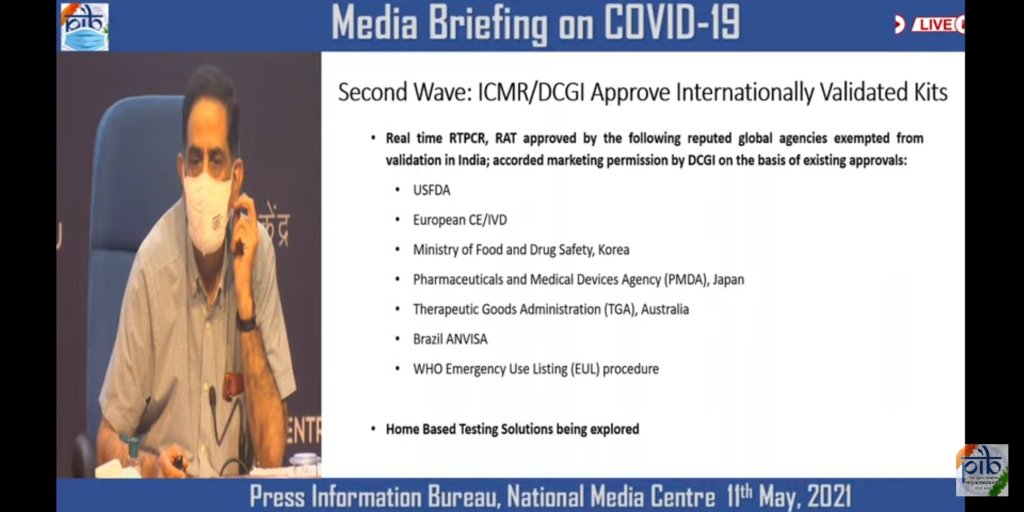 ICMR/DGCI approving internationally validated kits, Press release.
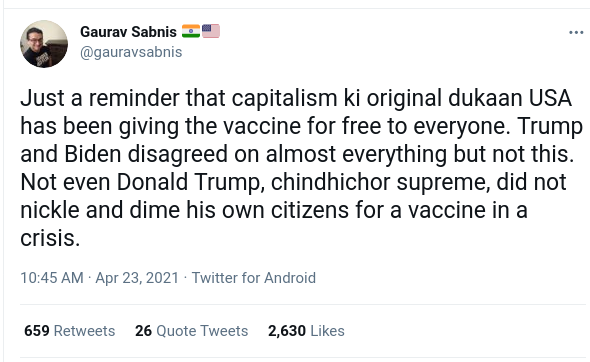 Gaurav on Trump-Biden on vaccination of their own citizens
 Pappu Yadav, President Jan Adhikar Party, Bihar May 11, 2021
 Snippets from Karnataka High Court hearing today, 13th March 2021
 Allahabad High Court hauling Uttar Pradesh Govt. for lack of Oxygen is equal to genocide, May 11, 2021
 Gujarat Satya Samachar 2005 launched by Mr. Modi.
 Mr. Modi invoking Official Secrets Act, Feb 8 2005 Gujarat Samachar

 Pandit Ranjan Mishra son on his father s death due to unavailability of oxygen, Varanasi, Uttar Pradesh, 11th May 2021.
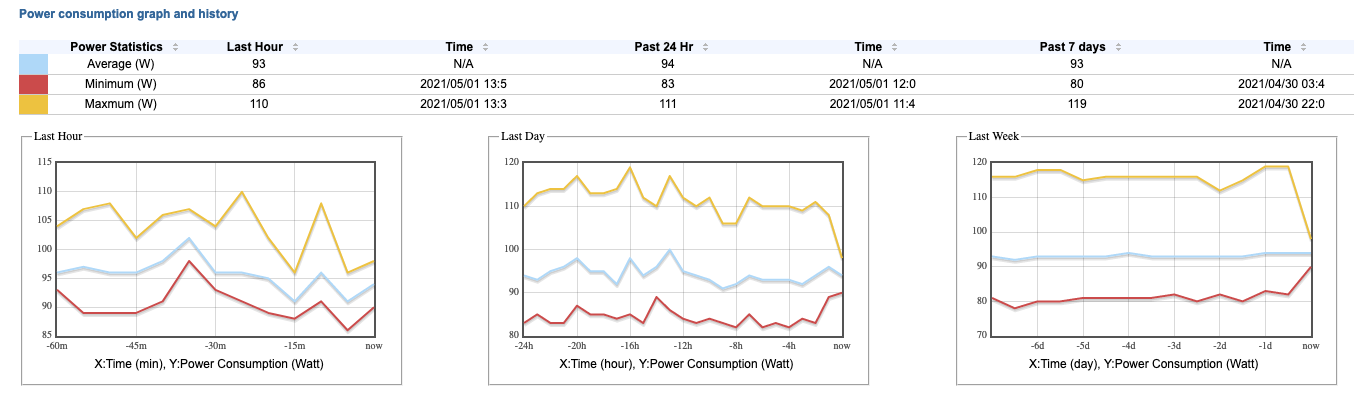 screenshot showing power consumption of server

 Mainly to recall what happened last year and to give thoughts and plan for the upcoming year(s) I m once again revisiting my previous year (previous editions:
 <


 PTI News, Nov 27, 2020

 Well, I'm sure many of you know "normal" XMPP clients such as Gajim or Dino on Linux, Conversations on Android or Siskin/Monal/ChatSecure on Apple IOS. There are plenty of other clients of course and maybe you used an XMPP client in the past without knowing it. For example Jitsi Meet is based on XMPP and you can still download the Jitsi Desktop client and use it as a full-featured multi-protocol client, e.g. for XMPP and SIP. In fact Jitsi Desktop is maybe the client that comes closest to Cisco Jabber as a chat/voice/video client. In fact I already connected Jitsi Desktop to Cisco CUCM/IM&P infrastructure, but of course you won't be able to use all those Cisco proprietary extensions, but you can see the benefit of open, standardized protocols such as XMPP and SIP: you are free to use any standard compliant client that you want.
So, while Jitsi supported voice/video calls for a long time, even before they focussed on Jitsi Meet as a WebRTC based conference service, Conversations added this feature last month, as already stated. This had a huge effect to the whole XMPP federation, because you need an XMPP server that supports XEP-0215 to make these audio/video calls work. The well-known


 Dhauladhar range Northern Punjab Copyright CNN.Com

 I upgraded my last major machine from
 This is starting of festivities time in India and Ganesha or Ganpati is looked up as a good omen in India.
The festival of Ganesh Chaturthi would be starting on the 25th of August and is a sight to behold. Just like Rio has its carnival, Ganesh Chaturthi is also a carnival. We also have parades where people come with Pandals (or temporary structures)
The mythology says he has a sweet tooth (hence lot of distribution of sweets, especially modak) and anything which might be troubling people, he creates solutions for them.
Here is one video of how people celebrate his immersion in India. This is from my home-town few years ago, every year the madness and the celebrations are becoming more and more. People from far off come to see how we celebrate and see how different people make their Pandals. While some are with music, others are with social messages. Usually people start going to see these structures after dusk and return home way after midnight or early morning. I hope to do this endeavour after many years. One is drunk from hearing all sorts of different kids of music, decoration, messages, a feast and a strain to all the senses.
Ganesha immersion celebrations


 I ve had a kludgy mess of electronic address books for most of two decades,
and have got rather fed up with it. My stack consisted of: