Search Results: "ivan"

21 March 2016

Lunar: Reproducible builds: week 47 in Stretch cycle

What happened in the reproducible builds effort between March 13th and March 19th 2016:

Toolchain fixes
  • Petter Reinholdtsen uploaded naturaldocs/1.51-1.1 which makes the output reproducible. Original patch by Chris Lamb.
  • Damyan Ivanov uploaded libpdf-api2-perl/2.025-2 which will make internal font ID reproducible.
  • Christian Hofstaedtler uploaded ruby2.3/2.3.0-5 which sets gzip embedded mtime field to fixed value for rdoc-generated compressed javascript data.

Packages fixed The following packages have become reproducible due to changes in their build dependencies: diction, doublecmd, ruby-hiredis, vdr-plugin-epgsearch. The following packages became reproducible after getting fixed: Some uploads fixed some reproducibility issues, but not all of them: Patches submitted which have not made their way to the archive yet:
  • #818128 on nethack by Reiner Herrmann: implement support for SOURCE_DATE_EPOCH, set LC_ALL to C, and ensure deterministic build order when running parallel builds.
  • #818111 on debian-keyring by Satyam Zode: fix the order of files in md5sums.
  • #818067 on ncurses by Niels Thykier: strip trailing whitespaces introduced when using dash as system shell.
  • #818230 on aircrack-ng by Reiner Herrmann: build assembly code as a separate .o file.
  • #818419 on mutt by Daniel Shahaf: use C locale when listing files to be put in README.Patches.
  • #818430 on ruby-coveralls by Dhole: ensure UTC is used as the timezone when generating the documentation.
  • #818686 on littlewizard by Reiner Herrmann: use the C locale in the script for iterating over the files.
  • #818704 on strigi by Reiner Herrmann: sort keys when traversing hashes in makecode.pl.

Package reviews 44 reviews have been removed, 40 added and 5 updated in the previous week. Chris Lamb has reported 16 FTBFS.

11 March 2016

Raphaël Hertzog: Freexian s report about Debian Long Term Support, February 2016

A Debian LTS logoLike each month, here comes a report about the work of paid contributors to Debian LTS. Individual reports In February, 112.50 work hours have been dispatched among 11 paid contributors. Their reports are available: Evolution of the situation The number of sponsored hours continued to decrease a little bit. It s not worrisome yet but we should try to get back to a positive slope if we want to be able to do an outstanding job for wheezy LTS. On the positive side, TOSHIBA renewed their platinum sponsorship for another 6 months at least and we have some contacts for new sponsors, though they are far from being concluded yet. We are now in transition between squeeze LTS and wheezy LTS. The paid contributors are helping the security team by fixing packages that were fixed in squeeze already but that are still outstanding in wheezy. They are also taking generic measures to prepare wheezy LTS (for example to ensure all packages work with OpenJDK 7.x since support for 6.x will be dropped in the LTS period). Thanks to our sponsors New sponsors are in bold (none this month).

No comment Liked this article? Click here. My blog is Flattr-enabled.

1 February 2016

Raphaël Hertzog: My Free Software Activities in January 2016

My monthly report covers a large part of what I have been doing in the free software world. I write it for my donators (thanks to them!) but also for the wider Debian community because it can give ideas to newcomers and it s one of the best ways to find volunteers to work with me on projects that matter to me. Debian LTS I did not ask for any paid hours this month and won t be requesting paid hours for the next 5 months as I have a big project to handle with a deadline in June. That said I still did a few LTS related tasks: Distro Tracker Due to many nights spent on playing Splatoon (I m at level 33, rank B+, anyone else playing it?), I did not do much work on Distro Tracker. After having received the bug report #809211, I investigated the reasons why SQLite was no longer working satisfactorily in Django 1.9 and I opened the upstream ticket 26063 and I had a long discussion with two upstream developers to find out the best fix. The next point release (1.9.2) will fix that annoying regression. I also merged a couple of contributions (two patches from Christophe Siraut, one adding descriptions to keywords, cf #754413, one making it more obvious that chevrons in action items are actionable to show more data, a patch from Balasankar C in #810226 fixing a bad URL in an action item). I fixed a small bug in the unsubscribe command of the mail bot, it was not properly recognizing source packages. I updated the task notifying of new upstream versions to use the data generated by UDD (instead of the data generated by Christoph Berg s mole-based implementation which was suffering from a few bugs). Debian Packaging Testing experimental sbuild. While following the work of Johannes Schauer on sbuild, I installed the version from experimental to support his work and give him some feedback. In the process I uncovered #810248. Python sponsorship. I reviewed and uploaded many packages for Daniel Stender who keeps doing great work maintaining prospector and all its recursive dependencies: pylint-common, python-requirements-detector, sphinx-argparse, pylint-django, prospector. He also prepared an upload of python-bcrypt which I requested last month for Django. Django packaging. I uploaded Django 1.8.8 to jessie-backports.
My stable updates for Django 1.7.11 was not handled before the release of Debian 8.3 even though it was filed more than 1.5 months before. Misc stuff. My stable update for debian-handbook has been accepted fairly shortly after my last monthly report (thank you Adam!) so I uploaded the package once acked by a release manager. I also sponsor a backports upload of zim prepared by Joerg Desch. Kali related work Kernel work. The switch to Linux 4.3 in Kali resulted in a few bug reports that I investigated with the help of #debian-kernel and where I reported my findings back so that the Debian kernel could also benefit from the fixes I uploaded to Kali: first we included a patch for a regression in the vmwgfx video driver used by VMWare virtual machines (which broke the gdm login screen), then we fixed the input-modules udeb to fix support of some Logitech keyboards in debian-installer (see #796096). Misc work. I made a non-maintainer upload of python-maxminddb to fix #805689 which had been removed from stretch and that we needed in Kali. I also had to NMU libmaxminddb since it was no longer available on armel and we actually support armel in Kali. During that NMU, it occurred to me that dh-exec could offer a feature of optional install , that is installing a file that exists but not failing if it doesn t exist. I filed this as #811064 and it stirred up quite some debate. Thanks See you next month for a new summary of my activities.

No comment Liked this article? Click here. My blog is Flattr-enabled.

Stefano Zacchiroli: guest lecture Overthrowing the Tyranny of Software by John Sullivan

As part of my master class on Free and Open Source (FOSS) Software at University Paris Diderot, I invite guest lecturers to present to my students the point of views of various actors of the FOSS ecosystem --- companies, non-profits, activists, lawyers, etc. Tomorrow, Tuesday 2 February 2016, the students will have the pleasure to have as guest lecturer John Sullivan, Executive Director of the Free Software Foundation, talking about Overthrowing the tyranny of software: Why (and how) free societies respect computer user freedom. The lecture is open to everyone interested, but registration is recommended. Logistic and registration information, as well as the lecture abstract in both English and French is reported below.
John Sullivan's Lecture at University Paris Diderot - Overthrowing the tyranny of software: Why (and how) free societies respect computer user freedom John Sullivan, Executive Director of the Free Software Foundation will give a lecture titled "Overthrowing the tyranny of software: Why (and how) free societies respect computer user freedom" at University Paris Diderot next Tuesday, 2 February 2016, at 12:30 in the Amphi 3B, Halle aux Farines building, Paris 75013. Map at: http://www.openstreetmap.org/way/62378611#map=19/48.82928/2.38183 The lecture will be in English and open to everyone, but registration is recommended at https://framadate.org/iPqfjNTz2535F8u4 or via email writing to zack@pps.univ-paris-diderot.fr. Abstract: Anyone who has used a computer for long has at least sometimes felt like a helpless subject under the tyrant of software, screaming (uselessly) in frustration at the screen to try and get the desired results. But with driverless cars, appliances which eavesdrop on conversations in our homes, mobile devices that transmit our location when we are out and about, and computers with unexpected hidden "features", our inability to control the software supposedly in our possession has become a much more serious problem than the superficial blue-screen-of-death irritations of the past. Software which is free "as in freedom" allows anyone who has it to inspect the code and even modify it -- or ask someone trained in the dark arts of computer programming to do it for them -- so that undesirable behaviors can be removed or defused. This characteristic, applied to all software, should be a major part of foundation of free societies moving forward. To get there, we'll need individual developers, nonprofit organizations, governments, and companies all working together -- with the first two groups leading the way.
Cours Magistral de John Sullivan l'Universit Paris Diderot - Surmonter la tyrannie du logiciel: pourquoi (et comment) les soci t s libres respectent les libert s des utilisateurs John Sullivan, Directeur Ex cutif de la Free Software Foundation donnera un cours magistral ayant pour titre "Surmonter la tyrannie du logiciel: pourquoi (et comment) les soci t s libres respectent les libert s des utilisateurs" l'Universit Paris Diderot Mardi prochain, 2 f vrier 2016, 12h30 dans l'Amphi 3B de la Halle aux Farines, Paris 75013. Plan: http://www.openstreetmap.org/way/62378611#map=19/48.82928/2.38183 Le cours (en langue Anglaise) sera ouvert toutes et tous, mais l'inscription est recommand via le formulaire https://framadate.org/iPqfjNTz2535F8u4 ou par mail l'adresse zack@pps.univ-paris-diderot.fr. R sum : Chacun de nous, au moins une fois dans sa vie, a pest contre son ordinateur dans l'espoir (vain) d'obtenir un r sultat attendu, se sentant d poss de par un tyran logiciel. Mais au jour d'aujourd'hui - avec des voitures autonomes, des dispositifs "intelligents" que nous coutent chez nous, des portables qui transmettent notre position quand nous nous baladons, et des ordinateurs pleins des fonctionnalit s cach es - notre incapacit de contr ler nos biens devient une question beaucoup plus s rieuse par rapport a l'irritation qu'auparavant nous causait l' cran bleu de la mort. Le logiciel libre permet chaque utilisateur d' tudier son fonctionnement et de le modifier --- ou de demander des experts dans la magie noire de la programmation de le faire a sa place --- supprimant, ou du moins r duisant, les comportements ind sir s du logiciel. Cette caract ristique du logiciel libre devrait tre appliqu e chaque type de logiciel et devrait constituer un pilier des soci t s se pr tendant libres. Pour achever cet id al, d veloppeurs, organisations but non lucratif, gouvernements et entreprises doivent travailler ensemble. Et les d veloppeurs et les ONG doivent se positionner au premier rang dans ce combat.

12 January 2016

Bits from Debian: New Debian Developers and Maintainers (November and December 2015)

The following contributors got their Debian Developer accounts in the last two months: The following contributors were added as Debian Maintainers in the last two months: Congratulations!

15 December 2015

Chris Lamb: Peake Nationalism

Timothy Peake boarded the International Space Station a few hours ago becoming the United Kingdom's first official astronaut. It has become headline news, dominating the day's news cycle. But whilst Peake left our pale blue dot with only the humble honorific "Mister", he has subsequently been awarded the dubious appellation of "British Astronaut". Now, I'm no open-borders pan-nationalist and nor do I in any wish to detract or denigrate Peake's accomplishments indeed, it is only out of a genuine respect of "our Tim's" achievements that I pen this in the first place but are we still clinging to the idea that an extraordinary effort by a co-member of our species requires a nationalistic qualifier? How much do we really have in common with our "fellow countrymen"? This is, after all, the International Space Station, to which Peake was elevated from Kazakhstan on the back of a Russian rocket, in order that he may peacefully collaborate with an American, a Ukrainian, etc. I encountered the rebuttal that support of this nature is inspirational and incentive to others, but is it really motivating to know that if you toil to achieve greatness in this life then your accomplishments will be cheaply co-opted by mediocrities who only share the same colour passport as you? In this sense, isn't national pride really a form of national insecurity? A "Briton" in space: if space travel can teach us anything, it's that broadcasting the specific patch of ground you were born in is an outdated, tribalistic contrivance and should be assigned to the dustbin of history.

11 November 2015

Bits from Debian: New Debian Developers and Maintainers (September and October 2015)

The following contributors got their Debian Developer accounts in the last two months: The following contributors were added as Debian Maintainers in the last two months: Congratulations!

21 September 2015

Lunar: Reproducible builds: week 21 in Stretch cycle

If you see someone on the Debian ReproducibleBuilds project, buy him/her a beer. This work is awesome. What happened in the reproducible builds effort this week: Media coverage Nathan Willis covered our DebConf15 status update in Linux Weekly News. Access to non-LWN subscribers will be given on Thursday 24th. Linux Journal published a more general piece last Tuesday. Unexpected praise for reproducible builds appeared this week in the form of several iOS applications identified as including spyware. The malware was undetected by Apple screening. This actually happened because application developers had simply downloaded a trojaned version of XCode through an unofficial source. While reproducible builds can't really help users of non-free software, this is exactly the kind of attacks that we are trying to prevent in our systems. Toolchain fixes Niko Tyni wrote and uploaded a better patch for the source order problem in libmodule-build-perl. Tristan Seligmann identified how the code generated by python-cffi could be emitted in random order in some cases. Upstream has already fixed the problem. Packages fixed The following 24 packages became reproducible due to changes in their build dependencies: apache-curator, checkbox-ng, gant, gnome-clocks, hawtjni, jackrabbit, jersey1, libjsr305-java, mathjax-docs, mlpy, moap, octave-geometry, paste, pdf.js, pyinotify, pytango, python-asyncssh, python-mock, python-openid, python-repoze.who, shadow, swift, tcpwatch-httpproxy, transfig. The following packages became reproducible after getting fixed: Some uploads fixed some reproducibility issues but not all of them: Patches submitted which have not made their way to the archive yet: reproducible.debian.net Tests for Coreboot, OpenWrt, NetBSD, and FreeBSD now runs weekly (instead of monthly). diffoscope development Python 3 offers new features (namely yield from and concurrent.futures) that could help implement parallel processing. The clear separation of bytes and unicode strings is also likely to reduce encoding related issues. Mattia Rizolo thus kicked the effort of porting diffoscope to Python 3. tlsh was the only dependency missing a Python 3 module. This got quickly fixed by a new upload. The rest of the code has been moved to the point where only incompatibilities between Python 2.7 and Pyhon 3.4 had to be changed. The commit stream still require some cleanups but all tests are now passing under Python 3. Documentation update The documentation on how to assemble the weekly reports has been updated. (Lunar) The example on how to use SOURCE_DATE_EPOCH with CMake has been improved. (Ben Beockel, Daniel Kahn Gillmor) The solution for timestamps in man pages generated by Sphinx now uses SOURCE_DATE_EPOCH. (Mattia Rizzolo) Package reviews 45 reviews have been removed, 141 added and 62 updated this week. 67 new FTBFS reports have been filled by Chris Lamb, Niko Tyni, and Lisandro Dami n Nicanor P rez Meyer. New issues added this week: randomness_in_r_rdb_rds_databases, python-ply_compiled_parse_tables. Misc. The prebuilder script is now properly testing umask variations again. Santiago Villa started a discussion on debian-devel on how binNMUs would work for reproducible builds.

30 August 2015

Sven Hoexter: 1960 SubjectAlternativeNames on one certificate

tl;dr; You can add 1960+ SubjectAlternativeNames on one certificate and at least Firefox and Chrome are working fine with that. Internet Explorer failed but I did not investigate why. So why would you want to have close to 2K SANs on one certificate? While we're working on adopting a more dynamic development workflow at my workplace we're currently bound to a central development system. From there we serve a classic virtual hosting setup with "projectname.username.devel.ourdomain.example" mapped on "/web/username/projectname/". That is 100% dynamic with wildcard DNS entries and you can just add a new project to your folder and use it directly. All of that is served from just a single VirtualHost. Now our developers started to go through all our active projects to make them fit for serving via HTTPS. While we can verify the proper usage of https on our staging system where we've validating certificates, that's not the way you'd like to work. So someone approached me to look into a solution for our development system. Obvious choices like wildcard certificates do not work here because we've two dynamic components in the FQDN. So we would've to buy a wildcard certificate for every developer and we would've to create a VirtualHost entry for every new developer. That's expensive and we don't want all that additional work. So I started to search for documented limits on the number of SANs you can have on a certificate. The good news: there are none. The RFC does not define a limit. So much about the theory. ;) Following Ivans excellent documentation I setup an internal CA and an ugly "find ... sed ... tr ..." one-liner later I had a properly formated openssl config file to generate a CSR with all 1960 "projectname.username..." SAN combinations found on the development system. Two openssl invocations (CSR generation and signing) later I had a signed certificate with 1960 SANs on it. I imported the internal CA I created in Firefox and Chrome, and to my surprise it worked. Noteworthy: To sign with "openssl ca" without interactive prompts you've to use the "-batch" option. I'm thinking about regenerating the certificate every morning so our developers just have to create a new project directory and within 24h serving via HTTPS would be enabled. The only thing I'm currently pondering about is how to properly run the CA in a corporate Windows world. We could of course ask the Windows guys to include it for everyone but then we would've to really invest time in properly running the CA. I'd like to avoid that hassle. So I'd guess we just stick to providing the CA for those developers who need it. This all or nothing model is a constant PITA, and you really do not want to get owned via your own badly managed CA. :( Regarding Internet Explorer it jumped in my face with a strange error message that recommended to enable TLS 1.0, 1.1 and 1.2 in the options menu. Of course that's already enable. I'll try to take a look at the handshake next week, but I bet we've to accept for the moment that IE will not work with so many SANs. Would be interesting to try out Windows 10 with Spartan, but well I'm not that interested in Windows to invest more time on that front. Other TLS implementations, like Java, would be also interesting to test.

30 July 2015

DebConf team: DebConf15 Schedule Published and Additional Featured Speakers Announced (Posted by DebConf Content Team)

DebConf15 Schedule The DebConf content team is pleased to announce the schedule of DebConf15, the forthcoming Debian Developers Conference. From a total of nearly 100 talk submissions, the team selected 75 talks. Due to the high number of submissions, several talks had to be shortened to 20 minute slots, of which a total of 30 talks have made it to the schedule. In addition, around 50 meetings and discussions (BoFs) have been submitted so far, as well as several other events like lightning talk sessions, live demos, a movie screening, a poetry night or stand-up comedy. The Schedule is available online at the DebConf15 conference site. Further changes to the schedule can and will be made, but today s announcement represents the first stable version. Featured Speakers In addition to the previously announced invited speakers, the content team also announces the following list of additional featured speakers: The full list of invited and featured speakers, including the invited speakers profiles and the titles of their talks is available here.

21 April 2015

Jonathan Wiltshire: Tube in a Day

For some reason, I ve decided that gallivanting around the London Underground for the day one Saturday is a fine way to raise money for a local children s hospice. You d make my day by supporting us we aren t deducting expenses from pledges, so there s no penalty to the charity for our travel. We re going to run a modified version of the Guinness-recognised Tube Challenge starting about 05:15 (modified to allow for unavoidable maintenance works; we don t have the luxury of being able to pick a day when that s not going to be a problem) and likely finishing about midnight. I m also interested to hear ideas for some kind of micro-blogging platform that we can update on the move, preferably presenting in stream format and with an Android-friendly site/app that can cope with uploading a photo smoothly. Not Twitter or Facebook; it ll probably be a short-lived account. I don t want to part with personal information and I want to be able to throw it away afterwards. Suggestions?
Tube in a Day is a post from: jwiltshire.org.uk Flattr

15 October 2014

Raphaël Hertzog: Freexian s second report about Debian Long Term Support

Like last month, here comes a report about the work of paid contributors to Debian LTS. Individual reports In September 2014, 3 contributors have been paid for 11h each. Here are their individual reports: Evolution of the situation Compared to last month, we have gained 5 new sponsors, that s great. We re now at almost 25% of a full-time position. But we re not done yet. We believe that we would need at least twice as many sponsored hours to do a reasonable work with at least the most used packages, and possibly four times as much to be able to cover the full archive. We re now at 39 packages that need an update in Squeeze (+9 compared to last month), and the contributors paid by Freexian did handle 11 during last month (this gives an approximate rate of 3 hours per update, CVE triage included). Open questions Dear readers, what can we do to convince more companies to join the effort? The list of sponsors contains almost exclusively companies from Europe. It s true that Freexian s offer is in Euro but the economy is world-wide and it s common to have international invoices. When Ivan Kohler asked if having an offer in dollar would help convince other companies, we got zero feedback. What are the main obstacles that you face when you try to convince your managers to get the company to contribute? By the way, we prefer that companies take small sponsorship commitments that they can afford over multiple years over granting lots of money now and then not being able to afford it for another year. Thanks to our sponsors Let me thank our main sponsors:

6 June 2014

Gunnar Wolf: What defines an identity?

I must echo John Sullivan's post: GPG keysigning and government identification. John states some very important reasons for people everywhere to verify the identities of those parties they sign GPG keys with in a meaningful way, and that means, not just trusting government-issued IDs. As he says, It's not the Web of Amateur ID Checking. And I'll take the opportunity to expand, based on what some of us saw in Debian, on what this means. I know most people (even most people involved in Free Software development not everybody needs to join a globally-distributed, thousand-people-strong project such as Debian) are not that much into GPG, trust keyrings, or understand the value of a strong set of cross-signatures. I know many people have never been part of a key-signing party. I have been to several. And it was a very interesting experience. Fun, at the beginning at least, but quite tiring at the end. I was part of what could very well constitute the largest KSP ever in DebConf5 (Finland, 2005). Quite awe-inspiring We were over 200 people, all lined up with a printed list on one hand, our passport (or ID card for EU citizens) in the other. Actwally, we stood face to face, in a ribbon-like ring. And, after the basic explanation was given, it was time to check ID documents. And so it began. The rationale of this ring is that every person who signed up for the KSP would verify each of the others' identities. Were anything fishy to happen, somebody would surely raise a voice of alert. Of course, the interaction between every two people had to be quick More like a game than like a real check. "Hi, I'm #142 on the list. I checked, my ID is OK and my fingerprint is OK." "OK, I'm #35, I also printed the document and checked both my ID and my fingerprint are OK." The passport changes hands, the person in front of me takes the unique opportunity to look at a Mexican passport while I look at a Somewhere-y one. And all is fine and dandy. The first interactions do include some chatter while we grab up speed, so maybe a minute is spent Later on, we all get a bit tired, and things speed up a bit. But anyway, we were close to 200 people That means we surely spent over 120 minutes (2 full hours) checking ID documents. Of course, not all of the time under ideal lighting conditions. After two hours, nobody was checking anything anymore. But yes, as a group where we trust each other more than most social groups I have ever met, we did trust on others raising the alarm were anything fishy to happen. And we all finished happy and got home with a bucketload of signatures on. Yay! One year later, DebConf happened in Mexico. My friend Martin Krafft tested the system, perhaps cheerful and playful in his intent but the flaw in key signing parties such as the one I described he unveiled was huge: People join the KSP just because it's a social ritual, without putting any thought or judgement in it. And, by doing so, we ended up dilluting instead of strengthening our web of trust. Martin identified himself using an official-looking ID. According to his recount of the facts, he did start presenting a German ID and later switched to this other document. We could say it was a real ID from a fake country, or that it was a fake ID. It is up to each person to judge. But anyway, Martin brought his Transnational Republic ID document, and many tens of people agreed to sign his key based on it Or rather, based on it plus his outgoing, friendly personality. I did, at least, know perfectly well who he was, after knowing him for three years already. Many among us also did. Until he reached a very dilligent person, Manoj, that got disgusted by this experiment and loudly denounced it. Right, Manoj is known to have strong views, and using fake IDs is (or, at least, was) outside his definition of fair play. Some time after DebConf, a huge thread erupted questioning Martin's actions, as well as questioning what do we trust when we sign an identity document (a GPG key). So... We continued having traditional key signing parties for a couple of years, although more carefully and with more buzz regarding these issues. Until we finally decided to switch the protocol to a better one: One that ensures we do get some more talk and inter-personal recognition. We don't need everybody to cross-sign with everyone else A better trust comes from people chatting with each other and being able to actually pin-point who a person is, what do they do. And yes, at KSPs most people still require ID documents in order to cross-sign. Now... What do I think about this? First of all, if we have not ever talked for at least enough time for me to recognize you, don't be surprised: I won't sign your key or request you to sign mine (and note, I have quite a bad memory when it comes to faces and names). If it's the first conference (or social ocassion) we come together, I will most likely not look for key exchanges either. My personal way of verifying identities is by knowing the other person. So, no, I won't trust a government-issued ID. I know I will be signing some people based on something other than their name, but hey I know many people already who live pseudonymously, and if they choose for whatever reason to forgo their original name, their original name should not mean anything to me either. I know them by their pseudonym, and based on that pseudonym I will sign their identities. But... *sigh*, this post turned out quite long, and I'm not yet getting anywhere ;-) But what this means in the end is: We must stop and think what do we mean when we exchange signatures. We are not validating a person's worth. We are not validating that a government believes who they claim to be. We are validating we trust them to be identified with the (name,mail,affiliation) they are presenting us. And yes, our signature is much more than just a social rite It is a binding document. I don't know if a GPG signature is legally binding anywhere (I'm tempted to believe it is, as most jurisdictions do accept digital signatures, and the procedure is mathematically sound and criptographically strong), but it does have a high value for our project, and for many other projects in the Free Software world. So, wrapping up, I will also invite (just like John did) you to read the E-mail self-defense guide, published by the FSF in honor of today's Reset The Net effort.

5 June 2014

John Sullivan: GPG keysigning and government identification

Please stop recommending that checking government-issued ID is a good way to verify someone's identity before signing their GPG key. Have you been a US bartender before? Or held any other position where you've had to verify an ID? It's not an easy thing to do. People in those positions have books of valid IDs from different states. They have lights that show the security marks. They still get it wrong regularly. A very amateur fake ID, or borrowed real ID, will fool just about everyone in any informal context. What's even worse is that people have a habit of happily looking at passports from other countries than their own, and nodding knowingly. It's fun, but be honest, you have no idea what you're doing. How about just signing keys with people you would actually say you know well enough to trust? It's not the Web of Amateur ID Checking. ID checking is at best ineffective against the threats it's supposed to address, and is probably actually damaging to the Web of Trust because of the false sense of security. No idea what I'm talking about? Learn to encrypt your email by reading the FSF's new Email Self-Defense Guide, published in honor of today's Reset The Net effort.

11 March 2014

John Sullivan: Drupal UI win

Cancel button next to Cancel link

1 March 2014

John Sullivan: Spritz

Spritz seems like a very interesting way to read quickly. It's the opposite of everything I've read (slowly) about speed reading, which focuses on using peripheral vision and not reading word-by-word. You're supposed to do things like move your eyes straight down the page, taking in whole lines at a time. Interruptions seem like a big problem; interruptions that make me look away, or interruptions in my brain, where I might realize I've not been paying attention for some amount of time. Maybe they should have navigation buttons similar to video players, so you can skip backward 15 seconds at a time. I also do want to go back and review previous pages sometimes for reasons that have nothing to do with interruption, so I wouldn't want word-by-word to be the only way to view a text -- especially when reading nonfiction. I might event want it to work in a mode where you hold down the button on the side of your phone or tablet in order to move the words, and then have them automatically pause when you release. It feels like I'd want a lot of short breaks when reading in this style. It should also be free software, but unfortunately I'm guessing it won't be. I hope someone will make a free software application along these lines -- the basics seem pretty basic.

24 February 2014

Vincent Bernat: Coping with the TCP TIME-WAIT state on busy Linux servers

TL;DR: Do not enable net.ipv4.tcp_tw_recycle. The Linux kernel documentation is not very helpful about what net.ipv4.tcp_tw_recycle does:
Enable fast recycling TIME-WAIT sockets. Default value is 0. It should not be changed without advice/request of technical experts.
Its sibling, net.ipv4.tcp_tw_reuse is a little bit more documented but the language is about the same:
Allow to reuse TIME-WAIT sockets for new connections when it is safe from protocol viewpoint. Default value is 0. It should not be changed without advice/request of technical experts.
The mere result of this lack of documentation is that we find numerous tuning guides advising to set both these settings to 1 to reduce the number of entries in the TIME-WAIT state. However, as stated by tcp(7) manual page, the net.ipv4.tcp_tw_recycle option is quite problematic for public-facing servers as it won t handle connections from two different computers behind the same NAT device, which is a problem hard to detect and waiting to bite you:
Enable fast recycling of TIME-WAIT sockets. Enabling this option is not recommended since this causes problems when working with NAT (Network Address Translation).
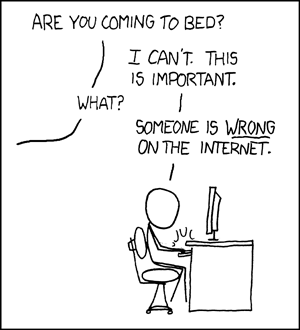
I will provide here a more detailed explanation in the hope to teach people who are wrong on the Internet. xkcd illustration As a sidenote, despite the use of ipv4 in its name, the net.ipv4.tcp_tw_recycle control also applies to IPv6. Also, keep in mind we are looking at the TCP stack of Linux. This is completely unrelated to Netfilter connection tracking which may be tweaked in other ways1.

About TIME-WAIT state Let s rewind a bit and have a close look at this TIME-WAIT state. What is it? See the TCP state diagram below2: TCP state diagram Only the end closing the connection first will reach the TIME-WAIT state. The other end will follow a path which usually permits to quickly get rid of the connection. You can have a look at the current state of connections with ss -tan:
$ ss -tan   head -5
LISTEN     0  511             *:80              *:*     
SYN-RECV   0  0     192.0.2.145:80    203.0.113.5:35449
SYN-RECV   0  0     192.0.2.145:80   203.0.113.27:53599
ESTAB      0  0     192.0.2.145:80   203.0.113.27:33605
TIME-WAIT  0  0     192.0.2.145:80   203.0.113.47:50685

Purpose There are two purposes for the TIME-WAIT state:
  • The most known one is to prevent delayed segments from one connection being accepted by a later connection relying on the same quadruplet (source address, source port, destination address, destination port). The sequence number also needs to be in a certain range to be accepted. This narrows a bit the problem but it still exists, especially on fast connections with large receive windows. RFC 1337 explains in details what happens when the TIME-WAIT state is deficient3. Here is an example of what could be avoided if the TIME-WAIT state wasn t shortened:
Duplicate segments accepted in another connection
  • The other purpose is to ensure the remote end has closed the connection. When the last ACK is lost, the remote end stays in the LAST-ACK state4. Without the TIME-WAIT state, a connection could be reopened while the remote end still thinks the previous connection is valid. When it receives a SYN segment (and the sequence number matches), it will answer with a RST as it is not expecting such a segment. The new connection will be aborted with an error:
Last ACK lost RFC 793 requires the TIME-WAIT state to last twice the time of the MSL. On Linux, this duration is not tunable and is defined in include/net/tcp.h as one minute:
#define TCP_TIMEWAIT_LEN (60*HZ) /* how long to wait to destroy TIME-WAIT
                                  * state, about 60 seconds     */
There have been propositions to turn this into a tunable value but it has been refused on the ground the TIME-WAIT state is a good thing.

Problems Now, let s see why this state can be annoying on a server handling a lot of connections. There are three aspects of the problem:
  • the slot taken in the connection table preventing new connections of the same kind,
  • the memory occupied by the socket structure in the kernel, and
  • the additional CPU usage.
The result of ss -tan state time-wait wc -l is not a problem per se!

Connection table slot A connection in the TIME-WAIT state is kept for one minute in the connection table. This means, another connection with the same quadruplet (source address, source port, destination address, destination port) cannot exist. For a web server, the destination address and the destination port are likely to be constant. If your web server is behind a L7 load-balancer, the source address will also be constant. On Linux, the client port is by default allocated in a port range of about 30,000 ports (this can be changed by tuning net.ipv4.ip_local_port_range). This means that only 30,000 connections can be established between the web server and the load-balancer every minute, so about 500 connections per second. If the TIME-WAIT sockets are on the client side, such a situation is easy to detect. The call to connect() will return EADDRNOTAVAIL and the application will log some error message about that. On the server side, this is more complex as there is no log and no counter to rely on. In doubt, you should just try to come with something sensible to list the number of used quadruplets:
$ ss -tan 'sport = :80'   awk ' print $(NF)" "$(NF-1) '   \
>     sed 's/:[^ ]*//g'   sort   uniq -c
    696 10.24.2.30 10.33.1.64
   1881 10.24.2.30 10.33.1.65
   5314 10.24.2.30 10.33.1.66
   5293 10.24.2.30 10.33.1.67
   3387 10.24.2.30 10.33.1.68
   2663 10.24.2.30 10.33.1.69
   1129 10.24.2.30 10.33.1.70
  10536 10.24.2.30 10.33.1.73
The solution is more quadruplets5. This can be done in several ways (in the order of difficulty to setup):
  • use more client ports by setting net.ipv4.ip_local_port_range to a wider range,
  • use more server ports by asking the web server to listen to several additional ports (81, 82, 83, ),
  • use more client IP by configuring additional IP on the load balancer and use them in a round-robin fashion,
  • use more server IP by configuring additional IP on the web server6.
Of course, a last solution is to tweak net.ipv4.tcp_tw_reuse and net.ipv4.tcp_tw_recycle. Don t do that yet, we will cover those settings later.

Memory With many connections to handle, leaving a socket open for one additional minute may cost your server some memory. For example, if you want to handle about 10,000 new connections per second, you will have about 600,000 sockets in the TIME-WAIT state. How much memory does it represent? Not that much! First, from the application point of view, a TIME-WAIT socket does not consume any memory: the socket has been closed. In the kernel, a TIME-WAIT socket is present in three structures (for three different purposes):
  1. A hash table of connections, named the TCP established hash table (despite containing connections in other states) is used to locate an existing connection, for example when receiving a new segment. Each bucket of this hash table contains both a list of connections in the TIME-WAIT state and a list of regular active connections. The size of the hash table depends on the system memory and is printed at boot:
    $ dmesg   grep "TCP established hash table"
    [    0.169348] TCP established hash table entries: 65536 (order: 8, 1048576 bytes)
    
    It is possible to override it by specifying the number of entries on the kernel command line with the thash_entries parameter. Each element of the list of connections in the TIME-WAIT state is a struct tcp_timewait_sock, while the type for other states is struct tcp_sock7:
    struct tcp_timewait_sock  
        struct inet_timewait_sock tw_sk;
        u32    tw_rcv_nxt;
        u32    tw_snd_nxt;
        u32    tw_rcv_wnd;
        u32    tw_ts_offset;
        u32    tw_ts_recent;
        long   tw_ts_recent_stamp;
     ;
    struct inet_timewait_sock  
        struct sock_common  __tw_common;
        int                     tw_timeout;
        volatile unsigned char  tw_substate;
        unsigned char           tw_rcv_wscale;
        __be16 tw_sport;
        unsigned int tw_ipv6only     : 1,
                     tw_transparent  : 1,
                     tw_pad          : 6,
                     tw_tos          : 8,
                     tw_ipv6_offset  : 16;
        unsigned long            tw_ttd;
        struct inet_bind_bucket *tw_tb;
        struct hlist_node        tw_death_node;
     ;
    
  2. A set of lists of connections, called the death row , is used to expire the connections in the TIME-WAIT state. They are ordered by how much time left before expiration. It uses the same memory space as for the entries in the hash table of connections. This is the struct hlist_node tw_death_node member of struct inet_timewait_sock.
  3. A hash table of bound ports, holding the locally bound ports and the associated parameters, is used to determine if it is safe to listen to a given port or to find a free port in the case of dynamic bind. The size of this hash table is the same as the size of the hash table of connections:
    $ dmesg   grep "TCP bind hash table"
    [    0.169962] TCP bind hash table entries: 65536 (order: 8, 1048576 bytes)
    
    Each element is a struct inet_bind_socket. There is one element for each locally bound port. A TIME-WAIT connection to a web server is locally bound to the port 80 and shares the same entry as its sibling TIME-WAIT connections. On the other hand, a connection to a remote service is locally bound to some random port and does not share its entry.
So, we are only concerned by the space occupied by struct tcp_timewait_sock and struct inet_bind_socket. There is one struct tcp_timewait_sock for each connection in the TIME-WAIT state, inbound or outbound. There is one dedicated struct inet_bind_socket for each outbound connection and none for an inbound connection. A struct tcp_timewait_sock is only 168 bytes while a struct inet_bind_socket is 48 bytes:
$ sudo apt-get install linux-image-$(uname -r)-dbg
[...]
$ gdb /usr/lib/debug/boot/vmlinux-$(uname -r)
(gdb) print sizeof(struct tcp_timewait_sock)
 $1 = 168
(gdb) print sizeof(struct tcp_sock)
 $2 = 1776
(gdb) print sizeof(struct inet_bind_bucket)
 $3 = 48
So, if you have about 40,000 inbound connections in the TIME-WAIT state, it should eat less than 10MB of memory. If you have about 40,000 outbound connections in the TIME-WAIT state, you need to account for 2.5MB of additional memory. Let s check that by looking at the output of slabtop. Here is the result on a server with about 50,000 connections in the TIME-WAIT state, 45,000 of which are outbound connections:
$ sudo slabtop -o   grep -E '(^  OBJS tw_sock_TCP tcp_bind_bucket)'
  OBJS ACTIVE  USE OBJ SIZE  SLABS OBJ/SLAB CACHE SIZE NAME                   
 50955  49725  97%    0.25K   3397       15     13588K tw_sock_TCP            
 44840  36556  81%    0.06K    760       59      3040K tcp_bind_bucket
There is nothing to change here: the memory used by TIME-WAIT connections is really small. If your server need to handle thousands of new connections per second, you need far more memory to be able to efficiently push data to clients. The overhead of TIME-WAIT connections is negligible.

CPU On the CPU side, searching for a free local port can be a bit expensive. The work is done by the inet_csk_get_port() function which uses a lock and iterate on locally bound ports until a free port is found. A large number of entries in this hash table is usually not a problem if you have a lot of outbound connections in the TIME-WAIT state (like ephemeral connections to a memcached server): the connections usually share the same profile, the function will quickly find a free port as it iterates on them sequentially.

Other solutions If you still think you have a problem with TIME-WAIT connections after reading the previous section, there are three additional solutions to solve them:
  • disable socket lingering,
  • net.ipv4.tcp_tw_reuse, and
  • net.ipv4.tcp_tw_recycle.

Socket lingering When close() is called, any remaining data in the kernel buffers will be sent in the background and the socket will eventually transition to the TIME-WAIT state. The application can continue to work immediatly and assume that all data will eventually be safely delivered. However, an application can choose to disable this behaviour, known as socket lingering. There are two flavors:
  1. In the first one, any remaining data will be discarded and instead of closing the connection with the normal four-packet connection termination sequence, the connection will be closed with a RST (and therefore, the peer will detect an error) and will be immediatly destroyed. No TIME-WAIT state in this case.
  2. With the second flavor, if there is any data still remaining in the socket send buffer, the process will sleep when calling close() until either all the data is sent and acknowledged by the peer or the configured linger timer expires. It is possible for a process to not sleep by setting the socket as non-blocking. In this case, the same process happens in the background. It permits the remaining data to be sent during a configured timeout but if the data is succesfully sent, the normal close sequence is run and you get a TIME-WAIT state. And on the other case, you ll get the connection close with a RST and the remaining data is discarded.
In both cases, disabling socket lingering is not a one-size-fits-all solution. It may be used by some applications like HAProxy or Nginx when it is safe to use from the upper protocol point of view. There are good reasons to not disable it unconditionnaly.

net.ipv4.tcp_tw_reuse The TIME-WAIT state prevents delayed segments to be accepted in an unrelated connection. However, on certain conditions, it is possible to assume a new connection s segment cannot be misinterpreted with an old connection s segment. RFC 1323 presents a set of TCP extensions to improve performance over high-bandwidth paths. Among other things, it defines a new TCP option carrying two four-byte timestamp fields. The first one is the current value of the timestamp clock of the TCP sending the option while the second one is the most recent timestamp received from the remote host. By enabling net.ipv4.tcp_tw_reuse, Linux will reuse an existing connection in the TIME-WAIT state for a new outgoing connection if the new timestamp is strictly bigger than the most recent timestamp recorded for the previous connection: an outgoing connection in the TIME-WAIT state can be reused after just one second. How is it safe? The first purpose of the TIME-WAIT state was to avoid duplicate segments to be accepted in an unrelated connection. Thanks to the use of timestamps, such a duplicate segments will come with an outdated timestamp and therefore be discarded. The second purpose was to ensure the remote end is not in the LAST-ACK state because of the lost of the last ACK. The remote end will retransmit the FIN segment until:
  1. it gives up (and tear down the connection), or
  2. it receives the ACK it is waiting (and tear down the connection), or
  3. it receives a RST (and tear down the connection).
If the FIN segments are received in a timely manner, the local end socket will still be in the TIME-WAIT state and the expected ACK segments will be sent. Once a new connection replaces the TIME-WAIT entry, the SYN segment of the new connection is ignored (thanks to the timestamps) and won t be answered by a RST but only by a retransmission of the FIN segment. The FIN segment will then be answered with a RST (because the local connection is in the SYN-SENT state) which will allow the transition out of the LAST-ACK state. The initial SYN segment will eventually be resent (after one second) because there was no answer and the connection will be established without apparent error, except a slight delay: Last ACK lost and timewait reuse It should be noted that when a connection is reused, the TWRecycled counter is increased (despite its name).

net.ipv4.tcp_tw_recycle This mechanism also relies on the timestamp option but affects both incoming and outgoing connections which is handy when the server usually closes the connection first8. The TIME-WAIT state is scheduled to expire sooner: it will be removed after the retransmission timeout (RTO) interval which is computed from the RTT and its variance. You can spot the appropriate values for a living connection with the ss command:
$ ss --info  sport = :2112 dport = :4057
State      Recv-Q Send-Q    Local Address:Port        Peer Address:Port   
ESTAB      0      1831936   10.47.0.113:2112          10.65.1.42:4057    
         cubic wscale:7,7 rto:564 rtt:352.5/4 ato:40 cwnd:386 ssthresh:200 send 4.5Mbps rcv_space:5792
To keep the same guarantees the TIME-WAIT state was providing, while reducing the expiration timer, when a connection enters the TIME-WAIT state, the latest timestamp is remembered in a dedicated structure containing various metrics for previous known destinations. Then, Linux will drop any segment from the remote host whose timestamp is not strictly bigger than the latest recorded timestamp, unless the TIME-WAIT state would have expired:
if (tmp_opt.saw_tstamp &&
    tcp_death_row.sysctl_tw_recycle &&
    (dst = inet_csk_route_req(sk, &fl4, req, want_cookie)) != NULL &&
    fl4.daddr == saddr &&
    (peer = rt_get_peer((struct rtable *)dst, fl4.daddr)) != NULL)  
        inet_peer_refcheck(peer);
        if ((u32)get_seconds() - peer->tcp_ts_stamp < TCP_PAWS_MSL &&
            (s32)(peer->tcp_ts - req->ts_recent) >
                                        TCP_PAWS_WINDOW)  
                NET_INC_STATS_BH(sock_net(sk), LINUX_MIB_PAWSPASSIVEREJECTED);
                goto drop_and_release;
         
 
When the remote host is in fact a NAT device, the condition on timestamps will forbid allof the hosts except one behind the NAT device to connect during one minute because they do not share the same timestamp clock. In doubt, this is far better to disable this option since it leads to difficult to detect and difficult to diagnose problems. The LAST-ACK state is handled in the exact same way as for net.ipv4.tcp_tw_recycle.

Summary The universal solution is to increase the number of possible quadruplets by using, for example, more server ports. This will allow you to not exhaust the possible connections with TIME-WAIT entries. On the server side, do not enable net.ipv4.tcp_tw_recycle unless you are pretty sure you will never have NAT devices in the mix. Enabling net.ipv4.tcp_tw_reuse is useless for incoming connections. On the client side, enabling net.ipv4.tcp_tw_reuse is another almost-safe solution. Enabling net.ipv4.tcp_tw_recycle in addition to net.ipv4.tcp_tw_reuse is mostly useless. And a final quote by W. Richard Stevens, in Unix Network Programming:
The TIME_WAIT state is our friend and is there to help us (i.e., to let old duplicate segments expire in the network). Instead of trying to avoid the state, we should understand it.

  1. Notably, fiddling with net.netfilter.nf_conntrack_tcp_timeout_time_wait won t change anything on how the TCP stack will handle the TIME-WAIT state.
  2. This diagram is licensed under the LaTeX Project Public License 1.3. The original file is available on this page.
  3. The first work-around proposed in RFC 1337 is to ignore RST segments in the TIME-WAIT state. This behaviour is controlled by net.ipv4.rfc1337 which is not enabled by default on Linux because this is not a complete solution to the problem described in the RFC.
  4. While in the LAST-ACK state, a connection will retransmit the last FIN segment until it gets the expected ACK segment. Therfore, it is unlikely we stay long in this state.
  5. On the client side, older kernels also have to find a free local tuple (source address and source port) for each outgoing connection. Increasing the number of server ports or IP won t help in this case. Linux 3.2 is recent enough to be able to share the same local tuple for different destinations. Thanks to Willy Tarreau for his insight on this aspect.
  6. This last solution may seem a bit dumb since you could just use more ports but some servers are not able to be configured this way. The before last solution can also be quite cumbersome to setup, depending on the load-balancing software, but uses less IP than the last solution.
  7. The use of a dedicated memory structure for sockets in the TIME-WAIT is here since Linux 2.6.14. The struct sock_common structure is a bit more verbose and I won t copy it here.
  8. When the server closes the connection first, it gets the TIME-WAIT state while the client will consider the corresponding quadruplet free and hence may reuse it for a new connection.

7 October 2013

Lucas Nussbaum: talk at Open World Forum

I attended Open World Forum last week (thanks to Inria for funding my travel). It was a fantastic opportunity to meet many people, and to watch great talks. If I had to single out just one talk, it would clearly be John Sullivan s What do you mean you can t Skype?!. On Saturday, I delivered a talk presenting the Debian project. It was my first DPL-ish talk to the general public, so it still needs some tuning, but I think it went quite well (slides available). Next opportunity to talk about Debian: LORIA, Nancy, France, 2013-10-17 13:30 (iPAC seminar).

6 October 2013

Russ Allbery: Review: Captain Vorpatril's Alliance

Review: Captain Vorpatril's Alliance, by Lois McMaster Bujold
Series: Vorkosigan #14
Publisher: Baen
Copyright: November 2012
ISBN: 1-4516-3845-0
Format: Kindle
Pages: 432
This is the fourteenth book in the long-running Vorkosigan series (not counting a few side works). It shifts viewpoint characters, following Ivan Vorpatril instead of either Miles or Cordelia, and could be read on its own since the necessary background is at least briefly explained. But it's probably best read in its proper context in the larger series, since otherwise many of the prior events mentioned here won't have much resonance. Ivan Vorpatril, Miles's cousin, has appeared in multiple previous books along with the rest of Miles's extended family, but he's stayed out of the center of the plot. And he clearly likes it that way. Ivan is not at all ambitious, tries to avoid politics, and just wants to live a quiet life (insofar as that's possible in the Barrayan military), sleep with a few women, and stay out of trouble. But given his relations and his job as aide-de-camp to an admiral this doesn't always work. In this book, the not working comes in the form of Byerly, ImpSec (Imperial Security, the Barrayan equivalent of the CIA), and a request to find out more about a woman who seems to be the target of a bounty. Fairly quickly, Ivan finds himself hopelessly entangled in both politics and in someone else's complex life, and is not entirely sure what to do about either. It's been months since I read this book and I'm only now writing a review, in part because I find it hard to know what to say about it. While Ivan doesn't have Miles's manic energy, the tone of this book is very similar to the rest of the Vorkosigan series, as is the plot and most of the characters. Ivan tries a more laid-back approach and doesn't actively seek danger the way that Miles does, but his persistent efforts to do the right thing in the face of unexpected events lead mostly to the same places. There's a bit of humor, a bit of danger, some galactic politics, some scheming, and a slow process of understanding other people better in short, Captain Vorpatril's Alliance is very similar to the thirteen books that proceeded it. This is obviously not a bad thing. If you've read this far in the series, more of the same is probably just fine. I enjoyed the book. Bujold is great at telling stories, the plot mostly moved right along, and I quite liked the two women Ivan meets over the course of the story. But there wasn't much about the story that grabbed me or, I suspect, that I will find particularly memorable. One reason for my somewhat "meh" reaction is that the core of this story is a romance, and while much of that romance is well-done, there is a large segment in the middle of the book where the suspense of the plot derives mostly from one of the two characters refusing to confide in the other. This is Bujold, so this isn't as much of a train wreck as it might be in the hands of another author, and it is for valid plot reasons. But even with those justifications, I never like that plot element. There were about a hundred pages where I wanted to grab Tej and shake some sense into her, which doesn't endear a character to me. And the leads in a romance, at least this sort of romance, should be endearing. I think one reason why Bujold went for that approach to building tension is that there weren't a lot of options available. The basic outlines of what's going to happen are obvious from early in the book and essentially forced by the structure of the series. We know from past books that Ivan is both trustworthy and related to a staggering variety of powerful people, almost all of whom are highly competent and honorable. It's fairly obvious that, as soon as the necessary people trust Ivan and let him and his family solve their problems, all the problems will be solved. It's also fairly obvious how the romances will play out, and that all the new characters will end up a little in awe of how competent and trustworthy all the Barrayans are (a few misdirections aside). Therefore, much of the book, for a long-time reader of the series, involves waiting until those things happen, and meanwhile getting increasingly annoyed at characters who refuse to trust obviously trustworthy people. All that said, I still quite liked the beginning of the book, because Tej and Rish are a wonderful pair and have a great interpersonal dynamic, and the very end of the book once everyone gets past the communication problems and the plot can deliver on its promises. Both together make up for some noticeable sagging in the middle section of the book. Captain Vorpatril's Alliance is not up to the standards of the most memorable books of the series, but it's a solid dose of "more of the same" and provides its money's worth of entertainment. I'm still hoping for more Ekaterin and more fireworks in the next book, though. Rating: 7 out of 10

Next.

Previous.