Search Results: "honey"

25 September 2012

Antoine Beaupr : Improvements to spam filtering after a year of tests

It seems I am still having problems with spam on this site now. Instead of getting tons of spam comments posted, I get false positive, that is legitimate content marked as spam. First off, I wish to apologize for the people that haven't seen their comments published immediately. Next, I will work on improving this and explaining the current situation. Here are the statistics that the spam module gives me: Another way to put it: In other words, the filter works very well at marking spam, so well in fact that it also marks non-spammy comments as spam... Which is a shame because it breaks the interactivity of the site. Basically, you have one chance out of 3 of not seeing your content posted online, which leads people to try to submit it three times, which actually gets them blocked even more. And this is only the spam module filters: the CAPTCHA module tells me it's blocked 26535 attempts (26 thousand) - amazing. So overall, the solutions I put in place a year ago work, somehow, but are too aggressive. I have therefore bumped the threshold from 65% to 80%, hopefully that will help with this. I have also updated the Honeypot module since they have done lots of releases since 1.5, fixed the issue I reported and it's now in use on Drupal.org after some tweaking by our venerable webmaster killes. If this fails, I will look again at other solutions, like the blogspam plugin that relies on the communnity-run blogspam.net site which powers, amongst other things, Debian Administration and Ikiwiki sites. Back then, I also was considering the Bad Behavior and Block Anonymous links modules. (Note to self: I have also removed around 150 comments sitting in the spam module moderation queue, that it didn't seem to remove as it should have done.)

12 August 2012

John Goerzen: A Verbose, Hands-On Nexus 7 Review

Some of you may have noticed that I am not a concise author. Perhaps that has something to do with the fact that I am not a concise reader. I like facts, details, and lots of them. So as a recent Nexus 7 purchaser, here you go. Genesis I ve long used Android devices, and last year had a company-issued Motorola Xoom, which was the first Google Experience tablet with Honeycomb. That tablet has specs roughly similar to iPads; its 10.1 screen was the same, the 1280 800 screen was better than the iPad available at the time, and its 730g weight identical to the early iPads (though 10% higher than the current iPad). I lost access to it when I changed jobs, and had been without a tablet until recently. Other devices I own are the Galaxy Nexus, sporting a 4.65 screen; and what s now called the Kindle Keyboard, with an eInk screen. I had been somewhat interested in the Kindle Fire, but the closed nature and limited capability of the system kept me away. The Nexus 7 reviews, however, were stunning, as was the price. $200 for a great tablet. I wound up buying the $250 16GB model. But not until after I spent a great deal of time thinking about size. Physical Size My main concern was that the Nexus 7 would be too small to be useful. I had never been particularly pleased with my input speed on the Xoom. I tried to touch type on it, but was just never fast enough to surpass frustratingly slow. I have long been a fast and accurate typist on keyboard; well over 100 words per minute, and it is frustrating when my fingers can t maintain that speed. I figured the situation would be even worse on the Nexus 7, given its smaller size. I also found the Xoom to sometimes feel a little small with the 10 screen, and was concerned about that as well. And finally, 7 doesn t sound all that much larger than 4.65 . However, having actually had the Nexus 7 for a little while now, I m very pleased with the size, and may even prefer it. The 10 tablets are just too big and heavy to comfortably hold in one hand, and I ve realized that part of my Xoom frustration was the fact that I had to set it down and prop it up for anything beyond very brief use. At 340g, the Nexus 7 is less than half the weight of the Xoom or iPad, and it makes a huge difference. While still nowhere near where I d be with a keyboard, two-thumb typing in portrait mode, or even something approaching touch typing in landscape mode, is possible on the Nexus 7. The screen size hasn t been a bother, at all. This may be due to the fact that it s higher resolution (it s 1280 800 like the Xoom, but those pixels are crammed into only 7 ). I think it s also partly due to the fact that the browser in Jelly Bean is significantly better than the one in Honeycomb, and perhaps that websites are better at tablet-friendliness, too. Overall, the Nexus 7 feels a lot farther from the size of a laptop than did the Xoom, and as such is more prone to come with me in lots of situations, I think. It works reasonably well with foldable Bluetooth keyboards, so when thinking about a laptop replacement or alternative, that might be the way I go. A Bluetooth mouse also works with it, though I found it didn t provide near the utility that a BT keyboard does. Display The display is both amazing and disappointing. Browse some photos and some of them will show up in eye-popping clarity. Websites display fine. But the screen can also take on a washed-out appearance at times. I am notoriously picky in my displays, and this bothered me enough that I researched it. Analysis has shown that poor firmware calibration has lead to the compression of highlights, which mirrors what I was seeing. I am mostly used to it by now, but it s a disappointment. Most of the time, though, the screen is excellent. In comparison to my eInk Kindle, however, I don t think any tablet will ever be as good for book reading. The eInk screen truly is easier on the eyes, and the reflection of overhead lights on the Nexus 7 display can be distracting at first. I have had occasional issues with it not registering touches properly. This is always cleared up by touching the power button to put the unit to sleep, then waking it back up. Other Hardware There are three hardware buttons: power and volume up/down. Physically, the device fits my hand well, though I might wish it was a little lighter like my Kindle. Charging is accomplished via high-power 2A micro-USB, and there is, of course, a headphone port. There is no alert LED like my Galaxy Nexus has, and no vibration feature. The speaker is on the back, and the microphones along the left side a position which, it appears, many Nexus 7 cases are blocking. Battery Life I am astonished at how good this device is battery-wise, especially compared to the battery disaster that is the Galaxy Nexus. Google claims the Nexus 7 can survive 8 hours of solid screen-on use, and I don t doubt it. Mine s never gotten low enough to get a solid measurement. Wifi The wifi works well, as far as it goes. The wifi doesn t support 802.11n in 5GHz, which although somewhat common for devices like this, is a bit of a disappointment. Software The big story about the Nexus 7 is Jelly Bean. I had used Honeycomb on the Xoom, and Ice Cream Sandwich on my Galaxy Nexus, so I m familiar with its predecessors. Let s take a look. Project Butter Much has been made of Project Butter, Google s attempt to optimize Android to improve its responsiveness and the smoothness of things like scrolling. I can say they have done quite well. This device is so smooth you don t notice how smooth it is. It wasn t until I had been using it for a bit that I really noticed. That s a job well-done. Chrome The browser in Jelly Bean is now called Chrome. I am not sure if this is just marketing or not. It doesn t really feel all that different from previous versions of the Android browser, and the changes have been along the lines of incremental changes Google has introduced before. One of the very best new features happens when you touch a link that is close to other links on a page. Rather than getting a pretty much random page, Chrome pops up a partial-screen zoom box showing the part of the page near where your finger touched. With everything showing up huge, it is now easy to touch the precise link you want. Do so, and the box goes away, and your page loads. I am amazed at how much improvement this one change brings. Compared to ICS Browser, bookmarks can be brought up quicker, and the tab interface is nicer. All is not perfect in the land of Chrome, however. It contains several regressions from the Ice Cream Sandwich browser. I have two complaints about bookmarks. One is that previous versions of the browser would show thumbnails of sites in the bookmark viewer. This was a nice navigation aid. Chrome shows only favorites icons, if one is available, or a generic icon if not. Also, the bookmarks synced with other Android devices are called, confusingly enough, Desktop Bookmarks now, and require an extra tap to access. I have had occasional trouble with Chrome not wanting to prompt for credentials for servers on my LAN that use HTTP auth. Chrome has also removed the ICS browser s ability to save a page, including all its elements, for offline viewing. Good for things like an airline checkin screen and such. I have no idea why Chrome removed this. I installed the Firefox Beta for Android, which also doesn t have the offline save feature, but it does have a save to PDF feature. Soft Keyboard The on-screen soft keyboard in Jelly Bean is a significant regression from previous versions of Android. My biggest complaint is the lack of visual feedback for keypresses. On earlier versions of Android, when you push a key, you ll see an image of it pop up on the screen, offset a little from the location of the key itself. In JB, all that happens is that the key itself changes colors. Not very helpful, because it is under your finger at the time. This small thing frustrates me to no end. The keyboard in ICS introduced some nice features as well, mainly long-presses as shortcuts to other features. For instance, you can long-press a key on the top row of letters to get numerals without having to switch to the number mode. Similarly, long press the period and you get other common punctuation. The JB keyboard removed both of those features. Thankfully, in the Market, there is an app called Ice Cream Sandwich Keyboard. It appears geared towards people running earlier versions of Android. Sadly, it is also a step up over what we have in JB. Google Now and Voice Recognition The other main headline feature in Jelly Bean is Google Now. The somewhat-competitor to Apple s Siri, Google Now takes a bit of a different approach than Apple. It is said that Siri is better than Google Now at responding to queries, but Google Now is better at predicting what you want to know before you ever ask. I haven t ever used Siri, but I would buy that explanation. Google Now is available with a swipe up from the bottom of the screen, or with a single touch from any Home screen. Bring it up and it shows you current information about what it thinks you need to know. Examples include weather and forecast information, time to get to home or work from your current location, alerts that you need to leave soon to get to a certain place on time, flight schedules, sports scores, etc. Google Now has been mostly a gimmick to me, but that may be because I fall outside its target demographic in significant ways. I live nowhere near a public transportation system, work at home for the most part, haven t flown wince I ve had the Nexus 7, don t follow sports, and already know how long it takes to get places (and when it varies, it s because of muddy roads or harvest neither things that traffic services know about.) The weather widget always seems to show the temperature from a couple of hours ago. It does show the weather in your current location. Well, mostly. I was in Newton, KS one day. I tapped on the icon for more detail. That simply took me to a Google search for weather Newton . Which showed me the weather for Newton, Massachusetts 1600 miles away. Fail. Speech recognition in JB is definitely improved. It is somewhat useful with Google Now. I like being able to simply say set alarm for 30 minutes. And it does it a lot quicker than I could in the interface. It s supposed to be able to let me bring up my contacts in the same way, but it is much more likely to try turning such an attempt into a Google search than an actual display of a contact. It s picky on the precise language used for setting an alarm too; say it slightly differently, and it s another Google search. JB also supports limited offline speech recognition. I say limited because it s a bit strange. I have, for instance, a Remember the Milk widget on my home screen. It has a microphone icon to use to speak a new reminder. Tap it, and you can t use it offline. It also has a button that brings up the on-screen keyboard. Do that, then touch the microphone on the keyboard, and you can use offline recognition. I have no idea how to explain this difference, since both are clearly using Google s engine. The speech recognition is indeed better, and might make it suitable for use instead of a keyboard for composing short texts and such. But it rarely produces even a sentence that I don t have to correct in some way, even now. Conclusion Despite some of its shortcomings, I am very fond of the Nexus 7. It is an excellent device. And at $200-$250, it is an AMAZING device. I am truly impressed with it, and don t regret my purchase at all.

3 June 2012

Joey Hess: a year of olduse.net

My olduse.net exhibit has now finished replaying the first year of historical Usenet posts from 30 years ago, in real time. That was only twelve thousand messages, probably less than many people get on Facebook in a year.. but if you read along this year, you probably have a much better feel for what early Usenet was like. If you didn't, it's not too early to start, 9 years of Usenet's flowering lie ahead. I don't know how many people followed along. I read .. not every message, but a large fraction of them. I see 40 or so unique NNTP connections per day, and some seem to stick around and read for quite a while, so I'm guessing there might be a few hundred people following on a weekly basis. If you're not one of them, and don't read our olduse.net blog, here are a few of the year's highlights: I will probably be expiring the first year's messages before too long, to have a more uncluttered view. So if you wanted to read them, hurry up!

22 March 2012

Richard Hartmann: Svalbard

Svalbard The things you find when cleaning out a disk; preparing for re-installation of your laptop on a larger disk once the laptop comes back from repair... I thought I had posted this in early January, but apparently not. As it would be a shame to just throw this away, here goes: I am sitting in the Oslo airport, waiting for boarding back home to start. Seeing the sun after a week of darkness still feels strange. Inital trouble It's been a very interesting week, starting with our trip to Oslo in the other direction. We spent New Year's Eve in Oslo, timing our forced overnight stay before reaching Svalbard to coincide with something interesting. The close timing of our travel meant that there was exactly one flight to Oslo we could take. Never having heard of Air Baltic before and finding out that they are a discount airline, my gut feeling told me to be be wary. I refuse to fly with those airlines on principle, not wanting to support their business model while hurting airlines with decent treatment of customers. Unfortunately, I was forced to book with them in this case. As it turns out, my gut was right. More on that below. Our plane was late in landing and my luggage was lost. As it was New Year's Eve, the staff at Oslo airport understandably wanted to be home, not at work. Still, getting them to file a report was tedious and finding out days later that the report was incomplete was, well, not good. The express train from the airport to Oslo central station had closed early without any advance notice or local signs, presumably because of NYE. The gates were simply closed and that's that. We figured out how the bus system worked, got our tickets from a vending machine, saw the one bus to central station drive away, and proceeded to wait in the outside waiting area; at least we had a front spot in the queue. While we don't get cold easily, it was funny to see Norwegians in thin clothes stand around in the biting wind, apparently being comfortable. A young mother with a baby, who didn't anticipate being forced to wait outside at -15C, as opposed to just sitting down in a train, had no warm clothes for her son; something that was fixed by wrapping him in spare clothes from Ilona's luggage. After waiting for about thirty minutes for the next bus to appear, it parked twenty or thirty meters away from the designated parking spot. The rough queue disintegrated and if not for Ilona's leaving me with luggage and backpacks and storming off to fight the masses, said mother with baby and ourselves would have waited for another thirty minutes. More than hundred people were left stranded at the airport to celebrate there or on the bus. Meh. We hurried, by taxi, from central station to hotel to harbour and arrived about five minutes to twelve. NYE itself was nice. We stood on top of the opera house and watched a rather impressive show of fireworks through the thickening mists. Norwegian fireworks pack lot more punch than German ones; you actually feel your clothes shake when they go off. Getting to Longyearbyen The flight from Troms to Longyearbyen had free in-flight Wi-Fi and flying over the edge of satellite coverage demonstrated how far we were from everywhere else rather impressively. Arriving at Longyearbyen, I fixed the lost luggage claim with the help of an extremely nice woman working at the airport. She confirmed that Air Baltic is legally required to reimburse me after an arcane system based on a virtual IMF currency to the tune of about 1.500. That may sound like a lot, but seeing as I had most of my scuba gear with me, that's not even half of what my luggage was worth. I was forced to get by New Years with what I had on my body and went shopping the next day when I could buy at least a few things. I got by with spending about 180 by going for non-fitting bargain bin clothes, wanting to reduce impact on Air Baltic. Shortly after that, my luggage arrived, unannounced. Air Baltic refused to reimburse me even though they are legally required to, again the airport staff confirmed this. But unless I sue in the country of destination, Norway, I won't see any money. Long story short: Avoid Air Baltic if possible. They will break the law to cheat you out of money when they have a reasonable expectation of getting away with it. Update: Yep, seems they got away with it unless I take legal measures. You have been warned. Longyearbyen itself was very nice. We started off with a short, guided taxi tour around the city, seeing literally everything of it as there's not a lot of Longyearbyen to start with. Dogsledding Next day, as noted earlier, we went shopping and spent the "evening" with dogsledding which turned out to be tons of fun. We helped with harnessing the dogs which is somewhat cumbersome as the dogs are so eager to burn off their energy that they want to run all over the place, not being put into a harness and snapped onto the pull-line. Never having been dogsledding before I was a bit wary, but riding over not too rough terrain is almost trivial once you get the hang of it; listen to what the musher in front of you yells and emulate the same shouts with your own dogs. If the dogs become too fast, step onto the brake pad which simply drives spikes into the snow. If the dogs slow down while going uphill, skate with one foot to help them. That's it for speed. As the dogs are following the musher's sled anyway, steering the dogs was not a concern. Fun fact: The musher used a laser pointer to steer his dogs; simple, efficient, and presumably fun. We learned, by demonstration, that sledding dogs can eat snow, take a leak, and take a dump while running at full speed and pretty much all at the same time. The dogs are left either in cages or on long chains far away from the city as they tend to bark and howl a lot. We were surprised to learn that, even when there are seals left to hang dry as dog food nearby, there are no problems with bear attacks. Apparently even the extremely aggressive and hungry one year old males will not go near dogs. Still, while out in the ice and snow, our guide carefully flooded all crevices and cliff bases to root out female bears with young ones early. They hide their children from the wind and they will attack, dogs and all, if we get too close. That's why our musher carried rifle in his sled and flare gun on his body. Snowmobile The next "morning", we drove around by snowmobile. This turned out to be extremely boring as it was a curated trip with over half a dozen snowmobiles in our group; a stark contrast to our two-sled tour the day before. The last time I went snowmobiling, we raced each other up and down a two-star black (i.e. steep, bumpy, and curvy) ski slope, jumping several meters when racing over larger bumps and crossing streets, so riding single file at 30 km/h was... anticlimatic. Again, the guide had rifle and flare gun with him. We spent the afternoon and evening walking around the city. Ice bears, part I As the ice caves and the glacier were still closed, we decided to have another walk around the city. Having planned make it a quick tour, we lost track of time due to lack of sun and ended up walking around for seven hours. A note about that trip.. If you are alone with your wife, unarmed, climbing up a very steep and slippery mountainside over a sheet of ice with deep snow underneath and loose rocks in between, and then start shining around with your flashlight under the stilts of an abandoned mine that looks like in a horror movie, the correct answer to "What are you doing?" is never ever "Looking for ice bears". Even if it's the truth, this is not an acceptable answer. I crawled up the last part on all fours, camera and tripod in hand while Ilona stayed about two dozen meters below the mines' entrance, refusing to go another step towards the mine. As soon I made it up the creaky and shaky, for a lack of a better word, let's call it ladder, she forced me to come down again. Bleh, but I guess I deserved that. Armed photographer Next day, we got final confirmation that we would not be allowed to rent snowmobiles to explore the hinterland on our own and that other for some, and I quote, "crazy Russians", no one would even attempt to cross over to Barentsburg. Thus, we ended up renting a car for the ~20 kilometers of total road length. That turned out to be a great idea as it allowed us to get away from the light and take some very nice long exposures. It was then that I got a rental rifle, as well. There is a law against leaving the town unarmed and I was not about to test my luck too much. Turns out that, as part of Germany's WWII reparations, Norway received our all hand guns and as they still function perfectly when dirty and in cold climate which makes them still popular in Svalbard, today. The Karabiner 98 Kurz which I received is built incredibly well. It's somewhat scary inasmuch every detail is designed to make this weapon ready to fire. If you hurry or are inexperienced, you will end up with an unlocked and loaded rifle after putting in the bolt. Putting the safety in and not chambering a bullet takes conscious effort and knowledge of the weapon. This is in stark contrast to other weapons I had the chance to dissect, which all defaulted to being safe. Even other military weapons such as the AK74 and the M4A1 are inherently more secure, designed to be locked and safe. The Mauser K98... not so much. As an aside, they didn't bother to remove the Reichsadler and Swastika from the rifle, contending themselves with striking out the German registration number and stamping the rifle with a Norwegian one. I guess Norwegians don't really "care" about these signs as much as we Germans do. In a way, that's a good thing I guess, at least as long as it's an indication of indifference towards the sign, not one of forgetting or ignoring the underlying issues. Still, I was very glad to have rented the rifle. While Ilona tended to stay in the running car with heat and lights on, I went out and away from the car. Even when standing near a street, a medium snow storm will make you appreciate the four powerful arguments against being eaten by a random bear which are at the ready over your shoulder. We even went to the shooting range so I could get some practice. The procedure is very trusting, as is anything in Longyearbyen. After accessing the interior of one of the houses in a particular way which I won't specify here, you simply switch on the floodlights, put up the red flag, position a target and write your name into the guest book. Once you're done shooting, toss a few coins into the bowl next to the guest book, remove the targets and flag, turn off the lights, close the door and that's that. Unfortunately, the way in was under a few meters of snow so I couldn't get in any practice shots. Ice bears, part II Later, as I was standing on a wind-polished slate of ice taking pictures of the Seed Vault (located here), I heard an ice bear roar behind (i.e. to the north of) me. I consciously remember hearing the bear, I consciously remember facing the other way around, half-crouched, rifle raised in the direction of the roar. I also consciously remember smacking the safety off and chambering a bullet after having regained control of my body. I do not remember spinning around on a wind-polished slate of ice, so treacherous I hand to balance with my arms and didn't even lift my feet when walking over it, without losing balance or footing, nor do I remember crouching and raising the gun. Evolution really is amazing; no matter what primal chord that roar struck, it certainly saved a ton of people over the years. In my case, thankfully, there was no bear to be seen down the slope. There may be no sun or anything, but the snow reflects the starlight so you tend to see surprisingly far and as I was on on the mountainside and the roar came from down from the coast, and as I had my rifle, I decided to finish the photo session while keeping the slope in close view. In hindsight, I am still glad I decided to do that as the shots came out rather nice. Next day, we drove out to Mine 12, the farthest you can away from Longyearbyen. The dump truck transporting coal alternated between driving a full load of coal back to the city and being its own snowplow. One quick trip to get coal, one slow and empty trip to plow away snow, rinse, repeat. If not for that, our 4WD would never have made it all the way up to the mine. Neither snow storms in North America nor around the Alps prepared me for what people on Longyearbyen consider normal wind in their backyard. This is where the word wind-swept was invented. The main reason that Svalbard is inhabited at all, other than the Gulf Stream, is coal. We have been told that the coal up there is of extremely high quality and while I can't say much about that, I can say that it's hard as stone. This is nice as it does not smear when you get coal all over yourself. Just shake out your jacket and pants and you are good as new. On our way back, we met two locals who had just prepared the glacier and ice caves for tourists. Had I known that in advance, I would have tried to go with them to take pictures completely away from all artificial light. Oh well, can't have everything. Speaking of not being able to have everything, the outdoor hot tub in our hotel which integrated ice bar and BBQ grill was still under several meters of snow so we couldn't use that, either. Finally, the few divers who are in Longyearbyen didn't have time to take me onto a trip while I was there. As I already missed my opportunity to dive the Arctic circle when the one diver on Gr msey happened to be on the mainland and barely missing it by diving Str tan instead, this was kind of a bummer. On the plus side, this has given me a goal to pursue and achieve. Random notes For the rest of my notes, I will resort to a largely unsorted list of bullet points as there's just too much to talk about in prose. All in all, it was well worth it. PS: If you know anyone working with Google Maps, ask them to consider improving their coverage of the Arctic. This is a real pity. As is the rest of the Arctic and the fact that Google Earth cheats you out of the North and South Pole by stretching adjacent tiles into and over them.

3 November 2011

John Goerzen: Greece part 4: Food and Shopping

See also parts 1, 2, and 3. I am a person that enjoys food that s different from what s at home, and Rhodes didn t disappoint. Terah and I used to live close to an excellent Greek restaurant in Indianapolis, so we were already familiar in some way with the food. But there isn t any Greek restaurant at all in the Wichita area, so we missed it. Our favorite restaurant on Rhodes was Kalypso of Lindos. Everything there was just excellent, starting with the saganaki, one of my favorite Greek appetizers. I had yogurt with honey there for dessert both times we visited, a surprisingly tasty desert. Like many restaurants in Lindos, Kalypso had the option of eating on the rooftop, or at ground level. We ate on the roof, which had a nice view of the Lindos Acropolis. Being outdoors, there were sometimes cats around. This kitten enjoyed playing games with my shoestrings for awhile. Kalypso is at a 17th century captain s house. Here s a view of it from the rooftop: We, of course, had the chance to eat at quite a few different places during our visit, and I d go on way too long if I mentioned them all. Terah particularly enjoyed the gelaterie.gr ice cream shop in the square in Rhodes. We liked our lunch at Maria s Taverna in Lindos and enjoyed chatting with the staff there. I recently talked about shopping in Mexico, and perhaps learned a thing or two from that. I won t say we never buy them, but in general we don t buy souvenirs like t-shirts, plastic things made in China, etc. We prefer to buy local. Those items tend to be higher quality, more interesting, and we like to support the local economy. We also don t have lots of room for things, so we try to choose carefully. So it was something of a surprise to Terah, and perhaps even to me, when I suggested we go shopping one day. Terah typically enjoys shopping a lot more than I do. Anyhow, off we went to Lindos. One of the first things that had caught our eye in Lindos was the shop selling glass. But it wasn t just any glass; it appeared to be made with some sort of layered process, and has a distinctly three-dimensional feel to it. As you move around, it looks like the background shifts. We wound up with this item, which was made in Athens: By the time we visited Lindos specifically for shopping, we had a good feel for when the busy times of day were, so we could avoid them. It gave us the opportunity to visit with people and when they weren t busy, many shopkeepers liked to chat. I enjoy hearing people s stories and we heard several. One ceramics shop the Musa Shop -caught Terah s eye. They had such incredible and beautiful pieces outside that we just had to go in. We wound up with two pieces from there, both in shades of blue: Both remind me of the Aegean Sea and the deep blue sky of Rhodes. And then, as we were walking along, I pointed inside a shop and said to Terah, Hey, those look different. We went in, and eventually wound up buying these: The appearance, and even feel, of them is unlike anything I d seen. Quite interesting. And seeing those particular items in the Lakis Place shop led to making some new friends I ll write about it in the next post.

9 October 2011

Andrew Pollock: [life] There's something to be said for a destination wedding

Our friends Andrew and Janice finally tied the knot last Sunday, in Langkawi, Malaysia. They're Aussies currently living in New York, and Janice is of Malaysian descent, so I think part of the reason was to accommodate some Malaysian relatives that wouldn't be able to travel, and the other reason was that it was going to mean a bunch of people had to travel anyway, so why not travel somewhere a bit exotic? As my sister is getting married later this month in Brisbane, we decided to spare Zoe two massive international flights in close succession, and Sarah and Zoe flew out a few days ahead of me, and went to Brisbane, and then Zoe, Sarah and her mum flew to Langkawi from there, and I flew there from San Francisco, with the plan being for Sarah and Zoe to hang out in Brisbane for the 4 weeks in between weddings. It was the longest amount of travel I think I've ever done. I hadn't sat down and calculated what the travel time was beforehand, and when I got on the flight from San Francisco to Hong Kong, and they said it was going to be nearly 14 hours just to Hong Kong, I nearly wept. The only good thing about it was I didn't have to wrangle a toddler as well. From there, I had to get to Singapore, with a several hour layover, and then another flight from Singapore to Langkawi. I left SFO at 1:20am on Monday morning, and finally arrived at about 7am (San Francisco time) the following day. I didn't even bother getting off the plane in Hong Kong, it was only an hour and a half layover. I think the layover in Singapore was 5 hours, and it was a separate flight. Singapore airport at least was pretty good to kill time in. It was funny, I was reading Wired while I was killing time in Singapore, and they had an article, which included a side bar on 10 Best Airports to Get Stuck In, and I observed that getting to Langkawi and back involved using 4 of them. The flight into Langkawi was more eventful than usual. I was dozing a bit as we were coming in to land, and I woke up to the sensation of taking off again. I wondered if we'd had an aborted landing? Sure enough, soon after, the captain got on the public address and said that they'd had to abort the landing due to bad weather in Langkawi. He had pretty bad Engrish, thanking us for our frustration and saying something about fuel, so I didn't get a lot of the details. We proceeded to circle for a while before finally landing. I think the flight ended up landing something like an hour or more later than scheduled. So that was mildly exciting. Langkawi airport was one of those little "walk across the tarmac" places. I think I stood the closest to an operating jet engine that I ever have, as another aeroplane taxied in to a stop between my plane and the terminal while I was walking to it. Loud. Anyway, that was all just me getting there. Sarah had a bit of fun getting to Brisbane on her own with Zoe. She's now too long to sleep in an in-flight bassinet, and doesn't seem to like sleeping vertically in the Ergo Baby Carrier (possibly she was too hot in it). I think she got a bit of sleep lying across Sarah's lap, but Sarah didn't get much sleep. I think there was similar fun for the Brisbane to Kuala Lumpur flight, but at least she had two laps to lie across for that one. Sarah, Zoe and Sarah's mum arrived in Langkawi earlier in the day on Tuesday, and I made it to the resort at about 10pm (local time) and pretty much immediately crashed for the night. The Westin Langkawi was just fabulous. I don't think we've stayed at a resort since our honeymoon, and this resort was a whole other level compared to Heron Island. The rooms were very comfortable, and the resort was very accommodating of a toddler. Their Kids Club menu was excellent. The breakfast buffet (included in our room rate) was the most comprehensive breakfast buffet I have ever seen in a hotel. The only thing missing was bacon, being a Muslim country, but I can live without that. It was pretty easy to just fill up on breakfast, skip lunch and just have a light dinner. The on-resort dining prices were also very reasonable. The off-resort prices were even cheaper. The resort facilities in general were very comprehensive. Three pools. A children's play room. A well equipped gym and recreational area including squash courts. An extremely nice day spa. The thing I liked best about the whole destination wedding thing was all of the activities leading up to the actual wedding. The wedding was on the Sunday, and we had the Hen's and Buck's parties on Friday. Apparently Australia is the only place that calls it a Buck's party. The rest of the world calls it a Stag party, how about that? There was some last-minute changes to the Buck's party, and we ended up chartering this huge $2 million yacht for 4 hours and going for a cruise and doing some jetskiing and water sports. The captain was Aussie, so we all had a good chat with him. Apparently it's a corporate vessel, with an exclusive chartering arrangement with the Westin. On Friday night, we all went out to a seafood buffet dinner at the Yellow Cafe over at Cenang Beach. Most of the guys and girls already knew each other courtesy of the day's activities, so dinner involved a lot of meeting the other halves. What I really liked about all of the pre-wedding stuff was that by the time the wedding rolled around, you really felt like you knew a bunch of Andrew and Janice's family and friends, which I think made the whole thing feel a lot more intimate. Saturday was a recovery day. Sarah's aunties Glenda (who was in Singapore on business) and Vicki (who lives in Thailand) had joined us at the resort by this stage, so we were all knocking around together checking out the island. We took the cable car to the top, but unfortunately the sky bridge was closed due to the inclement weather. There was a lot of touristy stuff at the bottom of where the cable car was, and Zoe got to have an encounter with a very large python. She even tried to give it a kiss. One of the things that was surprising was how popular Zoe was with all of the locals and other Asian tourists. We could probably have charged for photographs. There was a little girl, who I thought was possibly a similar age to Zoe (turned out she was two and a half) and I asked her parents if I could take a photo of the two girls together, and no sooner had they sat down together and a virtual paparazzi materialised out of nowhere taking photographs. Similarly, all of the staff at the Westin were totally taken by Zoe, and wanted to touch her. To her credit, Zoe handled all of the extra attention pretty well. The wedding wasn't until 6pm on Sunday, so we did a 4 hour island hopping boat tour in the morning. That was a bit of an experience. It was nothing short of sheer bedlam trying to board the right boat at the wharf (I use the term lightly) and then the boat's captain had to arrange the passengers appropriately so as to keep the boat on an even keel. It was a narrow motor boat with a canopy cover over the back two thirds of it. First stop was Dayang Bunting Island, home of Pregnant Maiden Lake, where we stopped for 45 minutes. More bedlam ensued getting off the boat at the wharf there (there was veritable flotilla of tour boats all trying to load and unload at the same time). Monkeys abounded. They seemed incredibly tame. We were practically tripping over them. Zoe didn't seem to be as taken by the monkeys as I thought she would. It was a short walk up a reasonable flight of stairs to get to the lake, though some incredibly humid jungle, and once we got there, there wasn't a huge amount to do in the time we had available. So we dunked Zoe's feet in the lake a few times and then made our way back to the chaos at the wharf and got back on our boat. We stopped for a similar amount of time at another island with a pretty nice beach, and Zoe had enough time to a quick swim in the ocean with Sarah, and then we made our way back to the boat again to another spot where we watched sea eagle feeding. Heaps of eagles circling overhead would take turns to swoop down and grab fish and fly off again. It was impressive. I think I managed to snap some good action shots with the long lens. Then we had the wedding itself. It was on the beach out the front of the Heavenly Spa on the resort. Let me say, the Westin knows how to put a wedding together. The ceremony was as lovely as the location. For the reception, the one 5 bedroom villa on the resort was booked for the night. Dinner was a buffet on the lawn out the front (briefly delayed thanks to a rain shower) and then speeches and general partying happened around the terrace out the back of the villa. There were some beautiful speeches. Janice's brought a tear to my eye. Part of the whole package included something like a 10 person video crew that were running around capturing everything. It felt a bit surreal. It was definitely the most high-end wedding I've ever been to (sorry Scott and Julie, your "Wedding of the Century" has been eclipsed by the "Wedding of the Millennium"). Monday was a wind down day. Zoe mercifully gave us a sleep in until 8am. Our flights didn't leave until the evening on Tuesday, so after we checked out we went for a drive around the island to try and get Zoe to take a nap in the car. We ended up at the fruit farm, which to the best of my understanding is run by the government. Zoe had fallen asleep by this stage, and Sarah said she'd stay behind in the car and have a nap too. So her mum and I went on the tour. It was a fun little tour. There were only four of us on it. They drive you around the farm on the back of a truck and show you the various crops they have. They stop at a few places and give you a bunch of fruit samples, attempt to answer your questions, and take funny pictures of you. The favourite seemed to be to dangle a fruit on a knife up close in front of the camera while having the subject(s) in the background look like they're carrying an enormous fruit. We got back to the car to an upset Sarah and small group of locals milling around. Sarah had managed to lock Zoe in the car for about 30 minutes when she got out to make her a sandwich after Zoe had woken up from her nap. Fortunately the engine was running and the air conditioning was on, so there was no risk of Zoe overheating (on the contrary, she was a bit on the cool side). Some kind locals had somehow figured out which car rental company to call (it's possible there's only one) and someone came out with a spare key, so the crisis was averted just before we got back to the car. It's the first time Zoe's been locked in the car (it's pretty much impossible in the Prius) and it was just our luck that it'd happen in a foreign country! One of the saddest things about Langkawi was the amount of garbage floating around in the ocean, and washing up on the beaches. I was swimming in the ocean off the yacht while we were out on the Buck's party, and it was disgusting. The jetski was temporarily disabled due to sucking in something. We visited Black Sand Beach, which was supposed to be something of a tourist attraction. Covered in trash. Ian Kiernan would be sad. The captain of the yacht we were on for the Buck's party said it was all from Thailand and got flushed out of all the rivers and streams by the recent rain. Just goes to show how connected everything is. The house is very quiet without Sarah and Zoe, but my friend Liam is visiting from Zurich for a couple of weeks, so that's helping break the silence. I'm using the time to get a heap of things done that I don't otherwise get time to get done. Unfortunately the photos from the trip are only available on Facebook at the moment, but they'll eventually get uploaded here.

4 October 2011

Emanuele Rocca: Gospel according to Tux

Some years ago I came across a really peculiar newsgroup post. It was not about technicalities of any sort. It was about history. A beautifully written history of computers. From the Turing machine to the Free Software world, the original author managed to capture all the important events of the computer revolution with a great deal of humor. Re-posting it here, it is just brilliant. The Gospel of Tux (v1.0) In the beginning Turing created the Machine. And the Machine was crufty and bodacious, existing in theory only. And von Neumann looked upon the Machine, and saw that it was crufty. He divided the Machine into two Abstractions, the Data and the Code, and yet the two were one Architecture. This is a great Mystery, and the beginning of wisdom. And von Neumann spoke unto the Architecture, and blessed it, saying, Go forth and replicate, freely exchanging data and code, and bring forth all manner of devices unto the earth. And it was so, and it was cool. The Architecture prospered and was implemented in hardware and software. And it brought forth many Systems unto the earth. The first Systems were mighty giants; many great works of renown did they accomplish. Among them were Colossus, the codebreaker; ENIAC, the targeter; EDSAC and MULTIVAC and all manner of froody creatures ending in AC, the experimenters; and SAGE, the defender of the sky and father of all networks. These were the mighty giants of old, the first children of Turing, and their works are written in the Books of the Ancients. This was the First Age, the age of Lore. Now the sons of Marketing looked upon the children of Turing, and saw that they were swift of mind and terse of name and had many great and baleful attributes. And they said unto themselves, Let us go now and make us Corporations, to bind the Systems to our own use that they may bring us great fortune. With sweet words did they lure their customers, and with many chains did they bind the Systems, to fashion them after their own image. And the sons of Marketing fashioned themselves Suits to wear, the better to lure their customers, and wrote grave and perilous Licenses, the better to bind the Systems. And the sons of Marketing thus became known as Suits, despising and being despised by the true Engineers, the children of von Neumann. And the Systems and their Corporations replicated and grew numerous upon the earth. In those days there were IBM and Digital, Burroughs and Honeywell, Unisys and Rand, and many others. And they each kept to their own System, hardware and software, and did not interchange, for their Licences forbade it. This was the Second Age, the age of Mainframes. Now it came to pass that the spirits of Turing and von Neumann looked upon the earth and were displeased. The Systems and their Corporations had grown large and bulky, and Suits ruled over true Engineers. And the Customers groaned and cried loudly unto heaven, saying, Oh that there would be created a System mighty in power, yet small in size, able to reach into the very home! And the Engineers groaned and cried likewise, saying, Oh, that a deliverer would arise to grant us freedom from these oppressing Suits and their grave and perilous Licences, and send us a System of our own, that we may hack therein! And the spirits of Turing and von Neumann heard the cries and were moved, and said unto each other, Let us go down and fabricate a Breakthrough, that these cries may be stilled. And that day the spirits of Turing and von Neumann spake unto Moore of Intel, granting him insight and wisdom to understand the future. And Moore was with chip, and he brought forth the chip and named it 4004. And Moore did bless the Chip, saying, Thou art a Breakthrough; with my own Corporation have I fabricated thee. Thou thou art yet as small as a dust mote, yet shall thou grow and replicate unto the size of a mountain, and conquer all before thee. This blessing I give unto thee: every eighteen months shall thou double in capacity, until the end of the age. This is Moore s Law, which endures unto this day. And the birth of 4004 was the beginning of the Third Age, the age of Microchips. And as the Mainframes and their Systems and Corporations had flourished, so did the Microchips and their Systems and Corporations. And their lineage was on this wise: Moore begat Intel. Intel begat Mostech, Zilog and Atari. Mostech begat 6502, and Zilog begat Z80. Intel also begat 8800, who begat Altair; and 8086, mother of all PCs. 6502 begat Commodore, who begat PET and 64; and Apple, who begat 2. (Apple is the great Mystery, the Fruit that was devoured, yet bloomed again.) Atari begat 800 and 1200, masters of the game, who were destroyed by Sega and Nintendo. Xerox begat PARC. Commodore and PARC begat Amiga, creator of fine arts; Apple and PARC begat Lisa, who begat Macintosh, who begat iMac. Atari and PARC begat ST, the music maker, who died and was no more. Z80 begat Sinclair the dwarf, TRS-80 and CP/M, who begat many machines, but soon passed from this world. Altair, Apple and Commodore together begat Microsoft, the Great Darkness which is called Abomination, Destroyer of the Earth, the Gates of Hell. Now it came to pass in the Age of Microchips that IBM, the greatest of the Mainframe Corporations, looked upon the young Microchip Systems and was greatly vexed. And in their vexation and wrath they smote the earth and created the IBM PC. The PC was without sound and colour, crufty and bodacious in great measure, and its likeness was a tramp, yet the Customers were greatly moved and did purchase the PC in great numbers. And IBM sought about for an Operating System Provider, for in their haste they had not created one, nor had they forged a suitably grave and perilous License, saying, First we will build the market, then we will create a new System, one in our own image, and bound by our Licence. But they reasoned thus out of pride and not wisdom, not forseeing the wrath which was to come. And IBM came unto Microsoft, who licensed unto them QDOS, the child of CP/M and 8086. (8086 was the daughter of Intel, the child of Moore). And QDOS grew, and was named MS-DOS. And MS-DOS and the PC together waxed mighty, and conquered all markets, replicating and taking possession thereof, in accordance with Moore s Law. And Intel grew terrible and devoured all her children, such that no chip could stand before her. And Microsoft grew proud and devoured IBM, and this was a great marvel in the land. All these things are written in the Books of the Deeds of Microsoft. In the fullness of time MS-DOS begat Windows. And this is the lineage of Windows: CP/M begat QDOS. QDOS begat DOS 1.0. DOS 1.0 begat DOS 2.0 by way of Unix. DOS 2.0 begat Windows 3.11 by way of PARC and Macintosh. IBM and Microsoft begat OS/2, who begat Windows NT and Warp, the lost OS of lore. Windows 3.11 begat Windows 95 after triumphing over Macintosh in a mighty Battle of Licences. Windows NT begat NT 4.0 by way of Windows 95. NT 4.0 begat NT 5.0, the OS also called Windows 2000, The Millenium Bug, Doomsday, Armageddon, The End Of All Things. Now it came to pass that Microsoft had waxed great and mighty among the Microchip Corporations; mighter than any of the Mainframe Corporations before it had it waxed. And Gates heart was hardened, and he swore unto his Customers and their Engineers the words of this curse: Children of von Neumann, hear me. IBM and the Mainframe Corporations bound thy forefathers with grave and perilous Licences, such that ye cried unto the spirits of Turing and von Neumann for deliverance. Now I say unto ye: I am greater than any Corporation before me. Will I loosen your Licences? Nay, I will bind thee with Licences twice as grave and ten times more perilous than my forefathers. I will engrave my Licence on thy heart and write my Serial Number upon thy frontal lobes. I will bind thee to the Windows Platform with cunning artifices and with devious schemes. I will bind thee to the Intel Chipset with crufty code and with gnarly APIs. I will capture and enslave thee as no generation has been enslaved before. And wherefore will ye cry then unto the spirits of Turing, and von Neumann, and Moore? They cannot hear ye. I am become a greater Power than they. Ye shall cry only unto me, and shall live by my mercy and my wrath. I am the Gates of Hell; I hold the portal to MSNBC and the keys to the Blue Screen of Death. Be ye afraid; be ye greatly afraid; serve only me, and live. And the people were cowed in terror and gave homage to Microsoft, and endured the many grave and perilous trials which the Windows platform and its greatly bodacious Licence forced upon them. And once again did they cry to Turing and von Neumann and Moore for a deliverer, but none was found equal to the task until the birth of Linux. These are the generations of Linux: SAGE begat ARPA, which begat TCP/IP, and Aloha, which begat Ethernet. Bell begat Multics, which begat C, which begat Unix. Unix and TCP/IP begat Internet, which begat the World Wide Web. Unix begat RMS, father of the great GNU, which begat the Libraries and Emacs, chief of the Utilities. In the days of the Web, Internet and Ethernet begat the Intranet LAN, which rose to renown among all Corporations and prepared the way for the Penguin. And Linus and the Web begat the Kernel through Unix. The Kernel, the Libraries and the Utilities together are the Distribution, the one Penguin in many forms, forever and ever praised. Now in those days there was in the land of Helsinki a young scholar named Linus the Torvald. Linus was a devout man, a disciple of RMS and mighty in the spirit of Turing, von Neumann and Moore. One day as he was meditating on the Architecture, Linus fell into a trance and was granted a vision. And in the vision he saw a great Penguin, serene and well-favoured, sitting upon an ice floe eating fish. And at the sight of the Penguin Linus was deeply afraid, and he cried unto the spirits of Turing, von Neumann and Moore for an interpretation of the dream. And in the dream the spirits of Turing, von Neumann and Moore answered and spoke unto him, saying, Fear not, Linus, most beloved hacker. You are exceedingly cool and froody. The great Penguin which you see is an Operating System which you shall create and deploy unto the earth. The ice-floe is the earth and all the systems thereof, upon which the Penguin shall rest and rejoice at the completion of its task. And the fish on which the Penguin feeds are the crufty Licensed codebases which swim beneath all the earth s systems. The Penguin shall hunt and devour all that is crufty, gnarly and bodacious; all code which wriggles like spaghetti, or is infested with blighting creatures, or is bound by grave and perilous Licences shall it capture. And in capturing shall it replicate, and in replicating shall it document, and in documentation shall it bring freedom, serenity and most cool froodiness to the earth and all who code therein. Linus rose from meditation and created a tiny Operating System Kernel as the dream had foreshewn him; in the manner of RMS, he released the Kernel unto the World Wide Web for all to take and behold. And in the fulness of Internet Time the Kernel grew and replicated, becoming most cool and exceedingly froody, until at last it was recognised as indeed a great and mighty Penguin, whose name was Tux. And the followers of Linus took refuge in the Kernel, the Libraries and the Utilities; they installed Distribution after Distribution, and made sacrifice unto the GNU and the Penguin, and gave thanks to the spirits of Turing, von Neumann and Moore, for their deliverance from the hand of Microsoft. And this was the beginning of the Fourth Age, the age of Open Source. Now there is much more to be said about the exceeding strange and wonderful events of those days; how some Suits of Microsoft plotted war upon the Penguin, but were discovered on a Halloween Eve; how Gates fell among lawyers and was betrayed and crucified by his former friends, the apostles of Media; how the mercenary Knights of the Red Hat brought the gospel of the Penguin into the halls of the Corporations; and even of the dispute between the brethren of Gnome and KDE over a trollish Licence. But all these things are recorded elsewhere, in the Books of the Deeds of the Penguin and the Chronicles of the Fourth Age, and I suppose if they were all narrated they would fill a stack of DVDs as deep and perilous as a Usenet Newsgroup. Now may you code in the power of the Source; may the Kernel, the Libraries and the Utilities be with you, throughout all Distributions, until the end of the Epoch. Amen.

1 September 2011

Matthew Garrett: The Android/GPL situation

There was another upsurge in discussion of Android GPL issues last month, triggered by couple of posts by Edward Naughton, followed by another by Florian Mueller. The central thrust is that section 4 of GPLv2 terminates your license on violation, and you need the copyright holders to grant you a new one. If they don't then you don't get to distribute any more copies of the code, even if you've now come into compliance. TLDR; most Android vendors are no longer permitted to distribute Linux.

I'll get to that shortly. There's a few other issues that could do with some clarification. The first is Naughton's insinuation that Google are violating the GPL due to Honeycomb being closed or their "license washing" of some headers. There's no evidence whatsoever that Google have failed to fulfil their GPL obligations in terms of providing source to anyone who received GPL-covered binaries from them. If anyone has some, please do get in touch. Some vendors do appear to be unwilling to hand over code for GPLed bits of Honeycomb. That's an issue with the vendors, not Google.

His second point is more interesting, but the summary is "Google took some GPLed header files and relicensed them under Apache 2.0, and they've taken some other people's GPLv2 code and put it under Apache 2.0 as well". As far as the headers go, there's probably not much to see here. The intent was to produce a set of headers for the C library by taking the kernel headers and removing the kernel-only components. The majority of what's left is just structure definitions and function prototypes, and is almost certainly not copyrightable. And remember that these are the headers that are distributed with the kernel and intended for consumption by userspace. If any of the remaining macros or inline functions are genuinely covered by the GPLv2, any userspace application including them would end up a derived work. This is clearly not the intention of the authors of the code. The risk to Google here is indistinguishable from zero.

How about the repurposing of other code? Naughton's most explicit description is:

For example, Android uses bootcharting logic, which uses the 'bootchartd' script provided by www.bootchart.org, but a C re-implementation that is directly compiled into our init program. The license that appears at www.bootchart.org is the GPLv2, not the Apache 2.0 license that Google claims for its implementation.

, but there's no indication that Google's reimplementation is a derived work of the GPLv2 original.

In summary: No sign that Google's violating the GPL.

Florian's post appears to be pretty much factually correct, other than this bit discussing the SFLC/Best Buy case:

I personally believe that intellectual property rights should usually be enforced against infringing publishers/manufacturers rather than mere resellers, but that's a separate issue.

The case in question was filed against Best Buy because Best Buy were manufacturing infringing devices. It was a set of own-brand Blu Ray players that incorporated Busybox. Best Buy were not a mere reseller.

Anyway. Back to the original point. Nobody appears to disagree that section 4 of the GPLv2 means that violating the license results in total termination of the license. The disagreement is over what happens next. Armijn Hemel, who has done various work on helping companies get back into compliance, believes that simply downloading a new copy of the code will result in a new license being granted, and that he's received legal advice that supports that. Bradley Kuhn disagrees. And the FSF seem to be on his side.

The relevant language in v2 is:

You may not copy, modify, sublicense, or distribute the Program except as expressly provided under this License. Any attempt otherwise to copy, modify, sublicense or distribute the Program is void, and will automatically terminate your rights under this License.

The relevant language in v3 is:

You may not propagate or modify a covered work except as expressly provided under this License. Any attempt otherwise to propagate or modify it is void, and will automatically terminate your rights under this License

which is awfully similar. However, v3 follows that up with:

However, if you cease all violation of this License, then your license from a particular copyright holder is reinstated (a) provisionally, unless and until the copyright holder explicitly and finally terminates your license, and (b) permanently, if the copyright holder fails to notify you of the violation by some reasonable means prior to 60 days after the cessation.

In other words, with v3 you get your license back providing you're in compliance. This doesn't mesh too well with the assumption that you can get a new license by downloading a new copy of the software. It seems pretty clear that the intent of GPLv2 was that the license termination was final and required explicit reinstatement.

So whose interpretation is correct? At this point we really don't know - the only people who've tried to use this aspect of the GPL are the SFLC, and as part of their settlements they've always reinstated permission to distribute Busybox. There's no clear legal precedent. Which makes things a little awkward.

It's not possible to absolutely say that many Android distributors no longer have the right to distribute Linux. But nor is it possible to absolutely say that they haven't lost that right. Any sufficiently motivated kernel copyright holder probably could engage in a pretty effective shakedown racket against Android vendors. Whether they will do remains to be seen, but honestly if I were an Android vendor I'd be worried. There's plenty of people out there who hold copyright over significant parts of the kernel. Would you really bet on all of them being individuals of extreme virtue?

comment count unavailable comments

7 August 2011

Raphaël Hertzog: People behind Debian: Margarita Manterola, Debian Women member

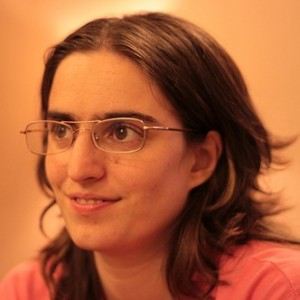
Photograph taken by Julia Palandri

When I think about Margarita, I always remember her as a friendly and welcoming person. Like most of the Debian Women members by the way. But she likes to spread some love and organized a Debian Appreciation Day for example. I think I met her in real life for the first time at Debconf 6 in Oaxtepec (Mexico). She deeply cares about Debian in general. She has proven it multiple times with her DPL candidacy and by giving talks like Making Debian rule again. One last thing, Debconf11 is just over and you will see that Debconf4 has had a big influence on Marga. My advice is simple: next time there s a Debconf on your continent, make sure to take a few days off and come to meet us! It really gives another picture of the Debian community. Now let s proceed with the interview. Raphael: Who are you? Margarita: I m Margarita Manterola, a Software Developer from Argentina. I work developing software in Python in a Debian-friendly company during the day, and teach programming at a local university during the evenings. I m married to Maximiliano Curia who is also a Debian Developer, most of our Free Software work has been done together. I only maintain a handful of packages in Debian, I m more interested in fixing bugs than in packaging new software. I ve also been a part of the organizing team of many of the previous Debian Conferences. One of the biggest commitments and the biggest success of my participation in Debian was being part of the organizing team of DebConf8, in Argentina. Raphael: How did you start contributing to Debian? Margarita: I started using Debian around 2000. Soon after we had learned the grips of general GNU/Linux usage, Maxy and I started giving an introductory course at our local university, and became quite involved with the local LUG. At some point in 2002/2003 I became a Debian Bug Reporter : most of my friends would report bugs to me, and I would then write them in the proper form to the BTS. I would also be very attentive about reporting any bugs that I might encounter myself trying to create good bug reports. The turning point in my participation in Debian was DebConf4 in Porto Alegre, Brazil. Being so close to Argentina meant that we felt specially invited to be there, and Maxy and I decided to go to DebConf for our honeymoon. We didn t really know much about DebConf dynamics, but we were really eager to learn more about Debian and become more involved. What happened was that meeting with DDs from all over the world transformed our lives, we became part of the Debian family and wanted to be more and more involved. Soon after that we both started maintaining packages and not long after that, applied to become Developers. The Debian Women project also meant a lot to me. I felt encouraged all along the way, encouraged to learn, to ask questions and to lose the fear of making mistakes. I became a Debian Developer on November 2005. Since then, Debian has always been one of the most important things I do in my life. Raphael There was a Debian Women BoF during debconf. What are the plans for Debian Women in the upcoming months? Margarita: I was not there in person, but thanks to the awesome work of the video team, and of Christian Perrier s typing efforts when something failed, I was able to experience much of what was discussed. :) One of the many points that came up during the BOF is that many people Want to help but don t know where to start or how to go about it. It s a challenge for the Debian Women project to find a way to allow these people to become involved in Debian through Mini projects or something like that. Another of the subjects that was brought up was the Debian Women mentoring project, which has been going on for quite a while now, but lacks enough publicity. So, we need to reach more people about it, and maybe also improve it with some templates, similar to the New Maintainer templates, so that mentees that don t know where to start have some sort of general path to follow. Raphael: You created very useful diagrams documenting how package maintainer scripts are invoked by dpkg. How did you do it and was that a useful experience? Margarita: I did those diagrams to be able to answer one of the questions in the NM templates, regarding the order of the maintainer script execution. Answering the question in text was basically copying and pasting the part of the Debian Policy that explained it, which wasn t really too clear for me, so I decided to go and make a diagram of it, so that I could really understand it. I did it by the best of all debugging techniques: adding prints to each of the maintainer scripts, and testing them in all the different orders that I could think of. It was a useful experience at the time, because I learned a lot of how maintainers scripts work. I didn t expect the diagrams to become so famous, though, I only did them to answer one NM question, that I assumed most other people had already answered before :) Raphael: You participated in a DPL election. This is a big commitment to make. What were your motivations? Margarita: As I said, I was part of the organizing team of DebConf8, in Argentina. Which was quite a success, a lot of people enjoyed it and praised the good work that had been done by the local team. During said DebConf8, I had a dream (it was almost a nightmare, actually): I woke up and just like that, I was the DPL. I spoke to some people about this dream and to my complete surprise many said that I should actually do it. After giving that possibility a year and a half of thoughts, during the 2010 campaign I was talked into participating myself as a candidate, and it was a very interesting experience. However, I m very glad that Zack got elected and not me, I think he makes a much better DPL that I would have made. Raphael: What s the biggest problem of Debian? Margarita: I think the main problem that we have is our communication, both inside the project and outside the project. Most of us are very technical people, our skills lay in the technical part of Debian (preparing packages, fixing bugs, writing software, administering systems) not in the social part. And thus, we lack a general empathy that is quite needed when interacting with people from all over the world. Raphael: Do you have wishes for Debian Wheezy? Margarita: Not particularly. I do want it to be a great release with good quality, stable software. I would also like to keep making Debian more and more universal with each release, making it more user friendly, more accessible, and more robust than any other previous release. Raphael: Is there someone in Debian that you admire for their contributions? Margarita: I admire a lot of people in Debian. There s a lot of people that contribute a lot of time to Debian, amounts of time that I can t begin to understand how they can afford. I admire Stefano Zacchiroli, our current project leader. And Steve McIntyre, the project leader before him. Also Bdale Garbee, who s also been a DPL in the past. Making this list I realize that Debian has been blessed by quite a number of great leaders in the past. I admire Holger Levsen, for his contributions to the DebConf video team, that have made it possible year after year for the whole project to participate in DebConf remotely. I admire Steve Langasek and Andreas Barth (etch is still my favourite release). I admire Christian Perrier for his work on internationalization. I admire Joerg Jaspert for the incredible amounts of time that he puts into Debian. And actually, I could go on admiring people all night long. I admire so many people that this interview could become a very boring list of names. I guess it s better to leave it at saying that Debian is lucky to have quite a lot of excellent hackers around.
Thank you to Marga for the time spent answering my questions. I hope you enjoyed reading her answers as I did. Subscribe to my newsletter to get my monthly summary of the Debian/Ubuntu news and to not miss further interviews. You can also follow along on Identi.ca, Twitter and Facebook.

14 comments Liked this article? Click here. My blog is Flattr-enabled.

3 March 2011

Raphaël Hertzog: People behind Debian: Christian Perrier, translation coordinator

Christian is a figure of Debian, not only because of the tremendous coordination work that he does within the translation project, but also because he s very involved at the social level. He s probably in the top 5 of the persons who attended most often the Debian conference. Christian is a friend (thanks for hosting me so many times when I come to Paris for Debian related events) and I m glad that he accepted to be interviewed. He likes to speak and that shows in the length of his answers :-) but you ll be traveling the world while reading him. My questions are in bold, the rest is by Christian. Who are you? I am a French citizen (which is easy to guess unless you correct my usual mistakes in what follows). I m immensely proud of being married for nearly 26 years with Elizabeth (who deserves a statue from Debian for being so patient with my passion and my dedication to the project). I m also the proud father of 3 wonderful kids , aged 19 to 23. I work as team manager in the Networks and Computers Division of Onera the French Aerospace lab , a public research institute about Aeronautics, Space and Defense. My team provides computer management services for research divisions of Onera, with a specific focus put on individual computing. I entered the world of free software as one of the very first users of Linux in France. Back in the early 1990 s, I happened (though the BBS users communities) to be a friend of several early adopters of Linux and/or BSD386/FreeBSD/NetBSD in France. More specifically, I discovered Linux thanks with my friend Ren Cougnenc (all my free software talks are dedicated to Ren , who passed away in 1996). You re not a programmer, not even a packager. How did you come to Debian? I m definitely not a programmer and I never studied computing (I graduated in Materials Science and worked in that area for a few years after my PhD). However, my daily work always involved computing (I redesigned the creep testing laboratory and its acquisition system all by myself during my thesis research work). An my hobbies often involved playing with home computers, always trying to learn about something new. So, first learning about a new operating system then trying to figure out how to become involved in its development was quite a logical choice. Debian is my distro of choice since it exists. I used Slackware on work machines for a while, but my home server, kheops, first ran Debian 1.1 when I stopped running a BBS on an MS-DOS machine to host a news server. That was back in October 1996. I then happened to be a user, and more specifically a user of genealogy software, also participating very actively in Usenet from this home computer and server, that was running this Debian thing. So, progressively, I joined mailing lists and, being a passionate person, I tried to figure out how I could bring my own little contribution to all this. This is why I became a packager (yes, I am one!) by taking over the geneweb package, which I was using to publish my genealogy research. I applied as DD in January 2001, then got my account in July 2001. My first upload to the Debian archive occurred on August 22nd 2001: that was of course geneweb, which I still maintain. Quite quickly, I became involved in the work on French localization. I have always been a strong supporter of localized software (I even translated a few BBS software back in the early 90 s) as one of the way to bring the power and richness of free software to more users. Localization work lead me to work on the early version of Debian Installer, during those 2003-2005 years where the development of D-I was an incredibly motivating and challenging task, lead by Joey Hess and his inspiring ideas. From user to contributor to leader, I suddenly discovered, around 2004, that I became the coordinator of D-I i18n (internationalization) without even noticing :-) You re the main translation coordinator in Debian. What plans and goals have you set for Debian Wheezy? As always: paint the world in red. Indeed, this is my goal for years. I would like our favorite distro to be able to be used by anyone in the world, whether she speaks English, Northern Sami, Wolof, Uyghur or Secwepemcts n. As a matter of symbol, I use the installer for this. My stance is that one should be able to even install Debian in one s own language. So, for about 7 years, I use D-I as a way to attract new localization contributors. This progress is represented on this page where the world is gradually painted in red as long as the installer supports more languages release after release. The map above tries to illustrate this by painting in red countries when the most spoken language in the country is supported in Debian Installer. However, that map does not give enough reward to many great efforts made to support very different kind of languages. Not only various national languages, but also very different ones: all regional languages of Spain, many of the most spoken languages in India, minority languages such as Uyghur for which an effort is starting, Northern Sami because it is taught in a few schools in Norway, etc., etc. Still, the map gives a good idea of what I would like to see better supported: languages from Africa, several languages in Central Asia. And, as a very very personal goal, I m eagerly waiting for support of Tibetan in Debian Installer, the same way we support its sister language, Dzongkha from Bhutan. For this to happen, we have to make contribution to localization as easy as possible. The very distributed nature of Debian development makes this a challenge, as material to translate (D-I components, debconf screens, native packages, packages descriptions, website, documentation) is very widely spread. A goal, for years, is to set a centralized place where translators could work easily without even knowing about SVN/GIT/BZR or having to report bugs to send their work. The point, however, would be to have this without making compromises on translation quality. So, with peer review, use of thesaurus and translation memory and all such techniques. Tools for this exist: we, for instance, worked with the developers of Pootle to help making it able to cope with the huge amount of material in Debian (think about packages descriptions translations). However, as of now, the glue between such tools and the raw material (that often lies in packages) didn t come. So, currently, translation work in Debian requires a great knowledge of how things are organized, where is the material, how it can be possible to make contribution reach packages, etc. And, as I m technically unable to fulfill the goal of building the infrastructure, I m fulfilling that role of spreading out the knowledge. This is how I can define my coordinator role. Ubuntu uses a web-based tool to make it easy to contribute translations directly in Launchpad. At some point you asked Canonical to make it free software. Launchpad has been freed in the mean time. Have you (re)considered using it? Why not? After all, it more or less fills in the needs I just described. I still don t really figure out how we could have all Debian material gathered in Rosetta/Launchpad .and also how Debian packagers could easily get localized material back from the framework without changing their development processes. I have always tried to stay neutral wrt Ubuntu. As many people now in Debian, I feel like we have reached a good way to achieve our mutual development. When it comes at localization work, the early days where the everything in Rosetta and translates who wants stanza did a lot of harm to several upstream localization projects is, I think, way over. Many people who currently contribute to D-I localization were indeed sent to me by Ubuntu contributors .and by localizing D-I, apt, debconf, package descriptions, etc., they re doing translation work for Ubuntu as well as for Debian. Let s say I m a Debian user and I want to help translate Debian in my language. I can spend 1 hour per week on this activity. What should I do to start? Several language teams use Debian mailing lists to coordinate their work. If you re lucky enough to be a speaker of one of these languages, try joining debian-l10n-<yourlanguage> and follow what s happening there. Don t try to immediately jump in some translation work. First, participate to peer reviews: comment on others translations. Learn about the team s processes, jargon and habits. Then, progressively, start working on a few translations: you may want to start with translations of debconf templates: they are short, often easy to do. That s perfect if you have few time. If no language team exists for your language, try joining debian-i18n and ask about existing effort for your language. I may be able to point you to individuals working on Debian translations (very often along with other free software translation efforts). If I am not, then you have just been named coordinator for your language :-) I may even ask you if you want to work on translating the Debian Installer. What s the biggest problem of Debian? We have no problems, we only have solutions :-) We are maybe facing a growth problem for a few years. Despite the increased welcoming aspects of our processes (Debian Maintainers), Debian is having hard times in growing. The overall number of active contributors is probably stagnating for quite a while. I m still amazed, however, to see how we can cope with that and still be able to release over the years. So, after all, this is maybe not a problem :-) Many people would point communication problems here. I don t. I think that communication inside the Debian project is working fairly well now. Our famous flame wars do of course still happen from time to time, but what large free software project doesn t have flame wars? In many areas, we indeed improved communication very significantly. I want to take as an example the way the release of squeeze has been managed. I think that the release team did, even more this time, a very significant and visible effort to communicate with the entire project. And the release of squeeze has been a great success in that matter. So, there s nearly nothing that frustrates me in Debian. Even when a random developer breaks my beloved 100% completeness of French translations, I m not frustrated for more than 2 minutes. You re known in the Debian community as the organizer of the Cheese & Wine Party during DebConf. Can you tell us what this is about? This is an interesting story about how things build themselves in Debian. It all started in July 2005, before DebConf 5 in Helsinki. Denis Barbier, Nicolas Fran ois and myself agreed to bring at Debconf a few pieces of French cheese as well as 1 or 2 bottles of French wine and share them with some friends. Thus, we settled an informal meeting in the French room where we invited some fellows: from memory, Benjamin Mako Hill, Hannah Wallach, Matt Zimmermann and Moray Allan. All of us fond of smelly cheese, great wine plus some extra p t home-made by Denis in Toulouse. It finally happened that, by word of mouth, a few dozens of other people slowly joined in that French room and turned the whole thing into an improvized party that more or less lasted for the entire night. The tradition was later firmly settled in 2006, first in Debconf 6 in Mexico where I challenged the French DDs to bring as many great cheese as possible, then during the Debian i18n meeting in Extremadura (Sept 2006) where we reached the highest amount of cheese per participant ever. I think that the Creofonte building in Casar de C ceres hasn t fully recovered from it and is still smelling cheese 5 years after. This party later became a real tradition for DebConf, growing over and over each year. I see it as a wonderful way to illustrate the diversity we have in Debian, as well as the mutual enrichment we always felt during DebConfs. My only regret about it is that it became so big over the years that organizing it is always a challenge and I more and more feel pressure to make it successful. However, over the years, I always found incredible help by DebConf participants (including my own son, last year a moment of sharing which we will both remember for years, i think). And, really, in 2010, standing up on a chair, shouting (because the microphone wasn t working) to thank everybody, was the most emotional moment I had at Debconf 10. Is there someone in Debian that you admire for their contributions? So many people. So, just like it happens in many awards ceremonies, I will be very verbose to thank people, sorry in advance for this. The name that comes first is Joey Hess. Joey is someone who has a unique way to perceive what improvements are good for Debian and a very precise and meticulous way to design these improvements. Think about debconf. It is designed for so long now and still reaching its very specific goal. So well designed that it is the entire basis for Joey s other achievement: designing D-I. Moreover, I not only admire Joey for his technical work, but also for his interaction with others. He is not he loudest person around, he doesn t have to .just giving his point in discussion and, guess what? Most of the time, he s right. Someone I would like to name here, also, is Colin Watson. Colin is also someone I worked with for years (the D-I effect, again ) and, here again, the very clever way he works on technical improvements as well as his very friendly way to interact with others just make it. And, how about you, Rapha l? :-) I m really admirative of the way you work on promoting technical work on Debian. Your natural ability to explain things (as good in English as it is in French) and your motivation to share your knowledge are a great benefit for the project. Not to mention the technical achievements you made with Guillem on dpkg of course! Another person I d like to name here is Steve Langasek. We both maintain samba packages for years and collaboration with him has always been a pleasure. Just like Colin, Steve is IMHO a model to follow when it comes at people who work for Canonical while continuing their involvment in Debian. And, indeed, Steve is so patient with my mistakes and stupid questions in samba packaging that he deserves a statue. We re now reaching the end of the year where Stefano Zacchiroli was the Debian Project Leader. And, no offense intended to people who were DPL before him (all of them being people I consider to be friends of mine), I think he did the best term ever. Zack is wonderful in sharing his enthusiasm about Debian and has a unique way to do it. Up to the very end of his term, he has always been working on various aspects of the project and my only hope is that he ll run again (however, I would very well understand that he wants to go back to his hacking activities!). Hat off, Zack!I again have several other people to name in this Bubulle hall of Fame : Don Armstrong, for his constant work on improving Debian BTS, Margarita Manterola as one of the best successes of Debian Women (and the most geeky honeymoon ever), Denis Barbier and Nicolas Fran ois because i18n need really skilled people, Cyril Brulebois and Julien Cristau who kept X.org packaging alive in lenny and squeeze, Otavio Salvador who never gave up on D-I even when we were so few to care about it. I would like to make a special mention for Frans Pop. His loss in 2010 has been a shock for many of us, and particularly me. Frans and I had a similar history in Debian, both mostly working on so-called non technical duties. Frans has been the best release manager for D-I (no offense intended, at all, to Joey or Otavio .I know that both of them share this feeling with me). His very high involvment in his work and the very meticulous way he was doing it lead to great achievements in the installer. The Installation Guide work was also a model and indeed a great example of non technical work that requires as many skills as more classical technical work. So, and even though he was sometimes so picky and, I have to admit, annoying, that explains why I m still feeling sad and, in some way, guilty about Frans loss. One of my goals for wheezy is indeed to complete some things Frans left unachieved. I just found one in bug #564441: I will make this work reach the archive, benefit our users and I know that Frans would have liked that.

Thank you to Christian for the time spent answering my questions. I hope you enjoyed reading his answers as I did. Subscribe to my newsletter to get my monthly summary of the Debian/Ubuntu news and to not miss further interviews. You can also follow along on Identi.ca, Twitter and Facebook.

7 comments Liked this article? Click here. My blog is Flattr-enabled.

2 March 2011

Joachim Breitner: Tor exit node shut down by server4you

As mentioned earlier this week, I changed the server for my hoster from server4you to Hetzner. Because the contract for my old server is still running until the 14th of April, I thought I can make some good use of it by running an Tor exit node on it. Tor, The onion router is a world-wide network of server to anonymize network connections, and used for example by freedom-loving people in repressive countries, or by Facebook users in repressively proxied university networks Naturally, such a system is also used by people with lesser motives, and after nearly one week of running the server, some complaints were reaching server4you a honeynet supposedly detected botnet activity from my IP address, another company hired by Paramount Pictures claimed that someone downloaded Iron Man 2 over BitTorrent via my server. These were forwarded to my by server4you, demanding an explanation. I explained that I am running a Tor node, that such things are unavailable, and that neither I nor server4you is going to be held responsible. Nevertheless, they insist that I should stop whatever I am doing (I am not sure if they really understood what tor is), and when I said that I won t, they decided to unilaterally and immediately end my contract by tomorrow. Thus a powerful exit node that might have made life better for Tor users is doing to disappear again. They will not reimburse the advance fee that I had paid in advance and made a non-specific threat about further claims they might have. So server4you was, at least in my case, not only an unreliable and inflexible provider, they also prefer to cut off their customer s server just because of two complaints by third parties. I conclude that this is not a hoster that you should trust important services to. And I am not a unique case: There are reports of similar server shut-downs by server4you (in German).

23 November 2010

Julien Danjou: Color contrast correction

I finally took some time to finish my color contrast corrector. It's now able to compare two colors and to tell if they are readable when used as foreground and background color for text rendering. If they are too close, the code corrects both colors so to they'll become distant enough to be readable. To do that, it uses color coordinates in the CIE L*a*b* colorspace. This allows to determine the luminance difference between 2 colors very easily by comparing the L component of the coordinates. The default threshold used to determine readability based on luminance difference is 40 (on 100), which seems to give pretty good results so far. Then it uses the CIE Delta E 2000 formula to obtain the distance between colors. A distance of 6 is considered to be enough for the colors to be distinctive in our case, but that can be adjusted anyway. That depends on reader's eyes. If both the color and luminance distances are big enough, the color pair is considered readable when used upon each other. If these criteria are not satisfied, the code simply tries to correct the color by adjusting the L (luminance) component of the colors so their difference is 40. Optionally, the background color can be fixed so only the foreground color would be adjusted; this is especially handy when the color background is not provided by any external style, but it the screen one (like the Emacs frame background in my case). Here is an example result generated over 10 pairs of random colors. Left colors are randomly generated, and right colors are the corrected one. <style type="text/css"> </style>

bg: DarkSeaGreen4 fg: gray67 ->                             fg: #4a6b4b bg: #cccccc
bg: SlateGray4 fg: forest green ->                          fg: #9faec0 bg: #005700
bg: grey13 fg: grey36 ->                                    fg: #131313 bg: #6c6c6c
bg: MediumPurple2 fg: honeydew ->                           fg: #9e78ed bg: #f0fff0
bg: grey43 fg: chartreuse3 ->                               fg: #5e5e5e bg: #79de25
bg: linen fg: DeepPink2 ->                                  fg: linen bg: DeepPink2
bg: CadetBlue4 fg: blue1 ->                                 fg: #6c9fa4 bg: #0000e1
bg: gray33 fg: NavajoWhite3 ->                              fg: #525252 bg: #cfb58c
bg: chartreuse1 fg: RosyBrown3 ->                           fg: #9cff38 bg: #b28282
bg: medium violet red fg: DeepPink1 ->                      fg: #9c0060 bg: #ff55b9
All this has been written in Emacs Lisp. The code is now available in Gnus (and therefore in Emacs 24) in the packages color-lab and shr-color. A future work would be to add support for colour blindness. As a side note, several people pointed me at the WCAG formulas to determine luminance and contrast ratio. These are probably good criteria to choose your color when designing a user interface. However, they are not enough to determine if displayed color will be readable. This means you can use them if you are a designer, but IMHO they are pretty weak for detecting and correcting colors you did not choose. Flattr this

12 January 2010

John Goerzen: Sing to Me, Muse

(a review of Homer s Iliad)
Here, therefore, huge and mighty warrior though you be, here shall you die. - Homer (The Iliad)
And with that formidable quote, I begin my review of The Iliad. I shall not exhaust you with a rehashing of the plot; that you can find on Wikipedia. Nor shall I be spending page upon page of analyzing the beautiful imagery, the implications of our understanding of fate and destiny, or all the other things that compel English majors to write page after page on the topic. Nor even shall I try to decipher whether it is a piece of history or a piece of legend. Rather, I intend to talk about why I read it: it s a really good story.
Sing to me, O goddess Muse, the wrath of Achilles, son of Peleus, which brought countless ills upon the Acheans.
As I d be reading it, I d think to myself: Ah ha! Now here we finally have a section of the story that doesn t speak to modern life. Perhaps it was a section the fear of being enslaved or butchered by conquerors, or about pride leading both sides to fight a war they need not have, or a graphic description of a spear going clear through someone s head or neck. And then, I d have to sit and think. Are we really so far removed from that? Here we are, in a supposedly civilized world. We use remotely-operated drones to drop bombs on people, and think it naught but regrettable collateral damage when the brains and intestines of dozens of innocent victims are scattered about, killing them, all for the chance of killing one enemy. But we aren t the only ones to blame; we live in a world in which killing the innocent is often the goal. People fly airplanes into skyscrapers, drop atomic weapons to flatten entire cities, and kill noncombatants in terrible numbers. And for what? A little power, some prestige, some riches, some vengeance, some wounded pride? Slavery is not dead, either. We that can happily afford Internet access most likely abhor the thought. What, though, can we make of the fact that people are starving in this world in record numbers? That our actions may literally wipe some nations off the map? Are those people as free as we are? Do our actions repress them? I suspect you can t read the Iliad without being at least a bit introspective.
Fear, O Achilles, the wrath of heaven; think on your own father and have compassion upon me, who am the more pitiable
One of the great things about reading the Iliad is that I can learn about the culture of the ancient civilizations. Now, of course, one can read about this in history books and Wikipedia. But reading some dry sentence is different from reading a powerful story written by and for them. I know that the Iliad isn t exactly a work of history, but it sure shows what made people tick: their religion, their morals, their behavior, and what they valued. I feel that I finally have some sort of insight into their society, and I am glad of it.
The day that robs a child of his parents severs him from his own kind; his head is bowed, his cheeks are wet with tears, and he will go about destitute among the friends of his father, plucking one by the cloak and another by the shirt. Some one or other of these may so far pity him as to hold the cup for a moment towards him and let him moisten his lips, but he must not drink enough to wet the roof of his mouth; then one whose parents are alive will drive him from the table with blows and angry words.
There are gory battle scenes in the Iliad, but then there are also heart-wrenching tender moments: when Hector leaves his wife to go fight, for instance, and worries about the future of his child if he should die. That s not to say I found the entire story riveting. I would have liked it to be 1/3 shorter. The battle just dragged on and on. And yet, I will grant that there was some purpose served by that: it fatigued me as a reader, which perhaps gave me a small sense of the fatigue felt by the participants in the story.
Why, pray, must the Argives needs fight the Trojans? What made the son of Atreus gather the host and bring them?
A question that was never answered, for either side: why are we so foolish that we must go to war? One tragedy among many is that neither side got smart about it until way too late, if ever they did at all. I read The Illiad in the Butler translation, which overall I liked. Some of these quotes, however, use the Lattimore one. This completes the first item on my 2010 reading list. I leave you with this powerful hope for the future, written almost three thousand years ago. Despite my criticisms above, we have made a lot of progress, haven t we? What a beautiful ideal it is, and what a long ways we have yet to walk.
I wish that strife would vanish away from among gods and mortals, and gall, which makes a man grow angry for all his great mind, that gall of anger that swarms like smoke inside of a man s heart and becomes a thing sweeter to him by far than the dripping of honey.
Sing to me, O goddess, the anger of Achilles, that one day his story may speak less to our hearts, for then will we have outgrown it.

24 December 2009

MJ Ray: A Christmas Present From Spammers

Contained in the recent billionth-spam report from Project Honeypot is the revelation that The volume of spam drops approximately 21% on Christmas Day and 32% on New Year s Day. (Thanks to Raphael for the pointer.) Happy Christmas to those of you who celebrate it

16 December 2009

Raphael Geissert: what could you tell about spammers after receiving one billion messages?

This is a question that Project Honey Pot's report answers.

They have released a report of the analysis of not only spam messages, but also of the harvesters behind spam.
Available with a simple overview the complete report provides some rather interesting details.

Do spammers take holidays?
The volume of spam drops approximately 21% on Christmas Day and 32% on New Year's Day. Saturday is the quietest day of the week.


And for those sending mails to public mailing lists, the BTS, etc:
How much harm does a harvester visiting my site do?
You can expect to receive 869 spam email messages every time a harvester picks up your email address from a website online.


The interesting bits are really worth the five-ten minutes it takes to read the complete report, enjoy it (and yay, it is CC-BY).

18 September 2009

David Paleino: RC bug squashing

Following zack's suggestions, I've been looking at RC bugs in my sparetime. In two days (well, two evenings really), I've been able to cope with a good number of bugs: I must admit that some of them (didn't count them, might also be the greatest part of them) already had patches, and I just prepared the NMU. For others, there were other FTBFS's other than the ones filed, and those were fixed too. It would be extra cool if some DD uploaded the remaining 3 NMUs! I also had time to release and package syslog-summary 1.14, but, not being DMUA yet, I'd need a sponsor for that too (but I'll probably ask my AM, since this upload sets DMUA). Happy RC-bug-squashing! Your friendly neighborhood hanska Smile

4 September 2009

Erich Schubert: Friends update - LiveDash, HoneyWish, Amiando

A short update on some friends of mine.First of all, Patrick F. Riley - I worked with him on some projects when I was visiting the UC Berkeley, one of which was a predecessor to his latest thing: LiveDash. It's really cool: it allows you to search almost in realtime in TV feeds. It also live-indexes Twitter, blogs, news sources etc.Secondly, HoneyWish (currently only available in German) is a service for a "honeymoon travel gift list" thing. It works like the traditional gift lists, except that instead of putting all kind of household stuff on it, there are all the parts of the honeymoon trip on the gift list. This makes much more sense these days: people tend to get married later; they might even be sharing a house for some time before getting married. So they don't need much silverware anymore, but they for sure will enjoy their honeymoon trip - so what could be a better gift for them?Third, Amiando a web-based ticketing and event management service. Founded already some years ago by some friends, it has been growing and coming along nicely. Every now and then, it won some award, many of them in the "top startup" category.There are of course many more projects of friends I'd like to point out, but these three definitely are highlights.

16 February 2009

Joey Hess: mmmmm

I took the package of blackberries from the freezer, where it had sat, neglected since I picked them from my fecund vines in August. They had some frost on top; it didn't seem that the wait could have improved them. But, I figured, let's do this right. No store-bought pie crust, made my own with lots of love, and no little trepidation, since pie crust is not my strong suite. Put it back in the fridge to rest as I melted the frozen berries. Added some honey, then worried I'd sweetened it too much. Seemed too runny, so added some flour. Spent what seemed a long time criss-crossing strips of the pastry on top. Which, now that I look at it, doesn't seem to be quite the way it's typically done, but whatever. 45 minutes later, it came out, and bliss, it's the most perfect pie I've ever made. Crust acceptably flaky, berries just the right mix of tart and sweet. But mostly, it tastes of summer and care, and the wait seems to have been worth it. So that's my Debian release pie.
On the software side of things, I didn't do anything much toward making this release happen. Indeed, I have forgotten most of what I put into the mix earlier. (Something to do with armel, and firmware, and maybe boot menus?) It was a nice change to sit back and watch and not worry (much) about doing anything myself. I think that someone fell asleep in his chair while running the CD builds and had to get a wakeup call early this morning to finish. Dedication. Seems like there should be a better way, but you can't argue with the result. Previously: Easter Etch, Releases and Such, Where was I When ..

3 December 2008

Pablo Lorenzzoni: It's done: I am a serious man now

Some of you might be wondering where I ve gone (my last post was on 2008-11-18), but I have a short explanation for that: I got married! Yes It was on November 22nd, in a non-religious ceremony among the majority of my close friends and family. Brenda and I are together for more than 6 years already, so it was about time! After the party we went on honey moon to Bariloche (Argentina), undoubtfully one of the most beautiful parts of the planet, for one week. We were back just Monday and back to real life just now. Pictures of the party and the trip will follow

25 October 2008

Julian Andres Klode: aufs 0+20081023-1 uploaded to experimental


I just uploaded a new upstream snapshot of aufs (another unionFS) to experimental. But it is really more than just a new upstream snapshot: First of all, this release includes patches written by Jeff Mahoney <jeffm@suse.com>. These patches enable the usage of NFSv2 and NFSv3 file systems as branches, even on the standard Debian kernel. The package does not support NFSv4 yet, but will support it at a later point (but only with a patched kernel) - the code exists, it’s just not enabled yet. This release also removes support for pre-lenny Kernels (<2.6.26) and uses quilt instead of dpatch. It also removes any AppArmor support for the moment, but this may be added back later. Posted in Debian      

Next.

Previous.