This is a copy of an email I used to send internally at work and now
made public. I'm not sure I'll make a habit of posting it here,
especially not twice a year, unless people really like it. Right
now, it's mostly here to keep with my current writing spree going.
This is your bi-yearly reminder that time is changing soon!
What's happening?
For people not on tor-internal, you should know that I've been sending
semi-regular announcements when daylight saving changes occur. Starting
now, I'm making those announcements public so they can be shared with
the wider community because, after all, this affects everyone (kind of).
For those of you lucky enough to have no idea what I'm talking about,
you should know that some places in the world implement what is called
Daylight saving time or DST.
Normally, you shouldn't have to do anything: computers automatically
change time following local rules, assuming they are correctly
configured, provided recent updates have been applied in the case of a
recent change in said rules (because yes, this happens).
Appliances, of course, will likely not change time and will need to
adjusted unless they are so-called "smart" (also known as "part of a bot
net").
If your clock is flashing "0:00" or "12:00", you have no action to take,
congratulations on having the right time once or twice a day.
If you haven't changed those clocks in six months, congratulations, they
will be accurate again!
In any case, you should still consider DST because it might affect some
of your meeting schedules, particularly if you set up a new meeting
schedule in the last 6 months and forgot to consider this
change.
If your location does not have DST
Properly scheduled meetings affecting multiple time zones are set in UTC
time, which does not change. So if your location does not observer
time changes, your (local!) meeting time will not change.
But be aware that some other folks attending your meeting might have
the DST bug and their meeting times will change. They might miss
entire meetings or arrive late as you frantically ping them over IRC,
Matrix, Signal, SMS, Ricochet, Mattermost, SimpleX, Whatsapp, Discord,
Slack, Wechat, Snapchat, Telegram, XMPP, Briar, Zulip, RocketChat,
DeltaChat, talk(1), write(1), actual telegrams, Meshtastic, Meshcore,
Reticulum, APRS, snail mail, and, finally, flying a remote presence
drone to their house, asking what's going on.
(Sorry if I forgot your preferred messaging client here, I tried my
best.)
Be kind; those poor folks might be more sleep deprived as DST steals
one hour of sleep from them on the night that implements the change.
If you do observe DST
If you are affected by the DST bug, your local meeting times will
change access the board. Normally, you can trust that your meetings are
scheduled to take this change into account and the new time should still
be reasonable.
Trust, but verify; make sure the new times are adequate and there are
no scheduling conflicts.
Do this now: take a look at your calendar in two week and in
April. See if any meeting need to be rescheduled because of an
impossible or conflicting time.
When does time change, how and where?
Notice how I mentioned "North America" in the subject? That's a
lie. ("The doctor lies", as they say on the BBC.) Other places,
including Europe, also changes times, just not all at once (and not all
North America).
We'll get into "where" soon, but first let's look at the "how". As you might
already know, the trick is:
Spring forward, fall backwards.
This northern-centric (sorry!) proverb says that clocks will move
forward by an hour this "spring", after moving backwards last
"fall". This is why we lose an hour of work, sorry, sleep. It sucks, to
put it bluntly. I want it to stop and will keep writing those advisories
until it does.
To see where and when, we, unfortunately, still need to go into politics.
USA and Canada
First, we start with "North America" which, really, is just some parts
of USA[1] and Canada[2]. As usual, on the Second Sunday in March (the
8th) at 02:00 local (not UTC!), the clocks will move forward.
This means that properly set clocks will flip from 1:59 to 3:00, coldly
depriving us from an hour of sleep that was perniciously granted 6
months ago and making calendar software stupidly hard to write.
Practically, set your wrist watch and alarm clocks[3] back one hour
before going to bed and go to bed early.
[1] except Arizona (except the Navajo nation), US territories, and
Hawaii
[2] except Yukon, most of Saskatchewan, and parts of British Columbia
(northeast), one island in Nunavut (Southampton Island), one town in
Ontario (Atikokan) and small parts of Quebec (Le
Golfe-du-Saint-Laurent), a list which I keep recopying because I
find it just so amazing how chaotic it is. When your clock has its
own Wikipedia page, you know something is wrong.
[3] hopefully not managed by a botnet, otherwise kindly ask your bot net
operator to apply proper software upgrades in a timely manner
Europe
Next we look at our dear Europe, which will change time on the last
Sunday in March (the 29th) at 01:00 UTC (not local!). I think it
means that, Amsterdam-time, the clocks will flip from 1:59 to 3:00 AM
local on that night.
(Every time I write this, I have doubts. I would welcome independent
confirmation from night owls that observe that funky behavior
experimentally.)
Just like your poor fellows out west, just fix your old-school clocks
before going to bed, and go to sleep early, it's good for you.
Rest of the world with DST
Renewed and recurring apologies again to the people of Cuba, Mexico,
Moldova, Israel, Lebanon, Palestine, Egypt, Chile (except Magallanes
Region), parts of Australia, and New Zealand which all have their own
individual DST rules, omitted here for brevity.
In general, changes also happen in March, but either on different
times or different days, except in the south hemisphere, where they
happen in April.
Rest of the world without DST
All of you other folks without DST, rejoice! Thank you for reminding us
how manage calendars and clocks normally. Sometimes, doing nothing is
precisely the right thing to do. You're an inspiration for us all.
Changes since last time
There were, again, no changes since last year on daylight savings that
I'm aware of. It seems the US congress debating switching to a
"half-daylight" time zone which is an half-baked idea that I
should have expected from the current USA politics.
The plan is to, say, switch from "Eastern is UTC-4 in the summer" to
"Eastern is UTC-4.5". The bill also proposes to do this 90 days after
enactment, which is dangerously optimistic about our capacity at
deploying any significant change in human society.
In general, I rely on the Wikipedia time nerds for this and Paul
Eggert which seems to singlehandledly be keeping everything in order
for all of us, on the tz-announce mailing list.
This time, I've also looked at the tz mailing list which is where
I learned about the congress bill.
If your country has changed time and no one above noticed, now would
be an extremely late time to do something about this, typically
writing to the above list. (Incredibly, I need to write to the list
because of this post.)
One thing that did change since last year is that I've implemented
what I hope to be a robust calendar for this, which was surprisingly
tricky.
If you have access to our Nextcloud, it should be visible under the
heading "Daylight saving times". If you don't, you can access it using
this direct link.
The procedures around how this calendar was created, how this email
was written, and curses found along the way, are also documented in
this wiki page, if someone ever needs to pick up the Time Lord
duty.
tl;dr:
To the question: what does it take to upgrade OpenStack , my personal answer is: less than 2K lines of dash script. I ll here describe its internals, and why I believe it is the correct solution.
Why writing this blog post
During FOSSDEM 2024, I was asked how to you handle upgrades . I answered with a big smile and a short with a very small shell script as I couldn t explain in 2 minutes how it was done. Just saying it is great this way doesn t help giving readers enough hints to be trusted. Why and how did I do it the right way ? This blog post is an attempt to reply better to this question more deeply.
Upgrading OpenStack in production
I wrote this script maybe a 2 or 3 years ago. Though I m only blogging about it today, because I did such an upgrade in a public cloud in production last Thuesday evening (ie: the first region of the Infomaniak public cloud). I d say the cluster is moderately large (as of today: about 8K+ VMs running, 83 compute nodes, 12 network nodes, for a total of 10880 physical CPU cores and 125 TB of RAM if I only count the compute servers). It took only 4 hours to do the upgrade (though I already wore some more code to speed this up for the next time ). It went super smooth without a glitch. I mostly just sat, reading the script output and went to bed once it finished running. The next day, all my colleagues at Infomaniak were nicely congratulating me that it went that smooth (a big thanks to all of you who did). I couldn t dream of an upgrade that smooth! :)
Still not impressed? Boring read? Yeah let s dive into more technical details.
Intention behind the implementation
My script isn t perfect. I wont ever pretend it is. But at least, it does minimize down time of every OpenStack service. It also is a by the book implementation of what s written in the OpenStack doc, following every upstream advice. As a result, it is fully seamless for some OpenStack services, and as HA as OpenStack can be for others. The upgrade process is of course idempotent and can be re-run in case of failure. Here s why.
General idea
My upgrade script does thing in a certain order, respecting what is documented about upgrades in the OpenStack documentation. It basically does:
Upgrade all dependency
Upgrade all services one by one, in all the cluster
Installing dependencies
The first thing the upgrade script does is:
disable puppet on all nodes of the cluster
switch the APT repository
apt-get update on all nodes
install library dependency on all nodes
For this last thing, a static list of all needed dependency upgrade is maintained between each release of OpenStack, and for each type of nodes. Then for all packages in this list, the script checks with dpkg-query that the package is really installed, and with apt-cache policy that it really is going to be upgraded (Maybe there s an easier way to do this?). This way, no package is marked as manually installed by mistake during the upgrade process. This ensure that apt-get purge autoremove really does what it should, and that the script is really idempotent.
The idea then, is that once all dependencies are installed, upgrading and restarting leaf packages (ie: OpenStack services like Nova, Glance, Cinder, etc.) is very fast, because the apt-get command doesn t need to install all dependencies. So at this point, doing apt-get install python3-cinder for example (which will also, thanks to dependencies, upgrade cinder-api and cinder-scheduler, if it s in a controller node) only takes a few seconds. This principle applies to all nodes (controller nodes, network nodes, compute nodes, etc.), which helps a lot speeding-up the upgrade and reduce unavailability.
hapc
At its core, the oci-cluster-upgrade-openstack-release script uses haproxy-cmd (ie: /usr/bin/hapc) to drain each API server to-be-upgraded from haproxy. Hapc is a simple Python wrapper around the haproxy admin socket: it sends command to it with an easy to understand CLI. So it is possible to reliably upgrade one API service only after it s drained away. Draining means one just wait for the last query to finish and the client to disconnect from http before giving the backend server some more queries. If you do not know hapc / haproxy-cmd, I recommend trying it: it s going to be hard for you to stop using it once you tested it. Its bash-completion script makes it VERY easy to use, and it is helpful in production. But not only: it is also nice to have when writing this type of upgrade script. Let s dive into haproxy-cmd.
Example on how to use haproxy-cmd
Let me show you. First, ssh one of the 3 controller and search where the virtual IP (VIP) is located with crm resource locate openstack-api-vip or with a (more simple) crm status . Let s ssh that server who got the VIP, and now, let s drain it away from haproxy.
$ hapc list-backends
$ hapc drain-server --backend glancebe --server cl1-controller-1.infomaniak.ch --verbose --wait --timeout 50
$ apt-get install glance-api
$ hapc enable-server --backend glancebe --server cl1-controller-1.infomaniak.ch
Upgrading the control plane
My upgrade script leverages hapc just like above. For each OpenStack project, it s done in this order on the first node holding the VIP:
hapc drain-server of the API, so haproxy gracefully stops querying it
stop all services on that node (including non-API services): stop, disable and mask with systemd.
upgrade that service Python code. For example: apt-get install python3-nova , which also will pull nova-api, nova-conductor, nova-novncprox, etc. but services wont start automatically as they ve been stoped + disabled + masked on the previous bullet point.
perform the db_sync so that the db is up-to-date [1]
start all services (unmask, enable and start with systemd)
re-enable the API backend with hapc enable-server
Starting at [1], the risk is that other nodes may have a new version of the database schema, but an old version of the code that isn t compatible with it. But it doesn t take long, because the next step is to take care of the other (usually 2) nodes of the OpenStack control plane:
hapc drain-server of the API of the other 2 controllers
stop of all services on these 2 controllers [2]
upgrade of the package
start of all services
So while there s technically zero down time, still some issues between [1] and [2] above may happen because of the new DB schema and the old code (both for API and other services) are up and running at the same time. It is however supposed to be rare cases (some OpenStack project don t even have db change between some OpenStack releases, and it often continues to work on most queries with the upgraded db), and the cluster will be like that for a very short time, so that s fine, and better than an full API down time.
Satellite services
Then there s satellite services, that needs to be upgraded. Like Neutron, Nova, Cinder. Nova is the least offender as it has all the code to rewrite Json object schema on-the-fly so that it continues to work during an upgrade. Though it s a known issue that Cinder doesn t have the feature (last time I checked), and it s also probably the same for Neutron (maybe recent-ish versions of OpenStack do use oslo.versionnedobjects ?). Anyways, upgrade on these nodes are done just right after the control plane for each service.
Parallelism and upgrade timings
As we re dealing with potentially hundreds of nodes per cluster, a lot of operations are performed in parallel. I choose to simply use the & shell thingy with some wait shell stuff so that not too many jobs are done in parallel. For example, when disabling SSH on all nodes, this is done 24 nodes at a time. Which is fine. And the number of nodes is all depending on the type of thing that s being done. For example, while it s perfectly OK to disable puppet on 24 nodes at the same time, but it is not OK to do that with Neutron services. In fact, each time a Neutron agent is restarted, the script explicitly waits for 30 seconds. This conveniently avoids a hailstorm of messages in RabbitMQ, and neutron-rpc-server to become too busy. All of these waiting are necessary, and this is one of the reasons why can sometimes take that long to upgrade a (moderately big) cluster.
Not using config management tooling
Some of my colleagues would have prefer that I used something like Ansible. Whever, there s no reason to use such tool if the idea is just to perform some shell script commands on every servers. It is a way more efficient (in terms of programming) to just use bash / dash to do the work. And if you want my point of view about Ansible: using yaml for doing such programming would be crasy. Yaml is simply not adapted for a job where if, case, and loops are needed. I am well aware that Ansible has workarounds and it could be done, but it wasn t my choice.
Query
Debian changelogs by keyword with the FTP-Master API
In my post about tracking my
Debian uploads, I used the ProjectB database directly
to retrieve how many uploads I had so far.
I was pleasantly surprised to receive a message from Joerg Jaspert,
who introduced me to the Debian
Archive Kit web API (dak), also known as the FTP-Master API.
Joerg gave the idea of integrating the query I had written into the
dak API, so that anyone could obtain the same results without needing to
use the mirror host, with a simple http request.
I liked the idea and I decided to work on it. The endpoint is already
available and you can try by yourself by doing something like this:
The query provides a way to search through the changelogs of all
Debian packages currently published. The source code is available at Salsa.
I'm already using it to track my uploads, I made this
page that updates every day. If you want to setup something similar,
you can use my script
and just change the search_term to the name you use in your
changelog entries.
I m running it using a systemd timer. Here s what I ve got:
# .config/systemd/user/track-uploads.service
[Unit]
Description=Track my uploads using the dak API
StopWhenUnneeded=yes
[Service]
Type=oneshot
WorkingDirectory=/home/cipriano/public_html/uploads
ExecStart=/usr/bin/python3 generate.py
After placing every file in the right place you just need to run:
$ systemctl --user daemon-reload
$ systemctl --user enable --now track-uploads.timer
$ systemctl --user start track-uploads.service # generates the html now
If you want to get a bit fancier, I m also using an Ansible playbook
for that. The source code is available on my GitLab
repository.
If you want to learn more about dak, there is a web docs
available.
I d like to thank Joerg once again for suggesting the idea and for
reviewing and merging the change so quickly.
Standard RAID solutions waste space when disks have different sizes. Linux
software RAID with LVM uses the full capacity of each disk and lets you grow
storage by replacing one or two disks at a time.1
We start with four disks of equal size:
$ lsblk-MoNAME,TYPE,SIZE
NAME TYPE SIZEvda disk 101Mvdb disk 101Mvdc disk 101Mvdd disk 101M
We create one partition on each of them:
$ sgdisk--zap-all--new=0:0:0-t0:fd00/dev/vda
$ sgdisk--zap-all--new=0:0:0-t0:fd00/dev/vdb
$ sgdisk--zap-all--new=0:0:0-t0:fd00/dev/vdc
$ sgdisk--zap-all--new=0:0:0-t0:fd00/dev/vdd
$ lsblk-MoNAME,TYPE,SIZE
NAME TYPE SIZEvda disk 101M vda1 part 100Mvdb disk 101M vdb1 part 100Mvdc disk 101M vdc1 part 100Mvdd disk 101M vdd1 part 100M
We set up a RAID 5 device by assembling the four partitions:2
$ mdadm--create/dev/md0--level=raid5--bitmap=internal--raid-devices=4\> /dev/vda1/dev/vdb1/dev/vdc1/dev/vdd1
$ lsblk-MoNAME,TYPE,SIZE
NAME TYPE SIZE vda disk 101M vda1 part 100M vdb disk 101M vdb1 part 100M vdc disk 101M vdc1 part 100M vdd disk 101M vdd1 part 100M md0 raid5 292.5M$ cat/proc/mdstat
md0 : active raid5 vdd1[4] vdc1[2] vdb1[1] vda1[0] 299520 blocks super 1.2 level 5, 512k chunk, algorithm 2 [4/4] [UUUU] bitmap: 0/1 pages [0KB], 65536KB chunk
We use LVM to create logical volumes on top of the RAID 5 device.
$ pvcreate/dev/md0
Physical volume "/dev/md0" successfully created.$ vgcreatedata/dev/md0
Volume group "data" successfully created$ lvcreate-L100m-nbitsdata
Logical volume "bits" created.$ lvcreate-L100m-npiecesdata
Logical volume "pieces" created.$ mkfs.ext4-q/dev/data/bits
$ mkfs.ext4-q/dev/data/pieces
$ lsblk-MoNAME,TYPE,SIZE
NAME TYPE SIZE vda disk 101M vda1 part 100M vdb disk 101M vdb1 part 100M vdc disk 101M vdc1 part 100M vdd disk 101M vdd1 part 100M md0 raid5 292.5M data-bits lvm 100M data-pieces lvm 100M$ vgs
VG #PV #LV #SN Attr VSize VFree data 1 2 0 wz--n- 288.00m 88.00m
This gives us the following setup:
RAID 5 setup with disks of equal capacity
We replace /dev/vda with a bigger disk. We add it back to the RAID 5 array
after copying the partitions from /dev/vdb:
We do not use the additional capacity: this setup would not survive the loss of
/dev/vda because we have no spare capacity. We need a second disk replacement,
like /dev/vdb:
$ pvcreate/dev/md1
Physical volume "/dev/md1" successfully created.$ vgextenddata/dev/md1
Volume group "data" successfully extended$ vgs
VG #PV #LV #SN Attr VSize VFree data 2 2 0 wz--n- 384.00m 184.00m$ lsblk-MoNAME,TYPE,SIZE
NAME TYPE SIZE vda disk 201M vda1 part 100M vda2 part 100M vdb disk 201M vdb1 part 100M vdb2 part 100M md1 raid1 98.9M vdc disk 101M vdc1 part 100M vdd disk 101M vdd1 part 100M md0 raid5 292.5M data-bits lvm 100M data-pieces lvm 100M
$ mdadm--grow/dev/md1--raid-devices=4--add/dev/vdd2
mdadm: added /dev/vdd2$ cat/proc/mdstat
md0 : active raid5 vdd1[4] vda1[5] vdc1[7] vdb1[6] 299520 blocks super 1.2 level 5, 512k chunk, algorithm 2 [4/4] [UUUU] bitmap: 0/1 pages [0KB], 65536KB chunkmd1 : active raid5 vdd2[3] vda2[0] vdc2[2] vdb2[1] 303936 blocks super 1.2 level 5, 64k chunk, algorithm 2 [4/4] [UUUU] bitmap: 0/1 pages [0KB], 65536KB chunk$ pvresize/dev/md1
$ vgs
VG #PV #LV #SN Attr VSize VFree data 2 2 0 wz--n- 580.00m 380.00m$ lsblk-MoNAME,TYPE,SIZE
NAME TYPE SIZE vda disk 201M vda1 part 100M vda2 part 100M vdb disk 201M vdb1 part 100M vdb2 part 100M vdc disk 201M vdc1 part 100M vdc2 part 100M vdd disk 301M vdd1 part 100M vdd2 part 100M md0 raid5 292.5M data-bits lvm 100M data-pieces lvm 100M md1 raid5 296.8M
You can continue by replacing each disk one by one using the same steps.
Write-intent bitmaps speed up recovery of the RAID array after a
power failure by marking unsynchronized regions as dirty. They have an
impact on performance, but I did not measure it myself. An alternative
is to use a partial parity log with --consistency-policy=ppl.
In the lsblk output, /dev/md1 appears unused because the logical
volumes do not use any space from it yet. Once you create more logical
volumes or extend them, lsblk will reflect the usage.
This Brutal Moon is a science fiction thriller with bits of
cyberpunk and space opera. It concludes the trilogy begun with
These Burning Stars. The three books
tell one story in three volumes, and ideally you would read all three in
close succession.
There is a massive twist in the first book that I am still not trying to
spoil, so please forgive some vague description.
At the conclusion of These Burning
Stars, Jacobs had moved a lot of pieces into position, but it was not
yet clear to me where the plot was going, or even if it would come to a
solid ending in three volumes as promised by the series title. It does.
This Brutal Moon opens with some of the political maneuvering that
characterized These Burning Stars, but once things start happening,
the reader gets all of the action they could wish for and then some.
I am pleased to report that, at least as far as I'm concerned, Jacobs
nails the ending. Not only is it deeply satisfying, the characterization
in this book is so good, and adds so smoothly to the characterization of
the previous books, that I saw the whole series in a new light. I thought
this was one of the best science fiction series finales I've ever read.
Take that with a grain of salt, since some of those reasons are specific
to me and the mood I was in when I read it, but this is fantastic stuff.
There is a lot of action at the climax of this book, split across at least
four vantage points and linked in a grand strategy with chaotic surprises.
I kept all of the pieces straight and understood how they were linked
thanks to Jacobs's clear narration, which is impressive given the number
of pieces in motion. That's not the heart of this book, though. The action
climax is payoff for the readers who want to see some ass-kicking, and it
does contain some moving and memorable moments, but it relies on some
questionable villain behavior and a convenient plot device introduced only
in this volume. The action-thriller payoff is competent but not, I think,
outstanding.
What put this book into a category of its own were the characters, and
specifically how Jacobs assembles sweeping political consequences from
characters who, each alone, would never have brought about such a thing,
and in some cases had little desire for it.
Looking back on the trilogy, I think Jacobs has captured, among all of the
violence and action-movie combat and space-opera politics, the
understanding that political upheaval is a relay race. The people who have
the personalities to start it don't have the personality required to
nurture it or supply it, and those who can end it are yet again different.
This series is a fascinating catalog of political actors the instigator,
the idealist, the pragmatist, the soldier, the one who supports her
friends, and several varieties and intensities of leaders and it
respects all of them without anointing any of them as the One True
Revolutionary. The characters are larger than life, yes, and this series
isn't going to win awards for gritty realism, but it's saying something
satisfyingly complex about where we find courage and how a cause is pushed
forward by different people with different skills and emotions at
different points in time. Sometimes accidentally, and often in entirely
unexpected ways.
As before, the main story is interwoven with flashbacks. This time, we
finally see the full story of the destruction of the moon of Jeve. The
reader has known about this since the first volume, but Jacobs has a few
more secrets to show (including, I will admit, setting up a plot device)
and some pointed commentary on resource extraction economies. I think this
part of the book was a bit obviously constructed, although the
characterization was great and the visible junction points of the plot
didn't stop me from enjoying the thrill when the pieces came together.
But the best part of this book was the fact there was 10% of it left after
the climax. Jacobs wrote an actual denouement, and it was everything I
wanted and then some. We get proper story conclusions for each of the
characters, several powerful emotional gut punches, some remarkably subtle
and thoughtful discussion of political construction for a series that
tended more towards space-opera action, and a conclusion for the primary
series relationship that may not be to every reader's taste but was
utterly, perfectly, beautifully correct for mine. I spent a whole lot of
the last fifty pages of this book trying not to cry, in the best way.
The character evolution over the course of this series is simply superb.
Each character ages like fine wine, developing more depth, more nuance,
but without merging. They become more themselves, which is an impressive
feat across at least four very different major characters. You can see the
vulnerabilities and know what put them there, you can see the strengths
they developed to compensate, and you can see why they need the support
the other characters provide. And each of them is so delightfully
different.
This was so good. This was so precisely the type of story that I was in
the mood for, with just the type of tenderness for its characters that I
wanted, that I am certain I am not objective about it. It will be one of
those books where other people will complain about flaws that I didn't see
or didn't care about because it was doing the things I wanted from it so
perfectly. It's so good that it elevated the entire trilogy; the journey
was so worth the ending.
I'm afraid this review will be less than helpful because it's mostly
nonspecific raving. This series is such a spoiler minefield that I'd need
a full spoiler review to be specific, but my reaction is so driven by
emotion that I'm not sure that would help if the characters didn't strike
you the way that they struck me. I think the best advice I can offer is to
say that if you liked the emotional tone of the end of These Burning
Stars (not the big plot twist, the character reaction to the political
goal that you learn drove the plot), stick with the series, because that's
a sign of the questions Jacobs is asking. If you didn't like the
characters at the end (not the middle) of the first novel, bail out,
because you're going to get a lot more of that.
Highly, highly recommended, and the best thing I've read all year, with
the caveats that you should read the content notes, and that some people
are going to bounce off this series because it's too intense and
melodramatic. That intensity will not let up, so if that's not what you're
in the mood for, wait on this trilogy until you are.
Content notes: Graphic violence, torture, mentions of off-screen child
sexual assault, a graphic corpse, and a whole lot of trauma.
One somewhat grumbly postscript: This is the sort of book where I need to
not read other people's reviews because I'll get too defensive of it (it's
just a book I liked!). But there is one bit of review commentary I've seen
about the trilogy that annoys me enough I have to mention it. Other
reviewers seem to be latching on to the Jeveni (an ethnic group in the
trilogy) as Space Jews and then having various feelings about that.
I can see some parallels, I'm not going to say that it's completely wrong,
but I also beg people to read about a fictional oppressed ethnic and
religious minority and not immediately think "oh, they must be stand-ins
for Jews." That's kind of weird? And people from the US, in particular,
perhaps should not read a story about an ethnic group enslaved due to
their productive skill and economic value and think "they must be
analogous to Jews, there are no other possible parallels here." There are
a lot of other comparisons that can be made, including to the
commonalities between the methods many different oppressed minorities have
used to survive and preserve their culture.
Rating: 10 out of 10
Zero-Code
Instrumentation of an Envoy TCP Proxy using eBPF
I recently had to debug an Envoy
Network Load Balancer, and the options Envoy provides just weren't
enough. We were seeing a small number of HTTP 499 errors caused by
latency somewhere in our cloud, but
it wasn't clear what the bottleneck was. As a result, each team had to
set up additional instrumentation to catch latency spikes and figure out
what was going on.
My team is responsible for the LBaaS product (Load Balancer as a
Service) and, of course, we are the first suspects when this kind of
problem appear.
Before going for the current solution, I read a lot of Envoy's
documentation.
It is possible to enable access
logs for Envoy, but they don't provide the information required for
this debug. This is an example of the output:
I won't go into detail about the line above, since it's not possible
to trace the request using access logs alone.
Envoy also has OpenTelemetry
tracing, which is perfect for understanding sources of latency.
Unfortunatly, it is only available for Application Load Balancers.
Most of the HTTP 499 were happening every 10 minutes, so we managed
to get some of the requests with tcpdump, Wireshark and using http headers
to filter the requests.
This approach helped us reproduce and track down the problem, but it
wasn't a great solution. We clearly needed better tools to catch this
kind of issue the next time it happened.
Therefore, I decided to try out OpenTelemetry
eBPF Instrumentation, also referred to as OBI.
I saw the announcement of Grafana Beyla before it was renamed to OBI,
but I didn't have the time or a strong reason to try it out until now.
Even then, I really liked the idea, and the possibility of using eBPF to
solve this instrumentation problem had been in the back of my mind.
OBI promises zero-code automatic instrumentation for Linux services
using eBPF, so I put together a minimal setup to see how well it
works.
This is the simplest Envoy TCP proxy configuration: a listener on
port 8000 forwarding traffic to a backend running on port 8080.
For the backend, I used a basic Go HTTP server:
package mainimport("fmt""net/http")func main() http.Handle("/", http.FileServer(http.Dir("."))) server := http.ServerAddr:":8080" fmt.Println("Starting server on :8080")panic(server.ListenAndServe())
Finally, I wrapped everything together with Docker Compose:
services:autoinstrumenter:image: otel/ebpf-instrument:mainpid:"service:envoy"privileged:trueenvironment:OTEL_EBPF_TRACE_PRINTER: textOTEL_EBPF_OPEN_PORT:8000envoy:image: envoyproxy/envoy:v1.33-latestports:- 8000:8000volumes:- ./envoy.yaml:/etc/envoy/envoy.yaml depends_on:- target-backendtarget-backend:image: golang:1.22-alpinecommand: go run /app/backend.govolumes:- ./backend.go:/app/backend.go:roexpose:-8080
OBI should output traces to the standard output similar to this when
a HTTP request is made to Envoy:
2025-12-08 20:44:49.12884449 (305.572 s[305.572 s]) HTTPClient 200 GET /(/) [172.18.0.3 as envoy:36832]->[172.18.0.2 as localhost:8080] contentLen:78B responseLen:0B svc=[envoy generic] traceparent=[00-529458a2be271956134872668dc5ee47-6dba451ec8935e3e[06c7f817e6a5dae2]-01]
2025-12-08 20:44:49.12884449 (1.260901ms[366.65 s]) HTTP 200 GET /(/) [172.18.0.1 as 172.18.0.1:36282]->[172.18.0.3 as envoy:8000] contentLen:78B responseLen:223B svc=[envoy generic] traceparent=[00-529458a2be271956134872668dc5ee47-06c7f817e6a5dae2[0000000000000000]-01]
This is exactly what we needed, with zero-code. The above trace
shows:
2025-12-08 20:44:49.12884449: time of the trace.
(1.260901ms[366.65 s]): total response time for the
request, with the actual internal execution time of the request (not
counting the request enqueuing time).
HTTP 200 GET /: protocol, response code, HTTP method,
and URL path.
[172.18.0.1 as 172.18.0.1:36282]->[172.18.0.3 as envoy:8000]:
source and destination host:port. The initial request originates from my
machine through the gateway (172.18.0.1), hits the Envoy (172.23.0.3),
the proxy then forwards it to the backend application (172.23.0.2).
contentLen:78B: HTTP Content-Length. I used curl and
the default request size for it is 78B.
responseLen:223B: Size of the response body.
svc=[envoy generic]: traced service.
traceparent: ids to trace the parent request. We can
see that the Envoy makes a request to the target and this request has
the other one as parent.
Let's add one more Envoy to show that it's also possible to track
multiple services.
The new Envoy will listen on port 9000 and forward the request to the
other Envoy listening on port 8000. Now we just need to change OBI open
port variable to look at a range:
OTEL_EBPF_OPEN_PORT: 8000-9000
And change the pid field of the autoinstrumenter service to use the
host's PID namespace inside the container:
pid: host
This is the output I got after one curl:
2025-12-09 12:28:05.12912285 (2.202041ms[1.524713ms]) HTTP 200 GET /(/) [172.19.0.1 as 172.19.0.1:59030]->[172.19.0.5 as envoy:9000] contentLen:78B responseLen:223B svc=[envoy generic] traceparent=[00-69977bee0c2964b8fe53cdd16f8a9d19-856c9f700e73bf0d[0000000000000000]-01]
2025-12-09 12:28:05.12912285 (1.389336ms[1.389336ms]) HTTPClient 200 GET /(/) [172.19.0.5 as envoy:59806]->[172.19.0.4 as localhost:8000] contentLen:78B responseLen:0B svc=[envoy generic] traceparent=[00-69977bee0c2964b8fe53cdd16f8a9d19-caa7f1ad1c68fa77[856c9f700e73bf0d]-01]
2025-12-09 12:28:05.12912285 (1.5431ms[848.574 s]) HTTP 200 GET /(/) [172.19.0.5 as 172.19.0.5:59806]->[172.19.0.4 as envoy:8000] contentLen:78B responseLen:223B svc=[envoy generic] traceparent=[00-69977bee0c2964b8fe53cdd16f8a9d19-cbca9d64d3d26b40[caa7f1ad1c68fa77]-01]
2025-12-09 12:28:05.12912285 (690.217 s[690.217 s]) HTTPClient 200 GET /(/) [172.19.0.4 as envoy:34256]->[172.19.0.3 as localhost:8080] contentLen:78B responseLen:0B svc=[envoy generic] traceparent=[00-69977bee0c2964b8fe53cdd16f8a9d19-5502f7760ed77b5b[cbca9d64d3d26b40]-01]
2025-12-09 12:28:05.12912285 (267.9 s[238.737 s]) HTTP 200 GET /(/) [172.19.0.4 as 172.19.0.4:34256]->[172.19.0.3 as backend:8080] contentLen:0B responseLen:0B svc=[backend go] traceparent=[00-69977bee0c2964b8fe53cdd16f8a9d19-ac05c7ebe26f2530[5502f7760ed77b5b]-01]
Each log line represents a span belonging to the same trace
(69977bee0c2964b8fe53cdd16f8a9d19). For readability, I
ordered the spans by their traceparent relationship, showing the
request's path as it moves through the system: from the client-facing
Envoy, through the internal Envoy hop, and finally to the Go backend.
You can see both server-side (HTTP) and client-side (HTTPClient) spans
at each hop, along with per-span latency, source and destination
addresses, and response sizes, making it easy to pinpoint where time is
spent along the request chain.
The log lines are helpful, but we need better ways to visualize the
traces and the metrics generated by OBI. I'll share another setup that
more closely reflects what we actually use.
Production setup
I'll be using the following tools this time:
The goal of this setup is to mirror an environment similar to what I
used in production. This time, I've omitted the load balancer and
shifted the emphasis to observability instead.
I will run three HTTP servers on port 8080: two inside Incus
containers and one on the host machine. The OBI process will export
metrics and traces to an OpenTelemetry Collector, which will forward
traces to Jaeger and expose a metrics endpoint for Prometheus to scrape.
Grafana will also be added to visualize the collected metrics using
dashboards.
The aim of this approach is to instrument only one of the HTTP
servers while ignoring the others. This simulates an environment with
hundreds of Incus containers, where the objective is to debug a single
container without being overwhelmed by excessive and irrelevant
telemetry data from the rest of the system.
OBI can filter metrics and traces based on attribute values, but I
was not able to filter by process PID. This is where the OBI Collector
comes into play, it allows me to use a processor to filter telemetry
data by the PID of the process being instrumented.
These are the steps to reproduce this setup:
We're almost there, the OpenTelemetry Collector is just missing a
processor. To create the processor filter, we can look at the OBI logs
to find the PID of the HTTP server being instrumented:
Now we just need to add the processor to the collector
configuration:
processors: # <--- NEW BLOCKfilter/host_id:traces:span:-'resource.attributes["service.instance.id"] == "148f400ad3ea:297514"'service:pipelines:traces:receivers:[otlp]processors:[filter/host_id] # <--- NEW LINEexporters:[otlp/jaeger]metrics:receivers:[otlp]processors: # <--- NEW BLOCK- filter/host_idexporters:[prometheus]
That's it! The processor will handle the filtering for us, and we'll
only see traces and metrics from the HTTP server running in the
server01 container. Below are some screenshots from Jaeger
and Grafana:
Closing Notes
I am still amazed at how powerful OBI can be.
For those curious about the debug, we found out that a service
responsible for the network orchestration of the Envoy containers was
running netplan apply every 10 minutes because of a bug.
Netplan apply causes interfaces to go down temporarily and this made the
latency go above 500ms which caused the 499s.
Disappointments this year included 28 Years Later (Danny Boyle, 2025), Cover-Up (Laura Poitras & Mark Obenhaus, 2025), Bugonia (Yorgos Lanthimos, 2025) and Caught Stealing (Darren Aronofsky, 2025).
Older releases
ie. Films released before 2024, and not including rewatches from previous years.
We announced a public beta of
Debusine repositories
recently (Freexian
blog,
debian-devel-announce).
One thing I m very keen on is being able to use these to prepare
transitions : changes to multiple packages that need to be prepared
together in order to land in testing. As I said in my DebConf25
talk:
We have distribution-wide CI in unstable, but there s only one of it and
it s shared between all of us. As a result it s very possible to get into
tangles when multiple people are working on related things at the same
time, and we only avoid that as much as we do by careful coordination such
as transition bugs. Experimental helps, but again, there s only one of it
and setting up another one is far from trivial.
So, what we want is a system where you can run experiments on possible
Debian changes at a large scale without a high setup cost and without fear
of breaking things for other people. And then, if it all works, push the
whole lot into Debian.
Time to practice what I preach.
Setup
The setup process is documented on the Debian
wiki. You need to
decide whether you re working on a short-lived experiment, in which case
you ll run the create-experiment workflow and your workspace will expire
after 60 days of inactivity, or something that you expect to keep around for
longer, in which case you ll run the create-repository workflow. Either
one of those will create a new workspace for you. Then, in that workspace,
you run debusine archive suite create for whichever suites you want to
use. For the case of a transition that you plan to land in unstable, you ll
most likely use create-experiment and then create a single suite with the
pattern sid-<name>.
The situation I was dealing with here was moving to
Pylint 4. Tests showed that we
needed this as part of adding Python 3.14 as a supported Python version, and
I knew that I was going to need newer upstream versions of the astroid and
pylint packages. However, I wasn t quite sure what the fallout of a new
major version of pylint was going to be. Fortunately, the Debian Python
ecosystem has pretty good autopkgtest coverage, so I thought I d see what
Debusine said about it. I created an experiment called cjwatson-pylint
(resulting in
https://debusine.debian.net/debian/developers-cjwatson-pylint/ - I m not
making that a proper link since it will expire in a couple of months) and a
sid-pylint suite in it.
Iteration
From this starting point, the basic cycle involved uploading each package
like this for each package I d prepared:
I could have made a new dput-ng profile to cut down on typing, but it
wasn t worth it here.
Then I looked at the workflow results, figured out which other packages I
needed to fix based on those, and repeated until the whole set looked
coherent. Debusine automatically built each upload against whatever else
was currently in the repository, as you d expect.
I should probably have used version numbers with tilde suffixes (e.g.
4.0.2-1~test1) in case I needed to correct anything, but fortunately that
was mostly unnecessary. I did at least run initial test-builds locally of
just the individual packages I was directly changing to make sure that they
weren t too egregiously broken, just because I usually find it quicker to
iterate that way.
I didn t take screenshots as I was going along, but here s what the list of
top-level
workflows
in my workspace looked like by the end:
You can see that not all of the workflows are successful. This is because
we currently just show everything in every workflow; we don t consider
whether a task was retried and succeeded on the second try, or whether
there s now a newer version of a reverse-dependency so tests of the older
version should be disregarded, and so on. More fundamentally, you have to
look through each individual workflow, which is a bit of a pain: we plan to
add a dashboard that shows you the current state of a suite as a whole
rather than the current workflow-oriented view, but we haven t started on
that yet.
Drilling down into one of these workflows, it looks something like this:
This was the first package I uploaded. The first pass of failures told me
about pylint (expected), pylint-flask (an obvious consequence), and
python-sphinx-autodoc2 and sphinx-autoapi (surprises). The slightly odd
pattern of failures and errors is because I retried a few things, and we
sometimes report retries in a slightly strange way, especially when there
are workflows involved that might not be able to resolve their input
parameters any more.
The next level was:
Again, there were some retries involved here, and also some cases where
packages were already failing in unstable so the failures weren t the fault
of my change; for now I had to go through and analyze these by hand, but
we ll soon have regression tracking to compare with reference runs and show
you where things have got better or worse.
After excluding those, that left pytest-pylint (not caused by my changes,
but I fixed it anyway in unstable to clear out some noise) and spyder.
I d seen people talking about spyder on #debian-python recently, so after
a bit of conversation there I sponsored a rope upload by Aeliton Silva,
upgraded python-lsp-server, and patched spyder. All those went into my
repository too, exposing a couple more tests I d forgotten in spyder.
Once I was satisfied with the results, I uploaded everything to unstable.
The next day, I looked through the tracker as usual starting from
astroid, and while there are some
test failures showing up right now it looks as though they should all clear
out as pieces migrate to testing. Success!
Conclusions
We still have some way to go before this is a completely smooth experience
that I d be prepared to say that every developer can and should be using;
there are all sorts of fit-and-finish issues that I can easily see here.
Still, I do think we re at the point where a tolerant developer can use this
to deal with the common case of a mid-sized transition, and get more out of
it than they put in.
Without Debusine, either I d have had to put much more effort into searching
for and testing reverse-dependencies myself, or (more likely, let s face it)
I d have just dumped things into unstable and sorted them out afterwards,
resulting in potentially delaying other people s work. This way, everything
was done with as little disruption as possible.
This works best when the packages likely to be involved have reasonably good
autopkgtest coverage (even if the
tests themselves are relatively basic). This is an increasingly good
bet in Debian, but we have plans to
add installability comparisons (similar to how Debian s testing suite
works) as well as optional rebuild testing.
If this has got you interested, please try it out for
yourself and let us know how it
goes!
Brigands & Breadknives is a secondary-world sword-and-sorcery
fantasy and a sequel to both Legends &
Lattes and Bookshops & Bonedust. It
takes place shortly after Legends & Lattes chronologically, but
Fern, the protagonist, was introduced in the Bookshops & Bonedust
prequel.
You may have noticed I didn't describe this as cozy fantasy. That is
intentional.
When we left Fern at the end of Bookshops & Bonedust, the rattkin
was running a bookshop in the town of Murk. As Brigands &
Breadknives opens, Fern is moving, for complicated and hard-to-describe
personal reasons, to Thune where Viv has her coffee shop. Her plan is to
open a new bookstore next door to Legends and Lattes. This is exactly the
sort of plot one might expect from this series, and the first few chapters
feel like yet another version of the first two novels. Then Fern makes an
impulsive and rather inexplicable (even to herself) decision and the plot
goes delightfully sideways.
Brigands & Breadknives is not, as Baldree puts it in the afterword,
a book about fantasy small-business ownership as the answer to all of
life's woes. It is, instead, a sword and sorcery story about a possibly
immortal elven bounty hunter, her utterly baffling goblin prisoner, and a
rattkin bookseller who becomes their unexpected travel companion for
reasons she can't explain. It's a story about a mid-life crisis in a world
and with supporting characters that I can only describe as inspired by a
T. Kingfisher novel.
Baldree is not Ursula Vernon, of course. This book does not contain
paladins or a romance, possibly to the relief of some readers. It's
slower, a bit more introspective, and doesn't have as sharp of edges or
the casual eerie unsettlingness. But there is a religious order that
worships a tentacled space horror for entirely unexpected reasons, pompous
and oleaginous talking swords with verbose opinions about everything, a
mischievously chaotic orange-haired goblin who quickly became one of my
favorite fantasy characters and then kept getting better, and a whole lot
of heart. You may see why Kingfisher was my first thought for a comparison
point.
Unlike Baldree's previous novels, there is a lot of combat and injury. I
think some people will still describe this book as cozy, and I'm not going
to argue too strongly because the conflicts are a bit lighter than the
sort of rape and murder one would see in a Mercedes Lackey novel. But to me this felt like sword and sorcery in a
Dungeons and Dragons universe made more interesting by letting the
world-building go feral and a little bit sarcastic. Most of the book is
spent traveling, there are a lot of random encounters that build into a
connected plot, and some scenes (particularly the defense of the forest
village) felt like they could have sold to the
Swords and Sorceress anthology series.
Also, this was really good! I liked both Legends & Lattes and
Bookshops & Bonedust, maybe a bit more than the prevailing opinion
among reviewers since the anachronisms never bothered me, but I wasn't
sure whether to dive directly into this book because I was expecting more
of the same. This is not more of the same. I think it's clearly better
writing and world-building than either of the previous books. It helps
that Fern is the protagonist; as much as I like Viv, I think Fern is a
more interesting character, and I am glad she got a book of her own.
Baldree takes a big risk on the emotional arc of this book. Fern starts
the story in a bad state and makes some decisions to kick off the plot
that are difficult to defend. She beats herself up for those decisions for
most of the book, deservedly, and parts of that emotional turmoil are
difficult to read. Baldree resists the urge to smooth everything over and
instead provides a rather raw sense of depression, avoidance, and social
anxiety that some readers are going to have to brace themselves for.
I respect the decision to not write the easy series book people probably
expected, but I'm not sure Fern's emotional arc quite worked. Baldree is
hinting at something that's hard to describe logically, and I'm not sure
he was able to draw a clear enough map of Fern's thought process for the
reader to understand her catharsis. The "follow your passion" self-help
mindset has formed a gravitational singularity in the vicinity of this
book's theme, it takes some skillful piloting to avoid being sucked into
its event horizon, and I don't think Baldree quite managed to escape it.
He made a valiant attempt, though, and it created a far more interesting
book than one about safer emotions.
I wanted more of an emotional payoff than I got, but the journey, even
with the moments of guilt and anxiety, was so worth it. The world-building
is funnier and more interesting than the previous books of the series, and
the supporting cast is fantastic. If you bailed on the series but you like
sword and sorcery and T. Kingfisher novels, consider returning. You do
probably need to read Bookshops & Bonedust first, if you haven't
already, since it helps to know the start of Fern's story.
Recommended, and shortcomings aside, much better than I had expected.
Content notes: Bloody sword fights, major injury, some very raw emotions
about letting down friends and destroying friendships.
Rating: 8 out of 10
The Raven Scholar is an epic fantasy and the first book of a
projected trilogy. It is Antonia Hodgson's first published fantasy novel;
her previous published novels are historical mystery. I would classify
this as adult fantasy the main character is thirty-four with a stable
court position but it has strong YA vibes because of the generational
turnover feel of the main plot.
Eight years before the start of this book, Andren Valit attempted to
assassinate the emperor and failed. Since then, his widow and three
children twins Yana and Ruko and infant Nisthala have been living in
disgrace in a cramped apartment, subject to constant inspections and
suspicion. As the story opens, they have been summoned to appear before
the emperor, escorted by a young and earnest Hound (essentially the state
security services) named Shal Worthy. The resulting interrogation is full
of dangerous traps. Not all of them will be avoided.
The formalization of the consequences of that imperial summons falls to an
unpopular Junior Archivist (Third Class) whose one notable skill is her
penmanship. A meeting that was disasterous for the Valits becomes
unexpectedly fortunate for the archivist, albeit with a poisonous core.
Eight years later, Neema Kraa is High Scholar, and Emperor Bersun's
twenty-four years of permitted reign is coming to an end. The Festival is
about to begin. One representative from each of the empire's eight anats
(religious schools) will compete in seven days of Trials, save for the
Dragons who do not want the throne and will send a proxy. The victor
according to the Trials scoring system will become emperor and reign
unquestioned for twenty-four years or until resignation. This is the
system that put an end to the era of chaos and has been in place for over
a thousand years.
On the eve of the Trials, the Raven contender is found murdered. Neema is
immediately a suspect; she even has reasons to suspect herself. She
volunteers to lead the investigation because she has to know what
happened. She is also volunteered to be the replacement Raven contender.
There is no chance that she will become emperor; she doesn't even know how
to fight. But agnostic Neema has a rather unexpected ally.
As the last chime fades we drop neatly on to the balcony's rusting
hand rail, folding our wings with a soft shuffle. Noon, on the ninth
day of the eighth month, 1531. Neema Kraa's lodgings. We are here,
exactly where we should be, at exactly the right moment, because we
are the Raven, and we are magnificent.
The Raven Scholar is a rather good epic fantasy, with some caveats
that I'll get to in a moment, but I found it even more fascinating as a
genre artifact.
I've read my share of epic fantasy over the years, although most of my
familiarity of the current wave of new adult fairy epics comes from
reviews rather than personal experience. The Raven Scholar is epic
fantasy, through and through. There is court intrigue, a main character
who is a court functionary unexpectedly thrown into the middle of some
problem, civilization-wide stakes, dramatic political alliances, detailed
magic and mythological systems, and gods. There were moments that reminded
me of a Guy Gavriel Kay novel, although Hodgson's characters tend more
towards disarming moments of humanization instead of Kay's operatic scenes
of emotional intensity.
But The Raven Scholar is also a murder mystery, complete with a
crime scene, clues, suspects, evidence, an investigation, a possibly
compromised detective, and a morass of possible motives and red herrings.
I'm not much of a mystery reader, but this didn't feel like sort of
ancillary mystery that might crop up in the course of a typical epic
fantasy. It felt like a full-fledged investigation with an amateur
detective; one can tell that Hodgson's previous four books were historical
mysteries.
And then there's the Trials, which are the centerpiece of the book.
This book helped me notice that people (okay, me, I'm the people) have
been sleeping on the influence of The
Hunger Games, Battle Royale, and reality TV (specifically
Survivor) on genre fiction, possibly because the more obvious riffs
on the idea (Powerless, The Selection) have been young adult
or new adult. Once I started looking, I realized this idea is everywhere
now: Throne of Glass, Fourth Wing, even The Night
Circus to some extent. Competitions with consequences are having a
moment.
I suspect having a competition to decide the next emperor is going to
strike some traditional fantasy readers as sufficiently absurd and
unbelievable that it will kick them out of the book. I had a moment of
"okay, this is weird, why would anyone stick with this system for so long"
myself. But I would encourage such readers to interrogate whether that's
only a response from unfamiliarity; after all, strange women lying in
ponds distributing swords is no basis for a system of government either.
This is hardly the most unrealistic epic fantasy trope, and it has the
advantage of being a hell of a plot generator when handled well.
Hodgson handles it well. Society in this novel is structured around the
anats and the eight Guardians, gods who, according to myth, had returned
seven times previously to save the world, but who will destroy the world
when they return again. Each Guardian represents a group of
characteristics and useful societal functions: the Ox is trustworthy,
competent and hard-working; the Fox is a trickster and a rule-bender; the
Raven is shrewd and careful and is the Guardian of scholars and lawyers.
Each Trial is organized by one of the anats and tests the contenders for
the skills most valued by that Guardian, often in subtle and rather
ingenious ways. There are flaws here that you could poke at if you wanted
to, but I was charmed and thoroughly entertained by how well Hodgson
weaves the story around the Trials and uses the conflicting values to
create character conflict, unexpected alliances, and engrossing plot.
Most importantly for a book of this sort, I liked Neema. She has a
charming combination of competence, quirks (she is almost physically
unable to not correct people's factual errors), insecurity, imposter
syndrome, and determination. She is way out of her depth and knows it, but
she has an ethical core and an insatiable curiosity that won't let her
leave the central mysteries of the book alone. And the character dynamics
are great; there are a lot of characters, including the competition
problem of having to juggle eight contenders and give them all sufficient
characterization to be meaningful, but this book uses its length to give
each character some room to breathe. This is a long book, well over 600
pages, but it felt packed with events and plot twists. After every chapter
I had to fight the urge to read just one more.
The biggest drawback of this book is that it is very much the first book
of a trilogy, none of the other volumes are out yet, and the ending is
rather nasty. This is the sort of trilogy that opens with a whole lot of
bad things happening, and while I am thoroughly hooked and will purchase
the next volume as soon as it's available, I wish Hodgson had found a way
to end the book on a somewhat more positive or hopeful note. The middle of
the book was great; the end was a bit of an emotional slog, alas. The
writing is good enough here that I'm fairly sure the depression will be
worth it, but if you need your endings to be triumphant (and who could
blame you in this moment in history), you may want to wait on this one
until more volumes are out.
Apart from that, though, this was a lot of fun. The Guardians felt like
they came from a different strand of fantasy than you usually see in epic,
more of a traditional folk tale vibe, which adds an intriguing twist to
the epic fantasy setting. The characters all work, and Hodgson even pulls
off some Game of Thrones style twists that make you sympathetic to
characters you previously hated. The magic system apart from the Guardians
felt underbaked, but the politics had more depth than a lot of fantasy
novels. If you want the truly complex and twisty politics you would get
from one of Guy Gavriel Kay's historical rewrites, you will come away
disappointed, but it was good enough for me. And I did enjoy the Raven.
Respect, that's all we demand. Recognition of our magnificence.
Offerings. Love. Fear. Trembling awe. Worship. Shiny things. Blood
sacrifice, some of us very much enjoy blood sacrifice. Truly, we ask
for so little.
Followed by an as-yet untitled sequel that I hope will materialize.
Rating: 7 out of 10
Those Who Wait is a stand-alone self-published sapphic romance
novel. Given the lack of connection between political figures named in
this book and our reality, it's also technically an alternate history, but
it will be entirely unsatisfying to anyone who reads it in that genre.
Sutton Spencer is an English grad student in New York City. As the story
opens, she has recently realized that she's bisexual rather than straight.
She certainly has not done anything about that revelation; the very
thought makes her blush. Her friend and roommate Regan, not known for
either her patience or her impulse control, decides to force the issue by
stealing Sutton's phone, creating a profile on a lesbian dating app, and
messaging the first woman Sutton admits being attracted to.
Charlotte Thompson is a highly ambitious politician, current deputy mayor
of New York City for health and human services, and granddaughter of the
first female president of the United States. She fully intends to become
president of the United States herself. The next step on that path is an
open special election for a seat in the House of Representatives. With her
family political connections and the firm support of the mayor of New York
City (who is also dating her brother), she thinks she has an excellent
shot of winning.
Charlotte is also a lesbian, something she's known since she was a
teenager and which still poses serious problems for a political career.
She is therefore out to her family and a few close friends, but otherwise
in the closet. Compared to her political ambitions, Charlotte considers
her love life almost irrelevant, and therefore has a strict policy of
limiting herself to anonymous one-night stands arranged on dating apps.
Even that is about to become impossible given her upcoming campaign, but
she indulges in one last glance at SapphicSpark before she deletes her
account.
Sutton is as far as possible from the sort of person who does one-night
stands, which is a shame as far as Charlotte is concerned. It would have
been a fun last night out. Despite that, both of them find the other
unexpectedly enjoyable to chat with. (There are a lot of text message
bubbles in this book.) This is when Sutton has her brilliant idea:
Charlotte is charming, experienced, and also kind and understanding of
Sutton's anxiety, at least in app messages. Maybe Charlotte can be her
mentor? Tell her how to approach women, give her some guidance, point her
in the right directions.
Given the genre, you can guess how this (eventually) turns out.
I'm going to say a lot of good things about this book, so let me get the
complaints over with first.
As you might guess from that introduction, Charlotte's political career
and the danger of being outed are central to this story. This is a bit
unfortunate because you should not, under any circumstances, attempt to
think deeply about the politics in this book.
In 550 pages, Charlotte does not mention or expound a single meaningful
political position. You come away from this book as ignorant about what
Charlotte wants to accomplish as a politician as you entered. Apparently
she wants to be president because her grandmother was president and she
thinks she'd be good at it. The closest the story comes to a position is
something unbelievably vague about homeless services and Charlotte's
internal assertion that she wants to help people and make real change.
There are even transcripts of media interviews, later in the book, and
they somehow manage to be more vacuous than US political talk shows, which
is saying something. I also can't remember a single mention of fundraising
anywhere in this book, which in US politics is absurd (although I will be
generous and say this is due to Cass's alternate history).
I assume this was a deliberate choice and Cass didn't want politics to
distract from the romance, but as someone with a lot of opinions about
concrete political issues, the resulting vague soft-liberal squishiness
was actively off-putting. In an actual politician, this would be an entire
clothesline of red flags. Thankfully, it's ignorable for the same reason;
this is so obviously not the focus of the book that one can mostly perform
the same sort of mental trick that one does when ignoring the backdrop in
a cheap theater.
My second complaint is that I don't know what Sutton does outside
of the romance. Yes, she's an English grad student, and she does some
grading and some vaguely-described work and is later referred to a
prestigious internship, but this is as devoid of detail as Charlotte's
political positions. It's not quite as jarring because Cass does
eventually show Sutton helping concretely with her mother's work (about
which I have some other issues that I won't get into), but it deprives
Sutton of an opportunity to be visibly expert in something. The romance
setup casts Charlotte as the experienced one to Sutton's naivete, and I
think it would have been a better balance to give Sutton something
concrete and tangible that she was clearly better at than Charlotte.
Those complaints aside, I quite enjoyed this. It was a recommendation from
the same
BookTuber who recommended Delilah Green
Doesn't Care, so her recommendations are quickly accumulating more
weight. The chemistry between Sutton and Charlotte is quite believable;
the dialogue sparkles, the descriptions of the subtle cues they pick up
from each other are excellent, and it's just fun to read about how they
navigate a whole lot of small (and sometimes large) misunderstandings and
mismatches in personality and world view.
Normally, misunderstandings are my least favorite part of a romance novel,
but Sutton and Charlotte come from such different perspectives that their
misunderstandings feel more justified than is typical. The characters are
also fairly mature about working through them: Main characters who track
the other character down and insist on talking when something happens they
don't understand! Can you imagine! Only with the third-act breakup is the
reader dragged through multiple chapters of both characters being
miserable, and while I also usually hate third-act breakups, this one is
so obviously coming and so clearly advertised from the initial setup that
I couldn't really be mad. I did wish the payoff make-up scene at the end
of the book had a bit more oomph, though; I thought Sutton's side of it
didn't have quite the emotional catharsis that it could have had.
I particularly enjoyed the reasons why the two characters fall in love,
and how different they are. Charlotte is delighted by Sutton because she's
awkward and shy but also straightforward and frequently surprisingly
blunt, which fits perfectly with how much Charlotte is otherwise living in
a world of polished politicians in constant control of their personas.
Sutton's perspective is more physical, but the part I liked was the way
that she treats Charlotte like a puzzle. Rather than trying to change how
Charlotte expresses herself, she instead discovers that she's remarkably
good at reading Charlotte if she trusts her instincts. There was something
about Sutton's growing perceptiveness that I found quietly delightful.
It's the sort of non-sexual intimacy that often gets lost among the big
emotions in romance novels.
The supporting cast was also great. Both characters have deep support
networks of friends and family who are unambiguously on their side. Regan
is pure chaos, and I would not be friends with her, but Cass shows her
deep loyalty in a way that makes her dynamic with Sutton make sense. Both
characters have thoughtful and loving families who support them but don't
make decisions for them, which is a nice change of pace from the usually
more mixed family situations of romance novel protagonists. There's a lot
of emotional turbulence in the main relationship, and I think that only
worked for me because of how rock-solid and kind the supporting cast is.
This is, as you might guess from the title, a very slow burn, although the
slow burn is for the emotional relationship rather than the physical one
(for reasons that would be spoilers). As usual, I have no calibration for
spiciness level, but I'd say that this was roughly on par with the later
books in the Bright Falls series.
If you know something about politics (or political history) and try to
take that part of this book seriously, it will drive you to drink, but if
you can put that aside and can deal with misunderstandings and emotional
turmoil, this was both fun and satisfying. I liked both of the characters,
I liked the timing of the alternating viewpoints, and I believed in the
relationship and chemistry, as improbable and chaotic as some of the setup
was. It's not the greatest thing I ever read, and I wish the ending was a
smidgen stronger, but it was an enjoyable way to spend a few reading days.
Recommended.
Rating: 7 out of 10
We at Fre i e Software GmbH now have a confirmed budget for working on Debian based tablets with the special goal to use them for educational purposes (i.e. in schools).
Those Debian Edu tablets shall be powered by the Lomiri Operating Environment (that same operating environment that is powering Ubuntu Touch).
That said, we are hiring developers (full time, part time) [*] [**]:
Lomiri developers (C/C++, Qt5 and Qt6, QML, CMake)
Debian maintainers
Global tasks will be:
Transition Lomiri from Qt5 to Qt6
Consolidate the Lomiri Shell on various reference devices (mainline Linux only)
Integrate Lomiri Shell with cloud services such as Nextcloud and OpenCloud
XDG Desktop Portal support for Lomiri, integrate better with non-Lomiri Wayland apps
Bring more Lomiri-specific (Ubuntu Touch) apps to Debian
... (more to come) ...
The budget will cover work for the +/- next 1.5-2 yrs. Development achievements shall culminate in the release of Debian 14.
If you are interested in joining our team, please get in touch with me via known communication channels.
light+love,
Mike (aka sunweaver at debian.org)
[fsgmbh] https://freiesoftware.gmbh
[*] We can employ applicants who are located in Germany, Austria or Poland (for other regions within the EU, please ask).
[**] Alternatively, if you are self-employed, we are happy to onboard you as a freelancer.
Rory Stewart is a former British diplomat, non-profit executive, member of
Parliament, and cabinet minister. Politics on the Edge is a memoir
of his time in the UK Parliament from 2019 to 2019 as a Tory
(Conservative) representing the Penrith and The Border constituency in
northern England. It ends with his failed run against Boris Johnson for
leader of the Conservative Party and Prime Minister.
This book provoked many thoughts, only some of which are about the book.
You may want to get a beverage; this review will be long.
Since this is a memoir told in chronological order, a timeline may be
useful. After Stewart's time as a regional governor in occupied Iraq
(see The Prince of the Marshes), he
moved to Kabul to found and run an NGO to preserve traditional Afghani
arts and buildings (the
Turquoise Mountain Foundation, about which I know nothing except what
Stewart wrote in this book). By his telling, he found that work deeply
rewarding but thought the same politicians who turned Iraq into a mess
were going to do the same to Afghanistan. He started looking for ways to
influence the politics more directly, which led him first to Harvard and
then to stand for Parliament.
The bulk of this book covers Stewart's time as MP for Penrith and The
Border. The choice of constituency struck me as symbolic of Stewart's
entire career: He was not a resident and had no real connection to the
district, which he chose for political reasons and because it was the
nearest viable constituency to his actual home in Scotland. But once he
decided to run, he moved to the district and seems sincerely earnest in
his desire to understand it and become part of its community. After five
years as a backbencher, he joined David Cameron's government in a minor
role as Minister of State in the Department for Environment, Food, and
Rural Affairs. He then bounced through several minor cabinet positions
(more on this later) before being elevated to Secretary of State for
International Development under Theresa May. When May's government
collapsed during the fight over the Brexit agreement, he launched a
quixotic challenge to Boris Johnson for leader of the Conservative Party.
I have enjoyed Rory Stewart's writing ever since The Places in Between. This book is no exception. Whatever one's
other feelings about Stewart's politics (about which I'll have a great
deal more to say), he's a talented memoir writer with an understated and
contemplative style and a deft ability to shift from concrete description
to philosophical debate without bogging down a story. Politics on
the Edge is compelling reading at the prose level. I spent several
afternoons happily engrossed in this book and had great difficulty putting
it down.
I find Stewart intriguing since, despite being a political conservative,
he's neither a neoliberal nor any part of the new right. He is instead an
apparently-sincere throwback to a conservatism based on epistemic
humility, a veneration of rural life and long-standing traditions, and a
deep commitment to the concept of public service. Some of his principles
are baffling to me, and I think some of his political views are obvious
nonsense, but there were several things that struck me throughout this
book that I found admirable and depressingly rare in politics.
First, Stewart seems to learn from his mistakes. This goes beyond
admitting when he was wrong and appears to include a willingness to
rethink entire philosophical positions based on new experience.
I had entered Iraq supporting the war on the grounds that we could at
least produce a better society than Saddam Hussein's. It was one of
the greatest mistakes in my life. We attempted to impose programmes
made up by Washington think tanks, and reheated in air-conditioned
palaces in Baghdad a new taxation system modelled on Hong Kong; a
system of ministers borrowed from Singapore; and free ports, modelled
on Dubai. But we did it ultimately at the point of a gun, and our
resources, our abstract jargon and optimistic platitudes could not
conceal how much Iraqis resented us, how much we were failing, and how
humiliating and degrading our work had become. Our mission was a
grotesque satire of every liberal aspiration for peace, growth and
democracy.
This quote comes from the beginning of this book and is a sentiment
Stewart already expressed in The Prince of the Marshes, but he
appears to have taken this so seriously that it becomes a theme of his
political career. He not only realized how wrong he was on Iraq, he
abandoned the entire neoliberal nation-building project without abandoning
his belief in the moral obligation of international aid. And he, I think
correctly, identified a key source of the error: an ignorant,
condescending superiority that dismissed the importance of deep expertise.
Neither they, nor indeed any of the 12,000 peacekeepers and policemen
who had been posted to South Sudan from sixty nations, had spent a
single night in a rural house, or could complete a sentence in Dinka,
Nuer, Azande or Bande. And the international development strategy
written jointly between the donor nations resembled a fading mission
statement found in a new space colony, whose occupants had all been
killed in an alien attack.
Second, Stewart sincerely likes ordinary people. This shone through
The Places in Between and recurs here in his descriptions of his
constituents. He has a profound appreciation for individual people who
have spent their life learning some trade or skill, expresses thoughtful
and observant appreciation for aspects of local culture, and appears to
deeply appreciate time spent around people from wildly different social
classes and cultures than his own. Every successful politician can at
least fake gregariousness, and perhaps that's all Stewart is doing, but
there is something specific and attentive about his descriptions of other
people, including long before he decided to enter politics, that makes me
think it goes deeper than political savvy.
Third, Stewart has a visceral hatred of incompetence. I think this is the
strongest through-line of his politics in this book: Jobs in government
are serious, important work; they should be done competently and well; and
if one is not capable of doing that, one should not be in government.
Stewart himself strikes me as an insecure overachiever: fiercely
ambitious, self-critical, a bit of a micromanager (I suspect he would be
difficult to work for), but holding himself to high standards and appalled
when others do not do the same. This book is scathing towards multiple
politicians, particularly Boris Johnson whom Stewart clearly despises, but
no one comes off worse than Liz Truss.
David Cameron, I was beginning to realise, had put in charge of
environment, food and rural affairs a Secretary of State who openly
rejected the idea of rural affairs and who had little interest in
landscape, farmers or the environment. I was beginning to wonder
whether he could have given her any role she was less suited to
apart perhaps from making her Foreign Secretary. Still, I could also
sense why Cameron was mesmerised by her. Her genius lay in exaggerated
simplicity. Governing might be about critical thinking; but the new
style of politics, of which she was a leading exponent, was not. If
critical thinking required humility, this politics demanded absolute
confidence: in place of reality, it offered untethered hope; instead
of accuracy, vagueness. While critical thinking required scepticism,
open-mindedness and an instinct for complexity, the new politics
demanded loyalty, partisanship and slogans: not truth and reason but
power and manipulation. If Liz Truss worried about the consequences of
any of this for the way that government would work, she didn't reveal
it.
And finally, Stewart has a deeply-held belief in state capacity and
capability. He and I may disagree on the appropriate size and role of the
government in society, but no one would be more disgusted by an
intentional project to cripple government in order to shrink it than
Stewart.
One of his most-repeated criticisms of the UK political system in this
book is the way the cabinet is formed. All ministers and secretaries come
from members of Parliament and therefore branches of government are led by
people with no relevant expertise. This is made worse by constant cabinet
reshuffles that invalidate whatever small amounts of knowledge a minister
was able to gain in nine months or a year in post. The center portion of
this book records Stewart's time being shuffled from rural affairs to
international development to Africa to prisons, with each move
representing a complete reset of the political office and no transfer of
knowledge whatsoever.
A month earlier, they had been anticipating every nuance of Minister
Rogerson's diary, supporting him on shifts twenty-four hours a day,
seven days a week. But it was already clear that there would be no
pretence of a handover no explanation of my predecessor's strategy,
and uncompleted initiatives. The arrival of a new minister was
Groundhog Day. Dan Rogerson was not a ghost haunting my office, he was
an absence, whose former existence was suggested only by the black
plastic comb.
After each reshuffle, Stewart writes of trying to absorb briefings, do
research, and learn enough about his new responsibilities to have the hope
of making good decisions, while growing increasingly frustrated with the
system and the lack of interest by most of his colleagues in doing the
same. He wants government programs to be successful and believes success
requires expertise and careful management by the politicians, not only by
the civil servants, a position that to me both feels obviously correct and
entirely at odds with politics as currently practiced.
I found this a fascinating book to read during the accelerating collapse
of neoliberalism in the US and, to judge by current polling results, the
UK. I have a theory that the political press are so devoted to a
simplistic left-right political axis based on seating arrangements during
the French Revolution that they are missing a significant minority whose
primary political motivation is contempt for arrogant incompetence. They
could be convinced to vote for Sanders or Trump, for Polanski or Farage,
but will never vote for Biden, Starmer, Romney, or Sunak.
Such voters are incomprehensible to those who closely follow and debate
policies because their hostile reaction to the center is not about
policies. It's about lack of trust and a nebulous desire for justice.
They've been promised technocratic competence and the invisible hand of
market forces for most of their lives, and all of it looks like lies.
Everyday living is more precarious, more frustrating, more abusive and
dehumanizing, and more anxious, despite (or because of) this wholehearted
embrace of economic "freedom." They're sick of every complaint about the
increasing difficulty of life being met with accusations about their
ability and work ethic, and of being forced to endure another round of
austerity by people who then catch a helicopter ride to a party on some
billionaire's yacht.
Some of this is inherent in the deep structural weaknesses in neoliberal
ideology, but this is worse than an ideological failure. The degree to
which neoliberalism started as a project of sincere political thinkers is
arguable, but that is clearly not true today. The elite class in politics
and business is now thoroughly captured by people whose primary skill is
the marginal manipulation of complex systems for their own power and
benefit. They are less libertarian ideologues than narcissistic
mediocrities. We are governed by management consultants. They are firmly
convinced their organizational expertise is universal, and consider the
specific business of the company, or government department, irrelevant.
Given that context, I found Stewart's instinctive revulsion towards David
Cameron quite revealing. Stewart, later in the book, tries to give Cameron
some credit by citing several policy accomplishments and comparing him
favorably to Boris Johnson (which, true, is a bar Cameron probably flops
over). But I think Stewart's baffled astonishment at Cameron's vapidity
says a great deal about how we have ended up where we are. This last quote
is long, but I think it provides a good feel for Stewart's argument in
this book.
But Cameron, who was rumoured to be sceptical about nation-building
projects, only nodded, and then looking confidently up and down the
table said, "Well, at least we all agree on one extremely
straightforward and simple point, which is that our troops are doing
very difficult and important work and we should all support them."
It was an odd statement to make to civilians running humanitarian
operations on the ground. I felt I should speak. "No, with respect, we
do not agree with that. Insofar as we have focused on the troops, we
have just been explaining that what the troops are doing is often
futile, and in many cases making things worse." Two small red dots
appeared on his cheeks. Then his face formed back into a smile. He
thanked us, told us he was out of time, shook all our hands, and left
the room.
Later, I saw him repeat the same line in interviews: "the purpose of
this visit is straightforward... it is to show support for what our
troops are doing in Afghanistan". The line had been written, in
London, I assumed, and tested on focus groups. But he wanted to
convince himself it was also a position of principle.
"David has decided," one of his aides explained, when I met him later,
"that one cannot criticise a war when there are troops on the ground."
"Why?"
"Well... we have had that debate. But he feels it is a principle of
British government."
"But Churchill criticised the conduct of the Boer War; Pitt the war
with America. Why can't he criticise wars?"
"British soldiers are losing their lives in this war, and we can't
suggest they have died in vain."
"But more will die, if no one speaks up..."
"It is a principle thing. And he has made his decision. For him and
the party."
"Does this apply to Iraq too?"
"Yes. Again he understands what you are saying, but he voted to
support the Iraq War, and troops are on the ground."
"But surely he can say he's changed his mind?"
The aide didn't answer, but instead concentrated on his food. "It is
so difficult," he resumed, "to get any coverage of our trip." He
paused again. "If David writes a column about Afghanistan, we will
struggle to get it published."
"But what would he say in an article anyway?" I asked.
"We can talk about that later. But how do you get your articles on
Afghanistan published?"
I remembered how the US politicians and officials had shown their
mastery of strategy and detail. I remembered the earnestness of Gordon
Brown when I had briefed him on Iraq. Cameron seemed somehow less
serious. I wrote as much in a column in the New York Times,
saying that I was afraid the party of Churchill was becoming the party
of Bertie Wooster.
I don't know Stewart's reputation in Britain, or in the constituency that
he represented. I know he's been accused of being a self-aggrandizing
publicity hound, and to some extent this is probably true. It's hard to
find an ambitious politician who does not have that instinct. But whatever
Stewart's flaws, he can, at least, defend his politics with more substance
than a corporate motto. One gets the impression that he would respond
favorably to demonstrated competence linked to a careful argument, even if
he disagreed. Perhaps this is an illusion created by his writing, but even
if so, it's a step in the right direction.
When people become angry enough at a failing status quo, any option that
promises radical change and punishment for the current incompetents will
sound appealing. The default collapse is towards demagogues who are
skilled at expressing anger and disgust and are willing to promise simple
cures because they are indifferent to honesty. Much of the political
establishment in the US, and possibly (to the small degree that I can
analyze it from an occasional news article) in the UK, can identify the
peril of the demagogue, but they have no solution other than a return to
"politics as usual," represented by the amoral mediocrity of a McKinsey
consultant. The rare politicians who seem to believe in something, who
will argue for personal expertise and humility, who are disgusted by
incompetence and have no patience for facile platitudes, are a breath of
fresh air.
There are a lot of policies on which Stewart and I would disagree, and
perhaps some of his apparent humility is an affectation from the
rhetorical world of the 1800s that he clearly wishes he were inhabiting,
but he gives the strong impression of someone who would shoulder a
responsibility and attempt to execute it with competence and attention to
detail. He views government as a job, where coworkers should cooperate to
achieve defined goals, rather than a reality TV show. The arc of this
book, like the arc of current politics, is the victory of the reality TV
show over the workplace, and the story of Stewart's run against Boris
Johnson is hard reading because of it, but there's a portrayal here of a
different attitude towards politics that I found deeply rewarding.
If you liked Stewart's previous work, or if you want an inside look at
parliamentary politics, highly recommended. I will be thinking about this
book for a long time.
Rating: 9 out of 10
Space Trucker Jess is a stand-alone far-future space fantasy novel.
Jess is a sixteen-year-old mechanic working grey-market jobs on Chadeisson
Station with a couple of younger kids. She's there because her charming
and utterly unreliable father got caught running a crypto scam and is
sitting in detention. This was only the latest in a long series of scams,
con jobs, and misadventures she's been dragged through since her mother
disappeared without a word. Jess is cynical, world-weary, and infuriated
by her own sputtering loyalty to her good-for-nothing dad.
What Jess wants most in the universe is to own a CCM 6454 Spark
Megahauler, the absolute best cargo ship in the universe according to
Jess. She should know; she's worked on nearly every type of ship in
existence. With her own ship, she could make a living hauling cargo,
repairing her own ship, and going anywhere she wants, free of her father
and his endless schemes. (A romantic relationship with her friend Leurie
would be a nice bonus.)
Then her father is taken off the station on a ship leaving the galactic
plane, no one will tell her why, and all the records of the ship appear to
have been erased.
Jess thinks her father is an asshole, but that doesn't mean she can sit
idly by when he disappears. That's how she ends up getting in serious
trouble with station security due to some risky in-person sleuthing,
followed by an expensive flight off the station with a dodgy guy and a kid
in a stolen spaceship.
The setup for this book was so great. Kressel felt the need to make up a
futuristic slang for Jess and her friends to speak, which rarely works as
well as the author expects and does not work here, but apart from that I
was hooked. Jess is sarcastic, blustery, and a bit of a con artist
herself, but with the idealistic sincerity of someone who knows that her
life is been kind of broken and understands the value of friends. She's
profoundly cynical in the heartbreakingly defensive way of a
sixteen-year-old with a rough life. I have a soft spot in my heart for
working-class science fiction (there isn't nearly enough of it), and there
are few things I enjoy more than reading about the kind of protagonist who
has Opinions about starship models and a dislike of shoddy work. I think
this is the only book I've bought solely on the basis of one of the
Big Idea blog posts John Scalzi hosts.
I really wish this book had stuck with the setup instead of morphing into
a weird drug-enabled mystical space fantasy, to which Jess's family is
bizarrely central.
SPOILERS below because I can't figure out how to rant about what
annoyed me without them. Search for the next occurrence of spoilers to skip
past them.
There are three places where this book lost me. The first was when Jess,
after agreeing to help another kid find his father, ends up on a world
obsessed with a religious cult involving using hallucinatory drugs to
commune with alien gods. Jess immediately flags this as unbelievable
bullshit and I was enjoying her well-founded cynicism until Kressel pulls
the rug out from under both Jess and the reader by establishing that this
new-age claptrap is essentially true.
Kressel does try to put a bit of a science fiction gloss on it, but sadly
I think that effort was unsuccessful. Sometimes absurdly powerful advanced
aliens with near-telepathic powers are part of the fun of a good space
opera, but I want the author to make an effort to connect the aliens to
plausibility or, failing that, at least avoid sounding indistinguishable
from psychic self-help grifters or religious fantasy about spiritual
warfare. Stargate SG-1 and Babylon 5 failed on the first
part but at least held the second line. Kressel gets depressingly close to
Seth territory,
although at least Jess is allowed to retain some cynicism about motives.
The second, related problem is that Jess ends up being a sort of Chosen
One, which I found intensely annoying. This may be a fault of reader
expectations more than authorial skill, but one of the things I like to
see in working-class science fiction is for the protagonist to not
be absurdly central to the future of the galaxy, or to at least force
themselves into that position through their own ethics and hard work. This
book turns into a sort of quest story with epic fantasy stakes, which I
thought was much less interesting than the story the start of the book
promised and which made Jess a less interesting character.
Finally, this is one of those books where Jess's family troubles and the
plot she stumbles across turn into the same plot. Space Trucker
Jess is far from alone in having that plot structure, and that's the
problem. I'm not universally opposed to this story shape, but Jess felt
like the wrong character for it. She starts the story with a lot of
self-awareness about how messed up her family dynamics were, and I was
rooting for her to find some space to construct her own identity separate
from her family. To have her family turn out to be central not only to
this story but to the entire galaxy felt like it undermined that human
core of the story, although I admit it's a good analogy to the type of
drama escalation that dysfunctional families throw at anyone attempting to
separate from them.
Spoilers end here.
I rather enjoyed the first third of this book, despite being a bit annoyed
at the constructed slang, and then started rolling my eyes and muttering
things about the story going off the rails. Jess is a compelling enough
character (and I'm stubborn enough) that I did finish the book, so I can
say that I liked the very end. Kressel does finally arrive at the sort of
story that I wanted to read all along. Unfortunately, I didn't enjoy the
path he took to get there.
I think much of my problem was that I wanted Jess to be a more defiant
character earlier in the novel, and I wanted her family problems to
influence her character growth but not be central to her story. Both of
these may be matters of opinion and an artifact of coming into the book
with the wrong assumptions. If you are interested in a flawed and
backsliding effort to untangle one's identity from a dysfunctional family
and don't mind some barely-SF space mysticism and chosen one vibes, it's
possible this book will click with you. It's not one that I can recommend,
though.
I still want the book that I hoped I was getting from that Big Idea piece.
Rating: 4 out of 10
Our Debian User Group met on September 27th for our first meeting
since our summer hiatus. As always, it was fun and productive!
Here's what we did:
pollo:
test-drove said instance and suggested improvements to the
new documentation based on a Trixie VM
Pictures
This time again, we were hosted at La Balise (formely ATS ).
It's nice to see this community project continuing to improve: the social
housing apartments on the top floors should be opening this month! Lots of
construction work was also ongoing to make the Espace des Possibles more
accessible from the street level.
Some of us ended up grabbing a drink after the event at l'Isle de Garde,
a pub right next to the venue, but I didn't take any pictures.
Avoiding
5XX errors by adjusting Load Balancer Idle Timeout
Recently I faced a problem in production where a client was running a
RabbitMQ server behind the Load Balancers we provisioned and the TCP
connections were closed every minute.
My team is responsible for the LBaaS (Load Balancer as a Service)
product and this Load Balancer was an Envoy proxy provisioned by our
control plane.
The error was similar to this:
At first glance, the issue is simple: the Load Balancer's idle
timeout is shorter than the RabbitMQ heartbeat interval.
The idle timeout is the time at which a downstream or upstream
connection will be terminated if there are no active streams. Heartbeats
generate periodic network traffic to prevent idle TCP connections from
closing prematurely.
Adjusting these timeout settings to align properly solved the
issue.
However, what I want to explore in this post are other similar
scenarios where it's not so obvious that the idle timeout is the
problem. Introducing an extra network layer, such as an Envoy proxy, can
introduce unpredictable behavior across your services, like intermittent
5XX errors.
To make this issue more concrete, let's look at a minimal,
reproducible setup that demonstrates how adding an Envoy proxy can lead
to sporadic errors.
Reproducible setup
I'll be using the following tools:
I'll be running experiments with two different
envoy.yaml configurations: one that uses Envoy's TCP proxy,
and another that uses Envoy's HTTP connection manager.
Here's the simplest Envoy TCP proxy setup: a listener on port 8000
forwarding traffic to a backend running on port 8080.
The default idle timeout if not otherwise specified is 1 hour, which
is the case here.
The backend setup is simple as well:
package mainimport("fmt""net/http""time")func helloHandler(w http.ResponseWriter, r *http.Request) w.Write([]byte("Hello from Go!"))func main() http.HandleFunc("/", helloHandler) server := http.Server Addr:":8080", IdleTimeout:3* time.Second, fmt.Println("Starting server on :8080")panic(server.ListenAndServe())
The IdleTimeout is set to 3 seconds to make it easier to test.
Now, oha is the perfect tool to generate the HTTP
requests for this test. The Load test is not meant to stress this setup,
the idea is to wait long enough so that some requests are closed. The
burst-delay feature will help with that:
I'm running the Load test for 30 seconds, sending 100 requests at
three-second intervals. I also use the -w option to wait
for ongoing requests when the duration is reached. The result looks like
this:
We had 886 responses with status code 200 and 64 connections closed.
The backend terminated 64 connections while the load balancer still had
active requests directed to it.
Let's change the Load Balancer idle_timeout to two
seconds.
filter_chains:-filters:-name: envoy.filters.network.tcp_proxytyped_config:"@type": type.googleapis.com/envoy.extensions.filters.network.tcp_proxy.v3.TcpProxystat_prefix: go_server_tcpcluster: go_server_clusteridle_timeout: 2s # <--- NEW LINE
Run the same test again.
Great! Now all the requests worked.
This is a common issue, not specific to Envoy Proxy or the setup
shown earlier. Major cloud providers have all documented it.
AWS
troubleshoot guide for Application Load Balancers says this:
The target closed the connection with a TCP RST or a TCP FIN while the load balancer had an outstanding request to the target. Check whether the keep-alive duration of the target is shorter than the idle timeout value of the load balancer.Google
troubleshoot guide for Application Load Balancers mention this as
well:
Verify that the keepalive configuration parameter for the HTTP server software running on the backend instance is not less than the keepalive timeout of the load balancer, whose value is fixed at 10 minutes (600 seconds) and is not configurable.The load balancer generates an HTTP 5XX response code when the connection to the backend has unexpectedly closed while sending the HTTP request or before the complete HTTP response has been received. This can happen because the keepalive configuration parameter for the web server software running on the backend instance is less than the fixed keepalive timeout of the load balancer. Ensure that the keepalive timeout configuration for HTTP server software on each backend is set to slightly greater than 10 minutes (the recommended value is 620 seconds).RabbitMQ
docs also warn about this:
Certain networking tools (HAproxy, AWS ELB) and equipment (hardware load balancers) may terminate "idle" TCP connections when there is no activity on them for a certain period of time. Most of the time it is not desirable.
Most of them are talking about Application Load Balancers and the
test I did was using a Network Load Balancer. For the sake of
completeness, I will do the same test but using Envoy's HTTP connection
manager.
The updated envoy.yaml:
The yaml above is an example of a service proxying HTTP from
0.0.0.0:8000 to 0.0.0.0:8080. The only difference from a minimal
configuration is that I enabled access logs.
Let's run the same tests with oha.
Even thought the success rate is 100%, the status code distribution
show some responses with status code 503. This is the case where is not
that obvious that the problem is related to idle timeout.
However, it's clear when we look the Envoy access logs:
UC is the short name for
UpstreamConnectionTermination. This means the upstream,
which is the golang server, terminated the connection.
To fix this once again, the Load Balancer idle timeout needs to
change:
clusters:-name: go_server_clustertype: STATICtyped_extension_protocol_options: # <--- NEW BLOCKenvoy.extensions.upstreams.http.v3.HttpProtocolOptions:"@type": type.googleapis.com/envoy.extensions.upstreams.http.v3.HttpProtocolOptionscommon_http_protocol_options:idle_timeout: 2s # <--- NEW VALUEexplicit_http_config:http_protocol_options:
Finally, the sporadic 503 errors are over:
To Sum Up
Here's an example of the values my team recommends to our
clients:
Key Takeaways:
The Load Balancer idle timeout should be less than the backend
(upstream) idle/keepalive timeout.
When we are working with long lived connections, the client
(downstream) should use a keepalive smaller than the LB idle
timeout.
The Incandescent is a stand-alone magical boarding school fantasy.
Your students forgot you. It was natural for them to forget you. You
were a brief cameo in their lives, a walk-on character from the
prologue. For every sentimental my teacher changed my life
story you heard, there were dozens of my teacher made me
moderately bored a few times a week and then I got through the year
and moved on with my life and never thought about them again.
They forgot you. But you did not forget them.
Doctor Saffy Walden is Director of Magic at Chetwood, an elite boarding
school for prospective British magicians. She has a collection of
impressive degrees in academic magic, a specialization in demonic
invocation, and a history of vague but lucrative government job offers
that go with that specialty. She turned them down to be a teacher, and
although she's now in a mostly administrative position, she's a good
teacher, with the usual crop of promising, lazy, irritating, and nervous
students.
As the story opens, Walden's primary problem is Nikki Conway. Or, rather,
Walden's primary problem is protecting Nikki Conway from the Marshals, and
the infuriating Laura Kenning in particular.
When Nikki was seven, she summoned a demon who killed her entire family
and left her a ward of the school. To Laura Kenning, that makes her a risk
who should ideally be kept far away from invocation. To Walden, that makes
Nikki a prodigious natural talent who is developing into a brilliant
student and who needs careful, professional training before she's tempted
into trying to learn on her own.
Most novels with this setup would become Nikki's story. This one does not.
The Incandescent is Walden's story.
There have been a lot of young-adult magical boarding school novels since
Harry Potter became a mass phenomenon, but most of them focus on
the students and the inevitable coming-of-age story. This is a story about
the teachers: the paperwork, the faculty meetings, the funding challenges,
the students who repeat in endless variations, and the frustrations and
joys of attempting to grab the interest of a young mind. It's also about
the temptation of higher-paying, higher-status, and less ethical work,
which however firmly dismissed still nibbles around the edges.
Even if you didn't know Emily Tesh is herself a teacher, you would guess
that before you get far into this novel. There is a vividness and a depth
of characterization that comes from being deeply immersed in the nuance
and tedium of the life that your characters are living. Walden's
exasperated fondness for her students was the emotional backbone of this
book for me. She likes teenagers without idealizing the process of
being a teenager, which I think is harder to pull off in a novel than it
sounds.
It was hard to quantify the difference between a merely very
intelligent student and a brilliant one. It didn't show up in a list
of exam results. Sometimes, in fact, brilliance could be a
disadvantage when all you needed to do was neatly jump the hoop of
an examiner's grading rubric without ever asking why. It was the
teachers who knew, the teachers who could feel the difference. A few
times in your career, you would have the privilege of teaching someone
truly remarkable; someone who was hard work to teach because they made
you work harder, who asked you questions that had never
occurred to you before, who stretched you to the very edge of your own
abilities. If you were lucky as Walden, this time, had been lucky
your remarkable student's chief interest was in your discipline: and
then you could have the extraordinary, humbling experience of teaching
a child whom you knew would one day totally surpass you.
I also loved the world-building, and I say this as someone who is
generally not a fan of demons. The demons themselves are a bit of a
disappointment and mostly hew to one of the stock demon conventions, but
the rest of the magic system is deep enough to have practitioners who
approach it from different angles and meaty enough to have some satisfying
layered complexity. This is magic, not magical science, so don't expect a
fully fleshed-out set of laws, but the magical system felt substantial and
satisfying to me.
Tesh's first novel, Some Desperate
Glory, was by far my favorite science fiction novel of 2023. This is a
much different book, which says good things about Tesh's range and the
potential of her work yet to come: adult rather than YA, fantasy rather
than science fiction, restrained and subtle in places where Some
Desperate Glory was forceful and pointed. One thing the books do have in
common, though, is some structure, particularly the false climax near the
midpoint of the book. I like the feeling of uncertainty and possibility
that gives both books, but in the case of The Incandescent, I was
not quite in the mood for the second half of the story.
My problem with this book is more of a reader preference than an objective
critique: I was in the mood for a story about a confident, capable
protagonist who was being underestimated, and Tesh was writing a novel
with a more complicated and fraught emotional arc. (I'm being
intentionally vague to avoid spoilers.) There's nothing wrong with the
story that Tesh wanted to tell, and I admire the skill with which she did
it, but I got a tight feeling in my stomach when I realized where she was
going. There is a satisfying ending, and I'm still very happy I read this
book, but be warned that this might not be the novel to read if you're in
the mood for a purer competence porn experience.
Recommended, and I am once again eagerly awaiting the next thing Emily
Tesh writes (and reminding myself to go back and read her novellas).
Content warnings: Grievous physical harm, mind control, and some body
horror.
Rating: 8 out of 10
In December 2024, I went on a trip through four countries - Singapore, Malaysia, Brunei, and Vietnam - with my friend Badri. This post covers our experiences in Singapore.
I took an IndiGo flight from Delhi to Singapore, with a layover in Chennai. At the Chennai airport, I was joined by Badri. We had an early morning flight from Chennai that would land in Singapore in the afternoon. Within 48 hours of our scheduled arrival in Singapore, we submitted an arrival card online. At immigration, we simply needed to scan our passports at the gates, which opened automatically to let us through, and then give our address to an official nearby. The process was quick and smooth, but it unfortunately meant that we didn t get our passports stamped by Singapore.
Before I left the airport, I wanted to visit the nature-themed park with a fountain I saw in pictures online. It is called Jewel Changi, and it took quite some walking to get there. After reaching the park, we saw a fountain that could be seen from all the levels. We roamed around for a couple of hours, then proceeded to the airport metro station to get to our hotel.
A shot of Jewel Changi. Photo by Ravi Dwivedi. Released under the CC-BY-SA 4.0.
There were four ATMs on the way to the metro station, but none of them provided us with any cash. This was the first country (outside India, of course!) where my card didn t work at ATMs.
To use the metro, one can tap the EZ-Link card or bank cards at the AFC gates to get in. You cannot buy tickets using cash. Before boarding the metro, I used my credit card to get Badri an EZ-Link card from a vending machine. It was 10 Singapore dollars ( 630) - 5 for the card, and 5 for the balance. I had planned to use my Visa credit card to pay for my own fare. I was relieved to see that my card worked, and I passed through the AFC gates.
We had booked our stay at a hostel named Campbell s Inn, which was the cheapest we could find in Singapore. It was 1500 per night for dorm beds. The hostel was located in Little India. While Little India has an eponymous metro station, the one closest to our hostel was Rochor.
On the way to the hostel, we found out that our booking had been canceled.
We had booked from the Hostelworld website, opting to pay the deposit in advance and to pay the balance amount in person upon reaching. However, Hostelworld still tried to charge Badri s card again before our arrival. When the unauthorized charge failed, they sent an automatic message saying we tried to charge and to contact them soon to avoid cancellation, which we couldn t do as we were in the plane.
Despite this, we went to the hostel to check the status of our booking.
The trip from the airport to Rochor required a couple of transfers. It was 2 Singapore dollars (approx. 130) and took approximately an hour.
Upon reaching the hostel, we were informed that our booking had indeed been canceled, and were not given any reason for the cancelation. Furthermore, no beds were available at the hostel for us to book on the spot.
We decided to roam around and look for accommodation at other hostels in the area. Soon, we found a hostel by the name of Snooze Inn, which had two beds available. It was 36 Singapore dollars per person (around 2300) for a dormitory bed. Snooze Inn advertised supporting RuPay cards and UPI. Some other places in that area did the same. We paid using my card. We checked in and slept for a couple of hours after taking a shower.
By the time we woke up, it was dark. We met Praveen s friend Sabeel to get my FLX1 phone. We also went to Mustafa Center nearby to exchange Indian rupees for Singapore dollars. Mustafa Center also had a shopping center with shops selling electronic items and souvenirs, among other things. When we were dropping off Sabeel at a bus stop, we discovered that the bus stops in Singapore had a digital board mentioning the bus routes for the stop and the number of minutes each bus was going to take.
In addition to an organized bus system, Singapore had good pedestrian infrastructure. There were traffic lights and zebra crossings for pedestrians to cross the roads. Unlike in Indian cities, rules were being followed. Cars would stop for pedestrians at unmanaged zebra crossings; pedestrians would in turn wait for their crossing signal to turn green before attempting to walk across. Therefore, walking in Singapore was easy.
Traffic rules were taken so seriously in Singapore I (as a pedestrian) was afraid of unintentionally breaking them, which could get me in trouble, as breaking rules is dealt with heavy fines in the country. For example, crossing roads without using a marked crossing (while being within 50 meters of it) - also known as jaywalking - is an offence in Singapore.
Moreover, the streets were litter-free, and cleanliness seemed like an obsession.
After exploring Mustafa Center, we went to a nearby 7-Eleven to top up Badri s EZ-Link card. He gave 20 Singapore dollars for the recharge, which credited the card by 19.40 Singapore dollars (0.6 dollars being the recharge fee).
When I was planning this trip, I discovered that the World Chess Championship match was being held in Singapore. I seized the opportunity and bought a ticket in advance. The next day - the 5th of December - I went to watch the 9th game between Gukesh Dommaraju of India and Ding Liren of China. The venue was a hotel on Sentosa Island, and the ticket was 70 Singapore dollars, which was around 4000 at the time.
We checked out from our hostel in the morning, as we were planning to stay with Badri s aunt that night. We had breakfast at a place in Little India. Then we took a couple of buses, followed by a walk to Sentosa Island. Paying the fare for the buses was similar to the metro - I tapped my credit card in the bus, while Badri tapped his EZ-Link card. We also had to tap it while getting off.
If you are tapping your credit card to use public transport in Singapore, keep in mind that the total amount of all the trips taken on a day is deducted at the end. This makes it hard to determine the cost of individual trips. For example, I could take a bus and get off after tapping my card, but I would have no way to determine how much this journey cost.
When you tap in, the maximum fare amount gets deducted. When you tap out, the balance amount gets refunded (if it s a shorter journey than the maximum fare one). So, there is incentive for passengers not to get off without tapping out. Going by your card statement, it looks like all that happens virtually, and only one statement comes in at the end. Maybe this combining only happens for international cards.
We got off the bus a kilometer away from Sentosa Island and walked the rest of the way. We went on the Sentosa Boardwalk, which is itself a tourist attraction. I was using Organic Maps to navigate to the hotel Resorts World Sentosa, but Organic Maps route led us through an amusement park. I tried asking the locals (people working in shops) for directions, but it was a Chinese-speaking region, and they didn t understand English. Fortunately, we managed to find a local who helped us with the directions.
A shot of Sentosa Boardwalk. Photo by Ravi Dwivedi. Released under the CC-BY-SA 4.0.
Following the directions, we somehow ended up having to walk on a road which did not have pedestrian paths. Singapore is a country with strict laws, so we did not want to walk on that road. Avoiding that road led us to the Michael Hotel. There was a person standing at the entrance, and I asked him for directions to Resorts World Sentosa. The person told me that the bus (which was standing at the entrance) would drop me there! The bus was a free service for getting to Resorts World Sentosa. Here I parted ways with Badri, who went to his aunt s place.
I got to the Resorts Sentosa and showed my ticket to get in. There were two zones inside - the first was a room with a glass wall separating the audience and the players. This was the room to watch the game physically, and resembled a zoo or an aquarium. :) The room was also a silent room, which means talking or making noise was prohibited. Audiences were only allowed to have mobile phones for the first 30 minutes of the game - since I arrived late, I could not bring my phone inside that room.
The other zone was outside this room. It had a big TV on which the game was being broadcast along with commentary by David Howell and Jovanka Houska - the official FIDE commentators for the event. If you don t already know, FIDE is the authoritative international chess body.
I spent most of the time outside that silent room, giving me an opportunity to socialize. A lot of people were from Singapore. I saw there were many Indians there as well. Moreover, I had a good time with Vasudevan, a journalist from Tamil Nadu who was covering the match. He also asked questions to Gukesh during the post-match conference. His questions were in Tamil to lift Gukesh s spirits, as Gukesh is a Tamil speaker.
Tea and coffee were free for the audience. I also bought a T-shirt from their stall as a souvenir.
After the game, I took a shuttle bus from Resorts World Sentosa to a metro station, then travelled to Pasir Ris by metro, where Badri was staying with his aunt. I thought of getting something to eat, but could not find any caf s or restaurants while I was walking from the Pasir Ris metro station to my destination, and was positively starving when I got there.
Badri s aunt s place was an apartment in a gated community. On the gate was a security guard who asked me the address of the apartment. Upon entering, there were many buildings. To enter the building, you need to dial the number of the apartment you want to go to and speak to them. I had seen that in the TV show Seinfeld, where Jerry s friends used to dial Jerry to get into his building.
I was afraid they might not have anything to eat because I told them I was planning to get something on the way. This was fortunately not the case, and I was relieved to not have to sleep with an empty stomach.
Badri s uncle gave us an idea of how safe Singapore is. He said that even if you forget your laptop in a public space, you can go back the next day to find it right there in the same spot. I also learned that owning cars was discouraged in Singapore - the government imposes a high registration fee on them, while also making public transport easy to use and affordable. I also found out that 7-Eleven was not that popular among residents in Singapore, unlike in Malaysia or Thailand.
The next day was our third and final day in Singapore. We had a bus in the evening to Johor Bahru in Malaysia. We got up early, had breakfast, and checked out from Badri s aunt s home. A store by the name of Cat Socrates was our first stop for the day, as Badri wanted to buy some stationery. The plan was to take the metro, followed by the bus. So we got to Pasir Ris metro station. Next to the metro station was a mall. In the mall, Badri found an ATM where our cards worked, and we got some Singapore dollars.
It was noon when we reached the stationery shop mentioned above. We had to walk a kilometer from the place where the bus dropped us. It was a hot, sunny day in Singapore, so walking was not comfortable. We had to go through residential areas in Singapore. We saw some non-touristy parts of Singapore.
After we were done with the stationery shop, we went to a hawker center to get lunch. Hawker centers are unique to Singapore. They have a lot of shops that sell local food at cheap prices. It is similar to a food court. However, unlike the food courts in malls, hawker centers are open-air and can get quite hot.
This is the hawker center we went to. Photo by Ravi Dwivedi. Released under the CC-BY-SA 4.0.
To have something, you just need to buy it from one of the shops and find a table. After you are done, you need to put your tray in the tray-collecting spots. I had a kaya toast with chai, since there weren t many vegetarian options. I also bought a persimmon from a nearby fruit vendor. On the other hand, Badri sampled some local non-vegetarian dishes.
Table littering at the hawker center was prohibited by law. Photo by Ravi Dwivedi. Released under the CC-BY-SA 4.0.
Next, we took a metro to Raffles Place, as we wanted to visit Merlion, the icon of Singapore. It is a statue having the head of a lion and the body of a fish. While getting through the AFC gates, my card was declined. Therefore, I had to buy an EZ-Link card, which I had been avoiding because the card itself costs 5 Singapore dollars.
From the Raffles Place metro station, we walked to Merlion. The place also gave a nice view of Marina Bay Sands. It was filled with tourists clicking pictures, and we also did the same.
Merlion from behind, giving a good view of Marina Bay Sands. Photo by Ravi Dwivedi. Released under the CC-BY-SA 4.0.
After this, we went to the bus stop to catch our bus to the border city of Johor Bahru, Malaysia. The bus was more than an hour late, and we worried that we had missed the bus. I asked an Indian woman at the stop who also planned to take the same bus, and she told us that the bus was late. Finally, our bus arrived, and we set off for Johor Bahru.
Before I finish, let me give you an idea of my expenditure. Singapore is an expensive country, and I realized that expenses could go up pretty quickly. Overall, my stay in Singapore for 3 days and 2 nights was approx. 5500 rupees. That too, when we stayed one night at Badri s aunt s place (so we didn t have to pay for accomodation for one of the nights) and didn t have to pay for a couple of meals. This amount doesn t include the ticket for the chess game, but includes the costs of getting there. If you are in Singapore, it is likely you will pay a visit to Sentosa Island anyway.
Stay tuned for our experiences in Malaysia!
Credits: Thanks to Dione, Sahil, Badri and Contrapunctus for reviewing the draft. Thanks to Bhe for spotting a duplicate sentence.
Motivation
On the 8th of August 2025 (a day before the Debian Trixie release), I was upgrading my personal laptop from Debian Bookworm to Trixie. It was a major update. However, the update didn t go smoothly, and I ran into some errors. From the Debian support IRC channel, I got to know that it would be best if I removed the texlive packages.
However, it was not so easy to just remove texlive with a simple apt remove command. I had to remove the texlive packages from /usr/bin. Then I ran into other errors. Hours after I started the upgrade, I realized I preferred having my system as it was before, as I had to travel to Noida the next day. Needless to say, I wanted to go to sleep rather than fix my broken system. Only if I had a way to go back to my system before I started upgrading, it would have saved a lot of trouble for me. I ended up installing Trixie from scratch.
It turns out that there was a way to recover to the state before the upgrade - using Timeshift to roll back the system to a state (in our example, it is the state before the upgrade process started) in the past. However, it needs the Btrfs filesystem with appropriate subvolumes, not provided by Debian installer in their guided partitioning menu.
I have set it up after a few weeks of the above-mentioned incident. Let me demonstrate how it works.
Check the screenshot above. It shows a list of snapshots made by Timeshift. Some of them were made by me manually. Others were made by Timeshift automatically as per the routine - I have set up hourly backups and weekly backups etc.
In the above-mentioned major update, I could have just taken a snapshot using Timeshift before performing the upgrade and could have rolled back to that snapshot when I found that I cannot spend more time on fixing my installation errors. Then I could just perform the upgrade later.
Installation
In this tutorial, I will cover how I installed Debian with Btrfs and disk encryption, along with creating subvolumes @ for root and @home for /home so that I can use Timeshift to create snapshots. These snapshots are kept on the same disk where Debian is installed, and the use-case is to roll back to a working system in case I mess up something or to recover an accidentally deleted file.
I went through countless tutorials on the Internet, but I didn t find a single tutorial covering both the disk encryption and the above-mentioned subvolumes (on Debian). Debian doesn t create the desired subvolumes by default, therefore the process requires some manual steps, which beginners may not be comfortable performing. Beginners can try distros such as Fedora and Linux Mint, as their installation includes Btrfs with the required subvolumes.
Furthermore, it is pertinent to note that I used Debian Trixie s DVD iso on a real laptop (not a virtual machine) for my installation. Debian Trixie is the codename for the current stable version of Debian. Then I took screenshots in a virtual machine by repeating the process. Moreover, a couple of screenshots are from the installation I did on the real laptop.
Let s start the tutorial by booting up the Debian installer.
The above screenshot shows the first screen we see on the installer. Since we want to choose Expert Install, we select Advanced Options in the screenshot above.
Let s select the Expert Install option in the above screenshot. It is because we want to create subvolumes after the installer is done with the partition, and only then proceed to installing the base system. Non-expert install modes proceed directly to installing the system right after creating partitions without pausing for us to create the subvolumes.
After selecting the Expert Install option, you will get the screen above. I will skip to partitioning from here and leave the intermediate steps such as choosing language, region, connecting to Wi-Fi, etc. For your reference, I did create the root user.
Let s jump right to the partitioning step. Select the Partition disks option from the menu as shown above.
Choose Manual.
Select your disk where you would like to install Debian.
Select Yes when asked for creating a new partition.
I chose the msdos option as I am not using UEFI. If you are using UEFI, then you need to choose the gpt option. Also, your steps will (slightly) differ from mine if you are using UEFI. In that case, you can watch this video by the YouTube channel EF Linux in which he creates an EFI partition. As he doesn t cover disk encryption, you can continue reading this post after following the steps corresponding to EFI.
Select the free space option as shown above.
Choose Create a new partition.
I chose the partition size to be 1 GB.
Choose Primary.
Choose Beginning.
Now, I got to this screen.
I changed mount point to /boot and turned on the bootable flag and then selected Done setting up the partition.
Now select free space.
Choose the Create a new partition option.
I made the partition size equal to the remaining space on my disk. I do not intend to create a swap partition, so I do not need more space.
Select Primary.
Select the Use as option to change its value.
Select physical volume for encryption.
Select Done setting up the partition.
Now select Configure encrypted volumes.
Select Yes.
Select Finish.
Selecting Yes will take a lot of time to erase the data. Therefore, I would say if you have hours for this step (in case your SSD is like 1 TB), then I would recommend selecting Yes. Otherwise, you could select No and compromise on the quality of encryption.
After this, you will be asked to enter a passphrase for disk encryption and confirm it. Please do so. I forgot to take the screenshot for that step.
Now select that encrypted volume as shown in the screenshot above.
Here we will change a couple of options which will be shown in the next screenshot.
In the Use as menu, select btrfs journaling file system.
Now, click on the mount point option.
Change it to / - the root file system.
Select Done setting up the partition.
This is a preview of the paritioning after performing the above-mentioned steps.
If everything is okay, proceed with the Finish partitioning and write changes to disk option.
The installer is reminding us to create a swap partition. I proceeded without it as I planned to add swap after the installation.
If everything looks fine, choose yes for writing the changes to disks.
Now we are done with partitioning and we are shown the screen in the screenshot above. If we had not selected the Expert Install option, the installer would have proceeded to install the base system without asking us.
However, we want to create subvolumes before proceeding to install the base system. This is the reason we chose Expert Install.
Now press Ctrl + F2.
You will see the screen as in the above screenshot. It says Please press Enter to activate this console. So, let s press Enter.
After pressing Enter, we see the above screen.
The screenshot above shows the steps I performed in the console. I followed the already mentioned video by EF Linux for this part and adapted it to my situation (he doesn t encrypt the disk in his tutorial).
First we run df -h to have a look at how our disk is partitioned. In my case, the output was:
df -h shows us that /dev/mapper/sda2_crypt and /dev/sda1 are mounted on /target and /target/boot respectively.
Let s unmount them. For that, we run:
# umount /target
# umount /target/boot
Next, let s mount our root filesystem to /mnt.
# mount /dev/mapper/sda2_crypt /mnt
Let s go into the /mnt directory.
# cd /mnt
Upon listing the contents of this directory, we get:
/mnt # ls
@rootfs
Debian installer has created a subvolume @rootfs automatically. However, we need the subvolumes to be @ and @home. Therefore, let s rename the @rootfs subvolume to @.
/mnt # mv @rootfs @
Listing the contents of the directory again, we get:
/mnt # ls
@
We only one subvolume right now. Therefore, let us go ahead and create another subvolume @home.
If we perform ls now, we will see there are two subvolumes:
/mnt # ls
@ @home
Let us mount /dev/mapper/sda2_crypt to /target
/mnt # mount -o noatime,space_cache=v2,compress=zstd,ssd,discard=async,subvol=@ /dev/mapper/sda2_crypt /target/
Now we need to create a directory for /home.
/mnt # mkdir /target/home/
Now we mount the /home directory with subvol=@home option.
/mnt # mount -o noatime,space_cache=v2,compress=zstd,ssd,discard=async,subvol=@home /dev/mapper/sda2_crypt /target/home/
Now mount /dev/sda1 to /target/boot.
/mnt # mount /dev/sda1 /target/boot/
Now we need to add these options to the fstab file, which is located at /target/etc/fstab. Unfortunately, vim is not installed in this console. The only way to edit is Nano.
nano /target/etc/fstab
Edit your fstab file to look similar to the one in the screenshot above. I am pasting the fstab file contents below for easy reference.
# /etc/fstab: static file system information.
#
# Use 'blkid' to print the universally unique identifier for a
# device; this may be used with UUID= as a more robust way to name devices
# that works even if disks are added and removed. See fstab(5).
#
# systemd generates mount units based on this file, see systemd.mount(5).
# Please run 'systemctl daemon-reload' after making changes here.
#
# <file system> <mount point>   <type>  <options>       <dump>  <pass>
/dev/mapper/sda2_crypt /        btrfs   noatime,compress=zstd,ssd,discard=async,space_cache=v2,subvol=@ 0       0
/dev/mapper/sda2_crypt /home    btrfs   noatime,compress=zstd,ssd,discard=async,space_cache=v2,subvol=@home 0       0
# /boot was on /dev/sda1 during installation
UUID=12842b16-d3b3-44b4-878a-beb1e6362fbc /boot           ext4    defaults        0       2
/dev/sr0        /media/cdrom0   udf,iso9660 user,noauto     0       0
Please double check the fstab file before saving it. In Nano, you can press Ctrl+O followed by pressing Enter to save the file. Then press Ctrl+X to quit Nano. Now, preview the fstab file by running
cat /target/etc/fstab
and verify that the entries are correct, otherwise you will booted to an unusable and broken system after the installation is complete.
Next, press Ctrl + Alt + F1 to go back to the installer.
Proceed to Install the base system.
Screenshot of Debian installer installing the base system.
I chose the default option here - linux-image-amd64.
After this, the installer will ask you a few more questions. For desktop environment, I chose KDE Plasma. You can choose the desktop environment as per your liking. I will not cover the rest of the installation process and assume that you were able to install from here.
Post installation
Let s jump to our freshly installed Debian system. Since I created a root user, I added the user ravi to the suoders file (/etc/sudoers) so that ravi can run commands with sudo. Follow this if you would like to do the same.
Now we set up zram as swap. First, install zram-tools.
sudo apt install zram-tools
Now edit the file /etc/default/zramswap and make sure to have the following lines are uncommented:
ALGO=lz4
PERCENT=50
Now, run
sudo systemctl restart zramswap
If you run lsblk now, you should see the below-mentioned entry in the output:
zram0 253:0 0 7.8G 0 disk [SWAP]
This shows us that zram has been activated as swap.
Now we install timeshift, which can be done by running
sudo apt install timeshift
After the installation is complete, run Timeshift and schedule snapshots as you please. We are done now. Hope the tutorial was helpful.
See you in the next post and let me know if you have any suggestions and questions on this tutorial.

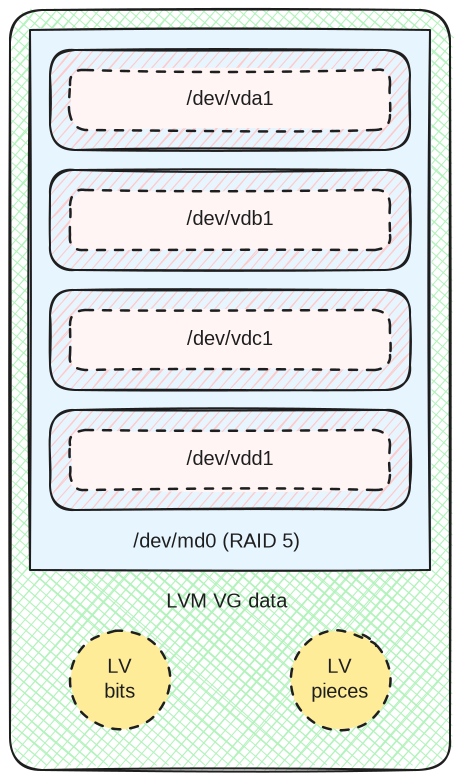


 I will run three HTTP servers on port 8080: two inside Incus
containers and one on the host machine. The OBI process will export
metrics and traces to an OpenTelemetry Collector, which will forward
traces to Jaeger and expose a metrics endpoint for Prometheus to scrape.
Grafana will also be added to visualize the collected metrics using
dashboards.
The aim of this approach is to instrument only one of the HTTP
servers while ignoring the others. This simulates an environment with
hundreds of Incus containers, where the objective is to debug a single
container without being overwhelmed by excessive and irrelevant
telemetry data from the rest of the system.
OBI can filter metrics and traces based on attribute values, but I
was not able to filter by process PID. This is where the OBI Collector
comes into play, it allows me to use a processor to filter telemetry
data by the PID of the process being instrumented.
These are the steps to reproduce this setup:
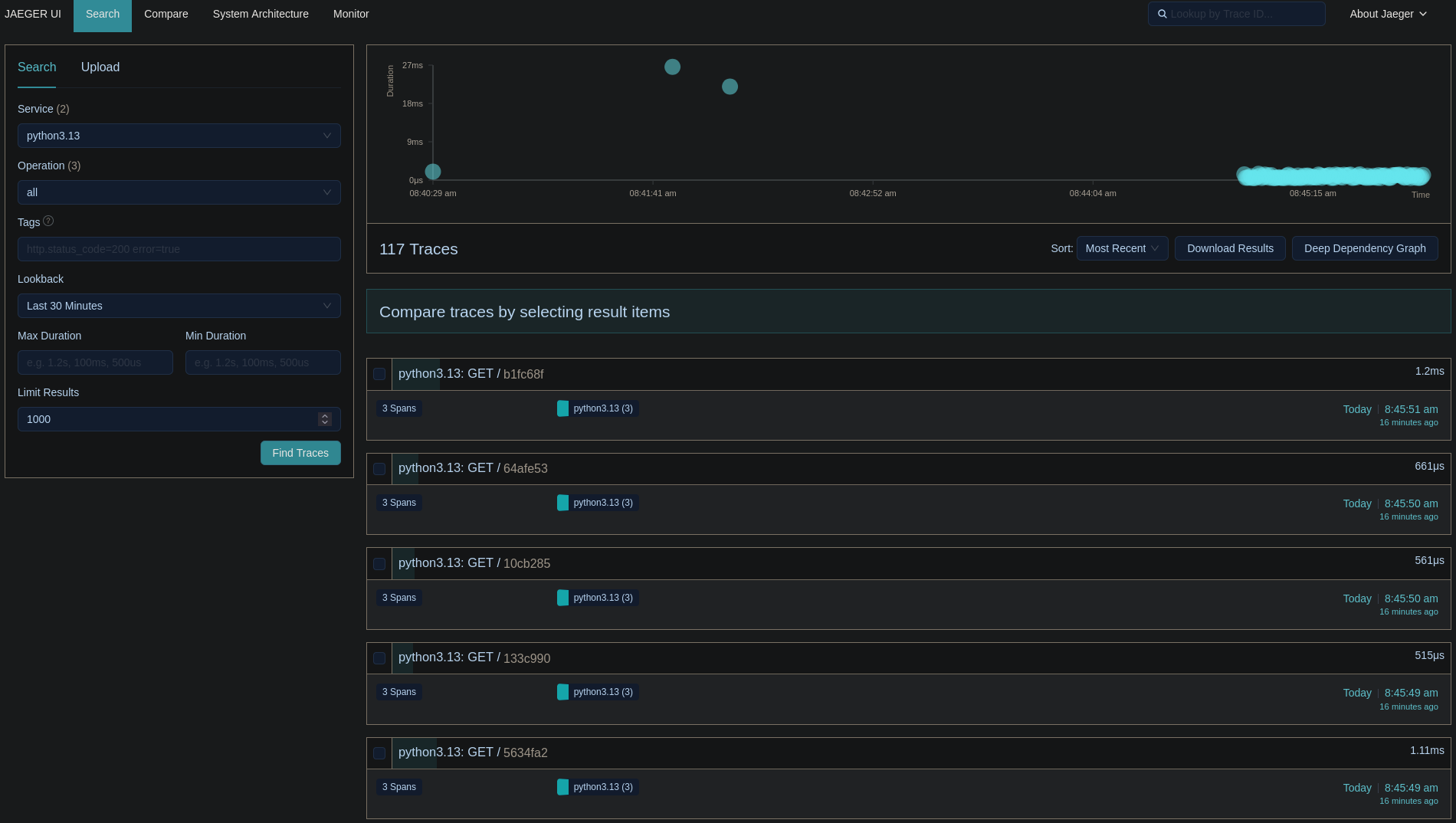

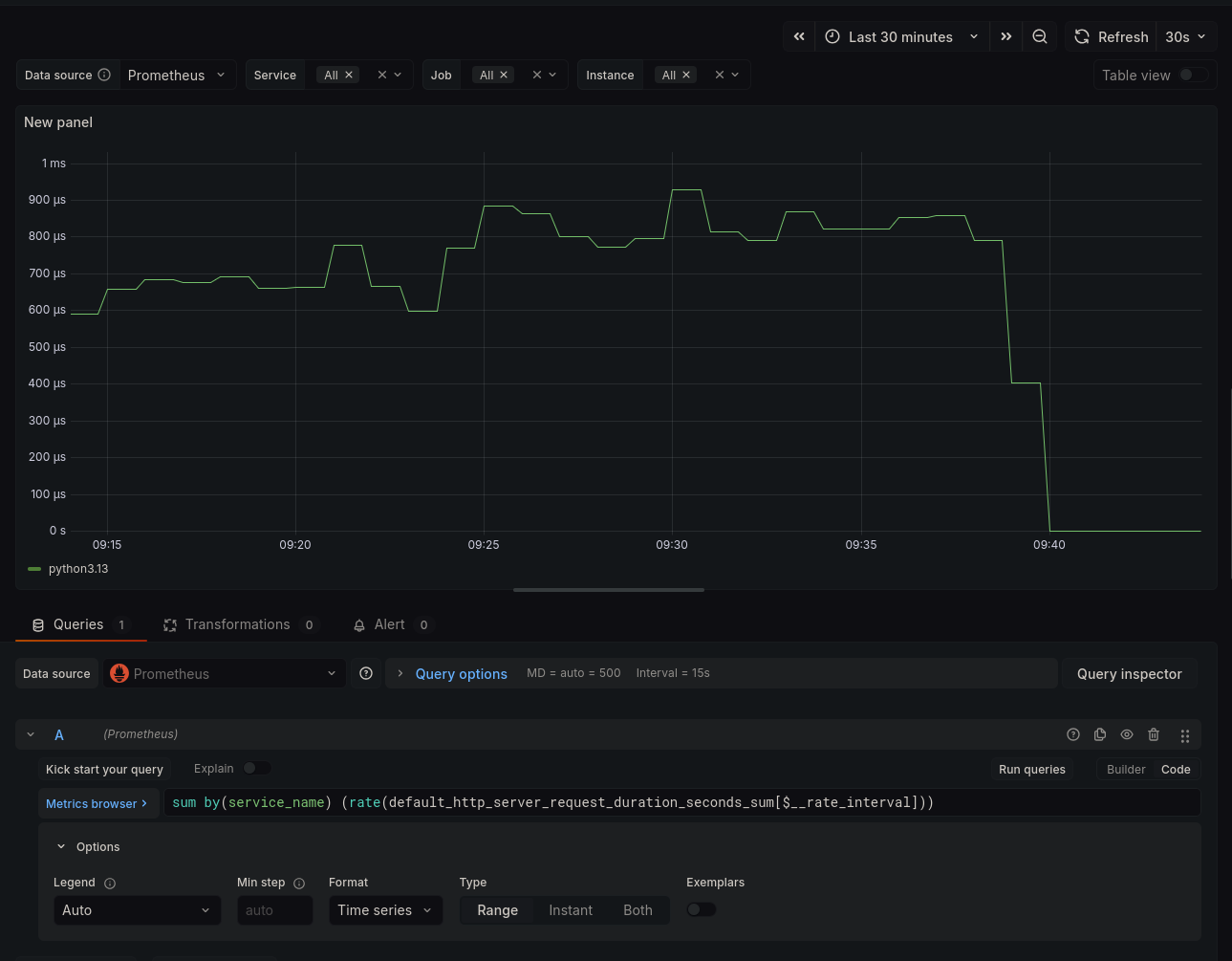
 Here are my favourite books and movies that I read and watched throughout 2025.








 We announced a public beta of
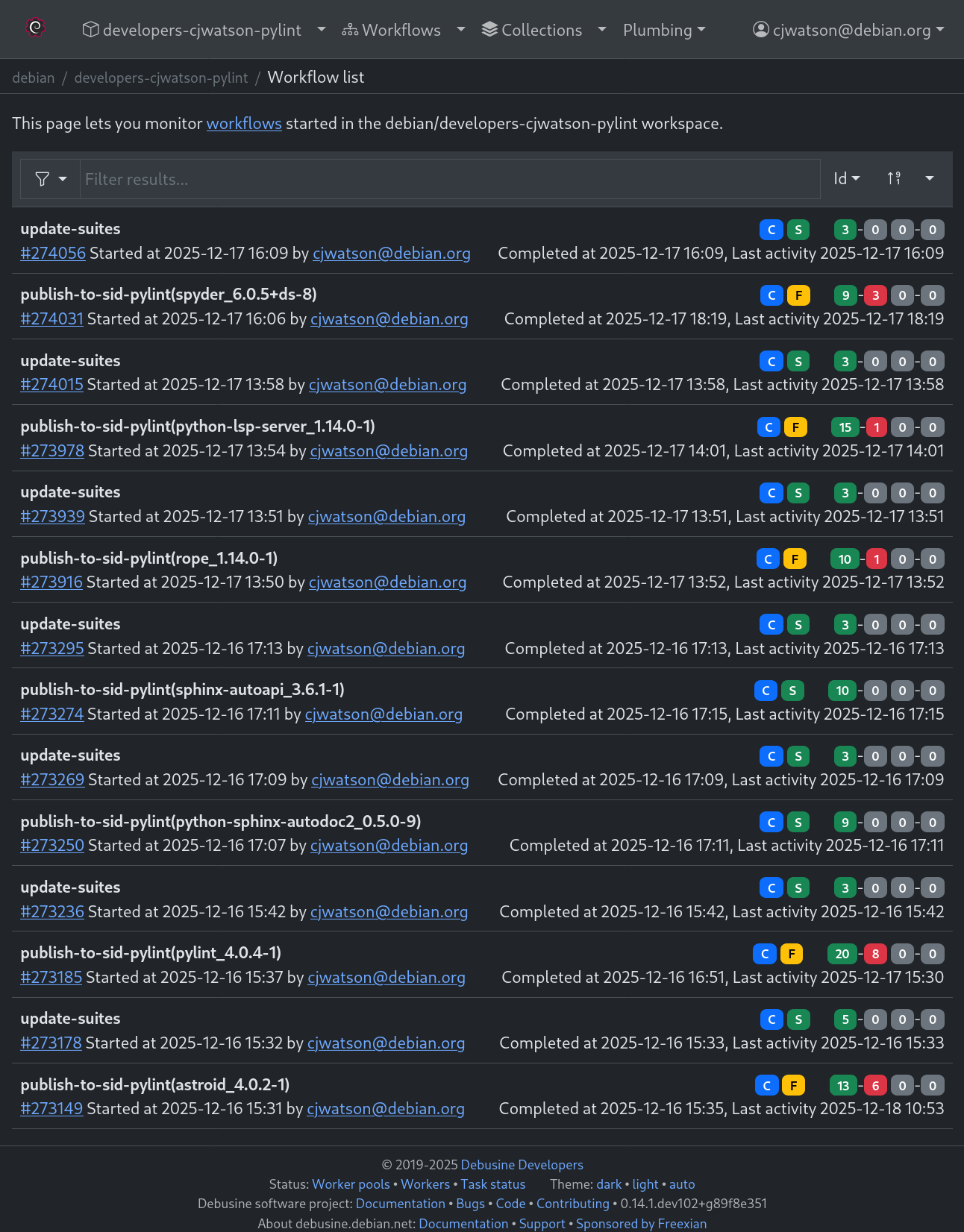 You can see that not all of the workflows are successful. This is because
we currently just show everything in every workflow; we don t consider
whether a task was retried and succeeded on the second try, or whether
there s now a newer version of a reverse-dependency so tests of the older
version should be disregarded, and so on. More fundamentally, you have to
look through each individual workflow, which is a bit of a pain: we plan to
add a dashboard that shows you the current state of a suite as a whole
rather than the current workflow-oriented view, but we haven t started on
that yet.
Drilling down into one of these workflows, it looks something like this:
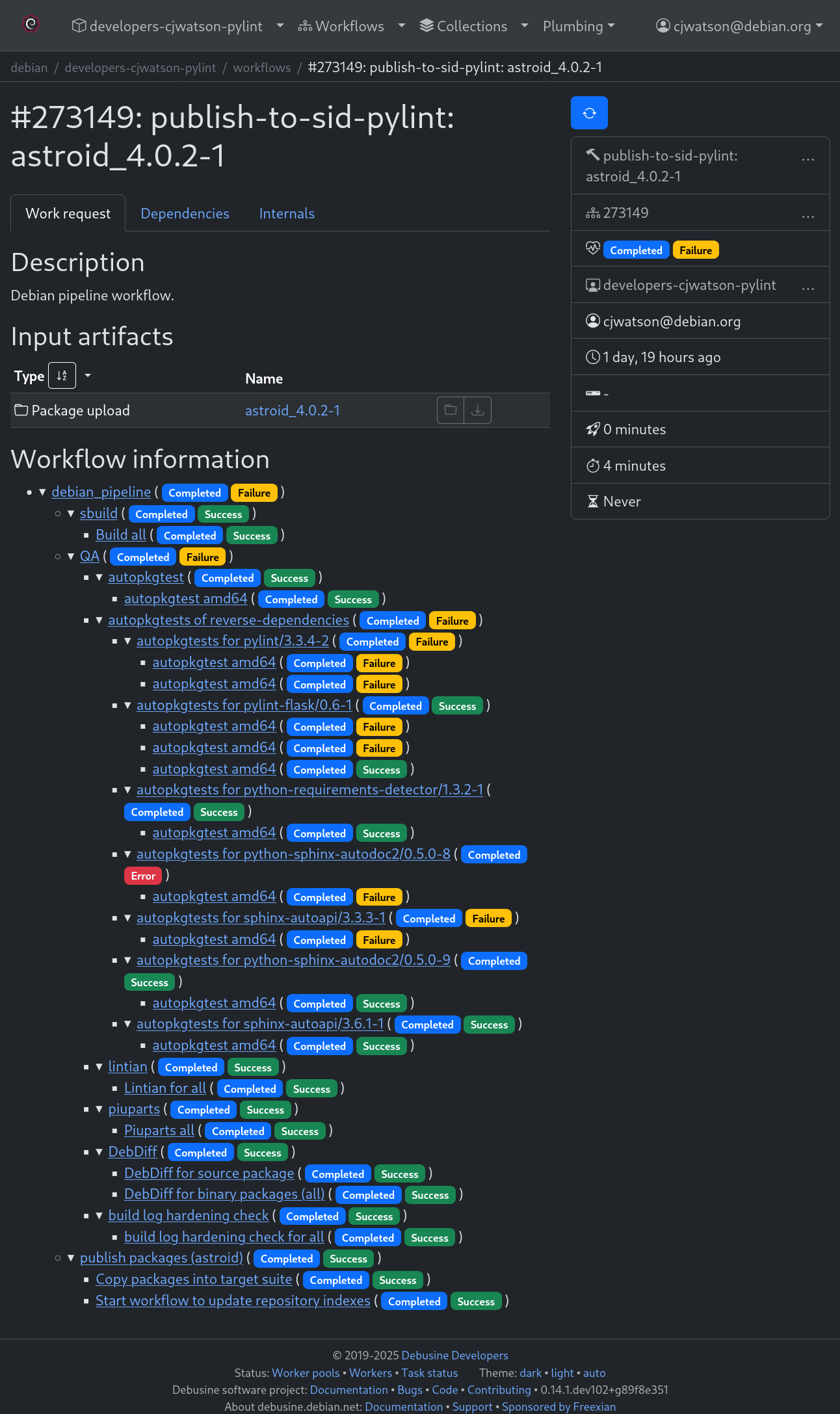 This was the first package I uploaded. The first pass of failures told me
about
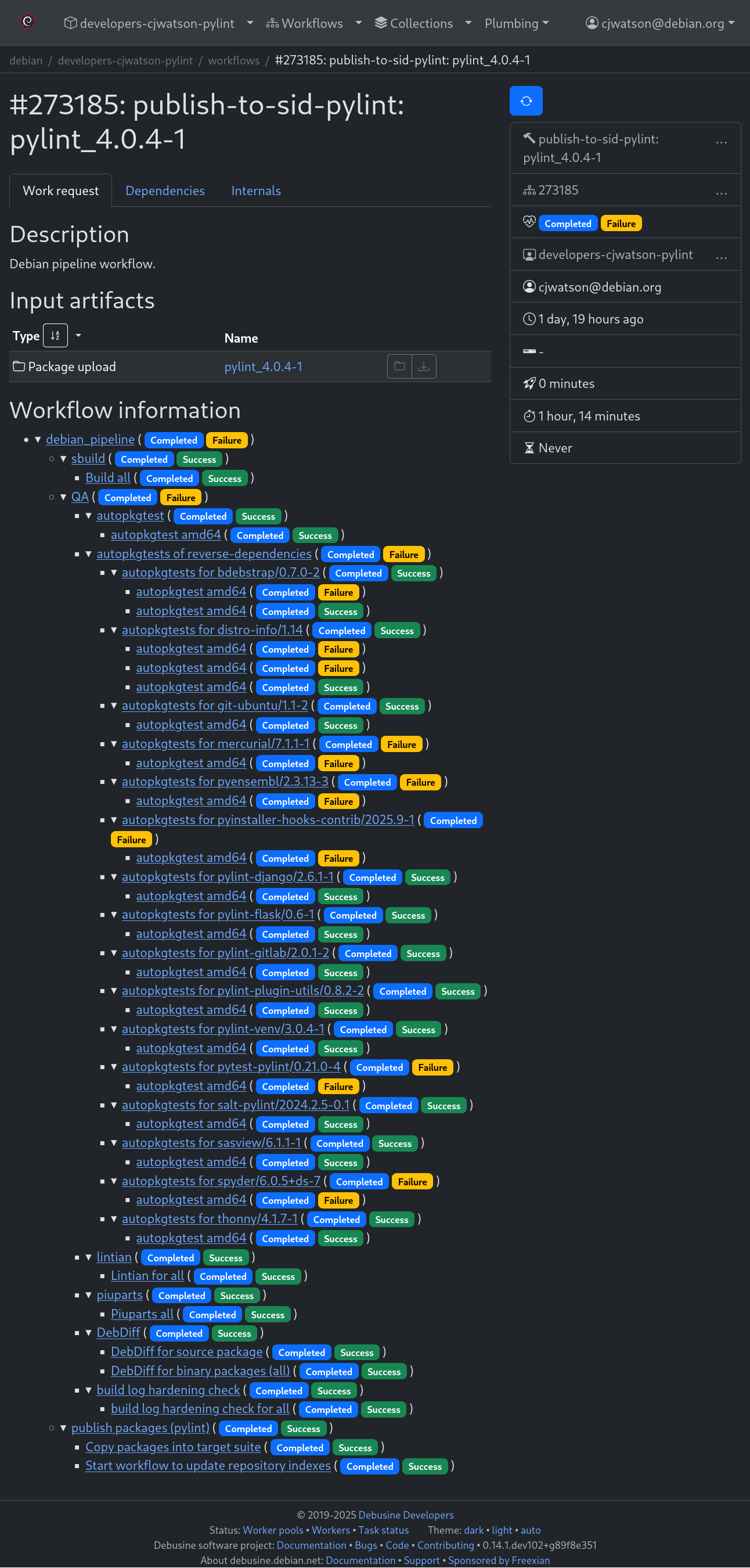 Again, there were some retries involved here, and also some cases where
packages were already failing in unstable so the failures weren t the fault
of my change; for now I had to go through and analyze these by hand, but
we ll soon have regression tracking to compare with reference runs and show
you where things have got better or worse.
After excluding those, that left
 We at
 Our Debian User Group met on September 27th for our first meeting
since our summer hiatus. As always, it was fun and productive!
Here's what we did:
pollo:
 Some of us ended up grabbing a drink after the event at
 We had 886 responses with status code 200 and 64 connections closed.
The backend terminated 64 connections while the load balancer still had
active requests directed to it.
Let's change the Load Balancer
 Great! Now all the requests worked.
This is a common issue, not specific to Envoy Proxy or the setup
shown earlier. Major cloud providers have all documented it.
 Even thought the success rate is 100%, the status code distribution
show some responses with status code 503. This is the case where is not
that obvious that the problem is related to idle timeout.
However, it's clear when we look the Envoy access logs:
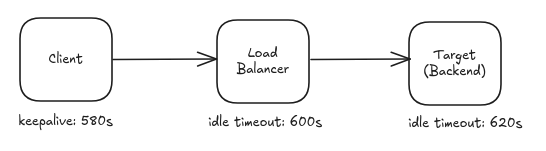 Key Takeaways:
 A shot of Jewel Changi. Photo by Ravi Dwivedi. Released under the CC-BY-SA 4.0.
 A shot of Sentosa Boardwalk. Photo by Ravi Dwivedi. Released under the CC-BY-SA 4.0.
 This is the hawker center we went to. Photo by Ravi Dwivedi. Released under the CC-BY-SA 4.0.
 Table littering at the hawker center was prohibited by law. Photo by Ravi Dwivedi. Released under the CC-BY-SA 4.0.
 Merlion from behind, giving a good view of Marina Bay Sands. Photo by Ravi Dwivedi. Released under the CC-BY-SA 4.0.









 Screenshot of Debian installer installing the base system.
