Search Results: "garden"

30 May 2021

Russ Allbery: Review: The Silver Chair

Review: The Silver Chair, by C.S. Lewis
Illustrator: Pauline Baynes
Series: Chronicles of Narnia #4
Publisher: Collier
Copyright: 1953
Printing: 1978
ISBN: 0-02-044250-5
Format: Mass market
Pages: 217
The Silver Chair is a sequel to The Voyage of the Dawn Treader and the fourth book of the Chronicles of Narnia in original publication order. (For more about publication order, see the introduction to my review of The Lion, the Witch and the Wardrobe.) Apart from a few references to The Voyage of the Dawn Treader at the start, it stands sufficiently on its own that you could read it without reading the other books, although I have no idea why you'd want to. We have finally arrived at my least favorite of the Narnia books and the one that I sometimes skipped during re-reads. (One of my objections to the new publication order is that it puts The Silver Chair and The Last Battle back-to-back, and I don't think you should do that to yourself as a reader.) I was hoping that there would be previously unnoticed depth to this book that would redeem it as an adult reader. Sadly, no; with one very notable exception, it's just not very good. MAJOR SPOILERS BELOW. The Silver Chair opens on the grounds of the awful school to which Eustace's parents sent him: Experiment House. That means it opens (and closes) with a more extended version of Lewis's rant about schools. I won't get into this in detail since it's mostly a framing device, but Lewis is remarkably vicious and petty. His snide contempt for putting girls and boys in the same school did not age well, nor did his emphasis at the end of the book that the incompetent head of the school is a woman. I also raised an eyebrow at holding up ordinary British schools as a model of preventing bullying. Thankfully, as Lewis says at the start, this is not a school story. This is prelude to Jill meeting Eustace and the two of them escaping the bullies via a magical door into Narnia. Unfortunately, that's the second place The Silver Chair gets off on the wrong foot. Jill and Eustace end up in what the reader of the series will recognize as Aslan's country and almost walk off the vast cliff at the end of the world, last seen from the bottom in The Voyage of the Dawn Treader. Eustace freaks out, Jill (who has a much better head for heights) goes intentionally close to the cliff in a momentary impulse of arrogance before realizing how high it is, Eustace tries to pull her back, and somehow Eustace falls over the edge. I do not have a good head for heights, and I wonder how much of it is due to this memorable scene. I certainly blame Lewis for my belief that pulling someone else back from the edge of a cliff can result in you being pushed off, something that on adult reflection makes very little sense but which is seared into my lizard brain. But worse, this sets the tone for the rest of the story: everything is constantly going wrong because Eustace and Jill either have normal human failings that are disproportionately punished or don't successfully follow esoteric and unreasonably opaque instructions from Aslan. Eustace is safe, of course; Aslan blows him to Narnia and then gives Jill instructions before sending her afterwards. (I suspect the whole business with the cliff was an authorial cheat to set up Jill's interaction with Aslan without Eustace there to explain anything.) She and Eustace have been summoned to Narnia to find the lost Prince, and she has to memorize four Signs that will lead her on the right path. Gah, the Signs. If you were the sort of kid that I was, you immediately went back and re-read the Signs several times to memorize them like Jill was told to. The rest of this book was then an exercise in anxious frustration. First, Eustace is an ass to Jill and refuses to even listen to the first Sign. They kind of follow the second but only with heavy foreshadowing that Jill isn't memorizing the Signs every day like she's supposed to. They mostly botch the third and have to backtrack to follow it. Meanwhile, the narrator is constantly reminding you that the kids (and Jill in particular) are screwing up their instructions. On re-reading, it's clear they're not doing that poorly given how obscure the Signs are, but the ominous foreshadowing is enough to leave a reader a nervous wreck. Worse, Eustace and Jill are just miserable to each other through the whole book. They constantly bicker and snipe, Eustace doesn't want to listen to her and blames her for everything, and the hard traveling makes it all worse. Lewis does know how to tell a satisfying redemption arc; one of the things I have always liked about Edmund's story is that he learns his lesson and becomes my favorite character in the subsequent stories. But, sadly, Eustace's redemption arc is another matter. He's totally different here than he was at the start of The Voyage of the Dawn Treader (to the degree that if he didn't have the same name in both books, I wouldn't recognize him as the same person), but rather than a better person he seems to have become a different sort of ass. There's no sign here of the humility and appreciation for friendship that he supposedly learned from his time as a dragon. On top of that, the story isn't very interesting. Rilian, the lost Prince, is a damp squib who talks in the irritating archaic accent that Lewis insists on using for all Narnian royalty. His story feels like Lewis lifted it from medieval Arthurian literature; most of it could be dropped into a collection of stories of knights of the Round Table without seeming out of place. When you have a country full of talking animals and weirdly fascinating bits of theology, it's disappointing to get a garden-variety story about an evil enchantress in which everyone is noble and tragic and extremely stupid. Thankfully, The Silver Chair has one important redeeming quality: Puddleglum. Puddleglum is a Marsh-wiggle, a bipedal amphibious sort who lives alone in the northern marshes. He's recruited by the owls to help the kids with their mission when they fail to get King Caspian's help after blowing the first Sign. Puddleglum is an absolute delight: endlessly pessimistic, certain the worst possible thing will happen at any moment, but also weirdly cheerful about it. I love Eeyore characters in general, but Puddleglum is even better because he gives the kids' endless bickering exactly the respect that it deserves.
"But we all need to be very careful about our tempers, seeing all the hard times we shall have to go through together. Won't do to quarrel, you know. At any rate, don't begin it too soon. I know these expeditions usually end that way; knifing one another, I shouldn't wonder, before all's done. But the longer we can keep off it "
It's even more obvious on re-reading that Puddleglum is the only effective member of the party. Jill has only a couple of moments where she gets the three of them past some obstacle. Eustace is completely useless; I can't remember a single helpful thing he does in the entire book. Puddleglum and his pessimistic determination, on the other hand, is right about nearly everything at each step. And he's the one who takes decisive action to break the Lady of the Green Kirtle's spell near the end. I was expecting a bit of sexism and (mostly in upcoming books) racism when re-reading these books as an adult given when they were written and who Lewis was, but what has caught me by surprise is the colonialism. Lewis is weirdly insistent on importing humans from England to fill all the important roles in stories, even stories that are entirely about Narnians. I know this is the inherent weakness of portal fantasy, but it bothers me how little Lewis believes in Narnians solving their own problems. The Silver Chair makes this blatantly obvious: if Aslan had just told Puddleglum the same information he told Jill and sent a Badger or a Beaver or a Mouse along with him, all the evidence in the book says the whole affair would have been sorted out with much less fuss and anxiety. Jill and Eustace are far more of a hindrance than a help, which makes for frustrating reading when they're supposedly the protagonists. The best part of this book is the underground bits, once they finally get through the first three Signs and stumble into the Lady's kingdom far below the surface. Rilian is a great disappointment, but the fight against the Lady's mind-altering magic leads to one of the great quotes of the series, on par with Reepicheep's speech in The Voyage of the Dawn Treader.
"Suppose we have only dreamed, or made up, all those things trees and grass and sun and moon and stars and Aslan himself. Suppose we have. Then all I can say is that, in that case, the made-up things seem a good deal more important than the real ones. Suppose this black pit of a kingdom of yours is the only world. Well, it strikes me as a pretty poor one. And that's a funny thing, when you come to think of it. We're just babies making up a game, if you're right. But four babies playing a game can make a play-world which licks your real world hollow. That's why I'm going to stand by the play world. I'm on Aslan's side even if there isn't any Aslan to lead it. I'm going to live as like a Narnian as I can even if there isn't any Narnia. So, thanking you kindly for our supper, if these two gentlemen and the young lady are ready, we're leaving your court at once and setting out in the dark to spend our lives looking for Overland. Not that our lives will be very long, I should think; but that's small loss if the world's as dull a place as you say."
This is Puddleglum, of course. And yes, I know that this is apologetics and Lewis is talking about Christianity and making the case for faith without proof, but put that aside for the moment, because this is still powerful life philosophy. It's a cynic's litany against cynicism. It's a pessimist's defense of hope. Suppose we have only dreamed all those things like justice and fairness and equality, community and consensus and collaboration, universal basic income and effective environmentalism. The dreary magic of the realists and the pragmatists say that such things are baby's games, silly fantasies. But you can still choose to live like you believe in them. In Alasdair Gray's reworking of a line from Dennis Lee, "work as if you live in the early days of a better nation." That's one moment that I'll always remember from this book. The other is after they kill the Lady of the Green Kirtle and her magic starts to fade, they have to escape from the underground caverns while surrounded by the Earthmen who served her and who they believe are hostile. It's a tense moment that turns into a delightful celebration when they realize that the Earthmen were just as much prisoners as the Prince was. They were forced from a far deeper land below, full of living metals and salamanders who speak from rivers of fire. It's the one moment in this book that I thought captured the magical strangeness of Narnia, that sense that there are wonderful things just out of sight that don't follow the normal patterns of medieval-ish fantasy. Other than a few great lines from Puddleglum and some moments in Aslan's country, the first 60% of this book is a loss and remarkably frustrating to read. The last 40% isn't bad, although I wish Rilian had any discernible character other than generic Arthurian knight. I don't know what Eustace is doing in this book at all other than providing a way for Jill to get into Narnia, and I wish Lewis had realized Puddleglum could be the protagonist. But as frustrating as The Silver Chair can be, I am still glad I re-read it. Puddleglum is one of the truly memorable characters of children's literature, and it's a shame he's buried in a weak mid-series book. Followed, in the original publication order, by The Horse and His Boy. Rating: 6 out of 10

11 April 2021

Vishal Gupta: Sikkim 101 for Backpackers

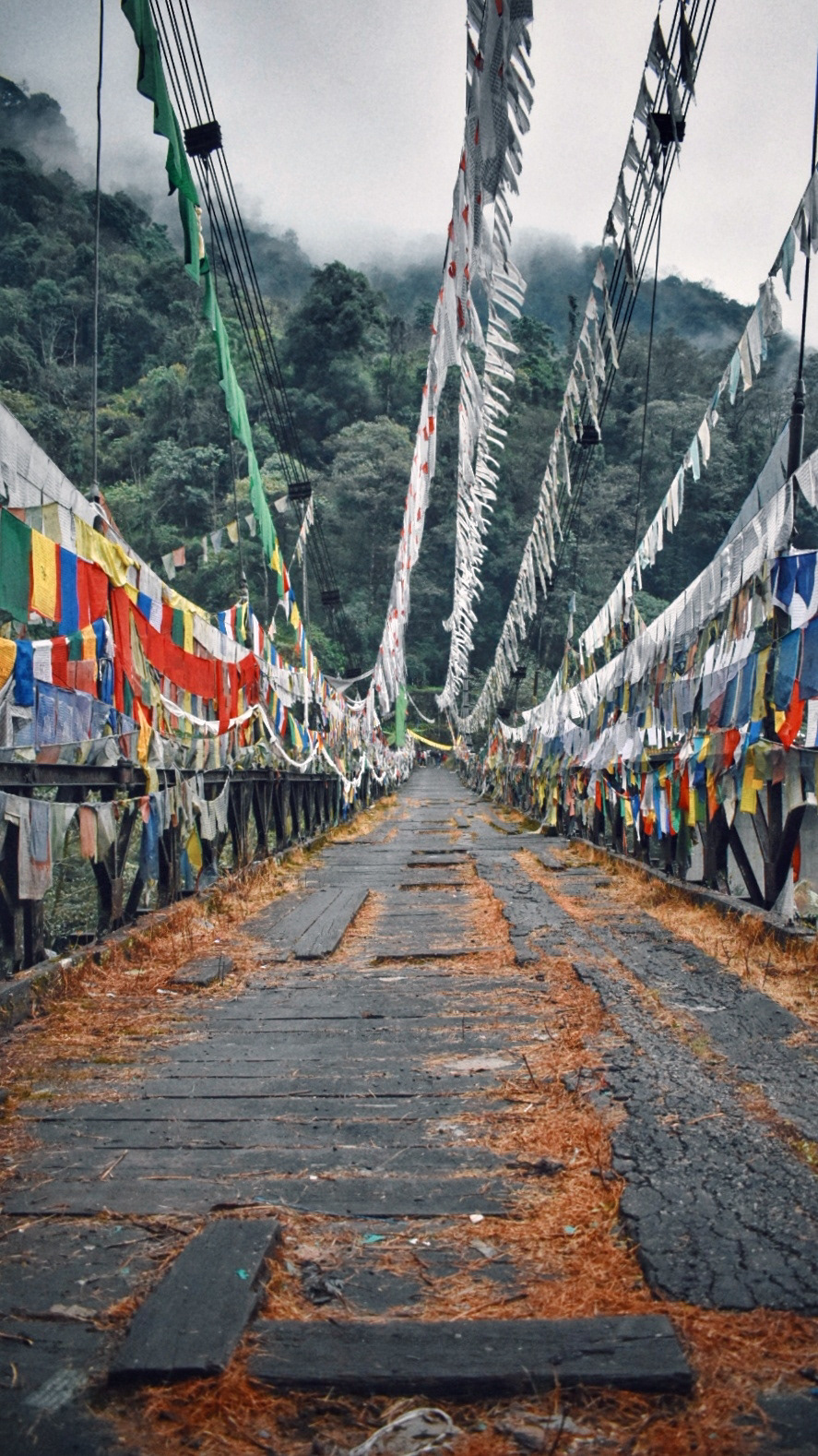
Host to Kanchenjunga, the world s third-highest mountain peak and the endangered Red Panda, Sikkim is a state in northeastern India. Nestled between Nepal, Tibet (China), Bhutan and West Bengal (India), the state offers a smorgasbord of cultures and cuisines. That said, it s hardly surprising that the old spice route meanders through western Sikkim, connecting Lhasa with the ports of Bengal. Although the latter could also be attributed to cardamom (kali elaichi), a perennial herb native to Sikkim, which the state is the second-largest producer of, globally. Lastly, having been to and lived in India, all my life, I can confidently say Sikkim is one of the cleanest & safest regions in India, making it ideal for first-time backpackers.

Brief History
  • 17th century: The Kingdom of Sikkim is founded by the Namgyal dynasty and ruled by Buddhist priest-kings known as the Chogyal.
  • 1890: Sikkim becomes a princely state of British India.
  • 1947: Sikkim continues its protectorate status with the Union of India, post-Indian-independence.
  • 1973: Anti-royalist riots take place in front of the Chogyal's palace, by Nepalis seeking greater representation.
  • 1975: Referendum leads to the deposition of the monarchy and Sikkim joins India as its 22nd state.
Languages
  • Official: English, Nepali, Sikkimese/Bhotia and Lepcha
  • Though Hindi and Nepali share the same script (Devanagari), they are not mutually intelligible. Yet, most people in Sikkim can understand and speak Hindi.
Ethnicity
  • Nepalis: Migrated in large numbers (from Nepal) and soon became the dominant community
  • Bhutias: People of Tibetan origin. Major inhabitants in Northern Sikkim.
  • Lepchas: Original inhabitants of Sikkim

Food
  • Tibetan/Nepali dishes (mostly consumed during winter)
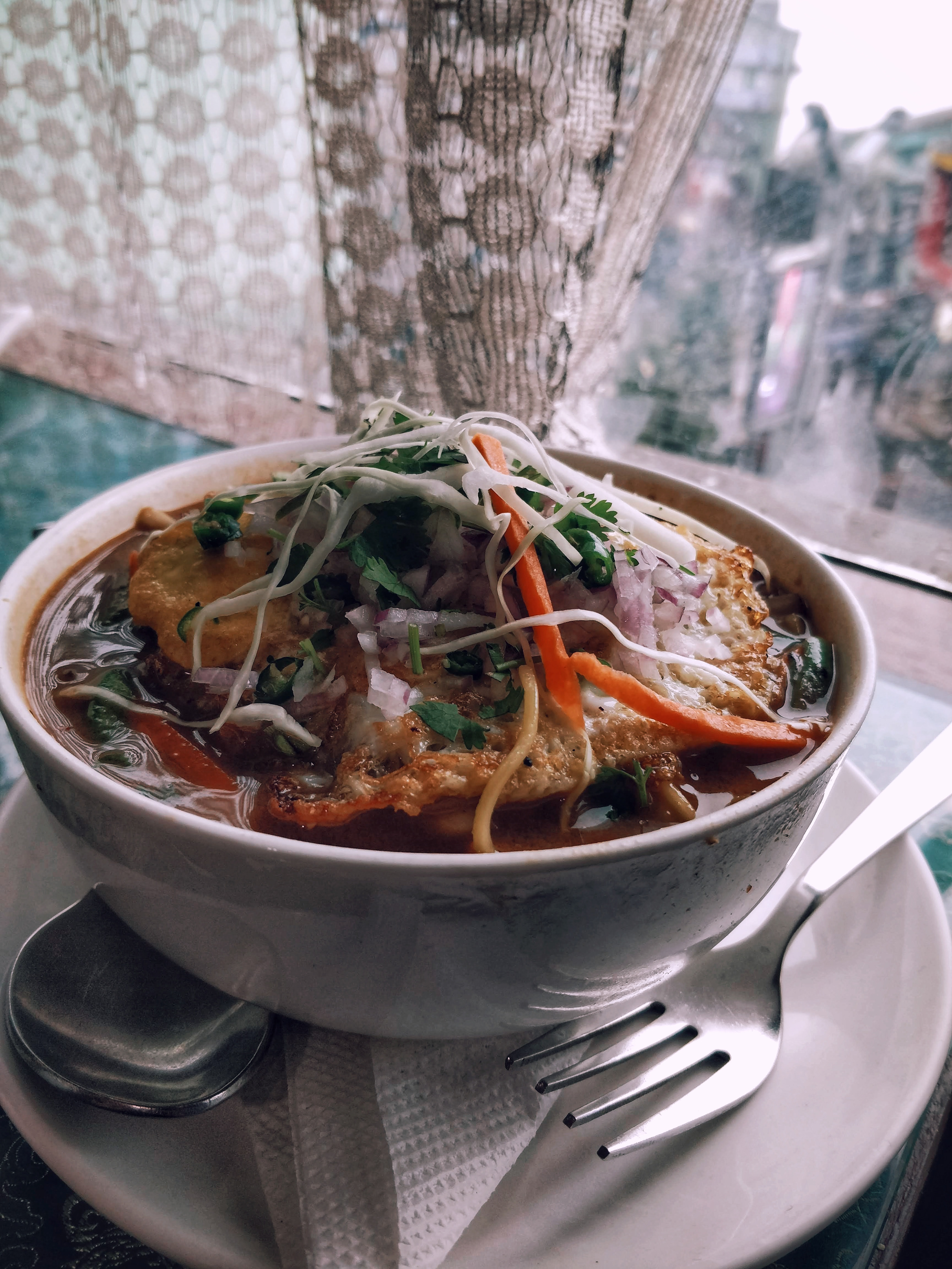
    • Thukpa: Noodle soup, rich in spices and vegetables. Usually contains some form of meat. Common variations: Thenthuk and Gyathuk
    • Momos: Steamed or fried dumplings, usually with a meat filling.
    • Saadheko: Spicy marinated chicken salad.
    • Gundruk Soup: A soup made from Gundruk, a fermented leafy green vegetable.
    • Sinki : A fermented radish tap-root product, traditionally consumed as a base for soup and as a pickle. Eerily similar to Kimchi.
  • While pork and beef are pretty common, finding vegetarian dishes is equally easy.
  • Staple: Dal-Bhat with Subzi. Rice is a lot more common than wheat (rice) possibly due to greater carb content and proximity to West Bengal, India s largest producer of Rice.
  • Good places to eat in Gangtok
    • Hamro Bhansa Ghar, Nimtho (Nepali)
    • Taste of Tibet
    • Dragon Wok (Chinese & Japanese)

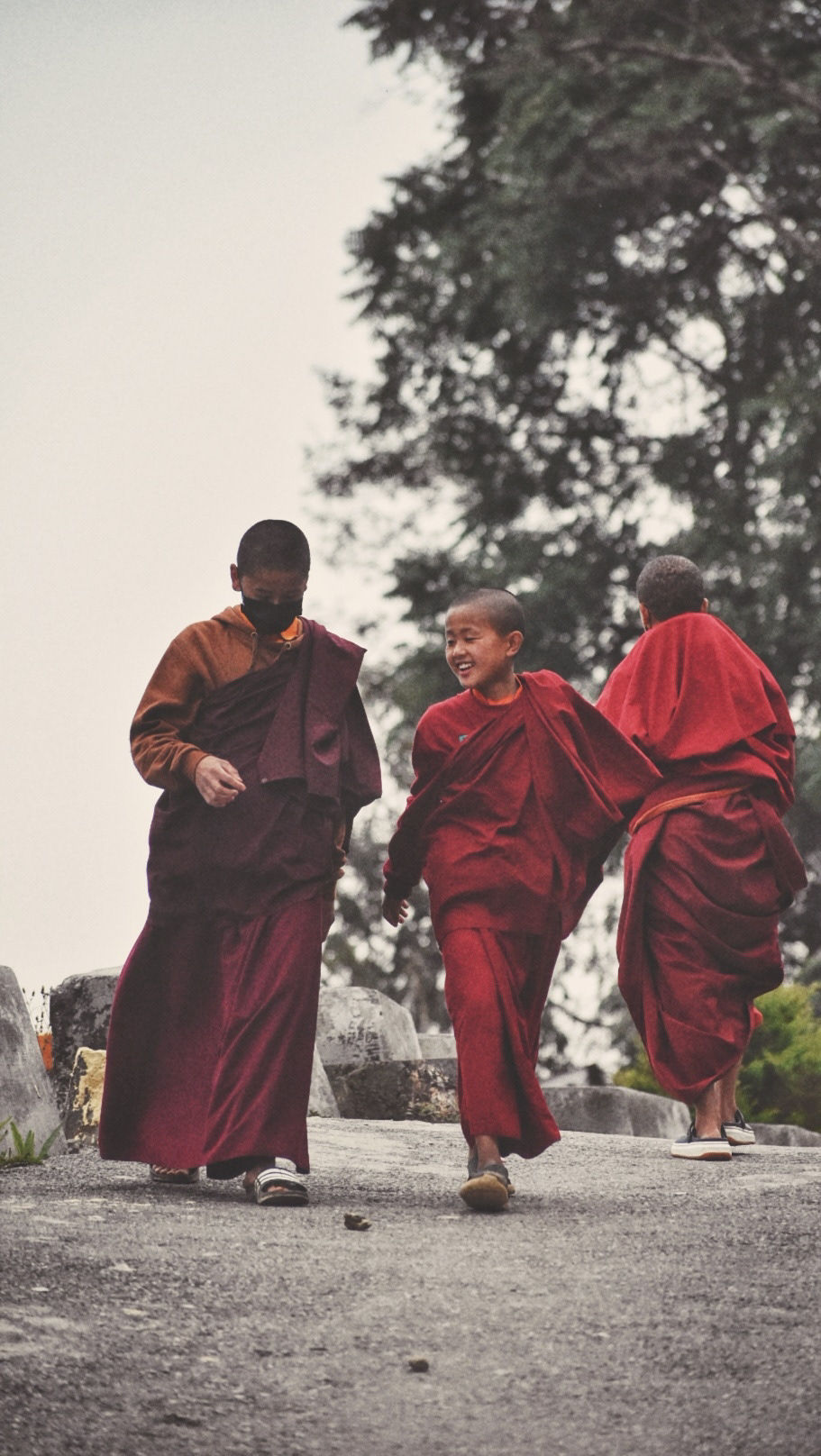
Buddhism in Sikkim
  • Bayul Demojong (Sikkim), is the most sacred Land in the Himalayas as per the belief of the Northern Buddhists and various religious texts.
  • Sikkim was blessed by Guru Padmasambhava, the great Buddhist saint who visited Sikkim in the 8th century and consecrated the land.
  • However, Buddhism is said to have reached Sikkim only in the 17th century with the arrival of three Tibetan monks viz. Rigdzin Goedki Demthruchen, Mon Kathok Sonam Gyaltshen & Rigdzin Legden Je at Yuksom. Together, they established a Buddhist monastery.
  • In 1642 they crowned Phuntsog Namgyal as the first monarch of Sikkim and gave him the title of Chogyal, or Dharma Raja.
  • The faith became popular through its royal patronage and soon many villages had their own monastery.
  • Today Sikkim has over 200 monasteries.

Major monasteries
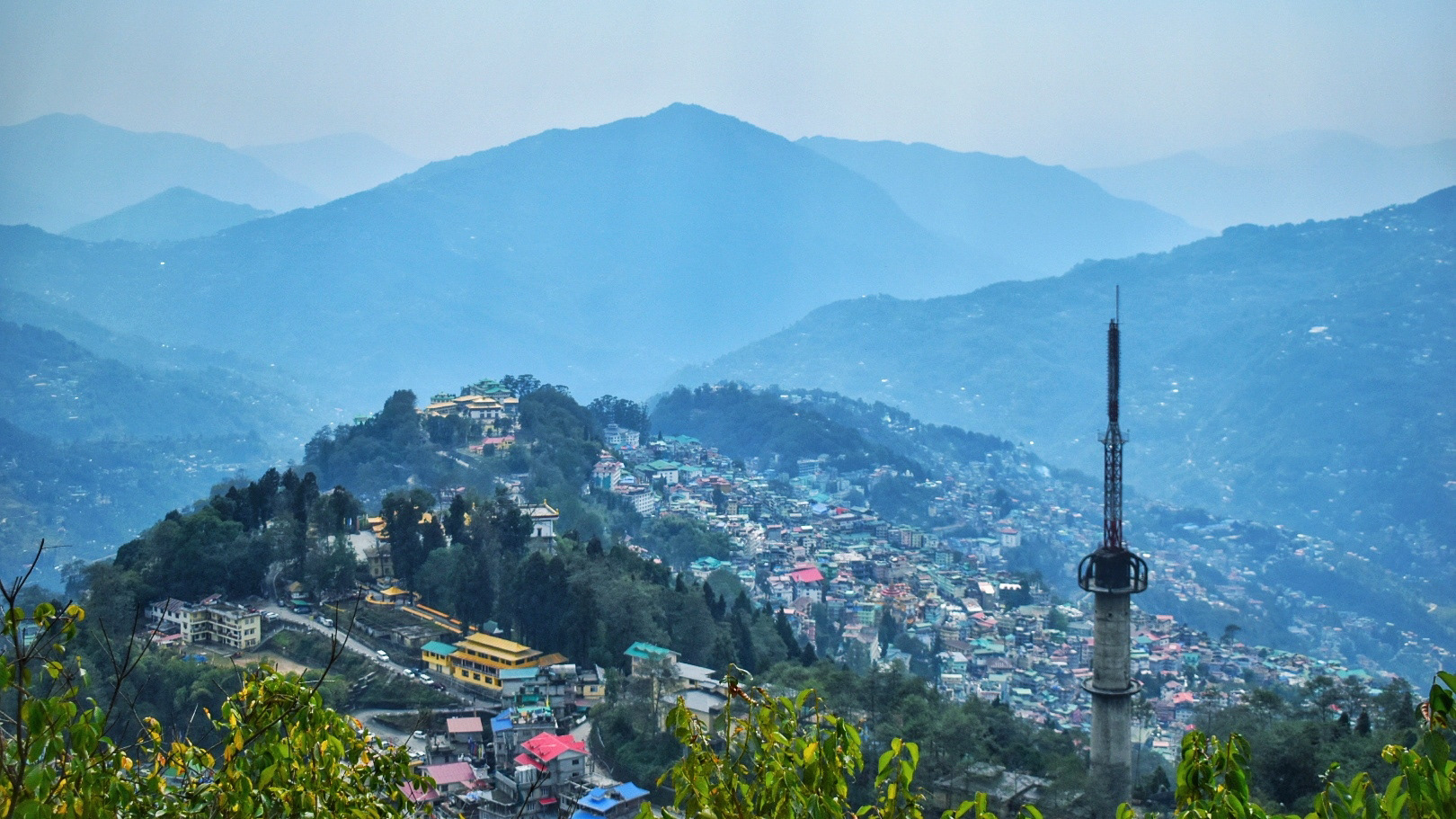
  • Rumtek Monastery, 20Km from Gangtok
  • Lingdum/Ranka Monastery, 17Km from Gangtok
  • Phodong Monastery, 28Km from Gangtok
  • Ralang Monastery, 10Km from Ravangla
  • Tsuklakhang Monastery, Royal Palace, Gangtok
  • Enchey Monastery, Gangtok
  • Tashiding Monastery, 35Km from Ravangla


Reaching Sikkim
  • Gangtok, being the capital, is easiest to reach amongst other regions, by public transport and shared cabs.
  • By Air:
    • Pakyong (PYG) :
      • Nearest airport from Gangtok (about 1 hour away)
      • Tabletop airport
      • Reserved cabs cost around INR 1200.
      • As of Apr 2021, the only flights to PYG are from IGI (Delhi) and CCU (Kolkata).
    • Bagdogra (IXB) :
      • About 20 minutes from Siliguri and 4 hours from Gangtok.
      • Larger airport with flights to most major Indian cities.
      • Reserved cabs cost about INR 3000. Shared cabs cost about INR 350.
  • By Train:
    • New Jalpaiguri (NJP) :
      • About 20 minutes from Siliguri and 4 hours from Gangtok.
      • Reserved cabs cost about INR 3000. Shared cabs from INR 350.
  • By Road:
    • NH10 connects Siliguri to Gangtok
    • If you can t find buses plying to Gangtok directly, reach Siliguri and then take a cab to Gangtok.
  • Sikkim Nationalised Transport Div. also runs hourly buses between Siliguri and Gangtok and daily buses on other common routes. They re cheaper than shared cabs.
  • Wizzride also operates shared cabs between Siliguri/Bagdogra/NJP, Gangtok and Darjeeling. They cost about the same as shared cabs but pack in half as many people in luxury cars (Innova, Xylo, etc.) and are hence more comfortable.

Gangtok
  • Time needed: 1D/1N
  • Places to visit:
    • Hanuman Tok
    • Ganesh Tok
    • Tashi View Point [6,800ft]
    • MG Marg
    • Sikkim Zoo
    • Gangtok Ropeway
    • Enchey Monastery
    • Tsuklakhang Palace & Monastery
  • Hostels: Tagalong Backpackers (would strongly recommend), Zostel Gangtok
  • Places to chill: Travel Cafe, Caf Live & Loud and Gangtok Groove
  • Places to shop: Lal Market and MG Marg

Getting Around
  • Taxis operate on a reserved or shared basis. In case of the latter, you can pool with other commuters your taxis will pick up and drop en-route.
  • Naturally shared taxis only operate on popular routes. The easiest way to get around Gangtok is to catch a shared cab from MG Marg.
  • Reserved taxis for Gangtok sightseeing cost around INR 1000-1500, depending upon the spots you d like to see
  • Key taxi/bus stands :
    • Deorali stand: For Darjeeling, Siliguri, Kalimpong
    • Vajra stand: For North & East Sikkim (Tsomgo Lake & Nathula)
    • Rumtek taxi: For Ravangla, Pelling, Namchi, Geyzing, Jorethang and Singtam.
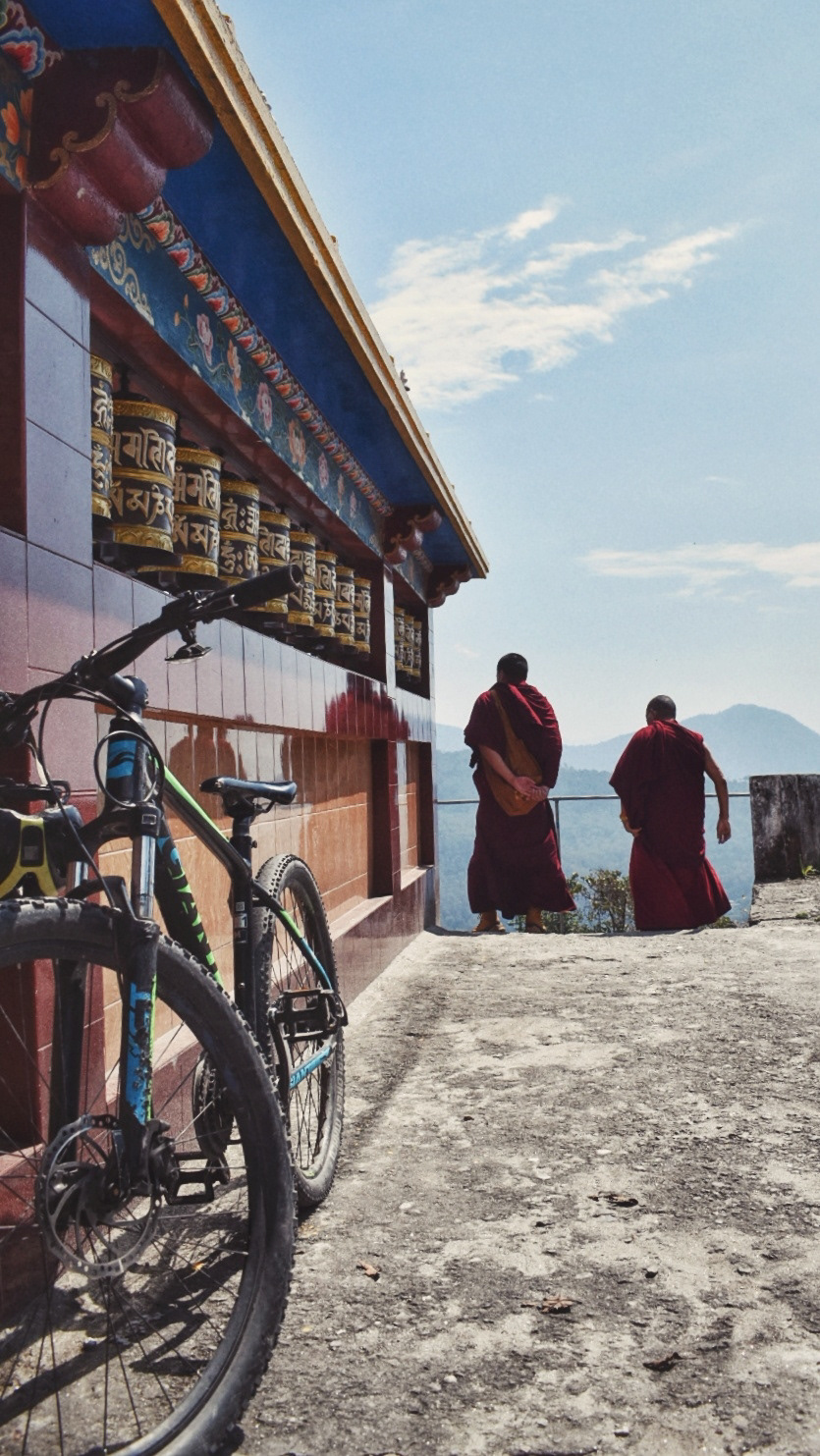
Exploring Gangtok on an MTB

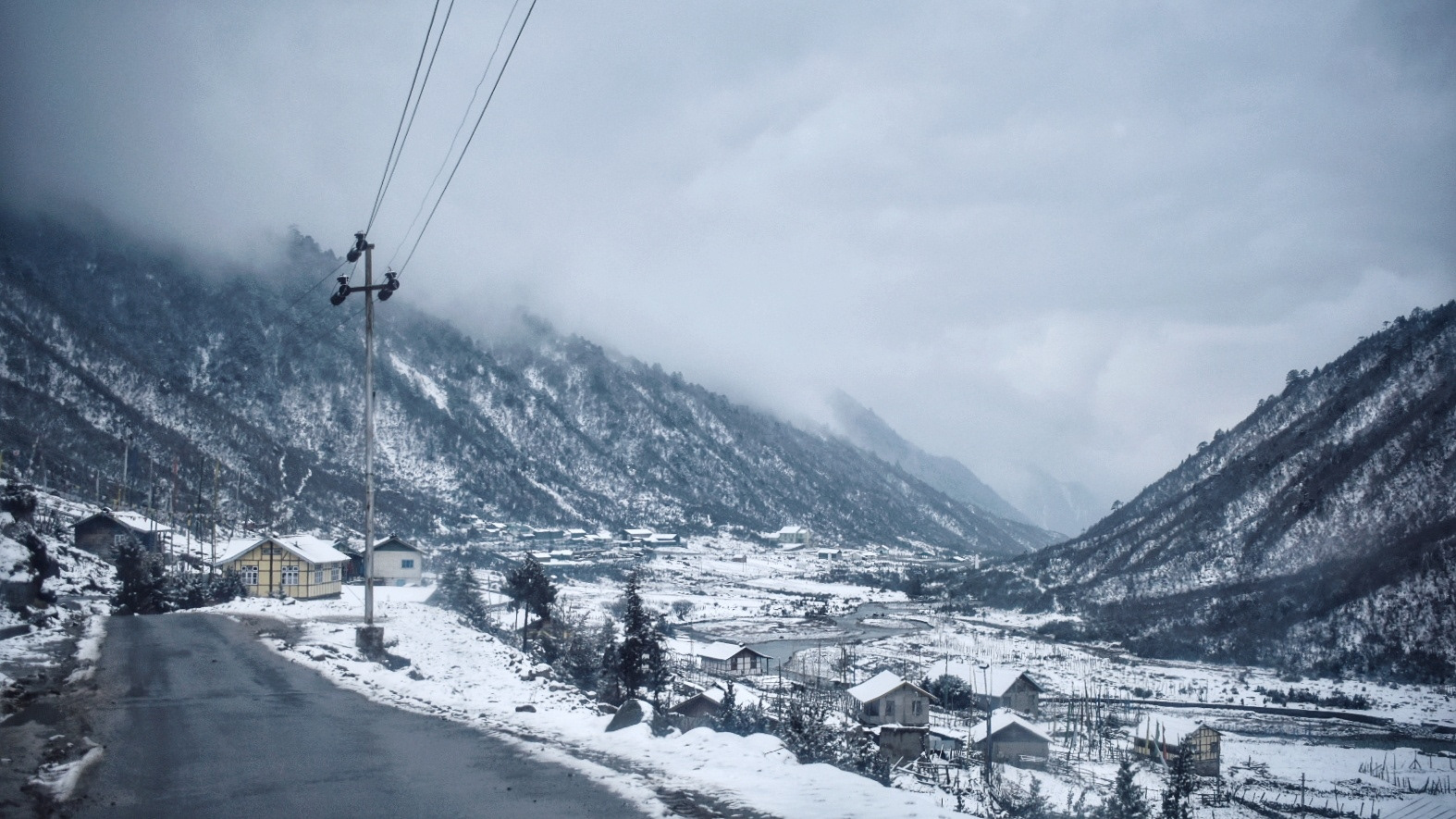
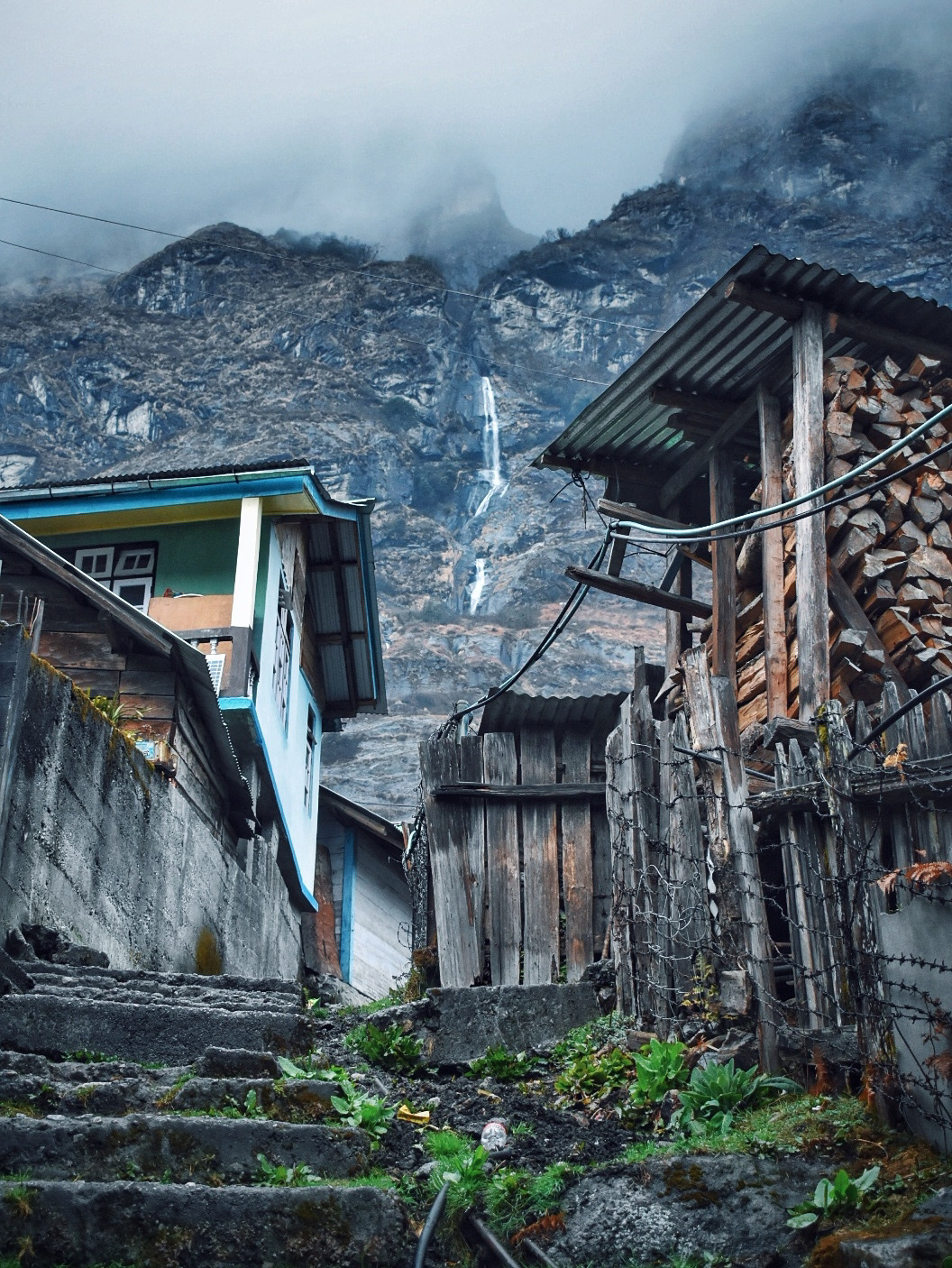
North Sikkim
  • The easiest & most economical way to explore North Sikkim is the 3D/2N package offered by shared-cab drivers.
  • This includes food, permits, cab rides and accommodation (1N in Lachen and 1N in Lachung)
  • The accommodation on both nights are at homestays with bare necessities, so keep your hopes low.
  • In the spirit of sustainable tourism, you ll be asked to discard single-use plastic bottles, so please carry a bottle that you can refill along the way.
  • Zero Point and Gurdongmer Lake are snow-capped throughout the year
3D/2N Shared-cab Package Itinerary
  • Day 1
    • Gangtok (10am) - Chungthang - Lachung (stay)
  • Day 2
    • Pre-lunch : Lachung (6am) - Yumthang Valley [12,139ft] - Zero Point - Lachung [15,300ft]
    • Post-lunch : Lachung - Chungthang - Lachen (stay)
  • Day 3
    • Pre-lunch : Lachen (5am) - Kala Patthar - Gurdongmer Lake [16,910ft] - Lachen
    • Post-lunch : Lachen - Chungthang - Gangtok (7pm)
  • This itinerary is idealistic and depends on the level of snowfall.
  • Some drivers might switch up Day 2 and 3 itineraries by visiting Lachen and then Lachung, depending upon the weather.
  • Areas beyond Lachen & Lachung are heavily militarized since the Indo-China border is only a few miles away.

East Sikkim

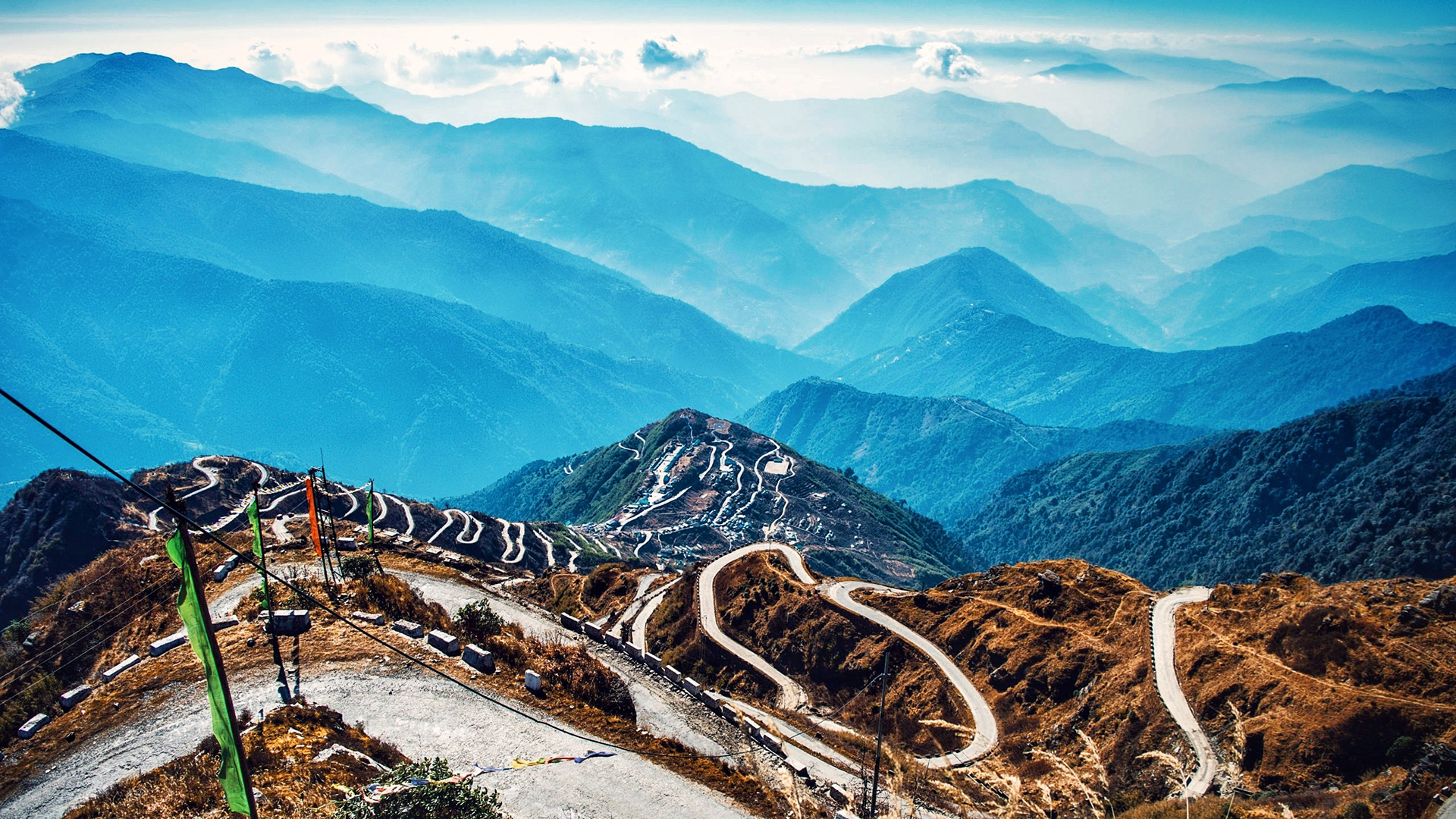
Zuluk and Silk Route
  • Time needed: 2D/1N
  • Zuluk [9,400ft] is a small hamlet with an excellent view of the eastern Himalayan range including the Kanchenjunga.
  • Was once a transit point to the historic Silk Route from Tibet (Lhasa) to India (West Bengal).
  • The drive from Gangtok to Zuluk takes at least four hours. Hence, it makes sense to spend the night at a homestay and space out your trip to Zuluk

Tsomgo Lake and Nathula
  • Time Needed : 1D
  • A Protected Area Permit is required to visit these places, due to their proximity to the Chinese border
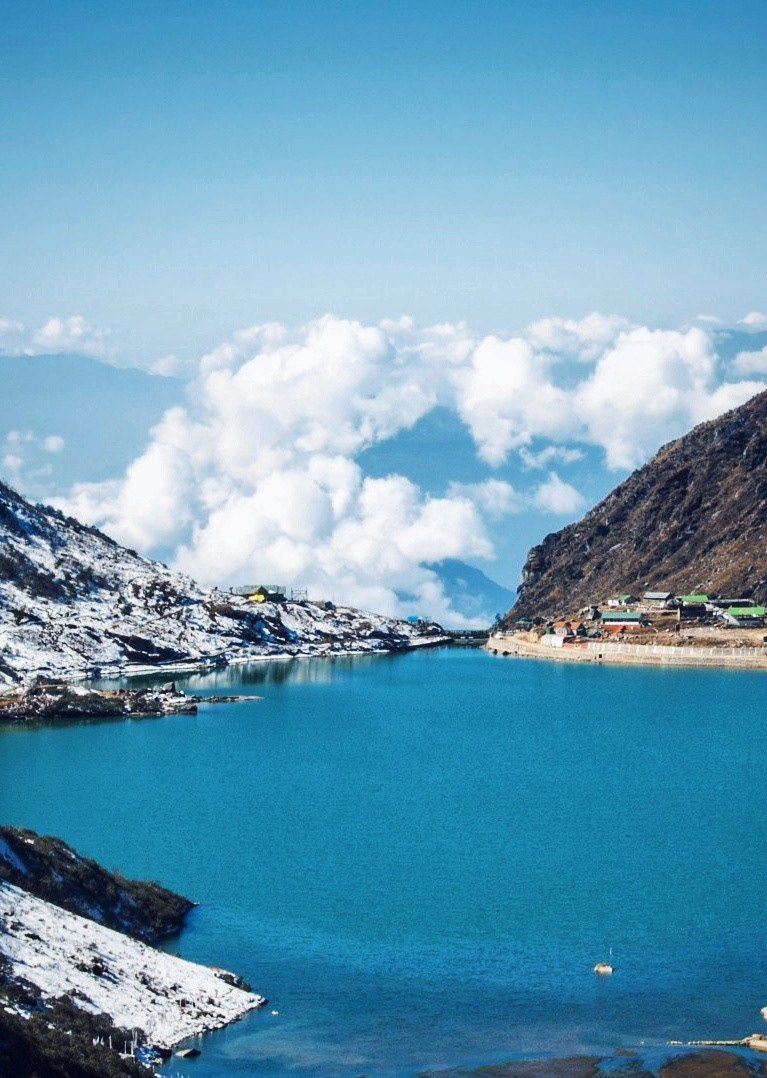
  • Tsomgo/Chhangu Lake [12,313ft]
    • Glacial lake, 40 km from Gangtok.
    • Remains frozen during the winter season.
    • You can also ride on the back of a Yak for INR 300
  • Baba Mandir
    • An old temple dedicated to Baba Harbhajan Singh, a Sepoy in the 23rd Regiment, who died in 1962 near the Nathu La during Indo China war.
  • Nathula Pass [14,450ft]
    • Located on the Indo-Tibetan border crossing of the Old Silk Route, it is one of the three open trading posts between India and China.
    • Plays a key role in the Sino-Indian Trade and also serves as an official Border Personnel Meeting(BPM) Point.
    • May get cordoned off by the Indian Army in event of heavy snowfall or for other security reasons.


West Sikkim
  • Time needed: 3N/1N
  • Hostels at Pelling : Mochilerro Ostillo

Itinerary

Day 1: Gangtok - Ravangla - Pelling
  • Leave Gangtok early, for Ravangla through the Temi Tea Estate route.
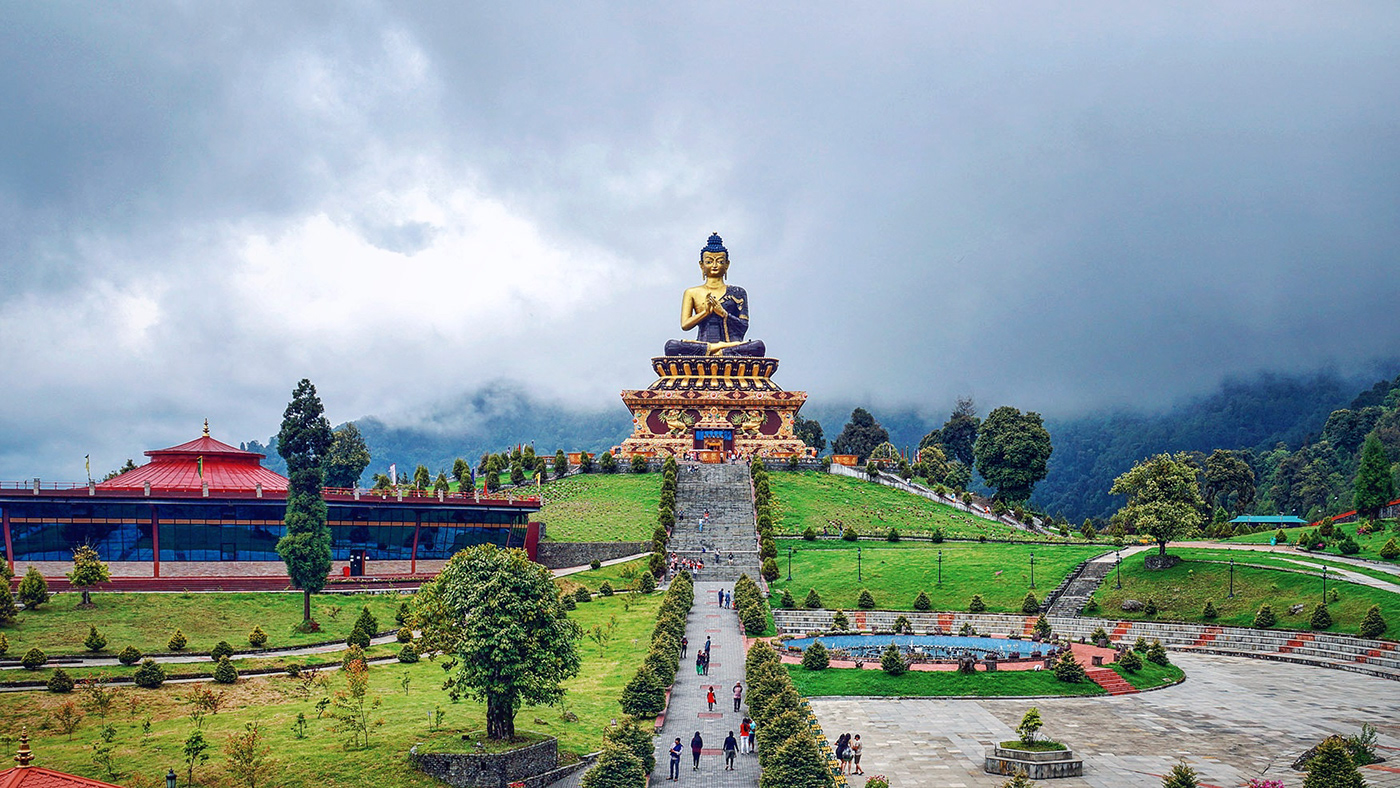
  • Spend some time at the tea garden and then visit Buddha Park at Ravangla
  • Head to Pelling from Ravangla

Day 2: Pelling sightseeing
  • Hire a cab and visit Skywalk, Pemayangtse Monastery, Rabdentse Ruins, Kecheopalri Lake, Kanchenjunga Falls.

Day 3: Pelling - Gangtok/Siliguri
  • Wake up early to catch a glimpse of Kanchenjunga at the Pelling Helipad around sunrise
  • Head back to Gangtok on a shared-cab
  • You could take a bus/taxi back to Siliguri if Pelling is your last stop.

Darjeeling
  • In my opinion, Darjeeling is lovely for a two-day detour on your way back to Bagdogra/Siliguri and not any longer (unless you re a Bengali couple on a honeymoon)
  • Once a part of Sikkim, Darjeeling was ceded to the East India Company after a series of wars, with Sikkim briefly receiving a grant from EIC for gifting Darjeeling to the latter
  • Post-independence, Darjeeling was merged with the state of West Bengal.

Itinerary

Day 1 :
  • Take a cab from Gangtok to Darjeeling (shared-cabs cost INR 300 per seat)
  • Reach Darjeeling by noon and check in to your Hostel. I stayed at Hideout.
  • Spend the evening visiting either a monastery (or the Batasia Loop), Nehru Road and Mall Road.
  • Grab dinner at Glenary whilst listening to live music.

Day 2:
  • Wake up early to catch the sunrise and a glimpse of Kanchenjunga at Tiger Hill. Since Tiger Hill is 10km from Darjeeling and requires a permit, book your taxi in advance.
  • Alternatively, if you don t want to get up at 4am or shell out INR1500 on the cab to Tiger Hill, walk to the Kanchenjunga View Point down Mall Road
  • Next, queue up outside Keventers for breakfast with a view in a century-old cafe
  • Get a cab at Gandhi Road and visit a tea garden (Happy Valley is the closest) and the Ropeway. I was lucky to meet 6 other backpackers at my hostel and we ended up pooling the cab at INR 200 per person, with INR 1400 being on the expensive side, but you could bargain.
  • Get lunch, buy some tea at Golden Tips, pack your bags and hop on a shared-cab back to Siliguri. It took us about 4hrs to reach Siliguri, with an hour to spare before my train.
  • If you ve still got time on your hands, then check out the Peace Pagoda and the Darjeeling Himalayan Railway (Toy Train). At INR 1500, I found the latter to be too expensive and skipped it.


Tips and hacks
  • Download offline maps, especially when you re exploring Northern Sikkim.
  • Food and booze are the cheapest in Gangtok. Stash up before heading to other regions.
  • Keep your Aadhar/Passport handy since you need permits to travel to North & East Sikkim.
  • In rural areas and some cafes, you may get to try Rhododendron Wine, made from Rhododendron arboreum a.k.a Gurans. Its production is a little hush-hush since the flower is considered holy and is also the National Flower of Nepal.
  • If you don t want to invest in a new jacket, boots or a pair of gloves, you can always rent them at nominal rates from your hotel or little stores around tourist sites.
  • Check the weather of a region before heading there. Low visibility and precipitation can quite literally dampen your experience.
  • Keep your itinerary flexible to accommodate for rest and impromptu plans.
  • Shops and restaurants close by 8pm in Sikkim and Darjeeling. Plan for the same.

Carry
  • a couple of extra pairs of socks (woollen, if possible)
  • a pair of slippers to wear indoors
  • a reusable water bottle
  • an umbrella
  • a power bank
  • a couple of tablets of Diamox. Helps deal with altitude sickness
  • extra clothes and wet bags since you may not get a chance to wash/dry your clothes
  • a few passport size photographs

Shared-cab hacks
  • Intercity rides can be exhausting. If you can afford it, pay for an additional seat.
  • Call shotgun on the drives beyond Lachen and Lachung. The views are breathtaking.
  • Return cabs tend to be cheaper (WB cabs travelling from SK and vice-versa)

Cost
  • My median daily expenditure (back when I went to Sikkim in early March 2021) was INR 1350.
  • This includes stay (bunk bed), food, wine and transit (shared cabs)
  • In my defence, I splurged on food, wine and extra seats in shared cabs, but if you re on a budget, you could easily get by on INR 1 - 1.2k per day.
  • For a 9-day trip, I ended up shelling out nearly INR 15k, including 2AC trains to & from Kolkata
  • Note : Summer (March to May) and Autumn (October to December) are peak seasons, and thereby more expensive to travel around.

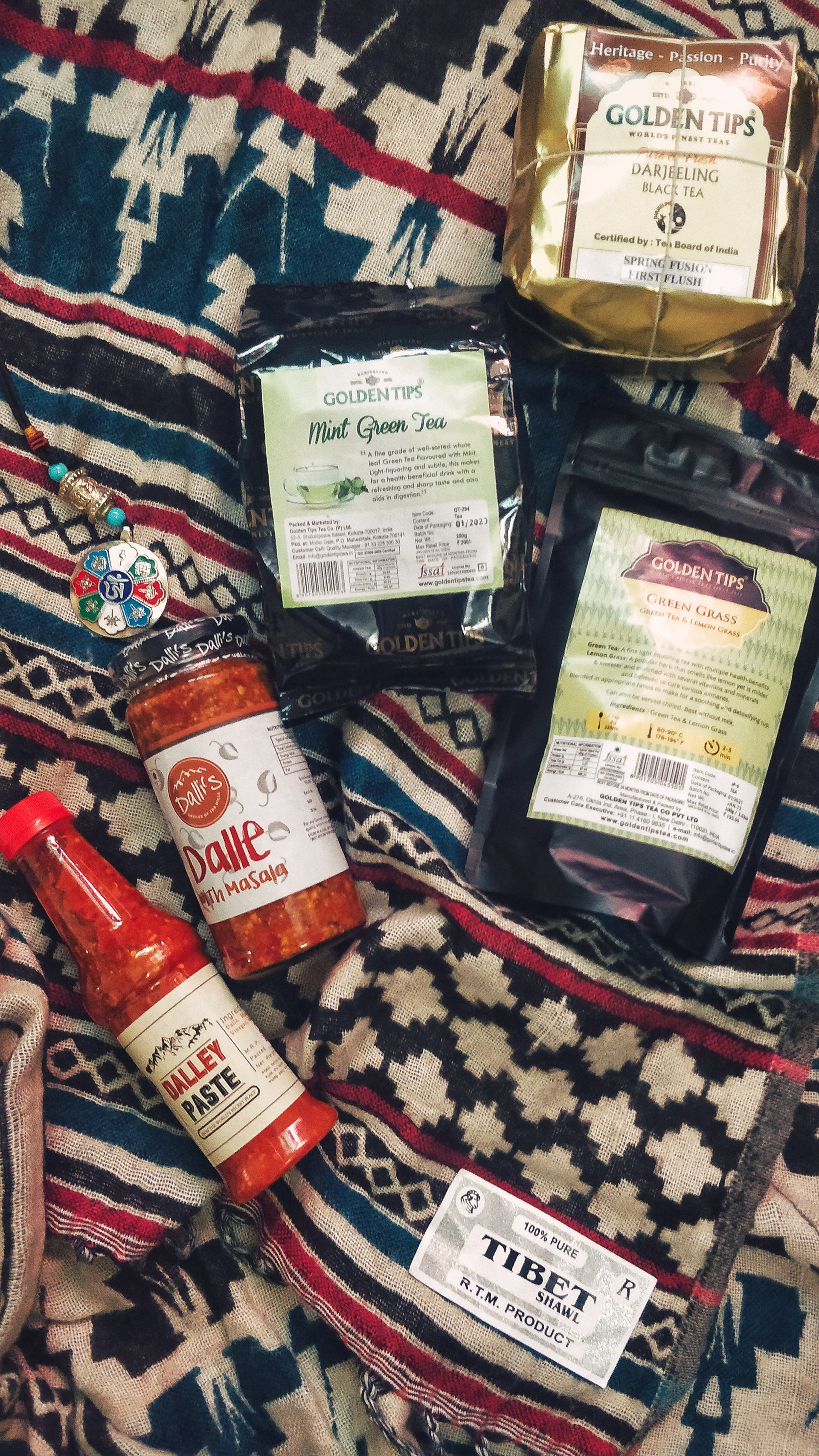
Souvenirs and things you should buy

Buddhist souvenirs :
  • Colourful Prayer Flags (great for tying on bikes or behind car windshields)
  • Miniature Prayer/Mani Wheels
  • Lucky Charms, Pendants and Key Chains
  • Cham Dance masks and robes
  • Singing Bowls
  • Common symbols: Om mani padme hum, Ashtamangala, Zodiac signs

Handicrafts & Handlooms
  • Tibetan Yak Wool shawls, scarfs and carpets
  • Sikkimese Ceramic cups
  • Thangka Paintings

Edibles
  • Darjeeling Tea (usually brewed and not boiled)
  • Wine (Arucha Peach & Rhododendron)
  • Dalle Khursani (Chilli) Paste and Pickle

Header Icon made by Freepik from www.flaticon.com is licensed by CC 3.0 BY

22 February 2021

John Goerzen: Recovering Our Lost Free Will Online: Tools and Techniques That Are Available Now

As I ve been thinking and writing about privacy and decentralization lately, I had a conversation with a colleague this week, and he commented about how loss of privacy is related to loss of agency: that is, loss of our ability to make our own choices, pursue our own interests, and be master of our own attention. In terms of telecommunications, we have never really been free, though in terms of Internet and its predecessors, there have been times where we had a lot more choice. Many are too young to remember this, and for others, that era is a distant memory. The irony is that our present moment is one of enormous consolidation of power, and yet also one of a proliferation of technologies that let us wrest back some of that power. In this post, I hope to enlighten or remind us of some of the choices we have lost and also talk about the ways in which we can choose to regain them, already, right now. I will talk about the possibilities, the big dreams that are possible now, and then go into more detail about the solutions. The Problems & Possibilities The limitations of online We make the assumption that we must be online to exchange data. This is reinforced by many modern protocols; Twitter clients, for instance, don t tend to let you make posts by relaying them through disconnected devices. What would it be like if you could fully participate in global communities without a constant Internet connection? If you could share photos with your friends, read the news, read your email, etc. even if you don t have a connection at present? Even if the device you use to do that never has a connection, but can route messages via other devices that do? Would it surprise you to learn that this was once the case? Back in the days of UUCP, much email and Usenet news a global discussion forum that didn t require an Internet connection was relayed via occasional calls over phone lines. This technology remains with us, and has even improved. Sadly, many modern protocols make no effort in this regard. Some email clients will let you compose messages offline to send when you get online later, but the assumption always is that you will be connected to an IP network again soon. NNCP, on the other hand, lets you relay messages over TCP, a radio, a satellite, or a USB stick. Email and Usenet, since they were designed in an era where store-and-forward was valued, can actually still be used in an entirely offline fashion (without ever touching an IP-based network). All it takes is for someone to care to make it happen. You can even still do it over UUCP if you like. The physical and data link layers Many of us just accept that we communicate in a few ways: Wifi for short distances, and then cable modems or DSL for our local Internet connection, and then many people are fuzzy about what happens after that. Or, alternatively, we have 4G phones that are the local Internet connection, and the same fuzzy things happen after. Think about this for a moment. Which of these do you control in any way? Sometimes just wifi, sometimes maybe you have choices of local Internet providers. After that, your traffic is handled by enormous infrastructure companies. There is choice here. People in ham radio have been communicating digitally over long distances without the support of the traditional Internet for decades, but the technology to do this is now more accessible to anyone. Long-distance radio has had tremendous innovation in the last decade; cheap radios can now communicate over several miles/km without any other infrastructure at all. We all carry around radios (Wifi and Bluetooth) in our pockets that don t have to be used as mere access points to the Internet or as drivers of headphones, but can also form their own networks directly (Briar). Meshtastic is an example; it s an instant messenger that can form a mesh over many miles/km and requires no IP infrastructure at all. Briar is similar. XBee radios form a mesh in hardware, allowing peers to reach each other (also over many miles/km) with a serial or framed protocol. Loss of peer-to-peer Back in the late 90s, I worked at a university. I had a 386 on my desk for a workstation not a powerful computer even then. But I put the boa webserver on it and could just serve pages on the Internet. I didn t have to get permission. Didn t have to pay a hosting provider. I could just DO it. And of course that is because the university had no firewall and no NAT. Every PC at the university was a full participant on the Internet as much as the servers at Microsoft or DEC. All I needed was a DNS entry. I could run my own SMTP server if I wanted, run a web or Gopher server, and that was that. There are many reasons why this changed. Nowadays most residential ISPs will block SMTP for their customers, and if they didn t, others would; large email providers have decided not to federate with IPs in residential address spaces. Most people have difficulty even getting a static IP address in the first place. Many are behind firewalls, NATs, or both, meaning that incoming connections of any kind are problematic. Do you see what that means? It has weakened the whole point of the Internet being a network of peers. While IP still acts that way, as a practical matter, there are clients that are prevented from being servers by administrative policy they have no control over. Imagine if you, a person with an Internet connection to your laptop or phone, could just decide to host a website, or a forum on it. For moderate levels of load, they are certainly capable of this. The only thing in the way is the network management policies you can t control. Elaborate technologies exist to try to bridge this divide, and some, like Tor or cjdns, can work quite well. More on this below. Expense of running something popular Related to the loss of peer-to-peer infrastructure is the very high cost of hosting something popular. Do you want to share videos with lots of people? That almost certainly is going to require expensive equipment and bandwidth. There is a reason that there are only a small handful of popular video streaming sites online. It requires a ton of money to host videos at scale. What if it didn t? What if you could achieve economies of scale so much that you, an individual, could compete with the likes of YouTube? You wouldn t necessarily have to run ads to support the service. You wouldn t have to have billions of dollars or billions of viewers just to make it work. This technology exists right now. Of course many of you are aware of how Bittorrent leverages the swarm for files. But projects like IPFS, Dat, and Peertube have taken this many steps further to integrate it into a global ecosystem. And, at least in the case of Peertube, this is a thing that works right now in any browser already! Application-level walled gardens I was recently startled at how much excitement there was when Github introduced dark mode . Yes, Github now offers two colors on its interface. Already back in the 80s and 90s, many DOS programs had more options than that. Git is a decentralized protocol, but Github has managed to make it centralized. Email is a decentralized protocol pick your own provider, and they all communicate but Facebook and Twitter aren t. You can t just pick your provider for Facebook. It s Facebook or nothing. There is a profit motive in locking others out; these networks want to keep you using their platforms because their real customers are advertisers, and they want to keep showing you ads. Is it possible to have a world where you get to pick your own app for sharing photos, and it works even if your parents use a different one? Yes, yes it is. Mastodon and the Fediverse are fantastic examples for social media. Pixelfed is specifically designed for photos, Mastodon for short-form communication, there s Pleroma for more long-form communication, and they all work together. You can use Mastodon to read Pleroma content or look at Pixelfed photos, and there are many (free) providers of each. Freedom from manipulation I recently wrote about the dangers of the attention economy, so I won t go into a lot of detail here. Fundamentally, you are not the customer of Facebook or Google; advertisers are. They optimize their site to keep you on it as much as possible so that they can show you as many ads as possible which makes them as much money as possible. Ads, of course, are fundamentally seeking to manipulate your behavior ( buy this product ). By lowering the cost of running services, we can give a huge boost to hobbyists and nonprofits that want to do so without an ultimate profit motive. For-profit companies benefit also, with a dramatically reduced cost structure that frees them to pursue their mission instead of so many ads. Freedom from snooping (privacy and anonymity) These days, it s not just government snooping that people think about. It s data stolen by malware, spies at corporations (whether human or algorithmic), and even things like basic privacy of one s own security footage. Here the picture is improving; encryption in transit, at least at a basic level, has become much more common with TLS being a standard these days. Sadly, end-to-end encryption (E2EE) is not nearly as much, perhaps because corporations have a profit motive to have access to your plaintext and metadata. Closely related to privacy is anonymity: that is, being able to do things in an anonymous fashion. The two are not necessarily equal: you could send an encrypted message but reveal who the correspondents are, as with email; or, you could send a plaintext message over a Tor exit node that hides who the correspondents are. It is sometimes difficult to achieve both. Nevertheless, numerous answers exist here that tackle one or both problems, from the Signal messenger to Tor. Solutions That Exist Today Let s dive in to some of the things that exist today. One concept you ll see in many of these is integrated encryption with public keys used for addressing. In other words, your public key is akin to an IP address (and in some cases, is literally your IP address.) Data link and networking technologies (some including P2P) P2P Infrastructure While some of the technologies above, such as cjdns, explicitly facitilitate peer-to-peer communication, there are some other application-level technologies to look at. Instant Messengers and Chat I won t go into a lot of detail here since I recently wrote a roundup of secure mesh messengers and also a followup article about Signal and some hidden drawbacks of P2P. Please refer to those articles for some interesting things that are happening in this space. Matrix is a distributed IM platform similar in concept to Slack or IRC, but globally distributed in a mesh. It supports optional E2EE. Social Media I wrote recently about how to join the Fediverse, which covered joining Mastodon, a federeated, decentralized social network. Mastodon is the largest of these, with several million users, and is something of a much nicer version of Twitter. Mastodon is also part of what is known as the Fediverse , which are applications that are loosely joined together by their support of the ActivityPub protocol. Other popular Fediverse applications include Pixelfed (similar to Instagram) and Peertube for sharing video. Peertube is particularly interesting in that it supports Webtorrent for efficiently distributing popular videos. Webtorrent is akin to Bittorrent running efficiently inside your browser. Concluding Remarks Part of my goal with this is encouraging people to dream big, to ask questions like: What could you do if offline were easy? What is possible if you have freedom in the physical and data link layers? Dream big. We re so used to thinking that it s quite difficult for two devices on the Internet to talk to each other. What would be possible if this were actually quite easy? The assumption that costs rise dramatically as popularity increases is also baked into our thought processes. What if that weren t the case could you take on Youtube from your garage? Would lowering barriers to entry lower the ad economy and let nonprofits have more equal footing with large corporations? We have so many walled gardens, from Github to Facebook, that we almost forget it doesn t have to be that way. So having asked these questions, my secondary point is to suggest that these aren t pie-in-the-sky notions. These possibilites are with us right now. You ll notice from this list that virtually every one of these technologies is ad-free at its heart (though some would be capable of serving ads). They give you back your attention. Many preserve privacy, anonymity, or both. Many dramatically improve your freedom of association and communication. Technologies like IPFS and Bittorrent ease the burden of running something popular. Some are quite easy to use (Mastodon or Peertube) while others are much more complex (libp2p or the lower-level mesh network systems). Clearly there is still room for improvement in many areas. But my fundamental point is this: good technology is here, right now. Technical people can vote with their feet and wallets and start using it. Early adopters will help guide the way for the next set of improvements. Join us!
3 October 2020

Ritesh Raj Sarraf: First Telescope

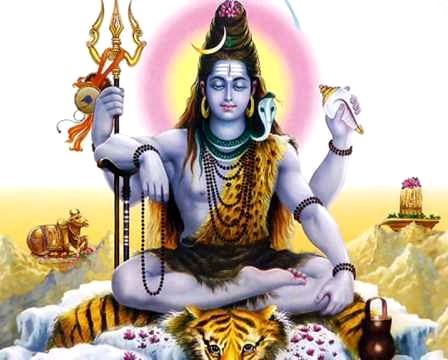
Curiosity I guess this would be common to most of us. While I grew up, right from the childhood itself, the sky was always an intriguing view. The Stars, the Moon, the Eclipses; were all fascinating. As a child, in my region, religion and culture; the mythology also built up stories around it. Lunar Eclipses have a story of its own. During Solar Eclipses, parents still insist that we do not go out. And to be done with the food eating before/after the eclipse. Then there s the Hindu Astrology part, which claims its own theories and drags in mythology along. For example, you ll still find the Hindu Astrology making recommendations to follow certain practices with the planets, to get auspicious personal results. As far as I know, other religions too have similar beliefs about the planets. As a child, we are told the Moon to be addressed as an Uncle ( ). There s also a rhyme around it, that many of us must have heard. And if you look at our god, Lord Mahadev, he s got a crescent on his head
Lord Mahadev
Lord Mahadev

Reality Fast-forward to today, as I grew, so did some of my understanding. It is fascinating how mankind has achieved so much understanding of our surrounding. You could go through the documentaries on Mars Exploration, for example; to see how the rovers are providing invaluable data. As a mere individual, there s a limit to what one can achieve. But the questions flow in free.
  • Is there life beyond us
  • What s out there in the sky
  • Why is all this the way it is

Hobby The very first step, for me, for every such curiosity, has been to do the ground work, with the resources I have. To study on the subject. I have done this all my life. For example, I started into the Software domain as: A curiosity => A Hobby => A profession Same was the case with some of the other hobbies, equally difficult as Astronomy, that I developed a liking for. Just did the ground work, studied on those topics and then applied the knowledge to further improve it and build up some experience. And star gazing came in no different. As a complete noob, had to start with the A B C on the subject of Astronomy. Familiarize myself with the usual terms. As so on PS: Do keep in mind that not all hobbies have a successful end. For example, I always craved to be good with graphic designing, image processing and the likes, where I ve always failed. Never was able to keep myself motivated enough. Similar was my experience when trying to learn playing a musical instrument. Just didn t work out for me, then. There s also a phase in it, where you fail and then learn from the failures and proceed further, and then eventually succeed. But we all like to talk about the successes. :-)

Astronomy So far, my impression has been that this topic/domain will not suit most of the people. While the initial attraction may be strong, given the complexity and perseverance that Astronomy requires, most people would lose interest in it very soon. Then there s the realization factor. If one goes with an expectation to get quick results, they may get disappointed. It isn t like a point and shoot device that d give you results on the spot. There s also the expectation side of things. If you are a person more accustomed to taking pretty selfies, which always come right because the phone manufacturer does heavy processing on the images to ensure that you get to see the pretty fake self, for the most of the times; then star gazing with telescopes could be a frustrating experience altogether. What you get to see in the images on the internet will be very different than what you d be able to see with your eyes and your basic telescope. There s also the cost aspect. The more powerful (and expensive) your telescope, the better your view. And all things aside, it still may get you lose interest, after you ve done all the ground work and spent a good chunk of money on it. Simply because the object you are gazing at is more a still image, which can quickly get boring for many. On the other hand, if none of the things obstruct, then the domain of Astronomy can be quite fascinating. It is a continuous learning domain (reminds me of CI in our software field these days). It is just the beginning for us here, and we hope to have a lasting experience in it.

The Internet I have been indebted to the internet right from the beginning. The internet is what helped me be able to achieve all I wanted. It is one field with no boundaries. If there is a will, there is a way; and often times, the internet is the way.
  • I learnt computers over the internet.
  • Learnt more about gardening and plants over the internet
  • Learnt more about fish care-taking over the internet
And many many more things. Some of the communities over the internet are a great way to participation. They bridge the age gap, the regional gap and many more. For my Astronomy need, I was glad to see so many active communities, with great participants, on the internet.

Telescope While there are multiple options to start star gazing, I chose to start with a telescope. But as someone completely new to this domain, there was a long way to go. And to add to that, the real life: work + family I spent a good 12+ months reading up on the different types of telescopes, what they are, their differences, their costs, their practical availability etc. The good thing is that the market has offerings for everything. From a very basic binocular to a fully automatic Maksutov-Cassegrain scope. It all would depend on your budget.

Automatic vs Manual To make it easy for the users, the market has multiple options in the offering. One could opt-in for a cheap, basic and manually operated telescope; which would require the user to do a lot of ground study. On the other hand, users also have the option of automatic telescopes which do the hard work of locating and tracking the planetary objects. Either option aside, the end result of how much you ll be able to observe the sky, still depends on many many more factors: Enthusiasm over time, Light Pollution, Clear Skies, Timing etc. PS: The planetary objects move at a steady pace. Objects you lock into your view now will be gone out of the FOV in just a matter of minutes.

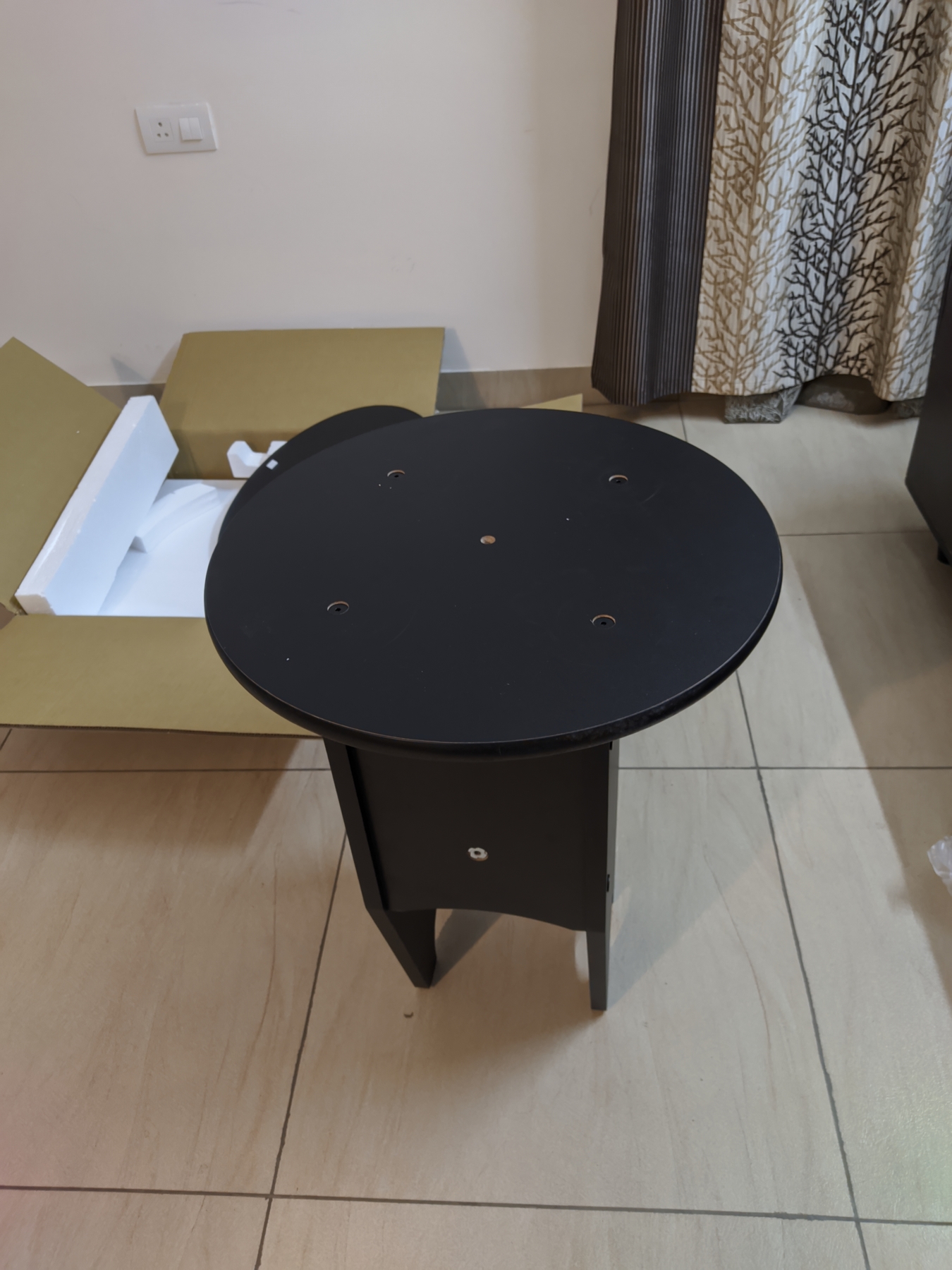
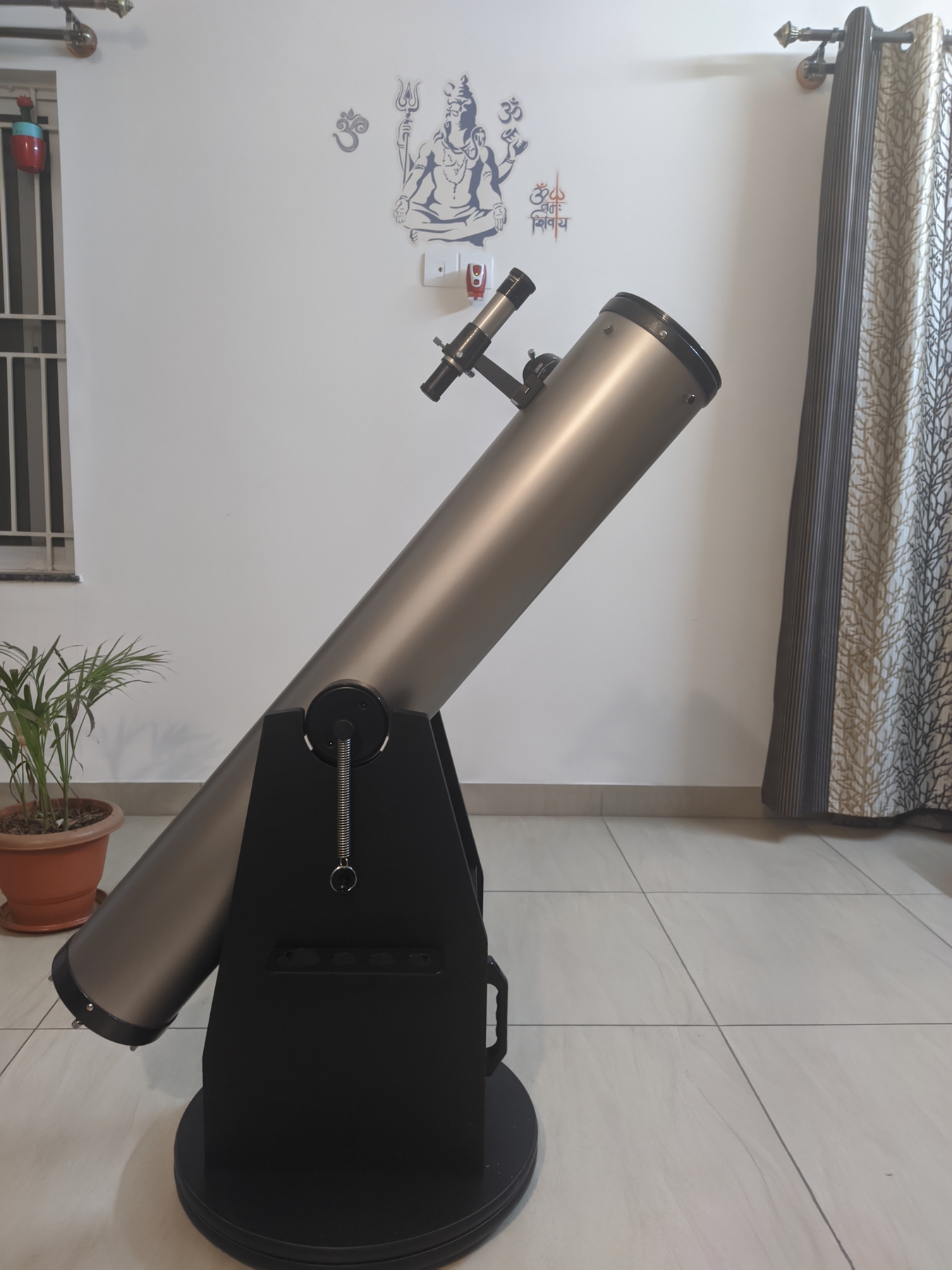
My Telescope After spending so much of the time reading up on types of telescopes, my conclusion was that a scope with high aperture and focal length was the way to go forward. This made me shorten the list to Dobsonians. But the Dobsonians aren t a very cheap telescope, whether manual or automatic. My final decision made me acquire a 6" Dobsonian Telescope. It is a Newtonian Reflecting Telescope with a 1200mm focal length and 150mm diameter. Another thing about this subject is that most of the stuff you do in Astronomy; right from the telescope selection, to installation, to star gazing; most of it is DIY, so your mileage may vary with the end result and experience. For me, installation wasn t very difficult. I was able to assemble the base Dobsonian mount and the scope in around 2 hours. But the installation manual, I had been provided with, was very brief. I ended up with one module in the mount wrongly fit, which I was able to fix later, with the help of online forums.
Dobsonian Mount
Dobsonian Mount
In this image you can see that the side facing out, where the handle will go, is wrong. If fit this way, the handle will not withstand any weight at all.
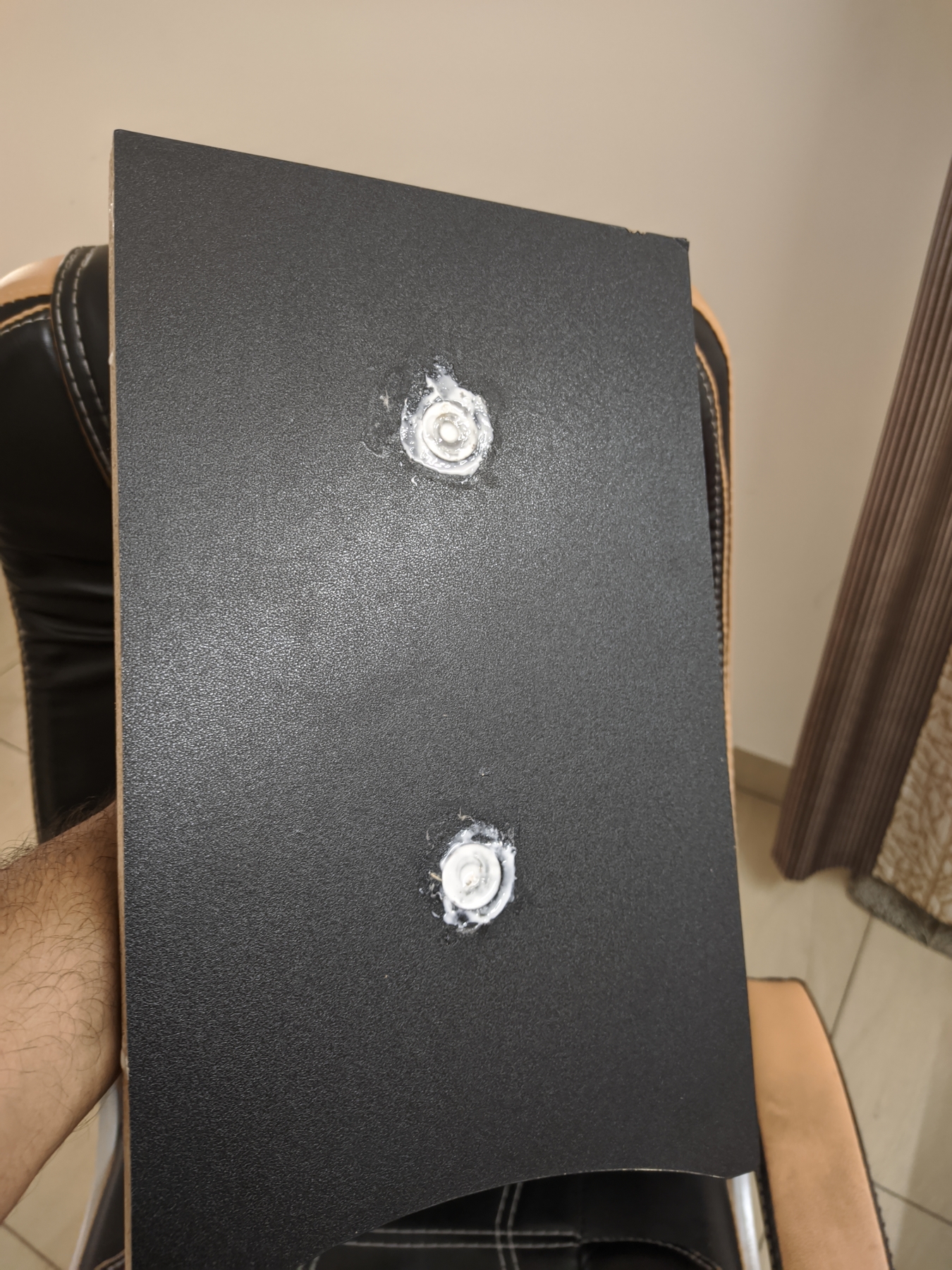
Correct Panel Side
Correct Panel Side
The right fix of the handle base board. In this image, the handle is on the other side that I m holding. Because the initial fit put in some damage to the engineered wood, I fixed it up by sealing with some adhesive. With that, this is what my final telescope looks like.
Final Telescope
Final Telescope

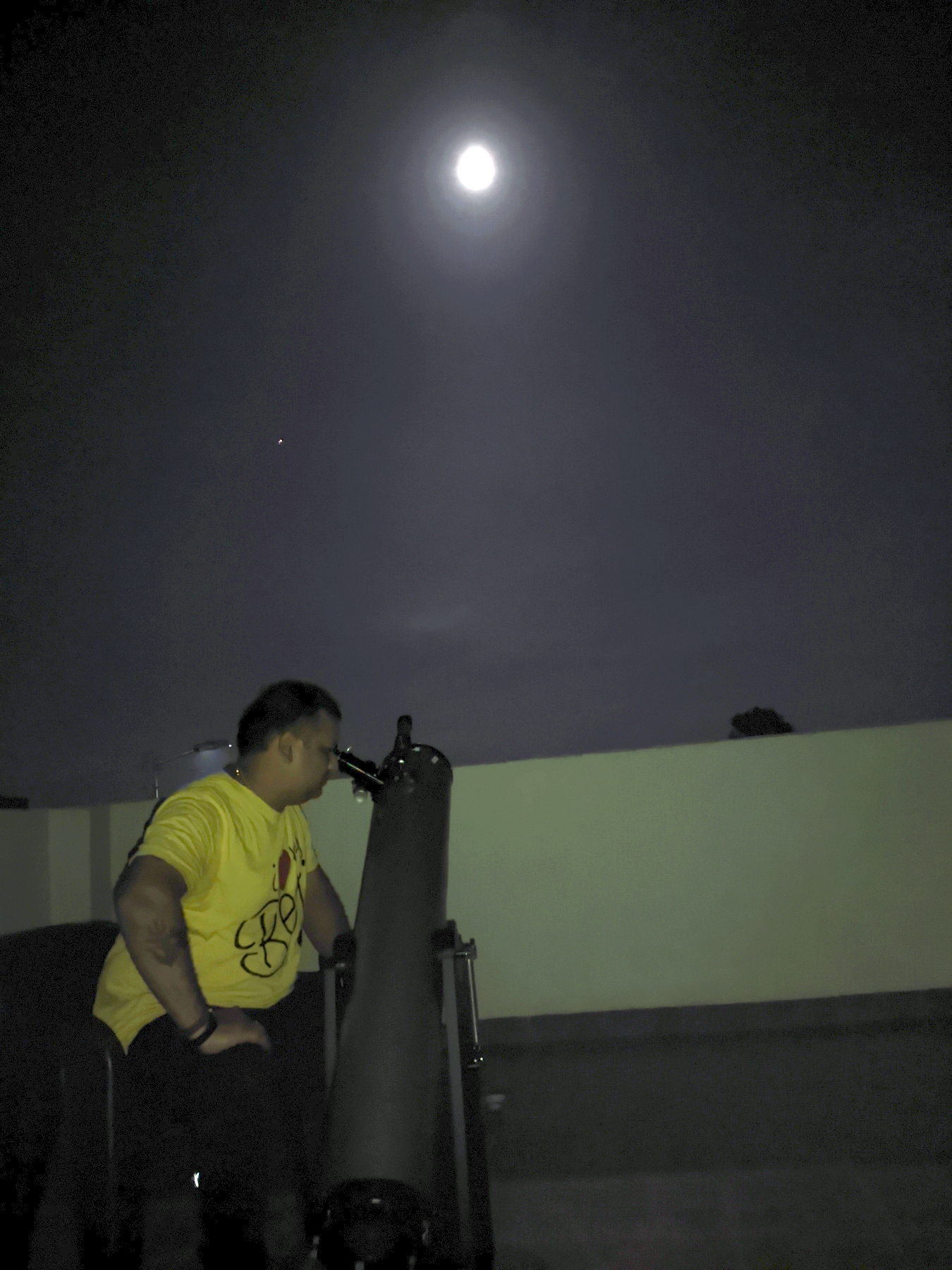
Clear Skies While the telescope was ready, the skies were not. For almost next 10 days, we had no clear skies at all. All I could do was wait. Wait so much that I had forgotten to check on the skies. Luckily, my wife noticed clear skies this week for a single day. Clear enough that we could try out our telescope for the very first time.
Me posing for a shot

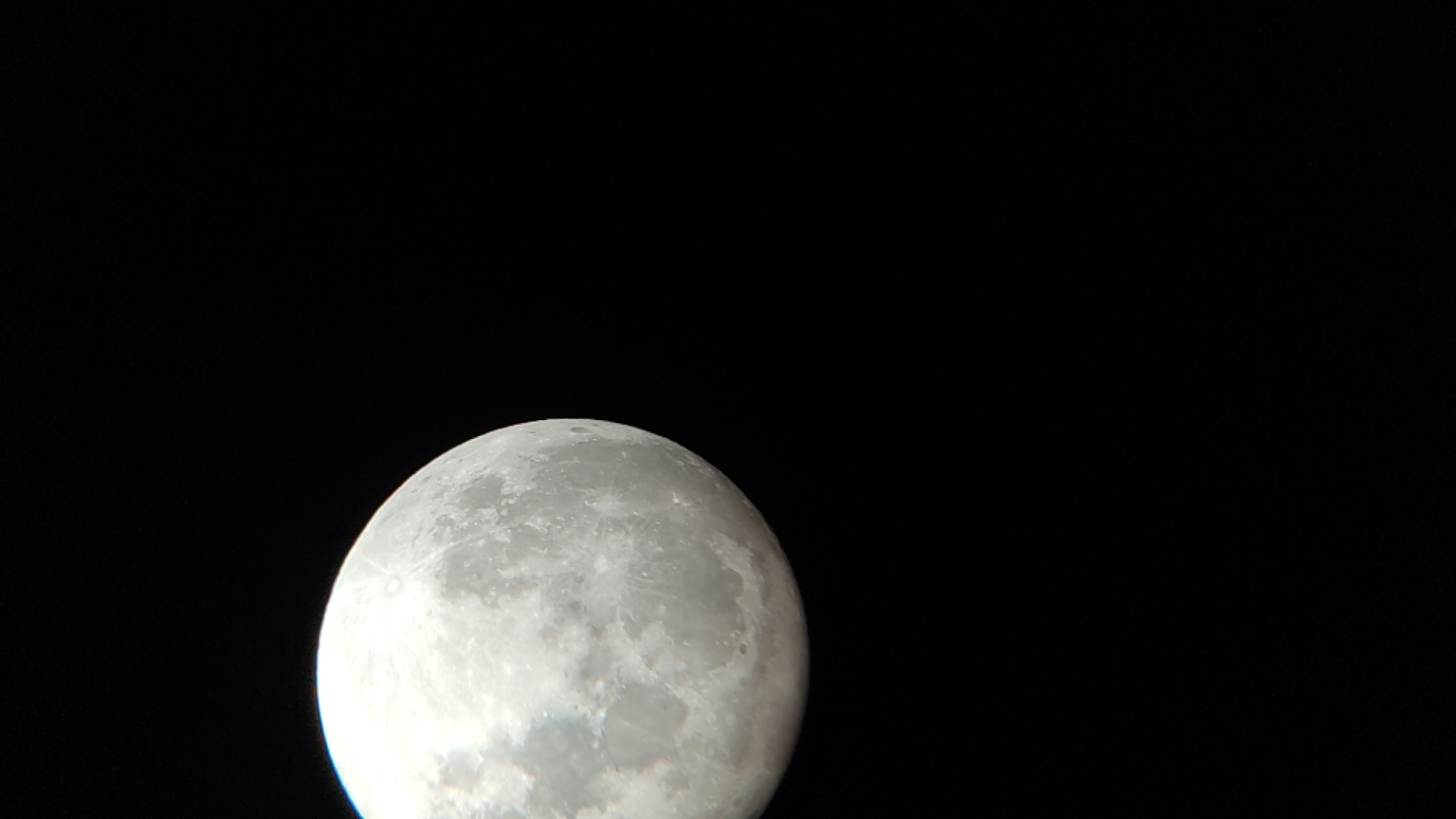
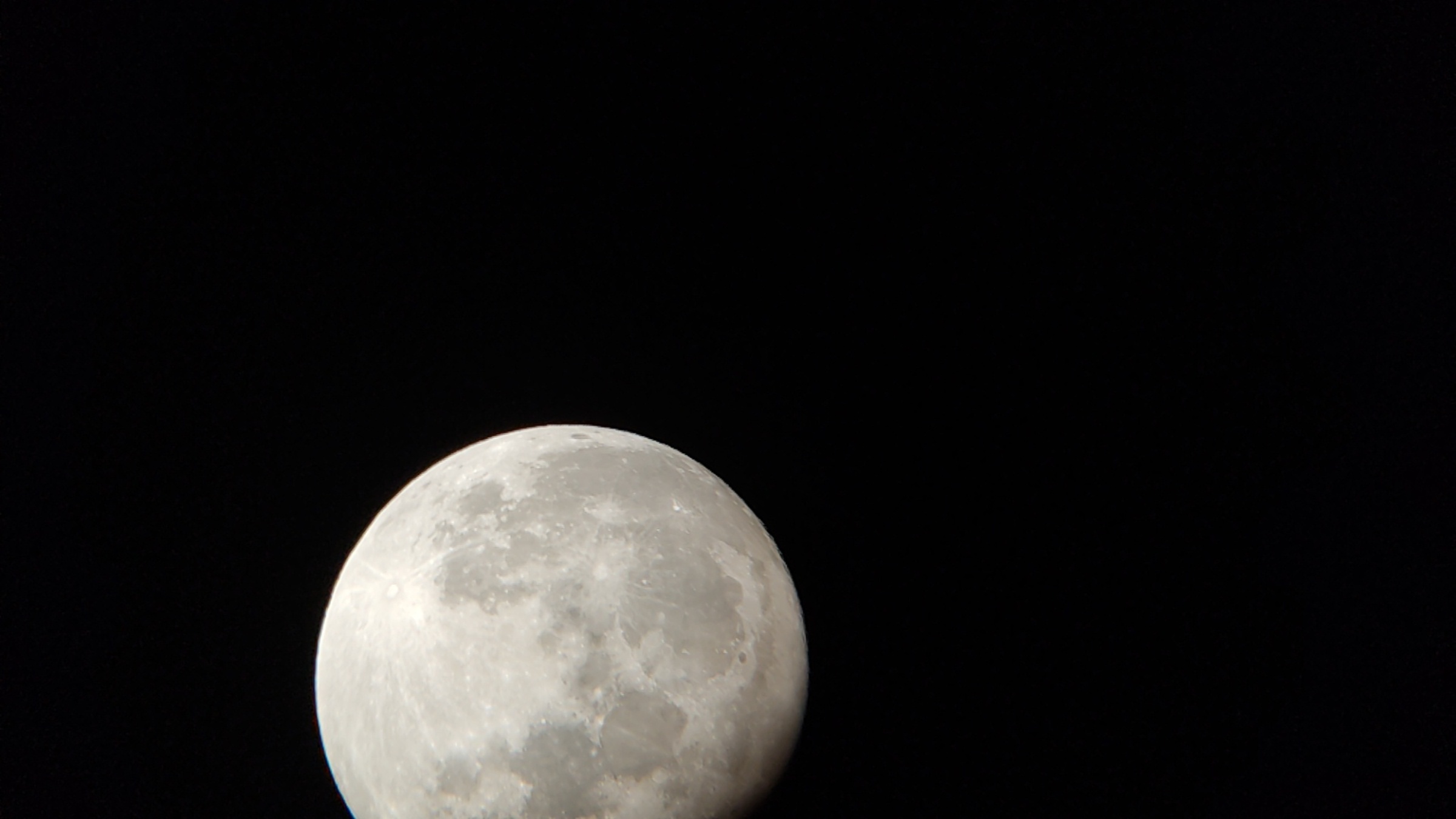
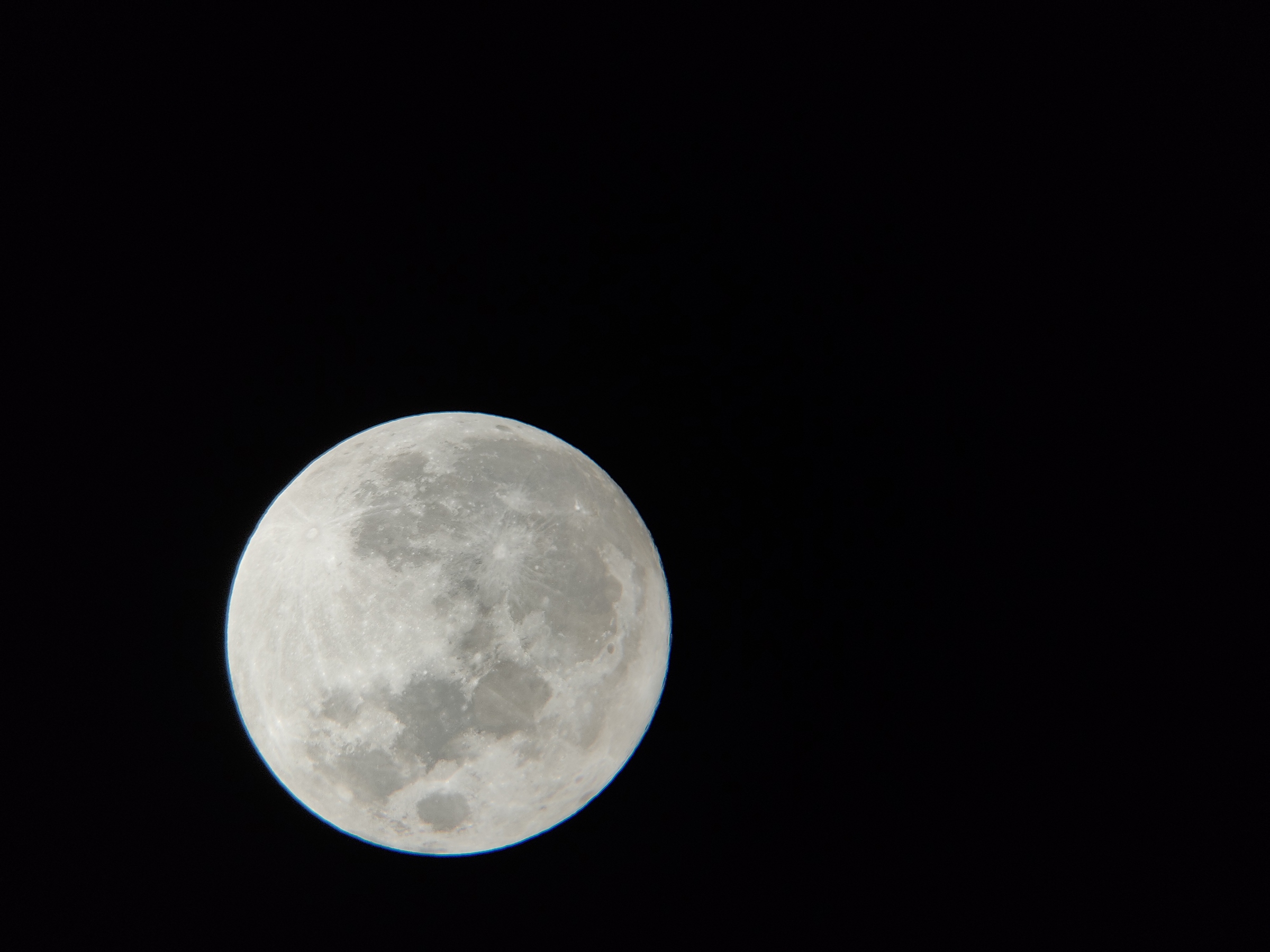
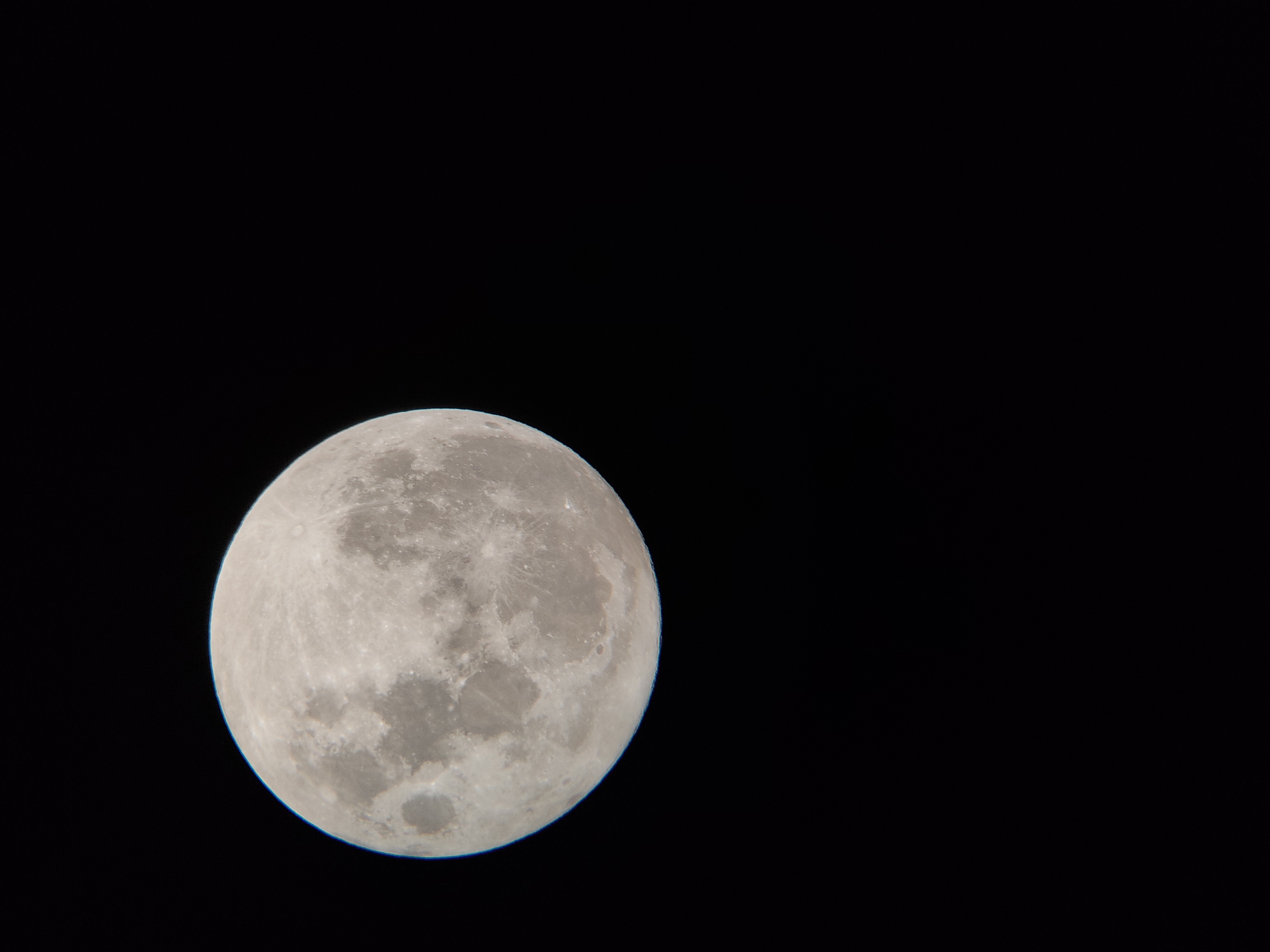
Telescope As I said earlier, in my opinion, it takes a lot of patience and perseverance on this subject. And most of the things here are DIY. To start with, we targeted the Moon. Because it is easy. I pointed the scope to the moon, then looked into the finder scope to center it, and then looked through the eyepiece. And blank. Nothing out there. Turns out, the finder scope and the viewer s angle weren t aligned. This is common and the first DIY step, when you plan to use your telescope for viewing. Since our first attempt was unplanned and just random because we luckily spotted that the skies were clear, we weren t prepared for this. Lucky enough, mapping the difference in the alignment, in the head, is not very difficult. After a couple of minutes, I could make out the point in the finder scope, where the object if projected, would show proper in the viewer. With that done, it was just mesmerizing to see the Moon, in a bit more detail, than what I ve seen all these years of my life.
Moon
Moon
Moon
Moon
Moon
Moon
Moon
Moon
The images are not exactly what we saw with our eyes. The view was much more vivid than these pictures. But as a first timer, I really wanted to capture this first moment of a closer view of the Moon. In the whole process; that of ground work studying about telescopes, installation of the telescope, astronomy basics and many other things; the most difficult part in this entire journey, was to point my phone to the viewing eyepiece, to get a shot of the object. This requirement just introduced me to astrophotography. And then, Dobsonians aren t the best model for astrophotography, to what I ve learnt so far. Hopefully, I ll find my ways to do some DIY astrophotography with the tools I have. Or extend my arsenal over time. But overall, we ve been very pleased with the subject of Astronomy. It is a different feel altogether and we re glad to have forayed into it.

19 November 2017

Louis-Philippe V ronneau: DebConf Videoteam sprint report - day 0

First day of the videoteam autumn sprint! Well, I say first day, but in reality it's more day 0. Even though most of us have arrived in Cambridge already, we are still missing a few people. Last year we decided to sprint in Paris because most of our video gear is stocked there. This year, we instead chose to sprint a few days before the Cambridge Mini-Debconf to help record the conference afterwards. Since some of us arrived very late and the ones who did arrive early are still mostly jet lagged (that includes me), I'll use this post to introduce the space we'll be working from this week and our general plan for the sprint. House Party After some deliberations, we decided to rent a house for a week in Cambridge: finding a work space to accommodate us and all our gear proved difficult and we decided mixing accommodation and work would be a good idea. I've only been here for a few hours, but I have to say I'm pretty impressed by the airbnb we got. Last time I checked (it seems every time I do, some new room magically appears), I counted 5 bedrooms, 6 beds, 5 toilets and 3 shower rooms. Heck, there's even a solarium and a training room with weights and a punching bag on the first floor. Having a whole house to ourselves also means we have access to a functional kitchen. I'd really like to cook at least a few meals during the week. There's also a cat! Picture of a black cat I took from Wikipedia. It was too dark outside to use mine It's not the house's cat per say, but it's been hanging out around the house for most of the day and makes cute faces trying to convince us to let it come inside. Nice try cat. Nice try. Here are some glamour professional photos of what the place looks like on a perfect summer day, just for the kick of it: The view from the garden The Kitchen One of the multiple bedrooms Of course, reality has trouble matching all the post-processing filters. Plan for the week Now on a more serious note; apart from enjoying the beautiful city of Cambridge, here's what the team plans to do this week: tumbleweed Stefano wants to continue refactoring our ansible setup. A lot of things have been added in the last year, but some of it are hacks we should remove and implement correctly. highvoltage Jonathan won't be able to come to Cambridge, but plans to work remotely, mainly on our desktop/xfce session implementation. Another pile of hacks waiting to be cleaned! ivodd Ivo has been working a lot of the pre-ansible part of our installation and plans to continue working on that. At the moment, creating an installation USB key is pretty complicated and he wants to make that simpler. olasd Nicolas completely reimplemented our streaming setup for DC17 and wants to continue working on that. More specifically, he wants to write scripts to automatically setup and teardown - via API calls - the distributed streaming network we now use. Finding a way to push TLS certificates to those mirrors, adding a live stream viewer on video.debconf.org and adding a viewer to our archive are also things he wants to look at. pollo For my part, I plan to catch up with all the commits in our ansible repository I missed since last year's sprint and work on documentation. It would be very nice if we could have a static website describing our work so that others (at mini-debconfs for examples) could replicate it easily. If I have time, I'll also try to document all the ansible roles we have written. Stay tuned for more daily reports!

27 August 2017

Andrew Cater: BBQ Cambridge 2017 - post 4

Room full of people with laptops and an amount of chatting going on. Annoyingly, I can't get the thing I want to work but there's a whole load of other folk deep into dealing with all sorts.

The garden is also full but I'm guessing everyone is under the gazebos - it's now hot and sunny, unusual for a British holiday weekend.

Andrew Cater: BBQ Cambridge 2017 - post 3

One set of gazebos put up: kilos of mushrooms eaten, bacon, mushrooms and all the trimmings barbequed and consumed by the hordes. Now laptops are sprouting in the garden under the gazebos as the temperature is soaring,

Some folk are quiet in the house under fans typing and cooling off.

Masses of washing up is being done - as ever, it's how many people you can fit into a kitchen.

Now it will all go quiet for a bit as everyone lets the breakfast go down :)

Superb hospitality - we're _SO_ lucky to have Steve and Jo do this so readily.

Andrew Cater: BBQ Cambridge 2017 - post 2

We were all up until about 0100 :) House full of folk talking about all sorts, a game of Mao. Garden full of people clustered round the barbeque or sitting chatting - I had a long chat about Debian, what it means and how it's often an easier world to deal with and move in than the world of work, office politics or whatever - being here is being at home.

Arguments in the kitchen over how far coffee "just happens" with the magic bean to cup machine, some folk are in the garden preparing for breakfast at noon.

I missed the significance of this week's date - the 26th anniversary of Linus' original announcement of Linux in 1991 fell on Friday. Probably the first user of Linux who installed it from scratch was Lars Wirzenius - who was here yesterday.

Debian's 24th birthday was just about ten days ago on 16th August, making it the second oldest distribution and I reckon I've been using it for twenty one of those years - I wouldn't change it for the world.

25 August 2017

Steve McIntyre: Let's BBQ again, like we did last summer!

It's that time again! Another year, another OMGWTFBBQ! We're expecting 50 or so Debian folks at our place in Cambridge this weekend, ready to natter, geek, socialise and generally have a good time. Let's hope the weather stays nice, but if not we have gazebo technology... :-) Many thanks to a number of awesome companies and people near and far who are sponsoring the important refreshments for the weekend: I've even been working on the garden this week to improve it ready for the event. If you'd like to come and haven't already told us, please add yourself to the wiki page!

16 August 2017

Simon McVittie: DebConf 17: Flatpak and Debian

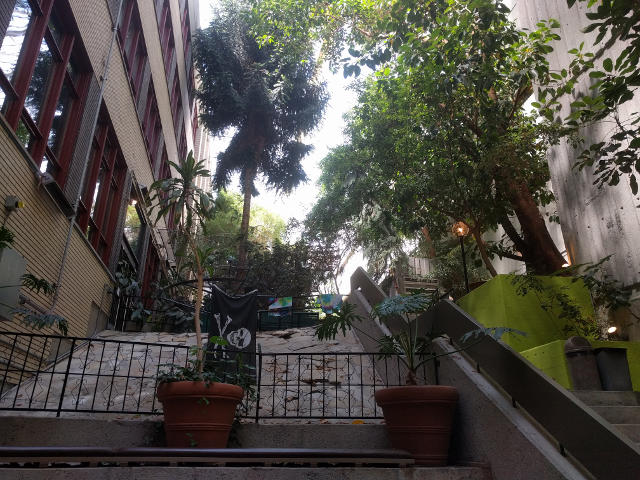
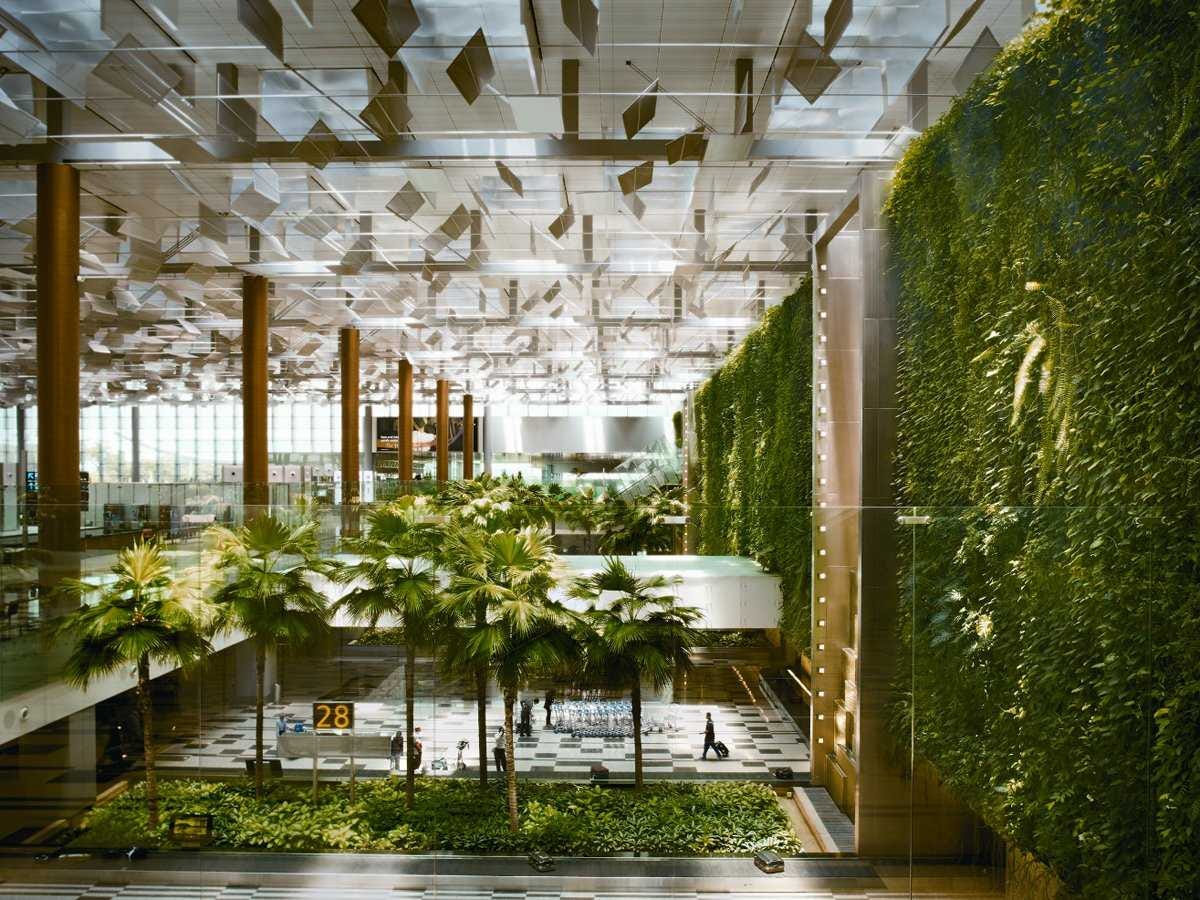
The indoor garden at Coll ge de Maisonneuve, the DebConf 17 venue
Decorative photo of the indoor garden
I'm currently at DebConf 17 in Montr al, back at DebConf for the first time in 10 years (last time was DebConf 7 in Edinburgh). It's great to put names to faces and meet more of my co-developers in person! On Monday I gave a talk entitled A Debian maintainer's guide to Flatpak , aiming to introduce Debian developers to Flatpak, and show how Flatpak and Debian (and Debian derivatives like SteamOS) can help each other. It seems to have been quite well received, with people generally positive about the idea of using Flatpak to deliver backports and faster-moving leaf packages (games!) onto the stable base platform that Debian is so good at providing. A video of the talk is available from the Debian Meetings Archive. I've also put up my slides in the DebConf git-annex repository, with some small edits to link to more source code: A Debian maintainer's guide to Flatpak. Source code for the slides is also available from Collabora's git server. The next step is to take my proof-of-concept for building Flatpak runtimes and apps from Debian and SteamOS packages, flatdeb, get it a bit more production-ready, and perhaps start publishing some sample runtimes from a cron job on a Debian or Collabora server. (By the way, if you downloaded that source right after my talk, please update - I've now pushed some late changes that were necessary to fix the 3D drivers for my OpenArena demo.) I don't think Debian will be going quite as far as Endless any time soon: as Cosimo outlined in the talk right before mine, they deploy their Debian derivative as an immutable base OS with libOSTree, with all the user-installable modules above that coming from Flatpak. That model is certainly an interesting thing to think about for Debian derivatives, though: at Collabora we work on a lot of appliance-like embedded Debian derivatives, with a lot of flexibility during development but very limited state on deployed systems, and Endless' approach seems a perfect fit for those situations. [Edited 2017-08-16 to fix the link for the slides, and add links for the video]

4 July 2017

John Goerzen: Time, Frozen

We re expecting a baby any time now. The last few days have had an odd quality of expectation: any time, our family will grow. It makes time seem to freeze, to stand still. We have Jacob, about to start fifth grade and middle school. But here he is, still a sweet and affectionate kid as ever. He loves to care for cats and seeks them out often. He still keeps an eye out for the stuffed butterfly he s had since he was an infant, and will sometimes carry it and a favorite blanket around the house. He will also many days prepare the Yellow House News on his computer, with headlines about his day and some comics pasted in before disappearing to play with Legos for awhile. And Oliver, who will walk up to Laura and give baby a hug many times throughout the day and sneak up to me, try to touch my arm, and say doink before running off before I can doink him back. It was Oliver that had asked for a baby sister for Christmas before he knew he d be getting one! In the past week, we ve had out the garden hose a couple of times. Both boys will enjoy sending mud down our slide, or getting out the water slide to play with, or just playing in mud. The rings of dirt in the bathtub testify to the fun that they had. One evening, I built a fire, we made brats and hot dogs, and then Laura and I sat visiting and watching their water antics for an hour after, laughter and cackles of delight filling the air, and cats resting on our laps. These moments, or countless others like Oliver s baseball games, flying the boys to a festival in Winfield, or their cuddles at bedtime, warm the heart. I remember their younger days too, with fond memories of taking them camping or building a computer with them. Sometimes a part of me wants to just keep soaking in things just as they are; being a parent means both taking pride in children s accomplishments as they grow up, and sometimes also missing the quiet little voice that can be immensely excited by a caterpillar. And yet, all four of us are so excited and eager to welcome a new life into our home. We are ready. I can t wait to hold the baby, or to lay her to sleep, to see her loving and excited older brothers. We hope for a smooth birth, for mom and baby. Here is the crib, ready, complete with a mobile with a cute bear (and even a plane). I can t wait until there is a little person here to enjoy it.

5 June 2017

John Goerzen: Flying with my brothers

Picture one Sunday morning. Three guys are seemingly-randomly walking into a Mennonite church in rural Nebraska. One with long hair and well-maintained clothes from the 70s. Another dressed well enough to be preaching. And the third simply dressed to be comfortable, with short hair showing evidence of having worn a headset for a couple of hours that morning. This was the scene as we made a spur-of-the-moment visit to that church which resulted in quite some surprise all around, since my brother knew a number of people there. For instance:
Pastor: Peter! What are you doing here? Peter: [jokingly] Is that how you greet visitors here?
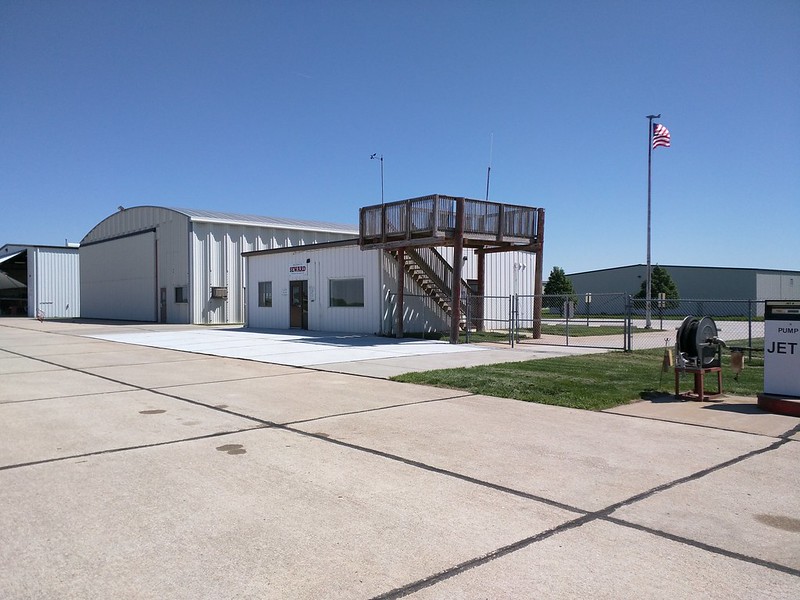
And then, of course, Peter would say, Well, we were flying home from South Dakota and figured we d stop in at Beatrice for fuel. And drop in on you. Followed by some surprise that we would stop at their little airport (which is quite a nice one). This all happened because it was windy. This is the fun adventure of aviation. Sometimes you plan to go to Texas, but the weather there is terrible, so you discover a 100-year-old landmark in Indiana instead. Or sometimes, like a couple of weeks ago, we planned to fly straight home but spent a few hours exploring rural Nebraska. The three of us flew to Sioux Falls, SD, in a little Cessna to visit my uncle and aunt up there. On our flight up, we stopped at the little airport in Seward, NE. It was complete with this unique elevated deck. In my imagination, this is used for people to drink beer while watching the planes land. IMG_20170512_113323 In South Dakota, we had a weekend full of card and board games, horseshoes, and Crokinole with my uncle and aunt, who are always fun to visit. We had many memories of visits up there as children and the pleasant enjoyment of the fact that we didn t need an 8-hour drive to get there. We flew back with a huge bag of large rhubarb from their garden (that too is something of a tradition!) It was a fun weekend to spend with my brothers first time we d been able to do this in a long while. And it marked the 11th state I ve flown into, and over 17,000 miles of flying.

28 April 2017

Russ Allbery: Review: Small Gods

Review: Small Gods, by Terry Pratchett
Series: Discworld #13
Publisher: Harper
Copyright: February 1994
Printing: March 2008
ISBN: 0-06-109217-7
Format: Mass market
Pages: 357
Small Gods is the thirteenth Discworld novel, but it features new characters and is unrelated to any of the previous books. Some reading order guides show it as following Pyramids in an "ancient civilizations" track, but its only relationship with that book is some minor thematic similarities. You could start here with Discworld if you wanted to. Brutha is a novice in the hierarchy of the church of the Great God Om, and his elders are convinced he'll probably die a novice. He's just not particularly bright, you see. But he is very obedient, and he doesn't mind doing hard work, and there's nothing exactly wrong with him, except that he looks at people with startling intensity when they're talking to him. Almost as if he's listening. All that seems about to change, however, when the Great God Om himself approaches Brutha and starts talking to him. Not that Brutha is at all convinced at first that this is happening, particularly given that Om appears in the form of a small, battered, one-eyed tortoise who was dropped into the church garden by an eagle attempting to break his shell. Small Gods is, as you might have guessed, a parody of religion, at least large, organized religion with fixed hierarchies, organizations called the Quisition that like to torture people, and terrifyingly devout deacons who are certain of themselves in ways that no human ever should be. It's also an interesting bit of Discworld metaphysics: gods gain power from worship (a very old idea in fantasy), and when they don't get enough worship, they end up much diminished and even adrift in the desert. Or trapped in the form of a small tortoise. One might wonder how Om ended up in his present condition given the vast and extremely authoritarian church devoted to his worship, but that's the heart of Pratchett's rather pointed parody: large religious organizations end up being about themselves, rather than about the god they supposedly worship, to such an extent that they don't provide any worship at all. Brutha is not thinking of things like this. Once he's finally convinced that Om is who he claims to be, he provides worship and belief of a very practical but wholehearted and unshakable sort, just as he does everything else in life. That makes him the eighth prophet of Om as prophecy foretold, but it's far from clear how that will be of any practical use. Or how Om will come back into power. And meanwhile, Brutha has come to the attention of Vorbis, the head of the Exquisitors, who does not know about the tortoise (and wouldn't believe if he did), but who has a use for Brutha's other talent: his eidetic memory. In typical Pratchett fashion, the story expands to include a variety of other memorable characters from the neighboring city of Ephebe, a country full of gods and philosophers. Vorbis's aims here are unclear at the start of the book, but Vorbis being who he is, they can't be good. Brutha is drawn along in his wake. Meanwhile, Om is constantly watching for an opportunity to regain his lost power and worshipful following, and also to avoid being eaten. Despite the humorous components, Small Gods is rather serious about religion and about its villain. It's also a touch repetitive; Om's lack of power and constant fretting about it, Brutha's earnest but naive loyalty, and Vorbis's malevolent determination are repeatedly stressed and get a little old. Some bits in Ephebe are quite fun, but the action is a bit disjointed, partly because the protagonist is rarely the motive force in the plot. There are also some extended scenes of trudging through the desert that I thought dragged a bit. But Pratchett hits some powerful notes in his critique of religion, and there are a few bits with Death at the end of the book that I thought were among the better pieces of Discworld philosophy. And when Brutha gets a chance to use his one talent of memory, I greatly enjoyed the resulting scenes. He hits just the right combination of modesty, capability, and earnestness. I know a lot of Pratchett readers really like Small Gods. I'm not one of those; I thought it was about average for the Discworld series (at least among the books I've read so far). But average for Discworld is still pretty good, and its new setting makes it a plausible place to start (or to take a break from the other Discworld plot threads). Followed, in publication order, by Lords and Ladies. I don't believe it has a direct plot sequel. Rating: 7 out of 10

17 April 2017

Norbert Preining: Systemd again (or how to obliterate your system)

Ok, I have been silent about systemd and its being forced onto us in Debian like force-feeding Foie gras gooses. I have complained about systemd a few times (here and here), but what I read today really made me loose my last drips of trust I had in this monster-piece of software. If you are up for some really surprising read about the main figure behind systemd, enjoy this github issue. It s about a bug that simply does the equivalent of rm -rf / in some cases. The OP gave clear indications, the bug was fixes immediately, but then a comment from the God Poettering himself appeared that made the case drip over:

I am not sure I d consider this much of a problem. Yeah, it s a UNIX pitfall, but rm -rf /foo/.* will work the exact same way, no?Lennart Poettering, systemd issue 5644
Well, no, a total of 1min would have shown him that this is not the case. But we trust this guy the whole management of the init process, servers, logs (and soon our toilet and fridge management, X, DNS, whatever you ask for). There are two issues here: One is that such a bug is lurking in systemd since probably years. The reason is simple we pay with these kinds of bugs for the incredible complexity increase of the init process which takes over too much services. Referring back to the Turing Award lecture given by Hoare, we see that systemd took the later path:
I conclude that there are two ways of constructing a software design: One way is to make it so simple that there are obviously no deficiencies and the other way is to make it so complicated that there are no obvious deficiencies. Antony Hoare, Turing Award Lecture 1980
The other issue is how systemd developers deal with bug reports. I have reported several cases here, this is just another one: Close the issue for comments, shut up, put it under the carpet. (Image credit: The musings of an Indian Faust)

7 April 2017

Norbert Preining: Stella Stejskal Im Mezzanin

A book about being woman, mother in a modern but still traditional society. About happiness and fulfillment, love and sex, responsibility and dependency, about life: Stella Stejskal s Im Mezzanin (in German).
Written by a friend back from my old times in Vienna, Stella Stejskal, like me an emigrant, I saw parts of this book during writing, and I was happy to see the final product and read it. The first novel of Stella turns around Anna, the protagonist, a wife, mother, and woman, trying to find her balance between the house, family, kids, work, and her incredible power and thrive to live, live to the fullest.
Dein Leben in der Vorstadt, im Einfamilienhaus mit dem Garten, macht Dich nicht gl cklich. Vordergr ndig hast Du alles, was eine Frau sich w nscht und doch fehlt Dir etwas Wesentliches: Verlangen und Leidenschaft.
(Your life in the suburb, in the one-family home with garden, it doesn t make you happy. On the surface you do have everything what a woman could wish for, but you are missing something essential: desire and passion) The author does not shy away from explicit language without ever dropping into the Vernacolo, the banalities. She manages to convey the incredible tension many of those being stretched out between the necessities of daily life and the need for a more personal life. Last but not least, I loved this book for quoting one of my most favorite lines from a song:
Konstantin Weckers Was passiert in den Jahren, drangen leise durch den Raum. Komm, wir gehen mit der Flut und verwandeln mit den Wellen unsere Angst in neuen Mut , sang ich mit und dachte an den Sommer
For those capable of German, very recommendable.

20 March 2017

Shirish Agarwal: Tale of two countries, India and Canada

Apologies the first blog post got sent out by mistake. Weather comparisons between the two countries Last year, I had come to know that this year s debconf is happening in Canada, a cold country. Hence, few weeks/month back, I started trying to find information online when I stumbled across few discussion boards where people were discussing about Innerwear and Outerwear and I couldn t understand what that was all about. Then somehow stumbled across this Video, which is of a game called the Long Dark and just seeing couple of episodes it became pretty clear to me why the people there were obsessing with getting the right clothes and everything about it. Couple of Debconf people were talking about the weather in Montreal, and surprise, surprise it was snowing there, in fact supposed to be near the storm of the century. Was amazed to see that they have a website to track how much snow has been lifted. If we compare that to Pune, India weather-wise we are polar opposites. There used to be a time, when I was very young, maybe 5 yrs. old that once the weather went above 30 degree celsius, rains would fall, but now its gonna touch 40 degrees soon. And April and May, the two hottest months are yet to come. China Gate Before I venture further, I was gifted the book China Gate written by an author named William Arnold. When I read the cover and the back cover, it seemed the story was set between China and Taiwan, later when I started reading it, it shares history of Taiwan going back 200 or so odd years. This became relevant as next year s Debconf, Debconf 2018 will be in Taiwan, yes in Asia very much near to India. I am ashamed to say that except for the Tiananmen Square Massacre and the Chinese High-Speed Rail there wasn t much that I knew. According to the book, and I m paraphrasing here the gist I got was that for a long time, the Americans promised Taiwan it will be an Independent country forever, but due to budgetary and other political constraints, the United States took the same stand as China from 1979. Interestingly, now it seems Mr. Trump wants to again recognize Taiwan as a separate entity from China itself but as is with Mr. Trump you can t be sure of why he does, what he does. Is it just a manoeuvrer designed to out-smart the chinese and have a trade war or something else, only time will tell. One thing which hasn t been shared in the book but came to know via web is that Taiwan calls itself Republic of China . If Taiwan wants to be independent then why the name Republic of China ? Doesn t that strengthen China s claim that Taiwan is an integral part of China. I don t understand it. The book does seduce you into thinking that the events are happening in real-time, as in happening now. That s enough OT for now. null Population Density As well in the game and whatever I could find on the web, Canada seems to be on the lower side as far as population is concerned. IIRC, few years back, Canadians invited Indian farmers and gave them large land-holdings for over 100 years on some small pittance. While the link I have shared is from 2006, I read it online and in newspapers even as late as in 2013/2014. The point being there seems to be lot of open spaces in Canada, whereas in India we fight for even one inch literally, due to overpopulation. This sharing reminded me of Mark of Gideon . While I was young, I didn t understand the political meaning of it and still struggle to understand about whom the show was talking about. Was it India, Africa or some other continent they were talking about ? This also becomes obvious when you figure out the surface area of the two countries. When I had started to learn about Canada, I had no idea, nor a clue that Canada is three times the size of India. And this is when I know India is a large country. but seeing that Canada is thrice larger just boggled my mind. As a typical urbanite, would probably become mad if in a rural area in Canada. Montreal, however seems to be something like Gwalior or Bangalore before IT stormed in, seems to be a place where people can work, play and have quite a few gardens as well. Rail This is one thing that is similar in both the great countries. India has Indian Railways and while the Canadians have their own mountain railway called viarail. India chugs on its 68k kilometre network, Canada is at fourth position with 52k network. With thrice the land size, it should have been somewhere where Russia is or even better than them. It would be interesting if a Canadian/s comment about their railway network and why it is so bad in terms of reach. As far as food is concerned, somebody shared this Also, have no idea if Canadian trains are as entertaining as Indian ones, in terms of diverse group of people as well as variety of food to eat as also shared a bit in the video. I am not aware whether Via Rail is the only network operator and there are other network operators unlike Indian Railways which has monopoly on most of the operations. Countries which have first past the post system - Wikipedia Business houses, Political Families This is again something that is similar in both the countries, it seems (from afar) that its only few business houses and more importantly political families which have governed for years. From what little I could understand, both India and Canada have first past the post system which as shared by its critics is unfair to new and small parties. It would be interesting to see if Canada does a re-think. For India, it would need a massive public education outreach policy and implementation. We just had elections in 5 states of India with U.P. (with respect to area-size and population density) and from the last several years, the EVM s (Electronic Voting Machines) tries to make sure that nobody could know which area which party got the most votes. This is to make sure the winning party is not able to take revenge on people or areas which did not vote for them. Instead you have general region counting of votes with probably even the Election Commission not knowing which EVM went to what area and what results are there in sort of double-blind methodology. As far as Business houses are concerned, I am guessing it s the same world-over, only certain people hold the wealth while majority of us are in hard-working, non-wealthy status. Northern Lights - Aurora Borealis Northern Lights, Aurora Borealis Apart from all the social activities that Montreal is famous for, somebody told/shared with me that it is possible to see the Northern Lights, Aurora Borealis can be seen in Canada. I dunno how true or not it is, while probably in Montreal it isn t possible to see due to light pollution, but maybe around 40-50 kms. from the city ? Can people see it from Canada ? IF yes, how far would you have to go ? Are there any companies or people who take people to see the Northern Lights. While I still have to apply for bursary, and if that gets ok, then try getting the visa, but if that goes through, apart from debconf and social activities happening in and around Montreal, Museums, Music etc. , this would be something I would like to experience if it s possible. While I certainly would have to be prepared for the cold that would be, if it s possible, no offence to debconf or anybody else but it probably would be the highlight of the entire trip if its possible. This should be called/labelled as the greatest show on earth TM.
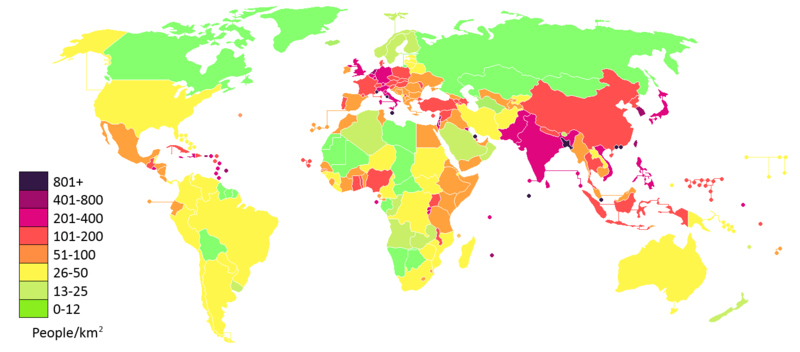
Filed under: Miscellenous Tagged: # Population Density, #Area size, #Aurora Borealis, #Canada, #Trains, DebConf, India, politics

Shirish Agarwal: Canada and India, similarities and differences.

Weather comparisons between the two countries Few days/weeks back, I had come to know that Canada, where this year s debconf is happening is cold country. I started trying to find information online when I stumbled across few boards where people were discussing about innerwear and outerwear and I couldn t understand what that was all about. Then somehow stumbled across this game, it s called the Long Dark and just seeing couple of episodes it became pretty clear to me why the people there were obsessing with getting the right clothes and everything about it. Couple of Debconf people were talking about weather in Montreal, and surprise, surprise it was snowing there, in fact supposed to be near the storm of the century. Was amazed to see that they have a website to track how much snow has been lifted. If we compare that to Pune, India weather-wise we are polar opposites. There used to be a time, when I was very young, maybe 5 yrs. old that once the weather went above 30 degree celcius, rains would fall, but now its gonna touch 40 degrees soon. And April and May, the two hottest months are yet to come. China Gate Before I venture further, I was gifted the book China Gate written by an author named William Arnold. When I read the cover and the backcover, it seemed the story was set between China and Taiwan, later when I started reading it, it shares history of Taiwan going back 200 or so odd years. This became relevant as next year s Debconf, Debconf 2018 will be in Taiwan, yes in Asia very much near to India. I am ashamed to say that except for the Tiananmen Square Massacre and the Chinese High-Speed Rail there wasn t much that I knew. According to the book, and I m paraphrasing here the gist I got was that for a long time, the Americans promised Taiwan it will be an Independent country forever, but due to budgetary and other political constraints, the United States took the same stand as China from 1979 and now it seems Mr. Trump wants to again recognize Taiwan as a separate entity from China itself. One thing which hasn t been shared in the book but came to know via web is that Taiwan calls itself Republic of China . If Taiwan wants to be independent then why the name Republic of China ? Doesn t that strengthen China s claim that Taiwan is an integral part of China. I don t understand it. The book does seduce you into thinking that the events are happening in real-time, as in happening now. That s enough OT for now. null Population Density As well in the game and whatever I could find on the web, Canada seems to be on the lower side as far as population is concerned. IIRC, few years back, Canadians invited Indian farmers and gave them large land-holdings for over 100 years on some small pittance. While the link I have shared is from 2006, I read it online and in newspapers even as late as in 2013/2014. The point being there seems to be lot of open spaces in Canada, whereas in India we fight for even one inch literally, due to overpopulation. This sharing reminded me of Mark of Gideon . While I was young, I didn t understand the political meaning of it and still struggle to understand about whom the show was talking about. Was it India, Africa or some other continent they were talking about ? This also becomes obvious when you figure out the surface area of the two countries. When I had started to learn about Canada, I had no idea, nor a clue that Canada is three times the size of India. And this is when I know India is a large country. but seeing that Canada is thrice larger just boggled my mind. As a typical urbanite, would probably become mad if in a rural area in Canada. Montreal, however seems to be something like Gwalior or Bangalore before IT stormed in, seems to be a place where people can work, play and have quite a few gardens as well. Rail This is one thing that is similar in both the great countries. India has Indian Railways and while the Canadians have their own mountain railway called viarail. India chugs on its 68k kilometre network, Canada is at fourth position with 52k network. With thrice the land size, it should have been somewhere where Russia is or even better than them. It would be interesting if Canadians comment about their railway network and why it is so bad in terms of reach. Business houses, Political Families This is again something that is similar in both the countries, it seems (from afar) that its only few business houses and more importantly political families which have governed for years.
Filed under: Miscellenous

30 December 2016

Shirish Agarwal: Mausaji, Samosaji

mausaji

Mausaji, Never born Never died, Always in the heart.

Dear Friends, I have shared a few times that I had a privileged childhood. I never had led a hand-to-mouth existence but more than that I was privileged to have made the acquaintance of Jaipur wale Mausaji while I was very young. I have been called miserly by my cousin sisters whenever they write letters to me and I don t answer simply because whatever I feel for them, words feel inadequate and meaningless. The same thing applies in this as well. I am sharing few bits here as there are too many memories of a golden past which will not let me go till I have shared a few of them. First let me start by sharing the relation I had with him. By relation he was my mother s-sister s husband. In English, he would probably be termed as Maternal Uncle although he was much more than that. My one of the first remembrances of him was during Madhu Didi s Shaadi (marriage). Madhu Didi is uncle s daughter and I would have been a impish 4-5 year old at the time. This was the first time I was gonna be part of The Great North Indian Wedding and I didn t know what was in store for me as I had grown in Pune. I remember finishing my semester tests and mummy taking me to Pune Station. I was just excited that I would be travelling somewhere and had no clue what would be happening. We landed in Agra, took another train and landed in Jaipur in the middle of the night at their home at Sangram Colony. While I had known few of the cousins, I was stumped to see so many cousins jumping out of everywhere. The look on my face was one of stupefaction and surprise . The only thing which would closely resemble that would be Bilbo s 111st Birthday party in Lord of the Rings (Part 1). In fact, by a curious quirk/twist of fate, I came to know of a Naniji or somebody like that who by relation was far elder to me, while she was either my age or below my age. As was customary, had to bow down sheepishly. As a somewhat alone boy, to be thrown in this rambunctious bunch and be the babe in the woods, I was quickly chopped and eaten up but had no complaints. I would get into trouble onto a drop of a hat. While Mausiji would threaten me, Mausaji would almost always defend me. While Mausiji could see through me, the twinkle in Mausaji s eyes used to tell me that while he knew what I was upto, for reasons unknown, he would always defend me. Mausaji s Sangram Colony s house became my cricket ground, football ground and all and any ground to play and be. Mausaji and his brothers used to live near each other and the lane they had, had hardly any vehicles on it, so all the cousins could play all they want with me being the longest, perhaps unconsciously trying either to make for lost time or knowing/unknowing this was too good to last. Today s Pokemon generation might not be able to get it but that s alright. They also had a beautiful garden where Mausiji used to grow vegetables. While playing, we sometimes used to hurt her veggies (unconsciously) or just have shower with the garden hose. Mausaji used to enjoy seeing our antics. One of the relatives even had a dog who used to join in the fun sometimes. When mummy and Mausiji expressed concern about the dog biting, Mausaji would gently brush it aside. One of the other things in Didi s marriage is we got a whole lot of sweets. While Mausiji tried to keep us in check with sweets, both Manish Bhaiya and Mausaji used to secrete sweets from time to time. When I was hungry and used to steal food (can t wait till the appointed time) either Bhaiya or Mausaji would help me with the condition I would have to take the blame if and when we got caught as we invariably did. Mausaji s house had a basement where all the secreted sweets and food used to get in. Both me and Manish Bhaiya would be there and we would have a riot in ourselves. We would enjoy the adrenaline when we were stealing the food. As I was pretty young, I was crazy about the Tom and Jerry cartoons that used to come on Television that time. I and Bhaiya used to act like Jerry and/or his cronies while Mausiji would invariably be the Tom with Mausaji all-knowing about it but acting as a mere bystander. I remember him egging me for many of the antics I would do and get in trouble in but as shared would also be defended by him. The basement was also when I was becoming a teenager where Manish Bhaiya showed me his collection and we had a heart-to-heart about birds and bees. While whatever little I had known till that time was from school-friends and my peers at school and I didn t know what was right or wrong. Bhaiya clarified lot of things, concepts which I was either clueless or confused about. When I look back now, it is possible that Mausaji might have instructed Bhaiya to be my tutor as I used to be somewhat angry and lash out by the confusing times. As we used to go there for part of holidays, I remember doing all sorts of antics to make sure I would get an extra day, an extra hour to be there. I never used to understand why we had to go to meet the other relatives when all the fun I could have was right there only, couldn t Mummy know/see that I used to enjoy the most here. Mausaji was a clothier as we understand the term today and a gentleman to the core. He was the co-owner of Rajputana Cloth Store in Jaipur. Many VIP s as well as regular people used to visit him for getting clothes designed and stitched under his watchful eyes. I never saw him raise his voice against any of the personnel working under him and used to be a thorough gentleman to one and all. Later, as I grew up I came to know and see that people would phone up and just ask him to do the needful. He would get the right cloth, stitch it right and people used to trust him for that. He was such an expert on cloth and type of clothes, that by mere touch he could talk/share about what sort of cloth it is. One of his passions was driving and from the money he had saved, he had got an Ambassador Car. Every day or every other day or whenever he felt like it, he used to take either the gang or me with mummy or me with anybody else. Each ride used to be an adventure in itself, with a start beginning and an end. I always used to watch out for the car-rides as I knew we would get sweets or something as well as he would regale us with stories about a place here and there. There was a childlike curiosity and interest in him which was infectious to one and all. The only weakness that he had was he liked to drink wine once in a while. When I was a kid, I was never able to give him company, only few years back, for the first time I was able to share wine with him which was also a memory I treasure. Those who know him closely knew the many up and downs that he went through, but as a gentleman he never let on the hurts he had or didn t curse his fate or anything else that we do when things go bad from our perspective. While there is much to write about him, it will not accomplish anything that is not known about him. I ll add with the private joke that was between him and me. When I was little, I used to call him Mausaji, Samosaji for a) I liked Samosa and b) Samosa has a bit thick skin outside and underneath it s all gravy. In reality though, he was butter all the way. I miss you Mausaji and wish I could turn the clock back and come with Mummy to visit both Mausiji and you. I hope your new journey takes you to even further heights than this life. Savouring the memories mummy and I, hope we meet you again in some new Avataar
Filed under: Miscellenous Tagged: #antics, #growing up, #holidays, #Manish Bhiaya, #Mausaji, #Sangram Colony

24 December 2016

Shirish Agarwal: Trains, Planes and the future

Swacch Bharat - Indian Railways Copyright: Indian Express

Swacch Bharat Indian Railways Copyright: Indian Express

Some of the content may be NSFW. viewer discretion advised. I have had a life-long fascination with trains. One of my first memories was that of 5-7 year old, clutching my mother or grandmother s hand seeing the steam engine lumbering down whistling and smoking at the same time. I was both afraid and strangely drawn to the iron beast and the first time I knew and then slowly understood that if we come with luggage and the steam-engine comes, it means we are going to travel. I have travelled some, but there are lots to explore still and I do hope that I cover some more of it during my lifetime. The reason I am writing about trains is an article which caught my eye couple of days. Besides seeing the changing geography, the variety of food one can get on train and in stations is one of the primary reasons that Indians love to travel by trains. It is one place where you could have incredible conversations over cup of tea or favourite food and unlike air travel and the famed IFE (In-flight entertainment) people are actually pretty social even with all the gadgets. For those who are wondering, the author was travelling between Jamshedpur, Gujarat to Kolkatta, a train ride which has now gone on my bucket list for the delectable items the author has described To add to the above, it is still cheaper than air travel, although that is changing a bit as Indian Railways seeks to modernize Railways and make it into world-class bullet trains. Indian Railways has a long, rich culture and some of the most interesting nuggets you learn over time adds to the fascination of the Railways. For instance I m sharing this letter which I read first in book and then saw in the New Delhi Railway Museum. The letter I am sharing below was written by a certain Shri Okhil Chandra Sen to the Sahibganj Railway Office in year 1909, almost 38 years before India became independent. I am arrive by passenger train Ahmedpur station and my belly is too much swelling with jackfruit. I am therefore went to privy. Just I doing the nuisance that guard making whistle blow for train to go off and I am running with lotah in one hand and dhoti in the next when I am fall over and expose all my shocking to man and female women on plateform. I am got leaved at Ahmedpur station. This too much bad, if passenger go to make dung that dam guard not wait train five minutes for him. I am therefore pray your honour to make big fine on that guard for public sake. Otherwise I am making big report! to papers. If it were not for Mr. Okhil Chandra Sen we would still be running with water bottle (improvement) and jeans/shorts/whatever (again improvement) while the possibility of falling over would always be omnipresent in a hurry. Now we do have toilets and some of the better trains even have Bio-toilets which should make things better as well.(/NSFW) For the plane bit, most of my flights have been domestic flying. Some of my most memorable flights is when flying from Mumbai on a clear sky overlooking the Queen s necklace, loving it and landing in Bangalore during mist or rain or both. Delhi is also good as airports go but nothing much adventurous about it. It was only with the experience of my first international flight, I realized the same feeling again, nervousness and sense of adventure as you meet new people. Nowadays every week I do try and broaden my horizon by seeking and learning a bit about International Travel.
Copyright: National Geographic Magazine

Copyright: National Geographic Magazine

In this I came across an article on National Geographic site which also evoked similar feelings. While I can t go back to the past and even if I did (in distant past before I was born), I wouldn t want to improve my financial situation at all (as otherwise I would hit the Grandfather Paradox or/and the Butterfly effect (essentially saying there s no free lunch), it still makes you wonder about a time when people had lot more adventure and lot more moving parts. I do wish they had a much bigger snapshot of that plane so I could really see how people sat in the old aircraft. The low-resolution picture doesn t do justice to the poster and the idea of that time. https://en.wikipedia.org/wiki/A_Sound_of_Thunder for an implementation of Butterfly effect. The Grandfather Paradox has been seen plenty of times in fantasy movies like the Back to the Future, Planet of the Apes and many others so will not go there. For the average joe today, s/he has to navigate security,check bags, get her/imself processed through passport control, get boarding pass, get to the gate on-time, get to the aircraft via bridge or bus, get to the seat, somehow make it through the ascent and use your IFE and get snacks and meals till it s time to touch-down and re-do the whole drill again as many times you are connecting. I really admire Gunnar Wolf for the tenacity he showed for the x number of connections he made both ways.
The world's 10 best airports Copyright: Changi International Airport

Photo Courtesy Changi International Airport, Singapore

While leafing through the interweb today, came across an article . While you can slice and dice the report anyway you want, for me if ever I get a chance again for an International Travel, I would try to see I get a layover at these three airports in order of preference (this is on the basis that none of these airports need a transit visa for the activities shared) a. Changi International Airport It is supposed to have shower amenities, has a movie theatre (+1), free tour of the city (+1) and of course as many Indians do go to Singapore as a destination in itself would have multiple vegetarian options (+2) so would be nice if I need to layover. b. Zurich Airport (ZRH) For passengers with an extended layover, Zurich Airport offers bicycle and inline-skate rentals and excursions to the Swiss Museum of Transport Lucerne. From business-insider.com. While I m not much of a bicycle and inline-skating freak, if the Swiss Museum of Transport Lucerne is anything to the scale of Isiko Museum which I shared in a blog post sometime before, it would be worth by itself. I haven t tried to find the site but can imagine, for e.g. if it has a full-scale model of a submarine or train engine, either steam-engines or ones like SNCF or any of the other bullet-trains and early aircraft, it would just blow my mind. When you are talking about transport, there is so much science, business, logistics etc. that I m sure I ll overload with information, photos and any trinkets they have to buy. c. Central Japan International Airport (NGO) It has a 1,000-foot-long sky deck where passengers can watch ships sail into Nagoya Port. There s also a traditional Japanese bathhouse where you can have a relaxing soak while watching the sunset over the bay. BusinessInsider.com Not a bad place to be if you need a layover. Just sink yourself in the bathhouse and see the bay and ships coming in. Luxury indeed. Honourable mention d. Munich Airport (MUC) A nearby visitors park features mini golf and a display of historic aircraft. Business-Insider.com . Now this would have made my list but I guess one would need a Schengen visa to access the visitors park but then if you have that, then why just stay in the Airport itself, could travel through Europe itself and have a longish stop-over. So all in all, it s indeed a fascinating time to be alive, dreaming and just being. Till later. Update I had forgotten to share one more reason why I was writing this article. Although somewhat of a cynic, am hopeful that Pune metro happens. Also, if I had just waited a day, would have been able to add couple of wonderful articles that would make people wanderlust more
Filed under: Miscellenous Tagged: #Best Airports, #Central Japan International Airport, #Changi International Airport, #Food, #Loo, #Nostalgia, #NSFW, #Planes, #Steam Engine, #Trains, #Zurich Airport, Indian Railways, memories

20 December 2016

Petter Reinholdtsen: Isenkram updated with a lot more hardware-package mappings

The Isenkram system I wrote two years ago to make it easier in Debian to find and install packages to get your hardware dongles to work, is still going strong. It is a system to look up the hardware present on or connected to the current system, and map the hardware to Debian packages. It can either be done using the tools in isenkram-cli or using the user space daemon in the isenkram package. The latter will notify you, when inserting new hardware, about what packages to install to get the dongle working. It will even provide a button to click on to ask packagekit to install the packages. Here is an command line example from my Thinkpad laptop:
% isenkram-lookup  
bluez
cheese
ethtool
fprintd
fprintd-demo
gkrellm-thinkbat
hdapsd
libpam-fprintd
pidgin-blinklight
thinkfan
tlp
tp-smapi-dkms
tp-smapi-source
tpb
%
It can also list the firware package providing firmware requested by the load kernel modules, which in my case is an empty list because I have all the firmware my machine need:
% /usr/sbin/isenkram-autoinstall-firmware -l
info: did not find any firmware files requested by loaded kernel modules.  exiting
%
The last few days I had a look at several of the around 250 packages in Debian with udev rules. These seem like good candidates to install when a given hardware dongle is inserted, and I found several that should be proposed by isenkram. I have not had time to check all of them, but am happy to report that now there are 97 packages packages mapped to hardware by Isenkram. 11 of these packages provide hardware mapping using AppStream, while the rest are listed in the modaliases file provided in isenkram. These are the packages with hardware mappings at the moment. The marked packages are also announcing their hardware support using AppStream, for everyone to use: air-quality-sensor, alsa-firmware-loaders, argyll, array-info, avarice, avrdude, b43-fwcutter, bit-babbler, bluez, bluez-firmware, brltty, broadcom-sta-dkms, calibre, cgminer, cheese, colord, colorhug-client, dahdi-firmware-nonfree, dahdi-linux, dfu-util, dolphin-emu, ekeyd, ethtool, firmware-ipw2x00, fprintd, fprintd-demo, galileo, gkrellm-thinkbat, gphoto2, gpsbabel, gpsbabel-gui, gpsman, gpstrans, gqrx-sdr, gr-fcdproplus, gr-osmosdr, gtkpod, hackrf, hdapsd, hdmi2usb-udev, hpijs-ppds, hplip, ipw3945-source, ipw3945d, kde-config-tablet, kinect-audio-setup, libnxt, libpam-fprintd, lomoco, madwimax, minidisc-utils, mkgmap, msi-keyboard, mtkbabel, nbc, nqc, nut-hal-drivers, ola, open-vm-toolbox, open-vm-tools, openambit, pcgminer, pcmciautils, pcscd, pidgin-blinklight, printer-driver-splix, pymissile, python-nxt, qlandkartegt, qlandkartegt-garmin, rosegarden, rt2x00-source, sispmctl, soapysdr-module-hackrf, solaar, squeak-plugins-scratch, sunxi-tools, t2n, thinkfan, thinkfinger-tools, tlp, tp-smapi-dkms, tp-smapi-source, tpb, tucnak, uhd-host, usbmuxd, viking, virtualbox-ose-guest-x11, w1retap, xawtv, xserver-xorg-input-vmmouse, xserver-xorg-input-wacom, xserver-xorg-video-qxl, xserver-xorg-video-vmware, yubikey-personalization and zd1211-firmware If you know of other packages, please let me know with a wishlist bug report against the isenkram-cli package, and ask the package maintainer to add AppStream metadata according to the guidelines to provide the information for everyone. In time, I hope to get rid of the isenkram specific hardware mapping and depend exclusively on AppStream. Note, the AppStream metadata for broadcom-sta-dkms is matching too much hardware, and suggest that the package with with any ethernet card. See bug #838735 for the details. I hope the maintainer find time to address it soon. In the mean time I provide an override in isenkram.

Next.

Previous.