Search Results: "bam"

16 April 2016

Scott Kitterman: Future of secure systems in the US

As a rule, I avoid writing publicly on political topics, but I m making an exception. In case you haven t been following it, the senior Republican and the senior Democrat on the Senate Intelligence Committee recently announced a legislative proposal misleadingly called the Compliance with Court Orders Act of 2016. The full text of the draft can be found here. It would effectively ban devices and software in the United States that the manufacturer cannot retrieve data from. Here is a good analysis of the breadth of the proposal and a good analysis of the bill itself. While complying with court orders might sound great in theory, in practice this means these devices and software will be insecure by design. While that s probably reasonably obvious to most normal readers here, don t just take my word for it, take Bruce Schneier s. In my opinion, policy makers (and it s not just in the United States) are suffering from a perception gap about security and how technically hard it is to get right. It seems to me that they are convinced that technologists could just do security right while still allowing some level of extraordinary access for law enforcement if they only wanted to. We ve tried this before and the story never seems to end well. This isn t a complaint from wide eyed radicals that such extraordinary access is morally wrong or inappropriate. It s hard core technologists saying it can t be done. I don t know how to get the message across. Here s President Obama, in my opinion, completely missing the point when he equates a desire for security with fetishizing our phones above every other value. Here are some very smart people trying very hard to be reasonable about some mythical middle ground. As Riana Pfefferkorn s analysis that I linked in the first paragraph discusses, this middle ground doesn t exist and all the arm waving in the world by policy makers won t create it. Coincidentally, this same week, the White House announced a new Commission on Enhancing National Cybersecurity . Cybersecurity is certainly something we could use more of, unfortunately Congress seems to be heading off in the opposite direction and no one from the executive branch has spoken out against it. Security and privacy are important to many people. Given the personal and financial importance of data stored in computers (traditional or mobile), users don t want criminals to get a hold of it. Companies know this, which is why both Apple IOS and Google Android both encrypt their local file systems by default now. If a bill anything like what s been proposed becomes law, users that care about security are going to go elsewhere. That may end up being non-US companies products or US companies may shift operations to localities more friendly to secure design. Either way, the US tech sector loses. A more accurate title would have been Technology Jobs Off-Shoring Act of 2016. EDIT: Fixed a typo.

29 February 2016

Dirk Eddelbuettel: New CRAN package gunsales

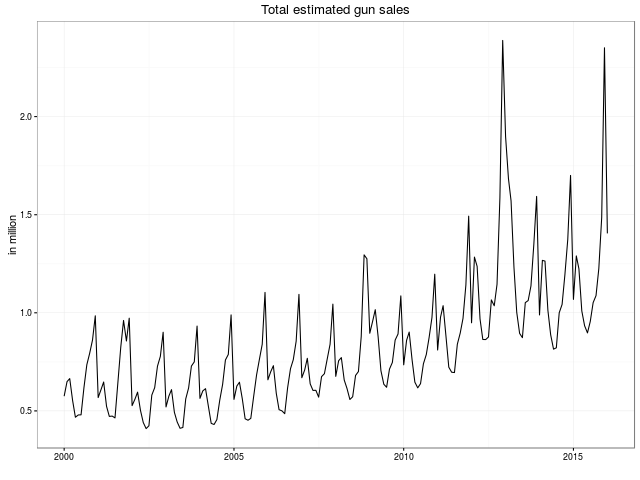
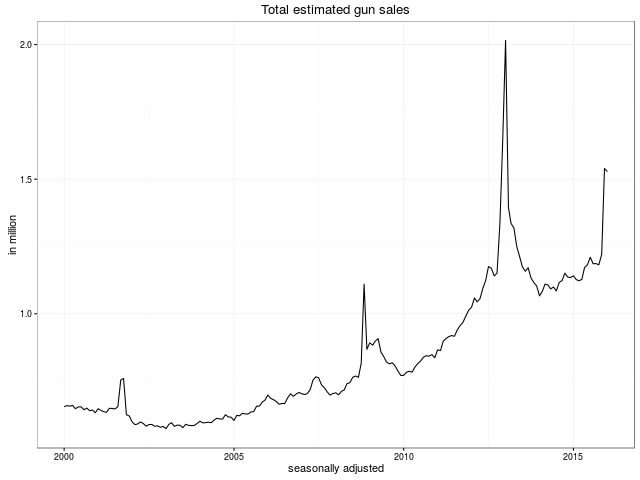
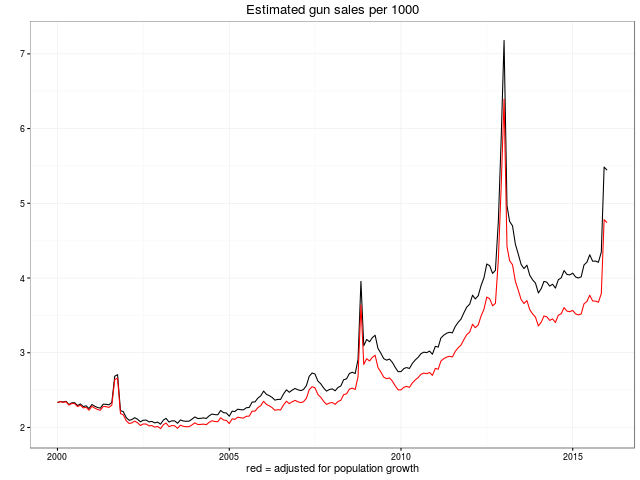
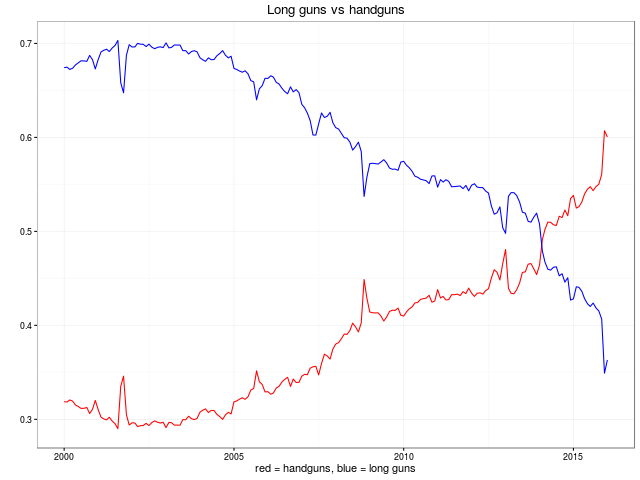
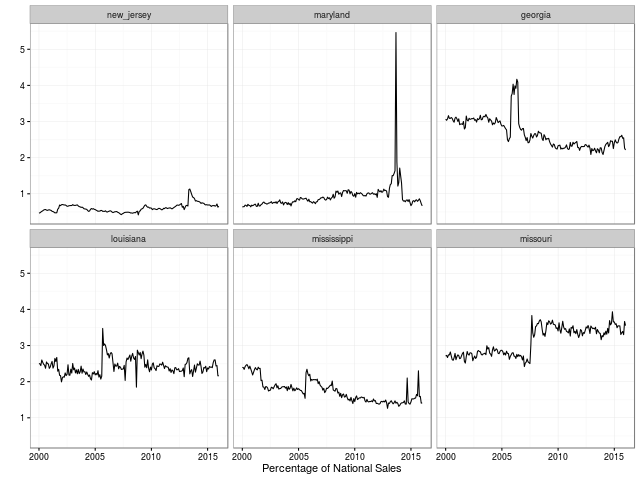
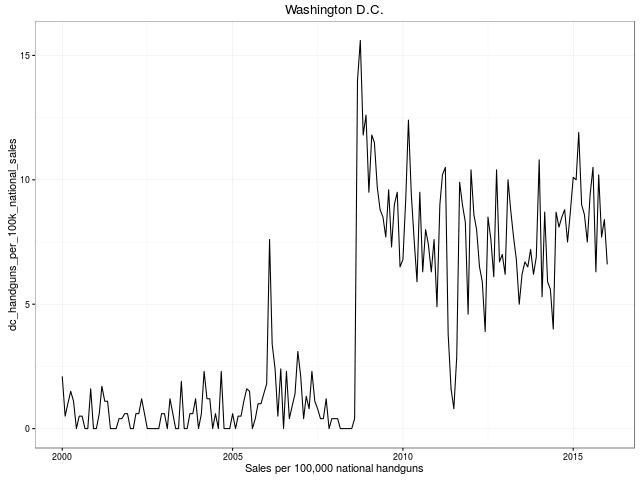
This is based on joint work with Gregor Aisch and Josh Keller of the New York Times. A new package gunsales is now on the CRAN network for R. It is based the NYTimes/gunsales repository underlying the excellent New York Times visualizations, first published first in December 2015 and updated with more recent data since. The analysis takes public government data on gun sales from the National Instant Criminal Background Check System (NICS). The original data is scraped from the pdf, included in the package, and analysed in a cross-section and time-series manner. The standard US Census tool X-13ARIMA-SEATS is used to deseasonalize the timeseries at the national or state level. (Note that Buzzfeed also published data and (Python) code in another GitHub repo.) As an aside, it was the use of X-13ARIMA-SEATS here -- and its somewhat awkward and manual installation also seen in the initial versions of the code in the NYTimes/gunsales repo -- which lead to the recent work by Christoph Sax and myself. We now provide a new package x13binary on CRAN so that Christoph's excellent seasonal package can simply depend upon it and have a working binary provided and installed ready to use; see the recent blog post for more. The net result is that a package like this new gunsales project can simply depend upon seasonal and also be assurred that x13binary "just works". As Martha would say, "A Good Thing". Back to the gunsales project. Following the initial publication of the repository with the data and R code in a simple script, I felt compelled to reorganize it as a package. Packages for R, as we teach our students, colleagues, or anybody else who wants to listen are really the best way to bundle code, data, documentation (i.e. vignettes) and tests. All that exists now in the gunsales package. The package now has one main function, analysis(), which returns a single dataframe object. This dataframe object can then be fed to two plotting functions. The first, plot_gunsales(), will then recreate all the (base R) plots from the original code base. The second, ggplot_gunsales(), does the same but via ggplot2. This should give anybody the ability to look at the data, study the transformations done, form and maybe test new hypotheses and visualize in manner comparable to the original publication. As an amuse gueule, here are the key plots also shown in the main README.md at GitHub: Total Estimated Gun Sales Total Estimated Gun Sales, Seasonally Adjusted Total Estimated Gun Sales, Population-Growth Adjusted Handguns vs Longguns Six States DC We look forward to more remixes and analysis of this data. The plan of the GitHub repository is to keep the data set updated as new data points are published.

This post by Dirk Eddelbuettel originated on his Thinking inside the box blog. Please report excessive re-aggregation in third-party for-profit settings.

1 February 2016

Lunar: Reproducible builds: week 40 in Stretch cycle

What happened in the reproducible builds effort between January 24th and January 30th:

Media coverage Holger Levsen was interviewed by the FOSDEM team to introduce his talk on Sunday 31st.

Toolchain fixes Jonas Smedegaard uploaded d-shlibs/0.63 which makes the order of dependencies generated by d-devlibdeps stable accross locales. Original patch by Reiner Herrmann.

Packages fixed The following 53 packages have become reproducible due to changes in their build dependencies: appstream-glib, aptitude, arbtt, btrfs-tools, cinnamon-settings-daemon, cppcheck, debian-security-support, easytag, gitit, gnash, gnome-control-center, gnome-keyring, gnome-shell, gnome-software, graphite2, gtk+2.0, gupnp, gvfs, gyp, hgview, htmlcxx, i3status, imms, irker, jmapviewer, katarakt, kmod, lastpass-cli, libaccounts-glib, libam7xxx, libldm, libopenobex, libsecret, linthesia, mate-session-manager, mpris-remote, network-manager, paprefs, php-opencloud, pisa, pyacidobasic, python-pymzml, python-pyscss, qtquick1-opensource-src, rdkit, ruby-rails-html-sanitizer, shellex, slony1-2, spacezero, spamprobe, sugar-toolkit-gtk3, tachyon, tgt. The following packages became reproducible after getting fixed: Some uploads fixed some reproducibility issues, but not all of them:
  • gnubg/1.05.000-4 by Russ Allbery.
  • grcompiler/4.2-6 by Hideki Yamane.
  • sdlgfx/2.0.25-5 fix by Felix Geyer, uploaded by Gianfranco Costamagna.
Patches submitted which have not made their way to the archive yet:
  • #812876 on glib2.0 by Lunar: ensure that functions are sorted using the C locale when giotypefuncs.c is generated.

diffoscope development diffoscope 48 was released on January 26th. It fixes several issues introduced by the retrieval of extra symbols from Debian debug packages. It also restores compatibility with older versions of binutils which does not support readelf --decompress.

strip-nondeterminism development strip-nondeterminism 0.015-1 was uploaded on January 27th. It fixes handling of signed JAR files which are now going to be ignored to keep the signatures intact.

Package reviews 54 reviews have been removed, 36 added and 17 updated in the previous week. 30 new FTBFS bugs have been submitted by Chris Lamb, Michael Tautschnig, Mattia Rizzolo, Tobias Frost.

Misc. Alexander Couzens and Bryan Newbold have been busy fixing more issues in OpenWrt. Version 1.6.3 of FreeBSD's package manager pkg(8) now supports SOURCE_DATE_EPOCH. Ross Karchner did a lightning talk about reproducible builds at his work place and shared the slides.

25 January 2016

Antoine Beaupr : Internet in Cuba

A lot has been written about the Internet in Cuba over the years. I have read a few articles, from New York Times' happy support for Google's invasion of Cuba to RSF's dramatic and fairly outdated report about censorship in Cuba. Having written before about Internet censorship in Tunisia, I was curious to see if I could get a feel of what it is like over there, now that a new Castro is in power and the Obama administration has started restoring diplomatic ties with Cuba. With those political changes coming signifying the end of an embargo that has been called genocidal by the Cuban government, it is surprisingly difficult to get fresh information about the current state of affairs. This article aims to fill that gap in clarifying how the internet works in Cuba, what kind of censorship mechanisms are in place and how to work around them. It also digs more technically into the network architecture and performance. It is published in the hope of providing both Cubans and the rest of the world with a better understanding of their network and, if possible, Cubans ways to access the internet more cheaply or without censorship.

"Censorship" and workarounds Unfortunately, I have been connected to the internet only through the the Varadero airport and the WiFi of a "full included" resort near Jibacoa. I have to come to assume that this network is likely to be on a segregated, uncensored internet while the rest of the country suffers the wrath of the Internet censorship in Cuba I have seen documented elsewhere. Through my research, I couldn't find any sort of direct censorship. The Netalyzr tool couldn't find anything significantly wrong with the connection, other than the obvious performance problems related both to the overloaded uplinks of the Cuban internet. I ran an incomplete OONI probe as well, and it seems there was no obvious censorship detected there as well, at least according to folks in the helpful #ooni IRC channel. Tor also works fine, and could be a great way to avoid the global surveillance system described later in this article. Nevertheless, it still remains to be seen how the internet is censored in the "real" Cuban internet, outside of the tourist designated areas - hopefully future visitors or locals can expand on this using the tools mentioned above, using the regular internet. Usual care should be taken when using any workaround tools, mentioned in this post or not, as different regimes over the world have accused, detained, tortured and killed sometimes for the mere fact of using or distributing circumvention tools. For example, a Russian developer was arrested and detained in 2001 by United States' FBI for exposing vulnerabilities in the Adobe e-books copy protection mechanisms. Similarly, people distributing Tor and other tools have been arrested during the period prior to the revolution in Tunisia.

The Cuban captive portal There is, however, a more pernicious and yet very obvious censorship mechanism at work in Cuba: to get access to the internet, you have to go through what seems to be a state-wide captive portal, which I have seen both at the hotel and the airport. It is presumably deployed at all levels of the internet access points. To get credentials through that portal, you need a username and password which you get by buying a Nauta card. Those cards cost 2$CUC and get you an hour of basically unlimited internet access. That may not seem like a lot for a rich northern hotel party-goer, but for Cubans, it's a lot of money, given that the average monthly salary is around 20$CUC. The system is also pretty annoying to use, because it means you do not get continuous network access: every hour, you need to input a new card, which will obviously make streaming movies and other online activities annoying. It also makes hosting servers basically impossible. So while Cuba does not have, like China or Iran, a "great firewall", there is definitely a big restriction to going online in Cuba. Indeed, it seems to be how the government ensures that Cubans do not foment too much dissent online: keep the internet slow and inaccessible, and you won't get too many Arab spring / blogger revolutions.

Bypassing the Cuban captive portal The good news is that it is perfectly possible for Cubans (or at least for a tourist like me with resources outside of the country) to bypass the captive portal. Like many poorly implemented portals, the portal allows DNS traffic to go through, which makes it possible to access the global network for free by using a tool like iodine which tunnels IP traffic over DNS requests. Of course, the bandwidth and reliability of the connection you get through such a portal is pretty bad. I have regularly seen 80% packet loss and over two minutes of latency:
--- 10.0.0.1 ping statistics ---
163 packets transmitted, 31 received, 80% packet loss, time 162391ms
rtt min/avg/max/mdev = 133.700/2669.535/64188.027/11257.336 ms, pipe 65
Still, it allowed me to login to my home server through SSH using Mosh to workaround the reliability issues. Every once in a while, mosh would get stuck and keep on trying to send packets to probe the server, which would clog the connection even more. So I regularly had to restart the whole stack using these commands:
killall iodine # stop DNS tunnel
nmcli n off # turn off wifi to change MAC address
macchanger -A wlan0 # change MAC address
nmcli n on # turn wifi back on
sleep 3 # wait for wifi to settle
iodine-client-start # restart DNS tunnel
The Koumbit Wiki has good instructions on how to setup a DNS tunnel. I am wondering if such a public service could be of use for Cubans, although I am not sure how it could be deployed only for Cubans, and what kind of traffic it could support... The fact is that iodine does require a server to operate, and that server must be run on the outside of the censored perimeter, something that Cubans may not be able to afford in the first place. Another possible way to save money with the captive portal would be to write something that automates connecting and disconnecting from the portal. You would feed that program a list of credentials and it would connect to the portal only on demand, and disconnect as soon as no traffic goes through. There are details on the implementation of the captive portal below that may help future endeavours in that field.

Private information revealed to the captive portal It should be mentioned, however, that the captive portal has a significant amount of information on clients, which is a direct threat to the online privacy of Cuban internet users. Of course the unique identifiers issued with the Nauta cards can be correlated with your identity, right from the start. For example, I had to give my room number to get a Nauta card issued. Then the central portal also knows which access point you are connected to. For example, the central portal I was connected to Wifi_Memories_Jibacoa which, for anyone that cares to research, will give them a location of about 20 square meters where I was located when connected (there is only one access point in the whole hotel). Finally, the central portal also knows my MAC address, a unique identifier for the computer I am using which also reveals which brand of computer I am using (Mac, Lenovo, etc). While this address can be changed, very few people know that, let alone how. This led me to question whether I would be allowed back in Cuba (or even allowed out!) after publishing this blog post, as it is obvious that I can be easily identified based on the time this article was published, my name and other details. Hopefully the Cuban government will either not notice or not care, but this can be a tricky situation, obviously. I have heard that Cuban prisons are not the best hangout place in Cuba, to say the least...

Network configuration assessment This section is more technical and delves more deeply in the Cuban internet to analyze the quality and topology of the network, along with hints as to which hardware and providers are being used to support the Cuban government.

Line quality The internet is actually not so bad in the hotel. Again, this may be because of the very fact that I am in that hotel, and I get a privileged access to the new fiber line to Venezuela, the ALBA-1 link. The line speed I get is around 1mbps, according to speedtest, which selected a server from LIME in George Town, Cayman Islands:
[1034]anarcat@angela:cuba$ speedtest
Retrieving speedtest.net configuration...
Retrieving speedtest.net server list...
Testing from Empresa de Telecomunicaciones de Cuba (152.206.92.146)...
Selecting best server based on latency...
Hosted by LIME (George Town) [391.78 km]: 317.546 ms
Testing download speed........................................
Download: 1.01 Mbits/s
Testing upload speed..................................................
Upload: 1.00 Mbits/s
Latency to the rest of the world is of couse slow:
--- koumbit.org ping statistics ---
122 packets transmitted, 120 received, 1,64% packet loss, time 18731,6ms
rtt min/avg/max/sdev = 127,457/156,097/725,211/94,688 ms
--- google.com ping statistics ---
122 packets transmitted, 121 received, 0,82% packet loss, time 19371,4ms
rtt min/avg/max/sdev = 132,517/160,095/724,971/93,273 ms
--- redcta.org.ar ping statistics ---
122 packets transmitted, 120 received, 1,64% packet loss, time 40748,6ms
rtt min/avg/max/sdev = 303,035/339,572/965,092/97,503 ms
--- ccc.de ping statistics ---
122 packets transmitted, 72 received, 40,98% packet loss, time 19560,2ms
rtt min/avg/max/sdev = 244,266/271,670/594,104/61,933 ms
Interestingly, Koumbit is actually the closest host in the above test. It could be that Canadian hosts are less affected by bandwidth problems compared to US hosts because of the embargo.

Network topology The various traceroutes show a fairly odd network topology, but that is typical of what I would described as "colonized internet users", which have layers and layers of NAT and obscure routing that keep them from the real internet. Just like large corporations are implementing NAT in a large scale, Cuba seems to have layers and layers of private RFC 1918 IPv4 space. A typical traceroute starts with:
traceroute to koumbit.net (199.58.80.33), 30 hops max, 60 byte packets
 1  10.156.41.1 (10.156.41.1)  9.724 ms  9.472 ms  9.405 ms
 2  192.168.134.137 (192.168.134.137)  16.089 ms  15.612 ms  15.509 ms
 3  172.31.252.113 (172.31.252.113)  15.350 ms  15.805 ms  15.358 ms
 4  pos6-0-0-agu-cr-1.mpls.enet.cu (172.31.253.197)  15.286 ms  14.832 ms  14.405 ms
 5  172.31.252.29 (172.31.252.29)  13.734 ms  13.685 ms  14.485 ms
 6  200.0.16.130 (200.0.16.130)  14.428 ms  11.393 ms  10.977 ms
 7  200.0.16.74 (200.0.16.74)  10.738 ms  10.019 ms  10.326 ms
 8  ix-11-3-1-0.tcore1.TNK-Toronto.as6453.net (64.86.33.45)  108.577 ms  108.449 ms
Let's take this apart line by line:
 1  10.156.41.1 (10.156.41.1)  9.724 ms  9.472 ms  9.405 ms
This is my local gateway, probably the hotel's wifi router.
 2  192.168.134.137 (192.168.134.137)  16.089 ms  15.612 ms  15.509 ms
This is likely not very far from the local gateway, probably still in Cuba. It in one bit away from the captive portal IP address (see below) so it is very likely related to the captive portal implementation.
 3  172.31.252.113 (172.31.252.113)  15.350 ms  15.805 ms  15.358 ms
 4  pos6-0-0-agu-cr-1.mpls.enet.cu (172.31.253.197)  15.286 ms  14.832 ms  14.405 ms
 5  172.31.252.29 (172.31.252.29)  13.734 ms  13.685 ms  14.485 ms
All those are withing RFC 1918 space. Interestingly, the Cuban DNS servers resolve one of those private IPs as within Cuban space, on line #4. That line is interesting because it reveals the potential use of MPLS.
 6  200.0.16.130 (200.0.16.130)  14.428 ms  11.393 ms  10.977 ms
 7  200.0.16.74 (200.0.16.74)  10.738 ms  10.019 ms  10.326 ms
Those two lines are the only ones that actually reveal that the route belongs in Cuba at all. Both IPs are in a tiny (/24, or 256 IP addresses) network allocated to ETECSA, the state telco in Cuba:
inetnum:     200.0.16/24
status:      allocated
aut-num:     N/A
owner:       EMPRESA DE TELECOMUNICACIONES DE CUBA S.A. (IXP CUBA)
ownerid:     CU-CUBA-LACNIC
responsible: Rafael L pez Guerra
address:     Ave. Independencia y 19 Mayo, s/n,
address:     10600 - La Habana - CH
country:     CU
phone:       +53 7 574242 []
owner-c:     JOQ
tech-c:      JOQ
abuse-c:     JEM52
inetrev:     200.0.16/24
nserver:     NS1.NAP.ETECSA.NET
nsstat:      20160123 AA
nslastaa:    20160123
nserver:     NS2.NAP.ETECSA.NET
nsstat:      20160123 AA
nslastaa:    20160123
created:     20030512
changed:     20140610
Then the last hop:
 8  ix-11-3-1-0.tcore1.TNK-Toronto.as6453.net (64.86.33.45)  108.577 ms  108.449 ms  108.257 ms
...interestingly, lands directly in Toronto, in this case going later to Koumbit but that is the first hop that varies according to the destination, hops 1-7 being a common trunk to all external communications. It's also interesting that this shoves a good 90 milliseconds extra in latency, showing that a significant distance and number of equipment crossed. Yet a single hop is crossed, not showing the intermediate step of the Venezuelan link or any other links for that matter. Something obscure is going on there... Also interesting to note is the traceroute to the redirection host, which is only one hop away:
traceroute to 192.168.134.138 (192.168.134.138), 30 hops max, 60 byte packets
 1  192.168.134.138 (192.168.134.138)  6.027 ms  5.698 ms  5.596 ms
Even though it is not the gateway:
$ ip route
default via 10.156.41.1 dev wlan0  proto static  metric 1024
10.156.41.0/24 dev wlan0  proto kernel  scope link  src 10.156.41.4
169.254.0.0/16 dev wlan0  scope link  metric 1000
This means a very close coordination between the different access points and the captive portal system. Finally, note that there seems to be only three peers to the Cuban internet: Teleglobe, formerly Canadian, now owned by the Indian [[!wiki Tata group]], and Telef nica, the Spanish Telco that colonized most of Latin America's internet, all the way down to Argentina. This is confirmed by my traceroutes, which show traffic to Koumbit going through Tata and Google's going through Telef nica.

Captive portal implementation The captive portal is https://www.portal-wifi-temas.nauta.cu/ (not accessible outside of Cuba) and uses a self-signed certificate. The domain name resolves to 190.6.81.230 in the hotel. Accessing http://1.1.1.1/ gives you a status page which allows you to disconnect from the portal. It actually redirects you to https://192.168.134.138/logout.user. That is also a self-signed, but different certificate. That certificate actually reveals the implication of Gemtek which is a "world-leading provider of Wireless Broadband solutions, offering a wide range of solutions from residential to business". It is somewhat unclear if the implication of Gemtek here is deliberate or a misconfiguration on the part of Cuban officials, especially since the certificate is self-signed and was issued in 2002. It could be, however, a trace of the supposed involvement of China in the development of Cuba's networking systems, although Gemtek is based in Taiwan, and not in the China mainland. That IP, in turn, redirects you to the same portal but in a page that shows you the statistics:
https://www.portal-wifi-temas.nauta.cu/?mac=0024D1717D18&script=logout.user&remain_time=00%3A55%3A52&session_time=00%3A04%3A08&username=151003576287&clientip=10.156.41.21&nasid=Wifi_Memories_Jibacoa&r=ac%2Fpopup
Notice how you see the MAC address of the machine in the URL (randomized, this is not my MAC address), along with the remaining time, session time, client IP and the Wifi access point ESSID. There may be some potential in defrauding the session time there, I haven't tested it directly. Hitting Actualizar redirects you back to the IP address, which redirects you to the right URL on the portal. The "real" logout is at:
http://192.168.134.138/logout.user?cmd=logout
The login is performed against https://www.portal-wifi-temas.nauta.cu/index.php?r=ac/login with a referer of:
https://www.portal-wifi-temas.nauta.cu/?&nasid=Wifi_Memories_Jibacoa&nasip=192.168.134.138&clientip=10.156.41.21&mac=EC:55:F9:C5:F2:55&ourl=http%3a%2f%2fgoogle.ca%2f&sslport=443&lang=en-US%2cen%3bq%3d0.8&lanip=10.156.41.1
Again, notice the information revealed to the central portal.

Equipment and providers I ran Nmap probes against both the captive portal and the redirection host, in the hope of finding out how they were built and if they could reveal the source of the equipment used. The complete nmap probes are available in nmap, but it seems that the captive portal is running some embedded device. It is confusing because the probe for the captive portal responds as if it was the gateway, which blurs even more the distinction between the hotel's gateway and the captive portal. This raises the distinct possibility that all access points are actually captive portal that authenticate to another central server. The nmap traces do show three distinct hosts however:
  • the captive portal (www.portal-wifi-temas.nauta.cu, 190.6.81.230)
  • some redirection host (192.168.134.138)
  • the hotel's gateway (10.156.41.1)
They do have distinct signatures so the above may be just me misinterpreting traceroute and nmap results. Your comments may help in clarifying the above. Still, the three devices show up as running Linux, in the two last cases versions between 2.4.21 and 2.4.31. Now, to find out which version of Linux it is running is way more challenging, and it is possible it is just some custom Linux distribution. Indeed, the webserver shows up as G4200.GSI.2.22.0155 and the SSH server is running OpenSSH 3.0.2p1, which is basically prehistoric (2002!) which corroborates the idea that this is some Gemtek embedded device. The fact that those devices are running 14 years old software should be a concern to the people responsible for those networks. There is, for example, a remote root vulnerability that affects that specific version of OpenSSH, among many other vulnerabilities.

A note on Nauta card's security Finally, one can note that it is probably trivial to guess card UIDs. All cards i have here start with the prefix 15100, the following digits being 3576 or 4595, presumably depending on the "batch" that was sent to different hotels, which seems to be batches of 1000 cards. You can also correlate the UID with the date at which the card was issued. For example, 15100357XXX cards are all valid until 19/03/2017, and 151004595XXX cards are all valid until 23/03/2017. Here's the list of UIDs I have seen:
151004595313
151004595974
151003576287
151003576105
151003576097
The passwords, on the other hand, do seem fairly random (although my sample size is small). Interestingly, those passwords are also 12 digits long, which is about as strong as a seven-letter password (mixed uppercase and lowercase). If there are no rate-limiting provisions on that captive portal, it could be possible to guess those passwords, since you have free rein on accessing those routers. Depending on the performance of the routers, you could be lucky and find a working password for free...

Conclusion Clearly, Internet access in Cuba needs to be modernized. We can clearly see that Cuba years behind the rest of the Americas, if only through the percentage of the population with internet access, or download speeds. The existence of a centralized captive portal also enables a huge surveillance potential that should be a concern for any Cuban, or for that matter, anyone wishing to live in a free society. The answer, however, lies not in the liberalization of commerce and opening the doors to the US companies and their own systems of surveillance. It should be possible, and even desirable for Cubans to establish their own neutral network, a proposal I have made in the past even for here in Qu bec. This network could be used and improved by Cubans themselves, prioritizing local communities that would establish their own infrastructure according to their own needs. I have been impressed by this article about the El Paquete system - it shows great innovation and initiative from Cubans which are known for engaging in technology in a creative way. This should be leveraged by letting Cubans do what they want with their networks, not telling them what to do. The best the Googles of this world can do to help Cuba is not to colonize Cuba's technological landscape but to cleanup their own and make their own tools more easily accessible and shareable offline. It is something companies can do right now, something I detailed in a previous article.

25 November 2015

Daniel Pocock: Drone strikes coming to Molenbeek?

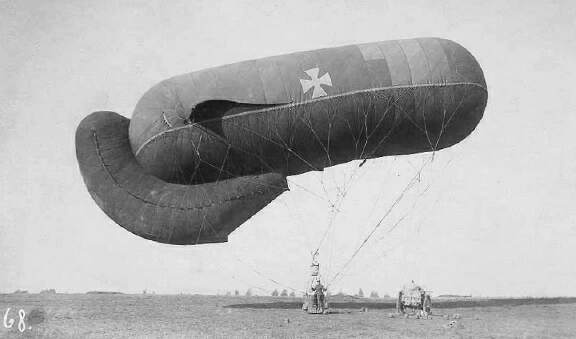
The St Denis siege last week and the Brussels lockdown this week provides all of us in Europe with an opportunity to reflect on why over ten thousand refugees per day have been coming here from the middle east, especially Syria. At this moment, French warplanes and American drones are striking cities and villages in Syria, killing whole families in their effort to shortcut the justice system and execute a small number of very bad people without putting them on trial. Some observers estimate air strikes and drones kill twenty innocent people for every one bad guy. Women, children, the sick, elderly and even pets are most vulnerable. The leak of the collateral murder video simultaneously brought Wikileaks into the public eye and demonstrated how the crew of a US attack helicopter had butchered unarmed civilians and journalists like they were playing a video game. Just imagine that the French president had sent the fighter jets to St Denis and Molenbeek instead of using law enforcement. After all, how are the terrorists there any better or worse than those in Syria, don't they deserve the same fate? Or what if Obama had offered to help out with a few drone strikes on suburban Brussels? After all, if the drones are such a credible solution for Syria's future, why won't they solve Brussels' (perceived) problems too? If the aerial bombing "solution" had been attempted in a western country, it would have lead to chaos. Half the population of Paris and Brussels would find themselves camping at the migrant camps in Calais, hoping to sneak into the UK in the back of a truck. Over a hundred years ago, Russian leaders proposed a treaty agreeing never to drop bombs from balloons and the US and UK happily signed it. Sadly, the treaty wasn't updated after the invention of fighter jets, attack helicopters, rockets, inter-continental ballistic missiles, satellites and drones. The reality is that asymmetric warfare hasn't worked and never will work in the middle east and as long as it is continued, experts warn that Europe may continue to face the consequences of refugees, terrorists and those who sympathize with their methods. By definition, these people can easily move from place to place and it is ordinary citizens and small businesses who will suffer a lot more under lockdowns and other security measures. In our modern world, people often look to technology for shortcuts. The use of drones in the middle east is a shortcut from a country that spent enormous money on ground invasions of Iraq and Afghanistan and doesn't want to do it again. Unfortunately, technological shortcuts can't always replace the role played by real human beings, whether it is bringing law and order to the streets or in any other domain. Aerial bombardment - by warplane or by drone - carries an implicitly racist message, that the people abused by these drone attacks are not equivalent to the rest of us, they can't benefit from the normal procedures of justice, they don't have rights, they are not innocent until proven guilty and they are expendable. The French police deserve significant credit for the relatively low loss of life in the St Denis siege. If their methods and results were replicated in Syria and other middle eastern hotspots, would it be more likely to improve the situation in the long term than drone strikes?

23 November 2015

Lunar: Reproducible builds: week 30 in Stretch cycle

What happened in the reproducible builds effort this week: Toolchain fixes Mattia Rizzolo uploaded a version of perl to the reproducible repository including the patch written by Niko Tyni to add support for SOURCE_DATE_EPOCH in Pod::Man. Dhole sent an updated version of his patch adding support for SOURCE_DATE_EPOCH in GCC to the upstream mailing list. Several comments have been made in response which have been quickly addressed by Dhole. Dhole also forwarded his patch adding support for SOURCE_DATE_EPOCH in libxslt upstream. Packages fixed The following packages have become reproducible due to changes in their build dependencies: antlr3/3.5.2-3, clusterssh, cme, libdatetime-set-perl, libgraphviz-perl, liblingua-translit-perl, libparse-cpan-packages-perl, libsgmls-perl, license-reconcile, maven-bundle-plugin/2.4.0-2, siggen, stunnel4, systemd, x11proto-kb. The following packages became reproducible after getting fixed: Some uploads fixed some reproducibility issues, but not all of them: reproducible.debian.net Vagrant Cascadian has set up a new armhf node using a Raspberry Pi 2. It should soon be added to the Jenkins infrastructure. diffoscope development diffoscope version 42 was release on November 20th. It adds a missing dependency on python3-pkg-resources and to prevent similar regression another autopkgtest to ensure that the command line is functional when Recommends are not installed. Two more encoding related problems have been fixed (#804061, #805418). A missing Build-Depends has also been added on binutils-multiarch to make the test suite pass on architectures other than amd64. Package reviews 180 reviews have been removed, 268 added and 59 updated this week. 70 new fail to build from source bugs have been reported by Chris West, Chris Lamb and Niko Tyni. New issue this week: randomness_in_ocaml_preprocessed_files. Misc. Jim MacArthur started to work on a system to rebuild and compare packages built on reproducible.debian.net using .buildinfo and snapshot.debian.org. On December 1-3rd 2015, a meeting of about 40 participants from 18 different free software projects will be held in Athens, Greece with the intent of improving the collaboration between projects, helping new efforts to be started, and brainstorming on end-user aspects of reproducible builds.

1 October 2015

Clint Adams: I'm a broken man on a Halifax pier, the last of Barrett's Privateers

shroomies

16 July 2015

Osamu Aoki: debmake and debamke-doc and debian-handbook

While updating the maintainer's guide, I had faced with several issues to update it as it is, since it was based on the dh-make package and does not play nice with new features such as multi-arch etc. Also. the lack of capability to create a decent copyright information template was my concern.

I have created the debmake tool to address shortcomings of dh-make. It was good attempt for Jessie, but it has not so nice bug on parsing copyright. So I decided to drop it for Jessie.
https://packages.qa.debian.org/d/debmake.html

The current testing repository has the updated debmake command. With the -k option, you can check if the your debian/copyright is covering all the files properly in source or not.

Since I got this updated package, I rewrote the maintainer's guide from scratch. Now it is available in the debmake-doc package. You can see all the packaging cases including autotools, cmake, and libraries. If I made a mistake, let me know. As you may noticed, debian-doc related web pages are now generated from the latest uploaded packages mostly. debmake-doc is no exception.
"Guide for Debian Maintainers"
https://www.debian.org/doc/manuals/debmake-doc/index.en.html

By using debmake as the template generation tool, the document can be made shorter and there are many practical examples. More over, all the source code examples can be found in the source tree. Try:

$ apt-get source debmake-doc
$ sudo apt-get install devscripts build-essentials
$ sudo apt-get build-dep debmake-doc
$ cd debmake-doc*
$ make

You get the simulated log of building all the details of the packaging examples in this way.

With upcoming uploads, I should fix some CSS for the better cell phone compatibility but this is in good shape from the PC browsers.

Oh, not last ... NOW debian-handbook is on our www.debian.org server and its mirrors.

I think this is the most comprehensive work on Debian system and deserves to be presented in our web pages prominently. Kudos for people who wrote this fine manual.

https://www.debian.org/doc/manuals/debian-handbook/

(I think outdated reference to old TLDP pages should be mostly dropped in our https://www.debian.org/doc/ page.)

Please note web pages on www.debian.org has been modified to make the language based content negotiation. So you should see the page based on your browser settings.

Osamu

12 July 2015

Lunar: Reproducible builds: week 11 in Stretch cycle

Debian is undertaking a huge effort to develop a reproducible builds system. I'd like to thank you for that. This could be Debian's most important project, with how badly computer security has been going.

PerniciousPunk in Reddit's Ask me anything! to Neil McGovern, DPL. What happened in the reproducible builds effort this week: Toolchain fixes More tools are getting patched to use the value of the SOURCE_DATE_EPOCH environment variable as the current time:

In the reproducible experimental toolchain which have been uploaded: Johannes Schauer followed up on making sbuild build path deterministic with several ideas. Packages fixed The following 311 packages became reproducible due to changes in their build dependencies : 4ti2, alot, angband, appstream-glib, argvalidate, armada-backlight, ascii, ask, astroquery, atheist, aubio, autorevision, awesome-extra, bibtool, boot-info-script, bpython, brian, btrfs-tools, bugs-everywhere, capnproto, cbm, ccfits, cddlib, cflow, cfourcc, cgit, chaussette, checkbox-ng, cinnamon-settings-daemon, clfswm, clipper, compton, cppcheck, crmsh, cupt, cutechess, d-itg, dahdi-tools, dapl, darnwdl, dbusada, debian-security-support, debomatic, dime, dipy, dnsruby, doctrine, drmips, dsc-statistics, dune-common, dune-istl, dune-localfunctions, easytag, ent, epr-api, esajpip, eyed3, fastjet, fatresize, fflas-ffpack, flann, flex, flint, fltk1.3, fonts-dustin, fonts-play, fonts-uralic, freecontact, freedoom, gap-guava, gap-scscp, genometools, geogebra, git-reintegrate, git-remote-bzr, git-remote-hg, gitmagic, givaro, gnash, gocr, gorm.app, gprbuild, grapefruit, greed, gtkspellmm, gummiboot, gyp, heat-cfntools, herold, htp, httpfs2, i3status, imagetooth, imapcopy, imaprowl, irker, jansson, jmapviewer, jsdoc-toolkit, jwm, katarakt, khronos-opencl-man, khronos-opengl-man4, lastpass-cli, lava-coordinator, lava-tool, lavapdu, letterize, lhapdf, libam7xxx, libburn, libccrtp, libclaw, libcommoncpp2, libdaemon, libdbusmenu-qt, libdc0, libevhtp, libexosip2, libfreenect, libgwenhywfar, libhmsbeagle, libitpp, libldm, libmodbus, libmtp, libmwaw, libnfo, libpam-abl, libphysfs, libplayer, libqb, libsecret, libserial, libsidplayfp, libtime-y2038-perl, libxr, lift, linbox, linthesia, livestreamer, lizardfs, lmdb, log4c, logbook, lrslib, lvtk, m-tx, mailman-api, matroxset, miniupnpd, mknbi, monkeysign, mpi4py, mpmath, mpqc, mpris-remote, musicbrainzngs, network-manager, nifticlib, obfsproxy, ogre-1.9, opal, openchange, opensc, packaging-tutorial, padevchooser, pajeng, paprefs, pavumeter, pcl, pdmenu, pepper, perroquet, pgrouting, pixz, pngcheck, po4a, powerline, probabel, profitbricks-client, prosody, pstreams, pyacidobasic, pyepr, pymilter, pytest, python-amqp, python-apt, python-carrot, python-django, python-ethtool, python-mock, python-odf, python-pathtools, python-pskc, python-psutil, python-pypump, python-repoze.tm2, python-repoze.what, qdjango, qpid-proton, qsapecng, radare2, reclass, repsnapper, resource-agents, rgain, rttool, ruby-aggregate, ruby-albino, ruby-archive-tar-minitar, ruby-bcat, ruby-blankslate, ruby-coffee-script, ruby-colored, ruby-dbd-mysql, ruby-dbd-odbc, ruby-dbd-pg, ruby-dbd-sqlite3, ruby-dbi, ruby-dirty-memoize, ruby-encryptor, ruby-erubis, ruby-fast-xs, ruby-fusefs, ruby-gd, ruby-git, ruby-globalhotkeys, ruby-god, ruby-hike, ruby-hmac, ruby-integration, ruby-jnunemaker-matchy, ruby-memoize, ruby-merb-core, ruby-merb-haml, ruby-merb-helpers, ruby-metaid, ruby-mina, ruby-net-irc, ruby-net-netrc, ruby-odbc, ruby-ole, ruby-packet, ruby-parseconfig, ruby-platform, ruby-plist, ruby-popen4, ruby-rchardet, ruby-romkan, ruby-ronn, ruby-rubyforge, ruby-rubytorrent, ruby-samuel, ruby-shoulda-matchers, ruby-sourcify, ruby-test-spec, ruby-validatable, ruby-wirble, ruby-xml-simple, ruby-zoom, rumor, rurple-ng, ryu, sam2p, scikit-learn, serd, shellex, shorewall-doc, shunit2, simbody, simplejson, smcroute, soqt, sord, spacezero, spamassassin-heatu, spamprobe, sphinxcontrib-youtube, splitpatch, sratom, stompserver, syncevolution, tgt, ticgit, tinyproxy, tor, tox, transmissionrpc, tweeper, udpcast, units-filter, viennacl, visp, vite, vmfs-tools, waffle, waitress, wavtool-pl, webkit2pdf, wfmath, wit, wreport, x11proto-input, xbae, xdg-utils, xdotool, xsystem35, yapsy, yaz. Please note that some packages in the above list are falsely reproducible. In the experimental toolchain, debhelper exported TZ=UTC and this made packages capturing the current date (without the time) reproducible in the current test environment. The following packages became reproducible after getting fixed: Ben Hutchings upstreamed several patches to fix Linux reproducibility issues which were quickly merged. Some uploads fixed some reproducibility issues but not all of them: Uploads that should fix packages not in main: Patches submitted which have not made their way to the archive yet: reproducible.debian.net A new package set has been added for lua maintainers. (h01ger) tracker.debian.org now only shows reproducibility issues for unstable. Holger and Mattia worked on several bugfixes and enhancements: finished initial test setup for NetBSD, rewriting more shell scripts in Python, saving UDD requests, and more debbindiff development Reiner Herrmann fixed text comparison of files with different encoding. Documentation update Juan Picca added to the commands needed for a local test chroot installation of the locales-all package. Package reviews 286 obsolete reviews have been removed, 278 added and 243 updated this week. 43 new bugs for packages failing to build from sources have been filled by Chris West (Faux), Mattia Rizzolo, and h01ger. The following new issues have been added: timestamps_in_manpages_generated_by_ronn, timestamps_in_documentation_generated_by_org_mode, and timestamps_in_pdf_generated_by_matplotlib. Misc. Reiner Herrmann has submitted patches for OpenWrt. Chris Lamb cleaned up some code and removed cruft in the misc.git repository. Mattia Rizzolo updated the prebuilder script to match what is currently done on reproducible.debian.net.

20 June 2015

Lunar: Reproducible builds: week 4 in Stretch cycle

What happened about the reproducible builds effort for this week: Toolchain fixes Lunar rebased our custom dpkg on the new release, removing a now unneeded patch identified by Guillem Jover. An extra sort in the buildinfo generator prevented a stable order and was quickly fixed once identified. Mattia Rizzolo also rebased our custom debhelper on the latest release. Packages fixed The following 30 packages became reproducible due to changes in their build dependencies: animal-sniffer, asciidoctor, autodock-vina, camping, cookie-monster, downthemall, flashblock, gamera, httpcomponents-core, https-finder, icedove-l10n, istack-commons, jdeb, libmodule-build-perl, libur-perl, livehttpheaders, maven-dependency-plugin, maven-ejb-plugin, mozilla-noscript, nosquint, requestpolicy, ruby-benchmark-ips, ruby-benchmark-suite, ruby-expression-parser, ruby-github-markup, ruby-http-connection, ruby-settingslogic, ruby-uuidtools, webkit2gtk, wot. The following packages became reproducible after getting fixed: Some uploads fixed some reproducibility issues but not all of them: Patches submitted which did not make their way to the archive yet: Also, the following bugs have been reported: reproducible.debian.net Holger Levsen made several small bug fixes and a few more visible changes: strip-nondeterminism Version 0.007-1 of strip-nondeterminism the tool to post-process various file formats to normalize them has been uploaded by Holger Levsen. Version 0.006-1 was already in the reproducible repository, the new version mainly improve the detection of Maven's pom.properties files. debbindiff development At the request of Emmanuel Bourg, Reiner Herrmann added a comparator for Java .class files. Documentation update Christoph Berg created a new page for the timestamps in manpages created by Doxygen. Package reviews 93 obsolete reviews have been removed, 76 added and 43 updated this week. New identified issues: timestamps in manpages generated by Doxygen, modification time differences in files extracted by unzip, tstamp task used in Ant build.xml, timestamps in documentation generated by ASDocGen. The description for build id related issues has been clarified. Meetings Holger Levsen announced a first meeting on Wednesday, June 3rd, 2015, 19:00 UTC. The agenda is amendable on the wiki. Misc. Lunar worked on a proof-of-concept script to import the build environment found in .buildinfo files to UDD. Lucas Nussbaum has positively reviewed the proposed schema. Holger Levsen cleaned up various experimental toolchain repositories, marking merged brances as such.

20 May 2015

Norbert Preining: Shishiodoshi or Us and They On the perceived exclusivity of Japanese

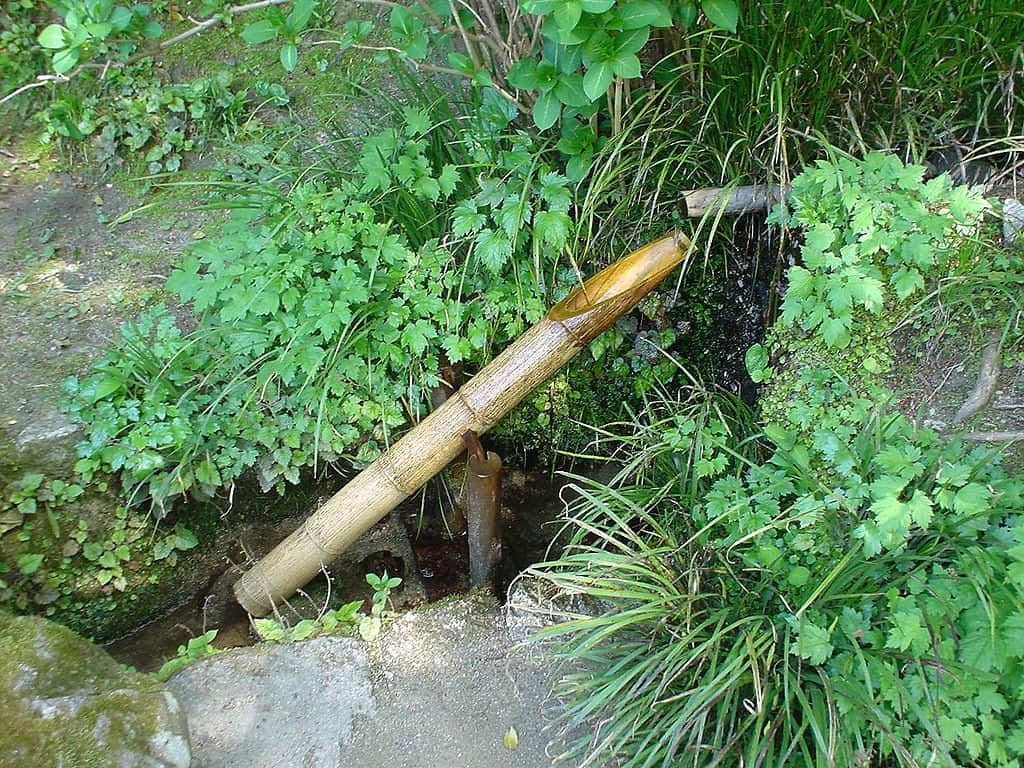
The other day I received from my Japanese teacher an interesting article by Yamazaki Masakazu comparing garden styles, and in particular the attitude towards and presentation of water in Japanese and European gardens (page 1, page 2). The author s list of achievements is long, various professorships, dramatist, literature critique, recognized as Person of Cultural Merit, just to name a view. I was looking forward to an interesting and high quality article! The article itself introduces the reader to Shishiodoshi, one of the standard ingredients of a Japanese garden: It is a device where water drips into a bamboo tube that is also a seesaw. At some point the water in the bamboo tube makes the seesaw switch over and the water pours out, after which the seesaw returns to the original position and a new cycle begins. Shishiodoshi The author describes his feelings and thoughts about the shishiodoshi, in particular connects human life (stress and relieve, cycles), the flow of time, and some other concepts with the shishiodoshi. Up to here it is a wonderful article providing interesting insights into the way the author thinks. Unfortunately, then the author tries to underline his ideas by comparing the Japanese shishiodoshi with European style water fountains, describing the former with all favorable properties and full of deep meaning, while the latter is qualified as beautiful and nice, but bare of any deeper meaning. I don t go into details that the whole comparison is anyway a bad one, as he is comparing Baroque style fountains, a very limited period, and furthermore ignores the fact that water fountains are not genuinely European (isn t there one in the Kenrokuen, one of the three most famous gardens in Japan!?), nor does he consider any other water-installation that might be available. What really destroys the in principle very nice article is the tone: The general tone of the article then can be summarized into: The shishiodoshi is rich on meaning, connects to the life of humans, instigates philosophical reflections, represents nature, the flow of time etc. The water fountain is beautiful and gorgeous, but that is all. I don t think that this separation, or this negative undertone, was created on purpose by the author. A person of his stature is supposedly above this level of primitive comparison. I believe that it is nothing else but a consequence of upbringing and the general attitude that permeates the whole society with this feeling of separateness. Us and They Repeatedly providing sentences like Japanese people and Western people have different tastes.. ( ). About 10 times in this short article expressions like Japanese and Westerner appear, leaving the reader with a bitter taste of an author that considers first the Japanese a people (what about Ainu, Ryukyu, etc?), and second that the Japanese are exclusive in the sense that they are set apart from the rest of the world in their way of thinking, living, being. What puzzles me is that this is not only a singular opinion, but a very general straight in the Japanese media, TV, radio, newspaper, books. Everyone considers Japan and Japanese as something that is fundamentally and profoundly different from everyone else in the world. There is We the Japanese (and that doesn t mean nationality of passport, but blood line!), and there are They the Rest or, as the way of writing and and description on many occasion suggestions, They the Barbarians . A short anecdote will underly this: One of the favorite TV talk show / pseudo-documentary style is about Japanese living abroad. That day a lady married in Paris was interviewed. What followed was a guided tour through Paris showing: Dirt in the gutter, street cleaning cars, waste disposal places. Yes, that was all. Just about the dirt . Of course, at length the (unfortunately only apparent) cleanliness of Japanese cities and neighborhoods are mentioned and shown to remind everyone how wonderful Japan is and how dirty the Barbarians. I don t want to say that I consider Japan more dirty than most other countries just the visible part is clean, the moment you step a bit aside and around the corner, there are the worst trash just thrown away without consideration. Anyway. To return to the topic of Us and They I consider us all humans, first and foremost, and nationality, birthplace, and all that are just by chance. I do NOT reject cultural differences, they are here, of course. But cultural differences are one thing, separating one self and one s perceived people from the rest of the world is another. Conclusion I repeat, I don t think that the author had any ill intentions, but it would have been nicer if the article wouldn t make such a stark distinction. He could have written about Shishiodoshi and water fountains without using the Us They categorization. He could have compared other water installations, could have discussed the long tradition of small ponds in European gardens, just to name a few things. But the author choose to highlight differences instead of commonalities. It is the Us against Them feeling that often makes life in Japan for a foreigner difficult. Japanese are not special, Austrians, too, are not special, nor are Americans, Russians, Tibetans, or any other nationality. No nationality is special, we are all humans. Maybe at some point this will arrive also in the Japanese society and thinking.
Email this to someonePrint this pageShare on FacebookShare on Google+Tweet about this on TwitterShare on LinkedInFlattr the author

1 May 2015

Clint Adams: This is an example of fair use.

New month, new life.

22 January 2015

Erich Schubert: Year 2014 in Review as Seen by a Trend Detection System

We ran our trend detection tool Signi-Trend (published at KDD 2014) on news articles collected for the year 2014. We removed the category of financial news, which is overrepresented in the data set. Below are the (described) results, from the top 50 trends (I will push the raw result to appspot if possible due to file limits).
I have highlighted the top 10 trends in bold, but otherwise ordered them chronologically.
Updated: due to an error in a regexp, I had filtered out too many stories. The new results use more articles.

January
2014-01-29: Obama's state of the union address
February
2014-02-07: Sochi Olympics gay rights protests
2014-02-08: Sochi Olympics first results
2014-02-19: Violence in Ukraine and Maidan in Kiev
2014-02-20: Wall street reaction to Facebook buying WhatsApp
2014-02-22: Yanukovich leaves Kiev
2014-02-28: Crimea crisis begins
March
2014-03-01: Crimea crisis escalates futher
2014-03-02: NATO meeting on Crimea crisis
2014-03-04: Obama presents U.S. fiscal budget 2015 plan
2014-03-08: Malaysia Airlines MH-370 missing in South China Sea
2014-03-08: MH-370: many Chinese on board of missing airplane
2014-03-15: Crimean status referencum (upcoming)
2014-03-18: Crimea now considered part of Russia by Putin
2014-03-21: Russian stocks fall after U.S. sanctions.
April
2014-04-02: Chile quake and tsunami warning
2014-04-09: False positive? experience + views
2014-04-13: Pro-russian rebels in Ukraine's Sloviansk
2014-04-17: Russia-Ukraine crisis continues
2014-04-22: French deficit reduction plan pressure
2014-04-28: Soccer World Cup coverage: team lineups
May
2014-05-14: MERS reports in Florida, U.S.
2014-05-23: Russia feels sanctions impact
2014-05-25: EU elections
June
2014-06-06: World cup coverage
2014-06-13: Islamic state Camp Speicher massacre in Iraq
2014-06-14: Soccer world cup: Spain surprisingly destoyed by Netherlands
July
2014-07-05: Soccer world cup quarter finals
2014-07-17: Malaysian Airlines MH-17 shot down over Ukraine
2014-07-18: Russian blamed for 298 dead in airline downing
2014-07-19: Independent crash site investigation demanded
2014-07-20: Israel shelling Gaza causes 40+ casualties in a day
August
2014-08-07: Russia bans food imports from EU and U.S.
2014-08-08: Obama orders targeted air strikes in Iraq
2014-08-20: IS murders journalist James Foley, air strikes continue
2014-08-30: EU increases sanctions against Russia
September
2014-09-05: NATO summit with respect to IS and Ukraine conflict
2014-09-11: Scottish referendum upcoming - poll results are close
2014-09-23: U.N. on legality of U.S. air strikes in Syria against IS
2014-09-26: Star manager Bill Gross leaves Allianz/PIMCO for Janus
October
2014-10-22: Ottawa parliament shooting
2014-10-26: EU banking review
November
2014-11-05: U.S. Senate and governor elections
2014-11-12: Foreign exchange manipulation investigation results
2014-11-17: Japan recession
December
2014-12-11: CIA prisoner and U.S. torture centers revieled
2014-12-15: Sydney cafe hostage siege
2014-12-17: U.S. and Cuba relations improve unexpectedly
2014-12-18: Putin criticizes NATO, U.S., Kiev
2014-12-28: AirAsia flight QZ-8501 missing

As you can guess, we are really happy with this result - just like the result for 2013 it mentiones (almost) all the key events.
There probably is one "false positive" there: 2014-04-09 has a lot of articles talking about "experience" and "views", but not all refer to the same topic (we did not do topic modeling yet).
There are also some events missing that we would have liked to appear; many of these barely did not make it into the top 50, but do appear in the top 100, such as the Sony cyberattack (#51) and the Fergusson riots on November 11 (#66).
You can also explore the results online in a snapshot.

16 January 2015

Erich Schubert: Year 2014 in Review as Seen by a Trend Detection System

We ran our trend detection tool Signi-Trend (published at KDD 2014) on news articles collected for the year 2014. We removed the category of financial news, which is overrepresented in the data set. Below are the (described) results, from the top 50 trends (I will push the raw result to appspot if possible due to file limits). The top 10 trends are highlighted in bold.
January
2014-01-29: Obama's State of the Union address
February
2014-02-05..23: Sochi Olympics (11x, including the four below)
2014-02-07: Gay rights protesters arrested at Sochi Olympics
2014-02-08: Sochi Olympics begins
2014-02-16: Injuries in Sochi Extreme Park
2014-02-17: Men's Snowboard cross finals called of because of fog
2014-02-19: Violence in Ukraine and Kiev
2014-02-22: Yanukovich leaves Kiev
2014-02-23: Sochi Olympics close
2014-02-28: Crimea crisis begins
March
2014-03-01..06: Crimea crisis escalates futher (3x)
2014-03-08: Malaysia Airlines machine missing in South China Sea (2x)
2014-03-18: Crimea now considered part of Russia by Putin
2014-03-28: U.N. condemns Crimea's secession
April
2014-04-17..18: Russia-Ukraine crisis continues (3x)
2014-04-20: South Korea ferry accident
May
2014-05-18: Cannes film festival
2014-05-25: EU elections
June
2014-06-13: Islamic state fighting in Iraq
2014-06-16: U.S. talks to Iran about Iraq
July
2014-07-17..19: Malaysian airline shot down over Ukraine (3x)
2014-07-20: Israel shelling Gaza kills 40+ in a day
August
2014-08-07: Russia bans EU food imports
2014-08-20: Obama orders U.S. air strikes in Iraq against IS
2014-08-30: EU increases sanctions against Russia
September
2014-09-04: NATO summit
2014-09-23: Obama orders more U.S. air strikes against IS
Oktober
2014-10-16: Ebola case in Dallas
2014-10-24: Ebola patient in New York is stable
November
2014-11-02: Elections: Romania, and U.S. rampup
2014-11-05: U.S. Senate elections
2014-11-25: Ferguson prosecution
Dezember
2014-12-08: IOC Olympics sport additions
2014-12-11: CIA prisoner center in Thailand
2014-12-15: Sydney cafe hostage siege
2014-12-17: U.S. and Cuba relations improve unexpectedly
2014-12-19: North Korea blamed for Sony cyber attack
2014-12-28: AirAsia flight 8501 missing

2 January 2015

John Goerzen: Sound players: Adventures with Ampache, mpd, pulseaudio, Raspberry Pi, and Logitech Media Server

I finally decided it was about time to get my whole-house sound project off the ground. As an added bonus, I d like to be able to stream music from my house to my Android phone. Some Background It was about 2.5 years ago that I last revisited the music-listening picture on Linux. I used Spotify for awhile, but the buggy nature of its support for local music eventually drove me up the wall. I have a large collection of music that will never be on Spotify (local choirs, for instance) and this was an important feature. When Google Play Music added the feature of uploading your local collection, I used that; it let me stream music from my phone in my car (using the Bluetooh link to the car). I could also listen at home on a PC, or plug my phone into various devices to play. But that was a hassle, and didn t let me have music throughout the house. Google Play is reasonable for that, but it has a number of really glaring issues. One is that it often gets album artwork wrong; it doesn t use the ID3 tags embedded in the files, but rather tries to guess . Another is that the sync is only add . Move files to another place in your collection, or re-rip them to FLAC and replace your old MP3s, and suddenly they re in Google Play twice. It won t ever see updated metadata, either quite a hassle for someone that uses Musicbrainz and carefully curates metadata. My Hardware I already have an oldish PC set up as a entertainment box running MythTV. It is a diskless system (boots PAE over the network and has NFS root) and very quiet. It has video output to my TV, and audio output via S/PDIF to my receiver. It is one logical audio frontend. My workstation in my office is another obvious place. My kitchen has a radio with a line in jack, and I also have a small portable speaker with a line in jack to make the last two options. I also have a Raspberry Pi model B that I bought awhile ago and was looking for a purpose, so I thought this should be cheap and easy, right? Well. Cheap, yes. Easy, not so much. First attempt: Ampache The Ampache project produces quite a nice piece of software. Ampache has matured significantly in the last 2.5 years, and the usability of its web-interface with HTML5 and Flash players as options is quite impressive. It is easily as usable as Google s, though its learning curve is rather more steep. There are multiple Android apps for Ampache to stream remotely. And, while most are terribly buggy and broken, there is at least one that seems to work well. Ampache can also output m3u/pls files for a standalone player. It does on-the-fly transcoding. There are some chinks in the armor, however. The set of codecs that are transcoded or passed through is a global setting, not a per-device setting. The bitrates are per-account, so you can t easily have it transcode FLAC into 320Kbps mp3 for streaming on your LAN and 128Kbps MP3 for streaming to your phone. (There are some hacks involving IP address ranges and multiple accounts, but they are poorly documented and cumbersome.) Ampache also has a feature called localplay in which it drives local players instead of remote ones. I tried to use this in combination with mpd to drive music to the whole house. Ampache s mpd interface is a bit odd; it actually loads things up into mpd s queue. Sadly it shares the same global configs as the rest. Even though mpd is perfectly capable of handling FLAC audio, the Ampache web player isn t, so you have to either make it transcode mp3 for everything or forego the web player (or use a second account that has transcode everything set). Frustratingly, not one of the Android clients for Ampache is even remotely compatible with Localplay, and some will fail in surprising ways if you have been using Localplay on the web client. So let s see how this mpd thing worked out. Ampache with mpd for whole-house audio The primary method here is to use mpd s pulseaudio driver. I configured it like so:
audio_output
type "pulse"
name "MPD stream"
#server "remote_server" # optional
sink "rtp" # optional
mixer_type "software"

Then in /etc/pulse/system.pa:
load-module module-null-sink sink_name=rtp format=s16be channels=2 rate=44100 sink_properties="device.description='RTP Multicast Sink'"
load-module module-rtp-send source=rtp.monitor
This tells Pulse to use multicast streaming to the LAN for the audio packets. Pulse is supposed to have latency synchronization to achieve perfect audio everywhere. In practice, this works somewhat poorly. Plus I have to install pulse everywhere, which inserts its tentacles way too deeply into the ALSA stack for my taste. (alsamixer suddenly turns useless by default, for instance.) But I gave it a try. After much fiddling Pulse is rather poorly documented and the interactions of configuration tools with it even more so I found a working configuration. On my MythTV box, I added:
load-module module-rtp-recv
load-module module-native-protocol-tcp auth-ip-acl=127.0.0.1;x.x.x.x
The real annoyance was getting it to set the output through the S/PDIF digital port. Finally I figured out the magic potion:
set-card-profile 0 output:iec958-stereo+input:analog-stereo
This worked reasonably well. The Raspberry Pi was a much bigger challenge, however. I put Raspbian on it easily enough, and installed Pulse. But apparently it is well-known in the Pulse community that Pulse s RTP does not work well with wifi. Multicast itself works poorly with wifi in general, and Pulse won t do unicast RTP. However, Pulse assumes very low latency and just won t work well with wifi at all. Morever, pulseaudio on the rpi is something of a difficult beast to tame. It has crackling audio, etc. I eventually got it working decently with: daemon.conf:
realtime-scheduling = yes
realtime-priority = 5
resample-method = src-sinc-fastest
default-sample-rate = 44100
default-fragments = 4
default-fragment-size-msec=20
and in system.pa, commented out the module-udev-detect and module-detect, and added:
load-module module-alsa-card device_id=0 tsched=0 fragments=10 fragment_size=640 tsched_buffer_size=4194384 tsched_buffer_watermark=262144
plus the rtp-recv and tcp protocol lines as before. This got it working with decent quality, but it was always out of sync by at least a few tenths of a second, if not a whole second, with the other rooms. Brief diversion: mplayer Many players besides pulseaudio can play the RTP streams that pulseaudio generates. mplayer, for instance, can. I found this worked on the Raspberry Pi:
mplayer -really-quiet -cache 64 -cache-min 95 -demuxer rawaudio -rawaudio format=0x20776172 rtp://224.0.0.56:46510
But this produced even worse sync. It became clear that Ampache was not going to be the right solution. Logitech Media Server I have looked at this a few times over the years, but I ve somehow skipped it. But I looked at it again now. It is an open source (GPL) server, and was originally designed to work with Logitech hardware. There are now all sorts of software clients out there. There is a helpful wiki about it, although Logitech has rebranded the thing so many times, it s not even consistent internally on what the heck it s called (is it LMS? or Squeezebox Server? or Slimserver? The answer is: yes.) LMS does no web-based streaming. At all. But I thought I d give it a try. Installation is a little weird (its .deb packages up binary perl modules for things that are already in Debian, for half a dozen architectures and many Perl versions.) I had some odd issues but eventually it worked. It scanned my media collection. I installed squeezelite on my workstation as my first player, and things worked reasonably well out of the box. I proceeded to install squeezelite on the Raspberry Pi and MythTV server (where I had to compile libsoxr for wheezy, due to an obscure error I couldn t find the cause of until I used strace). Log in to the LMS web interface, tell it to enable synchronization, and bam! Perfect synchronization! Incredible. But I ran into two issues: one was that it used a lot of CPU even on my workstation (50% or more, even when idle). Strangely, it used far less CPU on the pi than did pulseaudio. Secondly, I d get annoying clicks from it from time to time. Some debugging and investigation revealed that they were both somewhat related; it was getting out of sync with the pi and correcting. Initially I assumed this to be an issue with the pi, but tracked it down to something else. I told it to upsample to 48kHz and this made the problem go away. My command on PC hardware is:
squeezelite -a 200:10 -o dmix -u hLX -z
And on the Raspberry Pi:
squeezelite -a 800:10:16:0 -n kitchen -z
It is working perfectly now. LMS even has an Android remote control app that can control all devices together, queue up playlists, etc. Very slick. The Raspberry Pi The Raspberry Pi, even the model B+, apparently has notoriously bad audio output. I noticed this first as very low volume on the output. I found a $11 USB DAC on Amazon that seems to do the trick, so we will see. I am also using the $10 Edimax USB Wifi and it seems to work well. Other Options The big-name other option here is Sonos. They have perfect sync audio already working. But they re pricy, closed, and proprietary; you have to buy Sonos speakers, transmitters, etc. for the entire house. Their receivers start at $200, and it s at least $350 to integrate an existing stereo into the system. I d be shelling out over $1000 to use Sonos for this setup. As it is, I ve bought less than $100 of equipment (a second Pi and its accessories) and getting output that, while no doubt not quite as pristine, it still quite nice and acceptable. Quite nice. Update: LMS with Apache It turns out that Logitech Media Server can automatically save created playlists to a spot where Ampache can find them. So an Ampache streaming player can be used to access the same collection LMS uses, with full features. Nice!

15 June 2014

Daniel Pocock: Should Ireland rejoin the UK?

US President Obama has been widely quoted questioning Scottish independence. Does he have similar doubts about the Irish Republic? Ireland's decision to leave the UK was proclaimed in 1916 and ratified by elections and a decision in 1919. England finally signed the Anglo-Irish Treaty in 1921, simultaneously downgrading themselves from being the British Empire to the British Commonwealth of Nations. For a small nation, Ireland packs a big punch. What does the President have to say about Free Ireland? The US Embassy in Dublin is happy to share President Obama's insights like those below:
Some wise Irish man or woman once said that broken Irish is better than clever English. So here goes: T thas orm bheith in irinn I am happy to be in Ireland! I'm happy to be with so many cairde.
Mr Obama then switches into a more personal context:
if you believe the Corrigan Brothers, there s no one more Irish than me.
He is referring to his Irish roots in the village of Moneygall. He then goes on to look at the impact the free Irish spirit had on the way Americans gained the freedom they have over their own country today:
When the father of our country, George Washington, needed an army, it was the fierce fighting of your sons that caused the British official to lament, We have lost America through the Irish.
and America's freedom to move beyond our planet too:
it was our first Irish President our first Catholic President, John F. Kennedy, who made us believe 50 years ago this week that mankind could do something big and bold and ambitious as walk on the moon. He made us dream again.
In fact, US presidents traditionally have lunch with the Irish leadership for St Patrick's day each year. This year they discussed international issues like Ukraine - maybe the complexities of Northern Ireland provide insights into the challenges of the Crimea? Will Scotland choose to sit at this table and will they bring a good Scotch with them? US President Obama, Guinness/></p> </body></html>

13 April 2014

C.J. Adams-Collier: When was the last time you upgraded from squeeze to wheezy?

Wow. 3G delta. I haven t booted this laptop for a while I think I m finally ready to make the move from gnome2 to gnome3. There are bits that still annoy me, but I think it s off to a good start. Upgrading perl from 5.10 to 5.14.
cjac@calcifer:~$ sudo apt-get dist-upgrade
Reading package lists... Done
Building dependency tree       
Reading state information... Done
Calculating upgrade... Done
The following packages will be REMOVED:
  at-spi capplets-data compiz compiz-gnome compiz-gtk defoma deskbar-applet g++-4.3 gcc-4.3 gcj-4.4-base gcj-4.4-jre gcj-4.4-jre-headless gcj-4.4-jre-lib
  gdm3 gir1.0-clutter-1.0 gir1.0-freedesktop gir1.0-glib-2.0 gir1.0-gstreamer-0.10 gir1.0-gtk-2.0 gir1.0-json-glib-1.0 glade-gnome gnome-about
  gnome-accessibility gnome-applets gnome-core gnome-panel gnome-utils-common lib32readline5-dev libbrasero-media0 libclass-mop-perl libdb4.7-java
  libdb4.8-dev libdevhelp-1-1 libdigest-sha1-perl libdirectfb-dev libebook1.2-9 libecal1.2-7 libedata-book1.2-2 libedata-cal1.2-7 libedataserverui1.2-8
  libepc-1.0-2 libepc-ui-1.0-2 libept1 libgcj10 libgcj10-awt libgd2-noxpm libgstfarsight0.10-0 libgtkhtml-editor0 libjpeg62-dev libmetacity-private0
  libmono-accessibility1.0-cil libmono-bytefx0.7.6.1-cil libmono-cairo1.0-cil libmono-cil-dev libmono-corlib1.0-cil libmono-cscompmgd7.0-cil
  libmono-data-tds1.0-cil libmono-data1.0-cil libmono-debugger-soft0.0-cil libmono-getoptions1.0-cil libmono-i18n-west1.0-cil libmono-i18n1.0-cil
  libmono-ldap1.0-cil libmono-microsoft7.0-cil libmono-npgsql1.0-cil libmono-oracle1.0-cil libmono-peapi1.0-cil libmono-posix1.0-cil
  libmono-relaxng1.0-cil libmono-security1.0-cil libmono-sharpzip0.6-cil libmono-sharpzip0.84-cil libmono-sqlite1.0-cil libmono-system-data1.0-cil
  libmono-system-ldap1.0-cil libmono-system-messaging1.0-cil libmono-system-runtime1.0-cil libmono-system-web1.0-cil libmono-system1.0-cil
  libmono-webbrowser0.5-cil libmono-winforms1.0-cil libmono1.0-cil libmtp8 libnautilus-extension1 libpango1.0-common libperl5.10 libpolkit-gtk-1-0
  libpulse-browse0 librpm1 librpmbuild1 libsdl1.2-dev libsdl1.2debian-pulseaudio libseed0 libstdc++6-4.3-dev libtelepathy-farsight0 libupnp3 libvlccore4
  libxmlrpc-c3 linphone-nox linux-headers-2.6.32-5-amd64 linux-sound-base metacity mono-2.0-devel mono-devel mysql-client-5.1 mysql-query-browser
  mysql-server-5.1 mysql-server-core-5.1 openoffice.org-base-core openoffice.org-core openoffice.org-gcj openoffice.org-report-builder-bin
  openoffice.org-style-andromeda php5-suhosin portmap python-beagle python-brasero python-docky python-encutils python-evince python-gnomeapplet
  python-gtop python-mediaprofiles python-metacity python-totem-plparser seahorse-plugins smbfs speedbar totem-coherence tqsllib1c2a unixcw vlc
  xserver-xorg-video-nv
The following NEW packages will be installed:
  accountsservice acl aisleriot apg aptdaemon-data aptitude-common asterisk-core-sounds-en asterisk-modules asterisk-moh-opsound-gsm at-spi2-core
  ax25-node bluez btrfs-tools caribou caribou-antler chromium chromium-inspector colord console-setup console-setup-linux cpp-4.6 cpp-4.7 crda
  cryptsetup-bin cups-filters db-util db5.1-util dconf-gsettings-backend dconf-service dconf-tools distro-info-data docutils-common docutils-doc enchant
  extlinux finger folks-common fonts-cantarell fonts-droid fonts-freefont-ttf fonts-horai-umefont fonts-lg-aboriginal fonts-liberation fonts-lyx
  fonts-opensymbol fonts-sil-gentium fonts-sil-gentium-basic fonts-sipa-arundina fonts-stix fonts-takao fonts-takao-gothic fonts-takao-mincho
  fonts-thai-tlwg fonts-tlwg-garuda fonts-tlwg-kinnari fonts-tlwg-loma fonts-tlwg-mono fonts-tlwg-norasi fonts-tlwg-purisa fonts-tlwg-sawasdee
  fonts-tlwg-typewriter fonts-tlwg-typist fonts-tlwg-typo fonts-tlwg-umpush fonts-tlwg-waree fonts-umeplus fuse g++-4.7 g++-4.7-multilib gcc-4.6
  gcc-4.6-base gcc-4.7 gcc-4.7-base gcc-4.7-multilib gcj-4.7-base gcj-4.7-jre gcj-4.7-jre-headless gcj-4.7-jre-lib gconf-service gcr
  gir1.2-accountsservice-1.0 gir1.2-atk-1.0 gir1.2-atspi-2.0 gir1.2-caribou-1.0 gir1.2-clutter-1.0 gir1.2-clutter-gst-1.0 gir1.2-cogl-1.0
  gir1.2-coglpango-1.0 gir1.2-evince-3.0 gir1.2-folks-0.6 gir1.2-freedesktop gir1.2-gck-1 gir1.2-gconf-2.0 gir1.2-gcr-3 gir1.2-gdesktopenums-3.0
  gir1.2-gdkpixbuf-2.0 gir1.2-gee-1.0 gir1.2-gkbd-3.0 gir1.2-glib-2.0 gir1.2-gmenu-3.0 gir1.2-gnomebluetooth-1.0 gir1.2-gnomekeyring-1.0
  gir1.2-gst-plugins-base-0.10 gir1.2-gstreamer-0.10 gir1.2-gtk-3.0 gir1.2-gtkclutter-1.0 gir1.2-gtksource-3.0 gir1.2-gtop-2.0 gir1.2-gucharmap-2.90
  gir1.2-javascriptcoregtk-3.0 gir1.2-json-1.0 gir1.2-mutter-3.0 gir1.2-networkmanager-1.0 gir1.2-notify-0.7 gir1.2-panelapplet-4.0 gir1.2-pango-1.0
  gir1.2-peas-1.0 gir1.2-polkit-1.0 gir1.2-rb-3.0 gir1.2-soup-2.4 gir1.2-telepathyglib-0.12 gir1.2-telepathylogger-0.2 gir1.2-totem-1.0
  gir1.2-totem-plparser-1.0 gir1.2-upowerglib-1.0 gir1.2-vte-2.90 gir1.2-webkit-3.0 gir1.2-wnck-3.0 gir1.2-xkl-1.0 git-man gjs gkbd-capplet glchess
  glib-networking glib-networking-common glib-networking-services glines gnect gnibbles gnobots2 gnome-bluetooth gnome-contacts gnome-control-center-data
  gnome-desktop3-data gnome-font-viewer gnome-icon-theme-extras gnome-icon-theme-symbolic gnome-online-accounts gnome-packagekit gnome-packagekit-data
  gnome-shell gnome-shell-common gnome-sudoku gnome-sushi gnome-themes-standard gnome-themes-standard-data gnome-user-share gnome-video-effects gnomine
  gnotravex gnotski gnuplot gnuplot-nox grilo-plugins-0.1 groff growisofs gsettings-desktop-schemas gstreamer0.10-gconf gtali guile-2.0-libs gvfs-common
  gvfs-daemons gvfs-libs hardening-includes hwdata iagno ienglish-common imagemagick-common ioquake3 ioquake3-server iputils-tracepath ipxe-qemu iw
  keyutils kmod krb5-locales lib32itm1 lib32quadmath0 lib32tinfo-dev lib32tinfo5 libaacplus2 libaacs0 libabiword-2.9 libaccountsservice0 libamd2.2.0
  libapache-pom-java libapol4 libapt-inst1.5 libapt-pkg4.12 libaqbanking-plugins-libgwenhywfar60 libaqbanking34 libaqbanking34-plugins libaqhbci20
  libaqofxconnect7 libarchive12 libasprintf0c2 libassuan0 libatk-adaptor libatk-adaptor-data libatk-bridge2.0-0 libatkmm-1.6-1 libatkmm-1.6-dev
  libatspi2.0-0 libaudiofile1 libavahi-ui-gtk3-0 libavcodec53 libavcodec54 libavformat53 libavformat54 libavutil51 libbabl-0.1-0 libbind9-80 libbison-dev
  libblas3 libbluray1 libboost-iostreams1.49.0 libboost-program-options1.49.0 libboost-python1.49.0 libboost-serialization1.49.0 libboost-thread1.49.0
  libbrasero-media3-1 libcairo-gobject2 libcairo-script-interpreter2 libcamel-1.2-33 libcanberra-dev libcanberra-gtk3-0 libcanberra-gtk3-module
  libcanberra-pulse libcapi20-3 libcaribou-common libcaribou-gtk-module libcaribou-gtk3-module libcaribou0 libccrtp0 libcdio-cdda1 libcdio-paranoia1
  libcdio13 libcfg4 libchamplain-0.12-0 libchamplain-gtk-0.12-0 libcheese-gtk21 libcheese3 libclass-factory-util-perl libclass-isa-perl libclass-load-perl
  libclass-load-xs-perl libclutter-1.0-common libclutter-gst-1.0-0 libclutter-gtk-1.0-0 libclutter-imcontext-0.1-0 libclutter-imcontext-0.1-bin
  libcluttergesture-0.0.2-0 libcmis-0.2-0 libcogl-common libcogl-pango0 libcogl9 libcolord1 libcommons-parent-java libconfdb4 libcoroipcc4 libcoroipcs4
  libcpg4 libcryptsetup4 libcrystalhd3 libcupsfilters1 libcw3 libdata-alias-perl libdatetime-format-builder-perl libdatetime-format-iso8601-perl
  libdb-java libdb5.1 libdb5.1-dev libdb5.1-java libdb5.1-java-jni libdbus-c++-1-0 libdbus-glib1.0-cil libdbus1.0-cil libdconf0 libdee-1.0-4
  libdevel-partialdump-perl libdevhelp-3-0 libdevmapper-event1.02.1 libdistro-info-perl libdmapsharing-3.0-2 libdns88 libdotconf1.0 libdvbpsi7
  libebackend-1.2-2 libebml3 libebook-1.2-13 libecal-1.2-11 libecore1 libedata-book-1.2-13 libedata-cal-1.2-15 libedataserver-1.2-16
  libedataserverui-3.0-1 libeina1 libemail-valid-perl libencode-locale-perl libepc-1.0-3 libepc-ui-1.0-3 libept1.4.12 libescpr1 libev4
  libeval-closure-perl libevdocument3-4 libevent-2.0-5 libevent-perl libevs4 libevview3-3 libexiv2-12 libexosip2-7 libexporter-lite-perl
  libexttextcat-data libexttextcat0 libfakechroot libfarstream-0.1-0 libfdk-aac0 libfdt1 libfile-basedir-perl libfile-desktopentry-perl
  libfile-fcntllock-perl libfile-listing-perl libfile-mimeinfo-perl libfltk-images1.3 libfltk1.3 libfolks-eds25 libfolks-telepathy25 libfolks25
  libfont-afm-perl libgail-3-0 libgcj13 libgcj13-awt libgck-1-0 libgconf-2-4 libgconf2-doc libgcr-3-1 libgcr-3-common libgd2-xpm libgdata13
  libgdata2.1-cil libgdict-common libgdk-pixbuf2.0-0 libgdk-pixbuf2.0-common libgdk-pixbuf2.0-dev libgegl-0.2-0 libgeocode-glib0 libgettextpo0 libgexiv2-1
  libgirepository-1.0-1 libgjs0b libgkeyfile1.0-cil libgladeui-2-0 libgladeui-common libglapi-mesa libglew1.7 libglib2.0-bin libgmime-2.6-0
  libgmime2.6-cil libgmp10 libgnome-bluetooth10 libgnome-desktop-3-2 libgnome-keyring-common libgnome-media-profiles-3.0-0 libgnome-menu-3-0 libgnomekbd7
  libgnutls-openssl27 libgnutlsxx27 libgoa-1.0-0 libgoa-1.0-common libgphoto2-l10n libgraphite2-2.0.0 libgrilo-0.1-0 libgs9 libgs9-common libgssdp-1.0-3
  libgstreamer-plugins-bad0.10-0 libgtk-3-0 libgtk-3-bin libgtk-3-common libgtk-3-dev libgtk-3-doc libgtk-sharp-beans-cil libgtk-vnc-2.0-0
  libgtkhtml-4.0-0 libgtkhtml-4.0-common libgtkhtml-editor-4.0-0 libgtkmm-3.0-1 libgtksourceview-3.0-0 libgtksourceview-3.0-common libgucharmap-2-90-7
  libgudev1.0-cil libgupnp-1.0-4 libgupnp-av-1.0-2 libgupnp-igd-1.0-4 libgusb2 libgvnc-1.0-0 libgweather-3-0 libgwenhywfar-data libgwenhywfar60 libgxps2
  libhcrypto4-heimdal libheimbase1-heimdal libhtml-form-perl libhtml-format-perl libhttp-cookies-perl libhttp-daemon-perl libhttp-date-perl
  libhttp-message-perl libhttp-negotiate-perl libhunspell-1.3-0 libicu48 libimobiledevice2 libio-aio-perl libisc84 libisccc80 libisccfg82 libiscsi1
  libiso9660-8 libisoburn1 libitm1 libjavascriptcoregtk-1.0-0 libjavascriptcoregtk-3.0-0 libjbig0 libjs-sphinxdoc libjs-underscore libjson0 libjte1
  libkadm5clnt-mit8 libkadm5srv-mit8 libkarma0 libkdb5-6 libkmod2 libkpathsea6 liblapack3 liblavfile-2.0-0 liblavjpeg-2.0-0 liblavplay-2.0-0 liblcms2-2
  liblensfun-data liblensfun0 liblinear-tools liblinear1 liblinphone4 liblockfile-bin liblogsys4 liblvm2app2.2 liblwp-mediatypes-perl
  liblwp-protocol-https-perl liblwres80 liblzma5 libmaa3 libmagick++5 libmagickcore5 libmagickcore5-extra libmagickwand5 libmath-bigint-perl
  libmath-round-perl libmatroska5 libmediastreamer1 libmhash2 libminiupnpc5 libmission-control-plugins0 libmjpegutils-2.0-0 libmodule-implementation-perl
  libmodule-runtime-perl libmono-2.0-1 libmono-2.0-dev libmono-accessibility4.0-cil libmono-cairo4.0-cil libmono-codecontracts4.0-cil
  libmono-compilerservices-symbolwriter4.0-cil libmono-corlib4.0-cil libmono-csharp4.0-cil libmono-custommarshalers4.0-cil libmono-data-tds4.0-cil
  libmono-debugger-soft2.0-cil libmono-debugger-soft4.0-cil libmono-http4.0-cil libmono-i18n-cjk4.0-cil libmono-i18n-mideast4.0-cil
  libmono-i18n-other4.0-cil libmono-i18n-rare4.0-cil libmono-i18n-west4.0-cil libmono-i18n4.0-all libmono-i18n4.0-cil libmono-ldap4.0-cil
  libmono-management4.0-cil libmono-messaging-rabbitmq4.0-cil libmono-messaging4.0-cil libmono-microsoft-build-engine4.0-cil
  libmono-microsoft-build-framework4.0-cil libmono-microsoft-build-tasks-v4.0-4.0-cil libmono-microsoft-build-utilities-v4.0-4.0-cil
  libmono-microsoft-csharp4.0-cil libmono-microsoft-visualc10.0-cil libmono-microsoft-web-infrastructure1.0-cil libmono-npgsql4.0-cil
  libmono-opensystem-c4.0-cil libmono-oracle4.0-cil libmono-peapi4.0-cil libmono-posix4.0-cil libmono-rabbitmq4.0-cil libmono-relaxng4.0-cil
  libmono-security4.0-cil libmono-sharpzip4.84-cil libmono-simd4.0-cil libmono-sqlite4.0-cil libmono-system-componentmodel-composition4.0-cil
  libmono-system-componentmodel-dataannotations4.0-cil libmono-system-configuration-install4.0-cil libmono-system-configuration4.0-cil
  libmono-system-core4.0-cil libmono-system-data-datasetextensions4.0-cil libmono-system-data-linq4.0-cil libmono-system-data-services-client4.0-cil
  libmono-system-data-services4.0-cil libmono-system-data4.0-cil libmono-system-design4.0-cil libmono-system-drawing-design4.0-cil
  libmono-system-drawing4.0-cil libmono-system-dynamic4.0-cil libmono-system-enterpriseservices4.0-cil libmono-system-identitymodel-selectors4.0-cil
  libmono-system-identitymodel4.0-cil libmono-system-ldap4.0-cil libmono-system-management4.0-cil libmono-system-messaging4.0-cil
  libmono-system-net4.0-cil libmono-system-numerics4.0-cil libmono-system-runtime-caching4.0-cil libmono-system-runtime-durableinstancing4.0-cil
  libmono-system-runtime-serialization-formatters-soap4.0-cil libmono-system-runtime-serialization4.0-cil libmono-system-runtime4.0-cil
  libmono-system-security4.0-cil libmono-system-servicemodel-discovery4.0-cil libmono-system-servicemodel-routing4.0-cil
  libmono-system-servicemodel-web4.0-cil libmono-system-servicemodel4.0-cil libmono-system-serviceprocess4.0-cil libmono-system-transactions4.0-cil
  libmono-system-web-abstractions4.0-cil libmono-system-web-applicationservices4.0-cil libmono-system-web-dynamicdata4.0-cil
  libmono-system-web-extensions-design4.0-cil libmono-system-web-extensions4.0-cil libmono-system-web-routing4.0-cil libmono-system-web-services4.0-cil
  libmono-system-web4.0-cil libmono-system-windows-forms-datavisualization4.0-cil libmono-system-windows-forms4.0-cil libmono-system-xaml4.0-cil
  libmono-system-xml-linq4.0-cil libmono-system-xml4.0-cil libmono-system4.0-cil libmono-tasklets4.0-cil libmono-web4.0-cil libmono-webbrowser2.0-cil
  libmono-webbrowser4.0-cil libmono-webmatrix-data4.0-cil libmono-windowsbase4.0-cil libmount1 libmozjs10d libmozjs17d libmozjs185-1.0 libmpeg2encpp-2.0-0
  libmplex2-2.0-0 libmtdev1 libmtp-common libmtp-runtime libmtp9 libmupen64plus2 libmusicbrainz-discid-perl libmusicbrainz5-0 libmutter0 libmx-1.0-2
  libmx-bin libmx-common libmysqlclient18 libnatpmp1 libnautilus-extension1a libnet-domain-tld-perl libnet-http-perl libnet-ip-minimal-perl libnetcf1
  libnetfilter-conntrack3 libnettle4 libnewtonsoft-json4.5-cil libnice10 libnl-3-200 libnl-genl-3-200 libnl-route-3-200 libnm-glib4 libnm-gtk-common
  libnm-gtk0 libnm-util2 libnotify4 libnspr4 libnss-winbind libnss3 libnuma1 libnunit2.6-cil liboauth0 libodbc1 liboobs-1-5 libopal3.10.4 libopenal-data
  libopus0 libosip2-7 libp11-2 libp11-kit-dev libp11-kit0 libpackage-stash-xs-perl libpackagekit-glib2-14 libpam-cap libpam-modules-bin libpam-winbind
  libpanel-applet-4-0 libparams-classify-perl libpcre3-dev libpcrecpp0 libpeas-1.0-0 libpeas-common libperl5.14 libpipeline1 libpload4 libpodofo0.9.0
  libpoe-component-resolver-perl libpoppler-glib8 libpoppler19 libportsmf0 libpostproc52 libprocps0 libpst4 libpt2.10.4 libptexenc1 libpython2.7
  libqt4-declarative libqtassistantclient4 libqtdbus4 libqtwebkit4 libquadmath0 libquicktime2 libquorum4 libquvi-scripts libquvi7 libraptor2-0 librasqal3
  libraw5 libregexp-reggrp-perl libreoffice libreoffice-base libreoffice-base-core libreoffice-calc libreoffice-common libreoffice-core libreoffice-draw
  libreoffice-emailmerge libreoffice-evolution libreoffice-filter-binfilter libreoffice-filter-mobiledev libreoffice-gnome libreoffice-gtk
  libreoffice-help-en-us libreoffice-impress libreoffice-java-common libreoffice-math libreoffice-officebean libreoffice-report-builder-bin
  libreoffice-style-galaxy libreoffice-style-tango libreoffice-writer libresid-builder0c2a librest-0.7-0 librest-extras-0.7-0 librhythmbox-core6 librpm3
  librpmbuild3 librpmio3 librpmsign1 libruby1.9.1 libsaamf3 libsackpt3 libsaclm3 libsaevt3 libsalck3 libsam4 libsamsg4 libsane-common
  libsane-extras-common libsatmr3 libsbsms10 libseed-gtk3-0 libsidplay2 libsigsegv2 libsocialweb-client2 libsocialweb-common libsocialweb-service
  libsocialweb0 libsocket-getaddrinfo-perl libsocket-perl libsonic0 libsoundtouch0 libsox2 libspeechd2 libspice-client-glib-2.0-1
  libspice-client-gtk-2.0-1 libspice-server1 libssl-doc libssl1.0.0 libstdc++6-4.7-dev libsvm-tools libswitch-perl libswscale2 libsystemd-daemon0
  libsystemd-login0 libtagc0 libtelepathy-farstream2 libtelepathy-logger2 libtest-warn-perl libtinfo-dev libtinfo5 libtirpc1 libtokyocabinet9 libtotem-pg4
  libtotem0 libtqsllib1 libtracker-sparql-0.14-0 libtree-dagnode-perl libts-dev libucommon5 libumfpack5.4.0 libunique-3.0-0 libupnp6 libusbredirhost1
  libusbredirparser0 libv4lconvert0 libverto-libev1 libverto1 libvisio-0.0-0 libvlccore5 libvo-aacenc0 libvo-amrwbenc0 libvorbisidec1 libvotequorum4
  libvpx1 libvte-2.90-9 libvte-2.90-common libwacom-common libwacom2 libwebkitgtk-1.0-0 libwebkitgtk-1.0-common libwebkitgtk-3.0-0 libwebkitgtk-3.0-common
  libwebp2 libwebrtc-audio-processing-0 libwildmidi-config libwireshark-data libwireshark2 libwiretap2 libwnck-3-0 libwnck-3-common libwpd-0.9-9
  libwpg-0.2-2 libwps-0.2-2 libwsutil2 libwv-1.2-4 libwww-robotrules-perl libx11-doc libx11-protocol-perl libx264-123 libx264-124 libx264-130 libx264-132
  libxalan2-java libxcb-composite0 libxcb-glx0 libxcb-shape0 libxcb-shm0-dev libxcb-util0 libxen-4.1 libxml-commons-external-java
  libxml-commons-resolver1.1-java libxml-sax-base-perl libxmlrpc-c++4 libxmlrpc-core-c3 libxz-java libyajl2 libyaml-0-2 libyaml-perl libyelp0 libzrtpcpp2
  libzvbi-common libzvbi0 lightsoff linphone-nogtk linux-headers-3.2.0-4-amd64 linux-headers-3.2.0-4-common linux-headers-amd64 linux-image-3.2.0-4-amd64
  linux-image-amd64 linux-kbuild-3.2 live-boot-doc live-config-doc live-manual-html mahjongg memtest86+ minissdpd mono-4.0-gac mono-dmcs mscompress
  multiarch-support mupen64plus-audio-all mupen64plus-audio-sdl mupen64plus-data mupen64plus-input-all mupen64plus-input-sdl mupen64plus-rsp-all
  mupen64plus-rsp-hle mupen64plus-rsp-z64 mupen64plus-ui-console mupen64plus-video-all mupen64plus-video-arachnoid mupen64plus-video-glide64
  mupen64plus-video-rice mupen64plus-video-z64 mutter-common mysql-client-5.5 mysql-server-5.5 mysql-server-core-5.5 mythes-en-us openarena-081-maps
  openarena-081-misc openarena-081-players openarena-081-players-mature openarena-081-textures openarena-085-data openarena-088-data packagekit
  packagekit-backend-aptcc packagekit-tools planner-data planner-doc poppler-data printer-driver-all printer-driver-c2050 printer-driver-c2esp
  printer-driver-cjet printer-driver-escpr printer-driver-foo2zjs printer-driver-gutenprint printer-driver-hpcups printer-driver-hpijs
  printer-driver-m2300w printer-driver-min12xxw printer-driver-pnm2ppa printer-driver-postscript-hp printer-driver-ptouch printer-driver-pxljr
  printer-driver-sag-gdi printer-driver-splix psutils python-aptdaemon.gtk3widgets python-aptdaemon.gtkwidgets python-bzrlib python-dbus-dev
  python-debianbts python-defer python-dnspython python-fpconst python-gi python-gi-cairo python-gi-dev python-gobject-2 python-gobject-2-dev
  python-keyring python-launchpadlib python-lazr.restfulclient python-lazr.uri python-liblarch python-liblarch-gtk python-magic python-oauth
  python-packagekit python-pyatspi2 python-pyparsing python-repoze.lru python-routes python-setools python-simplejson python-soappy python-speechd
  python-spice-client-gtk python-wadllib python-webob python-zeitgeist python2.7 python2.7-dev python2.7-minimal qdbus quadrapassel remmina-common
  rhythmbox-data rpcbind rtkit ruby ruby1.9.1 shotwell-common smartdimmer software-properties-common sound-theme-freedesktop speech-dispatcher
  sphinx-common sphinx-doc swell-foop syslinux-themes-debian syslinux-themes-debian-wheezy tdb-tools telepathy-haze telepathy-logger telepathy-rakia
  tex-gyre ttf-marvosym wireless-regdb xbrlapi xorg-sgml-doctools xorriso xserver-xorg-input-mouse xserver-xorg-input-vmmouse xulrunner-17.0 yelp-xsl
  zeitgeist-core zenity-common
The following packages have been kept back:
  acroread-debian-files db4.8-util hibernate ia32-libs ia32-libs-gtk libboost-dev libboost-serialization-dev opensc wine
The following packages will be upgraded:
  abcde abiword abiword-common abiword-plugin-grammar abiword-plugin-mathview acpi acpi-fakekey acpi-support acpi-support-base acpid acroread-data
  acroread-dictionary-en acroread-l10n-en adduser alacarte alsa-base alsa-utils amb-plugins anacron analog ant ant-optional apache2 apache2-doc
  apache2-mpm-prefork apache2-utils apache2.2-bin apache2.2-common app-install-data apt apt-file apt-utils apt-xapian-index aptdaemon aptitude
  aqbanking-tools aspell aspell-en asterisk asterisk-config asterisk-core-sounds-en-gsm asterisk-doc asterisk-voicemail astyle at audacity audacity-data
  augeas-lenses augeas-tools autoconf autoconf-doc automake automake1.9 autopoint autotools-dev avahi-autoipd avahi-daemon avidemux avidemux-common
  avidemux-plugins aview ax25-tools banshee baobab base-files base-passwd bash bash-completion bc bind9-doc bind9-host bind9utils binfmt-support binutils
  bison bluez-cups bogofilter bogofilter-bdb bogofilter-common brasero brasero-common bridge-utils browser-plugin-gnash bsd-mailx bsdmainutils bsdutils
  busybox buzztard buzztard-data bwidget bzip2 bzr bzrtools ca-certificates calibre calibre-bin ccache cd-discid cdebootstrap cdparanoia cdrdao
  checkpolicy cheese cheese-common chromium-browser chromium-browser-inspector cifs-utils cl-asdf cli-common clisp comerr-dev common-lisp-controller
  console-common console-data console-tools consolekit coreutils cowbuilder cowdancer cpio cpp cpp-4.4 cpufrequtils cracklib-runtime crawl-common
  crawl-tiles cron cryptsetup cups cups-bsd cups-client cups-common cups-driver-gutenprint cups-pk-helper cups-ppdc cupsddk curl curlftpfs cvs cw dash
  dasher dasher-data dbus dbus-x11 dc dcraw dctrl-tools debconf debconf-i18n debhelper debian-archive-keyring debian-faq debian-keyring debianutils debirf
  debootstrap desktop-base desktop-file-utils devhelp devhelp-common devscripts dialog dict dictionaries-common diffstat diffutils djtools dkms dmidecode
  dmsetup dnsmasq-base dnsutils doc-debian docbook docbook-dsssl docbook-to-man docbook-utils docbook-xml docbook-xsl docbook-xsl-doc-html docky dosemu
  dosfstools dpatch dpkg dpkg-dev dput dvd+rw-tools dvi2ps dynagen dynamips e2fslibs e2fsprogs ebtables ed eject ekiga emacs23-bin-common emacs23-common
  emacs23-nox emacsen-common emdebian-archive-keyring empathy empathy-common eog epiphany-browser epiphany-browser-data epiphany-extensions esound-common
  espeak espeak-data ethtool evince evince-common evolution evolution-common evolution-data-server evolution-data-server-common evolution-exchange
  evolution-plugins evolution-webcal exif exiftags exim4 exim4-base exim4-config exim4-daemon-light exiv2 f-spot fakechroot fakeroot fancontrol fceu
  fcrackzip fdupes feynmf file file-roller finch findutils firmware-iwlwifi firmware-linux-free firmware-linux-nonfree flac flashrom fldigi flex
  fontconfig fontconfig-config foo2zjs foomatic-db foomatic-db-engine foomatic-db-gutenprint foomatic-filters fping freedesktop-sound-theme freeglut3
  freetds-common ftp fuse-utils g++ g++-4.4 g++-4.4-multilib g++-multilib gawk gcalctool gcc gcc-4.4 gcc-4.4-base gcc-4.4-doc gcc-4.4-multilib
  gcc-doc-base gcc-multilib gcj-jre gcj-jre-headless gconf-defaults-service gconf-editor gconf2 gconf2-common gddrescue gdebi gdebi-core gedit
  gedit-common gedit-plugins genisoimage geoclue geoclue-hostip geoclue-localnet geoclue-manual geoclue-yahoo geoip-database gettext gettext-base
  ghostscript ghostscript-cups gimp gimp-data git git-buildpackage git-core git-svn gitk gksu glade gnash gnash-common gnash-opengl
  gnome-accessibility-themes gnome-applets-data gnome-backgrounds gnome-cards-data gnome-common gnome-control-center gnome-control-center-dev
  gnome-desktop-data gnome-dictionary gnome-disk-utility gnome-do gnome-do-plugins gnome-doc-utils gnome-games gnome-games-data gnome-games-extra-data
  gnome-icon-theme gnome-js-common gnome-keyring gnome-mag gnome-media gnome-menus gnome-nettool gnome-orca gnome-panel-data gnome-pkg-tools
  gnome-power-manager gnome-rdp gnome-screensaver gnome-screenshot gnome-search-tool gnome-session gnome-session-bin gnome-session-canberra
  gnome-session-common gnome-settings-daemon gnome-settings-daemon-dev gnome-system-log gnome-system-monitor gnome-system-tools gnome-terminal
  gnome-terminal-data gnome-user-guide gnomint gnu-fdisk gnucash-docs gnuchess gnumeric gnumeric-common gnupg gnupg-agent gocr google-talkplugin gparted
  gpgv gpredict gpscorrelate grep groff-base grub-common grub-legacy gsfonts-x11 gsmartcontrol gstreamer0.10-alsa gstreamer0.10-buzztard
  gstreamer0.10-buzztard-doc gstreamer0.10-doc gstreamer0.10-ffmpeg gstreamer0.10-ffmpeg-dbg gstreamer0.10-fluendo-mp3 gstreamer0.10-gnonlin
  gstreamer0.10-gnonlin-dbg gstreamer0.10-gnonlin-doc gstreamer0.10-nice gstreamer0.10-plugins-bad gstreamer0.10-plugins-bad-dbg
  gstreamer0.10-plugins-bad-doc gstreamer0.10-plugins-base gstreamer0.10-plugins-base-apps gstreamer0.10-plugins-base-dbg gstreamer0.10-plugins-base-doc
  gstreamer0.10-plugins-good gstreamer0.10-plugins-good-dbg gstreamer0.10-plugins-good-doc gstreamer0.10-plugins-ugly gstreamer0.10-plugins-ugly-dbg
  gstreamer0.10-plugins-ugly-doc gstreamer0.10-pulseaudio gstreamer0.10-tools gstreamer0.10-x gtg gthumb gthumb-data gtk2-engines gtk2-engines-pixbuf
  gucharmap guile-1.6 guile-1.6-libs guile-1.8-libs gvfs gvfs-backends gvfs-bin gzip hal hamster-applet hardinfo hddtemp hdparm hfsprogs hostname hp-ppd
  hpijs hplip hplip-cups hplip-data htmldoc htmldoc-common iamerican ibritish iceweasel ifupdown ijsgutenprint imagemagick imagemagick-doc info
  initramfs-tools initscripts inkscape insserv install-info installation-report intltool iotop iproute ipsec-tools iptables iptraf iputils-ping
  ircd-hybrid irssi isc-dhcp-client isc-dhcp-common isc-dhcp-server iscsitarget-dkms iso-codes ispell jack jadetex java-common jigdo-file keyanalyze
  keyboard-configuration keychain klibc-utils kpartx krb5-admin-server krb5-auth-dialog krb5-config krb5-doc krb5-kdc krb5-kdc-ldap krb5-multidev
  krb5-pkinit krb5-user lacheck lame latex-beamer latex-xcolor less lesstif2 lesstif2-dev lib32asound2 lib32bz2-1.0 lib32gcc1 lib32gomp1 lib32ncurses5
  lib32ncurses5-dev lib32nss-mdns lib32readline5 lib32stdc++6 lib32v4l-0 lib32z1 lib32z1-dev liba52-0.7.4 libaa1 libaa1-dev libacl1 libaften0
  libaiksaurus-1.2-0c2a libaiksaurus-1.2-data libaiksaurusgtk-1.2-0c2a libaio1 libalgorithm-diff-xs-perl libany-moose-perl libanyevent-perl libao-common
  libao4 libapache-dbi-perl libapache2-mod-apreq2 libapache2-mod-dnssd libapache2-mod-perl2 libapache2-mod-php5 libapache2-mod-python
  libapache2-request-perl libappconfig-perl libapr1 libapreq2 libaprutil1 libaprutil1-dbd-sqlite3 libaprutil1-ldap libapt-pkg-perl libaqbanking-data
  libarchive-zip-perl libart-2.0-2 libart-2.0-dev libart2.0-cil libasn1-8-heimdal libasound2 libasound2-dev libasound2-plugins libaspell15 libass4
  libasync-interrupt-perl libasyncns0 libatasmart4 libatk1.0-0 libatk1.0-data libatk1.0-dev libatk1.0-doc libatspi1.0-0 libattr1 libaudio-dev libaudio2
  libaudiofile-dev libaudit0 libaugeas0 libavahi-client-dev libavahi-client3 libavahi-common-data libavahi-common-dev libavahi-common3 libavahi-core7
  libavahi-glib-dev libavahi-glib1 libavahi-gobject0 libavahi-ui0 libavc1394-0 libax25 libb-hooks-endofscope-perl libb-keywords-perl libbind9-60
  libblas3gf libblkid1 libbluetooth3 libbml0 libboo2.0.9-cil libbrlapi0.5 libbs2b0 libbsd0 libburn4 libbusiness-paypal-api-perl
  libbusiness-tax-vat-validation-perl libbuzztard0 libbz2-1.0 libc-ares2 libc-bin libc-dev-bin libc6 libc6-dev libc6-dev-i386 libc6-i386 libcaca-dev
  libcaca0 libcache-fastmmap-perl libcairo-perl libcairo2 libcairo2-dev libcairomm-1.0-1 libcairomm-1.0-dev libcanberra-gtk0 libcanberra0 libcap-ng0
  libcap2 libcap2-bin libcapture-tiny-perl libccid libcdaudio1 libcddb-get-perl libcddb2 libcdparanoia0 libcdt4 libchm-bin libchm1 libck-connector0
  libclass-c3-perl libclass-c3-xs-perl libclass-insideout-perl libclass-inspector-perl libclass-method-modifiers-perl libclass-methodmaker-perl
  libclone-perl libclutter-1.0-0 libcolamd2.7.1 libcolor-calc-perl libcomedi0 libcomerr2 libcommon-sense-perl libcommons-beanutils-java
  libcommons-collections3-java libcommons-compress-java libcommons-digester-java libcommons-logging-java libconfig-inifiles-perl libconfig-json-perl
  libconfig-tiny-perl libconsole libcontextual-return-perl libconvert-asn1-perl libcoro-perl libcorosync4 libcpufreq-dev libcpufreq0 libcrack2 libcroco3
  libcrypt-openssl-bignum-perl libcrypt-openssl-random-perl libcrypt-openssl-rsa-perl libcrypt-passwdmd5-perl libcrypt-ssleay-perl libcss-minifier-xs-perl
  libcss-packer-perl libcups2 libcupscgi1 libcupsdriver1 libcupsimage2 libcupsmime1 libcupsppdc1 libcurl3 libcurl3-gnutls libcurses-perl libcwidget3
  libdata-optlist-perl libdata-structure-util-perl libdata-visitor-perl libdatetime-format-http-perl libdatetime-perl libdatetime-set-perl
  libdatetime-timezone-perl libdatrie1 libdb-dev libdb-je-java libdbd-mysql-perl libdbi-perl libdbus-1-3 libdbus-1-dev libdbus-glib-1-2 libdbus-glib-1-dev
  libdc1394-22 libdca0 libdebian-installer-extra4 libdebian-installer4 libdevel-globaldestruction-perl libdevel-size-perl libdevel-stacktrace-perl
  libdevel-symdump-perl libdevmapper1.02.1 libdigest-hmac-perl libdirac-decoder0 libdirac-encoder0 libdirectfb-1.2-9 libdirectfb-extra libdiscid0
  libdjvulibre-text libdjvulibre21 libdns69 libdpkg-perl libdrm-dev libdrm-intel1 libdrm-nouveau1a libdrm-radeon1 libdrm2 libdv4 libdvdcss2 libdvdnav4
  libdvdread4 libedit2 libelf1 libelfg0 libemail-address-perl libenca0 libenchant1c2a libengine-pkcs11-openssl libepc-common libesd0 libesd0-dev
  libespeak1 libevolution libexception-class-perl libexempi3 libexif12 libexpat1 libexpat1-dev libexpect-perl libfaac0 libfaad2 libfcgi-perl libfcgi0ldbl
  libffi-dev libffi5 libfftw3-3 libfile-homedir-perl libfile-libmagic-perl libfile-mmagic-perl libfile-slurp-perl libfile-which-perl libfilter-perl
  libfinance-quote-perl libflac++6 libflac8 libflickrnet2.2-cil libflite1 libfltk1.1 libfluidsynth1 libfontconfig1 libfontconfig1-dev libfontenc1
  libfreetype6 libfreetype6-dev libfribidi0 libfs6 libftdi-dev libftdi1 libfuse2 libgail-common libgail-dev libgail18 libgc1c2 libgcc1 libgcj-bc
  libgcj-common libgconf2-4 libgconf2-dev libgconf2.0-cil libgcrypt11 libgcrypt11-dev libgd-gd2-noxpm-perl libgdata-common libgdbm3 libgdict-1.0-6
  libgdiplus libgdome2-0 libgdome2-cpp-smart0c2a libgdu-gtk0 libgdu0 libgee2 libgeoclue0 libgeoip1 libgfortran3 libgif4 libgimp2.0 libgio-cil libgksu2-0
  libgl1-mesa-dev libgl1-mesa-dri libgl1-mesa-glx libglade2.0-cil libgladeui-1-9 libglib-perl libglib2.0-0 libglib2.0-cil libglib2.0-data libglib2.0-dev
  libglib2.0-doc libglibmm-2.4-1c2a libglibmm-2.4-dev libglu1-mesa libglu1-mesa-dev libgnome-desktop-2-17 libgnome-desktop-dev libgnome-keyring-dev
  libgnome-keyring0 libgnome-keyring1.0-cil libgnome-mag2 libgnome-menu2 libgnome-speech7 libgnome-vfs2.0-cil libgnome2-0 libgnome2-canvas-perl
  libgnome2-common libgnome2-dev libgnome2-perl libgnome2-vfs-perl libgnome2.24-cil libgnomecanvas2-0 libgnomecanvas2-common libgnomecanvas2-dev
  libgnomedesktop2.20-cil libgnomekbd-common libgnomeui-0 libgnomeui-common libgnomeui-dev libgnomevfs2-0 libgnomevfs2-common libgnomevfs2-dev
  libgnomevfs2-extra libgnupg-interface-perl libgnutls-dev libgnutls26 libgoffice-0.8-8 libgoffice-0.8-8-common libgomp1 libgpg-error-dev libgpg-error0
  libgpgme11 libgphoto2-2 libgphoto2-port0 libgpm2 libgpod-common libgpod4 libgraph4 libgsf-1-114 libgsf-1-common libgsl0ldbl libgsm0710-0 libgsm1
  libgssapi-krb5-2 libgssglue1 libgssrpc4 libgstbuzztard0 libgstreamer-plugins-base0.10-0 libgstreamer-plugins-base0.10-dev libgstreamer0.10-0
  libgstreamer0.10-0-dbg libgstreamer0.10-dev libgtk-vnc-1.0-0 libgtk2-perl libgtk2.0-0 libgtk2.0-bin libgtk2.0-cil libgtk2.0-common libgtk2.0-dev
  libgtk2.0-doc libgtkglext1 libgtkhtml3.14-19 libgtkimageview0 libgtkmathview0c2a libgtkmm-2.4-1c2a libgtkmm-2.4-dev libgtop2-7 libgtop2-common
  libgtop2-dev libguard-perl libgudev-1.0-0 libguile-ltdl-1 libgutenprint2 libgvc5 libgweather-common libhal-dev libhal-storage1 libhal1 libhamlib2
  libhpmud0 libhsqldb-java libhtml-packer-perl libhtml-parser-perl libhtml-tableextract-perl libhtml-tagcloud-perl libhtml-template-expr-perl
  libhtml-template-perl libhtml-tree-perl libhtml-treebuilder-xpath-perl libhttp-server-simple-perl libhx509-5-heimdal libhyphen0 libical0 libice-dev
  libice6 libicu44 libicu4j-java libidl-dev libidl0 libidn11 libidn11-dev libieee1284-3 libijs-0.35 libilmbase6 libimage-exif-perl libimage-exiftool-perl
  libio-pty-perl libio-socket-inet6-perl libio-socket-ssl-perl libio-stringy-perl libio-stty-perl libipc-run-perl libiptcdata0 libisc62 libisccc60
  libisccfg62 libisofs6 libiw30 libjack0 libjasper1 libjavascript-minifier-xs-perl libjavascript-packer-perl libjaxp1.3-java libjaxp1.3-java-gcj
  libjbig2dec0 libjline-java libjpeg-progs libjpeg62 libjpeg8 libjs-jquery libjs-yui libjson-any-perl libjson-glib-1.0-0 libjson-perl libjson-xs-perl
  libjtidy-java libk5crypto3 libkadm5clnt-mit7 libkadm5srv-mit7 libkate1 libkdb5-4 libkeyutils1 libklibc libkms1 libkrb5-26-heimdal libkrb5-3
  libkrb5support0 libktoblzcheck1c2a liblapack3gf liblcms1 libldap-2.4-2 liblink-grammar4 liblircclient0 liblist-moreutils-perl liblocale-gettext-perl
  liblocales-perl liblockfile1 liblog-dispatch-perl liblog4c3 liblog4cxx10 libloudmouth1-0 liblouis-data liblouis2 liblqr-1-0 libltdl-dev libltdl7
  liblua5.1-0 liblua5.1-0-dev liblucene2-java liblwres60 liblzo2-2 libmad0 libmagic1 libmagick++3 libmagickcore3 libmagickcore3-extra libmagickwand3
  libmailtools-perl libmeanwhile1 libmime-tools-perl libmime-types-perl libmimic0 libmms0 libmng1 libmodplug1 libmodule-find-perl libmodule-starter-perl
  libmono-accessibility2.0-cil libmono-addins-gui0.2-cil libmono-addins0.2-cil libmono-c5-1.1-cil libmono-cairo2.0-cil libmono-cecil-private-cil
  libmono-corlib2.0-cil libmono-cscompmgd8.0-cil libmono-data-tds2.0-cil libmono-db2-1.0-cil libmono-i18n-west2.0-cil libmono-i18n2.0-cil
  libmono-ldap2.0-cil libmono-management2.0-cil libmono-messaging-rabbitmq2.0-cil libmono-messaging2.0-cil libmono-microsoft-build2.0-cil
  libmono-microsoft8.0-cil libmono-npgsql2.0-cil libmono-oracle2.0-cil libmono-peapi2.0-cil libmono-posix2.0-cil libmono-rabbitmq2.0-cil
  libmono-relaxng2.0-cil libmono-security2.0-cil libmono-sharpzip2.6-cil libmono-sharpzip2.84-cil libmono-simd2.0-cil libmono-sqlite2.0-cil
  libmono-system-data-linq2.0-cil libmono-system-data2.0-cil libmono-system-ldap2.0-cil libmono-system-messaging2.0-cil libmono-system-runtime2.0-cil
  libmono-system-web-mvc1.0-cil libmono-system-web-mvc2.0-cil libmono-system-web2.0-cil libmono-system2.0-cil libmono-tasklets2.0-cil libmono-wcf3.0-cil
  libmono-windowsbase3.0-cil libmono-winforms2.0-cil libmono-zeroconf1.0-cil libmono2.0-cil libmoose-perl libmouse-perl libmp3lame0 libmpc2 libmpcdec6
  libmpfr4 libmpg123-0 libmusicbrainz3-6 libmysqlclient-dev libmysqlclient16 libmythes-1.2-0 libnamespace-autoclean-perl libnamespace-clean-perl
  libncurses5 libncurses5-dev libncursesw5 libncursesw5-dev libndesk-dbus-glib1.0-cil libndesk-dbus1.0-cil libneon27 libneon27-gnutls libnet-daemon-perl
  libnet-dbus-perl libnet-dns-perl libnet-ip-perl libnet-ldap-perl libnet-libidn-perl libnet-netmask-perl libnet-oauth-perl libnet-snmp-perl
  libnet-ssleay-perl libnet1 libnet1-dev libnet6-1.3-0 libnetaddr-ip-perl libnetpbm10 libnewt0.52 libnfnetlink0 libnfsidmap2 libnl1 libnm-glib-dev
  libnm-glib-vpn-dev libnm-glib-vpn1 libnm-util-dev libnotify-dev libnotify0.4-cil libnspr4-0d libnss-mdns libnss3-1d libnunit-cil-dev libofa0 libogg0
  liboobs-1-dev libopenais3 libopenal1 libopencore-amrnb0 libopencore-amrwb0 libopenct1 libopenexr6 libopenjpeg2 libopenraw1 libopenrawgnome1 libopts25
  liborbit2 liborbit2-dev liborc-0.4-0 libortp8 libosp5 libossp-uuid-perl libossp-uuid16 libostyle1c2 libotr2 libots0 libpackage-deprecationmanager-perl
  libpackage-stash-perl libpam-cracklib libpam-gnome-keyring libpam-ldap libpam-modules libpam-p11 libpam-runtime libpam0g libpam0g-dev libpango-perl
  libpango1.0-0 libpango1.0-dev libpango1.0-doc libpangomm-1.4-1 libpangomm-1.4-dev libpaper-utils libpaper1 libparams-util-perl libparams-validate-perl
  libparse-debcontrol-perl libparse-debianchangelog-perl libparse-recdescent-perl libparted0debian1 libpath-class-perl libpathplan4 libpcap0.8
  libpcap0.8-dev libpci3 libpciaccess-dev libpciaccess0 libpcre3 libpcsc-perl libpcsclite-dev libpcsclite1 libperl-critic-perl libperlio-eol-perl
  libphonon4 libpixman-1-0 libpixman-1-dev libpkcs11-helper1 libplist1 libplot2c2 libpng12-0 libpng12-dev libpod-coverage-perl libpoe-api-peek-perl
  libpoe-component-client-http-perl libpoe-component-client-keepalive-perl libpoe-component-ikc-perl libpoe-perl libpolkit-agent-1-0 libpolkit-backend-1-0
  libpolkit-gobject-1-0 libpolkit-gobject-1-dev libpoppler-glib4 libpoppler5 libpopt-dev libpopt0 libportaudio2 libppi-perl libppix-regexp-perl
  libppix-utilities-perl libpq5 libproxy0 libpstoedit0c2a libpthread-stubs0 libpthread-stubs0-dev libpulse-dev libpulse-mainloop-glib0 libpulse0
  libpurple0 libpython2.6 libqdbm14 libqpol1 libqt4-assistant libqt4-core libqt4-dbus libqt4-designer libqt4-gui libqt4-help libqt4-network libqt4-opengl
  libqt4-qt3support libqt4-script libqt4-scripttools libqt4-sql libqt4-sql-mysql libqt4-svg libqt4-test libqt4-webkit libqt4-xml libqt4-xmlpatterns
  libqtcore4 libqtgui4 libraptor1 libraw1394-11 librdf0 libreadline-dev libreadline5 libreadline6 libreadline6-dev libreadonly-perl libreadonly-xs-perl
  librecode0 libregexp-assemble-perl libregexp-common-perl libregexp-java libresample1 libroken18-heimdal librpc-xml-perl librpcsecgss3 librsvg2-2
  librsvg2-2.18-cil librsvg2-common librtmp0 libruby1.8 libsamplerate0 libsane libsane-extras libsane-hpaio libsasl2-2 libsasl2-modules
  libschroedinger-1.0-0 libsctp1 libsdl-image1.2 libsdl-ttf2.0-0 libsdl1.2debian libselinux1 libselinux1-dev libsemanage-common libsemanage1
  libsensors-applet-plugin0 libsensors4 libsepol1 libsepol1-dev libservlet2.5-java libsetools-tcl libsgutils2-2 libshout3 libsigc++-2.0-0c2a
  libsigc++-2.0-dev libslang2 libslang2-dev libslp1 libslv2-9 libsm-dev libsm6 libsmbclient libsmi2ldbl libsndfile1 libsnmp-base libsnmp15
  libsoap-lite-perl libsocket6-perl libsofia-sip-ua-glib3 libsofia-sip-ua0 libsoup-gnome2.4-1 libsoup-gnome2.4-dev libsoup2.4-1 libsoup2.4-dev
  libsox-fmt-all libsox-fmt-alsa libsox-fmt-ao libsox-fmt-base libsox-fmt-ffmpeg libsox-fmt-mp3 libsox-fmt-oss libsox-fmt-pulse libsp1c2 libspandsp2
  libspectre1 libspeex1 libspeexdsp1 libsqlite0 libsqlite3-0 libsqlite3-dev libsrtp0 libss2 libssh-4 libssh2-1 libssl-dev libstartup-notification0
  libstartup-notification0-dev libstdc++6 libstdc++6-4.4-dev libstrongswan libsub-exporter-perl libsub-identify-perl libsub-install-perl libsub-name-perl
  libsub-uplevel-perl libsvga1 libsvga1-dev libsvn-perl libsvn1 libsybdb5 libsysfs-dev libsysfs2 libt1-5 libtag1-vanilla libtag1c2a libtaglib2.0-cil
  libtalloc2 libtar libtasn1-3 libtasn1-3-dev libtdb1 libtelepathy-glib0 libtemplate-perl libterm-readkey-perl libterm-size-perl
  libtest-checkmanifest-perl libtest-class-perl libtest-deep-perl libtest-exception-perl libtest-mockobject-perl libtest-pod-perl libtext-aspell-perl
  libtext-charwidth-perl libtext-csv-perl libtext-csv-xs-perl libtext-iconv-perl libtext-template-perl libthai-data libthai0 libtheora0 libtidy-0.99-0
  libtie-cphash-perl libtie-toobject-perl libtiff4 libtime-format-perl libtool libtotem-plparser17 libtry-tiny-perl libts-0.0-0 libtwolame0 libudev-dev
  libudev0 libuniconf4.6 libunique-1.0-0 libunistring0 libuniversal-can-perl libuniversal-isa-perl libupower-glib-dev libupower-glib1 liburi-perl
  libusb-0.1-4 libusb-1.0-0 libusb-1.0-0-dev libusb-dev libusbmuxd1 libustr-1.0-1 libutempter0 libuuid-perl libuuid1 libv4l-0 libva-x11-1 libva1
  libvamp-hostsdk3 libvariable-magic-perl libvcdinfo0 libvde0 libvdeplug2 libvirt-bin libvirt0 libvisual-0.4-0 libvlc5 libvorbis0a libvorbisenc2
  libvorbisfile3 libvpb0 libvte-common libvte0.16-cil libvte9 libwant-perl libwavpack1 libwbclient0 libwebkit1.1-cil libwildmidi1 libwind0-heimdal
  libwmf0.2-7 libwnck-common libwnck-dev libwnck2.20-cil libwnck22 libwrap0 libwvstreams4.6-base libwvstreams4.6-extras libwww-mechanize-perl libwww-perl
  libwxbase2.8-0 libwxgtk2.8-0 libx11-6 libx11-data libx11-dev libx11-xcb1 libx86-1 libxapian22 libxau-dev libxau6 libxaw7 libxcb-dri2-0 libxcb-keysyms1
  libxcb-randr0 libxcb-render-util0 libxcb-render-util0-dev libxcb-render0 libxcb-render0-dev libxcb-shm0 libxcb-xv0 libxcb1 libxcb1-dev libxcomposite-dev
  libxcomposite1 libxcursor-dev libxcursor1 libxdamage-dev libxdamage1 libxdg-basedir1 libxdmcp-dev libxdmcp6 libxdot4 libxenstore3.0 libxerces2-java
  libxerces2-java-gcj libxext-dev libxext6 libxfixes-dev libxfixes3 libxfont1 libxft-dev libxft2 libxi-dev libxi6 libxinerama-dev libxinerama1
  libxkbfile-dev libxkbfile1 libxklavier-dev libxklavier16 libxml-feedpp-perl libxml-libxml-perl libxml-parser-perl libxml-regexp-perl
  libxml-sax-expat-perl libxml-sax-perl libxml-simple-perl libxml-twig-perl libxml-xpathengine-perl libxml2 libxml2-dev libxml2-doc libxml2-utils libxmu6
  libxmuu1 libxp-dev libxp6 libxpm4 libxrandr-dev libxrandr2 libxrender-dev libxrender1 libxres-dev libxres1 libxslt1-dev libxslt1.1 libxss1 libxt-dev
  libxt6 libxtst6 libxv1 libxvidcore4 libxvmc1 libxxf86dga1 libxxf86vm-dev libxxf86vm1 libyaml-syck-perl libzbar0 libzephyr4 liferea liferea-data
  link-grammar-dictionaries-en links linphone linphone-common lintian linux-base linux-headers-2.6-amd64 linux-headers-2.6.32-5-common
  linux-image-2.6-amd64 linux-image-2.6.32-5-amd64 linux-libc-dev linux-source-2.6.32 live-build lm-sensors lmodern locales lockfile-progs login logjam
  logrotate lsb-base lsb-release lsof luatex lvm2 lwresd lzma m4 make make-doc makedev makepasswd man-db manpages manpages-dev mawk mdadm
  media-player-info mencoder menu mercurial mercurial-common mesa-common-dev mesa-utils metacity-common mic2 mime-support mingw32-binutils mjpegtools
  mktemp mlocate mobile-broadband-provider-info modemmanager module-init-tools mono-2.0-gac mono-csharp-shell mono-gac mono-gmcs mono-mcs mono-runtime
  mono-xbuild mount mousetweaks mozilla-plugin-gnash mpg123 mtd-utils mtools mupen64plus mutt myspell-en-us mysql-client mysql-common mysql-server nano
  nautilus nautilus-data nautilus-sendto nautilus-sendto-empathy nbd-client ncftp ncurses-base ncurses-bin ncurses-term ndisc6 net-tools netatalk netbase
  netcat-openbsd netcat-traditional netenv netpbm network-manager network-manager-dev network-manager-gnome network-manager-openvpn
  network-manager-openvpn-gnome network-manager-vpnc network-manager-vpnc-gnome nfs-common nfs-kernel-server nmap node normalize-audio notification-daemon
  ntp ntpdate nvclock obex-data-server obexd-client odbcinst odbcinst1debian2 open-iscsi openarena openarena-data openarena-server openbios-ppc
  openbios-sparc openbsd-inetd openhackware openjade openocd openoffice.org openoffice.org-base openoffice.org-calc openoffice.org-common
  openoffice.org-draw openoffice.org-emailmerge openoffice.org-evolution openoffice.org-filter-binfilter openoffice.org-filter-mobiledev
  openoffice.org-gnome openoffice.org-gtk openoffice.org-help-en-us openoffice.org-impress openoffice.org-java-common openoffice.org-math
  openoffice.org-officebean openoffice.org-style-tango openoffice.org-thesaurus-en-us openoffice.org-writer openprinting-ppds openssh-blacklist
  openssh-blacklist-extra openssh-client openssh-server openssl openssl-blacklist openvpn openvpn-blacklist orbit2 org-mode os-prober oss-compat p7zip
  p7zip-full parted passwd patch patchutils pavucontrol pavumeter pbuilder pbzip2 pciutils pcmciautils pcsc-tools perl perl-base perl-doc perl-modules
  perlmagick perltidy pgf php-pear php-services-json php5-cli php5-common php5-dev pidgin pidgin-data pidgin-otr pidgin-sipe pinentry-gtk2 pkg-config
  planner pm-utils po-debconf po4a policycoreutils policykit-1 policykit-1-gnome poppler-utils popularity-contest powertop ppp ppp-dev pristine-tar
  procmail procps ps2eps psmisc pstoedit pulseaudio pulseaudio-esound-compat pulseaudio-module-x11 pulseaudio-utils purifyeps pwgen python python-apt
  python-apt-common python-aptdaemon python-aptdaemon-gtk python-axiom python-beautifulsoup python-brlapi python-cairo python-cddb python-central
  python-chardet python-cherrypy3 python-chm python-clientform python-coherence python-configobj python-crypto python-cssutils python-cups
  python-cupshelpers python-dateutil python-dbus python-debian python-demjson python-dev python-django python-django-tagging python-docutils
  python-evolution python-eyed3 python-feedparser python-gconf python-gdata python-gdbm python-glade2 python-gmenu python-gnome2 python-gnome2-desktop-dev
  python-gnome2-dev python-gnome2-doc python-gnomedesktop python-gnomekeyring python-gobject python-gobject-dev python-gpgme python-gst0.10 python-gtk-vnc
  python-gtk2 python-gtk2-dev python-gtk2-doc python-gtkglext1 python-gtksourceview2 python-html5lib python-httplib2 python-imaging python-iniparse
  python-ipy python-jinja2 python-libvirt python-libxml2 python-louis python-lxml python-mako python-markdown python-markupsafe python-mechanize
  python-minimal python-nevow python-notify python-numpy python-ogg python-old-doctools python-opengl python-openssl python-pam python-paramiko
  python-pexpect python-pkg-resources python-pyasn1 python-pyatspi python-pycurl python-pygments python-pykickstart python-pyorbit python-pypdf
  python-pysqlite2 python-pyvorbis python-qt4 python-rdflib python-renderpm python-reportbug python-reportlab python-reportlab-accel python-roman
  python-rpm python-rsvg python-selinux python-semanage python-sepolgen python-serial python-sip python-software-properties python-sphinx python-sqlite
  python-sqlitecachec python-support python-tagpy python-twisted-bin python-twisted-conch python-twisted-core python-twisted-web python-uno
  python-utidylib python-vte python-webkit python-wnck python-xapian python-xdg python-zope.interface python2.6 python2.6-dev python2.6-minimal
  qemu-keymaps qemu-kvm qemu-system qemu-user-static qemu-utils qt4-qtconfig quagga quagga-doc quilt radeontool rdesktop readline-common realpath recode
  remmina reportbug resolvconf rhythmbox rhythmbox-plugins rinse ripit rpm rpm-common rpm2cpio rsync rsyslog samba samba-common samba-common-bin samba-doc
  sane-utils scons screen seabios seahorse sed selinux-policy-default sensible-utils sensors-applet setools sflphone-daemon sflphone-data sflphone-gnome
  sgml-base sgml-data shared-mime-info sharutils shorewall-core shorewall6 shotwell siege signing-party simple-scan slapd smartmontools smbclient smistrip
  snd snd-gtk-pulse snmp software-center software-properties-gtk sound-juicer soundmodem sox sp spidermonkey-bin squashfs-tools ssh-krb5 sshfs ssl-cert
  strace strongswan strongswan-ikev1 strongswan-ikev2 strongswan-starter subversion sudo svn-buildpackage swat synaptic synergy syslinux syslinux-common
  system-config-printer system-config-printer-udev system-tools-backends system-tools-backends-dev sysv-rc sysvinit sysvinit-utils tar tasksel
  tasksel-data tcl tcl8.4 tcl8.5 tcpd tcpdump telepathy-gabble telepathy-mission-control-5 telepathy-salut telepathy-sofiasip tex-common texinfo
  texlive-base texlive-binaries texlive-common texlive-doc-base texlive-extra-utils texlive-font-utils texlive-fonts-recommended
  texlive-fonts-recommended-doc texlive-generic-recommended texlive-latex-base texlive-latex-base-doc texlive-latex-recommended
  texlive-latex-recommended-doc texlive-luatex texlive-metapost texlive-metapost-doc texlive-pstricks texlive-pstricks-doc texlive-xetex tidy time tinymce
  tipa tk tk8.4 tk8.5 tofrodos tomboy toshset totem totem-common totem-mozilla totem-plugins traceroute transfig transmission-cli transmission-common
  transmission-gtk trustedqsl tsconf ttf-ancient-fonts ttf-dejavu ttf-dejavu-core ttf-dejavu-extra ttf-freefont ttf-lg-aboriginal ttf-liberation ttf-lyx
  ttf-opensymbol ttf-sil-gentium ttf-sil-gentium-basic ttf-takao ttf-takao-gothic ttf-takao-mincho ttf-thai-arundina ttf-thai-tlwg ttf-umefont ttf-umeplus
  ttf-unifont twm twolame tzdata ucf udev udisks ufraw-batch unattended-upgrades unetbootin unetbootin-translations unifont unixodbc uno-libs3 unp unrar
  unzip update-inetd update-manager-core update-manager-gnome update-notifier update-notifier-common upower ure usbmuxd usbutils util-linux vde2 vflib3
  vgabios vim-common vim-tiny vino virt-manager virt-viewer virtinst vlc-data vlc-nox vlc-plugin-notify vlc-plugin-pulse vpnc vzctl w3m wamerican wdiff
  wget whiptail whois winbind wireless-tools wireshark wireshark-common wordnet wordnet-base wordnet-gui wpasupplicant wvdial wwwconfig-common x11-apps
  x11-common x11-session-utils x11-utils x11-xfs-utils x11-xkb-utils x11-xserver-utils x11proto-composite-dev x11proto-core-dev x11proto-damage-dev
  x11proto-dri2-dev x11proto-fixes-dev x11proto-fonts-dev x11proto-gl-dev x11proto-input-dev x11proto-kb-dev x11proto-print-dev x11proto-randr-dev
  x11proto-render-dev x11proto-resource-dev x11proto-video-dev x11proto-xext-dev x11proto-xf86dri-dev x11proto-xf86vidmode-dev x11proto-xinerama-dev xauth
  xbase-clients xbitmaps xca xclip xdemorse xdg-user-dirs xdg-user-dirs-gtk xdg-utils xen-tools xen-utils-common xenstore-utils xfonts-100dpi
  xfonts-100dpi-transcoded xfonts-75dpi xfonts-75dpi-transcoded xfonts-a12k12 xfonts-ayu xfonts-baekmuk xfonts-base xfonts-bitmap-mule
  xfonts-biznet-100dpi xfonts-biznet-75dpi xfonts-biznet-base xfonts-cyrillic xfonts-efont-unicode xfonts-efont-unicode-ib xfonts-encodings
  xfonts-jisx0213 xfonts-kaname xfonts-kapl xfonts-mathml xfonts-mona xfonts-naga10 xfonts-scalable xfonts-terminus xfonts-terminus-dos
  xfonts-terminus-oblique xfonts-thai xfonts-thai-etl xfonts-thai-manop xfonts-thai-nectec xfonts-thai-poonlap xfonts-thai-vor xfonts-tipa xfonts-unifont
  xfonts-utils xfonts-wqy xindy xindy-rules xinit xkb-data xml-core xorg xorg-docs-core xoscope xsane xsane-common xserver-common xserver-xephyr
  xserver-xorg xserver-xorg-core xserver-xorg-dev xserver-xorg-input-all xserver-xorg-input-evdev xserver-xorg-input-synaptics xserver-xorg-input-wacom
  xserver-xorg-video-apm xserver-xorg-video-ark xserver-xorg-video-ati xserver-xorg-video-chips xserver-xorg-video-cirrus xserver-xorg-video-fbdev
  xserver-xorg-video-i128 xserver-xorg-video-intel xserver-xorg-video-mach64 xserver-xorg-video-mga xserver-xorg-video-neomagic
  xserver-xorg-video-openchrome xserver-xorg-video-r128 xserver-xorg-video-radeon xserver-xorg-video-rendition xserver-xorg-video-s3
  xserver-xorg-video-s3virge xserver-xorg-video-savage xserver-xorg-video-siliconmotion xserver-xorg-video-sis xserver-xorg-video-sisusb
  xserver-xorg-video-tdfx xserver-xorg-video-trident xserver-xorg-video-tseng xserver-xorg-video-vesa xserver-xorg-video-vmware xserver-xorg-video-voodoo
  xsltproc xterm xtightvncviewer xtrans-dev xutils-dev xz-utils yelp yum zenity zip zlib1g zlib1g-dev
2160 upgraded, 944 newly installed, 133 to remove and 9 not upgraded.
Need to get 90.5 MB/2,928 MB of archives.
After this operation, 1,287 MB of additional disk space will be used.
Do you want to continue [Y/n]? 

17 January 2014

Chris Lamb: Captain Phillips: Pontius Pirate

https://chris-lamb.co.uk/wp-content/2014/phillips_b.jpg Somalia's chief exports appear to be morally-ambiguous Salon articles about piracy and sophomoric evidence against libertarianism. However, it is the former topic that Captain Phillips concerns itself with, inspired by the hijacking of the Maersk Alabama container ship in 2009. What is truth? In the end, Captain Phillips does not rise above Pontius Pilate in providing an answer, but it certainly tries using more refined instruments than irony or leaden sarcasm. This motif pervades the film. Obviously, it is based on a "true story" and brings aboard that baggage, but it also permeates the plot in a much deeper sense. For example, Phillips and the US Navy lie almost compulsively to the pirates, whilst the pirates only really lie once (where they put Phillips in greater danger). Notice further that Phillips only starts to tell the truth when he thinks all hope is lost. These telling observations become even more fascinating when you realise that they must be based on the testimony of the, well, liars. Clearly, deception is a weapon to be monopolised and there are few limits on what good guys can or should lie about if they believe they can save lives.

https://chris-lamb.co.uk/wp-content/2014/phillips_c.jpg

Even Phillip's nickname ("Irish") is a falsehood he straight-up admits he is an American citizen.

Futhermore, there is an utterly disarming epilogue where Phillips is being treated for shock by clinical efficient medical staff. Not only will this scuttle any "blanket around the shoulders" clich but is probably a highly accurate portrayal of what actually happens post-trauma. This echoes the kind of truth Werner Herzog aims for in his filmmaking as well his guilt-inducing duality between uncomfortable lingering and compulsive viewing. Lastly, a starter for a meta-discussion: can a film based on real-world events even be "spoilered"? Hearing headlines on the radio before you read your newspaper hardly robs you of a literary journey... Captain Phillips does have some quotidian problems. Firstly, the only tool for ratcheting up tension is for the Somalians to launch verbal broadsides at the Americans, with each compromise somehow escalating the situation. This technique is effective but well before the climatic rescue scene where it is really needed it has been subject to the most extreme diminishing returns. (I cannot be the first to notice the "Africans festooned with guns shouting incomphensively" trope I hope it is based on a Babel-esque mechanism of disorientation from miscommunication rather than anything more unsavoury.)
https://chris-lamb.co.uk/wp-content/2014/phillips_a.jpg

The racist idea that Africans prefer an AK-47 rotated about the Z-axis is socially constructed.

Secondly, the US Navy acts like a teacher with an Ofsted inspector observing quietly from the corner of the classroom; far too well-behaved it suspends belief, with no post-kill gloating or even the tiniest of post-arrest congratulations. Whilst nobody wants to see the Navy overreact badly to other military branches getting all the glory, nobody wants to see a suspiciously bland recruitment vehicle either. Paradoxically, this hermetic treatment made me unduly fascinated by them as if they were part of some military "uncanny valley". Two quick observations:
https://chris-lamb.co.uk/wp-content/2014/phillips_d.jpg

The drone footage: I'd love to write an essay about how Call of Duty might have influenced (or even be) cinema.

Finally, despite the title, the film is actually about two captains; the skillful liar Phillips and ... well, that's the real problem. Whilst Captain Muse is certainly no caricatured Hook, we are offered little depth beyond a "You're not just a fisherman" faux-revelation that leads nowhere. I was left inventing reasons for his akrasia so that he made any sense whatsoever. One could charitably argue that the film attempts to stay objective on Muse, but the inability for the film to take any obvious ethical stance actually seems to confuse and then compromise the narrative. What deeper truth is actually being revealed? Is this film or documentary? Worse still, the moral vacuum is invariably filled by the viewer's existing political outlook: are Somali pirates victims of circumstance who are forced into (alas, regrettable) swashbuckling adventures to pacify plank-threatening warlords? Or are they violent and dangerous criminals who habour an irrational resentment against the West, flimsily represented by material goods in shipping containers? Your improvised answer to this Rorschach test will always sit more haphazardly in the film than any pre-constructed treatment ever could. 6/10

Chris Lamb: Review: Captain Phillips (2013)

https://chris-lamb.co.uk/wp-content/2014/phillips_b.jpg Somalia's chief exports appear to be morally-ambiguous Salon articles about piracy and sophomoric evidence against libertarianism. However, it is the former topic that Captain Phillips concerns itself with, inspired by the hijacking of the Maersk Alabama container ship in 2009. What is truth? In the end, Captain Phillips does not rise above Pontius Pilate in providing an answer, but it certainly tries using more refined instruments than irony or leaden sarcasm. This motif pervades the film. Obviously, it is based on a "true story" and brings aboard all that well-travelled baggage, but it also permeates the plot in a much deeper sense. For example, Phillips and the US Navy lie almost compulsively to the pirates, whilst the pirates only really lie once where they put Phillips in greater danger. Notice further that Phillips only starts to tell the truth when he thinks all hope is lost. These telling observations become even more fascinating when you realise that they must be based on the testimony of the, well, liars. Clearly, deception is a weapon to be monopolised and there are few limits on what good guys can or should lie about if they believe they can save lives.

https://chris-lamb.co.uk/wp-content/2014/phillips_c.jpg

Even Phillip's nickname ("Irish") is a falsehood he straight-up admits he is an American citizen.

Lastly, there is an utterly disarming epilogue where Phillips is being treated for shock by clinical efficient medical staff. Not only will it scuttle any "blanket around the shoulders" clich but is probably a highly accurate portrayal of what actually happens post-trauma. This echoes the kind of truth Werner Herzog often aims for in his filmmaking as well his guilt-inducing duality between uncomfortable lingering and compulsive viewing. Another angle worthy of discussion: can a film based on real-world events even be "spoilered"? Hearing headlines on the before you read the newspaper hardly robs you of a literary journey... Captain Phillips does have some quotidian problems. Firstly, the only tool for ratcheting up tension is for the Somalians to launch verbal broadsides at the Americans, with each compromise somehow escalating the situation further. This technique is genuinely effective but well before the climatic rescue scene where it is really needed it has been subject to the most extreme diminishing returns. (I cannot be the first to notice the "Africans festooned with guns shouting incomphensively" trope I hope it is based on a Babel-esque mechanism of disorientation and miscommunication rather than anything, frankly, unsavoury.)
https://chris-lamb.co.uk/wp-content/2014/phillips_a.jpg

The racist idea that Africans prefer a AK-47 rotated about the Z-axis is socially constructed.

Secondly, the US Navy acts like a teacher with an Ofsted inspector observing quietly from the corner of the classroom; far too well-behaved it suspends belief, with no post-kill gloating or even the tiniest of post-arrest congratulations. Whilst nobody wants to see the Navy overreact badly to other military branches getting all the glory, nobody wants to see a suspiciously bland recruitment vehicle either. Paradoxically, this hermetic treatment made me unduly fascinated by them, as if they were part of some military "uncanny valley". Two quick observations:
https://chris-lamb.co.uk/wp-content/2014/phillips_d.jpg

The drone footage: I'd love to read (or write) an essay about how Call of Duty might have influenced cinema.

Finally, despite the title, the film is actually about two captains; the skillful liar Phillips and ... well, that's the real problem. Whilst Captain Muse is certainly no caricatured Hook, we are offered little depth beyond a "You're not just a fisherman" faux-revelation that leads nowhere. I was left inventing reasons for his akrasia so that he made any sense whatsoever. One could charitably argue that the film attempts to stay objective on Muse, but the inability for the film to take any obvious ethical stance actually seems to confuse and then compromise the narrative. What deeper truth is actually being revealed? Is this film or documentary? Worse still, the moral vacuum is invariably filled by the viewer's existing political outlook: are Somali pirates victims of circumstance who are forced into (alas, regrettable) swashbuckling adventures to pacify plank-threatening warlords? Or are they violent and dangerous criminals who habour an irrational resentment against the West, flimsily represented by material goods in shipping containers? Your improvised answer to this Rorschach test will always sit more haphazardly in the film than any pre-constructed treatment ever could. 6/10

21 December 2013

Russell Coker: Links December 2013

Andres Lozano gave an interesting TED talk about the use of electrodes inside the brain (deep brain stimulation) to treat Alzheimers disease, Parkinson s disease, and depression [1]. Daniel Pocock wrote an interesting post commenting on some bad political decisions being made in Australia titled Evacuating Australia [2]. You can read that as a suggestion to leave Australia or to try and make Australia better. Marco Tempest gave an interesting TED talk about Nikola Tesla [3]. The presentation method is one that I ve never seen before so I recommend watching the talk even if you already know all about Tesla. Charmian Gooch gave an interesting TED talk about global corruption [4]. I think we need people to send the information on shell company ownership to organisations like Wikileaks. The punishment for leaking such information would be a lot less than Chelsea Manning is getting and the chance of getting caught is also low. Rich Mogul wrote an interesting and insightful article for Macworld about the Apple approach to security problems [5]. To avoid the problem of users disabling security features they work to make the secure way of doing things EASIER for the user. That won t work with all security problems but it s something we need to think about when working on computer security. Ray Raphael gave an interesting TED talk about the parts of the US revolution that don t appear in history books [6]. He warns the listener to beware of the narrative forms, but another way to interpret his talk is that you should present your version of history in the narrative form that is best accepted. That lesson is well known and it s easy to see history being deliberately distorted in most media outlets. Will Wright gave an interesting TED talk about how he designed the game Spore and his ideas about games in general [7]. Spore is a really good game. Chris Lintott gave an interesting TED talk about crowd-sourced astronomy titled How to Discover a Planet from Your Sofa [8]. He referenced the Zooniverse.org site which lists many crowd-sourced science projects [9]. Jake Socha gave an interesting TED talk about flying snakes, you have to see this to believe it [10]. Nikita Bier gave an interesting TED talk about his webapp to analyse economic policies [11]. Apparently 60% of people were going to vote in their best economic interest before seeing his site and 66% would do so afterwards that could change an election result. Anya Kamenetz wrote an interesting article for Salon about The Iliad Project which aims to use Indigogo to help identify new anti-biotics [12]. The current ways of discovering anti-biotics aren t working, lets hope this one does. Peter Finocchiaro wrote an interesting Salon article about how right-wing politicians in the US were opposed to Nelson Mandela [13] racism meets anti-communism. Katie McDonough wrote an interesting Salon article about Rick Santorum and Bill O Reilly comparing Obamacare to apartheid while supposedly honoring Nelson Mandela [14], Katie also notes that Nelson enshrined universal healthcare in the South African constitution something all countries should do. Mary Elizabeth Williams wrote a Salon article about Susan Boyle s announcement about being diagnosed with Asperger Syndrome [15]. Not a surprise though, some people can be diagnosed with Autism by merely watching them on TV. Amelia Hill wrote an article for The Guardian/The Observer about the educational results of Home Schooling [16]. Apparently Home-Schooled kids learn significantly more and home-educated children of working-class parents achieved considerably higher marks in tests than the children of professional, middle-class parents and that gender differences in exam results disappear among home-taught children . Wow, Home Schooling beats gender and class problems! I m sure it s even better for GLBT kids too. Robert Reich wrote an interesting Salon article about the way rich people in the US give tax-deductable (taxpayer supported) donations to charities that benefit themselves [17]. Dan Savage wrote a very funny review of Sarah Palin s latest Christmas book, one classic quote is why should I have to read the whole thing? Lord knows Sarah Palin didn t write the whole thing [18]. He makes a good point that we should use the term happy holidays instead of happy Christmas just to show that we aren t assholes.

Next.

Previous.