Search Results: "az"

9 August 2026

Reproducible Builds: Reproducible Builds in July 2026

Welcome to the July 2026 report from the Reproducible Builds project! In our reports, we try to outline the most important things that we have been up to over the past month. As a quick recap about what problem our project intends to solve, whilst anyone may inspect the source code of free software for malicious flaws, almost all software is distributed to end users as pre-compiled binaries. The motivation behind the reproducible builds effort is to ensure no flaws have been introduced during this compilation process by promising identical results are always generated from a given source, thus allowing multiple third-parties to come to a consensus on whether a build was compromised or not. If you are interested in contributing to the project, please visit the Contribute page on our website. In this month s report, we cover:

  1. Tool development
  2. Distribution work
  3. Three new scholarly papers
  4. Patches
  5. Misc news

Tool development diffoscope is our in-depth and content-aware diff utility that can locate and diagnose reproducibility issues. This month, Chris Lamb made the following changes, including preparing and uploading versions 324, 325 and 326 to Debian:
  • Fix tests to work with zipdetails 4.0008. (#1141359)
  • Bump debhelper compatibility level to 13. [ ]
  • Update copyright years. [ ]
In addition, Paul Spooren made changes to allow trailing garbage in Gzip files [ ] and Vagrant Cascadian added an external tool reference for the pedump binary to use the mono package under GNU Guix. [ ]
disorderfs is our FUSE-based filesystem that deliberately introduces non-determinism into system calls to reliably flush out reproducibility issues. This month, Christelle Gloor added the option to sort by ctime as returned by the lstat(2) syscall. [ ], which Chris Lamb uploaded whilst bumping the Standards-Version to version 4.7.4 [ ]. Bernhard Wiedemann also updated disorderfs to version 0.7.0 in openSUSE.

Yet again, there were a number of improvements made to our website this month as well. For example, Chris Lamb, by request of Digital Ocean, changed the target of a referral link so that they can manage incoming referrers [ ] and pushed a number of changes to the Tools page [ ].

Distribution work In Debian this month, 32 reviews of Debian packages were added, 26 were updated and a total of 21 were removed this month, adding to our extensive knowledge about identified issues. A number of issue types were added by Chris Lamb, including:
  • python_towncrier_build_date [ ][ ]
  • log_files_installed_in_package [ ]
  • fontforge_varies_by_timezone [ ][ ]
Chris also added a further note for the build_date_in_manpage_generated_by_spf13_cobra issue. [ ]

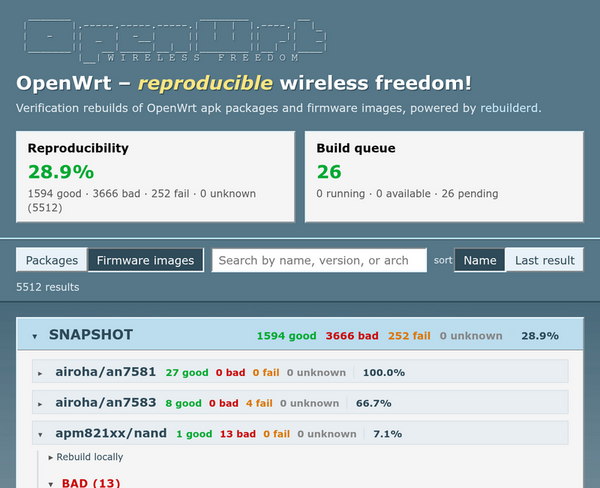
In addition, there is a new page showing verification rebuilds of OpenWrt APK packages and firmware images, powered by rebuilderd:
Three new scholarly papers Yan Li, Nan Jiang, Qihang Zhou, Shaowen Xu, Yamin Xie and Xiaoqi Jia of the Chinese Academy of Sciences published a paper titled VCAligner: Aligning Source Distribution Versions with Upstream Git Commits to Secure Supply Chain:
We present VCAligner, a content-based alignment methodology that constructs inverted indexes over VCS histories to precisely map released artifacts to their originating commits, independent of fragile version tags. We evaluated VCAligner on a dataset of 2,984 verifiable PyPI packages derived from the 4,000 most-downloaded projects linked to public GitHub upstreams. Our results reveal a critical weakness in conventional tag-based heuristics: while they appear effective on 85% of the dataset, the residual 15% failure rate generates a catastrophic downstream audit workload of over 10.3 million commits. In contrast, VCAligner reduces this burden by two orders of magnitude ( 158 ), bounding the total workload to under 65,000 commits. Furthermore, we provide the large-scale characterization of Packaging Noise, classifying artifact divergence into structural additions (Path Phantoms) and content mutations (Blob Phantoms), thereby isolating the distinct attack surfaces of malicious injection and code tampering.
Jens Dietrich and Spencer Sun from the Victoria University of Wellington together with Tim W. White and Behnaz Hassanshahi from Oracle Inc pre-published their paper No Snake Oil: Verifying Python Package Builds (PDF):
Python has become the default language for interacting with AI, with packages being distributed through registries like the Python Package Index (PyPI). This creates a need to analyse supply chains comprising such packages. One such analysis is to rebuild packages in order to identify compromised builds injecting malware. Independent rebuilds in hardened environments have the added advantage that they can generate and record provenance in order to increase the trustworthiness of packages. Two tools that are designed to automate such rebuilds and run them at scale are macaron and oss-rebuild. We study 12,180 popular releases from PyPI and find that the byte-for-byte equivalence rate is generally low. We analyse the reasons why they produce different wheels, and find that equivalence between the original and rebuilt wheels can often still be established, preserving most of the guarantees users expect from rebuildable releases. We present and evaluate daleq4py, a tool to establish the equivalence of Python wheels through the kernel of a normalisation function that is based on provenance-preserving datalog rules. Experimental results show that daleq4py substantially expands the set of rebuilds that can be accepted as equivalent. Although only 15.4% of macaron rebuilds and 19.1% of oss-rebuild rebuilds are byte-for-byte identical to the published PyPI wheels, daleq4py establishes wheel equivalence for 60.2% and 78.9% of source-equivalent rebuilds, respectively.
Denise Nanni, Julien Malka, Stefano Zacchiroli and Th o Zimmermann from T l com Paris together with Gabriele D Angelo from the University of Bologna pre-published their paper Understanding Build Reproducibility in the F-Droid Ecosystem (PDF), which was accepted at the 2026 ACM Conference on Reproducibility and Replicability:
The security of open source applications benefits considerably from the possibility of rebuilding their source and verifying the output. F-Droid, a prominent distribution for open source Android applications, systematically rebuilds them from source and tests their bitwise reproducibility at app publishing time. However, F-Droid offers no guarantee that app reproducibility will continue to hold in the future. As software ecosystems evolve, reproducibility may degrade, with potential negative consequences for software preservation and security. We present the first empirical study of build reproducibility in the F-Droid app ecosystem. Analyzing historical reproducibility logs, we find that the overall bitwise reproducibility rate has been steadily increasing over time (as new versions of apps are published). We then evaluate how reproducibility holds in time for fixed app versions, by attempting to rebuild 18 904 app versions that F-Droid had previously confirmed bitwise reproducible, published between September 2018 and February 2026, achieving an 83% rebuild success rate, and identify missing dependencies as the dominant cause of failure, accounting for 76% of non-rebuildable cases. Among successfully rebuilt apps, 94% are also bitwise reproducible-i.e., they still yield bitwise identical artifacts upon rebuild. Together, these results show that while bitwise reproducibility largely holds for apps that can be rebuilt, rebuildability itself is highly sensitive to temporal decay.

Patches The Reproducible Builds project detects, dissects and attempts to fix as many currently-unreproducible packages as possible. We endeavour to send all of our patches upstream where applicable or possible. This month, we wrote a large number of such patches, including:

Misc news On our mailing list this month, Colin Winter of Markovian Protocol wrote to our mailing list on the topic of Reproducible verification for retained logs:
Reproducible builds remove trust in the builder: anyone re-derives the same artifact from the same source, byte for byte. The same shape applies one layer over, to a retained record. Most record-keeping regimes (the EU AI Act s Article 12 logging is the current example) require that events be recorded and logs retained, but not that a retained log be verifiable, by a party who was not present, as unaltered and existing when claimed. That leaves an integrity obligation resting on trusting the party being audited.
(Full thread)

Finally, if you are interested in contributing to the Reproducible Builds project, please visit our Contribute page on our website. However, you can get in touch with us via:

6 August 2026

Bits from Debian: DebConf26 closes in Santa Fe and DebConf27 announced

DebConf26 group photo - click to enlarge On Saturday 25 July 2026, the annual Debian Developers and Contributors Conference came to a close. Over 270 attendees representing 35 countries from around the world came together for a combined 90 events (including some which took place during the DebCamp) including more than 27 Talks, 21 Short Talks, 29 Birds of a Feather sessions ("BoF" informal meeting between developers and users), 8 workshops, and activities in support of furthering our distribution and free software, learning from our mentors and peers, building our community, and having a bit of fun. The conference was preceded by the annual DebCamp hacking session held 13 through 19 July where Debian Developers and Contributors convened to focus on their individual Debian-related projects or work in team sprints geared toward in-person collaboration in developing Debian. As has been the case for several years, a special effort has been made to welcome newcomers and help them become familiar with Debian and DebConf by organizing a sprint "New Contributors Onboarding" every day of Debcamp, followed more informally by mentorship during DebConf. Half a dozen new contributors joined the sessions and learned about Debian, free software, packaging and much more. This year, a week-long DebCamp session was dedicated to auditing, patching, and modernizing the Go ecosystem in Debian and enable the transition triggered by the recent upload of dh-golang enabling GO111MODULE=on by default in Experimental. In order to make the conference more accessible for local participants, a local language track was included in the schedule for talks in Spanish, as was done at DebConf19 in Brazil. The actual Debian Developers Conference started on Monday 20 July 2026. In addition to the traditional "Bits from the DPL" talk, the continuous key-signing party, lightning talks, and the announcement of next year's DebConf27, there were several update sessions shared by internal projects and teams. Many of the hosted discussion sessions were presented by our technical core teams with the usual and useful "Meet the Technical Committee", three talks about Linux Kernel, early boot and improving Debian s kernel and installer support for Chromebooks, and about twenty BoFs and talks about Debian packaging policy, Debian infrastructure, security and privacy. This year, and echoing ongoing discussions within the Free Software community, Artificial Intelligence and Age Verification have been the subject of several talks. The Python, Perl, Ruby, Go, and Rust programming language teams also shared updates on their work and efforts. More than 17 BoFs and talks about community, diversity, and local outreach highlighted the work of various teams involved in not just the technical but also the social aspect of our community The schedule was updated each day with planned and ad hoc activities introduced by attendees over the course of the conference. Several traditional activities took place: a poetry performance, the traditional Cheese and Wine party, the Group Photos, and the Day Trip. For those who were not able to attend, most of the talks and sessions were broadcasted live and recorded. One can find the seventy hours of recorded videos available via the conference schedule, or alternatively through this link. Almost all of the sessions facilitated remote participation via IRC and Matrix messaging apps or online collaborative text documents which allowed remote attendees to "be in the room" and ask questions or share comments with the speaker or assembled audience. DebConf26 saw over 341 T-shirts, a day trip, and up to 130 meals planned per day. All of these events, activities, conversations, and streams coupled with our love, interest, and participation in Debian and F/OSS certainly made this conference an overall success both here in Santa Fe, Argentina and online around the world. The DebConf26 website will remain active for archival purposes and will continue to offer links to the presentations and videos of talks and events. Next year, DebConf27 will be held in Asahikawa, Hokkaido, Japan, from Sunday September 5th to Saturday September 11th, 2027. As tradition follows before the next DebConf the local organizers in Japan will start the conference activities with DebCamp with a particular focus on individual and team work towards improving the distribution. DebConf is committed to a safe and welcome environment for all participants. See the web page about the Code of Conduct on the DebConf26 website for more details on this. Debian thanks the commitment of numerous sponsors to support DebConf26, particularly our Platinum Sponsors: Infomaniak, and Proxmox, and our Gold Sponsors : Freexian, and Viridien. We also wish to thank our Video and Infrastructure teams, the DebConf26 and DebConf committees, our host nation of Argentina, and each and every person who helped contribute to this event and to Debian overall. Thank you all for your work in helping Debian continue to be "The Universal Operating System". See you next year! About Debian The Debian Project was founded in 1993 by Ian Murdock to be a truly free community project. Since then the project has grown to be one of the largest and most influential Open Source projects. Thousands of volunteers from all over the world work together to create and maintain Debian software. Available in 70 languages, and supporting a huge range of computer types, Debian calls itself the universal operating system. About DebConf DebConf is the Debian Project's developer conference. In addition to a full schedule of technical, social and policy talks, DebConf provides an opportunity for developers, contributors and other interested people to meet in person and work together more closely. It has taken place annually since 2000 in locations as varied as Scotland, Bosnia and Herzegovina, India, Korea, France. More information about DebConf is available from https://debconf.org/. About Infomaniak Infomaniak is an independent, employee-owned Swiss technology company that designs, develops, and operates its own cloud infrastructure and digital services entirely in Switzerland. With over 300 employees more than 70% engineers and developers the company reinvests all profits into R&D. Its public cloud is built on OpenStack, with managed Kubernetes, Database as a Service, object storage, and sovereign AI services accessible via OpenAI-compatible APIs, all running on its own Swiss infrastructure. Infomaniak also develops a sovereign collaborative suite messaging, email, storage, online office tools, videoconferencing, and a built-in AI assistant developed in-house and as a privacy-respecting solution to proprietary platforms. Open source is central to how Infomaniak operates. Its latest data center (D4) runs on 100% renewable energy and uses no traditional cooling: all the heat generated by its servers is captured and fed into Geneva's district heating network, supplying up to 6,000 homes in winter and hot water year-round. The entire project has been documented and open-sourced at d4project.org. About Proxmox Proxmox develops powerful, yet easy-to-use open-source server solutions. The comprehensive open-source ecosystem is designed to manage divers IT landscapes, from single servers to large-scale distributed data centers. Our unified platform integrates server virtualization, easy backup, and rock-solid email security ensuring seamless interoperability across the entire portfolio. With the Proxmox Datacenter Manager, the ecosystem also offers a "single pane of glass" for centralized management across different locations. Since 2005, all Proxmox solutions have been built on the rock-solid Debian platform. We are proud to return to DebConf26 as a sponsor because the Debian community provides the foundation that makes our work possible. We believe in keeping IT simple, open, and under your control. Contact Information For further information, please visit the DebConf26 web page at https://debconf26.debconf.org/ or send mail to press@debian.org.

3 August 2026

Bernhard R. Link: I learned something new about URLs today

Today I stumbled over some behavior that I found quite surprising:
$ ipython3 -c 'import httpx;print(httpx.URL("https://example.com/foo/bar/../../baz"))'
https://example.com/baz
Even more surprising that behavior is actually standards-compliant, even mandated by RFC 3986. The underlying motivation is relative reverences. If some resource reachable by "https://example.com/foo/bar" references another resource relatively as "../../baz" then this is of course the intended result. Getting from this problem to what RFC 3986 suggests might be surprising in the result, but somewhat understandable if you look at the consequences of that problem: Giving the path components ".." (and ".") special meaning at the start of the relative reference means that if you allowed them in absolute URLs those would be impossible (or at least very convoluted) to address as relative URLs. So RFC 3986 describes a way to handle them everywhere: Just join the path of the base URL and the path of the relative reference and normalize the result. Or normalize the absolute on either side if only that is to be taken. This makes things very convenient: Multiple reference URLs can just be joined without special handling for relative references starting with dots, making writing applications handling them easier. Programmers don't have to care how to handle relative references and can just join everything in whatever way they want. For maximum elegance there is still some corner case left: What happens if an absolute URL has a path starting with double-dot components? Or an relative path starting with more of them then the base URL's path has components. You just ignore them:
$ ipython3 -c 'import httpx;print(httpx.URL("https://example.com/../../baz"))'
https://example.com/baz
With that last point every URL is valid and has well-defined meaning. Handling relative references and relative paths is very easy and convenient. So this shows a high regard for simplicity, elegance and convenience. And a total and uncompromising disregard of security. After all the most convenient it is for an attacker; If they are allowed to supply a path component for a request a system does in their behalf, then they can easily escape anything they were supposed to be limited to. The ignoring of dots at the start means they don't even have to know exactly how deep their request is:
$ python3 -c 'import httpx;print(httpx.URL("https://example.com/public/api/public/resources/harmless/../../../../../../../../../internal/data"))'
https://example.com/internal/data
So even if the resource server securely handles request (unless you consider not having any way to lower your permissions for one request to a specific subset), your fully RFC conforming client library will already request the permission they should not have permission for. Even worse dots are usually not characters you can easily forbid so once slashes are to be allowed things get complicated. There also would have been a simple, elegant and secure way: Consider every path element ".." or "." in an (absolute) URL an error. Define a reference resolution that allows the relative reference to only start with "./" or one or multiple "../" and consider every appearance of a dot or two dots as path components after than an error. Everything joining two paths has to either use an implementation of that path joining algorithm, but only if they want to joins paths in the potentially dangerous way allowing leading "../". Otherwise they can just use the normal join and even if an attacker gets those dots that will just cause the generated URL to be rejected as invalid. Of course using a secure implementation is now even more inconvenient thanks to RFC 3986 being around: If you have no control over the generator of relative references, it is always possible that they generate relative references with ".." components after non-dot components. And if you check all code to properly filter out "/../", keep in mind that convienence does not stop there. After all it is not unheared of for server implementations to helpfully normalize unicode characters, too, or translate them to their nearest ASCII equivalents. Or translate percent escaped characters back before doing path splitting. Or you might think there was some unicode codepoints between those two dots, but they that those were some meaningless control characters that can be omitted. So you need some really restrictive allow lists...

31 July 2026

Russell Coker: Links July 2026

Bruce Schneier and Nathan E. Sanders wrote a disturbing and informative article about the use of AI by the US government [1]. Bruce Schneier wrote an interesting blog post about corporate liability for AI decisions and the German court ruling about Google s AI summaries [2]. Cybersecurity News has an interesting article about how Pliny the Liberator succeeded in jailbreaking Anthropic s latest LLM to give instructions on writing exploits, writing exploitable code (backdoors?), and making meth [3]. Andrew Pam wrote about the number of cars with internal combustion engines in NSW decreasing for the first time since 1910, EVs are taking over [4]. Cory Doctorow wrote an informative blog post about Facebook s attempts to silence whistleblowers and what a pathetic little loser Zuckerberg is [5]. Scott Santens wrote an insightful article about how to effectively levy taxes in the future when AI significantly reduces the number of workers [6]. Ron Garrett wrote an insightful post about birthright citizenship in the US and his status as a US citizen who was not born there [7]. The BBC has an interesting article about the Scottish Violence Reduction Unit and how treating violence as a disease can significantly address the problem [8]. The LA Times has an interesting article about Covid19 causing cancer that had been in remission to return, sparking some new research into the effects of viruses on mammals [9]. CMU has an interesting video about ways to physically modify QR codes and how they could be used in real life [10]. Tim Retout wrote an informative post about the pervasive forms of advertising on the Internet, even on the BBC s site and how some of it can be blocked [11]. The Intercept Fund is a project to address respiratory illnesses and the long term mostly unnoticed costs they cause to society, we need governments and corporations to get on board with this [12]. The German news site DW has an interesting article about activists registering neo-nazi slang as trademarks to prevent the sale of nazi merchanise which funds racism [13]. The Conversation has an insightful article about how in South Sudan and other war ravaged countries the peace process usually just allocates the spoils of war and therefore encourages more war [14].

20 July 2026

Jonathan Dowland: Interzone digital

(no, this isn't a blog post about Joy Division songs) Last time I wrote about Interzone, I was discussing issue #294, the first published under new management in a paperback-sized format ("JB6"). The format and presentation of the magazine was fantastic: it fit in a lot of my pockets, and was packed with 15 stories as well as the regular columns, in full colour with fantastic layouts and illustrations. Sadly there was only one more physical issue before Interzone was forced to become a digital-only publication.

IZ issues 294 and 295 IZ issues 294 and 295
I don't want to dwell on the sad necessity to move to digital. Interzone continues on, celebrating the milestone issue #300 in 2024. Subscriptions are managed via Patreon. Issue #305 just came out. Instead I wanted to write a small bit about how I engaged with the paper magazine, and the difficulties I've had trying to engage with not just Interzone but any magazine-style publication in a digital context. With most fiction, I read linearly: start the beginning and read to the end, in order. That works well for me with e-readers. But for magazines (and most non-fiction) I don't, I jump around: usually starting with the table of contents, I might pick a short column to start, or jump into the middle of the "book reviews" section to read about a specific book. I might skip sections entirely. I find it very difficult to read like this with an e-reader. I think this is partly because I reference the depth of the paper book or magazine, its thickness, to orient myself. But it's also partly the limitations of e-ink.
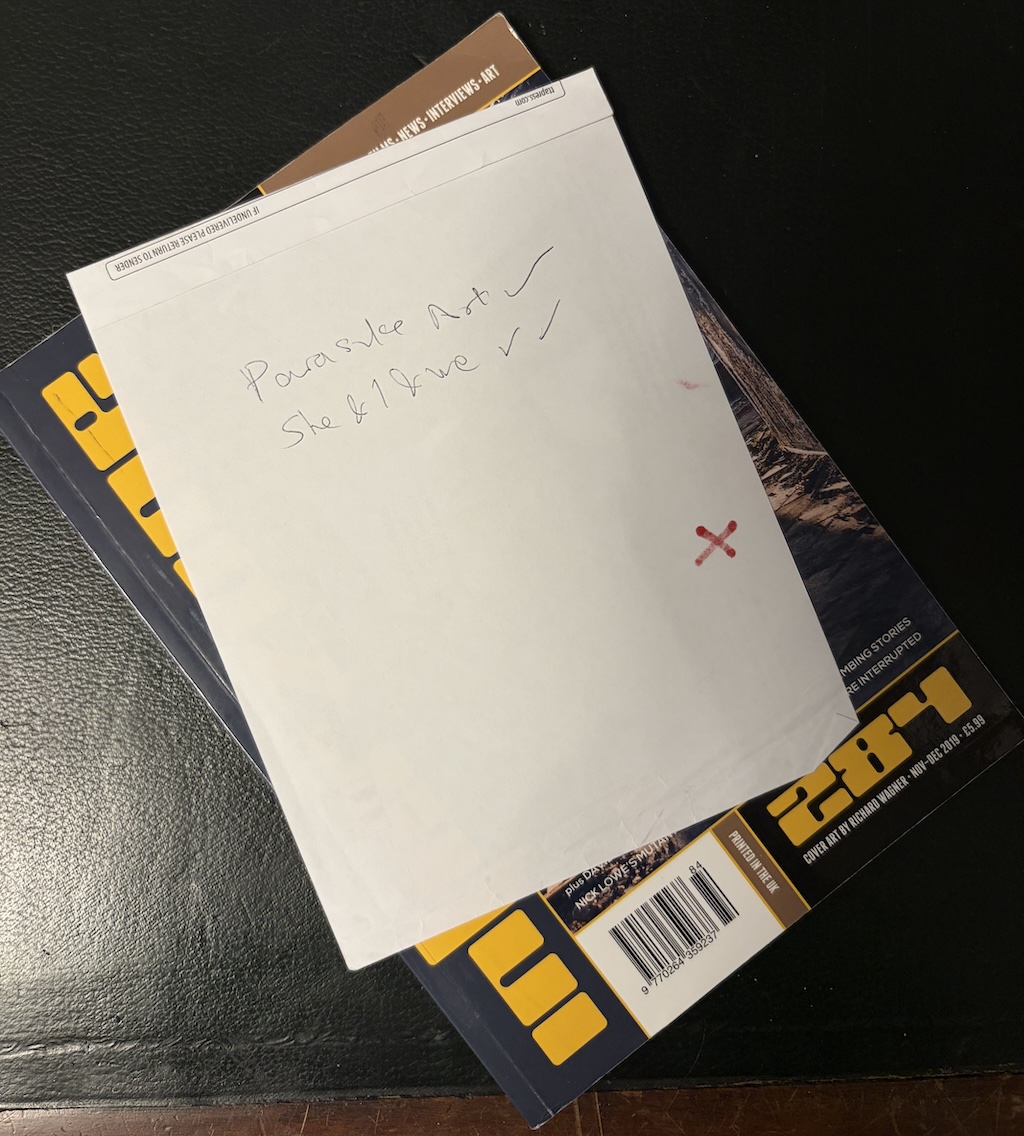
My tick-list for an issue of IZ My tick-list for an issue of IZ
For print-Interzone, I used to start by inserting a small piece of paper inside the cover (the delivery slip was ideal). On this I listed the stories within and ticked them off when I read them (sometimes I double-ticked if I really liked a story). That helped me to remember, perhaps months or years later, whether I'd read all the stories or not, and which I liked. I could do something similar on some e-readers: the Remarkable for instance. But it's far from convenient to do on most e-ink devices. Interzone digital is available as both ePUB, the most common format for e-books, and PDF. For reading on my regular Kobo e-reader, PDFs don't work very well at all. I think this is generally true of most e-readers. Interzone was (and is) a well-designed magazine. The value of it was not just the content of the text, but the context: how the stories were presented; the accompanying art (most often colour in recent decades), but also the typesetting. ePUB doesn't specify much of that stuff exactly: it leaves that up to the client and the client's preferences. And there's a lot of advantages to that: Prefer a different font face or size? No problem. And most importantly for accessibility: If reading in ePUB makes Interzone available to more readers then that's a great thing. But sadly a lot is lost, IMHO.
IZ #305 on iPad Mini IZ #305 on iPad Mini
The solution I'm trying is to read the PDF version on the iPad Mini I resurrected earlier in the year. Despite being an Internet tablet, since it's not really usable for browsing the web anymore it's strangely still a distraction-free device. In fact it's pretty much single-purpose for reading Interzone and the odd other book which benefits from being read as PDF. I can appreciate the stylistic choices made in the page-setting as they were intended; I can quickly jump around the issue without waiting for an e-ink refresh; I get full colour; and whilst it would be tiring to read for a long time on the iPad screen, for the length of articles or stories in a magazine, this isn't a problem. It's not a solution for tracking what I've read (that version of ipadOS is too old to support clumsily scrawling on PDF pages with your fingers, at least in the Books app) but it otherwise seems to work well, so I'll see how it goes.

15 July 2026

Russell Coker: libproc-processtable-perl in Debian

I ve just filed a Debian bug report about libproc-processtable-perl giving bad errors when SE Linux denies access to files under /proc [1].
Ran into unknown state (hex char: 0) at /tmp/test.pl line 8.
The errors are of the above form which Google didn t find before now so obviously isn t a common situation, below is my test program.
#!/usr/bin/perl
use strict;
use Proc::ProcessTable;
my $process_table = new Proc::ProcessTable('cache_ttys' => 0 );
foreach my $process ( @ $process_table->table  )
 
  print $process->fname . "\n";
 
Here is the relevant part of strace output:
newfstatat(AT_FDCWD, "/proc/2", 0x7fff19533c10, 0) = -1 EACCES (Permission denied)
openat(AT_FDCWD, "/proc/2/stat", O_RDONLY) = -1 EACCES (Permission denied)
access("/proc/2", F_OK)                 = 0
write(2, "Ran into unknown state (hex char: 0) at /tmp/test.pl line 8.\n", 61) = 61
Below is the apt sources.list line for my personal repository which has a version of the package with this fix. The gpg key is in the etbe-base package in that repository and the source is all there. To access it without apt use this web page [2].
deb [signed-by=/usr/share/keyrings/etbe.gpg arch=amd64 ] https://www.coker.com.au trixie misc
I ve also done some work on the ps.monitor script in etbe-mon that uses this Perl package and made it better handle program names longer than 15 characters. That improvement apparently only works on Linux, Darwin, and Cygwin. People who want things to work better on BSD etc could patch libproc-processtable-perl accordingly.

12 July 2026

Kentaro Hayashi: Try to build Mozc with Bazel 7.7.1

Introduction Recently, I've got a chance to try building Mozc (Most famous Japanese input method editor) with Bazel. As you know, recently newer Bazel related packages were landed into debian/unstable. Then now I'm planning to update Mozc from 2.29.5160.102 to 3.33.6133.

Background story about Mozc and Debian The upstream of Mozc had released 3.34.6239, but on Debian, we stick to Mozc 2.29.5160.102. Mozc requires newer Bazel but we only had Bazel 4.2.3 at that time on Debian, so even though the upstream of Mozc switched from GYP to Bazel, we had patched Mozc with GYP based package. We even did make an effort to restore build options that had been already removed. :-( And needed to migrate from GTK2 renderer to GTK3 renderer. That is why the version of Mozc is diverged from upstream on Debian.
  • 2.29.5160.102 (Now on Debian)
  • 2.29.5268.102
  • 2.29.5374.102
  • 2.29.5544.102
  • 2.30.5544.102
  • 2.31.5712.102
  • 2.31.5851.102
  • 2.32.5994.102
  • 3.33.6089
  • 3.33.6133 (Target to upgrade for)
  • 3.34.6239

How to switch from GYP to Bazel? At first, we needed to decide what Mozc version to work with it. Now latest version of Mozc is 3.34.x, but it requires Bazel 9.x. Please recall that Bazel 7.7.1 was introduced Debian/unstable. And more, newer dependency libraries are required. You might feel that target version (3.33.6133) is too high from 2.29.5160.102, but if we upgrade to more older Mozc, it means that it requires to backport Mozc to older libabsl compatible codes and so on. That is why Mozc 3.33.6133 was chosen. Even once the target version has been decided, you can't let your guard down. There are many technical tasks to solve.
  • Revisit patch sets to apply
  • Porting uim mozc patch and fix FTBFS
  • Porting fcitx5 mozc patch and fix FTBFS
  • Fix src/third_party vendoring
  • Switch from GYP to Bazel build systems
  • ...
At least, it will likely require several rounds of testing in the Debian experimental.

Conclusion Currently, gbp buildpackge has succeeded finally on local machine, but need to tidy and cleanup stuffs. I didn't know packaging with Bazel best practice yet, to remove many third party vendor/ bundles, I've found that it requires pile of patch to eliminate them. In the current version of Debian, as a one of build system, further work such as support from debhelper - will be needed. I'll file working progress on #1085173

11 July 2026

Jamie McClelland: DNS, OG of high availability

At May First, we recently received (all within a single week) three different complaints about domain names that previously worked fine suddenly not resolving to our servers. While that isn t terribly uncommon, we discovered that in each case, the domain name s authoritative name servers were pointing to our mail servers (a.mx.mayfirst.org, b.mx.mayfirst.org and c.mx.mayfirst.org) instead of our name servers (a.ns.mayfirst.org, b.ns.mayfirst.org and c.ns.mayfirst.org). The weird part: this mistaken configuration was happening at the registrar level, protected by each member s own credentials that we don t have access to. Each affected member fixed their records to resolve the problem but also made very clear that they had not logged into their registrar in years, sugggesting that the DNS authoritative records in their registrar accounts spontaneously changed on their own. The first time was weird, the second time could possibly be a coincidence? But by the third time this happened, we started to panic. How could registrar records spontaneously change? All three domain names were registered with different companies - so it couldn t be a single registrar problem? Are we going to get a flood of these complaints? What is going on!?!? We did an inventory to see if this was happening with other domain names in use by our membership and that s when we discovered just how hard it is for our mostly non-technical users to set a domain s authoritative name servers. The error rate was less than 1% but still that was a lot of domain names with typos: That s when it occurred to me: for years we have maintained an offsite server that provides both c.ns.mayfirst.org and c.mx.mayfirst.org. It hangs out in case something terrible happens to our main colo. The week before we started receiving these complaints, I separated these services, moving c.mx.mayfirst.org to a dedicated MX server. As a result, these two domain names stopped pointing to the same IP address. And that s when the complaints started rolling in. In other words: the affected members set the incorrect name servers years ago, but because just one of the name servers resolved to an IP that happened to provide the correct authoritative lookup services, it went undeteced all this time. So mystery solved. Nobody s authoritative registrar records suddenly changed. They were mis-configured for years but thanks to the amazing resilience of the DNS system, nobody noticed because just one working DNS server is all you need.

10 July 2026

Valhalla's Things: Cockades!

Posted on July 10, 2026
Tags: madeof:atoms, FreeSoftWear, craft:sewing
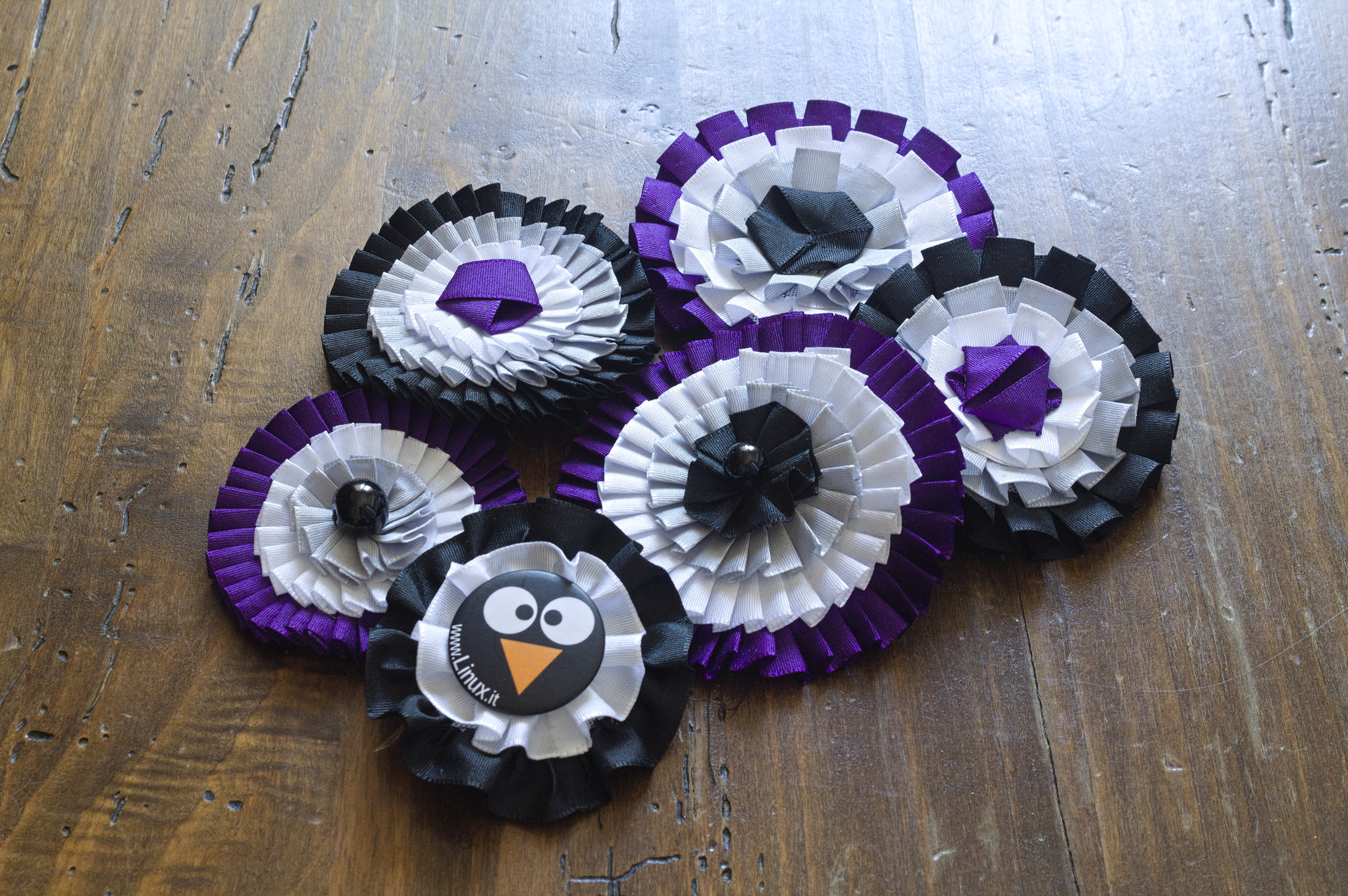
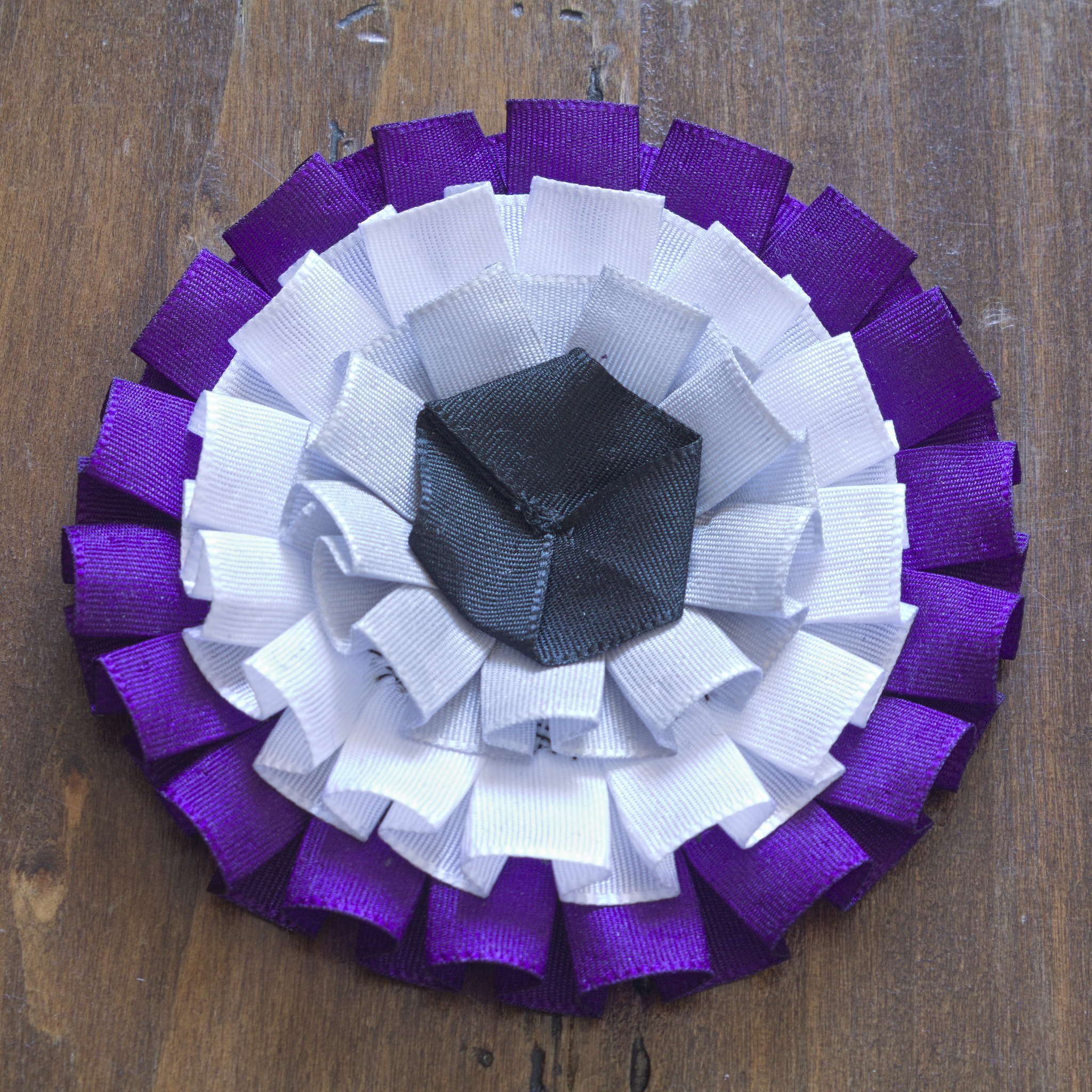
six cockades in black, grey, white, purple, in different sizes and with different centrepieces. One is only black and white and has a penguin pin in the middle. Earlier this year, I made myself a new hat (it will be blogged), and I wanted to put a nice cockade on it. So, I looked for suitable ribbons, and couldn t find any. I found some ribbon that looked passable, but the colours I wanted weren t available, so I set up the website to notify me, and kept working on the hat. Eventually the hat was done, the ribbon was still not available, so I decorated the hat with fake flowers from my stash, and started wearing it. And that s when I got notified that the ribbon was back in stock. By the time the ribbon arrived, I had decided that the hat looked better with the flowers, and project cockade was put on hold, possibly for a future hat. And then June came, and what could be a better time than that for a project based on flag colours? As I feared, the ribbon I got wasn t the best: it was a bit too stiff and plasticy, and not really usable for many other things. It did however work well enough for a cockade, and I decided it was a good chance to try different methods and designs, and then make another one to take pictures and publish step-by-step instructions. And that s the perfect recipe to find oneself surrounded by a somewhat unreasonable number of very similar cockades, I guess. A big cockade with four ribbons, starting with purple on the outside, and a black bead in the middle covering the centre of the black ribbon. The pleating isn't the most regular, and the black ribbon at the centre is almost more gathered than pleated. I looked around for instructions, and the ones that gave a result that was closer to my mental idea of a cockade were the ones by American Duchess, so on my first attempt I tried to follow those. I didn t have a cork board with a hole, so it was a bit fiddly, and the result was passable, but could have been better. Meanwhile I saw a forum post commenting on the above tutorial and that gave me ideas for a procedure more suitable to the tools I had. A cockade with tree ribbons, starting with purple on the outside, then white, grey, and a black bead in the middle that is a bit bigger than the one on the previous one. The pleating isn't perfect, but neater than the previous one. The second cockade I made was indeed more satisfactory, and I also started to experiment with making a center piece with ribbons, to cut down on the types of materials needed. On this one I also tried to add a pin backing, so that I could write instructions on how to do it in what I believe is a more stable way than simply adding it to the felt backing at the end. I m not sure whether the other ones will be tacked to a hat, and thus won t require pins at all, or if I ll just put them on some dress with pins hidden under the ribbon layers. A cockade with three ribbons, starting with black on the outside, then grey and white, and a flat pentagonal knot of purple ribbon at the centre. And then I was ready to make a third cockade, taking step by step pictures for my website, and I planned to start on it the next morning. Trenord had different ideas. Thanks to the combination of independent but complete disruptions on two nearby train lines, I spent the morning driving a couple of people to the nearest station that was still being served by trains, and then back home less than 10 minutes before I had to start working, which if you ask1 me was pretty homophobic of the train company. There was way less traffic than I expected, and I did enjoy the drive 2, but for various reasons it meant a significant delay for this post. Anyway, less than a week later than I had planned, halfway in June I managed to publish step by step instructions on my website, but I wasn t done with the project yet. Beside the fact that I still needed to finish sewing the backing felt to the cockades I had done, I also had a few ideas for more centrepieces made of ribbon I wanted to try. And this means that I moved on to another project that was already in progress (this one will also be blogged). A cockade with three ribbons, starting with black on the outside, then grey and white, and two squares of purple ribbon at the centre, forming a sort of eight point star. The ribbons are box pleated and this gives the cockade a bit more of a tree-dimensional shape. After I ve finished that one, at the very end of June I quickly made the last two centrepieces, taking pictures for the instructions, and in the next few days I also finished the cockades. A cockade with three ribbons, starting with purple on the outside, then white and grey, and an hexagonal shape made of black ribbon at the centre. The ribbons are again box pleated. This time, instead of plain pleats I tried to use box pleats, and I quite like the look they give, so if in the future I ll have a need for more cockades I may use again this pleating pattern. A cockade with just two gathered ribbons, starting with black on the outside, then white, and a linux.it pin in the middle with a black background and two eyes and an orange beak reminding of a penguin. For the last cockade I wanted to try two things: putting a pin in the middle as a centrepiece, and gathering the ribbons. For the pin, I found that the only one I had that had a colour scheme compatible with the ribbons I had was one with the penguin from linux.it, which had a black background, so I put black ribbon on the outside and white next to it for contrast. And gathering was done with a whipped gather with ribbons that were one and a half times the outer circumference of their slot, and looks decent enough, but I think I prefer the look of pleated cockades a lot. Maybe it would look better with a softer ribbon. Anyway, I think this is plenty of cockades for the time being, unless I get tempted by buying more colours of ribbon to make different ones. But I m not making an online purchase just for those. I am not.





  1. you probably shouldn t.
  2. also thanks to my partner who, on entering the destination town, told me to stop on the big, straight, two-way road with plenty of roundabouts to turn around, and went through the maze of one-way streets to the station by foot.

6 July 2026

Aigars Mahinovs: How to make a good group photo

Taking a good group photo consists of multiple aspects: I can say with confidence that nearly everything here comes from having failed to do these things right at least once, even on the latest attempts, so this is an ideal to reach towards, not something we expect to hit every time. The Goal The main goal of a big event group photo is capture both the moment itself and each individual person inside that moment. We want people, who were not there to see all the people involved and get an impression of what it was like being there. It needs to show the breadth and depth of people that make up this group, this project. And we want people who were there to be able to look back the next week, the next year or in ten years and remember - ah, yes, I was there, I was standing right there with this grin on my face next to this wonderful person and I was feeling great. Hardware Based on the goal we want to have high level photographic gear that is able to capture both a broad enough picture to encompass all the people and some of their surroundings to communicate the context (without undue distortions) and to deliver enough detail and resolution so that faces and facial expressions and underlying feelings of every single person in that group could be clearly seen and preserved. To both capture the context and minimise distortion the final picture should be just a bit wider than normal human field of view. That is about 50mm for a full-frame camera or 35mm for a typical 1.6 crop camera. You can go a bit wider if there are no better alternatives (as detailed in the scouting section), but be prepared that corners of the image will be distorted and not really usable (but we can fix that in processing step). Or you can go to unusual aspect ratios, like we did in Debconf 10. In the absence of a 100MP+ camera, you will need to be stitching together multiple frames to achieve resolution high enough to have enough pixels-per-face to see emotions clearly. This means that the photos you will actually be taking will be tighter than the overall field of view mentioned above. Still, a higher resolution camera body is preferable - nowadays 24MP-32MP cameras APS-C provide a good compromise between resolution and price, but 45-67MP full-frame cameras also exist on the market. Assume that we will be shooting in a bright environment, so most likely with quite low ISO settings, that means that high-ISO noise characteristics of more expensive cameras will not really play a role here. You will also not need very fast burst modes, even manual speed of one frame per second is sufficient. You will also want to get as much detail as possible out of your lens, and this is the most important part. You can do amazing work in all other steps of the process and have a great camera too, but if you pair it with a lens that is not sharp, then the end result will be disappointing. You want the lens that is sharpest corner-to-corner when stepped down to about f/8-f/11, that you can get for your system. You also want that lens to be about 85mm full-size sensor or 50mm for 1.6 crop size. Luckily that kind of range is also a great range for optical design and sharpest lenses are typically available in exactly these kinds of sizes. You absolutely want to have a fixed focal length lens, not a zoom lens. Even profession grade zoom lenses often deliver worse image quality compared to fixed lenses that cost less 1/10th of their price (when shooting in the same focal length). Newer design lenses are better than older lenses - optical design, coatings and precision manufacturing have advanced a lot over the decades. Retro look is great for mood, but not as good for actual resolution and clarity. You don't need to overpay for most expensive lenses because those often only improve image quality on lower F-stops. To encompass the whole group we will need to shoot at f/8 and in bright light, so the extra benefits of those f/1.2-capable super expensive lenses will not come into play here. We will have no use for a flash here. A tripod will be too restrictive when rapidly repositioning the camera between different parts of the panorama shoot. But a monopod might help with stability - I have not tried that myself, however. For my last photos I used a Canon EOS R7 (32.5MP) with Canon RF 50mm f/1.8 STM lens and considering an upgrade to Sigma 56mm f/1.4 DC DN for the next time. Scouting Scouting a good location for the group photo is another big chunk of a successful picture. The critical piece of the puzzle is lens-to-face distance. In order to keep everyone's face in-focus and have enough resolution on the farthest faces (without making nearest faces truly massive) we want to do everything possible to reduce the variance in lens-to-face distance - to reduce the difference in distance between closest and farthest face. The most effective way to do that is to have the photographer climb higher. To see this in action on the Debconf photos, compare Debconf6 (very high camera position, group on level ground - good) to Debconf10 (camera not too high, group on stairs, still good) and to Debconf17 (camera could not get high enough and the group is on flat ground - not great). Even the Debconf25 photo was suboptimal from this perspective. The Debconf23 photo was a very good example from the recent years - good height and also the group was positioned in a semi-circle so there were no people directly in front and very near to the camera. So you are looking for the highest point you could get to (even if that requires a special permission of key or a ladder) with a field large enough to fit the whole group comfortably. How to check that? Normally I simply take a photo from the top of the whole area and note down from there where the extreme corners of the group could be and still be fully seen in the shot - not blocked by trees, buildings and shadows. Then I go down and measure that space. Rule of thumb being - people in one horizontal line can stand 1 normal length step from each other and two horizontal lines can be half a step from each other vertically. So I can just measure a rough rectangle in steps, multiply the sides, multiply that by two and I have the rough number of people that can fit there for the photo. Once you have a candidate location or two, it is important to check them at the same time-of-day as you plan to do the photo (see organization section for that). You want to make sure that the whole area of the group is in the same illumination - if half of the group is in the sun and half in a shadow, then you will be having a very bad time later. The absolute ideal positioning for the group photo is to have everyone be in shadow, but still have enough bright skies and bright buildings in front of the people to give good illumination of the faces. Worst you can do is have the sun be behind the people (so all the faces are really dark) and second worst is have the sun be directly in front of the group, so that the faces are very well illuminated, but everyone's eyes are closed because they are being blinded by the sun. And sometimes all you can do is pray for some light clouds to provide for even and dispersed light. Debconf23 was very lucky that way. Another consideration is to how people are going to get to that place. You need to consider accessibility needs of people (it is ok, if it takes more effort or time, but it needs to be organized and communicated well in advance). And you need to consider how the big masses of people will be getting there - how to tell people where exactly it is and how to get there from various locations where people might be hanging out during the event? Having an alternate location indoors might be necessary if the weather report for the next days is not sufficiently predictable. We had to use that contingency in Debconf9, for example. Organization It's hard to take a good group photo if half of the group does not show up or is too late, so this needs some organization to happen smoothly. First of all you need to choose date and time for the photo. The photo does not take too much time from the schedule of the event and can be squeezed in after all the other events are already scheduled. In fact I prefer that as it allows you the flexibility of choosing the date based on weather conditions and time based on light and shadow conditions in potential photo spots. You don't want to choose the daytrip day as most people will be away and return times are not really predictable. You do not want to choose the morning after Cheese and Wine party for obvious reasons. First day and last two days are also sub-optimal as some people arrive late and some leave early for various personal reasons. Also you don't want it to happen just before Cheese and Wine either because then you'd have very little time and clarity to do the processing of the image on the same day. For timing, the best way, in my experience, is to schedule the photo directly after the end of talk sessions before a meal break - lunch or dinner. Typically in the Debconf schedule there are 2-3 daily breaks planned, say for Debconf25 there was lunch, afternoon break and dinner. Talks are planned to end ~10 minutes before those breaks (and meals) begin, so for example, afternoon break starts at 16:00 and all talks in the previous block end at 15:50. In such a case just schedule the "Group photo" event from 15:50 to 16:05. This gives people the info to go there directly from the end of all talks and that they will have sufficient time for break/meal afterwards. Do not forget to specify the location (as exactly as possible) in that event entry and make sure to post it at least two days in advance. People often want to wear something specific for the photo and thus need to know about it in advance. This also makes sure that people do not make alternate food plans for that specific break and don't leave the venue. Announce the date, time and the exact location as wide as possible, don't be shy. Announce and discuss mailing lists, IRC, Signal, Telegram, make sure the front desk knows in case anyone asks in-person, ... Check that it is again included in the announcements email on the day preceding the photo date. When the date has arrived, it is a good idea to check in early with people with special mobility needs to make sure they know where to go, how to get there and how much time they will need to be able to get there on time. As the final round of talks before the group photo is starting up, it is time to recruit "runners". I've had great success with this technique. The idea is pretty simple - for each room where people congregate (talk rooms, hacklabs, cafeteria, outside hackspace, front-desk, ...) go there and choose one person. You want to choose a person that you will recognise and remember among everyone else in the group, either because of who they are or what they are wearing, whatever works best for you. If they agree to help, instruct them to: "at end of talk, announce that the group photo happening now and the location, herd people towards the photo location, be the last person out, make sure there are no stragglers from this area behind you, when you arrive to the photo place I will assume that everyone else from this room is also now there, when you are there catch my attention and show this sign so I know for sure that it is all good and make sure that I did see it from you". With that sorted out all you will need to remember is how many runners you recruited and how many have reported in to figure out if everyone has now arrived or if we still have to wait for someone or some group. Then you will only have one last point of organization left - shaping the crowd into a group. People will not know what your vision for the group photo is, so you will have to give clear and LOUD instructions on where people should not be standing. Use clear, large gestures to support your words. You want to compact the group, have the people that just joined in the last moment and are standing to the side come deeper in and join the crowd. Have any holes in the middle of the crowd filled in. Forming a semi-circle instead of a blob helps with averaging face-to-lens distances. Make sure people are not in unexpected shadows. Make sure carried objects, like umbrellas of flags do not cover the faces of other people. Take the time to look at everyone face to make sure there are no people hiding behind someone's shoulder - typically they are not aware that their face is in fact not really visible. If there are such people, call them out and point directly at them and encourage them to step forward, if they wish to do so. You are the only one seeing the final picture now and only you can correct it before capturing the moment. So a few extra seconds here are worth taking, even if 300+ people are standing in scorching heat and waiting on you. When you are happy with what you are seeing, make sure to tell people clearly that you are now about to take the pictures and again remind them not to move and explicitly not to turn their heads to the side until you are done (this is the source of most of the extra work in processing). Be very loud and clear and make sure you have everyone's undivided attention before you start saying the important stuff. When done - say so. There will be other groups that will want to also have a photo taken after the main group is a bit more dispersed, so don't run away. Typically at least the T-shirt group will want a picture and also all the organizers. Final bit of organization during the group photo shooting itself is the sneaky self-insert. You may choose not to bother with it, or do it in the simplest way, like I did in Debconf6, but if you really want to blend in with the crowd, you need to have someone else take a photo of you in the exact same location at the same date and time from the same location. So you should already during shaping the crowd decide where you would fit in, it is easiest to blend in at the back of the crowd and to one or other side, so that it appears like you are just standing behind the shoulders of a couple peoples. Remember that spot - it is easiest if you stand in the exact same ground spot when your photo is taken. Just go down, recruit a volunteer to take your photo, make sure the settings are fixed to the same ones as for the group photo shots and have them take a handful of shots of you - one of you centered in the camera frame and a couple more with you more towards the corners of the frame. This distortion from being off-center in the frame may be important later. Preparation In addition to preparing the crowd for the photo, you also need to prepare yourself and the equipment. Make sure you have dusted your camera sensor and cleaned both inside and outside glass of your lens. It is usually a good idea to remove any filters from the lens. Install the hood, if that could help with blocking the sun flares. Make sure you have the right lens and that you have installed the right lens. For fixed settings I typically shoot in JPEG with RAW being there more like an emergency backup. The extra dynamic range of RAW could be used, but it is really complex to do that in combination with image blending and it is hard to get right, so I prefer an all-JPEG workflow and fix the dynamic range in the scene itself, before shooting. For Canon I am using the Standard profile that boosts the color saturation and sharpness a bit as I just enjoy that look and find it hard to get anything significantly better from RAW data even with a lot of effort. In any case make sure you have enough space on the cards to take at least 100 images and that you have a full battery. Do not use high speed burst setting because it is then too easy to take too many pictures at the start of the sequence and be stuck with your camera still in "Busy" state writing big RAW files to slowish SD cards and not allowing you to finish the full picture rapidly. You want to have the shutter speed at at least 1/100th of a second to prevent blur from both your hand movements and also from people in the shot moving around a bit (image stabilisation will not help you there). And you want to have the aperture to be around f/8 - lower apertures risk people in front or behind falling out of focus, make the lenses look less sharp. Higher apertures also start to become less sharp due to diffraction effects above f/8. ISO should stay as low as possible, ideally at ISO 100, but if there is not enough light then upping the ISO to 400 would be the first step that I would try to do and second would be decreasing the aperture to f/5.6. If there is too much light, then increasing the shutter speed should be the safe thing to do. As people start to arrive into the shooting location - check the exposure and nail down the settings, ideally in manual mode. Consider that left side could be a bit lighter or darker than right side. Err on the side of making the picture a bit too dark as there is more depth to darkness before cut-off compared to clipping on the high end. However, do not trust the exposure detection, instead take a picture and look specifically at skin tones in faces of people that already are standing in the photo area. Faces are the key bit and the exposure needs to be adjusted just to the faces and ignore darker of lighter clothing. Do some test shots and find settings where faces look not too bright, but also not very dark and fix those settings in manual mode. Now you are ready for the action. Shape the crowd, check the faces and the action can start! Execution During taking of the group photo you want to finish it fast, but at the same time you have to take the time to make it right. If you hurry too much under pressure, you risk being left with unusably blurry images and the whole effort wasted. Having already prepared and verified the manual settings makes it easier. When you are taking pictures, you have to remain as still as possible - even at very high shutter speeds even slow hand movements are still bad for image quality. So think of the movement as of biathlon athlete shooting the very middle of five, very separate targets - take a burst, reframe, then steady up for a second and only then take the next burst. 3 frames per burst are sufficient. 90% of the time the very first photo of a burst will be best. As you move from frame to frame, aim for just a bit more than half-frame overlap. This will give the opportunity to skip frames if all is good, but also have backup coverage of every face in case of problems. Proceed systematically, I typically start off on the top left of the crowd, then go right until the end of the line, then shift down half a frame and go left until the end and repeat until I am done with the crowd. After that it is very helpful to also immediately take photos of a "frame" around the whole crowd. Stitching process often distorts the frames in weird ways that leave holes in the resulting image that you can fill if you have a wide frame around the crowd. It is possible to compensate with creative cutouts in the final image (like Debconf9), but the more framing room you make, the more flexible you will be able to be with cropping of the final photo. The frame also gives you the opportunity to capture more of the context of the place and space. As an example, Debconf25 group photo in the end consisted from 9 images + 1 for sick people + 1 for me. I ended up missing the framing shots for bottom left, top left and top right corners. To get there I took 68 images. And in some years it was more than a hundred. Processing This part might be less stressful than taking the pictures from intensity perspective, but it lasts longer. Depending on you luck, skill and perfectionism it can take anywhere from 3 to 9 hours of work to complete. Before you start, however, you should first request things that you will need for other people. This can even be done before taking the actual group photo, but usually I forget. To finish the photo you will need three things: The first two you should be able to get from the respective organizers. The motto is harder. I typically try to ask the current DPL to come up with something describing the current mood of the project or of the event, but it is rare that it is that easy. Most of the time I came up with something as I was editing the photo and reflecting on what was the mood, the feeling, the mojo of this conference and of this year was like. Bend that around a recognisable phrase or expression, make it a bit more insider-relevant and you are on the right path. Some years this was the hardest part. For the panorama stitching I will describe the workflow that has served me good for years, but maybe there are better ways possible nowadays. Feel free to let me know! First I would save all photos taken and select one sharpest photo from every burst. Next I would select the minimal number of photos that appear to be covering the entire crowd. The fewer images you use, the better in the end because the most quality problems crop up in the areas where photos are getting stitched together. Fewer seams leads to fewer issues. Open Hugin (you will also need enblend and enfuse installed) and import your minimal set of images into it. Click the "Align" button and wait a while - the processor will be trying to figure out keypoints in each image and then try to match these points between the images to try to fit them all together into a single projection. To do that it will distort the images. This is the trial and error process part. You may need to add, remove or replace images to get the stitching to work or to work better. You may want to add more of the frame images to fill the ragged holes around the image. After initial alignment, go to "Move/Drag" tab and move the image a bit up in the projected field of view and make it a bit more central visually. That will help a bit with the distortions in the near-by people and people in the corners of the image. In the "Crop" tab set the initial crop - leave it generous, you can always crop more in later steps. Do not be afraid of leaving in sizable chunks of black homes, empty skies or grass. All of that can be filled in later as well. Go back to the "Assistant" tab and click "Create panorama". It is good enough to have JPEG output at 100% quality using exposure corrected low dynamic range output option. Make sure to check the "Keep intermediate images" option. This will not only generate the final, merged panorama, but also keep around the individual images after perspective correction and exposure blending steps. These are critical for fixing blending error in the next step. You might need to go back a forth a few times with a different sets of source images, maybe adding some image between other two, maybe removing another to reach a better starting point. The key part to pay attention - how many ugly stitches are there in the image. Check every face, the blending algorithms do not recognise faces and sometimes try to stitch one face from two or more images creating very weird effects. They can be fixed in the next step, but it is rather hard manual work, so the fewer such faces are in the blended image, the less work you will have. In some years I've managed to find a combination where all faces were good and in other years I had to manually fix 13-15 faces. Do not try to blend the extra pictures (like with you or with sick people) into the main panorama with Hugin - it will get very confused with the parts of the grass that it is able to see where other people were standing. The next is the final processing in GIMP. Think of it like a large and complex project - do as much as possible in separate layers, save often. Fixing wrongly stitched faces and also putting yourself into the photo are very similar activities in the end. Just the scale and the source differ. For yourself you just cut out yourself (upper torso is enough) from the separate photo. For corrupted face, choose one of two intermediate images that the Hugin created where the face is transformed, but not yet merged (with a different version of itself). In either case crop the photo to roughly the interesting size and put roughly in the right spot as a separate layer on top of the group photo background. Reduce the opacity of the small layer to 30-40% and zoom in to 400%. With that it is much simpler to position the layer with pixel precision. Then all you need to do is add a layer mask to this layer and paint it just right. Basically in layer mask black means transparent and white means non-transparent. So you need to just make everything that is you have white mask and everything that is not you have black mask. And smudge the border a bit with finger tool or blur to make the transition smoother. Easy to say. Hard to do. This is what takes most of the actual work hours in post-processing. You might miss someone. I am sure Phill is just thrilled to see me in the very middle of the Debconf25 final picture .... But do try to fix them all. Use large, sweeping geometric figures to cover up black holes, empty grass fields and other sub-optimal corner features. And then use that newly created free space to put in a large version of the logo of this years conference, decently sized motto and slightly smaller invitation to the next years conference. Do not forget to add a copyright and license statement somewhere in the corner in smaller, but still well readable font. I am using a text like: "Photo by: Full Name, Email: fullemail@debian.org, License: GPLv2+ or CCv3-BY" This ensures that this image may be used in any press coverage (with basic attribution) and also can be included in any GPL-licensed software, if that ever comes up. The same statement is also in the metadata of the image file (see Image-Metadata-Edit metadata in GIMP) along with information that states that this is "Debian Developer Conference Group photo, City, Country, Year". Image->Image properties->Comment is another place where GIMP hides this EXIF information. For ease of use, in addition to a full-resolution image it is also useful to make a lower resolution version that would still fit on a 4K screen at full resolution, so about 3840px wide. Some photo hosting services set other limits for image size as well, so it might be needed to scale the image down below 100Mpix to upload it to Google Photos, for example. Publishing So, it is finally 1AM and the group photo is ready! How do you push it out to people? Well, in all possible ways and places. Again - don't be shy, people do really want to see it. Push it to whatever you use for your shared photos. Push it to Debconf shared git (note that this is GIT-LFS repo, make sure you know how to add content to the LFS specifically). All permanent links to that in GroupPhotosAll wiki. And then send those links to IRC, Signal, Telegram groups, debconf-announce mailing list. Publish it in your blog and push that to Debian Planet. Push it in Threads, Bluesky and Mastodon. Send an email separately to Debconf orga team. And one to Debian Publicity Team so they can put it into the Debian Home Page and push via Debian micronews accounts. And that is about it. Now you can go back to enjoying the rest of the conference. Or running around doing other things that you think need to be done. It's up to you. You did it. This moment will remain with people for a very long time. And you helped. Questions? Feedback? Just ask here or here.

Russ Allbery: Review: The Player of Games

Review: The Player of Games, by Iain M. Banks
Series: Culture #2
Publisher: HarperPrism
Copyright: 1989
Printing: February 1987
ISBN: 0-06-105356-2
Format: Trade paperback
Pages: 295
The Player of Games is political space opera and the second book in the shared Culture setting. As with most Culture books, the reading order is not particularly important. It won the 1989 Locus Award for best science fiction novel and sometimes competes with Use of Weapons as the consensus best Culture novel. This review is a re-read and yet another experiment in how to re-review a book. This time, I decided to write a full second review with substantial spoilers so that I can talk in more detail about the book. If you want to avoid spoilers, or just want to see how my thoughts have evolved from my first reading, see my original review from 2005. Gurgeh plays games. He is probably the best strategy game player in the entirety of the galaxy-spanning Culture. He has written papers on game theory, won innumerable major championships, and is a celebrity in the circle of like-minded aficionados. Gurgeh is also bored and in the middle of the Culture equivalent of a mid-life crisis. As the story opens, he's vaguely unsatisfied and adrift, unenthused by his normal activities, and searching vaguely for something that will break through his ennui. He is caught by surprise by the thrill he gets from a moment's misunderstanding in which an opponent suspects him of cheating, which sets him up to be (apparently) clumsily blackmailed by a deeply unpleasant drone named Mawhrin-Skel. SPOILERS BELOW. If you have not read this book, consider stopping here and instead reading my original no spoiler review. The first hundred pages of The Player of Games is a slow, somewhat plodding introduction to Gurgeh, his social circle, and life in (one part of) the Culture. I remember being fascinated by this part the first time I read this book. It was only the second Culture novel I read and the first set in the Culture proper, so the world-building underlying this odd post-scarcity utopia on a vast intelligent habitat with sentient drones, complex privacy rules, endless cocktail parties, and apparently directionless socialites was intriguingly unlike the other science fiction I was reading at the time. This time through, I have to admit I was less impressed. Gurgeh is not very likable, and his desultory mid-life crisis is a little boring. None of his friends have enough depth to appear as more than side notes, in part because Gurgeh doesn't seem to care enough about any of them to make them interesting to the reader. I've since read seven other Culture novels, so Banks's cocktail parties hold less charm and I was impatient for the real action to begin. These chapters are still important, though, because they establish how utterly average Gurgeh is. He has one unique talent, a deep affinity with and obsession with strategy games, and is otherwise a bit of a depressed narcissist with a few casual relationships, a friend that he barely confides in, and a comfortable and familiar life. He is not in any way a hero or a charismatic figure; he just happens to be exceptionally good at one thing, enough to make him famous among people who care about that one thing and probably unknown to anyone else apart from the occasional idly perused news headline. He is the Culture's equivalent of the world chess champion. The Contact division of the Culture has a problem. The Empire of Azad in the Lesser Magellanic Cloud is a nasty, expansionist culture of the sort that Contact would like to deal with before it causes broader problems. The Culture's normal approaches are thwarted by an unusual organizing principle: The empire is built around and takes its name from the game of Azad, a highly complex strategy game developed over thousands of years. Azad is the civil service exams, means of political and religious dispute resolution, selection mechanism for the emperor, and civic religion. Faced with that oddity, Contact turned to Special Circumstances, the Culture's more aggressive and less restrained way of dealing with tricky problems. Special Circumstances, in turn, needs someone who can learn how to play the game of Azad. They want Gurgeh to take a very long trip. For all of Gurgeh's dissatisfaction, he's not impulsive enough to take a five year journey away from his life and everyone he knows just to play a novel game. Conveniently, Mawhrin-Skel's blackmail resolves this reluctance. The game of Azad requires some suspension of disbelief. Banks provides a few glimpses at the mechanics of the game, but those details are insufficient to reconstruct the rules, and some of the claims made about its properties are improbable at best. The best mental model I could build for it is a strategy or simulation game built around units and territory control, with supplemental side games used to build up resources for the main boards, but it's more of a plot device and a set piece than a world-building invention. The significance of Azad the game is its role in society: The Empire of Azad believes they have constructed a game whose complexity so closely models reality that the skills required for success in the game are precisely the skills required for success in the empire. The Empire of Azad is wrong, and this is one of the core themes of The Player of Games. As with many Culture novels, what Special Circumstances tells Gurgeh is, at best, incomplete. Gurgeh is a refutation of the basis of belief in Azad; this is why it is important thematically that he is an average, somewhat unlikable citizen of the Culture whose only special characteristic is skill at learning and playing games. Azad is the myth of meritocracy given physical form as a game. It provides the anchor of the empire for the same reason that societies on Earth place enormous weight on standardized tests, capitalist success, or public debates. All societies face the problem of selecting good leaders and testing opposing beliefs, and all societies attempt to find some form of shortcut, some set of general principles, tests, or objective metrics used to select the best person via a process that people consider plausible and fair. The game of Azad is a paragon of apparently meritocratic process. No matter who you are or what your background is, if you excel at the game that, in theory, objectively tests your skills, you are given a position of power. In practice, the Empire of Azad is not that naive. Manipulation outside of the game happens, only some players have the opportunity and resources to spend years learning the game at a deep level, and only their dominant sex truly stands a chance in games that matter. But neither is Azad's place in society a fiction. There is corruption around the edges, and a lot of people are filtered out before the games begin, but the highest echelons of society are true believers. The game does decide both rank and policy; Banks is arguing against a strong form of apparently working meritocracy. Gurgeh represents a refutation of this meritocracy through the mechanism that breaks every supposed meritocracy: The map is not and cannot be the territory. Any objective evaluation criteria is necessarily separate from what it is trying to measure, and in that separation there is always an opportunity. Gurgeh has none of the background, training, or mindset expected for a player of Azad because he could not possibly care less about any of the things Azad represents to the Empire. What he has instead is a preternatural skill at games and vast experience with the most intricate strategy games the Culture, a much larger society, has been able to devise. He also has both the patience and the resources to devote himself entirely to learning a game for several years, and past experience in doing that with other games. If Azad represents the civil service exams, Gurgeh is the person who has no interest in ruling but adores memorizing facts and taking tests. The theory behind the exams is that the skills to pass the exam only come with the correct mindset to do the job for which the exam is testing. Gurgeh is an existence proof that this is not always the case. Banks also uses Azad to show another aspect of the failure of meritocracy: A society whose rulers are chosen through a competition takes on the shape of that competition. The Empire of Azad is run by the winners of competitive games, so the empire is a winner-take-all system of dominance and status hierarchy. Here, I think Banks lays the point on a little thick; the empire is an irredeemable hellhole of misogyny, sexual abuse, slavery, genocide, and military colonialism to a degree that is a bit hard to justify solely from the game. There is a beautiful turning point about two-thirds of the way through the book where Gurgeh's face is shoved into just how vile Azad society is and reconsiders his approach to the tournament as a result, and I think it may have been a bit stronger if the morality had been a little less blatant and absolute. To the extent that Gurgeh has political beliefs, he represents a Culture flavor of soft liberalism. He has opinions about acceptable and unacceptable ways to treat people, but he grew up in a utopia and his opinions are mostly theoretical. When he sees just how vile people can be outside of that utopia, he is revolted and appalled and redoubles his efforts to fight that society in the only way he knows how, inside of a game. This part of the book follows the standard, if enjoyable, plot of a flawed but fundamentally decent person discovering a true injustice and becoming enraged at it. In a lot of books, that would have been where the plot stops. Banks is doing something more subtle and more interesting, though. Gurgeh wipes the board with his next challenger, but that soft liberalism eventually proves inadequate. To learn the game of Azad and to play in the tournament, Gurgeh has been wrapping himself in Azad culture and its language, and in that frame of mind he is losing the climactic game of the book. It's only when he is pushed to think in Marain, the native language of the Culture, that he understands what is happening in the game and how to defeat Nicosar, the emperor. This, on the surface, is a bit too close to the strong hypothesis of linguistic relativity to be entirely plausible, but such an objection would miss the point that Banks is making here. Marain is a construct, the product of considerable effort within the Culture to match language to the most nuance and complexity that brains can understand, and it is a language, one of the most social and collective artifacts a society can produce. Gurgeh is a remarkable individual with an impressive talent, but individual skill and achievement can only take him so far. The critical final piece is the support of societal infrastructure intentionally built and maintained to help him make better decisions. Once I noticed that point, I saw it everywhere in the book. The empire repeatedly attempts to subvert or distract Gurgeh with drugs, pleasure, politics, or danger, and at each point there is some critical piece of Culture social infrastructure that blunts the attack. Illicit substances and forbidden vices are less tempting to someone for whom the illicit has been demystified by the Culture's gentler approach to rules and boundaries. Embedded biological mechanisms allow him to divert drugs so that they don't affect him. At first, it's easy to read this as an exercise of self-control, but on this re-read I saw how much behind-the-scenes infrastructure supports Gurgeh's ability to ignore temptation. This social support notably does not take the form of some ideological principle or moral framework. Gurgeh is not a monk or an ascetic, as is obvious from the first third of the book, and he has no political ideology to speak of. He is a flawed person with a streak of danger-seeking and self-aggrandizement, which the Culture exploited to get him involved in Azad. But through a lot of hard work, technological and social, the Culture has given him a robust foundation and a set of mental and biological tools that make him remarkably hard to corrupt. The implication is that if Gurgeh has that support, so does every other member of the Culture. It's neither a religion or an ideology; it's well-maintained infrastructure, complex and nuanced and pragmatic, and composed of innumerable small solutions to specific problems. I think the true climax of this book takes place the night before the final day of the game, in the tower meeting between Gurgeh and Nicosar. Gurgeh has realized that he's already won; there's nothing Nicosar can do to salvage the game. He's also seen that the game represents a cultural conflict and conversation between the Culture and Azad and he's overwhelmed by the beauty of that communication and sadness that the game is about to be over. Gurgeh's true passion is the game. It is doubtless easier for him to be magnanimous because he's winning, but he also loves the structure of the game itself and what two players can create in a sort of collaborative competition. Gurgeh tries to express all of this to Nicosar. It is one of the most centrist liberal moments I've ever read in a novel, the pure essence of "reaching across the aisle" or "disagreeing agreeably." Gurgeh has seen something beautiful, something he's created with Nicosar, a moment of true communication, and he wants to share it. Surely Nicosar sees the same thing; surely now that he sees Gurgeh has won, he can appreciate the board structure, savor the moment, understand the transient beauty of a game that is about to end and how perfectly it captures the meeting of their different cultures. That moment does Gurgeh real credit. It's a rare sign of emotional and spiritual depth in a character who often seems superficial. Nicosar meets this outreach with unhinged, furious contempt. He despises everything Gurgeh represents, everything the Culture is, and the next day he tries to kill Gurgeh on the board of the game. It is a devastating critique of liberal tolerance, all the more so because Gurgeh's attitude and outreach is truly admirable. It is perhaps the most sympathetic moment that Gurgeh has in the entire book, the moment where the reader thinks "oh, I get it, I understand what he really cares about." Gurgeh assumes that Nicosar is not his position or culture, that they have made a moment of connection that transcends all the awful things he previously learned about the empire of Azad. That Nicosar, despite being the emperor of the society that is currently doing so many things Gurgeh finds repulsive, cannot be as bad as his society. And Nicosar considers that outreach to be weak, disgusting, and vile, and does everything that he can to destroy it. One of the oddest twists of our current moment is the obsession that some billionaires have with stories that are moral arguments against exactly what those billionaires are currently doing. The most obvious example is Peter Thiel, who is obsessed with The Lord of the Rings and has devoted his life to becoming Saruman, a character who is notably not one of the protagonists. It's as if something in them recognizes the power of the story, but some deep shame or narcissism or simple aversion allows them to completely ignore what the story means. Elon Musk is obsessed with the Culture novels. He names the SpaceX rockets following Culture Ship naming conventions and has claimed that one of his goals is to bring about a Culture-style utopia. And in 1989, years before anyone had ever heard of him, Banks cast him as the villain of The Player of Games. There is so much of Nicosar in Musk: the superficial charm, the limited brilliance (Nicosar is a very good Azad player), the ambition, the pride, and the vicious, spitting contempt for everything the Culture represents at every level deeper than superficial materialism. And Banks is as clear about his opinion of Nicosar as he is about anything in any Culture novel. One of the oldest fictional answers to what a society does with people like Nicosar is the consequences of hubris. By being unable to accept defeat, by holding a vision of the world so tightly, they become brittle and unstable and bring about their own collapse. In a broad sense, that is what happens in The Player of Games with a bit of pushing from Special Circumstances. By the politics of the game, Nicosar had already won; the results of Gurgeh's earlier games had already been faked, the final game had no political consequences, and everyone who knew its true outcome could be disposed of. Gurgeh's win could have been covered up and ignored. But Nicosar could not endure the thought that he would be beaten by someone like Gurgeh, playing Azad the way that Gurgeh was playing it. Gurgeh had to be destroyed on the board of the game; Nicosar's pride did not allow any other outcome, even if it meant Nicosar's death. However, Special Circumstances didn't let hubris be the end of the story. In the climax of the book, the drone protecting Gurgeh also makes sure that Nicosar dies. There is a fig leaf of plausible deniability, but it's so obvious that even the unobservant Gurgeh sees through it immediately. It's hard to escape the feeling that was Banks's answer to what to do with people like Nicosar: They cannot live within society, because they will not live peacefully within society. I enjoyed The Player of Games as much this time through as I did the first time, but for entirely different reasons. In my first read, I focused on the world-building of the Culture, the political machinations, and the concept of games as conversations between the players. This time, I was struck by the political commentary just below the surface. Special Circumstances wanted to resolve the problem of the Empire of Azad without a military conflict and occupation that would be long, brutal, expensive, and demoralizing. They found an answer that relied on the diversity of the Culture. A vast, utopian civilization in which people can pursue whatever interests make them happy produces innumerable microspecialized oddities, people with astonishing talents in some small field that only a tiny fraction of people care about. It produces, in other words, innumerable keys for locks that you may never encounter, but which are invaluable if you happen to stumble across that lock. Gurgeh is not a hero. He is not a paragon of moral virtue, or even a charming charismatic, He is an entirely average member of an extraordinary society, the beneficiary of thousands of years of concerted effort at producing a robust, flexible foundation on which to raise robust, flexible citizens with a shared sense of basic morality. Those people, by themselves, do not solve all of life's problems; the structure of Special Circumstances and its willingness to bend rules in order to maintain them is the tension and deus ex machina in all of the Culture novels. But much of the strength of Special Circumstances is that it has an entire civilization of people like Gurgeh to draw upon when it needs them. It has those people because the Culture comprehensively rejects competitive meritocracy, something that some readers of the Culture novels appear incapable of comprehending. Rating: 9 out of 10

30 June 2026

Russell Coker: Links June 2026

This is amusing, a flaw in the crypto-currency Zcash allowed generating Zcash from nothing and there s no way to know if anyone did that [1]. Cory Doctorow wrote an insightful article for Locus Magazine about corporate valuations and why companies claim SciFi technologies [2]. Charles Stross wrote an interesting retcon of James Bond [3]. Trakkr.ai has an intresting post comparing political bias in LLM models, the site has lots of other comparisons of models too [4]. Wouter Verhelst wrote a blog post about his tested usage of LLMs for code generation and the conclusions about what it will do to the FOSS development process, not a lot of new material but he put a lot of good ideas together in one place [5]. Here is the git repository for the programs used for the ssh-audit.com site, really good setup for checking ssh configuration [6]. The isaiprofitable.com site is periodically updated with the profit/loss totals for AI companies, no surprise that every company is losing money apart from NVidia and NVidia are investing in the other companies [7]. Elvira Bary wrote an informative article about Russia s inability to build or design anything good [8]. Looks like we are at risk of another Chernobyl Lev Lafayette wrote an interesting blog post about the Sunway TaihuLight supercomputer with over 10,000,000 cores [9]. Point Free wrote an interesting blog post about running the Gemma 4 LLM which is 25G of data at a usable speed on a Xeon system with DDR3 RAM and no GPU [10].

15 June 2026

Freexian Collaborators: Debian Contributions: Go default compatibility, Trimming build-essential, Python upstream engagement and more! (by Anupa Ann Joseph)

Debian Contributions: 2026-05 Contributing to Debian is part of Freexian s mission. This article covers the latest achievements of Freexian and their collaborators. All of this is made possible by organizations subscribing to our Long Term Support contracts and consulting services.

Go default compatibility, by Helmut Grohne At the MiniDebConf Hamburg, Andrew Lee had prepared a talk on how Debian accidentally chooses Go compatibility. Helmut joined Tobias Quathammer and Andrew Lee in looking into the problem. Go has a compatibility system where modules declare a desired Go version to be compatible with. This influences various features such as whether RSA keys smaller than 1024 bits are accepted. Unfortunately, Debian s way of building Go packages is unique in setting GO111MODULE=off, which practically implies a very old compatibility version that enables a number of insecure settings. Most Linux distributions use the default GO111MODULE=on and therefore consult a go.mod file that often declares a sensible version. While doing so is the way for Debian longer term, getting there involves major changes so we also sought a more short term workaround. We developed a patch to the Go compiler that would enable it to pick up a compatibility version from the environment. Tobias uploaded it to unstable. The next step is communicating the declared compatibility version from go.mod to the compiler via the new variable. Then, rebuilding the archive resolves the immediate symptoms. This does not save us from having to perform the larger transition to GO111MODULE=on, but this shortcut can be backported to trixie.

Trimming build-essential, by Helmut Grohne One of the harder problems of the architecture cross bootstrap is correctly expressing the Build-Depends of glib during the toolchain bootstrap. It implicitly depends on build-essential, which happens to depend on libc6-dev. This poses a cycle. It applies even for cross building, because it is interpreted for the host architecture and that there is no way of satisfying this dependency during the toolchain bootstrap. Given discussions at MiniDebConf Hamburg with Jochen Sprickerhof and others, a seemingly stupid idea evolved: Let s delete build-essential. What looks insane on the surface might deserve a second look. Given how we moved away from C, C++ and autotools, what is in build-essential no longer is required by much of the archive. With the rise of debputy, debian/rules no longer has to be a makefile. While the task would be huge, those packages relevant to architecture bootstrap could explicitly support building without the implied dependency making their dependencies explicit. In a number of cases, this amounts to issuing a dependency on g++-for-host. This dependency requires the use of architecture-prefixed tools. Therefore, Helmut wrote a debhelper change that makes it always pass build tools to various build systems. This also enables more packages to honour environment variables such as CC and CXX.

Python upstream engagement, by Stefano Rivera Stefano attended PyCon US (at personal expense) to improve upstream relations and ensure Debian s voice is heard where it needs to be. On Friday there was a packaging summit (notes) with good discussion on the future of the wheel format, and some discussion of the new abi3t shared library format for free-threaded python. In preparation for the event, Stefano did a complete review of the current patch stack. Stefano s primary goal was to get some of Debian s patches merged during the sprints, and results were mixed. Some trivial patches (e.g. GH-150098, made progress and merged, but the most consequential patch Debian is carrying is still blocked. Stefano will continue to try to drive progress on this.

Miscellaneous contributions
  • Carles worked on po-debconf-manager: Reviewed Catalan translations for 6 packages, submitted 10 packages to maintainers, and removed 3 packages from po-debconf-manager.
  • Carles worked on check-relations: Continued improving the backend, including importing source package build dependencies to better support analysis of Debian blends. Added support for ignoring packages using regular expressions and source package names in response to user feedback. Used the tool to report 5 new bugs and followed up on previously reported issues.
  • Helmut sent a cross build patch on behalf of a customer.
  • Helmut uploaded debvm and guess_concurrency both featuring improved reproducibility and documentation.
  • Helmut continued maintaining rebootstrap and made it correctly handle binNMUs of gcc-defaults. Additionally, he poked at existing gcc patches giving answers, rebasing or closing them.
  • Helmut supported the video team in Hamburg mixing audio.
  • Helmut continued to report undeclared file conflicts of various kinds and corresponded with maintainers about them.
  • Antonio attended a debate during the Brazil Internet Forum about the impacts of the child protection regulation (ECA Digital) on free software operating systems.
  • Antonio worked on Debian CI to improve the system transparency for users. This included listing any pending jobs explicitly in the job lists for each package/architecture/suite page, as well as adding a queue status page that users can check for an estimate of test latency.
  • Antonio worked on several Debian CI maintenance tasks, including but not limited to some monitoring improvements, replacing usage of fonts-font-awesome with fonts-fork-awesome, and adding the ability in debci to configure a global notice (which is being used in Debian CI to point to the system status pages).
  • Antonio started doing some tests related to the change of default Debian CI backend from lxc to incus-lxc. This helped identify an omission in the creation of incus-lxc images. It was missing dpkg-dev, which caused a few packages that assumed its presence to fail. In the end, the incus-lxc backend will be fixed to include dpkg-dev by default in the image, but that uncovered an undeclared dependency in gem2deb (Ruby packaging helper) and in ruby-byebug, both already fixed in unstable.
  • Stefano did some minimal work on debian-reimbursements to get it working with current versions of django-allauth.
  • May included the discovery of several high-severity Linux kernel root exploits. Stefano updated kernels and rebooted debian.social infrastructure several times.
  • Stefano supported the Hamburg miniDebConf s wafer website during the event, and set up an instance for the 2027 edition too.
  • Stefano supported the bursary team issuing bursaries for DebConf 26.
  • Stefano uploaded routine updates of python-pip, pystemmer, snowball-data, snowball (making up a mini, uncoordinated snowball transition), python-authlib, python-discovery, python-installer, python-mitogen, python-pipx, python-cachecontrol, platformdirs, and python-virtualenv.
  • Stefano fixed a small number of bugs in dh-python, culminating in the 7.20260524 upload.
  • Thorsten finally managed to upload a new upstream version of hplip. He also uploaded a new upstream version of epson-inkjet-printer-escpr. Last but not least with the help of other contributors he could fix bugs in lprng.
  • Lucas and Santiago contributed significantly to the DebConf 26 Content team; helping to organize the team, review and rate talk proposals.
  • Lucas also supported a packaging sprint held in India by rebuilding and publishing the latest results of the Ruby 3.4 transition effort.
  • Santiago continued contributing to the efforts to organize DebConf 26, especially supporting the local team with different tasks.
  • In collaboration with Emmanuel Arias, Santiago is mentoring Aryan Karamtoth, a GSoC participant that is working to introduce linux live-patching support in Debian. The GSoC project started in May, with community bonding and coding. Santiago reviewed a merge request to prepare the clang-extract package for debian. clang-extract is one of the building blocks that will help to extract specific functions from large C code, so only relevant code can be patched, without recompiling the whole original basecode.
  • Anupa assisted Jean-Pierre Giraud with the point release announcements for Debian 13.5 and Debian 12.14.
  • Colin backported various security fixes from OpenSSH 10.3 to all supported releases (including LTS and ELTS).
  • Colin backported IP quality-of-service fixes to OpenSSH in trixie. The situation there had been unsatisfactory for some time, and upstream reworked their QoS support in OpenSSH 10.1 in a way that typically produces much better results.
  • Colin imported new upstream versions of 26 Python packages, and fixed around 25 RC bugs for the Python team.

31 May 2026

Russell Coker: Links May 2026

Ron Garrett wrote an interesting blog post about the mathematical possibility of abiogenesis [1]. Cory Doctorow wrote an interesting blog post about the way the current antics of right wing extremists are forcing permanent changes in society away from the old systems [2]. William Angel wrote an insightful blog post comparing the costs of a Macbook and the Openrouter hosted service for LLMs [3]. The Register has an informative article about the threat that management systems built in to Intel and AMD CPUs pose to data sovereignty in EU owned cloud providers [4]. But this is just the first stage of building sovereign clouds, all significaant cloud services run at least 2 types of CPU and adding EU manufactured CPUs at a future time will be easy. Benn Jordan made an interesting YouTube video about the infrasound problems caused by data centers, we need FOSS to measure infrasound [5]. amarok on the Purism forum made a great post about how to setup profiles in Firefox for different uses [6]. fralb5 wrote an informative post on the Purism forum about how to use a Librem 5 (or any other FOSS Linux phone) to firewall spyware on an Android phone [7]. Michael Prokop wrote an interesting blog post about debugging input event problems on Linux which turned out to be due to an analogue headphone connection [8]. This gave me some useful pointers to investigating an input device problem which is probably very different. Patrick Boyle made an insightful youtube video about the ridiculous IPO of SpaceX, it seems like a scam from start to finish [9]. Anarcat wrote an insightful blog post about the LLM apocalypse comparing it to the horsemen of the apocalypse [10]. The Wikimedia Foundation (that runs wikipedia.org among other things) is sacking union organisers and trying to corporatise the organisation which means stealing the donations from the community [11]. Tianon Gravi wrote an informative blog post about containers, Debian, and Docker options [12]. We need a lot more work on these sorts of things in Debian. Memory Tagging and how it improves C/C++ memory safety is an interesting paper from Google researchers giving an overview of the benefits of tagged memory hardware for pointer validation on SPARC and ARM64 [13]. In 2013 a faulty beer fridge motor acted as a spark gap transmitter and blocked mobile phone service for several Melbourne suburbs [14].

29 May 2026

Ravi Dwivedi: Budapest Travel

In September 2025, I attended the annual LibreOffice conference in Budapest, Hungary. This gave me an opportunity to explore the city, which I will cover in this post. Let s start with the currency. Although Hungary is a part of the European Union (EU), it doesn t use the euro as its currency. Instead, it uses Hungarian forints (denoted by Ft ). During my time in Hungary, 1 Indian rupee was equal to 4 Hungarian forints. After reaching the Budapest airport, I bought a 15-day public transport pass. The public transport counter is after you pass customs and immigration. The pass allows unlimited use of public transport in the city. I had to show my passport and pay 5950 Ft to get the pass. The pass had my passport number mentioned on it. The public transport passes can also be bought at any of the tram stations as well.
This is the counter from where I bought my public transport pass. This is the counter from where I bought my public transport pass.

Budapest pass. My unlimited public transport pass for Budapest. I have redacted my passport number from it.

An automatic ticket machine An automatic ticket machine at a tram station in Budapest.

Budapest is a union of two cities Buda and Pest lying on opposite sides of the Danube River. My hotel Corvin Hotel was on the Pest side. Budapest had good public transport. The buses, metros, and trams complemented each other. For example, the airport didn t have metro or tram connectivity, but it was served by the bus. Most of the metro was on the Pest side, with only a couple of stations falling in Buda. However, both sides had an extensive network of trams. Furthermore, the information about the public transport was easily accessible. For instance, the map of tram stops inside the trams also included the bus routes one could get after alighting at those stops. From the airport, I took a bus followed by taking a metro on the M3 line to reach within walking distance of my hotel.
An M3 line metro in Budapest. An M3 line metro in Budapest.

During the conference I would take the tram to the conference venue. The trams were modern and fast. They also had a smiley face at the front, which gave them a friendly look. It seemed like the trams were happily doing their job. The city also had a good pedestrian infrastructure along with separate cycling tracks.
A tram in Budapest. A tram in Budapest having a smiley face at the front.

Budapest s tap water is officially safe to drink, which was mentioned on a sticker posted on the wall of the bathroom of my hotel room. So, I did not need to buy any water bottles while I was there. On the 6th of September, I went on a sightseeing tour of Budapest with my Dione. Our friend Attila, who was a local (from Hungary), joined us. We went to the central market from our hotel by metro. If you read my post on Vienna, I mentioned that the metro stations don t have AFC gates but ticket validators instead. Budapest s metro also has the same system. If you buy individual tickets, you need to validate them using the validators on the station before boarding the metro. If you are using a public transport pass like I was, then you do not need to validate, and you can board the metro directly.
A ticket validator at a metro station in Budapest. A ticket validator at a metro station in Budapest.
In 10-15 minutes, we reached the central market. Attila showed us around. I bought a fridge magnet and paprika powder as souvenirs. Paprika powder is a signature spice of Hungary. It is mainly available in two forms one is sweet and the other being spicy. I wanted the spicy one, but I didn t get that in that market. Therefore, I had to contend with buying the sweet version. The sweet version isn t sweet though, it is just not spicy. After bringing that paprika powder home, it is mainly used for food coloring. I like it though and use it frequently in my omelets and other dishes.
Central Market. Central market.
A building with a tram in front of it. The building right behind the tram is the central market building.
At some point, Atilla had to join the The Document Foundation (TDF) sightseeing group, so we parted ways at the central market. Dione and I continued our sightseeing and decided to start with visiting the Hungarian parliament, which is a tourist attraction. It was because we were on the Pest side and the parliament was also on the same side, while other tourist attractions were on the Buda side. So, Dione and I hopped on a tram and went to the parliament. We got off at a tram station just outside the parliament. The parliament is the icon of Budapest. The building has a gothic architecture and colored brown and white. One can buy tickets and take an inside tour. However, we didn t have a lot of time, so we stayed outside the building.
Hungarian Parliament building. Hungarian Parliament building.
After spending some time outside the parliament building, we took a tram to the Chain Bridge. As I mentioned earlier, Budapest has two parts Buda and Pest separated by the Danube River. To go from one of the sides to the other requires crossing a bridge. Although Budapest has many bridges linking the two sides, the main one is the Chain Bridge. We walked on the chain bridge to get to the other side. The bridge gave a good view of the Danube River. It also had a statue of a lion. The Buda Castle (another major landmark of Budapest) was visible from the bridge.
Chain Bridge. A shot of Chain Bridge.
A lion statue The lion statue on the Chain Bridge.
After reaching the other side of the bridge (the Buda side), we sat on a bench for some time and then planned on where to go next. We decided to go to Fisherman s Bastion, which is another tourist attraction. We used the OSMAnd~ app to figure out which bus to take and hopped on one. Soon we reached Fisherman s Bastion, where we found a flight of stairs that led upwards. Upon climbing the stairs, we got a panoramic view of the city. It also gave us a good view of the Hungarian parliament across the river. Going further upstairs, we found a statue of Stephen I of Hungary. He was the first king of Hungary, getting the crown in the year 1900.
A view of Hungarian parliament from Fisherman's bastion A view of Hungarian parliament from Fisherman s bastion.
I found Fisherman s Bastion to be the best tourist attraction in the city. As mentioned earlier, it offers a panoramic view of the city, which I liked. I liked the arhitecture and open space there. If you find yourself in Budapest, I would highly recommend that you visit Fisherman s Bastion.
Fisherman's Bastion. Fisherman s Bastion.
A green colored statue of King Stephen Statue of Stephen I of Hungary at Fisherman s Bastion.
Next, we went downstairs and returned to where the bus dropped us. From here on, we walked in random streets to see the residential and non-touristy side of Budapest. It was not so random as we walked towards Batthy ny t r metro station. Upon reaching the metro station, we found a caf where we stopped for a while for some coffee. After injecting some caffeine into our blood, we proceeded to find a place to have lunch.
A metro station Batthy ny t r metro station.
For lunch, we decided to go to R k czi t r metro station after reading on the internet about the food options there. Upon exiting the metro station, we found a market inside a building that had a lot of shops, but most of them were closed. After roaming around inside a bit, we found an Italian place open and decided to eat there. The name of this place was Matteos. We ordered an eggplant parmigiana, a lasagna artichoke, and a classic tiramisu. It wasn t very tasty but filled us up for the day.
The Italian place we had our lunch at. A picture of Matteos, where we had our lunch.
Budapest has four metro lines, and we had been to three of them, so we decided to try the remaining line, which was the M1 line. It is the oldest line in the city and has a different vibe than the modern lines. This line was opened in 1896, one of the oldest subway systems in the world. The coaches were much smaller than the other metro lines, and the seating arrangement was something you would expect from a bus than a typical metro train. We rode all the way to the last stop, Mexik i t. Upon going outside, we found out there wasn t much to do here. At this point, I checked the map and realized that Heroes Square is just a couple of metro stations away. Heroes Square is a tourist attraction in Budapest. It is located in Zugl a and is a historically significant place in Budapest. It has a monument which features the Seven chieftains of the Magyars.
M1 line station and tracks. M1 line station and tracks. It is the oldest metro transit of Budapest and one of the oldest in the world. It started operations in 1896.

Here, our unlimited public transport pass was handy because if it was paid per trip, we would think of the stop as a wasted one because we would have to buy a ticket again, but in this case we could just hop on again without any regrets.
A metro train entering a station. An M1 line metro train entering the station.
So we took the M1 line again and deboarded at H s k tere station, followed by walking to the square. After roaming around for a while, we saw a trolleybus and decided to ride on that.
Heroes' Square Heroes Square.
A trolleybus This is the trolleybus we took in Budapest.

A trolleybus is an electric bus that is powered by overhead electric cables. It is like a tram but runs on roads instead of tracks. We got down at D zsa Gy rgy t metro station. Then we took a metro to our hotel. Before going to the hotel, we went to a place to eat something. We had coffee and l ngos. L ngos is a deep-fried Hungarian dish, which looks exactly like the Indian flatbread bhatura. I found it tasty, but since it was deep-fried, that was almost a given.
A deep friend dish called L ngos. L ngos a dish which looks like the Indian flatbread bhatura.
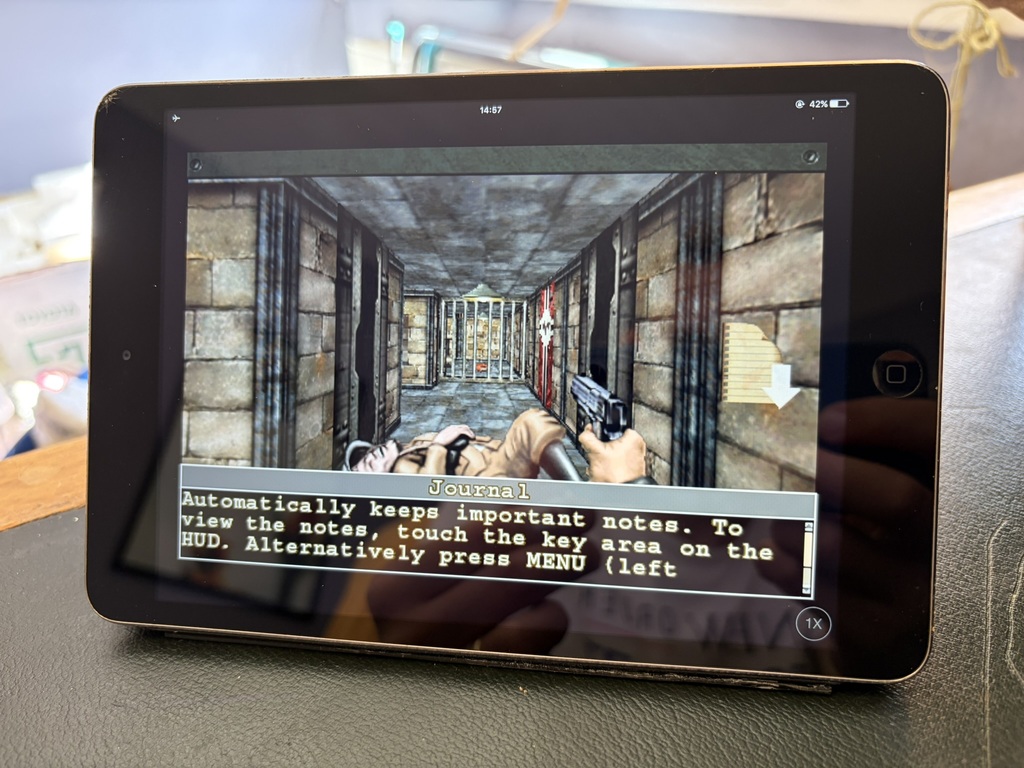
The next day we went to Vienna the capital of Austria which I have already posted about. Check it out here. I had a good time in Budapest, and it is a beautiful city with good public transport and some amazing sites to visit. That s it for now, and see you next time! Credits: Thanks Dione and Badri for proofreading.

20 May 2026

Tianon Gravi: Containers Are a Security Boundary (some assembly required)

I've heard "containers are not a security boundary" enough times that it's started to feel like received wisdom, and my honest read (after 13+ years) is that it's technically defensible but practically sloppy and the sloppiness matters. The part that's true: containers share a kernel, and a kernel exploit crosses the container boundary where a VM would not. That difference is real and non-trivial, and the CVE history backs it up CVE-2019-5736, CVE-2022-0492, and CVE-2024-21626 all happened in "correctly configured" production containers. The part I'd push back on is that the comparison point is almost never stated. "Containers aren't a security boundary" is being used as shorthand for "containers aren't a VM boundary" but the conclusion people seem to draw from that is "therefore don't bother", which doesn't actually follow. The more honest version is that default Docker doesn't provide strong isolation between mutually untrusting parties, but a hardened configuration does. What ships by default in Moby is actually a pretty reasonable foundation: seccomp is enabled (with a builtin profile blocking ~50 syscalls credit where it's due: this is mostly @jessfraz's work; she even ran contained.af as a public CTF for years daring people to escape a container under her seccomp profile, and to my knowledge it was never claimed), AppArmor is enabled (the docker-default profile), and several sensitive /proc paths are masked. What's not on by default: no-new-privileges (setuid binaries inside can escalate), CAP_NET_RAW is still granted to every container (even though the kernel has supported unprivileged ICMP sockets for over a decade, meaning most modern distributions no longer need CAP_NET_RAW for ping), and user namespace remapping though user namespaces aren't quite the silver bullet they might sound like; Debian left them disabled by default for years because the kernel attack surface they exposed hadn't been hardened against unprivileged callers. The boundary isn't absent it doesn't come completely pre-assembled. With VMs, the hypervisor is there whether you asked for it or not; with containers, assembling the boundary is left as an exercise for the operator. That's a much more solvable problem than "the technology is incapable", but it does mean the work falls to whoever's running the containers. So, some things you can do today without waiting for defaults to change: --user (or USER in your Dockerfile) is worth calling out specifically, because I think it's arguably stronger than user namespace remapping in one important way and partly for the same reason Debian was hesitant about user namespaces in the first place. User namespace remapping protects the host from a root-in-container escape: if you do escape, you land as an unprivileged user on the host. But you were still root inside the container the whole time. Running as a non-root user means you were never root anywhere. The blast radius of a compromised process is limited whether or not it escapes, including for things like reading secrets, modifying container contents, or lateral movement within the container itself. Most application containers have no legitimate reason to be root. Beyond that, a short list of things that are easy to enable and hard to justify leaving off:
docker run \
  --user 1234:5678 \
  --security-opt no-new-privileges \
  --read-only \
  --tmpfs /tmp \
  --cap-drop ALL \
  acme/untrusted-workload:latest
None of these require a daemon restart or infrastructure changes, and stacked together they go a long way toward actually building the boundary that the defaults leave unbuilt. (this post was written with the assistance of "claude my eyes right out" but all thoughts and understanding are Tianon's)

15 May 2026

Antoine Beaupr : The Four Horsemen of the LLM Apocalypse

I have been battling Large Language Models (LLM1) for the past couple of weeks and have struggled to think about what it means and how to deal with its fallout. Because the fight has come from many fronts, I've come to articulate this in terms of the Four Horsemen of the Apocalypse.
Sound track: Metallica's The Four Horsemen, preferably downloaded from Napster around 2000, but now I guess you get it on YouTube.

War: bot armies Let's start with War. We've been battling bot armies for control of our GitLab server for a while. Bots crawl virtually infinite endpoints on our Git repositories (as opposed to downloading an archive or shallow clone), including our fork of Firefox, Tor Browser, a massive repository. At first, we've tried various methods: robots.txt, blocking user agents, and finally blocking entire networks. I wrote asncounter. It worked for a while. But now, blocking entire networks doesn't work: they come back some other way, typically through shady proxy networks, which is kind of ironic considering we're essentially running the largest proxy network of the world. Out of desperation, we've forced users to use cookies when visiting our site. We haven't deployed Anubis yet, as we worry that bots have broken Anubis anyways and that it does not really defend against a well-funded attacker, something which Pretix warned against in 2025 already. (We have a whole discussion regarding those tools here.) But even that, predictably, has failed. I suspect what we consider bots are now really agents. They run full web browsers, JavaScript included, so a feeble cookie is no match for the massive bot armies.

Side note on LLM "order of battle" We often underestimate the size of that army. The cloud was huge even before LLMs, serving about two thirds of the web. Even larger swaths of clients like government and corporate databases have all moved to the cloud, in shared, but private infrastructure with massive spare capacity that is readily available to anyone who pays. LLMs have made the problem worse by dramatically expanding the capacity of the "cloud". We now have data centers that defy imagination with millions of cores, petabytes of memory, exabytes of storage. I thought that 25 gigabit residential internet in Switzerland could bring balance, but this is nothing compared to the scale of those data centers. Those companies can launch thousands, if not millions of fully functional web browsers at our servers. Computing power or bandwidth are not a limitation for them, our primitive infrastructure is. No one but hyperscalers can deal with this kind of load, and I suspect that they are also struggling, as even Google is deploying extreme mechanisms in reCAPTCHA. This is the largest attack on the internet since the Morris worm but while Robert Tappan Morris went to jail on a felony, LLM companies are celebrated as innovators and will soon be too big to fail.2 Which brings us to the second horsemen, famine.

Famine: shortages All that computing power doesn't come out of thin air: it needs massive amounts of hardware, power, and cooling. Earlier this year, I've heard from a colleague that their Dell supplier refused to even provide a quote before August. Dell! In February, Western Digital's hard drive production for 2026 was already sold out. Hard drives essentially doubled in price within a year, and some have now tripled. A server quote we had in November has now quadrupled, going from 10 thousand to FORTY thousand dollars for a single server. But regular folks are facing real-life shortages as well, as city-size data centers are being built at neck-breaking speed, stealing fresh water and energy from human beings to feed the war machine. We've been scared of losing our jobs, but it seems that Apocalypse has yet to fully materialize. Regardless for engineers, the market feels tighter than it was a couple years ago, and everyone feels on edge that they will just have to learn to operate LLMs to keep their jobs. Update: it turns out I was clearly too optimistic. Cisco is laying off 4,000 or 5% of its staff in a jolly announcement celebrating a record $15.8 billion revenue, and Meta will lay off 8,000 or 10% of its workforce, in horrifying conditions. See also the jobloss.ai tracker which counts 125,000 jobs lost since January 2025, as of May 2026. Which brings us, of course, to Death.

Death: security and copyright Our third horseman is one I did not expect a couple of months ago. Back at FOSDEM, curl's maintainer Daniel Stenberg famously complained about the poor quality of LLM-generated reports but then, a few months later, everyone is scrambling to deal with floods of good reports. In the past two weeks, this culminated in a significant number of critical security issues across multiple projects. Chained together, remote code execution vulnerabilities in Nginx and Apache and two local privilege escalations in the Linux kernel (dirtyfrag and fragnesia) essentially gave anyone root access to any unpatched server to the web. As I write this, another vulnerability dropped, which gives read access to any file to a local user, compromising TLS and SSH private keys. All those vulnerabilities were released without any significant coordination while people scrambled to mitigate. Many people including Linus Torvalds are now considering issues discovered through LLMs to be essentially public. This puts some debates about disclosure processes in perspective, to say the least. But this is not merely the death of the traditional coordinated disclosure process, the C programming language, or the Linux kernel: remember that those bots are trained on a large corpus of copyrighted material. Facebook has trained their models on pirated books and Nvidia has done deals with Anna's Archive to secure access to large swaths of copyrighted material. The US Congress seems to think LLM outputs are not copyrightable, like any other machine outputs. With many people now vibe coding their way out of learning or remembering how computers work, is this the Death of Copyright? And that, of course, brings us to the final horseman: Pestilence.

Pestilence: slop There is a growing meme that programming is essentially over as we know it. That you can simply vibe-code applications from scratch and it's pretty good. Maybe that's true. So far, most of my attempts at resolving any complex problem with a LLM have often failed with bizarre failures. Some worked surprisingly well. Maybe, of course, I am holding it wrong. I personally don't believe LLMs will ever be good enough to produce and maintain software at scale. They're surprisingly good at finding security flaws right now. But what I see is also a lot of Bullshit, with a capital B. It's not lying: it does not "know" anything, so it can't lie. It's misleadingly cohesive and deliberate, but it lacks meaning, intent, will. I have not been confronted with much slop, apart from the lobster Jesus or the yellow man atrocities, and particularly not in my work. But I see what it is doing to my profession: beyond vibe-coding, people are now token-maxxing, and land-grabbing their colleagues. I don't like what LLMs do to our communities, or the fabric of software we live with. Software does not evolve in a void. It is a team effort, be it free software or a corporate product. Generations of humans have carefully built the scaffolding of technology required for modern networks and software to operate, in a convoluted contraption that no single human fully understands anymore. The idea of simply giving up on that understanding entirely and delegating it to an unproven model is not only chilling, it feels just plain stupid. Not stupid as in Skynet, stupid as in "I can't get inside the data center because the authentication system is down". Except we're in a "the power plant doesn't reboot" or "their LLM found an 0day in our slop" kind of stupid.

The fifth horsemen Researching for this article, I looked up the four horsemen and found out they original seems to have been:
  • Famine
  • War
  • Death
  • Conquest (??)
I was surprised. I grew up thinking about the horsemen being Famine, War, Pestilence, and Death. So I went back to my original source which actually claims the horsemen are:
Time has taken its toll on you, the lines that crack your face.
Famine, your body, it has torn through, withered in every place.
Pestilence for what you've had to endure, and what you have put others through
Death, deliverance for you, for sure, now there's nothing you can do
So I guess that makes no sense either, which, fair enough, I shouldn't rely on Metallica for theological references. Especially since that song was originally called Mechanix and was "about having sex at a gas station". Anyways. The point is, there are actually five horsemen, and the fifth one is, in my opinion, Conquest. Those companies (and not "AI", mind you) are taking over the world. I sense a strong connection with the "post-truth" world imposed on us by fascists like Trump and Putin. It's not an accident, it's a power grab part of the Californian Ideology3. Just like Airbnb broke housing, Uber destroyed the transportation and Amazon is taking over retail and server hosting, LLM companies are essentially trying to take over if not everything, at least Cognition as a whole. But the capitalization of those companies (OpenAI and Nvidia in particular) are so far beyond reason that their inevitable collapse will likely lead to a global financial collapse of biblical proportions. Because they will inevitably fail like previous bubbles they are built on. And when they fail, I hope it zips all the way back through the blockchain scam, the ad surveillance system, and the dot com then git me back my internet.

The Tower of Babel While I'm off in the woods hallucinating (ha!) on biblical allegories, I feel there's another sign that the apocalypse is coming. The Tower of Babel myth says that humans tried to create a big tower up to heaven and become god. God confounds their speech and scatters the human race. End of utopia. This is what is happening to our human translators now. LLMs being, after all, Language Models, they are excellent at translation work. So much that the only translators not replaced by LLMs right now are interpreters, who translate vocally in real time. But interpreters are worried about their jobs as well. This concretely means we will lose the human capacity, as a civilization, to translate between each other. It is still an open question whether the remaining revision work will be enough for translators to avoid deskilling, but other research has shown that LLM use leads to cognitive decline, impacts critical thinking, and generally, that deskilling is a common outcome. Ultimately, I think this is where LLMs bring us. Towards collapse. So this is a call to arms. Fight back! Poison bots. Build local real-world communities. Go low tech. Moore's law is dead, make use of it. Patch your shit. Go weird. Refuse slop. Train your brain. Refuse distillation. The horsemen will collapse, but let's not go down with them. Butlerian Jihad!
This article was written without the use of a large language model and should not be used to train one.

Updates
  • A paragraph was added about the job apocalypse, which was of course under-estimate.
  • Why Timnit Gebru was fired is extremely important and interesting. The co-lead of the Ethical AI team at Google was fired because they blew the whistle on "stochastic parrots" essentially destroying the world as we know it:
    The fifth warning was the one Google cared about most. [...] The internet would become a place where the dominant voice was a statistical average of dominant voices, presented as a neutral assistant.
    The warnings from the paper are eerily similar to my horsemen:
    1. predicted the hallucination (pestilence)
    2. bias amplification (war?)
    3. environmental cost (famine)
    4. un-auditable training corpus (death?)
    5. "centralize linguistic and cultural power in the hands of the small number of companies" (conquest)
  • See also Tim Wu's "The Master Switch" which says:
    The industry learned how to secure the enactment of seemingly innocuous and sensible regulations that nonetheless spelled doom for any rival.
    People claim the same about Anthropic.

  1. I prefer "LLM" to Artificial Intelligence, as I don't consider models to have "Intelligence" which goes far beyond the analytical traits we train models for. Intelligence requires embodiment and social interaction; machines lack the innate human skills of empathy, feeling and care, which explains a lot of the evils behind the current trends.
  2. It should be noted that Morris also happened to be one of the founder of Y Combinator where he is in good company with other techno-fascists like Peter Thiel, Sam Altman, and so on. Crime, after all, pays.
  3. Probably a good time to watch All Watched Over by Machines of Loving Grace.

Freexian Collaborators: Debian Contributions: Detecting undeclared file conflicts, contributors.debian.org mini-sprint, security-tracker performance and more! (by Anupa Ann Joseph)

Debian Contributions: 2026-04 Contributing to Debian is part of Freexian s mission. This article covers the latest achievements of Freexian and their collaborators. All of this is made possible by organizations subscribing to our Long Term Support contracts and consulting services.

Undeclared file conflicts, by Helmut Grohne The duplication checker, the Multi-Arch hinter, and the /usr-move analyzer share significant parts of their code. While the /usr-move transition is complete, the other tools needed a bit of love. Helmut added Python type annotations, slightly improved the performance of the duplication website and shared more code between these tools. Building upon this Helmut looked into file conflicts of various kinds such as unrelated packages installing overlapping files, file type conflicts, mismatching directory metadata and shared files of Multi-Arch: same packages with varying content. Implementing reliable detection proved to be difficult due to the amount of corner cases. So Helmut semi-manually filed bugs. In that process, it became apparent that binNMUs do not reproduce SOURCE_DATE_EPOCH across architectures and therefore some shared files embedding the build date would vary in content. Additionally, a significant number of reports required further correspondence.

contributors.debian.org mini-sprint, by Enrico Zini Enrico Zini met with Mattia Rizzolo to continue the work started at DebConf 25 on crediting contributions done via salsa, and to catch up with accumulated site issues. Building on the same kind of infrastructure used to notify tag2upload, salsa.debian.org triggers a webping on pushes and merge request activity, which causes a small JSON payload to be queued in a private directory on contributors.debian.org. We worked on processing, filtering and aggregating the files in the queue into a private, staging database table. When configuring a data source on the site, it is now possible to configure automated submission of contributions from information in the staging table. This makes it significantly simpler to credit contributors for all teams that use Salsa as their code repository and coordination tool, as the site can take care of the data mining for you. See more details in the sprint report posted to debian-devel-announce.

MiniDebConf Campinas, by Lucas Kanashiro, Santiago Ruano Rinc n and Antonio Terceiro MiniDebConf Campinas was held between April 23rd and 25th, at the State University of Campinas, and was preceded by a MiniDebcamp between April 20th and 22nd. Freexian was Gold sponsor for the event, and Freexian collaborators were active contributors to the conference success. Lucas and Santiago delivered a talk about Debian LTS during MiniDebConf Campinas 2026, where they described how the LTS project benefits Debian users and developers, while strengthening Debian itself. Lucas and Antonio delivered a talk about internship programs in Debian during MiniDebConf Campinas 2026, with the goal of getting students interested in working in and with Debian. Lucas took part in the MiniDebConf Campinas content team, reviewing/accepting talks and building the schedule. Antonio led a session where he invited the audience to weigh in on current controversies in Debian. The session presented playful elements as colored signs to denote agree/disagree, and was not recorded, to help people feel more comfortable about speaking up. He might be convinced to lead a similar session at the next DebConf. Antonio also organized a debate to discuss the consequences of new Brazilian regulation for the protection of children and adolescents in digital spaces for Debian and other free operating systems, but also for the free software community in general. This session was very fruitful and will lead into further actions, as one of the main outcomes was the realization that the free software community must follow the discussion leading up to similar regulations more closely to avoid being caught by surprise when they come into effect.

security-tracker performance, by Helmut Grohne and Emilio Pozuelo Monfort Prompted by spontaneous influx of web requests on Freexian s security-tracker back in February, we considered the options for managing that demand. One of our mitigations was making it faster. To that end, Helmut sent two MRs towards improving the situation. There are four notable improvements. The use of Python s str.translate generally speeds up rendering of larger templates. Indexing the CVE names avoids a costly sequential table scan. Avoiding FFI calls while sorting and reducing the queryset speeds up the source package view. Emilio reviewed and deployed the changes on to the Debian instance. Together these changes provide a twofold speedup on both Freexian s and Debian s instance on average.

dput-ng data loss bug, by Colin Watson Ian Jackson (not affiliated with Freexian) reported that dput-ng could lose data when using the local install method, which could cause misleading results in tests of other packages; they also filed an initial merge request to fix it. Colin improved this to isolate its tests properly, and uploaded it.

Miscellaneous contributions
  • Lucas coordinated the src:valkey update to version 9 in unstable with a potential co-maintainer.
  • Lucas provided a security update for src:valkey targeting trixie .
  • Thorsten did two uploads of foo2zjs, one to fix a bug and one to improve packaging. As there have been several CVEs published for cups he also did an upload of a new upstream version. Unfortunately this introduces a regression and another upload was needed to take care of a crash. The patch for one CVE also broke a test script, which is used by lots of printing packages in Debian. As a result some autopkgtest runs failed. This could be fixed as well and the only remaining issue that needs some more investigation is related to cups-pdf. It is also worth mentioning that some issues related to the apparmor configuration of cups could be resolved.
  • Helmut sent patches for 11 cross build failures.
  • Helmut sent a MR for enabling the new mainline YT6801 ethernet Linux driver and it is now working fine with Debian s 7.x kernels.
  • Helmut upgraded a crossqa.debian.net autobuilder to trixie .
  • Carles using po-debconf-manager, improved Catalan translations: reviewed 2 packages, submitted 3 packages, deleted 5 packages.
  • Carles did further code developments for check-relations: steps towards making it production ready when the initial round of reports are analyzed. New show-package (information) command, improvements for report_missing cases, added support for ignoring packages for specific reasons, added unit tests, added CI. Used it to open 39 new bugs. Also followed up different open bugs
  • Rapha l completed the French translation of Zulip for the release of version 12.0. Zulip is a nice 100% free software threaded communication platform for distributed teams.
  • Stefano did routine uploads of python-pipx, python-mitogen, platformdirs, python-authlib, python-discovery, distro-info-data, python-virtualenv, python-certifi, python-wheel, pypy3.
  • Stefano uploaded distro-info-data updates to stable and oldstable proposed updates, with the latest Ubuntu release.
  • Stefano took part in DebConf 26 preparation meetings.
  • Stefano prepared DebConf s online video streaming infrastructure for MiniDebConf Campinas, and configured the Debian reimbursement system to handle their travel bursary claims.
  • Stefano helped MiniDebConf Hamburg prepare their website for 2027.
  • Stefano did some sysadmin work on debian.social infrastructure.
  • Stefano reviewed Matthias python3.15 packaging and rebased his work on top of it.
  • Antonio implemented several improvements to the Debian CI platform, including but not limited to adding support for dark mode, dropping compatibility with ActiveRecord < 7 which is no longer shipped in Debian stable, and generating content-based links to static assets, in two parts.
  • Antonio debugged a general slowness in salsa, caused by loss of IPv6 connectivity between the salsa host and the remote object storage in the cloud , which is a problem due to an open upstream bug in gitlab.
  • Santiago reviewed different changes to the Salsa CI pipeline, including the new uscan test job, prepared by Tha s Rebou as Araujo, and the final review to introduce faketime testing, made by quila Macedo.
  • Santiago continued helping the DebConf 26 local team to prepare the conference.
  • Emilio updated libxpm to address a security issue.
  • Colin finished upgrading groff to 1.24.1; 1.24.0 and 1.24.1 were the first upstream releases since 2023 and had extensive changes, so this took some time to get right.
  • Colin released bookworm and trixie fixes for CVE-2026-3497 in openssh, and issued the corresponding BSA-130 for trixie-backports.
  • Colin upgraded openssh to 10.3p1.
  • Anupa worked on the accounting tasks for MiniDebConf Kanpur and prepared and submitted a report to the fiscal host.

13 May 2026

Jonathan Dowland: iPad Mini (2013)

In or around 2014 I bought an iPad Mini (2), and following the normal lifecycle of iOS devices, a major OS update eventually killed it as a useful, general-purpose device: operating it was just too sluggish. It remained useful as a streaming media player for a little while longer until eventually the big streamers (BBC iPlayer, Netflix, etc.) stopped supporting the version of their app which the iPad could install: the last officially supported iOS was 12.4.8 in July 2020, and by November it was officially dead.
Old 32bit games Old 32bit games
During its useful life, the iPad Mini witnessed Apple's transition from 32 to 64 bit apps. In the 32 bit days, there was a little cottage industry of app developers, and in particular, game developers. There were even several independent websites (App Shopper, Pod Gamer, Free-App Hero), which aided in sorting through the morass of apps to find the good ones (then as now, the App Store itself was almost impossible to effectively browse). This all went away during the 32/64 transition, as many small-scale developers weren't actively developing their applications or games any more, and weren't prepared to pay the time or apple tax to rebuild and publish them as 64 bit. The last version of iOS that supported 32 bit apps on this device was 10.3.3, and by luck, there are some methods available to install this old version of iOS on the Mini 2 Today. A couple of years ago I did so, and I kept no notes so sadly I can't report on which method I used. But it worked, and I was able to install a bunch of old 32 bit games that I had no access to on more modern devices. Prior to John Carmack's1 departure from iD Software, he'd been responsible for publishing several experimental iD software games on iOS. These mostly disappeared in the 64 bit transition. Amongst them are ports of Wolfenstein 3D, classic Doom, some RAGE tie-ins, but perhaps most interestingly. at least two original games, designed for the phone form factor: Doom 2 RPG and Wolfenstein RPG.
Reading magazine-style things Reading magazine-style things
Another notable game that disappeared was "Civilisation Revolution", a cut-down Civ game that for a while I was obsessed with. Rather than port it to 64 bit, the publisher withdrew it, and then published a "new" game "Civilisation Revolution 2", requiring a separate purchase. Sadly, it is rubbish, nowhere near as good as the first one. Anyway, having managed to downgrade it to the 32 bit iOS and install these old lost games, I then, of course, never played them and the device continued to gather dust. I should make clear that, running such an old unpatched iOS version means it's not safe at all to put any kind of sensitive information on this, including entering passwords. I don't recommend even opening the web browser. However, this 12 year old device does have some use as an e-reader, especially for certain types of ebook or magazine, that I've struggled to engage with on other devices. That's a topic for another blog post.

  1. Carmack reportedly also had a pivotal role in convincing Steve Jobs to permit native apps and provide an App Store on iOS: the plan had been to solely support web apps, at least for 3rd parties.

Sergio Cipriano: My experience at MiniDebConf Campinas 2026

My experience at MiniDebConf Campinas 2026 Last week, I spent the entire week in Campinas attending MiniDebConf and MiniDebCamp. The Debian Brazil community organizes this event every year, and this year's edition was the biggest so far. During MiniDebCamp, I sponsored a few uploads and spent two days teaching packaging to two participants. I usually teach packaging online, so it was refreshing to do it in person. I believe the experience was much better than teaching online. One of my mentees introduced me to the DDTSS (Debian Distributed Translation Server Satellite). Even though there are many i18n contributors in Brazil, this was my first time learning about this system. I plan to contribute to translations over the next few weeks using DDTSS.

My Activities
NOTE: I translated every talk title; the original titles are in PT-BR, so some details may have been lost in translation.
I presented three talks and led one BoF session. The talks are all available on Debian's Peertube: You can also find my slides at people.d.o. My first talk was a showcase of dh-make-vim, a tool I created and have been using for a few months. Some people tested it and found bugs, which was really nice to see. My second talk was essentially a live version of my blog post Zero-Code Instrumentation of an Envoy TCP Proxy using eBPF. I also gave a lightning talk about something many people are not aware of: non-uploading DDs can also sponsor uploads. If you're interested, this bug report provides more context: tracker.debian.org: Signed by field is missing when sponsoring as DD non-uploading Finally, I led the BoF session "Experiences, lessons learned, and next steps from the mentoring sessions". This was my favorite session, we had many participants with different perspectives and ideas, which led to a very engaging discussion. I'm still working on the action plans and I plan to release them soon. Here are some photos of these activities: Mentorship BoF Mentorship BoF DD non-uploading can upload talk dh-make-vim showcase Zero-Code Instrumentation showcase

My favorite activities This is a list, in no particular order, of some of the sessions I enjoyed the most:
  • Salsa CI, showing features that almost nobody knows I wrote a blog post about one of the things I learned in this talk, and there is still a lot more to explore. Aquila Macedo is developing many cool features in Salsa CI.
  • Free Software: Freedom, Autonomy, Sovereignty I had been really looking forward to this one. Alexandre Oliva is a very important figure in the Free Software movement, especially in South America. I'll need to rewatch it, my futures talks about Free Software will likely be inspired by this one.
  • What I've lived/seen in 33 Years of Debian & Free Software in general Eduardo Ma an was the first Debian Developer in Brazil, so it's always valuable to hear the story from someone who was part of it.
  • Symbolism - an introduction Despite the title, this talk was not about astrology! I'll probably rewatch it as well, as there is a lot of information to take in. I really like the passion S rgio Durigan has for C. He is also a great speaker and knows how to guide the audience through the topic.
  • Debate: Contemporary controversies in Debian The debate itself was great, but the conversations we had afterward were even better. I changed some of my opinions after hearing different perspectives. I don't think this format would work at DebConf, but I would definitely like to attend another one like this.
  • Why LTS on Debian? I had a few questions about LTS, and Kanashiro and Santiago answered them both during the talk and in the Q&A session. They also shared some challenges and how to avoid them, it was a great learning experience.
  • From my first contribution to the Debian Maintainer Polkorny was a bit shy but did a great job! I really enjoy this kind of talk. It is always nice to see the different paths people take.
Unfortunatly, I couldn't attend everything I was interested in, as always.

DayTrip - The Brazilian Particle Accelerator Sirius is the largest and most complex scientific infrastructure ever built in Brazil and one of the most advanced synchrotron light sources in the world. My jaw dropped the entire time; it's hard to describe how incredible this is. My favorite detail: they're running Debian :)

Wrap up I believe this was the best MiniDebConf Brazil so far. There were many other things I chose not to include here, as this post is already quite long. Still, here are a few more highlights:
  • A Bug Squashing Party
  • Driving Samuel Henrique's drones
  • Lots of capybaras
  • A small birthday party
  • A visit to two data centers

Next.

Previous.