Search Results: "Roland Clobus"

13 July 2022

Reproducible Builds: Reproducible Builds in June 2022

Welcome to the June 2022 report from the Reproducible Builds project. In these reports, we outline the most important things that we have been up to over the past month. As a quick recap, whilst anyone may inspect the source code of free software for malicious flaws, almost all software is distributed to end users as pre-compiled binaries.

Save the date! Despite several delays, we are pleased to announce dates for our in-person summit this year: November 1st 2022 November 3rd 2022
The event will happen in/around Venice (Italy), and we intend to pick a venue reachable via the train station and an international airport. However, the precise venue will depend on the number of attendees. Please see the announcement mail from Mattia Rizzolo, and do keep an eye on the mailing list for further announcements as it will hopefully include registration instructions.

News David Wheeler filed an issue against the Rust programming language to report that builds are not reproducible because full path to the source code is in the panic and debug strings . Luckily, as one of the responses mentions: the --remap-path-prefix solves this problem and has been used to great effect in build systems that rely on reproducibility (Bazel, Nix) to work at all and that there are efforts to teach cargo about it here .
The Python Security team announced that:
The ctx hosted project on PyPI was taken over via user account compromise and replaced with a malicious project which contained runtime code which collected the content of os.environ.items() when instantiating Ctx objects. The captured environment variables were sent as a base64 encoded query parameter to a Heroku application [ ]
As their announcement later goes onto state, version-pinning using hash-checking mode can prevent this attack, although this does depend on specific installations using this mode, rather than a prevention that can be applied systematically.
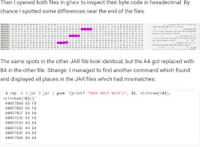
Developer vanitasvitae published an interesting and entertaining blog post detailing the blow-by-blow steps of debugging a reproducibility issue in PGPainless, a library which aims to make using OpenPGP in Java projects as simple as possible . Whilst their in-depth research into the internals of the .jar may have been unnecessary given that diffoscope would have identified the, it must be said that there is something to be said with occasionally delving into seemingly low-level details, as well describing any debugging process. Indeed, as vanitasvitae writes:
Yes, this would have spared me from 3h of debugging But I probably would also not have gone onto this little dive into the JAR/ZIP format, so in the end I m not mad.

Kees Cook published a short and practical blog post detailing how he uses reproducibility properties to aid work to replace one-element arrays in the Linux kernel. Kees approach is based on the principle that if a (small) proposed change is considered equivalent by the compiler, then the generated output will be identical but only if no other arbitrary or unrelated changes are introduced. Kees mentions the fantastic diffoscope tool, as well as various kernel-specific build options (eg. KBUILD_BUILD_TIMESTAMP) in order to prepare my build with the known to disrupt code layout options disabled .
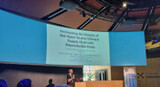
Stefano Zacchiroli gave a presentation at GDR S curit Informatique based in part on a paper co-written with Chris Lamb titled Increasing the Integrity of Software Supply Chains. (Tweet)

Debian In Debian in this month, 28 reviews of Debian packages were added, 35 were updated and 27 were removed this month adding to our knowledge about identified issues. Two issue types were added: nondeterministic_checksum_generated_by_coq and nondetermistic_js_output_from_webpack. After Holger Levsen found hundreds of packages in the bookworm distribution that lack .buildinfo files, he uploaded 404 source packages to the archive (with no meaningful source changes). Currently bookworm now shows only 8 packages without .buildinfo files, and those 8 are fixed in unstable and should migrate shortly. By contrast, Debian unstable will always have packages without .buildinfo files, as this is how they come through the NEW queue. However, as these packages were not built on the official build servers (ie. they were uploaded by the maintainer) they will never migrate to Debian testing. In the future, therefore, testing should never have packages without .buildinfo files again. Roland Clobus posted yet another in-depth status report about his progress making the Debian Live images build reproducibly to our mailing list. In this update, Roland mentions that all major desktops build reproducibly with bullseye, bookworm and sid but also goes on to outline the progress made with automated testing of the generated images using openQA.

GNU Guix Vagrant Cascadian made a significant number of contributions to GNU Guix: Elsewhere in GNU Guix, Ludovic Court s published a paper in the journal The Art, Science, and Engineering of Programming called Building a Secure Software Supply Chain with GNU Guix:

This paper focuses on one research question: how can [Guix]((https://www.gnu.org/software/guix/) and similar systems allow users to securely update their software? [ ] Our main contribution is a model and tool to authenticate new Git revisions. We further show how, building on Git semantics, we build protections against downgrade attacks and related threats. We explain implementation choices. This work has been deployed in production two years ago, giving us insight on its actual use at scale every day. The Git checkout authentication at its core is applicable beyond the specific use case of Guix, and we think it could benefit to developer teams that use Git.
A full PDF of the text is available.

openSUSE In the world of openSUSE, SUSE announced at SUSECon that they are preparing to meet SLSA level 4. (SLSA (Supply chain Levels for Software Artifacts) is a new industry-led standardisation effort that aims to protect the integrity of the software supply chain.) However, at the time of writing, timestamps within RPM archives are not normalised, so bit-for-bit identical reproducible builds are not possible. Some in-toto provenance files published for SUSE s SLE-15-SP4 as one result of the SLSA level 4 effort. Old binaries are not rebuilt, so only new builds (e.g. maintenance updates) have this metadata added. Lastly, Bernhard M. Wiedemann posted his usual monthly openSUSE reproducible builds status report.

diffoscope diffoscope is our in-depth and content-aware diff utility. Not only can it locate and diagnose reproducibility issues, it can provide human-readable diffs from many kinds of binary formats. This month, Chris Lamb prepared and uploaded versions 215, 216 and 217 to Debian unstable. Chris Lamb also made the following changes:
  • New features:
    • Print profile output if we were called with --profile and we were killed via a TERM signal. This should help in situations where diffoscope is terminated due to some sort of timeout. [ ]
    • Support both PyPDF 1.x and 2.x. [ ]
  • Bug fixes:
    • Also catch IndexError exceptions (in addition to ValueError) when parsing .pyc files. (#1012258)
    • Correct the logic for supporting different versions of the argcomplete module. [ ]
  • Output improvements:
    • Don t leak the (likely-temporary) pathname when comparing PDF documents. [ ]
  • Logging improvements:
    • Update test fixtures for GNU readelf 2.38 (now in Debian unstable). [ ][ ]
    • Be more specific about the minimum required version of readelf (ie. binutils), as it appears that this patch level version change resulted in a change of output, not the minor version. [ ]
    • Use our @skip_unless_tool_is_at_least decorator (NB. at_least) over @skip_if_tool_version_is (NB. is) to fix tests under Debian stable. [ ]
    • Emit a warning if/when we are handling a UNIX TERM signal. [ ]
  • Codebase improvements:
    • Clarify in what situations the main finally block gets called with respect to TERM signal handling. [ ]
    • Clarify control flow in the diffoscope.profiling module. [ ]
    • Correctly package the scripts/ directory. [ ]
In addition, Edward Betts updated a broken link to the RSS on the diffoscope homepage and Vagrant Cascadian updated the diffoscope package in GNU Guix [ ][ ][ ].

Upstream patches The Reproducible Builds project detects, dissects and attempts to fix as many currently-unreproducible packages as possible. We endeavour to send all of our patches upstream where appropriate. This month, we wrote a large number of such patches, including:

Testing framework The Reproducible Builds project runs a significant testing framework at tests.reproducible-builds.org, to check packages and other artifacts for reproducibility. This month, the following changes were made:
  • Holger Levsen:
    • Add a package set for packages that use the R programming language [ ] as well as one for Rust [ ].
    • Improve package set matching for Python [ ] and font-related [ ] packages.
    • Install the lz4, lzop and xz-utils packages on all nodes in order to detect running kernels. [ ]
    • Improve the cleanup mechanisms when testing the reproducibility of Debian Live images. [ ][ ]
    • In the automated node health checks, deprioritise the generic kernel warning . [ ]
  • Roland Clobus (Debian Live image reproducibility):
    • Add various maintenance jobs to the Jenkins view. [ ]
    • Cleanup old workspaces after 24 hours. [ ]
    • Cleanup temporary workspace and resulting directories. [ ]
    • Implement a number of fixes and improvements around publishing files. [ ][ ][ ]
    • Don t attempt to preserve the file timestamps when copying artifacts. [ ]
And finally, node maintenance was also performed by Mattia Rizzolo [ ].

Mailing list and website On our mailing list this month: Lastly, Chris Lamb updated the main Reproducible Builds website and documentation in a number of small ways, but primarily published an interview with Hans-Christoph Steiner of the F-Droid project. Chris Lamb also added a Coffeescript example for parsing and using the SOURCE_DATE_EPOCH environment variable [ ]. In addition, Sebastian Crane very-helpfully updated the screenshot of salsa.debian.org s request access button on the How to join the Salsa group. [ ]

Contact If you are interested in contributing to the Reproducible Builds project, please visit our Contribute page on our website. However, you can get in touch with us via:

6 June 2022

Reproducible Builds: Reproducible Builds in May 2022

Welcome to the May 2022 report from the Reproducible Builds project. In our reports we outline the most important things that we have been up to over the past month. As ever, if you are interested in contributing to the project, please visit our Contribute page on our website.

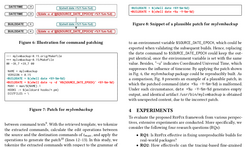
Repfix paper Zhilei Ren, Shiwei Sun, Jifeng Xuan, Xiaochen Li, Zhide Zhou and He Jiang have published an academic paper titled Automated Patching for Unreproducible Builds:
[..] fixing unreproducible build issues poses a set of challenges [..], among which we consider the localization granularity and the historical knowledge utilization as the most significant ones. To tackle these challenges, we propose a novel approach [called] RepFix that combines tracing-based fine-grained localization with history-based patch generation mechanisms.
The paper (PDF, 3.5MB) uses the Debian mylvmbackup package as an example to show how RepFix can automatically generate patches to make software build reproducibly. As it happens, Reiner Herrmann submitted a patch for the mylvmbackup package which has remained unapplied by the Debian package maintainer for over seven years, thus this paper inadvertently underscores that achieving reproducible builds will require both technical and social solutions.

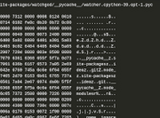
Python variables Johannes Schauer discovered a fascinating bug where simply naming your Python variable _m led to unreproducible .pyc files. In particular, the types module in Python 3.10 requires the following patch to make it reproducible:
--- a/Lib/types.py
+++ b/Lib/types.py
@@ -37,8 +37,8 @@ _ag = _ag()
 AsyncGeneratorType = type(_ag)
 
 class _C:
-    def _m(self): pass
-MethodType = type(_C()._m)
+    def _b(self): pass
+MethodType = type(_C()._b)
Simply renaming the dummy method from _m to _b was enough to workaround the problem. Johannes bug report first led to a number of improvements in diffoscope to aid in dissecting .pyc files, but upstream identified this as caused by an issue surrounding interned strings and is being tracked in CPython bug #78274.

New SPDX team to incorporate build metadata in Software Bill of Materials SPDX, the open standard for Software Bill of Materials (SBOM), is continuously developed by a number of teams and committees. However, SPDX has welcomed a new addition; a team dedicated to enhancing metadata about software builds, complementing reproducible builds in creating a more secure software supply chain. The SPDX Builds Team has been working throughout May to define the universal primitives shared by all build systems, including the who, what, where and how of builds:
  • Who: the identity of the person or organisation that controls the build infrastructure.
  • What: the inputs and outputs of a given build, combining metadata about the build s configuration with an SBOM describing source code and dependencies.
  • Where: the software packages making up the build system, from build orchestration tools such as Woodpecker CI and Tekton to language-specific tools.
  • How: the invocation of a build, linking metadata of a build to the identity of the person or automation tool that initiated it.
The SPDX Builds Team expects to have a usable data model by September, ready for inclusion in the SPDX 3.0 standard. The team welcomes new contributors, inviting those interested in joining to introduce themselves on the SPDX-Tech mailing list.

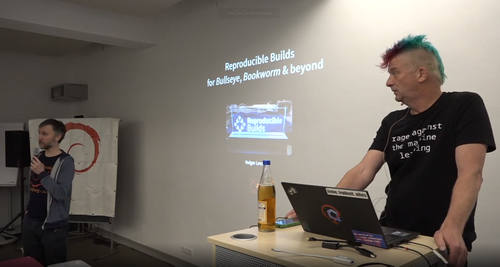
Talks at Debian Reunion Hamburg Some of the Reproducible Builds team (Holger Levsen, Mattia Rizzolo, Roland Clobus, Philip Rinn, etc.) met in real life at the Debian Reunion Hamburg (official homepage). There were several informal discussions amongst them, as well as two talks related to reproducible builds. First, Holger Levsen gave a talk on the status of Reproducible Builds for bullseye and bookworm and beyond (WebM, 210MB): Secondly, Roland Clobus gave a talk called Reproducible builds as applied to non-compiler output (WebM, 115MB):

Supply-chain security attacks This was another bumper month for supply-chain attacks in package repositories. Early in the month, Lance R. Vick noticed that the maintainer of the NPM foreach package let their personal email domain expire, so they bought it and now controls foreach on NPM and the 36,826 projects that depend on it . Shortly afterwards, Drew DeVault published a related blog post titled When will we learn? that offers a brief timeline of major incidents in this area and, not uncontroversially, suggests that the correct way to ship packages is with your distribution s package manager .

Bootstrapping Bootstrapping is a process for building software tools progressively from a primitive compiler tool and source language up to a full Linux development environment with GCC, etc. This is important given the amount of trust we put in existing compiler binaries. This month, a bootstrappable mini-kernel was announced. Called boot2now, it comprises a series of compilers in the form of bootable machine images.

Google s new Assured Open Source Software service Google Cloud (the division responsible for the Google Compute Engine) announced a new Assured Open Source Software service. Noting the considerable 650% year-over-year increase in cyberattacks aimed at open source suppliers, the new service claims to enable enterprise and public sector users of open source software to easily incorporate the same OSS packages that Google uses into their own developer workflows . The announcement goes on to enumerate that packages curated by the new service would be:
  • Regularly scanned, analyzed, and fuzz-tested for vulnerabilities.
  • Have corresponding enriched metadata incorporating Container/Artifact Analysis data.
  • Are built with Cloud Build including evidence of verifiable SLSA-compliance
  • Are verifiably signed by Google.
  • Are distributed from an Artifact Registry secured and protected by Google.
(Full announcement)

A retrospective on the Rust programming language Andrew bunnie Huang published a long blog post this month promising a critical retrospective on the Rust programming language. Amongst many acute observations about the evolution of the language s syntax (etc.), the post beings to critique the languages approach to supply chain security ( Rust Has A Limited View of Supply Chain Security ) and reproducibility ( You Can t Reproduce Someone Else s Rust Build ):
There s some bugs open with the Rust maintainers to address reproducible builds, but with the number of issues they have to deal with in the language, I am not optimistic that this problem will be resolved anytime soon. Assuming the only driver of the unreproducibility is the inclusion of OS paths in the binary, one fix to this would be to re-configure our build system to run in some sort of a chroot environment or a virtual machine that fixes the paths in a way that almost anyone else could reproduce. I say almost anyone else because this fix would be OS-dependent, so we d be able to get reproducible builds under, for example, Linux, but it would not help Windows users where chroot environments are not a thing.
(Full post)

Reproducible Builds IRC meeting The minutes and logs from our May 2022 IRC meeting have been published. In case you missed this one, our next IRC meeting will take place on Tuesday 28th June at 15:00 UTC on #reproducible-builds on the OFTC network.

A new tool to improve supply-chain security in Arch Linux kpcyrd published yet another interesting tool related to reproducibility. Writing about the tool in a recent blog post, kpcyrd mentions that although many PKGBUILDs provide authentication in the context of signed Git tags (i.e. the ability to verify the Git tag was signed by one of the two trusted keys ), they do not support pinning, ie. that upstream could create a new signed Git tag with an identical name, and arbitrarily change the source code without the [maintainer] noticing . Conversely, other PKGBUILDs support pinning but not authentication. The new tool, auth-tarball-from-git, fixes both problems, as nearly outlined in kpcyrd s original blog post.

diffoscope diffoscope is our in-depth and content-aware diff utility. Not only can it locate and diagnose reproducibility issues, it can provide human-readable diffs from many kinds of binary formats. This month, Chris Lamb prepared and uploaded versions 212, 213 and 214 to Debian unstable. Chris also made the following changes:
  • New features:
    • Add support for extracting vmlinuz Linux kernel images. [ ]
    • Support both python-argcomplete 1.x and 2.x. [ ]
    • Strip sticky etc. from x.deb: sticky Debian binary package [ ]. [ ]
    • Integrate test coverage with GitLab s concept of artifacts. [ ][ ][ ]
  • Bug fixes:
    • Don t mask differences in .zip or .jar central directory extra fields. [ ]
    • Don t show a binary comparison of .zip or .jar files if we have observed at least one nested difference. [ ]
  • Codebase improvements:
    • Substantially update comment for our calls to zipinfo and zipinfo -v. [ ]
    • Use assert_diff in test_zip over calling get_data with a separate assert. [ ]
    • Don t call re.compile and then call .sub on the result; just call re.sub directly. [ ]
    • Clarify the comment around the difference between --usage and --help. [ ]
  • Testsuite improvements:
    • Test --help and --usage. [ ]
    • Test that --help includes the file formats. [ ]
Vagrant Cascadian added an external tool reference xb-tool for GNU Guix [ ] as well as updated the diffoscope package in GNU Guix itself [ ][ ][ ].

Distribution work In Debian, 41 reviews of Debian packages were added, 85 were updated and 13 were removed this month adding to our knowledge about identified issues. A number of issue types have been updated, including adding a new nondeterministic_ordering_in_deprecated_items_collected_by_doxygen toolchain issue [ ] as well as ones for mono_mastersummary_xml_files_inherit_filesystem_ordering [ ], extended_attributes_in_jar_file_created_without_manifest [ ] and apxs_captures_build_path [ ]. Vagrant Cascadian performed a rough check of the reproducibility of core package sets in GNU Guix, and in openSUSE, Bernhard M. Wiedemann posted his usual monthly reproducible builds status report.

Upstream patches The Reproducible Builds project detects, dissects and attempts to fix as many currently-unreproducible packages as possible. We endeavour to send all of our patches upstream where appropriate. This month, we wrote a large number of such patches, including:

Reproducible builds website Chris Lamb updated the main Reproducible Builds website and documentation in a number of small ways, but also prepared and published an interview with Jan Nieuwenhuizen about Bootstrappable Builds, GNU Mes and GNU Guix. [ ][ ][ ][ ] In addition, Tim Jones added a link to the Talos Linux project [ ] and billchenchina fixed a dead link [ ].

Testing framework The Reproducible Builds project runs a significant testing framework at tests.reproducible-builds.org, to check packages and other artifacts for reproducibility. This month, the following changes were made:
  • Holger Levsen:
    • Add support for detecting running kernels that require attention. [ ]
    • Temporarily configure a host to support performing Debian builds for packages that lack .buildinfo files. [ ]
    • Update generated webpages to clarify wishes for feedback. [ ]
    • Update copyright years on various scripts. [ ]
  • Mattia Rizzolo:
    • Provide a facility so that Debian Live image generation can copy a file remotely. [ ][ ][ ][ ]
  • Roland Clobus:
    • Add initial support for testing generated images with OpenQA. [ ]
And finally, as usual, node maintenance was also performed by Holger Levsen [ ][ ].

Misc news On our mailing list this month:

Contact If you are interested in contributing to the Reproducible Builds project, please visit our Contribute page on our website. However, you can get in touch with us via:

5 May 2022

Reproducible Builds: Reproducible Builds in April 2022

Welcome to the April 2022 report from the Reproducible Builds project! In these reports, we try to summarise the most important things that we have been up to over the past month. If you are interested in contributing to the project, please take a few moments to visit our Contribute page on our website.

News Cory Doctorow published an interesting article this month about the possibility of Undetectable backdoors for machine learning models. Given that machine learning models can provide unpredictably incorrect results, Doctorow recounts that there exists another category of adversarial examples that comprise a gimmicked machine-learning input that, to the human eye, seems totally normal but which causes the ML system to misfire dramatically that permit the possibility of planting undetectable back doors into any machine learning system at training time .
Chris Lamb published two supporter spotlights on our blog: the first about Amateur Radio Digital Communications (ARDC) and the second about the Google Open Source Security Team (GOSST).
Piergiorgio Ladisa, Henrik Plate, Matias Martinez and Olivier Barais published a new academic paper titled A Taxonomy of Attacks on Open-Source Software Supply Chains (PDF):
This work proposes a general taxonomy for attacks on open-source supply chains, independent of specific programming languages or ecosystems, and covering all supply chain stages from code contributions to package distribution. Taking the form of an attack tree, it covers 107 unique vectors, linked to 94 real-world incidents, and mapped to 33 mitigating safeguards.

Elsewhere in academia, Ly Vu Duc published his PhD thesis. Titled Towards Understanding and Securing the OSS Supply Chain (PDF), Duc s abstract reads as follows:
This dissertation starts from the first link in the software supply chain, developers . Since many developers do not update their vulnerable software libraries, thus exposing the user of their code to security risks. To understand how they choose, manage and update the libraries, packages, and other Open-Source Software (OSS) that become the building blocks of companies completed products consumed by end-users, twenty-five semi-structured interviews were conducted with developers of both large and small-medium enterprises in nine countries. All interviews were transcribed, coded, and analyzed according to applied thematic analysis

Upstream news Filippo Valsorda published an informative blog post recently called How Go Mitigates Supply Chain Attacks outlining the high-level features of the Go ecosystem that helps prevent various supply-chain attacks.
There was new/further activity on a pull request filed against openssl by Sebastian Andrzej Siewior in order to prevent saved CFLAGS (which may contain the -fdebug-prefix-map=<PATH> flag that is used to strip an arbitrary the build path from the debug info if this information remains recorded then the binary is no longer reproducible if the build directory changes.

Events The Linux Foundation s SupplyChainSecurityCon, will take place June 21st 24th 2022, both virtually and in Austin, Texas. Long-time Reproducible Builds and openSUSE contributor Bernhard M. Wiedemann learned that he had his talk accepted, and will speak on Reproducible Builds: Unexpected Benefits and Problems on June 21st.
There will be an in-person Debian Reunion in Hamburg, Germany later this year, taking place from 23 30 May. Although this is a Debian event, there will be some folks from the broader Reproducible Builds community and, of course, everyone is welcome. Please see the event page on the Debian wiki for more information. 41 people have registered so far, and there s approx 10 on-site beds still left.
The minutes and logs from our April 2022 IRC meeting have been published. In case you missed this one, our next IRC meeting will take place on May 31st at 15:00 UTC on #reproducible-builds on the OFTC network.

Debian Roland Clobus wrote another in-depth status update about the status of live Debian images, summarising the current situation that all major desktops build reproducibly with bullseye, bookworm and sid, including the Cinnamon desktop on bookworm and sid, but at a small functionality cost: 14 words will be incorrectly abbreviated . This work incorporated:
  • Reporting an issue about unnecessarily modified timestamps in the daily Debian installer images. [ ]
  • Reporting a bug against the debian-installer: in order to use a suitable kernel version. (#1006800)
  • Reporting a bug in: texlive-binaries regarding the unreproducible content of .fmt files. (#1009196)
  • Adding hacks to make the Cinnamon desktop image reproducible in bookworm and sid. [ ]
  • Added a script to rebuild a live-build ISO image from a given timestamp. [
  • etc.
On our mailing list, Venkata Pyla started a thread on the Debian debconf cache is non-reproducible issue while creating system images and Vagrant Cascadian posted an excellent summary of the reproducibility status of core package sets in Debian and solicited for similar information from other distributions.
Lastly, 122 reviews of Debian packages were added, 44 were updated and 193 were removed this month adding to our extensive knowledge about identified issues. A number of issue types have been updated as well, including timestamps_generated_by_hevea, randomness_in_ocaml_preprocessed_files, build_path_captured_in_emacs_el_file, golang_compiler_captures_build_path_in_binary and build_path_captured_in_assembly_objects,

Other distributions Happy birthday to GNU Guix, which recently turned 10 years old! People have been sharing their stories, in which reproducible builds and bootstrappable builds are a recurring theme as a feature important to its users and developers. The experiences are available on the GNU Guix blog as well as a post on fossandcrafts.org
In openSUSE, Bernhard M. Wiedemann posted his usual monthly reproducible builds status report.

Upstream patches The Reproducible Builds project detects, dissects and attempts to fix as many currently-unreproducible packages as possible. We endeavour to send all of our patches upstream where appropriate. This month, we wrote a large number of such patches, including:

diffoscope diffoscope is our in-depth and content-aware diff utility. Not only can it locate and diagnose reproducibility issues, it can provide human-readable diffs from many kinds of binary formats. This month, Chris Lamb prepared and uploaded versions 210 and 211 to Debian unstable, as well as noticed that some Python .pyc files are reported as data, so we should support .pyc as a fallback filename extension [ ]. In addition, Mattia Rizzolo disabled the Gnumeric tests in Debian as the package is not currently available [ ] and dropped mplayer from Build-Depends too [ ]. In addition, Mattia fixed an issue to ensure that the PATH environment variable is properly modified for all actions, not just when running the comparator. [ ]

Testing framework The Reproducible Builds project runs a significant testing framework at tests.reproducible-builds.org, to check packages and other artifacts for reproducibility. This month, the following changes were made:
  • Daniel Golle:
    • Prefer a different solution to avoid building all OpenWrt packages; skip packages from optional community feeds. [ ]
  • Holger Levsen:
    • Detect Python deprecation warnings in the node health check. [ ]
    • Detect failure to build the Debian Installer. [ ]
  • Mattia Rizzolo:
    • Install disorderfs for building OpenWrt packages. [ ]
  • Paul Spooren (OpenWrt-related changes):
    • Don t build all packages whilst the core packages are not yet reproducible. [ ]
    • Add a missing RUN directive to node_cleanup. [ ]
    • Be less verbose during a toolchain build. [ ]
    • Use disorderfs for rebuilds and update the documentation to match. [ ][ ][ ]
  • Roland Clobus:
    • Publish the last reproducible Debian ISO image. [ ]
    • Use the rebuild.sh script from the live-build package. [ ]
Lastly, node maintenance was also performed by Holger Levsen [ ][ ].
If you are interested in contributing to the Reproducible Builds project, please visit our Contribute page on our website. However, you can get in touch with us via:

5 March 2022

Reproducible Builds: Reproducible Builds in February 2022

Welcome to the February 2022 report from the Reproducible Builds project. In these reports, we try to round-up the important things we and others have been up to over the past month. As ever, if you are interested in contributing to the project, please visit our Contribute page on our website.
Jiawen Xiong, Yong Shi, Boyuan Chen, Filipe R. Cogo and Zhen Ming Jiang have published a new paper titled Towards Build Verifiability for Java-based Systems (PDF). The abstract of the paper contains the following:
Various efforts towards build verifiability have been made to C/C++-based systems, yet the techniques for Java-based systems are not systematic and are often specific to a particular build tool (eg. Maven). In this study, we present a systematic approach towards build verifiability on Java-based systems.

GitBOM is a flexible scheme to track the source code used to generate build artifacts via Git-like unique identifiers. Although the project has been active for a while, the community around GitBOM has now started running weekly community meetings.
The paper Chris Lamb and Stefano Zacchiroli is now available in the March/April 2022 issue of IEEE Software. Titled Reproducible Builds: Increasing the Integrity of Software Supply Chains (PDF), the abstract of the paper contains the following:
We first define the problem, and then provide insight into the challenges of making real-world software build in a reproducible manner-this is, when every build generates bit-for-bit identical results. Through the experience of the Reproducible Builds project making the Debian Linux distribution reproducible, we also describe the affinity between reproducibility and quality assurance (QA).

In openSUSE, Bernhard M. Wiedemann posted his monthly reproducible builds status report.
On our mailing list this month, Thomas Schmitt started a thread around the SOURCE_DATE_EPOCH specification related to formats that cannot help embedding potentially timezone-specific timestamp. (Full thread index.)
The Yocto Project is pleased to report that it s core metadata (OpenEmbedded-Core) is now reproducible for all recipes (100% coverage) after issues with newer languages such as Golang were resolved. This was announced in their recent Year in Review publication. It is of particular interest for security updates so that systems can have specific components updated but reducing the risk of other unintended changes and making the sections of the system changing very clear for audit. The project is now also making heavy use of equivalence of build output to determine whether further items in builds need to be rebuilt or whether cached previously built items can be used. As mentioned in the article above, there are now public servers sharing this equivalence information. Reproducibility is key in making this possible and effective to reduce build times/costs/resource usage.

diffoscope diffoscope is our in-depth and content-aware diff utility. Not only can it locate and diagnose reproducibility issues, it can provide human-readable diffs from many kinds of binary formats. This month, Chris Lamb prepared and uploaded versions 203, 204, 205 and 206 to Debian unstable, as well as made the following changes to the code itself:
  • Bug fixes:
    • Fix a file(1)-related regression where Debian .changes files that contained non-ASCII text were not identified as such, therefore resulting in seemingly arbitrary packages not actually comparing the nested files themselves. The non-ASCII parts were typically in the Maintainer or in the changelog text. [ ][ ]
    • Fix a regression when comparing directories against non-directories. [ ][ ]
    • If we fail to scan using binwalk, return False from BinwalkFile.recognizes. [ ]
    • If we fail to import binwalk, don t report that we are missing the Python rpm module! [ ]
  • Testsuite improvements:
    • Add a test for recent file(1) issue regarding .changes files. [ ]
    • Use our assert_diff utility where we can within the test_directory.py set of tests. [ ]
    • Don t run our binwalk-related tests as root or fakeroot. The latest version of binwalk has some new security protection against this. [ ]
  • Codebase improvements:
    • Drop the _PATH suffix from module-level globals that are not paths. [ ]
    • Tidy some control flow in Difference._reverse_self. [ ]
    • Don t print a warning to the console regarding NT_GNU_BUILD_ID changes. [ ]
In addition, Mattia Rizzolo updated the Debian packaging to ensure that diffoscope and diffoscope-minimal packages have the same version. [ ]

Website updates There were quite a few changes to the Reproducible Builds website and documentation this month as well, including:
  • Chris Lamb:
    • Considerably rework the Who is involved? page. [ ][ ]
    • Move the contributors.sh Bash/shell script into a Python script. [ ][ ][ ]
  • Daniel Shahaf:
    • Try a different Markdown footnote content syntax to work around a rendering issue. [ ][ ][ ]
  • Holger Levsen:
    • Make a huge number of changes to the Who is involved? page, including pre-populating a large number of contributors who cannot be identified from the metadata of the website itself. [ ][ ][ ][ ][ ]
    • Improve linking to sponsors in sidebar navigation. [ ]
    • drop sponsors paragraph as the navigation is clearer now. [ ]
    • Add Mullvad VPN as a bronze-level sponsor . [ ][ ]
  • Vagrant Cascadian:

Upstream patches The Reproducible Builds project attempts to fix as many currently-unreproducible packages as possible. February s patches included the following:

Testing framework The Reproducible Builds project runs a significant testing framework at tests.reproducible-builds.org, to check packages and other artifacts for reproducibility. This month, the following changes were made:
  • Daniel Golle:
    • Update the OpenWrt configuration to not depend on the host LLVM, adding lines to the .config seed to build LLVM for eBPF from source. [ ]
    • Preserve more OpenWrt-related build artifacts. [ ]
  • Holger Levsen:
  • Temporary use a different Git tree when building OpenWrt as our tests had been broken since September 2020. This was reverted after the patch in question was accepted by Paul Spooren into the canonical openwrt.git repository the next day.
    • Various improvements to debugging OpenWrt reproducibility. [ ][ ][ ][ ][ ]
    • Ignore useradd warnings when building packages. [ ]
    • Update the script to powercycle armhf architecture nodes to add a hint to where nodes named virt-*. [ ]
    • Update the node health check to also fix failed logrotate and man-db services. [ ]
  • Mattia Rizzolo:
    • Update the website job after contributors.sh script was rewritten in Python. [ ]
    • Make sure to set the DIFFOSCOPE environment variable when available. [ ]
  • Vagrant Cascadian:
    • Various updates to the diffoscope timeouts. [ ][ ][ ]
Node maintenance was also performed by Holger Levsen [ ] and Vagrant Cascadian [ ].

Finally If you are interested in contributing to the Reproducible Builds project, please visit our Contribute page on our website. However, you can get in touch with us via:

5 February 2022

Reproducible Builds: Reproducible Builds in January 2022

Welcome to the January 2022 report from the Reproducible Builds project. In our reports, we try outline the most important things that have been happening in the past month. As ever, if you are interested in contributing to the project, please visit our Contribute page on our website.
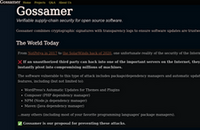
An interesting blog post was published by Paragon Initiative Enterprises about Gossamer, a proposal for securing the PHP software supply-chain. Utilising code-signing and third-party attestations, Gossamer aims to mitigate the risks within the notorious PHP world via publishing attestations to a transparency log. Their post, titled Solving Open Source Supply Chain Security for the PHP Ecosystem goes into some detail regarding the design, scope and implementation of the system.
This month, the Linux Foundation announced SupplyChainSecurityCon, a conference focused on exploring the security threats affecting the software supply chain, sharing best practices and mitigation tactics. The conference is part of the Linux Foundation s Open Source Summit North America and will take place June 21st 24th 2022, both virtually and in Austin, Texas.

Debian There was a significant progress made in the Debian Linux distribution this month, including:

Other distributions kpcyrd reported on Twitter about the release of version 0.2.0 of pacman-bintrans, an experiment with binary transparency for the Arch Linux package manager, pacman. This new version is now able to query rebuilderd to check if a package was independently reproduced.
In the world of openSUSE, however, Bernhard M. Wiedemann posted his monthly reproducible builds status report.

diffoscope diffoscope is our in-depth and content-aware diff utility. Not only can it locate and diagnose reproducibility issues, it can provide human-readable diffs from many kinds of binary formats. This month, Chris Lamb prepared and uploaded versions 199, 200, 201 and 202 to Debian unstable (that were later backported to Debian bullseye-backports by Mattia Rizzolo), as well as made the following changes to the code itself:
  • New features:
    • First attempt at incremental output support with a timeout. Now passing, for example, --timeout=60 will mean that diffoscope will not recurse into any sub-archives after 60 seconds total execution time has elapsed. Note that this is not a fixed/strict timeout due to implementation issues. [ ][ ]
    • Support both variants of odt2txt, including the one provided by the unoconv package. [ ]
  • Bug fixes:
    • Do not return with a UNIX exit code of 0 if we encounter with a file whose human-readable metadata matches literal file contents. [ ]
    • Don t fail if comparing a nonexistent file with a .pyc file (and add test). [ ][ ]
    • If the debian.deb822 module raises any exception on import, re-raise it as an ImportError. This should fix diffoscope on some Fedora systems. [ ]
    • Even if a Sphinx .inv inventory file is labelled The remainder of this file is compressed using zlib, it might not actually be. In this case, don t traceback and simply return the original content. [ ]
  • Documentation:
    • Improve documentation for the new --timeout option due to a few misconceptions. [ ]
    • Drop reference in the manual page claiming the ability to compare non-existent files on the command-line. (This has not been possible since version 32 which was released in September 2015). [ ]
    • Update X has been modified after NT_GNU_BUILD_ID has been applied messages to, for example, not duplicating the full filename in the diffoscope output. [ ]
  • Codebase improvements:
    • Tidy some control flow. [ ]
    • Correct a recompile typo. [ ]
In addition, Alyssa Ross fixed the comparison of CBFS names that contain spaces [ ], Sergei Trofimovich fixed whitespace for compatibility with version 21.12 of the Black source code reformatter [ ] and Zbigniew J drzejewski-Szmek fixed JSON detection with a new version of file [ ].

Testing framework The Reproducible Builds project runs a significant testing framework at tests.reproducible-builds.org, to check packages and other artifacts for reproducibility. This month, the following changes were made:
  • Fr d ric Pierret (fepitre):
    • Add Debian bookworm to package set creation. [ ]
  • Holger Levsen:
    • Install the po4a package where appropriate, as it is needed for the Reproducible Builds website job [ ]. In addition, also run the i18n.sh and contributors.sh scripts [ ].
    • Correct some grammar in Debian live image build output. [ ]
    • Shell monitor improvements:
      • Only show the offline node section if there are offline nodes. [ ]
      • Colorise offline nodes. [ ]
      • Shrink screen usage. [ ][ ][ ]
    • Node health check improvements:
      • Detect if live package builds encounter incomplete snapshots. [ ][ ][ ]
      • Detect if a host is running with today s date (when it should be set artificially in the future). [ ]
    • Use the devscripts package from bullseye-backports on Debian nodes. [ ]
    • Use the Munin monitoring package bullseye-backports on Debian nodes too. [ ]
    • Update New Year handling, needed to be able to detect real and fake dates. [ ][ ]
    • Improve the error message of the script that powercycles the arm64 architecture nodes hosted by Codethink. [ ]
  • Mattia Rizzolo:
    • Use the new --timeout option added in diffoscope version 202. [ ]
  • Roland Clobus:
    • Update the build scripts now that the hooks for live builds are now maintained upstream in the live-build repository. [ ]
    • Show info lines in Jenkins when reproducible hooks have been active. [ ]
    • Use unique folders for the artifacts from each live Debian version. [ ]
  • Vagrant Cascadian:
    • Switch the Debian armhf architecture nodes to use new proxy. [ ]
    • Misc. node maintenance. [ ].

Upstream patches The Reproducible Builds project attempts to fix as many currently-unreproducible packages as possible. In January, we wrote a large number of such patches, including:

And finally If you are interested in contributing to the Reproducible Builds project, please visit our Contribute page on our website. However, you can get in touch with us via:

5 January 2022

Reproducible Builds: Reproducible Builds in December 2021

Welcome to the December 2021 report from the Reproducible Builds project! In these reports, we try and summarise what we have been up to over the past month, as well as what else has been occurring in the world of software supply-chain security. As a quick recap of what reproducible builds is trying to address, whilst anyone may inspect the source code of free software for malicious flaws, almost all software is distributed to end users as pre-compiled binaries. The motivation behind the reproducible builds effort is to ensure no flaws have been introduced during this compilation process by promising identical results are always generated from a given source, thus allowing multiple third-parties to come to a consensus on whether a build was compromised. As always, if you would like to contribute to the project, please get in touch with us directly or visit the Contribute page on our website.
Early in December, Julien Voisin blogged about setting up a rebuilderd instance in order to reproduce Tails images. Working on previous work from 2018, Julien has now set up a public-facing instance which is providing build attestations. As Julien dryly notes in his post, Currently, this isn t really super-useful to anyone, except maybe some Tails developers who want to check that the release manager didn t backdoor the released image. Naturally, we would contend sincerely that this is indeed useful.
The secure/anonymous Tor browser now supports reproducible source releases. According to the project s changelog, version 0.4.7.3-alpha of Tor can now build reproducible tarballs via the make dist-reprod command. This issue was tracked via Tor issue #26299.
Fabian Keil posted a question to our mailing list this month asking how they might analyse differences in images produced with the FreeBSD and ElectroBSD s mkimg and makefs commands:
After rebasing ElectroBSD from FreeBSD stable/11 to stable/12
I recently noticed that the "memstick" images are unfortunately
still not 100% reproducible.
Fabian s original post generated a short back-and-forth with Chris Lamb regarding how diffoscope might be able to support the particular format of images generated by this command set.

diffoscope diffoscope is our in-depth and content-aware diff utility. Not only can it locate and diagnose reproducibility issues, it can provide human-readable diffs from many kinds of binary formats. This month, Chris Lamb prepared and uploading versions 195, 196, 197 and 198 to Debian, as well as made the following changes:
  • Support showing Ordering differences only within .dsc field values. [ ]
  • Add support for XMLb files. [ ]
  • Also add, for example, /usr/lib/x86_64-linux-gnu to our local binary search path. [ ]
  • Support OCaml versions 4.11, 4.12 and 4.13. [ ]
  • Drop some unnecessary has_same_content_as logging calls. [ ]
  • Replace token variable with an anonymously-named variable instead to remove extra lines. [ ]
  • Don t use the runtime platform s native endianness when unpacking .pyc files. This fixes test failures on big-endian machines. [ ]
Mattia Rizzolo also made a number of changes to diffoscope this month as well, such as:
  • Also recognize GnuCash files as XML. [ ]
  • Support the pgpdump PGP packet visualiser version 0.34. [ ]
  • Ignore the new Lintian tag binary-with-bad-dynamic-table. [ ]
  • Fix the Enhances field in debian/control. [ ]
Finally, Brent Spillner fixed the version detection for Black uncompromising code formatter [ ], Jelle van der Waa added an external tool reference for Arch Linux [ ] and Roland Clobus added support for reporting when the GNU_BUILD_ID field has been modified [ ]. Thank you for your contributions!

Distribution work In Debian this month, 70 reviews of packages were added, 27 were updated and 41 were removed, adding to our database of knowledge about specific issues. A number of issue types were created as well, including: strip-nondeterminism version 1.13.0-1 was uploaded to Debian unstable by Holger Levsen. It included contributions already covered in previous months as well as new ones from Mattia Rizzolo, particularly that the dh_strip_nondeterminism Debian integration interface uses the new get_non_binnmu_date_epoch() utility when available: this is important to ensure that strip-nondeterminism does not break some kinds of binNMUs.
In the world of openSUSE, however, Bernhard M. Wiedemann posted his monthly reproducible builds status report.
In NixOS, work towards the longer-term goal of making the graphical installation image reproducible is ongoing. For example, Artturin made the gnome-desktop package reproducible.

Upstream patches The Reproducible Builds project attempts to fix as many currently-unreproducible packages as possible. In December, we wrote a large number of such patches, including:

Testing framework The Reproducible Builds project runs a significant testing framework at tests.reproducible-builds.org, to check packages and other artifacts for reproducibility. This month, the following changes were made:
  • Holger Levsen:
    • Run the Debian scheduler less often. [ ]
    • Fix the name of the Debian testing suite name. [ ]
    • Detect builds that are rescheduling due to problems with the diffoscope container. [ ]
    • No longer special-case particular machines having a different /boot partition size. [ ]
    • Automatically fix failed apt-daily and apt-daily-upgrade services [ ], failed e2scrub_all.service & user@ systemd units [ ][ ] as well as generic build failures [ ].
    • Simplify a script to powercycle arm64 architecture nodes hosted at/by codethink.co.uk. [ ]
    • Detect if the udd-mirror.debian.net service is down. [ ]
    • Various miscellaneous node maintenance. [ ][ ]
  • Roland Clobus (Debian live image generation):
    • If the latest snapshot is not complete yet, try to use the previous snapshot instead. [ ]
    • Minor: whitespace correction + comment correction. [ ]
    • Use unique folders and reports for each Debian version. [ ]
    • Turn off debugging. [ ]
    • Add a better error description for incorrect/missing arguments. [ ]
    • Report non-reproducible issues in Debian sid images. [ ]
Lastly, Mattia Rizzolo updated the automatic logfile parsing rules in a number of ways (eg. to ignore a warning about the Python setuptools deprecation) [ ][ ] and Vagrant Cascadian adjusted the config for the Squid caching proxy on a node. [ ]

If you are interested in contributing to the Reproducible Builds project, please visit our Contribute page on our website. However, you can get in touch with us via:

10 December 2021

Reproducible Builds (diffoscope): diffoscope 196 released

The diffoscope maintainers are pleased to announce the release of diffoscope version 196. This version includes the following changes:
[ Roland Clobus ]
* Add a comment/annotation when the GNU_BUILD_ID field has been modified.
[ Brent Spillner ]
* Fix the "Black" version detection.
[ Chris Lamb ]
* Replace "token" with anonymous variable "x" in order to remove extra lines.
You find out more by visiting the project homepage.

5 December 2021

Reproducible Builds: Reproducible Builds in November 2021

Welcome to the November 2021 report from the Reproducible Builds project. As a quick recap, whilst anyone may inspect the source code of free software for malicious flaws, almost all software is distributed to end users as pre-compiled binaries. The motivation behind the reproducible builds effort is therefore to ensure no flaws have been introduced during this compilation process by promising identical results are always generated from a given source, thus allowing multiple third-parties to come to a consensus on whether a build was compromised. If you are interested in contributing to our project, please visit our Contribute page on our website.
On November 6th, Vagrant Cascadian presented at this year s edition of the SeaGL conference, giving a talk titled Debugging Reproducible Builds One Day at a Time:
I ll explore how I go about identifying issues to work on, learn more about the specific issues, recreate the problem locally, isolate the potential causes, dissect the problem into identifiable parts, and adapt the packaging and/or source code to fix the issues.
A video recording of the talk is available on archive.org.
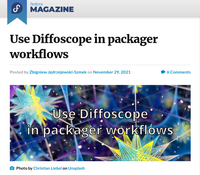
Fedora Magazine published a post written by Zbigniew J drzejewski-Szmek about how to Use Diffoscope in packager workflows, specifically around ensuring that new versions of a package do not introduce breaking changes:
In the role of a packager, updating packages is a recurring task. For some projects, a packager is involved in upstream maintenance, or well written release notes make it easy to figure out what changed between the releases. This isn t always the case, for instance with some small project maintained by one or two people somewhere on GitHub, and it can be useful to verify what exactly changed. Diffoscope can help determine the changes between package releases. [ ]

kpcyrd announced the release of rebuilderd version 0.16.3 on our mailing list this month, adding support for builds to generate multiple artifacts at once.
Lastly, we held another IRC meeting on November 30th. As mentioned in previous reports, due to the global events throughout 2020 etc. there will be no in-person summit event this year.

diffoscope diffoscope is our in-depth and content-aware diff utility. Not only can it locate and diagnose reproducibility issues, it can provide human-readable diffs from many kinds of binary formats. This month, Chris Lamb made the following changes, including preparing and uploading versions 190, 191, 192, 193 and 194 to Debian:
  • New features:
    • Continue loading a .changes file even if the referenced files do not exist, but include a comment in the returned diff. [ ]
    • Log the reason if we cannot load a Debian .changes file. [ ]
  • Bug fixes:
    • Detect XML files as XML files if file(1) claims if they are XML files or if they are named .xml. (#999438)
    • Don t duplicate file lists at each directory level. (#989192)
    • Don t raise a traceback when comparing nested directories with non-directories. [ ]
    • Re-enable test_android_manifest. [ ]
    • Don t reject Debian .changes files if they contain non-printable characters. [ ]
  • Codebase improvements:
    • Avoid aliasing variables if we aren t going to use them. [ ]
    • Use isinstance over type. [ ]
    • Drop a number of unused imports. [ ]
    • Update a bunch of %-style string interpolations into f-strings or str.format. [ ]
    • When pretty-printing JSON, mark the difference as being reformatted, additionally avoiding including the full path. [ ]
    • Import itertools top-level module directly. [ ]
Chris Lamb also made an update to the command-line client to trydiffoscope, a web-based version of the diffoscope in-depth and content-aware diff utility, specifically only waiting for 2 minutes for try.diffoscope.org to respond in tests. (#998360) In addition Brandon Maier corrected an issue where parts of large diffs were missing from the output [ ], Zbigniew J drzejewski-Szmek fixed some logic in the assert_diff_startswith method [ ] and Mattia Rizzolo updated the packaging metadata to denote that we support both Python 3.9 and 3.10 [ ] as well as a number of warning-related changes[ ][ ]. Vagrant Cascadian also updated the diffoscope package in GNU Guix [ ][ ].

Distribution work In Debian, Roland Clobus updated the wiki page documenting Debian reproducible Live images to mention some new bug reports and also posted an in-depth status update to our mailing list. In addition, 90 reviews of Debian packages were added, 18 were updated and 23 were removed this month adding to our knowledge about identified issues. Chris Lamb identified a new toolchain issue, absolute_path_in_cmake_file_generated_by_meson.
Work has begun on classifying reproducibility issues in packages within the Arch Linux distribution. Similar to the analogous effort within Debian (outlined above), package information is listed in a human-readable packages.yml YAML file and a sibling README.md file shows how to classify packages too. Finally, Bernhard M. Wiedemann posted his monthly reproducible builds status report for openSUSE and Vagrant Cascadian updated a link on our website to link to the GNU Guix reproducibility testing overview [ ].

Software development The Reproducible Builds project detects, dissects and attempts to fix as many currently-unreproducible packages as possible. We endeavour to send all of our patches upstream where appropriate. This month, we wrote a large number of such patches, including: Elsewhere, in software development, Jonas Witschel updated strip-nondeterminism, our tool to remove specific non-deterministic results from a completed build so that it did not fail on JAR archives containing invalid members with a .jar extension [ ]. This change was later uploaded to Debian by Chris Lamb. reprotest is the Reproducible Build s project end-user tool to build the same source code twice in widely different environments and checking whether the binaries produced by the builds have any differences. This month, Mattia Rizzolo overhauled the Debian packaging [ ][ ][ ] and fixed a bug surrounding suffixes in the Debian package version [ ], whilst Stefano Rivera fixed an issue where the package tests were broken after the removal of diffoscope from the package s strict dependencies [ ].

Testing framework The Reproducible Builds project runs a testing framework at tests.reproducible-builds.org, to check packages and other artifacts for reproducibility. This month, the following changes were made:
  • Holger Levsen:
    • Document the progress in setting up snapshot.reproducible-builds.org. [ ]
    • Add the packages required for debian-snapshot. [ ]
    • Make the dstat package available on all Debian based systems. [ ]
    • Mark virt32b-armhf and virt64b-armhf as down. [ ]
  • Jochen Sprickerhof:
    • Add SSH authentication key and enable access to the osuosl168-amd64 node. [ ][ ]
  • Mattia Rizzolo:
    • Revert reproducible Debian: mark virt(32 64)b-armhf as down - restored. [ ]
  • Roland Clobus (Debian live image generation):
    • Rename sid internally to unstable until an issue in the snapshot system is resolved. [ ]
    • Extend testing to include Debian bookworm too.. [ ]
    • Automatically create the Jenkins view to display jobs related to building the Live images. [ ]
  • Vagrant Cascadian:
    • Add a Debian package set group for the packages and tools maintained by the Reproducible Builds maintainers themselves. [ ]


If you are interested in contributing to the Reproducible Builds project, please visit our Contribute page on our website. However, you can get in touch with us via:

6 November 2021

Reproducible Builds: Reproducible Builds in October 2021

Welcome to the October 2021 report from the Reproducible Builds project!
This month Samanta Navarro posted to the oss-security security mailing on a novel category of exploit in the .tar archive format, where a single .tar file contains different contents depending on the tar utility being used. Naturally, this has consequences for reproducible builds as Samanta goes onto reply:

Arch Linux uses libarchive (bsdtar) in its build environment. The default tar program installed is GNU tar. It is possible to create a source distribution which leads to different files seen by the build environment than compared to a careful reviewer and other Linux distributions.
Samanta notes that addressing the tar utilities themselves will not be a sufficient fix:
I have submitted bug reports and patches to some projects but eventually I had to conclude that the problem itself cannot be fixed by these implementations alone. The best choice for these tools would be to only allow archives which are fully compatible to standards but this in turn would render a lot of archives broken.
Reproducible builds, with its twin ideas of reaching consensus on the build outputs as well as precisely recording and describing the build environment, would help address this problem at a higher level.
Codethink announced that they had achieved ISO-26262 ASIL D Tool Certification, a way of determining specific safety standards for software. Codethink used open source tooling to achieve this, but they also leverage:
Reproducibility, repeatability and traceability of builds, drawing heavily on best-practices championed by the Reproducible Builds project.

Elsewhere on the internet, according to a comment on Hacker News, Microsoft are now comparing NPM Javascript packages with their original source repositories:
I got a PR in my repository a few days ago leading back to a team trying to make it easier for packages to be reproducible from source.

Lastly, Martin Monperrus started an interesting thread on our mailing list about Github, specifically that their autogenerated release tarballs are not deterministic . The thread generated a significant number of replies that are worth reading.

Events and presentations

Community news On our mailing list this month:
There were quite a few changes to the Reproducible Builds website and documentation this month as well, including Feng Chai updating some links on our publications page [ ] and marco updated our project metadata around the Bitcoin Core building guide [ ].
Lastly, we ran another productive meeting on IRC during October. A full set of notes from the meeting is available to view.

Distribution work Qubes was heavily featured in the latest edition of Linux Weekly News, and a significant section was dedicated to discussing reproducibility. For example, it was mentioned that the Qubes project has been working on incorporating reproducible builds into its continuous integration (CI) infrastructure . But the LWN article goes on to describe that:
The current goal is to be able to build the Qubes OS Debian templates solely from packages that can be built reproducibly. Templates in Qubes OS are VM images that can be used to start an application qube quickly based on the template. The qube will have read-only access to the root filesystem of the template, so that the same root filesystem can be shared with multiple application qubes. There are official templates for several variants of both Fedora and Debian, as well as community maintained templates for several other distributions.
You can view the whole article on LWN, and Fr d ric also published a lengthy summary about their work on reproducible builds in Qubes as well for those wishing to learn more.
In Debian this month, 133 reviews of Debian packages were added, 81 were updated and 24 were removed this month, adding to Debian s ever-growing knowledge about identified issues. A number of issues were categorised and added by Chris Lamb and Vagrant Cascadian too [ ][ ][ ]. In addition, work on alternative snapshot service has made progress by Fr d ric Pierret and Holger Levsen this month, including moving from the existing host (snapshot.notset.fr) to snapshot.reproducible-builds.org (more info) thanks to OSUOSL for the machine and hosting and Debian for the disks.
Finally, Bernhard M. Wiedemann posted his monthly reproducible builds status report.

diffoscope diffoscope is our in-depth and content-aware diff utility. Not only can it locate and diagnose reproducibility issues, it can provide human-readable diffs from many kinds of binary formats. This month, Chris Lamb made the following changes, including preparing and uploading versions 186, 187, 188 and 189 to Debian
  • New features:
    • Add support for Python Sphinx inventory files (usually named objects.inv on-disk). [ ]
    • Add support for comparing .pyc files. Thanks to Sergei Trofimovich for the inspiration. [ ]
    • Try some alternative suffixes (e.g. .py) to support distributions that strip or retain them. [ ][ ]
  • Bug fixes:
    • Fix Python decompilation tests under Python 3.10+ [ ] and for Python 3.7 [ ].
    • Don t raise a traceback if we cannot unmarshal Python bytecode. This is in order to support Python 3.7 failing to load .pyc files generated with newer versions of Python. [ ]
    • Skip Python bytecode testing where we do not have an expected diff. [ ]
  • Codebase improvements:
    • Use our file_version_is_lt utility instead of accepting both versions of uImage expected diff. [ ]
    • Split out a custom call to assert_diff for a .startswith equivalent. [ ]
    • Use skipif instead of manual conditionals in some tests. [ ]
In addition, Jelle van der Waa added external tool references for Arch Linux for ocamlobjinfo, openssl and ffmpeg [ ][ ][ ] and added Arch Linux as a Continuous Integration (CI) test target. [ ] and Vagrant Cascadian updated the testsuite to skip Python bytecode comparisons when file(1) is older than 5.39. [ ] as well as added external tool references for the Guix distribution for dumppdf and ppudump. [ ][ ]. Vagrant Cascadian also updated the diffoscope package in GNU Guix [ ][ ]. Lastly, Guangyuan Yang updated the FreeBSD package name on the website [ ], Mattia Rizzolo made a change to override a new Lintian warning due to the new test files [ ], Roland Clobus added support to detect and log if the GNU_BUILD_ID field in an ELF binary been modified [ ], Sandro J ckel updated a number of helpful links on the website [ ] and Sergei Trofimovich made the uImage test output support file() version 5.41 [ ].

reprotest reprotest is the Reproducible Build s project end-user tool to build same source code twice in widely differing environments, checking the binaries produced by the builds for any differences. This month, reprotest version 0.7.18 was uploaded to Debian unstable by Holger Levsen, which also included a change by Holger to clarify that Python 3.9 is used nowadays [ ], but it also included two changes by Vasyl Gello to implement realistic CPU architecture shuffling [ ] and to log the selected variations when the verbosity is configured at a sufficiently high level [ ]. Finally, Vagrant Cascadian updated reprotest to version 0.7.18 in GNU Guix.

Upstream patches The Reproducible Builds project detects, dissects and attempts to fix unreproducible packages. We try to send all of our patches upstream where appropriate. We authored a large number of such patches this month, including:

Testing framework The Reproducible Builds project runs a testing framework at tests.reproducible-builds.org, to check packages and other artifacts for reproducibility. This month, the following changes were made:
  • Holger Levsen:
    • Debian-related changes:
      • Incorporate a fix from bremner into builtin-pho related to binary-NMUs. [ ]
      • Keep bullseye environments around longer, in an attempt to fix a Jenkins issue. [ ]
      • Improve the documentation of buildinfos.debian.net. [ ]
      • Improve documentation for the builtin-pho setup. [ ][ ]
    • OpenWrt-related changes:
      • Also use -j1 for better debugging. [ ]
      • Document that that Python 3.x is now used. [ ]
      • Enable further debugging for the toolchain build. [ ]
    • New snapshot.reproducible-builds.org service:
      • Actually add new node. [ ][ ]
      • Install xfsprogs on snapshot.reproducible-builds.org. [ ]
      • Create account for fpierret on new node. [ ]
      • Run node_health_check job on new node too. [ ]
  • Mattia Rizzolo:
    • Debian-related changes:
      • Handle schroot errors when invoking diffoscope instead of masking them. [ ][ ]
      • Declare and define some variables separately to avoid masking the subshell return code. [ ]
      • Fix variable name. [ ]
      • Improve log reporting. [ ]
      • Execute apt-get update with the -q argument to get more decent logs. [ ]
      • Set the Debian HTTP mirror and proxy for snapshot.reproducible-builds.org. [ ]
      • Install the libarchive-tools package (instead of bsdtar) when updating Jenkins nodes. [ ]
    • Be stricter about errors when starting the node agent [ ] and don t overwrite NODE_NAME so that we can expect Jenkins to properly set for us [ ].
    • Explicitly warn if the NODE_NAME is not a fully-qualified domain name (FQDN). [ ]
    • Document whether a node runs in the future. [ ]
    • Disable postgresql_autodoc as it not available in bullseye. [ ]
    • Don t be so eager when deleting schroot internals, call to schroot -e to terminate the schroots instead. [ ]
    • Only consider schroot underlays for deletion that are over a month old. [ ][ ]
    • Only try to unmount /proc if it s actually mounted. [ ]
    • Move the db_backup task to its own Jenkins job. [ ]
Lastly, Vasyl Gello added usage information to the reproducible_build.sh script [ ].

Contributing If you are interested in contributing to the Reproducible Builds project, please visit our Contribute page on our website. However, you can get in touch with us via:

5 November 2021

Reproducible Builds (diffoscope): diffoscope 190 released

The diffoscope maintainers are pleased to announce the release of diffoscope version 190. This version includes the following changes:
[ Chris Lamb ]
* Don't raise a traceback if we cannot de-marshal Python bytecode to support
  Python 3.7 loading newer .pyc files.
  (Closes: reproducible-builds/diffoscope#284)
* Fix Python tests under Python 3.7 with file 5.39+.
[ Vagrant Cascadian ]
* Skip Python bytecode testing when "file" is older than 5.39.
[ Roland Clobus ]
* Detect whether the GNU_BUILD_ID field has been modified.
You find out more by visiting the project homepage.

6 October 2021

Reproducible Builds: Reproducible Builds in September 2021

The goal behind reproducible builds is to ensure that no deliberate flaws have been introduced during compilation processes via promising or mandating that identical results are always generated from a given source. This allowing multiple third-parties to come to an agreement on whether a build was compromised or not by a system of distributed consensus. In these reports we outline the most important things that have been happening in the world of reproducible builds in the past month:
First mentioned in our March 2021 report, Martin Heinz published two blog posts on sigstore, a project that endeavours to offer software signing as a public good, [the] software-signing equivalent to Let s Encrypt . The two posts, the first entitled Sigstore: A Solution to Software Supply Chain Security outlines more about the project and justifies its existence:
Software signing is not a new problem, so there must be some solution already, right? Yes, but signing software and maintaining keys is very difficult especially for non-security folks and UX of existing tools such as PGP leave much to be desired. That s why we need something like sigstore - an easy to use software/toolset for signing software artifacts.
The second post (titled Signing Software The Easy Way with Sigstore and Cosign) goes into some technical details of getting started.
There was an interesting thread in the /r/Signal subreddit that started from the observation that Signal s apk doesn t match with the source code:
Some time ago I checked Signal s reproducibility and it failed. I asked others to test in case I did something wrong, but nobody made any reports. Since then I tried to test the Google Play Store version of the apk against one I compiled myself, and that doesn t match either.

BitcoinBinary.org was announced this month, which aims to be a repository of Reproducible Build Proofs for Bitcoin Projects :
Most users are not capable of building from source code themselves, but we can at least get them able enough to check signatures and shasums. When reputable people who can tell everyone they were able to reproduce the project s build, others at least have a secondary source of validation.

Distribution work Fr d ric Pierret announced a new testing service at beta.tests.reproducible-builds.org, showing actual rebuilds of binaries distributed by both the Debian and Qubes distributions. In Debian specifically, however, 51 reviews of Debian packages were added, 31 were updated and 31 were removed this month to our database of classified issues. As part of this, Chris Lamb refreshed a number of notes, including the build_path_in_record_file_generated_by_pybuild_flit_plugin issue. Elsewhere in Debian, Roland Clobus posted his Fourth status update about reproducible live-build ISO images in Jenkins to our mailing list, which mentions (amongst other things) that:
  • All major configurations are still built regularly using live-build and bullseye.
  • All major configurations are reproducible now; Jenkins is green.
    • I ve worked around the issue for the Cinnamon image.
    • The patch was accepted and released within a few hours.
  • My main focus for the last month was on the live-build tool itself.
Related to this, there was continuing discussion on how to embed/encode the build metadata for the Debian live images which were being worked on by Roland Clobus.
Ariadne Conill published another detailed blog post related to various security initiatives within the Alpine Linux distribution. After summarising some conventional security work being done (eg. with sudo and the release of OpenSSH version 3.0), Ariadne included another section on reproducible builds: The main blocker [was] determining what to do about storing the build metadata so that a build environment can be recreated precisely . Finally, Bernhard M. Wiedemann posted his monthly reproducible builds status report.

Community news On our website this month, Bernhard M. Wiedemann fixed some broken links [ ] and Holger Levsen made a number of changes to the Who is Involved? page [ ][ ][ ]. On our mailing list, Magnus Ihse Bursie started a thread with the subject Reproducible builds on Java, which begins as follows:
I m working for Oracle in the Build Group for OpenJDK which is primary responsible for creating a built artifact of the OpenJDK source code. [ ] For the last few years, we have worked on a low-effort, background-style project to make the build of OpenJDK itself building reproducible. We ve come far, but there are still issues I d like to address. [ ]

diffoscope diffoscope is our in-depth and content-aware diff utility. Not only can it locate and diagnose reproducibility issues, it can provide human-readable diffs from many kinds of binary formats. This month, Chris Lamb prepared and uploaded versions 183, 184 and 185 as well as performed significant triaging of merge requests and other issues in addition to making the following changes:
  • New features:
    • Support a newer format version of the R language s .rds files. [ ]
    • Update tests for OCaml 4.12. [ ]
    • Add a missing format_class import. [ ]
  • Bug fixes:
    • Don t call close_archive when garbage collecting Archive instances, unless open_archive definitely returned successfully. This prevents, for example, an AttributeError where PGPContainer s cleanup routines were rightfully assuming that its temporary directory had actually been created. [ ]
    • Fix (and test) the comparison of R language s .rdb files after refactoring temporary directory handling. [ ]
    • Ensure that RPM archives exists in the Debian package description, regardless of whether python3-rpm is installed or not at build time. [ ]
  • Codebase improvements:
    • Use our assert_diff routine in tests/comparators/test_rdata.py. [ ]
    • Move diffoscope.versions to diffoscope.tests.utils.versions. [ ]
    • Reformat a number of modules with Black. [ ][ ]
However, the following changes were also made:
  • Mattia Rizzolo:
    • Fix an autopkgtest caused by the androguard module not being in the (expected) python3-androguard Debian package. [ ]
    • Appease a shellcheck warning in debian/tests/control.sh. [ ]
    • Ignore a warning from h5py in our tests that doesn t concern us. [ ]
    • Drop a trailing .1 from the Standards-Version field as it s required. [ ]
  • Zbigniew J drzejewski-Szmek:
    • Stop using the deprecated distutils.spawn.find_executable utility. [ ][ ][ ][ ][ ]
    • Adjust an LLVM-related test for LLVM version 13. [ ]
    • Update invocations of llvm-objdump. [ ]
    • Adjust a test with a one-byte text file for file version 5.40. [ ]
And, finally, Benjamin Peterson added a --diff-context option to control unified diff context size [ ] and Jean-Romain Garnier fixed the Macho comparator for architectures other than x86-64 [ ].

Upstream patches The Reproducible Builds project detects, dissects and attempts to fix as many currently-unreproducible packages as possible. We endeavour to send all of our patches upstream where appropriate. This month, we wrote a large number of such patches, including:

Testing framework The Reproducible Builds project runs a testing framework at tests.reproducible-builds.org, to check packages and other artifacts for reproducibility. This month, the following changes were made:
  • Holger Levsen:
    • Drop my package rebuilder prototype as it s not useful anymore. [ ]
    • Schedule old packages in Debian bookworm. [ ]
    • Stop scheduling packages for Debian buster. [ ][ ]
    • Don t include PostgreSQL debug output in package lists. [ ]
    • Detect Python library mismatches during build in the node health check. [ ]
    • Update a note on updating the FreeBSD system. [ ]
  • Mattia Rizzolo:
    • Silence a warning from Git. [ ]
    • Update a setting to reflect that Debian bookworm is the new testing. [ ]
    • Upgrade the PostgreSQL database to version 13. [ ]
  • Roland Clobus (Debian live image generation):
    • Workaround non-reproducible config files in the libxml-sax-perl package. [ ]
    • Use the new DNS for the snapshot service. [ ]
  • Vagrant Cascadian:
    • Also note that the armhf architecture also systematically varies by the kernel. [ ]

Contributing If you are interested in contributing to the Reproducible Builds project, please visit our Contribute page on our website. However, you can get in touch with us via:

5 September 2021

Reproducible Builds: Reproducible Builds in August 2021

Welcome to the latest report from the Reproducible Builds project. In this post, we round up the important things that happened in the world of reproducible builds in August 2021. As always, if you are interested in contributing to the project, please visit the Contribute page on our website.
There were a large number of talks related to reproducible builds at DebConf21 this year, the 21st annual conference of the Debian Linux distribution (full schedule):
PackagingCon (@PackagingCon) is new conference for developers of package management software as well as their related communities and stakeholders. The virtual event, which is scheduled to take place on the 9th and 10th November 2021, has a mission is to bring different ecosystems together: from Python s pip to Rust s cargo to Julia s Pkg, from Debian apt over Nix to conda and mamba, and from vcpkg to Spack we hope to have many different approaches to package management at the conference . A number of people from reproducible builds community are planning on attending this new conference, and some may even present. Tickets start at $20 USD.
As reported in our May report, the president of the United States signed an executive order outlining policies aimed to improve the cybersecurity in the US. The executive order comes after a number of highly-publicised security problems such as a ransomware attack that affected an oil pipeline between Texas and New York and the SolarWinds hack that affected a large number of US federal agencies. As a followup this month, however, a detailed fact sheet was released announcing a number large-scale initiatives and that will undoubtedly be related to software supply chain security and, as a result, reproducible builds.
Lastly, We ran another productive meeting on IRC in August (original announcement) which ran for just short of two hours. A full set of notes from the meeting is available.

Software development kpcyrd announced an interesting new project this month called I probably didn t backdoor this which is an attempt to be:
a practical attempt at shipping a program and having reasonably solid evidence there s probably no backdoor. All source code is annotated and there are instructions explaining how to use reproducible builds to rebuild the artifacts distributed in this repository from source. The idea is shifting the burden of proof from you need to prove there s a backdoor to we need to prove there s probably no backdoor . This repository is less about code (we re going to try to keep code at a minimum actually) and instead contains technical writing that explains why these controls are effective and how to verify them. You are very welcome to adopt the techniques used here in your projects. ( )
As the project s README goes on the mention: the techniques used to rebuild the binary artifacts are only possible because the builds for this project are reproducible . This was also announced on our mailing list this month in a thread titled i-probably-didnt-backdoor-this: Reproducible Builds for upstreams. kpcyrd also wrote a detailed blog post about the problems surrounding Linux distributions (such as Alpine and Arch Linux) that distribute compiled Python bytecode in the form of .pyc files generated during the build process.

diffoscope diffoscope is our in-depth and content-aware diff utility. Not only can it locate and diagnose reproducibility issues, it can provide human-readable diffs from many kinds of binary formats. This month, Chris Lamb made a number of changes, including releasing version 180), version 181) and version 182) as well as the following changes:
  • New features:
    • Add support for extracting the signing block from Android APKs. [ ]
    • If we specify a suffix for a temporary file or directory within the code, ensure it starts with an underscore (ie. _ ) to make the generated filenames more human-readable. [ ]
    • Don t include short GCC lines that differ on a single prefix byte either. These are distracting, not very useful and are simply the strings(1) command s idea of the build ID, which is displayed elsewhere in the diff. [ ][ ]
    • Don t include specific .debug-like lines in the ELF-related output, as it is invariably a duplicate of the debug ID that exists better in the readelf(1) differences for this file. [ ]
  • Bug fixes:
    • Add a special case to SquashFS image extraction to not fail if we aren t the superuser. [ ]
    • Only use java -jar /path/to/apksigner.jar if we have an apksigner.jar as newer versions of apksigner in Debian use a shell wrapper script which will be rejected if passed directly to the JVM. [ ]
    • Reduce the maximum line length for calculating Wagner-Fischer, improving the speed of output generation a lot. [ ]
    • Don t require apksigner in order to compare .apk files using apktool. [ ]
    • Update calls (and tests) for the new version of odt2txt. [ ]
  • Output improvements:
    • Mention in the output if the apksigner tool is missing. [ ]
    • Profile diffoscope.diff.linediff and specialize. [ ][ ]
  • Logging improvements:
    • Format debug-level messages related to ELF sections using the diffoscope.utils.format_class. [ ]
    • Print the size of generated reports in the logs (if possible). [ ]
    • Include profiling information in --debug output if --profile is not set. [ ]
  • Codebase improvements:
    • Clarify a comment about the HUGE_TOOLS Python dictionary. [ ]
    • We can pass -f to apktool to avoid creating a strangely-named subdirectory. [ ]
    • Drop an unused File import. [ ]
    • Update the supported & minimum version of Black. [ ]
    • We don t use the logging variable in a specific place, so alias it to an underscore (ie. _ ) instead. [ ]
    • Update some various copyright years. [ ]
    • Clarify a comment. [ ]
  • Test improvements:
    • Update a test to check specific contents of SquashFS listings, otherwise it fails depending on the test systems user ID to username passwd(5) mapping. [ ]
    • Assign seen and expected values to local variables to improve contextual information in failed tests. [ ]
    • Don t print an orphan newline when the source code formatting test passes. [ ]

In addition Santiago Torres Arias added support for Squashfs version 4.5 [ ] and Felix C. Stegerman suggested a number of small improvements to the output of the new APK signing block [ ]. Lastly, Chris Lamb uploaded python-libarchive-c version 3.1-1 to Debian experimental for the new 3.x branch python-libarchive-c is used by diffoscope.

Distribution work In Debian, 68 reviews of packages were added, 33 were updated and 10 were removed this month, adding to our knowledge about identified issues. Two new issue types have been identified too: nondeterministic_ordering_in_todo_items_collected_by_doxygen and kodi_package_captures_build_path_in_source_filename_hash. kpcyrd published another monthly report on their work on reproducible builds within the Alpine and Arch Linux distributions, specifically mentioning rebuilderd, one of the components powering reproducible.archlinux.org. The report also touches on binary transparency, an important component for supply chain security. The @GuixHPC account on Twitter posted an infographic on what fraction of GNU Guix packages are bit-for-bit reproducible: Finally, Bernhard M. Wiedemann posted his monthly reproducible builds status report for openSUSE.

Upstream patches The Reproducible Builds project detects, dissects and attempts to fix as many currently-unreproducible packages as possible. We endeavour to send all of our patches upstream where appropriate. This month, we wrote a large number of such patches, including: Elsewhere, it was discovered that when supporting various new language features and APIs for Android apps, the resulting APK files that are generated now vary wildly from build to build (example diffoscope output). Happily, it appears that a patch has been committed to the relevant source tree. This was also discussed on our mailing list this month in a thread titled Android desugaring and reproducible builds started by Marcus Hoffmann.

Website and documentation There were quite a few changes to the Reproducible Builds website and documentation this month, including:
  • Felix C. Stegerman:
    • Update the website self-build process to not use the buster-backports suite now that Debian Bullseye is the stable release. [ ]
  • Holger Levsen:
    • Add a new page documenting various package rebuilder solutions. [ ]
    • Add some historical talks and slides from DebConf20. [ ][ ]
    • Various improvements to the history page. [ ][ ][ ]
    • Rename the Comparison protocol documentation category to Verification . [ ]
    • Update links to F-Droid documentation. [ ]
  • Ian Muchina:
    • Increase the font size of titles and de-emphasize event details on the talk page. [ ]
    • Rename the README file to README.md to improve the user experience when browsing the Git repository in a web browser. [ ]
  • Mattia Rizzolo:
    • Drop a position:fixed CSS statement that is negatively affecting with some width settings. [ ]
    • Fix the sizing of the elements inside the side navigation bar. [ ]
    • Show gold level sponsors and above in the sidebar. [ ]
    • Updated the documentation within reprotest to mention how ldconfig conflicts with the kernel variation. [ ]
  • Roland Clobus:
    • Added a ticket number for the issue with the live Cinnamon image and diffoscope. [ ]

Testing framework The Reproducible Builds project runs a testing framework at tests.reproducible-builds.org, to check packages and other artifacts for reproducibility. This month, the following changes were made:
  • Holger Levsen:
    • Debian-related changes:
      • Make a large number of changes to support the new Debian bookworm release, including adding it to the dashboard [ ], start scheduling tests [ ], adding suitable Apache redirects [ ] etc. [ ][ ][ ][ ][ ]
      • Make the first build use LANG=C.UTF-8 to match the official Debian build servers. [ ]
      • Only test Debian Live images once a week. [ ]
      • Upgrade all nodes to use Debian Bullseye [ ] [ ]
      • Update README documentation for the Debian Bullseye release. [ ]
    • Other changes:
      • Only include rsync output if the $DEBUG variable is enabled. [ ]
      • Don t try to install mock, a tool used to build Fedora packages some time ago. [ ]
      • Drop an unused function. [ ]
      • Various documentation improvements. [ ][ ]
      • Improve the node health check to detect zombie jobs. [ ]
  • Jessica Clarke (FreeBSD-related changes):
    • Update the location and branch name for the main FreeBSD Git repository. [ ]
    • Correctly ignore the source tarball when comparing build results. [ ]
    • Drop an outdated version number from the documentation. [ ]
  • Mattia Rizzolo:
    • Block F-Droid jobs from running whilst the setup is running. [ ]
    • Enable debugging for the rsync job related to Debian Live images. [ ]
    • Pass BUILD_TAG and BUILD_URL environment for the Debian Live jobs. [ ]
    • Refactor the master_wrapper script to use a Bash array for the parameters. [ ]
    • Prefer YAML s safe_load() function over the unsafe variant. [ ]
    • Use the correct variable in the Apache config to match possible existing files on disk. [ ]
    • Stop issuing HTTP 301 redirects for things that not actually permanent. [ ]
  • Roland Clobus (Debian live image generation):
    • Increase the diffoscope timeout from 120 to 240 minutes; the Cinnamon image should now be able to finish. [ ]
    • Use the new snapshot service. [ ]
    • Make a number of improvements to artifact handling, such as moving the artifacts to the Jenkins host [ ] and correctly cleaning them up at the right time. [ ][ ][ ]
    • Where possible, link to the Jenkins build URL that created the artifacts. [ ][ ]
    • Only allow only one job to run at the same time. [ ]
  • Vagrant Cascadian:
    • Temporarily disable armhf nodes for DebConf21. [ ][ ]

Lastly, if you are interested in contributing to the Reproducible Builds project, please visit the Contribute page on our website. You can get in touch with us via:

19 March 2021

Reproducible Builds (diffoscope): diffoscope 170 released

The diffoscope maintainers are pleased to announce the release of diffoscope version 170. This version includes the following changes:
[ Chris Lamb ]
* Avoid frequent long lines in RPM header outputs that cause very very slow
  HTML outputs. (Closes: reproducible-builds/diffoscope#245)
* Fix test_libmix_differences on openSUSE Tumbleweed.
  (Closes: reproducible-builds/diffoscope#244)
* Move test_rpm to use the assert_diff utility helper.
[ Hans-Christoph Steiner ]
* Add a diffoscope.tools.get_tools() method to support programmatically
  fetching Diffoscope's config.
[ Roland Clobus ]
* Become tolerant of malformed Debian .changes files.
You find out more by visiting the project homepage.

31 December 2020

Chris Lamb: Free software activities in December 2020

Here is my monthly update covering what I have been doing in the free software world during December 2020 (previous month):

Reproducible Builds One of the original promises of open source software is that distributed peer review and transparency of process results in enhanced end-user security. However, whilst anyone may inspect the source code of free and open source software for malicious flaws, almost all software today is distributed as pre-compiled binaries. This allows nefarious third-parties to compromise systems by injecting malicious code into ostensibly secure software during the various compilation and distribution processes. The motivation behind the Reproducible Builds effort is to ensure no flaws have been introduced during this compilation process by promising identical results are always generated from a given source, thus allowing multiple third-parties to come to a consensus on whether a build was compromised. This month, I: I also made the following changes to diffoscope, our in-depth and content-aware diff utility that can locate and diagnose reproducibility issues, including releasing version 163:

Debian Uploads I also sponsored an upload of adminer (4.7.8-2) on behalf of Alexandre Rossi and performed two QA uploads of sendfile (2.1b.20080616-7 and 2.1b.20080616-8) to make the build the build reproducible (#776938) and to fix a number of other unrelated issues. Debian LTS This month I have worked 18 hours on Debian Long Term Support (LTS) and 12 hours on its sister Extended LTS project. You can find out more about the Debian LTS project via the following video:

5 October 2020

Reproducible Builds: Reproducible Builds in September 2020

Welcome to the September 2020 report from the Reproducible Builds project. In our monthly reports, we attempt to summarise the things that we have been up to over the past month, but if you are interested in contributing to the project, please visit our main website. This month, the Reproducible Builds project was pleased to announce a donation from Amateur Radio Digital Communications (ARDC) in support of its goals. ARDC s contribution will propel the Reproducible Builds project s efforts in ensuring the future health, security and sustainability of our increasingly digital society. Amateur Radio Digital Communications (ARDC) is a non-profit which was formed to further research and experimentation with digital communications using radio, with a goal of advancing the state of the art of amateur radio and to educate radio operators in these techniques. You can view the full announcement as well as more information about ARDC on their website.
In August s report, we announced that Jennifer Helsby (redshiftzero) launched a new reproduciblewheels.com website to address the lack of reproducibility of Python wheels . This month, Kushal Das posted a brief follow-up to provide an update on reproducible sources as well. The Threema privacy and security-oriented messaging application announced that within the next months , their apps will become fully open source, supporting reproducible builds :
This is to say that anyone will be able to independently review Threema s security and verify that the published source code corresponds to the downloaded app.
You can view the full announcement on Threema s website.

Events Sadly, due to the unprecedented events in 2020, there will be no in-person Reproducible Builds event this year. However, the Reproducible Builds project intends to resume meeting regularly on IRC, starting on Monday, October 12th at 18:00 UTC (full announcement). The cadence of these meetings will probably be every two weeks, although this will be discussed and decided on at the first meeting. (An editable agenda is available.) On 18th September, Bernhard M. Wiedemann gave a presentation in German titled Wie reproducible builds Software sicherer machen ( How reproducible builds make software more secure ) at the Internet Security Digital Days 2020 conference. (View video.) On Saturday 10th October, Morten Linderud will give a talk at Arch Conf Online 2020 on The State of Reproducible Builds in the Arch Linux distribution:
The previous year has seen great progress in Arch Linux to get reproducible builds in the hands of the users and developers. In this talk we will explore the current tooling that allows users to reproduce packages, the rebuilder software that has been written to check packages and the current issues in this space.
During the Reproducible Builds summit in Marrakesh, GNU Guix, NixOS and Debian were able to produce a bit-for-bit identical binary when building GNU Mes, despite using three different major versions of GCC. Since the summit, additional work resulted in a bit-for-bit identical Mes binary using tcc and this month, a fuller update was posted by the individuals involved.

Development work In openSUSE, Bernhard M. Wiedemann published his monthly Reproducible Builds status update.

Debian Chris Lamb uploaded a number of Debian packages to address reproducibility issues that he had previously provided patches for, including cfingerd (#831021), grap (#870573), splint (#924003) & schroot (#902804) Last month, an issue was identified where a large number of Debian .buildinfo build certificates had been tainted on the official Debian build servers, as these environments had files underneath the /usr/local/sbin directory to prevent the execution of system services during package builds. However, this month, Aurelien Jarno and Wouter Verhelst fixed this issue in varying ways, resulting in a special policy-rcd-declarative-deny-all package. Building on Chris Lamb s previous work on reproducible builds for Debian .ISO images, Roland Clobus announced his work in progress on making the Debian Live images reproducible. [ ] Lucas Nussbaum performed an archive-wide rebuild of packages to test enabling the reproducible=+fixfilepath Debian build flag by default. Enabling the fixfilepath feature will likely fix reproducibility issues in an estimated 500-700 packages. The test revealed only 33 packages (out of 30,000 in the archive) that fail to build with fixfilepath. Many of those will be fixed when the default LLVM/Clang version is upgraded. 79 reviews of Debian packages were added, 23 were updated and 17 were removed this month adding to our knowledge about identified issues. Chris Lamb added and categorised a number of new issue types, including packages that captures their build path via quicktest.h and absolute build directories in documentation generated by Doxygen , etc. Lastly, Lukas Puehringer s uploaded a new version of the in-toto to Debian which was sponsored by Holger Levsen. [ ]

diffoscope diffoscope is our in-depth and content-aware diff utility that can not only locate and diagnose reproducibility issues, it provides human-readable diffs of all kinds too. In September, Chris Lamb made the following changes to diffoscope, including preparing and uploading versions 159 and 160 to Debian:
  • New features:
    • Show ordering differences only in strings(1) output by applying the ordering check to all differences across the codebase. [ ]
  • Bug fixes:
    • Mark some PGP tests that they require pgpdump, and check that the associated binary is actually installed before attempting to run it. (#969753)
    • Don t raise exceptions when cleaning up after guestfs cleanup failure. [ ]
    • Ensure we check FALLBACK_FILE_EXTENSION_SUFFIX, otherwise we run pgpdump against all files that are recognised by file(1) as data. [ ]
  • Codebase improvements:
    • Add some documentation for the EXTERNAL_TOOLS dictionary. [ ]
    • Abstract out a variable we use a couple of times. [ ]
  • diffoscope.org website improvements:
    • Make the (long) demonstration GIF less prominent on the page. [ ]
In addition, Paul Spooren added support for automatically deploying Docker images. [ ]

Website and documentation This month, a number of updates to the main Reproducible Builds website and related documentation. Chris Lamb made the following changes: In addition, Holger Levsen re-added the documentation link to the top-level navigation [ ] and documented that the jekyll-polyglot package is required [ ]. Lastly, diffoscope.org and reproducible-builds.org were transferred to Software Freedom Conservancy. Many thanks to Brett Smith from Conservancy, J r my Bobbio (lunar) and Holger Levsen for their help with transferring and to Mattia Rizzolo for initiating this.

Upstream patches The Reproducible Builds project detects, dissects and attempts to fix as many currently-unreproducible packages as possible. We endeavour to send all of our patches upstream where appropriate. This month, we wrote a large number of these patches, including: Bernhard M. Wiedemann also reported issues in git2-rs, pyftpdlib, python-nbclient, python-pyzmq & python-sidpy.

Testing framework The Reproducible Builds project operates a Jenkins-based testing framework to power tests.reproducible-builds.org. This month, Holger Levsen made the following changes:
  • Debian:
    • Shorten the subject of nodes have gone offline notification emails. [ ]
    • Also track bugs that have been usertagged with usrmerge. [ ]
    • Drop abort-related codepaths as that functionality has been removed from Jenkins. [ ]
    • Update the frequency we update base images and status pages. [ ][ ][ ][ ]
  • Status summary view page:
    • Add support for monitoring systemctl status [ ] and the number of diffoscope processes [ ].
    • Show the total number of nodes [ ] and colourise critical disk space situations [ ].
    • Improve the visuals with respect to vertical space. [ ][ ]
  • Debian rebuilder prototype:
    • Resume building random packages again [ ] and update the frequency that packages are rebuilt. [ ][ ]
    • Use --no-respect-build-path parameter until sbuild 0.81 is available. [ ]
    • Treat the inability to locate some packages as a debrebuild problem, and not as a issue with the rebuilder itself. [ ]
  • Arch Linux:
    • Update various components to be compatible with Arch Linux s move to the xz compression format. [ ][ ][ ]
    • Allow scheduling of old packages to catch up on the backlog. [ ][ ][ ]
    • Improve formatting on the summary page. [ ][ ]
    • Update HTML pages once every hour, not every 30 minutes. [ ]
    • Use the Ubuntu (!) GPG keyserver to validate packages. [ ]
  • System health checks:
    • Highlight important bad conditions in colour. [ ][ ]
    • Add support for detecting more problems, including Jenkins shutdown issues [ ], failure to upgrade Arch Linux packages [ ], kernels with wrong permissions [ ], etc.
  • Misc:
    • Delete old schroot sessions after 2 days, not 3. [ ]
    • Use sudo to cleanup diffoscope schroot sessions. [ ]
In addition, stefan0xC fixed a query for unknown results in the handling of Arch Linux packages [ ] and Mattia Rizzolo updated the template that notifies maintainers by email of their newly-unreproducible packages to ensure that it did not get caught in junk/spam folders [ ]. Finally, build node maintenance was performed by Holger Levsen [ ][ ][ ][ ], Mattia Rizzolo [ ][ ] and Vagrant Cascadian [ ][ ][ ].
If you are interested in contributing to the Reproducible Builds project, please visit our Contribute page on our website. However, you can get in touch with us via:

Next.

Previous.