rejected
p7zip (help output),
openshot (photo of a physical library),
clamav-daemon (movie cartoon character),
aptitude (screenshot of random launchpad project),
laditools (screenshot of tracker.d.o for src:hello),
weboob-qt/chromium-browser/supercollider-vim ((NSFW) selfies),
node-split (screenshot of screenshots site),
libc6 (Chinese characters alongside a photo of man and bottle)
apt-offline 1.8.4
apt-offline version 1.8.4 has been released.
This release includes many bug fixes but the important ones are:
Better GPG signature handling
Support for verifying InRelease files
Changelog
apt-offline (1.8.4-1) unstable; urgency=medium
  [ Debian Janitor ]
  * Update standards version to 4.5.0, no changes needed.
  [ Paul Wise ]
  * Clarify file type in unknown file message
  * Fix typos
  * Remove trailing whitespace
  * Update LICENSE file to match official GNU version
  * Complain when there are no valid keyrings instead of missing keyrings
  * Make all syncrhronised files world readable
  * Fix usage of indefinite articles
  * Only show the APT Offline GUI once in the menu
  * Update out of date URLs
  * Fix date and whitespace issues in the manual page
  * Replace stereotyping with an appropriate word
  * Switch more Python shebangs to Python 3
  * Correct usage of the /tmp/ directory
  * Fix YAML files
  * Fix usage of the log API
  * Make the copying of changelog lines less brittle
  * Do not split keyring paths on whitespace
  [ Ritesh Raj Sarraf ]
  * Drop the redundant import of the apt module.
    Thanks to github/dandelionred
  * Fix deprecation of get_bugs() in debianbts
  * Drop the unused IgnoredBugTypes
  * Set encoding for files when opening
  * Better error logging when apt fails
  * Don't mandate a default option
  * Demote metadata errors to verbose
  * Also log an error message for every failed .deb url
  * Check hard for the url type
  * Check for ascii armored signature files.
    Thanks to David Klnischkies
  * Add MIME type for InRelease files
  * Drop patch 0001-Drop-the-redundant-import-of-the-apt-module.patch.
    Now part of the 1.8.4 release
  * Prepare release 1.8.3
  * Prepare release 1.8.4
  * debian packaging
    + Bump debhelper compatibility to 13
    + Update install files
  [ Dean Anderson ]
  * [#143] Added support for verifying InRelease files
 -- Ritesh Raj Sarraf <rrs@debian.org>  Sat, 12 Feb 2022 18:52:58 +0530
Resources
Tarball and Zip archive for apt-offline are available here
rejected
nautilus (not a good screenshot),
libwxgtk3.0-0v5 (bug report),
scrot/rar (doesn't show UI),
gpaint (upstream),
ggcov/gvrng/kephra/bossa (macOS/Windows),
weboob-qt/series60-remote/fonts-noto-color-emoji (random mobile phone screenshots),
Administration
Debian BTS:
unarchive/reopen/triage bugs for reintroduced packages
Debian servers:
ping folks about mail forwarding issues
Debian wiki:
unblock IP addresses,
approve accounts
Communication
Respond to queries from Debian users and contributors on the mailing lists and IRC
Sponsors
The oci-cli, oci-python-sdk, circuitbreaker, autoconf-archive, libpst, purple-discord, sptag work was sponsored.
All other work was done on a volunteer basis.
rejected
freecell-solver-bin (not a graphical program),
aptitude/chromium-browser (screenshot of screenshots site in mobile browser)
Administration
libpst:
setup GitHub presence,
migrate from hg to git,
requested details from bug reporters
plac:
cleaned up git repo anomalies
Debian BTS:
unarchive/reopen/triage bugs for reintroduced packages: stardict, node-carto
Debian wiki:
unblock IP addresses,
approve accounts
Communication
Respond to queries from Debian users and contributors on the mailing lists and IRC
Sponsors
The purple-discord, python-plac, sptag, smart-open, libpst, memtest86+, oci-python-sdk work was sponsored.
All other work was done on a volunteer basis.
Debian BTS:
unarchive/reopen/triage bugs for reintroduced packages
Debian wiki:
unblock IP addresses,
approve accounts
Communication
Respond to queries from Debian users and contributors on the mailing lists and IRC
Sponsors
The SPTAG, visdom, gensim, purple-discord, plac, fail2ban, uvloop work was sponsored by my employer.
All other work was done on a volunteer basis.
Debian packages:
triaged bugs for reintroduced packages
Debian servers:
debug lists mail issue,
debug lists subscription issue
Debian wiki:
unblock IP addresses,
approve accounts
Communication
Respond to queries from Debian users and contributors on the mailing lists and IRC
Sponsors
The microsoft-authentication-library-for-python and purple-discord work was sponsored by my employer.
All other work was done on a volunteer basis.
This month I left freenode, an IRC network I had been on for at least 16
years, for reasons that you probably all read about. I think the biggest
lesson I take from this situation and ones happening around the same time
is that proper governance in peer production projects is absolutely critical.
Respond to queries from Debian users and contributors on the mailing lists and IRC
Sponsors
The purple-discord/flower work was sponsored by my employers.
All other work was done on a volunteer basis.
Over the past days, I have received tons of positive feedback on my previous blog post about forming the Debian BBB Packaging Team [1]. Feedback arrived via mail, IRC, [matrix] and Mastodon. Awesome. Thanks for sharing your thoughts, folks...
Therefore, here comes a short ...
Heads-Up on the current Ongoings
... around packaging BigBlueButton for Debian:
While looking at Kurento Media Server, we stumbled over forked portions of code that are not uploadable to Debian as is (kmsjsoncpp, kms-gstreamer). These components would contain old and unmaintained, but also KMS-patched copies of code. Uploading those would violate Debian policy (which in short forbids code duplications in the archive). We are in touch with Kurento upstream and they have removing these forked projects on their development roadmap, although it is unclear when this might be ready for productive use.
At the same time, we read BBB developer posts that suggested Janus WebRTC as a possible alternative to Kurento Media Server. As our main directive is getting BigBlueButton into Debian, we might drop the Kurento packaging initiative and spend resources on other components (as Janus WebRTC, thanks to Jonas Smedegaard, already is in Debian).
The coming week (what a great coincidence), BigBlueButton World 2021 [2] will be held online and the schedule promises a lot of interesting talks and speakers. If interested, join up for free registration. Amongst others, Paulo Lanzarin will be speaking about "BigBlueButton s Media Stack: Overview and the Road Ahead" (12:30 EST(!), June 23rd). For the complete schedule, see [3].
Credits
Thanks to Paul Wise, who joined the packaging effort last week.
Thanks to Ingo Wichmann from Linuxhotel who is my point of contact on this to the sponsor (German Unix Users Group e.V.) of this endeavour.
I wrote this blog post with Kaylea Champion and a version of this post was originally posted on the Community Data Science Collective blog.
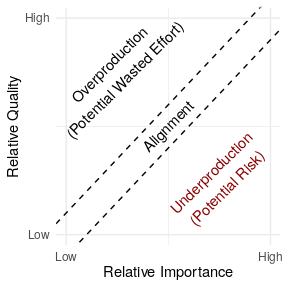
Critical software we all rely on can silently crumble away beneath us. Unfortunately, we often don t find out software infrastructure is in poor condition until it is too late. Over the last year or so, I have been supporting Kaylea Champion on a project my group announced earlier to measure software underproduction a term we use to describe software that is low in quality but high in importance.
Underproduction reflects an important type of risk in widely used free/libre open source software (FLOSS) because participants often choose their own projects and tasks. Because FLOSS contributors work as volunteers and choose what they work on, important projects aren t always the ones to which FLOSS developers devote the most attention. Even when developers want to work on important projects, relative neglect among important projects is often difficult for FLOSS contributors to see.
Given all this, what can we do to detect problems in FLOSS infrastructure before major failures occur? Kaylea Champion and I recently published a paper laying out our new method for measuring underproduction at the IEEE International Conference on Software Analysis, Evolution and Reengineering (SANER) 2021 that we believe provides one important answer to this question.
Conceptual diagram showing how our conception of underproduction relates to quality and importance of software.
In the paper, we describe a general approach for detecting underproduced software infrastructure that consists of five steps: (1) identifying a body of digital infrastructure (like a code repository); (2) identifying a measure of quality (like the time to takes to fix bugs); (3) identifying a measure of importance (like install base); (4) specifying a hypothesized relationship linking quality and importance if quality and importance are in perfect alignment; and (5) quantifying deviation from this theoretical baseline to find relative underproduction.
To show how our method works in practice, we applied the technique to an important collection of FLOSS infrastructure: 21,902 packages in the Debian GNU/Linux distribution. Although there are many ways to measure quality, we used a measure of how quickly Debian maintainers have historically dealt with 461,656 bugs that have been filed over the last three decades. To measure importance, we used data from Debian s Popularity Contest opt-in survey. After some statistical machinations that are documented in our paper, the result was an estimate of relative underproduction for the 21,902 packages in Debian we looked at.
One of our key findings is that underproduction is very common in Debian. By our estimates, at least 4,327 packages in Debian are underproduced. As you can see in the list of the most underproduced packages again, as estimated using just one more measure many of the most at risk packages are associated with the desktop and windowing environments where there are many users but also many extremely tricky integration-related bugs.
These 30 packages have the highest level of underproduction in Debian according to our analysis.
We hope these results are useful to folks at Debian and the Debian QA team. We also hope that the basic method we ve laid out is something that others will build off in other contexts and apply to other software repositories.
Paper Citation: Kaylea Champion and Benjamin Mako Hill. 2021. Underproduction: An Approach for Measuring Risk in Open Source Software. In Proceedings of the IEEE International Conference on Software Analysis, Evolution and Reengineering (SANER 2021). IEEE.
Contact Kaylea Champion (kaylea@uw.edu) with any questions or if you are interested in following up.

 Over the past days, I have received tons of positive feedback on my previous blog post about forming the Debian BBB Packaging Team [1]. Feedback arrived via mail, IRC, [matrix] and Mastodon. Awesome. Thanks for sharing your thoughts, folks...
Therefore, here comes a short ...
Heads-Up on the current Ongoings
... around packaging BigBlueButton for Debian: