Search Results: "agi"

11 November 2010

Matt Zimmerman: Back to the future

In my professional role as Ubuntu CTO, I take on a number of different perspectives, which sometimes compete for my attention, including: My recent work, as Canonical has gone through a period of organizational growth and change, has prioritized the inward perspective. I took on a six-month project which was inwardly focused, temporarily handing off many of my day-to-day responsibilities (well done, Robbie!). I ve grappled with an assortment of growing pains as many new people joined Canonical over the past year. With that work behind me, it s time to rebalance myself and focus more outside of Canonical again. It s good to be back! In my outward facing capacity, I ll shortly be attending Web 2.0 Summit in San Francisco. I attend several free software conferences each year, but this is a different crowd. I hope to renew some old ties, form some new ones, and generally derive inspiration from the people and organizations represented there. Being in the San Francisco Bay area will also give me an opportunity to meet with some of Canonical s partners there, as well as friends and acquaintances from the free software community. With my head down, working hard to make things happen, it s easy to lose perspective on how that work fits into the outside world. Spending more time with people outside of Canonical and Ubuntu is an important way of balancing that effect. Looking forward, I ll be thinking about the longer term direction for the Ubuntu platform. The platform is the layer of Ubuntu which makes everything else possible: it s how we weave together products like Desktop Edition and Server Edition, and it s what developers target when they write applications. Behind the user interfaces and applications, there is a rich platform of tools and services which link it all together. It s in this aspect of Ubuntu that I ll be investing my time in research, experimentation and imagination. This includes considering how we package and distribute software, how we adapt to technological shifts, and highlighting opportunities to cooperate with other open source projects. My primary outside-in role is as chair of the Ubuntu Technical Board. In this capacity, I m accountable to the Ubuntu project, the interests of its members, and the people who use the software we provide. Originally, the TB was closely involved with a range of front-line technical decisions in Ubuntu, but today, there are strong, autonomous teams in place for the most active parts of the project, so we only get involved when there is a problem, or if a technical question comes up which doesn t fit the charter of an established team. It s something of a catch-all. I d like to re-establish the TB in a more central role in Ubuntu, looking after concerns which affect the project as a whole, such as transparency and development processes. I m also re-joining Debian as a non-uploading contributor, to work on stimulating and coordinating cooperation between Debian and Ubuntu. I m looking forward to working more with Zack on joint projects in this area. This change will help me to support Canonical and Ubuntu more effectively as they continue to grow and change. I look forward to exercising some mental muscles I haven t used very much lately, and facing some new challenges as well.

Steve Kemp: The pain of a new IP address

Tonight I was having some connectivity issues, so after much diagnostic time and pain I decided to reboot my router. At the moment my home router came back my (external) IP address changed, and suddenly I found I could no longer login to my main site. Happily however I have serial console access, and I updated things such that my new IP address was included in the hosts.allow file. [*] The next step was to push that change round my other boxes, and happily I have my own tool slaughter which allows me to make such global changes in a client-pulled fashion. 60 minutes later cron did its magic and I was back. This reminds me that I let the slaughter tool stagnate. Mostly because I only use it to cover my three remote boxes and my desktop, and although I received one bug report (+fix!) I never heard of anybody else using it. I continue to use and like CFEngine at work. Puppet & Chef have been well argued against elsewhere, and I'm still to investigate BFG2 + FAI. Mostly I'm happy with slaughter. My policies are simple, readable, and intuitive. Learn perl? Learn the "CopyFile" and you're done. For example. By contrast the notion of state machines, functional operations, and similar seem over-engineered in other tools. Perhaps thats my bug, perhaps that's just the way things are - but the rants linked to above makes sense to me and I find myself agreeing 100%. Anyway; slaughter? What I want to do is rework it such that all policies are served via rsync and not via HTTP. Other changes, such as the addition of new primitives, don't actually seem necessary. But serving content via rsync just seems like the right way to go. (The main benefit is recursive copies of files become trivial.) I'd also add the ability to mandate GPG-signatures on policies, but that's possible even now. The only step backwards I see is that currently I can serve content over SSL, but that should be fixable even if via stunnel.
*
My /etc/hosts.allow file contains this:
ALL: 127.0.0.1
ALL: /etc/hosts.allow.trusted
ALL: /etc/hosts.allow.trusted.apache
Then hosts.allow.trusted contains:
# www.steve.org.uk
80.68.85.46
# www.debian-administration.org
80.68.80.176
# my home.
82.41.x.x
I've never seen anybody describe something similar, though to be fair it is documented. To me it just seems clean to limit the IPs in a single place. To conclude hosts.allow.trusted.apache is owned by root.www-data, and can be updated via a simple CGI script - which allows me to add a single IP address on the fly for the next 60 minutes. Neat.
ObQuote: Tony is a little boy that lives in my mouth. - The Shining

8 November 2010

Cyril Brulebois: Debugging using netconsole

Now that we have KMS, it happens things go bad enough that when X goes down, one can no longer access any console to see what happened. Mainly, one can distinguish between two cases. I m going to discuss the second case. There s a nice tool in the kernel which makes it possible to send kernel logs over the network. It s called netconsole. As far as limitations are concerned, one shall note that it s UDP only, and over Ethernet (in other words: no wireless). The good news is that it can usually make the last crucial lines available. Let s call the crashy machine a patient and the logging machine a doctor. One should keep in mind that if something goes wrong while configuring the netconsole module, it can be unloaded at anytime through:
sudo modprobe -r netconsole
Easy case: on a local network Local network Here s an example: Patient s IP is 192.168.0.1, doctor's IP is 192.168.0.2. Doctor setup What one needs on the receiving side: only netcat. A tiny warning, there are several implementations. Here s the appropriate syntax:
# netcat-traditional:
nc -l -u -p 6666   tee ~/netconsole.log
# netcat-openbsd:
nc -l -u 6666   tee ~/netconsole.log
The nc command is handled through the alternatives system, one can use update-alternative --config nc to pick the appropriate one if several netcat-* packages are installed. To list the current one, an easy way is readlink -f $(which nc). Using tee means that incoming messages are going to be printed, both to the standard output and to the specified file. Running as non-privileged user is sufficient. Patient setup Now, to have the patient send stuff to the doctor, a simple modprobe is needed:
sudo modprobe netconsole netconsole=@/,6666@192.168.0.2/
What happens here? One requests the netconsole module to be loaded, and one specifies the parameters. Details can be read in the Linux kernel documentation (Documentation/networking/netconsole.txt), but concentrating on the points of interest here: That s all! On the doctor side, one should see something along those lines:
[2920549.188090] console [netcon0] enabled
[2920549.188102] netconsole: network logging started
Slightly harder case: over internet Over internet Because one might not have a second machine handy, it s also possible to go through a router and send stuff across the internet. Here s an example: Patient s IP is 192.168.0.1, connecting to internet through a router, which IP is 192.168.0.254. The doctor, available over the internet, is 192.0.32.10. Doctor setup Exactly the same as in the previous case. The main issue one can run into is firewalls at this point. That s why one may want to switch from the default 6666 port to another one which wouldn t be filtered. One can think of 53 (DNS), but that means running nc as root since it s a privileged port (below 1024). Patient setup Routing is also possible, but that requires an extra parameter: the MAC address of the router. To obtain it, one can use the arp command:
/usr/sbin/arp 192.168.0.254
Supposing it returned the 01:02:03:04:05:06 address, loading the module becomes:
sudo modprobe netconsole netconsole=@/,6666@192.0.32.10/01:02:03:04:05:06
Now, if you re running into firewall-related issues, you can change the source for the UDP packets. The default is 6665, but assuming you want to send from an unfiltered 1234 port, that becomes:
sudo modprobe netconsole netconsole=1234@/,6666@192.0.32.10/01:02:03:04:05:06

7 November 2010

Jonathan McDowell: New laptop: Acer Aspire TimelineX 1830T

I blogged back in August about my frustration in finding a new laptop that had everything I was looking for. I'd figured I would eventually end up with the Toshiba R700, given my positive experiences with the R200. The lack of stock proved a problem, and the differing specs between the US and UK models also annoying. I started trying to source the Sony and finally found the HD model in stock from Vizik, but the helpful people there talked themselves out of a sale by saying the Full HD was too much for 13" (they also failed to have a 3G Full HD model).

I'd only brought the EEE 901 to the US with me, so after a month of that as my only machine at home I was starting to get a bit fed up; the keyboard is too small for constant use and it crawls when subjected to my normal usage patterns rather than just used as a lightweight network terminal. So it became obvious I was going to have to compromise on what I wanted. And if I was doing that I wanted something a lot cheaper, as I thought I may potentially want to upgrade sooner than usual.

In the end I've gone with an Acer Aspire TimelineX 1830T. It cost about a third of what the more fully featured laptops I was looking at were going for, which was a considerable bonus. The 2 things I ended up compromising on were the SSD and 3G support. And the name; I wasn't entire sure about what the build quality would be like.

As it turned out I needn't have worried; it appears to be perfectly well constructed - no noticeable flex while typing, solid enough, yet still fairly light. The keyboard is pleasant to use (admittedly I'm coming from the EEE, but it's a good size and responsive enough for me). I'm a bit uncertain about the touchpad, which has no physical separation from the rest of the case, but it's been ok so far. I miss the multitouch of the EEE, but it looks like there are some patches for Synaptics multitouch flying around that might eventually lead to useful support. I've ended up with a Core i5 470UM at 1.33GHz - what I ordered was the i5-430UM at 1.2GHz (and that's what the box/label on the laptop said), but I'm not complaining at the slight speed bump. It's fine for my needs. The 1366x768 screen is lovely, even in 11.6". Bright, if sometimes a little too shiny..

Installing was of course fun; it reminded me of when I got the R200 - neither the wifi nor wired interfaces were supported by the Debian installer, even from testing. I found a patch to get the (Atheros) LAN working (and have filed #599771 about potentially getting the support into squeeze's kernel) and that got me up and going. The wifi is a Broadcom BCM43225; too new for the old Free driver and the recently released Broadcom Free code causes the machine to instantly crash (I understand it has some SMP issues). So I'm stuck with the binary blob wl driver from broadcom-sta for now. I have hopes the Broadcom driver will improve though; it seems to be getting active love in the staging tree. The graphics are Intel, so well supported. And I'm getting at least 4 hours of battery life out of it, which I think could be improved with some tweaking.

So, er, yeah. Not what I set out looking for, but considerably cheaper and actually seems to meet my needs pretty well - it had its first weekend away trip this weekend and performed admirably; not too heavy in my hand luggage, decent battery life and no worries about it being too flimsy to survive. I'm still surprised it's an Acer...

Torsten Landschoff: Accessing the Eclipse source code

Sometimes I really want to know how Eclipse implements one feature or another, because Eclipse sometimes feels like magic. Usually it turns out they are also just cooking with water. Most open source code is easily available by checking out a project from some SCM. For eclipse it is not as easy. But there is a nice tutorial how to access eclipse source code by Lars Vogel. This post is just so I can recover the link next time instead of googling for an hour. Thanks, Lars!

Adnan Hodzic: Ubuntu Developer Summit (UDS-N) Debianized Summary

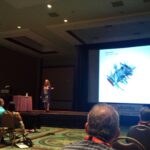
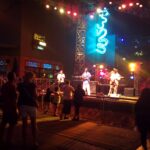
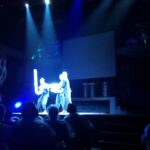
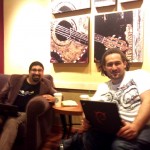
Last week I was on my first Ubuntu Developer Summit (UDS-N), I wanted to attended this summit for couple of reasons: 1. Developer, I m part of Debian Java, working on Eclipse IDE, and as you re developing Debian, you re automatically developing Ubuntu, no? Nerd 2. DebConf11 main organizer, I really wanted to see how it s all done on corporate level, for instance we re going with hotels instead of student dorms and so on. 3. Migration to Linux infrastructure, make contacts and have some talks on this topic, because after DebConf11 in Bosnia a lot of institution will most probably open doors to open solutions such as Linux. I went to this summit without any expectations or plans, just said I ll play it by ear. This years UDS was held in Orlando, Florida before Orlando I was planning to stay in NYC for couple of days, therefor my whole plan was to get to NYC, then Orlando then head back home Smile I Heart NYC I spent couple of days here with my cousins and friends, as always NYC never fails to surprise me, and I ll always stop by even if it s only for couple of days Wink I wanted to meet up with couple of Debian people as well, but unfortunately my schedule was too tight so Caribe Royale, Orlando Please note that this whole trip was crazy (in a good way) starting from Sarajevo; on my flight from NYC to Orlando I see a guy that s sitting in front of me is wearing Canonical Landscape tshirt, I approach him and it turns he was Jamu Kakar working on Landscape. Since my luggage was late we had conversations from Debian over Ubuntu to Java to everything pretty much. While we were still at the airport, we bump into two more people going to UDS. As we got to hotel, same moment we walked out of cab there he was Jorge Castro, was he there just to smoke a cigarette or whatever doesn t even matter, what matters is that even before walking into hotel building I knew where reception, my tower and bar was, everything I needed to know at that moment High Five! Hotel where everything was held was Caribe Royale and even though I looked at their website I thought there was no way it s all going to be that nice, to my delight it was exact replica. Place is All-Suite Hotel and Convention Center , which meant that both accomodation, venue and everything else was in one place which is Yes 15 minutes later after I checked in, I was at a bar talking to Jim Baker about Java, Jython and Python, exact things I wanted to talk about at that given moment. What I said in these last couple of paragraphs sounds pretty cool eh? Well to me this whole UDS was just like this, everybody was so accessible and open for discussion, from Jono Bacon walking around offering candy to UDS reception staff Michelle, Marianna and others who were always there whether you had a complaint, problem or a praise. I really should stop mentioning names, because I ll forget somebody, and since it s just not fair because I had a feeling everybody was just there for you, whatever it was you needed. Ubuntu Developer Summit (UDS-N) Ubuntu, Debian, DebConf, differences? Even though I said I ll play it by ear, from very beginning I thought I d be complete outsider, being part of Debian and all. Quite contrary, I was everything but outsider, and even more there was plenty of Debian people there, including current DPL Stefano Zacchiroli, Colin Watson, Riku Voipio just to name few. There was also a Debian Healt Check plenary. But overall, there are differences between DebConf and UDS. One of the things is that you can attend UDS remotely I m not sure how much is this doable on DebConf, but then again vast differences are that UDS is filled with BOF s (as we would call it in Debian) meetings of different teams, I attended a lot of these, and most of them end with some kind of conclusion. While each day there was (only?) an hour of lectures on various topics, which on DebConf we would characterize maybe even as speed talks . However, everything was high paced, and it all ended up on You think that s a problem? How do you think we could solve it? . I had a feeling even if I didn t say something out loud that someone would hear me and approach me to discuss it. Everything was straight forward, all in goal to resolve certain issue or a problem, which I absolutely loved. Clap Fun It wasn t all work, even though Orlando doesn t seem to be my kind of city from what I saw, it s way too magical for my taste Party There was a lot of places where you could go to enjoy yourself. Good people at Canonical even offered me free ticket to Disney World, there was a lot of destinations to visit and transpiration was also organized by Canonical. Unfortunately I missed the notorious UDS party on Friday because I had to head home early, but possibly I ll make it next year Razz Even though, hotel was that great and to be honest you didn t have to leave to look for party. My favorite was Universal City Walk, one night I decided to go to see Blue Man Group, best part of it was that I got pulled up on stage by one of the members and was part of one of the acts! ROTFL This is definitely something everyone should see during his life, one moment you re laughing like a lunatic, while other moment you re just having goose bumps from the performance itself. Amazing stuff. After all I wrote here along with the pictures, is there even anything else I need to say? Smile I believe that even if I didn t play it by ear, this whole trip would exceed all my expectations in every possible sense. Because that s really what happened, those three reasons I was going to UDS for? Far more happened than that. All I can say in the end is that I ll move closer to having a part in Ubuntu development, and yea, I ll try to be regular on UDS from now on Smile See you in Budapest? If all these photos weren t enough, you can find official group photo as well as personal set of photos can be found on: UDS-N photos by 2010 Sean Sosik-Hamor



6 November 2010

Thorsten Glaser: Debian/m68k progress, MirBSD notes

I m almost finished with sort of re-bootstrapping Debian/m68k (I can use etch-m68k as well as what was in unstable at the moment as dependencies, so it was not that much, still, 305 binary packages build from 84 source packages, most for unstable (very few for unreleased, with very responsive maintainers, thanks all, who will include the patches in their next uploads) is a bit including rebuilds with newer versions, more patches, more testing or newer dependencies installed. I ll probably upload on Sunday evening, as I ll be off for 2-4 days at least from then (see below). Ingo tried to test on real hardware, but as Murphy wants a hard disc failed we ll still try to get something done over the weekend. If you want to have a look, see my repository index (sources.txt contains a sample sources.list file, 0-NOTE.txt some hints, including the right debootstrap/cowbuilder magic and speed tricks). I ll need to learn how to use LVM and set up a buildd now I ve not been in much of a hacking mood recently all these visits to the dentist leave me in unrest and disturb my equilibrium. Hence, not much activity even in mksh even if there was need, almost none in MirBSD. This is only temporary, but I won t attend OpenRheinRuhr, or, if I come at all, it ll be for socialising only and probably only one day. Benny s done with his Doctor (in France, no idea whether it s one in Germany as well) of Chemistry and has returned to hacking some (World of) Google-Go(o) code. I expect MirBSD activity to slowly raise once we can come back. Please accept our apologies.

5 November 2010

Raphaël Hertzog: Managing distribution-specific patches with a common source package

In the comments of the article explaining how to generate different dependencies on Debian and Ubuntu with a common source package, I got asked if it was possible to apply a patch only in some distribution. And indeed it is. The source package format 3.0 (quilt) has a neat feature for this. Instead of unconditionally using debian/patches/series to look up patches, dpkg-source first tries to use debian/patches/vendor.series (where vendor is ubuntu, debian, etc.). Note that dpkg-source does not stack patches from multiple series file, it uses a single series file, the first that exists. So what s the best way to use this? Debian should always provide debian/patches/series, they are supposed to provide the default set of patches to use. Any derivative cooperating with Debian can maintain their own series files within the common VCS repository used for package maintenance. They can drop Debian-specific patches (say branding patches for example), and they can add their own on top of the remaining Debian patches. It s worth noting that it s the job of the maintainers to keep both series files in sync when needed. dpkg-source offers no way to have stacked series files (or dependencies between them). If you want to use quilt to edit an alternate series file, you can temporarily set the QUILT_SERIES environment variable to vendor.series . Just make sure to start from a clean state, i.e. no patches applied. Otherwise quilt will be confused by the sudden mismatch between the series file and its internal data (stored in the .pc directory).
Found it useful? Click here to see how you can encourage me to provide more articles like this one.

Flattr this Share/Bookmark No comment Support my work

4 November 2010

Gintautas Miliauskas: Living a monastic life for 10 days

About a month ago, at the end of August, I finished a 10-day Vipassana meditation course. This was probably one of the more extreme activities I have ever participated in, and it's well worth a blog post. I found out about the course in a ridiculously trivial way, by following a link in a Reddit comment (I wonder if I could track down that comment...). The website referenced by the comment contained (almost) no new-agey mumbo-jumbo and looked legit in general. I also appreciated the fact that this was a relatively serious and intensive course, which should be enough to form a reasonably founded opinion on meditation in general. When learning sporadically, in small bits, it is hard to say whether the material itself is no good, or you just do not understand it yet and need to study more; I was quite skeptical towards the practice, but wanted to give it fair trial. I was quite impressed that there was a course available in Lithuania, a few hours by train from where I live. Finally, the course was free (by tradition Vipassana is taught without monetary compensation). I went ahead and signed up for a standard introductory 10-day course. Vipassana (also called insight meditation) is a meditation technique allegedly coming back from Gautama Buddha himself (well, all the traditions like to claim that origin...). It has been experiencing a renaissance, partly due to an organization set up by a meditation teacher S. N. Goenka which has founded meditation centers all over the world. The essence of Vipassana is a method of teaching your mind to act instead of merely reacting to outside stimuli such as pain, anger of other people or hardships. The technique provided is to monitor your sensations, watch them with equanimity and suspend any reaction, and slowly it sinks in that all things are temporary and you can choose what to react to and how. That's the basic idea; I don't want to go deep into exposition of Vipassana as there is plenty of information about that (also at the same time the information is almost useless because you have to experience it to really understand it). Instead, I will sure some of the more personal remarks and experiences. The course took place in an cottage near Kretinga, housing around 50 people. The living conditions were absolutely great, and this would have been a true holiday if not for the regime and the rules. The day would start very early, at 4 AM (ending at around 9:30 PM), and we'd do about 12 hours of meditation in total inbetween, with occasional breaks, but the most gruesome part is that no communication at all was allowed with anyone except the manager of the camp (and the teacher during a specified time). That gets to you after a few days, but still, there are people around you, so it's bearable; on the other side, the senses (touch, smell) become very acute. The food was taken care of by volunteers (students who have finished the course), and I could say it was quite good actually. The goal, of course, was to keep the environment from interfering with meditation, and I think it was done very well. The presentation of the actual technique also did not disappoint. Each day a new step would be introduced, with the whole day to practice before moving on. Looking back, the pacing worked well. Every day in the evening there were lectures on theory. They were somewhat informative, but also sometimes annoyingly primitive and verbose. The little mistakes, holes in logic and slight doses of mumbo-jumbo almost drove me nuts by the middle of the course, until I learned not to react to them. Despite the shortcomings of presentation, the simplicity and lucidity of the practice and lightness of theoretical baggage really appealed to me. The whole organisation in general gave the impression of complete transparency, with no strings attached, no financial interests in play and no agitation for further involvement. While there are many meditation techniques, I am happy that I've gone with Vipassana in particular for one reason: Vipassana meditation uses no artificial tools to help you concentrate, such as mantras, visualisations, counting, etc. Such methods make concentration much easier, but they also create a dependence on the methods themselves. I appreciate the purity of Vipassana in this regard. Not everything in the practice is roses though. First, a particular worldview supported by Vipassana is presented as "scientific" and supposedly "the right way to live", and if even if you don't agree, "the truth" of Vipassana will become obvious to you with time. This is a distinctive mark of ideologies. The thing that makes everything break is the reincarnation, which is generally assumed as true, even if it's not shoved down the student's throat. Every rationalization of a world view has a "white lie" (usually related to the concept of eternity somehow) at the core, and in this context reincarnation is it. Given what we know now about the relationship between the mind and the body, reincarnation is absolutely ridiculous and completely untenable, and that breaks all "moral" reasoning for practicing meditation as opposed to doing something else. I'm not the first to bring up this problem, there's plenty of material about it online. The second slippery idea is that the concept of "negative happiness" is central in Vipassana, that is: happiness is defined as lack of suffering. This point is not that unreasonable actually, from personal experience I could indeed call the state of non-suffering happiness, but there is definitely something missing when compared to the state of mind when I'm truly, positively happy. Whether you consider that something important or not, it's definitely there. Third, Vipassana suggests that it is only you who is at fault when your inner state is disturbed; the world affects you as much as you let it, and in order to find happiness you should learn to control the "interface" rather than the outside world, which will usually not behave as you want. This may be correct, but sometimes it could just be easier to fix the world rather than change yourself, and I have the suspicion that it this is much more frequently the case in the modern world compared to the pre-modern environment. (This is one of the points which break when reincarnation is rejected, as with reincarnation you have the whole eternity to fix yourself.) While the complaints are serious, they do not mean complete rejection of Vipassana but rather integration among the various other techniques available. The actual meditation technique is still great for gaining and maintaining mental composure, reducing anxiety and improving well-being. Now, if I could only get used to meditating regularly... If you have the chance, I highly recommend you try out an introductory 10-day course. There is little to lose and a lot to gain. And if you do go ahead, I have two hints. First, do not even think about leaving the course before it's over. Any hardships are temporary and will be overcome quickly. Second, use the time with the teacher, those interactions were very helpful to me. Also, given the "noble silence", talking to someone once in a while will not hurt.

3 November 2010

Julien Viard de Galbert: Working on X isn t that hard !

First, Hello Planet Debian ! Some words about me I m a new member of the X Strike Force, the debian team responsible for packaging Xorg. I basically stepped in with the openchrome driver.
I also have wider interest in free software or open source in general, but you can have a look at the rest of my blog, so I won t bother you with too much details. More about X Talking with various attendant at MiniDebConf Paris, I got the impression that people think working on Xorg is hard. I must say: It s not ! First debian work is mostly packaging, and the developers of the applications we package (debian call them upstream) are pretty responsive, so you won t be on your own.
Most of the work is preparing the packages for their new release, place them in experimental first, and ask for testers.
Then people test and the real work start: we receive bug reports.
Sometime seeing the report, it s easy to point the user to test some other version, do some change, remove some old libraries in /usr/local/lib.
Sometime we need to ask for more information. I said we, but for now unless it s about openchrome, I can t help much, but I follow the bugs on the X mailing list and learn from others response, I think I ll be able to help soon. An other way to help: TXBW I m sure you ve read about RCBW, kudos to every one posting some and to every BSP attendant.
But if you thought X was hard, you certainly find the remaining RC bugs too hard (Or if not, you might want some distraction with an easier task). So I have a proposition for you: Triage X Bugs of the Week (TXBW) As Lucas told on his blog I ve proposed him a patch to help triaging X bugs using UDD. And he accepted it, Thanks ! So here is the link I m using: XSF unstable bugs sorted by date.
But remember the udd database is not live data, if you close a bug, it won t disappear immediately.
Also please read the X Strike Force Bug Closing Procedure before starting. To conclude my TXBW data (well TXB of the Day so to speak) I hope this can be a success like the RCBW initiative is.
Currently there are hundreds of X bugs, more that a half are at least one year old so they deserve to be triaged ! The X Strike Force (still) needs you !

Scott Kitterman: Liquor and Guessing

Those of us who work in technical areas like to believe that because we are engaging in technical endeavors rather than social endeavors, our work is defined and predictable. This hints that we know the future. I think Scott Adams captured the thought well:
We should not be so cocky. While the technical world is more structured and predictable than other areas, it has its limits too. One can only see so far down into complexity before predictability is lost in the detail. That s where we get so called Heisenbugs . Looking out to the future we can only see so far as well. Recently I ve been reading The Black Swan. It is a useful reminder that the future isn t as linear and predictable as we d like to pretend it is. One idea that has stuck in my head is the idea that in order to take something into account that one will know in the future in one s predictions, one must already know it. There is an inherent limit to how far we can see. How is this relevant to distribution developers? Each time we set off to develop a new release, we make an assessment of how to best expend the available resources (our own, our company s, our group of people we can talk into doing stuff) to make things better . We do the best we can, but we must always be mindful of the fact that we press forward using our best engineering judgement, but as we look into the future, eventually this is all just liquor and guessing too.

Andrew McMillan: Something a little different

During my recent trip to Massachusetts for CalConnect XIX I passed back via New York, surfing a few nights on the couch at the Washington Cube Garden1. This was just enough time for my new Davis VantagePro2 to arrive by UPS ground (phew!) causing me much consternation, as the box was about twice as wide as I expected it to be. On opening it I discovered that the reason for the size was the physical dimensions of the rain gauge, leading me to realise that I had actually bought exactly what I wanted: a high quality weather station. Also leading me to wonder how the hell I was going to get it halfway around the world with me the next day. Unfortunately that extra wide carrying case was in no way going to fit inside my suitcase. Fortunately it came with a handle. And those wonderful people at Air New Zealand gave me a Koru Gold upgrade for a 50th birthday present, so it was time to put it to the test... Travelling on the subway out to JFK was it's own little adventure, but I made it out to terminal 5 and wandered around a bit before concluding I needed to be in terminal 7. Once I was in the right place I found the fancy people's check in counter and the nice lady there was only too happy for me to carry it to New Zealand, though she did aver that perhaps the security scanners would be dubious. Not a hitch there though: I guess they're used to letting everything through that's not specifically denied, so weather stations are fine because nobody would be silly enough to even think of doing that... Being Koru Gold really helped at this point though, because it enabled me to queue jump use the priority boarding line when getting onto the plane, and every airline in the US seems to have gone all-out for this "checked baggage costs more" approach, so the planes all fly with empty baggage holds and totally overstuffed overhead lockers. If this progresses I shouldn't wonder that the planes will get so top-heavy they roll over, but through the miracles of priority boarding I was able to commandeer all the locker space I needed before anyone else had even made it past row 40. I confess that I was a little worried that it wouldn't be quite such plain sailing getting through LAX. I mean we all know what reputation this delightful little exit port has. In the event it was totally anitclimactic. If it has a handle on it, and it's about the same size and shape as a largish carryon then it's fine. There have been no recorded stabbings with wind vanes anyway - at least on aeroplanes - so clearly they are perfectly safe. Finally back in my country of birth, thinking I was home free, I breathed a sigh of relief transferred my bags and nipped off to the Koru lounge for a much needed shower and change of clothes after I snuck the station through another scanner. By now the handle had broken, so it was looking decidedly more 'box' like and less 'carryon' like, and when I eventually rolled up at the gate with my boarding pass the attendant made a valiant attempt to relieve me of it, but she was too slow and I danced around her and swanned up the gangway to take my seat. I was slow, this time, having missed the first boarding call, and all overhead lockers were crammed full. There was no seat in front of me to put the weather station under. Fortunately a nearby cupboard proved fit for purpose and it was secreted there and we were underway. At this point the guy two seats over said "didn't I see that weather station in New York?". Of course being bright yellow does make it a little conspicuous I guess, and I'm not renowned for my own inconspicuousness myself. So that's how I got my new weather station home, and you can see right away that doing things the easy way would never even occur to me. Possibly this is why I run Linux: there just isn't enough challenge when you run a different operating system. On Windows someone has always written a program for your new weather station, and a Mac user wouldn't be seen dead with it because it's black and beige and comes in a bright yellow box! So now I had to find some code to write. I looked around and very rapidly discovered that some software called vproweather was available, which would happily talk to my weather station and download the data from it, write web pages, stuff it into a MySQL database and so forth. All, obviously, far too easy, so I thought aha! I could convert that to PostgreSQL, and then I would be happy and relax with the thought of a job well done. So I downloaded the code in question an impressive several hundred kb of C code, cranked open a text editor and started to crawl through it and see where I could add the magic pixie dust to make it work with PostgreSQL. But it was not to be. My eyes glazed over or scales fell from them or something, and I realised that this particular edifice was beyond my help. Back to square one. I downloaded the Vantage Serial Protocol docs from the Davis Instruments website did some quick googling and decided I should write a module to talk this protocol. And I should write it in Perl (it was a Thursday, and Perl always seems more sensible on a Thursday, and not because of Douglas Adams, either). I beavered away into the night. Rain threatened, so I raced outside and installed the new weather station on the roof in the hopes that it's magnificent rain collector would collect. I raced back inside and was able to count the first (and so far, only) tip of the bucket. And so I now release upon the world Davis::VantagePro my first perl module. Well, the first one I care to share with the world, anyway. I have stressed it with very little testing, lumbered it with no planning or design whatsoever and so I feel it only fair that I should cast it upon the world with very little thought for it's survival or existential goals.

1 I seem to recall one night we came up with some fantastic names for Micah & Biella's Washington Square apartment, but I couldn't remember any of the good ones and had to slap a new one on there. I should also mention my stay at the Acetarium in Boston, which was a fabulous few days, but it would pad this blog post needlessly, and I've already done that.

Lucas Nussbaum: Triaging X Strike Force bugs with UDD Bugs Search

Thanks to the work of Julien Viard de Galbert, UDD Bugs Search just gained the ability to help the triaging of X Strike Force bugs. He worked on the patch by installing his own copy of bugs.cgi on alioth. Don t hesitate to do the same with your team!

2 November 2010

Sam Hartman: Review of Git DPM

I ve been looking at git dpm. It s a tool for managing Debian packages in git. The description promises the world: use of git to maintain both a set of patches to some upstream software along with the history of those patches both at the same time. It also promises the ability to let me share my development repositories. The overhead is much less than topgit. My feelings are mixed. It does deliver on its promise to allow you to maintain your upstream patches and to use git normallyish. It produces nice quilt patch series. In order to understand the down side, it s necessary to understand a bit about how it works. It maintains your normal branch roughly the way you do things today. There s also a branch that is rebased often that is effectively the quilt series. It starts from the upstream and has a commit for every patch in your quilt series containing exactly the contents of that patch. This branch is merged into your debian branch when you run git dpm update-patches. The down side is that it makes the debian branch kind of fragile. If you commit an upstream change to the Debian branch it will be reverted by the next git dpm update-patches. The history will not be lost, but unless you have turned that change into a commit along your patches branch, git dpm update-patches will remove the change without warning. This can be particularly surprising if the change in question is a merge from the upstream branch. In that case, the merged in changes will all be lost, but since the tip of the upstream branch is in your history, then future merges will not bring them back. If you either also merge your changes into the patches branch, or tell git dpm about a new upstream, then the changes will reappear at the next git dpm update-patches. The other fragility is that rebasing your debian branch can have really unpleasant consequences. The problem is that rebase removes merge commits: it assumes that the only changes introduced by merge commits are resolution of conflicts. However, git dpm synthesizes merge commits. In particular, it takes the debian directory from your debian branch, plus the upstream sources from your upstream branch, plus all the patches you applied and calls that your new debian branch. There s also a metadata file that contains pointers to the upstream branch and the quilt patch series branch. In addition, debian/patches gets populated. Discarding this commit completely would simply roll you back to the previous state of your patches. However, this loses history! There is no reference that is left pointing to the patches branch; the only reason it is still referenced is that it s a parent of the commit rebase is throwing away. This isn t really all that unusual; if you merged in any branch, deleted the branch and rebased away both the merge and the commits from the branch, you d lose history. I do find it a bit easier to do with git dpm. However, it s more likely that you ll manage to rebase and keep the commits from the patches branch. In particular, if the horizon of your rebase includes a merge of the patches branch,then for every patch that involves changes to the debian branch from the point where rebase starts rewriting history, you will see a commit included by your rebase. My suspicion is that this commit is more likely to generate conflicts than usual because it s a patch on top of the upstream sources being applied to a partially patched debian branch. However I have not fully worked through things: it may be that such a patch is exactly as likely to cause conflicts as it would in a git dpm update-patches operation. If that succeeds and you do not manage to fail to pick one of these commits, you ll end up with roughly the same debian sources you started with. There are two key exceptions: the git dpm metadata file is not updated and your debian/patches is not consistent with your sources. The first means you re in the state of the previous paragraph: git dpm update-patches will blow away your changes. The second means that any source package you produce is going to be kind of funky if not out right broken. It is possible to recover from git dpm plus rebase. I think if you git dpm checkout-patches, then cherry pick the patch related commits from your debian branch that were introduced by the rebase, then git dpm update-patches, you ll be in a sane state. Obviously you could also recover by finding the pre-rebase commit and resetting there. I m assuming though that you actually needed to rebase for some reason. Of course git dpm does involve a space penalty. You generate a commit for every patch in your quilt series for every version of the upstream sources you deal with. Also, you will introduce and store every version of the quilt series directly in your debian directory. The extra commits probably aren t a big deal: the blobs probably delta compress well. I m not sure though that the quilt patch blobs will compress well with other things. In my opinion the ability to get nice quilt patches is well worth the space penalty. In conclusion, git dpm is a sharp tool. Actually, I think that s understating things. Git dpm involves a bunch of rotating blades. You stick your face and foot between the blades, and if you use it correctly, there s exactly enough clearance that nothing gets damaged and you get some fairly neat results. Other outcomes are available. I m still trying to evaluate if it is worth it. I think the tradeoff might be different for something like the krb5 package which is maintained by two very experienced maintainers than say for Shibboleth which seems to involve several more maintainers. I m not sure that there is much git dpm can do to make things better. Even detecting loss-of-foot events might be kind of tricky.

1 November 2010

Raphaël Hertzog: 5 free software to support with Flattr

Flattr FOSS LogoIt s already the fourth issue of Flattr FOSS: it means 20 different projects using Flattr that I presented you. Here are the 5 suggestions for November:
  1. Redshift is a small utility that adjusts the color temperature of your screen to make it less aggressive on your eyes, in particular during evening/nights. It uses the time of the day and the geographic location to know whether it s night or day. I discovered it this summer and I liked it, although I m not running it permanently.
  2. Noscript is a Firefox plugin to control what sites can execute javascript, flash and other plugins. All those are creating supplementary security risks and you browse safer if you allow only some sites to run them. This is the number one entry on Flattr in the opensource category, it recently took the place of dpkg.
  3. phyMyAdmin is a web interface to manage MySQL databases. If you have such a database on a web-hosting service, you have likely already seen it in action. It s an award-winning software with a 12 year history, it s not so common for PHP applications. :-)
  4. Chromium maintenance in Debian. Chromium is a rapidly-evolving & complex software and Giuseppe Iuculano has been tirelessly working on packaging it. Almost alone within Debian. He deserves kudos for his work even though he reused work made by Fabien Tassin on the Ubuntu package.
  5. Dulwich is a pure-Python implementation of the Git file formats and protocols. It s an important building block for interoperability between Bazaar and Git: bzr-git (a Bazaar plugin providing Git integration) is notably using it. Given the large usage of bzr in Ubuntu and the popularity of Git world-wide, it s important to have such gateways.
This article is part of the Flattr FOSS project.
Update: mentioned the work of Fabien Tassin on the chromium package within Ubuntu.

Flattr this Share/Bookmark 6 comments Support my work

Russell Coker: Communication Shutdown and Autism

The AEIOU Foundation The AEIOU Foundation [1] is a support and advocacy organisation for people on the Autism Spectrum, note that they clearly say Autism Spectrum Disorder (ASD) on their About page, some of what they write would be less wrong if it was claimed to apply to only non-verbal Autistics or people claimed to be Low Functioning Autistic (LFA). But in regard to the Autism Spectrum they just don t seem to know much about it, a lot of their web pages seem to be based on the assumption that anyone who is on the Spectrum will be lucky if they can ever live independently. However it seems that most people who can be diagnosed with an ASD have typical social skills by the standards of the IT industry and can get by without any special assistance. The entire site seems to be written about people on the Spectrum by people who know little of their experiences and contains hardly any information that matches what I ve read from various people on the Spectrum (of course there are a wide range of experiences that differ greatly). They have a link to Autism Related Sites which starts with Autism Speaks (the Wikipedia page about Autism Speaks is worth reading note the section about immunisation research which has been repeatedly debunked and the section about legal action against a young autistic blogger). There are many good reasons why Autism Speaks is so widely hated among people on the Spectrum. I think that recommending Autism Speaks is a sign of willful ignorance of almost everything related to Autism. In their page about describing Autism to NTs they say Imagine if you suddenly woke up in a foreign country, did not speak the language and had no way of effectively communicating with the people around you . I ve been diagnosed with Asperger Syndrome by a psychologist who considers that to be the same as High Functioning Autism (HFA) and I ve visited more than a few countries. I find the comparison of the Autistic experience to visiting another country to be so strange that I don t even know where I would begin if I was to comment on where it went wrong. Finally they have a scrolling bar listing their advertisers at the bottom of ever single page on their site. If someone was going to design a web site specifically to annoy people on the Spectrum then such a scrolling banner would be a good place to start. Now they probably do some good things to help families with children on the Spectrum. But their ability to do good is really hindered by the lack of input from people on the spectrum, Rachel Cohen-Rottenberg (leader of the Vermont Chapter of the Autistic Self Advocacy Network) wrote an interesting post about AEIOU and noted that none of the people who run AEIOU are Autistic [2]. The Communication Shutdown Someone got the idea that Neuro-Typical people (NTs) should try and understand what it s like to be on the Spectrum which is a reasonable idea. But they decided that the way to do so is to have them refrain from Internet based socialisation and not use Facebook and Twitter for one day. It seems to me that most people on the Spectrum primarily socialise via the Internet, so ceasing Internet based socialisation is likely to make their experience less like that of people on the Spectrum. I m getting a mental image of a bunch of NTs deciding to go to a night-club for their Internet free evening and then imagining that they are somehow empathising with the experience of people who can never enjoy a night-club. As an aside, a web site which has anything at all related to disabilities shouldn t rely on Flash the Communication Shutdown site totally fails in this regard. No Stereotypes Here has an interesting analysis of this situation, among other things they comment on the irony of having someone ask them to stop using twitter as part of this campaign [3]. One thing that they suggest is for NTs to have a day without any communication at all. Some Suggestions for People who Want to Understand As a communication exercise, try going shopping without speaking, just use hand gestures. For bonus points try doing so in a foreign country where you don t know the language so you need bidirectional non-verbal communication with some luck you can complete a transaction without the shopkeeper realising that you are a foreigner. This won t actually give you much of the Autistic experience, but it s a good exercise in understanding how communication works. Someone who wanted to know the down-side of being on the Spectrum could find a sports bar where most patrons support one team and then enter the bar while wearing a jersey indicating support for an opposing team. I don t recommend doing this because it really wouldn t be fun, but for a quick approximation of the experience it would probably work well. It seems to me that paying $5 to a charity and then boasting about doing so on your Facebook page for a day is an easy thing to do. A harder task would be to spend a day reading about the experiences of the people in question and then giving $5 to a charity that is well regarded by the target group. Another possible way of gaining some understanding would be to have a party where everyone brings their laptop and uses only electronic communication no speaking at all. This is in fact fairly close to what some of the Geekier (possibly Autistic) members of the IT community do.

30 October 2010

Raphaël Hertzog: Latest features of dpkg-dev: debian packaging tools

I m attending the mini-Debconf Paris and I just gave a talk about the latest improvement of dpkg-dev the package providing the basic tools used to build Debian packages. Latest is a bit stretched since it embraces the last 2-3 years of development. My talk covered the following topics: The slides are relatively verbose so that you can understand them even if you did not attend the talk. Click here to get the slides. Related links This section points to various articles that cover more extensively some of the features mentioned in my talk. Concerning dpkg-source: Concerning dpkg-maintscript-helper: Concerning dpkg-vendor:

Flattr this Share/Bookmark One comment Support my work

27 October 2010

Joey Hess: announcing git-annex

First there was mr, then etckeeper. Now git-annex completes my triptych of software tools that use git in ways that were never intended. Git's original tagline was "the stupid content tracker". Git-annex inverts that, by managing files with git, without checking their contents into git. While that may seem paradoxical, it is useful when dealing with files larger than git can currently easily handle, whether due to limitations in memory, checksumming time, or disk space. I've been working on git-annex for two weeks, and have been trusting my data to it for a week. Not a little data, but terabytes spread amoung multiple archival drives, file servers, laptops, and portable USB drives. In situations too complex for unison or rsync to be of much use. Applying git to this problem in an unconventional way has simplified things enormously. At this point it should be very usable, and solid. A package will be uploaded to Debian shortly; or git clone it.

25 October 2010

Wouter Verhelst: Bubble maker

I don't believe in bottled water. The reason for that should be obvious to anyone who thinks about it for more than just a second, but in case you can't figure it out:bottled water sucks. Since I moved out on my own, now over two years ago, I haven't bought the slightest amount of water other than through the tap. This wasn't a conscious decision, originally; it's just that I'm not a fan of non-sparkling water, and that buying 1.5L bottles of sparkling water would quickly reduce to non-sparkling ones by the rate I drink it, and I just didn't think it worth buying for that reason. As I came to realize that tap water is a fine beverage, and that for all practical purposes it is free or mostly so, compared to bottled water I stopped even considering the idea to buy bottled water. But I do still like sparkling water every once in a while; and this weekend, I remembered that about a decade ago, an acquaintance who worked for Philips had shown me a prototype apparatus to generate sparkling water out of plain water in approximately 1L quantities. It was a prototype then, so I could imagine it being a product today. Googling around for a while found no Philips product of that type; but then I did find another company that specializes in such devices. Their devices are fairly cheap (or, at the very least, affordable). And the best part: it doesn't even require electricity (contrary to that prototype device I saw so many years ago). One is on its way now. Wonder what it'll be like.

Next.

Previous.