Search Results: "tb"

9 April 2010

Uwe Hermann: coreboot / flashrom in GSOC 2010 -- student application deadline today!

GSoC 2010 logo As you may know there's a Google Summer of Code program again this year. The deadline for student applications is April 9th at 19:00 UTC, so if you're a student and you want to work on a coreboot (open-source BIOS / PC firmware) or flashrom (open-source BIOS chip flasher) project, please apply in time. The following coreboot/flashrom GSOC project ideas have been proposed so far (but you can also suggest your own ideas, of course): See this wiki page for why and how to apply for a coreboot/flashrom project.

8 April 2010

Stefano Zacchiroli: RC bugs of the week - issue 26

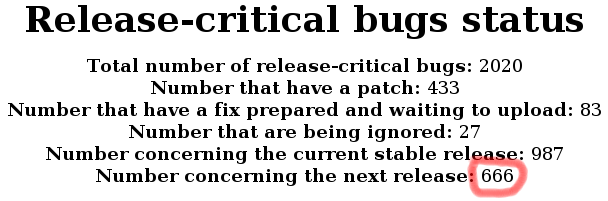
RCBW - #26 RC bug count: 666 It is getting down, even though the current number is scary. My personal RC bug count is not so mystical and as low as 205 RC bugs to go, which is quite encouraging. Without any further ado, here are this week squashes: Random points:

6 April 2010

Michael Prokop: Remote Console feature through Java applet failing?

I m working for a customer who s using IBM blades. Remote access isn t limited to e.g. SoL but also possible through a Remote Console feature using a Java applet. After migrating one of my 32bit systems to a fresh 64bit system I suddenly couldn t use this Remote Console feature any longer. The error message was (leaving it for search engines and help other affected users):
load: class vnc.VncViewer.class not found.
java.lang.ClassNotFoundException: vnc.VncViewer.class
	at sun.plugin2.applet.Applet2ClassLoader.findClass(Applet2ClassLoader.java:152)
	at java.lang.ClassLoader.loadClass(ClassLoader.java:303)
	at java.lang.ClassLoader.loadClass(ClassLoader.java:248)
	at sun.plugin2.applet.Plugin2ClassLoader.loadCode(Plugin2ClassLoader.java:447)
	at sun.plugin2.applet.Plugin2Manager.createApplet(Plugin2Manager.java:2880)
	at sun.plugin2.applet.Plugin2Manager$AppletExecutionRunnable.run(Plugin2Manager.java:1397)
	at java.lang.Thread.run(Thread.java:619)
Caused by: java.net.ConnectException: Network is unreachable
	at java.net.PlainSocketImpl.socketConnect(Native Method)
	at java.net.PlainSocketImpl.doConnect(PlainSocketImpl.java:333)
	at java.net.PlainSocketImpl.connectToAddress(PlainSocketImpl.java:195)
	at java.net.PlainSocketImpl.connect(PlainSocketImpl.java:182)
	at java.net.SocksSocketImpl.connect(SocksSocketImpl.java:366)
	at java.net.Socket.connect(Socket.java:525)
	at sun.net.NetworkClient.doConnect(NetworkClient.java:161)
	at sun.net.www.http.HttpClient.openServer(HttpClient.java:394)
	at sun.net.www.http.HttpClient.openServer(HttpClient.java:529)
	at sun.net.www.http.HttpClient.<init>(HttpClient.java:233)
	at sun.net.www.http.HttpClient.New(HttpClient.java:306)
	at sun.net.www.http.HttpClient.New(HttpClient.java:323)
	at sun.net.www.protocol.http.HttpURLConnection.getNewHttpClient(HttpURLConnection.java:860)
	at sun.net.www.protocol.http.HttpURLConnection.plainConnect(HttpURLConnection.java:801)
	at sun.net.www.protocol.http.HttpURLConnection.connect(HttpURLConnection.java:726)
	at sun.net.www.protocol.http.HttpURLConnection.getInputStream(HttpURLConnection.java:1049)
	at java.net.HttpURLConnection.getResponseCode(HttpURLConnection.java:373)
	at sun.plugin2.applet.Applet2ClassLoader.getBytes(Applet2ClassLoader.java:458)
	at sun.plugin2.applet.Applet2ClassLoader.access$000(Applet2ClassLoader.java:46)
	at sun.plugin2.applet.Applet2ClassLoader$1.run(Applet2ClassLoader.java:126)
	at java.security.AccessController.doPrivileged(Native Method)
	at sun.plugin2.applet.Applet2ClassLoader.findClass(Applet2ClassLoader.java:123)
	... 6 more
Exception: java.lang.ClassNotFoundException: vnc.VncViewer.class
The error message might not be obvious at a glance and that s why I m writing about it actually. It s NOT the:
load: class vnc.VncViewer.class not found.
why it s failing but instead the real reason for the failure is the:
java.net.ConnectException: Network is unreachable
As you can read in Debian s Bug Tracking System in bug #560044:
Netbase has recently introduced the sysctl-setting
net.ipv6.bindv6only=1 in /etc/sysctl.d/bindv6only.conf and this setting will probably be the default in squeeze. This setting breaks networking in java, and any traffic will always
result in a java.net.SocketException: Network is unreachable .
To quote /etc/sysctl.d/bindv6only.conf:
When disabled, IPv6 sockets will also be able to send and receive IPv4 traffic with addresses in the form ::ffff:192.0.2.1 and daemons listening on IPv6 sockets will also accept IPv4 connections. When IPV6_V6ONLY is enabled, daemons interested in both IPv4 and IPv6 connections must open two listening sockets.
To work around this issue you can either execute the Java process through "java -Djava.net.preferIPv4Stack=true" or to change the IPv6 behaviour system wide execute "sysctl -w net.ipv6.bindv6only=0". To make this setting permanent across reboots adjust the setting inside /etc/sysctl.d/bindv6only.conf. After applying this workaround the Remote Console should work again.

5 April 2010

Gregor Herrmann: RC bugs 2010/11 - 2010/13

although zack tries to cheer me up (thanks!) I'm still not really happy with the declining amount of RC bugs I manage to look at. but at least I don't forget about them completely :)

so here's the current list:

4 April 2010

Russell Coker: Health and Status Monitoring via Smart Phone

Health Monitoring Eric Topol gave an interesting TED talk about wireless medical monitoring devices [1]. The potential for helping diabetics and other people who need ongoing treatment is obvious as is the potential for helping pregnant women and other people who might suddenly need medical treatment at short notice. One significant positive potential for this is integration with multiple services. For example Eric s talk showed a graph of sleep levels on a mobile phone, the deep sleep (which is apparently the most restorative) was shown in sections that were significantly less than one hour in duration. I often receive SMS messages about network problems during the night, the vast majority of them aren t that important and can be delayed without any problem. If my phone could determine that I was in deep sleep and delay sending me a NAGIOS report for up to 30 minutes then it would help me sleep while not making any significant impact on my work in repairing server problems it s not as if I would be immediately productive if woken from deep sleep anyway. Status and Attention Monitoring Eric Horvitz, Carl Kadie, Tim Paek, and David Hovel of Microsoft Research wrote an interesting paper titled Models of Attention in Computing and Communication: From Principles to Applications [2]. In that paper they describe various methods for tracking user attention and filtering messages so that the user won t be needlessly distracted by unimportant messages when they are busy. The next logical step is to integrate that with a smart phone (maybe Android would be good for this) to screen calls, unknown callers could be automatically directed to voice-mail and known good callers could be given an automated prompt as to whether they think that their call is important enough to be worth the distraction. It seems to me that combining health and status monitoring would be the sensible thing to do. If a bio-sensor array indicates that someone is more stressed than usual then decreasing their availability for phone calls would make sense. It would also be trivial to analyse calls and determine which callers are likely to cause stress and block their calls at inconvenient times. What we Need Of course there are lots of security implications in this. Having multiple networked devices tracking and collating information on health and all activity (including video-monitoring in the Microsoft model) has a lot of potential for malicious use. This is one of many reasons that we need to generally improve computer security. We also need to have free software implementations of such things. We don t want Microsoft to get a monopoly on status monitoring. Also it seems that smart Nike shoes that can work with the iPhone [3] are the leading mass-market implementation of health monitoring, everything related to health-care should be as open as possible. I m happy for Nike to make their own special products, but we need to have them work with open systems and make the data available as widely as possible. There is the real potential for people to needlessly die if health data is not available in open formats! According to the Wikipedia page Nike has been shipping products using a proprietary 2.4GHz wireless network since 2006 [4], it would be a really good hardware project to devise a way of making compatible sensors and readers. We also need some free software for monitoring the user status to avoid interrupting them. Finally we need some software to integrate all the data. Canonical s Desktop Experience team are doing some interesting work on managing desktop notifications that will be in Ubuntu Lucid [5], they appear to have some basic support for masking notifications based on priority. Please keep up the great work Canonical people, and please consider working on advanced status monitoring next!

Obey Arthur Liu: Apply for the Google Summer of Code at Debian!

gsoc2010_300x267px The student application period for the Google Summer of Code has started since March 29th, but there is still time: the deadline is Friday, April 9th at 19:00 UTC. If you re a student, go check out the Debian Ideas page. Pick an idea you like or suggest your own. Come talk to the Summer of Code team on #debian-soc on irc.debian.org and on the soc-coordination mailing list. Work with us to perfect your proposal before the deadline and hopefully, you ll get your awesome project and your ticket to DebConf10 in New York this summer. dfdcbkwm_48fnmsmgcb_b1
Do you like to tinker ? Do you like having a positive impact on all kinds of users ? The Google Summer of Code at Debian has been a exceptional experience for all our students over these past years and we look forward to welcoming you in this great family to work on the foundations of the Linux experience of millions of users spanning several distributions, from the smallest embedded devices to the largest supercomputers. So, please take a look at our Ideas page, apply and tell your friends to do so by rebloging, retweeting, reeverything!

Kartik Mistry: Infibeam Pi

* Two things I loved about Infibeam Pi ebook reader today,

Russell Coker: Slavery vs Child Porn

Slavery Still Exists! We all like to think of slavery as a problem from the 19th century, but it still exists and is a significant problem! Kevin Bales gave an interesting TED talk about how to combat modern slavery [1]. Currently there are an estimated 27,000,000 slaves in the world, it s a lot but it s a smaller proportion of the world population in slavery than at any time in history. Also the price of slaves is lower than ever before, instead of being a capital asset a slave is a disposable item (this is really bad for the slaves). The estimated average cost to liberate a slave is $US400, this involves rescuing them from slavery and teaching them the skills that they need to have a sustainable life there s no point rescuing them only to have them get captured again! Kevin notes that the US is still paying the price of the botched emancipation of 1865, so the liberation of slaves really needs to be done properly. The estimated total cost to liberate all the slaves in the world is $US10.8 billion. Think about the trillions of dollars that have been spent on wars to supposedly liberate people, when a mere $US10.8 billion would liberate all slaves. That s a fraction of the cost of the proposed National Broadband Network which would you rather have, fast net access for cable TV services or a world without slavery? Censorship of Child-Porn (and other things) vs Liberating Slaves It is often claimed that child porn needs to be stopped to prevent there being economic incentives to molest children in other countries, to achieve this goal the Australian government wants to filter all net access to prevent access to child-porn, other prohibited porn, documentation about euthanasia, and the occasional dental practice (seriously, they just can t get their filters right). Methods that are proven to prevent children being molested should be given a much higher priority than censoring the Internet in the hope of removing economic incentives for child abuse. It seems reasonable to assume that a significant portion of child-slaves are molested (because we know that slave owners are really bad people and there s nothing to stop them from molesting children). Let s assume for the sake of discussion that 1/4 of child slaves are molested. So that would give an average cost of $US1600 to free one child from sexual slavery and three other children from physically abusive environments. Currently the Australian government plans to spend $44,000,000 in Internet censorship with the supposed aim of protecting the children. The fact that the majority of child-porn is believed to be transferred via protocols other than HTTP has not deterred the government from pushing forward a HTTP-only filter for censorship. Also the fact that anyone could use a VPN, tor, or other services to trivially bypass a HTTP filter has not deterred them. Let s assume for the sake of discussion that $US400 equates to $500 Australian, the exchange rate is lower than that but it varies and it s best to be conservative. Therefore the $44,000,000 the government wants to spent on censorship could be used to liberate 88,000 child slaves. If my estimates are correct that would save 22,000 children from being molested. In the unlikely event that slavers happen to be nice people who don t do nasty things like molest children (which really isn t credible) then freeing 88,000 children from slavery and all the physical abuse that it involves is still a really good thing! If a plan to prevent child sexual abuse by liberating slaves fails to actually prevent any sexual abuse then at least you end up with some freed slaves (which is a really good thing). But if a plan to prevent child sexual abuse by censoring the Internet fails then all you end up with is slower Internet access and censorship of totally unrelated things that the government doesn t like.

3 April 2010

Russell Coker: Too Stupid to be a Bishop

A Stupid Bisop breaks the Godwin Rule The Sydney Morning Herald reports that Catholic Bishop Anthony Fisher has just claimed that GODLESSNESS and secularism led to Nazism, Stalinism, mass murder and abortion [1]. This is a violation of the rule part of Godwin s Law. We might not expect clerics to have enough general knowledge of society to know this rule, but it does seem reasonable to expect them to have enough empathy to understand why inappropriate Hitler analogies will just offend people and don t advance their cause. But anyone in a position of leadership in a global organisation who is going to talk to the media should have enough intelligence to check historical references. The Wikipedia article about Positive Christianity is worth reading, it includes references to Christian based race-hate in Nazi Germany as well as modern references [2]. There is also an interesting Wikipedia page about the Religious aspects of Nazism [3], there seems to be room for a lot of debate on the matter of how religion fit in to the Nazi regime but it seems quite clear that it was not an atheist regime. The Wikipedia page about the Rechskonkordat (the agreement between the Nazi Germany and the Catholic Church) is also worth reading [4]. Also I m sure that the Chilean Dictator Augusto Pinochet wasn t the only Catholic despot. Community Services and Moral Authority Cardinal Pell was quoted in the same SMH article as saying we find no community services sponsored by the atheists , of course if he was to investigate who is contributing to the religious based community service organisations he would find plenty of atheists. I know I m not the only atheist who donates to The Salvation Army [5] on occasion. I wonder how many religious people would be happy to donate to an explicitly atheist organisation, I suspect that the prevalence of religious charities is due to the fact that a religious charity can get money from both religious people and atheists while a charity that advocated atheism in any way would be limited to atheist donors. If I was to establish a community service charity I would seriously consider adding some religious element to help with fund raising it s just a matter of doing what s necessary to achieve the main goal. Even if it wasn t for violating Godwin s law and a total lack of any knowledge of history Anthony would still have failed. We all know the position of the Catholic Church on the sexual abuse of children. The Catholic policies are implemented in the same way in every country and as far as we can tell have been done so for all time. I believe that makes them unqualified to offer moral advice of any kind. Criticising the Secular World Peter Craven has written an article for The Age criticising the secular world [6]. He makes the extraordinary claim the molesting clergy are like the brutal policemen and negligent doctors and corrupt politicians: they come with the territory because pennies have two sides . The difference of course is that police, doctors, and politicians tend to get punished for doing the wrong thing even when they do things that are far less serious. But the molesting clergy seem to be protected by all levels of the church hierarchy. Peter makes some claims about the secular world as if there is a Borg collective of atheists and claims that there is an incomprehension of Christian values . I believe that the attitudes of atheists and the secular justice system correspond quite well with what most Christians would regard as Christian values the problem is that the actions of the church leaders tend not to match that. It s All About Money I would like to know why Christians almost never change church and never cease donating. Religious organisations are much like corporations, they seek new members and new revenue sources. If a significant number of Catholics were to pledge to not donate any money to their church for a year after every child sex abuse scandal then Catholic policies might change. Also if Catholics were to start changing to Christian denominations that do the right thing in regard to moral issues then the Catholic church would either change or eventually become irrelevant. If you keep paying people who do bad things then you are supporting them! I suggest that any church member who cares about the moral issues of the day should vote with their checkbook. If their church fails to do the right thing then inside the donation envelope they should put a note saying due to the immoral actions of the church I will donate to other charities . I am not aware of any church that would expel members for such a protest, but I know that some smaller parishes have cash-flow problems and would rapidly escalate the issue through the management chain if even a few members were to protest in such a manner.

30 March 2010

Frans Pop: Debianizing an ARM-based netbook

I got this neat little Chinese netbook after a mail to the debian-arm list where one machine was offered in exchange for porting Debian to it. So I offered to get Debian Installer running on it. In total 20 of these ChiTech PC89E netbooks were bought as a group by various people in different countries. The netbook is based on an ARM S3C6410 SoC, has 256 MB RAM and an excellent 8.9" 1024x600 LCD display. The machine itself is 11" and weighs under 800 grams. Most of the weight is the LCD display; they've even had to add a small extra weight in the base to avoid it toppling over backwards. The goal of getting D-I running was achieved last week, though not without needing to overcome some steep hurdles. Base installation Our main problem is that we don't have the source code to either the kernel they use (2.6.24.2 with patches from Samsung and others), or the u-boot bootloader. SSH was available without password for the user account and various basic errors allowed us to root the system relatively quickly. Brute force cracked the root password a few days later. The only information we did have was from the provided desktop system (which is really quite good and certainly looks very polished, but in the end still way too limited), what's on the flash memory and the contents ofa "firmware upgrade" image they provided. Having that firmware upgrade image proved very important as it gave us a good idea how to boot the system from SD card and made it possible to locate the kernel, u-boot bootloader and other files in flash memory. Googling for some boot messages we found two kernel source trees (for a different device: SmartQ) that looked promising as a basis. After some disassembly work by Luke Kenneth Casson Leighton on the kernel to get LCD timings and correct GPIO data we managed to get a basic working kernel: LCD, USB (and thus keyboard and touchpad), and wired networking. Although there are still loads of things that need improving/fixing, that gave me enough to work with to try to get Debian Installer going. The main limitations for running D-I are that we cannot change the bootloader configuration and that their boot procedure does not use an initrd. But we did work out how to boot a custom kernel from an external SD card by making creative use of their "firmware upgrade" procedure. Essentially I needed to find a way to run D-I by only booting a kernel. Piggy-backing an initrd onto a kernel is possible (using the 'bootpImage' target from the upstream kernel build system), but then the size of kernel plus initrd is limited to 4 MB and that is really too limited for a decent D-I initrd (especially if you want full i18n support). I ended up creating a micro-initrd (only 66 kB!) which only function is to mount the external SD card, load the real D-I root initramfs (which now no longer has any real size limitation) and then run init in that. After adding some relatively minor customizations for this netbook (such as installing the kernel from a custom repository on alioth), the installer was up and running. As the framebuffer worked without problem for the newt frontend, I next wondered if it would be possible to also get the graphical installer working. This should be easier for non-x86 systems after the recent switch from DirectFB to X.Org as backend for the graphical installer. And the image below shows it was. I had to create an /etc/xorg.conf to get the USB keyboard and touchpad working (apparently auto-detection does not quite work for less standard hardware), but that was basically it. Language selection So now all we have to do is get all the remaining kernel issues sorted out...

Russell Coker: Why Comments?

Russ Albery has described why he doesn t support comments on his blog [1]. I respect his opinion and I m not going to try and convince him to do otherwise. But I think it s worth describing why I want comments on my blog and feel that they are worth having for many (possibly most) other blogs. Types of Blog The first thing to consider is the type of post on the blog. Some blogs are not well suited to comments. I have considered turning off comments on my documents blog [2] because it gets a small number of readers and is designed as reference material rather than something you might add to a public Planet feed or read every week as it has a small number of posts that are updated. So conversations in the blog comments are unlikely to happen. One thing that has made me keep comments open on my documents blog is the fact that I am using blog posts as the main reference pages for some of my projects and some people are using the comments facility for bug reports. I may make this the main bug reporting facility I will delete the comments when I release a version of the software with the bugs fixed. One particular corner case is a blog which has comments as a large part of it s purpose. Some blogs have a regular open thread where anyone can comment about any topic, blogs which do such things have the owners act more like editors than writers. One example of this is the Making Light blog by Teresa and Patrick Nielsen Hayden [3] who are both professional editors. The next issue is the content of the post. If I was to create a separate blog for authoritative posts about SE Linux then there wouldn t be much point in allowing comments, there are very few people who could correct me when I make a mistake and they would probably be just as happy to use email. When I write about issues where there is no provably correct answer (such as in this post) the input of random people on the net is more useful. Another content issue is that of posts of a personal nature. Some people allow comments on most blog posts apart from when they announce some personal matter. I question the wisdom of blogging about any topic for which you would find comments intolerable, but if you are going to do so then turning off comments makes sense. Finally there is the scale of the blog. If you don t get enough readers to have a discussion in the comments then there is less benefit in having the facility turned on the ratio of effort required to deal with spam to the benefit in comments isn t good enough. In his FAQ about commenting [4] Russ claims that controlling spam can take a tremendous amount of time or involve weird hoop-jumping required for commenters . I have found the Block Spam by Math [5] Wordpress plugin to be very effective in dealing with the spam, so for this blog it s a clear benefit to allow comments. Since using that plugin my spam problem has decreased enough that I now allow comments on posts which are less than 1 year old previously comments were closed after 90 days. The plugin is a little annoying but I changed the code to give an error message that describes the situation and prevents a comment from being lost so the readers don t seem too unhappy. The Purpose of Comments Russ considers the purpose of comments to be meaningfully addressed to the original post author or show intent to participate in a discussion . That s a reasonable opinion, but I believe that in most cases it s best if comments are not addressed to the author of the post and are instead directed towards the general readers. I believe that participating in a discussion and helping random people who arrive as the result of a Google search are the main reasons for commenting. For my blog an average post will get viewed about 500 times a year and the popular posts get viewed more than 200 times per month, so when over the course of a year more than 1000 people read the comments on a post (which is probably common for one of my posts) then 99.9% of readers are not me and commentators might want to direct their comments accordingly. Of course a comment can be addressed at the blog author so the unknown audience can enjoy watching the discussion. For some of my technical posts I don t have time to respond to all comments. If I have developed a solution to a technical problem that is good enough I may not feel inclined to invest some extra work in developing an ideal solution. So when a reader suggests a better option I sometimes don t test that out and therefore can t respond to the comment. But the comment is still valuable to the 1000+ other people who read the comment section. So a commentator should not assume that I will always entirely read a comment on a technical matter. Comment threads can end up being a little like mailing lists. I don t think that general discussions really work well in comment threads and don t aim for such things. But if a conversation starts then I think you might as well continue as long as it s generally interesting. Generally for most blogs I think that providing background information, supporting evidence, and occasionally evidence of errors is a major part of the purpose of blog comments. But entertainment is always welcome. I would be happy to see some poems in the comments section of technical posts, sometimes a Limerick or haiku could really help make a technical point. Political blog posts can be a difficult area. Generally the people who feel inclined to write political blog posts or comment on them are not going to be convinced to entirely change course, but as there are many people who can t seem to understand this fact a significant portion of the comments on political blog posts consist of different ways of saying you re wrong . The solution to this is to moderate the comments aggressively, too many political blogs have comments sections that are all heat and no light. I m happy for people to go off on tangents when commenting on my political posts or to suggest a compromise between my position and their preferred option. But my tolerance of comments that simply disagree is quite small. Generally I think that blogs which directly advocate a certain political position should have the comments moderated accordingly, people will read a site in the expectation of certain content and I believe that the comments should also meet that expectation to some degree. Comments on political posts can provide insights into different points of view and help discover compromise positions if moderated well. How to provide Feedback Russ advocates commenting to the blog author via email it is now the only option he accepts. My observation is that the number of people who are prepared to comment via email (which generally involves giving away their identity) is vastly smaller than those who use Blog comment facilities. This means that you will miss some good comments. One of the most valuable commentators on my blog uses the name Anonymous and has not felt inclined to ever identify themself to me, I wouldn t want to miss the input of that person and some of the other people who have useful things to say but who don t want to identify themself. I have previously written about how not all opinions are equal and anonymous comments are given a lower weight [6]. That post inspired at least one blogger to configure their blog to refuse anonymous comments, it was not my intent to inspire such reactions (although they are logical actions based on a different opinion of the facts I presented). I believe that someone who is anonymous can gain authority by repeatedly producing quality work. Another option is for people to write their own blog posts referencing the post in question. I don t believe that my core reader base desires short posts so I won t write a blog post unless I have something significant to say. I expect that many other people believe that the majority of their blog comments would not meet the level of quality that their readers expect from their posts (posts are expected to be more detailed and better researched than comments). As an aside forcing people to comment via blog posts will tend to increase your Technorati rating. :-# A final option is for people to use services such as Twitter to provide short comments on posts. While Twitter is well designed for publishing short notes the problem with this is that it s a different medium. There are many people who like reading and discussing blog posts but who don t like Twitter and thus using a different service excludes them from the conversation. For my blog I prefer comments for short responses and blog posts for the longer ones. If you write a blog post that references one of my posts then please enter a comment to inform me and the readers of my blog. Email is not preferred but anyone who wants to send me some is welcome to do so. If this post inspires you to change your blog comment policy then please let me know. I would like to know whether I inspire people to allow or deny blog comments.

Russell Coker: New Portslave release after 5 Years

I ve just uploaded Portslave version 2010.03.30 to Debian, it replaces version 2005.04.03.1. I considered waiting a few days to make the anniversary but I wanted to get the bugs fixed. I had a bug report suggesting that Portslave should be removed from Debian because of being 5 years without a major release. It has been running well 24*7 on one of my servers for the last 5 years and hasn t really needed a change. There were enough bugs to keep me busy for a few hours fixing things though. The irony is that I started using dates as version numbers back when there were several forks of Portslave with different version numbering schemes. I wanted to show that my fork had the newer version and a recent date stamp was a good indication of that. But then when Portslave didn t need an update for a while the version number showed it and people got the wrong idea. The new project home page for Portslave is on my document blog [1].

29 March 2010

Russell Coker: Server Costs vs Virtual Server Costs

The Claim I have seen it claimed that renting a virtual server can be cheaper than paying for electricity on a server you own. So I m going to analyse this with electricity costs from Melbourne, Australia and the costs of running virtual servers in the US and Europe as these are the options available to me. The Costs According to my last bill I m paying 18.25 cents per kWh that s a domestic rate for electricity use and businesses pay different rates. For this post I m interested in SOHO and hobbyist use so business rates aren t relevant. I ll assume that a year has 365.25 days as I really doubt that people will change their server arrangements to save some money on a leap year. A device that draws 1W of power if left on for 365.25 days will take 365.25*24/1000 = 8.766kWh which will cost 8.766*0.1825 = $1.5997950. I ll round that off to $1.60 per Watt-year. I ve documented the power use of some systems that I own [1]. I ll use the idle power use because most small servers spend so much time idling that the time that they spend doing something useful doesn t affect the average power use. I think it s safe to assume that someone who really wants to save money on a small server isn t going to buy a new system so I ll look at the older and cheaper systems. The lowest power use there is a Cobalt Qube, a 450MHz AMD K6 is really small, but at 20W when idling means a cost of only $32 per annum. My Thinkpad T41p is a powerful little system, a 1.7GHz Pentium-M with 1.5G of RAM, a 100G IDE disk and a Gig-E port should be quite useful as a server which now that the screen is broken is a good use for it. That Thinkpad drew 23W at idle with the screen on last time I tested it which means an annual cost of $36.80 or something a little less if I leave the screen turned off. A 1.8GHz Celeron with 3 IDE disks drew 58W when idling (but with the disks still spinning), let s assume for the sake of discussion that a well configured system of that era would take 60W on average and cost $96 per annum. So my cost for electricity would vary from as little as $36.80 to as much as $96 per year depending on the specs of the system I choose. That s not considering the possibility of doing something crazy like ripping the IDE disk out of an old Thinkpad and using some spare USB flash devices for storage I ve been given enough USB flash devices to run a RAID array if I was really enthusiastic. For virtual server hosting the cheapest I could find was Xen Europe charges E5 for a virtual server with 128M of RAM, 10G of storage and 1TB of data transfer [2], that is $AU7.38. The next best was Quantact who charges $US15 for a virtual server with 256M of RAM [3], that is $AU16.41. Really for my own use if I was paying I might choose Linode [4] or Slicehost [5], they both charge $US20 ($AU21.89) for their cheapest virtual server which has 360M or 256M of RAM respectively. I ve done a lot of things with Linode and Slicehost and had some good experiences, Xen Europe got some good reviews last time I checked but I haven t used them. The Conclusion When comparing a Xen Europe virtual server at $88.56 per annum it might be slightly cheaper than running my old Celeron system but would be more expensive than buying electricity for my old Thinkpad. If I needed more than 128M of RAM (which seems likely) then the next cheapest option is a 256M XenEurope server for $14.76 per month which is $177.12 per annum which makes my old computers look very appealing. If I needed more than a Gig of RAM then my old Thinkpad would be a clear winner, also if I needed good disk IO capacity (something that always seems poor in virtual servers) then a local server would win. Virtual servers win when serious data transfer is needed. Even if you aren t based in a country like Australia where data transfer quotas are small (see my previous post about why Internet access in Australia sucks [6]) you will probably find that any home Internet connection you can reasonably afford doesn t allow the fast transfer of large quantities of data that you would desire from a server. So I conclude that apart from strange and unusual corner cases it is cheaper in terms of ongoing expenses to run a small server in your own home than to rent a virtual server. If you have to purchase a system to run as a server (let s say $200 for something cheap) and assume hardware depreciation expenses (maybe another $200 every two years) then you might be able to save money. But this also seems like a corner case as the vast majority of people who have the skills to run such servers also have plenty of old hardware, they replace their main desktop systems periodically and often receive gifts of old hardware. One final fact that is worth considering is that if your time has a monetary value and if you aren t going to learn anything useful by running your own local server then using a managed virtual server such as those provided by Linode (who have a really good management console) then you will probably save enough time to make it worth the expense.

Matt Brown: Initial Review of Xero Personal

I ve been eagerly looking forward to the release of Xero Personal which has been heavily promoted by Xero and BNZ (as MoneyMap) for the last few months. Unfortunately my first impressions of the product today are extremely underwhelming. Xero Personal is definitely not worth anywhere close to $5/month for me at this point in time and I m unlikely to even keep using the free trial. To set the context for that statement, Xero Business set the bar high. I first used the original version of Xero while it was still in beta and even then it was clear that it was an application that took accounting to a new level and would provide an order of magnitude improvement in how I maintained the accounts for our business. That promise held true once we started paying for it, even though the cost of Xero is more than 10% of our annual expenses, the time and hassle it saves makes it a worthwhile investment. By contrast today s release of Xero Personal offers nothing new above existing personal finance websites or desktop packages and would take me extra time to use as it fails to handle many of the basic transactions that a normal household will encounter. The way Xero Personal works is by having you manually upload your bank statements (the automatic import functionality that is so useful in the business version of Xero has been restricted to BNZ MoneyMap customers only). For each transaction you are asked to provide two pieces of information. The first is a category which serves as a basic form of account to track expenses and income. For each category you can set a spending or saving goal which Xero will help you track progress towards. The second is a name to identify the other party in the transaction. Xero Personal comes pre-loaded with some fairly generic categories. Annoyingly you re restricted to no more than 8 additional custom categories and the names associated with each transaction are are simple strings you can t link a transaction to another account or entity. To represent a transfer you need two separate transactions, one in each account, which you assign to the special category Transfer so that Xero knows to essentially ignore it. Nothing links the transactions together or ensures that the values balance. In addition to the basic categorisation functionality the application also attempts to track your assets and liabilities (bank accounts and credit cards show up automatically) so that it can compute your net worth. Unfortunately as soon as you try and use this you hit the problem that there is no way to link transactions from your accounts back to your assets and liabilities. This means unless you regularly and manually update your assets and liabilities the net worth calculation only takes into account changes in your cash position and becomes blatantly incorrect. As an example, take the common case of a household with a weekly mortgage (or other loan) repayment. You want the weekly payment to decrease the balance of your current account, increase the balance of your interest expense category and decrease the value of your mortgage liability. Your net worth should decrease by the value of the interest expense only, as the decrease in the value your mortgage liability offsets the remainder of the decrease in the value of your current account. Xero Personal doesn t come close to being able to handle this example today. The ability to split payments to different categories has also been left out (even though it s present in Xero Business and therefore presumably in the underlying engine) so your only option is to categorise the entire payment as a mortgage or housing expense, decreasing your net worth by the full value of the payment. Even if you could split the payment between two categories, one for the interest and one for the principal the inability to link the category for the principal to the liability account means the net worth calculation will still be incorrect. Maybe I m being to hard on this newly released product? It is a SaaS application after all and Xero has an excellent history of releasing regular updates to the business version of Xero. The reason I m so surprised and disappointed by this initial release is that it essentially lacks any double-entry accounting support many of the missing features are core functionality that is already implemented in the accounting platform that supports the business version. Assuming that Xero Personal is built on the same platform (and that would be the obvious choice wouldn t it?) the fact that Xero Personal has been released and is being heavily promoted without these features (compared to the initial version of Xero Business which was fully functional and obviously awesome even in beta) suggests to me that it s a conscious decision to significantly limit the scope and usefulness of the application rather than simply a limit on what could be implemented before the initial release. I sincerely hope that I m wrong and that the coming months bring significant improvements to the functionality of Xero Personal, but until it can support common transactions like mortgage repayments correctly I won t be using it or recommending it to anyone.

28 March 2010

Russell Coker: Autism vs Asperger Syndrome

Diagnostic Changes for Autism Spectrum Disorders Currently Asperger Syndrome (AS) is one of a group of conditions that are grouped into the category Autism Spectrum Disorders (ASD). The American Psychiatric Association plans to merge Asperger s Disorder into Autism Spectrum Disorder [1] in version 5 of their Diagnostic and Statistical Manual (DSM). Apparently a primary reason for the change is the difficulty in assessing people into the various categories (AS, Autism, and PDD-NOS) and some variation in diagnosis between regions. Professor Simon Baron-Cohen (a leading researcher on Autism and Asperger Syndrome) wrote an insightful article about this for the New York Times [2]. He suggests that while genetic research about the causes of Autism Spectrum Disorders (ASDs) is in progress there should be no change. If it turns out that AS and Autism have the same genetic cause then that would be good evidence to combine them into a single diagnostic category. If however they turn out to have different genetic causes then they would need different categories and he suggests that changes should be delayed until this issue is resolved. Simon also raises the issue of the status of people who have already been diagnosed, this is one of the social issues relating to a change in diagnostic criteria. Social Issues related to Diagnosis Unlike some disorders listed in the DSM, many (possibly most) people with AS really care about such things. I think that a common reaction to being diagnosed with Aspergers is to make the study of ASDs a Special Interest , which therefore makes it impossible to ignore what the psychologists are doing in this regard. The biggest problem with changing the diagnostic criteria in this regard is that AS has a good reputation. Some people even think that it s generally a good thing and seem to imagine that every child who is diagnosed with it will end up working for Google! This means that parents will be less likely to reject a diagnosis and therefore will be more likely to try and create a good environment for their child and seek appropriate therapies (such as social skills training and occupational therapy). I expect that a child who is diagnosed as Autistic but who doesn t obviously conform to the worst stereotypes will likely have their parents reject the diagnosis which will lead to a bad result for everyone concerned. The contrary view in this issue is that people who are on the spectrum but who insist that they aren t Autistic are prejudiced and they should embrace the Autism Spectrum label as a measure of solidarity [3], while that s a reasonable point it s not going to happen in the short term. Also there is the issue of adult diagnosis of AS, there are lots of adults who could benefit from being diagnosed and obstacles to such diagnosis (such as associating it with a label that is not well accepted such as Autism) are not going to do any good for anyone. Is Asperger Syndrome really that similar to Autism? Roy Richard Grinker (Professor of Anthropology) wrote a positive article for the New York Times about the diagnostic changes [4]. He seems to think that because in some cases it is difficult to distinguish the difference between Autism and AS they should be in a single diagnostic criteria. Based on that logic you could say that no-one should be diagnosed with an ASD because there is never a clear dividing line between the Neuro-Typical and those who are on the spectrum! Some people are clearly on the spectrum, some clearly aren t, and some are near the border. Roy cites his daughter and Temple Grandin as examples of Autistic people who have greater ability to relate to animals than someone who is Neuro-Typical (NT). I don t have any particular skills in terms of relating to animals. Animals have smaller brains than humans and have thoughts that are less complex and more related to short-term issues, this makes them easier to predict in some situations. I do have significantly better skills in figuring out how to operate machines than most NTs, and this doesn t appear to be uncommon among Aspies. I ve read some of the material that Temple Grandin has written and watched the video of her TED talk, and I get a strong impression that she isn t like me. Even the Aspies who are the least successful in terms of their career (IE quite unlike Temple Grandin) often seem to be like me, I can understand the way they think and recognise that the problems they face are similar to mine but merely more severe. It seems to me that there are significant personality differences between people who have an affinity for animals and those who have an affinity for machines, maths, and engineering. I wouldn t be surprised if it was discovered that Autism and AS had different genetic causes, and this might mean that someone could have both sets of genes. It is obvious that the dividing line between Autism and AS is not that clear. It also seems that part of the diagnosis as implemented by psychologists may be based on the ability to act like an NT and succeed by objective criteria IE earn a good salary in the case of adults. One thing that Roy does get right is that he notes that among people diagnosed with AS and Autism there are both high and low functioning individuals. One thing that Roy gets wrong is the implication that Autistic people can become Aspies. An adult who is assessed without background information on their childhood may get a different diagnosis. If someone was reassessed as an adult with the full facts about their childhood available then (barring DSM changes) the same diagnosis should be returned. Conclusion It appears that this DSM change is going through regardless of the opinion of the people who are affected. While there is a logical basis for giving more weight to researchers than to the research subjects (who are bound to be more biased) it seems that there are some things you can t properly understand unless you live them. When a good portion of the research subjects feel compelled to share their experiences with anyone who will listen it is disappointing that so few of the researchers appear to be listening.

John Goerzen: Trip part 5: Leipzig

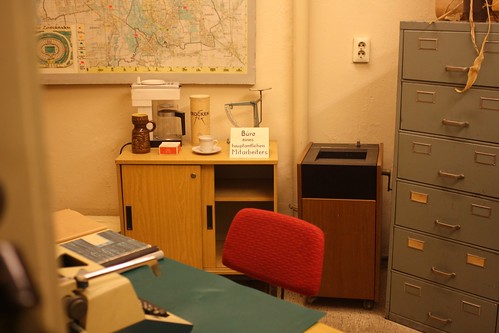
Note: this post written on March 19 for posting after we return. We arrived at Leipzig surprisingly about 5 minutes late on Wednesday morning. My friend Brad was at the Leipzig Hauptbahnhof (central stration) to meet us. As we walked through the city with him, he commented that I hadn t yet tried Currywurst, and there was a stand selling them with different levels of spiciness. I tried one and liked it; Terah was afraid to touch them. After a light lunch with Brad and Anna, we went back into town and saw the V lkerschlachtdenkmal (Monument to the Battle of the Nations). We were warned that it was weird and ugly. And when we arrived, I noticed that it was enormous. And, well, somewhat ugly. And, yes, weird. IMG_2681 After that, we walked through the old trade fair grounds. Leipzig has a long history as a trade center, and after they built the new trade fair grounds, the old ones were reused for other things except for the old Soviet building, which is now both gaudy and abandoned. We picked up Fritzi, who is a very cute 4 years old, from preschool and returned to their house for supper. After that, Brad and I went back into town, intending to hear a reading at the old city pool. When we realized it was a different day, we walked around the city center for awhile and then had a beer at a yes combination cafe/laundromat. Thursday was our day to explore the city. Brad showed us a couple of buildings in the university, including the library, then dropped us off at St. Thomaskirche. That s the church where J. S. Bach was music director for many years, and was buried. Like so many, it was impressive in its height and history. IMG_2703 Next we went to the Stasi museum. The Stasi were the feared and powerful East German secret police during the Communist times. The museum itself was housed in the former Stasi headquarters for Leipzig and was involved with the history of the overthrow of the Communists. The museum covered a lot of the history of the Stasi, including its frantic last days during the 1989 revolution. The level of spying on people was incredible and sophisticated, and they tried to destroy records as the overthrow of the government was imminent. One of the offices in the inner part of the building was left untouched from the Communist years, right down to the typewriter and coffee machine. IMG_2717 After that, we went to the Altes Rathaus (old city hall or townhouse, built in 1556) to do a bit of shopping. Terah was wanting some souvenirs, and I had spotted a shop I thought she might like when walking through the city with Brad the night before. We had already bought some souvenirs at the Schloss Charlottenburg museum store in Berlin (some East German-style crosswalk fridge magnets, and a decorative egg), but wanted something a bit nicer for us and were on the lookout for gifts for others too. We wound up buying a wood carved church scene with a woven wheat tree for us, and another item for others. The shopkeeper spoke no English, and my German vocabulary is small, but we managed to communicate the question of whether or not she could wrap it up in a box for our trip home and she could, and did. Excellent. (I didn t know how to ask about box, but knew how to say that we were Americans, and with a fair bit of gesturing all around, managed to get the idea across.) Then we went in the Altes Rathaus itself, which was both a museum and an interesting cultural experience. We bought our tickets at the booth downstairs, then went upstairs to the entrance. We asked for the English audio guide, which is very common at museums in Germany. (They are small digital audio players that contain recorded information; each room or display has a number you can key in to hear about it in your own language.) We got it, and were told in incredible detail how to use it, even though they are quite easy to figure out and we had used them before. The museum employee told us where the audio tour starts, and in what order it usually goes, which was an effort for her given her limited English. But we all understood and went on our way. It wasn t even 5 minutes later when she had left her desk and came over to us. She was slightly alarmed at two things: one that we didn t have the volume at full blast (which was loud enough for the entire room to hear), and secondly that we weren t looking at the exhibits in the proper order. Never mind that it s easy enough to pull up the audio information about any room just by keying in the number posted in it, I guess. Anyhow, we sort of inwardly shrugged, let her turn the volume up to potentially disturbing the other visitors level, and went through the museum in the order she wanted us to. (Note that this wasn t a museum where there is a one-way flow of traffic or something; you walk into one exhibit, back to the main hall, and then pick your next one.) So we went through the rest of the museum with our English audioguide blaring throughout the large, echoing, wood rooms, feeling a bit rude to the other visitors (maybe 5 of them while we were there) due to its volume. Anyhow, the Altes Rathaus was beautiful and interesting, covering mainly the pre-industrial history of Leipzig. We learned about some of the guilds, the city treasury (vault), and where the town council/parliament met along with rich merchants. There were about as many museum guards as visitors there, and one or two of them sort of followed us around, pointing out the large and completely obvious signs with audio guide numbers in the rooms for us. They are serious about their audio guides in Leipzig. I m glad we went, and I m glad we had the experience we did, too. Terah told me later that she felt reprimanded about the audio guide and visiting order. My take on it was a bit different: the museum is impressive and interesting, but obviously not visited by tourists as much as museums in other cities, or even touristy sites like Thomaskirche in Leipzig. I think they they noticed two people, obviously very foreign (speaking only a little German, and with an American accent) with an interest in their city s history, and took pride in making sure we got the most of our visit and learned as much as possible about something they care about. Here is the main hall of the Altes Rathaus. IMG_2727 We met up with Brad in a cafe near St. Thomaskirche for coffee and cake, then it was on to St. Nikolaikirche (the Church of St. Nicholas), the other large church in town. We stepped out of a passageway to face the large building, and walked in. The interior was decorated in pastels, and was also beautiful and historic. I can t get enough of that sort of building, I think. This building was especially important because it was the site of organizing for the Monday evening protests against the Communist government in 1989. People met at the church, sang a few hymns (to qualify it as a religious service, perhaps), then organized their protest for the evening. Sometimes they would wind through city streets and put flowers at the Stasi headquarters steps, and once the citizens actually overtook the Stasi headquarters. IMG_2745 After awhile we grabbed a bit more for lunch: a pretzel for Terah and a Currywurst for me. (This one wasn t spicy and wasn t all that good.) Then we went to the GDR museum, which was large and interesting, but unfortunately for us, completely in German with no English guide available. That evening, we went to a Bach concert at the Leipzig Gewandhaus, celebrating Bach s 325th birthday. That was fun, and a neat experience with such good music in a very nice venue. The program included Bach s Suite for Orchestra no. 1 in C Major (BWV 1066), Concerto for Violin no. 2 in E major (BWV 1042), Ich habe genug (BWV 82), and Suite for Orchestra no. 4 in D major (BWV 1069). Sir Roger Norrington was conducting, and was rather fun and atypical to watch. He had the audience chuckling a few times with his minimalist conducting or perhaps his flamboyant gestures. Anyhow, the music was excellent and the tickets included free passage on the public transit system 3 hours before and after the concert a nice touch. Due to our schedule, we didn t spend much time with Fritzi, but we did get to play with her a bit. She likes to pretend to be a shopkeeper, and had her store all ready to lay out. We would ask her for some items, which she d put in a basket for us, and then of course there would be a child s twist: we d get our items, and she d pay us for them too. Terah and I brought some books for Fritzi. The particularly enjoyed Goodnight Moon because inside it is an picture of The Runaway Bunny, which she already had. Fritzi chose one of her books to give to Jacob it was a German book (Maulwurf) based on a Czech cartoon mole. That was nice of her, and Jacob really liked it (I ll write about that later). We had a good time in Leipzig, and I was getting fairly good at navigating downtown and with the trams and then, of course, it was time to move on. So Friday morning we caught our 7:50 train from the Leipzig Hauptbahnhof. We took the ICE train to Dresden, then walked a few feet to get onto the EC to Prague. That was a bit of a funny experience. The ICE trains are all sleek, modern, meticulously maintained, and the passengers tend to be very quiet. Talking is barely above a whisper, and people seem alarmed if their cell phone rings, even outside the quiet car. The EC passenger car appears to have been built, or last renovated, in the 1970s, and may have been Hungarian. The seats and curtains are old and faded; some of the seat backs have rips in the vinyl headrests. People were talking or eating loudly, in a very different setting than on the ICE train. As we rode along, we were on the right side the river Elbe for many miles. The scenery was beautiful, with small houses in the river valley, and the occasional house up in the hillside. At one point (a bit before we passed through K nigstein on the way to the Bad Schandau stop), we spotted what looked like an old walled city up on the hill. I figured out later that it was Festung K nigstein (K nigstein Fortress). Update: I forgot to mention a couple of things about Leipzig. One was our walk through a forest yes, a forest in the city. That was a nifty, quiet, and pleasant surprise. Secondly was seeing all the DDR apartment blocks, where the apartments evidently were quite literally blocks. It is interesting to see the Communist architecture.
27 March 2010

Obey Arthur Liu: Wanted: 1 bottle of DebConf9 wine in the US before Wednesday

Hi Planet, 3745140041_9f4a3da997_o1 (cc-by-2.0 aigarius) I know it s kind of far fetched, but I would need a bottle of DebConf9 wine shipped to California before Wednesday 31st, March. Because of the urgency, the bottle needs to already be in the US and will need to be shipped by FedEx Overnight or equivalent. I will of course reimburse you all costs, including to get you a replacement bottle if needed. This is a gift to someone who has been a great friend of Debian for the past few years and has helped us a lot. Drop by IRC (ArthurLiu, OFTC) or mail me and I will give you more information about what this is about.

John Goerzen: Trip part 4: Berlin

Note: this post was written on March 16 and posted after our return home. Also, I took no photos in Berlin, reasoning that I could leave my camera at the hotel so as to not worry about it, since I m sure there are enough photos of the Brandenburg Gate in the world already. Photos on this story only are from others. We ve had a good time in Berlin it s been adventurous to be out on our own in an unfamiliar city with an unfamiliar language, but has gone well. I feel that I m finally getting used to it a bit, and now tomorrow we move on to Leipzig. Stepping off the train at the Berlin Hauptbahnhof, and seeing all those people connecting to all those trains, I had a feeling of excitement: here is a grand train station that is actively used by so many people. I got a sense of what the beautiful and enormous Kansas City Union Station once felt like, I think; that station at its peak served almost the same number of people in a day at Berlin Hbf does.
(photo by eliotc) Stepping outside in the cold and snow to wait for our bus, I got the first sense that Berlin felt a bit more like an American city than did L beck: a beggar with a suspicious story was working the crowd with Speak English? (We saw many dressed similarly using the exact same tactic during our stay in Berlin.) Our bus ride to the hotel showed us some graffiti a fact of life in many cities in the USA too. Our hotel, the Circus, most definitely did not feel American. The staff was very friendly (I think I ve only seen that level of friendliness and helpfulness at one hotel in the USA: the Portland Doubletree). The room was small (which we expected) but very nice. There was a fresh flower waiting, and a whole printout of information with my name on it waiting in the room: info about the hotel, restaurant, and a multi-page history of this part of the city. They are very energy-conscious there. The hall lights automatically turn off, but you can touch your (apparently RFID-enabled) room card to any switch to turn them on for a few minutes. When in your room, you put your key card in a little holder that keeps it safe and enables the use of the lights. They don t put shampoo in the rooms, but have a selection free for the taking at the front desk: the rationale being that it generates waste when they have to replace it for people that don t need it replaced. They are very environmentally conscious with everything except the showerhead, which appears to use so much water that it would be illegal in the USA. Here s the obligatory surprising to an American comment about Germany: the complete lack of water drinking fountains. In the US, you can get a drink of water at any building of any size airports, train stations, museums, shopping centers, and also in many public places such as parks. I may have seen exactly one water fountain in the Hamburg airport, but that was it. It is odd given the general sense of environmentalism here that so much energy is being wasted on bottling water, not to mention the expense of having to pay for it all over the place. The bus ride to the hotel was interesting. I needed to buy two tickets from the bus driver. I didn t know the German word for ticket, so I just guessed and went with Zwei Ticket, bitte. Wohin? Rosenthaler Str. Then the price came up. I believe that was my first completely successful German-only conversation. (Most Germans hear a couple of words of mine and quickly switch at least partially to English, which probably gets things done a lot faster, and saves me embarrassment, but doesn t give me much chance to practice my German.) We ate dinner Monday night at the Hackesche H fe at Weihenstephaner, a Bavarian restaurant. It was a fun meal, and the tables were long and seated multiple parties. I tried out their special Bavarian beer, and of course had some Wienerschnitzel. I had noticed apple strudel on their website but not on their menu, so when it was time for dessert, I asked our waitress if they had apple strudel today. They did, and it was delicious. Tuesday began with a walk to the Pergamon Museum. From our hotel, this was a walk of about a mile. We had been introduced to excellent German bakeries during our time in L beck. So, since we hadn t had breakfast, when we spotted a bakery along the road, we went in. Terah got a croissant with chocolate on top, which turned out to also have chocolate inside. I found a couple of smaller rolls with various seeds and flavorings on top. All were excellent, and I believe we spent less than EUR 2 all together. We ate our breakfast of rolls as we walked towards the museum. It was a cold and somewhat windy morning, but it was also fun and exciting to be there. The Pergamon was quite the experience. The Pergamon Altar was the first large artifact we saw, and was particularly interesting given that I have recently read The Iliad and The Odyssey.
(photo by *hoodrat*) The Market Gate of Miletus was also impressive, but the true highlight has to be the Ishtar Gate and processional way. Wow. It was built in 575BC by King Nebuchadnezzar II, and importantly was built out of glazed tiles, so the original artwork, color and all, still survives. You can walk through the processional way and get the feeling of kings and armies proceeding there. Truly spectacular.
(photo by Rictor Norton & David Allen) After the Pergamon, we crossed a bridge to the east taking us off Museumsinsel (Museum Island). We walked down a quiet and somewhat forgotten back street and found a small restaurant for lunch. I had the Berlin Wurst , some excellent sausage with excellent and not-so-sour sauerkraut. Terah had some breakfast-type items with fruit. After that, we walked over to the famous Unter den Linden. It wasn t yet spring, so the scenery wasn t all that spectacular yet, but that and the light snow didn t stop the tourists, or the tacky tourist shops, which appear to be a universal global feature. ( Berlin flip-flops and t-shirts made in China, anyone?) The destination of all this walking was the Brandenburger Tor, the famous Berlin icon. The Brandenburg Gate was immense, and the sense of history of standing there was impressive.
(photo by Andrew Mason) We of course walked through the Brandenburg Gate on our way to the Bundestag, which we intended to tour. We didn t, though, due to the cold and very long line snaking out of the building. We then got on the train to Checkpoint Charlie. We saw the outdoor checkpoint still in the middle of the street. We intended to visit the museum Haus am Checkpoint Charlie, but was so packed that it was difficult to even get in the door. We stood in line to buy tickets for a few minutes, but made absolutely no progress; meanwhile, it appeared that an entire school group came in after us somehow and was also waiting to pay. So we decided to go see Schloss Charlottenburg instead.
(photo by Poom!) The Schloss (palace) was a baroque design, intended to impress visitors with the power and wealth of the owners. Only the old wing was open Tuesday, but we had about an hour and a half available to tour it: enough to see the whole thing, but not enough to linger and read all of the information. It was impressive and interesting. Particularly interesting was the chapel, which was this odd state/religion combination decorated both with sacred symbols as well as symbols of the king. After Charlottenburg, we had dinner at the Prussian Restaurant Marjellchen near the Savignyplatz S-bahn. We started with a smoked herring appetizer. Then I had the K nigsberg meatballs, and Terah had creamed ham. Both of us really enjoyed our meals, and Terah s reminded her of Verenike. Wednesday started with an early rise, then we went to Mauerpark to see a remnant of the Berlin Wall. I am glad to have seen it, and was a bit surprised with how small it was at that point compared to my expectations.
(photo by Eichental) Then we had a few minutes back in our hotel to munch on some rolls for breakfast; after that, it was off to the Hauptbahnhof for our train to Leipzig.

Russell Coker: How to Choose a Free Software Mission

Jane McGoningal gave an interesting TED talk about how Online Gaming can Make a Better World [1]. One of her points is that there is no unemployment in games such as World of Warcraft, there is always a world saving mission available to you which is just within reach of your skill level and no-one is assigned a mission that they can t possibly do. It seems to me that the free software development community has a similar issue, there are always missions available at all skill levels. Our challenge is to find ways to encourage people to accept the missions and to provide them appropriate levels of support to encourage them on their path to an epic win . Choosing a suitable mission is a particularly difficult problem as you often don t know how difficult a task will be until you are more than half complete. Jane makes points about humans being happier when working hard and a desire for epic meaning . She says that it s a problem that gamers believe that they can change a virtual world but not the real world . If you change the virtual world of software development then that changes the real-world . Jane cites Herodotus as reporting a kingdom that was gripped in a famine for 18 years where the king instituted a policy of playing games and eating on alternate days with the aim being that the games would distract people from their hunger. I m sure that I m not the only person who s gone without food or water for a day because of being too busy coding She has a lot of other interesting points and I recommend that you read the Institute For The Future [2] web site for more background information. Now my question is, how can we encourage programmers to start doing Free Software and Open Source development and achieving some Epic Wins? I don t claim to have good answers and I would appreciate any suggestions. If you blog about this please leave a comment on this post to direct readers to your blog.

26 March 2010

Martin Michlmayr: Fixing your Debian NAS from within initramfs-tools

The following article was contributed by John Cass. Note that John's instructions will also work on other NAS machines running Debian, such as QNAP devices. I had a problem upgrading my Debian kernel to 2.6.32 on the D-Link DNS-323. The upgrade looked like it worked but on reboot I had a hung machine. I tried taking the disk out, putting it in my main machine and remaking the links in /boot to the previous kernel and initrd.img but it turns out that on the DNS-323 both kernel and initrd are actually stored in flash memory (the /boot disk files are where they are built and a useful archive but are not used during the boot process). So I was stuck, and had to make a serial cable in order to find out what was going on. The instructions here and here were very useful and the CA-42 clone cost me 4 GBP on eBay and arrived within a couple of days. A delicate bit of soldering (and installing ckermit on my main machine) and I had a serial connection - I could finally see what was was happening. The upshot was, during the boot process the DNS-323 failed to mount my root partition. This was because the partition was formatted ext3 and the initrd.img had not included the ext3 module. It probably did this because I had deliberately forced mounting it as ext2 in the /etc/fstab (in an attempt to limit the write access to the disk, I want it to stay in standby for a long time but that's another post). (Remark by Martin: this is a known issue with initramfs-tools.) Anyway, having seen this, Martin was able to guide me to getting it fixed: And it should all be working!

Next.

Previous.