
During the last week, I created
ghc-heap-view, a library to investigate the actual memory representation of Haskell values. It is inspired by
vacuum and the
GHCi debugger, but goes beyond them by allowing the user to look inside thunks and functions and see what other values they refer to. Let me demonstrate it by running the
included demo:
ghc-heap-view-demo
Here are a four different lists, where the first three are already evaluated.
The first one,
l, was defined as a top level constant as
> l = [1,2,3]
and is now found at 0x00000000006d1750/2 (where the /2 is the pointer tag information) and fully evaluated:
  ConsClosure  info = StgInfoTable  ptrs = 2, nptrs = 0, tipe = CONSTR_STATIC, srtlen = 1 ,
                 ptrArgs = [0x00000000006d16e0/1,0x00000000006d1730/2],
                 dataArgs = [], descr = "ghc-prim:GHC.Types.:"
The second one,
l2, is locally defined
> let l2 = 4:l
and now found at 0x00007fdce19fe4b0/2. See how the cons-cell references
l!
  ConsClosure  info = StgInfoTable  ptrs = 2, nptrs = 0, tipe = CONSTR_2_0, srtlen = 1 ,
                 ptrArgs = [0x00000000006dca50/1,0x00000000006d1750/2],
                 dataArgs = [],
                 descr = "ghc-prim:GHC.Types.:"
And the binding
> args <- map length fmap getArgs
evaluates to the one , global empty list at 0x00000000006db640/1:
  ConsClosure  info = StgInfoTable  ptrs = 0, nptrs = 0, tipe = CONSTR_NOCAF_STATIC, srtlen = 0 ,
                 ptrArgs = [],
                 dataArgs = [],
                 descr = "ghc-prim:GHC.Types.[]"
And now we have, at 0x00007fdce19fe4c8, the concatenation of them, but unevaluated:
> let x = l ++ l2 ++ args
The thunk keeps a reference to
l2 and
args, but not
l, as that is at a static address, unless you are running this in GHCi:
  ThunkClosure  info = StgInfoTable  ptrs = 2, nptrs = 0, tipe = THUNK_2_0, srtlen = 1 ,
                  ptrArgs = [0x00007fdce19fe4b0/2,0x00000000006db640/1],
                  dataArgs = []
Now to some more closure types.
m and
m' locally bound of type the unboxed type
Int#, with values 42 resp. 23.
> let f = \x n -> take (I# m + I# x) n ++ args
  t = f m' l2
So here is (0x00007fdce1937d50/2), referencing its free variables
args and 42:
  FunClosure  info = StgInfoTable  ptrs = 1, nptrs = 1, tipe = FUN_1_1, srtlen = 65553 ,
                ptrArgs = [0x00000000006db640/1],
                dataArgs = [42]
And
t is a thunk that applies
f (also referenced here) to an unboxed value (23) and
l2:
  ThunkClosure  info = StgInfoTable  ptrs = 2, nptrs = 1, tipe = THUNK, srtlen = 0 ,
                  ptrArgs = [0x00007fdce19fe4b0/2,0x00007fdce1937d50/2],
                  dataArgs = [23]
Lastly, here is the standard example for self reference:
> let x = id (:) () x
This is what
x (0x00007fdce1947940) looks like, at least without -O:
  ThunkClosure  info = StgInfoTable  ptrs = 0, nptrs = 0, tipe = THUNK, srtlen = 1 ,
                  ptrArgs = [],
                  dataArgs = []
So it is unevaluated. Let us evaluate it using
seq. Now we have, still at 0x00007fdce1947940:
  IndClosure  info = StgInfoTable  ptrs = 1, nptrs = 0, tipe = BLACKHOLE, srtlen = 0 ,
                indirectee = 0x00007fdce194cc98/2
The thunk was replaced by an indirection. If we look at the target, 0x00007fdce194cc98/2, we see that it is a newly created cons-cell referencing the original location of
x:
  ConsClosure  info = StgInfoTable  ptrs = 2, nptrs = 0, tipe = CONSTR_2_0, srtlen = 1 ,
                 ptrArgs = [0x00000000006db620/1,0x00007fdce1947940],
                 dataArgs = [],
                 descr = "ghc-prim:GHC.Types.:"
After running the garbage collector (
performGC), we find that the address of
x is now 0x00007fdce19f30d0/2 and that the self-reference is without indirections:
  ConsClosure  info = StgInfoTable  ptrs = 2, nptrs = 0, tipe = CONSTR_2_0, srtlen = 1 ,
                 ptrArgs = [0x00000000006db620/1,0x00007fdce19f30d0/2],
                 dataArgs = [],
                 descr = "ghc-prim:GHC.Types.:"
Future plans
The output of ghc-heap-view is not really pretty yet; even the indentation in this blog post was added manually by me, so this really needs a pretty printer providing a nicer, possibly more compact representation, including something like what vacuum provides. Maybe vacuum can be ported to use this library, and also include the thunk s and function s references in the output. Maybe also the GHCi debugger can be extended to show more information about unevaluated expressions using this. Internally, the library is not very polished yet either. It only handles those closures types that I have seen so far, and is likely to break horribly if run in a threaded or debugging enabled runtime.
How it works
Obviously, this is not standard Haskell 98 code, but rather deep trickery involving the GHC API and some C code. Initially I tried to use the API that vacuum and the GHCi debugger rely on, which is an operation
unpackClosure# :: a -> (# Addr#, Array# b, ByteArray# #)
which takes any Haskell value and returns the address to its info table, the pointers and the non-pointer-data in the closure. Unfortunately, it was not complete in that it was meant only for data closures and will for other closure types, e.g. thunks, return no data and no pointers (as can be seen
in the code). So I implemented my own version of this operation:
foreign import prim "slurpClosurezh" slurpClosure# :: Any -> (# Addr#, ByteArray#, Array# b #)
where the returned
ByteArray# contains the
complete closure, including extra information fields such as the arity of a function. The
Array# is again the list of pointers in the closure. At first glance, this is a duplication, as the pointers are of course also contained in the
ByteArray#. But as soon as the GHC runtime reigns again, a garbage collector run can happen, the referenced values will move somewhere else, and the words that once were pointers in the
ByteArray# become useless. But the corresponding entries in the
Array# are updated by the garbage collector, as it knows that these are pointers, and not just words. This way, we get both a faithful copy of the closure on the heap and useful references to the contained data. Here is a demonstration of this effect:
$ ghci -XMagicHash -package ghc-heap-view
GHCi, version 7.4.1: http://www.haskell.org/ghc/  :? for help
Loading package ghc-prim ... linking ... done.
[..]
Loading package ghc-7.4.1 ... linking ... done.
Loading package ghc-heap-view-0.1 ... linking ... done.
Prelude> let  a = [1,2,3,4]; b = 5:a
Prelude> :m + GHC.HeapView
Prelude GHC.HeapView> rawHeapData <- getClosureRaw b
Prelude GHC.HeapView> rawHeapData
(0x000000004080d658,[1082185320,140040739366568,140040739365928],[0x00007f5dc68626a8,0x00007f5dc6862428])
Prelude GHC.HeapView> System.Mem.performGC
Prelude GHC.HeapView> rawHeapData
(0x000000004080d658,[1082185320,140040739366568,140040739365928],[0x00007f5dc41b3ad8,0x00007f5dc41b3b28])
The function
rawHeapData is a thin wrapper around
slurpClosure# which turns the primitive array in normal lists. Note that the second component of the triple is unchanged, but the third is updated by the garbage collector. Of course this means that the
Show instance for the data type that ghc-heap-view uses to reference values is not referential transparent either.
The foreign function import above is of type
prim , i.e. does not call a C function but rather a Cmm function.
Cmm is a reduced C that GHC uses internally to compile the Haskell code to, and most primitive operations are implemented in this language although I do quickly call regular C from
my Cmm code to do
the more complicated stuff, mainly figuring out what words of the closure are pointers.
The knowledgeable reader might notice that I am passing a boxed value of type
Any to the foreign function. This is currently not possible with foreign prim functions, and to actually use that code, you need the patch in
GHC ticket #5931. But you can use ghc-heap-view without that as well (and the Cabal package will by default use that path), using the following hack to obtain the pointer to a Haskell value on the Heap as an unboxed type that can pass to the primitive operation:
foreign import prim "slurpClosurezh" slurpClosure'# :: Word#  -> (# Addr#, ByteArray#, Array# b #)
data Ptr' a = Ptr' a
aToWord# :: Any -> Word#
aToWord# a = case Ptr' a of mb@(Ptr' _) -> case unsafeCoerce# mb :: Word of W# addr -> addr
slurpClosure# :: Any -> (# Addr#, ByteArray#, Array# b #)
slurpClosure# a = slurpClosure'# (aToWord# a)
This works because a
Word and a
Ptr' have the same closure layout, only differing in the fact that one stores an
a, and the other stores a
Word#.
Once we obtained the raw representation of the closure, we do the parsing in Haskell. Using the info table and the raw closure, we have enough information to tell which words have to be replaced by the appropriate pointer (which might already have been updated by the garbage collector) in the pointers list.
This work was supported by a scholarship from the
Deutsche Telekom Stiftung.
Flattr this post
 I'm honored and pleased to be the person who gets to complete

 Sarah's Mum had accrued too much annual leave and had to take some time off
work, so Sarah did some (very mild) arm twisting and convinced her to come
over for 3 weeks, and do a 5 day cruise to Mexico out of New Orleans.
Unfortunately, my annual leave situation wasn't quite so abundant, and I had
a lot going on at work, so regretfully I didn't join them on the cruise, and
instead went to New Orleans for a four day weekend when they returned.
From all reports, the cruise was very good. Zoe handled it well, although
she did say "home" a lot. One of the two stops in Mexico was to check out
some Mayan ruins, which looked awesome from the photos. The other stop
involved a dolphin encounter. I was incredibly envious of all that they got
to do, and would have loved to have gone with them, as I've never been on a
cruise ship either.
I can also report that no cats were lost during this bachelor stint.
I had a night flight on the Wednesday evening to get there, which was
scheduled to get in at around midnight, and I'd booked a motel room near the
airport for that night, and we'd booked a vacation rental home for Thursday
to Sunday nights. Unfortunately, my flight ended being delayed something
like 2.5 hours, so I didn't get into New Orleans until around 2am.
The


 Check out his interview to learn more about some of the numerous ways one can get involved in Debian, managing its infrastructure and without having to be a packager.
Raphael: Who are you?
J rg: My name is J rg Jaspert and I m 35 years old working for a small company
doing system administration and consulting work for our customers.
I m married for a little while now and sometime soon a little Ganneff
will be crawling out of my wife. (Whoever didn t think of the movie
Alien now is just boring).
Raphael: How did you start contributing to Debian?
J rg: I started using Debian somewhere around 2000, 2001. Before that I had
the misfortune to try SuSE and RedHat, both with a user experience that
let me fully understand why people think Linux is unusable. (Due to my
work I m in the unfortunate situation to have to use RedHat on two
machines. Funny how they are still utter crap and worse than bad toys).
And all of this lets get a Linux running here came up because I was
trying to find a replacement for my beloved OS/2 installation, which I
had for some years.
So after I got Debian installed, good old Potato, I got myself active on
our mailing lists, starting with the German user one.
A bit later I replied to a question if someone can help as staff for a
Debian booth somewhere. It was the most boring event I ever visited
(very nice orga, unfortunately no visitors), but I got a few important
things there:
 As


 Ever wondered how much memory a program needed? Install the "time" package:
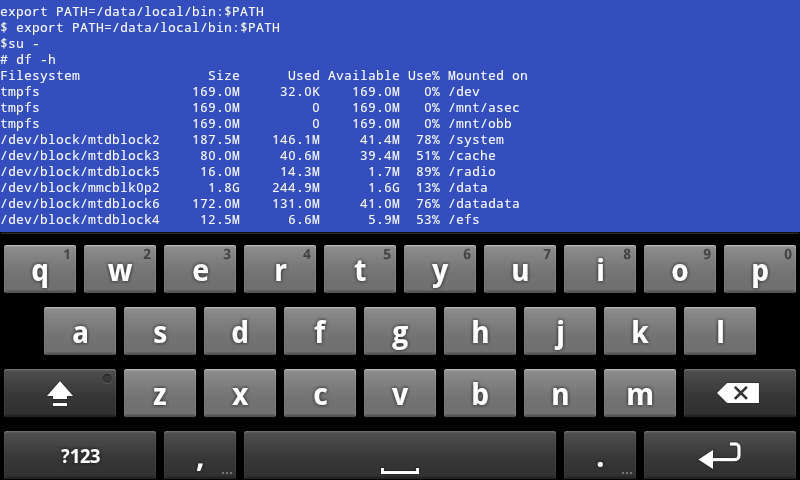 I started by explaining why having root access to your system is really important, including


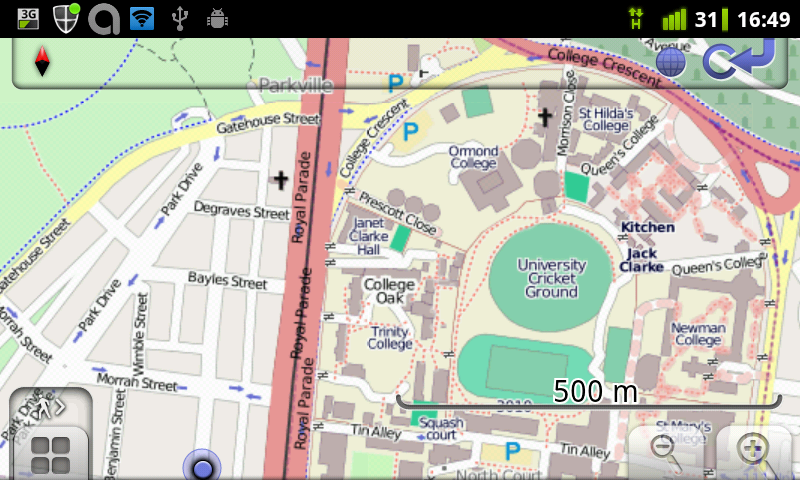
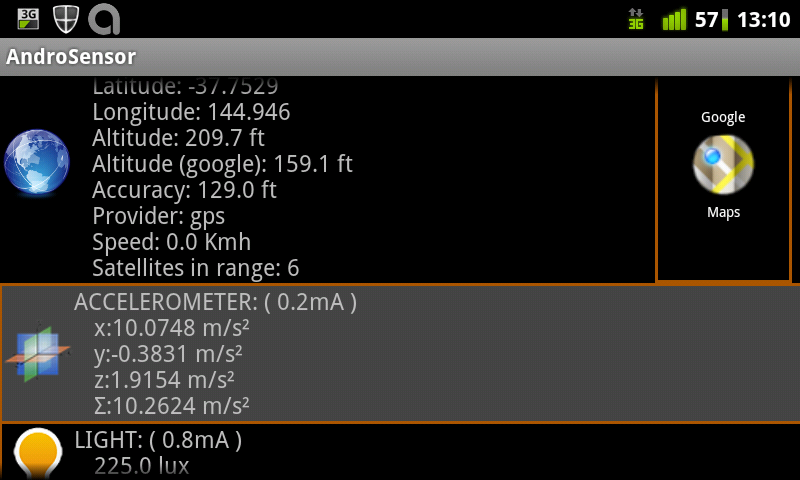
 The Google Maps client comes with every Android system, the above shows the location of the LUV meeting.
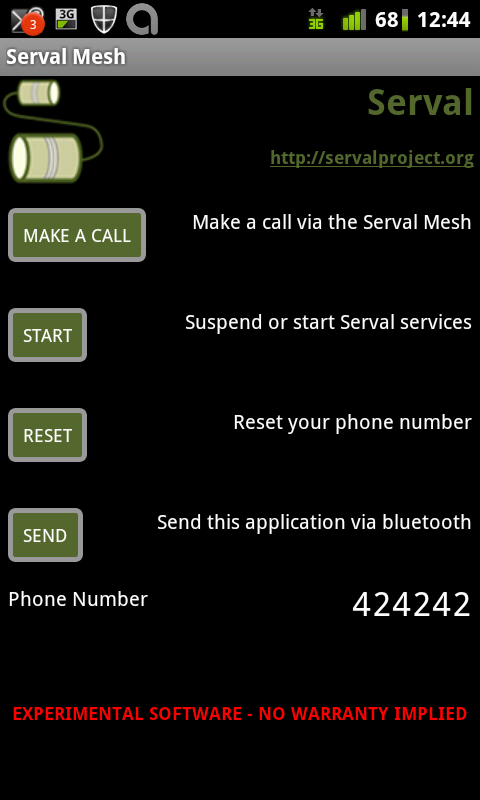
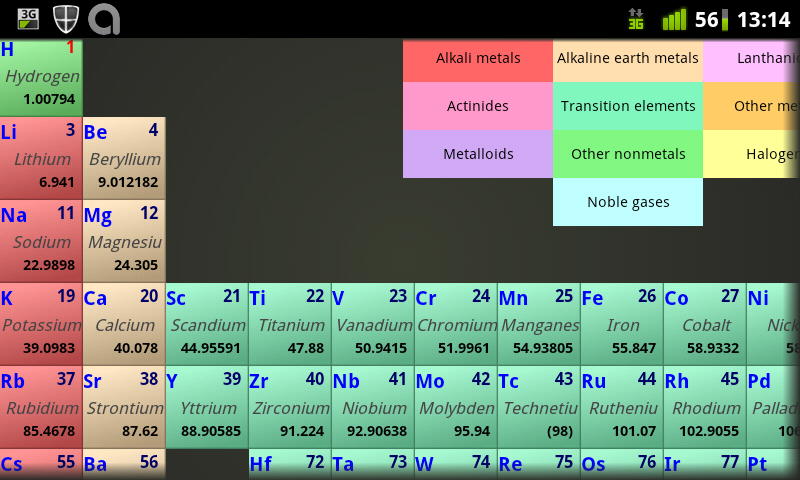
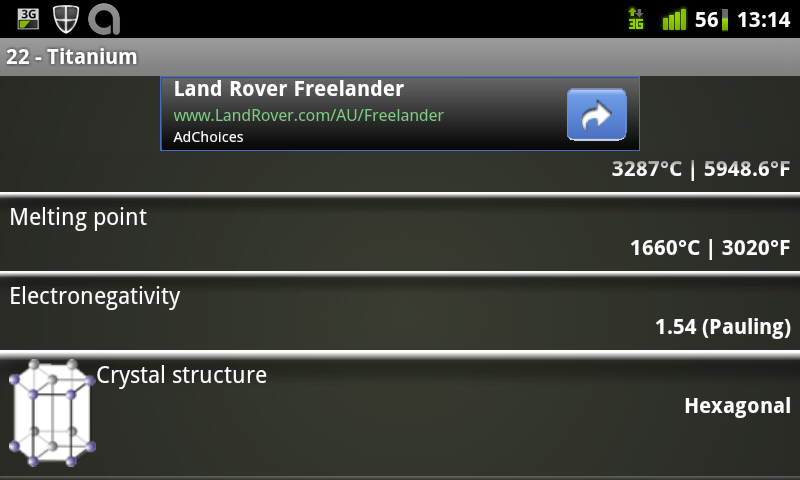



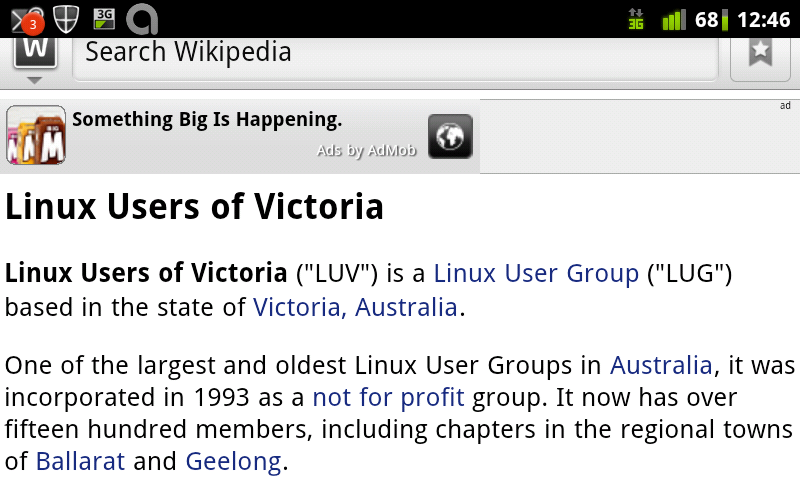










 As


 The Debian Project s annual conference is slowly coming closer. Visiting places around the world since 2000, DebConf will take place this year in Managua, Nicaragua, in July and will again provide an opportunity for people who contribute to Debian to meet in person for face-to-face collaboration and discussions.
At DebConf we try to bring together as many Debian contributors as possible, including those who could not afford to attend from their own resources. You can help make DebConf12 a success by your organisation becoming a sponsor, or by donating money as an individual.
Individual
 I ve
 One of the earliest features I wrote for the Debian bug tracking
system (Debbugs) after joining the team was support for forcibly
merging bugs. Originally, merging two bugs required that the bugs be
in exactly the same state before merging them;
 I have an old motherboard that requires creating a DOS boot floppy in order to upgrade its BIOS. Fortunately, it's not too hard to do this with
