Search Results: "nic"

20 January 2015

Sven Hoexter: Heads up: possible changes in fonts-lyx

Today the super nice upstream developers of LyX reached out to me (and pelle@) as the former and still part time lyx package maintainers to inform us of an ongoing discussion in http://www.lyx.org/trac/ticket/9229. The current aproach to fix this bug might result in a name change of all fonts shipped in fonts-lyx with the next LyX release. Why is it relevant for people not using LyX? For some historic reasons beyond my knowledge the LyX project ships a bunch of math symbol fonts converted to ttf files. From a seperate source package they moved to be part of the lyx source package and are currently delivered via the fonts-lyx package. Over time a bunch of other packages picked this font package up as a dependency. Among them also rather popular packages like icedove, which results in a rather fancy popcon graph. Drawback as usual is that changes might have a visible impact in places where you do not expect them. So if you've some clue about fonts, or depend on fonts-lyx in some way, you might want to follow that issue cited above and/or get in contact with the LyX developers. If you've some spare time feel also invited to contribute to the lyx packaging in Debian. It really deserves a lot more love then what it seldomly gets today by the brave Nick Andrik, Per and myself.

18 January 2015

EvolvisForge blog: Debian/m68k hacking weekend cleanup

OK, time to clean up tarent so people can work again tomorrow. Not much to clean though (the participants were nice and cleaned up after themselves ), so it s mostly putting stuff back to where it belongs. Oh, and drinking more of the cool Belgian beer Geert (Linux upstream) brought We were productive, reporting and fixing kernel bugs, fixing hardware, swapping and partitioning discs, upgrading software, getting buildds (mostly Amiga) back to work, trying X11 (kdrive) on a bare metal Atari Falcon (and finding a window manager that works with it), etc. I hope someone else writes a report; for now we have a photo and a screenshot (made with trusty xwd). Watch the debian-68k mailing list archives for things to come. I think that, issues with electric cars aside, everyone liked the food places too ;-)

Andreas Metzler: Another new toy

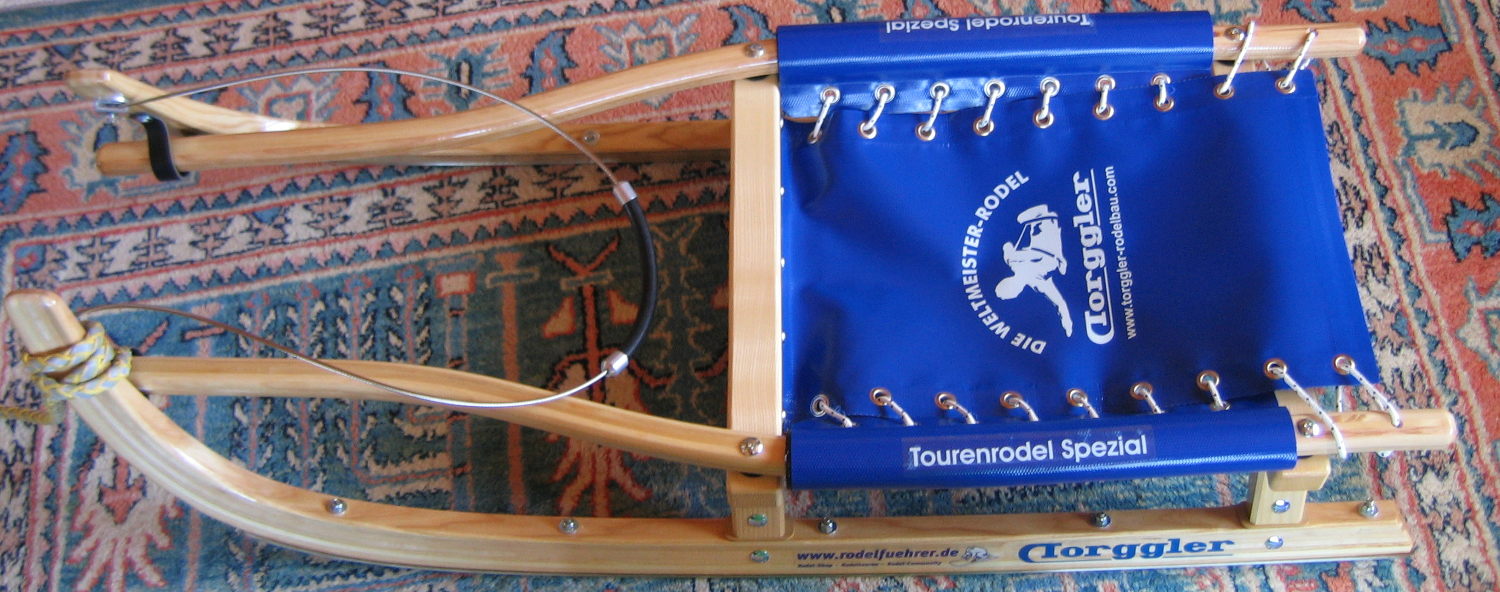
Given that snow is yet a little bit sparse for snowboarding and the weather could be improved on I have made myself a late christmas present: Torggler TS 120 Tourenrodel Spezial It is a rather sporty rodel (Torggler TS 120 Tourenrodel Spezial 2014/15, 9kg weight, with fast (non stainless) "racing rails" and 22 angle of the runners) but not a competition model. I wish I had bought this years ago. It is a lot more comfortable than a classic sled ("Davoser Schlitten"), since one is sitting in instead of on top of the sled somehow like in a hammock. Being able to steer without putting a foot into the snow has the nice side effect that the snow stays on the ground instead of ending up in my face. Obviously it is also faster which is a huge improvement even for recreational riding, since it makes the difference between riding the sledge or pulling it on flattish stretches. Strongly recommended. FWIW I ordered this via rodelfuehrer.de (they started with a guidebook of luge tracks, which translates to "Rodelf hrer"), where I would happily order again.

Rog rio Brito: Uploading SICP to Youtube

Intro I am not alone in considering Harold Abelson and Gerald Jay Sussman's recorded lectures based on their book "Structure and Interpretation of Computer Programs" is a masterpiece. There are many things to like about the content of the lectures, beginning with some pearls and wisdom about the craft of writing software (even though this is not really a "software enginneering" book), the clarity with which the concepts are described, the Freedom-friendly aspects of the authors regarding the material that they produced and much, the breadth of the subjects covered and much more.

The videos, their length, and splitting them The course consists of 20 video files and they are all uploaded on Youtube already. There is one thing, though: while the lectures are naturally divided into segments (the instructors took a break in after every 30 minutes or so worth of lectures), the videos corresponding to each lecture have all the segments concatenated. To better watch them, accounting for the easier possibility to put a few of the lectures in a mobile device or to avoid fast forwarding long videos from my NAS when I am watching them on my TV (and some other factors), I decided to sit down, take notes for each video of where the breaks where, and write a simple Python script to help split the videos in segments, and, then, reencode the segments. I decided not to take the videos from Youtube to perform my splitting activities, but, instead, to operate on one of the "sources" that the authors once had in their homepage (videos encoded in DivX and audio in MP3). The videos are still available as a torrent file (with a magnet link for the hash 650704e4439d7857a33fe4e32bcfdc2cb1db34db), with some very good souls still seeding it (I can seed it too, if desired). Alas, I have not found a source for the higher quality MPEG1 videos, but I think that the videos are legible enough to avoid bothering with a larger download. I soon found out that there are some beneficial side-effects of splitting the videos, like not having to edit/equalize the entire audio of the videos when only a segment was bad (which is understandable, as these lectures were recorded almost 30 years ago and technology was not as advanced as things are today). So, since I already have the split videos lying around here, I figured out that, perhaps, other people may want to download them, as they may be more convenient to watch (say, during commutes or whatever/whenever/wherever it best suits them). Of course, uploading all the videos is going to take a while and I would only do it if people would really benefit from them. If you think so, let me know here (or if you know someone who would like the split version of the videos, spread the word).

17 January 2015

Diego Escalante Urrelo: Link Pack #03

What s that? The third edition of Link Pack of course!
Playing with Power (7 minutes, Vimeo)
A super awesome story about a stop motion animator that turned a Nintendo Power Glove into the perfect animation tool. It s a fun, inspiring video :-). I love the Power Glove, it s so bad. The Power Glove Angry Video Game Nerd Episode 14 (12 minutes, YouTube)
On the topic of the Power Glove, here s the now classic Angry Video Game Nerd video about it. James Rolfe is funny. Ship Your Enemies Glitter
A rising star in the internet business landscape. You pay them $9.99 and they send an envelope full of glitter to your worst enemy. They promise it will jump into everything, as usual. Damn you glitter. A Guide to Practical Contentment
Be happy with what you have, but understand why:
( ) if you start in this place of fixing what s wrong with you, you keep looking for what else is wrong with you, what else you need to improve. So maybe now feel like you don t have enough muscles, or six pack abs, or you think your calves don t look good, or if it s not about your body, you ll find something else. So it s this never-ending cycle for your entire life. You never reach it. If you start with a place of wanting to improve yourself and feeling stuck, even if you re constantly successful and improving, you re always looking for happiness from external sources. You don t find the happiness from within, so you look to other things.
The Comments Section For Every Video Where Someone Does A Pushup
Comments. From YouTube. Enough said.
These are dips. Not pushups. In the entire history of the world, no one has ever successfully performed a pushup. They re all just dips. STOP DRIVING WITH YOUR HIPS. IF YOU RE DOING A PUSHUP CORRECTLY, YOUR HIPS SHOULD CEASE TO EXIST. You could do 100 pushups like this and it wouldn t improve your strength at all. You re just bending your arms.
Self-Taught Chinese Street Photographer Tao Liu Has an Eye for Peculiar Moments
This Chinese photog uses his lunch break to snap interesting street photography. Funny selection by PetaPixel, his Flickr page has even more stuff. Even more in his photoblog.
From https://www.flickr.com/photos/58083590@N05/14613273495/By Liu Tao. https://www.flickr.com/photos/58083590@N05/14613273495/
Enrique Castro-Mendivil s Agua Dulce photo set
Another interesting photo link. This time it s the most popular beach in Lima, with most people coming from low income neighborhoods, it shows how fragmented the city is.
By Enrique Castro-Mendivil. http://www.castromendivilphoto.com/index.php/component/content/article/11-work/69-agua-dulceBy Enrique Castro-Mendivil. http://www.castromendivilphoto.com/index.php/component/content/article/11-work/69-agua-dulce

Also on Link Pack

16 January 2015

Rhonda D'Vine: Polygons

I stumbled upon this site thanks to Helga: Parable of the Polygons. On the site you can interactively find out how harmless choices can make a harmful world. I found it quite eye opening. And what most catched me but isn't part of the site is that only unhappy polygons are willing to move. Those who are just ok with their neighbourhood but not really happy about it aren't willing to move. Which made me try it out in my own way: Trying to create the most diverse possible environment by temporarily making as many polygons unhappy to find out if it's possible to make as many polygons happy in the long run as possible. ... which is actually part of the way I see my own life. I always sort-of tried to confront people to think. I mean, it's not that common that you see a by-the-looks male person wearing a skirt. And ... since I moved out in July into a small intermediate flat and thus a new neighbourhood, I found the confidence (in parts also to be attributed to the confidence built up at these fine feministic conferences) to walk my hometown in a skirt. Only on some few occations, when meeting up with friends, mostly at evening/night, but it was always a nice experience. And I only felt once uncomfortable to be honest, when there was a probably right-winged skinhead at the subway station. Too many other people around, so I tried to avoid eye contact, but it didn't feel good. Diversity is something that society needs. In all aspects. Also within the Debian project. I believe strongly in that there can't be much of innovation and moving forward if all people do think the same direction. That only means that potential alternative paths won't even get considered, and potentially get lost. That's one of the core parts of what makes the Free Software community lively and useful. People try different approaches, and in the end there will be adopters of what they believe is the better project. Projects pop up every now and then, others starve because of loss of interest, users not picking it up, developers spending their time on other stuff, and that's absolutely fine too. There is always something to be learned even from those situations. Speaking of diversity, there is this protest going on later today because the boss of a cafe here in Vienna considered it a good idea to kick out a lesbian couple because they kissed each other for greeting and told them that they don't have a place for their "otherness" in her traditional viennese cafe and they rather should take it to a brothel. She excused yesterday for her tone that she used, she said she should have been more relaxed as the CEO of that cafe. Which literally means that she only exused for the tone she used in her role, but not at all for the message she transported. So meh, hope there will be many people at the protest. Yes, there is some anti discrimination law around, but that only covers the workplace, and not service areas. Welcome to Austria.
On the upside, court striked down ban on same-sex couple adoption just the other day. Hopefully there is still hope for this country. :)

/personal permanent link Comments: 2 Flattr this

15 January 2015

Junichi Uekawa: Opposite to strong typing.

Opposite to strong typing. Maybe weak typing is too discriminatory, we should call it typing challenged. Like: sqlite is a typing challenged language.

Michal Čihař: Weblate UI polishing

After releasing Weblate 2.0 with Bootstrap based UI, there was still lot of things to improve. Weblate 2.1 brought more consistency in using buttons with colors and icons. Weblate 2.2 will bring some improvements in other graphics elements. One of thing which was for quite long in our issue tracker is to provide own renderer for SVG status badge. So far Weblate has offered either PNG badge or external SVG rendered by shields.io. Relying on external service was not good in a long term and also caused requests to third party server on many pages, what could be considered bad privacy wise. Since this week, Weblate can render SVG badge on it's own and they are also matching current style used by other services (eg. Travis CI): Translation status One last thing which really did not fit into new UI were activity charts. In past they were rendered as PNG on server side, but for upcoming releases we have switched to use Chartist javascript library and render them as SVG on client side. This way we can nicely style them to fit into page, they scale properly and also reduce server load. You can see them in action on Hosted Weblate server: Weblate activity chart

Filed under: English phpMyAdmin SUSE Weblate 0 comments Flattr this!

Lunar: 80%

Unfortunately I could not go on stage at the 31st Chaos Communication Congress to present reproducible builds in Debian alongside Mike Perry from the Tor Project and Seth Schoen from the Electronic Frontier Foundation. I've tried to make it up for it, though and we have made amazing progress. Wiki reorganization What was a massive and frightening wiki page now looks really more welcoming: Screenshot of ReproducibleBuilds on Debian wiki Depending on what one is looking for, it should be much easier to find. There's now a high-level status overview given on the landing page, maintainers can learn how to make their packages reproducible, enthusiasts can more easily find what can help the project, and we have even started writing some history. .buildinfo for all packages New year's eve saw me hacking Perl to write dpkg-genbuildinfo. Similar to dpkg-genchanges, it's run by dpkg-buildpackage to produce .buildinfo control files. This is where the build environment, and hash of source and binary packages are recorded. This script, integrated with dpkg, replace the previous debhelper interim solution written by Niko Tyni. We used to fix mtimes in control.tar and data.tar using a specific addition to debhelper named dh_fixmtimes. To better support the ALWAYS_EXCLUDE environment variable and for pragramtic reasons, we moved the process in dh_builddeb. Both changes were quickly pushed to our continuous integration platform. Before, only packages using dh would create a .buildinfo and thus eventually be considered reproducible. With these modifications, many more packages had their chance and this shows: Growing amount of packages considered reproducible Yes, with our experimental toolchain we are now at more than eighty percent! That's more than 17200 source packages! srebuild Another big item on the todo-list was crossed over by Johannes Schauer. srebuild is a wrapper around sbuild:
Given a .buildinfo file, it first finds a timestamp of Debian Sid from snapshot.debian.org which contains the requested packages in their exact versions. It then runs sbuild with the right architecture as given by the .buildinfo file and the right base system to upgrade from, as given by the version of the base-files package version in the .buildinfo file. Using two hooks it will install the right package versions and verify that the installed packages are in the right version before the build starts.
Understanding problems Over 1700 packages have now been reviewed to understand why build results could not be reproduced on our experimental platform. The variations between the two builds are currently limited to time and file ordering, but this still has uncovered many problems. There are still toolchain fixes to be made (more than 180 packages for the PHP registry) which can make many packages reproducible at once, but others like C pre-processor macros will require many individual changes. debbindiff, the main tool used to understand differences, has gained support for .udeb, TrueType and OpenType fonts, PNG and PDF files. It's less likely to crash on problems with encoding or external tool. But most importantly for large package, it has been made a lot faster, thanks to Reiner Herrmann and Helmut Grohne. Helmut has also been able to spot cross-compilation issues by using debbindiff! Targeting our efforts It gives warm fuzzy feelings to hit the 80% mark, but it would be a bit irrelevant if this would not concern packages that matter. Thankfully, Holger worked on producing statistics for more specific package sets. Mattia Rizzolo has also done great work to improve the scripts generating the various pages visible on reproducible.debian.net. All essential and build-esential packages, except gcc and bash, are considered reproducible or have patches ready. After some lengthy builds, I also managed to come up with a patch to make linux build reproducibly. Miscellaneous After my initial attempt to modify r-base to remove a timestamp in R packages, Dirk Eddelbuettel discussed the issue with upstream and came up with a better patch. The latter has already been merged upstream! Dirk's solution is to allow timestamps to be set using an external environment variable. This is also how I modified FontForge to make it possible to reproduce fonts. Identifiers generated by xsltproc have also been an issue. After reviewing my initial patch, Andrew Awyer came up with a much nicer solution. Its potential performance implications need to be evaluated before submission, though. Chris West has been working on packages built with Maven amongst other things. PDF generated by GhostScript, another painful source of troubles, is being worked on by Peter De Wachter. Holger got X.509 certificates signed by the CA cartel for jenkins.debian.net and reproducible.debian.net. No more scary security messages now. Let's hope next year we will be able to get certificates through Let's Encrypt! Let's make a difference together As you can imagine with all that happened in the past weeks, the #debian-reproducible IRC channel has been a cool place to hang out. It's very energizing to get together and share contributions, exchange tips and discuss hardest points. Mandatory quote:
* h01ger is very happy to see again and again how this is a nice
         learning circle...! i've learned a whole lot here too... in
         just 3 months... and its going on...!
Reproducible builds are not going to change anything for most of our users. They simply don't care how they get software on their computer. But they care to get the right software without having to worry about it. That's our responsibility, as developers. Enabling users to trust their software is important and a major contribution, we as Debian, can make to the wider free software movement. Once Jessie is released, we should make a collective effort to make reproducible builds an highlight of our next release.

13 January 2015

Simon Josefsson: Replicant 4.2 0003 on I9300

The Replicant project released version 4.2 0003 recently. I have been using Replicant on a Samsung SIII (I9300) for around 14 months now. Since I have blogged about issues with NFC and Wifi earlier, I wanted to give a status update after upgrading to 0003. I m happy to report that my NFC issue has been resolved in 0003 (the way I suggested; reverting the patch). My issues with Wifi has been improved in 0003, with my merge request being accepted. What follows below is a standalone explanation of what works and what doesn t, as a superset of similar things discussed in my earlier blog posts. What works out of the box: Audio, Telephony, SMS, Data (GSM/3G), Back Camera, NFC. 2D Graphics is somewhat slow compared to stock ROM, but I m using it daily and can live with that so it isn t too onerus. Stability is fine, similar to other Android device I m used to. Video playback does not work (due to non-free media decoders?), which is not a serious problem for me but still likely the biggest outstanding issue except for freedom concerns. 3D graphics apparently doesn t work, and I believe it is what prevents Firefox from working properly (it crashes). I m having one annoying but strange problem with telephony: when calling one person I get scrambled audio around 75% of the time. I can still hear what the other person is saying, but can barely make anything out of it. This only happens over 3G, so my workaround when calling that person is to switch to 2G before and switch back after. I talk with plenty other people, and have never had this problem with anyone else, and it has never happened when she talks with anyone else but me. If anyone has suggestion on how to debug this, I m all ears. Important apps to get through daily life for me includes K9Mail (email), DAVDroid (for ownCloud CalDav/CardDAV), CalDav Sync Adapter (for Google Calendars), Conversations (XMPP/Jabber chat), FDroid (for apps), ownCloud (auto-uploading my photos), SMS Backup+, Xabber (different XMPP/Jabber accounts), Yubico Authenticator, MuPDF and oandbackup. A couple of other apps I find useful are AdAway (remove web ads), AndStatus, Calendar Widget, NewsBlur and ownCloud News Reader (RSS readers), Tinfoil for Facebook, Twidere (I find its UI somewhat nicer than AndStatus s), and c:geo. A number of things requires non-free components. As I discussed in my initial writeup from when I started using Replicant I don t like this, but I m accepting it temporarily. The list of issues that can be fixed by adding non-free components include the front camera, Bluetooth, GPS, and Wifi. After flashing the Replicant ROM image that I built (using the fine build instructions), I m using the following script to add the missing non-free files from Cyanogenmod.
# Download Cyanogenmod 10.1.3 (Android 4.2-based) binaries:
# wget http://download.cyanogenmod.org/get/jenkins/42508/cm-10.1.3-i9300.zip
# echo "073a464a9f5129c490502c77374495c38a25ba790c10e27f51b43845baeba6bf  cm-10.1.3-i9300.zip"   sha256sum -c 
# unzip cm-10.1.3-i9300.zip
adb root
adb remount
adb shell mkdir /system/vendor/firmware
adb shell chmod 755 /system/vendor/firmware
# Front Camera
adb push cm-10.1.3-i9300/system/vendor/firmware/fimc_is_fw.bin /system/vendor/firmware/fimc_is_fw.bin
adb push cm-10.1.3-i9300/system/vendor/firmware/setfile.bin /system/vendor/firmware/setfile.bin
adb shell chmod 644 /system/vendor/firmware/fimc_is_fw.bin /system/vendor/firmware/setfile.bin
# Bluetooth
adb push cm-10.1.3-i9300/system/bin/bcm4334.hcd /system/vendor/firmware/
adb shell chmod 644 /system/vendor/firmware/bcm4334*.hcd
# GPS
adb push cm-10.1.3-i9300/system/bin/gpsd /system/bin/gpsd
adb shell chmod 755 /system/bin/gpsd
adb push cm-10.1.3-i9300/system/lib/hw/gps.exynos4.so /system/lib/hw/gps.exynos4.so
adb push cm-10.1.3-i9300/system/lib/libsecril-client.so /system/lib/libsecril-client.so
adb shell chmod 644 /system/lib/hw/gps.exynos4.so /system/lib/libsecril-client.so
# Wifi
adb push cm-10.1.3-i9300/system/etc/wifi/bcmdhd_apsta.bin_b1 /system/vendor/firmware/
adb push cm-10.1.3-i9300/system/etc/wifi/bcmdhd_apsta.bin_b2 /system/vendor/firmware/
adb push cm-10.1.3-i9300/system/etc/wifi/bcmdhd_mfg.bin_b0 /system/vendor/firmware/
adb push cm-10.1.3-i9300/system/etc/wifi/bcmdhd_mfg.bin_b1 /system/vendor/firmware/
adb push cm-10.1.3-i9300/system/etc/wifi/bcmdhd_mfg.bin_b2 /system/vendor/firmware/
adb push cm-10.1.3-i9300/system/etc/wifi/bcmdhd_p2p.bin_b0 /system/vendor/firmware/
adb push cm-10.1.3-i9300/system/etc/wifi/bcmdhd_p2p.bin_b1 /system/vendor/firmware/
adb push cm-10.1.3-i9300/system/etc/wifi/bcmdhd_p2p.bin_b2 /system/vendor/firmware/
adb push cm-10.1.3-i9300/system/etc/wifi/bcmdhd_sta.bin_b0 /system/vendor/firmware/
adb push cm-10.1.3-i9300/system/etc/wifi/bcmdhd_sta.bin_b1 /system/vendor/firmware/
adb push cm-10.1.3-i9300/system/etc/wifi/bcmdhd_sta.bin_b2 /system/vendor/firmware/
adb push cm-10.1.3-i9300/system/etc/wifi/nvram_mfg.txt /system/vendor/firmware/
adb push cm-10.1.3-i9300/system/etc/wifi/nvram_mfg.txt_murata /system/vendor/firmware/
adb push cm-10.1.3-i9300/system/etc/wifi/nvram_mfg.txt_murata_b2 /system/vendor/firmware/
adb push cm-10.1.3-i9300/system/etc/wifi/nvram_mfg.txt_semcosh /system/vendor/firmware/
adb push cm-10.1.3-i9300/system/etc/wifi/nvram_net.txt /system/vendor/firmware/
adb push cm-10.1.3-i9300/system/etc/wifi/nvram_net.txt_murata /system/vendor/firmware/
adb push cm-10.1.3-i9300/system/etc/wifi/nvram_net.txt_murata_b2 /system/vendor/firmware/
adb push cm-10.1.3-i9300/system/etc/wifi/nvram_net.txt_semcosh /system/vendor/firmware/
I hope this helps others switch to a better phone environment!

11 January 2015

Diego Escalante Urrelo: Practical contentment and art

I was browsing Eric Kim s street photography blog, when I stumbled across one article about the well-known Gear Acquisition Syndrome that plagues enthusiast photographers. Gear Acquisition Syndrome is the obsession that enthusiasts tend to have for new gear, new gadgets, new stuff, as an excuse for not developing their skills or taking action. You can recognize it by phrases like: If only I had that new gear, I would be better at what I do I can t do that project until I buy this gear My super expensive camera is not good for that, I need an even more expensive one (etc). The article, How to Be Grateful For What You Have is a funny and well argued look on why photographers, or artists in general, can get lost in what they don t have, instead of what they have. The article is a recommended read in itself and delivers the point whether you are into photography or not. That said, inside the article I found three nice links worth noting: The Tiny Collective
A group of photographers that use only their phones as their camera. It s inspiring to see a specific, curated, selection of images made with phones. It definitely makes you wonder why would you need anything but a phone to make great images (answer: phones work great, even old ones). A Guide to Practical Contentment
One of the most simple and effective messages about contentment that I have read. It s not about not wanting things or settling for whatever . It s all about taking a step back and realizing that life is not about absolutes. If you are not a billionaire, that doesn t mean you have failed in life. Perhaps you are just a millionaire, and that s fine :).
( ) if you start in this place of fixing what s wrong with you, you keep looking for what else is wrong with you, what else you need to improve. So maybe now feel like you don t have enough muscles, or six pack abs, or you think your calves don t look good, or if it s not about your body, you ll find something else. So it s this never-ending cycle for your entire life. You never reach it. If you start with a place of wanting to improve yourself and feeling stuck, even if you re constantly successful and improving, you re always looking for happiness from external sources. You don t find the happiness from within, so you look to other things. If you re externally looking for happiness, it s easy to get too into food, or shopping, or partying, or overwork, to try to be happy. If instead, you can find contentment within and not need external sources of happiness, then you ll have a reliable source of happiness.
So, instead of looking at sources of external happiness, why don t you look into sources of internal happiness? It s one of the hardest things to learn how to do, but I m personally slowly getting there. It s life changing. Bonus points: quotes on simplification and minimalism
For extra credit, here are some interesting quotes on the above topics, note that as every internet quote page it might be filled with false quotes. I happen to like the one attributed to Donald Horban, who apparently doesn t exist outside quote pages in the internet. Maybe that s the biggest minimalism? Not existing?
We don t need to increase our goods nearly as much as we need to scale down our wants. Not wanting something is as good as possessing it.
Anyway, take these with a grain of salt, and just read them as interesting phrases. Just take it easy :).

Russ Allbery: Short catch-up haul

First weekend back home after being away for the holidays. That was a lot of fun, but it's also nice to be back home with all my stuff and my normal schedule. Apparently nice enough that today I went on a productivity binge and did lots of random chores that had been building up. Quite satisfying. This is a catch-up haul post for a few random things that popped up over the past few months apart from a full book order. Ibraheem Abbas and Yasser Bahjatt HWJN (sff)
Ibraheem Abbas and Yasser Bahjatt Somewhere! (Hunaak!) (sff)
Shannon Appelcline Designers & Dragons: The '70s (non-fiction)
Shannon Appelcline Designers & Dragons: The '80s (non-fiction)
Shannon Appelcline Designers & Dragons: The '90s (non-fiction)
Shannon Appelcline Designers & Dragons: The '00s (non-fiction)
Tor.com Some of the Best from Tor.com: 2014 (sff anthology) The Appelcline four-volume history of RPGs was a gift from a friend, and a lovely set of books. The first two were available for free on the Kindle (as was the last) as part of an effort to publicize Arab SF, and I always like to broaden my cultural reading horizons.

9 January 2015

Diego Escalante Urrelo: Link Pack #02

First sequel to my Link Pack series (I ll remove the quotes when it s LP#05): Link Pack #01. This time I m going for fewer articles, to try to keep things less overwhelming. There s no special theme, and I m actually leaving out some nice things I read recently. On the plus side, that means I have good material for a Link Pack #03. Also, I m gonna stick with Link Pack as a name, because it s good enough :-).
A Teenager s View on Social Media: Written by an actual teen
A well thought and realistic take on how social media is being used nowadays by teenagers. I have seen the patterns the author describes, and actually follow many of them. Does that mean I m still a teenager? It s interesting that the messaging and group-messaging part of the article is very US centric, or at least very US centric from my point of view. WhatsApp is the default messenger application south of the states, and fills the role of somewhere you can chat with people without having to give them your full personal information , that is, a place where you can chat with someone without running out of SMS and without adding them on Facebook (which would open them to stalk your whole profile and other friends). Some carriers in South Am rica offer unlimited plans for specific applications like WhatsApp. What Would Jesus Buy? (2007) Full movie
Reverend Billy Talen from the Church of Stop Shopping Gospel is trying to prevent the Shopocalypse from happening. It s an entertaining story of a group of funny guys and girls trying to share a message with comedy (that means A+ on my list). Simple and independent, a nice film. 13 Nutrition Lies That Made The World Sick And Fat
A pet peeve of mine. Nutrition is not really that complicated, but unfortunately there are a lot of myths that make people take really bad decisions. If you only read one thing in 2014 2015, read this.
Bottom Line: The low-fat, high-carb diet recommended by the mainstream nutrition organizations is a miserable failure and has been repeatedly proven to be ineffective. ( ) Bottom Line: Low-carb diets are the easiest, healthiest and most effective way to lose weight and reverse metabolic disease. It is pretty much a scientific fact at this point.
GM s hit and run: How a lawyer, mechanic, and engineer blew open the worst auto scandal in history
Cars are so complex nowadays, and dependent on electronics, that I m honestly afraid of them. I have made software for many years and I know how hard, impossible, it is to get things perfect . I can t imagine how hard it is for something so critical as brakes, steering wheels, etc. Even cameras can t get focus right some times, and it s been many many years.
Countless articles have been written about General Motors and its massive recalls earlier this year. What hasn t been fully told is how GM might have gotten away with multiple counts of consumercide were it not for the efforts of three men: a Georgia lawyer, a Mississippi mechanic, and a Florida engineer. ( ) Brooke Melton needn t have died that night. She was killed by a corporation s callous disregard for the safety of its customers, made worse by a regulatory agency reluctant to regulate.
The Long Game: Part 1 and The Long Game: Part 2
Two very short (less than 5 minutes) video essays about how notable people in the story of creativity are always celebrated without mentioning the boring years when they were nothing but losers. It s a fun little video, worth a watch for the idea and the interesting editing. It feels like someone really wanted to create these.

8 January 2015

Wouter Verhelst: ExtreMon example

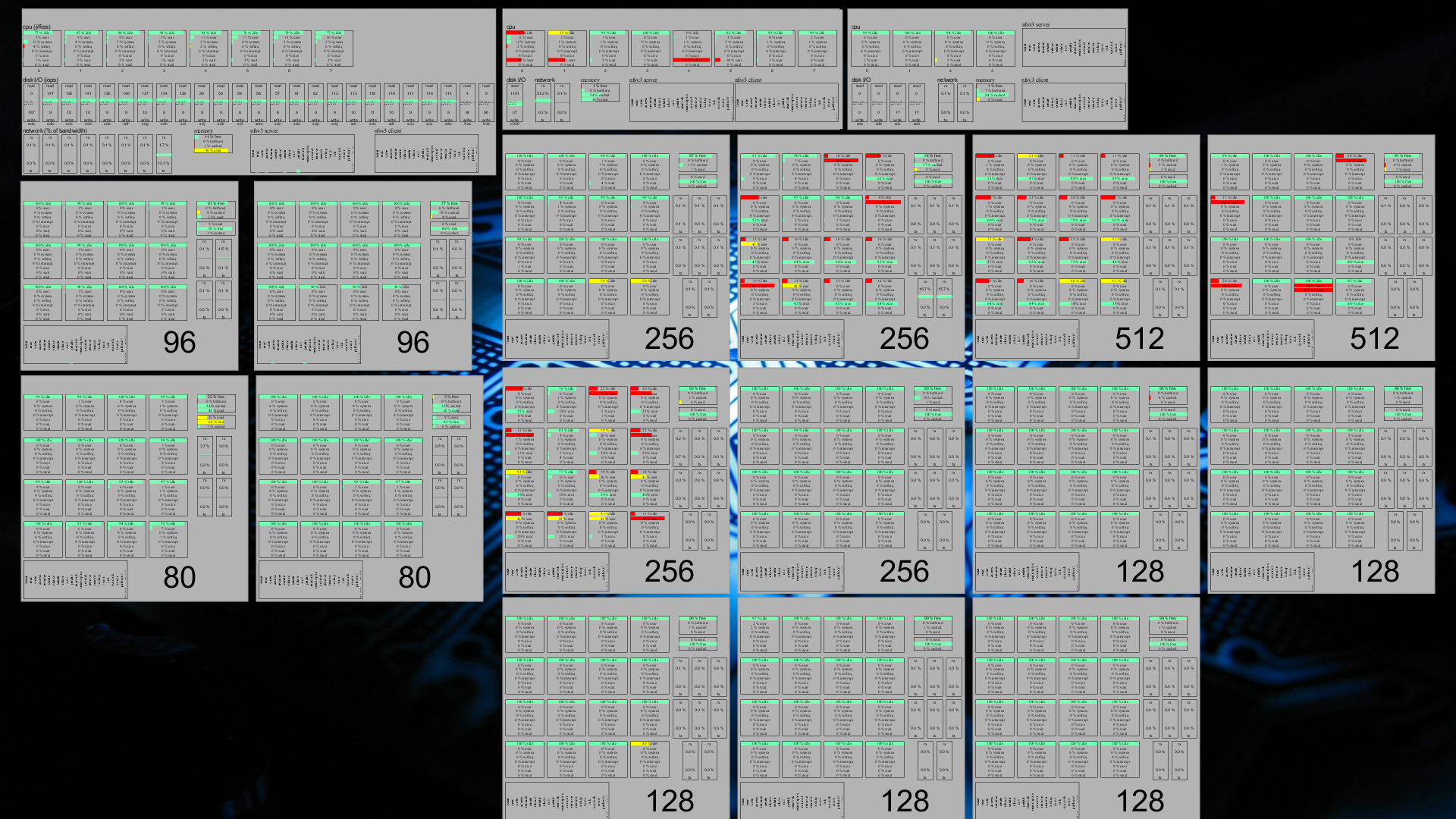
About a month ago, I blogged about extremon. As a reminder, ExtreMon is a monitoring tool that allows you to view things as they are happening, rather than with the ~5 minute delay that munin gives you, and also avoiding the quad-state limitation of Nagios' "good", "bad", "ugly", and "unknown" states. No, they're not really called that. Yes, I know you knew that. Anyway. In my blog post, I explained how you can set up ExtreMon, and I also set up a fairly limited demo version on my own server. But I have since realized that while it is functional, it doesn't actually show why ExtreMon is so great. In an effort to remedy that, I present you an example of what ExtreMon can do. Let's start with a screenshot of the ExtreMon console at the customer for which I spent time trying to figure out how to get it up and running: Click for full sized version. You'll note that even in that full-sized version, many things are unreadable. This is because the ExtreMon console allows one to move around (right mouse button drag for zoom; left mouse button drag for moving around; control+RMB for rotate; center mouse button to reset to default); so what matters is that everything fits on the screen, not whether it is all readable (if you need to read, you zoom). The image shows 18 rectangles. Each rectangle represents a single machine in this particular customer's HPC cluster. The top three rectangles are the cluster's file servers; the rest are its high performance nodes. You'll note that the left fileserver has 8 processor cores (top row), 8 network cards (bottom row, left part), and it also shows information on its memory usage (bottom row, small rectangle in the middle) as well as its NFS client and server procedure calls (bottom row, slightly larger rectangles to the right). This file server is the one on which I installed ZFS a while back; hence the large amount of disks visible in the middle row. The leftmost disk is the root filesystem (which is an ext4 off a hardware RAID1); the two rightmost "disks" are the PCIe-attached SSDs which are used for the ZFS L2ARC and write log. The other disks in this file server nicely show how ZFS does write load balancing over all its disks. The second file server has a hardware RAID1 on which it stores all its data; as such, there is only one disk graph there. It is also somewhat more limited in network, as it has only two NICs. It does, however, also have 8 cores. The last file server has no more than four processor cores; in addition, it also does not have a hardware RAID controller, so it must use software RAID over its four hard disks. This server is used for archival purposes, mostly, since it is insufficient for most anything else. As said, the other nodes are the "compute nodes", where the hard work is done. Most of these compute nodes have 16 cores each; two have 12 instead. When this particular screenshot was taken, four of the nodes (the ones showing red in their processor graphs) were hard at work; the others seem to have been mostly idling. In addition to the familiar memory, NFS (client only), network, and processor graphs, these nodes also show a "swap space" graph (just below the memory one), which seems fine for most nodes, except for the bottom left one (which shows a few bars that are coloured yellow rather than green). The green/yellow/red stuff is supposed to represent the "ok", "warning", "bad" states that would be familiar from Nagios. In this particular case, however, where "processor is busy all the time" is actually a wanted state, a low amount of idleness on the part of the processor isn't actually a problem, on the contrary. I did consider, therefore, to modify the ExtreMon configuration so that the processor graphs would not show red when the system was under high load; however, I found that differences in colour like this actually makes it more easy to see, at a glance, which machines are busy -- and that's one of the main reasons why we wanted to set this up. If you look carefully, you can find a particular processor core in the graph which shows 100% usage for "idle", "system", and "softirq", at the same time. Obviously that can't be the case, so there's a bug somewhere. Frank seems to believe it is a bug in CollectD; I haven't verified that. At any rate, though, this isn't usually a problem, due to the high update frequency of ExtreMon. The amount of data that's flowing through ExtreMon is amazing: Which renders a grand total of 2887 data points that are shown in this particular screenshot; and then I'm not even counting all the intermediate values, some of which also pass through ExtreMon. Nor am I counting the extra bits which have since been added (this screenshot is a few days old, now, and I'm still finetuning things). Yet even so, ExtreMon manages to update those values once every few seconds, in the worst case. As a result, the display isn't static for a moment, constantly moving and updating data so that what you see is never out of date for more than a second or two. Awesome.

MJ Ray: Social Network Wishlist

All I want for 2015 is a Free/Open Source Software social network which is: Is this too much to ask for? Does it exist already?

6 January 2015

Holger Levsen: 20150106-lts-december-2014

My LTS December In December 2014 I spent 11h on Debian LTS work and managed to get six DLAs released and another one almost done... I did: Thanks to everyone who is supporting Squeeze LTS in whatever form! Even just expressing that you or the company or project you're working with is using LTS, is useful, as it's always nice to hear once work is used and appreciated. If you can contribute more, please do so. If you can't, that's also fine. It's free software after all :-)

Tiago Bortoletto Vaz: A few excerpts from The Invisible Committe's latest article

Just sharing some points from "2. War against all things smart!" and "4. Techniques against Technology" by The Invisible Committee's "Fuck off Google" article. You may want to get the "Fuck off Google" pdf and watch that recent talk at 31C3. "...predicts The New Digital Age, there will be people who resist adopting and using technology, people who want nothing to do with virtual profiles, online data systems or smart phones. Yet a government might suspect that people who opt out completely have something to hide and thus are more likely to break laws, and as a counterterrorism measure, that government will build the kind of hidden people registry we described earlier. If you don t have any registered social-networking profiles or mobile subscriptions, and on-line references to you are unusually hard to find, you might be considered a candidate for such a registry. You might also be subjected to a strict set of new regulations that includes rigorous airport screening or even travel restrictions. " I've been introduced to following observations about 5 years ago when reading "The Immaterial" by Andr Gorz. Now The Invisible Committee makes that even clearer in a very few words: "Technophilia and technophobia form a diabolical pair joined together by a central untruth: that such a thing as the technical exists. [...] Techniques can t be reduced to a collection of equivalent instruments any one of which Man, that generic being, could take up and use without his essence being affected." "[...] In this sense capitalism is essentially technological; it is the profitable organization of the most productive techniques into a system. Its cardinal figure is not the economist but the engineer. The engineer is the specialist in techniques and thus the chief expropriator of them, one who doesn t let himself be affected by any of them, and spreads his own absence from the world every where he can. He s a sad and servile figure. The solidarity between capitalism and socialism is confirmed there: in the cult of the engineer. It was engineers who drew up most of the models of the neoclassical economy like pieces of contemporary trading software."

Russ Allbery: Review: Code Complete, Second Edition

Review: Code Complete, Second Edition, by Steve McConnell
Publisher: Microsoft
Copyright: June 2004
ISBN: 0-7356-1967-0
Format: Kindle
Pages: 960
As mentioned in the title, this is a review of the second edition of Code Complete, published in 2004. There doesn't appear to be a later edition at the time of this writing. I should say, as a prefix to this review, that I'm the sort of person who really likes style guides. When learning a language, a style guide is usually the second or third document I read. I enjoy debates over the clearest way to express a concept in code, trying to keep all the code in a large project consistent, and discussing the subtle trade-offs that sit on the boundary between mechanical style issues and the expressiveness of programming. I try to spend some time reading good code and getting better at expressing myself in code. Presumably, therefore, I'm the target audience for this book. It sounded good from the descriptions, so I picked it up during one of the Microsoft Press sales. The stated goal of Code Complete is to collect in one place as much as possible of the oral tradition and lore of the programming field, to try to document and communicate the techniques and approaches that make someone a good programmer. The table of contents sounds like a style guide, with entire sections on variables and statements in addition to topics like how to improve existing code and how to design a new program. If you're starting to think that a 960 page style guide sounds like a bad idea, you're wiser than I. (In my defense, I grabbed this as an ebook and didn't realize how large it was before I bought it.) I have not actually finished this book. I hate to do this: I don't like reviewing books I haven't finished (this will be the first), and I hate starting books and not finishing them. (This is probably not particularly wise, since some books aren't worth finishing, but I've gotten into a rhythm of reading and reviewing that works for me, so I try not to mess with it.) But I've been trying to finish this book off and on for about a year, I don't think it's worth the time investment, and I think I've gotten far enough in it to provide some warnings by others who are deceived by the very high ratings that it gets on Amazon and other places. The primarily problem with Code Complete is its sheer, mind-numbing comprehensiveness. It tries to provide a set of guidelines and a checklist to think about at each level of writing code. This is one of those ideas that might sound good on paper, but which completely doesn't work for me. There is no way I'm going to keep this many rules in my head, in the form of rules, while programming. Much of good style has to be done by feel, and the book I'm looking for is one that improves my feel and my sense of taste for code. What Code Complete seems to provide instead is a compilation of every thought that McConnell has ever had about programming. There's a lot of basic material, a few thoughtful statements, a ton of style advice, an endless compilation of trade-offs and concepts that one should keep in mind, and just a massive, overwhelming pile of stuff. Each chapter (and there are a lot of chapters) ends in a checklist of things that you should think about when doing a particular programming task. To give you a feel for the overwhelming level of trivia here, this is the checklist at the end of the chapter where I stopped reading, on quality assurance in software. This is one picked at random; a lot of them are longer than this.
  • Have you identified specific quality characteristics that are important to your project?
  • Have you made others aware of the project's quality objectives?
  • Have you differentiated between external and internal quality characteristics?
  • Have you thought about the ways in which some characteristics might compete with or complement others?
  • Does your project call for the use of several different error-detection techniques suited to finding several different kinds of errors?
  • Does your project include a plan to take steps to assure software quality during each stage of software development?
  • Is the quality measured in some way so that you can tell whether it's improving or degrading?
  • Does management understand that quality assurance incurs additional costs up front in order to save costs later?
I'm not saying those are bad things to think about with quality assurance, but you may notice a few issues immediately. They're very general and vague, they're not phrased in a particularly compelling or memorable way, and there are a lot of them. This falls between two stools: it's too much for the programmer who is thinking about quality as part of an overall project but not focusing on it (particularly when you consider that the book is full of checklists like this for everything from variable naming to how to structuring if statements to program debugging), but it's not nearly specific or actionable enough for someone who is focusing on quality assurance. It's not that the information isn't organized: there's a lot of structure here. And there are bits and pieces here that are occasionally interesting. McConnell is very data-driven and tries to back up recommendations with research on error rates and similar concrete measurements. It's just insufficiently filtered and without elegant or memorable summary. There is far too much here, an overwhelming quantity, and hopelessly mixed between useful tidbits and obvious observations that anyone who has been programming for a while would pick up, all presented in the same earnest but dry tone. It didn't help that there's a lot here I didn't agree with. Some of that is to be expected: I've never agreed completely with any style guide. But McConnell kept advocating variable and function naming conventions that I find rather ugly and tedious, and the general style of code he advocates feels very "bureaucratic" to me. It's not exactly wrong, but one of the things that I look for in style discussions is to be inspired by the elegant and simple way someone finds to phrase something in code. A lot of the code in this book just felt mind-numbing. It's functional, but uninteresting; perfectly adequate for a large project, but not the sort of discussion that inspires me to improve the quality of my craft. So, I didn't finish this. I gave up about halfway through. It's frustrating, since I was occasionally finding an interesting nugget of information. But they were too few and far between, and the rest of the book was mostly... boring. It's possible that I just know too much about programming to be the person for whom that McConnell was writing this book. It's certainly true that the book has not aged particularly well; it's focused on fairly old-school languages (C, C++, Java, and Visual Basic) and says almost nothing about modern language techniques, although it does have a bit about extreme programming. But whatever the reason is, it didn't work for me at all. I would rate it as one of the worst books about programming I've tried to read. And that's notably different enough from its reviews that it seems worth throwing this out there as a warning. I'm quite disappointed, since I'd heard nothing but praise for this book before picking it up. But it's not for me, and I'm now dubious of its value for any programmer outside of a fairly narrow, large-team, waterfall development process involving large numbers of people writing very large quantities of code in languages that aren't very expressive. And, well, in that situation I think one would get more benefit from changing that environment than reading this book. Rating: unfinished

4 January 2015

Russ Allbery: Review: Programming Ruby

Review: Programming Ruby, by Dave Thomas, et al.
Publisher: Pragmatic Bookshelf
Copyright: 2005
Printing: May 2006
ISBN: 0-9745140-5-5
Format: Trade paperback
Pages: 785
There are a few different editions of this book. The version I read is the second edition, written by Dave Thomas with Chad Fowler and Andy Hunt and published in 2005, covering Ruby 1.8.2. There's now a fourth edition, covering Ruby 1.9 and 2.0, which is probably what you'd want if you were buying this book today. This book, in whatever edition, is called the Pickaxe in the Ruby community after its cover. I've used a lot of different programming languages, so I can usually pick one up on the fly reasonably well, but I still like to read a good introductory book before using one seriously. It's a bit too easy to get lost or to fall into habits that don't match the best practices of the language community without a solid introduction. I've been using a bit of Ruby off and on since I started using Puppet, but I'm looking at doing more serious development using Chef, so I decided it was time to get that introduction. (It helped that I had this book sitting around, although that's also why I read an older edition.) Programming Ruby starts with the obligatory introduction to installing and running Ruby, and then provides a high-level introduction to the language and its basic types just enough to make Ruby comprehensible before starting into the object system. Everything is an object in Ruby, so the book introduces the object system as early as possible, and then shows the rest of the language from constants up in the light of that object system. The rest of part one follows the normal language introduction path, building up from constants and methods to exceptions, modules, and basic IO. It closes with chapters about threads and processes, unit testing, and the debugger. Part two is a grab-bag of one-chapter topics describing how to use Ruby in a particular setting, or showing one angle of the language. The best of those chapters for me was the one on RDoc, partly because I'm quite impressed by Ruby's documentation system. A few of these chapters are oddly in-depth for an introductory book I doubt I'm ever going to use all the details about special irb configuration, and if I do, I'd just look them up but I greatly appreciated the solid chapter on how to write Ruby extensions in C. There is also the obligatory chapter on writing GUI applications with Tk, which always seems to show up in these sorts of introductions and which always baffles me. Does anyone actually do this any more instead of writing a web application? Part three dives back into the language and provides a more complete and formal description. The authors aren't afraid to get into some of the internals, which I appreciated. There is a good chapter here on the details of the type system and how objects and classes interact, and a much-needed extended discussion of duck typing. This type of weak typing and runtime binding is fundamental to how Ruby approaches objects, for better or worse. (I have mixed opinions; it makes some things easier, but I increasingly appreciate strong typing and more formal interface definitions.) Some discussion of marshalling and introspection closes out the discussion portion of the book. That's about 420 pages of the material. The rest of the book is a detailed reference on all of the core classes, and a quicker overview of the standard library. Normally, this sort of thing is thrown into language introductions to pad out the page count, but usually the language's official documentation is better at this sort of reference. But I found Programming Ruby to be an exception. The reference is succinct, sticking to a paragraph or two for each method, and did a great job of providing enough cross-reference and discussion to put each class into a broader perspective. It's the most useful example of this type of reference section I've seen. I still probably won't use it after this initial reading, but I think I got a better feel for the language from reading through it. It's hard to review a book like this without reviewing the language it documents, at least a little bit. I'll indulge: it entertains me how much Ruby is obviously based on Perl, including borrowing some of Perl's more dubious ideas. The global punctuation variables will look familiar to any Perl programmer, and the oddly-named global variables for the interpreter flags are in the same spirit. The language unfortunately has similar problems as Perl with safely running commands without using the shell; it's possible, but not the default and not what the built-ins do. There are places where I wish Ruby were a little less like Perl. The plus side for an experienced Perl programmer is that Ruby feels quite familiar and has made some clear improvements. The ? and ! convention for methods that return booleans or modify objects in-place is brilliant in its simplicity, and something I'd love to see in more languages. And the way Ruby implements ubiquitous code blocks for both iterators and for any temporary objects is lovely once one gets used to it. It's similar to Python's context managers, except more general and built deeper into the language. Returning to the review of the book, rather than the topic, Programming Ruby has a good, clear explanation of blocks, iterators, and yield. If you're interested in getting a grounding in Ruby, this book still feels like a solid introduction. The edition I read is getting a bit long in the tooth now that we're on Ruby 2.1, but the pace of language change has slowed, and most of the book is still applicable. (If you're buying it new, you should, of course, get the later edition.) The table of contents makes it seem like the book is covering the same ground multiple times, but that organizational strategy worked better than I expected. Ruby is not the most organized language in the world, so I still felt a bit overwhelmed with random method names in places, but I never felt lost in the mechanics of the language. In short, recommended if you want a good introduction to the language, although probably in a later edition. Rating: 8 out of 10

3 January 2015

Russ Allbery: Review: The Ring of Charon

Review: The Ring of Charon, by Roger MacBride Allen
Series: Hunted Earth #1
Publisher: Tor
Copyright: December 1990
ISBN: 0-8125-3014-4
Format: Mass market
Pages: 500
Larry Chao is a junior scientist at a gravity research on Pluto, at the very outer limits of human reach in the solar system. The facility is for researching artificial gravity, which is one reason it's in the middle of nowhere. Another is that their experimental generator is built in a ring around Charon, and the close proximity of the two bodies is useful for scientific observation. Unfortunately, there hasn't been much to observe. They can create very short-lived gravity fields in very small areas, but nothing like the artificial gravity that was the original promise of the facility. As a result, the government is shutting the facility down. The authoritarian director, Simon Raphael, is... not exactly happy with that decision, but resigned to it and running the facility to completion with a sullen anger. When Larry makes a startling breakthrough at nearly the last minute for the society, Simon is uninterested and hostile. This leads Larry and his fellow scientist Sondra Berghoff to attempt a more radical demonstration of Larry's success and prove to the rest of the solar system that the facility should be kept open. That decision has a far deeper impact on humanity and the solar system than they could have possibly imagined. The Ring of Charon and its sequel, Shattered Sphere, were recommended to me as good harder science fiction. It took me a while to track down copies in fact, it took an in-person trip to Powell's. Once I found them, a relatively straightforward, old-school science fiction novel seemed like just the thing to read during my commute. Allen delivers there. I'm not spoiling the main plot driver of the book even though it's given away on the back cover, since it's some time in coming in the novel. But The Ring of Charon turns into a multi-viewpoint cross between a disaster novel and a scientific investigation. Larry and Sondra stay central to the plot, of course, but Allen adds a variety of other characters who are attempting to figure out what happened to the solar system and then deal with the consequences: everyone from scientists to pilots to communications officers in weird surrealistic stations. The science is mostly believable, apart from the scientific breakthrough that motivates the plot. Characterization isn't absent completely, but it's simple and unsubtle; dialogue is a bit wooden, characters aren't entirely multidimensional, but Allen does a reasonably good job with both pacing and the sense of mystery and investigation, and a surprisingly good job portraying organizational politics. As you might guess from the tone of my review, this is not the book to reach for if you want something ground-breaking. It's a very conventional, multi-viewpoint SF novel full of scientists and investigation of unknown and possibly hostile phenomena. If you've read much science fiction, you've read books like this before. But one thing that Allen does surprisingly well, which makes The Ring of Charon stand a bit above the pack, is that he doesn't write villains. Even Simon, who goes out of his way to make the reader hate him at the start of the book, becomes a surprisingly sympathetic character. The characters who are usually villains or at least foils in books like this the smooth PR person, the religious man, the blindly-focused scientist who isn't interested in anyone else's theories never turn into caricatures, play important roles in the plot, and turn out to be competent in their fields of expertise. There are actual villains, sort of, but I found myself feeling sympathetic even towards them, at least in places. Allen takes a rather old SF dodge to achieve conflict without an evil enemy, and, because of that, the end of the book felt like a bit of an anticlimax. But I did like the feel of the book where there isn't a good versus evil fight, just a wide variety of people (and others) trying to understand and control the universe in the best ways they know how. I'm not sure I can quite recommend this book. The quality of the writing is not particularly high, and I'm not generally a fan of the disaster novel style of storytelling. But despite not being very original, there's just something likable about it. It moves along reasonably well for a 500 page book, and it's refreshingly light on irritating stereotypes. I think one has to be in the right mood when reading it and set expectations accordingly, but it fit what I was looking for when I picked it up. One warning, though: although The Ring of Charon reaches a climax, the major plot conflict is not resolved at the end of this book, so you may want to have the sequel around. Followed by Shattered Sphere. Rating: 6 out of 10

Next.

Previous.