5 days ago, the Norwegian Parliament decided, unanimously, that all
citizens of Norway, no matter if they are suspected of something
criminal or not, are
required to
give fingerprints to the police (vote details from Holder de
ord). The law make it sound like it will be optional, but in a few
years there will be no option any more. The ID will be required to
vote, to get a bank account, a bank card, to change address on the
post office, to receive an electronic ID or to get a drivers license
and many other tasks required to function in Norway. The banks plan
to stop providing their own ID on the bank cards when this new
national ID is introduced, and the national road authorities plan to
change the drivers license to no longer be usable as identity cards.
In effect, to function as a citizen in Norway a national ID card will
be required, and to get it one need to provide the fingerprints to
the police.
In addition to handing the fingerprint to the police (which
promised to not make a copy of the fingerprint image at that point in
time, but say nothing about doing it later), a picture of the
fingerprint will be stored on the RFID chip, along with a picture of
the face and other information about the person. Some of the
information will be encrypted, but the encryption will be the same
system as currently used in the passports. The codes to decrypt will
be available to a lot of government offices and their suppliers around
the globe, but for those that do not know anyone in those circles it
is good to know that
the
encryption is already broken. And they
can
be read from 70 meters away. This can be mitigated a bit by
keeping it in a Faraday cage (metal box or metal wire container), but
one will be required to take it out of there often enough to expose
ones private and personal information to a lot of people that have no
business getting access to that information.
The new Norwegian national IDs are a vehicle for identity theft,
and I feel sorry for us all having politicians accepting such invasion
of privacy without any objections. So are the Norwegian passports,
but it has been possible to function in Norway without those so far.
That option is going away with the passing of the new law. In this, I
envy the Germans, because for them it is optional how much biometric
information is stored in their national ID.
And if forced collection of fingerprints was not bad enough, the
information collected in the national ID card register can be handed
over to foreign intelligence services and police authorities, "when
extradition is not considered disproportionate".
Update 2015-05-12: For those unable to believe that the Parliament
really could make such decision, I wrote
a
summary of the sources I have for concluding the way I do
(Norwegian Only, as the sources are all in Norwegian).
Is the locked books room at McMahon Hall at UW a metaphor for DRM in the academy? Could it be, like so many things in Seattle, sponsored by Amazon?
Mika noticed the room several weeks ago but felt that today s International Day Against DRM was a opportune time to raise the questions in front of a wider audience.
I am really tired of things Google has done lately.
The most recent example being retiring Classic Maps. That s a problem, because the current Maps mysteriously doesn t show most of my saved ( starred ) places. Google has known about this since at least 2013. There are posts all over their forums about it going back to when what is now regular Google Maps was beta. Google employees even knew about it and did nothing. For someone that made heavy use of it, this was quite annoying.
But there have been plenty of others:
Removing My Places and My Maps from Maps for Android. Those features were used to, for instance, plan trips, highlight routes, add campground possibilities, etc. (They eventually brought this feature back months/years later, in limited form.)
Removed the 7-day and month views from Calendar for Android, claiming this was better for users. Finally re-added those views a few months later after many complaints. I even participated in a survey process with them where they were clearly struggling to understand why anybody wanted to see 7 days at once, when that feature had been there for years
Removing the XMPP capabilities in Google Talk/Hangouts.
Picasaweb pretty much shut down, with very strong redirects to Google+ Photos. Which still to this day doesn t have a handy feature for embedding in a blog post or anything that s not, well, Google+.
General creeping crapification of everything they touch. It s almost like Microsoft in the 90s all over again. All of a sudden my starred places stop showing up in Google Maps, but show up in Google Drive shared with the whole world. What? I never wanted them in Google Drive to start with.
All the products that are all-but-dead Google Groups and the sad state of the Deja News archives. Maybe Google+ itself goes on this list soon?
Looks like they re trying to kill off Google Voice and merge it into hangouts, but I can t send a text from the web with Hangouts.
And this massive list of discontinued services and products. Yeowch. Remember when Google Code was hot, and then they didn t touch it at all for years?
And they still haven t fixed some really basic things, such as letting people change their email address when they get married.
Dropping SIP from Grand Central, ActiveSync from Apps, etc.
I even used to use Flickr, then moved to Picasa when Yahoo stopped investing in Flickr. Now I m back to Flickr, because Google stopped investing in Picasa.
The takeaway is that you can t really rely on Google for anything. Counting on something being there for an upcoming trip and then having it be suddenly yanked away is a level of frustration that just makes the service not so useful. Never knowing when obvious things (7-day calendar view) will be removed means you just can t depend on it.
So, are there good alternatives? Things I m thinking of include:
Alternative calendar applications. Ideally it would support shared calendars for multiple people in a family, an Android app that lets you easily view some or all calendars, etc. I wonder if outlook.com is really the only competitor here? Last I looked a few years ago none of the Open Source options really worked well.
Alternative mapping applications. Must-haves include directions, navigation in the car, saving points of interest, and offline storage on Android. Nice-to-haves would include restaurant review integration, etc. Looks like Nokia (HERE.com) and Mapquest, plus a few OSM spinoffs, are the leading contenders here.
Email is easily enough found elsewhere, and I ve never used Gmail much anyhow.
I approached the SuperTuxKart community fearing some backslash due to last week s discussion about their release 0.9, to find instead a nice, friendly and welcoming community. I have already had some very nice talks with them since then, and they have patiently explained to me the sequence of events that led to the situation that I mentioned and that, for the sake of fairness, I consider that I have to share here too. You can read the log of the first conversation I had with them (the log has been edited and cleared up for clarity and readability). I seriously recommend reading it, it s a honest friendly conversation, and it s first hand.
For those who don t already know the game:
All this story seems to start with the complain of a 6 yo girl, close relative of one of the developers and STK user, who explained that she always felt that Mario Kart was better because there was a princess in it. I m not particularly happy with princesses as role models for girls, but one thing I have always said is that we have to listen to kids and take their opinions into accounts, and I know that if I had such a request from one of the kids closer to me, I probably would have fulfilled it too. In any case, Free Software projects based on volunteer work are essentially a do-ocracy and it is assumed that whoever does the work, gets to decide about it.
So that is how Princess Sara was added to the game. While developing it, I was assured that they took extra care that her proportions were somehow realistic, and not as distorted as we re used to see in Barbie or many Disney films. Sara is inspired on an OpenGameArt s wizard and is not supposed to be a weak damsel in distress, but in fact a powerful character in the world s universe.
Sara is not the only female character playable. There are a few others: Suzanne (a monkey, Blender s mascot), Xue (XFCE s mouse) and Amanda (a panda, the mascot of windows maker). Sara happens to be the only human character playable, male or female. While it has been argued that by adding that character, a player might have the impression that the rest of the characters would be male by default, I have been told that the intention is exactly the opposite,and that the fact that the only human playable character in the game is female should make it more attractive to girls. To some, at least.
Here are some images of Sara:
So the fact is that they have invested a lot of time in developing Sara s model. I m not an artist myself, so I don t know first hand how much time and effort it takes to make such a model, but in any case it seems that quite a lot. When they designed the beach track Gran Paradiso, they wanted to add people to the beach. That track is, in fact, inspired on a real existing place: Princess Juliana Airport. Time was over and they wanted to publish a version with what they already had, so they used Sara s model in a bikini on the beach, with the intention of adding more people, male and female, later. The overall view of the beach would be:
This is how that track shows when the players are driving in it:
Now, about the poster of version 0.9, it is supposed to be inspired in the previous poster of version 0.8.1, only this time inspired in Carnival (which is, in fact, a celebration in which sexualization of both genders is a core part). I know that there are accusations of cultural apropriation, but I couldn t know, as my white privilege probably shields me from seeing that. Up to now, no one has said anything about that, only Gunnar explaining his point of view as a non-native mexican: While the poster does not strike as the most cautious possible, I do not see it as culturally offensive. It does not attempt to set a scene portraiting what were the cultures really like; the portrait it paints is similar to so many fantasy recreations . In my opinion, even when the model is done in good taste, with no superbig breasts and no unrealistic waist, it s still depicting a girl without much clothes as the main element of the scene, with an attire, a posture and an attitude that clearly resembles carnival and, thus, inevitably conveys a message of sexualization. Even though I can t deny that it s a cute poster, it s one I wouldn t be happy to see for example in a school, if someone wanted to promote the game there.
The author of the poster, anyway, tells me that he had a totally different intention when doing it, and he wanted to depict a powerful princess, in the center of SuperTuxKart s universe, celebrating the new engine.
About the panties showing every now and then, I ve been told that it s something so hard to see that in fact you would really have to open the model itself to view them. I m not saying that I like them though, I think it would have been better if Sara would have had short pants under the skirt, if she was going to drive the snowmobile with a dress, but I m not sure if that s something important enough to condemn the game. The original girl mentioned at the beginning of this post seems to have found the animation funny, started laughing, and said that Sara is very silly, and that was all. It s probably something more silly than naughty, I guess. Even though, as I said, it s something I don t like too much. I don t have to agree with STK developers in everything. I guess.
There s one thing I would like to highlight about my conversations with the developers of SuperTuxKart, though. I like them. They seem to be as concerned about the wellbeing of kids as I am, they have their own ethic norms of what s acceptable and what s not, and they want to do something to be proud of. Sometimes, many of these conflicts arise from a lack of trust. When I first saw the screenshots with the girl in bikini and the panties showing, I was honestly concerned about the direction the project was taking. After having talked with the developers, I am more calmed about it, because they seem to have their heart in the right place, they care, they are motivated and they work hard. I don t know if a princess would be my first choice for a main female character, but at least their intention seems to be to give some girls a sensible role model in the game with who they can identify.
We have set sails for a great endeavour. We are cleaning up the nx-X11 / nxagent code tree [1] and rebase it against latest / recent X.Org. Until now, we have been able to drop ~2,700,000 lines of code [2] from the source tree that originally got released by NoMachine.
The plan is...
to make NXv3 usable with recent desktop environments (work needed on nxagent's randr proto, composite proto, GL, probably more),
facilitate multimedia content over NX via the Telekinesis framework (originally developped for X2Go),
make X11 events inside nxagent accessible for third party applications
and facilitate NX traffic via unix domain sockets.
For more details, see the Readme.md[3] file on our Github project.
What we have achieved so far...
We have only one(!) bundled library left (nx-X11/extras/Mesa--yeah, getting rid of this hunk will be quite an issue, indeed).
We are continuously dropping bundled X11 libraries (already dropped: libNX_Xdmcp.so, libNX_Xfont.a, libNX_Xdmcp.so, pending: libNX_Xinerama, libNX_Xrandr, libNX_Xdamage).
We have had three major commits that dropped many many lines of completely unneeded imake build logic.
Debian Jessie has been released on April 25th, 2015. This has opened the
Stretch development cycle. Reactions to the idea of making Debian
build reproducibly have
been pretty enthusiastic. As the pace is now likely to be even faster,
let's see if we can keep everyone up-to-date on the developments.
Before the release of Jessie
The story goes back a long
way
but a formal announcement to the
project
has only been sent in February 2015.
Since then, too much work has happened to make a complete report, but
to give some highlights:
New variations are now tested: umask, kernel version, domain name,
and timezone. We might only be missing CPU type and current date now.
Number of identified issues has grown from about 80 to 123 today.
Lunar did a pretty improvised lightning
talk
during the Mini-DebConf in
Lyon.
This past week
It seems changes were pilling behind the curtains given the amount of activity
that happened in just one week.
Toolchain fixes
Niels Thykier uploaded
debhelper/9.20150501
which includes fixes to dh_makeshlibs
(#774100), dh_icons
(#774102), dh_usrlocal
(#775020). Patches written
by Lunar.
Helmut Grohne uploaded
doxygen/1.8.9.1-3 which
will not generate timestamps in HTML by default. Kudos to
akira for bringing the issue
upstream.
Kenneth J. Pronovici uploaded
epydoc/3.0.1+dfsg-6
adding a --no-include-build-time option.
Patch by Jelmer
Vernooij.
David Pr vot uploaded
php-apigen/2.8.1+dfsg-2
which now has reproducible output.
C dric Boutillier uploaded
ruby-prawn/2.0.1+dfsg-1
which now produce a deterministic output when using gradients.
Patch by Lunar.
Jelmer Vernooij uploaded
samba/2:4.1.17+dfsg-4 which
contains a patch by Matthieu Patou making the output of pidl
(from libparse-pidl-perl) reproducible.
Dmitry Shachnev uploaded
sphinx/1.3.1-1 in experimental
which should produce deterministic output. The original
patch from Chris Lamb has
inspired the upstream
fix.
Improvements to reproducible.debian.net
Mattia Rizzolo has been working on compressing logs using gzip to save
disk space. The web server would uncompress them on-the-fly for clients
which does not accept gzip content.
Mattia Rizzolo worked on a new page listing various
breakage: missing
or bad debbindiff output, missing build logs, unavailable build
dependencies.
Holger Levsen added a new execution environment to run debbindiff using
dependencies from testing. This is required for packages built with
GHC as the compiler only understands interfaces built by the same
version.
debbindiff development
Version 17 has been uploaded to unstable. It now supports comparing
ISO9660 images, dictzip files and should compare identical files much
faster.
Documentation update
Various small updates and fixes to the pages about
PDF produced by LaTeX,
DVI produced by
LaTeX,
static
libraries,
Javadoc,
PE
binaries,
and Epydoc.
Package reviews
Known issues have been tagged when known to be deterministic as some
might unfortunately not show up on every single build.
For example, two new issues have been identified by building with one
timezone in April and one in May. RD
and help2man add current month and
year to the documentation they are producing.
1162 packages have been removed and 774 have been added in
the past week. Most of them are the work of proper automated
investigation done by Chris West.
Summer of code
Finally, we learned that both akira and Dhole were accepted for
this Google Summer of
Code.
Let's welcome them!
They have until May 25th before coding officialy begins. Now is the good time
to help them feel more comfortable by sharing all these little bits of
knowledge on how Debian works.
Gnome Shell, besides providing the main user interface for GNOME 3, is a Javascript shell with bindings to many native interfaces that allow e.g. Window manipulation, graphics rendering and animations, compositing, etc. It also allows developers to write extensions changing Gnome Shell s behavior.
Less known is that it is possible to replace the entire Javascript code base that Gnome Shell uses. It can be useful to hack on Gnome Shell itself (no need to fiddle with system files, or, since 3.12, no need to rebuild libgnome-shell.so), but it can also be used to implement a completely new User Interface in Javascript.
I m starting to experiment with the latter, because I want to try building a window manager that fits my needs, while keeping away the boring details of EWMH, xinerama, and other X11 things. And because it s fun.
But baby steps, first: let s bootstrap a Hello world with Gnome shell.
Create a directory that will hold your code.
In that directory, create a ui subdirectory.
In that ui directory, create a environment.js file, with the following contents:
const Shell = imports.gi.Shell;
function init()
  window.global = Shell.Global.get();
In the same directory, create a main.js file, with the following contents:
const St = imports.gi.St;
function start()
  let text = new St.Label(  text: "Hello, world!"  );
  global.stage.add_actor(text);
  global.stage.show();
You may want to run this in a separate X server (I use Xephyr)
I tested this with Gnome Shell 3.14. Trying various older versions, I got different results for reasons I don t know. 3.4 doesn t display anything unless, paradoxically, global.stage.show() is removed, and 3.8 doesn t display anything no matter what.
I guess the next step is to go through some Clutter tutorials and transpose them to Javascript.
Update: On the other hand, a lot of the window managing is still done by mutter under the hood, which doesn t leave a lot of space for something really different.
Well, I looked at the Bigtop efforts because I needed Hadoop packages. But they are not very
useful. They have lots of issues (including empty packages, naming conflicts etc.).
I filed a few bugs, and I even uploaded my fixes to Github. Some of that went unnoticed,
because Sean Owen of Cloudera decided to
remove all Debian packaging from Spark.
But in the end, even with these fixes, the resulting packages do not live up to
Debian quality standards (not to say, they would outright violate policy).
If you wanted to package Hadoop properly, you should ditch Apache Bigtop,
and instead use the existing best practises for packaging. Using any of the Bigtop work
just makes your job harder, by pulling in additional dependencies like their modified Groovy.
But whatever you do, you will be stuck in .jar dependency hell.
Whatever you look at, it pulls in another batch of dependencies, that all need
to be properly packaged, too. Here is the dependency chain of Hadoop:
So the first step for packaging Hadoop would be to check which of these
dependencies are not yet packaged in Debian... I guess 1/3 is not.
Maybe, we should just rip out some of these dependencies with a cluebat.
For the stupid reason of making a webfrontend (which doesn't provide a lot
of functionality, and I doubt many people use it at all), Hadoop embeds not
just one web server, but two: Jetty and Netty...
Things would also be easier if e.g. S3 support, htrace, the web frontend,
and different data serializations were properly put into modules. Then you
could postpose S3 support, for example.
As I said, the deeper you dig, the crazier it gets.
If the OpenDataPlatform efforts
of Hortonworks, Pivotal and IBM were anything but a marketing gag, they would
try to address these technical issues. Instead, they make things worse by
specifying yet another fatter core, including Ambari, Apaches attempt to
automatically make a mess out of your servers - essentially, they are now adding
the ultimate root shell, for all those cases where unaudited puppet commands
and "curl sudo bash" was not bad enough:
The closer you look, the more you want to rather die than use this.
P.S. I have updated the libtrove3-java package (Java collections for
primitive types; but no longer the fastest such library), so that it is now
in the local maven repository (/usr/share/maven-repo) and that it
can be rebuilt reproducible
(the build user name is no longer in the jar manifest).
FTP assistant
Another month, another statistic. This month I marked 90 packages for accept and rejected 20 of them.
Squeeze LTS
This was my tenth month that I did some work for the Squeeze LTS initiative, started by Raphael Hertzog at Freexian.
For some reasons this month I got assigned an exceptional high workload of 26.5h and I spent these hours to upload new versions of:
[DLA 188-1] arj security update
[DLA 189-1] libgd2 security update
[DLA 190-1] libgcrypt11 security update
[DLA 191-1] checkpw security update
[DLA 193-1] chrony security update
[DLA 195-1] libtasn1-3 security update
[DLA 200-1] ruby1.9.1 security update
[DLA 205-1] ppp security update
[DLA 211-1] curl security update
[DLA 212-1] php5 security update
[DLA 191-1] and [DLA 193-1] have been only sponsored uploads, where Markus Koschany and Joachim Wiedorn prepared the patches.
Due to the large number of hours I was able to make a php5 upload which resolves several issues that have been marked as no-dsa before. At this point I would like to thank Jan Ingvoldstad for his thorough tests of the package before I did the final upload.
The next big adventure will be ruby1.9.1. Unfortunately my workload in May is (hopefully) exceptional low, so I am not sure whether I can finish this by the end of that month.
I also uploaded [DLA 206-1] python-django-markupfield security update although no LTS sponsor indicated any interest in this package.
Other stuff
While searching for another bug, I stumbled upon #128818. It is a whishlist bug for apt to support rsync while downloading package metadata. It might not be useful for the entire Packages-file. But wouldn t it make sense if each package gets its own file and one has to download only stuff that has really changed?
Donations
Again, thanks alot to all donors. I really appreciate this and hope that everybody is pleased with my commitment. Don t hesitate to make suggestions for improvements.
Common Lisp users are very happy to use
Quicklisp when it comes to
downloading and maintaining dependencies between their own code and the
librairies it is using.
Sometimes I am pointed that when compared to other programming languages
Common Lisp is lacking a lot in the
batteries included area. After having
had to
package about 50 common lisp librairies for debian I can tell you
that I politely disagree with that.
And this post is about the tool and process I use to maintain all those librairies.
Quicklisp is good at ensuring a proper distribution of all those libs it
supports and actually tests that they all compile and load together, so I've
been using it as my upstream for debian packaging purposes. Using Quicklisp
here makes my life much simpler as I can grovel through its metadata and
automate most of the maintenance of my cl related packages.
It's all automated in the
ql-to-deb software which, unsurprisingly, has been
written in Common Lisp itself. It's a kind of a Quicklisp client that will
fetch Quicklisp current list of
releases with version numbers and compare to
the list of managed
packages for debian in order to then
build new version
automatically.
The current workflow I'm using begins with using ql-to-deb is to check
for the work to be done today:
After careful manual review of the automatic decision, let's just update
all what check decided would have to be:
$ /vagrant/build/bin/ql-to-deb update
Fetching "http://beta.quicklisp.org/dist/quicklisp.txt"
Fetching "http://beta.quicklisp.org/dist/quicklisp/2015-04-07/releases.txt"
Updating package cl-plus-ssl from 20140826 to 20150302.
     see logs in "//tmp/ql-to-deb/logs//cl-plus-ssl.log"
Fetching "http://beta.quicklisp.org/archive/cl+ssl/2015-03-02/cl+ssl-20150302-git.tgz"
Checksum test passed.
     File: "/tmp/ql-to-deb/archives/cl+ssl-20150302-git.tgz"
      md5: 61d9d164d37ab5c91048827dfccd6835
Building package cl-plus-ssl
Updating package cl-csv from 20140826 to 20150302.
     see logs in "//tmp/ql-to-deb/logs//cl-csv.log"
Fetching "http://beta.quicklisp.org/archive/cl-csv/2015-03-02/cl-csv-20150302-git.tgz"
Checksum test passed.
     File: "/tmp/ql-to-deb/archives/cl-csv-20150302-git.tgz"
      md5: 32f6484a899fdc5b690f01c244cd9f55
Building package cl-csv
Updating package cl-db3 from 20131111 to 20150302.
     see logs in "//tmp/ql-to-deb/logs//cl-db3.log"
Fetching "http://beta.quicklisp.org/archive/cl-db3/2015-03-02/cl-db3-20150302-git.tgz"
Checksum test passed.
     File: "/tmp/ql-to-deb/archives/cl-db3-20150302-git.tgz"
      md5: 578896a3f60f474742f240b703f8c5f5
Building package cl-db3
Updating package cl-drakma from 1.3.11 to 1.3.13.
     see logs in "//tmp/ql-to-deb/logs//cl-drakma.log"
Fetching "http://beta.quicklisp.org/archive/drakma/2015-04-07/drakma-1.3.13.tgz"
Checksum test passed.
     File: "/tmp/ql-to-deb/archives/drakma-1.3.13.tgz"
      md5: 3b548bce10728c7a058f19444c8477c3
Building package cl-drakma
Updating package cl-esrap from 20150113 to 20150302.
     see logs in "//tmp/ql-to-deb/logs//cl-esrap.log"
Fetching "http://beta.quicklisp.org/archive/esrap/2015-03-02/esrap-20150302-git.tgz"
Checksum test passed.
     File: "/tmp/ql-to-deb/archives/esrap-20150302-git.tgz"
      md5: 8b198d26c27afcd1e9ce320820b0e569
Building package cl-esrap
Updating package cl-graph from 20141106 to 20150407.
     see logs in "//tmp/ql-to-deb/logs//cl-graph.log"
Fetching "http://beta.quicklisp.org/archive/graph/2015-04-07/graph-20150407-git.tgz"
Checksum test passed.
     File: "/tmp/ql-to-deb/archives/graph-20150407-git.tgz"
      md5: 3894ef9262c0912378aa3b6e8861de79
Building package cl-graph
Updating package hunchentoot from 1.2.29 to 1.2.31.
     see logs in "//tmp/ql-to-deb/logs//hunchentoot.log"
Fetching "http://beta.quicklisp.org/archive/hunchentoot/2015-04-07/hunchentoot-1.2.31.tgz"
Checksum test passed.
     File: "/tmp/ql-to-deb/archives/hunchentoot-1.2.31.tgz"
      md5: 973eccfef87e81f1922424cb19884d63
Building package hunchentoot
Updating package cl-local-time from 20150113 to 20150407.
     see logs in "//tmp/ql-to-deb/logs//cl-local-time.log"
Fetching "http://beta.quicklisp.org/archive/local-time/2015-04-07/local-time-20150407-git.tgz"
Checksum test passed.
     File: "/tmp/ql-to-deb/archives/local-time-20150407-git.tgz"
      md5: 7be4a31d692f5862014426a53eb1e48e
Building package cl-local-time
Updating package cl-lparallel from 20141106 to 20150302.
     see logs in "//tmp/ql-to-deb/logs//cl-lparallel.log"
Fetching "http://beta.quicklisp.org/archive/lparallel/2015-03-02/lparallel-20150302-git.tgz"
Checksum test passed.
     File: "/tmp/ql-to-deb/archives/lparallel-20150302-git.tgz"
      md5: dbda879d0e3abb02a09b326e14fa665d
Building package cl-lparallel
Updating package cl-nibbles from 20141106 to 20150407.
     see logs in "//tmp/ql-to-deb/logs//cl-nibbles.log"
Fetching "http://beta.quicklisp.org/archive/nibbles/2015-04-07/nibbles-20150407-git.tgz"
Checksum test passed.
     File: "/tmp/ql-to-deb/archives/nibbles-20150407-git.tgz"
      md5: 2ffb26241a1b3f49d48d28e7a61b1ab1
Building package cl-nibbles
Updating package cl-qmynd from 20141217 to 20150302.
     see logs in "//tmp/ql-to-deb/logs//cl-qmynd.log"
Fetching "http://beta.quicklisp.org/archive/qmynd/2015-03-02/qmynd-20150302-git.tgz"
Checksum test passed.
     File: "/tmp/ql-to-deb/archives/qmynd-20150302-git.tgz"
      md5: b1cc35f90b0daeb9ba507fd4e1518882
Building package cl-qmynd
Updating package cl-trivial-backtrace from 20120909 to 20150407.
     see logs in "//tmp/ql-to-deb/logs//cl-trivial-backtrace.log"
Fetching "http://beta.quicklisp.org/archive/trivial-backtrace/2015-04-07/trivial-backtrace-20150407-git.tgz"
Checksum test passed.
     File: "/tmp/ql-to-deb/archives/trivial-backtrace-20150407-git.tgz"
      md5: 762b0acf757dc8a2a6812d2f0f2614d9
Building package cl-trivial-backtrace
Quite simple.
To be totally honnest, I first had a problem with the parser generator
library
esrap wherein the
README documentation changed to be a
README.org
file, and I had to tell my debian packaging about that. See the
0ef669579cf7c07280eae7fe6f61f1bd664d337e commit to
ql-to-deb for details.
What about trying to install those packages locally? That's usually a very
good test. Sometimes some dependencies are missing at the
dpkg command line,
so another
apt-get install -f is needed:
$ /vagrant/build/bin/ql-to-deb install
sudo dpkg -i /tmp/ql-to-deb/cl-plus-ssl_20150302-1_all.deb /tmp/ql-to-deb/cl-csv_20150302-1_all.deb /tmp/ql-to-deb/cl-csv-clsql_20150302-1_all.deb /tmp/ql-to-deb/cl-csv-data-table_20150302-1_all.deb /tmp/ql-to-deb/cl-db3_20150302-1_all.deb /tmp/ql-to-deb/cl-drakma_1.3.13-1_all.deb /tmp/ql-to-deb/cl-esrap_20150302-1_all.deb /tmp/ql-to-deb/cl-graph_20150407-1_all.deb /tmp/ql-to-deb/cl-hunchentoot_1.2.31-1_all.deb /tmp/ql-to-deb/cl-local-time_20150407-1_all.deb /tmp/ql-to-deb/cl-lparallel_20150302-1_all.deb /tmp/ql-to-deb/cl-nibbles_20150407-1_all.deb /tmp/ql-to-deb/cl-qmynd_20150302-1_all.deb /tmp/ql-to-deb/cl-trivial-backtrace_20150407-1_all.deb
(Reading database ... 79689 files and directories currently installed.)
Preparing to unpack .../cl-plus-ssl_20150302-1_all.deb ...
Unpacking cl-plus-ssl (20150302-1) over (20140826-1) ...
Selecting previously unselected package cl-csv.
Preparing to unpack .../cl-csv_20150302-1_all.deb ...
Unpacking cl-csv (20150302-1) ...
Selecting previously unselected package cl-csv-clsql.
Preparing to unpack .../cl-csv-clsql_20150302-1_all.deb ...
Unpacking cl-csv-clsql (20150302-1) ...
Selecting previously unselected package cl-csv-data-table.
Preparing to unpack .../cl-csv-data-table_20150302-1_all.deb ...
Unpacking cl-csv-data-table (20150302-1) ...
Selecting previously unselected package cl-db3.
Preparing to unpack .../cl-db3_20150302-1_all.deb ...
Unpacking cl-db3 (20150302-1) ...
Preparing to unpack .../cl-drakma_1.3.13-1_all.deb ...
Unpacking cl-drakma (1.3.13-1) over (1.3.11-1) ...
Preparing to unpack .../cl-esrap_20150302-1_all.deb ...
Unpacking cl-esrap (20150302-1) over (20150113-1) ...
Preparing to unpack .../cl-graph_20150407-1_all.deb ...
Unpacking cl-graph (20150407-1) over (20141106-1) ...
Preparing to unpack .../cl-hunchentoot_1.2.31-1_all.deb ...
Unpacking cl-hunchentoot (1.2.31-1) over (1.2.29-1) ...
Preparing to unpack .../cl-local-time_20150407-1_all.deb ...
Unpacking cl-local-time (20150407-1) over (20150113-1) ...
Preparing to unpack .../cl-lparallel_20150302-1_all.deb ...
Unpacking cl-lparallel (20150302-1) over (20141106-1) ...
Preparing to unpack .../cl-nibbles_20150407-1_all.deb ...
Unpacking cl-nibbles (20150407-1) over (20141106-1) ...
Preparing to unpack .../cl-qmynd_20150302-1_all.deb ...
Unpacking cl-qmynd (20150302-1) over (20141217-1) ...
Preparing to unpack .../cl-trivial-backtrace_20150407-1_all.deb ...
Unpacking cl-trivial-backtrace (20150407-1) over (20120909-2) ...
Setting up cl-plus-ssl (20150302-1) ...
dpkg: dependency problems prevent configuration of cl-csv:
 cl-csv depends on cl-interpol; however:
  Package cl-interpol is not installed.
dpkg: error processing package cl-csv (--install):
 dependency problems - leaving unconfigured
dpkg: dependency problems prevent configuration of cl-csv-clsql:
 cl-csv-clsql depends on cl-csv; however:
  Package cl-csv is not configured yet.
dpkg: error processing package cl-csv-clsql (--install):
 dependency problems - leaving unconfigured
dpkg: dependency problems prevent configuration of cl-csv-data-table:
 cl-csv-data-table depends on cl-csv; however:
  Package cl-csv is not configured yet.
dpkg: error processing package cl-csv-data-table (--install):
 dependency problems - leaving unconfigured
Setting up cl-db3 (20150302-1) ...
Setting up cl-drakma (1.3.13-1) ...
Setting up cl-esrap (20150302-1) ...
Setting up cl-graph (20150407-1) ...
Setting up cl-local-time (20150407-1) ...
Setting up cl-lparallel (20150302-1) ...
Setting up cl-nibbles (20150407-1) ...
Setting up cl-qmynd (20150302-1) ...
Setting up cl-trivial-backtrace (20150407-1) ...
Setting up cl-hunchentoot (1.2.31-1) ...
Errors were encountered while processing:
 cl-csv
 cl-csv-clsql
 cl-csv-data-table
Let's make sure that our sid users will be happy with the update here:
$ sudo apt-get install -f
Reading package lists... Done
Building dependency tree
Reading state information... Done
Correcting dependencies... Done
The following packages were automatically installed and are no longer required:
  g++-4.7 git git-man html2text libaugeas-ruby1.8 libbind9-80
  libclass-isa-perl libcurl3-gnutls libdns88 libdrm-nouveau1a
  libegl1-mesa-drivers libffi5 libgraphite3 libgssglue1 libisc84 libisccc80
  libisccfg82 liblcms1 liblwres80 libmpc2 libopenjpeg2 libopenvg1-mesa
  libpoppler19 librtmp0 libswitch-perl libtiff4 libwayland-egl1-mesa luatex
  openssh-blacklist openssh-blacklist-extra python-chardet python-debian
  python-magic python-pkg-resources python-six ttf-dejavu-core ttf-marvosym
Use 'apt-get autoremove' to remove them.
The following extra packages will be installed:
  cl-interpol
The following NEW packages will be installed:
  cl-interpol
0 upgraded, 1 newly installed, 0 to remove and 51 not upgraded.
3 not fully installed or removed.
Need to get 20.7 kB of archives.
After this operation, 135 kB of additional disk space will be used.
Do you want to continue? [Y/n]
Get:1 http://ftp.fr.debian.org/debian/ sid/main cl-interpol all 0.2.1-2 [20.7 kB]
Fetched 20.7 kB in 0s (84.5 kB/s)
debconf: unable to initialize frontend: Dialog
debconf: (Dialog frontend will not work on a dumb terminal, an emacs shell buffer, or without a controlling terminal.)
debconf: falling back to frontend: Readline
Selecting previously unselected package cl-interpol.
(Reading database ... 79725 files and directories currently installed.)
Preparing to unpack .../cl-interpol_0.2.1-2_all.deb ...
Unpacking cl-interpol (0.2.1-2) ...
Setting up cl-interpol (0.2.1-2) ...
Setting up cl-csv (20150302-1) ...
Setting up cl-csv-clsql (20150302-1) ...
Setting up cl-csv-data-table (20150302-1) ...
All looks fine, time to
sign those packages. There's a trick here, where you
want to be sure you're using a GnuPG setup that allows you to enter your
passphrase only once, see
ql-to-deb vm setup for details, and the usual
documentations about all that if you're interested into the details.
$ /vagrant/build/bin/ql-to-deb sign
 signfile /tmp/ql-to-deb/cl-plus-ssl_20150302-1.dsc 60B1CB4E
 signfile /tmp/ql-to-deb/cl-plus-ssl_20150302-1_amd64.changes 60B1CB4E
Successfully signed dsc and changes files
 signfile /tmp/ql-to-deb/cl-csv_20150302-1.dsc 60B1CB4E
 signfile /tmp/ql-to-deb/cl-csv_20150302-1_amd64.changes 60B1CB4E
Successfully signed dsc and changes files
 signfile /tmp/ql-to-deb/cl-db3_20150302-1.dsc 60B1CB4E
 signfile /tmp/ql-to-deb/cl-db3_20150302-1_amd64.changes 60B1CB4E
Successfully signed dsc and changes files
 signfile /tmp/ql-to-deb/cl-drakma_1.3.13-1.dsc 60B1CB4E
 signfile /tmp/ql-to-deb/cl-drakma_1.3.13-1_amd64.changes 60B1CB4E
Successfully signed dsc and changes files
 signfile /tmp/ql-to-deb/cl-esrap_20150302-1.dsc 60B1CB4E
 signfile /tmp/ql-to-deb/cl-esrap_20150302-1_amd64.changes 60B1CB4E
Successfully signed dsc and changes files
 signfile /tmp/ql-to-deb/cl-graph_20150407-1.dsc 60B1CB4E
 signfile /tmp/ql-to-deb/cl-graph_20150407-1_amd64.changes 60B1CB4E
Successfully signed dsc and changes files
 signfile /tmp/ql-to-deb/hunchentoot_1.2.31-1.dsc 60B1CB4E
 signfile /tmp/ql-to-deb/hunchentoot_1.2.31-1_amd64.changes 60B1CB4E
Successfully signed dsc and changes files
 signfile /tmp/ql-to-deb/cl-local-time_20150407-1.dsc 60B1CB4E
 signfile /tmp/ql-to-deb/cl-local-time_20150407-1_amd64.changes 60B1CB4E
Successfully signed dsc and changes files
 signfile /tmp/ql-to-deb/cl-lparallel_20150302-1.dsc 60B1CB4E
 signfile /tmp/ql-to-deb/cl-lparallel_20150302-1_amd64.changes 60B1CB4E
Successfully signed dsc and changes files
 signfile /tmp/ql-to-deb/cl-nibbles_20150407-1.dsc 60B1CB4E
 signfile /tmp/ql-to-deb/cl-nibbles_20150407-1_amd64.changes 60B1CB4E
Successfully signed dsc and changes files
 signfile /tmp/ql-to-deb/cl-qmynd_20150302-1.dsc 60B1CB4E
 signfile /tmp/ql-to-deb/cl-qmynd_20150302-1_amd64.changes 60B1CB4E
Successfully signed dsc and changes files
 signfile /tmp/ql-to-deb/cl-trivial-backtrace_20150407-1.dsc 60B1CB4E
 signfile /tmp/ql-to-deb/cl-trivial-backtrace_20150407-1_amd64.changes 60B1CB4E
Successfully signed dsc and changes files
Ok, with all tested and signed, it's time we
upload our packages on debian
servers for our dear debian users to be able to use newer and better
versions of their beloved Common Lisp librairies:
$ /vagrant/build/bin/ql-to-deb upload
Trying to upload package to ftp-master (ftp.upload.debian.org)
Checking signature on .changes
gpg: Signature made Sat 02 May 2015 05:06:48 PM MSK using RSA key ID 60B1CB4E
gpg: Good signature from "Dimitri Fontaine <dim@tapoueh.org>"
Good signature on /tmp/ql-to-deb/cl-plus-ssl_20150302-1_amd64.changes.
Checking signature on .dsc
gpg: Signature made Sat 02 May 2015 05:06:46 PM MSK using RSA key ID 60B1CB4E
gpg: Good signature from "Dimitri Fontaine <dim@tapoueh.org>"
Good signature on /tmp/ql-to-deb/cl-plus-ssl_20150302-1.dsc.
Uploading to ftp-master (via ftp to ftp.upload.debian.org):
  Uploading cl-plus-ssl_20150302-1.dsc: done.
  Uploading cl-plus-ssl_20150302.orig.tar.gz: done.
  Uploading cl-plus-ssl_20150302-1.debian.tar.xz: done.
  Uploading cl-plus-ssl_20150302-1_all.deb: done.
  Uploading cl-plus-ssl_20150302-1_amd64.changes: done.
Successfully uploaded packages.
Of course the same text or abouts is then repeated for all the other packages.
Enjoy using Common Lisp in debian!
Oh and remember, the only reason I've written
ql-to-deb and signed myself up
to maintain those upteens Common Lisp librairies as debian package is to be
able to properly package
pgloader in debian, as you can see at
https://packages.debian.org/sid/pgloader and in particular in the
Other
Packages Related to pgloader section of the debian source package for
pgloader at
https://packages.debian.org/source/sid/pgloader.
That level of effort is done to ensure that we respect the
Debian Social Contract wherein debian ensures its users that it's possible
to rebuild anything from sources as found in the debian repositories.
It was quite an experience to partake in the Jessie release and also a rather long Saturday . This post is mostly a time line of how I spent my release day with doing the actual release. I have glossed over some details the post is long enough without these. :)
We started out at 8 (UTC) with a final dinstall run, which took nearly 2 hours. It was going to take longer, but we decided to skip the synchronisation to coccia.debian.org (the server hosting the DD-accessible mirror of release.debian.org).
The release itself started with the FTP masters renaming the aliases of Squeeze, Wheezy and Jessie to oldoldstable, oldstable and stable respectively. While they worked, the release team reviewed and double checked their work. After an hour (~11), the FTP masters reported that the stable releases were ready for the final review and the SRMs signed the relevant Release files.
Then the FTP masters pushed the stable releases to our CD build server, where Steve McIntyre started building the installation images. While Steve started with the CDs, the FTP masters and the release team continued with creating a suite for Stretch. On the FTP/release side, we finished shortly before 12:30. At this point, our last ETA from Steve suggested that the installation media would take another 11 and a half hours to complete. We could have opened for mirror synchronisation then, but we decided to wait for the installation media.
At 12:30, there was a long intermission for the release team in the release process. That was an excellent time to improve some of our tools, but that is for another post. :)
We slowly started to resume around 22:20, where we tried to figure out when to open for the mirror synchronisation to time it with the installation media. We agreed to start the mirror sync at 23:00 despite the installation media not being completely done then. They followed half an hour later, when Steve reported that the last CD was complete.
At this point, all that was left was to update the website and send out the press announcement. Sadly, we were hit by some (minor) issues then. First, I had underestimated the work involved in updating the website. Secondly, we had no one online at the time to trigger an out of band rebuild of the website. Steve and I spent an hour and a half solving website issues (like arm64 and ppc64el not being listed as a part of the release). Unsurprisingly, I decided to expand our the release checklist to be slightly more verbose on this particular topic.
My Saturday had passed its 16th hour, when I thought we had fixed all the website issues (of course, I would be wrong) and we would now just be waiting for the an automatic rebuild. I was tempted to just punt it and go to bed, when Paul Wise rejoined us at about 01:25. He quickly got up to speed and offered to take care of the rest. An offer I thankfully accepted and I checked out 15 minutes later at 01:40 UTC.
That more or less covers the Jessie release day from my PoV. After a bit of reflection inside the release team, we have found several points where we can improve the process. This part certainly deserves its own post as well, which will also give us some time to flesh out some of the ideas a bit more. :) Filed under: Debian, Release-Team
It has been recently discussed in Debian-Women and Debian-Games mailing lists, but for all of you who don t read those mailing lists and might have kids or use free games with kids in the classroom, or stuff like that, I thought it might be good to talk about it here.
SuperTuxKart is a free 3D kart racing game, similar to Mario Kart, with a focus on having fun over realism. The characters in the game are the mascots of free and open source projects, except for Nolok, who does not represent a particular open source project, but was created by the SuperTux Game Team as the enemy of Tux.
On April 21, 2015, version 0.9 (not yet in Debian) was released which used the Antarctica graphics engine (a derivative of Irrlicht) and enabled better graphics appearance and features such as dynamic lighting, ambient occlusion, depth of field, and global illumination.
Along with this new engine comes a poster with a sexualized white woman is wearing an outfit that can be depicted as a mix of Native american clothes from different nation and a halo of feathers, as well as many models of her in a bikini swim suit, all along the game, even in the hall of the airport.
They say an image is worth more than a thousand words, don t they?
For working with Debian packages, one method of maintaining them is to put them in git and use git-buildpackage to build them right out of the git repository. There are a few pitfalls with it, notably around if you forget to import the upstream you get this strange treeish related error which still throws me at first when I see it.
Part of maintaining packages is to be able to fix security bugs in older versions of them that are found in stable and even sometimes old stable (jessie and wheezy respectively at the time of writing). At first I used to do this outside git because to me there wasn t a clear way of doing it within it. This is not too satisfactory because it means you lose the benefits of using git in the first place, and for distributions you are more likely to need collaboration with, such as working with the security team or help with backporting.
So because I don t think the details are easily found and also I ll probably lose them again and need a central spot to find what I did last time.
Building the environment
The first step for a new distribution is to create the building environment. You really only need to do this once when there is a new distribution with then possibly some updates from time to time. The command will create the environment in /var/cache/pbuilder/base-DIST.cow/
DIST=wheezy git-pbuilder create
You will find all the files in /var/cache/pbuilder/base-wheezy.cow/ which is then ready to do be used.
For more information about this useful tool, look at the git-builder entry on the Debian wiki.
Creating the branch
The master branch is generally where sid will located. For the other distributions, I use branches. For the initial setup you will need to create the branch and start it off from the right point. For example, the last non-security update for wordpress in jessie was version 4.1+dfsg-1. We then want the jessie branch to start from this point.
This will then create and put you on the jessie branch. You only need the first line once. You can switch between sid (master branch) and jessie (jessie branch).
At this point you have a working place to make all the updates you need to do. Nothing is terribly different from the usual workflow.
Building the package
Make sure you have checked in all your changes and now it is time to build your package!
The primary purpose of this release is to merge work by D. Brashear on
making it easier to show verbose test success and failure output. Now, if
runtests is run with the -v option, or the C_TAP_VERBOSE
environment variable is set, the full output of each test case will be
printed. The output is currently pretty messy, and I hope to improve it
in the future, but it's a start.
This release also supports compilation with Clang with all warnings
enabled, and resolves all warnings shown by -Weverything (except
the ones about padding, because that's not actually a useful warning). It
includes new machinery to detect the compiler and switch warning flags. I
will hopefully get a chance to go through my other projects and make them
build cleanly with Clang, but it requires adding casts for any conversion
from unsigned to signed or vice versa, so that may take a while.
You can get the latest version from the
C TAP Harness distribution page.
This post is a follow-up to my earlier post on the
"sad state of sysadmin in the age of containers".
While I was drafting this post, that story got picked up by HackerNews, Reddit
and Twitter, sending a lot of comments and emails my way.
Surprisingly many of the comments are supportive of my impression - I would
have expected to see much more insults along the lines "you just don't like
my-favorite-tool, so you rant against using it". But a lot of people seem to share
my concerns. Thanks, you surprised me!
Here is the new rant post, in the slightly different context of big data:
Everybody is doing "big data" these days. Or at least, pretending to do so
to upper management. A lot of the time, there is no big data. People do more
data anylsis than before, and therefore stick the "big data" label on them to
promote themselves and get green light from management, isn't it?
"Big data" is not a technical term. It is a business term, referring to any
attempt to get more value out of your business by analyzing data
you did not use before. From this point of view, most of such projects
are indeed "big data" as in "data-driven revenue generation" projects.
It may be unsatisfactory to those interested in the challenges of volume and
the other "V's", but this is the reality how the term is used.
But even in those cases where the volume and complexity of the data would
warrant the use of all the new toys tools, people overlook
a major problem: security of their systems and of their data.
The currently offered "big data technology stack" is all but secure.
Sure, companies try to earn money with security add-ons such as Kerberos
authentication to sell multi-tenancy, and with offering their version of
Hadoop (their "Hadoop distribution").
The security problem is deep inside the "stack". It comes from the way this
world ticks: the world of people that constantly follow the latest
tool-of-the-day. In many of the projects, you no longer have mostly Linux
developers that co-function as system administrators, but you see a lot of
Apple iFanboys now. They live in a world where technology is outdated after
half a year, so you will not need to support product longer than that. They
love reinstalling their development environment frequently - because each time,
they get to change something. They also live in a world where you would simply
get a new model if your machine breaks down at some point. (Note that this will
not work well for your big data project, restarting it from scratch every half
year...)
And while Mac users have recently been surprisingly unaffected by various attacks
(and unconcerned about e.g. GoToFail, or the fail to fix the
rootpipe exploit)
the operating system is
not
considered to be very secure. Combining this with users who do not care is an
explosive mixture...
This type of developer, who is good at getting a prototype website for a startup
kicking in a short amount of time, rolling out new features every day to beta
test on the live users is what currently makes the Dotcom 2.0 bubble grow.
It's also this type of user that mainstream products aim at - he has already
forgotten what was half a year ago, but is looking for the next tech product
to announced soon, and willing to buy it as soon as it is available...
This attitude causes a problem at the very heart of the stack:
in the way packages are built, upgrades (and safety updates) are handled etc.
- nobody is interested in consistency or reproducability anymore.
Someone commented on my blog that all these tools "seem to be written
by 20 year old" kids. He probably is right. It wouldn't be so bad if we had
some experienced sysadmins with a cluebat around. People that have
experience on how to build systems that can be maintained for 10 years,
and securely deployed automatically, instead of relying on puppet hacks,
wget and unzipping of unsigned binary code.
I know that a lot of people don't want to hear this, but:
Your Hadoop system contains unsigned binary code in a number of
places, that people downloaded, uploaded and redownloaded a countless number of
times. There is no guarantee that .jar ever was what people
think it is.
Hadoop has a huge set of dependencies, and little of this has been
seriously audited for security - and in particular not in a way that would
allow you to check that your binaries are built from this audited code anyway.
There might be functionality hidden in the code that just sits there and waits
for a system with a hostname somewhat like "yourcompany.com" to start looking
for its command and control server to steal some key data from your company.
The way your systems are built they probably do not have much of a firewall
guarding against such. Much of the software may be constantly calling home,
and your DevOps would not notice (nor would they care, anyway).
The mentality of "big data stacks" these days is that of Windows Shareware
in the 90s. People downloading random binaries from the Internet, not
adequately checked for security (ever heard of anybody running an AntiVirus
on his Hadoop cluster?) and installing them everywhere.
And worse: not even keeping track of what they installed over time, or how.
Because the tools change every year. But what if that developer leaves? You may
never be able to get his stuff running properly again!
Fire-and-forget.
I predict that within the next 5 years, we will have a number of security
incidents in various major companies. This is industrial espionage
heaven. A lot of companies will cover it up, but some leaks will reach
mass media, and there will be a major backlash against this hipster way
of stringing together random components.
There is a big "Hadoop bubble" growing, that will eventually burst.
In order to get into a trustworthy state, the big data toolchain needs to:
Consolidate. There are too many tools for every job. There are even
too many tools to manage your too many tools, and frontends for your frontends.
Lose weight. Every project depends on way too many
other projects, each of which only contributes a tiny fragment for a
very specific use case. Get rid of most dependencies!
Modularize. If you can't get rid of a dependency, but it is
still only of interest to a small group of users, make it an optional
extension module that the user only has to install if he needs this
particular functionality.
Buildable. Make sure that everybody can build everything
from scratch, without having to rely on Maven or Ivy or SBT downloading
something automagically in the background. Test your builds offline,
with a clean build directory, and document them! Everything must be
rebuildable by any sysadmin in a reproducible way, so he can ensure a
bug fix is really applied.
Distribute. Do not rely on binary downloads from your CDN
as sole distribution channel. Instead, encourage and support alternate
means of distribution, such as the proper integration in existing
and trusted Linux distributions.
Maintain compatibility. successful big data projects will
not be fire-and-forget. Eventually, they will need to go into
production and then it will be necessary to run them over years.
It will be necessary to migrate them to newer, larger clusters. And you
must not lose all the data while doing so.
Sign. Code needs to be signed, end-of-story.
Authenticate. All downloads need to come with a way of checking the
downloaded files agree with what you uploaded.
Integrate. The key feature that makes Linux systems so very
good at servers is the all-round integrated software management. When you
tell the system to update - and you have different update channels available,
such as a more conservative "stable/LTS" channel, a channel that gets you
the latest version after basic QA, and a channel that gives you the latest
versions shortly after their upload to help with QA. It covers almost all
software on your system, so it does not matter whether the security fix is
in your kernel, web server, library, auxillary service, extension module,
scripting language etc. - it will pull this fix and update you in no time.
Now you may argue that Hortonworks, Cloudera, Bigtop etc. already provide
packages. Well ... they provide crap. They have something they call a "package",
but it fails by any quality standards. Technically, a
Wartburg is a car;
but not one that would pass todays safety regulations...
For example, they only support Ubuntu 12.04 - a three year old Ubuntu is the
latest version they support... Furthermore, these packages are roughly
the same. Cloudera eventually handed over their efforts to "the community" (in
other words, they gave up on doing it themselves, and hoped that someone else
would clean up their mess); and Hortonworks HDP (any maybe Pivotal HD, too)
is derived from these efforts, too.
Much of what they do is offering some extra documentation and training for
the packages they built using Bigtop with minimal effort.
The "spark" .deb packages of Bigtop, for example, are empty. They
forgot to include the .jars in the package. Do I really need to give
more examples of bad packaging decisions? All bigtop packages now depend on
their own version of groovy - for a single script. Instead of rewriting this
script in an already required language - or in a way that it would run
on the distribution-provided groovy version - they decided to make yet another
package, bigtop-groovy.
When I read about Hortonworks and IBM announcing their "Open Data Platform",
I could not care less. As far as I can tell, they are only sticking their label
on the existing tools anyway. Thus, I'm also not surprised that Cloudera and
MapR do not join this rebranding effort - given the low divergence of Hadoop, who
would need such a label anyway?
So why does this matter? Essentially, if anything does not work,
you are currently toast. Say there is a bug in Hadoop that makes it fail to
process your data. Your business is belly-up because of that, no data is processed
anymore, your are vegetable. Who is going to fix it? All these "distributions"
are built from the same, messy, branch. There is probably only a dozen of people
around the world who have figured this out well enough to be able to fully build
this toolchain. Apparently, none of the "Hadoop" companies
are able to support a newer Ubuntu than 2012.04 - are you sure
they have really understood what they are selling? I have doubts. All the
freelancers out there, they know how to download and use Hadoop. But
can they get that business-critical bug fix into the toolchain to get you up
and running again? This is much worse than with Linux distributions. They have
build daemons - servers that continuously check they can compile all the software
that is there. You need to type two well-documented lines to rebuild a typical
Linux package from scratch on your workstation - any experienced developer can
follow the manual, and get a fix into the package. There are even people who
try to recompile complete distributions with
a different compiler to discover compatibility issues early that may
arise in the future.
In other words, the "Hadoop distribution" they are selling you is not
code they compiled themselves. It is mostly .jar files they downloaded
from unsigned, unencrypted, unverified sources on the internet. They have no idea
how to rebuild these parts, who compiled that, and how it was built. At most,
they know for the very last layer. You can figure out how to recompile the
Hadoop .jar. But when doing so, your computer will download a lot of binaries.
It will not warn you of that, and they are included in the Hadoop distributions, too.
As is, I can not recommend to trust your business data into Hadoop.
It is probably okay to copy the data into HDFS and play with it - in particular
if you keep your cluster and development machines isolated with strong
firewalls - but be prepared to toss everything and restart from scratch. It's
not ready yet for prime time, and as they keep on adding more and more unneeded
cruft, it does not look like it will be ready anytime soon.
One more examples of the immaturity of the toolchain:
The scala package from scala-lang.org cannot be cleanly installed as
an upgrade to the old scala package that already exists in Ubuntu and
Debian (and the distributions seem to have given up on compiling a newer Scala
due to a stupid Catch-22 build process, making it very hacky to bootstrap
scala and sbt compilation).
And the "upstream" package also cannot be easily fixed, because it is not built
with standard packaging tools, but with an automagic sbt helper that lacks
important functionality (in particular, access to the Replaces: field,
or even cleaner: a way of splitting the package properly into components)
instead - obviously written by someone with 0 experience in packaging for
Ubuntu or Debian; and instead of using the proven tools, he decided to hack
some wrapper that tries to automatically do things the wrong way...
I'm convinced that most "big data" projects will turn out to be a miserable
failure. Either due to overmanagement or undermanagement, and due to
lack of experience with the data, tools, and project management...
Except that - of course - nobody will be willing to admit these failures.
Since all these projects are political projects, they by definition must
be successful, even if they never go into production, and never earn a single
dollar.
the Debian Edu / Skolelinux project is pleased to announce the first
*beta* release of Debian Edu "Jessie" 8.0+edu0~b1, which for the first
time is composed entirely of packages from the current Debian stable
release, Debian 8 "Jessie".
(As most reading this will know, Debian "Jessie" hasn't actually been
released by now. The release is still in progress but should finish
later today ;)
We expect to make a final release of Debian Edu "Jessie" in the coming
weeks, timed with the first point release of Debian Jessie. Upgrades
from this beta release of Debian Edu Jessie to the final release will
be possible and encouraged!
Please report feedback to debian-edu@lists.debian.org and/or submit
bugs: http://wiki.debian.org/DebianEdu/HowTo/ReportBugs
Debian Edu - sometimes also known as "Skolelinux" - is a complete
operating system for schools, universities and other
organisations. Through its pre- prepared installation profiles
administrators can install servers, workstations and laptops which
will work in harmony on the school network.  With Debian Edu, the
teachers themselves or their technical support staff can roll out a
complete multi-user, multi-machine study environment within hours or
days.
Debian Edu is already in use at several hundred schools all over the
world, particularly in Germany, Spain and Norway. Installations come
with hundreds of applications pre-installed, plus the whole Debian
archive of thousands of compatible packages within easy reach.
For those who want to give Debian Edu Jessie a try, download and
installation instructions are available, including detailed
instructions in the manual explaining the first steps, such as setting
up a network or adding users.  Please note that the password for the
user your prompted for during installation must have a length of at
least 5 characters!
== Where to download ==
A multi-architecture CD / usbstick image (649 MiB) for network booting
can be downloaded at the following locations:
    http://ftp.skolelinux.org/skolelinux-cd/debian-edu-8.0+edu0~b1-CD.iso
    rsync -avzP ftp.skolelinux.org::skolelinux-cd/debian-edu-8.0+edu0~b1-CD.iso .
The SHA1SUM of this image is: 54a524d16246cddd8d2cfd6ea52f2dd78c47ee0a
Alternatively an extended DVD / usbstick image (4.9 GiB) is also
available, with more software included (saving additional download
time):
    http://ftp.skolelinux.org/skolelinux-cd/debian-edu-8.0+edu0~b1-USB.iso
    rsync -avzP ftp.skolelinux.org::skolelinux-cd/debian-edu-8.0+edu0~b1-USB.iso
The SHA1SUM of this image is: fb1f1504a490c077a48653898f9d6a461cb3c636
Sources are available from the Debian archive, see
http://ftp.debian.org/debian-cd/8.0.0/source/ for some download
options.
== Debian Edu Jessie manual in seven languages ==
Please see https://wiki.debian.org/DebianEdu/Documentation/Jessie/ for
the English version of the Debian Edu jessie manual.
This manual has been fully translated to German, French, Italian,
Danish, Dutch and Norwegian Bokm l. A partly translated version exists
for Spanish.  See http://maintainer.skolelinux.org/debian-edu-doc/ for
online version of the translated manual.
More information about Debian 8 "Jessie" itself is provided in the
release notes and the installation manual:
- http://www.debian.org/releases/jessie/releasenotes
- http://www.debian.org/releases/jessie/installmanual
== Errata / known problems ==
    It takes up to 15 minutes for a changed hostname to be updated via
    DHCP (#780461).
    The hostname script fails to update LTSP server hostname (#783087).
Workaround: run update-hostname-from-ip on the client to update the
hostname immediately.
Check https://wiki.debian.org/DebianEdu/Status/Jessie for a possibly
more current and complete list.
== Some more details about Debian Edu 8.0+edu0~b1 Codename Jessie released 2015-04-25 ==
=== Software updates ===
Everything which is new in Debian 8 Jessie, e.g.:
 * Linux kernel 3.16.7-ctk9; for the i386 architecture, support for
   i486 processors has been dropped; oldest supported ones: i586 (like
   Intel Pentium and AMD K5).
 * Desktop environments KDE Plasma Workspaces 4.11.13, GNOME 3.14,
   Xfce 4.12, LXDE 0.5.6
   * new optional desktop environment: MATE 1.8
   * KDE Plasma Workspaces is installed by default; to choose one of
     the others see the manual.
 * the browsers Iceweasel 31 ESR and Chromium 41
 * LibreOffice 4.3.3
 * GOsa 2.7.4
 * LTSP 5.5.4
 * CUPS print system 1.7.5
 * new boot framework: systemd
 * Educational toolbox GCompris 14.12
 * Music creator Rosegarden 14.02
 * Image editor Gimp 2.8.14
 * Virtual stargazer Stellarium 0.13.1
 * golearn 0.9
 * tuxpaint 0.9.22
 * New version of debian-installer from Debian Jessie.
 * Debian Jessie includes about 43000 packages available for installation.
 * More information about Debian 8 Jessie is provided in its release
   notes and the installation manual, see the link above.
=== Installation changes ===
    Installations done via PXE now also install firmware automatically
    for the hardware present.
=== Fixed bugs ===
A number of bugs have been fixed in this release; the most noticeable
from a user perspective:
 * Inserting incorrect DNS information in Gosa will no longer break
   DNS completely, but instead stop DNS updates until the incorrect
   information is corrected (710362)
 * shutdown-at-night now shuts the system down if gdm3 is used (775608).
=== Sugar desktop removed ===
As the Sugar desktop was removed from Debian Jessie, it is also not
available in Debian Edu jessie.
== About Debian Edu / Skolelinux ==
Debian Edu, also known as Skolelinux, is a Linux distribution based on
Debian providing an out-of-the box environment of a completely
configured school network. Directly after installation a school server
running all services needed for a school network is set up just
waiting for users and machines being added via GOsa , a comfortable
Web-UI. A netbooting environment is prepared using PXE, so after
initial installation of the main server from CD or USB stick all other
machines can be installed via the network. The provided school server
provides LDAP database and Kerberos authentication service,
centralized home directories, DHCP server, web proxy and many other
services.  The desktop contains more than 60 educational software
packages and more are available from the Debian archive, and schools
can choose between KDE, GNOME, LXDE, Xfce and MATE desktop
environment.
== About Debian ==
The Debian Project was founded in 1993 by Ian Murdock to be a truly
free community project. Since then the project has grown to be one of
the largest and most influential open source projects. Thousands of
volunteers from all over the world work together to create and
maintain Debian software. Available in 70 languages, and supporting a
huge range of computer types, Debian calls itself the universal
operating system.
== Thanks ==
Thanks to everyone making Debian and Debian Edu / Skolelinux happen!
You rock.
For the Technical People
This post isn t really about technology, I ll cover the technology briefly skip to the next section if you aren t interested in Linux programming or system administration.
I ve been using the Systemd init system for a long time, I first tested it in 2010 [1]. I use Systemd on most of my systems that run Debian/Wheezy (which means most of the Linux systems I run which aren t embedded systems). Currently the only systems where I m not running Systemd are some systems on which I don t have console access, while Systemd works reasonably well it wasn t a standard init system for Debian/Wheezy so I don t run it everywhere. That said I haven t had any problems with Systemd in Wheezy, so I might have been too paranoid.
I recently wrote a blog post about systemd, just some basic information on how to use it and why it s not a big deal [2]. I ve been playing with Systemd for almost 5 years and using it in production for almost 2 years and it s performed well. The most serious bug I ve found in systemd is Bug #774153 which causes a Wheezy->Jessie upgrade to hang until you run systemctl daemon-reexec [3].
I know that some people have had problems with systemd, but any piece of significant software will cause problems for some people, there are bugs in all software that is complex enough to be useful. However the fact that it has worked so well for me on so many systems suggests that it s not going to cause huge problems, it should be covered in the routine testing that is needed for a significant deployment of any new version of a distribution.
I ve been using Debian for a long time. The transitions from libc4 to libc5 and then libc6 were complex but didn t break much. The use of devfs in Debian caused some issues and then the removal of devfs caused other issues. The introduction of udev probably caused problems for some people too. Doing major updates to Debian systems isn t something that is new or which will necessarily cause significant problems, I don t think that the change to systemd by default compares to changing from a.out binaries to ELF binaries (which required replacing all shared objects and executables).
The Social Issue of the Default Init
Recently the Debian technical committee determined that Systemd was the best choice for the default init system in Debian/Jessie (the next release of Debian which will come out soon). Decisions about which programs should be in the default install are made periodically and it s usually not a big deal. Even when the choice is between options that directly involve the user (such as the KDE and GNOME desktop environments) it s not really a big deal because you can just install a non-default option.
One of the strengths of Debian has always been the fact that any Debian Developer (DD) can just add any new package to the archive if they maintain it to a suitable technical standard and if copyright and all other relevant laws are respected. Any DD who doesn t like any of the current init systems can just package a new one and upload it. Obviously the default option will get more testing, so the non-default options will need more testing by the maintainer. This is particularly difficult for programs that have significant interaction with other parts of the system, I ve had difficulties with this over the course of 14 years of SE Linux development but I ve also found that it s not an impossible problem to solve.
It s generally accepted that making demands of other people s volunteer work is a bad thing, which to some extent is a reasonable position. There is a problem when this is taken to extremes, Debian has over 1000 developers who have to work together so sometimes it s a question of who gets to do the extra work to make the parts of the distribution fit together. The issue of who gets to do the work is often based on what parts are the defaults or most commonly used options. For my work on SE Linux I often have to do a lot of extra work because it s not part of the default install and I have to make my requests for changes to other packages be as small and simple as possible.
So part of the decision to make Systemd be the default init is essentially a decision to impose slightly more development effort on the people who maintain SysVInit if they are to provide the same level of support of course given the lack of overall development on SysVInit the level of support provided may decrease. It also means slightly less development effort for the people who maintain Systemd as developers of daemon packages MUST make them work with it. Another part of this issue is the fact that DDs who maintain daemon packages need to maintain init.d scripts (for SysVInit) and systemd scripts, presumably most DDs will have a preference for one init system and do less testing for the other one. Therefore the choice of systemd as the default means that slightly less developer effort will go into init.d scripts. On average this will slightly increase the amount of sysadmin effort that will be required to run systems with SysVInit as the scripts will on average be less well tested. This isn t going to be a problem in the short term as the current scripts are working reasonably well, but over the course of years bugs may creep in and a proposed solution to this is to have SysVInit scripts generated from systemd config files.
We did have a long debate within Debian about the issue of default init systems and many Debian Developers disagree about this. But there is a big difference between volunteers debating about their work and external people who don t contribute but believe that they are entitled to tell us what to do. Especially when the non-contributors abuse the people who do the work.
The Crowd Reaction
In a world filled with reasonable people who aren t assholes there wouldn t be any more reaction to this than there has been to decisions such as which desktop environment should be the default (which has caused some debate but nothing serious). The issue of which desktop environment (or which version of a desktop environment) to support has a significant affect on users that can t be avoided, I could understand people being a little upset about that. But the init system isn t something that most users will notice apart from the boot time.
For some reason the men in the Linux community who hate women the most seem to have taken a dislike to systemd. I understand that being conservative might mean not wanting changes to software as well as not wanting changes to inequality in society but even so this surprised me. My last blog post about systemd has probably set a personal record for the amount of misogynistic and homophobic abuse I received in the comments. More gender and sexuality related abuse than I usually receive when posting about the issues of gender and sexuality in the context of the FOSS community! For the record this doesn t bother me, when I get such abuse I m just going to write more about the topic in question.
While the issue of which init system to use by default in Debian was being discussed we had a lot of hostility from unimportant people who for some reason thought that they might get their way by being abusive and threatening people. As expected that didn t give the result they desired, but it did result in a small trend towards people who are less concerned about the reactions of users taking on development work related to init systems.
The next thing that they did was to announce a fork of Debian. Forking software means maintaining a separate version due to a serious disagreement about how it should be maintained. Doing that requires a significant amount of work in compiling all the source code and testing the results. The sensible option would be to just maintain a separate repository of modified packages as has been done many times before. One of the most well known repositories was the Debian Multimedia repository, it was controversial due to flouting legal issues (the developer produced code that was legal where they lived) and due to confusion among users. But it demonstrated that you can make a repository containing many modified packages. In my work on SE Linux I ve always had a repository of packages containing changes that haven t been accepted into Debian, which included changes to SysVInit in about 2001.
The latest news on the fork-Debian front seems to be the call for donations [4]. Apparently most of the money that was spent went to accounting fees and buying a laptop for a developer. The amount of money involved is fairly small, Forbes has an article about how awful people can use controversy to get crowd-funding windfalls [5].
MikeeUSA is an evil person who hates systemd [6]. This isn t any sort of evidence that systemd is great (I m sure that evil people make reasonable choices about software on occasion). But it is a significant factor in support for non-systemd variants of Debian (and other Linux distributions). Decent people don t want to be associated with people like MikeeUSA, the fact that the anti-systemd people seem happy to associate with him isn t going to help their cause.
Conclusion
Forking Debian is not the correct technical solution to any problem you might have with a few packages. Filing bug reports and possibly forking those packages in an external repository is the right thing to do.
Sending homophobic and sexist abuse is going to make you as popular as the GamerGate and GodHatesAmerica.com people. It s not going to convince anyone to change their mind about technical decisions.
Abusing volunteers who might consider donating some of their time to projects that you like is generally a bad idea. If you abuse them enough you might get them to volunteer less of their time, but the most likely result is that they just don t volunteer on anything associated with you.
Abusing people who write technical blog posts isn t going to convince them that they made an error. Abuse is evidence of the absence of technical errors.
What happens if you remove randomness from Doom?
For some reason, recently I have been thinking about Doom. This
evening I was wanting to explore some behaviour in an old version of
Doom and to do so, I hex-edited the binary and replaced the random
number lookup table with static values.
Rather than consume system randomness, Doom has a fixed 256-value
random number table from which numbers are pulled by aspects of the
game logic. By replacing the whole table with a constant value, you
essentially make the game entirely deterministic.
What does it play like? I tried two values, 0x00 and 0xFF. With
either value, the screen "melt" effect that is used at the end of
levels is replaced with a level vertical wipe: the randomness was
used to offset each column. Monsters do not make different death
noises at different times; only one is played for each category of
monster. The bullet-based (hitscan) weapons have no spread at all:
the shotgun becomes like a sniper rifle, and the chain-gun is
likewise always true. You'd think this would make the super-shotgun
a pretty lethal weapon, but it seems to have been nerfed: the
spread pattern is integral to its function.
With 0x00, monsters never make their idle noises (breathing etc.)
On the other hand, with 0xFF, they always do: so often, that each
sample collides with the previous one, and you just get a sort-of
monster drone. This is quite overwhelming with even a small pack of
monsters.
With 0xFF, any strobing sectors (flickering lights etc.), are
static. However, with 0x00, they strobe like crazy.
With 0x00, monsters seem to choose to attack much more frequently than
usual. Damage seems to be worst-case. The most damaging floor type
("super hellslime"/20%) can hurt you even if you are wearing a radiation
suit: There was a very low chance of it hurting whilst wearing the
suit (~2.6%)
each time the game checked; this is rounded up to 100%.
Various other aspects of the game become weird. A monster may always
choose to use a ranged attack, regardless of how close you are. They
might give up pursuing you. I've seen them walk aimlessly in circles
if they are obstructed by another thing. The chance of monster
in-fighting is never, or a certainty. The player is either mute, or
cries in pain whenever he's hurt.
If you want to try this yourself, the easiest way is to hack the m_random.c
file in the source, but you can hex-edit a binary. Look for a 256-byte sequence
beginning beginning ['0x0', '0x8', '0x6d', '0xdc', '0xde', '0xf1'] and ending
['0x78', '0xa3', '0xec', '0xf9'].
A few months ago, I wrote a long post about what I called back then the
"Gnocchi experiment".
Time passed and we me and the rest of the Gnocchi team continued to work on
that project, finalizing it.
It's with a great pleasure that we are going to release our first 1.0 version
this month, roughly at the same time that the integrated
OpenStack projects release their Kilo milestone. The
first release candidate numbered 1.0.0rc1
has been released this morning!
The problem to solve
Before I dive into Gnocchi details, it's important to have a good view of what
problems Gnocchi is trying to solve.
Most of the IT infrastructures out there consists of a set of resources. These
resources have properties: some of them are simple attributes whereas others
might be measurable quantities (also known as metrics).
And in this context, the cloud infrastructures make no exception. We talk about
instances, volumes, networks which are all different kind of resources. The
problems that are arising with the cloud trend is the scalability of storing
all this data and being able to request them later, for whatever usage.
What Gnocchi provides is a REST API that allows the user to manipulate
resources (CRUD) and their attributes, while preserving the history of those
resources and their attributes.
Gnocchi is fully documented and the
documentation is available online.
We are the first OpenStack project to require patches to integrate the
documentation. We want to raise the bar, so we took a stand on that. That's
part of our policy, the same way it's part of the OpenStack policy to require
unit tests.
I'm not going to paraphrase the whole Gnocchi documentation, which covers
things like installation (super easy), but I'll guide you through some basics
of the features provided by the REST API. I will show you some example so you
can have a better understanding of what you could leverage using Gnocchi!
Handling metrics
Gnocchi provides a full REST API to manipulate time-series that are called
metrics. You can easily create a metric using a simple HTTP request:
The archive_policy_name parameter defines how the measures that are being
sent are going to be aggregated. You can also define archive policies using the
API and specify what kind of aggregation period and granularity you want. In
that case , the low archive policy keeps 1 hour of data aggregated over 1
second and 1 day of data aggregated to 30 minutes. The functions used for
aggregations are the mathematical functions standard deviation, minimum,
maximum, and even 95th percentile. All of that is obviously customizable and
you can create your own archive policies.
If you don't want to specify the archive policy manually for each metric, you
can also create archive policy rule, that will apply a specific archive
policy based on the metric name, e.g. metrics matching disk.* will be high
resolution metrics so they will use the high archive policy.
It's also worth noting Gnocchi is precise up to the nanosecond and is not tied
to the current time. You can manipulate and inject measures that are years old
and precise to the nanosecond. You can also inject points with old timestamps
(i.e. old compared to the most recent one in the timeseries) with an archive
policy allowing it (see back_window parameter).
It's then possible to send measures to this metric:
These measures are synchronously aggregated and stored into the configured
storage backend. Our most scalable storage drivers for now are either based on
Swift or Ceph which are both
scalable storage objects systems.
It's then possible to retrieve these values:
As older Ceilometer users might notice here, metrics are only storing points
and values, nothing fancy such as metadata anymore.
By default, values eagerly aggregated using mean are returned for all supported
granularities. You can obviously specify a time range or a different
aggregation function using the aggregation, start and stop query
parameter.
Gnocchi also supports doing aggregation across aggregated metrics:
This computes the mean of mean for the metric
65071775-52a8-4d2e-abb3-1377c2fe5c55 and
9ccdd0d6-f56a-4bba-93dc-154980b6e69a starting on 6th October 2014 at 14:34
UTC.
Indexing your resources
Another object and concept that Gnocchi provides is the ability to manipulate
resources. There is a basic type of resource, called generic, which has very
few attributes. You can extend this type to specialize it, and that's what
Gnocchi does by default by providing resource types known for OpenStack such as
instance, volume, network or even image.
The resource is created with the UUID provided by the user. Gnocchi handles the
history of the resource, and that's what the revision_start and
revision_end fields are for. They indicates the lifetime of this revision of
the resource. The ETag and Last-Modified headers are also unique to this
resource revision and can be used in a subsequent request using If-Match or
If-Not-Match header, for example:
Which is useful to synchronize and update any view of the resources you might
have in your application.
You can use the PATCH HTTP method to modify properties of the resource, which
will create a new revision of the resource. The history of the resources are
available via the REST API obviously.
The metrics properties of the resource allow you to link metrics to a
resource. You can link existing metrics or create new ones dynamically:
Haystack, needle? Find!
With such a system, it becomes very easy to index all your resources, meter
them and retrieve this data. What's even more interesting is to query the
system to find and list the resources you are interested in!
You can search for a resource based on any field, for example:
That query will return a list of all resources owned by the user_idbd3a1e52-1c62-44cb-bf04-660bd88cd74d.
You can do fancier queries such as retrieving all the instances started by a
user this month:
And you can even do fancier queries than the fancier ones (still following?).
What if we wanted to retrieve all the instances that were on host foobar the
15th April and who had already 30 minutes of uptime? Let's ask Gnocchi to look
in the history!
I could also mention the fact that you can
search for value in metrics.
One feature that I will very likely include in Gnocchi 1.1 is the ability to
search for resource whose specific metrics matches some value. For example,
having the ability to search for instances whose CPU consumption was over 80%
during a month.
Cherries on the cake
While Gnocchi is well integrated and based on common OpenStack technology,
please do note that it is completely able to function without any other
OpenStack component and is pretty straight-forward to deploy.
Gnocchi also implements a full RBAC system based on the
OpenStack standard oslo.policy
and which allows pretty fine grained control of permissions.
There is also some work ongoing to have HTML rendering when browsing the API
using a Web browser. While still simple, we'd like to have a minimal Web
interface served on top of the API for the same price!
Ceilometer alarm subsystem supports Gnocchi with the Kilo release, meaning you
can use it to trigger actions when a metric value crosses some threshold. And
OpenStack Heat also supports auto-scaling your
instances based on Ceilometer+Gnocchi alarms.
And there are a few more API calls that I didn't talk about here, so don't
hesitate to take a peek at the
full documentation!
Towards Gnocchi 1.1!
Gnocchi is a different beast in the OpenStack community. It is under the
umbrella of the Ceilometer program, but it's one of the first projects that is
not part of the (old) integrated release. Therefore we decided to have a
release schedule not directly linked to the OpenStack and we'll release more
often that the rest of the old OpenStack components probably once every 2
months or the like.
What's coming next is a close integration with Ceilometer (e.g. moving the
dispatcher code from Gnocchi to Ceilometer) and probably more features as we
have more requests from our users. We are also exploring different backends
such as InfluxDB (storage) or MongoDB (indexer).
Stay tuned, and happy hacking!

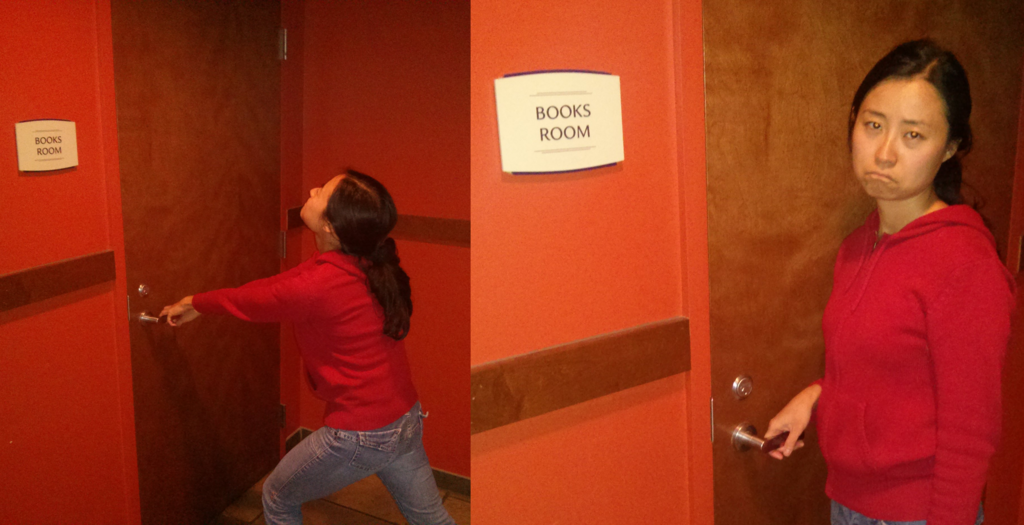
 Mail configuration.
Sometimes I send mail to root@some-domain-I-don't-own from cron or sudo or whatever system and wonder why that happened.
 I approached the


 Debian Jessie has been released on April 25th, 2015. This has opened the
Stretch development cycle. Reactions to the idea of making Debian

 Common Lisp users are very happy to use
 Sometimes I am pointed that when compared to other programming languages
Common Lisp is lacking a lot in the
batteries included area. After having
had to
 It's all automated in the
 Oh and remember, the only reason I've written


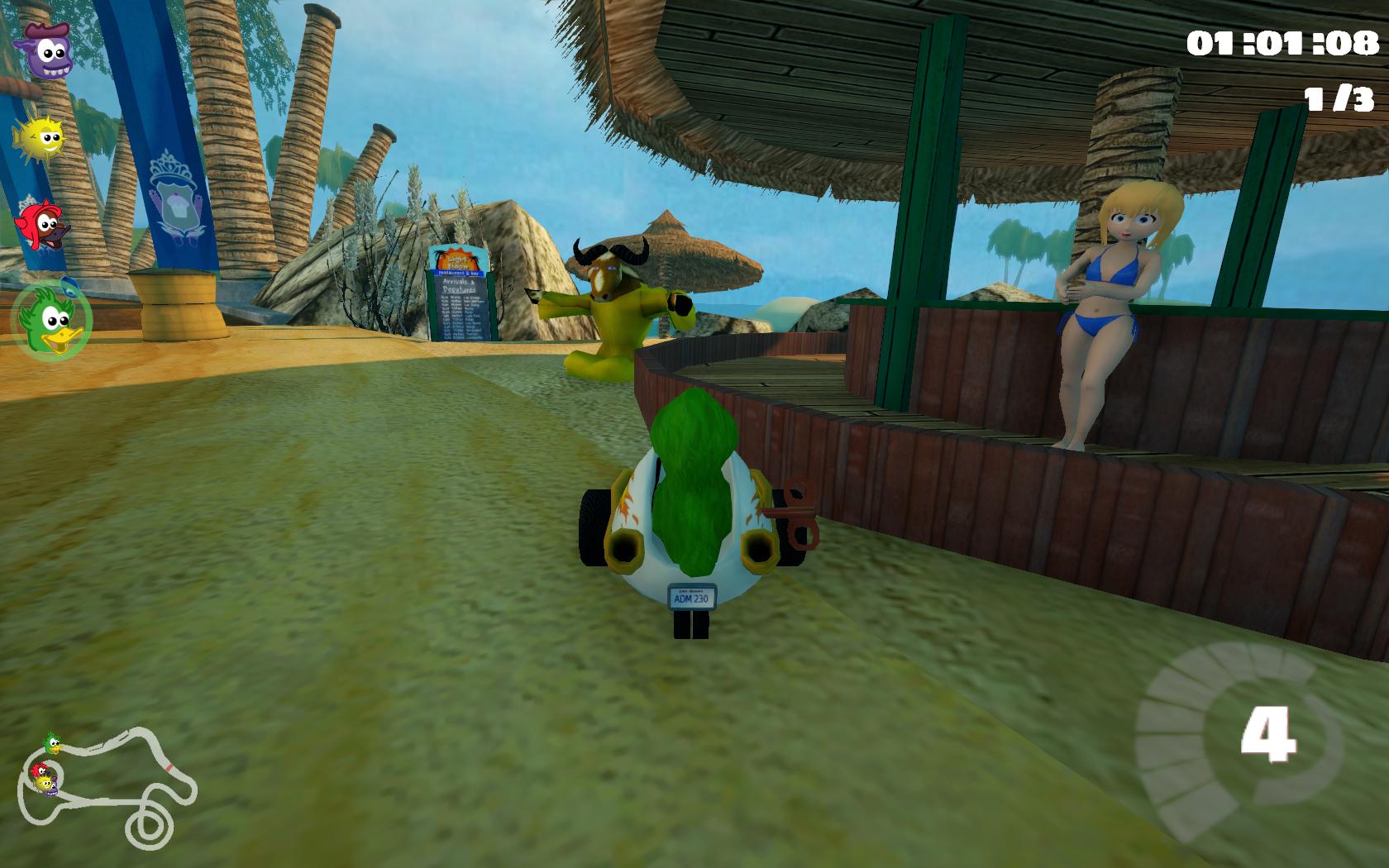

 What happens if you remove randomness from


 Gnocchi provides a full REST API to manipulate time-series that are called
metrics. You can easily create a metric using a simple HTTP request:


 Another object and concept that Gnocchi provides is the ability to manipulate
resources. There is a basic type of resource, called generic, which has very
few attributes. You can extend this type to specialize it, and that's what
Gnocchi does by default by providing resource types known for OpenStack such as
instance, volume, network or even image.

