Search Results: "ed"

17 February 2022

Abiola Ajadi: Modifying expectations!

Hi everyone! In today s blog post I will be talking about the progress i have made , the hurdles I encountered and how my current progress differs from my original expectations. I applied to Debian community with a particular timeline and expected it to go that way, but after starting out i realized i had alot to learn in Ruby and the codebase. So far i have worked on issues i am proud of and when i use Debci i see some of the changes i added for example the self-service form remembering values that was filled after an error message / it reloads. Another milestone for me is writing test cases, I learnt about test driven development which is an awesome process is developing software. Looking back at the beginning before the internship started I can see how much experience i have gained and also improvement I made.

Road block Some tasks took longer than expected for example writing the test cases as i was new to this way of building and also i had to refactor some code, I was very careful doing this as i wanted to make sure i do it the right way.

The journey continues I had to modify my initial expectations and my mentors have been so supportive. I hope to add more features to Debci and also write more tests. So far, it has been a great experience. Till next time!

16 February 2022

Joerg Jaspert: Funny CPU usage - rewrite it in rust

Munin plugin and it s CPU usage (and a rewrite in rust) With my last blog on the Munin plugins CPU usage I complained about Oracle Linux doing something really weird, driving up CPU usage when running a fairly simple Shell script with a loop in. Turns out, I was wrong. It is not OL7 that makes this problem show up. It appears to be something from the Oracle Enterprise Database installed on the system, that makes it go this crazy. I ve now had this show up on RedHat7 systems too, and the only thing that singles them out is that overpriced index card system on it. I still don t know what the actual reason for this is, and honestly, don t have enough time to dig deep into it. It is not something that a bit of debugging/tracing finds - especially as it does start out all nice, and accumulates more CPU usage over time. Which would suggest some kind of leak leading to more processing needed, or so - but then it is only CPU affected, not memory, and ONLY on systems with that database on. Meh. Well, I recently (December vacation) got me to look deeper into learning Rust. My first project with that was a multi-threaded milter to do some TLS checks on outgoing mails (kind of fun customer requirements there), and heck, Rust did make that a surprisingly easy task in the end. (Comparing the old, single-threaded C code with my multi-threaded Rust version, a third of the code length doing more, and being way easier to extend with wanted new features is nice). So my second project was Replace this shell script with a Rust binary doing the same . Hell yeah. Didn t take that long and looks good (well, the result. Not sure about the code. People knowing rust may possibly scratch out eyes when looking at it). Not yet running for that long, but even compared to the shell on systems that did not show the above mentioned bugs (read: Debian, without Oracle foo), uses WAY less CPU (again, mentioned by highly accurate outputs of the top command). So longer term I hope this version won t run into the same problems as the shell one. Time will tell. If you are interested in the code, go find it here, and if you happen to know rust and not run away screaming, I m happy for tips and code fixes, I m sure this can be improved lots. (At least cargo clippy is happy, so basics are done ) Update: According to munin, the rust version creates 14 forks/second less than the shell one. And the fork rate change is same on machines with/without the database. That 14 is more than I would have guessed. CPU usage as expected: only on the problem hosts with Oracle Database installed you can see a huge difference, otherwise it is not an easily noticable difference. That is, on an otherwise idle host (munin graph shows average use of low one-digit numbers), one can see a drop of around 1% in the CPU usage graph from munin. Ohwell, poor Shell.

Robert McQueen: Forward the Foundation

Earlier this week, Neil McGovern announced that he is due to be stepping down as the Executive Director as the GNOME Foundation later this year. As the President of the board and Neil s effective manager together with the Executive Committee, I wanted to take a moment to reflect on his achievements in the past 5 years and explain a little about what the next steps would be. Since joining in 2017, Neil has overseen a productive period of growth and maturity for the Foundation, increasing our influence both within the GNOME project and the wider Free and Open Source Software community. Here s a few highlights of what he s achieved together with the Foundation team and the community: Recognizing and appreciating the amazing progress that GNOME has made with Neil s support, the search for a new Executive Director provides the opportunity for the Foundation board to set the agenda and next high-level goals we d like to achieve together with our new Executive Director. In terms of the desktop, applications, technology, design and development processes, whilst there are always improvements to be made, the board s general feeling is that thanks to the work of our amazing community of contributors, GNOME is doing very well in terms of what we produce and publish. Recent desktop releases have looked great, highly polished and well-received, and the application ecosystem is growing and improving through new developers and applications bringing great energy at the moment. From here, our largest opportunity in terms of growing the community and our user base is being able to articulate the benefits of what we ve produced to a wider public audience, and deliver impact which allows us to secure and grow new and sustainable sources of funding. For individuals, we are able to offer an exceedingly high quality desktop experience and a broad range of powerful applications which are affordable to all, backed by a nonprofit which can be trusted to look after your data, digital security and your best interests as an individual. From the perspective of being a public charity in the US, we also have the opportunity to establish programs that draw upon our community, technology and products to deliver impact such as developing employable skills, incubating new Open Source contributors, learning to program and more. For our next Executive Director, we will be looking for an individual with existing experience in that nonprofit landscape, ideally with prior experience establishing and raising funds for programs that deliver impact through technology, and appreciation for the values that bring people to Free, Open Source and other Open Culture organizations. Working closely with the existing members, contributors, volunteers and whole GNOME community, and managing our relationships with the Advisory Board and other key partners, we hope to find a candidate that can build public awareness and help people learn about, use and benefit from what GNOME has built over the past two decades. Neil has agreed to stay in his position for a 6 month transition period, during which he will support the board in our search for a new Executive Director and support a smooth hand-over. Over the coming weeks we will publish the job description for the new ED, and establish a search committee who will be responsible for sourcing and interviewing candidates to make a recommendation to the board for Neil s successor a hard act to follow! I m confident the community will join me and the board in personally thanking Neil for his 5 years of dedicated service in support of GNOME and the Foundation. Should you have any queries regarding the process, or offers of assistance in the coming hiring process, please don t hesitate to join the discussion or reach out directly to the board.

15 February 2022

Norbert Preining: NVEnc for Arch Linux

I have been using NVEnc a NVIDIA hardware based encoder for quite some time now. Mostly because I was pointed to it by FastFlix, one of the best video en/recoding frontend programs out there. Having switched to Arch Linux lately, I realized there is no package of it perfect time to start contributing and preparing an AUR package for it. Since it is my first package I made for Arch, it took me a bit of reading through the excellent wiki of Arch, and comparing a few other PKGBUILD files. After a few trials (and several errors) finally the package seems ready to me: nvenc @ AUR. More expert Arch packagers, please leave comments or contact me with suggestions for improvements, all of that is more than welcome! That said, now back to some video encoding (just got all the James Bond on BluRay ;-). Enjoy

14 February 2022

Neil McGovern: Handing over

In 2017, I was attending FOSDEM when GNOME announced that I was to become the new Executive Director of the Foundation. Now, nearly 5 years later, I ve decided the timing is right for me to step back and for GNOME to start looking for its next leader. I ve been working closely with Rob and the rest of the board to ensure that there s an extended and smooth transition, and that GNOME can continue to go from strength to strength. GNOME has changed a lot in the last 5 years, and a lot has happened in that time. As a Foundation, we ve gone from a small team of 3, to employing people to work on marketing, investment in technical frameworks, conference organisation and much more beyond. We ve become the default desktop on all major Linux distributions. We ve launched Flathub to help connect application developers directly to their users. We ve dealt with patent suits, trademarks, and bylaw changes. We ve moved our entire development platform to GitLab. We released 10 new GNOME releases, GTK 4 and GNOME 40. We ve reset our relationships with external community partners and forged our way towards that future we all dream of where everyone is empowered by technology they can trust. For that future, we now need to build on that work. We need to look beyond the traditional role that desktop Linux has held and this is something that GNOME has always been able to do. I ve shown that the Foundation can be more than just a bank account for the project, and I believe that this is vital in our efforts to build a diverse and sustainable free software personal computing ecosystem. For this, we need to establish programs that align not only with the unique community and technology of the project, but also deliver those benefits to the wider world and drive real impact. 5 years has been the longest that the Foundation has had an ED for, and certainly the longest that I ve held a single post for. I remember my first GUADEC as ED. As you may know, like many of you, I m used to giving talks at conferences and yet I have never been so nervous as when I walked out on that stage. However, the welcome and genuine warmth that I received that day, and the continued support throughout the last 5 years makes me proud of what a welcoming and amazing community GNOME is. Thank you all.

Petter Reinholdtsen: Updated vlc bittorrent plugin in Debian (version 2.14)

I am very happy to report that a new version of the VLC bittorrent plugin was just uploaded into debian. The changes since last time is mostly code clean in the download code. The package is currently in Debian unstable, but should be available in Debian testing son. To test it, simply install it like this:
apt install vlc-plugin-bittorrent
After it is installed, you can try to use it to play a file downloaded live via bittorrent like this:
vlc https://archive.org/download/Glass_201703/Glass_201703_archive.torrent
It can also use magnet links and local .torrent files like the ones provided by the Internet Archive. Another example is the Love Nest Buster Keaton movie, where one can click on the 'Torrent' link to get going. As usual, if you use Bitcoin and want to show your support of my activities, please send Bitcoin donations to my address 15oWEoG9dUPovwmUL9KWAnYRtNJEkP1u1b.

13 February 2022

Gunnar Wolf: Got to boot a RPi Zero 2 W with Debian

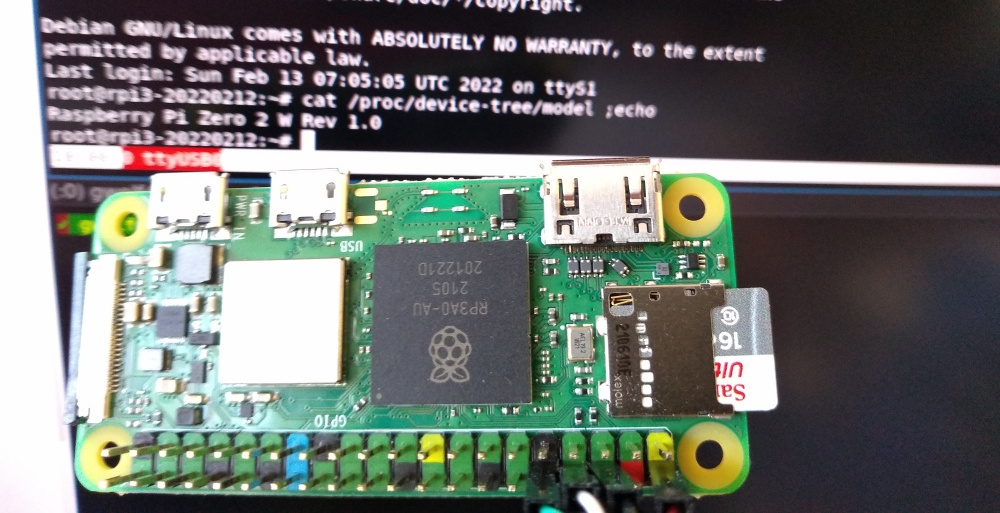
About a month ago, I got tired of waiting for the newest member of the Raspberry product lineup to be sold in Mexico, and I bought it from a Chinese reseller through a big online shopping platform. I paid quite a bit of premium (~US$85 instead of the advertised US$15), and got it delivered ten days later Anyway, it s known this machine does not yet boot mainline Linux. The vast majority of ARM systems require the bootloader to load a Device Tree file, presenting the hardware characteristics map. And while the RPi Zero 2 W (hey what an awful and confusing naming scheme they chose!) is mostly similar to a RPi3B+, it is not quite the same thing. A kernel with RPi3B+ s device tree will refuse to boot. Anyway, I started digging, and found that some days ago Stephan Wahren sent a patch to the linux-arm-kernel mailing list with a matching device tree. Read the patch! It s quite simple to read (what is harder is to know where each declaration should go, if you want to write your own, of course). It basically includes all basic details for the main chip in the RPi3 family (BCM2837), pulls in also the declarations from the BCM2836 present in the RPi2, and adds the necessary bits for the USB OTG connection and the WiFi and Bluetooth declarations. Registers the model name as Raspberry Pi Zero 2 W, which you can easily see in the following photo, informs the kernel it has 512MB RAM, and Well, really, it s an easy device tree to read, don t be shy! So, I booted my RPi 3B+ with a freshly downloaded Bookworm image, installed and unpacked linux-source-5.15, applied Stephan s patch, and added the following for the DTB to be generated in the arm64 tree as well:
--- /dev/null   2022-01-26 23:35:40.747999998 +0000
+++ arch/arm64/boot/dts/broadcom/bcm2837-rpi-zero-2-w.dts       2022-02-13 06:28:29.968429953 +0000
@@ -0,0 +1 @@
+#include "arm/bcm2837-rpi-zero-2-w.dts"
Then, ran a simple make dtbs, and Failed, because bcm283x-rpi-wifi-bt.dtsi is not yet in the kernel . OK, no worries: Getting wireless to work is a later step. I commented out the lines causing conflict (10, 33-35, 134-136), and:
root@rpi3-20220212:/usr/src/linux-source-5.15# make dtbs
  DTC     arch/arm64/boot/dts/broadcom/bcm2837-rpi-zero-2-w.dtb
Great! Just copied over that generated file to /boot/firmware/, moved the SD over to my RPiZ2W, and behold! It boots! When I bragged about it in #debian-raspberrypi, steev suggested me to pull in the WiFi patch, that has also been submitted (but not yet accepted) for kernel inclusion. I did so, uncommented the lines I modified, and built again. It builds correctly, and again copied the DTB over. It still does not find the WiFi; dmesg still complains about a missing bit of firmware (failed to load brcm/brcmfmac43430b0-sdio.raspberrypi,model-zero-2-w.bin). Steev pointed out it can be downloaded from RPi Distro s GitHub page, but I called it a night and didn t pursue it any further ;-) So I understand this post is still a far cry from saying our images properly boot under a RPi 0 2 W , but we will get there

12 February 2022

Ritesh Raj Sarraf: apt-offline 1.8.4

apt-offline 1.8.4 apt-offline version 1.8.4 has been released. This release includes many bug fixes but the important ones are:
  • Better GPG signature handling
  • Support for verifying InRelease files

Changelog
apt-offline (1.8.4-1) unstable; urgency=medium
  [ Debian Janitor ]
  * Update standards version to 4.5.0, no changes needed.
  [ Paul Wise ]
  * Clarify file type in unknown file message
  * Fix typos
  * Remove trailing whitespace
  * Update LICENSE file to match official GNU version
  * Complain when there are no valid keyrings instead of missing keyrings
  * Make all syncrhronised files world readable
  * Fix usage of indefinite articles
  * Only show the APT Offline GUI once in the menu
  * Update out of date URLs
  * Fix date and whitespace issues in the manual page
  * Replace stereotyping with an appropriate word
  * Switch more Python shebangs to Python 3
  * Correct usage of the /tmp/ directory
  * Fix YAML files
  * Fix usage of the log API
  * Make the copying of changelog lines less brittle
  * Do not split keyring paths on whitespace
  [ Ritesh Raj Sarraf ]
  * Drop the redundant import of the apt module.
    Thanks to github/dandelionred
  * Fix deprecation of get_bugs() in debianbts
  * Drop the unused IgnoredBugTypes
  * Set encoding for files when opening
  * Better error logging when apt fails
  * Don't mandate a default option
  * Demote metadata errors to verbose
  * Also log an error message for every failed .deb url
  * Check hard for the url type
  * Check for ascii armored signature files.
    Thanks to David Klnischkies
  * Add MIME type for InRelease files
  * Drop patch 0001-Drop-the-redundant-import-of-the-apt-module.patch.
    Now part of the 1.8.4 release
  * Prepare release 1.8.3
  * Prepare release 1.8.4
  * debian packaging
    + Bump debhelper compatibility to 13
    + Update install files
  [ Dean Anderson ]
  * [#143] Added support for verifying InRelease files
 -- Ritesh Raj Sarraf <rrs@debian.org>  Sat, 12 Feb 2022 18:52:58 +0530

Resources
  • Tarball and Zip archive for apt-offline are available here
  • Packages should be available in Debian.
  • Development for apt-offline is currently hosted here

11 February 2022

Ingo Juergensmann: Old Buildd.Net Database

Since March/April 2000 I was deeply involved in Debian m68k and operated multiple m68k autobuilder for over a decade. In fact my Amiga 3000 named arrakis was the second buildd for m68k in addition to the Debian owned Amiga 3000UX named kullervo . Back in that time there was some small website running on Kullervo to display some information about the Debian autobuilder. After some time we (as m68k porters) moved that webpage away from Kullervo to my root server. Step by step this site evolved to Buildd.Net and extended to other archs and suites beside unstable like backports or non-volatile. The project got more and more complex and beyond my ability to do a complete necessary rewrite. So, in 2016 I asked for adoption of the project and in 2018 I shut it down, because (apparently) there was nobody taking over. From November 2005 until January 2018 I do have entries in my PostgreSQL database for Buildd.Net. I think the data in the database might be interesting for those that want to examine that data. You can use the data to see how build times have increased over time, which e.g. led to the expulsion of m68k as release arch, because the arch couldn t keep up anymore. I could imagine that you could do other interesting analysis with that data. For example how new versions of the toolchain increased the build times, maybe even if a specific version of e.g. binutils or gcc had a positive effect on certain archs, but a negative effect on other archs. If there is interest in this data I could open the database to the public or even upload the dump of the database so that you can download and install it on your own.

Holger Levsen: 20220211-inbox-zero-in-2022-and-beyond

Back to the old and new normal: inbox zero So, a long time ago, on the last two days of January 2020 I had reached zero unread mails in my inbox and all mailing lists and then... some stuff kept me distracted for a (too) long time... And then two weeks ago on the 29th of January 2022, I've reached inbox zero again, and again on the 30th and then I had a hardware issue and couldn't really use my computer for two days (one day trying to fix, the other copying data around...) and thus only on February 2nd I've hit zero unread mails again and again and again, every day for the last 9 days up until today. Yay! I'm sure there will be days (and weeks) where I won't manage to deal with all my incoming mail everyday, but I surely hope I'll manage at least once a month. As I did in 2019 when I started tracking this :) Reaching inbox zero every day is good for several reasons and probably the most important one is peace of mind. Even though the incoming flood of email never really stops, by reaching inbox zero I can achieve the feeling that I've dealt with all my emails for the day and that I can put email off my focus, at least for that day and despite emails coming in... ...and then email is too easy to be used as a todo list. Narf. So I guess I need to improve those workflows eventually as well. And offline days, do you remember those? Fully offline even, and by choice?!!

Reproducible Builds (diffoscope): diffoscope 204 released

The diffoscope maintainers are pleased to announce the release of diffoscope version 204. This version includes the following changes:
[ Chris Lamb ]
* Don't run the binwalk comparator tests as root (or fakeroot) as the
  latest version of binwalk has some security protection against doing
  precisely this.
* If we fail to scan a file using binwalk, return 'False' from
  BinwalkFile.recognizes rather than raise a traceback.
* If we fail to import the Python "binwalk" module, don't accidentally report
  that we are missing the "rpm" module instead.
[ Mattia Rizzolo ]
* Use dependencies to ensure that "diffoscope" and "diffoscope-minimal"
  packages always have the precise same version.
You find out more by visiting the project homepage.

10 February 2022

Patryk Cisek: Automating Let's Encrypt certificates with Gandi LiveDNS

As a Debian Developer I have a discount on using Gandi and I ve been using it for quite a long time and have been very happy with it. I ve been using it for registering domains. For example this blog s domain is managed by my Gandi account. Using publicly registered domain in private-only setup In addition to using this DNS registrar for public stuff, like a blog, one can also use it for a domain accessible only within a private network.

Russell Coker: Mouse and Teflon

I had a problem with my mouse. The slippery plastic bits on the bottom weren t glued on well and came off, which then gave more friction when moving on the desk. After asking advice on a mailing list the best suggestion was Teflon sticky tape. I bought a few meters of such tape (a lifetime supply for mouse repair) and used an 8cm strip on each side of the bottom of my mouse which made it slippery enough. Ebay seems like a good place to buy that, most of the offers are well below $20 for a reel of tape including postage. One thing to note is that they also sell non-adhesive teflon tape. I made the mistake of investigating the capabilities of teflon tape then buying the cheapest one on offer which turned out to be plumber s tape which doesn t have adhesive, fortunately it was well below $10. I now have a lifetime supply of plumber s tape if I can ever find a use for it.

9 February 2022

Kentaro Hayashi: Writing Debian New Contributor Guide

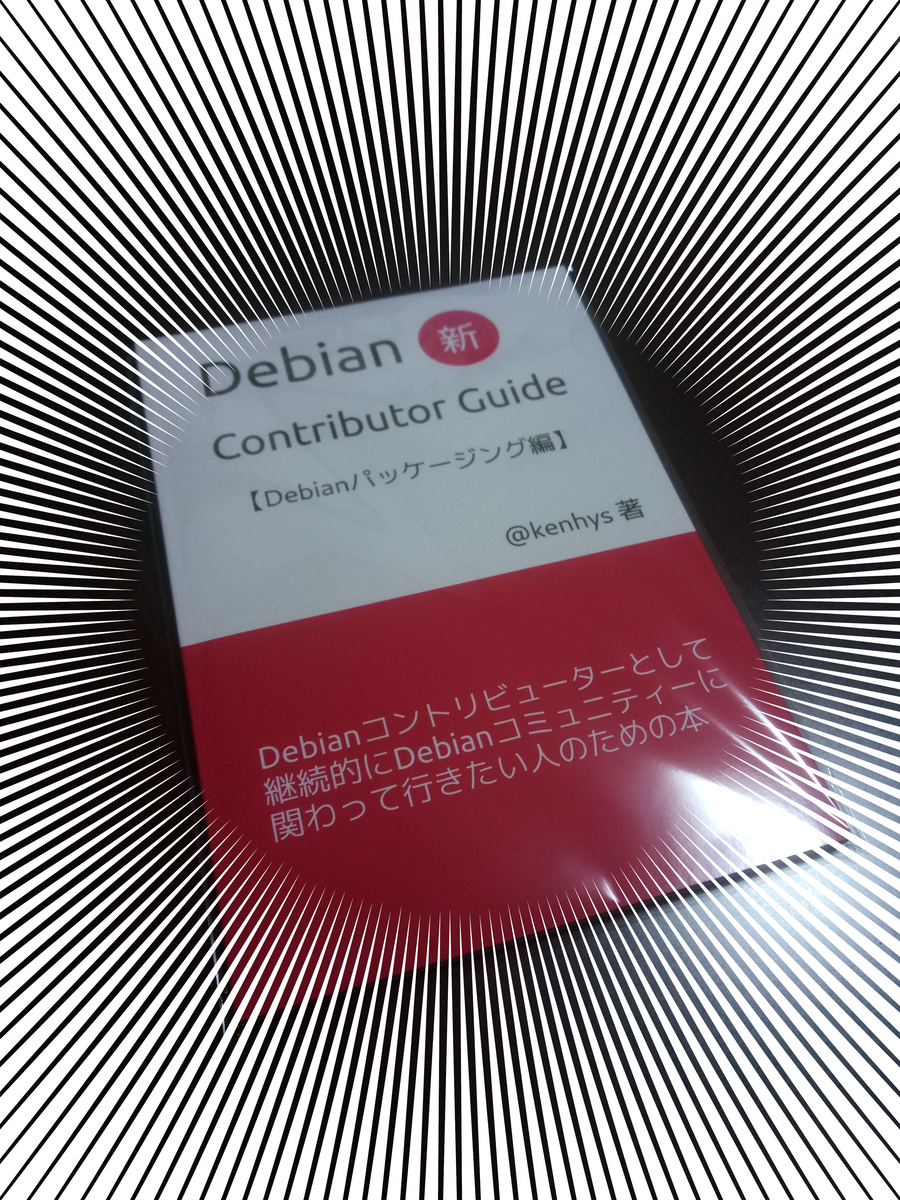
Recently, I've wrote Debian New Cotributor Guide in Japanese. Here is the photo of on-demand printed version.
f:id:kenhys:20220207163644j:plainDebian New Contributor Guide
This book (JIS-B5 128p) was published for online event - Techbookfest 12th. It covers how to package a new software in Debian. techbookfest.org Mostly PDF format is preferred, and a few printed versions were distributed.

Norbert Preining: KDE/Plasma 5.24 for Debian

Yesterday, KDE released version 5.24 of the Plasma desktop with the usual long list of updates and improvements. This release will be considered a LTS release. And Plasma 5.24 is now available for all Debian releases. (And don t forget KDE Gears/Apps 21.12!) As usual, I am providing packages via my OBS builds. If you have used my packages till now, then you only need to change the plasma5XX line to read plasma524. To give full details, I repeat (and update) instructions for all here: First of all, you need to add my OBS key say in /etc/apt/trusted.gpg.d/obs-npreining.asc and add a file /etc/apt/sources.list.d/obs-npreining-kde.list, containing the following lines, replacing the DISTRIBUTION part with one of Debian_11 (for Bullseye), Debian_Testing, or Debian_Unstable:
deb https://download.opensuse.org/repositories/home:/npreining:/debian-kde:/other-deps/DISTRIBUTION/ ./
deb https://download.opensuse.org/repositories/home:/npreining:/debian-kde:/frameworks/DISTRIBUTION/ ./
deb https://download.opensuse.org/repositories/home:/npreining:/debian-kde:/plasma524/DISTRIBUTION/ ./
deb https://download.opensuse.org/repositories/home:/npreining:/debian-kde:/apps2112/DISTRIBUTION/ ./
deb https://download.opensuse.org/repositories/home:/npreining:/debian-kde:/other/DISTRIBUTION/ ./
The sharp eye might have detected also the apps2112 line, yes the KDE Gear suite of packages has been updated to 21.12 some time ago and is also available in my OBS builds (and in Debian/experimental). Just one warning, but I guess most people using these repos already know it: Since I am not using Debian (lovely politics!) for my main machine anymore (only for my laptop for now), I haven t tested these packages as solidly as the one up to now. Still, I got already one positive installation feedback. Enjoy the new Plasma!

8 February 2022

Neil Williams: Django Model Mommy moving to Model Bakery

Some Django applications use Model Mommy in unit tests: https://tracker.debian.org/pkg/python-model-mommy Upstream, model mommy has been renamed model bakery: https://model-bakery.readthedocs.io/en/latest/
Model Bakery is a rename of the legacy model_mommy s project. This is because the project s creator and maintainers decided to not reinforce gender stereotypes for women in technology. You can read more about this subject here
Hence: https://bugs.debian.org/1005114 and https://ftp-master.debian.org/new/python-model-bakery_1.4.0-1.html So this is a heads-up to all those using Debian for their Django unit tests. Model Mommy will no longer get updates upstream, so model mommy will not be able to support Django4. Updates will only be done, upstream, in the Model Bakery package which already supports Django4. Bakery is not a drop-in replacement. Model Bakery includes a helper script to migrate: https://salsa.debian.org/python-team/packages/python-model-bakery/-/blob/master/utils/from_mommy_to_bakery.py This is being packaged in /usr/share/ in the upcoming python3-model-bakery package. It is a tad confusing that model-mommy is at version 1.6.0 but model-bakery is at version 1.4.0 but that only reinforces that Django apps using Model Mommy will need editing to move to Model Bakery. I'll be using the migration script for a Freexian Django app which currently uses Model Mommy. Once Model Bakery reaches bookworm, I plan to do a backport to bullseye. Then I'll file a bug against Model Mommy. Severity of that bug will be increased when Django4 enters unstable (the 4.0 dev release is currently in experimental but there is time before the 4.2 LTS is uploaded to unstable). https://packages.debian.org/experimental/python3-django Model Bakery is in NEW and Salsa Update: Django 4.2 LTS would be the first Django4 release in unstable.

7 February 2022

John Goerzen: KDE: A Nice Tiling Envieonment and a Surprisingly Awesome DE

I recently wrote that managing an external display on Linux shouldn t be this hard. I went down a path of trying out some different options before finally landing at an unexpected place: KDE. I say unexpected because I find tiling window managers are just about a necessity. Background: xmonad Until a few months ago, I d been using xmonad for well over a decade. Configurable, minimal, and very nice; it suited me well. However, xmonad is getting somewhat long in the tooth. xmobar, which is commonly used with it, barely supports many modern desktop environments. I prefer DEs for the useful integrations they bring: everything from handling mount of USB sticks to display auto-switching and sound switching. xmonad itself can t run with modern Gnome (whether or not it runs well under KDE 5 seems to be a complicated question, according to wikis, but in any case, there is no log applet for KDE 5). So I was left with XFCE and such, but the isues I identified in the shouldn t be this hard article were bad enough that I just could not keep going that way. An attempt: Gnome and PaperWM So I tried Gnome under Wayland, reasoning that Wayland might stand a chance of doing things well where X couldn t. There are several tiling window extensions available for the Gnome 3 shell. Most seemed to be rather low-quality, but an exception was PaperWM and I eventually decided on it. I never quite decided if I liked its horizontal tape of windows or not; it certainly is unique in any case. I was willing to tolerate my usual list of Gnome problems for the sake of things working. For instance: Under Wayland, I found a disturbing lack of logs. There was nothing like /var/log/Xorg.0.log, nothing like ~/.xsession-errors, just nothing. Searching for answers on this revealed a lot of Wayland people saying it s a Gnome issue and the trail going cold at that point. And there was a weird problem that I just could not solve. After the laptop was suspended and we-awakened, I would be at a lock screen. I could type in my password, but when hitting Enter, the thing would then tend to freeze. Why, I don t know. It seemed related to Gnome shell; when I switched Gnome from Wayland to X11, it would freeze but eventually return to the unlock screen, at which point I d type in my password and it would freeze again. I spent a long time tracking down logs to see what was happening, but I couldn t figure it out. All those hard resets were getting annoying. Enter KDE So I tried KDE. I had seen mentions of kwin-tiling, a KDE extension for tiling windows. I thought I d try this setup. I was really impressed by KDE s quality. Not only did it handle absolutely every display-related interaction correctly by default, with no hangs ever, all relevant settings were clearly presented in one place. The KDE settings screens were a breath of fresh air lots of settings available, all at one place, and tons of features I hadn t seen elsewhere. Here are some of the things I was pleasantly surprised by with KDE: Tiling So how about the tiling system, kwin-tiling? The out of the box experience is pretty nice. There are fewer built-in layouts than with xmonad, but the ones that are there are doing a decent job for me, and in some cases are more configurable (those that have a large window pane are configurable on its location, not forcing it to be on the left as with many systems.) What s more, thanks to the flexibility in the KDE shortcut settings, I can configure it to be nearly keystroke-identical to xmonad! Issues Encountered I encountered a few minor issues: In short, I m very impressed.

Dirk Eddelbuettel: x13binary 1.1.57-3 on CRAN: Packaging Updates

Release 1.1.57-3 of the x13binary package providing the X-13ARIMA-SEATS program by the US Census Bureau arrived late yesterday on CRAN. This release relaxes the download requirement on macOS and Linux: if a user supplies a path in an environment variable X13_PATH we check for a suitable binary there and omit the download. This helps with air-gapped installation (and alike). Courtesy of my CRANberries, there is also a diffstat report for this release showing changes to the previous release. If you like this or other open-source work I do, you can sponsor me at GitHub.

This post by Dirk Eddelbuettel originated on his Thinking inside the box blog. Please report excessive re-aggregation in third-party for-profit settings.

Gustavo R. Montesino: Hardware failures...

The Bad: When I got to work today, I've found our server (white box with Debian etch responsible for networking, files, printers, etc) powered off - most likely the UPS' battery didn't survive a power outage during the night. When I turned the server on I was greeted by all those nice lines telling me I had a hard disk problem. The Ugly: Instead off marking the disk showing the read errors as bad, the RAID stack (device mapper?) somehow concluded the "good" disk of the RAID 1 array wasn't synched and kicked it out... The good The bad sectors did take only some unimportant collectd status files with them. After some poking with dd trying to force the HD to redirect the bad sectors, the read errors vanished and the Reallocated Sector Count didn't increase according to smartctl, which seems like a good signal.

Next.

Previous.