Search Results: "dom"

28 January 2009

Russell Coker: Links January 2009

Jennifer 8 Lee gave an interesting TED talk about the spread and evolution of what is called Chinese food [1]. In that talk she compares McDonalds to Microsoft and Chinese restaurants to Linux. Her points comparing the different local variations of Chinese food to the variations of Linux make sense. The CentOS Plus repository has a kernel with support for the XFS filesystem, Postfix with MySQL support, and some other useful things [2]. Mary Gardiner comments about the recent loss of a blog server with all content [3]. One interesting point is that when you start using a service that maintains your data you should consider how to make personal backups in case the server goes away or you decide to stop being a customer. Val Henson makes some interesting points about the reliability of Solid State Disks (SSD) [4]. Some people are planning to replace RAID arrays of disks with a single SSD with the idea that a SSD will be more reliable, this seems like a bad idea. Also with the risk of corruption it seems that we have a greater need for filesystems that store block checksums. Lior Kaplan describes how to have multiple Linux bonding devices [5], the comment provides some interesting detail too. programmableweb.com has a set of links to sites that have APIs which can be used to create mashups [6]. One of the many things I would do if I had a lot more spare time is to play with some of the web APIs that are out there. Gunnar Wolf has written some insightful comments about the situation in Israel and Palestine [7]. He used to be a Zionist and spent some time living in Israel so he knows more about the topic than most commentators. Charles Stross has written an informative post about Ubuntu on the EeePC [8]. What is noteworthy about this is not that he s summarised the issues well, but that he is a well known science-fiction writer and he was responding to a SFWA member. One of his short stories is on my free short stories page [9]. He also wrote Accelerando which is one of the best sci-fi novels I ve read (and it s also free) [10]. Don Marti has written about Rent Seeking and proprietary software [11]. It s an interesting article, nothing really new for anyone who has followed the news about the coal and nuclear industries. Erik writes about The Setting Sun and points out that Scott McNealy had tried to capitalise on the SCO lawsuit but Red Hat has ended up beating them in the market [12].

27 January 2009

Mike Hommey: SSH using a SOCKS or HTTP proxy

If you follow planet debian, you may already know about the ProxyCommand directive in $HOME/.ssh/config. It allows OpenSSH to connect to a remote host through a given command. One setup that I use a lot is to have connections be established through a SOCKS proxy. Until today, I was using connect, a small tool written by Shun-ichi Got . The typical setup I used is:
Host *.mydomain.com
ProxyCommand connect -S socksserver:1080 %h %p
I also use jump hosts occasionally, with a setup like this:
Host somehost.mydomain.com
ProxyCommand ssh otherhost.mydomain.com nc -w1 %h %p
And today I discovered that netcat-openbsd does support connexions through a proxy, either SOCKS or HTTP. Why keep using two different tools when you can use one? ;) So I changed my setup to:
Host *.mydomain.com
ProxyCommand nc -xsocksserver:1080 -w1 %h %p
The default is to use SOCKS 5, add -X4 for SOCKS 4 and -Xconnect for HTTP CONNECT proxies. Note that it doesn t support choosing which end does the name resolutions like connect does with the -R option.

26 January 2009

Marco d'Itri: A Linux-based alarm clock

That is, my laptop. Since at night I keep it in the same room where I sleep, I figured that I could as well use it as an highly customizable alarm clock. My alarm script uses rtcwake(8) from util-linux-ng to set the RTC alarm clock, suspends the computer and then plays some music at a set volume when it wakes up (if it never wakes up, check your BIOS settings). Since it uses the date(2) command it can parse the alarm time in many formats.
#!/bin/sh -e
# for a random tune, list multiple space-separated files
MUSIC='/home/mp3/The_Velvet_Underground/The_Velvet_Underground_&_Nico/07_Heroin.mp3'
# some days I like different music
DOW="$(date +%u)"
if [ $DOW -eq 6 -o $DOW -eq 7 ]; then
  MUSIC='/home/mp3/The_Velvet_Underground/The_Velvet_Underground_&_Nico/01_Sunday_Morning.mp3'
fi
# choose your favourite music player
player()   mpg123 --random --quiet --control --title "$@"   true;  
#player()   mplayer -loop 0 "$*";  
# play the music at this volume
VOLUME='50%'
# ALSA mixer control used to set and restore the master volume
VOLUMECTL='iface=MIXER,name="Master Playback Volume"'
##############################################################################
# this is more elegant, but it needs rtcwake from util-linux-ng >= 2.14.2
rtcwake_set_alarm()  
  local when="$1"
  local rtc="$2"
  if [ "$rtc" ]; then rtc="--device $rtc"; fi
  local epochtime=$(date --date "$when" +%s)
  [ "$epochtime" ]   return 1
  sudo rtcwake $rtc --mode no --time $epochtime
 
# you can use this function instead if your system lacks a working rtcwake
set_alarm()  
  local when="$1"
  local rtc="$2"
  [ "$rtc" ]   rtc='rtc0'
  local epochtime=$(date --date "$when" +%s)
  [ "$epochtime" ]   return 1
  local alarmfile="/sys/class/rtc/$rtc/wakealarm"
  sudo sh -c "echo 0 > $alarmfile && echo $epochtime > $alarmfile"
 
##############################################################################
if [ "$1" ]; then
  WHEN="$1"
else
  echo "Usage: $0 WHEN"
  exit 1
fi
set_alarm "$WHEN"
# save the volume
oldvolume="$(amixer cget "$VOLUMECTL"   sed -nre '/ : /s/.*=//p')"
amixer -q cset "$VOLUMECTL" $VOLUME
# actually here I run a script which also deals with network interfaces,
# IM and IRC clients and so on
sudo pm-suspend
player $MUSIC
# restore the volume
amixer -q cset "$VOLUMECTL" "$oldvolume"
exit 0

Andrew Pollock: [life] Too much deja vu

Seriously, every time Sarah has surgery, it all goes pear shaped. The bottom (last time it was towards the top) of Sarah's incision from her recent wire removal surgery was looking a bit red, swollen and hard on Friday, so she went in to the clinic at got them to take a look at it. They decided that a knot in the sutures was trying to work its way out, and causing inflammation or something, so just like last time, they decided to reopen the incision a bit. They did that, and cut the knot out, and rather than packing with gauze, they just taped the small opening closed with some steristrips and covered it with gauze and sent her on her way. Somewhat fortunately (for me) Sarah went into the clinic during the day while I was at work, so I missed participating in the fun and games. They didn't use any local anaesthetic, but Sarah said it didn't hurt too much. That night, though, she was in a reasonable amount of pain, again, similar to last time, except it was a band across her upper abdomen, below her breasts, instead of chest pain. Mindful of the staph infection disaster from last time, we trotted off to the ER on Saturday afternoon, hoping to nip this in the bud. They did some blood work, which came back clear, and gave her some IV pain medication, which didn't seem to do much, and were generally scratching their heads as to the cause of the pain. Fortunately, one of the surgeons involved with Sarah's wire removal from 2.5 weeks previously happened to be on call, so he got called in. He had a bit of a poke around the opening with a long cotton bud, and declared that it was possibly infected, because there was a bit of cloudy fluid discharged when he poked it in. Oh, and the cotton bud disappeared a good centimetre or more under the skin further up the incision, which indicated an abscess was forming. So, for the second time, I got to watch my wife being cut open with a scalpel. I think the local anaesthetic injections were the most painful part for her. He opened the incision up a bit further, and packed it with some Betadine-soaked gauze, and we got sent home with the same instructions as last time this happened: I had to repack the wound with saline-soaked gauze two to three times a day and let it heal from the bottom up. She was also prescribed some antibiotics. She's got about a 2cm incision just below her breasts. It looks a lot deeper than the hole from last year's incision. So we got home about 6pm last night, and went to bed around 11pm. Sarah lasted a couple of hours before she woke up in even more pain than before. She called up the hospital and had the same surgeon paged, and he advised her to come in to the ER again. So at I think about 2am, we headed back. They took some more blood, did a CT scan, which came back clear, and decided to admit her. They're giving her IV antibiotics and pain medication. Initially she didn't want to have any more IV pain medication because it didn't seem to be working, and it tends to make her nauseous. She wasn't keen on dealing with throwing up with the amount of pain she was having. It hurt to move as it was. With a mixture of IV anti-nausea drugs and the IV pain medication, the pain has finally come under control though. She did have one bought of vomiting this evening, which didn't seem to cause her too much discomfort, and she's getting in and out of bed more comfortably. They're going to keep her in overnight. She has a post-operative followup tomorrow in the clinic, so I expect they'll keep her in the hospital until at least then, depending on how things go. Her cardiologist, intimately familiar with last year's debacle, dropped in this afternoon. He's wondering, given how this has happened twice now, if Sarah has some sort of allergy to the type of absorbable suture they've used. Apparently there are different types of sutures, so if she ever has any other surgery, we'll have to get them to try a different type It'll be interesting to see how she goes tonight, as the pain seems to get worse overnight. She hasn't had any IV pain medication since about 1pm, and she wanted to see how she goes without it, because if she gets discharged tomorrow, she'll have to rely on oral stuff anyway. I think it definitely gets harder for her to manage her pain when the pain is causing her to lose sleep. She can only deal with having a couple of night's worth of bad sleep before it all gets too much. So I'm really hoping she gets a good night's sleep tonight. Not that hospitals are renowned for that...

25 January 2009

Sami Haahtinen: Purging postfix queue

Since I keep ending up in situations where I need to clean up postfix queue from mails sent by a single host and always forget the command, I'm posting it here. Maybe someone else will find it useful as well. To begin with, you need to determine the IP address of the culprit you want to eliminate. How you do this, is up to you. Grepping logs or examining the files in the queue both work. But for some reason there doesn't appear to be a good tool to get statistics on the sending IP addresses, only the origin and destination domains. Once you have determined the IP address which you want to purge, you can use the following spell. You might have to repeat the same line for active and incoming queues as well, but usually deferred is the queue I have the most mails. grep -lrE '[^0-9]10.20.30.4[^0-9]' /var/spool/postfix/deferred xargs -r -n1 basename postsuper -d - It's important that the IP address has escaped dots, because dots can account for any character. In the worst case it will end up matching a lot of wrong IP addresses. Another important bits are the '[^0-9]' groups in both ends of the pattern. Those make the IP address only match that particular IP address. Without that extra limitation 1.1.1.1 would match anything that has 1 as the last number in the first octet and 1 as the first number of the last octet. For example: 211.1.1.154 would be a valid match. The other important bit, yet oddly unknown, is the postsuper command. Postsuper modifies the queue and -d flag makes it delete files in the queue by QueueID. For some reason I keep on seeing all sorts of find -exec rm spells all over, which isn't really that nice for the daemon itself. So here it is, one more tidbit I've been meaning to write up for quite some time now. Enjoy!

Chris Lamb: Matching IPs with regexes conCIDRd harmful

Some rather unfriendly software (Munin, lighttpd, etc.) require that IP ranges are specified using regexes instead of the usually more convenient CIDR notation. The following code converts instances of that notation to a regular expression. The generated pattern assumes that the input is a valid IPv4 address; that is to say, matching 0.0.0.0/0. Patches for common prefix optimisation greatly appreciated.
def cidr_to_regex(cidr):
    ip, prefix = cidr.split('/')
    base = 0
    for val in map(int, ip.split('.')):
        base = (base << 8)   val
    shift = 32 - int(prefix)
    start = base >> shift << shift
    end = start   (1 << shift) - 1
    def regex(lower, upper):
        if lower == upper:
            return str(lower)
        from math import log10
        exp = int(log10(upper - lower))
        delta = 10 ** exp
        if lower == 0 and upper == 255:
            return "\d+"
        if delta == 1:
            val = ""
            for a, b in zip(str(lower), str(upper)):
                if a == b:
                    val += str(a)
                elif (a, b) == ("0", "9"):
                    val += '\d'
                elif int(b) - int(a) == 1:
                    val += '[%s%s]' % (a, b)
                else:
                    val += '[%s-%s]' % (a, b)
            return val
        def gen_classes():
            floor_ = lambda x: int(round(x / delta, 0) * delta)
            xs = range(floor_(upper) - delta, floor_(lower), -delta)
            for x in map(str, xs):
                yield '%s%s' % (x[:-exp], r'\d' * exp)
            yield regex(lower, floor_(lower) + (delta - 1))
            yield regex(floor_(upper), upper)
        return ' '.join(gen_classes())
    def get_parts():
        for x in range(24, -1, -8):
            yield regex(start >> x & 255, end >> x & 255)
    return '^%s$' % r'\.'.join(get_parts())

24 January 2009

James Morrison: SimTower

I found a reference on the 'net about a week ago about SimTower. I remembered playing it a long time ago and thought it would be fun to try again since I hadn't beaten it. so I found my old copy and started playing. I've acheieved TOWER status in the game in 9 years.

The basic plan I used to beat the game was to build as wide as possible and to use 3 normal elevator shafts per 15 floors, 8 stairs and 2 escalators. Primarily my building was all offices. For the there are two sets of stairs going up 3 floors from each lobby. There is also an escalator going down from the lobby for each set of stairs and one more set of stairs going down a floor from the escalator. For the floors that have stairs going to them, there should be no elevator for that floor.

Now there are only 9 floors left that need elevator transportation. The best strategy I figured out for these floors was 3 elevators, each hitting 5 floors. That way each floor got one elevator shaft and a 3rd elevator shaft provided a bit of extra transport.

The 14th floor in each set is a good place to put cafes, and shops. I put a couple cafes and shops in, a security office at on one end, then put some offices in to use up some of the remaining space on the outside of the building. I left a bunch of space between the cafes and offices.

The first 15 floors are special since those floors should have 3 floors of offices, 6 floors of hotel rooms, one housekeeping station per floor, and a service elevator between the hotel floors. Then topped off with offices.

The basement floors had shops, cafes, restaurants and a cinema on floors b1 and b2. Parking was on floors b3, b4, and b5. The recycling centers were on floors b6 and b7, then the metro was on floors b8, and b9 with the metro taking up b10. I also put shops and cafes on floors b8 and b9 with the metro.

For the express elevator I tried to have on each express elevator go to the basement floors and 1 above ground floor. This way floor 15 and floor 30 has separate elevators shafts. Each elevator had as many elevator cars as it could take.

Using this strategy I used 63 above ground floors to get to 15k people and had 128 million dollars. I didn't lower the rent on any offices until I was building up to floor 100 for my cathedral, where I lowered prices on many offices between floors 45 and 60 where I did lower the price to keep tenants. I did lower the price on some hotel rooms much earlier in the game.

You can browse with my wide tower.

Lior Kaplan: Open Content Awarness


My relation to open source and free software made me aware of the license issues not only on software but also on content. Debian thoughts about the GFDL where one of the first issues I encountered, and also the use Wikipedia does with that license. Today, I try to make all my writings open content with the GFDL or with Creative Commons. I started with changing the license of all my guides to GFDL and asking other to so in one of my websites: guides.co.il. This is much more noticeable in my university where I send my papers with CC, mention the quotes from wikipedia are under GFDL and so on, while most people don t even think about licensing their works. This year I had the opportunity to lecture one of my classes about open source and free software in information science and open content is very related phenomenon with a lot of ties to open source. Talking about open content and universities - it s a shame not all content created with public funding is required to be released as public domain or open content Anyway - go and open your content. Make it available to evryone. Posted in Free software licenses

Steve Kemp: Just some kind of fairytale.

Once upon a time I ran a Valentine-Matching site for Livejournal users. (Actually I did it for about three years in a row, but then got bored.) The basic idea was simple, you'd visit a magical site and it would present you with the usernames of all your friends. You'd tick a few boxes, and that would nominate those users as your potential valentines. Then you'd do nothing until February 14th, at which point you'd discover if you matched. A match being made if you chose bob, and bob chose you in return. (Essentially the site is a big double-blind matching system, albeit with constrained membership, via lj.) The major technical difficulty in early days was preventing spoofed accounts. I didn't want Evil Alice to be able to visit the site and pretend to be Bob. In the couple of years I did this I came up with a couple of fun schemes to minimize the chances of this occuring - anything from using email validation, to requiring that users taking part updated their profiles to include a magic cookie-string, or posting to a specific community which I could later screen-scrape. These days the use of openid allows me to prevent spoofing in a trivial manner - and once I realised that I figured why the hell not?! In short here I am and here we go again: The motivation? Playing with openID and because I still like to "match people up". I am aware of one marriage that resulted from a match on my system back in 2003. There could be more. If you're a long-time reader you might remember ctrl-alt-date - how time flies - I just let the domain name(s) expire this week. The timing is a little bit of a coincidence, but not entirely. The only thing that I'm doing this time is not sending emails on matches, because I just can't. Unless I asked people to volunteer their mail addresses I don't have the data. Still I expect remembering to return for the results won't be a challenge. Now, lets get viral. But not in an icky fashion .. ObFilm: Daywatch

23 January 2009

Kartik Mistry: Breaker


* I have started breaking commitments so often. It really hurts when you do it often and I am very depressed by myself at moment. But, good things in life so far: + My new digital photoframe has arrived. Thanks to Chintan for it. + We have started to make some furniture for home (ie my longterm pending thing: Computer Table!) + Kavin is becoming so smart, he has started speaking some random words and identify and duplicate things I do (no, not Debian packaging yet!) + My macbook has 4 GB RAM now. The incident is here (Sorry, its in Gujarati only!).

22 January 2009

Benjamin Mako Hill: Annual Free Software Foundation Fundraiser

When I explain the importance of free software, I often use some variation of the following example:
Suppose I see a beautiful sunset and I want to describe it to a loved one on the other side of the world. Today's communication technology makes this possible. In the process, however, the technology in question puts constraints on message communicated. For example, if I pick up my cellphone, my description of the sunset will be limited to words and sounds that can be transmitted by phone. If I happen to have a camera phone and the ability to send a picture message, I will be able to communicate a very different type of description. If I'm limited to 150 characters in an SMS message, my message will be constrained differently again.
The point of the example is this: the technology I use to communicate puts limits and constraints on my communication. Technology defines what I can say, how I can say it, when I can say it, and even who I can say it to. This is neither good nor bad. It is simply the nature of technology. But it means that those who control our technology control us, to some degree. As information technology becomes increasingly central to our lives, the way we experience, understand, and act in the world is increasingly controlled by technology and, by extension, by those who control technology. I believe that the single most important struggle for freedom in the twenty first century is over the question of who will set these terms. Who will control the technology that controls our lives? Free software can be understood as an answer to this question: An answer in the form of an unambiguous statement that technology must be under the control of its users. When free software triumphs, we will live in a world where users control their technological destiny. We simply cannot afford to fail. The Free Software Foundation is the most important organization fighting for the rights of users in this struggle. Here are some of the ways that I plan to direct the FSF to support software freedom in the coming year:
Network Services Last year, the FSF organized a meeting on software freedom and network services that lead to the creation of the Autonomo.us group and the release of the Franklin Street Statement on Freedom and Network Services. As network services --- like those built by Facebook, Google, and others --- continue rise in popularity, progress in this conversation is of increasing importance. This year, I will direct the FSF to build on the work of Autonomo.us to launch the first of what I hope will be several FSF position statements on software freedom and network services. More importantly, the FSF will begin to provide support and planning for solutions --- technologies, social campaigns, and legal steps --- that will protect computer users whose freedom is currently threatened by network services. Enforcing free software licenses Early on, people who decided to work on free software did so because they agreed with --- or, at the very least, were willing to abide by --- the principles and rules laid out in our licenses. In our push for software freedom, we have created software of immense value and attracted companies and individuals to our community who are less willing, or simply less interested, in protecting users' freedom. In December 2008, the FSF went to court for the first time in the organization's history to force Cisco to uphold the freedom of the users of FSF copyrighted software. This lawsuit asks Cisco to live up to its obligations under the GPL and to ensure that it does so in the future. The FSF needs the support of its community in this and in future enforcement actions. The FSF has operated a compliance lab for several years and has ensured software freedom for countless users. As free software becomes more successful in the next year, the FSF will be playing an increased role in protecting software freedom from those who do not share its principles. Continuing the fight against software patents As I said last year, one cannot write non-trivial software today without running a serious risk of infringing patents. The software patent minefield we've found ourselves in is a very fundamental threat to the success of free software and we've already begun to see the first casualties and costs. We must eliminate software patents. Now. The FSF will continue its work toward this end. The FSF's End Software Patents project's major contribution this year was a brief submitted in the In Re Bilski case at the U.S. Court of Appeals for the Federal Circuit. Recently, an opinion was issued which seems to mark an important shift away from broad protection for software patents. With this victory, now is the time to keep up this momentum. The FSF is drawing up a strategy to do just this and will be announcing the relaunch of its campaign on February 9,2009 led by Ciaran O'Riordan.
Every recent fundraising appeal seems to mention the difficult economic climate and it seems to cliche to do so here. That said, the effect of a bad economy is, in fact, felt most strongly in non-profits dependent on donations. The FSF is not immune. The FSF's work is essential for success on the issues I've described here and on all of its other campaigns and projects. Although the cost of a membership or donation may be less easy to afford this year for many of you, the free software movement cannot afford a weakened FSF at this important moment. If you are not an FSF associate member, now is the time to become one. If you are already a member, please join me in giving generously through a tax-deductible donation. The FSF is a very lean, very humble organization of passionate and dedicated individuals working tirelessly for software freedom. Every single gift makes a difference.

Daniel Kahn Gillmor: Trancendental Nonsense and the Functional Approach

Poking around the web site for Law in Contemporary Society, a class taught this semester by Eben Moglen, (who is counsel for the Free Software Foundation and founder of the Software Freedom Law Center), i found Felix Cohen's Trancendental Nonsense and the Functional Approach, which (according to wikipedia) is one of "the most-cited law review articles ever written". I haven't read the whole thing yet (and i'm neither a lawyer nor a philosopher) but it's fascinating reading. And from what i've read so far, it's a strong push toward directly addressing the values that lie hidden beneath our technical or mechanical decisions, and to avoid mistaking technical success or skill with a worthwhile outcome and clear goals at a societal level. This is something we software developers and system administrators struggle with as well (or at least i think we should). It's neat to get my head around these concepts from a different intellectual sphere, and a different era (74 years ago!) when the technical and mechanical tools i work with didn't exist in anything like their present form. This kind of reading makes me wonder what works from Computer Science or Systems Engineering or Information Technology will have this kind of exhortative power and social relevance so far into the future. Do you have a favorite (or abhorred?) text from your field that offers the kind of moral and technical challenges that Cohen's work does?Tags: law, moglen, philosophy

21 January 2009

Miriam Ruiz: In support of Patio Maravillas

Patio Maravillas is a self-managed government-independent social center in Madrid, placed in a squatted building that long ago belonged to school. The place currently belongs to a Real Estate company, Grupo 2 Reunidos. According to the law, the place has to be used for providing services to the community, which hasn t happened for 10 years. Nobody knows what plans they do have for the building, but there are suspicions that it might be related to property speculation. Nothing new on the horizon. The police are throwing them out of the building tomorrow morning, incidentally coinciding with the opening of the Foro Social Mundial (World Social Forum), for which Patio Maravillas was going to be one of the hosting buildings. Madrid isn t really known for supporting social movements in general, and has a conservative government, so feel free to think that the coincidence is not random. Patio Maravillas has been giving courses and workshops to the community since July 2007, and is very well considered and supported by different organizations. Supposedly whatever happens tomorrow will be without violence, but knowing how the Spanish Police behaves in this situations that is not very likely. The event will be streamed and probably recorded, and information will be twittered, so hopefully nothing serious will happen. I really hope the best for them. I d love to be able to be there with them, but as it is really not possible for me, I m giving them all my support from here. Good luck! Keep up the good work!

20 January 2009

Andrew McMillan: LCA 2009 - The first couple of days

LCA is once again proving it's premiere status as one of the top free & open source software conferences in the world. Our hosts in Hobart are well-organised and friendly, and though I've been locked into the Systems Administration miniconf by virtue of being one of the organisers, what I've been hearing from the other delegates with the freedom to sample other streams is that all of the miniconfs have once again achieved the high standards that we've come to expect from the conference. Right now I'm in the keynote by Tom Limoncelli who's giving us all a good kick in the proverbial, to switch us to the mindset of plenty, and to see beyond limited scarcity. Wonderful stuff. Linux == Infinite Love :-)

Steve Kemp: I saw green fields and flowers. I could smell the grass.

Fabio Tranchitella recently posted about his new filesystem which really reminded me of an outstanding problem I have. I do some email filtering, and that is setup in a nice distributed fashion. I have a web/db machine, and then I have a number of MX machines which process incoming mail rejecting spam and queuing good mail for delivery. I try not to talk about it very often, because that just smells of marketting. More users would be good, but I find explicit promotion & advertising distasteful. (It helps to genuinly consider users as users, and not customers even though money changes hands.) Anyway I handle mail for just over 150 domains (some domains will receive 40,000 emails a day others will receive 10 emails a week) and each of these domains has different settings, such as "is virus scanning enabled?" and "which are the valid localparts at this domain?", then there are whitelists, blacklists, all that good stuff. The user is encouraged to fiddle with their settings via the web/db/master machine - but ultimately any settings actually applied and used upon the MX boxes. This was initially achieved by having MySQL database slaves, but eventually I settled upon a simpler and more robust scheme: Using the filesystem. (Many reasons why, but perhaps the simplest justification is that this way things continue to work even if the master machine goes offline, or there are network routing issues. Each MX machine is essentially standalone and doesn't need to be always talking to the master host. This is good.) On the master each domain has settings beneath /srv. Changes are applied to the files there, and to make the settings live on the slave MX boxes I can merely rsync the contents over. Here is an anonymized example of a settings hierarchy.. So a user makes a change on the web machine. That updates /srv on the master machine immediately - and then every fifteen minutes, or so, the settigngs are pushed accross to the MX boxes where the incoming mail is actually processed. Now ideally I want the updates to be applied immediately. That means I should look at using sshfs or similar. But also as a matter of policy I want to keep things reliable. If the main box dies I don't want the machines to suddenly cease working. So that rules out remotely mounting via sshfs, nfs or similar. Thus far I've not really looked at the possabilities, but I'm leaning towards having each MX machine look for settings in two places: That way I can rsync to /backup on a fixed schedule, but expect that in everyday operation I'll get current/live settings from /srv via NFS, sshfs, or something similar. My job for the weekend is to look around and see what filesystems are available and look at testing them. Obmovie:Alive

Russell Coker: Status of SE Linux in Debian LCA 2009

This morning I gave a talk at the Security mini-conf of LCA about the status of SE Linux in Debian. Here is a summary of the issues I covered: General Status In Lenny (the new release of Debian that will come out in a month or two) SE Linux is working well. Considerably better than in Debian/Etch. There is an installation document on my documents blog [1], it s very easy, only two scripts need to be run with no parameters to do most of the work (5 commands in total). There is more detail on installing SE Linux in Lenny (and other issues) in the Debian Wiki [2]. The default configuration of SE Linux is targeted . Previously we had separate policy packages for targeted and strict , now they are configuration options for selinux-policy-default. It is also possible to have some users in the unconfined_t domain (like the targeted policy) and some in confined domains such as user_t. Changing to strict can be done one user at a time, this needs further documentation. Backports I maintain an APT repository of i386 and AMD64 packages for better SE Linux support. This includes libraries built to not need an executable stack (see my previous blog post for details [3]). It also includes i386 libraries that don t need text relocations AKA execmod (see my blog post about why i386 must die for details [4]). My Lenny repository includes policy packages before they appear in Testing as well as the packages that are modified to fix the execmod and executable stacks issues. I plan to maintain this repository for some time, at least as long as I am actively using Lenny, but the content will change. I might back-port the newer upstream policy to Lenny at some later date. If I do this it will be near the time that Lenny+1 is released and I will put it in a different location to my current Lenny repository. I am currently deciding what to do with packages from external repositories such as debian-multimedia (see my previous post for the background) [5]. I may have to create a separate repository for non-standard Debian packages which I then modify to better support SE Linux. I also plan to build packages of Security Enhanced PostgreSQL [7] for Lenny and Lenny+1. After demonstrating it s capabilities I will suggest that it be considered for Lenny+1. Play Machine I have been running a Play Machine (open root machine) [6] for most of the last seven years. In the near future (probably the week after LCA) I will upgrade it to Lenny. One thing that I didn t mention is the fact that I plan to demonstrate other things such as SE-PostgreSQL in Play Machines. Training I have a Xen server that is used for my Play Machine, I will run it as a SE Linux training machine and grant temporary ownership of a DomU to anyone who wants to learn and have a document with a list of tasks to complete to learn about SE Linux. I might be able to get it online this week. If so then I ll make it available first to LCA delegates. I will also set up a Bittorrent server for a Xen image for anyone who wants to go through the same SE Linux training program on their own machine - this will allow them a greater time limit and also avoid contention for my server. Unfortunately I have some problems with BitTorrent, I would appreciate any advice about running a torrent tracker. Post Lenny SE PostgreSQL is an exciting new development that I want to get in Debian. Initially I will create my own APT repository for it and include it in my Lenny repository. Hopefully it will become a standard feature in Lenny+1. Security Enhanced X (the X window access controls) is a significant security feature. I hope to have that in Lenny+1, but it might not be possible.

19 January 2009

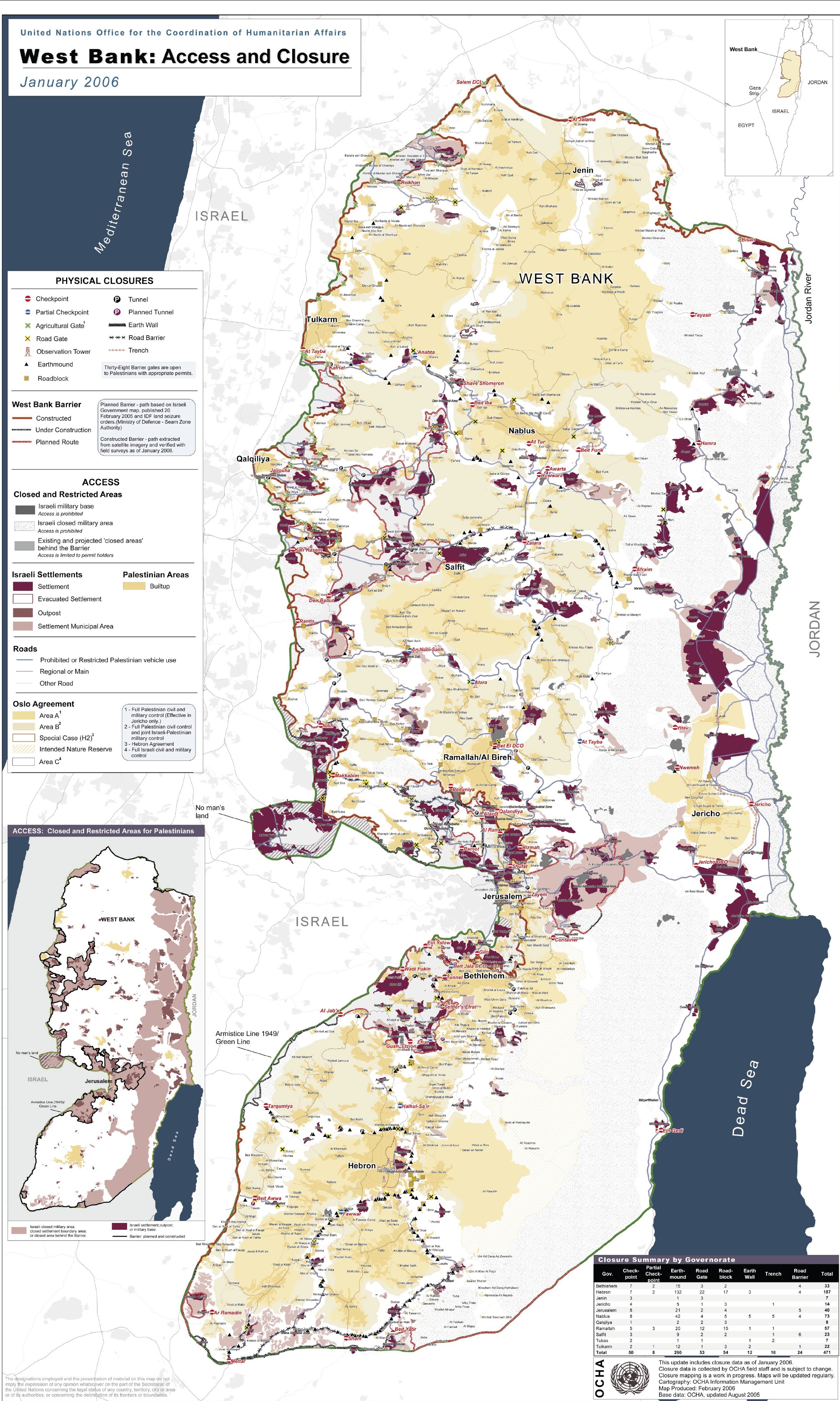
Gunnar Wolf: About the recent events and possible outcomes in Israel and Palestine

Several friends, from different groups and backgrounds and with different points of view regarding the current war in Israel (and regarding the Arab-Israeli conflict in general) have asked me for an explanation on what is happening there, what is (my view of) the real conflict, its causes... and any possible answers. And yet I am quite far from being an authority, I do want to write something about it. Be prepared, as this post is quite long.
And yet, after writing frankly a lot more than what I expected... It is by far not enough. I have still much more to add, but I have to say "stop" at some point. So, here you have it: My points of view, as well as some explanation on why are we standing where we currently are.
I am writing this based just on my personal experiencie and, of course, my personal point of view. Furthermore, I wrote a good part of this text while riding a bus, with no network access, so I am offering very few references - In any case, it will allow me to make much more progress. References always take as much time as the text itself! About me Why am I writing this? Why do people ask for my opinion? I must start by explaining who I am, so the rest of this makes sense. I am a Mexican Jew. That means, I was born in a Jewish (albeit secular) family, and grew up in an environment with general Jewish culture. My direct family (say, my parents and brother, and to a lesser degree my closest cousins) are not at all religious, I'd even venture to say most of us are complete atheists. Yet, besides the cultural belonging (which is a mixture of a Eastern European culture with lots of Idish words and dishes and general humor), my family has a strong national identification - In other words, I grew up in a fully Zionist environment, which traces back to Poland.
My grandmother was member of Hashomer Hatzair in Poland, since the early years of its existence, late 1910s and early 1920s. What is it? To make it short, a Zionist Socialist, Kibbutzian youth movement. It has many similarities (and somewhat stems indirectly from) the Scouts many of you will be familiar with, but -obviously- has a way lengthier agenda. And, yes, nowadays I feel it is somewhat out of reach with the current state of the world - It was founded in 1913, and only slightly adjusted its principles since then.
I will talk more about Hashomer later on.
My grandmother arrived in the late 1920s to Mexico, for familiar and economic reasons, but still dreamt about living in Israel for a long time. As they grew up, first my uncle joined Hashomer in Mexico in the late 1940s, when it still pursued a very much Soviet-style ideals for Israel (one of the core points that changed during the 1950s); both my father and my mother joined in the late 1950s (in fact, that's where they met). My cousins and myself were very active in the 1980s and 1990s.
The Iszaevich family has something very unusual, I'd say, engraved in our genes. We live very deeply our ideologies. That's the only explanation I can find to the way we all have led our lives. I won't go into the other family members' details, but just into mine: I was fully convinced of all we taught to our younger members and what we discussed among ourselves. I am among the very few people who really learnt Hebrew at my school, and that was only because I really cared - I know some people that just after 12 years of pseudo-learning could maybe utter a few phrases.
After finishing high school I went with my Hashomer group, together with people my age from other similar-minded Mexican Zionist youth groups, to live and learn for a year in Israel, on what is usually known as shnat hajshar - A year to get ready. To get ready to what? But of course, to come and give back go the younger groups of the movement, and finally go back to Israel and settle there definitively. I came back to Mexico, and after one year I did the only thing that was logical: I became an Israeli and went to live to a kibutz - Zikim, a beautiful place just between Ashkelon and Gaza, very near the sea shore. It was a beautiful period in my life, and I really enjoyed it - But it didn't last for very long - I quickly grew to hate the Israeli society at large. A society full of rage, of hatred. Not just between Arabs and Israelis, as many would think from the outside, but between religious and seculars. And between immigrants and locals. And between leftists and rightists (in several dimensions, as it is one of the countries where you can most easily be a economic leftist while being a political rightist - a complex society it is). A society full of disrespect and intolerance. A very hypocritical society. And one of the things that most shocked me: I wanted to live in a society of proud of its existence, that's what I had learnt Israel was - But Israelis aspire and dream of being anything else (and mostly US-Americans) in a way that made me sick, more than anything I had previously seen in Mexico.
I loved the life at the Kibutz, and I loved being an agricultor, doing hard work every day and literally getting the fruit of it. However, I cannot live isolated to a 300-people universe - At least once a week you have to go to the city if you don't want to become insane. And I could not stand the sick Israeli society.
Anyway, to make things short: After six months as an Israeli, I came back to Mexico. I went through a long period of finding myself, as I could not uphold anymore my Hashomer ideology (if I am not going to live by it, how can I continue teaching it?). Many people do anyway, but for the first months, where my Hashomer work was basically all of my life, I felt really uncomfortable. So, in short, I severed all of my relations to the Jewish community, and even denied for a long time my Jewishness until I found a (I think) better balance.
Today I am at peace. But anyway, I wanted to talk about myself in the critical period that marked me in this regard: The 1990s. Enough, lets get down to business. Zionism 1870-1920 Many people argue that the Jews invaded the Palestinians homeland - And yes, nowadays I cannot counter this. But we cannot judge what happened then based on what we see now.
Modern Zionism started around the 1870s. The Jewish history is full of pogroms and persecution, in different countries all over Europe - And a group of young people decided the only solution was to build a place to call their own. And yes, this was full of idealism and in no small part the foolishness of youth. For several centuries and up to 1920, all of current Middle East were provinces of the Ottoman Empire. Before Zionism began, the population of today-Israel was very sparse, not more than 400,000 people - up to 5% of them Jewish, around 10% Christian Arabs, and the remainder, Muslim Arabs. Of course, the low population was mostly because the country was mostly hostile - A desert in the South, mostly swamps in the North, and some minor towns mostly in the hills. It was a mostly forgotten province, away from the central Turkish rule, and there had been no frictions with the local population. It was a nice place to go, thinking -again- as a fool youngster, or as an idealist. They said, lets take a folk without a land to a land without a folk.
The number of accomplishing Zionists (this is, people who actually went to Israel instead of just talking about doing so) was not high during the first decades. But towards the 1890s, it gained critical mass. The political Zionist movement was born, with Theodor Herzl as a leader, and they started pushing -politically- for different governments to concede a territory to Jews. They went to the Turks, and didn't really get much echo. Went to other colonial powers of the time, and got unfeasible promises with no real backing (i.e. Birobidjan in Eastern Russia, Uganda in Africa)... And, as it happens in strongly ideologized movements, the movement started splitting into different groups with slightly different positions.
And no, I am not talking about the People Front for the Liberation of Judea and the People Judean Liberation Front, but I very well could. Sometimes the differences are as ridiculous as that. But hey, I take that most of my readers are acquinted with the Free Software issues, right? Think BSD vs. GPL vs. OpenSource. To give a broad idea - Only in Mexico City, with a very small Jewish community (~30,000 people), in the mid-1990s we had over 10 such movements, with 50-150 youngsters attending each. And even though some were local, and even though some very important ideologies are not represented in this country, they are all different enough to exist as separate entities. British Mandate The Ottoman empire was divided after the first World War. Its possesions in Europe became independent states, while in Asia (and Africa, if you take the semi-independent Egypt and part of Sudan into account) they were taken over as colonies or protectorates by France and the UK - Evidently, attempting to secure a long-term dominion over the area. In some aspects, they failed. In some aspects, they were (and still are) tremendously successful. The division of people by setting arbitrary boundaries has led to countries sustainable only by force and a harsh rule (such as Iraq, Lebanon and Syria), or doomed to poverty (and thus submission) due to lack of natural resources (as Jordan). Focusing on Israel/Palestine, the UK entered the area by making mutually incompatible promises to arabs and Jews - i.e. the Hussein-McMahon letters and the Balfour declaration, both ambiguous enough to lead to... Well, today. The UK rule was disastrous to the region, both in giving (and taking away) power from all sorts of puppet regimes, and swiftly going away as soon as things started looking too complicated. Yes, typical colonialism.
So, while up to the 1920s there was no real animosity between Arabs and Jews (as i.e. the Faisal-Weizmann agreement shows), during the next decades the seeds of hatred started growing, from both sides.
Many people still quote the 1947 partition plan as the direct antecedent towards Israel's real existence - That was not the first partition plan that existed. Ten years earlier, the Peel commision suggested a similar partition involving forceful population transfer. And many people see the separation of Transjordan (now Jordan) from Palestine in 1922 as a first partition. It is understandable that both partition plans (much more the 1947 than the 1937 one) were accepted by Zionists: Going from having nothing to having something (and against all odds in the environment they lived) is acceptable.
From the Zionist side, two main groups rejected the partitions: The right-wing and religious groups, insisting that the whole of the Mandate should become Israel, and the left-wing groups, which advocated for a single, bi-national state, with equal rights for all of its population. Go over and read this last link, as it was quite interesting (to me at least) to see how this solution has kept existing and regarded by (relatively) many people, and has many interesting links. 1948 onwards: Where did the refugees come from? The November 1947 partition didn't exactly translate to a planned, smooth Israeli independence - It led to six months of revolts (basically, a civil war). By mid May, the UK government and troops abandoned the territory, and one day later, Israel declared its independence. And, of course, all neighbouring countries (and Iraq) sent their troops to invade Israel. The war lasted for over six months (cease-fire was signed in January 1949). There was an intense Arab campaign indicating the armies would enter Israel and devastate it, leaving no stone in place, indicating Arab population to temporarily leave the Jewish-destined areas. The war, they said, would not take more than a couple of months, and they would be able to go back home.
Only that... When the war ended, the results were far from what the Arab governments expected. Not only Israel continued to exist, but it conquered important territories.
Of course, the Israelis were not innocent from said exodus: During the 1947-1948 civil war, and the independence war, some of the existing so-called self-defense forces (some of them were really defensive, while some were quite aggressive, even terrorist) attacked Arab villages in strategic or predominantly Jewish areas to prompt them to leave - yes, what we today call ethnic cleansing.
I had (in my head) the number of 650,000 Arabs (from a total of slightly over a million) fleeing to neighbouring countries. Wikipedia states that it is somewhere between 367,000 and 950,000. A similar number of Jews were expelled from Arab countries, many of which arrived to settle at Israel (and many others went elsewhere - For instance, a good part of the Mexican Jewish community is from Syrian origins - Many of them fleed in those years). Israel didn't accept back the (relatively few) Arabs that requested to resettle, as they were seen as hostile population - but neither did the countries that "temporarily" accepted the Palestinians accepted them as citizens. The Palestinian refugee camps today, mainly in in Lebanon, Syria, and the occupied territories held by Israel have terrible living conditions, and its population -despite living there for over 60 years- have no civil rights at all. Note that I'm omitting Jordan here, although it has several camps as well, as their situation is way better.
The Arab population that didn't leave did receive full Israeli citizenship. No, their living standards are not up to level with the average Israeli. The country and the society do have a sensible degree of racism and segregation. But the situation is nowhere as terrible as it is in the camps.
The areas which were originally to become Palestinian and were not conquered by Israel -this is, current-day West Bank and Gaza- bacame respectively Jordan and Egyptian territory. While Jordan did fully extend its soverignty covering the West Bank, Egypt didn't - Gaza is, since 1949, occupied military territory. Gaza, among the most densely populated areas in the world, has had their inhabitants under military rule ever since. When Israel returned the Sinai after signing the peace treaty with President Sadat, Egypt didn't accept Gaza back - And that's where today's greatest problem is born.
Now, Israel conquered those territories in 1967, along with the very sparsely populated Sinai and Golan. For the first ten years, the territories were basically only administered (yes, under a military rule). In 1977, with the first right-wing Israeli government, an extensive settlement policy began (and led partly to today's seemingly unsolvable situation). In 1980-1982, Israel withdrew from the Sinai. In 1981, Israel claimed full soverignty over the whole of Jerusalem and the Golan. In 1993, the "Oslo Agreement" was signed between Israel and the PLO, and it seemed we were heading towards a bright future. I lived in Israel between 1994 and 1996 - Yes, the most hope-filled period in the country's life.
Since 1996, I have tried to keep up to date with the country's evolution. All in all, even if I won't live there again, it is a country I learnt to love, a society I have long studied (even if in the end I did include many references, I wrote most of this text just off the top of my head, with the data I remember - so it might have several big errata). And yes, I keep the political stand I had 12 years ago: The only solution is to dialogue, to treat the current enemies -and not only their governments- with respect, recognizing their dignity and right to life, to self-determination. Only then we will change the status quo. How not to fight hatred Since 1993, the dream of peaceful coexistence seems to have faded. What we saw during the past three weeks, along to what we saw in Lebanon in 2006, is plainly a gross mistake if the goal is to achieve good, lasting peace.
Try to imagine how could life in Gaza be, even in the total absence of Israeli attacks. Just to set some numbers first: The Gaza strip hosts almost 1.5 million people on 360 km . When I lived in Israel, I was constantly surprised at how small a country it is - Israel tops at 550Km North to South, 150Km east to West (it is amazing, almost wherever you stand, except in the middle of the Negev, you can see the country's borders. Yes, I recognize as the border the so-called Green Line); over half of the territory is a desert, and it hosts seven million inhabitants. And it is hard to imagine how that country can be economically viable.
I do not find it feasible to imagine Gaza and the West Bank integrating a single country, and not only because they are separated by ~40Km, but because they are so sociologically different. People in the West Bank, yes, live opressed under military rule and subject to a much more constant, more visible apartheid-like state (as the territory is truly sprinkled with Jewish outposts which many Israelis refuse to recognize as their own, but still, which have incredibly higher living standards). The best land has been taken away from them, yes, but they have some space between cities to have some farming, to communicate, to... Breathe. Besides, West Bank inhabitants -even those in refugee camps- have much better living standards than anybody in Gaza. It is still an overpopulated area, but not nearly as much as Gaza.
Gazan population have been driven towards extremism. And yes, there was a civil war between Palestinian factions, as the world views between both populations are completely different - However hostile a Jenin inhabitant can be towards Israel, he does not lead the life -if it can so be called- you see at Khan Yunis.
But back to Gaza... What Israel is doing (and not only during this military operation terror campaign is wrong, from any rational point of view. Israel wants Hamas to become weaker? Then don't drive the population into supporting them!
Palestinians started giving over 50% of their support to Fatah (ex-PLO), and under 20% to Hamas. That was less than 15 years ago. However, Fatah has shown to be corrupt and inefficient at building infrastructure and improving life conditions, ineffective at negotiating a permanent agreement which secures dignity and sustainability to their people. Hamas stands as a religious, righteous organization. There are no serious corruption charges against any Hamas leaders. Hamas is clearly still at war - They didn't subscribe any peace agreement so far, and their stated #1 goal is to build a Muslim State in the whole of Israel. And the Hamas movement -like Hizbollah in Lebanon- has built quite a bit of infrastructure in the areas they control - Mainly housing. Yes, housing where they mix their own offices, many will accuse, getting human shields for free. But still, they are benefactors to a dehumanized, pauperized population.
I find it obvious that, if living conditions were at a basic level in the region, support of Hamas would decrease. Even more, of course, if they improved due to Israeli support. Israel controls this territory, so it is responsible for the well-being of its population, like it or not. And Gaza is simply too small and low on resources to survive by itself.
I was a bit surprised to find mention -although very brief- of a three state solution - And yes, this is close to what I would expect as a viable outcome. It is clear that Israel will not ever grant full citizenship to the Palestinians, as they would -euphemistically speaking- challenge the Jewish character of the State. Dropping the euphemism, Israel relies on apartheid in order not to become an Arab majority country. I might have some numbers wrong, but AFAIK, there are ~7 million Israelis, 20% of which are Arab citizens (which means, 1.4 million Arabs and probably 5 million Jews, with many other minor denominations for the difference), and ~4 million Palestinians live in the territories. Today, the country is already predominantly Arab, or at least is close to being so. So, Israel should permanently, formally disengage from all of the occupied territories. And in order to ensure violence stops, start a comprehensive, unconditional, long-term aid program. Start with giving them autonomy to regain their sea, as the Gaza port has long been closed. Allow the airport to operate again. Instead of bombing tunnels in the Egypt-Gaza borders, allow Gaza to trade with Egypt - Perhaps even to integrate territorialy, if the conditions are met. Treat their people with respect, and help them ease the terrible situation they have lived for so many decades - and then, undoubtely, terror will stop.
The West Bank? Possibly it could become a Palestinian state by itself. Possibly, it could integrate back to Jordan. That would be up to Jordans and Palestinians to decide. Of course, Jordan has already a large segment of its population defining itself as Palestinians, which counts both for and against. So, I won't venture into this supposition.
But anyway - Back to what prompted me to write this text -yes, a very or maybe even too long text - I hope somebody even takes the time to read it!- is to explain what is my point of view on the current situation, and why.
Today, a cease-fire was announced, after 23 days of murder and destruction. I sadly do not hold very high hopes for it to be lasting, much the less to be enough, to lead to what they call a de-escalation of the conflict. The most I can currently do is to voice my opinion, and hope that mine is just one more voice pointing to a sane solution, to a permanent, dignifying way out, for all people involved. Every people has the right for survival and for safety. We cannot deny this to any others. And certainly, we cannot expect anybody not to fight for their right to live.

Axel Beckert: How I use my virtual desktops

Many months ago I stumbled upon this German written meme about how users use their virtual desktops. I use virtual desktops since my very early Unix times (tvtwm on Sun Sparc SLC/ELC/IPX with greyscale screens running SunOS 4.x), so in the meanwhile I use them nearly everywhere the same way. Short Summary 3x5, no overlapping windows, either tiling or fullscreen, keyboard navigation, xterms, yeahconsole, FVWM, panel for systray. Window Manager of Choice My window manager of choice is FVWM since more than a decade. I tried others like Sawfish, Metacity and Compiz, but I couldn t get them behave like the FVWM I got used to, so I always came back. Since I hate overlapping windows, I use FVWM a lot like a tiling window manager. FVWM has this nice function to maximize windows so that they occupy as much space as available, but do not overlap other windows. This function was also often missing when I tried other window managers. I though do not want to use real tiling window managers since I have a few sticky windows around (e.g. the panner with the virtual desktops and xosview) and they shouldn t be overlapped either. Virtual Desktops Switching between virtual desktops is done with the keyboard only with Ctrl-Shift as modifier and the cursor keys. The cursor keys are usually pressed with thumb, ring and small finger of the right hand. Which hand presses Ctrl and Shift depend on the situation and keyboard layout, but it s usually either ring and small finger of the left hand, or pointer and middle finger of the right hand. So I m able to switch the virtual desktop with only one hand. I have always three rows of virtual desktops and usually four or five columns. The top row is usually occupied with xterms. It s my work space. The top left workspace usually contains at least one xterms with a shell and one with mutt, my favourite e-mail client since nearly a decade. At home the second left virtual desktop in the top row usually contains a full-screen Liferea (my preferred feed reader) while at work it contains the GNU Emacs main window besides two xterms. Emacs and the emacs server are automatically started at login. This also means that I switch the virtual desktops when I switch between mutt and Emacs for typing the content of an e-mail. Did this already during my studies. (At home mutt runs inside a screen, so there I just switch the virtual terminal with Ctrl-A Ctrl-A instead of the virtual desktop. Not that big difference ;-) The other virtual desktops of the the top row get filled with xterms as needed. Usually one virtual desktop per task. The middle row is for web browsers. One full screen browser (usually Conkeror or Opera) per virtual desktop, often opened with many tabs (tabs in Opera, buffers in Conkeror) related to the task I m accomplishing in the xterms in the virtual deskop directly above. The third row usually contains root shells for maintenance tasks, either permanently open ones on machines I need an administrate often (e.g. daily updates of Debian testing or Debian unstable machines), or for temporary mass administration (Linux workstations on the job, all Xen DomUs of one Xen server, etc.) using pconsole. yeahconsole Additionally I have a sticky yeahconsole running, an xterm which slides down from the top like the console in Quake. (It s the only overlapping thing I use. :-) My yeahconsole can be activated on every virtual desktop by pressing Ctrl-Alt-Z (with QWERTY layout, Ctrl-Alt-Y with QWERTZ layout). It s the terminal for those one-line jobs then and when, e.g. calling ccal, translate, wget or clive. Changes over time Of course the desktop usage changes from time to time: At work I have more than one monitor, so in the meanwhile the second row with the web browsers moved to the second screen with independent virtual desktops (multiple X servers, no Xinerama). The second row on the main screen at work is now used the same way as the third row with a slight preference for the permanently open shells while the third row is more used for mass administration with pconsole. At home I used XMMS respective Audacious for a long time (my FVWM panner and xosview are exactly as wide as WinAmp2/XMMS/Audacious, guess why:-) which usually was sticky the same way as the panner and xosview are. But when I started using last.fm recently, I moved to Rhythmbox (after testing some other music players like e.g. Amarok) which I use in fullscreen as I do with web browsers and the feed reader. So it occupies a complete virtual desktop, usually the second one in the middle row below the feed reader because I don t need a corresponding web browser for the feed reader. (Just found out that there is a last.fm player for text-mode, so maybe that will change again. :-) Another thing which changed my virtual desktop usage was the switch from a classical tabbed web browser (Galeon, Kazehakase, Opera) to the buffer oriented Conkeror. With a tabbed web browser I have either no overview over all open tabs (one row tab bar or truncated tab menu) or they occupy too much space of the browser window. That was another reason for more than one browser window and therefore more than one virtual desktop with fullscreen web browser windows. With Conkeror tabs are optional (and not even enabled by default), Conkeror uses buffer like Emacs and if you want to switch to another buffer, you press C-x b and then start typing parts of the buffer s name (e.g. parts of the URL or the web page title) to narrow down the list of buffers until only one is left or until you have spotted the wanted buffer in the list and choose it with the cursor keys. So the need for more than one browser window is gone. For a long time I didn t need any task/menu/start/whatever bar on my desktop. But since neither NetworkManager nor wicd have a comand-line interface (yet) and bluetooth seems also easier handled from the system tray my laptops also use either gnome-panel (big screen, long sessions with FVWM) or lxpanel (formerly used trayer; use it on small screen, short sessions with ratpoison or matchbox) on my laptops. It s sticky and always visible. (No overlapping, remember? ;-) The panel is usually at the bottom on the screen as by default with Windows or KDE, not at top as with GNOME and MacOS. Only on the OpenMoko, I have the panel at the top to be close to what I m used from Nokia mobile phones. Things I tried but didn t survive in my setup: Systems without Virtual Desktops Anyway, there are systems where I don t use virtual desktops at all. On systems with a screen resolution so small that there s not enough space for two non-overlapping, fixed font 80x25 xterms on the screen (e.g. on my MicroClient with 8 touch screen, the 7 EeePC or the OpenMoko) I do not use virtual desktops at all. On such systems I use all applications in fullscreen, so switching between applications is like switching virtual desktops anyway. My window managers of choice for such systems are ratpoison for systems with keyboard and matchbox for system without keyboard. With ratpoison you treat windows like terminals in GNU screen, so there are no new keybindings to learn if you re already used to screen (which I use nearly daily since more than a decade).

Axel Beckert: Mini-ITX based Home Server: Hardware Review

Mostly for my backups needs, I planned a Mini-ITX based home server around the Chenbro ES34069 Mini-ITX case which features four hot-swap S-ATA bays. I wanted a low-consumption motherboard and CPU in there (not only because of the default 120W power supply) and since low-consumption mainboards with 4 S-ATA connectors are quite seldom I ve chosen the not so cheap VIA EPIA SN18000G mainboard with actively cooled 1.8 GHz VIA C7 processor and a maximum power consumption of less than 30W (including CPU). Waiting for delivery While the Chenbro ES34069 case I ordered at digitec only needed a few weeks to deliver, the VIA EPIA SN18000G mainboard from Brack took over eleven weeks to deliver, it finally has been delivered on Wednesday, 5th of November 2008. I initially ordered the VIA board for CHF 324, now it s at CHF 397 (without rebate even at CHF 439) because Brack seems to have had a lot of hassles to get some of them at all. Although they usually sell for the prices at the time they ship the hardware (market price), they sold it to me at their purchase price, so it became only about CHF 15 more expensive than when I ordered. And since the RAM price dropped by one third during those eleven weeks, the whole order became about CHF 25 cheaper, the order was CHF 10 cheaper overall than when ordered. :-) (Still waiting for the according voucher, though.) So I ve joined the two main components together, installed Debian Lenny on it, crammed four 400 GB Samsung S-ATA disks (formerly in a TheCus N4100) and the 160 GB 2.5 harddisk from my MicroClient JrSX (I never really used it in there, it always runs from CF card) into it, created a software RAID-5 and now fill it with music, games and backups. But not everything was as easy as it sounds above. Although Chenbro lists the VIA EPIA SN18000G as officially compatible mainboard for the ES34069, not everything really fitted as expected. So here s my review of this hardware combination. Chenbro ES34069 It s really awesome how much features you can stuff in such a small case. Of course it s not as small as a thin client case or the mCubed HFX micro case, but it s smaller than most book-size cases like the ASUS Pundits, just a little bit thicker. Inside the case (laying on its left side) there are two decks. The lower deck contains the 3.5 hot-swappable S-ATA harddisk bays, the internal part of the power supply and the two fans for cooling the interal power supply components and the disks. The upper deck has space for the mainboard, a 2.5 harddisk, a slim-line optical drive slot and all the front-panel stuff (card reader, LEDs, USB sockets). Both decks are divided in two section. The front section belongs to the case itself and the back section containing the mainboard mount points and the two fans can be easily unplugged after removing four screws and keeping an eye on the cables from the lower to the upper deck. That way the mainboard can be mounted very easily. So far a very convincing design. To mount the 2.5 harddisk in between the mainboard and the front panel, it s not really necessary, but convenient to remove the slim-line optical drive slot, since you then have better access to the harddisk s IDE socket. To remove the slot, you need to remove the front cover. That sounded easier than it actually was and I nearly broke of one its catches. :-/ Although all parts of the case seems to fitting very well together, the bays for the hot-swappable drives weren t perfect: The drive slots not always connected even if the latch iss already closed. This was definitely better with the TheCus N4100. Additionally the bays seem to be made for slightly larger disks, so mine had play and the screws pressed the it together and you need to take care that the screws don t cant. A big positive point of the case was that there were all necessary screws included and they were fitting. This was a bigger problem with the TheCus N4100, since many harddisks ship with their own screws, but those are seldom the needed flat-head ones. Even a P-ATA to slim-line optical drive adapter was included, so I don t need to buy one. (Would have costed CHF 42 at digitec.) VIA EPIA SN18000G While it s surely not the most performant board out there, I m quite satisfied with its performance. I installed BackupPC 3.1.0 as backup system on it and it works like a charm. It daily backs up up to 14 machines over ssh tunnels more to come) and is way more performant than expected. But I probably had very low expectations due to everyone arguing about the bad performance of the VIA C7. ;-) Not nice, but known is the problem that most (but not all) USB connectors on the SN mainboard have 2.00mm pitch while all the case s plugs have 2.54mm pitch. Apropriate adaptors are available from Mini-ITX.com. Thanks to Akim for this tip! Power consumption I hoped to get more details into this posting, e.g. measured power consumption, etc. But then I recently read in the c t magazine how inexact my watt meter (from Brennenstuhl) is, so its values would probably bring more confusion than help. Additionally I don t feel like powering down the server just for measurement. Feedback I got quite a few mails with hints to further Mini-ITX boards and TDP but also with questions about the case. I hope that this blog post asnwers some of the questions also for other readers. Thanks to all who replied to my initial blog post about my Chenbro/VIA based home server, either by mail, or comment, or both. :-) Further plans For deploying music to my other computers I tried both, mediatomb and gmediaserver but none really convinced me. Currently I just mount the media directory using the FUSE and ssh based sshfs. Not sure if I ll add NFS due to it s user base syncing hell. Further plans are an HTTP proxy with ad filtering and caching capabilities, it ll be Privoxy combined with either Squid or Polipo. Maybe even a Tor SOCKS proxy.

18 January 2009

Russ Allbery: Lintian 2.1.6

I'm managing to do enough work on Lintian each week that it's still making sense to stick with a weekly release cycle. So a new Saturday, a new Lintian release. This one was mostly a set of random bug fixes and a few new, easy tests, cleaning up some false positives and lowering the bug count. We're now firmly under 100 bugs, which always makes me happy. The new test suite is also taking further shape, although I didn't do quite as much work on it this week. I expect the next release to be 2.2.0 and incorporate support for a --pedantic option, contributed by Raphael Geissert. This will be a new tag severity less even than wishlist. It's for style checks, checks that are highly likely to have false positives, things that might be cleaner but are unimportant, etc. People should only use --pendantic if they're willing to see tags that are inaccurate or don't fit their personal style and take them with a grain of salt. There are a bunch of long-standing bugs requesting checks of that sort that are often easy to implement, just not things we've implemented in the past because even at the info level they'd annoy too many people. I'm hoping to do a few more infrastructure changes and library changes for the next release as well, but I'll see how much time I have.

Next.

Previous.