Search Results: "tim"

10 November 2017

Guido G nther: git-buildpackage 0.9.2

After some time in the experimental distribution I've uploaded git-buildpackage 0.9.0 to sid a couple of weeks ago and were now at 0.9.2 as of today. This brought in two new commands: We moved to better supported tools: We added integration with pk4:
 mkdir -p ~/.config/pk4/hooks-enabled/unpack/
 ln -s /usr/share/pk4/hooks-available/unpack/gbp ~/.config/pk4/hooks-enabled/unpack/
so pk4 invokes gbp import-dsc on package import. There were lots of improvements all over the place like gbp pq now importing the patch queue on switch (if it's not already there) and gbp import-dsc and import-orig not creating pointless master branches if debian-branch != 'master'. And after being broken in the early 0.9.x cycle gbp buildpackage --git-overlay ... should be much better supported now that we have proper tests. All in all 26 bugs fixed. Thanks to everybody who contributed bug reports and fixes.

Thadeu Lima de Souza Cascardo: Software Freedom Strategy with Community Projects

It's been some time since I last wrote. Life and work have been busy. At the same time, the world has been busy, and as I would love to write a larger post, I will try to be short here. I would love to touch on the Librem 5 and postmarketOS. In fact, I had, in a podcast in Portuguese, Papo Livre. Maybe, I'll touch a little on the latter. Some of the inspiration for this post include: All of those led me to understand how software freedom is under attack, in particular how copyleft in under attack. And, as I talked during FISL, though many might say that "Open Source has won", end users software freedom has not. Lots of companies have co-opted "free software" but give no software freedom to their users. They seem friends with free software, and they are. Because they want software to be free. But freedom should not be a value for software itself, it needs to be a value for people, not only companies or people who are labeled software developers, but all people. That's why I want to stop talking about free software, and talk more about software freedom. Because I believe the latter is more clear about what we are talking about. I don't mind that we use whatever label, as long as we stablish its meaning during conversations, and set the tone to distinguish them. The thing is: free software does not software freedom make. Not by itself. As Bradley Kuhn puts it: it's not magic pixie dust. Those who have known me for years might remember me as a person who studied free software licenses and how I valued copyleft, the GPL specifically, and how I concerned myself with topics like license compatibility and other licensing matters. Others might remember me as a person who valued a lot about upstreaming code. Not carrying changes to software openly developed that you had not made an effort to put upstream. I can't say I was wrong on both accounts. I still believe in those things. I still believe in the importance of copyleft and the GPL. I still value sharing your code in the commons by going upstream. But I was certaily wrong in valuing them too much. Or not giving as much or even more value to distribution efforts of getting software freedom to the users. And it took me a while in seeing how many people also saw the GPL as a tool to get code upstream. You see that a lot in Linus' discourse about the GPL. And that is on the minds of a lot of people, who I have seen argue that copyleft is not necessary for companies to contribute code back. But that's the problem. The point is not about getting code upstream. But about assuring people have the freedom to run a modified version of the software they received on their computers. It turns out that many examples of companies who had contributed code upstream, have not delivered that freedom to their end-users, who had received a modified version of that same software, which is not free. Bradley Kuhn also alerts us that many companies have been replacing copyleft software with non-copyleft software. And I completely agree with him that we should be writing more copyleft software that we hold copyright for, so we can enforce it. But looking at what has been happening recently in the Linux community about enforcement, even thought I still believe in enforcement as an strategy, I think we need much more than that. And one of those strategies is delivering more free software that users may be able to install on their own computers. It's building those replacements for software that people have been using for any reason. Be it the OS they get when they buy a device, or the application they use for communication. It's not like the community is not doing it, it's just that we need to acknowledge that this is a necessary strategy to guarantee software freedom. That distribution of software that users may easily install on their computers is as much or even more valuable than developing software closer to the hacker/developer community. That doing downstream changes to free software in the effort of getting them to users is worth it. That maintaining that software stable and secure for users is a very important task. I may be biased when talking about that, as I have been shifting from doing upstream work to downstream work and both on the recent years. But maybe that's what I needed to realize that upstreaming does not necessarily guarantees that users will get software freedom. I believe we need to talk more about that. I have seen many people dear to me disregard that difference between the freedom of the user and the freedom of software. There is much more to talk about that, go into detail about some of those points, and I think we need to debate more. I am subscribed to the libreplanet-discuss mailing list. Come join us in discussing about software freedom there, if you want to comment on anything I brought up here. As I promised I would, I would like to mention about postmarketOS, which is an option users have now to get some software freedom on some mobile devices. It's an effort I wanted to build myself, and I applaud the community that has developed around it and has been moving forward so quickly. And it's a good example of a balance between upstream and dowstream code that gets to deliver a better level of software freedom to users than the vendor ever would. I wanted to write about much of the topics I brought up today, but postponed that for some time. I was motivated by recent events in the community, and I am really disappointed at some the free software players and some of the events that happened in the last few years. That got me into thinking in how we need to manifest ourselves about those issues, so people know how we feel. So here it is: I am disappointed at how the Linux Foundation handled the situation about Software Freedom Conversancy taking a case against VMWare; I am disappointed about how Software Freedom Law Center handled a trademark issue against the Software Freedom Conservancy; and I really appreciate all the work the Software Freedom Conservancy has been doing. I have supported them for the last two years, and I urge you to become a supporter too.

8 November 2017

Neil McGovern: Software Freedom Law Center and Conservancy

Before I start, I would like to make it clear that the below is entirely my personal view, and not necessarily that of the GNOME Foundation, the Debian Project, or anyone else. There s been quite a bit of interest recently about the petition by Software Freedom Law Center to cancel the Software Freedom Conservancy s trademark. A number of people have asked my views on it, so I thought I d write up a quick blog on my experience with SFLC and Conservancy both during my time as Debian Project Leader, and since. It s clear to me that for some time, there s been quite a bit of animosity between SFLC and Conservancy, which for me started to become apparent around the time of the large debate over ZFS on Linux. I talked about this in my DebConf 16 talk, which fortunately was recorded (ZFS bit from 8:05 to 17:30).
This culminated in SFLC publishing a statement, and Conservancy also publishing their statement, backed up by the FSF. These obviously came to different conclusions, and it seems bizarre to me that SFLC who were acting as Debian s legal counsel published a position that was contrary to the position taken by Debian. Additionally, Conservancy and FSF who were not acting as counsel mirrored the position of the project. Then, I hear of an even more confusing move that SFLC has filed legal action against Conservancy, despite being the organisation they helped set up. This happened on the 22nd September, the day after SFLC announced corporate and support services for Free Software projects. SFLC has also published a follow up, which they say that the act is not an attack, let alone a bizarre attack , and that the response from Conservancy, who view it as such was like reading a declaration of war issued in response to a parking ticket . Then, as SFLC somehow find the threat of your trademark being taken away as something other than an attack, they also state: Any project working with the Conservancy that feels in any way at risk should contact us. We will immediately work with them to put in place measures fully ensuring that they face no costs and no risks in this situation. which I read as a direct pitch to try and pull projects away from Conservancy and over to SFLC. Now, even if there is a valid claim here, despite the objections that were filed by a trademark lawyer who I have a great deal of respect for (disclosure: Pam also provides pro-bono trademark advice to my employer, the GNOME Foundation), the optics are pretty terrible. We have a case of one FOSS organisation taking another one to court, after many years of them being aware of the issue, and when wishing to promote a competing service. At best, this is a distraction from the supposed goals of Free Software organisations, and at worst is a direct attempt to interrupt the workings of an established and successful umbrella organisation which lots of projects rely on. I truly hope that this case is simply dropped, and if I was advising SFLC, that s exactly what I would suggest, along with an apology for the distress. Put it this way if SFLC win, then they re simply displaying what would be viewed as an aggressive move to hold the term software freedom exclusively to themselves. If they lose, then it shows that they re willing to do so to another 501(c)3 without actually having a case. Before I took on the DPL role, I was under the naive impression that although there were differences in approach, at least we were coming to try and work together to promote software freedoms for the end user. Unfortunately, since then, I ve now become a lot more jaded about exactly who, and which organisations hold our best interests at heart. (Featured image by Nick Youngson CC-BY-SA-3.0 http://nyphotographic.com/)

Dirk Eddelbuettel: R / Finance 2018 Call for Papers

The tenth (!!) annual annual R/Finance conference will take in Chicago on the UIC campus on June 1 and 2, 2018. Please see the call for papers below (or at the website) and consider submitting a paper. We are once again very excited about our conference, thrilled about who we hope may agree to be our anniversary keynotes, and hope that many R / Finance users will not only join us in Chicago in June -- and also submit an exciting proposal. So read on below, and see you in Chicago in June!

Call for Papers R/Finance 2018: Applied Finance with R
June 1 and 2, 2018
University of Illinois at Chicago, IL, USA The tenth annual R/Finance conference for applied finance using R will be held June 1 and 2, 2018 in Chicago, IL, USA at the University of Illinois at Chicago. The conference will cover topics including portfolio management, time series analysis, advanced risk tools, high-performance computing, market microstructure, and econometrics. All will be discussed within the context of using R as a primary tool for financial risk management, portfolio construction, and trading. Over the past nine years, R/Finance has includedattendeesfrom around the world. It has featured presentations from prominent academics and practitioners, and we anticipate another exciting line-up for 2018. We invite you to submit complete papers in pdf format for consideration. We will also consider one-page abstracts (in txt or pdf format) although more complete papers are preferred. We welcome submissions for both full talks and abbreviated "lightning talks." Both academic and practitioner proposals related to R are encouraged. All slides will be made publicly available at conference time. Presenters are strongly encouraged to provide working R code to accompany the slides. Data sets should also be made public for the purposes of reproducibility (though we realize this may be limited due to contracts with data vendors). Preference may be given to presenters who have released R packages. Please submit proposals online at http://go.uic.edu/rfinsubmit. Submissions will be reviewed and accepted on a rolling basis with a final submission deadline of February 2, 2018. Submitters will be notified via email by March 2, 2018 of acceptance, presentation length, and financial assistance (if requested). Financial assistance for travel and accommodation may be available to presenters. Requests for financial assistance do not affect acceptance decisions. Requests should be made at the time of submission. Requests made after submission are much less likely to be fulfilled. Assistance will be granted at the discretion of the conference committee. Additional details will be announced via the conference website at http://www.RinFinance.com/ as they become available. Information on previous years'presenters and their presentations are also at the conference website. We will make a separate announcement when registration opens. For the program committee:
Gib Bassett, Peter Carl, Dirk Eddelbuettel, Brian Peterson,
Dale Rosenthal, Jeffrey Ryan, Joshua Ulrich

Dirk Eddelbuettel: RQuantLib 0.4.4: Several smaller updates

A shiny new (mostly-but-not-completely maintenance) release of RQuantLib, now at version 0.4.4, arrived on CRAN overnight, and will get to Debian shortly. This is the first release in over a year, and it it contains (mostly) a small number of fixes throughout. It also includes the update to the new DateVector and DatetimeVector classes which become the default with the upcoming Rcpp 0.12.14 release (just like this week's RcppQuantuccia release). One piece of new code is due to Fran ois Cocquemas who added support for discrete dividends to both European and American options. See below for the complete set of changes reported in the NEWS file. As with release 0.4.3 a little over a year ago, we will not have new Windows binaries from CRAN as I apparently have insufficient powers of persuasion to get CRAN to update their QuantLib libraries. So we need a volunteer. If someone could please build a binary package for Windows from the 0.4.4 sources, I would be happy to once again host it on the GHRR drat repo. Please contact me directly if you can help. Changes are listed below:

Changes in RQuantLib version 0.4.4 (2017-11-07)
  • Changes in RQuantLib code:
    • Equity options can now be analyzed via discrete dividends through two vectors of dividend dates and values (Francois Cocquemas in #73 fixing #72)
    • Some package and dependency information was updated in files DESCRIPTION and NAMESPACE.
    • The new Date(time)Vector classes introduced with Rcpp 0.12.8 are now used when available.
    • Minor corrections were applied to BKTree, to vanilla options for the case of intraday time stamps, to the SabrSwaption documentation, and to bond utilities for the most recent QuantLib release.

Courtesy of CRANberries, there is also a diffstat report for the this release. As always, more detailed information is on the RQuantLib page. Questions, comments etc should go to the rquantlib-devel mailing list off the R-Forge page. Issue tickets can be filed at the GitHub repo.

This post by Dirk Eddelbuettel originated on his Thinking inside the box blog. Please report excessive re-aggregation in third-party for-profit settings.

Jonathan Dowland: Christmas

Every year, family members ask me to produce a list of gift suggestions for them to buy for me for Christmas. An enviable position for many, I'm sure, but combined with trying to come up with gift ideas for them, this can sometimes be a stressful situation, with a risk of either giving or receiving gifts that are really nothing more than tat, fluff or kipple. I've started to feel that this is detracting from the spirit of the season. I also don't really want much "stuff". When I am interested in something, it's not something that is convenient for others to buy, either because it's hard to describe, or has limited availability, or is only available at particular times of the year, etc. I'd rather focus on spending time with friends and family. Starting this year, I'm asking that people who wish to do so donate to a charity on my behalf instead. The charity I have chosen for this year is St. Oswald's Hospice.

7 November 2017

Reproducible builds folks: Reproducible Builds: Weekly report #132

Here's what happened in the Reproducible Builds effort between Sunday October 29 and Saturday November 4 2017: Past events Upcoming events Reproducible work in other projects Packages reviewed and fixed, and bugs filed Reviews of unreproducible packages 7 package reviews have been added, 43 have been updated and 47 have been removed in this week, adding to our knowledge about identified issues. Weekly QA work During our reproducibility testing, FTBFS bugs have been detected and reported by: Documentation updates diffoscope development Version 88 was uploaded to unstable by Mattia Rizzolo. It included contributions (already covered by posts of the previous weeks) from: strip-nondeterminism development Version 0.040-1 was uploaded to unstable by Mattia Rizzolo. It included contributions already covered by posts of the previous weeks, as well as new ones from:
Version 0.5.2-2 was uploaded to unstable by Holger Levsen. It included contributions already covered by posts of the previous weeks, as well as new ones from: reprotest development buildinfo.debian.net development tests.reproducible-builds.org Misc. This week's edition was written by Bernhard M. Wiedemann, Chris Lamb, Mattia Rizzolo & reviewed by a bunch of Reproducible Builds folks on IRC & the mailing lists.

Don Armstrong: Autorandr: automatically adjust screen layout

Like many laptop users, I often plug my laptop into different monitor setups (multiple monitors at my desk, projector when presenting, etc.) Running xrandr commands or clicking through interfaces gets tedious, and writing scripts isn't much better. Recently, I ran across autorandr, which detects attached monitors using EDID (and other settings), saves xrandr configurations, and restores them. It can also run arbitrary scripts when a particular configuration is loaded. I've packed it, and it is currently waiting in NEW. If you can't wait, the deb is here and the git repo is here. To use it, simply install the package, and create your initial configuration (in my case, undocked):
 autorandr --save undocked
then, dock your laptop (or plug in your external monitor(s)), change the configuration using xrandr (or whatever you use), and save your new configuration (in my case, workstation):
autorandr --save workstation
repeat for any additional configurations you have (or as you find new configurations). Autorandr has udev, systemd, and pm-utils hooks, and autorandr --change should be run any time that new displays appear. You can also run autorandr --change or autorandr --load workstation manually too if you need to. You can also add your own ~/.config/autorandr/$PROFILE/postswitch script to run after a configuration is loaded. Since I run i3, my workstation configuration looks like this:
 #!/bin/bash
 xrandr --dpi 92
 xrandr --output DP2-2 --primary
 i3-msg '[workspace="^(1 4 6)"] move workspace to output DP2-2;'
 i3-msg '[workspace="^(2 5 9)"] move workspace to output DP2-3;'
 i3-msg '[workspace="^(3 8)"] move workspace to output DP2-1;'
which fixes the dpi appropriately, sets the primary screen (possibly not needed?), and moves the i3 workspaces about. You can also arrange for configurations to never be run by adding a block hook in the profile directory. Check it out if you change your monitor configuration regularly!

Rog rio Brito: Some activities of the day

Yesterday, I printed the first draft of the first chapter when my little boy was here and he was impressed with this strange object called a "printer". Before I printed what I needed, I fired up LibreOffice and chose the biggest font size that was available and let him type his first name by himself. He was quicker than I thought with a keyboard. After seeing me print his first name, he was jumping up and down with joy of having created something and even showed grandma and grandpa what he had done. He, then, wanted more and I taught him how to use that backspace key, what it meant and he wanted to type his full name. I let him and taught him that there is a key called space that he should type every time he wants to start a new word and, in the end, he typed his first two names. To my surprise, he memorized the icon with the printer (which I must say that I have to hunt every time, since it seems so similar to the adjacent ones!) and pressed this new key called "Enter". When he pressed, he wasn't expecting the printer on his right to start making noises and printing his name. He was so excited and it was so nice to see his reaction full of joy to get a job done! I am thinking of getting a spare computer, building it with him and for him, so that he can call it his computer every time he comes to see daddy. As a serendipitous situation, Packt Publishing offered yesterday their title "Python Projects for Kids". Unfortunately, he does not yet know how to read, but I guess that the right age is coming soon, which is a good thing to make him be educated "the right way" (that is, with the best support, teaching and patience that I can give him). Anyway, I printed the first draft of the first chapter and today I have to turn it in. As I write this, I am downloading a virtual machine from Microsoft to try to install Java on it. Let me see if it works. I have none of the virtualization options used, tough the closest seems to be virtualbox. Let me cross my fingers. In other news, I updated some of the tags of very old posts of this blog, and I am seriously thinking about switching from [ikiwiki][0] to another blog platform. It is slow, very slow on my system with the repositories that I have, especially on my armel system. Some non-interpreted system would be best, but I don't know if such a thing even exists. But the killer problem is that it doesn't support easily the typing of Mathematics (even though a 3rd party plugin for MathJax exists). On the other hand, I just received an answer on twitter from @telegram and it was nice:

Hello, Telegram supports bold and italic. You can type **bold** and __italic__. On mobile, you can also highlight text for this as well.
It is nice that this works with telegram-desktop too. Besides that, I filed some bugs on Debian's BTS, responded to some issues on my projects on GitHub (I'm slowly getting back on maintaining things) and file wishlist bugs on some other projects. Oh, and I grabbed a copy of "Wonder woman" ("Mulher Maravilha") and "Despicable Me 3" ("Meu Malvado Favorito 3") dubbed in Brazilian Portuguese for my son. I have to convert the audio from AAC-LC in 6 channels to AC3 or to stereo. Otherwise, my TVs have problem with the videos (one refuses to play the entire file and another plays the audio with sounds of hiccups). Edit: After converting the VirtualBox image taken from Microsoft, I could easily use qemu/kvm to create screenshots of the installation of Java. The command that I used (for future reference) is: qemu-system-x86_64 -enable-kvm -m 4096 -smp 2 -net nic,model=e1000 -net user -soundhw ac97 -drive index=0,media=disk,cache=unsafe,file=win7.qcow2 Edit: Fixed some typos.

Dirk Eddelbuettel: RcppQuantuccia 0.0.2

A first maintenance release of RcppQuantuccia got to CRAN earlier today. RcppQuantuccia brings the Quantuccia header-only subset / variant of QuantLib to R. At present it mostly offers calendaring, but Quantuccia just got a decent amount of new functions so hopefully we can offer more here too. This release was motivated by the upcoming Rcpp release which will deprecate the okd Date and Datetime vectors in favours of newer ones. So this release of RcppQuantuccia switches to the newer ones. Other changes are below:

Changes in version 0.0.2 (2017-11-06)
  • Added calendars for Canada, China, Germany, Japan and United Kingdom.
  • Added bespoke and joint calendars.
  • Using new date(time) vectors (#6).

Courtesy of CRANberries, there is also a diffstat report relative to the previous release. More information is on the RcppQuantuccia page. Issues and bugreports should go to the GitHub issue tracker.

This post by Dirk Eddelbuettel originated on his Thinking inside the box blog. Please report excessive re-aggregation in third-party for-profit settings.

6 November 2017

James Bromberger: Web Security 2017

I started web development around late 1994. Some of my earliest paid web work is still online (dated June 1995). Clearly, that was a simpler time for content! I went on to be Webmaster (yes, for those joining us in the last decade, that was a job title once) for UWA, and then for Hartley Poynton/JDV.com at time when security became important as commerce boomed online. At the dawn of the web era, the consideration of backwards compatibility with older web clients (browsers) was deemed to be important; content had to degrade nicely, even without any CSS being applied. As the years stretched out, the legacy became longer and longer. Until now. In mid-2018, the Payment Card Industry (PCI) Data Security Standard (DSS) 3.2 comes into effect, requiring card holder environments to use (at minimum) TLS 1.2 for the encrypted transfer of data. Of course, that s also the maximum version typically available today (TLS 1.3 is in draft 21 at this point in time of writing). This effort by the PCI is forcing people to adopt new browsers that can do the TLS 1.2 protocol (and the encryption ciphers that permits), typically by running modern/recent Chrome, Firefox, Safari or Edge browsers. And for the majority of people, Chrome is their choice, and the majority of those are all auto-updating on every release. Many are pushing to be compliant with the 2018 PCI DSS 3.2 as early as possible; your logging of negotiated protocols and ciphers will show if your client base is ready as well. I ve already worked with one government agency to demonstrate they were ready, and have already helped disable TLS 1.0 and 1.1 on their public facing web sites (and previously SSL v3). We ve removed RC4 ciphers, 3DES ciphers, and enabled ephemeral key ciphers to provide forward secrecy. Web developers (writing Javascript and using various frameworks) can rejoice the age of having to support legacy MS IE 6/7/8/9/10 is pretty much over. None of those browsers support TLS 1.2 out of the box (IE 10 can turn this on, but for some reason, it is off by default). This makes Javascript code smaller as it doesn t have to have conditional code to work with the quirks of those older clients. But as we find ourselves with modern clients, we can now ask those clients to be complicit in our attempts to secure the content we serve. They understand modern security constructs such as Content Security Policies and other HTTP security-related headers. There s two tools I am currently using to help in this battle to improve web security. One is SSLLabs.com, the work of Ivan Risti (and now owned/sponsored by Qualys). This tool gives a good view of the encryption in flight (protocols, ciphers), chain of trust (certificate), and a new addition of checking DNS records for CAA records (which I and others piled on a feature request for AWS Route53 to support). The second tool is Scott Helm s SecurityHeaders.io, which looks at the HTTP headers that web content uses to ask browsers to enforce security on the client side. There s a really important reason why these tools are good; they are maintained. As new recommendations on ciphers, protocols, signature algorithms or other actions become recommended, they re updated on these tools. And these tools are produced by very small, but agile teams like one person teams, without the bureaucracy (and lag) associated with large enterprise tools. But these shouldn t be used blindly. These services make suggestions, and you should research them yourselves. For some, not all the recommendations may meet your personal risk profile. Personally, I m uncomfortable with Public-Key-Pins, so that can wait for a while indeed, Chrome has now signalled they will drop this. So while PCI is hitting merchants with their DSS-compliance stick (and making it plainly obvious what they have to do), we re getting a side-effect of having a concrete reason for drawing a line under where our backward compatibility must stretch back to, and the ability to have the web client assist in ensure security of content.

Jonathan Dowland: Coil

Peter Christopherson and Jhonn Balance, from [Santa Sangre](https://santasangremagazine.wordpress.com/2014/11/16/the-angelic-conversation-in-remembrance-of-coil/) Peter Christopherson and Jhonn Balance, from Santa Sangre
A friend asked me to suggest five tracks by Coil that gave an introduction to their work. Trying to summarize Coil in 5 tracks is tough. I think it's probably impossible to fairly summarize Coil with any subset of their music, for two reasons. Firstly, their music was the output of their work but I don't think is really the whole of the work itself. There's a real mystique around them. They were deeply interested in arcania, old magic, Aleister Crowley, scatology; they were both openly and happily gay and their work sometimes explored their experiences in various related underground scenes and sub-cultures; they lost friends to HIV/AIDS and that had a profound impact on them. They had a big influence on some people who discovered them who were exploring their own sexualities at the time and might have felt excluded from mainstream society. They frequently explored drugs, meditation and other ways to try to expand and open their minds; occultism. They were also fiercely anti-commercial, their stuff was released in limited quantities across a multitude of different music labels, often under different names, and often paired with odd physical objects, runes, vials of blood, etc. Later fascinations included paganism and moon worship. I read somewhere that they literally cursed one of their albums. Secondly, part of their "signature" was the lack of any consistency in their work, or to put it another way, their style over time varied enormously. I'm also not necessarily well-versed in all their stuff, I'm part way on this journey myself... but these are tracks which stand out at least from the subset I've listened to. Both original/core members of Coil have passed away and the legal status of their catalogue is in a state of limbo. Some of these songs are available on currently-in-print releases, but all such releases are under dispute by some associate or other.

1. Heaven's Blade Like (probably) a lot of Coil songs, this one exists in multiple forms, with some dispute about which are canonical, which are officially sanctioned, etc. the video linked above actually contains 5 different versions, but I've linked to a time offset to the 4th: "Heaven's Blade (Backwards)". This version was the last to come to light with the recent release of "Backwards", an album originally prepared in the 90s at Trent Reznor's Nothing Studios in New Orleans, but not finished or released. The circumstances around its present-day release, as well as who did what to it and what manipulation may have been performed to the audio a long time after the two core members had passed, is a current topic in fan circles. Despite that, this is my preferred version. You can choose to investigate the others, or not, at your own discretion.

2. how to destroy angels (ritual music for the accumulation of male sexual energy) A few years ago, "guidopaparazzi", a user at the Echoing the Sound music message board attempted to listen to every Coil release ever made and document the process. He didn't do it chronologically, leaving the EPs until near the end, which is when he tackled this one (which was the first release by Coil, and was the inspiration behind the naming of Trent Reznor's one-time side project "How To Destroy Angels"). Guido seemed to think this was some kind of elaborate joke. Personally I think it's a serious piece and there's something to it but this just goes to show, different people can take things in entirely different ways. Here's Guido's review, and you can find the rest of his reviews linked from that one if you wish. https://archive.org/details/Coil-HowToDestroyAngels1984

3. Red Birds Will Fly Out Of The East And Destroy Paris In A Night Both "Musick To Play In The Dark" volumes (one and two) are generally regarded as amongst the most accessible entry points to the Coil discography. This is my choice of cut from volume 1. For some reason this reminds me a little of some of the background music from the game "Unreal Tournament". I haven't played that in at least 15 years. I should go back and see if I can figure out why it does. The whole EP is worth a listen, especially at night. https://archive.org/details/CoilMusickToPlayInTheDarkVol1/Coil+-+Musick+To+Play+In+The+Dark+Vol+1+-+2+Red+Birds+Will+Fly+Out+Of+The+East+And+Destroy+Paris+In+A+Night.flac

4. Things Happen It's tricky to pick a track from either "Love's Secret Domain" or "Horse Rotorvator"; there are other choices which I think are better known and loved than this one but it's one that haunted me after I first heard it for one reason or another, so here it is.

5. The Anal Staircase Track 1 from Horse Rotorvator. What the heck is a Horse Rotorvator anyway? I think it was supposed to have been a lucid nightmare experienced by the vocalist Jhonn Balance. So here they wrote a song about anal sex. No messing about, no allusion particularly, but why should there be? https://archive.org/details/CoilHorseRotorvator2001Remaster/Coil+-+Horse+Rotorvator+%5B2001+remaster%5D+-+01+The+Anal+Staircase.flac

Bonus 6th: 7-Methoxy-B-Carboline (Telepathine) From the drone album "Time Machines", which has just been re-issued by DIAS records, who describe it as "authorized". Each track is titled by the specific combination of compounds that inspired its composition, supposedly. Or, perhaps it's a "recommended dosing" for listening along. https://archive.org/details/TimeMachines-TimeMachines

Post-script If those piqued your interest, there's some decent words and a list of album suggestions in this Vinyl Factory article. Finally, if you can track them down, Stuart Maconie had two radio shows about Coil on his "Freak Zone" programme. The main show discusses the release of "Backwards", including an interview with collaborator Danny Hyde, who was the main person behind the recent re-issue. The shorter show is entitled John Doran uncoils Coil. Guest John Doran from The Quietus discusses the group and their history interspersed with Coil tracks and tracks from their contemporaries. Interestingly they chose a completely different set of 5 tracks to me.

Andreas Bombe: Reviving GHDL in Debian

It has been a few years since Debian last had a working VHDL simulator in the archive. Its competitor Verilog has been covered by the iverilog and verilator simulator packages, but GHDL was the only option for VHDL in Debian and that has become broken, orphaned and was eventually removed. I have just submitted an ITP to make my work on it official. A lot has changed since the last Debian upload of GHDL. Upstream development is quite active and it has gained free reimplementations of the standard library definitions (the lack of which frustrated at least two attempts at adoption of the Debian package). It has gained additional backends, in addition to GCC it can now also use LLVM and its own custom mcode (x86 only) code generator. The mcode backend should provide faster compilation at the expense of lacking sophisticated optimization, hence it might be preferable over the other two for small projects. My intentions are to provide all three backends in separate packages which would also offer easier backend troubleshooting a user experiencing problems can simply install another package to try a different backend. The problem with that idea is that GHDL is not designed for that kind of parallel installation. The backend is chosen at build configure time and that configuration is built and installed. Parallel installation will probably need some development but if that would turn out to be much work I could always have the packages conflicting initially. Given all these changes I am redoing the Debianization from ground up and maybe take bits and pieces from the old packaging where suitable. Right now I m building the different backends to compare and see what files are backend specific and what can go into a common package.

John Goerzen: The Yellow House Phone Company (Featuring Asterisk and an 11-year-old)

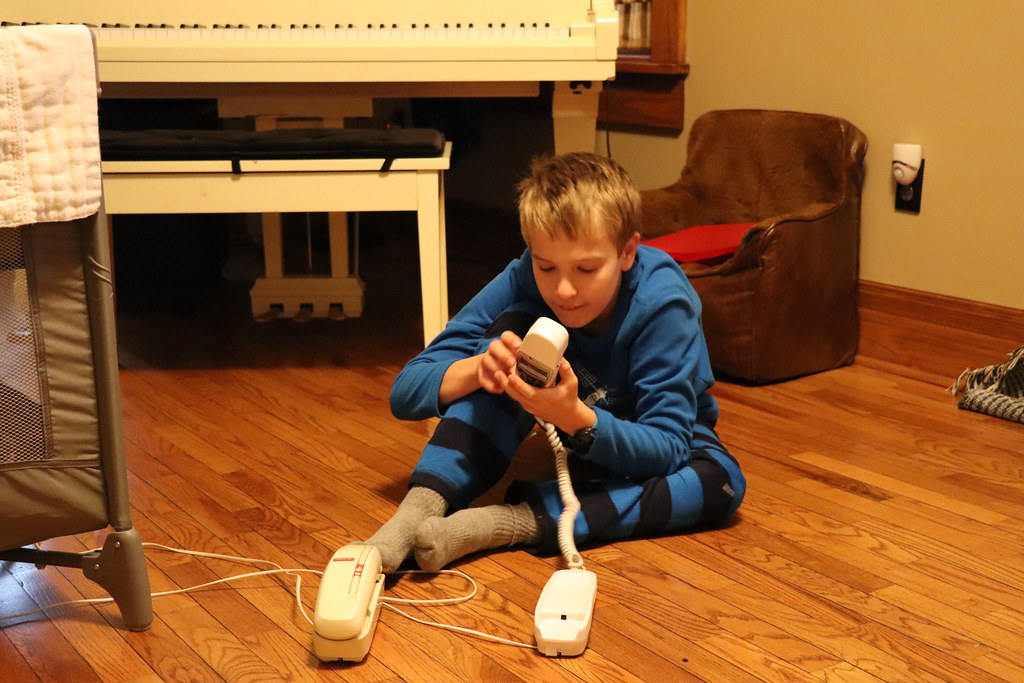
Well Jacob, do you think we should set up our own pretend phone company in the house? We can DO THAT? Yes! Then yes. Yes! YES YES YESYESYESYES YES! Let s do it, dad! Not long ago, my parents had dug up the old phone I used back in the day. We still have a landline, and Jacob was having fun discovering how an analog phone works. I told him about the special number he could call to get the time and temperature read out to him. He discovered what happens if you call your own number and hang up. He figured out how to play Mary Had a Little Lamb using touchtone keys (after a slightly concerned lecture from me setting out some rules to make sure his musical dialing wouldn t result in any, well, dialing.) He was hooked. So I thought that taking it to the next level would be a good thing for a rainy day. I have run Asterisk before, though I had unfortunately gotten rid of most of my equipment some time back. But I found a great deal on a Cisco 186 ATA (Analog Telephone Adapter). It has two FXS lines (FXS ports simulate the phone company, and provide dialtone and ring voltage to a connected phone), and of course hooks up to the LAN. We plugged that in, and Jacob was amazed to see its web interface come up. I had to figure out how to configure it (unfortunately, it uses SCCP rather than SIP, and figuring out Asterisk s chan_skinny took some doing, but we got there.) I set up voicemail. He loved it. He promptly figured out how to record his own greetings. We set up a second phone on the other line, so he could call between them. The cordless phones in our house support SIP, so I configured one of them as a third line. He spent a long time leaving himself messages. IMG_3465 Pretty soon we both started having ideas. I set up extension 777, where he could call for the time. Then he wanted a way to get the weather forecast. Well, weather-util generates a text-based report. With it, a little sed and grep tweaking, the espeak TTS engine, and a little help from sox, I had a shell script worked up that would read back a forecast whenever he called a certain extension. He was super excited! That s great, dad! Can it also read weather alerts too? Sure! weather-util has a nice option just for that. Both boys cackled as the system tried to read out the NWS header (their timestamps like 201711031258 started with two hundred one billion ) Then I found an online source for streaming NOAA Weather Radio feeds Jacob enjoys listening to weather radio and I set up another extension he could call to listen to that. More delight! But it really took off when I asked him, Would you like to record your own menu? You mean those things where it says press 1 or 2 for this or that? Yes. WE CAN DO THAT? Oh yes! YES, LET S DO IT RIGHT NOW! So he recorded a menu, then came and hovered by me while I hacked up extensions.conf, then eagerly went back to the phone to try it. Oh the excitement of hearing hisown voice, and finding that it worked! Pretty soon he was designing sub-menus ( OK Dad, so we ll set it up so people can press 2 for the weather, and then choose if they want weather radio or the weather report. I m recording that now. Got it? ) He has informed me that next Saturday we will build an intercom system like we have at school. I m going to have to have some ideas on how to tie Squeezebox in with Asterisk to make that happen, I think. Maybe this will do.

5 November 2017

Thorsten Alteholz: My Debian Activities in October 2017

FTP assistant Again, this month almost the same numbers as last month appeared in the statistics. I accepted 214 packages and rejected 22 uploads. The overall number of packages that got accepted this month was only 339. Debian LTS This was my fortieth month that I did some work for the Debian LTS initiative, started by Raphael Hertzog at Freexian. This month my all in all workload has been 20.75h. During that time I did LTS uploads of: I also took care of radare2 twice and marked all four CVEs as not-affected for Wheezy and Jessie. As nobody else wanted to address the issues in wireshark yet, I now started to work on this package. Last but not least I did one week of frontdesk duties. Other stuff During October I took care of some bugs and at one go uploaded new upstream versions of hoel and duktape (this had to be done twice as I introduced an new bug with the first upload :-(). I only fixed bugs in glewlwyd and smstools. This month I also sponsored an upload of printrun. After about ten years of living without any power outage, some construction worker decided to cut a cable near my place. Unfortunately one of my computers used for recording TV shows did not boot after the cable had been repaired and I had to switch some timers to other boxes. All in all this was too much stress and I purchased some USVs from APC. As apcupsd was orphaned, I took the opportunity to adopt it as DOPOM for this month. My license pasting project now contains 31 license templates for your debian/copyright. The list of available texts can be obtained with:

curl http://licapi.debian.net/template

The license text itself is available under the given links, for example with

curl http://licapi.debian.net/template/Apache-2

Russ Allbery: Review: Sweep in Peace

Review: Sweep in Peace, by Ilona Andrews
Series: Innkeeper Chronicles #2
Publisher: NYLA
Copyright: 2015
ISBN: 1-943772-32-0
Format: Kindle
Pages: 302
This is the sequel to Clean Sweep. You could pick up the background as you go along, but the character relationships benefit from reading the series in order. Dina's inn is doing a bit better, but it still desperately needs guests. That means she's not really in a position to say no when an Arbitrator shows up at her door and asks her to host a peace summit. Lucky for the Arbitrator, since every other inn on Earth did say no. Nexus has been the site of a viciously bloody conflict between the vampires, the Hope-Crushing Horde, and the Merchants of Baha-char for years. All sides have despaired of finding any form of peace. The vampires and the Horde have both deeply entrenched themselves in a cycle of revenge. The Merchants have the most strategic position and an apparently unstoppable warrior. The situation is hopeless; by far the most likely outcome will be open warfare inside the inn, which would destroy its rating and probably Dina's future as an innkeeper. Dina will need all of her power and caution just to stop that; peace seems beyond any possibility, but thankfully isn't her problem. Maybe the Arbitrator can work some miracle if she can just keep everyone alive. And well fed. Which is another problem. She has enough emergency money for the food, but somehow cook for forty people from four different species while keeping them all from killing each other? Not a chance. She's going to have to hire someone somehow, someone good, even though she can't afford to pay. Sweep in Peace takes this series farther out of urban fantasy territory and farther into science fiction, and also ups the stakes (and the quality of the plot) a notch. We get three moderately interesting alien species with only slight trappings of fantasy, a wonderful alien chef who seems destined to become a regular in the series, and a legitimately tricky political situation. The politics and motives aren't going to win any awards for deep and subtle characterization, but that isn't what the book is going for. It's trying to throw enough challenges at Dina to let her best characteristics shine, and it does that rather well. The inn continues to be wonderful, although I hope it becomes more of a character in its own right as the series continues. Dina's reshaping of it for guests, and her skill at figuring out the rooms her guests would enjoy, is my favorite part of these books. She cares about making rooms match the personality of her guests, and I love books that give the character a profession that matters to them even if it's unrelated to the plot. I do wish Andrews would find a few other ways for Dina to use her powers for combat beyond tentacles and burying people in floors, but that's mostly a quibble. You should still not expect great literature. I guessed the big plot twist several chapters before it happened, and the resolution is, well, not how these sorts of political situations resolve in the real world. But there is not a stupid love affair, there are several interesting characters, and one of the recurring characters gets pretty solid and somewhat unusual characterization. And despite taking the plot in a more serious direction, Sweep in Peace retains its generally lighthearted tone and firm conviction in Dina's ability to handle just about anything. Also, the chef is wonderful. One note: Partway into the book, I started getting that "oh, this is a crossover" feeling (well-honed by years of reading comic books). As near as I can tell from a bit of research, Andrews pulled in some of their characters from the Edge series. This was a bit awkward, in the "who are these people and why do they seem to have more backstory than any of the other supporting characters" cross-over sort of way, but the characters that were pulled in were rather intriguing. I might have to go read the Edge books now. Anyway, if you liked Clean Sweep, this is better in pretty much every way. Recommended. Followed by One Fell Sweep. Rating: 8 out of 10

4 November 2017

Steinar H. Gunderson: Tr ndisk 2017 live stream

We're streaming live from Tr ndisk 2017, first round of the Norwegian ultimate frisbee series, today from 0945 CET and throughout the day/weekend. It's an interesting first for Nageru in that it's sports, where everything happens much faster and there are more demands for overlay graphics (I've made a bunch of CasparCG templates). I had hoped to get to use Narabu in this, but as the (unfinished) post series indicates, I simply had to prioritize other things. There's plenty of new things for us anyway, not the least that I'll be playing and not operating. :-) Feel free to tune in to the live stream, although we don't have international stream reflectors. It's a fun sport with many nice properties. :-) There will be YouTube not too long after the day is over, too. Edit: All games from Saturday and Sunday are now online; see this YouTube list. Most commentary is in Norwegian, although some games are in English. I was happy everything worked well, and the production crew did a great job (I was busy playing), but of course there's tons of small things we want to improve for next time.

Louis-Philippe V ronneau: Migrating my website to Pelican

After too much time lying to myself, telling myself things like "I'll just add this neat feature I want on my blog next week", I've finally made the big jump, ditched django and migrated my website to Pelican. I'm going to the Cambridge Mini-Debconf at the end of the month for the Debconf Videoteam Autumn sprint and I've taken the task of making daily sprint reports for the team. That in return means I have to publish my blog on Planet Debian. My old website not having feeds made this a little hard and this perfect storm gave me the energy to make the migration happen. Anyway, django was fun. Building a (crappy) custom blogging engine with it taught me some rough basics, but honestly I don't know why I ever thought it was a good idea. Don't get me wrong: django is great and should definitely be used for large and complicated websites. My blog just ain't one. Migrating to Pelican was pretty easy since it also uses Jinja2 templates and generates content from Mardown. The hardest part was actually bending it to replicate the weird and specific behavior I wanted it to have. So yeah, woooo, I migrated to Pelican. Who cares, right? Well, if you are amongst the very, very few people who read the blog posts I mainly write for myself, you'll be please to know that: Here's a bonus picture of a Pelican from Wikimedia, just for the sake of it: A pelican

3 November 2017

Reproducible builds folks: Reproducible Builds: Weekly report #131

Here's what happened in the Reproducible Builds effort between Sunday October 22 and Saturday October 28 2017: Past Events Upcoming/current events Documentation updates Bernhard Wiedemann started The Unreproducible Package which "is meant as a practical way to demonstrate the various ways that software can break reproducible builds using just low level primitives without requiring external existing programs that implement these primitives themselves. It is structured so that one subdirectory demonstrates one class of issues in some variants observed in the wild." Reproducible work in other projects Hush, a fork of ZCash, opened an issue into reproducible builds. A new tag was added to lintian (lint checker for Debian packages) to ensure that changelog entry timestamps are strictly increasing. This avoids certain real-world issues with identical timestamps, documented in Debian #843773. Packages reviewed and fixed, and bugs filed Patches sent upstream: Debian bug reports: Reviews of unreproducible packages 14 package reviews have been added, 35 have been updated and 28 have been removed in this week, adding to our knowledge about identified issues. 1 issue type has been updated: Weekly QA work During our reproducibility testing, FTBFS bugs have been detected and reported by: strip-nondeterminism development Version 0.040-1 was uploaded to unstable by Mattia Rizzolo. It included contributions already covered by posts of the previous weeks, as well as new ones from: reprotest development Development continued in git: buildinfo.debian.net development Development continued in git: reproducible-website development Misc. This week's edition was written by Ximin Luo, Chris Lamb, Bernhard M. Wiedemann and Holger Levsen & reviewed by a bunch of Reproducible Builds folks on IRC & the mailing lists.

Raphaël Hertzog: My Free Software Activities in October 2017

My monthly report covers a large part of what I have been doing in the free software world. I write it for my donors (thanks to them!) but also for the wider Debian community because it can give ideas to newcomers and it s one of the best ways to find volunteers to work with me on projects that matter to me. Debian LTS This month I was allocated 12h but I had 1.5h left from September too. During this time, I finally finished my work on exiv2: I completed the triage of all CVE, backported 3 patches to the version in wheezy and released DLA-1147-1. I also did some review of the oldest entries in dla-needed. I reclassified a bunch of CVE on zoneminder and released DLA-1145-1 for the most problematic issue on that package. Many other packages got their CVE reclassified as not worth an update: xbmc, check-mk, rbenv, phamm, yaml-cpp. For mosquitto, I released DLA-1146-1. I filed #879001 (security issue) and #879002 (removal suggestion) on libpam4j. This library is no longer used by any other package in Debian, so it could be removed instead of costing us time in support. Misc Debian work After multiple months of wait, I was allowed to upload my schroot stable update (#864297). After ack from the d-i release manager, I pushed my pkgsel changes and uploaded version 0.46 of the package: this brings unattended-upgrades support in the installer. It s now installed by default. I nudged the upstream developer of gnome-shell-timer to get a new release for GNOME 3.26 compatibility and packaged it. Finally, I was pleased to merge multiple patches from Ville Skytt on Distro Tracker (the software powering tracker.debian.org). It looks like Ville will continue to contribute on a regular basis, yay. \o/ He already helped me to fix the remaining blockers for the switch to Python 3. Not really Debian related, but I also filed a bug against Tryton that I discovered after upgrading to the latest version. Thanks See you next month for a new summary of my activities.

No comment Liked this article? Click here. My blog is Flattr-enabled.

Next.

Previous.