Search Results: "don"

28 September 2016

Kees Cook: security things in Linux v4.5

Previously: v4.4. Some things I found interesting in the Linux kernel v4.5: CONFIG_IO_STRICT_DEVMEM The CONFIG_STRICT_DEVMEM setting that has existed for a long time already protects system RAM from being accessible through the /dev/mem device node to root in user-space. Dan Williams added CONFIG_IO_STRICT_DEVMEM to extend this so that if a kernel driver has reserved a device memory region for use, it will become unavailable to /dev/mem also. The reservation in the kernel was to keep other kernel things from using the memory, so this is just common sense to make sure user-space can t stomp on it either. Everyone should have this enabled. (And if you have a system where you discover you need IO memory access from userspace, you can boot with iomem=relaxed to disable this at runtime.) If you re looking to create a very bright line between user-space having access to device memory, it s worth noting that if a device driver is a module, a malicious root user can just unload the module (freeing the kernel memory reservation), fiddle with the device memory, and then reload the driver module. So either just leave out /dev/mem entirely (not currently possible with upstream), build a monolithic kernel (no modules), or otherwise block (un)loading of modules (/proc/sys/kernel/modules_disabled). ptrace fsuid checking Jann Horn fixed some corner-cases in how ptrace access checks were handled on special files in /proc. For example, prior to this fix, if a setuid process temporarily dropped privileges to perform actions as a regular user, the ptrace checks would not notice the reduced privilege, possibly allowing a regular user to trick a privileged process into disclosing things out of /proc (ASLR offsets, restricted directories, etc) that they normally would be restricted from seeing. ASLR entropy sysctl Daniel Cashman standardized the way architectures declare their maximum user-space ASLR entropy (CONFIG_ARCH_MMAP_RND_BITS_MAX) and then created a sysctl (/proc/sys/vm/mmap_rnd_bits) so that system owners could crank up entropy. For example, the default entropy on 32-bit ARM was 8 bits, but the maximum could be as much as 16. If your 64-bit kernel is built with CONFIG_COMPAT, there s a compat version of the sysctl as well, for controlling the ASLR entropy of 32-bit processes: /proc/sys/vm/mmap_rnd_compat_bits. Here s how to crank your entropy to the max, without regard to what architecture you re on:
for i in "" "compat_"; do f=/proc/sys/vm/mmap_rnd_$ i bits; n=$(cat $f); while echo $n > $f ; do n=$(( n + 1 )); done; done
strict sysctl writes Two years ago I added a sysctl for treating sysctl writes more like regular files (i.e. what s written first is what appears at the start), rather than like a ring-buffer (what s written last is what appears first). At the time it wasn t clear what might break if this was enabled, so a WARN was added to the kernel. Since only one such string showed up in searches over the last two years, the strict writing mode was made the default. The setting remains available as /proc/sys/kernel/sysctl_writes_strict. seccomp UM support Micka l Sala n added seccomp support (and selftests) for user-mode Linux. Moar architectures! seccomp NNP vs TSYNC fix Jann Horn noticed and fixed a problem where if a seccomp filter was already in place on a process (after being installed by a privileged process like systemd, a container launcher, etc) then the setting of the no new privs flag could be bypassed when adding filters with the SECCOMP_FILTER_FLAG_TSYNC flag set. Bypassing NNP meant it might be possible to trick a buggy setuid program into doing things as root after a seccomp filter forced a privilege drop to fail (generally referred to as the sendmail setuid flaw ). With NNP set, a setuid program can t be run in the first place. That s it! Next I ll cover v4.6 Edit: Added notes about iomem=

2016, Kees Cook. This work is licensed under a Creative Commons Attribution-ShareAlike 3.0 License.
Creative Commons License

27 September 2016

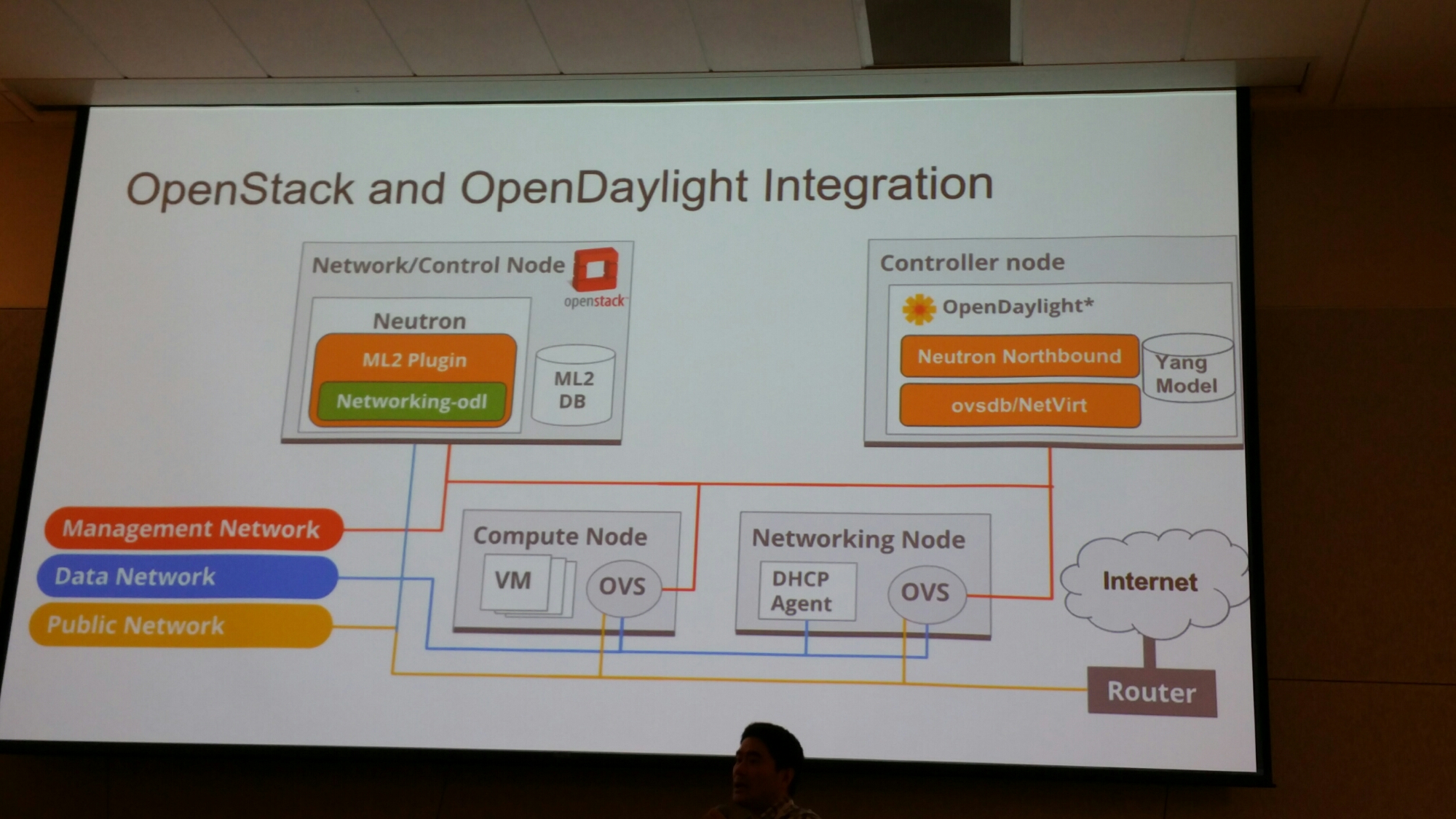
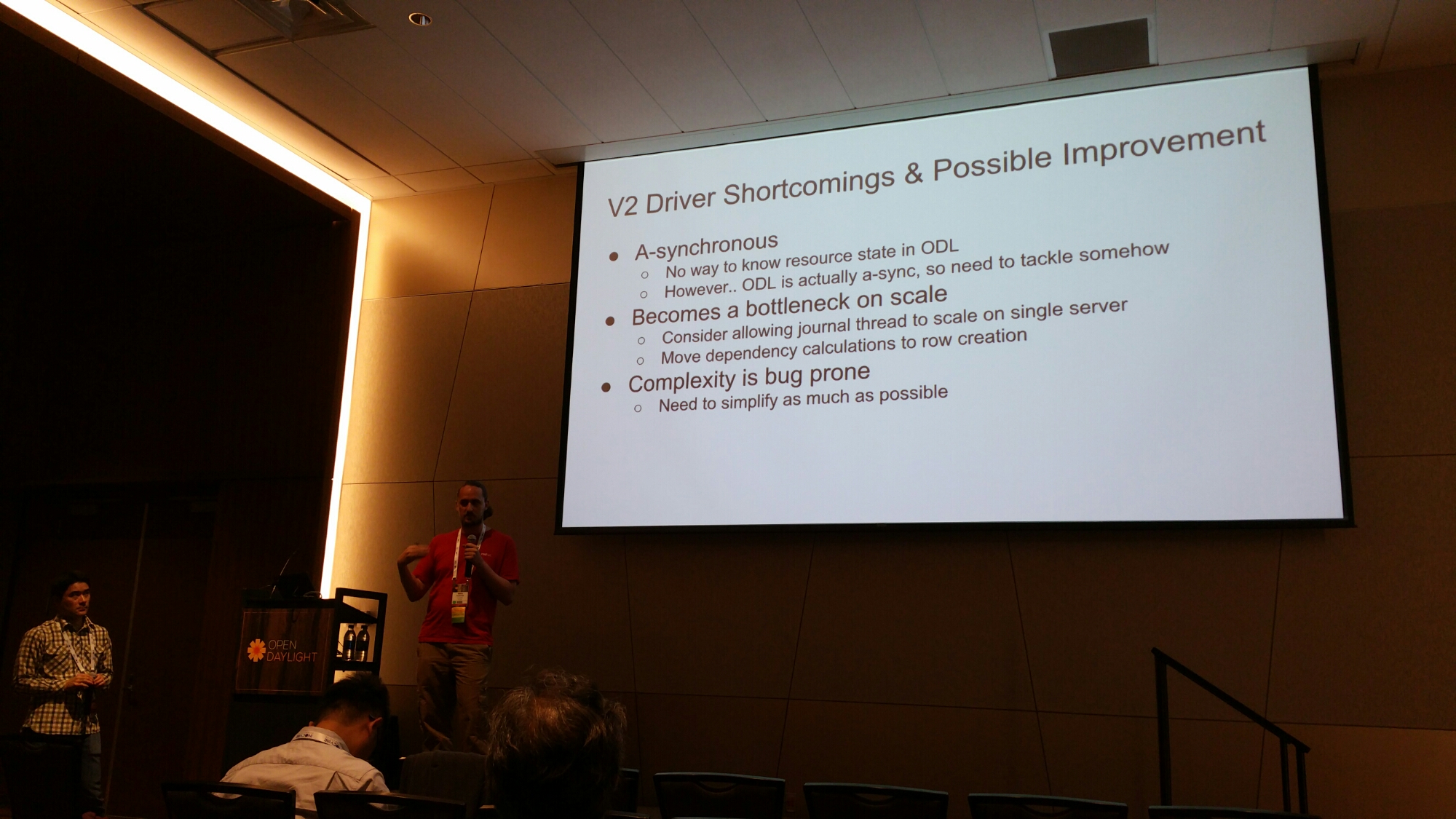
C.J. Adams-Collier: OpenDaylight Symposium 2016

I ll write this later. Keywords and notes inline Cloud 5G AT&T Ericsson SDN FD.io Cisco Intel Linux Debian Ubuntu Open Source Hydrogen Helium Lithium OSI stack Usability Developers and users working together. Fast Dev/Test cycles Sessions start at 10:30 Message bus Minimal install needs to be smaller Most functionalities must be implemented in modules Upgrade path complexity Out of band control channel.
OPNFV customers don t run stock releases, make customisations and plugins easier. Message bus Distribution vendors should not be expected to perform package maintenance. Get the distribution ready for fast pathing in to backports, security, testing and unstable.

26 September 2016

Reproducible builds folks: Reproducible Builds: week 74 in Stretch cycle

Here is what happened in the Reproducible Builds effort between Sunday September 18 and Saturday September 24 2016: Outreachy We intend to participate in Outreachy Round 13 and look forward for new enthusiastic applications to contribute to reproducible builds. We're offering four different areas to work on: Reproducible Builds World summit #2 We are planning e a similar event to our Athens 2015 summit and expect to reveal more information soon. If you haven't been contacted yet but would like to attend, please contact holger. Toolchain development and fixes Mattia uploaded dpkg/1.18.10.0~reproducible1 to our experimental repository. and covered the details for the upload in a mailing list post. The most important change is the incorporation of improvements made by Guillem Jover (dpkg maintainer) to the .buildinfo generator. This is also in the hope that it will speed up the merge in the upstream. One of the other relevant changes from before is that .buildinfo files generated from binary-only builds will no longer include the hash of the .dsc file in Checksums-Sha256 as documented in the specification. Even if it was considered important to include a checksum of the source package in .buildinfo, storing it that way breaks other assumptions (eg. that Checksums-Sha256 contains only files part of that are part of a single upload, wheras the .dsc might not be part of that upload), thus we look forward for another solution to store the source checksum in .buildinfo. Bugs filed Reviews of unreproducible packages 250 package reviews have been added, 4 have been updated and 4 have been removed in this week, adding to our knowledge about identified issues. 4 issue types have been added: 3 issue types have been updated: Weekly QA work FTBFS bugs have been reported by: Documentation updates h01ger created a new Jenkins job so that every commit pushed to the master branch for the website will update reproducible-builds.org. diffoscope development strip-nondeterminism development reprotest development tests.reproducible-builds.org Misc. This week's edition was written by Chris Lamb, Holger Levsen and Mattia Rizzolo and reviewed by a bunch of Reproducible Builds folks on IRC.

24 September 2016

Iain R. Learmonth: Azure from Debian

Around a week ago, I started to play with programmatically controlling Azure. I needed to create and destroy a bunch of VMs over and over again, and this seemed like something I would want to automate once instead of doing manually and repeatedly. I started to look into the azure-sdk-for-python and mentioned that I wanted to look into this in #debian-python. ardumont from Software Heritage noticed me, and was planning to package azure-storage-python. We joined forces and started a packaging team for Azure-related software. I spoke with the upstream developer of the azure-sdk-for-python and he pointed me towards azure-cli. It looked to me that this fit my use case better than the SDK alone, as it had the high level commands I was looking for. Between me and ardumont, in the space of just under a week, we have now packaged: python-msrest (#838121), python-msrestazure (#838122), python-azure (#838101), python-azure-storage (#838135), python-adal (#838716), python-applicationinsights (#838717) and finally azure-cli (#838708). Some of these packages are still in the NEW queue at the time I m writing this, but I don t foresee any issues with these packages entering unstable. azure-cli, as we have packaged, is the new Python-based CLI for Azure. The Microsoft developers gave it the tagline of our next generation multi-platform command line experience for Azure . In the short time I ve been using it I ve been very impressed with it. In order to set it up initially, you have to configure a couple of of defaults using az configure. After that, you need to az login which again is an entirely painless process as long as you have a web browser handy in order to perform the login. After those two steps, you re only two commands away from deploying a Debian virtual machine:
az resource group create -n testgroup -l "West US"
az vm create -n testvm -g testgroup --image credativ:Debian:8:latest --authentication-type ssh
This will create a resource group, and then create a VM within that resource group with a user automatically created with your current username and with your SSH public key (~/.ssh/id_rsa.pub) automatically installed. Once it returns you the IP address, you can SSH in straight away. Looking forward to some next steps for Debian on Azure, I d like to get images built for Azure using vmdebootstrap and I ll be exploring this in the lead up to, and at, the upcoming vmdebootstrap sprint in Cambridge, UK later in the year (still being organised).

23 September 2016

Arturo Borrero Gonz lez: Blog moved from Blogger to Jekyllrb at GithubPages


This blog has finally moved away from blogger to jekyll, also changing the hosting and the domain. No new content will be published here.

New coordinates:

This blogger blog will remain as archive, since I don't plan to migrate the content from here to the new blog.

So, see you there!


22 September 2016

Arturo Borrero Gonz lez: Initial post

jekyllrb Finally, I decided it was time to switch from blogger to jekyllrb hosted at github pages. My old blog at http://ral-arturo.blogspot.com.es will still be online as an archive, since I don t plan to migrate the content from there to here.

Gustavo Noronha Silva: WebKitGTK+ 2.14 and the Web Engines Hackfest

Next week our friends at Igalia will be hosting this year s Web Engines Hackfest. Collabora will be there! We are gold sponsors, and have three developers attending. It will also be an opportunity to celebrate Igalia s 15th birthday \o/. Looking forward to meet you there! =) Carlos Garcia has recently released WebKitGTK+ 2.14, the latest stable release. This is a great release that brings a lot of improvements and works much better on Wayland, which is becoming mature enough to be used by default. In particular, it fixes the clipboard, which was one of the main missing features, thanks to Carlos Garnacho! We have also been able to contribute a bit to this release =) One of the biggest changes this cycle is the threaded compositor, which was implemented by Igalia s Gwang Yoon Hwang. This work improves performance by not stalling other web engine features while compositing. Earlier this year we contributed fixes to make the threaded compositor work with the web inspector and fixed elements, helping with the goal of enabling it by default for this release. Wayland was also lacking an accelerated compositing implementation. There was a patch to add a nested Wayland compositor to the UIProcess, with the WebProcesses connecting to it as Wayland clients to share the final rendering so that it can be shown to screen. It was not ready though and there were questions as to whether that was the way to go and alternative proposals were floating around on how to best implement it. At last year s hackfest we had discussions about what the best path for that would be where collaborans Emanuele Aina and Daniel Stone (proxied by Emanuele) contributed quite a bit on figuring out how to implement it in a way that was both efficient and platform agnostic. We later picked up the old patchset, rebased on the then-current master and made it run efficiently as proof of concept for the Apertis project on an i.MX6 board. This was done using the fancy GL support that landed in GTK+ in the meantime, with some API additions and shortcuts to sidestep performance issues. The work was sponsored by Robert Bosch Car Multimedia. Igalia managed to improve and land a very well designed patch that implements the nested compositor, though it was still not as efficient as it could be, as it was using glReadPixels to get the final rendering of the page to the GTK+ widget through cairo. I have improved that code by ensuring we do not waste memory when using HiDPI. As part of our proof of concept investigation, we got this WebGL car visualizer running quite well on our sabrelite imx6 boards. Some of it went into the upstream patches or proposals mentioned below, but we have a bunch of potential improvements still in store that we hope to turn into upstreamable patches and advance during next week s hackfest. One of the improvements that already landed was an alternate code path that leverages GTK+ s recent GL super powers to render using gdk_cairo_draw_from_gl(), avoiding the expensive copying of pixels from the GPU to the CPU and making it go faster. That improvement exposed a weird bug in GTK+ that causes a black patch to appear when shrinking the window, which I have a tentative fix for. We originally proposed to add a new gdk_cairo_draw_from_egl() to use an EGLImage instead of a GL texture or renderbuffer. On our proof of concept we noticed it is even more efficient than the texturing currently used by GTK+, and could give us even better performance for WebKitGTK+. Emanuele Bassi thinks it might be better to add EGLImage as another code branch inside from_gl() though, so we will look into that. Another very interesting igalian addition to this release is support for the MemoryPressureHandler even on systems with no cgroups set up. The memory pressure handler is a WebKit feature which flushes caches and frees resources that are not being used when the operating system notifies it memory is scarce. We worked with the Raspberry Pi Foundation to add support for that feature to the Raspberry Pi browser and contributed it upstream back in 2014, when Collabora was trying to squeeze as much as possible from the hardware. We had to add a cgroups setup to wrap Epiphany in, back then, so that it would actually benefit from the feature. With this improvement, it will benefit even without the custom cgroups setups as well, by having the UIProcess monitor memory usage and notify each WebProcess when memory is tight. Some of these improvements were achieved by developers getting together at the Web Engines Hackfest last year and laying out the ground work or ideas that ended up in the code base. I look forward to another great few days of hackfest next week! See you there o/

Zlatan Todori : Open Source Motion Comic Almost Fully Funded - Pledge now!

The Pepper and Carrot motion comic is almost funded. The pledge from Ethic Cinema put it on good road (as it seemed it would fail). Ethic Cinema is non profit organization that wants to make open source art (as they call it Libre Art). Purism's creative director, Fran ois T chen , is member and co-founder of Ethic Cinema. Lets push final bits so we can get this free as in freedom artwork. Notice that Pepper and Carrot is a webcomic (also available as book) free as in freedom artwork done by David Revoy who also supports this campaign. Also the support is done by Krita community on their landing page. Lets do this!

21 September 2016

Matthew Garrett: Microsoft aren't forcing Lenovo to block free operating systems

There's a story going round that Lenovo have signed an agreement with Microsoft that prevents installing free operating systems. This is sensationalist, untrue and distracts from a genuine problem.

The background is straightforward. Intel platforms allow the storage to be configured in two different ways - "standard" (normal AHCI on SATA systems, normal NVMe on NVMe systems) or "RAID". "RAID" mode is typically just changing the PCI IDs so that the normal drivers won't bind, ensuring that drivers that support the software RAID mode are used. Intel have not submitted any patches to Linux to support the "RAID" mode.

In this specific case, Lenovo's firmware defaults to "RAID" mode and doesn't allow you to change that. Since Linux has no support for the hardware when configured this way, you can't install Linux (distribution installers will boot, but won't find any storage device to install the OS to).

Why would Lenovo do this? I don't know for sure, but it's potentially related to something I've written about before - recent Intel hardware needs special setup for good power management. The storage driver that Microsoft ship doesn't do that setup. The Intel-provided driver does. "RAID" mode prevents the Microsoft driver from binding and forces the user to use the Intel driver, which means they get the correct power management configuration, battery life is better and the machine doesn't melt.

(Why not offer the option to disable it? A user who does would end up with a machine that doesn't boot, and if they managed to figure that out they'd have worse power management. That increases support costs. For a consumer device, why would you want to? The number of people buying these laptops to run anything other than Windows is miniscule)

Things are somewhat obfuscated due to a statement from a Lenovo rep:This system has a Signature Edition of Windows 10 Home installed. It is locked per our agreement with Microsoft. It's unclear what this is meant to mean. Microsoft could be insisting that Signature Edition systems ship in "RAID" mode in order to ensure that users get a good power management experience. Or it could be a misunderstanding regarding UEFI Secure Boot - Microsoft do require that Secure Boot be enabled on all Windows 10 systems, but (a) the user must be able to manage the key database and (b) there are several free operating systems that support UEFI Secure Boot and have appropriate signatures. Neither interpretation indicates that there's a deliberate attempt to prevent users from installing their choice of operating system.

The real problem here is that Intel do very little to ensure that free operating systems work well on their consumer hardware - we still have no information from Intel on how to configure systems to ensure good power management, we have no support for storage devices in "RAID" mode and we have no indication that this is going to get better in future. If Intel had provided that support, this issue would never have occurred. Rather than be angry at Lenovo, let's put pressure on Intel to provide support for their hardware.

comment count unavailable comments

20 September 2016

Gunnar Wolf: Proposing a GR to repeal the 2005 vote for declassification of the debian-private mailing list

For the non-Debian people among my readers: The following post presents bits of the decision-taking process in the Debian project. You might find it interesting, or terribly dull and boring :-) Proceed at your own risk. My reason for posting this entry is to get more people to read the accompanying options for my proposed General Resolution (GR), and have as full a ballot as possible. Almost three weeks ago, I sent a mail to the debian-vote mailing list. I'm quoting it here in full:
Some weeks ago, Nicolas Dandrimont proposed a GR for declassifying
debian-private[1]. In the course of the following discussion, he
accepted[2] Don Armstrong's amendment[3], which intended to clarify the
meaning and implementation regarding the work of our delegates and the
powers of the DPL, and recognizing the historical value that could lie
within said list.
[1] https://www.debian.org/vote/2016/vote_002
[2] https://lists.debian.org/debian-vote/2016/07/msg00108.html
[3] https://lists.debian.org/debian-vote/2016/07/msg00078.html
In the process of the discussion, several people objected to the
amended wording, particularly to the fact that "sufficient time and
opportunity" might not be sufficiently bound and defined.
I am, as some of its initial seconders, a strong believer in Nicolas'
original proposal; repealing a GR that was never implemented in the
slightest way basically means the Debian project should stop lying,
both to itself and to the whole free software community within which
it exists, about something that would be nice but is effectively not
implementable.
While Don's proposal is a good contribution, given that in the
aforementioned GR "Further Discussion" won 134 votes against 118, I
hereby propose the following General Resolution:
=== BEGIN GR TEXT ===
Title: Acknowledge that the debian-private list will remain private.
1. The 2005 General Resolution titled "Declassification of debian-private
   list archives" is repealed.
2. In keeping with paragraph 3 of the Debian Social Contract, Debian
   Developers are strongly encouraged to use the debian-private mailing
   list only for discussions that should not be disclosed.
=== END GR TEXT ===
Thanks for your consideration,
--
Gunnar Wolf
(with thanks to Nicolas for writing the entirety of the GR text ;-) )
Yesterday, I spoke with the Debian project secretary, who confirmed my proposal has reached enough Seconds (that is, we have reached five people wanting the vote to happen), so I could now formally do a call for votes. Thing is, there are two other proposals I feel are interesting, and should be part of the same ballot, and both address part of the reasons why the GR initially proposed by Nicolas didn't succeed: So, once more (and finally!), why am I posting this? I plan to do the formal call for votes by Friday 23.
[update] Kurt informed me that the discussion period started yesterday, when I received the 5th second. The minimum discussion period is two weeks, so I will be doing a call for votes at or after 2016-10-03.

19 September 2016

Mike Gabriel: Rocrail changed License to some dodgy non-free non-License

The Background Story A year ago, or so, I took some time to search the internet for Free Software that can be used for controlling model railways via a computer. I was happy to find Rocrail [1] being one of only a few applications available on the market. And even more, I was very happy when I saw that it had been licensed under a Free Software license: GPL-3(+). A month ago, or so, I collected my old M rklin (Digital) stuff from my parents' place and started looking into it again after +15 years, together with my little son. Some weeks ago, I remembered Rocrail and thought... Hey, this software was GPLed code and absolutely suitable for uploading to Debian and/or Ubuntu. I searched for the Rocrail source code and figured out that it got hidden from the web some time in 2015 and that the license obviously has been changed to some non-free license (I could not figure out what license, though). This made me very sad! I thought I had found a piece of software that might be interesting for testing with my model railway. Whenever I stumble over some nice piece of Free Software that I plan to use (or even only play with), I upload this to Debian as one of the first steps. However, I highly attempt to stay away from non-free sofware, so Rocrail has become a no-option for me back in 2015. I should have moved on from here on... Instead... Proactively, I signed up with the Rocrail forum and asked the author(s) if they see any chance of re-licensing the Rocrail code under GPL (or any other FLOSS license) again [2]? When I encounter situations like this, I normally offer my expertise and help with such licensing stuff for free. My impression until here already was that something strange must have happened in the past, so that software developers choose GPL and later on stepped back from that decision and from then on have been hiding the source code from the web entirely. Going deeper... The Rocrail project's wiki states that anyone can request GitBlit access via the forum and obtain the source code via Git for local build purposes only. Nice! So, I asked for access to the project's Git repository, which I had been granted. Thanks for that. Trivial Source Code Investigation... So far so good. I investigated the source code (well, only the license meta stuff shipped with the source code...) and found that the main COPYING files (found at various locations in the source tree, containing a full version of the GPL-3 license) had been replaced by this text:
Copyright (c) 2002 Robert Jan Versluis, Rocrail.net
All rights reserved.
Commercial usage needs permission.
The replacement happened with these Git commits:
commit cfee35f3ae5973e97a3d4b178f20eb69a916203e
Author: Rob Versluis <r.j.versluis@rocrail.net>
Date:   Fri Jul 17 16:09:45 2015 +0200
    update copyrights
commit df399d9d4be05799d4ae27984746c8b600adb20b
Author: Rob Versluis <r.j.versluis@rocrail.net>
Date:   Wed Jul 8 14:49:12 2015 +0200
    update licence
commit 0daffa4b8d3dc13df95ef47e0bdd52e1c2c58443
Author: Rob Versluis <r.j.versluis@rocrail.net>
Date:   Wed Jul 8 10:17:13 2015 +0200
    update
Getting in touch again, still being really interested and wanting to help... As I consider such a non-license as really dangerous when distributing any sort of software, be it Free or non-free Software, I posted the below text on the Rocrail forum:
Hi Rob,
I just stumbled over this post [3] [link reference adapted for this
blog post), which probably is the one you have referred to above.
It seems that Rocrail contains features that require a key or such
for permanent activation.  Basically, this is allowed and possible
even with the GPL-3+ (although Free Software activists will  not
appreciate that). As the GPL states that people can share the source
code, programmers can  easily deactivate license key checks (and
such) in the code and re-distribute that patchset as they  like.
Furthermore, the current COPYING file is really non-protective at
all. It does not really protect   you as copyright holder of the
code. Meaning, if people crash their trains with your software, you  
could actually be legally prosecuted for that. In theory. Or in the
U.S. ( ;-) ). Main reason for  having a long long license text is to
protect you as the author in case your software causes t trouble to
other people. You do not have any warranty disclaimer in your COPYING
file or elsewhere. Really not a good idea.
In that referenced post above, someone also writes about the nuisance
of license discussions in  this forum. I have seen various cases
where people produced software and did not really care for 
licensing. Some ended with a letter from a lawyer, some with some BIG
company using their code  under their copyright holdership and their
own commercial licensing scheme. This is not paranoia,  this is what
happens in the Free Software world from time to time.
A model that might be much more appropriate (and more protective to
you as the author), maybe, is a  dual release scheme for the code. A
possible approach could be to split Rocrail into two editions:  
Community Edition and Professional/Commercial Edition. The Community
Edition must be licensed in a  way that it allows re-using the code
in a closed-source, non-free version of Rocrail (e.g.   MIT/Expat
License or Apache2.0 License). Thus, the code base belonging to the
community edition  would be licensed, say..., as Apache-2.0 and for
the extra features in the Commercial Edition, you  may use any
non-free license you want (but please not that COPYING file you have
now, it really  does not protect your copyright holdership).
The reason for releasing (a reduced set of features of a) software as
Free Software is to extend  the user base. The honey jar effect, as
practise by many huge FLOSS projects (e.g. Owncloud,  GitLab, etc.).
If people could install Rocrail from the Debian / Ubuntu archives
directly, I am  sure that the user base of Rocrail will increase.
There may also be developers popping up showing  an interest in
Rocrail (e.g. like me). However, I know many FLOSS developers (e.g.
like me) that  won't waste their free time on working for a non-free
piece of software (without being paid).
If you follow (or want to follow) a business model with Rocrail, then
keep some interesting  features in the Commercial Edition and don't
ship that source code. People with deep interest may  opt for that.
Furthermore, another option could be dual licensing the code. As the
copyright holder of Rocrail  you are free to juggle with licenses and
apply any license to a release you want. For example, this  can be
interesing for a free-again Rocrail being shipped via Apple's iStore. 
Last but not least, as you ship the complete source code with all
previous changes as a Git project  to those who request GitBlit
access, it is possible to obtain all earlier versions of Rocrail. In 
the mail I received with my GitBlit credentials, there was some text
that  prohibits publishing the  code. Fine. But: (in theory) it is
not forbidden to share the code with a friend, for local usage.  This
friend finds the COPYING file, frowns and rewinds back to 2015 where
the license was still  GPL-3+. GPL-3+ code can be shared with anyone
and also published, so this friend could upload the  2015-version of
Rocrail to Github or such and start to work on a free fork. You also
may not want  this.
Thanks for working on this piece of software! It is highly
interesing, and I am still sad, that it  does not come with a free
license anymore. I won't continue this discussion and move on, unless
you  are interested in any of the above information and ask for more
expertise. Ping me here or directly  via mail, if needed. If the
expertise leads to parts of Rocrail becoming Free Software again, the 
expertise is offered free of charge ;-).
light+love
Mike
Wow, the first time I got moderated somewhere... What an experience! This experience now was really new. My post got immediately removed from the forum by the main author of Rocrail (with the forum's moderator's hat on). The new experience was: I got really angry when I discovererd having been moderated. Wow! Really a powerful emotion. No harassment in my words, no secrets disclosed, and still... my free speech got suppressed by someone. That feels intense! And it only occurred in the virtual realm, not face to face. Wow!!! I did not expect such intensity... The reason for wiping my post without any other communication was given as below and quite a statement to frown upon (this post has also been "moderately" removed from the forum thread [2] a bit later today):
Mike,
I think its not a good idea to point out a way to get the sources back to the GPL periode.
Therefore I deleted your posting.
(The phpBB forum software also allows moderators to edit posts, so the critical passage could have been removed instead, but immediately wiping the full message, well...). Also, just wiping my post and not replying otherwise with some apology to suppress my words, really is a no-go. And the reason for wiping the rest of the text... Any Git user can easily figure out how to get a FLOSS version of Rocrail and continue to work on that from then on. Really. Now the political part of this blog post... Fortunately, I still live in an area of the world where the right of free speech is still present. I found out: I really don't like being moderated!!! Esp. if what I share / propose is really noooo secret at all. Anyone who knows how to use Git can come to the same conclusion as I have come to this morning. [Off-topic, not at all related to Rocrail: The last votes here in Germany indicate that some really stupid folks here yearn for another this time highly idiotic wind of change, where free speech may end up as a precious good.] To other (Debian) Package Maintainers and Railroad Enthusiasts... With this blog post I probably close the last option for Rocrail going FLOSS again. Personally, I think that gate was already closed before I got in touch. Now really moving on... Probably the best approach for my new train conductor hobby (as already recommended by the woman at my side some weeks back) is to leave the laptop lid closed when switching on the train control units. I should have listened to her much earlier. I have finally removed the Rocrail source code from my computer again without building and testing the application. I neither have shared the source code with anyone. Neither have I shared the Git URL with anyone. I really think that FLOSS enthusiasts should stay away from this software for now. For my part, I have lost my interest in this completely... References light+love,
Mike

18 September 2016

Norbert Preining: Fixing packages for broken Gtk3

As mentioned on sunweaver s blog Debian s GTK-3+ v3.21 breaks Debian MATE 1.14, Gtk3 is breaking apps all around. But not only Mate, probably many other apps are broken, too, in particular Nemo (the file manager of Cinnamon desktop) has redraw issues (bug 836908), and regular crashes (bug 835043). gtk-breakage I have prepared packages for mate-terminal and nemo built from the most recent git sources. The new mate-terminal now does not crash anymore on profile changes (bug 835188), and the nemo redraw issues are gone. Unfortunately, the other crashes of nemo are still there. The apt-gettable repository with sources and amd64 binaries are here:

deb http://www.preining.info/debian/ gtk3fixes main
deb-src http://www.preining.info/debian/ gtk3fixes main
and are signed with my usual GPG key. Last but not least, I quote from sunweaver s blog: Questions
  1. Isn t GTK-3+ a shared library? This one was rhetorical Yes, it is.
  2. One that breaks other application with every point release? Well, unfortunately, as experience over the past years has shown: Yes, this has happened several times, so far and it happened again.
  3. Why is it that GTK-3+ uploads appear in Debian without going through a proper transition? This question is not rhetorical. If someone has an answer, please enlighten me.
(end of quote) <rant>
My personal answer to this is: Gtk is strongly related to Gnome, Gnome is strongly related to SystemD, all this is pushed onto Debian users in the usual way of we don t care for breaking non-XXX apps (for XXX in Gnome, SystemD). It is very sad to see this recklessness taking more and more space all over Debian.
</rant> I finish with another quote from sunweaver s blog:
already scared of the 3.22 GTK+ release, luckily the last development release of the GTK+ 3-series

17 September 2016

Jonas Meurer: data recovery

Data recovery with ddrescue, testdisk and sleuthkit From time to time I need to recover data from disks. Reasons can be broken flash/hard disks as well as accidently deleted files. Fortunately, this doesn't happen to often, which on the downside means that I usually don't remember the details about best practice. Now that a good friend asked me to recover very important data from a broken flash disk, I take the opportunity to write down what I did and hopefully don't need to read the same docs again next time :) Disclaimer: I didn't take the time to read through full documentation. This is rather a brief summary of the best practice to my knowledge, not a sophisticated and detailed explanation of data recovery techniques. Create image with ddrescue First and most secure rule for recovery tasks: don't work on the original, use a copied image instead. This way you can do, whatever you want without risking further data loss. The perfect tool for this is GNU ddrescue. Contrary to dd, it doesn't reiterate over a broken sector with I/O errors again and again while copying. Instead, it remembers the broken sector for later and goes on to the next sector first. That way, all sectors that can be read without errors are copied first. This is particularly important as every extra attempt to read a broken sector can further damage the source device, causing even more data loss. In Debian, ddrescue is available in the gddrescue package:
apt-get install gddrescue
Copying the raw disk content to an image with ddrescue is as easy as:
ddrescue /dev/disk disk-backup.img disk.log
Giving a logfile as third argument has the great advantage that you can interupt ddrescue at any time and continue the copy process later, possibly with different options. In case of very large disks where only the first part was in use, it might be useful to start with copying the beginning only:
ddrescue -i0 -s20MiB /dev/disk disk-backup.img disk.log
In case of errors after the first run, you should start ddrescue again with direct read access (-d) and tell it to try again bad sectors three times (-r3):
ddrescue -d -r3 /dev/disk disk-backup.img disk.log
If some sectors are still missing afterwards, it might help to run ddrescue with infinite retries for some time (e.g. one night):
ddrescue -d -r-1  /dev/disk disk-backup.img disk.log

Inspect the image Now that you have an image of the raw disk, you can take a first look at what it contains. If ddrescue was able to recover all sectors, chances are high that no further magic is required and all data is there. If the raw disk (used to) contain a partition table, take a first look with mmls from sleuthkit:
mmls disk-backup.img
In case of a intact partition table, you can try to create device maps with kpartx after setting up a loop device for the image file:
losetup /dev/loop0 disk-backup.img
kpartx -a /dev/loop0
If kpartx finds partitions, they will be made available at /dev/mapper/loop0p1, /dev/mapper/loop0p2 and so on. Search for filesystems on the partitions with fsstat from sleuthkit on the partition device map:
fsstat /dev/mapper/loop0p1
Or directly on the image file with the offset discovered by mmls earlier. This also might work in case of
fsstat -o 8064 disk-backup.img
The offset obviously is not needed if the image contains a partition dump (without partition table):
fsstat disk-backup.img
In case that a filesystem if found, simply try to mount it:
mount -t <fstype> -o ro /dev/mapper/loop0p1 /mnt
or
losetup -o 8064 /dev/loop1 disk-backup.img
mount -t <fstype> -o ro /dev/loop1 /mnt

Recover partition table If the partition table is broken, try to recover it with testdisk. But first, create a second copy of the image, as you will alter it now:
ddrescue disk-backup.img disk-backup2.img
testdisk disk-backup2.img
In testdisk, select a media (e.g. Disk disk-backup2.img) and proceed, then select the partition table type (usually Intel or EFI GPT) and analyze -> quick search. If partitions are found, select one or more and write the partition structure to disk.

Recover files Finally, let's try to recover the actual files from the image. testdisk If the partition table recovery was sucessfull, try to undelete files from within testdisk. Go back to the main menu and select advanced -> undelete. photorec Another option is to use the photorec tool that comes with testdisk. It searches the image for known file structures directly, ignoring possible filesystems:
photorec sdb2.img
You have to select either a particular partition or the whole disk, a file system (ext2/ext3 vs. other) and a destination for recovered files. Last time, photorec was my last resort as the fat32 filesystem was so damaged that testdisk detected only an empty filesystem. sleuthkit sleuthkit also ships with tools to undelete files. I tried fls and icat. fls searches for and lists files and directories in the image, searching for parts of the former filesystem. icat copies the files by their inode numer. Last time I tried, fls and icat didn't recover any new files compared to photorec. Still, for the sake of completeness, I document what I did. First, I invoked fls in order to search for files:
fls -f fat32 -o 8064 -pr disk-backup.img
Then, I tried to backup one particular file from the list:
icat -f fat32 -o 8064 <INODE>
Finally, I used the recoup.pl script from Dave Henk in order to batch-recover all discovered files:
wget http://davehenk.googlepages.com/recoup.pl
chmod +x recoup.pl
vim recoup.pl
[...]
my $fullpath="~/recovery/sleuthkit/";
my $FLS="/usr/bin/fls";
my @FLS_OPT=("-f","fat32","-o","8064","-pr","-m $fullpath","-s 0");
my $FLS_IMG="~/recovery/disk-image.img";
my $ICAT_LOG="~/recovery/icat.log";
my $ICAT="/usr/bin/icat";
my @ICAT_OPT=("-f","fat32","-o","8064");
[...]
Further down, the double quotes around $fullfile needed to be replaced by single quotes (at least in my case, as $fullfile contained a subdir called '$OrphanFiles'):
system("$ICAT @ICAT_OPT $ICAT_IMG $inode > \'$fullfile\' 2>> $ICAT_LOG") if ($inode != 0);
That's it for now. Feel free to comment with suggestions on how to further improve the process of recovering data from broken disks.

Norbert Preining: Android 7.0 Nougat Root PokemonGo

Since my switch to Android my Nexus 6p is rooted and I have happily fixed the Android (<7) font errors with Japanese fonts in English environment (see this post). The recently released Android 7 Nougat finally fixes this problem, so it was high time to update. In addition, a recent update to Pokemon Go excluded rooted devices, so I was searching for a solution that allows me to: update to Nougat, keep root, and run PokemonGo (as well as some bank security apps etc). android-nougat-root-poke After some playing around here are the steps I took: Installation of necessary components Warning: The following is for Nexus6p device, you need different image files and TWRP recovery for other devices. Flash Nougat firmware images Get it from the Google Android Nexus images web site, unpack the zip and the included zip one gets a lot of img files.
unzip angler-nrd90u-factory-7c9b6a2b.zip
cd angler-nrd90u/
unzip image-angler-nrd90u.zip
As I don t want my user partition to get flashed, I did not use the included flash script, but did it manually:
fastboot flash bootloader bootloader-angler-angler-03.58.img
fastboot reboot-bootloader
sleep 5
fastboot flash radio radio-angler-angler-03.72.img
fastboot reboot-bootloader
sleep 5
fastboot erase system
fastboot flash system system.img
fastboot erase boot
fastboot flash boot boot.img
fastboot erase cache
fastboot flash cache cache.img
fastboot erase vendor
fastboot flash vendor vendor.img
fastboot erase recovery
fastboot flash recovery recovery.img
fastboot reboot
After that boot into the normal system and let it do all the necessary upgrades. Once this is done, let us prepare for systemless root and possible hiding of it. Get the necessary file Get Magisk, SuperSU-magisk, as well as the Magisk-Manager.apk from this forum thread (direct links as of 2016/9: Magisk-v6.zip, SuperSU-v2.76-magisk.zip, Magisk-Manager.apk). Transfer these two files to your device I am using an external USB stick that can be plugged into the device, or copy it via your computer or via a cloud service. Also we need to get a custom recovery image, I am using TWRP. I used the version 3.0.2-0 of TWRP I had already available, but that version didn t manage to decrypt the file system and hangs. One needs to get at least version 3.0.2-2 from the TWRP web site. Install latest TWRP recorvery Reboot into boot-loader, then use fastboot to flash twrp:
fastboot erase recovery
fastboot flash recovery twrp-3.0.2-2-angler.img
fastboot reboot-bootloader
After that select Recovery with the up-down buttons and start twrp. You will be asked you pin if you have one set. Install Magisk-v6.zip Select Install in TWRP, select the Magisk-v6.zip file, and see you device being prepared for systemless root. Install SuperSU, Magisk version Again, boot into TWRP and use the install tool to install SuperSU-v2.76-magisk.zip. After reboot you should have a SuperSU binary running. Install the Magisk Manager From your device browse to the .apk and install it. How to run safety net programs Those programs that check for safety functions (Pokemon Go, Android Pay, several bank apps) need root disabled. Open the Magisk Manager and switch the root switch to the left (off). After this starting the program should bring you past the special check.

15 September 2016

Craig Sanders: Frankenwheezy! Keeping wheezy alive on a container host running libc6 2.24

It s Alive! The day before yesterday (at Infoxchange, a non-profit whose mission is Technology for Social Justice , where I do a few days/week of volunteer systems & dev work), I had to build a docker container based on an ancient wheezy image. It built fine, and I got on with working with it. Yesterday, I tried to get it built on my docker machine here at home so I could keep working on it, but the damn thing just wouldn t build. At first I thought it was something to do with networking, because running curl in the Dockerfile was the point where it was crashing but it turned out that many programs would segfault e.g. it couldn t run bash, but sh (dash) was OK. I also tried running a squeeze image, and that had the same problem. A jessie image worked fine (but the important legacy app we need wheezy for doesn t yet run in jessie). After a fair bit of investigation, it turned out that the only significant difference between my workstation at IX and my docker machine at home was that I d upgraded my home machines to libc6 2.24-2 a few days ago, whereas my IX workstation (also running sid) was still on libc6 2.23. Anyway, the point of all this is that if anyone else needs to run a wheezy on a docker host running libc6 2.24 (which will be quite common soon enough), you have to upgrade libc6 and related packages (and any -dev packages, including libc6-dev, you might need in your container that are dependant on the specific version of libc6). In my case, I was using docker but I expect that other container systems will have the same problem and the same solution: install libc6 from jessie into wheezy. Also, I haven t actually tested installing jessie s libc6 on squeeze if it works, I expect it ll require a lot of extra stuff to be installed too. I built a new frankenwheezy image that had libc6 2.19-18+deb8u4 from jessie. To build it, I had to use a system which hadn t already been upgraded to libc6 2.24. I had already upgraded libc6 on all the machines on my home network. Fortunately, I still had my old VM that I created when I first started experimenting with docker crazily, it was a VM with two ZFS ZVOLs, a small /dev/vda OS/boot disk, and a larger /dev/vdb mounted as /var/lib/docker. The crazy part is that /dev/vdb was formatted as btrfs (mostly because it seemed a much better choice than aufs). Disk performance wasn t great, but it was OK and it worked. Docker has native support for ZFS, so that s what I m using on my real hardware. I started with the base wheezy image we re using and created a Dockerfile etc to update it. First, I added deb lines to the /etc/apt/sources.list for my local jessie and jessie-updates mirror, then I added the following line to /etc/apt/apt.conf:
APT::Default-Release "wheezy";
Without that, any other apt-get installs in the Dockerfile will install from jesssie rather than wheezy, which will almost certainly break the legacy app. I forgot to do it the first time, and had to waste another 10 minutes or so building the app s container again. I then installed the following:
apt-get -t jessie install libc6 locales libc6-dev krb5-multidev comerr-dev zlib1g-dev libssl-dev libpq-dev
To minimise the risk of incompatible updates, it s best to install the bare minimum of jessie packages required to get your app running. The only reason I needed to install all of those -dev packages was because we needed libpq-dev, which pulled in all the rest. If your app doesn t need to talk to postgresql, you can skip them. In fact, I probably should try to build it again without them I added them after the first build failed but before I remembered to set Apt::Default::Release (OTOH, it s working OK now and we re probably better off with libssl-dev from jessie anyway). Once it built successfully, I exported the image to a tar file, copied it back to my real Docker machine (co-incidentally, the same machine with the docker VM installed) and imported it into docker there and tested it to make sure it didn t have the same segfault issues that the original wheezy image did. No problem, it worked perfectly. That worked, so I edited the FROM line in the Dockerfile for our wheezy app to use frankenwheezy and ran make build. It built, passed tests, deployed and is running. Now I can continue working on the feature I m adding to it, but I expect there ll be a few more yaks to shave before I m finished. When I finish what I m currently working on, I ll take a look at what needs to be done to get this app running on jessie. It s on the TODO list at work, but everyone else is too busy a perfect job for an unpaid volunteer. Wheezy s getting too old to keep using, and this frankenwheezy needs to float away on an iceberg. Frankenwheezy! Keeping wheezy alive on a container host running libc6 2.24 is a post from: Errata

13 September 2016

Joey Hess: PoW bucket bloom: throttling anonymous clients with proof of work, token buckets, and bloom filters

An interesting side problem in keysafe's design is that keysafe servers, which run as tor hidden services, allow anonymous data storage and retrieval. While each object is limited to 64 kb, what's to stop someone from making many requests and using it to store some big files? The last thing I want is a git-annex keysafe special remote. ;-) I've done a mash-up of three technologies to solve this, that I think is perhaps somewhat novel. Although it could be entirely old hat, or even entirely broken. (All I know so far is that the code compiles.) It uses proof of work, token buckets, and bloom filters.
Each request can have a proof of work attached to it, which is just a value that, when hashed with a salt, starts with a certain number of 0's. The salt includes the ID of the object being stored or retrieved. The server maintains a list of token buckets. The first can be accessed without any proof of work, and subsequent ones need progressively more proof of work to be accessed. Clients will start by making a request without a PoW, and that will often succeed, but when the first token bucket is being drained too fast by other load, the server will reject the request and demand enough proof of work to allow access to the second token bucket. And so on down the line if necessary. At the worst, a client may have to do 8-16 minutes of work to access a keysafe server that is under heavy load, which would not be ideal, but is acceptible for keysafe since it's not run very often. If the client provides a PoW good enough to allow accessing the last token bucket, the request will be accepted even when that bucket is drained. The client has done plenty of work at this point, so it would be annoying to reject it. To prevent an attacker that is willing to burn CPU from abusing this loophole to flood the server with object stores, the server delays until the last token bucket fills back up.
So far so simple really, but this has a big problem: What prevents a proof of work from being reused? An attacker could generate a single PoW good enough to access all the token buckets, and flood the server with requests using it, and so force everyone else to do excessive amounts of work to use the server. Guarding against that DOS is where the bloom filters come in. The server generates a random request ID, which has to be included in the PoW salt and sent back by the client along with the PoW. The request ID is added to a bloom filter, which the server can use to check if the client is providing a request ID that it knows about. And a second bloom filter is used to check if a request ID has been used by a client before, which prevents the DOS. Of course, when dealing with bloom filters, it's important to consider what happens when there's a rare false positive match. This is not a problem with the first bloom filter, because a false positive only lets some made-up request ID be used. A false positive in the second bloom filter will cause the server to reject the client's proof of work. But the server can just request more work, or send a new request ID, and the client will follow along. The other gotcha with bloom filters is that filling them up too far sets too many bits, and so false positive rates go up. To deal with this, keysafe just keeps count of how many request IDs it has generated, and once it gets to be too many to fit in a bloom filter, it makes a new, empty bloom filter and starts storing request IDs in it. The old bloom filter is still checked too, providing a grace period for old request IDs to be used. Using bloom filters that occupy around 32 mb of RAM, this rotation only has to be done every million requests of so. But, that rotation opens up another DOS! An attacker could cause lots of request IDs to be generated, and so force the server to rotate its bloom filters too quickly, which would prevent any requests from being accepted. To solve this DOS, just use one more token bucket, to limit the rate that request IDs can be generated, so that the time it would take an attacker to force a bloom filter rotation is long enough that any client will have plenty of time to complete its proof of work.
This sounds complicated, and probably it is, but the implementation only took 333 lines of code. About the same number of lines that it took to implement the entire keysafe HTTP client and server using the amazing servant library. There are a number of knobs that may need to be tuned to dial it in, including the size of the token buckets, their refill rate, the size of the bloom filters, and the number of argon2 iterations in the proof of work. Servers may eventually need to adjust those on the fly, so that if someone decides it's worth burning large quantities of CPU to abuse keysafe for general data storage, the server throttles down to a rate that will take a very long time to fill up its disk. This protects against DOS attacks that fill up the keysafe server storage. It does not prevent a determined attacker, who has lots of CPU to burn, from flooding so many requests that legitimate clients are forced to do an expensive proof of work and then time out waiting for the server. But that's an expensive attack to keep running, and the proof of work can be adjusted to make it increasingly expensive.

12 September 2016

Shirish Agarwal: mtpfs, feh and not being able to share the debconf experience.

I have been sick for about 2 weeks now hence haven t written. I had joint pains and still am weak. There has been lot of reports of malaria, chikungunya and dengue fever around the city. The only thing I came to know is how lucky I am to be able to move around on 2 legs and how powerless and debilitating it feels when you can t move. In the interim I saw Me Before You and after going through my most miniscule experience, I could relate with Will Taylor s character. If I was in his place, I would probably make the same choices. But my issues are and were slightly different. Last month I was supposed to share my debconf experience in the local PLUG meet. For that purpose, I took some pictures from my phone on a pen-drive to share. But when reached the venue, found out that I had forgotten to take the pen-drive. What I had also done is used the mogrify command from the imagemagick stable to lossy compress the images on the pen-drive so it is easier on image viewers. But that was not to be and at the last moment had to use my phone plugged into the USB drive of the lappy and show some pictures. This was not good. I had known that it was mounted somewhere but hadn t looked at where. After coming back home, it took me hardly 10 minutes to find out where it was mounted. It is not mounted under /media/shirish but under /run/user/1000/gvfs . If I do list under it shows mtp:host=%5Busb%3A005%2C007%5D . I didn t need any packages under debian to make it work. Interestingly, the only image viewer which seems to be able to work with all the images is feh which is a command-line image viewer in Debian. [$] aptitude show feh
Package: feh
Version: 2.16.2-1
State: installed
Automatically installed: no
Priority: optional
Section: graphics
Maintainer: Debian PhotoTools Maintainers
Architecture: amd64
Uncompressed Size: 391 k
Depends: libc6 (>= 2.15), libcurl3 (>= 7.16.2), libexif12 (>= 0.6.21-1~), libimlib2 (>= 1.4.5), libpng16-16 (>= 1.6.2-1), libx11-6, libxinerama1
Recommends: libjpeg-progs
Description: imlib2 based image viewer
feh is a fast, lightweight image viewer which uses imlib2. It is commandline-driven and supports multiple images through slideshows, thumbnail
browsing or multiple windows, and montages or index prints (using TrueType fonts to display file info). Advanced features include fast dynamic
zooming, progressive loading, loading via HTTP (with reload support for watching webcams), recursive file opening (slideshow of a directory
hierarchy), and mouse wheel/keyboard control.
Homepage: http://feh.finalrewind.org/
I did try various things to get it to mount under /media/shirish/ but as of date have no luck. Am running Android 6.0 Marshmallow and have enabled USB debugging with help from my friend Akshat . I even changed the /etc/fuse.conf options but even that didn t work. #cat /etc/fuse.conf
[sudo] password for shirish:
# /etc/fuse.conf - Configuration file for Filesystem in Userspace (FUSE)
# Set the maximum number of FUSE mounts allowed to non-root users.
# The default is 1000.
mount_max = 1
# Allow non-root users to specify the allow_other or allow_root mount options.
user_allow_other
One way which I haven t explored is adding/making an entry into /etc/fstab. If anybody knows of a solution which doesn t involve changing content of /etc/fstab. At the same time you are able to get the card and phone directories mounted under /media// , in my case /media/shirish would be interested to know. I would like the /etc/fstab to remain as it is. I am using Samsung J5 (unrooted) Btw I tried all the mtpfs packages in Debian testing but without any meaningful change Look forward to tips.
Filed under: Miscellenous Tagged: #Android, #Debconf16, #debian, #mptfs, feh, FUSE, PLUG

Reproducible builds folks: Reproducible Builds: week 72 in Stretch cycle

What happened in the Reproducible Builds effort between Sunday September 4 and Saturday September 10 2016: Reproducible work in other projects Python 3.6's dictonary type now retains the insertion order. Thanks to themill for the report. In coreboot, Alexander Couzens committed a change to make their release archives reproducible. Patches submitted Reviews of unreproducible packages We've been adding to our knowledge about identified issues. 3 issue types have been added: 1 issue type has been updated: 16 have been have updated: 13 have been removed, not including removed packages: 100s of packages have been tagged with the more generic captures_build_path, and many with captures_kernel_version, user_hostname_manually_added_requiring_further_investigation, user_hostname_manually_added_requiring_further_investigation, captures_shell_variable_in_autofoo_script, etc. Particular thanks to Emanuel Bronshtein for his work here. Weekly QA work FTBFS bugs have been reported by: diffoscope development strip-nondeterminism development tests.reproducible-builds.org: Misc. This week's edition was written by Chris Lamb and Holger Levsen and reviewed by a bunch of Reproducible Builds folks on IRC.

10 September 2016

Enrico Zini: Dreaming of being picked

From "Stop stealing dreams":
Settling for the not-particularly uplifting dream of a boring, steady job isn t helpful. Dreaming of being picked picked to be on TV or picked to play on a team or picked to be lucky isn t helpful either. We waste our time and the time of our students when we set them up with pipe dreams that don t empower them to adapt (or better yet, lead) when the world doesn t work out as they hope. The dreams we need are self-reliant dreams. We need dreams based not on what is but on what might be. We need students who can learn how to learn, who can discover how to push themselves and are generous enough and honest enough to engage with the outside world to make those dreams happen.
This made me think that I know many hero stories based on "the chosen", like Matrix, like most superheros getting powers either from some entity chosing them for it, or from chance. I have a hard time thinking of a superhero who becomes one just by working hard at acquiring and honing their skills: I can only think of Batman and Ironman, and they start off as super rich. If I think of people who start from scratch as commoners and work hard to become exceptional, in the standard superhero narrative, I can only think of supervillains. Scary. It makes me feel culturally biased into thinking that a common person cannot be trusted to act responsibly, and that only the rich, the chosen and the aristocrats can. As a bias it may serve the rich and the aristocrats, but I don't think it serves society as a whole.

8 September 2016

Jamie McClelland: Wait... is that how you are supposed to configure your SSD card?

I bought a laptop with only SSD drives a while ago and based on a limited amount of reading, added the "discard" option to my /etc/fstab file for all partitions and happily went on my way expecting to avoid the performance degradation problems that happen on SSD cards without this setting). Yesterday, after a several month ordeal, I finally installed SSD drives in one of May First/People Link's servers and started doing more research to find the best way to set things up. I was quite surprised to learn that my change in /etc/fstab accomplished nothing. Well, not entirely true, my /boot partition was still getting empty sectors reported to the SSD card. Since my filesystem is on top of LVM and LVM is on top of an encrypted disk, those messages from the files system to the disk were not getting through. I learned that when I tried to run the fstrim command on one of the partitions and received the message that the disk didn't support it. Since my /boot partition is not in LVM or encrypted, it worked on /boot. I then made the necessary changes to /etc/lvm/lvm.conf and /etc/crypttab, restarted and... same result. Then I ran update-initramfs -u and rebooted and now fstrim works. I decided to remove the discard option from /etc/fstab and will set a cron job to run fstrim periodically. Also, I learned of some security implications of using trim on an encrypted disk which don't seem to outweigh the benefits.

Next.

Previous.