Search Results: "xam"

19 January 2012

Obey Arthur Liu: Google Summer of Code 2009 at Debian needs you


In case you've been living under a rock these past years, I shouldn't have to tell you what this is about :). Well, just in case.
The Google Summer of Code (GSoC) is an international program that offers student developers stipends to write code for various open source software projects. Debian has participated since 2006, mentoring dozens of students on Debian projects.

The important part of the 2009 edition of the Google Summer of Code is going to start next week with the Organizations application period (March 9th). By that time, we should have listed a reasonable number of ideas on the dedicated wiki page.

We will try this year to improve on the performance of the previous years, starting first with more and more dedicated manpower. If you have some time to spare to help manage our Summer of Code bid this year, we can make it a much better experience for the students and for Debian.

Help is immediately needed in many areas. Some examples:

By mid-March, we will need:

Further in the spring:

In the summer:

As you can see, there is much work ahead. It's time to pitch out your favorite pet project :)
Remember! The Summer of Code has become a prominent outreach forum for open source organizations. It puts a spotlight on each of them to provide a well-rounded and deep experience of open source development.

Right now, you can help with the Wiki, join us on IRC on #debian-soc on OFTC or join the mailing-list at soc-coordination on alioth.

The short "flyers-friendly" URL for the Summer of Code at Debian is : <http://wiki.debian.org/gsoc>. Publicize it!

See you this summer!

18 January 2012

Ross Burton: Volunteers Needed!

Those lovely people over at Flickr have finally bitten the bullet and are turning off FlickrAuth in the summer, meaning that all applications that use the Flickr API need to use OAuth. This is something I totally agree with, whilst FlickrAuth works and was clearly an important influence on OAuth, it's a single-service protocol when OAuth has managed to get massive adoption and a huge developer base. The problem I've got is libsocialweb, which has a Flickr module that allows both fetching of your contact's recent photos and uploading images. This uses FlickrAuth so at the end of July will suddenly stop working. I've got enough on my plate at the moment and would love for more people to understand how the entire social spagetti works, so this is a call for a volunteer to work on this, for which I'll obviously be available to offer any guidance and mentoring required. There are two ways of approaching this, the easy way and the slightly harder way. The easy way is to update libsocialweb to use an OAuthProxy instead of a FlickrProxy, and update the module metadata so that Bisho uses the generic OAuth flow instead of a Flickr-specific flow. This should be fairly simple and needs to happen soon so that any distributions that are using libsocialweb don't break in the summer. The harder way is to add Flickr support to gnome-online-accounts, using the Twitter service as an example, and then port the Flickr service in libsocialweb to use gnome-online-accounts to authenticate. I've a proof of concept for the librest-goa integration which will be a useful starting point. This is more of a proof of concept for libsocialweb, we've been looking at moving away from Bisho but haven't done anything substantial yet. Ideally both of these happen, so the current code will continue to work in the future and the GOA work demonstrates how GOA and libsocialweb would work together. So, anyone interested?

13 January 2012

Rapha&#235;l Hertzog: People Behind Debian: Steve McIntyre, debian-cd maintainer, former Debian Project Leader

Steve McIntyre has been contributing to Debian since 1996, 2 years before I joined! But I quickly stumbled upon Steve: in 1999, he was struggling with getting his debian-cd script to produce 2 ISO images (it was the first time that Debian did no longer fit on a single CD), I helped him by rewriting debian-cd with a robust system to split packages on as many ISO images as required. I remember those times very well because Steve was very supportive of my efforts and it was a real pleasure to get this done. His friendly nature probably also explains why he got elected Debian Project Leader twice! Anyway, enough history, check out his interview to learn more about the great work he s doing nowadays. My questions are in bold, the rest is by Steve. Raphael: Who are you? Steve: I m a professional software engineer, 37, living in Cambridge (England) with my new wife Jo. I studied for the EIST degree at the University of Cambridge, then (like many people here, it seems) I just forgot to go home again afterwards and settled here. I spent more of my study time playing with Linux than working on my degree, so I guess I m lucky that it worked and I found a career in that area! Raphael: How did you start contributing to Debian? Steve: During my time in college, I started hacking on software in my free time, using Slackware as my first Linux distribution from the middle of 1994. After encountering more and more problems with Slackware, I was encouraged by a number of friends to make the jump over to Debian and in October 1996 I did. The installation process back then was much harder than anything people see today, but after a long weekend I finally had my Debian system up and running. I was already one of the main upstream developers for the Mikmod music player at that time, so that very same weekend I applied to be a DD so I could maintain it in Debian too. Back then, the NM process was much simpler: I just mailed a key to Bruce and he set me up with an account almost immediately! I then found that Joey Hess had beaten me to it and already packaged Mikmod. Grrr! :-) Raphael: What s your biggest achievement within Debian? Steve: Without a doubt, my proudest achievement within Debian is being elected Project Leader for 2 years by the other developers. It s a great feeling to have earned the trust of your friends and peers, and also a great responsibility to go and help Debian where needed: talking to the press about Debian, assisting wherever problems crop up, etc. The DPL job is certainly a lot of hard work, and I have nothing but respect for anybody who volunteers for it.
It s a great feeling to have earned the trust of your friends and peers.
Elsewhere, I ve been leading the Debian CD team for years too, both doing most of the maintenance of the debian-cd package and producing and testing the regular installation CDs and DVDs that we ship to the world. Again, this is a time-consuming job but it needs doing and it s worthwhile. Raphael: You re currently employed by ARM. What are you working on and are they supportive of your Debian involvement? Steve: The situation within ARM is very interesting; I m employed in PDSW (Processor Division, SoftWare), a new group founded just a couple of years back to help improve the state of software on ARM. Most of the people in the group are working on Free Software at this stage (e.g. toolchains, browsers, Linux kernel), which is lovely. Some of the engineers have also been seconded into a new non-profit company Linaro, which is a collaboration between ARM and a number of other companies investing in core Linux software and tools for ARM-based CPUs. I m one of the ARM engineers in Linaro, and I m a Technical Architect in the Office of the CTO. My role includes looking at future projects for Linaro to help with (e.g. ARM servers), but for the last few months I ve been concentrating on the new armhf architecture in Debian, Ubuntu and elsewhere. armhf is a new architecture in Debian and Ubuntu terms, but it s not strictly a new type of hardware. Instead, it s a new ABI. We have two reasons for doing this work:
  1. It targets the latest version of 32-bit ARM CPUs (v7) and makes better use of the hardware, for better performance. Compare targetting i686 instead of i386, for example. We ll still support the older armel port for the foreseeable future for users with older hardware that can t run armhf.
  2. More importantly: we are standardising on the ABI / compiler options / hardware support for future users.
In the past, there has been a huge amount of specialisation (aka fragmentation) in the ARM Linux environment, and that worked OK for specialised devices that only ever ran the software shipped with them. ARM CPUs are now becoming more and more mainstream, so people will expect to be able to install generic software on their machines. That gives a requirement for a standard base platform, and armhf (arm-linux-gnueabihf in GNU triplet terms) is that standard that we are pushing in the community. Debian, Ubuntu, Fedora, Suse and others are all going to use this, making compatibility possible. I ve been working with a small team of people to make armhf happen, helping where needed: putting together build machines; patching Debian packages directly; discussing and fixing toolchain issues with Ubuntu folks; agreeing ABI specifications with people from Fedora; advising people from other distros bootstrapping their new ARM ports. ARM and Linaro are very supportive of this work, and it s been lovely being sponsored to work directly on Free Software like this. It s work that will directly benefit ARM and its partners (of course!), but it s also helping out more generally too: Debian QA work, cross-build support, bootstrapping efforts, multi-arch. More and more of the ARM market is driven by Free Software, and companies are acknowledging that. I should probably also mention that we re hiring ! :-) Raphael: What are your plans for Debian Wheezy? Steve: There are three main tracks here. Obviously, I m interested in seeing armhf release with Wheezy. We ve just been added to Testing last weekend, so that s going well. We ve got over 90% of the archive built now, and we re mopping up the remaining issues. I m the primary maintainer of cdrkit at this point, but I d prefer to have it go away. Xorriso and the associated software in libisoburn is almost capable of replacing all the aging cdrtools-derived software that we have in Debian, The only missing feature that I m aware of is creating the HFS hybrid filesystems that we use for installations on Mac systems. I ve been talking with the upstream folks about this for some time already, and I m hoping we can finish this soon enough that we can get it into Wheezy. Finally, I ve got the ever-growing wishlist of things for debian-cd. We ve got the beginnings of an automated test suite that Mart n Ferrari has written, but it needs integrating and improving. I want to help get regular weekly/daily/release debian-live builds running on the main CD build machine. There s work needed if we want to make good installation media for the new multi-arch world, too. The Emdebian people are asking for help making CD images The list goes on :-) Raphael: The ARM community seems to be very interested in multi-arch. Can you explain why? Steve: There are a number of reasons for ARM people to be interested in multi-arch; two really stand out for me:
This is potentially the killer app for multi-arch: simply install the libraries for the target architecture [ ], install a simple cross-gcc package [ ] and you re all set.
Raphael: What s the biggest problem of Debian? Steve: For me, Debian s biggest problem has been the same for a long time: we are forever short of enough people to do the work that we re trying to do. That might sound like a weird thing to claim when Debian is one of the largest Free Software projects on the planet, but it s more a statement of just how huge our goals are. Many of the largest things in Debian are developed or controlled by very small teams working very hard, and there s always a risk of losing people due to burnout in those situations.
We are forever short of enough people to do the work that we re trying to do.
Some of the tasks that should be easy given our large membership (e.g. large-scale packaging transitions) can often instead take a very long time. We are fortunate to have more people wanting to join in Debian s work all the time, but we also need to be careful to keep on promoting what we re doing and recruiting new contributors, encouraging them to get more and more involved in core work. Debian gets ever bigger in terms of the size and the number of packages we distribute; we re not currently matching that growth rate elsewhere. Raphael: What motivates you to continue to contribute year after year? Steve: This one is much easier to answer! The thing that first attracted me to Debian was the fact that I could help to develop it, help to decide how things could and should be done within it. Instead of being forced to accept what some corporation decided I could do with my computer, I could change the software to suit my needs and preferences. Alongside that, I could get involved with a strong community of similar people all over the world, all with their own strong opinions about how software should work. I joined in and found it was great fun and very rewarding. That hasn t changed for me in the intervening years, and that s why I m still around. I work on Debian because it helps me to get the OS that I want to use. It seems that lots of people around the world find it useful too, and that s awesome. :-) Raphael: Do you believe that Stefano Zacchiroli will be the first DPL who managed to stay 3 consecutive years on the seat? Would you like him to candidate again? Steve: To be honest, I would be very surprised if Zack stood again for DPL this year. He told me himself that he wasn t planning on it, and I can understand that decision. He s been an awesome DPL in my opinion, and I m glad that he took the job. But: it is also a very difficult and time-consuming task that would be enough to wear down anybody. If Zack does decide to stand again, I would support him 100%. But I know that we also have lots of other good people in Debian who would be ready to take up the challenge next. Raphael: Is there someone in Debian that you admire for their contributions? Steve: There are lots of people I admire in Debian, so many so that I almost don t want to list individuals here for fear of missing people out. But :-) Bdale Garbee has been an inspiration to many of us, for many years. He s technically excellent, a great friend to many of us, an endless source of sage advice and (last but not least) he has some wonderful stories to tell about his experiences over the years. On top of that, he s just cool. :-) Christian Perrier is another exceptional developer, in my eyes he s great at co-ordinating people in translations, working tirelessly to make this very important part of Debian work better and better with every release. He s also a really nice guy and we all love him. I also have to mention Joey Hess here, whether he likes it or not. *grin* He s been responsible for so many good things in Debian over the years, even if he did steal my first package Finally, the teams of people who make sure that Debian is always working: the security team and DSA. The rest of us can choose to take time off from Debian to go and do other things, but these people need to cover things every day. That s a major responsibility, and I salute them for taking on that challenge.
Thank you to Steve for the time spent answering my questions. I hope you enjoyed reading his answers as I did. Note that you can find older interviews on http://wiki.debian.org/PeopleBehindDebian.

Subscribe to my newsletter to get my monthly summary of the Debian/Ubuntu news and to not miss further interviews. You can also follow along on Identi.ca, Google+, Twitter and Facebook.

One comment Liked this article? Click here. My blog is Flattr-enabled.

Dirk Eddelbuettel: RInside 0.2.6

A new version of RInside, now at 0.2.6, is now available via CRAN. RInside provides a set of convenience classes which facilitate embedding of R inside of C++ applications and programs, using the classes and functions provided by the Rcpp R and C++ integration package. This release has an additional fix for the Windows use case, adds cmake support files for the examples, switches to using the same RNG initialization of time and process id that R uses, and other minor fixes. All changes since the last release are summarized below:
2012-01-11  Dirk Eddelbuettel  <edd>
        * DESCRIPTION: Release 0.2.6
        * DESCRIPTION: Updated Description: text 
2012-01-08  Dirk Eddelbuettel  <edd>
        * src/RInside.cpp: Correct console writer on Windows to not use
        Rprintf (with thanks to both James Bates and John Brzustowski)
        * src/RInside.cpp: Update RNG seeding to same scheme now used by
        R which blends both (millisecond) time and process id
        * src/RInside.cpp: Replace fprintf(stderr,...) with Rf_error(...)
        * src/setenv/setenv.c: Idem
        
        * inst/examples/*: Added CMake build support for all example
        directories kindly provided by Peter Aberline; this helps when coding
        inside of IDEs such as Eclipse, KDevelop or Code::Blocks
        * inst/examples/standard/Makefile.win: Allow for an R_ARCH variable
        to be set to enforce either i386 or x64 builds
CRANberries also provides a short report with changes from the previous release. More information is on the RInside page. Questions, comments etc should go to the rcpp-devel mailing list off the Rcpp R-Forge page.

10 January 2012

John Goerzen: Social Overload

I m finding social media is becoming a bit annoying. I enjoy using it to keep in touch with all sorts of people, but my problem is the proliferation of services that don t integrate well with each other. Right now, I have: So my problems are:
  1. Posting things multiple places. I currently can post on identi.ca, which automatically posts to twitter, which automatically posts to Facebook. But then I d still have to post to Google+, assuming it s something that I d like to share with both my Facebook friends and my Google+ circles it usually is.
  2. The situation is even worse for re-tweeting/re-sharing other people s posts. That is barely possible between platforms and usually involves cutting and pasting. Though this is somewhat more rare.
  3. It s probably possible to make my blog posts automatically generate a tweet, but not to automatically generate a G+ post.
All the hassle of posting things multiple places leads me to just not bother at all some of the time, which is annoying too. There are some tools that would take G+ content and put it on Twitter, but without a character counter on G+, I don t think this would be useful. Anyone else having similar issues? How are you coping?

8 January 2012

Russell Coker: My First Cruise

A few weeks ago I went on my first cruise, from Sydney to Melbourne on the Dawn Princess. VacationsToGo.com (a discount cruise/resort web site) has a review of the Dawn Princess [1], they give it 4 stars out of a possible 6. The 6 star ships seem to have discount rates in excess of $500 per day per person, much more than I would pay. The per-person rate is based on two people sharing a cabin, it seems that most cabins can be configured as a double bed or twin singles. If there is only one person in a cabin then they pay almost double the normal rate. It seems that most cruise ships have some support for cabins with more than two people (at a discount rate), but the cabins which support that apparently sell out early and don t seem to be available when booking a cheap last-minute deal over the Internet. So if you want a cheap cruise then you need to have an even number of people in your party. The cruise I took was two nights and cost $238 per person, it was advertised at something like $220 but then there are extra fees when you book (which seems to be the standard practice). The Value of Cruises To book a hotel room that is reasonably comfortable (4 star) in Melbourne or Sydney you need to spend more than $100 per night for a two person room if using Wotif.com. The list price of a 4 star hotel room for two people in a central city area can be well over $300 per night. So the cost for a cruise is in the range of city hotel prices. The Main Dining Room (MDR) has a quality of food and service that compares well with city restaurants. The food and service in the Dawn Princess MDR wasn t quite as good as Walter s Wine Bar (one of my favorite restaurants). But Walter s costs about $90 for a four course meal. The Dawn Princess MDR has a standard 5 course meal (with a small number of options for each course) and for no extra charge you can order extra serves. When you make it a 7 course meal the value increases. I really doubt that I could find any restaurant in Melbourne or Sydney that would serve a comparable meal for $119. You could consider a cruise to be either paying for accommodation and getting everything else for free or to be paying for fine dining in the evening and getting everything else for free. Getting both for the price of one (along with entertainment etc) is a great deal! I can recommend a cruise as a good holiday which is rather cheap if you do it right. That is if you want to spend lots of time swimming and eating quality food. How Cruise Companies Make Money There are economies of scale in running a restaurant, so having the MDR packed every night makes it a much more economic operation than a typical restaurant which has quiet nights. But the expenses in providing the services (which involves a crew that is usually almost half the number of passengers) are considerable. Paying $119 per night might cover half the wages of an average crew member but not much more. The casino is one way that the cruise companies make money. I can understand that someone taking a luxury vacation might feel inclined to play blackjack or something else that seems sophisticated. But playing poker machines on a cruise ship is rather sad not that I m complaining, I m happy for other people to subsidise my holidays! Alcohol is rather expensive on board. Some cruise companies allow each passenger to take one bottle of wine and some passengers try to smuggle liquor on board. On the forums some passengers report that they budget to spend $1000 per week on alcohol! If I wanted a holiday that involved drinking that much I d book a hotel at the beach, mix up a thermos full of a good cocktail in my hotel room, and then take my own deck-chair to the beach. It seems that the cruise companies specialise in extracting extra money from passengers (I don t think that my experience with the Dawn Princess is unusual in any way). Possibly the people who pay $1000 per night or more for a cruise don t get the nickel-and-dime treatment, but for affordable cruises I think it s standard. You have to be in the habit of asking the price whenever something is offered and be aware of social pressure to spend money. When I boarded the Dawn Princess there was a queue, which I joined as everyone did. It turned out that the queue was to get a lanyard for holding the key-card (which opens the cabin door and is used for payment). After giving me the lanyard they then told me that it cost $7.95 so I gave it back. Next time I ll take a lanyard from some computer conference and use it to hold the key-card, it s handy to have a lanyard but I don t want to pay $7.95. Finally some things are free at some times but not at others, fruit juice is free at the breakfast buffet but expensive at the lunch buffet. Coffee at the MDR is expensive but it was being served for free at a cafe on deck. How to have a Cheap Cruise VacationsToGo.com is the best discount cruise site I ve found so far [2]. Unfortunately they don t support searching on price, average daily price, or on a customised number of days (I can search for 7 days but not 7 or less). For one of the cheaper vessels it seems that anything less than $120 per night is a good deal and there are occasional deals as low as $70 per night. Princess cruises allows each passenger to bring one bottle of wine on board. If you drink that in your cabin (to avoid corkage fees) then that can save some money on drinks. RumRunnerFlasks.com sells plastic vessels for smuggling liquor on board cruise ships [3]. I wouldn t use one myself but many travelers recommend them highly. Chocolate and other snack foods are quite expensive on board and there are no restrictions on bringing your own, so the cheap options are to bring your own snack food or to snack from the buffet (which is usually open 24*7). Non-alcoholic drinks can be expensive but you can bring your own and use the fridge in your cabin to store it, but you have to bring cans or pressurised bottles so it doesn t look like you are smuggling liquor on board. Generally try not to pay for anything on board, there s enough free stuff if you make good choices. Princess offers free on-board credit (money for buying various stuff on-board) for any cruise that you book while on a cruise. The OBC starts at $25 per person and goes as high as $150 per person depending on how expensive the cruise is. Generally booking cruises while on-board is a bad idea as you can t do Internet searches. But as Princess apparently doesn t allow people outside the US to book through a travel agent and as they only require a refundable deposit that is not specific to any particular cruise there seems no down-side. In retrospect I should have given them a $200 on the off chance that I ll book another cruise with them some time in the next four years. Princess provide a book of discount vouchers in every cabin, mostly this is a guide to what is most profitable for them and thus what you should avoid if you want a cheap holiday. But there are some things that could be useful such as a free thermos cup with any cup of coffee if you buy coffee then you might as well get the free cup. Also they have some free contests that might be worth entering. Entertainment It s standard practice to have theatrical shows on board, some sort of musical is standard and common options include a magic show and comedy (it really depends on which cruise you take). On the Dawn Princess the second seating for dinner started at 8PM (the time apparently varies depending on the cruise schedule) which was the same time as the first show of the evening. I get the impression that this sort of schedule is common so if you want to see two shows in one night then you need to have the early seating for dinner. The cruise that I took lasted two nights and had two shows (a singing/dancing show and a magic show), so it was possible to have the late seating for dinner and still see all the main entertainment unless you wanted to see one show twice. From reading the CruiseCritic.com forum [4] I get the impression that the first seating for dinner is the most popular. On some cruises it s easy to switch from first to second seating but not always possible to switch from second to first. Therefore the best strategy seems to be to book the first seating. Things to do Before Booking a Cruise Read the CruiseCritic.com forum for information about almost everything. Compare prices for a wide variety of cruises to get a feel for what the best deals are. While $100 per night is a great deal for the type of cruise that interests me and is in my region it may not be a good match for the cruises that interest you. Read overview summaries of cruise lines that operate in your area. Some cruise lines cater for particular age groups and interests and are thus unappealing to some people EG anyone who doesn t have children probably won t be interested in Disney cruises. Read reviews of the ships, there is usually a great variation between different ships run by one line. One factor is when the ships have been upgraded with recently developed luxury features. Determine what things need to be booked in advance. Some entertainment options on board support a limited number of people and get booked out early. For example if you want to use the VR golf simulator on the Dawn Princess you should probably check in early and make a reservation as soon as you are on board. The forums are good for determining what needs to be booked early. Also see my post about booking a cruise and some general discussion of cruise related things [5]. Related posts:
  1. Cruises It seems that in theory cruises can make for quite...
  2. Combat Wasps One of the many interesting ideas in Peter F. Hamilton s...
  3. Victoria Hotel Melbourne I have just stayed at the Victoria Hotel Melbourne. I...

7 January 2012

Stefano Zacchiroli: debian donations-fu

The end of the year is a period of time during which many people sit down and decide to donate some money to initiatives that pursue the public good. I have that habit myself. At the end of 2011 I've decided to donate to Wikipedia, as I consider Wikipedia to be one of the greatest achievements of humanity and I see a lot of value in keeping it running on a purely non-profit basis. (Not to mention that it's already quite annoying to see Jimbo's banners one month per year, go figure what would happen if those banners would suddenly turn into permanent advertisement banners!) You may wonder why I haven't donated to Debian, given my involvement in the project. In fact, that involvement is precisely why I didn't donate to Debian: there is some sort of sanity in keeping a distinction between causes to which I donate my spare time (the case of Debian) and those to which I donate money (the case of Wikipedia), and I like to keep that distinction. As DPL, I've the luxury of being cc:-ed on Debian donation notifications that flow through SPI, and I can also check the flow of donations to other Debian trusted organizations. This year, I've been particularly impressed by the high flow of Debian donations during the end of the year. Thank you, donors, it is thanks to your generosity that we keep many Debian activities going. Using the money people like you regularly donate to Debian we: On a more political note, I'm happy to observe that Debian incomes come almost entirely from private citizens. We do have big corporate sponsors, but their contributions tend to be concentrated as specifically earmarked donations for our annual conference. This is good for them, because they get the fancy banners on the DebConf website and at the conference. But it is also good for Debian, because a donation-based economy (as Debian's, with DebConf exception) is less likely to be influenced by the whims of a few big donors. But with (great) donations comes (great) responsibility. In particular, it comes the need of budget transparency. You can't go out soliciting donations and simply say "thanks, your contribution is appreciated". You need to show donors how their money are used, so that they can judge whether they made the right choice in donating to you or not. Whether they will donate again in the future or not granting long term sustainability to your project usually depends on that. So, if you have donated to Debian or are considering doing so in the future, here are a few of places where you can check what we have been doing with donated money: Albeit quite detailed, the above is not enough: we should do better on the transparency of Debian budget. For one thing, the above is too scattered: budget transparency should not depend on (potential) donors mixing and matching too many sources of information. Further more, the above is not even complete: SPI is not the only Debian trusted organization, and the accessibility of information about Debian budgets hosted at other organizations varies quite a bit. We've been working on improving this for the past year or so: we're not there yet, but I'm positive we can have detailed and comprehensive budgets encompassing all Debian trusted organizations published in the coming months . Why has it taken so long and what could possibly be so difficult about it? I think the cause of the delay is twofold:
  1. The disperse nature of Debian adds some difficulties to regular accounting challenges. Contrary to other FOSS projects I'm aware of, we've many different trusted organizations, each one with its own different way of reporting things. The advantage of such a setup is that we can often avoid the costs of money transfers around the world, costs in which we'd incur had we a single organization holding our assets, say, in the US. Still, having too many organizations is counterproductive. This is why for the past 1.5 years I've been working on consolidating our money assets into as few budgets as possible (avoiding, for instance, to use more than one organization per currency).
  2. We tend to be good at recruiting packaging geeks, but not so good at recruiting other kinds of geeks: budget geeks, artwork geeks, journalist geeks, management geeks, etc. But it is upon those other kinds of "geekness" that many activities of "standard" Debian geeks depend. For example: if you want to have a steady flow of new project members, you need to communicate effectively Debian values and make some buzz around them, so that you could hope they get to the right ears. If you want to organize sprints for maintainers to work together you need money donations, and to solicit donations you need a transparent budget. Etc. In the specific case of accounting, we're now lucky enough to have found "standard" Debian geeks who also have a passion for accounting and auditing; but that appaears to be, essentially, a coincidence. If we don't fix the more general problem, I believe our difficulties in recruiting "non-standard" Debian geeks might hurt us quite a bit in the long run.

6 January 2012

Mirco Bauer: Smuxi 0.8.9 "One Giant Leap" Release

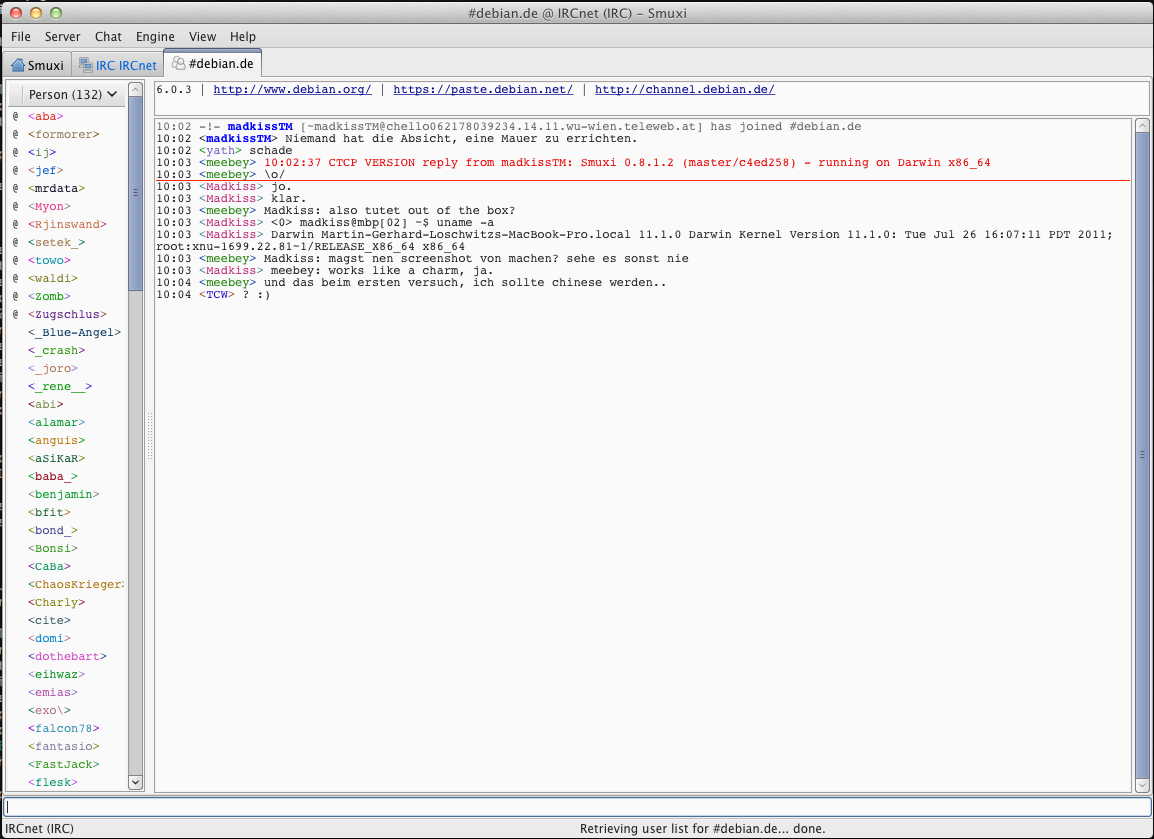
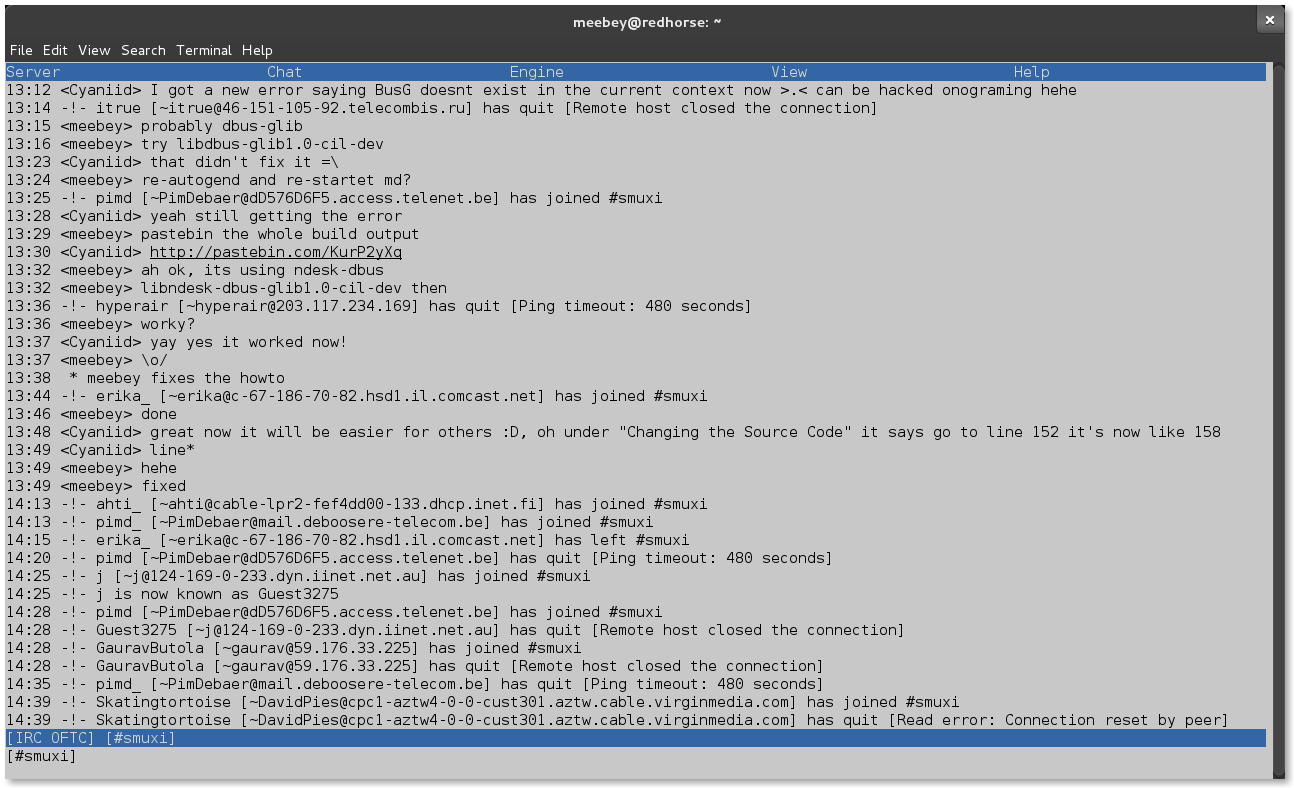
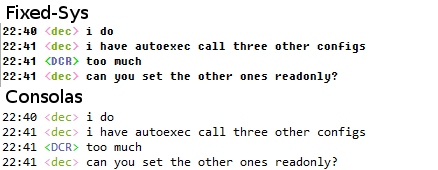
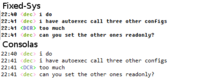
Just in time for 2012 I am very pleased to announce Smuxi 0.8.9 codenamed "One Giant Leap". During the development 56 bug reports and 33 feature requests in 593 commits were worked on making this release a major milestone of the Smuxi project. At the Chaos Communication Congress (28C3) in Berlin I was doing the final development sprint to get 0.8.9 done, which was a very intensive and refreshing experience. Here are the highlights of this release: Development Builds / Rolling Releases After the 0.8 release it became clear that a continious and short development -> test cycle is important to keep the project going quickly. At some point I have received requests if the project is dead while it was more active than ever. The lack of new releases (for about 15 months) lead to this wrong impression. Thus Smuxi can be obtained from development builds now. This includes daily builds for Debian (Squeeze, Wheezy, Sid), Ubuntu (Lucid, Maverick, Natty, Oneiric, Precise) and Windows. Thanks goes to Hannes Tismer for providing the Windows autobuilder and to Canonical for the PPA autobuilder. We invite everyone to use these daily builds to keep track of the latest development of Smuxi. Issues and regressions are fixed in a very short period (usually the same day). Thanks to our users who ran development builds and reported issues which led to many bug fixes prior to this release. On the other hand one of my New Year's resolutions are to "release early, release often" So there should be no nerd left behind... Screenshot of Smuxi 0.8.9 on Mac OS X Mac OS X support With the help of Steven McGrath (Steve[cug]) who created the initial Mac OS X installer for Smuxi we now have official support for Mac OS X. The download page contains the instructions how to obtain and install Smuxi on Mac OS X. This makes the 4th platform where Smuxi can be used on besides Windows, Linux and *BSD. For now Smuxi 0.8.9 doesn't feel as native as it could as it relies on the GTK+ port. We are looking into enhancing the experience though, just stay tuned. Chat History on Disk (Beta) The most exciting feature in this release I think are the "persistent message buffers". With this feature I could solve one of the biggest drawbacks IRC ever had: IRC does not retain any messages you have sent or received. All messages are only relayed to all users. The issue is that if you close your IRC client or even just leave a channel, all your received messages are gone. One workaround in most clients was to create text log files which then contains the chat history, but it is annoying and not user-friendly to open some text file somewhere from your disk to read the history outside of your IRC client. Now with Smuxi 0.8.9 you no longer have this issue, all chat history gets automatically written and read to a message database when you start Smuxi, join channels or open queries! As this feature is not fully stable yet it is not enabled by default. If you want to try it go to: File -> Preferences -> Interface and change "Persistency Type" from "Volatile" to "Persistent", hit OK and restart Smuxi. Now all messages are saved into the database and will automatically be shown. Click here for a screencast of this feature Jabber / XMPP Support (Beta) You probably have friends not on IRC and Twitter, say on Jabber, gTalk or Facebook? This is where the new XMPP engine of Smuxi comes into play. You can send and receive messages to/from them now! The implementation is far from complete, though. It has no buddy list for example and needs only to be treated as a technical preview of what will be coming in future Smuxi releases. Click here for a screencast of this feature Screenshot of Smuxi's Text Interface Text Interface (Alpha) This is the first release that contains a text frontend based on the STFL library. STFL is a library that uses ncurses to draw text based user interface using a markup language (like Glade for GTK+). This frontend is in early alpha state and lacks a lot of interface features and likes to crash. It is still included to attract potential developers who want to enhance this frontend. The frontend can be enabled by passing --enable-frontend-stfl to the configure script and then by executing smuxi-frontend-stfl. NetworkManager Support Everyone with a laptop knows how annoying it can be to suspend and resume when network based applications suddenly go crazy because they have lost the connection and either spew errors or take forever to get back in shape. Smuxi will now detect the network state right away with the help of the new Network Manager support. It automatically reconnects when needed right away for you. Next Generation Internet Support You can now connect to IRC servers using the IPv6 protocol Enhanced Find Group Chat Support Users had real issues to find out how to search for channels, thus Bianca Mix added a neat feature. The /list command will now simply open the Find Group Chat dialog for you. This way everyone used to IRC will find it in no time. Searching for channels on freenode wasn't working correctly, this is now fixed. Smuxi also supports the SAFELIST feature of the IRC protocol now which allows to retrieve a full channel list and do client side search which makes consecutive searches much faster. Enhanced Windows Experience For a long time you could not use Smuxi with the latest GTK# version of 2.12.10 on Windows. The issue was that Smuxi relied on SVG support which 2.12.10 no longer had. Smuxi is no longer using SVG instead it uses pre-scaled PNG images thus it works just fine with GTK# 2.12.10 on Windows now. At the same time the issue that the maximized state of the main window was left when restoring from task bar is fixed with GTK# 2.12.10. Screenshot of Fixed-Sys vs Consolas font Smuxi used by default the FixedSys font on Windows to give it the typical IRC look most people are used to. Since Windows Vista there is a better console-like font available called Consolas. Smuxi will now use the Consolas font instead on Windows Vista or later. Another important enhancement is that Smuxi no longer has issues with multiple GTK+ installs on the same computer, which was getting more common with more popular ported GTK+ applications such as GIMP or Pidgin. SSL for IRC fixed IRC with SSL was only working with the default port of 6697. Thanks to Jo Shields now any port can be used with SSL. Crash Related Issues Desktop notifications could crash Smuxi in case of errors related to the notification system or an absent notification daemon. There was a chance that the crash dialog simply disappeared which made reporting bugs more difficult no longer happens. Rapid use of ctrl+w, /window close (Jimmie Elvenmark) and opening the Find Group Chat dialog on the Smuxi tab do no longer crash. Also number-only network names, /network switch freenode and GTK+ install without SVG support no longer lead into a crash. Enhanced Notice Handling Notices will no longer open query tabs for you instead it will show them on tabs you share with the person who sent it with the server tab as fallback. This also avoids ChanServ, NickServ and spammy IRCop tabs. Twitter fixes Twitter made some changes to their API which broke the Twitter support of Smuxi 0.8. This was taken care of and also a few other issues were solved allowing Smuxi 0.8.9 to work smoothly with Twitter again. Extended Keybindings Smuxi allows now to use the ctrl+tab / ctrl+shift+tab and ctrl+n / ctrl+p keys to switch tabs. The keybindings still work even with a hidden menu bar now. Smuxi Server specific highlights More interactive and much faster synchronization When connecting to a smuxi-server you had to wait till Smuxi finished the synchronization before you could use the interface. Also you could not tell how far the synchronization was and just had to wait till it was completed. With Smuxi 0.8.9 the connect just takes a few seconds and all chats are synchronized in the background with a progress bar so you can use the interface from the first moment on and know how far it is. The speed how much it takes to synchronize all chats also reduced drastictly by 400%! Click here for a screencast of this feature More background communication When using a smuxi-server the interface sometimes had load times like when opening the preferences or when using the nickname completion (Andrew Kannan). These operations are done in the background and no longer blocks the interface. Also when the communication is lost to the smuxi-server the frontend will now automatically reconnect to it in the background. Low Bandwidth Mode When it comes to mobile internet connectivity such as UMTS/HSDPA, Edge and GRPS it can be a real pain to connect to the smuxi-server as it has to transfer all the messages over that. If you just want to ask someone you know then you don't need any old messages to do that. With the "Low Bandwidth Mode" you can now connect to the smuxi-server without loading old messages which makes the connect very quick. You find this option in the engine connect dialog. Stable Protocol Initially I didn't plan to make the protocol of Smuxi stable before the 0.9 release, but as it turned out the 0.8 protocol was good enough to still use it and for that reason Smuxi 0.8.9 is still compatible with 0.8. The 0.8 protocol will see no breakages, instead the next protocol will be on-top or opt-in of the current one. This means future Smuxi versions stay compatible with it. Shutdown Command You can now shutdown the smuxi-server if you like using the /shutdown command. It it safe to use the command, it will do a clean shutdown sequence for you. For example it makes sure all messages are written to disk in the case of enabled persistent message buffers. If you have your smuxi-server daemon monitored (e.g. with runit) it can also automatically be restarted and upgraded this way. Built-in SSH Keyfile Support It is no longer needed to fiddle with the .ssh/config file or pagent to get SSH key authorization working. You can now simply tell Smuxi which SSH keyfile you want to use to connect to your smuxi-server. Updated Translations
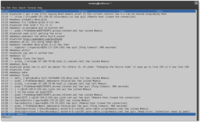
  • Catalan (Siegfried-Angel Gevatter Pujals)
  • Danish (Joe Hansen)
  • Finnish (Kalle Kaitala)
  • French (Cl ment Bourgeois)
  • German (Bianca Mix)
  • Italian (Vincenzo Campanella)
  • Portuguese (Americo Monteiro)
  • Spanish (Castilian) (Ricardo A. Hermosilla Carrillo)
New Translations
  • Chinese Simp (Dean Lee)
  • Slovak (Tom Vadina)
  • Swedish (Jimmie Elvenmark)
  • partially Russian (Aleksandr P)
  • partially Turkish (Umut Albayrak)
  • partially Urdu (makki)
Contributors Contributors to this release are the following people:
  • Mirco Bauer (497 commits)
  • Tuukka Hastrup (10 commits)
  • Bianca Mix (10 commits, translations)
  • Cl ment Bourgeois (8 commits, translations)
  • Andrius Bentkus (5 commits)
  • Carlos Mart n Nieto (3 commits)
  • Jimmie Elvenmark (3 commits, translations)
  • Hannes Tismer (1 commit)
  • Jonathan Pryor (1 commit)
  • Jo Shields (1 commit)
  • Siegfried-Angel Gevatter Pujals (translations)
  • Dean Lee (translations)
  • Aleksandr P (translations)
  • Americo Monteiro (translations)
  • Andrew Kannan (translations)
  • Joe Hansen (translations)
  • Kalle Kaitala (translations)
  • makki (translations)
  • Ricardo A. Hermosilla Carrillo (translations)
  • Tom Vadina (translations)
  • Umut Albayrak (translations)
  • Vincenzo Campanella (translations)
Thank you very much for your contributions to Smuxi! After reading this whole pile of text, head over here and grab this smexy stuff!
Posted Sun Jan 1 22:58:29 2012

Timo Jyrinki: I have a new GPG key


-----BEGIN PGP SIGNED MESSAGE-----
Hash: SHA1,SHA512

Hello,

I'm transitioning from my 2003 GPG key to a new one.

The old key will continue to be valid for some time, but I eventually
plan to revoke it, so please use the new one from now on. I would also
like this new key to be re-integrated into the web of trust. This message
is signed by both keys to certify the transition.

The old key was:

pub 1024D/FC7F6D0F 2003-07-10
Key fingerprint = E6A8 8BA0 D28A 3629 30A9 899F 82D7 DF6D FC7F 6D0F

The new key is:

pub 4096R/90BDD207 2012-01-06
Key fingerprint = 6B85 4D46 E843 3CD7 CDC0 3630 E0F7 59F7 90BD D207

To fetch my new key from a public key server, you can simply do:

gpg --keyserver pgp.mit.edu --recv-key 90BDD207

If you already know my old key, you can now verify that the new key is
signed by the old one:

gpg --check-sigs 90BDD207

If you don't already know my old key, or you just want to be double
extra paranoid, you can check the fingerprint against the one above:

gpg --fingerprint 90BDD207

If you are satisfied that you've got the right key, and the UIDs match
what you expect, I'd appreciate it if you would sign my key:

gpg --sign-key 90BDD207

Lastly, if you could send me these signatures, i would appreciate it.
You can either send me an e-mail with the new signatures by attaching
the following file:

gpg --armor --export 90BDD207 > timojyrinki.asc

Or you can just upload the signatures to a public keyserver directly:

gpg --keyserver pgp.mit.edu --send-key 90BDD207

Please let me know if there is any trouble, and sorry for the inconvenience.

(this post has been modified from the example at
http://www.debian-administration.org/users/dkg/weblog/48)

-----BEGIN PGP SIGNATURE-----
Version: GnuPG v1.4.11 (GNU/Linux)

iEYEARECAAYFAk8GuZoACgkQgtffbfx/bQ9nqACglWyHnDTFQfdKmz8OCd3oL6iR
hcEAmgKJ7RZsgwxwkRGPhygy5y1Ztb+3iQIcBAEBCgAGBQJPBrmaAAoJEOD3WfeQ
vdIHdVQQAMT1yvIogzbtK6sUnWqwbrXI9pDEFk7AzJTb80R+wzxsw7gu9gcBDk8G
BL2O26GKUqKWA3ytuApSl42FJam/Lusi9npT3XNkmHs6FaBMNuLYrqEXmCwXwWr/
OrLyeeLiF4yxgbNWbv+600BqAWqFlo6NeTgQKsJWtCjR3RVMxX3R8nzjDnKJuF+z
c6+2JKBWyx/HVUKcJpJrFDDR36HRFvVJomTuma2JCQ/RAl9vzAguqNYOi1QkuuQv
EF1gXH7gLifukGuwquP1DHP6SWWkj77jtRWr5ewC0xymbrArzAwKbvMQl3VpKBHh
MmpJjYP3ECyL14AKi/TY2Lidi0Sf6yqFMcPcreoih01N0OU0NXmD4IrHMT24/ssb
okDUe1o3YImjGq1jTACvlzC8s54EfLsqDgSP98SGVpuoDqPJUwVk4nuHj8q0vDSs
qZox26gVwB2FAOUi1BFiZbIzM5rsyYfCGyWUGiAwBFf54lYRAeCDCt8iAOOL1Ov/
TumIGYdLoXnDuOJq1VjXLGx2OFDrpyU8SPGoa3zNEVz39tgxQ48ASJEqcqt7HvBy
IW+TTsMLdJ1Ait9aCM3mzzr1iwP8TrL0qUsdRLOE6AKdAqocIfqXY8OeDKhbUiOJ
CXWk5q3xheK3sDWUXX7J63bAAUH4jFnpQEOVMJKBUNMKsWa0iXDS
=mklN
-----END PGP SIGNATURE-----

5 January 2012

Sune Vuorela: Vote verifications

In KDE e.V. (which is to KDE</kde> what SPI is to Debian, Jenkins and others) there is some times a need to vote. For example about accepting new members. Mostly about accepting new members. With the new vote system (ballot.kde.org), voters need to do a bit more to check their votes afterwards. basically and sha256 it in the right order with the right separator chars and so on. All sha256 sums are published together with where the vote was, so voters can verify that they are counted correctly. After failing to construct a couple of times on the command line, I decided to write a small GUI app to help me instead. There it is. Nice. Simple. Effective. Sources available. http://quickgit.kde.org/?p=scratch%2Fsune%2Fkrapyl.git&a=summary have fun, and remember to verify your votes.

Patrick Schoenfeld: Bringing GVFS to a good use

One of the GNOME features I really liked since the beginning of my GNOME usage is the ability to mount various network file system by a few clicks and keystrokes. It enables me to quickly access NFS shares or files via SFTP. But so far these mounts weren't actually mounts in a classical sense, so they were only rudimentary useful.

As a user who often works with terminals I was always halfway happy with that feature and halfway not:

- Applications have to be aware and enabled to make use of that feature, so its often neccessary to workaround problems (e.g. movie players not able to open a file on a share)
- No shell access to files

Previously this GNOME feature was realised with an abstraction layer called GNOME VFS, which all applications needed to use if they wanted to provide access to the "virtual mounts". It did no efforts to actually re-use common mechanisms of Un*x-like systems, like mount points. So it were doomed to fail at certain degrees.

Today GNOME uses a new mechanism, called GVFS. Its realized by a shared library and daemon components communicating over DBUS. At first glance it does not seem to change anything, so I was rather disappointed. But then I heard rumors, that Ubuntu was actually making these mounts available in a special mount point in ~/.gvfs.
My Debian GNOME installation were not.

So I investigated a bit and found evidence about a daemon called gvfs-fuse-daemon, which eventually is handling that. After that I figured this daemon to be in a package called gvfs-fuse and learned that installing it and restarting my GNOME session is actually all needed to do.
Now getting shell access to my GNOME "Connect to server" mounts is actually possible, which makes these mounts really useful after all. Only thing to find out is, if e.g. the video player example now works from Nautilus. But if it doesn't I'm still able to use it via a shell.

The solution is quiet obvious, on the one side. But totally non-obvious on the other.

A common user eventually will not find that solutin without aid. After all the package name does not really suggest what the package is used for, since its referring to technologies instead of the problem it solves. Which is understandable. What I don't understand is, why this package is not a dependency of the gnome meta package. But I haven't yet asked the maintainer, so I cannot really blame anybody.

However: Now GVFS is actually useful.

Jaldhar Vyas: Jeopardy!: The Post-Mortem

By now hopefully you got a chance to see my Jeopardy! episode so it won't be much of a spoiler to mention that I didn't win. It went like this. I flew into LA on the night of October 31st. The taping was to take place on the next two days. Jeopardy! tapes two weeks of shows, two days a week for a total of 10 episodes. Contestants are randomly chosen for one of those 10 episodes but you don't find out which one you will be on until the last minute. Randomness and secrecy have become become a big part of the production process in games since the quiz show scandals of the 1950s. (Interesting fact: it is a Federal felony to tamper with a TV game show.) There were a group of just under 20 0f us altogether waiting to go on. All very nice people. Here in the New York area one tends to equate very intelligent people with "Type A" personalities but we got on well together. Interspersed between the tapings, we had short practice sessions to familiarize ourselves with the studio setup and this is where I first started getting a little apprehensive. Jeopardy! is not just about general knowledge, there is a physical element too in that you have to buzz in by pressing a button on a stick which is wired up to some producers console. You can't buzz in before Alex has finished reading the question and obviously you can't buzz in if someone is already answering the question. If you buzz at the wrong time, your buzzer locks for 0.75 seconds so just jamming your finger on the button. I didn't even get that far as on the entire first day I failed to buzz in at all despite changing hands, changing grip different ways and other strategies. I was pretty despondent by the second day but then miraculously I managed to get the hang of it. So when I was finally selected (for the 3rd game of that day.) I was back to my usual cool self. I was up against Dave Leach and Nicholas Campiz who were returning after having tied in the previous game. And the game did start well enough. Oh one thing you may notice is that Alex mispronounces my name Jaldhal. I knew he did that once or twice and even mentioned it to a producer but it was only viewing the episode right now that I see he does it consistently. I assumed such things would be fixed up in post-editting but I guess not. Oh well, after living in this country for so many years I've learned to be happy whenever two consonants are more or less in the right place. This particular mispronunciation is actually fairly common, even Indian people have been known to make it. The alternative theory is that Alex couldn't read my horrible handwriting which is also plausible. Anyway, I digress. I started off fairly well. My first mistake was in a category about alcoholic drinks. I answered vermouth when the correct response was gin. In my defense I'm a strict teetoler so none of these words mean anything to me. I also earned the disapproval of my superhero fan son by mistaking Dr. Strange for Dr. Doom. I did get the one about Spiderman villain Dr. Octopus so that mollified him somewhat. The highlight of my evening was strangely enough in a category about books of the Bible. I got a Daily Double. It was a risky move but I have always wanted to make a "true" daily double so I threw caution to the winds and wagered everything I had. To my surprise as much as anyones, got the answer right doubling my score. I was in a pretty good position for the Double Jeopardy but thats when Dave started dominating. If you haven't been watching previous games, Dave Leach is arguably the best player this season. Not only is he smart but he is almost supernaturally fast on the buzzer. You can't see because I kept my hands behind the podium but I again and again I would desperately try to ring in on a question I knew the answer to only to be beaten to the punch by Dave. This caused me to start getting a bit reckless and answering questions where I was less than certain which cost me dearly. One particularly dumb mistake was in a category where all the answers were supposed to start with the letter g. I said compass when I should said gyrocompass but actually I should have left that category alone entirely. By the time Final Jeopardy came around winning was no longer an option as Dave was too far in the lead. I was slightly ahead of Nicholas in 2nd place. This is where I again made a strategic error. My original plan to bet nothing in Final Jeopardy but the category was "1930s Novels" and I liked my chances. The clue was read out and it involved an anti-war novel whose author was blacklisted. I was elated. It had to be "All Quiet on the Western Front" right? The blacklist bit gave me pause as the author Erich Maria Remarque was German and this was obviously a reference to the anti-Communist blacklist in the 1950s USA. But somehow I remembered that he had spent the end of his life in Hollywood or maybe I just convinced myself that it was plausible. Evidently my thought process wasn't too crazy because all three of us came up with the same answer. All three of us were wrong. The correct answer was "Johnny Got His Gun" by Daltan Trumbo. In hindsight I knew this but it illustrates the strange ways the mind works. I knew because the video for Metallicas song "One" from "...And Justice for All" is based on the film adaptation of this book. However in a previous orientation session the lady who is the contestant coordinator for Jeopardy! had mentioned AQOTHWF as anexample of something and this got stuck in my brain crowding out the previously known fact. So when all was said and done I ended up in 3rd place. (I bet big whereas Nicholas was more conservative.) Oh well. Despite not winning I had a blast. I fulfilled my dream of appearing on Jeopardy! I met Alex Trebek. (And I should be receiving an autographed picture of us together soon.) My witty banter was sufficiently witty. I made enough money to cover my travel expenses and still have a nice amount left. And I got to meet lots of interesting and wonderful people. So I'm satisfied.

4 January 2012

Michal &#268;iha&#345;: uTidyLib dead?

uTidyLib is definitely something you would call a dead project - no new release for seven years, dozens of open bugs and submitted patches and no active development. On the other side it is still used by several packages in Debian, thus worth maintaining. This is also reason, why there are few crucial patches in Debian repository to make it work (for example on 64-bit architectures). While googling whether there is something new going on with uTidyLib, I've noticed two efforts. One is PyTidyLib, a complete reimplementation, which provides different API and thus does not seem to be used anywhere yet. Another (well almost two years old, but I did not look earlier) effort is to fork in on Github and make it work with MacOS X. Okay, when somebody took the "effort", lets try to merge Debian patches there, hopefully there will be a release sometimes. So here is the pull request. Update: I've just learned, there is another fork going on - https://github.com/lachlan-00/utidylib2

Filed under: Debian English 0 comments Flattr this!

Russell Coker: Autism and a Child Beauty Contest

Fenella Wagener wrote an article for the Herald Sun about an Autistic girl who won the best personality award from the controversial new Australian children s beauty pageant [1]. The girl s mother is complaining that an Autistic girl shouldn t win a prize for personality and is critizing the pageant organisers. A beauty contest involves queuing, being quiet, appearing on stage, wearing cosmetics and unusual/uncomfortable clothes. It probably also involves having someone else assist with dressing and applying cosmetics (being touched by another person). These are all things which tend to be difficult or impossible for Autistic kids. So any girl who can get on stage wearing make-up can probably do whatever is required to avoid being obviously excluded from a personality prize. As any such prize has to be largely subjective I don t think it would ever be possible to prove that someone was the correct choice for the winner, it would merely be possible to prove that some candidates excluded themselves. But whether the girl deserved to win isn t the real issue here. I think that beauty pageants should be restricted to adults, merely entering a child in such a contest is bad enough, but making nasty public statements about a child is horrible. If other children made a Facebook page claiming that the girl in question didn t deserve to win a best personality prize it would probably be reported as cyber-bullying. I don t think that publishing the name or photo of the girl in question is in the public interest either. Many news sites that have picked up the story have shown the same lack of journalistic ethics so now the girl has some high traffic sites with her name linked to this story, it seems unlikely that anything good she might do in the near future will get a higher ranking for her name in search engines. So any time she searches for her name on Google (which most people do regularly) she will be reminded that her mother thinks she has some sort of defective personality because she is Autistic. High school is generally bad for almost everyone on the Autism Spectrum. Presumably any parent who would abuse their child by allowing such an article to be published would also send them to a regular school (as opposed to Home Schooling which is probably the only good option for Autistic kids in Australia). I m sure that the standard practice at every high school nowadays is that the kids all use Google to discover things to tease each other about. So in a few years the Herald Sun article will probably be the basis of a high school bullying campaign. The girl in question is only 9, so she s got another 6 or 7 years before she can legally leave her mother. In Australia 16 is the minimum legal age to live without parents and the police won t forcibly return runaway children who are almost 16. The Journalistic Code of Ethics Here is a link to the Australian Media Alliance code of Journalistic Ethics [2]. Section 8 includes Never exploit a person s vulnerability or ignorance of media practice . I think that publishing the name and photograph of a 9yo girl in a way that is likely to lead to bullying in a few years is a clear example of exploiting a vulnerable person. The code of ethics has a guidance clause which says Only substantial advancement of the public interest or risk of substantial harm to people allows any standard to be overridden . Even if it was a proven fact that a beauty pageant was issuing awards to unqualified children there would not be any substantial advancement of the public interest in publishing that. Beauty Contests are Evil The Australian has an article about the same beauty contest by Caroline Overington which quotes adolescent and child psychotherapist Collett Smart calling for government intervention [3]. Catherine Manning has written a good article explaining some of the reasons for opposing child beauty pageants [4]. The American Psychological Association has published a report on the Sexualization of Girls [5], they have lots of references to psychological research which gives a variety of reasons for opposing child beauty contests. IMHO each of the reasons alone should be sufficient to convince people that child beauty pageants are bad. Finally the pictures of contestants who are less than 10yo but made up to look like they are 20+ are rather disturbing. Related posts:
  1. Child Abuse and Censorship In Australia we are currently in the middle of a...
  2. Autism Awareness and the Free Software Community It s Autism Awareness Month April is Autism Awareness month, there...
  3. Autism, Food, etc James Purser wrote Stop Using Autism to Push Your Own...

3 January 2012

Julien Danjou: Google Calendar notifications using pynotify

I use Google Calendar to manage my calendars, and I really missed something to warn me whenever I have an appointment with an alert set. So here is an example of a Python program to do such a thing. It is written using the Google Data APIs Python client library and pynotify. I'll detail the code here, so you can build your own and adapt it to your needs. First, we need to import GTK+ and pynotify, and initialize it.
import gtk
import pynotify
pynotify.init(sys.argv[0])
Then, we need to import gdata Calendar API and connect to the calendar. I'll use the simple email/password way to login, which is clearly not the best, but it's also the simplest. Feel free to use OAuth 2.0. :-)
calendar_service = gdata.calendar.service.CalendarService()
calendar_service.email = 'mygooglelogin'
calendar_service.password = 'mygooglepassword'
calendar_service.ProgrammaticLogin()
Now we're ready to request stuff and notify! First, request the events from the default calendar.
feed = calendar_service.GetCalendarEventFeed()
Now we can iterate over feed and do various checks.
for event in feed.entry:
    # If the event status is not confirmed, go to the next event.
    if event.event_status.value != "CONFIRMED":
        continue
    # Now iterate over all the event dates (usually it has one)
    for when in event.when:
        # Parse start and end time
        try:
            start_time = datetime.datetime.strptime(when.start_time.split(".")[0], "%Y-%m-%dT%H:%M:%S")
            end_time = datetime.datetime.strptime(when.end_time.split(".")[0], "%Y-%m-%dT%H:%M:%S")
        except ValueError:
            # ValueError happens on parsing error. Parsing errors
            # usually happen for "all day" events since they have
            # not time, but we do not care about this events.
            continue
        now = datetime.datetime.now()
        # Check that the event hasn't already ended
        if end_time > now:
            # Check each alert
            for reminder in when.reminder:
                # We handle only reminders with method "alert"
                # and whose start time minus the reminder delay has passed
                if reminder.method == "alert" \
                        and start_time - datetime.timedelta(0, 60 * int(reminder.minutes)) < now:
                    # Build the notification
                    notification = pynotify.Notification(summary=event.title.text,
                                                         message=event.content.text)
                    # Set an icon from the GTK+ stock icons
                    notification.set_icon_from_pixbuf(gtk.Label().render_icon(gtk.STOCK_DIALOG_INFO,
                                                                              gtk.ICON_SIZE_LARGE_TOOLBAR))
                    notification.set_timeout(0)
                    # Show the notification
                    notification.show()
Running this program, you should see a notification if an appointment has an alert to be raised at that time. This should be enough to start to build something. If you don't want to program this into Python, you might want to take a look at gcalcli.

2 January 2012

Gunnar Wolf: Happy Public Domain day, even for the inhabitants of the longest-copyright-term country

Happy Public Domain day, even for the inhabitants of the longest-copyright-term country
Every year, on January 1st, new material ceases to be protected by copyright and enters the public domain. This means, every year, more knowledge, literature, paintings, music, movies and a long etcetera becomes collective property, instead of being artificially held by the current holders of their rights. As this image shows (source: http://publicdomainday.org/node/39 ), I have the honor(?) to live in the country with the longest copyright protection term in the world. Copyright in Mexico does not only last for 100 years It lasts for the natural life of the author plus 100 years. This means that the popular corridos that tell the stories of the 1910 revolution are still not in the public domain. La sucesi n presidencial, the book which Francisco I. Madero wrote to justify that a peaceful political change was needed for the 1910 elections, will not enter the public domain until 2014 (president Madero was killed during 1913). Does it make any sense to kidnap cultural, political or artistic works for over a century? Not only that: Material that is legally sold as public domain in other countries is illegal in ours. Take as an example the recordings of Enrico Carusso, the great Italian tenor who died in 1921. Over 15 years ago, I bought a couple of CDs with his recordings (even if the sources were quite low-quality, as they had been copied over from wax cylinders to magnetic tapes to optical media). I bought them surprisingly cheap, as they were genuine public domain. But they are still protected in my country. That means, I ilegally have some stolen(!) works of art which I lawfully bought outside my country. Copyright law needs to be revised to match reality. Technological advances have strongly changed reality since 1717's promulgation of the first copyright laws. The solution is not to extend the terms, but to rethink the whole process. (yes, this rant was mainly made as an excuse for me to copy this image and put it in a location I can easily refer to later. But I hope it is interesting to you!)

30 December 2011

Dirk Eddelbuettel: RcppExamples 0.1.3

A minor new release of the RcppExamples package is now on CRAN. RcppExamples contains a few illustrations of how to use Rcpp. It grew out of documentation for the classic API (now in its own package RcppClassic), and while we added a few more functions documenting how to do the same with the new API, the package is still nowhere near completion. The two ChangeLog entries since the last release are below. One new example was added, and some things were changed in order to make R CMD check (and the CRAN gate keepers) happy.
2011-12-28  Dirk Eddelbuettel  <edd>
        * DESCRIPTION: Release 0.1.3
        * src/newRcppDateExample.cpp: switch from std::cout to the new
        Rcpp::Rcout device available since Rcpp 0.9.8
        * src/classicRcppDateExample.cpp: idem
        * DESCRIPTION: Depends on Rcpp (>= 0.9.9) for Rcpp::Rcout
2011-04-08  Dirk Eddelbuettel  <edd>
        * R/RcppDataFrame.R: Added new example for Rcpp::DataFrame
        * src/RcppDataFrame.cpp: C++ source for new example
        * man/RcppDataFrame.Rd: Documentation
        * man/RcppParams.Rd: Small change to suppres a warning
Thanks to CRANberries, you can also look at a diff to the previous release 0.1.2. Questions, comments etc should go to the rcpp-devel mailing list off the R-Forge page

28 December 2011

Bernhard R. Link: symbol files: With great power comes great responsibility

Symbol files are a nice little feature to reduce dependencies of packages. Before there were symbol files libraries in Debian just had shlibs files (both to be found in /var/lib/dpkg/info/. A shlibs file says for each library which packages to depend on when using this library. When a package is created, the build scripts will usually call dpkg-shlibdeps, which then looks which libraries the programs in the library use and then calculate the needed dependencies. This means the maintainers of most packages do not have to care what libraries to depend on, as it is automatically calculated. And as compiling and linking against a newer version of a library can cause the program to no longer work with an older library, it also means those dependencies are correct regardless of which version of a library is compiled against. As shlibs files only have one dependency information per soname, that also means they are quite strict: If there is any possible program that would not work with an older version of a library, then the shlibs file must pull in a dependency for the newer version, so everything needing that library ends up depending on the newer version. As most libraries added new stuff most of the time, most library packages (except some notable extremely API stable packages like for example some X libs) just chose to automatically put the latest package version in the shlibs file. This of course caused library packages to be quite strict: Almost every package depended on the latest version of all libraries, including libc, so practically no package from unstable or testing could be used in stable. To fix this problems, symbols files were introduced. A symbols file is a file (also finally installed in /var/lib/dpkg/info/ alongside the shlibs file) to give a minimum version for each symbol found in the library. The idea is that different programs use different parts of a library. Thus if new functionality is introduced, it would be nice to differentiate which functionality is used and give dependencies depending on that. As the only thing programmatically extractable from a binary file is the list of dynamic symbols used, this is the information used for that. But this only means the maintainer of the library package has now not only one question to answer ("What is the minimal version of this library a program compiled against the current version will need?"), but many questions: "What is the minimal version of this library a program compiled against the current version and referencing this symbol name will need?". Given a symbols file of the last version of a library package and the libraries in the new version of the package, there is one way to catch obvious mistakes: If a symbol was not in the old list but is not in the current library, one needs at least the current version of the library. So if dpkg-gensymbols finds a missing symbol, it will add it with the current version. While this will never create dependencies too strict, it sadly can have the opposite effect of producing dependencies that are not strict enough: Consider for example some library exporting the following header file:
enum foo_action   foo_START, foo_STOP ;
void do_foo_action(enum foo_action);
Which in the next version looks like that:
enum foo_action   foo_START, foo_STOP, foo_RESTART ;
void do_foo_action(enum foo_action);
As the new enum value was added at the end, the numbers of the old constants did not change, so the API and ABI did not change incompatibly, so a program compiled against the old version still works with the new one. (that means: upstream did their job properly). But the maintainer of the Debian package faces a challenge: There was no new symbol added, dpkg-gensymbols will not see that anything changed (as the symbols are the same). So if the maintainer forgets to manually increase the version required by the do_foo_action symbol, it will still be recorded in the symbols file as needing the old version. Thus dpkg will not complain if one tries to install the package containing the program together with the old version of the library. But if that program is called and calls do_foo_action with argument 2 (foo_RESTART), it will not behave properly. To recap:

Russell Coker: Secure Boot and Protecting Against Root

There has been a lot of discussion recently about the recent Microsoft ideas regarding secure boot, in case you have missed it Michael Casadevall has written a good summary of the issue [1]. Recently I ve seen a couple of people advocate the concept of secure boot with the stated idea that root should be unable to damage the system, as Microsoft Software is something that doesn t matter to me I ll restrict my comments to how this might work on Linux. Restricting the root account is something that is technically possible, for much of the past 9 years I have been running SE Linux Play Machines which have UID 0 (root) restricted by SE Linux such that they can t damage the system [2] there are other ways of achieving similar goals. But having an account with UID 0 that can t change anything on the system doesn t really match what most people think of as root , I just do it as a way of demonstrating that SE Linux controls all access such that cracking a daemon which runs as root won t result in immediately controlling the entire system. As an aside my Play Machine is not online at the moment, I hope to have it running again soon. Root Can t Damage the System One specific claim was that root should be unable to damage the system. While a secure boot system can theoretically result in a boot to single user mode without any compromise that doesn t apply to fully operational systems. For a file owned by root to be replaced the system security has to be compromised in some way. The same compromise will usually work every time until the bug is fixed and the software is upgraded. So the process of cracking root that might be used to install hostile files can also be used at runtime to exploit running processes via ptrace and do other bad stuff. Even if the attacker is forced to compromise the system at every boot this isn t a great win for the case of servers with months of uptime or for the case of workstations that have confidential data that can be rapidly copied over the Internet. There are also many workstations that are live on the Internet for months nowadays. Also the general claim doesn t really make sense on it s own. root usually means the account that is used for configuring the system. If a system can be configured then the account which is used to configure it will be able to do unwanted things. It is theoretically possible to run workstations without external root access (EG have them automatically update to the latest security fixes). Such a workstation configuration MIGHT be able to survive a compromise by having a reboot trigger an automatic update. But a workstation that is used in such a manner could be just re-imaged as it would probably be used in an environment where data-less operation makes sense. An Android phone could be considered as an example of a Linux system for which the root user can t damage the system if you consider root to mean person accessing the GUI configuration system . But then it wouldn t be difficult to create a configuration program for a regular Linux system that allows the user to change some parts of the system configuration while making others unavailable. Besides there are many ways in which the Android configuration GUI permits the user to make the system mostly unusable (EG by disabling data access) or extremely expensive to operate (EG by forcing data roaming). So I don t think that Android is a good example of root being prevented from doing damage. Signing All Files Another idea that I saw advocated was to have the secure boot concept extended to all files. So you have a boot loader that loads a signed kernel which then loads only signed executables and then every interpreter (Perl, Python, etc) will also check for signatures on files that they run. This would be tricky with interpreters that are designed to run from standard input (most notably /bin/sh but also many other interpreters). Doing this would require changing many programs, I guess you would even have to change mount to check the signature on /etc/fstab etc. This would be an unreasonably large amount of work. Another possibility would be to change the kernel such that it checks file signatures and has restrictions on system calls such as open() and the exec() family of calls. In concept it would be possible to extend SE Linux or any other access control system to include access checks on which files need to be signed (some types such as etc_t and bin_t would need to be signed but others such as var_t wouldn t). Of course this would mean that no sysadmin work could be performed locally as all file changes would have to come from the signing system. I can imagine all sorts of theoretically interesting but practically useless ways of implementing this such as having the signing system disconnected from the Internet with USB flash devices used for one-way file transfer because you can t have the signing system available to the same attacks as the host system. The requirement to sign all files would reduce the use of such a system to a tiny fraction of the user-base. Which would then raise the question of why anyone would spend the effort on that task when there are so many other ways of improving security that involve less work and can be used by more people. Encrypted Root Filesystem One real benefit of a secure boot system is for systems using encrypted filesystems. It would be good to know that a hostile party hasn t replaced the kernel and initrd when you are asked for the password to unlock the root filesystem. This would be good for the case where a laptop is left in a hotel room or other place where a hostile party could access it. Another way of addressing the same problem is to boot from a USB device so that you can keep a small USB boot device with you when it s inconvenient to carry a large laptop (which works for me). Of course it s theoretically possible for the system BIOS to be replaced with something that trojans the boot process (EG runs the kernel in a virtual machine). But I expect that if someone who is capable of doing that gets access to my laptop then I m going to lose anyway. Conclusion The secure boot concept does seem to have some useful potential when the aim is to reboot the system and have it automatically apply security fixes in the early stages of the boot process. This could be used for Netbooks and phones. Of course such a process would have to reset some configuration settings to safe defaults, this means replacing files in /etc and some configuration files in the user s home directory. So such a reboot and upgrade procedure would either leave the possibility that files in /etc were still compromised or it would remove some configuration work and thus give the user an incentive to avoid applying the patch. Any system that tries to extend signature checks all the way would either be vulnerable to valid but hostile changes to system configuration (such as authenticating to a server run by a hostile party) or have extreme ease of use issues due to signing everything. Also a secure boot will only protect a vulnerable system between the time it is rebooted and the time it returns to full operation after the reboot. If the security flaw hasn t been fixed (which could be due to a 0-day exploit or an exploit for which the patch hasn t been applied) then the system could be cracked again. I don t think that a secure boot process offers real benefits to many users.

Next.

Previous.