Search Results: "edd"

11 June 2007

Joachim Breitner: Visualizer for Anagrams

For my uncles wedding my brothers and I did a show where we took his name and use its letters to create a bunch of new words that are part of a speech about him. This was visualized on a projector by a program by me that let s the letter swirl around, forming each built word, as well as some special effects (such as rotating one letter around to show another).The program is written in Haskell, using gtk2hs and Cairo. You can find the sources in my darcs repository (Browse via DarcsWeb). To build it on a debian machine, this should work:
apt-get install darcs gtk2hs libghc6-cairo-dev libghc6-gtk-dev libghc6-mtl-dev happy
darcs get http://darcs.nomeata.de/anapres
make
./anapres examples/RolandHochzeit.anapres
I can also provide pre-compiled binaries, if you want.There is a very simple text file format that describes the sequence of words and special effects, but so far it is only tested with the one example file (the one from the wedding).If you want to try this and have any kind of trouble, do not hesitate to contact me. I m also interested in bug reports and patches, of course.

10 June 2007

Chris Lamb: Sudoku solver in PostScript

There seems to have been a bit of fuss over this Sudoku solver implemented in SQL. In Easter 2005, when Sudoku fever kicked off in a big way in England, my Dad started writing a solver implemented in PostScript which I then modified so that it could perform backtracking. I also wrote a C# solver for my phone around the same time and later sneakily won a competition with it - I am now barred from entering competitions in that paper. Anyway, here is an example PostScript board (PDF version). It was labelled “Fiendish” in The Times. The board can be easily changed at the top of the PostScript file. NB. Best results are achieved if you view the PostScript directly in a viewer such as gv or GSview as you actually see the process of backtracking in solving the puzzle, the recursion depth and the set of possible symbols for each square — most PDF viewers are terrible at displaying the process as they seem to render inside the wrong thread. (In terms of solving the puzzle, we both found that by enforcing the simplest constraints and then ‘guessing’ was far easier and more efficient than performing any of the complicated constraints typically employed by human solvers. I’m certain I am not the first to notice that attempting to emulate the brain’s method of solving a problem is usually a short-sighted approach for a computer.) There are few other goodies in the file: replacing the final autotest with autotestR will recurse using the right-most possible symbol - if you get the same board with both of these then the initial board has a unique solution. Also, if you can get your hands on a true PostScript printer, printing the file will mean the puzzle is solved in hardware. Enjoy :) . I’m looking forward to DebConf7! UPDATE: Added PDF version.

5 June 2007

Eddy Petrișor: Customizing D-I

An interesting opportunity appeared at work. I am going to make a custom D-I image.
It will involve:
This way I will probably get back in touch with D-I development ;-) .
Fun, fun fun. Doing Debian stuff at work, payed by my employer!

Ross Burton: Postr 0.6

Postr 0.6 is here! What is new I hear you ask. Well: The tarball is in the usual place, and I'll make Debian packages shortly. NP: Konfusion, Skalpel

Eddy Petrișor: insurance card and debconf

Dear lazyweb,

I have remembered about the European Health Insurance Card too late to able to make it in reasonable conditions[*], so I am thinking of using a regular insurance policy for the period spent abroad.

Dear lazyweb, is there any reason to be worried if I want to make this policy instead of using the card? My reason tells me no, but I want to be in the safe side.


[*] there is a 7 days waiting period for the emission; I work in Bucharest but I have to go to my home county which is 150km away and compared to the tax for the emission, the trip cost is 20 times more expensive

4 June 2007

Neil McGovern: Cheese + Logos

Well, my colo box lives again. Ish. It's now running under a Xen instance until the new hardware arrives that'll fix it's blown up PSU. So I can now be contacted via the usual methods again :)

In other news, it seems that the new 2012 logo has been announced. It's really quite foul. Fortunately, others have come up with alternate designs. See image 5. If it gets pulled (very likely) see my mirror.

1 June 2007

Antti-Juhani Kaijanaho: Everybody has their own conference management software

… or at least it feels that way. I just ran into Edd Dumbill’s post on Expectnation, and I just last week helped grade a master’s thesis on the application of Petri Nets to investigating the correctness of another conference management software written at my University (a thesis that I had co-advised). I seem to recall reading about a couple of others.

Edd Dumbill: Launching Expectnation

I'm very pleased to announce the launch of Expectnation, a web application for managing conferences. Expectnation logo What does it do? Expectnation is intended to replace the ad-hoc collection of emails, spreadsheets, documents and hacks that hold together the organization of most conferences. The aim is to improve the quality and reliability of communication between the organizers, speakers and attendees. But it doesn't stop there. What I'm really excited about is the chance to enhance the conference experience through the web. Expectnation is capable of managing the complete web site for a conference, which provides many opportunities for bringing the best of the social software world to augment events. Our tagline is "build your conference into a community", which underpins a key aim: to help organizers make events more relevant and useful to attendees, and to live on beyond the event itself. We do this in two ways: saving time, so you can spend it on improving your conference, and providing online tools to support community building.
Right now Expectnation is able to manage the proposal, review, scheduling and publication of presentations, along with the conference web site and smart emailing to speakers, reviewers and chairs. Over the next two months we'll be introducing our registration module, with optional online payments, and working on extending the social software features available for attendees. Take a look  I'm really excited about letting users get started with Expectnation, and seeing the uses it gets put to. We believe Expectnation will be just as handy for organizing events inside an organization as for traditional conferences. So, if you organize, speak at, or attend conferences of any sort, please check out Expectnation and recommend it to a conference organizer near you!Related links

31 May 2007

Eddy Petrișor: svn-buildpackage advice

A word of advice: if you use svn-buildpackage with a custom builder, such as pdebuild, always use --svn-no-links unless you want all your packages to suddenly become native packages!

Edd Dumbill: Small bundle of sluggy joy

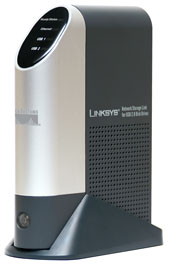
I'm a bit late to this party, but the NSLU2—affectionately known as the 'slug'—is a piece of kit you can't afford to be without on your home or small office network. NSLU2 image Not much bigger than the palm of my hand, and cheaper than a ticket for a Test at Lord's, the NSLU2 is a small fileserver that serves files from attached USB disks. What makes it particularly special is the large amount of alternative firmwares built by Linux open source developers, which allow you to extend the functionality of the NSLU2 beyond merely serving out files via SMB (the Windows file serving protocol.) Cheap NFS serving  So what's the big deal for me? Well, like most laptop-slinging folks whose home network is predominantly wireless, I want my backup disks to sit on the network, available when needed. It turns out it's very difficult to find a standalone network disk that properly supports Unix file system semantics such as symbolic links. Most just support SMB file sharing, with attendant limits such as no links and no files over 2GB. (I found this out the hard way with Apple's Airport Extreme.) With the NSLU2 I was able to install the "Unslung" alternative firmware, and install good old NFS, making my backup disks available in a normal way to Linux and OS X machines alike. (How we used to complain about NFS back in the early 90s, but Windows file sharing still makes it look good!) In the great tradition of open source there are multiple choices of Linux distributions you can install. As it was my first time round, I went for Unslung, which preserves as much as possible of the official Linksys interface, but lets you extend it. Next time, with a better idea of what I'd use the box for, I'd probably plump for Debian.  Constraints breed creativity Inside the case, the NSLU2 is in fact a tiny Linux machine with 32MB of RAM and an Intel XScale CPU. This turns out to be plenty enough resources to serve files on a small network. Aside from my prosaic needs, the NSLU2 has been put to several more innovative uses, such as a music server for Apple ITunes and a 4-line home telephone exchange. I've been astounded at the applications people have devised for this little box. Being fairly cheap makes it a great candidate for home automation projects. It's a great example of how limiting resources fosters innovation. Remember how games on 8-bit microcomputers were so much more ingenious than those on their more well-resourced successors?
So, I may be a little slow in finding this little hardware gem, but I wholeheartedly recommend it.

Eddy Petrișor: PO compendium, next step, use it :-)

I have just enabled creation of "LATEST" links for PO compendiums. The result is that now you can use an automated tool or kbabel to get the latest compendium made from po-debconf translations of packages in unstable.

So your compendium will be in the place like http://i18n.debian.net/~eddyp/compendiums/po/$LANG/compendium-$LANG-LATEST.po

I have took a series of screenshots that show how to configure kbabel in order to use the compendium, but I didn't managed to write some explanations, too.

Screenshots are here (just pick them in order, and you'll probably understand).

The most important are the first 3.

An explanation about step 3, if you defined the language code properly, then you can use the flexible approach:


Otherwise, you need to use a hard coded URL.

Dirk Eddelbuettel: Bike The Drive 2007

Got the whole family out Sunday morning for the annual Bike The Drive in Chicago. The weather looked unfriendly, but behaved as rain stayed away under gray skies (before the day turned into a screamer of a sunny day, very fitting for a holiday). All in all a nice outing, the weather notwithstanding, and we ended the afternoon at a Chicago Fire soccer game.

30 May 2007

Eddy Petrișor: Compendiums - enabled for all languages (po-debconf)

I just enabled compendium creation for all languages which had po-debconf translations in Debian.

See (a little) more details in the announce.

29 May 2007

Dirk Eddelbuettel: JPM Chase Corporate Challenge 2007

Last Thursday was the 2007 edition of the JP Morgan Chase Corp. Challenge. Record crowd of almost 23000 in Chicago's Grant Park. Just like last year, I didn't try hard enough to be closer to the starting line. Which means that one ends up running more or less zig-zag for some time. Oh well, my hand-stopped 22:17 is still pretty close to the PR from two years ago. Overall once again a really nice event, and we managed to have more folks from work show up, both to run, and to have a cold one or two afterwards.

Eddy Petrișor: po compendiums, just wait a little

It seems that my idea caught Javier's attention and he is already asking to use the scripts for Spanish.

As I have said before, those scripts will work for all languages in due time. Currently, as a test, they are running (or they should starting from tomorrow morning) only for the po material for the languages fr, de, ro and vi.

I intent to make compendiums for po-debconf material, po material[*] separately and another one made from all of them.

Stay tuned. Of course, a proper annoucement on debian-i18n@l.d.o will be done when I'll have something pretty ok.

Meanwhile, unpatient souls can take a peak at the current results

(I just enabled es, just for fun; es is broken, too?!? - or maybe the scripts are doing something wrong :-P - curious people can check, the logs are available.)


[*] which is more tricky since there is a need to merge fr_FR with fr/fr_CA with fr, de_DE with de, de_AT with de... and so on, but zh_TW does not have a zh to be merged with. Also the ll_CC strings should have higher precedence than ll strings.

Adam Rosi-Kessel: This American Life Parody

Via Jamie, this hilarious This American Life parody (direct link to MP3 if the embedding doesn’t work for you). This guy obviously has listened to a lot of episodes of the show. (I expect this parody will be funny only if you have, as well.)

27 May 2007

Jos Parrella: Recent political issues, travelling to DC and emdevs hacking

A few days ago, some people in Venezuela were shocked by Mark Shuttleworth’s claims against Hugo Ch vez Government and supporting Mar a Corina Machado, a minor opposition leader in the Country. Today, at 23:59:59, the nationwide open air TV broadcaster RCTV will cease operations. In Venezuela, as in several other countries in the World, the economically profitable portion of the electromagnetic spectrum is State’s property, thus requiring a concession to make use of it. RCTV concession was granted in 1987 for twenty years, and the Government has decided to deny the renewal, which is quite unusual (right-wing governments in the past simply would have shut up the antennas) Of course, RCTV is not a pro-Government channel, accounting between 90 and 100 percent of the airtime with anti Government news and opinions, which is not bad per se, though in Venezuela there’s a law requiring equilibrium in times devoted to political ads. Both situations (Mark’s comments and the Government’s decision) pose the threats of a now common situation in our Country: people taking very valid decisions with somewhat doubtful consequences. In the first case, Mark is using his right to freely write what he likes in his blog but it seems that it has damaged a little bit Ubuntu’s image in Venezuela (not that it’s Mark’s fault, of course) In the second case, the Government is taking a lawful decision, but it has actually raised an important discomfort in the population (polls, which are not always accountable, point out as much as 80% rejection rate), the journalists of other media and most foreign observers, which state that they’re actually closing a TV channel and destroying freedom of speech in the Country. Expressing political POVs is quite critical nowadays in Venezuela. Some famous etiquette bookwriters, such as the one at Emily Post’s, always tend to promote a be honest, be respectful position while listening or expressing your points of views in order to keep a productive attitude. I do think that politics are important: I just think mixing them with practical daily tasks, including FLOSS development and promotion, is becoming obnoxious and dangerous. Cheeseconf On June 15th., I’ll be departing to DC7 in Edimburgh. I’ll stay a night in Frankfurt, probably in a hostel, and then I’ll stay at one of the hostels in EDI. I plan to carry white cheese to the Cheese and Wine BoF, and I’d love any comments on how to transport them without posing a biological threat for Europe. I’ll be carrying a 65 liters backpack. How long will it take for the cheese to become a lifeform? Any special tips and tricks to avoid that? Copying files to embedded devices I’ve been trying to copy some binary files into an Axesstel D800 EvDO modem which runs Linux over a tiny ARM processor on less than 16 MB. of memory. I’m actually trying to get netcat in so I can get more useful stuff such as snmpd in. The modem has telnetd, but it has no zmodem utilities, particularly rz. Neither it has wget, nor ftpd. It has thttpd to serve the administrative webpages, but it can’t process shell CGI programs so I can’t send the file through a CGI form. Any ideas? I would love to read comments from hackers who have already managed their ways into embedded devices such as 802.11 devices with Linux, and any generic ideas on how to provide new firmware images for devices such as this Axesstel modem.

25 May 2007

Eddy Petrișor: PO compendiums, 1st step

This is just a proof of concept. And I think those are simple po files not po-debconf files. Anyway, I'll polish the scripts a little more and then migrate it on i18n.debian.net[*]. Of course, this will be done for all languages when the scripts are more stable.

[*] thanks to Christan Perrier, I have access to that machine now

24 May 2007

Eddy Petrișor: Is not "my feature, or else"

Thijs, my post was more like "Hey Mozilla, I know you are busy and all, but, it would be nice to fix some bugs and maybe add some features from time to time.... come on, 7 years to start fixing[*] a bug is waaaaaaay(maybe enough to make your users go away) to much. That's why you suck!".

BTW Thijs, have you read at least the Reply-To-List thread in their bugzilla? Or the huge pile (now 126 open issues) of "keyboard shortcut" problems they have? I am saying that there is a lot of endless discussion around the subject until someone really tackles it. As an example, the real solution for (probably) most of those 126 keyboard issues would be to allow keyboard shortcut redefinition.

So this was mostly about response time, be it bug or feature, although the title was not so well chosen.

[*] note that the patch is from a first time contributor

Eddy Petrișor: Dear lazyweb, how can I customize ...

Dear layweb, I know that somebody from the kernel team (iirc) posted an article/mail about how to make a customized version of the Debian linux-image package, but I can't find it anymore.

For short, I want to produce a slightly modified linux-image-2.6.18-4-amd64 package. Which is the right source I want?

Is

apt-get source linux-image-2.6.18-4-amd64

what I want or is it

apt-get install linux-source-2.6.18
?

I am confused. Help would be appreciated.

Next.

Previous.