Search Results: "willi"

9 August 2015

Petter Reinholdtsen: First paper version of the Norwegian Free Culture book heading my way

Typesetting a book is harder than I hoped. As the translation is mostly done, and a volunteer proof reader was going to check the text on paper, it was time this summer to focus on formatting my translated docbook based version of the Free Culture book by Lawrence Lessig. I've been trying to get both docboox-xsl+fop and dblatex to give me a good looking PDF, but in the end I went with dblatex, because its Debian maintainer and upstream developer were responsive and very helpful in solving my formatting challenges. Last night, I finally managed to create a PDF that no longer made Lulu.com complain after uploading, and I ordered a text version of the book on paper. It is lacking a proper book cover and is not tagged with the correct ISBN number, but should give me an idea what the finished book will look like. Instead of using Lulu, I did consider printing the book using CreateSpace, but ended up using Lulu because it had smaller book size options (CreateSpace seem to lack pocket book with extended distribution). I looked for a similar service in Norway, but have not seen anything so far. Please let me know if I am missing out on something here. But I still struggle to decide the book size. Should I go for pocket book (4.25x6.875 inches / 10.8x17.5 cm) with 556 pages, Digest (5.5x8.5 inches / 14x21.6 cm) with 323 pages or US Trade (6x8 inches / 15.3x22.9 cm) with 280 pages? Fewer pager give a cheaper book, and a smaller book is easier to carry around. The test book I ordered was pocket book sized, to give me an idea how well that fit in my hand, but I suspect I will end up using a digest sized book in the end to bring the prize down further. My biggest challenge at the moment is making nice cover art. My inkscape skills are not yet up to the task of replicating the original cover in SVG format. I also need to figure out what to write about the book on the back (will most likely use the same text as the description on web based book stores). I would love help with this, if you are willing to license the art source and final version using the same CC license as the book. My artistic skills are not really up to the task. I plan to publish the book in both English and Norwegian and on paper, in PDF form as well as EPUB and MOBI format. The current status can as usual be found on github in the archive/ directory. So far I have spent all time on making the PDF version look good. Someone should probably do the same with the dbtoepub generated e-book. Help is definitely needed here, as I expect to run out of steem before I find time to improve the epub formatting. Please let me know via github if you find typos in the book or discover translations that should be improved. The final proof reading is being done right now, and I expect to publish the finished result in a few months.

8 August 2015

Matthew Garrett: Difficult social problems are still difficult problems

After less than a week of complaints, the TODO group have decided to pause development of their code of conduct. This seems to have been triggered by the public response to the changes I talked about here, which TODO appear to have been completely unprepared for.

While disappointing in a bunch of ways, this is probably the correct decision. TODO stumbled into this space with a poor understanding of the problems that they were trying to solve. Nikki Murray pointed out that the initial draft lacked several of the key components that help ensure less privileged groups can feel that their concerns are taken seriously. This was mostly rectified last week, but nobody involved appeared to be willing to stand behind those changes in a convincing way. This wasn't helped by almost all of this appearing to land on Github's plate, with the rest of the TODO group largely missing in action[1]. Where were Google in this? Yahoo? Facebook? Left facing an angry mob with nobody willing to make explicit statements of support, it's unsurprising that Github would try to back away from the situation.

But that doesn't remove their blame for being in the situation in the first place. The statement claims
We are consulting with stakeholders, community leaders, and legal professionals, which is great. It's also far too late. If an industry body wrote a new kernel from scratch and deployed it without any external review, then discovered that it didn't work and only then consulted any of the existing experts in the field, we'd never take them seriously again. But when an industry body turns up with a new social policy, fucks up spectacularly and then goes back to consult experts, it's expected that we give them a pass.

Why? Because we don't perceive social problems as difficult problems, and we assume that anybody can solve them by simply sitting down and talking for a few hours. When we find out that we've screwed up we throw our hands in the air and admit that this is all more difficult than we imagined, and we give up. We ignore the lessons that people have learned in the past. We ignore the existing work that's been done in the field. We ignore the people who work full time on helping solve these problems.

We wouldn't let an industry body with no experience of engineering build a bridge. We need to accept that social problems are outside our realm of expertise and defer to the people who are experts.

[1] The repository history shows the majority of substantive changes were from Github, with the initial work appearing to be mostly from Twitter.

comment count unavailable comments

2 August 2015

John Goerzen: The Time Machine of Durango

The airplane may be the closest thing we have to a time machine. Brian J. Terwilliger
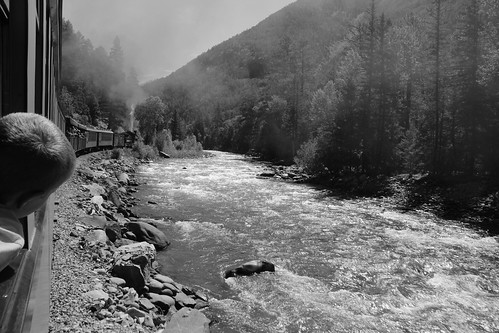
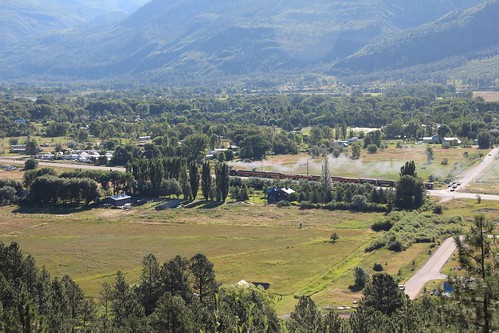
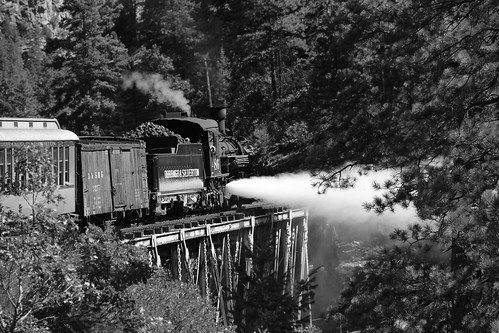
IMG_5731_v1 There is something about that moment. Hiking in the mountains near Durango, Colorado, with Laura and the boys, we found a beautiful spot with a view of the valley. We paused to admire, and then The sound of a steam locomotive whistle from down below, sounding loud all the way up there, then echoing back and forth through the valley. Then the quieter, seemingly more distant sound of the steam engine heading across the valley, chugging and clacking as it goes. More whistles, the sight of smoke and then of the train full of people, looking like a beautiful model train from our vantage point. IMG_5515 I ve heard that sound on a few rare recordings, but never experienced it. I ve been on steam trains a few times, but never spent time in a town where they still run all day, every day. It is a different sort of feeling to spend a week in a place where Jacob and Oliver would jump up several times a day and rush to the nearest window in an attempt to catch sight of the train. IMG_5719_v1 Airplanes really can be a time machine in a sense what a wondrous time to be alive, when things so ancient are within the reach of so many. I have been transported to L beck and felt the uneven 700-year-old stones of the Marienkirche underneath my feet, feeling a connection to the people that walked those floors for centuries. I felt the same in Prague, in St. George s Basilica, built in 1142, and at the Acropolis of Lindos, with its ancient Greek temple ruins. In Kansas, I feel that when in the middle of the Flint Hills rolling green hills underneath the pure blue sky with billowing white clouds, the sounds of crickets, frogs, and cicadas in my ears; the sights and sounds are pretty much as they ve been for tens of thousands of years. And, of course, in Durango, arriving on a plane but seeing the steam train a few minutes later. IMG_5571_v1 It was fitting that we were in Durango with Laura s parents to celebrate their 50th anniversary. As we looked forward to riding the train, we heard their stories of visits to Durango years ago, of their memories of days when steam trains were common. We enjoyed thinking about what our lives would be like should we live long enough to celebrate 50 years of marriage. Perhaps we would still be in good enough health to be able to ride a steam train in Durango, telling about that time when we rode the train, which by then will have been pretty much the same for 183 years. Or perhaps we would take them to our creek, enjoying a meal at the campfire like I ve done since I was a child. Each time has its unique character. I am grateful for the cameras and airplanes and air conditioning we have today. But I am also thankful for those things that connect us with each other trough time, those rocks that are the same every year, those places that remind us how close we really are to those that came before.

30 July 2015

DebConf team: DebConf15 Schedule Published and Additional Featured Speakers Announced (Posted by DebConf Content Team)

DebConf15 Schedule The DebConf content team is pleased to announce the schedule of DebConf15, the forthcoming Debian Developers Conference. From a total of nearly 100 talk submissions, the team selected 75 talks. Due to the high number of submissions, several talks had to be shortened to 20 minute slots, of which a total of 30 talks have made it to the schedule. In addition, around 50 meetings and discussions (BoFs) have been submitted so far, as well as several other events like lightning talk sessions, live demos, a movie screening, a poetry night or stand-up comedy. The Schedule is available online at the DebConf15 conference site. Further changes to the schedule can and will be made, but today s announcement represents the first stable version. Featured Speakers In addition to the previously announced invited speakers, the content team also announces the following list of additional featured speakers: The full list of invited and featured speakers, including the invited speakers profiles and the titles of their talks is available here.

23 July 2015

Daniel Pocock: Unpaid work training Google's spam filters

This week, there has been increased discussion about the pain of spam filtering by large companies, especially Google. It started with Google's announcement that they are offering a service for email senders to know if their messages are wrongly classified as spam. Two particular things caught my attention: the statement that less than 0.05% of genuine email goes to the spam folder by mistake and the statement that this new tool to understand misclassification is only available to "help qualified high-volume senders". From there, discussion has proceeded with Linus Torvalds blogging about his own experience of Google misclassifying patches from Linux contributors as spam and that has been widely reported in places like Slashdot and The Register. Personally, I've observed much the same thing from the other perspective. While Torvalds complains that he isn't receiving email, I've observed that my own emails are not always received when the recipient is a Gmail address. It seems that Google expects their users work a little bit every day going through every message in the spam folder and explicitly clicking the "Not Spam" button: so that Google can improve their proprietary algorithms for classifying mail. If you just read or reply to a message in the folder without clicking the button, or if you don't do this for every message, including mailing list posts and other trivial notifications that are not actually spam, more important messages from the same senders will also continue to be misclassified. If you are not willing to volunteer your time to do this, or if you are simply one of those people who has better things to do, Google's Gmail service is going to have a corrosive effect on your relationships. A few months ago, we visited Australia and I sent emails to many people who I wanted to catch up with, including invitations to a family event. Some people received the emails in their inboxes yet other people didn't see them because the systems at Google (and other companies, notably Hotmail) put them in a spam folder. The rate at which this appeared to happen was definitely higher than the 0.05% quoted in the Google article above. Maybe the Google spam filters noticed that I haven't sent email to some members of the extended family for a long time and this triggered the spam algorithm? Yet it was at that very moment that we were visiting Australia that email needs to work reliably with that type of contact as we don't fly out there every year. A little bit earlier in the year, I was corresponding with a few students who were applying for Google Summer of Code. Some of them also observed the same thing, they sent me an email and didn't receive my response until they were looking in their spam folder a few days later. Last year I know a GSoC mentor who lost track of a student for over a week because of Google silently discarding chat messages, so it appears Google has not just shot themselves in the foot, they managed to shoot their foot twice. What is remarkable is that in both cases, the email problems and the XMPP problems, Google doesn't send any error back to the sender so that they know their message didn't get through. Instead, it is silently discarded or left in a spam folder. This is the most corrosive form of communication problem as more time can pass before anybody realizes that something went wrong. After it happens a few times, people lose a lot of confidence in the technology itself and try other means of communication which may be more expensive, more synchronous and time intensive or less private. When I discussed these issues with friends, some people replied by telling me I should send them things through Facebook or WhatsApp, but each of those services has a higher privacy cost and there are also many other people who don't use either of those services. This tends to fragment communications even more as people who use Facebook end up communicating with other people who use Facebook and excluding all the people who don't have time for Facebook. On top of that, it creates more tedious effort going to three or four different places to check for messages. Despite all of this, the suggestion that Google's only response is to build a service to "help qualified high-volume senders" get their messages through leaves me feeling that things will get worse before they start to get better. There is no mention in the Google announcement about what they will offer to help the average person eliminate these problems, other than to stop using Gmail or spend unpaid time meticulously training the Google spam filter and hoping everybody else does the same thing. Some more observations on the issue Many spam filtering programs used in corporate networks, such as SpamAssassin, add headers to each email to suggest why it was classified as spam. Google's systems don't appear to give any such feedback to their users or message senders though, just a very basic set of recommendations for running a mail server. Many chat protocols work with an explicit opt-in. Before you can exchange messages with somebody, you must add each other to your buddy lists. Once you do this, virtually all messages get through without filtering. Could this concept be adapted to email, maybe giving users a summary of messages from people they don't have in their contact list and asking them to explicitly accept or reject each contact? If a message spends more than a week in the spam folder and Google detects that the user isn't ever looking in the spam folder, should Google send a bounce message back to the sender to indicate that Google refused to deliver it to the inbox? I've personally heard that misclassification occurs with mailing list posts as well as private messages.

15 July 2015

Matthew Garrett: Canonical's Ubuntu IP policy is garbage

(In order to avoid any ambiguity here, this is a personal opinion. The Free Software Foundation's opinion on this matter is here)

Canonical have a legal policy surrounding reuse of Intellectual Property they own in Ubuntu, and you can find it here. It's recently been modified to handle concerns raised by various people including the Free Software Foundation[1], who have some further opinions on the matter here. The net outcome is that Canonical made it explicit that if the license a piece of software is under explicitly says you can do something, you can do that even if the Ubuntu IP policy would otherwise forbid it.

Unfortunately, "Canonical have made it explicit that they're not attempting to violate the GPL" is about the nicest thing you can say about this. The most troubling statement is Any redistribution of modified versions of Ubuntu must be approved, certified or provided by Canonical if you are going to associate it with the Trademarks. Otherwise you must remove and replace the Trademarks and will need to recompile the source code to create your own binaries.. The apparent aim here is to avoid situations where people take Ubuntu, modify it and continue to pass it off as Ubuntu. But it reaches far further than that. Cases where this may apply include (but are not limited to):
In each of these cases, a strict reading of the policy indicates that you are distributing a modified version of Ubuntu and therefore must either get it approved by Canonical or remove the trademarks and rebuild everything. The strange thing is that this doesn't limit itself to rebuilding packages that include Canonical's trademarks - there's a requirement that you rebuild all binaries.

Now obviously this is good engineering practice in a whole bunch of ways, but it's a huge pain in the ass. And to make things worse, Canonical won't clarify what they consider to be use of their trademarks. Many Ubuntu packages rebuilt from Debian include the word "ubuntu" in their version string. Many Ubuntu packages will contain the word "ubuntu" in maintainer email addresses. Many Ubuntu packages include references to Ubuntu (for instance, documentation might say "This configuration file is located under /etc/default in Debian and Ubuntu"). And many Ubuntu packages will include the compiler version string, which will include the word "ubuntu". Realistically, there's no risk of confusion by using the trademarks in this way, and as a consequence there would be no infringement under trademark law. But Canonical aren't using trademark law here. Canonical assert that they hold copyright over binaries that they have built form source, and require that for you to have permission to redistribute these binaries under copyright law you must remove the trademarks. This means that it doesn't matter whether your use of the trademarks would be infringing or not - you're required to remove them, because fuck you that's why.

This is a huge overreach. It's hostile to free software, in that it makes it significantly more difficult to produce derivative works of Ubuntu and doesn't benefit the community in the process. It's hostile to our understanding of IP law, in that it claims that the mechanical process of turning source code into binaries creates an independently copyrightable work. And in some cases it may make it impossible to create derivative works that interoperate with Ubuntu due to applications making assumptions about the presence of strings.

It'd be easy write this off as an over the top misinterpretation of the policy if it hadn't been confirmed by the Ubuntu Community Manager that any binaries shipped by Ubuntu under licenses that don't grant an explicit right to redistribute the binaries can't be redistributed without permission or rebuilding. When I asked for clarification from Canonical over a year ago, I got no response[2]. Perhaps Canonical don't want to force you to remove every single use of the word Ubuntu from derivative works, but their policy is written such that the natural reading is that they do, and they've refused every single opportunity they've been given to clarify the point.

So, we're left with a policy that makes it hugely impractical to redistribute modified versions of Ubuntu unless Canonical approve of it. That's not freedom, and it's certainly not Ubuntu. If Canonical are serious about participating in the free software community then they need to demonstrate their willingness to continue improving this policy to bring it closer to our goals. Failure to do so will give a strong indication of their priorities.

[1] While I'm a member of the FSF's board of directors, I'm not involved in the majority of the FSF's day to day activities and was not part of this process
[2] Nebula's OS was a mixture of binary packages we pulled straight from Ubuntu and packages we rebuilt, so we were obviously pretty interested in what the answer was

comment count unavailable comments

14 July 2015

Matthew Palmer: Why DANE isn't going to win

In a comment to my previous post, Daniele asked the entirely reasonable question,
Would you like to comment on why you think that DNSSEC+DANE are not a possible and much better alternative?
Where DANE fails to be a feasible alternative to the current system is that it is not widely acknowledged to be superior in every possible way . A weak demonstration of this is that no browser has implemented DANE support, and very few other TLS-using applications have, either. The only thing I use which has DANE support that I m aware of is Postfix and SMTP is an application in which the limitations of DANE have far less impact. My understanding of the limitations of DANE, for large-scale deployment, are enumerated below.

DNS Is Awful Quoting Google security engineer Adam Langley:
But many (~4% in past tests) of users can t resolve a TXT record when they can resolve an A record for the same name. In practice, consumer DNS is hijacked by many devices that do a poor job of implementing DNS.
Consider that TXT records are far, far older than TLSA records. It seems likely that TLSA records would fail to be retrieved greater than 4% of the time. Extrapolate to the likely failure rate for lookup of TLSA records would be, and imagine what that would do to the reliability of DANE verification. It would either be completely unworkable, or else would cause a whole new round of just click through the security error training. Ugh. This also impacts DNSSEC itself. Lots of recursive resolvers don t validate DNSSEC, and some providers mangle DNS responses in some way, which breaks DNSSEC. Since OSes don t support DNSSEC validation by default (for example, by having the name resolution APIs indicate DNSSEC validation status), browsers would essentially have to ship their own validating resolver code. Some people have concerns around the single point of control for DNS records, too. While the weakest link nature of the CA model is terribad, there is a significant body of opinion that replacing it with a single, minimally-accountable organisation like ICANN isn t a great trade. Finally, performance is also a concern. Having to go out-of-band to retrieve TLSA records delays page generation, and nobody likes slow page loads.

DNSSEC Is Awful Lots of people don t like DNSSEC, for all sorts of reasons. While I don t think it is quite as bad as people make out (I ve deployed it for most zones I manage, there are some legitimate issues that mean browser vendors aren t willing to rely on DNSSEC. 1024 bit RSA keys are quite common throughout the DNSSEC system. Getting rid of 1024 bit keys in the PKI has been a long-running effort; doing the same for DNSSEC is likely to take quite a while. Yes, rapid rotation is possible, by splitting key-signing and zone-signing (a good design choice), but since it can t be enforced, it s entirely likely that long-lived 1024 bit keys for signing DNSSEC zones is the rule, rather than exception.

DNS Providers are Awful While we all poke fun at CAs who get compromised, consider how often someone s DNS control panel gets compromised. Now ponder the fact that, if DANE is supported, TLSA records can be manipulated in that DNS control panel. Those records would then automatically be DNSSEC signed by the DNS provider and served up to anyone who comes along. Ouch. In theory, of course, you should choose a suitably secure DNS provider, to prevent this problem. Given that there are regular hijackings of high-profile domains (which, presumably, the owners of those domains would also want to prevent), there is something in the DNS service provider market which prevents optimal consumer behaviour. Market for lemons, perchance?

Conclusion None of these problems are unsolvable, although none are trivial. I like DANE as a concept, and I d really, really like to see it succeed. However, the problems I ve listed above are all reasonable objections, made by people who have their hands in browser codebases, and so unless they re fixed, I don t see that anyone s going to be able to rely on DANE on the Internet for a long, long time to come.

10 July 2015

Gunnar Wolf: Finishing the course on "Free Software and Open Standards"

A couple of months ago, I was invited to give the starting course for the Masters degree in Free Software in the Universidad Andina Sim n Bol var university. UASB is a multinational university, with campuses in (at least) Ecuador, Chile, Bolivia and Colombia; I was doubtful at first regarding the seriousness of this proposal and the viability of the program, but time made my doubts disappear. Bolivia is going through an interesting process, as they have one of the strongest worded government mandates for migration to free software for the public administration in the next couple of years; this migration has prompted the interest of many professionals in the country. In particular, we have over 40 registered people for this Masters degree. Studying a Masters degree is a long-term commitment which signifies a big time investment, and although many of the student are quite new to the idea of free software, they are willing to spend this time (and money, as the university is privately owned and charges for its enrollment). I gave this class together with Alejandro Miranda (a.k.a. @pooka), as we have a very good pair-teaching dynamics; we had already given many conferences together, but this is the first time we had the opportunity to share a whole course and the experience was very good. We have read the students' logs, and many of them clearly agree with this. I had to skip two of the (ten) lessons, as I travelled from Mexico to Argentina halfway through it (of course, we brought the babies to meet my wife's family and friends!), so we had also the honor of having Esteban Lima fill in for those sessions. I am very happy and grateful that the University took care to record our presentations and intend to record and put online all of the classes; as we were the first in the program, there were some understandable hiccups and some sessions were lost, but most are available. Here they are, in case you are interested in refering to them:
Topic Video (my server) Video (Youtube)
Introduction to free software Watch Watch
History Watch Watch
Free culture N/A N/A
The effects of free software Watch Watch
Free software and open standards related to technologic soverignity Watch Watch
The free software ecosystem Watch Watch
Free software implementation in Bolivia Watch Watch
Introduction to intelectual property: Copyright, patents, trademarks, etc. Watch Watch
Who is "the community" and why do we speak about it? Watch Watch
Current status and challenges for the movement N/A N/A
We have yet another video file (which I have not fully followed through) titled ADSIB - Migration plan. It can also be downloaded from my server or watched online at Youtube. All in all: This was a great opportunity and a joy to do. I think the material we used and developed fit well what was expected from us, and we had fun giving somewhat heterodox readings on our movement.

2 July 2015

Petter Reinholdtsen: MakerCon Nordic videos now available on Frikanalen

Last oktober I was involved on behalf of NUUG with recording the talks at MakerCon Nordic, a conference for the Maker movement. Since then it has been the plan to publish the recordings on Frikanalen, which finally happened the last few days. A few talks are missing because the speakers asked the organizers to not publish them, but most of the talks are available. The talks are being broadcasted on RiksTV channel 50 and using multicast on Uninett, as well as being available from the Frikanalen web site. The unedited recordings are available on Youtube too. This is the list of talks available at the moment. Visit the Frikanalen video pages to view them. Part of the reason this took so long was that the scripts NUUG had to prepare a recording for publication were five years old and no longer worked with the current video processing tools (command line argument changes). In addition, we needed better audio normalization, which sent me on a detour to package bs1770gain for Debian. Now this is in place and it became a lot easier to publish NUUG videos on Frikanalen.

15 June 2015

Lunar: Reproducible builds: week 7 in Stretch cycle

What happened about the reproducible builds effort for this week: Presentations On June 7th, Reiner Herrmann presented the project at the Gulaschprogrammiernacht 15 in Karlsruhe, Germany. Video and audio recordings in German are available, and so are the slides in English. Toolchain fixes Daniel Kahn Gillmor's report on help2man started a discussion with Brendan O'Dea and Ximin Luo about standardizing a common environment variable that would provide a replacement for an embedded build date. After various proposals and research by Ximin about date handling in several programming languages, the best solution seems to define SOURCE_DATE_EPOCH with a value suitable for gmtime(3).
  1. Martin Borgert wondered if Sphinx could be changed in a way that would avoid having to tweak debian/rules in packages using it to produce HTML documentation.
Daniel Kahn Gillmor opened a new report about icont producing unreproducible binaries. Packages fixed The following 32 packages became reproducible due to changes in their build dependencies: agda, alex, c2hs, clutter-1.0, colorediffs-extension, cpphs, darcs-monitor, dispmua, haskell-curl, haskell-glfw, haskell-glib, haskell-gluraw, haskell-glut, haskell-gnutls, haskell-gsasl, haskell-hfuse, haskell-hledger-interest, haskell-hslua, haskell-hsqml, haskell-hssyck, haskell-libxml-sax, haskell-openglraw, haskell-readline, haskell-terminfo, haskell-x11, jarjar-maven-plugin, kxml2, libcgi-struct-xs-perl, libobject-id-perl, maven-docck-plugin, parboiled, pegdown. The following packages became reproducible after getting fixed: Some uploads fixed some reproducibility issues but not all of them: Patches submitted which did not make their way to the archive yet: reproducible.debian.net A new variation to better notice when a package captures the environment has been introduced. (h01ger) The test on Debian packages works by building the package twice in a short time frame. But sometimes, a mirror push can happen between the first and the second build, resulting in a package built in a different build environment. This situation is now properly detected and will run a third build automatically. (h01ger) OpenWrt, the distribution specialized in embedded devices like small routers, is now being tested for reproducibility. The situation looks very good for their packages which seems mostly affected by timestamps in the tarball. System images will require more work on debbindiff to be better understood. (h01ger) debbindiff development Reiner Herrmann added support for decompling Java .class file and .ipk package files (used by OpenWrt). This is now available in version 22 released on 2015-06-14. Documentation update Stephen Kitt documented the new --insert-timestamp available since binutils-mingw-w64 version 6.2 available to insert a ready-made date in PE binaries built with mingw-w64. Package reviews 195 obsolete reviews have been removed, 65 added and 126 updated this week. New identified issues: Misc. Holger Levsen reported an issue with the locales-all package that Provides: locales but is actually missing some of the files provided by locales. Coreboot upstream has been quick to react after the announcement of the tests set up the week before. Patrick Georgi has fixed all issues in a couple of days and all Coreboot images are now reproducible (without a payload). SeaBIOS is one of the most frequently used payload on PC hardware and can now be made reproducible too. Paul Kocialkowski wrote to the mailing list asking for help on getting U-Boot tested for reproducibility. Lunar had a chat with maintainers of Open Build Service to better understand the difference between their system and what we are doing for Debian.

Petter Reinholdtsen: Graphing the Norwegian company ownership structure

It is a bit work to figure out the ownership structure of companies in Norway. The information is publicly available, but one need to recursively look up ownership for all owners to figure out the complete ownership graph of a given set of companies. To save me the work in the future, I wrote a script to do this automatically, outputting the ownership structure using the Graphviz/dotty format. The data source is web scraping from Proff, because I failed to find a useful source directly from the official keepers of the ownership data, Br nn ysundsregistrene. To get an ownership graph for a set of companies, fetch the code from git and run it using the organisation number. I'm using the Norwegian newspaper Dagbladet as an example here, as its ownership structure is very simple:
% time ./bin/eierskap-dotty 958033540 > dagbladet.dot
real    0m2.841s
user    0m0.184s
sys     0m0.036s
%
The script accept several organisation numbers on the command line, allowing a cluster of companies to be graphed in the same image. The resulting dot file for the example above look like this. The edges are labeled with the ownership percentage, and the nodes uses the organisation number as their name and the name as the label:
digraph ownership  
rankdir = LR;
"Aller Holding A/s" -> "910119877" [label="100%"]
"910119877" -> "998689015" [label="100%"]
"998689015" -> "958033540" [label="99%"]
"974530600" -> "958033540" [label="1%"]
"958033540" [label="AS DAGBLADET"]
"998689015" [label="Berner Media Holding AS"]
"974530600" [label="Dagbladets Stiftelse"]
"910119877" [label="Aller Media AS"]
 
To view the ownership graph, run "dotty dagbladet.dot" or convert it to a PNG using "dot -T png dagbladet.dot > dagbladet.png". The result can be seen below: Note that I suspect the "Aller Holding A/S" entry to be incorrect data in the official ownership register, as that name is not registered in the official company register for Norway. The ownership register is sensitive to typos and there seem to be no strict checking of the ownership links. Let me know if you improve the script or find better data sources. The code is licensed according to GPL 2 or newer. Update 2015-06-15: Since the initial post I've been told that "Aller Holding A/S" is a Danish company, which explain why it did not have a Norwegian organisation number. I've also been told that there is a web services API available from Br nn ysundsregistrene, for those willing to accept the terms or pay the price.

17 May 2015

Lunar: Reproducible builds: week 2 in Stretch cycle

What happened about the reproducible builds effort for this week: Media coverage Debian's effort on reproducible builds has been covered in the June 2015 issue of Linux Magazin in Germany. Cover of Linux Magazin June 2015 Article about reproducible builds in Linux Magazin June 2015 Toolchain fixes josch rebased the experimental version of debhelper on 9.20150507. Packages fixed The following 515 packages became reproducible due to changes of their build dependencies: airport-utils, airspy-host, all-in-one-sidebar, ampache, aptfs, arpack, asciio, aspell-kk, asused, balance, batmand, binutils-avr, bioperl, bpm-tools, c2050, cakephp-instaweb, carton, cbp2make, checkbot, checksecurity, chemeq, chronicle, cube2-data, cucumber, darkstat, debci, desktop-file-utils, dh-linktree, django-pagination, dosbox, eekboek, emboss-explorer, encfs, exabgp, fbasics, fife, fonts-lexi-saebom, gdnsd, glances, gnome-clocks, gunicorn, haproxy, haskell-aws, haskell-base-unicode-symbols, haskell-base64-bytestring, haskell-basic-prelude, haskell-binary-shared, haskell-binary, haskell-bitarray, haskell-bool-extras, haskell-boolean, haskell-boomerang, haskell-bytestring-lexing, haskell-bytestring-mmap, haskell-config-value, haskell-mueval, haskell-tasty-kat, itk3, jnr-constants, jshon, kalternatives, kdepim-runtime, kdevplatform, kwalletcli, lemonldap-ng, libalgorithm-combinatorics-perl, libalgorithm-diff-xs-perl, libany-uri-escape-perl, libanyevent-http-scopedclient-perl, libanyevent-perl, libanyevent-processor-perl, libapache-session-wrapper-perl, libapache-sessionx-perl, libapp-options-perl, libarch-perl, libarchive-peek-perl, libaudio-flac-header-perl, libaudio-wav-perl, libaudio-wma-perl, libauth-yubikey-decrypter-perl, libauthen-krb5-simple-perl, libauthen-simple-perl, libautobox-dump-perl, libb-keywords-perl, libbarcode-code128-perl, libbio-das-lite-perl, libbio-mage-perl, libbrowser-open-perl, libbusiness-creditcard-perl, libbusiness-edifact-interchange-perl, libbusiness-isbn-data-perl, libbusiness-tax-vat-validation-perl, libcache-historical-perl, libcache-memcached-perl, libcairo-gobject-perl, libcarp-always-perl, libcarp-fix-1-25-perl, libcatalyst-action-serialize-data-serializer-perl, libcatalyst-controller-formbuilder-perl, libcatalyst-dispatchtype-regex-perl, libcatalyst-plugin-authentication-perl, libcatalyst-plugin-authorization-acl-perl, libcatalyst-plugin-session-store-cache-perl, libcatalyst-plugin-session-store-fastmmap-perl, libcatalyst-plugin-static-simple-perl, libcatalyst-view-gd-perl, libcgi-application-dispatch-perl, libcgi-application-plugin-authentication-perl, libcgi-application-plugin-logdispatch-perl, libcgi-application-plugin-session-perl, libcgi-application-server-perl, libcgi-compile-perl, libcgi-xmlform-perl, libclass-accessor-classy-perl, libclass-accessor-lvalue-perl, libclass-accessor-perl, libclass-c3-adopt-next-perl, libclass-dbi-plugin-type-perl, libclass-field-perl, libclass-handle-perl, libclass-load-perl, libclass-ooorno-perl, libclass-prototyped-perl, libclass-returnvalue-perl, libclass-singleton-perl, libclass-std-fast-perl, libclone-perl, libconfig-auto-perl, libconfig-jfdi-perl, libconfig-simple-perl, libconvert-basen-perl, libconvert-ber-perl, libcpan-checksums-perl, libcpanplus-dist-build-perl, libcriticism-perl, libcrypt-cracklib-perl, libcrypt-dh-gmp-perl, libcrypt-mysql-perl, libcrypt-passwdmd5-perl, libcrypt-simple-perl, libcss-packer-perl, libcss-tiny-perl, libcurses-widgets-perl, libdaemon-control-perl, libdancer-plugin-database-perl, libdancer-session-cookie-perl, libdancer2-plugin-database-perl, libdata-format-html-perl, libdata-uuid-libuuid-perl, libdata-validate-domain-perl, libdate-jd-perl, libdate-simple-perl, libdatetime-astro-sunrise-perl, libdatetime-event-cron-perl, libdatetime-format-dbi-perl, libdatetime-format-epoch-perl, libdatetime-format-mail-perl, libdatetime-tiny-perl, libdatrie, libdb-file-lock-perl, libdbd-firebird-perl, libdbix-abstract-perl, libdbix-class-datetime-epoch-perl, libdbix-class-dynamicdefault-perl, libdbix-class-introspectablem2m-perl, libdbix-class-timestamp-perl, libdbix-connector-perl, libdbix-oo-perl, libdbix-searchbuilder-perl, libdbix-xml-rdb-perl, libdevel-stacktrace-ashtml-perl, libdigest-hmac-perl, libdist-zilla-plugin-emailnotify-perl, libemail-date-format-perl, libemail-mime-perl, libemail-received-perl, libemail-sender-perl, libemail-simple-perl, libencode-detect-perl, libexporter-tidy-perl, libextutils-cchecker-perl, libextutils-installpaths-perl, libextutils-libbuilder-perl, libextutils-makemaker-cpanfile-perl, libextutils-typemap-perl, libfile-counterfile-perl, libfile-pushd-perl, libfile-read-perl, libfile-touch-perl, libfile-type-perl, libfinance-bank-ie-permanenttsb-perl, libfont-freetype-perl, libfrontier-rpc-perl, libgd-securityimage-perl, libgeo-coordinates-utm-perl, libgit-pureperl-perl, libgnome2-canvas-perl, libgnome2-wnck-perl, libgraph-readwrite-perl, libgraphics-colornames-www-perl, libgssapi-perl, libgtk2-appindicator-perl, libgtk2-gladexml-simple-perl, libgtk2-notify-perl, libhash-asobject-perl, libhash-moreutils-perl, libhtml-calendarmonthsimple-perl, libhtml-display-perl, libhtml-fillinform-perl, libhtml-form-perl, libhtml-formhandler-model-dbic-perl, libhtml-html5-entities-perl, libhtml-linkextractor-perl, libhtml-tableextract-perl, libhtml-widget-perl, libhtml-widgets-selectlayers-perl, libhtml-wikiconverter-mediawiki-perl, libhttp-async-perl, libhttp-body-perl, libhttp-date-perl, libimage-imlib2-perl, libimdb-film-perl, libimport-into-perl, libindirect-perl, libio-bufferedselect-perl, libio-compress-lzma-perl, libio-compress-perl, libio-handle-util-perl, libio-interface-perl, libio-multiplex-perl, libio-socket-inet6-perl, libipc-system-simple-perl, libiptables-chainmgr-perl, libjoda-time-java, libjsr305-java, libkiokudb-perl, liblemonldap-ng-cli-perl, liblexical-var-perl, liblingua-en-fathom-perl, liblinux-dvb-perl, liblocales-perl, liblog-dispatch-configurator-any-perl, liblog-log4perl-perl, liblog-report-lexicon-perl, liblwp-mediatypes-perl, liblwp-protocol-https-perl, liblwpx-paranoidagent-perl, libmail-sendeasy-perl, libmarc-xml-perl, libmason-plugin-routersimple-perl, libmasonx-processdir-perl, libmath-base85-perl, libmath-basecalc-perl, libmath-basecnv-perl, libmath-bigint-perl, libmath-convexhull-perl, libmath-gmp-perl, libmath-gradient-perl, libmath-random-isaac-perl, libmath-random-oo-perl, libmath-random-tt800-perl, libmath-tamuanova-perl, libmemoize-expirelru-perl, libmemoize-memcached-perl, libmime-base32-perl, libmime-lite-tt-perl, libmixin-extrafields-param-perl, libmock-quick-perl, libmodule-cpanfile-perl, libmodule-load-conditional-perl, libmodule-starter-pbp-perl, libmodule-util-perl, libmodule-versions-report-perl, libmongodbx-class-perl, libmoo-perl, libmoosex-app-cmd-perl, libmoosex-attributehelpers-perl, libmoosex-blessed-reconstruct-perl, libmoosex-insideout-perl, libmoosex-relatedclassroles-perl, libmoosex-role-timer-perl, libmoosex-role-withoverloading-perl, libmoosex-storage-perl, libmoosex-types-common-perl, libmoosex-types-uri-perl, libmoox-singleton-perl, libmoox-types-mooselike-numeric-perl, libmousex-foreign-perl, libmp3-tag-perl, libmysql-diff-perl, libnamespace-clean-perl, libnet-bonjour-perl, libnet-cli-interact-perl, libnet-daap-dmap-perl, libnet-dbus-glib-perl, libnet-dns-perl, libnet-frame-perl, libnet-google-authsub-perl, libnet-https-any-perl, libnet-https-nb-perl, libnet-idn-encode-perl, libnet-idn-nameprep-perl, libnet-imap-client-perl, libnet-irc-perl, libnet-mac-vendor-perl, libnet-openid-server-perl, libnet-smtp-ssl-perl, libnet-smtp-tls-perl, libnet-smtpauth-perl, libnet-snpp-perl, libnet-sslglue-perl, libnet-telnet-perl, libnhgri-blastall-perl, libnumber-range-perl, libobject-signature-perl, libogg-vorbis-header-pureperl-perl, libopenoffice-oodoc-perl, libparse-cpan-packages-perl, libparse-debian-packages-perl, libparse-fixedlength-perl, libparse-syslog-perl, libparse-win32registry-perl, libpdf-create-perl, libpdf-report-perl, libperl-destruct-level-perl, libperl-metrics-simple-perl, libperl-minimumversion-perl, libperl6-slurp-perl, libpgobject-simple-perl, libplack-middleware-fixmissingbodyinredirect-perl, libplack-test-externalserver-perl, libplucene-perl, libpod-tests-perl, libpoe-component-client-ping-perl, libpoe-component-jabber-perl, libpoe-component-resolver-perl, libpoe-component-server-soap-perl, libpoe-component-syndicator-perl, libposix-strftime-compiler-perl, libposix-strptime-perl, libpostscript-simple-perl, libproc-processtable-perl, libprotocol-osc-perl, librcs-perl, libreadonly-xs-perl, libreturn-multilevel-perl, librivescript-perl, librouter-simple-perl, librrd-simple-perl, libsafe-isa-perl, libscope-guard-perl, libsemver-perl, libset-tiny-perl, libsharyanto-file-util-perl, libshell-command-perl, libsnmp-info-perl, libsoap-lite-perl, libstat-lsmode-perl, libstatistics-online-perl, libstring-compare-constanttime-perl, libstring-format-perl, libstring-toidentifier-en-perl, libstring-tt-perl, libsub-recursive-perl, libsvg-tt-graph-perl, libsvn-notify-perl, libswish-api-common-perl, libtap-formatter-junit-perl, libtap-harness-archive-perl, libtemplate-plugin-number-format-perl, libtemplate-plugin-yaml-perl, libtemplate-tiny-perl, libtenjin-perl, libterm-visual-perl, libtest-block-perl, libtest-carp-perl, libtest-classapi-perl, libtest-cmd-perl, libtest-consistentversion-perl, libtest-data-perl, libtest-databaserow-perl, libtest-differences-perl, libtest-file-sharedir-perl, libtest-hasversion-perl, libtest-kwalitee-perl, libtest-lectrotest-perl, libtest-module-used-perl, libtest-object-perl, libtest-perl-critic-perl, libtest-pod-coverage-perl, libtest-script-perl, libtest-script-run-perl, libtest-spelling-perl, libtest-strict-perl, libtest-synopsis-perl, libtest-trap-perl, libtest-unit-perl, libtest-utf8-perl, libtest-without-module-perl, libtest-www-selenium-perl, libtest-xml-simple-perl, libtest-yaml-perl, libtex-encode-perl, libtext-bibtex-perl, libtext-csv-encoded-perl, libtext-csv-perl, libtext-dhcpleases-perl, libtext-diff-perl, libtext-quoted-perl, libtext-trac-perl, libtext-vfile-asdata-perl, libthai, libthread-conveyor-perl, libthread-sigmask-perl, libtie-cphash-perl, libtie-ical-perl, libtime-stopwatch-perl, libtk-dirselect-perl, libtk-pod-perl, libtorrent, libturpial, libunicode-japanese-perl, libunicode-maputf8-perl, libunicode-stringprep-perl, libuniversal-isa-perl, libuniversal-moniker-perl, liburi-encode-perl, libvi-quickfix-perl, libvideo-capture-v4l-perl, libvideo-fourcc-info-perl, libwiki-toolkit-plugin-rss-reader-perl, libwww-mechanize-formfiller-perl, libwww-mechanize-gzip-perl, libwww-mechanize-perl, libwww-opensearch-perl, libx11-freedesktop-desktopentry-perl, libxc, libxml-dtdparser-perl, libxml-easy-perl, libxml-handler-trees-perl, libxml-libxml-iterator-perl, libxml-libxslt-perl, libxml-rss-perl, libxml-validator-schema-perl, libxml-xpathengine-perl, libxml-xql-perl, llvm-py, madbomber, makefs, mdpress, media-player-info, meta-kde-telepathy, metamonger, mmm-mode, mupen64plus-audio-sdl, mupen64plus-rsp-hle, mupen64plus-ui-console, mupen64plus-video-z64, mussort, newpid, node-formidable, node-github-url-from-git, node-transformers, nsnake, odin, otcl, parsley, pax, pcsc-perl, pd-purepd, pen, prank, proj, proot, puppet-module-puppetlabs-postgresql, python-async, python-pysnmp4, qrencode, r-bioc-graph, r-bioc-hypergraph, r-bioc-iranges, r-bioc-xvector, r-cran-pscl, rbenv, rlinetd, rs, ruby-ascii85, ruby-cutest, ruby-ejs, ruby-factory-girl, ruby-hdfeos5, ruby-kpeg, ruby-libxml, ruby-password, ruby-zip-zip, sdl-sound1.2, stterm, systemd, taktuk, tcc, tryton-modules-account-invoice, ttf-summersby, tupi, tuxpuck, unknown-horizons, unsafe-mock, vcheck, versiontools, vim-addon-manager, vlfeat, vsearch, xacobeo, xen-tools, yubikey-personalization-gui, yubikey-personalization. The following packages became reproducible after getting fixed: Some uploads fixed some reproducibility issues but not all of them: Patches submitted which did not make their way to the archive yet: reproducible.debian.net Alioth now hosts a script that can be used to redo builds and test for a package. This was preliminary done manually through requests over the IRC channel. This should reduce the number of interruptions for jenkins' maintainers The graph of the oldest build per day has been fixed. Maintainance scripts will not error out when they are no files to remove. Holger Levsen started work on being able to test variations of CPU features and build date (as in build in another month of 1984) by using virtual machines. debbindiff development Version 18 has been released. It will uses proper comparators for pk3 and info files. Tar member names are now assumed to be UTF-8 encoded. The limit for the maximum number of different lines has been removed. Let's see on reproducible.debian.net how it goes for pathological cases. It's now possible to specify both --html and --text output. When neither of them is specified, the default will be to print a text report on the standard output (thanks to Paul Wise for the suggestion). Documentation update Nicolas Boulenguez investigated Ada libraries. Package reviews 451 obsolete reviews have been removed and 156 added this week. New identified issues: running kernel version getting captured, random filenames in GHC debug symbols, and timestamps in headers generated by qdbusxml2cpp. Misc. Holger Levsen went to re:publica and talked about reproducible builds to developers and users there. Holger also had a chance to meet FreeBSD developers and discuss the status of FreeBSD. Investigations have started on how it could be made part of our current test system. Laurent Guerby gave Lunar access to systems in the GCC Compile Farm. Hopefully access to these powerful machines will help to fix packages for GCC, Iceweasel, and similar packages requiring long build times.

2 May 2015

Neil Williams: vmextract userspace VM helper

In my previous post, I covered how to extend an initramfs to serve as a basis for tests and other purposes. In that example, the initramfs was simply copied off a device after installation. It occurred to me that python-guestfs would be a useful tool to make this step easier. So I ve written the vmextract helper which is currently in the vmdebootstrap upstream git and will make it into the next release of vmdebootstrap for Debian (0.7). Once vmdebootstrap has built an image, various files can be generated or modified during the install operations and some of these files can be useful when testing the image or packages which would be included in an updated image, before release. One example is the initrd built by the process of installing a Debian kernel. Rather than having to mount the image and copy the files manually, the vmextract helper can do it for you, without needing root privileges or any special setup.
$ /usr/share/vmdebootstrap/vmextract.py --verbose --boot \
  --image bbb/bbb-debian-armmp.img \
  --path /boot/initrd.img-3.14-2-armmp \
  --path /lib/arm-linux-gnueabihf/libresolv.so.2
This uses python-guestfs (which will become a Recommended package for vmdebootstrap) to prepare a read-only version of the image in this case with the /boot partition also mounted and copies files out into the current working directory. Note the repeating use of --path to build a list of files to be copied out. To copy out an entire directory (and all sub-directories) as a single tarball, use:
$ /usr/share/vmdebootstrap/vmextract.py --verbose --boot \
  --image bbb/bbb-debian-armmp.img \
  --directory /boot/ \
  --filename bbb-armmp-boot.tgz
If --filename is not specified, the default filename is vmextract.tgz. (vmextract uses gzip compression, just because.) The other point to note is the use of the --boot option to mount the /boot partition as well as the root partition of the image as this example uses the beaglebone-black support which has a boot partition. It s just a little helper which I hope will prove useful if only to avoid both the need for sudo and the need for loopback mount operations with the inherent confusion of calculating offsets. Thanks to the developers of python-guestfs for making this workable in barely 100 lines of python. It uses the same cliapp support as vmdebootstrap, so can be used silently in scripts by omitting the --verbose option. I haven t taken this on to the next step of unpacking the initrd and extending it, but that would just a bit of shell scripting using the files extracted by vmextract.py. Next! Next on the list will be extensions to vmdebootstrap to build live images of Debian, essentially adding Debian Installer to a vmdebootstrap image, which could actually be another python-guestfs helper (mounting read-write this time) to avoid adding lots more code to vmdebootstrap (which has grown to nearly 600 lines of python). That way, we can publish the bare VM images as well as a live conversion and reducing the number of times debootstrap needs to be called.

26 April 2015

Erich Schubert: Your big data toolchain is a big security risk!

This post is a follow-up to my earlier post on the "sad state of sysadmin in the age of containers". While I was drafting this post, that story got picked up by HackerNews, Reddit and Twitter, sending a lot of comments and emails my way. Surprisingly many of the comments are supportive of my impression - I would have expected to see much more insults along the lines "you just don't like my-favorite-tool, so you rant against using it". But a lot of people seem to share my concerns. Thanks, you surprised me!
Here is the new rant post, in the slightly different context of big data:

Everybody is doing "big data" these days. Or at least, pretending to do so to upper management. A lot of the time, there is no big data. People do more data anylsis than before, and therefore stick the "big data" label on them to promote themselves and get green light from management, isn't it?
"Big data" is not a technical term. It is a business term, referring to any attempt to get more value out of your business by analyzing data you did not use before. From this point of view, most of such projects are indeed "big data" as in "data-driven revenue generation" projects. It may be unsatisfactory to those interested in the challenges of volume and the other "V's", but this is the reality how the term is used.
But even in those cases where the volume and complexity of the data would warrant the use of all the new toys tools, people overlook a major problem: security of their systems and of their data.

The currently offered "big data technology stack" is all but secure. Sure, companies try to earn money with security add-ons such as Kerberos authentication to sell multi-tenancy, and with offering their version of Hadoop (their "Hadoop distribution").
The security problem is deep inside the "stack". It comes from the way this world ticks: the world of people that constantly follow the latest tool-of-the-day. In many of the projects, you no longer have mostly Linux developers that co-function as system administrators, but you see a lot of Apple iFanboys now. They live in a world where technology is outdated after half a year, so you will not need to support product longer than that. They love reinstalling their development environment frequently - because each time, they get to change something. They also live in a world where you would simply get a new model if your machine breaks down at some point. (Note that this will not work well for your big data project, restarting it from scratch every half year...)
And while Mac users have recently been surprisingly unaffected by various attacks (and unconcerned about e.g. GoToFail, or the fail to fix the rootpipe exploit) the operating system is not considered to be very secure. Combining this with users who do not care is an explosive mixture...
This type of developer, who is good at getting a prototype website for a startup kicking in a short amount of time, rolling out new features every day to beta test on the live users is what currently makes the Dotcom 2.0 bubble grow. It's also this type of user that mainstream products aim at - he has already forgotten what was half a year ago, but is looking for the next tech product to announced soon, and willing to buy it as soon as it is available...
This attitude causes a problem at the very heart of the stack: in the way packages are built, upgrades (and safety updates) are handled etc. - nobody is interested in consistency or reproducability anymore.
Someone commented on my blog that all these tools "seem to be written by 20 year old" kids. He probably is right. It wouldn't be so bad if we had some experienced sysadmins with a cluebat around. People that have experience on how to build systems that can be maintained for 10 years, and securely deployed automatically, instead of relying on puppet hacks, wget and unzipping of unsigned binary code.
I know that a lot of people don't want to hear this, but:
Your Hadoop system contains unsigned binary code in a number of places, that people downloaded, uploaded and redownloaded a countless number of times. There is no guarantee that .jar ever was what people think it is.
Hadoop has a huge set of dependencies, and little of this has been seriously audited for security - and in particular not in a way that would allow you to check that your binaries are built from this audited code anyway.
There might be functionality hidden in the code that just sits there and waits for a system with a hostname somewhat like "yourcompany.com" to start looking for its command and control server to steal some key data from your company. The way your systems are built they probably do not have much of a firewall guarding against such. Much of the software may be constantly calling home, and your DevOps would not notice (nor would they care, anyway).
The mentality of "big data stacks" these days is that of Windows Shareware in the 90s. People downloading random binaries from the Internet, not adequately checked for security (ever heard of anybody running an AntiVirus on his Hadoop cluster?) and installing them everywhere.
And worse: not even keeping track of what they installed over time, or how. Because the tools change every year. But what if that developer leaves? You may never be able to get his stuff running properly again!
Fire-and-forget.
I predict that within the next 5 years, we will have a number of security incidents in various major companies. This is industrial espionage heaven. A lot of companies will cover it up, but some leaks will reach mass media, and there will be a major backlash against this hipster way of stringing together random components.
There is a big "Hadoop bubble" growing, that will eventually burst.
In order to get into a trustworthy state, the big data toolchain needs to:
  • Consolidate. There are too many tools for every job. There are even too many tools to manage your too many tools, and frontends for your frontends.
  • Lose weight. Every project depends on way too many other projects, each of which only contributes a tiny fragment for a very specific use case. Get rid of most dependencies!
  • Modularize. If you can't get rid of a dependency, but it is still only of interest to a small group of users, make it an optional extension module that the user only has to install if he needs this particular functionality.
  • Buildable. Make sure that everybody can build everything from scratch, without having to rely on Maven or Ivy or SBT downloading something automagically in the background. Test your builds offline, with a clean build directory, and document them! Everything must be rebuildable by any sysadmin in a reproducible way, so he can ensure a bug fix is really applied.
  • Distribute. Do not rely on binary downloads from your CDN as sole distribution channel. Instead, encourage and support alternate means of distribution, such as the proper integration in existing and trusted Linux distributions.
  • Maintain compatibility. successful big data projects will not be fire-and-forget. Eventually, they will need to go into production and then it will be necessary to run them over years. It will be necessary to migrate them to newer, larger clusters. And you must not lose all the data while doing so.
  • Sign. Code needs to be signed, end-of-story.
  • Authenticate. All downloads need to come with a way of checking the downloaded files agree with what you uploaded.
  • Integrate. The key feature that makes Linux systems so very good at servers is the all-round integrated software management. When you tell the system to update - and you have different update channels available, such as a more conservative "stable/LTS" channel, a channel that gets you the latest version after basic QA, and a channel that gives you the latest versions shortly after their upload to help with QA. It covers almost all software on your system, so it does not matter whether the security fix is in your kernel, web server, library, auxillary service, extension module, scripting language etc. - it will pull this fix and update you in no time.
Now you may argue that Hortonworks, Cloudera, Bigtop etc. already provide packages. Well ... they provide crap. They have something they call a "package", but it fails by any quality standards. Technically, a Wartburg is a car; but not one that would pass todays safety regulations...
For example, they only support Ubuntu 12.04 - a three year old Ubuntu is the latest version they support... Furthermore, these packages are roughly the same. Cloudera eventually handed over their efforts to "the community" (in other words, they gave up on doing it themselves, and hoped that someone else would clean up their mess); and Hortonworks HDP (any maybe Pivotal HD, too) is derived from these efforts, too. Much of what they do is offering some extra documentation and training for the packages they built using Bigtop with minimal effort.
The "spark" .deb packages of Bigtop, for example, are empty. They forgot to include the .jars in the package. Do I really need to give more examples of bad packaging decisions? All bigtop packages now depend on their own version of groovy - for a single script. Instead of rewriting this script in an already required language - or in a way that it would run on the distribution-provided groovy version - they decided to make yet another package, bigtop-groovy.
When I read about Hortonworks and IBM announcing their "Open Data Platform", I could not care less. As far as I can tell, they are only sticking their label on the existing tools anyway. Thus, I'm also not surprised that Cloudera and MapR do not join this rebranding effort - given the low divergence of Hadoop, who would need such a label anyway?
So why does this matter? Essentially, if anything does not work, you are currently toast. Say there is a bug in Hadoop that makes it fail to process your data. Your business is belly-up because of that, no data is processed anymore, your are vegetable. Who is going to fix it? All these "distributions" are built from the same, messy, branch. There is probably only a dozen of people around the world who have figured this out well enough to be able to fully build this toolchain. Apparently, none of the "Hadoop" companies are able to support a newer Ubuntu than 2012.04 - are you sure they have really understood what they are selling? I have doubts. All the freelancers out there, they know how to download and use Hadoop. But can they get that business-critical bug fix into the toolchain to get you up and running again? This is much worse than with Linux distributions. They have build daemons - servers that continuously check they can compile all the software that is there. You need to type two well-documented lines to rebuild a typical Linux package from scratch on your workstation - any experienced developer can follow the manual, and get a fix into the package. There are even people who try to recompile complete distributions with a different compiler to discover compatibility issues early that may arise in the future.
In other words, the "Hadoop distribution" they are selling you is not code they compiled themselves. It is mostly .jar files they downloaded from unsigned, unencrypted, unverified sources on the internet. They have no idea how to rebuild these parts, who compiled that, and how it was built. At most, they know for the very last layer. You can figure out how to recompile the Hadoop .jar. But when doing so, your computer will download a lot of binaries. It will not warn you of that, and they are included in the Hadoop distributions, too.
As is, I can not recommend to trust your business data into Hadoop.
It is probably okay to copy the data into HDFS and play with it - in particular if you keep your cluster and development machines isolated with strong firewalls - but be prepared to toss everything and restart from scratch. It's not ready yet for prime time, and as they keep on adding more and more unneeded cruft, it does not look like it will be ready anytime soon.

One more examples of the immaturity of the toolchain:
The scala package from scala-lang.org cannot be cleanly installed as an upgrade to the old scala package that already exists in Ubuntu and Debian (and the distributions seem to have given up on compiling a newer Scala due to a stupid Catch-22 build process, making it very hacky to bootstrap scala and sbt compilation).
And the "upstream" package also cannot be easily fixed, because it is not built with standard packaging tools, but with an automagic sbt helper that lacks important functionality (in particular, access to the Replaces: field, or even cleaner: a way of splitting the package properly into components) instead - obviously written by someone with 0 experience in packaging for Ubuntu or Debian; and instead of using the proven tools, he decided to hack some wrapper that tries to automatically do things the wrong way...

I'm convinced that most "big data" projects will turn out to be a miserable failure. Either due to overmanagement or undermanagement, and due to lack of experience with the data, tools, and project management... Except that - of course - nobody will be willing to admit these failures. Since all these projects are political projects, they by definition must be successful, even if they never go into production, and never earn a single dollar.

25 April 2015

Neil Williams: ARMMP Jessie

Whilst the rest of Debian was very busy actually making the Jessie release, I was trying to prepare the ground to test the armhf installer images. Cubietruck is fine, it s a nice install and the documentation on the wiki works nicely. I tried to automate it (as it would be something I d like to test in LAVA which is new in Jessie) with preseeding but although I have got a jessie-x86 preseed file which works in libvirt, the cubietruck installer doesn t seem to want to listen to all of the preseeding. Some of the options (notably the wifi firmware screen, hostname and user passwords) don t go away. x86 wasn t completely as expected either though it works nicely in libvirt and Virtual Machine Manager but trying to (automate it again) do it manually on the command line with qemu raised an awkward grub2 bug where it couldn t work out where to install and failed to then reboot if manually installed. iMX.53 was the next target got a few steps along the road with that one, except that the kernel in the installer isn t able to see the SATA even though the bootloader can, nor can it see the USB stick. This means that the only media the installer can see is the SD card from which the installer was booted trying to use that ends badly. Beaglebone-black required a little bit of tweaking. Don t forget that the firmware & partition.img together don t give a lot of space, so creating a second partition on the SD card upon which to put the CD image itself is useful. The Debian ARMMP kernel in Jessie doesn t see USB, so the option here is actually what I wanted. Install from SD card onto eMMC. It s a 2Gb space, but it s ideal for a default location, leaving the SD card for other testing. I ran out of time to see about preseeding BBB installs to eMMC but one word of warning, installing to the eMMC doesn t mean that you have a bootloader on the eMMC the SD card is still needed to reboot, unless that is fixed manually post-install. (Haven t got that working yet either.) Speaking of time, this post is more brief on the detail than I would like for a couple of reasons:
  1. I haven t actually got things working well enough (clearly from some of the end states above)
  2. the new code to test these in LAVA isn t ready yet either
I did mean to test on an iMX6.quad Wandboard will see about that, hopefully, later. In general, the armhf SD card support is the best start for installing Jessie on a range of ARMv7 hardware. (I haven t got as far as ARMv8 yet either.) However, when I describe that as the best start , it is lacking in many areas typically due to restrictions in the u-boot support, mainline kernel support and general board variability. It s a lot easier than it used to be but ARMv7 boards are some distance from a single installer setup or even a single set of installer documentation, for any distribution.

18 April 2015

Russ Allbery: Review: The Long Way to a Small, Angry Planet

Review: The Long Way to a Small, Angry Planet, by Becky Chambers
Publisher: CreateSpace
Copyright: 2014
ISBN: 1-5004-5330-7
Format: Kindle
Pages: 503
The Wayfarer is a tunneling ship: one of the small, unremarked construction ships that help build the wormhole network used for interstellar transport. It's a working ship with a crew of eight (although most people would count seven and not count the AI). They don't all like each other particularly not the algaeist, who is remarkably unlikeable but they're used to each other. It's not a bad life, although a more professional attention to paperwork and procedure might help them land higher-paying jobs. That's where Rosemary Harper comes in. At the start of the book, she's joining the ship as their clerk: nervous, hopeful, uncertain, and not very experienced. But this is a way to get entirely away from her old life and, unbeknownst to the ship she's joining, her real name, identity, and anyone who would know her. Given that introduction, I was expecting this book to be primarily about Rosemary. What is she fleeing? Why did she change her identity? How will that past come to haunt her and the crew that she joined? But that's just the first place that Chambers surprised me. This isn't that book at all. It's something much quieter, more human, more expansive, and more joyful. For one, Chambers doesn't stick with Rosemary as a viewpoint character, either narratively or with the focus of the plot. The book may open with Rosemary and the captain, Ashby, as focal points, but that focus expands to include every member of the crew of the Wayfarer. We see each through others' eyes first, and then usually through their own, either in dialogue or directly. This is a true ensemble cast. Normally, for me, that's a drawback: large viewpoint casts tend to be either jarring or too sprawling, mixing people I want to read about with people I don't particularly care about. But Chambers avoids that almost entirely. I was occasionally a touch disappointed when the narrative focus shifted, but then I found myself engrossed in the backstory, hopes, and dreams of the next crew member, and the complex ways they interweave. Rosemary isn't the center of this story, but only because there's no single center. It's very hard to capture in a review what makes this book so special. The closest that I can come is that I like these people. They're individual, quirky, human (even the aliens; this is from more the Star Trek tradition of alien worldbuilding), complicated, and interesting, and it's very easy to care about them. Even characters I never expected to like. The Long Way to a Small, Angry Planet does have a plot, but it's not a fast-moving or completely coherent one. The ship tends to wander, even when the mission that gives rise to the title turns up. And there are a lot of coincidences here, which may bother you if you're reading for plot. At multiple points, the ship ends up in exactly the right place to trigger some revelation about the backstory of one of the crew members, even if the coincidence strains credulity. Similar to the algae-driven fuel system, some things one just has to shrug about and move past. On other fronts, though, I found The Long Way to be refreshingly willing to take a hard look at SF assumptions. This is not the typical space opera: humans are a relatively minor species in this galaxy, one that made rather a mess of their planet and are now refugees. They are treated with sympathy or pity; they're not somehow more flexible, adaptable, or interesting than the rest of the galaxy. More fascinatingly to me, humans are mostly pacifists, a cultural reaction to the dire path through history that brought them to their current exile. This is set against a backdrop of a vibrant variety of alien species, several of whom are present onboard the Wayfinder. The history and background of the other species are not, sadly, as well fleshed out as the humans, but each with at least a few twists that add interest to the story. But the true magic of this book, the thing that it has in overwhelming abundance, is heart. Not everyone in this book is a good person, but most of them are trying. I've rarely read a book full of so much empathy and willingness to reach out to others with open hands. And, even better, they're all nice in different ways. They bring their own unique personalities and approaches to their relationships, particularly the complex web of relationships that connects the crew. When bad things happen, and, despite the overall light tone, a few very bad things happen, the crew rallies like friends, or like chosen family. I have to say it again: I like these people. Usually, that's not a good sign for a book, since wholly likeable people don't generate enough drama. But this is one of the better-executed "protagonist versus nature" plots I've read. It successfully casts the difficulties of making a living at a hard and lonely and political job as the "nature" that provides the conflict. This is a rather unusual book. It's probably best classified as space opera, but it doesn't fit the normal pattern of space opera and it doesn't have enough drama. It's not a book about changing the universe; at the end of the book, the universe is in pretty much the same shape as we found it. It's not even about the character introduced in the first pages, or really that much about her dilemma. And it's certainly not a book about winning a cunning victory against your enemies. What it is, rather, is a book about friendships, about chosen families and how they form, about being on someone else's side, about banding together while still being yourself. It's about people making a living in a hard universe, together. It's full of heart, and I loved it. I'm unsurprised that The Long Way to a Small, Angry Planet had to be self-published via a Kickstarter campaign to find its audience. I'm also unsurprised that, once it got out there, it proved very popular and has now been picked up by a regular publisher. It's that sort of book. I believe it's currently out of print, at least in the US, as its new publisher spins up that process, but it should be back in print by late 2015. When that happens, I recommend it to your attention. It was the most emotionally satisfying book I've read so far this year. Rating: 9 out of 10

14 April 2015

Neil Williams: Extending an existing ARMMP initramfs

The actual use of this extension is still in development and the log files are not currently publicly visible, but it may still be useful for people to know the what and why The Debian ARMMP kernel can be used for multiple devices, just changing the DTB. I ve already done tests with this for Cubietruck and Beaglebone-Black, iMX.53 was one of the original test devices too. Whilst these tests can deploy a full image (there are examples of building such images in the vmdebootstrap package), it is a lot quicker to do simple tests of a kernel using a ramdisk. The default Debian initramfs has a focused objective but still forms a useful base for extension. In particular, I want to be able to test one initramfs on multiple boards (so multiple dtbs) with the same kernel image. I then want to be able, on selected boards, to mount a SATA drive or write an image to eMMC or a USB stick or whatever. LAVA (via the ongoing refactoring, not necessarily in the current dispatcher code) can automate such tests, e.g. to allow me to boot a Cubietruck into a standard Debian ARMMP armhf install on the SATA drive but using a modified (or updated) ARMMP kernel over TFTP without needing to install it on the device itself. That same kernel image can then be tested on multiple boards to see if the changes have benefitted one board at the expense of another. Automating all of that could be of a lot of benefit to the ARM kernel developers in Debian and outside Debian. So, the start point. Install Debian onto a Cubietruck in my case, with a SATA drive attached. All well and good so far, standard Debian Jessie ARMMP. (Cubietruck uses the LPAE kernel flavour but that won t matter for the initramfs.) Rather than building the initramfs manually, this provides a shortcut at some point I may investigate how to do this in QEMU but for now, it s just as quick to SSH onto the Cubietruck and update. I ve already written a little script to download the relevant linux-image package for ARMMP, unpack it and pull out the vmlinuz, the dtbs and a selected list of modules. The list is selective because TFTP has a 32Mb download limit and there are more modules than that. So I borrowed a snippet from the Xen folks (already shown previously here). The script is in a support repository for LAVA but can be used anywhere. (You ll need to edit the package name in the script to choose between ARMMP and ARMMP LPAE. Steps
  1. Get a working initramfs from an installed device running Debian ARMMP and copy some files for use later. Note: use the name of the symlink in the copy so that the file in /tmp/ is the actual file, using the name of the symlink as the filename. This is important later as it saves a step of having to make the (unnecessary) symlink inside the initramfs. Also, mkinitramfs, which built this initrd.img file in the first place, uses the same shared libraries as the main system, so copying these into the initramfs still works. (This is really useful when you get your ramdisk to support the attached secondary storage, allowing you to simply mount the original Debian install and fixup the initramfs by copying files off the main Debian install.) The relevant files are to support DNS lookup inside the initramfs which then allows a test to download a new image to put onto the attached media before rebooting into it.
    cp /boot/initrd.img-3.16.0-4-armmp-lpae /tmp/
    cp /lib/arm-linux-gnueabihf/libresolv.so.2 /tmp/
    cp /mnt/lib/arm-linux-gnueabihf/libnss_dns.so.2 /tmp/
    
    Copy these off the device for local adjustment:
    scp IP_ADDR:/tmp/FILE .
    
  2. Decompress the initrd.img:
    cp initrd.img-3.16.0-4-armmp-lpae initrd.img-3.16.0-4-armmp-lpae.gzip
    gunzip initrd.img-3.16.0-4-armmp-lpae.gzip
    
  3. Make a new empty directory
    mkdir initramfs
    cd initramfs
    
  4. Unpack:
    sudo cpio -id < initrd.img-3.16.0-4-armmp-lpae
    
  5. Remove the old modules (LAVA can add these later, allowing tests to use an updated build with updated modules):
    sudo rm -rf ./lib/modules/*
    
  6. Start to customise - need a script for udhcpc and two of the libraries from the installed system to allow the initramfs to do DNS lookups successfully.
    cp ../libresolv.so.2 ./lib/arm-linux-gnueabihf/
    cp ../libnss_dns.so.2 ./lib/arm-linux-gnueabihf/
    
  7. Copy the udhcpc default script into place:
    mkdir ./etc/udhcpc/
    sudo cp ../udhcpc.d ./etc/udhcpc/default.script
    sudo chmod 0755 ./etc/udhcpc/default.script
    
  8. Rebuild the cpio archive:
    find .   cpio -H newc -o > ../initrd.img-armmp.cpio
    
  9. Recompress:
    cd ..
    gzip initrd.img-armmp.cpio
    
  10. If using u-boot, add the UBoot header:
    mkimage -A arm -T ramdisk -C none -d initrd.img-armmp.cpio.gz initrd.img-armmp.cpio.gz.u-boot
    
  11. Checksum the final file so that you can check that against the LAVA logs.
    md5sum initrd.img-armmp.cpio.gz.u-boot
    
Each type of device will need a set of modules modprobed before tests can start. With the refactoring code, I can use an inline YAML and use dmesg -n 5 to reduce the kernel message noise. The actual module names here are just those for the Cubietruck but by having these only in the job submission, it makes it easier to test particular combinations and requirements.
- dmesg -n 5
- lava-test-case udevadm --shell udevadm hwdb --update
- lava-test-case depmod --shell depmod -a
- lava-test-case sata-mod --shell modprobe -a stmmac ahci_sunxi sd_mod sg ext4
- lava-test-case ifconfig --shell ifconfig eth0 up
- lava-test-case udhcpc --shell udhcpc
- dmesg -n 7
In due course, this will be added to the main LAVA documentation to allow others to keep the initramfs up to date and to support further test development.

25 March 2015

Matthew Garrett: Python for remote reconfiguration of server firmware

One project I've worked on at Nebula is a Python module for remote configuration of server hardware. You can find it here, but there's a few caveats:
  1. It's not hugely well tested on a wide range of hardware
  2. The interface is not yet guaranteed to be stable
  3. You'll also need this module if you want to deal with IBM (well, Lenovo now) servers
  4. The IBM support is based on reverse engineering rather than documentation, so who really knows how good it is

There's documentation in the README, and I'm sorry for the API being kind of awful (it suffers rather heavily from me writing Python while knowing basically no Python). Still, it ought to work. I'm interested in hearing from anybody with problems, anybody who's interested in getting it on Pypi and anybody who's willing to add support for new HP systems.

comment count unavailable comments

28 February 2015

Zlatan Todori : Interviews with FLOSS developers: Joey Hess

Edit: Now translated to Chinese. Thanks zhang wei! There is really hardly a better way to open a series of interviewing with developers behind Free Libre Open Source Software project, then with incredible mind such as Joey Hess. To write his contributions to Free software ecosystem, especially in Debian, would be a book by itself. His impact exceeds even his projects - people literally follow his blog posts to see what he is doing and how is he living. A hacker from cabin. If you really need to have a picture of true hacker, then Joey is the one. As this isn't a book I will just mention few projects that he has been behind - git-annex, ikiwiki, etckeeper, debian installer, parts of dpkg, debhelper, devscripts, taskel. So without further waiting here it is. Picture of Joey Hess me: Who are you? joeyh: I'm Joey -- https://joeyh.name/ me: How did you start programming? joeyh: Atari 130XE which came with BASIC and a boring word processor and not much else. No other friends had one, so the only way to get software was to type in demo programs from manual and then begin to change and write my own. So, the easy way to learn. Also some Logo in school. me: How would you now advise others to start programming? joeyh: Difficult question, it seems much harder to get an intimate understanding of things than when I started, and much harder to be motivated to program when there's so much stuff easily available. Maybe simple bare-metal systems like Arduino coupled with real-world interaction are the answer. I've recently been mentoring my nephew who is learning python and Python the Hard Way has gotten him far impressively fast. me: Setup of your development machine? joeyh: Lenovo laptop de-spywared with Debian unstable, xmonad, xfce, vim. me: Your thoughts on Purism (the open hardware laptop initiative that got recently funded on CrowdSupply)? joeyh: I don't know much about that one, but it seems that consumer level hardware has gotten so low quality, and so closed and untrustworthy that it makes sense to either build alternatives that are open, or pick out, as a community, the stuff we can adapt to our needs and concentrate on it. Several projects are trying, I hope they succeed. me: How do you see future of Debian development? joeyh: Well, I've mostly stopped worrying about it. If you look back at my presentations at the past 2 or 3 DebConfs, you'll find my best thoughts on the matter. me: You retired as Debian developer - do you intend sometime soon to come back and/or do you plan to join some other communities? joeyh: It would be glorious to come back, wouldn't it? But I don't think I will. Can't step in the same river twice, and all. Instead, Debian will probably have to put up with me as an annoying upstream author who doesn't ship tarballs, but does ship debian/ directories, and as a bug reporter who enjoys reporting amusing bugs like -0 NaN. I seem to have more time to spend in other online communities since I left Debian, but in a more diffuse way. Maybe that's just what it's like, to be involved in Free Software but not in the embrace of a big project like Debian. me: Some memorable moments from Debian conferences? joeyh: There are so many! Picnicing on berries and tamales at the Portland farmer's market right outside the venue; rainbows and bonfire in Switzerland after crazy busy days; impromptu pipe organ repair in a weird night venue in Edinburgh; walking through Porto Alegre at night with Ian Murdock and how humble he was about what he'd started; hacking all night in Spain; failing to sleep through midnight sun and incessent partying Finland; hanging out in the hotel lobby in Atlanta where we designed Build-Depends. me: Are you a gamer? Valve Steam games are offered for free to Debian Developers - do you use steam and play Valve games? joeyh: I've played through Half Life and Portal, but nethack has claimed more of my time. I mostly enjoy short, indie games, or games that tell us something new about the medium of games, A recent favorite was A Dark Room. But really, I have more pure fun playing real world Tabletop games with friends, like Carcassanne Discovery and Hive. In March, I am going to try to write a roguelike game in one week, in Haskell, for the Seven Day Roguelike Challenge and I'll be blogging about my progress daily. me: You are nowdays a Haskell hacker (git-annex) - what would you like to say about this language and how does it compare to Python, C, JavaScript, Ruby and Perl? joeyh: Not just git-annex; all my current projects are written in Haskell. I think it's amazing how much we expect programmers to keep in their heads while writing code. Is that buffer going to overflow? Is changing the value of that global variable going to break some other part of the code? Is that input sanitized yet? Did that interface change? Haskell solves some of these outright, but more, it makes you start noticing this kind of pervasive issue, and it provides ways to completely eliminate a class of problems from your code. For example http://joeyh.name/blog/entry/making_propellor_safer_with_GADTs_and_type_families/. The class of bugs I avoided there had never affected my code even once, but it was still worth preventing that whole class of bugs, so I don't have to worry about them ever again. me: Would you suggest Haskell as first language to learn especially for those that have an itch for mathematics? joeyh: I think that can work well. Or it can go other the way -- I had an affinity to mathematics when I was young, but it got knocked out of me in the way that happens to many people, and languages like perl and C don't do much to make you want to learn more about higher-order math. I've been picking up a bit more here and there via Haskell. me: How do you compare your productivity in Haskell compared to your Perl days? joeyh: It's very different; I'm a very different programmer now. I probably would bang out quick hacks more quickly when I was writing Perl. But, they tended to stay quick hacks. Now, I might take a little longer to get there, but the code seems a lot more solid, while also being more malleable to turn into larger or different programs. I'm also a lot more drawn toward writing software libraries. me: Can you describe your philosophy of life (you live in cabin, in forest, using a lot of solar power - many people are intrigued (including myself) what drives you towards that kind of life and how does it impact your overall quality of life and happiness. Looking the todays modern predator capitalistic society, in which you could easily earn more then $10.000 a month, you seem to be an anarchist and very humble human)? joeyh: I want to build worthwhile things that might last. Which is super hard in the world of software, both because it's hard to think far ahead at all, and because most jobs don't emphasize that kind of real value. I've been lucky and bootstrapped up to a point where I've been able to work full time on free software for years, and I'm willing to forgo a lot to continue that. Living in the woods without modern conveniences is great, because it's quiet and you can think as much as you like; the internet is just as close as it is anywhere else (maybe a bit slower); and when you've spent too much time quietly thinking you'll need to go chop wood, or haul water, or jump in the river to cool off, depending on the season. (Humble? Like most programmers, I am internally a flaming tower of ego...)
Vote on Hacker News

19 February 2015

Matthew Garrett: It has been 0 days since the last significant security failure. It always will be.

So blah blah Superfish blah blah trivial MITM everything's broken.

Lenovo deserve criticism. The level of incompetence involved here is so staggering that it wouldn't be a gross injustice for the company to go under as a result[1]. But let's not pretend that this is some sort of isolated incident. As an industry, we don't care about user security. We will gladly ship products with known security failings and no plans to update them. We will produce devices that are locked down such that it's impossible for anybody else to fix our failures. We will hide behind vague denials, we will obfuscate the impact of flaws and we will deflect criticisms with announcements of new and shinier products that will make everything better.

It'd be wonderful to say that this is limited to the proprietary software industry. I would love to be able to argue that we respect users more in the free software world. But there are too many cases that demonstrate otherwise, even where we should have the opportunity to prove the benefits of open development. An obvious example is the smartphone market. Hardware vendors will frequently fail to provide timely security updates, and will cease to update devices entirely after a very short period of time. Fortunately there's a huge community of people willing to produce updated firmware. Phone manufacturer is never going to fix the latest OpenSSL flaw? As long as your phone can be unlocked, there's a reasonable chance that there's an updated version on the internet.

But this is let down by a kind of callous disregard for any deeper level of security. Almost every single third-party Android image is either unsigned or signed with the "test keys", a set of keys distributed with the Android source code. These keys are publicly available, and as such anybody can sign anything with them. If you configure your phone to allow you to install these images, anybody with physical access to your phone can replace your operating system. You've gained some level of security at the application level by giving up any real ability to trust your operating system.

This is symptomatic of our entire ecosystem. We're happy to tell people to disable security features in order to install third-party software. We're happy to tell people to download and build source code without providing any meaningful way to verify that it hasn't been tampered with. Install methods for popular utilities often still start "curl sudo bash". This isn't good enough.

We can laugh at proprietary vendors engaging in dreadful security practices. We can feel smug about giving users the tools to choose their own level of security. But until we're actually making it straightforward for users to choose freedom without giving up security, we're not providing something meaningfully better - we're just providing the same shit sandwich on different bread.

[1] I don't see any way that they will, but it wouldn't upset me

comment count unavailable comments

Next.

Previous.