Search Results: "sf"

7 December 2024

Russ Allbery: Review: Dark Minds

Review: Dark Minds, by Michelle Diener
Series: Class 5 #3
Publisher: Eclipse
Copyright: 2016
ISBN: 0-6454658-5-2
Format: Kindle
Pages: 328
Dark Minds is the third book in the self-published Class 5 science-fiction romance series. It is a sequel to Dark Deeds and should not be read out of order, but as with the other books of the series, it follows new protagonists. Imogen, like another Earth woman before her, was kidnapped by a Class 5 for experimentation by the Tecran. She was subsequently transferred to a research facility and has been held in cages and secret military bases for over three months. As the story opens, she had been imprisoned in a Tecran transport for a couple of weeks when the transport is taken by the Krik who kill all of the Tecran crew. Next stop: another Class 5. That same Class 5 is where the Krik are taking Camlar Kalor and his team. Cam is a Grih investigator from the United Council, sent to look into reports of a second Earth woman rescued from a Garmman ship. (The series reader will recognize this as the plot of Dark Deeds.) Now he's trapped with the crews of a bunch of other random ships in the cargo hold of a Class 5 with Krik instead of Tecran roaming the halls, apparently at the behest of the ship's banned AI, and a mysterious third Earth woman already appears to be befriending it. Imogen is the woman Fiona saw signs of in Dark Deeds. She's had a rougher time than the protagonists of the previous two books in this series, and she's been dropped into a less stable situation. The Class 5 she's brought to at the start of the story is far more suspicious (with quite a lot of cause) and somewhat more hostile than the AIs we've encountered previously. The rest of the story formula is roughly the same, though: hunky Grih officer with a personality completely indistinguishable from the hunky Grih officers in the previous two books, an AI with a sketchy concept of morality that desperately needs an ally, the Grih obsession with singing, the eventual discovery of useful armor and weaponry that Imogen can use to surprise people, and more political maneuvering over the Sentient Beings Agreement. This entry in the series mostly abandons the Grih shock and horror at how badly the Earth women have been treated. This makes sense, given how dangerous Earth women have proven over the course of this series, and I like that Diener is changing the political dynamics as the story develops. I do sometimes miss that appalled anger of Dark Horse, but Dark Minds focuses more on the politics and corridor fighting of a tense multi-sided stand-off. I found the action more gripping in Dark Minds than in Dark Deeds, and I liked Imogen more as a character than Fiona. She doesn't have the delightfully calm competence of Rose from Dark Horse, but she's a bit more hardened, a bit more canny, and is better at taking control of situations. I also like that Diener avoids simplistically pairing Earth women off with Class 5s. The series plot is progressing faster than I had expected, and that gives this book a somewhat different shape than the previous ones. Cam is probably the least interesting of the men in this series so far and appears to exist solely to take up the man-shaped hole in the plot. This is not a great series for gender roles; thankfully, the romance is a small part of the plot and largely ignorable. The story is about the women and the AIs, and all of the women and most of the AIs of the previous books make an appearance. It's clear they're forming an alliance whether the Grih like it or not, and that part of the story was very satisfying. Up to this book, this series had been all feel-good happy endings. I will risk the small spoiler and warn that this is not true to the same degree here, so you may not want to read this one if you want something entirely fluffy, light, and positive (inasmuch as a series involving off-screen experimentation on humans can be fluffy, light, and positive). That caught me by surprise in a way I didn't entirely like, and I wish Diener had stuck with the entirely positive tone. Other than that, though, this was fun, light, readable entertainment. It's not going to win any literary awards, it's formulaic, the male protagonist comes from central casting, and the emphasis by paragraph break is still a bit grating in places, but I will probably pick up the next book when I'm in the mood for something light. Dark Minds is an improvement over book two, which bodes well for the rest of the series. Followed by Dark Matters. Rating: 7 out of 10

5 December 2024

Reproducible Builds: Reproducible Builds in November 2024

Welcome to the November 2024 report from the Reproducible Builds project! Our monthly reports outline what we ve been up to over the past month and highlight items of news from elsewhere in the world of software supply-chain security where relevant. As ever, if you are interested in contributing to the Reproducible Builds project, please visit our Contribute page on our website. Table of contents:
  1. Reproducible Builds mourns the passing of Lunar
  2. Introducing reproduce.debian.net
  3. New landing page design
  4. SBOMs for Python packages
  5. Debian updates
  6. Reproducible builds by default in Maven 4
  7. PyPI now supports digital attestations
  8. Dependency Challenges in OSS Package Registries
  9. Zig programming language demonstrated reproducible
  10. Website updates
  11. Upstream patches
  12. Misc development news
  13. Reproducibility testing framework

Reproducible Builds mourns the passing of Lunar The Reproducible Builds community sadly announced it has lost its founding member, Lunar. J r my Bobbio aka Lunar passed away on Friday November 8th in palliative care in Rennes, France. Lunar was instrumental in starting the Reproducible Builds project in 2013 as a loose initiative within the Debian project. He was the author of our earliest status reports and many of our key tools in use today are based on his design. Lunar s creativity, insight and kindness were often noted. You can view our full tribute elsewhere on our website. He will be greatly missed.

Introducing reproduce.debian.net In happier news, this month saw the introduction of reproduce.debian.net. Announced at the recent Debian MiniDebConf in Toulouse, reproduce.debian.net is an instance of rebuilderd operated by the Reproducible Builds project. rebuilderd is our server designed monitor the official package repositories of Linux distributions and attempts to reproduce the observed results there. In November, reproduce.debian.net began rebuilding Debian unstable on the amd64 architecture, but throughout the MiniDebConf, it had attempted to rebuild 66% of the official archive. From this, it could be determined that it is currently possible to bit-for-bit reproduce and corroborate approximately 78% of the actual binaries distributed by Debian that is, using the .buildinfo files hosted by Debian itself. reproduce.debian.net also contains instructions how to setup one s own rebuilderd instance, and we very much invite everyone with a machine to spare to setup their own version and to share the results. Whilst rebuilderd is still in development, it has been used to reproduce Arch Linux since 2019. We are especially looking for installations targeting Debian architectures other than i386 and amd64.

New landing page design As part of a very productive partnership with the Sovereign Tech Fund and Neighbourhoodie, we are pleased to unveil our new homepage/landing page. We are very happy with our collaboration with both STF and Neighbourhoodie (including many changes not directly related to the website), and look forward to working with them in the future.

SBOMs for Python packages The Python Software Foundation has announced a new cross-functional project for SBOMs and Python packages . Seth Michael Larson writes that the project is specifically looking to solve these issues :
  • Enable Python users that require SBOM documents (likely due to regulations like CRA or SSDF) to self-serve using existing SBOM generation tools.
  • Solve the phantom dependency problem, where non-Python software is bundled in Python packages but not recorded in any metadata. This makes the job of software composition analysis (SCA) tools difficult or impossible.
  • Make the adoption work by relevant projects such as build backends, auditwheel-esque tools, as minimal as possible. Empower users who are interested in having better SBOM data for the Python projects they are using to be able to contribute engineering time towards that goal.
A GitHub repository for the initiative is available, and there are a number of queries, comments and remarks on Seth s Discourse forum post.

Debian updates There was significant development within Debian this month. Firstly, at the recent MiniDebConf in Toulouse, France, Holger Levsen gave a Debian-specific talk on rebuilding packages distributed from ftp.debian.org that is to say, how to reproduce the results from the official Debian build servers: Holger described the talk as follows:
For more than ten years, the Reproducible Builds project has worked towards reproducible builds of many projects, and for ten years now we have build Debian packages twice with maximal variations applied to see if they can be build reproducible still. Since about a month, we ve also been rebuilding trying to exactly match the builds being distributed via ftp.debian.org. This talk will describe the setup and the lessons learned so far, and why the results currently are what they are (spoiler: they are less than 30% reproducible), and what we can do to fix that.
The Debian Project Leader, Andreas Tille, was present at the talk and remarked later in his Bits from the DPL update that:
It might be unfair to single out a specific talk from Toulouse, but I d like to highlight the one on reproducible builds. Beyond its technical focus, the talk also addressed the recent loss of Lunar, whom we mourn deeply. It served as a tribute to Lunar s contributions and legacy. Personally, I ve encountered packages maintained by Lunar and bugs he had filed. I believe that taking over his packages and addressing the bugs he reported is a meaningful way to honor his memory and acknowledge the value of his work.
Holger s slides and video in .webm format are available.
Next, rebuilderd is the server to monitor package repositories of Linux distributions and attempt to reproduce the observed results. This month, version 0.21.0 released, most notably with improved support for binNMUs by Jochen Sprickerhof and updating the rebuilderd-debian.sh integration to the latest debrebuild version by Holger Levsen. There has also been significant work to get the rebuilderd package into the Debian archive, in particular, both rust-rebuilderd-common version 0.20.0-1 and rust-rust-lzma version 0.6.0-1 were packaged by kpcyrd and uploaded by Holger Levsen. Related to this, Holger Levsen submitted three additional issues against rebuilderd as well:
  • rebuildctl should be more verbose when encountering issues. [ ]
  • Please add an option to used randomised queues. [ ]
  • Scheduling and re-scheduling multiple packages at once. [ ]
and lastly, Jochen Sprickerhof submitted one an issue requested that rebuilderd downloads the source package in addition to the .buildinfo file [ ] and kpcyrd also submitted and fixed an issue surrounding dependencies and clarifying the license [ ]
Separate to this, back in 2018, Chris Lamb filed a bug report against the sphinx-gallery package as it generates unreproducible content in various ways. This month, however, Dmitry Shachnev finally closed the bug, listing the multiple sub-issues that were part of the problem and how they were resolved.
Elsewhere, Roland Clobus posted to our mailing list this month, asking for input on a bug in Debian s ca-certificates-java package. The issue is that the Java key management tools embed timestamps in its output, and this output ends up in the /etc/ssl/certs/java/cacerts file on the generated ISO images. A discussion resulted from Roland s post suggesting some short- and medium-term solutions to the problem.
Holger Levsen uploaded some packages with reproducibility-related changes:
Lastly, 12 reviews of Debian packages were added, 5 were updated and 21 were removed this month adding to our knowledge about identified issues in Debian.

Reproducible builds by default in Maven 4 On our mailing list this month, Herv Boutemy reported the latest release of Maven (4.0.0-beta-5) has reproducible builds enabled by default. In his mailing list post, Herv mentions that this story started during our Reproducible Builds summit in Hamburg , where he created the upstream issue that builds on a multi-year effort to have Maven builds configured for reproducibility.

PyPI now supports digital attestations Elsewhere in the Python ecosystem and as reported on LWN and elsewhere, the Python Package Index (PyPI) has announced that it has finalised support for PEP 740 ( Index support for digital attestations ). Trail of Bits, who performed much of the development work, has an in-depth blog post about the work and its adoption, as well as what is left undone:
One thing is notably missing from all of this work: downstream verification. [ ] This isn t an acceptable end state (cryptographic attestations have defensive properties only insofar as they re actually verified), so we re looking into ways to bring verification to individual installing clients. In particular, we re currently working on a plugin architecture for pip that will enable users to load verification logic directly into their pip install flows.
There was an in-depth discussion on LWN s announcement page, as well as on Hacker News.

Dependency Challenges in OSS Package Registries At BENEVOL, the Belgium-Netherlands Software Evolution workshop in Namur, Belgium, Tom Mens and Alexandre Decan presented their paper, An Overview and Catalogue of Dependency Challenges in Open Source Software Package Registries . The abstract of their paper is as follows:
While open-source software has enabled significant levels of reuse to speed up software development, it has also given rise to the dreadful dependency hell that all software practitioners face on a regular basis. This article provides a catalogue of dependency-related challenges that come with relying on OSS packages or libraries. The catalogue is based on the scientific literature on empirical research that has been conducted to understand, quantify and overcome these challenges. [ ]
A PDF of the paper is available online.

Zig programming language demonstrated reproducible Motiejus Jak ty posted an interesting and practical blog post on his successful attempt to reproduce the Zig programming language without using the pre-compiled binaries checked into the repository, and despite the circular dependency inherent in its bootstrapping process. As a summary, Motiejus concludes that:
I can now confidently say (and you can also check, you don t need to trust me) that there is nothing hiding in zig1.wasm [the checked-in binary] that hasn t been checked-in as a source file.
The full post is full of practical details, and includes a few open questions.

Website updates Notwithstanding the significant change to the landing page (screenshot above), there were an enormous number of changes made to our website this month. This included:
  • Alex Feyerke and Mariano Gim nez:
    • Dramatically overhaul the website s landing page with new benefit cards tailored to the expected visitors to our website and a reworking of the visual hierarchy and design. [ ][ ][ ][ ][ ][ ][ ][ ][ ][ ]
  • Bernhard M. Wiedemann:
    • Update the System images page to document the e2fsprogs approach. [ ]
  • Chris Lamb:
  • FC (Fay) Stegerman:
    • Replace more inline markdown with HTML on the Success stories page. [ ]
    • Add some links, fix some other links and correct some spelling errors on the Tools page. [ ]
  • Holger Levsen:
    • Add a historical presentation ( Reproducible builds everywhere eg. in Debian, OpenWrt and LEDE ) from October 2016. [ ]
    • Add jochensp and Oejet to the list of known contributors. [ ][ ]
  • Julia Kr ger:
  • Ninette Adhikari & hulkoba:
    • Add/rework the list of success stories into a new page that clearly shows milestones in Reproducible Builds. [ ][ ][ ][ ][ ][ ]
  • Philip Rinn:
    • Import 47 historical weekly reports. [ ]
  • hulkoba:
    • Add alt text to almost all images (!). [ ][ ]
    • Fix a number of links on the Talks . [ ][ ]
    • Avoid so-called ghost buttons by not using <button> elements as links, as the affordance of a <button> implies an action with (potentially) a side effect. [ ][ ]
    • Center the sponsor logos on the homepage. [ ]
    • Move publications and generate them instead from a data.yml file with an improved layout. [ ][ ]
    • Make a large number of small but impactful stylisting changes. [ ][ ][ ][ ]
    • Expand the Tools to include a number of missing tools, fix some styling issues and fix a number of stale/broken links. [ ][ ][ ][ ][ ][ ]

Upstream patches The Reproducible Builds project detects, dissects and attempts to fix as many currently-unreproducible packages as possible. We endeavour to send all of our patches upstream where appropriate. This month, we wrote a large number of such patches, including:

Misc development news

Reproducibility testing framework The Reproducible Builds project operates a comprehensive testing framework running primarily at tests.reproducible-builds.org in order to check packages and other artifacts for reproducibility. In November, a number of changes were made by Holger Levsen, including:
  • reproduce.debian.net-related changes:
    • Create and introduce a new reproduce.debian.net service and subdomain [ ]
    • Make a large number of documentation changes relevant to rebuilderd. [ ][ ][ ][ ][ ]
    • Explain a temporary workaround for a specific issue in rebuilderd. [ ]
    • Setup another rebuilderd instance on the o4 node and update installation documentation to match. [ ][ ]
    • Make a number of helpful/cosmetic changes to the interface, such as clarifying terms and adding links. [ ][ ][ ][ ][ ]
    • Deploy configuration to the /opt and /var directories. [ ][ ]
    • Add an infancy (or alpha ) disclaimer. [ ][ ]
    • Add more notes to the temporary rebuilderd documentation. [ ]
    • Commit an nginx configuration file for reproduce.debian.net s Stats page. [ ]
    • Commit a rebuilder-worker.conf configuration for the o5 node. [ ]
  • Debian-related changes:
    • Grant jspricke and jochensp access to the o5 node. [ ][ ]
    • Build the qemu package with the nocheck build flag. [ ]
  • Misc changes:
    • Adapt the update_jdn.sh script for new Debian trixie systems. [ ]
    • Stop installing the PostgreSQL database engine on the o4 and o5 nodes. [ ]
    • Prevent accidental reboots of the o4 node because of a long-running job owned by josch. [ ][ ]
In addition, Mattia Rizzolo addressed a number of issues with reproduce.debian.net [ ][ ][ ][ ]. And lastly, both Holger Levsen [ ][ ][ ][ ] and Vagrant Cascadian [ ][ ][ ][ ] performed node maintenance.
If you are interested in contributing to the Reproducible Builds project, please visit our Contribute page on our website. However, you can get in touch with us via:

Russ Allbery: Review: Paladin's Hope

Review: Paladin's Hope, by T. Kingfisher
Series: The Saint of Steel #3
Publisher: Red Wombat Studio
Copyright: 2021
ISBN: 1-61450-613-2
Format: Kindle
Pages: 303
Paladin's Hope is a fantasy romance novel and the third book of The Saint of Steel series. Each book of that series features different protagonists in closer to the romance series style than the fantasy series style and stands alone reasonably well. There are a few spoilers for the previous books here, so you probably want to read the series in order. Galen is one of the former paladins of the Saint of Steel, left bereft and then adopted by the Temple of the Rat after their god dies. Even more than the paladin protagonists of the previous two books, he reacted very badly to that death and has ongoing problems with nightmares and going into berserker rages when awakened. As the book opens, he's the escort for a lich-doctor named Piper who is examining a corpse found in the river.
The last of the five was the only one who did not share a certain martial quality. He was slim and well-groomed and would be considered handsome, but he was also extraordinarily pale, as if he lived his life underground. It was this fifth man who nudged the corpse with the toe of his boot and said, "Well, if you want my professional opinion, this great goddamn hole in his chest is probably what killed him."
As it turns out, slim and well-groomed and exceedingly pale is Galen's type. This is another paladin romance, this time between two men. It's almost all romance; the plot is barely worth mentioning. About half of the book is an exploration of a puzzle dungeon of the sort that might be fun in a video game or tabletop RPG, but that I found rather boring and monotonous in a novel. This creates a lot more room for the yearning and angst. Kingfisher tends towards slow-burn romances. This romance is a somewhat faster burn than some of her other books, but instead implodes into one of the most egregiously stupid third-act breakups that I've read in a romance plot. Of all the Kingfisher paladin books, I think this one was hurt the most by my basic difference in taste from the author. Kingfisher finds constant worrying and despair over being good enough for the romantic partner to be an enjoyable element, and I find it incredibly annoying. I think your enjoyment of this book will heavily depend on where you fall on that taste divide. The saving grace of this book are the gnoles, who are by far the best part of this world. Earstripe, a gnole constable, is the one who found the body that the book opens with and he drives most of the plot, such that it is. He's also the source of the best banter in the book, which is full of pointed and amused gnole observations about humans and their various stupidities. Given that I was also grumbling about human stupidities for most of the book, the gnole viewpoint and I got along rather well.
"God's stripes." Earstripe shook his head in disbelief. "Bone-doctor would save some gnole, yes? If some gnole was hurt." "Of course," said Piper. "If I could." "And tomato-man would save some gnole?" He swung his muzzle toward Galen. "If some gnome needed big human with sword?" "Yes, of course." Earstripe spread his hands, claws gleaming. "A gnole saves some human. Same thing." He took a deep breath, clearly choosing his words carefully. "A gnole's compassion does not require fur."
We learn a great deal more about gnole culture, all of which I found fascinating, and we get a rather satisfying amount of gnole acerbic commentary. Kingfisher is very good at banter, and dialogue in general, which also smoothes over the paucity of detailed plot. There was no salvaging the romance, at least for me, but I did at least like Piper, and Galen wasn't too bad when he wasn't being annoyingly self-destructive. I had been wondering a little if gay romance would, like sapphic romance, avoid my dislike of heterosexual gender roles. I think the jury is still out, but it did not work in this book because Galen is so committed to being the self-sacrificing protector who is unable to talk about his feelings that he single-handedly introduced a bunch of annoying pieces of the male gender role anyway. I will have to try that experiment with a book that doesn't involve hard-headed paladins. I have yet to read a bad T. Kingfisher novel, but I thought this one was on the weaker side. The gnoles are great and kept me reading, but I wish there had been a more robust plot, a lot less of the romance, and no third-act breakup. As is, I recommend the other Saint of Steel books over this one. Ah well. Followed by Paladin's Faith. Rating: 6 out of 10

3 December 2024

Russ Allbery: Review: Astrid Parker Doesn't Fail

Review: Astrid Parker Doesn't Fail, by Ashley Herring Blake
Series: Bright Falls #2
Publisher: Berkley Romance
Copyright: November 2022
ISBN: 0-593-33644-5
Format: Kindle
Pages: 365
Astrid Parker Doesn't Fail is a sapphic romance novel and a sequel to Delilah Green Doesn't Care. This is a romance style of sequel, which means that it spoils the previous book but involves a different set of protagonists, one of whom was a supporting character in the previous novel. I suppose the title is a minor spoiler for Delilah Green Doesn't Care, but not one that really matters. Astrid Parker's interior design business is in trouble. The small town of Bright Falls doesn't generate a lot of business, and there are limits to how many dentist office renovations that she's willing to do. The Everwood Inn is her big break: Pru Everwood has finally agreed to remodel and, even better, Innside America wants to feature the project. The show always works with local designers, and that means Astrid. National TV exposure is just what she needs to turn her business around and avoid an unpleasant confrontation with her domineering, perfectionist mother. Jordan Everwood is an out-of-work carpenter and professional fuck-up. Ever since she lost her wife, nothing has gone right either inside or outside of her head. Now her grandmother is renovating the favorite place of her childhood, and her novelist brother had the bright idea of bringing her to Bright Falls to help with the carpentry work. The remodel and the HGTV show are the last chance for the inn to stay in business and stay in the family, and Jordan is terrified that she's going to fuck that up too. And then she dumps coffee all over the expensive dress of a furious woman in a designer dress because she wasn't watching where she was going, and that woman turns out to be the designer of the Everwood Inn renovation. A design that Jordan absolutely loathes. The reader met Astrid in Delilah Green Doesn't Care (which you definitely want to read first). She's a bit better than she was there, but she's still uptight and unhappy and determined not to think too hard about why. When Jordan spills coffee down her favorite dress in their first encounter, shattering her fragile professional calm, it's not a meet-cute. Astrid is awful to her. Her subsequent regret, combined with immediately having to work with her and the degree to which she finds Jordan surprisingly attractive (surprising in part because Astrid thinks she's straight), slowly crack open Astrid's too-controlled life. This book was, once again, just compulsively readable. I read most of it the same day that I started it, staying up much too late, and then finished it the next day. It also once again made me laugh in delight at multiple points. I am a sucker for stories about someone learning how to become a better person, particularly when it involves a release of anxiety, and oh my does Blake ever deliver on that. Jordan's arc is more straightforward than Astrid's she just needs to get her confidence back but her backstory is a lot more complex than it first appears, including a morally ambiguous character who I would hate in person but who I admired as a deft and tricky bit of characterization. The characters from Delilah Green Doesn't Care of course play a significant role. Delilah in particular is just as much of a delight here as she was in the first book, and I enjoyed seeing the development of her relationship with her step-sister. But the new characters, both the HGTV film crew and the Everwoods, are also great. I think Blake has a real knack for memorable, distinct supporting characters that add a lot of depth to the main romance plot. I thought this book was substantially more sex-forward than Delilah Green Doesn't Care, with some lust at first or second sight, a bit more physical description of bodies, and an extended section in the middle of the book that's mostly about sex. If this is or is not your thing in romance novels, you may have a different reaction to this book than the previous one. There is, unfortunately, another third-act break-up, and this one annoyed me more than the one in Delilah Green Doesn't Care because it felt more unnecessary and openly self-destructive. The characters felt like they were headed towards a more sensible and less dramatic resolution, and then that plot twist caught me by surprise in an unpleasant way. After two books, I'm getting the sense that Blake has a preferred plot arc, at least in this series, and I wish she'd varied the story structure a bit more. Still, the third-act conflict was somewhat believable and the resolution was satisfying enough to salvage it. If it weren't for some sour feelings about the shape of that plot climax, I would have said that I liked this book even better than Delilah Green Doesn't Care, and that's a high bar. This series is great, and I will definitely be reading the third one. I'm going to be curious how that goes since it's about Iris, who so far has worked better for me as a supporting character than a protagonist. But Blake has delivered compulsively readable and thoroughly enjoyable books twice now, so I'm definitely here for the duration. If you like this sort of thing, I highly recommend this whole series. Followed by Iris Kelly Doesn't Date in the romance series sense, but as before this book is a complete story with a satisfying ending. Rating: 9 out of 10

30 November 2024

Russell Coker: Links November 2024

Interesting news about NVidia using RISC-V CPUs in all their GPUs [1]. Hopefully they will develop some fast RISC-V cores. Interesting blog post about using an 8K TV as a monitor, I m very tempted to do this [2]. Interesting post about how the Windows kernel development work can t compete with Linux kernel development [3]. Paul T wrote an insightful article about the ideal of reducing complexity of computer systems and the question of from who s perspective complexity will be reduced [4]. Interesting lecture at the seL4 symposium about the PANCAKE language for verified systems programming [5]. The idea that if you are verifying your code types don t help much is interesting. Interesting lecture from the seL4 summit about real world security, starts with the big picture and ends with seL4 specifics [6]. Interesting lecture from the seL4 summit about Cog s work building a commercial virtualised phome [7]. He talks about not building a brick of a smartphone that s obsolete 6 months after release , is he referring to the Librem5? Informative document about how Qualcom prevents OSs from accessing EL2 on Snapdragon devices with a link to a work-around for devices shipped with Windows (not Android), this means that only Windows can use the hypervisor features of those CPUs [8]. Linus tech tips did a walk through of an Intel fab, I learned a few things about CPU manufacture [9]. Interesting information on the amount of engineering that can go into a single component. There s lots of parts that are grossly overpriced (Dell and HP have plenty of examples in their catalogues) but generally aerospace doesn t have much overpricing [10]. Interesting lecture about TEE on RISC-V with the seL4 kernel [11]. Ian Jackson wrote an informative blog post about the repeating issue of software licenses that aren t free enough with Rust being the current iteration of this issue [12]. The quackery of Master Bates to allegedly remove the need for glasses is still going around [13].

29 November 2024

Bits from Debian: Debian welcomes its new Outreachy interns

Outreachy logo Debian continues participating in Outreachy, and we're excited to announce that Debian has selected two interns for the Outreachy December 2024 - March 2025 round. Patrick Noblet Appiah will work on Automatic Indi-3rd-party driver update, mentored by Thorsten Alteholz. Divine Attah-Ohiemi will work on Making the Debian main website more attractive by switching to HuGo as site generator, mentored by Carsten Schoenert, Subin Siby and Thomas Lange.
Congratulations and welcome Patrick Noblet Appiah and Divine Attah-Ohiemi! From the official website: Outreachy provides three-month internships for people from groups traditionally underrepresented in tech. Interns work remotely with mentors from Free and Open Source Software (FOSS) communities on projects ranging from programming, user experience, documentation, illustration and graphical design, to data science. The Outreachy programme is possible in Debian thanks to the efforts of Debian developers and contributors who dedicate their free time to mentor students and outreach tasks, and the Software Freedom Conservancy's administrative support, as well as the continued support of Debian's donors, who provide funding for the internships. Join us and help extend Debian! You can follow the work of the Outreachy interns reading their blogs (they are syndicated in Planet Debian), and chat with us in the #debian-outreach IRC channel and mailing list.

Russ Allbery: Review: The Duke Who Didn't

Review: The Duke Who Didn't, by Courtney Milan
Series: Wedgeford Trials #1
Publisher: Femtopress
Copyright: September 2020
ASIN: B08G4QC3JC
Format: Kindle
Pages: 334
The Duke Who Didn't is a Victorian romance novel, the first of a loosely-connected trilogy in the romance sense of switching protagonists between books. It's self-published, but by Courtney Milan, so the quality of the editing and publishing is about as high as you will see for a self-published novel. Chloe Fong has a goal: to make her father's sauce the success that it should be. His previous version of the recipe was stolen by White and Whistler and is now wildly popular as Pure English Sauce. His current version is much better. In a few days, tourists will come from all over England to the annual festival of the Wedgeford Trials, and this will be Chloe's opportunity to give the sauce a proper debut and marketing push. There is only the small matter of making enough sauce and coming up with a good name. Chloe is very busy and absolutely does not have time for nonsense. Particularly nonsense in the form of Jeremy Yu. Jeremy started coming to the Wedgeford Trials at the age of twelve. He was obviously from money and society, obviously enough that the villagers gave him the nickname Posh Jim after his participation in the central game of the trials. Exactly how wealthy and exactly which society, however, is something that he never quite explained, at first because he was having too much fun and then because he felt he'd waited too long. The village of Wedgeford was thriving under the benevolent neglect of its absent duke and uncollected taxes, and no one who loved it had any desire for that to change. Including Jeremy, the absent duke in question. Jeremy had been in love with Chloe for years, but the last time he came to the Trials, Chloe told him to stop pursuing her unless he could be serious. That was three years and three Trials ago, and Chloe was certain Jeremy had made his choice by his absence. But Jeremy never forgot her, and despite his utter failure to become a more serious person, he is determined to convince her that he is serious about her. And also determined to finally reveal his identity without breaking everything he loves about the village. Somehow. I have mentioned in other reviews that I mostly read sapphic instead of heterosexual romance because the gender roles in heterosexual romance are much more likely to irritate me. It occurred to me that I was probably being unfair to the heterosexual romance genre, I hadn't read nearly widely enough to draw any real conclusions, and I needed to find better examples. I've followed Courtney Milan occasionally on social media (for reasons unrelated to her novels) for long enough to know that she was unlikely to go for gender essentialism, and I'd been meaning to try one of her books for a while. Hence this novel. It is indeed not gender-essentialist. Neither Chloe nor Jeremy fit into obvious gender boxes. Chloe is the motivating force in the novel and many of their interactions were utterly charming. But, despite that, the gender roles still annoyed me in ways that are entirely not the fault of this book. I'm not sure I can even put a finger on something specific. It's a low-grade, pervasive feeling that men do one type of thing and women do a different type of thing, and even if these characters don't stick to that closely, it saturates the vibes. (Admittedly, a Victorian romance was probably not the best choice when I knew this was my biggest problem with genre heterosexual romance. It was just what I had on hand.) The conceit of the Wedgeford Trials series is that the small village of Wedgeford in England, through historical accident, ended up with an unusually large number of residents with Chinese ancestry. This is what I would call a "believable outlier": there was not such a village so far as I know, but there could well have been. At the least, there were way more people with non-English ancestry, including east Asian ancestry, in Victorian England than modern readers might think. There is quite a lot in this novel about family history, cultural traditions, immigration, and colonialism that I'm wholly unqualified to comment on but that was fascinating to read about and seemed (as one would expect from Milan) adroitly written. As for the rest of the story, The Duke Who Didn't is absolutely full of banter. If your idea of a good time with a romance novel is teasing, word play, mock irritation, and endless verbal fencing as a way to avoid directly confronting difficult topics, you will be in heaven. Jeremy is one of those people who is way too much in his own head and has turned his problems into a giant ball of anxiety, but who is good at being the class clown, and therefore leans heavily on banter and making people laugh (or blush) as a way of avoiding whatever he's anxious about. I thought the characterization was quite good, but I admit I still got a bit tired of it. 350 pages is a lot of banter, particularly when the characters have some serious communication problems they need to resolve, and to fully enjoy this book you have to have a lot of patience for Jeremy's near-pathological inability to be forthright with Chloe. Chloe's most charming characteristic is that she makes lists, particularly to-do lists. Her ideal days proceed as an orderly process of crossing things off of lists, and her way to approach any problem is to make a list. This is a great hook, and extremely relatable, but if you're going to talk this much about her lists, I want to see the lists! Chloe is all about details; show me the details! This book does not contain anywhere close to enough of Chloe's lists. I'm not sure there was a single list in this book that the reader both got to see the details of and that made it to more than three items. I think Chloe would agree that it's pointless to talk about the concept of lists; one needs to commit oneself to making an actual list. This book I would unquestioningly classify as romantic comedy (which given my utter lack of familiarity with romance subgenres probably means that it isn't). Jeremy's standard interaction style with anyone is self-deprecating humor, and Chloe is the sort of character who is extremely serious in ways that strike other people as funny. Towards the end of the book, there is a hilarious self-aware subversion of a major romance novel trope that even I caught, despite my general lack of familiarity with the genre. The eventual resolution of Jeremy's problem of hidden identity caught me by surprise in that way where I should have seen it all along, and was both beautifully handled and quite entertaining. All the pieces are here for a great time, and I think a lot of people would love this book. Somehow, it still wasn't quite my thing; I thoroughly enjoyed parts of it, but I don't find myself eager to read another. I'm kind of annoyed at myself that it didn't pull me in, since if I'd liked this I know where to find lots more like it. But ah well. If you like banter-heavy heterosexual romance that is very self-aware about its genre without devolving into metafiction, this is at least worth a try. Followed in the romance series way by The Marquis Who Mustn't, but this is a complete story with a satisfying ending. Rating: 7 out of 10

26 November 2024

Emanuele Rocca: Building Debian packages The Right Way

There is more than one way to do it, but it seems that The Right Way to build Debian packages today is using sbuild with the unshare backend. The most common backend before the rise of unshare was schroot.
The official Debian Build Daemons have recently transitioned to using sbuild with unshare, providing a strong motivation to consider making the switch. Additionally the new approach means: (1) no need to configure schroot, and (2) no need to run the build as root.
Here are my notes about moving to the new setup, for future reference and in case they may be useful to others.
First I installed the required packages:
apt install sbuild mmdebstrap uidmap
Then I created the following script to update my chroots every night:
#!/bin/bash
for arch in arm64 armhf armel; do
    HOME=/tmp mmdebstrap --quiet --arch=$arch --include=ca-certificates --variant=buildd unstable \
        ~/.cache/sbuild/unstable-$arch.tar http://127.0.0.1:3142/debian
done
In the script, I m calling mmdebstrap with --quiet because I don t want to get any output on succesful execution. The script is running in cron with email notifications, and I only want to get a message if something goes south. I m setting HOME=/tmp for a similar reason: the unshare user does not have access to my actual home directory, and by default dpkg tries to use $HOME/.dpkg.cfg as the configuration file. By overriding HOME I avoid the following message to standard error:
dpkg: warning: failed to open configuration file '/home/ema/.dpkg.cfg' for reading: Permission denied
Then I added the following to my sbuild configuration file (~/.sbuildrc):
$chroot_mode = 'unshare';
$unshare_tmpdir_template = '/dev/shm/tmp.sbuild.XXXXXXXXXX';
The first option sets the sbuild backend to unshare, whereas unshare_tmpdir_template is needed on Bookworm to ensure that the build process runs in memory rather than on disk for performance reasons. Starting with Trixie, /tmp is by default a tmpfs so the setting won t be needed anymore.
Packages for different architectures can now be built as follows:
# Tarball used: ~/.cache/sbuild/unstable-arm64.tar
$ sbuild --dist=unstable hello
# Tarball used: ~/.cache/sbuild/unstable-armhf.tar
$ sbuild --dist=unstable --arch=armhf hello
If you have any comments or suggestions about any of this, please let me know.

Sandro Knau : Akademy 2024 in W rzburg

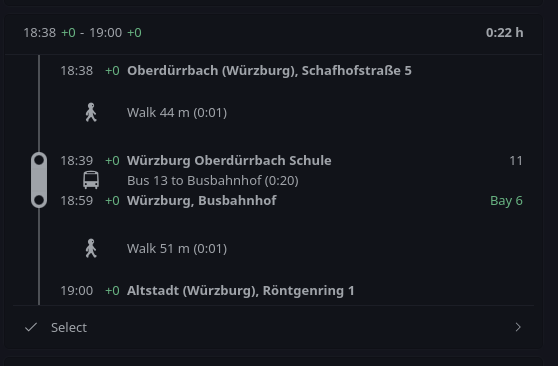
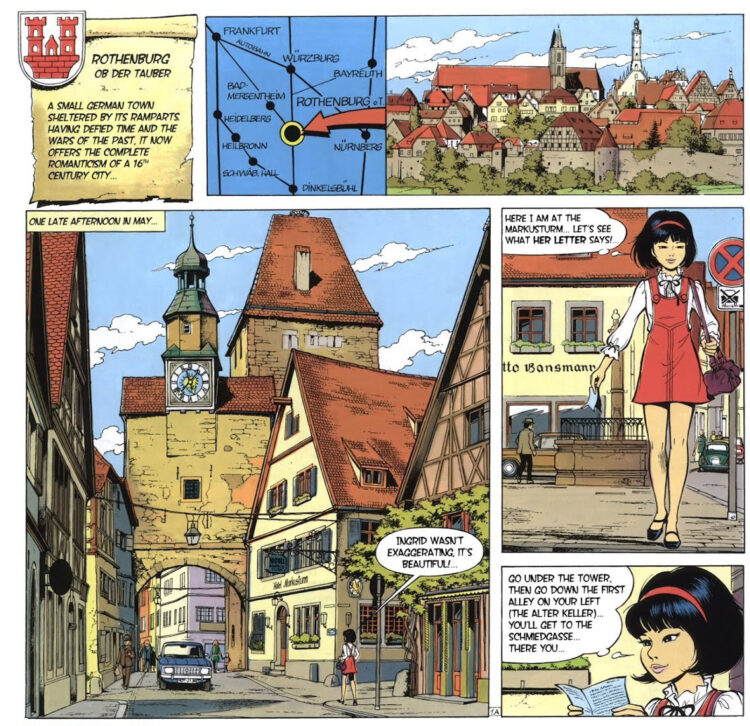
In order to prepare for the Akademy I started some days before to give my Librem 5 ( an Open Hardware Phone) another try and ended up with a non starting Plasma 6. Actually this issue was known already, but hasn't been addressed. In the end I reached the Akademy with my Librem 5 having phosh installed (which is Gnome based), in order to have something working. I met Bushan and Bart who took care and the issue was fixed two days later I could finally install Plasma 6 on it. The last time I tested my Librem 5 with Plasma 5 it felt sluggish and not well working. But this time I was impressed how well the system reacts. Sure there are some things here and there, but in the bigger picture it is quite useable. One annoying issue is that the camera is only working with one app and the other issue is the battery capacity, you have to charge it once a day. Because of missing a QR reader that can use the camera, getting data to the phone was quite challenging. Unfortunately the conference Wifi separated the devices and I couldn't use KDE Connect to transfer data. In the end the only way to import data was taking five photos from the QR Code to import my D-Ticket to Itinerary. With a device with Plasma Mobile, it directly was used for a experiment: How well does Dolphin works on a Plasma Mobile device. Together with Felix Ernst we tried it out and were quite impressed, that Dolphin does work very well on Plasma Mobile, after some simple modifications on the UI. That resulted in a patch to add a mobile UI for Dolphin !826. With more time to play with my Librem 5 I also found an bug in KWeather, that is missing a Refresh option, when used in a Plasma Mobile environment #493656. Akademy is a good place to identify and solve some issues. It is always like that, you chat with someone and they can tell you who to ask to answer the concrete question and in the end you can solve things, that seems unsolvable in the beginning. There was also time to look into the travelling app Itinerary. A lot people are faced with a lot of real world issues, when not in their home town. Itinerary is the best traveling apps I know about. It can import nearly every ticket you have and can get location information from restaurant websites and allow routing to that place. It does add many useful information, while traveling like current delays, platform changes, live updates for elevator, weather information at the destination, a station map and all those features with strong focus on privacy. In detail I found some small things to improve: I additionally learned that it has a lot of details that helps people who have special needs. That is the reason why Daniel Kraut wants to get Itinerary available for iOS. As spoken out, that Daniel wants to reach this goal, others already started to implement the first steps to build apps for iOS. This year I was volunteering in helping out at Akademy. For me it was a lot of fun to meet everyone at the infodesk or help the speakers setup the beamer and microphone. It is also a good opportunity to meet many new faces and get in contact with them. I see also room for improvement. As we were quite busy at the Welcome Event to get out the badges to everyone, I couldn't answer the questions from newcomers, as the queue was too long. I propose that some people volunteer to be available for questions from newcomers. Often it is hard for newcomers to get their first contact(s) in a new community. There is a lot of space for improvement to make it easier for newcomers to join. Some ideas in my head are: Make an event for the newcomers to get them some links into the community and show that everyone is friendly. The tables at the BoFs should make a circle, so everyone can see each other. It was also hard for me to understand everyone as they mostly spoken towards the front. And then BoFs are sometimes full of very specific words and if you are not already deep in the topic you are lost. I can see the problem, on the one side BoFs are also the place where the person that knows the topic already wants to get things done. On the other side new comers join BoFs, are overwhelmed by to many new words get frustrated and think, that they are not welcome. Maybe at least everyone should present itself with name and ask new faces, why they joined the BoF to help them joining. I'm happy, that the food provided for the attendees was very delicious and that I'm not the only one mostly vegetarian with a big amount to be vegan. At the conference the KDE Eco initiation really caught me, as I see a lot of new possibilities in giving more reasons to switch to an Open Source system. The talk from Natalie was great to see how pupils get excited about Open Source and also help their grandparents to move to a Linux system. As I also will start to work as a teacher, I really got ideas what I can do at school. Together with Joseph and Nicole, we finally started to think about how to drive an exploration on what kind of old hardware is still KDE software running. The ones with the oldest hardware will get an old KDE shirt. For more information see #40. The conference was very motivating for me, I also had still energy at the evening to do some Debian packaging and finally pushed kweathercore to Debian and started to work on KWeather. Now I'm even more interested in the KDE apps focusing the mobile world, as I now have some hardware that can actually use those apps. I really enjoyed the workshop how to contribute to Qt by Volker Hilsheimer, especially the way how Volker explained things in a very friendly way, answered every question, sometime postponed some questions but came back to them later. All in all I now have a good overview how Qt is doing development and how I can fix bugs. The daytrip to Rothenburg ob der Tauber was very interesting for me. It was the first time I visited the village. But in my memory it feels like I know the village already. I grew up with reading a lot of comic albums including the good SiFi comic album series "Yoku Tsuno" created by the Belgian writer Roger Leloup. Yoku Tsuno is an electronics engineer, raised in Japan but now living in Belgium. In "On the edge of life" she helps her friend Ingard, who actually lives in Rothenburg. Leloup invested a lot of time to travel to make the make his drawings as accurate as possible. a comic page with Yoko Tsuno in Rothenburg ob der Tauber In order to not have a hard cut from Akademy to normal life, I had a lunch with Carlos, to discuss KDE Neon and how we can improve the interaction with Debian. In the future this should have less friction and make both communities work together more smoothly. Additionally as I used to develop on KDEPIM with the help of Docker images based on Neon I ask for a meta kf6 dev meta package. That should help to get rid of most hand written lists of dev packages in the Docker file in order to make it more simple for new contributors to start hacking on KDEPIM. The rest of the day I finally found time to do the normal tourist stuff: Going to the Wine bridge and having a walk to the castle of W rzburg. Unfortunately you hear a lot of car noises up there, but I could finally relaxe in a Japanese designed garden. Finally at Saturday I started my trip back. The trains towards Eberswalde are broken and I needed to find alternative routing. I got a little bit nervous, as it was the first time I travelled with my Librem 5 and Itinerary only and needed to reach the next train in less than two mins. With the indoor maps provided, I could prepare my run through the train station so I reached successfully my next train. By the way, also if you only only use KDE software, I would recommend everyone to join Akademy ;)

24 November 2024

Edward Betts: A mini adventure at MiniDebConf Toulouse

A mini adventure at MiniDebConf Toulouse Last week, I ventured to Toulouse, for a delightful mix of coding, conversation, and crepes at MiniDebConf Toulouse, part of the broader Capitole du Libre conference, akin to the more well-known FOSDEM but with a distinctly French flair. This was my fourth and final MiniDebConf of the year. no jet bridge My trek to Toulouse was seamless. I hopped on a bus from my home in Bristol to the airport, then took a short flight. I luxuriated in seat 1A, making me the first to disembark a mere ten minutes later, I was already on the bus heading to my hotel.

Exploring the Pink City pink img 29 duck shop Once settled, I wasted no time exploring the charms of Toulouse. Just a short stroll from my hotel, I found myself beside a tranquil canal, its waters mirroring the golden hues of the trees lining its banks. Autumn in Toulouse painted the city in warm oranges and reds, creating a picturesque backdrop that was a joy to wander through. Every corner of the street revealed more of the city's rich cultural tapestry and striking architecture. Known affectionately as 'La Ville Rose' (The Pink City) for its unique terracotta brickwork, Toulouse captivated me with its blend of historical allure and vibrant modern life.

MiniDebCamp FabLab sign laptop setup Prior to the main event, the MiniDebCamp provided two days of hacking at Artilect FabLab a space as creative as it was welcoming. It was a pleasure to reconnect with familiar faces and forge new friendships.

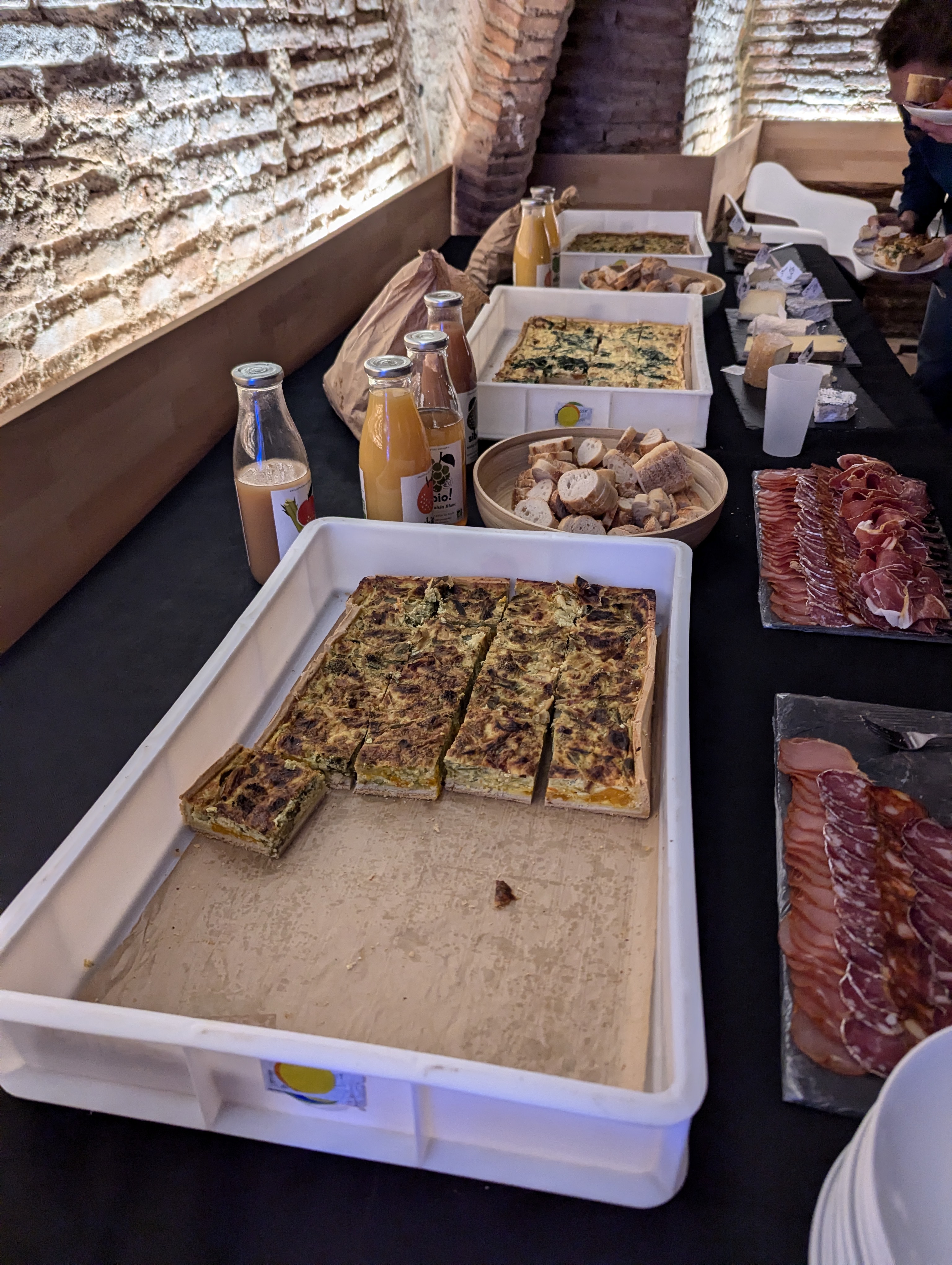
Culinary delights lunch 1 img 14 img 15 img 16 img 17 cakes The hospitality was exceptional. Our lunches boasted a delicious array of quiches, an enticing charcuterie board, and a superb selection of cheeses, all perfectly complemented by exquisite petite fours. Each item was not only a feast for the eyes but also a delight for the palate.

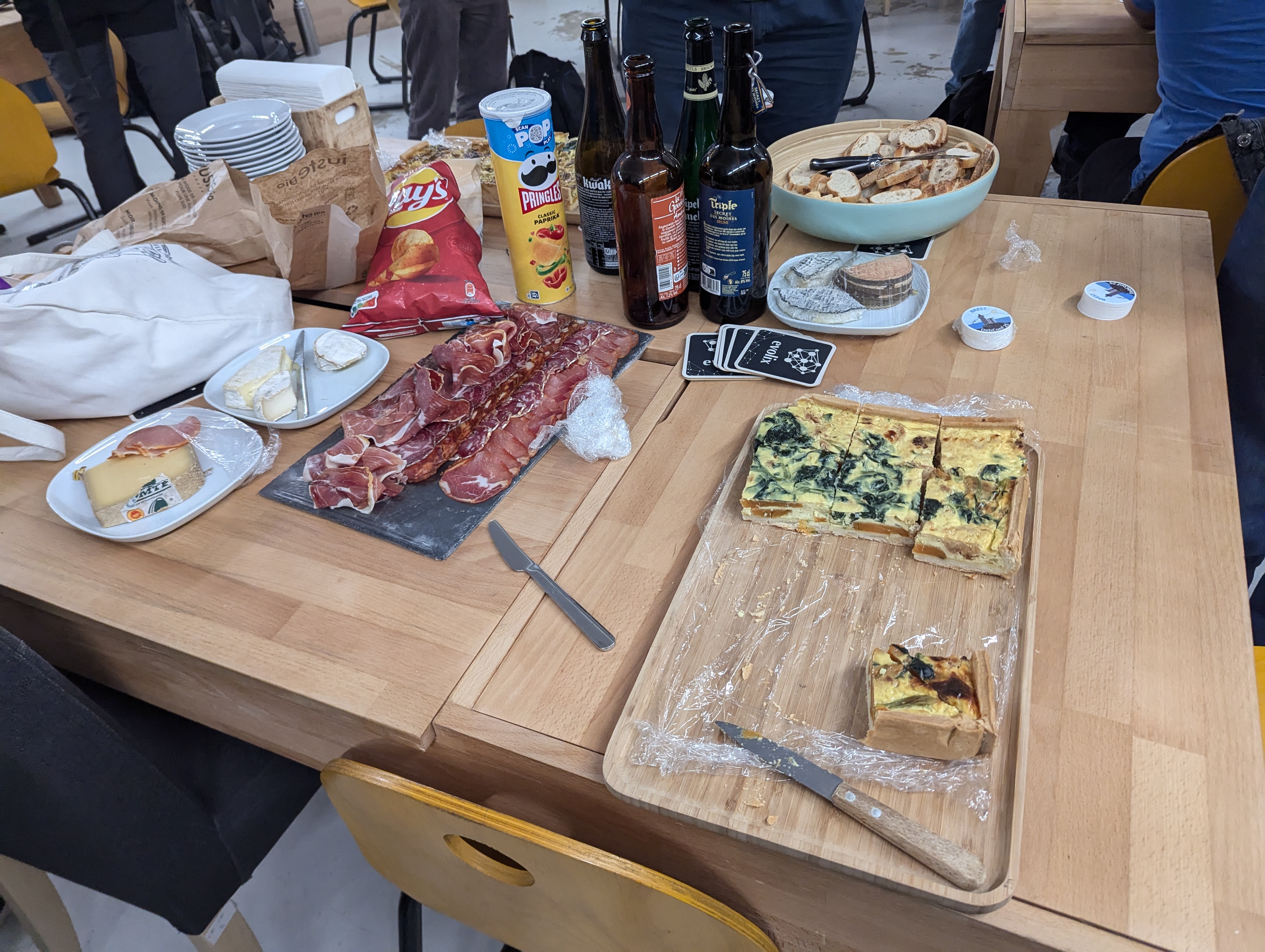
Wine and cheese wine and cheese 1 wine and cheese 2 Leftovers from these gourmet feasts fuelled our impromptu cheese and wine party on Thursday evening a highlight where informal chats blended seamlessly with serious software discussions.

The river at night night river 1 night river 2 night river 3 night river 4 The enchantment of Toulouse doesn't dim with the setting sun; instead, it transforms. My evening strolls took me along the banks of the Garonne, under a sky just turning from twilight to velvet blue. The river, a dark mirror, perfectly reflected the illuminated grandeur of the city's architecture. Notably, the dome of the H pital de La Grave stood out, bathed in a warm glow against the night sky. This architectural gem, coupled with the soft lights of the bridge and the serene river, created a breathtaking scene that was both tranquil and awe-inspiring.

Capitole du Libre making crepes The MiniDebConf itself, part of the larger Capitole du Libre event, was a fantastic immersion into the world of free software. Unlike the ticket-free FOSDEM, this conference required QR codes for entry and even had bag searches, adding an unusual layer of security for a software conference. Highlights included the crepe-making by the organisers, reminiscent of street food scenes from larger festivals. The availability of crepes for MiniDebConf attendees and the presence of food trucks added a festive air, albeit with the inevitable long queues familiar to any festival-goer.

v l Toulouse bike cyclocity The city's bike rental system was a boon easy to use with handy bike baskets perfect for casual city touring. I chose pedal power over electric, finding it a pleasant way to navigate the streets and absorb the city's vibrant atmosphere.

Markets market flatbreads Toulouse's markets were a delightful discovery. From a spontaneous visit to a market near my hotel upon arrival, to cycling past bustling marketplaces, each day presented new local flavours and crafts to explore. The Za'atar flatbread from a Syrian stall was a particularly memorable lunch pick.

La brasserie Les Arcades img 25 img 26 img 27 Our conference wrapped up with a spontaneous gathering at La Brasserie Les Arcades in Place du Capitole. Finding a caf that could accommodate 30 of us on a Sunday evening without a booking felt like striking gold. What began with coffee and ice cream smoothly transitioned into dinner, where I enjoyed a delicious braised duck leg with green peppercorn sauce. This meal rounded off the trip with lively conversations and shared experiences.

The journey back home img 30 img 31 img 32 img 33 Returning from Toulouse, I found myself once again in seat 1A, offering the advantage of being the first off the plane, both on departure and arrival. My flight touched down in Bristol ahead of schedule, and within ten minutes, I was on the A1 bus, making my way back into the heart of Bristol.

Anticipating DebConf 25 in Brittany My trip to Toulouse for MiniDebConf was yet another fulfilling experience; the city was delightful, and the talks were insightful. While I frequently travel, these journeys are more about continuous learning and networking than escape. The food in Toulouse was particularly impressive, a highlight I've come to expect and relish on my trips to France. Looking ahead, I'm eagerly anticipating DebConf in Brest next year, especially the opportunity to indulge once more in the excellent French cuisine and beverages.

22 November 2024

Matthew Palmer: Your Release Process Sucks

For the past decade-plus, every piece of software I write has had one of two release processes. Software that gets deployed directly onto servers (websites, mostly, but also the infrastructure that runs Pwnedkeys, for example) is deployed with nothing more than git push prod main. I ll talk more about that some other day. Today is about the release process for everything else I maintain Rust / Ruby libraries, standalone programs, and so forth. To release those, I use the following, extremely intricate process:
  1. Create an annotated git tag, where the name of the tag is the software version I m releasing, and the annotation is the release notes for that version.
  2. Run git release in the repository.
  3. There is no step 3.
Yes, it absolutely is that simple. And if your release process is any more complicated than that, then you are suffering unnecessarily. But don t worry. I m from the Internet, and I m here to help.

Sidebar: annotated what-now?!? The annotated tag is one git s best-kept secrets. They ve been available in git for practically forever (I ve been using them since at least 2014, which is practically forever in software development), yet almost everyone I mention them to has never heard of them. A tag , in git parlance, is a repository-unique named label that points to a single commit (as identified by the commit s SHA1 hash). Annotating a tag is simply associating a block of free-form text with that tag. Creating an annotated tag is simple-sauce: git tag -a tagname will open up an editor window where you can enter your annotation, and git tag -a -m "some annotation" tagname will create the tag with the annotation some annotation . Retrieving the annotation for a tag is straightforward, too: git show tagname will display the annotation along with all the other tag-related information. Now that we know all about annotated tags, let s talk about how to use them to make software releases freaking awesome.

Step 1: Create the Annotated Git Tag As I just mentioned, creating an annotated git tag is pretty simple: just add a -a (or --annotate, if you enjoy typing) to your git tag command, and WHAM! annotation achieved. Releases, though, typically have unique and ever-increasing version numbers, which we want to encode in the tag name. Rather than having to look at the existing tags and figure out the next version number ourselves, we can have software do the hard work for us. Enter: git-version-bump. This straightforward program takes one mandatory argument: major, minor, or patch, and bumps the corresponding version number component in line with Semantic Versioning principles. If you pass it -n, it opens an editor for you to enter the release notes, and when you save out, the tag is automagically created with the appropriate name. Because the program is called git-version-bump, you can call it as a git command: git version-bump. Also, because version-bump is long and unwieldy, I have it aliased to vb, with the following entry in my ~/.gitconfig:
[alias]
    vb = version-bump -n
Of course, you don t have to use git-version-bump if you don t want to (although why wouldn t you?). The important thing is that the only step you take to go from here is our current codebase in main to everything as of this commit is version X.Y.Z of this software , is the creation of an annotated tag that records the version number being released, and the metadata that goes along with that release.

Step 2: Run git release As I said earlier, I ve been using this release process for over a decade now. So long, in fact, that when I started, GitHub Actions didn t exist, and so a lot of the things you d delegate to a CI runner these days had to be done locally, or in a more ad-hoc manner on a server somewhere. This is why step 2 in the release process is run git release . It s because historically, you can t do everything in a CI run. Nowadays, most of my repositories have this in the .git/config:
[alias]
    release = push --tags
Older repositories which, for one reason or another, haven t been updated to the new hawtness, have various other aliases defined, which run more specialised scripts (usually just rake release, for Ruby libraries), but they re slowly dying out. The reason why I still have this alias, though, is that it standardises the release process. Whether it s a Ruby gem, a Rust crate, a bunch of protobuf definitions, or whatever else, I run the same command to trigger a release going out. It means I don t have to think about how I do it for this project, because every project does it exactly the same way.

The Wiring Behind the Button
It wasn t the button that was the problem. It was the miles of wiring, the hundreds of miles of cables, the circuits, the relays, the machinery. The engine was a massive, sprawling, complex, mind-bending nightmare of levers and dials and buttons and switches. You couldn t just slap a button on the wall and expect it to work. But there should be a button. A big, fat button that you could press and everything would be fine again. Just press it, and everything would be back to normal.
  • Red Dwarf: Better Than Life
Once you ve accepted that your release process should be as simple as creating an annotated tag and running one command, you do need to consider what happens afterwards. These days, with the near-universal availability of CI runners that can do anything you need in an isolated, reproducible environment, the work required to go from annotated tag to release artifacts can be scripted up and left to do its thing. What that looks like, of course, will probably vary greatly depending on what you re releasing. I can t really give universally-applicable guidance, since I don t know your situation. All I can do is provide some of my open source work as inspirational examples. For starters, let s look at a simple Rust crate I ve written, called strong-box. It s a straightforward crate, that provides ergonomic and secure cryptographic functionality inspired by the likes of NaCl. As it s just a crate, its release script is very straightforward. Most of the complexity is working around Cargo s inelegant mandate that crate version numbers are specified in a TOML file. Apart from that, it s just a matter of building and uploading the crate. Easy! Slightly more complicated is action-validator. This is a Rust CLI tool which validates GitHub Actions and Workflows (how very meta) against a published JSON schema, to make sure you haven t got any syntax or structural errors. As not everyone has a Rust toolchain on their local box, the release process helpfully build binaries for several common OSes and CPU architectures that people can download if they choose. The release process in this case is somewhat larger, but not particularly complicated. Almost half of it is actually scaffolding to build an experimental WASM/NPM build of the code, because someone seemed rather keen on that. Moving away from Rust, and stepping up the meta another notch, we can take a look at the release process for git-version-bump itself, my Ruby library and associated CLI tool which started me down the Just Tag It Already rabbit hole many years ago. In this case, since gemspecs are very amenable to programmatic definition, the release process is practically trivial. Remove the boilerplate and workarounds for GitHub Actions bugs, and you re left with about three lines of actual commands. These approaches can certainly scale to larger, more complicated processes. I ve recently implemented annotated-tag-based releases in a proprietary software product, that produces Debian/Ubuntu, RedHat, and Windows packages, as well as Docker images, and it takes all of the information it needs from the annotated tag. I m confident that this approach will successfully serve them as they expand out to build AMIs, GCP machine images, and whatever else they need in their release processes in the future.

Objection, Your Honour! I can hear the howl of the but, actuallys coming over the horizon even as I type. People have a lot of Big Feelings about why this release process won t work for them. Rather than overload this article with them, I ve created a companion article that enumerates the objections I ve come across, and answers them. I m also available for consulting if you d like a personalised, professional opinion on your specific circumstances.

DVD Bonus Feature: Pre-releases Unless you re addicted to surprises, it s good to get early feedback about new features and bugfixes before they make it into an official, general-purpose release. For this, you can t go past the pre-release. The major blocker to widespread use of pre-releases is that cutting a release is usually a pain in the behind. If you ve got to edit changelogs, and modify version numbers in a dozen places, then you re entirely justified in thinking that cutting a pre-release for a customer to test that bugfix that only occurs in their environment is too much of a hassle. The thing is, once you ve got releases building from annotated tags, making pre-releases on every push to main becomes practically trivial. This is mostly due to another fantastic and underused Git command: git describe. How git describe works is, basically, that it finds the most recent commit that has an associated annotated tag, and then generates a string that contains that tag s name, plus the number of commits between that tag and the current commit, with the current commit s hash included, as a bonus. That is, imagine that three commits ago, you created an annotated release tag named v4.2.0. If you run git describe now, it will print out v4.2.0-3-g04f5a6f (assuming that the current commit s SHA starts with 04f5a6f). You might be starting to see where this is going. With a bit of light massaging (essentially, removing the leading v and replacing the -s with .s), that string can be converted into a version number which, in most sane environments, is considered newer than the official 4.2.0 release, but will be superceded by the next actual release (say, 4.2.1 or 4.3.0). If you re already injecting version numbers into the release build process, injecting a slightly different version number is no work at all. Then, you can easily build release artifacts for every commit to main, and make them available somewhere they won t get in the way of the official releases. For example, in the proprietary product I mentioned previously, this involves uploading the Debian packages to a separate component (prerelease instead of main), so that users that want to opt-in to the prerelease channel simply modify their sources.list to change main to prerelease. Management have been extremely pleased with the easy availability of pre-release packages; they ve been gleefully installing them willy-nilly for testing purposes since I rolled them out. In fact, even while I ve been writing this article, I was asked to add some debug logging to help track down a particularly pernicious bug. I added the few lines of code, committed, pushed, and went back to writing. A few minutes later (next week s job is to cut that in-process time by at least half), the person who asked for the extra logging ran apt update; apt upgrade, which installed the newly-built package, and was able to progress in their debugging adventure. Continuous Delivery: It s Not Just For Hipsters.

+1, Informative Hopefully, this has spurred you to commit your immortal soul to the Church of the Annotated Tag. You may tithe by buying me a refreshing beverage. Alternately, if you re really keen to adopt more streamlined release management processes, I m available for consulting engagements.

20 November 2024

Russell Coker: Solving Spam and Phishing for Corporations

Centralisation and Corporations An advantage of a medium to large company is that it permits specialisation. For example I m currently working in the IT department of a medium sized company and because we have standardised hardware (Dell Latitude and Precision laptops, Dell Precision Tower workstations, and Dell PowerEdge servers) and I am involved in fixing all Linux compatibility issues on that I can fix most problems in a small fraction of the time that I would take to fix on a random computer. There is scope for a lot of debate about the extent to which companies should standardise and centralise things. But for computer problems which can escalate quickly from minor to serious if not approached in the correct manner it s clear that a good deal of centralisation is appropriate. For people doing technical computer work such as programming there s a large portion of the employees who are computer hobbyists who like to fiddle with computers. But if the support system is run well even they will appreciate having computers just work most of the time and for a large portion of the failures having someone immediately recognise the problem, like the issues with NVidia drivers that I have documented so that first line support can implement workarounds without the need for a lengthy investigation. A big problem with email in the modern Internet is the prevalence of Phishing scams. The current corporate approach to this is to send out test Phishing email to people and then force computer security training on everyone who clicks on them. One problem with this is that attackers only need to fool one person on one occasion and when you have hundreds of people doing something on rare occasions that s not part of their core work they will periodically get it wrong. When every test Phishing run finds several people who need extra training it seems obvious to me that this isn t a solution that s working well. I will concede that the majority of people who click on the test Phishing email would probably realise their mistake if asked to enter the password for the corporate email system, but I think it s still clear that this isn t a great solution. Let s imagine for the sake of discussion that everyone in a company was 100% accurate at identifying Phishing email and other scam email, if that was the case would the problem be solved? I believe that even in that hypothetical case it would not be a solved problem due to the wasted time and concentration. People can spend minutes determining if a single email is legitimate. On many occasions I have had relatives and clients forward me email because they are unsure if it s valid, it s great that they seek expert advice when they are unsure about things but it would be better if they didn t have to go to that effort. What we ideally want to do is centralise the anti-Phishing and anti-spam work to a small group of people who are actually good at it and who can recognise patterns by seeing larger quantities of spam. When a spam or Phishing message is sent to 600 people in a company you don t want 600 people to individually consider it, you want one person to recognise it and delete/block all 600. If 600 people each spend one minute considering the matter then that s 10 work hours wasted! The Rationale for Human Filtering For personal email human filtering usually isn t viable because people want privacy. But corporate email isn t private, it s expected that the company can read it under certain circumstances (in most jurisdictions) and having email open in public areas of the office where colleagues might see it is expected. You can visit gmail.com on your lunch break to read personal email but every company policy (and common sense) says to not have actually private correspondence on company systems. The amount of time spent by reception staff in sorting out such email would be less than that taken by individuals. When someone sends a spam to everyone in the company instead of 500 people each spending a couple of minutes working out whether it s legit you have one person who s good at recognising spam (because it s their job) who clicks on a remove mail from this sender from all mailboxes button and 500 messages are deleted and the sender is blocked. Delaying email would be a concern. It s standard practice for CEOs (and C*Os at larger companies) to have a PA receive their email and forward the ones that need their attention. So human vetting of email can work without unreasonable delays. If we had someone checking all email for the entire company probably email to the senior people would never get noticeably delayed and while people like me would get their mail delayed on occasion people doing technical work generally don t have notifications turned on for email because it s a distraction and a fast response isn t needed. There are a few senders where fast response is required, which is mostly corporations sending a click this link within 10 minutes to confirm your password change email. Setting up rules for all such senders that are relevant to work wouldn t be difficult to do. How to Solve This Spam and Phishing became serious problems over 20 years ago and we have had 20 years of evolution of email filtering which still hasn t solved the problem. The vast majority of email addresses in use are run by major managed service providers and they haven t managed to filter out spam/phishing mail effectively so I think we should assume that it s not going to be solved by filtering. There is talk about what AI technology might do for filtering spam/phishing but that same technology can product better crafted hostile email to avoid filters. An additional complication for corporate email filtering is that some criteria that are used to filter personal email don t apply to corporate mail. If someone sends email to me personally about millions of dollars then it s obviously not legit. If someone sends email to a company then it could be legit. Companies routinely have people emailing potential clients about how their products can save millions of dollars and make purchases over a million dollars. This is not a problem that s impossible to solve, it s just an extra difficulty that reduces the efficiency of filters. It seems to me that the best solution to the problem involves having all mail filtered by a human. A company could configure their mail server to not accept direct external mail for any employee s address. Then people could email files to colleagues etc without any restriction but spam and phishing wouldn t be a problem. The issue is how to manage inbound mail. One possibility is to have addresses of the form it+russell.coker@example.com (for me as an employee in the IT department) and you would have a team of people who would read those mailboxes and forward mail to the right people if it seemed legit. Having addresses like it+russell.coker means that all mail to the IT department would be received into folders of the same account and they could be filtered by someone with suitable security level and not require any special configuration of the mail server. So the person who read the is mailbox would have a folder named russell.coker receiving mail addressed to me. The system could be configured to automate the processing of mail from known good addresses (and even domains), so they could just put in a rule saying that when Dell sends DMARC authenticated mail to is+$USER it gets immediately directed to $USER. This is the sort of thing that can be automated in the email client (mail filtering is becoming a common feature in MUAs). For a FOSS implementation of such things the server side of it (including extracting account data from a directory to determine which department a user is in) would be about a day s work and then an option would be to modify a webmail program to have extra functionality for approving senders and sending change requests to the server to automatically direct future mail from the same sender. As an aside I have previously worked on a project that had a modified version of the Horde webmail system to do this sort of thing for challenge-response email and adding certain automated messages to the allow-list. The Change One of the first things to do is configuring the system to add every recipient of an outbound message to the allow list for receiving a reply. Having a script go through the sent-mail folders of all accounts and adding the recipients to the allow lists would be easy and catch the common cases. But even with processing the sent mail folders going from a working system without such things to a system like this will take some time for the initial work of adding addresses to the allow lists, particularly for domain wide additions of all the sites that send password confirmation messages. You would need rules to direct inbound mail to the old addresses to the new style and then address a huge amount of mail that needs to be categorised. If you have 600 employees and the average amount of time taken on the first day is 10 minutes per user then that s 100 hours of work, 12 work days. If you had everyone from the IT department, reception, and executive assistants working on it that would be viable. After about a week there wouldn t be much work involved in maintaining it. Then after that it would be a net win for the company. The Benefits If the average employee spends one minute a day dealing with spam and phishing email then with 600 employees that s 10 hours of wasted time per day. Effectively wasting one employee s work! I m sure that s the low end of the range, 5 minutes average per day doesn t seem unreasonable especially when people are unsure about phishing email and send it to Slack so multiple employees spend time analysing it. So you could have 5 employees being wasted by hostile email and avoiding that would take a fraction of the time of a few people adding up to less than an hour of total work per day. Then there s the training time for phishing mail. Instead of having every employee spend half an hour doing email security training every few months (that s 300 hours or 7.5 working weeks every time you do it) you just train the few experts. In addition to saving time there are significant security benefits to having experts deal with possibly hostile email. Someone who deals with a lot of phishing email is much less likely to be tricked. Will They Do It? They probably won t do it any time soon. I don t think it s expensive enough for companies yet. Maybe government agencies already have equivalent measures in place, but for regular corporations it s probably regarded as too difficult to change anything and the costs aren t obvious. I have been unsuccessful in suggesting that managers spend slightly more on computer hardware to save significant amounts of worker time for 30 years.

19 November 2024

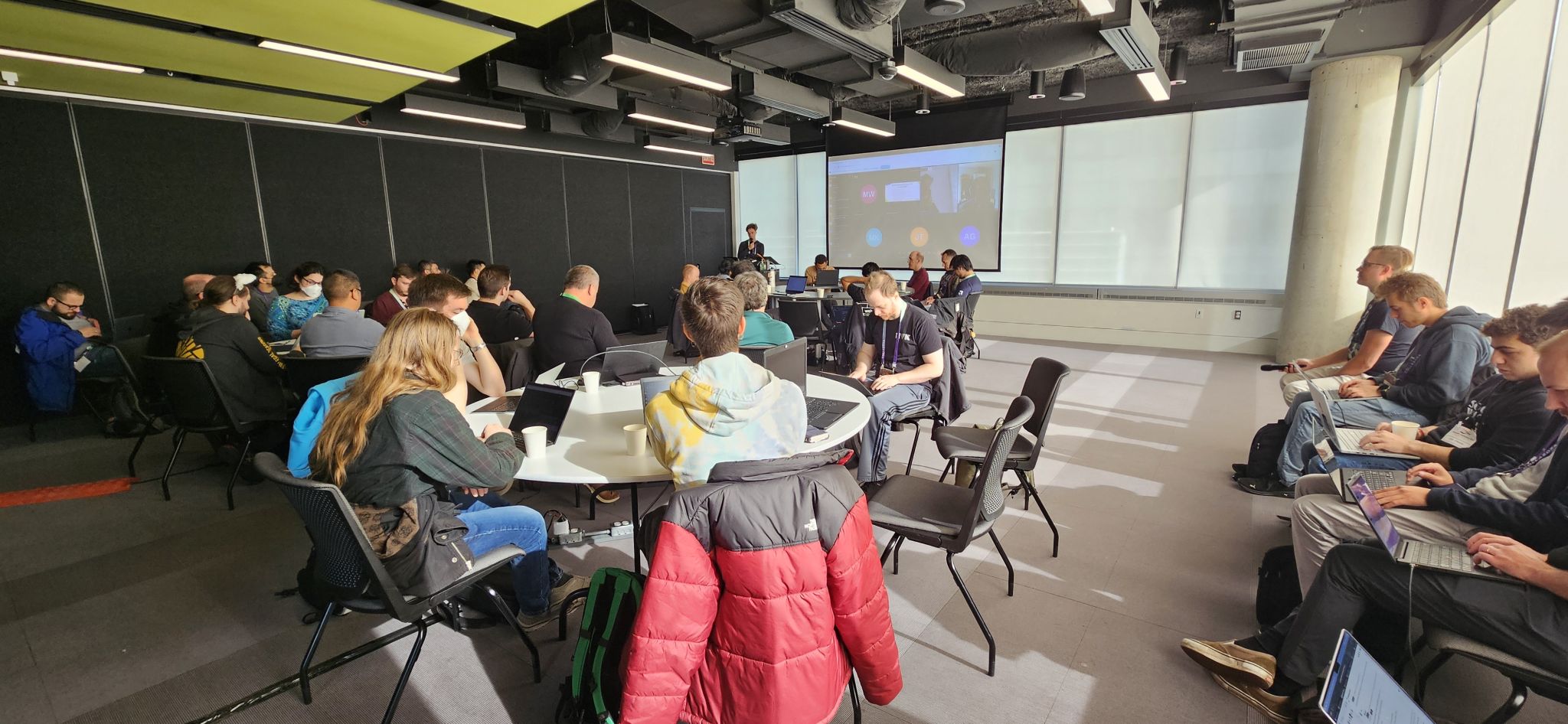
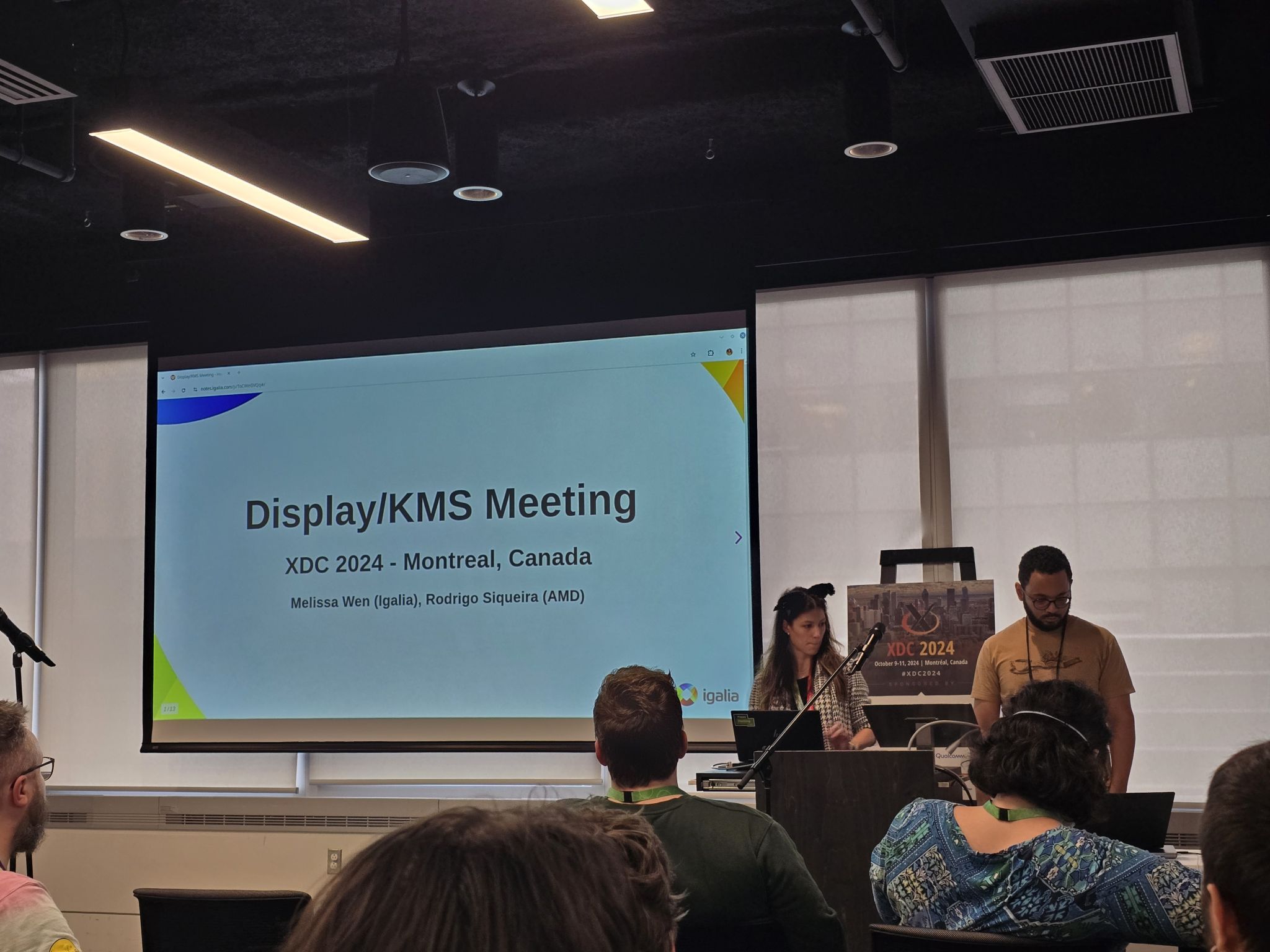
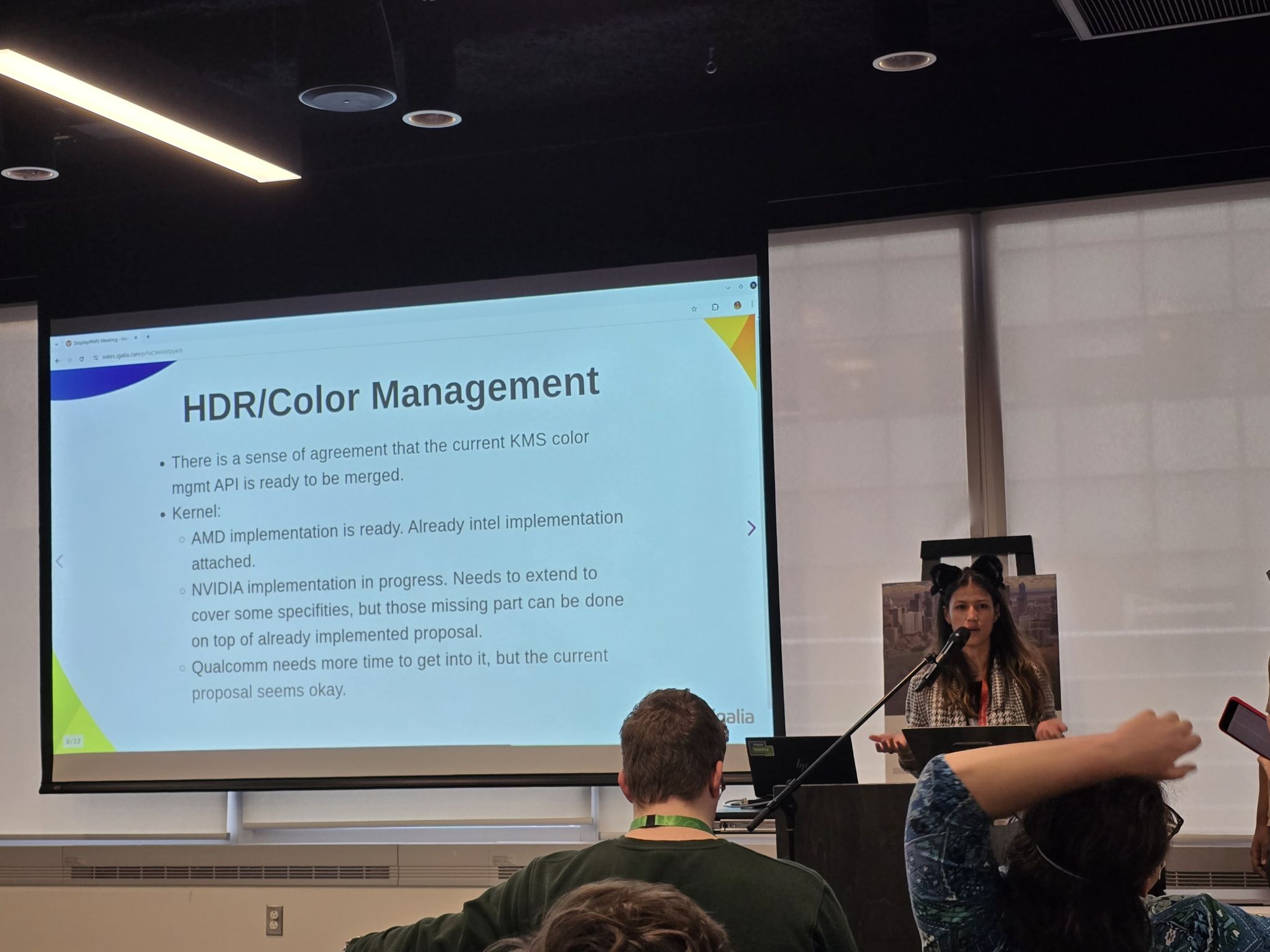
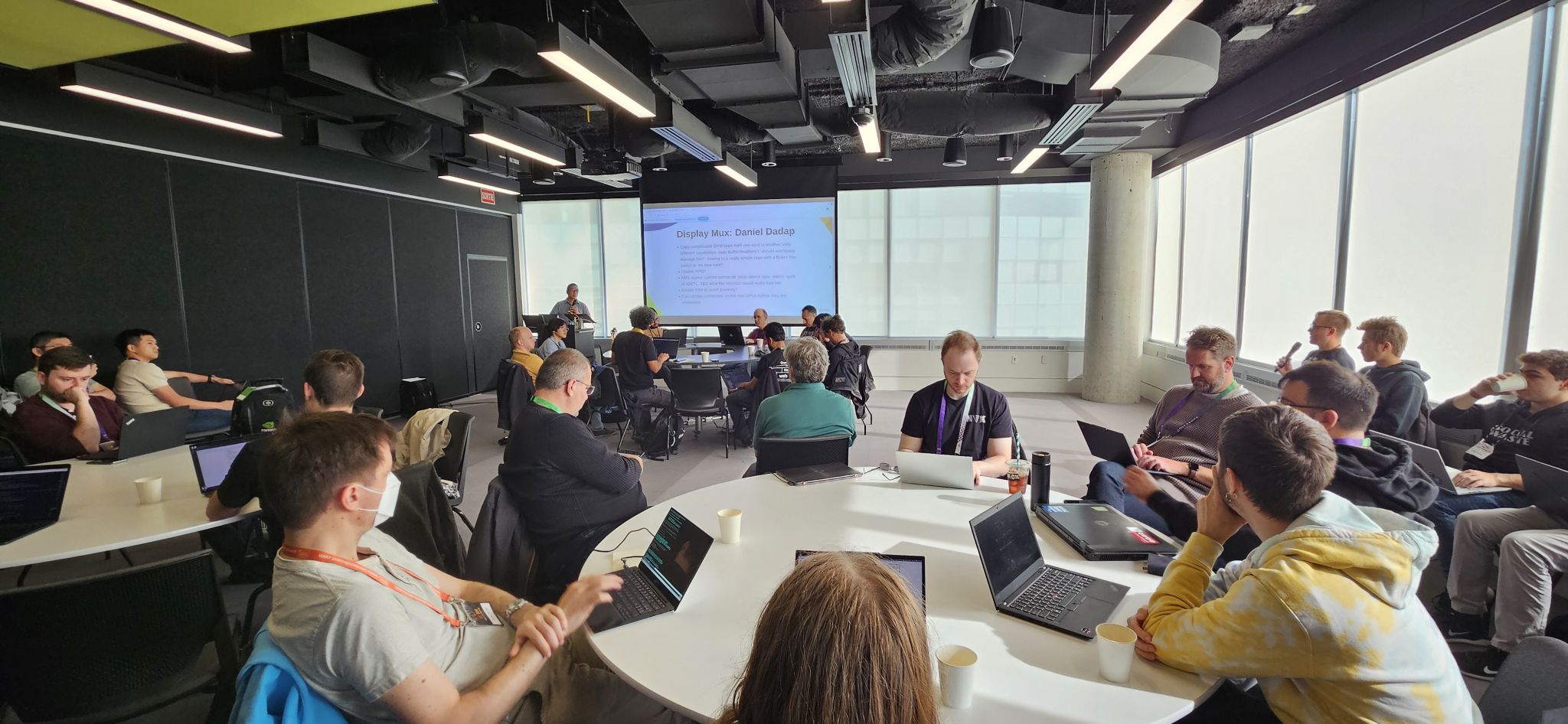
Melissa Wen: Display/KMS Meeting at XDC 2024: Detailed Report

XDC 2024 in Montreal was another fantastic gathering for the Linux Graphics community. It was again a great time to immerse in the world of graphics development, engage in stimulating conversations, and learn from inspiring developers. Many Igalia colleagues and I participated in the conference again, delivering multiple talks about our work on the Linux Graphics stack and also organizing the Display/KMS meeting. This blog post is a detailed report on the Display/KMS meeting held during this XDC edition. Short on Time?
  1. Catch the lightning talk summarizing the meeting here (you can even speed up 2x):
  1. For a quick written summary, scroll down to the TL;DR section.

TL;DR This meeting took 3 hours and tackled a variety of topics related to DRM/KMS (Linux/DRM Kernel Modesetting):
  • Sharing Drivers Between V4L2 and KMS: Brainstorming solutions for using a single driver for devices used in both camera capture and display pipelines.
  • Real-Time Scheduling: Addressing issues with non-blocking page flips encountering sigkills under real-time scheduling.
  • HDR/Color Management: Agreement on merging the current proposal, with NVIDIA implementing its special cases on VKMS and adding missing parts on top of Harry Wentland s (AMD) changes.
  • Display Mux: Collaborative design discussions focusing on compositor control and cross-sync considerations.
  • Better Commit Failure Feedback: Exploring ways to equip compositors with more detailed information for failure analysis.

Bringing together Linux display developers in the XDC 2024 While I didn t present a talk this year, I co-organized a Display/KMS meeting (with Rodrigo Siqueira of AMD) to build upon the momentum from the 2024 Linux Display Next hackfest. The meeting was attended by around 30 people in person and 4 remote participants. Speakers: Melissa Wen (Igalia) and Rodrigo Siqueira (AMD) Link: https://indico.freedesktop.org/event/6/contributions/383/ Topics: Similar to the hackfest, the meeting agenda was built over the first two days of the conference and mixed talks follow-up with new ideas and ongoing community efforts. The final agenda covered five topics in the scheduled order:
  1. How to share drivers between V4L2 and DRM for bridge-like components (new topic);
  2. Real-time Scheduling (problems encountered after the Display Next hackfest);
  3. HDR/Color Management (ofc);
  4. Display Mux (from Display hackfest and XDC 2024 talk, bringing AMD and NVIDIA together);
  5. (Better) Commit Failure Feedback (continuing the last minute topic of the Display Next hackfest).

Unpacking the Topics Similar to the hackfest, the meeting agenda evolved over the conference. During the 3 hours of meeting, I coordinated the room and discussion rounds, and Rodrigo Siqueira took notes and also contacted key developers to provide a detailed report of the many topics discussed. From his notes, let s dive into the key discussions!

How to share drivers between V4L2 and KMS for bridge-like components. Led by Laurent Pinchart, we delved into the challenge of creating a unified driver for hardware devices (like scalers) that are used in both camera capture pipelines and display pipelines.
  • Problem Statement: How can we design a single kernel driver to handle devices that serve dual purposes in both V4L2 and DRM subsystems?
  • Potential Solutions:
    1. Multiple Compatible Strings: We could assign different compatible strings to the device tree node based on its usage in either the camera or display pipeline. However, this approach might raise concerns from device tree maintainers as it could be seen as a layer violation.
    2. Separate Abstractions: A single driver could expose the device to both DRM and V4L2 through separate abstractions: drm-bridge for DRM and V4L2 subdev for video. While simple, this approach requires maintaining two different abstractions for the same underlying device.
    3. Unified Kernel Abstraction: We could create a new, unified kernel abstraction that combines the best aspects of drm-bridge and V4L2 subdev. This approach offers a more elegant solution but requires significant design effort and potential migration challenges for existing hardware.

Real-Time Scheduling Challenges We have discussed real-time scheduling during this year Linux Display Next hackfest and, during the XDC 2024, Jonas Adahl brought up issues uncovered while progressing on this front.
  • Context: Non-blocking page-flips can, on rare occasions, take a long time and, for that reason, get a sigkill if the thread doing the atomic commit is a real-time schedule.
  • Action items:
    • Explore alternative backtraces during the busy wait (e.g., ftrace).
    • Investigate the maximum thread time in busy wait to reproduce issues faced by compositors. Tools like RTKit (mutter) can be used for better control (Michel D nzer can help with this setup).

HDR/Color Management This is a well-known topic with ongoing effort on all layers of the Linux Display stack and has been discussed online and in-person in conferences and meetings over the last years. Here s a breakdown of the key points raised at this meeting:
  • Talk: Color operations for Linux color pipeline on AMD devices: In the previous day, Alex Hung (AMD) presented the implementation of this API on AMD display driver.
  • NVIDIA Integration: While they agree with the overall proposal, NVIDIA needs to add some missing parts. Importantly, they will implement these on top of Harry Wentland s (AMD) proposal. Their specific requirements will be implemented on VKMS (Virtual Kernel Mode Setting driver) for further discussion. This VKMS implementation can benefit compositor developers by providing insights into NVIDIA s specific needs.
  • Other vendors: There is a version of the KMS API applied on Intel color pipeline. Apart from that, other vendors appear to be comfortable with the current proposal but lacks the bandwidth to implement it right now.
  • Upstream Patches: The relevant upstream patches were can be found here. [As humorously notes, this series is eagerly awaiting your Acked-by (approval)]
  • Compositor Side: The compositor developers have also made significant progress.
    • KDE has already implemented and validated the API through an experimental implementation in Kwin.
    • Gamescope currently uses a driver-specific implementation but has a draft that utilizes the generic version. However, some work is still required to fully transition away from the driver-specific approach. AP: work on porting gamescope to KMS generic API
    • Weston has also begun exploring implementation, and we might see something from them by the end of the year.
  • Kernel and Testing: The kernel API proposal is well-refined and meets the DRM subsystem requirements. Thanks to Harry Wentland effort, we already have the API attached to two hardware vendors and IGT tests, and, thanks to Xaver Hugl, a compositor implementation in place.
Finally, there was a strong sense of agreement that the current proposal for HDR/Color Management is ready to be merged. In simpler terms, everything seems to be working well on the technical side - all signs point to merging and shipping the DRM/KMS plane color management API!

Display Mux During the meeting, Daniel Dadap led a brainstorming session on the design of the display mux switching sequence, in which the compositor would arm the switch via sysfs, then send a modeset to the outgoing driver, followed by a modeset to the incoming driver.
  • Context:
  • Key Considerations:
    • HPD Handling: There was a general consensus that disabling HPD can be part of the sequence for internal panels and we don t need to focus on it here.
    • Cross-Sync: Ensuring synchronization between the compositor and the drivers is crucial. The compositor should act as the drm-master to coordinate the entire sequence, but how can this be ensured?
    • Future-Proofing: The design should not assume the presence of a mux. In future scenarios, direct sharing over DP might be possible.
  • Action points:
    • Sharing DP AUX: Explore the idea of sharing DP AUX and its implications.
    • Backlight: The backlight definition represents a problem in the mux switch context, so we should explore some of the current specs available for that.

Towards Better Commit Failure Feedback In the last part of the meeting, Xaver Hugl asked for better commit failure feedback.
  • Problem description: Compositors currently face challenges in collecting detailed information from the kernel about commit failures. This lack of granular data hinders their ability to understand and address the root causes of these failures.
To address this issue, we discussed several potential improvements:
  • Direct Kernel Log Access: One idea is to directly load relevant kernel logs into the compositor. This would provide more detailed information about the failure and potentially aid in debugging.
  • Finer-Grained Failure Reporting: We also explored the possibility of separating atomic failures into more specific categories. Not all failures are critical, and understanding the nature of the failure can help compositors take appropriate action.
  • Enhanced Logging: Currently, the dmesg log doesn t provide enough information for user-space validation. Raising the log level to capture more detailed information during failures could be a viable solution.
By implementing these improvements, we aim to equip compositors with the necessary tools to better understand and resolve commit failures, leading to a more robust and stable display system.

A Big Thank You! Huge thanks to Rodrigo Siqueira for these detailed meeting notes. Also, Laurent Pinchart, Jonas Adahl, Daniel Dadap, Xaver Hugl, and Harry Wentland for bringing up interesting topics and leading discussions. Finally, thanks to all the participants who enriched the discussions with their experience, ideas, and inputs, especially Alex Goins, Antonino Maniscalco, Austin Shafer, Daniel Stone, Demi Obenour, Jessica Zhang, Joan Torres, Leo Li, Liviu Dudau, Mario Limonciello, Michel D nzer, Rob Clark, Simon Ser and Teddy Li. This collaborative effort will undoubtedly contribute to the continued development of the Linux display stack. Stay tuned for future updates!

18 November 2024

C.J. Collier: Managing HPE SAS Controllers

Notes to self. And anyone else who might find them useful. Following are some ssacli commands which I use infrequently enough that they fall out of cache. This may repeat information in other blogs, but since I search my posts first when commands slip my mind, I thought I d include them here, too. hpacucli is the wrong command. Use ssacli instead.
$ KR='/usr/share/keyrings/hpe.gpg'
$ for fingerprint in \
  882F7199B20F94BD7E3E690EFADD8D64B1275EA3 \
  57446EFDE098E5C934B69C7DC208ADDE26C2B797 \
  476DADAC9E647EE27453F2A3B070680A5CE2D476 ; do \
    curl "https://keyserver.ubuntu.com/pks/lookup?op=get&search=0x$ fingerprint " \
        gpg --no-default-keyring --keyring "$ KR " --import ; \
  done
$ gpg --list-keys --no-default-keyring --keyring "$ KR " 
/usr/share/keyrings/hpe.gpg
---------------------------
pub   rsa2048 2012-12-04 [SC] [expired: 2022-12-02]
      476DADAC9E647EE27453F2A3B070680A5CE2D476
uid           [ expired] Hewlett-Packard Company RSA (HP Codesigning Service)
pub   rsa2048 2014-11-19 [SC] [expired: 2024-11-16]
      882F7199B20F94BD7E3E690EFADD8D64B1275EA3
uid           [ expired] Hewlett-Packard Company RSA (HP Codesigning Service) - 1
pub   rsa2048 2015-12-10 [SCEA] [expires: 2025-12-07]
      57446EFDE098E5C934B69C7DC208ADDE26C2B797
uid           [ unknown] Hewlett Packard Enterprise Company RSA-2048-25 
$ echo "deb [signed-by=$ KR ] http://downloads.linux.hpe.com/SDR/repo/mcp bookworm/current non-free" \
    sudo dd of=/etc/apt/sources.list.d status=none
$ sudo apt-get update
$ sudo apt-get install -y -qq ssacli > /dev/null 2>&1
$ sudo ssacli ctrl all show status
HPE Smart Array P408i-p SR Gen10 in Slot 3
   Controller Status: OK
   Cache Status: OK
   Battery/Capacitor Status: OK
$ sudo ssacli ctrl all show detail
HPE Smart Array P408i-p SR Gen10 in Slot 3
   Bus Interface: PCI
   Slot: 3
   Serial Number: PFJHD0ARCCR1QM
   RAID 6 Status: Enabled
   Controller Status: OK
   Hardware Revision: B
   Firmware Version: 2.65
   Firmware Supports Online Firmware Activation: True
   Driver Supports Online Firmware Activation: True
   Rebuild Priority: High
   Expand Priority: Medium
   Surface Scan Delay: 3 secs
   Surface Scan Mode: Idle
   Parallel Surface Scan Supported: Yes
   Current Parallel Surface Scan Count: 1
   Max Parallel Surface Scan Count: 16
   Queue Depth: Automatic
   Monitor and Performance Delay: 60  min
   Elevator Sort: Enabled
   Degraded Performance Optimization: Disabled
   Inconsistency Repair Policy: Disabled
   Write Cache Bypass Threshold Size: 1040 KiB
   Wait for Cache Room: Disabled
   Surface Analysis Inconsistency Notification: Disabled
   Post Prompt Timeout: 15 secs
   Cache Board Present: True
   Cache Status: OK
   Cache Ratio: 10% Read / 90% Write
   Configured Drive Write Cache Policy: Disable
   Unconfigured Drive Write Cache Policy: Default
   Total Cache Size: 2.0
   Total Cache Memory Available: 1.8
   Battery Backed Cache Size: 1.8
   No-Battery Write Cache: Disabled
   SSD Caching RAID5 WriteBack Enabled: True
   SSD Caching Version: 2
   Cache Backup Power Source: Batteries
   Battery/Capacitor Count: 1
   Battery/Capacitor Status: OK
   SATA NCQ Supported: True
   Spare Activation Mode: Activate on physical drive failure (default)
   Controller Temperature (C): 53
   Cache Module Temperature (C): 43
   Capacitor Temperature  (C): 40
   Number of Ports: 2 Internal only
   Encryption: Not Set
   Express Local Encryption: False
   Driver Name: smartpqi
   Driver Version: Linux 2.1.18-045
   PCI Address (Domain:Bus:Device.Function): 0000:11:00.0
   Negotiated PCIe Data Rate: PCIe 3.0 x8 (7880 MB/s)
   Controller Mode: Mixed
   Port Max Phy Rate Limiting Supported: False
   Latency Scheduler Setting: Disabled
   Current Power Mode: MaxPerformance
   Survival Mode: Enabled
   Host Serial Number: 2M20040D1Q
   Sanitize Erase Supported: True
   Sanitize Lock: None
   Sensor ID: 0
      Location: Capacitor
      Current Value (C): 40
      Max Value Since Power On: 42
   Sensor ID: 1
      Location: ASIC
      Current Value (C): 53
      Max Value Since Power On: 55
   Sensor ID: 2
      Location: Unknown
      Current Value (C): 43
      Max Value Since Power On: 45
   Sensor ID: 3
      Location: Cache
      Current Value (C): 43
      Max Value Since Power On: 44
   Primary Boot Volume: None
   Secondary Boot Volume: None
$ sudo ssacli ctrl all show config
HPE Smart Array P408i-p SR Gen10 in Slot 3  (sn: PFJHD0ARCCR1QM)
   Internal Drive Cage at Port 1I, Box 2, OK
   Internal Drive Cage at Port 2I, Box 2, OK
   Port Name: 1I (Mixed)
   Port Name: 2I (Mixed)
   Array A (SAS, Unused Space: 0  MB)
      logicaldrive 1 (1.64 TB, RAID 6, OK)
      physicaldrive 1I:2:1 (port 1I:box 2:bay 1, SAS HDD, 300 GB, OK)
      physicaldrive 1I:2:2 (port 1I:box 2:bay 2, SAS HDD, 1.2 TB, OK)
      physicaldrive 1I:2:3 (port 1I:box 2:bay 3, SAS HDD, 300 GB, OK)
      physicaldrive 1I:2:4 (port 1I:box 2:bay 4, SAS HDD, 1.2 TB, OK)
      physicaldrive 2I:2:5 (port 2I:box 2:bay 5, SAS HDD, 300 GB, OK)
      physicaldrive 2I:2:6 (port 2I:box 2:bay 6, SAS HDD, 300 GB, OK)
      physicaldrive 2I:2:7 (port 2I:box 2:bay 7, SAS HDD, 1.2 TB, OK)
      physicaldrive 2I:2:8 (port 2I:box 2:bay 8, SAS HDD, 1.2 TB, OK)
   SEP (Vendor ID HPE, Model Smart Adapter) 379  (WWID: 51402EC013705E88, Port: Unknown)
$ sudo ssacli ctrl slot=3 pd 2I:2:7 show detail
HPE Smart Array P408i-p SR Gen10 in Slot 3
   Array A
      physicaldrive 2I:2:7
         Port: 2I
         Box: 2
         Bay: 7
         Status: OK
         Drive Type: Data Drive
         Interface Type: SAS
         Size: 1.2 TB
         Drive exposed to OS: False
         Logical/Physical Block Size: 512/512
         Rotational Speed: 10000
         Firmware Revision: U850
         Serial Number: KZGN1BDE
         WWID: 5000CCA01D247239
         Model: HGST    HUC101212CSS600
         Current Temperature (C): 46
         Maximum Temperature (C): 51
         PHY Count: 2
         PHY Transfer Rate: 6.0Gbps, Unknown
         PHY Physical Link Rate: 6.0Gbps, Unknown
         PHY Maximum Link Rate: 6.0Gbps, 6.0Gbps
         Drive Authentication Status: OK
         Carrier Application Version: 11
         Carrier Bootloader Version: 6
         Sanitize Erase Supported: False
         Shingled Magnetic Recording Support: None
         Drive Unique ID: 5000CCA01D247238
2024-12-09 update I was experiencing a disk failure or predictive failure when I walked into my office this afternoon. I checked this blog post and found the command I used to check the status of the sas array.
cjac@server0:~$ sudo ssacli ctrl all show config
HPE Smart Array P408i-p SR Gen10 in Slot 3  (sn: PFJHD0ARCCR1QM)
   Internal Drive Cage at Port 1I, Box 2, OK
   Internal Drive Cage at Port 2I, Box 2, OK
   Port Name: 1I (Mixed)
   Port Name: 2I (Mixed)
   Array A (SAS, Unused Space: 0  MB)
      logicaldrive 1 (1.64 TB, RAID 6, OK)
      physicaldrive 1I:2:1 (port 1I:box 2:bay 1, SAS HDD, 300 GB, OK)
      physicaldrive 1I:2:2 (port 1I:box 2:bay 2, SAS HDD, 1.2 TB, Predictive Failure)
      physicaldrive 1I:2:3 (port 1I:box 2:bay 3, SAS HDD, 300 GB, OK)
      physicaldrive 1I:2:4 (port 1I:box 2:bay 4, SAS HDD, 1.2 TB, OK)
      physicaldrive 2I:2:5 (port 2I:box 2:bay 5, SAS HDD, 300 GB, OK)
      physicaldrive 2I:2:6 (port 2I:box 2:bay 6, SAS HDD, 300 GB, OK)
      physicaldrive 2I:2:7 (port 2I:box 2:bay 7, SAS HDD, 1.2 TB, OK)
      physicaldrive 2I:2:8 (port 2I:box 2:bay 8, SAS HDD, 300 GB, OK)
   SEP (Vendor ID HPE, Model Smart Adapter) 379  (WWID: 51402EC013705E88, Port: Unknown)
At this point I engaged the under-study to have the flashing disk replaced
cjac@server0:~$ sudo ssacli ctrl all show config
[sudo] password for cjac: 
HPE Smart Array P408i-p SR Gen10 in Slot 3  (sn: PFJHD0ARCCR1QM)
   Internal Drive Cage at Port 1I, Box 2, OK
   Internal Drive Cage at Port 2I, Box 2, OK
   Port Name: 1I (Mixed)
   Port Name: 2I (Mixed)
   Array A (SAS, Unused Space: 0  MB)
      logicaldrive 1 (1.64 TB, RAID 6, Recovering, 56.43% complete)
      physicaldrive 1I:2:1 (port 1I:box 2:bay 1, SAS HDD, 300 GB, OK)
      physicaldrive 1I:2:2 (port 1I:box 2:bay 2, SAS HDD, 300 GB, Rebuilding)
      physicaldrive 1I:2:3 (port 1I:box 2:bay 3, SAS HDD, 300 GB, OK)
      physicaldrive 1I:2:4 (port 1I:box 2:bay 4, SAS HDD, 1.2 TB, OK)
      physicaldrive 2I:2:5 (port 2I:box 2:bay 5, SAS HDD, 300 GB, OK)
      physicaldrive 2I:2:6 (port 2I:box 2:bay 6, SAS HDD, 300 GB, OK)
      physicaldrive 2I:2:7 (port 2I:box 2:bay 7, SAS HDD, 1.2 TB, OK)
      physicaldrive 2I:2:8 (port 2I:box 2:bay 8, SAS HDD, 300 GB, OK)
   SEP (Vendor ID HPE, Model Smart Adapter) 379  (WWID: 51402EC013705E88, Port: Unknown)
In the next and future output, I will elide duplicate lines
cjac@server0:~$ date ; sudo ssacli ctrl all show config
Mon Dec  9 07:36:44 PM PST 2024 ... logicaldrive 1 (1.64 TB, RAID 6, Recovering, 66.85% complete)...
Mon Dec  9 07:39:25 PM PST 2024 ... logicaldrive 1 (1.64 TB, RAID 6, Recovering, 68.97% complete) ...
cjac@server0:~$ date ; sudo ssacli ctrl all show config   grep Recovering
Mon Dec  9 07:43:05 PM PST 2024 ... logicaldrive 1 (1.64 TB, RAID 6, Recovering, 71.85% complete)
Mon Dec  9 07:43:57 PM PST 2024 ... logicaldrive 1 (1.64 TB, RAID 6, Recovering, 72.55% complete)
cjac@server0:~$ sleep 5m ; date ; sudo ssacli ctrl all show config   grep Recovering
Mon Dec  9 07:49:43 PM PST 2024 ... logicaldrive 1 (1.64 TB, RAID 6, Recovering, 77.00% complete)
cjac@server0:~$ date ; sudo ssacli ctrl all show config   grep -e 1I:2:2 -e logicaldrive
Mon Dec  9 11:36:14 PM PST 2024 ... logicaldrive 1 (1.64 TB, RAID 6, OK)
physicaldrive 1I:2:2 (port 1I:box 2:bay 2, SAS HDD, 300 GB, OK)

14 November 2024

Stefano Zacchiroli: In memory of Lunar

In memory of Lunar I've had the incredible fortune to share the geek path of Lunar through life on multiple occasions. First, in Debian, beginning some 15+ years ago, where we were fellow developers and participated in many DebConf editions together. Then, on the deontology committee of Nos Oignons, a non-profit organization initiated by Lunar to operate Tor relays in France. This was with the goal of diversifying relay operators and increasing access to censorship-resistance technology for everyone in the world. It was something truly innovative and unheard of at the time in France. Later, as a member of the steering committee of Reproducible Builds, a project that Lunar brought to widespread geek popularity with a seminal "Birds of a Feather" session at DebConf13 (and then many other talks with fellow members of the project in the years to come). A decade later, Reproducible Builds is having a major impact throughout the software industry, primarily due to growing fears about the security of the software supply chain. Finally, we had the opportunity to recruit Lunar a couple of years ago at Software Heritage, where he insisted on working until he was able to, as part of a team he loved, and that loved him back. In addition to his numerous technical contributions to the initiative, he also facilitated our first ever multi-day team seminar. The event was so successful that it has been confirmed as a long-awaited yearly recurrence by all team members. I fondly remember one of the last conversations I had with Lunar, a few months ago, when he told me how proud he was not only of having started Nos Oignons and contributed to the ignition of Reproducible Builds, but specifically about the fact that both initiatives were now thriving without being dependent on him. He was likely thinking about a future world without him, but also realizing how impactful his activism had been on the past and present world. Lunar changed the world for the better and left behind a trail of love and fond memories. Che la terra ti sia lieve, compagno. --- Zack

10 November 2024

Reproducible Builds: Reproducible Builds in October 2024

Welcome to the October 2024 report from the Reproducible Builds project. Our reports attempt to outline what we ve been up to over the past month, highlighting news items from elsewhere in tech where they are related. As ever, if you are interested in contributing to the project, please visit our Contribute page on our website. Table of contents:
  1. Beyond bitwise equality for Reproducible Builds?
  2. Two Ways to Trustworthy at SeaGL 2024
  3. Number of cores affected Android compiler output
  4. On our mailing list
  5. diffoscope
  6. IzzyOnDroid passed 25% reproducible apps
  7. Distribution work
  8. Website updates
  9. Reproducibility testing framework
  10. Supply-chain security at Open Source Summit EU
  11. Upstream patches

Beyond bitwise equality for Reproducible Builds? Jens Dietrich, Tim White, of Victoria University of Wellington, New Zealand along with Behnaz Hassanshahi and Paddy Krishnan of Oracle Labs Australia published a paper entitled Levels of Binary Equivalence for the Comparison of Binaries from Alternative Builds :
The availability of multiple binaries built from the same sources creates new challenges and opportunities, and raises questions such as: Does build A confirm the integrity of build B? or Can build A reveal a compromised build B? . To answer such questions requires a notion of equivalence between binaries. We demonstrate that the obvious approach based on bitwise equality has significant shortcomings in practice, and that there is value in opting for alternative notions. We conceptualise this by introducing levels of equivalence, inspired by clone detection types.
A PDF of the paper is freely available.

Two Ways to Trustworthy at SeaGL 2024 On Friday 8th November, Vagrant Cascadian will present a talk entitled Two Ways to Trustworthy at SeaGL in Seattle, WA. Founded in 2013, SeaGL is a free, grassroots technical summit dedicated to spreading awareness and knowledge about free source software, hardware and culture. Vagrant s talk:
[ ] delves into how two project[s] approaches fundamental security features through Reproducible Builds, Bootstrappable Builds, code auditability, etc. to improve trustworthiness, allowing independent verification; trustworthy projects require little to no trust. Exploring the challenges that each project faces due to very different technical architectures, but also contextually relevant social structure, adoption patterns, and organizational history should provide a good backdrop to understand how different approaches to security might evolve, with real-world merits and downsides.

Number of cores affected Android compiler output Fay Stegerman wrote that the cause of the Android toolchain bug from September s report that she reported to the Android issue tracker has been found and the bug has been fixed.
the D8 Java to DEX compiler (part of the Android toolchain) eliminated a redundant field load if running the class s static initialiser was known to be free of side effects, which ended up accidentally depending on the sharding of the input, which is dependent on the number of CPU cores used during the build.
To make it easier to understand the bug and the patch, Fay also made a small example to illustrate when and why the optimisation involved is valid.

On our mailing list On our mailing list this month:

diffoscope diffoscope is our in-depth and content-aware diff utility that can locate and diagnose reproducibility issues. This month, Chris Lamb made the following changes, including preparing and uploading versions 279, 280, 281 and 282 to Debian:
  • Ignore errors when listing .ar archives (#1085257). [ ]
  • Don t try and test with systemd-ukify in the Debian stable distribution. [ ]
  • Drop Depends on the deprecated python3-pkg-resources (#1083362). [ ]
In addition, Jelle van der Waa added support for Unified Kernel Image (UKI) files. [ ][ ][ ] Furthermore, Vagrant Cascadian updated diffoscope in GNU Guix to version 282. [ ][ ]

IzzyOnDroid passed 25% reproducible apps The IzzyOnDroid project has reached a good milestone by reaching over 25% of the ~1,200 Android apps provided by their repository (of official APKs built by the original application developers) having been confirmed to be reproducible by a rebuilder.

Distribution work In Debian this month:
  • Holger Levsen uploaded devscripts version 2.24.2, including many changes to the debootsnap, debrebuild and reproducible-check scripts. This is the first time that debrebuild actually works (using sbuild s unshare backend). As part of this, Holger also fixed an issue in the reproducible-check script where a typo in the code led to incorrect results [ ]
  • Recently, a news entry was added to snapshot.debian.org s homepage, describing the recent changes that made the system stable again:
    The new server has no problems keeping up with importing the full archives on every update, as each run finishes comfortably in time before it s time to run again. [While] the new server is the one doing all the importing of updated archives, the HTTP interface is being served by both the new server and one of the VM s at LeaseWeb.
    The entry list a number of specific updates surrounding the API endpoints and rate limiting.
  • Lastly, 12 reviews of Debian packages were added, 3 were updated and 18 were removed this month adding to our knowledge about identified issues.
Elsewhere in distribution news, Zbigniew J drzejewski-Szmek performed another rebuild of Fedora 42 packages, with the headline result being that 91% of the packages are reproducible. Zbigniew also reported a reproducibility problem with QImage. Finally, in openSUSE, Bernhard M. Wiedemann published another report for that distribution.

Website updates There were an enormous number of improvements made to our website this month, including:
  • Alba Herrerias:
    • Improve consistency across distribution-specific guides. [ ]
    • Fix a number of links on the Contribute page. [ ]
  • Chris Lamb:
  • hulkoba
  • James Addison:
    • Huge and significant work on a (as-yet-merged) quickstart guide to be linked from the homepage [ ][ ][ ][ ][ ]
    • On the homepage, link directly to the Projects subpage. [ ]
    • Relocate dependency-drift notes to the Volatile inputs page. [ ]
  • Ninette Adhikari:
    • Add a brand new Success stories page that highlights the success stories of Reproducible Builds, showcasing real-world examples of projects shipping with verifiable, reproducible builds . [ ][ ][ ][ ][ ][ ]
  • Pol Dellaiera:
    • Update the website s README page for building the website under NixOS. [ ][ ][ ][ ][ ]
    • Add a new academic paper citation. [ ]
Lastly, Holger Levsen filed an extensive issue detailing a request to create an overview of recommendations and standards in relation to reproducible builds.

Reproducibility testing framework The Reproducible Builds project operates a comprehensive testing framework running primarily at tests.reproducible-builds.org in order to check packages and other artifacts for reproducibility. In October, a number of changes were made by Holger Levsen, including:
  • Add a basic index.html for rebuilderd. [ ]
  • Update the nginx.conf configuration file for rebuilderd. [ ]
  • Document how to use a rescue system for Infomaniak s OpenStack cloud. [ ]
  • Update usage info for two particular nodes. [ ]
  • Fix up a version skew check to fix the name of the riscv64 architecture. [ ]
  • Update the rebuilderd-related TODO. [ ]
In addition, Mattia Rizzolo added a new IP address for the inos5 node [ ] and Vagrant Cascadian brought 4 virt nodes back online [ ].

Supply-chain security at Open Source Summit EU The Open Source Summit EU took place recently, and covered plenty of topics related to supply-chain security, including:

Upstream patches The Reproducible Builds project detects, dissects and attempts to fix as many currently-unreproducible packages as possible. We endeavour to send all of our patches upstream where appropriate. This month, we wrote a large number of such patches, including:

Finally, If you are interested in contributing to the Reproducible Builds project, please visit our Contribute page on our website. However, you can get in touch with us via:

8 November 2024

Freexian Collaborators: Debian Contributions: October s report (by Anupa Ann Joseph)

Debian Contributions: 2024-10 Contributing to Debian is part of Freexian s mission. This article covers the latest achievements of Freexian and their collaborators. All of this is made possible by organizations subscribing to our Long Term Support contracts and consulting services.

rebootstrap, by Helmut Grohne After significant changes earlier this year, the state of architecture cross bootstrap is normalizing again. More and more architectures manage to complete rebootstrap testing successfully again. Here are two examples of what kind of issues the bootstrap testing identifies. At some point, libpng1.6 would fail to cross build on musl architectures whereas it would succeed on other ones failing to locate zlib. Adding --debug-find to the cmake invocation eventually revealed that it would fail to search in /usr/lib/<triplet>, which is the default library path. This turned out to be a bug in cmake assuming that all linux systems use glibc. libpng1.6 also gained a baseline violation for powerpc and ppc64 by enabling the use of AltiVec there. The newt package would fail to cross build for many 32-bit architectures whereas it would succeed for armel and armhf due to -Wincompatible-pointer-types. It turns out that this flag was turned into -Werror and it was compiling with a warning earlier. The actual problem is a difference in signedness between wchar_t and FriBidChar (aka uint32_t) and actually affects native building on i386.

Miscellaneous contributions
  • Helmut sent 35 patches for cross build failures.
  • Stefano Rivera uploaded the Python 3.13.0 final release.
  • Stefano continued to rebuild Python packages with C extensions using Python 3.13, to catch compatibility issues before the 3.13-add transition starts.
  • Stefano uploaded new versions of a handful of Python packages, including: dh-python, objgraph, python-mitogen, python-truststore, and python-virtualenv.
  • Stefano packaged a new release of mkdocs-macros-plugin, which required packaging a new Python package for Debian, python-super-collections (now in NEW review).
  • Stefano helped the mini-DebConf Online Brazil get video infrastructure up and running for the event. Unfortunately, Debian s online-DebConf setup has bitrotted over the last couple of years, and it eventually required new temporary Jitsi and Jibri instances.
  • Colin Watson fixed a number of autopkgtest failures to get ansible back into testing.
  • Colin fixed an ssh client failure in certain cases when using GSS-API key exchange, and added an integration test to ensure this doesn t regress in future.
  • Colin worked on the Python 3.13 transition, fixing problems related to it in 15 packages. This included upstream work in a number of packages (postgresfixture, python-asyncssh, python-wadllib).
  • Colin upgraded 41 Python packages to new upstream versions.
  • Carles improved po-debconf-manager: now it can create merge requests to Salsa automatically (created 17, new batch coming this month), imported almost all the packages with debconf translation templates whose VCS is Salsa (currently 449 imported), added statistics per package and language, improved command line interface options. Performed user support fixing different issues. Also prepared an abstract for the talk at MiniDebConf Toulouse.
  • Santiago Ruano Rinc n continued the organization work for the DebConf 25 conference, to be held in Brest, France. Part of the work relates to the initial edits of the sponsoring brochure. Thanks to Benjamin Somers who finalized the French and English versions.
  • Rapha l forwarded a couple of zim and hamster bugs to the upstream developers, and tried to diagnose a delayed startup of gdm on his laptop (cf #1085633).
  • On behalf of the Debian Publicity Team, Anupa interviewed 7 women from the Debian community, old and new contributors. The interview was published in Bits from Debian.

4 November 2024

Ravi Dwivedi: Asante Kenya for a Good Time

In September of this year, I visited Kenya to attend the State of the Map conference. I spent six nights in the capital Nairobi, two nights in Mombasa, and one night on a train. I was very happy with the visa process being smooth and quick. Furthermore, I stayed at the Nairobi Transit Hotel with other attendees, with Ibtehal from Bangladesh as my roommate. One of the memorable moments was the time I spent at a local coffee shop nearby. We used to go there at midnight, despite the grating in the shops suggesting such adventures were unsafe. Fortunately, nothing bad happened, and we were rewarded with a fun time with the locals.
The coffee shop Ibtehal and me used to visit during the midnight
Grating at a chemist shop in Mombasa, Kenya
The country lies on the equator, which might give the impression of extremely hot temperatures. However, Nairobi was on the cooler side (10 25 degrees Celsius), and I found myself needing a hoodie, which I bought the next day. It also served as a nice souvenir, as it had an outline of the African map printed on it. I also bought a Safaricom SIM card for 100 shillings and recharged it with 1000 shillings for 8 GB internet with 5G speeds and 400 minutes talk time.

A visit to Nairobi s Historic Cricket Ground On this trip, I got a unique souvenir that can t be purchased from the market a cricket jersey worn in an ODI match by a player. The story goes as follows: I was roaming around the market with my friend Benson from Nairobi to buy a Kenyan cricket jersey for myself, but we couldn t find any. So, Benson had the idea of visiting the Nairobi Gymkhana Club, which used to be Kenya s main cricket ground. It has hosted some historic matches, including the 2003 World Cup match in which Kenya beat the mighty Sri Lankans and the record for the fastest ODI century by Shahid Afridi in just 37 balls in 1996. Although entry to the club was exclusively for members, I was warmly welcomed by the staff. Upon reaching the cricket ground, I met some Indian players who played in Kenyan leagues, as well as Lucas Oluoch and Dominic Wesonga, who have represented Kenya in ODIs. When I expressed interest in getting a jersey, Dominic agreed to send me pictures of his jersey. I liked his jersey and collected it from him. I gave him 2000 shillings, an amount suggested by those Indian players.
Me with players at the Nairobi Gymkhana Club
Cricket pitch at the Nairobi Gymkhana Club
A view of the cricket ground inside the Nairobi Gymkhana Club
Scoreboard at the Nairobi Gymkhana cricket ground

Giraffe Center in Nairobi Kenya is known for its safaris and has no shortage of national parks. In fact, Nairobi is the only capital in the world with a national park. I decided not to visit one, as most of them were expensive and offered multi-day tours, and I didn t want to spend that much time in the wildlife. Instead, I went to the Giraffe Center in Nairobi with Pragya and Rabina. The ticket cost 1500 Kenyan shillings (1000 Indian rupees). In Kenya, matatus - shared vans, usually decorated with portraits of famous people and play rap songs - are the most popular means of public transport. Reaching the Giraffe Center from our hotel required taking five matatus, which cost a total of 150 shillings, and a 2 km walk. The journey back was 90 shillings, suggesting that we didn t find the most efficient route to get there. At the Giraffe Center, we fed giraffes and took photos.
A matatu with a Notorious BIG portrait.
Inside the Giraffe Center

Train ride from Nairobi to Mombasa I took a train from Nairobi to Mombasa. The train is known as the SGR Train, where SGR refers to Standard Gauge Railway. The journey was around 500 km. M-Pesa was the only way to make payment for pre-booking the train ticket, and I didn t have an M-Pesa account. Pragya s friend Mary helped facilitate the payment. I booked a second-class ticket, which cost 1500 shillings (1000 Indian rupees). The train was scheduled to depart from Nairobi at 08:00 hours in the morning and arrive in Mombasa at 14:00 hours. The security check at the station required scanning our bags and having them sniffed by sniffer dogs. I also fell victim to a scam by a security official who offered to help me get my ticket printed, only to later ask me to get him some coffee, which I politely declined. Before boarding the train, I was treated to some stunning views at the Nairobi Terminus station. It was a seating train, but I wished it were a sleeper train, as I was sleep-deprived. The train was neat and clean, with good toilets. The train reached Mombasa on time at around 14:00 hours.
SGR train at Nairobi Terminus.
Interior of the SGR train

Arrival in Mombasa
Mombasa Terminus station.
Mombasa was a bit hotter than Nairobi, with temperatures reaching around 30 degrees Celsius. However, that s not too hot for me, as I am used to higher temperatures in India. I had booked a hostel in the Old Town and was searching for a hitchhike from the Mombasa Terminus station. After trying for more than half an hour, I took a matatu that dropped me 3 km from my hostel for 200 shillings (140 Indian rupees). I tried to hitchhike again but couldn t find a ride. I think I know why I couldn t get a ride in both the cases. In the first case, the Mombasa Terminus was in an isolated place, so most of the vehicles were taxis or matatus while any noncommercial cars were there to pick up friends and family. If the station were in the middle of the city, there would be many more car/truck drivers passing by, thus increasing my possibilities of getting a ride. In the second case, my hostel was at the end of the city, and nobody was going towards that side. In fact, many drivers told me they would love to give me a ride, but they were going in some other direction. Finally, I took a tuktuk for 70 shillings to reach my hostel, Tulia Backpackers. It was 11 USD (1400 shillings) for one night. The balcony gave a nice view of the Indian Ocean. The rooms had fans, but there was no air conditioning. Each bed also had mosquito nets. The place was walking distance of the famous Fort Jesus. Mombasa has had more Islamic influence compared to Nairobi and also has many Hindu temples.
The balcony at Tulia Backpackers Hostel had a nice view of the ocean.
A room inside the hostel with fans and mosquito nets on the beds

Visiting White Sandy Beaches and Getting a Hitchhike Visiting Nyali beach marked my first time ever at a white sand beach. It was like 10 km from the hostel. The next day, I visited Diani Beach, which was 30 km from the hostel. Going to Diani Beach required crossing a river, for which there s a free ferry service every few minutes, followed by taking a matatu to Ukunda and then a tuk-tuk. The journey gave me a glimpse of the beautiful countryside of Kenya.
Nyali beach is a white sand beach
This is the ferry service for crossing the river.

During my return from Diani Beach to the hostel, I was successful in hitchhiking. However, it was only a 4 km ride and not sufficient to reach Ukunda, so I tried to get another ride. When a truck stopped for me, I asked for a ride to Ukunda. Later, I learned that they were going in the same direction as me, so I got off within walking distance from my hostel. The ride was around 30 km. I also learned the difference between a truck ride and a matatu or car ride. For instance, matatus and cars are much faster and cooler due to air conditioning, while trucks tend to be warmer because they lack it. Further, the truck was stopped at many checkpoints by the police for inspections as it carried goods, which is not the case with matatus. Anyways, it was a nice experience, and I am grateful for the ride. I had a nice conversation with the truck drivers about Indian movies and my experiences in Kenya.
Diani beach is a popular beach in Kenya. It is a white sand beach.
Selfie with truck drivers who gave me the free ride

Back to Nairobi I took the SGR train from Mombasa back to Nairobi. This time I took the night train, which departs at 22:00 hours, reaching Nairobi at around 04:00 in the morning. I could not sleep comfortably since the train only had seater seats. I had booked the Zarita Hotel in Nairobi and had already confirmed if they allowed early morning check-in. Usually, hotels have a fixed checkout time, say 11:00 in the morning, and you are not allowed to stay beyond that regardless of the time you checked in. But this hotel checked me in for 24 hours. Here, I paid in US dollars, and the cost was 12 USD.

Almost Got Stuck in Kenya Two days before my scheduled flight from Nairobi back to India, I heard the news that the airports in Kenya were closed due to the strikes. Rabina and Pragya had their flight back to Nepal canceled that day, which left them stuck in Nairobi for two additional days. I called Sahil in India and found out during the conversation that the strike was called off in the evening. It was a big relief for me, and I was fortunate to be able to fly back to India without any changes to my plans.
Newspapers at a stand in Kenya covering news on the airport closure
Experience with locals I had no problems communicating with Kenyans, as everyone I met knew English to an extent that could easily surpass that of big cities in India. Additionally, I learned a few words from Kenya s most popular local language, Swahili, such as Asante, meaning thank you, Jambo for hello, and Karibu for welcome. Knowing a few words in the local language went a long way. I am not sure what s up with haggling in Kenya. It wasn t easy to bring the price of souvenirs down. I bought a fridge magnet for 200 shillings, which was the quoted price. On the other hand, it was much easier to bargain with taxis/tuktuks/motorbikes. I stayed at three hotels/hostels in Kenya. None of them had air conditioners. Two of the places were in Nairobi, and they didn t even have fans in the rooms, while the one in Mombasa had only fans. All of them had good Wi-Fi, except Tulia where the internet overall was a bit shaky. My experience with the hotel staff was great. For instance, we requested that the Nairobi Transit Hotel cancel the included breakfast in order to reduce the room costs, but later realized that it was not a good idea. The hotel allowed us to revert and even offered one of our missing breakfasts during dinner. The staff at Tulia Backpackers in Mombasa facilitated the ticket payment for my train from Mombasa to Nairobi. One of the staff members also gave me a lift to the place where I could catch a matatu to Nyali Beach. They even added an extra tea bag to my tea when I requested it to be stronger.

Food At the Nairobi Transit Hotel, a Spanish omelet with tea was served for breakfast. I noticed that Spanish omelette appeared on the menus of many restaurants, suggesting that it is popular in Kenya. This was my first time having this dish. The milk tea in Kenya, referred to by locals as white tea, is lighter than Indian tea (they don t put a lot of tea leaves).
Spanish Omelette served in breakfast at Nairobi Transit Hotel
I also sampled ugali with eggs. In Mombasa, I visited an Indian restaurant called New Chetna and had a buffet thali there twice.
Ugali with eggs.

Tips for Exchanging Money In Kenya, I exchanged my money at forex shops a couple of times. I received good exchange rates for bills larger than 50 USD. For instance, 1 USD on xe.com was 129 shillings, and I got 128.3 shillings per USD (a total of 12,830 shillings) for two 50 USD notes at an exchange in Nairobi, while 127 shillings, which was the highest rate at the banks. On the other hand, for smaller bills such as a one US dollar note, I would have got 125 shillings. A passport was the only document required for the exchange, and they also provided a receipt. A good piece of advice for travelers is to keep 50 USD or larger bills for exchanging into the local currency while saving the smaller US dollar bills for accommodation, as many hotels and hostels accept payment in US dollars (in addition to Kenyan shillings).

Missed Malindi and Lamu There were more places on my to-visit list in Kenya. But I simply didn t have time to cover them, as I don t like rushing through places, especially in a foreign country where there is a chance of me underestimating the amount of time it takes during transit. I would have liked to visit at least one of Kilifi, Watamu or Malindi beaches. Further, Lamu seemed like a unique place to visit as it has no cars or motorized transport; the only options for transport are boats and donkeys. That s it for now. Meet you in the next one :)

2 November 2024

Russell Coker: Moving Between Devices

I previously wrote about the possibility of transferring work between devices as an alternative to convergence (using a phone or tablet as a desktop) [1]. This idea has been implemented in some commercial products already. MrWhosTheBoss made a good YouTube video reviewing recent Huawei products [2]. At 2:50 in that video he shows how you can link a phone and tablet, control one from the other, drag and drop of running apps and files between phone and tablet, mirror the screen between devices, etc. He describes playing a video on one device and having it appear on the other, I hope that it actually launches a new instance of the player app as the Google Chromecast failed in the market due to remote display being laggy. At 7:30 in that video he starts talking about the features that are available when you have multiple Huawei devices, starting with the ability to move a Bluetooth pairing for earphones to a different device. At 16:25 he shows what Huawei is doing to get apps going including allowing apk files to be downloaded and creating what they call Quick Apps which are instances of a web browser configured to just use one web site and make it look like a discrete app, we need something like this for FOSS phone distributions does anyone know of a browser that s good for it? Another thing that we need is to have an easy way of transferring open web pages between systems. Chrome allows sending pages between systems but it s proprietary, limited to Chrome only, and also takes an unreasonable amount of time. KDEConnect allows sharing clipboard contents which can be used to send URLs that can then be pasted into a browser, but the process of copy URL, send via KDEConnect, and paste into other device is unreasonably slow. The design of Chrome with a Send to your devices menu option from the tab bar is OK. But ideally we need a Send to device for all tabs of a window as well, we need it to run from free software and support using your own server not someone else s server (AKA the cloud ). Some of the KDEConnect functionality but using a server rather than direct connection over the same Wifi network (or LAN if bridged to Wifi) would be good. What else do we need?

Next.

Previous.