Search Results: "rui"

29 November 2012

Russ Allbery: Review: American Gods

Review: American Gods, by Neil Gaiman
Publisher: HarperTorch
Copyright: July 2001
Printing: May 2002
ISBN: 0-380-78903-5
Format: Mass market
Pages: 588
At the start of American Gods, Shadow is in prison. He's done three years of a sentence of six and is about to get released on parole. He has a wife and a job waiting for him and every hope of getting back to a good life. None of that happens. The day he's released, he finds out his wife died in a car accident. The job is gone too; it was an offer from his best friend, who died in the same accident. Numb, an ex-con, with no job prospects, he's recruited by a strange man named Wednesday, with the help of a leprechaun named Mad Sweeney, to drive Wednesday around the country, run errands for him, hurt people if absolutely necessary, and hold his vigil if he dies. And that's how Shadow is drawn into the conflict between old gods and young, between the gods that immigrants brought to America from the old world and the flashy new gods of technology and media that America is creating for itself. With native American gods and cultural legends watching around the edges. I first read American Gods shortly after it came out and before I started writing reviews, so this is a re-read. It's a book I'm glad I re-read before reviewing. The first time I read it, I was thoroughly engrossed and thought it was excellent. This time, I was entertained, but surprised at how slowly it moved, how disconnected it sometimes felt, and how little substance there was to the plot. Reading American Gods involves spending lots of time with Shadow, and I think one's reactions to this book will vary a lot based on how much one likes him as a character. Shadow is very withdrawn, very detached from the world, and quietly matter-of-fact in how he goes through his life. He's been through some major shocks and has been severed fairly thoroughly from society by three years in prison, and he doesn't reconnect easily. To some readers, such as myself, this comes across as taciturn competence and quiet observation, two things that I greatly enjoy reading about. I liked Shadow, liked reading between the lines for hints at his feelings, and sympathized a lot with his emotional state. But I can easily see an alternative reading that makes him a cipher or, worse, a blank spot in the book into which the reader has to insert themselves. One has to work at seeing Shadow's character and finding some sympathy for the degree to which he stays separate from the world. American Gods does have a plot, but it's the sort of plot that allows for endless digressions, background stories, and side meetings. In that, it reminded me less of Gaiman's other novels and more of several arcs of Sandman. I think it's worthwhile to think of this less as a novel and more as an extended ramble through the world as Gaiman sees it, full of mythology, stories, quirky people understanding the world in their own ways, and upwellings of the sacred and significant in the most unexpected of places. For example, the holy places of America in American Gods, analogous to the multiple small sacred places and old ruins in Europe, are roadside attractions, via a line of argument that makes much more sense than it has any right to and demonstrates a canny understanding of the expression of American entrepreneurial culture. As with much Gaiman, reading with Wikipedia or another mythological resource at hand is a good idea. Even if you have a good general knowledge of the most common mythology studied in the US, you probably won't recognize many of the figures Gaiman draws on: Czernobog, for example, or Wisakedjak. Part of the fun of this book is seeing Gaiman humanize them and embed them in modern culture and modern concerns while retaining their mythological edge and strangeness. As any reader of Sandman can tell you, this is one of Gaiman's strengths as a writer, and he does it well here. The bits with the undertakers Mr. Ibis and Mr. Jacquel (Thoth and Anubis) are absolutely brilliant and probably the best sections of the book (although Sam's exchange with the Men in Black is a strong contender).
"Back in my day, we had it all set up. You lined up when you died, and you'd answer for your evil deeds and for your good deeds, and if your evil deeds outweighed a feather, we'd feed your soul and your heart to Ammet, the Eater of Souls." "He must have eaten a lot of people." "Not as many as you'd think. It was a really heavy feather. We had it made special. You had to be pretty damn evil to tip the scales on that baby."
Like so much of Gaiman's work, this is the sort of book that contributed a half-dozen quotes to my quote file during my first reading. Gaiman always impresses me by not only managing to portray gods as human without losing the numinous edge, but sustaining that portrayal through very extended contact with the same god. And despite the interlude with the undertakers, the long interlude in small-town life in Lakeside, and the numerous other digressions and meanderings of a book that's not in much of a hurry to get anywhere, there is a plot and a definite conclusion, and Gaiman has some interesting twists in store at the end of that road. There's a lot of philosophical currents going on under the surface, not all of which cohere, but Gaiman does pull a lot of them together. The resolution can be a bit of an anticlimax, but I think it's a fitting one that's true to the nature of the story. I didn't enjoy this as much on the second reading as I did on the first. It didn't feel quite as coherent as I'd remembered it, and the meandering pace occasionally made the story feel stretched. But I do like Shadow, I love spending time in Gaiman's head and with his portrayals of deities, and American Gods is a treasure of great quotes. If you enjoy Gaiman's other work and aren't looking for a lot of plot and forward-moving energy, this is definitely recommended. Rating: 7 out of 10

17 November 2012

Lior Kaplan: LibreOffice conference and motivation

Last week, just before the branching of 3.6.4 was the peak of my recent work in LibreOffice. The motivation from attending the conference and working with others lasted long for me with the help of a few collaborations done since (thanks Caolan and Eike). My own patches were approved just in time to make it to the 3-6 branch, which, along other fixes, pretty much makes 3.6.4 a better release to the RTL users in general, and Hebrew users specifically. Things aren t perfect, but they re improving nicely (on going status is at RTL bugs wiki page). I m also very happy that most RTL related fixes since the conference have been cherry-picked from master to 3-6 branch, so the users won t have to wait till February for the 4.0 release. Last year I had to wait till the 3.5 release to see some of my work fruits, now I can see them in much shorter intervals. The motivation and involvement go hand in hand, each enhances the other for me. I ve started reviewing patches sent for RTL bugs to verify the suggested fixes with private builds and marking bugs as verified when the patches do get accepted. Compering to a month ago, I m now busy with helping the developers do their part instead of just reporting problems. Seeing things go forward (and helping them do so) is much more motivating than waiting for someone to pick the bug report and try solve it. I hope having fast response to their code changes is also motivating for the developers, in that case everyone enjoys the collaboration.
Filed under: LibreOffice

6 November 2012

Raphaël Hertzog: My Free Software Activities in October 2012

This is my monthly summary of my free software related activities. If you re among the people who made a donation to support my work (120.46 , thanks everybody!), then you can learn how I spent your money. Otherwise it s just an interesting status update on my various projects. Dpkg At the start of the month, I reconfigured dpkg s git repository to use KGB instead of the discontinued CIA to send out commit notices to IRC (on #debian-dpkg on OFTC, aka irc.debian.org). I didn t do anything else that affects dpkg and I must say that Guillem does not make it easy for others to get involved. He keeps all his work hidden in his private for 1.17.x branch and refuses to open an official jessie branch as can be seen from the lack of answer to this mail. On the bright side, he deals with almost all incoming bugs even before I have a chance to take care of them. But it s a pity that I can never review any of his fixes because they are usually pushed shortly before an upload. Misc packaging I helped to get #689336 fixed so that the initrd properly setups the keymap before asking for a passphrase for an encrypted partition. Related to this I filed #689722 so that cryptsetup gains a dependency ensuring that the required tools for keymap setup are available. I packaged a new upstream version of zim (0.57) and also a security update for python-django that affected both Squeeze and Wheezy. I uploaded an NMU of revelation (0.4.13-1.2) so that it doesn t get dropped from Wheezy (it was on the release team list of leaf packages that would be removed if unfixed) since my wife is using it to store her passwords. I sponsored a new upstream version of ledgersmb. Debian France We managed to elect new officers for Debian France. I m taking over the role of president, Sylveste Ledru is the new treasurer and Julien Danjou is the new secretary. Thank you very much to the former officers: Carl Chenet, Aur lien Jarno and Julien Cristau. We re in the process of managing this transition which will be completed during the next mini-Debconf in Paris so that we can exchange some papers and the like. In the first tasks that I have set myself, there s recruiting two new members for the boards of directors since we re only 7 and there are 9 seats. I made a call for volunteers and we have two volunteers. If you want to get involved and help Debian France, please candidate by answering that message as soon as possible. The Debian Handbook I merged the translations contributed on debian.weblate.org (which led me to file this wishlist bug on Weblate itself) and I fixed a number of small issues that had been reported. I made an upload to Debian to incorporate all those fixes But this is still the book covering Squeeze so I started to plan the work to update it for Wheezy and with Roland we have decided who is going to take care of updating each chapter. Librement Progress is annoyingly slow on this project. Handling money for others is highly regulated, at least in the EU apparently. I only wanted an escrow account to secure the money of users of the service but opening this account requires either to be certified as a payment institution by the Autorit de contr le prudentiel or to get an exemption from the same authority (covering only some special cases) or to sign a partnership with an established payment institution. Being certified is out of scope for now since it requires a minimum of 125000 EUR in capital (which I don t have). My bank can t sign the kind of partnership that I would need. So I have to investigate whether I can make it fit in the limited cases of exemption or I need to find another payment institution that is willing to work with me. Gittip uses Balanced a payment service specialized in market places but unfortunately it s US-only if you want to withdraw money from the system. I would love a similar service in Europe If I can t position Librement as a market place for the free software world (and save each contributor the hassle to open a merchant account), then I shall fallback to the solution where Librement only provides the infrastructure but no account, and developers who want to collect donations will have to use either Paypal or any other supported merchant account to collect funds. That s why my latest spec updates concerning the donation service and the payment service mentions Paypal and the possibility of choosing your payment service for your donation form. Thanks See you next month for a new summary of my activities.

5 comments Liked this article? Click here. My blog is Flattr-enabled.

2 November 2012

Bastian Venthur: Introducing The Art of Asking

Since October 2011 my flatmate and I where quite busy realizing a little pet project of ours called The Art of Asking. The ultimate goal is to visualize the world s opinion in an intuitive fashion and make it easy for everyone to play around with the data. The idea behind The Art of Asking is that users submit interesting questions which are answered by users around the world. But instead of showing only the boring result, we want to provide interesting insights and statistics about the answers given. For now the users can see the results of the question visualized by geographical regions. For example on the page for the question How are you today? you can see the interactive map with the pie chart. The map shows the average/dominating answer for each continent encoded by color, and the pie chart the distribution of the different answers for that region. If you move the mouse over a continent the pie chart updates and shows the distribution of answers for that continent. You can also click to zoom into the map to see the same for countries and regions. This allows you to investigate how the answers are distributed around the world. This is already quite nice and fancy to play around with, but of course we want much more. Right now we re working on a feature which will users allow to combine two arbitrary questions and see how the answers are related. This doesn t sound like much, but it is very addictive to crawl through the list of questions and find interesting correlations. Here is a little plot how it could look like (the data is from the actual data base of answers). For each possible combination of answers it shows the percentage of people who answered in that combination. Of course those plots only make sense when enough users answered for both questions you want to compare which is right now not very often the case, so I guess we ll roll out that feature sometime later when we have more data. But we have lots of ideas and are working on further ways to investigate the answers. Obviously one low hanging fruit for example would be the distribution of the answers over time. We ve been working for over a year now on this project in our spare time and we built it more or less from scratch. I wrote a small WSGI framework in Python and on top of that the WSGI application which runs the site. We use MongoDB for the storage of the data, uWSGI and nginx for the server, Jinja2 and Bootstrap for the HTML and D3.js for the visualization of the data, where Maci did a wonderful job realizing the interactive map and charts. We re running this site since July 2012 now and are already quite satisfied with the number of users, and the quality of the questions. But of course we could always use more (especially more answers). So if you want to try it out, go to theartofasking.com and fill out the blank spots on the map! We re happy about every answer and question we can get and are eager to hear your suggestions.

27 October 2012

Tim Retout: Recruiting

On Monday, I need to start hiring a Perl programmer - or, at least, a programmer willing to write Perl. I work for a website where people post their CVs, which tends to help - although this will mean that my boss wants me to do it without going through recruiters. Which is fine. I just have to use the search interface that recruiters normally use. And looking through all these CVs, it dawned on me that I don't have a clue whether any of the people are suitable for the job. I have to search for keywords that we think might be relevant - "Perl", I guess - and then sort through the hundreds of people who come back from the search. It's very painful, because you can't really judge a CV without reading it - and even that won't necessarily tell you the important things about that person. Do they actually write good code? Do they work well in a team? When searching for a piece of information, you probably need just one website to answer your question; when searching for job candidates, I guess you need to see a range of CVs. And then you need to interview them; this could take weeks. Sucks to be me.

28 September 2012

Johannes Schauer: visit at Paris IRILL

Last week, I was invited to give a talk about my Debian bootstrapping efforts at IRILL in Paris. The slides of my talk are online as pdf. The time I spent in Paris with Pietro Abate was very fruitful. I have to thank him and Roberto di Cosmo for inviting me and even compensating for my travel expenses. The things we actually managed to implement during my visit: The two most important things (in my opinion) that we came up with for future implementation, were the idea to harvest reduced build dependency information from Gentoo as well as finding a flaw in the way the current dependency graph relates to binary packages and their installation sets. I am still busy with evaluating output from my trials with Gentoo, so I will cover this topic in a later blog post once I generated the actual impact on the dependency graph. The current status is, that Gentoo USE flags allow me to find possibly droppable build dependencies for 250 out of the 350 interesting Debian source packages that are part of the main scc. Pietro also found a current flaw in how the dependency graph is generated. While source package A and B might both depend on binary package C (and its installation set), it is wrong to add a dependency to C from both source packages without further verification. Due to virtual packages and disjunctive dependencies, C might have many possible installation sets. Only one of them is chosen in the current code. The problem is, that this one chosen set might conflict with the other build dependencies of source packages depending on C. Therefor, there must exist multiple binary package nodes C, each with a different installation set, dynamically generated as they are needed. Source packages must point to the node for C that possesses an installation set that doesnt conflict with its own build dependencies. Other TODO notes that we came up with and that I will be implementing are: As I cannot always depend on new dose3 versions being pushed to Debian Sid right after their release, I will do the dose3 git submodule integration over the weekend. This will allow me to evaluate the results I got from my evaluation of Gentoo USE flags that I gathered over the past week.

9 September 2012

Bartosz Feński: Choosing the tablet

Dear lazy web, The electronic devices are much cheaper in US than in Poland and I ve got an opportunity to get one without duty/taxes and all that crap. I wonder if Kindle Fire HD is the right choice for someone outside of US/UK?
We don t have access to all Amazon services but still this tablet specification looks interesting. Any other hints? I m looking for something under 300 bucks, so no fruits please ;)

22 August 2012

Gunnar Wolf: An industry commits suicide and blames us

[ once again, I am translating somebody else's material In this case, my good Costa Rican friend Carolina Flores. Please excuse my stylistic mistakes My English is far from native as you well know. But this material is worth sharing, and worth investing some tens of minutes doing a quick translation. If you can read Spanish, go read Caro's original entry ] Have you been to a music record store lately? I did so last Saturday, as a mere excercise. I was not planning on buying anything but I wanted to monitor things and confirm my suspicions. What was I suspicious of? First, that I would only find old records. And so it was: The only recent record I found was ...little broken hearts by Norah Jones. the second, that I would only find music for over 50 year old people. so it was: Were I there to look for a present for my father, I would have walked out with 10 good records. Third, that in the store nothing worth commenting would happen. About that last point, I should point out it was around 10 AM and the store had just opened its doors. Lets concede the benefit of doubt. I don't think many of you will remember, but in Barrio La California (where there is now a beauty parlour, almost in front of AM.PM) there was Auco Disco. In Auco Disco there was a guy specialized in rock (Mauricio Alice) and another one specialized in jazz (I don't remember his name). In that record you could always find rare records, but if they were not there, at least you were sure to find somebody to say: "No, we don't have that, but that's an excellent record, it's the best that [insert group here] have ever recorded because just afterwards they switched their guitar player, they had gone a bit south but with that record they are flying. But no, we don't have it; I can recommend you this record by [insert another group] because it has a guitar solo in track six that is amazing". It would happen more or less like that, which means, one would arrive to Auco Disco at 10 AM and leave around 5 PM with three new records, after having listened to a spectacular music selection. What happened to those stores? Were they killed by The Pirate Bay? That's the simplistic answer from the recording industry! The answer is that those stores never got anything from the industry but an invoice. The industry specially in prescindible markets such as ours was limited to hiring artists, taking care of them recording a sellable product, producing the object called record, and that's it. The more commercial radio stations were paid to program those songs as it cannot be casual that "Mosa, mosa" is the summer hit in all of Latin America, can it? but, record stores? Nothing. Lets carry on with that idea: Radio stations are paid to program said music. This idea should not lead us to believe that recording companies are to blame for bad taste. I won't reveal my sources, but I know the success of the "Locura autom tica" song by La Secta was a real example. Nobody paid for it. That song got to the number one because of its own merits(?) (you don't know the effort it took to find that thing, I cannot recommend it to you). Same thing happens with other stations that don't program reggaet n, that try to save the species, and where they play what we do like. But the thing is, everything we like is not available in any record store in this country. Then, even if we wanted to buy a record or give it as a gift to somebody, it is plain impossible. And don't tell me it's the same to present as a gift a link or a CD full of downloaded MP3 as it is to give a record with cover and booklet, wrapped in gift paper. I might be old-school, but the fetish object record still exists, not only because of its cover, but because of its sound. A 3MB MP3 is akin to drinking coffee dripping from a bag that has been used eight times with the same coffee beans. That format is the worst that has ever happened to music, and if we had any bit dignity we would never purchase digital files in Amazon or iTunes safe for MP3 with an acceptable compression level. That, if we could buy them, because not only that is allowed to us. As the musical industry has no interest in resolving ITS problem (that is not our problem, it is those companies') it has not even been resolved how to charge for a MP3 download that includes import fees (well, if downloading from here a MP3 from a USA-based file server can be considered importing goods into Costa Rica!!!) so we don't have to get dizzy entering into the nineties to Titi Online to discover there is nothing by Muse, Andrew Bird, The Killers, Death Cab for Cutie, Paramore, Bj rk... (believe me, I looked them all up, even Norah jones and La Secta. They also were not there). This all leads me to the question, which I present with all due respect (NOT): What the fuck do they expect us to do??? It is outrageous; above all because in the best case they will sell us a watery coffee download that won't allow us to get all the details a vinyl or less compression would give us. In the worst case, post-MP3 groups will end up recording music with no harmonics or hidden sounds, because, what for? Nobody will hear it. They even admit it: "Some musicians and audio engineers say the MP3 format is changing the way studios mix their recordings. They say the MP3 format "flattens" dynamics differences in tone and volume in a song. As a result, a great deal of new music sounds very much alike, and there is nothing as focusing to create a dynamic listening experience. Why working so hard in creating complex sound if nobody can detect it?" (Rolling Stone, The Death of High fidelity, December 26 2007, taken from here). That's why I am not surprised by Adri n's post regarding the sales of old records. The price has nothing to do with it. The causes are related to the fetish object record and what it means or does not mean for people that have never purchased one. Adri n also asks if somebody here keeps buying records. I answered that I would if the stores sold anything I like. I do it even after the nausea I feel while reading "This phonogram is an intellectual work protected in favor of its producer COPYING IT IN WHOLE OR PARTIALLY IS FORBIDDEN " (like that, uppercased, yelling to whoever is only guilty of having bought a record and defending the producer, not the artist). But I am sure that almost nobody buys records because doing so is no longer a gratifying experience; because if buying a record is clicking to wait 15 days for it to reach the mailbox, we prefer clicking on the download link. But there is another reason for people not to buy records anymore. In one of my talks regarding the dictatorship of the all rights reserved, I asked the 30 twenty-something-year-old students if any of them had ever bought a record. One answered he had, because he is an author and performer (cantautor in Spanish) and understands the effort that producing a record entails. The rest of them had never done so. Is it possible that said young people have never listened to real music? Is it possible that, were it not for concerts, what they consider music is a set of washed-out MP3 that are about to fill up 1TB of their computer? Does people no longer buy records because they cannot differentiate one sound from the other? It is not very clear for me where do I want to get to. The recording industry is despicable. An industry that instead of innovating sets its energy on suing adolescents for downloading songs, trying to pass laws restricting our freedoms in Internet, putting up DRMs making us hostages to our devices* and forcing us to listen just the aroma of music, deserves my whole contempt. If we add ot this that said industry won't allow us to legally download their breadcrumbs because it has not understood that Internet does not need a van crossing borders, besides my contempt they deserve my pity and my heartfelt condolence. But the condolence is also for music, real music, that which is not compressed under the shoe using a terrible format. It is also for independent musicians that have not realized that begging for a bit of space to that industry they just add to themselves the "despicable" tag, given they deserve the fruits of their work to enter their bank account. However, there are good things that have come out of this absurdity. Be it for those that have joined projects such as Aut mata (even if it is in MP3) and for dreams come true such as Musopen (that have achieved that the music that's in theory Public Domain becomes so in practice as well). Good for the Electronic Frontier Foundation and the list of lawyers willing to defend people accused of ilegally downloading music in the USA. Good for the Creative Commons licenses that allow free sharing. All those are growing solutions, although none of them allows me to buy the Panamanian Carlos M ndez's record. Thankfully, a friend of mine who knows I will never give a dime to Apple, bought the files for me in iTunes. I thank him deeply, although I would have prefered to go to Auco Disco and have Mauricio tell me that the 2007 EP I have from Carlos is better than the record he did on 2009. * My devices don't have DRM because I use free software. I also use the ogg file format. Image by verbeeldingskr8

13 August 2012

Robert Collins: minimising downtime for schema changes with postgresql

Two years ago Launchpad did schema changes once a month. Everyone would cross their fingers and hope while the system administrators took all the application servers offline, patched the database with a months worth of work and brought up the servers again running the new QA d codebase. This had two problems:
  1. due to the complexity of the system something like 300 processes have to be stopped or inhibited to take everything offline the downtime duration was often about 90 minutes long irrespective of the schema patch duration. [Some of the processes don't like being interrupted at all].
  2. We simply could not deliver any change in less than 1 week, with the on average latency for something that jumped all the queues still being 2 weeks.
About a year ago we wanted to increase the rate at which schema changes could be carried out the efforts to speed Launchpad up had consumed most low hanging fruit and more and more schema patches were required. We didn t want to introduce additional 90 minute downtime windows though. Adopting incremental migrations the sort of change process described in various places on the internet seemed like a good way to make it possible to apply the schema changes without this slow shutdown-and-restart step, which was required because the pre-patch codebase couldn t speak to the new schema. We could optimise each patch to be very fast by avoiding anything that causes a full table scan or table rewrite (such as adding indices, adding columns with a non-NULL default value). That would let us avoid the 90 minutes of downtime caused by stopping and restarting everything. However, that wasn t sufficient the reason Launchpad ended up doing monthly downtime is that previous attempts to do more frequent schema changes had too high a failure rate. A key reason for patch deployment time blowing out when everything wasn t shut down was due to Launchpad being a very busy system with the use of Slony, schema changes require an exclusive lock on all tables. [More recent versions of Slony only lock some tables, but it still requires very widespread locks for most DDL operations]. We re doing nearly 10 thousand transactions per minute, at any point in time there are always locks open on some table in the system: it was highly improbably and effectively impossible for slonik to get an exclusive lock on all tables in a reasonable timeframe. Background tasks that take many minutes to complete exacerbate this we can t just block new transactions long enough to deliver all the in-flight web pages and let locks clear that way. PGBouncer turns out to be an ideal tool here. If you route all your connections through PGBouncer, you have a single point you can deliberately interrupt to clear all database locks in a second or so (it takes time for backends to all notice that their clients have gone). So we combined these things to get what we called Fast Down Time or FDT. We set the following rules for developers:
  1. Any schema patch had to complete in <= 15 seconds in our schema staging environment (which has a full copy of the production DB), or we d roll it back and redesign.
  2. Any patch could change either code or schema, never both. schema patches were to land on a separate branch and would be promoted to trunk only after deployment. That branch also receives automated merges from trunk after every commit to trunk, so its running the latest code.
This meant that we could be confident in QA: we would QA the new schema and the application process with the current live code (we deploy trunk multiple times a day). We published some documentation about how to write fast schema patches to help socialise the approach. Then we wrote an automated tool that would:
  1. Check for known fragile processes and abort if any were found.
  2. Check for very long transactions and abort if any were found.
  3. Shutdown pgbouncer, disconnecting all clients instantly.
  4. Use slonik to apply one or more schema patches.
  5. Start pgbouncer back up again.
The code for this (call it FDTv1) is in the Launchpad source code history its pretty entangled but its there for grabbing if you need it. Read on to see why its only available in the history :) The result was wonderful we immediately were able to deploy schema changes with <= 90 seconds of downtime, which was significantly less than the 5 minutes our stakeholders had agreed to as a benchmark if we were under 5 minutes, we could schedule downtime once a day rather than once a month. We had to fix some API client code to retry more reliably, and likewise fix a few minor bugs in the database connection handling logic in the appservers, but all in all it was a pretty smooth project. Along the way we spun off a small python helper to run and control pgbouncer, which let us write effective tests for the connection handling code paths. In This gave us the following workflow for making schema changes:
  1. Land and deploy an incremental schema change.
  2. Land and deploy any indices that need to be added these are deployed live using CREATE INDEX CONCURRENTLY.
  3. Land and deploy code changes to populate any additional fields/tables from both application servers, and from cron we do a bulk backfill that does many small transactions while walking over the entire dataset that needs to be updated / populated.
  4. Land and deploy code changes to drop references to the old schema, whatever it was.
  5. Land and deploy an incremental schema change to finalise the change such as making a new column NOT NULL once the backfill is complete.
This looks long and unwieldy but its worth noting that its actually just repeated applications of a smaller primitive:
  1. Make a schema change that is fast and compatible with existing code.
  2. Change code to take advantage of the changed schema
Pretty much any change that is desired can be done using this single primitive. We wanted to go further though the multiple stages required for complex migrations became a burden with one change a day. Fortunately PostgreSQL now includes its own replication engine, which replicates the WAL logs rather than installing triggers on all tables like Slony. Stuart, our intrepid DBA migrated Launchpad to PostreSQL 9.1, updated the FDT tool to work with native replication, and migrated Launchpad off of Slony. The result is again wonderful the overhead in doing a schema patch, with all the protection I described above, is now ~5 seconds. We can do incremental changes in less time than it takes your browser to figure out that a given server is offline. We re now negotiating with the Launchpad stakeholders to get multiple downtime windows each day, with this almost unnoticable, super reliable process in place. Reliability wise, FDT has been superb. We ve had 2 failures: one where we believe we encountered a bug in Slony when dropping two tables at once, and one where we landed a patch that worked on staging but led to lock contention in production so the patch applied, but the system was very unhealthy after that until we fixed it. Thats after doing approximately 60 patches over a 1 year period. We re partway through extracting the patching logic from Launchpad s code base into a reusable tool, but the basic principles will apply to any PostgreSQL environment.

6 August 2012

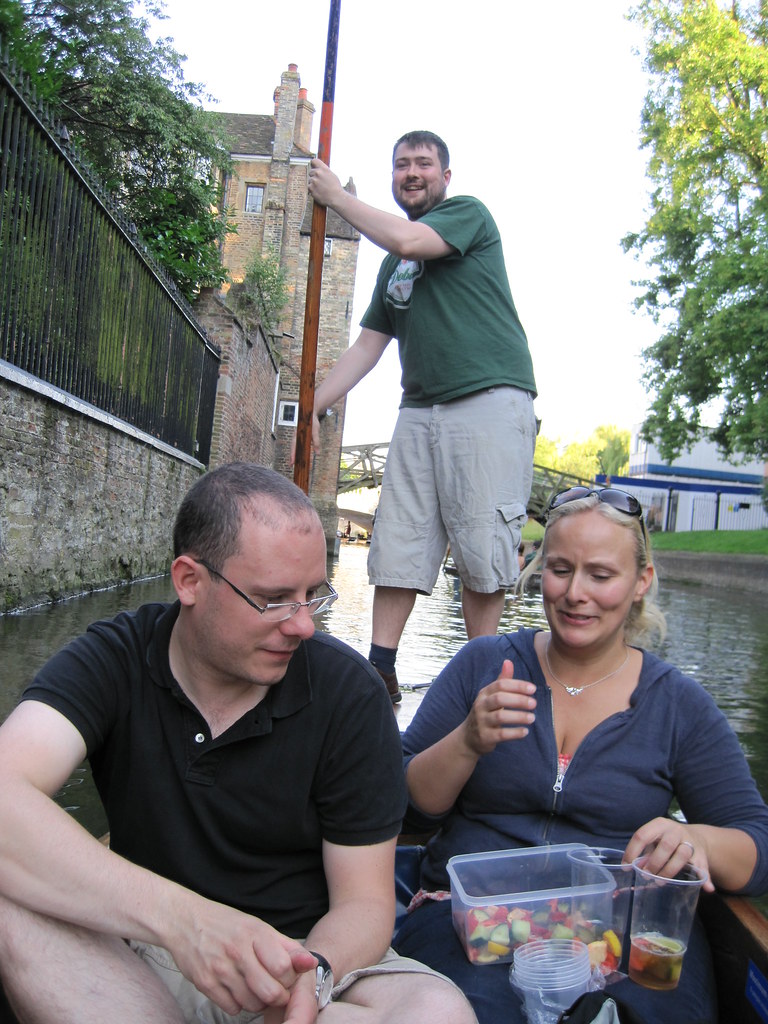
Vincent Sanders: Pimm's and Punting

The Sun came out in Cambridge the other week (yes I know, a rare occurrence) and because Robert is a generous soul he decided the office should go punting on the cam.

I had not previously been out on the river but Robert proved to be the consummate punter.

We even got fruit based drinks and some serenading, although perhaps that was not a benefit.


I took many photos of the event including the rather nice meal afterwards, some were even in focus and not blurry.

1 August 2012

Rapha&#235;l Hertzog: My Debian Activities in July 2012

This is my monthly summary of my Debian related activities. If you re among the people who made a donation to support my work (72.65 , thanks everybody!), then you can learn how I spent your money. Otherwise it s just an interesting status update on my various projects. This month has been a short one since I have been away for 2 weeks of vacation. Dpkg My dpkg work encompasses a bunch of small tasks: Packaging I updated nautilus-dropbox to version 1.4.0 and python-django-registration to version 0.8. Both have been uploaded to unstable and I initially wanted to request an unblock for the latter, but it turns out it has gained reverse dependencies and version 0.8 introduces API changes so it s not an option at this point of the freeze. QA work I investigated and fixed #678356 where it had been reported that the PTS static news were no longer working as expected. At the start of the month, I also unblocked the mostly-unknown but important mole service it was out of date of several weeks and several people were annoyed that the information about new upstream versions was no longer up-to-date. Vacation Almost no Debian work during my vacation but the lack of Wifi nearby made me look for solutions to connect my computer through my Nokia N900 3G/GPRS connection. I discovered the Mobile Hotspot application (homepage) and it worked like a charm (although it required Maemo s non-default devel repository to be able to install the alternative kernel for power users ). The Debian Handbook Michal iha proposed us to host a Weblate instance to help translate the book with a web interface. He kindly agreed to implement some improvements to better suit my requirements. Those have been completed and the weblate instance is now live at debian.weblate.org. There s no requirement to use Weblate for translations teams but for those that do, it sure makes it easier to recruit volunteers who have no prior knowledge of Git and PO files. If you want to help, please checkout this page first though, you should not start using Weblate without getting in touch with the respective translations teams. Apart from translations, I also had the pleasure to merge some patches from Philipp Kern who improved the section covering IPv6 and a few other parts. We can make the book even better if more people share their expertise in the part of the book where they know better than me and Roland. :-) Thanks See you next month for a new summary of my activities.


No comment Liked this article? Click here. My blog is Flattr-enabled.

31 July 2012

Christian Perrier: Discovering a new package: HotelDruid

What is good in "my" job in Debian are opportunities to discover new interesting packages. While surveying the completion of debconf translations in unstable, I thus noticed a new package named "hoteldruid", that has a few questions and interaction with users. After my usual mumble because French and a few other languages were *finally* virtually 100% in unstable for a few days...... I went on my usual task in such cases: propose a review of debconf templates and package description to my fellow debian-l10n-english co-workers (/me bends to Justin B. Rye, our tireless, picky, efficient and very clever Master Reviewer for over 5 years now). Then I discovered what HotelDruid is about: this is a piece of PHP-based software meant to manage....an hotel or bed and breakfast...or any kind of such facility. Real end-user software. Really useful software. For real people...:-) Not the gazillionth obscure development language, or yet another encryption library, or yet another mysterious virtualization thing used by 10 people in the world (even if they host thousands of machines). These are the free software pieces I like the most. Probably Marco Maria Francesco De Santis (the upstream author and Debian package maintainer) somewhere in, I guess, Italy is running a small B&B (or maybe his parents, or his wife/cousin/whatever) *and* is a free software addict. And he wanted to run his business with free software. Same for this French genealogist who once wanted to display his data over the web (and make a real use of that obscure Ocaml language.....yes, pun itended to my friends, here). Of the person who wrote LedgerSMB to manage his business. Or those who use free software to manage hospitals (hi Andreas) or schools (hi DebianEdu folks...and special hi to Petter). Real software for real people. Of course, developed with obscure geeky things used only by those weird geeks who like to sometimes travel half a planet to just gather together and develop the best free operating system ever. Guess what? I like this! And guess what? I proposed the HotelDruid author to check whether we could imrove....translation, of course..:-)

21 July 2012

Andrew Pollock: [life] Sarah sans gallbladder

I can't remember exactly when, it was either pre-Zoe heart-related diagnostic imaging or during her pregnancy with Zoe, that it became apparent that Sarah had gall stones. Apparently it's not uncommon for women to develop them after pregnancy, and it turns out that Sarah is slightly more genetically predisposed to getting them to boot. So it wasn't terribly surprising when she started having some pain recently. She had another ultrasound to confirm it, and went off to see a surgeon. Apparently they care more about the symptoms than the number of stones in the gallbladder, and they don't bother removing the stones and keeping the gallbladder, so she was booked in for a cholecystectomy last Thursday. It was a pretty straightforward procedure, she was out of the operating room in just under an hour, and awake a bit over an hour after that. I've had a few friends need to have a cholecystectomy, and the photos on Wikipedia have always fascinated me, particularly this one. It seems so freaky to have a gallbladder full of that much gravel. It can't be comfortable. We're going to be able to pick up Sarah's stones on Monday, so it'll be interesting to see what they look like. Sarah's recovering now. It's one of the few surgeries she's had under general anaesthesia where she hasn't been sick afterwards, so that was a good start. The procedure was done laparoscopically, using four incisions, and to give themselves room to work, they inflate the body with carbon dioxide gas, which then has to work its way out of her body over the following days. So she's dealing with some bloating, bruising and swelling at the moment, but not doing too badly. Apparently if you're vertical for too long, the gas can work its way up to your diaphragm, which causes some shoulder pain, so the trick has been to walk around a bit, then lie down for a bit, and then rinse and repeat. She's not allowed to lift Zoe for 3-4 weeks, which presents a few challenges for us, but nothing insurmountable (hopefully). We converted Zoe's crib to a toddler bed a week before the surgery, and Zoe thought that was just the best thing ever, and has taken to it really well. I'm around at home for breakfast and dinner, so I can take care of the lifting into and out of the high chair for those meals, and Zoe can eat lunch at her little table. Zoe's also pretty good about getting into and out of the car by herself (not that Sarah can drive until she's off the painkillers) and she's normally in daycare two days a week. She's in daycare again on Monday, so Sarah won't have to deal with Zoe on her own until Tuesday, and we have backup daycare arrangements we can fall back on if need be. Zoe's been very good about Sarah not being able to pick her up, and been very gentle. It helped with the explanation that Sarah could show her all of her "owwies". The surgeon was saying that only 1 in 400 people need to alter their diet after removing their gallbladder, so we're hopeful that Sarah will do just fine without it. She'll certainly be more comfortable in the long run.

9 July 2012

Benjamin Mako Hill: Wiki Conferencing

I am in Berlin for the Wikipedia Academy, a very cool hybrid free culture community plus refereed academic conference organized, in part, by Wikimedia Deutschland. On Friday, I was very excited to have been invited to give the conference's opening keynote based on my own hybrid take on learning from failures in peer production and incorporating a bunch of my own research. Today, I was on a panel at the conference about free culture and sharing practices. I'll post talks materials and videos when the conference puts them online. I will be in Berlin for the next week or so before I head to directly to Washington, DC for Wikimania between the 11th and 15th. I'll be giving three talks there: Between then and now, I'm taking the next week in Berlin to catch up on work, and with friends. If you're in either place and want to meet up, please get in touch and lets try to arrange something.

6 July 2012

Lucas Nussbaum: Debian Maintainer Dashboard update

I ve spent some more time on Debian Maintainer Dashboard (DMD), a maintainer/team-centric dashboard relying on Ultimate Debian Database. Done:
- added tabs (jquery really rocks) see example
- added a hacking.html file that describes how to setup a development environment
- created a pad (http://debian.titanpad.com/DMD) to store ideas. TODO:
- recruit contributors ;)

3 July 2012

Miriam Ruiz: Scratch in Debian

Scratch has finally reached Debian repositories. Scratch is a programming learning environment created by the Lifelong Kindergarten Group at the MIT Media Lab designed to be accessible by young learners (over 8 years old). Scratch makes it easy to create your own interactive stories, animations, games, music, and art through a visual interface based on blocks. Thus, beginners can get results without having to learn to write syntactically correct code first. It is powerful enough to have even been adopted as an entry-level computer language in computer science programs at different universities. Scratch makes use of pieces of code embedded in different blocks that are shaped like puzzle pieces. That way, programming consists on putting different blocks together, which gives immediate visual feedback to the programmer about the correctness of the syntax: If the pieces fit together, then the expression is valid. Scratch programming system is so nice and easy that has been the inspiration of other systems such as MIT App Inventor or Google Blocky.

Scratch animations consist of sprites that are animated by dragging the corresponent blocks into the Scripts area of the Scratch interface. Multiple sprites can be created and interact with one another. Each of the sprites can have different looks (called costumes in Scratch). You can use built-in sprites, load them from files, or draw your own using a drawing tool integrated in the environment. Scratch itself is coded in Squeak, a Smalltalk implementation derived from Smalltalk-80. The Scratch 1.4 source went GPLv2 on March, but there were some incompatibilites with the Squeak Virtual Machine currently in Wheezy that had to be resolved first. Luckily we were able to solve them, with the help of the Scratch and the Squeak guys, so I m happy to say that Scrach is finally available from Debian repositories. Note: If any Scratch derivatives (such as BYOB or Panther) also need to be ported to the current version of Squeak, they should have a look at the comments in the Scratch ITP, and especially to the script uploaded by Bert Freudenberg, that replaces 90 indexed primitive declarations (removed in later versions of Squeak VM) with their named counterpart. Note 2: This wouldn t have been possible without all the great work and effort made by Amos Blanton and many others. Lots of thanks!

2 July 2012

Benjamin Mako Hill: Wiki Conferencing

I am in Berlin for the Wikipedia Academy, a very cool hybrid free culture community plus refereed academic conference organized, in part, by Wikimedia Deutschland. On Friday, I was very excited to have been invited to give the conference's opening keynote based on my own hybrid take on learning from failures in peer production and incorporating a bunch of my own research. Today, I was on a panel at the conference about free culture and sharing practices. I'll post talks materials and videos when the conference puts them online. I will be in Berlin for the next week or so before I head to directly to Washington, DC for Wikimania between the 11th and 15th. I'll be giving three talks there: Between then and now, I'm taking the next week in Berlin to catch up on work, and with friends. If you're in either place and want to meet up, please get in touch and lets try to arrange something.

21 June 2012

Russell Coker: New SE Linux Policy for Wheezy

I ve just uploaded a new SE Linux policy for Debian/Wheezy. It now works correctly with systemd and Chromium, two significant features that I wanted for Wheezy. Now it turns out that we have until the end of the month for Wheezy updates, so I may get another version of the policy uploaded before then. If so it will only be for relatively minor changes, I think that most SE Linux users would be reasonably happy with policy the way it is. Anything that doesn t work now can probably be solved by local configuration changes. execmem The current version of KDE in Debian is 4.8.4, it seems that large parts of the KDE environment depend on execmem access, this includes kwin and plasma-desktop. Basically there is no possibility of having a KDE desktop environment without those programs and therefore KDE depends on execmem access. Debugging this is difficult as the important programs SEGV when denied execmem access and the KDE crash handler really gets in the way of debugging it running /usr/bin/plasma-desktop results in the process forking a child and detaching from the gdb session. The most clear example of an execmem issue in KDE is from the program /usr/lib/kde4/libexec/kwin_opengl_test which gives the following error:
LLVM ERROR: Allocation failed when allocating new memory in the JIT
Can t allocate RWX Memory: Permission denied To make this work you run the command setsebool -P allow_execmem 1 which gives many domains the ability to create writable-executable memory regions. I raised this issue for discussion on the SE Linux mailing list and Hinnerk van Bruinehsen wrote an informative message in response summarising the situation [1]. It seems that it s possible to compile some of the programs in question to not use the JIT and therefore not require such access and there is a build option in Gentoo to allow it. But it s impractically difficult for me to fork KDE in Debian so the only option is to recommend that people enable the allow_execmem boolean for Debian desktop systems running SE Linux. Related posts:
  1. /run and SE Linux Policy Currently Debian/Unstable is going through a transition to using /run...
  2. An Update on DKIM Signing and SE Linux Policy In my previous post about DKIM [1] I forgot to...
  3. New SE Linux Policy for Squeeze I have just uploaded refpolicy version 0.2.20100524-1 to Unstable. This...

17 June 2012

Christian Perrier: Debian: Thou Shalt Be Packaged

Debian is such a universal system:
# apt-get install wine and cheese
Reading package lists... Done
Building dependency tree       
Reading state information... Done
The following extra packages will be installed:
  brasero brasero-common cheese-common desktop-file-utils evolution-data-server-common gcr gir1.2-atk-1.0 gir1.2-clutter-1.0 gir1.2-clutter-gst-1.0 gir1.2-cogl-1.0
  gir1.2-coglpango-1.0 gir1.2-evince-3.0 gir1.2-freedesktop gir1.2-gdkpixbuf-2.0 gir1.2-gst-plugins-base-0.10 gir1.2-gstreamer-0.10 gir1.2-gtk-3.0 gir1.2-gtkclutter-1.0
  gir1.2-gtksource-3.0 gir1.2-json-1.0 gir1.2-pango-1.0 gnome-desktop3-data gnome-icon-theme gnome-keyring gnome-sushi gnome-video-effects gstreamer0.10-plugins-ugly gvfs
  gvfs-backends gvfs-common gvfs-daemons gvfs-libs hwdata libbrasero-media3-1 libburn4 libcamel-1.2-29 libcap2-bin libcdio-cdda1 libcdio-paranoia1 libcdio13 libcheese-gtk21
  libcheese3 libclutter-1.0-0 libclutter-1.0-common libclutter-gst-1.0-0 libclutter-gtk-1.0-0 libclutter-imcontext-0.1-0 libcluttergesture-0.0.2-0 libcogl-common libcogl-pango0
  libcogl9 libebook-1.2-12 libecal-1.2-10 libedataserver-1.2-15 libedataserverui-3.0-1 libevdocument3-4 libevview3-3 libexempi3 libgck-1-0 libgcr-3-1 libgcr-3-common libgee2
  libgjs0b libglib2.0-data libgnome-desktop-3-2 libgssdp-1.0-3 libgupnp-1.0-4 libgxps2 libisofs6 libjson-glib-1.0-0 libjte1 libmozjs185-1.0 libmpg123-0 libmx-1.0-2 libmx-bin
  libmx-common libnautilus-extension1a libpam-cap libpam-gnome-keyring libpoppler-glib8 libpoppler19 libquvi-scripts libquvi7 libsidplay1 libt1-5 libtotem-plparser17
  libtracker-sparql-0.14-0 libwine libwine-alsa libwine-bin libwine-gecko-1.4 libwine-gl nautilus nautilus-data nautilus-sendto wine-bin
Suggested packages:
  libdvdcss2 gnome-video-effects-frei0r libcap-dev sidplay-base xsidplay wine-doc libwine-cms libwine-sane libwine-ldap libwine-print libwine-openal libwine-gphoto2 eog
  xdg-user-dirs tracker pidgin gajim ttf-mscorefonts-installer winbind avscan klamav clamav 
The following NEW packages will be installed:
  and brasero brasero-common cheese cheese-common desktop-file-utils evolution-data-server-common gcr gir1.2-atk-1.0 gir1.2-clutter-1.0 gir1.2-clutter-gst-1.0 gir1.2-cogl-1.0
  gir1.2-coglpango-1.0 gir1.2-evince-3.0 gir1.2-freedesktop gir1.2-gdkpixbuf-2.0 gir1.2-gst-plugins-base-0.10 gir1.2-gstreamer-0.10 gir1.2-gtk-3.0 gir1.2-gtkclutter-1.0
  gir1.2-gtksource-3.0 gir1.2-json-1.0 gir1.2-pango-1.0 gnome-desktop3-data gnome-icon-theme gnome-keyring gnome-sushi gnome-video-effects gstreamer0.10-plugins-ugly
  gvfs-backends hwdata libbrasero-media3-1 libburn4 libcamel-1.2-29 libcap2-bin libcdio-cdda1 libcdio-paranoia1 libcdio13 libcheese-gtk21 libcheese3 libclutter-1.0-0
  libclutter-1.0-common libclutter-gst-1.0-0 libclutter-gtk-1.0-0 libclutter-imcontext-0.1-0 libcluttergesture-0.0.2-0 libcogl-common libcogl-pango0 libcogl9 libebook-1.2-12
  libecal-1.2-10 libedataserver-1.2-15 libedataserverui-3.0-1 libevdocument3-4 libevview3-3 libexempi3 libgck-1-0 libgcr-3-1 libgcr-3-common libgee2 libgjs0b libglib2.0-data
  libgnome-desktop-3-2 libgssdp-1.0-3 libgupnp-1.0-4 libgxps2 libisofs6 libjson-glib-1.0-0 libjte1 libmozjs185-1.0 libmpg123-0 libmx-1.0-2 libmx-bin libmx-common
  libnautilus-extension1a libpam-cap libpam-gnome-keyring libpoppler-glib8 libpoppler19 libquvi-scripts libquvi7 libsidplay1 libt1-5 libtotem-plparser17 libtracker-sparql-0.14-0
  libwine libwine-alsa libwine-bin libwine-gecko-1.4 libwine-gl nautilus nautilus-data nautilus-sendto wine wine-bin The following packages will be upgraded:
  gvfs gvfs-common gvfs-daemons gvfs-libs   
4 upgraded, 95 newly installed, 0 to remove and 974 not upgraded.   
Need to get 100 MB/104 MB of archives.
After this operation, 250 MB of additional disk space will be used.
Thanks to Zobel, who pointed me to this one....

14 June 2012

Russell Coker: The Financial Value of a University Degree

I ve read quite a few articles about the value of a degree. Most of them come from the US where the combination of increasing tuition fees and uncertain job market makes a degree seem like a risky investment. I think that most analysis of the value of a degree are missing some important points. The Value of Money at Different Times The value of money is different at various stages of your life. The impression that I get is that when a married couple have their house fully paid off and they either don t/won t have children or their children are old enough to leave home the amount of money that they earn seems to matter a lot less. Doing a university degree involves 3 or 4 years not earning money (or more if doing post-graduate studies), which is usually starting at the age of 18. Effectively getting a degree involves giving up some money while young for the opportunity to earn more when older. Any analysis based on directly comparing the money spent on the degree to the amount of financial return without considering when money is needed is not very useful. I think that a reasonable analysis would exclude income earned after the age of about 45. By that age most people have either achieved a solid financial position and learned to live within their means or messed up their finances so badly that they won t live long enough to recover. A Degree as a Signal The Wikipedia page on economic signalling gives education as an example of a signal. A signal in this case means something that doesn t inherently mean anything but which signifies something else. So completing a degree doesn t necessarily mean that you learned anything relevant to work, but if you are able to do it then it means that you can probably also do things which are economically useful for an employer. This raises the question of how else one might signal their ability to work. One obvious answer is by working, someone who has remained steadily employed for 3 or 4 years has demonstrated their ability to work reliably and get along with other people which should be at least as useful as a signal. It s Not Only the Degree Most analysis seem to compare average income of people with degrees with the average of income with people who didn t attend university. That is based on the assumption that the degree was the only difference. When I was young my parents spent a moderate amount of money on a full set of paper encyclopedias (about 2 meters of shelf space). I m sure that this gave me some educational benefit as they intended, and it was something that was apparently quite rare I don t recall seeing a full encyclopedia in anyone else s house before the Wikireader [1]. My parents also bought me quite a lot of computer gear (back when hardware was really expensive), were always available to drive me to computer users group meetings etc, and did everything else that seemed likely to have an educational benefit. The value of such learning opportunities is significant. I think that almost everyone who had similar learning opportunities to me when they were young will probably have experienced similar support and pressure to attend university. I also think that almost everyone who receives such opportunities will be able to earn more than the median income even if they don t attend university. To a large extent people who are going to be successful attend university. A university degree doesn t make anyone successful if they couldn t succeed without a degree. There are some careers that just aren t options if you don t have a relevant degree (such as medicine and law). But I believe that anyone who is capable of completing a difficult course such as medicine or law (or any other career that has legal requirements for a degree) is capable of being successful without a degree in many other fields. So comparing the wages of a doctor or a lawyer to an average person doesn t make sense, it makes more sense to try and compare their wages to someone of similar skill who didn t have such a qualification. Conclusion It seems to me that the question is, of the people who had great learning opportunities when they were young and who wanted to succeed, would they have earned much less if they hadn t attended university? The next question is, of the people who might earn significantly less without getting a degree, would that salary difference really have mattered, or would it just be a matter of earning some luxury money when they are too old to really need it? Related posts:
  1. Ideas for a Home University There seems to be a recent trend towards home-schooling. The...
  2. university degrees Recently someone asked me for advice on what they can...
  3. Microsoft Hires University Drop-Out for Recruiting Campaign news.com.au reports that MS has hired former Miss Australia Erin...

Next.

Previous.