Tianon Gravi: Containers Are a Security Boundary (some assembly required)
I've heard "containers are not a security boundary" enough times that it's started to feel like received wisdom, and my honest read (after 13+ years) is that it's technically defensible but practically sloppy and the sloppiness matters.
The part that's true: containers share a kernel, and a kernel exploit crosses the container boundary where a VM would not. That difference is real and non-trivial, and the CVE history backs it up CVE-2019-5736, CVE-2022-0492, and CVE-2024-21626 all happened in "correctly configured" production containers.
The part I'd push back on is that the comparison point is almost never stated. "Containers aren't a security boundary" is being used as shorthand for "containers aren't a VM boundary" but the conclusion people seem to draw from that is "therefore don't bother", which doesn't actually follow. The more honest version is that default Docker doesn't provide strong isolation between mutually untrusting parties, but a hardened configuration does.
What ships by default in Moby is actually a pretty reasonable foundation: seccomp is enabled (with a builtin profile blocking ~50 syscalls credit where it's due: this is mostly @jessfraz's work; she even ran contained.af as a public CTF for years daring people to escape a container under her seccomp profile, and to my knowledge it was never claimed), AppArmor is enabled (the
None of these require a daemon restart or infrastructure changes, and stacked together they go a long way toward actually building the boundary that the defaults leave unbuilt.
(this post was written with the assistance of "claude my eyes right out" but all thoughts and understanding are Tianon's)
docker-default profile), and several sensitive /proc paths are masked. What's not on by default: no-new-privileges (setuid binaries inside can escalate), CAP_NET_RAW is still granted to every container (even though the kernel has supported unprivileged ICMP sockets for over a decade, meaning most modern distributions no longer need CAP_NET_RAW for ping), and user namespace remapping though user namespaces aren't quite the silver bullet they might sound like; Debian left them disabled by default for years because the kernel attack surface they exposed hadn't been hardened against unprivileged callers.
The boundary isn't absent it doesn't come completely pre-assembled. With VMs, the hypervisor is there whether you asked for it or not; with containers, assembling the boundary is left as an exercise for the operator. That's a much more solvable problem than "the technology is incapable", but it does mean the work falls to whoever's running the containers.
So, some things you can do today without waiting for defaults to change:
--user (or USER in your Dockerfile) is worth calling out specifically, because I think it's arguably stronger than user namespace remapping in one important way and partly for the same reason Debian was hesitant about user namespaces in the first place. User namespace remapping protects the host from a root-in-container escape: if you do escape, you land as an unprivileged user on the host. But you were still root inside the container the whole time. Running as a non-root user means you were never root anywhere. The blast radius of a compromised process is limited whether or not it escapes, including for things like reading secrets, modifying container contents, or lateral movement within the container itself. Most application containers have no legitimate reason to be root.
Beyond that, a short list of things that are easy to enable and hard to justify leaving off:
--security-opt no-new-privilegesprevents setuid binaries from escalating; can also be set daemon-wide indaemon.jsonwith"no-new-privileges": true--read-onlya read-only root filesystem means a compromised process can't easily persist tooling or modify the container (pair with a writabletmpfsmount for/tmpetc as needed)--cap-drop NET_RAWor--cap-drop ALLand add back only what you actually need;CAP_NET_RAWis almost never legitimately needed by application containers- never
--privilegedif something seems to require it, the right answer is almost always a more targeted capability grant or bind mount, not the nuclear option
docker run \
  --user 1234:5678 \
  --security-opt no-new-privileges \
  --read-only \
  --tmpfs /tmp \
  --cap-drop ALL \
  acme/untrusted-workload:latest


 Back when we started with a signed shim in Debian, the tooling was
Windows-only and required me to do a reboot dance and it was all quite
tedious. Over time, more and more of the tooling has migrated to
Linux and it all works quite well.
The signing is done with an EV code signing cert from SSL.com and
stored on a Yubikey. Getting the certificate onto the key is a bit
tedious, but reasonably well-explained in the ssl.com docs.
Microsoft wants the shim binaries uploaded to their partner portal
wrapped in a

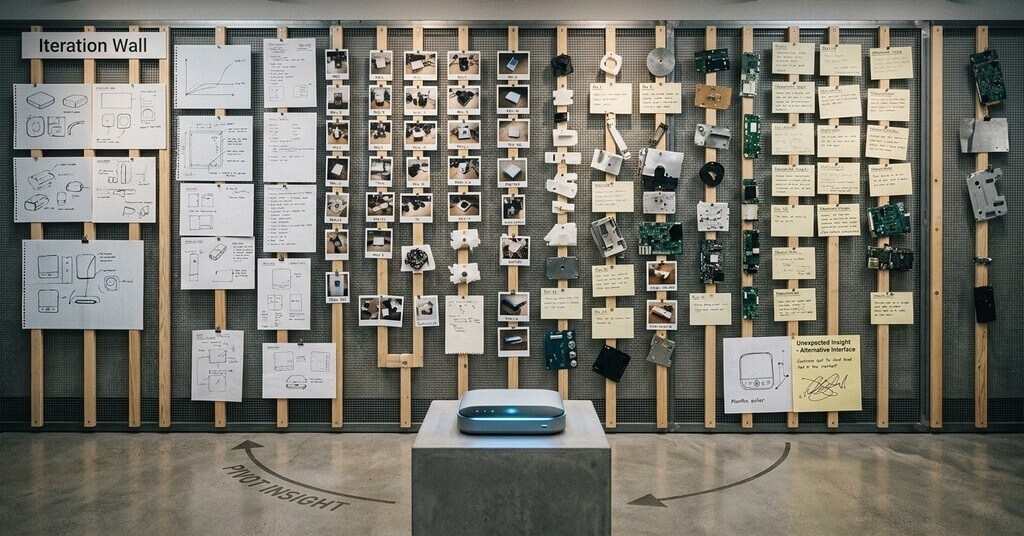 Being persistent, sticking to a plan and showing up to work every day is generally valued highly across all cultures as virtuous behavior. It is obvious that anything of value and worth achieving is also not easy, but requires significant and recurring effort. Learning a new language, winning a sports competition or building a successful business are all typical scenarios where grit plays a central role above everything else. However, sometimes the virtue of tenacity can result in just a waste of energy.
The question is then: how does one recognize that true progress is being blocked by stubbornness and a pivot would be the correct decision, as opposed to being close to breakthrough where doing more of the same would actually be the right choice?



 My Debian contributions this month were all
 The Debian LTS Team, funded by


 Version 0.0.29 of