I am finally catching up with the remarkably thick goulash of email and blogs entries that comes from traveling for well over a month and today I read one in particular
When is Open Source not Open Source? that captivated my interest for it compellingly addresses the dangers that follow from diluting, or one might say hijacking, the term open source.
When people learn that I study “free software” one of the most common questions I get asked is: why did I chose free software over open source? The answer is quite simple: given that the bread and butter of my research covers ethics, freedom, and liberalism, free software is the obvious path to follow, yet I also feel like a lot of my work is still relevant to the open source camp because of the affinities between the two.
I have long maintained that the ideological gulf between open source and free software is not so great nor impassable, but more modest. As most know, both share a certain strong commitment to access and in a strict technical sense they refer to the same set of licenses. Philosophically there is agreement that openness and, especially, non-discrimination are essential for the quality of software and often by close extension, the vibrancy of community responsible for the software.
Of course, when pontificating the ramifications and implications of openness, they do part company and enter into different territories. Free software tends to flag rights and freedoms, while open source meanders into a discussion of markets, business, and competition and in this regard they do craft different visions of the social world and human behavior, etc.
But the case that Karl Fogel writes about, where OSI
is strongly opposing the use of the term open source for licenses that don’t adhere to the definition demonstrates where the two positions join. As Michael Tiemann from the OSI succinctly put it:
The FSF may have got the orthodoxy wrong, and the OSI may have got the interpretation wrong, but we both agree that prohibition of commercial use without special permission is antithetical to both positions.
There is a unmistakable kernel of agreement and it is great to see the OSI taking such a strong stance in this regard.
Now, David Richard’s
response, who seeks, I think, to essentially dilute the term open source, is as (or perhaps even more) fascinating for in a nut shell, and using a lot of florid religious imagery, it accuses the OSI of being too rigid! In his own words:
I believe the OSI has a wonderful opportunity to continue being relevant and helping to lead the movement forward. If, however, y’all choose to define your denomination of this religion in a way that we don’t fit in, that’s fine. No hard feelings. It’s your choice. You’ll ultimately be excluding a large congregation and we for one will continue trying to build a church made up of others like ourselves.
In response, I would say that the goal of F/OSS is not to be inclusive of anyone who wants to release bits of source code, but to create the conditions under which software, as it has been defined by the community, can be created. Join the church if you would like to make free/open source software as defined and you can go elsewhere (i.e., create a different term) if you are creating something different, even if it is only slightly different.
Integrity matters.
And again inclusiveness, if it comes at the expense of the main goal, is not a boon but a danger to F/OSS. The OSI will remain relevant by halting the dilution of the term OSI, not by expanding the definition so that it is left with no substance.
And in contradistinction to what David Richard maintains, however, there is a great degree of flexibility within this domain but it does not lie in the strict definition of F/OSS but in the realm of interpretation. You are also free, as Mako and I have argued
elsewhere to interpret the significance of F/OSS in multiple ways.
And I think this is where the political strength of free software lies. There is interplay between a well-defined goal (in this case for creating free software) and a more flexible realm of interpreting the significance of these technical practice.
And we wold lose and I might add, a lot if we became flexible about the strict definition of F/OSS and inflexible about its political significance.
I get irked with folks like David Richards who would like to bend open source rules to meet their (often commercial) interests and I find it pretty na ve when folks say the political significance of F/OSS is just x (or worse should be x) for in reality its political significance lies in the fact that it has spawned multiple types of political and economic projects.
And there is something almost playfully ironic, (or at least it makes me smile) in this fact. Though there is strict definition contained withing F/OSS, this strictness has, at least to some extent, encouraged by an extreme and very healthy form of political proliferation and promiscuity.
More than anyone else I know, Mako has most passionately and thoughtfully
argued for the importance of what I would call political clarity and integrity. That is, the importance of having a well articulated definition for social movements, for they act, as he says a rallying point to realize a social movement. Urging the Creative Commons to learn from F/OSS and dare to simultaneously narrow and more clearly define their goals, he states it quite nicely in the following terms:
Free software advocates have been able to use the free software definition as the rallying point for a powerful social movement. Free software, like the concept of freedom in any freedom movement, is something that one can demand, something that one can protest for, and something that one can work toward. Working toward these goals, free and open source software movements have created the GNU/Linux operating system and billions of lines of freely available computer code.
In essence, a definition that people can abide by, respect, and perhaps eventually cherish is the condition of possibility to make working political code. And given how hard it is to make social change happen (at least in comparison to build computer code), we should learn from what F/OSS has to offer.
And at the same time there is another lesson embedded in F/OSS. The Free Software Definition is well defined; but it must be emphasized, narrowly so. It does not try to do everything and have everyone pledge allegiance to an inordinately complex set of commitments.
Clarity, narrowness, and well-defined goals –> these three attributes have powered it far and wide and I hope it remains so.
Now, since the term open source is not trademarked, we are left with the problem of how to challenge the current hijacking of the term. For the solution, I will leave you with Karl Fogel, who I think proposes a good solution:
Note that the OSI s objection is not to the Zimbra license per se. The objection is just to Zimbra s calling that license open source . They can use any license they want, but they shouldn t call it open source unless it actually is. Freedom is freedom, and no amount of spin will change that.
So what should we do about this?
The term open source isn t trademarked. Years ago, the OSI tried to register it, but it was apparently too generic. …But there is public opinion. What Danese and Michael are proposing doing is organizing a lot of open source developers (and I mean open source according to the traditional definition, the one the OSI and I and most other open source developers I know adhere to) to stand up and, basically, say All of us agree on what the definition of open source is, and we reject as non-open source any license that does not comply with the letter and spirit of the Open Source Definition.
 By the way, any help would be welcome.
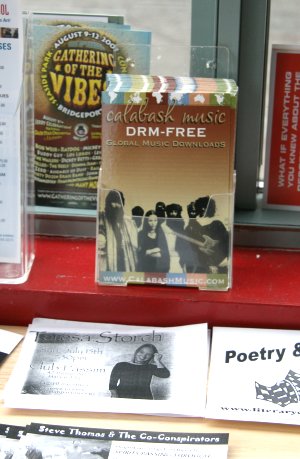
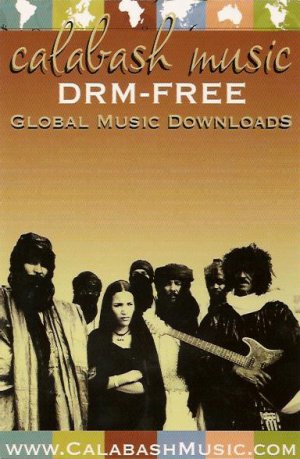 The store served a general, non-technical audience. DRM-FREE, it turns
out, is a good way to sell music. Not just to geeks but to any consumer
who has been stymied unfairly by DRM or knows someone who has. That, it
turns out, is a whole lot people. Consumers know what DRM is and they
know don't like it.
As consumers learn more about DRM, they want to avoid it. Seeing this,
the companies that produce DRM are looking for ways to escape.