Search Results: "hug"

7 February 2021

Chris Lamb: Favourite books of 2020

I won't reveal precisely how many books I read in 2020, but it was definitely an improvement on 74 in 2019, 53 in 2018 and 50 in 2017. But not only did I read more in a quantitative sense, the quality seemed higher as well. There were certainly fewer disappointments: given its cultural resonance, I was nonplussed by Nick Hornby's Fever Pitch and whilst Ian Fleming's The Man with the Golden Gun was a little thin (again, given the obvious influence of the Bond franchise) the booked lacked 'thinness' in a way that made it interesting to critique. The weakest novel I read this year was probably J. M. Berger's Optimal, but even this hybrid of Ready Player One late-period Black Mirror wasn't that cringeworthy, all things considered. Alas, graphic novels continue to not quite be my thing, I'm afraid. I perhaps experienced more disappointments in the non-fiction section. Paul Bloom's Against Empathy was frustrating, particularly in that it expended unnecessary energy battling its misleading title and accepted terminology, and it could so easily have been an 20-minute video essay instead). (Elsewhere in the social sciences, David and Goliath will likely be the last Malcolm Gladwell book I voluntarily read.) After so many positive citations, I was also more than a little underwhelmed by Shoshana Zuboff's The Age of Surveillance Capitalism, and after Ryan Holiday's many engaging reboots of Stoic philosophy, his Conspiracy (on Peter Thiel and Hulk Hogan taking on Gawker) was slightly wide of the mark for me. Anyway, here follows a selection of my favourites from 2020, in no particular order:

Fiction Wolf Hall & Bring Up the Bodies & The Mirror and the Light Hilary Mantel During the early weeks of 2020, I re-read the first two parts of Hilary Mantel's Thomas Cromwell trilogy in time for the March release of The Mirror and the Light. I had actually spent the last few years eagerly following any news of the final instalment, feigning outrage whenever Mantel appeared to be spending time on other projects. Wolf Hall turned out to be an even better book than I remembered, and when The Mirror and the Light finally landed at midnight on 5th March, I began in earnest the next morning. Note that date carefully; this was early 2020, and the book swiftly became something of a heavy-handed allegory about the world at the time. That is to say and without claiming that I am Monsieur Cromuel in any meaningful sense it was an uneasy experience to be reading about a man whose confident grasp on his world, friends and life was slipping beyond his control, and at least in Cromwell's case, was heading inexorably towards its denouement. The final instalment in Mantel's trilogy is not perfect, and despite my love of her writing I would concur with the judges who decided against awarding her a third Booker Prize. For instance, there is something of the longueur that readers dislike in the second novel, although this might not be entirely Mantel's fault after all, the rise of the "ugly" Anne of Cleves and laborious trade negotiations for an uninspiring mineral (this is no Herbertian 'spice') will never match the court intrigues of Anne Boleyn, Jane Seymour and that man for all seasons, Thomas More. Still, I am already looking forward to returning to the verbal sparring between King Henry and Cromwell when I read the entire trilogy once again, tentatively planned for 2022.

The Fault in Our Stars John Green I came across John Green's The Fault in Our Stars via a fantastic video by Lindsay Ellis discussing Roland Barthes famous 1967 essay on authorial intent. However, I might have eventually come across The Fault in Our Stars regardless, not because of Green's status as an internet celebrity of sorts but because I'm a complete sucker for this kind of emotionally-manipulative bildungsroman, likely due to reading Philip Pullman's His Dark Materials a few too many times in my teens. Although its title is taken from Shakespeare's Julius Caesar, The Fault in Our Stars is actually more Romeo & Juliet. Hazel, a 16-year-old cancer patient falls in love with Gus, an equally ill teen from her cancer support group. Hazel and Gus share the same acerbic (and distinctly unteenage) wit and a love of books, centred around Hazel's obsession of An Imperial Affliction, a novel by the meta-fictional author Peter Van Houten. Through a kind of American version of Jim'll Fix It, Gus and Hazel go and visit Van Houten in Amsterdam. I'm afraid it's even cheesier than I'm describing it. Yet just as there is a time and a place for Michelin stars and Haribo Starmix, there's surely a place for this kind of well-constructed but altogether maudlin literature. One test for emotionally manipulative works like this is how well it can mask its internal contradictions while Green's story focuses on the universalities of love, fate and the shortness of life (as do almost all of his works, it seems), The Fault in Our Stars manages to hide, for example, that this is an exceedingly favourable treatment of terminal illness that is only possible for the better off. The 2014 film adaptation does somewhat worse in peddling this fantasy (and has a much weaker treatment of the relationship between the teens' parents too, an underappreciated subtlety of the book). The novel, however, is pretty slick stuff, and it is difficult to fault it for what it is. For some comparison, I later read Green's Looking for Alaska and Paper Towns which, as I mention, tug at many of the same strings, but they don't come together nearly as well as The Fault in Our Stars. James Joyce claimed that "sentimentality is unearned emotion", and in this respect, The Fault in Our Stars really does earn it.

The Plague Albert Camus P. D. James' The Children of Men, George Orwell's Nineteen Eighty-Four, Arthur Koestler's Darkness at Noon ... dystopian fiction was already a theme of my reading in 2020, so given world events it was an inevitability that I would end up with Camus's novel about a plague that swept through the Algerian city of Oran. Is The Plague an allegory about the Nazi occupation of France during World War Two? Where are all the female characters? Where are the Arab ones? Since its original publication in 1947, there's been so much written about The Plague that it's hard to say anything new today. Nevertheless, I was taken aback by how well it captured so much of the nuance of 2020. Whilst we were saying just how 'unprecedented' these times were, it was eerie how a novel written in the 1940s could accurately how many of us were feeling well over seventy years on later: the attitudes of the people; the confident declarations from the institutions; the misaligned conversations that led to accidental misunderstandings. The disconnected lovers. The only thing that perhaps did not work for me in The Plague was the 'character' of the church. Although I could appreciate most of the allusion and metaphor, it was difficult for me to relate to the significance of Father Paneloux, particularly regarding his change of view on the doctrinal implications of the virus, and spoiler alert that he finally died of a "doubtful case" of the disease, beyond the idea that Paneloux's beliefs are in themselves "doubtful". Answers on a postcard, perhaps. The Plague even seemed to predict how we, at least speaking of the UK, would react when the waves of the virus waxed and waned as well:
The disease stiffened and carried off three or four patients who were expected to recover. These were the unfortunates of the plague, those whom it killed when hope was high
It somehow captured the nostalgic yearning for high-definition videos of cities and public transport; one character even visits the completely deserted railway station in Oman simply to read the timetables on the wall.

Tinker, Tailor, Soldier, Spy John le Carr There's absolutely none of the Mad Men glamour of James Bond in John le Carr 's icy world of Cold War spies:
Small, podgy, and at best middle-aged, Smiley was by appearance one of London's meek who do not inherit the earth. His legs were short, his gait anything but agile, his dress costly, ill-fitting, and extremely wet.
Almost a direct rebuttal to Ian Fleming's 007, Tinker, Tailor has broken-down cars, bad clothes, women with their own internal and external lives (!), pathetically primitive gadgets, and (contra Mad Men) hangovers that significantly longer than ten minutes. In fact, the main aspect that the mostly excellent 2011 film adaption doesn't really capture is the smoggy and run-down nature of 1970s London this is not your proto-Cool Britannia of Austin Powers or GTA:1969, the city is truly 'gritty' in the sense there is a thin film of dirt and grime on every surface imaginable. Another angle that the film cannot capture well is just how purposefully the novel does not mention the United States. Despite the US obviously being the dominant power, the British vacillate between pretending it doesn't exist or implying its irrelevance to the matter at hand. This is no mistake on Le Carr 's part, as careful readers are rewarded by finding this denial of US hegemony in metaphor throughout --pace Ian Fleming, there is no obvious Felix Leiter to loudly throw money at the problem or a Sheriff Pepper to serve as cartoon racist for the Brits to feel superior about. By contrast, I recall that a clever allusion to "dusty teabags" is subtly mirrored a few paragraphs later with a reference to the installation of a coffee machine in the office, likely symbolic of the omnipresent and unavoidable influence of America. (The officer class convince themselves that coffee is a European import.) Indeed, Le Carr communicates a feeling of being surrounded on all sides by the peeling wallpaper of Empire. Oftentimes, the writing style matches the graceless and inelegance of the world it depicts. The sentences are dense and you find your brain performing a fair amount of mid-flight sentence reconstruction, reparsing clauses, commas and conjunctions to interpret Le Carr 's intended meaning. In fact, in his eulogy-cum-analysis of Le Carr 's writing style, William Boyd, himself a ventrioquilist of Ian Fleming, named this intentional technique 'staccato'. Like the musical term, I suspect the effect of this literary staccato is as much about the impact it makes on a sentence as the imperceptible space it generates after it. Lastly, the large cast in this sprawling novel is completely believable, all the way from the Russian spymaster Karla to minor schoolboy Roach the latter possibly a stand-in for Le Carr himself. I got through the 500-odd pages in just a few days, somehow managing to hold the almost-absurdly complicated plot in my head. This is one of those classic books of the genre that made me wonder why I had not got around to it before.

The Nickel Boys Colson Whitehead According to the judges who awarded it the Pulitzer Prize for Fiction, The Nickel Boys is "a devastating exploration of abuse at a reform school in Jim Crow-era Florida" that serves as a "powerful tale of human perseverance, dignity and redemption". But whilst there is plenty of this perseverance and dignity on display, I found little redemption in this deeply cynical novel. It could almost be read as a follow-up book to Whitehead's popular The Underground Railroad, which itself won the Pulitzer Prize in 2017. Indeed, each book focuses on a young protagonist who might be euphemistically referred to as 'downtrodden'. But The Nickel Boys is not only far darker in tone, it feels much closer and more connected to us today. Perhaps this is unsurprising, given that it is based on the story of the Dozier School in northern Florida which operated for over a century before its long history of institutional abuse and racism was exposed a 2012 investigation. Nevertheless, if you liked the social commentary in The Underground Railroad, then there is much more of that in The Nickel Boys:
Perhaps his life might have veered elsewhere if the US government had opened the country to colored advancement like they opened the army. But it was one thing to allow someone to kill for you and another to let him live next door.
Sardonic aper us of this kind are pretty relentless throughout the book, but it never tips its hand too far into on nihilism, especially when some of the visual metaphors are often first-rate: "An American flag sighed on a pole" is one I can easily recall from memory. In general though, The Nickel Boys is not only more world-weary in tenor than his previous novel, the United States it describes seems almost too beaten down to have the energy conjure up the Swiftian magical realism that prevented The Underground Railroad from being overly lachrymose. Indeed, even we Whitehead transports us a present-day New York City, we can't indulge in another kind of fantasy, the one where America has solved its problems:
The Daily News review described the [Manhattan restaurant] as nouveau Southern, "down-home plates with a twist." What was the twist that it was soul food made by white people?
It might be overly reductionist to connect Whitehead's tonal downshift with the racial justice movements of the past few years, but whatever the reason, we've ended up with a hard-hitting, crushing and frankly excellent book.

True Grit & No Country for Old Men Charles Portis & Cormac McCarthy It's one of the most tedious cliches to claim the book is better than the film, but these two books are of such high quality that even the Coen Brothers at their best cannot transcend them. I'm grouping these books together here though, not because their respective adaptations will exemplify some of the best cinema of the 21st century, but because of their superb treatment of language. Take the use of dialogue. Cormac McCarthy famously does not use any punctuation "I believe in periods, in capitals, in the occasional comma, and that's it" but the conversations in No Country for Old Men together feel familiar and commonplace, despite being relayed through this unconventional technique. In lesser hands, McCarthy's written-out Texan drawl would be the novelistic equivalent of white rap or Jar Jar Binks, but not only is the effect entirely gripping, it helps you to believe you are physically present in the many intimate and domestic conversations that hold this book together. Perhaps the cinematic familiarity helps, as you can almost hear Tommy Lee Jones' voice as Sheriff Bell from the opening page to the last. Charles Portis' True Grit excels in its dialogue too, but in this book it is not so much in how it flows (although that is delightful in its own way) but in how forthright and sardonic Maddie Ross is:
"Earlier tonight I gave some thought to stealing a kiss from you, though you are very young, and sick and unattractive to boot, but now I am of a mind to give you five or six good licks with my belt." "One would be as unpleasant as the other."
Perhaps this should be unsurprising. Maddie, a fourteen-year-old girl from Yell County, Arkansas, can barely fire her father's heavy pistol, so she can only has words to wield as her weapon. Anyway, it's not just me who treasures this book. In her encomium that presages most modern editions, Donna Tartt of The Secret History fame traces the novels origins through Huckleberry Finn, praising its elegance and economy: "The plot of True Grit is uncomplicated and as pure in its way as one of the Canterbury Tales". I've read any Chaucer, but I am inclined to agree. Tartt also recalls that True Grit vanished almost entirely from the public eye after the release of John Wayne's flimsy cinematic vehicle in 1969 this earlier film was, Tartt believes, "good enough, but doesn't do the book justice". As it happens, reading a book with its big screen adaptation as a chaser has been a minor theme of my 2020, including P. D. James' The Children of Men, Kazuo Ishiguro's Never Let Me Go, Patricia Highsmith's Strangers on a Train, James Ellroy's The Black Dahlia, John Green's The Fault in Our Stars, John le Carr 's Tinker, Tailor Soldier, Spy and even a staged production of Charles Dicken's A Christmas Carol streamed from The Old Vic. For an autodidact with no academic background in literature or cinema, I've been finding this an effective and enjoyable means of getting closer to these fine books and films it is precisely where they deviate (or perhaps where they are deficient) that offers a means by which one can see how they were constructed. I've also found that adaptations can also tell you a lot about the culture in which they were made: take the 'straightwashing' in the film version of Strangers on a Train (1951) compared to the original novel, for example. It is certainly true that adaptions rarely (as Tartt put it) "do the book justice", but she might be also right to alight on a legal metaphor, for as the saying goes, to judge a movie in comparison to the book is to do both a disservice.

The Glass Hotel Emily St. John Mandel In The Glass Hotel, Mandel somehow pulls off the impossible; writing a loose roman- -clef on Bernie Madoff, a Ponzi scheme and the ephemeral nature of finance capital that is tranquil and shimmeringly beautiful. Indeed, don't get the wrong idea about the subject matter; this is no over over-caffeinated The Big Short, as The Glass Hotel is less about a Madoff or coked-up financebros but the fragile unreality of the late 2010s, a time which was, as we indeed discovered in 2020, one event away from almost shattering completely. Mandel's prose has that translucent, phantom quality to it where the chapters slip through your fingers when you try to grasp at them, and the plot is like a ghost ship that that slips silently, like the Mary Celeste, onto the Canadian water next to which the eponymous 'Glass Hotel' resides. Indeed, not unlike The Overlook Hotel, the novel so overflows with symbolism so that even the title needs to evoke the idea of impermanence permanently living in a hotel might serve as a house, but it won't provide a home. It's risky to generalise about such things post-2016, but the whole story sits in that the infinitesimally small distance between perception and reality, a self-constructed culture that is not so much 'post truth' but between them. There's something to consider in almost every character too. Take the stand-in for Bernie Madoff: no caricature of Wall Street out of a 1920s political cartoon or Brechtian satire, Jonathan Alkaitis has none of the oleaginous sleaze of a Dominic Strauss-Kahn, the cold sociopathy of a Marcus Halberstam nor the well-exercised sinuses of, say, Jordan Belford. Alkaitis is dare I say it? eminently likeable, and the book is all the better for it. Even the C-level characters have something to say: Enrico, trivially escaping from the regulators (who are pathetically late to the fraud without Mandel ever telling us explicitly), is daydreaming about the girlfriend he abandoned in New York: "He wished he'd realised he loved her before he left". What was in his previous life that prevented him from doing so? Perhaps he was never in love at all, or is love itself just as transient as the imaginary money in all those bank accounts? Maybe he fell in love just as he crossed safely into Mexico? When, precisely, do we fall in love anyway? I went on to read Mandel's Last Night in Montreal, an early work where you can feel her reaching for that other-worldly quality that she so masterfully achieves in The Glass Hotel. Her f ted Station Eleven is on my must-read list for 2021. "What is truth?" asked Pontius Pilate. Not even Mandel cannot give us the answer, but this will certainly do for now.

Running the Light Sam Tallent Although it trades in all of the clich s and stereotypes of the stand-up comedian (the triumvirate of drink, drugs and divorce), Sam Tallent's debut novel depicts an extremely convincing fictional account of a touring road comic. The comedian Doug Stanhope (who himself released a fairly decent No Encore for the Donkey memoir in 2020) hyped Sam's book relentlessly on his podcast during lockdown... and justifiably so. I ripped through Running the Light in a few short hours, the only disappointment being that I can't seem to find videos online of Sam that come anywhere close to match up to his writing style. If you liked the rollercoaster energy of Paul Beatty's The Sellout, the cynicism of George Carlin and the car-crash invertibility of final season Breaking Bad, check this great book out.

Non-fiction Inside Story Martin Amis This was my first introduction to Martin Amis's work after hearing that his "novelised autobiography" contained a fair amount about Christopher Hitchens, an author with whom I had a one of those rather clich d parasocial relationship with in the early days of YouTube. (Hey, it could have been much worse.) Amis calls his book a "novelised autobiography", and just as much has been made of its quasi-fictional nature as the many diversions into didactic writing advice that betwixt each chapter: "Not content with being a novel, this book also wants to tell you how to write novels", complained Tim Adams in The Guardian. I suspect that reviewers who grew up with Martin since his debut book in 1973 rolled their eyes at yet another demonstration of his manifest cleverness, but as my first exposure to Amis's gift of observation, I confess that I was thought it was actually kinda clever. Try, for example, "it remains a maddening truth that both sexual success and sexual failure are steeply self-perpetuating" or "a hospital gym is a contradiction like a young Conservative", etc. Then again, perhaps I was experiencing a form of nostalgia for a pre-Gamergate YouTube, when everything in the world was a lot simpler... or at least things could be solved by articulate gentlemen who honed their art of rhetoric at the Oxford Union. I went on to read Martin's first novel, The Rachel Papers (is it 'arrogance' if you are, indeed, that confident?), as well as his 1997 Night Train. I plan to read more of him in the future.

The Collected Essays, Journalism and Letters: Volume 1 & Volume 2 & Volume 3 & Volume 4 George Orwell These deceptively bulky four volumes contain all of George Orwell's essays, reviews and correspondence, from his teenage letters sent to local newspapers to notes to his literary executor on his deathbed in 1950. Reading this was part of a larger, multi-year project of mine to cover the entirety of his output. By including this here, however, I'm not recommending that you read everything that came out of Orwell's typewriter. The letters to friends and publishers will only be interesting to biographers or hardcore fans (although I would recommend Dorian Lynskey's The Ministry of Truth: A Biography of George Orwell's 1984 first). Furthermore, many of his book reviews will be of little interest today. Still, some insights can be gleaned; if there is any inconsistency in this huge corpus is that his best work is almost 'too' good and too impactful, making his merely-average writing appear like hackwork. There are some gems that don't make the usual essay collections too, and some of Orwell's most astute social commentary came out of series of articles he wrote for the left-leaning newspaper Tribune, related in many ways to the US Jacobin. You can also see some of his most famous ideas start to take shape years if not decades before they appear in his novels in these prototype blog posts. I also read Dennis Glover's novelised account of the writing of Nineteen-Eighty Four called The Last Man in Europe, and I plan to re-read some of Orwell's earlier novels during 2021 too, including A Clergyman's Daughter and his 'antebellum' Coming Up for Air that he wrote just before the Second World War; his most under-rated novel in my estimation. As it happens, and with the exception of the US and Spain, copyright in the works published in his lifetime ends on 1st January 2021. Make of that what you will.

Capitalist Realism & Chavs: The Demonisation of the Working Class Mark Fisher & Owen Jones These two books are not natural companions to one another and there is likely much that Jones and Fisher would vehemently disagree on, but I am pairing these books together here because they represent the best of the 'political' books I read in 2020. Mark Fisher was a dedicated leftist whose first book, Capitalist Realism, marked an important contribution to political philosophy in the UK. However, since his suicide in early 2017, the currency of his writing has markedly risen, and Fisher is now frequently referenced due to his belief that the prevalence of mental health conditions in modern life is a side-effect of various material conditions, rather than a natural or unalterable fact "like weather". (Of course, our 'weather' is being increasingly determined by a combination of politics, economics and petrochemistry than pure randomness.) Still, Fisher wrote on all manner of topics, from the 2012 London Olympics and "weird and eerie" electronic music that yearns for a lost future that will never arrive, possibly prefiguring or influencing the Fallout video game series. Saying that, I suspect Fisher will resonate better with a UK audience more than one across the Atlantic, not necessarily because he was minded to write about the parochial politics and culture of Britain, but because his writing often carries some exasperation at the suppression of class in favour of identity-oriented politics, a viewpoint not entirely prevalent in the United States outside of, say, Tour F. Reed or the late Michael Brooks. (Indeed, Fisher is likely best known in the US as the author of his controversial 2013 essay, Exiting the Vampire Castle, but that does not figure greatly in this book). Regardless, Capitalist Realism is an insightful, damning and deeply unoptimistic book, best enjoyed in the warm sunshine I found it an ironic compliment that I had quoted so many paragraphs that my Kindle's copy protection routines prevented me from clipping any further. Owen Jones needs no introduction to anyone who regularly reads a British newspaper, especially since 2015 where he unofficially served as a proxy and punching bag for expressing frustrations with the then-Labour leader, Jeremy Corbyn. However, as the subtitle of Jones' 2012 book suggests, Chavs attempts to reveal the "demonisation of the working class" in post-financial crisis Britain. Indeed, the timing of the book is central to Jones' analysis, specifically that the stereotype of the "chav" is used by government and the media as a convenient figleaf to avoid meaningful engagement with economic and social problems on an austerity ridden island. (I'm not quite sure what the US equivalent to 'chav' might be. Perhaps Florida Man without the implications of mental health.) Anyway, Jones certainly has a point. From Vicky Pollard to the attacks on Jade Goody, there is an ignorance and prejudice at the heart of the 'chav' backlash, and that would be bad enough even if it was not being co-opted or criminalised for ideological ends. Elsewhere in political science, I also caught Michael Brooks' Against the Web and David Graeber's Bullshit Jobs, although they are not quite methodical enough to recommend here. However, Graeber's award-winning Debt: The First 5000 Years will be read in 2021. Matt Taibbi's Hate Inc: Why Today's Media Makes Us Despise One Another is worth a brief mention here though, but its sprawling nature felt very much like I was reading a set of Substack articles loosely edited together. And, indeed, I was.

The Golden Thread: The Story of Writing Ewan Clayton A recommendation from a dear friend, Ewan Clayton's The Golden Thread is a journey through the long history of the writing from the Dawn of Man to present day. Whether you are a linguist, a graphic designer, a visual artist, a typographer, an archaeologist or 'just' a reader, there is probably something in here for you. I was already dipping my quill into calligraphy this year so I suspect I would have liked this book in any case, but highlights would definitely include the changing role of writing due to the influence of textual forms in the workplace as well as digression on ergonomic desks employed by monks and scribes in the Middle Ages. A lot of books by otherwise-sensible authors overstretch themselves when they write about computers or other technology from the Information Age, at best resulting in bizarre non-sequiturs and dangerously Panglossian viewpoints at worst. But Clayton surprised me by writing extremely cogently and accurate on the role of text in this new and unpredictable era. After finishing it I realised why for a number of years, Clayton was a consultant for the legendary Xerox PARC where he worked in a group focusing on documents and contemporary communications whilst his colleagues were busy inventing the graphical user interface, laser printing, text editors and the computer mouse.

New Dark Age & Radical Technologies: The Design of Everyday Life James Bridle & Adam Greenfield I struggled to describe these two books to friends, so I doubt I will suddenly do a better job here. Allow me to quote from Will Self's review of James Bridle's New Dark Age in the Guardian:
We're accustomed to worrying about AI systems being built that will either "go rogue" and attack us, or succeed us in a bizarre evolution of, um, evolution what we didn't reckon on is the sheer inscrutability of these manufactured minds. And minds is not a misnomer. How else should we think about the neural network Google has built so its translator can model the interrelation of all words in all languages, in a kind of three-dimensional "semantic space"?
New Dark Age also turns its attention to the weird, algorithmically-derived products offered for sale on Amazon as well as the disturbing and abusive videos that are automatically uploaded by bots to YouTube. It should, by rights, be a mess of disparate ideas and concerns, but Bridle has a flair for introducing topics which reveals he comes to computer science from another discipline altogether; indeed, on a four-part series he made for Radio 4, he's primarily referred to as "an artist". Whilst New Dark Age has rather abstract section topics, Adam Greenfield's Radical Technologies is a rather different book altogether. Each chapter dissects one of the so-called 'radical' technologies that condition the choices available to us, asking how do they work, what challenges do they present to us and who ultimately benefits from their adoption. Greenfield takes his scalpel to smartphones, machine learning, cryptocurrencies, artificial intelligence, etc., and I don't think it would be unfair to say that starts and ends with a cynical point of view. He is no reactionary Luddite, though, and this is both informed and extremely well-explained, and it also lacks the lazy, affected and Private Eye-like cynicism of, say, Attack of the 50 Foot Blockchain. The books aren't a natural pair, for Bridle's writing contains quite a bit of air in places, ironically mimics the very 'clouds' he inveighs against. Greenfield's book, by contrast, as little air and much lower pH value. Still, it was more than refreshing to read two technology books that do not limit themselves to platitudinal booleans, be those dangerously naive (e.g. Kevin Kelly's The Inevitable) or relentlessly nihilistic (Shoshana Zuboff's The Age of Surveillance Capitalism). Sure, they are both anti-technology screeds, but they tend to make arguments about systems of power rather than specific companies and avoid being too anti-'Big Tech' through a narrower, Silicon Valley obsessed lens for that (dipping into some other 2020 reading of mine) I might suggest Wendy Liu's Abolish Silicon Valley or Scott Galloway's The Four. Still, both books are superlatively written. In fact, Adam Greenfield has some of the best non-fiction writing around, both in terms of how he can explain complicated concepts (particularly the smart contract mechanism of the Ethereum cryptocurrency) as well as in the extremely finely-crafted sentences I often felt that the writing style almost had no need to be that poetic, and I particularly enjoyed his fictional scenarios at the end of the book.

The Algebra of Happiness & Indistractable: How to Control Your Attention and Choose Your Life Scott Galloway & Nir Eyal A cocktail of insight, informality and abrasiveness makes NYU Professor Scott Galloway uncannily appealing to guys around my age. Although Galloway definitely has his own wisdom and experience, similar to Joe Rogan I suspect that a crucial part of Galloway's appeal is that you feel you are learning right alongside him. Thankfully, 'Prof G' is far less err problematic than Rogan (Galloway is more of a well-meaning, spirited centrist), although he, too, has some pretty awful takes at time. This is a shame, because removed from the whirlwind of social media he can be really quite considered, such as in this long-form interview with Stephanie Ruhle. In fact, it is this kind of sentiment that he captured in his 2019 Algebra of Happiness. When I look over my highlighted sections, it's clear that it's rather schmaltzy out of context ("Things you hate become just inconveniences in the presence of people you love..."), but his one-two punch of cynicism and saccharine ("Ask somebody who purchased a home in 2007 if their 'American Dream' came true...") is weirdly effective, especially when he uses his own family experiences as part of his story:
A better proxy for your life isn't your first home, but your last. Where you draw your last breath is more meaningful, as it's a reflection of your success and, more important, the number of people who care about your well-being. Your first house signals the meaningful your future and possibility. Your last home signals the profound the people who love you. Where you die, and who is around you at the end, is a strong signal of your success or failure in life.
Nir Eyal's Indistractable, however, is a totally different kind of 'self-help' book. The important background story is that Eyal was the author of the widely-read Hooked which turned into a secular Bible of so-called 'addictive design'. (If you've ever been cornered by a techbro wielding a Wikipedia-thin knowledge of B. F. Skinner's behaviourist psychology and how it can get you to click 'Like' more often, it ultimately came from Hooked.) However, Eyal's latest effort is actually an extended mea culpa for his previous sin and he offers both high and low-level palliative advice on how to avoid falling for the tricks he so studiously espoused before. I suppose we should be thankful to capitalism for selling both cause and cure. Speaking of markets, there appears to be a growing appetite for books in this 'anti-distraction' category, and whilst I cannot claim to have done an exhausting study of this nascent field, Indistractable argues its points well without relying on accurate-but-dry "studies show..." or, worse, Gladwellian gotchas. My main criticism, however, would be that Eyal doesn't acknowledge the limits of a self-help approach to this problem; it seems that many of the issues he outlines are an inescapable part of the alienation in modern Western society, and the only way one can really avoid distraction is to move up the income ladder or move out to a 500-acre ranch.

6 February 2021

Andrew Cater: And here we go: Debian 10.8 images release testing process is under way

As is traditional, every three months or so: another Debian point release is being prepared today. This one is 10.8. As ever, not a huge amount of change if you've been updating your Debian machines regularly. CD/DVD/BluRay and other media files are all being produced today.
Images are gradually being built and rsync'ed: tests are under way and the ususal suspects are taking part. A couple of issues: thanks very much indeed to maswan for chasing up early problems with petersson. Some script changes behind the scenes over the last month or so should mean that the images are built significantly more in parallel and this may mean we finish the release process much more quickly today.

4 February 2021

Ulrike Uhlig: On anger, misunderstandings, and hearing with different ears

Anger Anger is a feeling that is mostly taboo in our society. People tend to think that anger and rage are the same thing and reject anger. We are taught to suppress it. But: The suppression of anger can cause a lot of trouble, giving rise to virulent progeny such as malice, passive aggression, hostility, rage, sabotage, hate, blame, guilt, controlling behavior, shame, self-blame, and self-destruction. (Quoted from: Anne Katherine, Where to draw the line ). When we talk about anger, we need to distinguish between acting out anger, and feeling anger. In general, when you hear me talking about anger, I m talking about the feeling named anger in English. Anger is a normal feeling with a super power: it gives us the energy to change a situation that we consider to be unsustainable. We can express the feeling of anger verbally by saying for example: That thing makes me really angry , I can t talk right now, I am very angry about what I just heard . Let s also note that there may be other feelings lying below anger, such as sadness, frustration, grief, fear, etc. Mixing emotions This is a page from the wonderful Making Comics by Scott McCloud. (Yes, emotions are complex! See some more of Scott McCloud s pages about emotion in comics)
Bottling up feelings Most of the time, people don t get angry suddenly, even though it might seem like that from the outside. Instead, they ve been bottling up feelings for a while, and at some point, a small trigger is enough to make the bottle overflow. The reasons for bottling up feelings can be as diverse as people:
  • Low self-esteem: not thinking one has the right and the capacity to express unpleasant feelings
  • Not knowing how to express unpleasant feelings. For example not having learnt to say: I am not comfortable, I ll leave now, I ll get back to you once I know what s going on / if this is about me / if I feel like it.
  • Not trusting one s own feelings, specifically common in people who have been victims of gaslighting
  • Repressing emotions, specifically anger, sometimes to the point of not being able to feel one s own feelings anymore
  • Not being able to express disagreement and instead applying the fawn response: trying to please the other in order to avoid further conflict. See: Fight, flight, freeze, or fawn
  • Not being able to express boundaries: stop , this is enough , I don t accept this , etc.
  • Not being in a situation or a space in which feelings can be expressed freely, for example a workplace or a hierarchical situation where this might be disadvantageous
These are just some examples I can come up with in 3 minutes, the list is non exhaustive. When someone s bottle overflows, their peers can be confused and not know how to react to what they perceive as a sudden outburst while what they are seeing might just be the other person s first time tentative of saying no or stop . Oftentimes, the responsibility for the situation is then put on the shoulders of the person who supposedly exploded : they have been behaving differently than usual or not within the expectations, right? Well, it s not that simple. Conflicts are relational. The other party might have ignored signs, requests, feelings, and needs of the angry person for a while. Maybe the relationship has been deteriorating since some time? Maybe there was a power imbalance, that has never been revisited, updated, questioned? Or maybe their bottle is being filled by something else in their life and getting too small to contain all the drops of suppressed emotions. People change, and relationships change. We cannot assume that because a person has accepted something for months or years, that they always will. I think that anger can be a sign of such change or need thereof.

A message has four sides and that creates misunderstandings Friedemann Schulz von Thun has created a theory, the four-sides model, that establishes four facets of a message:
  • Fact: What is the message about?
  • Self-disclosure: What does the speaker reveal about herself (with or without intention)?
  • Relation: What is the speaker s relationship towards the receiver of the message?
  • Appeal: What does the speaker want to obtain?
Let me adapt Schulz von Thun s example to a situation that happened to me once: I came to a friend s house and I smelled some unknown thing when I entered the apartment. I asked: what s that smell? I actually never bake, so I don t know anything about whatever it is people put into cakes. I wanted to say: I don t know what that smell is, tell me what it is? She replied: You never like anything I do, my furniture gets criticized, my cake s not right, and you criticize me all the time. We ended up in such a big misunderstanding that I left her house 5 minutes after I arrived. With Schulz von Thun s model we can understand what happened here: The speaker s question What s that smell in the kitchen? has four sides:
  1. Factual: There is a smell.
  2. Self-disclosure: I don t know what it is.
  3. Relational: You know what it is.
  4. Appeal: Tell me what it is!
The receiver can hear the question with 4 different ears:
  1. Factual part: There is a smell.
  2. Self-disclosure: I don t like the smell.
  3. Relationship: You re not good at baking cake.
  4. Appeal: Don t bake cake anymore.
At this point, the receiver will probably reply: Bake the cake yourself next time!

Behind the message Sometimes, we hear more strongly with one ear than with the other ears. For example, some people hear more on the relational side and they will always hear You re not good at . Other people hear more on the appeal side and will always try to guess into a message what the other person wants or expects of them.

Form and contents of a message Getting back to anger, I think that it s often not the contents i.e. the factual facet of a message that triggers our bottle to overflow, but the (perceived) intention of the speaker, i.e. the appeal facet. For example, a speaker might have an intention to silence us by using gaslighting, or tone policing. Or a speaker wants to explicitly hurt us because that s how they learnt to deal with their own feelings of hurt. The actual relation between speaker and receiver also seems to play a role in how anger can get triggered, when we hear with the relational ear. There are many nonverbal underlying layers to our communication:
  • The position of both speaker and receiver to each other: are they equals or is there any kind of power imbalance between them? A power imbalance can be a (perceived) dependency: For example, one person in a friendship has a kid and the other one regularly helps them so that the parent has some time to advance their work or career: this can create a feeling of not being good enough by oneself and having to rely on others. Or there is indeed a dependency in which the speaker is a team lead and the receiver a subordinate.
  • The needs of each person: a need to solve problems quickly for one person might conflict with the need to be involved in decision making of the other person. (See Taibi Kahler s drivers)
  • The inner beliefs of each person: in childhood we might have constructed the inner belief: You re okay, I m not okay , or Nobody cares about what I want , or I have to be nice (friendly, hardworking, strong, etc.) all the time otherwise nobody loves me - as some examples.
So, suppose person A offers to help person B, and what person B hears instead is their overprotective mother instead of their friend. Person A might be surprised to see B overreact or disappear for a while to get back their feelings of autonomy and integrity as an adult. Or person C expresses she d like to handle problem X like this while person D might well not hear this as a proposal to handle a problem, but as a decision made without involving her. Which might propel D back to her childhood in which she could also not take decisions autonomously. Then D might react like she would react as a child, slamming a door, shout, run away, freeze, or fawn.

Communication is complex! So, whenever we hear a message, not only do we hear the message with four ears, but also, we hear it with our position, our needs, and our inner beliefs. And sometimes, our bottle is already full, and then it overflows. At that point, I find it important that both sides reflect on the situation and stay in contact. Using empathy and compassion, we can try to better understand what s going on, where we might have hurt the other person, for example, or what was being misunderstood. Did we hear only one side of the message? Do our respective strategies conflict with each other? If we cannot hear each other anymore or always hear only one side of the message, we can try to do a mediation. Obviously, if at that point one side does not actually want to solve the problem, or thinks it s not their problem, then there s not much we can do, and mediation would not help. The examples above might sound familiar to you. I chose them because I ve seen them happen around me often, and I understand them as shared patterns. While all beings on this planets are unique, we share a common humanity, for example through such patterns and common experiences.

31 January 2021

Chris Lamb: Free software activities in January 2021

Here is my monthly update covering what I have been doing in the free software world during January 2021 (previous month):

Reproducible Builds One of the original promises of open source software is that distributed peer review and transparency of process results in enhanced end-user security. However, whilst anyone may inspect the source code of free and open source software for malicious flaws, almost all software today is distributed as pre-compiled binaries. This allows nefarious third-parties to compromise systems by injecting malicious code into ostensibly secure software during the various compilation and distribution processes. The motivation behind the Reproducible Builds effort is to ensure no flaws have been introduced during this compilation process by promising identical results are always generated from a given source, thus allowing multiple third-parties to come to a consensus on whether a build was compromised. This month, I:
I also made the following changes to diffoscope, our in-depth and content-aware diff utility that can locate and diagnose reproducibility issues, releasing version 164, version 165 and version 166 as well as triaging and merging many contributions from others:

Debian Uploads Debian LTS This month I worked 18 hours on Debian Long Term Support (LTS) and 12 hours on its sister Extended LTS project. You can find out more about the project via the following video:

John Goerzen: The Hidden Drawbacks of P2P (And a Defense of Signal)

Not long ago, I posted a roundup of secure messengers with off-the-grid capabilities. Some conversation followed, which led me to consider some of the problems with P2P protocols. P2P and Privacy Brave adopting IPFS has driven a lot of buzz lately. IPFS is essentially a decentralized, distributed web. This concept has a lot of promise. But take a look at the IPFS privacy document. Some things to highlight: So in this case, you have traded giving information about what you request to specific sites to giving it to potentially hundreds of untrusted peers, some of which may be logging this for nefarious purposes. Worse, you have a durable PeerID that can be used for tracking and tied to your IP address a data collector s dream. This PeerID, combined with DHT requests and the CIDs (Content ID) of the things you host (implying you viewed them in the past), can be used to establish a picture of what you are requesting now and requested recently. Similar can be said from everything like Scuttlebutt to GNU Jami; any service that operates on a P2P basis will likely reveal your IP, and tie your identity to it (and your IP address history). In some cases, as with Jami, this would be limited to friends you add; in others, as with Scuttlebutt and IPFS, it could be revealed to anyone. The advantages of P2P are undeniable and profound, but few are effectively addressing the privacy implications. The one I know of that is, Briar, routes all traffic over Tor; every node is reached by a Tor onion service. Federation: somewhat better In a federated model, every client connects to a server, and there are many servers participating in a federation with each other. Matrix and Mastodon are examples of a federated model. In this scenario, only one server your own homeserver can track you by IP. End-to-end encryption is certainly possible in a federated model, and Matrix supports it. This does give a third party (the specific server you use) knowledge of your IP, but that knowledge can be significantly limited. A downside of this approach is that if your particular homeserver is down, you are unable to communicate. Truly decentralized P2P solutions don t have that problem thought they do have a related one, which is that clients communicating with each other must both be online simultaneously in order for messages to be transmitted, and this can be a real challenge for mobile devices. Centralization and Signal Signal is centralized; it has one central server farm, and if it is down, you can t communicate or choose any other server, either. We saw it go down recently after Elon Musk mentioned it. Still, I recommend Signal for the general public. Here s why. Signal brings encryption and privacy to meet people where they re at, not the other way around. People don t have to choose a server, it can automatically recognize contacts that use Signal, it has emojis, attachments, secure voice and video calling, and (aside from the Musk incident), it all just works. It feels like, and is, a polished, modern experience with the bells and whistles people are used to. I m a huge fan of Matrix (aka Element) and even run my own instance. It has huge promise. But it is Not. There. Yet. Why do I saw this about Matrix? Again, I love MAtrix. I use it every day to interact with Matrix, IRC, Slack, and Discord channels. It has a ton of promise. But would I count on it to carry a my car s broken down and I m stranded message? No. How about some of the other options out there? I mentioned Briar above. It s fantastic and its offline options are novel and promising. But in common usage, it can t deliver a message unless both devices are online simultaneously, and doesn t run on iOS (though both are being worked on). It also can t send photos or do voice or video calling. Some of these same limitations apply to most of the other Signal alternatives also. either that, or they are encryption-optional, or terribly hard to set up and use. I recently mentioned Status, which shows a ton of promise, but has no voice or video calling capabilities. Scuttlebutt is a fantastic protocol with extremely difficult onboarding (lengthy process, error-prone finding a pub, multi-GB initial download, etc.) And many of these leak IP addresses as discussed above. So Signal gives people: If you are going to tell someone, it s so EASY to get your texts away from Facebook and AT&T , then Signal is the thing you ve got to point them to. It may not be in two years, but for now, it is. Do not let the perfect be the enemy of the good. It advances the status quo without harming usability, which nothing else does yet. I am aware of all of the very legitimate criticisms of Signal. They are real and they are why I am excited that there are so many alternatives with promise, some of which I use actively. Let us technical people use, debug, contribute to, and evangelize the alternatives. And while we re doing that, tell Grandma to contact us on Signal.

26 January 2021

Ingo Juergensmann: Migrating from Drupal to WordPress

If you can read this on planet.debian.org then migrating my blog from Drupal to WordPress was successful and the feed has been successfully changed by the Debian Planet Maintainers (thanks!). I ve been a long term Drupal user. I think I started to use Drupal since it was included in Debian. At some point Drupal was removed from Debian and I started to use Serendipity instead. Later Drupal was included in Debian again and I moved back to Drupal. I think this must have been around Drupal 4 or Drupal 5. No idea. I even became active in the Drupal community and went to one of the first Drupal barcamps in Germany, namely in Cologne. This was shortly before Dries Buytaert started a business off of Drupal and went to the USA. I met with many devs of Drupal in Cologne and enjoyed the community and started with others a local Drupal User Group in Rostock. In 2011 we organized a Drupal Barcamp in Rostock, which was quite successful. But at that time it was already apparent that Drupal became more and more complex. It was far away from its original idea of providing a simple to use website and blogging site. Now I m still on Drupal 7 and this is some sort of a showstopper. Older major version upgrades had a upgrade path, like from Drupal 5 to Drupal 6 to Drupal 7. But for Drupal 8 there is no easy upgrade path. There are some ways to upgrade, but nothing as smooth as the prior major upgrades. In fact the upgrade from 6 to 7 was already painful. My impression of Drupal today is that it is a framework suitable for agencies to built complex websites for their customers. It s too much of a hassle to use it for your hobbyist websites. So, after all the years my Drupal journey will come to an end. It was a long time with you. Sometimes joyful, sometimes painful. I wish you all the best, Drupal! Maybe I stay with WordPress, maybe I ll use Hugo in the future. Having a static website is very appealing, though

22 January 2021

Robert McQueen: Launching Endless OS Foundation

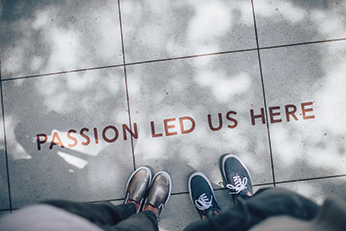
Passion Led Us Here

How our for-profit company became a nonprofit, to better tackle the digital divide. Originally posted on the Endless OS Foundation blog.

An 8-year journey to a nonprofit On the 1st of April 2020, our for-profit Endless Mobile officially became a nonprofit as the Endless OS Foundation. Our launch as a nonprofit just as the global pandemic took hold was, predictably, hardly noticed, but for us the timing was incredible: as the world collectively asked What can we do to help others in need? , we framed our mission statement and launched our .org with the same very important question in mind. Endless always had a social impact mission at its heart, and the challenges related to students, families, and communities falling further into the digital divide during COVID-19 brought new urgency and purpose to our team s decision to officially step in the social welfare space.
On April 1st 2020, our for-profit Endless Mobile officially became a nonprofit as the Endless OS Foundation, focused on the #DigitalDivide.
Our updated status was a long time coming: we began our transformation to a nonprofit organization in late 2019 with the realization that the true charter and passions of our team would be greatly accelerated without the constraints of for-profit goals, investors and sales strategies standing in the way of our mission of digital access and equity for all. But for 8 years we made a go of it commercially, headquartered in Silicon Valley and framing ourselves as a tech startup with access to the venture capital and partnerships on our doorstep. We believed that a successful commercial channel would be the most efficient way to scale the impact of bringing computer devices and access to communities in need. We still believe this we ve just learned through our experience that we don t have the funding to enter the computer and OS marketplace head-on. With the social impact goal first, and the hope of any revenue a secondary goal, we have had many successes in those 8 years bridging the digital divide throughout the world, from Brazil, to Kenya, and the USA. We ve learned a huge amount which will go on to inform our strategy as a nonprofit.
Endless always had a social impact mission at its heart. COVID-19 brought new urgency and purpose to our team s decision to officially step in the social welfare space.
Our unique perspective One thing we learned as a for-profit is that the OS and technology we ve built has some unique properties which are hugely impactful as a working solution to digital equity barriers. And our experience deploying in the field around the world for 8 years has left us uniquely informed via many iterations and incremental improvements.
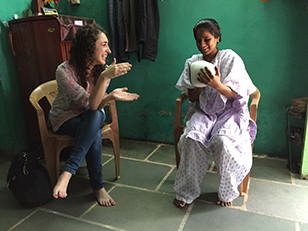
Endless OS designer in discussion with prospective user
With this knowledge in-hand, we ve been refining our strategy throughout 2020 and now starting to focus on what it really means to become an effective nonprofit and make that impact. In many ways it is liberating to abandon the goals and constraints of being a for-profit entity, and in other ways it s been a challenging journey for me and the team to adjust our way of thinking and let these for-profit notions and models go. Previously we exclusively built and sold a product that defined our success; and any impact we achieved was a secondary consequence of that success and seen through that lens. Now our success is defined purely in terms of social impact, and through our actions, those positive impacts can be made with or without our product . That means that we may develop and introduce technology to solve a problem, but it is equally as valid to find another organization s existing offering and design a way to increase that positive impact and scale.
We develop technology to solve access equity issues, but it s equally as valid to find another organization s offering and partner in a way that increases their positive impact.
The analogy to Free and Open Source Software is very strong while Endless has always used and contributed to a wide variety of FOSS projects, we ve also had a tension where we ve been trying to hold some pieces back and capture value such as our own application or content ecosystem, our own hardware platform necessarily making us competitors to other organisations even though they were hoping to achieve the same things as us. As a nonprofit we can let these ideas go and just pick the best partners and technologies to help the people we re trying to reach.
School kids writing on paper
Digital equity 4 barriers we need to overcome In future, our decisions around which projects to build or engage with will revolve around 4 barriers to digital equity, and how our Endless OS, Endless projects, or our partners offerings can help to solve them. We define these 4 equity barriers as: barriers to devices, barriers to connectivity, barriers to literacy in terms of your ability to use the technology, and barriers to engagement in terms of whether using the system is rewarding and worthwhile.
We define the 4 digital equity barriers we exist to impact as:
1. barriers to devices
2. barriers to connectivity
3. barriers to literacy
4. barriers to engagement
It doesn t matter who makes the solutions that break these barriers; what matters is how we assist in enabling people to use technology to gain access to the education and opportunities these barriers block. Our goal therefore is to simply ensure that solutions exist building them ourselves and with partners such as the FOSS community and other nonprofits proving them with real-world deployments, and sharing our results as widely as possible to allow for better adoption globally. If we define our goal purely in terms of whether people are using Endless OS, we are effectively restricting the reach and scale of our solutions to the audience we can reach directly with Endless OS downloads, installs and propagation. Conversely, partnerships that scale impact are a win-win-win for us, our partners, and the communities we all serve. Engineering impact Our Endless engineering roots and capabilities feed our unique ability to build and deploy all of our solutions, and the practical experience of deploying them gives us evidence and credibility as we advocate for their use. Either activity would be weaker without the other.
Our engineering roots and capabilities feed our unique ability to build and deploy digital divide solutions.
Our partners in various engineering communities will have already seen our change in approach. Particularly, with GNOME we are working hard to invest in upstream and reconcile the long-standing differences between our experience and GNOME. If successful, many more people can benefit from our work than just users of Endless OS. We re working with Learning Equality on Kolibri to build a better app experience for Linux desktop users and bring content publishers into our ecosystem for the first time, and we ve also taken our very own Hack, the immersive and fun destination for kids learning to code, released it for non-Endless systems on Flathub, and made it fully open-source.
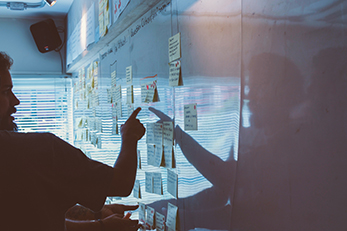
Planning tasks with sticky notes on a whiteboard
What s next for our OS? What then is in store for the future of Endless OS, the place where we have invested so much time and planning through years of iterations? For the immediate future, we need the capacity to deploy everything we ve built all at once, to our partners. We built an OS that we feel is very unique and valuable, containing a number of world-firsts: first production OS shipped with OSTree, first Flatpak-only desktop, built-in support for updating OS and apps from USBs, while still providing a great deal of reliability and convenience for deployments in offline and educational-safe environments with great apps and content loaded on every system. However, we need to find a way to deliver this Linux-based experience in a more efficient way, and we d love to talk if you have ideas about how we can do this, perhaps as partners. Can the idea of Endless OS evolve to become a spec that is provided by different platforms in the future, maybe remixes of Debian, Fedora, openSUSE or Ubuntu? Build, Validate, Advocate Beyond the OS, the Endless OS Foundation has identified multiple programs to help underserved communities, and in each case we are adopting our build, validate, advocate strategy. This approach underpins all of our projects: can we build the technology (or assist in the making), will a community in-need validate it by adoption, and can we inspire others by telling the story and advocating for its wider use?
We are adopting a build, validate, advocate strategy.
1. build the technology (or assist in the making)
2. validate by community adoption
3. advocate for its wider use
As examples, we have just launched the Endless Key (link) as an offline solution for students during the COVID-19 at-home distance learning challenges. This project is also establishing a first-ever partnership of well-known online educational brands to reach an underserved offline audience with valuable learning resources. We are developing a pay-as-you-go platform and new partnerships that will allow families to own laptops via micro-payments that are built directly into the operating system, even if they cannot qualify for standard retail financing. And during the pandemic, we ve partnered with Teach For America to focus on very practical digital equity needs in the USA s urban and rural communities. One part of the world-wide digital divide solution We are one solution provider for the complex matrix of issues known collectively as the #DigitalDivide, and these issues will not disappear after the pandemic. Digital equity was an issue long before COVID-19, and we are not so naive to think it can be solved by any single institution, or by the time the pandemic recedes. It will take time and a coalition of partnerships to win. We are in for the long-haul and we are always looking for partners, especially now as we are finding our feet in the nonprofit world. We d love to hear from you, so please feel free to reach out to me I m ramcq on IRC, RocketChat, Twitter, LinkedIn or rob@endlessos.org.

31 December 2020

Chris Lamb: Free software activities in December 2020

Here is my monthly update covering what I have been doing in the free software world during December 2020 (previous month):

Reproducible Builds One of the original promises of open source software is that distributed peer review and transparency of process results in enhanced end-user security. However, whilst anyone may inspect the source code of free and open source software for malicious flaws, almost all software today is distributed as pre-compiled binaries. This allows nefarious third-parties to compromise systems by injecting malicious code into ostensibly secure software during the various compilation and distribution processes. The motivation behind the Reproducible Builds effort is to ensure no flaws have been introduced during this compilation process by promising identical results are always generated from a given source, thus allowing multiple third-parties to come to a consensus on whether a build was compromised. This month, I: I also made the following changes to diffoscope, our in-depth and content-aware diff utility that can locate and diagnose reproducibility issues, including releasing version 163:

Debian Uploads I also sponsored an upload of adminer (4.7.8-2) on behalf of Alexandre Rossi and performed two QA uploads of sendfile (2.1b.20080616-7 and 2.1b.20080616-8) to make the build the build reproducible (#776938) and to fix a number of other unrelated issues. Debian LTS This month I have worked 18 hours on Debian Long Term Support (LTS) and 12 hours on its sister Extended LTS project. You can find out more about the Debian LTS project via the following video:

Shirish Agarwal: Pandemic, Informal economy and Khau Galli.

Formal sector issues Just today it was published that output from eight formal sectors of the economy who make the bulk of the Indian economy were down on a month to month basis . This means all those apologists for the Government who said that it was ok that the Govt. didn t give the 20 lakh crore package which was announced. In fact, a businessman from my own city, a certain Prafull Sarda had asked via RTI what happened to the 20 lakh crore package which was announced? The answers were in all media as well as newspapers but on the inside pages. You can see one of the article sharing the details here. No wonder Vivek Kaul also shared his take on the way things will hopefully go for the next quarter which seems to be a tad optimistic from where we are atm.
Eight Sectors declining in Indian Economy month-on-month CNBC TV 18
The Informal economy The informal economy has been strangulated by the current party in power since it came into power. And this has resulted many small businesses which informal are and were part of culture of cities and towns. I share an article from 2018 which only shows how good and on the mark it has aged in the last two years. The damage is all to real to ignore as I would share more of an anecdotes and experiences because sadly there never has been any interest shown especially by GOI to seek any stats. about informal economy. Although CMIE has done some good work in that even though they majorly look at formal, usually blue-collar work where again there is not good data. Sharing an anecdote and a learning from these small businesses which probably an MBA guy wouldn t know and in all honesty wouldn t even care. Khau galli Few years back, circa 2014 and on wards, when the present Govt. came into power, it did come with lot of promises. One of which was that lot of informal businesses would be encouraged to grow their businesses and in time hopefully, they become part of the formal economy. Or at least that was the story that all of us were told. Due to that they did lot of promises and also named quite a few places where street food was in abundance. Such lanes were named Khau galli for those who are from North India, it was be easily known and understood. This was just saying that here are some places where you could get a variety of food without paying obscene prices as you would have to vis-a-vis a restaurant. Slowly, they raised the rates of inputs (food grains), gas cylinder etc. which we know of as food inflation and via GST made sure that the restaurants were able to absorb some of the increased inputs (input credit) while still being more than competitive to the street food person/s. The restaurant F&B model is pretty well known so not going there at all. It is however, important to point out that they didn t make any new khau gallis or such, most or all the places existed for years and even decades before that. They also didn t take any extra effort either in marketing the khau gallis or get them with chefs or marketing folks so that the traditional can marry to the anew. They just named them, that was the only gain to be seen on the ground. In its heyday, the khau galli near my home used to have anywhere between 20-30 Thelas or food carts. Most of the food carts would be of wood and having very limited steel. Such food carts would cost anywhere around INR 15-20k instead of the food cart you see here. The only reason I shared that link is to show how a somewhat typical thela or food cart looks in India. Of course YouTube or any other media platform would show many. On top of it, you need and needed permission from the municipality a license for the same which would be auctioned. Now that license could well run from thousands into lakhs depending on various factors or you gave something to the Municipal worker when he did his rounds/beat much like a constable every day or week. Apart from those, you also have raw material expenditure which could easily run into few thousands depending upon what sort of food you are vending. You also would typically have 2-3 workers so a typical Thela would feed not only its customers but also 2-3 families who are the laborer families as well as surrounding businesses. As I used to be loyal and usually go to few whom I found to be either tasty or somehow they were good for me. In either case, a relationship was formed. As I have been never fond of crowds, I usually used to in their off-beat hours either when they are close to packing up of when I know they usually have a lull. That way I knew I would get complete attention of the vendor/s. Many a times I used to see money change hands between the vendors themselves and used to see both camaraderie as well as competition between them. This is years ago, once while sharing a chai (tea) with one of the street vendors I casually asked I have often seen you guys exchanging money with each other and most of the time quite a bit of the money is also given to the guy who didn t make that much sales or any sales at all. The vendor replied sharing practical symbiotic knowledge. All of us are bound by a single thing called poverty. All of us are struggle. Do you know why so many people come here, because they know that there would be a variety of food to be had. Now if we stopped helping each other, the number of people who would make the effort would be also less, we know we are not the only game in town. Also whatever we give, sooner or later it gets adjusted. Also if one of us has good days, he knows hardship days are not far. Why, simply because people change tastes or want variety. So irrespective of good or bad the skills of the vendor is, she or he is bound to make some sales. The vendor either shares the food with us or whatever. Somehow these things just work out. And that doesn t mean we don t have our fights, we do have our fights, but we also understand this. Now you see this and you understand that these guys have and had a community. Even if they changed places due to one reason or the other, they kept themselves connected. Unlike many of us, who even find a hard time keeping up with friends let alone relatives. Now cut to 2020, and where there used to be 20-30 thelas near my home, there are only 4-5. Of course, multiple reasons, but one of the biggest was of course demonetization. That was a huge shock to which many of thela walas succumbed. Their entire savings and capital were turned to dust. Many of their customers will turn up with either a INR 500 or INR 2000/- Re note where at the most a dish costed INR 100/- most times half or even 1/3rd of that amount. How and from where the thela walas could get that kind of cash. These are people who only if they earn, they and their family will have bread at night. Most of the loose change was tied up at middle to higher tier restaurants where they were giving between INR 20/- 30/- for every INR 100/- change of rupees and coins. Quite a few bankers made money by that as well as other means where the thela walas just could not compete. These guys also didn t have any black money even though they were and are part of the black/informal economy. Sadly, till date no economist or even sociologist as far as I know has attempted or done any work from what I know on this industry. If you want to formalize such businesses then at the very least understand their problems and devise solutions. And I suspect, what is and has happened near my house has also happened everywhere else, at least within the geographical confines of the Indian state. Whether it was the 2016 demonetization or the pandemic, the results and effects have been similar the same all over. Some states did do well and still do, the suffering still continues. With the hope that the new year brings cheer to you as well some more ideas to remain in business by the thela walas, I bid you adieu and see you in new year

29 December 2020

Shirish Agarwal: Inequality in Indian Education

Farmer on-going protests Before I start with the education system in India which I have talked about many times in the past, first let me share couple of pieces about the farmer movement which is still at Sanghu Delhi border.
<Manjeet Kaur,62 at farmer protest with her friends.
The above picture became somewhat viral as it showed Manjeet Kaur, who drove down from Patiala, Punjab to Sanghu border along with her friends to take part in the on-going protests. The picture not only shares how the women are part and parcel of this protest but also they are independently taking part in the protest. The other were two articles I read today, first was an article in tribune which questions that if the policy worked, why it didn t work in the state of Bihar. The other by a young law student who had to go from Chandigarh to Delhi with family for some work and her experience with the ongoing protest. In fact, an interesting observation was made by the CJI in the many suits against farmer protests in the SC. This makes for much more interesting read when you see an RTI query filed by Saket Gokhale to NHAI , a Central Govt. agency which is supposed to be independent and asks if they had filed an FIR and asked compensation from Haryana State and Haryana State Police which had dug up National Highway 44 and if any permission was asked for the same from NHAI. And NHAI unable to take any action for the same. If this isn t shameful, I dunno what is
Saket Gokhale s RTI query on digging up NH44
NHAI response to Saket Gokhale s query.
Sadly, the way the response has been worded makes it impossible for NHAI to discharge its own responsibilities and this becomes a precedent for other states now that know that NHAI is vulnerable. A pretty sad turn on events. Indian Education can t go online There was a recent article on scroll which shared how Indian education can t go online as only a few have computers with decent netlink speeds as well as other factors which are needed for online education. But there are also many things that the article doesn t take into account which actually make the task more difficult and raise the boundary more. Now in most schools and colleges, the number of students to teacher ratio could be anywhere between 70-150 or even more. In the last few years, a lot of schools have been closed down by various Governments, including and not limited to the ruling Govt. They have in fact intensified closures of public schools wherever their Govt. has been in power. Closing to 5000+ schools in one state in a year is a dramatic shift and such has been happening time and again. In fact, the rising costs of Indian education has made many to leave Indian shores and do studies abroad. And once they do their masters or whatever, the chances of them coming back to India become more and more remote. In India the costs have been becoming so bad that NBFC s have started products targeting the same. How NBFC and Banks have (both public and private) have fared with respect to Indian consumers needs its own blog post but one word to describe it is bad . But as shared above, needs its own blog post. Coming to the Indian context though, what has not been captured in that article is that the responsibility of making new content also raises huge barriers for teachers. My own experience in teacher s trainings for ICT usage has shown that most teachers do not know and use internet effectively both to sustain their own curiosity as well as their students. Part of which is whether you are private employee or a public school teacher, the teacher is not paid enough. I have had multiple conversations with friends over the years who are teachers who shared that they get 50% salary in-hand while they sign for 100%. This is more in the case or private schools though. In Govt. schools, the teachers apart from their regular administrative duties apart from teaching duties are also unpaid labor for Govt. policy. Take the recent covid crisis, it was the teachers who for months together went from door-to-door asking if they had a covid patient. This was all over India. Even for voter registration, census, polio and various other immunization efforts, the teachers are roped in. So apart from that, they somehow have to figure out how to make ends meet and also boost student morale. Hence the attention is only limited to the first couple of benches rather than the whole as a 45-minute to an hr. session is just not enough to go through a class of 70-150 school students giving individual attention. And this is when for most teachers, teaching is a means to an end and not the end itself. I am going to take one example of science and sort of break-it-down in multiple steps and how I would have approached that topic for say the 5th-6th standard students in say a public school in Pune and especially if Covid would not have been an issue so you have face-to-face meetup. There was recent news about a mysterious radio signal which came from one of our closest galactic neighbors Proxima Centauri. Now let s say there was a class I was teaching/sharing which I had shared before and there already is trust formed. So before coming to the news, I would tell the students about frequency and more generally the notation of why we like to measure things and how we measure things. There is so much beautiful history which could be acted and enacted which can show and remains in mind why measurement is needed. Once that is understood, discussed and an underpinning is established, we could move to human perception or the lack of it. We know that humans have lots of limits in almost everything, whether it is talking, touching, hearing, all of our five senses are pretty limited with what we know of spectrum available in the immediate family kingdom as well as in the Universe. I would start with how far can a person throw his voice and be heard without using any other means. There does come a point where they need to use anything from a megaphone to a loudspeaker and what it actually does. The other thing I would then talk is about the radio and ask the students to find more about the internals of a radio. If possible to bring an old radio to school where it could be disassembled. After they are familiar with some names of the electronic components and what they do, take them to the electronics market where they try to source all the things needed to make a radio and whatever they encounter. This would allow the students to try and do bargain shopping as well as learn from where to source things. Some might even get a copy or two of electronic projects where the shop themselves sell blueprints to hobbyists so that they can tinker. If there is a place in the school where soldering can be done, then all can try and sooner or later we come to know if something works or not. There is also possibility of talking about noise cancellation and then the topic of ITU can also be bought up and how they do frequency allocation. Last but not the least then the topic can be approached about an alien civilization and an unknown radio signal and what it means and what it can mean. Now if just one topic can give such a wide range of things to do and develop an understanding about not the subject itself but surrounding subjects as well I see no reason why teachers can t do this except they are handcuffed to lot of policy as well as real-life constraints. For e.g. I remember in my school days, we used to go out once or twice a year and that used to be either a school picnic or something similar. The only other I know is going to Mumbai for Nehru planetarium and Nehru science Centre. Unfortunately, I didn t go at that time because the school was taking students via air and the tickets were super costly at the time and that too for a 10 minute journey between the two cities. Those were different days, today you can t have a direct flight between the two cities as it doesn t make an economic sense. It makes more sense to go to Mumbai via train or bus as you will reach Mumbai in about couple of hrs. Of course, Pune does have its own planetarium at New English school and there are a few amateur astronomy clubs in Pune but nothing on the scale that what Mumbai has, but then this is getting off-topic. Now, again in an online world could this be done? Not without both the teacher and the student both spending lot of resources online and even then will be a lower understanding as both the hands-on experience as well as interacting with other students and learning from other students (aping) would be hugely limited. Even the social skills that students develop in a school setting will be rusted. My own social skills probably have weakened and rusted as I have very limited interaction with people over the past few months due to Covid fears and would be at least for the next few years till a large enough population is not vaccinated.

28 December 2020

Daniel Lange: No CCC Congress this year but rc3 online

The virtual version of the annual CCC Congress is underway and feels like a huge playground. Things are bumpy but the participants are still having fun. Of course, we have IRC as a save heaven. That always works. The virtual world (which is the only thing the sold out tickets are needed for) is really fun. It feels like debugging a DOS game in the 80/90s. Not much works but it is engaging enough to keep poking at things. The data formats are 2020 though, the main "lobby map" is a 3 MB json file:
  "compressionlevel":-1,
 "editorsettings":
     
     "export":
         
         "format":"json",
         "target":"main.json"
         
     ,
 "height":80,
 "infinite":false,
 "layers":[
         
         "data":[0, 0, 0, 0, 0, 0, 0, 0, 0, 0, 0, 0, 0, 0, 0, 0, 0, 0, 0, 0, 0, 0, 0, 0, 0, 0, 0, 0, 0, 0, 0, 0, 0, 0, 0, 0, 0, 0, 0, 0, 0, 0, 0, 0, 0, 0, 0, 0, 0, 0, 0, 0, 0, 0, 0, 0, 0, 0, 0, 0, 0, 0, 0, 0, 0, 0, 0, 0, 0, 0, 0, 0, 0, 0, 0, 0, 0, 0, 0, 0, 0, 0, 0, 0, 0, 0, 0, 0, 0, 0, 0, 0, 0, 0, 0, 0, 0, 0, 0, 0, 0, 0, 0, 0, 0, 0, 0, 0, 0, 0, 0, 0, 0, 0, 0, 0, 0, 0, 0, 0, 0, 0, 0, 0, 0, 0, 0, 0, 0, 0, 0, 0, 0, 0, 0, 0, 0, 0, 0, 0, 0, 0, 0, 0, 0, 0, 0, 0, 0, 0, 0, 0, 0, 0, 0, 0, 0, 0, 0, 0, 0, 0, 0, 0, 0, 0, 0, 0, 0, 0, 0, 0, 0, 0, 0, 0, 0, 0, 0, 0, 0, 0, 0, 0, 0, 0, 0, 0, 0, 0, 0, 0, 0, 0, 0, 0, 0, 0, 0, 0, 0, 0, 0, 0, 0, 0, 0, 0, 0, 0, 0, 0, 0, 0, 0, 0, 0, 0, 0, 0, 0, 0, 0, 0, 0, 0, 0, 0, 0, 0, 0, 0, 0, 0, 0, 0, 0, 0, 0, 0, 0, 0, 0, 0, 0, 0, 0, 0, 0, 0, 0, 0, 0, 0, 0, 0, 0, 0, 0, 0, 0, 0, 0, 0, 0, 0, 0, 0, 0, 0, 0, 0, 0, 0, 0, 0, 0, 0, 0, 0, 0, 0, 0, 0, 0, 0, 0, 0, 0, 0, 0, 0, 0, 0, 0, 0, 0, 0, 0, 0, 0, 0, 0, 0, 0, 0, 0, 0, 0, 0, 0, 0, 0, 0, 0, 0, 0, 0, 0, 0, 0, 0, 0, 0, 0, 0, 0, 0, 0, 0, 0, 0, 0, 0, 0, 0, 0, 0, 0, 0, 0, 0, 0, 0, 0, 0, 0, 0, 0, 0, 0, 0, 0, 0, 0, 0, 0, 0, 0, 0, 0, 0, 0, 0, 0, 0, 0, 0, 0, 0, 0, 0, 0, 0, 0, 0, 0, 0, 0, 0, 0, 0, 0, 0, 0, 0, 0, 0, 0, 0, 0, 0, 0, 0, 0, 0, 0, 0, 0, 0, 0, 0, 0, 0, 0, 0, 0, 0, 0, 0, 0, 0, 0, 0, 0, 0, 0, 0, 0, 0, 0, 0, 0, 0, 0, 0, 0, 0, 0, 0, 0, 0, 0, 0, 0, 0, 0, 0, 0, 0, 0, 0, 0, 0, 0, 0, 0, 0, 0, 0, 0, 0, 0, 0, 0, 0, 0, 0, 0, 0, 0, 0, 0, 0, 0, 0, 0, 0, 0, 0, 0, 0, 0, 0, 0, 0, 0, 0, 0, 0, 0, 0, 0, 0, 0, 0, 0, 0, 0, 0, 0, 0, 0, 0, 0, 0, 0, 0, 0, 0, 0, 0, 0, 0, 0, 0, 0, 0, 0, 0, 0, 0, 0, 0, 0, 0, 0, 0, 0, 0, 0, 0, 0, 0, 0, 0, 0, 0, 0, 0, 0, 0, 0, 0, 0, 0, 0, 0, 0, 0, 0, 0, 0, 0, 0, 0, 0, 0, 0, 0, 0, 0, 0, 0, 0, 0, 0, 0, 0, 0, 0, 0, 0, 0, 0, 0, 0, 0, 0, 0, 0, 0, 0, 0, 0, 0, 0, 0, 0, 0, 0, 0, 0, 0, 0, 0, 0, 0, 0, 0, 0, 0, 0, 0, 0, 0, 0, 0, 0, 0, 0, 0, 0, 0, 0, 0, 0, 0, 0, 0, 0, 0, 0, 0, 0, 0, 0, 0, 0, 0, 0, 0, 0, 0, 0, 0, 0, 0, 0, 0, 0, 0, 0, 0, 0, 0, 0, 0, 0, 0, 0, 0, 0, 0, 0, 0, 0, 0, 0, 0, 0, 0, 0, 0, 0, 0, 0, 0, 0, 0, 0, 0, 0, 0, 0, 0, 0, 0, 0, 0, 0, 0, 0, 0, 0, 0, 0, 0, 0, 0, 0, 0, 0, 0, 0, 0, 0, 0, 0, 0, 0, 0, 0, 0, 0, 0, 0, 0, 0, 0, 0, 0, 0, 0, 0, 0, 0, 0, 0, 0, 0, 0, 0, 0, 0, 0, 0, 0, 0, 0, 0, 0, 0, 0, 0, 0, 0, 0, 0, 0, 0, 0, 0, 0, 0, 0, 0, 0, 0, 0, 0, 0, 0, 0, 0, 0, 0, 0, 0, 0, 0, 0, 0, 0, 0, 0, 0, 0, 0, 0, 0, 0, 0, 0, 0, 0, 0, 0, 0, 0, 0, 0, 0, 0, 0, 0, 0, 0, 0, 0, 0, 0, 0, 0, 0, 0, 0, 0, 0, 0, 0, 0, 0, 0, 0, 0, 0, 0, 0, 0, 0, 0, 0, 0, 0, 0, 0, 0, 0, 0, 0, 0, 0, 0, 0, 0, 0, 0, 0, 0, 0, 0, 0, 0, 0, 0, 0, 0, 0, 0, 0, 0, 0, 0, 0, 0, 0, 0, 0, 0, 0, 0, 0, 0, 0, 0, 0, 0, 0, 0, 0, 0, 0, 0, 0, 0, 0, 0, 0, 0, 0, 0, 0, 0, 0, 0, 0, 0, 0, 0, 0, 0, 0, 0, 0, 0, 0, 0, 0, 0, 0, 0, 0, 0, 0, 0, 0, 0, 0, 0, 0, 0, 0, 0, 0, 0, 0, 0, 0, 0, 0, 0, 0, 0, 0, 0, 0, 0, 0, 0, 0, 0, 0, 0, 0, 0, 0, 0, 0, 0, 0, 0, 0, 0, 0, 0, 0, 0, 0, 0, 0, 0, 0, 0, 0, 0, 0, 0, 0, 0, 0, 0, 0, 0, 0, 0, 0, 0, 0, 0, 0, 0, 0, 0, 0, 0, 0, 0, 0, 0, 0, 0, 0, 0, 0, 0, 0, 0, 0, 0, 0, 0, 0, 0, 0, 0, 0, 0, 0, 0, 0, 0, 0, 0, 0, 0, 0, 0, 0, 0, 0, 0, 0, 0, 0, 0, 0, 0, 0, 0, 0, 0, 0, 0, 0, 0, 0, 0, 0, 0, 0, 0, 0, 0, 0, 0, 0, 0, 0, 0, 0, 0, 0, 0, 0, 0, 0, 0, 0, 0, 0, 0, 0, 0, 0, 0, 0, 0, 0, 0, 0, 0, 0, 0, 0, 0, 0, 0, 0, 0, 0, 0, 0, 0, 0, 0, 0, 0, 0, 0, 0, 0, 0, 0, 0, 0, 0, 0, 0, 0, 0, 0, 0, 0, 0, 0, 0, 0, 0, 0, 0, 0, 0, 0, 0, 0, 0, 0, 0, 0, 0, 0, 0, 0, 0, 0, 0, 0, 0, 0, 0, 0, 0, 0, 0, 0, 0, 0, 0, 0, 0, 0, 0, 0, 0, 0, 0, 0, 0, 0, 0, 0, 0, 0, 0, 0, 0, 0, 0, 0, 0, 0, 0, 0, 0, 0, 0, 0, 0, 0, 0, 0, 0, 0, 0, 0, 0, 0, 0, 0, 0, 0, 0, 0, 0, 0, 0, 0, 0, 0, 0, 0, 0, 0, 0, 0, 0, 0, 0, 0, 0, 0, 0, 0, 0, 0, 0, 0, 0, 0, 0, 0, 0, 0, 0, 0, 0, 0, 0, 0, 0, 0, 0, 0, 0, 0, 0, 0, 0, 0, 0, 0, 0, 0, 0, 0, 0, 0, 0, 0, 0, 0, 0, 0, 0, 0, 0, 0, 0, 0, 0, 0, 0, 0, 0, 0, 0, 0, 0, 0, 0, 0, 0, 0, 0, 0, 0, 0, 0, 0, 0, 0, 0, 0, 0, 0, 0, 0, 0, 0, 0, 0, 0, 0, 0, 0, 0, 0, 0, 0, 0, 0, 0, 0, 0, 0, 0, 0, 0, 0, 0, 0, 0, 0, 0, 0, 0, 0, 0, 0, 0, 0, 0, 0, 0, 0, 0, 0, 0, 0, 0, 0, 0, 0, 0, 0, 0, 0, 0, 0, 0, 0, 0, 0, 0, 0, 0, 0, 0, 0, 0, 0, 0, 0, 0, 0, 0, 0, 0, 0, 0, 0, 0, 0, 0, 0, 0, 0, 0, 0, 0, 0, 0, 0, 0, 0, 0, 0, 0, 0, 0, 0, 0, 0, 0, 0, 0, 0, 0, 0, 0, 0, 0, 0, 0, 0, 0, 0, 0, 0, 0, 0, 0, 0, 0, 0, 0, 0, 0, 0, 0, 0, 0, 0, 0, 0, 0, 0, 0, 0, 0, 0, 0, 0, 0, 0, 0, 0, 0, 0, 0, 0, 0, 0, 0, 0, 0, 0, 0, 0, 0, 0, 0, 0, 0, 0, 0, 0, 0, 0, 0, 0, 0, 0, 0, 0, 0, 0, 0, 0, 0, 0, 0, 0, 0, 0, 0, 0, 0, 0, 0, 0, 0, 0, 0, 0, 0, 0, 0, 0, 0, 0, 0, 0, 0, 0, 0, 0, 0, 0, 0, 0, 0, 0, 0, 0, 0, 0, 0, 0, 0, 0, 0, 0, 0, 0, 0, 0, 0, 0, 0, 0, 0, 0, 0, 0, 0, 0, 0, 0, 0, 0, 0, 0, 0, 0, 0, 0, 0, 0, 0, 0, 0, 0, 0, 0, 0, 0, 0, 0, 0, 0, 0, 0, 0, 0, 0, 0, 0, 0, 0, 0, 0, 0, 0, 0, 0, 0, 0, 0, 0, 0, 0, 0, 0, 0, 0, 0, 0, 0, 0, 0, 0, 0, 0, 0, 0, 0, 0, 0, 0, 0, 0, 0, 0, 0, 0, 0, 0, 0, 0, 0, 0, 0, 0, 0, 0, 0, 0, 0, 0, 0, 0, 0, 0, 0, 0, 0, 0, 0, 0, 0, 0, 0, 0, 0, 0, 0, 0, 0, 0, 0, 0, 0, 0, 0, 0, 0, 0, 0, 0, 0, 0, 0, 0, 0, 0, 0, 0, 0, 0, 0, 0, 0, 0, 0, 0, 0, 0, 0, 0, 0, 0, 0, 0, 0, 0, 0, 0, 0, 0, 0, 0, 0, 0, 0, 0, 0, 0, 0, 0, 0, 0, 0, 0, 0, 0, 0, 0, 0, 0, 0, 0, 0, 0, 0, 0, 0, 0, 0, 0, 0, 0, 0, 0, 0, 0, 0, 0, 0, 0, 0, 0, 0, 0, 0, 0, 0, 0, 0, 0, 0, 0, 0, 0, 0, 0, 0, 0, 0, 0, 0, 0, 0, 0, 0, 0, 0, 0, 0, 0, 0, 0, 0, 0, 0, 0, 0, 0, 0, 0, 0, 0, 0, 0, 0, 0, 0, 0, 0, 0, 0, 0, 0, 0, 0, 0, 0, 0, 0, 0, 0, 0, 0, 0, 0, 0, 0, 0, 0, 0, 0, 0, 0, 0, 0, 0, 0, 0, 0, 0, 0, 0, 0, 0, 0, 0, 0, 0, 0, 0, 0, 0, 0, 0, 0, 0, 0, 0, 0, 0, 0, 0, 0, 0, 0, 0, 0, 0, 0, 0, 0, 0, 0, 0, 0, 0, 0, 0, 0, 0, 0, 0, 0, 0, 0, 0, 0, 0, 0, 0, 0, 0, 0, 0, 0, 0, 0, 0, 0, 0, 0, 0, 0, 0, 0, 0, 0, 0, 0, 0, 0, 0, 0, 0, 0, 0, 0, 0, 0, 0, 0, 0, 0, 0, 0, 0, 0, 0, 0, 0, 0, 0, 0, 0, 0, 0, 0, 0, 0, 0, 0, 0, 0, 0, 0, 0, 0, 0, 0, 0, 0, 0, 0, 0, 0, 0, 0, 0, 0, 0, 0, 0, 0, 0, 0, 0, 0, 0, 0, 0, 0, 0, 0, 0, 0, 0, 0, 0, 0, 0, 0, 0, 0, 0, 0, 0, 0, 0, 0, 0, 0, 0, 0, 0, 0, 0, 0, 0, 0, 0, 0, 0, 0, 0, 0, 0, 0, 0, 0, 0, 0, 0, 0, 0, 0, 0, 0, 0, 0, 0, 0, 0, 0, 0, 0, 0, 0, 0, 0, 0, 0, 0, 0, 0, 0, 0, 0, 0, 0, 0, 0, 0, 0, 0, 0, 0, 0, 0, 0, 0, 0, 0, 0, 0, 0, 0, 0, 0, 0, 0, 0, 0, 0, 0, 0, 0, 0, 0, 0, 0, 0, 0, 0, 0, 0, 0, 0, 0, 0, 0, 0, 0, 0, 0, 0, 0, 0, 0, 0, 0, 0, 0, 0, 0, 0, 0, 0, 0, 0, 0, 0, 0, 0, 0, 0, 0, 0, 0, 0, 0, 0, 0, 0, 0, 0, 0, 0, 0, 0, 0, 0, 0, 0, 0, 0, 0, 0, 0, 0, 0, 0, 0, 0, 0, 0, 0, 0, 0, 0, 0, 0, 0, 0, 0, 0, 0, 0, 0, 0, 0, 0, 0, 0, 0, 0, 0, 0, 0, 0, 0, 0, 0, 0, 0, 0, 0, 0, 0, 0, 0, 0, 0, 0, 0, 0, 0, 0, 0, 0, 0, 0, 0, 0, 0, 0, 0, 0, 0, 0, 0, 0, 0, 0, 0, 0, 0, 0, 0, 0, 0, 0, 0, 0, 0, 0, 0, 0, 0, 0, 0, 0, 0, 0, 0, 0, 0, 0, 0, 0, 0, 0, 0, 0, 0, 0, 0, 0, 0, 0, 0, 0, 0, 0, 0, 0, 0, 0, 0, 0, 0, 0, 0, 0, 0, 0, 0, 0, 0, 0, 0, 0, 0, 0, 0, 0, 0, 0, 0, 0, 0, 0, 0, 0, 0, 0, 0, 0, 0, 0, 0, 0, 0, 0, 0, 0, 0, 0, 0, 0, 0, 0, 0, 0, 0, 0, 0, 0, 0, 0, 0, 0, 0, 0, 0, 0, 0, 0, 0, 0, 0, 0, 0, 0, 0, 0, 0, 0, 0, 0, 0, 0, 0, 0, 0, 0, 0, 0, 0, 0, 0, 0, 0, 0, 0, 0, 0, 0, 0, 0, 0, 0, 0, 0, 0, 0, 0, 0, 0, 0, 0, 0, 0, 0, 0, 0, 0, 0, 0, 0, 0, 0, 0, 0, 0, 0, 0, 0, 0, 0, 0, 0, 0, 0, 0, 0, 0, 0, 0, 0, 0, 0, 0, 0, 0, 0, 0, 0, 0, 0, 0, 0, 0, 0, 0, 0, 0, 0, 0, 0, 0, 0, 0, 0, 0, 0, 0, 0, 0, 0, 0, 0, 0, 0, 0, 0, 0, 0, 0, 0, 0, 0, 0, 0, 0, 0, 0, 0, 0, 0, 0, 0, 0, 0, 0, 0, 0, 0, 0, 0, 0, 0, 0, 0, 0, 0, 0, 0, 0, 0, 0, 0, 0, 0, 0, 0, 0, 0, 0, 0, 0, 0, 0, 0, 0, 0, 0, 0, 0, 0, 0, 0, 0, 0, 0, 0, 0, 0, 0, 0, 0, 0, 0, 0, 0, 0, 0, 0, 0, 0, 0, 0, 0, 0, 0, 0, 0, 0, 0, 0, 0, 0, 0, 0, 0, 0, 0, 0, 0, 0, 0, 0, 0, 0, 0, 0, 0, 0, 0, 0, 0, 0, 0, 0, 0, 0, 0, 0, 0, 0, 0, 0, 0, 0, 0, 0, 0, 0, 0, 0, 0, 0, 0, 0, 0, 0, 0, 0, 0, 0, 0, 0, 0, 0, 0, 0, 0, 0, 0, 0, 0, 0, 0, 0, 0, 0, 0, 0, 0, 0, 0, 0, 0, 0, 0, 0, 0, 0, 0, 0, 0, 0, 0, 0, 0, 0, 0, 0, 0, 0, 0, 0, 0, 0, 0, 0, 0, 0, 0, 0, 0, 0, 0, 0, 0, 0, 0, 0, 0, 0, 0, 0, 0, 0, 0, 0, 0, 0, 0, 0, 0, 0, 0, 0, 0, 0, 0, 0, 0, 0, 0, 0, 0, 0, 0, 0, 0, 0, 0, 0, 0, 0, 0, 0, 0, 0, 0, 0, 0, 0, 0, 0, 0, 0, 0, 0, 0, 0, 0, 0, 0, 0, 0, 0, 0, 0, 0, 0, 0, 0, 0, 0, 0, 0, 0, 0, 0, 0, 0, 0, 0, 0, 0, 0, 0, 0, 0, 0, 0, 0, 0, 0, 0, 0, 0, 0, 0, 0, 0, 0, 0, 0, 0, 0, 0, 0, 0, 0, 0, 0, 0, 0, 0, 0, 0, 0, 0, 0, 0, 0, 0, 0, 0, 0, 0, 0, 0, 0, 0, 0, 0, 0, 0, 0, 0, 0, 0, 0, 0, 0, 0, 0, 0, 0, 0, 0, 0, 0, 0, 0, 0, 0, 0, 0, 0, 0, 0, 0, 0, 0, 0, 0, 0, 0, 0, 0, 0, 0, 0, 0, 0, 0, 0, 0, 0, 0, 0, 0, 0, 0, 0, 0, 0, 0, 0, 0, 0, 0, 0, 0, 0, 0, 0, 0, 0, 0, 0, 0, 0, 0, 0, 0, 0, 0, 0, 0, 0, 0, 0, 0, 0, 0, 0, 0, 0, 0, 0, 0, 0, 0, 0, 0, 0, 0, 0, 0, 0, 0, 0, 0, 0, 0, 0, 0, 0, 0, 0, 0, 0, 0, 0, 0, 0, 0, 0, 0, 0, 0, 0, 0, 0, 0, 0, 0, 0, 0, 0, 0, 0, 0, 0, 0, 0, 0, 0, 0, 0, 0, 0, 0, 0, 0, 0, 0, 0, 0, 0, 0, 0, 0, 0, 0, 0, 0, 0, 0, 0, 0, 0, 0, 0, 0, 0, 0, 0, 0, 0, 0, 0, 0, 0, 0, 0, 0, 0, 0, 0, 0, 0, 0, 0, 0, 0, 0, 0, 0, 0, 0, 0, 0, 0, 0, 0, 0, 0, 0, 0, 0, 0, 0, 0, 0, 0, 0, 0, 0, 0, 0, 0, 0, 0, 0, 0, 0, 0, 0, 0, 0, 0, 0, 0, 0, 0, 0, 0, 0, 0, 0, 0, 0, 0, 0, 0, 0, 0, 0, 0, 0, 0, 0, 0, 0, 0, 0, 0, 0, 0, 0, 0, 0, 0, 0, 0, 0, 0, 0, 0, 0, 0, 0, 0, 0, 0, 0, 0, 0, 0, 0, 0, 0, 0, 0, 0, 0, 0, 0, 0, 0, 0, 0, 0, 0, 0, 0, 0, 0, 0, 0, 0, 0, 0, 0, 0, 0, 0, 0, 0, 0, 0, 0, 0, 0, 0, 0, 0, 0, 0, 0, 0, 0, 0, 0, 0, 0, 0, 0, 0, 0, 0, 0, 0, 0, 0, 0, 0, 0, 0, 0, 0, 0, 0, 0, 0, 0, 0, 0, 0, 0, 0, 0, 0, 0, 0, 0, 0, 0, 0, 0, 0, 0, 0, 0, 0, 0, 0, 0, 0, 0, 0, 0, 0, 0, 0, 0, 0, 0, 0, 0, 0, 0, 0, 0, 0, 0, 0, 0, 0, 0, 0, 0, 0, 0, 0, 0, 0, 0, 0, 0, 0, 0, 0, 0, 0, 0, 0, 0, 0, 0, 0, 0, 0, 0, 0, 0, 0, 0, 0, 0, 0, 0, 0, 0, 0, 0, 0, 0, 0, 0, 0, 0, 0, 0, 0, 0, 0, 0, 0, 0, 0, 0, 0, 0, 0, 0, 0, 0, 0, 0, 0, 0, 0, 0, 0, 0, 0, 0, 0, 0, 0, 0, 0, 0, 0, 0, 0, 0, 0, 0, 0, 0, 0, 0, 0, 0, 0, 0, 0, 0, 0, 0, 0, 0, 0, 0, 0, 0, 0, 0, 0, 0, 0, 0, 0, 0, 0, 0, 0, 0, 0, 0, 0, 0, 0, 0, 0, 0, 0, 0, 0, 0, 0, 0, 0, 0, 0, 0, 0, 0, 0, 0, 0, 0, 0, 0, 0, 0, 0, 0, 0, 0, 0, 0, 0, 0, 0, 0, 0, 0, 0, 0, 0, 0, 0, 0, 0, 0, 0, 0, 0, 0, 0, 0, 0, 0, 0, 0, 0, 0, 0, 0, 0, 0, 0, 0, 0, 0, 0, 0, 0, 0, 0, 0, 0, 0, 0, 0, 0, 0, 0, 0, 0, 0, 0, 0, 0, 0, 0, 0, 0, 0, 0, 0, 0, 0, 0, 0, 0, 0, 0, 0, 0, 0, 0, 0, 0, 0, 0, 0, 0, 0, 0, 0, 0, 0, 0, 0, 0, 0, 0, 0, 0, 0, 0, 0, 0, 0, 0, 0, 0, 0, 0, 0, 0, 0, 0, 0, 0, 0, 0, 0, 0, 0, 0, 0, 0, 0, 0, 0, 0, 0, 0, 0, 0, 0, 0, 0, 0, 0, 0, 0, 0, 0, 0, 0, 0, 0, 0, 0, 0, 0, 0, 0, 0, 0, 0, 0, 0, 0, 0, 0, 0, 0, 0, 0, 0, 0, 0, 0, 0, 0, 0, 0, 0, 0, 0, 0, 0, 0, 0, 0, 0, 0, 0, 0, 0, 0, 0, 0, 0, 0, 0, 0, 0, 0, 0, 0, 0, 0, 0, 0, 0, 0, 0, 0, 0, 0, 0, 0, 0, 0, 0, 0, 0, 0, 0, 0, 0, 0, 0, 0, 0, 0, 0, 0, 0, 0, 0, 0, 0, 0, 0, 0, 0, 0, 0, 0, 0, 0, 0, 0, 0, 0, 0, 0, 0, 0, 0, 0, 0, 0, 0, 0, 0, 0, 0, 0, 0, 0, 0, 0, 0, 0, 0, 0, 0, 0, 0, 0, 0, 0, 0, 0, 0, 0, 0, 0, 0, 0, 0, 0, 0, 0, 0, 0, 0, 0, 0, 0, 0, 0, 0, 0, 0, 0, 0, 0, 0, 0, 0, 0, 0, 0, 0, 0, 0, 0, 0, 0, 0, 0, 0, 0, 0, 0, 0, 0, 0, 0, 0, 0, 0, 0, 0, 0, 0, 0, 0, 0, 0, 0, 0, 0, 0, 0, 0, 0, 0, 0, 0, 0, 0, 0, 0, 0, 0, 0, 0, 0, 0, 0, 0, 0, 0, 0, 0, 0, 0, 0, 0, 0, 0, 0, 0, 0, 0, 0, 0, 0, 0, 0, 0, 0, 0, 0, 0, 0, 0, 0, 0, 0, 0, 0, 0, 0, 0, 0, 0, 0, 0, 0, 0, 0, 0, 0, 0, 0, 0, 0, 0, 0, 0, 0, 0, 0, 0, 0, 0, 0, 0, 0, 0, 0, 0, 0, 0, 0, 0, 0, 0, 0, 0, 0, 0, 0, 0, 0, 0, 0, 0, 0, 0, 0, 0, 0, 0, 0, 0, 0, 0, 0, 0, 0, 0, 0, 0, 0, 0, 0, 0, 0, 0, 0, 0, 0, 0, 0, 0, 0, 0, 0, 0, 0, 0, 0, 0, 0, 0, 0, 0, 0, 0, 0, 0, 0, 0, 0, 0, 0, 0, 0, 0, 0, 0, 0, 0, 0, 0, 0, 0, 0, 0, 0, 0, 0, 0, 0, 0, 0, 0, 0, 0, 0, 0, 0, 0, 0, 0, 0, 0, 0, 0, 0, 0, 0, 0, 0, 0, 0, 0, 0, 0, 0, 0, 0, 0, 0, 0, 0, 0, 0, 0, 0, 0, 0, 0, 0, 0, 0, 0, 0, 0, 0, 0, 0, 0, 0, 0, 0, 0, 0, 0, 0, 0, 0, 0, 0, 0, 0, 0, 0, 0, 0, 0, 0, 0, 0, 0, 0, 0, 0, 0, 0, 0, 0, 0, 0, 0, 0, 0, 0, 0, 0, 0, 0, 0, 0, 0, 0, 0, 0, 0, 0, 0, 0, 0, 0, 0, 0, 0, 0, 0, 0, 0, 0, 0, 0, 0, 0, 0, 0, 0, 0, 0, 0, 0, 0, 0, 0, 0, 0, 0, 0, 0, 0, 0, 0, 0, 0, 0, 0, 0, 0, 0, 0, 0, 0, 0, 0, 0, 0, 0, 0, 0, 0, 0, 0, 0, 0, 0, 0, 0, 0, 0, 0, 0, 0, 0, 0, 0, 0, 0, 0, 0, 0, 0, 0, 0, 0, 0, 0, 0, 0, 0, 0, 0, 0, 0, 0, 0, 0, 0, 0, 0, 0, 0, 0, 0, 0, 0, 0, 0, 0, 0, 0, 0, 0, 0, 0, 0, 0, 0, 0, 0, 0, 0, 0, 0, 0, 0, 0, 0, 0, 0, 0, 0, 0, 0, 0, 0, 0, 0, 0, 0, 0, 0, 0, 0, 0, 0, 0, 0, 0, 0, 0, 0, 0, 0, 0, 0, 0, 0, 0, 0, 0, 0, 0, 0, 0, 0, 0, 0, 0, 0, 0, 0, 0, 0, 0, 0, 0, 0, 0, 0, 0, 0, 0, 0, 0, 0, 0, 0, 0, 0, 0, 0, 0, 0, 0, 0, 0, 0, 0, 0, 0, 0, 0, 0, 0, 0, 0, 0, 0, 0, 0, 0, 0, 0, 0, 0, 0, 0, 0, 0, 0, 0, 0, 0, 0, 0, 0, 0, 0, 0, 0, 0, 0, 0, 0, 0, 0, 0, 0, 0, 0, 0, 0, 0, 0, 0, 0, 0, 0, 0, 0, 0, 0, 0, 0, 0, 0, 0, 0, 0, 0, 0, 0, 0, 0, 0, 0, 0, 0, 0, 0, 0, 0, 0, 0, 0, 0, 0, 0, 0, 0, 0, 0, 0, 0, 0, 0, 0, 0, 0, 0, 0, 0, 0, 0, 0, 0, 0, 0, 0, 0, 0, 0, 0, 0, 0, 0, 0, 0, 0, 0, 0, 0, 0, 0, 0, 0, 0, 0, 0, 0, 0, 0, 0, 0, 0, 0, 0, 0, 0, 0, 0, 0, 0, 0, 0, 0, 0, 0, 0, 0, 0, 0, 0, 0, 0, 0, 0, 0, 0, 0, 0, 0, 0, 0, 0, 0, 0, 0, 0, 0, 0, 0, 0, 0, 0, 0, 0, 0, 0, 0, 0, 0, 0, 0, 0, 0, 0, 0, 0, 0, 0, 0, 0, 0, 0, 0, 0, 0, 0, 0, 0, 0, 0, 0, 0, 0, 0, 0, 0, 0, 0, 0, 0, 0, 0, 0, 0, 0, 0, 0, 0, 0, 0, 0, 0, 0, 0, 0, 0, 0, 0, 0, 0, 0, 0, 0, 0, 0, 0, 0, 0, 0, 0, 0, 0, 0, 0, 0, 0, 0, 0, 0, 0, 0, 0, 0, 0, 0, 0, 0, 0, 0, 0, 0, 0, 0, 0, 0, 0, 0, 0, 0, 0, 0, 0, 0, 0, 0, 0, 0, 0, 0, 0, 0, 0, 0, 0, 0, 0, 0, 0, 0, 0, 0, 0, 0, 0, 0, 0, 0, 0, 0, 0, 0, 0, 0, 0, 0, 0, 0, 0, 0, 0, 0, 0, 0, 0, 0, 0, 0, 0, 0, 0, 0, 0, 0, 0, 0, 0, 0, 0, 0, 0, 0, 0, 0, 0, 0, 0, 0, 0, 0, 0, 0, 0, 0, 0, 0, 0, 0, 0, 0, 0, 0, 0, 0, 0, 0, 0, 0, 0, 0, 0, 0, 0, 0, 0, 0, 0, 0, 0, 0, 0, 0, 0, 0, 0, 0, 0, 0, 0, 0, 0, 0, 0, 0, 0, 0, 0, 0, 0, 0, 0, 0, 0, 0, 0, 0, 0, 0, 0, 0, 0, 0, 0, 0, 0, 0, 0, 0, 0, 0, 0, 0, 0, 0, 0, 0, 0, 0, 0, 0, 0, 0, 0, 0, 0, 0, 0, 0, 0, 0, 0, 0, 0, 0, 0, 0, 0, 0, 0, 0, 0, 0, 0, 0, 0, 0, 0, 0, 0, 0, 0, 0, 0, 0, 0, 0, 0, 0, 0, 0, 0, 0, 0, 0, 0, 0, 0, 0, 0, 0, 0, 0, 0, 0, 0, 0, 0, 0, 0, 0, 0, 0, 0, 0, 0, 0, 0, 0, 0, 0, 0, 0, 0, 0, 0, 0, 0, 0, 0, 0, 0, 0, 0, 0, 0, 0, 0, 0, 0, 0, 0, 0, 0, 0, 0, 0, 0, 0, 0, 0, 0, 0, 0, 0, 0, 0, 0, 0, 0, 0, 0, 0, 0, 0, 0, 0, 0, 0, 0, 0, 0, 0, 0, 0, 0, 0, 0, 0, 0, 0, 0, 0, 0, 0, 0, 0, 0, 0, 0, 0, 0, 0, 0, 0, 0, 0, 0, 0, 0, 0, 0, 0, 0, 0, 0, 0, 0, 0, 0, 0, 0, 0, 0, 0, 0, 0, 0, 0, 0, 0, 0, 0, 0, 0, 0, 0, 0, 0, 0, 0, 0, 0, 0, 0, 0, 0, 0, 0, 0, 0, 0, 0, 0, 0, 0, 0, 0, 0, 0, 0, 0, 0, 0, 0, 0, 0, 0, 0, 0, 0, 0, 0, 0, 0, 0, 0, 0, 0, 0, 0, 0, 0, 0, 0, 0, 0, 0, 0, 0, 0, 0, 0, 0, 0, 0, 0, 0, 0, 0, 0, 0, 0, 0, 0, 0, 0, 0, 0, 0, 0, 0, 0, 0, 0, 0, 0, 0, 0, 0, 0, 0, 0, 0, 0, 0, 0, 0, 0, 0, 0, 0, 0, 0, 0, 0, 0, 0, 0, 0, 0, 0, 0, 0, 0, 0, 0, 0, 0, 0, 0, 0, 0, 0, 0, 0, 0, 0, 0, 0, 0, 0, 0, 0, 0, 0, 0, 0, 0, 0, 0, 0, 0, 0, 0, 0, 0, 0, 0, 0, 0, 0, 0, 0, 0, 0, 0, 0, 0, 0, 0, 0, 0, 0, 0, 0, 0, 0, 0, 0, 0, 0, 0, 0, 0, 0, 0, 0, 0, 0, 0, 0, 0, 0, 0, 0, 0, 0, 0, 0, 0, 0, 0, 0, 0, 0, 0, 0, 0, 0, 0, 0, 0, 0, 0, 0, 0, 0, 0, 0, 0, 0, 0, 0, 0, 0, 0, 0, 0, 0, 0, 0, 0, 0, 0, 0, 0, 0, 0, 0, 0, 0, 0, 0, 0, 0, 0, 0, 0, 0, 0, 0, 0, 0, 0, 0, 0, 0, 0, 0, 0, 0, 0, 0, 0, 0, 0, 0, 0, 0, 0, 0, 0, 0, 0, 0, 0, 0, 0, 0, 0, 0, 0, 0, 0, 0, 0, 0, 0, 0, 0, 0, 0, 0, 0, 0, 0, 0, 0, 0, 0, 0, 0, 0, 0, 0, 0, 0, 0, 0, 0, 0, 0, 0, 0, 0, 0, 0, 0, 0, 0, 0, 0, 0, 0, 0, 0, 0, 0, 0, 0, 0, 0, 0, 0, 0, 0, 0, 0, 0, 0, 0, 0, 0, 0, 0, 0, 0, 0, 0, 0, 0, 0, 0, 0, 0, 0, 0, 0, 0, 0, 0, 0, 0, 0, 0, 0, 0, 0, 0, 0, 0, 0, 0, 0, 0, 0, 0, 0, 0, 0, 0, 0, 0, 0, 0, 0, 0, 0, 0, 0, 0, 0, 0, 0, 0, 0, 0, 0, 0, 0, 0, 0, 0, 0, 0, 0, 0, 0, 0, 0, 0, 0, 0, 0, 0, 0, 0, 0, 0, 0, 0, 0, 0, 0, 0, 0, 0, 0, 0, 0, 0, 0, 0, 0, 0, 0, 0, 0, 0, 0, 0, 0, 0, 0, 0, 0, 0, 0, 0, 0, 0, 0, 0, 0, 0, 0, 0, 0, 0, 0, 0, 0, 0, 0, 0, 0, 0, 0, 0, 0, 0, 0, 0, 0, 0, 0, 0, 0, 0, 0, 0, 0, 0, 0, 0, 0, 0, 0, 0, 0, 0, 0, 0, 0, 0, 0, 0, 0, 0, 0, 0, 0, 0, 0, 0, 0, 0, 0, 0, 0, 0, 0, 0, 0, 0, 0, 0, 0, 0, 0, 0, 0, 0, 0, 0, 0, 0, 0, 0, 0, 0, 0, 0, 0, 0, 0, 0, 0, 0, 0, 0, 0, 0, 0, 0, 0, 0, 0, 0, 0, 0, 0, 0, 0, 0, 0, 0, 0, 0, 0, 0, 0, 0, 0, 0, 0, 0, 0, 0, 0, 0, 0, 0, 0, 0, 0, 0, 0, 0, 0, 0, 0, 0, 0, 0, 0, 0, 0, 0, 0, 0, 0, 0, 0, 0, 0, 0, 0, 0, 0, 0, 0, 0, 0, 0, 0, 0, 0, 0, 0, 0, 0, 0, 0, 0, 0, 0, 0, 0, 0, 0, 0, 0, 0, 0, 0, 0, 0, 0, 0, 0, 0, 0, 0, 0, 0, 0, 0, 0, 0, 0, 0, 0, 0, 0, 0, 0, 0, 0, 0, 0, 0, 0, 0, 0, 0, 0, 0, 0, 0, 0, 0, 0, 0, 0, 0, 0, 0, 0, 0, 0, 0, 0, 0, 0, 0, 0, 0, 0, 0, 0, 0, 0, 0, 0, 0, 0, 0, 0, 0, 0, 0, 0, 0, 0, 0, 0, 0, 0, 0, 0, 0, 0, 0, 0, 0, 0, 0, 0, 0, 0, 0, 0, 0, 0, 0, 0, 0, 0, 0, 0, 0, 0, 0, 0, 0, 0, 0, 0, 0, 0, 0, 0, 0, 0, 0, 0, 0, 0, 0, 0, 0, 0, 0, 0, 0, 0, 0, 0, 0, 0, 0, 0, 0, 0, 0, 0, 0, 0, 0, 0, 0, 0, 0, 0, 0, 0, 0, 0, 0, 0, 0, 0, 0, 0, 0, 0, 0, 0, 0, 0, 0, 0, 0, 0, 0, 0, 0, 0, 0, 0, 0, 0, 0, 0, 0, 0, 0, 0, 0, 0, 0, 0, 0, 0, 0, 0, 0, 0, 0, 0, 0, 0, 0, 0, 0, 0, 0, 0, 0, 0, 0, 0, 0, 0, 0, 0, 0, 0, 0, 0, 0, 0, 0, 0, 0, 0, 0, 0, 0, 0, 0, 0, 0, 0, 0, 0, 0, 0, 0, 0, 0, 0, 0, 0, 0, 0, 0, 0, 0, 0, 0, 0, 0, 0, 0, 0, 0, 0, 0, 0, 0, 0, 0, 0, 0, 0, 0, 0, 0, 0, 0, 0, 0, 0, 0, 0, 0, 0, 0, 0, 0, 0, 0, 0, 0, 0, 0, 0, 0, 0, 0, 0, 0, 0, 0, 0, 0, 0, 0, 0, 0, 0, 0, 0, 0, 0, 0, 0, 0, 0, 0, 0, 0, 0, 0, 0, 0, 0, 0, 0, 0, 0, 0, 0, 0, 0, 0, 0, 0, 0, 0, 0, 0, 0, 0, 0, 0, 0, 0, 0, 0, 0, 0, 0, 0, 0, 0, 0, 0, 0, 0, 0, 0, 0, 0, 0, 0, 0, 0, 0, 0, 0, 0, 0, 0, 0, 0, 0, 0, 0, 0, 0, 0, 0, 0, 0, 0, 0, 0, 0, 0, 0, 0, 0, 0, 0, 0, 0, 0, 0, 0, 0, 0, 0, 0, 0, 0, 0, 0, 0, 0, 0, 0, 0, 0, 0, 0, 0, 0, 0, 0, 0, 0, 0, 0, 0, 0, 0, 0, 0, 0, 0, 0, 0, 0, 0, 0, 0, 0, 0, 0, 0, 0, 0, 0, 0, 0, 0, 0, 0, 0, 0, 0, 0, 0, 0, 0, 0, 0, 0, 0, 0, 0, 0, 0, 0, 0, 0, 0, 0, 0, 0, 0, 0, 0, 0, 0, 0, 0, 0, 0, 0, 0, 0, 0, 0, 0, 0, 0, 0, 0, 0, 0, 0, 0, 0, 0, 0, 0, 0, 0, 0, 0, 0, 0, 0, 0, 0, 0, 0, 0, 0, 0, 0, 0, 0, 0, 0, 0, 0, 0, 0, 0, 0, 0, 0, 0, 0, 0, 0, 0, 0, 0, 0, 0, 0, 0, 0, 0, 0, 0, 0, 0, 0, 0, 0, 0, 0, 0, 0, 0, 0, 0, 0, 0, 0, 0, 0, 0, 0, 0, 0, 0, 0, 0, 0, 0, 0, 0, 0, 0, 0, 0, 0, 0, 0, 0, 0, 0, 0, 0, 0, 0, 0, 0, 0, 0, 0, 0, 0, 0, 0, 0, 0, 0, 0, 0, 0, 0, 0, 0, 0, 0, 0, 0, 0, 0, 0, 0, 0, 0, 0, 0, 0, 0, 0, 0, 0, 9090, 9090, 9090, 9090, 9090, 9090, 9090, 9090, 9090, 9090, 9090, 9090, 9090, 9090, 9090, 9090, 9090, 9090, 9090, 9090, 9090, 9090, 9090, 9090, 9090, 9090, 9090, 9090, 9090, 0, 0, 0, 0, 0, 0, 0, 0, 0, 0, 0, 0, 0, 0, 0, 0, 0, 0, 0, 0, 0, 0, 0, 0, 0, 0, 0, 0, 0, 0, 0, 0, 0, 0, 0, 0, 0, 0, 0, 0, 0, 0, 0, 0, 0, 0, 0, 0, 0, 0, 0, 0, 0, 0, 0, 0, 0, 0, 0, 0, 0, 0, 0, 0, 0, 0, 0, 0, 0, 0, 0, 0, 0, 0, 0, 0, 0, 0, 0, 0, 0, 0, 0, 0, 0, 0, 0, 0, 0, 0, 0, 0, 0, 0, 0, 0, 0, 0, 0, 0, 0, 0, 0, 0, 0, 0, 0, 0, 0, 0, 0, 0, 0, 0, 0, 0, 0, 0, 0, 0, 0, 0, 0, 0, 0, 0, 0, 0, 0, 0, 0, 0, 0, 0, 0, 0, 0, 0, 0, 0, 0, 0, 0, 0, 0, 0, 0, 0, 0, 0, 0, 0, 0, 0, 0, 0, 0, 0, 0, 0, 0, 0, 0, 0, 0, 0, 0, 0, 0, 0, 0, 0, 0, 0, 0, 0, 0, 0, 0, 0, 0, 0, 0, 0, 0, 0, 0, 0, 0, 0, 0, 0, 0, 0, 0, 0, 0, 0, 0, 0, 0, 0, 0, 0, 0, 0, 0, 0, 0, 0, 0, 0, 0, 0, 0, 0, 0, 0, 0, 0, 0, 0, 0, 0, 0, 0, 0, 0, 0, 0, 0, 0, 0, 0, 0, 0, 0, 0, 0, 0, 0, 0, 0, 0, 0, 0, 0, 0, 0, 0, 0, 0, 0, 0, 0, 0, 0, 0, 0, 0, 0, 0, 0, 0, 0, 0, 0, 0, 0, 0, 0, 0, 0, 0, 0, 0, 0, 0, 0, 0, 0, 0, 0, 0, 0, 0, 0, 0, 0, 0, 0, 0, 0, 0, 0, 0, 0, 0, 0, 0, 0, 0, 0, 0, 0, 0, 0, 0, 0, 0, 0, 0, 0, 0, 0, 0, 0, 0, 0, 0, 0, 0, 0, 0, 0, 0, 0, 0, 0, 0, 0, 0, 0, 0, 0, 0, 0, 0, 0, 0, 0, 0, 0, 0, 0, 0, 0, 0, 0, 0, 0, 0, 0, 0, 0, 0, 0, 0, 0, 0, 0, 0, 0, 0, 0, 0, 0, 0, 0, 0, 0, 0, 0, 0, 0, 0, 0, 0, 0, 0, 0, 0, 0, 0, 0, 0, 0, 0, 0, 0, 0, 0, 0, 0, 0, 0, 0, 0, 0, 0, 0, 0, 0, 0, 0, 0, 0, 0, 0, 0, 0, 0, 0, 0, 0, 0, 0, 0, 0, 0, 0, 0, 0, 0, 0, 0, 0, 0, 0, 0, 0, 0, 0, 0, 0, 0, 0, 0, 0, 0, 0, 0, 0, 0, 0, 0, 0, 0, 0, 0, 0, 0, 0, 0, 0, 0, 0, 0, 0, 0, 0, 0, 0, 0, 0, 0, 0, 0, 0, 0, 0, 0, 0, 0, 0, 0, 0, 0, 0, 0, 0, 0, 0, 0, 0, 0, 0, 0, 0, 0, 0, 0, 0, 0, 0, 0, 0, 0, 0, 0, 0, 0, 0, 0, 0, 0, 0, 0, 0, 0, 0, 0, 0, 0, 0, 0, 0, 0, 0, 0, 0, 0, 0, 0, 0, 0, 0, 0, 0, 0, 0, 0, 0, 0, 0, 0, 0, 0, 0, 0, 0, 0, 0, 0, 0, 0, 0, 0, 0, 0, 0, 0, 0, 0, 0, 0, 0, 0, 0, 0, 0, 0, 0, 0, 0, 0, 0, 0, 0, 0, 0, 0, 0, 0, 0, 0, 0, 0, 0, 0, 0, 0, 0, 0, 0, 0, 0, 0, 0, 0, 0, 0, 0, 0, 0, 0, 0, 0, 0, 0, 0, 0, 0, 0, 0, 0, 0, 0, 0, 0, 0, 0, 0, 0, 0, 0, 0, 0, 0, 0, 0, 0, 0, 0, 0, 0, 0, 0, 0, 0, 0, 0, 0, 0, 0, 0, 0, 0, 0, 0, 0, 0, 0, 0, 0, 0, 0, 0, 0, 0, 0, 0, 0, 0, 0, 0, 0, 0, 0, 0, 0, 0, 0, 0, 0, 0],
         "height":80,
         "id":2,
         "name":"start",
         "opacity":1,
         "type":"tilelayer",
         "visible":true,
         "width":80,
         "x":0,
         "y":0
         , 
...
People that hand-optimized RLEs to fit games on floppies cry a little. Anyways, the streams are free (as in public), so please check https://streaming.media.ccc.de/ and the schedule at https://fahrplan.events.ccc.de/rc3/2020/Fahrplan/ for some great content to watch live or add to your play list.

Daniel Lange: No CCC Congress this year but rC3 online

The virtual version of the annual CCC Congress is underway and feels like a huge playground. Things are bumpy but the participants are still having fun. Of course, we have IRC as a save heaven. That always works. The virtual world (which is the only thing the sold out tickets are needed for) is really fun. It feels like debugging a DOS game in the 80/90s. Not much works but it is engaging enough to keep poking at things. The data formats are 2020 though, the main "lobby map" is a 3 MB json file:
  "compressionlevel":-1,
 "editorsettings":
     
     "export":
         
         "format":"json",
         "target":"main.json"
         
     ,
 "height":80,
 "infinite":false,
 "layers":[
         
         "data":[0, 0, 0, 0, 0, 0, 0, 0, 0, 0, 0, 0, 0, 0, 0, 0, 0, 0, 0, 0, 0, 0, 0, 0, 0, 0, 0, 0, 0, 0, 0, 0, 0, 0, 0, 0, 0, 0, 0, 0, 0, 0, 0, 0, 0, 0, 0, 0, 0, 0, 0, 0, 0, 0, 0, 0, 0, 0, 0, 0, 0, 0, 0, 0, 0, 0, 0, 0, 0, 0, 0, 0, 0, 0, 0, 0, 0, 0, 0, 0, 0, 0, 0, 0, 0, 0, 0, 0, 0, 0, 0, 0, 0, 0, 0, 0, 0, 0, 0, 0, 0, 0, 0, 0, 0, 0, 0, 0, 0, 0, 0, 0, 0, 0, 0, 0, 0, 0, 0, 0, 0, 0, 0, 0, 0, 0, 0, 0, 0, 0, 0, 0, 0, 0, 0, 0, 0, 0, 0, 0, 0, 0, 0, 0, 0, 0, 0, 0, 0, 0, 0, 0, 0, 0, 0, 0, 0, 0, 0, 0, 0, 0, 0, 0, 0, 0, 0, 0, 0, 0, 0, 0, 0, 0, 0, 0, 0, 0, 0, 0, 0, 0, 0, 0, 0, 0, 0, 0, 0, 0, 0, 0, 0, 0, 0, 0, 0, 0, 0, 0, 0, 0, 0, 0, 0, 0, 0, 0, 0, 0, 0, 0, 0, 0, 0, 0, 0, 0, 0, 0, 0, 0, 0, 0, 0, 0, 0, 0, 0, 0, 0, 0, 0, 0, 0, 0, 0, 0, 0, 0, 0, 0, 0, 0, 0, 0, 0, 0, 0, 0, 0, 0, 0, 0, 0, 0, 0, 0, 0, 0, 0, 0, 0, 0, 0, 0, 0, 0, 0, 0, 0, 0, 0, 0, 0, 0, 0, 0, 0, 0, 0, 0, 0, 0, 0, 0, 0, 0, 0, 0, 0, 0, 0, 0, 0, 0, 0, 0, 0, 0, 0, 0, 0, 0, 0, 0, 0, 0, 0, 0, 0, 0, 0, 0, 0, 0, 0, 0, 0, 0, 0, 0, 0, 0, 0, 0, 0, 0, 0, 0, 0, 0, 0, 0, 0, 0, 0, 0, 0, 0, 0, 0, 0, 0, 0, 0, 0, 0, 0, 0, 0, 0, 0, 0, 0, 0, 0, 0, 0, 0, 0, 0, 0, 0, 0, 0, 0, 0, 0, 0, 0, 0, 0, 0, 0, 0, 0, 0, 0, 0, 0, 0, 0, 0, 0, 0, 0, 0, 0, 0, 0, 0, 0, 0, 0, 0, 0, 0, 0, 0, 0, 0, 0, 0, 0, 0, 0, 0, 0, 0, 0, 0, 0, 0, 0, 0, 0, 0, 0, 0, 0, 0, 0, 0, 0, 0, 0, 0, 0, 0, 0, 0, 0, 0, 0, 0, 0, 0, 0, 0, 0, 0, 0, 0, 0, 0, 0, 0, 0, 0, 0, 0, 0, 0, 0, 0, 0, 0, 0, 0, 0, 0, 0, 0, 0, 0, 0, 0, 0, 0, 0, 0, 0, 0, 0, 0, 0, 0, 0, 0, 0, 0, 0, 0, 0, 0, 0, 0, 0, 0, 0, 0, 0, 0, 0, 0, 0, 0, 0, 0, 0, 0, 0, 0, 0, 0, 0, 0, 0, 0, 0, 0, 0, 0, 0, 0, 0, 0, 0, 0, 0, 0, 0, 0, 0, 0, 0, 0, 0, 0, 0, 0, 0, 0, 0, 0, 0, 0, 0, 0, 0, 0, 0, 0, 0, 0, 0, 0, 0, 0, 0, 0, 0, 0, 0, 0, 0, 0, 0, 0, 0, 0, 0, 0, 0, 0, 0, 0, 0, 0, 0, 0, 0, 0, 0, 0, 0, 0, 0, 0, 0, 0, 0, 0, 0, 0, 0, 0, 0, 0, 0, 0, 0, 0, 0, 0, 0, 0, 0, 0, 0, 0, 0, 0, 0, 0, 0, 0, 0, 0, 0, 0, 0, 0, 0, 0, 0, 0, 0, 0, 0, 0, 0, 0, 0, 0, 0, 0, 0, 0, 0, 0, 0, 0, 0, 0, 0, 0, 0, 0, 0, 0, 0, 0, 0, 0, 0, 0, 0, 0, 0, 0, 0, 0, 0, 0, 0, 0, 0, 0, 0, 0, 0, 0, 0, 0, 0, 0, 0, 0, 0, 0, 0, 0, 0, 0, 0, 0, 0, 0, 0, 0, 0, 0, 0, 0, 0, 0, 0, 0, 0, 0, 0, 0, 0, 0, 0, 0, 0, 0, 0, 0, 0, 0, 0, 0, 0, 0, 0, 0, 0, 0, 0, 0, 0, 0, 0, 0, 0, 0, 0, 0, 0, 0, 0, 0, 0, 0, 0, 0, 0, 0, 0, 0, 0, 0, 0, 0, 0, 0, 0, 0, 0, 0, 0, 0, 0, 0, 0, 0, 0, 0, 0, 0, 0, 0, 0, 0, 0, 0, 0, 0, 0, 0, 0, 0, 0, 0, 0, 0, 0, 0, 0, 0, 0, 0, 0, 0, 0, 0, 0, 0, 0, 0, 0, 0, 0, 0, 0, 0, 0, 0, 0, 0, 0, 0, 0, 0, 0, 0, 0, 0, 0, 0, 0, 0, 0, 0, 0, 0, 0, 0, 0, 0, 0, 0, 0, 0, 0, 0, 0, 0, 0, 0, 0, 0, 0, 0, 0, 0, 0, 0, 0, 0, 0, 0, 0, 0, 0, 0, 0, 0, 0, 0, 0, 0, 0, 0, 0, 0, 0, 0, 0, 0, 0, 0, 0, 0, 0, 0, 0, 0, 0, 0, 0, 0, 0, 0, 0, 0, 0, 0, 0, 0, 0, 0, 0, 0, 0, 0, 0, 0, 0, 0, 0, 0, 0, 0, 0, 0, 0, 0, 0, 0, 0, 0, 0, 0, 0, 0, 0, 0, 0, 0, 0, 0, 0, 0, 0, 0, 0, 0, 0, 0, 0, 0, 0, 0, 0, 0, 0, 0, 0, 0, 0, 0, 0, 0, 0, 0, 0, 0, 0, 0, 0, 0, 0, 0, 0, 0, 0, 0, 0, 0, 0, 0, 0, 0, 0, 0, 0, 0, 0, 0, 0, 0, 0, 0, 0, 0, 0, 0, 0, 0, 0, 0, 0, 0, 0, 0, 0, 0, 0, 0, 0, 0, 0, 0, 0, 0, 0, 0, 0, 0, 0, 0, 0, 0, 0, 0, 0, 0, 0, 0, 0, 0, 0, 0, 0, 0, 0, 0, 0, 0, 0, 0, 0, 0, 0, 0, 0, 0, 0, 0, 0, 0, 0, 0, 0, 0, 0, 0, 0, 0, 0, 0, 0, 0, 0, 0, 0, 0, 0, 0, 0, 0, 0, 0, 0, 0, 0, 0, 0, 0, 0, 0, 0, 0, 0, 0, 0, 0, 0, 0, 0, 0, 0, 0, 0, 0, 0, 0, 0, 0, 0, 0, 0, 0, 0, 0, 0, 0, 0, 0, 0, 0, 0, 0, 0, 0, 0, 0, 0, 0, 0, 0, 0, 0, 0, 0, 0, 0, 0, 0, 0, 0, 0, 0, 0, 0, 0, 0, 0, 0, 0, 0, 0, 0, 0, 0, 0, 0, 0, 0, 0, 0, 0, 0, 0, 0, 0, 0, 0, 0, 0, 0, 0, 0, 0, 0, 0, 0, 0, 0, 0, 0, 0, 0, 0, 0, 0, 0, 0, 0, 0, 0, 0, 0, 0, 0, 0, 0, 0, 0, 0, 0, 0, 0, 0, 0, 0, 0, 0, 0, 0, 0, 0, 0, 0, 0, 0, 0, 0, 0, 0, 0, 0, 0, 0, 0, 0, 0, 0, 0, 0, 0, 0, 0, 0, 0, 0, 0, 0, 0, 0, 0, 0, 0, 0, 0, 0, 0, 0, 0, 0, 0, 0, 0, 0, 0, 0, 0, 0, 0, 0, 0, 0, 0, 0, 0, 0, 0, 0, 0, 0, 0, 0, 0, 0, 0, 0, 0, 0, 0, 0, 0, 0, 0, 0, 0, 0, 0, 0, 0, 0, 0, 0, 0, 0, 0, 0, 0, 0, 0, 0, 0, 0, 0, 0, 0, 0, 0, 0, 0, 0, 0, 0, 0, 0, 0, 0, 0, 0, 0, 0, 0, 0, 0, 0, 0, 0, 0, 0, 0, 0, 0, 0, 0, 0, 0, 0, 0, 0, 0, 0, 0, 0, 0, 0, 0, 0, 0, 0, 0, 0, 0, 0, 0, 0, 0, 0, 0, 0, 0, 0, 0, 0, 0, 0, 0, 0, 0, 0, 0, 0, 0, 0, 0, 0, 0, 0, 0, 0, 0, 0, 0, 0, 0, 0, 0, 0, 0, 0, 0, 0, 0, 0, 0, 0, 0, 0, 0, 0, 0, 0, 0, 0, 0, 0, 0, 0, 0, 0, 0, 0, 0, 0, 0, 0, 0, 0, 0, 0, 0, 0, 0, 0, 0, 0, 0, 0, 0, 0, 0, 0, 0, 0, 0, 0, 0, 0, 0, 0, 0, 0, 0, 0, 0, 0, 0, 0, 0, 0, 0, 0, 0, 0, 0, 0, 0, 0, 0, 0, 0, 0, 0, 0, 0, 0, 0, 0, 0, 0, 0, 0, 0, 0, 0, 0, 0, 0, 0, 0, 0, 0, 0, 0, 0, 0, 0, 0, 0, 0, 0, 0, 0, 0, 0, 0, 0, 0, 0, 0, 0, 0, 0, 0, 0, 0, 0, 0, 0, 0, 0, 0, 0, 0, 0, 0, 0, 0, 0, 0, 0, 0, 0, 0, 0, 0, 0, 0, 0, 0, 0, 0, 0, 0, 0, 0, 0, 0, 0, 0, 0, 0, 0, 0, 0, 0, 0, 0, 0, 0, 0, 0, 0, 0, 0, 0, 0, 0, 0, 0, 0, 0, 0, 0, 0, 0, 0, 0, 0, 0, 0, 0, 0, 0, 0, 0, 0, 0, 0, 0, 0, 0, 0, 0, 0, 0, 0, 0, 0, 0, 0, 0, 0, 0, 0, 0, 0, 0, 0, 0, 0, 0, 0, 0, 0, 0, 0, 0, 0, 0, 0, 0, 0, 0, 0, 0, 0, 0, 0, 0, 0, 0, 0, 0, 0, 0, 0, 0, 0, 0, 0, 0, 0, 0, 0, 0, 0, 0, 0, 0, 0, 0, 0, 0, 0, 0, 0, 0, 0, 0, 0, 0, 0, 0, 0, 0, 0, 0, 0, 0, 0, 0, 0, 0, 0, 0, 0, 0, 0, 0, 0, 0, 0, 0, 0, 0, 0, 0, 0, 0, 0, 0, 0, 0, 0, 0, 0, 0, 0, 0, 0, 0, 0, 0, 0, 0, 0, 0, 0, 0, 0, 0, 0, 0, 0, 0, 0, 0, 0, 0, 0, 0, 0, 0, 0, 0, 0, 0, 0, 0, 0, 0, 0, 0, 0, 0, 0, 0, 0, 0, 0, 0, 0, 0, 0, 0, 0, 0, 0, 0, 0, 0, 0, 0, 0, 0, 0, 0, 0, 0, 0, 0, 0, 0, 0, 0, 0, 0, 0, 0, 0, 0, 0, 0, 0, 0, 0, 0, 0, 0, 0, 0, 0, 0, 0, 0, 0, 0, 0, 0, 0, 0, 0, 0, 0, 0, 0, 0, 0, 0, 0, 0, 0, 0, 0, 0, 0, 0, 0, 0, 0, 0, 0, 0, 0, 0, 0, 0, 0, 0, 0, 0, 0, 0, 0, 0, 0, 0, 0, 0, 0, 0, 0, 0, 0, 0, 0, 0, 0, 0, 0, 0, 0, 0, 0, 0, 0, 0, 0, 0, 0, 0, 0, 0, 0, 0, 0, 0, 0, 0, 0, 0, 0, 0, 0, 0, 0, 0, 0, 0, 0, 0, 0, 0, 0, 0, 0, 0, 0, 0, 0, 0, 0, 0, 0, 0, 0, 0, 0, 0, 0, 0, 0, 0, 0, 0, 0, 0, 0, 0, 0, 0, 0, 0, 0, 0, 0, 0, 0, 0, 0, 0, 0, 0, 0, 0, 0, 0, 0, 0, 0, 0, 0, 0, 0, 0, 0, 0, 0, 0, 0, 0, 0, 0, 0, 0, 0, 0, 0, 0, 0, 0, 0, 0, 0, 0, 0, 0, 0, 0, 0, 0, 0, 0, 0, 0, 0, 0, 0, 0, 0, 0, 0, 0, 0, 0, 0, 0, 0, 0, 0, 0, 0, 0, 0, 0, 0, 0, 0, 0, 0, 0, 0, 0, 0, 0, 0, 0, 0, 0, 0, 0, 0, 0, 0, 0, 0, 0, 0, 0, 0, 0, 0, 0, 0, 0, 0, 0, 0, 0, 0, 0, 0, 0, 0, 0, 0, 0, 0, 0, 0, 0, 0, 0, 0, 0, 0, 0, 0, 0, 0, 0, 0, 0, 0, 0, 0, 0, 0, 0, 0, 0, 0, 0, 0, 0, 0, 0, 0, 0, 0, 0, 0, 0, 0, 0, 0, 0, 0, 0, 0, 0, 0, 0, 0, 0, 0, 0, 0, 0, 0, 0, 0, 0, 0, 0, 0, 0, 0, 0, 0, 0, 0, 0, 0, 0, 0, 0, 0, 0, 0, 0, 0, 0, 0, 0, 0, 0, 0, 0, 0, 0, 0, 0, 0, 0, 0, 0, 0, 0, 0, 0, 0, 0, 0, 0, 0, 0, 0, 0, 0, 0, 0, 0, 0, 0, 0, 0, 0, 0, 0, 0, 0, 0, 0, 0, 0, 0, 0, 0, 0, 0, 0, 0, 0, 0, 0, 0, 0, 0, 0, 0, 0, 0, 0, 0, 0, 0, 0, 0, 0, 0, 0, 0, 0, 0, 0, 0, 0, 0, 0, 0, 0, 0, 0, 0, 0, 0, 0, 0, 0, 0, 0, 0, 0, 0, 0, 0, 0, 0, 0, 0, 0, 0, 0, 0, 0, 0, 0, 0, 0, 0, 0, 0, 0, 0, 0, 0, 0, 0, 0, 0, 0, 0, 0, 0, 0, 0, 0, 0, 0, 0, 0, 0, 0, 0, 0, 0, 0, 0, 0, 0, 0, 0, 0, 0, 0, 0, 0, 0, 0, 0, 0, 0, 0, 0, 0, 0, 0, 0, 0, 0, 0, 0, 0, 0, 0, 0, 0, 0, 0, 0, 0, 0, 0, 0, 0, 0, 0, 0, 0, 0, 0, 0, 0, 0, 0, 0, 0, 0, 0, 0, 0, 0, 0, 0, 0, 0, 0, 0, 0, 0, 0, 0, 0, 0, 0, 0, 0, 0, 0, 0, 0, 0, 0, 0, 0, 0, 0, 0, 0, 0, 0, 0, 0, 0, 0, 0, 0, 0, 0, 0, 0, 0, 0, 0, 0, 0, 0, 0, 0, 0, 0, 0, 0, 0, 0, 0, 0, 0, 0, 0, 0, 0, 0, 0, 0, 0, 0, 0, 0, 0, 0, 0, 0, 0, 0, 0, 0, 0, 0, 0, 0, 0, 0, 0, 0, 0, 0, 0, 0, 0, 0, 0, 0, 0, 0, 0, 0, 0, 0, 0, 0, 0, 0, 0, 0, 0, 0, 0, 0, 0, 0, 0, 0, 0, 0, 0, 0, 0, 0, 0, 0, 0, 0, 0, 0, 0, 0, 0, 0, 0, 0, 0, 0, 0, 0, 0, 0, 0, 0, 0, 0, 0, 0, 0, 0, 0, 0, 0, 0, 0, 0, 0, 0, 0, 0, 0, 0, 0, 0, 0, 0, 0, 0, 0, 0, 0, 0, 0, 0, 0, 0, 0, 0, 0, 0, 0, 0, 0, 0, 0, 0, 0, 0, 0, 0, 0, 0, 0, 0, 0, 0, 0, 0, 0, 0, 0, 0, 0, 0, 0, 0, 0, 0, 0, 0, 0, 0, 0, 0, 0, 0, 0, 0, 0, 0, 0, 0, 0, 0, 0, 0, 0, 0, 0, 0, 0, 0, 0, 0, 0, 0, 0, 0, 0, 0, 0, 0, 0, 0, 0, 0, 0, 0, 0, 0, 0, 0, 0, 0, 0, 0, 0, 0, 0, 0, 0, 0, 0, 0, 0, 0, 0, 0, 0, 0, 0, 0, 0, 0, 0, 0, 0, 0, 0, 0, 0, 0, 0, 0, 0, 0, 0, 0, 0, 0, 0, 0, 0, 0, 0, 0, 0, 0, 0, 0, 0, 0, 0, 0, 0, 0, 0, 0, 0, 0, 0, 0, 0, 0, 0, 0, 0, 0, 0, 0, 0, 0, 0, 0, 0, 0, 0, 0, 0, 0, 0, 0, 0, 0, 0, 0, 0, 0, 0, 0, 0, 0, 0, 0, 0, 0, 0, 0, 0, 0, 0, 0, 0, 0, 0, 0, 0, 0, 0, 0, 0, 0, 0, 0, 0, 0, 0, 0, 0, 0, 0, 0, 0, 0, 0, 0, 0, 0, 0, 0, 0, 0, 0, 0, 0, 0, 0, 0, 0, 0, 0, 0, 0, 0, 0, 0, 0, 0, 0, 0, 0, 0, 0, 0, 0, 0, 0, 0, 0, 0, 0, 0, 0, 0, 0, 0, 0, 0, 0, 0, 0, 0, 0, 0, 0, 0, 0, 0, 0, 0, 0, 0, 0, 0, 0, 0, 0, 0, 0, 0, 0, 0, 0, 0, 0, 0, 0, 0, 0, 0, 0, 0, 0, 0, 0, 0, 0, 0, 0, 0, 0, 0, 0, 0, 0, 0, 0, 0, 0, 0, 0, 0, 0, 0, 0, 0, 0, 0, 0, 0, 0, 0, 0, 0, 0, 0, 0, 0, 0, 0, 0, 0, 0, 0, 0, 0, 0, 0, 0, 0, 0, 0, 0, 0, 0, 0, 0, 0, 0, 0, 0, 0, 0, 0, 0, 0, 0, 0, 0, 0, 0, 0, 0, 0, 0, 0, 0, 0, 0, 0, 0, 0, 0, 0, 0, 0, 0, 0, 0, 0, 0, 0, 0, 0, 0, 0, 0, 0, 0, 0, 0, 0, 0, 0, 0, 0, 0, 0, 0, 0, 0, 0, 0, 0, 0, 0, 0, 0, 0, 0, 0, 0, 0, 0, 0, 0, 0, 0, 0, 0, 0, 0, 0, 0, 0, 0, 0, 0, 0, 0, 0, 0, 0, 0, 0, 0, 0, 0, 0, 0, 0, 0, 0, 0, 0, 0, 0, 0, 0, 0, 0, 0, 0, 0, 0, 0, 0, 0, 0, 0, 0, 0, 0, 0, 0, 0, 0, 0, 0, 0, 0, 0, 0, 0, 0, 0, 0, 0, 0, 0, 0, 0, 0, 0, 0, 0, 0, 0, 0, 0, 0, 0, 0, 0, 0, 0, 0, 0, 0, 0, 0, 0, 0, 0, 0, 0, 0, 0, 0, 0, 0, 0, 0, 0, 0, 0, 0, 0, 0, 0, 0, 0, 0, 0, 0, 0, 0, 0, 0, 0, 0, 0, 0, 0, 0, 0, 0, 0, 0, 0, 0, 0, 0, 0, 0, 0, 0, 0, 0, 0, 0, 0, 0, 0, 0, 0, 0, 0, 0, 0, 0, 0, 0, 0, 0, 0, 0, 0, 0, 0, 0, 0, 0, 0, 0, 0, 0, 0, 0, 0, 0, 0, 0, 0, 0, 0, 0, 0, 0, 0, 0, 0, 0, 0, 0, 0, 0, 0, 0, 0, 0, 0, 0, 0, 0, 0, 0, 0, 0, 0, 0, 0, 0, 0, 0, 0, 0, 0, 0, 0, 0, 0, 0, 0, 0, 0, 0, 0, 0, 0, 0, 0, 0, 0, 0, 0, 0, 0, 0, 0, 0, 0, 0, 0, 0, 0, 0, 0, 0, 0, 0, 0, 0, 0, 0, 0, 0, 0, 0, 0, 0, 0, 0, 0, 0, 0, 0, 0, 0, 0, 0, 0, 0, 0, 0, 0, 0, 0, 0, 0, 0, 0, 0, 0, 0, 0, 0, 0, 0, 0, 0, 0, 0, 0, 0, 0, 0, 0, 0, 0, 0, 0, 0, 0, 0, 0, 0, 0, 0, 0, 0, 0, 0, 0, 0, 0, 0, 0, 0, 0, 0, 0, 0, 0, 0, 0, 0, 0, 0, 0, 0, 0, 0, 0, 0, 0, 0, 0, 0, 0, 0, 0, 0, 0, 0, 0, 0, 0, 0, 0, 0, 0, 0, 0, 0, 0, 0, 0, 0, 0, 0, 0, 0, 0, 0, 0, 0, 0, 0, 0, 0, 0, 0, 0, 0, 0, 0, 0, 0, 0, 0, 0, 0, 0, 0, 0, 0, 0, 0, 0, 0, 0, 0, 0, 0, 0, 0, 0, 0, 0, 0, 0, 0, 0, 0, 0, 0, 0, 0, 0, 0, 0, 0, 0, 0, 0, 0, 0, 0, 0, 0, 0, 0, 0, 0, 0, 0, 0, 0, 0, 0, 0, 0, 0, 0, 0, 0, 0, 0, 0, 0, 0, 0, 0, 0, 0, 0, 0, 0, 0, 0, 0, 0, 0, 0, 0, 0, 0, 0, 0, 0, 0, 0, 0, 0, 0, 0, 0, 0, 0, 0, 0, 0, 0, 0, 0, 0, 0, 0, 0, 0, 0, 0, 0, 0, 0, 0, 0, 0, 0, 0, 0, 0, 0, 0, 0, 0, 0, 0, 0, 0, 0, 0, 0, 0, 0, 0, 0, 0, 0, 0, 0, 0, 0, 0, 0, 0, 0, 0, 0, 0, 0, 0, 0, 0, 0, 0, 0, 0, 0, 0, 0, 0, 0, 0, 0, 0, 0, 0, 0, 0, 0, 0, 0, 0, 0, 0, 0, 0, 0, 0, 0, 0, 0, 0, 0, 0, 0, 0, 0, 0, 0, 0, 0, 0, 0, 0, 0, 0, 0, 0, 0, 0, 0, 0, 0, 0, 0, 0, 0, 0, 0, 0, 0, 0, 0, 0, 0, 0, 0, 0, 0, 0, 0, 0, 0, 0, 0, 0, 0, 0, 0, 0, 0, 0, 0, 0, 0, 0, 0, 0, 0, 0, 0, 0, 0, 0, 0, 0, 0, 0, 0, 0, 0, 0, 0, 0, 0, 0, 0, 0, 0, 0, 0, 0, 0, 0, 0, 0, 0, 0, 0, 0, 0, 0, 0, 0, 0, 0, 0, 0, 0, 0, 0, 0, 0, 0, 0, 0, 0, 0, 0, 0, 0, 0, 0, 0, 0, 0, 0, 0, 0, 0, 0, 0, 0, 0, 0, 0, 0, 0, 0, 0, 0, 0, 0, 0, 0, 0, 0, 0, 0, 0, 0, 0, 0, 0, 0, 0, 0, 0, 0, 0, 0, 0, 0, 0, 0, 0, 0, 0, 0, 0, 0, 0, 0, 0, 0, 0, 0, 0, 0, 0, 0, 0, 0, 0, 0, 0, 0, 0, 0, 0, 0, 0, 0, 0, 0, 0, 0, 0, 0, 0, 0, 0, 0, 0, 0, 0, 0, 0, 0, 0, 0, 0, 0, 0, 0, 0, 0, 0, 0, 0, 0, 0, 0, 0, 0, 0, 0, 0, 0, 0, 0, 0, 0, 0, 0, 0, 0, 0, 0, 0, 0, 0, 0, 0, 0, 0, 0, 0, 0, 0, 0, 0, 0, 0, 0, 0, 0, 0, 0, 0, 0, 0, 0, 0, 0, 0, 0, 0, 0, 0, 0, 0, 0, 0, 0, 0, 0, 0, 0, 0, 0, 0, 0, 0, 0, 0, 0, 0, 0, 0, 0, 0, 0, 0, 0, 0, 0, 0, 0, 0, 0, 0, 0, 0, 0, 0, 0, 0, 0, 0, 0, 0, 0, 0, 0, 0, 0, 0, 0, 0, 0, 0, 0, 0, 0, 0, 0, 0, 0, 0, 0, 0, 0, 0, 0, 0, 0, 0, 0, 0, 0, 0, 0, 0, 0, 0, 0, 0, 0, 0, 0, 0, 0, 0, 0, 0, 0, 0, 0, 0, 0, 0, 0, 0, 0, 0, 0, 0, 0, 0, 0, 0, 0, 0, 0, 0, 0, 0, 0, 0, 0, 0, 0, 0, 0, 0, 0, 0, 0, 0, 0, 0, 0, 0, 0, 0, 0, 0, 0, 0, 0, 0, 0, 0, 0, 0, 0, 0, 0, 0, 0, 0, 0, 0, 0, 0, 0, 0, 0, 0, 0, 0, 0, 0, 0, 0, 0, 0, 0, 0, 0, 0, 0, 0, 0, 0, 0, 0, 0, 0, 0, 0, 0, 0, 0, 0, 0, 0, 0, 0, 0, 0, 0, 0, 0, 0, 0, 0, 0, 0, 0, 0, 0, 0, 0, 0, 0, 0, 0, 0, 0, 0, 0, 0, 0, 0, 0, 0, 0, 0, 0, 0, 0, 0, 0, 0, 0, 0, 0, 0, 0, 0, 0, 0, 0, 0, 0, 0, 0, 0, 0, 0, 0, 0, 0, 0, 0, 0, 0, 0, 0, 0, 0, 0, 0, 0, 0, 0, 0, 0, 0, 0, 0, 0, 0, 0, 0, 0, 0, 0, 0, 0, 0, 0, 0, 0, 0, 0, 0, 0, 0, 0, 0, 0, 0, 0, 0, 0, 0, 0, 0, 0, 0, 0, 0, 0, 0, 0, 0, 0, 0, 0, 0, 0, 0, 0, 0, 0, 0, 0, 0, 0, 0, 0, 0, 0, 0, 0, 0, 0, 0, 0, 0, 0, 0, 0, 0, 0, 0, 0, 0, 0, 0, 0, 0, 0, 0, 0, 0, 0, 0, 0, 0, 0, 0, 0, 0, 0, 0, 0, 0, 0, 0, 0, 0, 0, 0, 0, 0, 0, 0, 0, 0, 0, 0, 0, 0, 0, 0, 0, 0, 0, 0, 0, 0, 0, 0, 0, 0, 0, 0, 0, 0, 0, 0, 0, 0, 0, 0, 0, 0, 0, 0, 0, 0, 0, 0, 0, 0, 0, 0, 0, 0, 0, 0, 0, 0, 0, 0, 0, 0, 0, 0, 0, 0, 0, 0, 0, 0, 0, 0, 0, 0, 0, 0, 0, 0, 0, 0, 0, 0, 0, 0, 0, 0, 0, 0, 0, 0, 0, 0, 0, 0, 0, 0, 0, 0, 0, 0, 0, 0, 0, 0, 0, 0, 0, 0, 0, 0, 0, 0, 0, 0, 0, 0, 0, 0, 0, 0, 0, 0, 0, 0, 0, 0, 0, 0, 0, 0, 0, 0, 0, 0, 0, 0, 0, 0, 0, 0, 0, 0, 0, 0, 0, 0, 0, 0, 0, 0, 0, 0, 0, 0, 0, 0, 0, 0, 0, 0, 0, 0, 0, 0, 0, 0, 0, 0, 0, 0, 0, 0, 0, 0, 0, 0, 0, 0, 0, 0, 0, 0, 0, 0, 0, 0, 0, 0, 0, 0, 0, 0, 0, 0, 0, 0, 0, 0, 0, 0, 0, 0, 0, 0, 0, 0, 0, 0, 0, 0, 0, 0, 0, 0, 0, 0, 0, 0, 0, 0, 0, 0, 0, 0, 0, 0, 0, 0, 0, 0, 0, 0, 0, 0, 0, 0, 0, 0, 0, 0, 0, 0, 0, 0, 0, 0, 0, 0, 0, 0, 0, 0, 0, 0, 0, 0, 0, 0, 0, 0, 0, 0, 0, 0, 0, 0, 0, 0, 0, 0, 0, 0, 0, 0, 0, 0, 0, 0, 0, 0, 0, 0, 0, 0, 0, 0, 0, 0, 0, 0, 0, 0, 0, 0, 0, 0, 0, 0, 0, 0, 0, 0, 0, 0, 0, 0, 0, 0, 0, 0, 0, 0, 0, 0, 0, 0, 0, 0, 0, 0, 0, 0, 0, 0, 0, 0, 0, 0, 0, 0, 0, 0, 0, 0, 0, 0, 0, 0, 0, 0, 0, 0, 0, 0, 0, 0, 0, 0, 0, 0, 0, 0, 0, 0, 0, 0, 0, 0, 0, 0, 0, 0, 0, 0, 0, 0, 0, 0, 0, 0, 0, 0, 0, 0, 0, 0, 0, 0, 0, 0, 0, 0, 0, 0, 0, 0, 0, 0, 0, 0, 0, 0, 0, 0, 0, 0, 0, 0, 0, 0, 0, 0, 0, 0, 0, 0, 0, 0, 0, 0, 0, 0, 0, 0, 0, 0, 0, 0, 0, 0, 0, 0, 0, 0, 0, 0, 0, 0, 0, 0, 0, 0, 0, 0, 0, 0, 0, 0, 0, 0, 0, 0, 0, 0, 0, 0, 0, 0, 0, 0, 0, 0, 0, 0, 0, 0, 0, 0, 0, 0, 0, 0, 0, 0, 0, 0, 0, 0, 0, 0, 0, 0, 0, 0, 0, 0, 0, 0, 0, 0, 0, 0, 0, 0, 0, 0, 0, 0, 0, 0, 0, 0, 0, 0, 0, 0, 0, 0, 0, 0, 0, 0, 0, 0, 0, 0, 0, 0, 0, 0, 0, 0, 0, 0, 0, 0, 0, 0, 0, 0, 0, 0, 0, 0, 0, 0, 0, 0, 0, 0, 0, 0, 0, 0, 0, 0, 0, 0, 0, 0, 0, 0, 0, 0, 0, 0, 0, 0, 0, 0, 0, 0, 0, 0, 0, 0, 0, 0, 0, 0, 0, 0, 0, 0, 0, 0, 0, 0, 0, 0, 0, 0, 0, 0, 0, 0, 0, 0, 0, 0, 0, 0, 0, 0, 0, 0, 0, 0, 0, 0, 0, 0, 0, 0, 0, 0, 0, 0, 0, 0, 0, 0, 0, 0, 0, 0, 0, 0, 0, 0, 0, 0, 0, 0, 0, 0, 0, 0, 0, 0, 0, 0, 0, 0, 0, 0, 0, 0, 0, 0, 0, 0, 0, 0, 0, 0, 0, 0, 0, 0, 0, 0, 0, 0, 0, 0, 0, 0, 0, 0, 0, 0, 0, 0, 0, 0, 0, 0, 0, 0, 0, 0, 0, 0, 0, 0, 0, 0, 0, 0, 0, 0, 0, 0, 0, 0, 0, 0, 0, 0, 0, 0, 0, 0, 0, 0, 0, 0, 0, 0, 0, 0, 0, 0, 0, 0, 0, 0, 0, 0, 0, 0, 0, 0, 0, 0, 0, 0, 0, 0, 0, 0, 0, 0, 0, 0, 0, 0, 0, 0, 0, 0, 0, 0, 0, 0, 0, 0, 0, 0, 0, 0, 0, 0, 0, 0, 0, 0, 0, 0, 0, 0, 0, 0, 0, 0, 0, 0, 0, 0, 0, 0, 0, 0, 0, 0, 0, 0, 0, 0, 0, 0, 0, 0, 0, 0, 0, 0, 0, 0, 0, 0, 0, 0, 0, 0, 0, 0, 0, 0, 0, 0, 0, 0, 0, 0, 0, 0, 0, 0, 0, 0, 0, 0, 0, 0, 0, 0, 0, 0, 0, 0, 0, 0, 0, 0, 0, 0, 0, 0, 0, 0, 0, 0, 0, 0, 0, 0, 0, 0, 0, 0, 0, 0, 0, 0, 0, 0, 0, 0, 0, 0, 0, 0, 0, 0, 0, 0, 0, 0, 0, 0, 0, 0, 0, 0, 0, 0, 0, 0, 0, 0, 0, 0, 0, 0, 0, 0, 0, 0, 0, 0, 0, 0, 0, 0, 0, 0, 0, 0, 0, 0, 0, 0, 0, 0, 0, 0, 0, 0, 0, 0, 0, 0, 0, 0, 0, 0, 0, 0, 0, 0, 0, 0, 0, 0, 0, 0, 0, 0, 0, 0, 0, 0, 0, 0, 0, 0, 0, 0, 0, 0, 0, 0, 0, 0, 0, 0, 0, 0, 0, 0, 0, 0, 0, 0, 0, 0, 0, 0, 0, 0, 0, 0, 0, 0, 0, 0, 0, 0, 0, 0, 0, 0, 0, 0, 0, 0, 0, 0, 0, 0, 0, 0, 0, 0, 0, 0, 0, 0, 0, 0, 0, 0, 0, 0, 0, 0, 0, 0, 0, 0, 0, 0, 0, 0, 0, 0, 0, 0, 0, 0, 0, 0, 0, 0, 0, 0, 0, 0, 0, 0, 0, 0, 0, 0, 0, 0, 0, 0, 0, 0, 0, 0, 0, 0, 0, 0, 0, 0, 0, 0, 0, 0, 0, 0, 0, 0, 0, 0, 0, 0, 0, 0, 0, 0, 0, 0, 0, 0, 0, 0, 0, 0, 0, 0, 0, 0, 0, 0, 0, 0, 0, 0, 0, 0, 0, 0, 0, 0, 0, 0, 0, 0, 0, 0, 0, 0, 0, 0, 0, 0, 0, 0, 0, 0, 0, 0, 0, 0, 0, 0, 0, 0, 0, 0, 0, 0, 0, 0, 0, 0, 0, 0, 0, 0, 0, 0, 0, 0, 0, 0, 0, 0, 0, 0, 0, 0, 0, 0, 0, 0, 0, 0, 0, 0, 0, 0, 0, 0, 0, 0, 0, 0, 0, 0, 0, 0, 0, 0, 0, 0, 0, 0, 0, 0, 0, 0, 0, 0, 0, 0, 0, 0, 0, 0, 0, 0, 0, 0, 0, 0, 0, 0, 0, 0, 0, 0, 0, 0, 0, 0, 0, 0, 0, 0, 0, 0, 0, 0, 0, 0, 0, 0, 0, 0, 0, 0, 0, 0, 0, 0, 0, 0, 0, 0, 0, 0, 0, 0, 0, 0, 0, 0, 0, 0, 0, 0, 0, 0, 0, 0, 0, 0, 0, 0, 0, 0, 0, 0, 0, 0, 0, 0, 0, 0, 0, 0, 0, 0, 0, 0, 0, 0, 0, 0, 0, 0, 0, 0, 0, 0, 0, 0, 0, 0, 0, 0, 0, 0, 0, 0, 0, 0, 0, 0, 0, 0, 0, 0, 0, 0, 0, 0, 0, 0, 0, 0, 0, 0, 0, 0, 0, 0, 0, 0, 0, 0, 0, 0, 0, 0, 0, 0, 0, 0, 0, 0, 0, 0, 0, 0, 0, 0, 0, 0, 0, 0, 0, 0, 0, 0, 0, 0, 0, 0, 0, 0, 0, 0, 0, 0, 0, 0, 0, 0, 0, 0, 0, 0, 0, 0, 0, 0, 0, 0, 0, 0, 0, 0, 0, 0, 0, 0, 0, 0, 0, 0, 0, 0, 0, 0, 0, 0, 0, 0, 0, 0, 0, 0, 0, 0, 0, 0, 0, 0, 0, 0, 0, 0, 0, 0, 0, 0, 0, 0, 0, 0, 0, 0, 0, 0, 0, 0, 0, 0, 0, 0, 0, 0, 0, 0, 0, 0, 0, 0, 0, 0, 0, 0, 0, 0, 0, 0, 0, 0, 0, 0, 0, 0, 0, 0, 0, 0, 0, 0, 0, 0, 0, 0, 0, 0, 0, 0, 0, 0, 0, 0, 0, 0, 0, 0, 0, 0, 0, 0, 0, 0, 0, 0, 0, 0, 0, 0, 0, 0, 0, 0, 0, 0, 0, 0, 0, 0, 0, 0, 0, 0, 0, 0, 0, 0, 0, 0, 0, 0, 0, 0, 0, 0, 0, 0, 0, 0, 0, 0, 0, 0, 0, 0, 0, 0, 0, 0, 0, 0, 0, 0, 0, 0, 0, 0, 0, 0, 0, 0, 0, 0, 0, 0, 0, 0, 0, 0, 0, 0, 0, 0, 0, 0, 0, 0, 0, 0, 0, 0, 0, 0, 0, 0, 0, 0, 0, 0, 0, 0, 0, 0, 0, 0, 0, 0, 0, 0, 0, 0, 0, 0, 0, 0, 0, 0, 0, 0, 0, 0, 0, 0, 0, 0, 0, 0, 0, 0, 0, 0, 0, 0, 0, 0, 0, 0, 0, 0, 0, 0, 0, 0, 0, 0, 0, 0, 0, 0, 0, 0, 0, 0, 0, 0, 0, 0, 0, 0, 0, 0, 0, 0, 0, 0, 0, 0, 0, 0, 0, 0, 0, 0, 0, 0, 0, 0, 0, 0, 0, 0, 0, 0, 0, 0, 0, 0, 0, 0, 0, 0, 0, 0, 0, 0, 0, 0, 0, 0, 0, 0, 0, 0, 0, 0, 0, 0, 0, 0, 0, 0, 0, 0, 0, 0, 0, 0, 0, 0, 0, 0, 0, 0, 0, 0, 0, 0, 0, 0, 0, 0, 0, 0, 0, 0, 0, 0, 0, 0, 0, 0, 0, 0, 0, 0, 0, 0, 0, 0, 0, 0, 0, 0, 0, 0, 0, 0, 0, 0, 0, 0, 0, 0, 0, 0, 0, 0, 0, 0, 0, 0, 0, 0, 0, 0, 0, 0, 0, 0, 0, 0, 0, 0, 0, 0, 0, 0, 0, 0, 0, 0, 0, 0, 0, 0, 0, 0, 0, 0, 0, 0, 0, 0, 0, 0, 0, 0, 0, 0, 0, 0, 0, 0, 0, 0, 0, 0, 0, 0, 0, 0, 0, 0, 0, 0, 0, 0, 0, 0, 0, 0, 0, 0, 0, 0, 0, 0, 0, 0, 0, 0, 0, 0, 0, 0, 0, 0, 0, 0, 0, 0, 0, 0, 0, 0, 0, 0, 0, 0, 0, 0, 0, 0, 0, 0, 0, 0, 0, 0, 0, 0, 0, 0, 0, 0, 0, 0, 0, 9090, 9090, 9090, 9090, 9090, 9090, 9090, 9090, 9090, 9090, 9090, 9090, 9090, 9090, 9090, 9090, 9090, 9090, 9090, 9090, 9090, 9090, 9090, 9090, 9090, 9090, 9090, 9090, 9090, 0, 0, 0, 0, 0, 0, 0, 0, 0, 0, 0, 0, 0, 0, 0, 0, 0, 0, 0, 0, 0, 0, 0, 0, 0, 0, 0, 0, 0, 0, 0, 0, 0, 0, 0, 0, 0, 0, 0, 0, 0, 0, 0, 0, 0, 0, 0, 0, 0, 0, 0, 0, 0, 0, 0, 0, 0, 0, 0, 0, 0, 0, 0, 0, 0, 0, 0, 0, 0, 0, 0, 0, 0, 0, 0, 0, 0, 0, 0, 0, 0, 0, 0, 0, 0, 0, 0, 0, 0, 0, 0, 0, 0, 0, 0, 0, 0, 0, 0, 0, 0, 0, 0, 0, 0, 0, 0, 0, 0, 0, 0, 0, 0, 0, 0, 0, 0, 0, 0, 0, 0, 0, 0, 0, 0, 0, 0, 0, 0, 0, 0, 0, 0, 0, 0, 0, 0, 0, 0, 0, 0, 0, 0, 0, 0, 0, 0, 0, 0, 0, 0, 0, 0, 0, 0, 0, 0, 0, 0, 0, 0, 0, 0, 0, 0, 0, 0, 0, 0, 0, 0, 0, 0, 0, 0, 0, 0, 0, 0, 0, 0, 0, 0, 0, 0, 0, 0, 0, 0, 0, 0, 0, 0, 0, 0, 0, 0, 0, 0, 0, 0, 0, 0, 0, 0, 0, 0, 0, 0, 0, 0, 0, 0, 0, 0, 0, 0, 0, 0, 0, 0, 0, 0, 0, 0, 0, 0, 0, 0, 0, 0, 0, 0, 0, 0, 0, 0, 0, 0, 0, 0, 0, 0, 0, 0, 0, 0, 0, 0, 0, 0, 0, 0, 0, 0, 0, 0, 0, 0, 0, 0, 0, 0, 0, 0, 0, 0, 0, 0, 0, 0, 0, 0, 0, 0, 0, 0, 0, 0, 0, 0, 0, 0, 0, 0, 0, 0, 0, 0, 0, 0, 0, 0, 0, 0, 0, 0, 0, 0, 0, 0, 0, 0, 0, 0, 0, 0, 0, 0, 0, 0, 0, 0, 0, 0, 0, 0, 0, 0, 0, 0, 0, 0, 0, 0, 0, 0, 0, 0, 0, 0, 0, 0, 0, 0, 0, 0, 0, 0, 0, 0, 0, 0, 0, 0, 0, 0, 0, 0, 0, 0, 0, 0, 0, 0, 0, 0, 0, 0, 0, 0, 0, 0, 0, 0, 0, 0, 0, 0, 0, 0, 0, 0, 0, 0, 0, 0, 0, 0, 0, 0, 0, 0, 0, 0, 0, 0, 0, 0, 0, 0, 0, 0, 0, 0, 0, 0, 0, 0, 0, 0, 0, 0, 0, 0, 0, 0, 0, 0, 0, 0, 0, 0, 0, 0, 0, 0, 0, 0, 0, 0, 0, 0, 0, 0, 0, 0, 0, 0, 0, 0, 0, 0, 0, 0, 0, 0, 0, 0, 0, 0, 0, 0, 0, 0, 0, 0, 0, 0, 0, 0, 0, 0, 0, 0, 0, 0, 0, 0, 0, 0, 0, 0, 0, 0, 0, 0, 0, 0, 0, 0, 0, 0, 0, 0, 0, 0, 0, 0, 0, 0, 0, 0, 0, 0, 0, 0, 0, 0, 0, 0, 0, 0, 0, 0, 0, 0, 0, 0, 0, 0, 0, 0, 0, 0, 0, 0, 0, 0, 0, 0, 0, 0, 0, 0, 0, 0, 0, 0, 0, 0, 0, 0, 0, 0, 0, 0, 0, 0, 0, 0, 0, 0, 0, 0, 0, 0, 0, 0, 0, 0, 0, 0, 0, 0, 0, 0, 0, 0, 0, 0, 0, 0, 0, 0, 0, 0, 0, 0, 0, 0, 0, 0, 0, 0, 0, 0, 0, 0, 0, 0, 0, 0, 0, 0, 0, 0, 0, 0, 0, 0, 0, 0, 0, 0, 0, 0, 0, 0, 0, 0, 0, 0, 0, 0, 0, 0, 0, 0, 0, 0, 0, 0, 0, 0, 0, 0, 0, 0, 0, 0, 0, 0, 0, 0, 0, 0, 0, 0, 0, 0, 0, 0, 0, 0, 0, 0, 0, 0, 0, 0, 0, 0, 0, 0, 0, 0, 0, 0, 0, 0, 0, 0, 0, 0, 0, 0, 0, 0, 0, 0, 0, 0, 0, 0, 0, 0, 0, 0, 0, 0, 0, 0, 0, 0, 0],
         "height":80,
         "id":2,
         "name":"start",
         "opacity":1,
         "type":"tilelayer",
         "visible":true,
         "width":80,
         "x":0,
         "y":0
         , 
...
People that hand-optimized RLEs to fit games on floppies cry a little. The streams are free (as in public), so please check https://streaming.media.ccc.de/ and the schedule at https://fahrplan.events.ccc.de/rc3/2020/Fahrplan/ for some great content to watch live or add to your play list.

26 December 2020

Paul Tagliamonte: Reverse Engineering my Christmas Tree

Over the course of the last year and a half, I ve been doing some self-directed learning on how radios work. I ve gone from a very basic understanding of wireless communications (there s usually some sort of antenna, I guess?) all the way through the process of learning about and implementing a set of libraries to modulate and demodulate data using my now formidable stash of SDRs. I ve been implementing all of the RF processing code from first principals and purely based on other primitives I ve written myself to prove to myself that I understand each concept before moving on. I figured that there was a fun capstone to be done here - the blind reverse engineering and implementation of the protocol my cheep Amazon power switch uses to turn on and off my Christmas Tree. All the work described in this post was done over the course of a few hours thanks to help during the demodulation from Tom Bereknyei and hlieberman.

Going in blind When I first got my switch, I checked it for any FCC markings in order to look up the FCC filings to determine the operational frequency of the device, and maybe some other information such as declared modulation or maybe even part numbers and/or diagrams. However, beyond a few regulatory stickers, there were no FCC ids or other distinguishing IDs on the device. Worse yet, it appeared to be a whitelabeled version of another product, so searching Google for the product name was very unhelpful. Since operation of this device is unlicensed, I figured I d start looking in the ISM band. The most common band used that I ve seen is the band starting at 433.05MHz up to 434.79MHz. I fired up my trusty waterfall tuned to a center frequency of 433.92MHz (since it s right in the middle of the band, and it let me see far enough up and down the band to spot the remote) and pressed a few buttons. Imagine my surprise when I realize the operational frequency of this device is 433.920MHz, exactly dead center. Weird, but lucky! After taking a capture, I started to look at understanding what the modulation type of the signal was, and how I may go about demodulating it. Using inspectrum, I was able to clearly see the signal in the capture, and it immediately stuck out to my eye to be encoded using OOK / ASK. Next, I started to measure the smallest pulse, and see if I could infer the symbols per second, and try to decode it by hand. These types of signals are generally pretty easy to decode by eye. This wound up giving me symbol rate of 2.2 Ksym/s, which is a lot faster than I expected. While I was working by hand, Tom demodulated a few messages in Python, and noticed that if you grouped the bits into groups of 4, you either had a 1000 or a 1110 which caused me to realize this was encoded using something I saw documented elsewhere, where the 0 is a short pulse, and a 1 is a long pulse, not unlike morse code, but where each symbol takes up a fixed length of time (monospace morse code?). Working on that assumption, I changed my inspectrum symbol width, and demodulated a few more by hand. This wound up demodulating nicely (and the preamble / clock sync could be represented as repeating 0s, which is handy!) and gave us a symbol rate of 612(ish) symbols per second a lot closer to what I was expecting. If we take the code for on in the inspectrum capture above and demodulate it by hand, we get 0000000000110101100100010 (treat a short pulse as a 0, and a long pulse as a 1). If you re interested in following along at home, click on the inspectrum image, and write down the bits you see, and compare it to what I have! Right, so it looks like from what we can tell so far that the packet looks something like this:

preamble / sync
stuff
Next, I took a capture of all the button presses and demodulated them by hand, and put them into a table to try and understand the format of the messages:
Button Demod'd Bits
On 0000000000110101100100010
Off 00000000001101011001010000
Dim Up 0000000000110101100110100
Dim Down 0000000000110101100100100
Timer 1h 0000000000110101100110010
Timer 2h 0000000000110101100100110
Timer 4h 0000000000110101100100000
Dim 100% 0000000000110101000101010
Dim 75% 00000000001101010001001100
Dim 50% 00000000001101010001001000
Dim 25% 0000000000110101000100000
Great! So, this is enough to attempt to control the tree with, I think so I wrote a simple modulator. My approach was to use the fact that I can break down a single symbol into 4 sub-symbol components which is to say, go back to representing a 1 as 1110, and a 0 as 1000. This let me allocate IQ space for the symbol, break the bit into 4 symbols, and if that symbol is 1, write out values from a carrier wave (cos in the real values, and sin in the imaginary values) to the buffer. Now that I can go from bits to IQ data, I can transmit that IQ data using my PlutoSDR or HackRF and try and control my tree. I gave it a try, and the tree blinked off! Success! But wait that s not enough for me I know I can t just demodulate bits and try and replay the bits forever there s stuff like addresses and keys and stuff, and I want to get a second one of these working. Let s take a look at the bits to see if we spot anything fun & interesting. At first glance, a few things jumped out at me as being weird? First is that the preamble is 10 bits long (fine, let s move along - maybe it just needs 8 in a row and there s two to ensure clocks sync?). Next is that the messages are not all the same length. I double (and triple!) checked the messages, and it s true, the messages are not all the same length. Adding an extra bit at the end didn t break anything, but I wonder if that s just due to the implementation rather than the protocol. But, good news, it looks like we have a stable prefix to the messages from the remote must be my device s address! The stable 6 bits that jump out right away are 110101. Something seems weird, though, 6 bits is a bit awkward, even for a bit limited embedded device. Why 6? But hey, wait, we had 10 bits in the preamble, what if we have an 8 bit address meaning my device is 00110101, and the preamble is 8 0 symbols! Those are numbers that someone working on an 8 bit aligned platform would pick! To test this, I added a 0 to the preamble to see if the message starts at the first 1, or if it requires all the bits to be fully decoded, and lo and behold, the tree did not turn on or off. This would seem to me to confirm that the 0s are part of the address, and I can assume we have two 8 bit aligned bytes in the prefix of the message.
preamble / sync
address
stuff
Now, when we go through the 9-10 bits of stuff , we see all sorts of weird bits floating all over the place. The first 4 bits look like it s either 1001 or 0001, but other than that, there s a lot of chaos. This is where things get really squishy. I needed more information to try and figure this out, but no matter how many times I sent a command it was always the same bits (so, no counters), and things feel very opaque still. The only way I was going to make any progress is to get another switch and see how the messages from the remote change. Off to Amazon I went, and ordered another switch from the same page, and eagerly waited its arrival.

Switch #2 The second switch showed up, and I hurriedly unboxed the kit, put batteries into the remote, and fired up my SDR to take a capture. After I captured the first button ( Off ), my heart sunk as I saw my lights connected to Switch #1 flicker off. Apparently the new switch and the old switch have the same exact address. To be sure, I demodulated the messages as before, and came out with the exact same bit pattern. This is a setback and letdown I was hoping to independently control my switches, but it also means I got no additional information about the address or button format. The upside to all of this, though, is that because the switches are controlled by either remote, I only needed one remote, so why not pull it apart and see if I can figure out what components it s using to transmit, and find any datasheets I can. The PCB was super simple, and I wound up finding a WL116SC IC on the PCB. After some googling, I found a single lone datasheet, entirely in Chinese. Thankfully, Google Translate seems to have worked well enough on technical words, and I was able to put together at least a little bit of understanding based on the documentation that was made available. I took a few screenshots below - I put the google translated text above the hanzi. From that sheet, we can see we got the basics of the 1 and 0 symbol encoding right (I was halfway expecting the bits to be flipped), and a huge find by way of a description of the bits in the message! It s a bummer that we missed the clock sync / preamble pulse before the data message, but that s OK somehow. It also turns out that 8 or 10 bit series of of 0"s wasn t clock sync at all - it was part of the address! Since it also turns out that all devices made by this manufacturer have the hardcoded address of []byte 0x00, 0x35 , that means that the vast majority of bits sent are always going to be the same for any button press on any remote made by this vendor. Seems like a waste of bits to me, but hey, what do I know. Additionally, this also tells us the trailing zeros are not part of the data encoding scheme, which is progress!
address
keycode
Now, working on the assumptions validated by the datasheet, here s the updated list of scancodes we ve found:
Button Scancode Bits Integer
On 10010001 145 / 0x91
Off 10010100 148 / 0x94
Dim Up 10011010 154 / 0x9A
Dim Down 10010010 146 / 0x92
Timer 1h 10011001 154 / 0x99
Timer 2h 10010011 147 / 0x93
Timer 4h 10010000 144 / 0x90
Dim 100% 00010101 21 / 0x15
Dim 75% 00010011 19 / 0x13
Dim 50% 00010010 18 / 0x12
Dim 25% 00010000 16 / 0x10
Interestingly, I think the Dim keys may have a confirmation that we have a good demod the codes on the bottom are missing the most significant bit, and when I look back at the scancode table in the datasheet, they make an interesting pattern the bottom two rows, right and left side values match up! If you take a look, Dim 100% is S1 , Dim 75% is S19 , Dim 50% is S8 , and Dim 25% is S20 . Cool! Since none of the other codes line up, I am willing to bet the most significant bit is a Combo indicator, and not part of the button (leaving 7 bits for the keycode). And even more interestingly, one of our scancodes ( Off , which is 0x94) shows up just below this table, in the examples. Over all, I think this tells us we have the right bits to look at for determining the scan code! Great news there!

Back to the modulation! So, armed with this knowledge, I was able to refactor my code to match the timings and understanding outlined by the datasheet and ensure things still work. The switch itself has a high degree of tolerance, so being wildly off frequency or a wildly wrong symbol rate may actually still work. It s hard to know if this is more or less correct, but matching documentation seems like a more stable foundation if nothing else. This code has been really reliable, and tends to work just as well as the remote from what I ve been able to determine. I ve been using incredibly low power to avoid any interference, and it s been very robust - a testament to the engineering that went into the outlet hardware, even though it cost less than of a lot of other switches! I have a lot of respect for the folks who built this device - it s incredibly simple, reliable and my guess is this thing will keep working even in some fairly harsh RF environments. The only downside is the fact the manufacturer used the same address for all their devices, rather than programming a unique address for each outlet and remote when the underlying WL116SC chip supports it. I m sure this was done to avoid complexity in assembly (e.g. pairing the remote and outlet, and having to keep those two items together during assembly), but it s still a bummer. I took apart the switch to see if I could dump an EEPROM and change the address in ROM, but the entire thing was potted in waterproof epoxy, which is a very nice feature if this was ever used outdoors. Not good news for tinkering, though!

Unsolved Mysteries At this point, even though I understand the protocol enough to control the device, it still feels like I hit a dead end in my understanding. I m not able to figure out how exactly the scancodes are implemented, and break them down into more specific parts. They are stable and based on the physical wiring of the remote, so I think I m going to leave it a magic number. I have what I was looking for, and these magic constants appear to be the right one to use, even if I did understand how to create the codes itself. This does leave us with a few bits we never resolved, which I ll memorialize below just to be sure I don t forget about them. Question #1: According to the datasheet there should be a preamble. Why do I not see one leading the first message? My hunch is that the trailing 0 at the end of the payload is actually just the preamble for the next message (always rendering the first message invalid?). This would let us claim there s an engineering reason why we are ignoring the weird bit, and also explain away something from the documentation. It s just weird that it wouldn t be present on the first message. This theory is mostly confirmed by measuring the timing and comparing it to the datasheet, but it s not exactly in line with the datasheet timings either (specifically, it s off by 200 s, which is kinda a lot for a system using 400 s timings). I think I could go either way on the last 0 being the preamble for the next message. It could be that the first message is technically invalid, or it could also be that this was not implemented or actively disabled by the vendor for this specific application / device. It s really hard to know without getting the source code for the WL116SC chip in this specific remote or the source in the outlet itself. Question #2: Why are some keycodes 8 bits and others 9 bits? I still have no idea why there sometimes 8 bits (for instance, On ) and other times there are 9 bits (for instance, Off ) in the 8 bit keycode field. I spent some time playing with the trailing zeros, when I try and send an Off with the most significant 8 bits (without the least significant / last 9th bit, which is a 0 ), it does not turn the tree off. If I send an On with 9 bits (an additional 0 after the least significant bit), it does work, but both On and Off work when I send 10, 11 or 12 bits padded with trailing zeros. I suspect my outlet will ignore data after the switch is done reading bits regardless of trailing zeros. The docs tell me there should only be 8 bits, but it won t work unless I send 9 bits for some commands. There s something fishy going on here, and the datasheet isn t exactly right either way. Question #3: How in the heck do those scancodes work? This one drove me nuts. I ve spent countless hours on trying to figure this out, including emailing the company that makes the WL116SC (they re really nice!), and even though they were super kind and generous with documentation and example source, I m still having a hard time lining up their documentation and examples with what I see from my remote. I think the manufacturer of my remote and switch has modified the protocol enough to where there s actually something different going on here. Bummer. I wound up in my place of last resort asking friends over Signal to try and see if they could find a pattern, as well as making multiple pleas to the twittersphere, to no avail (but thank you to Ben Hilburn, devnulling, Andreas Bombe and Larme for your repiles, help and advice!) I still don t understand how they assemble the scan code for instance, if you merely add, you won t know if a key press of 0x05 is 0x03 + 0x02 or if it s 0x01 + 0x04. On the other hand, treating it as two 4-bit integers won t work for 0x10 to 0x15 (since they need 5 bits to represent). It s also likely the most significant bit is a combo indicator, which only leaves 7 bits for the actual keypress data. Stuffing 10 bits of data into 7 bits is likely resulting in some really intricate bit work. On a last ditch whim, I tried to XOR the math into working, but some initial brute forcing to make the math work given the provided examples did not result in anything. It could be a bitpacked field that I don t understand, but I don t think I can make progress on that without inside knowledge and much more work. Here s the table containing the numbers I was working off of:
Keys Key Codes Scancode
S3 + S9 0x01 + 0x03 0x96
S6 + S12 0x07 + 0x09 0x94
S22 + S10 0x0D + 0x0F 0x3F
If anyone has thoughts on how these codes work, I d love to hear about it! Send me an email or a tweet or something - I m a bit stumped. There s some trick here that is being used to encode the combo key in a way that is decodeable. If it s actually not decodeable (which is a real possibility!), this may act as a unique button combo hash which allows the receiver to not actually determine which keys are pressed, but have a unique button that gets sent when a combo is used. I m not sure I know enough to have a theory as to which it may be.

25 December 2020

Sandro Tosi: Devils: Massimo Ruggiero's apartment building

If you enjoyed watching Devils, like me, and if you tend to obsess over tiny details that have absolutely nothing to do with the story being told, like me, and you lived in that general area, like me, then you may be curious of the location of Massimo's apartment.In several shots we can see views of both The Gherkin and the north side of Canary Wharf, so that means the building is in and around E1/E2/E3 zip codes. But London is huge, and while yes i tried to just browse Google Maps for clues, that didn't produce any result.The final clue is revealed in the 9th episode, at minute 20:10, and precisely with this shot:
at the bottom left we can see the entrance sign for Tobacco Dock, located at:So right there, just off to the right from the entrance, it's the apartment building: Park Vista Tower.The exact apartment number, i don't know, it's probably somewhere on the door or on the door frame, which can probably be seen one of the times when Sofia or others come to visit Massimo, but since that happened mid 9th episode, i'm not gonna go back to find that clue

16 December 2020

John Goerzen: Non-Creepy Technology Purchasing & Gifting Guides

This time of year, a lot of people are thinking of buying gadgets and phones as gifts. But there are a lot of tech companies that have unethical practices, from terrible working conditions in their factories to spying on their users. Here are some buying guides to help you find gadgets that are fun and not creepy. The Free Software Foundation s Ethical Tech Giving Guide is a fantastic resource from what s probably the pickiest organization out there when it comes to tech. Not only do they highlight good devices, they also explain why and why you should, for instance, avoid the iPhone (their history of silencing political activists and spying on users). The FSF also has a Guide to DRM-Free Living talks about books, video, audio, and software that respects your freedom by letting you make your own backups, move it to other devices, and continue to use your purchases even if you have no Internet or the company you bought them from goes bankrupt. This is a fantastic and HUGE resource; there are hundreds of organizations out there that provide content in a way that respects your rights and many of them do it for free, legally, as well. PrivacyTools has a fantastic series of guides on everything from email providers to operating systems, as well as links to a number of other guides. The DeGoogle wiki on Reddit (as well as the sidebar) has a lot of fantastic alternatives to things like Chromebooks, Chrome, Gmail, etc. Related resources Here are some resources for education (what the issues are) and information about what companies and products to avoid. In addition to the FSF s other fantastic resources above, they also have a list of proprietary malware. It lists things, practices, and companies to avoid, and talks about the reasons why. Their addictions page is particularly good and relevant to my recent post on the problems of the attention economy. The Surveillance Self-Defense site from the Electronic Frontier Foundation is a fantastic introduction into how corporate surveillance works and how to defend against it. Use with a grain of salt: Mozilla, the people behind Firefox, have a site called Privacy Not Included that rates products by how creepy they are. They focus more narrowly on privacy than the more expansive set of freedoms the FSF considers (privacy is one of a number of things the FSF looks at), and in some cases I would say Mozilla is too generous (eg, with the Amazon Kindle, a number of their data points are just incorrect.)

John Goerzen: How To Join the Fediverse and Cast Off the Attention Economy

In a recent post, I wrote about how the attention economy in use at big social networks hurts you. In this post, I m going to suggest what to do about it. Mastodon and the Fediverse When you use email, you can send a message from an account at Google to one at Yahoo, Microsoft, or any of millions of businesses and organizations running their own mail server. Unlike, say, Facebook, email isn t a single service, but rather a whole bunch of independent systems that can communicate (or federate) with each other. The Fediverse is similar, and the most advanced Fediverse client is Mastodon. Mastodon: It s easy to get started! Head over to joinmastodon.org and click Get Started . Pick a community don t worry, this isn t a hugely consequential decision, as you can always move or change later. You can browse activity from across the Fediverse, or just on your local community, so if you find a community with similar interests, it can be a neat way to find others to follow. If you re looking for more details, mastodon.help has a nice guide. Defeating the Attention Economy So, why does Mastodon make a difference? First of all, you get to pick your host (and even software). With Twitter, you pretty much are using Twitter (yes, I know of things like Hootsuite, but for the vast majority of people, it s twitter.com only). With Mastodon, you have choice. Pick the host that runs the software and has the kind of moderation you like. Secondly, Mastodon is not for profit. There is no money to be made in keeping you on the site. Almost all Mastodon instances are ad-free. And Mastodon s completely open protocols make it easy to go elsewhere if you like. It s Not Just Mastodon! There are plenty of other programs in the Fediverse. And, this is really key, they all interact with each other. You can share photos in Pixelfed (sort of like a federated Instagram) and see them and comment in Mastodon! Some things to point out: And there are many others. This blog, for instance, runs WordPress and uses an ActivityPub connector; comments from the Fediverse integrate here. Find me in the Fediverse You can look me up: just type in @jgoerzen@floss.social in the search box of any Mastodon instance and click Follow. You can also follow this blog at @jgoerzen@changelog.complete.org.

10 December 2020

Jonathan Carter: CentOS Stream, or Debian?

It s the end of CentOS as we know it Earlier this week, the CentOS project announced the shift to CentOS stream. In a nutshell, this means that they will discontinue being a close clone of RHEL along with security updates, and instead it will serve as a development branch of RHEL. As you can probably imagine (or gleam from the comments in that post I referenced), a lot of people are unhappy about this. One particular quote got my attention this morning while catching up on this week s edition of Linux Weekly News, under the distributions quotes section:

I have been doing this for 17 years and CentOS is basically my life s work. This was (for me personally) a heart wrenching decision. However, i see no other decision as a possibility. If there was, it would have been made.Johnny Hughes
I feel really sorry for this person and can empathize, I ve been in similar situations in my life before where I ve poured all my love and energy into something and then due to some corporate or organisational decisions (and usually poor ones), the project got discontinued and all that work that went into it vanishes into the ether. Also, 17 years is really long to be contributing to any one project so I can imagine that this must have been especially gutting.

Throw me a freakin bone here I m also somewhat skeptical of how successful CentOS Stream will really be in any form of a community project. It seems that Red Hat is expecting that volunteers should contribute to their product development for free, and then when these contributors actually want to use that resulting product, they re expected to pay a corporate subscription fee to do so. This seems like a very lop-sided relationship to me, and I m not sure it will be sustainable in the long term. In Red Hat s announcement of CentOS Stream, they kind of throw the community a bone by saying In the first half of 2021, we plan to introduce low- or no-cost programs for a variety of use cases - it seems likely that this will just be for experimental purposes similar to the Windows Insider program and won t be of much use for production users at all. Red Hat does point out that their Universal Base Image (UBI) is free to use and that users could just use that on any system in a container, but this doesn t add much comfort to the individuals and organisations who have contributed huge amounts of time and effort to CentOS over the years who rely on a stable, general-purpose Linux system that can be installed on bare metal.

Way forward for CentOS users Where to from here? I suppose CentOS users could start coughing up for RHEL subscriptions. For many CentOS use cases that won t make much sense. They could move to another distribution, or fork/restart CentOS. The latter is already happening. One of the original founders of the CentOS project, Gregory Kurtzer, is now working on Rocky Linux, which aims to be a new free system built from the RHEL sources. Some people from Red Hat and Canonical are often a bit surprised or skeptical when I point out to them that binary licenses are also important. This whole saga is yet another data point, but it proves that yet again. If Red Hat had from the beginning released RHEL with free sources and unobfuscated patches, then none of this would ve been necessary in the first place. And while I wish Rocky Linux all the success it aims to achieve, I do not think that working for free on a system that ultimately supports Red Hat s selfish eco-system is really productive or helpful. The fact is, Debian is already a free enterprise-scale system already used by huge organisations like Google and many others, which has stable releases, LTS support and ELTS offerings from external organisations if someone really needs it. And while RHEL clones have come and gone through the years, Debian s mission and contract to its users is something that stays consistent and I believe Debian and its ideals will be around for as long as people need Unixy operating systems to run anywhere (i.e. a very long time). While we sometimes fall short of some of our technical goals in Debian, and while we don t always agree on everything, we do tend to make great long-term progress, and usually in the right direction. We ve proved that our method of building a system together is sustainable, that we can do so reliably and timely and that we can collectively support it. From there on it can only get even better when we join forces and work together, because when either individuals or organisations contribute to Debian, they can use the end result for both private or commercial purposes without having to pay any fee or be encumbered by legal gotchas. Don t get caught by greedy corporate motivations that will result in you losing years of your life s work for absolutely no good reason. Make your time and effort count and either contribute to Debian or give your employees time to do so on company time. Many already do and reap the rewards of this, and don t look back. While Debian is a very container and virtualization friendly system, we ve managed to remain a good general-purpose operating system that manages to span use cases so vast that I d have to use a blog post longer than this one just to cover them. And while learning a whole new set of package build chain, package manager and new organisational culture and so on can be uhm, really rocky at the start, I d say that it s a good investment with Debian and unlikely to be time that you ll ever felt was wasted. As Debian project leader, I m personally available to help answer any questions that someone might have if they are interested in coming over to Debian. Feel free to mail leader_AT_debian.org (replace _AT_ with @) or find me on the oftc IRC network with the nick highvoltage. I believe that together, we can make Debian the de facto free enterprise system, and that it would be to the benefit of all its corporate users, instead of tilting all the benefit to just one or two corporations who certainly don t have your best interests in mind.

3 December 2020

Dirk Eddelbuettel: RcppTOML 0.1.7: Support for g++-11, Minor Updates

A new RcppTOML release arrived on CRAN earlier today evening. RcppTOML brings TOML to R. TOML is a file format that is most suitable for configurations, as it is meant to be edited by humans but read by computers. It emphasizes strong readability for humans while at the same time supporting strong typing as well as immediate and clear error reports. On small typos you get parse errors, rather than silently corrupted garbage. Much preferable to any and all of XML, JSON or YAML though sadly these may be too ubiquitous now. TOML has been making inroads with projects such as the Hugo static blog compiler, or the Cargo system of Crates (aka packages ) for the Rust language. CRAN had sent us a note that the package no longer compiled under the [unreleased, of course, never change, BDR ;-) ] g++-11 compiler, but were kind enough to hint that it was only lacking an #include <limits>. These things happen: newer compilers are generally more strict, and that is generally a good things. (Last year this time we prepped code for the more stringent view on global variables under gcc-10. Earlier g++ version had similar demands to clarify include headers.) I set up a simple Docker contain with on Ubuntu 21.04 with g++-11, R, and Rcpp to build the package and make this change (which was of course also PR ed upstream at cpptoml), plus some other small ones that update the package since the last release roughly 18 months ago. We also switched CI use to the r-ci setup I should blog about a little more, removed a bashism and updated a few URLs. The bulleted list of changes in this version follows.

Changes in version 0.1.7 (2020-12-01)
  • Add #include <limits> to header file, also contributed upstream, to permit compilation under the (unreleased) g++-11.
  • Switch the simple cleanup script to sh.
  • Switch CI use to r-ci for focal and bspm.
  • Update several TOML URLs to https://toml.io/en/.

Courtesy of my CRANberries, there is a diffstat report for this release. More information is on the RcppTOML page page. Please use the GitHub issue tracker for issues and bugreports. If you like this or other open-source work I do, you can sponsor me at GitHub.

This post by Dirk Eddelbuettel originated on his Thinking inside the box blog. Please report excessive re-aggregation in third-party for-profit settings.

1 December 2020

Shirish Agarwal: The Constitution of Knowledge

Truth, Untruths and Education in India. I read this somewhat disturbing and yet pretty raw truth from foreign affairs. It took me quite a few days to not only digest but also say yes and see the same situation playing out in India. I have been seeing the discourse on Twitter and while a part of it is the equivalent of road rage, a huge part is a disconnect to not acknowledge and be civil. We may come to different conclusions from the same data but being civil seems to be difficult for a lot of people. One part is of course ego, where nobody wants to lose, but more than that are the plain comprehension issues. Most of the literature, good literature is unfortunately based in English.

And while we can have differing opinions of what constitutes good literature, for me it s books like Battle of Belonging,The:On Nationalism, Patriotism, and What it Means Shashi Tharoor. From what little I have understood, the book makes the case of civic nationalism which is far more inclusive than the narrow confines of patriotism. Now this begs the question when you have such books and many books which do tell you about different aspects of social, political and knowledge, why are so many people prone to disinformation in India similar to U.S. and probably other countries as well. One of the biggest reasons per-se is lack of education and quality education. When the number of graduates is less than five percent how do you expect that population to be able to take decisions in their economic self-interest? So sadly the understanding is ingrained from WhatsApp and there is no need to check from alternate sources. And just like Mr. Trump followers, they believe those versions to be the unvarnished truth. I do understand that no truth is immutable except for life and death. All others are imperfect unless it is validated by some sort of scientific validation behind it. At the same time, these truths may themselves be invalidated if a stronger scientific evidence establishes itself. This is the reason why hypothesis and facts themselves are challenged again and again. Sharing couple of examples below.

Nationalization of Banking, RERA and RCEP Most of the people want freedom of the banks i.e. private banking don t really know that private banking existed at a time in free India before they were nationalized and these banks failed at surprisingly regular intervals. Now it isn t as if this fact is hidden but it is not as popular as maybe some other facts or ideas. Now the Government in the center obviously doesn t want to share these facts as they want corporates in banking. And if that fact is known by many people it will be a huge setback to their plans. RBI failures have been to many to count. Even recent legislations like RERA and others which were supposed to bring relief to millions of potential homeowners has become a pawn in the hands of builders and this has been known. One of the interesting points of RCEP which is not so much in public domain is that RCEP would have a mere 4.5% duty on most products which will go down to 1.5% over a 20 year period. Now with India staying out of it, we have done two things. We have said that we will not be competitive even after 20 years of this which is the more damning part. And we will not take part in the growth that other countries will have due to this. Contempt Proceedings against Comic Artist because she has an opinion on SC The fall in SC and constitutional values grows day by day. The AG today consented to have contempt proceedings against a comic artist saying she insulted the SC. Gone are the days when an artist made fun of the PM, and she gave him a Padam Shri (one of the highest civilian honors) for his contributions. Then, even dissent or being cynical was looked as being a contribution to the national effort rather than today. This is the reason why India has been continuously falling in the Global Freedom of Expression Index. I have seen censoring many a time here. I, myself has been locked out of Wikipedia many times. Can you imagine, being locked out of Wikipedia which is perhaps one of the more neutral sites on the web. And then there was this wikibio thing, such a sad thing to happen. Guessing this is the future of the Indian interweb.
Stick figure by Sanitary Panels on SC

Utkarsh Gupta: FOSS Activites in November 2020

Here s my (fourteenth) monthly update about the activities I ve done in the F/L/OSS world.

Debian
This was my 23rd month of contributing to Debian. I became a DM in late March last year and a DD last Christmas! \o/ Apart from doing a bunch of activities like attending KubeCon + RubyConf (blog to follow!), et al and simultaneously giving my undergrad exams, I did (relatively) more work than I had really anticipated! Here are the following things I did in Debian this month:

Uploads and bug fixes:

Other $things:
  • Attended the Debian Ruby team meeting.
  • Mentoring for newcomers.
  • FTP Trainee reviewing.
  • Moderation of -project mailing list.
  • Sponsored phpmyadmin for William and libexif for Hugh.

Debian (E)LTS
Debian Long Term Support (LTS) is a project to extend the lifetime of all Debian stable releases to (at least) 5 years. Debian LTS is not handled by the Debian security team, but by a separate group of volunteers and companies interested in making it a success. And Debian Extended LTS (ELTS) is its sister project, extending support to the Jessie release (+2 years after LTS support). This was my fourteenth month as a Debian LTS and fourth month as a Debian ELTS paid contributor.
I was assigned 22.75 hours for LTS and 45.00 hours for ELTS and worked on the following things:
(for ELTS, I worked for 5.25 hours last month, so I had to work for 39.75 (+1 extra) hours this month)
(also, I did over-work by 5.00 hours for LTS this month, but I ll re-compensate it later to avoid so much fuss!)

LTS CVE Fixes and Announcements:

ELTS CVE Fixes and Announcements:
  • Issued ELA 306-1, fixing CVE-2020-25692, for openldap.
    For Debian 8 Jessie, these problems have been fixed in version 2.4.40+dfsg-1+deb8u7.
  • Issued ELA 310-1, fixing CVE-2020-0452, for libexif.
    For Debian 8 Jessie, these problems have been fixed in version 0.6.21-2+deb8u5.
  • Issued ELA 311-1, fixing CVE-2020-8037, for tcpdump.
    For Debian 8 Jessie, these problems have been fixed in version 4.9.3-1~deb8u2.
  • Issued ELA 312-1, backporting a new upstream release, 2020d, for tzdata.
    For Debian 8 Jessie, these problems have been fixed in version 2020d-0+deb8u1.
  • Issued ELA 313-1, fixing CVE-2020-15166, for zeromq3.
    For Debian 8 Jessie, these problems have been fixed in version 4.0.5+dfsg-2+deb8u3.
  • Prepared a debdiff for lxml (3.4.0-1+deb8u2) upload, which Emilio completed and rolled out later.

Other (E)LTS Work:
  • Front-desk duty from 26-10 until 01-10 and from 23-11 until 29-11 for both LTS and ELTS.
  • Triaged openldap, python-cryptography, motion, nvidia-cuda-toolkit, samba, lxml, highlight.js, imagemagick, mongodb, poppler, wordpress, raptor2, and blueman.
  • Marked CVE-2020-25659/python-cryptography as no-dsa for Stretch and Jessie.
  • Marked CVE-2020-25713/raptor2 as postponed for Stretch and Jessie.
  • Marked CVE-2020-27778/poppler as postponed for Stretch and Jessie.
  • Marked CVE-2020-5991/nvidia-cuda-toolkit as ignored for Stretch.
  • Marked CVE-2020-26566/motion as not-affected for Stretch.
  • Marked CVE-2020-26237/highlight.js as postponed for Jessie.
  • Auto EOL ed libpam-tacplus, motion, blueman, openrc, webcit, wordpress, linux, nvidia-cuda-toolkit, spip, and wireshark for Jessie.
  • Attended the sevent LTS meeting. Logs here.
  • General discussion on LTS private and public mailing list.

Until next time.
:wq for today.

Next.

Previous.